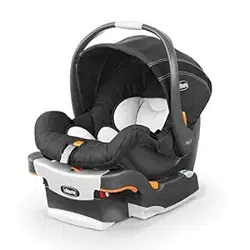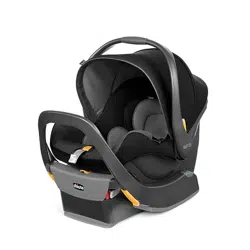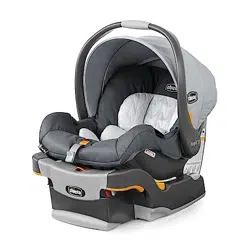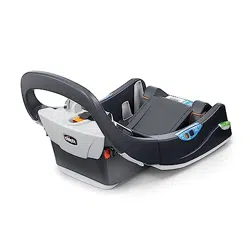
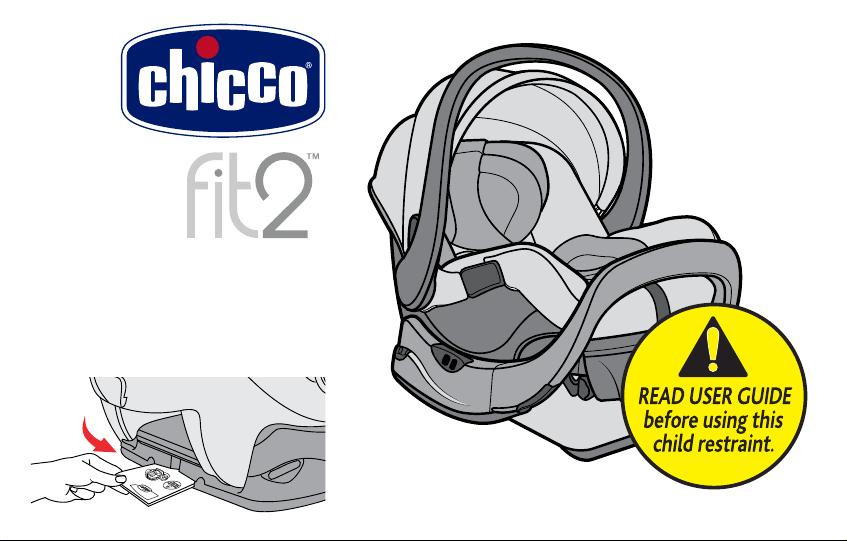
User Guide
©2016 Artsana USA, Inc.
www.chiccousa.com
For future use, STORE USER GUIDE
in location on bottom of base.
Car Seat
IS0144.2E
For future reference, fill in the information below. The information can be found on the label
on the bottom of the Child Restraint.
Model Number:
Serial Number:
Manufactured In:
If you have any problems with your Chicco Child Restraint,
or any questions regarding installation or use, please call:
Chicco Customer Service
1-877-424-4226
Please have Model and Serial Number available when you call.
These are located on a label on the bottom of the Child Restraint.
TABLE OF CONTENTS
Registration 2
Child Guidelines 4
Safe Use Checklist 6
Important Warnings 8
Best Practices 14
Need Help? 15
Vehicle Seating Positions 16
Vehicle Seat Belts 18
What is LATCH? 20
Child Restraint Components 22
Base Stage 1 & 2 26
Install with Base Setup 30
Install Using LATCH 32
Install Using LAP-SHOULDER BELT 38
Install Using LAP BELT ONLY 44
Install Carrier to Base 48
Install without Base Setup 52
Install Using LAP-SHOULDER BELT 54
Install Using Shoulder Belt Guide 58
Install Using LAP BELT ONLY 62
Securing Child with Harness 66
Secure Child Checklist 74
Base Release Handle 76
LATCH Storage 77
Newborn Positioner 78
Head Rest Insert 80
Handle Positions 81
Adjusting Crotch Strap 82
Canopy 84
Installation on an Aircraft 85
Cleaning and Maintenance 86
VEHICLE INFORMATION
BASE INSTALLATION
SECURING YOUR CHILD
ADDITIONAL INFORMATION
WITHOUT BASE INSTALLATION
CHILD RESTRAINT OVERVIEW
2
REGISTRATION
Please complete the Registration Card that came with
your Child Restraint and mail it promptly.
Child Restraints could be recalled for safety reasons. You must register this restraint to be reached in
a recall. Send your name, address, e-mail address if available, and the restraint’s model number and
manufacturing date to:
Artsana USA, Inc.
1826 William Penn Way
Lancaster, PA 17601
or call 1-877-424-4226
or register online at http://www.chiccousa.com/carseatregistration.aspx
For recall information, call the U.S. Government’s Vehicle Safety Hotline at
1-888-327-4236 (TTY: 1-800-424-9153), or go to http://www.NHTSA.gov.
3
REGISTRATION
PAGE INTENTIONALLY LEFT BLANK
4
CHILD GUIDELINES
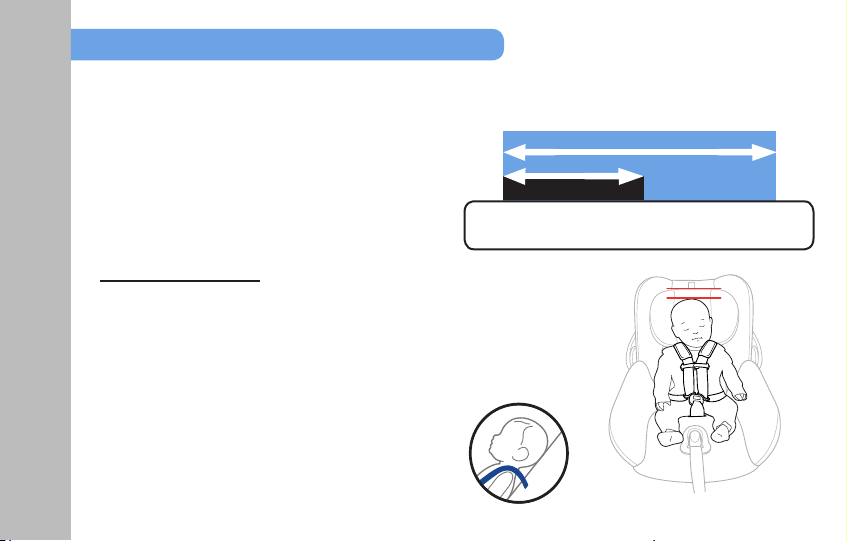
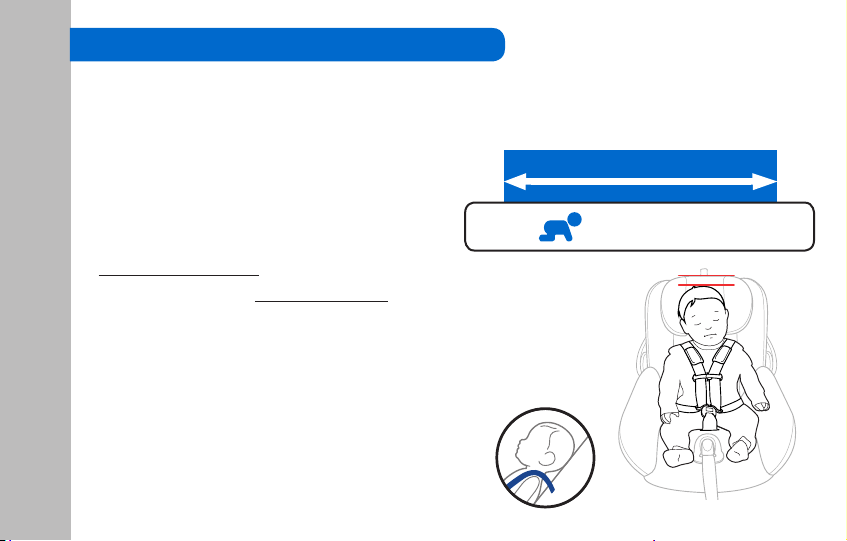
This Child Restraint is designed for children ages Birth to at least 2 years old.
ONLY use this Child Restraint if the child meets BOTH of the following
Weight and Height requirements:
• Weight is between 4 and 35 pounds (2 and 16 kg).
• Height is 35 inches (89 cm) or less and child's head is no less than
1" below the top of the head rest.
Base Stage 2 is ONLY for children who are able to crawl or walk.
The Newborn Positioner is only for infants who weigh between 4 and 11
pounds (2 and 5 kg). See Newborn Positioner on page 78.
For premature infants, you must consult the infant's doctor before
using this Child Restraint. A premature infant may have difficulty breathing
or have other medical problems when placed in a seated position.
5
CHILD GUIDELINES
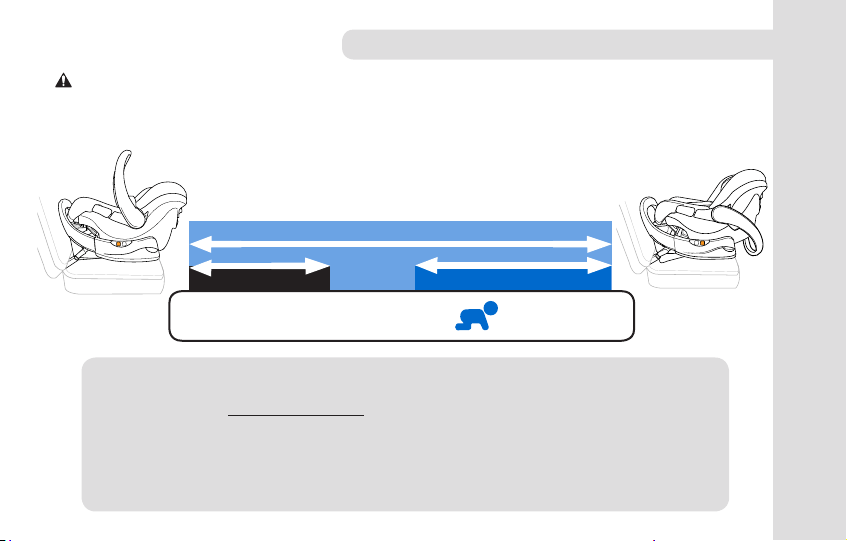
BASE STAGE 1
NEWBORN POSITIONER
4 lbs. 11 lbs. 15 lbs. 35 lbs.
(2 kg) (5 kg) (7 kg) (16 kg)
BASE STAGE 2
1
2
1
2
WARNING! Use of this Child Restraint is ONLY for children who meet ALL
of the requirements shown here. If the child is not within these requirements,
select a different car seat (such as a convertible car seat).
• Chicco and the American Academy of Pediatrics recommend all
children ride REAR-FACING until age 2 or they reach the weight/
height limits of this seat.
• NEVER turn this Child Restraint FORWARD-FACING.
6
Make sure your child meets the age, weight, and height requirements:
Refer to the “Child Guidelines” section on page 4.
If using Base, select the correct Base Stage for your child's developmental milestones,
age, weight and height:
Refer to the “Base Stage 1” requirements section on page 26.
Refer to the “Base Stage 2” requirements section on page 28.
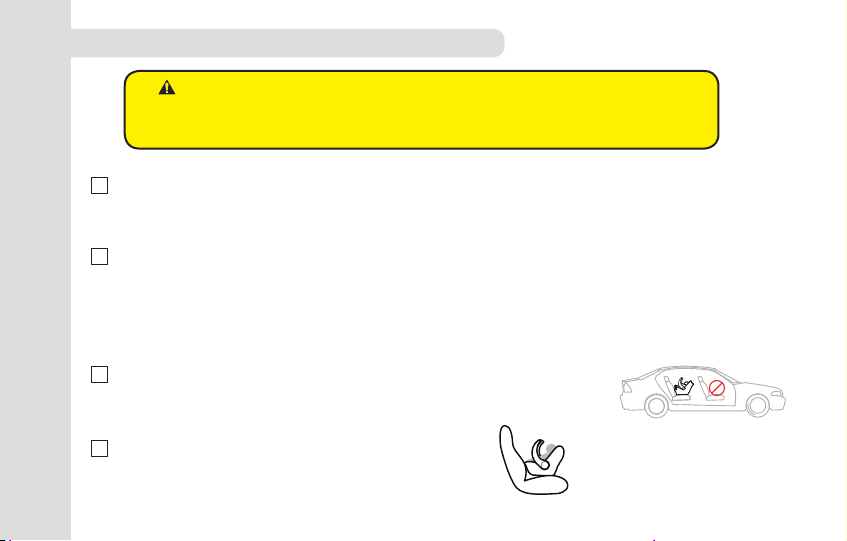
Select a safe seating location in your car:
Refer to the “Vehicle Seating Positions” section on page 16 and 17.
Install Base or Carrier Rear-Facing ONLY:
Refer to the “Child Guidelines” section on page 4.
SAFE USE CHECKLIST
YOUR CHILD’S SAFETY DEPENDS ON YOU! You MUST follow the
detailed instructions in this User Guide to ensure the steps below are
performed correctly!

7
Make sure your child meets the age, weight, and height requirements:
Refer to the “Child Guidelines” section on page 4.
If using Base, select the correct Base Stage for your child's developmental milestones,
age, weight and height:
Refer to the “Base Stage 1” requirements section on page 26.
Refer to the “Base Stage 2” requirements section on page 28.
Select a safe seating location in your car:
Refer to the “Vehicle Seating Positions” section on page 16 and 17.
Install Base or Carrier Rear-Facing ONLY:
Refer to the “Child Guidelines” section on page 4.
Ensure that the Child Restraint is properly leveled when installed:
Check Child Restraint for a snug t in your car:
While holding Child Restraint near belt path used, pull side to side and forward.
Belt should remain tight and Child Restraint should not move more than
1” (25 mm) from vehicle seat back or side-to-side.
Secure your child:
Refer to the “Securing Child with Harness” section on page 66.
SAFE USE CHECKLIST
8
IMPORTANT WARNINGS
WARNING
DEATH or SERIOUS INJURY CAN OCCUR
FAILURE TO FOLLOW THESE INSTRUCTIONS AND THE PRODUCT
LABELS CAN RESULT IN SERIOUS INJURY OR DEATH TO YOUR CHILD.
Take Time to Read This User Guide
• Carefully read and understand all instructions and warnings in this User Guide. Your child’s safety depends on
you knowing how to setup, install and use this Child Restraint properly.
• Before installing this Child Restraint in a vehicle, be sure to also check the vehicle owner’s manual for
information on proper installation.
• NEVER allow others to use this Child Restraint until they have read and understood all instructions in this
User Guide.
Make Sure Child Fits This Child Restraint
• Use only with children who weigh between 4 and 35 lbs (2 kg to 16 kg) and whose height is 35 inches
(89 cm) or less.
• Do Not use this child restraint if top of child's head is within 1 inch of the top of the headrest.
• Only use the NEWBORN POSITIONER provided for infants who weigh between 4 and 11 lbs (2 and 5 kg).
9
IMPORTANT WARNINGS
WARNING
DEATH or SERIOUS INJURY CAN OCCUR
Secure Child Properly
• Snugly adjust the belts provided with this child restraint around your child. A loose harness could cause the
child to be ejected in a sharp turn, sudden stop or crash, resulting in serious injury or death.
A snug strap should not allow any slack. It lies in a relatively straight line without sagging.
It does not press on the child’s flesh or push the child’s body into an unnatural position.
• NEVER use clothing or blankets that interfere with fastening or tightening the harness. An unsecured child
could be ejected in a sharp turn, sudden stop or crash!
To keep child warm, place a blanket over child and restraint AFTER you have properly secured
child in harness.
• ALWAYS check to make sure buckle is securely latched. If buckle separates, child could be killed or seriously injured.
• NEVER leave child unattended. Do not allow children to play in or around the Child Restraint.
• ALWAYS keep child properly secured in harness whenever child is in carrier.
10
IMPORTANT WARNINGS
WARNING
DEATH or SERIOUS INJURY CAN OCCUR
Install Child Restraint Correctly
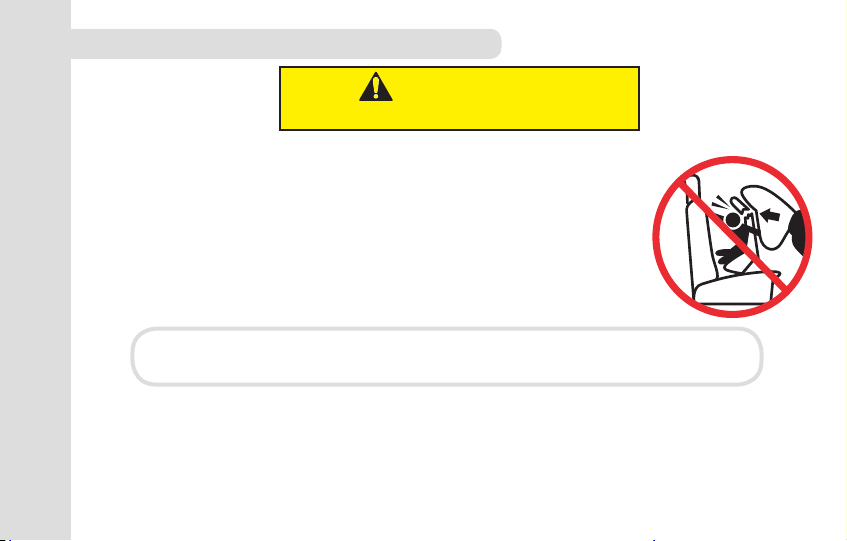
• NEVER PLACE THIS CHILD RESTRAINT IN VEHICLE SEATING LOCATION
WITH A FRONTAL AIR BAG, UNLESS THE AIR BAG CAN BE TURNED OFF.
If the airbag inflates, it can cause serious injury or death to your child. For vehicles
with side air bags, refer to your vehicle owners manual for information on your
child restraint installation.
• ALWAYS install this Child Restraint in a back seat if possible.
According to accident statistics, children are safer when properly restrained in the rear seating
positions rather than in the front seat.
• NEVER install in a rear facing, side facing or on the back of a folded down vehicle seat.
• ALWAYS secure this Child Restraint with the vehicle’s child restraint anchorage system (LATCH) if available
OR with a vehicle seat belt.
• ALWAYS install rear-facing when using this Child Restraint in a vehicle. Your child could be killed or seriously
injured if you install this restraint forward-facing.
11
IMPORTANT WARNINGS
WARNING
DEATH or SERIOUS INJURY CAN OCCUR
Install Child Restraint Correctly
• BEFORE each use, ALWAYS check to make sure restraint is tightly secured in the vehicle seat.
• NEVER use Child Restraint in a vehicle seating position where it cannot be secured tightly. A loosely
installed child restraint will not protect your child in a crash.
• Never leave carrier or base unsecured in your vehicle even when it is unoccupied. It could injure other
occupants in a sharp turn, sudden stop or crash.
• DO NOT install this child restraint using an inflatable seat belt. The interaction of the inflatable portion
of the vehicle’s belt with this child restraint can result in serious injury or death. Install using LATCH
instead, or move the car seat to a position with a suitable seat belt type.
• To prevent ejection or breathing difculties, proper recline is required. When installing the Child
Restraint, check the bubble level on the base. Refer to pages 26-28 to make sure your child meets the
requirements for Stage 1 or Stage 2.
• Make sure nothing interferes with carrier attachment to base. ALWAYS check attachment.
• ONLY use Chicco Fit 2 infant carriers with Fit 2 bases.
• DO NOT use Chicco Fit 2 infant carriers with Chicco KeyFit/KeyFit 30 bases.
12
IMPORTANT WARNINGS
WARNING
DEATH or SERIOUS INJURY CAN OCCUR
Ensure Child’s Safety When Using Child Restraint
• NEVER leave child unattended.
• SUFFOCATION HAZARD: Infant carrier can roll over on soft surfaces and suffocate child. NEVER place
carrier on beds, sofas or other soft surfaces.
• STRANGULATION HAZARD: Children have STRANGLED in loose or partially buckled harness straps.
Fully restrain the child even when carrier is used outside the vehicle.
• Fall Hazard: Child's activity can move carrier. NEVER place carrier on counter tops, tables, or any other
elevated surface.
• Do not use the infant carrier if it is damaged or broken.
• BE SURE handle is locked in the “carry position” before lifting carrier by handle. An unlocked handle could
move unexpectedly, causing injury to child.
• NEVER place carrier in top of shopping cart. Carrier will not be secure and could fall causing injury to child.
• ALWAYS check buckle and other parts for hot surfaces. A hot surface could burn child! Cover unoccupied
carrier with blanket when leaving in a vehicle exposed to sunlight or high temperatures.
13
IMPORTANT WARNINGS
WARNING
DEATH or SERIOUS INJURY CAN OCCUR
Check Condition of Restraint
• DO NOT use if the Harness or LATCH straps are cut, frayed or damaged.
• DO NOT use this Child Restraint if it is more than 6 years old. Check manufacturer’s label on
underside of Child Restraint for the “Do Not Use After” date.
• DO NOT use any accessories, pads or products not included with this Child Restraint, unless
approved by Chicco USA. Doing so will void the warranty of this Child Restraint.
• You MUST replace this Child Restraint if it has been involved in a crash, even if you cannot see visible
damage. A damaged Child Restraint may not protect your child in a future crash.
• Do not modify your Child Restraint.
• For proper removal and installation of the harness straps contact Chicco USA for additional instructions.
• Do not use Child Restraint if any component is damaged, broken, or missing parts.
Call 1-877-424-4226 to find out if the damaged part or parts can be replaced.

14
BEST PRACTICES
• Ensure all vehicle occupants are properly restrained before traveling. Unrestrained
occupants can be thrown around and may be seriously injured or seriously injure other
occupants in a sharp turn, sudden stop or crash.
• Do not leave loose objects, such as books, bags, etc., in the back of the vehicle. In the
event of a sharp turn, sudden stop, or crash, loose objects can be thrown around and
possibly cause serious injury to vehicle occupants.
• Cover the Child Restraint when the vehicle is parked in sunlight. Parts of a Child Restraint
can become very hot if left in the sun. Contact with these parts can burn a child’s skin.
Always check the surface of any metal or plastic parts before putting your child in the
Child Restraint.
• To avoid strangulation, Do not allow children to play with vehicle seat belts. If possible,
move unused belts out of reach.
• Do not use anything to raise the Child Restraint off the vehicle seat. In a sharp turn,
sudden stop, or crash, the Child Restraint could slide and potentially cause serious injury.
• Never use a second-hand Child Restraint with an unknown history.
• Never use any accessories that are not included with this child restraint, unless specifically
approved by Chicco. For more information, go to www.chiccousa.com/accessories.

15
NEED HELP?
Need Help Securing Your Child Restraint?
The following sources are available to help ensure your Child Restraint is
properly installed:
• Contact Chicco USA by visiting our website at www.chiccousa.com or
calling our Customer Service 1-877-424-4226. Please have Model and
Serial Number available when you call. These are located on a label on
the bottom of the Child Restraint.
• Refer to your vehicle manual for Child Restraint installation tips.
• Contact a certified Child Passenger Safety Technician in your area by
visiting safercar.gov and select “Find Local Child Seat Help” or call
1-866-SEAT CHECK (1-866-732-8243) or visit seatcheck.org.
16
VEHICLE INFORMATION
VEHICLE SEATING POSITIONS
The back seat is the safest place for children 12 and under. See your
vehicle owner’s manual for Child Restraint installation and instructions.
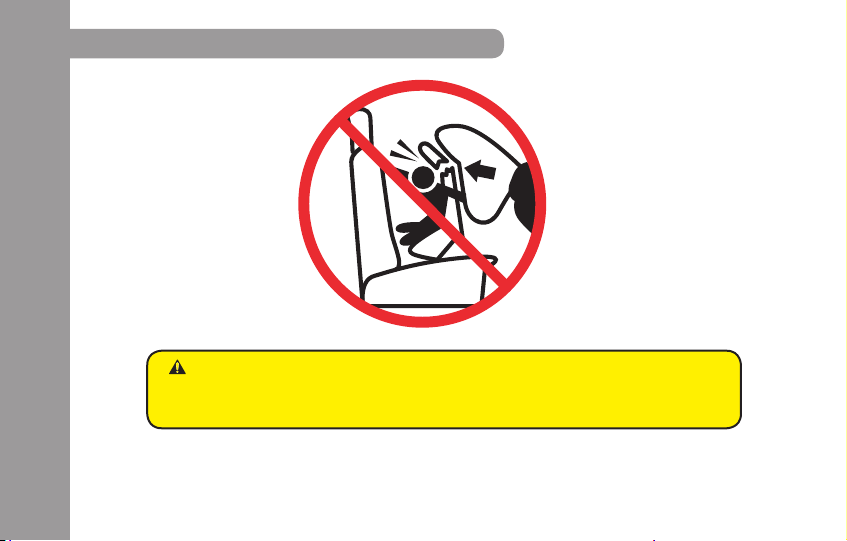
WARNING! NEVER PLACE THIS CHILD RESTRAINT IN A
VEHICLE SEATING LOCATION WITH A FRONTAL AIR BAG,
UNLESS THE AIR BAG CAN BE TURNED OFF.
17
VEHICLE INFORMATION
VEHICLE SEATING POSITIONS
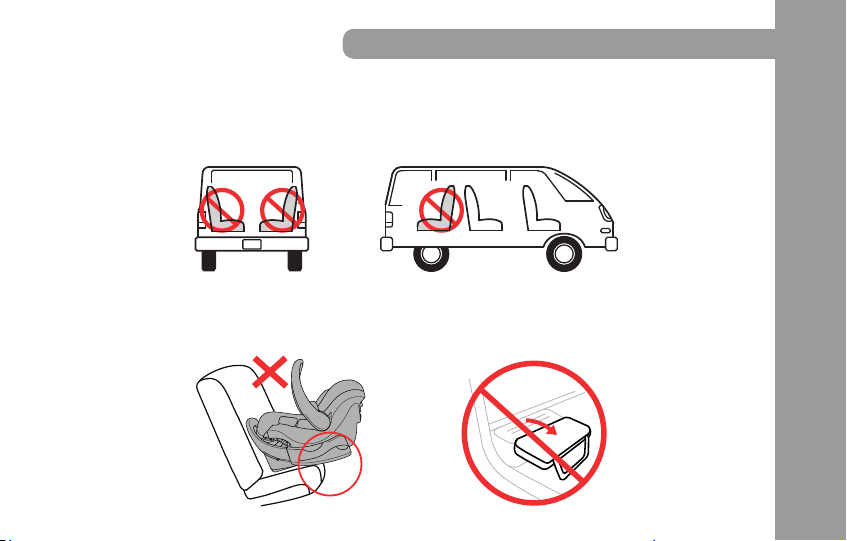
Some vehicles have no seating positions which are compatible with this Child
Restraint. If in doubt, contact the vehicle manufacturer for assistance. Only
forward-facing vehicle seats can be used with this Child Restraint.
Make sure no more than 4 inches of the
Child Restraint base is past the edge of
the vehicle seat.
Do not use on a folded down
vehicle seat back.

18
VEHICLE INFORMATION
For simplest installation use LATCH
Vehicle seat belts differ from vehicle to vehicle. Refer to your vehicle owner’s
manual for specific information about seat belts and their use with Child
Restraints.
Shoulder belt with switchable retractor:
Putting the shoulder belt in the locked/switched mode as the last step is
optional. The shoulder belt Lock-Off replaces the need for the locked/switched
mode. Using the locked/switched mode may cause Child Restraint to tilt.
VEHICLE SEAT BELTS
The information in this section only applies to installation with vehicle seat belts.
19
VEHICLE INFORMATION
VEHICLE SEAT BELTS
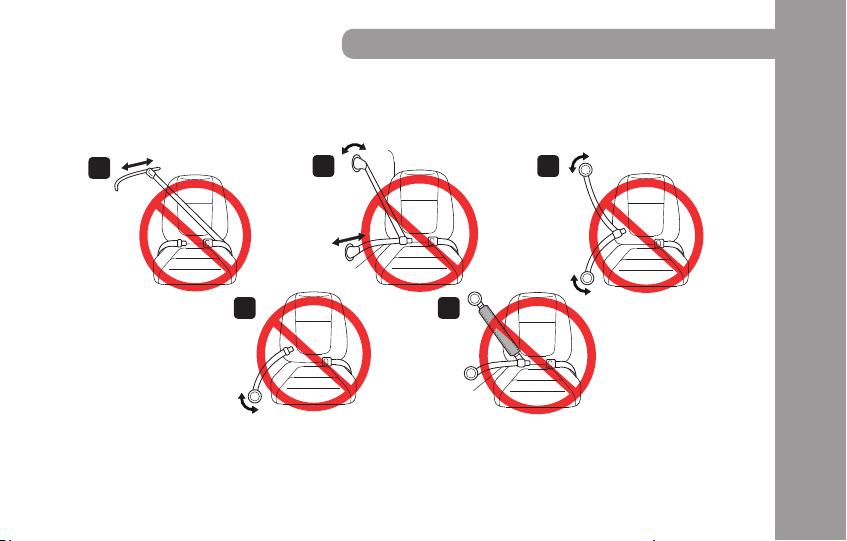
The following types of vehicle belts MUST NOT be used to install this Child Restraint.
If any of the belt types listed below are in the chosen seating position, choose another
vehicle seating position or use LATCH if available.
1.
Motorized (automatic) vehicle belts.
2.
Door mounted vehicle belts.
4.
Non-Locking (ELR) Lap Belts.
3.
Lap-shoulder Belts with 2 retractors (unless Lap Belt has a “Lock Mode”).
5.
Inflatable seat belts.
1
2 3
4 5
20
VEHICLE INFORMATION
LATCH = Lower Anchors and Tethers for CHildren
United States Motor Vehicle Safety Standards have defined a system for installing
Child Restraints in vehicles called LATCH. LATCH may ONLY be used IN PLACE
OF vehicle belt if the vehicle is equipped with LATCH anchor points. DO NOT
use both the seat belt and LATCH at the same time. Please refer to the vehicle
owner’s manual for designated LATCH locations in vehicles.
LATCH in the vehicle consists of a top tether anchor point, which is not used with
this child restraint, and two lower anchor points. Some vehicles owner’s manual use
the term “ISOFIX”. LATCH can also be used in vehicle seating positions equipped
with ISOFIX.
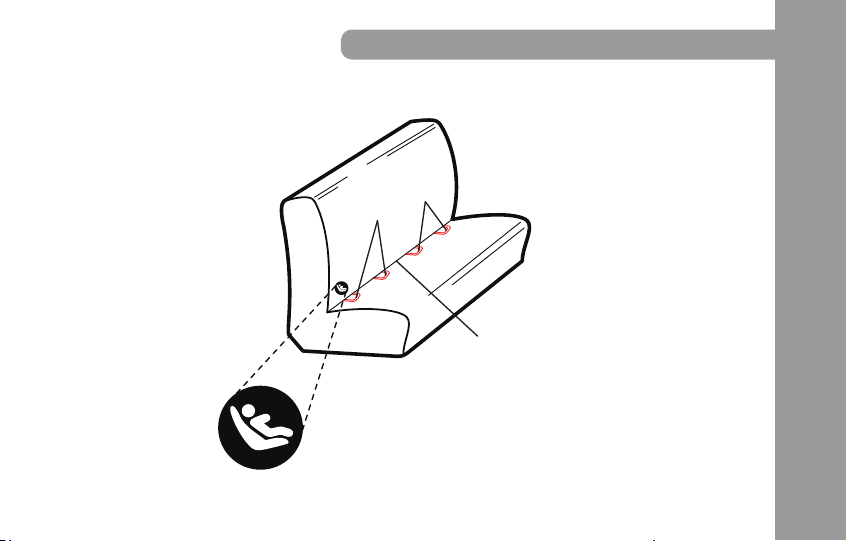
If the vehicle is equipped with LATCH, the vehicle lower anchor points may be visible at
the seat crease. If not visible, the seating position may be marked with a symbol (fig. a) or a
colored dot.
WARNING: This Child Restraint is designed to be used with lower LATCH
anchors at the standard spacing (11 inches) ONLY! Refer to vehicle owner’s manual
for information about LATCH and Child Restraint installation positions.
WHAT IS LATCH
21
VEHICLE INFORMATION
Vehicle
Lower Anchor
Points
Vehicle
Seat Crease
(fig. a)
WHAT IS LATCH
22
CHILD RESTRAINT OVERVIEW
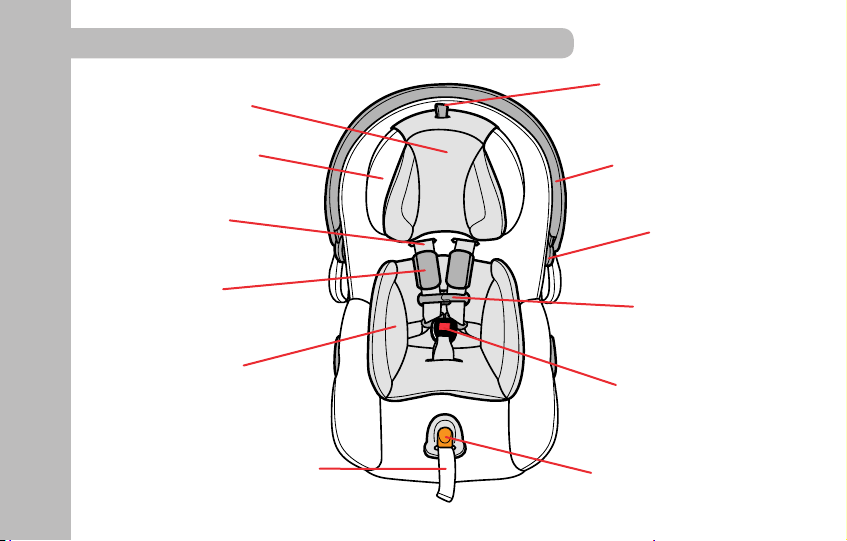
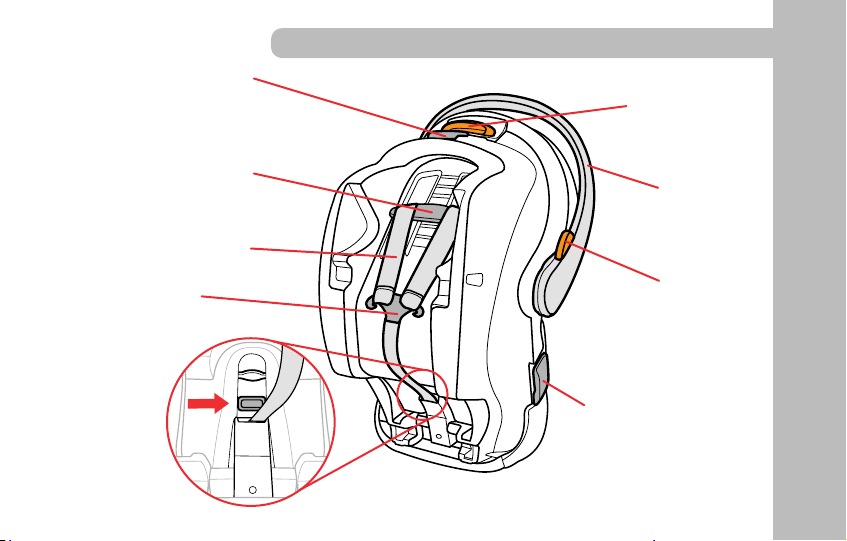
CARRIER COMPONENTS
Buckle
Harness
Straps
Canopy
Mount
Chest Clip
Canopy
Harness
Adjuster Button
Harness
Adjuster Strap
Shoulder
Pads
Head Rest
Insert
Newborn
Positioner
Head Rest
Adjustment Strap
Head Rest
23
CHILD RESTRAINT OVERVIEW
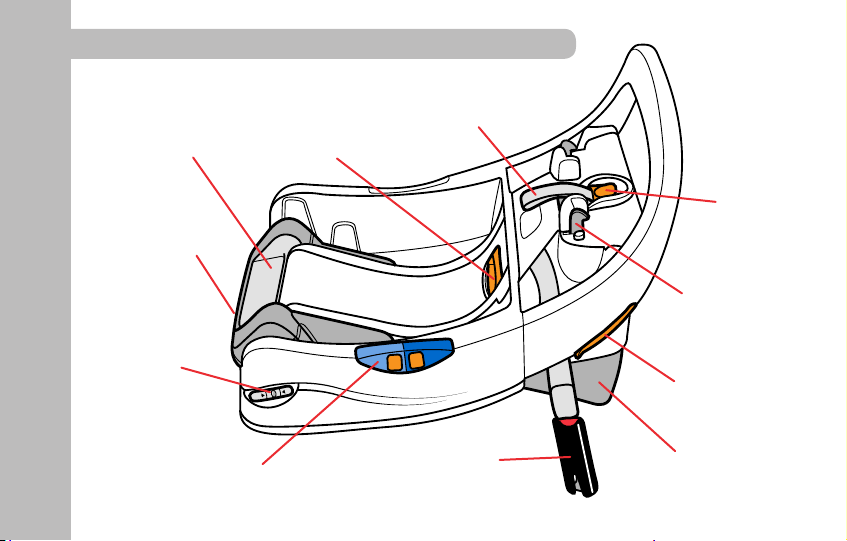
CARRIER COMPONENTS
Carry
Handle
Seat Belt Guide
(when installing carrier
without the base)
Handle
Release
Button
Base Release
Handle
Harness
Strap
Harness
Splitter Plate
Shoulder
Belt Guide
(when installing carrier
without the base)
Crotch Strap
Retainer
Head Rest
Cross Bar
24
CHILD RESTRAINT OVERVIEW
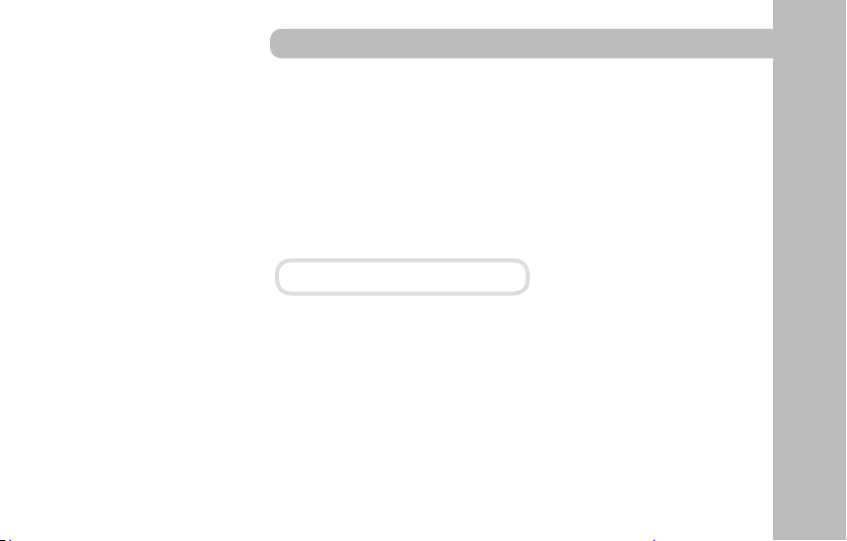
1
2
LATCH
Connector
BASE AND LATCH COMPONENTS
Recline
Foot
LATCH
Release
Lever
Carrier
Attachment
Hook
Shoulder Belt
Lock-Off
Bubble
Level
Indicator
Leveling Foot
Adjuster
LATCH
Pull Strap
Base Stage
Indicator
Base Stage
Lever
User Guide
Storage
(Inside Base)
25
CHILD RESTRAINT OVERVIEW
BASE AND LATCH COMPONENTS
PAGE INTENTIONALLY LEFT BLANK
26
CHILD RESTRAINT OVERVIEW
BASE STAGE 1
BASE STAGE:
4 – 35 lbs (2 – 16 kg)
Use with children:
•Who weigh between 4 and 35 lbs
(2 –16 kg).
•And height is less than 35 inches (89 cm).
•And top of head is at least 1 inch below top
of Head Rest.
•When Harness Straps can be positioned
at or just below the child’s shoulders*.
BASE STAGE 1
NEWBORN POSITIONER
4 lbs. 11 lbs. 35 lbs.
(2 kg) (5 kg) (16 kg)
Choose the Stage that best ts your child:
Stage 1
allows for a
more reclined
install
and riding position for a child that meets the weight and height requirement for this
restraint.
1
*
See Harness Height Adjustment on page 68.
27
CHILD RESTRAINT OVERVIEW
BASE STAGE 1
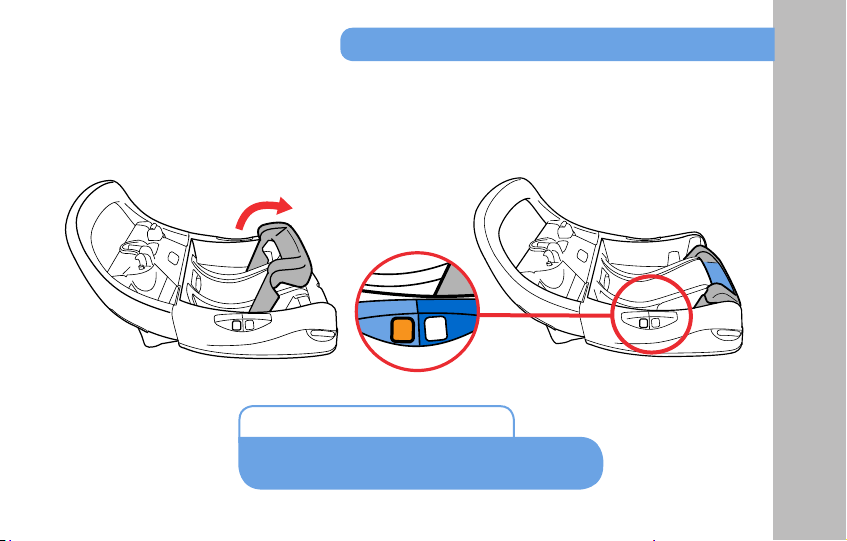
To install this Child Restraint in Stage 1, rotate the Base Stage Lever
over into Stage 1 on the Base. The Base Stage Indicator '1' icon will turn
orange.
1
2
1
2
1
2
• Base installation continued on page 30
Install Child Restraint:
1
28
CHILD RESTRAINT OVERVIEW
BASE STAGE 2
BASE STAGE:
15 – 35 lbs (7 – 16 kg)
Use with children:
•Who are able to crawl or walk.
•Who are between 9-24 months of age.
•Who weigh between 15 and 35 lbs (7 –16 kg).
•And height is less than 35 inches (89 cm).
•And top of head is at least 1 inch below top of
Head Rest.
•When Harness Straps can be positioned at
or just below the child’s shoulders*.
Choose the Stage that best ts your child:
Stage 2
is an
upright install
for a child that
meets the developmental requirement for this restraint. This allows for
more leg room
and a more upright riding position for your child.
2
*
See Harness Height Adjustment on page 68.
BASE STAGE 2
15 lbs. 35 lbs.
(7 kg) (16 kg)
29
CHILD RESTRAINT OVERVIEW
BASE STAGE 2
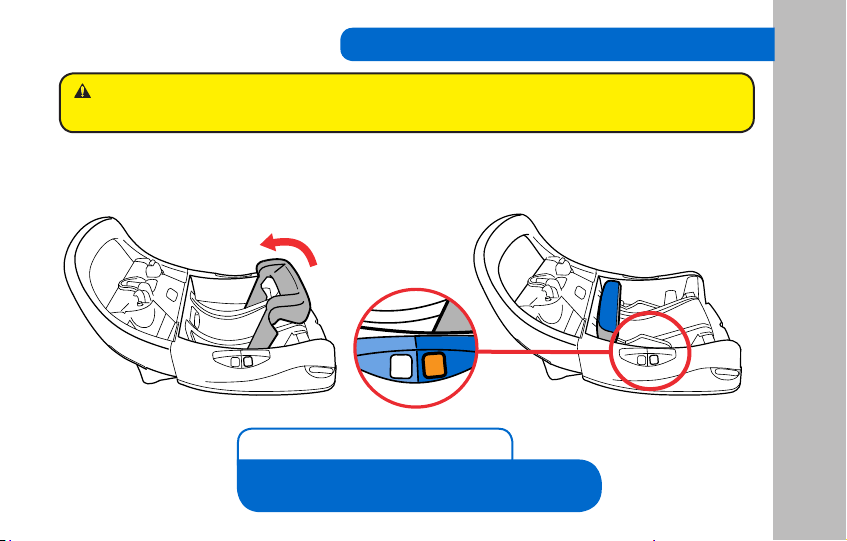
To install this Child Restraint in Stage 2, rotate the Base Stage Lever over into
Stage 2 on the Base. The Base Stage Indicator '2' icon will turn orange.
1
2
1
2
1
2
• Base installation continued on page 30
Install Child Restraint:
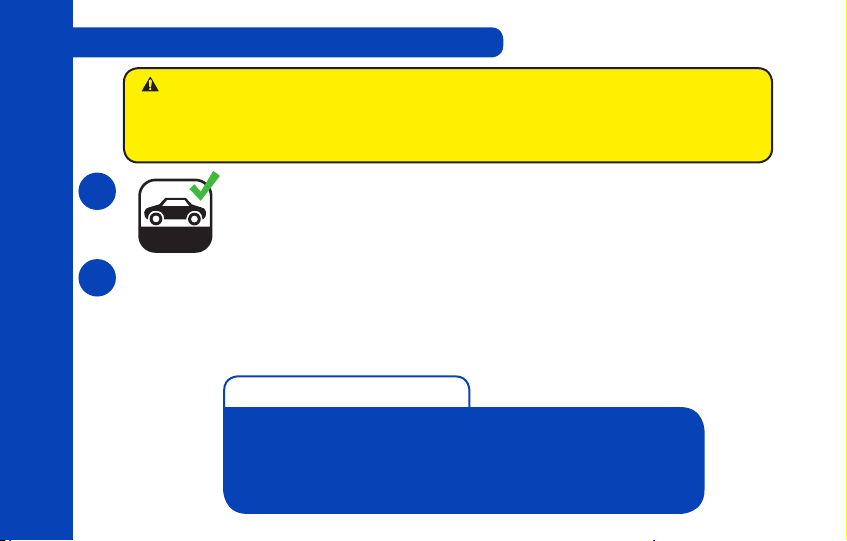
Infants may have difficulties breathing in a more upright seating position. ONLY
use base Stage 2 with children that can crawl or walk. Approximately 9 months old.
2
30
BASE INSTALLATION
INSTALL WITH BASE SETUP
See page 16 for "Vehicle Seating Positions" before installing. Make
sure the vehicle is on a level surface. Place Base on selected vehicle
seat. Make sure it is not blocking the vehicle seat belt buckle.
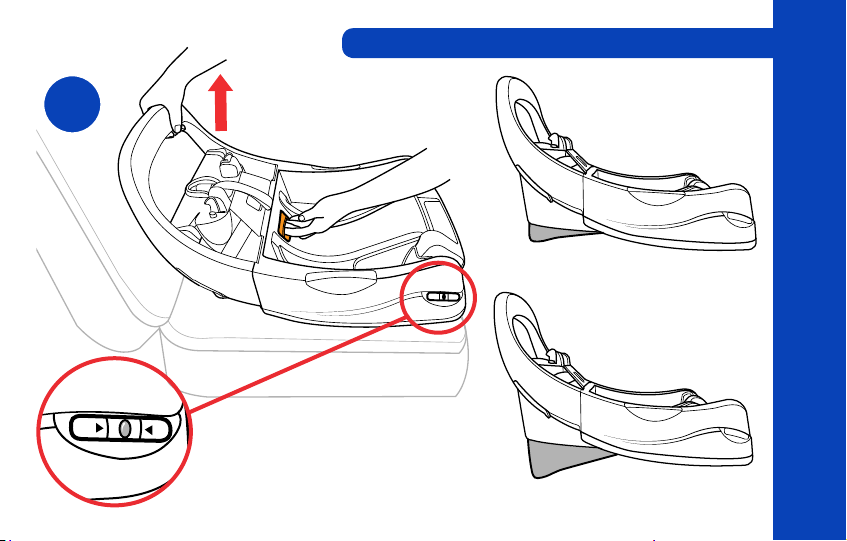
Set Base Stage Lever to the correct Stage, depending on your child. See pages
26-29 for more information (2a). Locate the Bubble Level Indicator and adjust the
seat recline by pulling up on the center Leveling Foot Adjuster until the Bubble falls
between the arrows on the Bubble Level Indicator (2b).
1
2
LEVEL
SLOP E
• LATCH installation continued on page 32
• Lap-Shoulder Belt installation continued on page 38
• Lap Belt Only installation continued on page 44
Installation Options:
Infants may have difficulty breathing when in a sitting position. Make
sure the seat is reclined properly so that your child’s head does not fall
forward. Failure to properly recline the Child Restraint could increase
the child’s risk of serious injury or death.
31
BASE INSTALLATION
INSTALL WITH BASE SETUP
2b
32
BASE INSTALLATION
INSTALL USING LATCH
Pull up on the LATCH Release Lever and loosen LATCH straps to their full
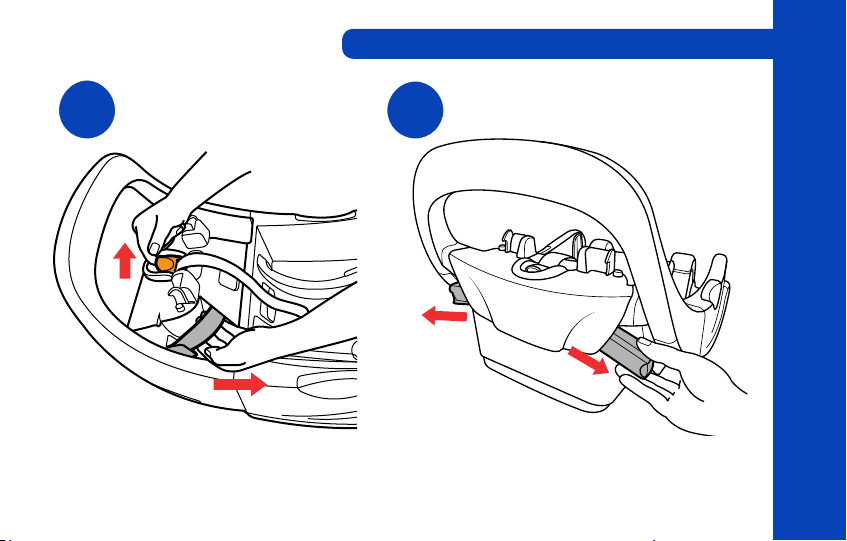
length.
Locate the LATCH Connector storage compartments. Remove both LATCH
Connectors.
1
2
Store LATCH Connectors properly in the compartments when
not using for installation - See page 77.
When installing with LATCH, the unused seat belt should not
be buckled behind the Child Restraint System as this will engage
the inflatable portion of the belt.
33
BASE INSTALLATION
INSTALL USING LATCH
1 2

34
BASE INSTALLATION
INSTALL USING LATCH
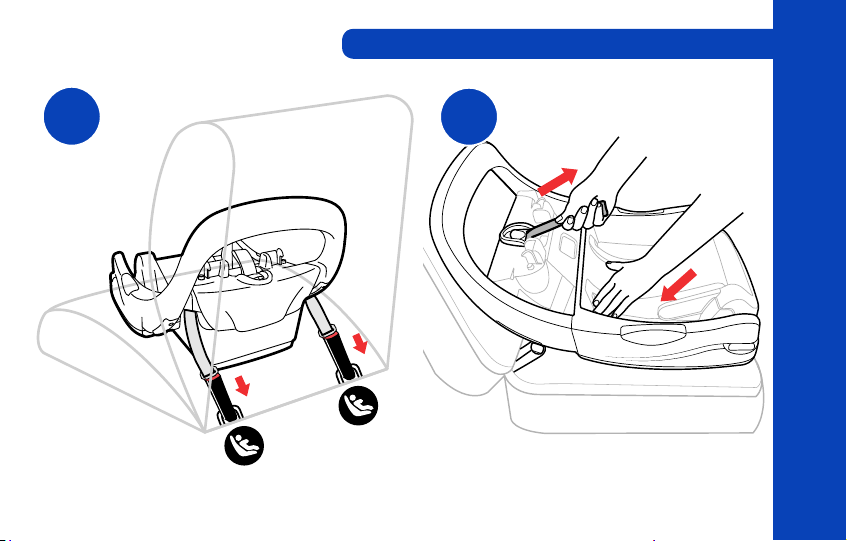
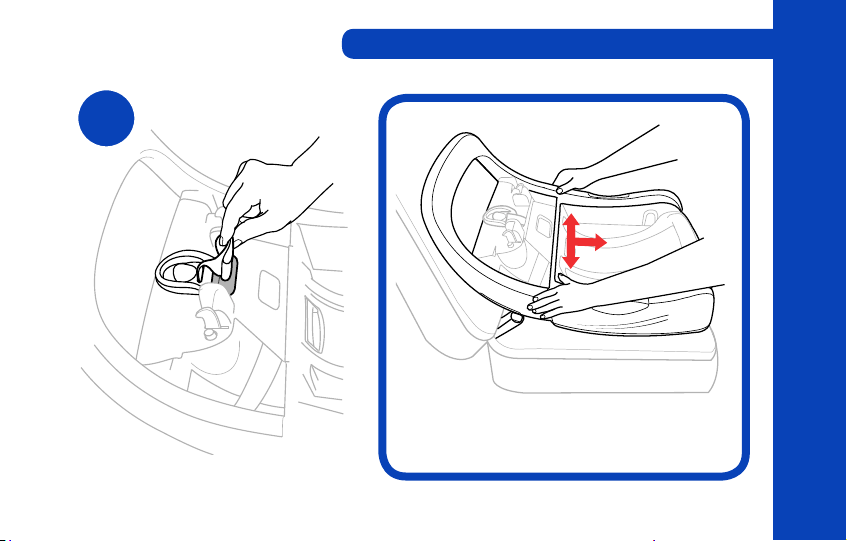
Locate the LATCH anchor bars in your vehicle. Attach both LATCH
Connectors to the vehicle LATCH anchor bars.
Tighten LATCH straps by pulling up on LATCH Pull Strap while pressing Base
firmly into vehicle seat.
3
4
35
BASE INSTALLATION
INSTALL USING LATCH
43
36
BASE INSTALLATION
Roll LATCH Release Strap and store in Release Strap Storage Compartment.
5
INSTALL USING LATCH
CHECK YOUR WORK
Hold Base at each side and pull side to side and forward. Base should not
move more than 1” (25 mm) from vehicle seat back or side-to-side.
Check installation before every use!
• Installation continued on page 48
Install Child Restraint:
37
BASE INSTALLATION
INSTALL USING LATCH
5
CHECK YOUR WORK

38
BASE INSTALLATION
INSTALL USING LAP-SHOULDER BELT
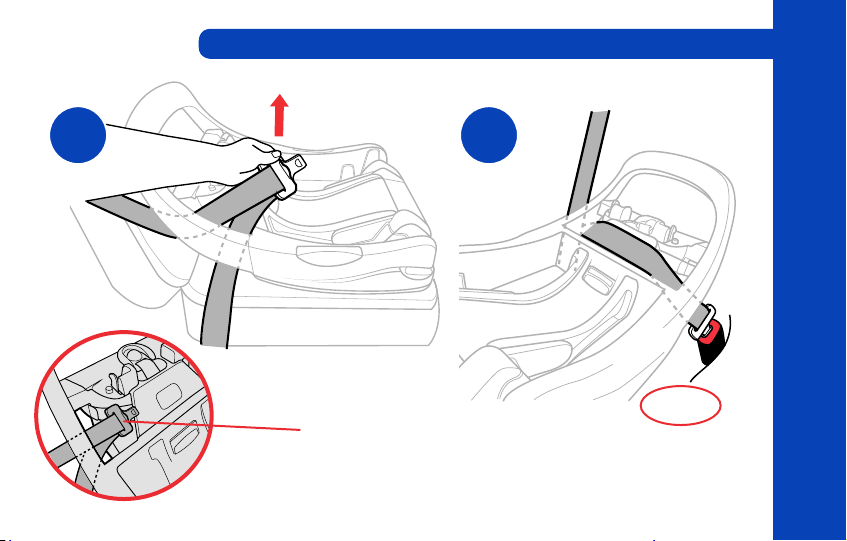
Thread vehicle seat belt up through the belt path on the side of the Base.
Pull vehicle seat belt down through the vehicle seat belt path on opposite
side of the Base. Buckle the vehicle seat belt.
2
1
39
BASE INSTALLATION
INSTALL USING LAP-SHOULDER BELT
1 2
Belt
Path
CLICK!

40
BASE INSTALLATION
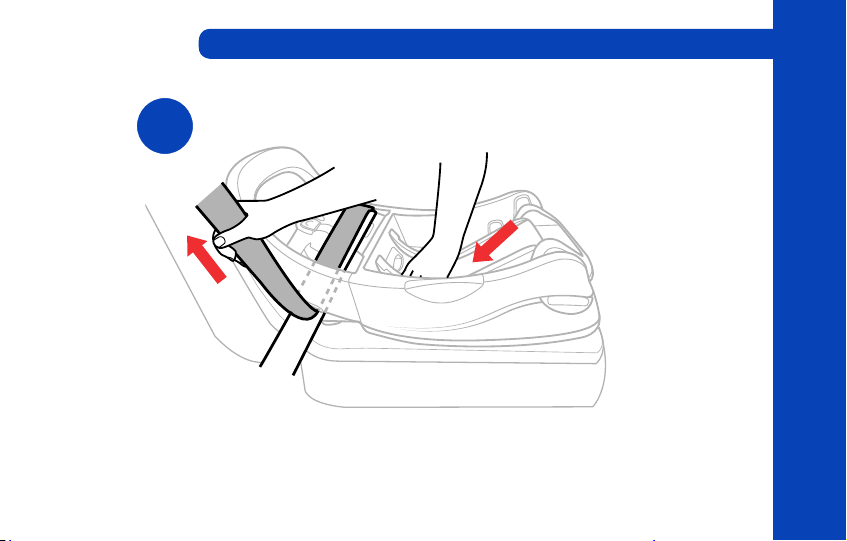
While pushing down on the Base, pull up on the vehicle shoulder belt to
remove all slack from the vehicle lap belt.
3
INSTALL USING LAP-SHOULDER BELT
41
BASE INSTALLATION
INSTALL USING LAP-SHOULDER BELT
3
42
BASE INSTALLATION
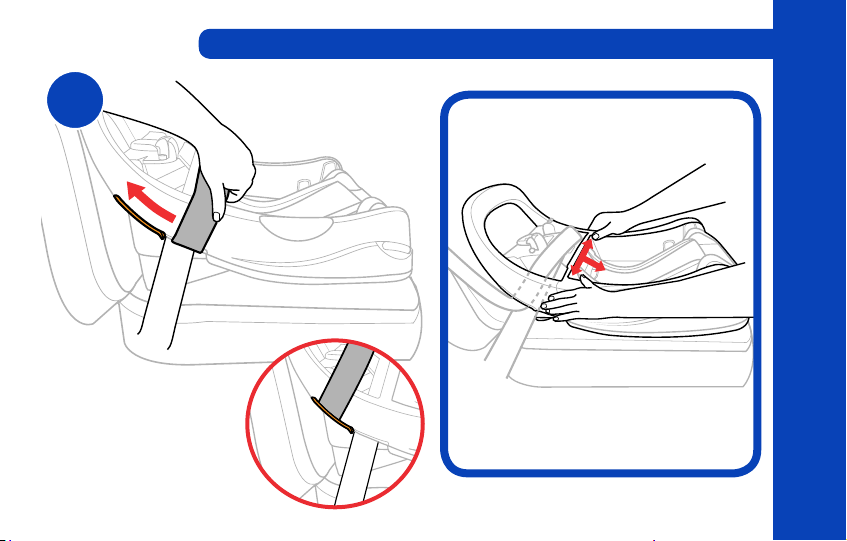
While holding the shoulder belt tight, slide the shoulder belt strap
firmly into Shoulder Belt Lock-Off. Always use the Lock-Off on the
opposite side of where the vehicle seat belt is buckled.
Do NOT pull on shoulder belt after it is positioned in Lock-Off.
This could damage the Lock-Off and/or the vehicle belt
INSTALL USING LAP-SHOULDER BELT
4
CHECK YOUR WORK
Hold Base at each side and pull side to side and forward. Base should not
move more than 1” (25 mm) from vehicle seat back or side-to-side.
Check installation before every use!
• Installation continued on page 48
Install Child Restraint:
43
BASE INSTALLATION
CHECK YOUR WORK
4
INSTALL USING LAP-SHOULDER BELT

44
BASE INSTALLATION
INSTALL USING LAP BELT ONLY
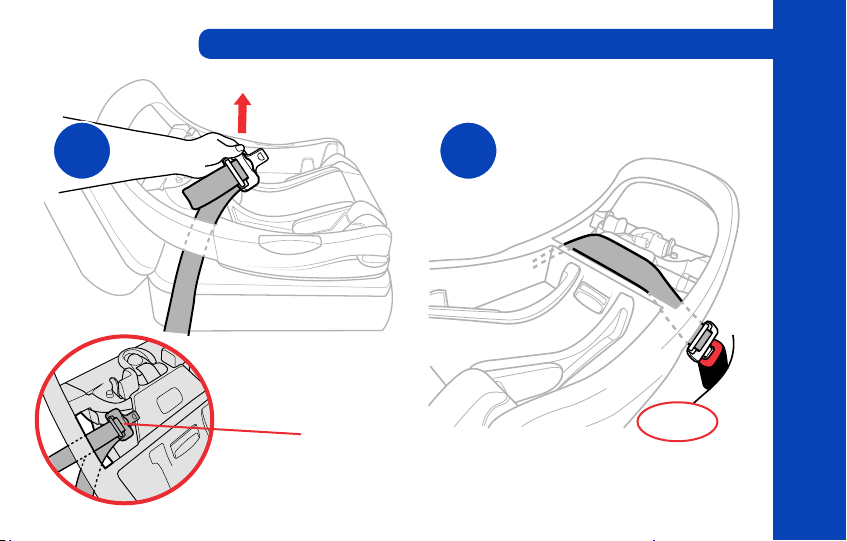
Thread vehicle seat belt up through the belt path on the side of the Base.
Pull vehicle seat belt down through the vehicle seat belt path on opposite
side of the Base. Buckle the vehicle seat belt.
2
1
45
BASE INSTALLATION
INSTALL USING LAP BELT ONLY
1 2
CLICK!
Belt
Path
46
BASE INSTALLATION
INSTALL USING LAP BELT ONLY
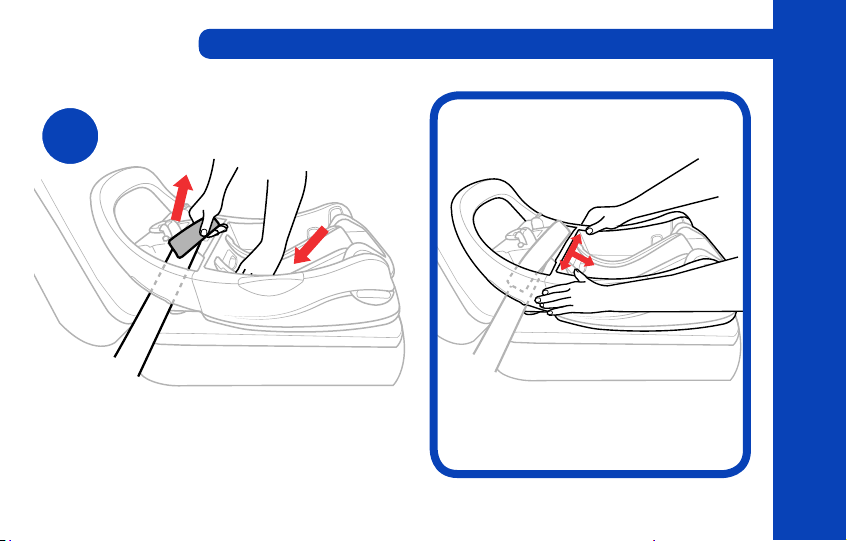
While pushing down on the Base, pull up on the loose end of the
vehicle lap belt to remove all slack.
3
CHECK YOUR WORK
Hold Base at each side and pull side to side and forward. Base should not
move more than 1” (25 mm) from vehicle seat back or side-to-side.
Check installation before every use!
• Installation continued on page 48
Install Child Restraint:
47
BASE INSTALLATION
INSTALL USING LAP BELT ONLY
3
• Installation continued on page 48
CHECK YOUR WORK
48
BASE INSTALLATION
INSTALL CARRIER TO BASE
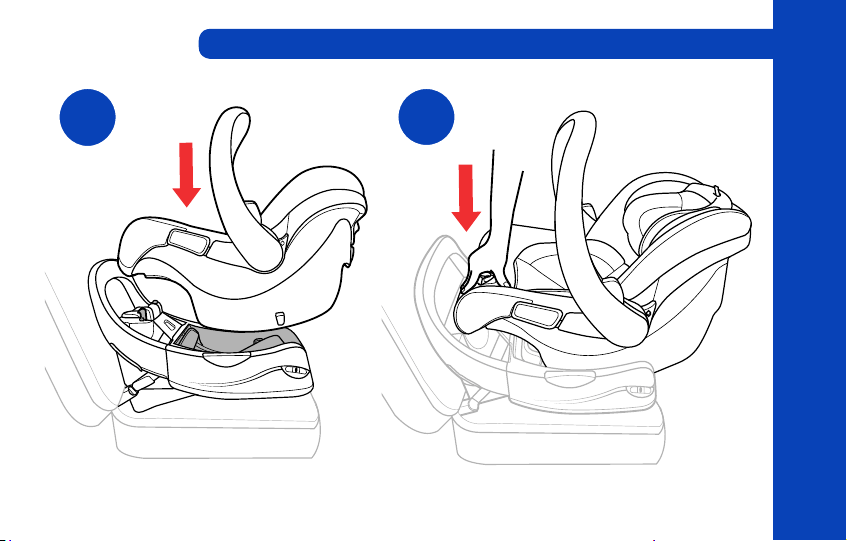
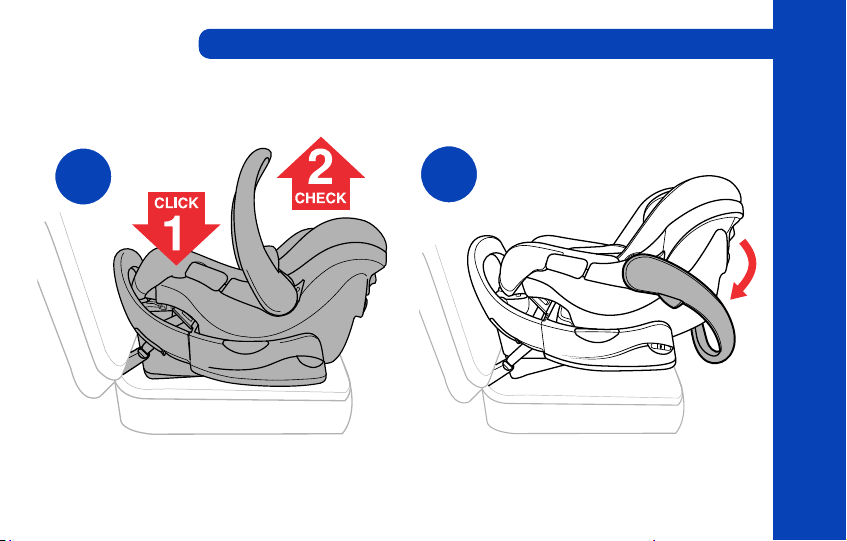
Insert the Carrier into the Base.
Push down on the Carrier to make sure it locks onto the Carrier
Attachment Hooks on the Base.
1
IMPORTANT: Before installing Child Restraint refer to page 26-29 to determine
the best Base Stage for your child.
2
49
BASE INSTALLATION
1
INSTALL CARRIER TO BASE
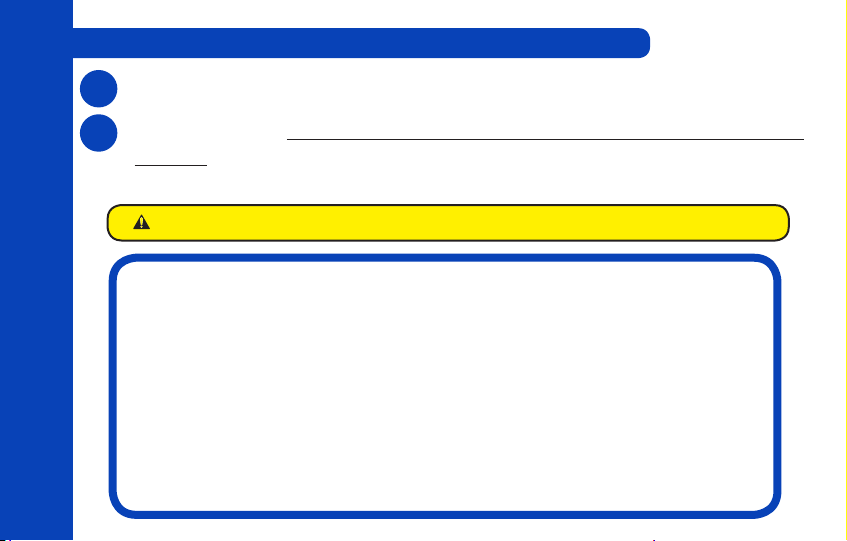
IMPORTANT: Before installing Child Restraint refer to page 26-29 to determine
the best Base Stage for your child.
2
50
BASE INSTALLATION
INSTALL CARRIER TO BASE
Check to make sure the Carrier is securely attached to the Base.
STAGE 2 ONLY: Rotate Carry Handle behind the Child Restraint when using
Stage 2. It is recommended to leave the installed Base and Carrier in your
vehicle when using Stage 2.
3
ALWAYS lift up on Carrier to verify it is properly attached to the Base.
4
CHECK YOUR WORK
Hold Base at each side and pull side to side and forward. Child Restraint
should not move more than 1” (25 mm) from vehicle seat back or
side-to-side.
Make sure Child Restraint is level by confirming that the bubble on the
level indicator is between the level lines. Make sure infant’s head does
not fall forward. If necessary, re-adjust recline and repeat installation
steps to make sure Child Restraint is installed properly.
Check installation before every use!
51
BASE INSTALLATION
INSTALL CARRIER TO BASE
3
4
52
WITHOUT BASE INSTALLATION
INSTALL WITHOUT BASE SETUP
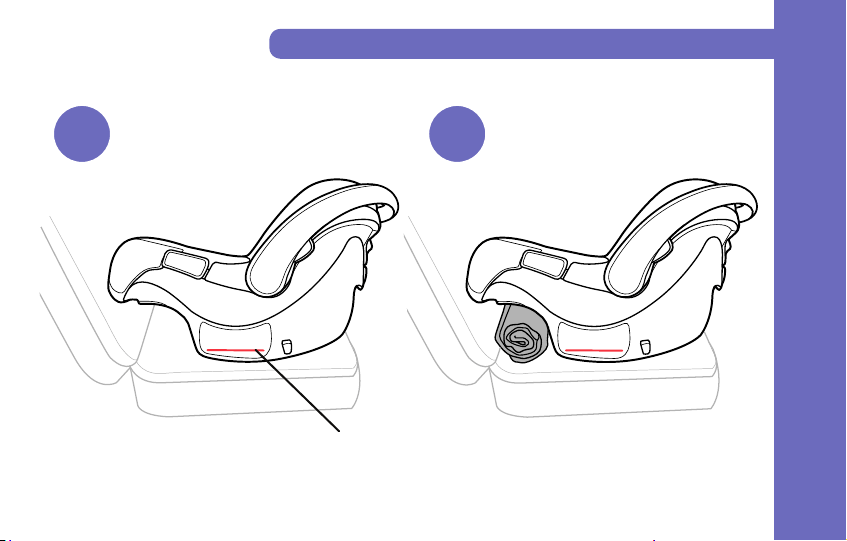
Position Child Restraint so that the Level Line (located on the seat label) is LEVEL with
the ground.
If needed, use a rolled up towel to help level the Child Restraint properly.
1
LEVEL
SLOP E
• Lap-Shoulder Belt installation continued on page 54
• Lap Belt Only installation continued on page 62
Installation Options:
2
Infants may have difficulty breathing when in a sitting position. Make sure the seat
is reclined properly so that your child’s head does not fall forward. Failure to properly
recline the Child Restraint could increase the child’s risk of serious injury or death.
See page 16 for "Vehicle Seating Positions" before installing. Make sure
the vehicle is on a level surface. Place Child Restraint on selected vehicle
seat with child properly secured in Child Restraint
(See securing your child
on page 66)
. Make sure it is not blocking the vehicle seat belt buckle.
3
NEVER install Child Restraint without Base using a non-locking vehicle belt. The installation
will NOT be secure. Refer to your vehicle owner's manual for detailed vehicle belt information.
53
WITHOUT BASE INSTALLATION
INSTALL WITHOUT BASE SETUP
2
Level Line
(Seat Label)
3

54
WITHOUT BASE INSTALLATION
INSTALL USING LAP-SHOULDER BELT
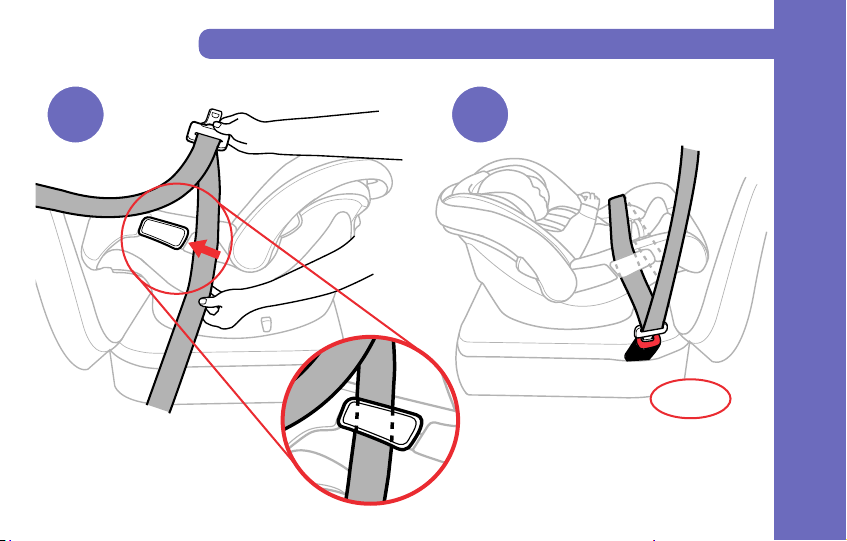
Thread vehicle seat belt up and slide into the Seat Belt Guide on the side of
the Child Restraint.
Pull vehicle seat belt down and slide into the Seat Belt Guide on opposite
side of the Child Restraint. Buckle the vehicle seat belt. Pull out all of the
shoulder belt webbing and activate the locking mode of the vehicle belt.
If belt does not lock, do not use that seating position to install the carrier.
1
2
55
WITHOUT BASE INSTALLATION
INSTALL USING LAP-SHOULDER BELT
21
CLICK!
56
WITHOUT BASE INSTALLATION
INSTALL USING LAP-SHOULDER BELT
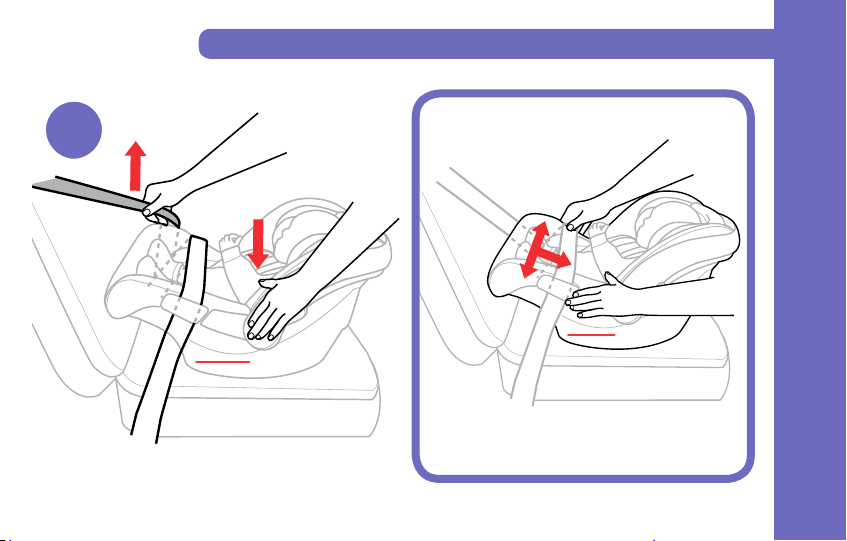
While pushing down on the Carrier, pull up on the vehicle shoulder belt to
remove all slack from vehicle lap belt.
3
Put the vehicle seat belt in the locked mode, see vehicle owner's manual for more
information. A tightly rolled towel may be used under the front edge of the
Carrier if needed to adjust the angle of the Carrier. Angle is correct when level line
on Carrier is level with ground.
CHECK YOUR WORK
Hold Child Restraint at each side and pull side to side and forward.
Child Restraint should not move more than 1” (25 mm) from vehicle seat
back or side-to-side.
Make sure Child Restraint is level. Make sure infant’s head does not fall
forward. If necessary re-adjust recline and repeat installation steps to
make sure Child Restraint is installed properly.
Check installation before every use!
57
WITHOUT BASE INSTALLATION
INSTALL USING LAP-SHOULDER BELT
Put the vehicle seat belt in the locked mode, see vehicle owner's manual for more
information. A tightly rolled towel may be used under the front edge of the
Carrier if needed to adjust the angle of the Carrier. Angle is correct when level line
on Carrier is level with ground.
3
CHECK YOUR WORK

58
WITHOUT BASE INSTALLATION
INSTALL USING SHOULDER BELT GUIDE
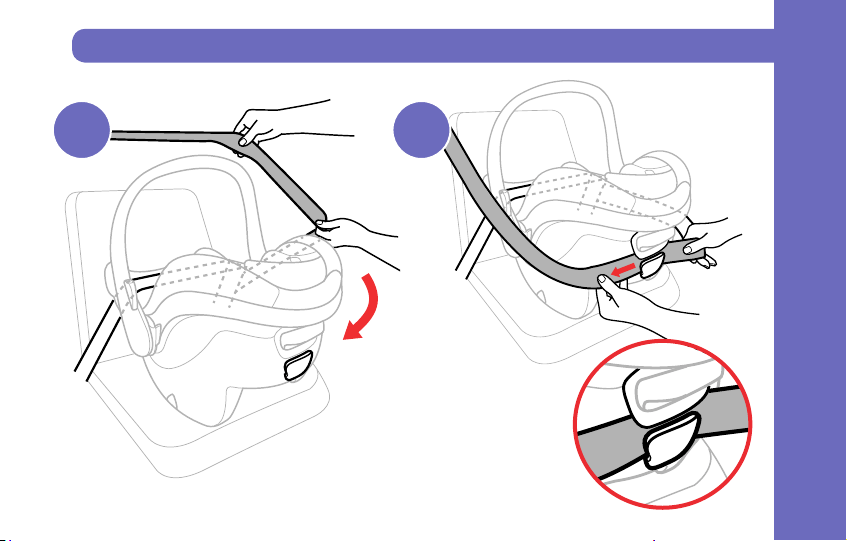
With the Child Restraint placed and buckled without the Base and using
the vehicle lap-shoulder belt in un-locked mode - pull the shoulder belt
out and slide it around the back of the Child Restraint.
Thread the shoulder belt through the Shoulder Belt Guide. Then guide
the shoulder belt around the carrier. Switch the shoulder belt into locked
mode. Do not use this seating position if the vehicle belt does not lock.
4
5
An optional Shoulder Belt Guide is on the back of the Child Restraint.
The Guide offers additional stability when installing your Child
Restraint without the Base using the Lap/Shoulder Belt. Make sure your
vehicle seat belts have enough length to allow you to properly install the
Child Restraint using the Shoulder Belt Guide.
59
WITHOUT BASE INSTALLATION
INSTALL USING SHOULDER BELT GUIDE
54
60
WITHOUT BASE INSTALLATION
INSTALL USING SHOULDER BELT GUIDE
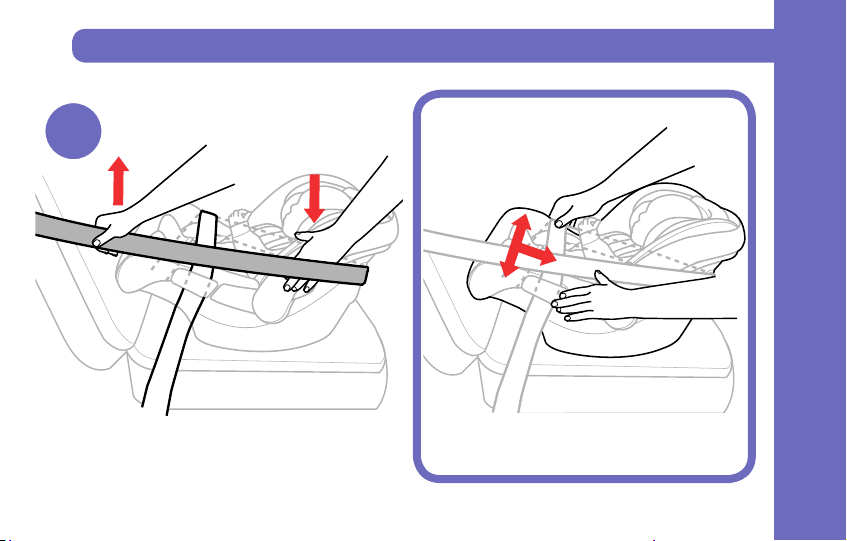
While pushing down on the Child Restraint, pull up on the vehicle shoulder
belt to remove all slack from the vehicle lap and shoulder belt.
6
CHECK YOUR WORK
Hold Child Restraint at each side and pull side to side and forward.
Child Restraint should not move more than 1” (25 mm) from vehicle seat
back or side-to-side.
Make sure Child Restraint is level. Make sure infant’s head does not fall
forward. If necessary re-adjust recline and repeat installation steps to
make sure Child Restraint is installed properly.
Check installation before every use!
61
WITHOUT BASE INSTALLATION
INSTALL USING SHOULDER BELT GUIDE
6
CHECK YOUR WORK

62
WITHOUT BASE INSTALLATION
INSTALL USING LAP BELT ONLY
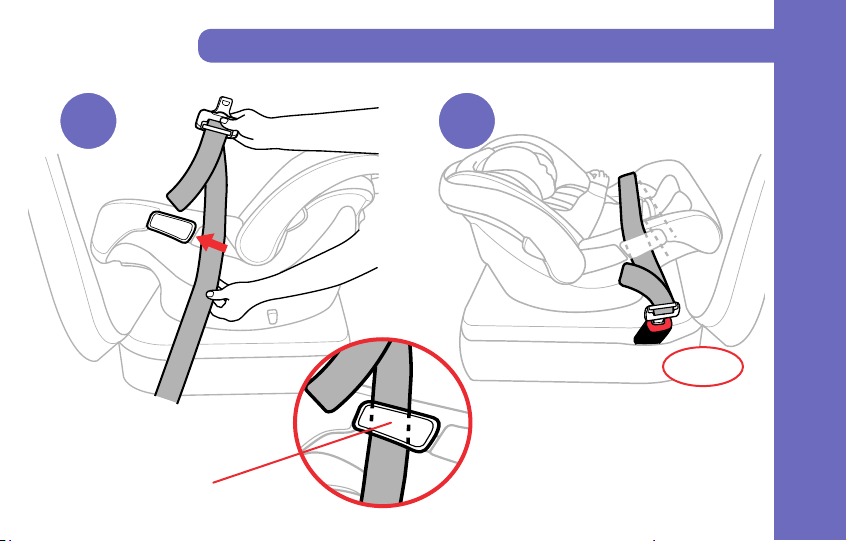
Thread vehicle seat belt up and slide into the Seat Belt Guide on the side of
the Child Restraint.
Pull vehicle seat belt down and slide into the Seat Belt Guide on opposite
side of the Child Restraint. Buckle the vehicle seat belt.
1
2
63
WITHOUT BASE INSTALLATION
INSTALL USING LAP BELT ONLY
21
CLICK!
Seat Belt
Guide
64
WITHOUT BASE INSTALLATION
INSTALL USING LAP BELT ONLY
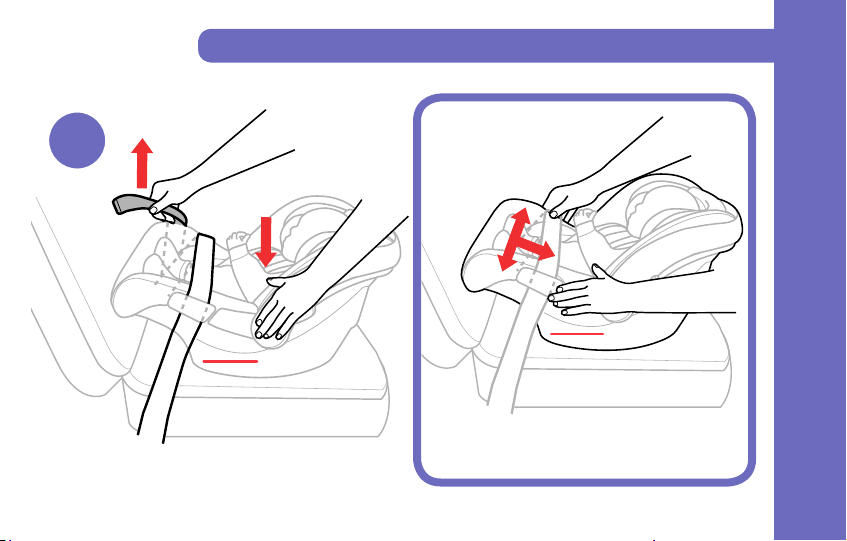
While pushing down on the Child Restraint, pull up on the loose end of the
vehicle lap belt to remove all slack.
3
Put the vehicle seat belt in the locked mode, see vehicle owner's manual for more
information. A tightly rolled towel may be used under the front edge of the
Carrier if needed to adjust the angle of the Carrier. Angle is correct when level line
on Carrier is level with ground.
CHECK YOUR WORK
Hold Child Restraint at each side and pull side to side and forward.
Child Restraint should not move more than 1” (25 mm) from vehicle seat
back or side-to-side.
Make sure Child Restraint is level. Make sure infant’s head does not fall
forward. If necessary re-adjust recline and repeat installation steps to
make sure Child Restraint is installed properly.
Check installation before every use!
65
WITHOUT BASE INSTALLATION
INSTALL USING LAP BELT ONLY
Put the vehicle seat belt in the locked mode, see vehicle owner's manual for more
information. A tightly rolled towel may be used under the front edge of the
Carrier if needed to adjust the angle of the Carrier. Angle is correct when level line
on Carrier is level with ground.
3
CHECK YOUR WORK
66
SECURING YOUR CHILD
SECURING CHILD WITH HARNESS
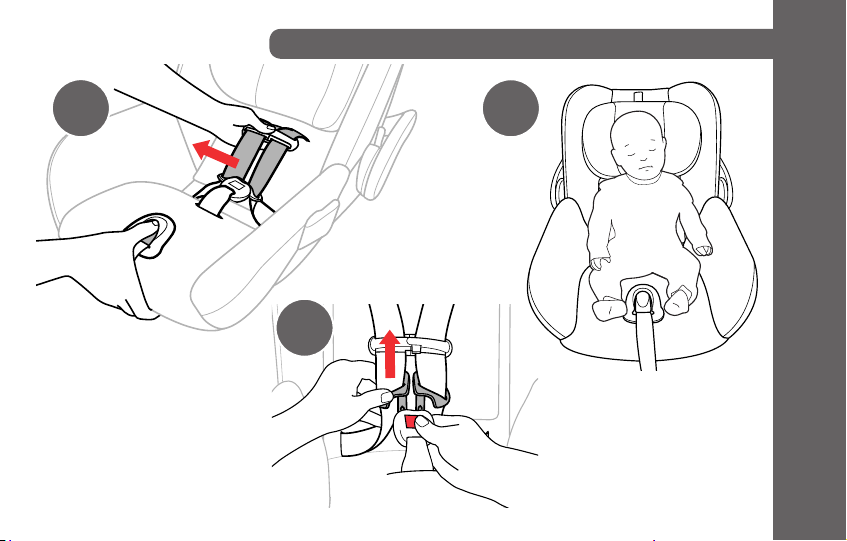
Loosen harness by pressing the Adjuster Button and pulling out on both
Harness Straps.
Press the button on the buckle and release both buckle tongues.
Separate chest clip and spread Harness Straps apart. Place child in carrier
in seated position.
1
2
3
For a better fit in the Carrier with smaller infants, the provided Newborn
Positioner may be needed. See page 76 for more details.
Child must be resting against back and bottom of carrier. Make sure child is not
slouched.
67
SECURING YOUR CHILD
SECURING CHILD WITH HARNESS
For a better fit in the Carrier with smaller infants, the provided Newborn
Positioner may be needed. See page 76 for more details.
2
1
3
Child must be resting against back and bottom of carrier. Make sure child is not
slouched.
68
SECURING YOUR CHILD
SECURING CHILD WITH HARNESS
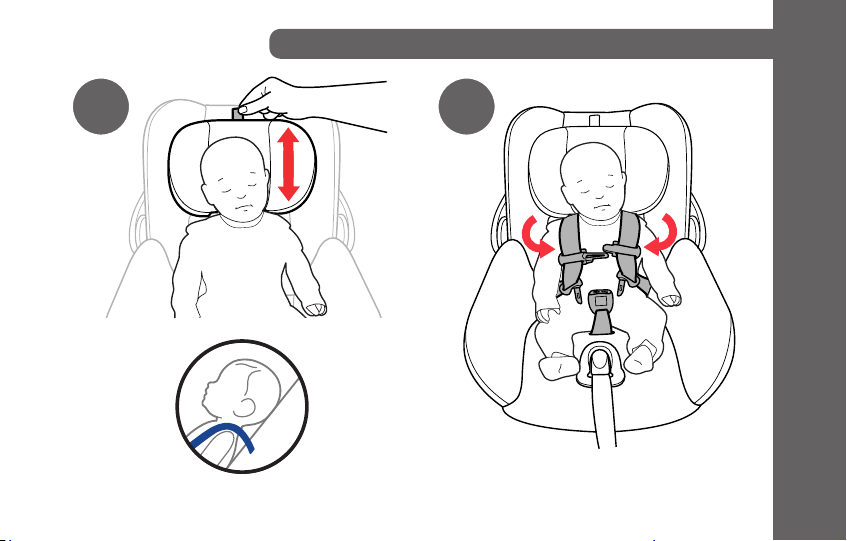
Pull up on the Headrest Adjustment Strap and adjust the Head Rest up or
down until the harness slots are AT or JUST BELOW top of child's
shoulders. Pull up and push down on the Head Rest to make sure the Head
Rest locks into position before tightening Harness.
Pull Harness Straps over child's shoulders and pull waist straps around
their waist.
4
NEVER use clothing or blankets that interfere with fastening or
tightening the harness. An unsecured child could be ejected in a sharp
turn, sudden stop or crash!
5
Never secure child in Carrier with child dressed in bulky garments or heavy clothing.
Heavy clothing can prevent harness from being properly tightened around child.
69
SECURING YOUR CHILD
SECURING CHILD WITH HARNESS
AT OR JUST BELOW
4
*
5
Never secure child in Carrier with child dressed in bulky garments or heavy clothing.
Heavy clothing can prevent harness from being properly tightened around child.
70
SECURING YOUR CHILD
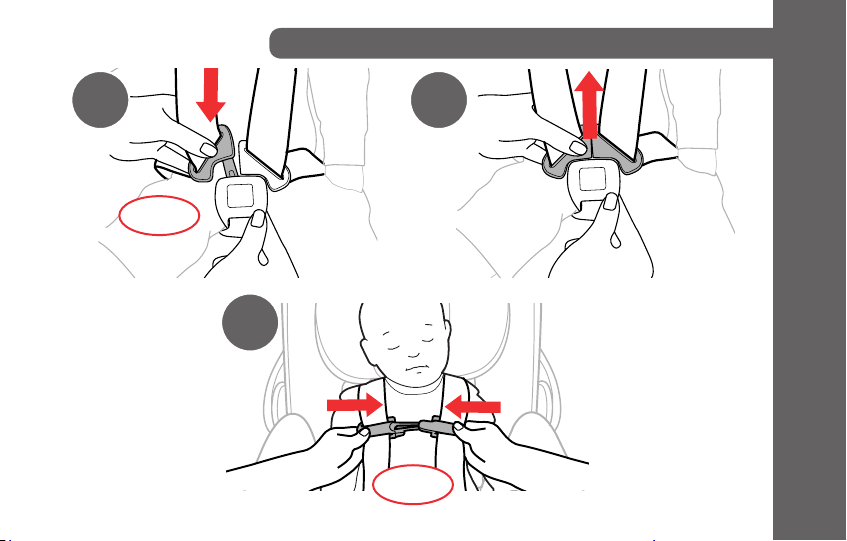
Insert each Buckle Tongue into Harness Buckle; listen for a click (6a). Pull
up firmly on both Buckle Tongues to make sure that they are securely
latched (6b).
Fasten Chest Clip by snapping both sides together.
SECURING CHILD WITH HARNESS
6
Harness Straps must be laying flat, free of twists and on top of child's shoulders.
7
71
SECURING YOUR CHILD
SECURING CHILD WITH HARNESS
6b6a
CLICK!
7
CLICK!
72
SECURING YOUR CHILD
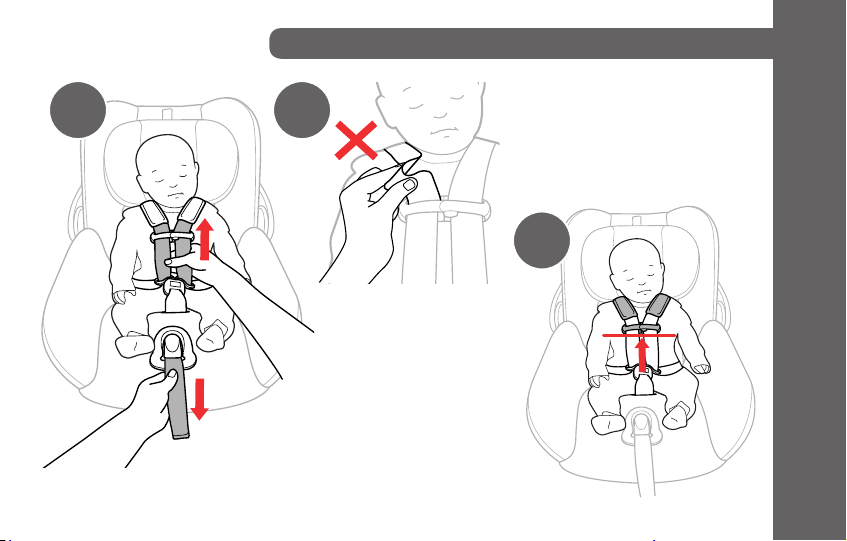
Tighten the harness by pulling slowly on Harness Adjuster Strap while
pulling up on both shoulder straps to remove all slack from below (8a).
Make sure the Harness Straps are snug on child. If you can pinch a fold in
the Harness Strap at the child’s shoulders, harness is too loose (8b). If the
Harness Straps are too loose pull the Harness Adjuster Strap more.
Move the Shoulder Pads up to the child’s shoulders. Slide Chest Clip up to
center of child’s chest, level with the armpits.
8
9
WARNING - If harness is not snug around your child, child could be
ejected in a sharp turn, sudden stop or crash resulting in serious injury or death.
SECURING CHILD WITH HARNESS
Pull excess strap up through buckle tongues so that harness is snug around child's thighs.
73
SECURING YOUR CHILD
8a
9
SECURING CHILD WITH HARNESS
8b
Pull excess strap up through buckle tongues so that harness is snug around child's thighs.
74
SECURING YOUR CHILD
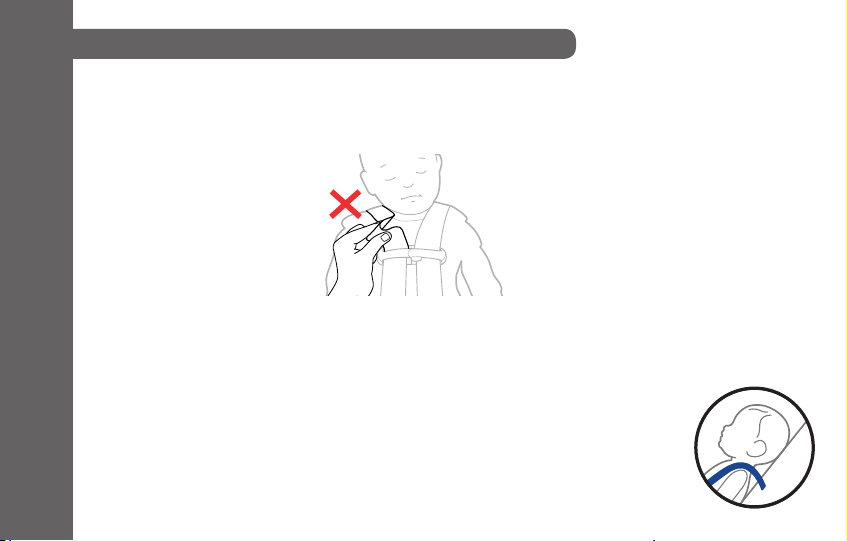
Harness Straps must be snug. If you can pinch a fold in the strap at the shoulders, the
harness is too loose. A snug strap should not allow any slack. It lies in a relatively straight
line without sagging. It does not press on the child’s flesh or push the child’s body into an
unnatural position.
To ensure a better fit for smaller infants, the Newborn Positioner may be needed. Never
place extra padding under or behind the child. Only use the Newborn Positioner. Never use
Newborn Positioner if child weighs more than 11 pounds.
Straps must lay flat, free of twists and centered on top of the child’s shoulders.
Check the height of the Harness Straps: Position the Harness Straps
at or just below the child’s shoulders.
SECURING CHILD CHECKLIST
*
75
SECURING YOUR CHILD
Check the position of Chest Clip: Chest Clip should be centered on the child’s chest, level
with the armpits.
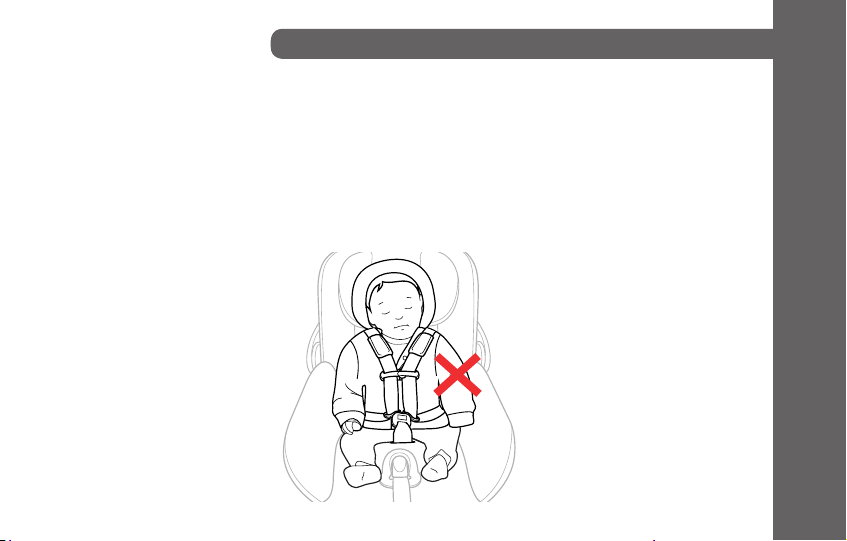
Never secure child in Carrier with child dressed in bulky garments or heavy clothing.
Heavy clothing can prevent harness from being properly tightened around child.
Never secure child in Carrier with child wrapped in a blanket. To keep child warm, place a
blanket over child AFTER you have properly secured and tightened harness around child.
SECURING CHILD CHECKLIST
NO Bulky Clothing
ADDITIONAL INFORMATION
76
BASE RELEASE HANDLE
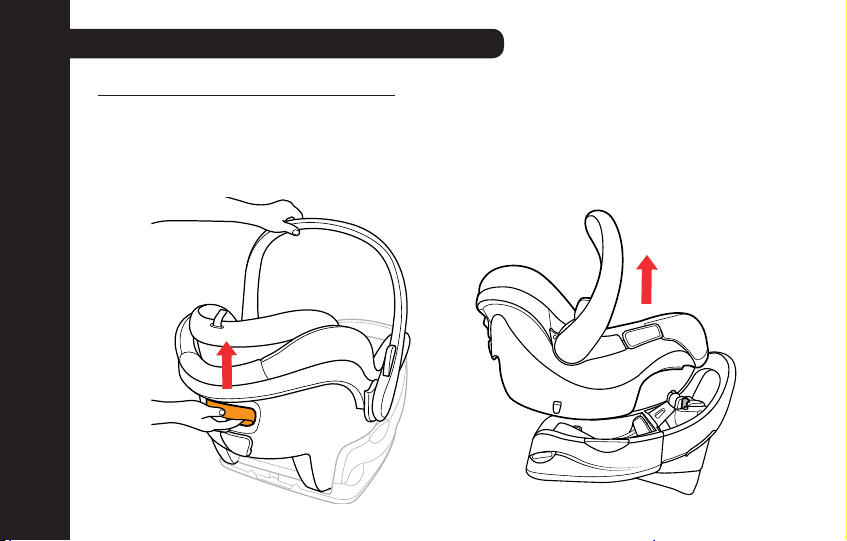
RELEASE CARRIER FROM BASE:
To unhook the Carrier from the Base, squeeze the Base Release Handle
on the back of the Carrier then lift up on the Carry Handle.
77
ADDITIONAL INFORMATION
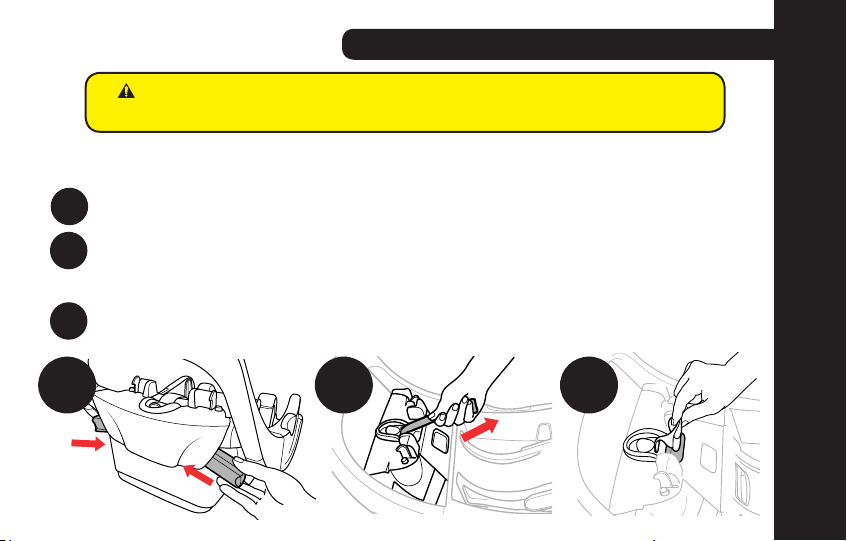
LATCH STORAGE
1
Insert LATCH Connectors into the storage compartments.
Pull on the LATCH Pull Strap to secure LATCH Connectors in the
compartments.
Roll LATCH Pull Strap and store in Pull Strap Storage Compartment.
3
2
Store both LATCH Connector in compartments on either side of the Base when not in use.
1 2 3
Store LATCH Connectors properly in the compartments when
not using for installation.
ADDITIONAL INFORMATION
78
NEWBORN POSITIONER
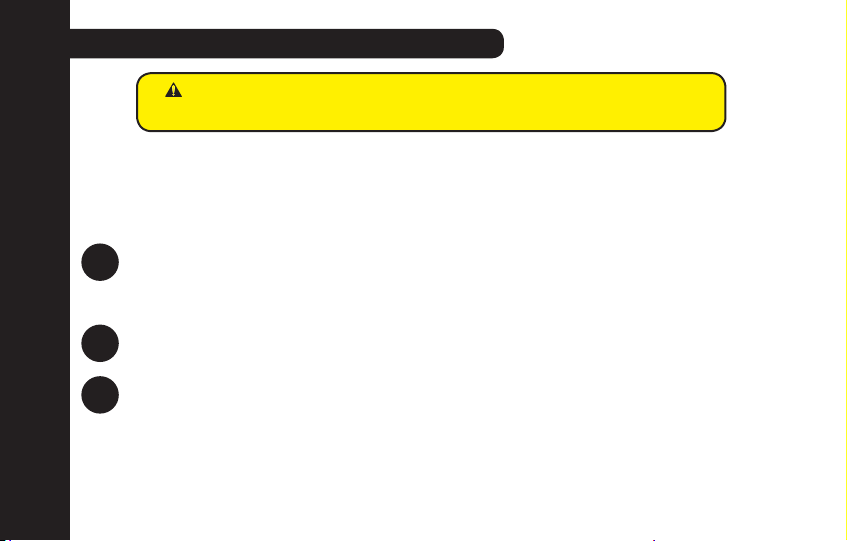
To ensure a better t for smaller infants the Newborn Positioner may be needed.
Do NOT use any other newborn positioner or pillows. Only use the one provided
by Chicco for this Child Restraint.
Place the Newborn Positioner in the Carrier seat. Then pull the Buckle
through slot in the bottom of Newborn Positioner.
Pull both Harness Straps over the side panels of Newborn Positioner.
Push Newborn Positioner firmly into Carrier to make sure it is properly
positioned against the back of the seating area.
1
2
3
WARNING
- Use the NEWBORN POSITIONER provided
for infants who weigh between 4 and 11 lbs (2 and 5 kg).
79
ADDITIONAL INFORMATION
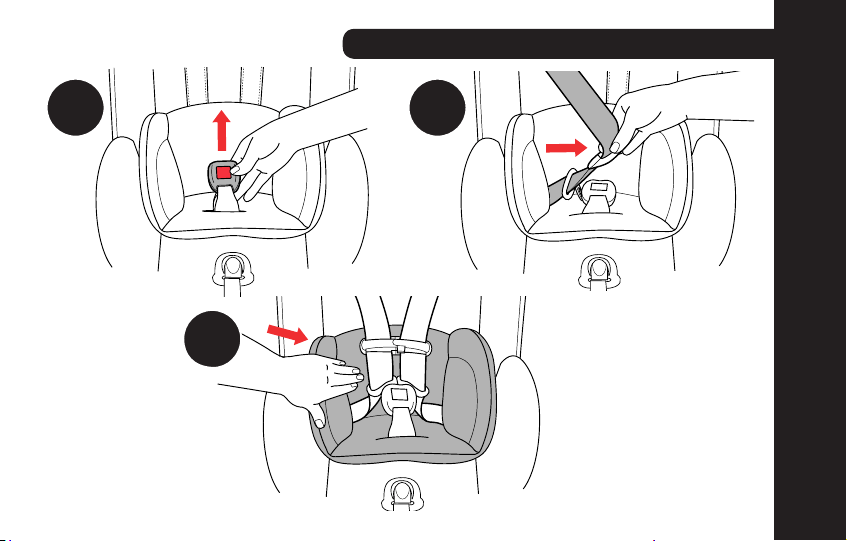
To ensure a better t for smaller infants the Newborn Positioner may be needed.
Do NOT use any other newborn positioner or pillows. Only use the one provided
by Chicco for this Child Restraint.
Place the Newborn Positioner in the Carrier seat. Then pull the Buckle
through slot in the bottom of Newborn Positioner.
Pull both Harness Straps over the side panels of Newborn Positioner.
Push Newborn Positioner firmly into Carrier to make sure it is properly
positioned against the back of the seating area.
NEWBORN POSITIONER
21
3
ADDITIONAL INFORMATION
80
HEAD REST INSERT
2
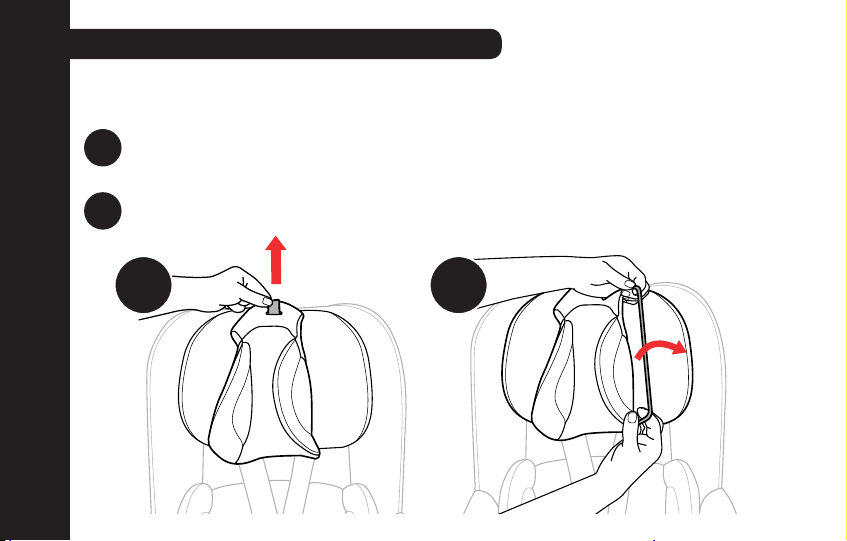
To Install Head Rest Insert, thread the Head Rest Adjustment Strap
through the button hole.
Slide the elastic straps around BOTH sides of the Head Rest.
1 2
1
To provide head support for smaller infants the Head Rest Insert may be used.
The Head Rest Insert can be used with or without the Newborn Positioner.
81
ADDITIONAL INFORMATION
2
HANDLE POSITIONS
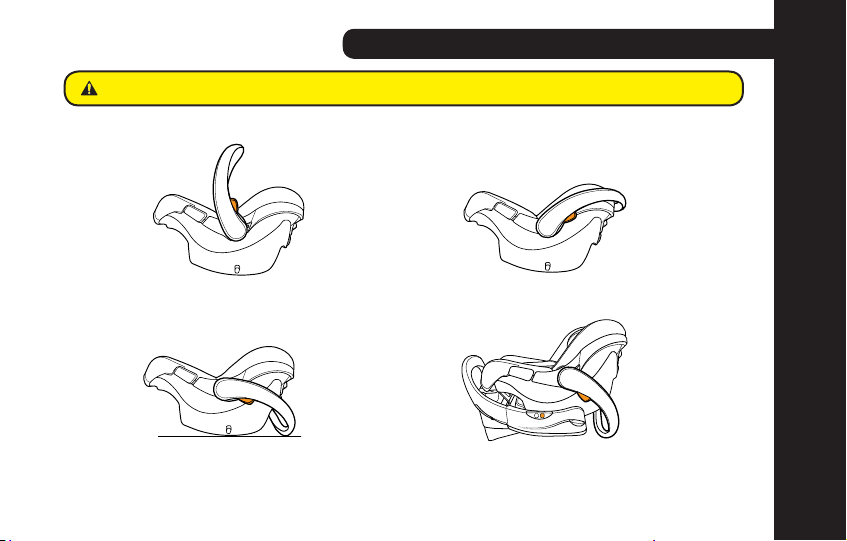
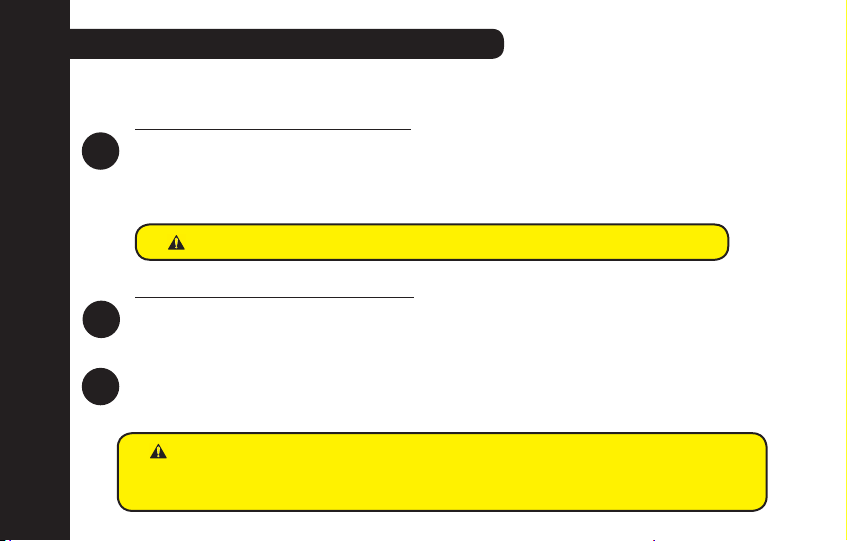
To Adjust Handle, press both of the Handle Release Buttons and rotate the handle. There are
4 positions:
WARNING
-
NEVER adjust handle to Base Storage Position outside of the vehicle.
Carrying Position Rocking Position
Stationary Position Base Storage Position -
Can be used to maximize
space in front of the child restraint when carrier and base
are installed in the vehicle in either Stage 1 or Stage 2.
To Install Head Rest Insert, thread the Head Rest Adjustment Strap
through the button hole.
Slide the elastic straps around BOTH sides of the Head Rest.
To provide head support for smaller infants the Head Rest Insert may be used.
The Head Rest Insert can be used with or without the Newborn Positioner.
ADDITIONAL INFORMATION
82
ADJUSTING CROTCH STRAP
1
2
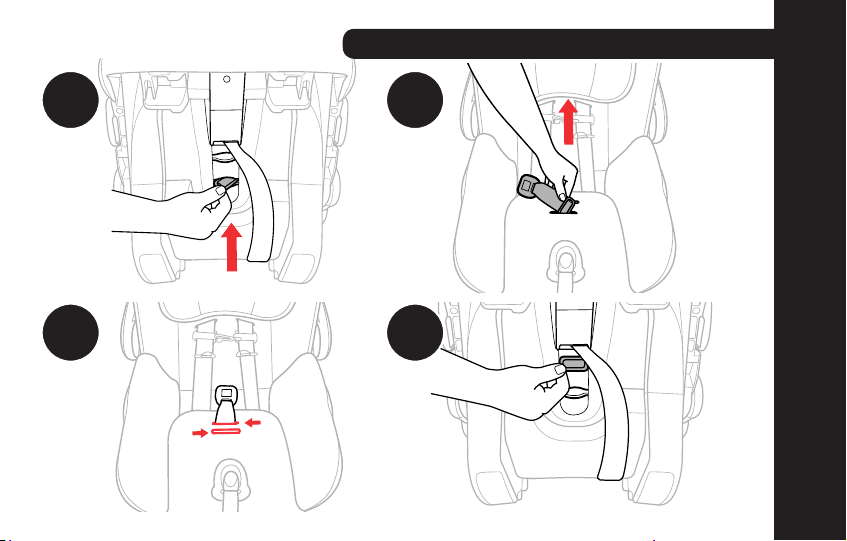
Adjust Crotch Strap if strap is underneath child.
REMOVING CROTCH STRAP:
Flip the Carrier upside-down and locate the Crotch Strap Retainer. Turn
Retainer slightly on underside of seat and insert corner through slot (1a).
Flip the Carrier upright and pull Crotch Strap up through the slot (1b).
ADJUSTING CROTCH STRAP:
Reverse the removing instructions above to reinstall. There are two
positions on the Carrier, as shown.
Make sure Crotch Strap Retainer lays flat against the bottom of the Child
Restraint. Pull on Crotch Strap to make sure it is secure.
3
NEVER
use Child Restraint without the Crotch Strap securely installed.
DO NOT USE
Child Restraint if any part of the harness is damaged. For
proper removal and installation of the harness straps visit the Chicco website at
www.chiccousa.com or call 1-877-424-4226.
83
ADDITIONAL INFORMATION
ADJUSTING CROTCH STRAP
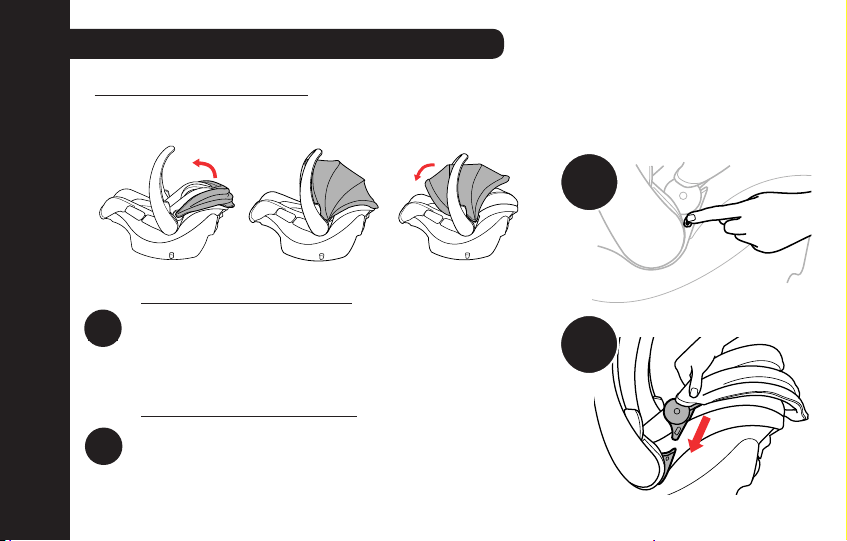
1a
Adjust Crotch Strap if strap is underneath child.
REMOVING CROTCH STRAP:
Flip the Carrier upside-down and locate the Crotch Strap Retainer. Turn
Retainer slightly on underside of seat and insert corner through slot (1a).
Flip the Carrier upright and pull Crotch Strap up through the slot (1b).
ADJUSTING CROTCH STRAP:
Reverse the removing instructions above to reinstall. There are two
positions on the Carrier, as shown.
Make sure Crotch Strap Retainer lays flat against the bottom of the Child
Restraint. Pull on Crotch Strap to make sure it is secure.
1b
2 3
Position 1
Position 2
ADDITIONAL INFORMATION
84
CANOPY
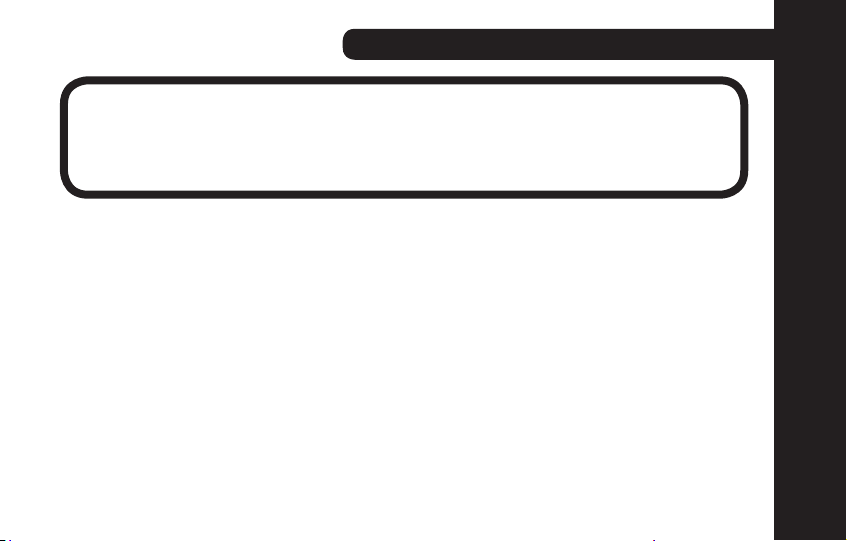
REMOVING CANOPY:
Press button on Canopy Mount and pull up to
remove. Repeat for the other side.
ATTACHING CANOPY:
Insert both of the Canopy Mounts into the
slots on the side of the Carrier. The Canopy
Mounts will click into place.
1
2
2
1
ADJUSTING CANOPY:
The Canopy can be adjusted by rotating the canopy forwards or backwards.
85
ADDITIONAL INFORMATION
INSTALLATION ON AN AIRCRAFT
When traveling by airplane with your child, Chicco recommends taking the Carrier
on the airplane with you so that you can use it with your child. Not only will it
protect your child during take-off, landing, and turbulence, but also allow your child
to be more comfortable.
•This Child Restraint is certified for use on aircraft. Contact the
airline prior to travel to discuss their Child Restraint policy.
•Use this Child Restraint only on FORWARD-FACING aircraft seats.
•Install Carrier on an aircraft the same way it is installed in a
vehicle when using a vehicle lap belt. Reference Without Base
Installation Lap Belt ONLY on page 62.
REMOVING CANOPY:
Press button on Canopy Mount and pull up to
remove. Repeat for the other side.
ATTACHING CANOPY:
Insert both of the Canopy Mounts into the
slots on the side of the Carrier. The Canopy
Mounts will click into place.
ADDITIONAL INFORMATION
86
DO NOT USE BLEACH, solvents or household cleaners as
they may weaken plastics and straps.
DO NOT USE SOAPS OR LUBRICANTS on Buckle or
LATCH hardware. It may cause them to malfunction.
• Fabrics may be spot-cleaned, hand or machine washed:
Hand wash using mild soap and water, or machine washed in cold
water on delicate cycle using mild detergent. Hang to dry.
• Cleaning Shoulder Pads:
Hand wash using mild soap and water. Hang to dry.
• Cleaning Plastics:
Sponge clean using warm water and mild soap. Towel dry.
CLEANING AND MAINTENANCE
For softgood removal instructions visit the Chicco website at www.chiccousa.com
or call 1-877-424-4226.
NEVER use Child Restraint without the seat pad.
87
ADDITIONAL INFORMATION
• Cleaning Harness:
Sponge clean using warm water and mild soap. Air dry. Do NOT machine wash.
• Cleaning LATCH Straps:
LATCH Straps cannot be replaced. Sponge clean using
warm water and mild soap. Air dry.
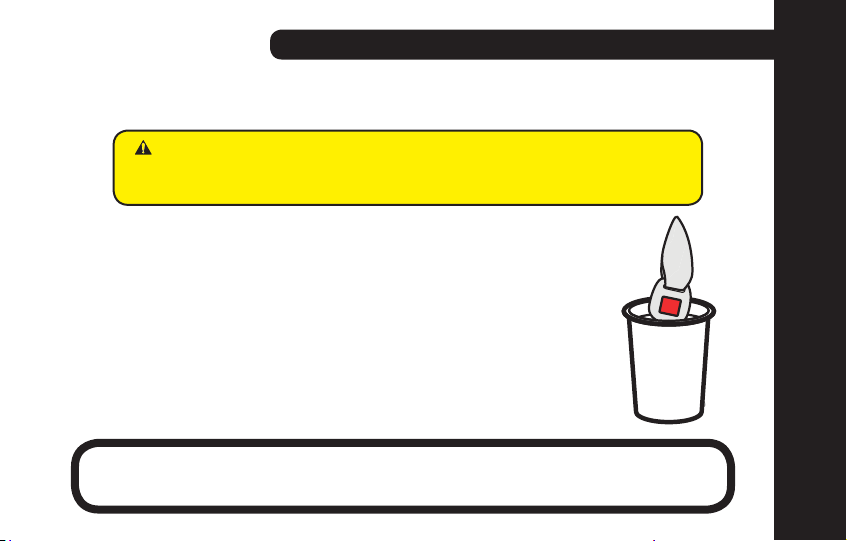
• Cleaning Buckle and LATCH Hardware:
Sponge clean, using warm water and mild soap. If debris in
buckle, remove and rinse in warm cup of water. Air dry.
See page 82 for removal instructions.
Do NOT remove LATCH or Harness Adjuster Straps. For additional information
visit the Chicco website at www.chiccousa.com or call 1-877-424-4226.
CLEANING AND MAINTENANCE
DO NOT USE Child Restraint if any part of the harness is damaged. For
proper removal and installation of the harness straps visit the Chicco website
at www.chiccousa.com or call 1-877-424-4226.

PMS 2747 and PMS 186