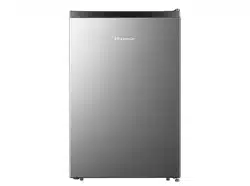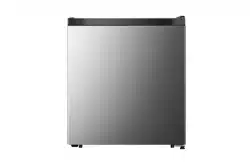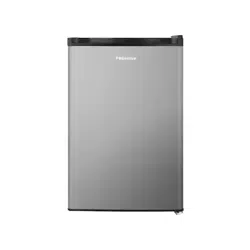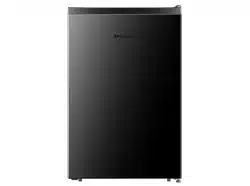
Model:
English
●
Table of Contents
Importantsafetyinstructions ..1
/ŶƐƚĂůůĂƚŝŽŶ ........... . .......3
ůĞĂŶŝŶŐĂŶĚcĂƌĞ .ϰ
Descriptionoftheappliance ..5
Temperaturecontrol 9
Energysavingtips .. ... 11
Troubleshooting 11
Disposaloftheappliance ...... .. 13
For your safety and correct usage,
please read these instructions carefully
before using your new appliance to
avoid unnecessary mistakes and
accidents. Please ensure that all
people using this appliance are familiar
with its operation and safety features.
Keep these instructions in a safe place
for future reference and be sure that
they are kept with the appliance in the
event that it is moved or sold, so that
everyone using it through its life will be
properly informed on its correct
appliance usage and safety. The
manufacturer is not responsible for
damages caused by misuse. The
appliance is for indoor and domestic
use only.
Electrical SafetySafety
The appliance must be plugged into
its own dedicated 115 V, 60 Hz. AC
only electrical outlet.The power cord
of the appliance is equipped with
a three-prong grounding plug for
your protection
against electrical shock hazards.It
must be plugged directly into a
properly grounded three prong
receptacle. The receptacle must be
installed in accordance with local
codes and ordinances. Consult a
qualified electrician. Avoid
connecting refrigerator to a Ground
Fault Interruptor (GFI) circuit. Do not
use an extension cord or adapter plug.
/ĨƚŚĞ^hWW>zKZŝƐĚĂŵĂŐĞĚŝƚ
ŵƵƐƚďĞƌĞƉůĂĐĞĚďLJƚŚĞ
ŵĂŶƵĨĂĐƚƵƌĞƌŝƚƐƐĞƌǀŝĐĞĂŐĞŶƚŽƌ
ƐŝŵŝůĂƌůLJƋƵĂůŝĨŝĞĚƉĞƌƐŽŶŝŶŽƌĚĞƌƚŽ
ĂǀŽŝĚĂŚĂnjĂƌĚ
Never unplug the refrigerator by
pulling on the power cord. Alwaysgrip
the plug firmly, and pull
straight out from the receptacle to
prevent damaging the power cord.
Unplug the refrigerator before
cleaning to avoid electrical shock.
Performance may be affected if the
voltage varies by 10% or more.
Such damage is not covered under
your warranty.
Do not plug the unit into an electrical
outlet controlled by a wall switch or
pull cord to prevent the refrigerator
from being turned off accidentally.
Fire Hazard
The appliance contains a small
quantity of refrigerant (R600a)
which is environmentally friendly but
potentially flammable in the refrigerant
circuit.
Table of Contents
*NQPSUBOUTBGFUZJOTUSVDUJPOT
1
Safety for children and others
who are vulnerable
This appliance is not intended for
use by per
sons (including children)
with reduced physical, sensory or
mental capabilities, or lack of
experience and knowledge, unless
they have been given supervision or
instruction concerning the use of the
appliance by a person responsible for
their safety. Children should be
supervised to ensure that they do
not play with the appliance.
Keep all packaging away from
children to avoid risk of suffocation.
If you are discarding your old
appliance, pull the plug out of the
socket, cut the connection cable
(as close to the appliance as you
can).Cut off the main plug and
discard. Break off any old locks or
latches as a safeguard and remove
the door to prevent children playing
from suffering an electric shock or
from closing themselves inside it.
This appliance is intended to be used
in household and similar applications
such as:
- staff kitchen areas in shops, offices
and other working environments;
- farm houses and by clients in hotels,
motels and other residential type
environments;
- bed and breakfast environments;
- catering and similar non-retail
applications.
Do not store flammable gases or
liquids inside the appliance. There
is a risk of an explosion.
Do not operate any electrical
appliances within the appliance
(e.g. electric ice cream makers,
mixers, etc.).
When unplugging, always pull the plug
from the main outlet. Do not pull on
the cord.
Proper disposal of the refrigerator:
Remove doors.
Leave shelves in place so children
may not easily climb inside.
Have refrigerant removed by a
qualified service technician.
General safety and daily use
Do not place hot items near the
plastic components of this appliance.
Do not place food products directly
against the air outlet on the rear wall.
Frozen food must not be refrozen
once it has been thawed out.
Store pre-packaged frozen food in
accordance with the frozen food
manufacturer’s instructions.
The appliance’s manufacturer
storage recommendations should
be strictly adhered to. Refer to the
relevant instructions for storage.
Do not place carbonated or fizzy
drinks in the freezer compartment
as it creates pressure on the container,
which may cause it to explode,
resulting in damage to the appliance.
Ice lollies (popsicles) can cause
frost burns if consumed straight
from the freezer compartment.
Do not place food directly against
the air outlet inside the refrigerator.
Do not place the appliance in direct
sunlight.
ŽŶŽƚƐƚŽƌĞĞdžƉůŽƐŝǀĞƐƵďƐƚĂŶĐĞƐ
ƐƵĐŚĂƐĂĞƌŽƐŽůĐĂŶƐǁŝƚŚĂĨůĂŵŵĂďůĞ
ƉƌŽƉĞůůĂŶƚŝŶƚŚŝƐĂƉƉůŝĂŶĐĞ
WARNING: Risk of child entrapment.
Before you throw away your old
refrigerator or freezer:
Child entrapment and suffocation are
not the only problems of the past. Junked
or abandoned refrigerators are still
dangerous - even if they are sitting
"for just a few days". If you are getting rid
of your old refrigerator, please follow
the instructions below to help prevent
accidents.
2
Before installing, follow these
important steps:
Location
Position the appliance away from
sources of heat such as stoves,
radiators, direct sunlight etc. Maximum
performance and safety are guaranteed
by maintaining the correct indoor
temperature for the class of unit
concerned, as specified on the rating
plate. This appliance performs well
oo
from 12.8 to 43.3 C (55-110 F ). The
appliance may not work properly if it is
left for a longer period at a temperature
above or below the indicated range.
IMPORTANT!
Good ventilation is needed around
the fridge for easy dissipation
of heat, high efficiency of refrigeration
and low power consumption. For this
purpose, sufficient clear space should
be available around the fridge. It is
advisable for there to be 75 mm (3 inch)
separating the back of the fridge to the
wall, at least 100 mm (4 inch) of
space at its two sides, and a minimum
of 100 mm (4 inch) from its top and a
clear space up front to allow the doors
to open 180˚.
Appliances must not be exposed to rain.
Sufficient air must be allowed to
circulate in the lower rear section of
appliance, as poor air circulation can
affect performance.
Wash any removable parts of the
refrigerator interior, and exterior
with mild detergent and warm
water. Wipe dry. Do not use harsh
cleaners on these surfaces.
Do not use razor blades or other
sharp instruments, which can
scratch the appliance surface when
removing adhesive labels. Any glue left
from the tape can be removed with a
mixture of warm water and mild
detergent, or touch the residue with
the sticky side of tape already
removed. Do not remove the serial
plate.
Caution: flammable refrigerant used!
When handing, moving and use of the
refrigerator, make sure to avoid either
damaging the refrigerant tubing,
or increasing the risk of a leak.
WARNING: Keep ventilation openings,
in the appliance enclosure or in the
built-in structure, clear of obstruction.
WARNING: Do not use mechanical
devices or other means to accelerate
the defrosting process, other than
those recommended by the
manufacturer.
WARNING: Do not damage the
refrigerant circuit.
WARNING: Do not use electrical
appliances inside the food storage
compartments of the appliance, unless
they are of the type recommended
by the manufacturer.
Cleaning
Table of Contents
*OTUBMMBUJPO
3
Warning! Danger of
electrical shock!
Remove the food from the
appliance before cleaning. Store
food in a cool place and keep well
covered.
Never clean the appliance with a
steam cleaner. Moisture could
accumulate in electrical
components.
Hot vapors can lead to the
damage of plastic parts.
The appliance must be dry before it
is placed back into service.
IMPORTANT!
Ethereal oils and organic solvents
can attack plastic parts, e.g. lemon
juice or the juice from orange peel,
butyric acid, and cleansers that
contain acetic acid. Do not allow
such substances to come into
contact with appliance parts.
Do not use any abrasive cleansers.
Clean the appliance and the
interior accessories with a cloth
and lukewarm water. Commercially
available dish washing detergents
may also be used.
After cleaning, wipe with fresh
water and a clean dish cloth.
Accumulation of dust at the
condenser increases energy
consumption. For this reason
carefully clean the condenser at the
back of the appliance once a year
with a soft brush or a vacuum
cleaner.
Check the water drain hole on the
rear wall of the refrigerator
compartment.
Clear a blocked drain hole with the
aid of something like a soft peg. Be
careful not to create any damage to
the cabinet by sharp objects.
After everything is dry, place
appliance back into service.
$MFBOJOHBOEcBSF
Defrosting in fresh food storage
compartment
It is automatically controlled by
switching the temperature regulator
on or off so that there is no need of
operation of defrosting. Water from
defrosting will be drained into an
drip tray through a drain pipe at the
back of the fridge automatically.
Defrosting :
Why defrosting
Water contained in food or getting
into air inside the fridge be opening
doors may form a frost layer inside It
will weaken the refrigeration when
the frost is thick. While it is more
than 10mm thick, you should defrost.
4
Do not clean the appliance when it is
connected to the outlet. Before
cleaning the appliance, turn it off and
remove the plug from the outlet (or
switch off the circuit breaker or fuse).
For sanitary reasons, the appliance
interior, including interior accessories,
should be cleaned regularly. The fridge
should be cleaned and maintained at
least every two months.
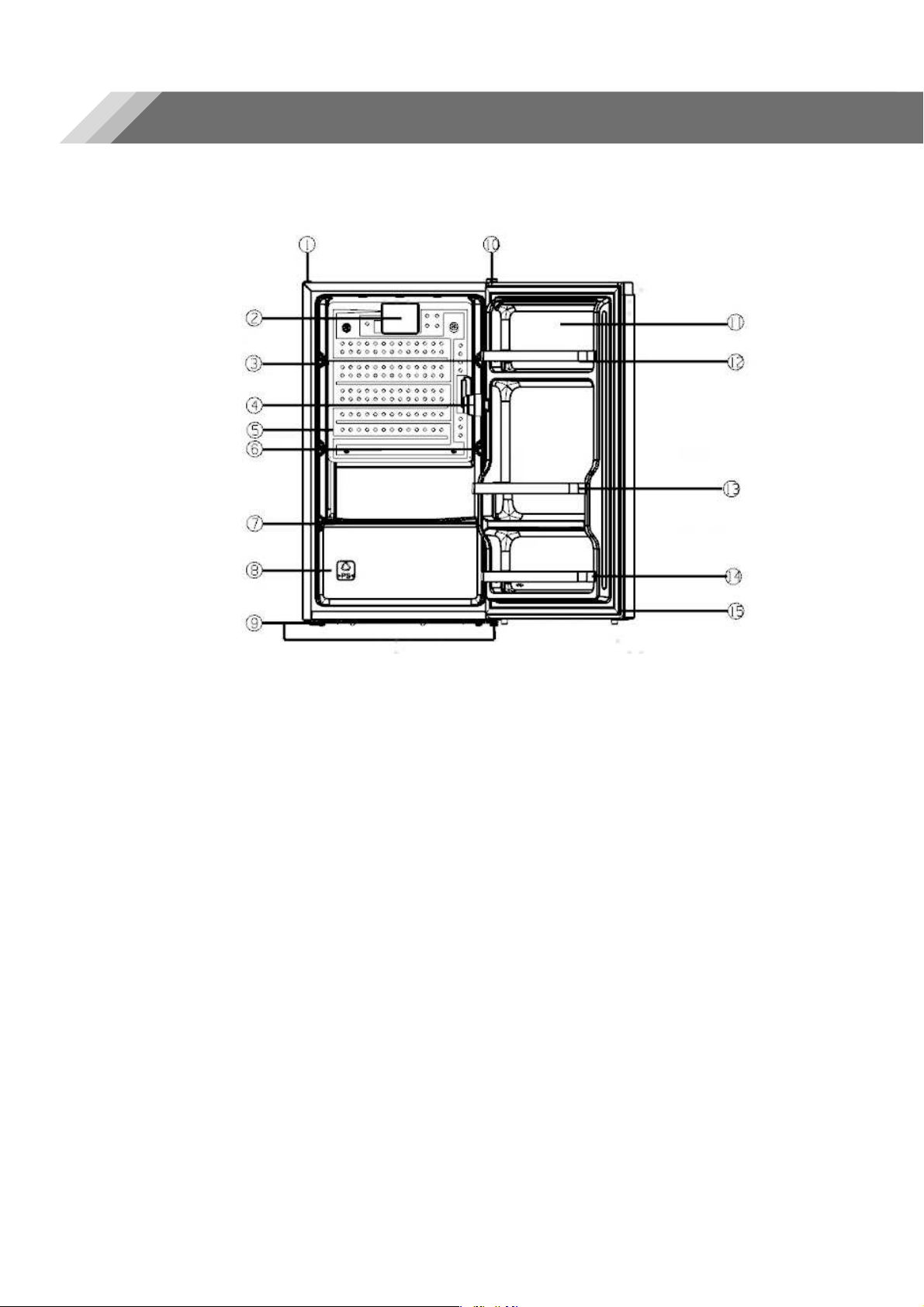
Description of the appliance - LMS044M6RVE/LMS033M6RBE/LMS033M6RVE
5
1.Screw hole cover 2.Cabinet hole cover plate 3.Upper glass shelf
4.Temperature controller 5.Roll bond evaporator 6.Middle glass shelf
7.Lower glass shelf 8.Cabinet 9.Bottom feet
10.Upper hinge cover 11.Refrigerator door 12.Upper shelf
13.Middle shelf 14.Lower shelf 15.Gasket part
NOTE: This figure is only a sketch of the refrigerator. The
actual product may differ from it.
State of California Proposition 65 Warnings:
WARNING: This product contains one or more chernicals known to the State of California to cause cancer.
WARNING: This product contains one or more chernicals known to the State of California to cause birth
defects or other reproductive harm.
California (U.S.A.) Residents
WARNING: Cancer and Reproductive Harm - www.P65Warnings.ca.gov
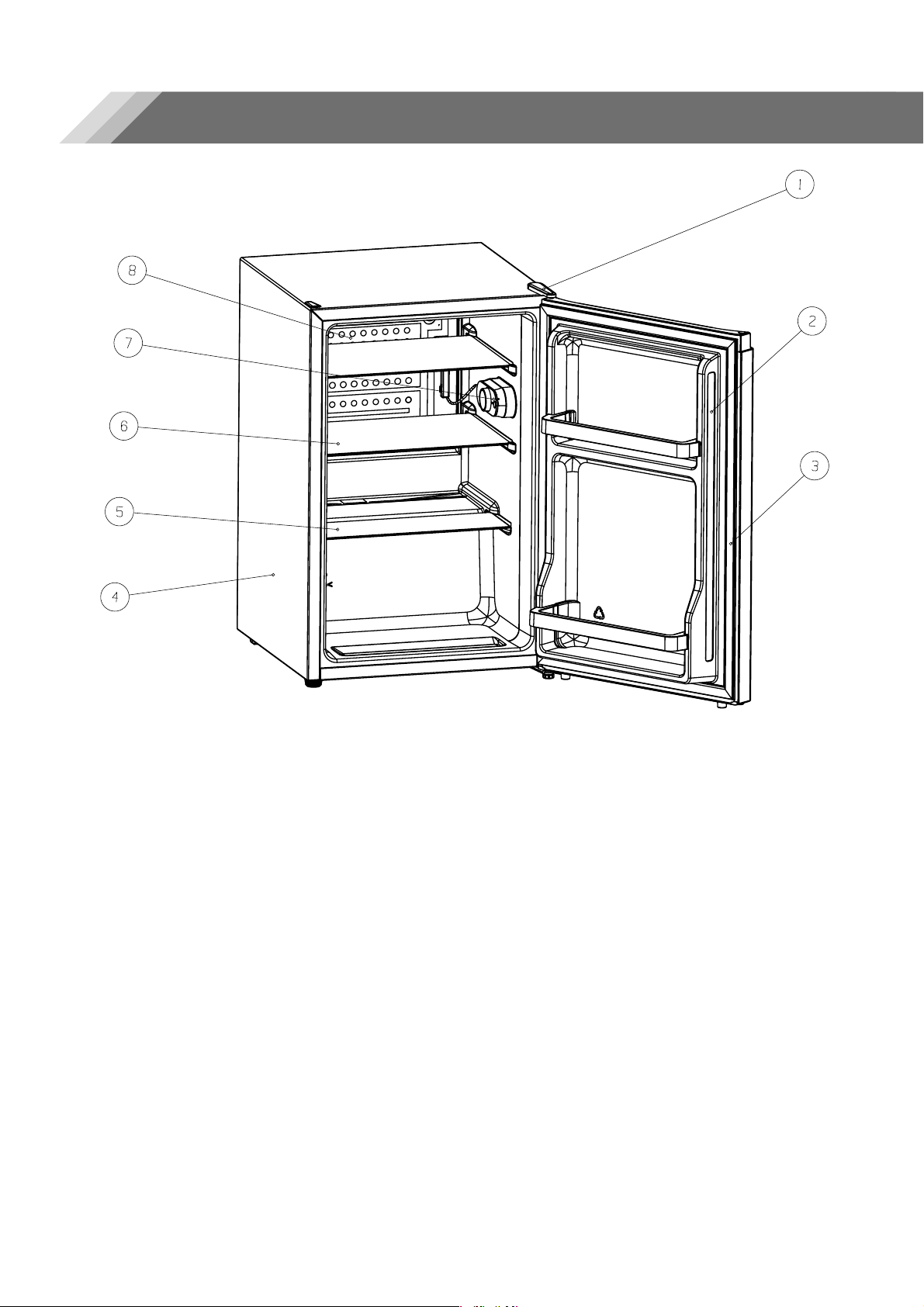
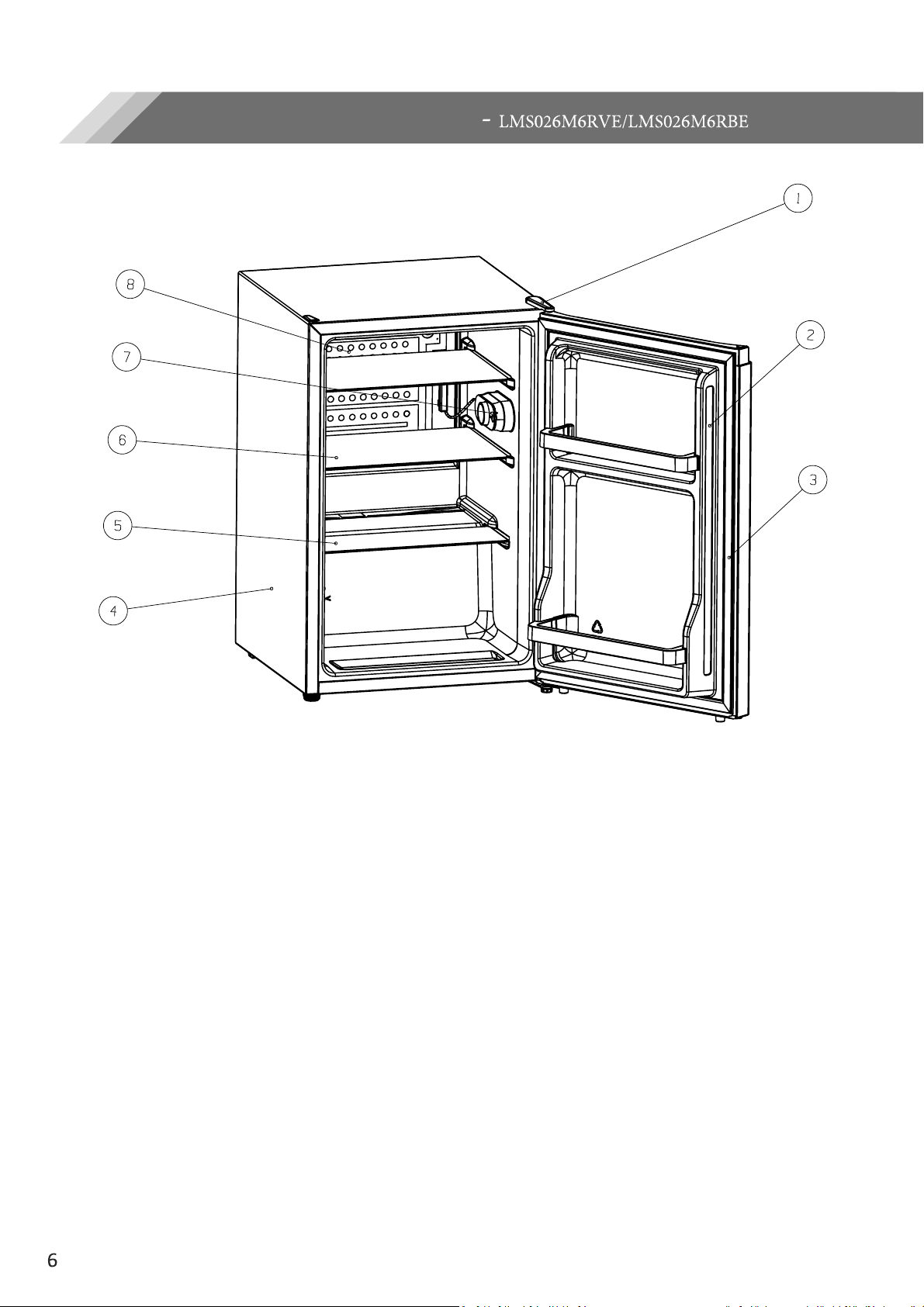
Description of the appliance - LMS026M6RVE/LMS026M6RBE
6
1.Upper hinge cover
4.Cabinet
7.Temperature controller
2.Refrigerator door
5.Glass shelf
8.Roll bond evaporator
3.Gasket part
6.Glass shelf
NOTE: This figure is only a sketch of the refrigerator. The
actual product may differ from it.
State of California Proposition 65 Warnings:
WARNING: This product contains one or more chernicals known to the State of California to cause cancer.
WARNING: This product contains one or more chernicals known to the State of California to cause birth
defects or other reproductive harm.
California (U.S.A.) Residents
WARNING: Cancer and Reproductive Harm - www.P65Warnings.ca.gov
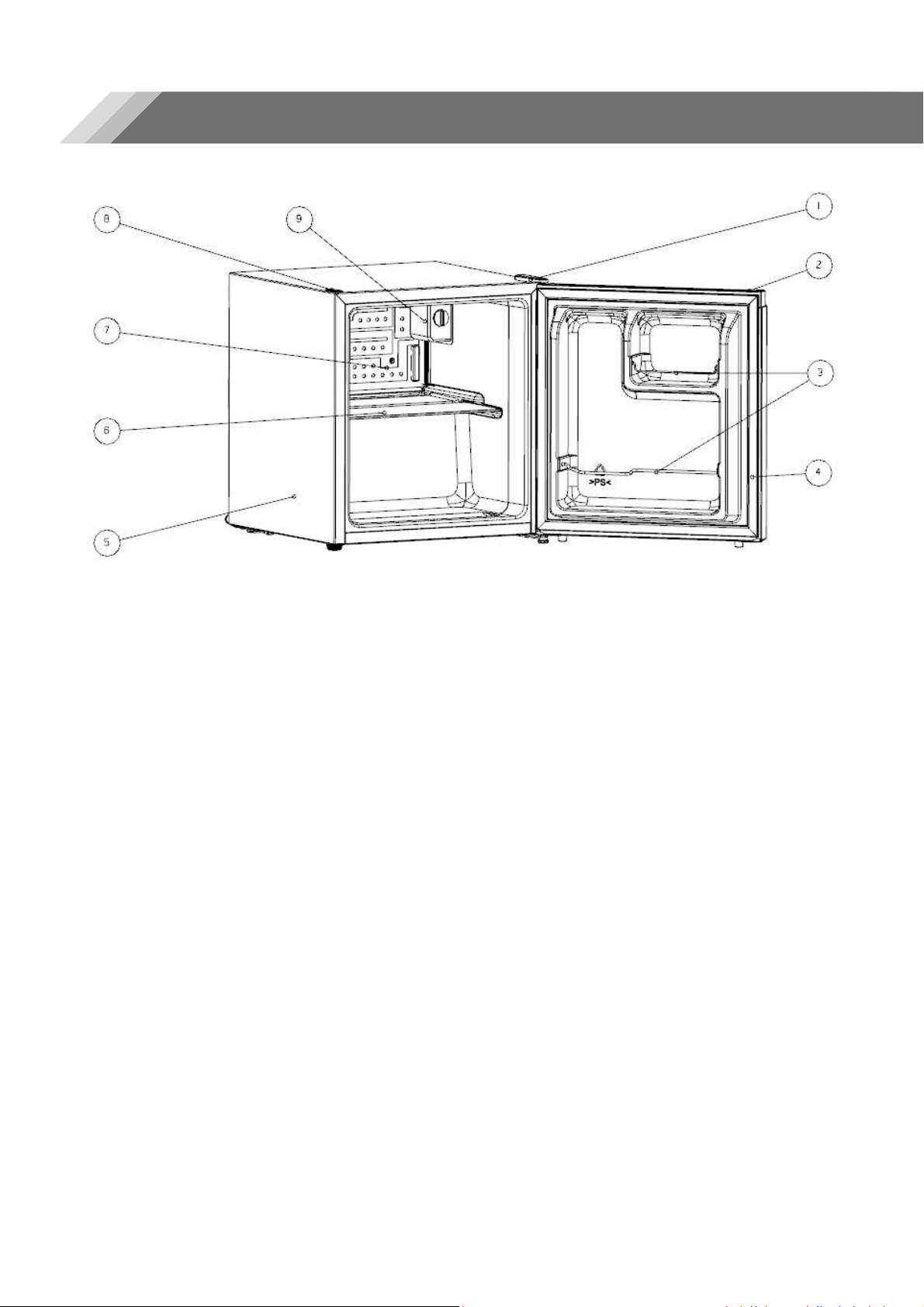
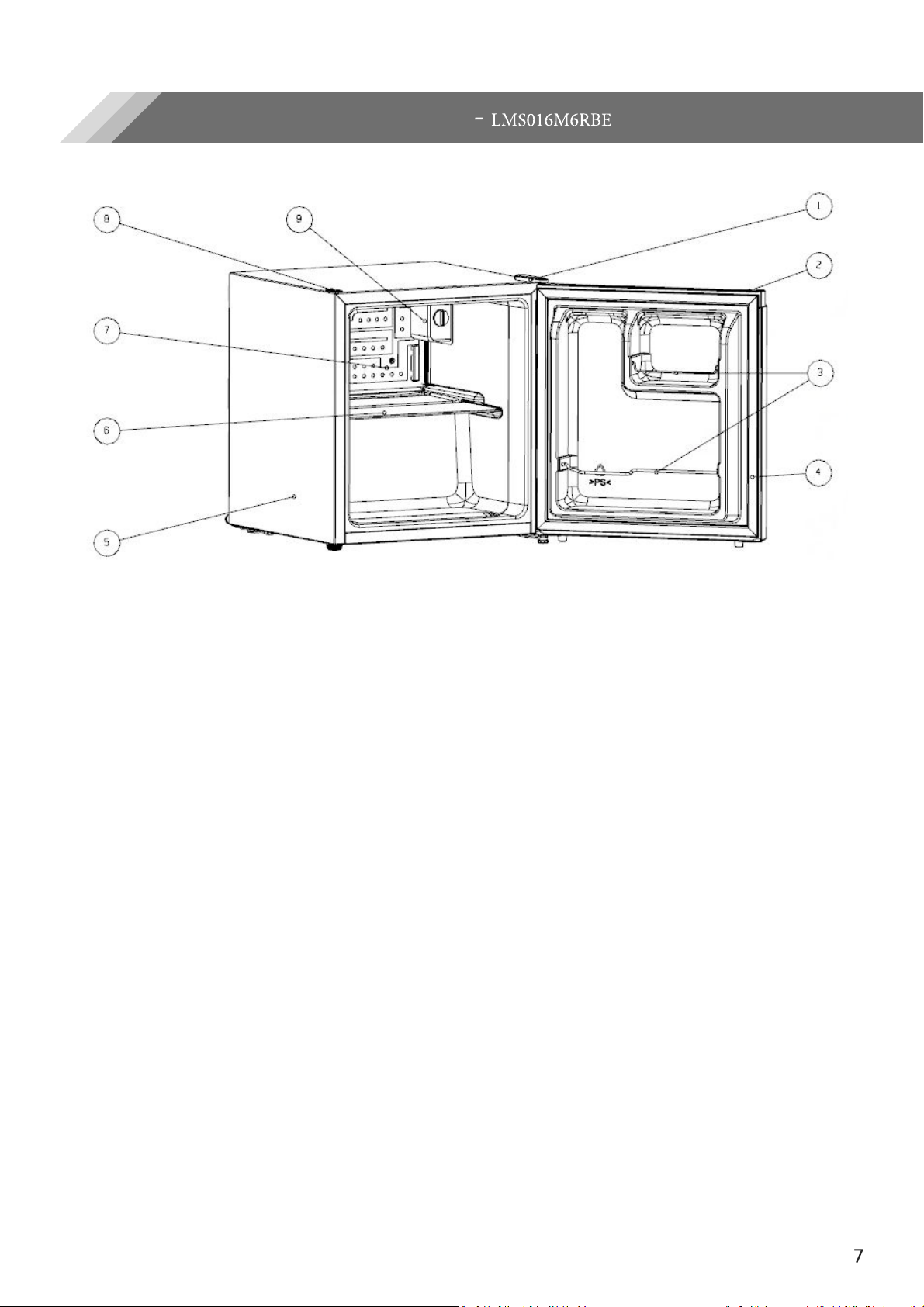
1.Screw hole cover
4.Gasket part
7.Roll bond evaporator
3.Door rack
6.Glass shelf
2.
5.Cabinet
8.Screw hole cover
9.Temperature contorller
Description of the appliance - LMS016M6RBE
7
R
efrigerator door
NOTE: This figure is only a sketch of the refrigerator. The
actual product may differ from it.
State of California Proposition 65 Warnings:
WARNING: This product contains one or more chernicals known to the State of California to cause cancer.
WARNING: This product contains one or more chernicals known to the State of California to cause birth
defects or other reproductive harm.
California (U.S.A.) Residents
WARNING: Cancer and Reproductive Harm - www.P65Warnings.ca.gov
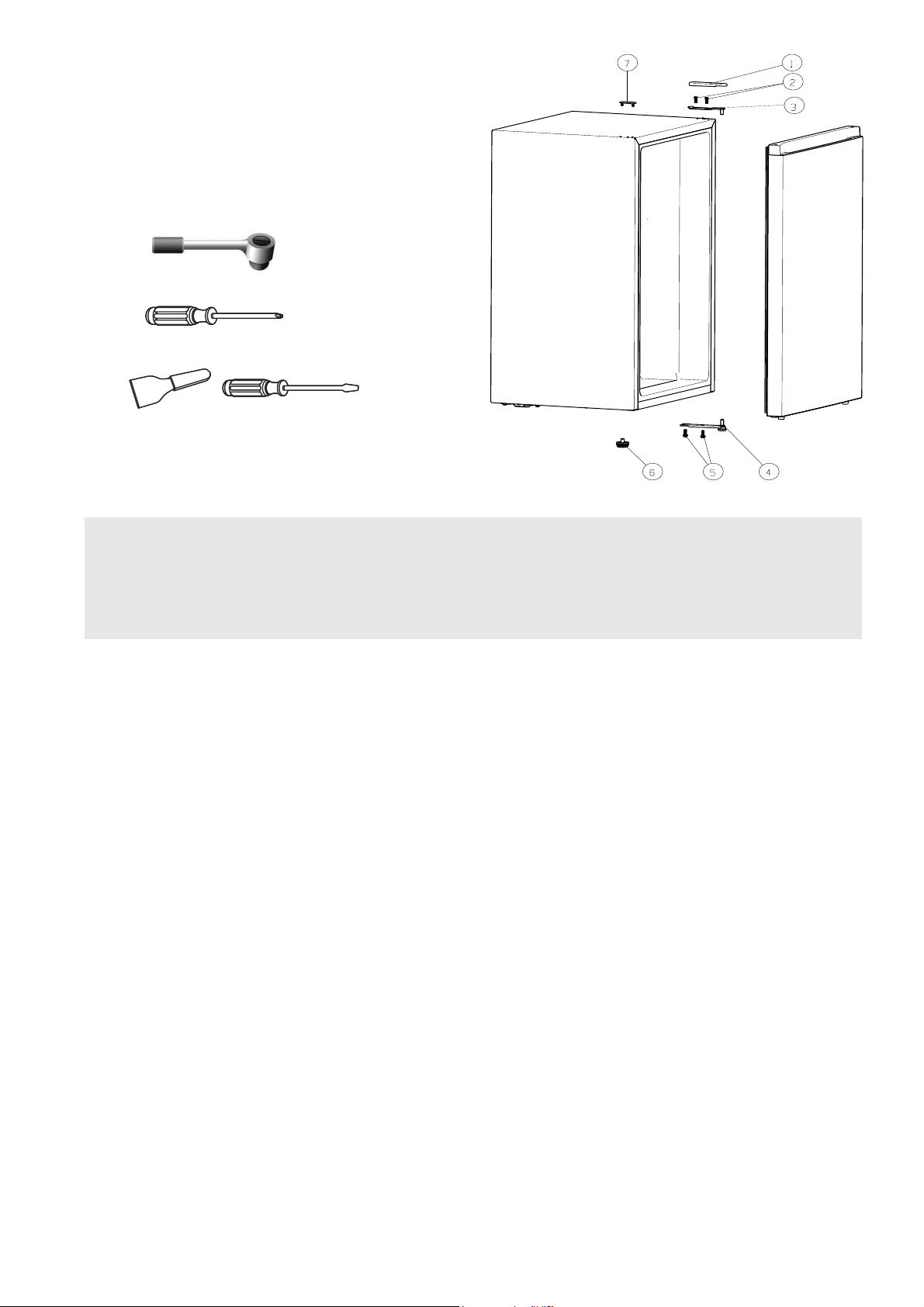
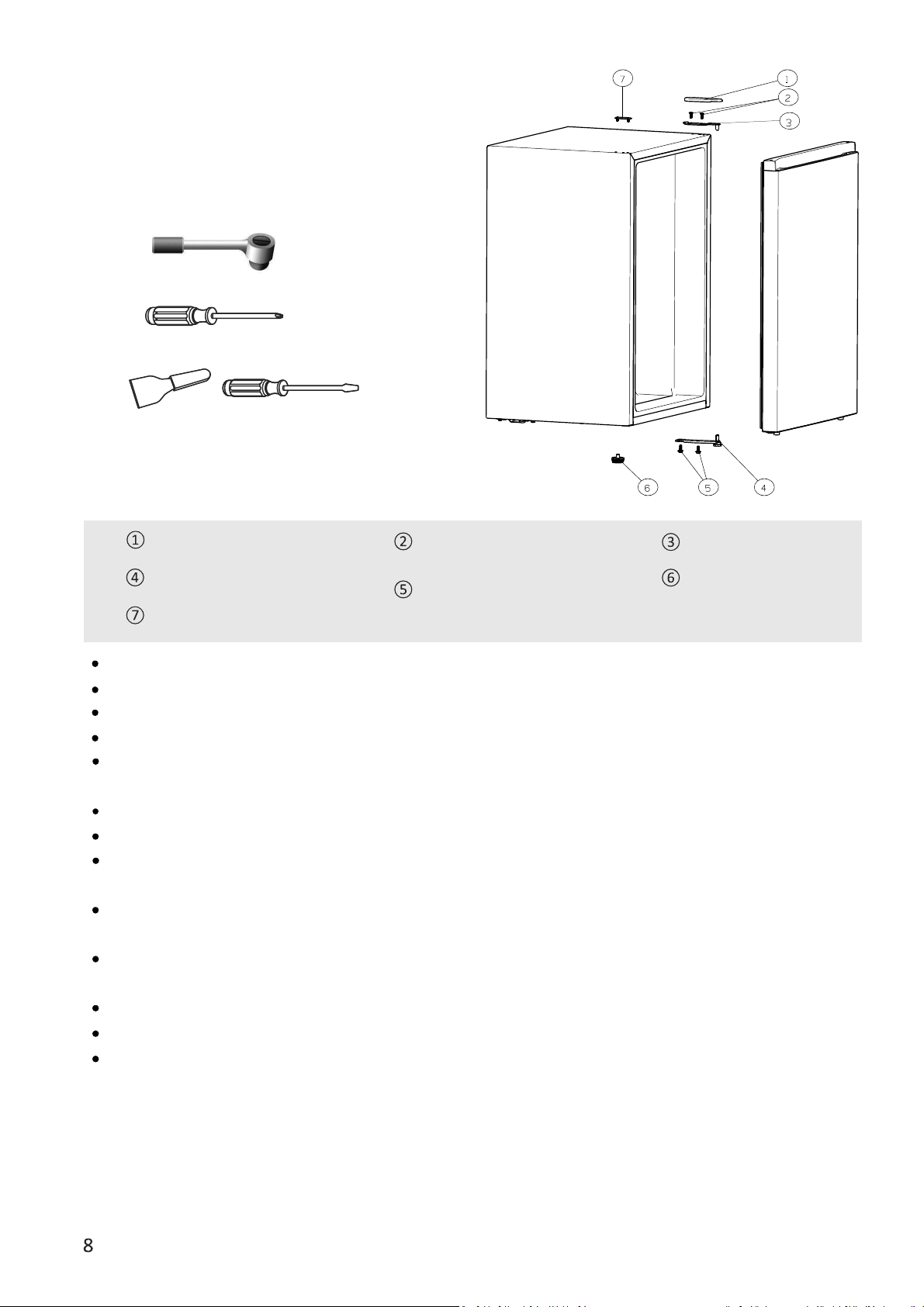
Reversing the Door
The side at which the door opens can be
changed from the right side (as supplied) to the
left side, if the installation site requires.
Tools you will need:
1. 8SFODINN
2. 1IJMJQT4DSFXESJWFS
3. Putty knife or thin-blade screwdriver
Before you start lay the refrigerator on it’s back in
order to gain access to the base, you should rest
it on soft foam packaging or similar material to
avoid damaging the cooling pipes at the rear of
the refrigerator.
༄
SƉĞĐŝĂůĨůĂŶŐĞƐĞůĨͲƚĂƉƉŝŶŐƐĐƌĞǁ
༇Special flange self-tapping screw
༅
UƉƉĞƌŚŝŶŐĞ
༈Bottom feet
༃
UƉƉĞƌŚŝŶŐĞĐŽǀĞƌ
༆
Lower hinge
༉
Screw hole cover
Ɣ Opentherefrigeratordoorandremoveallfittingsinsidethedoor.
Ɣ Removetheupperhingecover
ķ
༃.
Ɣ Removethetwoscrews༄ĸthatconnecttheupperhinge༅
Ĺ
ontherightsideofthecabinettop.
Ɣ Carefullyliftthedoorandplaceitonapaddedsurfacetopreventscratching.
ĺ
andtransferittotheuncoveredholeontherightside
oftheunit.Besure
topressthebuttonfirmlyintothehole.
Ɣ
༈
that
hold
the
lowerhinge ontherightsideofthecabinet.
Ɣ
Removethebottomfeet༉andtransferittotherightsideofthecabinet.
Ɣ Setthedoorintoitsnewplacemakingsurethepinentersthebushingatthelowerframesection(hole).
previouslyremovedinstep5 ontheleftsideoftheunit.Makesurethepinentersthebushingonthe
Ɣ Looselysecurethelowerhinge
anddonottightentheboltsuntilthedoorisintheclosedpositionandleveled.
Ɣ Replacetheupperhingecover༃
ķ
.
Ɣ Turnthedooruprightagain.
Ɣ Openthedoorandattachallfittings.
Ɣ
Removethescrew hole cover
Ľ
Remove the two screwsĻ
ļ
ĺ
8
upperframesection(hole).
Ɣ Securetheupperhinge
Ĺ
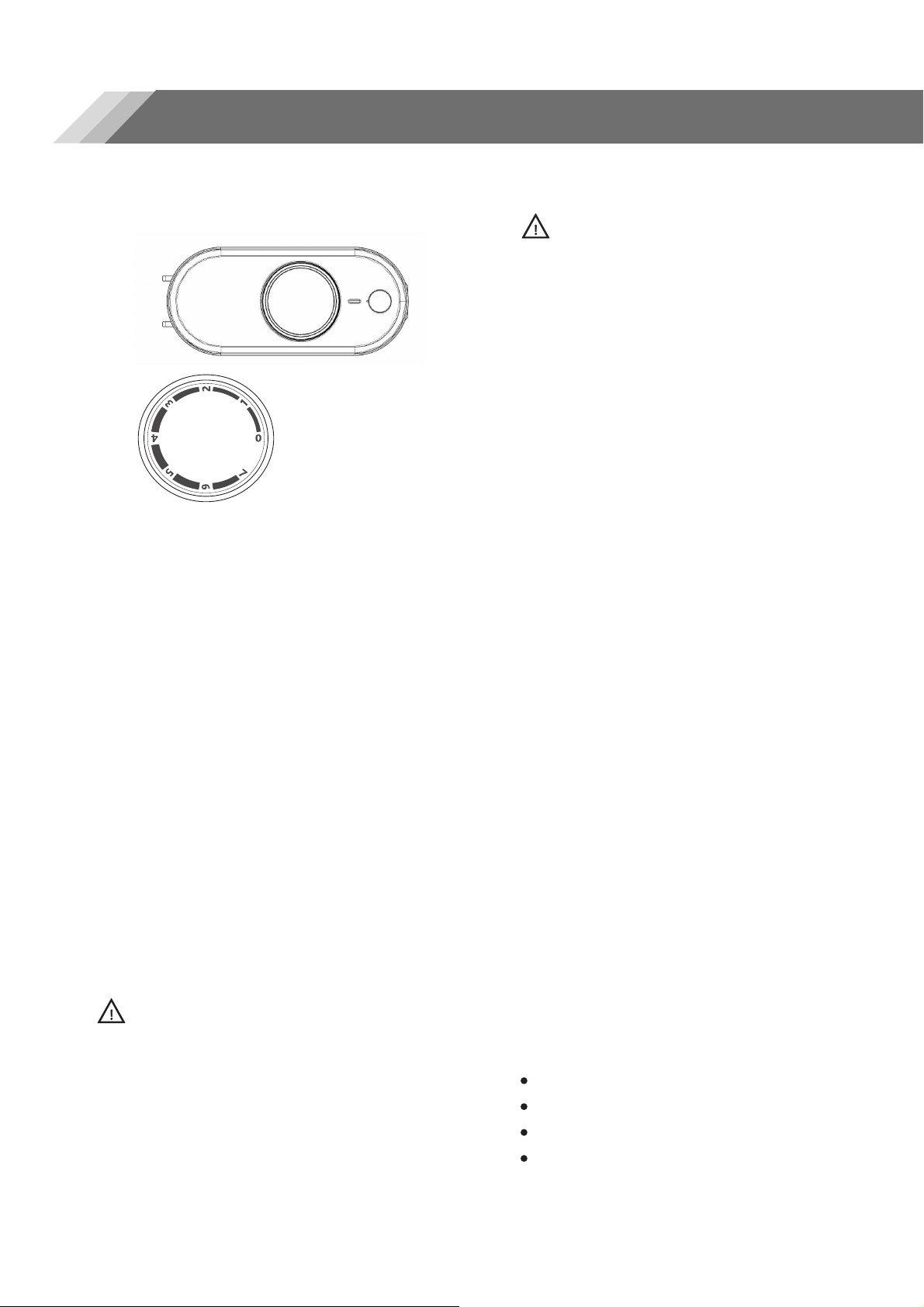
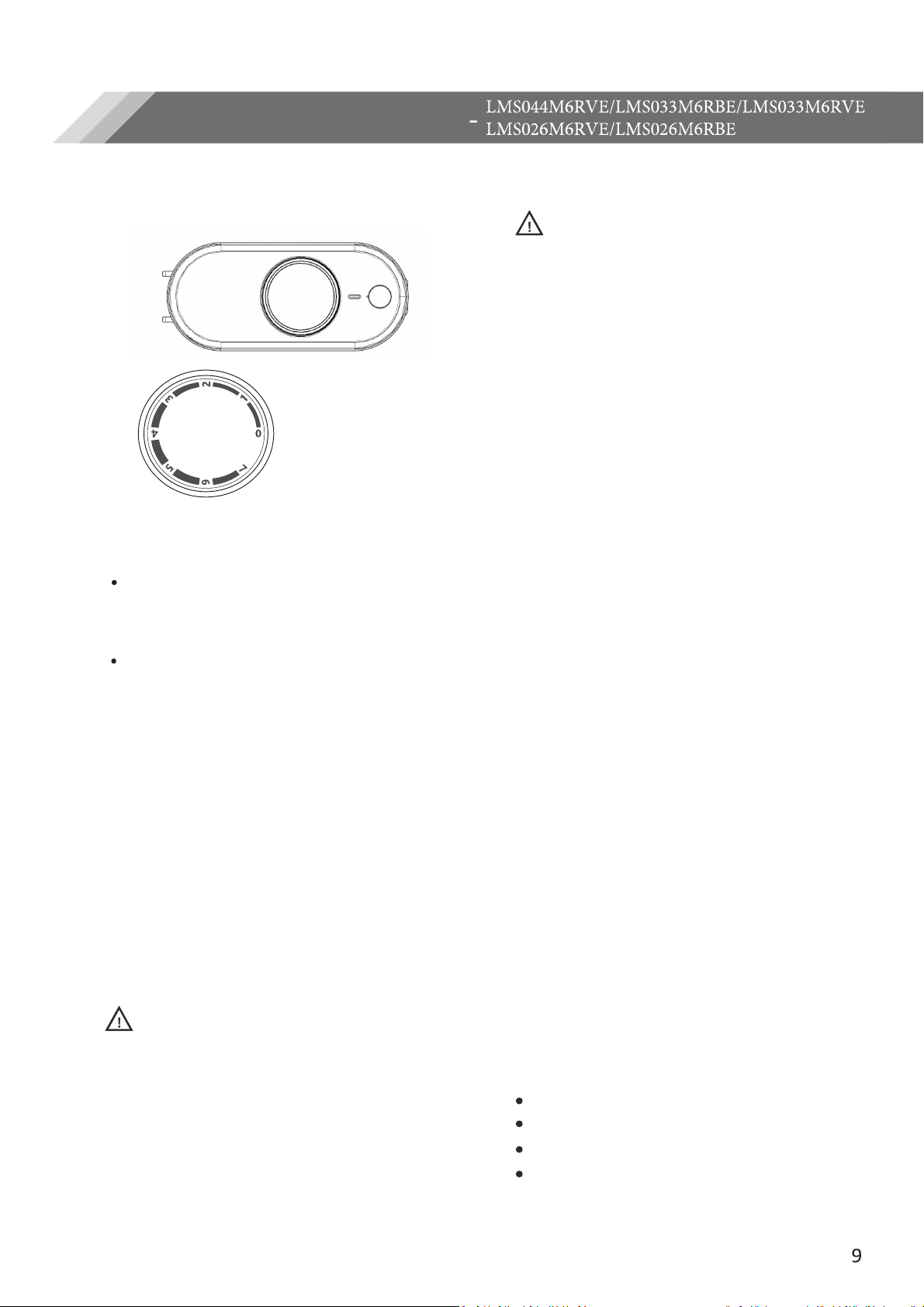
5FNQFSBUVSFcPOUSPM-
Remove all food.
Unplug the power cord.
Clean and dry thoroughly.
Leave the door open slightly to
prevent odor and mold growth .
Starting up and temperature
regulation
•Insert the plug of the connection lead
into the plug socket with a protective
grounding contact.
•The temperature selector knob is
located on the RH side of the refrigerator
compartment.
Setting “0” means: Off
Clockwise rotate the knob to turn on the
appliance.
Setting “1” means:
Highest temperature, warmest setting.
Setting “7” means:
Setting “7” (end-stop) means: Lowest
temperature, coldest setting.
7HPSHUDWXUH &RQWURO
Thermostat
knob
IMPORTANT !
It is recommended to use the “4”
setting. If warmer or colder
temperature is desired, please turn the
knob to a lower or higher setting.
Though the unit is energy efficient, it is
more energy at lower position settings.
IMPORTANT !
High ambient temperatures (e.g. on
hot summer days) and a cold setting on
the temperature regulator (position
"7" ) can cause the compressor to
run continuously or even non-stop.
When the refrigerator is in use, the
compressor needs to be turned on and
off to ensure its properly defrosting.
Therefore, it is advised to avoid setting
the refrigerator’s notch to high (“7”). If
the refrigerator frosts too much, make
sure to set the refrigerator’s notch to a
lower setting.
Suggestion: What to do when in
use for a long period of time and
an evaporator banging sound is
heard
During use, the sound of ice cracking is
caused by thermal expansion and cold
contraction, which is a normal
phenomenon. You can manually adjust
the knob of the temperature controller
to 0, and then adjust to the appropriate
gear until there is no water bead
attached on the evaporator.
Vacation Tips: lf the appliance
will not be used for several
months:
9
LMS044M6RVE/LMS033M6RBE/LMS033M6RVE
LMS026M6RVE/LMS026M6RBE
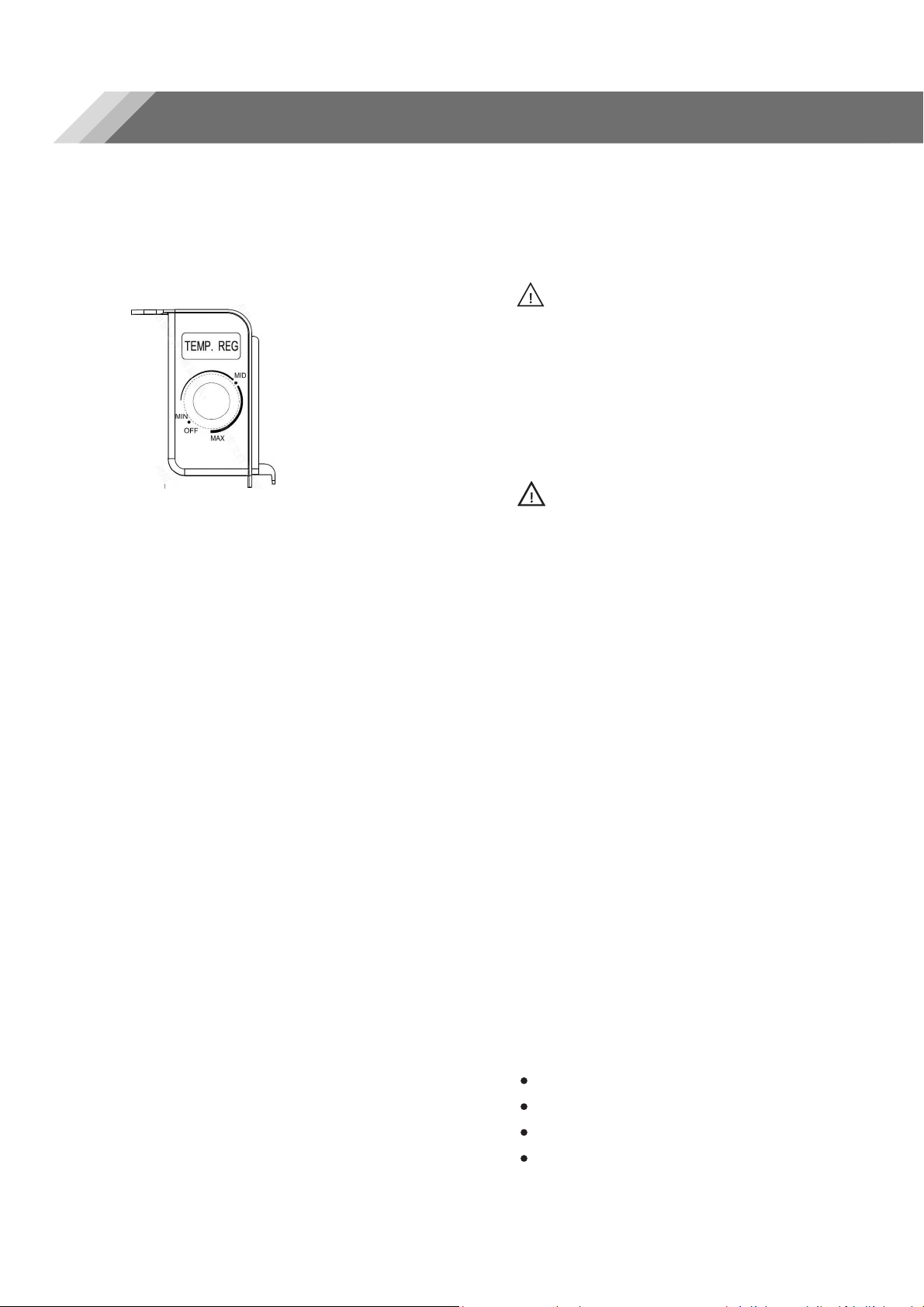
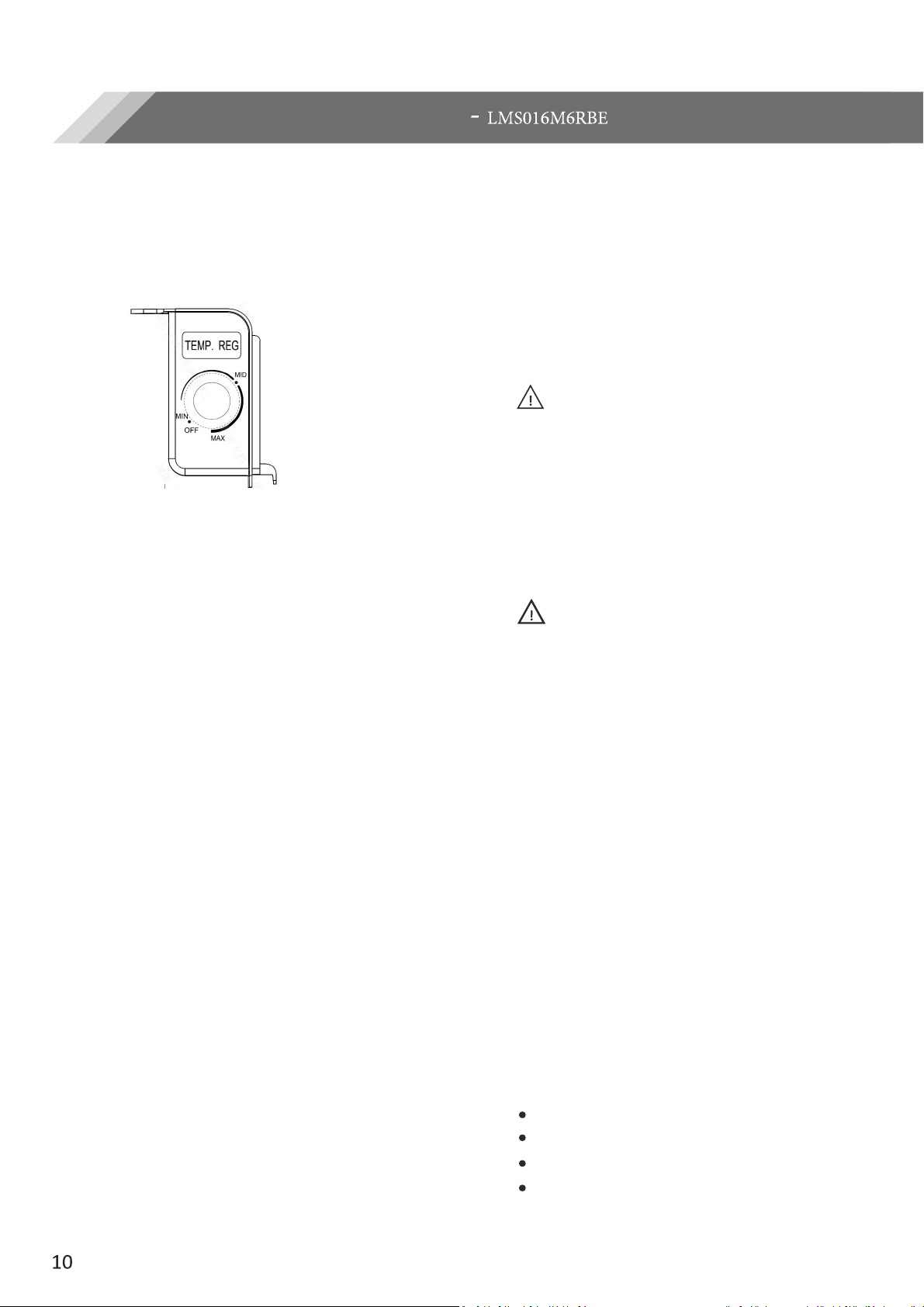
5FNQFSBUVSFcPOUSPM - LMS016M6RBE
Remove all food.
Unplug the power cord.
Clean and dry thoroughly.
Leave the door open slightly to
prevent odor and mold growth .
10
Insert the plug of the connection lead
into an outlet with protective ground
contact.
The temperature selector knob is located
on the right side of the fridge.
7HPSHUDWXUH
&RQWURO
Setting OFF means
Turning the temperature control “OFF”
position stops the cooling cycle, but
does not shut off the power to the
refrigerator.
Turn the knob clockwise to turn the
refrigerating unit on. Coldest setting is
all the w
a
y t
o “MAX” position. The unit
oper
ates automatically at the set
position. If the unit is unplugged , power
lost, or turned off, you must wait 3 to
5 minutes before restarting the unit. If
you attempt to restart before this time
delay, the refrigerator will not start.
Setting MIN means:
Highest temperature, warmest setting.
Setting MAX means:
Lowest temperature, coldest setting.
^ĞƚƚŝŶŐD/ŵĞĂŶƐ
DŝĚĚůĞƚĞŵƉĞƌĂƚƵƌĞŵŝĚĚůĞƐĞƚƚŝŶŐ
Suggestion: What to do when in
use for a long period of time and
an evaporator banging sound is
heard
During use, the sound of ice cracking
is caused by thermal expansion and
cold contraction, which is a normal
phenomenon.You can manually adjust
the knob of the temperature controller
to OFF, and then adjust to the
appropriate gear until there is no water
bead
attached on the evaporator.
IMPORTANT !
It is recommended to use the “MID”
setting. If warmer or colder temperature
is desired, please turn the knob to a
lower or higher setting.
Though the unit is energy efficient, it is
more efficient at lower position settings.
IMPORTANT !
High ambient temperatures (e.g. on
hot summer days) and a cold setting on
the temperature regulator (position
“MAX” ) can cause the compressor to
run continuously or even non-stop.
When the refrigerator is in use, the
compressor needs to be turned on and
off to ensure its properly defrosting.
Therefore, it is advised to avoid setting
the refrigerator’s notch to high (MAX). If
the refrigerator frosts too much, make
sure to set the refrigerator’s notch to a
lower setting.
Vacation Tips: lf the appliance
will not be used for several
months:
Do not place warm foods into the
appliance. Allow warm foods to cool
first. Do not install the appliance
near cookers, radiators or other
sources of warmth. High ambient
temperatures cause longer, more
frequent operation of the compressor.
In order to make the cooling system
work efficiently, please make sure
the side plates and back plate of the
product are with some distance from
the wall. It is strongly recommended
that its back is 75 mm (3 inch) away
from the w
all, its sides are at least
have a space of 100 mm (4 inch)
separately and the height from over its
top is no less than 100 mm (4 inch) .
When the product works, please do
not
open the door too often or leave
the door open any longer than
necessary.
Do not set temperature any colder
than necessary.
The direct cooling refrigerator (with
a freezer) needs to be defrosted
when necessary. This will improve
the cold transfer and reduce energy
consumption.
The sketch map shows the right
combination of the shelves which
can lead to more energy efficiency.
If users adjust the combination, it
may result in more
energy-consumption.
Store food logically. Do not exceed
the storage period specified.
Correcting Malfunctions
A malfunction may be caused by only a
minor fault that you can rectify yourself
using the following instructions. Do not
perform any other work on the
appliance if the following information
does not provide assistance in your
specific case.
Please keep upright at least 2 hours
before use to prevent damage of
compressor.
IMPORTANT!
Repairs to refrigerators/freezers should
only be performed by qualified service
technician. Improper repairs can give
rise
to significant hazards for the user.
If y
our appliance needs r
epairing,
please con
t
act y
our specialist dealer or
your local Service Center.
&OFSHZsBWJOHtJQT
Troubleshooting
11
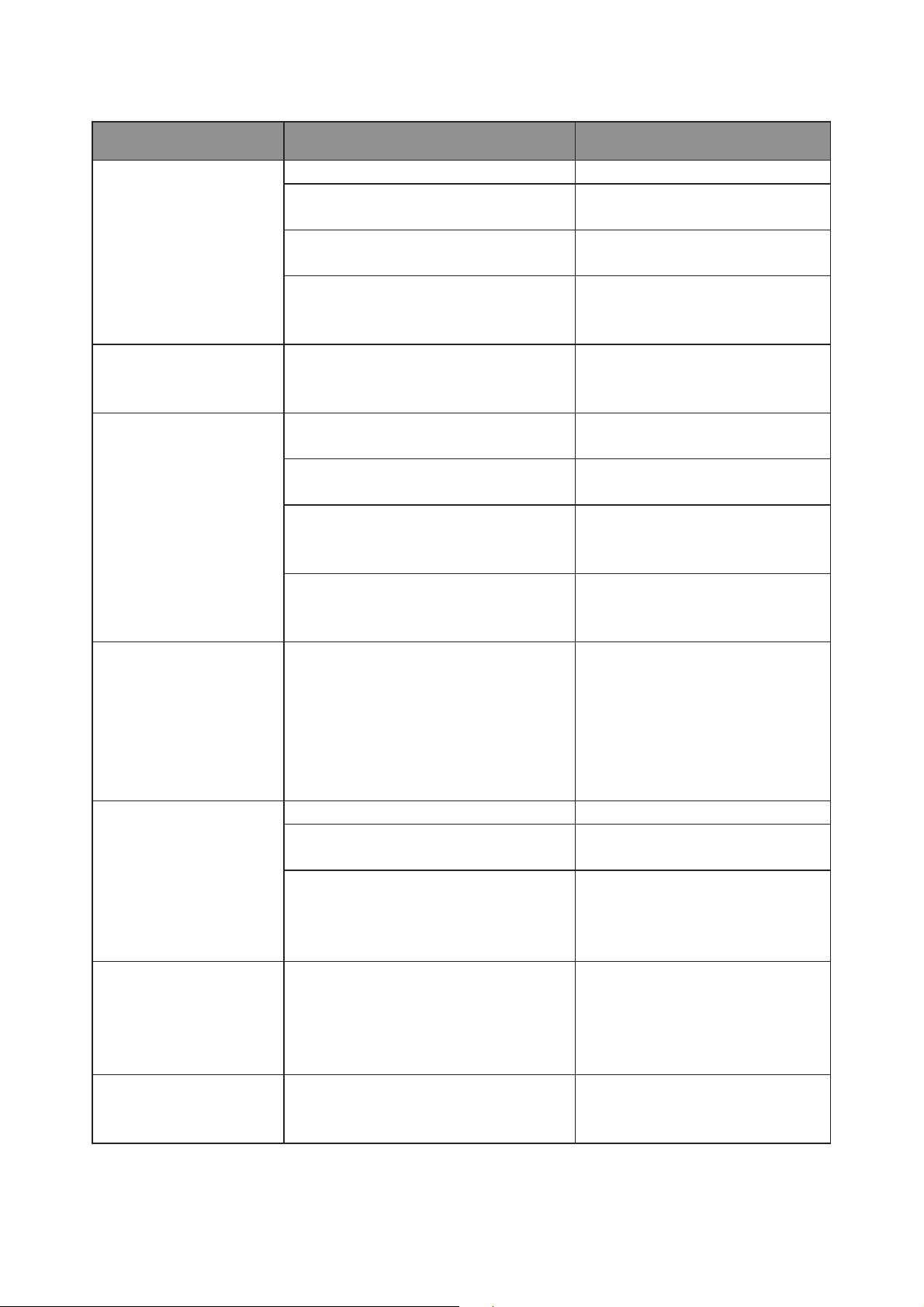
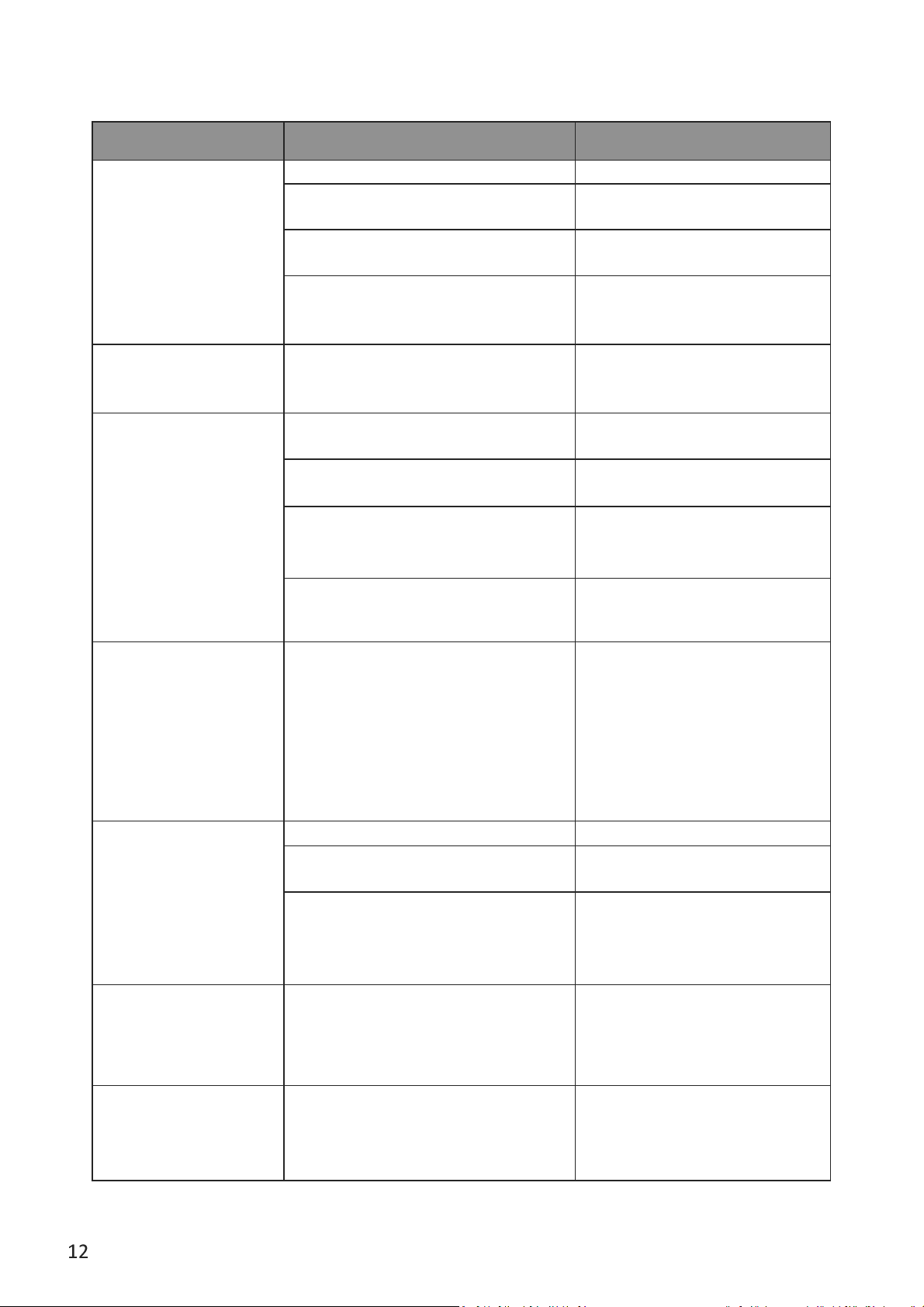
Problem Possible Cause Solution
Appliance does not
work.
Appliance cools too
much.
The food is too
warm.
Heavy build-up of
frost, possibly also
on the door seal.
Unusual noises
The compressor
does not start
immediately after
changing the
temperature setting.
Water on the floor or
storage shelves.
Appliance is not switched on.
Main plug is not plugged in or is
loose.
Fuse has blown or is defective.
Socket is defective.
Temperature is set too cold.
Temperature is not properly
adjusted.
Door was open for an extended
period.
A large quantity of warm food
was placed in the appliance
within the last 24 hours.
The appliance is near a heat
source.
Door seal is not air-tight
(possibly after reversing the
door).
Appliance is not level.
The appliance is touching the
wall or other objects.
A component, e.g. a pipe, on the
rear of the appliance is touching
another part of the appliance or
the wall.
This is normal, no error has
occurred.
Check that the drip tray is
housed properly.
Drip tray is full of water.
Switch on the appliance.
Insert main plug.
Check fuse, replace if
necessary.
Electrical malfunctions are
to be corrected by an
electrician.
Turn the temperature
regulator to a warmer
setting temporarily.
Please look in the
“temperature control”section.
Open the door only as long
as necessary.
Turn the temperature
regulation to a colder setting
temporarily.
Please look in the
“installation” section.
Carefully warm the leaking
sections of the door seal
with a hair dryer (on a cool
setting). At the same time
shape the warmed door seal
by hand such that it sits
correctly.
Re-adjust the feet.
If necessary, carefully bend
the component out of the
way.
Move the appliance slightly.
The compressor starts after
a period of time.
See the “cleaning and care”
section.
12
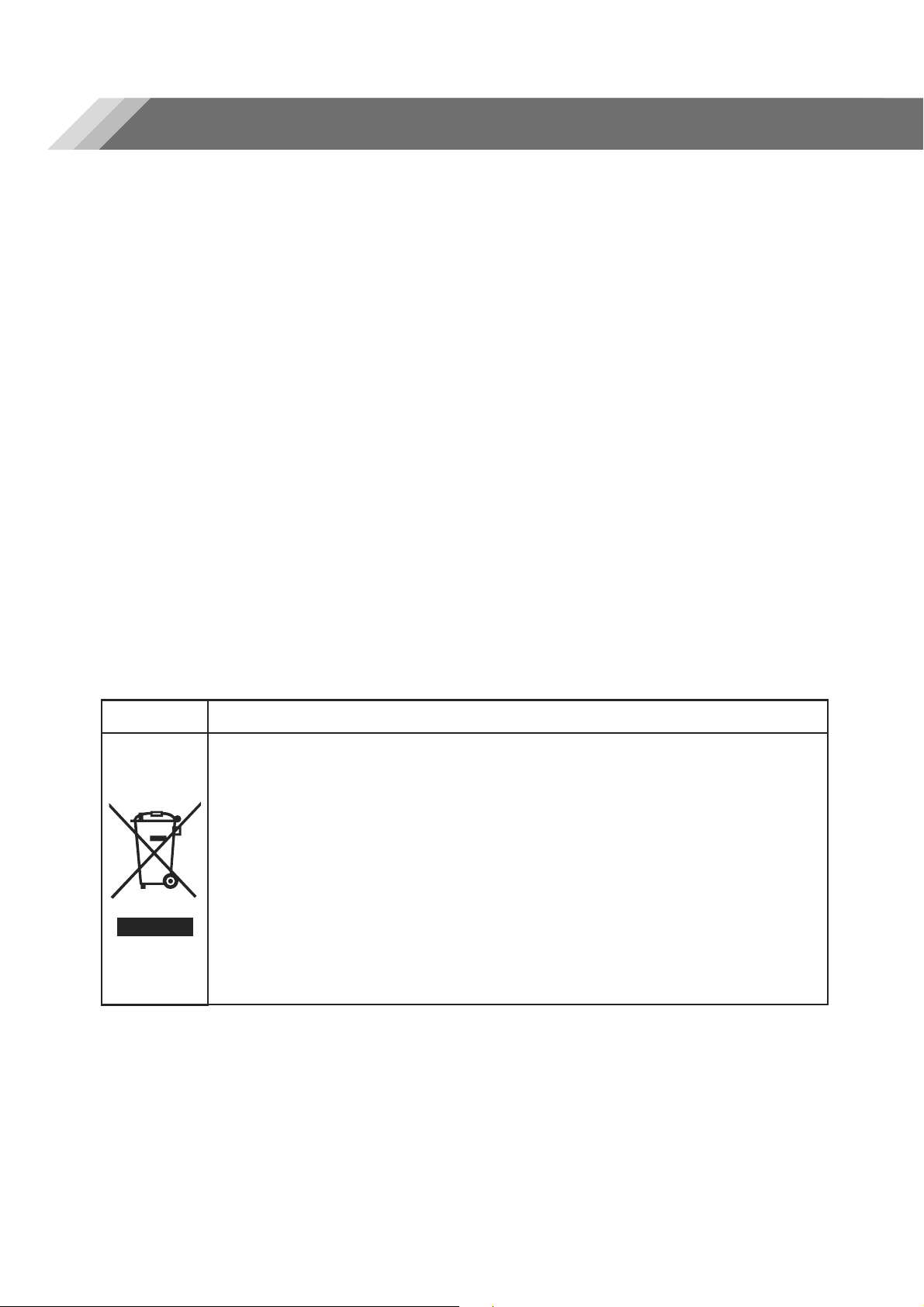
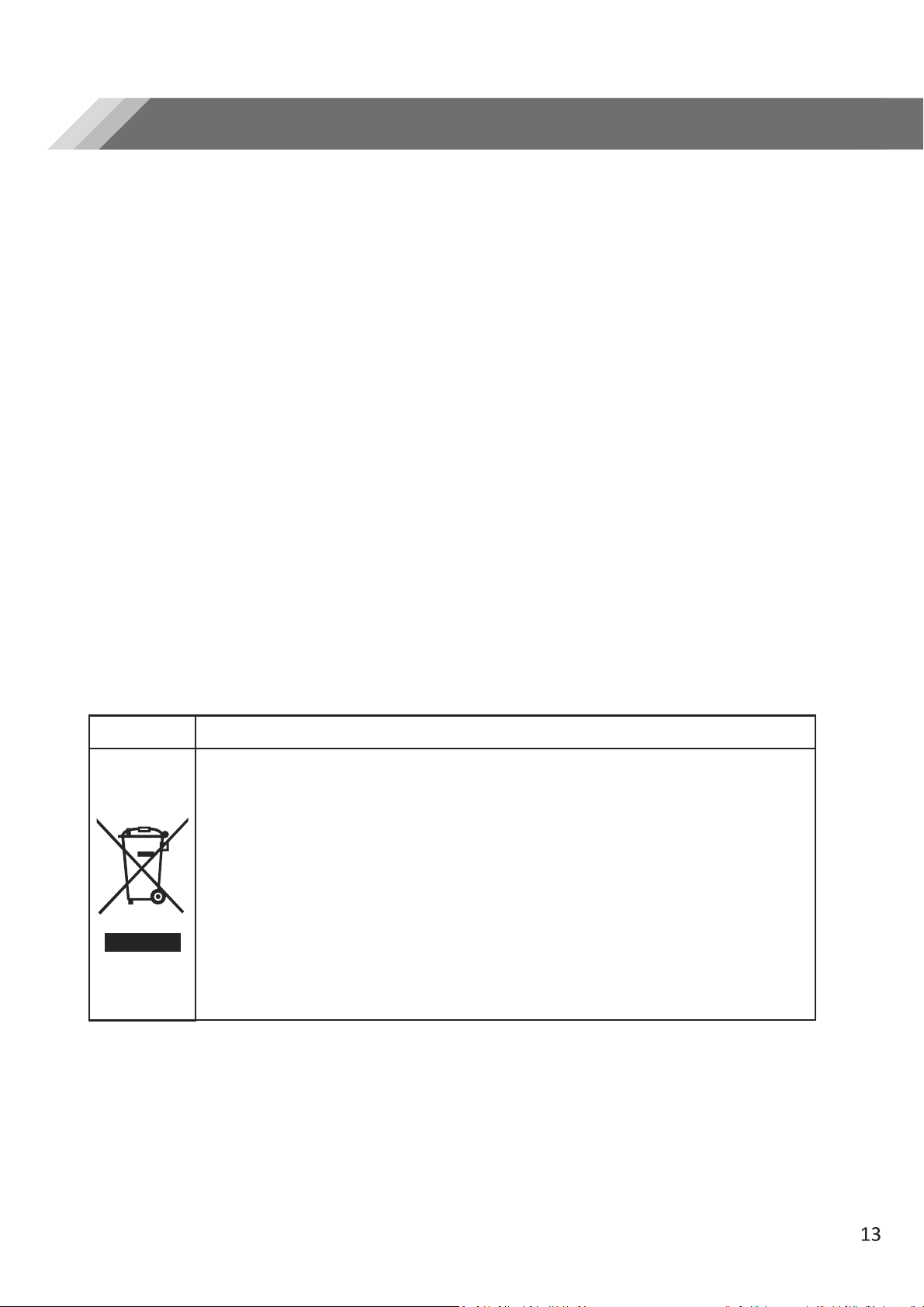
It is prohibited to dispose of this appliance as household waste.
Packaging materials:
Packaging materials with the recycle symbol are recyclable. Dispose of the
packaging into a suitable waste collection container to recycle it.
Before disposal of the appliance:
1. Pull out the main plug from the main socket.
2. Cut off the power cord and discard with the main plug.
Warning! Refrigerators contain refrigerant and gases in the insulation.
Refrigerant and gases must be disposed of professionally as they may cause
eye injuries or ignition. Ensure that tubing of the refrigerant circuit is not
damaged prior to proper disposal.
This symbol on the product or in its packing indicates that this
product may not be treated as household waste. Instead, it should
be taken to the appropriate waste collection point for the recycling of
electrical and electronic equipment. By ensuring this product is
disposed of correctly, you will help prevent potential negative
consequences for the environment and human health, which could
otherwise be caused by the inappropriate waste handling of this
product. For more detailed information about the recycling of this
product, please contact your local council, your household waste
disposal service, or the shop where you purchased the product.
Correct Disposal of this product
%JTQPTBMPGUIFBQQMJBODF
13
MANUAL DE INSTRUCCIONES
DEL USUARIO
Antes de operar esta unidad, lea detenidamente
este manual y guárdelo para consultas futuras.
Modelo:
Español
Para consultas sobre las características, funcionamiento/
rendimiento, piezas o servicio, llame al: 1-877-465-3566
Tabla de Contenidos
Instrucciones importantes de seguridad..........................................1
Instalación.............................................................
.............
..............3
Limpieza y cuidado...........................................................................4
Descripción del aparato...................................
......................
..........5
Control de temperatura...............................................
.................
...9
Consejos de ahorro de energía......................
.........................
.......11
Solución de problemas...................................................................11
Eliminación del aparato.......
..............
.....
.........................
.............
.13
Instrucciones importantes de seguridad
Por su seguridad y para hacer un uso
correcto, lea atentamente estas
instrucciones antes de utilizar su aparato
nuevo a fin de evitar equivocaciones
innecesarias y accidentes. Asegúrese de
que todas las personas que utilicen este
aparato estén familiarizadas con sus
funciones operativas y de seguridad.
Conserve estas instrucciones en un lugar
seguro para consultas futuras y
asegúrese de mantenerlas junto al
aparato en caso de traslado o venta, de
forma que toda persona que lo uso
durante su vida útil esté adecuadamente
informado acerca del uso correcto y la
seguridad del aparato. El fabricante no se
hará responsable de daños derivados de
un mal uso. El aparato está destinado
únicamente a un uso en interiores y
doméstico.
Información eléctrica
El aparato debe enchufarse en su
propio tomacorriente de 115V, 60Hz,
solo de CA. El cable eléctrico
del aparato dispone de un enchufe
con conexión a tierra de tres clavijas
para protección contra el riesgo de
descargas eléctricas. Se debe
enchufar directamente a un
recéptaculo para tres clavijas con
conexión a tierra. El receptáculo
debe estar instalado en conformidad
con los códigos y ordenanzas locales.
Consulte con un electricista
cualificado. Evite conectar el
refrigerador a un circuito por falla de
tierra (GFI). No utilice un cable
alargador ni un adaptador.
Si el CABLE DE SUMINISTRO está
dañado, lo debe reemplazar el
fabricante, el agente de servicio o una
persona similar calificada para evitar
peligros.
Nunca desenchufe el refrigerador
estirando del cable eléctrico. Agarre
siempre el enchufe con firmeza y
extráigalo del receptáculo para evitar
dañar el cable eléctrico.
Desenchufe el refrigerador antes de
limpiarlo para evitar descargas
eléctricas.
El rendimiento podría verse afectado si
la tensión variara en un 10% o más.
Estos daños no están cubiertos por la
garantía.
No enchufe la unidad a una toma
eléctrica controlada con un interruptor
ni un cable tractor para evitar apagar
el refrigerador por accidente.
Riesgo de Incendio
El circuito refrigerante del
aparato contiene una pequeña
cantidad de refrigerante (R600a)
respetuoso con el medio ambiente
pero potencialmente inflamable.
Seguridad para los niños y
otras personas vulnerables
Este aparato no ha sido diseñado para
que lo utilicen personas (incluidos
niños) con capacidades físicas,
sensoriales o mentales reducidas, o
con falta de experiencia o
conocimientos, a menos que estén
supervisados o reciban instrucciones
acerca del uso del aparato por parte
de una persona responsable de su
seguridad. Se debe supervisar a los
niños para asegurase de que no
jueguen con el electrodoméstico.
Mantenga el material de empaque
lejos de los niños para evitar el riesgo
de sofocación.
Si se dispone a eliminar el aparato
usado, desenchúfelo de la toma, corte
el cable de conexión (lo más cerca
posible del aparato), corte el enchufe
eléctrico y elimínelo. Rompa los
cerrojos o pestillos de protección y
retire la puerta para evitar que niños
jueguen con el aparato y sufran una
descarga eléctrica o queden
atrapados en su interior.
Seguridad general y uso doario
Este electrodoméstico está destinado
para ser utilizado en el hogar y para
aplicaciones como:
-zonas de cocina para personal en
tiendas, oficinas y otros entornos
laborales;
-granjas y por parte de clientes en
hoteles, moteles y otros entornos de
tipo residencial;
-entornos de desayunos y hogar;
-servicios de hostelería y aplicaciones
similares.
No almacene gases ni líquidos
inflamables en el aparato. Existe riesgo
de explosión.
No utilice aparatos eléctricos dentro
del aparato (p. ej. heladoras eléctricas,
batidoras, etc.).
Para desenchufarlo, estire siempre del
enchufe. No estire del cable.
No coloque artículos calientes cerca de
los componentes de plástico del aparato.
No coloque alimentos directamente
contra la salida de aire en la pared
trasera.
La comida congelada no se debe volver a
congelar una vez que se haya
descongelado.
Guarde los alimentos precongelados
siguiendo las instrucciones del fabricante
de los alimentos.
Se deben seguir estrictamente las
recomendaciones de almacenamiento
del fabricante del electrodoméstico.
Refiérase a las instrucciones relevantes
sobre el almacenamiento.
No coloque bebidas gasificadas o
efervescentes en el congelador ya que se
crea una presión en el contenedor y
podría explotar y dañar el
electrodoméstico.
Los alimentos congelados pueden
provocar quemaduras por congelación si
se consumen directamente al sacarlos
del congelador.
No coloque alimentos directamente
contra la salida de aire del panel trasero.
No coloque el electrodoméstico bajo la
luz solar.
No almacene sustancias explosivas, como
latas de aerosol con un propulso
inflamable, en este aparato.
Eliminación Correcta del Refrigerador
El atrapamiento y la asfixia de niños no
son solo problemas del pasado. Los
refrigeradores desechados o
abandonados siguen siendo peligrosos,
incluso si están “solo unos días”. Si va a
desechar viejo refrigerador, siga las
siguientes instrucciones para evitar
accidentes.
ADVERTENCIA: Riesgo de
atrapamiento para niños.
Antes de desechar su refrigerador o
congelador usados:
Retire las puertas.
Deje los estantes en su sitio para que los
niños no puedan entrar fácilmente en el
interior.
Solicite a un técnico de servicio
cualificado que retire el refrigerante.
Instalación
Antes de instalarlo, siga estos
primeros pasos importantes:
Ubicación
Coloque el aparato lejos de fuentes de
calor, como estufas, radiadores, la luz
directa del sol, etc. El máximo
rendimiento y seguridad se garantizan
manteniendo una temperatura interior
correcta para la clase de unidad
implicada, como se especifica en la
placa de características. Este aparato
funciona bien entre 12,8 y 43,3°C
(55-110°F).Es posible que el aparato no
funcione correctamente si se deja
durante un periodo más largo a una
temperatura superior o inferior al
rango indicado.
¡IMPORTANTE!
Se necesita una buena ventilación
alrededor del refrigerador para una
fácil disipación del calor, alta eficiencia
de refrigeración y bajo consumo de
energía. Por lo tanto, se necesita
suficiente espacio libre alrededor de la
heladera. Se recomienda dejar al
menos 75mm (3 pulgadas) de
separación entre la parte trasera del
refrigerador y la pared, al menos
100mm (4 pulgadas) a ambos lados, un
mínimo de 100mm (4 pulgadas) encima
pared y un espacio libre delante que
permita abrir las puertas en 180°.
No se debe exponer el aparato a la
lluvia. Se debe permitir que circule aire
suficiente en la sección inferior trasera
del aparato, ya que la mala circulación
de aire puede afectar a su rendimiento.
Limpieza
Lave las piezas extraíbles del interior
del refrigerador y su exterior con
detergente suave y agua tibia.
Séquelos. No utilice limpiadores
abrasivos en estas superficies.
No utilice cuchillas ni otros
instrumentos afilados para retirar las
etiquetas adhesivas, ya que podría
arañar la superficie del aparato. Es
posible retirar los restos de pegamento
de la cinta adhesiva con una mezcla de
agua tibia y detergente suave, o
tocando el residuo con el lado pegajoso
de la cinta ya retirada. No retire la
placa de serie.
Precaución: ¡refrigerante inflamable
utilizado! Cuando manipule, traslade o
utilice el refrigerador, asegúrese de
evitar dañar las tuberías de
refrigerante, ya que aumentaría el
riesgo de fugas.
ADVERTENCIA: Mantenga las aperturas
de ventilación en la carcasa del aparato
o en la estructura construida libres de
obstáculos.
ADVERTENCIA: No utilice los
dispositivos mecánicos u otros medios
para acelerar el proceso de
descongelación, con excepción de los
recomendados por el fabricante.
ADVERTENCIA: No dañe el circuito
refrigerante.
ADVERTENCIA: No utilice los aparatos
eléctricos dentro de los compartimientos
de almacenamiento de alimentos del
aparato, a menos que sean de tipo
recomendado por el fabricante.
Limpieza y cuidado
Por motivos de higiene, se debe limpiar
periódicamente el interior del aparato,
incluidos los accesorios interiores. Se
debe limpiar y realizar el mantenimiento
del refrigerador al menos una vez cada
dos meses.
¡Advertencia! ¡Peligro de
descarga eléctrica!
¡El aparato no debe estar conectado a
la corriente durante la limpieza! Antes
de limpiarlo, apague el aparato y
desenchúfelo de la corriente, o apague
el interruptor o el fusible.
Retire los alimentos del aparato antes
de limpiarlo. Almacénelos en un lugar
fresco y cúbralos bien.
Nunca limpie el aparato con un
limpiador de vapor. Podría acumularse
humedad en los componentes
eléctricos.
Los vapores calientes pueden producir
daños en las piezas de plástico.
Se debe secar el aparato antes de
volver a ponerlo en funcionamiento.
¡IMPORTANTE!
Los aceites etéreos y los disolventes
orgánicos pueden afectar a las piezas
de plástico, p. ej. el zumo de limón o
de naranja, ácido butírico y limpiadores
con contenido de ácido acético. No
permita que dichas sustancias entren
en contacto con las piezas del aparato.
No utilice limpiadores abrasivos.
Limpie el aparato y los accesorios
interiores con un paño y agua tibia.
También puede usar detergentes
lavavajillas disponibles comercialmente.
Después de la limpieza, utilice agua
fresca y un paño de cocina limpio.
La acumulación de polvo en el
condensador aumenta el consumo
energético. Por este motivo, limpie
detenidamente el condensador de la
parte trasera del aparato una vez al año
con un cepillo suave o un aspirador.
Compruebe el orificio de drenaje de agua
de la pared trasera del compartimento
del refrigerador.
Despeje los orificio de drenaje obstruidos
con un objeto similar a una clavija suave.
Tenga cuidado de no dañar el armario
con objetos afilados.
Una vez se haya secado todo, puede
volver a utilizar el aparato.
Descongelamento: Porqué
descongelar
El agua contenida en los alimentos o que
se introduce en el aire del interior del
frigorífico al abrir las puertas puede
formar capas de escarcha dentro. Cuando
la escarcha sea gruesa, debilitará la
refrigeración. Cuando tenga un grosor
superior a 10mm, deberá descongelarla.
Descongelar el compartimento de
almacenamiento de alimentos frescos
Se controla automáticamente
encendiendo o apagando el regulador de
temperatura para que no sea necesario
descongelar el aparato. El agua de la
descongelación se drenará
automáticamente en una bandeja
recogegotas mediante una tubería de
drenaje en la parte posterior del frigorífico.
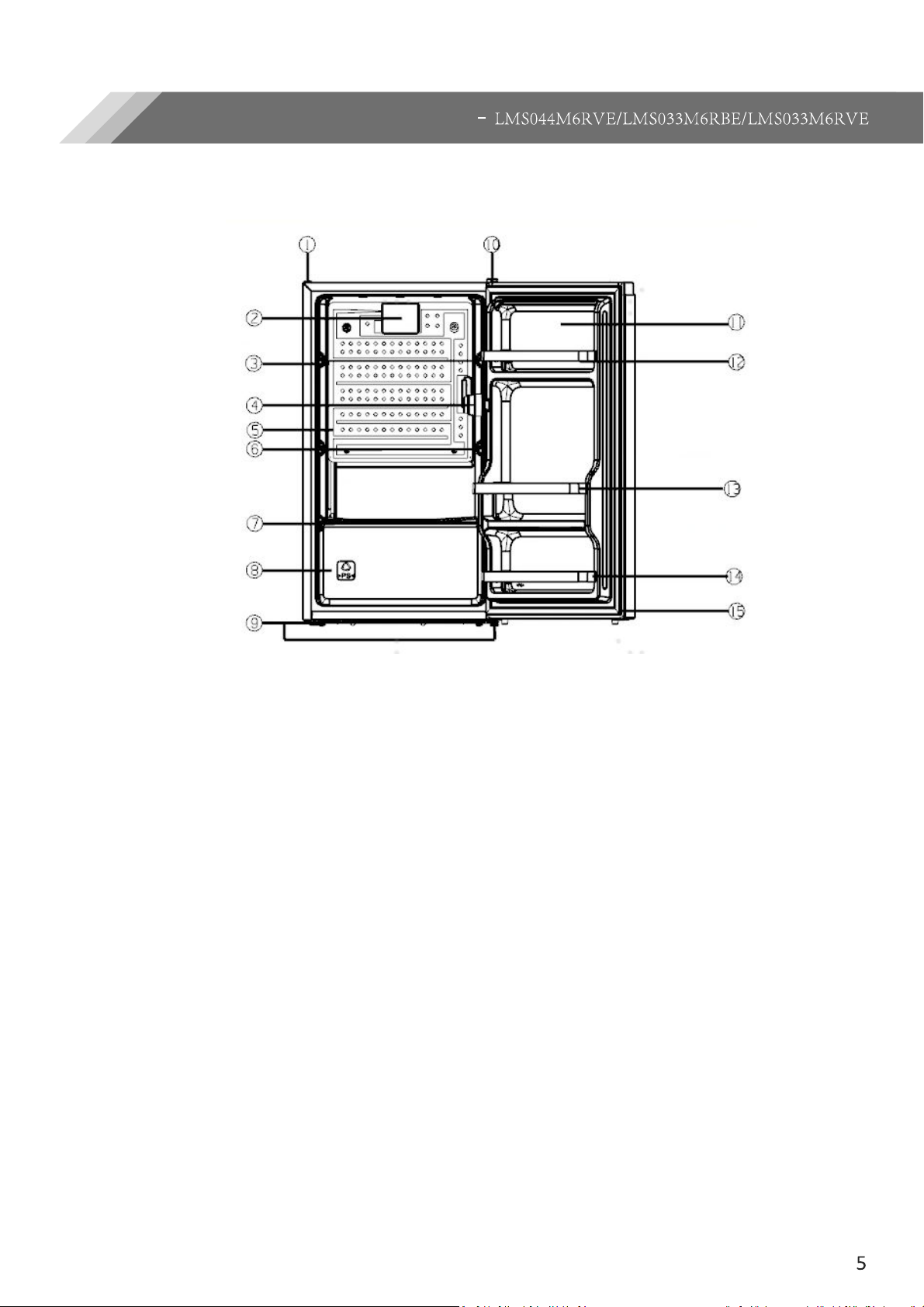
Descripción del aparato
1. Cobertor del orificio
del tornillo
4. Controlador de temperatura
7. Estante de cristal inferior
10. Cubierta de la bisagra
superior
13. Estante del medio
2. Placa de cubierta del
agujero del gabinete
5. Evaporador de enlace
en rollo
8. Gabinete
11. Puerta del refrigerador
14. Estante inferior
3. Estante de cristal
superior
6. Estante de cristal
central
9. Pies de abajo
12. Estante superior
15. Parte de la junta
NOTA: Esta figura es solo un esbozo del refrigerador. El producto real
puede diferir de ella.
Advertencias de la Propuesta 65 del estado de California:
ADVERTENCIA: Este producto contiene uno o más productos químicos que, según el estado de California,
provocan cáncer.
ADVERTENCIA: Este producto contiene uno o más productos químicos que, según el estado de California,
provocan defectos de nacimiento u otros daños reproductivos.
California (EE. UU.) Residentes
ADVERTENCIA: Cáncer y daños reproductivos - www.P65Warnings.ca.gov
Descripción del aparato
1. Cubierta de la bisagra
superior
2. Puerta del refrigerador
3. Parte de la junta
4. Gabinete
5. Prateleira de vidro
6. Prateleira de vidro
7. Controlador de temperatura
8. Evaporador de enlace
en rollo
NOTA: Esta figura es solo un esbozo del refrigerador. El producto real
puede diferir de ella.
Advertencias de la Propuesta 65 del estado de California:
ADVERTENCIA: Este producto contiene uno o más productos químicos que, según el estado de California,
provocan cáncer.
ADVERTENCIA: Este producto contiene uno o más productos químicos que, según el estado de California,
provocan defectos de nacimiento u otros daños reproductivos.
California (EE. UU.) Residentes
ADVERTENCIA: Cáncer y daños reproductivos - www.P65Warnings.ca.gov
Descripción del aparato
1. Cobertor del orificio del
tornillo
2.
Puerta del refrigerador
3. Prateleira da porta
4. Parte de la junta
5. Gabinete
6. Prateleira de vidro
7. Evaporador de enlace
en rollo
8. Cobertor del orificio del
tornillo
9. Controlador de
temperatura
NOTA: Esta figura es solo un esbozo del refrigerador. El producto real
puede diferir de ella.
Advertencias de la Propuesta 65 del estado de California:
ADVERTENCIA: Este producto contiene uno o más productos químicos que, según el estado de California,
provocan cáncer.
ADVERTENCIA: Este producto contiene uno o más productos químicos que, según el estado de California,
provocan defectos de nacimiento u otros daños reproductivos.
California (EE. UU.) Residentes
ADVERTENCIA: Cáncer y daños reproductivos - www.P65Warnings.ca.gov
Invierta la puerta
El lado de apertura de la puerta puede cambiarse del
lado derecho (como se suministra) al lado izquierdo, si
el lugar de instalación lo requiere.
Herramientas que necesitará:
1. Llave (5/16", 8mm)
2. Destornillador Philips
3. Espátula o destornillador de punta plana
Antes de comenzar, coloque el refrigerador sobre su
parte posterior para poder acceder a la base, debe
apoyarlo sobre un embalaje de espuma suave o
material similar para evitar dañar los tubos de
enfriamiento de la parte posterior del frigorífico.
Cubierta de la bisagra superior
Lisagra inferior
Cobertor del orificio del tornillo
Tomillos autorroscantes de la
brida especial
Tomillos autorroscantes de la
brida especial
Bisagra superior
Pies de abajo
Abra la puerta del refrigerador y retire todos los accesorios dentro de la puerta.
Retire ia cubierta de ia bisagra superior ①.
Retire ios dos tornillos ② que conectan la bisagra superior ③ en ei lado derecho de ia parte superior dei aparato.
Levante con cuidado la puerta y colóquela sobre una superficie acolchada para evitar que se raye.
Retire la cubierta dei orificio del tornillo ⑦ y trasládela al orificio descubierto en ei lado derecho dei aparato.
Asegúrese de presionar el tapón firmemente en el orificio.
Retire ios dos tornillos ⑤ que sujetan la bisagra inferior ④ en ei lado derecho dei aparato.
Retire las patas inferiores ⑥ y transfiéralas al lado derecho dei aparato.
Coloque la puerta en su nuevo lugar asegurándose de que ei perno entre en el casquillo de la sección inferior
(orificio).
Fije la parte superior de ia bisagra ③ retirada anteriormente en ei paso 5 en ei lado izquierdo del aparato.
Compruebe que ei perno entra en el casquillo de la sección superior (orificio).
Fije sin apretar la bisagra inferior ④ y no apriete los tornillos hasta que ia puerta esté en posición cerrada y
nivelada.
Vuelva a colocar la cubierta de la bisagra superior ①.
Vuelva a poner la puerta en posición vertical.
Abra la puerta y instale todos los accesorios.
Control de temperatura
Control de temperatura
Rueda del
termostato
Arranque y regulación de
temperatura
Inserte el enchufe del cable de
conexión en el enchufe con contacto
de protección a tierra.
La rueda selectora de temperatura
está ubicado en el lado derecho del
compartimiento del refrigerador.
Ajuste “0” significa: Off (Apagado)
Gire la perilla en el sentido de las agujas
del reloj para encender el aparato.
Ajuste “1” significa:
Temperatura más alta, ajuste más
caliente.
Ajuste “7” significa:
Ajuste “7” (posición final) significa:
Temperatura más baja, ajuste más frío.
¡IMPORTANTE!
Se recomienda utilizar el ajuste “4”. Si
desea una temperatura más cálida o más
fría, gire la perilla a un ajuste más bajo o
más alto.
Aunque el aparato es energéticamente
eficiente, se consume más energía en
configuraciones de posición más bajas.
¡IMPORTANTE!
Las altas temperaturas ambientales (p.ej.,
en los días calurosos de verano) y una
configuración de frío en el regulador de
temperatura (posición “7”) pueden hacer
que el compresor funcione
continuamente o incluso sin parar.
Cuando se funciona el refrigerador, es
necesario encender y apagar el compresor
para asegurar la correcta descongelación.
Por lo tanto, se recomienda evitar poner
la muesca del refrigerador en alto (“7”). Si
el refrigerador se congela demasiado,
asegúrese de poner la muesca del
refrigerador a una configuración más baja.
Sugerencia: Qué hacer cuando se
funciona durante un largo periodo
de tiempo y se escucha un ruido
de golpeteo del evaporador
Durante el uso, el sonido del hielo que se
agrieta se causa por la expansión térmica
y la contracción del frío, que es un
fenómeno normal. Puede ajustar
manualmente la perilla del controlador
de temperatura a 0, y luego ajustarla a la
posición apropiada hasta que no haya
ninguna cuenta de agua adherida en el
evaporador.
Consejos para las vacaciones: Si
no se va a utilizar el aparato
durante varios meses:
Retire todos los alimentos.
Desenchufe el cable eléctrico.
Limpie y seque completamente.
Deje la puerta ligeramente abierta para
evitar que aparezcan olores y moho.
Control de temperatura
Inserte el enchufe del cable de
conexión en una toma de corriente
con contacto de protección a tierra.
La perilla de selección de temperatura
se encuentra en el lado derecho del
refrigerador.
Control de
temperatura
Ajuste OFF significa
Colocar el control de temperatura en la
posición “OFF” detiene el ciclo de
refrigeración, pero no apaga la
alimentación del refrigerador.
Gire la rueda en sentido horario para
encender el refrigerador. El ajuste más
frío es la posición “MAX”. La unidad
funciona automáticamente en la posición
establecida. Si se desenchufa la unidad,
se interrumpe la alimentación o se apaga,
debe esperar entre 3 y 5 minutos para
volver a encenderla. Si intenta volver a
encenderla antes de este intervalo, el
refrigerador no se encenderá.
Ajuste MIN significa:
Ajuste MAX significa:
Ajuste MID significa:
Sugerencia: Qué hacer cuando se
funciona durante un largo periodo
de tiempo y se escucha un ruido de
golpeteo del evaporador
Temperatura más alta, ajuste más caliente.
Temperatura más alta, ajuste más frío.
Temperatura media, ajuste medio.
Durante el uso, el sonido del hielo que se
agrieta se causa por la expansión térmica y
la contracción del frío, que es un
fenómeno normal. Puede ajustar
manualmente la perilla del controlador de
temperatura a OFF, y luego ajustarla a la
posición apropiada hasta que no haya
ninguna cuenta de agua adherida en el
evaporador.
¡IMPORTANTE!
Se recomienda utilizar la configuración
“MID”. Si desea una temperatura más
cálida o más fría, gire la perilla a un ajuste
más bajo o más alto.
Aunque la unidad es eficiente
energéticamente, es más eficiente con
ajustes más bajos.
¡IMPORTANTE!
Las altas temperaturas ambientales (p.ej.,
en los días calurosos de verano) y una
configuración de frío en el regulador de
temperatura (posición “MAX”) pueden
hacer que el compresor funcione
continuamente o incluso sin parar.
Cuando se funciona el refrigerador, es
necesario encender y apagar el
compresor para asegurar la correcta
descongelación.
Por lo tanto, se recomienda evitar poner
la muesca del refrigerador en alto (MAX).
Si el refrigerador se congela demasiado,
asegúrese de poner la muesca del
refrigerador a una configuración más baja.
Consejos para las vacaciones: Si
no se va a utilizar el aparato
durante varios meses:
Retire todos los alimentos.
Desenchufe el cable eléctrico.
Limpie y seque completamente.
Deje la puerta ligeramente abierta para
evitar que aparezcan olores y moho.
Consejos de ahorro de energía
No coloque alimentos calientes en el
aparato. Primero deje que se enfríen.
No instale el aparato cerca de
fogones, radiadores u otras fuentes de
calor. La temperatura ambiente
elevada podría hacer que el aparato
funcione más tiempo y con más
frecuencia.
Para permitir que el sistema de
enfriado funcione con más eficacia,
compruebe que las placas laterales y
trasera del producto estén separadas
de las paredes. Se recomienda
encarecidamente dejar una separación
de 75mm (3 pulgadas) respecto a la
pared, un espacio de al menos 100mm
(4 pulgadas) respecto a los lados y una
separación superior no menor de
100mm (4 pulgadas).
No abra la puerta con demasiada
frecuencia ni la deje abierta más
tiempo del necesario mientras el
aparato esté funcionando.
No configure la temperatura más
fría de lo necesario.
Se debe descongelar el refrigerador
(con congelador) cuando sea
necesario. Esto mejorará la
transferencia del frío y reducirá el
consumo energético.
El plano muestra la combinación
adecuada de estantes que permite
una mayor eficacia energética.
Si el usuario modifica esta
combinación, podría resultar en un
mayor consumo energético.
Almacene los alimentos de forma
lógica. No supere el periodo de
almacenamiento especificado.
Solución de problemas
Corrección del mal
funcionamiento
¡IMPORTANTE!
El mal funcionamiento podría estar
provocado por fallos menores que
puede rectificar usted mismo
siguiendo estas instrucciones. No
realice otros trabajos en el aparato si
la información siguiente no soluciona
su problema específico.
Mantenga el aparato en posición
vertical al menos 2 horas antes de
usarlo para prevenir daños en el
compresor.
Las reparaciones de refrigeradores/
congeladores solo deben llevarlas a
cabo técnicos de servicio cualificados.
Una reparación inadecuada podría
producir riesgos importantes para el
usuario. Si fuera necesario reparar el
aparato, póngase en contacto con su
distribuidor especialista o con el
Centro de Servicio local.
Problema
Posible
Causa Solución
Ajuste temporalmente el
regulador de temperatura
en un ajuste más cálido.
Los defectos eléctricos
debe corregirlos un
electricista.
Compruebe el fusible,
sustitúyalo
si fuera necesario.
Inserte el enchufe eléctrico.
Encienda el aparato.
El aparato no
funciona.
Encienda el aparato.
El aparato enfría
demasiado.
Los alimentos
están demasiado
calientes.
Mucha acumulación
de escarcha,
posiblemente
también en el
burlete de la
puerta.
El enchufe eléctrico no está
enchufado o está suelto.
El fusible se ha fundido o es
defectuoso.
La toma es defectuosa.
La temperatura está ajustada
demasiado fría.
La temperatura no se ha
ajustado adecuadamente.
La puerta estuvo abierta
por largos periodos.
Se ha colocado una gran cantidad
de alimentos calientes en el
aparato en las últimas 24 horas.
El electrodoméstico se encuentra
cerca de fuentes de calor.
El sello de la puerta no es
hermético (posiblemente
después de invertir la puerta).
Consulte la sección
“instalación”.
Consulte la sección “control
de temperatura”.
Abra la puerta sólo lo
necesario.
Ajuste temporalmente el
regulador de temperatura
en un ajuste más frío.
Caliente cuidadosamente
las secciones con fugas del
sello de la puerta con un
secador (en ajuste frío).
Simultáneamente, dé forma
con la mano al sello de
puerta calentado para que
se ajuste correctamente.
Ruidos inusuales
El compresor no se
enciende
automáticamente
después de cambiar el
ajuste de temperatura.
Hay agua en el suelo
o en los estantes.
El aparato no está nivelado.
El electrodoméstico toca la
pared u otros objetos.
Un componente, p. ej. una
tubería, de la parte trasera del
aparato toca otra pieza del
aparato o la pared.
Esto es normal, no ha
ocurrido ningún error.
Compruebe que la bandeja
para gotas esté introducida
correctamente. La bandeja
para gotas está llena de agua.
Reajuste las patas.
Mueva ligeramente el
electrodoméstico.
Si fuera necesario, doble
con cuidado el
componente para
apartarlo cuidadosamente.
El compresor se encenderá
al cabo de un rato.
Consulte la sección
“limpieza y cuidado”.
Eliminación del aparato
Está prohibido eliminar este aparato con los residuos domésticos.
Material de embalaje
Los materiales de embalaje con el símbolo de reciclaje son reciclables. Arroje el
embalaje al contenedor de recogida de residuos adecuado para reciclarlo.
Antes de eliminar el aparato:
1.. Desconecte el enchufe de la toma eléctrica.
2.. Corte el cable eléctrico y elimínelo con el enchufe.
¡Advertencia! Los refrigeradores contienen refrigerante y gases en el aislamiento.
Se debe desechar el refrigerante y los gases de forma profesional, ya que podrían
provocar lesiones oculares o ignición. Asegúrese de que los tubos del circuito
refrigerante no estén dañados antes de desechar correctamente el aparato.
Eliminación correcta del producto
Este símbolo en el producto o en su embalaje indica que no se debe
tratar como residuos domésticos. En su lugar, se debe llevar al punto
de recogida de residuos adecuados para reciclar el equipo eléctrico y
electrónico. Al asegurarse de que este producto se elimina
correctamente, ayudará a prevenir las consecuencias negativas
potenciales para el entorno y la salud humana, que de lo contrario
podrían ser causadas por la manipulación inadecuada de los residuos
de este producto. Para más información sobre el reciclaje de este
producto, contacte al municipio, al servicio de recolección de
desperdicios o a la tienda donde compró el producto.
4248286