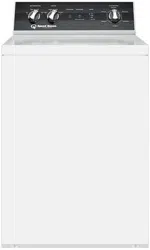
User's Guide
for Topload Washers
Original Instructions
Keep These Instructions for Future Reference.
CAUTION: Read the instructions before using the
machine.
(If this machine changes ownership, this manual
must accompany machine.)
www.speedqueen.com
Part No. 203967ENR2
September 2017

WARNING
Failure to install, maintain, and/or operate this ma-
chine according to the manufacturer's instructions
may result in conditions which can produce bodily
injury and/or property damage.
W030
WARNING
For your safety and to reduce the risk of fire or an
explosion, do not store or use gasoline or other
flammable vapors and liquids in the vicinity of this or
any other appliance.
W022
NOTE: The WARNING and IMPORTANT instructions ap-
pearing in this manual are not meant to cover all possi-
ble conditions and situations that may occur. It must
be understood that common sense, caution, and care-
fulness are factors which cannot be built into these
washers. These factors MUST BE supplied by the per-
son(s) installing, maintaining, or operating the unit.
Always contact the distributor, service agent, or the manufac-
turer about any problems or conditions you do not understand.
Read all instructions before using unit.
This product uses FreeRTOS V7.2.0 (www.freertos.org).
©
Copyright, Alliance Laundry Systems LLC -
DO NOT COPY or TRANSMIT
3 Part No. 203967ENR2

Product Registration
New owners of Alliance Laundry Systems equipment are en-
couraged to register their appliance to insure proper limited
warranty coverage. Register online at http://www.speed-
queen.com/home/en-us/support/product-registration.aspx or
contact your dealer to register your appliance. All information
will be kept confidential and will not be distributed to other
parties.
Product Registration
©
Copyright, Alliance Laundry Systems LLC -
DO NOT COPY or TRANSMIT
4 Part No. 203967ENR2

Table of Contents
Safety Information...................................................................................6
Explanation of Safety Messages.....................................................................6
Important Safety Instructions.........................................................................6
Operation................................................................................................8
Before Washing............................................................................................. 8
Loading the Washer.......................................................................................8
Control Panel........................................................................................ 11
Digital Display..............................................................................................11
Cycles......................................................................................................... 11
Selections................................................................................................... 13
Options....................................................................................................... 13
Status......................................................................................................... 14
To Wash Clothes.......................................................................................... 14
Manual Soaking.......................................................................................... 16
Cycle Operation.....................................................................................17
Common Washer Sounds.............................................................................21
Optional Features........................................................................................22
Clothing Care........................................................................................ 24
Clothing Concerns....................................................................................... 24
Maintenance.........................................................................................26
Cold Weather Care.......................................................................................26
Care of Your Washer.................................................................................... 26
Replacing Hoses..........................................................................................26
Filter Screens.............................................................................................. 26
Vacations and Extended Non-Use.................................................................26
Preventative Maintenance........................................................................... 26
Reinstallation of Shipping Materials............................................................. 27
Troubleshooting.................................................................................... 28
Warranty Repairs.........................................................................................32
Contact Information.....................................................................................32
©
Copyright 2017, Alliance Laundry Systems LLC
All rights reserved. No part of the contents of this book may be reproduced or transmitted in any form or by any means without the expressed
written consent of the publisher.
©
Copyright, Alliance Laundry Systems LLC -
DO NOT COPY or TRANSMIT
5 Part No. 203967ENR2

Safety Information
Explanation of Safety Messages
Precautionary statements (“DANGER,” “WARNING,” and “CAU-
TION”), followed by specific instructions, are found in this man-
ual and on machine decals. These precautions are intended
for the personal safety of the operator, user, servicer, and
those maintaining the machine.
DANGER
Indicates an imminently hazardous situation that, if
not avoided, will cause severe personal injury or
death.
WARNING
Indicates a hazardous situation that, if not avoided,
could cause severe personal injury or death.
CAUTION
Indicates a hazardous situation that, if not avoided,
may cause minor or moderate personal injury or
property damage.
Additional precautionary statements (“IMPORTANT” and
“NOTE”) are followed by specific instructions.
IMPORTANT: The word “IMPORTANT” is used to in-
form the reader of specific procedures where minor
machine damage will occur if the procedure is not fol-
lowed.
NOTE: The word “NOTE” is used to communicate in-
stallation, operation, maintenance or servicing informa-
tion that is important but not hazard related.
Important Safety Instructions
Save These Instructions
WARNING
To reduce the risk of fire, electric shock, serious in-
jury or death to persons when using your washer,
follow these basic precautions:
W023
• Read all instructions before using the washer.
• Install the washer according to the INSTALLATION INSTRUC-
TIONS. Refer to the EARTH/GROUND INSTRUCTIONS in the
INSTALLATION manual for the proper earth/ground connec-
tion of the washer. All connections for water, drain, electri-
cal power and earth/ground must comply with local codes
and be made by licensed personnel when required. Do not
do it yourself.
• Do not install or store the washer where it will be exposed
to water and/or weather.
• Do not add the following substances or textiles containing
traces of the following substances to the wash water: gaso-
line, kerosene, waxes, cooking oils, vegetable oils, machine
oils, dry-cleaning solvents, flammable chemicals, thinners
or other flammable or explosive substances. These sub-
stances give off vapors that could ignite, explode or cause
the fabric to catch on fire by itself.
• Under certain conditions, hydrogen gas may be produced in
a hot water system that has not been used for two weeks
or more. HYDROGEN GAS IS EXPLOSIVE. If the hot water
system has not been used for such a period, before using a
washing machine or combination washer-dryer, turn on all
hot water faucets and let the water flow from each for sev-
eral minutes. This will release any accumulated hydrogen
gas. THE GAS IS FLAMMABLE, DO NOT SMOKE OR USE AN
OPEN FLAME DURING THIS TIME.
• To reduce the risk of an electric shock or fire, DO NOT use
an extension cord or an adapter to connect the washer to
the electrical power source.
• Do not allow children to play on or in the washer. Close su-
pervision of children is necessary when the washer is used
near children. This appliance is not intended for use by per-
sons (including children) with reduced physical, sensory or
mental capabilities, or lack of experience and knowledge,
unless they have been given supervision or instruction con-
cerning the use of the appliance by a person responsible
for their safety. This is a safety rule for all appliances.
• Cleaning and user maintenance shall not be made by chil-
dren without supervision.
Safety Information
©
Copyright, Alliance Laundry Systems LLC -
DO NOT COPY or TRANSMIT
6 Part No. 203967ENR2

• Children less than three years should be kept away unless
continuously supervised.
• Do not reach into the washer if the washtub or agitator, if
applicable, is moving.
• Never operate the washer with any guards, panels and/or
parts removed or broken. DO NOT tamper with the controls
or bypass any safety devices.
• Use your washer only for its intended purpose, washing
clothes. Always follow the fabric care instructions supplied
by the garment manufacturer.
• Always read and follow manufacturer’s instructions on
packages of laundry and cleaning aids. To reduce the risk
of poisoning or chemical burns, keep them out of the reach
of children at all times (preferably in a locked cabinet).
Heed all warnings or precautions.
• Do not use fabric softeners or products to eliminate static
unless recommended by the manufacturer of the fabric
softener or product.
• Lid MUST BE CLOSED any time the washer is in operation.
DO NOT bypass the lid switch or lid lock to permit the wash-
er to operate with the lid open.
• Be sure water connections have a shut-off valve and that
fill hose connections are tight. CLOSE the shut-off valves at
the end of each wash day.
• Keep your washer in good condition. Bumping or dropping
the washer can damage safety features. If this occurs,
have your washer checked by a qualified service person.
• Do not repair or replace any part of the washer, or attempt
any servicing unless specifically recommended in the user-
maintenance instructions or in published user-repair in-
structions that you understand and have the skills to carry
out. ALWAYS disconnect the washer from electrical supply
before attempting any service.
• Disconnect the power cord by grasping the plug, not the
cord. If the supply cord is damaged, it must be replaced by
the manufacturer, its service agent or similarly qualified
persons in order to avoid a hazard.
• Before the washer is removed from service or discarded,
remove the lid or door to the washing compartment.
• Failure to install, maintain, and/or operate this washer ac-
cording to the manufacturer’s instructions may result in
conditions which can produce bodily injury and/or property
damage.
NOTE: The WARNING and IMPORTANT SAFETY IN-
STRUCTIONS appearing in this manual are not meant
to cover all possible conditions and situations that may
occur. Observe and be aware of other labels and pre-
cautions that are located on the machine. They are in-
tended to provide instruction for safe use of the ma-
chine. Common sense, caution and care must be exer-
cised when installing, maintaining, or operating the
washer.
Always contact your dealer, distributor, service agent or the
manufacturer about any problems or conditions you do not un-
derstand.
Safety Information
©
Copyright, Alliance Laundry Systems LLC -
DO NOT COPY or TRANSMIT
7 Part No. 203967ENR2
Operation
Before Washing
Prepare Wash Load
Empty Pockets and Cuffs
Make sure all pockets are empty and turn them inside out.
One bobby pin, metal or plastic toy, nail or sharp object in a
load can catch laundry, cause tears and plug the pump. Facial
tissue left in a pocket will produce extreme “lint”. A crayon or
lipstick in a wash load may cause stains that cannot be re-
moved. Roll down cuffs and shake out grass, sand and gravel.
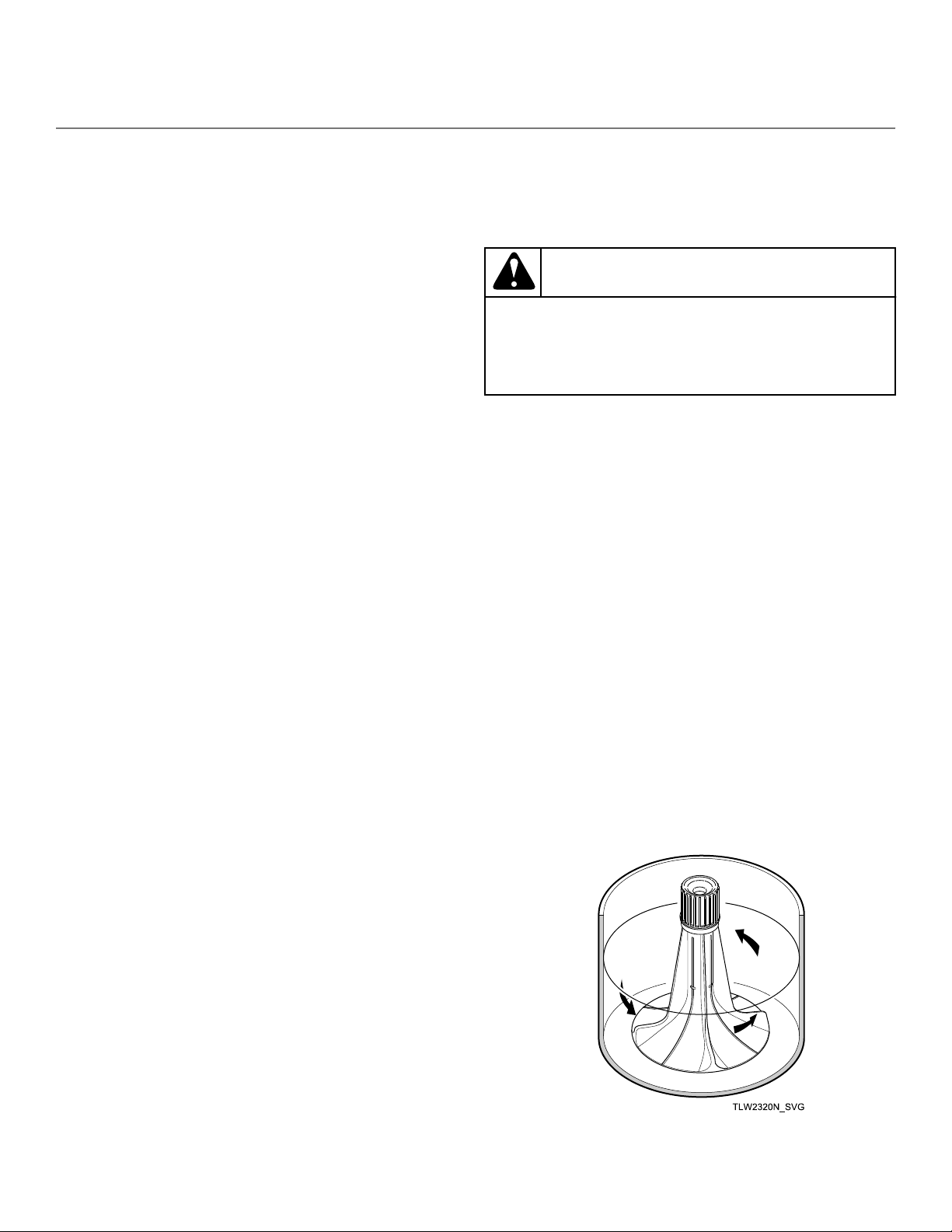
Strings on clothing such as hooded sweatshirts may get
caught in or around the agitator. Remove the strings if possible
or tie them together.
Mend Rips and Tears
Little holes can become bigger in the washer. Mend holes and
tears before placing garments in the washer.
Close Zipper and Fasten Hooks
These can catch on garments in a wash load and tear them.
Tie belts and sashes so they won’t wind around clothes.
Check For Colorfastness
Squeeze a portion of garment in warm or hot sudsy water. If
the color bleeds or runs, wash the item separately in cold wa-
ter.
Sort Items
Different items use different wash cycles and temperatures.
Always follow the manufacturer’s care label. Proper sorting is
easy if you follow a few guidelines:
1. Sort by Color: Separate items into loads of whites, darks,
lights and non-colorfast.
2. Sort by Fabric and Construction: Separate items into loads
of cottons/linens, permanent press, synthetics/blends/
poly knits, and delicates.
3. Sort by Temperature: Separate items into loads that can be
washed in cold, warm or hot water.
4. Sort by Type and Amount of Soil: Heavily soiled clothes will
need extra treatment. Lightly soiled clothes can become
dingy if washed with heavily soiled items.
5. Sort Lint “Shedders” From Lint “Receivers”: Some fabrics
attract lint and should not be washed with lint-shedding
loads. Lint shedders are cottons, terry towels, chenille bed-
spreads, rugs and clothes that have been heavily bleached.
Lint receivers are synthetics, permanent or durable press,
knits (including socks), corduroy, and other smooth fabrics.
Pretreat
Pretreat shirt collars and cuffs with a pretreat product or liquid
detergent when placing them in the washer. Before washing,
treat special stains individually.
WARNING
Do not wash or dry items soiled with vegetable or
cooking oils. Some oils may remain after washing
and may cause the fabric to catch on fire by itself.
W527
Loading the Washer
Load Articles
NOTE: Always add detergent first.
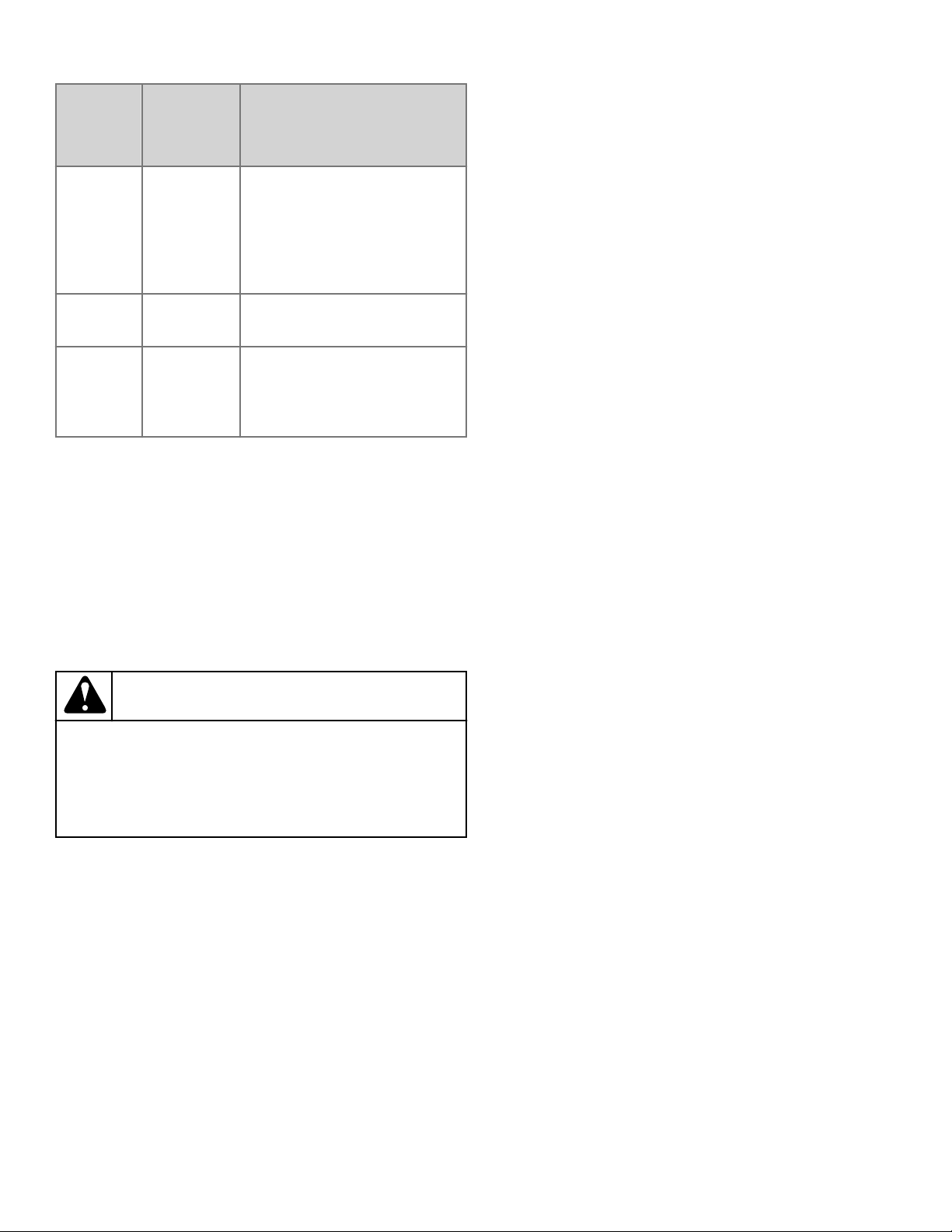
• Load larger and heavier items first so they are at the bot-
tom of the washtub.
• Load items by the amount of space they take up, not by
their weight.
• Mix large and small items in a load to get the best washing
results. For example, don't wash a single large item such as
a throw rug. Add several smaller items to avoid an out-of-
balance condition.
• An out-of-balance load may limit spin speeds.
• The left decimal point on the display may blink on/off at
the end of a cycle if the load did not reach maximum
speed. This can indicate an unbalanced load.
• Drop items loosely into the washtub. The bulk of the
clothes rather than the weight will determine load size. Do
not pack items in or wrap them around the agitator. Over-
loading can cause poor cleaning, excessive wrinkling and
tears.
Operation
©
Copyright, Alliance Laundry Systems LLC -
DO NOT COPY or TRANSMIT
8 Part No. 203967ENR2
• Items should move freely through the wash water for best
cleaning results.
• When washing very large items, do not fill washtub as full
as with other loads.
Load Size - Auto Fill Water Levels
• This washer has an Auto Fill feature. It will automatically se-
lect the proper water level for the load size and type of fab-
ric that is being washed. Auto Fill is recommended for the
best wash performance in all cycles.
• Auto Fill works in multiple stages. During the first fill step of
the cycle, water will fill to the minimum level programmed
for the specific cycle selected. Once the wash step begins,
the control starts sensing the load. Once sensing is com-
plete more water may be added to optimize wash results.
• If you pause the cycle after it started, the Auto Fill sensing
stage will begin again once the cycle is resumed. It will de-
termine if any items have been added and if more water is
needed.
• Overloading the washtub can result in poor washing and
rinsing.
Load Size - Manual Water Levels
• Although the Auto Fill selection is recommended for the
best wash performance in all cycles, there are three man-
ual load size selections as well.
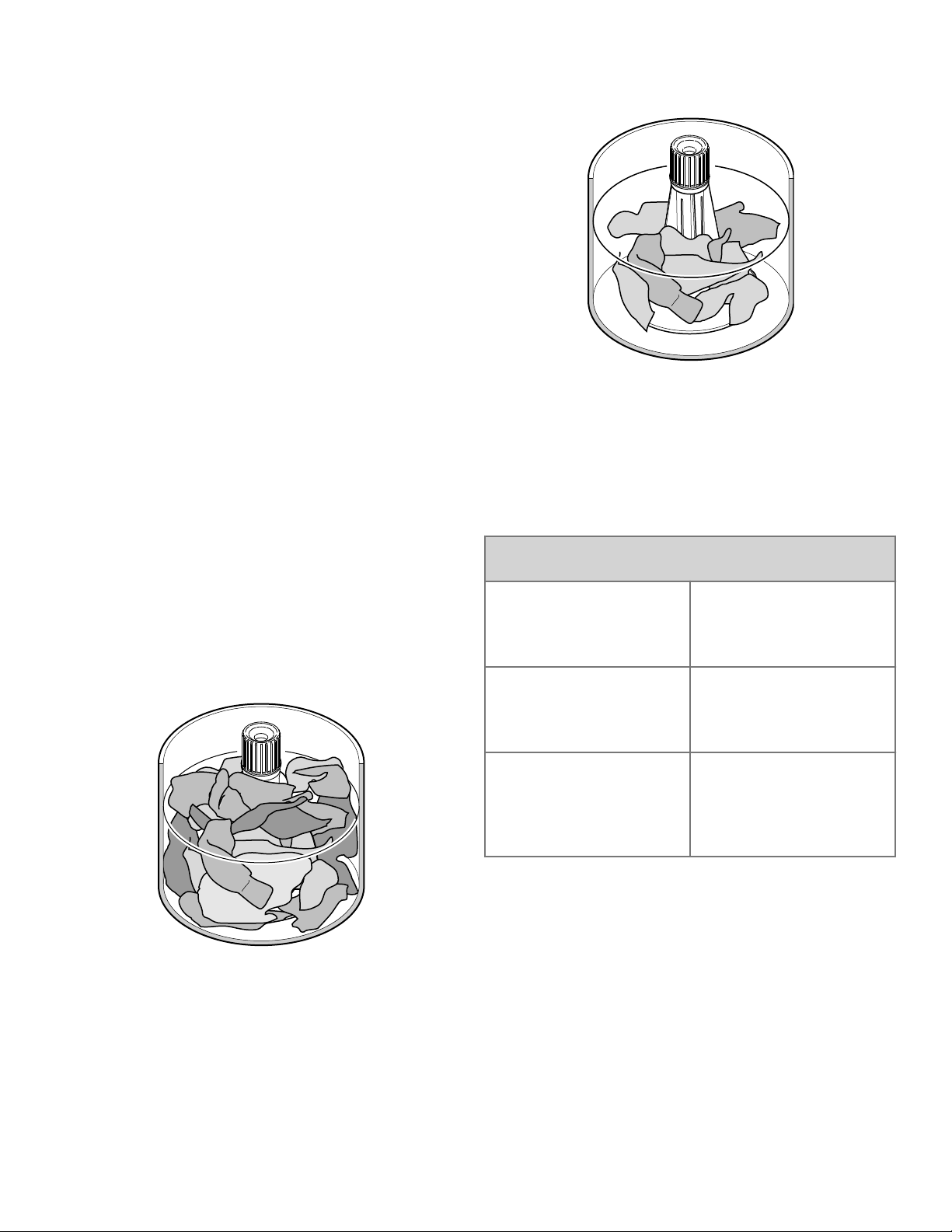
• The water level in your washer should fit the size of your
wash load. Small loads will use lower water levels. There
must be enough water in the washtub to allow items to
move and turn over freely.
WRONG Water Level for Size of Load
W282I_SVG
CORRECT Water Level for Size of Load
TLW2319N_SVG
• Overloading the washtub can result in poor washing and
rinsing.
IMPORTANT: If in doubt when using a manual selec-
tion, always use a larger load size. Most average loads
will require the Large Load Size setting. Failure to have
the correct volume of water relative to the load may de-
crease washer performance.
Manual Load Sizes
Small 1-2 permanent press dress
shirts or 2 pillow cases or 1
lightweight dress or similar
size load
Medium 6-7 permanent press shirts
or 2 twin sheets, 2 pillow ca-
ses or 8 standard bath tow-
els, 6 wash cloths
Large 8-9 shirts, 5 pair polyester
pants or 2 queen size sheets,
4 pillow cases, 2 nightgowns,
1 pair men’s pajamas or 1
queen size bedspread
The manual load size water levels will vary depending on the
wash cycle selected. If the wrong load size is selected, the ma-
chine may add more water.
Operation
©
Copyright, Alliance Laundry Systems LLC -
DO NOT COPY or TRANSMIT
9 Part No. 203967ENR2

Wash Temperature
Hot
Hot water is the most effective for cleaning, but it is not recom-
mended for all fabric types (read labels).
Warm
The Warm Wash is useful for providing a thorough cleaning on
light and moderately soiled clothing without damaging fabric
or adding to color fading. Warm water also reduces wrinkling.
Warm water can also be used in the rinse water. Use with non-
colorfast or dark colors, permanent press, silks, woolens, ny-
lon, and acrylic.
Cold
The Cold Wash is ideal for delicate items. Although its cleaning
abilities are not as great as with hot or warm water, it is useful
for colors that bleed easily and for sensitive fabrics.
The Warm/Warm temperature selection will use warm rinse
water. All other rinses use cold water. It is the most beneficial
for fabrics. Cold rinses reduce wrinkling and color fading. In
addition, cold rinses will save money and energy.
NOTE: In wash temperatures colder than 60°F [16°C],
detergents do not dissolve well. This may cause inef-
fective cleaning, or lint and residue to form.
NOTE: Always follow manufacturer’s care labels.
Water Supply Temperature
Water temperature is determined by the temperature of the in-
coming water supply. The washer does not heat or cool the wa-
ter.
For example, northern climates will have much colder incom-
ing water during the winter months. Southern climates will
have much warmer cold water during the summer months.
Wash Temperature Guide
Water
Temperature Use Comments
HOT • Sturdy whites
and colorfast
items
• Work clothes
• Soiled items
• Diapers
• Best cleaning
for items soiled
with oily or
greasy stains,
grass, or ink.
WARM • Light and mod-
erately soiled
items
• Non-colorfast
or dark colors
• Permanent
press
• Silks, woolens,
nylon, acrylic
• Rinsing of
some items
• Reduces wrin-
kling in perma-
nent press fab-
rics
• Less fading
• Reduces
shrinking in
knits
COLD • Non-colorfast
fabrics
• Extra delicate
clothing
• Saves energy
• Reduces color
fading
• Reduces wrin-
kling
• Reduces
shrinking
Table 1
Energy
You can save energy when washing by following a few guide-
lines:
1. Heating water accounts for the greatest energy expense
when washing. Save on heating water by using warm or
cold washes.
2. Wash full loads, but do not overload.
3. Use Soak option for heavily soiled items to reduce the need
for higher soil level selections.
Operation
©
Copyright, Alliance Laundry Systems LLC -
DO NOT COPY or TRANSMIT
10 Part No. 203967ENR2
Control Panel
Digital Display
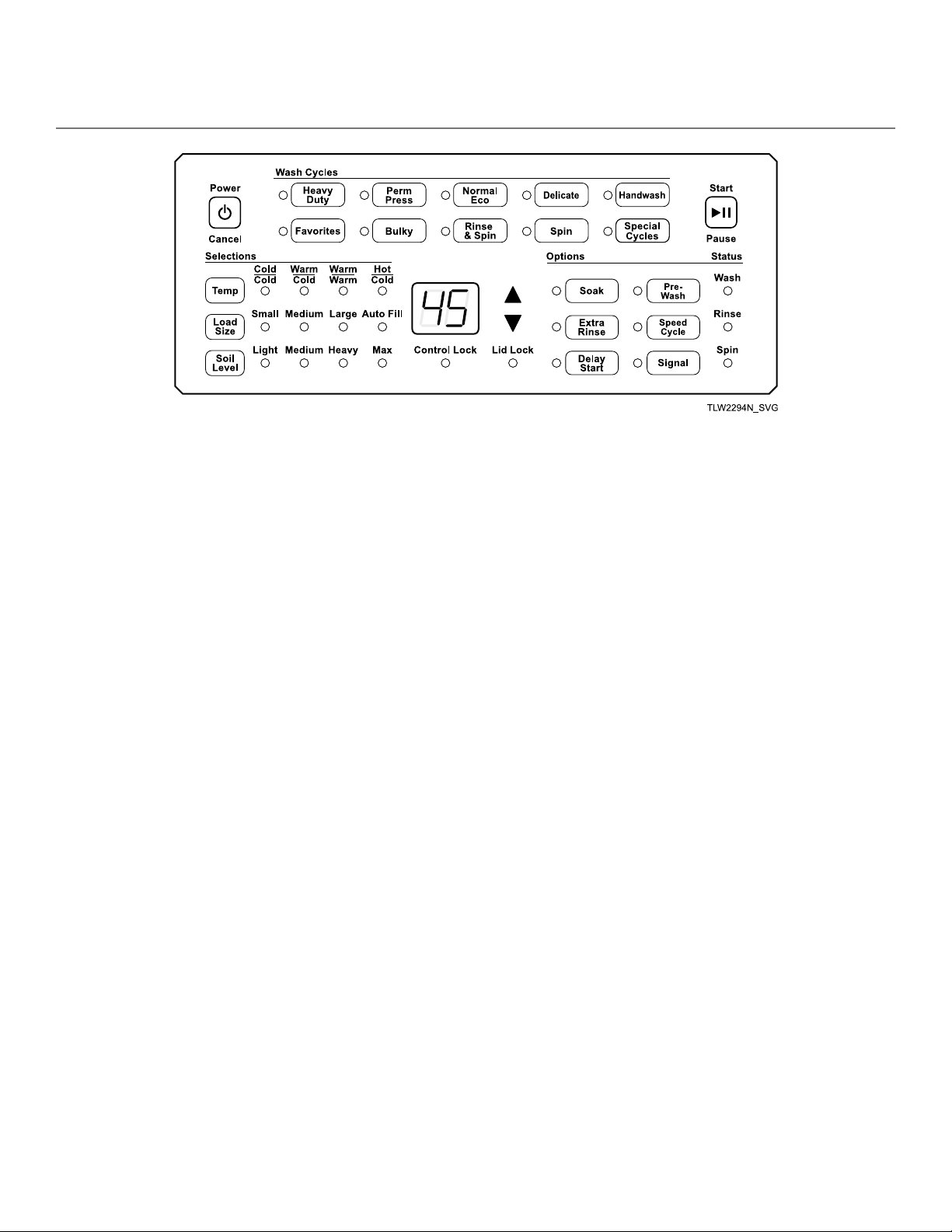
The two-digit display is used to show the time remaining in a
cycle.
If the cycle time is over 99 minutes the control will display 1H,
2H, etc., and then the additional minutes over one or two
hours. If the cycle time is over nine hours, the cycle will round
up to the nearest hour and the control will display 10 and then
Hr.
At the end of a cycle, the control will display 01 while the ma-
chine checks to make sure it is safe to unlock the lid. Once the
lid is unlocked, the display will show 00 and the red Lid
Locked status light will turn off.
When the control is powered off, the right-most decimal in the
display will flash every five minutes to indicate that the ma-
chine is in Idle Mode.
The display also shows diagnostic codes.
Idle Mode
If no keypads have been pressed for five minutes after a cycle
is finished, the control will enter Idle Mode. A light in the lower
right corner of the digital display will flash quickly once every
five minutes. Press the Power/Cancel keypad to exit this mode
and power the display for cycle/option selection. This light will
flash again after five minutes when it re-enters Idle Mode.
Keypress Audio
The audio signal that sounds when a keypad is pressed can be
turned on or off.
Press and hold both the Perm Press and Rinse & Spin keypads
at the same time to turn the audio signal on or off.
Cycles
The following cycle descriptions will help determine which cy-
cle to choose depending on the type of laundry being washed.
The descriptions are standard settings that may be modified
using the Selections and Options.
The last cycle that is set, including selections and options, is
saved even if the control is turned off.
Heavy Duty
Use for sturdy items, like play or work clothes, heavily soiled
jeans, T-shirts, etc. The wash time selection will depend on the
type of fabric and the amount of soil. For the best results when
cleaning heavily soiled items, use a higher soil level selection.
Lightly soiled items require less wash time.
Perm Press
Use for permanent press items and synthetics. The final spin
is a medium spin speed.
Normal Eco
This cycle uses a spray rinse to reduce water consumption. It
also uses less hot water. This cycle is recommended for wash-
ing everyday cottons and linens. If using fabric softener in this
cycle, select the Extra Rinse option.
Delicate
Wash items with delicate and/or gentle on the garment tag in
this cycle. Due to this cycle’s uniquely designed motion, stiff
jeans and throw rugs also wash well in this cycle.
This cycle is designed to gently move items through the water
so it fills to a higher water level. It also has a low speed final
spin.
Control Panel
©
Copyright, Alliance Laundry Systems LLC -
DO NOT COPY or TRANSMIT
11 Part No. 203967ENR2

Handwash
Wash items with handwash on the garment tag in this cycle.
This cycle is designed to gently move items through the water
so it fills to a higher water level. It includes a gentle agitation
only, a short wash time, cold water, and a very low spin.
Favorites
The Favorites keypad allows the user to save different cycles,
selections and options for later use. Nine favorite cycles can
be saved.
1. Press the Favorites keypad. The control will display the cy-
cle and modifier settings for the first Favorite Cycle. The 2-
digit display will switch between F1 and the cycle time for
the selected cycle. If a Special Cyle is selected, the 2-digit
display will switch between F1, P1 and the cycle time.
2. Press the keypads for the desired cycle, selection and op-
tion settings.
3. Press the Favorites, Start/Pause or Delay Start keypad to
save the current settings.
4. Press the Power/Cancel keypad to discard the current set-
tings.
5.
The next Favorite cycle, F2, will be displayed.
After the cycles have been saved, they can be accessed using
the up and down arrow keypads after pressing the Favorites
keypad.
Bulky
Use this cycle when washing items such as blankets, sheets,
small rugs, comforters, mattress covers and jackets. The cycle
includes a special agitation designed for these items.
Rinse & Spin
Use to quickly rinse items. Only cold water is used in this cycle.
The rinse is followed by a spin that can be set at four different
speeds. Use the Soil Level keypad to select the spin speed.
The default spin speed is 820 RPM.
Soil Level Selection Spin RPM
Light 400
Medium 500
Heavy 665
Max 820
Table 2
Spin
Use this cycle to extract water from wet items. The spin speeds
can be set at four different speeds. Use the Soil Level keypad
to select the spin speed. The default spin speed is 820 RPM.
Special Cycles
Select the Special Cycles keypad. Press the up and down ar-
row keypads for the desired cycle. The display will show P and
a number relating to the cycle. Refer to the table below.
Display
Special
Cycle
Name Special Cycle Description
P1
Eco Heavy
Duty
This cycle uses a spray rinse to
reduce water consumption. It
also uses less hot water. It has
a longer wash time than the
Normal Eco cycle. If using fab-
ric softener in this cycle, select
the Extra Rinse option.
P2
Eco Delicate This cycle uses a spray rinse to
reduce water consumption. It
also uses less hot water. It has
a shorter wash time and a gen-
tler wash action than the Nor-
mal Eco cycle. If using fabric
softener in this cycle, select
the Extra Rinse option.
P3
Waterproof Wash waterproof items such as
rain coats and bed liners with
this cycle. It includes a gentle
agitation, very low spin, and
lower water levels.
For best washing results, add
another item such as a cotton
sheet on top of the waterproof
items to make sure they get
fully submersed in the water
and that no air is trapped un-
der the waterproof items.
P4
Super Soiled Use for very heavily soiled
items. It includes a 15 minute
Soak at the beginning of the
cycle, a longer wash time than
Heavy Duty and a Extra Rinse.
P5
Whites This cycle is designed to keep
white laundry white. It utilizes a
longer wash time. Use for items
such as sheets and towels.
Table 3 continues...
Control Panel
©
Copyright, Alliance Laundry Systems LLC -
DO NOT COPY or TRANSMIT
12 Part No. 203967ENR2
Display
Special
Cycle
Name Special Cycle Description
P6
Wool Wash wool items using this cy-
cle. It includes cold water, a 30-
minute soak, a very short gen-
tle agitation, a one-minute
spin, a cold rinse, and an ex-
tended spin time.
P7
Athletic This cycle includes a cold wash
and a shorter, gentle agitation.
P8
Denim This cycle is similar to the
Heavy Duty cycle but with a
cold wash and longer spin
time.
Table 3
Waterproof Items
If waterproof or water-resistant items need to be washed, use
only the Special Cycle - Waterproof (P3).
Examples of waterproof items include rain coats and bed lin-
ers. Load the items evenly and load washtub no more than
1/2 full. For best washing results, add another item such as a
cotton sheet on top of the waterproof items to make sure they
get fully submersed in the water and that no air is trapped un-
der the waterproof items.
WARNING
Failure to closely follow these instructions may re-
sult in an abnormal vibrating and out-of-balance con-
dition that could result in physical injury, property
damage and/or appliance damage.
W957
Customized Wash Time
Use the up and down arrow keypads to adjust the length of
wash time. The time can be increased or decreased by one mi-
nute within the Light and Max soil level settings. Set the wash
time depending on the type of laundry being washed.
Selections
The following selections can be used to modify the currently
chosen cycle. The default selections will be lit after choosing a
cycle.
Temp
Press the Temp keypad to change the cycle's wash and rinse
water temperature. The top temperatures are for the wash wa-
ter. The bottom ones are for the rinse water. For example, se-
lecting Warm/Cold will provide warm wash water and cold
rinse water.
Load Size
The Load Size Selection determines the amount of water used
in the cycle.
Choose Small, Medium, Large or Auto Fill according to the
amount of laundry being washed.
Auto Fill is the default Load Size for all cycles, but other fill lev-
els can be manually selected.
Auto Fill will provide the most efficient use of water and also
enhance wash performance by optimizing the water level for
each particular load size and type.
NOTE: Auto Fill works in multiple stages. During the
first fill step of the cycle, water will fill to the minimum
level programmed for the specific cycle selected. Once
the wash step begins, the control starts sensing the
load. Once sensing is complete more water may be
added to optimize wash results. This process may take
several fills to optimize the water level. It is part of the
machine's normal operation.
Soil Level
Changing the Soil Level keypad will add or subtract wash time
in the selected cycle.
Choose Light, Medium, Heavy or Max according to the amount
of soil in the laundry load. Light is the minimum and Max is
the maximum amount of time.
The Soil Level LED will flash to indicate that you can also ad-
just the Wash Time using the up and down arrow keypads. The
time is increased or decreased by one minute.
The Soil Level keypad is also used to select the final spin
speed when the Rinse & Spin or Spin cycles are selected. Re-
fer to Table 2 .
Control Panel
©
Copyright, Alliance Laundry Systems LLC -
DO NOT COPY or TRANSMIT
13 Part No. 203967ENR2

Options
The following options can be used to modify the currently
chosen cycle, signal volume and control lock.
Soak
The Soak option is added to the beginning of the cycle. Use for
heavily soiled or stained clothing. The washtub will fill with wa-
ter, agitate for a reduced period of time, and pause for the set
amount of time.
The Soak LED will flash to indicate that you can set the
amount of soak time by pressing the Soak keypad again or the
up and down arrow keypads. The time will increase by 15 mi-
nutes up to an hour and then go up by one hour increments.
The maximum soak time is 24 hours.
The soak LED also will flash during any soak portion of the cy-
cle.
Pre-Wash
The Pre-Wash option adds an additional eight-minute wash be-
fore the selected cycle. At the end of the pre-wash, the dirty
wash water will drain from the tub and the machine will sound
a three-second tone to indicate that pre-wash has comple-
ted. The lid will unlock so any additional laundry supplies may
be added.
Push the start button to resume the selected cycle. If there is
no activity for two minutes, the cycle will resume automatically
and the machine will refill with water and continue with the se-
lected cycle.
Extra Rinse
This Option will provide an additional rinse to the selected cy-
cle. With the Warm/Warm temperature selection this rinse will
use warm water. All other temperature selections use cold wa-
ter.
Speed Cycle
Selecting the Speed Cycle Option will shorten the wash agitate
and final spin times by 30%.
Delay Start
Pressing the Delay Start Option will allow the cycle to begin up
to 24 hours later. Pressing it once will delay the cycle by one
hour and 1h will display on the control. Press the Delay Start
keypad again or the up arrow keypad. The time will increase by
one hour. Press the Start/Pause keypad to begin the count-
down.
While setting the Delay Start Option, the cycle time and the
Delay Start keypad light will flash (1 second on/off).
After the Delay Start Option is started, the Delay Start keypad
light will flash (1 second on/off).
Signal
Pressing the Signal keypad will change the end of cycle signal
volume. There are four settings: Off, Low, Medium, High.
Control Lock (Secure keypad)
Pressing and holding the Signal keypad for three seconds will
turn on the Control Lock. The Control Lock status light will be
lit. While Control Lock is on, no other keypad presses are al-
lowed. Press and hold the Signal keypad again to turn the op-
tion off.
Status
The active Status light will flash at the beginning of the cycle.
The Status lights are lit throughout the cycle to show what part
of the cycle is running.
Light Description
Wash The Wash status light is lit during the
first fill step and the wash step of the cy-
cle including Pre-Wash and Soak, if se-
lected.
Rinse The Rinse status light is lit during the
rinse portions of the cycle including Ex-
tra Rinse, if selected.
Spin The Spin status light is lit during the final
spin portion of the cycle.
Lid Lock The Lid Lock status light will flash when
trying to lock. It is lit any time the lid is
locked.
Table 4
Control Panel
©
Copyright, Alliance Laundry Systems LLC -
DO NOT COPY or TRANSMIT
14 Part No. 203967ENR2
To Wash Clothes
IMPORTANT: Before using your new washer, make
sure the washer cord is connected to an appropriate
electrical outlet that is properly installed and connec-
ted to a protective earth/ground. Make sure the washer
hoses are connected to the hot and cold water faucets,
and that the faucets are turned on. Be sure the drain
hose is not kinked and is inserted into a drain. Refer to
the INSTALLATION INSTRUCTIONS for details of prop-
er washer installation.
IMPORTANT: Prior to first wash, use an all purpose
cleaner, or a detergent and water solution, and a damp
cloth to remove shipping dust from inside of wash
drum.
1. Get the clothes ready for washing. Empty pockets and
cuffs. Sort items into separate loads. Pretreat stains and
heavily soiled areas.
IMPORTANT: Remove all sharp objects from laundry
to avoid tears and rips to items during normal ma-
chine operation.
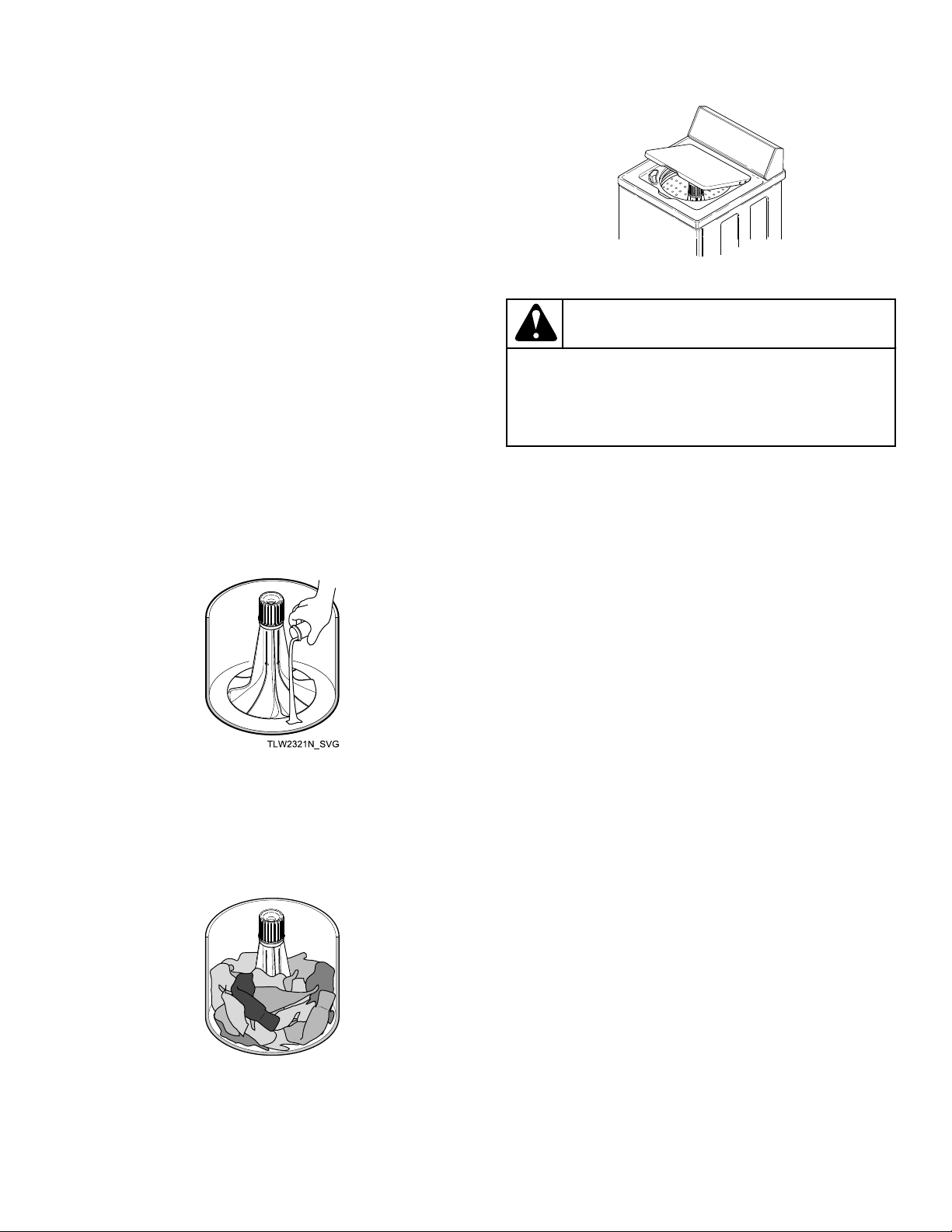
2. Measure and add low sudsing, High Efficiency (HE) deter-
gent to the washtub. Follow instructions on detergent pack-
age for amount to use.
NOTE: High efficiency (HE) detergent is recommen-
ded for use in this machine. Look for the HE logo or
“high efficiency” on the detergent’s label.
3. Add clothes loosely into the washtub (16 lbs. [7.2 kg] maxi-
mum dry clothes load).
TLW2323N_SVG
4. Close the lid. The washer will not fill, agitate or spin with
the lid open.
TLW2324N_SVG
WARNING
To reduce the risk of serious injury, do not by-
pass the lid switch or lid lock to permit the wash-
er to agitate or spin with the lid open.
W939
5. If not already on (control lights will be lit), turn on the wash-
er. Press the Power button to turn on the washer.
6. Select the cycle according to the type of fabric being wash-
ed. Refer to Cycles section. If the selected cycle is not the
correct cycle for the fabric being washed, you may change
the cycle selection at any time until the first wash fill is
complete.
NOTE: The Normal Eco cycle is recommended for
everyday cottons and linens.
7. If desired change the Selections and Options settings.
8. Press the Start/Pause button to begin the cycle. The lid will
stay unlocked during the first fill so you can easily add
items. The lid will lock automatically after the initial wet-
down fill and before agitation begins.
NOTE: Lid must be closed for fill, agitation and spin
to start.
During the first fill when the Auto Fill Load Size is selected, wa-
ter fills to the minimum level programmed for the specific cycle
selected. Once the wash step begins, the control starts sens-
ing the load. Once sensing is complete more water may be
added to optimize wash results.
The washer will stop (pause) shortly before the wash and rinse
spins. They are a normal part of the cycle.
The lid will automatically unlock at the end of the cycle after a
short pause to ensure there is no washtub movement.
Pausing the Cycle
Although the lid stays unlocked during the first fill so you can
add items, you can also pause the cycle and unlock the lid.
NOTE: You can’t pause a cycle right after starting it.
There is a short delay while the machine is energizing.
If the lid is opened during fill or while Delay Start is active, the
cycle will pause and the display will alternate between St and
Control Panel
©
Copyright, Alliance Laundry Systems LLC -
DO NOT COPY or TRANSMIT
15 Part No. 203967ENR2
the remaining time. The Start/Pause button must be pressed
to restart the cycle. If the lid has been reclosed and the Start/
Pause button has not been pressed after 10 seconds, a chime
will sound as a reminder that the cycle has not been restarted.
To pause a running cycle, press the Start/Pause button once.
The lid will unlock after about 10 seconds if the cycle is in agi-
tate or up to 60 seconds if the cycle is in spin. The display will
alternate between St and the remaining cycle time.
After closing the lid, press the Start/Pause button once more
to re-start the cycle. The cycle will resume after a 10-second
delay. The washer’s controls are reactivating.
The Auto Fill sensing stage will begin again after the cycle has
been paused. If you pause the cycle to add an item, once the
cycle resumes it will sense if more water needs to be added or
not.
Manual Soaking
Do not fill the washer and open the lid or press the Start/
Pause button to perform a soak cycle. Use the Soak option on
the control panel to perform this operation.
CAUTION
Failure to use the Soak cycle when soaking laundry
will result in the washer overflowing and cause prop-
erty damage.
W958
Control Panel
©
Copyright, Alliance Laundry Systems LLC -
DO NOT COPY or TRANSMIT
16 Part No. 203967ENR2
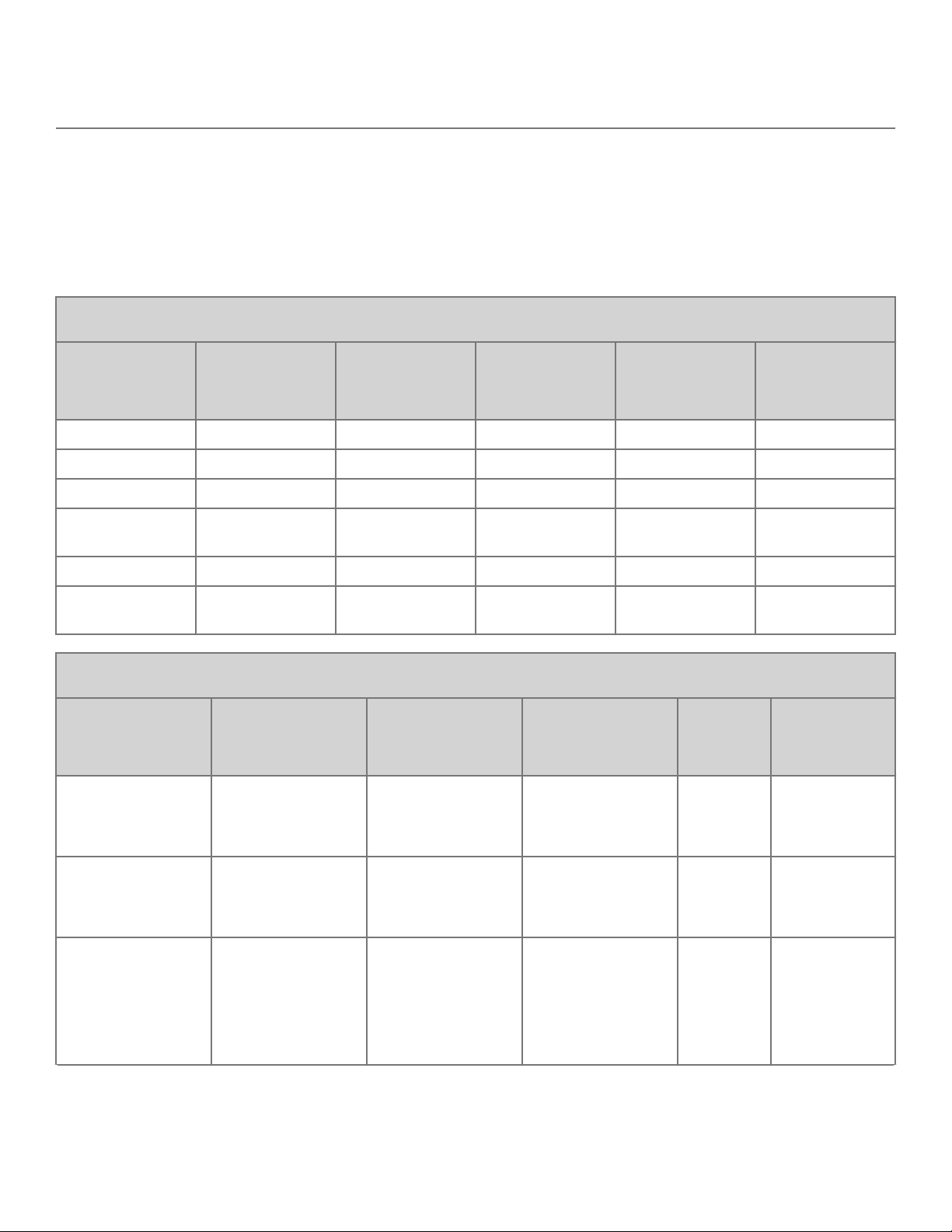
Cycle Operation
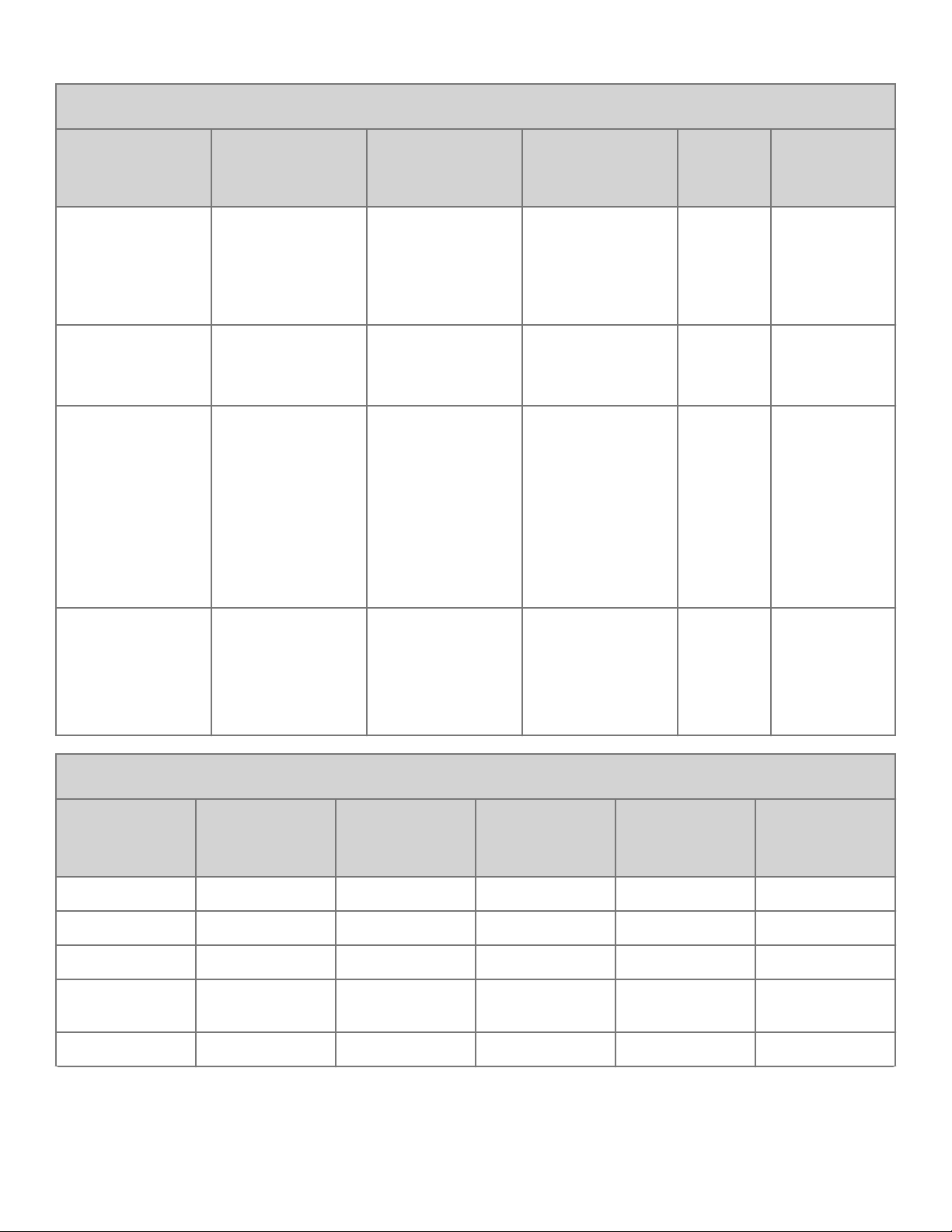
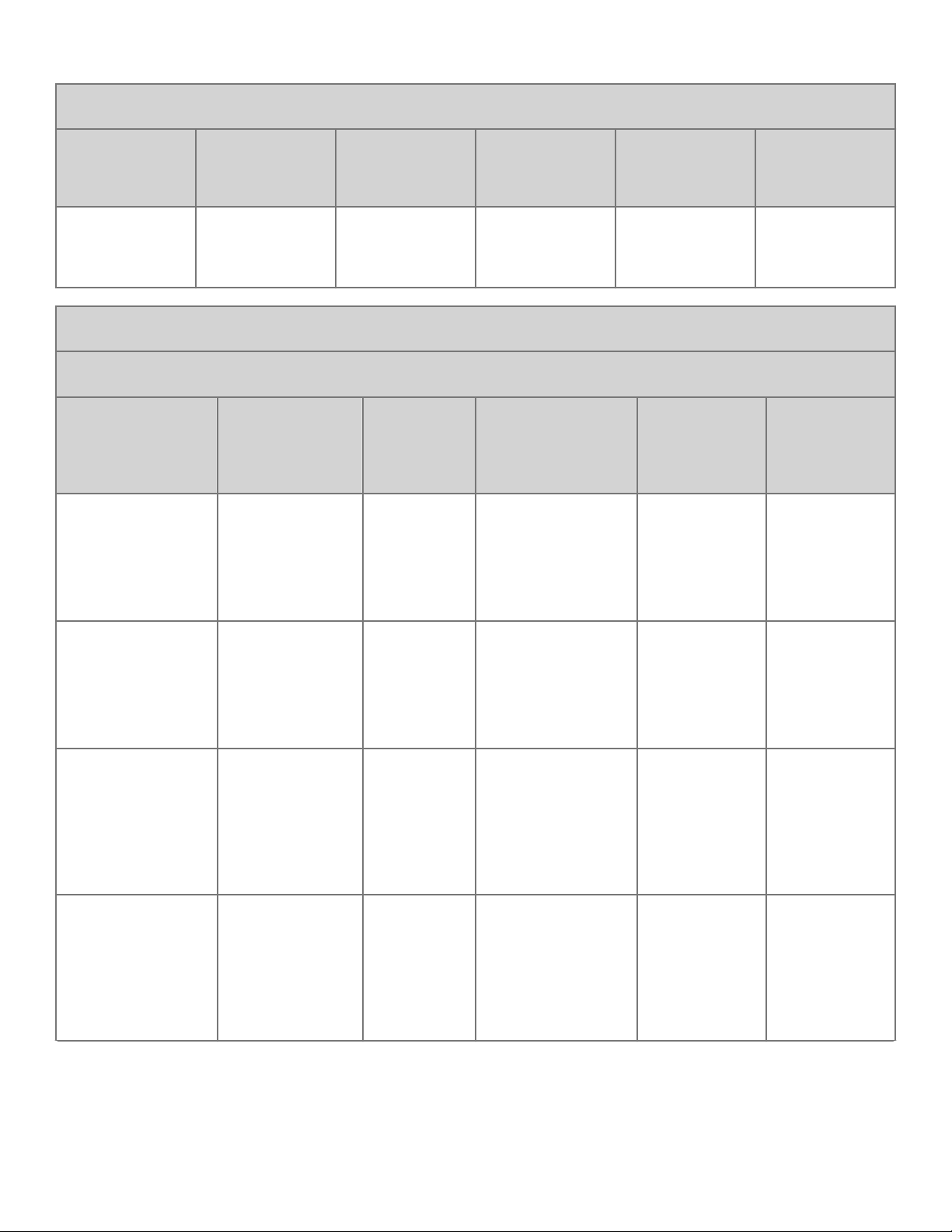
The cycles of your washer include several different stages. Re-
fer to the tables below for what can be expected during the cy-
cles that you select.
The cycle stages are dependent on the cycle, selections and
options chosen.
The times listed are the default times. They are approximate
and will vary depending on the selections and options chosen.
Cycle stages that are Options must be selected on the keypad
to be included in the cycle.
NOTE: The Pre-Wash cycle stage will not fill if the Soak
Option is also selected. The Soak fill will not drain out
the water at the end in this case.
Normal Eco Cycle
Cycle Stage Activity
Default Time
(minutes)
Agitation Level Spin Speed Comments
Soak Fill/Agitate/Soak 23:00 High Option
Pre-Wash Fill/Agitate/Spin 15:00 High Low Option
Wash Fill/Agitate 14:00 High Medium
Extra Rinse Spin/Fill/Agitate/
Spin
18:00 High Medium Option
Final Spin Spin-Spray 14:30 High
Total (without Op-
tions)
28:30
Heavy Duty, Perm Press, Delicates, Handwash, Bulky Cycles
Cycle Stage Activity
Default Time
(minutes)
Agitation Level
Spin
Speed Comments
Soak Fill/Agitate/Soak 23:00 Heavy Duty, Bulky =
High
All Others = Medium
Option
Pre-Wash Fill/Agitate/Spin 15:00 Heavy Duty, Bulky =
High
All Others = Medium
Low Option
Wash Fill/Agitate/Spin Heavy Duty = 23:30
Perm Press, Bulky =
19:30
Delicates, Hand-
wash = 18:30
Heavy Duty, Bulky =
High
All Others = Medium
Heavy Duty
= Medium
Perm
Press, Bul-
ky = Low
Table continues...
Cycle Operation
©
Copyright, Alliance Laundry Systems LLC -
DO NOT COPY or TRANSMIT
17 Part No. 203967ENR2
Heavy Duty, Perm Press, Delicates, Handwash, Bulky Cycles
Cycle Stage Activity
Default Time
(minutes)
Agitation Level
Spin
Speed Comments
Extra Rinse Fill/Agitate/Spin 12:30 Heavy Duty, Bulky =
High
All Others = Medium
Heavy Duty
= Medium
Perm
Press, Bul-
ky = Low
Option
Rinse Fill/Agitate 6:30 Heavy Duty, Bulky =
High
All Others = Medium
Final Spin Spin 10:00 Heavy Duty
= High
Perm
Press, Bul-
ky = Medi-
um
Delicates,
Handwash
= Low
Total (without Op-
tions)
Heavy Duty = 40:00
Perm Press, Bulky =
36:00
Delicates, Hand-
wash = 35:00
Rinse & Spin and Spin Cycles
Cycle Stage Activity
Default Time
(minutes)
Agitate Level Spin Speed Comments
Soak Fill/Agitate/Soak 23:00 Option
Pre-Wash Fill/Agitate/Spin 15:00 High Medium Option
Extra Rinse Fill/Agitate/Spin 12:30 High Medium Option
Rinse Fill/Agitate 6:30 High Medium Not active in Spin
Cycle
Final Spin Spin 10:00 High
Table continues...
Cycle Operation
©
Copyright, Alliance Laundry Systems LLC -
DO NOT COPY or TRANSMIT
18 Part No. 203967ENR2
Rinse & Spin and Spin Cycles
Cycle Stage Activity
Default Time
(minutes)
Agitate Level Spin Speed Comments
Total (without Op-
tions)
Rinse & Spin =
16:30
Spin = 10:00
Special Cycles
Eco Heavy Duty (P1), Eco Delicate (P2), Waterproof (P3)
Cycle Stage Activity
Default
Time
(minutes)
Agitate Level Spin Speed Comments
Soak Fill/Agitate/Soak 23:00 Eco Heavy Duty =
High
Eco Delicate = Medi-
um
Waterproof = Low
Option
Pre-Wash Fill/Agitate/Spin 15:00 Eco Heavy Duty =
High
Eco Delicate = Medi-
um
Waterproof = Low
Low Option
Wash Fill/Agitate Eco Heavy
Duty = 18:00
Eco Delicate
= 13:00
Waterproof =
14:00
Eco Heavy Duty =
High
Eco Delicate = Medi-
um
Waterproof = Low
Eco Heavy Duty
= Medium
Eco Delicate =
Low
Waterproof =
Very Low
Extra Rinse Spin/Fill/Agitate/
Spin
18:00 Eco Heavy Duty =
High
Eco Delicate = Medi-
um
Waterproof = Low
Eco Heavy Duty
= Medium
Eco Delicate =
Low
Waterproof =
Very Low
Option
Table continues...
Cycle Operation
©
Copyright, Alliance Laundry Systems LLC -
DO NOT COPY or TRANSMIT
19 Part No. 203967ENR2

Special Cycles
Eco Heavy Duty (P1), Eco Delicate (P2), Waterproof (P3)
Cycle Stage Activity
Default
Time
(minutes)
Agitate Level Spin Speed Comments
Final Spin Spin-Spray 14:30 Eco Heavy Duty
= High
Eco Delicate =
Low
Waterproof =
Very Low
Total (without Options) Eco Heavy
Duty = 32:30
Eco Delicate
= 27:30
Waterproof =
28:30
Special Cycles
Super Soiled (P4), Whites (P5), Wool (P6), Athletic (P7), Denim (P8)
Cycle Stage Activity
Default Time
(minutes)
Agitate Level Spin Speed Comments
Soak Fill/Agitate/Soak 23:00 Wool, Athletic =
Low
Super Soiled,
Whites, Denim =
High
Option (on by de-
fault for Super
Soiled; on by de-
fault and 38:00 mi-
nutes long for
Wool)
Pre-Wash Fill/Agitate/Spin 15:00 Wool, Athletic =
Low
Super Soiled,
Whites, Denim =
High
Low Option
Table continues...
Cycle Operation
©
Copyright, Alliance Laundry Systems LLC -
DO NOT COPY or TRANSMIT
20 Part No. 203967ENR2

Special Cycles
Super Soiled (P4), Whites (P5), Wool (P6), Athletic (P7), Denim (P8)
Cycle Stage Activity
Default Time
(minutes)
Agitate Level Spin Speed Comments
Wash Fill/Agitate/Spin-
Spray
Super Soiled =
24:30
Whites = 21:30
Wool = 8:00
Athletic = 19:30
Denim = 23:30
Wool, Athletic =
Low
Super Soiled,
Whites, Denim =
High
Wool = Low
All Others = Medi-
um
Extra Rinse Fill/Agitate/Spin Wool = 8:00
All Others = 12:30
Wool, Athletic =
Low
Super Soiled,
Whites, Denim =
High
Wool = Low
All Others = Medi-
um
Option (on by de-
fault for Super
Soiled)
Rinse Fill/Agitate 6:30 Wool, Athletic =
Low
Super Soiled,
Whites, Denim =
High
Final Spin Spin Wool, Denim =
12:00
All Others = 10:00
Wool = Low
All Others = High
Total (with default
Options)
Super Soiled =
76:30
Whites = 38:00
Wool = 64:30
Athletic = 36:00
Denim = 42:00
Cycle Operation
©
Copyright, Alliance Laundry Systems LLC -
DO NOT COPY or TRANSMIT
21 Part No. 203967ENR2
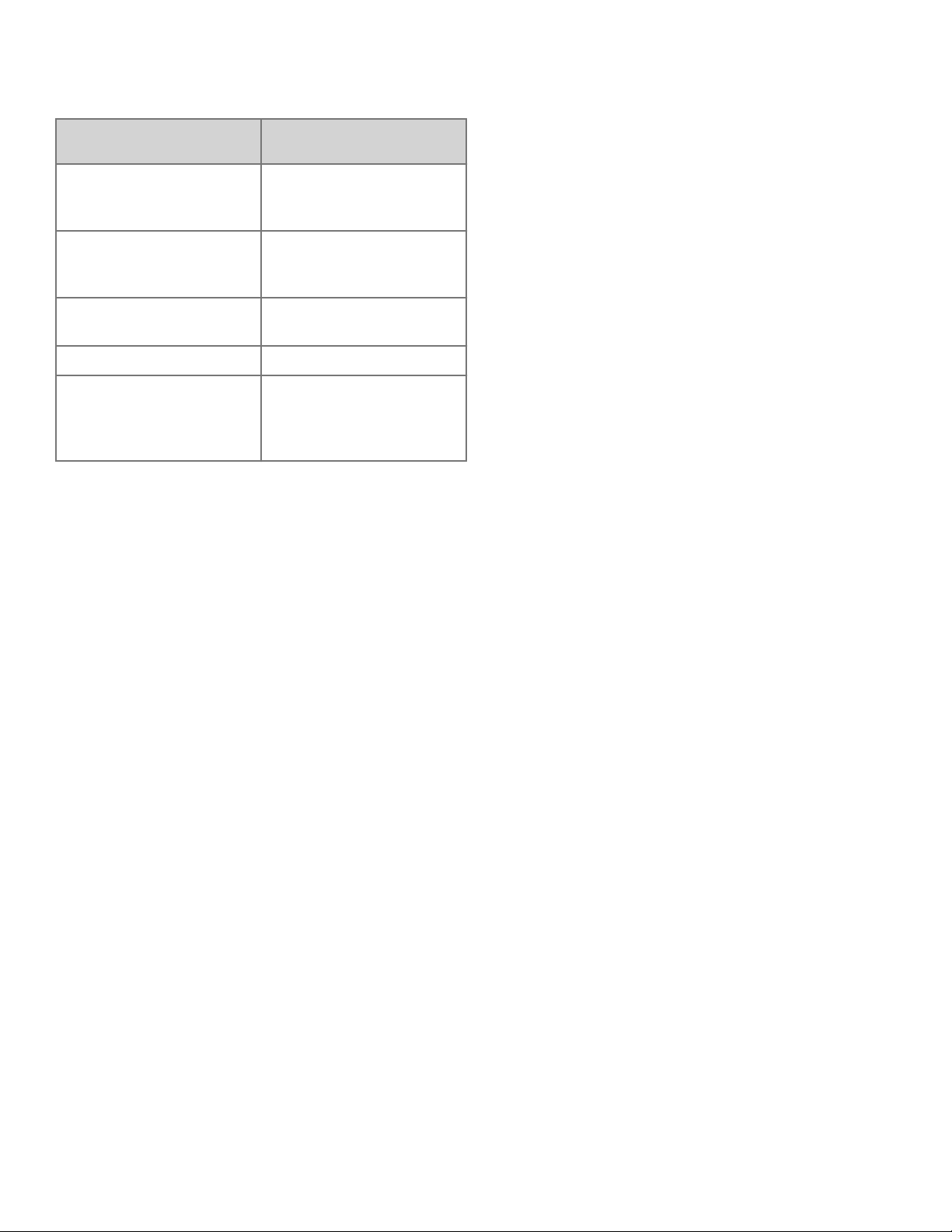
Common Washer Sounds
Sounds Cause
Pump turning on and off dur-
ing spin part of cycle
The pump will turn off and on
several times during the final
spin cycle.
Washer speeding up during
wash part of cycle
Depending on the cycle, the
wash routine will either pick
up speed or slow down.
Clicking toward the bottom of
washer after pushing Start
The motor control is powering
up.
Clicking near lid The lid lock is engaging.
Lid lock clicking at end of cy-
cle or while pausing
The lid lock needs to make
two clicks before fully releas-
ing. Wait to hear both before
opening the lid.
Table 5
Optional Features
Bleach Dispenser
The bleach dispenser is located in the left front corner, under
the lid.
Use liquid bleach in the dispenser. Powdered bleach must not
be used in the dispenser. Add powdered bleach to the wash
water.
Use no more than one cup chlorine bleach for large loads,
three-quarters cup for medium and one-half cup for small
loads.
Carefully pour recommended amount of bleach into the dis-
penser before the start of the wash cycle.
Be careful not to spill undiluted bleach. It is a strong chemical
and can damage some fabrics if it is not properly diluted.
Bleach is very corrosive and overfilling the dispenser can
cause chemical damage to the washer components. Compo-
nents damaged by bleach are not covered under the product
warranty.
Fabric Softener Dispenser
Fabric softener should not be used with the Normal Eco cycle
unless the Extra Rinse option is also selected.
To Use Dispenser
After the clothes are loaded into the washtub and before the
start of the WASH cycle, pour the proper amount of liquid fab-
ric softener into the bottle measuring cap (refer to bottle direc-
tions). Pour into dispenser.
The large fabric softener dispenser allows for the fabric soften-
er to be diluted with water. We recommend adding water up to
the fill level. Do not exceed tip of arrow which indicates correct
fill level. Over-filling can allow fabric softener to spill onto the
clothes, causing stains on clothes if the softener comes into
contact with detergent suds.
Setting the water level to medium or higher will result in better
performance from the fabric softener.
The fabric softener will remain in the dispenser during the
wash fill, agitation and spin. At the end of the wash spin, the
liquid fabric softener will be dispensed into the washtub
through the slots in the agitator and will be mixed with the in-
coming rinse water.
To Clean the Dispenser
1. Grasp the entire fabric softener assembly firmly with both
hands and place your thumbs inside the hole at the top.
2. Pull quickly up and towards you. The assembly will come
off the agitator.
3. Lay down a cloth on a hard, flat surface.
4. Lay the assembly on the cloth on its side so the vertical
lines are facing up.
5. Place your palms on the ridge at the base of the dispenser
housing and press down firmly. The assembly will split
apart for easy cleaning.
6. Soak housing, cup and funnel in hot soapy water. Use a
small brush to scrub if needed.
7. Rinse housing, cup and funnel clean.
8. The inside of the agitator can also be cleaned.
9. After cleaning, install dispenser funnel, cup and housing
until they click into place.
10. Push assembly directly downward onto top of agitator until
firmly snapped in place.
IMPORTANT: When adding detergent to the wash load,
DO NOT allow any detergent to enter the softener dis-
penser cup. If this happens, refer to the cleaning in-
structions.
Cycle Operation
©
Copyright, Alliance Laundry Systems LLC -
DO NOT COPY or TRANSMIT
22 Part No. 203967ENR2

TLW2278N_SVG
4
2
1
3
1. Dispenser Housing
2. Dispenser Cup
3. Dispenser Funnel
4. Agitator
Use Tips
• Fabric softener spilled onto garments may cause staining.
To remove, dampen stain and rub with bar soap. Wash as
usual.
• Liquid fabric softeners will be dispensed during the first
rinse and should not be combined with bleach, bluing,
starch, detergents, soaps or packaged water conditioners.
• Fabric softener is not to be used in dispenser when using
Prewash cycle, if available.
• When adding detergent to wash water, do not allow any to
enter into softener dispenser cup, as softener will become
gummy.
To prevent softener buildup, the dispenser can be filled with
clean water for automatic cleaning. This can be done in wash-
ing cycles other than when softener is used.
Cycle Operation
©
Copyright, Alliance Laundry Systems LLC -
DO NOT COPY or TRANSMIT
23 Part No. 203967ENR2

Clothing Care
Clothing Concerns
To keep clothes looking white or bright, use good washing
practices at all times to prevent a gradual build-up of soil or
water hardness minerals on them. If you notice that your
clothes are not as bright as they should be, take corrective
measures immediately.
Problem Cause Solution
Gray or Dingy Clothes Insufficient Detergent Add more detergent to washtub before
loading clothes.
Mild detergents are not suitable for
average soil.
Improper Sorting Wash whites separately. Separate light
from heavily soiled items. Clothes can
pick up soil from dirty wash water.
Nonphosphate Detergent and Hard Wa-
ter
Follow package directions. Soften water
if possible.
Water Not Hot Enough White clothes will stay whiter with hot
wash water. Increase temperature.
Overcrowding Washer Clothes must circulate freely through
the water for best results.
Yellowed Clothes Unremoved Soil Skin soil is hard to remove. Check hem
edge of sheets and pillowcases, bottom
end of t-shirts, etc. If this portion is
white and center is yellow, the fabric
contains unremoved soil. Use sufficient
detergent and a hot wash. Chlorine
bleach may be needed.
Clothes Stained from Iron in the Water To test for an iron stain, use a rust re-
mover that is recommended for use
with washing machines on a portion of
the garment. Follow bottle directions for
larger items.
Older Clothes Some white fabrics turn yellow with age
and cannot be whitened.
Table continues...
Clothing Care
©
Copyright, Alliance Laundry Systems LLC -
DO NOT COPY or TRANSMIT
24 Part No. 203967ENR2
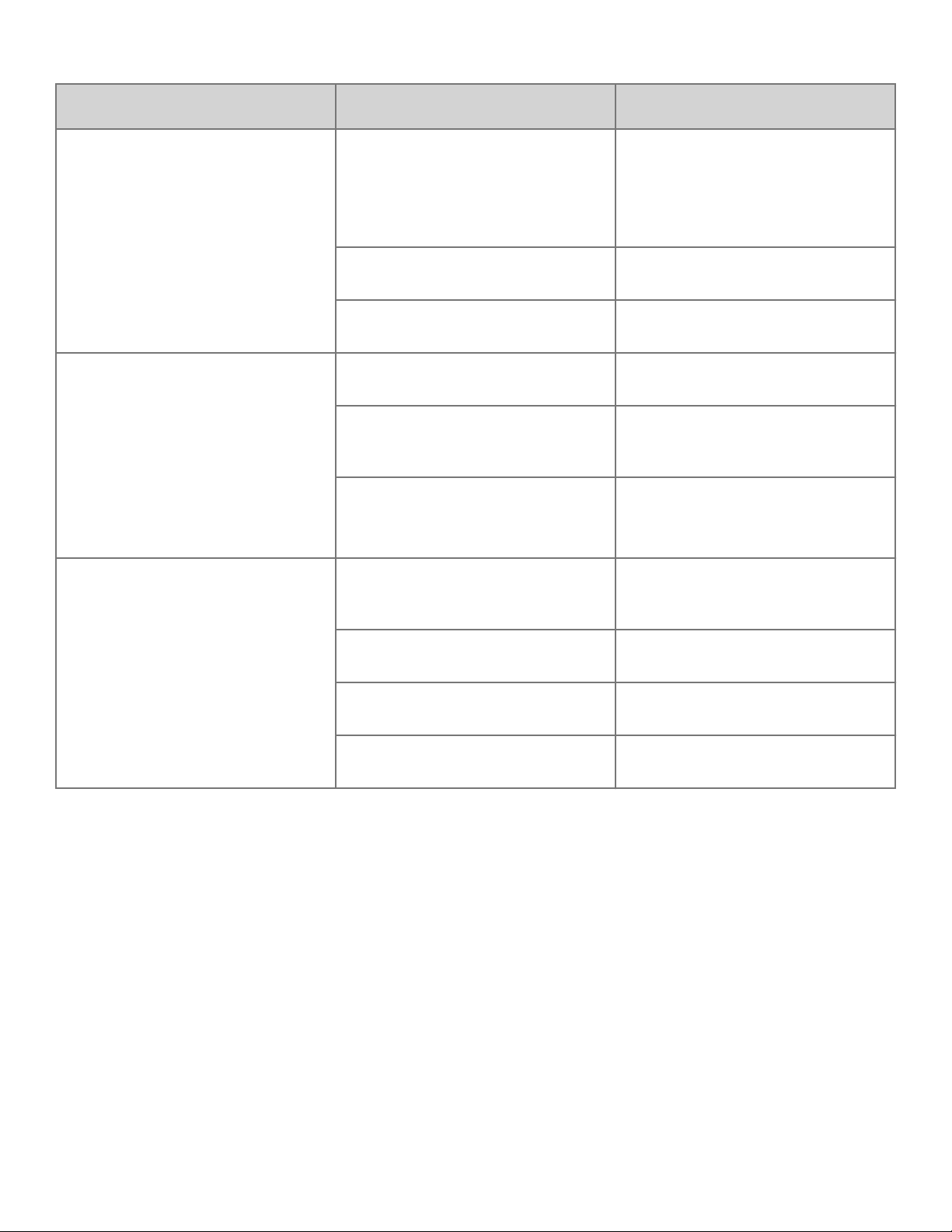
Problem Cause Solution
Clothes Tearing or Damaged Improper Use of Chlorine Bleach No correction for bleach damaged
clothes.
Always measure and dilute bleach.
Take extra care to avoid unwanted spill-
ing.
Insufficient Precare Fasten all hooks and zippers. Mend
tears. Remove objects from pockets.
Overcrowding or Overloading Make sure all items can move freely
during agitation.
Excessive Lint Improper Sorting Fabrics that shed lint cannot be wash-
ed with fabrics that receive lint.
Insufficient Detergent/Non-phosphate
Detergent
Use enough detergent so lint remains
suspended in water and flushed out.
Do not oversuds the water.
Mixing Fabric Types Knits and permanent press attract lint.
Wash these only with similar items.
Use fabric softener in rinse water.
Wrinkling Improper Sorting Heavy items like towels should not be
washed with light items like night-
gowns.
Improper Cycle Make sure cycle selected is appropriate
for type of clothes.
Improper Temperature Using a warm or cold wash and a cold
rinse reduces wrinkling.
Too Many Clothes in Washer Clothes must circulate freely through
the water for best results.
Clothing Care
©
Copyright, Alliance Laundry Systems LLC -
DO NOT COPY or TRANSMIT
25 Part No. 203967ENR2

Maintenance
Cold Weather Care
If the unit is delivered on a cold day (below freezing), or is stor-
ed in an unheated room or area during the cold months, do
not attempt to operate the washer until it has had a chance to
warm up. Water from the previous cycle may remain.
Winterizing the Washer
Follow these steps to prevent damage from freezing water.
1. Unplug washer.
2. Remove two screws from bottom of front panel.
3. Remove hose from drain pump.
4. Let water drain out and reconnect hose.
5. Turn off water supply.
6. Remove fill hoses and allow them to drain.
7. Use compressed air to blow water out of water valve:
a. Plug washer into electrical power.
b. Select a Warm wash temperature.
c. Start a cycle. This will open both sides of water valve.
d. Use compressed air to blow out any residual water.
Care of Your Washer
Use only a damp or sudsy cloth for cleaning the control panel.
Some cleaning products may harm the finish on the control
panel or damage the interior. DO NOT use products that con-
tain alcohol on the control panel. Wipe the panel dry after
cleaning.
Wipe the washer cabinet as needed. If detergent, bleach or
other washing products are spilled on the cabinet, wipe imme-
diately. Some products will cause permanent damage if spilled
on the cabinet.
Do not use scouring pads or abrasive cleansers on control
panel or cabinet.
The washtub will need no particular care though it may need
rinsing or wiping after some unusual loads have been washed.
This also may be necessary if too little detergent has been
used.
Leave the lid open to allow the inside of the washer to dry out
after use. This helps prevent musty odors from developing.
The agitator should not be removed except for service. The
washtub is designed to be self cleaning.
Replacing Hoses
Hoses and other rubber parts deteriorate after extended use.
Hoses may develop cracks, blisters or material wear from the
temperature and constant high pressure they are subjected to.
All hoses should be checked on a monthly basis for any visible
signs of deterioration. Any hose showing the signs of deteriora-
tion listed above should be replaced immediately. All hoses
should be replaced every five years.
Flood safe hoses often can be the cause for no fill or slow fill
issues. They are not recommended. Only use replacement fill
hoses from the manufacturer.
Filter Screens
Check the filter screens in the fill hoses for debris or damage
every six months. Clean or replace them if necessary.
If the washer is filling with water slower than normal, check
the filter screens. Clean or replace them if necessary.
Order filter screen Part No. 803615 from the nearest author-
ized parts distributor.
Vacations and Extended Non-Use
IMPORTANT: To avoid possible property damage due
to flooding, turn off the water supply to the washer
whenever there will be an extended period of non-use.
Maintenance
©
Copyright, Alliance Laundry Systems LLC -
DO NOT COPY or TRANSMIT
26 Part No. 203967ENR2
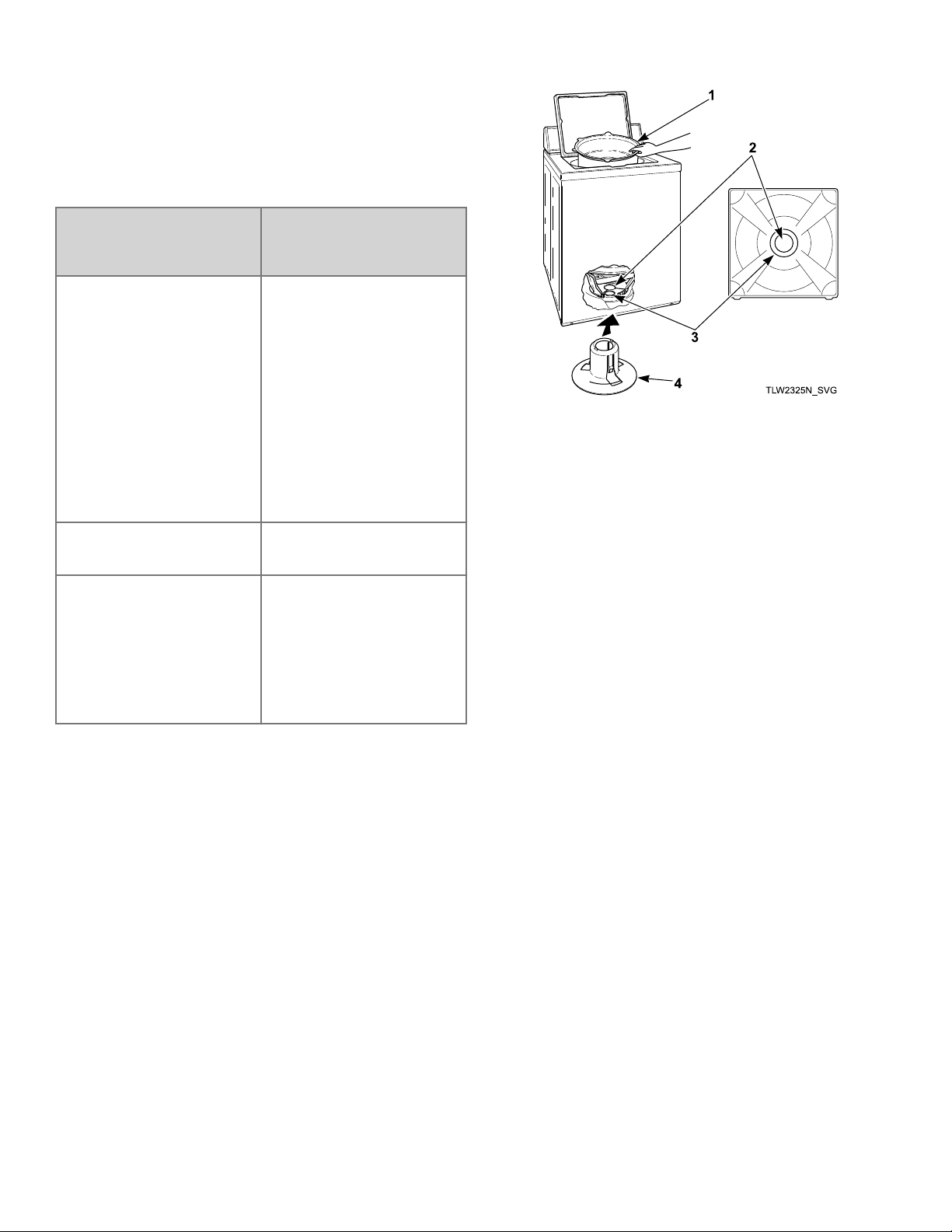
Preventative Maintenance
Follow these guidelines to ensure the washer operates proper-
ly. Call for service if you observe any of the following: water of
any amount on the floor, an increase in operating noise or wa-
ter remaining in the wash basket after a cycle.
Frequency
Maintenance Proce-
dure
Monthly 1. Check all hoses and the
drain for leaks.
2. Check the lid switch for
proper operation.
3. Check to make sure the
washer is level.
4. Clean upper 2-3 inches of
wash tub. Fill washer with
warm water at highest
setting. Use an all-pur-
pose cleaner or a steel
wool soap pad.
Every six months 1. Clean the filter screens in
the fill hoses.
Every five years 1. Have a qualified service
technician conduct gener-
al preventative mainte-
nance on the washer to
ensure it operates proper-
ly.
2. Replace the fill hoses.
Table 6
Reinstallation of Shipping Materials
You must install the shipping brace and shipping plug any time
the washer is moved.
Shipping Brace
The shipping brace in the lid opening should be saved and re-
installed whenever the washer is moved. To reinstall the brace,
open the washer lid and place the brace over the washer agi-
tator, placing the back of the brace into the lid opening first.
Shipping Plug
The plastic shipping plug should be saved and reinstalled any
time the washer is moved. The plug fits into two openings: The
base opening and the shipping plug opening on the bottom of
the movable pivot dome. The plug MUST be inserted into both
openings to prevent damage to the washer. In order to accom-
plish this, the shipping plug opening must be directly lined up
with the base opening.
1. Shipping Brace
2. Shipping Plug Opening
3. Base Opening
4. Shipping Plug
After the shipping brace has been installed in the lid opening,
tilt washer back enough to access base opening.
Insert shipping plug into base opening and, using the palm of
your hand, push shipping plug into washer until it snaps into
shipping plug opening.
Maintenance
©
Copyright, Alliance Laundry Systems LLC -
DO NOT COPY or TRANSMIT
27 Part No. 203967ENR2

Troubleshooting
Try these troubleshooting tips before making a service call.
They may save you time and money.
Washer Symptom Possible Cause/Solution
Won't Fill • Make sure power cord is plugged all the way into the electrical outlet.
• Make sure hot and cold water faucets are turned on.
• Make sure lid is closed.
• Make sure that the fill hoses are not kinked or twisted.
• Press Start/Pause button to start washer.
• Make sure that the controls are properly set.
• In the Normal Eco cycle, during the rinse portion of the cycle, the tub won’t fill with
water. Instead, there is a spray rinse.
• Make sure that the last spin has been completed.
• Check the laundry room fuse or circuit breaker.
• Clean the screens in the water mixing valve and the filter screens located at the
faucet end of the fill hoses. (Owner is responsible for service calls regarding clean-
ing of the screens.)
• Water is being siphoned from the washer during the cycle. Refer to the Installation
instructions to make sure that the drain hose has been properly installed.
• Are flood safe stainless steel hose devices installed on the fill hoses? Such assem-
blies are designed to shut off the water flow if an increase in flow volume is detec-
ted (such as a burst hose). It is possible the devices are activating falsely. Replace
these fill hoses with hoses that came with the unit from the factory.
Won't Start • Make sure lid is closed.
• Press Start/Pause button to start washer.
• Make sure power cord is plugged all the way into the electrical outlet.
• Make sure that the controls are properly set.
• Check the laundry room fuse or circuit breaker.
• You will not be able to press the Start/ Pause button to start a cycle until five sec-
onds after turning on the washer. A status light will flash during this warm-up peri-
od.
Won't Agitate • Make sure lid is closed.
• Press Start/Pause button to start washer.
• Make sure power cord is plugged all the way into the electrical outlet.
• Check the laundry room fuse or circuit breaker.
• Broken drive belt. Call the service person.
Won't Spin • Make sure lid is closed.
• Press Start/Pause button to start washer.
• Make sure power cord is plugged all the way into the electrical outlet.
• Check the laundry room fuse or circuit breaker.
• Broken drive belt. Call the service person.
Table continues...
Troubleshooting
©
Copyright, Alliance Laundry Systems LLC -
DO NOT COPY or TRANSMIT
28 Part No. 203967ENR2
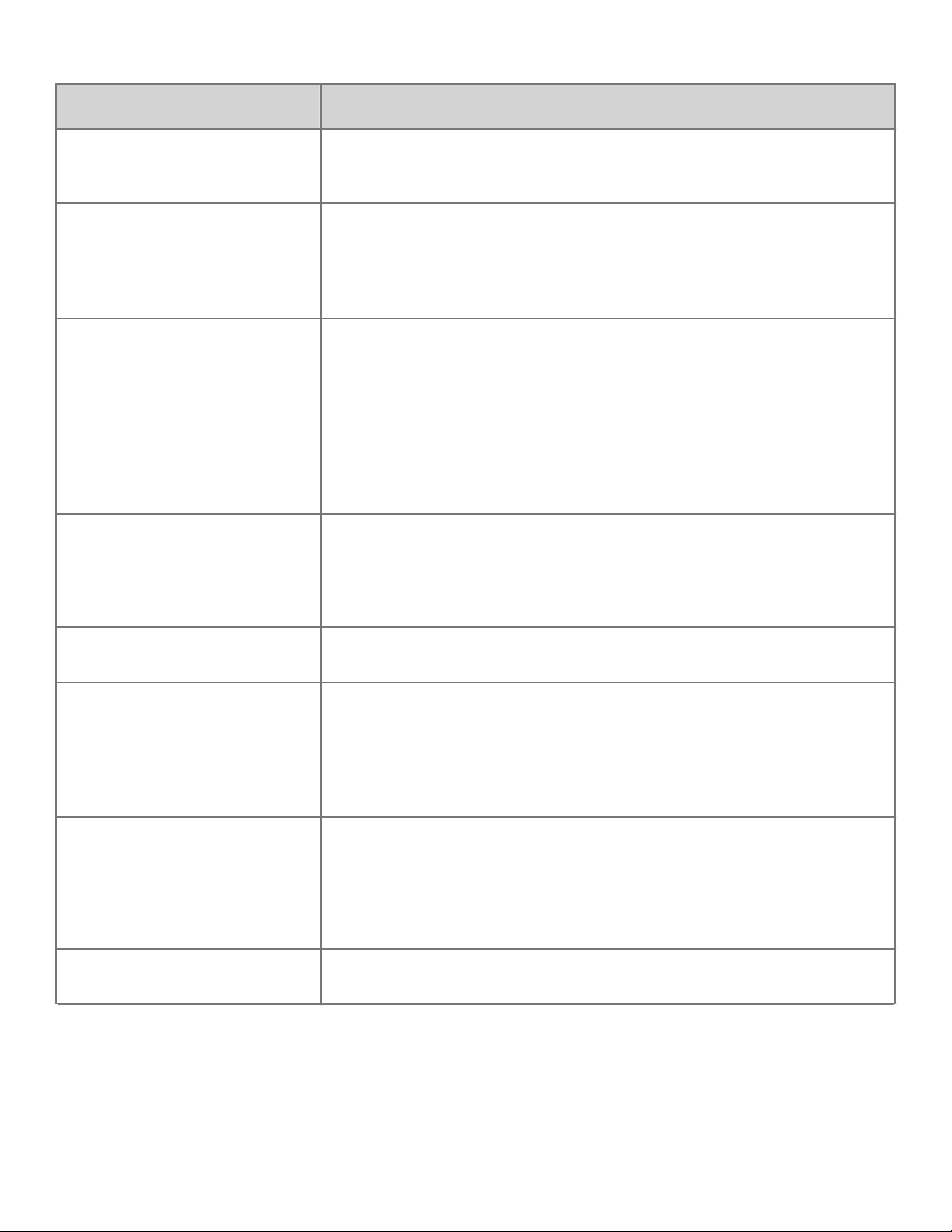
Washer Symptom Possible Cause/Solution
Stops/Pauses During Cycle • Pauses are part of the washer’s normal operation. The washer will stop (pause)
shortly before the wash and rinse spins.
• Check the laundry room fuse or circuit breaker.
Won't Drain • Make sure drain hose is not kinked or twisted.
• Make sure drain hose is not clogged.
• Make sure drain receptacle is not clogged.
• Refer to the Installation instructions to make sure that the drain hose has been
properly installed.
Water Leaks • Check that fill hoses are properly installed on the faucets and the washer’s water
mixing valve.
• Check the condition of the fill hoses. Replace fill hoses every five years.
• Make sure drain receptacle is not clogged.
• Check laundry room plumbing.
• Check house water pressure. In cases of extremely low water pressure, leaking
may occur.
• Laundry load may be oversudsing or overloaded. Use less detergent (or low-suds-
ing detergent) and proper load sizes.
Is Noisy • Wash load may be unbalanced. Open lid and redistribute the load.
• Make sure washer is level. Uneven leveling can cause vibration.
• A newly installed washer may make a knocking sound if the machine has been in
storage. The belt may have settled. Run washer through 4-5 cycles to loosen belt.
Washer operation will not be affected.
Load Is Too Wet • Wash load may be unbalanced. Open lid and redistribute the load.
• Load is too small. Add items to make full load.
Wrong Water Temperature • Make sure that the controls are properly set.
• Check fill hoses. Make sure hot faucet hose is connected to hot mixing valve (indi-
cated with “H” on the valve bracket) and cold faucet is connected to cold mixing
valve (indicated with “C” on the valve bracket).
• Make sure laundry room water heater is adjusted properly.
• The Normal Eco cycle uses a colder water temperature.
Too Many Soap Suds • Laundry load may be oversudsing. Make sure you are using low-sudsing, high effi-
ciency (HE) detergent.
• Make sure you are using the amount of detergent recommended on the deter-
gent’s label. If using non-HE detergent, use only 1/2 of the detergent manufactur-
er's recommended amount.
• Laundry load may be overloaded. Make sure you are using proper load sizes.
Control not responding to keypad se-
lections
• Make sure Control Lock feature is off. If on, Control Lock light will be lit.
• Press and hold Signal Keypad for three seconds to turn off.
Table continues...
Troubleshooting
©
Copyright, Alliance Laundry Systems LLC -
DO NOT COPY or TRANSMIT
29 Part No. 203967ENR2
Washer Symptom Possible Cause/Solution
Er, FL on digital display
• This code will appear if the washer has not reached the fill level after 30 minutes
during a wash or rinse fill.
• Make sure hot and cold water faucets are turned on.
• Make sure that the fill hoses are not kinked or twisted.
• Clean the screens in the water mixing valve and the filter screens located at the
faucet end of the fill hoses.
• Unplug the machine for 15 seconds to clear this code.
Er, dr on digital display
• This code indicates that water is still in the washer at the end of the cycle.
• Check the drain hose and drain receptacle to make sure they are installed properly
and not blocked.
• Unplug the machine for 15 seconds to clear this code.
Er, PS on digital display
• The control has detected trouble sensing the water fill level.
• Unplug the machine and call for service.
Er, Lo on digital display
• The control senses that the lid is open during a running cycle.
• Unplug the machine to clear this code.
Er, LLon digital display
• The control senses that the lid has unlocked during a running cycle.
• Unplug the machine to clear this code.
Er, nF on digital display
• The washer has not filled to the proper water level.
• No or very little change in water level has been sensed within 5 minutes of the cur-
rent fill.
• Make sure hot and cold water faucets are turned on.
• Make sure that the fill hoses are not kinked or twisted.
• Clean the screens in the water mixing valve and the filter screens located at the
faucet end of the fill hoses.
• Unplug the machine for 15 seconds to clear this code.
Er, OF on digital display
• This code indicates the washer has filled to the overflow level.
• The machine will begin to attempt to pump water out if the lid is closed and locked.
• If the code does not clear, unplug the machine and call for service.
Er, LUon digital display
• The control senses that the lid will not unlock.
• Unplug the machine for three minutes to unlock the lid.
• If the code appears again, call for service.
Er, Ll on digital display
• This code indicates that the lid has not locked.
• Make sure the lid is closed all the way and try to start the cycle.
• Open the lid or unplug the machine to clear the code.
• If this code continues, call for service.
Table continues...
Troubleshooting
©
Copyright, Alliance Laundry Systems LLC -
DO NOT COPY or TRANSMIT
30 Part No. 203967ENR2
Washer Symptom Possible Cause/Solution
Left Decimal Point blinking on display
one second on/one second off
• This code indicates that the washer did not reach the maximum intended speed in
the final spin.
• This could be due to an unbalanced load, excessive suds in the load, or too much
water left in the tub due to slow draining.
• Be sure to use proper load sizes that are evenly distributed in the wash basket.
• Be sure to use high efficiency (HE) detergent.
• Open the lid or press any keypad to clear this code.
PF on digital display
• This code will be displayed if the control was in Delay Start Mode when a power
failure occurred.
• The delayed start will be canceled.
• Press the Power/Cancel Pad to clear the code.
Er, SL on digital display
• This code will be displayed after a cycle for one minute, or until the Power/Cancel
keypad is pressed, and indicates an oversudsing condition.
• Laundry load may be oversudsing. Make sure you are using low sudsing, high effi-
ciency (HE) detergent. If using non-HE detergent, use only 1/2 of the detergent
manufacturer's recommended amount.
• Laundry load may be overloaded. Make sure you are using proper load sizes.
Sr, cycle time remaining on digital
display
• The control has detected an oversudsing condition and is running a special routine
to remove the excess suds.
Other Er or Ed Codes
•
If the control displays any other Er or Ed codes, unplug the machine for 15 sec-
onds. Plug the machine back in. If code still appears, call for service.
Troubleshooting
©
Copyright, Alliance Laundry Systems LLC -
DO NOT COPY or TRANSMIT
31 Part No. 203967ENR2
Warranty Repairs
If something should occur with your washer or that requires
service please use the service locator at www.speed-
queen.com.
We would like to point out items that would not be considered
a product failure and are not covered under warranty. If a serv-
ice technician is called for the items listed below you will be re-
sponsible for payment of the service call.
• Plugged or restricted drain pipes
• Plugged or restricted water filters or fill valve screens
• Home electrical issues
• Foreign objects found inside the washer or pump
• Drain issues caused by standpipes that exceed factory
specifications
Contact Information
If service is required, contact the nearest Factory Authorized
Service Center. To find the nearest service center, visit us on-
line at www.speedqueen.com.
If you are unable to locate an authorized service center or are
unsatisfied with the service performed on your unit, contact:
Speed Queen
Shepard Street
P.O. Box 990
Ripon, Wisconsin 54971-0990
www.speedqueen.com - select "Find Service" and enter
your zip code to find a local service company
Phone: (920)748-3121
Date Purchased
Model Number
Serial Number
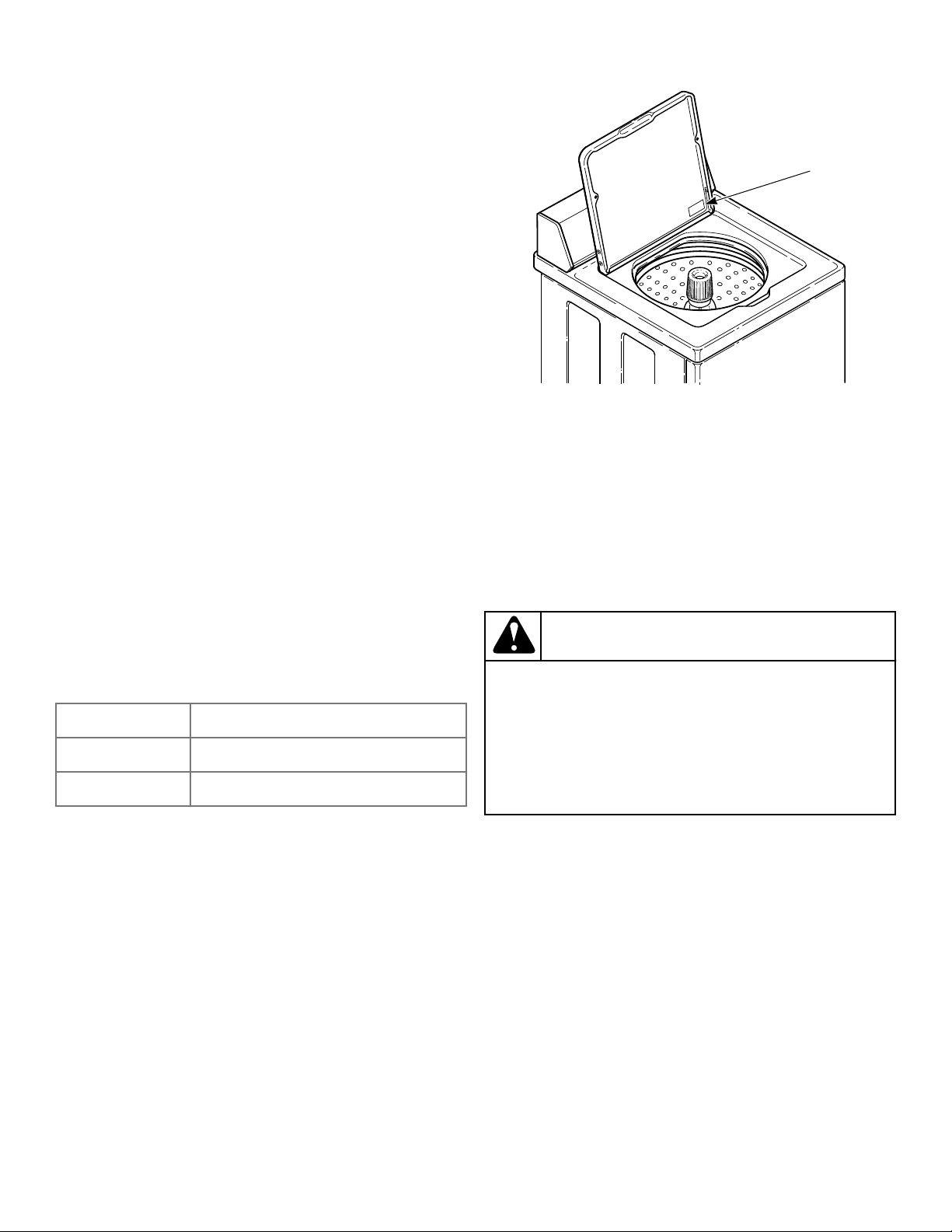
TLW1851P_SVG
1
1. Serial Plate
When contacting us about your washer, PLEASE GIVE THE
MODEL AND SERIAL NUMBERS. The model and serial num-
bers are located on the serial plate. The serial plate will be in
the location shown. Please include a copy of your bill of sale
and any service receipts you have.
If replacement parts are required, contact the source from
where you purchased your washer or visit us online at
www.speedqueen.com.
WARNING
To reduce the risk of serious injury or death, DO NOT
repair or replace any part of the unit or attempt any
servicing unless specifically recommended in the
user-maintenance instructions or in published user-
repair instructions that you understand and have the
skills to carry out.
W329
Troubleshooting
©
Copyright, Alliance Laundry Systems LLC -
DO NOT COPY or TRANSMIT
32 Part No. 203967ENR2