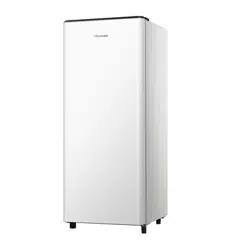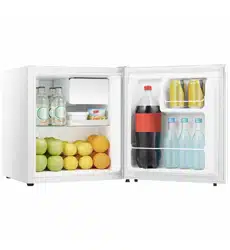
HRBF45

Brief introduction
Contents
2
Safety and warning information....................................................3
Parts and features......................................................................11
Installing your new appliance.....................................................12
Reversing the door......................................................................13
Control panel.............................................................................14
Using your appliance.................................................................14
Helpful hints and tips..................................................................16
Cleaning and care....................................................................16
Troubleshooting.........................................................................18
Disposal of the appliance ..........................................................19
Brief introduction
Your safety and the safety of others are very important.
DANGER
WARNING
CA
UTION
Safety and warning information
Safety and warning information
For your safety and correct usage, before installing and
first using the appliance, read this user manual
carefully, including its hints and warnings. To avoid
unnecessary mistakes and accidents, it is important to
make sure that all people using the appliance are
thoroughly familiar with its operation and safety
features. Save these instructions and be sure that they
remain with the appliance if it is moved or sold, so that
anyone using it throughout its life, will be properly
informed on its usage and safety notices.
For the safety of life and property, keep the precautions
of these user's instructions as the manufacturer is not
responsible for damages caused by omission.
We have provided many important safety messages in this manual and on your
appliance. Always read and obey all safety messages.
These words mean:
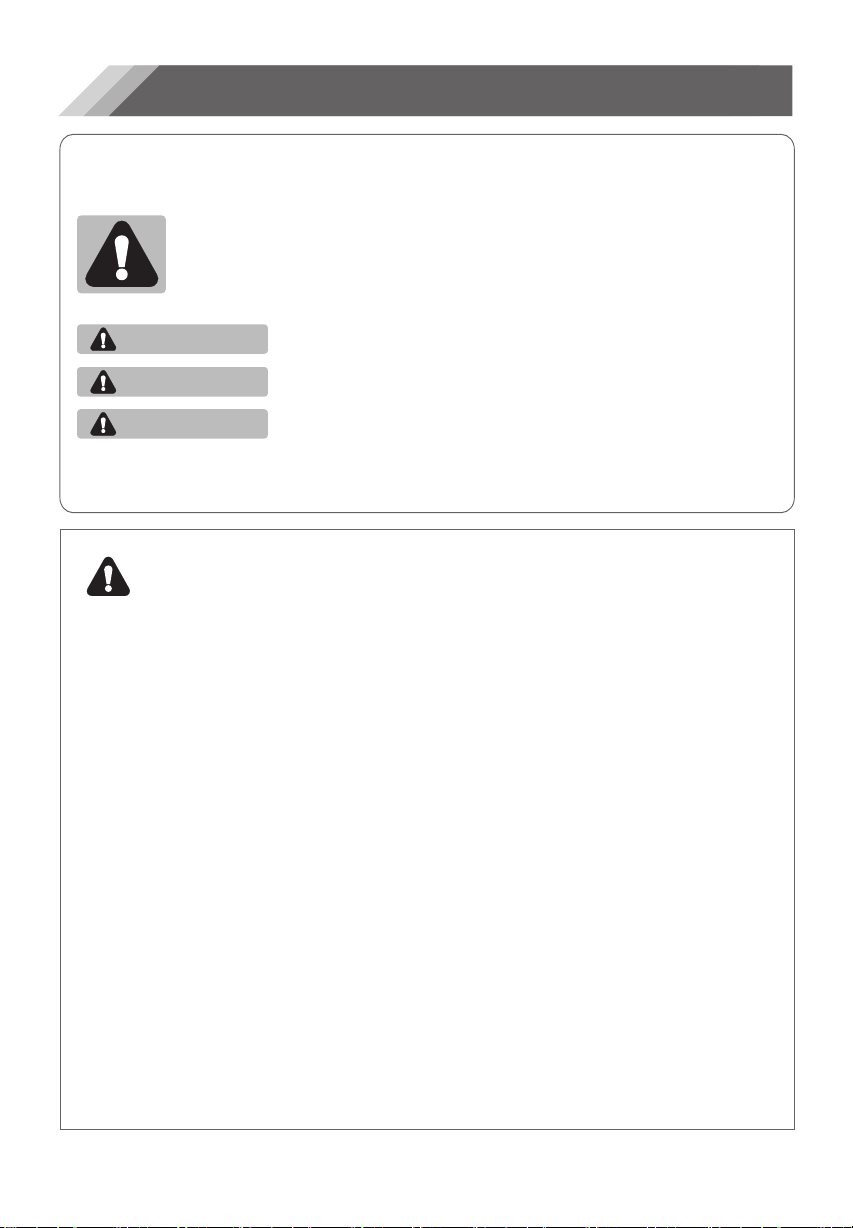
This is the safety alert symbol.
This symbol alerts you to potential hazards that can kill or hurt you
and others. All safety messages will follow the safety alert symbol and
either the word “DANGER,” “WARNING” or “CAUTION.”
An imminently hazardous situation. You could be killed or
seriously injured if you don’t immediately follow instructions.
A potentially hazardous situation which, if not avoided,
could result in death or serious bodily injury.
A potentially hazardous situation which, if not avoided,
may result in moderate or minor injury.
3
All safety messages will tell you what the potential hazard is, tell you how to reduce
the chance of injury, and tell you what can happen if the instructions are not
followed.
Safety for children and others who are vulnerable people
•
This appliance can be used by children aged from 8
years and above and persons with reduced physical,
sensory or mental capabilities or lack of experience
and knowledge if they have been given supervision or
instruction concerning use of the appliance in a safe
way and understand the hazards involved. Children
shall not play with the appliance. Cleaning and user
maintenance shall not be made by children without
supervision. Children aged from 3 to 8 years are
allowed to load and unload refrigerating appliances.
• According to IEC standard
This appliance is not intended for use by persons
(including children) with reduced physical sensory or
mental capabilities, or lack of experience and
knowledge, unless they have been given supervision
or instruction concerning use of the appliance by a
person responsible for their safety.
• Children should be supervised to ensure that they
do not play with the appliance.
• Keep all packaging away from children as there is risk of
suffocation.
• If you are discarding the appliance, pull the plug out of
the socket, cut the connection cable (as close to the
appliance as you can) and remove the door to prevent
children playing from suffering an electric shock or from
closing themselves inside it.
• If this appliance, featuring a magnetic door seals, is
to replace an older appliance having a spring lock
(latch) on the door or lid, be sure to make the spring
lock unusable before you discard the old appliance.
This will prevent it from becoming a death trap for a
child.
According to EN standard
4
General safety
• This appliance is intended to be used in household
and similar applications such as:
-staff kitchen areas in shops, offices and other working
environments;
-farm houses and by clients in hotels, motels and other
residential type environments;
-bed and breakfast type environments;
-catering and similar non-retail applications.
• Do not store explosive substances such as aerosol
cans with a flammable propellant in this appliance.
• If the supply cord is damaged, it must be replaced
by the manufacturer, its service agent or similarly
qualified persons in order to avoid a hazard.
• WARNING — Keep ventilation openings, in the
appliance enclosure or in the built-in structure, clear
of obstruction.
• WARNING — Do not use mechanical devices or
other means to accelerate the defrosting process,
other than those recommended by the manufacturer.
• WARNING — Do not damage the refrigerant circuit.
• WARNING — Do not use electrical appliances inside
the food storage compartments of the appliance,
unless they are of the type recommended by the
manufacturer.
• The refrigerant and insulation blowing gas are
flammable. When disposing of the appliance, do so
only at an authorized waste disposal center. Do not
expose to flame.
• WARNING —When positioning the appliance, ensure
the supply cord is not trapped or damaged.
5
• WARNING —Do not locate multiple portable socket
outlets or portable power supplies at the rear of the
appliance.
Refrigerant
The refrigerant isobutene (R600a) is contained within
the refrigerant circuit of the appliance, a natural gas
with a high level of environmental compatibility, which
is nevertheless flammable. During transportation and
installation of the appliance, ensure that none of the
components of the refrigerant circuit becomes
damaged.
• The refrigerant (R600a) is flammable.
WARNING — Refrigerators contain refrigerant and
gases in the insulation. Refrigerant and gases must be
disposed of professionally as they may cause eye
injuries or ignition. Ensure that tubing of the
refrigerant circuit is not damage prior to proper
disposal.
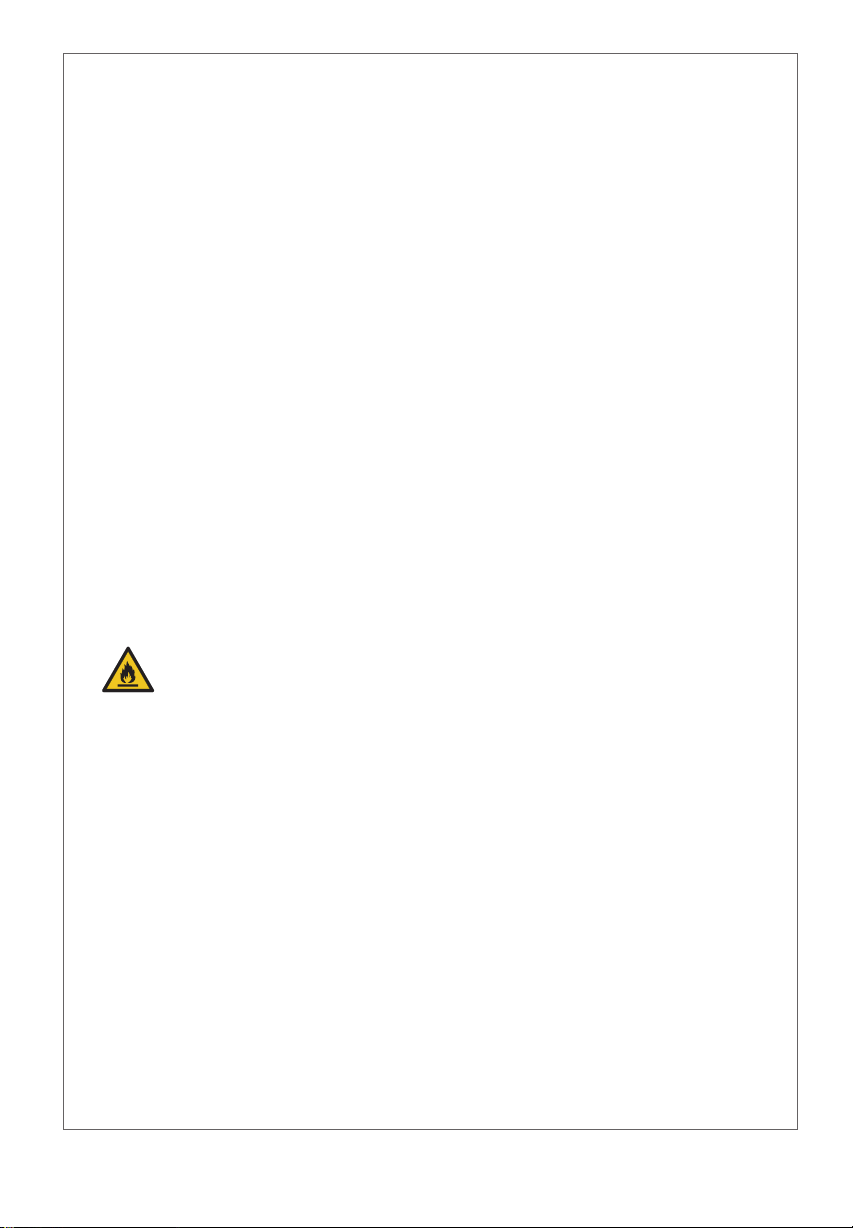
Warning: Risk of fire/flammable materials
If the refrigerant circuit should be damaged:
• Avoid opening flames and sources of ignition.
Thoroughly ventilate the room in which the appliance
is situated.
6
• It is dangerous to alter the specifications or modify
this product in any way.
• Any damage to the cord may cause a short circuit,
fire, and/or electric shock.
Electrical safety
The power cord must not be lengthened.
• Make sure that the power plug is not crushed or
damaged. A crushed or damaged power plug may
overheat and cause a fire.
• Make sure that you can access the main plug of the
appliance.
• Do not pull the main cable.
• If the power plug socket is loose, do not insert the
power plug. There is a risk of electric shock or fire.
• You must not operate the appliance without the
interior lighting lamp cover.
• The fridge is only applied with power supply of
single phase alternating current of 220~240V/50Hz. If
fluctuation of voltage in the district of user is so large
that the voltage exceeds the above scope, for safety
sake, be sure to apply A.C. Automatic voltage
regulator of more than 350W to the fridge. The fridge
must employ a special power socket instead of
common one with other electric appliances. Its plug
must match the socket with ground wire.
7
• When unplugging always pull the plug from the mains
socket, do not pull on the cable.
• Do not place hot items near the plastic components of
this appliance.
• Do not place food products directly against the air
outlet on the rear wall.
• The appliances manufactures storage
recommendations should be strictly adhered to. Refer to
relevant instructions for storage.
• Frozen food can cause frost burns if consumed straight
from the chill compartment.
• Do not place the appliance in direct sunlight.
• Keep burning candles, lamps and other items with
naked flames away from the appliance so that do not set
the appliance on fire.
• The appliance is intended for keeping food stuff and/ or
beverages in normal household as explained in this
instruction booklet The appliance is heavy. Care should be
taken when moving it.
• Do not remove nor touch items from the
chill
compartment if your hands are damp/wet,as this could
cause skin abrasions or frost/freezer burns.
• Never use the base, drawers, doors etc. to stand on or as
supports.
8
Daily use
• Do not store flammable gases or liquids in the
appliance. There is a risk of an explosion.
• Do not operate any electrical appliances in the
appliance (e.g. electric ice cream makers, mixers etc.).
Caution!
Care and cleaning
• Before maintenance, switch off the appliance and
disconnect the mains plug from the mains socket.
• Do not clean the appliance with metal objects,
steam cleaner, ethereal oils, organic solvents or
abrasive cleansers.
• Do not use sharp objects to remove frost from the
appliance. Use a plastic scraper.
Installation Important!
• For electrical connection carefully, follow the
instructions given in this manual.
• Unpack the appliance and check if there are
damages on it. Do not connect the appliance if it is
damaged. Report possible damages immediately to
• Do not consume ice popsicles or ice cubes straight from
the chill compartment as this can cause freezer burn to
the mouth and lips.
• To avoid items falling and causing injury or damage to
the appliance, do not overload the door racks or put too
much food in the crisper drawers.
• WARNING - Food needs to be packed into bags before
it is put into the refrigerator. Liquids need to be stored in
bottles or capped containers in order to avoid a spill, as
the design structure of the product is not easy to clean.
• This refrigerating appliance is not intended to be used
as a built-in appliance.
• This refrigerating appliance is not suitable for freezing
foodstuffs.
9
the place you bought it. In this case retain packing.
• It is advisable to wait at least four hours before
connecting the appliance to allow the oil to flow back
in the compressor.
• Adequate air circulation should be around the
appliance, lacking this leads to overheating. To
achieve sufficient ventilation, follow the instructions
relevant to installation. Wherever possible the back of
the product should not be too close to a wall to avoid
touching or catching warm parts (compressor,
condenser) to prevent the risk of a fire, follow the
instructions relevant to installation.
• The appliance must not be locate close to radiators
or cookers.
• Make sure that the mains plug is accessible after
the installation of the appliance
Service
• Any electrical work required to do the servicing of the
appliance should be carried out by qualified electrician
or competent person.
• This product must be serviced by an authorized Service
Center, and only genuine spare parts must be used.
• Queensland service notes:
This appliance employs Hydrocabon Refrigerant type
R600a.It is hazardous for anyone other than an Authorized
Service Person to service this appliance.In Queensland
the Authorized Service Person MUST hold a Gas Work
Authorization for hydrocarbon refrigerants to carry out
servicing or repairs which involve removal of covers.
10
Brief introduction
Parts and Features
View of the appliance
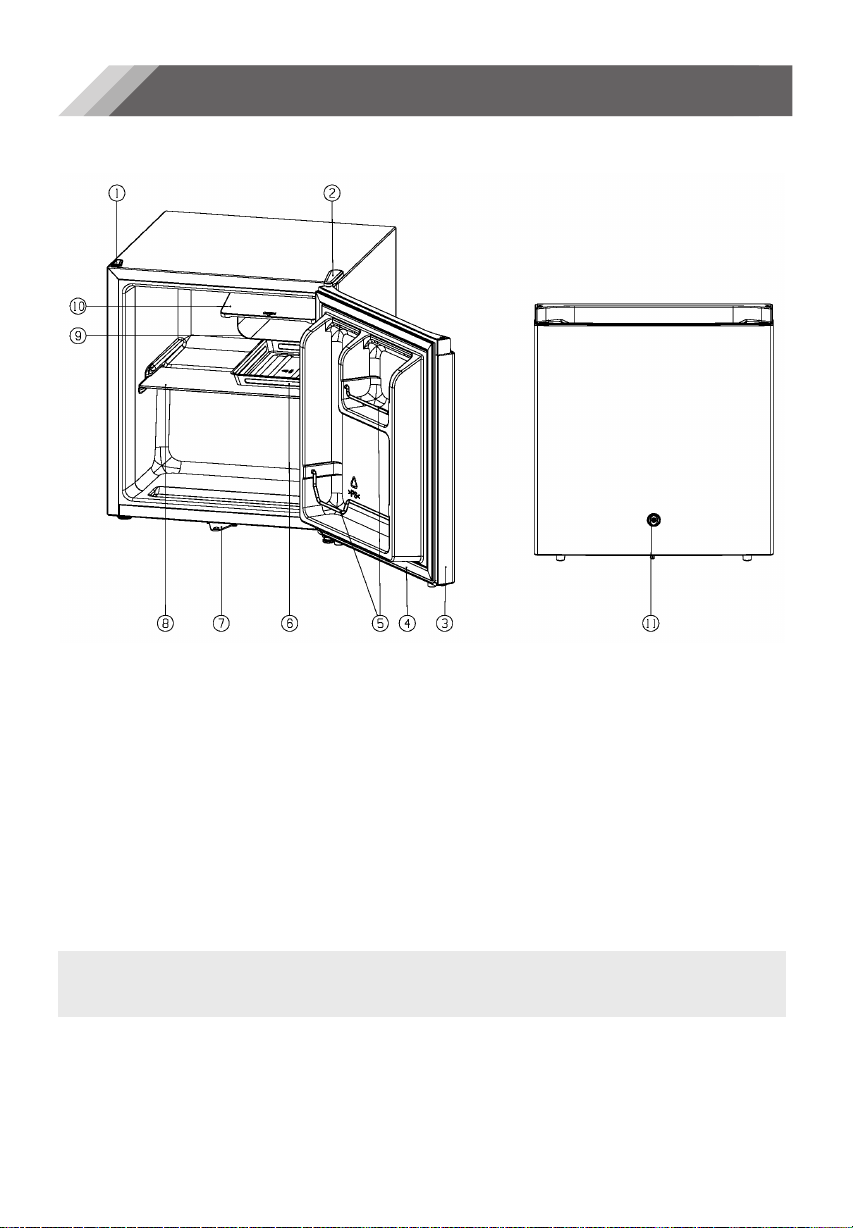
Note: Features may vary depending on model. Not all models will have features listed.
Note: To get the best energy efficiency of this product, please place all shelves, drawers on their
original position as the illustration above.
11
②upper hinge cover
④gasket part
⑥water drain
⑧
glass shelf
⑩little door
①screw hole cover
③refrigerator door
⑤shelf strip
⑦lock holder (optional)
⑨
roll-bond evaporator parts
⑪lo
ck (optional)
Brief introduction
Installing Your New Appliance
Cleaning before use
• Before using the appliance for the first time,
wash the interior and all internal accessories with
lukewarm water and neutral soap in order to
remove the typical smell of a brand new product,
then dry thoroughly.
Important! Do not use detergents or abrasive
powders, as these will damage the finish.
Installation Positioning
Warning!
Before installing, read the instruction carefully for
your safety and the correct operation of appliance.
• Position the appliance away from sources of
heat such as stoves, radiators, direct sunlight, etc.
• Maximum performance and safety are
guaranteed by maintaining the correct indoor
temperature for the class of unit concerned, as
specified on the rating plate.
•
This appliance performs well SN N ST T.
The appliance may not work properly if it is left for
a longer period at a temperature above or below
the indicated range.
Appliances must not be exposed to rain. Sufficient
air must be allowed to circulate in the low rear
section of the appliance, as poor air circulation
can affect performance. Built-in appliances
should be positioned away from heat sources
such as heaters and direct sunlight.
Ambient temperature
+10°C to +32°C
+16°C to +32°C
+16°C to +38°C
+16°C to +43°C
Climate class
SN
N
ST
T
Leveling
• The appliance should be level in order to
eliminate vibration. To make the appliance level, it
should be upright and both adjusters should be
in stable contact with the floor. You can also
adjust the level by unscrewing the appropriate
level adjustment in the front (use your fingers or a
suitable spanner).
Electrical connection
This appliance must be grounded. The
manufacturer declines any liability should
these safety measures not be observed.
Any electrical work required to install this
appliance should be carried out by qualified
or authorized personnel.
CAUTION
WARNING
12
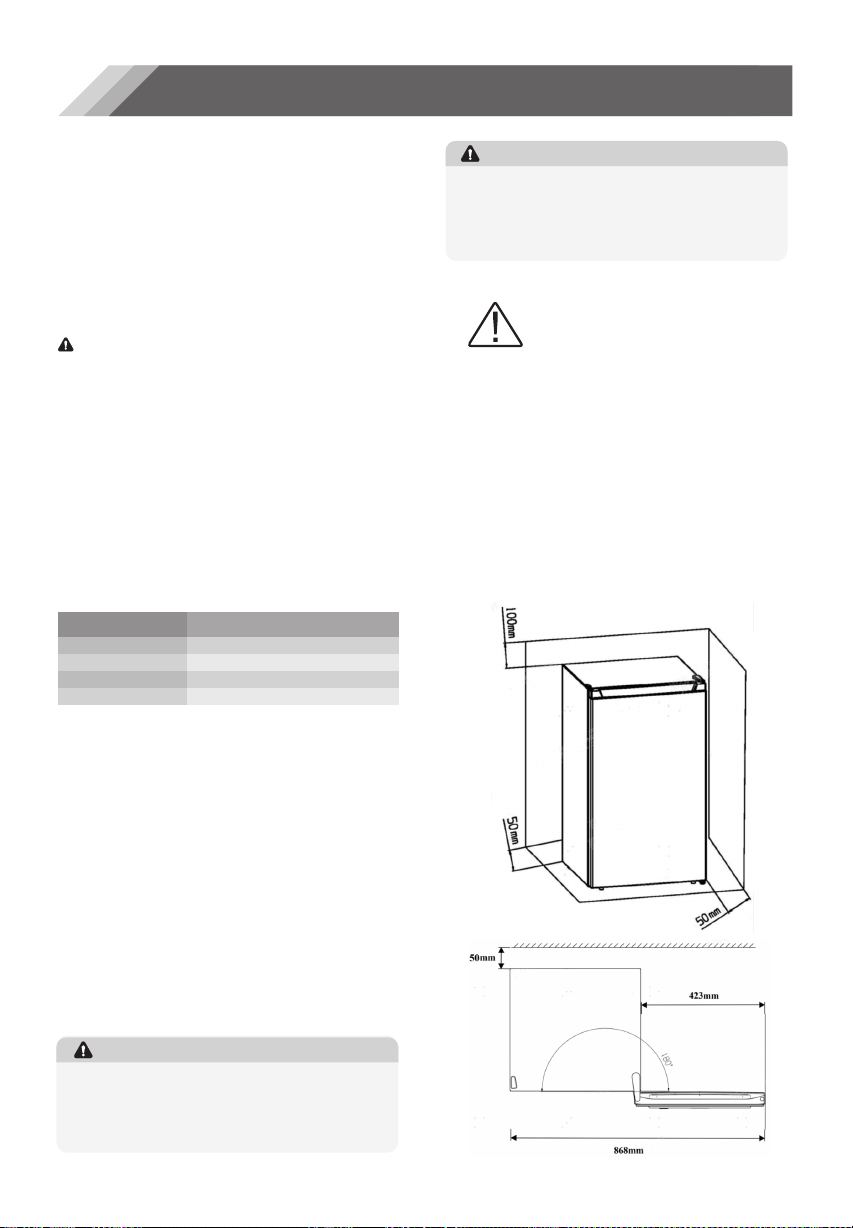
Ventilation of appliance
In order toimprove efficiency of
the cooling system and save
energy,it is necessaryto
maintaingood ventilation around the
appliance for the dissipation of heat.For
thisreason,sufficient clear spaceshould
beavailable around therefrigerator.
Suggest: It is advisable for there to be at
least 50mm of space from the back to the
wall,at least 100mm from its top,at least
50mm from its side to the wall and a clear
space up front to allow the doors to open
180 degrees.As shown in follow diagrams.
Brief introduction
Reversing the door
The side at which the door opens can be
changed from the right side (as supplied) to the
left side, if the installation site requires.
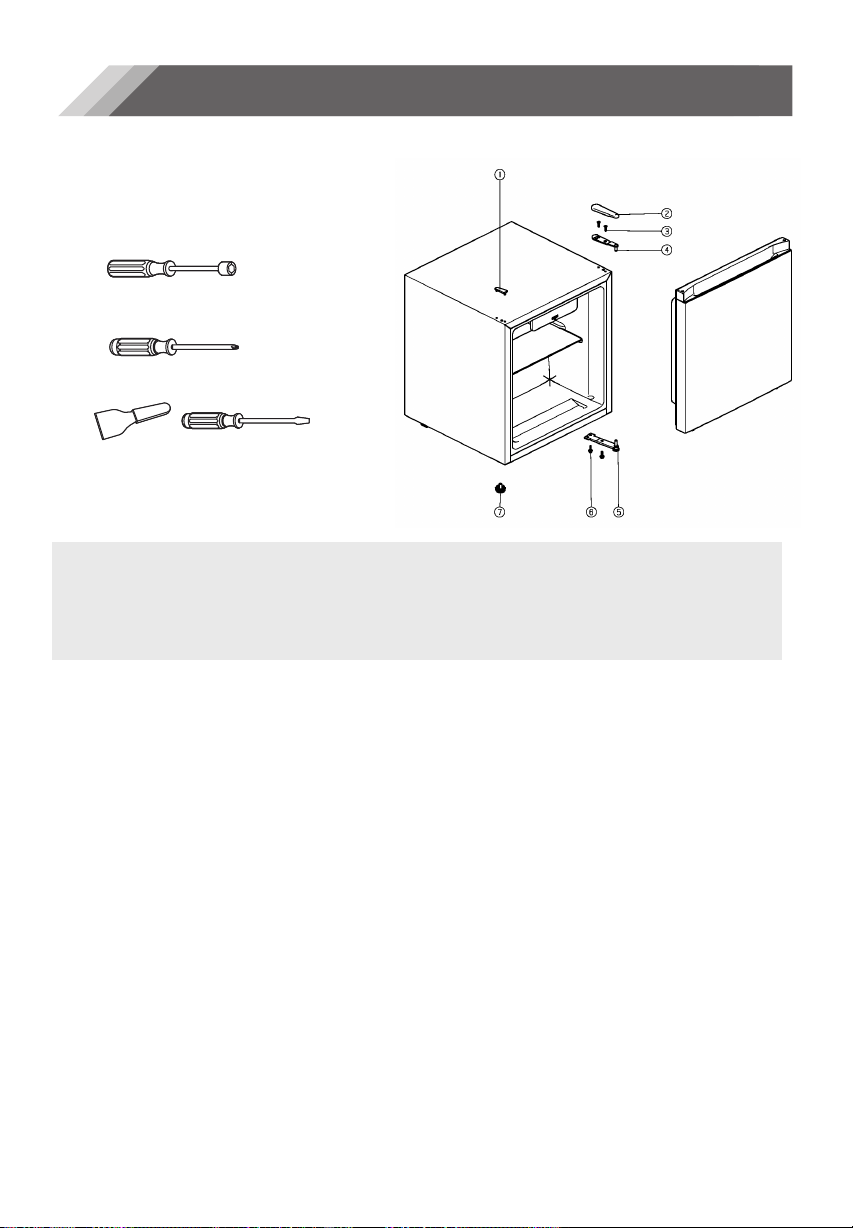
Tools you will need:
1. 8mm socket driver
2. Cross-shaped screwdriver
3. Putty knife or thin-blade screwdriver
Before you start lay the refrigerator on it’s back in
order to gain access to the base, you should rest
it on soft foam packaging or similar material to
avoid damaging the cooling pipes at the rear of
the refrigerator.
13
① sc
rew hole cover ②
③
upper hinge cover
④ upper hinge part
⑤ ⑥
⑦
special flange self-tapping screw
special flange self-tapping screw
adjustable foot
lower hinge parts
1. Open the re
frigerator door and remove all the items
on the door;
2. Remove the upper hinge cover (2); Remove two
screws (3); Remove the upper hinge part (4);
3. Take the door up carefully and place the door on the
ground with a soft surface to prevent the surface of the
door from being scratched;
4.
Re
move the screw hole
cover (1) and transfer it to
the corresponding hole on the right, be sure to firmly
press it into the hole;
5.
Remove the two scr
ews (6) at the bottom;
6. Remove the lower hinge parts (5) at the bottom;
7. Remove the left adjustable foot (7) at the bottom,
transfer it to the hole corresponding to the bottom on
the right;
8. Install the previously removed lower hinge parts (5)
into the corresponding hole on the left side of the
bottom, and tighten the screw (6);
9. Install the left hole at the bottom of the door into the
lower hinge parts and close the door;
10. Install the previously removed upper hinge part (4)
to the corresponding hole position on the left side,
screw the screw (3), do not tighten it first, and tighten
the screw when the door is in the horizontal position;
11.
Install the previously removed upper hinge cover
(2) to the corresponding position on the left;
12. The end of changing the door.

Brief introduction
Starting up and temperature regulation
• Insert the plug of the connection lead into the
plug socket with a protective grounding
contact.
• The temperature selector knob is located on
the LH side of the refrigerator compartment.
Setting “Off” means:
Off
Clockwise rotate the knob to turn on the appliance.
Setting “MIN” means:
Highest temperature, warmest setting.
Important!
• Normally we advise you select a setting of
MID, if you want the temperature warmer or
colder please turn the knob to lower or higher
Control panel
setting accordingly. When you turn the knob to a
lower setting, this can lead to more energy saving.
Otherwise, it would result high consumption of
energy.
• For optimum food preservation, a medium
setting is generally the most suitable.
Important! High ambient temperatures (e.g. on
hot summer days) and a cold setting (setting
max) may cause the compressor to run
continuously or even non-stop.
Reason: when the ambient temperature is high,
the compressor must run continuously to maintain
the low temperature in the appliance.
NOTE: High temperature setting will accelerate
food waste.
Brief introduction
Accessories
Movable shelves/trays
• Different models have different combinations
and quantities.
• The walls of the refrigerator are equipped with a
series of runners so that the shelves can be.
positioned as desired.
LOCK (OPTIONAL)
•
The door of the refrigerator is equipped with a lock to
prevent children from opening the refrigerator at will.
Using your appliance
To avoid contamination of food, please
respect the following instructions:
• If the refrigerating appliance is left empty for
long periods, switch off, defrost, clean, dry, and
leave the door open to prevent mold developing
within the appliance.
Compliance is checked by inspection.
• Opening the door for long periods can cause
a significant increase of temperature in the
compartments of the appliance.
• Clean regularly surfaces that can come in
contact with food and accessible drainage
systems.
• Store raw meat and fish in suitable containers
in the refrigerator, so that it is not in contact with
or drip onto other food.
14
Setting “MAX” means:
Lowest temperature, coldest setting.
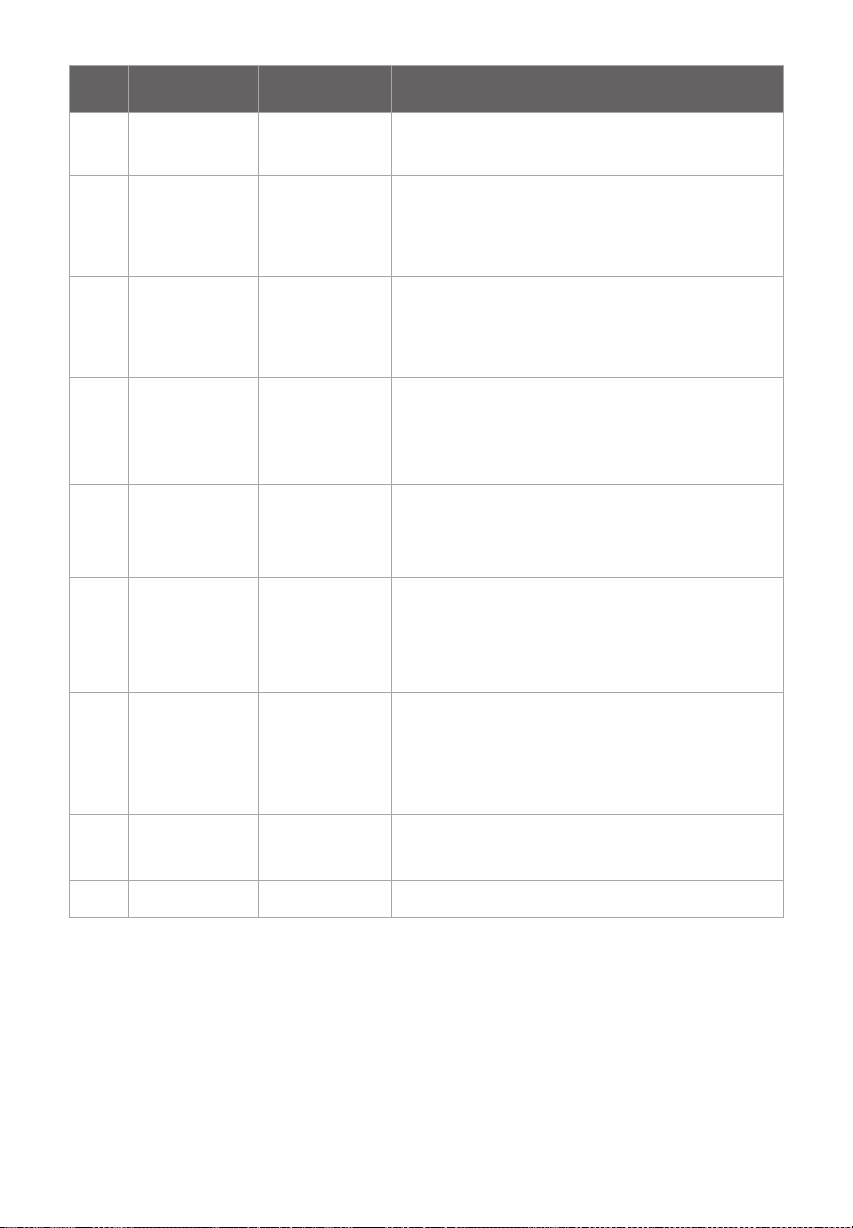
Note: please store different foods according to the compartments or target storage temperature of your
purchased products.
Target storage
temp.[°C]
Order Compartments
Type
Appropriate food
6
7
8
9
1
2
3
-6~0
- ~+3
0~ 4+
+ +5~ 20
+2~+8
≤ 18-
≤ 18-
5
≤ 6-*-Freezer
0-star
Chill
Fresh Food
Wine
Fridge
(***)*-Freezer
***-Freezer
4
≤ 12-
**-Freezer
Eggs, cooked food, packaged food, fruits and
vegetables, dairy products, cakes, drinks and other
foods which are not suitable for freezing.
Seafood (fish,shrimp,shellfish),freshwater aquatic
products and meat products (recommended for 3
months ,the longer the storage time,the worse the
taste and nutrition),suitable for frozen fresh food.
Seafood (fish, shrimp, shellfish),freshwater aquatic
products and meat products (recommended for 3
months,the longer the storage time,the worse the
taste and nutrition),are not suitable for frozen fresh.
Seafood (fish, shrimp, shellfish), freshwater aquatic
products and meat products (recommended for 2
months,the longer the storage time,the worse the
taste and nutrition), are not suitable for frozen
fresh. food.
Seafood (fish, shrimp, shellfish), freshwater aquatic
products and meat products (recommended for 1
month,the longer the storage time, the worse the
taste and nutrition).
Fresh pork, beef, fish, chicken, some packaged
processed foods, etc. (Recommended to eat within
the same day, preferably no later than 3 days) .
Partially encapsulated processed foods (non-
freezable foods)
Fresh/frozen pork, beef, chicken, freshwater aquatic
products, etc.(7 days below 0°C and above 0°C is
recommended for consumption within that day,
preferably no more than 2 days).
Seafood (less than 0°C for 15 days, it is not
recommended to store above 0°C)
Fresh pork,beef,fish,chicken,cooked food,etc.
(Recommended to eat within the same
day,preferably no more than 3 days)
red wine, white wine, sparkling wine etc.
15
3
Brief introduction
Helpful hints and tips
Noises during Operation
The following noises are characteristic of
refrigeration appliances:
Clicks Whenever the compressor switches on or
off, a click can be heard.
Humming As soon as the compressor is in
operation, you can hear it humming.
Bubbling When refrigerant flows into thin tubes,
you can hear bubbling or splashing noises.
Splashing Even after the compressor has been
switched off, this noise can be heard for a short
time.
Energy saving tips
• Do not install the appliance near cookers,
radiators or other sources of warmth.
• Do not open the door too often or leave the
door open any longer than necessary.
• Do not set temperature colder than necessary.
• Make sure the side plates and back plate of
the appliance are with some distance from the
wall, follow the instructions relevant to installation.
• If sketch map shows the right combination of
the drawers, crisper and shelves, do not adjust
the combination, it would result in more energy-
consuming.
Hints for fresh food refrigeration
To obtain the best performances:
• Do not store warm foods or evaporating liquids
in the appliance.
• Do cover or wrap the food, particularly if it has
a strong flavor or odor.
• Position food so that air can circulate freely
around.
Hints for refrigeration
• Meat (all types): wrap in polythene bags and
place on the glass shelf . For safety, store in this
way only one or two days at the most.
• Cooked foods, cold dishes, etc.these should be
covered and may be placed on any shelf.
• Butter and cheese: these should be placed in
aluminum foil or polythene bags to exclude as
much air as possible.
• Milk bottles: these should have a cap and
should be stor
ed in the bottle rack on the door.
Brief introduction
Cleaning and Care
For hygienic reasons the appliance interior,
including interior accessories, should be cleaned
regularly.
The fridge should be cleaned and maintained at
least every two months.
Notice!
• Remove the food from the appliance before
cleaning. Store them in a cool place, well
covered.
• Never clean the appliance with a steam
cleaner. Moisture could accumulate in electrical
components.
• Hot vapors can lead to the damage of plastic
parts.
• Ethereal oils and organic solvents can attack
plastic parts, e.g. lemon juice or the juice from
orange peel, butyric acid, cleanser that contain
acetic acid. Do not allow such substances to
come into contact with appliance parts.
• Do not use any abrasive cleansers.
• Clean the appliance and the int
erior
The appliance should not be connected to
the mains during cleaning. Before cleaning
switch the appliance off and remove the
plug from the mains, or switch off or turn out
the circuit breaker or fuse.
WARNING
Electrical Shock Hazard
16

accessories with a cloth and lukewarm water.
Commercially available dish washing detergents
may also be used.
• After cleaning wipe with fresh water and clean
dish cloth.
• Accumulation of dust at the condenser
increases energy consumption, clean the
condenser at the back of the appliance once a
year with a soft brush or a vacuum cleaner.
• After everything is dry place appliance back
into service.
Defrosting
Why defrosting
• Water contained in food or getting into air
inside the fridge be opening doors may form a
frost layer inside. It will weaken the refrigeration
when the frost is thick. While it is more than 10mm
thick, you should defrost.
Defrosting in fresh food storage
compartment
• Power off the refrigerator,take out the stored ingredient,
open the refrigerator door. let the refrigerator stand for a
period of time, after the frost turns into water, dry the
water. close the refrigerator door and plug in the power.
Go out of use for a long time
• Remove all refrigerated packages.
• Switch off the appliance by turning the
temperature regulator to position “off”.
• Remove the mains plug or switch off or
disconnect the electricity supply.
• Clean thoroughly (see section: Cleaning and
Care).
• Leave the door open to avoid the build up of
odors.
17
PROBLEM POSSIBLE CAUSE(S) SOLUTION
Troubleshooting
WARNING
Before trouble shooting, disconnect the power
supply. Only a qualified electrician of
competent person must carry out the trouble
shooting that is not in the manual.
Important!
Repairs to refrigerators/freezers may only be
performed by competent service engineers.
Improper repairs can give rise to significant
hazards for the user. If your appliance needs
repairing, please contact your specialist
dealer or your local Service Center.
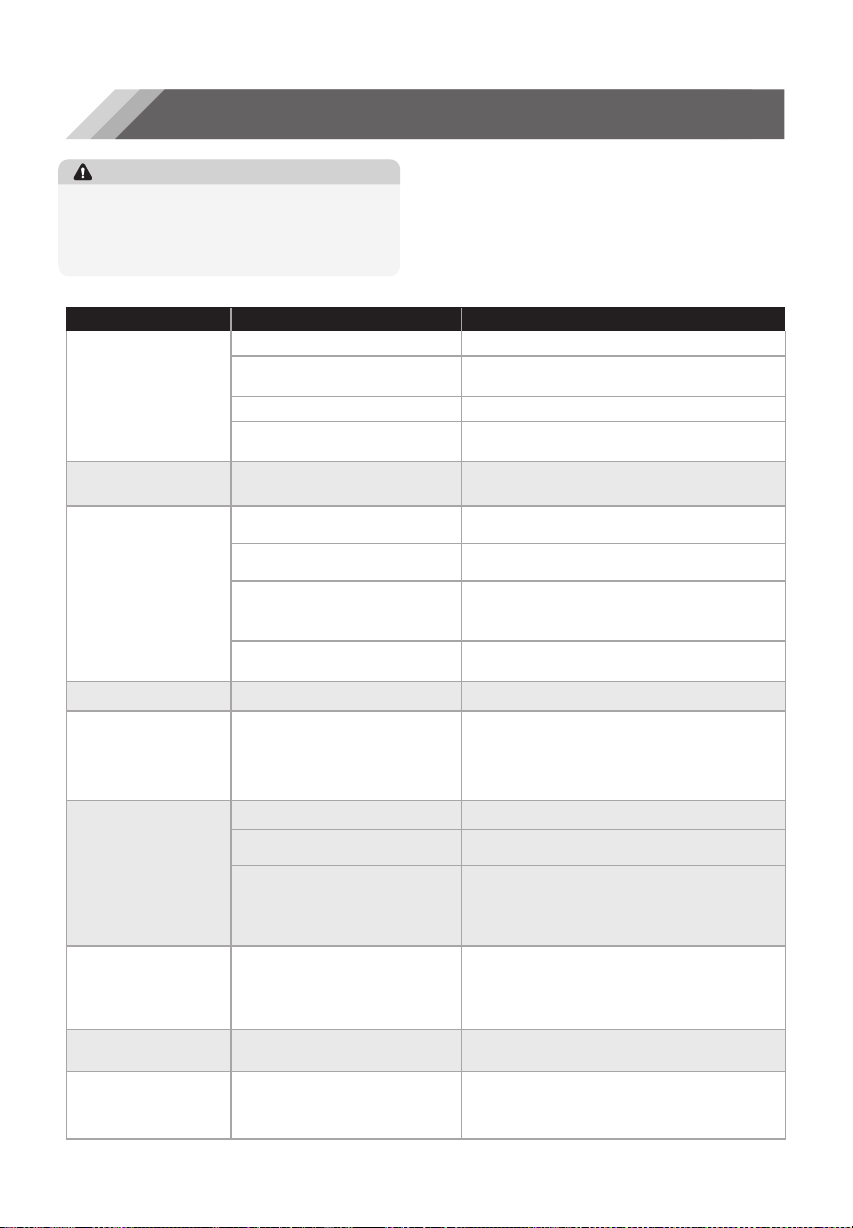
Appliance does
not work.
Appliance is not switched on.
Mains plug is not plugged
in or is loose.
Fuse has blown or is defective.
Socket is defective.
Switch on the appliance.
Insert mains plug.
Check fuse, replace if necessary.
Mains malfunctions are to be corrected
by an electrician.
Appliance cools too
much.
Temperature is set too cold.
Turn the temperature regulator to a warmer
setting temporarily.
The food is too
warm.
The appliance is near a heat
source.
Temperature is not properly
adjusted.
Door was open for an
extended period.
A large quantity of warm food
was placed in the appliance
within the last 24 hours.
Open the door only as long as necessary.
Turn the temperature regulation to a colder
setting temporarily.
Please look in the “Installing your
new appliance” section.
Please refer to the “Control panel” section.
Heavy build-up of
frost, possibly also on
the door seal.
Door seal is not air-tight
(possibly after reversing the
door).
Carefully warm the leaking sections of the
door seal with a hair dryer (on a cool setting).
At the same time shape the warmed door
seal by hand such that it sits correctly.
Unusual noises.
Appliance is not level.
A component, e.g. a pipe, on
the rear of the appliance is
touching another part of the
appliance or the wall.
Readjust the feet.
If necessary, carefully bend the component
out of the way.
The appliance is touching the
wall or other objects.
Move the appliance slightly.
The compressor does
not start immediately
after changing the
temperature setting.
This is normal, no error has
occurred.
The compressor starts after a period of time.
Water on the floor or
storage shelves.
Water drain hole is blocked.
See the “cleaning and care” section.
18
Food in chill
compartment is not
freezing or staying
frozen.
Chill compartment is not a
freezer and is not designed to
freeze food or keep food
frozen.
Do not attempt to freeze food in this
compartment
Disposal of the appliance
It is prohibited to dispose of this appliance as household waste.
Packaging materials
Packaging materials with the recycle symbol are recyclable. Dispose of the packaging into a suitable waste
collection container to recycle it.
Before disposal of the appliance
1. Pull out the mains plug from the mains socket.
2. Cut off the power cord and discard with the mains plug.
This symbol on the product or in its packing indicates that this product may not be
treated as household waste. Instead, it should be taken to the appropriate waste
collection point for the recycling of electrical and electronic equipment. By ensuring
this product is disposed of correctly, you will help prevent potential negative
consequences for the environment and human health, which could otherwise be
caused by the inappropriate waste handling of this product. For more detailed
information about the recycling of this product, please contact your local council your
household waste disposal service, or the shop where you purchased the product.
WARNING
Refrigerators contain refrigerant and gases in the insulation. Refrigerant and gases must be
disposed of professionally as they may cause eye injuries or ignition. Ensure that tubing of the
refrigerant circuit is not damage prior to proper disposal.
Correct Disposal of this product
19