Location
• Do not install refrigerator near oven. radiator or other heat source. If not possible. shield refrigerator with cabinet material.
• Do not install where temperature falls below 55° F (13° C) or rises above 110° F (43° C). Malfunction
• Refrigerator is designed for indoor household application only.
Measuring the Opening
When installing your refrigerator. allow '/2"space at top and '/2' space behind machine compartment cover
(located in the rear) for proper air circulation. If the refrigerator is placed with the door hinge side against
a wall, you may want to allow additional space so the door can be opened wider.
Subflooring or floor coverings (i.e. carpet. tile. wood floors. rugs) may make your opening smaller than anticipated.
Some clearance may be gained by using the leveling procedure under Leveling.
IMPORTANT: If refrigerator is to be installed into a recess where the top of the refrigerator is completely
covered, use dimensions from floor to top of hinge cap to verify proper clearance.
Transporting Your Refrigerator
• NEVER transport refrigerator on its side. If an upright position is not possible. lay refrigerator on its back. Allow refrigerator to sit upright for approximately 30 minutes before plugging it in to assure oil returns to the compressor. Plugging refrigerator in immediately may cause damage to internal parts.
• Use an appliance dolly when moving refrigerator. ALWAYS truck refrigerator from its side or back- NEVER from its front.
• Protect outside finish of refrigerator during transport by wrapping cabinet in blankets or inserting padding between the refrigerator and dolly.
• Secure refrigerator to dolly firmly with straps or bungee cords. Thread straps through handles when
possible. Do not overtighten. Overtightening restraints may dent or damage outside finish.
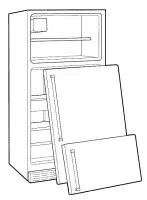
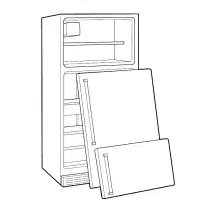
Door and Hinge Removal
Some installations require door removal to get refrigerator to final location.
1. Unplug power cord from power source.
2. Remove toe grille and bottom bracket covers (see page 7).
• Open both doors 180°. or as wide as possible.
For ice and water dispensing models only: Remove the left side bracket cover by carefully pulling the water line to pry the cover loose. Then continue to maintain downward pressure to the notched side of the cover while swinging it off (see page 7).
Note
• For refrigerators in operation. shut off water before removing water line from the door.
To Disconnect the Water Line:
• Push in white collar (A) and hold.
• Pull the door-side tube from the connector (B).
To Reconnect the Water Line:
• Firmly push tube "8"into the connector.Use lines on the tube as a guide for full insertion.
• If tube end is damaged, cut off %" before reconnecting.
• If leaking occurs, reconnect the line.
3. Close doors.
4. Remove top hinge covers by removing Phillips screws.
5. Unscrew _.;' hex head screws from top hinges.
For water dispensing models only:
Do not remove screw connecting green ground wire.
6. For ice and water dispensing models only: Detach main wire connector harness and red wire harness.
7. Remove top hinges along with doors.
8. Replacing the Doors
Relacing the Doors
• To replace the doors, follow the steps in Door and Hinge Removal in reverse order.
IMPORTANT: If water line tube end is damaged, cut off 5/8"before reconnecting.
Materials Needed
• '/4" outer diameter flexible copper tubing
• Shut-off valve (requires a '/4" hole to be drilled into water supply line before valve attachment)
• Adjustable wrench
• '/_" hex nut driver
Note:
• Add 8' to tubing length needed to reach water supply for creation of service loop.
1. Create service loop with copper tubing (minimum 2' diameter). Avoid kinks in the copper tubing
2. Remove plastic cap from water valve inlet port.
3. Place brass nut (A) and sleeve (B) on copper tube end as illustrated. (Do not use old sleeve.)
4. Place end of copper tubing into water valve inlet port. Shape tubing slightly. Do not kink - so that tubing feeds straight into inlet port.
5. Slide brass nut over sleeve and screw nut
IMPORTANT: Do not overtighten. Cross threading may occur.
6. Pull on tubing to confirm connection is secure. Connect tubing to frame with water tubing clamp (C) and turn on water supply. Check for leaks and correct if necessary. Continue to observe the water supply connection
for two to three hours prior to moving the refrigerator to its permanent location.
7. Monitor water connection for 24 hours. Correct leaks. if necessary.
Handle Installation
If not installed, the handle is located in the interior of the fresh food section or attached to the back of your refrigerator. Remove and discard handle packaging and tape.
Handle design varies from refrigerator to refrigerator. Please reference the appropriate instructions for your
model.
Front Mount Handle with Extensions
Materials Needed
• Gloves to protect hands
• Phillips screwdriver
• Plastic door handle removal card (or '/2"thick plastic card). retain the card
Attach Extensions to Handle:
1. Align handle and extension as shown.
2. Place extension in handle opening.
3. Apply slight pressure to both sides of the extension piece.
4. Slide extension until it stops on inside edge of handle.
To Install:
1. The handles are to be oriented as shown.
2. Align front mount door handle clip with the door tabs.
3. Ensure the handle clips are positioned slightly above the door tabs.
4. Rotate the handle so that the handle is flat against the door.
5. Push the handle down against the upper
6. Align bottom of handle with lower door tab. Press upper handle end to door surface and firmly grasp lower end of handle. Gently slide handle upward until bottom of handle settles on door surface, then reverse direction, sliding down- ward to almost engaging tab with clip.
7. Grasp the handle firmly and slide down until it clicks. The audible click indicates
To Remove:
1. Flex the handle away from the door panel. Simultaneously place door handle removal card underneath the base of the lower handle. Insert the card to the line or until it stops.
2. Grasp the lower part of the handle firmly and lift to remove.
Wide-by-Side TM Handles
To Install:
1. Align fresh food handle with trim retainer and door clip.
2. Make sure the tabs of the handle clip are below the tabs of the door clip.
3. Rotate the handle so that the handle is
4. The tab on the lower part of the handle will align with the hole in the handle
5. Slide handle upward until it clicks.
6. Snap top of handle into trim retainer clip.
7. Repeat for freezer handle.
To Remove:
1. Protect the area above the handle trim with tape. Insert the tip of a flat blade screwdriver between the handle trim and door panel. Carefully pry the trim away from the door panel.
2. Pull trim free from the trim retainer.
3. Insert door removal card (or '/2"thick plastic card)
4. Grasp the handle firmly and pu[[ downward to rem ove.
5. Repeat for freezer handle.
Full-Length ARurninurn HandJes
To Install:
1. Release top door trim by removing Phillips screws from top of fresh food door and retain screws for later use.
2. Align notches on back of handle with retaining clips on doors. Insert clips into notches and slide handle down until it contacts bottom trim.
3. Replace top door trim and Phillips screws.
4. Repeat instructions 1-3 to install other handle.
To Remove:
1. Release top door trim by removing Phillips screws from top of fresh food door and retain screws for later use.
2. Grasp handle firmly with both hands. Slide handle upward approximately 3/4"to release.
3. Repeat instructions 1-3 to remove other handle.
To Reinstall:
1. Repeat in reverse order.
Materials Needed
• 3/8"hex head driver
• Carpenter's level
1. Remove toe grille.
• Grasp firmly and pull bottom outward to unclip.
2. Remove bottom bracket cover(s).
• Place the eraser end of a pencil or similar blunt tool in the cover notch.
• Use slight pressure to pry the cover loose.
• Continue to maintain downward pressure to the notched side of the cover while swinging it off.
3. Using hex head driver. turn both of the front adjustment screws (A) clockwise to raise and counter clockwise to lower the front of the refrigerator.
4. Turn both rear adjustment screws (B) clockwise to raise and counterclockwise to lower the rear of the refrigerator.
5. Using the carpenter's level, make sure front of refrigerator is '/4" (6 ram) or '/2bubble higher than back of refrigerator and that the refrigerator is level from side to side.
6. If required, correct rocking of refrigerator by turning rear adjustment screw clockwise to raise rocking corner. If doors are uneven, do the following:
• Determine which door needs to be raised.
• Turn front roller adjustment screw (A) clockwise to raise front corner of door.
• If one refrigerator door has reached the limit of its adjustment range and doors are still not level, raise or lower the opposite door by turning roller adjustment screw counterclockwise.
• Check with level to verify '/4" tilt to the back for proper door closure.
• If refrigerator is aligned and stable, replace toe grille and hinge covers.
7. Replace bracket cover(s).
• Position cover into the outer edge of the hinge.
• Swing the cover toward the cabinet and snap it into place.
8. Replace the toe grille.
Note
• For proper reinstallation. ensure the "top" marking on the interior of the toe grille is oriented correctly.
• Align the toe grille mounting clips with the lower cabinet slots.
• Push the toe grille firmly until it snaps into place.
Dial Temperature Controls (select models)
The controls are located at the back left of the
Note
• The freezer control turns the cooling system on. Neither section will cool if freezer control is set to OFF
Initial Control Settings
After plugging the refrigerator in. set the controls.
• To adjust the controls. turn the
• Set the freezer control on 4.
• Set the refrigerator control on 4.
• Let the refrigerator run at least 8 to 12 hours before adding food.
Warm Cabinet Surfaces
At times. the front of the refrigerator cabinet may be warm to the touch. This is a normal occurrence that helps prevent moisture from condensing on the cabinet. This condition will be more noticeable when you first start the refrigerator, during hot weather and after excessive or lengthy door openings.
Adjusting the Controls
• 24 hours after adding food. you may decide that one or both compartments should be colder or warmer.If
so, adjust the control(s) as indicated in the Temperature Control Guide table below. See page 21 for instructions on checking compartment.
• Except when starting the refrigerator. do not change either control more than one number at a time.
• Allow 24 hours for temperatures to stabilize.
• Changing either control will have some effect on the temperature of the other compartment.
Shelves
Your refrigerator has either Spill-Catcher TM or non sealed shelves. Spill-Catcher TM shelves have a spill retainer edge which allows for easier clean up and some are equipped with the Easy-Glide slide out feature. To slide out (select models), grasp the front of the shelf and pull forward. Push in the shelf to return to the original position.
To Remove a Shelf:
• Slightly tilt up the front and lift up the rear of the shelf, then pull the shelf straight out.
To Lock the Shelf Into Another Position:
• Tilt up the front edge of the shelf.
• Insert the hooks into the desired frame openings and let the shelf settle into place.
• Be sure the shelf is securely locked at the rear. The Crisper Top serves as the lower fresh food shelf.
To Remove the Crisper Top:
• Remove drawers as indicated (see page 12).
• Place hand under the frame to push up the glass. Lift glass out.
To Install:
• Repeat above instructions in reverse order.
Elevator TM Shelf Cselect models)
The Elevator TM Shelf is equipped with a spill-retaining edge and the Easy-Glide TM slide-out feature. It can be adjusted up or down without unloading.
To Slide Out Elevator TM Shelf:
• Grasp the front of the shelf and pull forward.
• Push the shelf in to return to original position.
To Adjust the Elevator TM Shelf:
• Pull out the knob on the crank handle.
• Rotate the crank clockwise to raise the shelf. and
To Remove Elevator TM Shelf:
• Completely unload the shelf and pull the shelf forward.
• Pull until the shelf stops.
• Press up on the tabs located underneath its outside edges and continue pulling forward until the shelf is
clear of the frame.
To Replace Elevator TM Shelf:
• Align the shelf to the frame and push it all the way back. It is not necessary to press up on the tabs for
reinstallation.
In ordinary use. the Elevator TM Shelf frame assembly does NOT require removal. Though unlikely. and not recommended. the correct removal procedure is as follows:
To Remove Frame Assembly:
• Unload the shelf completely.
• Slide the shelf forward about 2" and manually move the two rear latches toward the shelf center.
• While supporting the entire shelf and frame from underneath. lift slightly and rotate the assembly approximately 30° to allow the rear mechanism to clear the vertical rear side rails.
• The entire assembly can then be moved forward
To Reinstall Frame Assembly:
• Reverse the removal procedure. Be sure the shelf is in a level position. When the sliding shelf is pushed to the rear, it will reposition the rear latches to their correct operating position.
Dairy Center
The Dairy Center provides convenient door storage for spreadable items such as butter and margarine. On select models, this compartment can be moved to several different locations to accommodate storage needs.
To Remove:
Slide dairy center up and pull out.
To Install:
Slide assembly in and down so that the hooks are firmly seated on the door liner.
To Remove Dairy Door:
Press in sides of dairy door and pui[ out.
To Install Dairy Door:
Slide sides of dairy door inside dairy center until
Adjustable Deep THt-Out Door Buckets (select modems)
The AdjustaMe Deep Timt-Out Door Bucket provides easy access to food items stored in the door.
To Remove Bucket:
- Tilt bucket out.
- PuIl straight out of the bracket.
To Install Bucket:
- Tilt the front of the bucket down slightly.
- Slide into bracket and tip upright.
To Move Bucket Frame to Another Location:
- Remove bucket.
- Lift bracket up and pull straight out.
Place the bracket in a new location.
Door Buckets
Door Buckets can be moved to meet individual storage needs.
To Remove:
• Lift bucket up and pull straight out.
To Install:
• Place bucket in desired door liner retainer. push down until bucket stops.
Storage Drawers
Humidity-Controlled Crisper Drawers
The Crisper Drawers provide a higher humidity environment for fresh fruit and vegetable storage.
Controls
The crisper controls regulate the amount of humidity in the crisper drawer. Slide control toward the Fruit setting for produce with outer skins. Slide control toward the Vegetables setting for leafy produce.
Automatic Humidity Control
Some crispers are equipped with an Automatic Humidity Control system. eliminating the need for manual humidity slide controls on the drawer. fabric-like material* covers small air vents in the shelf insert above the crispers.
This material controls the flow of moisture out of the crisper. If a food spill should occur on the air vent or
fabric-like material, wipe with a clean, damp cloth.
* Maytag Automatic Humidity Control system features a unique, patented material called Shape Memory
Polymer (SMP) that when laminated to fabric, becomes DIAPLEX. DIAPLEX is manufactured by Mitsubishi.
To Remove
• Pull drawer out to full extension. Tilt up front of drawer and pull straight out.
To Install:
• Insert drawer into frame rails and push back into
Temperature-Controlled Drawer (select models)
This drawer can be used for storage of miscellaneous items.
The drawer features a control that regulates the air temperature in the drawer. Set the control to Cheese to provide normal refrigerator temperature. Use the Meats setting for meats.
Can Rack TM (select models)
The Can Rack TM slides out from underneath the Spillsaver TM stationary shelf. The Can Rack TM holds up to twelve 12-ounce beverage cans.
To Remove:
• Empty contents of Can Rack TM. Pull forward to full extension and lift front to release from shelf rail assembly. Pull straight out to remove.
To install:
• Insert drawer into frame rails and push back into place.
Accessories
Grip Pads (select models)
The Grip Pads prevent objects from sliding in the door buckets. Grip Pads are removable and are top-rack dishwasher safe for easy cleaning.
Covered Storage Bucket (select models)
The Storage Bucket has a lid and removable egg tray. When tray is removed. bucket will accept items such as a standard egg carton, ice, etc.
Tall Bottle Retainer/Snugger (select models)
The Tail Bottle Retainer prevents tall bottles from tipping forward. The Retainer can be placed above any removable door bucket.
The Snugger attached to the Tall Bottle Retainer keeps bottles and other containers in place when the door is opened or closed. Adjust the Snugger by sliding from side to side.
Egg Tray With Handle (style may vary/select models)
The Egg Tray with Handle holds a "dozen-plus" eggs. It can be removed to carry to a work area or to be washed.
Shelves and gaskets
Fixed Freezer Shelf
To Remove Clip-mounted Shelves:
Lift shelf from wall mounting clips and pull left side of shelf out of wall mounting holes.
To Install Clip-mounted Shelves:
Place left side of shelf in mounting holes and press down into wall mounting clips.
Shelves
Shelves can be removed to meet individual storage needs.
To Remove Shelf:
Snap right side of shelf up from cabinet railing and slide to right.
To Install Shelf:
Replace shelf in left side cabinet railing. Snap shelf into right side cabinet railing.
Baskets and Drawers
Baskets and drawers (style may vary} slide out for easy access to items in back.
To Remove:
Pull out to its full extension. Lift up front of basket and remove.
To Install:
Slide basket or drawer into cabinet railing. Lift up front of basket or drawer. and slide to the back of refrigerator.
Ice Storage Bin
The Ice Storage Bin is located below the automatic ice maker.
To Remove:
Raise ice maker arm to deactivate ice maker. Lift Lift front of bin and pull out to its fuil extension. Lift up front of bin and remove.
To Install
Slide bin into railing below ice maker until bin locks into place. Drop ice maker arm to activate ice maker.
IMPORTANT: Ice bin must be locked in place for proper ice dispensing. Turn auger driver behind bin counter clockwise (as shown} to properly align ice bin with auger driver.
Door Storage
Adjustable Door Buckets
Door Buckets can be moved to meet individual storage needs.
To Remove:
• Lift the door bucket up until it clears the retainers on the door liner then pull the door bucket straight out.
To Install:
• Slide bucket in above desired door liner retainer and push down until bucket stops.
Fixed Door Bucket (select models)
The Fixed Door Bucket is located in the upper section of the freezer door.
IMPORTANT: Fixed door bucket is not adjustable. If bucket is removed, freezer light will not deactivate when door is closed.
Drop-Down Freezer Door Baskets (select models)
These baskets provide convenient storage space for frozen food items that tend to shift, such as bagged vegetables.
Automatic Ice Maker(non-dispenser models)
Note
• Energy rating guides that are posted on the refrigerator at the time of purchase do not include optional ice maker energy usage.
Some models are automatic ice maker ready. The number of the appropriate ice maker kit is IC10S. The kit contains installation instructions and water connection instructions.
Other models have a factory installed ice maker. Connect the ice maker to the water supply as instructed on page 5. Proper water flow and a level refrigerator are essential for optimal ice maker performance.
Operating Instructions
• Confiml ice bin is in place and ice maker arm is down.
• After freezer section reaches between 0° to 2° F (-18 ° to -17 ° C), ice maker fills with water and begins operating. You will have a complete harvest of ice approximately every three hours.
• Allow approximately 24 hours after installation to receive first harvest of ice.
• Discard ice created within first 12 hours of operation to verify system is flushed of impurities.
• Stop ice production by raising ice maker arm until click is heard.
• Ice maker will remain in the OFF position until arm is pushed down.
• The first one or two batches will probably contain undersized and irregular cubes because of air in the supply line.
• When the ice cubes are ejected it is normal for several cubes to be joined together at the ends. They can easily be broken apart. The ice maker will continue to make ice until the supply of ice cubes raises the sensor arm, shutting the ice maker off.
• Certain sounds may accompany the various cycles of the ice maker. The motor may have a slight hum, the cubes will rattle as they fall into an empty storage pan and the water valve may click or "buzz" occasionally.
• If the ice is not used frequently. the ice cubes will become cloudy. shrink. stick together and taste stale. Empty the ice storage bin periodically and wash it in lukewarm water. Be sure to dry the bin thoroughly before replacing it.
• Beverages and foods should not be placed in the ice storage bin for quick chilling. These items can block the sensor arm, causing the ice maker to malfunction.
• Turn off (arm up) the ice maker when the water supply is to be shut off for several hours.
To Remove the Ice Bin:
• Pull it forward. away from the ice maker. To avoid the ice maker dumping ice while the bin is removed, turn the ice maker off by raising the sensor arm.
To Install the Ice Bin:
• Reverse the above procedure. Turn the ice maker on by lowering the sensor arm.
Dispenser Features (select models)
Dispenser Light (select models)
A light activates within the dispenser area at full power when dispensing ice or water with the main dispenser pad.
Dispenser Pad
The Dispenser Pad is located on the back wall of the dispensing area. When the dispenser pad is pressed, the selection chosen on the dispenser control panel will dispense.
RemovabRe Tray
The Removable Tray at the bottom of the dispenser area is designed to collect small spills and may be easily removed for cleaning and emptying purposes.
IMPORTANT: Removable tray does not drain. Do not allow tray to overflow. If it does, remove tray and wipe up overflow.
To Use Dispenser Pad:
• Choose water selection from dispenser control panel.
• Press sturdy. wide-mouthed container against dispenser pad. When dispensing crushed ice. hold container as close to chute as possible to reduce spraying.
• Release pressure on dispenser pad to stop water dispensing. A small amount of water may continue to dispense and collect in dispenser tray. Large spills should be wiped dry.
Dispenser Control (selectmodels) (control features vary by model)
Ice Dispenser Operation
To Dispense Ice:
• Select Crush or Cube ice mode by pushing button on dispenser control panel. A green light above button indicates mode section.
• Press container against dispenser pad When dispensing crushed ice, hold container as close to chute as possible to reduce spraying.
Dispenser Lock (select models)
The Dispenser Lock prevents ice or water from being dispensed.
To Lock Dispenser:
Press and hold the Lock button for three seconds. A green indicator light above button will illuminate when the dispenser is locked.
To Unlock Dispenser:
Hold the Lock button for three seconds. The green indicator light above button will go out.
Water FHter Status indicator Water fltl'r Light (select models) :
The Water Filter Status Indicator Light serves as a reminder to replace the water filter. A green light indicates that the filter is in good condition. A red light indicates the filter should be changed. Once light turns red. it will remain red until function is reset.
To Reset Undicator:
Press and hold both the Lock and Water buttons simultaneously for four seconds. The green filter status indicator light will flash three times when the function has successfully reset.
Auto Light (select models)
The Auto Light function activates the dispenser light at half-power when the Light Sensor detects that the light levels in room are low. Sensor detects that the light levels in room are low.
To Activate Auto Light:
• Press Auto Light button. A green indicator light above button illuminates when the sensor is active.
To Deactivate Auto Light:
• Press Auto Light button. The green indicator light will go out.
Sabbath Mode (select models)
When activated. the Sabbath Mode deactivates the control lights while leaving the control operational.
To Activate Sabbath Mode:
• Press and hold the Lock and Auto Light buttons simultaneously for three to four k. seconds. After three to four seconds, the dispenser lights will turn off.
To Deactivate Sabbath Mode:
Press and hold both the Lock and Auto Light buttons simultaneously for three to four seconds. After three to four seconds, the dispenser lights will activate.
Notes
• Dispenser light will not activate during dispensing while in this mode.
• If the power fails. the control will remain in Sabbath Mode when power returns.
Water Filter Removal and Installation (select models)
Replacing Water Filter
IMPORTANT: Air trapped in system may cause water and cartridge to eject. Use caution when
removing.
1. Turn filter counterclockwise until it releases from filter head.
2. Drain water from filter into sink. and dispose in normal household trash.
3. Wipe up excess water in filter cover and continue with Initial Installation, steps 2 and 4.
The filter should be changed at least every 12 months.
IMPORTANT: Condition of water and amount used determines life span of water filter cartridge. If water
use is high, or if water is of poor quality, replacement may need to take place more often.
Initial Installation
The water filter is located in the upper right-hand corner of the fresh food compartment.
1. Remove blue bypass cap and retain for later use.
2. Remove sealing label from end of filter and insert into filter head.
3. Rotate gently clockwise until
4. Reduce water spurts by flushing air from system. Run water continuously for two minutes through dispenser until water runs steady. During initial use, allow about a one- to two-minute delay in water dispersal to allow internal water tank to fill.
• Additional flushing may be required in some households where water is of poor quality.
Fresh Food Storage
• The fresh food compartment of a refrigerator should be kept between 340-40 ° F (1°-4 ° C) with an optimum temperature of 37° F (3° C). To check the temperature, place an appliance thermometer in a glass of water and place in the center of the refrigerator. Check after 24 hours. If the temperature is above 40° F (4° C) adjust the controls as explained on pages 8 and 9.
• Avoid overcrowding the refrigerator shelves. This reduces the circulation of air around the food and results in uneven cooling.
Fruits and Vegetables
• Storage in the crisper drawers traps humidity to help preserve the fruit and vegetable quality for longer time periods (see page 12).
• Sort fruits and vegetables before storage and use bruised or soft items first. Discard those showing signs of decay.
• Always wrap odorous foods such as onions and cabbage so the odor does not transfer to other foods.
• While vegetables need a certain amount of humidity to remain fresh. too much humidity can shorten storage times (especially leafy vegetables). Drain vegetables well before storing.
• Wait to wash fresh produce until right before use.
Meat and Cheese
• Raw meat and poultry should be wrapped securely so leakage and contamination of other foods or surfaces does not occur.
• Occasionally mold will develop on the surface of hard cheeses (Swiss. Cheddar. Parmesan). Cut off at least an inch around and below the moldy area. Keep your knife or instrument out of the mold itself. Do not try to save individual cheese slices, soft cheese, cottage cheese, cream, sour cream or yogurt when mold appears.
Dairy Food
• Most dairy foods such as milk. yogurt. sour cream and cottage cheese have freshness dates on their cartons for appropriate length of storage. Store these foods in the original carton and refrigerate immediately after purchasing and after each use.
Frozen Food Storage
• The freezer compartment of a refrigerator should be kept at approximately 0° F (-18 ° C). To check the temperature, place an appliance thermometer between the frozen packages and check after 2/4 hours. If the temperature is above 0° F (-18 ° C), adjust the control as described on pages 8 and 9.
• A freezer operates more efficiently when it is at least two-thirds full.
Packaging Foods for Freezing
To minimize dehydration and quality deterioration use aluminum foil. freezer wrap, freezer bags or airtight containers. Force as much air out of the packages as possible and be sure they are tightly sealed. Trapped air can cause the food to dry out, change color and develop an off-flavor (freezer burn).
• Overwrap fresh meats and poultry with suitable freezer wrap prior to freezing.
• Do not refreeze meat that has completely thawed.
Loading the Freezer
• Avoid adding too much warm food to the freezer at one time. This overloads the freezer, slows the rate of freezing and can raise the temperature of frozen foods.
• Leave space between the packages so cold air can circulate freely, allowing food to freeze as quickly as
possible.
• Avoid storing hard-to-freeze foods such as ice cream and orange juice on the freezer door shelves. These foods are best stored in the freezer interior where the temperature varies less with door openings.
Refer to the Food Storage Chart on pages 22 and 23 for approximate storage times.
Removing Odors From Refrigerator
1. Remove all food and turn the refrigerator OFF
2. Disconnect power to the refrigerator.
3. Clean the walls. floor. ceiling of cabinet interior. drawers. shelves and gaskets according to the instructions (see page 24).
4. Dilute mild detergent and brush solution into crevices using a plastic bristle brush. Let stand for five minutes. Rinse surfaces with warm water. Dry surfaces with a soft, clean cloth.
5. Wash and dry all bottles. containers and jars. Discard spoiled or expired items.
6. Wrap or store odor-causing foods in tightly sealed containers to prevent reoccurring odors.
7. Reconnect power to refrigerator and return food to refrigerator.
8. Allow the refrigerator to cool.
9. After 24 hours. check if odor has been eliminated.
If odor is still present:
1. Remove drawers and place on top shelf of refrigerator.
2. Pack refrigerator and freezer sections including
3. Place charcoal briquettes randomly on crumpled newspaper in both freezer and refrigerator compartments.
4. Close doors and let stand 24 to 48 hours.
Energy Saving Tips
• Avoid overcrowding refrigerator shelves. This reduces air circulation around food and causes refrigerator to run longer.
• Avoid adding too much warm food to refrigerator at one time. This overloads compartments and slows rate of cooling.
• Do not use aluminum foil. wax paper. or paper toweling as shelf liners. This decreases air flow and causes refrigerator to run less efficiently.
• A freezer that is two-thirds full runs most efficiently.
• Locate refrigerator in coolest part of room. Avoid areas of direct sunlight. or near heating ducts. registers or other heat producing appliances. If this is not possible, isolate exterior by using a section of cabinet or an added layer of insulation.
• Clean door gaskets every three months according to cleaning instructions. This will assure that door seals properly and refrigerator runs efficiently.
• Take time to organize items in refrigerator to reduce time that door is open.
• Be sure your doors are closing securely by leveling refrigerator as instructed in your installation instructions.
• Clean condenser coils as indicated in the cleaning instructions every three months. This will increase energy efficiency and cooling performance.
Upper Fresh Food Section
The upper fresh food light bulbs are located behind the front panel. Reach behind the panel to remove the bulbs.
Lower Fresh Food Section
1. Push up on bottom tabs on light cover. Rotate cover up and release tabs.
2. Remove light bulb.
3. Replace bulb with appliance bulb no greater than 4# watt&
4. Insert top tabs of light cover into
Upper Freezer Section
1. Remove ice bin by lifting front of bin and
2. Remove light shield by pressing the upper right side of the shield and rotating downward.
3. Remove light bulb. Replace with appliance bulb ne greater than watts.
4. Rotate the shield upward. press in slightly and snap into place.
5. Replace ice bin by sliding in until bin locks into place.
Lower Freezer Section
1. Pinch both sides of light cover to remove.
2. Remove light bulb. Replace with appliance bulb #e greater tha watts.
3. Pinch both sides of the light cover to snap into place.
Ice and Water Dispenser
1. Locate light bulb inside top edge of dispenser frame. Unscrew to remove.
2. Replace light bulb with a 7-watt, 120 volt bulbo
Preparing for Vacation
For short vacations or absences [three months or less):
1. Remove all perishables.
2. If no one will be checking in on the refrigerator during your absence. remove all frozen items also.
3. If your refrigerator has an automatic ice maker:
• Shut off the water supply to the ice maker at least one day ahead of time.
• After the last load of ice drops. raise the wire shut off arm to the OFF position.
• Empty the ice bin.
4. If the room temperature will drop below 55° F (13° C). follow the instructions for longer absences.
For long vacations. absences [mom than three months) OR if the room temperature will drop below 55 ° F [13 ° C):
1. Remove food.
2. If your refrigerator has an automatic ice maker:
• Shut off the water supply to the ice maker at least one day ahead of time.
• After the last load of ice drops. raise the wire
• Empty the ice bin.
3. If your refrigerator has a dispenser system with water filter. remove the water filter cartridge and install the filter bypass. Dispose of the used
4. Turn the freezer control to OFF. Unplug the refrigerator. Thoroughly clean the interior of both compartments with a baking soda solution and a clean soft cloth (four tablespoons of baking soda in one quart of warm water.).
7. Dry thoroughly.
8. Leave the doors open to prevent the formation of mold and mildew.
Upon Your Return:
After a Short Vacation or Absence:
For models with automatic ice makers or dispensers:
• Reconnect the water supply and turn on supply valve (see page 5).
• Monitor water connection for 24 hours and correct leaks if necessary.
• Run 10-15 glasses of water from the dispenser to flush out the system.
• Restart the ice maker.
• Discard at least the first three ice harvests.
After a Long Vacation or Absence:
• If your refrigerator has an automatic ice maker, reconnect the water supply and turn on supply valve (see page 5).
• Plug the refrigerator back in and reset controls (see pages 8 and 9).
• Monitor water connection for 24 hours and correct leaks, if necessary.
For dispenser models. run water through the dispenser for at least three minutes with the filter bypass in place. then install water filter (see page 18).
After installing the water filter. run water through the dispenser continuously for at least two minutes, or until water runs steady. Initially you may notice a one to two minute delay in water dispersal as the internal tanks fills.
• Restart the ice maker.
• Discard ice produced within the first 12 hours (at least the first three harvests).
Preparing to Move
• Follow the above instructions for long vacations/absences. through step 7.
• Secure all loose items such as shelves and drawers by taping them securely in place to prevent damage.
• Tape the doors shut.
• Use an appliance dolly when moving the refrigerator. Always truck the refrigerator from its side or back never from its front.
• Be sure the refrigerator stays in an upright position during moving.