
Use & Care InstrUCtIons
Quality Guarantee
Cookware

Since 1930, Stanley Rogers has been renowned
for quality, craftsmanship and timeless style.

Thank you for selecting Stanley Rogers cookware.
Please read these instructions carefully to ensure
you get the best results from this product.
Please also retain these Use & Care Instructions
for future reference.

Before First Use
• Before using Stanley Rogers cookware remove
all packaging, stickers, labels and tags.
• Wash in warm, soapy water, rinse and dry thoroughly
with a soft cloth before storing or using.

Cleaning and Storing
Cleaning
• Most Stanley Rogers cookware is dishwasher safe.
Refer to the packaging or bottom of the pan to
conrm the cookware is dishwasher safe.
This logo means the item is dishwasher safe.
To prolong the life of your pan we recommend
hand washing in warm water with a mild detergent
and non-scratch scourer. Dishwashing detergents
have a high alkalinity level and may also contain
chlorine bleach and phosphates, which over time
may accelerate the deterioration of your cookware.
• Some delicate cookware like Copper will be hand
wash only. This logo means hand wash only.
• Ensure non-stick surfaces are thoroughly cleaned after every
use to prevent build-up of food over time. Residual oil will
burn and lessen the effectiveness of the non-stick each time
it is heated for use. Follow these tips to care for your pans:

- Do not pour cold water into hot cookware. Doing so may
cause it to warp or hot liquids to splatter. Over time this
will also cause damage to the non-stick coating.
- Always allow cookware to cool down after use and before
cleaning. Remove from the heat source and allow to cool
on a heat resistant surface.
- Before washing, carefully wipe out any food residue
or oils with a paper towel.
- Use hot (not boiling) water with a mild detergent and
non-scratch scourer or non-scratch cleaning brush.
• If food has burned in the pan and is difcult to remove,
partially ll the pan with 3:1 ratio of water to dishwashing
detergent or vinegar. Bring the solution to boiling then turn
off the heat source and allow the pan to cool for a period.
Use a non-scratch scourer to clean. Repeat if necessary.
• Cleaning the bottom of the pan is also important,
particularly for glass cooktops.

• A spotted white residue may appear from time-to-time
on the cooking surface due to minerals in water or starch
naturally present in food. To remove, use a sponge dipped
in lemon juice or vinegar to rub over the affected area and
wash thoroughly after.
• Do not use steel wool, coarse scouring pads or harsh
abrasives to clean cookware or glass lids.
• Do not use oven cleaners to clean cookware, as these are
not designed for this purpose and will ruin the cookware.
• Copper requires regular polishing with a copper polish.
Storage
• Always ensure cookware is completely dry before storing.
• It is recommended to use pan protectors, a couple of pieces
of paper towel or a tea towel between each item of
cookware to prevent scratches and scufng, particularly
on non-stick interiors.

Cooktop Suitability
Refer to the bottom of the cookware or to the packaging
for cooktop suitability:
Indicates induction compatible
- Always ensure the bottom of the pan and
the cooktop are clean and free from debris.
Permanent marks may result if not.
- Read the appliance manual before use.
Indicates electric compatible
- For ceramic or halogen always make sure the
bottom of the pan and the cooktop are clean and
free from debris. Permanent marks may result if not.

Indicates gas compatible
- Never allow the ame to extend past the base of
the pan as this may result in overheating of handles,
(including if handles are indicated as ‘Cool Touch’,
‘Stay Cool’ or similar), or cause damage or
discolouration to the outside of the pan.
- Gas cooktops may have uneven surfaces.
Ensure pans are stable.

Using Your Cookware
• Always use a burner the same diameter or smaller than
the base of the cookware, particularly on gas cooktops.
Mismatching the burner size to the cookware will cause
excessive heat on the outside of the pan and may result in
handles becoming hot or damaged or cause discolouration
to the outside of the pan. It is also less energy efcient.
• Centre cookware on the burner and position so that handles
are not over other burners. Handles should not extend
beyond the edge of the cooktop or benchtop, as these may
be easily reached by children or cause the cookware to be
knocked off the cooktop.
• Avoid pre-heating or cooking on high heat for long periods.
Cumulative overheating will result in damage to the non-stick
surface and may cause warping of the base.
• Do not allow cookware to boil dry and never leave empty
cookware on a hot burner.

• Handles or knobs (including if indicated as ‘Cool Touch’, ‘Stay
Cool’ or similar), can become hot if cookware is used on too
high a heat for prolonged periods or the burner is too large
for the pan, particularly on gas cooktops or when placed in an
oven. Use protection such as an oven mitt, pan holder or dry
towel when handling.
• Do not leave utensils in the pan while cooking.
• Cooking on a medium to low heat will retain moisture and
nutrients in the food. It will also prolong the life of the pan.
• If using salt, only add to boiling water while stirring to ensure
it fully dissolves quickly. Adding salt to cold water may cause
pitting to the stainless steel surface. Also avoid leaving food
in the pan to which salt has been added, as this may cause the
surface to become pitted. Damage may not be seen initially,
however will accumulate over time.
• To avoid boiling over, ll the pan to no more than two thirds
full and reduce heat once it has been brought to the boil.

• Metal utensils (excluding forks, knives and whisks)
can be used on stainless steel interiors however
damage may accumulate over long periods.
• Oven use: Refer to the original packaging or the
bottom of the pan for the maximum oven safe
temperature. Handles, including if indicated as
‘Cool Touch’, ‘Stay Cool’ or similar, will become
hot in the oven. Always use an oven mitt, pan holder
or dry towel when removing pans from the oven.
• If food slightly sticks to non-stick surface during cooking,
add a small amount of water which will create a burst
of steam that will help release the food.

• Never put cold water into a hot pan or a hot pan into
water as it may result in warping and/or damage
to non-stick coatings.
• Never put hot glass lids on cold surfaces, in water, in the
fridge or in the freezer. Allow them to cool naturally on
a heat resistant surface.
• Lift cookware off cooktops. Never slide the cookware,
particularly on glass cooktops, as this may mark or damage
the cooktop surface. Refer to the cooktop’s instruction
manual for cleaning instructions.
• To eliminate water spots, remove cookware from
dishwasher before drying cycle and dry with a soft towel.
• Never use cookware in a microwave oven or on an open re.

Avoiding Damage
to Non-Stick Surface
Taking a little extra care with non-stick cookware
will prolong its life.
• Hand washing is recommended as the loss
of non-stick properties can be accelerated by
dishwashers. Dishwashing detergents have a high
alkalinity level and may also contain chlorine bleach
and phosphates.
• Avoid pre-heating or cooking on high heat for long
periods. Cumulative overheating will result in damage
to the non-stick surface.
• Do not allow cookware to boil dry and never leave
empty cookware on a hot burner.

• While Stanley Rogers non-stick coatings are very durable,
wooden, nylon or silicone cooking utensils are recommended
to prolong product life. Never use sharp utensils on
non-stick cookware.
• Non-stick coatings are not suitable for high temperature oil
cooking like shallow or deep frying. Stainless steel interiors
are recommended for this type of cooking.
• Do not use spray oils, including aerosols, mists or pump
sprays on non-stick surfaces. The tiny droplets overheat
and burn quickly reducing the effectiveness of the non-stick
surface. Alternatively, food can be sprayed or oil applied
before adding to the heated pan.
• Do not use coarse scourers, steel wool, wire brushes
or abrasive cleansers. Never cut food while in the pan.
Do not hit utensils on the edge, rim or surface of the
pan as it may cause chipping or damage.

Cooking with Stainless Steel
Stanley Rogers uses premium 18/10 stainless steel
interior cooking surface in its cookware for durability,
safety and hygienic benets. Here are some tips to
optimise its performance, including how to prevent
food from sticking whilst cooking:
• Avoid cooking at high temperatures. Use moderate heat
and only pre-heat for 1-2 minutes.
• Oils, fats or liquid need to be used when cooking on stainless
steel or food will stick to the pan. Use the appropriate
medium to high heat oils for how you are cooking. Refer to
the Cooking Oil table in this instruction booklet for more
information. Add the oil once the pan is at a medium heat.
You can also oil the food before adding it to the pan.

• Ensure there is enough room for the food you are cooking.
Overcrowding the pan will result in too much liquid being
trapped and food will stew rather than caramelise.
• Deglazing, the process of adding liquid to the pan at the
end of cooking, is a great way to help remove food before
adding the next ingredients, however adding a lot of cold
liquid may result in warping of the pan.
• Do not use metal or harsh scourers or abrasive materials.
Stainless steel may not appear to damage, however, it will
create micro scratches and alter the surface nish, resulting
in a reduced cooking performance.
• A ‘rainbow’ colour on the bottom of the pan indicates
overheating. To reduce the appearance of the colour, use a
sponge dipped in lemon juice or vinegar and rub the affected
area and wash thoroughly after.
• White spots on the inside surface of the pan are caused
by minerals in water or starch naturally present in food.
To remove, use a sponge dipped in lemon juice or vinegar
and rub over the affected area and wash thoroughly after.

Energy Efciency
• Always use a burner the same diameter or smaller than
the base of the cookware, particularly on gas cooktops.
Mismatching the burner size to the cookware wastes heat
and energy.
• The use of a lid when cooking considerably reduces
the amount of energy used.
• Use the minimum amount of water in pans and bring
to the boil quickly before reducing to a simmer.
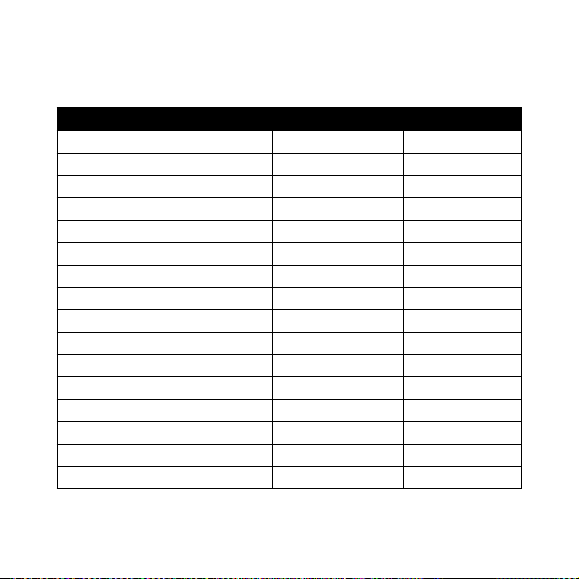
Cooking Oils: which oil to use
Oil Type of Fat Smoke Point
Ghee (Indian Claried Butter)* Saturated 266°C / 510°F
Coconut Oil Rened** Saturated 232°C / 450°F
Corn Oil Rened* Monounsaturated 232°C / 450°F
Peanut Oil Rened* Monounsaturated 232°C / 450°F
Sesame Oil Semi-rened* Polyunsaturated 232°C / 450°F
Sunower Oil Rened* Polyunsaturated 232°C / 450°F
Rice Bran Oil* Saturated 232°C / 450°F
Olive Oil Virgin Monounsaturated 215°C / 420°F
Canola Oil Rened* Monounsaturated 204°C / 400°F
Olive Oil Extra Virgin Monounsaturated 191°C / 375°F
Butter Saturated 177°C / 350°F
Coconut Oil Unrened Saturated 177°C / 350°F
Sesame Oil Unrened Polyunsaturated 177°C / 350°F
Peanut Oil Unrened Monounsaturated 160°C / 320°F
Flaxseed Oil Unrened Polyunsaturated 107°C / 225°F
Sunower Oil Unrened Polyunsaturated 107°C / 225°F
*suitable for frying
**best for frying due to high smoke point and composition of saturated fatty acids
that are subject to less oxidation

Guarantee
This product is guaranteed to be free from defects for 50 years from
date of sale. This guarantee against defects is given by FACKELMANN
Housewares (ABN 89 601 910 776). To claim, you must send the
product, proof of purchase, your contact details and a description of
the defect to our address at your expense. We will bear all other costs
of your guarantee claim, and will choose between repairing, replacing
and refunding the purchase price of the product if it is defective.
For more information contact us by email at
hwenquiries@fackelmann.com.au
or telephone toll-free on 1800 709 714.
Other remedies:
AUS - The benets of this guarantee against defects are in addition
to your other rights or remedies under law. Our goods come with
guarantees that cannot be excluded under Australian Consumer Law.
You are entitled to a replacement or refund for a major failure and
compensation for any other reasonably foreseeable loss or damage.
You are also entitled to have the goods repaired or replaced if
the goods fail to be of acceptable quality and the failure does not
amount to a major failure.
NZ - the Consumer Guarantees Act 1993 applies.

Guarantee Exclusions
• Damage or defects to the product caused by normal wear and tear.
• The product has been on-sold or assigned by the original purchaser.
• The product has been used for non-domestic purposes.
• The product has been used for purposes other than the purpose
for which it was intended.
• The product has been modied in any way.
• The product has been subject to abnormal conditions, whether of
temperature, water, humidity, pressure, stress or similar.
• Corrosive or abrasive matter has been applied to the product.
• Damage or defects resulting from a lack of proper maintenance
or regular care in accordance with the Use and Care Instructions
enclosed with the product.
• Damage or defects resulting from misuse, abuse, neglect or involved
in an accident.
• Scratches, stains, discoloration or damage caused by overheating,
including cumulative damage.
• Tarnishing of copper is considered normal wear and tear.

Caution
• Keep cookware out of reach of children when cooking.
• Never leave your cookware unattended on the cooktop.
• Ensure handles are not protruding over the edge of the benchtop
when in use.
• Handles and knobs (including if indicated as ‘Cool Touch’, ‘Stay Cool’
or similar), can become hot if cookware is used on too high a heat
or the burner is too large for the pan, particularly on gas cooktops
or when placed in an oven. Use protection such as an oven mitt, pan
holder or dry towel when handling.
• Use care when lifting lids from hot pans to avoid steam burns.

Consumer Services Information
Australia: 105 Vanessa Street, Kingsgrove, NSW 2208.
Ph: 1800 709 714
New Zealand: 30 Highbrook Drive, East Tamaki, Auckland 2013.
Ph: 0800 238 566
Singapore: 20 Toh Guan Road, #03-00, Singapore 608839.
South Africa: Prestige Quality Housewares Pty Ltd
1 Dwerg Street, Denver, Johannesburg, South Africa 2094.
United Kingdom: Cinder Road, Burntwood Business Park, WS7 3 FS,
UK.
Germany & Austria: Postfach 280, 91211 Hersbruck, Germany.
Stanley Rogers
®
is a registered trademark
© 2017

V201709
stanleyrogers.com
/StanleyRogersAU
@stanley.rogers
#stanleyrogers