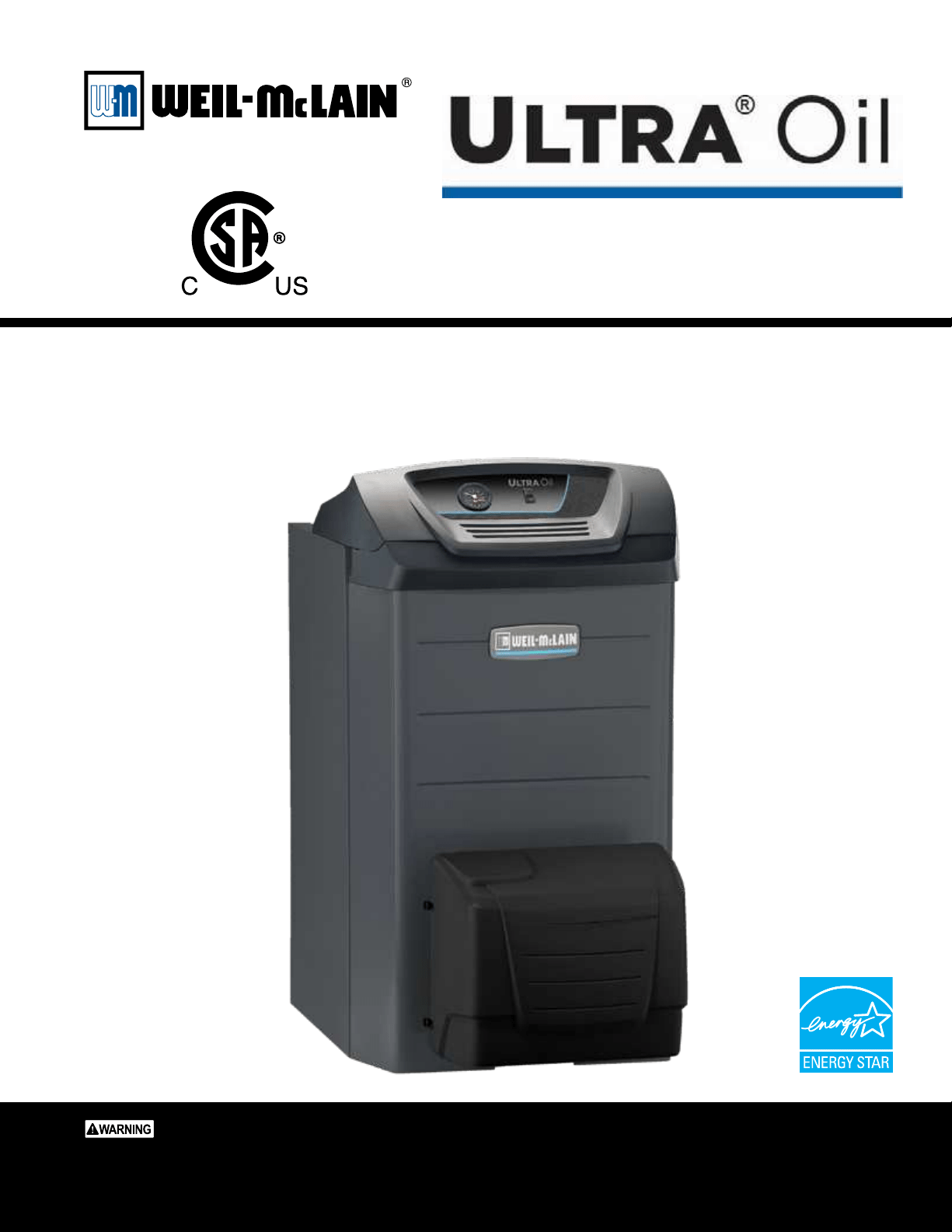
Series 3
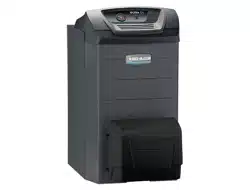
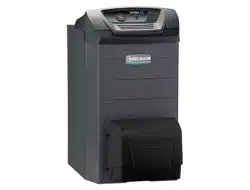
Oil-Fired Water Boiler
is manual must only be used by a qualied heating installer/service technician. Read all instructions, including this manual and
all other information shipped with the boiler, before installing. Perform steps in the order given. Failure to comply could result in
severe personal injury, death or substantial property damage.
Part number 550-143-013/0621
• Installation
• Startup
• Maintenance
• Parts
Boiler Manual
Part number 550-143-013/0621
2
Series 3
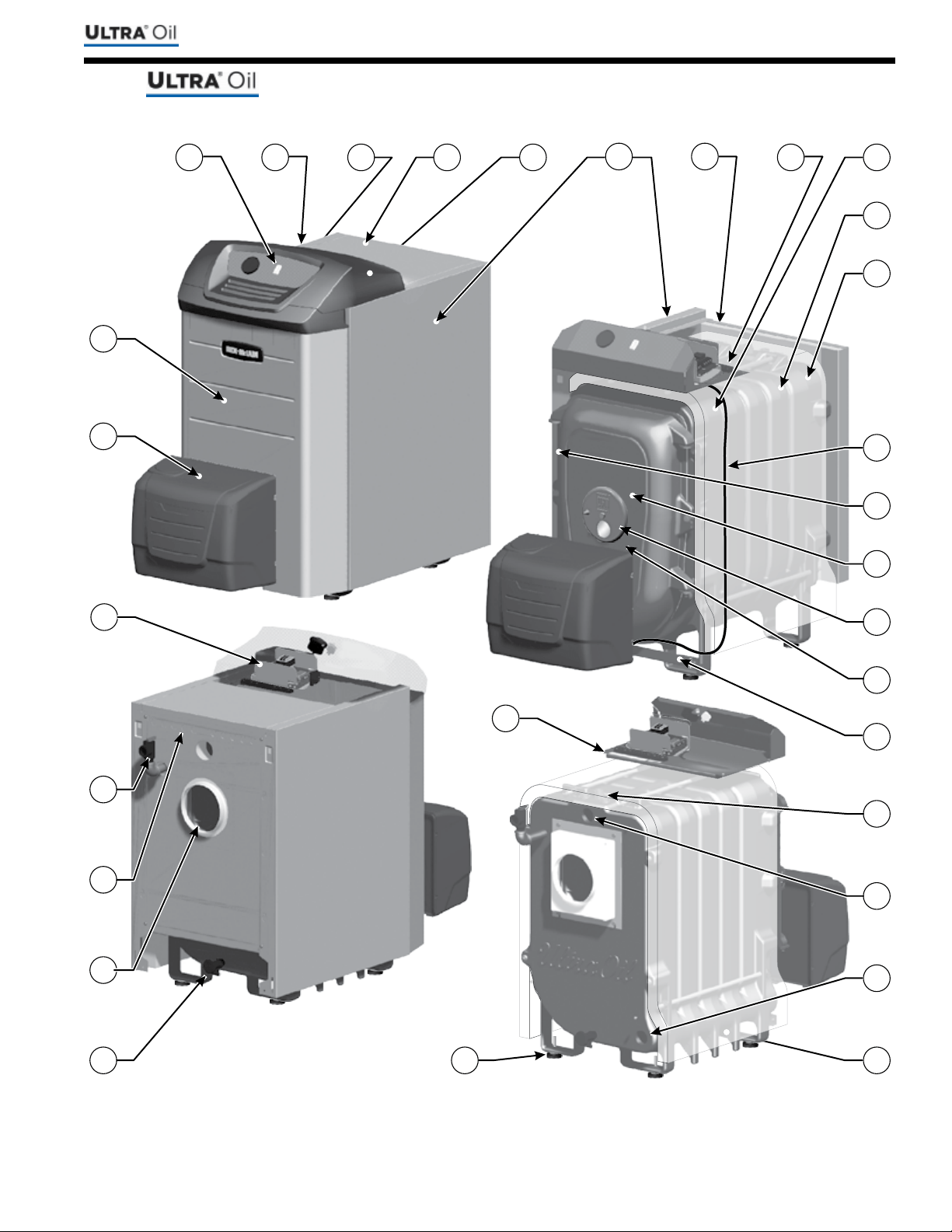
Displays boiler water pressure and outlet water temperature.
e
Control Pod cover is hinged to allow easy access to
the limit temperature sensor and boiler wiring.
jacket side panels are interchangeable.
Electrical connections, both line and low voltage, connect to the
terminal strip.
Line voltage wiring to burner, terminated in a Molex connector
in the jacket cross tie (item 19). An additional harness connects
from the cross tie connector to the burner.
e hinge bracket can be installed on either side to allow for right
or le-hand swing.
e
burner door is hinged to provide easy access to the
boiler heat exchanger for inspection and cleaning.
e
observation port is designed to prevent soot from
depositing on the sight glass. During normal operation the sight
glass is located at the 12:00 position. To view the burner ame,
loosen the center mounting bolt and rotate so the sight glass is in
the 6:00 position.
1/8” npt, with plug.
Boiler limit temperature sensor and P/T gauge capillary and tem-
perature sensor are installed in the top of the rear section.
e boiler outlet water tapping is located in the top of the rear
section.
e boiler return tapping is located in the bottom of the rear
section.
boilers can be chimney or direct vented from the rear
ue opening.
All electrical connections enter in conduits connected to these
knockouts.
e Ultra Oil boiler is equipped with a Hydro-
level 3250 HydroStat®, LWCO and temperature limit control with
energy saving technology. e 3250 senses the presences of water,
water temperature and monitors calls for heat and activates the
boiler pump and circulator. e control logic will delay pump or
burner operation and adjust them for the target water tempera-
ture to optimize eciency.
Part number 550-143-013/0621
3
Series 3
45
67
8
9
10
11
12
13
14
15
16
17
20
21
2
31
24
28
29
8
22
19
18
WQ/223
27
25
26
23
Part number 550-143-013/0621
4
Series 3
Contents
Commonwealth of
Massachusetts
When the boiler is installed within the Common-
wealth of Massachusetts:
• is product must be installed by a licensed
plumber.
• If antifreeze is used, a reduced pressure back-
ow preventer device shall be used.
When calling or writing about the boiler— Please have the
boiler model number from the boiler rating label and the
Consumer Protection number from the boiler jacket. You may
list the CP number in the space provided on the Installation
Certicate found on page 24.
Consider piping and installation when determining boiler
location.
Any claims for damage or shortage in shipment must be
led immediately against the transportation company by the
consignee.
e terms below are used throughout this manual to bring attention to the presence of hazards of various risk levels or to important
information concerning the life of the product.
Indicates presence of hazards that will cause severe
personal injury, death or substantial property damage.
Indicates presence of hazards that can cause severe
personal injury, death or substantial property damage.
Indicates presence of hazards that will or can cause
minor personal injury or property damage.
Indicates special instructions on installation, op-
eration or maintenance that are important but not
related to personal injury or property damage.
.................... 2–3
Please read before proceeding ............................................. 5
Owners Responsibilities ........................................................ 6
Boiler location checklist ....................................................... 7
Prepare boiler location .......................................................... 8
Connect breeching .............................................................. 12
Connect water piping .......................................................... 14
Connect wiring
(Note 1) ........................................................... 18
Connect oil piping ............................................................... 22
Startup procedure ............................................................... 23
Check-out procedure ........................................................... 24
Annual service and start-up ................................................ 25
Department of Energy Compliance ..................................... 28
Removing/replacing boiler jacket ........................................30
Replacement parts ............................................................. 32
Dimensions ......................................................................... 38
Ratings ................................................................................ 39
Note:
Part number 550-143-013/0621
5
Series 3
Please read before proceeding
• Read all instructions, including this manual, the burner
manual and any related supplements. Perform steps in
the order given. Failure to comply could result in severe
personal injury, death or substantial property damage.
• To avoid electric shock, disconnect electrical supply before
performing maintenance.
• To avoid severe burns, allow boiler to cool before perform-
ing maintenance.
• Do not block ow of combustion or ventilation air to
burner.
• Should overheating occur or fuel supply fail to shut o, do
not turn o or disconnect electrical supply to circulator.
Instead, shut o the fuel supply at a location external to
the appliance.
• Do not use this boiler if any part has been under water.
Electrical and mechanical failures may cause electric
shock and re risks. Immediately inspect chimney or vent,
boiler, burner and controls. Clean the boiler ueways and
replace all electrical and mechanical controls; all electrical
wiring; oil burner and controls; insulation and chamber
lining.
• Do not reduce the ring rate of the boiler. Use only the oil
nozzle size specied. Reduced input will cause condensa-
tion in the boiler and vent piping.
• e boiler contains ceramic ber materials. Use care when
handling these materials per instructions on page 26 of
this manual. Failure to comply could result in severe
personal injury.
• oroughly ush the system (without boiler connected)
to remove sediment. e boiler heat exchanger can be
damaged by build-up or corrosion due to sediment.
• Do not use petroleum-based cleaning or sealing com-
pounds in boiler system. Gaskets and seals in the system
may be damaged. is can result in substantial property
damage.
• Do not use “homemade cures” or “boiler patent medicines.”
Serious damage to boiler, personnel and/or property may
result.
• Continual fresh make-up water will reduce boiler life. Min-
eral buildup in boiler sections reduces heat transfer, over-
heats the sections, and causes failure. Addition of oxygen
carried in by make-up water can cause internal corrosion.
Leaks in boiler or piping must be repaired at once to prevent
make-up water.
• Do not add cold water to hot boiler. ermal shock can
cause heat exchanger to crack.
• When using antifreeze — Do not use automotive, ethylene
glycol, undiluted or petroleum-based antifreeze. See the
WARNING on page 23 for more information.
Saltwater Damage e exposure of boiler components
to saltwater can have both immediate and long-term eects.
While the immediate eects of saltwater damage are similar
to those of freshwater (shorting out of electrical components,
washing out of critical lubricants, etc.), the salt and other
contaminants le behind can lead to longer term issues aer
the water is gone due to the conductive and corrosive nature
of the salt residue. erefore, Weil-McLain equipment con-
taminated with saltwater or polluted water will no longer be
covered under warranty and should be replaced.
If any wir-
i
came into contact with water, or was suspected to have
come into contact with water, replace the boiler with a new
Weil-McLain boiler.
Frozen Water Damage Hazard
Residences or buildings that are unattended in severely cold
weather, boiler system components failures, power outages,
or other electrical system failures could result in frozen
plumbing and water damage in a matter of hours. For your
protection, take preventative actions such as having a security
system installed that operates during power outages, senses
low temperature, and initiates an eective action. Consult
with your boiler contractor or a home security agency.
Follow the guidelines below to prevent possible severe personal injury, death or substantial property damage.
Follow the guidelines below to prevent severe personal injury, death or substantial property damage.
Fuel
• Do not use crankcase drainings or any oil containing
gasoline. See burner manual for proper fuel oil.
• Never burn garbage or paper in the boiler. Never leave
combustible material around boiler.
Do not tamper with burner/controls
• Always follow specic instructions when starting up
boiler or performing routine maintenance or service.
Do not start burner if:
• Do not attempt to start burner when excess oil has ac-
cumulated in combustion chamber, when unit is full of
vapor, or when combustion chamber is very hot.
• Do not start burner unless breeching and burner mount-
ing door are secured in place.
Part number 550-143-013/0621
6
Series 3
Operation
Maintenance
You must adhere to the following
to avoid severe personal injury,
death or substantial property
damage.
Fuel
• Do not use crankcase drainings or any oil
containing gasoline. See burner manual for
proper fuel oil.
• Never burn garbage or paper in the boiler.
Never leave combustible material around
boiler.
Do not tamper with burner/
controls
• Always follow specic instructions when
starting up boiler or performing routine
maintenance or service.
Do not start burner if:
• Do not attempt to start burner when excess
oil has accumulated in combustion chamber,
when unit is full of vapor, or when combus-
tion chamber is very hot.
• Do not start burner unless breeching and
burner mounting door are secured in place.
Start-up
1. If burner does not re, check and correct:
• Is boiler ON/OFF switch on, and are all other switches
feeding boiler turned on?
• Is fuse or breaker tripped?
• Is thermostat set above room temperature?
• Are fuel valves turned on?
• Is there enough oil in the oil tank?
2. If burner still does not re, remove the burner cover and
press the primary control reset button ONLY ONCE.
DO NOT repeat, because oil will build up in the boiler
chamber.
e burner must never be red when oil is in
the combustion chamber. Immediately call
your qualied service technician.
3. If the burner still does not re, call your qualied service
technician.
Beginning of heating season
o Call a qualified service technician to perform annual
service
.
Every day during heating season
o Keep area free of combustible materials:
Check that boiler area is free of combustible materials, gasoline
and other ammable vapors and liquids.
Every week during heating season
o Check for and remove any obstructions to ow of combustion
or ventilation air to boiler.
o Check that breeching is attached between boiler and chimney.
If breeching is loose or damaged, immediately turn o boiler
ON/OFF switch and call your service technician to repair.
o Check for oil leaks in oil piping and around the burner. If found,
immediately call your service technician to repair.
o Check for water leaks in boiler and piping. If found, immedi-
ately call your service technician to repair.
End of heating season
o Perform all above daily and weekly procedures. Call your
service technician if any problems are found.
Boiler shutdown
o Do not drain boiler unless exposure to freezing temperatures
will occur.
o Always keep manual fuel supply shut o if burner is shut down
for an extended period of time. To do so:
1. Turn o the ON/OFF switch on the boiler and any external switches
feeding the boiler.
2. Close fuel valves.
3. Turn o water feed valve.
4. Cover burner to protect from dust and moisture.
Report problems
o If you notice any unusual behavior of the boiler or system,
contact your service technician to have the problem
investigated and corrected.
1.
service technician.
3. Review and understand boiler start-up and routine maintenance proce-
dures with the service technician.
4. Perform routine maintenance listed below.
Part number 550-143-013/0621
7
Series 3
Boiler location checklist
Failure to keep boiler area clear and free of combustible materials, gasoline and other ammable liquids and vapors can
result in severe personal injury, death or substantial property damage.
If the Ultra Oil boiler will replace an existing boiler, check for and correct system problems, such as:
• System leaks causing oxygen corrosion or heat exchanger cracks from hard water deposits;
• Incorrectly-sized expansion tank;
• Lack of freeze protection in boiler water causing system and boiler to freeze and leak. Failure to correct such
conditions could result in failure of the new boiler.
q
United States installations must
comply with all applicable
U. S. codes:
• Applicable state, local and national codes.
• National Electrical Code, ANSI/NFPA 70 – latest edition.
• Where required by the authority having jurisdiction, the installation must conform to
the Standard for Controls and Safety Devices for Automatically Fired Boilers, ANSI/
ASME CSD-1.
Canadian installations must
comply with all applicable
Canadian codes:
• Canadian Standards Association CSA B139 – latest edition, Installation Code for Oil-
Burning Equipment.
• CSA C22.1 Canadian Electrical Code Part One, – latest edition.
• Applicable provincial and local codes.
q
Consider use of space:
• e boiler area must be kept free of combustible materials, gasoline and other am-
mable liquids.
• e boiler must be installed so that boiler and system components are protected from
dripping or spraying water or rain during operation or service.
q
Moving boiler to location:
• See manual pages 38 and 39 for boiler dimensions and weights.
• If necessary, the boiler jacket can be removed if desired for handling. See manual pages
30 and 31 for instructions.
q
Clearances:
• Provide minimum clearances to combustible materials and for servicing boiler.
• Ensure that the swing-away burner door can swing open freely. (e hinge can be
mounted on right or le side.)
• See manual page 11 for instructions on changing door hinge location.
q
Flooring and foundation:
• Provide level ooring (non-carpeted combustible ooring is acceptable if boiler level-
ing legs are installed).
• Provide foundation if necessary.
• See manual page 9 .
q
Combustion and ventilation air
openings:
• Boiler room must provide adequate combustion air and ventilation.
• Unless burner uses ducted outside air for combustion, the boiler room must provide
combustion air openings.
• See manual page 9.
q
Venting:
Chimney venting:
• Ensure the vent pipe can be routed to the chimney, and that the chimney connection
is higher than the boiler ue outlet.
• Ensure the vent piping will provide minimum clearances shown on manual pages 8 and 12.
• See manual pages 12 and 13 for venting information.
Direct venting:
• e Ultra oil boiler can be direct vented, using the Field Controls Direct Vent Kit.
Verify that the vent piping can be installed and routed to the outside wall as specied
in the Field Controls instruction manual.
• Ensure the vent piping will provide minimum clearances shown on manual page 8.
q
System water piping:
• Check location of system water piping connections to be sure boiler can be properly
connected.
• See manual pages 14 through 18.
q
Fuel supply:
• See manual page 22 for routing of fuel lines.
q
Electrical power:
• e boiler requires 120 vac power and connection to a room thermostat or other
device to initiate call for heat.
• See manual pages 19 through 21.
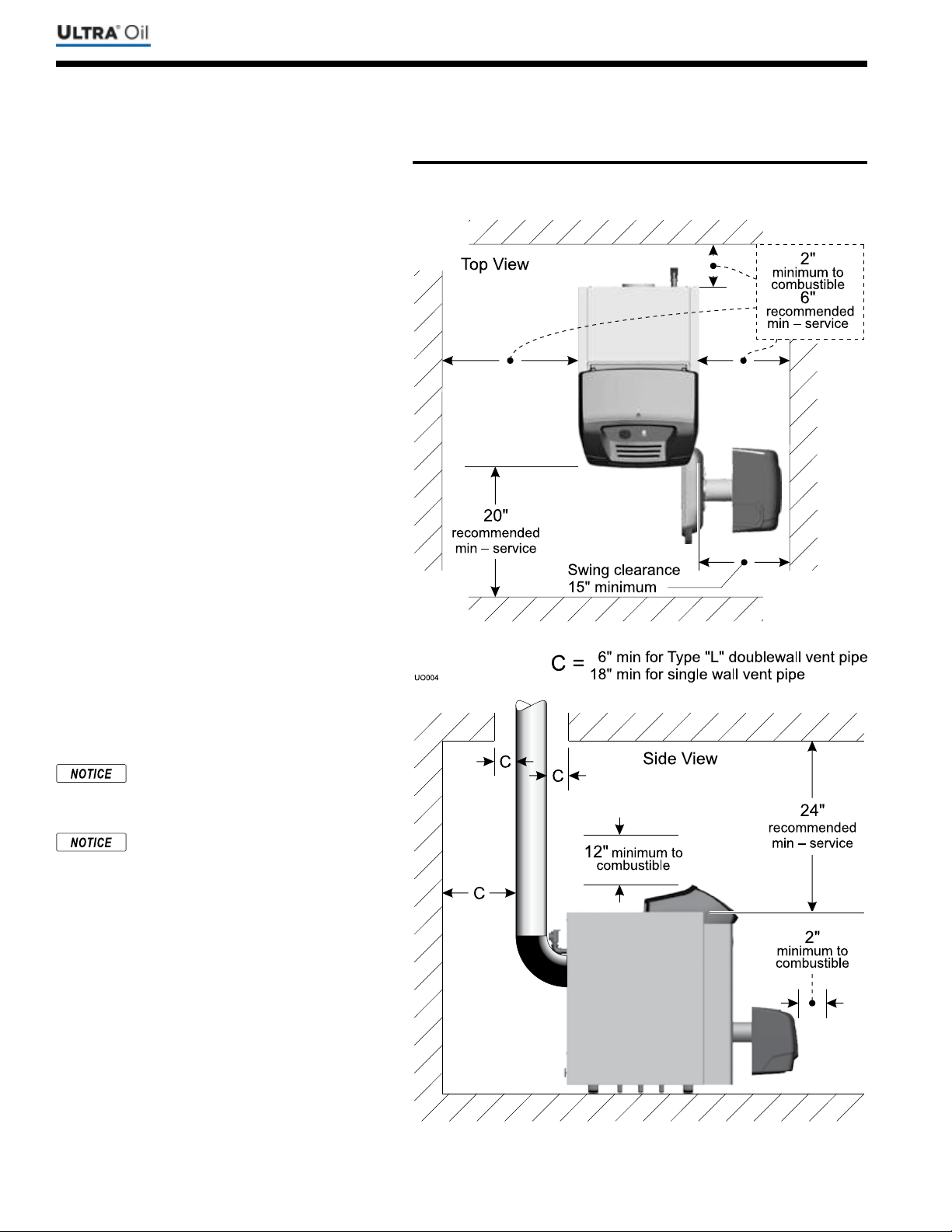
Prepare boiler location
Installations must comply with
United States
State and local plumbing, heating and electrical codes.
National codes where applicable.
• National Electrical Code, ANSI/NFPA 70 – latest edi-
tion.
• Where required by the authority having jurisdiction, the
installation must conform to the Standard for Controls
and Safety Devices for Automatically Fired Boilers,
ANSI/ASME CSD-1.
Canada
Canadian Standards Association, CSA B139, Installation
Code for Oil-Burning Equipment – latest edition.
CSA C22.1 Canadian Electrical Code Part One – latest
edition.
Applicable local or provincial codes.
Provide minimum clearances
1. Hot water pipes
• All directions — ½ inch.
(not shown in Figure 1)
2. Double-wall vent pipe
• All directions — 6 inches.
3. Single-wall vent pipe.
• All directions — 18 inches.
4. Boiler jacket surfaces
• Top of Control Pod cover — 12 inches.
• Sides and back — 2 inches.
5. Burner cover
• All directions — 2 inches.
Combustible clearances always take pre-
cedence over service clearances.
If you do not provide the minimum service
clearances shown, it might not be possible
to service the boiler without removing it
from the space.
1. Recommended service clearances:
• Front of burner cover — 20 inches
• Jacket top — 24 inches
• Jacket sides and back — 6 inches
• Burner door swing clearance — 12 inches minimum
(door must swing fully open)
Part number 550-143-013/0621
8
Series 3
Air openings for combustion and
ventilation air
Adequate combustion and ventilation air
ensures proper combustion and reduces
risk of severe personal injury or death
from possible ue gas leakage and carbon
monoxide emissions.
Do not install exhaust fan in boiler room.
Older buildings with single-pane windows, minimal
weather-stripping and no vapor barrier oen provide
enough natural inltration and ventilation without
dedicated openings.
Tight construction
New construction or remodeled buildings are most oen
built tighter. Windows and doors are weather-stripped,
vapor barriers are used and openings in walls are
caulked. As a result, such tight construction is unlikely
to allow proper natural air inltration and ventilation.
Follow state, provincial or local codes when sizing
adequate combustion and ventilation air openings. In
absence of codes, use the following guidelines when
boiler is in a conned room (dened by NFPA 31 as less
than 7200 cubic feet per 1 GPH input of all appliances in
area. A room 8 . high x 33.5 . x 33.5 . is 7200 cu. .).
Provide two permanent openings
Provide two permanent openings — one within 12
inches of ceiling, one within 12 inches of oor. Mini-
mum height or length dimension of each rectangular
opening should be at least 3 inches.
Air from inside the building
When inside air is used — each opening must freely
connect with areas having adequate inltration from
outside. Each opening should be at least 140 sq. in. per
1 GPH input (1 sq. in. per 1000 Btu input) of all fuel-
burning appliances plus requirements for any equipment
that can pull air from room (including clothes dryer
and replace).
Air from outside the building
When outside air is used — connect each opening
directly or by ducts to the outdoors or to crawl or attic
space that freely connects with outdoors. Size per below:
• rough outside wall or vertical ducts — at least 35
sq. in. per 1 GPH input (1 sq. in. per 4000 Btu input)
of all fuel-burning appliances plus requirements for
any equipment that can pull air from room (includ-
ing clothes dryer and replace).
• rough horizontal ducts — at least 70 sq. in. per 1
GPH boiler input (1 sq. in. per 2000 Btu input) of all
fuel-burning appliances plus requirements for any
equipment that can pull air from room (including
clothes dryer and replace).
• Where ducts are used, they should have same cross-
sectional area as free area of openings to which they
connect. Compensate for louver, grille or screen
blockage when calculating free air openings. Refer
to their manufacturer’s instructions for details. If
unknown, use:
— Wood louvers, which provide 20-25% free air.
— Metal louvers or grilles, which provide
60-75% free air.
Lock louvers in open position or interlock with equip-
ment to prove open before boiler operation.
Flooring and foundation
1. Install on any level, properly-supported, and non-
carpeted surface. Flooring may be combustible if
boiler leveling legs are installed.
2. Ensure the ooring is capable of handling the boiler
weight (see page 39 for weight and water volume).
Install boiler so the burner is at least 18 inches above the
oor to avoid contact with gasoline fumes.
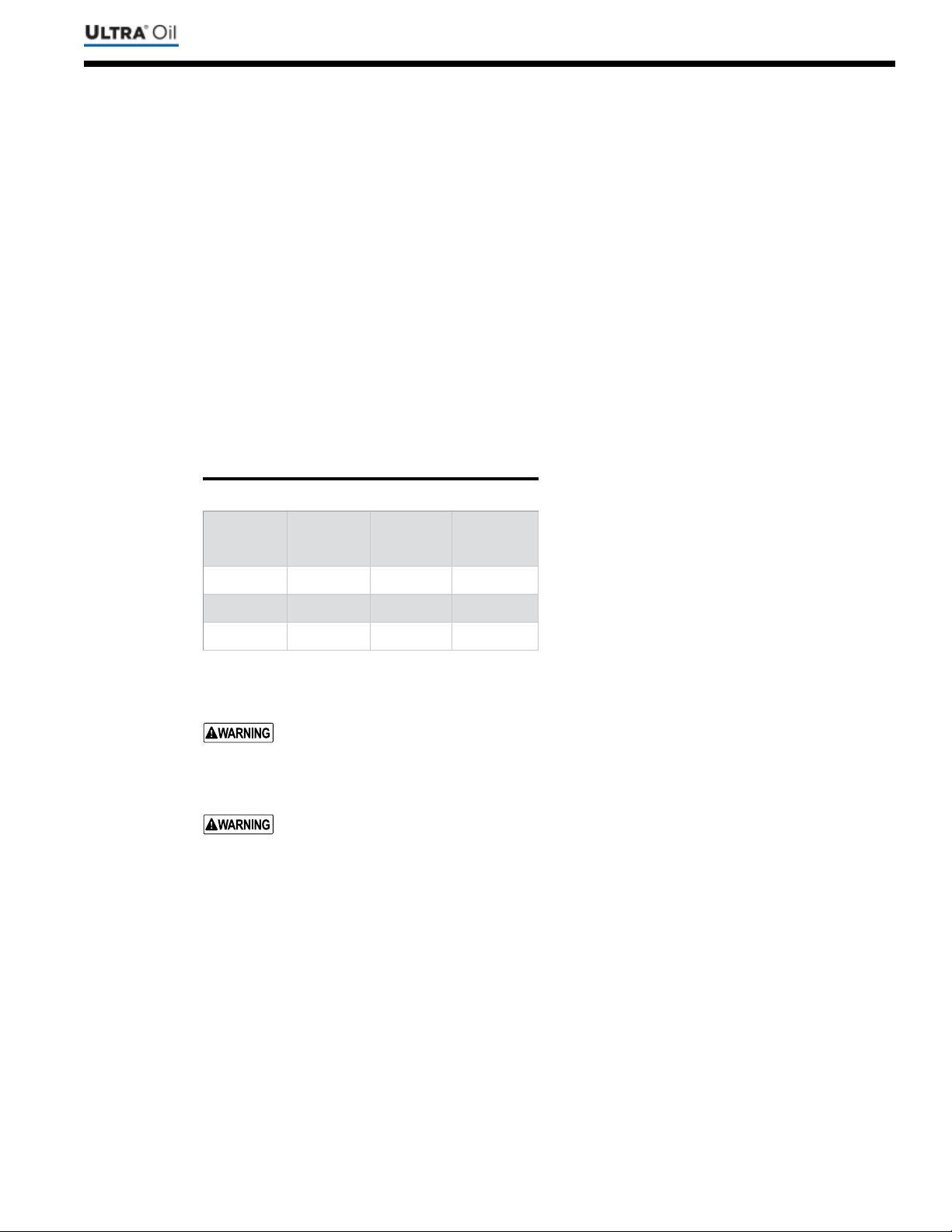
Provide a level concrete, masonry or cement block
foundation if the ooring could become ooded or is
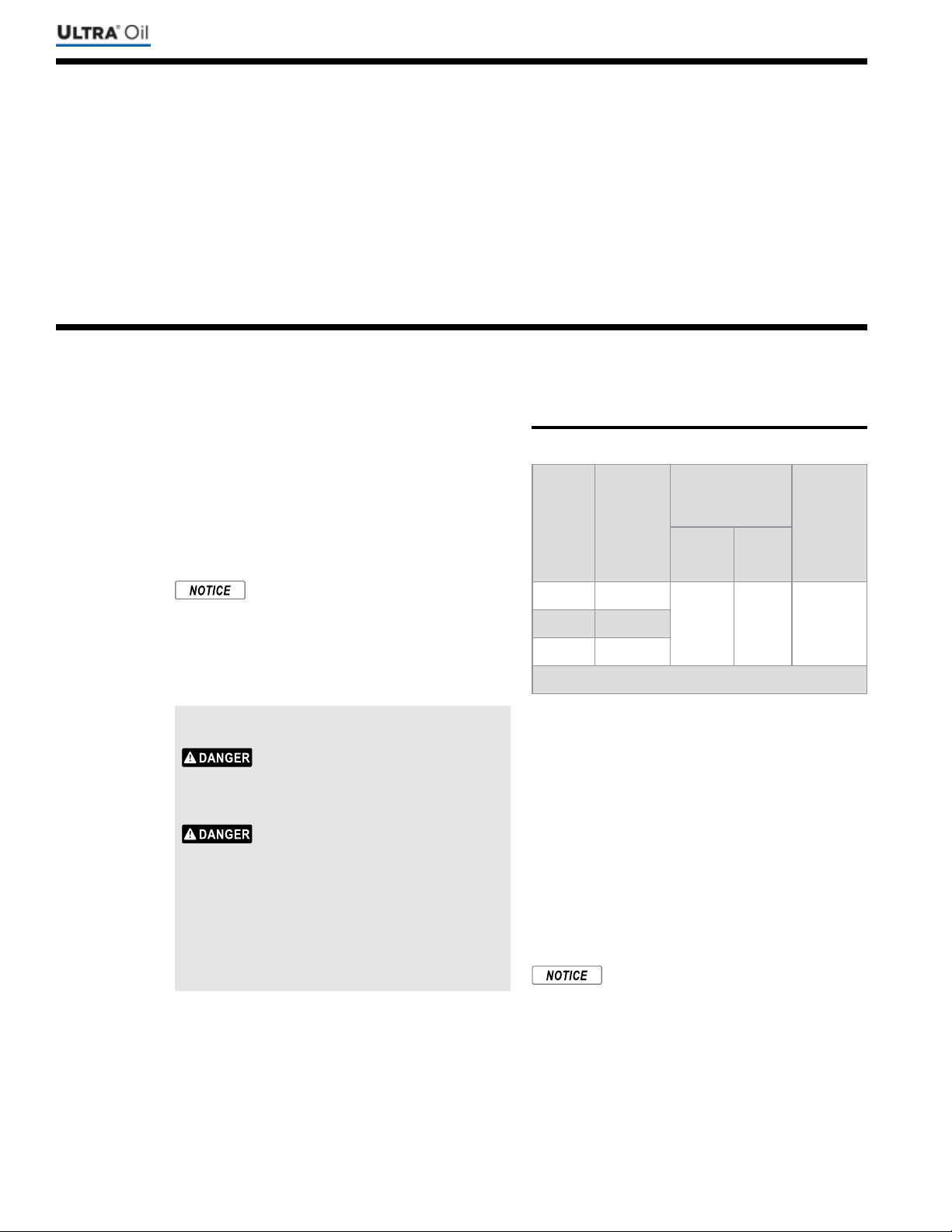
not level. See Table 1 for foundation size required.
Prepare boiler location(continued)
Part number 550-143-013/0621
9
Series 3
49 23 2
53 23 2
57 23 2
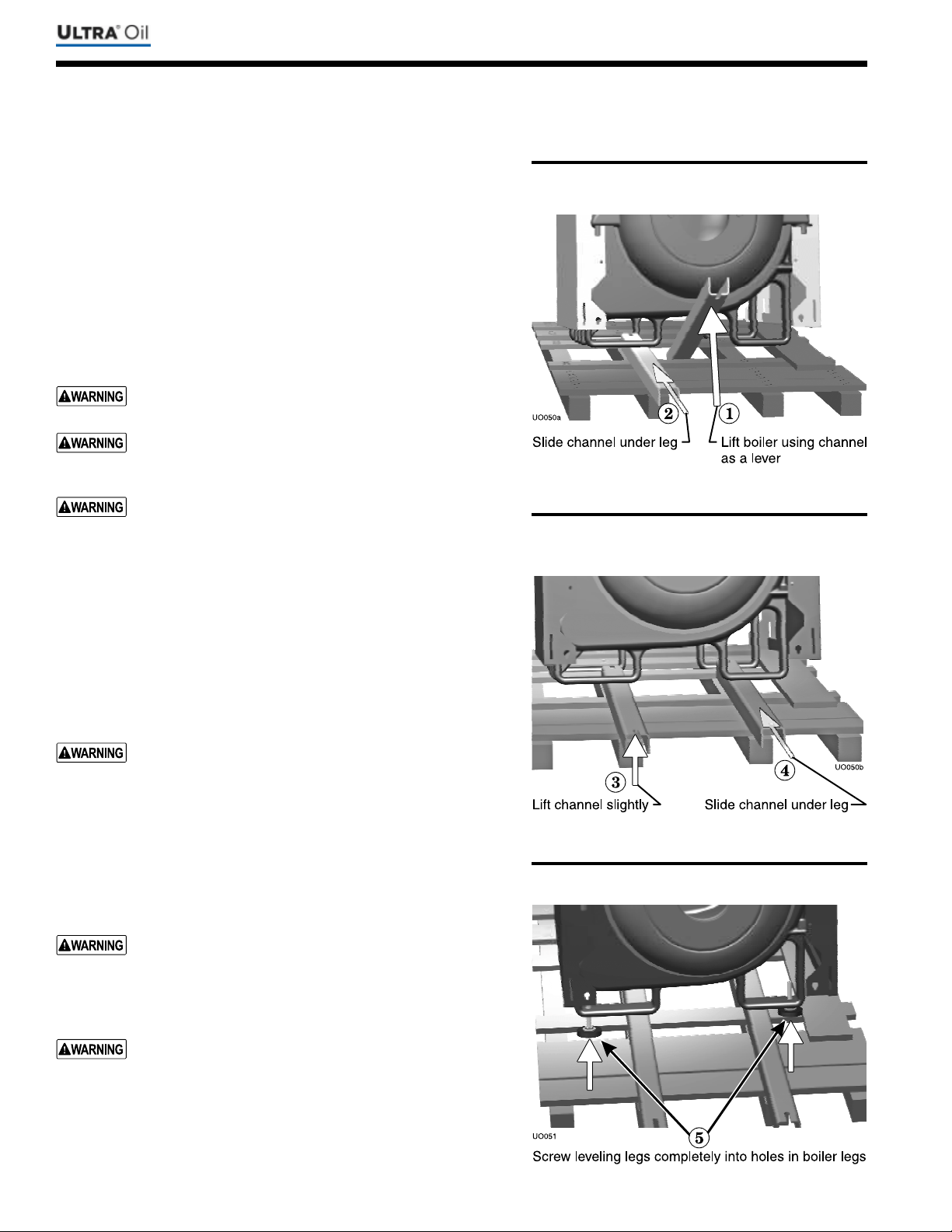
Prepare boiler location(continued)
Place the boiler:
1. Remove outer crate, leaving boiler on the crate base.
2. Remove the circulator and barometric damper cartons from the crate
base.
3. Remove the two (2) shipping channels by loosening and removing the
four nuts. Save the shipping channels for leveling leg installation.
4 . Remove the jacket cross tie fastened to the crate base.
e leveling legs must be installed if the boiler is placed on
combustible ooring.
A second person, or other means, is required to stabilize the
boiler during leveling leg installation. Failure to do so could
result in severe personal injury or property damage.
Wear heavy leather work gloves when handling the shipping
channels in the following steps to avoid potential severe per-
sonal injury.
1. (Figure 2a) Use one channel as a lever to raise the front of the boiler.
2. (Figure 2a) Insert the other channel between the boiler leg and crate
base. Place the channel directly over the crate base runner, as shown.
3. (Figure 2b) Li the channel under the boiler leg slightly.
4. (Figure 2b) Slide the other channel under the other boiler leg. Place the
channel directly over the crate base runner, as shown.
5. (Figure 3) With the boiler resting securely on the two (2) shipping chan-
nels, screw a leveling leg in each boiler leg hole. Screw leveling legs in
completely.
To avoid potential personal injury or property damage, DO
NOT attempt to insert leveling legs unless the boiler is securely
seated on both shipping channels.
6. Reverse steps 2 through 4 above to remove the shipping channels. Leave
the boiler on the crate base.
7. Follow steps 2 through 6 on the back side of the boiler to install leveling
legs in the rear section legs.
8. Leave the boiler on the crate base.
Boilers may be top heavy. Use caution when handling to avoid
personal injury or property damage.
1. Attach the cross tie to the jacket side panels using the two screws located
in the barometric damper carton. en remove the boiler from the crate
base.
Do not remove the boiler from the crate base without rst
installing the jacket cross tie. e boiler wiring harnesses or
connectors could be damaged.
2. If necessary, the boiler jacket can be removed for handling. See pages 30
and 31 in this manual for the jacket removal/replacement procedure.
Part number 550-143-013/0621
10
Series 3
Perform hydrostatic pressure test:
See pages 2 and 3 for boiler feature locations.
1. Install air vent in relief valve tapping.
2. Plug supply and return tappings.
3. Install the boiler drain valve shipped with boiler.
4. Fill boiler.
5. Vent all air.
6. Pressure test boiler at 1½ times working pressure.
Do not leave boiler unattended. Cold water ll can ex-
pand and damage cast iron, resulting in severe personal
injury, death or substantial property damage.
7. Check for maintained gauge pressure for at least 10 minutes.
Visually check for leaks if gauge pressure drops.
8. Drain boiler. Repair leaks if found.
Do not use petroleum-based sealing compounds to
repair leaks. Damage to system components can result,
causing property damage.
9. Retest boiler aer repairing leaks.
10. Remove air vent and plugs. Reinstall relief valve.
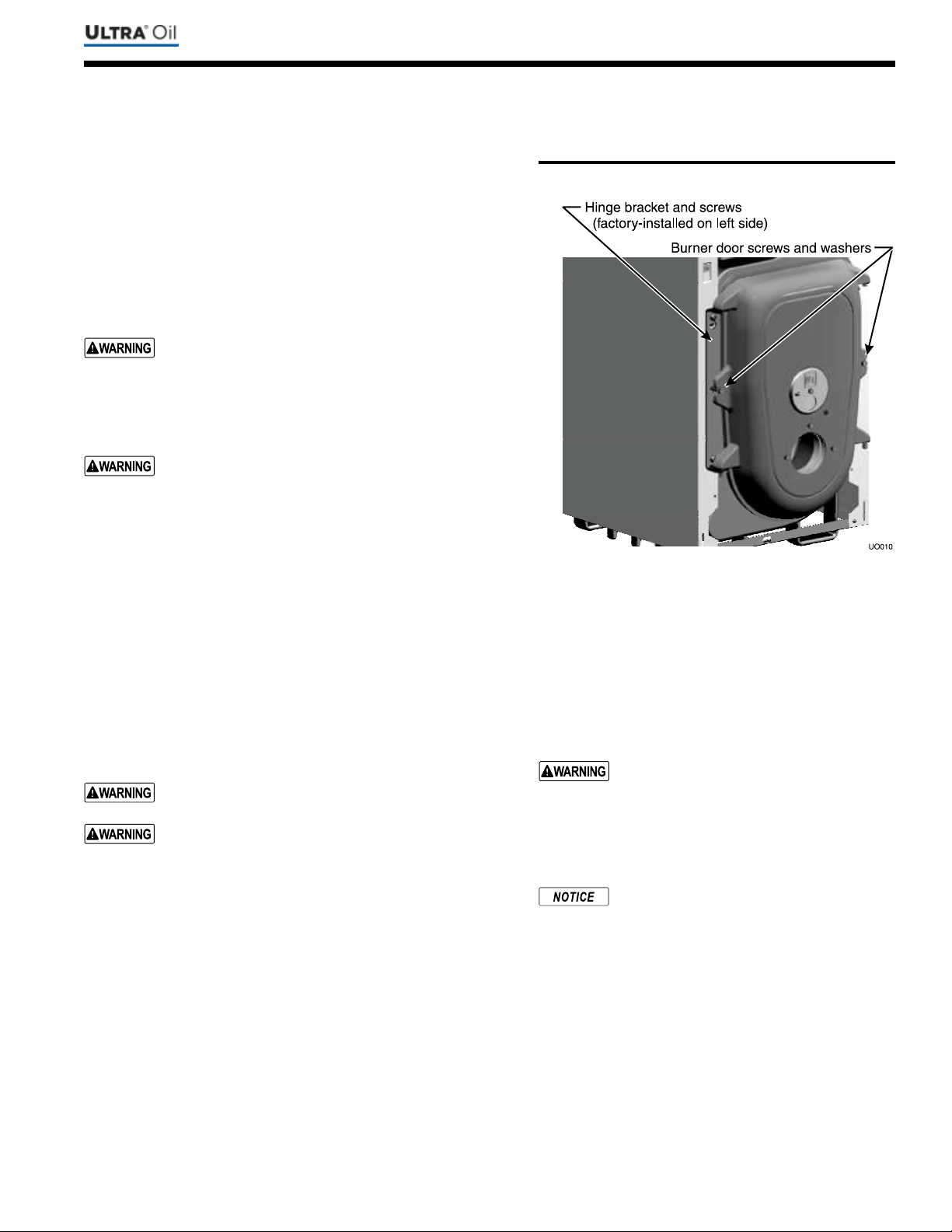
Boiler preparation
e boiler is shipped with the burner door hinged on the le side. e
hinge bracket can be relocated to the right side if desired. See Figure 4.
1. Remove jacket front panel.
2. Remove and retain burner door screws and washers used to fasten
the burner door to the front section (one on each side of door).
3. Carefully li the burner door so the door pins li out of the hinge
bracket.
4. Set the burner door aside temporarily.
e burner door is heavy. Handle carefully to avoid
potential for personal injury.
Do not damage the burner door insulation when han-
dling.
5. e hinge bracket has keyhole slots. Loosen the two (2) screws
securing the hinge bracket to the front section. Remove the hinge
bracket.
6. Loosen the two (2) screws on the opposite side. Place the hinge
bracket on that side and tighten the two screws to secure the
bracket. Also tighten the two (2) screws on the other side.
7. Carefully li the burner door and position so the door pins slide
into the hinge bracket holes. e lower pin is longer than the up-
per. So align the lower pin, then the upper.
8. Replace burner door screws and washers used to fasten the burner
door to the front section (one on each side of door).
Prepare boiler location(continued)
1. Check for secure placement of insulation on burner
door.
2. Check for secure placement of combustion chamber
oor blanket.
3. Visually check b
urner mounting door seal.
Verify gas-tight seal to prevent possible ue
gas leakage and carbon monoxide emissions,
which can lead to severe personal injury or
death.
e Ultra Oil boiler is shipped with baes
installed for improved eciency. A stainless
steel shipping strap is installed to keep baes
in place during shipment. is band may stay
in place until maintenance is required. is
band does not have to be replaced aer its
removal.
Part number 550-143-013/0621
11
Series 3
Connect breeching
Direct venting
e Ultra Oil boiler can be direct vented using the Field
Controls Direct Vent Kit, model number FDVS-46, and
vent pipe model number FVOP-415. Vent lengths are
limited to 15 feet. Air intake lengths are limited to 22
feet of rigid 4-inch pipe. Do not use exible dryer vent.
Refer to instructions provided with the vent kit for vent
and air piping installation procedures.
Direct venting is allowed only with
Beckett NX and Riello BF5 burners.
Chimney venting
e Ultra Oil boiler is designed for natural dra ring.
• NFPA 211 requires chimney to be lined before con-
necting to boiler.
To prevent downdras, extend chimney at least 3 feet
above highest point where it passes through roof and 2
feet higher than any portion of building within 10 feet.
Increase chimney cross-sectional area and height at least
4% per 1,000 feet above sea level.
• Minimum clearances from vent pipe to combustible
material:
• Type “L” doublewall vent — 6 inches
• Single wall vent — 18 inches
• Minimum chimney sizes should be used.
Oversized chimneys, outside masonry
chimneys and/or derated inputs can result
in condensation in chimney.
Install the burner
1. Secure the burner ange to the burner door using
the three (3) bolts provided.
2. Check for secure placement of insulation and sealing
rope on the burner door.
Prepare boiler location(continued)
3. Close the burner door and secure in place with the
burner door screws and washers.
4. Follow the burner manual and boiler manual
(pages 19 to 22) to wire the burner and connect fuel
lines.
• Use vent material approved by local codes for oil-
red burners. In their absence, refer to:
• NFPA 31, Installation of Oil-Burning Equipment.
• NFPA 211, Standard for Chimneys, Fireplaces,
Vents and Solid Fuel Burning Appliances.
• In Canada, refer to CSA B139, Installation
Code for Oil-Burning Equipment.
Connect boiler to vertical chimney.
Insufficient draft can cause flue gas
leakage and carbon monoxide emis-
sions, which will lead to severe personal
injury or death.
Inspect existing chimney before install-
ing new boiler. Failure to do any of the
following will result in severe personal
injury or death:
• Clean chimney, including removal of
blockage.
• Repair or replace damaged pipe or liner.
• Repair mortar and joints.
Part number 550-143-013/0621
12
Series 3
5
15

Connect breeching(continued)
UO011
Typical locations for barometric
draft control (also see draft
control manufacturer's instructions)
Chimney venting (continued)
Long horizontal breechings, excessive num-
ber of tees and elbows or other obstructions
restricting combustion gas ow can result in
possibility of condensation, ue gas leakage
and carbon monoxide emissions, which can
lead to severe personal injury or death.
1. Connect full-sized breeching when possible. See
Table 2, page 12, and Figure 5, below.
2. Connection must be made above bottom of chimney to
avoid blockage. Breeching must not enter chimney far
enough to cause obstruction. Use thimble or slip joint
where breeching enters chimney to allow removal for
cleaning.
3. When burner and boiler are properly installed, breech-
ing dra will be approximately -0.01” to -0.02” W.C.
Install barometric control in breeching, per control
manufacturer’s instructions, when excess dra needs
to be relieved or to comply with applicable codes and
regulations. Use dra gauge to adjust proper opening.
e Ultra Oil boiler is capable of being
pressure red. Overre pressure may be
positive even with a negative pressure
in the chimney. See the Ratings table on
page 39 for boiler dra loss.
e pressure in the breeching and chim-
ney must always be negative unless the
chimney and breeching are constructed
of vent piping designed for pressurized
venting.
4. An induced dra fan for the chimney may be neces-
sary if:
• Excessive resistance to flow of combustion gases can
be expected.
• Cross-sectional area of chimney is smaller than mini-
mum recommended.
• Chimney height is less than recommended.
5. When using an induced dra fan:
• Seal all vent joints.
• Interlock burner with fan operation.
Part number 550-143-013/0621
13
Series 3
General piping information:
• If installation is to comply with ASME or Canadian
requirements, an additional high temperature limit is
needed. Install control in supply piping between boiler
and isolation valve. Set control to a minimum of 20 °F
above set point of the boiler limit temperature sensor.
Maximum allowable set point is 220 °F. Wire control
as shown on wiring diagram (page 20 & 21).
• e Hydrostat 3250 control has an integrated LWCO
device. e probe for the control is inserted into the
well located on the top o the boiler. Ensure the probe
is fully inserted into the well.
• Use backow check valve in cold water supply as re-
quired by local codes.
Install piping:
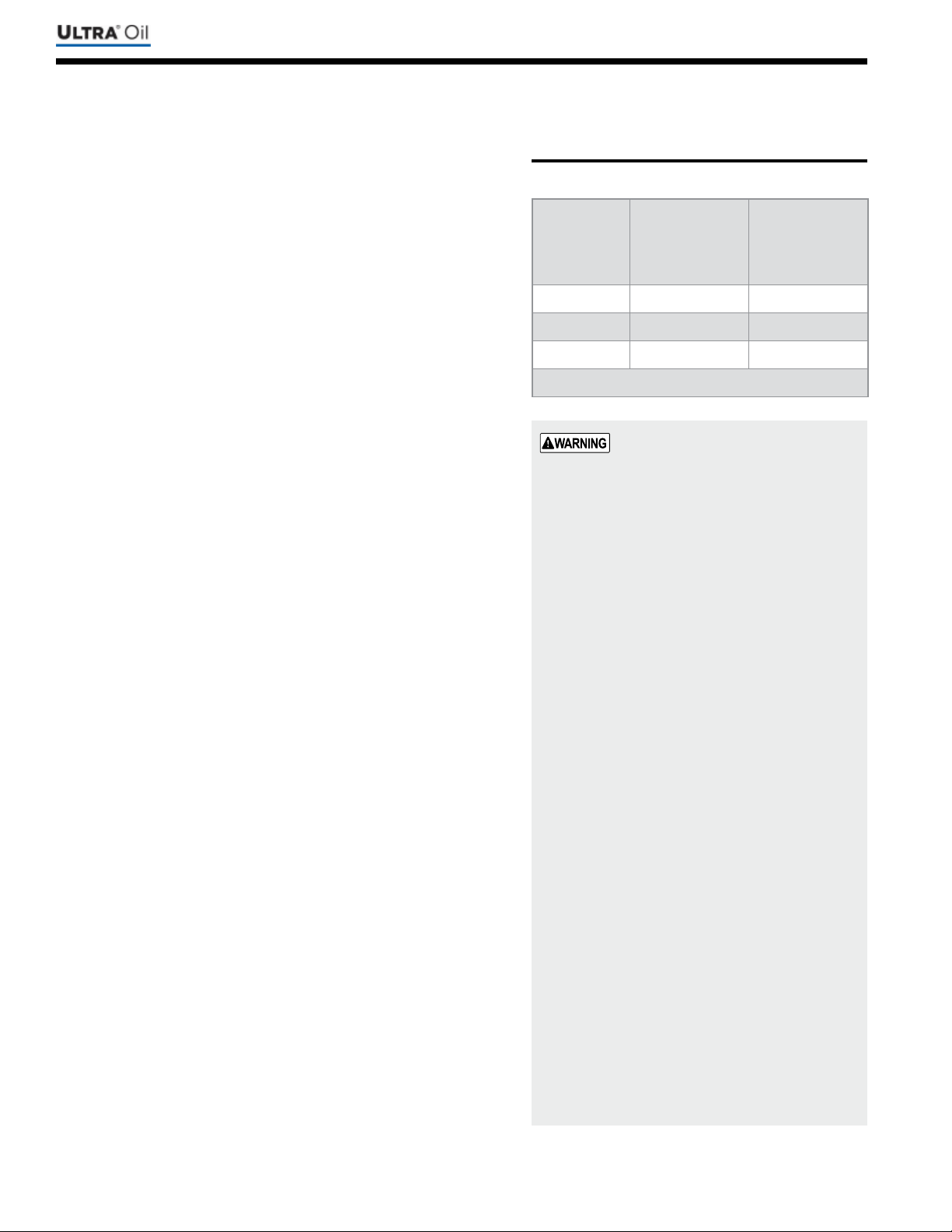
• See Table 3 for pipe sizing for near-boiler piping and
single-zone piping.
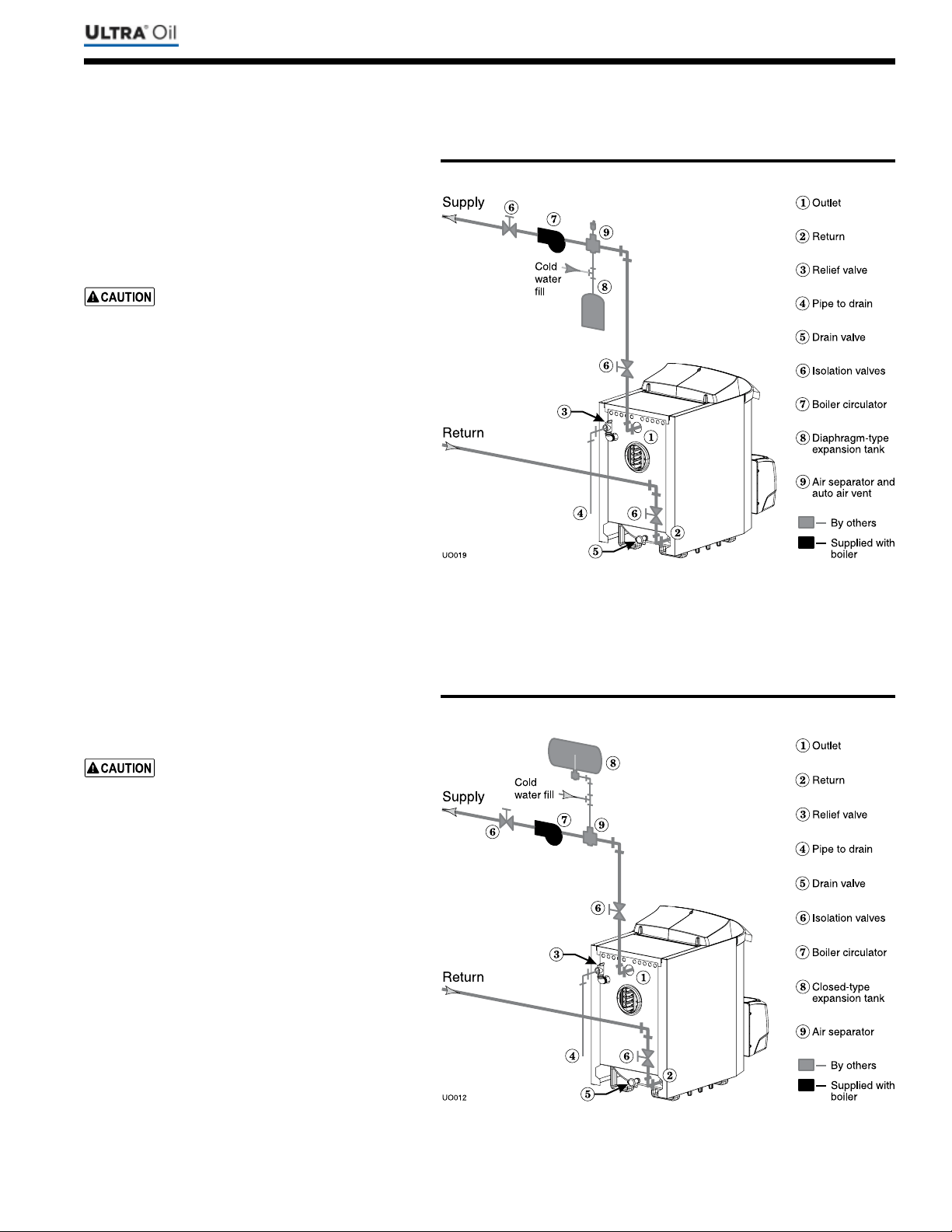
• See Figure 6, page 15.
• See Figure 7, page 15.
• See page 16.
• See page 17.
• See page 18.
• Refer to Weil-McLain’s “Primary/Secondary Piping
Guide.”
• Install relief valve vertically in elbow supplied. See
Figure 6 or 7 for location.
• See WARNING at right.
• Also refer to tag attached to relief valve for manufac-
turer’s instructions.
To avoid water damage or scalding
due to relief valve operation:
• Discharge line must be connected to
relief valve outlet and run to a safe place
of disposal. Terminate the discharge
line to eliminate possibility of severe
burns should the valve discharge.
• Discharge line must be as short as pos-
sible and be the same size as the valve
discharge connection throughout its
entire length.
• Discharge line must pitch downward
from the valve and terminate at least
6” above the floor drain where any
discharge will be clearly visible.
• The discharge line shall terminate
plain, not threaded, with a material
serviceable for temperatures of 375 °F
or greater.
• Do not pipe the discharge to any place
where freezing could occur.
• No shuto valve shall be installed be-
tween the relief valve and boiler, or in
the discharge line. Do not plug or place
any obstruction in the discharge line.
• Failure to comply with the above guide-
lines could result in failure of the relief
valve to operate, resulting in possibil-
ity of severe personal injury, death or
substantial property damage.
• Test the operation of the valve aer
filling and pressurizing system by
liing the lever. Make sure the valve
discharges freely. If the valve fails to
operate correctly, replace it with a new
relief valve.
Connect water piping
Part number 550-143-013/0621
14
Series 3
Connect water piping(continued)
• Make sure expansion tank size will handle boiler
and system water volume and temperature. Tank
must be located near boiler before inlet to circulator.
See tank manufacturer’s instructions for details. See
Replacement Parts page36 for circulator replacemnt
part numbers.
Undersized expansion tanks cause sys-
tem water to be lost from relief valve and
makeup water added through ll valve.
Eventual section failure can result.
• Ensure expansion tank size will handle boiler and
system water volume and temperature.
Undersized expansion tanks cause sys-
tem water to be lost from relief valve and
makeup water added through ll valve.
Eventual section failure can result.
• Pitch any horizontal piping up towards tank 1 inch
per 5 feet of piping.
Part number 550-143-013/0621
15
Series 3
Connect water piping(continued)
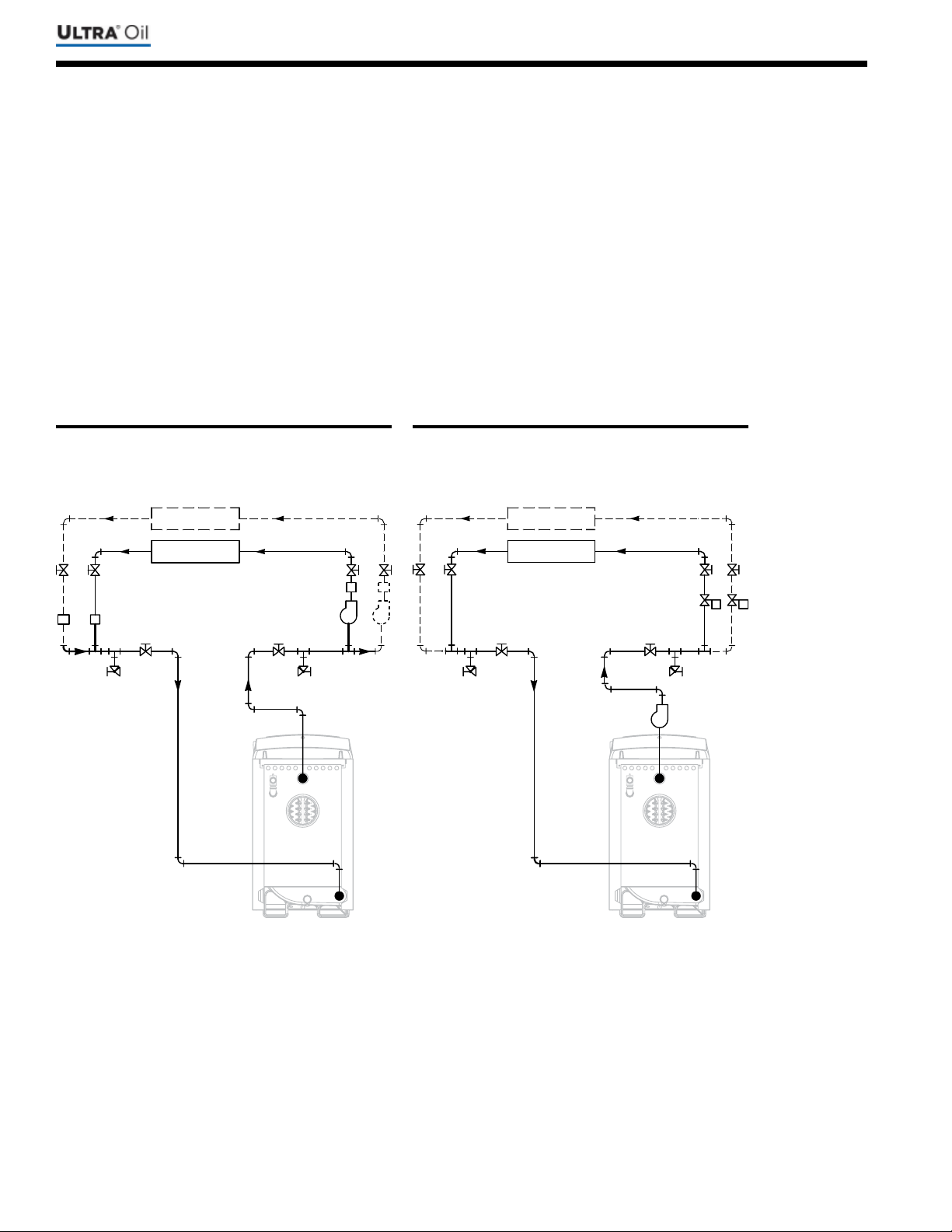
1. Follow instructions on page 14 and 15 to install
piping near boiler.
2. Zoning with circulators (Figure 8)
a. Size each circulator to individual circuit requirements.
b. Remove circulator (when furnished as standard equip-
ment). See Replacement Parts page36 for circulator
replacemnt part numbers.
c. Install balancing valves to adjust ow to distribute heat
to all zones.
d. Separate relay is required for each circulator.
3. Zoning with zone valves (Figure 9)
a. Install balancing valves to adjust ow to distribute
heat to all zones.
b. Separate transformer is required to power zone valves.
Refer to “Weil-McLain Zone Valve Wiring
Guide” for details.
Zone 1
Zone 2
11
4
1
5
1
5
UO015
3
Zone 1
Zone 2
11
2
2
3
1
5
1
5
UO014
Part number 550-143-013/0621
16
Series 3
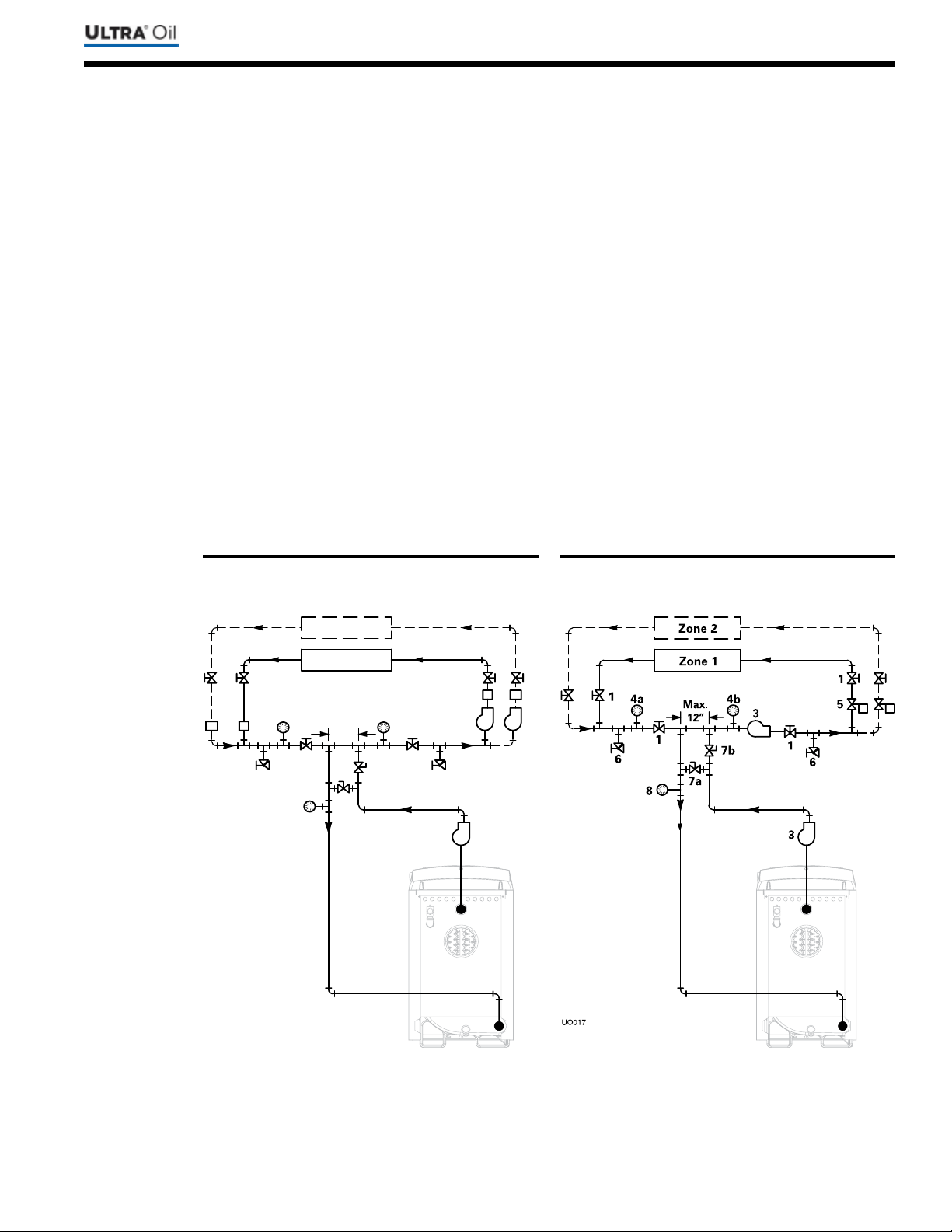
Connect water piping(continued)
1. If system water temperature requirements are less
than 140 °F, such as radiant panels or converted
gravity systems, use piping as shown in Figure 10
or 11.
2. If system piping is plastic without an oxygen barrier,
a heat exchanger must be used.
3. Follow instructions on page 14 and 15 to install
near-boiler piping.
4. Zoning with circulators (Figure 10)
a. Size each circulator to individual circuit requirements.
b. Remove circulator (when furnished as standard equip-
ment). See Replacement Parts page36 for circulator
replacemnt part numbers.
c. Install balancing valves to adjust ow to distribute heat
to all zones.
d. Separate relay is required for each circulator.
5. Zoning with zone valves (Figure 11)
a. Install balancing valves to adjust ow to distribute heat
to all zones.
b. Separate transformer is required to power zone valves.
Refer to “Weil-McLain Zone Valve Wiring
Guide” for details.
6. To set the valves, 7a and 7b:
a. Set the valves while the system is cool, setting for the
coldest expected water temperature (usually 60 °F
since the system will oen drop to room temperature
between cycles).
b. Start with valve
7a fully closed and 7b fully open.
c. Gradually open valve
7a while closing 7b until the
temperature at gauge
8 reads 130 °F when gauge 4a
reads 60 °F.
d. Note that valve 7a regulates the amount of hot water
from the boiler supply, which mixes with return water.
Valve
7b regulates the amount of system water owing
through the boiler secondary loop.
Zone 1
Zone 2
11
11
2
2
3
4b4a
6
6
7b
7a
8
Max.
12”
UO016
3
Part number 550-143-013/0621
17
Series 3
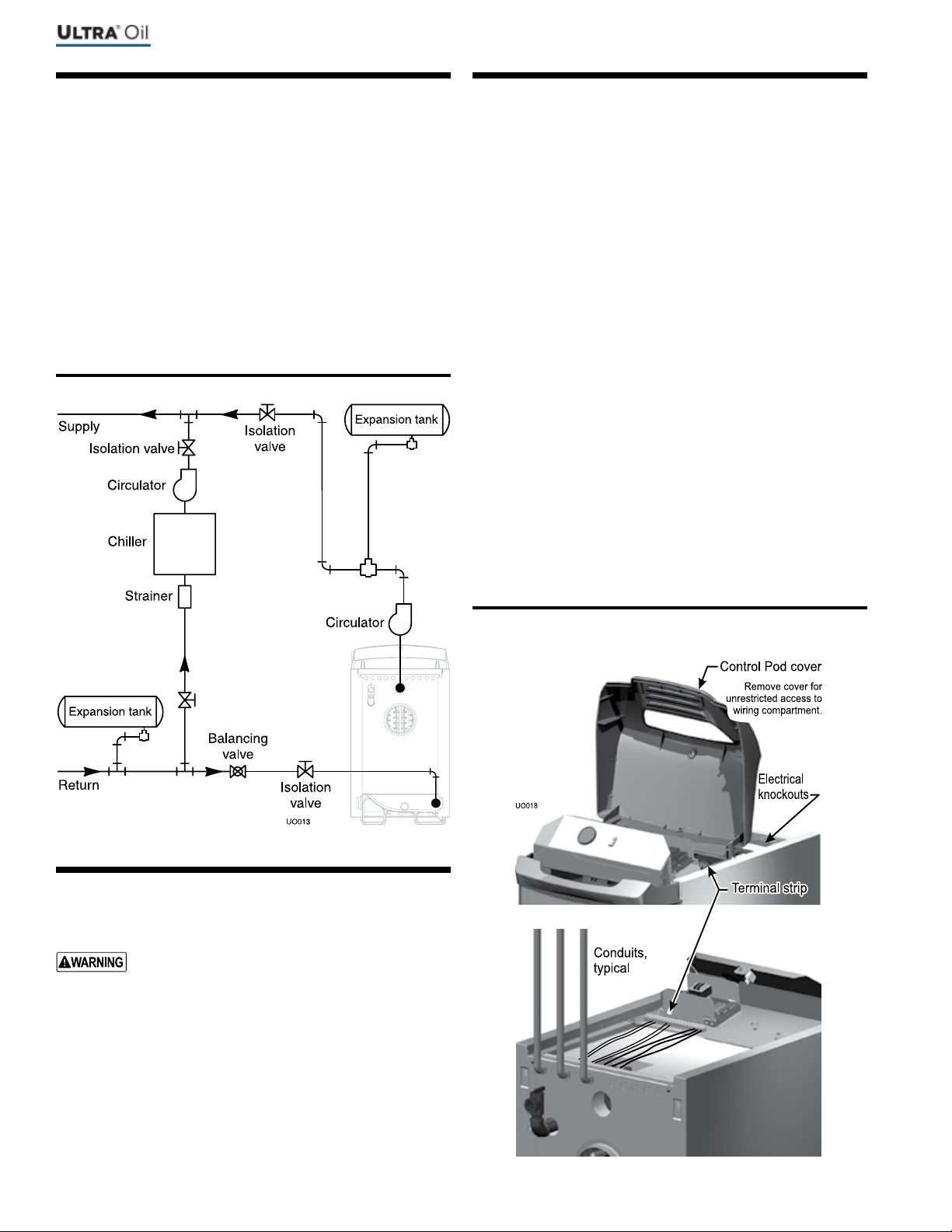
Piping boiler in refrigeration systems
(Figure 12)
• Install boiler so that chilled medium is piped in parallel with
heating boiler. Use appropriate valves to prevent chilled me-
dium from entering boiler. Consult AHRI Installation and
Piping Guides.
• If boiler is connected to heating coils located in air handling
units where they can be exposed to refrigerated air, use ow
control valves or other automatic means to prevent gravity
circulation during cooling cycle.
. Can cause severe personal
injury or death if power source, including service
switch on boiler, is not disconnected before install-
ing or servicing.
• United States:
National Electrical Code, ANSI/NFPA 70 – latest edition and
any additional national, state or local codes.
• Canada:
CSA C22.1 Canadian Electrical Code Part 1 – latest edition,
and any local codes.
Connect wiring
• Wiring must be N.E.C. Class 1.
• If original wire supplied with boiler must be replaced, type
105 °C wire or equivalent must be used.
• Supply wiring:
• Boiler only — 14 gauge or heavier.
• Boilers should be supplied by a 15-amp service.
• Provide electrical ground at boiler as required by codes.
Wiring entrances (see Figure 13)
• Remove the two (2) retainer screws in the jacket top panel (at
rear of the boiler) and remove the jacket top panel.
• Release the Control Pod cover by loosening the retainer screw
in the top center of the cover. Swing the cover open to reveal
the boiler terminal strip.
• Remove the Control Pod cover to facilitate wire routing. (To
(continued)
Part number 550-143-013/0621
18
Series 3
Connect water piping Connect wiring
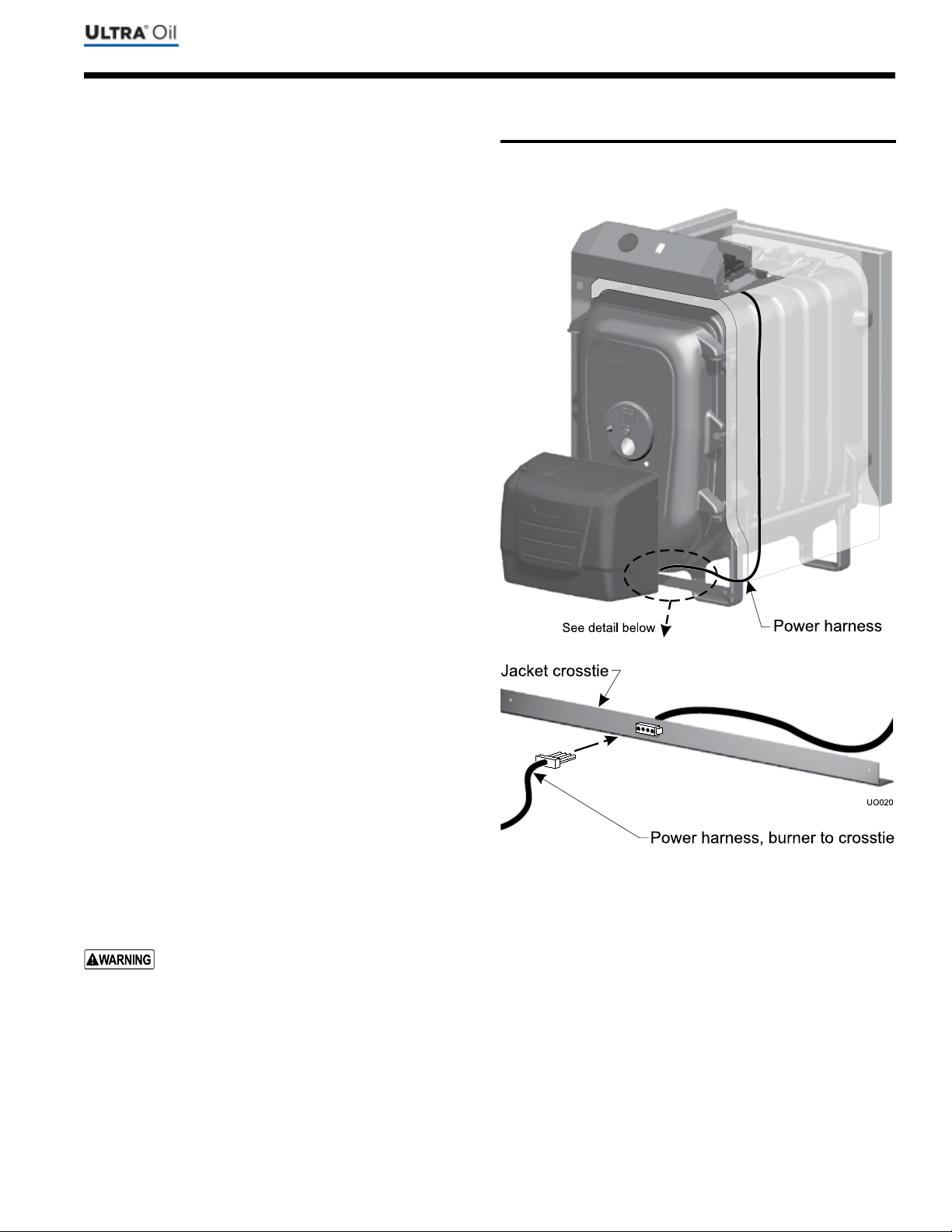
remove, push the Control Pod cover to one side, and gently
work the cover retainer hinge on the other side out of the
jacket slot.)
120-volt wiring
• Connect each conduit supplying line-voltage wiring to or
from the boiler to a conduit opening in the upper portion of
the jacket rear panel.
• All eld-provided line-voltage wiring must be sheathed in
exible metal conduit.
• If required by state or local codes, provide additional limits
as needed.
• When using additional limits, remove the factory-installed
jumper between boiler terminal strip terminals 19 and 20.
• Connect the additional limits in series and wire to boiler
terminal strip terminals 19 and 20.
• e circulator is shipped with the boiler, but not installed or
wired.
• Wire the circulator to the boiler terminal strip as shown on
the boiler wiring diagram. Provide hot, neutral and ground
wires, routed in metal conduit.
• See Replacement Parts page36 for circulator replacemnt part
numbers.
Thermostat wiring
• Install thermostat on inside wall away from inuences of
dras, hot or cold water pipes, lighting xtures, televisions,
sun rays or replaces.
• Follow instructions with thermostat.
• If the thermostat has a heat anticipator, set the heat anticipator
per the limit control manufacturer’s recommendation.
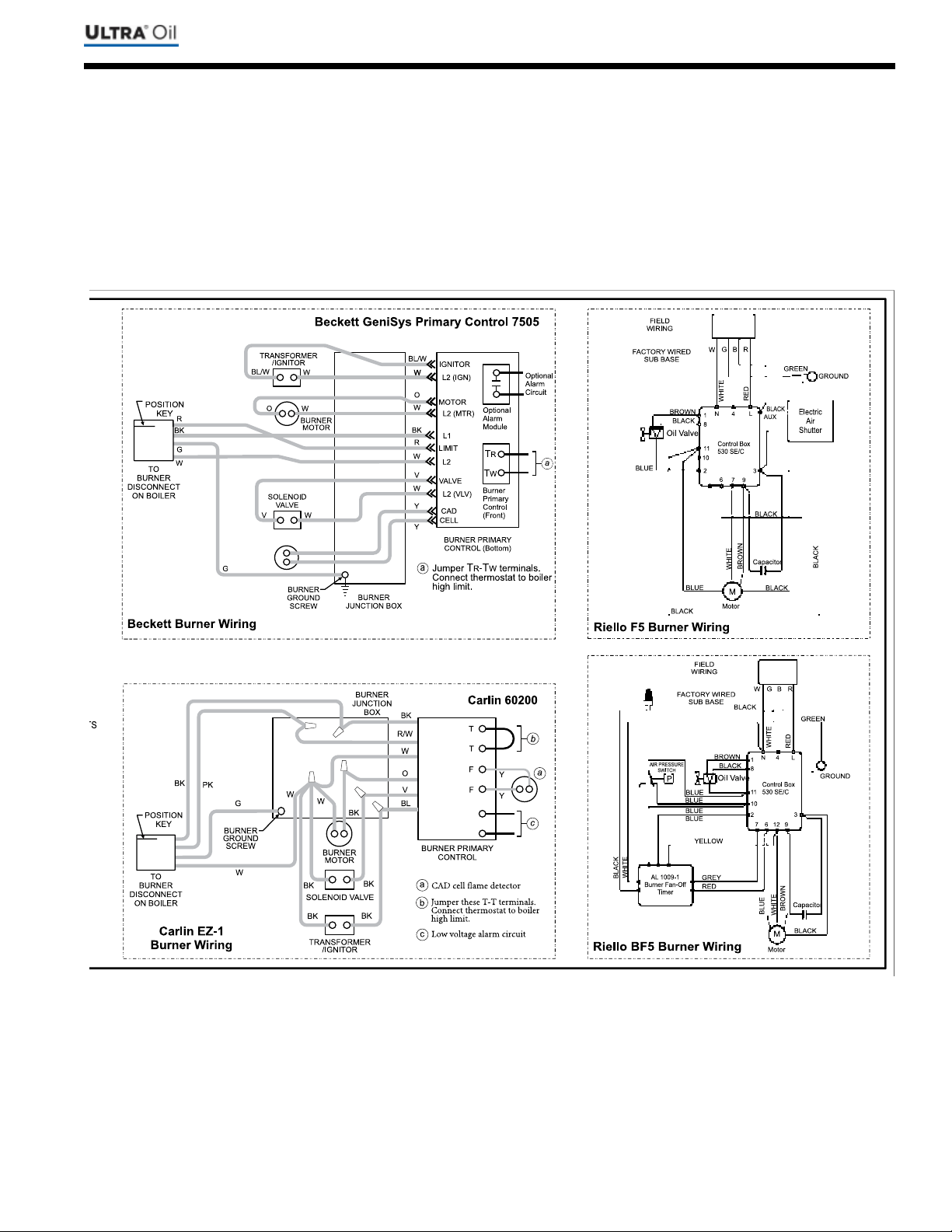
Burner wiring (see Figure 14)
• e burner harnesses incorporate disconnect plugs, providing
a convenient way to disconnect wiring when burner mounting
door is opened.
Failure to disconnect the burner wiring harness
before opening the burner door can cause damage
to the burner and boiler wiring.
When wiring is completed:
• Reinstall the Control Pod cover, close cover and tighten the
retainer screw.
• Replace jacket top and secure with screws.
Part number 550-143-013/0621
19
Series 3
Connect wiring
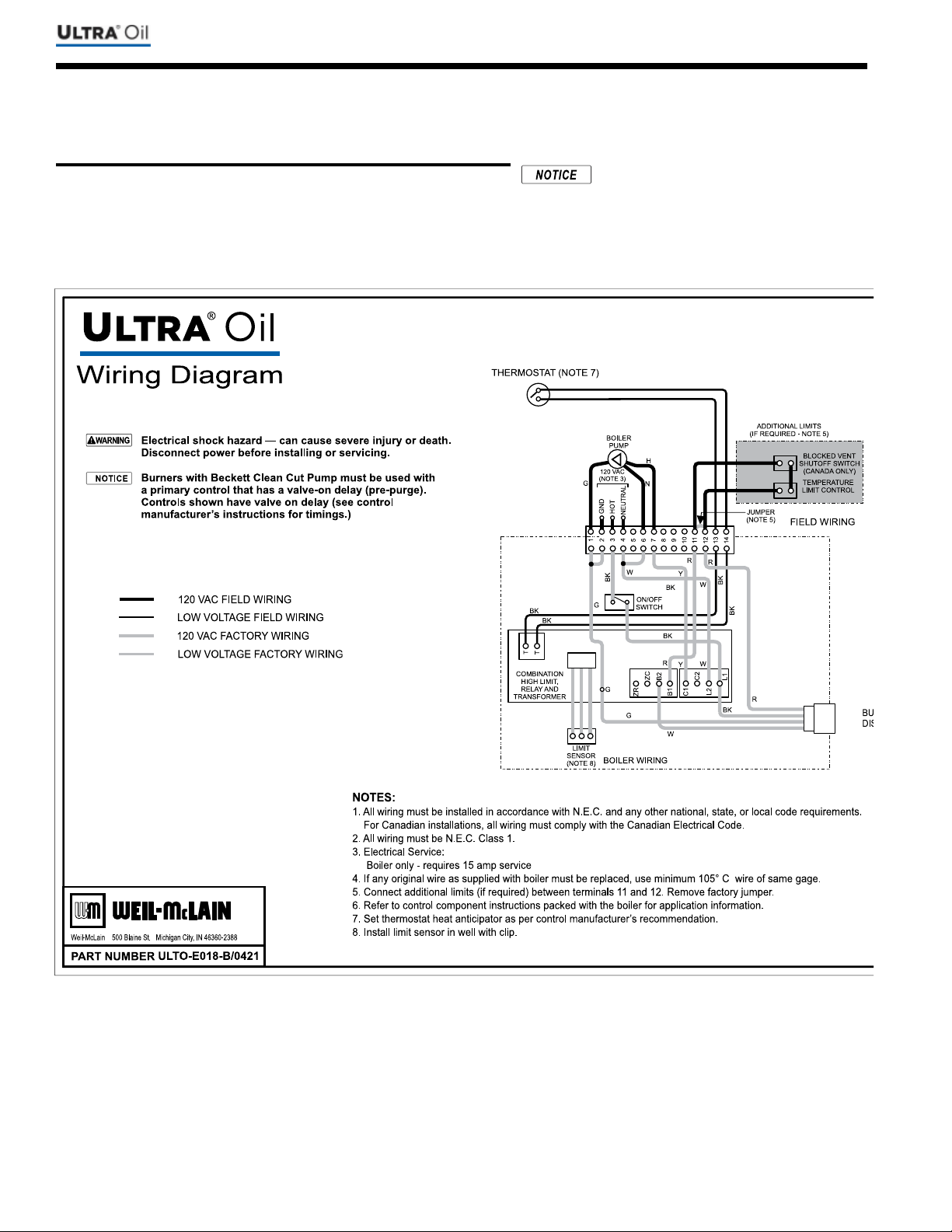
Connect wiring(continued)
is wiring diagram is for standard boiler
equipment.
Part number 550-143-013/0621
20
Series 3
Connect wiring(continued)
Part number 550-143-013/0621
21
Series 3
Connect oil piping
• Location and installation of oil tanks, oil piping and
burners must follow:
• NFPA 31, Standard for the Installation of Oil-Burning
Equipment.
• In Canada, CSA B139, Installation of Oil-Burning
Equipment.
• Local codes and regulations.
• Information provided with burner and
fuel pump.
• If any part of fuel oil tank is above level of burner,
an anti-siphon device must be used to prevent ow
of oil in case of oil line break.
• Support oil lines as required by codes.
• Make tank connections with swing joints or copper
tubing to prevent breaking in case the tank settles.
Make swing joints so they will tighten as tank settles.
Non-hardening pipe joint compounds should be
used on all threads.
Do not use Teon tape as an oil pipe seal-
ant. It can cause valves to fail, creating
hazards. Do not use compression ttings.
• Underground pipe must be run in a casing to prevent
oil leaking into ground or under oor. Check local
codes for information.
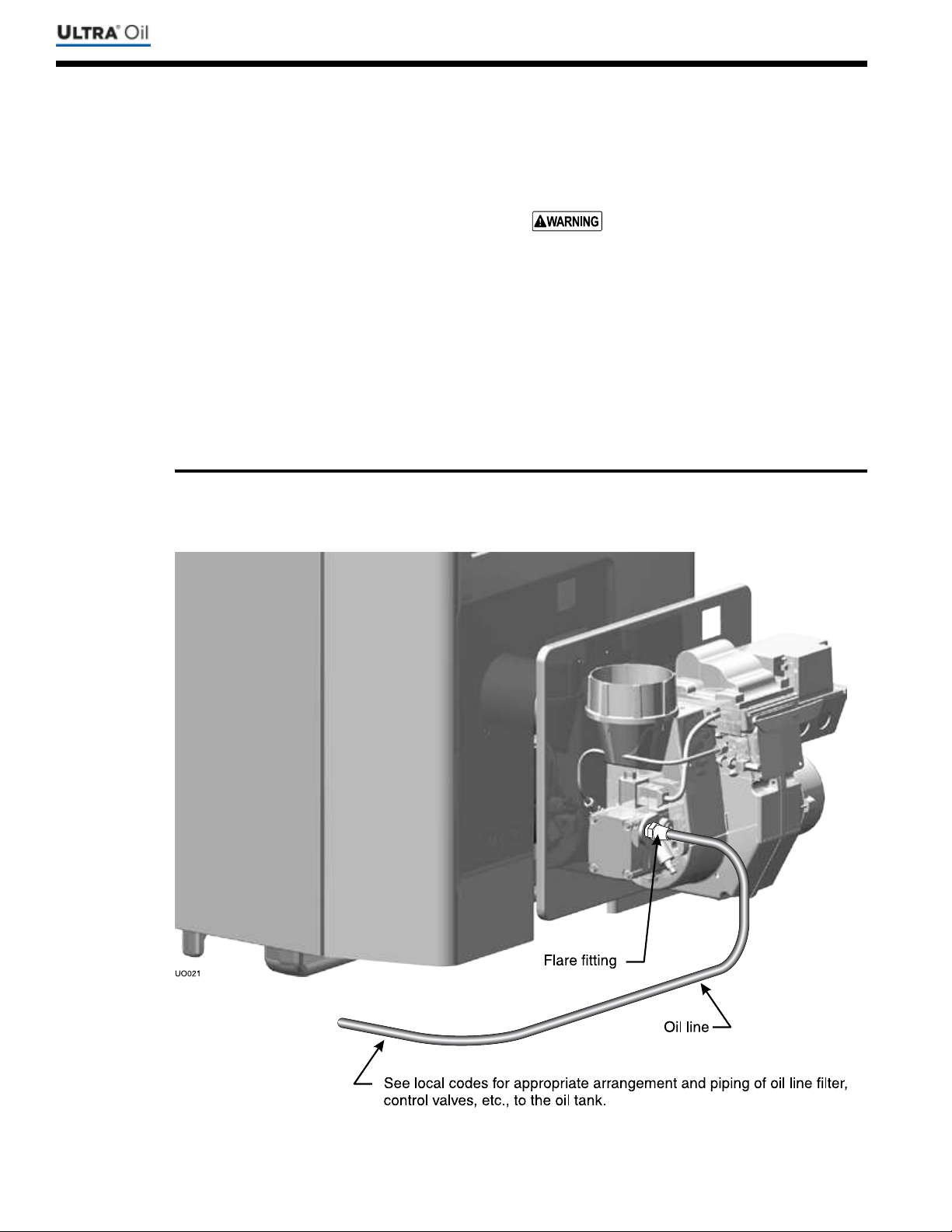
Oil piping connection at burner:
• See Figure 16 for recommended connection at
burner, allowing burner mounting door to swing
open completely for servicing.
Part number 550-143-013/0621
22
Series 3
Startup procedure
• Check boiler and system piping for leaks. Continual makeup water
will reduce boiler life. Minerals can build up in sections, reducing heat
transfer and causing cast iron to overheat, resulting in section failure.
Failure to maintain recommended pH and repair leaks can
cause section iron corrosion, leading to section failure and
leaks. Do not use petroleum-based sealing or stop-leak com-
pounds in boiler systems. Damage to system components can
result.
• For pH conditions outside 7.0 to 8.5 range or unusually hard water areas
(above 7 grains hardness), consult local water treatment company.
To place in operation:
1. Verify boiler is lled with water.
2. Open burner mounting door and verify burner door insulation sections
are in proper position. Ensure the chamber oor insulation blanket is
correctly positioned.
3. Verify burner mounting door is closed tightly and burner wiring har-
nesses are connected at the jacket cross tie.
4. Factory burner adjustment and settings may not be suitable for specic
job conditions. Always use combustion test equipment to check and
adjust.
a. Follow burner manual for start-up.
b. Allow boiler to heat to design conditions.
c.
Burner should be adjusted to 13% CO
2
or less with a smoke level of
zero and breech dra of -0.01” to -0.02”. Re-adjust burner combus-
tion to account for environmental conditions. Actual CO
2
value will
vary and should be adjusted for clean and safe combustion opera-
tion. Seasonal variations as well as sucient combustion air supply
can aect proper combustion and boiler performance. e burner
should only be adjusted by a service professional with appropriate
instrumentation.
5. To observe the ame, loosen the observation port center bolt. Rotate
the observation port so the sight glass is at the 6:00 position. Retighten
the center bolt. When nished viewing, loosen the center bolt. Rotate
the observation port so the glass is at the 12:00 position. en retighten
the bolt. is will prevent soot from depositing on the glass.
Make nal burner adjustments using combustion test equip-
ment to assure proper operation. Do not re boiler without
water. Sections will overheat, damaging boiler and resulting
in substantial property damage.
5. Vent air from system. Repeat steps 4 and 5 under “Fill the system.” Air
in system can interfere with water circulation and cause improper heat
distribution.
6. Check boiler and system piping for leaks. See “Tips for water systems.”
7. Inspect breeching and venting for proper operation.
Follow additional instructions:
Read and follow the and all other instruc-
tions packed with the boiler or components.
Fill the system:
1. Close manual and automatic air vents and boiler
drain cock.
2. Fill to correct system pressure. Correct pressure will
vary with each installation. Normal cold water ll
pressure for residential systems is 12 psig. Boiler
water pH 7.0 to 8.5 is recommended.
3. Open automatic air vent one turn.
4. Open other vents.
a. Starting on the lowest oor, open air vents one at a
time until water squirts out. Close vent.
b. Repeat with remaining vents.
5. Rell to correct pressure.
Follow information below to prevent
severe personal injury, death or sub-
stantial property damage:
• Do not use gasoline crankcase drain-
ings or any oil containing gasoline. See
burner manual for proper fuel oil.
• Do not attempt to start burner when
excess oil has accumulated, when unit
is full of vapor or when combustion
chamber is very hot.
• Do not start burner unless breeching
and burner mounting door are secured
in place.
• Never burn garbage or paper in the
boiler.
• Never leave combustible material
around the boiler.
When using antifreeze — Do
not use automotive, ethylene glycol,
undiluted or petroleum-based anti-
freeze. Severe personal injury, death or
substantial property damage can result.
• Use antifreeze especially made for
hydronic systems. Inhibited propylene
glycol is recommended.
• 50% solution provides protection to
about -30 °F. Do not exceed 50% mix-
ture.
• Local codes may require back-flow
preventer or actual disconnect from
city water supply.
• Determine quantity according to sys-
tem water content. Boiler water con-
tent is listed on back cover of manual.
Percent of solution will aect sizing of
heat distribution units, circulator and
expansion tank.
• Follow antifreeze manufacturer’s in-
structions.
Part number 550-143-013/0621
23
Series 3
Boiler model __________________________ Series _________
CP number _______________________
Date installed __________________________________________
Nozzle size, GPH ____________ Fuel unit pressure, PSIG __________
Installation instructions have been followed.
Check out sequence has been performed.
Above information is certied to be correct.
Information received and le with owner/maintenance person.
Installer ________________________________ (company) ________________________________ (phone)
________________________________ (address)
________________________________ (address) _______________________________________
(Installer’s signature)
Comments:
_______________________________________
_______________________________________
_______________________________________
_______________________________________
_______________________________________
_______________________________________
Part number 550-143-013/0621
24
Series 3
Check-out procedure
o 1. Boiler and heat distribution units lled with water?
o 2. Automatic air vent, if used, opened one full turn?
o 3. Air purged from system? Piping checked for leaks?
o 4. Air purged from oil piping? Piping checked for leaks?
o 5. Burner door closed, sealed and bolts tight? Observation
port bolt tight? Burner harness plugged in and boiler ON/
OFF switch on?
Obtain gas-tight seal to prevent possible ue gas
leakage and carbon monoxide emissions, leading
to severe personal injury or death.
o 6. Proper dra and burner ame? Final adjustment made
with combustion test equipment?
o 7. Test limit control: While burner is operating, adjust limit
control below actual boiler water temperature. Burner
should go o while circulator continues to operate. Raise
setting on limit control above water temperature and
burner should re-ignite.
o 8. Test additional eld-installed controls: If boiler has a low
water cuto, additional high limit or other controls, test
for operation as outlined by manufacturer. Burner should
be operating and should go o when controls are tested.
When controls are restored, burner should re-ignite.
o 9. Limit control set to system temperature requirements
(max. 220 °F)?
o 10. For multiple zones, ow adjusted to distribute heat in all
zones?
o 11. ermostat heat anticipator setting (if available) set prop-
erly? Refer to “ermostat wiring,” page 19.
o 12. Boiler cycled with thermostat? Raise to highest setting and
verify boiler goes through normal start-up cycle. Lower
to lowest setting and verify boiler goes o.
o 13. Observed several operating cycles for proper operation?
o 14. Set room thermostat(s) to desired room temperature?
o 15. Completed
below?
o 16. Reviewed User’s Information Manual with owner or
maintenance person and instructed person to keep for
future reference?
o 17. Returned all instructions provided with boiler to its en-
velope and placed with boiler for future reference?
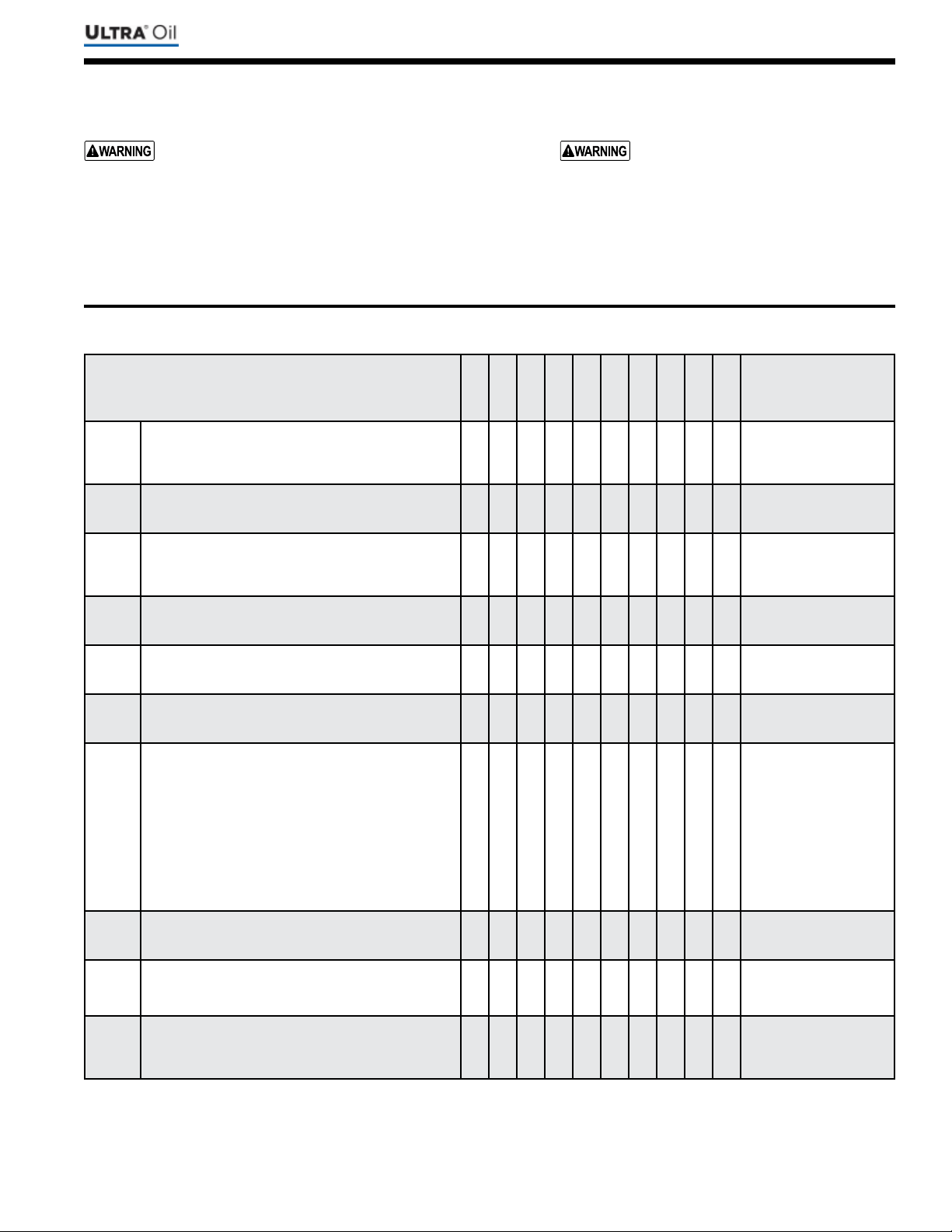
Part number 550-143-013/0621
25
Series 3
Annual service and start-up
e boiler should be inspected and started annually, at the
beginning of the heating season, only by a qualied service
technician. In addition, the maintenance and care of the boiler
designated in Table 4 must be performed to assure maximum
boiler eciency and reliability. See the following pages for
detailed instructions. Failure to service and maintain the
boiler and system could result in equipment failure.
Electrical shock hazard — Turn o power
to the boiler before any service operation
on the boiler except as noted otherwise in
this instruction manual. Failure to turn o
electrical power could result in electrical
shock, causing severe personal injury or
death.
1
2
-
3
4
5
6
7
8
9
10
-
Follow the service and maintenance procedures given throughout this manual and in component
literature shipped with the boiler. Failure to perform the service and maintenance could result in
damage to the boiler or system. Failure to follow the directions in this manual and component lit-
erature could result in severe personal injury, death or substantial property damage.
is product contains berglass jacket insula-
tion and ceramic ber materials in combustion
chamber lining or base panels in gas red
products. Airborne bers from these materials
have been listed by the State of California as a
possible cause of cancer through inhalation.
e combustion chamber lining or base insu-
lation panels in this product contain ceramic
ber materials. Ceramic bers can be con-
verted to cristobalite in very high temperature
applications. e International Agency for
Research on Cancer (IARC) has concluded,
“Crystalline silica inhaled in the form of quartz
or cristobalite from occupational sources is
carcinogenic to humans (Group 1).”:
Suppliers of berglass wool products recom-
mend the following precautions be taken when
handling these materials:
• Avoid breathing berglass dust and contact with skin
or eyes.
• Use NIOSH certied dust respirator (N95). is type
of respirator is based on the OSHA requirements for
berglass wool at the time this document was written.
Other types of respirators may be needed depending
on the job site conditions. Current NIOSH recom-
mendations can be found on the NIOSH web
site at http://www.cdc.gov/niosh/homepage.
html. NIOSH approved respirators, manufac-
turers, and phone numbers are also listed on
this web site.
• Wear long-sleeved, loose fitting clothing,
gloves, and eye protection.
• Apply enough water to the combustion
chamber lining or base insulation to prevent
airborne dust.
• Remove combustion chamber lining or base
insulation from the boiler and place it in a
plastic bag for disposal.
• Operations such as sawing, blowing, tear out
and spraying may generate airborne ber
concentration requiring additional protection.
Bag for disposal.
• Wash potentially contaminated clothes
separately from other clothing. Rinse clothes
washer thoroughly.
• Eye: Irrigate immediately
• Breathing: Fresh air.
Annual service and start-up(continued)
Address reported problems
1. Inspect any problems reported by owner and correct
before proceeding.
Inspect boiler area
1. Verify that boiler area is free of any combustible
materials, gasoline and other ammable vapors and
liquids.
2. Verify that air intake area is unobstructed and free of
corrosive contaminants. If any of these are present in
the boiler intake air vicinity, they must be removed.
Inspect boiler interior
1. Loosen the Control Pod cover retaining screw and
open the cover.
2. Inspect controls and wiring to verify all are in good
condition.
3. Check for any possible leaks that might have dripped
water on the wiring or controls.
4. Inspect the boiler insulation blanket.
5. If inspections show possible leaks, nd and correct
the cause of the leaks.
6. Ensure baes are installed in inside ueways.
Part number 550-143-013/0621
26
Series 3

Check all piping for leaks
Eliminate all system or boiler leaks.
Continual fresh make-up water will re-
duce boiler life. Minerals can build up
in sections, reducing heat transfer, over-
heating heat exchanger, and causing heat
exchanger failure. Leaking water may also
cause severe property damage.
1. Inspect all water and oil piping and verify to be leak
free.
2. Look for signs of leaking lines and correct any
problems found.
3. Check fuel lines and fuel unit as recommended in
fuel unit and burner manuals.
Check air openings
1. Verify that combustion and ventilation air open-
ings to the boiler room and/or building are open
and unobstructed. Check operation and wiring of
automatic combustion air dampers, if used.
2. Verify that boiler vent discharge and air intake are
clean and free of obstructions.
Flue vent system and air piping
Visually inspect entire ue gas venting system (and
air piping, if installed) for blockage, deterioration or
leakage. Repair any joints that show signs of leakage
in accordance with vent manufacturer’s instructions.
When air is ducted to burner, verify that air inlet piping
is connected and properly sealed.
Failure to inspect for the above condi-
tions and have them repaired can result
in severe personal injury or death.
Check water system
1. Verify all system components are correctly installed
and operational.
2. Check the cold ll pressure for the system. Verify it
is correct (usually around 12 psig).
3. Watch the system pressure as the boiler heats up
(during testing) to ensure pressure doesn’t rise too
high. Excessive pressure rise indicates expansion
tank sizing or performance problem.
4. Inspect automatic air vents and air separators.
Remove air vent caps and briey press push valve
to ush vent. Replace caps. Make sure vents do not
leak. Replace any leaking vents.
Check expansion tank
Expansion tanks provide space for water to move in and
out as the heating system water expands due to tempera-
ture increase or contracts as the water cools. Tanks may
be open, closed or diaphragm or bladder type. Follow
guidelines in this manual for the best location of the
expansion tank.
Open-type — located above highest radiator or
baseboard unit, usually in the attic or closet. Has a
gauge glass and overow pipe to a drain.
Closed-type — welded gas tight and located
above boiler. Tank is partially lled with water, leav-
ing an air cushion for expansion.
• Make sure this type of tank is tted with a tank tting,
such as the B & G Tank-Trol or Taco Taco-Trol. is
tting reduces gravity circulation of air-saturated tank
water back to the system and prevents the air from
bubbling up through the water as it returns from the
system.
• Do not use automatic air vents in systems with closed-
type tanks. e air will escape from the system instead
of returning to the tank. Eventually, the tank will wa-
terlog and no longer control pressurization. e boiler
relief valve will weep frequently.
Diaphragm or bladder-type — welded gas
tight with a rubber membrane to separate the tank
pressurizing air and the water. May be located at any
point in the system, but most oen found near the
boiler.
• Systems with this type of expansion tank require at least
one automatic air vent, preferably located on top of an
air eliminator, as shown in the example on page 15.
If relief valve has tended to weep frequently, the expan-
sion tank may be waterlogged or undersized.
Closed-type tank — tank is most likely water-
logged. Install a tank tting if not already installed.
Then check fill level per fitting manufacturer’s
instructions. If ll level is correct, check tank size
against manufacturer’s instructions. Replace with a
larger tank if necessary.
Diaphragm or bladder-type — rst, check
tank size to be sure it is large enough for the system.
If size is too small, add additional tank(s) as neces-
sary to provide sucient expansion. If tank size is
large enough, remove tank from system and check
charge pressure (usually 12 psig for residential ap-
plications). If tank won’t hold pressure, membrane
has been damaged. Replace tank.
Annual service and start-up(continued)
Part number 550-143-013/0621
27
Series 3
Annual service and start-up(continued)
Check boiler relief valve
1. Inspect the relief valve and li the lever to verify ow as in the
following warnings, excerpted from a relief valve manufac-
turer’s warning label. Before operating any relief valve, ensure
that it is piped with its discharge in a safe area to avoid severe
scald potential. Read page 14 regarding relief valves before
proceeding further.
Safety relief valves should be reinspected at least
once every three years
, by a licensed plumb-
ing contractor or authorized inspection agency, to
ensure that the product has not been aected by
corrosive water conditions and to ensure that the
valve and discharge line have not been altered or
tampered with illegally. Certain naturally occurring
conditions may corrode the valve or its compo-
nents over time, rendering the valve inoperative.
Such conditions are not detectable unless the valve
and its components are physically removed and
inspected. is inspection must only be conducted
by a plumbing contractor or authorized inspection
agency — not by the owner. Failure to reinspect the
boiler relief valve as directed could result in unsafe
pressure buildup, which can result in severe personal
injury, death or substantial property damage.
Following installation, the valve lever must be oper-
ated at least once each year to ensure that
waterways are clear. Certain naturally occurring
mineral deposits may adhere to the valve, rendering
it inoperative. When manually operating the lever,
water will discharge and precautions must be taken
to avoid contact with hot water and to avoid water
damage. Before operating lever, check to see that a
discharge line is connected to this valve directing the
ow of hot water from the valve to a proper place
of disposal. Otherwise severe personal injury may
result. If no water ows, valve is inoperative. Shut
down boiler until a new relief valve has been installed.
2. Aer following the warning directions, if the relief valve weeps
or will not seat properly, replace the relief valve. Ensure that
the reason for relief valve weeping is the valve and not over-
pressurization of the system due to expansion tank waterlog-
ging or undersizing.
Check all boiler wiring
Inspect all boiler wiring, making sure wires are in good condition
and securely attached.
Check control settings
1. Check boiler limit control setting, Adjust if necessary.
2. Check settings of external limit controls (if any) and adjust if
necessary.
Department of Energy - Compliance
OR UNLESS EXEMPTED BELOW:
IMPORTANT
accordance with Section 303 of
the 2007 Energy Act
, this boiler is
equipped with a feature that saves energy
by reducing the boiler water temperature
as the heating load decreases. is feature
is equipped with an override which is
provided primarily to permit the use of
an external energy management system
that serves the same function.
OVERRIDE MUST NOT BE USED UNLESS AT LEAST ONE OF
external energy management system is installed that reduces the boiler water temperature
as the heating load decreases.
boiler is not used for any space heating.
boiler is part of a modular or multiple boiler system having a total input of 300,000
BTU/hr or greater.
boiler is equipped with a tankless coil (not applicable to Ultra Oil boilers).
Part number 550-143-013/0621
28
Series 3
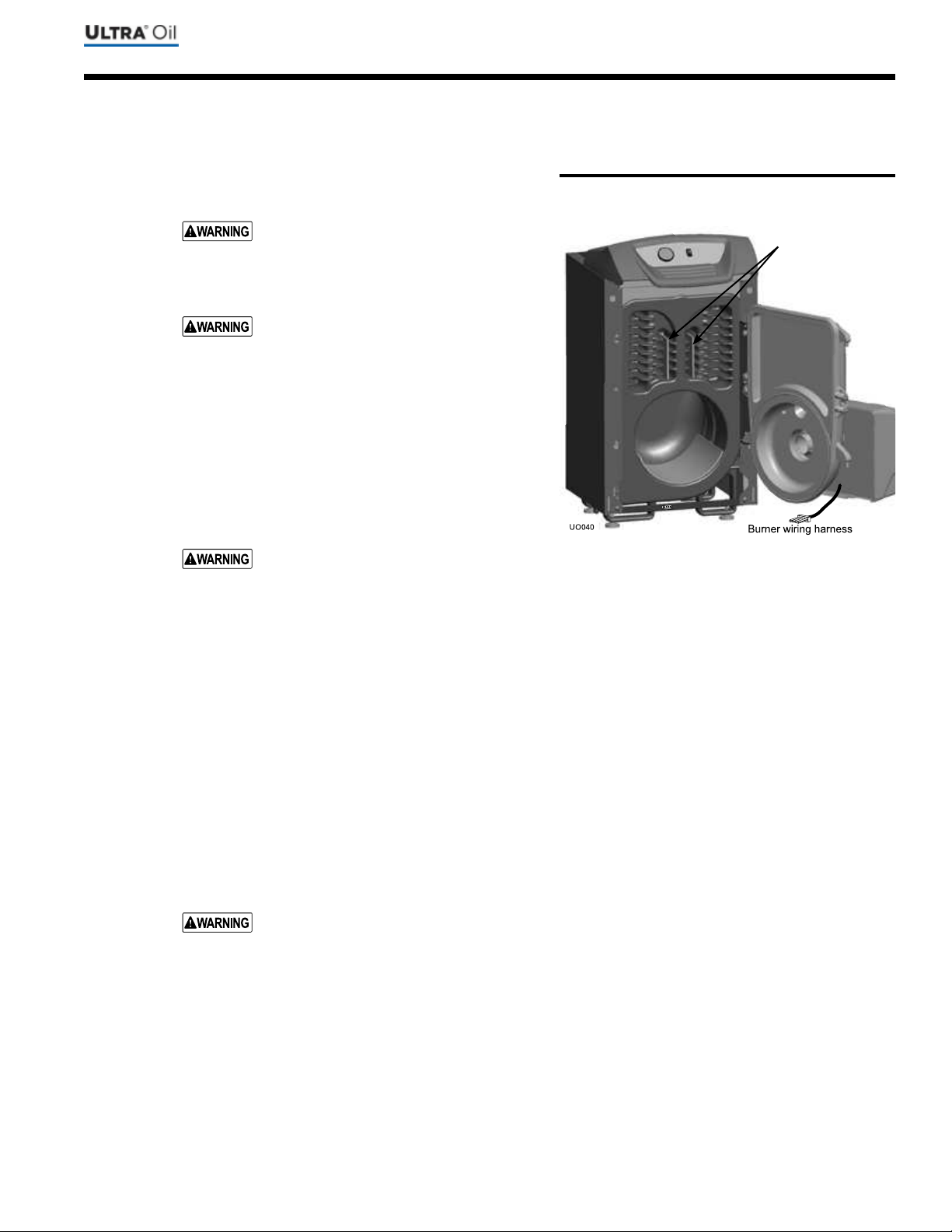
refractory linings
Make sure all electrical connections to boiler
are turned o and wait until boiler is warm,
not hot, before cleaning. Failure to do so
will result in severe personal injury, death or
substantial property damage.
e boiler contains berglass and ceramic
ber materials. Use care when handling these
materials, per instructions on page 26 of this
manual. Failure to comply could result in
severe personal injury.
1. Remove jacket front panel and burner cover.
2. Shut o oil valves. Arrange drip pans under the areas
of oil piping that will be disconnected.
3. Disconnect the oil line at the burner. Provide means to
prevent oil from dripping.
4. Disconnect burner 120-volt harness at the jacket cross
tie (located beneath the burner door).
Failure to disconnect the burner wiring har-
nesses before opening the burner door can
cause damage to the burner and boiler wiring.
5. Swing the burner door open completely. See Figure 17.
6. Line the combustion chamber oor with newspaper
to catch any soot that will be loosened in the cleaning
process.
7. Remove the ue baes.
8. Starting at the top of the boiler, use a wire ue brush to
thoroughly clean all ns.
9. Once the ueways are cleaned, carefully remove the
paper from the oor of the combustion chamber.
10. Verify burner door sealing rope is intact.
11. Visually check condition and position of the refracto-
ries in the burner mounting door. Replace any parts as
necessary.
12. Replace the ue baes.
13. Close burner mounting door. Insert and tighten burner
door bolts securely.
Maintain a gas-tight seal to avoid possible ue
gas leakage and carbon monoxide emissions,
which can lead to severe personal injury or
death.
14. Check the breeching for sooting and clean if necessary.
15. Replace the jacket front panel and breeching.
Annual service and start-up(continued)
16. Reconnect the oil line and all electrical connections.
Perform boiler start-up
1. Follow instructions in this manual and the burner
manual to start-up and adjust burner and boiler.
2. Verify operation of all controls, including all limit
devices and combustion controls.
Review with owner
Review the User’s Information Manual with the owner
or boiler operator.
Record the service call
Record the service call on the form on page 25.
Part number 550-143-013/0621
29
Series 3
Removing/replacing boiler jacket
Removing the boiler jacket
Electrical shock hazard — The following
procedure assumes the boiler has not been
wired. If the boiler has been wired, you
must disconnect all power to the boiler.
Label all wires prior to disconnection
when servicing controls. Wiring errors can
cause improper and dangerous operation.
Label all wires before disconnecting them
at the boiler terminal strip.
e boiler contains berglass and ceramic
ber materials. Use care when handling
these materials, per instructions on page
26 of this manual. Failure to comply could
result in severe personal injury.
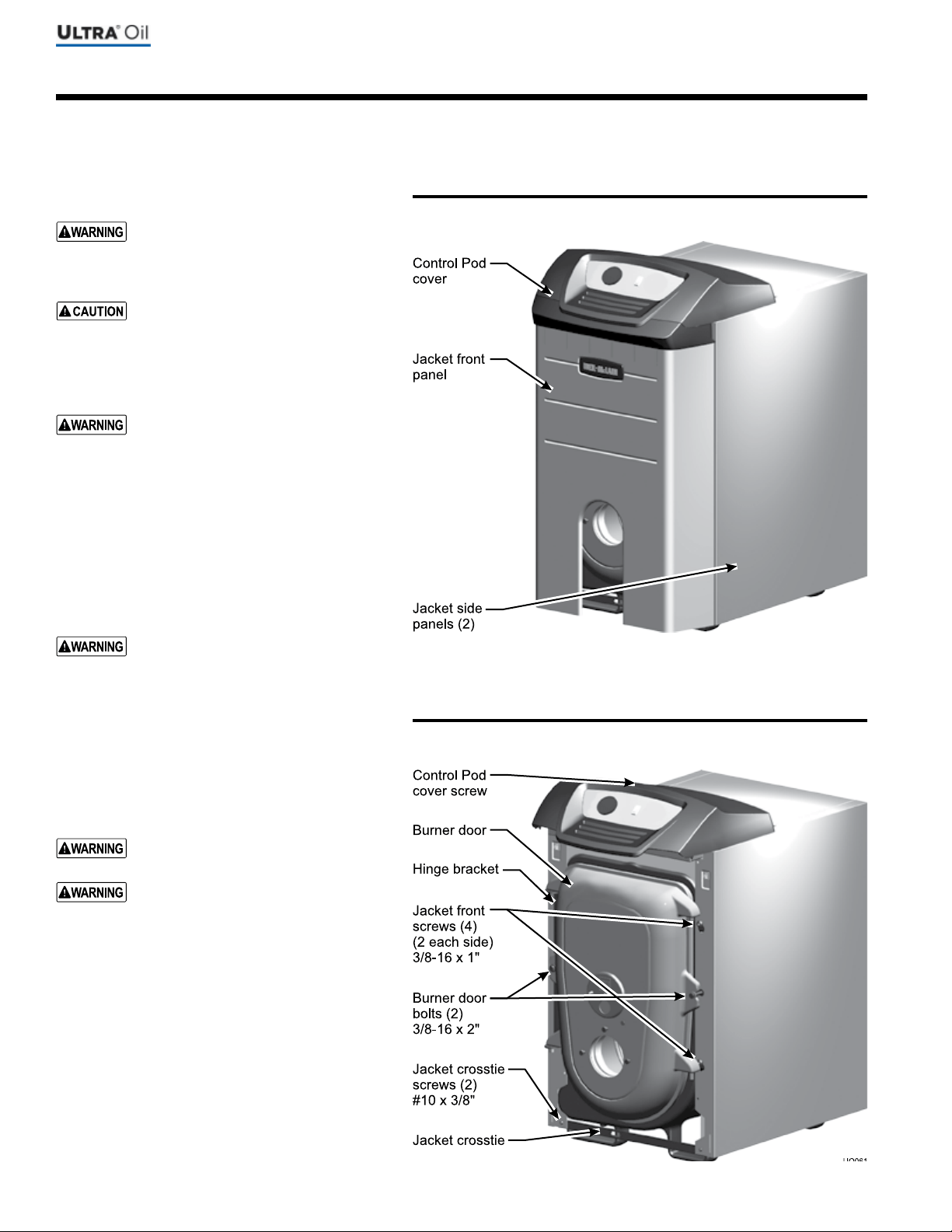
1. See Figures 18 through 21 for jacket components,
hardware and locations.
2. Remove jacket front panel (Figure 18).
3. If the burner has been installed in the burner door:
• Remove the burner cover.
• Disconnect the burner wiring harness at the jacket
cross tie (located beneath the burner door).
Failure to disconnect the burner wiring har-
ness before opening the burner door can cause
damage to the burner and boiler wiring.
• Turn o fuel supply valve(s) and disconnect fuel line(s)
to burner. Place drip pans under ends of lines to catch
any oil.
4. Remove the burner door bolts and washers
(Figure 19).
5. Carefully li the burner door so the door pins li
out of the hinge bracket (Figure 19). Set the burner
door aside temporarily.
e burner door is heavy. Handle carefully
to avoid potential for personal injury.
Do not damage the burner door insulation
when handling.
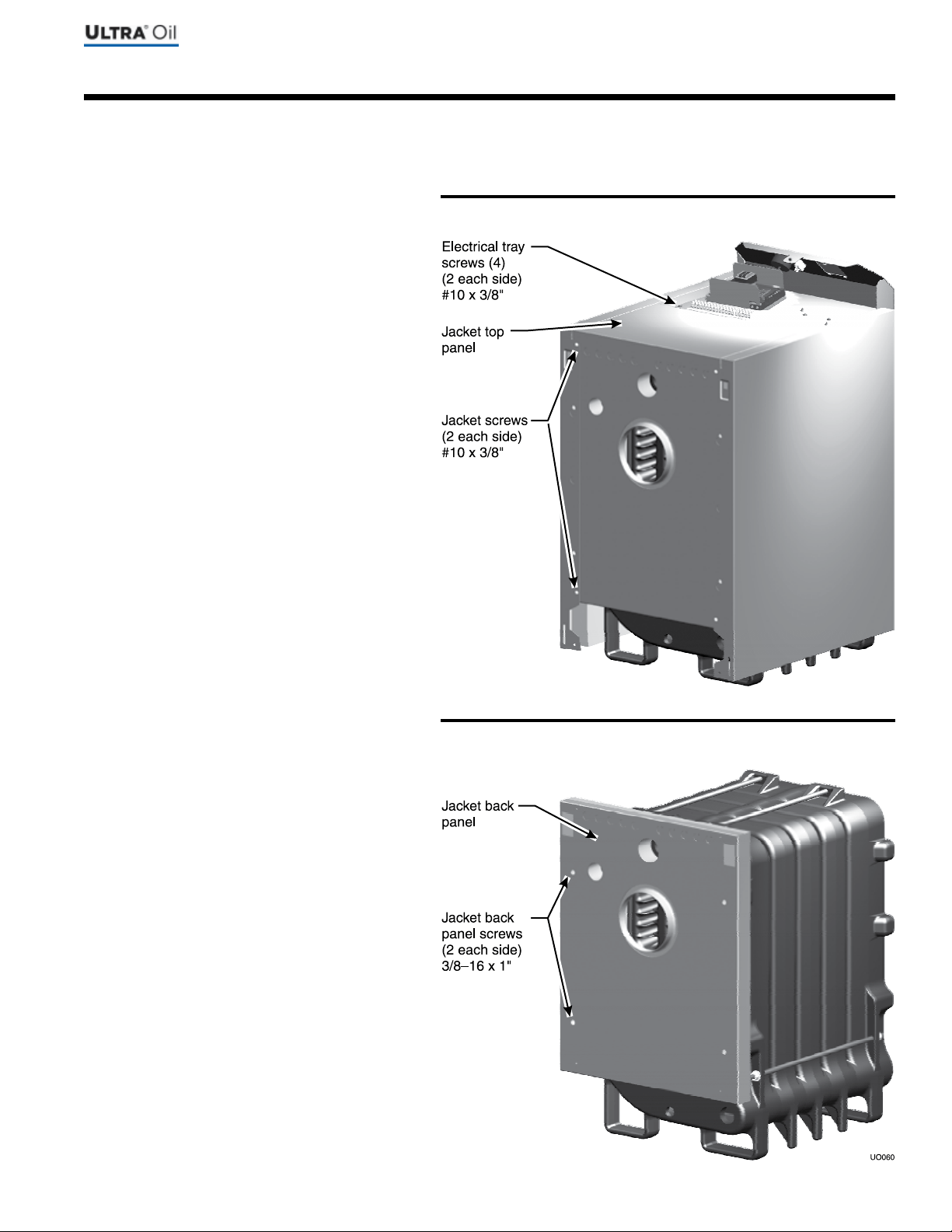
6. Loosen the four (4) #10 x 3/8” screws securing
the jacket top and side panels to the back panel
(Figure 20).
7. Remove the jacket top panel.
8. Loosen the Control Pod cover retainer screw and
Part number 550-143-013/0621
30
Series 3
li cover up.
9. Push the Control Pod cover to one side, and gently
work the cover retainer hinge on the other side out
of the jacket slot to remove the cover.
10. Remove the limit temperature sensor and P/T gauge
capillary from the wells in top of the boiler back
section.
11. Remove the jacket cross tie by loosening the two
screws securing it to the side panels (Figure 19). Li
the cross tie up and disengage the screws from the
keyholes.
12. Loosen the four (4) 3/8-16 x 1” jacket front screws.
Do not remove the screws.
13. Li the hinge bracket and pull out to disengage the
keyholes from the screws.
14. Remove the four (4) #10 x 3/8” screws securing the
electrical tray to the jacket side panels (Figure 20).
Leave the electrical tray in position.
15. Remove the jacket side panels by pulling back edge
away from the back of the boiler and then disengag-
ing the keyholes from the jacket front screws.
16. Remove the electrical tray, keeping the wiring har-
nesses connected to the jacket cross tie.
17. Remove the insulation blanket.
18. Remove the relief valve and supply piping if already
installed.
19. Loosen the four (4) 3/8–16 screws securing the
jacket back panel to the rear section. e screws are
located at the recessed openings on the jacket back
panel (Figure 21).
20. Li the jacket back panel and pull forward to dis-
engage the keyholes from the screws.
Replacing the jacket
1. To install the jacket, reverse the preceding proce-
dure. Route the power cable as shown in Figure 14,
page 20.
Removing/replacing boiler jacket(cont.)
Part number 550-143-013/0621
31
Series 3
Replacement parts(continued)
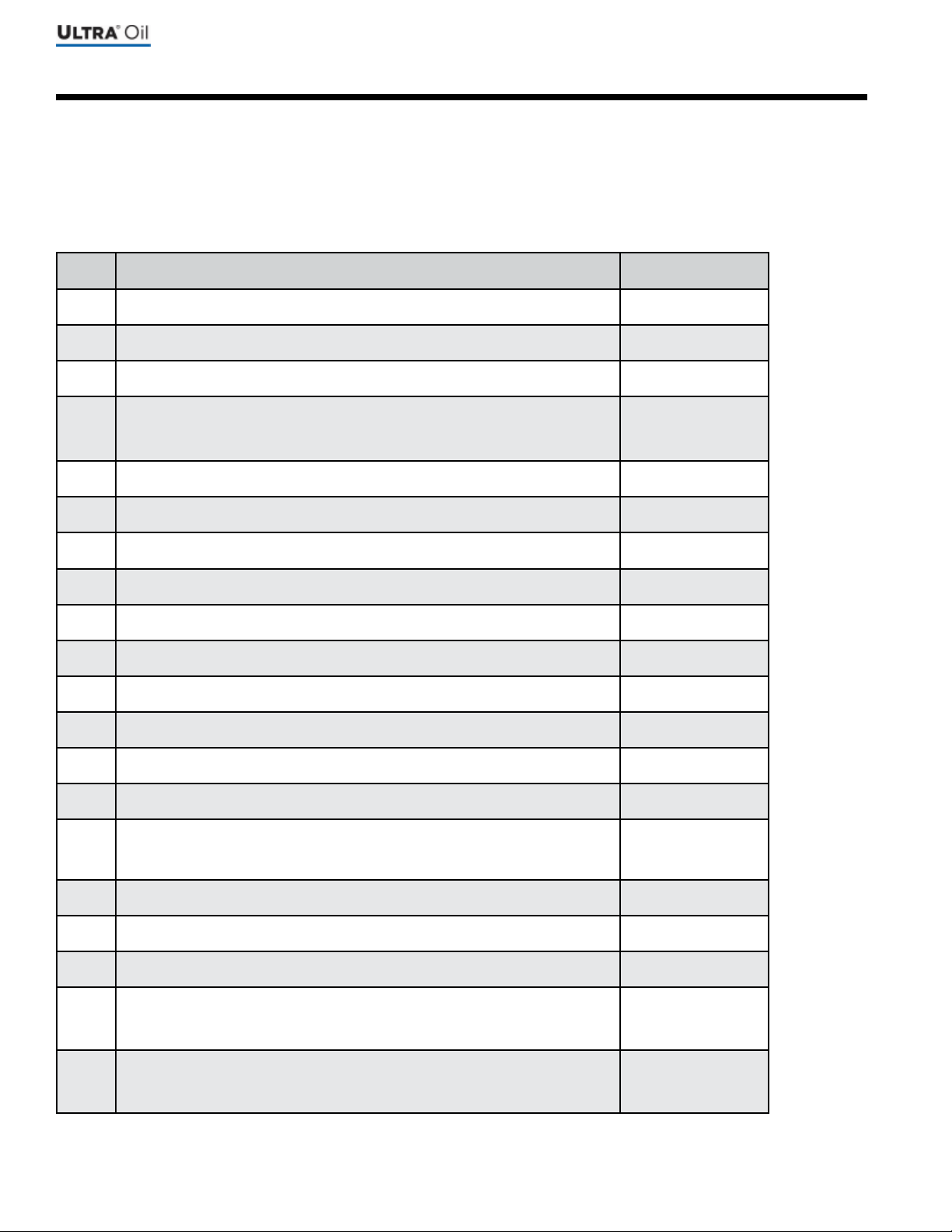
Boiler section assembly parts
Part number 550-143-013/0621
32
Series 3
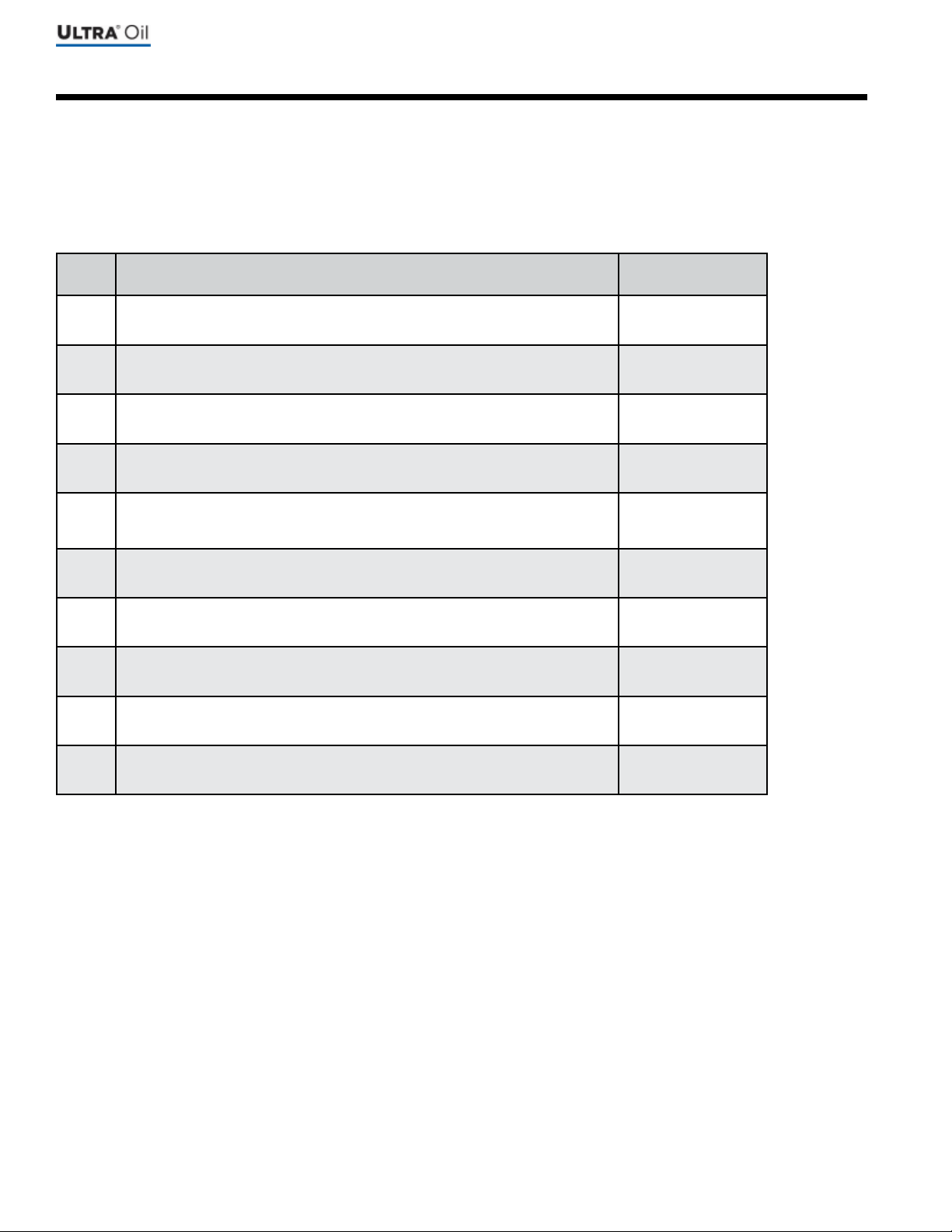
Item Description Part Number
1
2
3
4
5
7
8
9
11
12
13
14
15
17
18
19
591-221-287
591-221-288
591-221-292
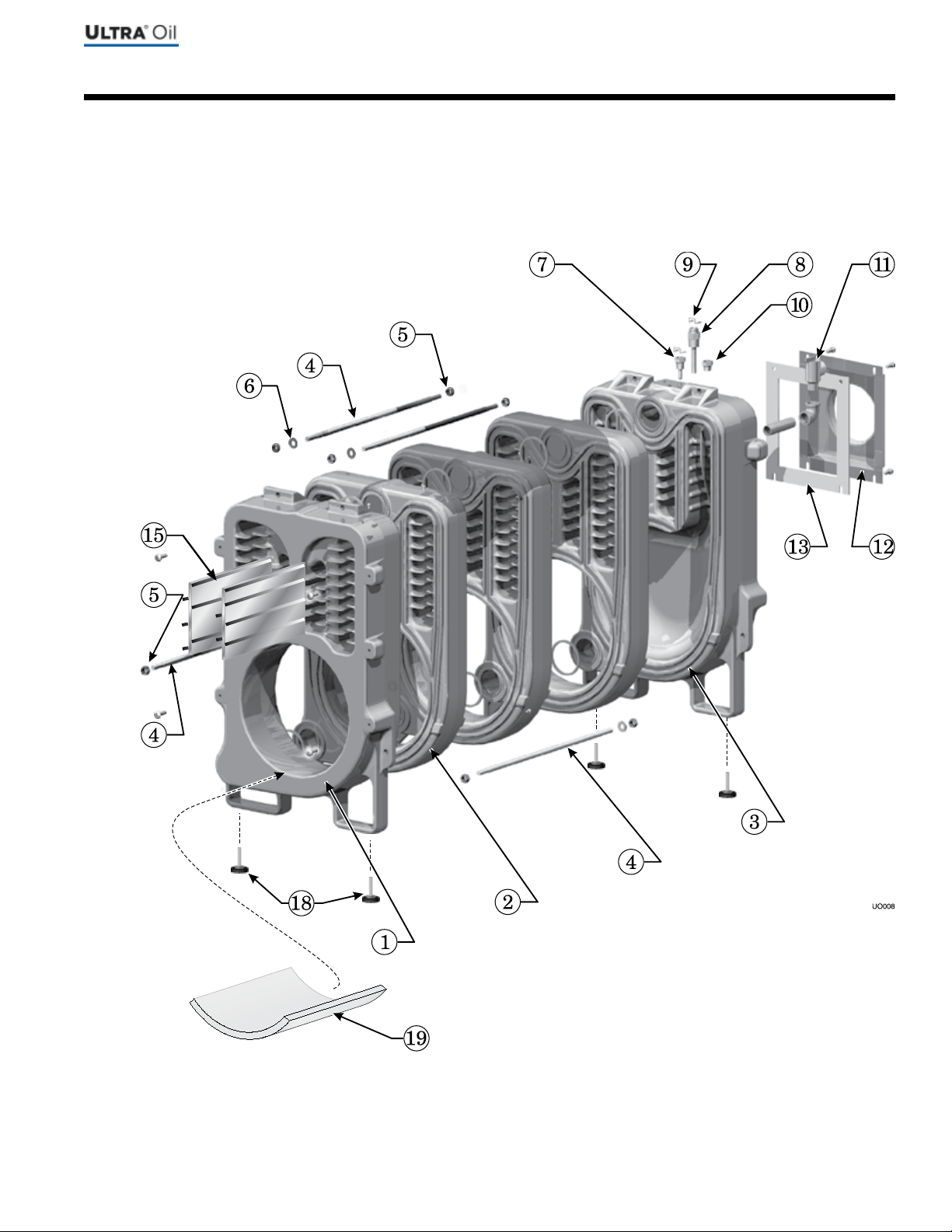
Replacement parts(continued)
Boiler section assembly parts
Part number 550-143-013/0621
33
Series 3
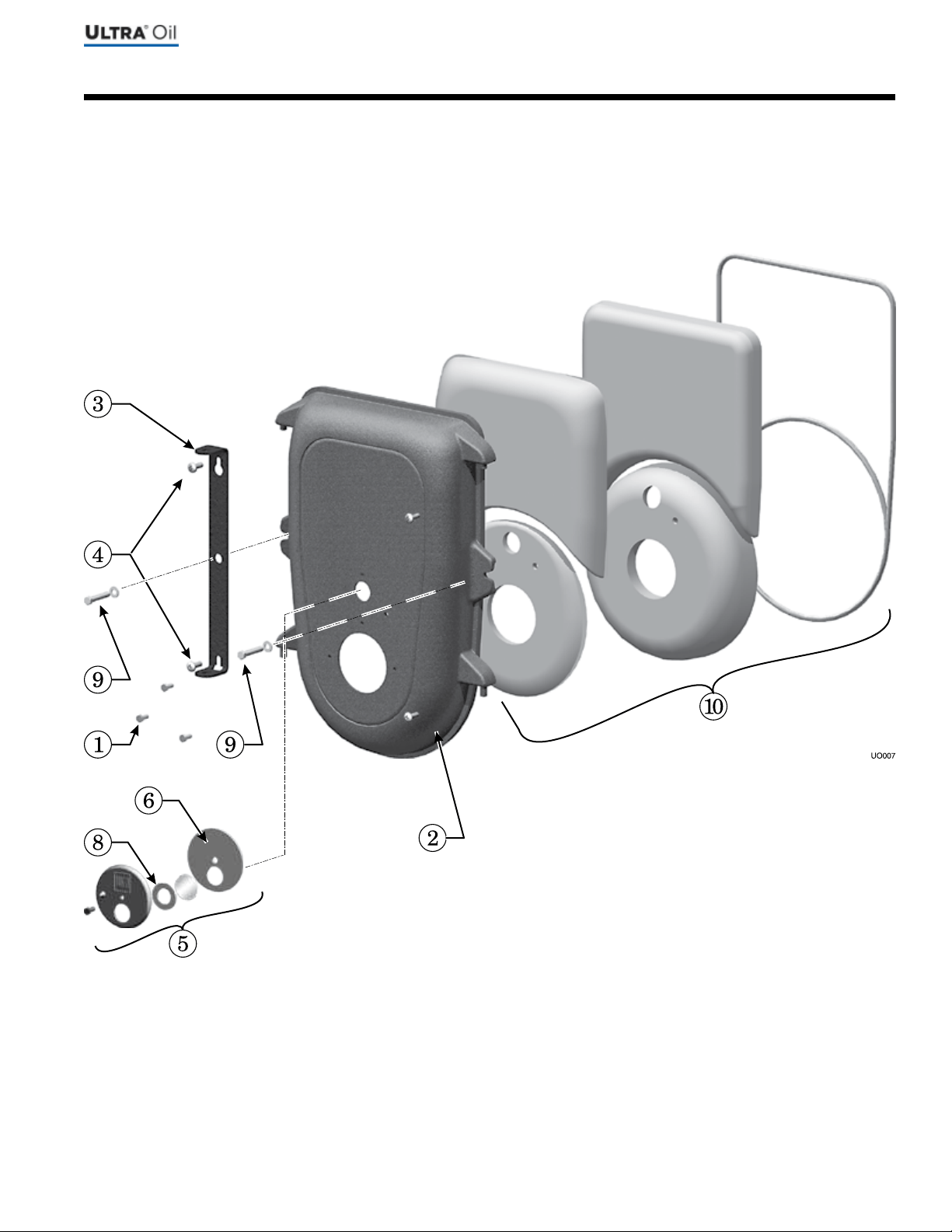
Replacement parts(continued)
Burner door parts
Part number 550-143-013/0621
34
Series 3
Item Description Part Number
1
2
3
4
5
7
8
9
Replacement parts(continued)
Burner door parts
Part number 550-143-013/0621
35
Series 3
Replacement parts(continued)
Jacket and control parts
Part number 550-143-013/0621
36
Series 3
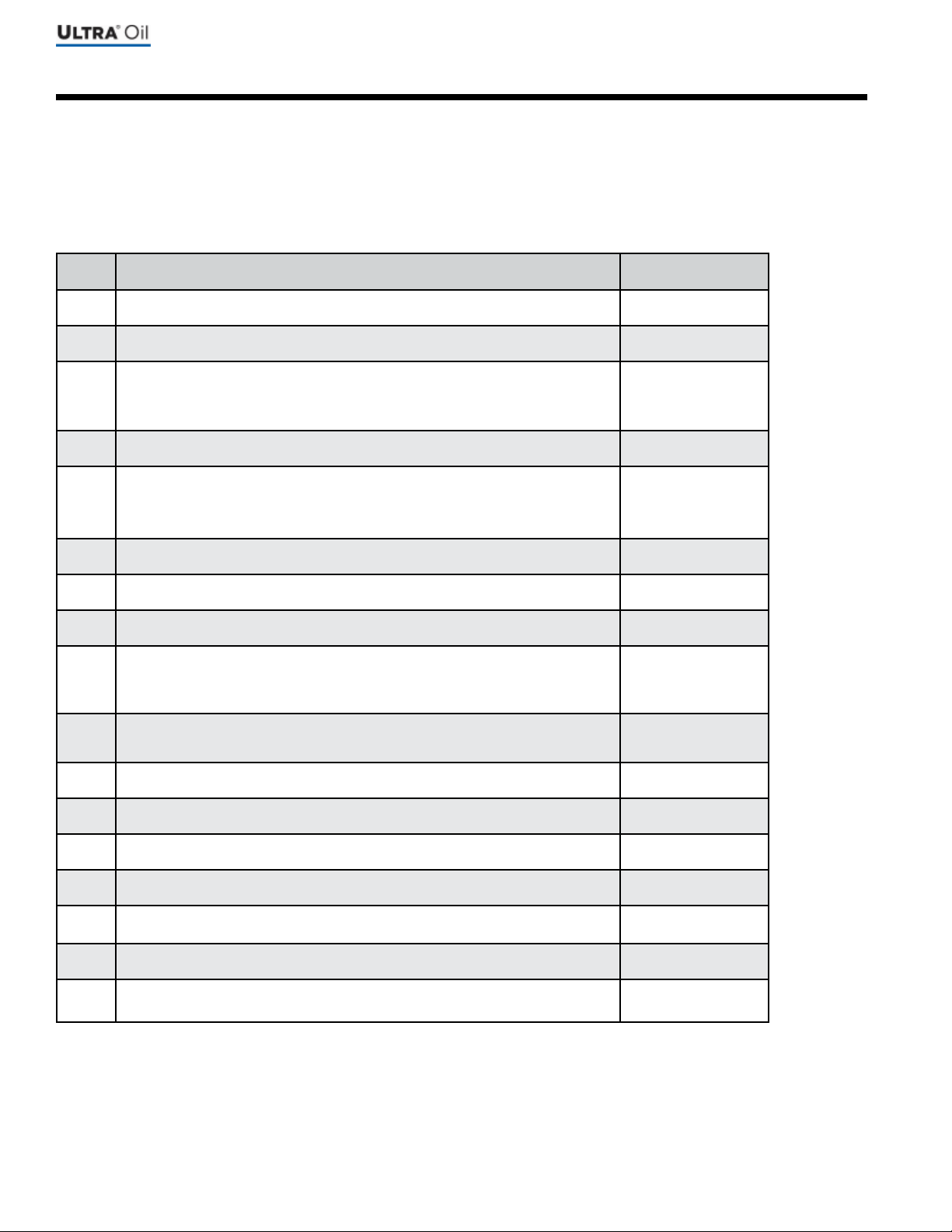
Item Description Part Number
1
2
3
4
5
7 591-222-181
8
9
591-222-178
591-222-179
11
12
14
15
17 511-724-291
18

Replacement parts(continued)
Jacket and control parts
Part number 550-143-013/0621
37
Series 3
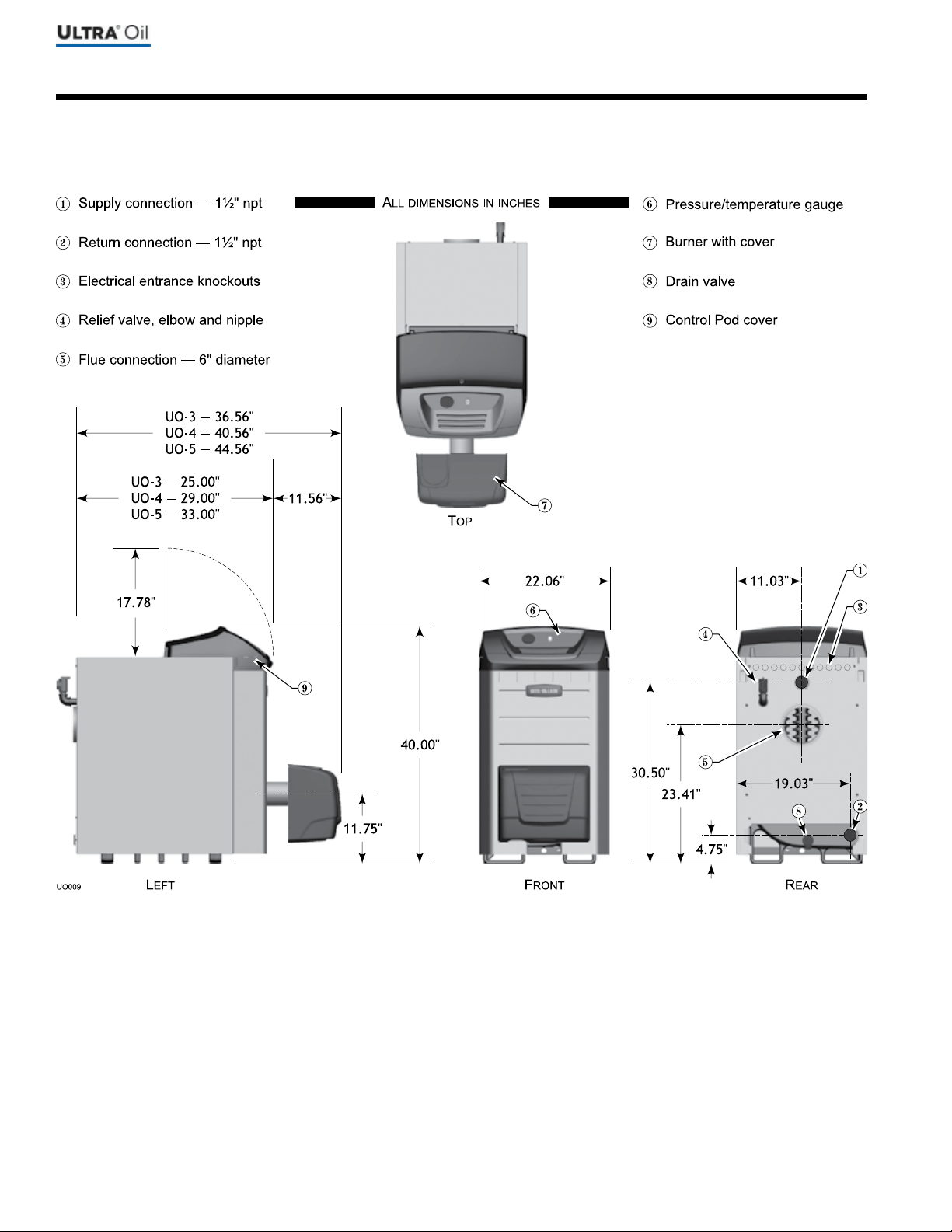
Dimensions
1. Boiler circulator is shipped loose. Circulator may be
mounted on either boiler supply or return piping.
2. Relief valve is shipped loose, supplied with elbow and
nipple to install in rear section tapping.
Part number 550-143-013/0621
38
Series 3
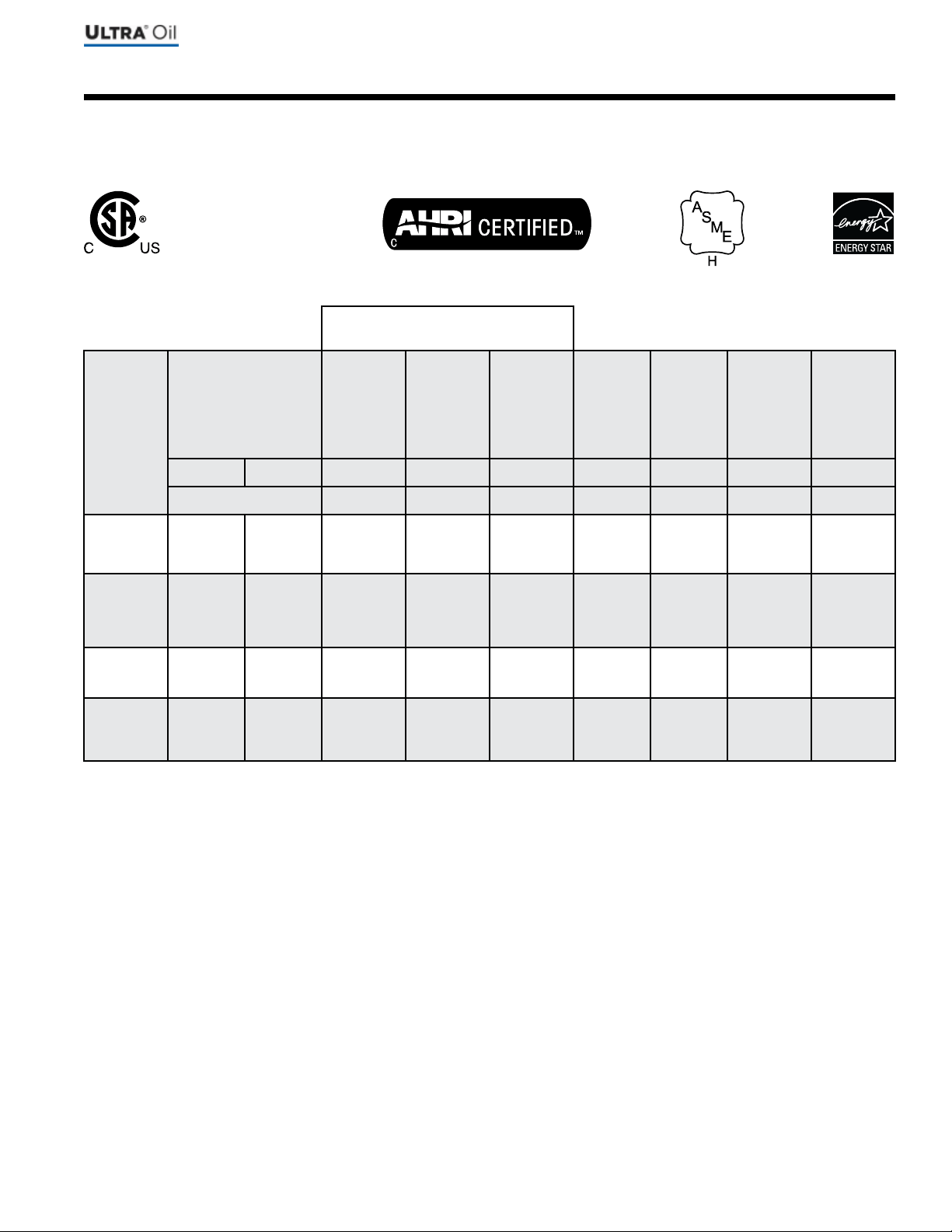
Ratings
®
DOE
Part number 550-143-013/0621
39
Series 3
Notes 2, 6 Notes 1, 6 Notes 2, 6 Notes 3,6 Note 4 Note 5
Note 7
Note 7
112 99 87
123 87
148 87 129 737
173 87 852
(1) Based on standard test procedures prescribed by the
United States Department of Energy at combustion
condition of 13.0% CO
2
and –0.02” w.c. breeching
dra.
(2) Ratings shown are for sea level applications only.
For altitudes above 2,000 feet, derate the product
capacity by 4% per 1,000 feet above sea level.
(3) Net AHRI ratings are based on net installed
radiation of sucient quantity for the requirements
of the building and nothing need be added for
normal piping and pick-up. Water ratings are based on
a piping and pick-up allowance of 1.15. An additional
allowance should be made for unusual piping and pick-
up loads.
(4) See page 12 for minimum breeching and chimney sizing.
(5) Boiler dra losses are based on -0.02” in breeching.
(6) MBH refers to thousands of Btu per hour.
(7) A burner nozzle change is required-refer to the burner
instructions or boiler’s rating label for correct selection.
For Beckett AFG, use the burner low re rate bae when
reducing rate.
40
40
Series 3