CONTENTS
EN 3
Note to user
Steam cooking 4
Description
The Appliance 5
Close-up of control panel 5
Accessories 6
Removable tank 7
Installation
Before connecting the steamer 8
Electrical connections 8
Build-in 9
Demo mode 10
Use
Setting the clock 11
Programming for immediate steaming 12
Locking display 15
Water tank control 15
Using the timer 16
Cooking chart
Steaming chart 17
Maintenance
Caring for your steamer 21
Changing the interior lighting 22
Handling malfunctions 23
CO
NTENT
S
NOTE TO USER
EN 4
Steam cooking
Overview
Steam cooking presents nothing but advantages if you follow the
instructions for use. Healthy and natural, steam cooking preserves the full
fl avour of foods. A delicate sauce or aromatic herb seasonings add that
something extra that makes the difference.
This kind of cooking releases no odours. There is no need to season
the cooking water with salt, herbs or spices; however, you can fl avour a
fi sh by placing it on a bed of seaweed or make a savoury poultry dish by
adding a bunch of rosemary or tarragon.
You can simultaneously cook meat, fi sh and vegetables.
Compared to boiling, steaming offers nothing but advantages:
Cooking starts immediately whereas for food in a water-fi lled pan, the
cook time only begins counting down once the water returns to a full boil.
It is healthy: vitamins (those that are water soluble) and minerals are well
preserved because they scarcely dissolve in the condensation water that
touches the food.
Moreover, no fats are used for this type of cooking.
The steam maintains the taste of food. It does not add odours, nor the
taste of the grill or the pan. Furthermore, it takes nothing away because
the food is not diluted in the water.
Steam does not spread tastes or odours therefore do not hesitate to save
both time and money by cooking items at the same time, but without
touching. For example, you can cook a fi sh next to a dessert.
Cut into pieces, food cooks faster and more evenly than if left whole.
Steam is also appropriate for blanching, defrosting and reheating or even
keeping foods warm, especially sauces.
First use a very small amount of fat to heat meats like poultry, veal and
pork so that they take on an appetizing browned appearance. Then fi nish
cooking them using the steam method.
Words of advice: there is no point in using this cooking method to prepare
fi sh that is not fresh or vegetables left in the refrigerator for a week: the
results will be catastrophic!
DESCRIPTION
EN 5
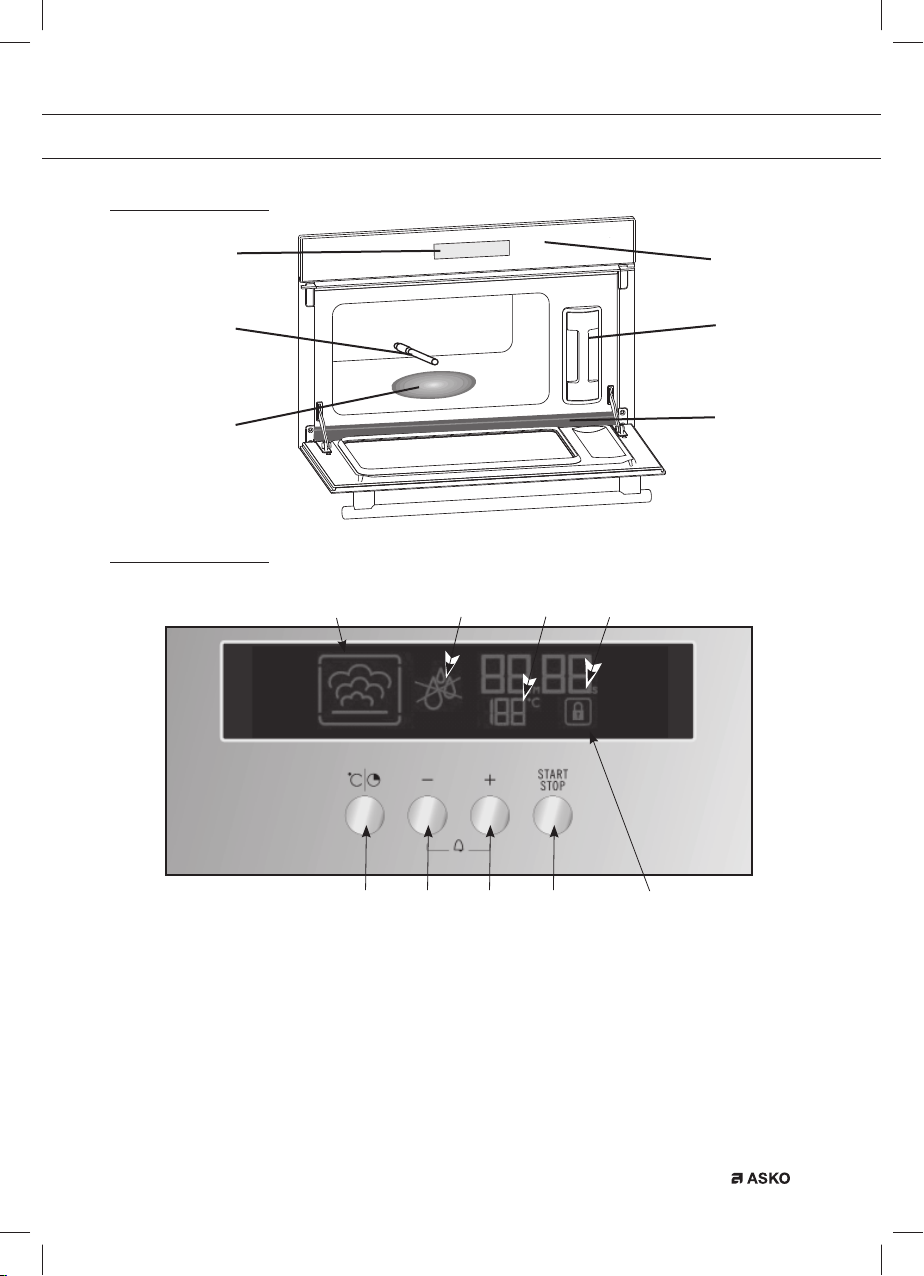
The Appliance
Display Control
panel
Water intake
tube
Steam
generator
Tank
Gutter
Close-up of control panel
1. Duration and temperature selection button
2. Time and temperature adjustment button (-)
3. Time and temperature adjustment button (+)
4. Start/Stop button
5. Keypad locking
6. Steam cooking symbol
7. Water circuit problem indicator
8. Temperature indicator
9. Duration and time
6 7 89
13452
DESCRIPTION
EN 6
Accessories
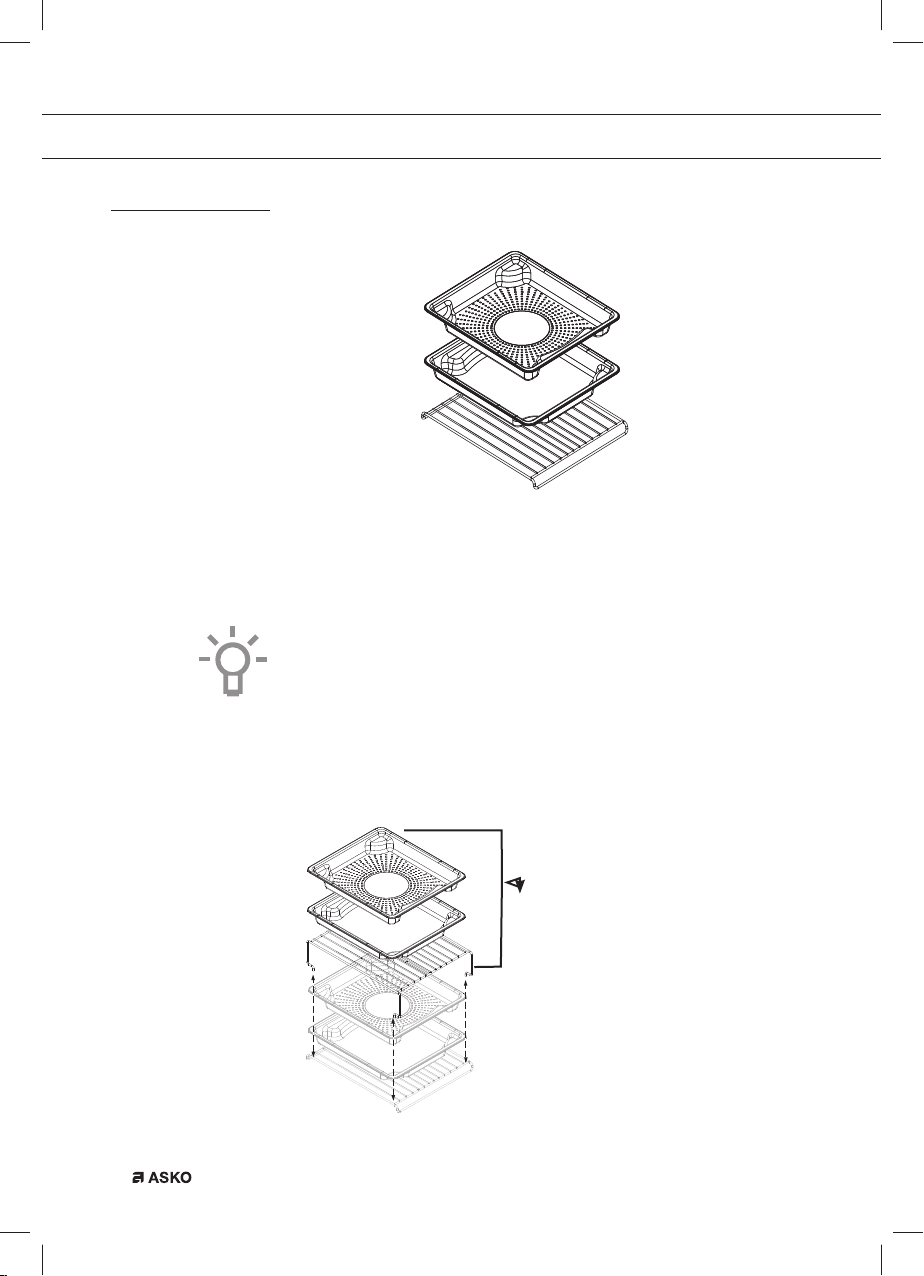
Perforated stainless steel dish (Fig. 1)
Pierced stainless steel cooking dish to prevent contact between food and
the condensation water.
Stainless steel dish (Fig. 2)
Stainless steel dish for recovering condensation water.
Comments:
When steaming vegetables, potatoes. fi sh or meat: place the dish (Fig. 1)
on the dish (Fig. 2) in reverse order so that they do not fi t into each other
(see diagram). When storing, place the dish (Fig. 1) on the dish (Fig. 2)
in the same order so that they fi t into each other.
Stainless steel removable support grid (Fig. 3):
it must be placed in the oven.
KITVAPIX (Optional accessory)
The 2-dish kit for steamer includes:
1 x rack.
1 x perforated stainless steel dish.
1 x condensation dish.
The dishes and the rack may be cleaned in the dishwasher.
Fig. 1
Fig. 2
Fig. 3
DESCRIPTION
EN 7
Removable tank
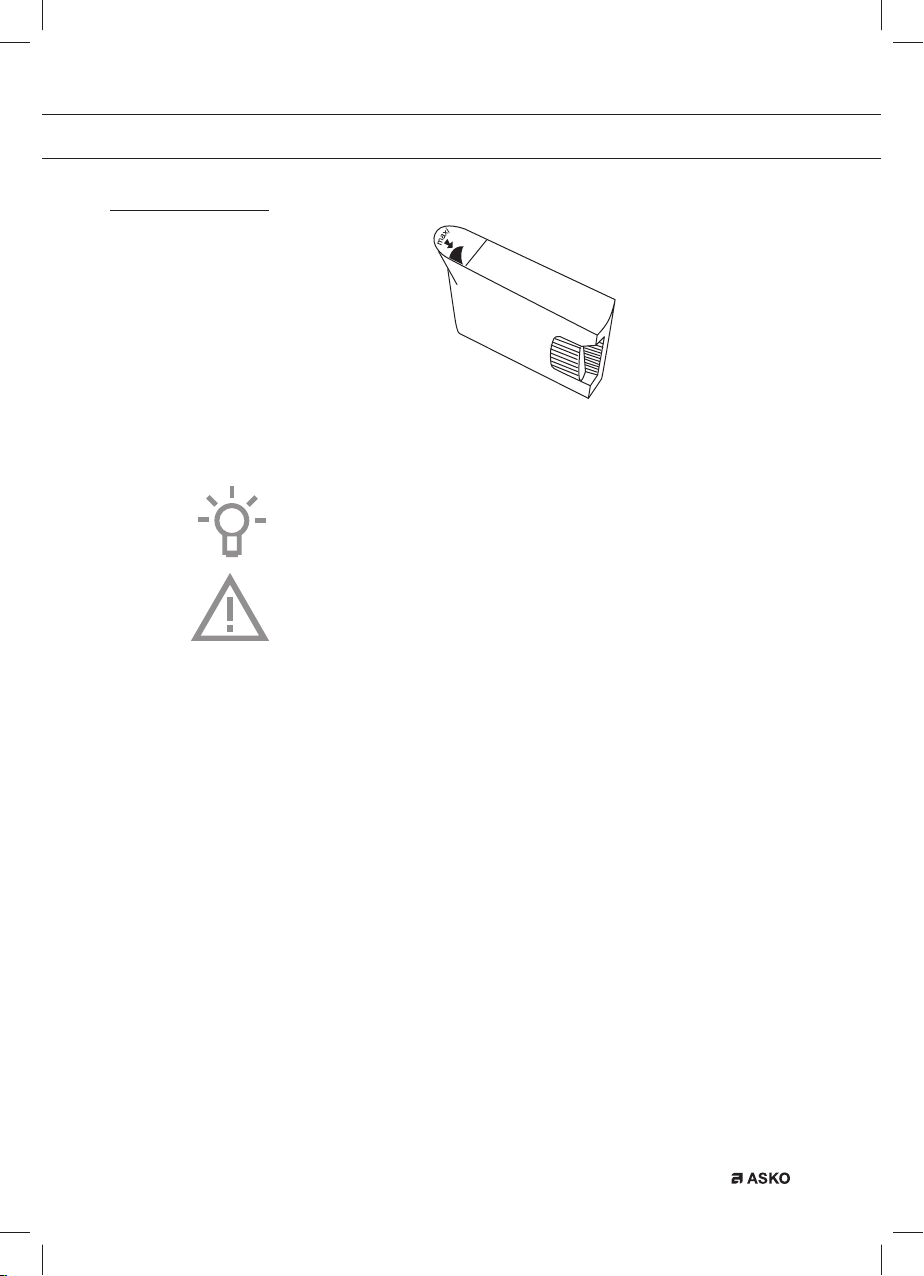
Tank that allows for independent water supply to the steamer. Its capacity
is approximately one litre (maximum level).
Tap water can sometimes be too hard. Lightly mineralised, still, bottled
water will be more effective in cleaning your oven.
Using demineralised water is prohibited (not for human consumption).
Please do not use decalcifi ed water or water treated by a water decalcifi er.
This can cause damage to the steam generator.
INSTALLATION
EN 8
Before connecting the steamer
Warning
Ensure that your appliance has not suffered any damage during
transport (deformed seal or door, etc.). If you see any kind of
damage, before doing anything else, contact your retailer.
In order to easily locate the reference information for your appliance, we
recommend that you note this information on the “After-Sales Service
Department and Customer Relations” page.
Electrical connections
Ensure that:
• the electrical installation has suffi cient voltage;
• the electrical wires are in good condition;
• the diameter of the wires complies with the installation requirements;
• your electrical installation is equipped with 16-ampere thermal-
sensitive protection.
In case of doubt, consult your electrician-installer.
The electrical connections are made before the appliance is installed in
its housing.
The appliance must be installed correctly to ensure electrical safety.
During installation and maintenance operations, the appliance must be
unplugged from the electrical grid; fuses must be cut off or removed.
The oven must be connected with a power cable (standardised) with
three 1.5 mm² conductors (1 ph + 1 N + ground) that must be connected
to a monophase 220-240 V network via a CEI 60083 standardised
receptacle (1 ph +1 N + ground lead) or in accordance with installation
rules. The safety wire (green/yellow) is connected to the appliance’s
terminal and must be connected to the installation earth.
In the case of connections with an electric receptacle, it must remain
accessible after installation of the appliance.
The oven’s neutral conductor (blue wire) must be connected to the
network’s neutral conductor.
In the electrical connection, ensure there is a means available to the user
to ensure they are able to disconnect the appliance from the outlet, either
by pulling the plug from the outlet or by turning off a switch, in compliance
with installation rules.
If the power cable is damaged, it should be replaced by the manufacturer,
its after-sales service department or by a qualifi ed person to avoid
danger.
Warning
We cannot be held responsible for any accident resulting from a
non-existent, defective or incorrect earth lead.
INSTALLATION
EN 9
If the steamer malfunctions in any way, unplug the appliance or remove
the fuse corresponding to the sector where the oven is hooked up.
It is dangerous for anyone other than a qualifi ed person to perform
maintenance operations or repairs.
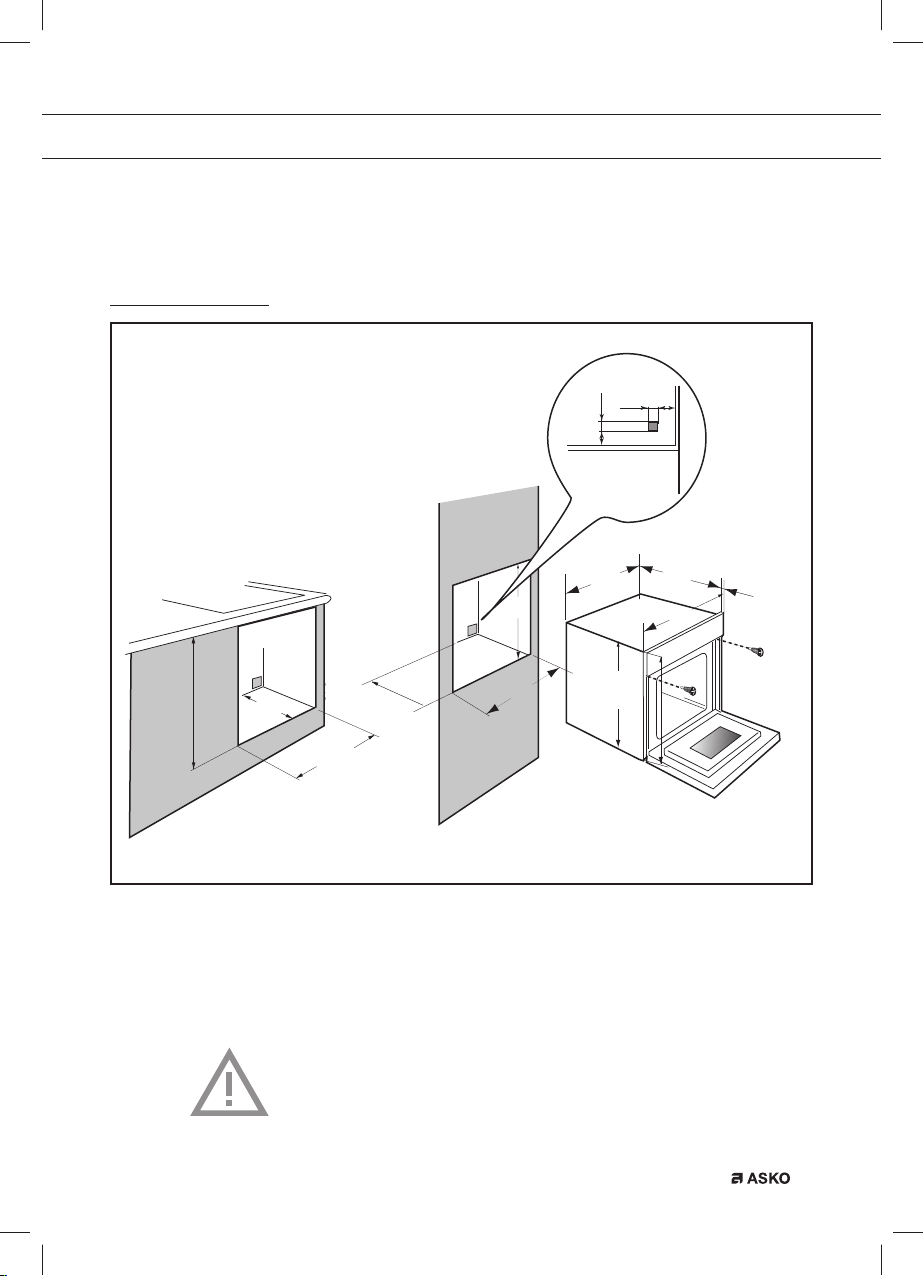
Build-in
1. Place the appliance in the nook. The appliance must be horizontal.
Check the position.
2. For greater stability, attach the steamer in the cabinet with two screws
through the holes provided for this purpose on either side of the front
inner panels.
3. Make the electrical connection.
Ensure that the plug will be accessible after installation.
550
592
400
23
378
450
560
550
mini
560
550 mini
450
456
445
20
50
10
50
INSTALLATION
EN 10
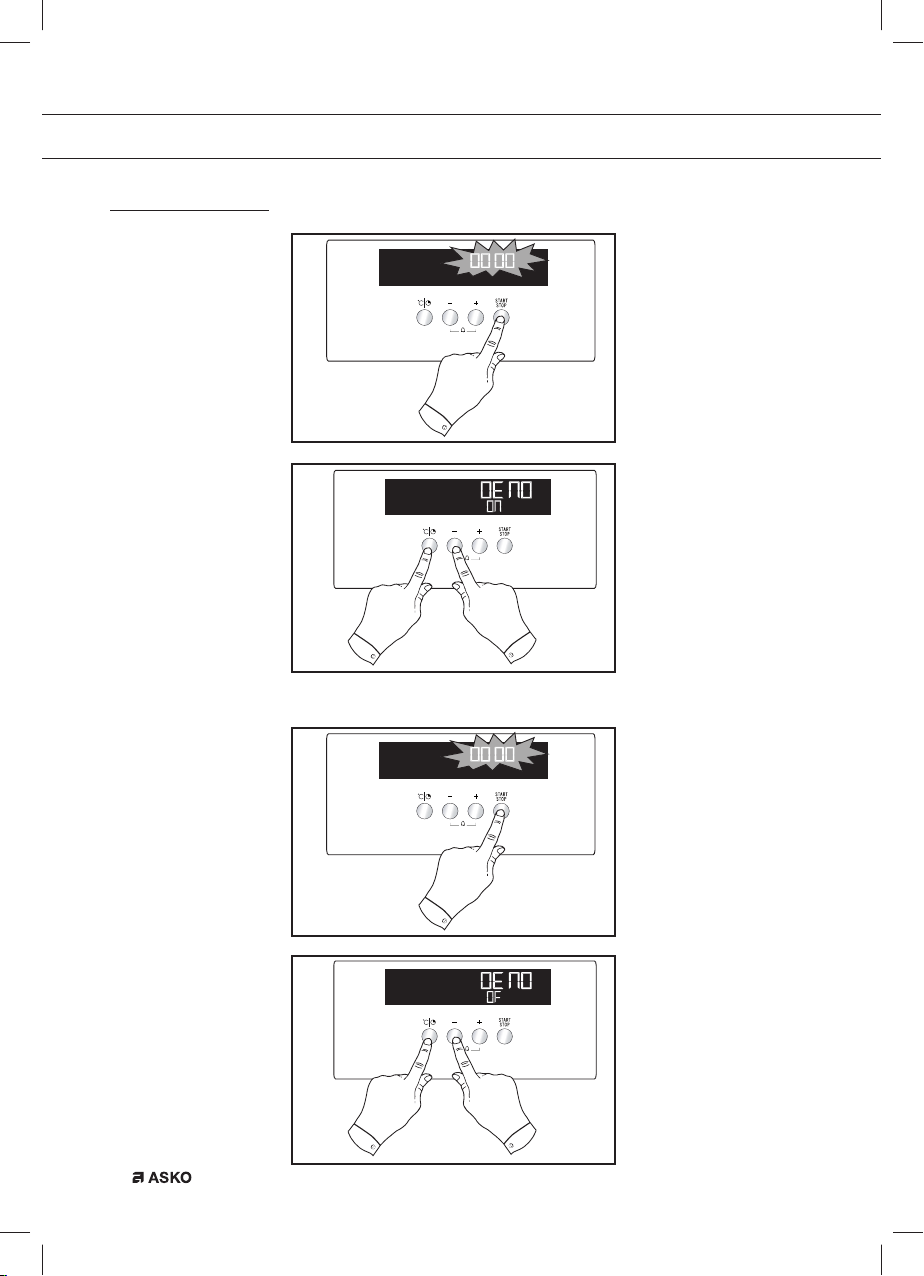
Demo mode
Activating
Fig. 1
Fig. 2
Set the time to 00:00,
see “Setting the clock”
on page 11.
Confi rm with button
START.
Press the DURATION
AND TEMPERATURE
SELECTION and -
buttons simultaneously
for 10 seconds
until “DEMO ON” is
displayed.
The demo mode is
activated.
Deactivating
Set the time to 00:00.
Confi rm with button
START.
Press the
TEMPERATURE/
TIME and - buttons
simultaneously for
10 seconds until “DEMO
OFF” is displayed.
The demo mode is
deactivated.
Fig. 1
Fig. 2
USE
EN 11
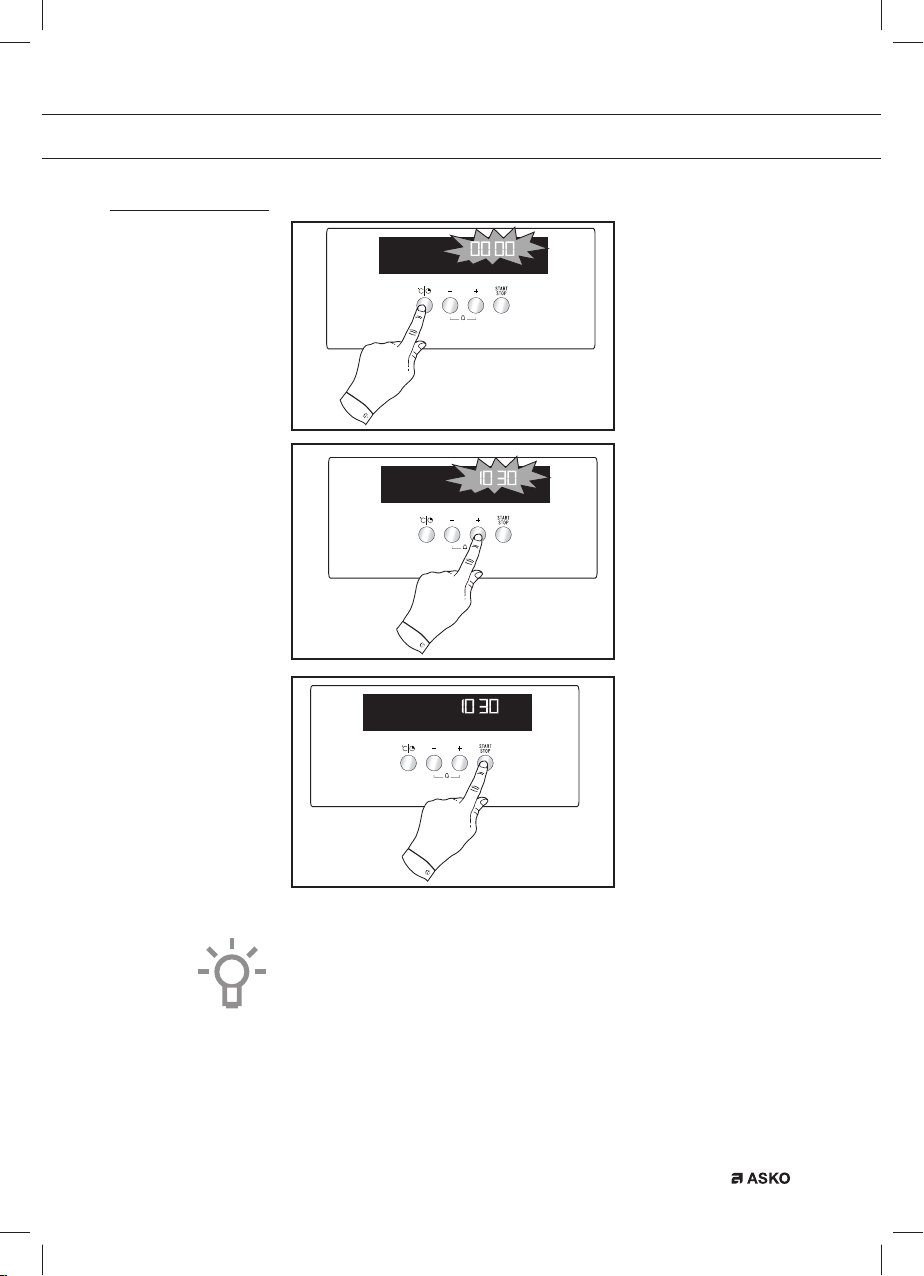
Setting the clock
Fig. 1
Fig. 2
Fig. 3
Press the
TEMPERATURE/TIME
button until the clock
flashes (2 seconds).
Press the + or - buttons
to set the time.
Confirm with the START
button.
Comments:
If the time is not confi rmed using the START button, it is automatically
saved after one minute.
USE
EN 12
Programming for immediate steaming
Operating principle
The water contained in the tank arrives in the cavity via a pipe. This water
is transformed into steam when it comes into contact with a hot surface
located in the lower part of the cavity: this is the steam generator.
There is no need to add water to the cooking dish. To guarantee REAL
STEAM COOKING, your oven is furnished with specially designed
cookware that will allow for perfect cooking.
You MUST fi ll the water tank with fresh water to the max level before
cooking. Return the tank to its housing by fi rmly pushing ALL THE
WAY until you feel the tank LOCK INTO POSITION.
When in use, the appliance becomes hot. Hot steam will escape
when you open the door of the appliance. Keep children away.
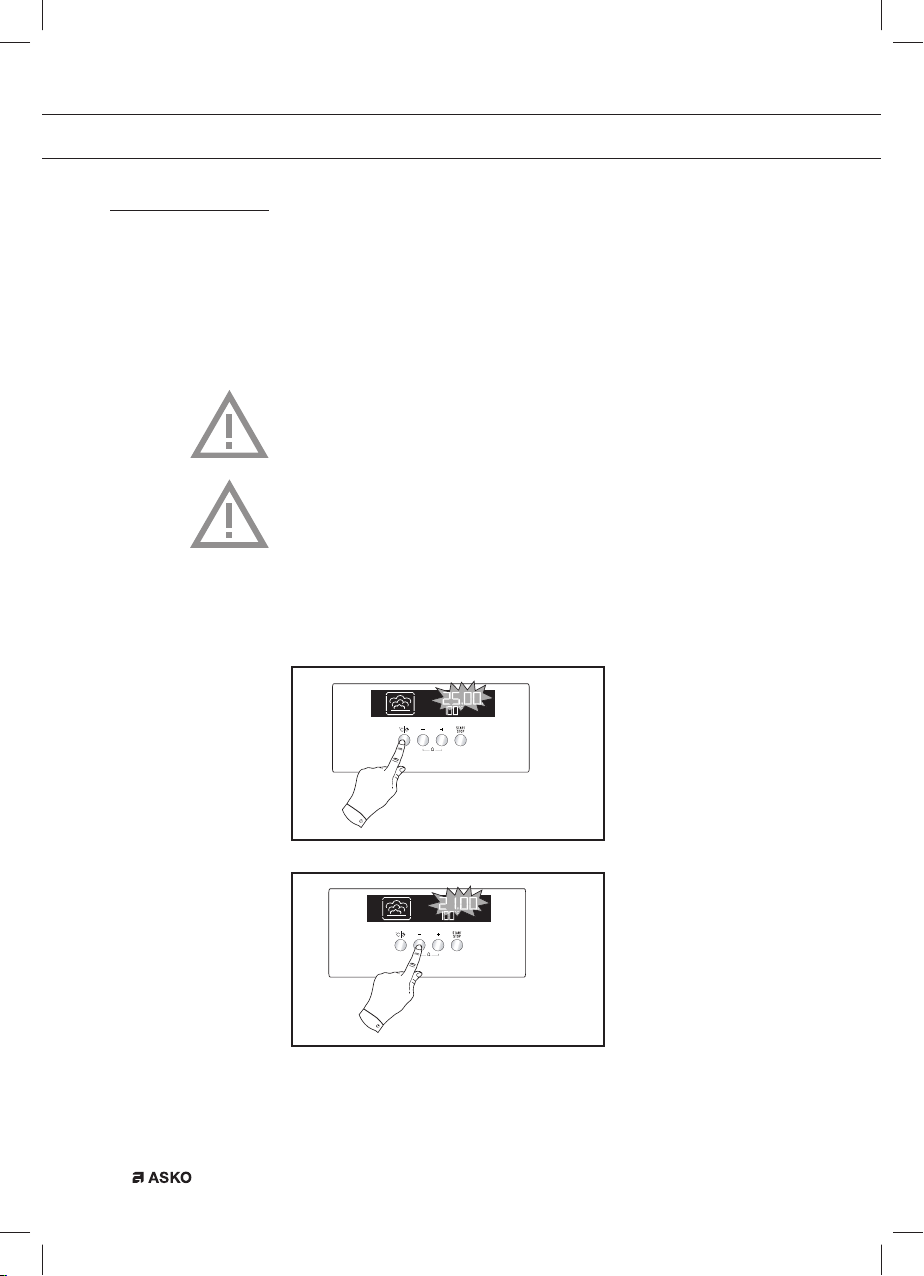
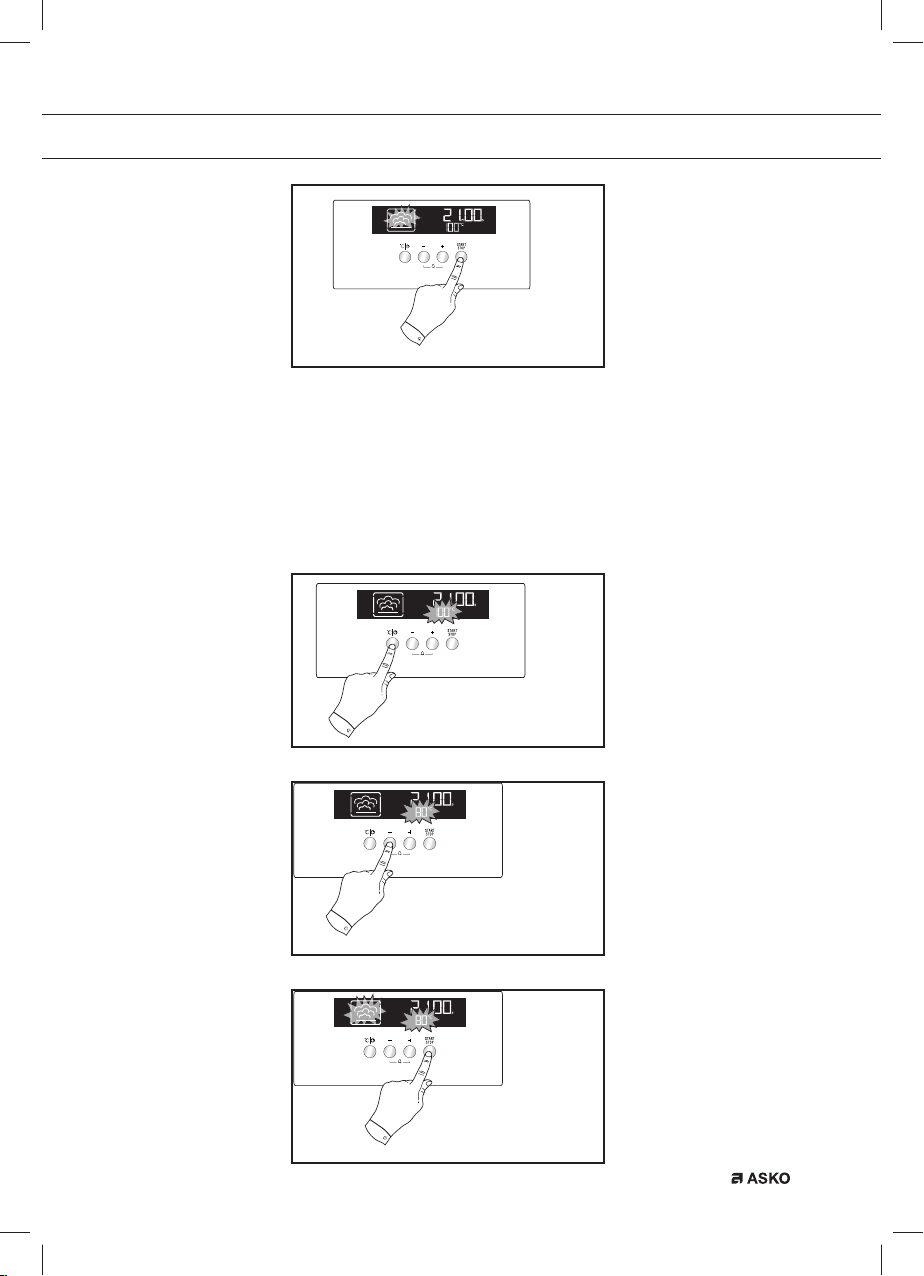
Steam cooking
Steam cooking at 100°C
Fig. 1
Fig. 2
Press the
TEMPERATURE/TIME
button. A cooking time of
25 minutes is suggested
(Fig. 1).
Set the duration required
(min. 5 mins and max.
60 mins) by pressing +
or - (Fig. 2).
USE
EN 13
Fig. 3
Confirm using the
START button (Fig. 3).
The symbol STEAM COOKING symbol and °C light up. When the
temperature has been reached (appr. 10 minutes), the 100°C display
stops fl ashing and a beep is emitted.
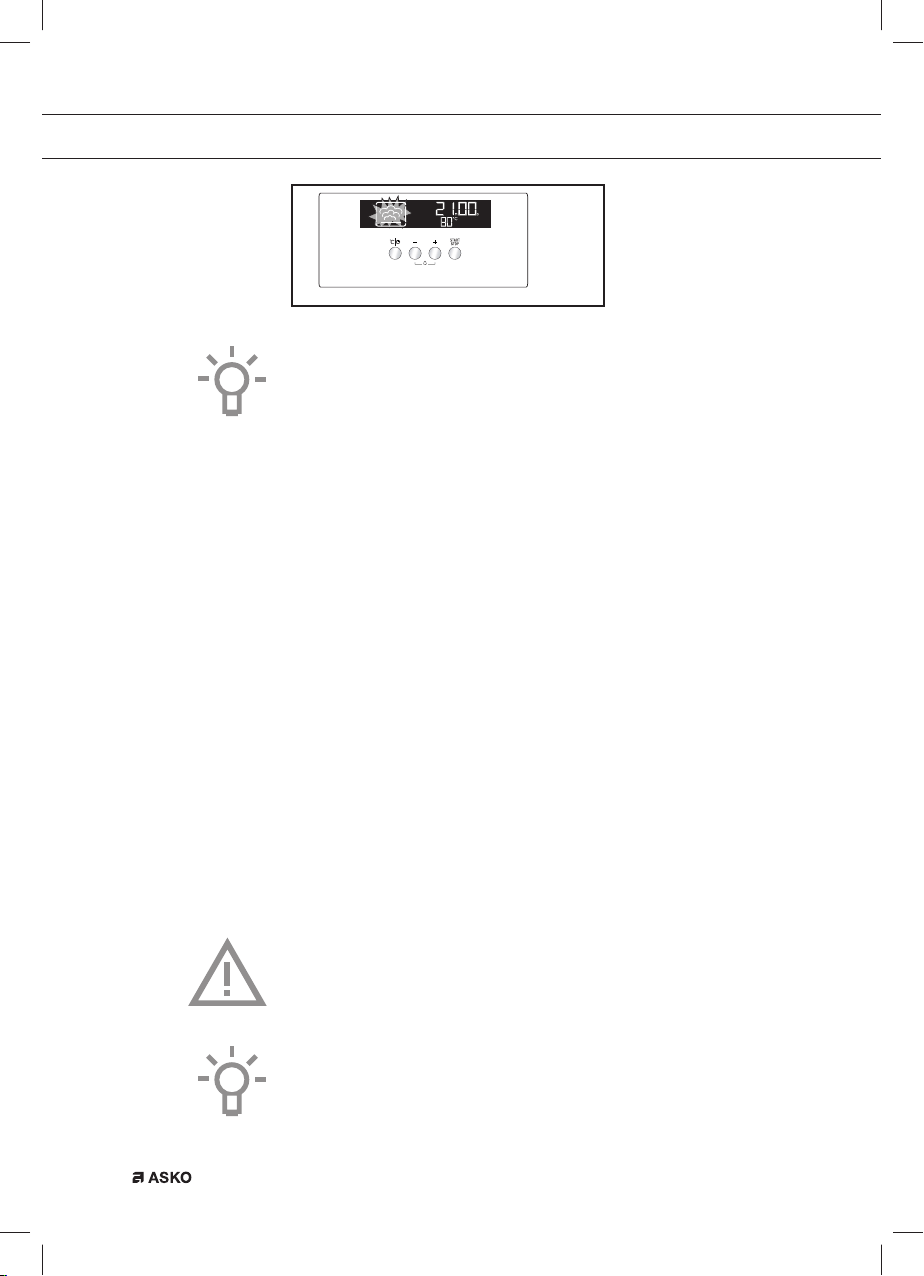
Programming for immediate steaming with temperature change
Fig. 1
Fig. 2
Fig. 3
After setting the cooking
duration (Fig. 1) press
the TEMPERATURE/
TIME button.
The temperature flashes;
you can change it from
55°C to 100°C using the
+ and - buttons. Confirm
using the START button
(Fig. 2).
Steaming begins. The
temperature display
flashes while the
temperature is increasing
(Fig. 3).
USE
EN 14
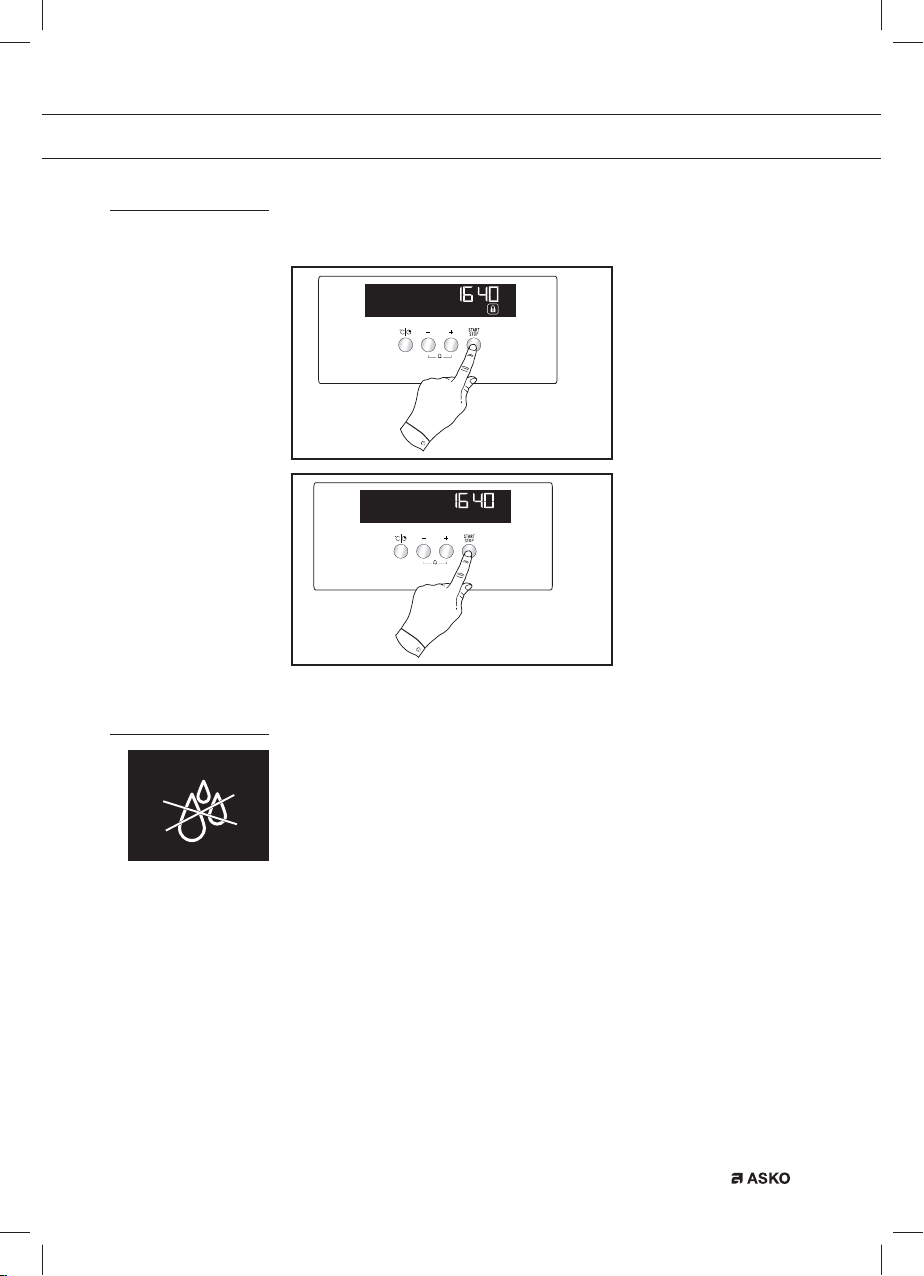
Fig. 4
When the temperature
has been reached,
the 80°C display stops
flashing (Fig. 4) and
a beep is emitted.
Comments:
To avoid compromising steaming results, do not open the appliance door
during cooking.
Changing steaming temperature
During steaming, you can adjust the steaming temperature as follows.
Press the TEMPERATURE/TIME button until the temperature fl ashes
rapidly. Adjust the temperature with the + and - buttons and confi rm with
button START.
Changing the steaming time
During steaming, you can adjust the steaming time as follows. Press the
TEMPERATURE/TIME button until the time fl ashes rapidly. Adjust the
time with the + and - buttons and confi rm with button START.
Cancelling steaming in progress
You can stop steaming at any time by pressing the STOP button (press
and hold for approximately one second).
If steam generation has not yet begun (approximately one minute),
the steamer stops immediately and the time display disappears.
If steam generation has already begun, it takes three minutes;
a countdown begins and the steam escapes before the door is opened.
At the end of a steaming programme
0m00s is displayed. The steaming symbol ceases. Beeps are emitted
once a minute for 10 minutes.
To silence the beeps, press the OFF button or open the door.
You MUST empty the tank after steaming.
Comments:
In order to guarantee good steamer reliability, the fan continues
to function for a short period after steaming is complete.
USE
EN 15
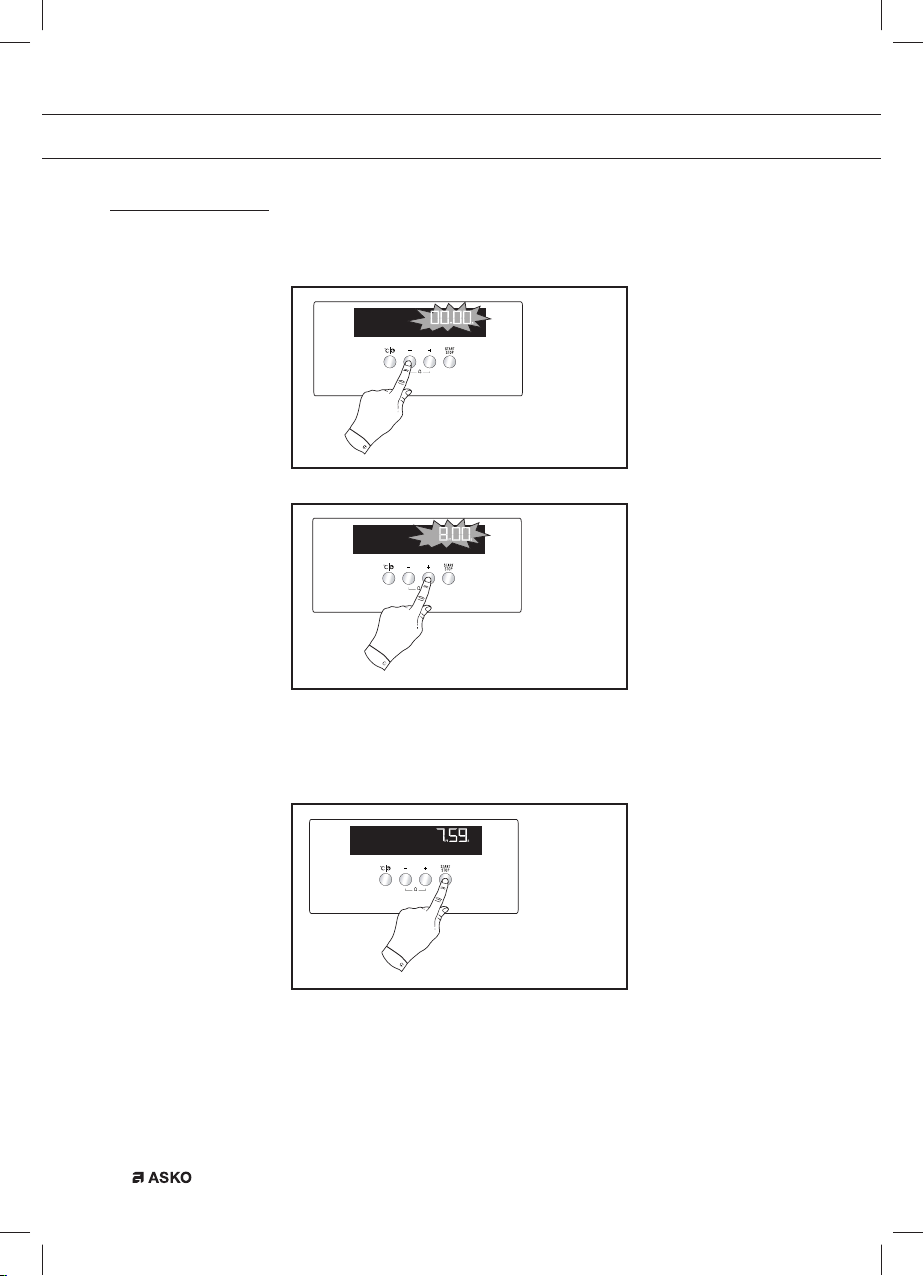
Locking display
It is possible to lock the display. The lock can only be used after
steaming, when the time of day is displayed.
Open your steamer door,
press the START/STOP
button and hold for
several seconds. A beep
is emitted and a padlock
appears on the screen.
From this moment on, no
button is active.
Fig. 1
Fig. 2
To unlock, open the door
and press the STOP
button for a few seconds;
a beep is emitted and
the padlock disappears.
Water tank control
In the event of a water circuit-related problem during steaming,
the “no water” indicator appears and a beep is emitted.
This error is specifi cally associated with:
• an empty tank;
• a poorly seated tank;
• after checking these two items, steaming automatically restarts
as soon as the door is closed.
USE
EN 16
Using the timer
Timer
Your steamer is equipped with an electronic timer that can be used
independent of the steamer functions.
Fig. 1
Fig. 2
Press the + or - button
for a few seconds.
0m00s flashes.
Set the duration
required (max.
59 mins 50 seconds)
by pressing the +/-
buttons.
Confirm by pressing
START/STOP.
When the cooking
time is finished, the
timer beeps for a few
seconds. 0m00s is
displayed and flashes.
Changing or cancelling the timer program
Fig. 3
Stop beeping by
pressing and holding
down START.
Once the timer starts
working, you can
change the remaining
time by pressing the
+ or - buttons and
holding down for a few
seconds.
To cancel the timer,
press STOP for a few
seconds.
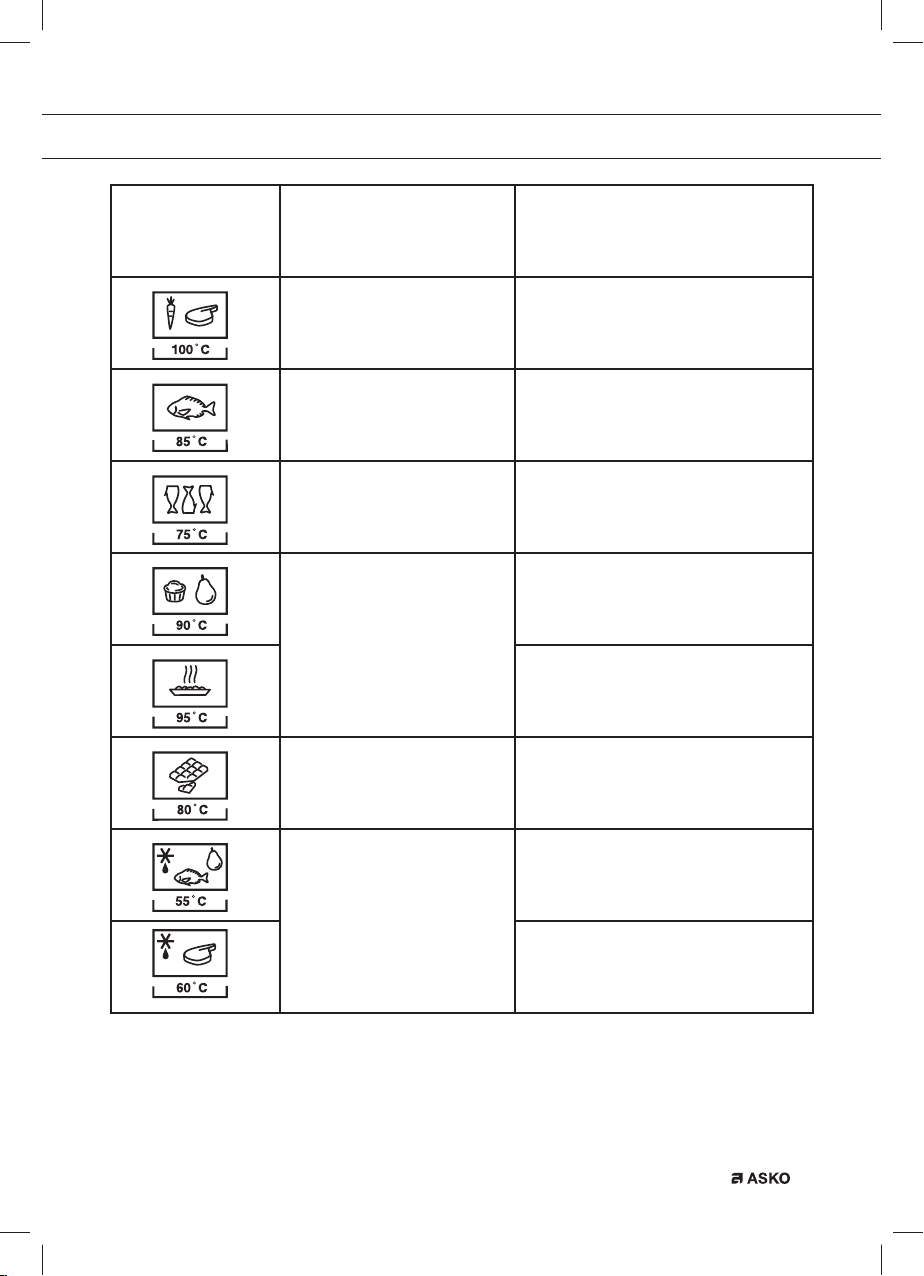
COOKING CHART
EN 17
Functions
Temperature
°C
Steaming
Steaming Examples
Steam cooking mode most
often used
For cooking fragile food Delicate whole fish (trout)
The meat remains iridescent,
the collagen does not appear
Cooking delicate fish (sardine fillets,
red mullet)
For cooking fragile food, fruit,
compotes
Cocotte eggs; stuffed tomatoes.
Ramekins, custard creams, etc.
Terrines, Heating cooked dishes
Low heat
Melting chocolate, butter. Slightly warm
fruit for immediate serving
Slow defrosting without
cooking
Defrosting fish fillets before breading.
Berries that must remain cool (for pies
and sauces)
Defrosting meats before grilling
(e.g.: sausages)
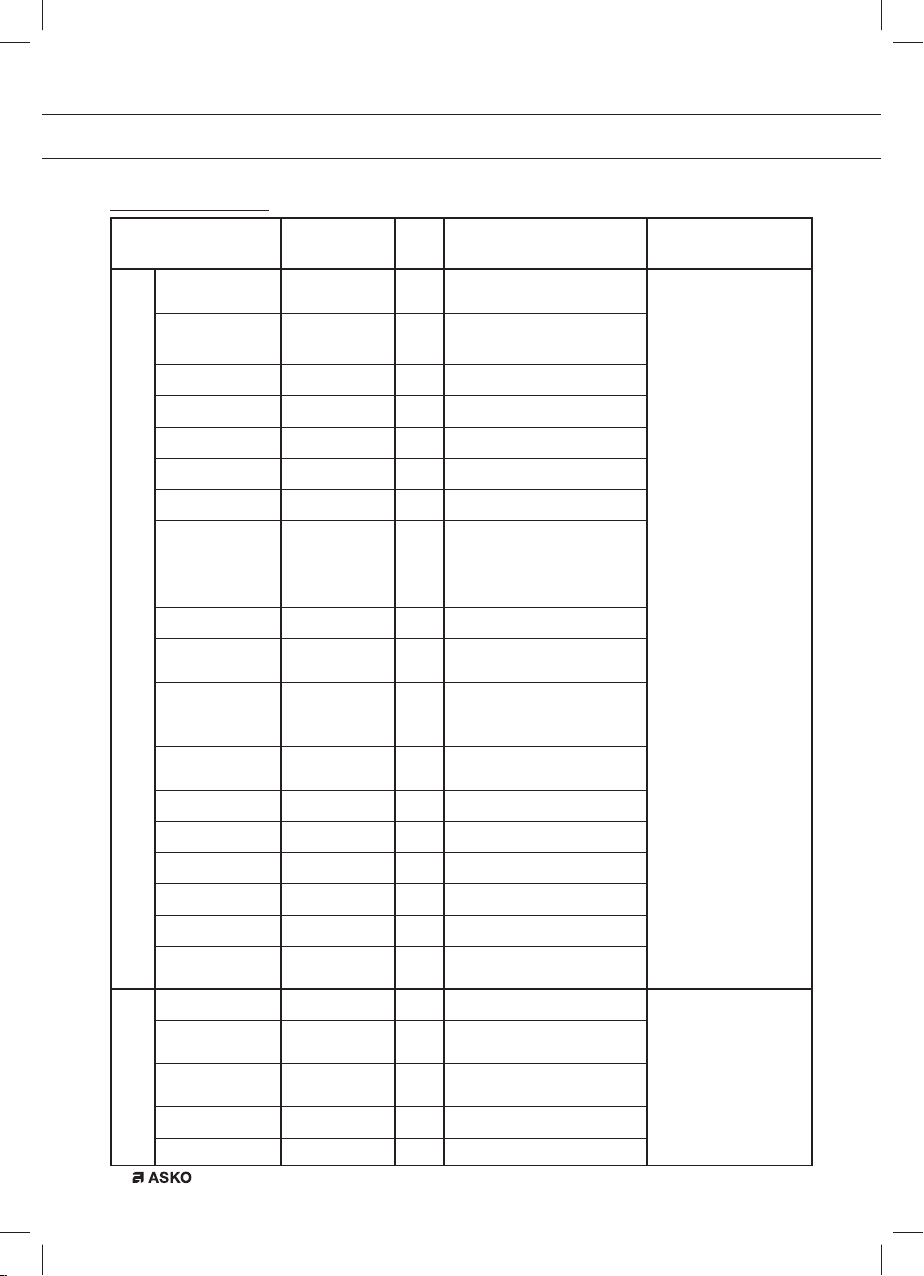
COOKING CHART
EN 18
Steaming chart
Food whatever the
quantity
Times °C Preparations Notes
Vegetables
Artichokes
(small)
40 to 45 min. 100
Placed upside down in the
dish
• These times
depend on the
type, size and
freshness of the
vegetables. Follow
the indications
that appear in the
“Preparations”
column.
• The cooking time
remains the same
regardless of the
quantity to be
cooked. Example:
1 or 4 artichokes
require the same
cooking time.
• To check the level
of cooking, insert
the tip of a knife into
the thickest part of
the vegetable; if it is
cooked there should
be no resistance.
Asparagus 35 to 40 min. 100
For tips only, decrease
cooking time
Broccoli 18 min. 100 In small bunches
Carrots 20 to 22 min. 100 In thin, round slices
Celeriac 25 to 30 min. 100 In thin slices
Pumpkin 15 to 20 min. 100 In cubes
Mushrooms 15 min. 100 In thin strips
Cabbage
30 to 35 min.
22 min.
30 to 35 min.
100
Brussels sprouts
Cauliflower in small
bunches
Green, chopped
Courgettes 10 to 15 min. 100 In round slices
Chinese
artichokes
20 min. 100
Spinach
20 min.
35 min.
100
(fresh) stir while steaming
(frozen) ” ”
Endives 30 min. 100
Core removed, cut in half
lengthwise
Fennel 22 min. 100 Cut in half
Green beans 30 to 35 min. 100
Turnips 15 to 20 min. 100 In cubes
Fresh peas 20 to 25 min. 100 /
Leeks 25 min. 100 Cut in half
Potatoes
25 min.
40 to 45 min.
100
Cut in round slices
Whole
Shellfish,
crustaceans
Scallops 10 to 12 min. 90 With seasoning
• Place the scallops
on the grid of the
glass dish, add
aromatic herbs.
• Place the shell fish
on a bed of e.g.
seaweed.
Mussels/
periwinkle
20 to 25 min. 95 With seasoning
Crabs/hermit
crabs
25 min. 95 /
Lobsters 30 to 35 min. 95 Depending on weight
Langoustines 12 to 15 min. 90 /
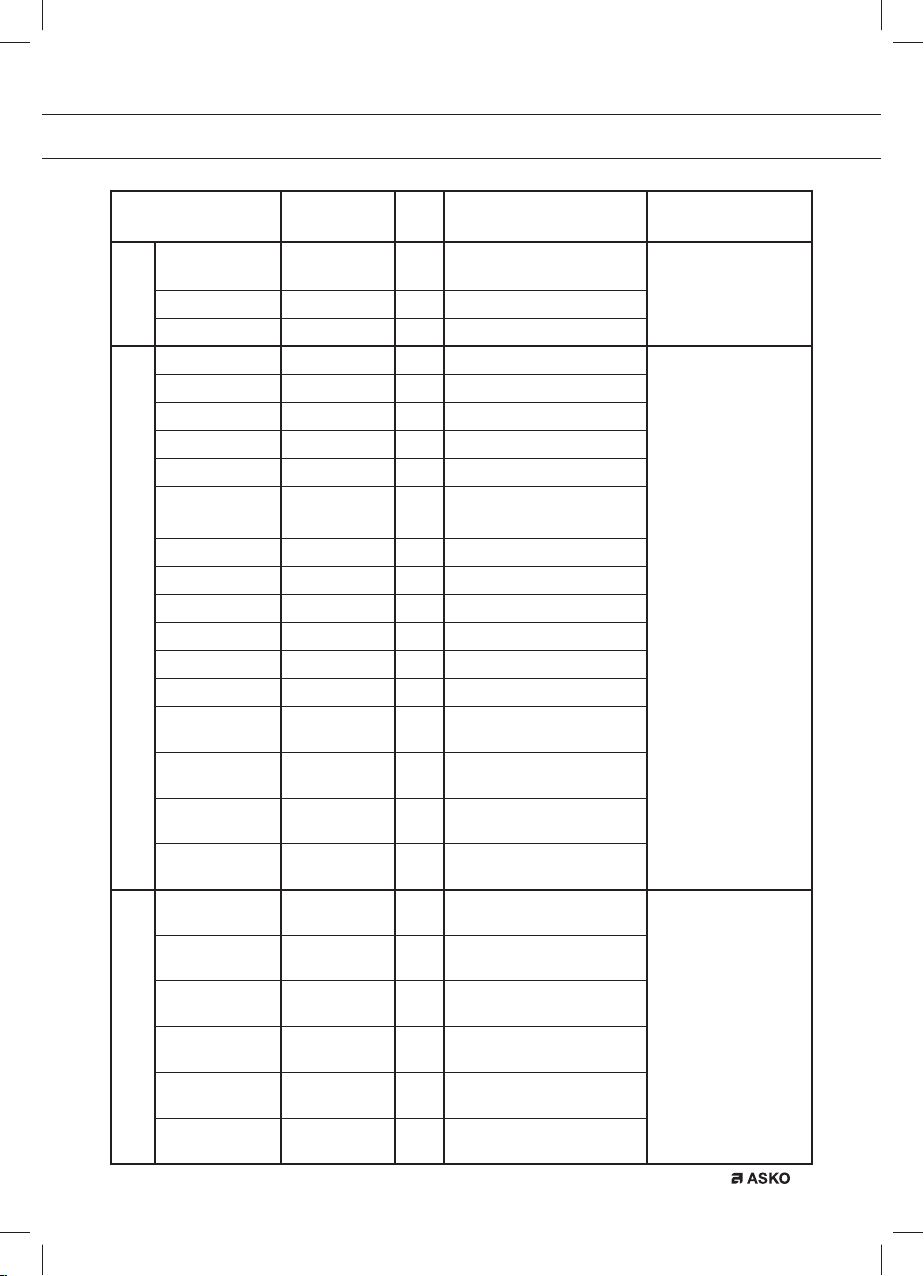
COOKING CHART
EN 19
Food whatever the
quantity
Times °C Preparations Notes
Fruits,
puddings
Apples/pears/
peaches
10 to 15 min. 90 Whole, peeled
• Times depend on
ripeness.
Compote 25 min. 95 Fruit in strips
Custard creams 10 min. 90 In ramekins
Fish
Northern pike 25 to 30 min. 85 Whole (1 kg)
• *Steaks: round
slices of fish of 2 to
3 cm in thickness
(180/200 g) per
person.
• Use only very fresh
products.
• Place whole fish in
the dish as is or on
bay leaves, fennel
or other aromatic
herbs.
• As soon as cooking
is complete, remove
the skin, which will
detach easily.
Cod/hake 13 to 15 min. 85 Steaks (180 g)*
Sea bream 20 to 25 min. 85 Whole (1 kg)
Haddock 15 min. 75 Filets
Herring 20 min. 85 Whole (200 g)
Pollack/black
cod
15 to 20 min. 85 Steaks (180 g)
Monkfish 15 min. 80 Depending on thickness
Mackerel 20 min. 85 Whole (250 g)
Atlantic cod 15 min. 75 Filets
Ray 25 to 30 min. 80
Red mullet 15 min. 80 Whole (200 g)
Red mullet/Sole 10 min. 75 Filets
Spotted dogfish 20 min. 85
Thick steaks
(6 to 10 cm in length)
Salmon 15 to 20 min. 85 Steaks (180/200 g)
Tuna 20 to 25 min. 100 Steaks (180/200 g)
Trout
Whole (1kg)
20 to 25 min. 100
Whole (200 g)
13 to 15 min.
Meat
Beef 15 to 30 min. 100
Roast 800 g:
55 to 60 min.
• Then grill in the
oven or in a grill
pan.
Pork (tenderloin) 25 min. 100
Chicken thighs: 35 to 40 min.
Poultry (breast)
(stuffed)
20 to 25 min.
25 min.
100
Roast turkey:
50 to 60 min.
Sausages 20 min. 90 Morteau 400 g
Boudins 10 to 15 min. 90
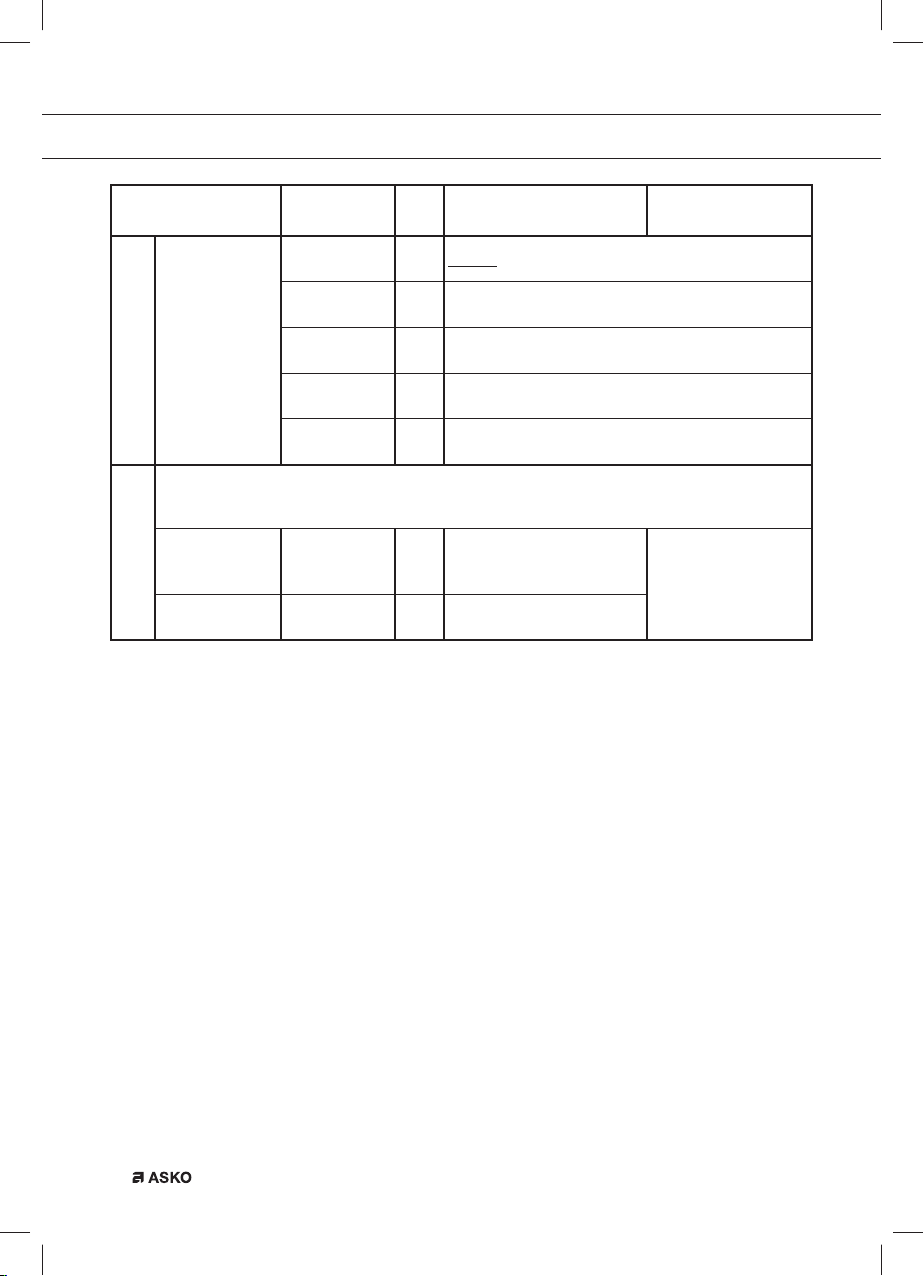
COOKING CHART
EN 20
Food whatever the
quantity
Times °C Preparations Notes
Eggs
Start with very
fresh eggs
kept at room
temperature
7 min. 100 Boiled: placed directly on the grid.
8 min. 100 Softboiled: placed directly on the grid.
10 to 12 min. 100 Hard-boiled
5 to 6 min. 100
Sunny side up: broken in an individual dish placed
on the grid and covered with cooking wrap.
90 Cocotte: See detailed recipes.
Rice, pasta
Place directly in a dish then cover with water or milk. The steam is not enough to saturate
these inflating foods. Place a sheet of aluminium foil on the dish to prevent water droplets
from falling in.
Rice pudding 30 min. 100
100 g rinsed rice – 20 cl
milk – 2 dessertspoons
sugar
• Fluff with a fork
when cooking is
complete.
Semolina 20 min. 100 200 g (1/4 litre water)
MAINTENANCE
EN 21
Caring for your steamer
Maintenance
Cavity (after each use)
Wipe the cavity with a dry cloth after the steam generator has cooled
or let the cavity air dry by leaving the door open.
Water intake tube (once a month)
Remove the water intake tube by turning it toward you.
Remove any hard-water deposits that may be inside (using a thin, pointed
object such as a thin skewer or a knitting needle).
Steam generator (once a month)
Pour 1/2 cup of white vinegar on the generator.
Let sit for a few minutes, then clean and rinse with water.
Do not use sponges or abrasive powders, nor coffee maker cleaning agents.
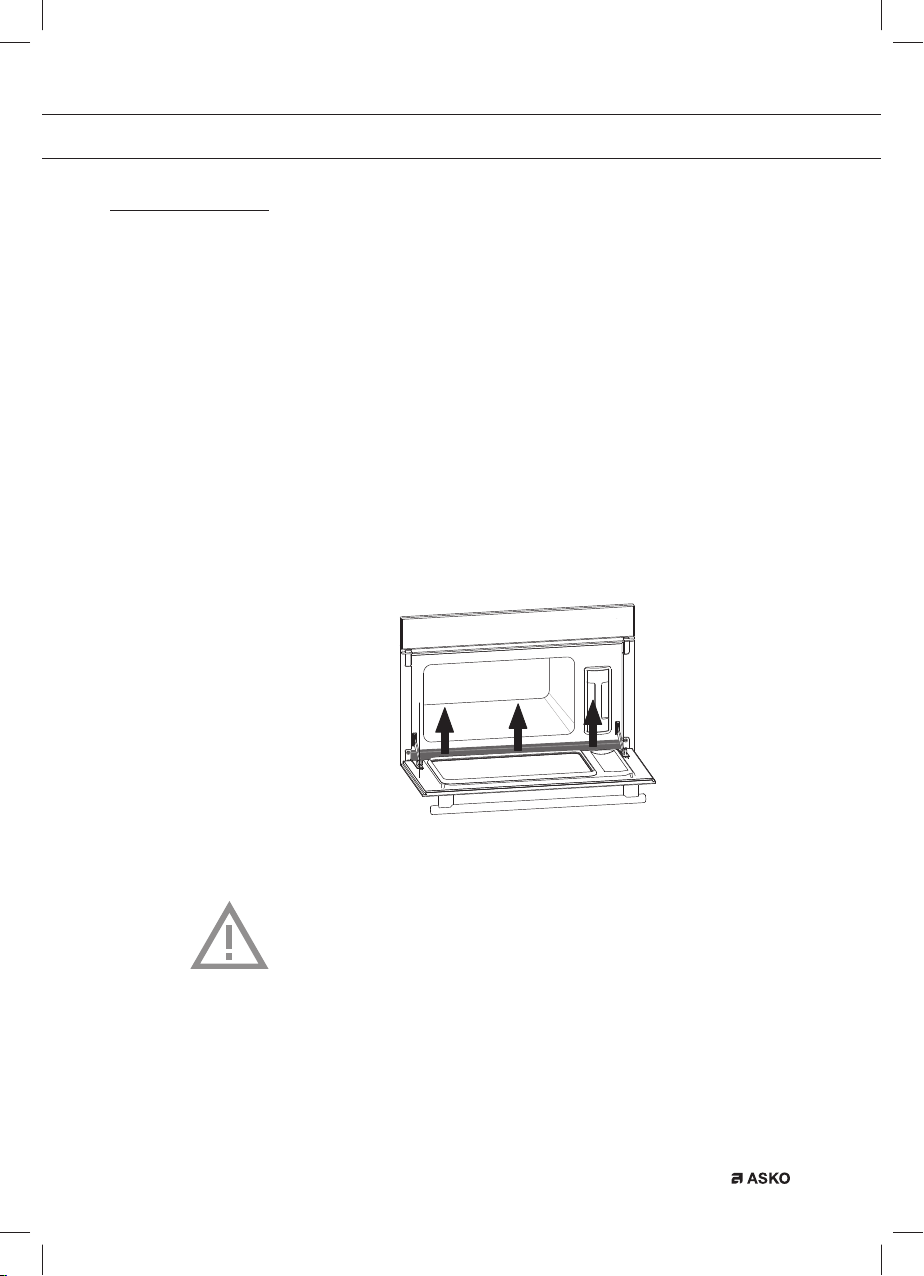
Cleaning the Gutter
Remove the gutter by pulling it upward. Wipe it off and return it to its
position using the three notches provided.
The steamer should not be cleaned with a steam cleaner.
MAINTENANCE
EN 22
Changing the interior lighting
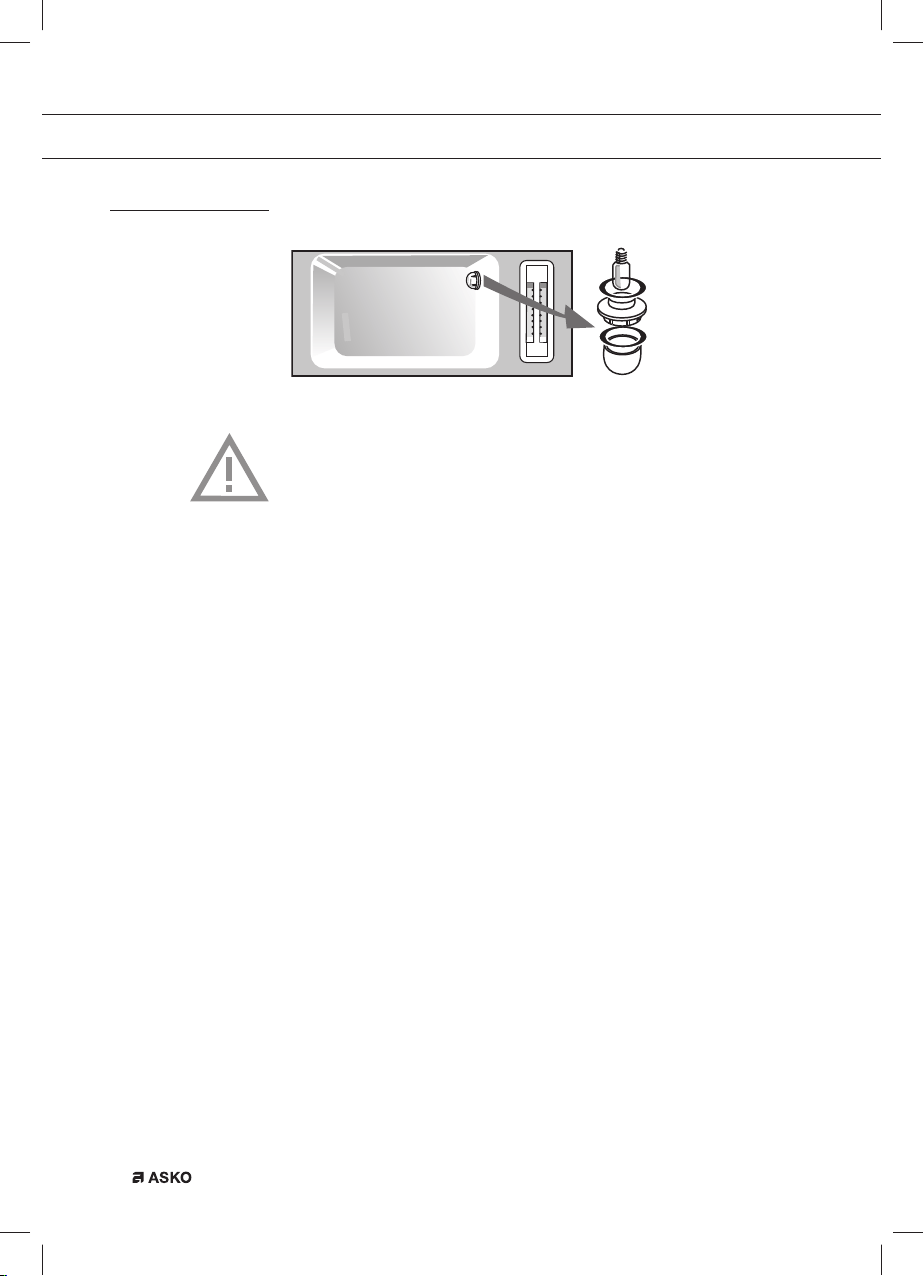
The bulb is located at the back right of your steamer’s cavity.
Disconnect your steamer before performing any task on the bulb to avoid
the risk of electric shock.
• Turn the view port a quarter turn to the left.
• Unscrew the bulb in the same direction.
Bulb specifi cations:
15 W – 220-240 V
300°C – E 14 cap
• Replace the bulb then reposition the view port, making sure the joints
are correctly positioned.
• Reconnect your steamer.
MAINTENANCE
EN 23
Handling malfunctions
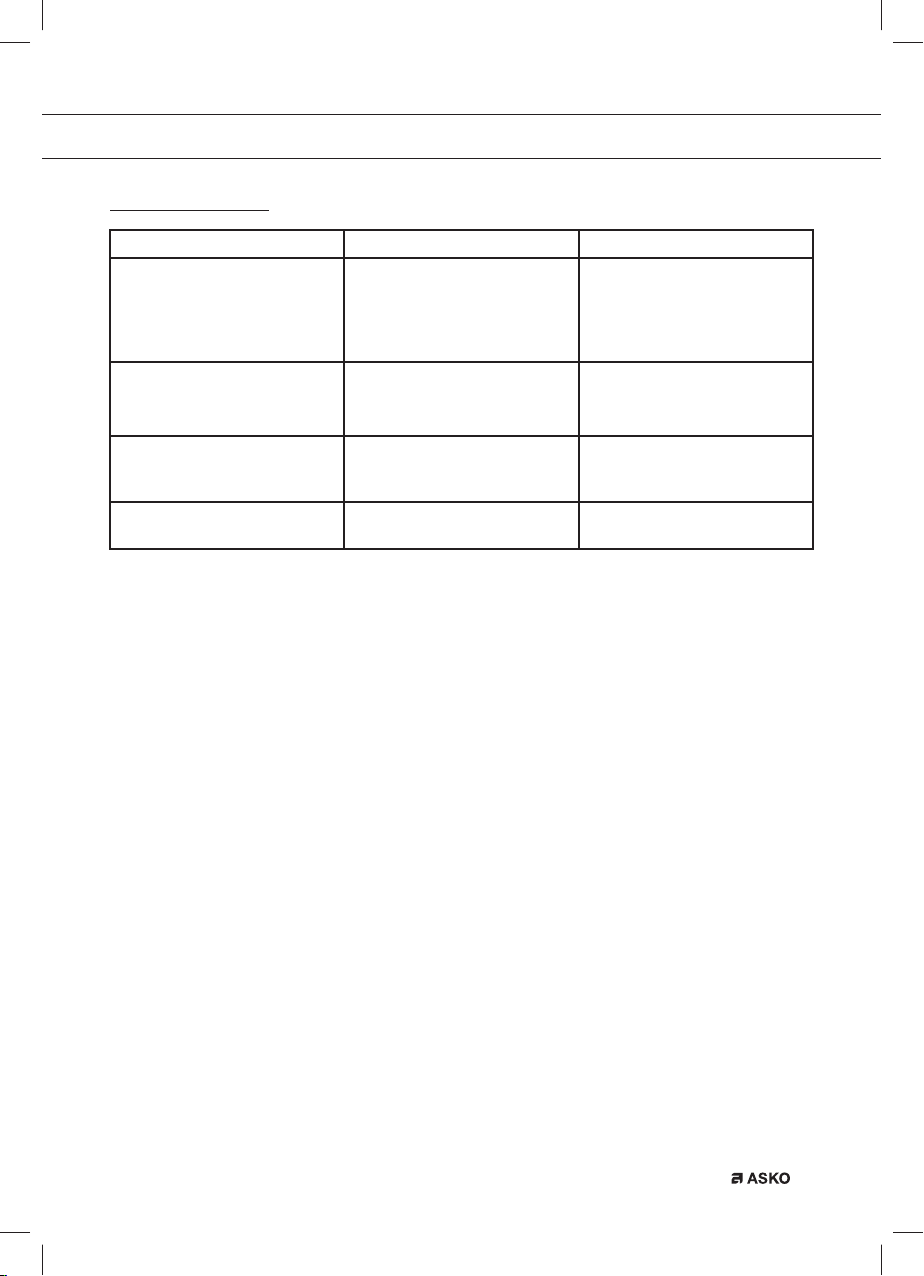
You Notice That... Possible Causes What Should You Do?
Your display does not light up. Steamer is not connected to
power source.
Electronic board is not
functioning.
• Check that the appliance is
receiving electricity (good
fuse).
• Call the Service
Department.
The bulb isn’t working
anymore.
The bulb is out of order.
The steamer is not connected.
Your fuse is out of order.
• Change the bulb.
• Connect the steamer.
• Change the fuse.
Water or steam leak around
the door during steaming.
The door is not properly
closed.
The door seal is defective.
• Call the Service
Department.
The steamer can not be
switched on.
The demo mode is activated. • Deactivate the demo
mode, see page 9.
In all circumstances, if your efforts are not sufficient, contact the Service Department.
NOTE
EN 24