
Use & Care Guide
Manual de uso y cuidado
Guide d’utilisation et d’entretien
English / Español / Français
Table of Contents / Índice / Table des matières......2
* = color number, número de color, numéro de couleur
Models/Modelos/Modèles: 110.2513*410
P/N W10783954B
Sears Brands Management Corporation
Hoffman Estates, IL 60179 U.S.A.
www.kenmore.com
Sears Canada Inc.
Toronto, Ontario, Canada M5B 2C3
www.sears.ca
Designed to use only HE High Efficiency
detergents.
Diseñada para utilizar solamente
detergentes de alto rendimiento (HE).
Conçue pour l’utilisation de détergents
haute efficacité seulement (HE).
Kenmore®
Top-Loading High Efficiency
Low-Water Washer
Lavadora de alto rendimiento y carga
superior, con nivel bajo de agua
Laveuse haute efficacité à faible
consommation d’eau avec chargement par
le dessus

2
Table of Contents
Índice Table des matières
WASHER SAFETY .................................... 3
WHAT’S NEW UNDER THE LID? .............4
CONTROL PANEL
AND FEATURES ...................................... 5
CYCLE GUIDE .........................................7
USING YOUR WASHER ........................... 8
WASHER MAINTENANCE ...................... 11
TROUBLESHOOTING ............................. 13
PROTECTION AGREEMENTS .................17
WARRANTY ...........................................17
ASSISTANCE OR SERVICE ...... Back Cover
SÉCURITÉ DE LA LAVEUSE .................... 35
QUOI DE NEUF SOUS LE
COUVERCLE? ....................................... 36
TABLEAU DE COMMANDE ET
CARACTÉRISTIQUES ............................37
GUIDE DE PROGRAMMES .................... 38
UTILISATION DE LA LAVEUSE ..............40
ENTRETIEN DE LA LAVEUSE ................. 43
DÉPANNAGE ........................................45
CONTRATS DE PROTECTION ................51
GARANTIE ............................................51
ASSISTANCE OU
SERVICE ...................... Couverture arrière
SEGURIDAD DE LA LAVADORA ............. 18
¿QUÉ HAY DE NUEVO DEBAJO
DE LA TAPA? .........................................19
PANEL DE CONTROL
Y CARACTERÍSTICA .............................20
GUIÁ DE CICLOS ...................................21
USO DE SU LAVADORA ........................ 23
MANTENIMIENTO DE LA
LAVADORA .......................................... 26
SOLUCIÓN DE PROBLEMAS ................. 28
CONTRATOS DE PROTECCIÓN ............34
GARANTÍA ...........................................34
AYUDA O SERVICIO
TÉCNICO ........................... Contraportada
3
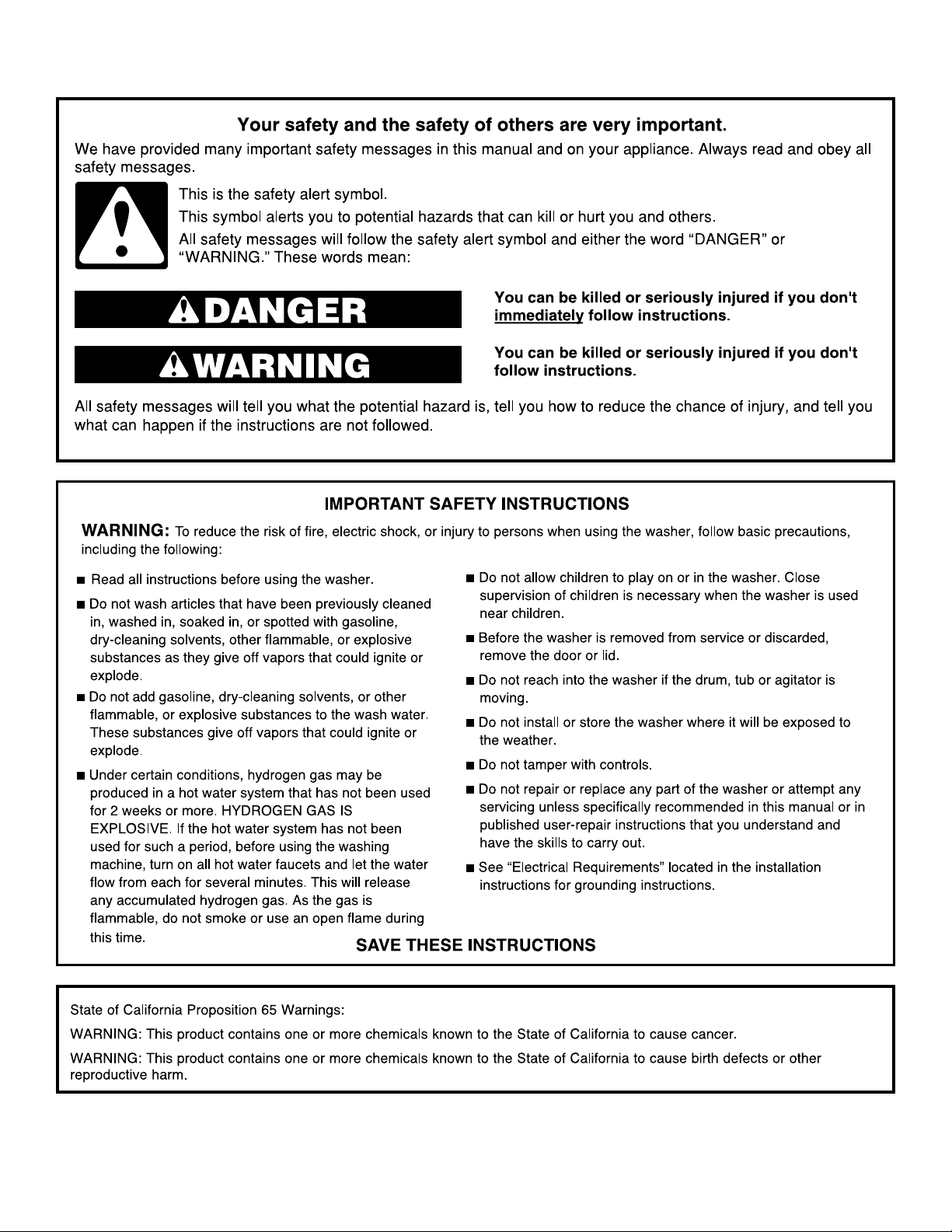
WASHER SAFETY
4
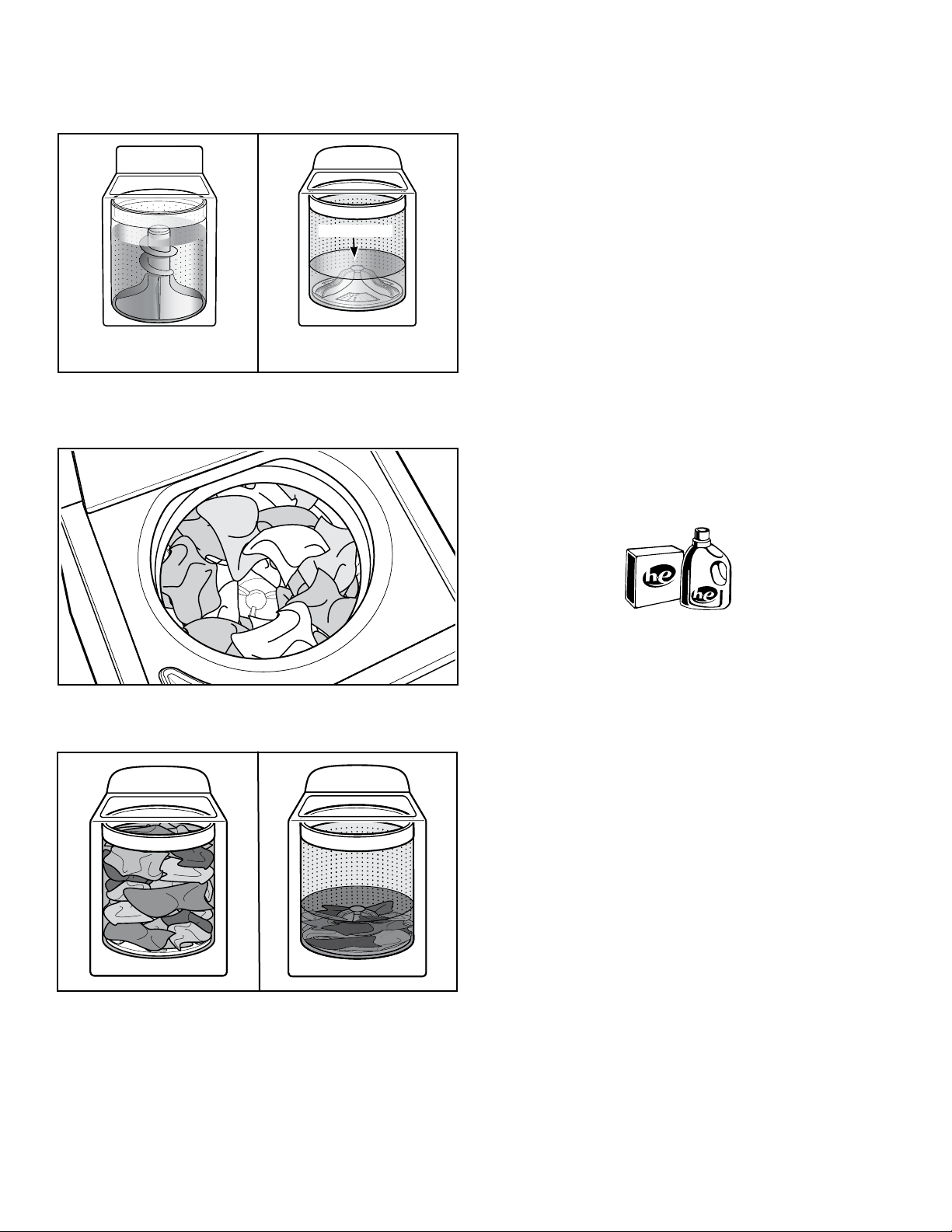
As the washer dampens and moves the load, the level of the
items will settle in the basket. This is normal, and does not
indicate that more items should be added.
IMPORTANT: You will not see a washer basket full of water as
with your past agitator-style washer. It is normal for some of the
load to be above the water line.
Automatic Load Size Sensing
Once you start the cycle, the lid will lock, and the washer will
begin the sensing process to determine the correct water level for
the load. This may take several minutes. The basket will start to
spin prior to adding water, this is part of the sensing process and
is normal.
This low-water wash method uses less water and energy
compared to a traditional agitator-style washer.
Choosing the Right Detergent
Use only High Eciency detergents. The package will be marked
“HE” or “High Eciency.” Low-water washing creates excessive
sudsing with a non-HE detergent. Using non-HE detergent
will likely result in longer cycle times and reduced rinsing
performance. It may also result in component malfunction and,
over time, buildup of mold or mildew. HE detergents should be
low-sudsing and quick-dispersing to produce the right amount
of suds for the best performance. They should hold soil in
suspension so it is not redeposited onto clean clothes. Not all
detergents labeled as High Eciency are identical in formulation
and their ability to reduce suds. For example, natural, organic,
or homemade HE detergents may generate a high level of
suds. Always follow the detergent manufacturer’s instructions to
determine the amount of detergent to use.
Normal Sounds You Can Expect
At dierent stages of the wash cycle, you may hear sounds and
pauses dierent from those of your previous washer. For example,
you may hear a clicking and hum at the beginning of the cycle
as the lid lock goes through a self-test. There will be dierent
kinds of humming and whirring sounds as the agitator tests for
load balance or moves the load. Sometimes, you may hear
nothing as the washer determines the correct water level for the
load and allows the load to soak.
Use only High Efficiency (HE) detergent.
Improved Cleaning
Low-water cleaning means concentrated cleaning. Rather than
diluting detergent as done in an agitator-style washer, this
washer delivers the detergent directly to the soils. This low water
wash also allows the clothing to move in a more eective way to
remove soils.
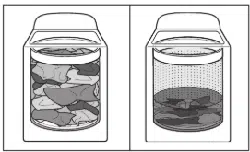
Cleaning with Less Water
The most striking dierence in your new washer is the low-water
washplate wash system. The washer automatically adjusts the
water level to the load size. No water-level selector is needed.
Traditional agitator-style
washer
Washer with low-water
washplate wash system
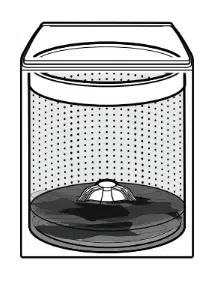
Washplate
WHAT'S NEW UNDER THE LID?
For best performance, evenly load items in loose heaps around
the washplate.
5
CONTROL PANEL AND FEATURES
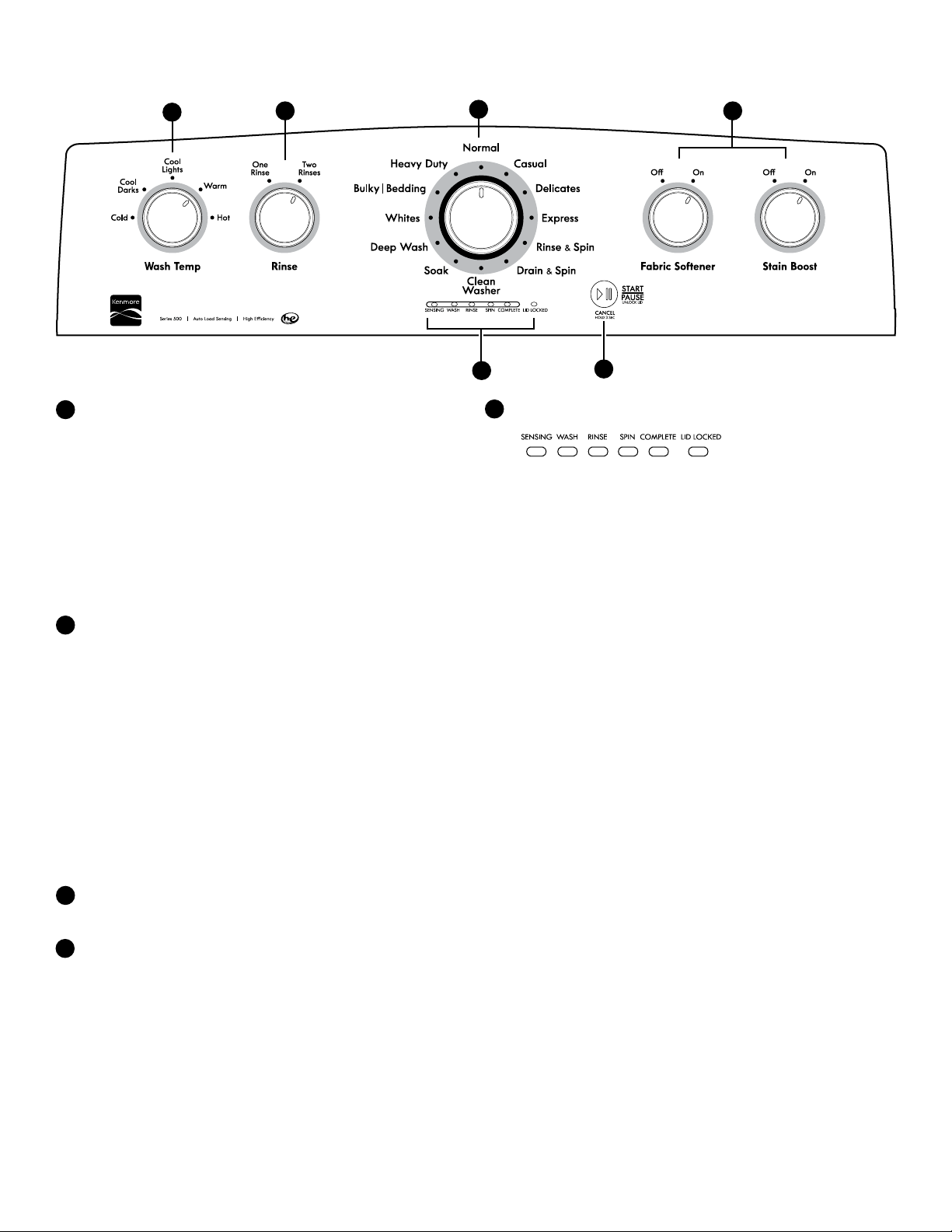
WASH TEMP
Wash Temp senses and maintains uniform water temperatures
by regulating incoming hot and cold water.
Select a wash temperature based on the type of fabric
and soils being washed. For best results and following the
garment-label instructions, use the warmest wash water safe
for your fabric.
• On some models and cycles, warm and hot water may be
cooler than your previous washer.
• Even in a cold- and cool-water wash, some warm water
may be added to the washer to maintain a minimum
temperature.
CYCLE OPTIONS
The following options may be added to most cycles.
See “Cycle Guide” for additional details.
RINSE
This option can be used to automatically add a second
rinse to most cycles.
FABRIC SOFTENER
This option must be set to “On” if using fabric softener
during a cycle. It ensures that fabric softener is added
at the correct time in the rinse for even distribution.
STAINBOOST
This option provides enhanced cleaning action for tough
stains. It will add additional spin and soak time to
the cycle.
WASH CYCLE KNOB
Use the Wash Cycle knob to select cycles on your washer. See
“Cycle Guide” for detailed descriptions of cycles.
START/PAUSE/UNLOCK LID
Press to start the selected cycle; press again to pause the
cycle and unlock the lid. Press and hold 3 seconds to cancel a
cycle and drain the water from the washer.
NOTE: If the washer is spinning, it may take several minutes
to unlock the lid.
1
2
3
4
CYCLE STATUS LIGHTS
The Cycle Status Lights show the progress of a cycle. At each
stage of the process, you may notice sounds or pauses that
are dierent from traditional washers.
SENSING
When the START/Pause/Unlock Lid is pressed, the washer
will rst perform a self-test on the lid lock mechanism. You
will hear a click, the basket will make a slight turn, and
the lid will unlock briey before locking again. Once the
lid has locked the second time, the washer will use short,
slow spins to estimate the load size. These sensing spins
may take 2 to 3 minutes before water is added to the load
and you may hear the hum of these spins. If the sensing
light is on, then washer is working properly. You will hear
the motor turn the basket in short pulses to thoroughly wet
the load. The washer will then move the load briey, pause
to allow water to soak in to the load, and resume adding
water. This process may repeat until the correct amount
of water has been added for the load. You may also hear
water owing through the dispenser, adding detergent to
the load.
NOTE: Avoid opening the lid during sensing. The sensing
process will start over when the washer is restarted. The
sensing light may also come on during the Soak and Wash
portions of the cycle. This is normal.
WASH
During the rst stage of the sensing/wash cycle, water will
partially ll the washer and begin to move the load. It is
normal to have the sensing light on during this stage. You
will hear the agitator rotate followed by a several second
pause. This process will repeat for several minutes, allowing
the entire load to become saturated. The lower water
level combined with HE detergent at this stage allows
for concentrated cleaning. It is normal for the load to be
above the water line during this stage. At the beginning of
the second stage, the washer will add water to the correct
level based on the load size. You will hear the agitator
increase speed during this stage of the wash cycle. The
motor sounds may change at dierent stages in the wash
cycle.
5
3
1
5
4
2 2

6
LID LOCKED
The Lock feature allows for higher spin speeds. When lit,
the lid is locked and cannot be opened without pausing the
cycle. When the light is off, the lid can be opened.
To open the lid after it has been locked, press
START/Pause/Unlock LId. The lid will unlock
once the washer movement has stopped. This
may take several minutes if the load was spin-
ning at high speed. Press START/Pause/Unlock
LId while the lid is closed to resume the cycle.
RINSE
You will hear sounds similar to the wash cycle as the washer
rinses and moves the load. You may hear the motor turning
on briey (short hum) to move the basket while lling. When
Fabric Softener-On option is selected, additional water is
added to the rinse to improve fabricsoftener distribution.
SPIN
The washer spins the load at increasing speeds for proper
water removal based on the selected cycle and spin speed.
COMPLETE
Once the cycle is complete, this light will come on. For best
results, promptly remove the load.
7
CYCLE GUIDE
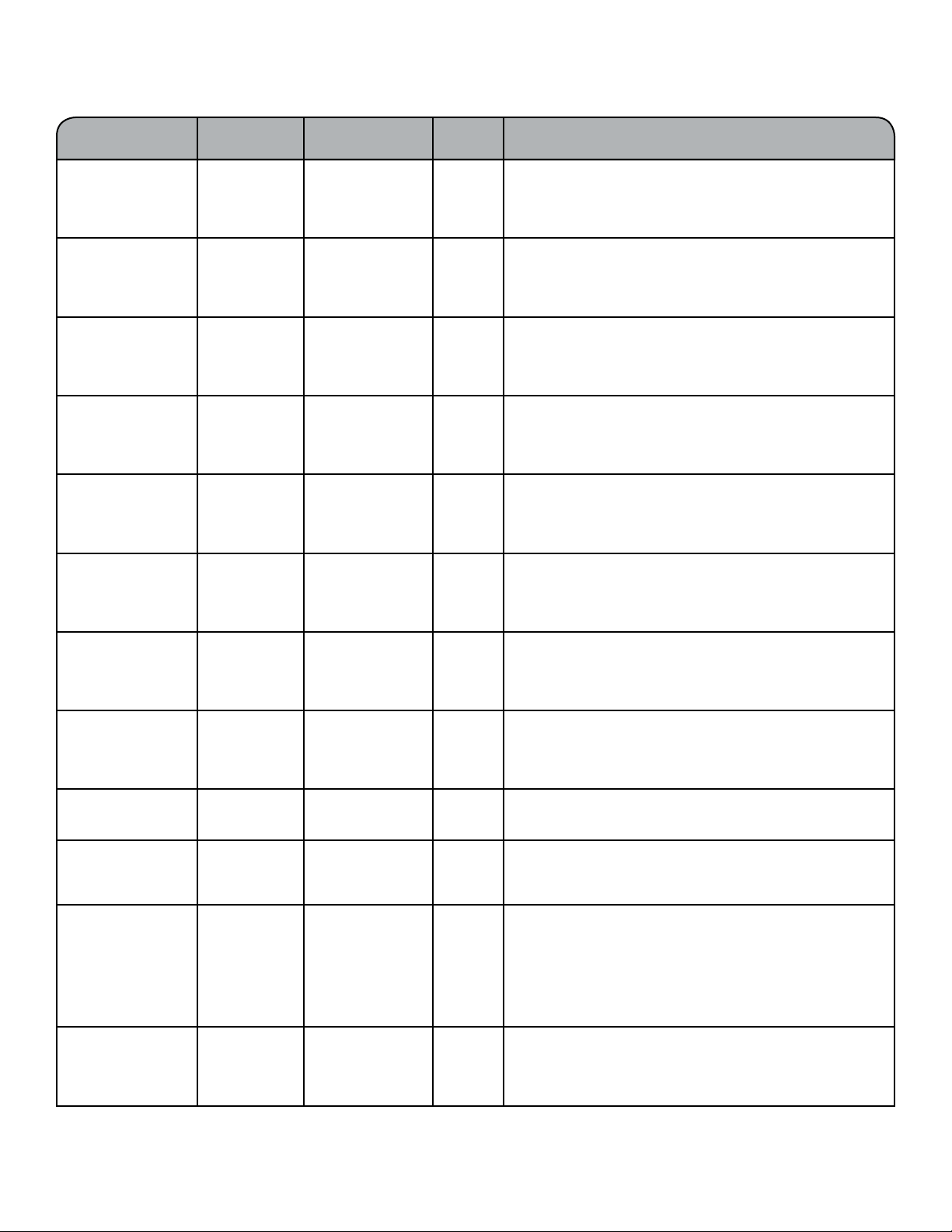
For best fabric care, choose the cycle that best ts the load being washed. Recommended settings for best performance
are shown in Bold. Not all settings and options are available on each cycle.
*All rinses are cold.
NOTE: If you are using fabric softener, be sure to select Fabric Softener-On option.
Casual and mixed
loads, jeans, towels,
sturdy fabrics
Deep Wash Hot
Warm
Cool Lights
Cool Darks
Cold
High Provides additional water and alternating wash action for
heavily soiled mixed loads. Water-level sensing process may
take longer for some items than for others because they will
absorb more water than other fabric types.
Heavily soiled
fabrics
Whites Hot
Warm
Cool Lights
Cool Darks
Cold
High Use this cycle for heavily soiled white fabrics.
Large items such
as sheets, sleeping
bags, small
comforters, jackets,
small washable rugs
Bulky/Bedding Hot
Warm
Cool Lights
Cool Darks
Cold
Low Use this cycle to wash large items such as jackets and small
comforters. The washer will ll with enough water to wet
down the load before the wash portion of the cycle begins
and uses a higher water level than other cycles.
Sturdy fabrics,
colorfast items,
towels, sheets, jeans
Heavy Duty Hot
Warm
Cool Lights
Cool Darks
Cold
High Use this cycle for heavily soiled or sturdy items. Water-level
sensing process may take longer for some items than for
others because they will absorb more water than other fabric
types.
Cottons, linens, and
mixed-garment
loads
Normal Hot
Warm
Cool Lights
Cool Darks
Cold
High Use this cycle for normally soiled cottons and mixed-fabric
loads.
No-iron fabrics,
cottons, perm. press,
linens, synthetics
Casual Hot
Warm
Cool Lights
Cool Darks
Cold
Low Use this cycle to wash loads of no-iron fabrics such as sport
shirts, blouses, casual business clothes, permanent press, and
blends.
Machine-wash silks,
lingerie, washable
wools
Delicates Hot
Warm
Cool Lights
Cool Darks
Cold
Low Use this cycle to wash lightly soiled items indicating “Machine
Washable Silks” or “Gentle” cycle on the care label. Place
small items in mesh garment bags before washing.
Lightly soiled fabrics Express Hot
Warm
Cool Lights
Cool Darks
Cold
High Use this cycle to quickly clean a small number of lightly
soiled items.
Swimsuits and items
requiring rinsing
without detergent
Rinse &
Spin
Cold Rinse Only High Combines a rinse and spin for loads requiring an additional
rinse cycle or to complete a load after power interruption.
Also use for loads that require rinsing only.
Hand-washed
garments or
dripping-wet items
Drain &
Spin
N/A High This cycle uses a spin to shorten drying times for heavy
fabrics or special-care items washed by hand. Use this cycle
to drain washer after canceling a cycle or completing a cycle
after a power failure.
No clothes in washer Clean Washer Hot High Use this cycle every 30 washes to keep the inside of your
washer fresh and clean. This cycle uses a higher water level.
Use with liquid chlorine bleach to thoroughly clean the inside
of your washer. This cycle should not be interrupted. See
“Washer Care.”
IMPORTANT: Do not place garments or other items in the
washer during the Clean Washer cycle. Use this cycle with an
empty wash tub.
Heavily soiled
fabrics
Soak Hot
Warm
Cool Lights
Cool Darks
Cold
No Spin Use this cycle to lift small, deep stains on fabrics. The washer
will use alternating agitation and soaking. At the end
of the cycle, the water will drain but the washer will not spin.
Items to wash: Cycle: Wash
Temp*:
Spin
Speed:
Cycle Details:
8
USING YOUR WASHER
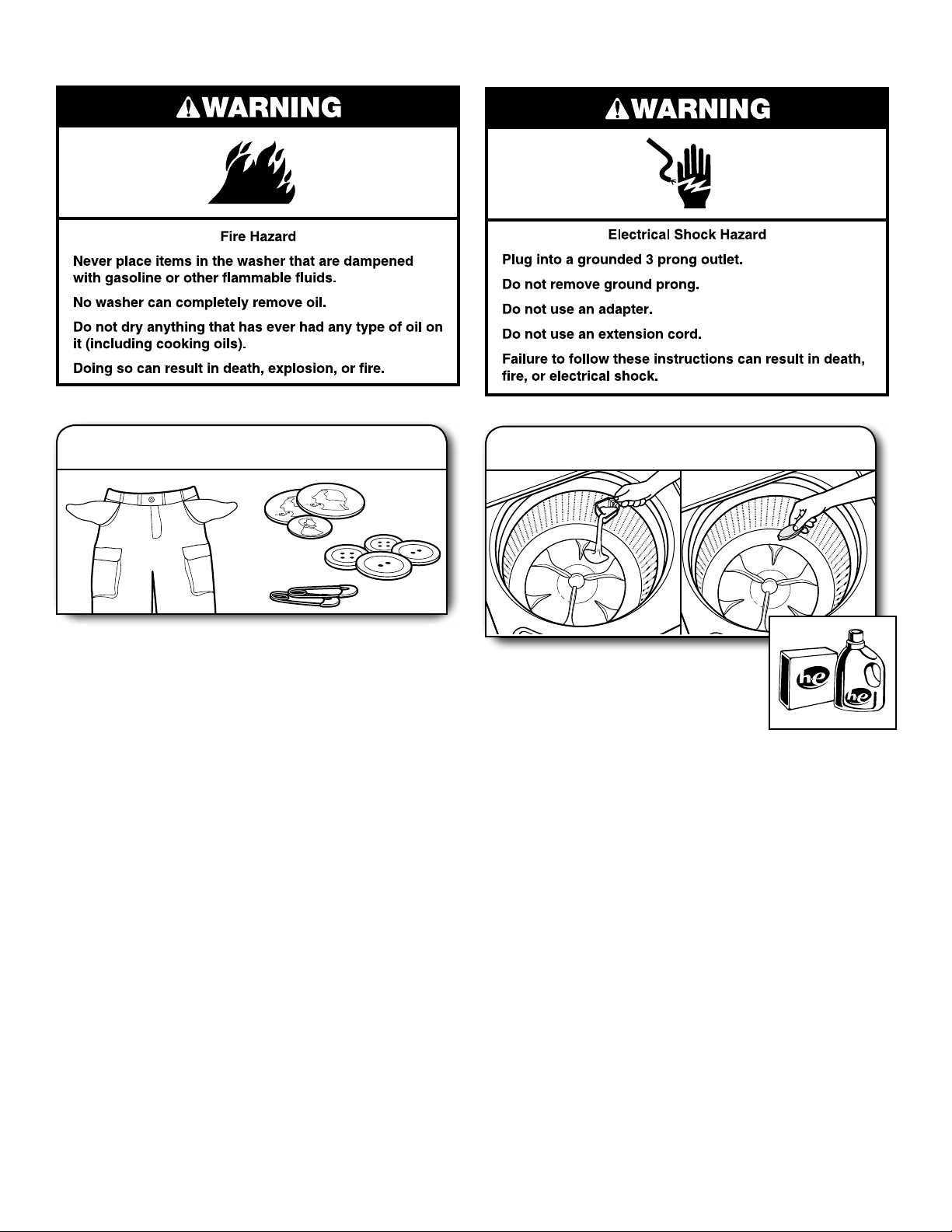
• Empty pockets. Loose change, buttons, or any small object
can pass under the washplate and become trapped, causing
unexpected sounds.
• Sort items by recommended cycle, water temperature,
and colorfastness.
• Separate heavily soiled items from lightly soiled.
• Separate delicate items from sturdy fabrics.
• Do not dry items if stains remain after washing, because
heat can set stains into fabric.
• Treat stains promptly.
• Close zippers, fasten hooks, tie strings and sashes, and
remove non-washable trim and ornaments.
• Mend rips and tears to avoid further damage to items
during washing.
Helpful Tips:
• When washing water-proof or water-resistant items, load
evenly.
• Use mesh garment bags to help avoid tangling when
washing delicate or small items.
• Turn knits inside out to avoid pilling. Separate lint-takers
from lint-givers. Synthetics, knits, and corduroy fabrics will
pick up lint from towels, rugs, and chenille fabrics.
Always read and follow fabric care label instructions to avoid
damage to your items.
1. Sort and prepare your laundry
Add a measured amount of HE detergent or
single-dose laundry packet into the basket.
If using Oxi-type boosters, color-safe bleach,
or fabric-softener crystals, add to the bottom
of the washer basket before adding clothes..
IMPORTANT: Use only High Eciency detergents. The package
will be marked “HE” or “High Eciency.” Low-water washing
creates excessive sudsing with a regular non-HE detergent.
Using regular detergent will likely result in longer cycle
times and reduced rinsing performance. It may also result
in component failures and noticeable mold or mildew. HE
detergents are made to produce the right amount of suds for
the best performance.
NOTE: Follow the manufacturer’s instructions to determine the
amount of laundry products to use.
2. Add laundry products
9
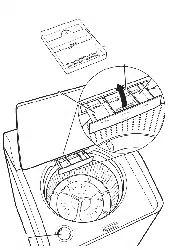
5. Add fabric softener
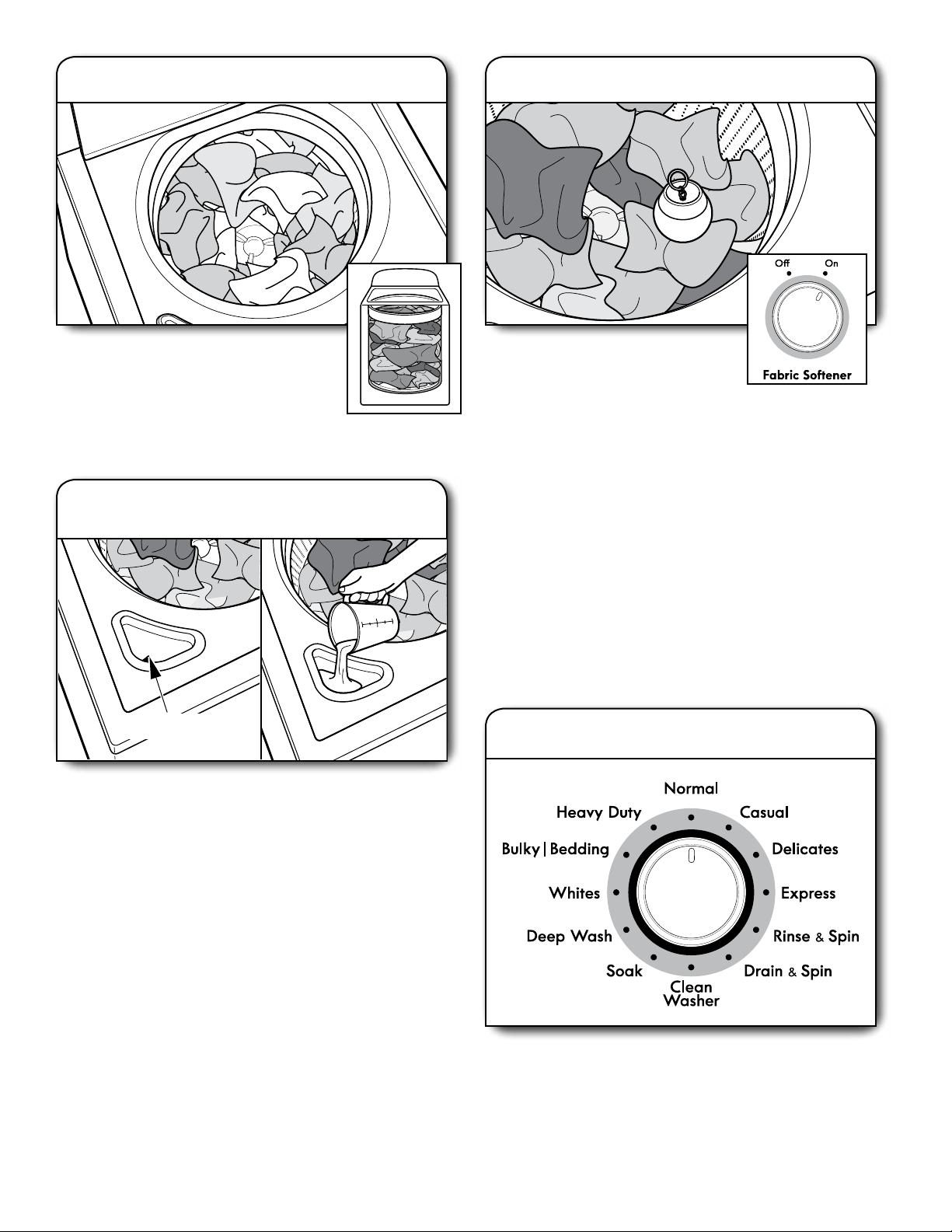
To dispense fabric softener in the rinse
cycle, this washer has been designed to
allow the use of the Downy Ball
®†
dispenser. Pour a measured amount of Downy
®
liquid fabric
softener into the Downy Ball
®
dispenser, pull the ring tightly to
seal it, and place on top of load. Always follow manufacturer’s
directions for correct amount of fabric softener based on your
load size. Then select Fabric Softener-On option. The Downy Ball
®
dispenser will automatically release the fabric softener during the
rinse cycle. For questions on using the Downy Ball
®
dispenser call
1-800-688-7638 or visit www.downy.com.
IMPORTANT: Fabric Softener option must be selected to “On” to
ensure proper distribution at correct time in cycle. Do not overll
or dilute.
Adding Liquid Fabric Softener Manually to Wash Load
During the nal rinse, wait until the washer has completed ll-
ing and press the START/Pause/Unlock LId button to pause the
washer. Lift the lid and add the measured, recommended amount
of liquid fabric softener. Do not use more than the recommended
amount. Close the lid and press the START/Pause/Unlock LId but-
ton again to start the washer.
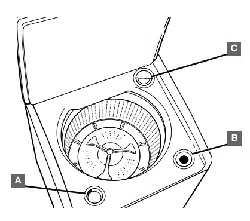
4. Add liquid chlorine bleach to
dispenser
Liquid
Chlorine Bleach
Do not overll, dilute, or use more than 1 cup (250 mL). Do not
use color-safe bleach or Oxi products in the same cycle with
liquid chlorine bleach.
Turn cycle knob to choose your wash cycle. For more information,
see “Cycle Guide.”
6. Select cycle
For best performance, load items in loose
heaps evenly around the washplate. Try
mixing dierent sized items to reduce
tangling.
IMPORTANT: Items need to move freely.
Tightly packed items can lead to poor cleaning performance, and
may increase wrinkling and tangling.
3. Load laundry into washer
†®Downy and Downy Ball are registered trademark of The Proctor & Gamble Company.
10
Warm
Some cold water will be added, so
this will be cooler than what your
previous washer provided.
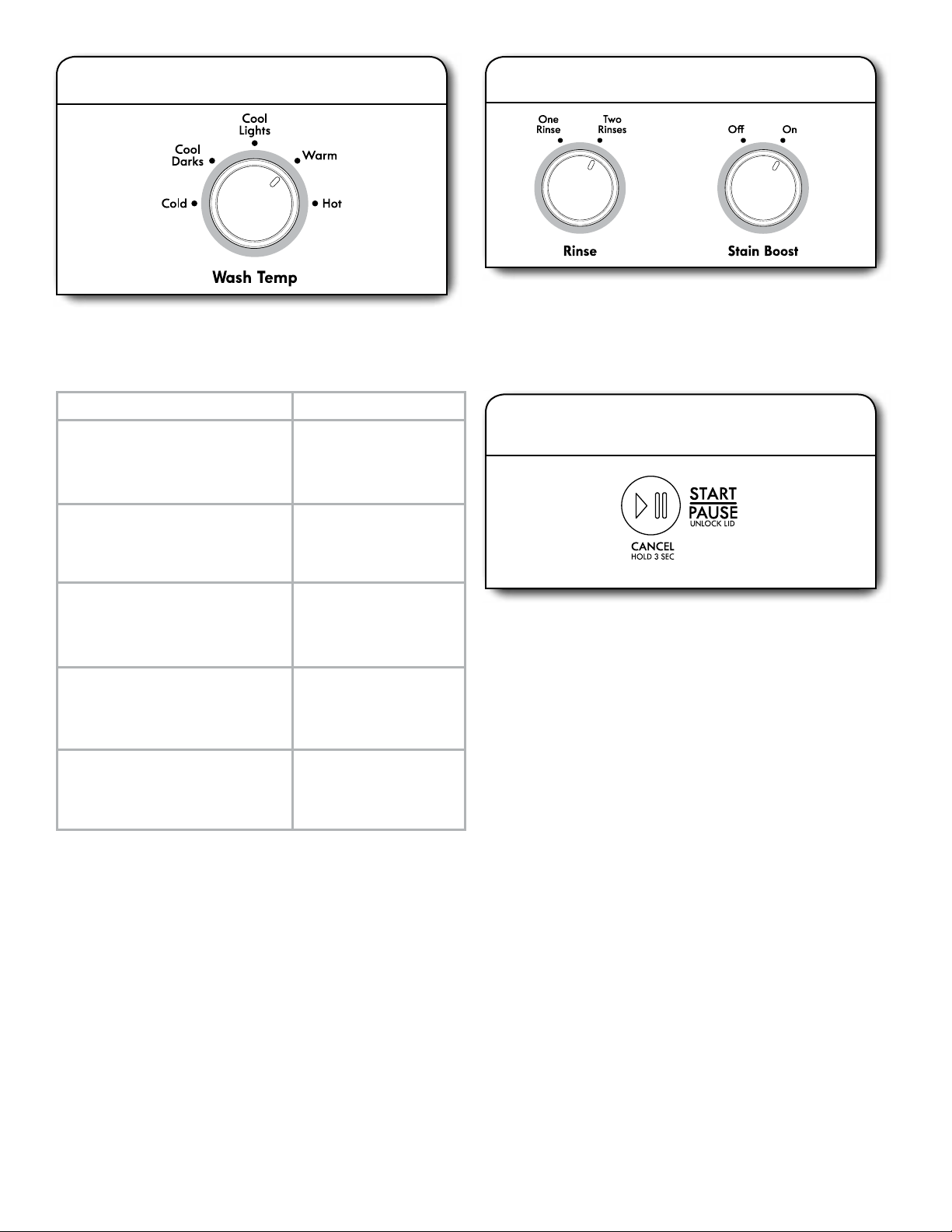
7. Select WASH TEMP
Once you select a cycle, select the wash temperature by turning
the Wash Temp knob to the desired setting.
Always read and follow fabric care label instructions to avoid
damage to your items.
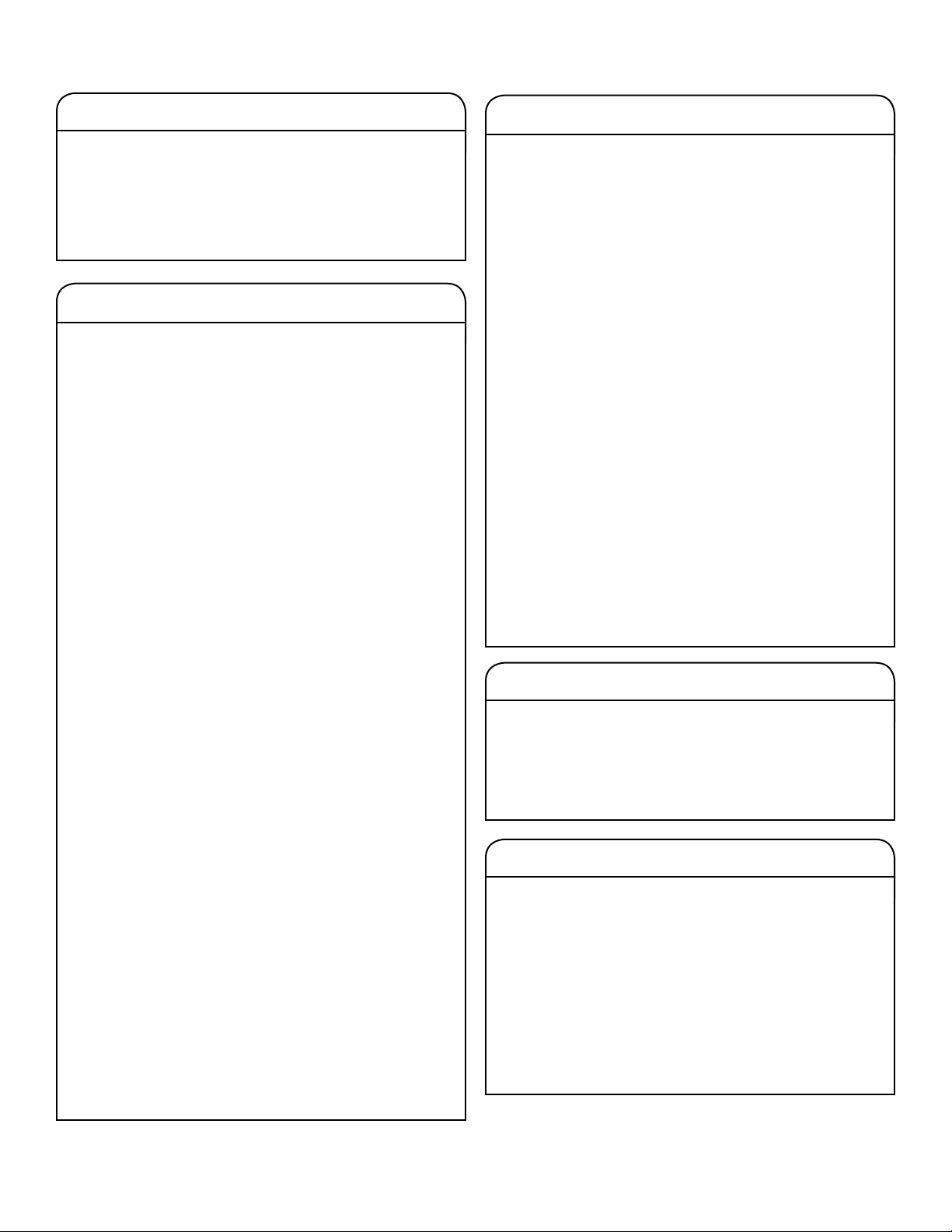
If you would like to add Two Rinses and/or use the
Stain Boost option, turn the knob for that feature.
The Stain Boost option provides enhanced cleaning
action for tough stains. It will add additional agitation
and soak time to the cycle.
9. Press START/Pause/Unlock LId to
begin wash cycle
Press the START/Pause/Unlock LId button to start the wash
cycle. When the cycle has nished, the Done indicator will light.
Promptly remove garments after cycle has completed to avoid
odor, reduce wrinkling, and prevent rusting of metal hooks,
zippers, and snaps.
Unlocking the Lid to Add Items
If you need to open the lid to add 1 or 2 missed garments: Press
START/Pause/Unlock LId. The lid will unlock once the washer
movement has stopped. This may take several minutes if the
load was spinning at high speed. Add garments, close lid, and
press START/Pause/Unlock LId again to restart the cycle.
IMPORTANT: If lid is left open for more than 10 minutes, the
water will pump out automatically.
8. Select cycle options, if desired
Wash Temp Suggested Fabrics
Hot
Some cold water is added to save
energy. This will be cooler than
your hot water heater setting.
Cool Lights
Warm water is added to assist in
soil removal and to help dissolve
detergents.
Dark colors that
bleed or fade
Light soils
Cold
Warm water is added to assist in
soil removal and to help dissolve
detergents.
Whites and pastels
Durable items
Heavy soils
Bright colors
Moderate to light soils
Colors that bleed
or fade
Light soils
Cool Darks
Warm water is added to assist in
soil removal and to help dissolve
detergents.
Dark colors that bleed
or fade
Light soils
11
WASHER MAINTENANCE
Operate your washer only when you are home. If moving,
or not using your washer for a period of time, follow these
steps:
1. Unplug or disconnect power to washer.
2. Turn o water supply to washer, to avoid ooding due
to water-pressure surge.
WINTER STORAGE CARE
IMPORTANT: To avoid damage, install and store washer
where it will not freeze. Some water may stay in hoses, and
freezing can damage washer. If storing or moving during
freezing weather, winterize your washer.
To winterize washer:
1. Shut o both water faucets; disconnect and drain water
inlet hoses.
2. Put 1 qt. (1 L) of R.V.-type antifreeze in basket and run
washer on Rinse & Spin cycle for about 30 seconds to
mix antifreeze and remaining water.
3. Unplug washer or disconnect power.
NON-USE AND VACATION CARE
WASHER CARE
Recommendations to Help Keep Your Washer Clean
and Performing at its Best
1. Always use High Eciency (HE) detergents and follow the
HE detergent manufacturer’s instructions regarding the
amount of HE detergent to use. Never use more than the
recommended amount because that may increase the rate
at which detergent and soil residue accumulate inside your
washer, which in turn may result in undesirable odor.
2. Use warm- and hot wash-water settings sometimes (not
exclusively cold-water washes) because they do a better
job of controlling the rate at which soils and detergent
accumulate.
3. Always leave the washer lid open between uses to help dry
out the washer and prevent the buildup of odor-causing
residue.
Cleaning Your Top Loading Washer
Read these instructions completely before beginning the
routine cleaning processes recommended below. This washer
maintenance procedure should be performed, at a minimum,
once per month or every 30 wash cycles, whichever occurs
sooner, to control the rate at which soils and detergent may
otherwise accumulate in your washer.
Cleaning the Inside of the Washer
To keep your washer odor-free, follow the usage instructions
provided above, and use this recommended monthly cleaning
procedure:
Clean Washer Cycle
This washer has a special cycle that uses higher water volumes
in combination with liquid chlorine bleach to clean the inside
of the washer.
Begin procedure
1. Chlorine Bleach Procedure:
a. Open the washer lid and remove any clothing or items.
b. Add 1 cup (236 mL) of liquid chlorine bleach to the
bleach compartment.
NOTE: Use of more liquid chlorine bleach than is
recommended above could cause washer damage
over time.
c. Close the washer lid.
d. Do not add any detergent or other chemical to the
washer when following this procedure.
e. Select the Clean Washer cycle.
f. Press the
START/Pause/Unlock LId
button to begin the
cycle. The Clean Washer cycle operation is described
below.
WASHER CARE (cont.)
NOTE: For best results, do not interrupt cycle. If cycle
must be interrupted, press POWER/CANCEL. (For models
with no POWER/CANCEL button, press and hold START/
Pause/Unlock LId for three seconds). After the Clean
Washer cycle has stopped, run a Rinse & Spin cycle to rinse
cleaner from washer.
Description of Clean Washer Cycle Operation:
1. This cycle will ll to a water level higher than in normal
wash cycles to provide rinsing at a level above the water
line for normal wash cycle.
2. During this cycle, there will be some agitation and spinning
to increase the removal of soils.
After this cycle is complete, leave the lid open to allow
for better ventilation and drying of the washer interior.
Cleaning the Dispensers
After a period of using your washer, you may nd some
residue buildup in the washer’s dispensers. To remove residue
from the dispensers, wipe them with a damp cloth and towel
dry. Do not attempt to remove the dispensers or trim for
cleaning. The dispensers and trim are not removable. If your
model has a dispenser drawer, however, remove the drawer
and clean it before or after you run the Clean Washer cycle.
Use an all-purpose surface cleaner if needed.
Cleaning the Outside of the Washer
Use a soft, damp cloth or sponge to wipe away any spills.
Use only mild soaps or cleaners when cleaning external
washer surfaces.
IMPORTANT: To avoid damaging the washer’s nish, do not
use abrasive products.
Replace inlet hoses after 5 years of use to reduce the risk
of hose failure. Periodically inspect and replace inlet hoses
if bulges, kinks, cuts, wear, or leaks are found.
When replacing your inlet hoses, mark the date of
replacement on the label with a permanent marker.
NOTE: This washer does not include inlet hoses. See the
Installation Instructions for more information.
WATER INLET HOSES
12
TRANSPORTING YOUR WASHER
1. Shut o both water faucets. Disconnect and drain
water-inlet hoses.
2. If washer will be moved during freezing weather, follow
"Winter Storage Care" directions before moving.
3. Disconnect drain hose from drain system and drain any
remaining water into a pan or bucket. Disconnect drain
hose from back of washer.
4. Unplug power cord.
5. Place inlet hoses and drain hose inside washer basket.
6. Drape power cord over edge and into washer basket.
7. Place packing tray from original shipping materials
back inside washer. If you do not have packing tray,
place heavy blankets or towels into basket opening.
Close lid and place tape over lid and down front of
washer. Keep lid taped until washer is placed in
new location. Transport washer in upright position.
Transport washer in upright position.
2. Plug in washer or reconnect power.
3. Run washer through Bulky/Bedding cycle to clean
washer and remove antifreeze, if used. Use only HE
High Eciency detergent. Use 1/2 the manufacturer’s
recommended amount for a medium-size load.
REINSTALLING/USING WASHER AGAIN
To reinstall washer after non-use, vacation, winter storage,
or moving:
1. Refer to Installation Instructions to locate, level, and
connect washer.
2. Before using again, run washer through the following
recommended procedure:
To use washer again:
1. Flush water pipes and hoses. Reconnect water-inlet hoses.
Turn on both water faucets.
13
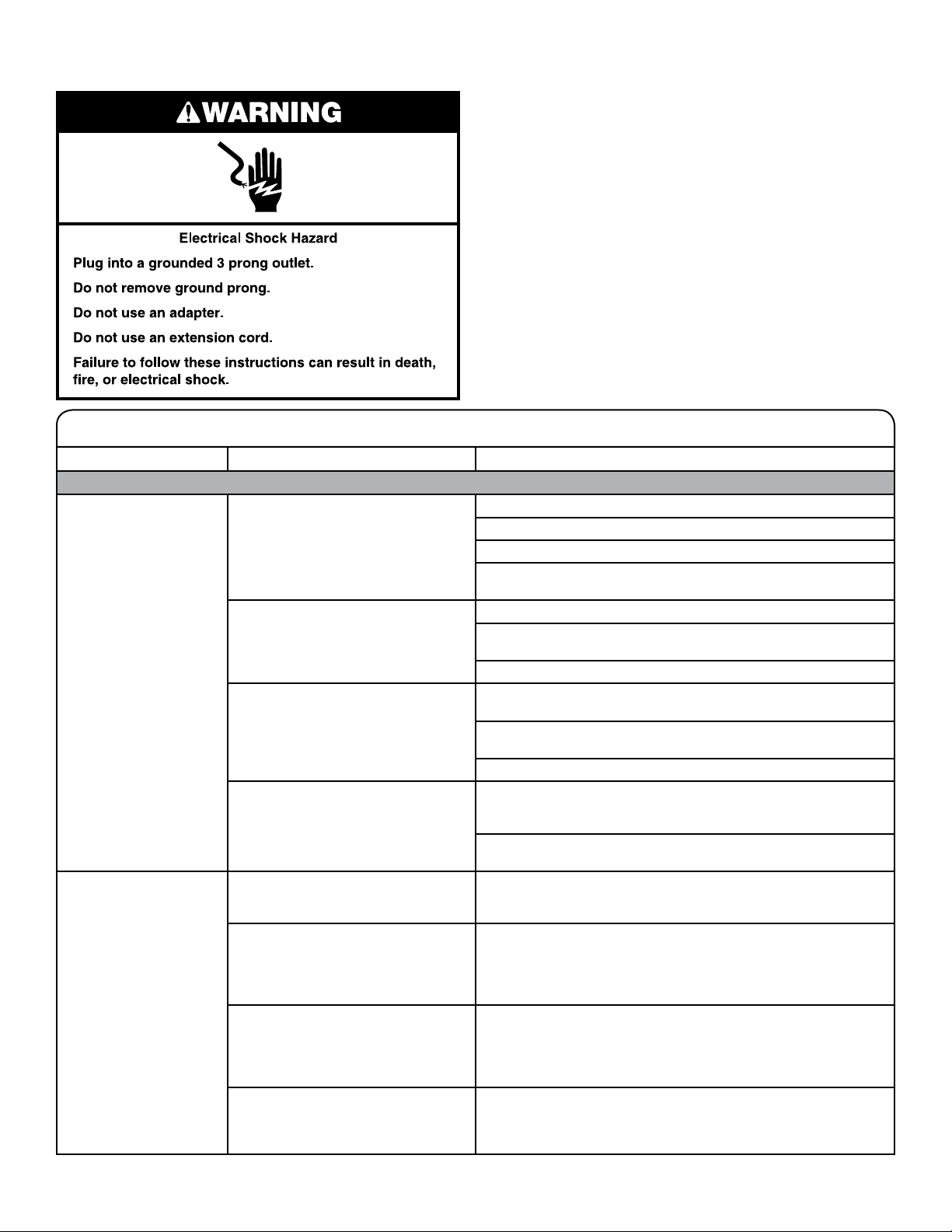
TROUBLESHOOTING
If you experience Possible Causes Solution
Vibration or Off-Balance
Check the following for
proper installation or
see “Using Your
Washer” section.
Feet may not be in contact with the
oor and locked.
Front and rear feet must be in rm contact with oor, and
washer must be level to operate properly. See Installation
Instructions.
Washer may not be level. Check oor for exing or sagging. If ooring is uneven, a 3/4"
(19 mm) piece of plywood under your washer will reduce sound.
See “Level the Washer” in Installation Instructions.
Load could be unbalanced. Load items in loose heaps evenly around the washplate. Adding
wet items to washer or adding more water to basket could
unbalance washer.
Wash smaller loads to reduce imbalance.
Do not tightly pack. Avoid washing single items.
Use Bulky/Bedding cycle for oversized, non-absorbent items such
as small comforters or poly-lled jackets.
See “Cycle Guide” and “Using Your Washer” in this Use and
Care Guide.
Noises
Clicking or metallic
noises.
Objects caught in washer drain
system.
Empty pockets before washing. Loose items such as coins could
fall between basket and tub or may block pump. It may be
necessary to call for service to remove items.
It is normal to hear metal items on clothing such as snaps, buckles,
or zippers touch against the stainless steel basket.
Gurgling or humming. Washer may be draining water. It is normal to hear the pump making a continuous humming
sound with periodic gurgling or surging as nal amounts of water
are removed during the Drain & Spin cycles.
Humming. Load sensing may be occurring. You may hear the hum of the sensing spins after you have started
the washer. This is normal.
Whirring. Basket deceleration may be
occurring.
You may hear the whirring sound of the basket decelerating.
This is normal.
Water Leaks
Check the following for
proper installation:
Washer not level. Water may splash o basket if washer is not level. Check that
load is not unbalanced or tightly packed.
Fill hoses not attached tightly. Tighten ll-hose connection.
Fill hose washers. Make sure all four ll hose at washers are properly seated.
Drain hose connection. Pull drain hose from washer cabinet and properly secure it to
drainpipe or laundry tub.
Do not place tape over drain opening.
Check household plumbing for leaks
or clogged sink or drain.
Water can back up out of a clogged sink or drainpipe. Check
all household plumbing for leaks (laundry tubs, drain pipe, water
pipes, and faucets).
Washer not loaded as recommended. Unbalanced loading can cause basket to be out of alignment
and cause water to splash o tub. See “Using Your Washer”
for loading instructions.
Washer not performing as expected
Not enough water
in washer.
Load not completely covered
in water.
This is normal operation for an HE low-water washer. The load will
not be completely underwater. The washer senses load sizes and
adds correct amount of water for optimal cleaning. See “What’s
New under the Lid.”
IMPORTANT: Do not add more water to washer.
Washer won’t run or ll,
washer stops working,
or wash light remains
on (indicating that the
washer was unable to ll
appropriately).
Check for proper water supply. Both hoses must be attached and have water owing to
inlet valve.
Both hot and cold water faucets must be turned on.
Check that inlet-valve screens have not become clogged.
Check for any kinks in inlet hoses, which can restrict water ow.
First try the solutions suggested here for assistance and to possibly avoid a service call.
14
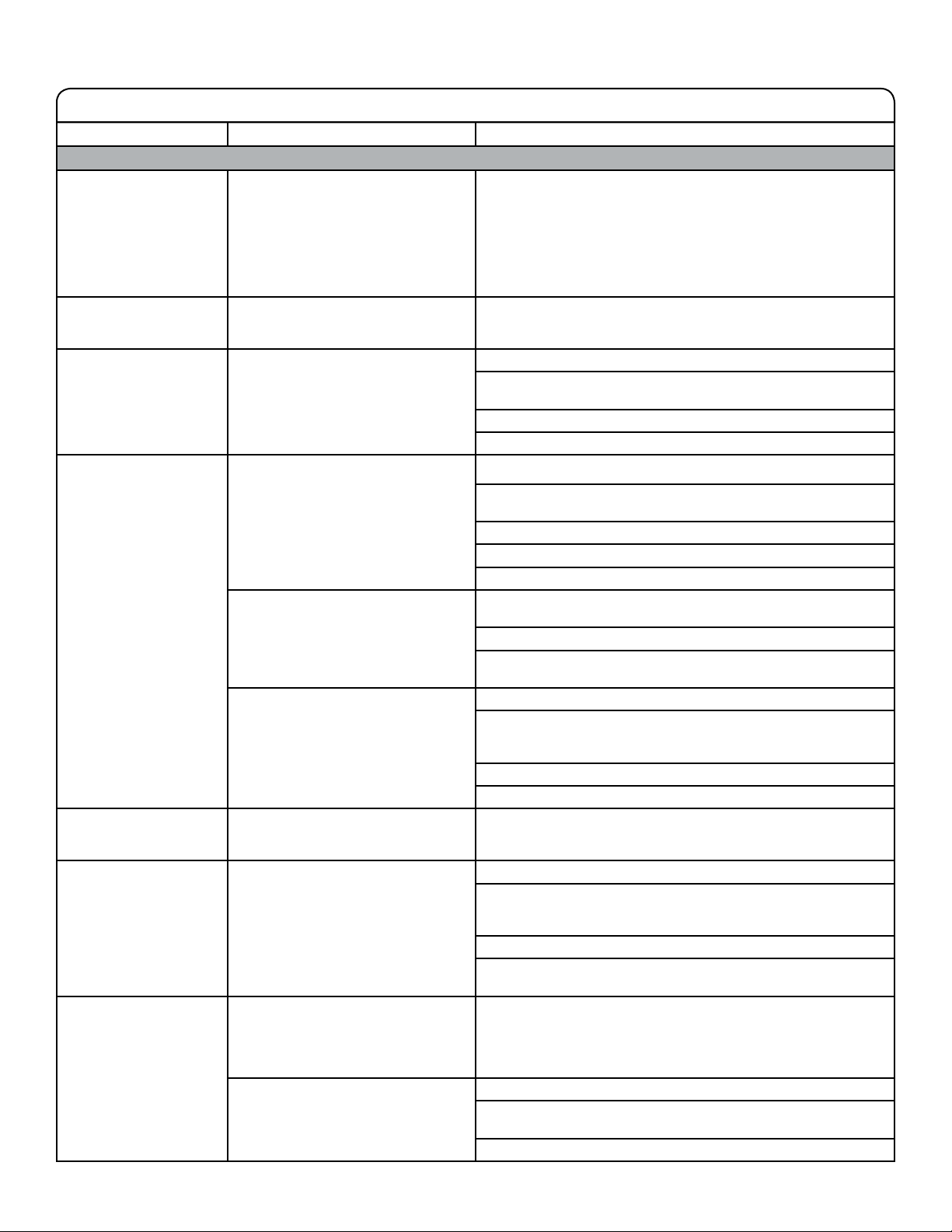
TROUBLESHOOTING
If you experience Possible Causes Solution
Washer not performing as expected (cont.)
Washer won’t run or ll,
washer stops working,
or wash light remains
on (indicating that the
washer was unable to ll
appropriately) (cont.).
Check proper electrical supply. Plug power cord into a grounded 3-prong outlet.
Do not use an extension cord.
Ensure there is power to outlet.
Reset a tripped circuit breaker. Replace any blown fuses.
NOTE: If problems continue, contact an electrician.
Normal washer operation. Lid must be closed for washer to run.
Washer will pause during certain phases of cycle.
Do not interrupt cycle.
Washer may be stopped to reduce suds.
Washer may be tightly packed. Remove several items, rearrange load evenly in basket, and add
detergent. Close lid and press START/Pause/Unlock LId.
Do not add more than 1 or 2 additional items after cycle
has started.
Do not add more water to the washer.
Not using HE detergent or using too
much HE detergent.
Only use HE detergent. Suds from regular detergents can
slow or stop the washer. Always measure detergent and follow
detergent directions based on your load requirements.
To remove suds, cancel cycle. Select Rinse & Spin. Press START/
Pause/Unlock LId. Do not add more detergent.
Washer not draining/
spinning, loads are
still wet, or spin light
remains on (indicating
that the washer was
unable to pump out
water within 10 minutes).
Small items may have been caught
in pump or between basket and tub,
which can slow draining.
Empty pockets and use garment bags for small items.
Used a cycle with a low spin speed. Cycles with lower spin speeds remove less water than cycles
with high spin speeds. Use the recommended cycle/spin speed
for your item. To remove extra water in the load, select
Drain & Spin. Load may need to be rearranged to allow even
distribution of the load in the basket.
The washer may be tightly packed
or unbalanced.
Tightly packed or unbalanced loads may not allow the washer
to spin correctly, leaving the load wetter than normal. Evenly
arrange the wet load for balanced spinning. Select the Drain &
Spin cycle to remove excess water. See “Using Your Washer” for
loading recommendations.
Check plumbing for correct drain hose
installation. Drain hose extends into
standpipe farther than 4.5" (114 mm).
Check drain hose for proper installation. Use drain hose form
and securely attach to drainpipe or tub. Do not tape over drain
opening. Lower drain hose if the end is higher than 96" (2.4 m)
above the oor. Remove any clogs from drain hose.
First try the solutions suggested here for assistance and to possibly avoid a service call.
15
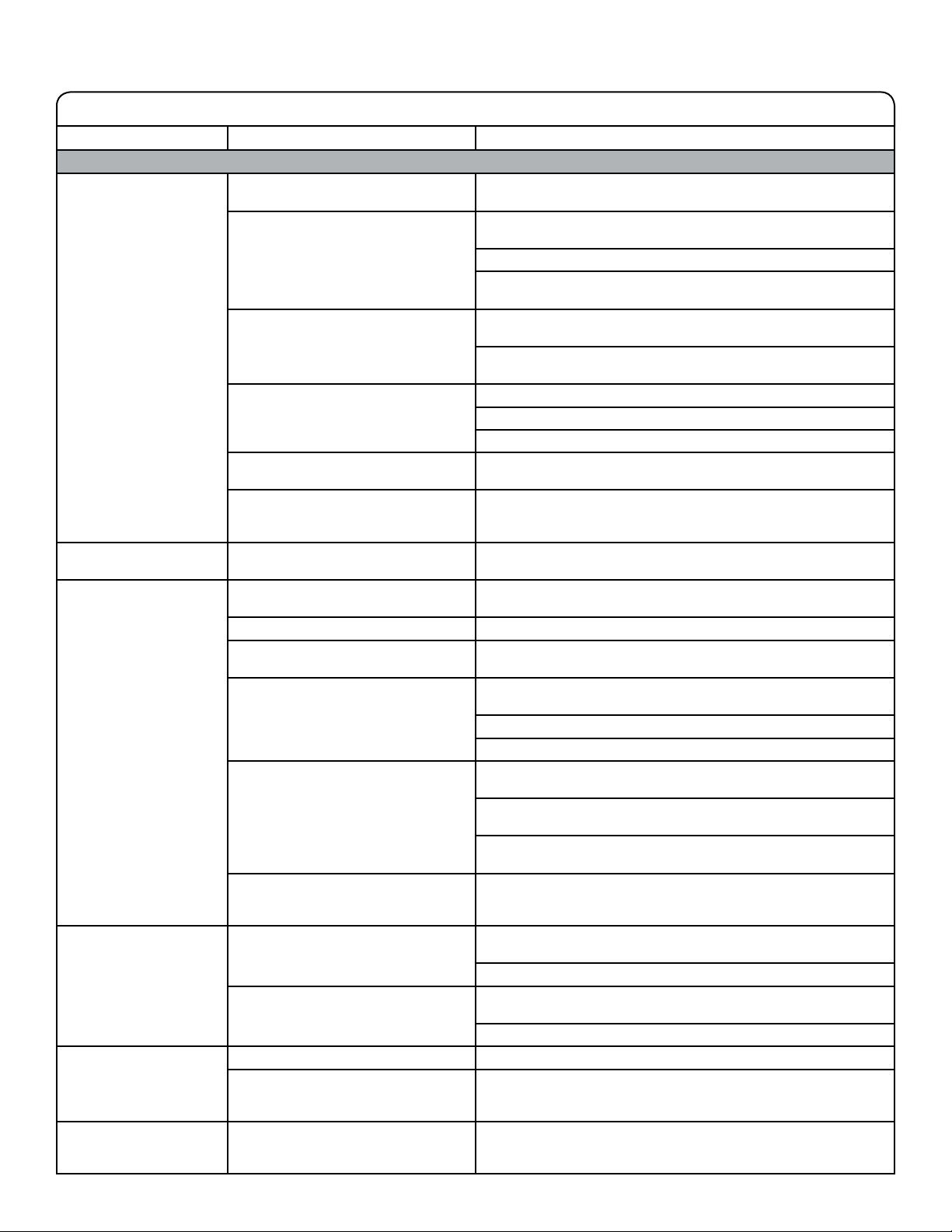
TROUBLESHOOTING
If you experience Possible Causes Solution
Washer not performing as expected (cont.)
Washer not draining/
spinning, loads are
still wet, or spin light
remains on (indicating
that the washer was
unable to pump out
water within 10 minutes)
(cont.).
Too much detergent causing suds to
slow or stop draining and spinning.
Use only HE detergent. Always measure and follow detergent
directions for your load. To remove extra suds, select Rinse & Spin.
Do not add detergent.
Dry spots on load
after cycle.
High-speed spins extract more
moisture than traditional top-load
washers.
The high spin speeds combined with air ow during the nal spin
can cause items near the top of the load to develop dry spots
during the nal spin. This is normal.
Incorrect or wrong
wash or rinse
temperatures.
Check for proper water supply. Make sure hot and cold inlet hoses are not reversed.
Both hoses must be attached to both washer and faucet, and
have both hot and cold water owing to inlet valve.
Check that inlet-valve screens are not clogged.
Remove any kinks in hoses.
Load not rinsed. Check for proper water supply. Make sure hot and cold inlet hoses are not reversed.
Both hoses must be attached and have water owing to the inlet
valve.
Both hot and cold water faucets must be on.
Inlet-valve screens on washer may be clogged.
Remove any kinks in the inlet hose.
Not using HE detergent or using too
much HE detergent.
The suds from regular detergent can keep washer from
operating correctly.
Use only HE detergent. Be sure to measure correctly.
Always measure detergent and follow detergent directions based
on load size and soil level.
Washer not loaded as recommended. The washer is less ecient at rinsing when load is tightly packed.
Load items in loose heaps evenly around the washplate. The
washer will not rinse well if tightly packed. Load with dry items
only.
Use cycle designed for the fabrics being washed.
Add only 1 or 2 items after washer has started.
Sand, pet hair, lint,
etc. on load after
washing.
Heavy sand, pet hair, lint, and
detergent or bleach residues may
require additional rinsing.
Add a Two Rinses to the selected cycle.
Load is tangling. Washer not loaded as recommended. See “Using Your Washer” section.
Select a cycle with a slower wash action and spin speed; however,
items will be wetter than those using a higher speed spin. See the
“Cycle Guide” to match your load with the best cycle.
Load items in loose heaps evenly around the washplate.
Reduce tangling by mixing types of load items. Use the
recommended cycle for the type of items being washed.
Not cleaning or
removing stains.
Added more water to washer. Washer senses load size and adds correct amount of water. This
is normal and necessary for clothes to move. It is normal for the
wash load to be not completely covered in water. Added water
lifts the laundry o the washplate, resulting in less eective
cleaning.
Washer not loaded as recommended. Washer is less ecient at cleaning when load is tightly packed.
Load items in loose heaps evenly around the washplate. Load with
dry items only.
Add only 1 or 2 items after washer has started.
First try the solutions suggested here for assistance and to possibly avoid a service call.
16
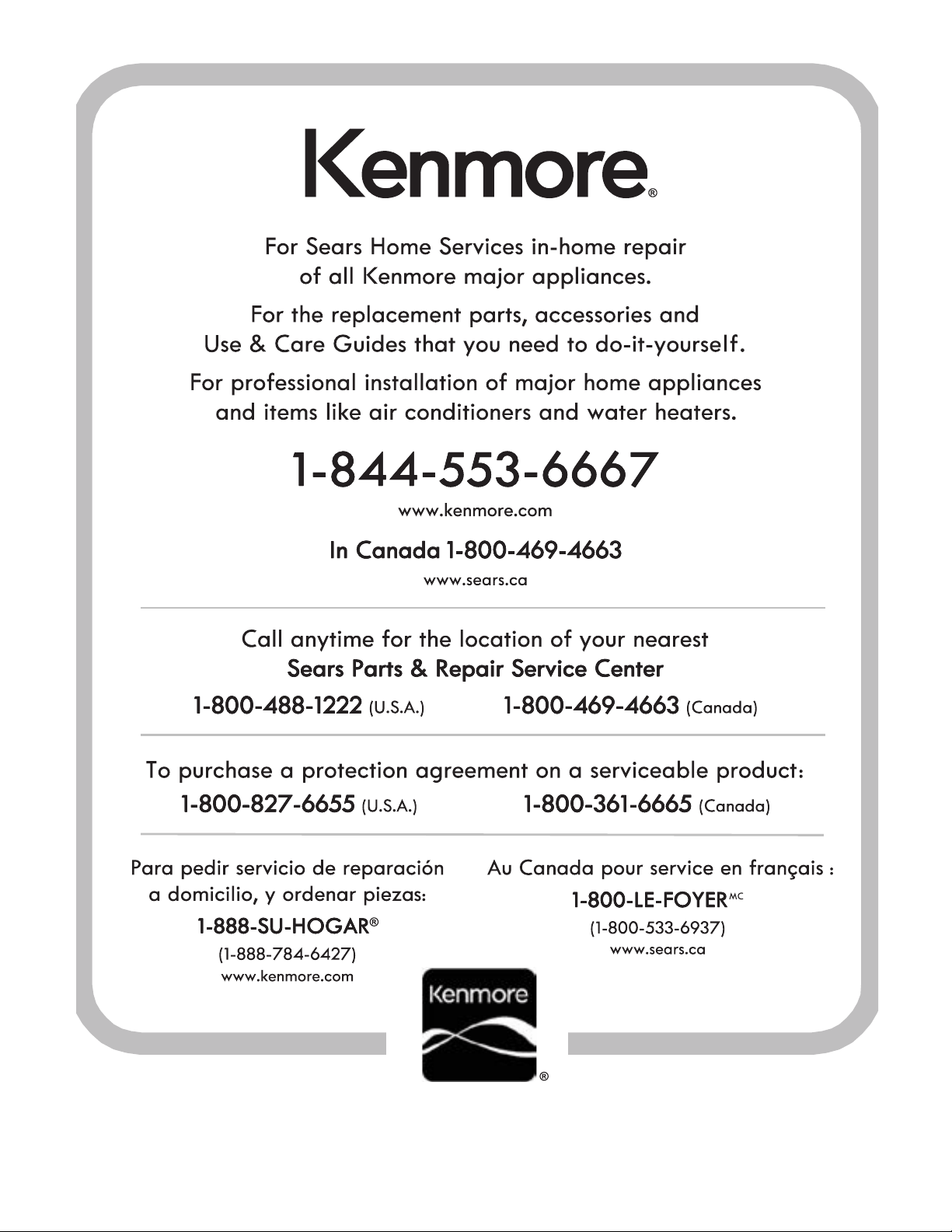
TROUBLESHOOTING
If you experience Possible Causes Solution
Washer not performing as expected (cont.)
Not cleaning or
removing stains (cont.).
Adding detergent on top of load. Add detergent, Oxi products and color-safe bleach to the bottom
of the basket before adding the load items.
Not using HE detergent or using too
much HE detergent.
The suds from regular detergent can keep washer from operating
correctly.
Use only HE detergent. Be sure to measure correctly.
Always measure detergent and follow manufacturer’s directions
based on load size and soil level.
Not using correct cycle for fabric
type.
Use a higher soil level cycle option and warmer wash temperature
to improve cleaning.
Use Heavy Duty cycle for tough cleaning. See the “Cycle Guide” to
match your load with the best cycle.
Not using dispenser. Use dispenser to avoid chlorine bleach staining.
Load dispenser before starting a cycle.
Do not add products directly onto load.
Not washing like colors together. Wash like colors together and remove promptly after the cycle is
complete to avoid dye transfer.
Not selecting Fabric Softener-On. Always select ON, when selecting Fabric Softener option. Cycles
that use spray rinsing will add additional water for proper fabric
softener dispensing when ON is selected.
Incorrect dispenser
operation.
Clogged dispenser. Use only liquid chlorine bleach in the bleach dispenser.
Fabric damage. Sharp items were in pockets during
wash cycle.
Empty pockets, zip zippers, and snap or hook fasteners before
washing to avoid snags and tears.
Strings and straps could have tangled. Tie all strings and straps before starting wash load.
Items may have been damaged
before washing.
Mend rips and broken threads in seams before washing.
Fabric damage can occur if washer
is tightly packed.
Load items in loose heaps evenly around the washplate. Load with
dry items only.
Use cycle designed for the fabrics being washed.
Add only 1 or 2 items after washer is started.
Liquid chlorine bleach may have been
added incorrectly.
Do not pour liquid chlorine bleach directly onto load. Wipe up
bleach spills.
Undiluted bleach will damage fabrics. Do not use more than
recommended by manufacturer.
Do not place load items on top of bleach dispenser when loading
and unloading washer.
Garment care instructions may not
have been followed.
Always read and follow garment manufacturer’s care label
instructions. See the “Cycle Guide” to match your load with the
best cycle.
Odors. Clean Washer maintenance not done
as recommended.
Run the Clean Washer with bleach cycle monthly. See “Washer
Care” in "Washer Maintenance."
Unload washer as soon as cycle is complete.
Using wrong or too much detergent. Use only HE detergent. Be sure to measure correctly. Always follow
the manufacturer’s directions.
See “Washer Care” section.
Lid locked light is
ashing.
The lid is not closed. Close the lid. The washer will not start or ll with the lid open.
A cycle was stopped or paused using
the START/Pause/Unlock LId button.
The washer may still be spinning. The lid will not unlock until the
basket has stopped spinning. This may take several minutes if
washing large loads or heavy fabrics.
Single-dose laundry
packet not dissolving.
Adding laundry packet incorrectly. Be sure laundry packet is added to washer basket before
adding clothes. Do not add packet to dispensers. Follow the
manufacturer’s instructions to avoid damage to your items.
First try the solutions suggested here for assistance and to possibly avoid a service call.

17
KENMORE APPLIANCE WARRANTY
PROTECTION AGREEMENTS
Master Protection Agreements
Congratulations on making a smart purchase. Your new Kenmore
®
product is designed and manufactured for years of dependable
operation.
But like all products, it may require preventive maintenance or
repair from time to time. That’s when having a Master Protection
Agreement can save you money and aggravation.
The Master Protection Agreement also helps extend the life
of your new product. Here’s what the Agreement* includes:
Parts and labor needed to help keep products operating properly
under normal use, not just defects. Our coverage goes well
beyond the product warranty. No deductibles, no functional
failure excluded from coverage—real protection.
Expert service by a force of more than 10,000 authorized Sears
service technicians, which means someone you can trust will be
working on your product.
Unlimited service calls and nationwide service, as often as you
want us, whenever you want us.
Replacement of your covered product if four or more product
failures occur within twelve months.
Product replacement if your covered product can’t be fixed.
Annual Preventive Maintenance Check at your request –
no extra charge.
Fast help by phone – we call it Rapid Resolution – phone support
from a Sears representative on all products. Think of us as a
“talking owner’s manual.”
Power surge protection against electrical damage due
to power uctuations.
Rental reimbursement if repair of your covered product takes
longer than promised.
25% discount o the regular price of any non-covered repair
service and related installed parts.
Once you purchase the Agreement, a simple phone call is all
that it takes for you to schedule service. You can call anytime
day or night, or schedule a service appointment online.
The Master Protection Agreement is a risk free purchase. If you
cancel for any reason during the product warranty period, we
will provide a full refund. Or, a prorated refund anytime after the
product warranty period expires. Purchase your Master Protection
Agreement today! Some limitations and exclusions apply.
For prices and additional information in the U.S.A., call
1-800-827-6655. *Coverage in Canada varies on some items.
For full details, call Sears Canada at 1-800-361-6665.
Sears Installation Service
For Sears professional installation of home appliances, garage
door openers, water heaters, and other major home items,
in the U.S.A. call 1-844-553-6667 or in Canada call
1-800-469-4663.
KENMORE LIMITED WARRANTY
FOR ONE YEAR from the date of sale this appliance is warranted
against defects in material or workmanship when it is correctly
installed, operated, and maintained according to all supplied
instructions.
WITH PROOF OF SALE, a defective appliance will receive free
repair or replacement at option of seller.
For warranty coverage details to obtain free repair or
replacement, visit the web page: www.kenmore.com/warranty.
This warranty applies for only 90 DAYS from the sale date in the
United States, and is void in Canada, if this appliance is ever used
for other than private household purposes.
This warranty covers ONLY defects in material and
workmanship, and will NOT pay for:
1. Expendable items that can wear out from normal use, including
but not limited to lters, belts, bags, or screw-in base light
bulbs.
2. A service technician to clean or maintain this appliance, or to
instruct the user in correct appliance installation, operation, and
maintenance.
3. Service calls to correct appliance installation not performed
by Sears authorized service agents, or to repair problems with
house fuses, circuit breakers, house wiring, and plumbing or gas
supply systems resulting from such installation.
4. Damage to or failure of this appliance resulting from
installation not performed by Sears authorized service agents,
including installation that was not in accord with electrical, gas,
or plumbing codes.
5. Damage to or failure of this appliance, including discoloration
or surface rust, if it is not correctly operated and maintained
according to all supplied instructions.
6. Damage to or failure of this appliance, including discoloration
or surface rust, resulting from accident, alteration, abuse, misuse
or use for other than its intended purpose.
7. Damage to or failure of this appliance, including discoloration
or surface rust, caused by the use of detergents, cleaners,
chemicals, or utensils other than those recommended in all
instructions supplied with the product.
8. Damage to or failure of parts or systems resulting from
unauthorized modications made to this appliance.
9. Service to an appliance if the model and serial plate is missing,
altered, or cannot easily be determined to have the appropriate
certication logo.
DISCLAIMER OF IMPLIED WARRANTIES; LIMITATION
OF REMEDIES
Customer’s sole and exclusive remedy under this limited warranty
shall be product repair or replacement as provided herein. Implied
warranties, including warranties of merchantability or tness
for a particular purpose, are limited to one year or the shortest
period allowed by law. Seller shall not be liable for incidental
or consequential damages. Some states and provinces do not
allow the exclusion or limitation of incidental or consequential
damages, or limitation on the duration of implied warranties of
merchantability or tness, so these exclusions or limitations may
not apply to you.
This warranty applies only while this appliance is used in the
United States or Canada*.
This warranty gives you specic legal rights, and you may also
have other rights which vary from state to state.
* In-home repair service is not available in all Canadian
geographical areas, nor will this warranty cover user or servicer
travel and transportation expenses if this product is located
in a remote area (as dened by Sears Canada Inc.) where an
authorized servicer is not available.
Sears Brands Management Corporation
Homan Estates, IL 60179
Sears Canada Inc.
Toronto, Ontario, Canada M5B 2C3
10/2015
W10783954B
01/16