Table of contents
51
EN
1 Instructions 52
1.1 General safety instructions 52
1.2 Manufacturer liability 56
1.3 Appliance purpose 56
1.4 Identification plate 56
1.5 This user manual 56
1.6 Disposal 56
1.7 How to read the user manual 57
2 Description 58
2.1 General Description 58
2.2 Cooking hob 59
2.3 Control panel 59
2.4 Other parts 60
2.5 Available accessories 60
3 Use 62
3.1 To save energy 64
3.2 Using the accessories 64
3.3 Using the hob 65
3.4 Using the oven 66
3.5 Cooking with the Direct Steam function 67
3.6 Cooking advice 69
4 Cleaning and maintenance 74
4.1 Cleaning the hob 75
4.2 Cleaning the door 76
4.3 Cleaning the oven cavity 78
4.4 Extraordinary maintenance 79
5 Installation 81
5.1 Gas connection 81
5.2 Adaptation to different types of gas 83
5.3 Positioning 88
5.4 Electrical connection 94
5.5 Instructions for the installer 95
We advise you to read this manual carefully, as it contains all the instructions for maintaining
the appliance’s aesthetic and functional qualities.
For further information on the product: www.smeg.com
TRANSLATION OF THE ORIGINAL INSTRUCTIONS
Instructions
52
1 Instructions
1.1 General safety instructions
Risk of personal injury
• During use the appliance and its
accessible parts become very hot.
Never touch the heating elements
during use.
• Protect your hands by wearing
oven gloves when moving food
inside the oven.
• Never try to put out a fire or flames
with water: turn off the appliance
and smother the flames with a fire
blanket or other appropriate
cover.
• This appliance can be used by
children aged from 8 years and
above and persons with reduced
physical, sensory or mental
capabilities or lack of experience
and knowledge if they have been
given supervision or instruction
concerning use of the appliance in
a safe way and understand the
hazards involved.
• Children must not play with the
appliance.
• Keep children under the age of 8
at a safe distance unless they are
constantly supervised.
• Keep children under the age of
8 away from the appliance when
it is in use.
• Cleaning and maintenance must
not be carried out by unsupervised
children.
• Make sure that the flame-spreader
crowns are correctly positioned in
their seats with their respective
burner caps.
• Be aware of how rapidly the
cooking zones heat up. Do not
place empty pans on the heat.
Danger of overheating.
• Fats and oils can catch fire if they
overheat. Do not leave the
appliance unattended while
preparing foods containing oils or
fats. If fats or oils catch fire, never
put water on them. Place the lid on
the pan and turn off the relevant
cooking zone.
• The cooking process must always
be monitored. A short cooking
process must be continuously
surveyed.
• While cooking do not place metal
objects, such as cutlery or dishes
on the hob surface as they may
overheat.
• Do not insert pointed metal objects
(cutlery or utensils) into the slots in
the appliance.
• Do not pour water directly on very
hot trays.
• Keep the oven door closed during
cooking.
Instructions
53
EN
• If you need to move food or at the
end of cooking, open the door
5 cm for a few seconds, let the
steam come out, then open it fully.
• Do not open the storage
compartment (where present)
when the oven is on and still hot.
• The items inside the storage
compartment could be very hot
after using the oven.
• DO NOT USE OR STORE
FLAMMABLE MATERIALS IN
THE STORAGE COMPARTMENT
(IF AVAILABLE) OR NEAR THE
APPLIANCE.
• DO NOT USE AEROSOLS IN THE
VICINITY OF THIS APPLIANCE
WHILST IT IS IN USE.
• Switch off the appliance
immediately after use.
• DO NOT MODIFY THIS
APPLIANCE.
• Always use any necessary/
required personal protective
equipment (PPE) before
performing any work on the
appliance (installation,
maintenance, positioning or
movement).
• Before performing any operation
on the appliance, switch off the
power supply.
• Have qualified personnel carry out
installation and assistance
interventions according to the
standards in force.
• Do not try to repair the appliance
yourself or without the intervention
of a qualified technician.
• Do not pull the cable to remove
the plug.
• In order to avoid hazard, if the
power supply cable is damaged,
contact technical support and they
will replace it.
Risk of damaging the appliance
• Do not use abrasive or corrosive
detergents (e.g. scouring
powders, stain removers and
metallic sponges) on glass parts.
• Use wooden or plastic utensils.
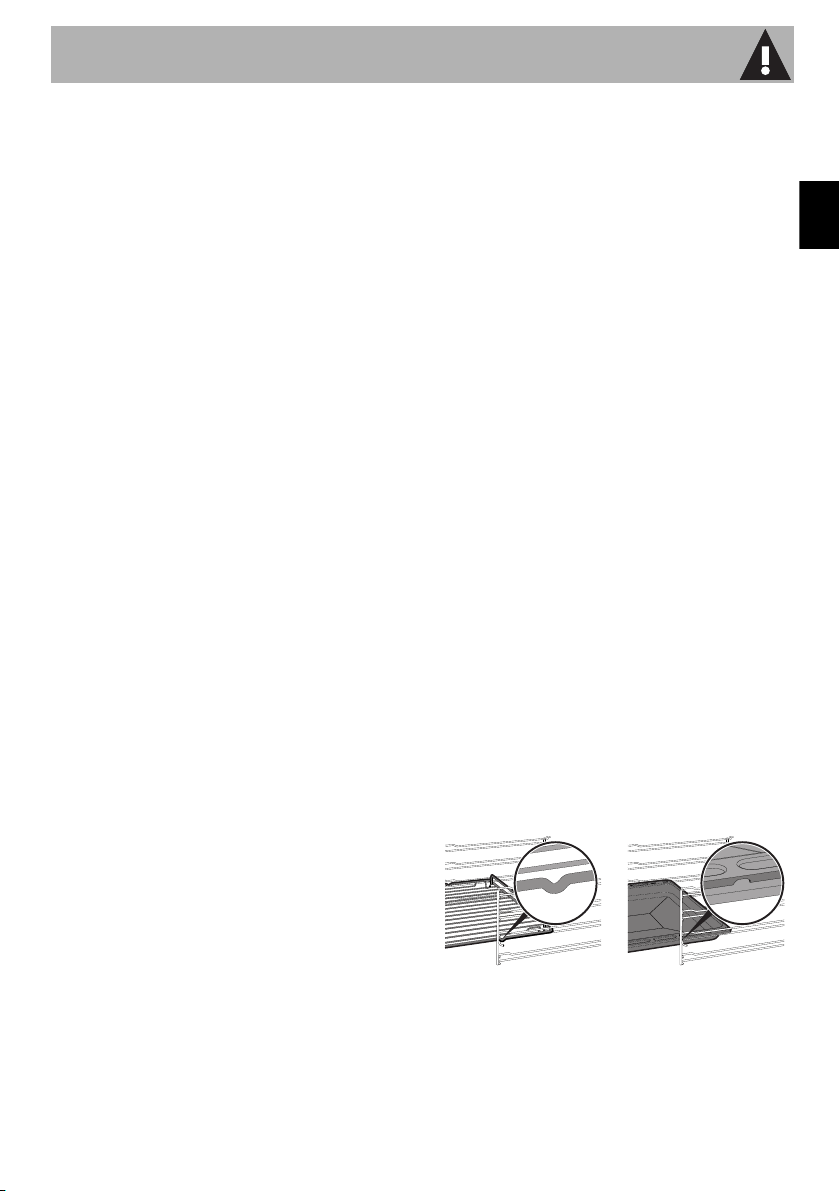
• Racks and trays should be inserted
as far as they will go into the side
guides. The mechanical safety
locks that prevent them from being
removed must face downwards
and towards the back of the oven
cavity.
• Do not sit on the appliance.
• Do not use steam jets to clean the
appliance.
• Do not obstruct ventilation
openings and heat dispersal slots.
Instructions
54
• Never leave the appliance
unattended during cooking
operations where fats or oils could
be released, as these could then
heat up and catch fire. Be very
careful
• Danger of fire: do not store items
on the cooking surfaces.
• DO NOT USE THE APPLIANCE
TO HEAT ROOMS FOR ANY
REASON.
• Do not spray any spray products
near the oven.
• Do not use plastic cookware or
containers for cooking.
• Do not place sealed tins or
containers in the oven cavity.
• Remove all trays and racks which
are not required during cooking.
• Do not cover the bottom of the
oven cavity with aluminium or tin
foil sheets.
• Do not place pans or trays directly
on the bottom of the oven cavity.
• If you wish to use greaseproof
paper, place it so that it will not
interfere with the hot air circulation
inside the oven.
• Do not use the open door to place
pans or trays on the internal
glazing pane.
• Cooking vessels or griddle plates
should be placed inside the
perimeter of the hob.
• All pans must have smooth, flat
bottoms.
• If any liquid does boil over or spill,
remove the excess from the hob.
• Take care not to spill acid
substances such as lemon juice or
vinegar on the hob.
• Do not put empty pans or frying
pans on switched on cooking
zones.
• Do not use steam jets to clean the
appliance.
• Do not use rough or abrasive
materials or sharp metal scrapers.
• Do not use cleaning products
containing chlorine, ammonia or
bleach on parts made of steel or
that have metallic surface finishes
(e.g. anodizing, nickel- or
chromium-plating).
• Do not use abrasive or corrosive
detergents (e.g. scouring
powders, stain removers and
metallic sponges) on glass parts.
• Do not wash the removable
components such as the hob grids,
flame-spreader crowns and
burner caps in a dishwasher.
• Never use the oven door to lever
the appliance into place when
fitting.
• Avoid exerting too much pressure
on the door when open.
Instructions
55
EN
• Do not use the handle to lift or
move this appliance.
• If liquids fall on the lid when it is
closed, carefully remove them with
a cloth before opening it.
• The hob surface should be
allowed to cool before closing the
lid.
Installation
• THIS APPLIANCE MUST NOT
BE INSTALLED IN A BOAT OR
CARAVAN.
• The appliance must not be
installed on a pedestal.
• Position the appliance into the
cabinet cut-out with the help of
a second person.
• To prevent any possible
overheating, the appliance should
not be installed behind a
decoration door or a panel.
• Have the gas connection
performed by authorised staff.
• Installation using a hose must be
carried out so that the length of the
hose does not exceed 2 metres
when fully extended for steel
hoses.
• The hoses should not come into
contact with moving parts and
should not be crushed in any way.
• If required, use a pressure
regulator that complies with
current regulations.
• After carrying out any operation,
check that the tightening torque of
gas connections is between
10 Nm and 15 Nm.
• At the end of the installation, check
for any leaks with a soapy
solution, never with a flame.
• Have the electrical connection
performed by authorised
technicians.
• The appliance must be connected
to ground in compliance with
electrical system safety standards.
• Use cables withstanding a
temperature of at least 90 °C.
• The tightening torque of the screws
of the terminal board leads must
be 1.5 - 2 Nm.
• Before installation, make sure that
the local distribution conditions
(nature and pressure of the gas)
and the adjustment of the
appliance are compatible;
• The adjustment conditions for this
appliance are shown on the gas
setting label.
• This appliance is not connected to
an exhaust system for combustion
products. It must be installed and
connected in compliance with the
current installation regulations.
Special attention should be paid
to the relevant requirements as for
ventilation.
Instructions
56
For this appliance
• Ensure that the appliance is
switched off before replacing the
bulb.
• Do not rest any weight or sit on the
open door of the appliance.
• Take care that no objects are stuck
in the doors.
1.2 Manufacturer liability
The manufacturer declines all liability
for damage to persons or property
caused by:
• Use of the appliance other than
that specified;
• failure to comply with the
instructions in the user manual;
• tampering with any part of the
appliance;
• use of non-original spare parts.
1.3 Appliance purpose
• This appliance is intended for
cooking food in the home
environment. Every other use is
considered inappropriate.
• The appliance is not designed to
operate with external timers or with
remote-control systems.
1.4 Identification plate
The identification plate bears the
technical data, serial number and
brand name of the appliance. Do not
remove the identification plate for
any reason.
1.5 This user manual
This user manual is an integral part of
the appliance and must therefore be
kept in its entirety and within the
user's reach for the whole working
life of the appliance.
Read this user manual carefully
before using the appliance.
1.6 Disposal
This appliance must be
disposed of separately from
other waste (Directives
2002/95/EC, 2002/96/EC,
2003/108/EC). The appliance
does not contain substances in
quantities sufficient to be considered
hazardous to health and the
environment, in accordance with
current European directives.
Instructions
57
EN
To dispose of the appliance:
• Cut the power supply cable and
remove it along with the plug.
• Deliver the appliance to the
appropriate recycling centre for
electrical and electronic equipment
waste, or return it to the retailer
when purchasing an equivalent
product, on a one for one basis.
Our appliances are packaged in
non-polluting and recyclable
materials.
• Deliver the packing materials to
the appropriate recycling centre.
1.7 How to read the user manual
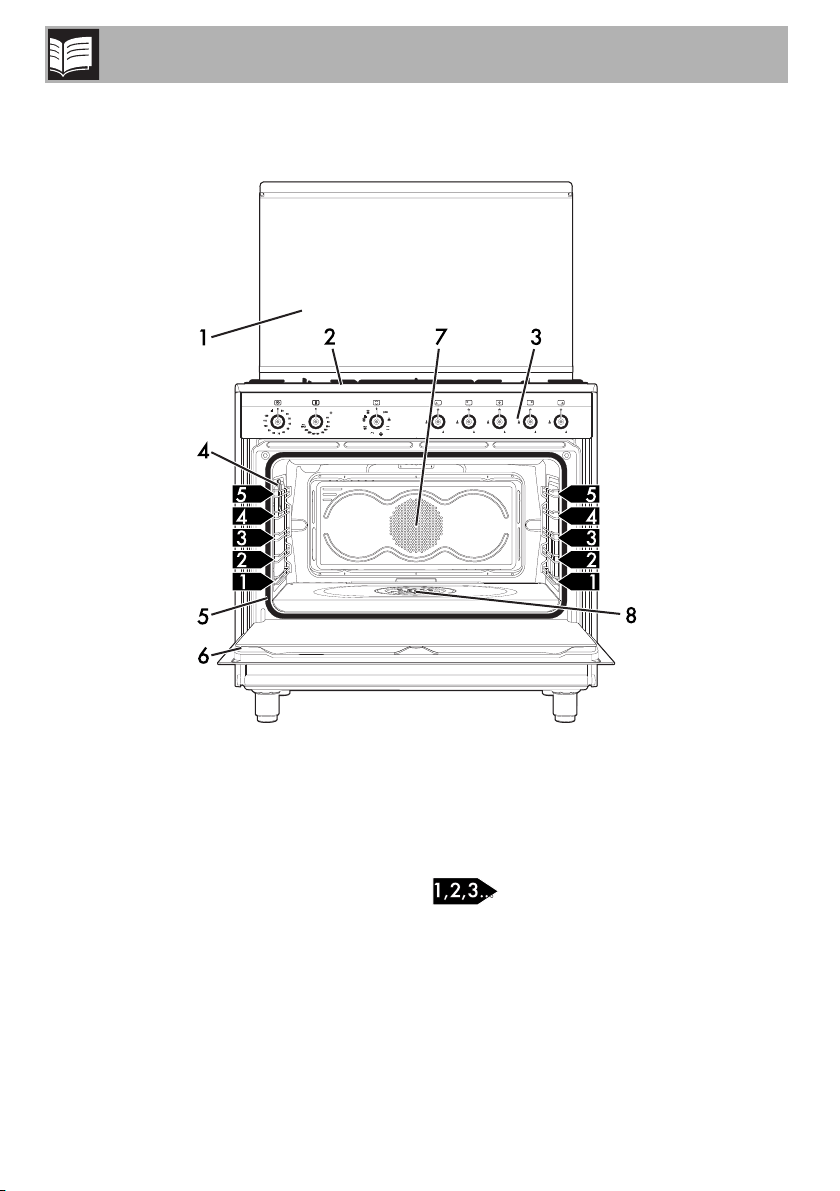
This user manual uses the following reading
conventions:
1. Use instruction sequence.
• Standalone instruction.
Power voltage
Danger of electrocution
• Disconnect the mains power
supply.
• Unplug the appliance.
Plastic packaging
Danger of suffocation
• Do not leave the packaging or
any part of it unattended.
• Do not let children play with the
plastic bags.
Instructions
General information on this user
manual, on safety and final
disposal.
Description
Description of the appliance and its
accessories.
Use
Information on the use of the
appliance and its accessories.
Cleaning and maintenance
Information for proper cleaning and
maintenance of the appliance.
Installation
Information for the qualified
technician: Installation, operation
and inspection.
Safety instructions
Information
Advice
Description
58
2 Description
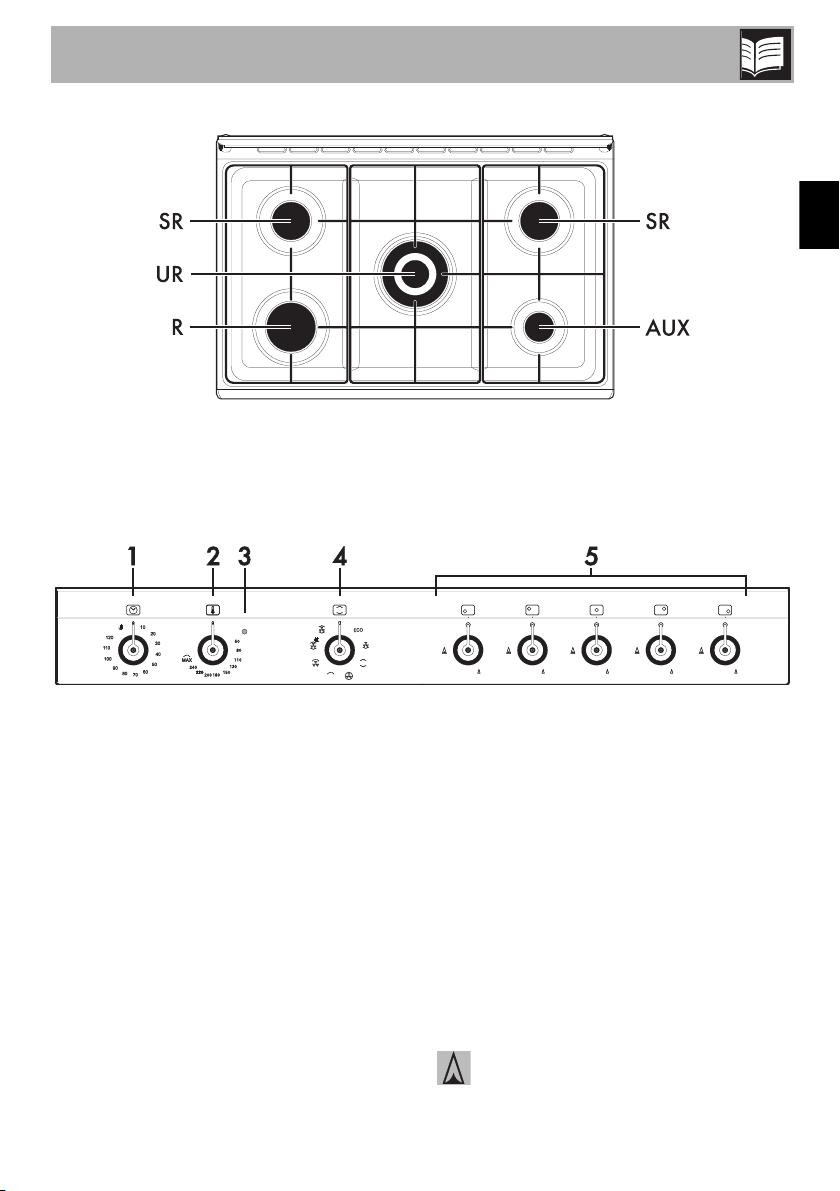
2.1 General Description
1 Lid
2 Cooking hob
3 Control panel
4 Light bulb
5 Seal
6 Door
7 Fan
8 Evaporation tray
Rack/tray support frames
Description
59
EN
2.2 Cooking hob
AUX = Auxiliary burner
SR = Semi-rapid burner
R = Rapid burner
UR = Ultra rapid burner
2.3 Control panel
1 Timer knob
Allows you to set manual cooking or a timer
with automatic oven switch off at the end of
cooking.
2 Temperature knob
This knob allows you to select the cooking
temperature.
Turn the knob clockwise to the required
value, between the minimum and maximum
setting.
3 Indicator light
The indicator light comes on to indicate that
the oven is heating up. It turns off as soon as
it reaches the set temperature. It flashes
regularly to indicate that the temperature set
inside the oven is kept constant.
4 Function knob
The oven's various functions are suitable for
different cooking methods. After selecting
the required function, set the cooking
temperature using the temperature knob.
5 Hob burner knobs
For lighting and adjusting the hob burners.
Press and turn the knobs anti-clockwise to
in order to light the relative burners.
Turn the knobs to the zone between the
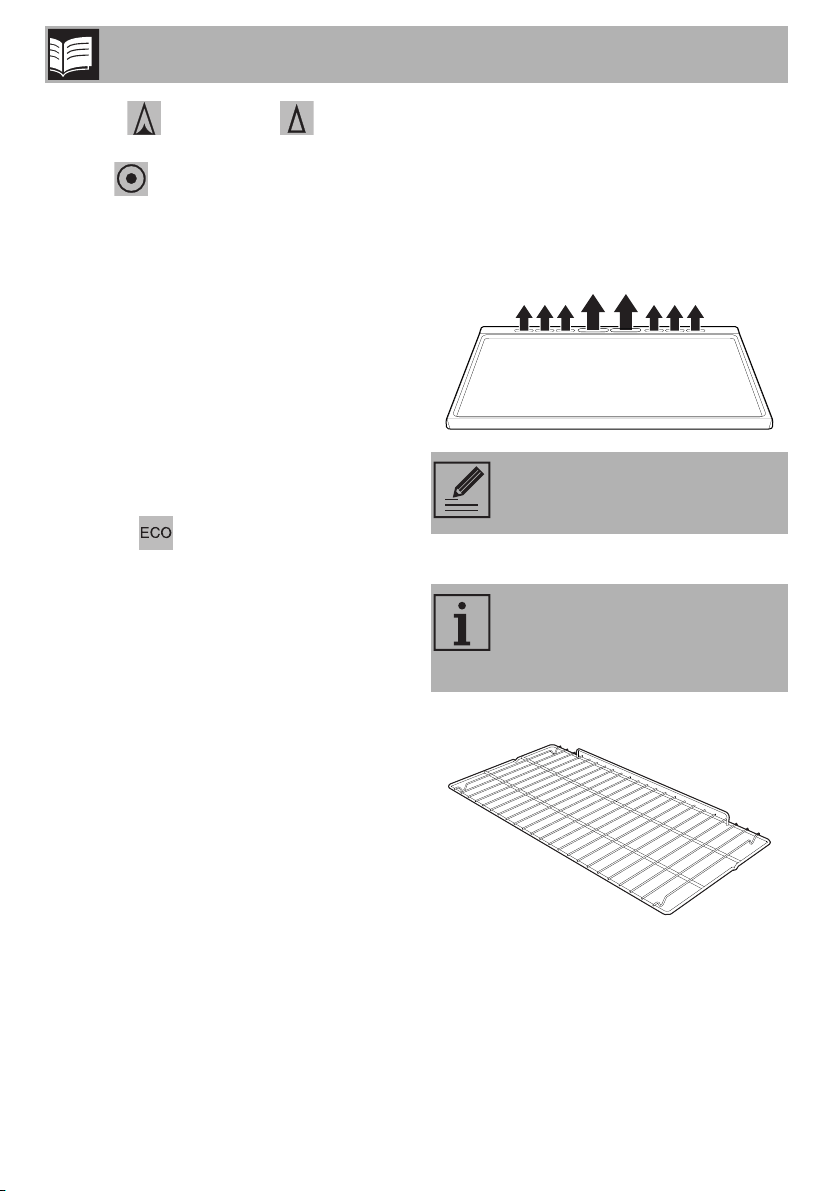
Description
60
maximum and minimum setting to
adjust the flame. Return the knobs to the
position to turn off the burners.
2.4 Other parts
Shelves
The appliance features shelves to position
trays and racks at different heights. The
insertion heights are indicated from the bottom
upwards (see 2.1 General Description).
Interior lighting
The appliance’s interior lighting comes on:
• When the door is opened.
• When any function is selected, apart
from the function.
Cooling fan
The fan cools the ovens and comes into
operation during cooking. The fan causes a
steady outflow of air that exits from the rear
of the appliance and which may continue
for a brief period of time even after the
appliance has been turned off.
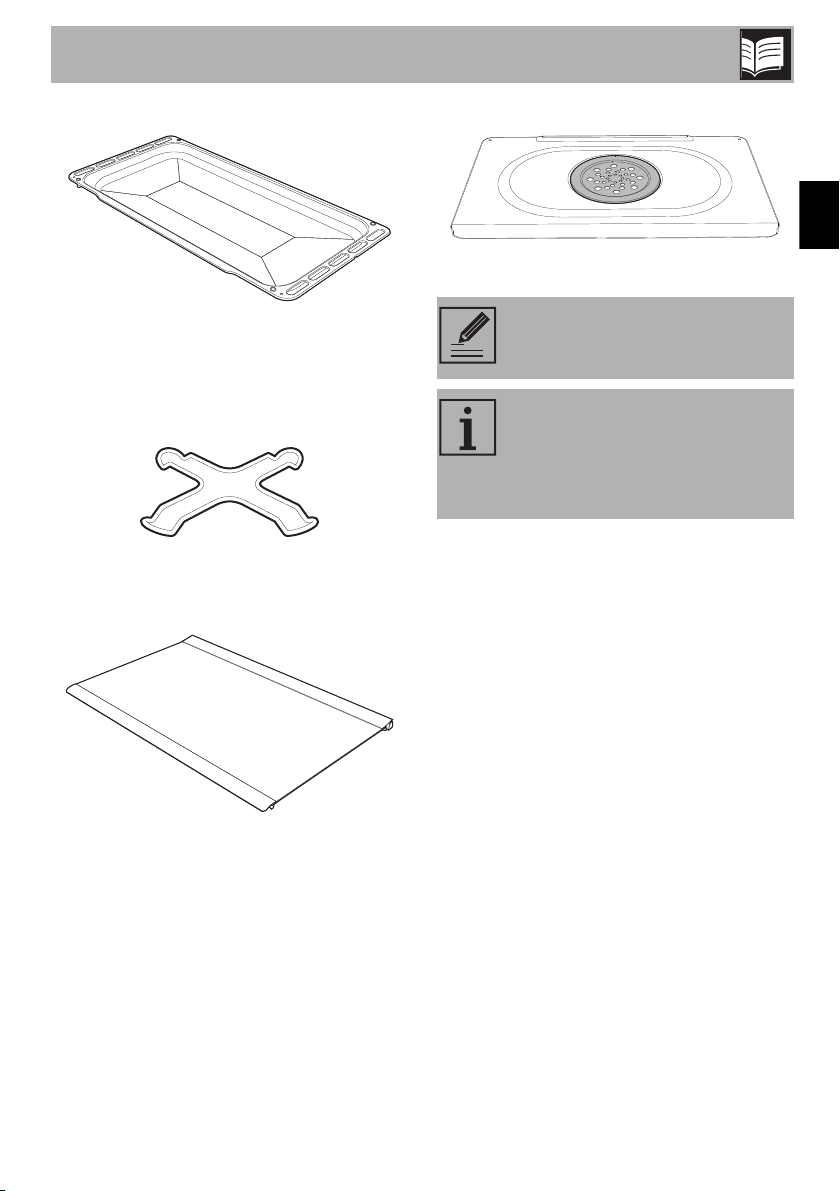
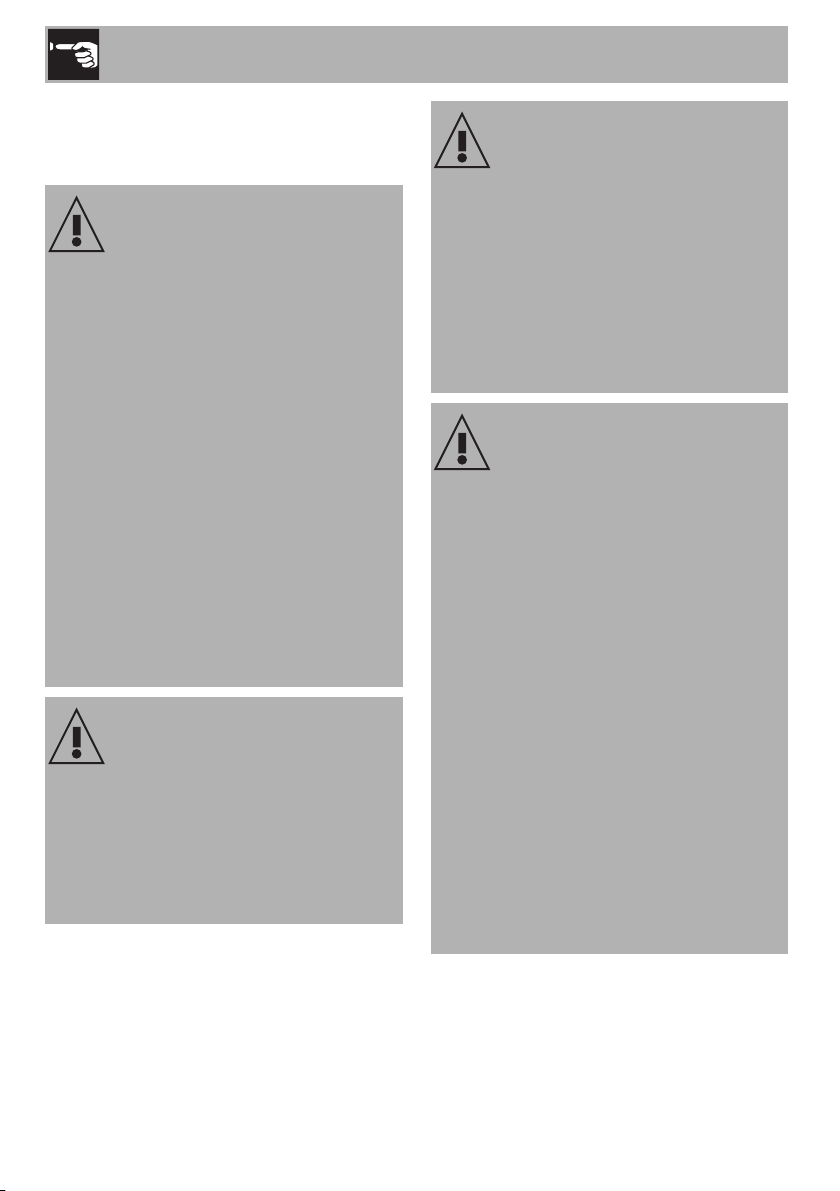
2.5 Available accessories
Rack
Used for supporting containers with food
during cooking.
Do not obstruct ventilation
openings and heat dispersal slots.
The accessories intended to come
into contact with food are made of
materials that comply with the
provisions of current legislation.
Description
61
EN
Deep tray
Useful for collecting fat from foods placed
on the rack above and for cooking pies,
pizzas and baked desserts.
Ring reducer
Useful when using small cookware.
Lid
The toughened glass lid with aluminium
edging protects the hob when not in use.
Evaporation tray and cover
Used to distribute the steam inside the oven.
The maximum capacity of the
evaporation tray is 250 ml.
Supplied and optional accessories
can be requested to Authorised
Service Centres. Use only original
accessories supplied by the
manufacturer.
Use
62
3 Use
Instructions
High temperature inside the oven
during use
Danger of burns
• Keep the oven door closed during
cooking.
• Protect your hands wearing heat
resistant gloves when moving food
inside the oven.
• Do not touch the heating elements inside
the oven.
• Do not pour water directly on very hot
trays.
• Keep children under the age of 8 away
from the oven when it is in use.
• If you need to move food or at the end
of cooking, open the door 5 cm for a
few seconds, let the steam come out,
then open it fully.
Improper use
Danger of burns
• Make sure that the flame-spreader
crowns are correctly positioned in their
seats with their respective burner caps.
• Oils and fats could catch fire if
overheated. Be very careful.
High temperature inside the
storage compartment
Danger of burns
• Do not open the storage compartment
when the appliance is on and still hot.
• The items inside the storage
compartment could be very hot after
using the appliance.
• It must not be used to store flammable
materials, cloths or paper.
Improper use
Risk of damage to surfaces
• Do not cover the bottom of the oven
cavity with aluminium or tin foil sheets.
• If you wish to use greaseproof paper,
place it so that it will not interfere with the
hot air circulation inside the oven cavity.
• Do not place pans or trays directly on
the bottom of the oven cavity.
• Do not use the open door to place pans
or trays on the internal glazing pane.
• Do not pour water directly on very hot
trays.
• Cooking vessels and griddle plates
should be placed inside the perimeter
of the hob.
• All pans must have smooth, flat bottoms.
• If any liquid does boil over or spill,
remove the excess from the hob.
Use
63
EN
Precautions
A gas leak can cause an explosion.
If you smell gas or there are faults in the gas
system:
• Immediately turn off the gas supply or
close the valve on the gas cylinder.
• Extinguish all naked flames and
cigarettes.
• Do not turn on power switches or
appliances and do not remove plugs
from power sockets. Do not use phones
or mobile phones inside the building.
• Open the window in order to ventilate
the room.
• Call customer assistance services or your
gas supplier.
Malfunctions
Any of the following indicate a malfunction
and you should contact a service centre.
• Yellowing of the burner plate.
• Damage to kitchen utensils.
• The burners do not ignite properly.
• It is difficult to keep the burners lit.
• The burners go out when the appliance
is in use.
• It is difficult to turn the gas valves.
If the appliance does not work properly,
contact your local Authorised Service
Centre.
First use
1. Remove any protective film from the
outside or inside of the appliance,
including accessories.
2. Remove any labels (apart from the
technical data plate) from the
accessories and from the oven cavity.
High temperature inside the
storage compartment
Danger of fire or explosion
• Do not spray any spray product near the
appliance.
• Do not use or leave flammable materials
near the appliance or the storage
compartment.
• Do not use plastic cookware or
containers for cooking.
• Do not place sealed tins or containers in
the oven cavity.
• Do not leave the appliance unattended
during cooking operations where fats
and oils could be released.
• Remove all trays and racks which are
not required during cooking.
Improper use
Risk of damage to surfaces
• Do not lower the lid when the burners
are lit.
Use
64
3. Remove and wash all the appliance's
accessories (see 4 Cleaning and
maintenance).
4. Heat the empty oven at the maximum
temperature to burn off any residues left
by the manufacturing process.
3.1 To save energy
• Preheat the appliance only if the recipe
requires it.
• Unless differently stated on the package,
defrost frozen food before placing it in
the cooking compartment.
• In case of multiple cooking, it is
recommended to cook food one after
the other to exploit the already hot
cooking compartment.
• Use dark metal moulds: They help to
absorb the heat better.
• Remove all trays and racks which are not
required during cooking.
• Stop cooking a few minutes before the
time normally used. Cooking will
continue for the remaining minutes with
the heat which has accumulated inside
the oven.
• Reduce any opening of the door to a
minimum to avoid heat dispersal.
• Keep the cooking compartment clean at
all times.
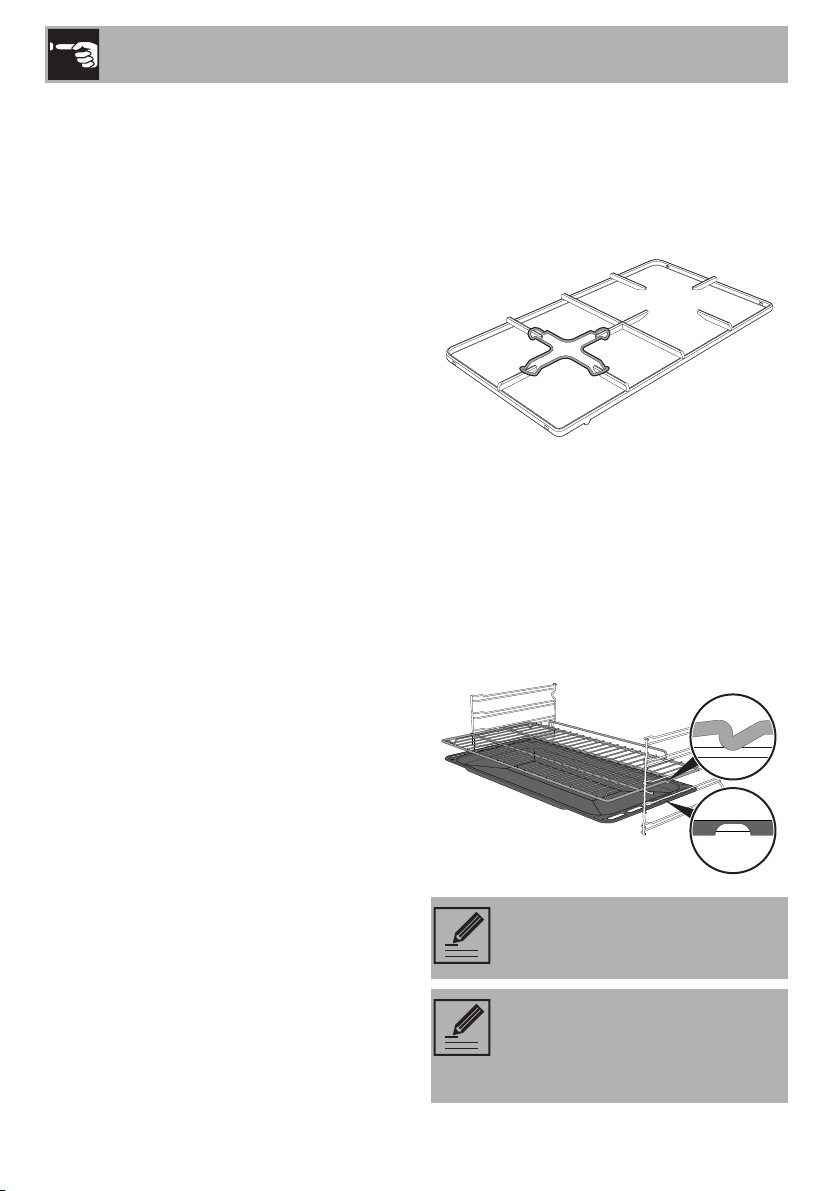
3.2 Using the accessories
Ring reducers
The ring reducers must be placed on the
hob grids. Make sure they are placed
properly.
Racks and trays
Racks and trays have to be inserted into the
side guides until they come to a complete
stop.
The mechanical safety locks that prevent the
rack from being taken out accidentally have
to face downwards and towards the oven
back.
Gently insert racks and trays into
the oven until they come to a stop.
Clean the trays before using them
for the first time to remove any
residues left by the manufacturing
process.
Use
65
EN
3.3 Using the hob
All the appliance’s control and monitoring
devices are located together on the front
panel. The burner controlled by each knob
is shown next to the knob. The appliance is
equipped with an electronic ignition device.
Simply press the knob and turn it anti-
clockwise to the maximum flame symbol,
until the burner ignites. If the burner does not
light in the first 15 seconds, turn the knob to
and wait 60 seconds before trying
again. After lighting, keep the knob pressed
in for a few seconds to allow the
thermocouple to heat up. The burner may
go out when the knob is released: In this
case, the thermocouple has not heated up
sufficiently.
Wait a few moments and repeat the
operation. Keep the knob pressed in
longer.
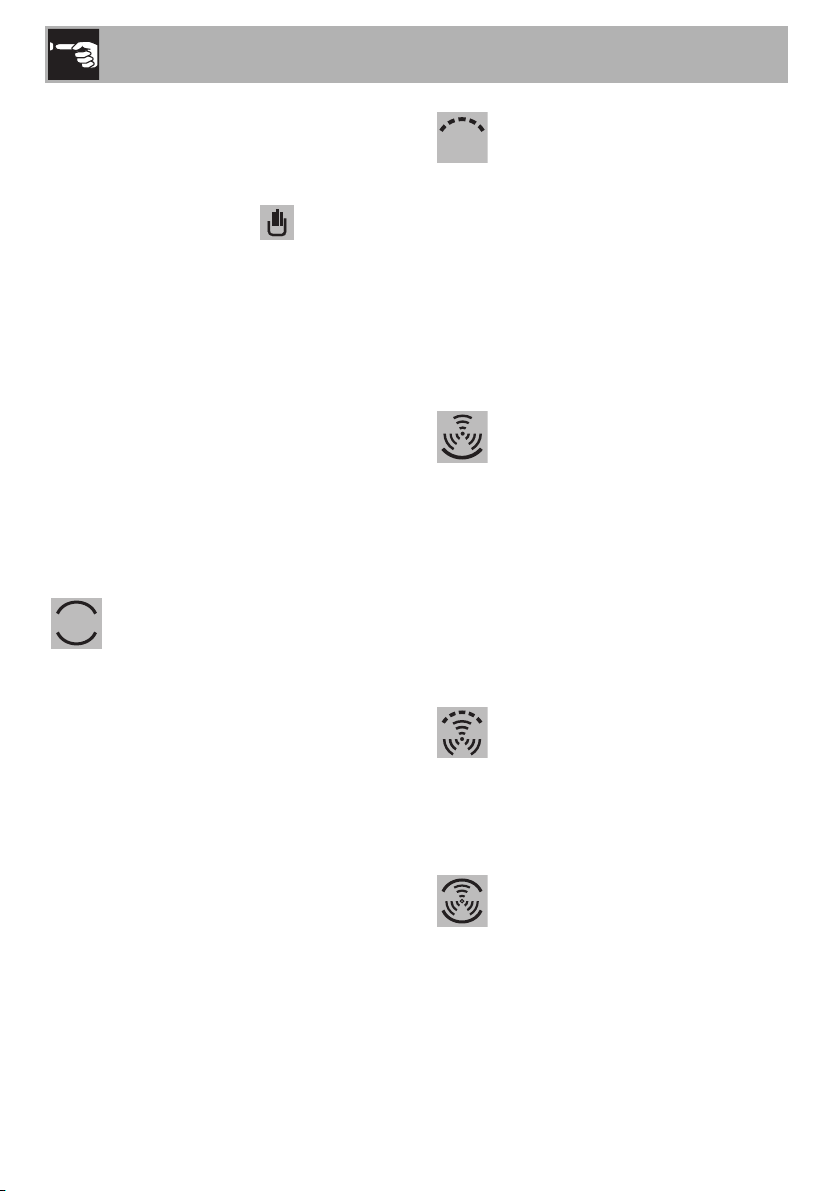
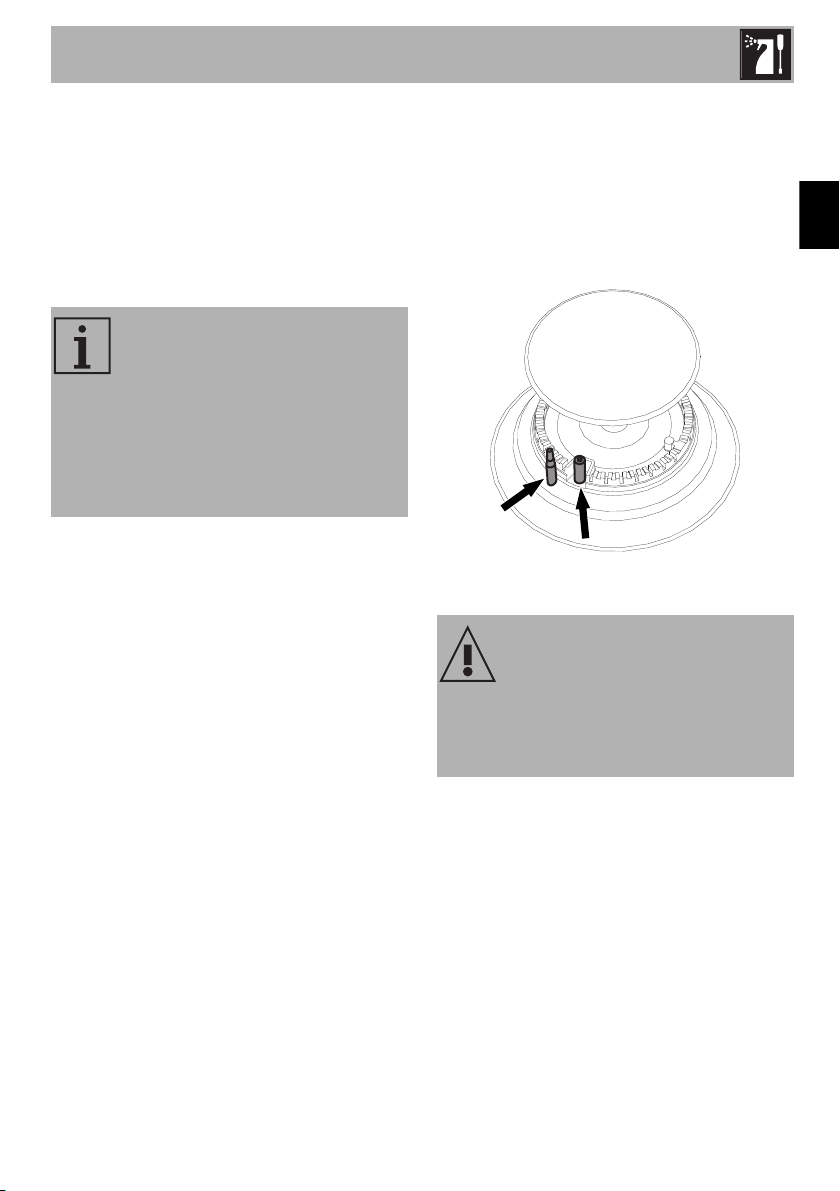
Correct positioning of the flame-
spreader crowns and burner caps
Before lighting the hob burners, make sure
that the flame-spreader crowns are
correctly positioned in their housings with
their respective burner caps. Make sure that
the holes 1 of the flame-spreader crowns
are aligned with the thermocouples 2 and
igniters 3.
Practical tips for using the hob
For better burner efficiency and to minimise
gas consumption, use pans with lids and of
suitable size for the burner, so that flames
do not reach up the sides of the pan.
Once the contents come to the boil, turn
down the flame far enough to ensure that
the liquid does not boil over.
In case of an accidental switching
off, a safety device will be tripped,
cutting off the gas supply, even if
the gas cock is open. Return the
knob to and wait at least
60 seconds before lighting it
again.
Pan diameters:
• AUX: 12 - 14 cm.
• SR: 16 - 24 cm.
• R: 18 - 26 cm.
• UR: 18 - 28 cm.
Use
66
3.4 Using the oven
Switching on the oven
To switch on the oven:
1. Select manual cooking or set the
cooking duration using the timer knob.
Adjustment is progressive so that the time
can also be set to any intermediate value
between these numbers.
2. Select the temperature using the
temperature knob.
3. Select the cooking function using the
function knob.
4. At the end of timed cooking, a buzzer
sounds that stops automatically after a
few seconds.
Functions list
Static
As the heat comes from above and
below at the same time, this system
is particularly suitable for certain
types of food. Traditional cooking,
also known as static cooking, is
suitable for cooking just one dish at
a time. Perfect for all types of roasts,
bread and cakes, and in any case,
particularly suitable for fatty meats
such as goose and duck.
Grill
The heat coming from the grill
element gives perfect grilling results
above all for thin and medium
thickness meat and, in combination
with the rotisserie (where fitted),
gives the food an even browning
at the end of cooking. Perfect for
sausages, spare ribs and bacon.
This function enables large
quantities of food, particularly meat,
to be grilled evenly.
Fan + lower element
The combination of the fan with just
the lower heating element allows
cooking to be completed more
rapidly. This system is
recommended for sterilising or for
finishing off the cooking of foods
which are already well-cooked on
the surface, but not inside, which
therefore need a little more heat.
Perfect for any type of food.
Fan with grill
The air produced by the fan softens
the strong heatwave generated by
the grill, grilling perfectly even very
thick foods. Perfect for large cuts of
meat (e.g. shin of pork).
Fan assisted
The operation of the fan, combined
with traditional cooking, ensures
consistent cooking even with
complex recipes. Perfect for biscuits
and cakes, even when
simultaneously cooked on several
levels. (For multiple-level cooking,
we recommend using the 2nd and
4th shelf).
Use
67
EN
3.5 Cooking with the Direct Steam
function
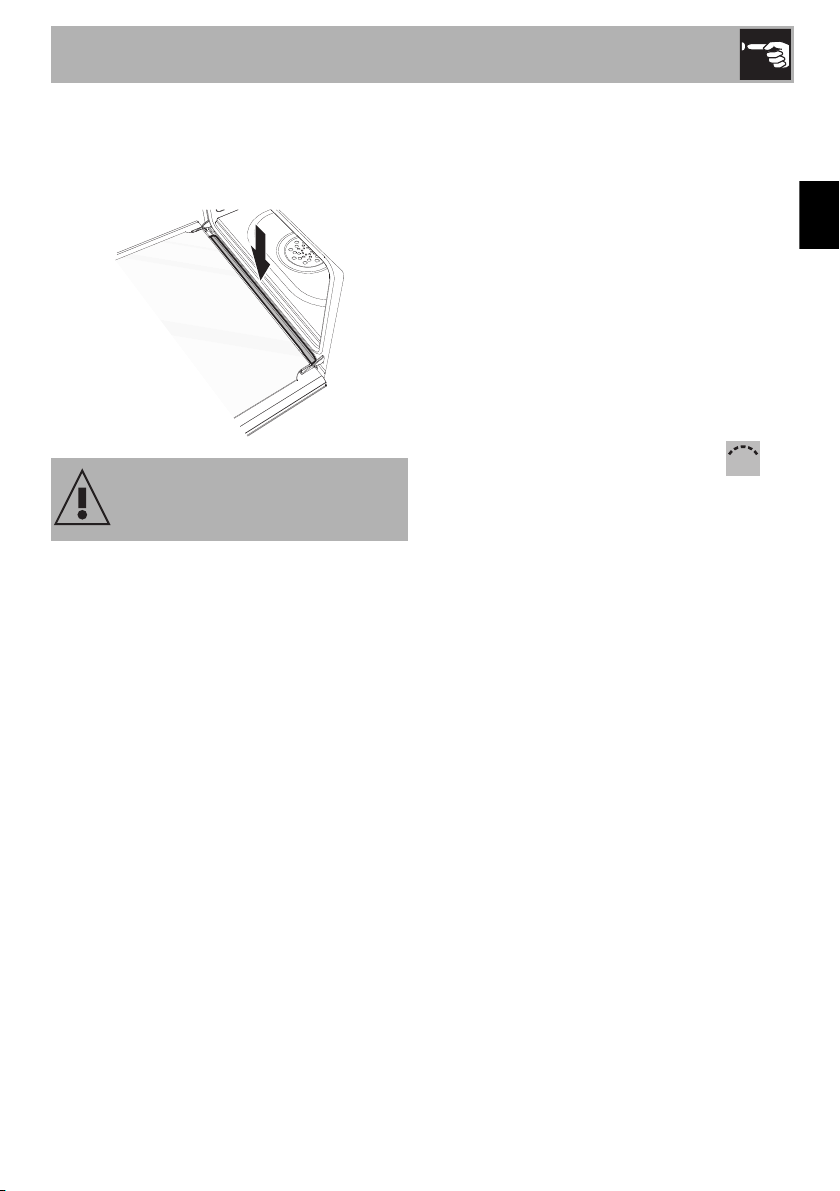
1. Open the oven door.
2. Lift the cover of the evaporation tray.
3. Fill the tray with sufficient water for the
cooking duration (see Direct Steam
cooking information table)
.
Direct Steam
This function combines static
cooking with the central part of the
lower heating element and the fan,
allowing food to be cooked by
evaporation of the water contained
in the special tray. The action of the
fan evenly distributes the heat and
steam generated, resulting in a
gentle cooking that preserves the
appearance and nutritional content
of the food.
Eco
This function is particularly suitable
for cooking on a single shelf with
low energy consumption.
Ideal for cooking meat, fish and
vegetables. It is not recommended
for leavened foods.
To obtain maximum energy savings
and reduce cooking times, it is
recommended to place food in the
oven without preheating.
When using the ECO function,
avoid opening the door during
cooking.
Cooking (and preheating) times
are longer with the ECO function.
Do not place food or any other
object directly on the bottom of the
oven. The base of the oven and
the evaporation tray must always
be left free.
• Use cold tap water which is not
too hard, softened water or still
mineral water.
• Do not use distilled water, tap
water with a high chloride
content (> 40 mg/l), or other
liquids.
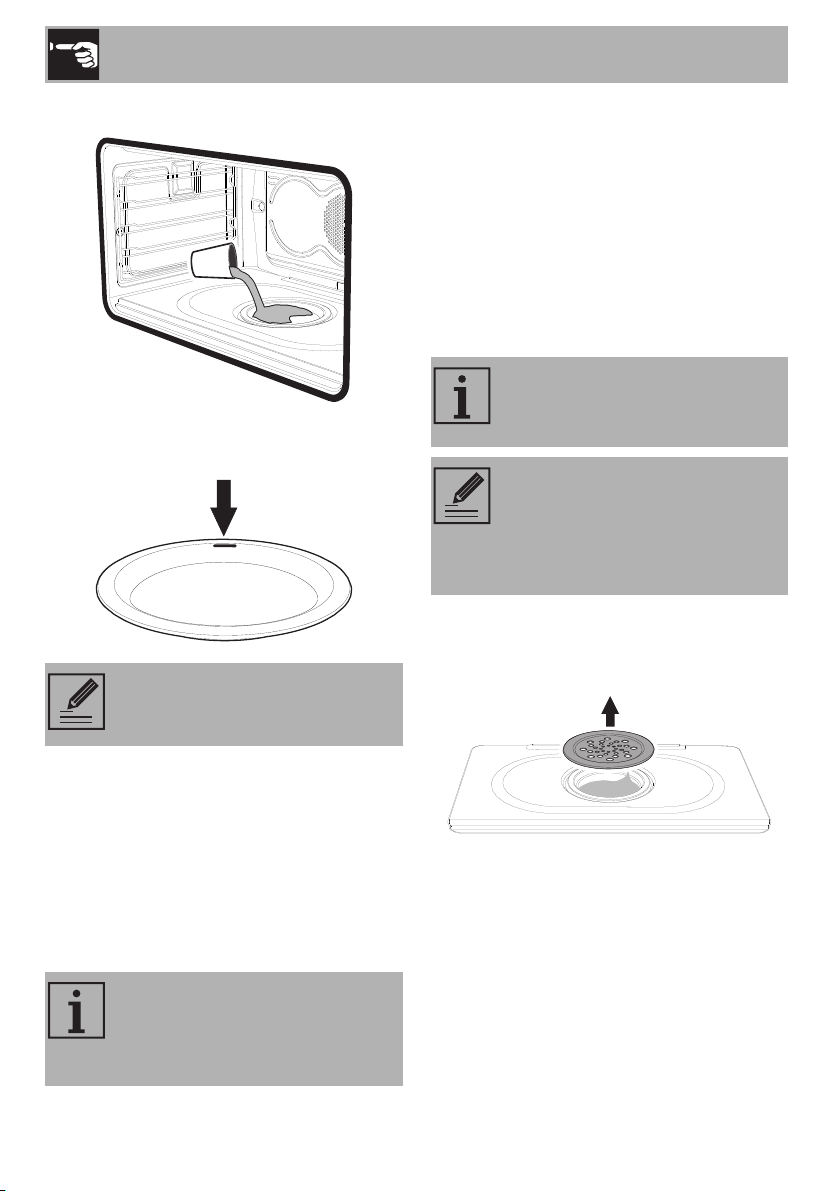
Use
68
The maximum level is indicated by a mark
on the inside of the tray.
4. Put the cover back on the tray.
5. Place the food on the oven tray.
6. Place the tray with the food in the oven.
7. Select the Direct Steam function using
the function knob.
8. Select the cooking temperature and
time using the appropriate knobs.
End of Direct Steam cooking
1. Stand to the side of the appliance and
open the door ajar for a few seconds
to allow excess steam to escape.
2. Fully open the door when safe to do so
and cautiously remove the food from
the oven.
3. Wait for the appliance to cool down
completely before cleaning it.
4. Remove the cover from the evaporation
tray inside the oven cavity, remove any
remaining water and dry thoroughly.
The maximum capacity of the
evaporation tray is 250 ml.
For best results and to save
energy, it is recommended to fill
the tray with sufficient water for the
required cooking.
Note: The evaporation tray cover
may be very hot: use appropriate
protection.
If cooking has just been carried
out with temperatures greater
than 100°C, you must wait for
the oven to cool in order to use
the Direct Steam function.
Use
69
EN
5. Use a sponge to remove any
condensation from the base and walls of
the oven cavity, the door glass and the
drip tray at the front of the appliance.
3.6 Cooking advice
General advice
• Use a fan assisted function to achieve
consistent cooking at several levels.
• It is not possible to shorten cooking times
by increasing the temperature (the food
could be overcooked on the outside and
undercooked on the inside).
Advice for cooking meat
• Cooking times vary according to the
thickness and quality of the food and to
consumer taste.
• Use a meat thermometer when roasting
meat, or simply press on the roast with
a spoon. If it is hard, it is ready; If not, it
needs another few minutes cooking.
Advice for cooking with the Grill and the
Fan with grill
• Meat can be grilled even when it is put
into the cold oven or into the preheated
oven if you wish to change the effect of
the cooking.
• With the Fan with grill function, we
recommend that you preheat the oven
before grilling.
• We recommend placing the food at the
centre of the rack.
• With the Grill function, we recommend
that you turn the temperature knob to the
maximum value near the symbol to
optimise cooking.
• Foods should be seasoned before
cooking. Foods should also be coated
with oil or melted butter before cooking.
• Use the oven tray on the first bottom shelf
to collect liquids produced by grilling.
Advice for cooking desserts/pastries and
biscuits
• Use dark metal moulds: They help to
absorb the heat better.
• The temperature and the cooking time
depend on the quality and consistency
of the dough.
• To check whether the dessert is cooked
right through: At the end of the cooking
time, put a toothpick into the highest point
of the dessert. If the dough does not stick
to the toothpick, the dessert is cooked.
Take care: the water may be very
hot.
Use
70
• If the dessert collapses when it comes out
of the oven, on the next occasion reduce
the set temperature by about 10 °C,
selecting a longer cooking time if
necessary.
• While cooking desserts or vegetables,
excessive condensation may form on the
glass. In order to avoid this, open the
door very carefully a couple of times
while cooking.
Advice for defrosting and proving
• Place frozen foods without their
packaging in a lidless container on the
first shelf of the oven.
• Avoid overlapping the food.
• To defrost meat, use the rack placed on
the second level and a tray on the first
level. In this way, the liquid from the
defrosting food drains away from the
food.
• The most delicate parts can be covered
with aluminium foil.
• For successful proving, a container of
water should be placed in the bottom of
the oven.
To save energy
• Stop cooking a few minutes before
the time normally used. Cooking will
continue for the remaining minutes with
the heat which has accumulated inside
the oven.
• Reduce any opening of the door to a
minimum to avoid heat dispersal.
• Keep the inside of the appliance clean at
all times.
Use
71
EN
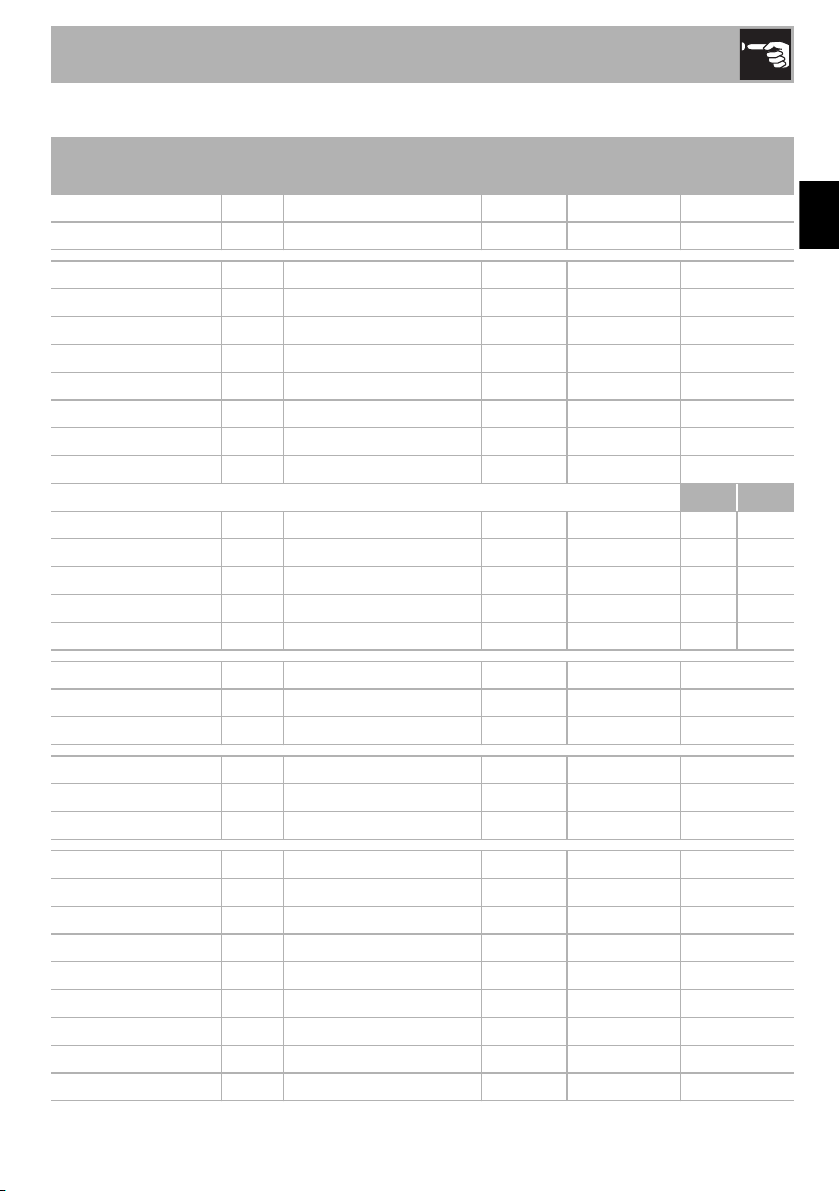
Cooking information table
Food
Weight
(kg)
Function Shelf
Temperature
(°C)
Time
(minutes)
Lasagne
3 - 4 Static 1 220 - 230 45 - 50
Pasta bake
3 - 4 Static 1 220 - 230 45 - 50
Roasted veal
2 Turbo/Round 2 180 - 190 90 - 100
Pork loin
2 Turbo/Round 2 180 - 190 70 - 80
Sausages
1.5 Fan with grill 4 MAX 15
Roast beef
1 Turbo/Round 2 200 40 - 45
Roast rabbit
1.5 Round 2 180 - 190 70 - 80
Turkey breast
3 Turbo/Round 2 180 - 190 110 - 120
Roast pork neck
2 - 3 Turbo/Round 2 180 - 190 170 - 180
Roast chicken
1.2 Turbo/Round 2 180 - 190 65 - 70
1
st
2
nd
Pork chops
1.5 Fan with grill 4 MAX 15 5
Spare ribs
1.5 Fan with grill 4 MAX 10 10
Bacon
0.7 Grill 5 MAX 7 8
Pork fillet
1.5 Fan with grill 4 MAX 10 5
Beef fillet
1 Grill 5 MAX 10 7
Salmon trout
1.2 Turbo/Round 2 150 - 160 35 - 40
Delicate fish
1.5 Turbo/Round 2 160 60 - 65
Flounder
1.5 Turbo/Round 2 160 45 - 50
Pizza
1 Turbo/Round 2 MAX 8 - 9
Bread
1 Round 2 190 - 200 25 - 30
Focaccia
1 Turbo/Round 2 180 - 190 20 - 25
Ring cake
1 Round 2 160 55 - 60
Tart
1 Round 2 160 35 - 40
Ricotta cake
1 Round 2 160 - 170 55 - 60
Jam tarts
1 Turbo/Round 2 160 20 - 25
Chiffon cake
1.2 Round 2 160 55 - 60
Profiteroles
1.2 Turbo/Round 2 180 80 - 90
Sponge cake
1 Round 2 150 - 160 55 - 60
Rice pudding
1 Turbo/Round 2 160 55 - 60
Brioches
0.6 Round 2 160 30 - 35
The times indicated in the table do not include preheating times and are provided only as a guide.
Use
72
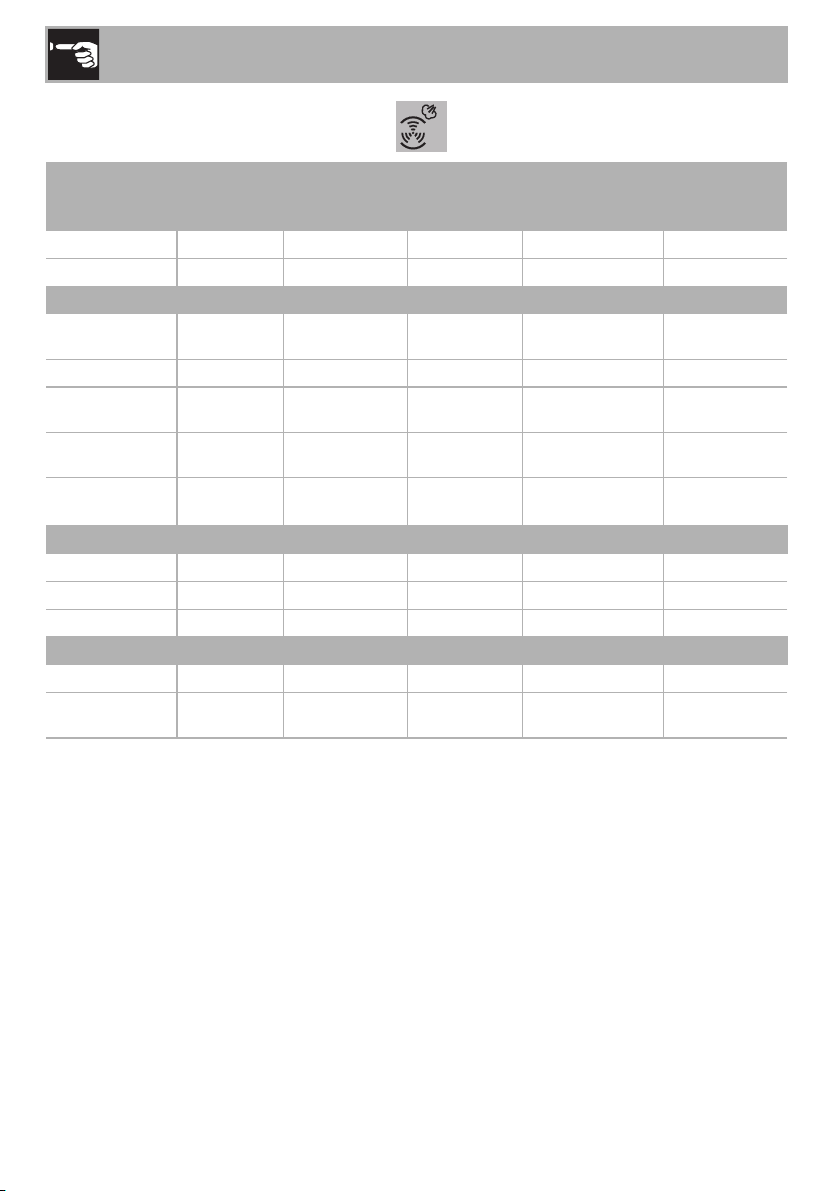
Direct Steam cooking information table
Food Weight (Kg) Water (ml) Shelf
Temperature
(°C)
Time (minutes)
Lasagne
4 - 5 120 - 130 2 180 - 190 50 - 55
Pasta bake
3 - 4 120 - 130 2 180 - 190 35 - 40
MEAT
Roast turkey
2 - 3 180 2 190 120 - 140
Pork loin
2 180 2 190 90 - 100
Roast rabbit
(pieces)
1 - 1,5 160 2 180 80 - 85
Spare ribs
(attached)
1,5 - 1,8 160 2 190 65 - 75
Leg of lamb (well
done)
2 160 2 190 85 - 95
DOUGH
Rolls
150 g each 100 2 180 20 - 24
Bread (loaf)
0.4 100 - 130 2 180 35 - 40
Focaccia
1,5 - 2 80 - 100 3 180 - 190 20 - 25
FRESH FISH
Sea bass
0,8 - 1 120 2 180 35 - 38
Monkfish (whole)
0,8 - 1 100 2 200 40 - 45
Use
73
EN
Food Weight (Kg) Water (ml) Shelf
Temperature
(°C)
Time (minutes)
VEGETABLES
Roast potatoes
1,5 80 - 100 2 200 30 - 35
Mixed roasted
vegetables
1,5 80 - 100 2 200 25 - 30
REHEATING FOOD
Pasta
4 - 5 100 - 110 2 120 20 - 30
Sliced roasted
meats / spare
0,5 100 - 110 2 120 15 - 25
Bread
0,5 100 - 110 2 120 10 - 15
Strudel
1 100 - 110 2 120 15 - 20
DESSERTS/PASTRIES
Bundt cake
1 80 - 100 2 160 45 - 50
Strudel
0.8 - 1 80 - 100 2 170 30 - 35
Muffins
50 g for each
baking cup
80 2 150 - 160 15 - 20
Sponge cake
1 80 - 100 2 150 55 - 60
Biscuits (0.5 cm
thick)
total dough 0.5 80 - 100 2 160 - 170 13 - 15
The quantity of water recommended in the table may vary according to the type of food, weight and cooking
time.
The oven is always preheated when the Direct Steam function is used.
Roasts, vegetables and potatoes should be mixed and/or turned during cooking to achieve uniform browning
on all sides.
The times indicated in the table do not include preheating and are provided only as a guide.
Cleaning and maintenance
74
4 Cleaning and maintenance
Instructions
Cleaning the surfaces
To keep the surfaces in good condition,
they should be cleaned regularly after use.
Let them cool first.
Ordinary daily cleaning
Always use specific products only that do
not contain abrasives or chlorine-based
acids.
Pour the product onto a damp cloth and
wipe the surface, rinse thoroughly and dry
with a soft cloth or a microfibre cloth.
Food stains or residues
Do not use steel sponges and sharp
scrapers as they will damage the surface.
Use normal, non-abrasive products and a
wooden or plastic tool, if necessary. Rinse
thoroughly and dry with a soft cloth or a
microfibre cloth.
Do not allow residues of sugary foods (such
as jam) to set inside the oven. If left to set for
too long, they might damage the enamel
lining of the oven.
Improper use
Risk of damage to surfaces
• Do not use steam jets to clean the
appliance.
• Do not use cleaning products containing
chlorine, ammonia or bleach on parts
made of steel or that have metallic
surface finishes (e.g. anodizing, nickel-
or chromium-plating).
• Do not use abrasive or corrosive
detergents (e.g. scouring powders, stain
removers and metallic sponges) on
glass parts.
• Do not use rough or abrasive materials
or sharp metal scrapers.
• Do not wash the removable components
such as the hob grids, flame-spreader
crowns and burner caps in a
dishwasher.
We recommend the use of
cleaning products distributed by
the manufacturer.
After cleaning, dry the appliance
thoroughly to prevent water or
detergent drips from interfering
with its operation or creating
unsightly marks.
Cleaning and maintenance
75
EN
4.1 Cleaning the hob
Cooking hob grids
Remove the grids and clean them in
lukewarm water and non-abrasive
detergent. Make sure to remove any
encrustations. Dry them thoroughly and
return them to the hob.
Flame-spreader crowns and burner caps
For easier cleaning, the flame-spreader
crowns and the burner caps can be
removed. Wash them in hot water and non-
abrasive detergent. Carefully remove any
encrustation, then wait until they are
perfectly dry. Refit the flame-spreader
crowns making sure that they are correctly
positioned in their housings with their
respective burner caps.
Igniters and thermocouples
For correct operation the igniters and
thermocouples must always be perfectly
clean. Check them frequently and clean
them with a damp cloth if necessary.
Remove any dry residues with a wooden
toothpick or a needle.
Knobs
The knobs should be cleaned with a soft
cloth dampened with warm water, then
dried carefully. They can be removed by
pulling them out of their housing.
The continuous contact between
the grids and the flame can cause
modifications to the enamel over
time in those parts exposed to
heat. This is a completely natural
phenomenon which has no effect
on the operation of this
component.
Do not use aggressive products
containing alcohol or products for
cleaning steel and glass when
cleaning the knobs, as these
products could cause permanent
damage.
Cleaning and maintenance
76
Cleaning the glass lid
For easier cleaning, the lid can be taken off
its hinges.
1. Lower the lid to closed position.
2. Unscrew the screws on the back of the
hinges.
3. Open it and lift it upwards.
4. Clean.
5. Insert the lid into the guides. Tighten the
fastening screws on the hinges in closed
position.
4.2 Cleaning the door
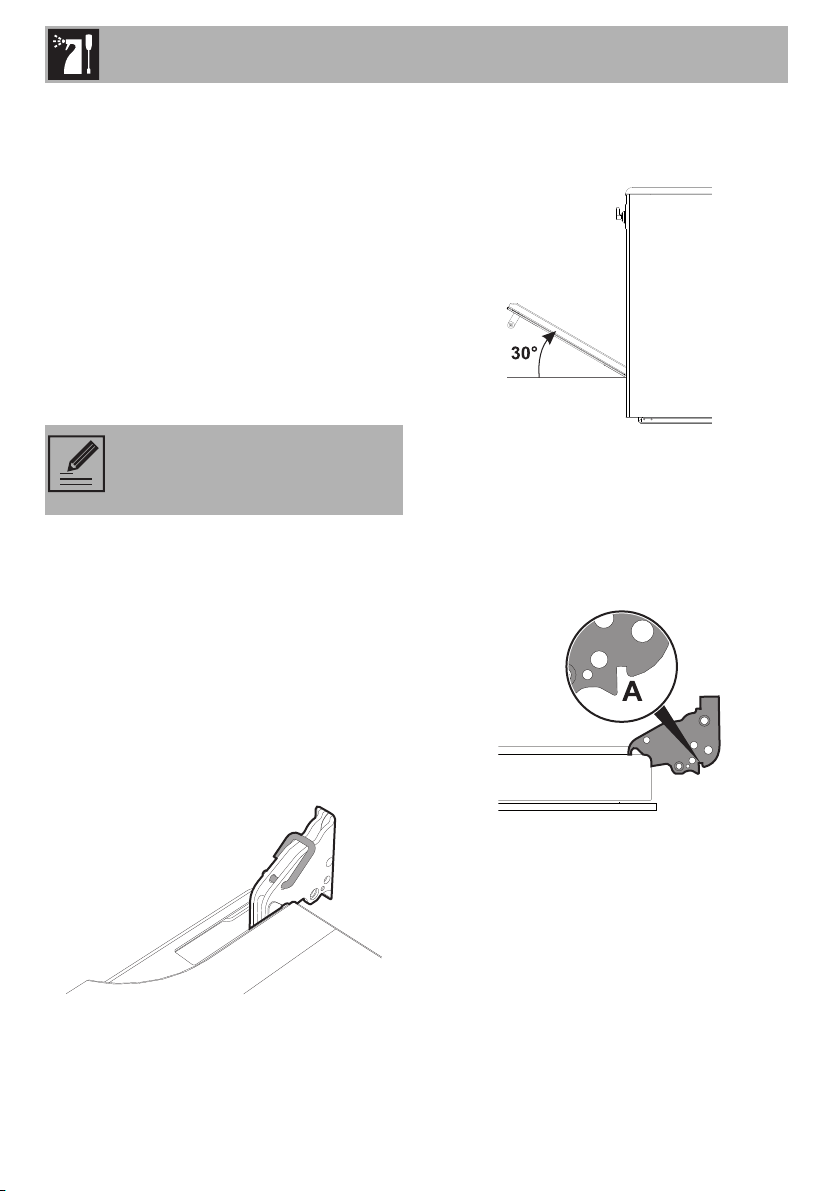
Removing the door
For easier cleaning it is recommended to
remove the door and place it on a tea towel.
To remove the door proceed as follows:
1. Open the door completely and insert two
pins into the holes on the hinges
indicated in the figure.
2. Grasp the door on both sides with both
hands, lift it forming an angle of around
30° and remove it.
3. To reassemble the door, put the hinges in
the relevant slots in the oven, making sure
that grooved sections A are resting
completely in the slots. Lower the door
and once it is in place remove the pins
from the holes in the hinges.
Cleaning the door glazing
The glass in the door should always be kept
thoroughly clean. Use absorbent kitchen
roll. In case of stubborn dirt, wash with a
damp sponge and an ordinary detergent.
If liquids fall on the lid when it is
closed, carefully remove them with
a cloth before opening it.
Cleaning and maintenance
77
EN
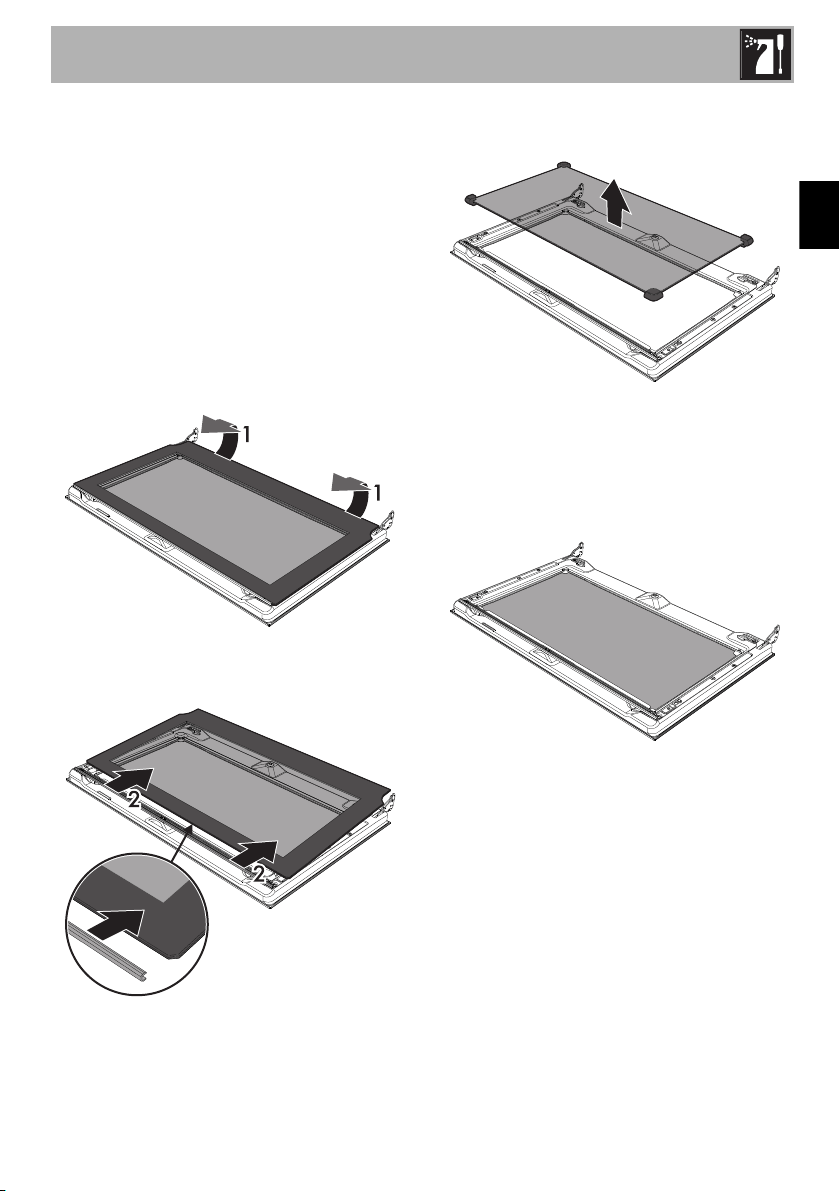
Removing the internal glass panes
For easier cleaning the internal glass panes
of the door can be removed.
1. Open the door.
2. Position the locking hooks in the hinge
holes to prevent accidental closing of the
door.
3. Remove the internal glazing pane by
pulling the rear part gently upwards,
following the movement indicated by
the arrows (1).
4. Pull the internal glazing pane from the
front strip (2) to remove it from the door.
5. Remove the intermediate glass pane by
lifting it upwards.
6. Clean the external glass pane and the
panes removed previously. Use
absorbent kitchen roll. In case of
stubborn dirt, wash with a damp sponge
and neutral detergent.
7. When you have finished cleaning,
reinsert the intermediate glass pane in its
housing in the door.
8. To reposition the internal glazing pane,
slide the upper part into the door strip
and insert the two rear pins into their
seats by pressing lightly.
Cleaning and maintenance
78
4.3 Cleaning the oven cavity
In order to keep your oven in the best
possible condition, clean it regularly after
letting it cool down.
Avoid letting food residue dry inside the
oven cavity, as this could damage the
enamel.
Take out all removable parts before
cleaning.
For easier cleaning, it is recommended to
remove:
• the door
• the rack/tray support frames
• the seal
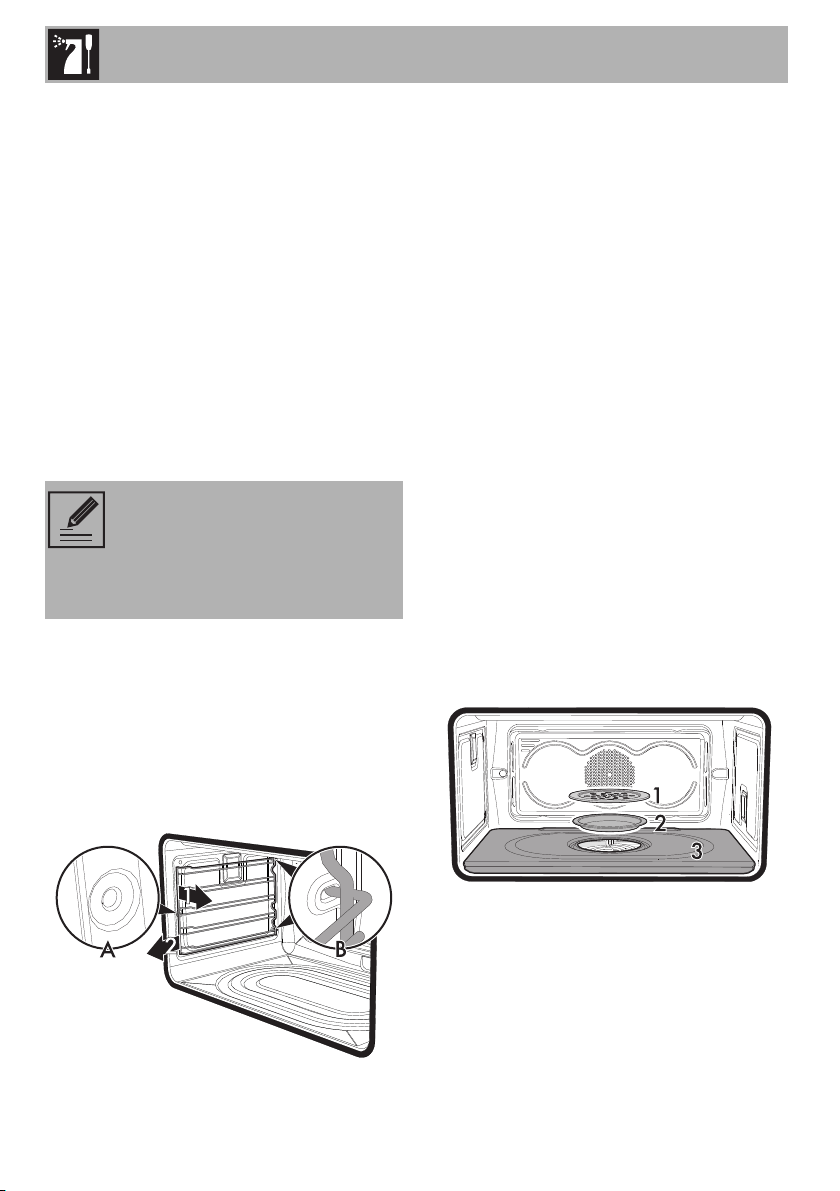
Removing racks/trays support frames
Removing the rack/tray support frames
enables the sides to be cleaned more easily.
To remove the rack/tray support frames:
• Pull the frame towards the inside of the
oven to unhook it from its groove A, then
slide it out of the seats B at the back.
• When cleaning is complete, repeat the
above procedures to put the rack/tray
support frames back in.
Cleaning the evaporation tray and cover
It is recommended that you clean and dry
the evaporation tray and the perforated
cover after using the Direct Steam function.
Common cleaning products can be used:
avoid using products that are too harsh
and/or acidic.
The cover and the tray can be washed in a
dishwasher.
If limescale forms, use a limescale remover
for steel surfaces.
Cleaning the lower part
It is recommended that you clean and dry
the bottom of the oven after using the Direct
Steam function:
1. Remove in sequence, the perforated
cover (1), the evaporation tray (2) and
the bottom (3); lift the bottom by a few
millimetres and pull it outwards.
In the event you are using specific
cleaning products, we recommend
running the oven at maximum
temperature for 15-20 minutes in
order to eliminate any residue.
Cleaning and maintenance
79
EN
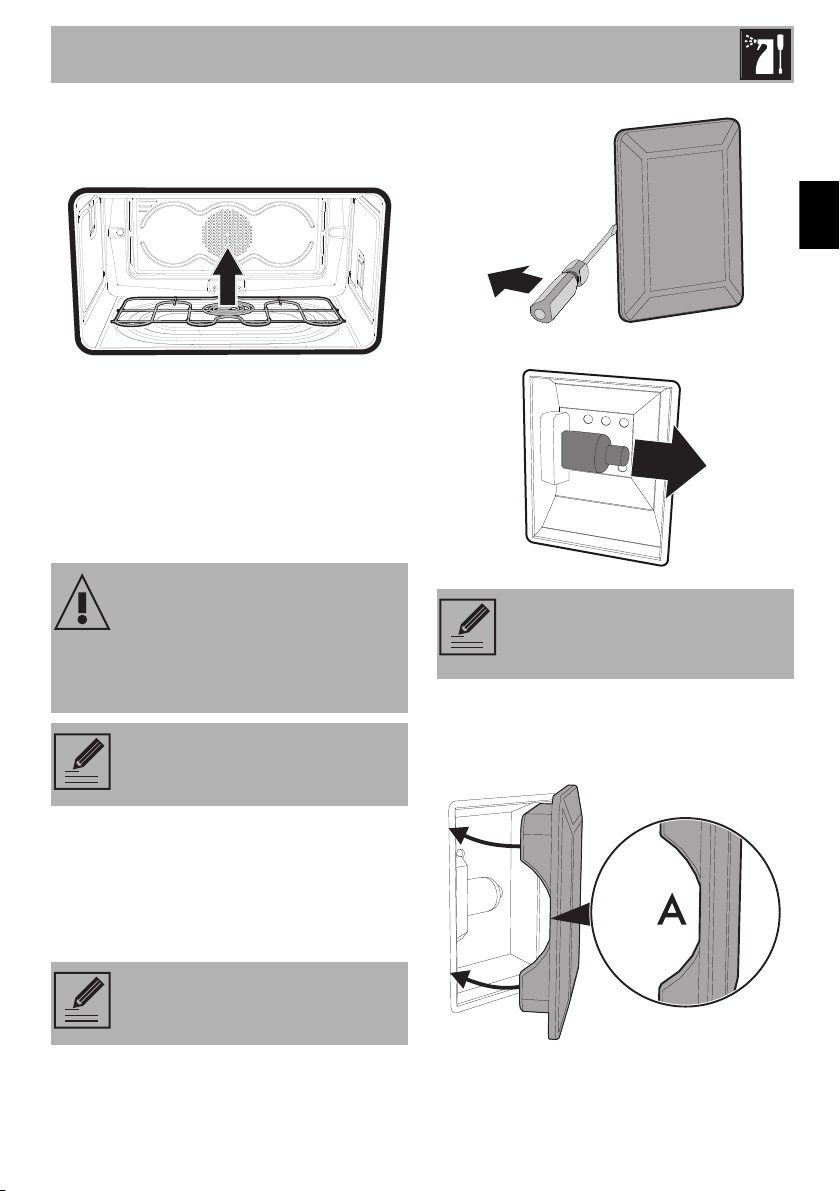
2. Carefully lift the end of the lower
heating element by a few centimetres
and clean the bottom of the oven.
Put the heating element back into its seat
when finished. Wait until the oven cavity is
completely dry before putting back the
accessories.
4.4 Extraordinary maintenance
Replacing the internal light bulb
1. Completely remove all accessories
from inside the oven.
2. Remove the rack/tray support frames.
3. Remove the bulb cover using a tool
(e.g. a screwdriver).
4. Slide out and remove the light bulb.
5. Fit the new light bulb.
6. Refit the cover. Ensure the moulded part
of the glass (A) is facing the door.
Live parts
Danger of electrocution
• Unplug the appliance from the mains.
The oven is fitted with a 40W light
bulb.
Take care not to scratch the
enamel of the oven cavity wall.
Do not touch the halogen light
bulb directly with your fingers, use
an insulating material.
Cleaning and maintenance
80
7. Press the cover completely down so
that it attaches perfectly to the bulb
support.
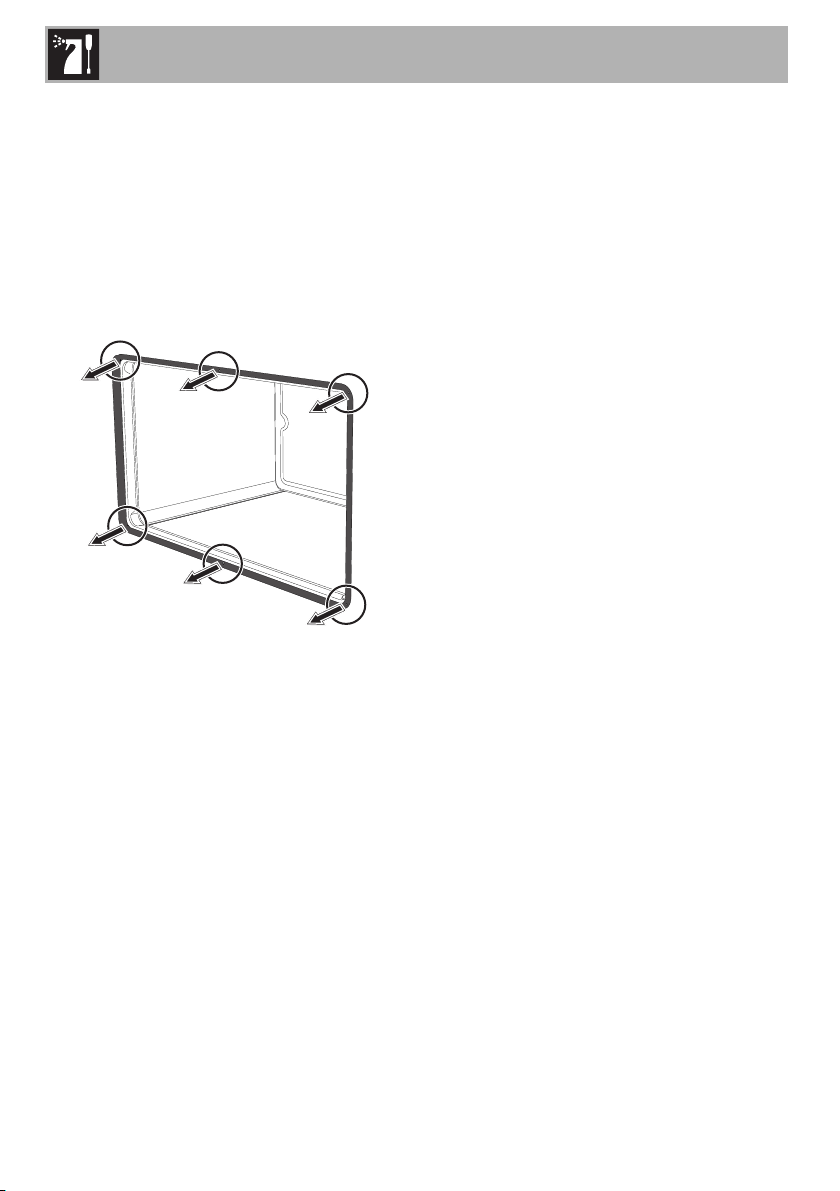
Installing and removing the seal
To remove the seal:
• Unhook the clips located in the 4 corners
and in the centre, then pull the seal
outwards.
To refit the seal:
• Hook the clips located in the 4 corners
and in the centre onto the seal.
Seal maintenance tips
The seal should be soft and elastic.
• To keep the seal clean, use a
non-abrasive sponge and wash
with lukewarm water.
Installation
81
EN
5 Installation
5.1 Gas connection
General information
Connection to the gas mains can be made
using a continuous wall steel hose in
compliance with the guidelines established
by the standards in force. The appliance is
preset for natural gas G20 (2H) at a
pressure of 20 mbar. For supplying it with
other types of gas, see chapter “5.2
Adaptation to different types of gas”.
The gas inlet connection is threaded ½”
external gas (ISO 228-1).
Connection with a steel hose
Make the connection to the gas mains
using a continuous wall steel hose whose
specifications comply with the applicable
standard.
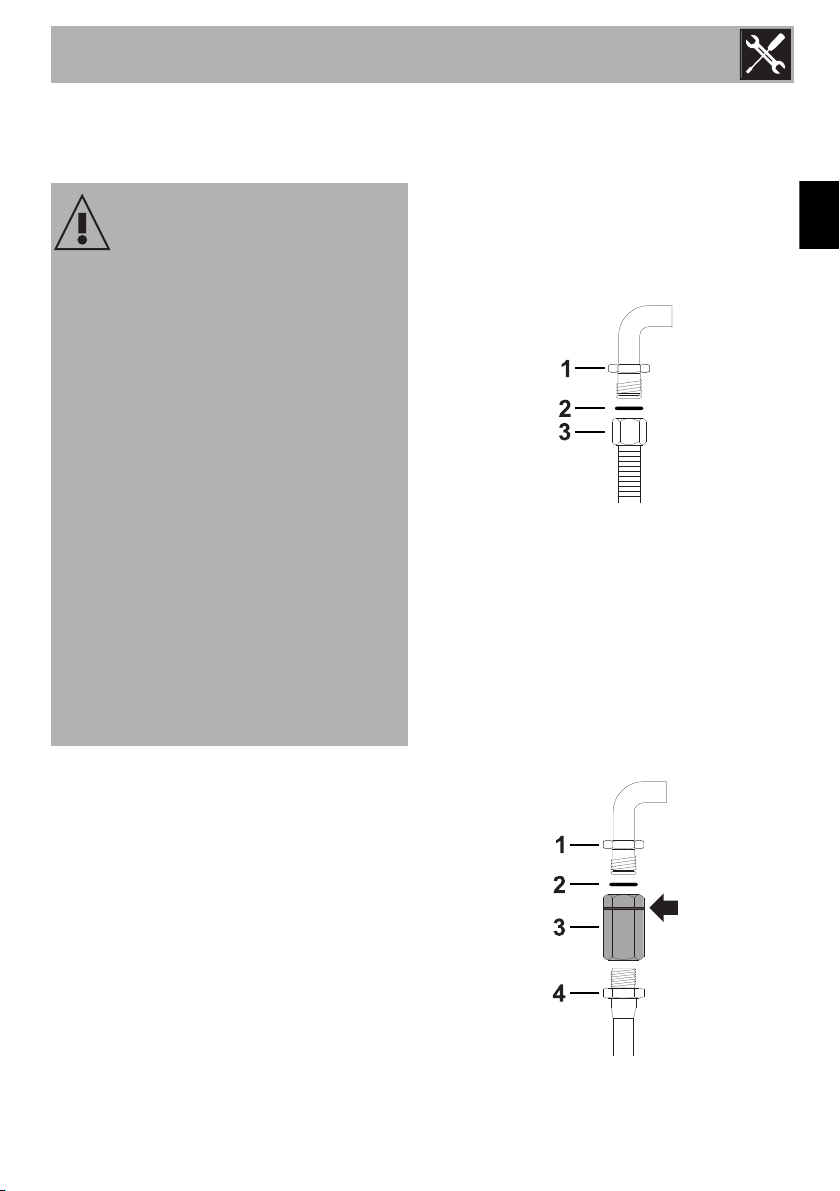
Carefully screw the connector 3 to the gas
connector 1 of the appliance, placing the
seal 2 between them.
Connection with a steel hose with
bayonet fitting
Carry out the connection to the gas mains
using a steel hose with bayonet fitting
compliant with B.S. 669. Apply insulating
material to the thread of the gas hose
connector 4 and then tighten the adapter 3.
Screw the assembly to the movable
connector 1 of the appliance, placing the
supplied seal 2 between them.
Gas leak
Danger of explosion
• After carrying out any operation, check that
the tightening torque of gas connections is
between 10 Nm and 15 Nm.
• If required, use a pressure regulator that
complies with current regulations.
• At the end of the installation, check for
any leaks with a soapy solution, never
with a flame.
• Installation using a hose must be carried
out so that the length of the hose does
not exceed 2 metres when fully
extended for steel hoses.
• The hoses should not come into contact
with moving parts and should not be
crushed in any way.
• The adjustment conditions for this
appliance are shown on the gas setting
label.
Installation
82
Connection to LPG
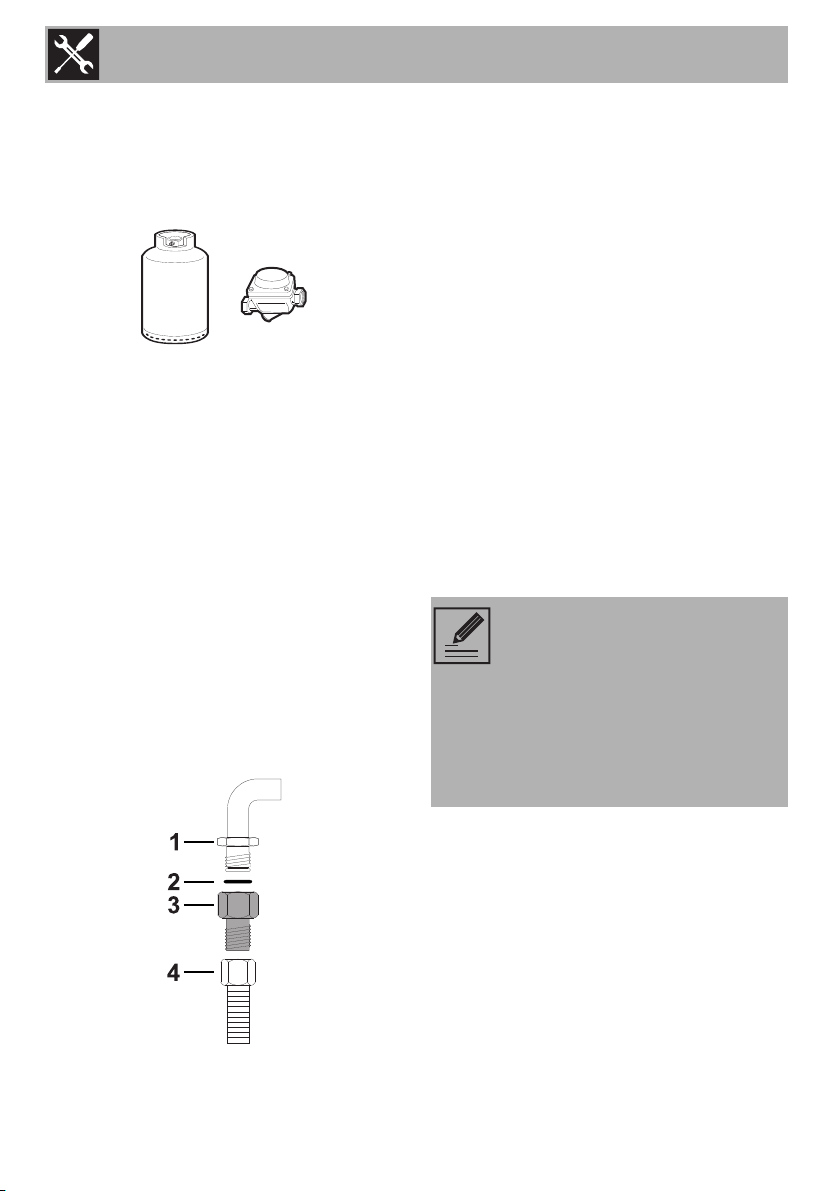
Use a pressure regulator and make the
connection on the gas cylinder following
the guidelines set out in the standards in
force.
The supply pressure must comply with the
values indicated in the table in “Gas types
and Countries”.
Connection with a steel hose with conical
fitting
Make the connection to the gas mains
using a continuous wall steel hose whose
specifications comply with the applicable
standard.
Carefully screw the hose connector 3 to the
appliance’s gas connector 1 (½” thread
ISO 228-1), placing the supplied seal 2
between them. Apply insulating material to
the thread of connector 3, then tighten the
steel hose 4 to the connector 3.
Room ventilation
The appliance should be installed in
rooms that have a permanent air supply in
accordance with the standards in force.
The room where the appliance is installed
must have enough air flow for the regular
combustion of gas and the necessary air
change in the room itself. The air vents,
protected by grilles, must be the right size
to comply with current regulations and
positioned so that no part of them is
obstructed, not even partially.
The room must be kept adequately
ventilated in order to eliminate the heat and
humidity produced by cooking: In
particular, after prolonged use, you are
recommended to open a window or to
increase the speed of any fans.
Extraction of the combustion products
The combustion products may be extracted
by means of hoods connected to a natural
draught chimney whose efficiency is certain
or via forced extraction. An efficient
extraction system requires precision planning
by a specialist qualified in this area and must
comply with the positions and clearances
indicated by the applicable standards.
When the job is complete, the installer must
issue a certificate of conformity.
This appliance is not connected to
an exhaust system for combustion
products. It must be installed and
connected in compliance with the
current installation regulations.
Special attention should be paid to
the relevant requirements as for
ventilation.
Installation
83
EN
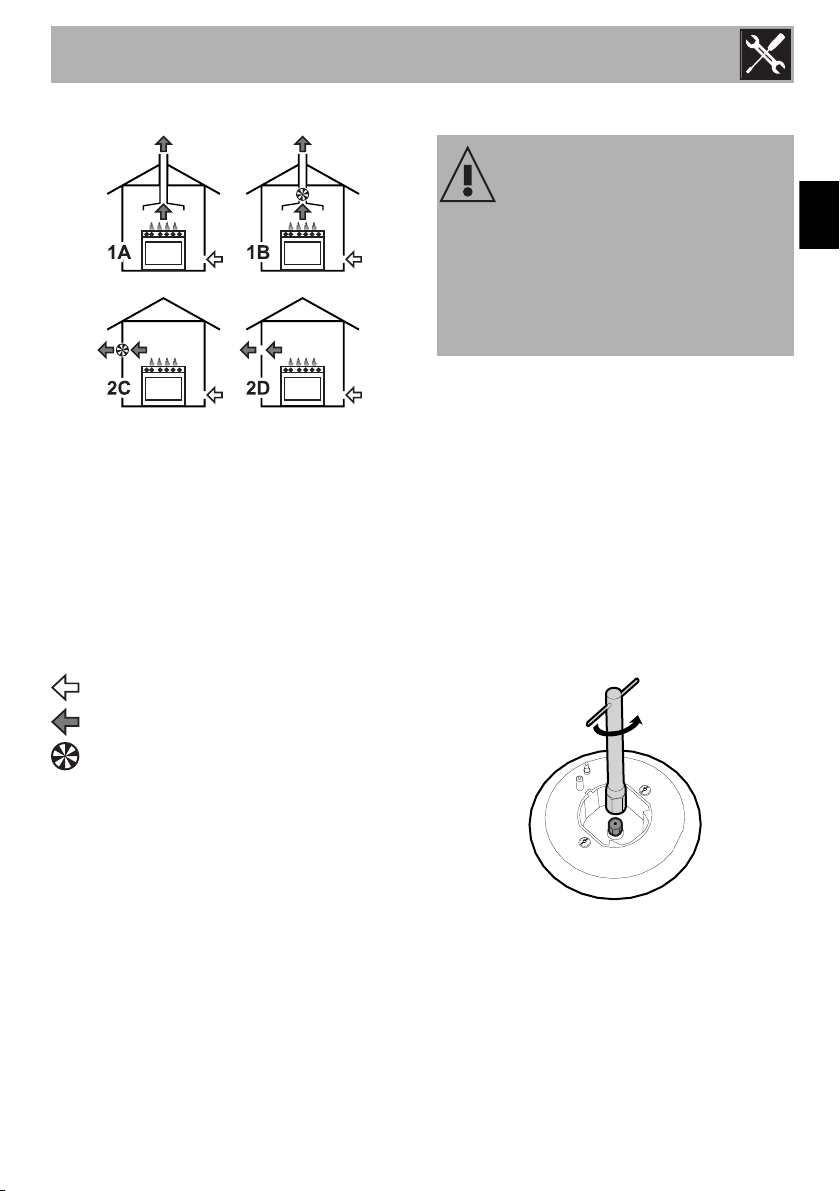
1 Extraction using a hood
2 Extraction without a hood
A Single natural draught chimney
B Single chimney with extractor fan
C Directly outdoors with wall- or window-
mounted extractor fan
D Directly outdoors through wall
Air
Combustion products
Extractor fan
5.2
Adaptation to different types of gas
In case of operation with other types of gas,
the burner nozzles must be changed and
the minimum flame adjusted on the gas
cocks.
Replacing nozzles
1. Remove the grids, burner caps and
flame-spreader crowns to access the
burner cups.
2. Replace the nozzles using a 7 mm socket
wrench according to the gas to be used
(see “Gas types and Countries”).
3. Replace the burners in their respective
housings.
Improper installation
Risk of malfunction
• In the case of conversion to Town Gas
G110 – 8 mbar (category 1a), do not
use the burners provided, but request the
special G110 burners kit from our
Technical Assistance Service.
Installation
84
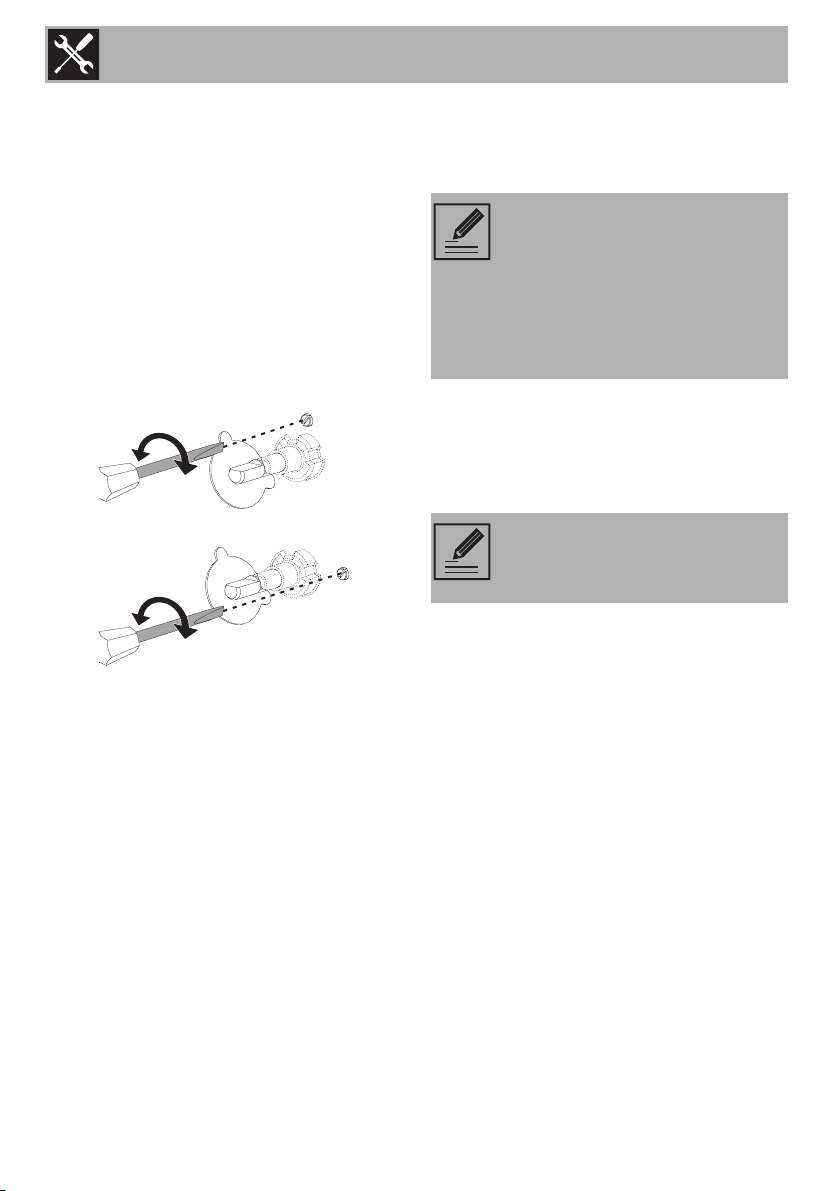
Adjusting the minimum setting for natural
or town gas
Light the burner and turn it to the minimum
position. Extract the gas cock knob and turn
the adjustment screw next to the tap rod
(depending on the model) until the correct
minimum flame is achieved.
Refit the knob and verify that the burner
flame is stable. Turn the knob rapidly from
the maximum to the minimum setting: The
flame should not go out. Repeat the
operation on all gas cocks.
Adjusting the minimum setting for LPG
Tighten the screw located at the side of the
tap rod clockwise all the way.
Lubricating the gas cocks
Over time the gas taps may become difficult
to turn and get blocked. Clean them
internally and replace the lubrication grease
.
Following adjustment to a gas
other than the one originally set in
the factory, replace the gas setting
label on the appliance with the
one corresponding to the new gas.
The label is inserted inside the
nozzle pack (where present).
Lubrication of the gas cocks should
be performed by a specialised
technician.
Installation
85
EN
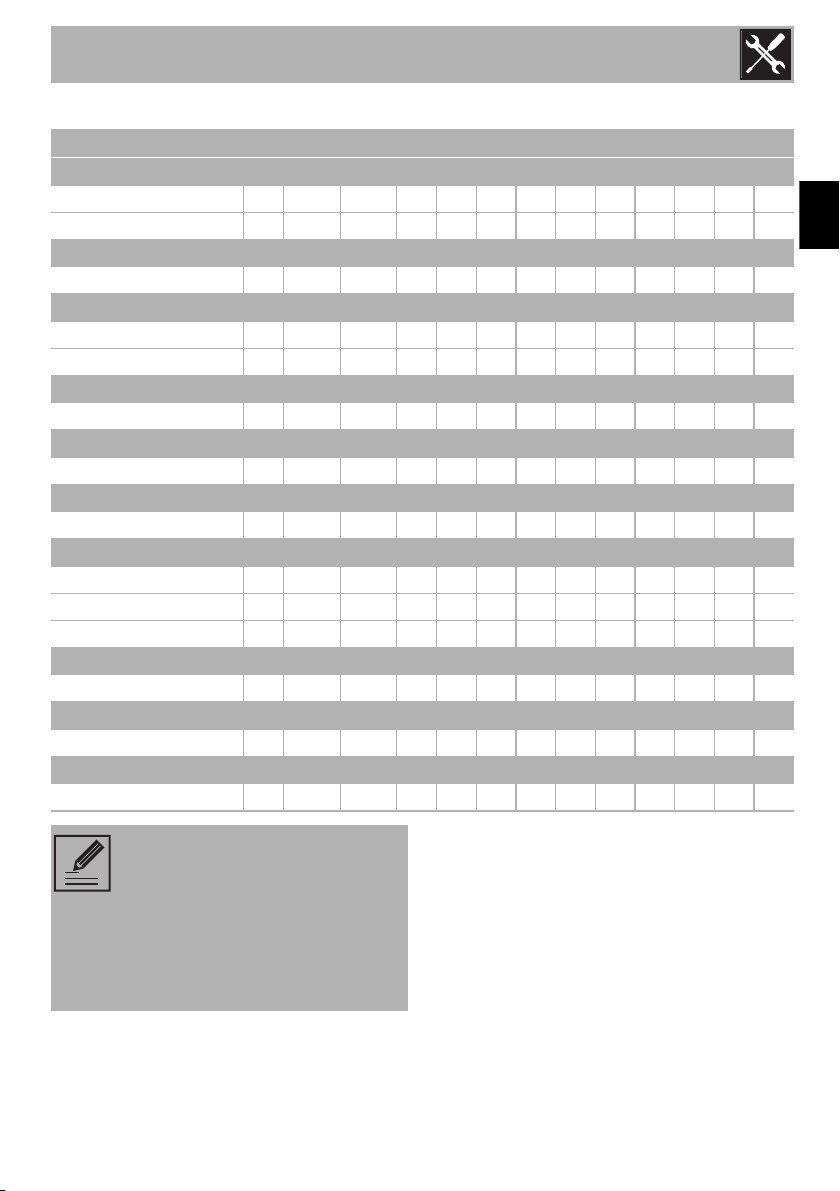
Gas types and Countries
Gas types
IT GB-IE FR-BE DE AT NL ES PT SE RU DK PL HU
1 Natural gas G20
G20 20 mbar
• • •• ••••••
G20/25 20/25 mbar
•
2 Natural gas G20
G20 25 mbar
•
3 Natural gas G25
G25 25 mbar
•
G25.3 25 mbar
•
4 Natural gas G25.1
G25.1 25 mbar
•
5 Natural gas G25
G25 20 mbar
•
6 Natural gas G2.350
G2.350 13 mbar
•
7 LPG G30/31
G30/31 28/37 mbar
•• • •
G30/31 30/37 mbar
••
G30/31 30/30 mbar
•••
8 LPG G30/31
G30/31 37 mbar
•
9 LPG G30/31
G30/31 50 mbar
••
10 Town gas G110
G110 8 mbar
•••
It is possible to identify the
available gas types based on the
country the appliance is to be
installed in. Refer to the heading
number to identify the correct
values in the “Gas types and
Countries”.
Installation
86
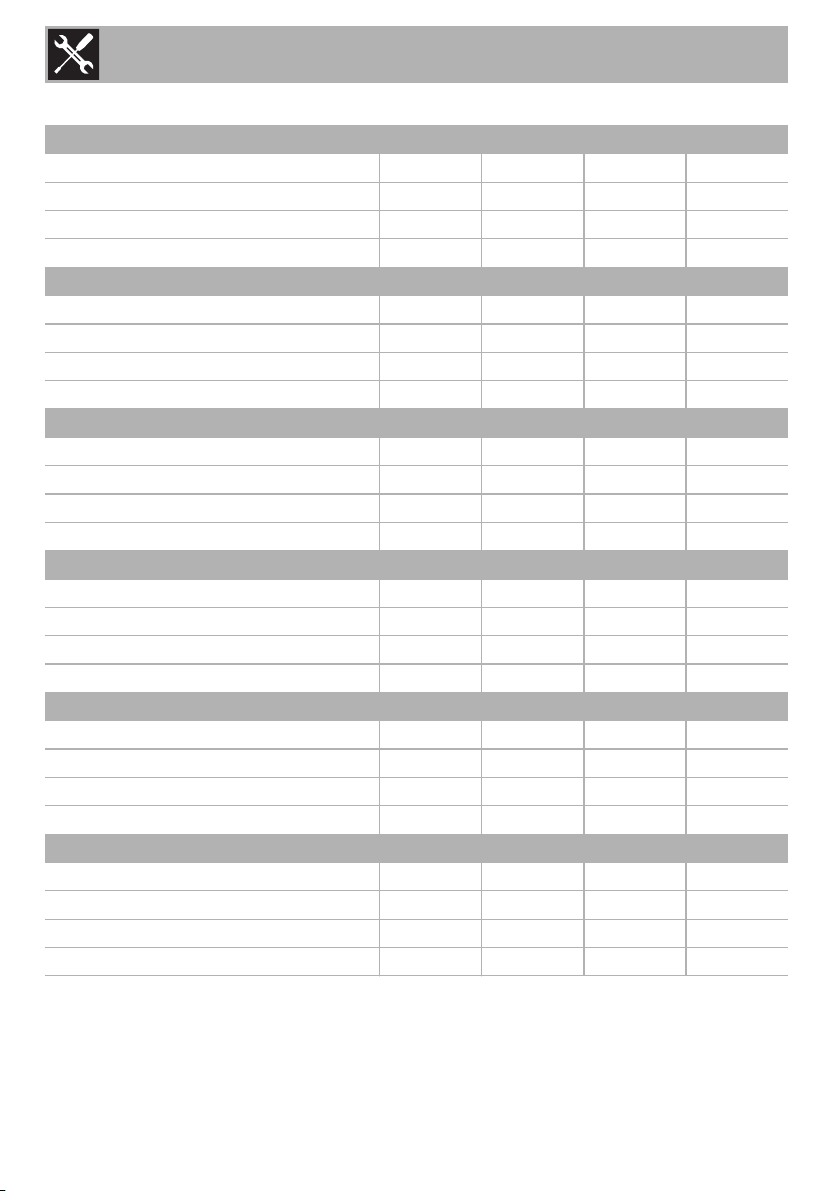
Burner and nozzle characteristics tables
1 Natural gas G20
AUX SR R UR
Rated heating capacity (kW)
1.0 1.8 2.9 4.0
Nozzle diameter (1/100 mm)
72 94 115 145
Pre-chamber (printed on nozzle)
(X) (Y) (Y) (Z)
Reduced flow rate (W)
400 500 800 1600
2 Natural gas G20
AUX SR R UR
Rated heating capacity (kW)
1.0 1.8 2.9 4.0
Nozzle diameter (1/100 mm)
72 94 113 135
Pre-chamber (printed on nozzle)
(X) (Z) (H8) (S)
Reduced flow rate (W)
400 500 800 1600
3 Natural gas G25
AUX SR R UR
Rated heating capacity (kW)
1.0 1.8 2.8 4.0
Nozzle diameter (1/100 mm)
72 94 115 148
Pre-chamber (printed on nozzle)
(X) (Y) (Y) (F3)
Reduced flow rate (W)
400 500 800 1600
4 Natural gas G25.1
AUX SR R UR
Rated heating capacity (kW)
1.0 1.8 2.9 4.0
Nozzle diameter (1/100 mm)
77 100 134 152
Pre-chamber (printed on nozzle)
(F1) (Y) (F3) (F3)
Reduced flow rate (W)
400 500 800 1600
5 Natural gas G25
AUX SR R UR
Rated heating capacity (kW)
1.0 1.8 2.9 3.9
Nozzle diameter (1/100 mm)
77 100 134 152
Pre-chamber (printed on nozzle)
(F1) (Y) (F3) (F3)
Reduced flow rate (W)
400 500 800 1600
6 Natural gas G2.350
AUX SR R UR
Rated heating capacity (kW)
1.0 1.8 2.9 4.0
Nozzle diameter (1/100 mm)
94 120 165 210
Pre-chamber (printed on nozzle)
(Y) (Y) (F3) (H3)
Reduced flow rate (W)
400 500 800 1600
Installation
87
EN
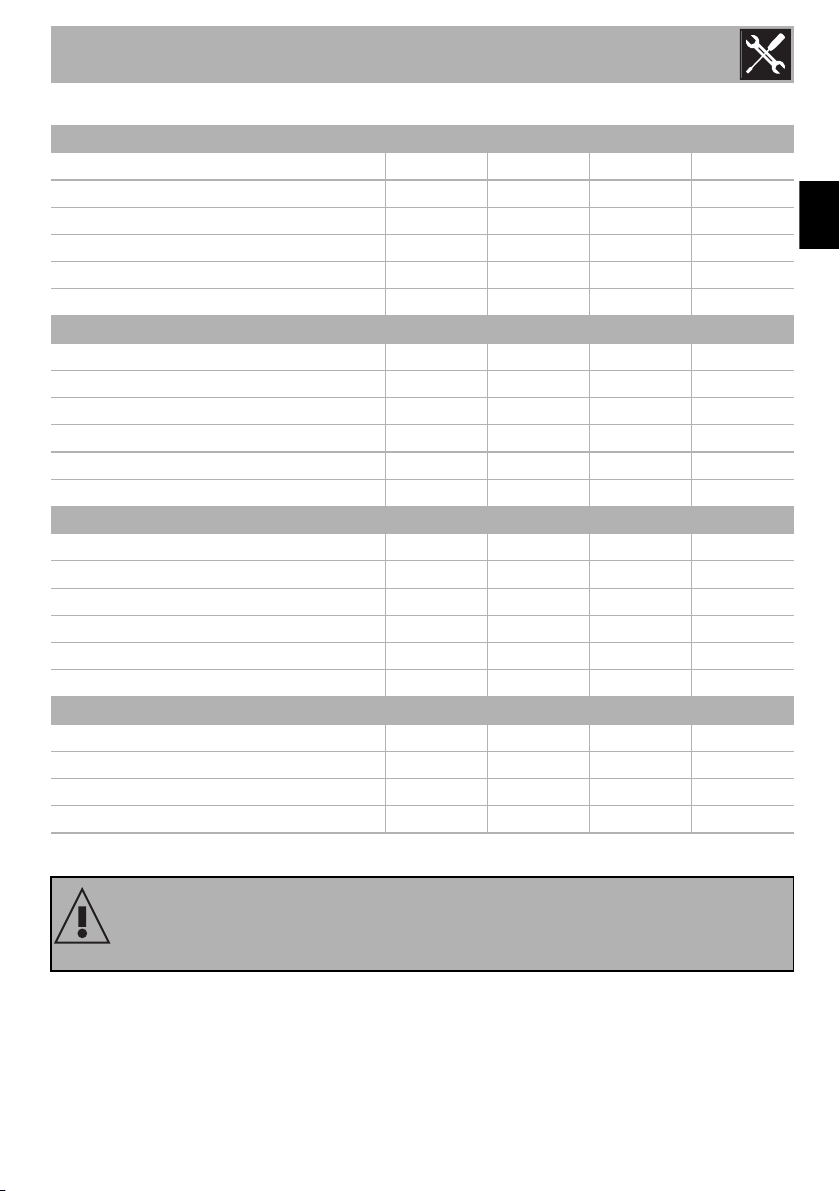
The nozzles not provided are available at Authorised Service Centres.
7 LPG G30/31
AUX SR R UR
Rated heating capacity (kW)
1.0 1.75 2.9 4.0
Nozzle diameter (1/100 mm)
50 65 85 102
Pre-chamber (printed on nozzle)
----
Reduced flow rate (W)
400 500 800 1600
Rated flow rate G30 (g/h)
73 127 211 291
Rated flow rate G31 (g/h)
71 125 207 286
8 LPG G30/31
AUX SR R UR
Rated heating capacity (kW)
1.0 1.8 2.9 4.0
Nozzle diameter (1/100 mm)
50 65 81 94
Pre-chamber (printed on nozzle)
----
Reduced flow rate (W)
450 550 800 1600
Rated flow rate G30 (g/h)
73 131 211 291
Rated flow rate G31 (g/h)
71 129 207 286
9 LPG G30/31
AUX SR R UR
Rated heating capacity (kW)
1.0 1.8 2.9 3.8
Nozzle diameter (1/100 mm)
43 58 74 77
Pre-chamber (printed on nozzle)
(H2) (M) (Z) (F4)
Reduced flow rate (W)
400 500 800 1600
Rated flow rate G30 (g/h)
73 131 211 291
Rated flow rate G31 (g/h)
71 129 207 286
10 Town gas G110
AUX SR R UR
Rated heating capacity (kW)
1.0 1.8 2.8 3.8
Nozzle diameter (1/100 mm)
145 185 260 340
Pre-chamber (printed on nozzle)
(/8) (/2) (/3) (/13)
Reduced flow rate (W)
400 500 800 1400
WARNING: In the case of conversion to Town Gas G110 – 8 mbar (category
1a), do not use the burners provided, but request the special G110 burners kit
from our Technical Assistance Service.
Installation
88
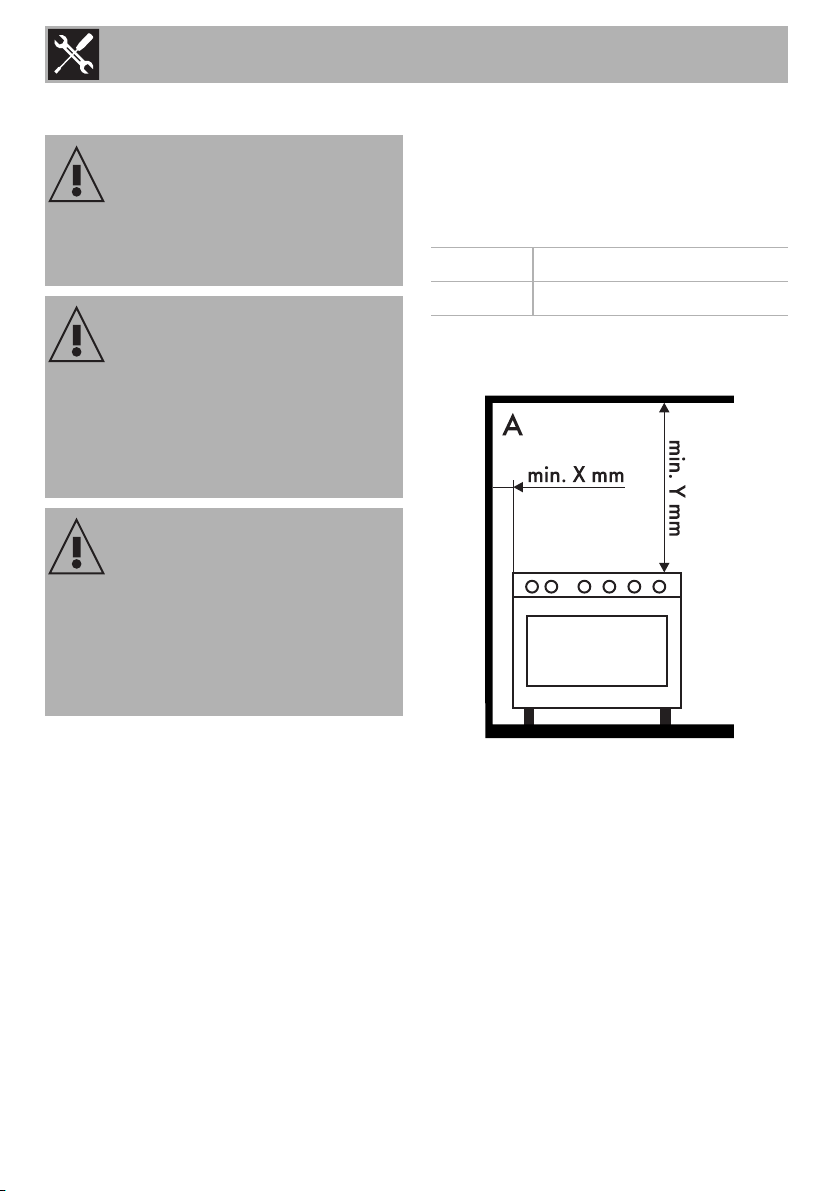
5.3 Positioning
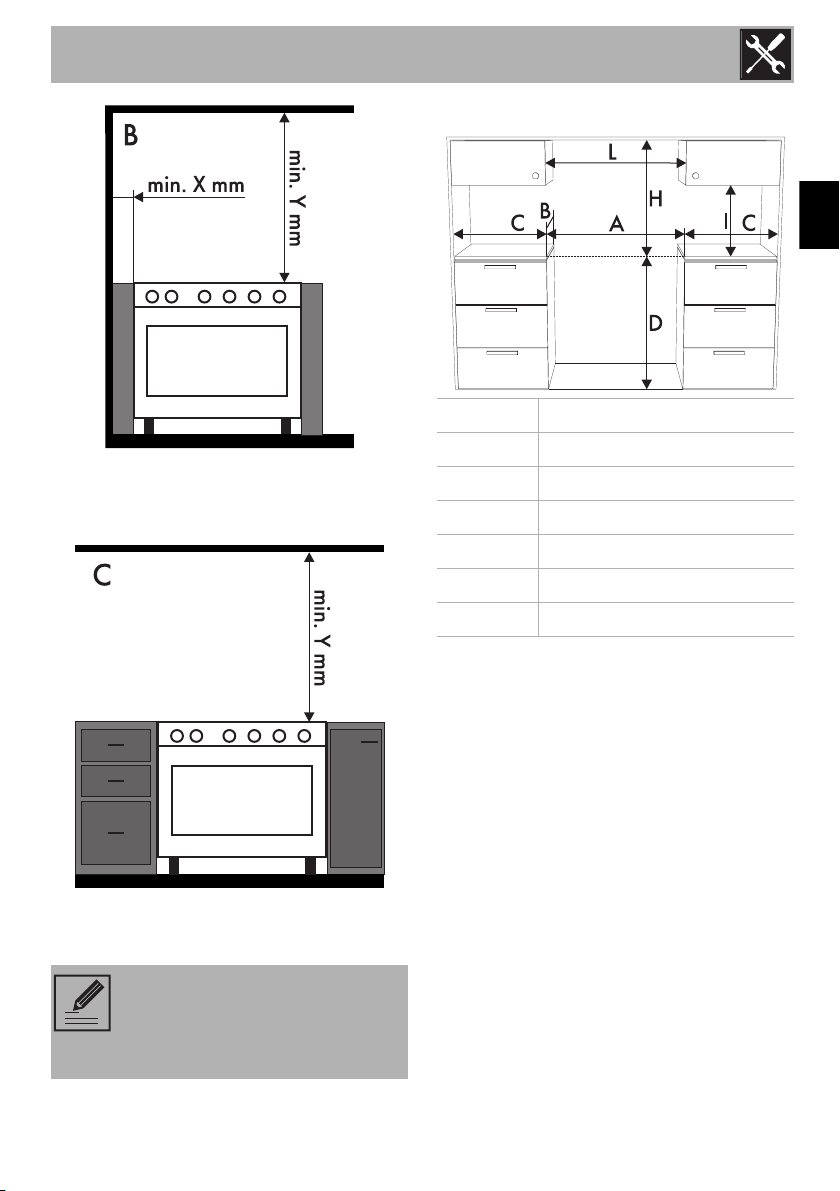
This appliance may be installed next to
walls, one of which must be higher than the
worktop, at a minimum distance of X mm
from the side of the appliance, as shown in
figures “A” and “C” relative to the
installation classes.
Any wall units positioned above the
worktop of the appliance must be at a
minimum distance of at least Y mm. If a
hood is installed above the hob, refer to
the hood instruction manual to ensure the
correct clearance is left.
Depending on the type of installation, this
appliance belongs to classes:
A - Class 1
(Free-standing appliance)
Heavy appliance
Crushing hazard
•
Position the appliance into the cabinet
cut-out with the help of a second person
.
Pressure on the open door
Risk of damage to the appliance
• Never use the oven door to lever the
appliance into place when fitting.
• Avoid exerting too much pressure on
the door when open.
Heat production during
appliance operation
Risk of fire
• Veneers, adhesives or plastic coatings
on adjacent furniture should be
temperature-resistant (not less than
90 °C).
X 150 mm
Y 750 mm
Installation
89
EN
B - Class 2 subclass 1
(Built-in appliance)
C - Class 2 subclass 1
(Built-in appliance)
Appliance overall dimensions
1
Minimum distance from side walls or other
flammable material.
2
Minimum cabinet width (=A).
The appliance must be installed
by a qualified technician and
according to the regulations
in force.
A 900 mm
B 600 mm
C
1
min. 150 mm
D 900 - 915 mm
H 750 mm
I 450 mm
L
2
900 mm
Installation
90
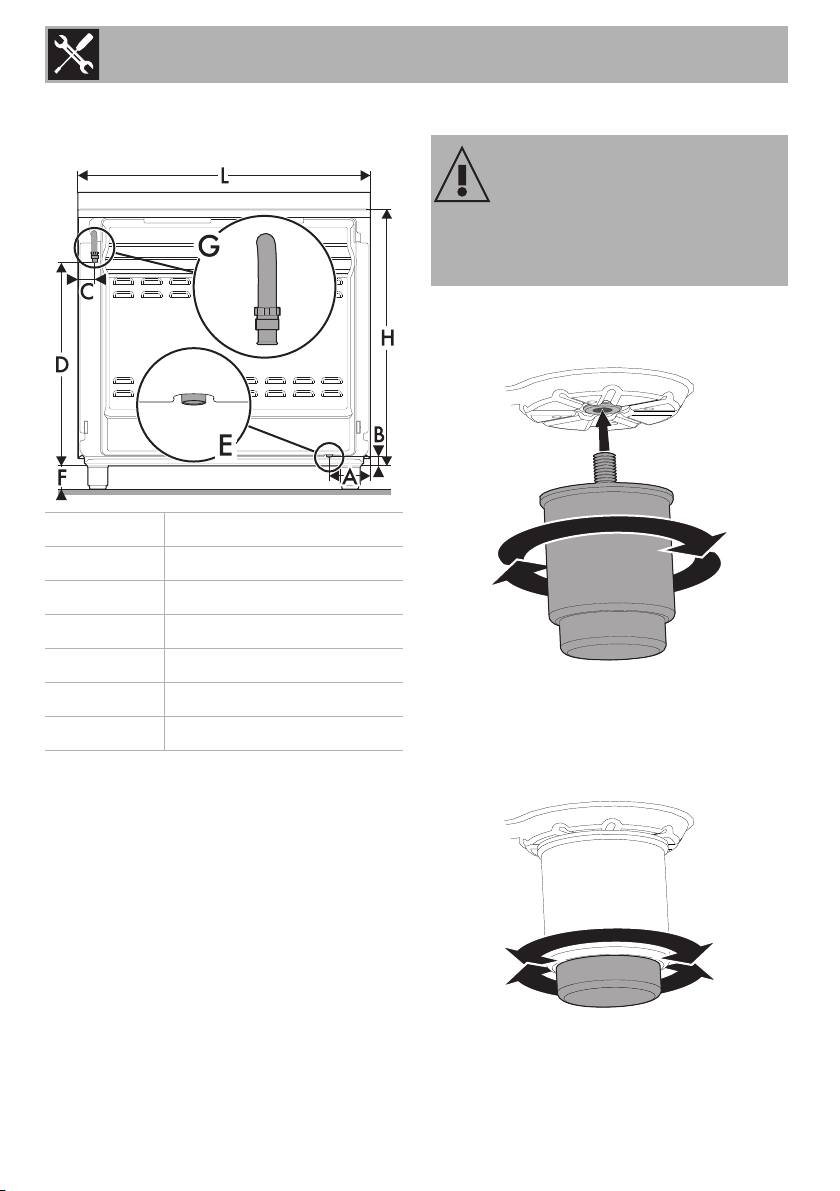
Dimensions of the appliance: locations of
gas and electric connections (mm)
E = Electrical connection
G = Gas connection
Positioning and levelling
After making the electrical and/or gas
connections, screw the four adjustable feet
supplied with the appliance.
The appliance must sit level on the floor to
ensure stability.
Screw or unscrew the bottom part of the
foot until the appliance is stable and level
on the floor.
A 124
B 38
C 42
D 634
F min 70 - max 110
H 776
L 898
Heavy appliance
Risk of damage to the appliance
• Insert the front feet first and then the rear
ones.
Installation
91
EN
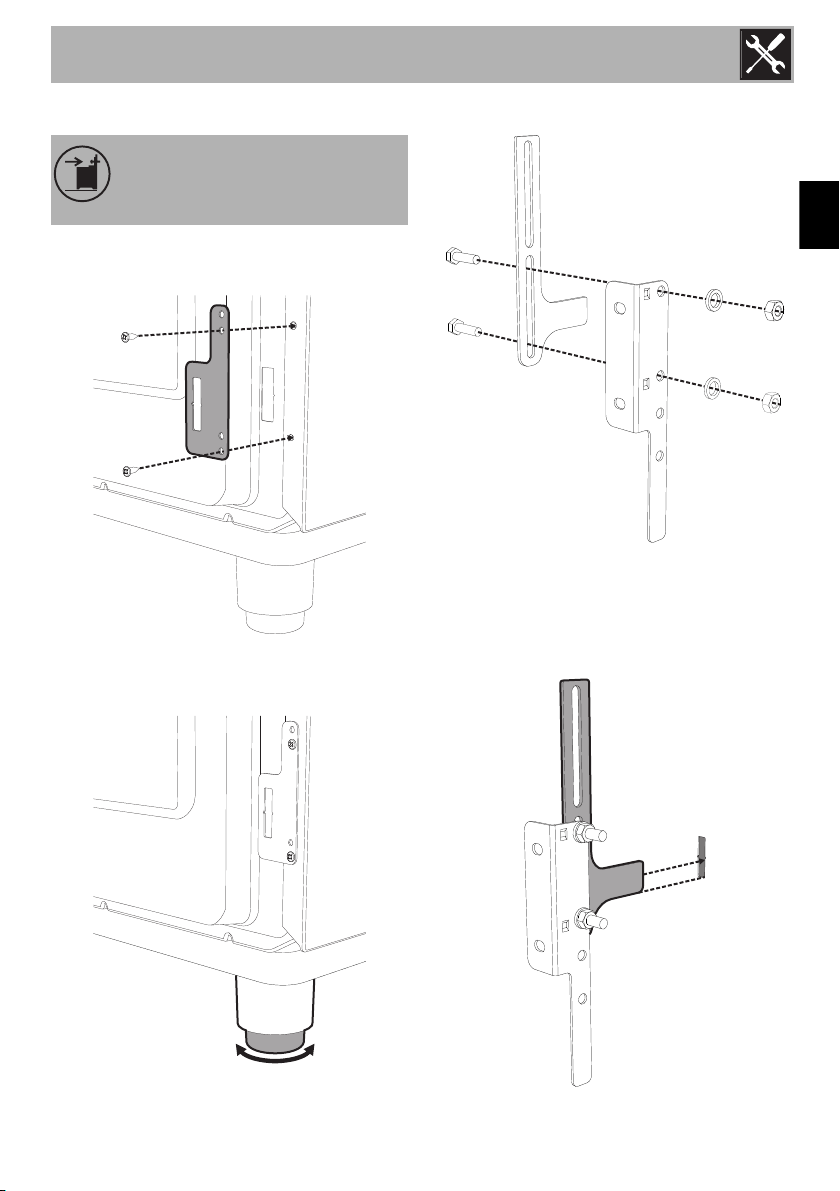
Fastening to the wall
1. Screw the wall fastening plate to the
rear of the appliance.
2. Adjust the height of the 4 feet.
3. Assemble the fastening bracket.
4. Align the base of the hook on the
fastening bracket with the base of the
slot on the wall fastening plate.
The anti-tip devices must be
installed in order to prevent the
appliance from tipping over.
Installation
92
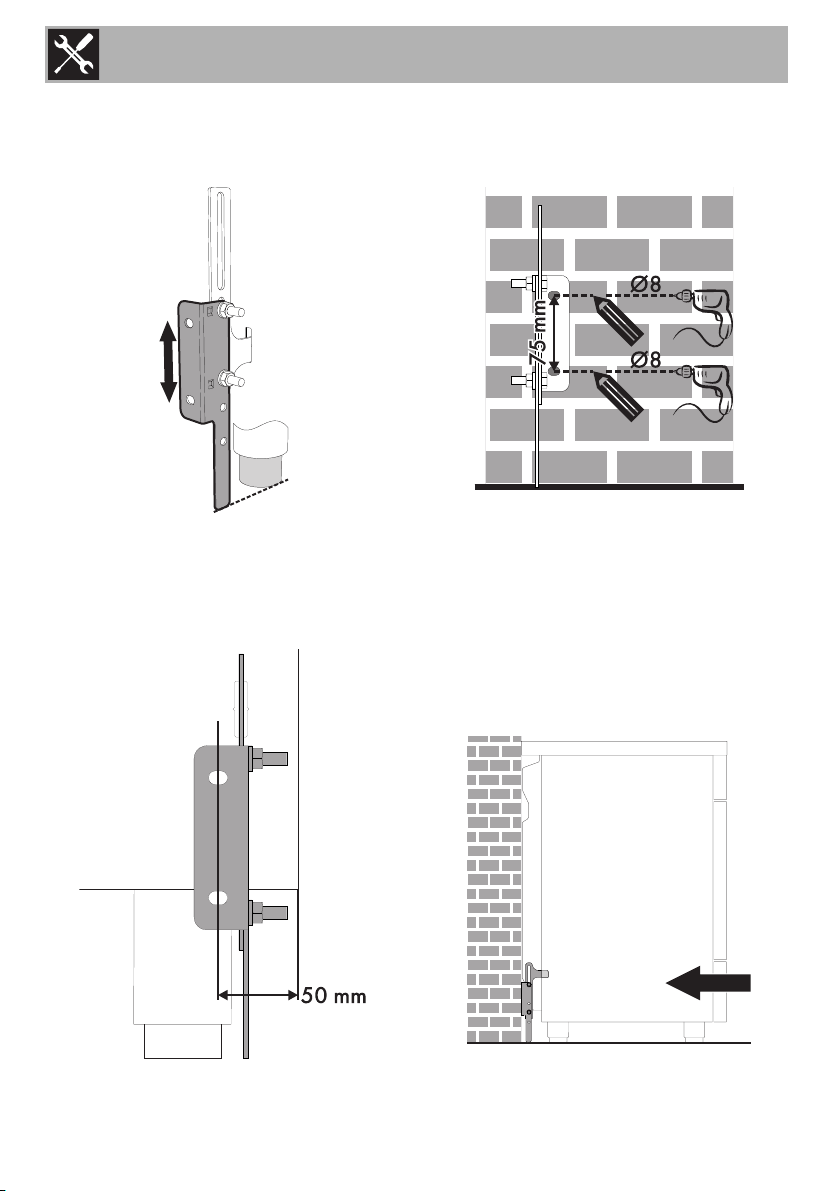
5. Align the base of the fastening bracket
with the ground and tighten the screws
to fix the measurements.
6. Use 50 mm for the distance from the
side of the appliance to the bracket
holes.
7. Move the bracket onto the wall and
mark the position of the holes to be
drilled in the wall.
8. After drilling the holes in the wall, use
wall plugs and screws to fasten the
bracket to the wall.
9. Push the cooker towards the wall, and
at the same time, insert the bracket in
the plate fastened to the rear of the
appliance.
Installation
93
EN
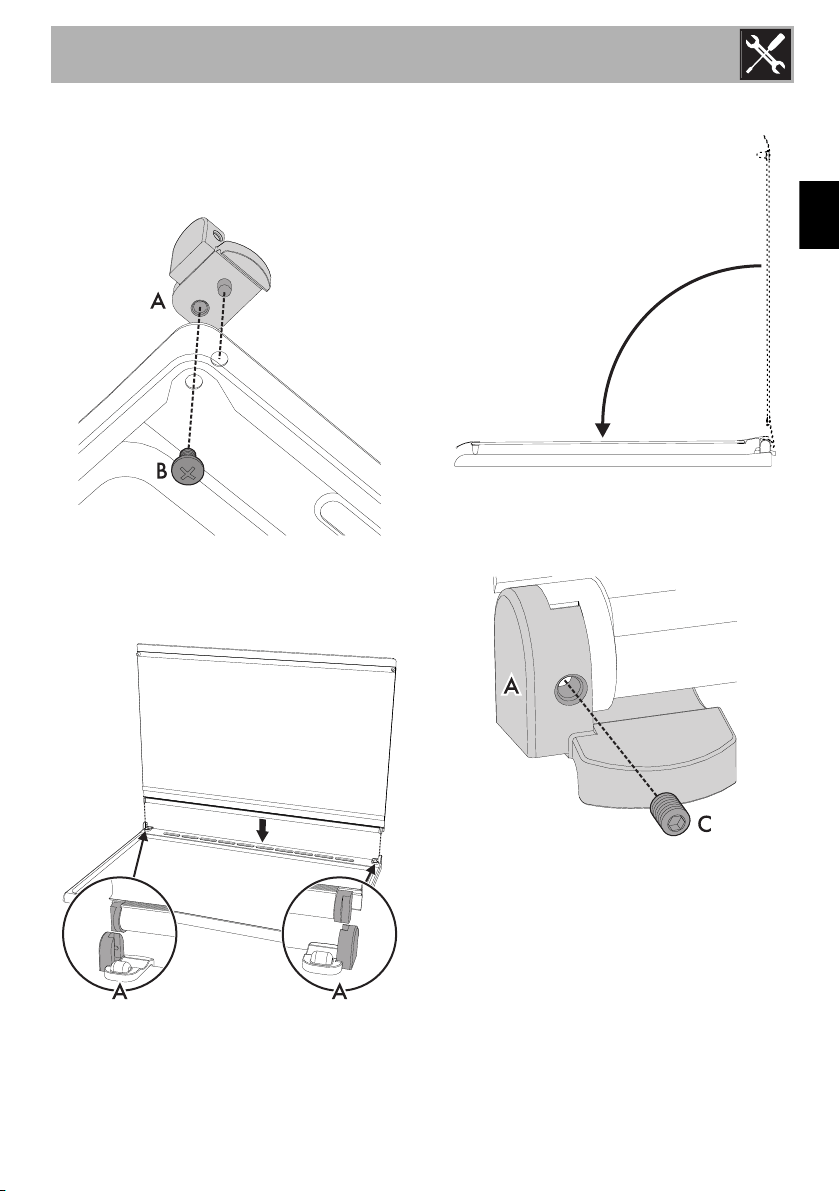
Fitting the lid
1. Install the two supports A and fasten them
from below the hob using the
corresponding screws B.
2. Install the lid from above, parallel with
the two supports A.
3. Lower the lid onto the hob.
4.
Fasten the lid to the hob using the screws C
inserted in the rear of the two supports A
.
Installation
94
5.4 Electrical connection
General information
Check the mains characteristics against the
data indicated on the plate.
The identification plate bearing the
technical data, serial number and brand
name is visibly positioned on the appliance.
Do not remove this plate for any reason.
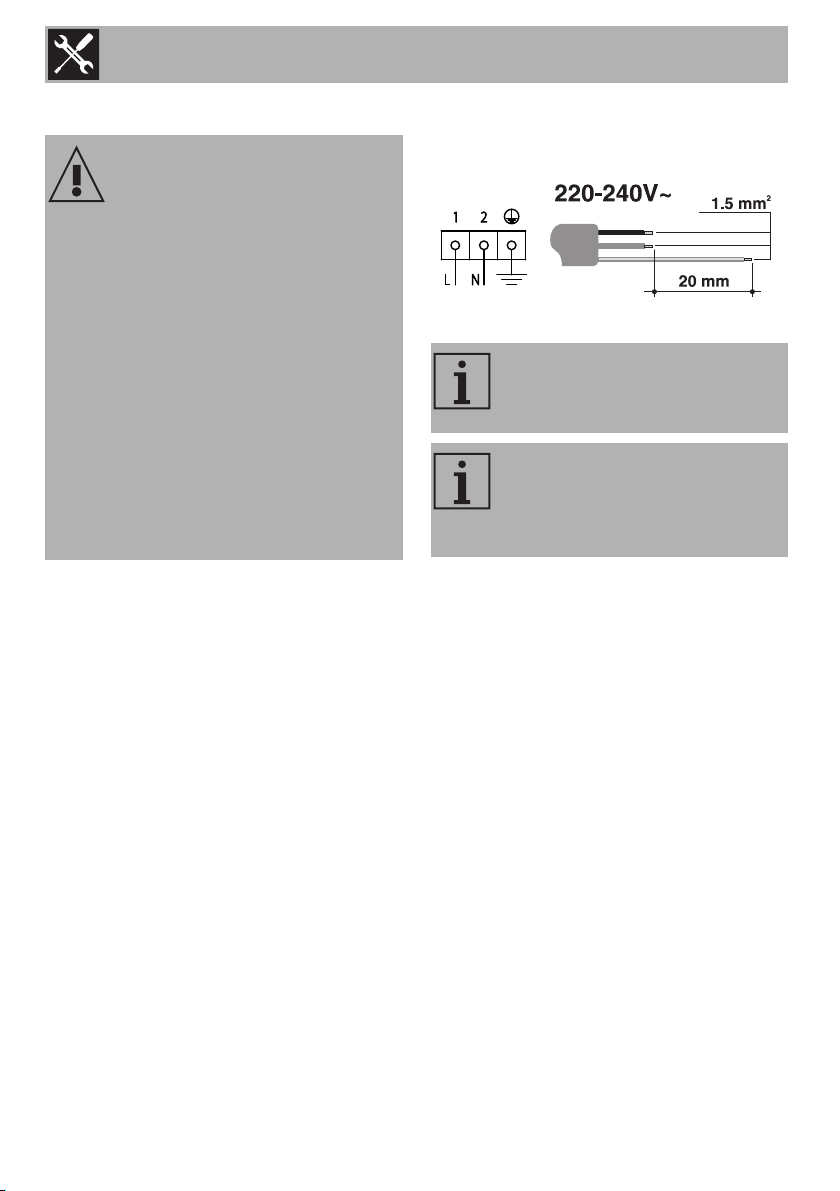
Perform the ground connection using a wire
that is 20 mm longer than the other wires.
The appliance can work in the following
modes:
• 220-240 V 1N~
3 x 1.5 mm² three-core cable.
Power voltage
Danger of electrocution
• Have the electrical connection
performed by authorised technicians.
• Use personal protective equipment.
• The appliance must be connected to
ground in compliance with electrical
system safety standards.
• Disconnect the mains power supply.
• Do not pull the cable to remove the plug.
• Use cables withstanding a temperature
of at least 90 °C.
• The tightening torque of the screws of the
terminal board leads must be 1.5 - 2 Nm.
The values indicated above refer
to the cross-section of the internal
lead.
The aforementioned power cables
are sized taking into account the
coincidence factor (in compliance
with standard EN 60335-2-6).
Installation
95
EN
Fixed connection
Fit the power line with an all-pole
disconnection switch, with a clearance
between its contacts that allows the
complete disconnection as per the
overvoltage category III, in compliance
with the installation regulations.
Connection with plug and socket
Make sure that the plug and socket are of
the same type.
Avoid using adapters, gang sockets or
extensions as these could cause
overheating and a risk of burns.
5.5 Instructions for the installer
• The plug must be accessible after
installation. Do not bend or trap the
power cable.
• The appliance must be installed
according to the installation diagrams.
• Do not try to unscrew or force the
threaded elbow of the fitting. You may
damage this part of the appliance, which
may void the manufacturer’s warranty.
• Use soap and water to check for gas
leaks on all connections. DO NOT use
naked flames when looking for leaks.
• Turn on all the burners separately and at
then all together to make sure that the
gas valve, burner and ignition are
working properly.
• Turn the burner knobs to the minimum
position and check that the flame is
stable for each individual burner and all
the burners together.
• If the appliance does not work correctly
after having carried out all the checks,
contact your local Authorised Service
Centre.
• Once the appliance has been installed,
please explain to the user how to use it
correctly.