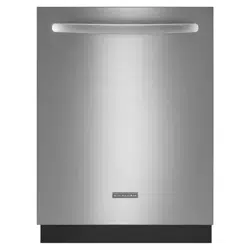
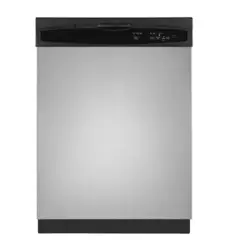
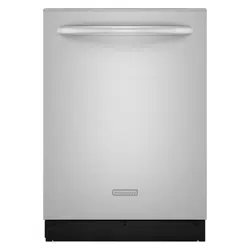
User Instructions Dishwasher
Dishwasher Safety
IMPORTANT SAFETY INSTRUCTIONS
WARNING: When using the dishwasher, follow basic precautions, including the following:
- Read all instructions before using the dishwasher.
- Use the dishwasher only for its intended function.
- Use only detergents or rinse agents recommended for use in a dishwasher, and keep them out of the reach of children.
- When loading items to be washed:
- 1) Locate sharp items so that they are not likely to damage the door seal; and
- 2) Load sharp knives with the handles up to reduce the risk of cut- type injuries.
- Do not wash plastic items unless they are marked "dishwasher safe" or the equivalent. For plastic items not so marked, check the manufacturer's recommendations.
- Do not touch the heating element during or immediately after use.
- Do not operate the dishwasher unless all enclosure panels are properly in place.
- Do not tamper with controls.
- Do not abuse, sit on, or stand on the door, lid, or dish racks of the dishwasher.
- To reduce the risk of injury, do not allow children to play in or on the dishwasher.
- Under certain conditions, hydrogen gas may be produced in a hot water system that has not been used for two weeks or more. HYDROGEN GAS IS EXPLOSIVE. If the hot water system has not been used for such a period, before using the dishwasher turn on all hot water faucets and let the water flow from each for several minutes. This will release any accumulated hydrogen gas. As the gas is flammable, do not smoke or use an open flame during this time.
- Remove the door or lid to the washing compartment when removing an old dishwasher from service or discarding it.
GROUNDING INSTRUCTIONS
- For a grounded, cord-connected dishwasher:
The dishwasher must be grounded. In the event of a malfunction or breakdown, grounding will reduce the risk of electric shock by providing a path of least resistance for electric current. The dishwasher is equipped with a cord having an equipment- grounding conductor and a grounding plug. The plug must be plugged into an appropriate outlet that is installed and grounded in accordance with all local codes and ordinances.
WARNING: Improper connection of the equipmentgrounding conductor can result in a risk of electric shock.
Check with a qualified electrician or service representative if you are in doubt whether the dishwasher is properly grounded. Do not modify the plug provided with the dishwasher; if it will not fit the outlet, have a proper outlet installed by a qualified electrician.
- For a permanently connected dishwasher:
The dishwasher must be connected to a grounded metal, permanent wiring system, or an equipment- grounding conductor must be run with the circuit conductors and connected to the equipment- grounding terminal or lead on the dishwasher.
WARNING - Tip Over Hazard
Do not use dishwasher until completely installed. Do not push down on open door. Doing so can result in serious injury or cuts.
State of California Proposition 65 Warnings:
WARNING: This product contains one or more chemicals known to the State of California to cause cancer.
WARNING: This product contains one or more chemicals known to the State of California to cause birth defects or other reproductive harm.
Parts and Features
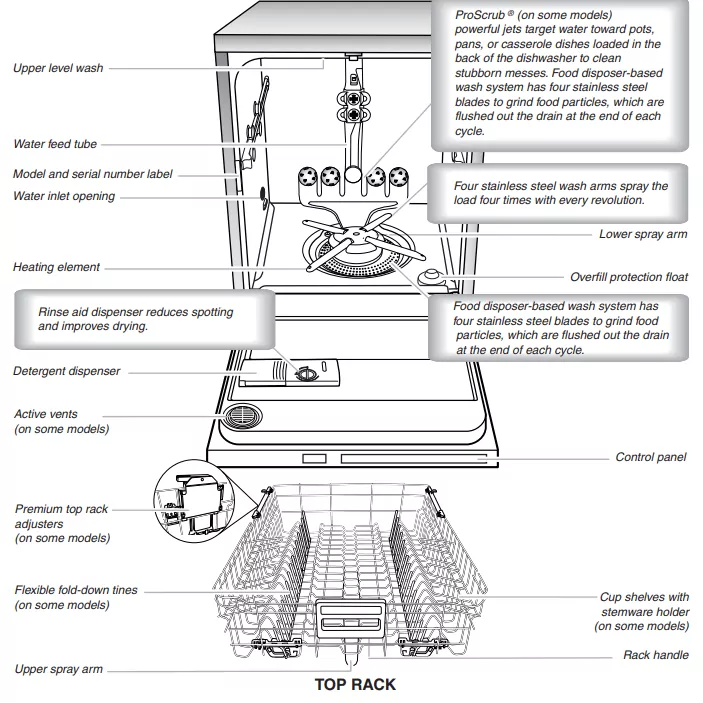
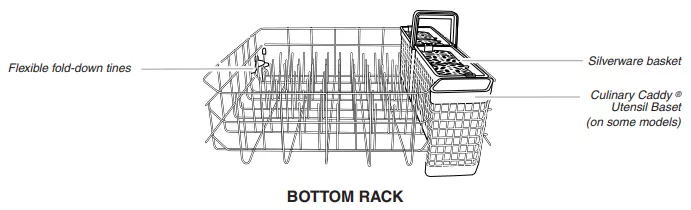 Start-Up/ Quick Referebce
IMPORTANT: Do not block detergent dispenser.
Tall items placed in the lower rack may block the dispenser door. Cookie sheets and cutting boards loaded on the left- hand side of the dishwasher can easily block the dispenser. If detergent is inside of the dispenser or on the bottom of the tub after the cycle is complete, the dispenser was blocked.
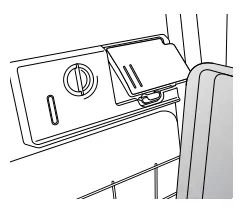
Drying - Rinse Aid is essential.
You must use a drying agent such as a rinse aid for good drying performance (sample included). Rinse aid along with the Heat Dry option will provide best drying and avoid excessive moisture in the dishwasher interior.
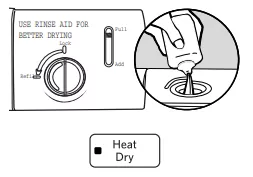
1 Hour Wash - When you need fast results.
Efficient dishwashers run longer to save water and energy, just as driving a car slower saves on gas. When you need fast results, the 1 Hour Wash will clean dishes using slightly more water and energy. Select the Heat Dry option to speed drying times (adds approximately 35 minutes to the 1 Hour Wash cycle).
Heavy Duty cycle for tough soil cleaning
The Heavy Duty cycle is recommended for tough soil loads. Use for hard- to- clean, heavily soiled pots, pans, casseroles, and tableware. No need to perine dishes; just scrape and load.
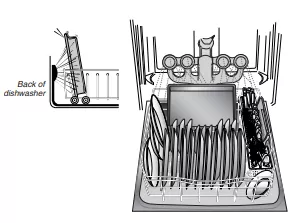
ProScrub Option loading to clean baked-on food (on some models)
When the ProScrub option is selected, it provides a concentrated wash on the back of the lower dish rack for hard- to- clean dishes. Place these dishes with the soiled surface of the dish toward the ProScrub spray jets in the lower rack of the dishwasher.
Press START/RESUME every time you add a dish.
IMPORTANT: If anyone opens the door (such as, for adding a dish, even during the Delay Hours option), the Start/Resume button must be pressed each time.
If the Start/Resume button is located on top of door, push door firmly closed within 3 seconds of pressing START/RESUME. If the door is not closed within 3 seconds, the Start/Resume button LED will flash, an audible tone will be heard, and the cycle will not start.

Proper Detergent Dosing
It is possible to use too much detergent in your dishwasher. This can lead to etching of your dishes. See "Add Detergent" in the "Dishwasher Use" section to determine the amount of detergent needed based on your water hardness.
Quick Steps
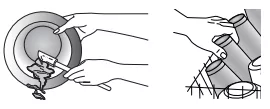
- Prepare and load dishwasher.
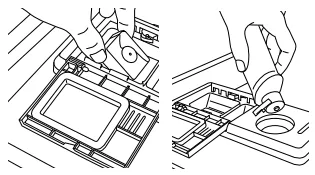
- Add detergent for cleaning and rinse aid for drying.
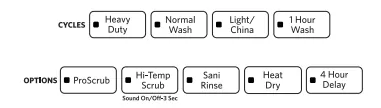
- Select a cycle and option.
- Start dishwasher.

NOTE: If the Start/Resume button is located on the top of door, push door firmly closed within 3 seconds of pressing START/RESUME.
Dishwasher Use
STEP 1: Prepare and Load the Dishwasher
IMPORTANT: Remove leftover food, bones, toothpicks and other hard items from the dishes. Remove labels from containers before washing.
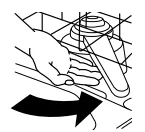
- Make sure nothing keeps spray arm(s) from spinning freely. It is important for the water spray to reach all soiled surfaces.
- Make sure that when the dishwasher door is closed no items are blocking the detergent dispenser.
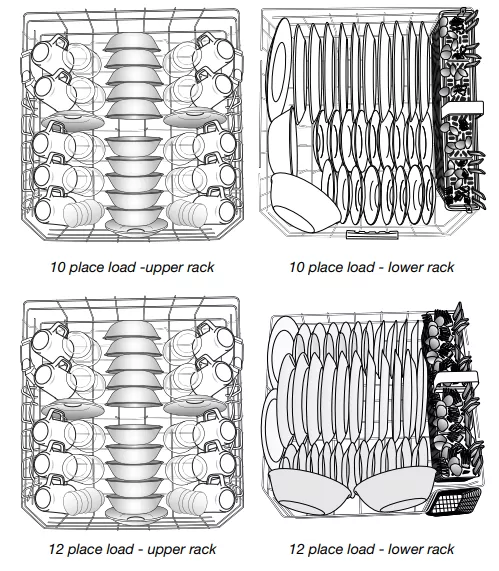
- Items should be loaded with soiled surfaces facing down and inward to the spray as shown. This will improve cleaning and drying results.
- Avoid overlapping items like bowls or plates that may trap food.
- Place plastics, small plates and glasses in the upper rack. Wash only plastic items marked "dishwasher safe."
- To avoid thumping/clattering noises during operation, load dishes so they do not touch one another. Make sure lightweight load items are secured in the racks.
- Improper loading can cause dishes to be chipped or damaged. When loading glasses or mugs, it is best to load these items in between rows of tines instead of loading them over tines.
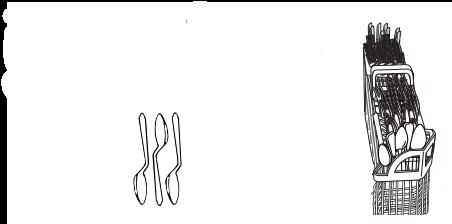
- When loading silverware, always place sharp items pointing down. Mix items in each section of the basket with some pointing up and some down to avoid nesting. Spray cannot reach nested items.
STEP 2
Add Detergent
NOTE: If you do not plan to run a wash cycle soon, run a rinse cycle. Do not use detergent.
- Use automatic dishwasher detergent only. Add powder, liquid or tablet detergent just before starting a cycle.
- Fresh automatic dishwasher detergent results in better cleaning. Store tightly closed detergent container in a cool, dry place.
- The amount of detergent to use depends on:
How much soil remains on the items - Heavily soiled loads require more detergent.
The hardness of the water - If you use too little in hard water, dishes won't be clean. If you use too much in soft water, glassware will etch.
- Soft to Medium Water (0- 6 grains per U.S. gallon) [typical water softener water and some city water]
- Medium to Hard Water (7- 12 grains per U.S. gallon) [well water and some city water]
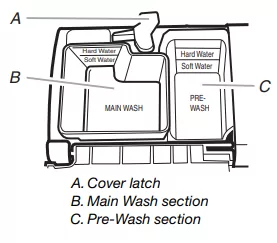
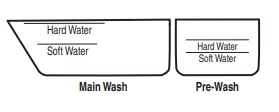
- Depending on your water hardness, fill the Main Wash section of the dispenser as shown. Fill the Pre- Wash section to the level shown, if needed.
NOTE: Fill amounts shown are for standard powdered detergent. Follow instructions on the package when using other dishwasher detergent types. Premeasured forms are suitable for all hardness and soil levels. Always place premeasured detergents in the main compartment and close the lid.
Add Rinse Aid
- Your dishwasher is designed to use rinse aid for good drying performance. Without rinse aid your dishes and dishwasher interior will have excessive moisture. The heat dry option will not perform as well without rinse aid.
- Rinse aid keeps water from forming droplets that can dry as spots or streaks. They also improve drying by allowing water to drain off of the dishes after the final rinse.
- Rinse aid helps to reduce excess moisture on the dish racks and interior of your dishwasher.
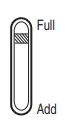
- Check the rinse aid indicator. Add rinse aid when indicator drops to "Add" level.
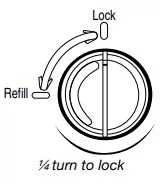
- To add rinse aid, turn the dispenser cap to "Refill" and lift off. Pour rinse aid into the opening until the indicator level is at "Full." Replace the dispenser cap and turn to "Lock." Make sure cap is fully locked.
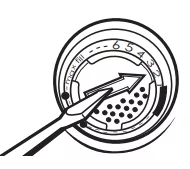
NOTE: For most water conditions, the factory setting of 2 will give good results. If you have hard water or notice rings or spots, try a higher setting. Turn the arrow adjuster inside the dispenser by either using your fingers or inserting a flat- blade screwdriver into the center of the arrow and turning.
STEP 3
Select a Cycle (cycles vary by model)
See "Cycle and Option Descriptions" charts in the following section.
Efficient dishwashers run longer to save water and energy, just as driving a car slower saves on gas. Typical cycle time is approximately 21⁄2 hours, but can take less or more time to complete depending on selections.

Select Options (options vary by model)
See "Cycle and Option Descriptions" charts in the following section.
You can customize your cycles by pressing the options desired. If you change your mind, press the option again to turn off the option. Not all options are available for every cycle. If an invalid option is selected for a given cycle, the lights will flash.

STEP 4: Start or Resume a Cycle
- Run hot water at the sink nearest your dishwasher until the water is hot. Turn off water.
- Press START/RESUME once to show which selections you used. Select the wash cycle and options desired OR press START/RESUME to repeat the same cycle and options as in the previous wash cycle.
IMPORTANT: If anyone opens the door (such as, for adding a dish, even during the Delay Hours option), the Start/Resume button must be pressed each time.
- If the Start/Resume button is located on top of door, push door firmly closed within 3 seconds of pressing START/RESUME. If the door is not closed within 3 seconds, the Start/Resume button LED will flash, an audible tone will be heard, and the cycle will not start.
Cycle and Option Descriptions
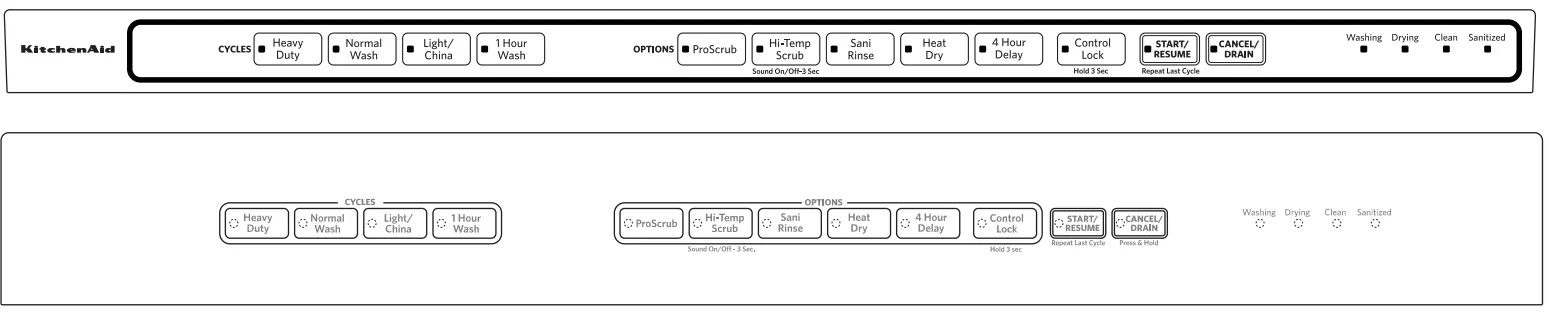
This information covers several different models. Your dishwasher may not have all of the cycles and options described.
| CYCLE SELECTIONS |
| CYCLES |
SOIL LEVEL |
WASH TIME*(MINS.)
W/O OPTIONS |
WATER
USAGE
GALLONS |
| Typical** |
Max |
(Liters) |
 |
Use for hard-to-clean, heavily soiled pots, pans, casseroles, and tableware. |
Light to Medium |
115 |
165 |
6.4 (24.3) |
| Heavy/Baked-On |
120 |
170 |
6.4 (24.3) |
 |
This cycle is recommended to wash a full load of normally soiled dishes completely. Selecting this cycle will default to the options recommended for normal amounts of food soil. The energy label is based on this cycle. |
Light |
85 - 100 |
170 |
3.9 (14.7) |
| Medium |
105 |
165 |
4.6 (17.5) |
| Heavy |
120 |
170 |
6.4 (24.3) |
 |
Use for lightly soiled items or china and crystal. |
Light |
75 |
135 |
3.9 (14.7) |
| Medium |
80 |
145 |
5.5 (20.7) |
| Heavy |
100 |
160 |
5.5 (20.7) |
 |
When you need fast results, the 1 Hour Wash will clean dishes using slightly more water and energy. Select the Heat Dry or ProDry option to speed drying times (add approximately 27 to 35 minutes to the 1 Hour Wash cycle). |
All soil levels |
60 |
62 |
6.4 (24.3) |
 |
Use for rinsing dishes, glasses, and silverware that will not be washed right away.
Do not use detergent. |
All soil levels |
10 |
12 |
1.7 (6.3) |
Wash times depend on water temperature, heavy soil condition, dish load size and options selected. Adding options will add time to the cycle.
*Adding options will add time to the cycle. See Options information section.
**This is the approximate cycle time obtained with 120°F (49°C) hot water available at the dishwasher. Increase in time results from low temperature of the incoming water.
| OPTION SELECTIONS |
| OPTIONS |
CAN BE
SELECTED WITH |
WHAT IT DOES |
ADDED TIME TO CYCLE |
ADDED
WATER
GALLONS
(LITERS) |
| TYPICAL |
MAX |
 |
Cleans pans, casseroles, etc., with tough food soil to eliminate the need for soaking and scrubbing of dirty, baked-on dishes. |
Heavy Duty
Normal Wash |
Activates the
ProScrub® spray
jets to provide
intensified cleaning
power to items at
the back of the
lower rack. |
45 |
85 |
0 - 1.6
(0 - 6) |
 |
Raises the main wash temperature to improve cleaning for loads containing tough, baked-on food. |
Heavy Duty
Normal Wash |
Raises the main wash temperature from 105°F (41°C) to 145°F (63°C) and the final rinse from 130°F (54°C) to 140°F (60°C). |
45 |
85 |
0 - 1.6
(0 - 6) |
 |
Sanitizes dishes and glassware in accordance with National Sanitation Foundation(NSF)/ANSIStandard 184 for Residential Dishwashers. Certified residential dishwashers are not intended for licensed food establishments. The Sani indicator indicates at the end of the cycle whether the Sani Rinse option was successfully completed. If the indicator is not activated, it is probably due to the cycle being interrupted. |
|
Increases the main wash temperature from 105°F (41°C) to 145°F (63°C) and the final rinse from 140°F (60°C) to 155°F (68°C). |
60 |
105 |
0 - 1.6
(0 - 6) |
 |
Dries dishes with heat. This option with the use of rinse aid will provide the best drying performance. Plastic items are less likely to deform when loaded in the top rack. Turn Heat Dry off for an air dry. |
Available with any cycle except Rinse Only |
Activates the heating element at the end of the wash cycle to speed drying times. Heat Dry defaults to ON when any cycle is selected except for 1 Hour Wash. |
52 |
52 |
0 |
 |
Runs the dishwasher at a later time or during off-peak electrical hours. Select a wash cycle and options. Press 4 HOUR DELAY. Press START/RESUME. Close the door firmly.
NOTE: Anytime the door is opened (such as, to add a dish), the Start/Resume button must be pressed again to resume the delay countdown.
|
Available with any cycle |
Delays the start of a cycle up to 4 hours. |
240 |
240 |
0 |
 |
Avoids unintended use of the dishwasher between cycles, or cycle and option changes during a cycle.
To turn on Control Lock, press and hold for 3 seconds. The Control Lock light will stay on for a short time, indicating that it is activated, and all buttons are disabled. If you press any button while your dishwasher is locked, the light flashes 3 times. The dishwasher door can still be opened/closed while the controls are locked.
NOTE: You may need to disable Sleep Mode by pressing either START/RESUME or CANCEL, or by opening and closing the door before you are able to turn Control Lock off.
To turn off Control Lock, press and hold for 3 seconds. The light turns off.
|
| CONTROLS AND CYCLE STATUS |
| CONTROL |
PURPOSE |
COMMENTS |
 |
To start or resume a wash cycle |
If the door is opened during a cycle or the power is interrupted, the Start/Resume indicator
flashes. The cycle will not resume until the door is closed and START/RESUME is pressed.
NOTE: If the Start/Resume button is located on top of door, push door firmly closed within
3 seconds of pressing START/RESUME. If the door is not closed within 3 seconds, the
Start/Resume button LED will flash, an audible tone will be heard, and the cycle will not
start. |
 |
To reset any cycle or options during selection.
To cancel a wash cycle after it's started. |
Press and hold CANCEL/DRAIN to reset any control selections made.
See “Canceling A Cycle After Dishwasher Is Started” and “Changing A Cycle After Dishwasher Is Started” sections. |
 |
To turn the audible
tones on or off. |
Press and hold the Hi-Temp Scrub button for 3 seconds to turn the audible tones on or off. Only audible tones for confirming button presses can be turned on/off. Important audible tones, such as indicating a cycle has been interrupted, cannot be deactivated. |
Dishwasher Feedback Section
| CONTROLS AND CYCLE STATUS |
| CONTROL |
PURPOSE |
PURPOSE COMMENTS |
 |
The Cycle Status Indicator Lights are used to follow the progress of the dishwasher cycle. Located on the front of the dishwasher for front control models, and located on the top of the door for hidden control models. |
Clean indicator glows when a cycle is finished.
If you select the Sani Rinse option, when the Sani Rinse cycle is finished, the Sanitized indicator glows. If your dishwasher did not properly sanitize your dishes, the light flashes at the end of the cycle. This can happen if the cycle is interrupted, or the water could not be heated to the required temperature.
The Clean and Sanitized lights go off when you open and close the door or press and hold CANCEL. |
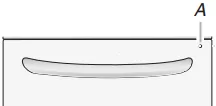 |
The Front Indicator Light or Single Exterior Light (A) shows progress of your dishwasher cycle by color (for hidden control models
nly). |
The light will be blue if the dishwasher is washing or rinsing. The light will be red when the dishwasher is drying. The light will be green to indicate that the cycle is complete. If the Front Indicator Light is blinking, see “Troubleshooting” section. |
 |
The Cycle Status Display is used to follow the progress of the dishwasher cycle, and to show other information. (Available on some models instead of Cycle Status Indicator Lights) |
The indicators will inform you if you are able to add a dish to the cycle after it has started. It will also inform you if the dishwasher is washing, rinsing, drying, complete, and/or sanitized. They will show whether the control is locked and/or the delay option is selected. A series of bars will count down the duration of the cycle remaining from left to right. Each bar equals approximately 24 minutes of cycle length. The bars will also count down the delay feature from left to right, and the delay indicator will be activated. |
Canceling A Cycle
- Press and hold the Cancel/Drain button once. The Cancel/ Drain light will turn on. If the Cancel/Drain button is located on the top of the door, open the door slightly to stop the cycle. Wait for the spraying action to stop before completely opening the door. Press and hold the Cancel/Drain button once.
- Close the door and the dishwasher starts a drain cycle (if water remains in bottom of dishwasher). Let the dishwasher drain completely. The Cancel/Drain light turns off after 2 minutes.
Changing A Cycle After Dishwasher Is Started
- You can interrupt a cycle and restart your dishwasher from the beginning using the following procedure.
- Press and hold the Cancel/Drain button twice to reset the control. If the Cancel/Drain button is located on the top of the door, open the door slightly to stop the cycle. Wait for the spraying action to stop before completely opening the door. Press and hold the Cancel/Drain button twice to reset the control.
- Select new cycles and options.
- Press START/RESUME.
Adding A Dish After Dishwasher Is Started
- 1Check if Add a Dish indicator is lit. (Available on some models. Otherwise, proceed to Step 2.)
- Open the door slightly to stop the cycle. Wait for the spraying action to stop, and then open the door completely.
- Check whether the detergent dispenser cover is still closed. If it is open, the wash cycle has already started and adding a dish is not recommended.
- If detergent has not yet been used (detergent dispenser cover is closed), you may add a dish.
- Press START/RESUME.
Dishwasher Features
ProScrub Option Wash Area
The ProScrub option wash area is located at the back of the lower level rack.
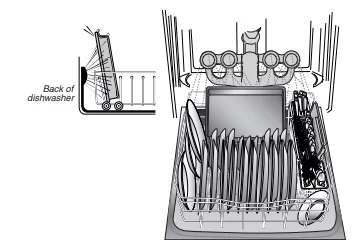
NOTE: You must select the ProScrub option to use this feature. Make sure items do not interfere with the water feed tube, spray arms, or ProScrub spray jets.
- Keep the last line row in the back of the lower rack in the 60° angled position when using the ProScrub option.
- Load pans, casserole dishes, etc. in the back of the lower dish rack with the soiled surfaces facing the ProScrub spray jets, and resting on the last row of tines in the angled position.
- Only one row of items may face the ProScrub spray jets. Stacking, overlapping or nesting items will keep the ProScrub spray jets from contacting all of the surfaces.
Silverware Basket
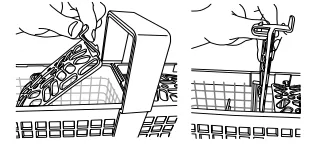
Use the slots in the covers to keep your silverware separated for optimum wash. There are specially designed slots (small round holes) for chopsticks. Mix silverware types to keep them separated. Load knives down, forks up, and alternate spoons, for best cleaning results.
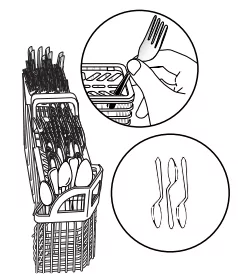
NOTE: If your silverware does not fit into the designated slots, flip the covers up and push them down into the basket.
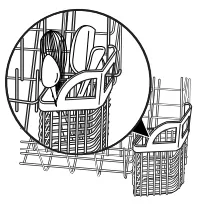
CULINARY CADDY Utensil Basket
Use the utensil basket to hold specialty cooking utensils (serving spoons, spatulas, and similar items), or overflow silverware items.
The basket hangs on the bottom rack in the right- hand corner. Load the basket while it is on the bottom rack or remove the basket for loading on a counter or table.
NOTE: Spin the spray arms while the bottom rack is inside the dishwasher to be sure items in the basket do not stop the rotation of the arms.
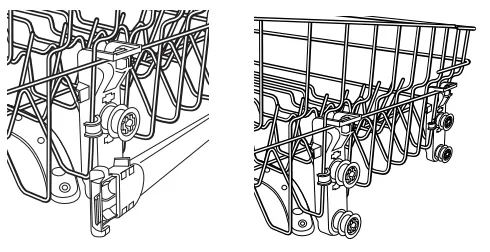
Manual Adjustable 2-Position Top Rack
You can raise or lower the top rack to fit tall items in either the top or bottom rack. Adjusters are located on each side of the top rack. Raise the top rack to accommodate items up to 9" (22 cm) in the top rack and 13" (33 cm) in the bottom rack, or lower the top rack to accommodate items up to 11" (28 cm) in both the top and bottom racks.
IMPORTANT: Remove dishes prior to removing the top rack from the dishwasher.
- To raise, remove rack and slide lower wheels into the rails as directed in "Removable Top Rack" section.
- To lower, remove rack and slide upper wheels into the rails as directed in "Removable Top Rack" section.
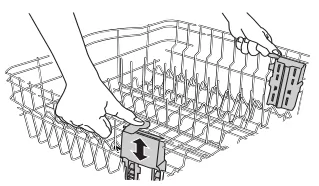
Premium Adjustable 2-Position Top Rack
You can raise or lower the top rack to fit tall items in either the top or bottom rack. Adjusters are located on each side of the top rack. Each adjuster has 2 preset positions.
To raise the rack, press both rack adjusters and lift the rack until it is in the Up position and level.
To lower the rack, press both rack adjusters and slide the rack to its Down position and level.
FLEXI-FOLD DOWN"Flexible Tines
The row of tines on the left- hand and right- hand sides of the top rack can be adjusted to make room for a variety of dishes.
To adjust the fold-down tines:
- Grasp the tip of the tine that is in the tine holder.
- Gently push the tine out of the holder.
- Lay the tines down, toward the center of the rack.
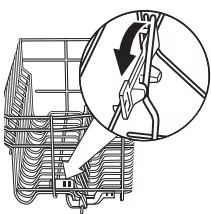
NOTE: The bottom rack may also have 1 or 2 rows of flexible tines located in the back of the rack. Follow the same instructions to adjust.
Removable Top Rack (for SatinGlide rails)
The removable top rack allows you to wash larger items such as pots, roasters, and cookie sheets in the bottom rack.
IMPORTANT: Remove dishes prior to removing the top rack from dishwasher.
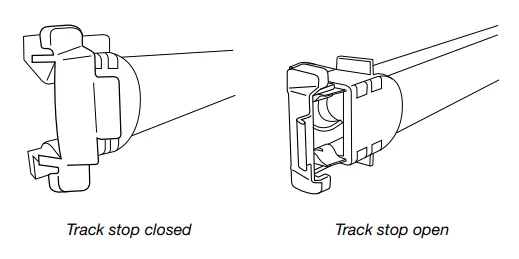
To remove the rack
To gain access to the track stops, pull the upper rack forward about halfway out of the tub.
To open, flip the track stop toward the outside of the tub.
After opening both track stops, pull top rack out of the rails.
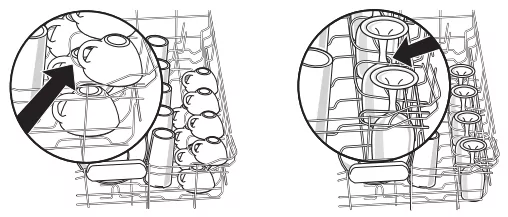
SURE-HOLD Cup and Stemware Holder
Fold down the extra shelf on the left- hand or right- hand side of the top rack to hold additional cups, stemware or long items such as utensils and spatulas.
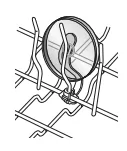
SURE-HOLD Light Item Clips
The light item clips hold lightweight plastic items such as cups, lids, or bowls in place during washing.
To move a clip:
- Pull the clip up and off the tine.
- Reposition the clip on another tine.
Dishwasher Care
Cleaning
Cleaning the exterior
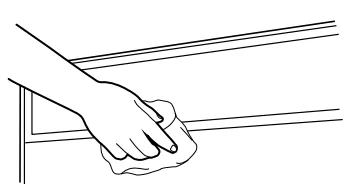
In most cases, regular use of a soft, damp cloth or sponge and a mild detergent is all that is necessary to keep the outside of your dishwasher looking nice and clean. If your dishwasher has a stainless steel exterior, a stainless steel cleaner is recommended. The Stainless Steel cleaner and Polish part number 31462A
Cleaning the interior
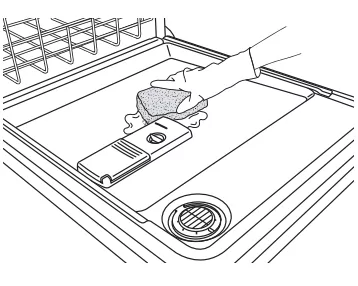
Hard water minerals can cause a white film to build up on the inside surfaces, especially just beneath the door area.
Do not clean the dishwasher interior until it has cooled. You may want to wear rubber gloves. Do not use any type of cleanser other than dishwasher detergent because it may cause foaming or sudsing.
To clean interior
Make a paste with powdered dishwasher detergent on a damp sponge and clean.
OR
Use liquid automatic dishwasher detergent and clean with a damp sponge.
OR
See the vinegar rinse procedure in "Cloudy or spotted dishwasher (and hard water solution)" in "Troubleshooting" section.
NOTE: Run a normal cycle with dishwasher detergent after cleaning the interior.
Drain Air Gap
Some state or local plumbing codes require the addition of a drain air gap between a built- in dishwasher and the home drain system. Check the drain air gap when your dishwasher is not draining well.
The drain air gap is usually located on top of the sink or countertop near the dishwasher.
NOTE: The drain air gap is an external plumbing device that is not part of your dishwasher. The warranty provided with your dishwasher does not cover service costs directly associated with the cleaning or repair of the external drain air gap.
To clean the drain air gap
Clean the drain air gap periodically to ensure proper drainage of your dishwasher. With most types, you lift off the chrome cover. Unscrew the plastic cap. Then check for any soil buildup. Clean if necessary.
Dishwasher Maintenance Procedure
Cleaning the Dishwasher
Clean the exterior of dishwasher with a soft, damp cloth and mild detergent. If your dishwasher has a stainless steel exterior, a stainless steel cleaner is recommended - Stainless Steel Cleaner and Polish Part Number 31462A.
Removal of Hard Water / Filming:
Recommended use of a monthly maintenance product such as affresh™ Dishwasher Cleaner Part Number W10282479.
- Load your dishwasher (preferably with dishes affected by filming / hard water).
- Place tablet in main wash compartment of detergent dispenser.
- Select cycle/option best for heavily soiled dishes and start dishwasher.
NOTE: Recommended to use a premeasured detergent tablet or pack for regular daily use.
Vacation or Extended Time Without Use
To reduce the risk of property damage
- If you will not be using the dishwasher during the summer months, turn off the water and power supply to the dishwasher.
- Make sure the water supply lines are protected against freezing conditions. Ice formations in the supply lines can increase water pressure and damage your dishwasher or home. Damage from freezing is not covered by the warranty.
- When storing your dishwasher in the winter, avoid water damage by having your dishwasher winterized by authorized service personnel.
Troubleshooting
First try the solutions suggested here or visit our website and reference FAQs (Frequently Asked Questions) to possibly avoid the cost of a service call.
In the U.S.A., www.kitchenaid.com In Canada, www.kitchenaid.ca
| PROBLEM |
PROBLEM SOLUTION |
|
DISHWASHER DOES NOT RUN
|
NOTE: It is normal for the dishwasher to repeatedly pause several times during a cycle.
If the Start/Resume light is blinking, close the door and push START/RESUME.
Be sure the door is closed and latched.
Be sure you have disabled Sleep Mode by pressing either START/RESUME or CANCEL, or by opening and closing the door before selecting your cycle/option.
Check that there is not an interference with large casserole dishes and the wash system at the back of the dishwasher. Adjust loading as necessary to ensure door is closed and latched.
Be sure you have selected a cycle. See "Cycles and Options Descriptions" section.
Be sure there is power to the dishwasher. A circuit breaker or fuse may have tripped.
If lights other than Start/Resume blink and the unit will not run, you will need to call for service.
|
|
DETERGENT REMAINS IN THE DISPENSER OR TABLET IS ON BOTTOM OF TUB
|
Check for dishware such as cookie sheets, cutting boards, or large containers, etc., that may be blocking the detergent dispenser from opening properly.
Be sure your detergent is fresh and lump free.
Be sure the cycle has completed (the Clean light is on). If it has not completed, you will need to resume the cycle by closing the door and pressing START/RESUME. |
|
CYCLE RUNS TOO LONG
|
NOTES:
- To use less water and reduce energy consumption you will encounter cycles that typically run for up to 3 hours.
- A water heater setting of 120°F (49°C) is best, the dishwasher will delay longer while heating cooler water.
- Some options will add time to the cycle. See "Cycles and Options Descriptions" section. The Heat Dry option adds approximately 1/2 hour.
Try the 1 Hour Wash cycle.
Run the hot water at a faucet close to the dishwasher before starting the cycle. |
|
DISHWASHER NOT DRYING
|
NOTE: Plastic and items with nonstick surfaces are difficult to dry because they have a porous surface which tends to collect water droplets. Towel drying may be necessary.
Use of rinse aid along with the Heat Dry option is needed for proper drying.
Proper loading of items can affect drying. See specific loading instructions within this guide.
Glasses and cups with concave bottoms hold water. This water may spill onto other items when unloading.
- Unload the bottom rack first.
- Locate these items on the more slanted side of the rack for improved results.
|
| WILL NOT FILL |
Be sure the water is turned on to the dishwasher.
Check that the float is free from obstructions. See "Parts and Features."
Check for suds in the dishwasher. If foam or suds are detected, the dishwasher may not operate properly or may not fill with water. See "Blinking Lights" in "Troubleshooting." |
|
WATER REMAINS IN THE TUB/WILL NOT DRAIN
|
Be sure the cycle has completed (the Clean light is on). If it has not, you will need to resume the cycle by closing the door and pressing START/RESUME.
If dishwasher is connected to a food waste dispenser, be sure the knockout plug has been removed from the dispenser inlet.
Check for kinks in the drain hose.
Check for food obstructions in the drain or dispenser.
Check your house fuse or circuit breaker. |
| HARD WATER (WHITE RESIDUE ON DISHWASHER INTERIOR OR GLASSWARE) |
NOTE: Extremely hard water mineral deposits can cause damage to your dishwasher and make it difficult to achieve good cleaning. A water softener is strongly recommended if your hardness is 15 grains or more. If a water softener is not installed, the following steps may help:
Use a commercial cleaner designed for dishwashers once per month.
Always use a rinse aid.
Always use a high-quality, fresh detergent.
Use a detergent booster/water softener additive designed for dishwashers. |
| ODORS |
NOTE: If the dishwasher is not used daily, you can run a rinse cycle with the partial load until a full load is ready to run, or use the Top Rack Only option (on some models) for partial loads.
Run a vinegar rinse through the dishwasher by putting 2 cups (500 mL) of white vinegar in an upright glass measuring cup in the lower rack. Run a normal cycle with the Heat Dry option turned off. Do not use detergent.
The dishwasher may not be draining properly, see "Water Remains In The Tub/Will Not Drain" in "Troubleshooting." |
| NOISY |
NOTES:
- Surging sounds can occur periodically throughout the cycle while the dishwasher is draining.
- Normal water valve hissing may be heard periodically.
- A normal snap sound may be heard when the detergent dispenser opens during the cycle and when the door is opened at the end of the cycle.
- Improper installation will affect noise levels.
A thumping sound may be heard if items extend beyond the racks and interfere with the wash arms. Readjust the dishwasher and resume the cycle. |
| FOOD SOILS REMAIN ON DISHES |
Be sure the dishwasher is loaded correctly. Improper loading can greatly decrease the washing performance, see “Dishwasher Use”.
Select the proper cycle and option for the type of soils. The Heavy Duty cycle with the ProScrub® (on some models) option can be used for tougher loads.
Be sure the incoming water temperature is at least 120°F (49°C).
Use the proper amount of fresh detergent. More detergent is needed for heavier-soiled loads and hard water conditions.
Scrape food from dishes prior to loading (do not prerinse). |
| DISHES DIRTY/SUDS IN DISHWASHER/CYCLE NOT COMPLETE |
If foam or suds are detected by the dishwasher sensing system, the dishwasher may not operate properly or may not fill with water.
Suds can come from:
- Using the incorrect type of detergent, such as dish detergent for hand washing dishes, laundry detergent, or hand soap.
- Not replacing the rinse aid dispenser cap after filling (or refilling) the rinse aid.
- Using an excessive amount of dishwasher detergent.
Call for service.
If no water was present in the machine at any time during a heated wash cycle, the cycle will end and the Clean LED will not come on. See “Will Not Fill” in “Troubleshooting.” |
| DID NOT SANITIZE |
If the sanitized light is blinking, the load is NOT sanitized. The cycle was interrupted in the final rinse, or the temperature for your water heater is set too low. Set your water heater to 120°F (49°C). |
| DAMAGE TO DISHWARE |
Improper loading can cause dishes to become chipped or damaged. See specific loading instructions within this guide.
|
| BLINKING LIGHTS |
Blinking LED's will occur when the cycle is paused or when the cycle has been interrupted by opening the door. In this case, the Start/Resume button LED, the Cycle Status Indicator LED(s), and the countdown bars on the Cycle Status Display all blink together to indicate that attention is needed. See Start or Resume a Cycle in the “Dishwasher Use” section.
Blinking LED's can also occur when certain errors have been detected. In this case, the Clean/Complete LED will blink one time with a pause in between blinks.
Call for service. |
CLOUDY OR SPOTTED
DISHWARE (AND HARD
WATER SOLUTION) |
NOTES:
- Liquid rinse aid is necessary for drying and to reduce spotting.
- Use the correct amount of detergent.
Confirm that the cloudiness is removable by soaking the item in white vinegar for 5 minutes. If the cloudiness disappears, it is due to hard water. Adjust the amount of detergent and rinse aid. See “Hard Water White Residue On Dishwasher Interior Or Glassware in “Troubleshooting.” If it does not come clear, it is due to etching (see below).
Be sure the incoming water temperature is set at 120°F (49 oC).
Try using the High Temp and Sani Rinse options.
To remove spotting, run a vinegar rinse through the dishwasher.
- Wash and rinse the affected dishware and load into dishwasher. Remove all silverware and metal items. Put 2 cups (500 mL) of white vinegar in a glass measuring cup in the lower rack. Run a normal cycle with the Heat Dry option turned off. No detergent is needed.
|
| ETCHING (PERMANENT CLOUDINESS) |
This is an erosion of the surface of the glassware and can be caused by a combination of: water that is too hot, from using too much detergent with soft water or by pre-washing. Detergent needs food soil to act upon. If etching has occurred, the glassware is permanently damaged. To avoid further etching, adjust the detergent amount to match the water hardness, stop pre-washing, and use water heating options only when incoming water temperature is below 120°F (49°C). |
| LEAKING WATER |
Be sure dishwasher has been installed properly and is level.
Suds can cause the dishwasher to overflow. Measure the detergent accurately and use only detergents designed for use in a dishwasher. Less detergent is needed in soft water. Try another brand of detergent if sudsing continues.
To avoid rinse aid leaking from the dispenser, be sure the lid is securely attached and avoid overfilling.
|
| TUB IS DISCOLORED |
NOTES:
- High iron content in the water can discolor the tub.
- Tomato-based foods can discolor the tub or dishware.
A citrus-based cleaner can be used to clean.
|
KITCHENAID® DISHWASHER WARRANTY
LIMITED WARRANTY
For one year from the date of purchase, when this major appliance is operated and maintained according to instructions attached to or furnished with the product, KitchenAid brand of Whirlpool Corporation or Whirlpool Canada LP (hereafter “KitchenAid”) will pay for factory specified parts and repair labor to correct defects in materials or workmanship that existed when this major appliance was purchased. Service must be provided by a KitchenAid designated service company. YOUR SOLE AND EXCLUSIVE REMEDY UNDER THIS LIMITED WARRANTY SHALL BE PRODUCT REPAIR AS PROVIDED HEREIN. This limited warranty is valid only in the United States or Canada and applies only when the major appliance is used in the country in which it was purchased. Proof of original purchase date is required to obtain service under this limited warranty.
SECOND THROUGH FIFTH YEAR LIMITED WARRANTY ON CERTAIN COMPONENT PARTS
In the second through the fifth year from the date of purchase, when this major appliance is operated and maintained according to instructions attached to or furnished with the product, KitchenAid will pay for factory specified parts for the following components to correct defects in materials or workmanship that existed when this major appliance was purchased: nylon dish racks and electronic controls.
LIFETIME LIMITED WARRANTY ON STAINLESS STEEL TUB AND INNER DOOR LINER
For the lifetime of the product from the date of purchase, when this major appliance is installed, operated and maintained according to instructions attached to or furnished with the product, KitchenAid will pay for factory specified parts and repair labor for the following components to correct defects in materials or workmanship that existed when this major appliance was purchased: stainless steel tub and inner door liner.
ITEMS EXCLUDED FROM WARRANTY
This limited warranty does not cover:
- Replacement parts or repair labor if this major appliance is used for other than normal, single-family household use or when it is used in a manner that is inconsistent to published user or operator instructions and/or installation instructions.
- Service calls to correct the installation of your major appliance, to instruct you on how to use your major appliance, to replace or repair house fuses, or to correct house wiring or plumbing.
- Service calls to repair or replace appliance light bulbs, air filters or water filters. Consumable parts are excluded from warranty coverage.
- Damage resulting from accident, alteration, misuse, abuse, fire, flood, acts of God, improper installation, installation not in accordance with electrical or plumbing codes, or use of products not approved by KitchenAid.
- Cosmetic damage, including scratches, dents, chips or other damage to the finish of your major appliance, unless such damage results from defects in materials or workmanship and is reported to KitchenAid within 30 days from the date of purchase.
- Any food or medicine loss due to refrigerator or freezer product failures.
- Pickup and delivery. This major appliance is intended to be repaired in your home.
- Repairs to parts or systems resulting from unauthorized modifications made to the appliance.
- Expenses for travel and transportation for product service if your major appliance is located in a remote area where service by an authorized KitchenAid servicer is not available.
- The removal and reinstallation of your major appliance if it is installed in an inaccessible location or is not installed in accordance with KitchenAid's published installation instructions.
- Replacement parts or repair labor on major appliances with original model/serial numbers that have been removed, altered or cannot be easily determined.
The cost of repair or replacement under these excluded circumstances shall be borne by the customer.
DISCLAIMER OF IMPLIED WARRANTIES
IMPLIED WARRANTIES, INCLUDING ANY IMPLIED WARRANTY OF MERCHANTABILITY OR IMPLIED WARRANTY OF FITNESS FOR A PARTICULAR PURPOSE, ARE LIMITED TO ONE YEAR OR THE SHORTEST PERIOD ALLOWED BY LAW. Some states and provinces do not allow limitations on the duration of implied warranties of merchantability or fitness, so this limitation may not apply to you. This warranty gives you specific legal rights, and you also may have other rights that vary from state to state or province to province.
LIMITATION OF REMEDIES; EXCLUSION OF INCIDENTAL AND CONSEQUENTIAL DAMAGES
YOUR SOLE AND EXCLUSIVE REMEDY UNDER THIS LIMITED WARRANTY SHALL BE PRODUCT REPAIR AS PROVIDED HEREIN. KITCHENAID SHALL NOT BE LIABLE FOR INCIDENTAL OR CONSEQUENTIAL DAMAGES. Some states and provinces do not allow the exclusion or limitation of incidental or consequential damages, so these limitations and exclusion may not apply to you. This warranty gives you specific legal rights, and you also may have other rights that vary from state to state or province to province.
If outside the 50 United States and Canada, contact your authorized KitchenAid dealer to determine if another warranty applies. If you think you need repair service, first see the "Troubleshooting" section of the Use & Care Guide. If you are unable to resolve the problem after checking "Troubleshooting," additional help can be found by checking the "Assistance or Service" section or by calling KitchenAid. In the U.S.A., call 1- 800- 422- 1230. In Canada, call 1- 800- 807- 6777. 2/10