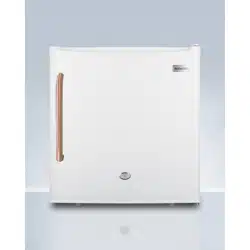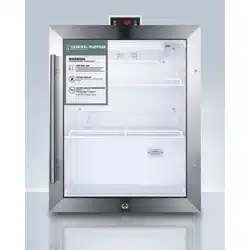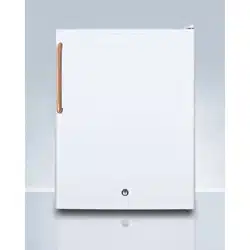
ALL REFRIGERATOR
User Manual
Model: FF28LWH
BEFORE USE, PLEASE READ AND FOLLOW ALL SAFETY RULED AND OPERATING
INSTRUCTIONS
Write Model and Serial Numbers
here:
Model:
Serial No.:

2
TABLE OF CONTENTS
Equipment Safety 3
Important Safeguards 3-4
Installation Instructions 5-6
Before Using your Refrigerator 5
Installing your Refrigerator 5
Electrical Connection 5
Reversing the Door Swing of your Appliance 6
Operating your Refrigerator 6
Care and Maintenance 7
Defrosting your Refrigerator 7
Cleaning your Refrigerator 7
Vacation Time 7
Moving your Refrigerator 7
Energy-Saving Tips 7
Troubleshooting 8
Limited Warranty 10
3
EQUIPMENT SAFETY
Your safety and the safety of others are very important.
We have provided many important safety messages in this manual and on your unit. Always
read and obey all safety messages.
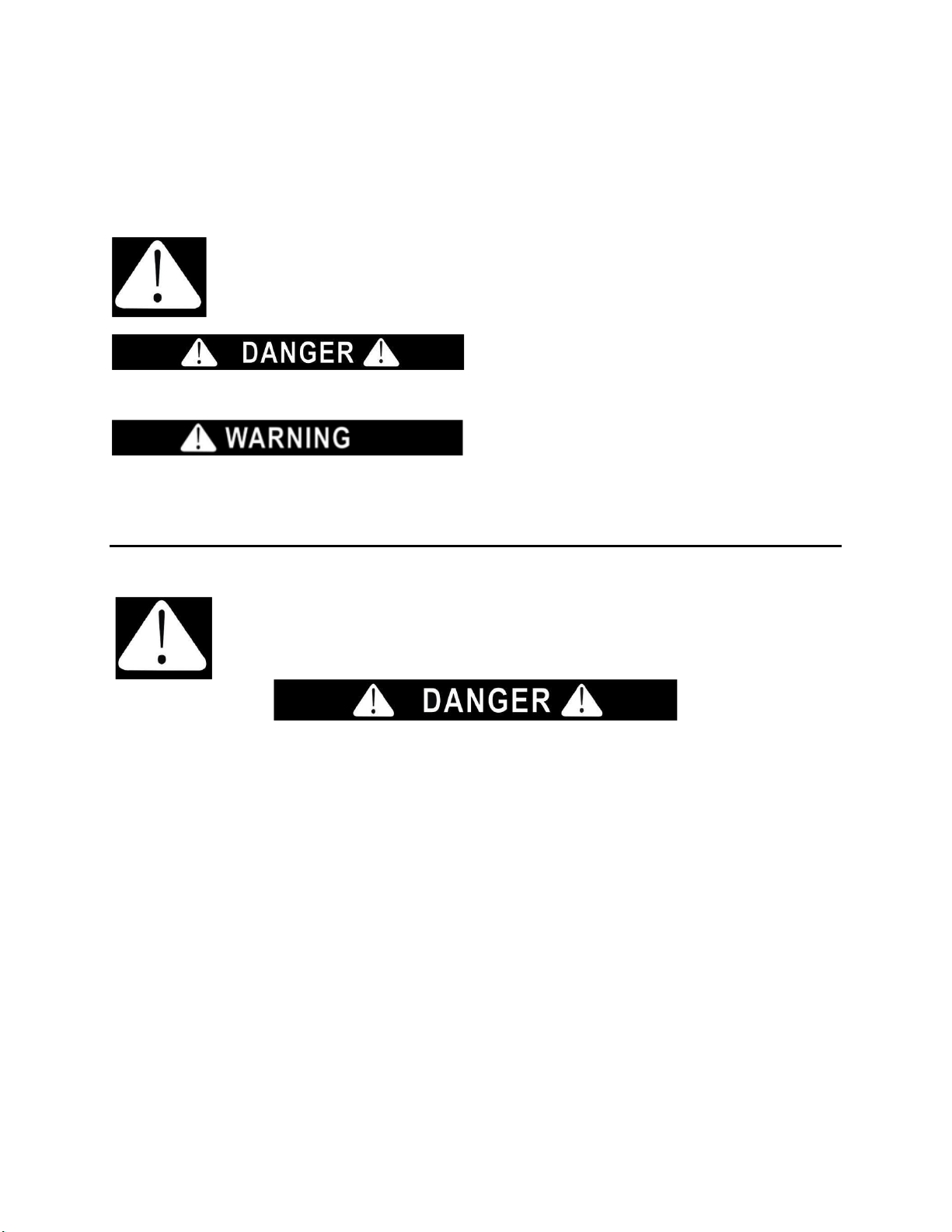
This is the Safety Alert Symbol. The symbol alerts you to potential hazards that can
kill or injure you and others. All safety messages will follow the Safety Alert Symbol
and either the words "DANGER" or "WARNING".
DANGER means that failure to heed
this safety statement may result in
severe personal injury or death.
WARNING means that failure to heed
this safety statement may result in
extensive product damage, serious
personal injury, or death.
All safety messages will alert you about the potential hazard, tell you how to reduce the
chance of injury, and let you know what can happen if the instructions are not followed.
IMPORTANT SAFEGUARDS
Before the equipment is used, it must be properly positioned and installed as
described in this manual, so read the manual carefully. To reduce the risk of fire,
electrical shock or injury when using this equipment, follow basic precautions,
including the following:
• Plug into a grounded 3-prong outlet, do not remove grounding prong, do not use an adapter, and do
not use an extension cord.
• Replace all panels before operating.
• It is recommended that a separate circuit serving only your unit be provided. Use receptacles
that cannot be turned off by a switch or pull chain.
• Never clean the equipment parts with flammable fluids. These fumes can create a fire hazard or
explosion. And do not store or use gasoline or other flammable vapors and liquids in the vicinity of
this or any other pieces of equipment. The fumes can create a fire hazard or explosion.
• Before proceeding with cleaning and maintenance operations, make sure the power line of the
unit is disconnected.
• Do not connect or disconnect the electric plug when your hands are wet.
• Unplug the unit or disconnect power before cleaning or servicing. Failure to do so can result in
electrical shock or death.
• Do not attempt to repair or replace any part of your unit unless it is specifically recommended in
this manual. All other servicing should be referred to a qualified technician.
• This unit is CFC- and HFC-free and contains a small quantity of Isobutane (R600a), which is
environmentally friendly but flammable. It does not damage the ozone layer, nor does it increase the
greenhouse effect. care must be taken during transportation and setting up of the unit that no parts of
the cooling system are damaged. leaking coolant can ignite and may damage the eyes.
4
• In the event of any damage:
o Avoid open flames and anything that creates a spark,
o Disconnect from the electrical power line,
o Air the room in which the unit isolated for several minutes, and
o Contact the Service Department for advice.
• The more coolant there is in a unit, the larger the room it should be installed in. In the event of a
leakage, if the unit is in a small room, there is the danger of combustible gases building up. For every
ounce of coolant, at least 325 cubic feet of room space is required. The amount of coolant in the unit
is stated on the data plate inside the unit. It is hazardous for anyone other than an Authorized Service
Person to carry out servicing or repairs to this piece of equipment.
• Take serious care when handling, moving, and using the unit to avoid either damaging the refrigerant
tubing or increasing the risk of a leak.
• Replacing component parts and servicing shall be done by factory authorized service personnel so as
to minimize the risk of possible ignition due to incorrect parts or improper service.
• FOLLOW WARNING CALLOUTS BELOW ONLY WHEN APPLICABLE TO YOUR MODEL
• Use two or more people to move and install unit. Failure to do so can result in back or other injury.
• To ensure proper ventilation for your unit, the front of the unit must be completely unobstructed.
Choose a well-ventilated area with temperatures above 60°F (16°C) and below 90°F (32°C). [For
optimal performance, install the unit where the ambient temperature is between 72º and 78ºF (23º-
26ºC).] This unit must be installed in an area protected from the elements, such as wind, rain, water
spray or drips.
• The unit should not be located next to ovens, grills or other sources of high heat.
• The unit must be installed with all electrical, water and drain connections in accordance with state and
local codes. A standard electrical supply (115 V AC only, 60 Hz), properly grounded in accordance
with the National Electrical Code and local codes and ordinances, is required.
• Do not kink or pinch the power supply cord of the unit.
• The size of the fuse (or circuit breaker) should be 15 amperes.
• It is important that the equipment be leveled in order to work properly. You may need to make several
adjustments to level it.
• All installations must be in accordance with local plumbing code requirements.
• Make certain that the pipes are not pinched, kinked or damaged during installation.
• Check for leaks after connection.
• Never allow children to operate, play with or crawl inside the unit.
• Do not use solvent-based cleaning agents or abrasives on the interior. These cleaners may damage
or discolor the interior.
• Use this equipment only for its intended purpose as described in this Instruction Manual.
• Keep fingers out of the “pinch point” areas. Clearances between the door and cabinet are necessarily
small. Be careful closing the door when children are in the area.
Risk of child entrapment!
Child entrapment and suffocation are not problems of the past. Junked or abandoned appliances
are still dangerous, even if they will “just sit in the garage a few days.”
Before discarding your old refrigerator:
o
Take off the doors
o
Leave the shelves in place so that children may not easily climb inside
- SAVE THESE INSTRUCTIONS –
5
INSTALLATION INSTRUCTIONS
Before Using Your Refrigerator
• Remove the exterior and interior packing.
• Before connecting the refrigerator to the power source, let it stand upright for approximately 2
hours. This will reduce the possibility of a malfunction in the cooling system from handling during
transportation.
• Clean the interior surface with lukewarm water using a soft cloth.
Installing Your Refrigerator
• This appliance is designed to be free standing only, and should not be recessed or built-in.
• Place your refrigerator on a floor that is strong enough to support the refrigerator when it is fully
loaded. To level your refrigerator, adjust the leveling leg at the bottom of the refrigerator.
• Allow about 5” (12 cm) of space at the back and sides of the appliance and 4” (10 cm) at the top,
which allows the proper air circulation to cool the compressor.
• Locate the refrigerator away from direct sunlight and sources of heat (stove, heater, radiator,
etc.). Direct sunlight may affect the acrylic coating and heat sources may increase electrical
consumption. Extremely cold ambient temperatures may also cause the refrigerator not to
perform properly.
• Avoid locating the refrigerator in moist areas.
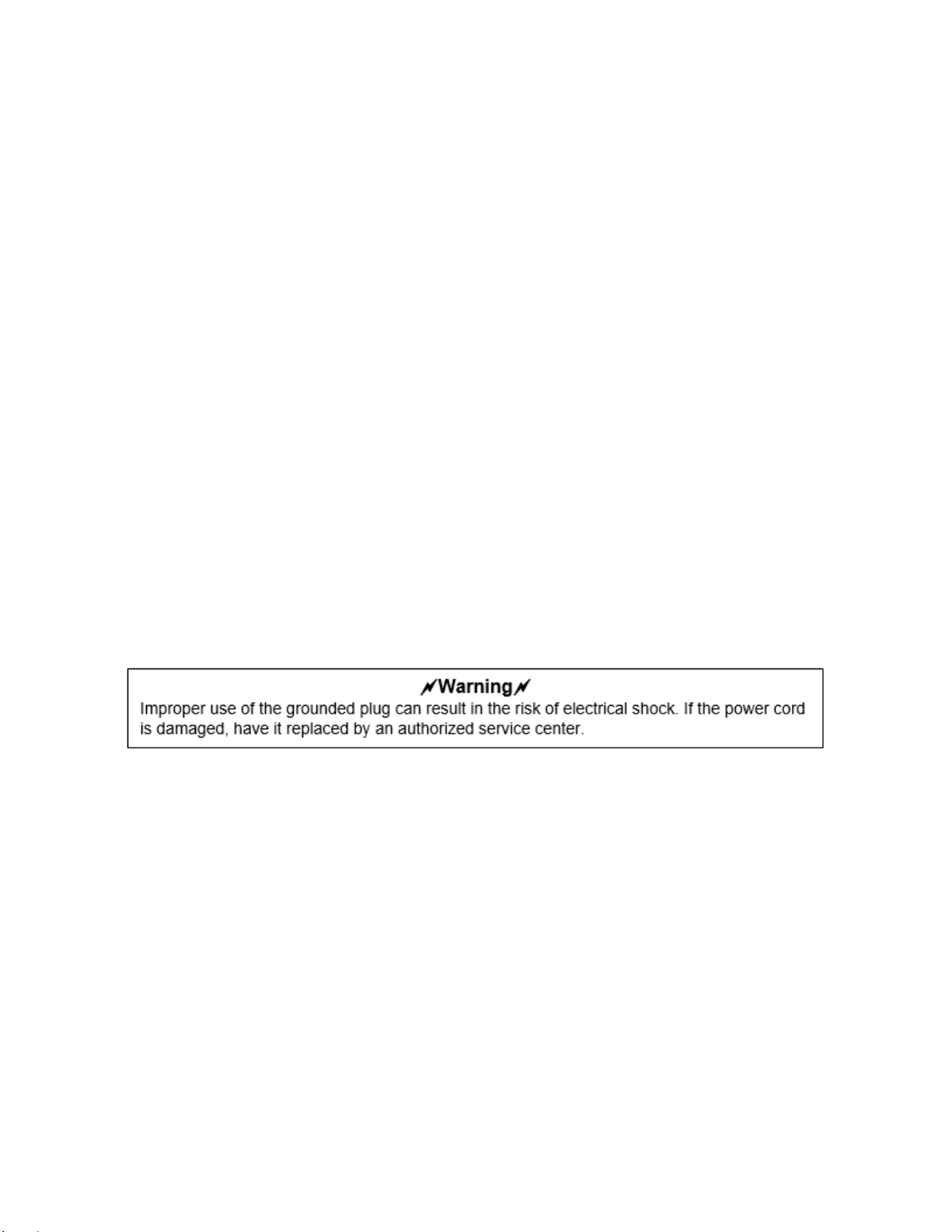
• Plug the refrigerator into an exclusive, properly installed and grounded wall outlet. Do not under
any circumstances cut or remove the third (ground) prong from the power cord. Any questions
concerning power and/or grounding should be directed toward a certified electrician or an
authorized service center.
• After plugging the appliance into a wall outlet, allow the unit to cool down for 2-3 hours before
placing items in the refrigerator cabinet.
Electrical Connection
• This refrigerator should be properly grounded for your safety. The power cord of this refrigerator
is equipped with a three-pin plug which mates with standard three-prong wall outlets to minimize
the possibility of electrical shock.
• Do not under any circumstances cut or remove the third ground prong from the power cord
supplied.
• This refrigerator requires a standard 115Volts AC
~ 60Hz electrical outlet with three-prong
grounded receptacle.
• To prevent accidental injury, the cord should be secured behind the refrigerator and not left
exposed or dangling.
• Never unplug the refrigerator by pulling the power cord. Always grip the plug firmly and pull
straight out from the receptacle.
• Do not use an extension cord with this appliance. If the power cord is too short, have a qualified
electrician or service technician install an outlet near the appliance.
6
Reversing the Door Swing of your Appliance
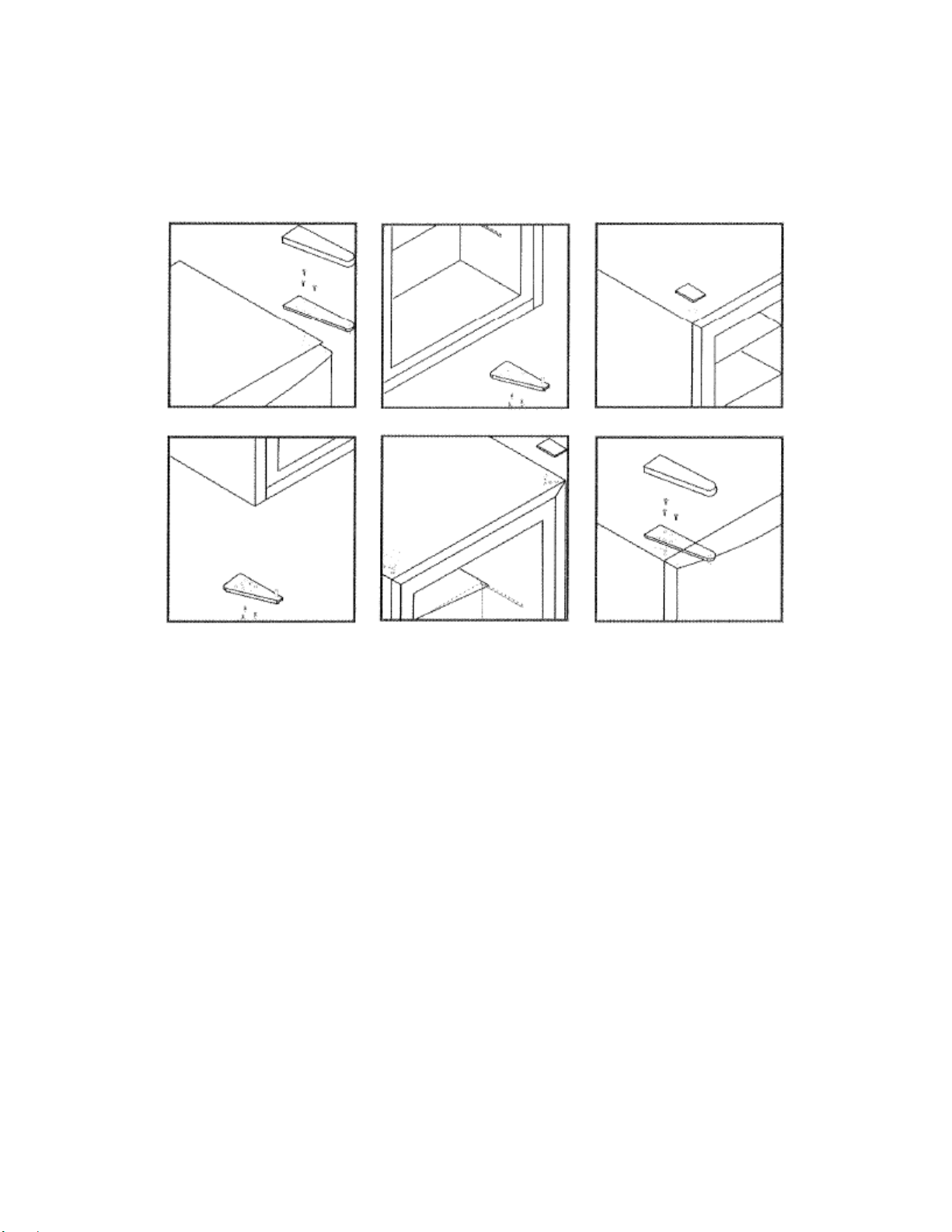
This refrigerator has the capability of the door opening from either the left or right side. The unit is
delivered to you with the door opening from the left side. Should you desire to reverse the opening
direction, you can refer to the diagram below. If you have a problem, call Customer Service at 1-800-
932-4267.
NOTE: Some door styles may not be reversible. Consult our website for details
OPERATING YOUR REFRIGERATOR
Setting the Temperature Control
• To control the internal temperature, adjust the control dial according to the ambient temperature
or intended use of the refrigerator.
• The first time you turn the unit on, set the temperature control to “6”.
• The range of the temperature control is from position "OFF” to “6”. After 24 to 48 hours, adjust
the temperature control to the setting that best suits your needs. The setting of “3” should be
appropriate for normal use.
NOTE: If the refrigerator is unplugged, has lost power, or is turned off, you must wait 3 to 5 minutes
before restarting the unit. If you attempt to restart before this time delay, the refrigerator will
not start.

7
CARE AND MAINTENANCE
Defrosting Your Refrigerator
This appliance requires no manual defrosting. During the operation of the compressor, ice will build
up along the cold rear wall (the evaporator plate is behind the wall). During the compressor’s off-
cycle, the ice will melt, drip down, and collect in a tray above the compressor, where the
compressor’s heat evaporates the water. If you notice excessive ice build-up on the rear wall, try
setting the temperature slightly higher (i.e., a lower setting of the thermostat). Also, be sure that the
door gasket is sealing well.
Cleaning Your Refrigerator
• Turn the temperature control to "OFF", unplug the refrigerator and remove the contents,
including shelves and trays.
• Wash the inside surfaces with a warm water and baking soda solution. The solution should
consist of about 2 tablespoons of baking soda to a quart of water.
• Wash the shelves and trays with a mild detergent solution.
• The outside of the refrigerator should be cleaned with mild detergent and warm water.
• Wring excess water out of the sponge or cloth before cleaning the area of the controls, or any
electrical parts.
• Wash the outside cabinet with warm water and mild liquid detergent. Rinse well and wipe dry
with a clean soft cloth.
Vacation Time
• Short vacations: Leave the refrigerator operating during vacations of less than three weeks.
• Long vacations: If the refrigerator will not be used for several months, remove the contents and
unplug the power cord. Clean and dry the interior thoroughly. to prevent odor and mold growth,
leave the door open slightly, blocking it open if necessary.
Moving Your Refrigerator
• Remove the stored contents.
• Securely tape down all loose items inside your refrigerator.
• Turn the leveling screw up to the base to avoid damage.
• Tape the door shut.
• Be sure the refrigerator stays secure in the upright position during transportation. Also protect
the outside of refrigerator with a blanket or similar item.
Energy Saving Tips
• The refrigerator should be located in the coolest area of the room, away from heat producing
appliances, and out of the direct sunlight.
• Let warm items cool to room temperature before placing in the refrigerator. Overloading the
refrigerator forces the compressor to run longer.
• Wipe containers dry before placing them in the refrigerator. This cuts down on frost build-up
inside the refrigerator.
• The refrigerator storage area should not be lined with aluminum foil, wax paper, or paper
toweling. Liners interfere with cold air circulation, making the refrigerator less efficient.
• Organize and label stored items to reduce door openings and extended searches. Remove as
many items as needed at one time, and close the door as soon as possible.
8
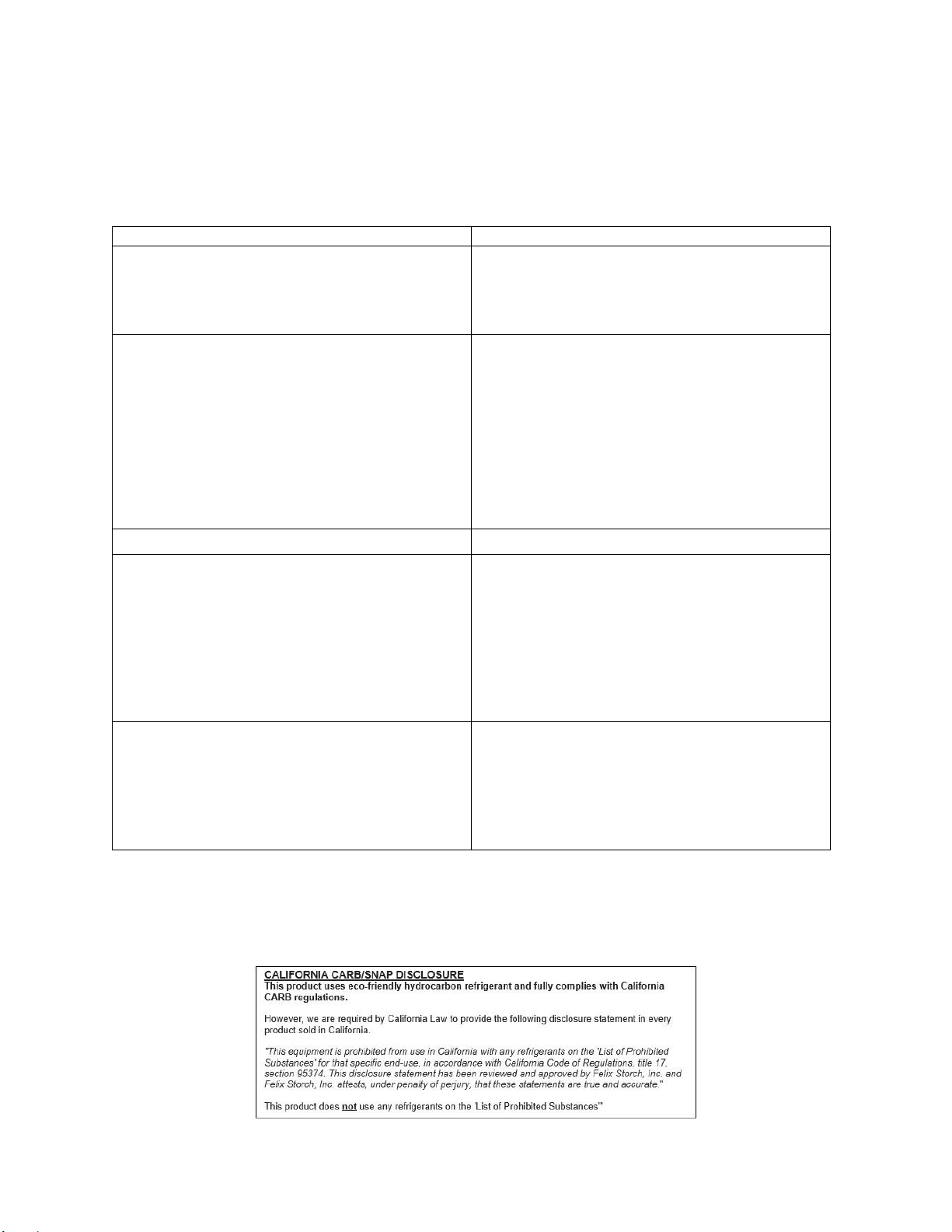
TROUBLESHOOTING
You can solve many common refrigerator problems easily, saving you the cost of a possible service
call. Try the suggestions below to see if you can solve the problem before calling the servicer.
PROBLEM
POSSIBLE CAUSE
Refrigerator does not operate.
Not plugged in.
Circuit breaker has tripped or a fuse has blown.
The refrigerator temperature control is set at
"OFF".
Turns on and off frequently.
The room temperature is warmer than normal.
A large number of stored items has been
added to the refrigerator.
The door is opened too often.
The door is not closed completely.
The temperature control is not set correctly.
The door gasket does not seal properly.
The refrigerator does not have the correct
clearances.
Vibrations
Check to be sure the refrigerator is level.
The refrigerator seems to make too much
noise.
A rattling noise may come from the flow of
refrigerant, which is normal.
As each cycle ends, you may hear gurgling
sounds caused by the flow of refrigerant in
your refrigerator.
Contraction and expansion of the inside walls
may cause popping and crackling noises.
The refrigerator is not level.
The door will not close properly.
The refrigerator is not level.
The door was reversed and not properly re-
installed.
The gasket is dirty.
The shelves, bins, or baskets are out of
position.
If your refrigerator shows other symptoms than those described above, or if you have checked all
items listed as the cause and the problem still exists, then call ACCUCOLD® Customer Service at
1-800-932-4267.

9
NOTES
10
LIMITED WARRANTY
ONE-YEAR LIMITED WARRANTY
Within the 48 contiguous United States, for one year from the date of purchase, when this appliance is operated
and maintained according to instructions attached to or furnished with the product, warrantor will pay for factory-
specified parts and repair labor to correct defects in materials or workmanship. Service must be provided by a
designated service company. Outside the 48 states, all parts are warranted for one year from manufacturing
defects. Plastic parts, shelves and cabinets are warranted to be manufactured to commercially acceptable
standards, and are not covered from damage during handling or breakage.
5-YEAR COMPRESSOR WARRANTY
1. The compressor is covered for 5 years.
2. Replacement does not include labor.
ITEMS WARRANTOR WILL NOT PAY FOR:
1. Service calls to correct the installation of your appliance, to instruct you how to use your appliance, to
replace or repair fuses or to correct wiring or plumbing.
2. Service calls to repair or replace appliance light bulbs or broken shelves. Consumable parts (such as filters)
are excluded from warranty coverage.
3. Damage resulting from accident, alteration, misuse, abuse, fire, flood, acts of God, improper installation,
installation not in accordance with electrical or plumbing codes, or use of products not approved by
warrantor.
4. Replacement parts or repair labor costs for units operated outside the United States.
5. Repairs to parts or systems resulting from unauthorized modifications made to the appliance.
6. The removal and reinstallation of your appliance if it is installed in an inaccessible location or is not installed
in accordance with published installation instructions.
DISCLAIMER OF IMPLIED WARRANTIES – LIMITATION OF REMEDIES
CUSTOMER'S SOLE AND EXCLUSIVE REMEDY UNDER THIS LIMITED WARRANTY SHALL BE PRODUCT
REPAIR AS PROVIDED HEREIN. IMPLIED WARRANTIES, INCLUDING WARRANTIES OF
MERCHANTABILITY OR FITNESS FOR A PARTICULAR PURPOSE, ARE LIMITED TO ONE YEAR.
WARRANTOR SHALL NOT BE LIABLE FOR INCIDENTAL OR CONSEQUENTIAL DAMAGES. SOME STATES
DO NOT ALLOW THE EXCLUSION OR LIMITATION OF INCIDENTAL OR CONSEQUENTIAL DAMAGES, OR
LIMITATIONS ON THE DURATION OF IMPLIED WARRANTIES OF MERCHANTABILITY OR FITNESS, SO
THESE EXCLUSIONS OR LIMITATIONS MAY NOT APPLY TO YOU. THIS WARRANTY GIVES YOU SPECIFIC
LEGAL RIGHTS AND YOU MAY ALSO HAVE OTHER RIGHTS, WHICH VARY FROM STATE TO STATE.
For parts and accessory ordering,
troubleshooting and helpful hints, visit
www.accucold.com/support