Page 1 of 4 REV 0 - 12/23/2021
Part Number 7117719 / English
Copyright 2021. All Rights Reserved.
Disclaimers:
● All information in this guide was based on the latest product information available at the time of its printing.
● This guide may cover more than one machine. The drawings in this guide should be used for reference only. There may be dierences between your
product and the pictures, drawings, and / or diagrams used in this guide.
● In a continued commitment to improve quality, The manufacturer reserves the right to update, change, and / or improve the product(s) covered in this guide
at any time, without notice, and without incurring any obligation. Therefore, the product(s) this guide covers may dier slightly those pictured.
For Diesel Powered
Hot Water Power Washers
Quick Start Guide
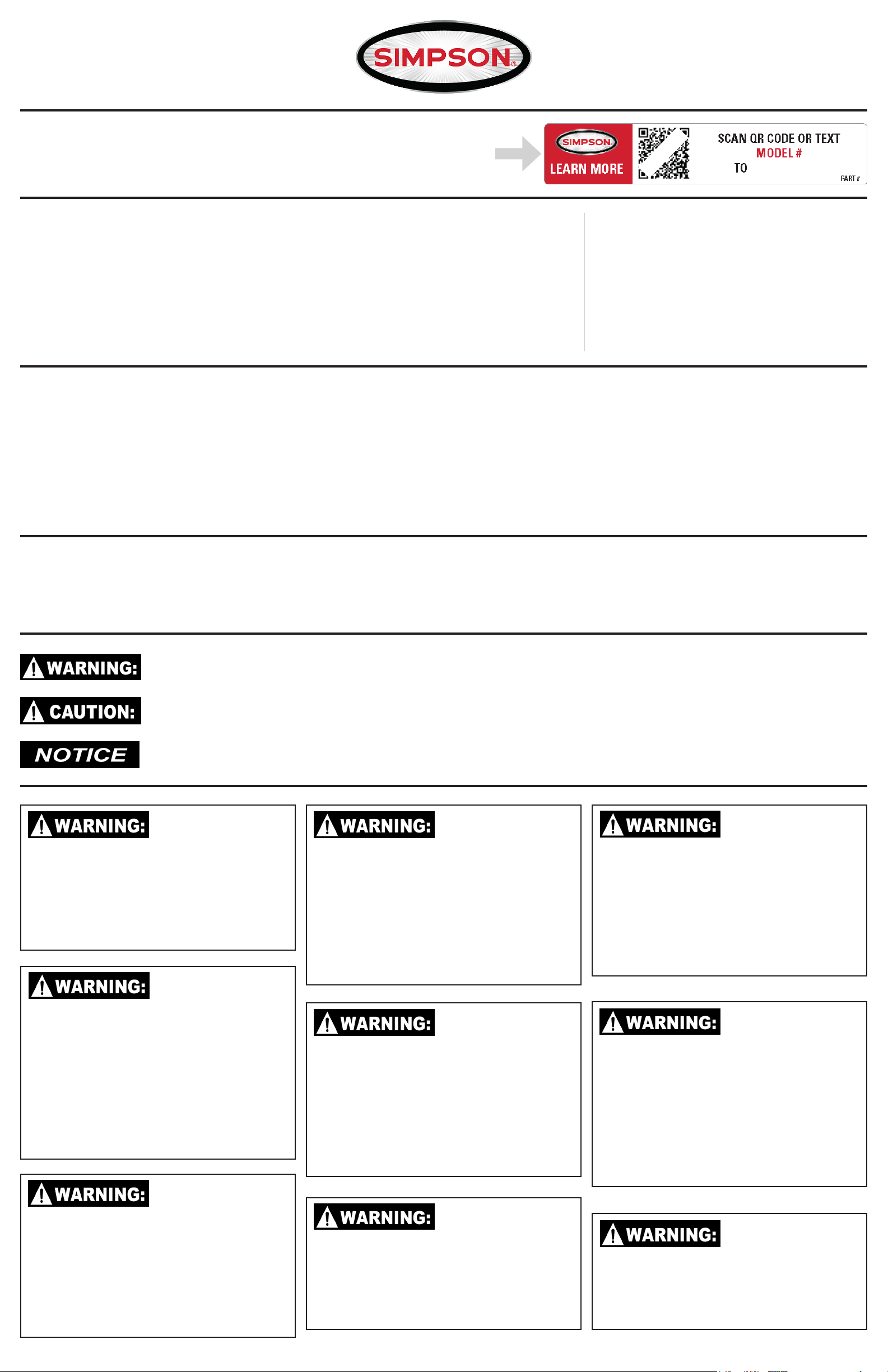
1. This quick start guide is not a replacement for the owner’s manual. Be sure to download and read
the owners manual before operating the machine for the rst time.
2. Read all the information in the safety section of this document and all related user manuals before
operating the machine.
3. Perform the procedures outlined in this quick start guide before operating the machine.
Notes: Contact Us:
To obtain a full manual, scan the code or text the num-
ber on the Learn More label on the machine, or visit
www.simpsoncleaning.com
If you have any questions regarding the unpacking,
assembly, or use of your pressure washer, please
have your model number and serial number ready,
then contact customer support at 1-877-362-4271
or email [email protected].
SAMPLE
Attempting to start the engine incorrectly or using the
pressure washer incorrectly can result in engine and/
or pressure washer damage, and may cause serious
injury or death. To avoid these hazards, be sure to
read, understand, and follow the steps outlined in
the OPERATING CHECKLIST section of the owner’s
manual before starting the engine, and follow all the
guidelines for proper use of the pressure washer.
This product has many parts that move at high
speeds. Moving parts can cause crushing injuries,
broken bones, severe lacerations, and/or traumatic
amputations. To prevent injury, never place ngers,
hands, feet, or other body parts near running engine.
Never operate product with covers, shrouds, or other
guards removed. Do not wear loose-tting clothing,
dangling drawstrings, or any other hanging items
that could become entangled in moving parts while
operating. Tie up long hair and remove jewelry before
operating.
The high pressures created by a pressure washer
can cause uid injection injuries, severe lacerations,
amputations, and / or death. To avoid these hazards,
always aim the spray gun and lance in a safe direction
when using a pressure washer and never attempt to
touch a leak in a high-pressure hose or tting.
Diesel fuel is ammable and diesel vapors are
extremely explosive. Fire and explosions can cause
severe burns and/or death. Keep diesel fuel away
from ames, sparks, and other ignition sources.
Refuel outdoors in a well-ventilated area with the
engine stopped and cool. Wipe up any spilled fuel
and allow engine to dry before starting. Keep a re
extinguisher handy while refueling. Do not operate
engine with leaks in the fuel system. Do not store
diesel fuel near other ammable materials.
Pressure washing with volatile, ammable, or
corrosive liquids could cause pressure washer
damage, re, or explosion resulting in severe injury
and/or death. To avoid these hazards, use only
approved soaps and chemicals, do not attempt to
pressure wash with volatile, ammable, or corrosive
liquids, and NEVER use bleach.
Engine exhaust contains carbon monoxide, an
odorless, colorless, poisonous gas. Running an
engine indoors will kill you in minutes. Never use this
product inside a house, garage, or any other kind of
enclosure even if doors and windows are open. Run
engine outside at least 20 feet (6 meters) away from
windows, doors, and vents. Carefully consider wind
direction and air currents when using this product
outside to avoid breathing in engine exhaust. Always
use a carbon monoxide detector in any occupied
buildings near the running engine.
OPERATION
CHECKLIST
MOVING PARTS
INJECTION INJURY
REFUELING
VOLATILE LIQUIDS
TOXIC FUMES
Untrained persons, young children, and pets can
be seriously injured or killed if allowed to incorrectly
operate or play with a running pressure washer.
To avoid these hazards, be sure anyone operating
the pressure washer receives proper instructions,
understands safe operation, and has read the
owner’s manual before operating this product. Do
not let children operate the pressure washer without
parental supervision. Keep young children and pets
away from the pressure washer while it is running.
Always turn o the pressure washer before leaving
the area.
UNTRAINED
OPERATION
Transporting the pressure washer in an enclosed
space on a transport vehicle where temperatures
can rise may cause fuel to vaporize and leak. Diesel
fuel is ammable and diesel vapors are extremely
explosive. Fire and explosions can cause severe
burns and/or death. To avoid these hazards, secure
the pressure washer in a well ventilated area out of
direct sunlight and other heat sources and do not
transport the pressure washer on rough roads unless
the fuel has been drained beforehand.
TRANSPORTATION
Failure to inspect this product and before use
could result in product damage, serious injury,
and/or death. To avoid these hazards, inspect the
pressure washer before each use. Check for loose
or damaged parts, signs of oil or fuel leaks, missing
guards, plugged cooling vents, or any other condition
that may aect proper operation. Repair or replace
all damaged or defective parts and keep all safety
guards in place and in proper working order before
using the pressure washer.
INSPECT
Safety:
Indicates a potentially hazardous situation which, if not avoided, could result in property damage, serious injury, and/ or death.
Indicates a hazardous situation, which if not avoided, could result in property damage and/or minor to moderate injury.
Indicates information considered important but not directly hazard related.
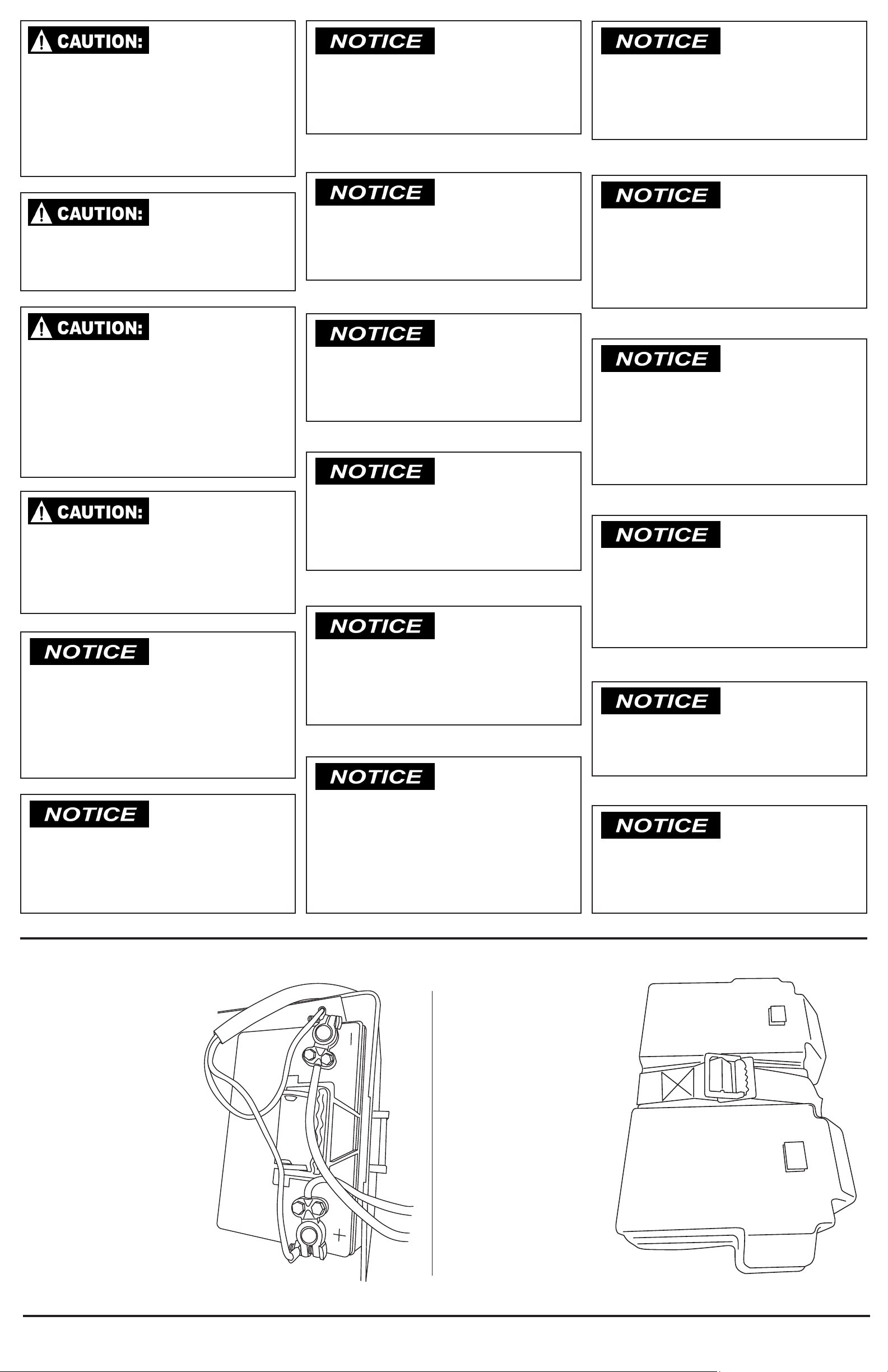
NOTE: Be sure to read understand the safety information listed below. Each box contains one of three words: WARNING, CAUTION,
or NOTICE each of these words indicates a dierent level of hazard severity and is followed by information about specic hazards, the
consequences of the hazards, and instructions on how to avoid the hazards. Failure to heed these symbols and the information provided with
them could result in property damage, injury, and/or death.
1 (888) 123-4567
SAMPLE
Page 2 of 4
Part Number 7117719 / English
REV 0 - 12/23/2021
Copyright 2021. All Rights Reserved.
The low oil sensor (if equipped) will automatically
stop the engine when the oil level falls below the safe
limit. To avoid an unexpected shutdown, check the
oil level regularly, ll to the upper limit, and always
operate engine on a level surface.
The engine is shipped from the factory without oil.
Running the engine without oil will result in severe
engine damage and void the warranty. To avoid
causing engine damage and voiding the warranty, ll
the engine with the recommended oil type.
Oil is a major factor in the performance and service
life of any engine. Using the incorrect oil may damage
the engine and void the warranty. To avoid causing
engine damage and voiding the warranty, check and
change oil as required using the correct engine oil.
LOW OIL SENSOR
FILL ENGINE OIL
BEFORE USING
USE CORRECT
ENGINE OIL
Old Fuel can create deposits that clog fuel systems
causing hard starting and poor performance.
Damage caused by old fuel is not covered by
warranty. To minimize deposits, avoid old fuel related
performance issues, and prevent costly repair work,
do not use gasoline that is older than 30 days.
Allowing water to freeze inside a pressure washer
can damage the hoses and pump. Damage caused
by freezing is not covered under warranty. To avoid
these hazards, avoid using your pressure washer in
freezing temperatures, drain the water from hoses
before storing, store your pressure washer in a warm
environment, use a pump anti-freeze when storing
over the winter, or have a service center winterize
your pressure washer.
Diesel fuel can gel at low temperatures. Damage
caused by gelled diesel fuel is not covered under
warranty. To avoid these hazards, use a winterized
diesel fuel, store the pressure washer and diesel fuel
in a warm environment, and keep fuel tanks full.
The use of fuel system cleaning additives can
damage the engine and fuel systems. Damage
caused by the use of fuel system cleaning additives
is not covered by warranty. To avoid engine and fuel
system damage, do not use any fuel system cleaning
additives.
Overlling the fuel tank can result in fuel spills that
may ignite from contact with hot engine surfaces
resulting in burn hazard. To avoid these hazards, do
not ll the fuel tank above the maximum level.
Running the pressure washer for more than two
minutes without the spray gun trigger pulled will
overheat the pump and possibly cause damage. The
thermal relief valve will open and spray water to help
cool the pump as it overheats. To avoid overheating
the pump, shut o the machine if not being used for
longer than two minutes.
Turning o the water supply to your pump with the
engine running will damage the pump. Damage
caused by running the pump without water is not
covered under warranty. To avoid this hazard always
turn o the engine before shutting o the water
supply.
Water can damage the pressure washer engine
components if allowed to enter through cooling slots
or other holes. Damage caused by water intrusion is
not covered under warranty. To avoid engine water
damage, do not use a pressure washer, garden
hose, or any other sources of running water to clean
the pressure washer engine, and never submerge
the pressure washer engine in any liquids.
Using chemical cleaners and/or corrosive liquids
can damage the pressure washer seals and internal
components. Damage caused by chemical cleaners
and corrosive liquids is not covered under warranty.
To avoid these hazard, only used approved cleaning
chemicals, never use bleach, and always run clean
water through the pressure washer after using
cleaning chemicals.
OLD FUEL
PUMP FREEZE
DIESEL GEL
FUEL ADDITIVES
DO NOT OVERFILL
FUEL TANK
PUMP DAMAGE
PUMP DAMAGE
CLEANING
CHEMICAL
CLEANERS
Diesel vapor can build up inside the fuel tank
creating pressure. This pressure may increase when
the engine is hot from running. Opening the fuel tank
under pressure can cause rapid escape of ammable
vapors and possible fuel spills that may ignite from
contact with hot engine surfaces resulting in burn
hazard. To avoid these hazards, always allow the
engine to cool for at least 2 minutes before removing
fuel cap and loosen the fuel cap slowly to relieve any
pressure in the tank.
Running a pressure washer pump without water will
severely damage the pump seals and other internal
components. To avoid this hazard, make sure your
water supply is uninterrupted, provides at least
10 GPM at 20 PSI, and always purge the air your
pressure washer pump before starting the engine.
High-pressure spray can damage plants and other
surfaces. To avoid damaging plants, cover them
before spraying near them. To avoid damaging
surfaces. Refer to the Nozzle Selection table in this
manual for correct nozzle and test surfaces before
spraying to make sure they are strong enough to
withstand high-pressure spray.
FUEL TANK
PRESSURE
PUMP PURGING
SPRAY DAMAGE
A running engine produces heat. The surfaces of
the engine, other related components, and engine
exhaust gas get hot enough to cause mild moderate
burns or ignite materials on contact. To avoid burns,
do not touch engine surfaces or exhaust gases while
operating and allow engine to cool completely before
moving, touching, or performing any maintenance.
To avoid a re, keep all ammable materials at least
ve feet away from all sides of the product.
Hot oil can cause serious burns. To prevent getting
burned when changing or checking the engine oil,
use gloves to prevent hot oil from touching skin and
change oil when the engine is warm from but not hot.
Hot engine coolant and steam can cause serious
burns. To prevent getting burned by hot engine
coolant, never open the engine radiator or overow
bottle when the engine is hot from running and wear
gloves when checking or lling coolant to prevent
coolant from contacting skin.
HOT SURFACES
HOT OIL
HOT ENGINE
COOLANT
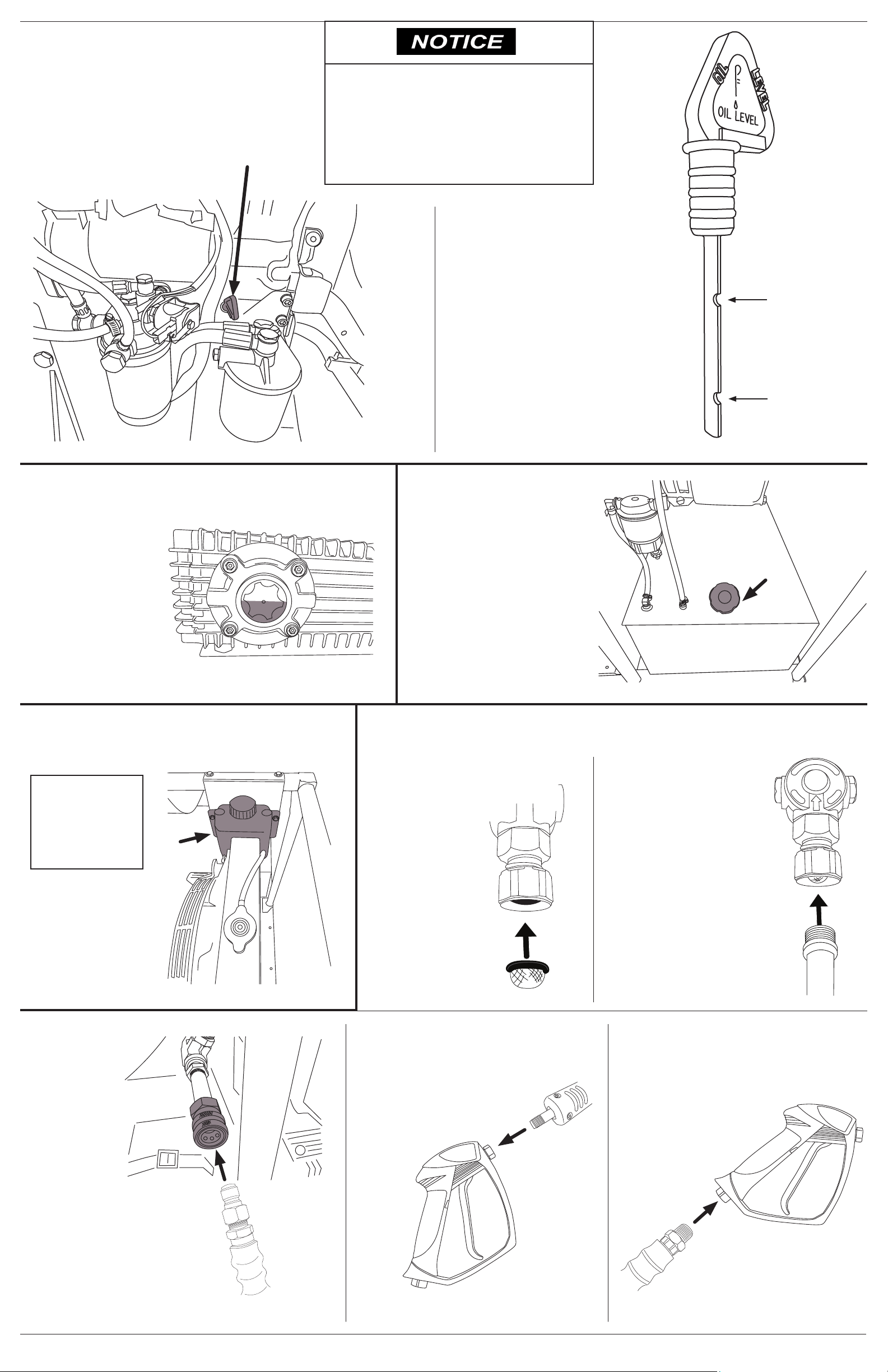
1. Place Group 34 automotive
battery (not included) into the
battery box. Next connect the
red and white wires to the
positive battery post then
connect the black cables to
the negative battery post.
2. Install the battery box lid
and secure it with the strap
and buckle assembly.
Install Battery:
Upper Limit
Lower Limit
Page 3 of 4 REV 0 - 12/23/2021
Part Number 7117719 / English
Copyright 2021. All Rights Reserved.
5. Thread the high-pressure
hose onto the spray gun inlet.
3. Insert the male quick-
connect (QC) plug on the high-
pressure hose into the female
QC hot water outlet.
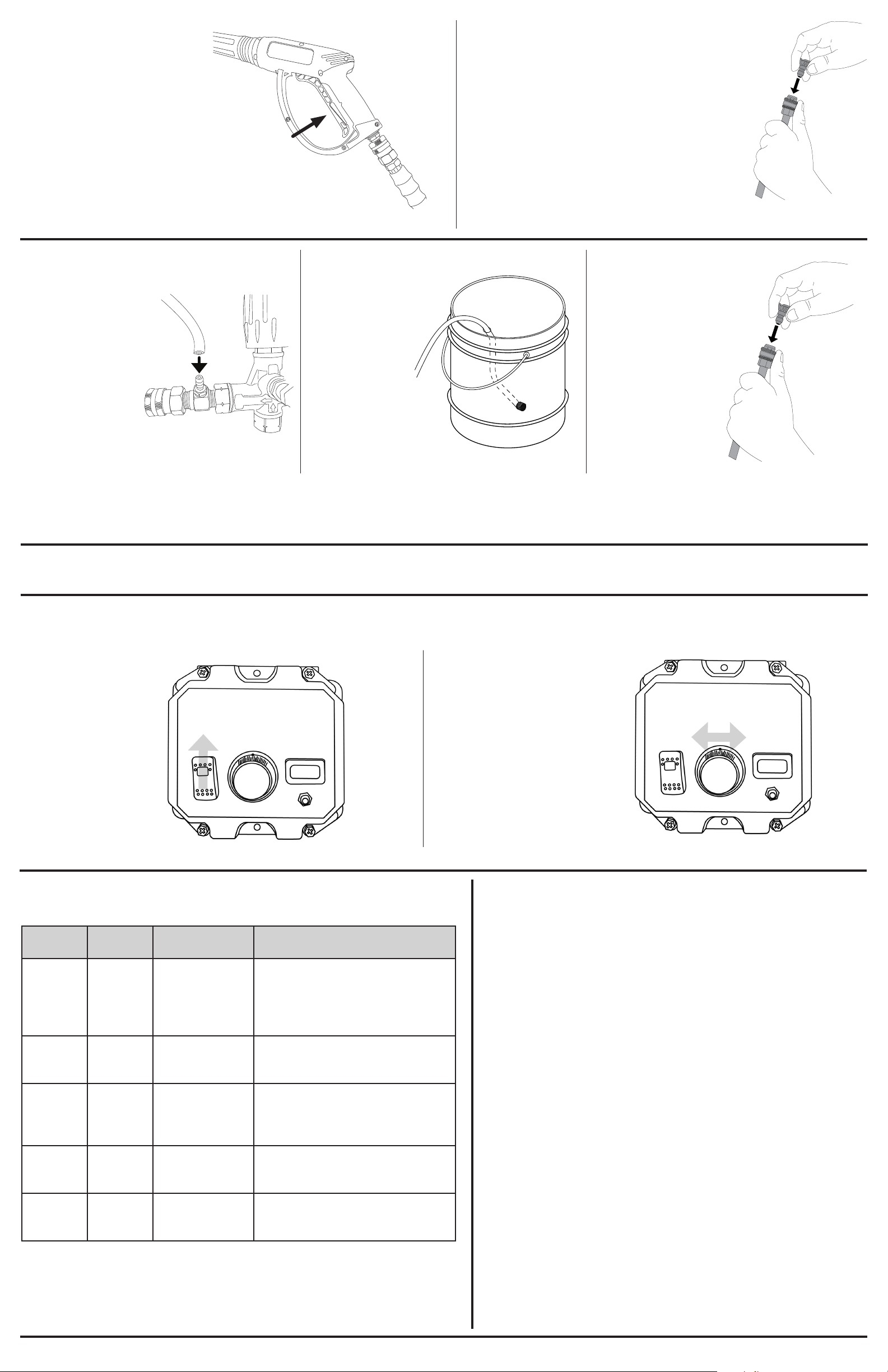
This pressure washer was shipped from the
factory without oil in the engine. Running the
engine without oil will result in severe engine
damage and void the warranty. To avoid
causing engine damage and voiding the
warranty, ll the engine with the recommended
oil type before starting.
1. Place machine on a level surface then
remove the engine oil dipstick.
2. Fill the engine with the correct
oil per the engine owner’s manual.
The oil level should be towards the
high mark on the dipstick. Replace
the dipstick when the engine is full.
Fill Engine With Oil:
Engine Oil Dipstick
Check Pump Oil Level:
Fill Fuel Tank:
1. Remove fuel cap, ll fuel
tank with fresh diesel fuel,
then replace fuel cap. Do
not over ll fuel tank.
1. Make sure the pump
oil level is half way
through the site glass
on the side of the pump.
If the pump oil level is
low, refer to the pump
manual for oil lling
instructions.
Check Radiator Coolant Level:
1. Make sure the
radiator coolant level
is at half way up over
ow bottle. If the level
is low, add coolant to
the overow bottle.
4. Thread the lance into
the spray gun.
NOTE: Water supply
must be cold.
Connect Hoses and Assemble Spray Gun:
1. Make sure
the inlet screen
is clean, inside
the pump inlet,
and has the
convex side
facing out.
2. Turn on the water
supply and run it for 30
seconds to purge any dirt
or debris from the supply
hose. Then, turn o the
water supply and thread
the water supply hose into
the pump inlet.
CAUTION:
Never open the
overow bottle or
radiator when the
engine is hot from
running.
SOAP
Page 4 of 4
Part Number 7117719 / English
REV 0 - 12/23/2021
Copyright 2021. All Rights Reserved.
1. Attach the open
end of the soap hose
to the barbed tting
on the pump.
1. Turn on the
burner by clicking
the burner switch to
the ON position.
2. Adjust the water
temperature by rotating
the temperature control
knob left or right.
2. Place the
ltered end of
the soap hose
into a container
of soap or ll
the soap tank
NOTE: Use
only soaps that
are approved
for pressure
washer use.
3. Insert the black
nozzle into the
spray wand.
NOTE: Soaps will
not siphon if the
black soap nozzle
is not installed on
the spray wand.
Start the Engine:
Igniting and Adjusting Water Temperature:
Using Chemicals:
NOTE: After using soap, place the ltered end of the soap hose into a container of clean water and run pressure washer drawing clean water through the
hose and pump until the system is thoroughly rinsed. If soap or other chemicals remain in the pump, the pump could be damaged. Pump damage from soap
or chemical residue is not covered under warranty.
Pressure Washing Tips:
1. A wider spray equals faster cleaning, while tighter spray equals
deeper cleaning.
2. Do not aim the nozzle straight at a surface. Hold the wand at a
45-degree angle to the surface and at a distance that cleans well
without causing damage.
3. Keep the nozzle about 4-feet away from siding to prevent damage
to surfaces.
4. Wash siding by starting at the bottom and working your way up,
then rinse from the top down.
5. Avoid driving water up behind siding.
6. For even cleaning, use overlapping strokes.
7. Work in smaller areas and do not let soap dry on surfaces.
Selecting a Nozzle:
NOTE: Always make sure the nozzle is properly installed by tugging on it after
inserting it into the quick connector before using the pressure washer.
Color
Spray
Pattern
Uses Surfaces
Red 0°
Spot cleaning
hard, unpainted
surfaces and
high-reach
areas
Unpainted metal and concrete
DO NOT use on wood
Yellow 15°
Intense cleaning
of unpainted
surfaces
Grills, driveways, concrete and
brick walkways, unpainted brick
and stucco
Green 25°
Standard
cleaning
nozzle for most
applications
Yard tools, sidewalks, lawn
furniture, unpainted siding, stucco,
gutters, eaves, concrete, and brick
surfaces
White 40°
Cleaning painted
or delicate
surfaces
Autos, trucks, RVs, boats,wood,
painted brick, painted stucco, vinyl,
and painted siding
Black Soap
Applying
cleaning
solutions
Safe on all surfaces. Always verify
compatibility of cleaning solutions
prior to use.
7. Select the correct nozzle for your
cleaning job per nozzle selection chart in
this document and install it onto the lance
by pulling the quick-connect coupler back,
inserting the nozzle, then releasing the
coupler allowing it to snap back in place.
6. Turn on the water supply, aim
the spray gun in a safe direction,
then squeeze and hold the trigger
for at least 60 seconds or until the
water runs steady and all the air
is purged from the pump, heater
coil and hoses.
Please refer to the engine manual for engine starting instructions.
NOTE: DO NOT try to ignite the burner unless the engine is running.