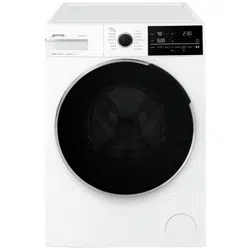
LAVASCIUGA
WASHER-DRYER
MÁQUINA DE LAVAR E SECAR ROUPA
LIBRETTO ISTRUZIONI
IT
INSTRUCTION MANUAL
EN
MANUAL DE INSTRUÇÕES
PT

1
Contents
1. PRECAUTIONS FOR SAFETY AND USE ................................................................................... 2
2. INSTALLATION INSTRUCTIONS ............................................................................................... 7
3. DESCRIPTION OF CONTROLS ................................................................................................. 11
4. USING THE APPLIANCE FOR WASHING ............................................................................... 12
5. USING THE APPLIANCE FOR DRYING .................................................................................. 20
6. CLEANING AND MAINTENANCE ........................................................................................... 23
7. TROUBLESHOOTING ................................................................................................................. 26
8. ADDITIONAL INFORMATION FOR THE USER .................................................................. 28
This appliance is tagged in accordance with European Directive 2012/19/EU on
Waste Electrical and Electronic Equipment - WEEE.
This directive contains the regulations governing the collection and recycling of de-
commissioned appliances throughout the European Union.
The symbol of the rubbish bin with a line through it on the appliance or its packaging
indicates that the product must be disposed of separately from other waste at the end
of its life cycle. The user is thus obliged to consign scrapped appliances to the special
electronic and electrotechnical waste disposal centres, or return them to the dealer
on purchase of a similar new appliance, on a one-to-one basis.
Consignment to the appropriate facility for environmentally responsible recycling,
treatment and disposal helps to prevent any negative effects on the environment and
health, and encourages the reuse and/or recycling of the appliance’s component ma-
terials.
Illegal dumping of the appliance by the user will be subject to prosecution under the
relevant law.

EN
2
READ THE INSTRUCTIONS
Attention!
You are advised to read all the instructions in this manual carefully; it will inform you about
the right conditions for the proper, safe use of your washer-dryer
It is very important to keep this instruction manual with the appliance for future reference.
In the event of sale or transfer, ensure that the manual always accompanies the appliance,
to provide the necessary information about its use.
1. PRECAUTIONS FOR SAFETY AND USE
Attention!
These precautions are detailed for reasons of safety.
This section must be read carefully before installation and use.
Disposing of packaging
Never leave packaging residues unattended in the home. Separate waste packag-
ing materials by type and consign them to the nearest recycling centre.
Packaging materials (plastic bags, polystyrene, etc.) must not be left within reach
of children.
Disposing of old appliances
Once no longer in use, appliances must be rendered unusable: permanently
disarm the lock on the door (this will prevent children risking their lives by
locking themselves inside during play) and cut the power supply lead after
removing the plug from the socket.
The appliance must be delivered to a recycling facility.
Environmental protection
Use the whole of the maximum recommended capacity. Never exceed the maxi-
mum permitted load.
Do not use the prewash function for lightly or normally soiled items.
Follow the manufacturer's recommendations on detergent usage.
Use the highest spin speed permitted for the fabric type. Fast spins reduce the dry-
ing time and thus energy consumption.
Programs that work with lower temperatures are the most efficient in terms of en-
ergy consumption. We therefore recommend that you to make a note of the infor-
mation on the labels on the items to be washed and provided by the manufacturer.
This will mean that the temperatures and detergent doses will be optimized to avoid
excessive energy consumption
It is recommended to follow the instructions provided in the manual, and those
provided by the manufacturers of the detergents, softeners and additives (solvents,
degreasers, stain remover additives…) for their correct use and dosage. Failure to
comply with the recommendations provided may damage the appliance.
Information on household detergents, additives and cleaning agents can
be found on the following website www.cleanright.eu.
WARNING: the higher the spin speed, the higher will be the noise and the lower
the remaining moisture content. The lower the amount of residual moisture at the
end of the wash, the lower the energy consumption will be during drying.

EN
3
Safety instructions
This appliance is intended for domestic use and similar applications such as staff
kitchen area in shops, offices and other working environments, farm houses, and
for the use by clients in hotels, motels, bed and breakfast type environments, and
other residential facilities and is compliant with Directives 2014/35/EU and
2014/30/EU currently in force.
Read all the instructions in this manual carefully before installation and use.
Check that the drum assembly has been released before use (see instructions).
Failure to release the drum assembly may cause damage to the washer-dryer and
the surrounding furniture or appliances during the spin cycle.
This Instruction Manual is an integral part of the appliance: it must always be kept
intact with the appliance. Installation must be carried out by qualified staff in com-
pliance with the relevant regulations. The appliance is built to provide the following
functions: washing and drying of clothes or fabrics stated to be suitable for machine
washing by the producer on the relevant label. All other uses are to be considered
improper. The manufacturer declines all liability for uses other than those
stated above.
The nameplate with the technical data, serial number and mark is in a visible posi-
tion in the part in view after the door has been opened. The nameplate must never
be removed.
The electrical and plumbing works required to install the appliance must only
be carried out by skilled staff.
The appliance must be connected to earth in compliance with electrical system
safety regulations. The manufacturer declines all liability for direct or indirect
injury or damage deriving from a non-existent or defective earth connection.
In the event that the appliance is not connected by means of a plug, an omnipolar
circuit-breaker device with contact gap of at least 3 mm must be provided.
The plug to be connected to the power supply lead and the relative socket must be
of the same type and comply with the relevant regulations. Check that the mains
voltage and frequency are the same as the values marked on the nameplate. The
use of adapters or junctions is not recommended. Never disconnect the plug by
pulling on the power supply lead.
The appliance is only disconnected from the electricity supply if the plug has
been removed from the socket or the electrical system master switch has
been turned off. The power plug must be accessible after the appliance has
been installed.
WARNING: The appliance must not be supplied through an external switching de-
vice, such as a timer, or connected to a circuit that is regularly switched on and off
by a utility.
The appliance must be installed using new sets of hoses (supplied with the appli-
ance). Old hose sets should not be reused.
Take care that the appliance is not standing on the power supply cable.
The washer-dryer must never be used on vehicles, on board ships or planes, or in
environments with hazards, such as explosive or corrosive environments (powders,
vapours and gases) or explosive and/or corrosive liquids,
Do not install the washer-dryer in places with a risk of frost. Frozen pipes may burst
under the pressure.
Make sure that the drain hose connected to the sink is securely fastened and
cannot move.
If it is not fixed in place, the repulsive force of the water might thrust it away from
the sink, causing the risk of flooding.

EN
4
When connecting the hose to a sink also check that the water drains from it
quickly, as otherwise the sink may overflow.
Do not overload the appliance.
Never use detergents which contain solvents or chemicals for washing in the
washer-dryer. They might damage the appliance and form poisonous vapours.
These fumes might also catch fire and explode.
Garments soaked in petroleum products must not be washed in the washing ma-
chine. Before washing, check that garments do not contain inflammable devices
(e.g. cigarette-lighters, matches, etc.)
If volatile cleaning fluids are used, ensure that these substances have been re-
moved from the garments before they are placed in the appliance.
Before loading garments for washing, check that the pockets are empty, buttons
secure and zips fastened.
Do not wash frayed or torn garments.
During washing at high temperatures, the glass in the door will become very hot.
Check that all water has been drained from the appliance before opening the
door.
If there is water inside, pump it out before opening the door. If in doubt, read the
instruction manual.
The water in the appliance is not suitable for drinking!
Swallowing washing machine detergents may injure the mouth and throat.
Before removing the garments from the washer-dryer check that the drum is at a
standstill.
Switch the appliance off after each use to avoid wasting electricity.
Leave the door ajar between washes to keep the gasket in good condition.
In the event of a malfunction never attempt to repair the appliance yourself.
Disconnect the appliance from the electricity supply and turn off the water tap. Then
contact a qualified engineer. Repairs must only be carried out by qualified staff.
The appliance is intended for use by adults. Do not allow children to tamper with
the washer-dryer's controls or play with it and do not keep children in the vicinity
while the programme is in progress.
Young animals or small children might climb into the washer-dryer .
Always check the inside of the drum before use and do not allow children to play
with the appliance.
Keep children away from the appliance when the door or the detergent drawer is
open; the appliance might contain detergent residues which may cause permanent
injury to the eyes, mouth and throat, or even cause death by suffocation.
This washing machine / washer dryer, must be used by adults. Use of the appliance
by children aged from eight years and a person with reduced physical sensory or
mental capabilities or lack of experience and knowledge is only permitted under the
supervision of a person responsible for their safety.
The appliance is not intended for use by persons (including children) with reduced
physical, sensory or mental capabilities, or lack of experience and knowledge, un-
less they have been given supervision or instruction concerning use of the appli-
ance by a person responsible for their safety.
That the tumble dryer is not to be used if industrial chemicals have been used for
cleaning
That lint must not be allowed to accumulate around the tumble dryer
Do not dry unwashed items in the tumble dryer
EN
5
Items that have been soiled with substances such as cooking oil, acetone, petrol,
kerosene, spot removers, turpentine, waxes and wax removers should be washed
in hot water with an extra amount of detergent before being dried in the tumble dryer
Items such as foam rubber (latex foam), shower caps, waterproof textiles, rubber
backed articles and clothes or pillows fitted with foam rubber pads should not be
dried in the tumble dryer
Fabric softeners, or similar products, should be used as specified by the fabric sof-
tener instructions.
The final part of a tumble dryer cycle occurs without heat (cool down cycle) to en-
sure that the items are left at a temperature that ensures that the items will not be
changed
Never stop a tumble drier before the end of the drying cycle unless all items are
quickly removed and spread out so that the heat is dissipated
Do not store flammable fluids near the appliance.
Lengthy periods out of use.
If the appliance is not to be used for a lengthy period it should be disconnected from
the electricity and water supplies and the door should be left ajar to prevent un-
pleasant smells from building up inside.
Important!
This appliance is easy to use.
However, for the best results it is important to read this manual carefully and follow all
the instructions before putting it into operation.
The manual provides the correct instructions for installation, use and maintenance, as
well as giving useful advice.
For Great Britain only
Warning: this appliance must be earthed.
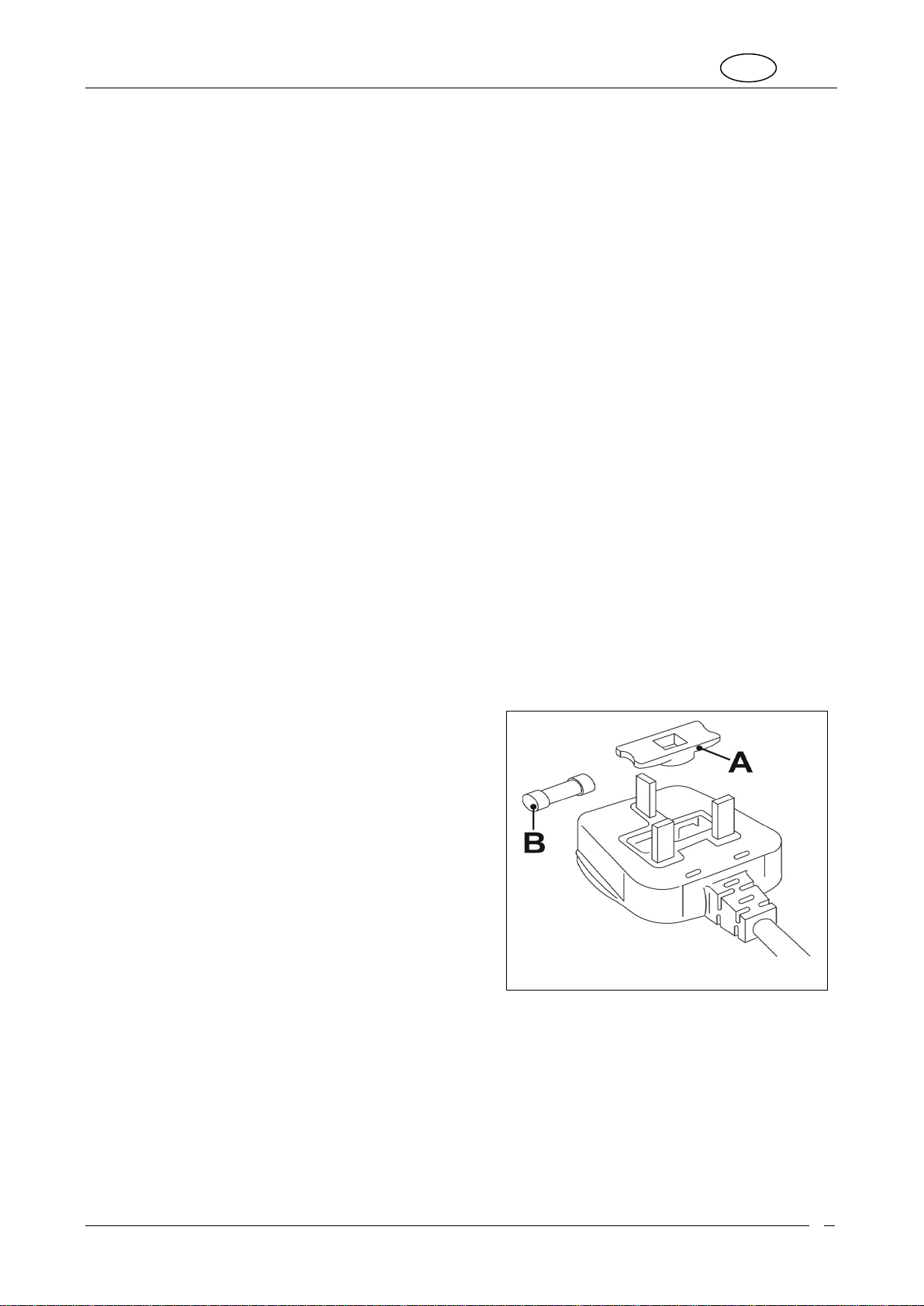
Fuse replacement
If the mains lead of this appliance is fitted
with a BS 1363A 13amp fused plug, to
change a fuse in this type of plug use an
A.S.T.A. approved fuse to BS 1362 type
and proceed as follows:
1. Remove the fuse cover (A) and fuse
(B)
2. Fit replacement 13A fuse into fuse
cover
3. Refit both into plug
Important:
The fuse cover must be refitted when changing a fuse and if the fuse cover is lost the plug
must not be used until a correct replacement is fitted.
Correct replacement are identified by the colour insert or the colour embossed in words on
the base of the plug.
Replacement fuse covers are available from your local electrical store.
If the appliance is provided with a plugless supply cord:
EN
6
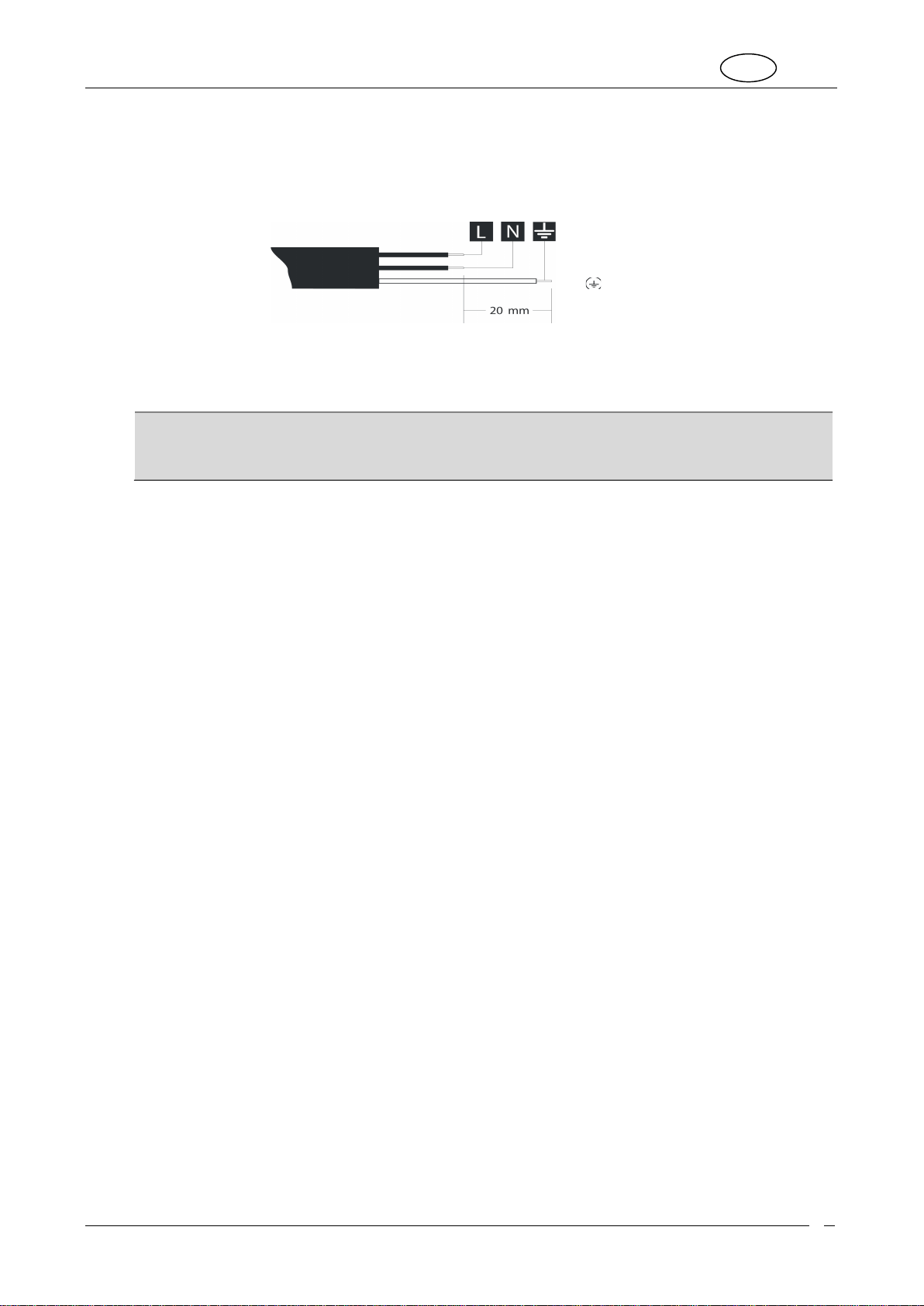
It is necessary to install in the fixed wiring an all-pole disconnection device having
a gap between contacts of at least 3,5mm. After installation the disconnection
device has to be easy to reach.
The connection to the mains must be carried out by a qualified technician in ac-
cordance to the scheme shown below and the regulations in force
L
= brown
N
= blue
= yellow-green
In the event of damage to the supply cord, it has to be replaced by the manu-
facturer or an authorized technical service center in order to avoid any risk.
The manufacturer declines all responsibility for injury or damage caused by fail-
ure to comply with the above regulations or deriving from tampering with even just
one part of the appliance and the use of non-original spare parts.
EN
7
2. INSTALLATION INSTRUCTIONS
Important!
The appliance must be installed by a qualified engineer in compliance with the
relevant regulations.
The washer-dryer is heavy. Take care when lifting it.
2.1 UNPACKING
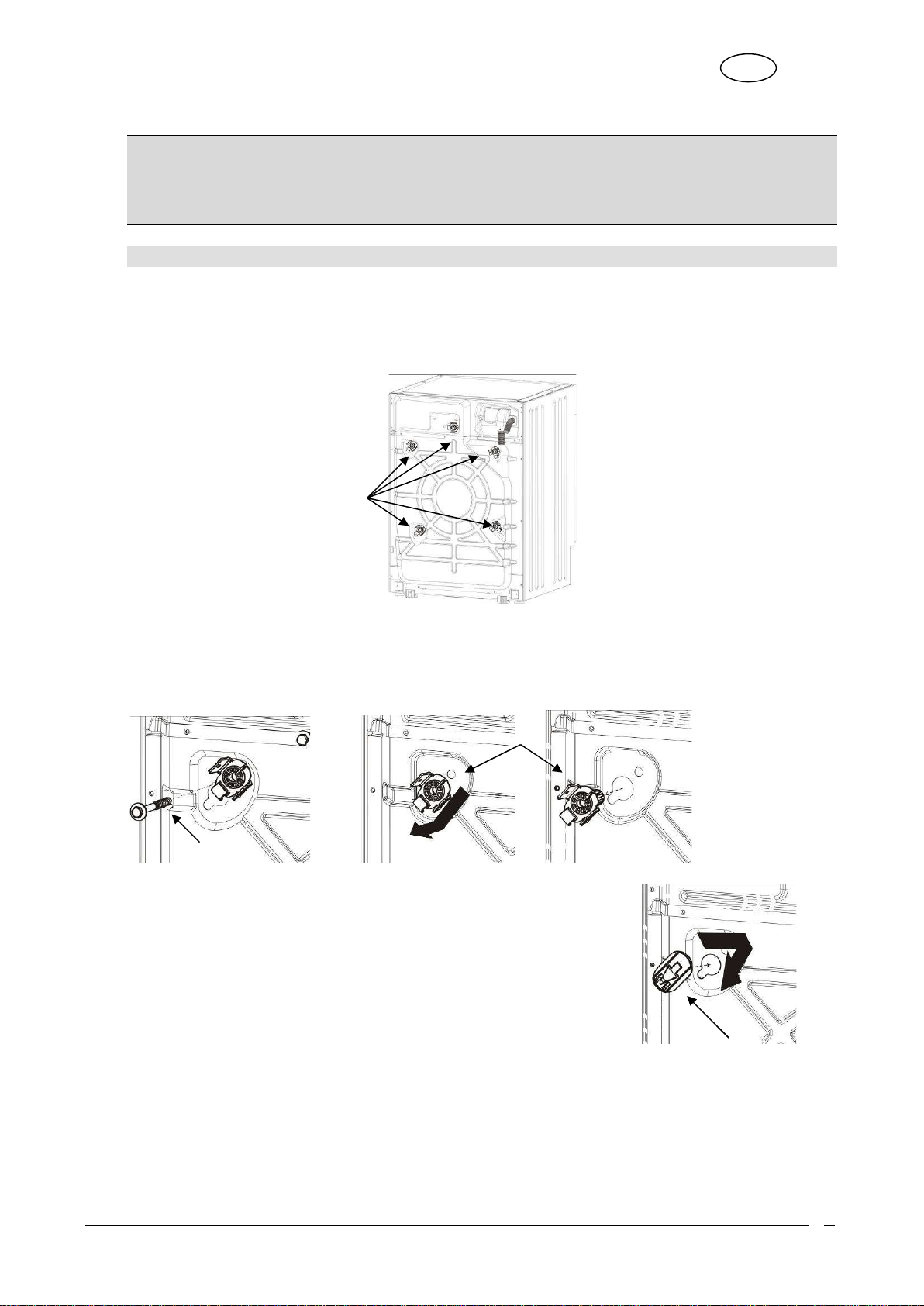
The unit on flexible mounts is fixed in place for transport using the screws (A) on the
rear of the washer-dryer, with the relative plastic spacers (B). Once the screws have
been removed, the power supply lead can be used.
1. Undo all the screws with a 10 mm spanner
2. Remove all the screws (A) from the rear
3. Remove all the plastic spacers (B)
WARNING: It is absolutely necessary to fit all (nr.5) the
supplied plastic plugs (C) in order to avoid splashes or
water penetrating the machine or to avoid contact with
live parts.
Warning!
Do not turn the appliance upside-down or place it on its sides.
All the transport retainer fittings should be kept in a safe place; they must be fitted
again if the appliance has to be moved around in the future.
A+B
A
B
C
EN
8
2.2 POSITIONING AND LEVELLING
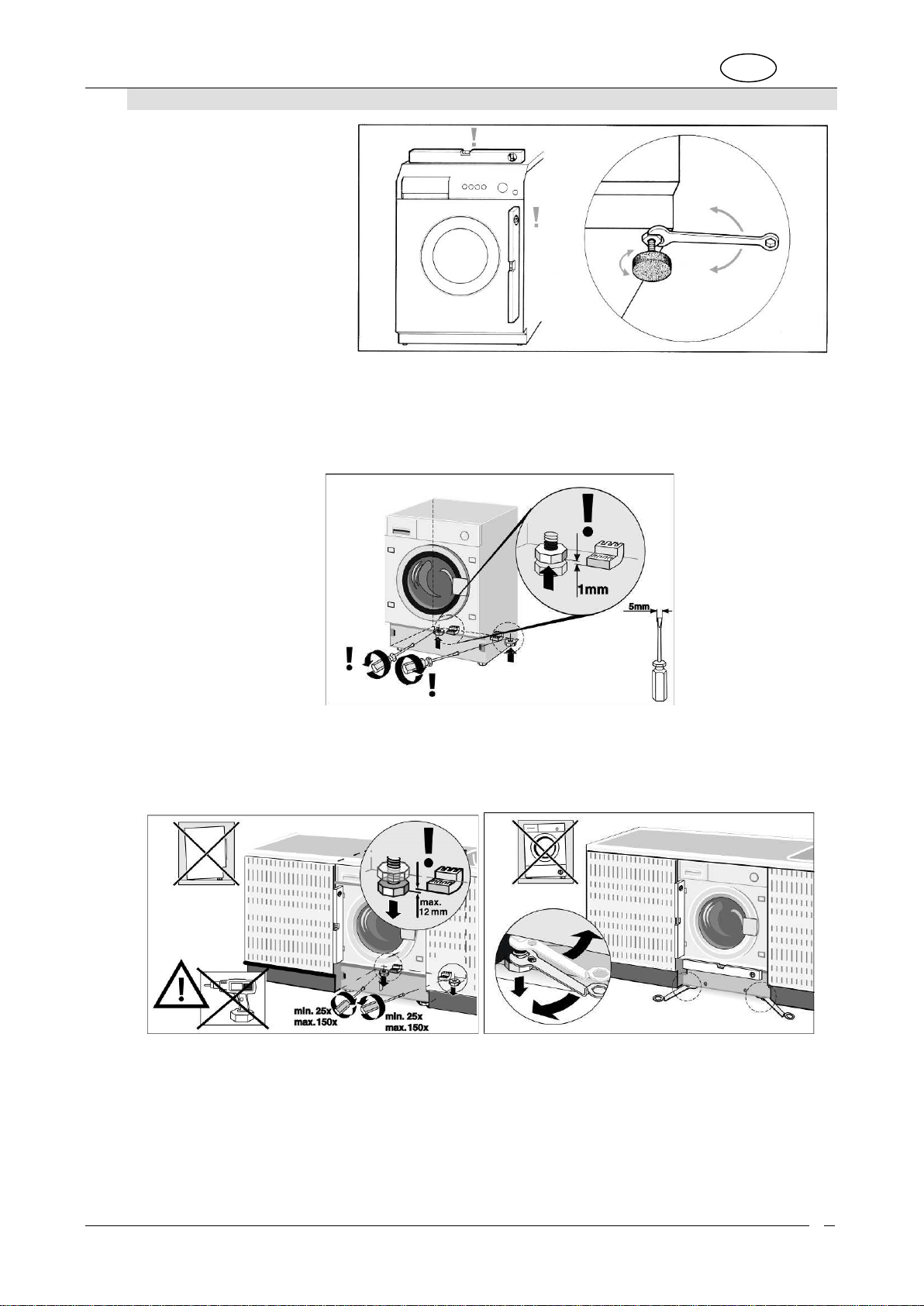
1. Place the appliance
in the chosen position.
2. Level the appliance
carefully in all direc-
tions with the aid of a
spirit level, adjusting
the height of the feet if
necessary. Once
done, fix the feet in
place with the locknuts
provided.
3. On appliances with adjustable rear feet, note that the rear of the appliance rests
on skids and not on the feet. Before inserting the appliance into its place between
the kitchen units, check that the rear feet are screwed fully in to prevent damage as
the appliance is shifted into position.
Once the appliance is in position in the kitchen, the height of the rear feet has to be
increased so that the appliance no longer stands on the skids. After adjusting the
rear feet, level the appliance and fix the front feet at the height required.
The water intake and drain hoses can be fitted pointing to the left or right for effective
installation.
EN
9
Warning!
This operation must be carried out with care to prevent the washer-dryer
from vibrating, moving or generating excessive noise during use.
If the appliance is installed on a carpeted floor, take care to ensure that the
openings in the bottom of the washer-dryer are not obstructed.
Also check that during operation the washer-dryer is not resting against walls,
kitchen units, etc.
The appliance must not be installed behind a door with lock, a sliding door, or a door
with hinge on the opposite side.
2.3 CONNECTING TO THE WATER SUPPLY
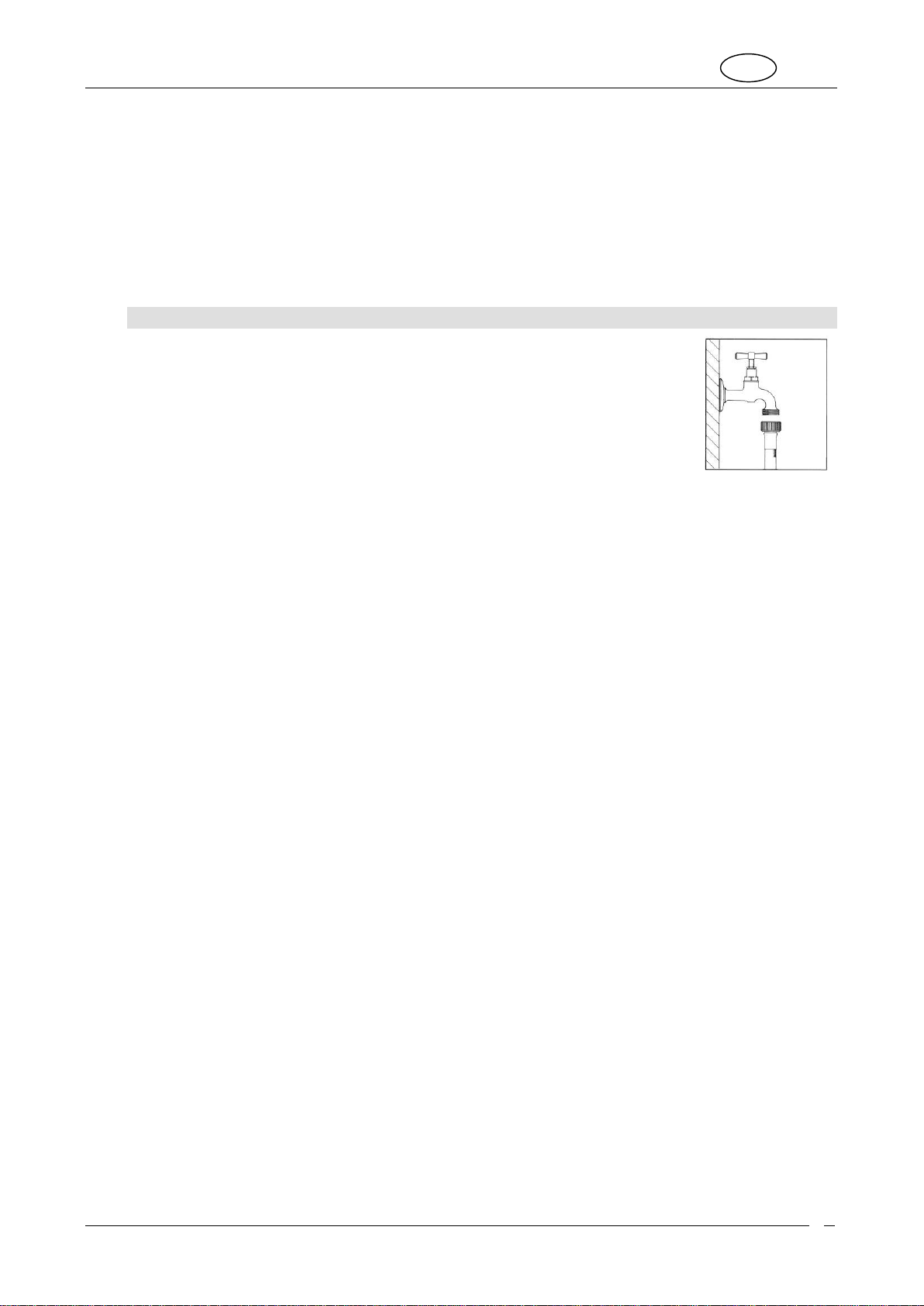
1. Check that the water supply pressure is in the following
range: 0,05-0,9MPa. With higher pressures, use a pressure
reducer.
2. Connect the cold water supply hose (blue screw collar)
to the cold water tap with ¾ gas threaded connector, taking
care to tighten firmly to prevent leaks. The water supply
hose must not be kinked or crushed and must not be
changed or cut. Threaded connections must only be tight-
ened by hand.
3. When appliances are supplied with hot water, the intake water temperature must
not exceed 60°C and the hose with red screw collar must be connected to the hot
water supply tap.
Warning!
If the connection is made to new pipelines, or lines which have been out of use
for a long time, allow a considerable amount of water to flow out before connecting
the intake hose. This prevents any sand or other dirt from fouling the filters installed
in the appliance to protect the water intake valves.
The new intake hose supplied with the appliance must be used, and the old water
supply hose must not be used.
Supplementary note regarding the water connection for the German market.
Before connecting the product to the water supply, make sure that the water system
has been fitted with a safety device to protect drinking water against contamination due
to backflow (according to DIN EN 1717). The water valves and/or taps are fitted with
these safety devices if the water system of the house has been properly implemented.
EN
10
2.4 CONNECTING TO THE DRAIN
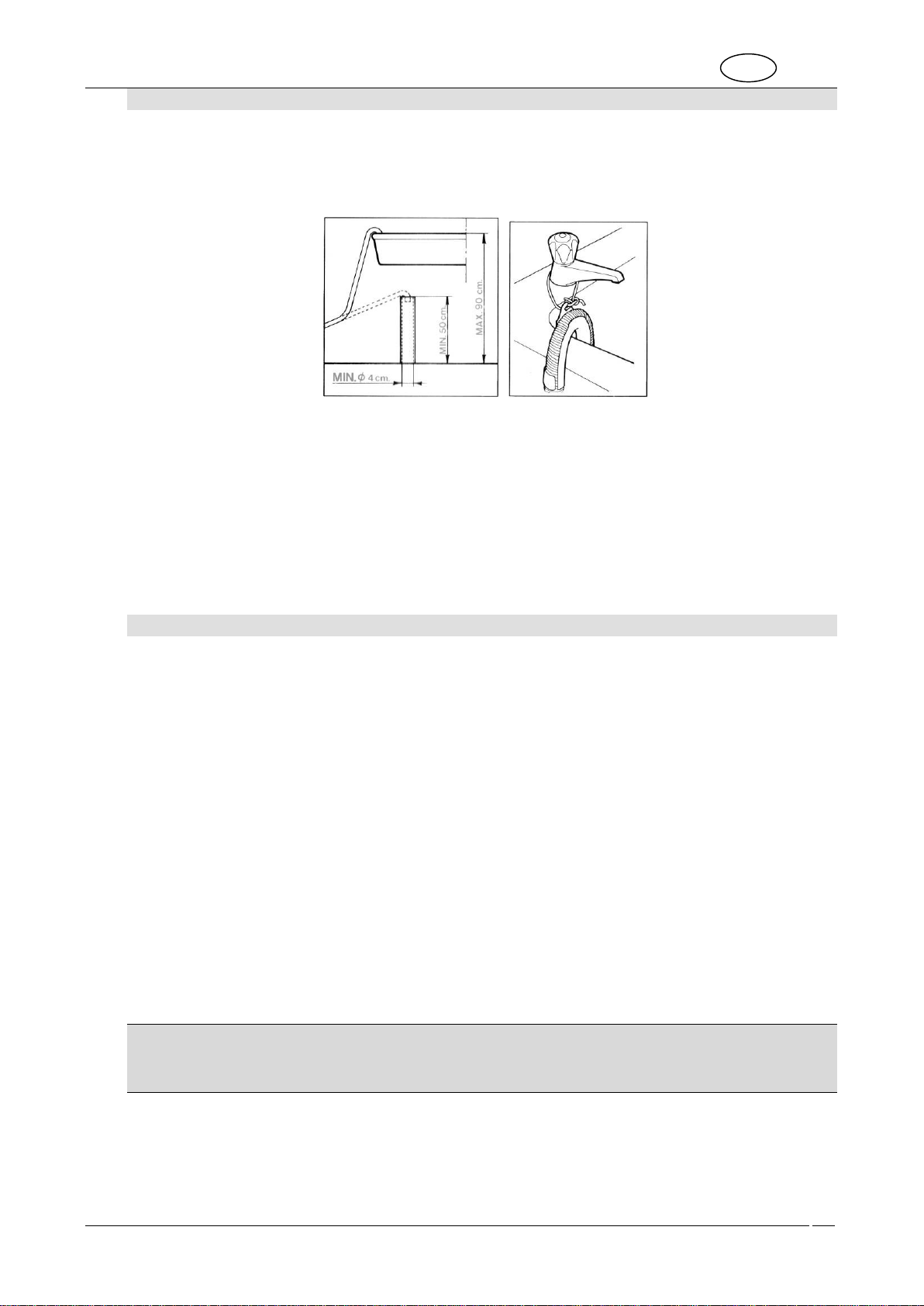
1. Insert the end of the drain hose into a drain pipe having inside diameter of at least
4 cm, at least 50 to 90 cm above floor level, or connect it securely (using the plastic
fitting on the elbow in the hose) to a sink or bathtub.
2. In all cases, check that the end of the drain hose is securely fixed to prevent the
repulsive force of the water from pushing it out of place.
Warning!
Avoid kinks or restrictions to ensure effective drainage.
Any drain hose extensions must be no more than 1 metre long, must be of the
same diameter and must be free from restrictions of all kinds.
The end of the drain hose must never be submerged in water.
2.5 ELECTRICAL CONNECTION
Before connecting the plug to the power socket ensure that:
1. The electrical system voltage is the same as that stated on the nameplate on
the front of the appliance, in the zone visible when the door is open. The rated
power supply and the fuses required are specified on the nameplate.
2. The meter, safety breakers, power supply line and power socket are rated to
withstand the maximum load required, stated on the nameplate.
3. The power supply socket and the plug fitted to the appliance are compatible
without the use of reductions, multiple sockets, adapters and extension leads
which might cause overheating or scorching.
If the power supply socket is not compatible with the plug supplied, replace the
socket with one of the appropriate type.
Warning
The power plug must be accessible after the appliance has been installed.
It is absolutely essential to connect the appliance to earth. Connect the plug
to a socket with an earth connection in good working order.
The manufacturer declines all liability for direct or indirect injury or damage de-
riving from a non-existent or defective earth connection. Correct electrical con-
nection guarantees conditions of maximum safety.
This appliance is compliant with the requirements of EEC directive 89/336 of
3.5.89 (including the amendment directive 92/31/EEC) concerning the elimination
of radio-frequency disturbance.
EN
11
If the power supply lead is damaged, it must only be replaced with an original
spare, available from the After-Sales Service.
Do not connection/disconnect the power supply plug from the socket with
wet hands
Only disconnect the power supply plug from the socket by taking hold of
the plug itself, never by pulling on the lead.
3. DESCRIPTION OF CONTROLS
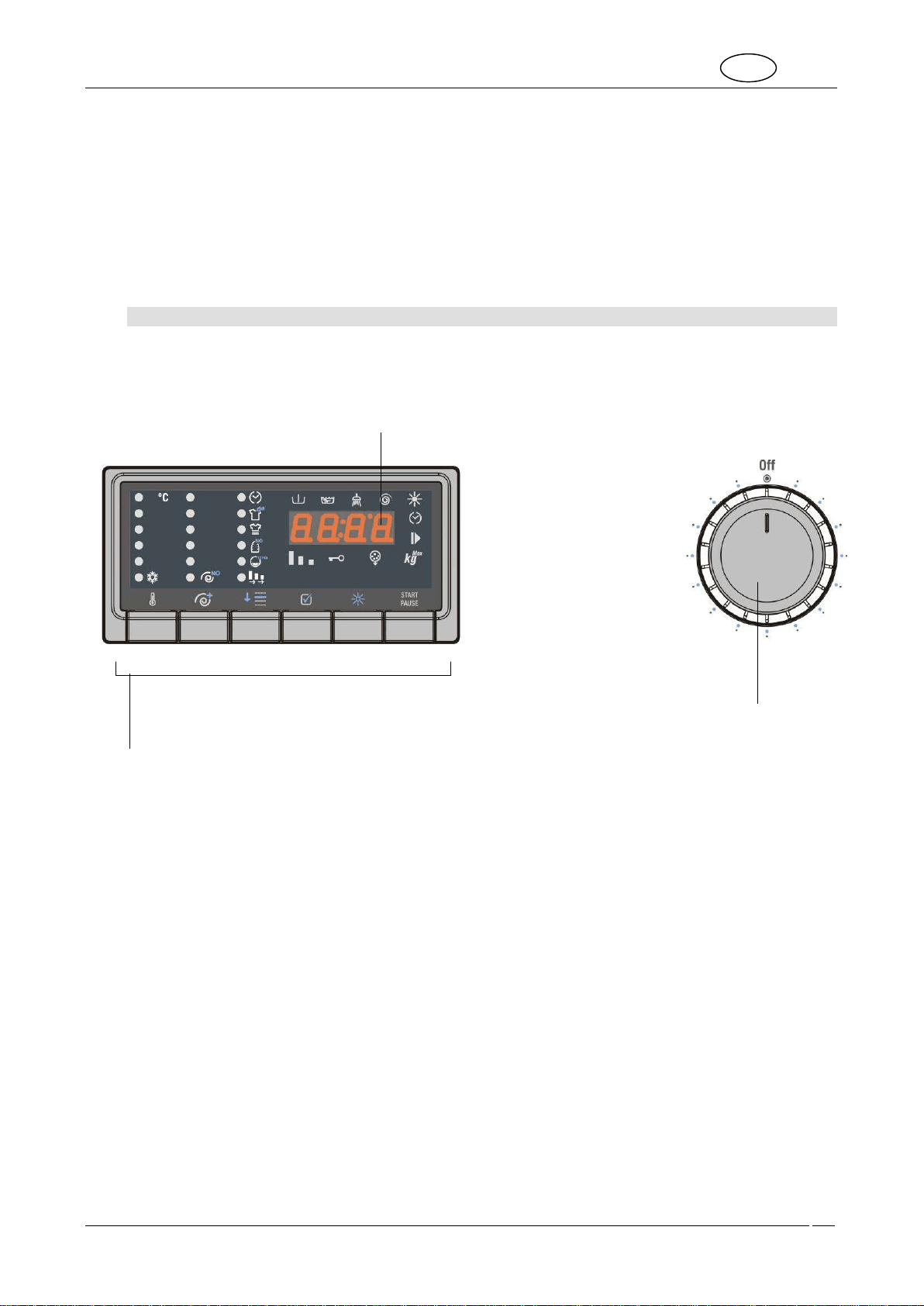
3.1 CONTROL PANEL
All the appliance's control and monitoring devices are placed together on the front panel.
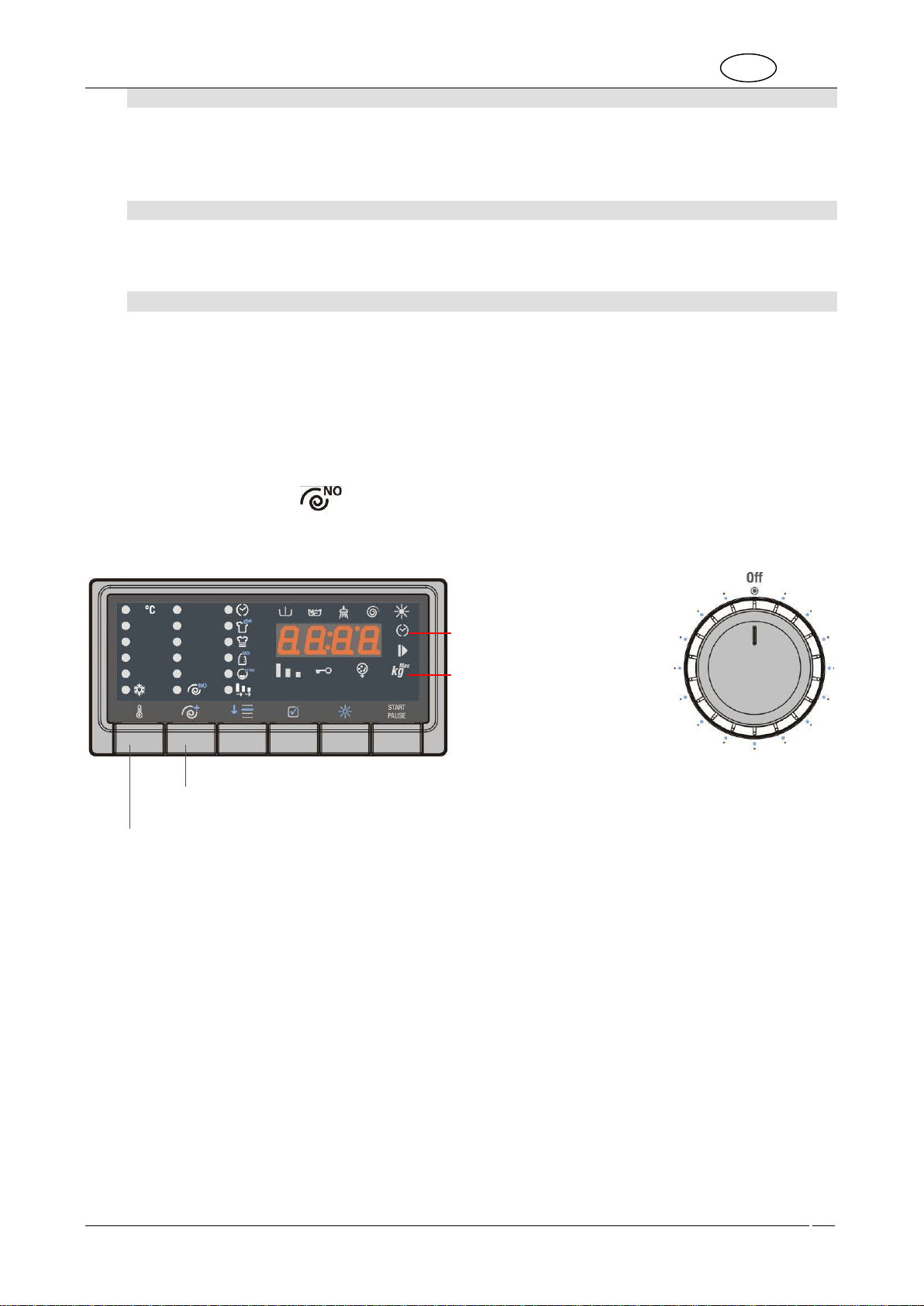
Programme Selector
For switching the washer-dryer
on and off and selecting pro-
grammes. Can be turned in ei-
ther direction. Does not turn
while programmes are in pro-
gress.
Display: shows the settings (washing temperature, spin speed, cycle status, flexi time, maximum
recommended weight, drying levels, child lock, clean programme, time drying and automatic drying
levels). The settings can be modified using the buttons underneath.
Buttons (from left to right):
Washing Temperature selection
Spin speed selection
Option selection
Confirm option
Drying
Start/Pause button:
For starting and stopping working cy-
cles.
EN
12
4. USING THE APPLIANCE FOR WASHING
4.1 PREPARING THE ITEMS FOR WASHING
1. Subdivide the items for washing by fabric type and colour fastness.
2. Wash white and coloured items separately. New coloured items should be washed sep-
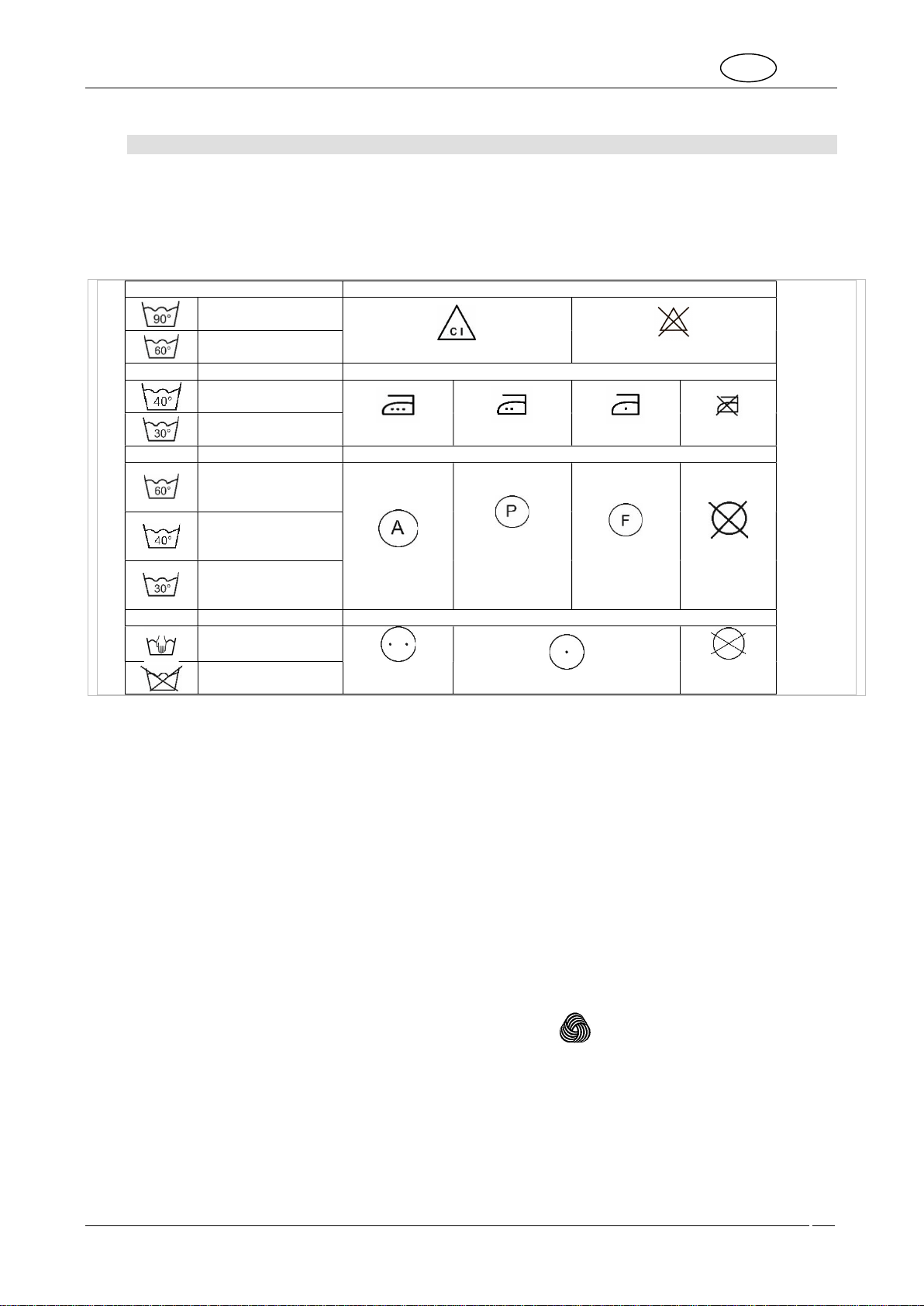
arately the first time. Normally, items carry labels with washing instructions. The following
is a short description of the symbols used on these labels.
Warning!
Do not wash unhemmed or torn items as they may fray.
Unrelated items in the wash may damage the garments or parts of the washer-dryer. So:
empty pockets and turn them inside-out, and remove wheels from curtains or wrap them in
a mesh bag.
Wash very small items (belts, handkerchiefs, socks, padded bras, etc.) in a white canvas
bag. Fasten press-studs and zips and sew on loose buttons.
The use of modern detergents and the correct washing temperature is generally suffi-
cient to remove stains from fabrics. However, some difficult stains such as grass, fruit, egg,
blood, rust, ballpoint pen, etc. should be dealt with before washing. Depending on the
type of fabric, there are a large number of commercial stain removers on the market.
In all cases, stains should be cleaned or diluted at once, since the older they are, the
harder they are to remove.
Failure to comply with washing guidance symbols may result in damage to the
items washed.
Wool – Only wool marked as pure new wool, with the mark, or labelled "shrink-proof,
machine-washable" can be washed in a washing machine on the specific programme; other
types of wool should be hand-washed or dry-cleaned.
WASHING
BLEACHING
Machine wash at
max. 90°C
Bleaching allowed
Do not bleach
Machine wash at
max. 60°C
IRONING
Machine wash at
max. 40°C
Hot iron
Warm iron
Cool iron
Do not iron
Machine wash at
max. 30°C
DRY CLEANING
Machine wash, deli-
cate cycle at max.
60°C
Any solvent
Any solvent ex-
cept trichloroe-
thylene
Petroleum sol-
vent and R113
Do not dry
clean
Machine wash, deli-
cate cycle at max.
40°C
Machine wash, deli-
cate cycle at max.
30°C
DRYING
Hand wash
High tempera-
ture
Less than 60°C
Do not tum-
ble dry
Do not wash
EN
13
4.2 OPENING THE DOOR
The appliance is fitted with a safety device which prevents the door from being opened while
the programme is in progress.
1. Check that all the water has been drained from the tank and the drum is at a stand-
still.
Warning!
If the washing programme is interrupted, it will be from 3 to 15 minutes before the door
can be opened, depending on the temperature reached inside the appliance.
Warning!
The water may still be boiling hot if the wash was at high temperature.
Do not open the door if there is still water in the drum!
4.3 LOADS OF WASHING
As far as possible, to save electricity, it is more economical to wash complete loads of
the various types of fabric. Shake out the laundry before loading, and alternate large and
small items. It is best to weight the load the first few times, after which you will be able to rely
on your experience.
4.4 LOADING THE ITEMS FOR WASHING
1. Open the door and load the laundry, distributing it evenly over the drum, with items
opened out and not bundled together; if possible, large and small items should be well
mixed.
2. The washing machine covered by this manual can be loaded with up to 7kg of laundry
for each wash. If this weight is exceeded, the washing results will be poor and the ap-
pliance may malfunction.
3. To save energy it is more economical to wash full loads of the various types of
fabric, following the guidance on quantities provided in the "Programmes Table" sup-
plied in this manual.
4. Close the door by pressing against the frame until you hear it click shut. Take care not
to trap items of laundry between the door and the rubber gasket.
Warning!
If the door is not properly closed, a safety device prevents the washer-dryer from starting.
Do not exceed the maximum load: overloading adversely affects washing results.
4.5 ADDING DETERGENT AND ADDITIVE
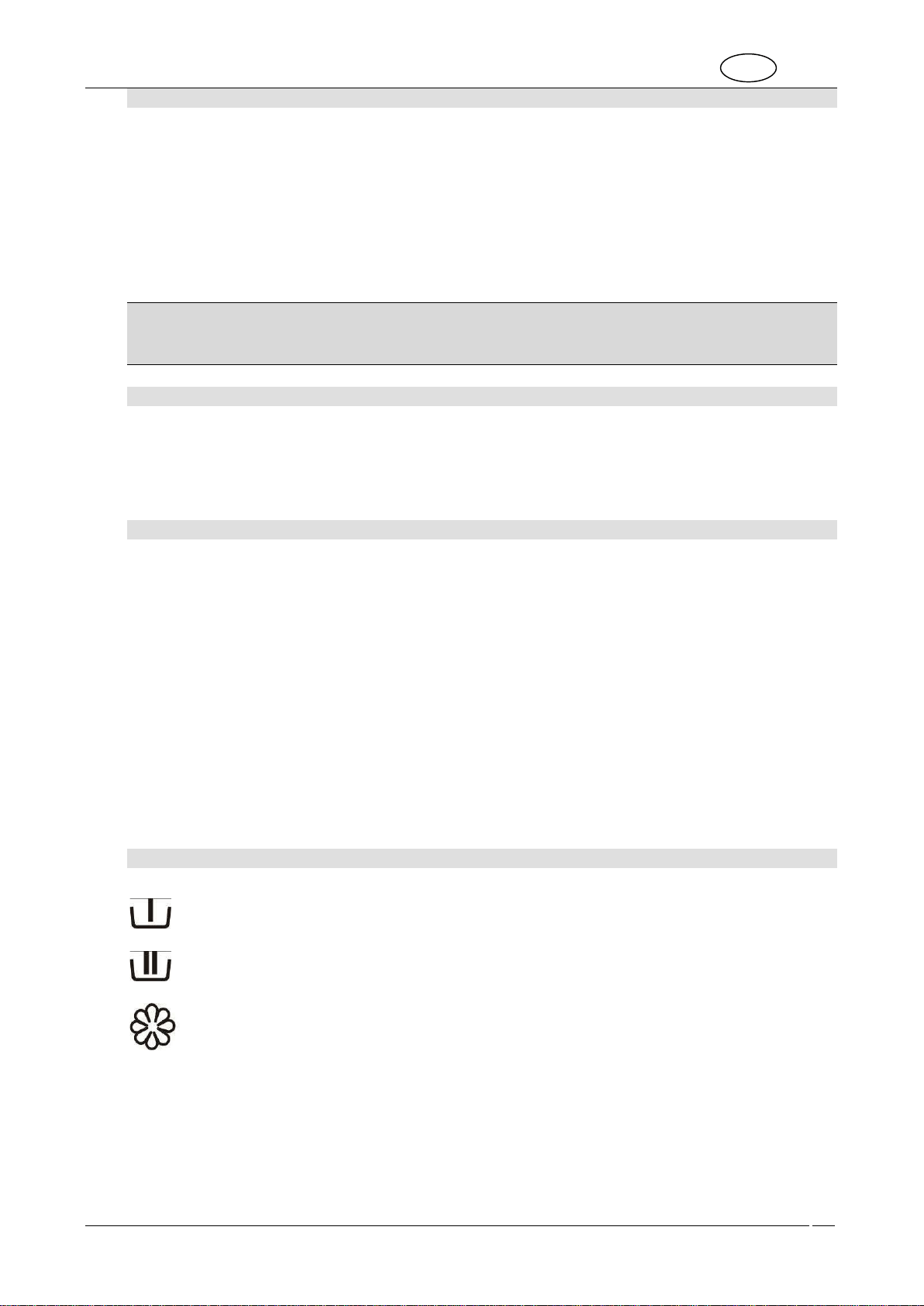
The internal tray comprises three compartments, marked with the symbols
prewash detergent
main wash detergent
for fabric conditioner, starch, additives, etc. (e.g. treatment products). The additives are
added to the washing tank automatically during the final rinse.
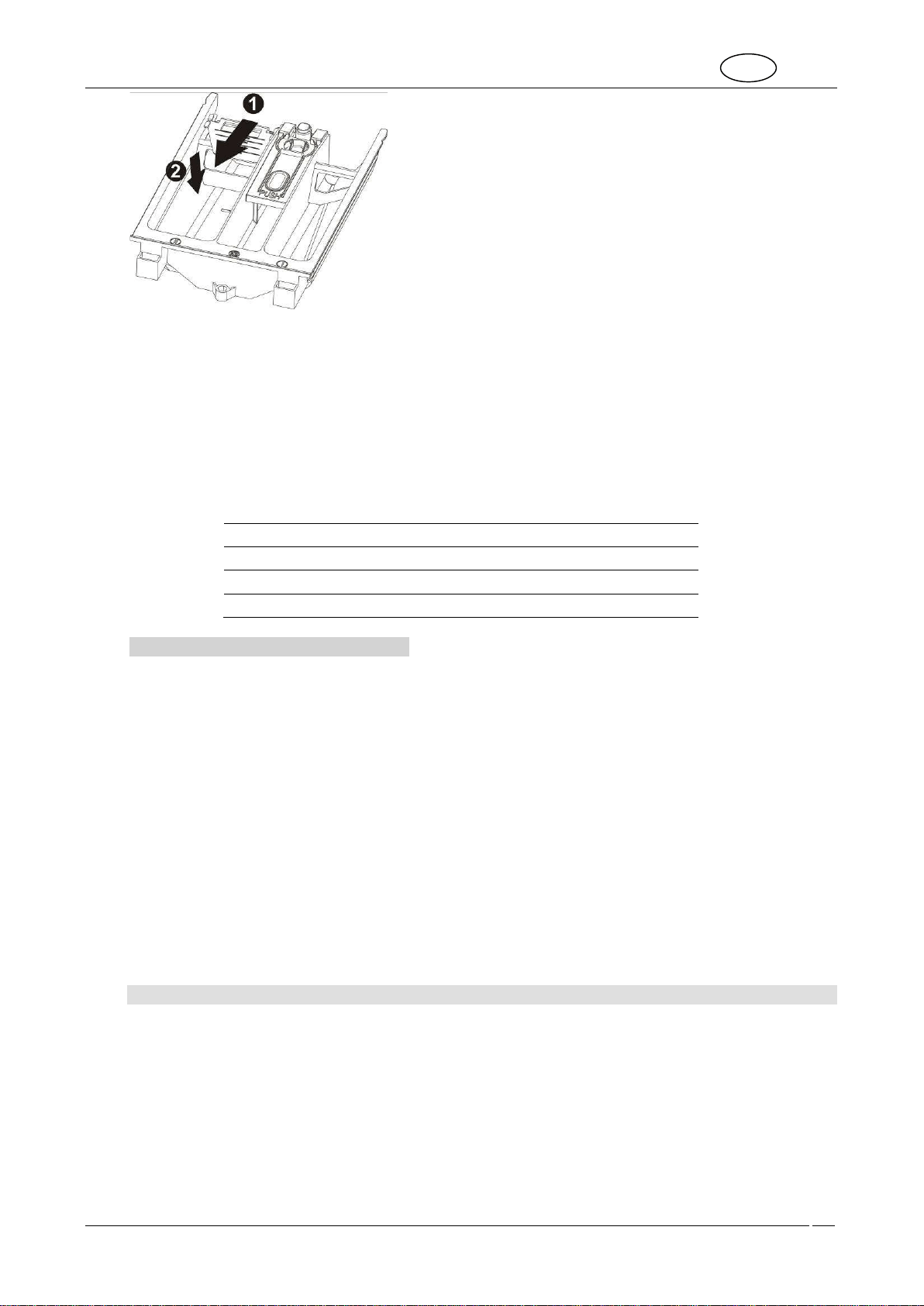
The main wash detergent compartment has a tang allowing the use of liquid detergent. To
insert it, pull it towards the front and then lower it.
EN
14
Following the recommendations in the "Pro-
grammes Table" supplied with this manual, place
the detergent and any additives in the drawer be-
fore the start of the programme.
Never fill with liquids above the maximum level
marked; otherwise the trays will empty too quickly.
Before pouring dense additives into the container, dilute
with a little water to ensure they do not clog the outlet.
Use only low-foam detergents suitable for use in a
washer-dryer.
The amount of detergent must be decided in relation of the hardness of the water, the
type and quantity of items loaded, and their degree of dirt.
This will provide the desired effect with optimal detergent consumption.
On detergent packs the recommended dose is indicated for 4 levels of water hardness and for
loads of 4-5 kg of laundry with average dirt levels.
Request information about the water's hardness from your water supply company.
Water hardness
Level of hardness French degrees fH
German degrees
dH
Soft Up to 15° Up to 8°
Medium 15° - 25° 8° - 14°
Hard 25° - 40° 14° - 22°
Very hard More than 40° More than 22°
4.6 POWDER DETERGENT DOSES
Laundry with normal dirt
1. Choose a programme without prewash.
2. Pour the total amount of detergent shown on the pack into the main wash compartment
of the detergent drawer.
Very dirty laundry
1. Choose a programme with prewash.
2. Place ¼ of the recommended amount of detergent in the prewash compartment of the
detergent drawer and ¾ of the detergent in the wash compartment.
Warning!
If no recommended doses are provided, for delicate items in synthetic fibre use from ½
to 2/3 of the recommended dose for washing tough cotton fabrics.
Only neutral detergents recommended for wool should be used on the wool programme.
Use the doses recommended by the detergent producer.
4.7 LIQUID DETERGENT DOSES
1. Pour the dose required into the measuring cap supplied with the bottle of liquid detergent
and place it in the drum, or use the main wash compartment of the detergent drawer, fitting
the insert provided.
2. The scale on the red insert is intended as an aid when deciding the dose of liquid deter-
gent.
Warning!
Liquid detergents can be used, at the doses recommended by the producer, only for
the main wash, i.e. in all programmes without prewash.
EN
15
4.8 DESCALERS
Descalers can be added to the prewash and main wash compartments as recommended by
their producers.
Place the detergent in the compartments first, followed by the descaler.
4.9 PROGRAMMES AND FUNCTIONS
For advice on selecting programmes in relation to the type of fabric, refer to the "Pro-
grammes Table", supplied with this manual.
4.10 SWITCHING ON THE APPLIANCE AND SELECTING THE WASHING PROGRAMME
To switch on the appliance and select the programme, proceed as follows:
1. Turn the programmes knob in either direction. This switches on the washer-dryer.
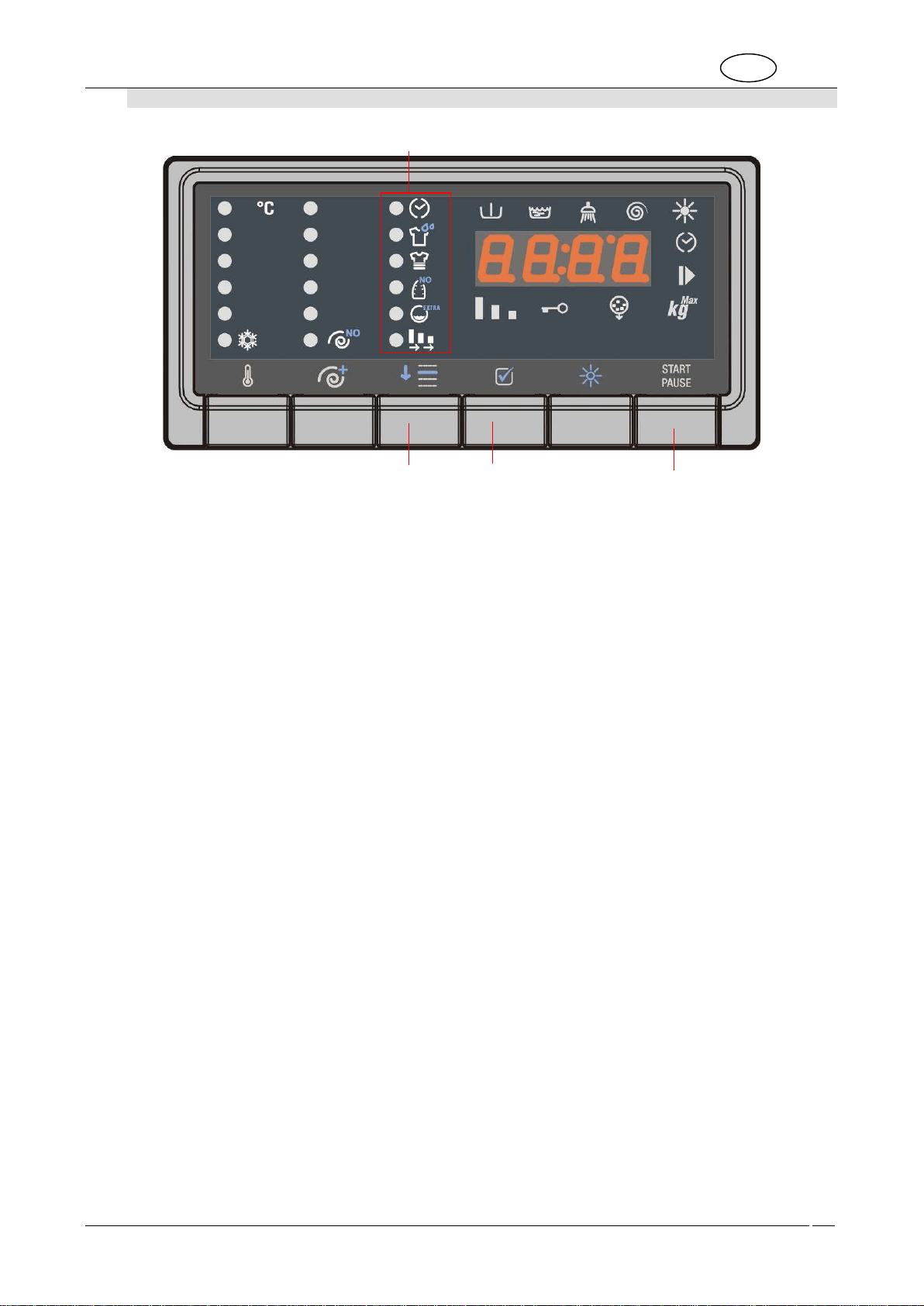
2. Select the washing programme. The time left to the end of the programme and the max-
imum recommended weight for the selected programme alternate on the display. The sym-
bols on the display light up to identify the information shown.
3. The default spin speed and temperatures values are shown. The initial settings can be
modified using the button underneath the sequence of spin speeds and temperatures.
4. If spin speed is set, there will be no spin cycle and the appliance will stop with
the tank full. If this value is set the appliance does not perform the final spin and the washing
programme ends with water in the tank.
Time to end
Max recommended weight
Spin Speed selection
Washing Temperature selection
EN
16
4.11 SELECTING AND CONFIRMING OPTIONS
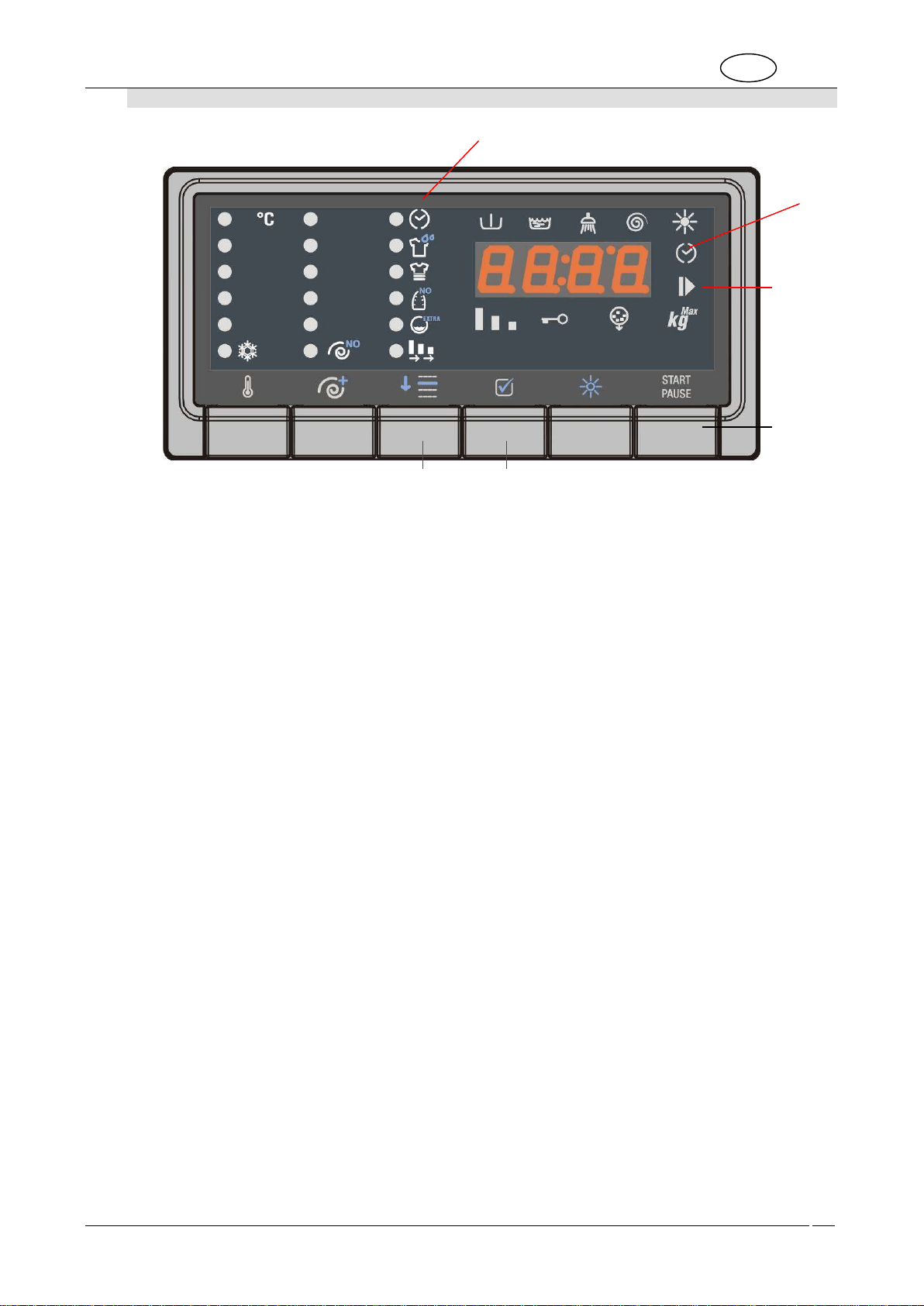
1. The Option Selection button can be used to select the following options in sequence
(from the top down):
Time to End: key can be pressed repeatedly to select the time after which the washing
programme will end. (See par.4.12)
Prewash: adds a stage before the main wash, lasting about 20 minutes at a tempera-
ture of 35°C. Suitable for loads of particularly dirty items.
Intensive: the max. temperature is changed to 60°C and the washing stage is extended
to increase the effectiveness of the enzymes in the detergents. Suitable for delicate but
dirty items.
Easy iron: produces items which are less creased and easy to iron.
Water plus: Increases the amount of water used for washing and rinses.
In alternative Extra rinse: this option adds a rinse to the selected washing programme.
Flexi Time: reduces the duration of the cycle. The symbol is completely illuminated with
the initial duration of the selected programme. Once the option has been selected the
cycle duration can be further reduced to an intermediate setting and a minimum setting
and then returned to the initial duration by repeated pressing of the Set button
In alternative Rapid: reduces the duration of the washing cycle. Suitable for small
amounts of laundry with only light dirt.
2. To confirm the selected option, simply press the Confirm options button and the LED of
the option remains on.
3. To delete an option selection, simply return to the option with the Selection button and
press the Confirm options button. To annul all the options previously selected in a single
operation, simply hold down the Confirm options button for 4 seconds.
Option selection
Confirm option
Options
Start Pause
EN
17
4.12 TIME TO END
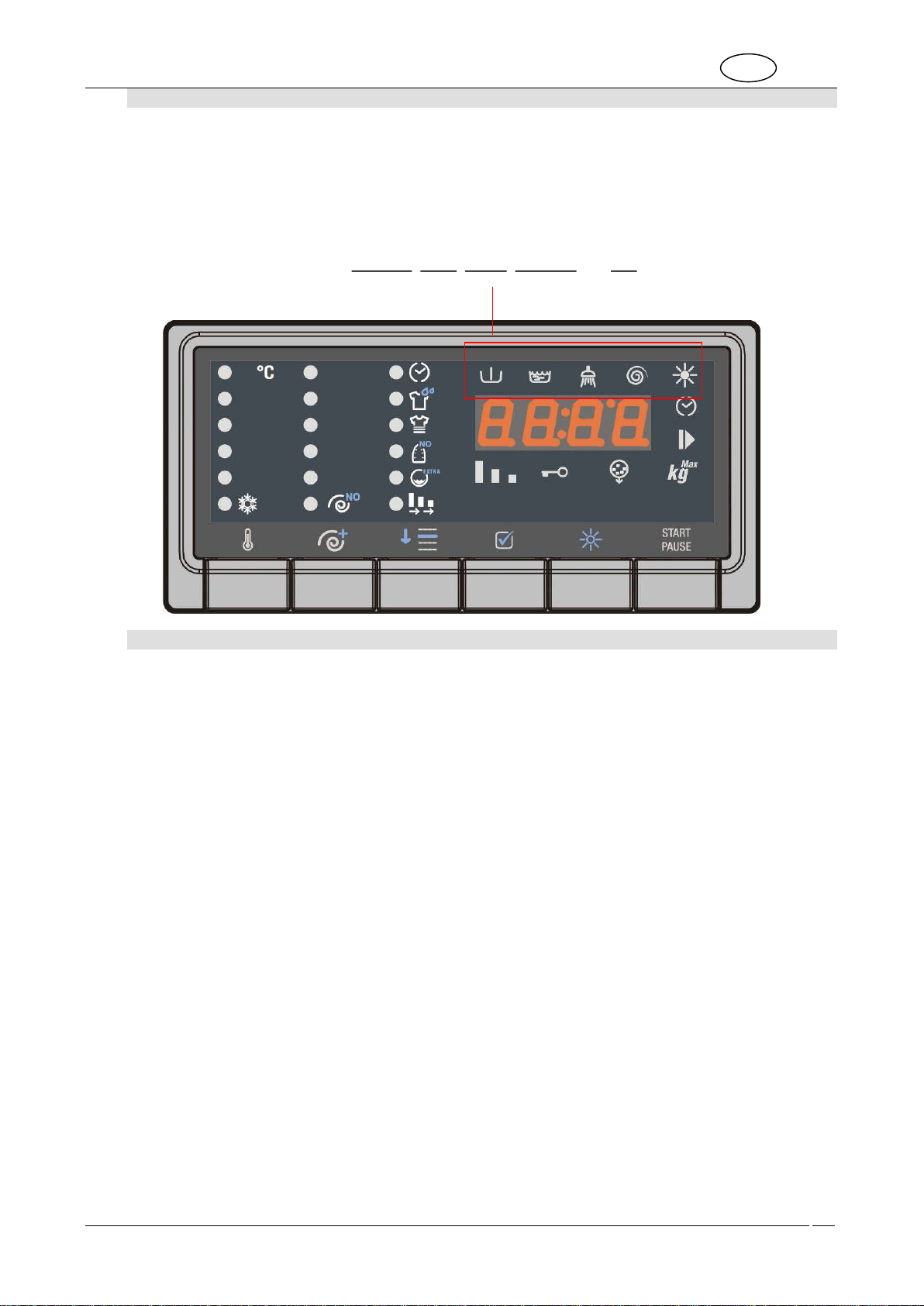
1. To select options “time to end”,press the “Option selection” button, pressing repeatedly
the “Confirm option” button options you can select when the wash cycle ends.. The time
to end of cycle function calculates the initial duration of the washing/drying cycle, the
settings made (temperature, spin speed and options) which may shorten or lengthen
the cycle's initial duration, and the delay time the user wishes to add before the cycle
starts.
2. After the time to end has been set, the symbol on the display remains on.
3. To clear the “time to end” function, you must select the option by pressing the button
by “option selection” and press the “Confirm option” button until the display shows 0..
4. The Start Pause symbol flashes on and off until the cycle starts. After the cycle starts,
the symbol remains constantly lit.
Time to
end
symbol
Start Pause
Start pause
symbol
Confirm option
Option selection
Option Time to end
EN
18
4.13 STARTING THE WASHING PROGRAMME
1. To start the washing programme after making your personal settings, press the Start
Pause button.
2. Once the cycle has started, the display shows the time remaining before the end of the
cycle and the Start Pause symbol on the display is constantly on.
3. During performance of the washing/drying programme, the symbols which identify the
various phases light up:
4.14 INTERRUPTING OR CHANGING THE WASHING PROGRAMME
The washing programme in progress can be interrupted at any moment:
1. press the “Start/Pause” button for about 3 seconds: the display shows the word PAUS
(for 1 second) alternating with the time remaining until the end of the cycle (for 1 sec-
ond). The Start/Pause light flashes on and off.
Programmes can also be interrupted by turning the programme/temperature setting
knob while the cycle is in progress.
2. To change the washing programme, simply turn the programme knob to select the new
programme; there is no need to set the appliance in pause status. The new cycle will
be carried out completely, beginning from the start. If the tank had already been filled
with water during the previous cycle, the water intake phase will be omitted from the
new programme.
3. To restart the cycle, press the Start-Pause button again.
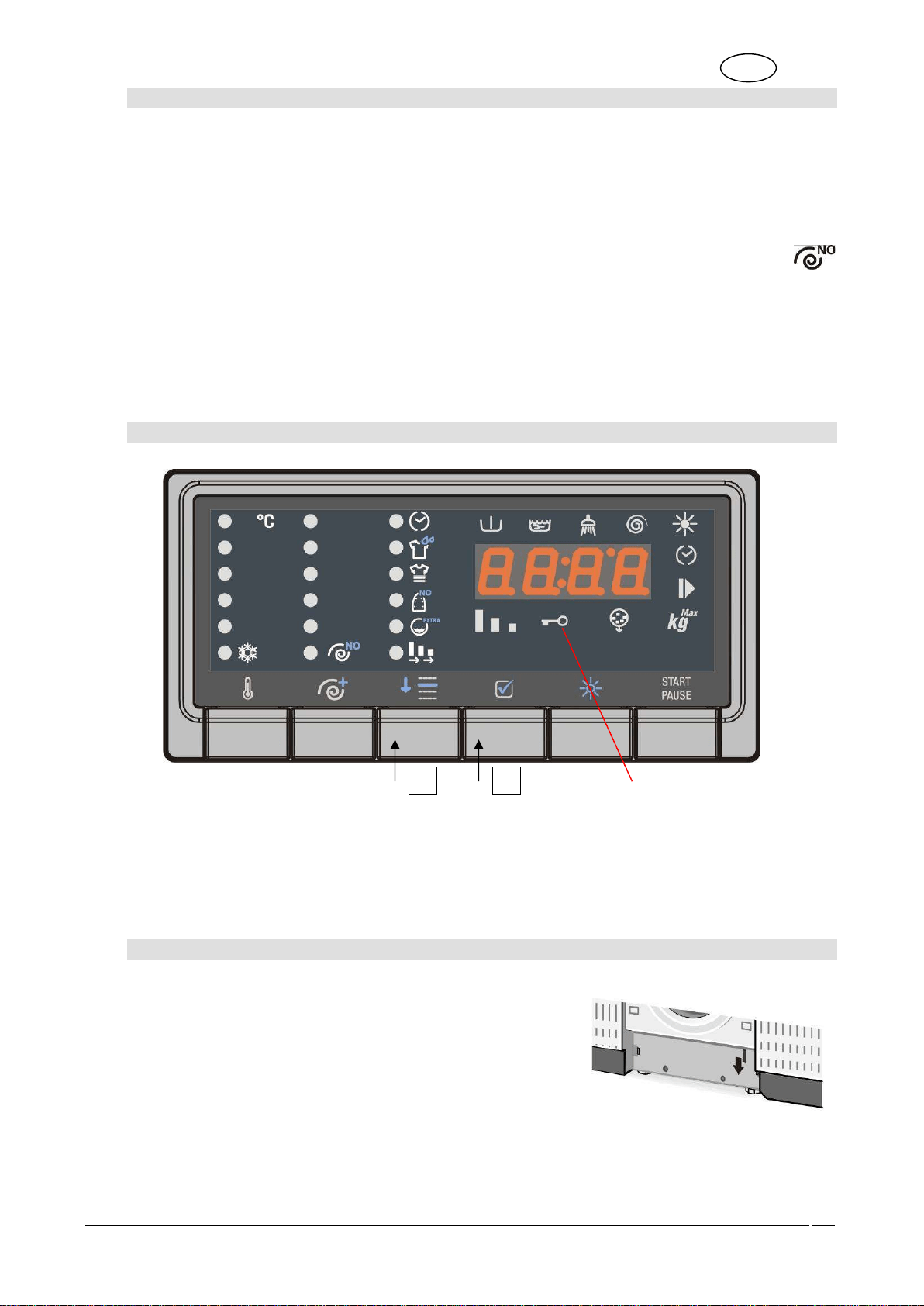
Cycle phase symbols: Prewash, wash, rinses, final spin and dry.
EN
19
4.15 PROGRAMME END
Washing/drying programmes are completed automatically. The word END appears on the dis-
play and the "Time remaining" light goes out.
1. Switch the appliance off by turning the programmes knob to OFF
2. Unload the laundry from the drum.
3. Leave the door ajar to allow the interior of the washer-dryer to dry out.
4. Turn off the water intake tap.
If during the initial spin speed setting stage, the "no spin" mode with stop with tank full
(spin speed set as 0) was selected, at the end of the washing programme the word STOP
appears on the display, alternating with ---- (spin speed of 0) and the spin light is on.
To proceed with the pump-out and spin, press the spin selection button twice. The appliance
restarts the cycle with the pump-out and spin. To select the spin speed required, press the
button until the chosen speed is displayed. To pump out the water from the tank without per-
forming the spin, press the spin selection button until the display indicates speed of 0: the
pump-out will be run without spin.
4.16 CHILD LOCK
1. When this function is activated, the modification of options, temperatures, spin speed
and the washing/drying cycle is not possible while the cycle is in progress.
2. To activate the Child Lock, press the Confirm option button (1) and hold it down. Also
press the Option selection button (2) within 3 seconds.
3. The Child Lock symbol lights up to show that the function has been activated.
4. Repeat the same procedure to deactivate the function.
4.17 OPENING THE APPLIANCE IN AN EMERGENCY
In the event of a power failure, the door is opened using the
mechanical release device activated by means of the lever in
the bottom of the appliance:
Turn the knob to Off and disconnect the power
supply plug from the socket.
Drain off the water (see point 6.4)
Pull the lever down and open the door.
Warning, scolding hazard: before opening the door, check
that the appliance does not contain boiling hot water and deter-
gent which may pour out and cause injury when the door is
opened.
Warning: do not open the door using the emergency release
lever while the drum is turning.
Child Lock Symbol
1
2

EN
20
5. USING THE APPLIANCE FOR DRYING
5.1 GENERAL
During drying cycles, the water tap must be turned on and the drain hose correctly po-
sitioned.
This appliance can be set to perform wash only, dry only and wash-and-dry programmes.
In the wash-and-dry programme, the appliance switches from washing to drying automatically,
with no need to use the controls (at the end of the wash) to obtain the complete cycle.
Attention
Only dry laundry or garments washed in an aqueous solution and suitable for tumble
drying.
Do not dry fabrics which have been dry cleaned or had stains removed with chemical
solvents, wool or wool blend fabrics which will be shrunk by the heat, very delicate
fabrics such as silk and synthetic curtains, fabrics which may easily lose threads such
as woollen yarn, padding and loose-pile mats, or articles which contain foam rubber or
similar elastomers.
Loads of laundry placed in the washer-dryer for drying must not exceed 4 Kg in
weight. The washer-dryer is constructed to give the best results with loads which do
not exceed 4 kg of dry weight of laundry.
When washing programmes for resistant fabrics are set, drying automatically takes
place at 90°C (normal drying).
In washing programmes for delicate fabrics, drying automatically takes place at 60°C
(gentle drying). Therefore, in automatic wash-and-dry programmes, the drying pro-
gramme will depend on the washing programme selected.
In drying only programmes, the laundry must first have been washed and spun-dried.
After drying particularly fluffy items such as new terry towels, the "Rinse" program
should be carried out to ensure that any deposits left by the fabric are removed, and
are not deposited on the clothes in the next wash.
Important – Do not dry delicate fabrics that will not withstand a temperature of 60°C or any
fabrics which will not withstand the selected temperature.
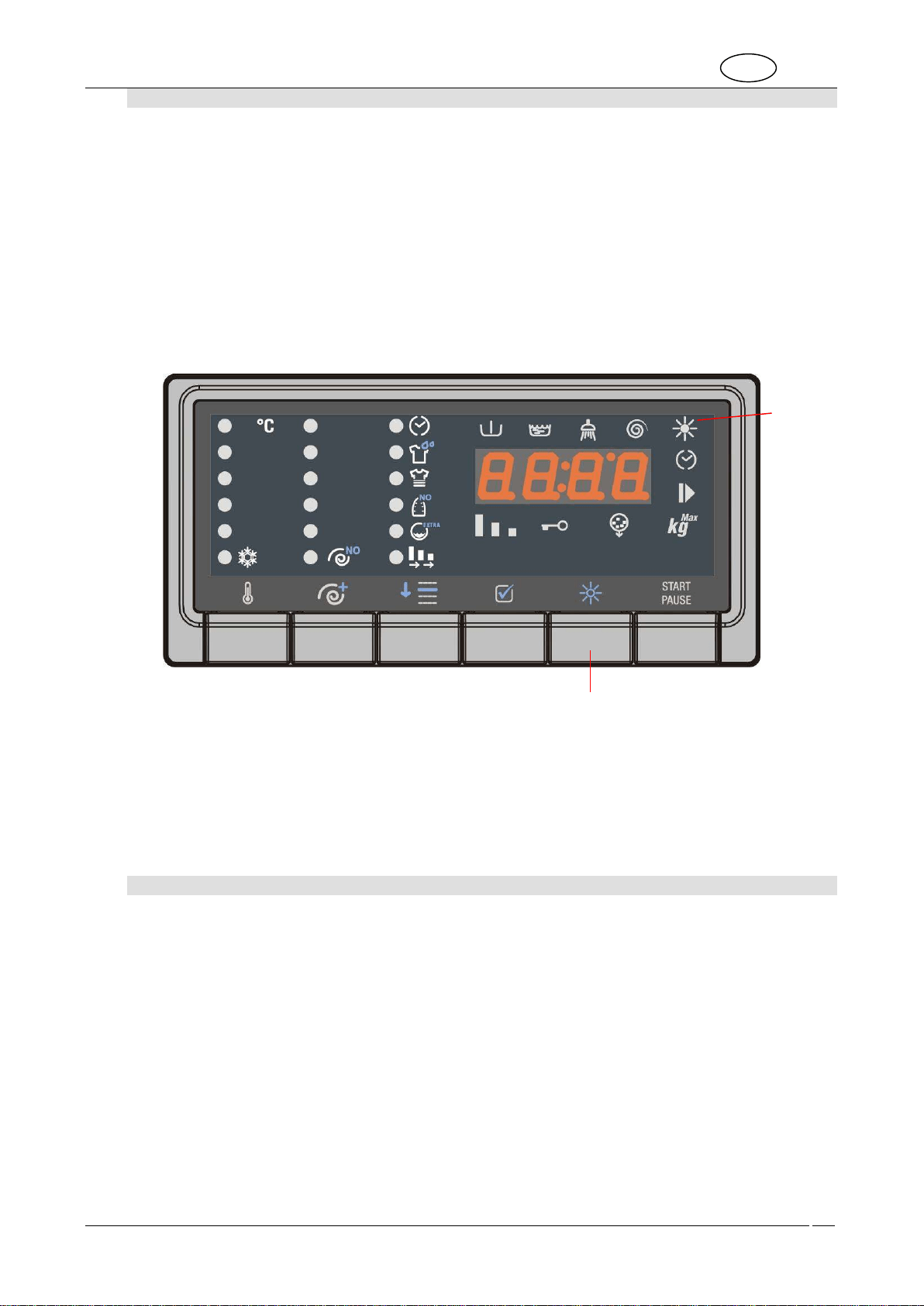
5.1.1 EXTRA DRYING
If the laundry is still too damp at the end of the programme, set a short timed drying programme.
Warning!: do not over-dry as this may cause creases or shrinkage of garments.
EN
21
5.2 WASH-AND-DRY PROGRAMME
Automatic washing and drying can be carried out in the tough fabrics (cotton and colours) and
synthetic/delicate fabrics programmes. If the wool wash programmes are selected, automatic
drying after the wash cannot be set.
For automatic washing and drying, the load of laundry must not exceed 4 kg of cotton or 2
kg of synthetic fabrics.
Therefore, if the load for washing and drying exceeds the quantities stated above, a wash+dry
programme is not recommended; the load will have to be halved after washing and dried in two
lots.
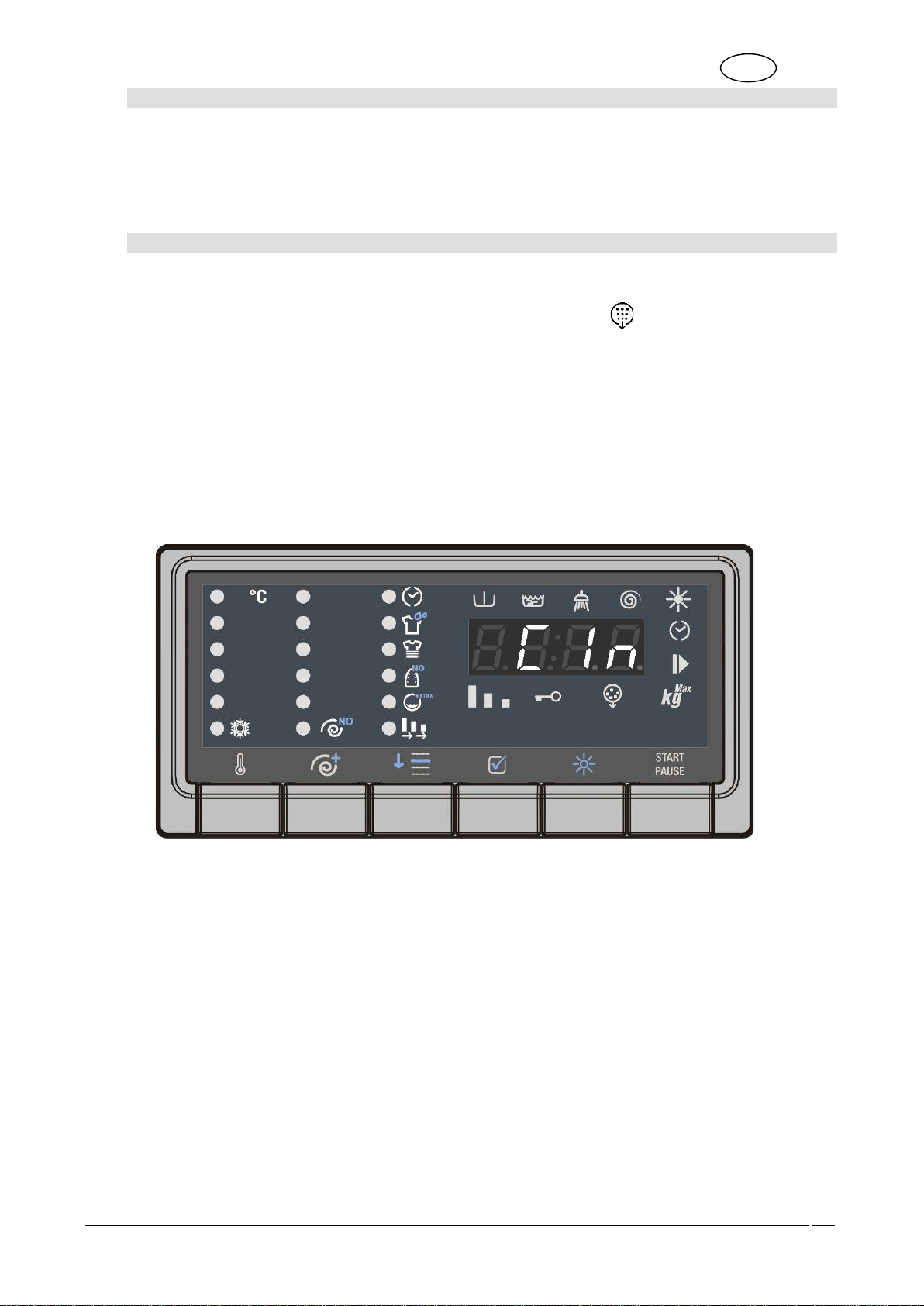
To set a wash-and-dry programme proceed as follows:
1. Select the washing programme and make any changes to the default parameters;
2. Press the dry button to set the drying time required. The display initially shows the max-
imum time which can be set (2h:40’), which is then gradually reduced to 0h:00’
Whether drying will be at the normal temperature (90°C) or the delicate fabrics temperature
(60°C) depends on the washing programme set previously.
Once a drying has been set, the symbol on the display flashes; it remains constantly on
once the cycle enters the drying stage.
5.3 DRY ONLY PROGRAMME
1. Turn the appliance off by turning the washing/drying programmes selector knob to OFF.
2. Turn the knob to the drying programme required: Intensive drying: for normal drying
(90°C), or Gentle drying: for delicate fabrics (60°C). To find out which symbol identifies
each drying programme, refer to the programmes table supplied with the appliance.
3. Press the Dry button repeatedly to set the drying mode required (see previous point).
4. Press the "Start-Pause” button to start the drying programme. The display shows the
time remaining and the drying symbol LED lights up.
Attention
Since no washing programme has been set previously, there are no constraints on se-
lection of the drying programme (normal or gentle). Remember that normal drying is rec-
ommended for cotton and coloureds, and gentle drying for synthetic and delicate items.
For good drying results, the load of laundry must not exceed 4kg of cotton or 2kg of
synthetic fabrics.
Drying
symbol
Drying button
EN
22
5.4 INTERRUPTING OR CHANGING THE DRYING PROGRAMME
1. The drying programme can be interrupted by the same procedures as the washing pro-
gramme.
2. To end the programme and remove the laundry, it is best first to cool the load. Use the
selector button to set a drying time of 20 minutes. Restart the appliance as described above
and the laundry will be ready for removal.
5.5 CLEAN PROGRAMME
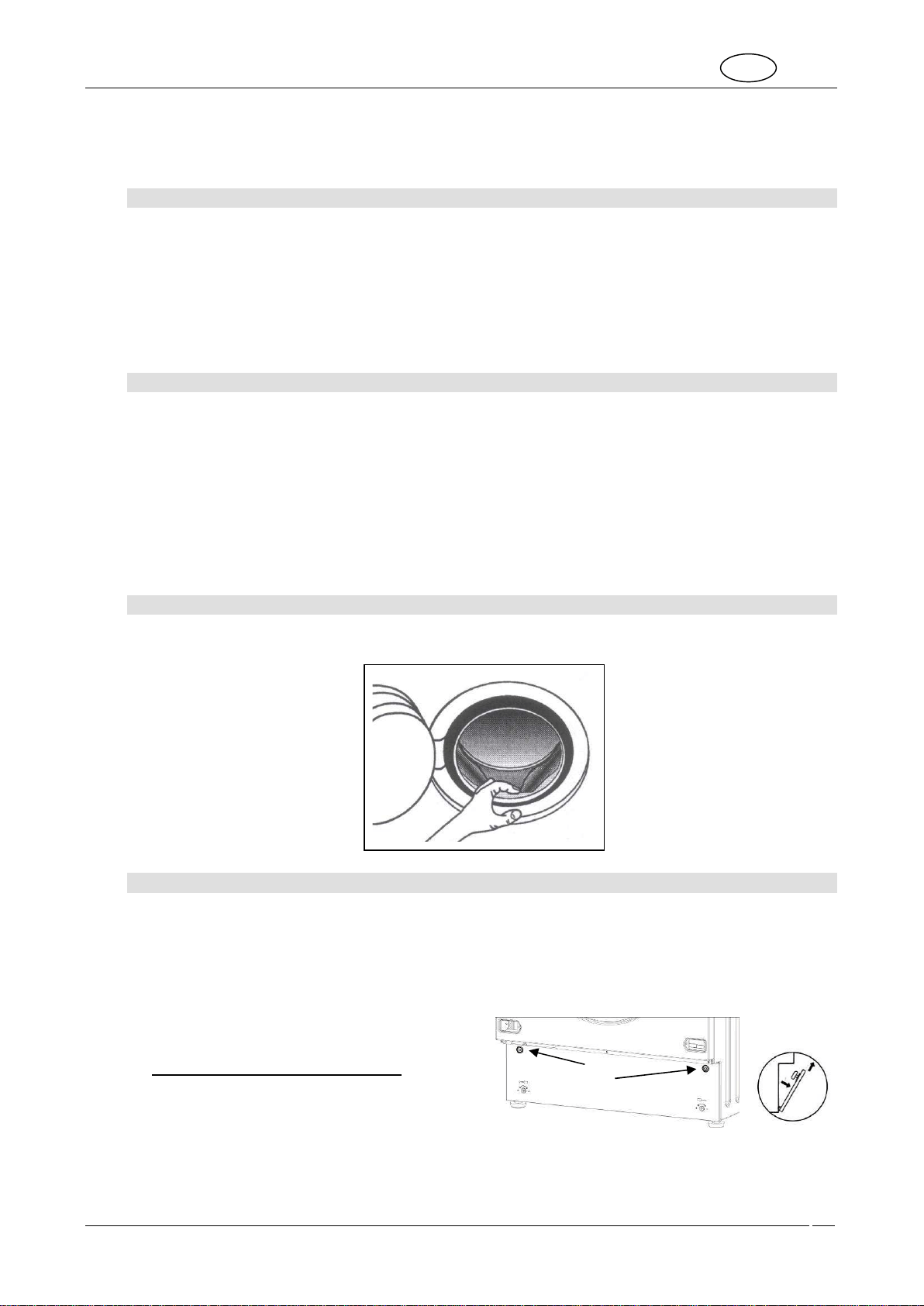
To keep the appliance operating at peak efficiency over time, it has a CLEAN programme for
regular cleaning of the drying circuit to remove any fluff deposits.
1. After a given number of drying cycles, the CLEAN symbol lights up and the text Cln
appears on the display to warn that this programme needs to be run. The warning light
remains on until the CLEAN programme is carried out. The light goes out at the end of the
programme.
2. To perform the CLEAN programme, proceed as follows:
a. Make sure that the drum is completely empty and close the door.
b. Turn the knob to the CLEAN programme (see programmes table for the exact position
on the knob)
c. Press the START/PAUSE button
The CLEAN programme can also be carried out even if the light on the display is not on.
EN
23
6. CLEANING AND MAINTENANCE
Important – Before carrying out any cleaning or maintenance procedure, the plug must
be disconnected from the power supply socket.
6.1 CLEANING THE OUTSIDE OF THE APPLIANCE
Regular, thorough cleaning will keep your appliance looking good.
Clean the exterior of the appliance with soap and water only, then dry thoroughly with
a soft cloth.
The plastic parts should just be wiped with a damp cloth.
Do not scrape with pointed objects, or use solvents or products containing abrasive
substances because they damage the surfaces.
For reasons of safety, never spray the washer-dryer with jets of water.
6.2 CLEANING THE DRUM
Remove any rust marks from the drum using a stainless steel cleaner, or very fine
sandpaper for particularly stubborn cases.
For descaling the washer-dryer use only brand-name descalers which contain an anti-
corrosion agent for washing machines.
Always follow the producer's instructions with regard to use and dosages.
After descaling or removing rust from the drum, carry out a few rinse cycles to
remove all acid residues which might damage the appliance. Never use cleaners
which contain solvents. There is the risk of the formation of vapours which might
catch fire and explode.
6.3 CLEANING THE DOOR GASKET
Check regularly that there are no brooches, buttons, nails or pins in the folds of the door gasket.
6.4 CLEANING THE DRAIN PUMP
The drain pump only needs cleaning if it has been blocked by buttons, brooches or similar
objects and the water is not being pumped out.
In this case, proceed as described below.
1. Remove the mains plug to disconnect the appliance from the electricity supply.
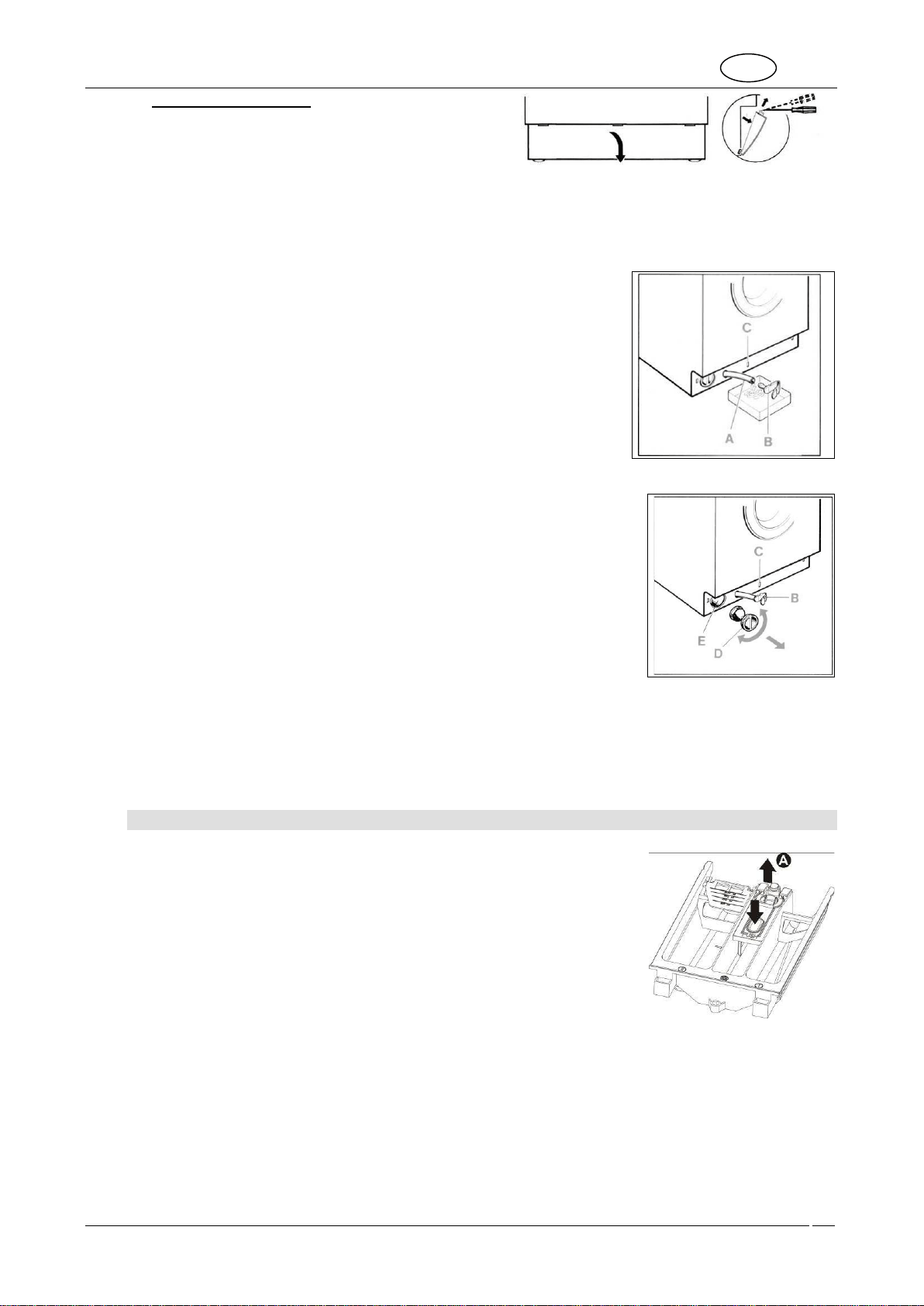
2. Depending on the model, proceed as fol-
lows:
Built-in/totally concealed model –
use a
small screwdriver as a lever to remove the
plugs shown here, turn the plinth downwards
and access the pump.
EN
24
Free-Standing Model – Insert a small screw-
driver through the slits in the front of the
plinth, then apply upward leverage with the
screwdriver to release the top of the plinth
from the cabinet.
Tilt the plinth forward slightly and pull it up-
ward to remove it completely.
3. Extract the drain hose ”A”.
Warning: if the hose is hot, the water is hot or
boiling hot. Place a shallow container on the floor
and remove the plug “B” to drain off the water.
Depending on the amount of water in the appli-
ance, the container may have to be emptied sev-
eral times.
When no more water is coming out, close the
hose again by pushing the plug “B” firmly back
into place.
4. Unscrew the cover of the pump “D” by
turning it to the left.
Clean the pump and remove any foreign bodies.
Also check the inside “E”, making sure that the
impeller turns freely; any foreign bodies stuck in
it must be removed.
5. Screw the cover back on the pump.
Secure the drain house by snapping the plug back into place "C".
Depending on the model, replace the plinth as follows:
Built-in/completely concealed model – Fit the bottom of the plinth first. Push it towards the
cabinet and put the plugs back into place.
Free-standing model – Fit the bottom of the plinth first and then push it towards the cabinet
until it snaps into place.
6.5 CLEANING THE DETERGENT DRAWER
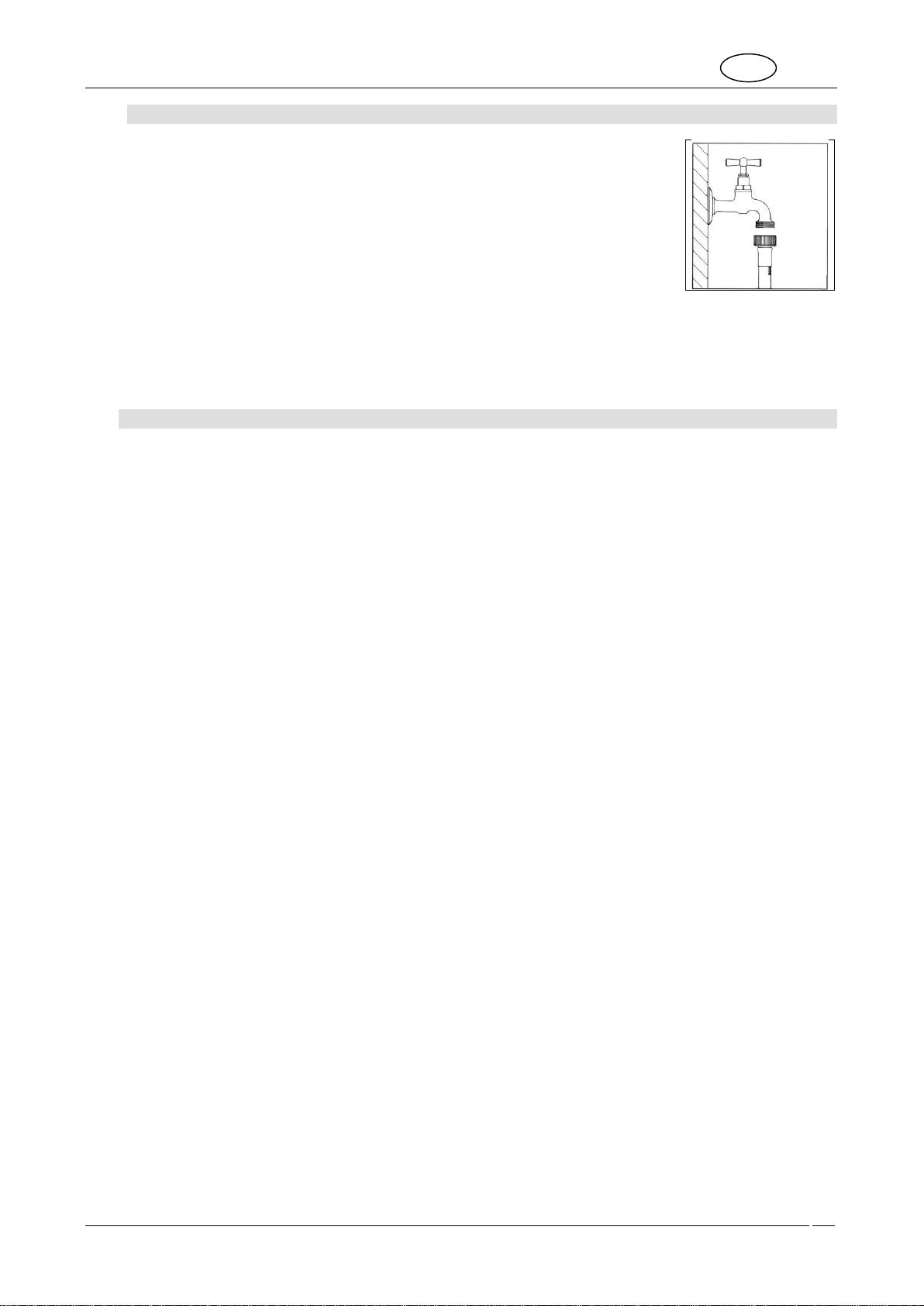
The detergent drawer should be kept clean, removing all solid
deposits.
To simplify this operation, completely remove the detergent
drawer (pull the drawer fully out, press in the zone marked PUSH
and then remove completely).
Remove the siphon "A" and clean all parts with hot water.
Fully re-insert the siphon and remove any detergent deposits be-
fore putting the drawer back in position.
EN
25
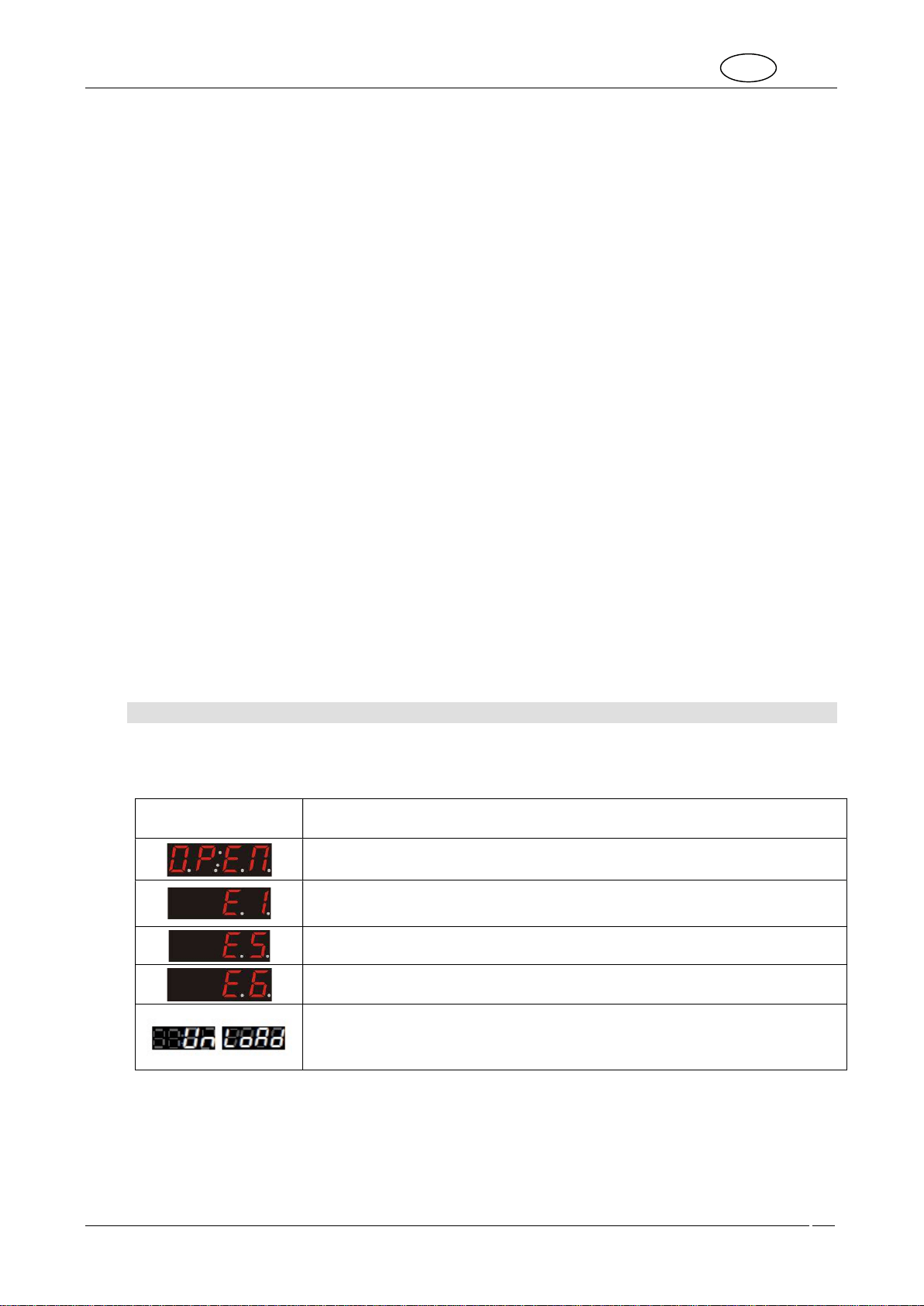
6.6 CLEANING THE WATER INTAKE FILTERS
The machine is fitted with a filter which protects the water intake valves.
The filter is in the fitting on the intake hose which is connected to the tap
The filter must be cleaned if the washer-dryer is not taking in water or the
amount of water is insufficient.
To clean, proceed as follows:
Remove the mains plug to disconnect the appliance from the
electricity supply.
Turn off the water tap.
Unscrew the intake hose fitting from the tap.
Remove the intake hose fitting filter.
Clean the filter with water, with the aid of a small brush.
When screwing the intake hose fitting back into place, check that the filter is positioned
correctly.
6.7 PERIODIC CLEANING
Carry out periodic cleaning to keep the appliance in good working order (see CLEANING AND
MAINTENANCE section) to prevent the build-up of limescale, unpleasant odours and
mould. A descaler can be used, following the instructions supplied with the descaler. Clean
the dispenser drawer at least once or twice a month to avoid the build-up of detergent.
Periodically check the water supply filters. See the procedure outlined in the manual.

EN
26
7. TROUBLESHOOTING
This produce complies with the relevant regulations governing the safety of electrical equip-
ment. For safety reasons, any technical inspections or repairs must be performed by qualified
staff, to prevent all hazards for the user.
If the appliance does not work, before calling the After-Sales Service, to avoid unnecessary
expense, check yourself that the operations listed in this troubleshooting table have been car-
ried out..
1 Appliance does not start
Check that:
- plug is properly connected to socket
- door is securely closed
- “Start/Pause” button has been pressed.
2 No water filling
Check that:
- plug is properly connected to socket
- door is securely closed
- water tap is turned on
- water intake hose filters not fouled.
- water intake hose not trapped or kinked.
3
No water visible in wash-
ing drum
No malfunction.
The water level is below the level of the glass in the door because
new appliances use very little water to achieve the same washing
and rinsing results.
4 Water not pumped out
Check that:
- drain hose is not kinked
- drain pump not fouled.
5 Water not pumped out af-
ter last rinse in delicate
fabrics and wool wash
programmes
It is not a malfunction: pause programmed into washing programme
to prevent creasing of fabrics.
To pump out water, proceed as described in "Programme End"
point.
6
Water takes in and
pumps out water contin-
ually
Check that end of drain hose is not too low down.
7 Strong vibrations during
spins
Check that:
- Appliance is properly levelled
- washer-dryer not too close to walls or kitchen units
- internal unit on flexible mounts locked in position.
8 Too much foam formed
in tank and flowing out of
drawer
Check that:
- detergent used is recommended for automatic washing ma-
chines and not for hand washing
- quantity used is as stated in manual and no more.
9 Water on floor
Check that:
- water intake hose fittings not loose
- end of drain hose still correctly positioned.
10 Not all fabric conditioner
used or too much water
left in compartment
Check that detergent drawer siphons are correctly fitted and not
fouled.
EN
27
11 Appliance does not spin
Anti-imbalance safety device tripped because laundry not evenly
distributed in drum. If laundry is still wet at end of cycle, rearrange
it in the drum by hand and repeat spin programme only.
12 Emptying water from
drum
In the event of a power blackout or appliance failure, the water can
be removed from the drum using the emergency procedure.
13 Laundry not properly
spun
Large items screwed up and not evenly distributed within drum. Al-
ways wash a mix of large and small items.
14 Traces of detergent on
laundry
Many phosphate-free detergents contain substances with low water
solubility.
Select Rinse programme or brush the laundry.
15 Laundry not dried Check that:
- water tap is turned on
- load of laundry is not excessive
- drying time is long enough
- appropriate drying time selected.
If the appliance still does not dry the laundry, call the Service Centre
to have the fan and drying ducts cleaned to remove any fluff depos-
its.
16 Washing results unsatis-
factory
- Probably too little detergent or unsuitable detergent used
- Difficult stains not dealt with before washing
- Correct temperature not set
- Basket overloaded.
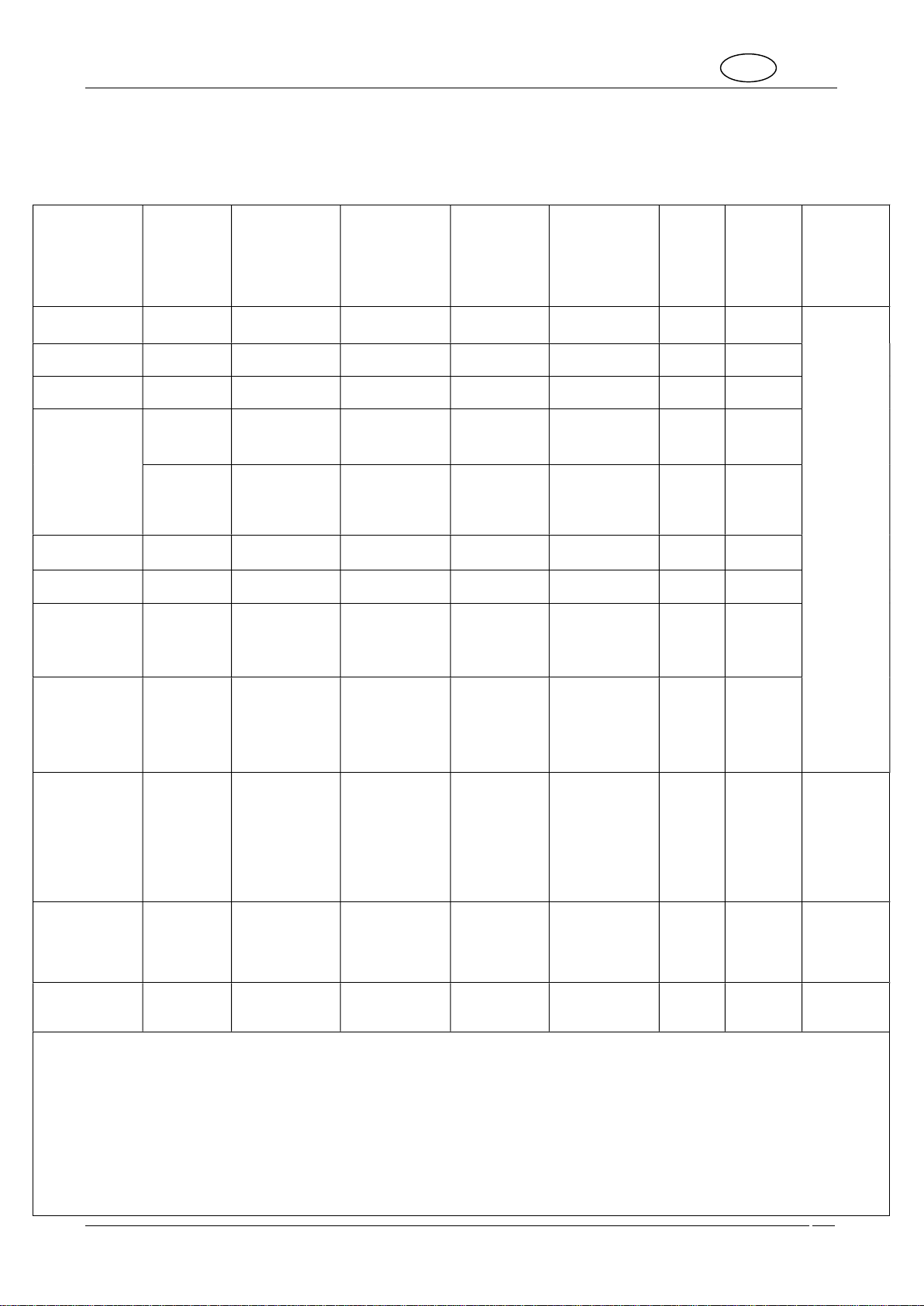
ERROR DISPLAY
In case of a malfunction, the appliance will identify the problem by showing an error code on
the display.
Error code Key to problem
Door not properly closed. Try reclosing.
Aqua stop device tripped. Cut off power supply, turn off water tap and
contact nearest service centre.
Water not taken in for washing. See point 2 in troubleshooting table.
Water not pumped out. See point 4 in troubleshooting table.
No error! The unbalanced load detection system has detected an im-
balance caused by the laundry items. Cannot start "Flusen Spulen (lint
removal)" program. Remove laundry.
For all the other error codes displayed, cut off the electricity supply, turn off the water tap and
contact your nearest Service Centre.
EN
28
8. ADDITIONAL INFORMATION FOR THE USER
The following information is provided in accordance with the European Ecodesign regulation (EU) 2019/2023
The values indicated for programmes other than Eco 40-60 are indicative only.
Automatic and timed dry washer-dryer
Programme Rated
capacity
(kg)
Energy con-
sumption
(kWh/
cycle) *
Water consu-
mption
(l/cycle) *
Programme
duration
(h:min)*
Temperature
Max.
(°C)
5 min (*)(***)
Spin
speed
(rpm) *
Residual
moisture
content
(%) *
Detergent
Eco 40-60** 7 1.02 49 2:50 46 1400
(1200)
48
(55)
Washing
powder or
liquid de-
tergent for
colours, wi-
thout
bleach or
optical
brighteners
For white
and light
coloured
laundry,
use a
Standard
detergent
with white-
ners.
(from cold
wash up to
90°C) .
Refer to
the pro-
grams ta-
ble
Eco 40-60** 3.5 0.70 43 02:40 36 1400
(1200)
49
(56)
Eco 40-60** 2 0.50 39 02:30 32 1400
(1200)
54
(60)
Eco 40-60+
Normal
drying cycle
(Washing and
drying) **
4 3.08
(3.29)
75 05:30 36 1400
(1200)
-
2 2.04 58 04:10 32 1400
(1200)
-
Cotton 20°C 7 0.24 62 01:51 20 1400
(1200)
53
(57)
Cotton 40°C 7 0.38 62 01:51 40 1400
(1200)
53
(57)
Cotton 40°C +
Pre-wash
7 1.02 78 02:18 40 1400
(1200)
53
(57)
Cotton 60°C 7 1.11 62 01:51 55 1400
(1200)
53
(57)
Easy care
40°C
3.5 0.62 50 01:43 40 1000 30 Detergent
for colours
/
delicates
without op-
tical
brighteners
Mixed load
40°C
3 0.40 36 00:50 40 1200 57 Standard
detergent
without
whiteners
Wool 30°C 2 0.20 49 00:47 30 600 55 Detergent
for wool-
lens
* The actual values may differ from those indicated due to the pressure, hardness and temperature of the inlet water, the ambient
temperature, the type, amount and soiling of laundry, the type of detergent, fluctuations in the mains power supply and any additional
functions that have been activated.
** Test programme compliant with European Ecodesign regulation (EU 2019/2023) and the European regulation on energy labelling
using cold water (15°C) (EU 2019/2014)
*** Maximum temperature reached for a minimum of 5 minutes inside the laundry being treated.
IMPORTANT NOTICE FOR TESTING INSTITUTES!
Models intended to be built into a cabinet must be tested in an approved test cabinet with the front panel mounted in accordance with
the manufacturer's installation instructions.

EN
29
** Eco 40-60 program
Test programme compliant with European Ecodesign regulation (EU 2019/2023) and the European
regulation on energy labelling using cold water (15°C) (EU 2019/2014).
Washing program that is able to clean normally soiled cotton laundry declared to be washable at
40°C or 60°C together in the same washing cycle.
The wash and dry cycle is able to clean normally soiled cotton laundry, washable at 40°C or 60°C
together in the same washing cycle and to dry it in such a way that it can be immediately stored in
a cupboard.
Customer care services
Original spare parts will be available for a minimum of 10 years from the appliance being placed on
the market.
Contact the customer cares service in your country or refer to the website and register the product
with the required codes. Faults can also be resolved independently before requesting assistance,
by referring to the relative section in the manual.
Information on the performance of your washing machine or washer-dryer can be found in the EU
EPREL database. The website can be accessed quickly using the QR code on the washing ma-
chine or washer-dryer energy label or via the following link https://eprel.ec.europa.eu. In this case,
you have to enter the name of the model indicated on the data plate on the side of the door. For
detailed information on the energy label see: www.theenergylabel.eu.
If the malfunction persists, contact your authorised Service Centre giving the fault code. The con-
tact details of the technical assistance department can be found on the guarantee certificate and
the website.
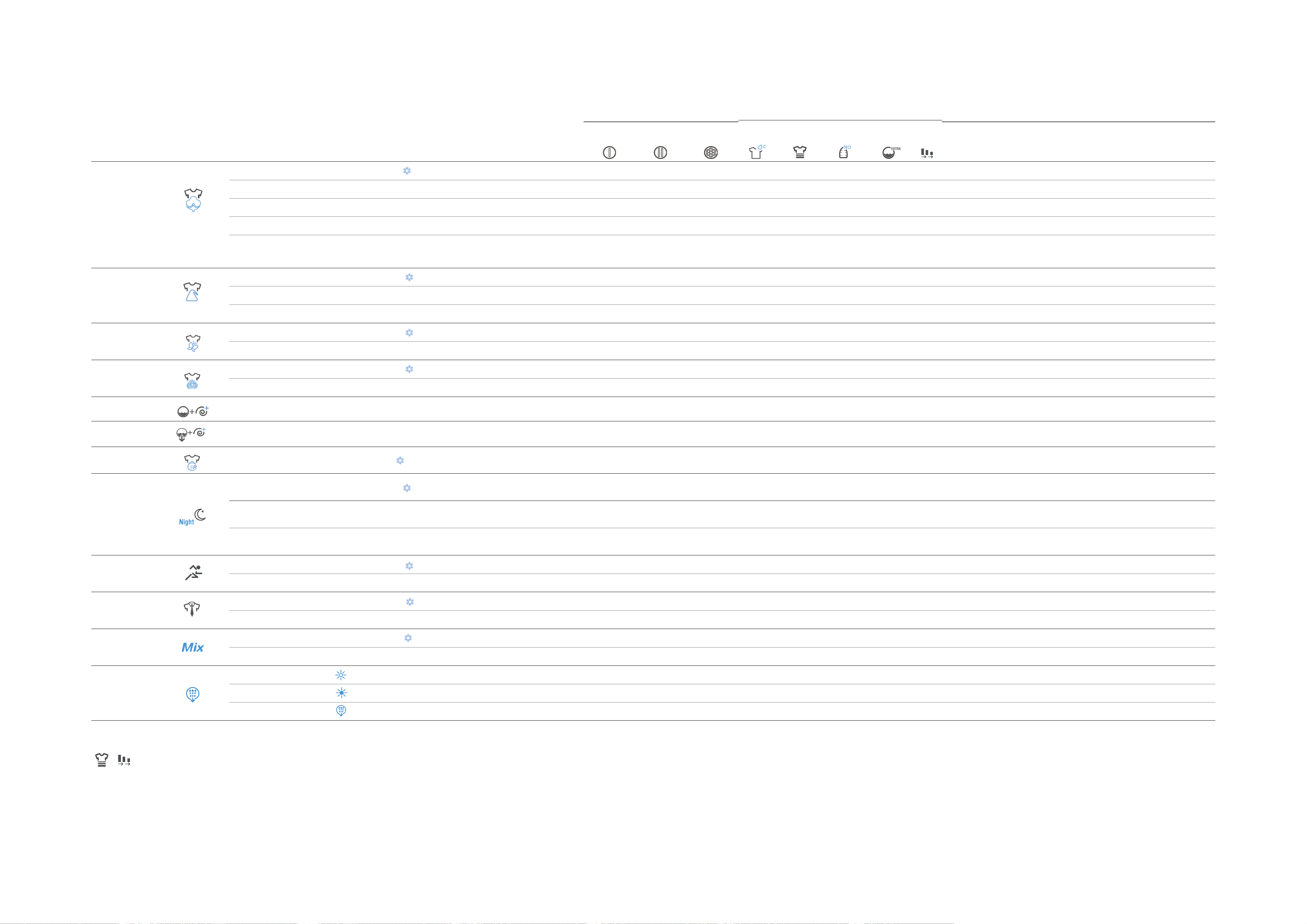
GUIDA PROGRAMMI
Programmi
Temp.
(°C)
Max
Centrifuga
(giri/m')
Max.
carico
lavaggio
(kg)
Max. carico x
asciugatura
(kg)
Prelavaggio Lavaggio
Ammorbid.
Prelav. Intensivo Stira Meno
Risciacquo
aggiuntivo
Flexi
time
Asciugatura
dopo lavaggio
se selezionata
Descrizione programma lavaggio
Cotone e colorati Delicati colorati poco sporchi / 20° Max 7 4 Normale
Lavaggio a freddo o 20°C, risciacqui e centrifuga finale alla
velocità selezionata
Delicati colorati normalmente sporchi 30° / 40° Max 7 4 Normale
Lavaggio a 30°C o 40°C, risciacqui e centrifuga finale alla
velocità selezionata
Colorati resistenti normalmente sporchi 60° Max 7 4 Normale
Lavaggio a 60°C, risciacqui e centrifuga finale alla velocità
selezionata
Colorati resistenti molto sporchi 90° Max 7 4 Normale
Lavaggio a 90°C, risciacqui e centrifuga finale alla velocità
selezionata
Eco 40 - 60
Capi in cotone normalmente sporchi lavabili
insieme a 40°C / 60°C
- Max
7 4 -
Normale
Lavaggio, risciacqui e centrifuga finale alla velocità selezionata
Sintetici Capi da rinfrescare / 20° 1000 3,5 3,5 - Delicata
Lavaggio a freddo o 20°C, risciacqui e centrifuga finale alla
velocità selezionata
Capi poco sporchi 30° / 40° 1000 3,5 3,5 - Delicata
Lavaggio a 30° C o 40°C, risciacqui e centrifuga finale alla
velocità selezionata
Capi normalmente sporchi 60° 1000 3,5 3,5 - Delicata
Lavaggio a 60°C, risciacqui e centrifuga finale alla velocità
selezionata
Delicati / Seta Capi da rinfrescare / 20° 600 2 - - - - - -
Lavaggio a freddo o 20°C, risciacqui e centrifuga finale alla
velocità selezionata
Capi poco sporchi 30° / 40° 600 2 - - - - - -
Lavaggio a 30° C o 40°C, risciacqui e centrifuga finale alla
velocità selezionata
Lana Capi da rinfrescare / 20° 800 2 - - - - - - - -
Lavaggio a freddo o 20°C, risciacqui e centrifuga finale alla
velocità selezionata
Capi poco sporchi 30° / 40° 800 2 - - - - - - - -
Lavaggio a 30°C o 40°C, risciacqui e centrifuga finale alla
velocità selezionata
Risciacquo e
centrifuga
Max 7 - - - - - - -
Risciacquo e solo scarico, o scarico e centrifuga finale alla
velocità selezionata
Scarico e
centrifuga
Max
7 - - - - - - - - Solo scarico, o scarico e centrifuga finale alla velocità selezionata
Rapido Cotone leggero o delicati da rinfrescare /20° / 30° 800 2 - - - - - - - -
Lavaggio a freddo o 20°C / 30°C, risciacqui e centrifuga finale
alla velocità selezionata
Ciclo notturno
Capi molto delicati poco sporchi
/ 20° 1000
3 3 -
Normale
Lavaggio silenzioso a freddo o a 20 °C (avvisatore acustico
disattivato), risciacqui e centrifuga finale alla velocità selezionata
Capi poco sporchi
30° / 40° 1000
3 3 -
Normale
Lavaggio silenzioso a 30°C / 40 °C (avvisatore acustico
disattivato), risciacqui e centrifuga finale alla velocità selezionata
Capi normalmente sporchi 60° 1000 3 3 - Normale
Lavaggio silenzioso a 60 °C (avvisatore acustico disattivato),
risciacqui e centrifuga finale alla velocità selezionata
Sport Capi da rinfrescare / 20° 800 2 2 - - - Delicata
Lavaggio a freddo o 20°C, risciacqui e centrifuga finale alla
velocità selezionata
Capi poco sporchi
30° / 40° 800
2 2 - - -
Delicata
Lavaggio a 30° o 40°C, risciacqui e centrifuga finale alla velocità
selezionata
Camicie Capi da rinfrescare / 20° 800 2 2 - - - Delicata
Lavaggio a freddo o 20°C, risciacqui e centrifuga finale alla
velocità selezionata
Capi poco sporchi 30° / 40° 800 2 2 - - - Delicata
Lavaggio a 30° o 40°C, risciacqui e centrifuga finale alla velocità
selezionata
Misti Cotone e sintetici da rinfrescare / 20° 1200 3 3 Delicata
Lavaggio a freddo o 20°C, risciacqui e centrifuga finale alla
velocità selezionata
Cotone e sintetici poco sporchi 30° / 40° 1200 3 3 Delicata
Lavaggio a 30° o 40°C, risciacqui e centrifuga finale alla velocità
selezionata
Asciugatura
Delicata
60° Max
- 3 - - - - - - - - - Asciugatura delicata per capi sintetici e delicati
Normale
90° Max
- 4 - - - - - - - - - Asciugatura normale per capi in cotone
Pulizia asciugatore - - - - - - - - - - - - - Ciclo di pulizia circuito asciugatura
: Opzione disponibile
: Opzioni non selezionabili contemporaneamente
-
Opzioni
Scomparti cassetto detersivi
-
Code 19392028200
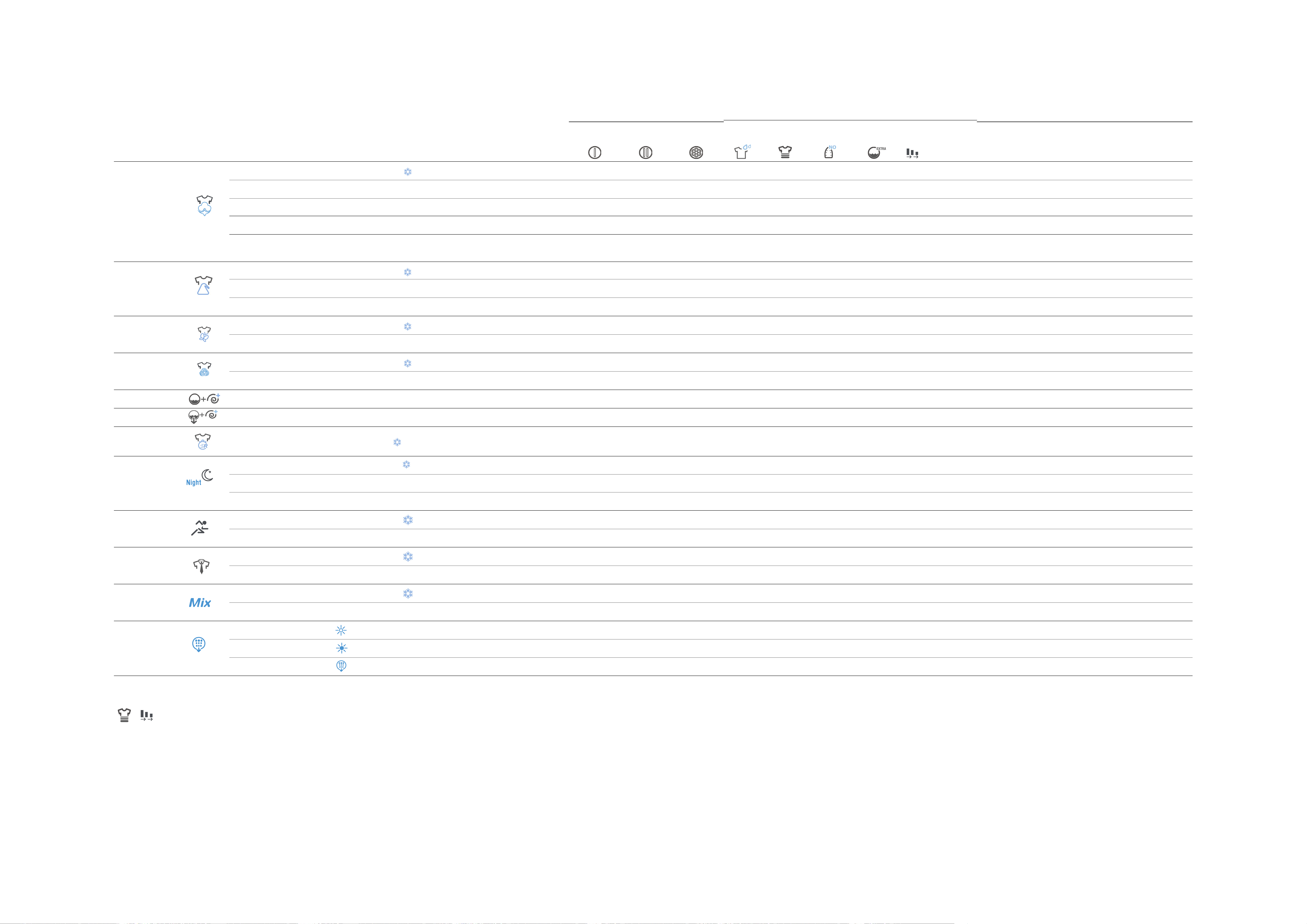
PROGRAM GUIDE
Programs
Temp.
(°C)
Max. Spin
(rpm)
Max.
washing
load (kg)
Max. drying
load (kg)
Prewash Wash Softner
Prewash
Intensive Easy Iron Extra rinse
Flexi
time
Drying after
wash if
selected
Wash program description
Cotton Delicate coloureds with light dirt / 20° Max 7 4 Normal Cold wash or at 20°C, rinses and final spin at the selected speed
Delicate coloureds with normal dirt 30° / 40° Max 7 4 Normal Wash at 30° or 40°C, rinses and final spin at the selected speed
Tough coloureds with normal dirt
60° Max
7 4
Normal
Wash at 60°C, rinses and final spin at the selected speed
Tough coloureds with heavy dirt 90° Max 7 4 Normal Wash at 90°C, rinses and final spin at the selected speed
Eco 40 - 60
Normally soiled cotton laundry declared
washable at 60°C or 40°C together
- Max 7 4 - Normale Wash, rinses and final spin at the selected speed
Synthetics
Items for refreshing
/ 20° 1000
3,5 3,5 -
Delicate
Cold wash or at 20°C, rinses and final spin at the selected speed
Items with light dirt 30° / 40° 1000 3,5 3,5 - Delicate Wash at 30° or 40°C, rinses and final spin at the selected speed
Items with normal dirt 60° 1000 3,5 3,5 - Delicate Wash at 60°C, rinses and final spin at the selected speed
Delicates Items for refreshing / 20° 600 2 - - -
- - - Cold wash or at 20°C, rinses and final spin at the selected speed
Items with light dirt 30° / 40° 600 2 - - - - - - Wash at 30° or 40°C, rinses and final spin at the selected speed
Wool Items for refreshing / 20° 800 2 - - - - - - - - Cold wash or at 20°C, rinses and final spin at the selected speed
Items with light dirt 30° / 40° 800 2 - - - - - - - - Wash at 30° or 40°C, rinses and final spin at the selected speed
Rinse & Spin Max 7 - - - - - - - -
Rinse and pump-out only, or pump-out and final spin at the
selected speed
Drain & Spin Max 7 - - - - - - - - - Pump-out only, or pump-out and final spin at the selected speed
Fast
Light cotton or delicate fabrics for refreshing
/20° / 30° 800
2 - - - - - - - -
Cold wash or at 20° / 30°C, rinses and final spin at the selected
speed
Night Very delicates items with light dirt / 20° 1000 3 3 - Normal
Silent cold wash or at 20°C (buzzer off), rinses and final spin at
the selected speed
Items with light dirt 30° / 40° 1000 3 3 - Normal
Silent wash at 30° / 40°C (buzzer off), rinses and final spin at the
selected speed
Items with normal dirt
60° 1000
3 3 -
Normal
Silent wash at 60°C (buzzer off), rinses and final spin at the
selected speedù
Sport Items for refreshing / 20° 800 2 2 - - - Delicate Cold wash or at 20°C, rinses and final spin at the selected speed
Items with light dirt
30° / 40° 800
2 2 - - -
Delicate
Wash at 30° or 40°C, rinses and final spin at the selected speed
Shirt Items for refreshing / 20° 800 2 2 - - - Delicate Cold wash or at 20°C rinses and final spin at the selected speed
Items with light dirt 30° / 40° 800 2 2 - - - Delicate Wash at 30° or 40°C, rinses and final spin at the selected speed
Mixed Fabrics Cotton and synthetics for refreshing / 20° 1200 3 3 Delicate Cold wash or at 20°C, rinses and final spin at the selected speed
Cotton and synthetics with light dirt 30° / 40° 1200 3 3 Delicate Wash at 30° or 40°C, rinses and final spin at the selected speed
Delicate
60° Max
- 3 - - - - - - - - - Delicate drying for synthetic and delicate items
Normal
90° Max
- 4 - - - - - - - - - Normal drying for cotton items
Clean - - - - - - - - - -
- - - Drying circuit cleaning cycle
:
Option available
: Options which cannot be selected simultaneously
Detergent drawer compartments
Options
Drying
Programmes
-
-
Code 19392028200

GUIA DE PROGRAMAS
Programas
Temp.
(°C)
Centrifuga
ção máx.
(rpm)
Carga
máx. de
lavagem
(kg)
Carga máx.
para
secagem
(kg)
Pré-lavagem Lavagem Amaciador
Pré-
lavagem
Intensiva
Engomar
fácil
Enxagua-
mento
adicional
Flexi
time
Secagem
após a
lavagem, se
seleccionada
Descrição do programa de lavagem
Roupas delicadas coloridas pouco sujas / 20° Máx. 7 4 Normal
Lavagem com água fria ou a 20°C, enxaguamentos e
centrifugação final à velocidade seleccionada
Roupas delicadas coloridas normalmente sujas 30° / 40° Máx. 7 4 Normal
Lavagem a 30° ou a 40°C, enxaguamentos e centrifugação final
à velocidade seleccionada
Roupas coloridas resistentes normalmente sujas 60° Máx. 7 4 Normal
Lavagem a 60°C, enxaguamentos e centrifugação final à
velocidade seleccionada
Roupas coloridas resistentes muito sujas 90° Máx. 7 4 Normal
Lavagem a 90°C, enxaguamentos e centrifugação final à
velocidade seleccionada
Eco 40 - 60
Roupas de algodão com sujidade normal que
podem ser lavadas juntas a 60 °C ou 40 °C
-
Max
7 4 -
Normal
Lavagem, enxaguamentos e centrifugação final na velocidade
selecionada
Roupas
sintéticas
Roupas a refrescar
/ 20° 1000
3,5 3,5 -
Delicada
Lavagem com água fria ou a 20°C, enxaguamentos e
centrifugação final à velocidade seleccionada
Roupas pouco sujas 30° / 40° 1000 3,5 3,5 - Delicada
Lavagem a 30° ou a 40°C, enxaguamentos e centrifugação final
à velocidade seleccionada
Roupas normalmente sujas 60° 1000 3,5 3,5 - Delicada
Lavagem a 60°C, enxaguamentos e centrifugação final à
velocidade seleccionada
Roupas
delicadas/Silk
Roupas a refrescar / 20° 600 2 - - - - - -
Lavagem com água fria ou a 20°C, enxaguamentos e
centrifugação final à velocidade seleccionada
Roupas pouco sujas 30° / 40° 600 2 - - - - - -
Lavagem a 30° ou a 40°C, enxaguamentos e centrifugação final
à velocidade seleccionada
Lã Roupas a refrescar / 20° 800 2 - - - - - - - -
Lavagem com água fria ou a 20°C, enxaguamentos e
centrifugação final à velocidade seleccionada
Roupas pouco sujas 30° / 40° 800 2 - - - - - - - -
Lavagem a 30° ou a 40°C, enxaguamentos e centrifugação final
à velocidade seleccionada
- Máx. 7 - - - - - - -
Enxaguamento e apenas descarga, ou descarga e centrifugação
final à velocidade seleccionada
- Máx. 7 - - - - - - - -
Apenas descarga ou descarga e centrifugação final à velocidade
seleccionada
Rápida
Roupas de algodão leve ou delicadas a
refrescar
/20° / 30° 800 2 - - - - - - - -
Lavagem com água fria ou a 20° / 30°C, enxaguamentos e
centrifugação final à velocidade seleccionada
Noite expurgo
Roupas a refrescar
/ 20° 1000
3 3 -
Normal
Lavagem sossegado com água fria ou a 20°C (buzina off),
enxaguamentos e centrifugação final à velocidade seleccionada
Roupas pouco sujas
30° / 40° 1000
3 3 -
Normal
Lavagem sossegado a 30° / 40°C (buzina off), enxaguamentos e
centrifugação final à velocidade seleccionada
Roupas normalmente sujas
60° 1000
3 3 -
Normal
Lavagem sossegado a 60°C (buzina off), enxaguamentos e
centrifugação final à velocidade seleccionada
Sport Roupas a refrescar / 20° 800 2 2 - - - Delicada
Lavagem com água fria ou a 20°C enxaguamentos e
centrifugação final à velocidade seleccionada
Roupas pouco sujas
30° / 40° 800
2 2 - - -
Delicada
Lavagem a 30° ou a 40°C, enxaguamentos e centrifugação final
à velocidade seleccionada
Camisas /
Trabalho
Roupas a refrescar / 20° 800 2 2 - - - Delicada
Lavagem com água fria ou a 20°C, enxaguamentos e
centrifugação final à velocidade seleccionada
Roupas pouco sujas 30° / 40° 800 2 2 - - - Delicada
Lavagem a 30° ou a 40°C, enxaguamentos e centrifugação final
à velocidade seleccionada
Tecidos mistos Roupas de algodão e sintéticas a refrescar / 20° 1200 3 3 Delicada
Lavagem com água fria ou a 20°C, enxaguamentos e
centrifugação final à velocidade seleccionada
Roupas de algodão e sintéticas pouco sujas 30° / 40° 1200 3 3 Delicada
Lavagem a 30° ou a 40°C, enxaguamentos e centrifugação final
à velocidade seleccionada
Secagem
Delicada
60° Máx.
- 3 - - - - - - - - - Secagem delicada para roupas sintéticas e delicadas
Normal
90° Máx.
- 4 - - - - - - - - - Secagem normal para roupas de algodão
Clean - - - - - - - - - - - - - Ciclo de limpeza do circuito de secagem
: Opção disponível
: Opções que não podem ser seleccionadas simultaneamente
Opções
Compartimentos da gaveta para detergentes
Enxaguamento e centrifugação
Descarga e centrifugação
Roupas de
algodão e
coloridas
Code 19392028200
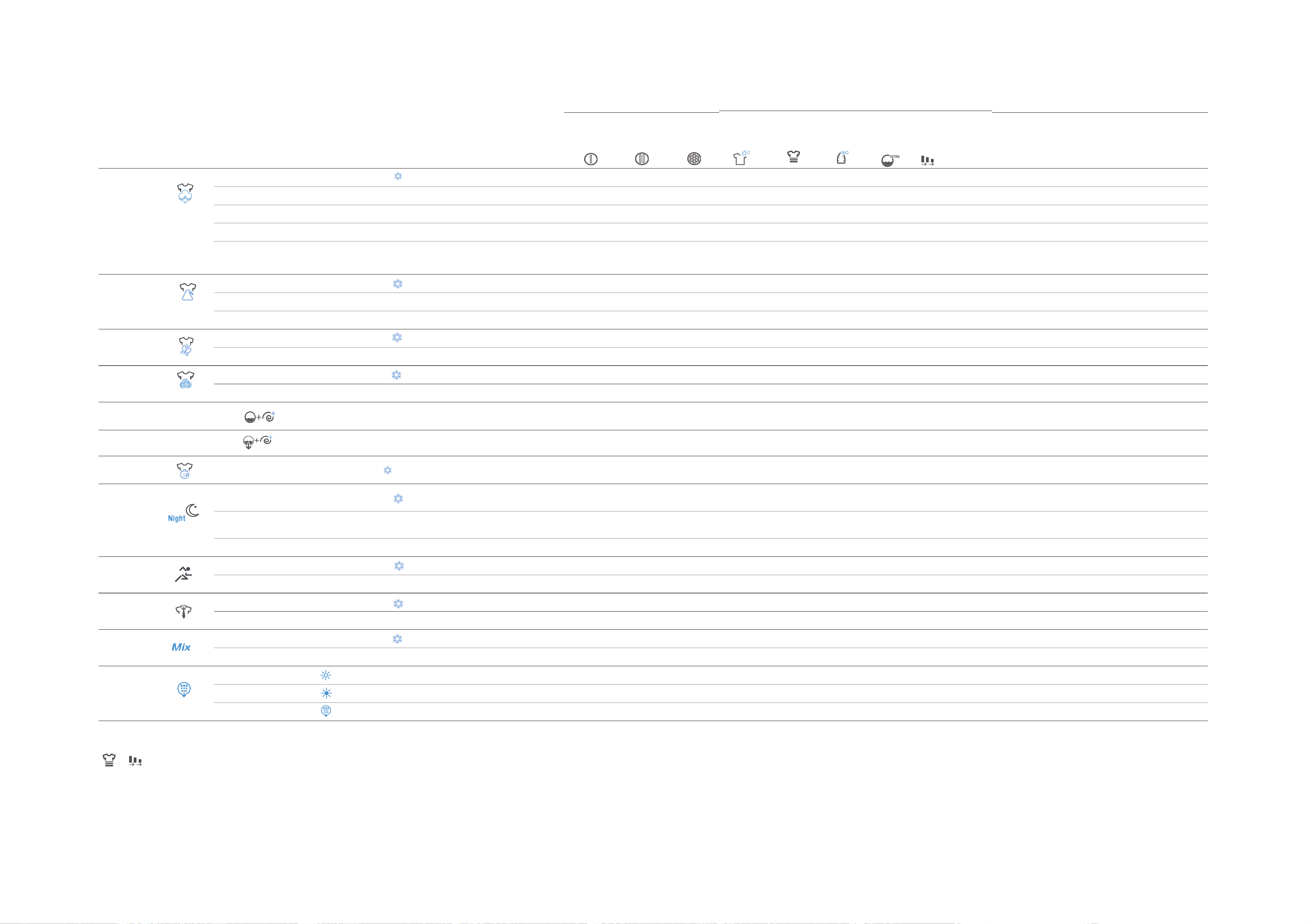
ВЫБОР ПРОГРАММ
Программы
Темп.
(°C)
Макс.
отжим
(об/мин)
Макс.
загрузка
для
стирки
(кг)
Макс.
загрузка
для сушки
(кг)
Предварите-
льная стирка
Стирка Смягчитель
Предвари-
тельная
стирка
Интенсивная
Гладьте
меньше
Дополни-
тельное
полоскание
Flexi
time
Сушка после
стирки, если
выбрана
Описание программы стирки
Хлопок и
цветное белье
Цветные тонкие ткани с небольшим
загрязнением
/ 20° Макс.
7 4
Обычная
Холодная стирка при 20°C, полоскания и конечный отжим на
выбранной скорости
Цветные тонкие ткани с обычным
загрязнением
30° / 40° Макс.
7 4
Обычная
Стирка при 30° или 40°C, полоскания и конечный отжим на
выбранной скорости
Стойкое цветное белье с обычным
загрязнением
60° Макс. 7 4 Обычная
Стирка при 60°C, полоскания и конечный отжим на
выбранной скорости
Стойкое цветное белье с сильным
загрязнением
90° Макс.
7 4
Обычная
Стирка при 90°C, полоскания и конечный отжим на
выбранной скорости
Эко 40-60
Белье из хлопка средней степени загрязнения
можно стирать вместе при температуре 60°C
или 40°C
- Max
7 4 -
Обычная
Стирка, полоскание и окончательный отжим на выбранной
скорости
Синтетика
Освежение одежды
/ 20° 1000
3,5 3,5 -
Бережная
Холодная стирка при 20°C,, полоскания и конечный отжим на
выбранной скорости
Белье с небольшим загрязнением
30° / 40° 1000
3,5 3,5 -
Бережная
Стирка при 30° или 40°C, полоскания и конечный отжим на
выбранной скорости
Белье с обычным загрязнением
60° 1000
3,5 3,5 -
Бережная
Стирка при 60°C, полоскания и конечный отжим на
выбранной скорости
Тонкие ткани /
шелк
Освежение одежды
/ 20° 600
2 - - - - - -
Холодная стирка при 20°C,, полоскания и конечный отжим на
выбранной скорости
Белье с небольшим загрязнением
30° / 40° 600
2 - - - - - -
Стирка при 30° или 40°C, полоскания и конечный отжим на
выбранной скорости
Шерсть
Освежение одежды
/ 20° 800
2 - - - - - - - -
Холодная стирка при 20°C,, полоскания и конечный отжим на
выбранной скорости
Белье с небольшим загрязнением
30° / 40° 800
2 - - - - - - - -
Стирка при 30° или 40°C, полоскания и конечный отжим на
выбранной скорости
Полоскание и
отжим
-
Макс.
7 - - - - - - -
Полоскание и только слив или слив и конечный отжим на
выбранной скорости
Слив и отжим - Макс. 7 - - - - - - - -
Только слив или слив и конечный отжим на выбранной
скорости
Быстрая
Освежение легкого хлопка или тонких тканей
/ 20° / 30° 800
2 - - - - - - - -
Холодная стирка при 20° / 30°C, полоскания и конечный
отжим на выбранной скорости
Ночная стирка
Очень тонкие ткани с небольшим
загрязнением
/ 20° 1000
3 3 - -
Обычная
Бесшумная холодная стирка при 20°C (звуковой сигнал
выкл.), полоскания и конечный отжим на выбранной скорости
Ткани с небольшим загрязнением
30° / 40° 1000
3 3 - -
Обычная
Бесшумная стирка при 30° / 40°C (звуковой сигнал выкл.),
полоскания и конечный отжим на выбранной скорости
Ткани с обычным загрязнением
60° 1000
3 3 - -
Обычная
Бесшумная стирка при 60°C (звуковой сигнал выкл.),
полоскания и конечный отжим на выбранной скорости
Sport
Освежение одежды
/ 20° 800
2 2 - - -
Бережная
Холодная стирка при 20°C, полоскания и конечный отжим на
выбранной скорости
Белье с небольшим загрязнением
30° / 40° 800
2 2 - - -
Бережная
Стирка при 30° или 40°C, полоскания и конечный отжим на
выбранной скорости
Освежение одежды
/ 20° 800
2 2 - - -
Бережная
Холодная стирка при 20°C, полоскания и конечный отжим на
выбранной скорости
Белье с небольшим загрязнением
30° / 40° 800
2 2 - - -
Бережная
Стирка при 30° или 40°C, полоскания и конечный отжим на
выбранной скорости
Освежение Хлопок и синтетика
/ 20° 1200
3 3
Бережная
Холодная стирка при 20°C, полоскания и конечный отжим на
выбранной скорости
Хлопок и синтетика с небольшим
загрязнением
30° / 40° 1200
3 3
Бережная
Стирка при 30° или 40°C, полоскания и конечный отжим на
выбранной скорости
Сушка
Бережная
60° Макс.
- 3 - - - - - - - - - Бережная сушка для синтетического и тонкого белья
Обычная
90° Макс.
- 4 - - - - - - - - - Обычная сушка для хлопкового белья
Clean - - - - - - - - - - - - - Цикл очистки сушильной системы
:
Доступная дополнительная функция
: Функции, которые нельзя выбрать одновременно
Отсеки дозатора для моющих средств
Дополнительные функции
Сорочки /
Рабочая
одежда
Ткани из
смешанных
волокон
Code 19392028200