Use & Care Guide
Manual de Uso y Cuidado
English / Español
Models/Modelos: 417.6173*, 417.7173*
P/N A13414901 (1805)
Sears Brands Management Corporation
Homan Estates, IL 60179 U.S.A.
www.kenmore.com
www.sears.com
®
Kenmore
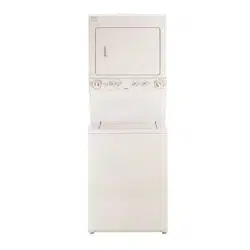
Laundry Center
Centro de lavado
* = Color number, número de color
2
Important Safety
Instructions
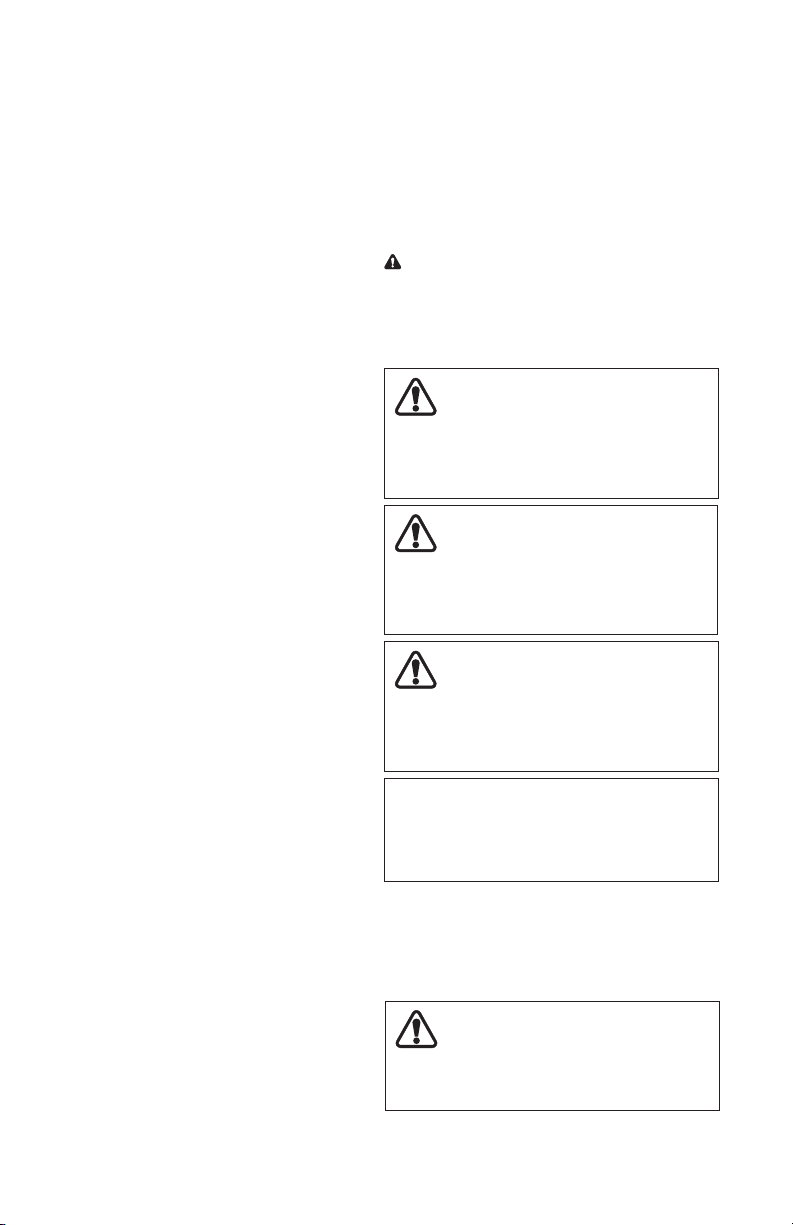
IMPORTANT
Indicates installation, operation, or
maintenance information which is
important but not hazard-related.
CAUTION
CAUTION indicates a potentially
hazardous situation which, if not avoided,
may result in minor or moderate injury.
WARNING
WARNING indicates a potentially
hazardous situation which, if not avoided,
could result in death or serious injury.
DANGER
DANGER indicates an imminently
hazard -ous situation which, if not avoid-
ed, will result in death or serious injury.
Denitions
This is the safety alert symbol. It is used
to alert the user of potential personal
injury hazards. Obey all safety messages
that follow this symbol to avoid possible
injury or death.
Recognize safety symbols, words
and labels
Safety items throughout this manual are
labeled with a WARNING or CAUTION
based on the risk type as described below:
WARNING
Please read all instructions before using
this laundry center.
Record Model/Serial
Numbers
This
Use & Care Guide
provides general
operating instructions for this laundry
center. It also contains information about
features for several other models. Models
vary and may not have every feature
included in this document.
Use the laundry center only as instructed
in this
Use & Care Guide
.
The model and serial numbers of the
washer are found on the serial plate
located inside the dryer door opening.
Record and retain these numbers.
Model Number ____________________
Serial Number _____________________
Purchase Date _____________________
This book contains valuable information
about the operation, care and service of
this appliance. Keep it in a safe place.
Table of Contents
Record Model/Serial Numbers ................ 2
Important Safety Instructions ............... 2-6
Warranty Information ............................ 7
Washer Operating Instructions ........... 8-10
Washer Controls and Settings ........... 10-13
Stain Removal ................................ 13-15
Common Washing Problems ............. 16-17
Dryer Operating Instructions ............ 18-19
Dryer Controls and Settings ............. 19-21
Common Drying Problems .................... 22
Care and Cleaning .......................... 23-24
Before Calling ................................ 25-27
Child Safety
Destroy or recycle the carton, plastic
bags, and any exterior wrapping material
immediately after the laundry center is
unpacked. Children should never use these
items to play. Cartons covered with rugs,
bedspreads, plastic sheets or stretch wrap
may become airtight chambers, and can
quickly cause suocation.
Proper Disposal Laundry Center
Risk of Child Entrapment
Child entrapment and suocation are
not problems of the past. Junked or
abandoned washers/dryers are still
dangerous – even if they will sit for “just
a few days”. If you are getting rid of
your old washer/dryer, please follow the
Protect Children
section of the safety
instructions to help prevent accidents.
3
Important Safety Instructions
WARNING
FIRE OR EXPLOSION HAZARD
Failure to follow safety warning exactly could
result in serious injury, death, or property
damage.
DO NOT store or use gasoline or other
ammable vapors and liquids in the vicinity
of this or any other appliance.
WHAT TO DO IF THE SMELL OF GAS IS PRESENT:
• DO NOT try to light any appliance.
• DO NOT touch any electrical switch.
• DO NOT use phone.
• Clear the room, building, or area of all
occupants.
• Immediately call the gas supplier from a
neighbor’s phone. Follow the gas supplier’s
instructions.
• If the gas supplier cannot be reached, call the
re department.
Installation and service must be performed by
a qualied installer, service agency, or the gas
supplier.
NOTE
The instructions appearing in this
Use & Care Guide
are not meant to cover every
possible condition and situation that may occur. Common sense and caution must be
practiced when installing, operating and maintaining any appliance.
SAVE THESE INSTRUCTIONS FOR FUTURE REFERENCE.
4
Important Safety Instructions
WARNING - RISK OF FIRE
To reduce the risk of re, electrical
shock, or injury to persons when using
this laundry center, comply with the
basic warnings listed below. Failure
to comply with these Important Safety
Instructions and warnings could result
in serious personal injuries or death.
Prevent Fire
• DO NOT wash or dry items that have
been previously cleaned in, soaked in,
or spotted with gasoline, cleaning sol-
vents, kerosene, cooking oils, waxes, etc.
DO NOT store these items on or near
the washer. These substances give o
vapors or chemical reactions that could
ignite or explode.
• DO NOT put oily or greasy rags or
clothing on top of the laundry center.
These substances give o vapors that
could ignite the materials.
• DO NOT add gasoline, cleaning sol-
vents, or other ammable or explosive
substances to the wash water. These
substances give o vapors that could
ignite or explode.
• Under certain conditions, hydrogen gas
may be produced in a hot water system
that has not been used for 2 weeks or
more. HYDROGEN GAS IS EXPLOSIVE.
If the hot water system has not been
used for such a period, turn on all hot
water faucets and let the water ow
from each for several minutes BEFORE
using the washer. This will release any
accumulated hydrogen gas. Hydrogen
gas is ammable; DO NOT smoke or
use an open ame during this time.
• DO NOT store or use gasoline or other
ammable vapors or liquids in the vicin-
ity of this or any other appliance.
• DO NOT place items exposed to cook-
ing oils in the dryer. Items contaminated
with cooking oils may contribute to a
chemical reaction that could cause a
load to catch re. To reduce the risk of
re due to contaminated loads, the nal
part of a tumble dryer cycle occurs
without heat (cool down period). Avoid
stopping a tumble dryer before the end
of the drying cycle unless all items are
quickly removed and spread out so that
the heat is dissipated.
• DO NOT dry articles containing rubber,
plastic or similar materials such as bras,
galoshes, bath mats, rugs, bibs, baby
pants, plastic bags, and pillows that
may melt or burn. Some rubber materi-
als, when heated, can under certain
circumstances produce re by sponta-
neous combustion.
• Clean lint lter before or after each load.
The interior of dryer, lint lter housing,
and exhaust duct should be cleaned ap-
proximately every 18 months by qualied
service personnel. An excessive amount
of lint build-up in these areas could result
in inecient drying and possible re.
See
Care and Cleaning
.
• DO NOT operate the dryer if the lint
lter is blocked, damaged or missing.
Fire hazard, overheating, and damage
to fabrics can occur.
WARNING
FIRE HAZARD
A clothes dryer produces combustible
lint. The dryer must be connected to an
outdoors exhaust. Regularly inspect the
outdoor exhaust opening and remove
any accumulation of lint around the
opening and in the surrounding area.
• DO NOT obstruct the ow of ventilat-
ing air. DO NOT stack or place laundry
or throw rugs against the front or back
of the dryer.
• DO NOT spray any type of aerosol into,
on or near dryer at any time.
• DO NOT use fabric softeners or prod-
ucts to eliminate static unless recom-
mended by the manufacturer of the
fabric softener or product.
• DO NOT continue to use laundry center
if squeaking, grinding, rubbing or other
unusual noises are heard. This could be a

5
Important Safety Instructions
sign of mechanical breakdown and lead
to re or serious injury. Contact a quali-
ed technician immediately.
• Failure to comply with these warnings
could result in re, explosion, serious
bodily injury, and/or damage to rubber
or plastic parts of the laundry center.
Protect Children
• DO NOT allow children to play on or in
the laundry center. Close supervision of
children is necessary when the laundry
center is used near children. As children
grow, teach them the proper, safe use
of all appliances.
• Destroy the carton, plastic bag, and
other packing materials after the laun-
dry center is unpacked. Children might
use them for play. Cartons covered with
rugs, bedspreads or plastic sheets can
become airtight chambers.
• Keep laundry products out of children’s
reach. To prevent personal injury, ob-
serve all warnings on product labels.
• Before the laundry center is removed
from service or discarded, remove the
washer and dryer doors to prevent ac-
cidental entrapment.
• Failure to comply with these warnings
could result in serious personal injuries.
Prevent Injury
• To prevent shock hazard and assure
stability during operation, the laundry
center must be installed and electrically
grounded by a qualied service person
in accordance with local codes. Instal-
lation instructions are packed in the
washer for installer’s reference. Refer
to
Installation Instructions
for detailed
grounding procedures. If the laundry
center is moved to a new location, have
it checked and reinstalled by a quali-
ed service person.
• To prevent personal injury or damage
to laundry center, the electrical power
cord of a gas dryer must be plugged
into a properly grounded and polarized
3-prong outlet. The third grounding prong
must never be removed. Never ground
the dryer to a gas pipe. DO NOT use an
extension cord or an adaptor plug.
• ALWAYS disconnect the laundry center
from the electrical supply before
attempting any service or cleaning.
Failure to do so can result in electrical
shock or injury.
• DO NOT use any type spray cleanser
when cleaning dryer interior. Hazardous
fumes or electrical shock could occur.
WARNING
FIRE/ELECTRICAL SHOCK HAZARD
Avoid re hazard or electrical shock. DO NOT use an adaptor plug or extension
cord or remove grounding prong from electrical power cord. Failure to follow this
warning can cause serious injury, re, or death.
240 v Electric Dryer
120 v Gas Dryer
UL-approved service
cord must be installed
on electric dryers (not
provided with unit
except those
manufactured for sale
in Canada).
Do not, under
any circumstances,
cut, remove,
or bypass the
grounding prong.
Power cord
with 3-prong
grounded plug
10-30R
3-wire
(fused 30 amp)
14-30R
4-wire
(fused 30 amp)
Grounding
type wall
receptacle
6
• To prevent injury, DO NOT reach into
the laundry center while parts are
moving. Before loading, unloading or
adding items, push in the cycle selector
knob to stop the cycle. Allow the wash
tub or dryer drum to coast to a com-
plete stop before reaching inside.
• Follow package directions when using
laundry products. Incorrect usage can
produce poisonous gas - resulting in
serious injury or death.
• DO NOT combine laundry products
for use in 1 load unless specied on the
label.
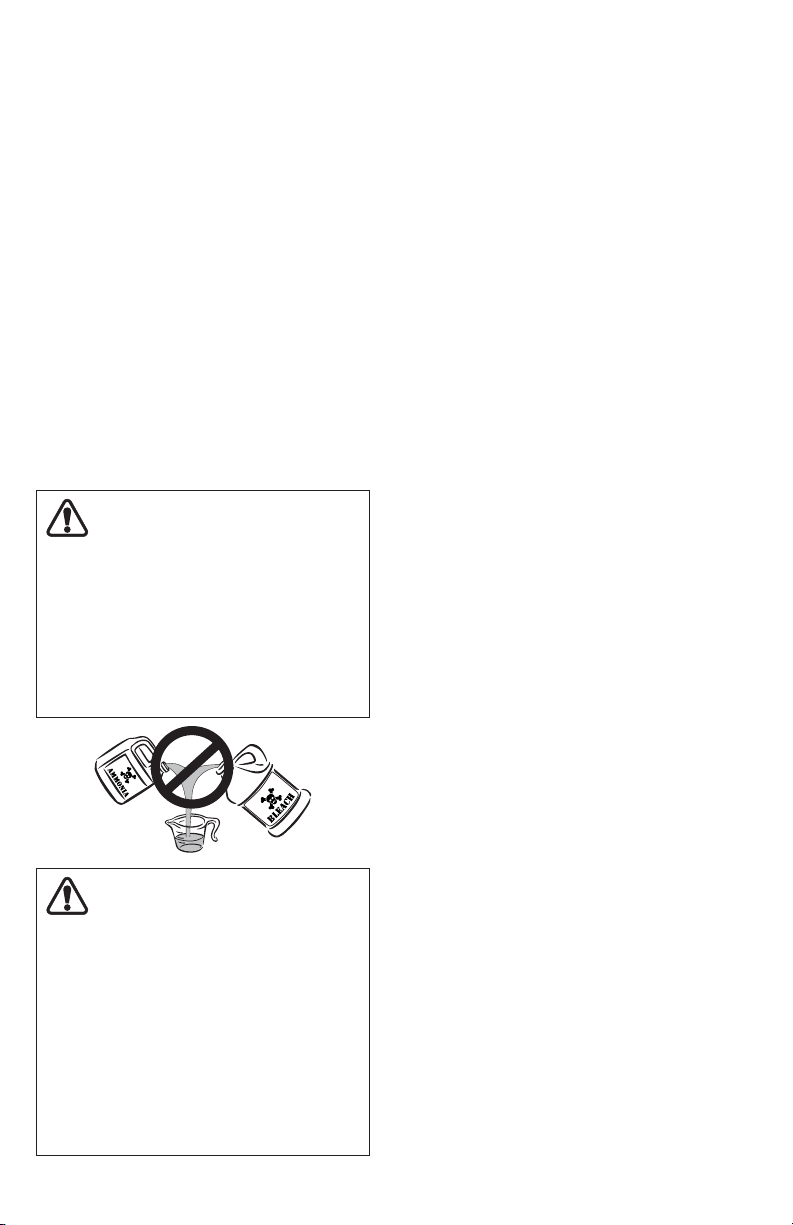
• DO NOT mix chlorine bleach with am-
monia or acids such as vinegar.
Prevent Injury and Damage to the
Appliance
To prevent serious personal injury and
damage to the laundry center:
• All repairs and servicing must be per-
formed by an authorized service agent
unless specically recommended in this
Use & Care Guide
. Use only authorized
factory parts.
• DO NOT tamper with controls.
• DO NOT install or store the laundry
center where it will be exposed to the
weather. DO NOT operate the laundry
center in below freezing temperatures.
• DO NOT install on carpet. Install
laundry center on a solid oor. It may
be necessary to reinforce the oor to
prevent vibration or movement.
• DO NOT sit on, step on or stand on the
laundry center. DO NOT rest heavy
loads on top. The laundry center is not
meant to support weight.
• To reduce the risk of electric shock,
disconnect this appliance from the
power supply before attempting any
user maintenance. Canceling a cycle
or turning the power o at the console
does not disconnect this appliance from
the power supply.
• This laundry center is equipped with
an electrical overload protector. The
washer motor will stop if it becomes
overheated.
• A thermal limiter switch automatically
turns o the dryer motor in the unlikely
event of an overheated situation. A
service technician must replace the
thermal limiter switch after correcting
the fault.
• Failure to comply with these warnings
could result in property damage or seri-
ous personal injuries.
WARNING
HARMFUL VAPOR HAZARD
Do not use or mix liquid chlorine
bleach with other household chemicals
such as toilet cleaners, rust removers,
acid or products containing ammonia.
These mixtures can produce dangerous
fumes which can cause serious injury
or death.
CAUTION
The California Safe Drinking Water
and Toxic Enforcement Act requires
the Governor of California to publish
a list of substances known to the state
to cause cancer, birth defects or other
reproductive harm, and requires busi-
nesses to warn customer of potential
exposure to such substances. Included
in this list are soot and carbon monox-
ide, both of which may be produced
by the use of this product.
Important Safety Instructions

7
Warranty Information
KENMORE LIMITED WARRANTY
WITH PROOF OF SALE the following warranty coverage applies when this appliance is correctly
installed, operated and maintained according to all supplied instructions.
One Year on Appliance
FOR ONE YEAR from the date of sale this appliance is warranted against defects in material or
workmanship. A defective appliance will receive free repair or replacement at option of seller.
Lifetime on Washer Drive Motor
FOR AS LONG AS IT IS USED from the date of sale, a free replacement will be supplied for a
defective washer drive motor. If the defect appears within the rst year, a new motor will be installed
at no charge. If the defect appears after the rst year, a new motor will be supplied but not installed
at no charge. This Lifetime warranty covers only the washer drive motor, and does not apply to any
other related component or mechanism. You are responsible for the labor cost of motor installation
after the rst year from the date of sale.
Lifetime on Dryer Drum and Baes
FOR AS LONG AS IT IS USED from the date of sale, a free replacement will be supplied for a
defective dryer drum, including baes. If the defect appears within the rst year, a new drum or
baes will be installed at no charge. If the defect appears after the rst year, a new drum or baes
will be supplied but not installed at no charge. This Lifetime warranty covers only the dryer drum and
baes, and does not apply to any other related component or mechanism. You are responsible for
the labor cost of drum or bae installation after the rst year from the date of sale.
For warranty coverage details to obtain free repair or replacement, visit the web page: www.
kenmore.com/warranty
All warranty coverage applies for only 90 DAYS from the sale date if this appliance is ever used for
other than private household purposes.
This warranty covers ONLY defects in material and workmanship, and will NOT pay for:
1. Expendable items that can wear out from normal use, including but not limited to lters, belts,
bags or screw-in base light bulbs.
2. A service technician to clean or maintain this appliance, or to instruct the user in correct
appliance installation, operation and maintenance.
3. Service calls to correct appliance installation not performed by Sears authorized service agents,
or to repair problems with house fuses, circuit breakers, house wiring, and plumbing or gas
supply systems resulting from such installation.
4. Damage to or failure of this appliance resulting from installation not performed by Sears
authorized service agents, including installation that was not in accord with electrical, gas or
plumbing codes.
5. Damage to or failure of this appliance, including discoloration or surface rust, if it is not
correctly operated and maintained according to all supplied instructions.
6. Damage to or failure of this appliance, including discoloration or surface rust, resulting from
accident, alteration, abuse, misuse or use for other than its intended purpose.
7. Damage to or failure of this appliance, including discoloration or surface rust, caused by the use
of detergents, cleaners, chemicals or utensils other than those recommended in all instructions
supplied with the product.
8. Damage to or failure of parts or systems resulting from unauthorized modications made to this
appliance.
9. Service to an appliance if the model and serial plate is missing, altered, or cannot easily be
determined to have the appropriate certication logo.
Disclaimer of implied warranties; limitation of remedies
Customer’s sole and exclusive remedy under this limited warranty shall be product repair or
replacement as provided herein. Implied warranties, including warranties of merchantability or tness
for a particular purpose, are limited to one year on the appliance and for as long as used on the
washer drive motor and dryer drum and baes, or the shortest period allowed by law. Seller shall
not be liable for incidental or consequential damages. Some states and provinces do not allow the
exclusion or limitation of incidental or consequential damages, or limitation on the duration of implied
warranties of merchantability or tness, so these exclusions or limitations may not apply to you.
This warranty applies only while this appliance is used in the United States.
This warranty gives you specic legal rights, and you may also have other rights which vary from state.
Sears Brands Management Corporation, Homan Estates, IL 60179
8
Washer Operating Instructions
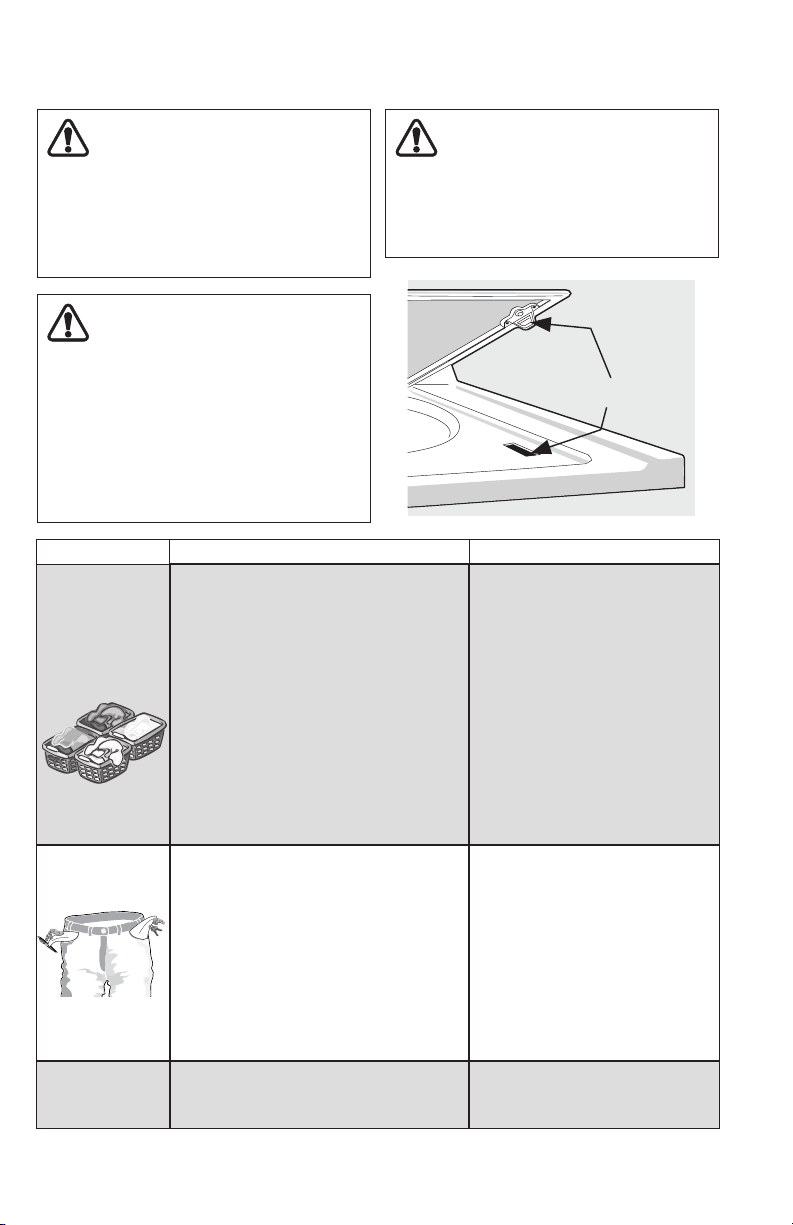
Safety Lid Lock
WARNING
To reduce the risk of re, electric
shock or injury to persons, read these
Important Safety Instructions in this
Use & Care Guide
before operating this
washer.
WARNING
DO NOT wash water-resistant and
water-repellent type clothing or other
materials. Failure to closely follow
these instructions may result in ab-
normal vibrating and out-of-balance
conditions that could result in physical
injury, property damage, and/or appli-
ance damage.
CAUTION
To avoid serious personal injury, DO
NOT operate washer if safety lid lock
is missing, damaged or operating
improperly.
Steps Tips Important
1. Sort
laundry
into loads
that can
be washed
together.
• Sort by recommended cycle and
water temperature.
• Separate light, and colorfast items
from dark and non-colorfast items.
• Separate items that shed lint from
items that attract lint. Casual,
synthetic, knit, and corduroy items
will pick up lint from towels, rugs,
and bedspreads.
• Separate heavily soiled items from
lightly soiled items.
• Separate lacy, sheer, loosely knit, or
delicate items from durable items.
• DO NOT machine wash
items containing berglass.
Small particles of berglass
left in drum may transfer to
fabrics in other loads and
cause skin irritation and/or
damage to fabrics.
• DO NOT wash water-resis-
tant and water-repellent type
clothing or other materials
2. Prepare
items for
washing.
• Empty pockets.
• Brush o lint and dirt. Shake out
rugs and beach towels.
• Close zippers, fasten hooks,
button buttons, and tie strings/
sashes. Remove non-washable trims
and ornaments.
• Place delicate and small items such
as bras and hosiery in a mesh bag
(not included).
• Mend rips and tears to
prevent further damage
during washing.
• Turn knit items inside out to
prevent pilling.
3. Pretreat
stains and
heavy soil.
• See
Stain Removal Guide
in this
guide for safe, successful stain re-
moval instructions.
9
Washer Operating Instructions
Steps Tips Important
4. Add liquid
detergent
or powder
detergent
to wash
tub before
adding
load.
• Detergent packs can also be used
but may not fully dissolve in some
cycles.
• The amount of detergent required
depends on the type of detergent,
load size, and water hardness.
• Follow manufacturer’s in-
structions for recommended
amount of detergent.
• Use a low-sudsing,
high-eciency detergent
to prevent oversudsing.
• Look for the
high-eciency
symbol on the detergent
label.
5. Add
other wash
products to
wash tub
(if desired).
• Water conditioners, detergent
boosters, and enzyme products
may be added with detergent.
• See product manufacturer’s
instructions.
6. Add bleach
(if desired)
before
adding
load.
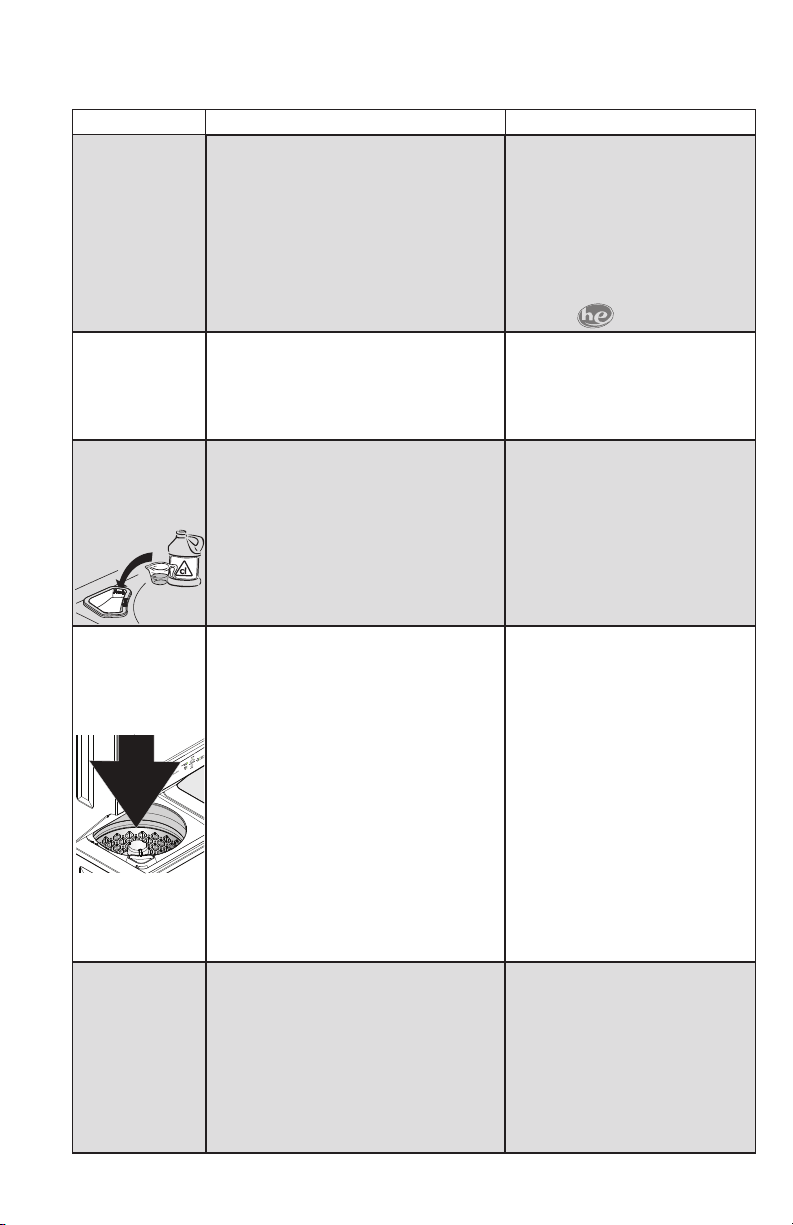
• If using liquid bleach, add to
bleach dispenser located in left
front corner under lid. Then add
1 cup (240 ml) water to ush
dispenser.
• If using powdered bleach, add di-
rectly to the empty tub.
• Follow manufacturer’s in-
structions for recommended
amount of bleach.
• DO NOT use powdered
bleach in bleach dispenser.
7. Add laun-
dry load to
wash tub.
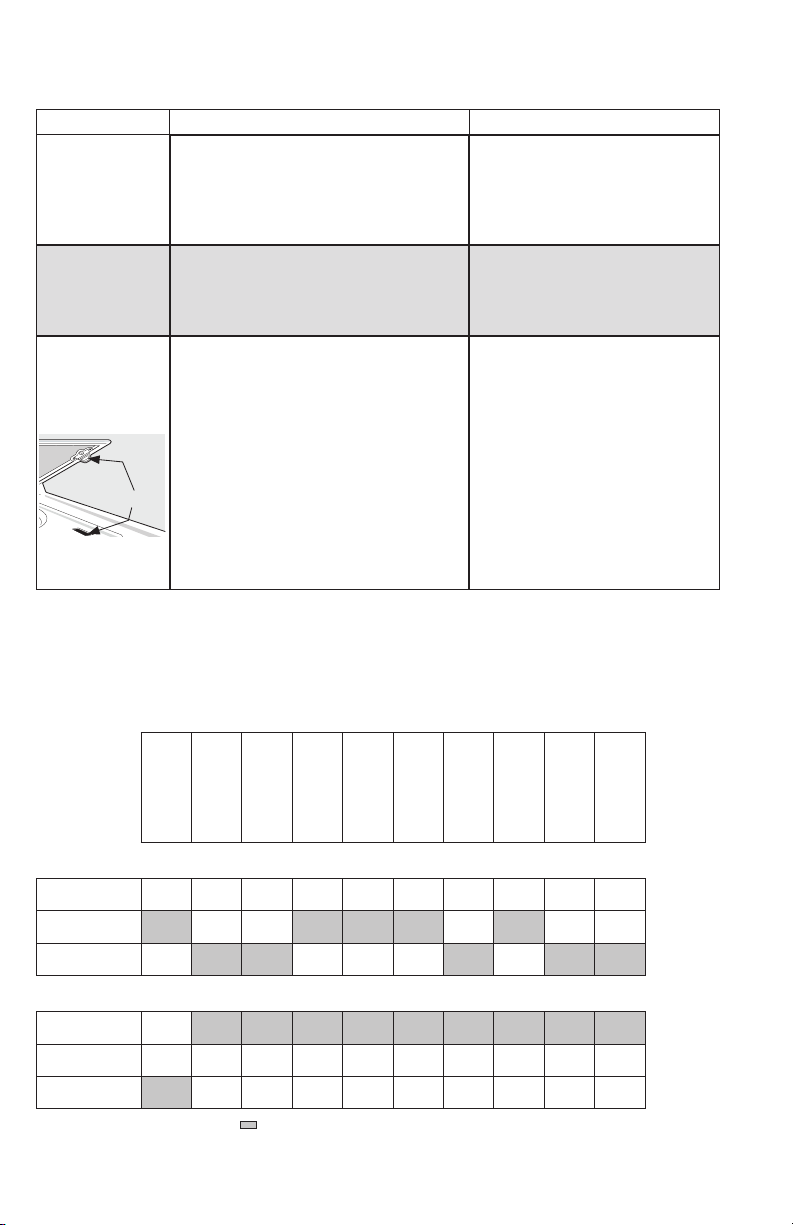
• Add items one at a time, each
tightly bunched into its own “ball”
to allow benecial item interaction.
Avoid loading items in a at, laid-
out fashion.
• For best washing performance, dry
load level should not be higher
than the upper row of holes in the
wash tub.
• Combine large and small items in a
load. Load small items rst. Large
items should not be more than half
the total wash load.
• When washing a single heavy item,
add 1 or 2 towels to balance the
load.
• DO NOT overload the
washer.
8. Add liquid
fabric soft-
ener to the
nal rinse
(if desired).
• Add diluted fabric softener to
the nal rinse following fabric soft-
ener manufacturer’s
instructions.
• A fabric softener dispensing ball
can also be used.
• To prevent staining, DO NOT
pour liquid fabric softener
directly on to wash load.
• Use of multi-product (deter-
gent plus softener) sheets or
color-absorbing sheets NOT
recommended. They could
damage or disable the ma-
chine.
10
Steps Tips Important
9. Select
washing
cycle and
settings for
each load.
• See
Washer Cycle Selection
and
Washer Cycle Settings
.
• Unit will emit three short beeps to
indicate it is in “wake” mode and
ready to operate.
• For best results, follow
fabric care label on items to
be washed.
10. Close the
washer lid
and start
the washer.
• See
Washing Cycle Controls (Start,
Pause, and Cancel)
.
• LED will light solid when washer is
running.
• Pausing a wash cycle while
washer is running may
aect performance of
the wash cycle.
11. Remove
items when
the cycle is
completed.
• For safety, the lid is locked during
the operation of the washer.
• Once cycle has ended, wash tub
will come to a complete stop and
door lid safety lock will disengage
with an audible double click.
• Place washed items in automatic
dryer, line dry, or dry at as di-
rected by fabric care label. Excess
wrinkling, color transfer or odors
may develop in items left in the
washer after the cycle has ended.
• DO NOT force open the
locked lid. The wash tub can
take several minutes
to stop.
• For best results, follow
fabric care label on items to
be dried.
• For safety, the lid will remain
locked for 6 minutes after
the cycle ends.
Safety Lid Lock
Washer Operating Instructions
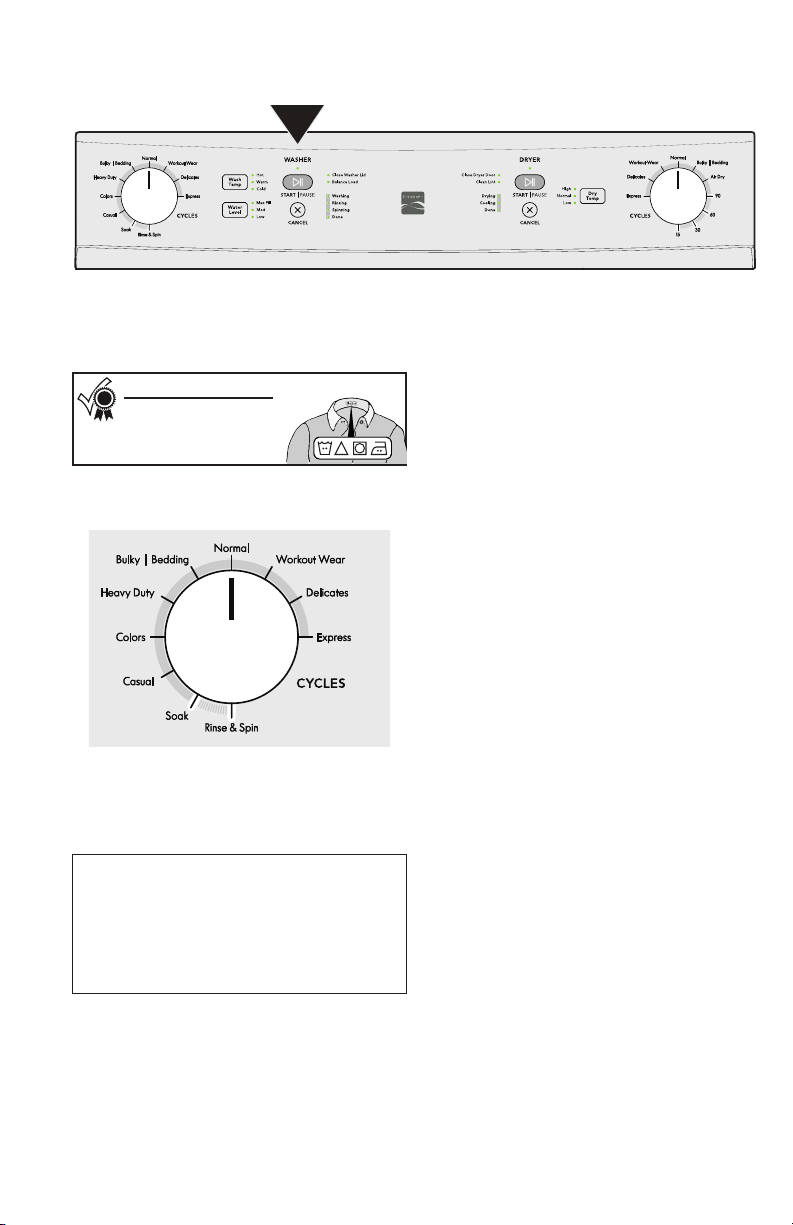
Washing Setting Chart
These temperatures and water levels are available with the following cycles.
Express
Delicates
Workout
Wear
Normal
Bulky|
Bedding
Heavy Duty
Colors
Casual
Soak
Rinse & Spin
Water Temperature
Hot
Warm
Cold
Water Level
Max Fill
Med
Low
= Available selections. = Factory presets.
See Washing Cycle Selection and Washing Cycle Settings on the following pages for a
detailed description of each setting.
Washer Controls and Settings
Follow the fabric care
label instructions on
items to be washed.
For best results
11
Washer Controls and Settings
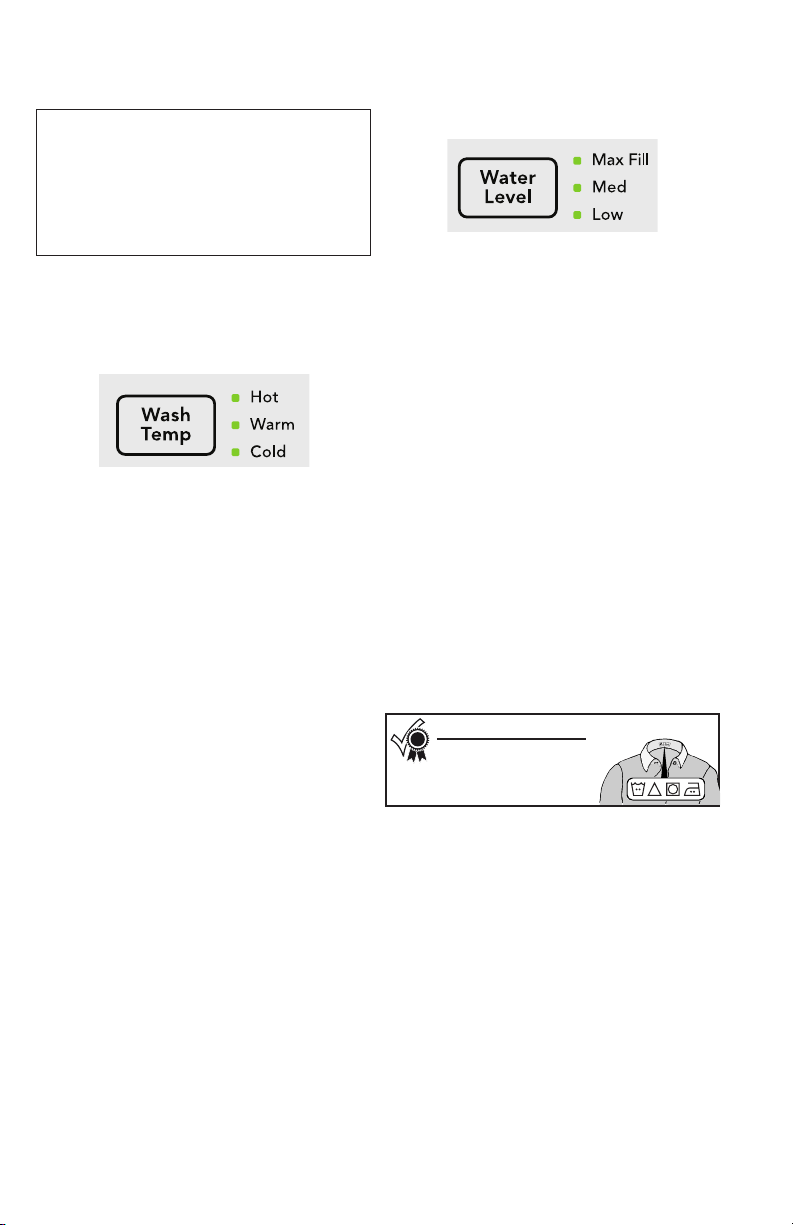
Turn the washer cycle selector in either
direction to select a washing cycle.
Normal
Select this cycle for normally soiled
cottons, linens, towels, shirts, denims, and
mixed loads.
Washing Cycle Selection
Workout Wear
Select this cycle for small loads of light-
weight, synthetic apparel worn for
working out, running, swimming, cycling,
tennis, and similar activities when
removal of light soil and perspiration are
important.
Delicates
Select this cycle for lightly soiled knits and
delicates which require gentle washing.
Express
Select this cycle to quickly wash a small,
lightly soiled load in 35 minutes.
Rinse & Spin
Select this cycle for loads that require a
cold water rinse or to add fabric softener
that omitted in a regular cycle.
Soak
Select this cycle to soak heavily soiled
and stained items before washing. Cold
water is recommended with this cycle as
warmer water may set some stains. Use
the amount of detergent recommended
for a normal wash cycle. If desired, use
a bleach or a soaking agent safe for the
fabric. The washer will continue on with
a soil-loosening wash cycle immediately
after the soak phase.
Casual
Select this cycle for lightly soiled cottons,
linens, towels, shirts, denims, and mixed
loads.
Colors
Select this cycle for lightly soiled, dark,
or highly dyed fabrics which may be
susceptible to dye loss.
Heavy Duty
Select this cycle for heavily soiled cottons,
linens, towels, shirts, denims, and mixed
loads.
Bulky|Bedding
Select this cycle for bulky items such
as comforters, blankets, mattress pads,
sleeping bags, and other similar items.
NOTE
TO MAXIMIZE ENERGY EFFICIENCY
Perform normal cycle with energy saver
option selected (if available) and rinse
level in the auto position (if available).
This manual covers many models and not all cycles, options, or features listed are
available on every model. Consoles shown above for reference only. Models may vary.
Follow the fabric care
label instructions on
items to be washed.
For best results
12
NOTE
Washers connected to water supplies
with lower inlet pressure will experi-
ence longer lling times and may not
complete cycle as quickly.
Washing Cycle Settings
Water Level
Wash Temp (Water Temperature)
Press the Wash Temp button to cycle
through wash water temperatures until the
desired temperature is selected. The LED
will light to indicate the current selection.
Select a wash water temperature
according to ber content, colorfastness,
and soil level. To protect fabrics, the
temperature range of cold to hot settings
may be dierent depending on cycle
selected.
The water heater setting, its distance from
the washer, water usage in other parts
of the home, and seasonally low ground
water temperature in some geographic
areas can aect water temperature.
Hot
Select this setting for heavily soiled white
or colorfast cottons and blends.
Warm
Select this setting for normally soiled
white or colorfast cottons or blends.
Cold
Select this setting for lightly soiled non-
colorfast items, knits, delicates, and
hand washables. Some warm water will
automatically blend with cold tap supply
to achieve cold.
Press the Water Level button to cycle
through wash water level until the desired
water level is selected. The recommended
water level can be determined by the size
of the wash load.
Max Fill
Select the Max Fill water level setting if
the tub is over one half (1/2) full.
Med (Medium)
Select the Med water level setting if the
tub is between one third (1/3) and
one half (1/2) full.
Low
Select the Low setting if the tub is one
third (1/3) or less full.
The Med and Max Fill settings are also
recommended for heavily soiled loads
to remove excess dirt and detergent or if
household members have sensitive skin.
Washer Controls and Settings
13
Washer Controls and
Settings
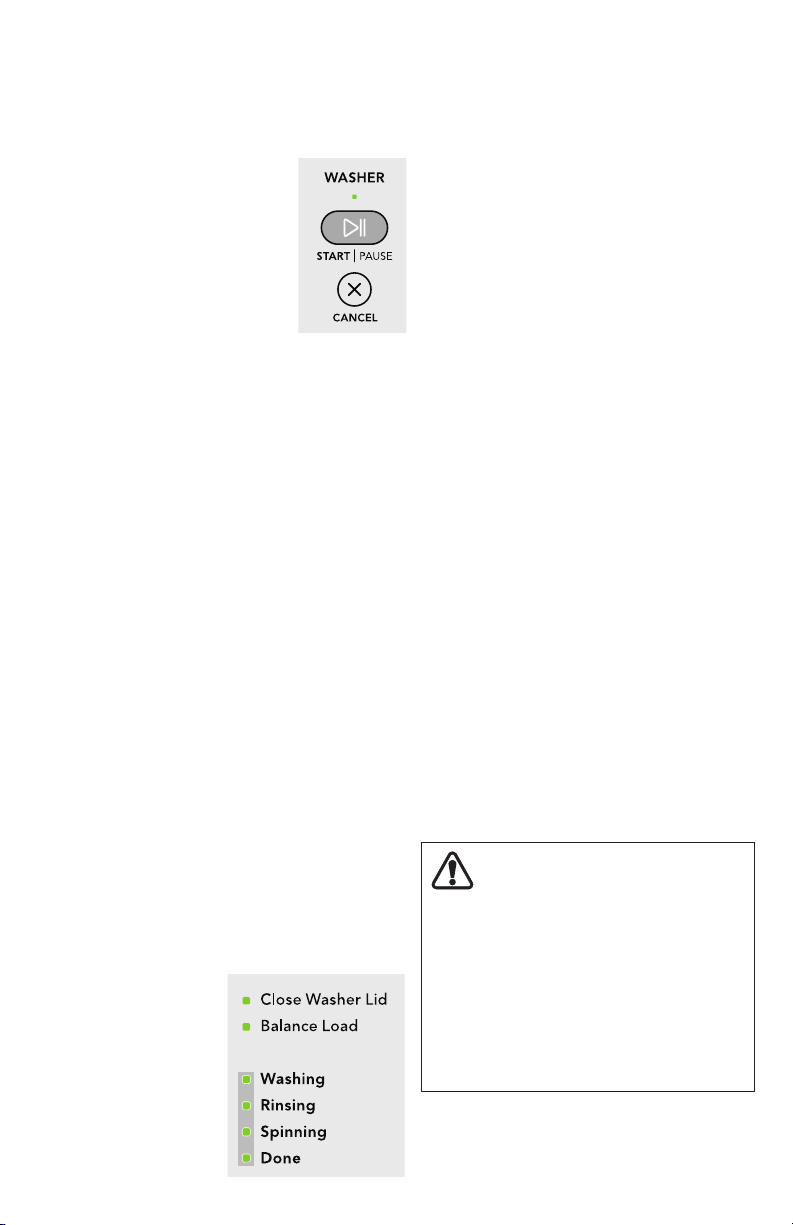
Washing Cycle Indicator Lights
The washing
cycle indicator
lights provide
information
during the wash
cycle.
The Close Washer
Lid advisory LED
will illuminate if
the washer lid is
Safe Stain Removal Procedures
• Remove stains promptly.
• Follow the recommended treatment in
the stain removal chart on the next page.
• To pretreat stains, use a prewash prod-
uct, liquid detergent, or a paste made
from powder detergent and water.
• Use cold water on unknown stains as
hot water can set stains.
• Consult care label instructions for treat-
ments to avoid on specic fabrics.
• Check for colorfastness by testing stain
remover products on an inside seam.
• Rinse and wash items after stain re-
moval.
Washing Cycle Controls
(Start, Pause, and Cancel)
Start
Press the washer
START|PAUSE button once
to begin the wash cycle.
The unit will emit two short
beeps, the LED will turn
solid green, and the door
lid lock will engage with an
audible double click.
Pause
Press the washer START|PAUSE button
once while the washer is running to pause
the wash cycle. The unit will emit one
short beep, the LED will blink, the wash
tub will come to a complete stop, and
the door lid safety lock will disengage
with an audible double click. The wash
tub can take several minutes to stop after
the START|PAUSE button is pressed. DO
NOT force open the locked lid. Press the
START|PAUSE button again to restart the
wash cycle.
Cancel
Press the washer CANCEL button to
cancel the wash cycle. The unit will emit
one long beep, the wash tub will come
to a complete stop, and the door lid
safety lock will disengage with an audible
double click. The wash tub can take
several minutes to stop after the CANCEL
button is pressed. DO NOT force open
the locked lid.
open. Fully close the washer lid before
starting the washer. The washer will not
operate with the lid open.
The Balance Load advisory LED indicator
will illuminate if the wash load is
unbalanced in the drum during the wash
cycle. Pause the washer and redistribute
the wash load.
The Cycle Status Lights will illuminate as
each stage of the wash cycle is reached.
Cycle Status Light stages include:
Washing, Rinsing, Spinning and Done.
WARNING
To reduce the risk of re or serious
injury to persons or property, comply
with the basic warnings listed below:
• Read and comply with all instruc-
tions on stain removal products.
• Keep stain removal products in their
original labeled containers and out
of children’s reach.
Stain Removal
14
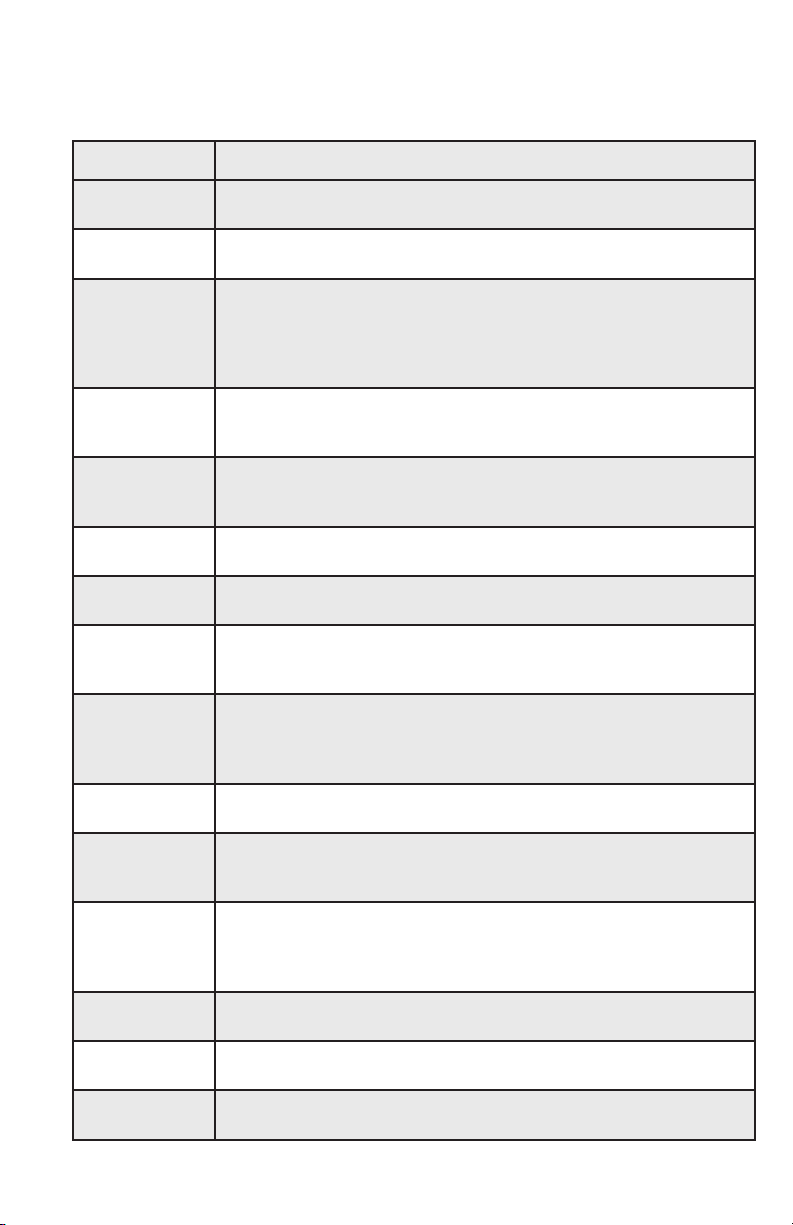
Stain Removal
Stain Treatment
Adhesive tape,
rubber cement,
gum
Apply ice. Scrape o excess. Place stain face down on paper
towels. Saturate with prewash stain remover or nonammable dry
cleaning uid.
Baby formula,
dairy products,
egg
Use product containing enzymes to pretreat or soak stains. Soak for
30 minutes or more. Wash.
Beverages
(coee, alcoholic
beverages, tea,
soda, juice)
Pretreat stain. Wash using cold water and bleach safe for fabric.
Blood Rinse with cold water. Rub with bar soap. Or, pretreat or soak with
product containing enzymes. Wash using bleach safe for fabric.
Candle wax,
crayon
Scrape o surface wax. Place stain face down between paper
towels. Press with warm iron until wax is absorbed. Replace paper
towels frequently. Treat remaining stain with prewash stain remover
or nonammable dry cleaning uid. Hand wash to remove solvent.
Wash using bleach safe for fabric
Chocolate Pretreat or soak in warm water using product containing enzymes.
Wash using bleach safe for fabric.
Collar or cu
soil, cosmetics
Pretreat with prewash stain remover or rub with bar soap.
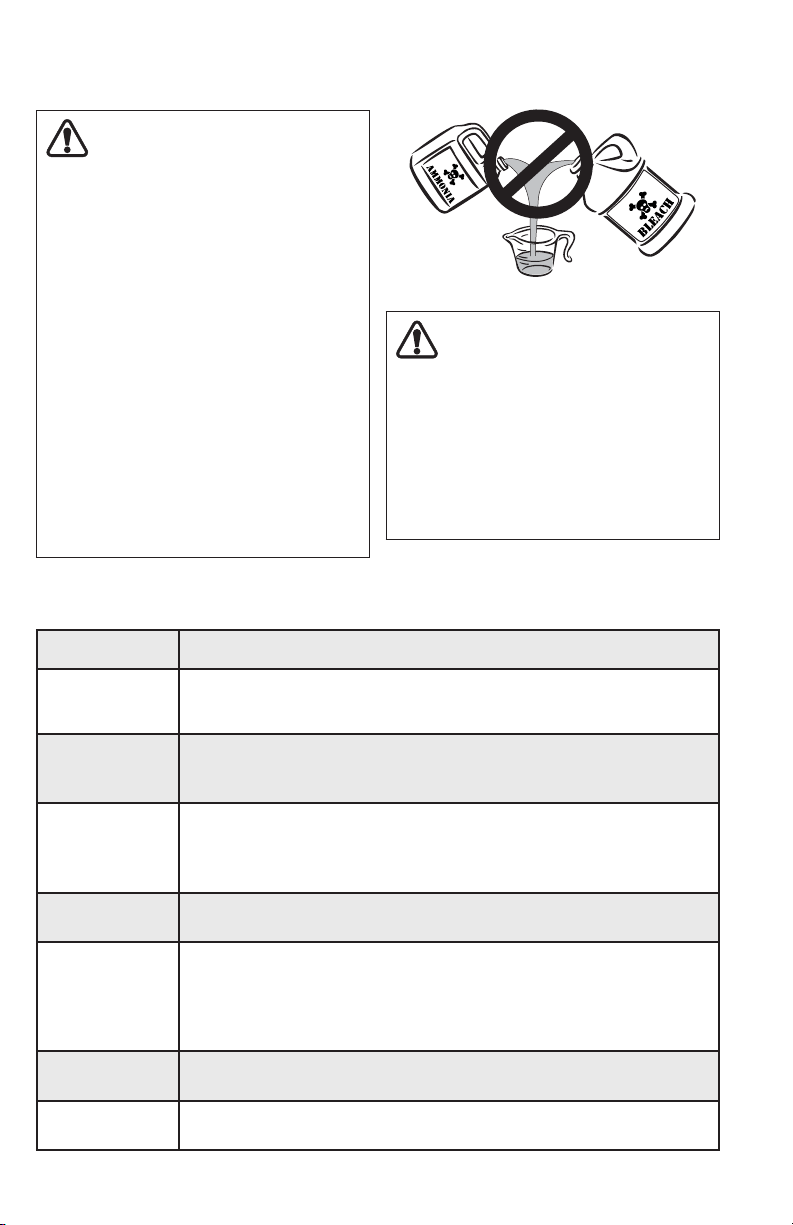
Stain Removal Suggestions
WARNING
HARMFUL VAPOR HAZARD
DO NOT use or mix liquid chlorine
bleach with other household chemicals
such as toilet cleaners, rust removers,
acid or products containing ammonia.
These mixtures can produce dangerous
fumes which can cause serious injury
or death.
WARNING
To reduce the risk of re or serious
injury to persons or property, comply
with the basic warnings listed below:
• DO NOT combine stain removal
products, especially ammonia and
chlorine bleach. Dangerous fumes
can result.
• Never wash items which have been
previously cleaned in, washed in,
soaked in or spotted with gaso-
line, dry cleaning solvents or other
ammable or explosive substances
because they give o vapors that
could ignite or explode.
• Never use highly ammable
solvents, such as gasoline, inside
the home. Vapors can explode on
contact with ames or sparks.
15
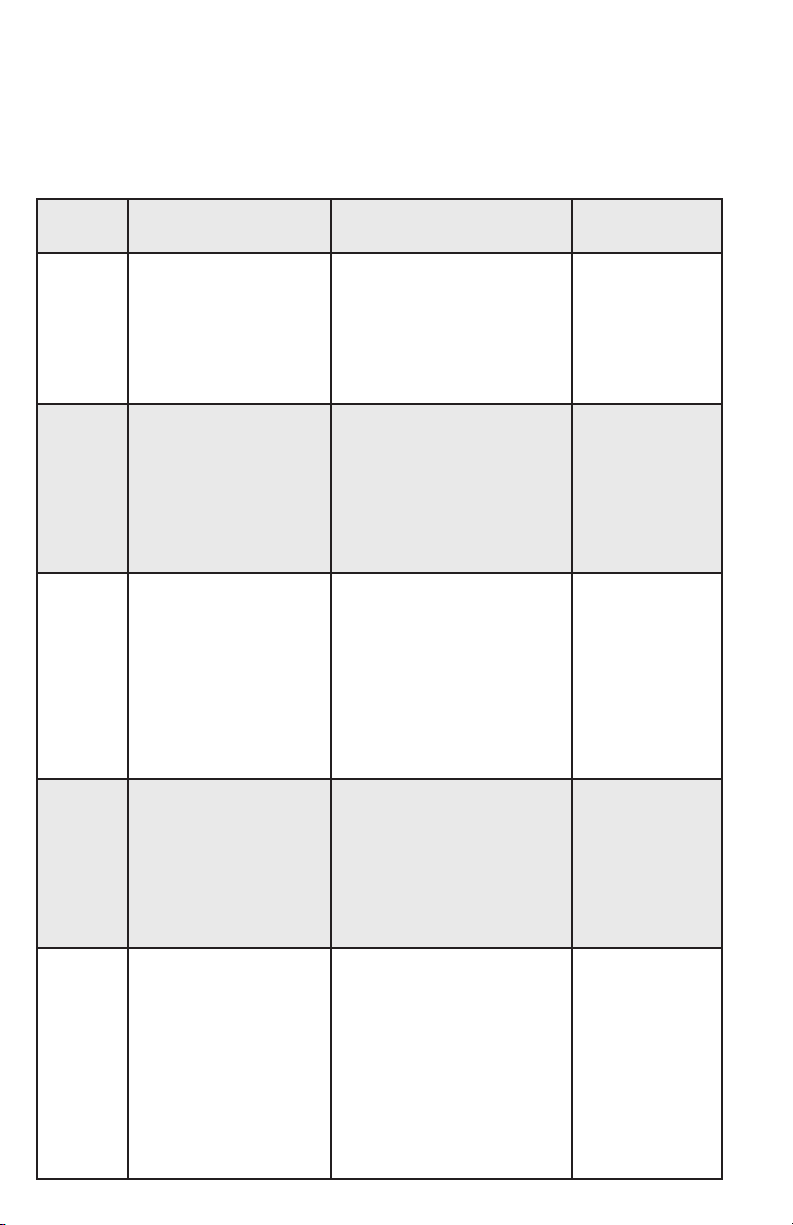
Stain Treatment
Dye transfer on
white fabric
Use packaged color remover. Wash using bleach safe for fabric.
Grass Pretreat or soak in warm water using product containing enzymes.
Wash using bleach safe for fabric.
Grease, oil, tar
(butter, fats,
cooking oils, car
grease, motor
oils)
Scrape residue from fabric. Pretreat. Wash using hottest water
safe for fabric. For heavy stains and tar, apply nonammable
dry cleaning uid to back of stain. Replace towels under stain
frequently. Rinse thoroughly. Wash using hottest water safe for
fabric.
Ink Some inks may be impossible to remove. Washing may set
some inks. Use prewash stain remover, denatured alcohol or
nonammable dry cleaning uid.
Mildew, scorch Wash with chlorine bleach if safe for fabric. Or, soak in oxygen
bleach and hot water before washing. Badly mildewed fabrics may
be permanently damaged.
Mud Brush o dry mud. Pretreat or soak with product containing
enzymes.
Mustard, tomato Pretreat with prewash stain remover. Wash using bleach safe for
fabric.
Nail polish May be impossible to remove. Place stain face down on paper
towels. Apply nail polish remover to back of stain. Repeat,
replacing paper towels frequently. DO NOT use on acetate fabrics.
Paint, varnish WATER-BASED: Rinse fabric in cool water while stain is wet.
Wash. Once paint is dry, it cannot be removed. OIL-BASED AND
VARNISH: Use solvent recommended on can label. Rinse thoroughly
before washing.
Perspiration Use prewash stain remover or rub with bar soap. Rinse. Wash using
non-chlorine bleach in hottest water safe for fabric.
Rust, brown
or yellow
discoloration
Use rust remover safe for fabric. DO NOT use chlorine bleach
because it may intensify discoloration.
Shoe polish LIQUID: Pretreat with a paste of powder detergent and water.
PASTE: Scrape residue from fabric. Pretreat with prewash stain
remover or nonammable dry cleaning uid. Rinse. Rub detergent
into dampened area. Wash using bleach safe for fabric.
Tomato Pretreat with prewash stain remover. Wash using bleach safe for
fabric.
Urine, vomit,
mucus, feces
Pretreat or soak in product containing enzymes. Wash using bleach
safe for fabric.
Wine Pretreat or soak in cold water. Wash in hot water using bleach safe
for fabric.
Stain Removal Suggestions (continued)
Stain Removal
16
Common Washing Problems
Problem Possible Causes Solutions Preventive
Measures
Blue stains • Undiluted liquid de-
tergent or fabric soft-
ener dispensed directly
onto fabric.
• If caused by detergent, mix
1 cup (240 ml) white vinegar
with 1 quart (.95 L) water in a
plastic container. Soak item
for 1 hour, then rinse.
• If caused by fabric softener,
rub with bar soap and
rewash.
• Add detergent
to empty tub.
DO NOT pour
on dry load.
• Avoid overlling
fabric softener
compartment
of dispenser.
Discolor-
ation,
graying
• Not enough detergent.
• Wash water
temperature too low.
• Incorrect sorting.
• Rewash with correct
amount of detergent
and hottest water safe
for fabric.
• Add bleach safe for fabric.
• Sort items by
soil level and
color.
• Use correct
amount of
detergent,
hottest water,
and bleach
safe for fabric.
Greasy,
oily stains
• Not enough detergent.
• Undiluted liquid fabric
softener poured
directly on fabric.
• Treat with prewash stain
remover or liquid detergent.
• Increase detergent and wa-
ter temperature. Rewash.
• Rub fabric softener stains
with bar soap and rewash.
• See
Washer Operating In-
structions
.
• Use correct
amount of
detergent and
hottest water
safe for fabric.
• DO NOT pour
liquid fabric
softener directly
on fabric.
Holes,
tears, or
snags
• Incorrect use of
chlorine bleach.
• Unfastened zippers,
hooks, and buckles.
• Rips, tears, and broken
threads.
• Overloading washer.
• Degradation of fabric.
• May be irreversible if rips,
tears, and seams cannot
be mended.
• See
Washer Operating
Instructions
.
• DO NOT pour
chlorine bleach
directly on
fabric.
• Check condition
of items before
washing.
Lint • Incorrect sorting.
• Tissues left in pocket.
• Overloading washer.
• Not enough detergent.
• Undissolved detergent
has left residue resem-
bling lint.
• Static cling attracting
lint.
• Load washed too long.
• Reduce load size. Rewash
using correct water
temperature, water level,
and amount of detergent.
• Add non precipitating water
conditioner to wash water
to remove detergent residue.
• Add fabric softener to nal
rinse.
• Dry load in dryer.
• Remove lint with lint brush
or roller.
• Follow
Washer
Operating In-
structions,
steps.
• DO NOT
overload
washer.
• Use correct
temperature,
amount of
detergent, water,
and wash time.
Common Washing Problems
Many washing problems involve poor soil and stain removal, residues of lint and scum,
and fabric damage. For satisfactory washing results, follow these suggestions provided
by The Soap and Detergent Association.
17
Common Washing Problems
Problem Possible Causes Solutions Preventive Measures
Pilling
(Fibers ball
up and cling
to fabric)
• Pilling is normal
with synthetic and
permanent press
fabrics due to
abrasion from
normal wear.
• Use a lint brush or
shaver to remove
pills.
• Use fabric softener in
washer to lubricate
bers.
• When ironing, use spray
starch or fabric nish on
collars and cus.
• Turn items inside out to
reduce abrasion.
Residue or
powder on
dark items;
Sti, harsh
fabrics
• Undissolved
detergent.
• Some granular
detergents can
combine with hard
water minerals to
form a residue.
• Overloading the
washer.
• Rewash load. • Increase water temper-
ature using hottest water
safe for fabric.
• DO NOT overload
washer.
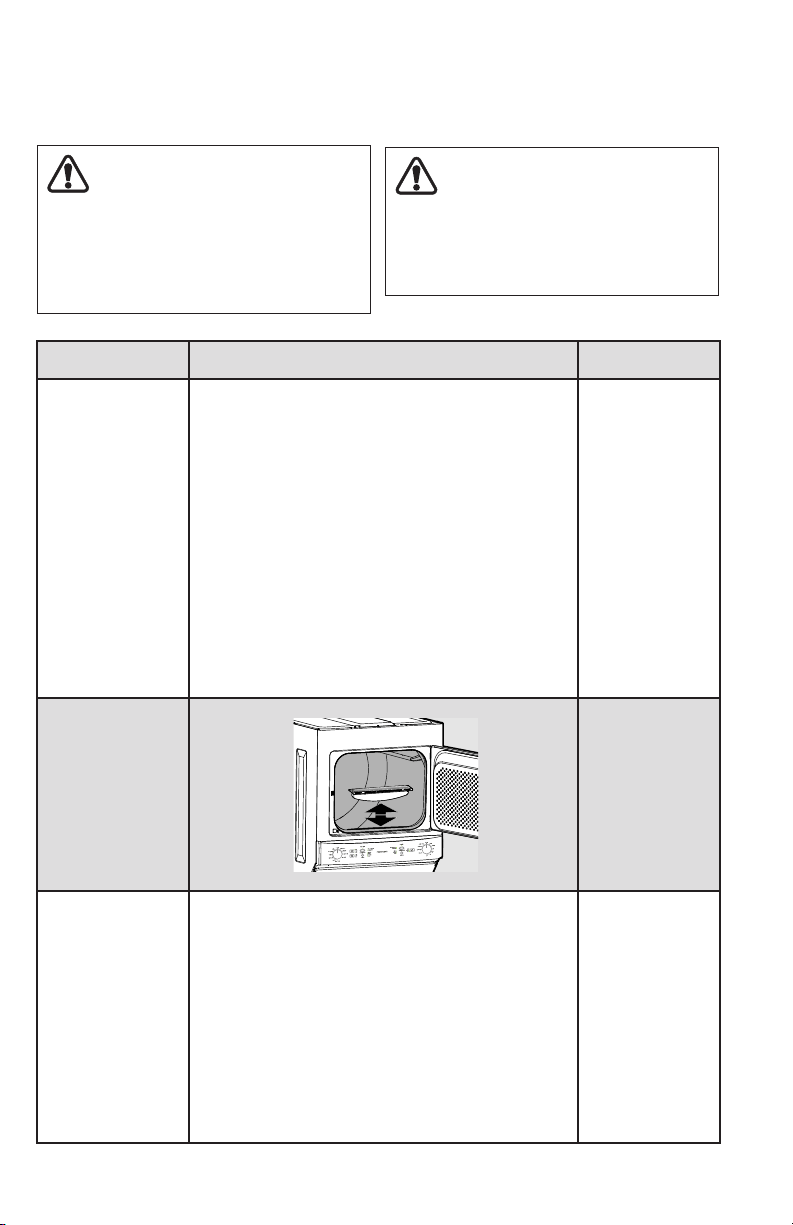
• Use liquid detergent or
non precipitating water
conditioner with powder
detergent.
Unexpected
washing
results of
large items
• Poor movement of
large items during
wash action.
• Large items loaded
incorrectly in a at
fashion.
• Rearrange load and
rewash.
• Add items one at
a time, each tightly
bunched into its
own “ball” to allow
benecial item
interaction.
• Avoid loading items in a
at, laid-out fashion.
Wrinkling • Overloading the
washer.
• Incorrect wash cy-
cle for wash load.
• Reduce load size.
• Rinse in cold water
with liquid fabric
softener using the
casual or delicate
cycle.
• DO NOT overload
washer.
• Remove items from
washer as soon as
cycle is completed.
• Use liquid fabric soft-
ener.
Yellow
buildup of
body soil
on synthetic
fabrics
• Agitation time too
short.
• Water temperature
too low.
• Not enough deter-
gent.
• Soak in detergent
booster or product
containing enzymes.
• Wash in hottest wa-
ter safe for fabric
using casual cycle.
• Increase detergent.
• Add bleach safe for
fabric or treat with
color remover.
• Select correct wash
cycle.
• Use correct amount of
detergent.
• Wash synthetics
frequently using hot or
warm water.
Yellow or
brown rust
stains
• Iron or manga-
nese in water sup-
ply, water pipes, or
water heater.
• To restore discol-
ored load of whites,
use rust remover
safe for fabric.
• DO NOT use chlo-
rine bleach to re-
move rust stains. It
may intensify
discoloration.
• Use non precipitating
water softener.
• Before washing, run
hot water for a few
minutes to clear lines.
• Drain water heater
occasionally.
• For an ongoing prob-
lem, install iron lter in
water supply system.
Common Washing Problems (continued)
18
Dryer Operating Instructions
WARNING
To reduce the risk of re, electric
shock or injury to persons, read these
Important Safety Instructions in this
Use & Care Guide
before operating this
washer.
CAUTION
• DO NOT operate dryer without lint
lter in place.
• ALWAYS clean lter after each load.
Steps Tips Important
1. Prepare load
for drying.
• Dry items of similar fabric, weight, and con-
struction in the same load.
• Separate dark items from light-colored items.
Separate items that shed lint from those that
attract lint.
• Check for stains which may not have been
removed in washing. Repeat stain removal pro-
cess and wash again before drying.
• Place delicate/small items in a mesh bag (not
included).
• Be sure buckles, buttons, and trim are heat-
proof and won’t damage the drum nish. Close
zippers, buttons, hooks, and hook and loop fas-
teners. Tie strings and sashes to prevent snag-
ging and tangling.
• Dryer heat
may perma-
nently set
some stains.
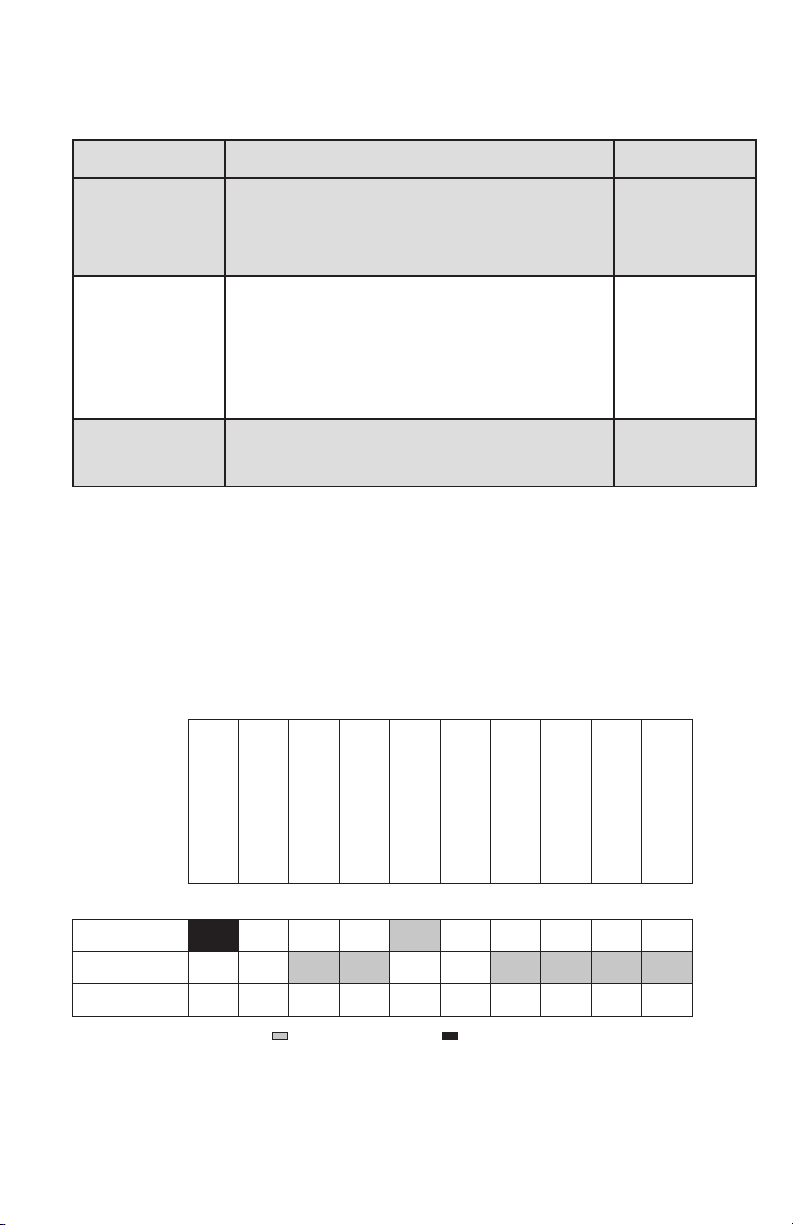
2. Check that
the lint lter
is clean and
in place.
• DO NOT oper-
ate dryer with-
out lint lter in
place.
• DO NOT
operate dryer
without
cleaning the
lter before
use.
3. Load the
dryer and
close the
door.
• Load items loosely. The average wet load
will ll the drum 1/3 to 1/2 full. Items need
room to tumble freely for even drying and
less wrinkling.
• If desired, place a dryer fabric softener sheet
on top of the load at the beginning
of the cycle.
• When drying large items, dry only two or
three items at a time. Fill out the load with
smaller items.
• For delicate or very small loads, add two or
three similar items to improve tumbling action.
• DO NOT over-
load the dryer.
Drying Procedures
19
Dryer Operating Instructions
Steps Tips Important
4. Select the
cycle and
settings for
each load.
• See
Drying Cycle Selection
and
Drying Cycle
Settings
on the following pages.
•
Over-drying can cause wrinkles, shrinkage, lint,
harshness, and build up of static electricity.
• For best results,
follow fabric
care label on
items to be
dried.
5. Start the
dryer.
• If drying a single large or bulky item, such as
a comforter, remove the item part way through
the cycle and turn it “inside out” to maximize
drying eectiveness. Place item back in dryer
and re-start cycle.
• See
Drying Cycle Controls (Start, Pause, and
Cancel)
on the following pages.
• The dryer
WILL NOT
operate with
the door open
.
6. Remove items
when cycle is
completed.
• Immediately hang or fold when the load is
completed.
• ALWAYS clean
lter after
each use.
Drying Procedures (continued)
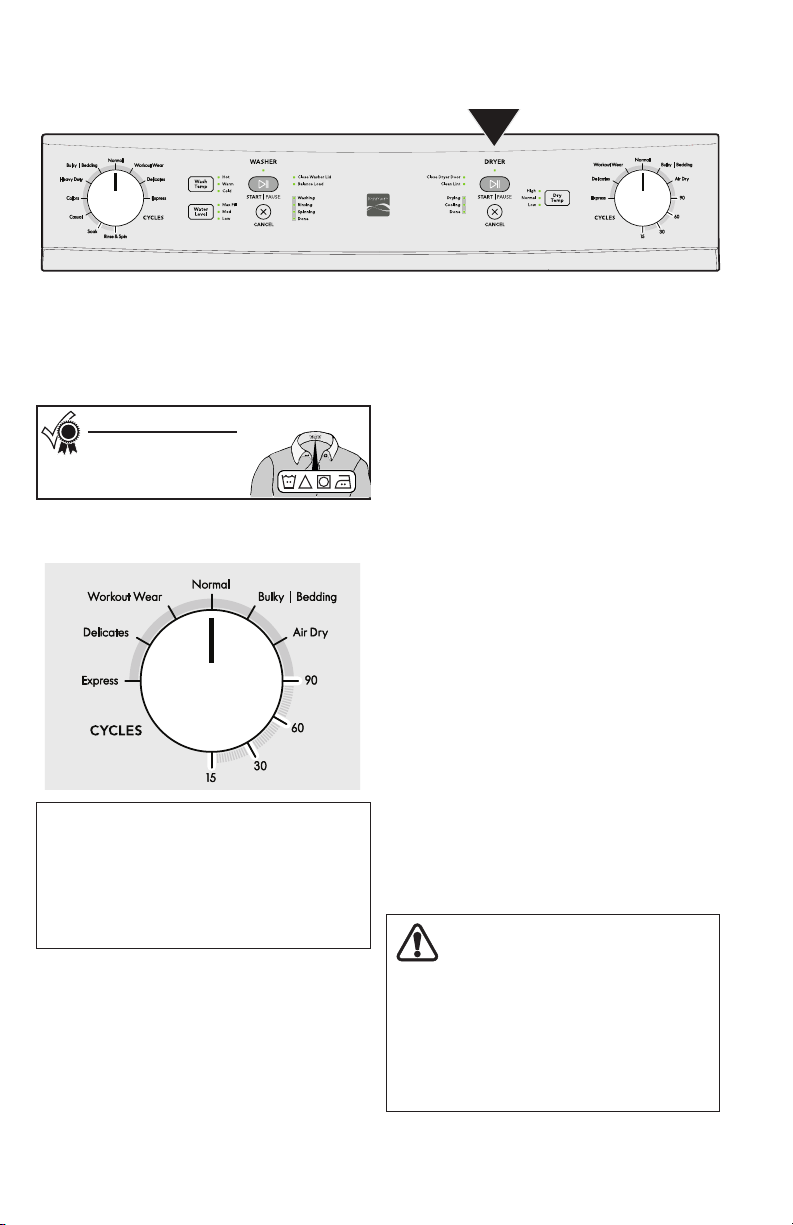
Dryer Setting Chart
These temperatures and water levels are available with the following cycles.
Express
(25 min.)
Delicates
(Auto dry)
Workout Wear
(Auto dry)
Normal
(Auto dry)
Bulky | Bedding
(Auto dry)
Air Dry
(30 min)
90 min
60 min
30 min
15 min
Dry Temp (Temperature)
High
Normal
Low
= Available selections. = Factory presets. = Non-modiable presets.
See Drying Cycle Selection and Drying Cycle Settings on the following pages for a
detailed description of each setting.
Dryer Controls and Settings
Follow the fabric care
label instructions on
items to be washed.
For best results
20
Dryer Controls and Settings
Turn the DRYER cycle selector in either
direction to select a drying cycle.
Drying Cycle Selection
Timed Dry Cycles
Auto Dry Cycles
Auto Dry cycles take the guesswork out of
selecting the correct drying time for each
load. With auto dry cycles, the load will
automatically be dried at the selected
temperature. When the load has neared
the end of the drying cycle, it will continue
to tumble for a brief cool down period.
This manual covers many models and not all cycles, options, or features listed are available
on every model. Consoles shown above for reference only. Models may vary.
NOTE
To change settings after the cycle starts,
press the START|PAUSE button and ad-
just the setting. Press the START|PAUSE
button again to resume the cycle.
This helps reduce wrinkling and makes
items easier to handle during unloading.
Drying time varies depending on size of
load, dampness of load, and fabric type.
Available auto dry settings are as follows:
Normal
Select this cycle to dry everyday fabrics
including cottons, linens, and sheets.
Bulky|Bedding
Select this cycle for bulky items such
as comforters, blankets, mattress pads,
sleeping bags, and other similar items.
Delicates
Select this cycle to dry cottons, blends,
and permanent press items with a no-iron
nish.
Workout Wear
Select this specialty cycle to dry
lightweight synthetic athletic apparel
including stretch fabrics.
WARNING
FIRE HAZARD
To avoid re hazard, DO NOT use heat
to dry items containing feathers or down,
foam rubber, plastics similarly textured,
rubber-like materials. Use a Timed Dry
cycle with the Air Dry setting.
21
Dryer Controls and Settings
Express
Select this timed cycle to quickly dry a
small load made up of just a few items.
It provides approximately 25 minutes of
tumbling including a cool down period.
Timed Dry
Select a timed drying cycle for any load
using one of the preset cycles of 15, 30,
60, or 90 minutes. The dryer will continue
to heat throughout the cycle until the nal
cool down period.
Air Dry
Select this cycle for loads that require air
drying only. No heat will be used with this
setting. This setting should be used for dry
items such as items containing feathers,
down, foam rubber, plastics, or rubber-
like materials; to refresh clothing, stued
animal, pillows, or blankets; and to dust
draperies.
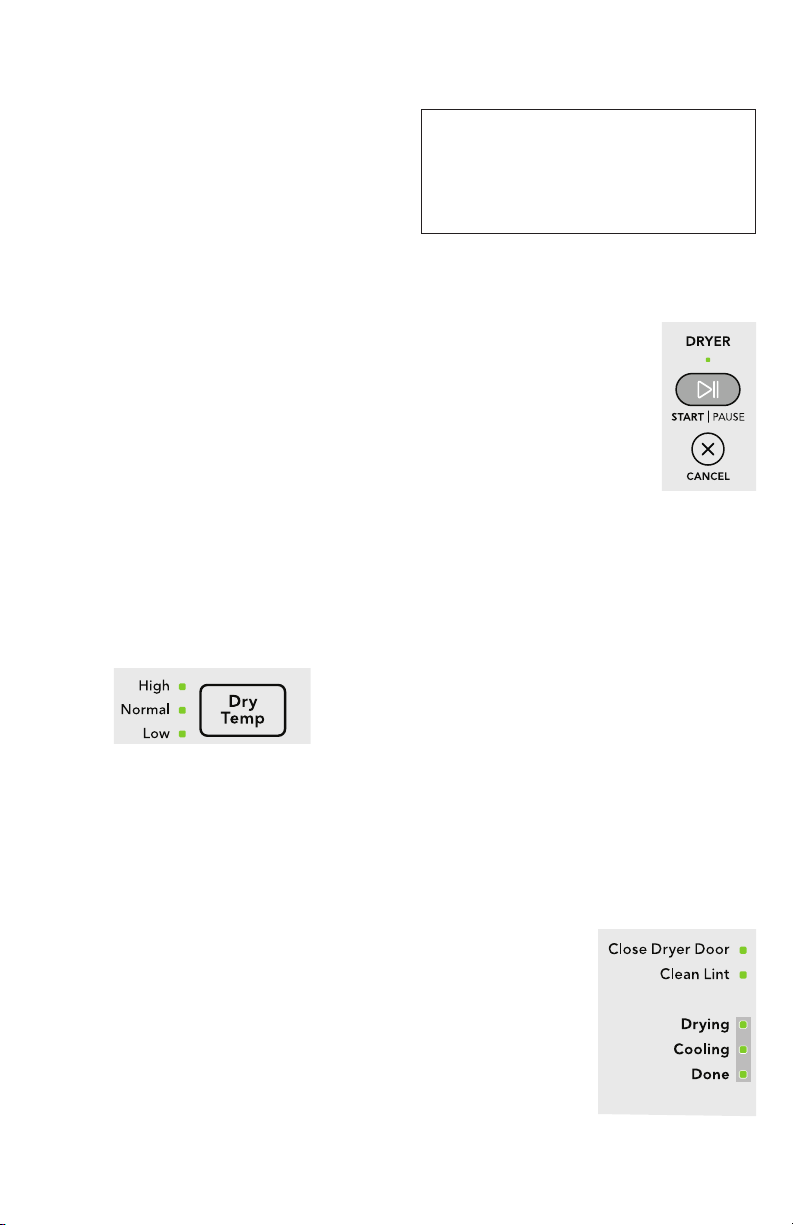
Drying Cycle Settings
Drying Temperature (Dry Temp)
Select the temperature setting most
suitable for each load. To protect fabrics,
not all temperatures are available with
every cycle. If an unavailable temperature
setting is selected by the user, the nearest
available temperature will be substituted.
High
Recommended for durable fabrics and
towels.
Normal
Recommended for most cotton fabrics.
Low
Recommended for delicate fabrics.
Drying Cycle Indicator Lights
The drying cycle
indicator lights
provide information
during the dry
cycle.
The Close Dryer
Door advisory LED
will illuminate if the
dryer door is open.
Fully close the dryer door before starting
the dryer. The dryer will not operate with
the door open.
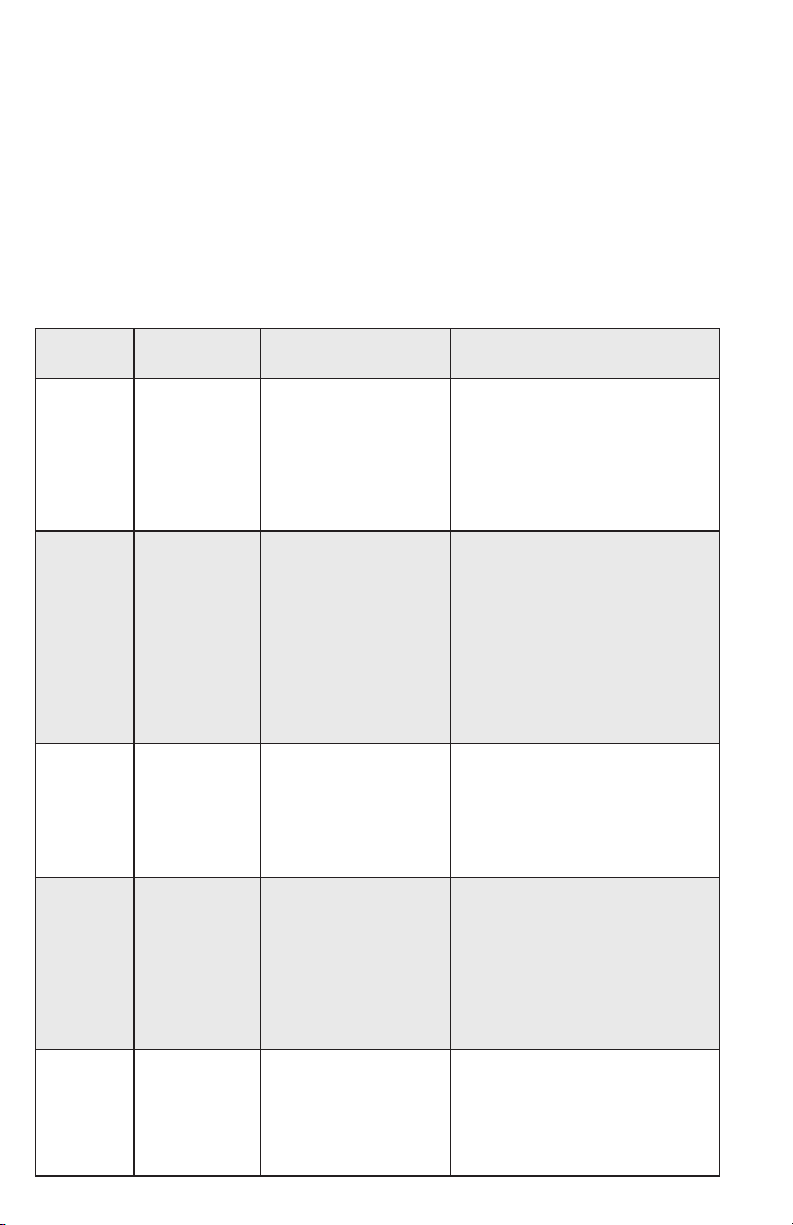
Drying Cycle Controls
(Start, Pause, and Cancel)
START
Press Dryer START|PAUSE
button once to begin the
drying cycle. The unit will
emit one beep before the
drum begins to rotate.
PAUSE
Press Dryer START|PAUSE button while
the dryer is running to pause the drying
cycle. Opening the door with a cycle
running will also pause the cycle. Two
beeps will emit from the unit. Allow
the drum to come to a complete stop
before reaching inside. Press the Dryer
START|PAUSE button while paused to
restart the drying cycle.
CANCEL
Press the Dryer CANCEL button to cancel
the drying cycle. Wait for the drum to
come to a complete stop before reaching
inside.
NOTE
Air Flu setting does not use heat and
WILL NOT illuminate any of the Dry
Temp LED lights.
22
Common Drying Problems
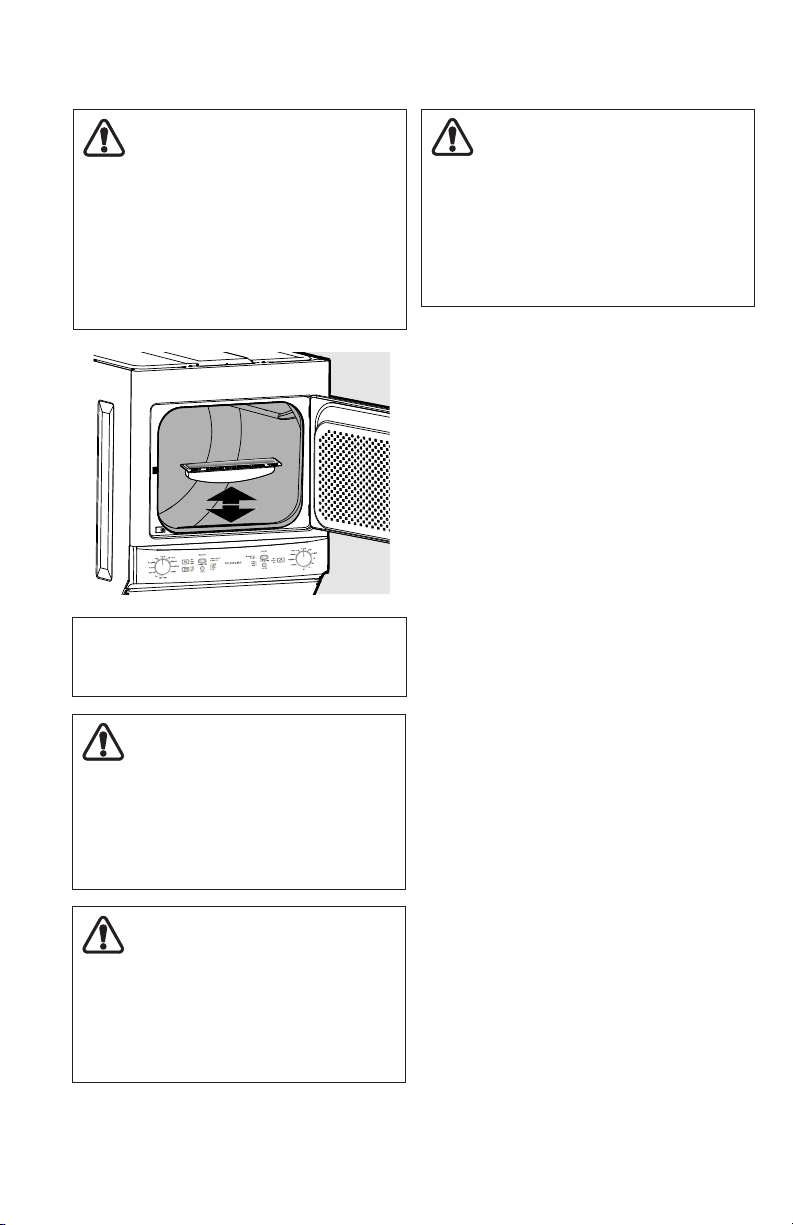
The Clean Lint advisory LED will illuminate
after each drying cycle. Clean the lint
lter after every use.
Many drying problems involve poor cleaning results, poor soil and stain removal,
residues of lint and scum, and fabric damage. For satisfactory drying results, follow
these suggestions provided by The Soap and Detergent Association.
Problem Possible
Causes
Solutions Preventive Measures
Greasy,
oily stains
• Use of fab-
ric softener
sheet.
• Rub fabric softener
stains with bar soap.
Rinse and rewash.
• Add a few bath towels to small
loads for proper tumbling.
• Some “silk-like” fabrics should
be air dried.
• Use proper drying temperature.
• Place fabric softener sheet in
load before starting the dryer.
Lint • Overloading
the dryer.
• Overdrying
causes static
electricity.
• Lint lter not
clean when
cycle began.
• Lint attached
to “pills.”
• Reduce load size and
rewash using liquid
fabric softener in the
nal rinse.
• Add a fabric softener
sheet and tumble
with no heat.
• Use lint brush or roller
to remove lint.
• DO NOT overload dryer.
• Use fabric softener in washer or
dryer to reduce static electricity.
• Remove items when slightly
damp to avoid overdrying.
• Check that lint lter is clean
and in place.
Pilling
(Fibers
break o,
ball up
and cling
to fabric)
• Overdrying. • Use a lint brush or
shaver to remove
pills.
• Use fabric softener to lubricate
bers.
• If ironing, use spray starch or
fabric nish on collars and cus.
• Turn items inside out to reduce
abrasion.
Shrinking • Temperature
too high.
• Overdrying.
• Irreversible condition. • Follow fabric care label direc-
tions.
• If shrinking is a concern, check
load often.
• Remove items while slightly
damp and hang or lay at to
complete drying.
• Block knits into shape.
Wrinkling • Overloading
the dryer.
• Leaving items
in dryer after
cycle ends.
• Reduce load size and
tumble at medium
or low heat for 5-10
min.
• Remove items imme-
diately. Hang or fold.
• DO NOT overload dryer.
• Remove items as soon as cycle
ends.
Common Drying Problems
The cycle status lights will illuminate as
each stage of the drying cycle is reached.
Stages include: Drying, Cooling, and
Done.
23
Care and Cleaning
WARNING
FIRE HAZARD
A clothes dryer produces combustible
lint. The dryer must be connected to an
outdoors exhaust. Regularly inspect the
outdoor exhaust opening and remove
any accumulation of lint around the
opening and in the surrounding area.
IMPORTANT
Clean the lint lter after every load.
WARNING
To reduce risk of re or serious injury
to persons or property, comply with the
basic warnings listed in the Important
Safety Instructions and in this
Care and
Cleaning
section.
WARNING
FIRE HAZARD /
HARMFUL VAPOR HAZARD
Before cleaning the laundry center in-
terior, unplug the electrical power cord
to avoid electrical shock hazards.
WARNING
FIRE HAZARD /
HARMFUL VAPOR HAZARD
DO NOT use any type spray cleanser
when cleaning the dryer interior. Haz-
ardous fumes or electrical shock could
occur.
• Clean the lint lter after every load.
Lint build-up on the lter restricts air
ow, which causes longer drying times.
The lter is located at the bottom of
the door opening. Remove by pulling
straight up. Remove the lint and replace
the lter.
• Occasionally a waxy build-up may
form on the lint lter from using dryer-
added fabric softener sheets. To remove
this build-up, wash the lter with warm,
soapy water. Dry the lter thoroughly
and replace. DO NOT operate the
dryer without the lint lter in place.
• If the dryer drum becomes stained from
non colorfast fabrics, clean the drum
with a damp cloth and a mild liquid
household cleanser. Remove cleanser
residue before drying the next load.
• Every 18 months a qualied service
personnel should clean the dryer cabi-
net interior and exhaust duct. These ar-
eas can collect lint and dust over time.
An excessive amount of lint build-up
could result in inecient drying and
possible re hazard.
Cleaning Inside of Washer
• Remove items from the washer as soon
as the cycle ends. Excess wrinkling,
color transfer, and odors may develop
in items left in the washer.
• Dry the washer top, the area around the
lid opening, and the underside of the
lid. These areas should always be dry
before the lid is closed.
24
• Before cleaning the washer interior, un-
plug the electrical power cord to avoid
electrical shock hazards.
• When extremely soiled items have been
washed, a dirty residue may remain on
the tub. Remove this by wiping the tub
with a nonabrasive household cleanser.
Rinse thoroughly with water.
• The base plate or tub may become
stained from fabric dye. Clean these
parts with a nonabrasive household
cleanser. This prevents dye transfer to
future loads.
IMPORTANT
DO NOT store or place laundry prod-
ucts on top of laundry center at any
time. They can damage the nish or
controls.
IMPORTANT
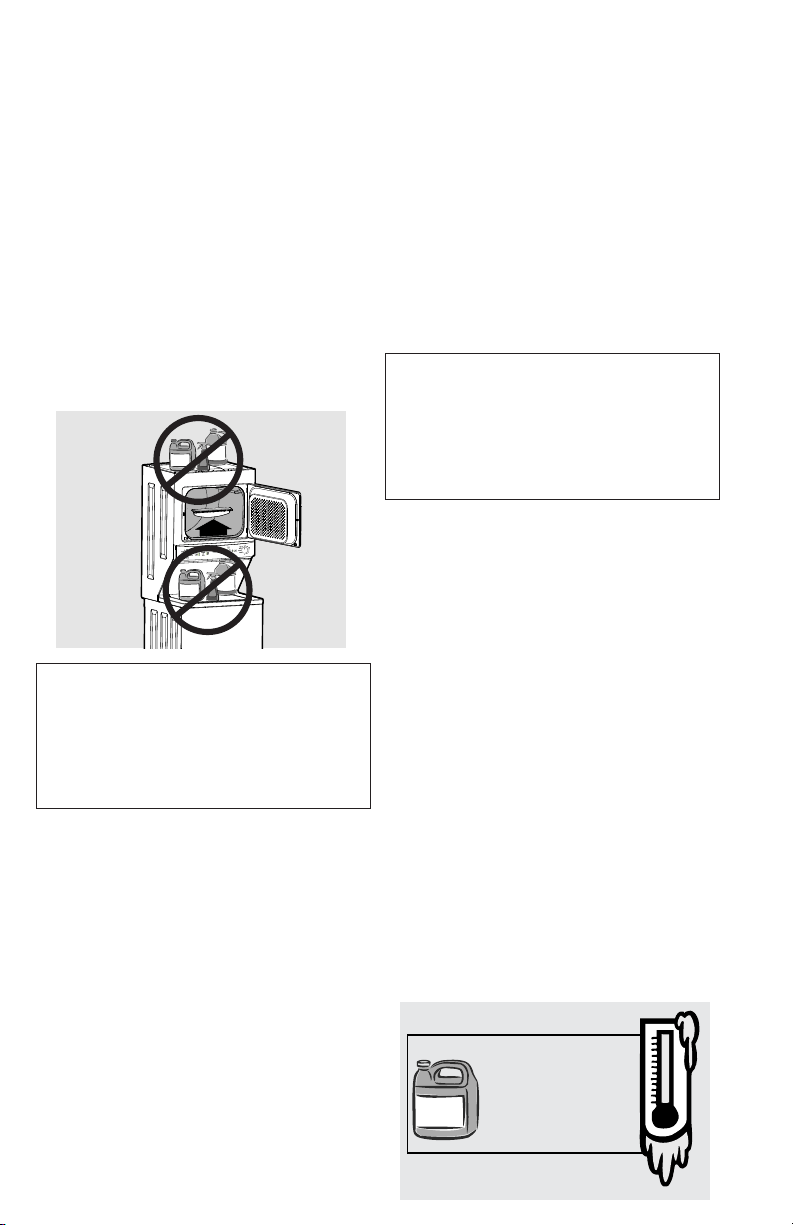
Winterize the laundry center if it is
stored in an area where freezing can
occur or moved in freezing tempera-
tures to prevent damage to the washer:
Cleaning Outside of Laundry
Center
• When washing is completed, wipe
top and sides of laundry center with a
damp cloth. Turn water faucets o to
prevent pressure build-up in the hoses.
• Clean the cabinet with mild soap and
water. Never use harsh, gritty or abra-
sive cleansers
• If the cabinet becomes stained, clean
with diluted chlorine bleach (1 part
bleach to 8 parts water). Rinse several
times with clear water.
• When cleaning chrome parts, it is best
to use only a damp cloth.
• Remove glue residue from tape or la-
bels with a mixture of warm water and
mild detergent. Or, touch residue with
the sticky side of tape.
• Before moving the laundry center, place
a strip of cardboard or thin berboard
under the front leveling legs to prevent
damage to the oor.
RV
ANTIFREEZE
Follow
WINTERIZING
INSTRUCTIONS
for cold weather
storage and care.
Winterizing Instructions
1. Turn o water supply faucets.
2. Disconnect hoses from water supply
and drain water from hoses.
3. Plug electrical cord into a properly
grounded electrical outlet.
4. Add 1 gallon (3.8 L) nontoxic
recreational vehicle (RV) antifreeze to
empty wash drum. Close door.
5. Select rinse & spin cycle. Start cycle
and let washer drain for 1 minute to
drain out all water. Not all of the RV
antifreeze will be expelled.
6. Stop the cycle, unplug electrical
power cord, dry o tub interior, and
close the lid.
7. Store laundry center in an upright
position.
8. To remove antifreeze from washer
after storage, run empty washer
through a complete cycle using
detergent. DO NOT add wash load.
Care and Cleaning

25
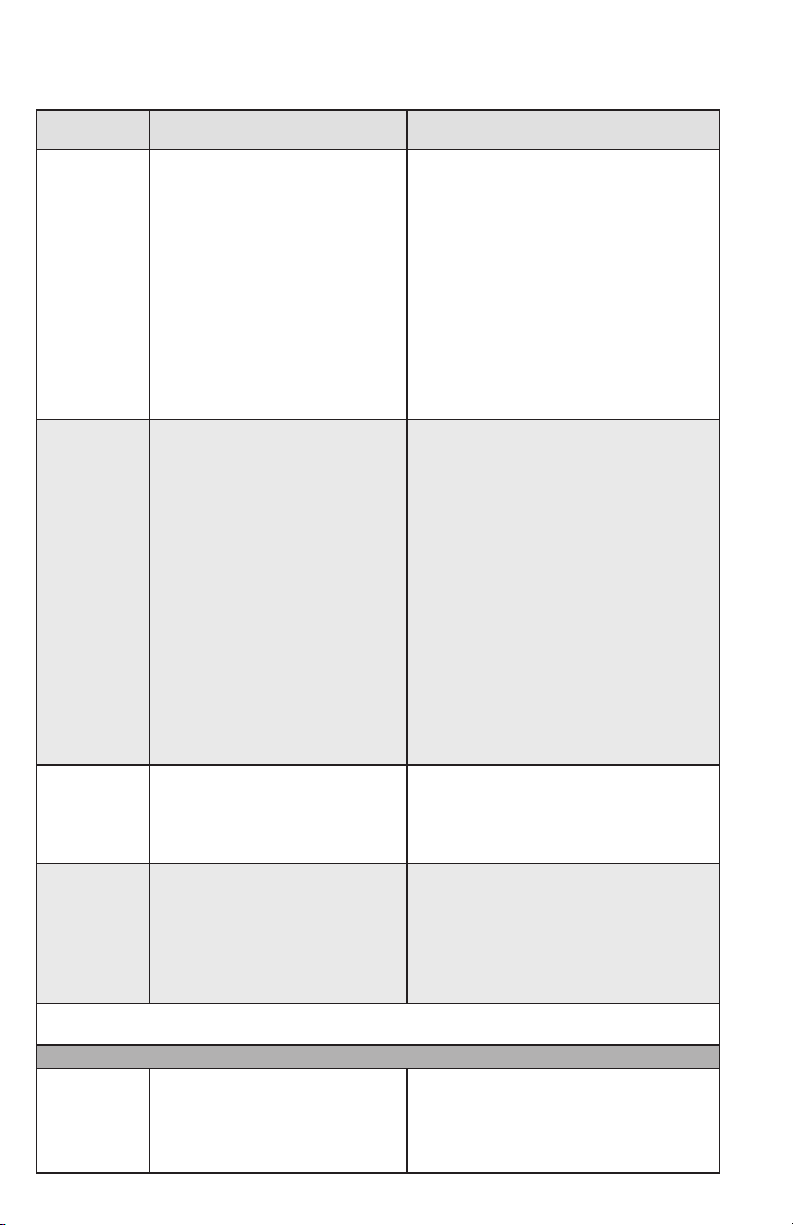
Before Calling
Problem Possible Causes Solutions
NOISE
Rattling and
clanking
noise
• Foreign objects such as coins
or safety pins may be in drum
or pump.
• Belt buckles and metal fasten-
ers are hitting wash drum.
• Stop washer and check drum. If noise
continues after washer is restarted,
objects may be in pump. Call an
authorized service provider.
• To prevent unnecessary noise and
damage to tub, fasten fasteners and
turn items inside out.
Thumping
sound
• Heavy wash loads may pro-
duce a thumping sound. This is
usually normal. If sound con-
tinues, washer may be out of
balance.
• Stop washer and redistribute wash
load.
Vibrating
noise
• Washer is not resting rmly on
oor.
• Wash load unevenly distrib-
uted in tub.
• Move washer so it rests rmly on oor.
Adjust leveling legs. See
Installation
Instructions
for details.
• Stop washer and rearrange wash
load.
OPERATING
Washer does
not start
• Washer lid is open.
• Electrical power cord may not
be plugged in or connection
may be loose.
• House fuse blown, circuit
breaker tripped, or a power
outage has
occurred.
• Water supply is not turned on.
• Motor is overheated. Washer
motor will stop if it becomes
overheated.
• Close washer lid. Washer will not op-
erate when the lid is open.
• Make sure plug ts tightly in wall
outlet.
• Reset circuit breaker or replace fuse.
DO NOT increase fuse capacity. If
problem is a circuit overload, have it
corrected by a qualied electrician. If
problem is a power outage, call local
electric company.
• Turn on water supply faucets.
• Wait for the motor to cool down be-
fore attempting to restart.
Washer
won’t spin
• Lid is not completely closed. • Close washer lid. The washer will not
operate when the lid is open.
Residue left
in drum
• Heavily soiled items. • Wipe drum with a nonabrasive house-
hold cleanser, then rinse. Shake or
brush excess dirt and sand from items
before washing.
Dryer does
not start
• Electrical power cord is not
securely plugged in or plug
may be loose.
• House fuse blown or circuit
breaker tripped.
• Thermal limiter tripped.
• Make sure the plug ts tightly in wall
outlet.
• Reset circuit breaker or replace fuse.
• Make sure electrical line is not over-
loaded.
• Call authorized service person for
replacement.
Before calling for service, review this list. It may save both time and expense. The list
includes common occurrences that are not the result of defective workmanship or
materials in this laundry center.
26
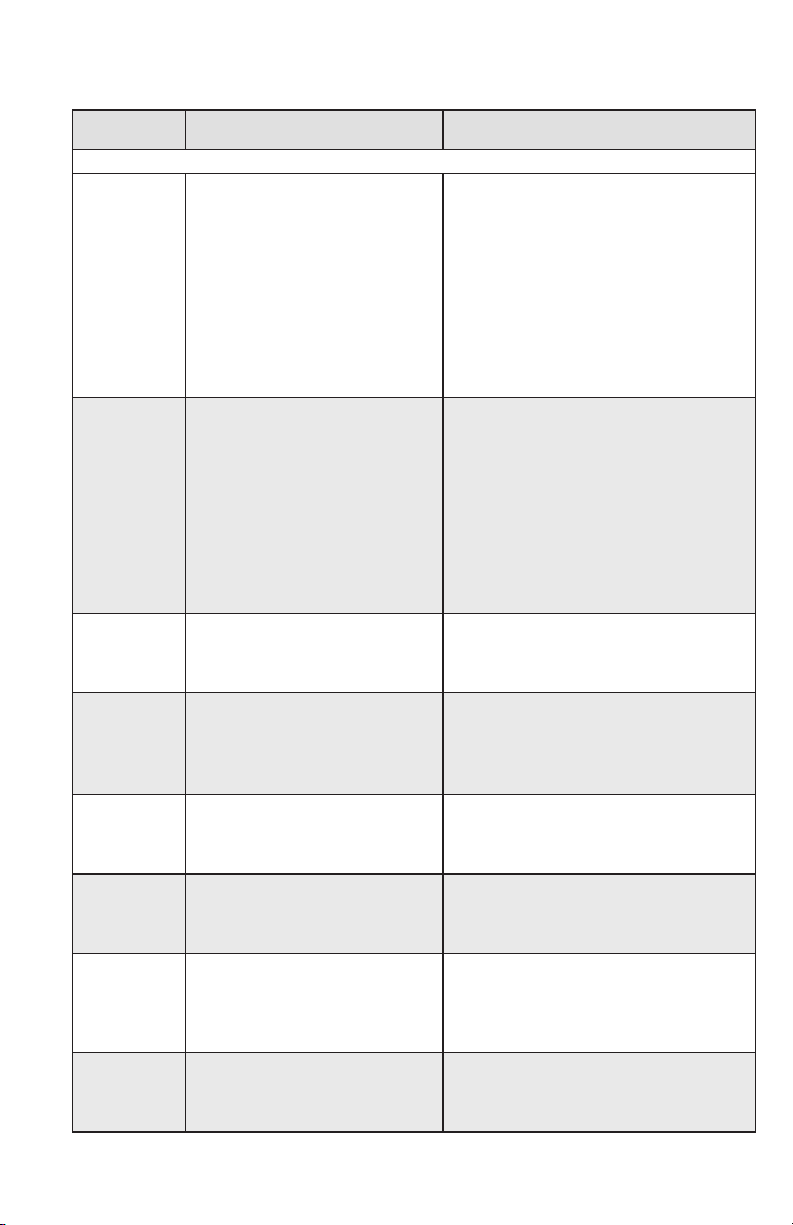
Before Calling
Problem Possible Causes Solutions
Dryer runs
but won’t
heat
• If 1 of the 2 fuses in the dryer
circuit is blown, the drum
may turn but the heater will
not operate (electric models).
• Gas supply valve is not open
(gas models).
• Dryer does not have enough
air supply to support the burn-
er ame (gas models).
• LP gas supply tank is empty or
there has been a utility inter-
ruption of natural gas (gas
models).
• Replace fuse
• Check to make sure supply valve is
open. See
Installation Instructions
for
procedure.
• See
Installation Instructions
.
• Rell or replace tank. Dryer should
heat when utility service is restored.
Drying cycle
takes too
long
Outside of
the
dryer feels
too hot or
smells hot
• Lint lter is clogged with lint.
• Exhaust duct requirements
have not been met.
• Electric dryer is connected to
a 208 volt circuit.
• Drying procedures not fol-
lowed.
• Outside exhaust hood or ex-
haust duct may be clogged or
restricted.
• High humidity.
• Make sure all lint has been removed
from the dryer lint lter before start-
ing each cycle.
• Exhaust duct must be at least 4 inches
in diameter and made of rigid or
semi-rigid metal.
• When in place, the duct must have
no more than four 90° bends and
must not exceed length listed in
Installation Instructions
.
• Drying time will be 20% longer than
drying on a 240 volt circuit.
• See
Operating Instructions
• Clean out any obstruction.
• Use a dehumidier near the dryer.
Excessive
wrinkling
• Dryer is overloaded.
• Items left in dryer too long.
• Insucient sorting of items.
• Drying temperature too high.
• DO NOT overload. See
Operating
Instructions
.
• Remove items as soon as cycle ends.
• See
Operating Instructions
.
• Follow fabric care label instructions.
Scratching
or chipping
of the drum
nish
• Foreign objects such as coins,
pins, clips or buttons are inside
the dryer.*
• Permanently attached items
such as belt buckles, zippers,
and fasteners may be hitting
the inside of the drum.*
• Always remove foreign objects from
pockets before laundering. Remove
objects from drum and restart dryer.
• Turn items inside out before drying to
prevent scratching and damage to
the dryer.
*Drum damage caused by foreign objects or permanently at-
tached items is not covered by the warranty.
WATER
Wash load
too wet after
spin
• Washer is overloaded.
• Load is out of balance.
• Drain hose is kinked.
• DO NOT overload washer. See
Op-
erating Instructions
.
• Rearrange load to allow proper
spinning.
• Straighten drain hose.
27
Before Calling
Problem Possible Causes Solutions
WATER (continued)
Water does
not enter
washer or it
enters slowly
• Washer lid is open.
• Water supply is not adequate
in area.
• Water supply faucets are not
completely open.
• Water is being used elsewhere
in the house.
• Water inlet hoses are kinked.
• Close washer lid. The washer will
not operate when the lid is open.
• Check other faucets in the house.
Wait until water supply and pressure
increase.
• Fully open hot and cold faucets.
• Water pressure must be at least 10
psi (69 kPa). Avoid running water
elsewhere while washer is lling.
• Straighten hoses.
Warm or hot
water is not
hot enough
• Hot water heater is set too
low or is a distance from
washer.
• Hot water is being used
elsewhere in the house.
• Measure hot water temperature at
nearby faucet with candy or meat
thermometer. Water temperature
should be at least 120°F (50°C).
Adjust water heater as necessary.
• Avoid using hot water elsewhere be-
fore or during washer use. There may
not be enough hot water available
for proper cleaning. If problem per-
sists, hot water system may be unable
to support more than 1 use at a time.
Water in
washer does
not drain or
drains slowly
• Drain hose is kinked or
clogged.
• Clean and straighten the drain hose.
Water leaks • Loose ll hose connection at
faucet or washer.
• House drain pipes are
clogged.
• Check and tighten hose connections.
Install rubber sealing washers
provided.
• Unclog drain pipes. Contact plumber
if necessary.
Incorrect
wash and
rinse tem-
peratures
• Hot and cold water hoses are
connected to wrong supply
faucets.
• Connect hot water hose to hot water
faucet and cold water hose to cold
water faucet.
Water enters
washer but
tub does not
ll
• Drain hose standpipe is
incorrect height.
• Standpipe must be a minimum of 33”
(84 cm) high to prevent siphoning.
See
Installation Instructions
.
Water is
present in
tub after
wash cycle is
complete
• Lid lock malfunction. • DO NOT bypass lid lock. Call an
authorized service provider.
The drain
and spin
cycles did
not occur
• Lid lock malfunction. • DO NOT bypass lid lock. Call an
authorized service provider.
Kenmore ®
Customer Care Hotline
To schedule in-home repair service
or order replacement parts
Para pedir servicio de reparación
a domicilio, y ordenar piezas
1-844-553-6667
www. kenmore. com
®