4002621
Conforms to ANSI STD Z21.1-2018 Certified to CSA STD
1.1-2018 Household Cooking Gas Appliances.
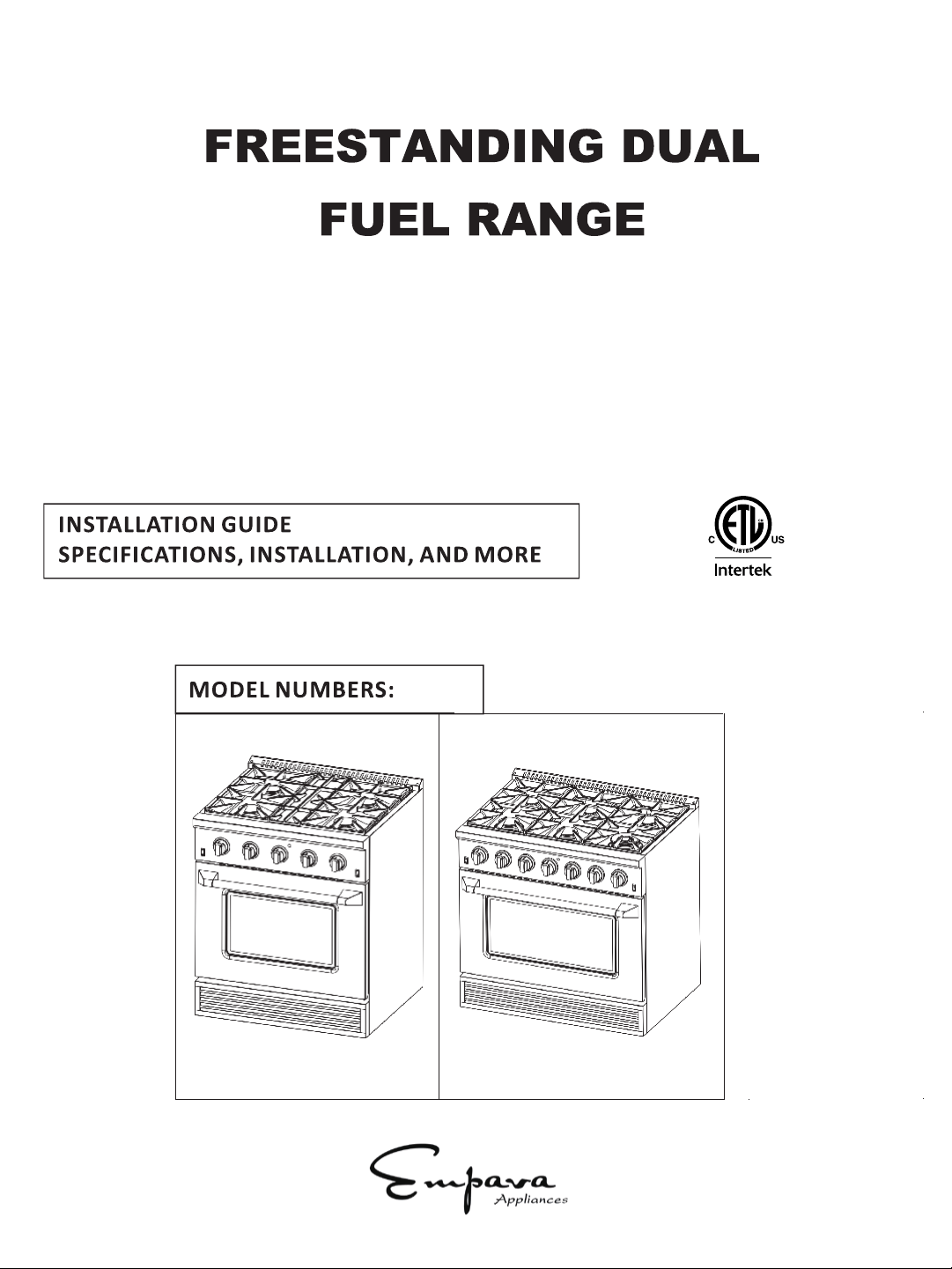
EMPV-36GR08EMPV-30GR07

DSSUHFLDWH\RXUEXVLQHVVDQGZHUHFRPPHQGWKDW\RXUHDGWKLV
HQWLUHXVHU¶VPDQXDOEHIRUHRSHUDWLQJ\RXUQHZDSSOLDQFHIRUWKH
ILUVWWLPH
7KLVPDQXDOFRQWDLQVLQVWUXFWLRQVRQKRZWRSURSHUO\LQVWDOODQGVHW
XS\RXUQHZUDQJHDVZHOODVLQVLJKWVLQWRPDQ\RIWKHXQLTXH
IHDWXUHVWKDWRXUSURGXFWRIIHUV3OHDVHNHHSWKLVPDQXDOIRUIXWXUH
UHIHUHQFHDVLWFRQWDLQVWKHDQVZHUVWRTXHVWLRQVWKDW\RXPLJKW
KDYHDV\RXEHJLQWRFRRN
7KDQN\RX
2
Thank you for purchaseing Empava professional range .We

Contents
Safety Instructions ……………………………………………………………. 4~5
Unpackage instruction …………………………………………………………6
Installation Instructions ………………………………………………………. 7~17
Cooktop Operation …………………………………………………………… 18~19
Oven Operation ………………………………………………………………. 20~21
Broiler Operation ……………………………………………………………... 22
Griddle Operation …………………………………………………………….. 23
Care & Cleaning ……………………………………………………………… 24~26
Troubleshooting ………………………………………………………………. 27
If the information in this manual is not followed exactly, a fire or an explosion may result
causing property damage, personal injury or even death.
Do not store or use gasoline, liquid propane cylinder or other flammable vapors and
liquids in the vicinity of this appliance.
What to do if you smell gas?
Do not try to light any appliance.
Do not touch any electrical switch.
Do not use any phone in your residence.
Immediately call your gas supplier from a neighbor’s phone. Follow the gas supplier’s
instructions.
If you cannot reach your gas supplier, call the fire department.
For installation and service of your range product, it must be performed by a
licensed installer, an approved service agency or your gas supplier.
WARNING
!
3
Ng to LPG conversion……………………………………………………………28-32
SAFETY INSTRUCTIONS
Definitions
This is a safety alert symbol. It will alert you to potential personal or property
safety hazards. Obey all safety messages to avoid any property damage,
personal injury or death.
WARNING indicates a potentially hazardous situation which, if not avoided,
could result in serious injury or death.
CAUTION indicates a moderate hazardous situation which, if not avoided,
could result in minor or moderate injury.
CAUTION
CAUTION – when used without the safety alert symbol, indicates a potentially
hazardous situation which, if not avoided, could result in property damage.
IMPORTANT
IMPORTANT used for installation, operation and maintenance information that
are not related to safety.
If the information in this manual is not followed exactly, a fire or an explosion may
result causing property damage, personal injury or even death.
Do not store or use gasoline, liquid propane cylinder or other flammable vapors
and liquids in the vicinity of this appliance.
Save this manual for future references.
4
SAFETY INSTRUCTIONS
What to do if you smell gas?
Do not try to light any appliance.
Do not touch any electrical switch.
Do not use any phone in your residence.
Immediately call your gas supplier from a neighbor’s phone.
Follow the gas supplier’s instructions.
If you cannot reach your gas supplier, call the fire department.
IMPORTANT
The installation and service of your range product must be performed by a
licensed installer, an approved service agency or your gas supplier
!
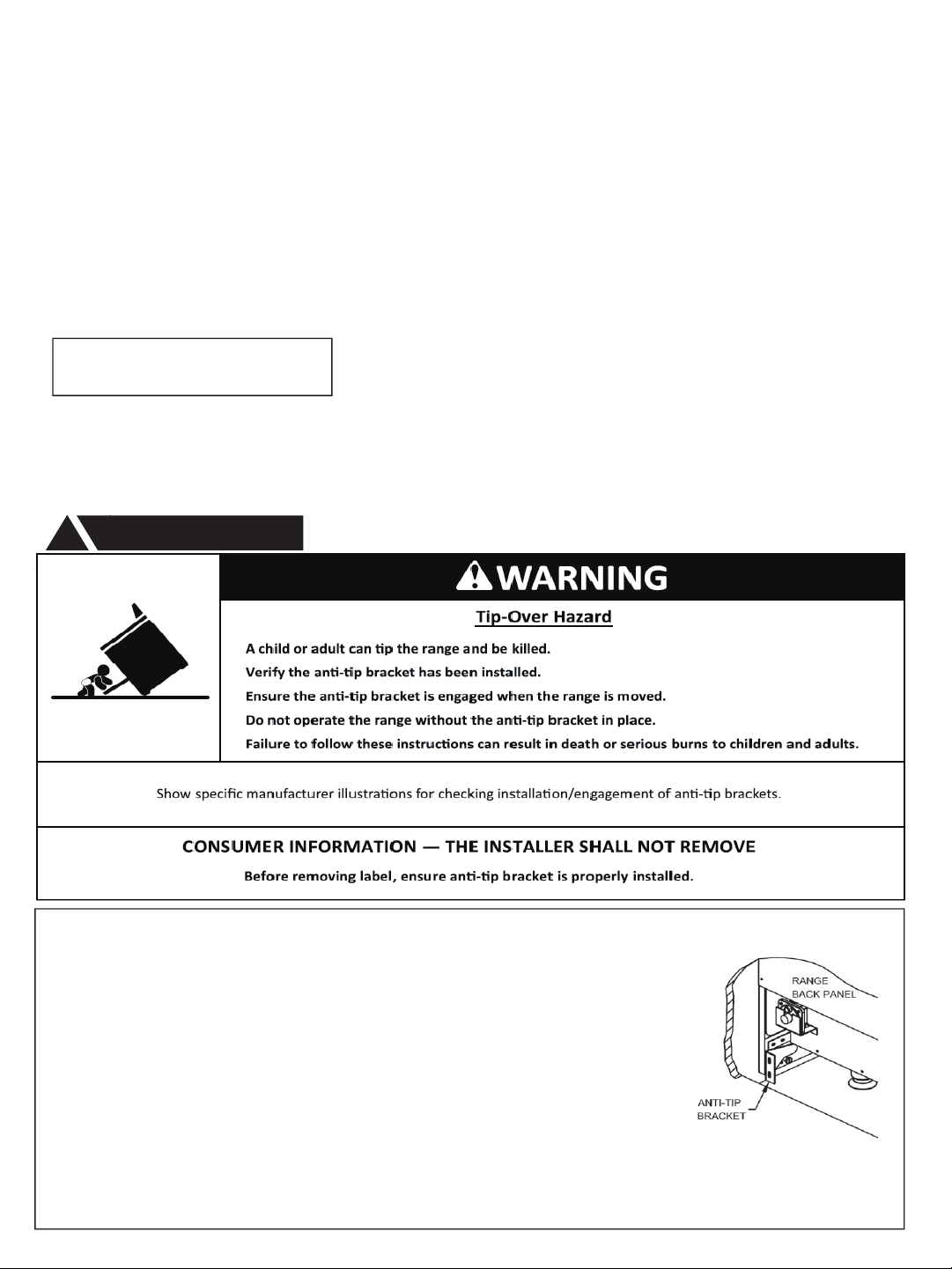
7RUHGXFHWKHULVNRIWLSSLQJWKHDSSOLDQFHWKHDSSOLDQFHPXVWEHVHFXUHGE\
SURSHUO\LQVWDOOHGDQWLWLSGHYLFHSDFNHGZLWKWKHDSSOLDQFH
$OOUDQJHVFDQWLSDQGFDXVHLQMXULHV
,QVWDOODQWLWLSGHYLFHSDFNDJHGZLWKUDQJH
)ROORZDOO,QVWDOODWLRQ,QVWUXFWLRQV
Make sure the anti-tip bracket is installed:
6OLGHUDQJHIRUZDUG
0DNHVXUHWKHDQWLWLSEUDFNHWLVVHFXUHO\DWWDFKHGWRWKHZDOOEHKLQGWKHUDQJH
6DIHO\WLOWWKHIURQWRIWKHUDQJHXSZDUGVOLJKWO\DQGPRYHEDFNDJDLQVWZDOO0DNLQJVXUHWKHSLQ
VOLGHVXQGHUEUDFNHW
WARNING
!
5

UNPACKING AND HANDLING
WARNING
!
WARNING
!
DO NOT lift range by the oven door handles !!
Extremely Heavy.
Proper equipment and adequate manpower when move the range to avoid
personal injury or damage to the unit or the floor. The unit is heavy and rests on
adjust able steel legs.
Failure to follow this advice may result in damage or personal injury.
6

SAFETY INSTRUCTIONS
Do not store or use gasoline, liquid propane cylinder or other flammable vapors and liquids in
the vicinity of this appliance.
The installation and service of your range must be performed by a qualified installer, an
approved service agency or the gas supplier.
Gas appliances can cause minor exposure to four of these substances, namely benzene,
carbon monoxide, formaldehyde and soot, caused primarily by the incomplete combustion of
natural gas fuel. When operating your range on natural gas, the flames from the burners
should be blue in color. In addition, the flames should be stable, free of yellow tipping,
excessive noise and lifting. However, this yellow tipping should be restricted to the primary
flame kernels only. Properly adjusted burners, indicated by a bluish rather than a yellow
flame, will minimize incomplete combustion. Exposure to those substances can be
minimized by venting with an open window or use of a ventilation fan or hood.
ELECTRICAL GROUNDING INSTRUCTIONS
IMPORTANT
This indoor cooking appliance is equipped with a three-prong (grounding) plug for your
protection against shock hazard and should be plugged directly into a properly grounded
three-pronged receptacle. DO NOT cut or remove the grounding prong from this plug.
7

INSTALLATION AND OPERATION INSTRUCTIONS
To ensure proper and safe operation, read all instructions before using the product. Install or
locate the product only in accordance with the provided Installation Instructions.
All servicing should be performed to a qualified technician.
Do not attempt to adjust, repair, service or replace any part of your appliance unless it is
specifically recommended in this guide.
Do not use the range for warming or heating the room.
Do not leave children alone or unattended in the area where the range is in use. Never
allow them to sit or stand on any part of the range. Do not let children play with the range.
Have the technician show you the location of the gas shut off valve and how to shut it off
in an emergency situation.
Always disconnect power to appliance before any type of servicing.
Do not use abrasive or caustic cleaners or detergents on this appliance. They may cause
permanent damage to the surface.
When cooking, set the burner controls so that the flame heats only the bottom of the
utensil and does not overlap at the sides of the utensil.
Utensils (pots and pans) that conduct heat slowly, i.e. glass pots, should be used in
conjunction with burner flames at a low or medium setting.
Turn off all controls and wait for appliance parts to cool down before touching them. Do
not touch the burner grates or surrounding areas until cool.
Do not use water on grease fires.
Clean appliance with caution.
Always turn pot handles to the side or back of the range. Do not turn handles towards
the area where they can be easily burned. Handles should not extend over the adjacent
burners.
Use the range only for cooking tasks as outlined in this manual. When using the range,
do not touch the grates, burner caps, burner bases, or any other parts in proximity to the
flame. These components may be hot enough to cause burns.
Use dry pot holders. Moist or damp pot holders on hot surfaces may result in burns from
steam.
Remove pot holder away from hot surface areas.
Do not use a towel or other bulky cloth.
Do not heat unopened food containers. Build up of pressure may cause the container to
explode and result in injury.
During and after use, do not touch interior surfaces of the oven until cool.
8

INSTALLATION INSTRUCTIONS
IMPORTANT
Keep appliance area clear and free from combustible materials, gasoline, and other
flammable vapors.
Gas Supply Requirements
Installation of this range must conform with local codes, or in the absence of local codes, the
National Fuel Gas Code, ANSI Z223.1 / NFPA 54. In Canada, installation must conform to the
current natural Gas Installation /code, CAN 1-1.1-M81 and with local codes where applicable.
This range has been design-certified according to ANSI Z21.1b-2012 latest edition.
A statement of the maximum gas supply pressure in accordance with the inlet pressure rating
of the gas appliance pressure regulator supplied.
MINIMUM GAS SUPPLY PRESSURE TO APPLIANCE FOR LP GAS---14.0 IN.W.C.
MINIMUM GAS SUPPLY PRESSURE TO APPLIANCE FOR NG --- 6 IN.W.C.
APPLIANCE REGULATOR IS SET AT 5.0 IN. W.C. OUTLET PRESSURE.
Do not obstruct the flow of combustion air into the range and ventilation air away from the
range.
Ventilation: it is recommended that the unit be operated with an oven head, vented exhaust
hood of sufficient size and capacity.
Before installing the range, you must locate and secure the included anti-tip bracket to the wall
for your range.
The use of cabinets for storage above the appliance may result in a potential fire
hazard. Combustible items may ignite; metallic items may become hot and
cause burns. If a cabinet storage is to be provided, the risk can be reduced by
installing a range hood that projects horizontally a minimum of 5" (12.7cm)
beyond the bottom of the cabinets.
The appliance shall not be used for space heating. This information
is based on safety considerations. All openings in the wall behind the
appliance and in the floor under the appliance shall be sealed.
9
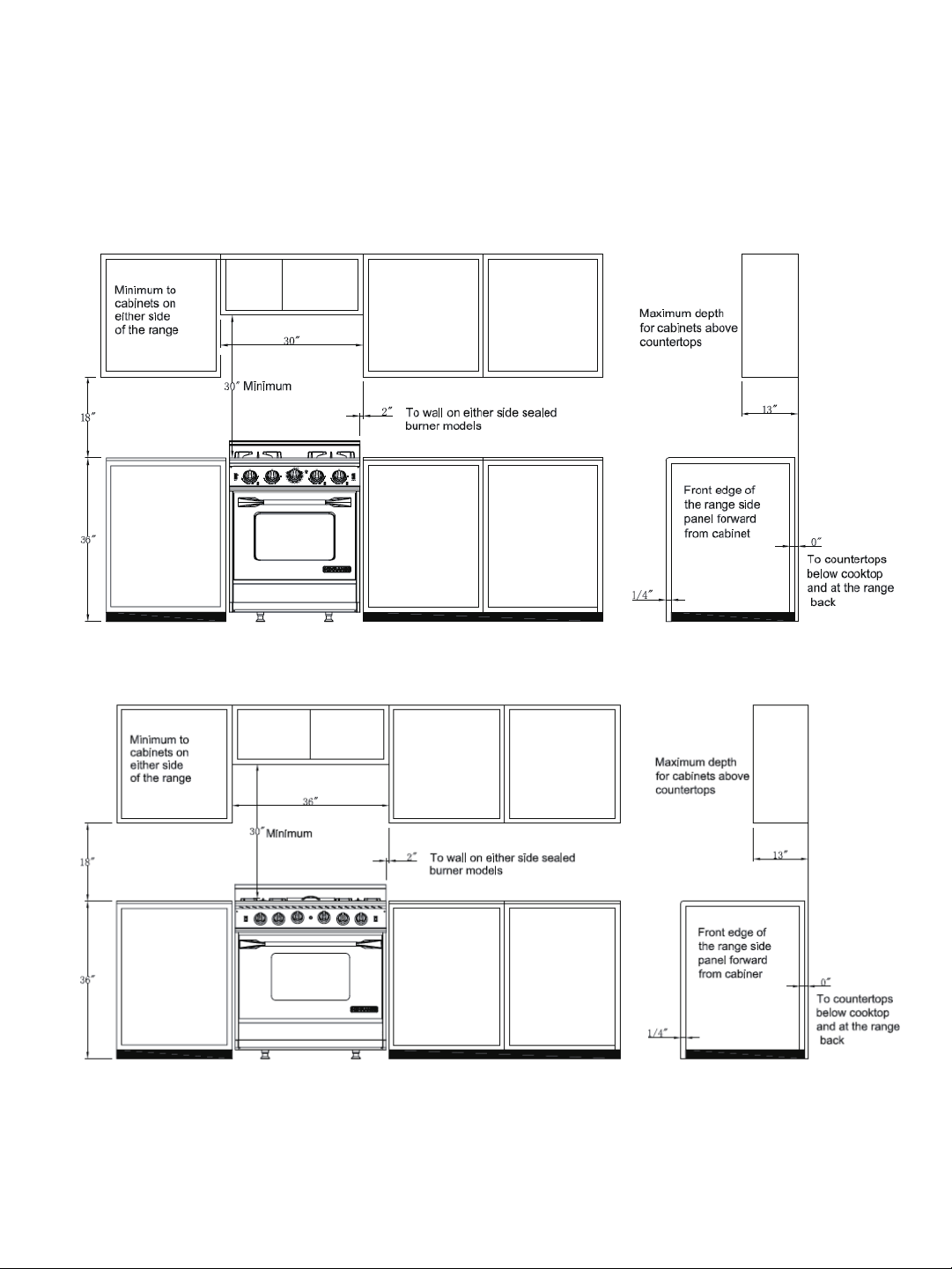
7KHUDQJHPD\EHLQVWDOOHGIOXVKWRWKHUHDUZDOO<RXPD\LQVWDOODQRQFRPEXVWLEOH
PDWHULDORQWKHUHDUZDOODERYHWKHUDQJHDQGXSWRWKHYHQWKRRG,WLVQRWQHFHVVDU\WR
LQVWDOOQRQFRPEXVWLEOHPDWHULDOVEHKLQGWKHUDQJHEHORZWKHFRXQWHUWRSKHLJKW
7KHPLQLPXPGLVWDQFHIURPWKHVLGHRIWKHUDQJHDERYHWKHFRXQWHUWRSWRFRPEXVWLEOH
VLGHZDOOVPXVWEHDWOHDVWLQFKHV
INSTALLATION INSTRUCTIONS
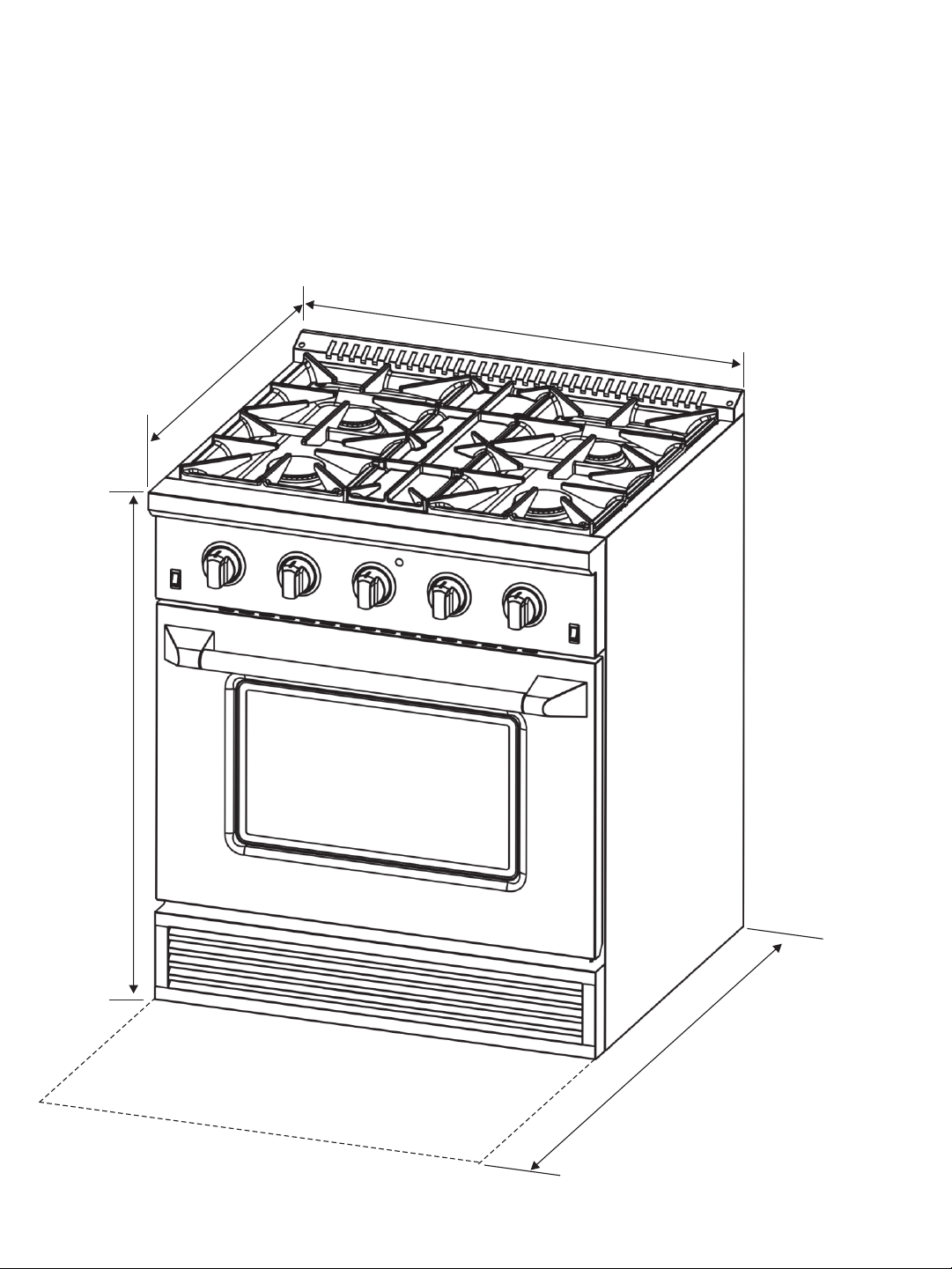
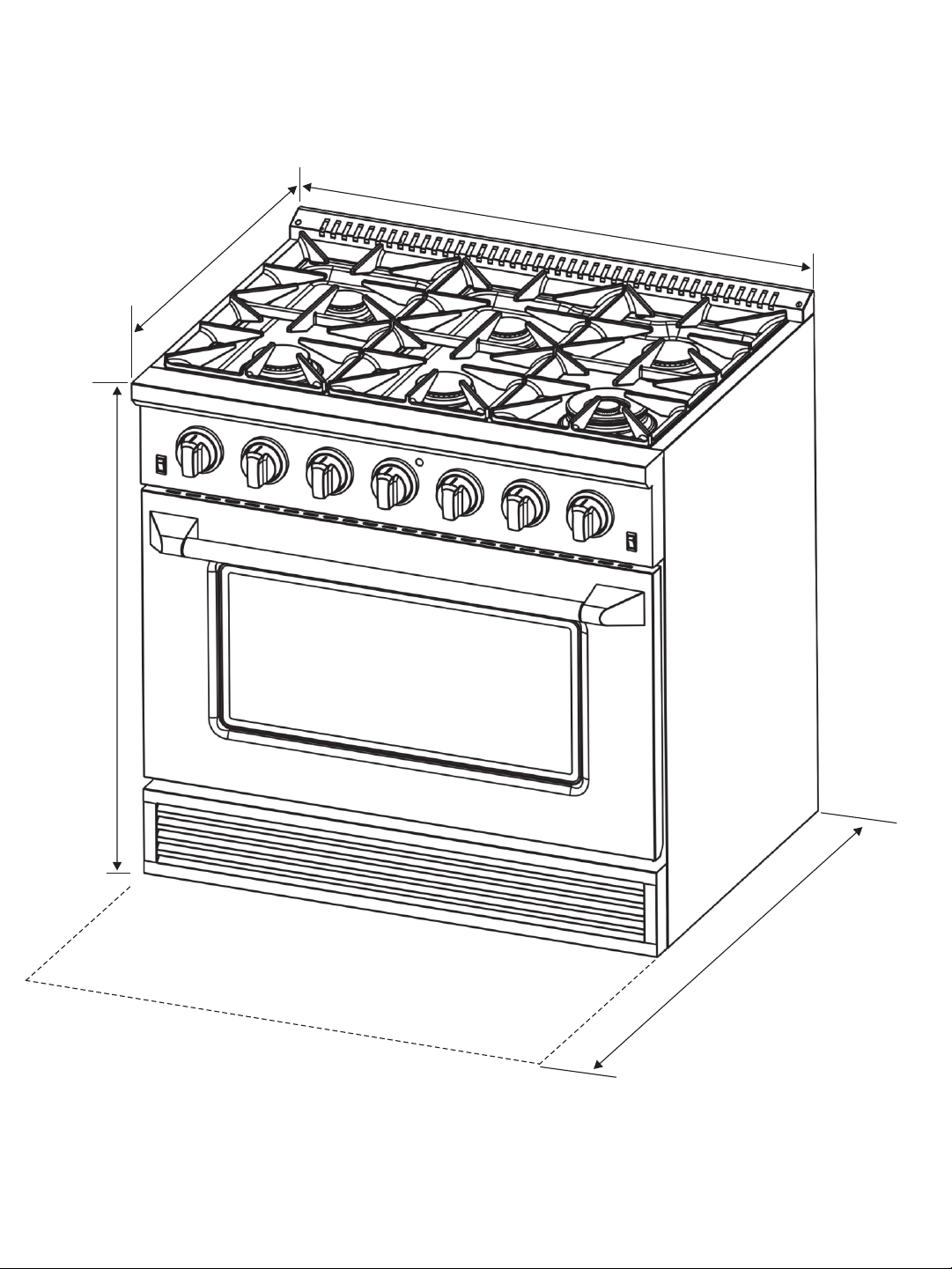
Dimensions and Clearances
INSTALLATION INSTRUCTIONS
10
30"
36"
27.3"
depth with door open
44.25"
11
36"
36"
27.3"
depth with door open
44.25"
12
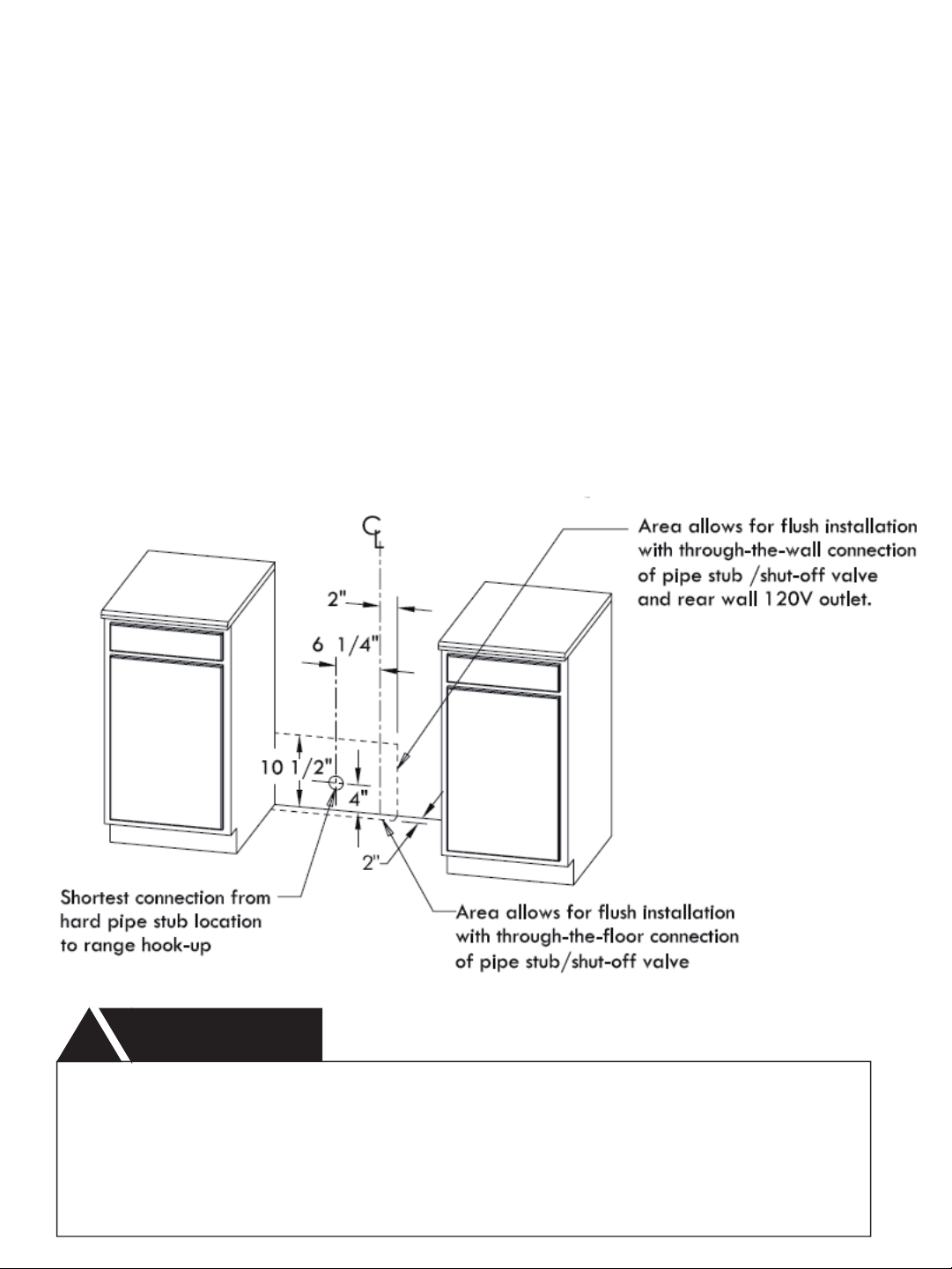
'LPHQVLRQVDQG&OHDUDQFHV
,QVWDOODWLRQ
Installation Diagram
Installation Diagram
12
<RXUUDQJHPXVWEHHOHFWULFDOO\JURXQGHGLQDFFRUGDQFHZLWKORFDOFRGHVRULQWKHDEVHQFHRI
ORFDOFRGHVLQDFFRUGDQFHZLWKWKH1DWLRQDO(OHFWULFDO&RGH$16,1)3$ODWHVWHGLWLRQ,Q
&DQDGDHOHFWULFDOJURXQGLQJPXVWEHLQDFFRUGDQFHZLWKWKHFXUUHQW&6$&&DQDGLDQ
(OHFWULFDO&RGH3DUWDQGRUORFDOFRGHV$FRS\RIWKLVVWDQGDUGPD\EHREWDLQHGIURP
1DWLRQDO)LUH3URWHFWLRQ$VVRFLDWLRQ%DWWHU\PDUFK3DUN4XLQF\0DVVDFKXVHWWV
7KHSRZHUVXSSO\PXVWEHWKHFRUUHFWSRODULW\5HYHUVHSRODULW\ZLOOUHVXOWLQFRQWLQXRXV
VSDUNLQJRIWKHHOHFWURGHVHYHQDIWHUIODPHLJQLWLRQ,IWKHUHLVDQ\GRXEWDVWRZKHWKHUWKH
SRZHUVXSSO\KDVWKHFRUUHFWSRODULW\RUJURXQGHGKDYHLWFKHFNHGE\DTXDOLILHGHOHFWULFLDQ
(OHFWULF3RZHU6XSSO\5HTXLUHPHQWV
,QVWDOODWLRQ
8VH9+]DQGSURSHUO\JURXQGHGEUDQFKFLUFXLWSURWHFWHGE\DDPSRUDPSFLUFXLW
EUHDNHURUWLPHGHOD\IXVH
WARNING
!
Electrical Grounding Instructions: WKLVLQGRRUJDVFRRNLQJDSSOLDQFHLVHTXLSSHG
ZLWKDWKUHHSURQJJURXQGLQJSOXJIRU\RXUSURWHFWLRQDJDLQVWVKRFNKD]DUGDQGVKRXOGEH
SOXJJHGGLUHFWO\LQWRDSURSHUO\JURXQGHGWKUHHSURQJHGUHFHSWDFOH
Do Not FXWRUUHPRYHVWKHJURXQGLQJSURQJIURPWKHSOXJ
Caution /DEHODOOZLUHVSULRUWRGLVFRQQHFWLRQZKHQVHUYLFLQJFRQWUROV:LULQJHUURUVFDQ
FDXVHLPSURSHUDQGGDQJHURXVRSHUDWLRQ9HULI\SURSHURSHUDWLRQDIWHUVHUYLFLQJ
15

*URXQGLQJ
• The power cord is equipped with a three-prong (grounding) plug which mates with a
standard three-prong grounding wall receptacle to minimize the possibility of
electrical shock hazard from the range.
• All cord connected appliance shall include instructions relative to location of the wall
receptacle and a warning to the user to disconnect the electrical supply before
serving the appliance.
• Where a standard two-prong wall receptacle is encountered, it is the responsibility
and obligation of the customer to have it replaced with a properly grounded three-
prong wall receptacle. Do not cut or remove the grounding prong from the power
cord.
&RQQHFW5DQJHWR*DV6XSSO\
• Install a manual gas line shut-off valve in the gas line in an easily accessed location
outside the range in the gas piping external to the appliance for the purpose of
turning on or shutting off gas to the appliance.
• Install male ½” flare union adapter to ½” NPT internal thread elbow at inlet of
regulator. On models equipped with standard twin burners, install the male pipe
thread end of the ½” flare union adapter to the ½” NPT internal thread at inlet of
pressure regulator. Use a wrench on the regulator fitting to avoid damage.
• Install male ½” or ¾” flare union adapter to the NPT internal thread of the manual
shut-off valve, taking care to secure the shut-off valve to keep it from turning.
• The gas supply pressure for checking the regulator setting is 6in (Natural Gas) and
11inch(LP gas)connect flexible gas line connector to the regulator on the range.
Position range to permit connection at the shut-off valve.
• When all connections have been made, check that all range controls are in the “off”
position and turn on the main gas supply valve.
• Leak testing of the appliance shall be conducted according to the manufacture’s
instructions .Use some soap water (50% water and 50% soap) or a leak detector at
all joints and connections to check for leaks in the system. Do not use a flame to
check for gas leaks.
• The appliance must be isolated from the building’s gas supply piping system by
closing its individual manual shut-off valve during any pressure testing of the gas
supply piping system at test pressure equal to or less than ½ psig (3.5kPa).
INSTALLATION INSTRUCTIONS
16
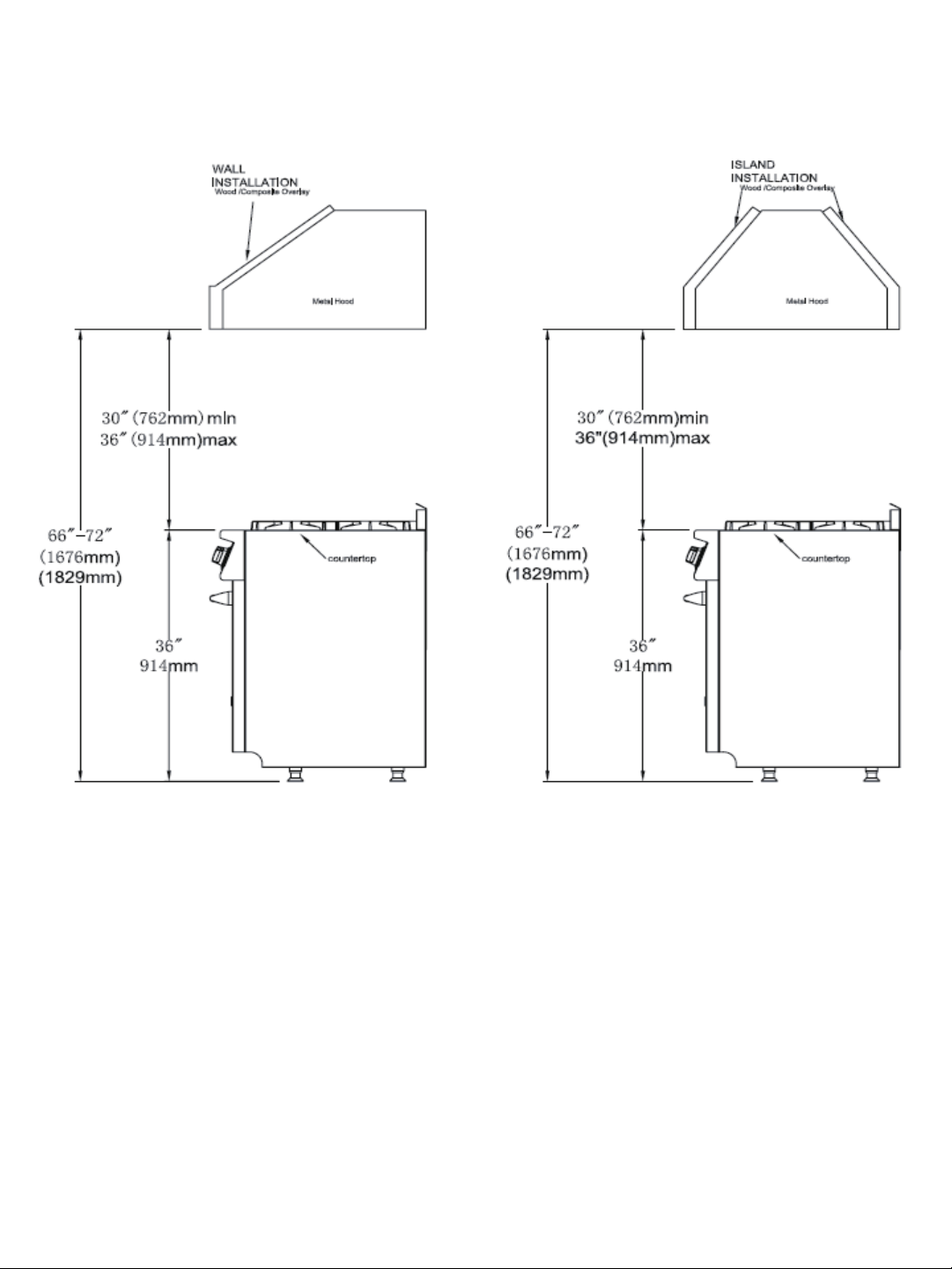
7KHERWWRPRIWKHKRRGVKRXOGEHƍƍPLQWRƍƍ DERYHWKHFRXQWHUWRS7KLVZRXOG
W\SLFDOO\UHVXOWLQWKHERWWRPRIWKHKRRGEHLQJƍƍWRƍƍDERYHWKHIORRU7KHVHGLPHQVLRQV
SURYLGHVDIHDQGHIILFLHQWRSHUDWLRQRIWKHKRRG
After Installation:
&KHFNLJQLWLRQRIFRRNWRSEXUQHUV
&KHFNWKHDLUVKXWWHUDGMXVWPHQW± VKDUSEOXHIODPHZLWKQR\HOORZWLSSLQJRUOLIWLQJIODPHV
&KHFNLJQLWLRQRIRYHQEXUQHU
9LVXDOO\FKHFNWXEXODUEXUQHURYHQEXUQHUUHLJQLWLRQWREHVXUHERWKURZVRIEXUQHUSRUWV
DUHUHOLJKWLQJHDFKWLPH
&KHFNIRUJDVOHDNVDWDOOJDVFRQQHFWLRQVXVLQJDJDVGHWHFWRUQHYHUDIODPH
&KHFNRYHQEDNHDQGFRQYHFWLRQEDNHIXQFWLRQ
Hood/Composite Overlay Install
17
18
Surface Burner Ignition
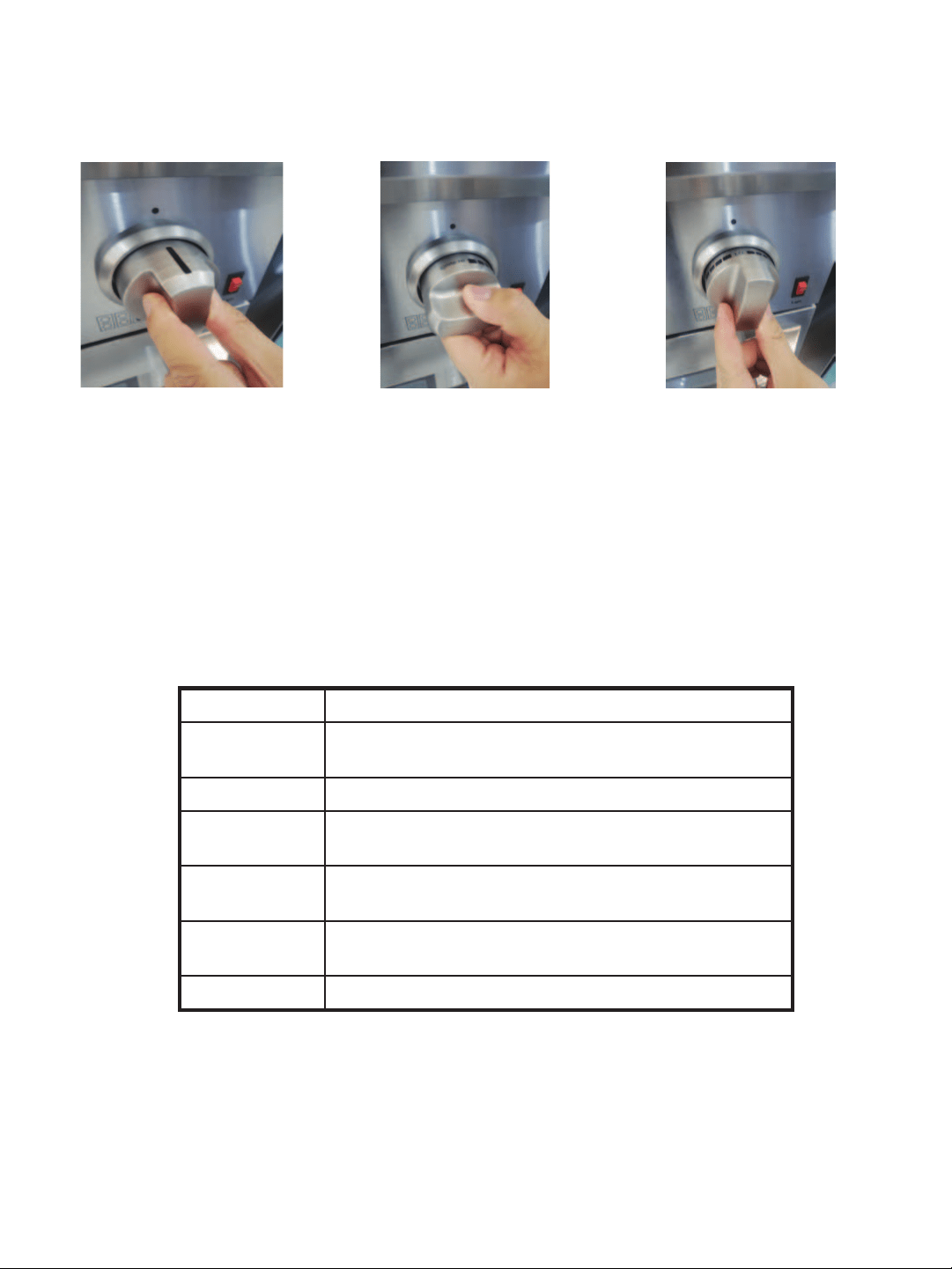
Push to release gas.
Adjust to appropriate
flame height.
Turn to Ignite and ‘Hi’ position.
To light the surface burners, push and turn the appropriate control knob counter clockwise to a
“Hi” position. You will hear a clicking noise –the sound of the electric spark igniting the burner.
Once burner ignition has been achieved, turn the burner control knob to adjust the flame size. If
the knob stays at “Hi”, it will continue to click.
NOTE: When one burner is turned to the “Hi” position, all the burners will spark. Do not
attempt to disassemble or clean around any burner while another burner is on. Do not touch any
burner cap, burner base, or igniter while the igniters are sparking.
Heat Settings:
Hi Ignites the burners.
Simmer Melting small quantities, steaming rice, warming food,
melting chocolate or butter.
Low Melting large quantities.
Low-Medium Low-temperature frying, simmering large quantities, heating
milk, cream sauces, gravies.
Medium Sautéing and browning, braising, pan-frying, maintaining
slow boil on large quantities.
Medium –Hi High-temperature frying, pan boiling, maintaining slow boil
on large quantities.
Hi Boiling liquid quickly, deep frying.
COOKTOP OPERATION
&RRNWRS2SHUDWLRQ
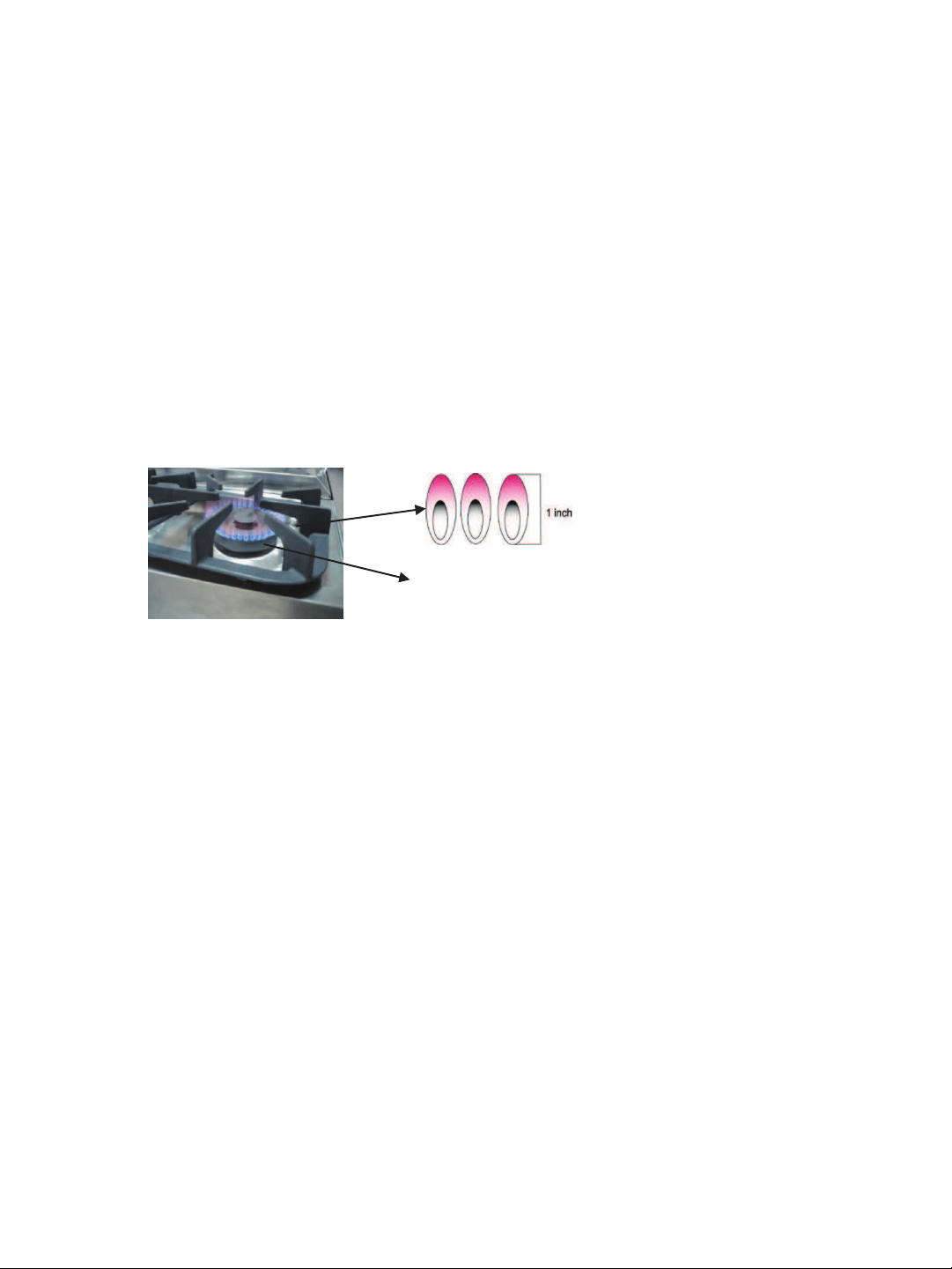
Flame Size
:KHQ\RXVHOHFWWKHIODPHVL]HZDWFKWKHIODPHZKHQ\RXWXUQWKHNQRE
$Q\IODPHODUJHUWKDQWKHERWWRPRIWKHFRRNZDUHLVZDVWHG
7KHIODPHVKRXOGEHVWHDG\DQGEOXHLQFRORU)RUHLJQPDWHULDOLQWKHJDVOLQHPD\FDXVH
DQRUDQJHIODPHGXULQJLQLWLDORSHUDWLRQ
Power Failure
,IWKHJDVGRHVQRWLJQLWHZLWKLQIRXUVHFRQGVWXUQRIIWKHYDOYHDQGDOORZDWOHDVWILYH
PLQXWHVIRUDQ\JDVWRGLVVLSDWH5HSHDWWKHOLJKWLQJSURFHGXUH
,IWKHSRZHUIDLOVWKHVXUIDFHEXUQHUVFDQEHOLJKWHGPDQXDOO\+ROGDOLJKWHGPDWFKQHDU
DEXUQHUDQGWXUQNQREFRXQWHUFORFNZLVHWR³+,´$IWHUEXUQHUOLJKWVWXUQNQREWR
VHWWLQJ
Cooktop
7RSUHYHQWWKHFRRNWRSIURPGLVFRORULQJRUVWDLQLQJFOHDQFRRNWRSDIWHUHDFKXVHDQG
ZLSHXSDFLGLFRUVXJDU\VSLOOVDVVRRQDVWKHFRRNWRSKDVFRROHG
7KHVHDOHGEXUQHUVRI\RXUUDQJHDUHQRWVHFXUHGWRWKHFRRNWRSDQGDUHGHVLJQHGWREH
UHPRYHG%RLORYHUVRUVSLOOVZLOOQRWVHHSXQGHUQHDWKWKHFRRNWRS7KHEXUQHUVVKRXOG
EHFOHDQHGDIWHUHDFKXVH
Approximate 1
1/2“ Flame Height
Simmer and Boil
$VPDOOHUIODPHZLOOJLYHWKHEHVWVLPPHUUHVXOWV6PDOOIODPHVRIIHUSUHFLVH
FRRNLQJSHUIRUPDQFHIRUGHOLFDWHIRRGVNHHSLQJIRRGZDUPPHOWLQJFKRFRODWHRU
EXWWHUDQGIRUFRRNLQJWKDWQHHGWRFRRNRYHUORZKHDWIRUDORQJWLPH
7KHKLJKHVWODUJHUIODPHVHWWLQJVSURYLGHWKHPD[LPXPKHDWWKDWLVDYDLODEOHRQ
\RXUUDQJH7KLVVHWWLQJVKRXOGEHXVHGIRUKHDY\FRRNLQJORDGVVXFKDVZDWHU
ERLOLQJDQGSDVWDFRRNLQJ
19
Burner Grates
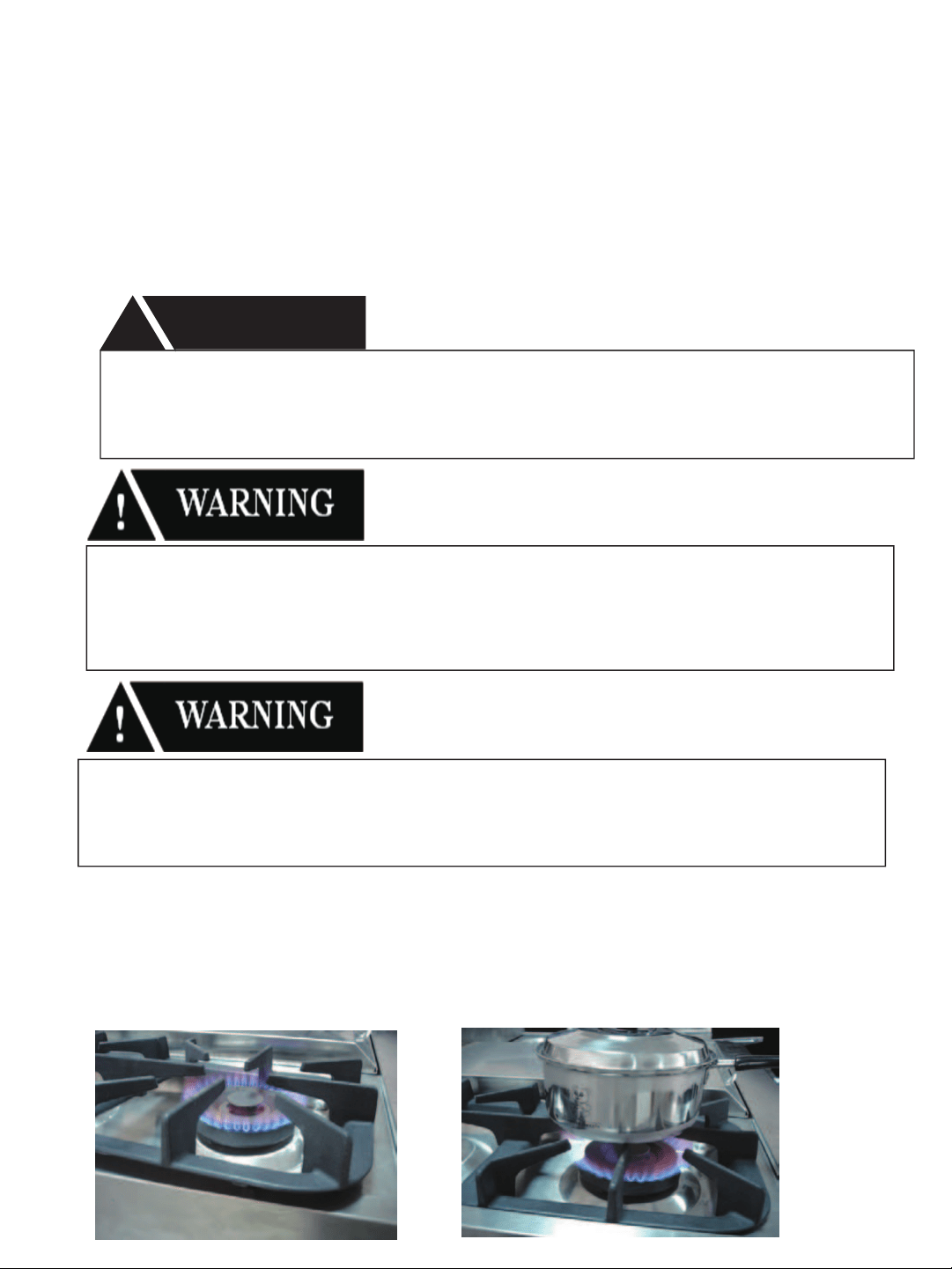
7KHJUDWHVPXVWEHSURSHUO\SRVLWLRQHGEHIRUHFRRNLQJ,PSURSHULQVWDOODWLRQRIWKH
JUDWHVPD\UHVXOWLQVFUDWFKLQJRIWKHFRRNWRSDQGRUSRRUFRPEXVWLRQ
'RQRWRSHUDWHWKHEXUQHUVZLWKRXWDSDQRUXWHQVLORQWKHJUDWHV
Oven Vent
'RQRWEORFNWKHGXFWVDWWKHUHDURIWKHUDQJHZKHQFRRNLQJLQWKHRYHQ,WLV
LPSRUWDQWWKDWWKHIORZRIKRWDLUIURPWKHRYHQDQGIUHVKDLULQWRWKHRYHQEXUQHU
QHYHUEHLQWHUUXSWHG$YRLGWRXFKLQJWKHYHQWRSHQLQJRUQHDUE\VXUIDFHVGXULQJ
RYHQRUEURLOHURSHUDWLRQ± WKH\PD\EHFRPHKRW
&RRNWRS2SHUDWLRQ
WARNING
!
FOOD SAFETY
$FFRUGLQJWRWKH8QLWHG6WDWHV'HSDUWPHQWRI$JULFXOWXUH'2127KROGIRRGVDW
WHPSHUDWXUHVEHWZHHQ
R
)WR
R
)PRUHWKDQKRXUV&RRNLQJUDZIRRGVEHORZ
R
)LV
QRWUHFRPPHQGHG
Never use this appliance as a space heater to heat or warm the room,
Doing so many result in carbon monoxide poisoning and overheating of
the oven. Never use this appliance as a storage space and storage
cabinet areas
Never use this appliance doors or drawers such as stepping.
Leaning or setting on the doors or drawers, may result in hazards and
injuries
20
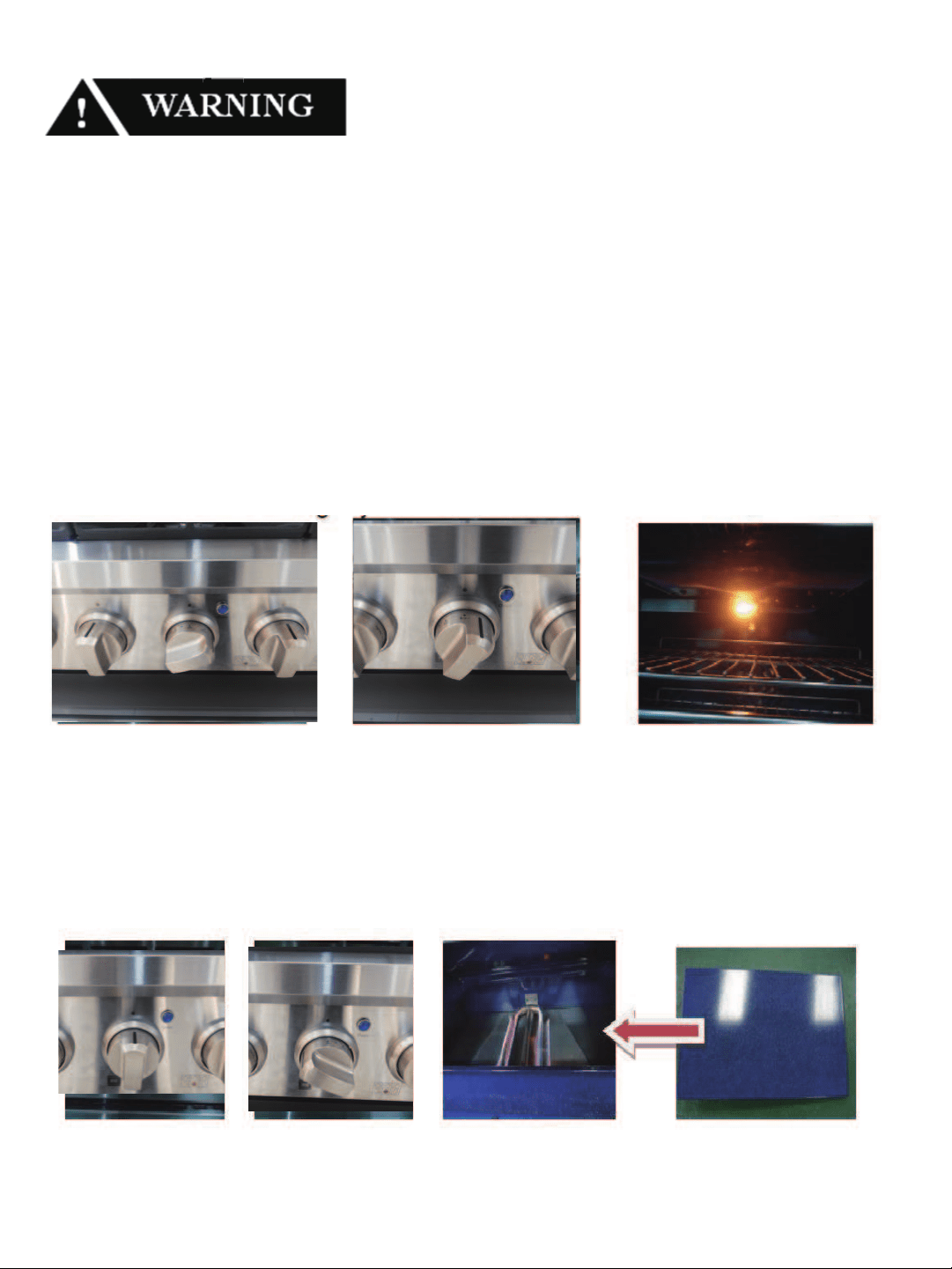
Oven Function
Natural Airflow Bake occurs when heat is transferred into the oven from the bake
burners in the bottom of the oven cavity. Heat is then circulated by natural airflow.
This is a traditional bake setting.
Infrared Broil
The broil burner is located at the top of the oven. This burner heats the metal screen
until it glows. The glowing screen produces the infrared heat, searing the outside of
broiled foods and sealing in juices.
Convection Bake
Heat is transferred from the bake burners in the bottom of the oven cavity to the oven
cavity itself. The convection fan in the rear of the oven then circulates it. This
convection process provides more even heat distribution throughout the oven cavity.
Multiple rack use is possible for the large baking jobs. Convection cooking is faster,
can be accomplished at lower temperatures and provides more even temperatures
than regular cooking.
Oven Operation
Never cover any slots, holes or passages in the oven bottom or cover an
entire rack with materials such as aluminum foil. Doing so blocks air flow through the
oven and may cause carbon monoxide poisoning. Aluminum foil lining may also trap
heat, causing a fire hazard. Do not use Aluminum Foil on any porcelain surface.
Doing so will cause damage the porcelain that affect the life of the porcelain
21
Convection Roast
The convection fan circulates the heated air evenly over and around the food. Using the
cover and broiler pan provided, heated air will be circulated over the around the food being
roasted. The heated air seals in juices quickly for a moist and tender product, while at the
same time creating a rich golden brown exterior. When convection roasting, it is important
that you use the broiler pan for best convection roasting results. The pan is used to catch
grease spills and has a cover to prevent grease splatters.
Convection Defrost
With temperature control off, the motorized fan in the rear of the oven circulates air. The fan
accelerates natural defrosting of the food without heat. To avoid illness and food waste, do
not allow defrost food to remain in the oven for more than two hours without being cooked.
Convection Dehydrate
With the temperature control on 175
o
F, warm air is radiated from the bake burners in the
bottom of the oven cavity and is circulated by a motorized fan in the rear of the oven. Over a
period of time, the water is removed from the food by evaporation. Removal of water inhibits
growth of microorganisms and retards the activity of enzymes.
BEFORE BAKING OR BROILING
The oven and broiler should be turned on to burn off the manufacturing oils. Turn the oven
on to 450˚F (230˚C) for 20 to 30 minutes; then turn the oven knob to “Broil” for the same
length of time. You may wish to turn on the ventilator above your range at this time
22

%URLOLQJLVDPHWKRGRIFRRNLQJWHQGHUFXWVRIPHDWGLUHFWO\XQGHUWKHLQIUDUHGEURLOHULQWKH
RYHQ%URLOLQJLQWKHRYHQLVDFFRPSOLVKHGZLWKWKHRYHQGRRUFORVHG,WLVQRUPDODQG
QHFHVVDU\IRUVRPHVPRNHWREHSUHVHQWWRJLYHWKHIRRGDEURLOHGIODYRU
Preheating
3UHKHDWLQJLVVXJJHVWHGZKHQVHDULQJUDUHVWHDNV5HPRYHWKHEURLOHUSDQEHIRUHSUHKHDWLQJ
ZLWKWKHLQIUDUHGEURLOHU)RRGVZLOOVWLFNRQKRWPHWDO7RSUHKHDWWXUQWKH³2YHQ´VHOHFWRU
NQREWRWKH³%URLO´SRVLWLRQ:DLWIRUWKHEXUQHUWREHFRPHKRWDSSUR[LPDWHO\PLQXWHV
3UHKHDWLQJLVQRWQHFHVVDU\ZKHQEURLOLQJPHDWZHOOGRQH
To Broil
%URLORQHVLGHXQWLOWKHIRRGLVEURZQHGWXUQDQGFRRNRQWKHVHFRQGVLGH6HDVRQDQGVHUYH
$OZD\VSXOOWKHUDFNRXWWRWKH³VWRS´SRVLWLRQEHIRUHWXUQLQJRUUHPRYLQJIRRG
Setting Broil
7KH³2YHQ´VHOHFWRUNQREFRQWUROVWKH%URLOIHDWXUH:KHQEURLOLQJKHDWUDGLDWHVGRZQZDUG
IURPWKHRYHQEURLOHUIRUHYHQFRYHUDJH7KH%URLOIHDWXUHWHPSHUDWXUHLVÛ)Û&
7KHEURLOSDQDQGLQVHUWXVHGWRJHWKHUDOORZGULSSLQJJUHDVHWRGUDLQDQGEHNHSWDZD\IURP
WKHKLJKKHDWRIWKHRYHQEURLOHUDO NOT XVHWKHEURLOSDQZLWKRXWWKHLQVHUWDO NOT
cover the broil pan insert with foil. 7KHH[SRVHGJUHDVHFRXOGFDWFKILUH
To set the oven to Broil:
3ODFHWKHEURLOHUSDQLQVHUWRQWKHEURLOHUSDQ7KHQSODFHWKHIRRGRQWKHEURLOHUSDQLQVHUW
$UUDQJHWKHLQWHULRURYHQUDFNDQGSODFHWKHEURLOHUSDQRQUDFN%HVXUHWRFHQWHUWKHEURLOHU
SDQDQGSRVLWLRQGLUHFWO\XQGHUWKHEURLOEXUQHU,ISUHKHDWLQJWKHEURLOEXUQHUILUVWSRVLWLRQ
WKHEURLOHUSDQDIWHUWKHEURLOEXUQHULVSUHKHDWHG
7XUQVHOHFWRUNQREWR%URLO
%URLOHU2SHUDWLRQ
7KHRYHQLQGLFDWRUOLJKWZLOOUHPDLQRQXQWLOWKHVHOHFWRUNQRELVWXUQHGWRWKHRIISRVLWLRQRUWKH
WHPSHUDWXUHFRQWUROF\FOHVRII
Note: Door must be closed during broiling operation.
23

*ULGGOH2SHUDWLRQ
Before Using the Griddle
&OHDQWKHJULGGOHWKRURXJKO\ZLWKZDUPVRDS\ZDWHUWRUHPRYHGXVWRUDQ\SURWHFWLYH
FRDWLQJ
5LQVHZLWKFOHDQZDWHUDQGZLSHRIIWRGU\ZLWKVRIWFOHDQOLQWIUHHWRZHOFORWK
$VWDLQOHVVVWHHOFRYHUWKDWLVVL]HGWRILWRQWRSRIWKHVXUIDFHZKHQWKHJULGGOHLVQRW
EHLQJXVHGLVSURYLGHG3OHDVHQRWH± WKHFRYHUPXVWEHUHPRYHGEHIRUHWXUQLQJWKH
JULGGOHRQ
0DNHVXUHWKHJUHDVHWUD\LVXQGHUWKHIURQWHGJHRIWKHJULGGOH3RVLWLRQWKHWUD\XQGHU
WKHJULGGOHRYHUKDQJWRFDWFKJUHDVHRUIRRGUHVLGXH
Use of the Griddle
3XVKDQGWXUQWKHFRQWURONQREFRXQWHUFORFNZLVHWRWKHSUHIHUUHGFRRNLQJWHPSHUDWXUH
3UHKHDWWKHJULGGOHIRUPLQXWHV
:KHQWKHJULGGOHLVSUHKHDWHGWRWKHGHVLUHGWHPSHUDWXUHWKHLQGLFDWRUOLJKWZLOOWXUQRQ
%XWWHURUFRRNLQJRLOFDQEHDGGHGIRUPRUHIODYRUWKHQSODFHWKHIRRGWRFRRN
WARNING
!
Before Baking or Broiling WKHRYHQDQGEURLOHUVKRXOGEHWXUQHGRQWREXUQ
RIIWKHPDQXIDFWXULQJRLOV7XUQWKHRYHQRQWR
R
)
R
&IRUWR
PLQXWHVWKHQWXUQWKHEURLOHUWR³%URLO´IRUWKHVDPHOHQJWKRIWLPH<RXPD\
ZLVKWRWXUQRQWKHYHQWLODWRUDERYH\RXUUDQJHDWWKLVWLPH
CAUTION:
7KHVXUIDFHRIWKHJULGGOHLVKRWDIWHUXVH3OHDVHDOORZVXIILFLHQWWLPHIRUWKHJULGGOHWR
FRROSULRUWRFOHDQLQJ
When using the appliance or the first time, the oven and broiler
burners should be turned on the burn off the manufacture oils. Turn the
oven on the 450℉[230 ℃ for 20 to 30 minutes, then turn the oven
control knob to “Broil” for the same length of time. It is recommended
to turn on the ventilator above the range at this time
24

&DUHDQG&OHDQLQJ
Cooktop
7RDYRLGHOHFWULFDOVKRFNRUEXUQVWXUQRIIDOOFRQWUROVDQGHQVXUHWKHFRRNWRSLVFRRO
EHIRUHFOHDQLQJ
%HIRUHFOHDQLQJWKHFRRNWRSHQVXUHWKDWDOOEXUQHUVDUHWXUQHGRIIDQGWKDWDOO
FRPSRQHQWVDUHFRROHQRXJKWRVDIHO\WRXFK
'RQRWXVHKDUVKRUDEUDVLYHFOHDQLQJDJHQWVZD[HVSROLVKHVRUFRPPHUFLDOFRRNWRS
FOHDQHUVWRFOHDQWKHFRRNWRS
8VHRQO\DVSRQJHVRIWFORWKILEURXVRUSODVWLFEUXVKDQGQ\ORQSDGIRUFOHDQLQJ
$OZD\VGU\FRPSRQHQWVFRPSOHWHO\EHIRUHXVLQJWKHFRRNWRS
Control Panel, Door Handle, Control Housing
&OHDQWKHFRQWUROSDQHOGRRUKDQGOHDQGFRQWUROKRXVLQJZLWKDVROXWLRQRIPLOG
GHWHUJHQWDQGZDUPZDWHU
'RQRWXVHDEUDVLYHFOHDQHUVRUVFUXEEHUVWKH\ZLOOSHUPDQHQWO\GDPDJHWKHILQLVK
'U\WKHFRPSRQHQWVZLWKDVRIWOLQWIUHHFORWK
Oven Window
&OHDQDOOJODVVVXUIDFHVZLWKDVROXWLRQRIPLOGGHWHUJHQWDQGKRWZDWHU8VHDPLOG
JODVVFOHDQHUWRUHPRYHILQJHUSULQWRUVPHDUV
'U\FRPSOHWHO\ZLWKDVRIWOLQWIUHHFORWK
Porcelain Surfaces
&OHDQRYHQLQWHULRUDQGLQQHUGRRUOLQHUVZLWKDVROXWLRQRIPLOGGHWHUJHQWDQGKRWZDWHU
5LQVHDQGGU\ZLWKDVRIWFORWK'RQRWXVHDEUDVLYHVRUFRPPHUFLDORYHQFOHDQHUV
Stainless Steel Surfaces
'RQRWXVHDQ\FOHDQLQJSURGXFWFRQWDLQLQJFKORULQHEOHDFK
'RQRWXVHDVWHHOZRROSDGLWZLOOVFUDWFKWKHVXUIDFH
8VHDKRWGDPSFORWKZLWKDPLOGGHWHUJHQW8VHDFOHDQKRWGDPSFORWKWRUHPRYH
VRDS'U\ZLWKDGU\FOHDQFORWK
25

&DUHDQG&OHDQLQJ
Metal Finishes
:DVKZLWKVRDSDQGZDWHUJODVVFOHDQHURUPLOGOLTXLGVSUD\V
Plastic Finishes
:KHQFRQWUROSDQHOWULPDQGHQGFDSVDUHFRROFOHDQZLWKVRDSDQGZDWHUULQVHDQGGU\
8VHDJODVVFOHDQHUDQGVRIWFORWK
Oven Racks
&OHDQRYHQUDFNVZLWKVROXWLRQRIGHWHUJHQWDQGKRWZDWHU7RFOHDQKHDY\VRLOXVHD
VFRXULQJSDGVXFKDVVWHHOZRROZLWKSOHQW\RIZDWHU
Oven Frame
&OHDQZLWKKRWZDWHUVRDSILOOHGVWHHOZRROSDGVRUFOHDQHUV5LQVHZHOOZLWKFOHDQ
ZDWHUDQGGU\
Oven Gasket
'RQRWFOHDQWKHJDVNHW7KHILEHUJODVVPDWHULDORIWKHRYHQGRRUJDVNHWFDQQRW
ZLWKVWDQGDEUDVLRQ
,WLVQHFHVVDU\IRUWKHJDVNHWWRUHPDLQLQWDFW
Replacing the Oven Light
7XUQRIIWKHSRZHUDWWKHPDLQSRZHUVXSSO\
5HPRYHWKHOHQVFRYHUIURPWKHKRXVLQJE\SXOOLQJVWUDLJKWRXW
7RSUHYHQWHOHFWULFDOVKRFNRUSHUVRQDOLQMXU\PDNHVXUHWKHRYHQDQGOLJKWEXOEDUH
FRRODQGSRZHUWRWKHRYHQKDVEHHQWXUQHGRIIEHIRUHUHSODFLQJWKHOLJKWEXOE0DNH
VXUHWKHOHQVFRYHULVLQSODFHZKHQXVLQJWKHRYHQ
Outer Oven Door
8VHVRDSDQGZDWHUWRWKRURXJKO\FOHDQWKHWRSVLGHVDQGIURQWRIWKHRYHQGRRU5LQVH
ZHOO<RXPD\DOVRXVHDJODVVFOHDQHUWRFOHDQWKHJODVVRQWKHRXWVLGHRIWKHGRRU
'RQRWXVHRYHQFOHDQHUVFOHDQVLQJSRZGHUVRIKDUVKDEUDVLYHVRQWKHRXWVLGHRIWKH
GRRU
Inner Oven Door
'RQRWDOORZH[FHVVZDWHUWRUXQLQWRDQ\KROHVRUVORWVLQWKHGRRU$Q\VRDSOHIWRQ
WKHOLQHUFDXVHVDGGLWLRQDOVWDLQVZKHQWKHRYHQLVKHDWHG
%HIRUH\RXFDOOIRUVHUYLFHSOHDVHUHYLHZWKHSRWHQWLDOSUREOHPSRVVLEOHFDXVHVDQG
UHPHGLHVVKRZQLQWKHWDEOHEHORZ
26
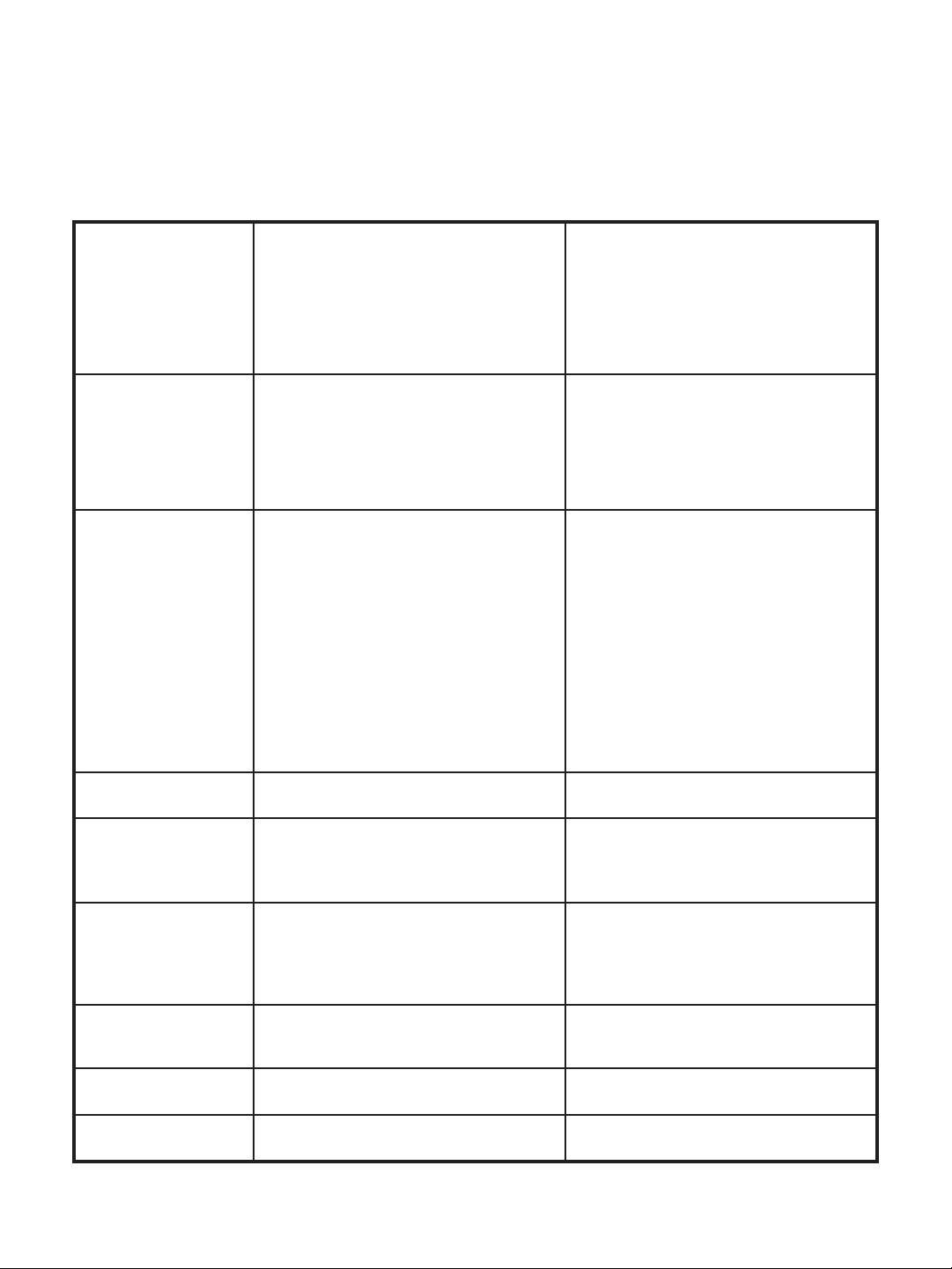
7URXEOHVKRRWLQJ
Before you call for service, please review the potential problem / possible causes and
remedies shown in the table below.
1RWKLQJZRUNV
2YHQLVQRWFRQQHFWHGWRWKHHOHFWULFDO
SRZHU
3RZHUVXSSO\LVQRWHQHUJL]HG
+DYHRYHQFRQQHFWHGWRDSURSHUO\
VL]HGHOHFWULFDOSRZHUVXSSO\E\D
TXDOLILHGHOHFWULFLDQ
+DYHDQHOHFWULFLDQFKHFNWKHSRZHU
VXSSO\LQFOXGLQJWKHKRXVHFLUFXLW
EUHDNHUZLULQJDQGIXVHV
7RSEXUQHUVGRQRW
OLJKWRUGRQRWEXUQ
HYHQO\
3OXJRQUDQJHLVQRWFRPSOHWHO\LQVHUWHG
LQWKHHOHFWULFDORXWOHW
%XUQHUKROHVRQWKHVLGHRIWKHEXUQHU
PD\EHFORJJHG
0DNHVXUHWKHXQLWLVSURSHUO\
FRQQHFWHGWRWKHSRZHUVXSSO\
5HPRYHWKHEXUQHUKHDGVDQGFOHDQ
WKHP&KHFNWKHHOHFWURGHDUHDIRU
EXUQHGRQIRRGRUJUHDVH
%XUQHUIODPHVYHU\
ODUJHDQG\HOORZ
%XUQHUEH]HOSRUWVDUHFORJJHG
%XUQHUSRUWVRUEXUQHUFDSVDUHQRW
SRVLWLRQHGSURSHUO\
&RRNWRSLVEHLQJRSHUDWHGZLWKWKH
ZURQJW\SHRIJDV
5HJXODWRULVQRWLQVWDOOHGLVIDXOW\RULV
VHWIRUWKHZURQJW\SHRIJDV
&OHDQEXUQHUEH]HOULQJSRUWVZLWK
VWUDLJKWHQHGSDSHUFOLSQHHGOHRUZLUH
5HPRYHDQGFDUHIXOO\UHLQVWDOOEXUQHU
EH]HODQGFDSV
(QVXUHWKDWWKHW\SHRIFRRNWRSPDWFKHV
WKHQDWXUDOJDVVXSSO\
&KHFNLQVWDOODWLRQUHSODFHUHJXODWRURU
VHWUHJXODWRUIRUSURSHUJDV
6SDUNLQJEXWQR
IODPHLJQLWLRQ
*DVVKXWRIIYDOYHLVLQWKHµ2))
SRVLWLRQ
7XUQVKXWRIIYDOYHWRWKHµ21¶SRVLWLRQ
,JQLWHUVVSDUN
FRQWLQXRXVO\DIWHU
IODPHLJQLWLRQ
3RZHUVXSSO\SRODULW\LVUHYHUVHG
,JQLWHUVDUHZHWRUGLUW\
+DYHSRODULW\FRUUHFWHG
'U\RUFOHDQLJQLWHUV
%XUQHUIODPHJRHV
RXWDWORZVHWWLQJ
/RZJDVVXSSO\SUHVVXUH
$LULQWDNHKROHVDURXQGNQREVDUH
REVWUXFWHG
&RQWDFWJDVFRPSDQ\
5HPRYHREVWUXFWLRQ
2YHQZLOOQRWKHDW 2YHQVHWWLQJVDUHQRWFRUUHFWHG
)ROORZPRGHVHOHFWLRQDQGFORFN
VHWWLQJVDVVSHFLILHGLQ2YHQ2SHUDWLRQ
VHFWLRQRIWKHPDQXDO
)RRGVRYHUFRRNHG
RUXQGHUFRRNHG
,QFRUUHFWFRRNLQJWLPHRUWHPSHUDWXUH
$GMXVWWLPHWHPSHUDWXUHRUUDFN
SRVLWLRQ
µ&UDFNLQJ¶RU
µ3RSSLQJ¶VRXQG
7KLVLVWKHVRXQGRIPHWDOKHDWLQJDQG
FRROLQJ
7KLVLVQRUPDO
27
28
Instructions for Converting Range to Operate on Liquefied Petroleum Gas
INSTALLATION AND SERVICES MUST BE PERFORMED BY A QUALIFIED INSTALLER
IMPORTANT: SAVE INSTRUCTION MANUAL FOR THE LOCAL INSPECTOR’S USE.
READ AND SAVE THESE
INSTRUCTIONS
FOR FUTURE REFERENCE
This conversion kit must be installed by a qualified service
technician in accordance with the manufacturer's instructions and all applicable
codes and requirements of the authority having jurisdiction. Failure to follow
instructions may result in fire, explosion or production of carbon monoxide causing
property damage, personal injury or loss of life. The qualified service agency is
responsible for the proper installation of this kit. The installation is not proper and
complete until the operation of the converted appliance is checked as specified in
the manufacturer's instructions supplied with this kit.
Before proceeding with the conversion, shut off the gas supply
before disconnecting electrical power to the range. Be sure power supplies are off
before installing the conversion kit. Failure to do so could cause serious bodily injury.
Determine the combination of top burners that are featured on your range. Identify
the parts you need from this kit to complete the L.P. conversion. When burners are
converted from natural to L.P. the BTU ratings are as follows:
Top Burner 6,000 BTU L.P. Gas [ 0.74mm ]
Top Burner 9,000 BTU L.P. Gas [ 0.90mm ]
Top Burner 9,000 BTU L.P. Gas [ 0.90mm ]
Top Burner 12,000 BTU L.P. Gas [ 1.0mm ]
Top Burner 15,000 BTU L.P. Gas [ 1.16mm ]
Top Burner 20,000 BTU L.P. Gas [0.89*2+0.53mm]
Broil Burner 10,000 BTU L.P. Gas [0.94mm]
Oven Burner 22,000 BTU L.P. Gas [1.40mm]
Straight Burner 14,000 BTU L.P. Gas [ 1.09mm ]
*Note: For operation at elevations above 2000ft., appliance rating shall be reduced at the rate of 4%
for each 1000 ft. above sea level .
The original orifices are Nature Gas:
Top Burner 6,000 BTU [ 1.07mm ]
Top Burner 9,000 BTU [ 1.36mm ]
Top Burner 12,000 BTU [ 1.57mm ]
Top Burner 15,000 BTU [ 1.79mm ]
Top Burner 20,000 BTU [ 1.36*2+0.73mm ]
Oven Burner 22,000BTU [ 2.13mm ]
Broil Burner 10,000 BTU [1.42mm]
Straight Burner 14,000 BTU [ 1.68mm]
Tools Required for L.P. Conversion:
2mm Allen Wrench
3/8 & 1/2 & 5/8” [19mm] Open End Wrench
1/8” Wide Flat Blade Screwdriver
Philips Screwdriver
7mm Nut Driver
1/4 Nut Driver
Adjustable wrench.
IMPORTANT: After replacing the natural gas to LP orifices, be sure to keep the original
factory installed natural gas orifices for future range conversion back to natural gas.
Instructions for Converting Range to Operate on Liquefied Petroleum Gas
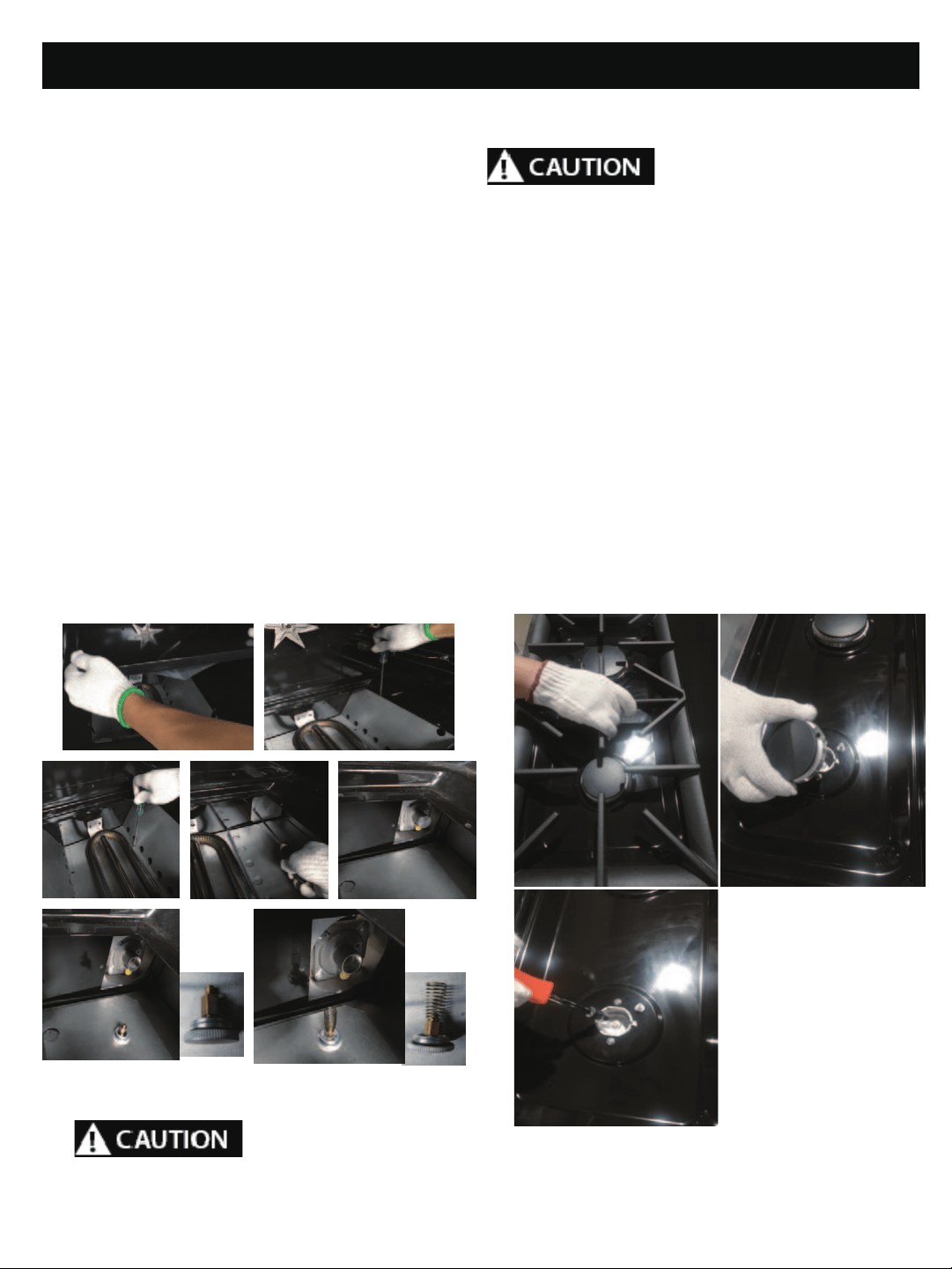
1. Convert the Pressure Regulator
To access the gas regulator, pull the
range away from the cabinet wall.
The gas regulator is located at the
bottom right corner of the range.
a. Electrical shock hazard can occur
and result in injury or death.
Disconnect electrical power to the
range before servicing. Do not
remove regulator or allow it to
turn during servicing.
b. Un
screw the cap from the regulator.
Do not remove the spring from
the regulator.
c. Unscrew the insert from the cap and
turn it over so the longer stem is
facing the cap. Replace insert on the
cap. Replace the cap on the
regulator.
2. Convert Top Burner for LP/ Propane Gas
Save the natural gas orifices
removed from the appliance for possible future
conversions to natural gas. You
should use the
following process to c
onvert to Natural gas.
Take extra care when handling steel parts.
a. Remove cooking grates, burner caps
and inner burner rings.
b. Lift off outer burner heads and burner
bases.
c. Remove the factory installed natural gas
orifices from the center of the orifice
holders using a 7mm nut driver.
Remember to keep the original natural
gas orifices for future c
onversions back
to natural gas. Replace the LP orifice in
each ori
fice holder. Tighten each orifice
until snug. Use caution not to over
tighten.
Position for LPPosition for NG
Care should be taken when removing and replacing gas components. Use proper
support to prevent damage to components.
29
30
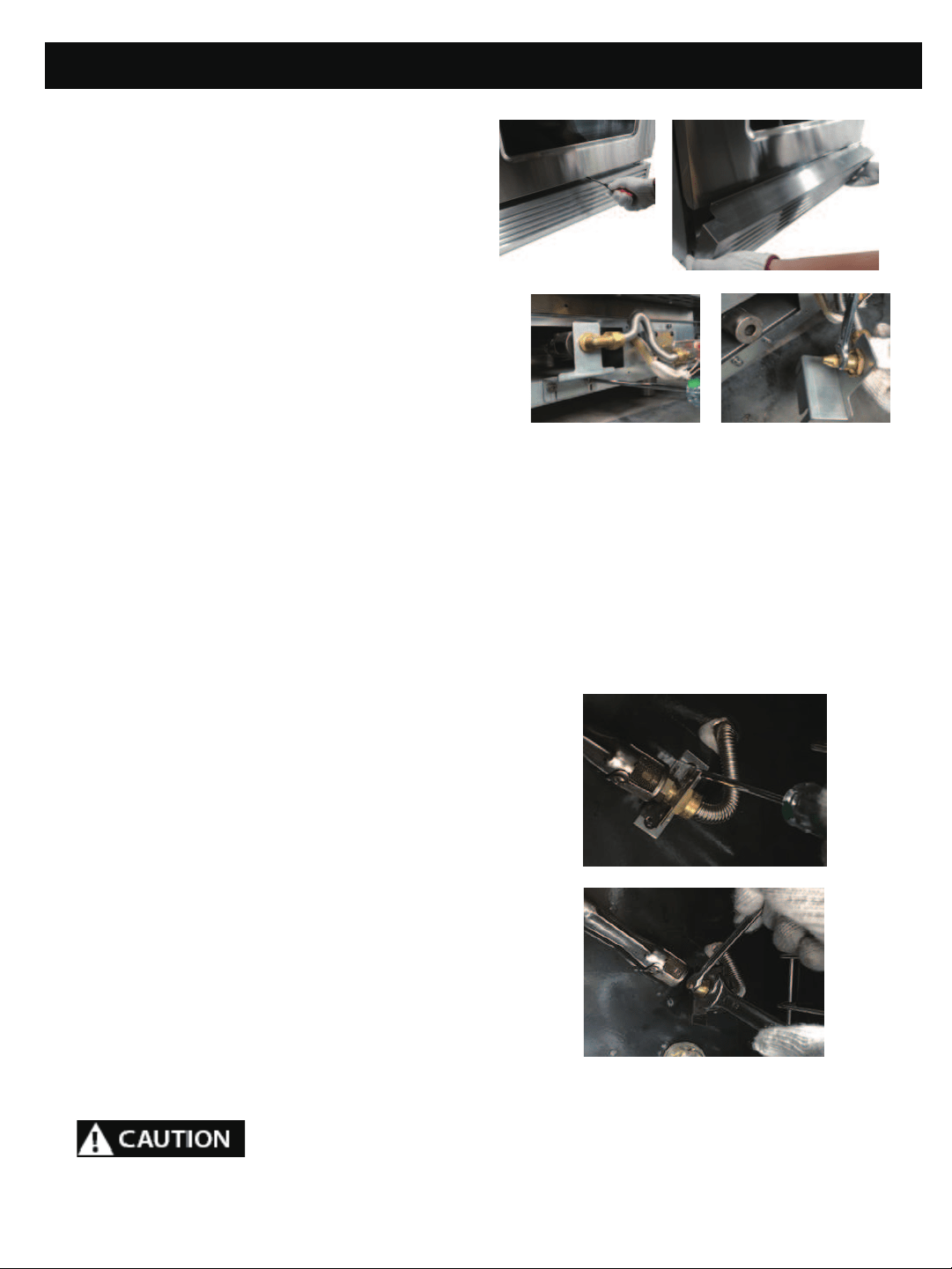
3. Convert Oven Burner Orifice for
LP/Propane Gas
a. Remove 3 screws between the kick
panel and the oven door . Hold the toe
kick panel on both ends and slowly pull
away towards the front.
b. Remove 2 screws which holding the
orifice bracket and locate the orifice.
Remove orifice using an adjustable
wrench. Replace with oven burner
orifice, size 1.32mm and tighten.
Replace the orifice bracket, aligning the
new orifices into the air shutter of th
e
oven burner.
* Repeat upon steps for 18”oven .
4. Convert Broil Burner Orifice for
LP/Propane Gas
a. Remove 2 screws which fixing the
orifice bracket and locate the orifice.
b. Using a 5/8”or 19mm open
wrench, remove the gas line from
the orifice holder. Using a ½”open
wrench, remove the orifice from the
orifice holder. Replace with oven
broiler orifice size 0.94mm.
Care should be taken when removing and replacing gas components. Use proper
support to prevent damage to components.
Instructions for Converting Range to Operate on Liquefied Petroleum Gas
31
Instructions for Converting Range to Operate on Liquefied Petroleum Gas
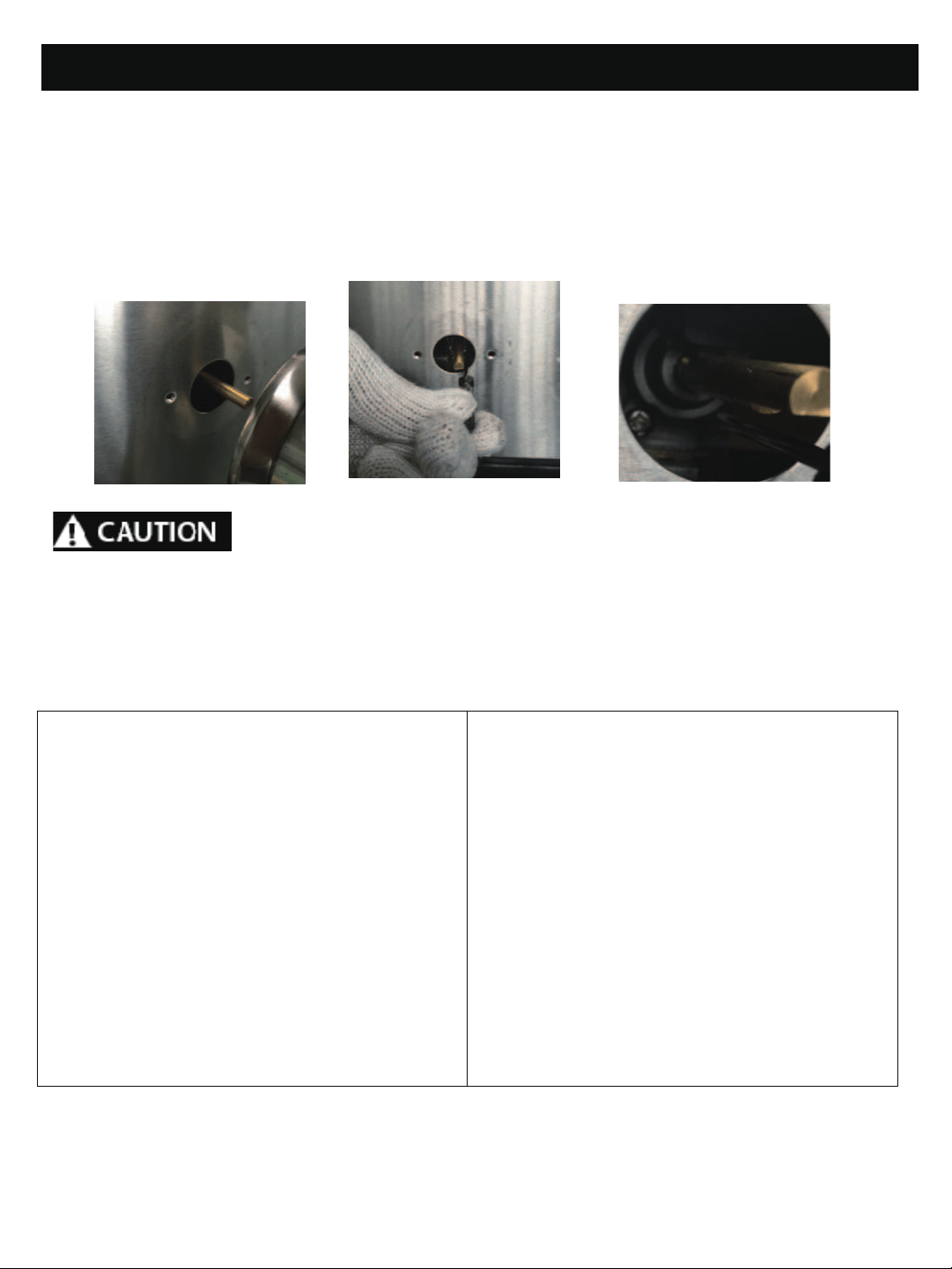
5. Convert Gas Valves for LP/Propane
Gas
a. Remove control knobs.
b. Using a flat screwdriver, adjust main
burner bypass jets toward to ¼ circle for
LP until the flame is normal.
Care should be taken when removing and replacing gas components. Use proper
support to prevent damage to components.
31
This cooking rang can be used with LPG(Liquid Propane Gas)
and NG (Natural Gas). It is shipped from the factory adjusted for
use with NG. Conversion nozzles are included in this plasƟc bag.
Follow the instrucƟons in the manual (page 28 to 32) for
gasconversion.
AƩenƟon: AfĮx this label as close as possible to the conversionplate
on the gas range.
.............................................................................................................
Gar range model:_________________________________________
This range w
as converted on________________________________
(day/month/year)to LPG by_________________________________
_______________________________________________________
(name and address of company making this conversion).
which accepts the liability that this conversion has been
properly made.
LPG Supply Pressure 10” w.c.
This cooking rang can be used with LPG(Liquid Propane Gas)
(GPL) et du gaz naturel. L'appareil est réglé pour une uƟlisaƟon
avec du gaz nature
l lorsqu'il quiƩe l'usine. Les buses de
conversion se trouvent dans ce sac en plasƟque.
Veuillez suivre les instrucƟons fournies dans le guide
(pnges 28 à 32) pour la conversion au gaz.
AƩenƟon : Posez ceƩe éƟqueƩe le plus près possible delaplaque de
conversion située sur la cuisinière.
...............................................................................................................
Modèle de cuisinière_______________________________________
CeƩe cuisiniére a été converƟe le_____________________________
(jour/mois/année) po
ur une utilisaƟon avec du GPL par:__________
________________________________________________________
(nom et adresse del’ entreprise responsable de la conversion).
qui assume laresponsabilité que la conversion a été
eīectuéecorrectement.
Pression de I'alimentaƟon enGPL: 10 po (25 cm)

Instructions for Converting Range to Operate on Liquefied Petroleum Gas
Checking for Manifold Gas Pressure
If it is necessary to check the manifold
gas pressure, remove the burner cap,
inner ring, outer burner head and burner
base of the right front top burner and
connect a manometer (water gauge) or
other pressure test device to the burner
orifice. Use a rubber hose with inside
diameter of approximately ¼ ” and hold
the end of the tube tight
over the orifice.
Turn the gas valve on. For a more
accurate pressure check, have at least
two (2) other top burners burning. Be
sure that the gas supply (inlet) pressure is
at least one inch above the specified
manifold pressure. The gas supply
6. Reconnect Gas and Electrical Supply
to Range
Leak testing of the appliance shall be
conducted according to the installation
instructions provided with the range.
7. Air Shutter Oven Burner
The air shutter for the oven burner may
need adjustment, especially if the unit has
been converted for use with LP/Propane
gas. The approximate flame length of the
oven burner is one inch (distinct inner blue
flame).
a. With the toe
tick removed, set the
oven to bake at 350 °F and observe
the flame. If the flame is yellow in
color, increase the air shutter
opening size. If the flame is blue
lifting away from the burner, reduce
the air shutter opening size.
b. Turn off oven and allow it to cool
before adjusting the air shutter. To
adjust, loosen the lock screw,
reposition the air shutter and
tighten the lock screw. Retest the
To determine if the oven burner flame is
proper:
manifold
pressure
.
The
gas
supply
pressure should never be over 14” water
column. When properly adjusted the
manifold water column pressure is 10”
for LP/Propane gas or 5” for Natural
Gas
Do not use a flame to check for gas
leaks
a. Disconnect the range and its
individual shut -off valve from the gas
supply piping system during any
pressure of that system at test
pressures greater than 14” of water
column pressure (approximately ½ ”
psig)
b. The ap
pliance must be isolated f
rom
the gas supply piping system by closing
its individual manual shut -off valve
during any pressure testing of the supply
system at test pressure equal to or less
than 14” water column pressure
(approximately ½ ” psig)
t
i
g
h
ten t
h
e
l
oc
k
screw.
R
etest t
h
e
burner by repeating the steps above.
When the burner flame is a distinct
blue color burning steadily, the air
shutter is adjusted correctly.
8. Installation of New LP / Propane
Rating / Serial Plate
Record the model and serial number
on the LP / Propane Rating serial
plate provided in this kit. The
information can be obtained from the
existing Rating / Serial plate. Place
the new plate as close a
s possible to
the
existing Rating / Serial plate on
the range.
32

EMPAVA APPLIANCES INC.
15253 DON JULIAN RD CITY OF INDUSTRY,CA 91745
TEL:888-682-8882
WWW.EMPAVA.COM
