

OOWWNNEERR''SS MMAANNUUAALL
OOppeerraattiioonn
MMaaiinntteennaannccee
S
Sppeecciiffiiccaattiioonnss
All information in this Owner's Manual is current at the time of publica-
tion. However, HYUNDAI reserves the right to make changes at any time
so that our policy of continual product improvement may be carried out.
This manual applies to all models of this vehicle and includes descrip-
tions and explanations of optional as well as standard equipment.
As a result, you may find material in this manual that does not apply to
your specific vehicle.
Please note that some models are equipped with Right-Hand Drive
(RHD). The explanations and illustrations for some operations in RHD
models are opposite of those written in this manual.

F2
Your HYUNDAI should not be modified in any way. Such modifications may adversely affect
the performance, safety or durability of your HYUNDAI and may, in addition, violate condi-
tions of the limited warranties covering the vehicle. Certain modifications may also be in vio-
lation of regulations established by the Department of Transportation and other government
agencies in your country.
Your vehicle is equipped with electronic fuel injection and other electronic components. It is
possible for an improperly installed/adjusted two-way radio or cellular telephone to adversely
affect electronic systems. For this reason, we recommend that you carefully follow the radio
manufacturer's instructions or consult your HYUNDAI dealer for precautionary measures or
special instructions if you choose to install one of these devices.
CAUTION: MODIFICATIONS TO YOUR HYUNDAI
TWO-WAY RADIO OR CELLULAR TELEPHONE INSTALLATION
F3
This manual includes information titled as DANGER, WARNING, CAUTION and NOTICE.
These titles indicate the following:
SAFETY AND VEHICLE DAMAGE WARNING
DANGER indicates a hazardous situa-
tion which, if not avoided, will result
in death or serious injury.
DANGER
WARNING indicates a hazardous situ-
ation which, if not avoided, could
result in death or serious injury.
CAUTION indicates a hazardous situa-
tion which, if not avoided, could result
in minor or moderate injury.
CAUTION
NOTICE indicates a situation which, if not
avoided, could result in vehicle damage.
NOTICE
WARNING
F4
FOREWORD
Congratulations, and thank you for choosing HYUNDAI.We are pleased to welcome you to the growing number of dis-
tinguished people who drive HYUNDAIS.We are very proud of the advanced engineering and high-quality construc-
tion of each HYUNDAI we build.
Your Owner’s Manual will introduce you to the features and operation of your new HYUNDAI. To become familiar with
your new HYUNDAI, so that you can fully enjoy it, read this Owner’s Manual carefully before driving your new vehicle.
This manual contains important safety information and instructions intended to familiarize you with your vehicle’s con-
trols and safety features so you can safely operate your vehicle.
This manual also contains information on maintenance designed to enhance safe operation of the vehicle. It is rec-
ommended that all service and maintenance on your car be performed by an authorized HYUNDAI dealer. HYUNDAI
dealers are prepared to provide high-quality service, maintenance and any other assistance that may be required.
This Owner’s Manual should be considered a permanent part of your vehicle, and should be kept in the vehicle so
you can refer to it at any time. The manual should stay with the vehicle if you sell it to provide the next owner with
important operating, safety and maintenance information.
HYUNDAI MOTOR COMPANY
Copyright 2017 HYUNDAI Motor Company. All rights reserved. No part of this publication may be reproduced, stored
in any retrieval system or transmitted in any form or by any means without the prior written permission of HYUNDAI
Motor Company.
Severe engine and transmission damage may result from the use of poor quality fuels and lubricants that
do not meet HYUNDAI specifications. You must always use high quality fuels and lubricants that meet the
specifications listed on Page 8-6 in the Vehicle Specifications section of the Owner's Manual.
CAUTION
We want to help you get the greatest
possible driving pleasure from your
vehicle. Your Owner’s Manual can
assist you in many ways. We strong-
ly recommend that you read the
entire manual. In order to minimize
the chance of death or injury, you
must read the WARNING and CAU-
TION sections in the manual.
Illustrations complement the words
in this manual to best explain how to
enjoy your vehicle. By reading your
manual, you will learn about fea-
tures, important safety information,
and driving tips under various road
conditions.
The general layout of the manual is
provided in the Table of Contents.
Use the index when looking for a
specific area or subject; it has an
alphabetical listing of all information
in your manual.
Sections: This manual has eight
chapters plus an index. Each chapter
begins with a brief list of contents so
you can tell at a glance if that section
has the information you want.
Your safety, and the safety of others,
is very important. This Owner's
Manual provides you with many safe-
ty precautions and operating proce-
dures. This information alerts you to
potential hazards that may hurt you
or others, as well as damage to your
vehicle.
Safety messages found on vehicle
labels and in this manual describe
these hazards and what to do to
avoid or reduce the risks.
Warnings and instructions contained
in this manual are for your safety.
Failure to follow safety warnings and
instructions can lead to serious injury
or death.
Throughout this manual DANGER,
WARNING, CAUTION, NOTICE and
the SAFETY ALERT SYMBOL will
be used.
This is the safety alert sym-
bol. It is used to alert you to
potential physical injury haz-
ards. Obey all safety mes-
sages that follow this symbol
to avoid possible injury or
death. The safety alert sym-
bol precedes the signal words
DANGER, WARNING and
CAUTION.
HHOOWW TTOO UUSSEE TTHHIISS MMAANNUUAALL
S
SAAFFEETTYY MMEESSSSAAGGEESS
F5
Introduction
DANGER indicates a hazardous
situation which, if not avoided,
will result in death or serious
injury.
DANGER
WARNING indicates a hazardous
situation which, if not avoided,
could result in death or serious
injury.
WARNING
F6
Introduction
NOTICE indicates a situation
which, if not avoided, could result
in vehicle damage.
Unleaded
For the optimal vehicle performance,
we recommend you use unleaded
gasoline which has an octane rating of
RON (Research Octane Number) 95 /
AKI (Anti Knock Index) 91 or higher.
Your new vehicle is designed to
obtain maximum performance with
UNLEADED FUEL, as well as mini-
mize exhaust emissions and spark
plug fouling.
NOTICE
• Do not "top off" after the noz-
zle automatically shuts off
when refueling.
• Always check that the fuel cap
is installed securely to pre-
vent fuel spillage in the event
of an accident.
WARNING
NEVER USE LEADED FUEL. The
use of leaded fuel is detrimental
to the catalytic converter and
will damage the engine control
system’s oxygen sensor and
affect emission control.
Never add any fuel system
cleaning agents to the fuel tank
other than what has been speci-
fied (We recommend that you
consult an authorized HYUNDAI
dealer for details.)
CAUTION
CAUTION indicates a hazardous
situation which, if not avoided,
could result in minor or moder-
ate injury.
CAUTION
Using unleaded gasoline with an
octane rating lower than RON 95
could result in loss of engine
power and may cause damage to
the engine.
CAUTION
FFUUEELL RREEQQUUIIRREEMMEENNTTSS
F7
Introduction
Leaded (if equipped)
For some countries, your vehicle is
designed to use leaded gasoline.
When you are going to use leaded
gasoline, we recommend that you
ask an authorized HYUNDAI dealer.
Octane rating of leaded gasoline is
same with unleaded one.
Gasoline containing alcohol and
methanol
Gasohol, a mixture of gasoline and
ethanol (also known as grain alco-
hol), and gasoline or gasohol con-
taining methanol (also known as
wood alcohol) are being marketed
along with or instead of leaded or
unleaded gasoline.
Do not use gasohol containing more
than 10% ethanol, and do not use
gasoline or gasohol containing any
methanol. Either of these fuels may
cause drivability problems and dam-
age to the fuel system, engine control
system and emission control system.
Discontinue using gasohol of any
kind if drivability problems occur.
Vehicle damage or driveability prob-
lems may not be covered by the
manufacturer’s warranty if they result
from the use of:
1. Gasohol containing more than
10% ethanol.
2. Gasoline or gasohol containing
methanol.
3. Leaded fuel or leaded gasohol.
Other fuels
Using fuel additives such as:
- Silicone fuel additive
- MMT (Magnanese, Mn) fuel additive
- Ferrocene (iron-based) fuel additive
- Other metallic-based fuel additives
may result in cylinder misfire, poor
acceleration, engine stalling, dam-
age to the catalyst, or abnormal cor-
rosion, and may cause damage to
the engine resulting in a reduction in
the overall life of the powertrain.
Damage to the fuel system or per-
formance problem caused by the
use of these fuels may not be cov-
ered by your New Vehicle Limited
Warranty.
NOTICE
Never use gasohol which con-
tains methanol. Discontinue
use of any gasohol product
which impairs drivability.
CAUTION

F8
Introduction
Use of MTBE
HYUNDAI recommends avoiding
fuels containing MTBE (Methyl
Tertiary Butyl Ether) over 15.0% vol.
(Oxygen Content 2.7% weight) in
your vehicle.
Fuel containing MTBE over 15.0%
vol. (Oxygen Content 2.7% weight)
may reduce vehicle performance and
produce vapor lock or hard starting.
Do not use methanol
Fuels containing methanol (wood
alcohol) should not be used in your
vehicle. This type of fuel can reduce
vehicle performance and damage
components of the fuel system,
engine control system and emission
control system.
Fuel Additives
HYUNDAI recommends that you use
unleaded gasoline which has an
octane rating of RON (Research
Octane Number) 95 / AKI (Anti
Knock Index) 91 or higher.
For customers who do not use good
quality gasolines including fuel addi-
tives regularly, and have problems
starting or the engine does not run
smoothly, one bottle of additive
added to the fuel tank according to
the maintenance schedule is recom-
mended (refer to chapter 7, “Normal
Maintenance Schedule”).
Additives are available from your
authorized HYUNDAI dealer along
with information on how to use them.
Do not mix other additives.
Operation in foreign countries
If you are going to drive your vehicle
in another country, be sure to:
• Observe all regulations regarding
registration and insurance.
• Determine that acceptable fuel is
available.
Your New Vehicle Limited
Warranty may not cover dam-
age to the fuel system and any
performance problems that are
caused by the use of fuels con-
taining methanol or fuels con-
taining MTBE (Methyl Tertiary
Butyl Ether) over 15.0% vol.
(Oxygen Content 2.7% weight.)
CAUTION

• This vehicle should not be modi-
fied. Modification of your vehicle
could affect its performance, safety
or durability and may even violate
governmental safety and emis-
sions regulations.
In addition, damage or perform-
ance problems resulting from any
modification may not be covered
under warranty.
• If you use unauthorized electronic
devices, it may cause the vehicle to
operate abnormally, wire damage,
battery discharge and fire. For your
safety, do not use unauthorized
electronic devices.
By following a few simple precautions
for the first 1,000 km (600 miles) you
may add to the performance, econo-
my and life of your vehicle.
• Do not race the engine.
• While driving, keep your engine
speed (rpm, or revolutions per
minute) within 3,000 rpm.
• Do not maintain a single speed for
long periods of time, either fast or
slow. Varying engine speed is need-
ed to properly break-in the engine.
• Avoid hard stops, except in emer-
gencies, to allow the brakes to seat
properly.
• Do not tow a trailer during the first
2,000 km (1,200 miles) of operation.
• Do not use Launch Control during
the break-in process.
HYUNDAI promotes an environmen-
tally sound treatment for end of life
vehicles and offers to take back your
HYUNDAI end of life vehicles in
accordance with the European Union
(EU) End of Life Vehicles Directive.
You can get detailed information
from your national HYUNDAI home-
page.
F9
Introduction
V
VEEHHIICCLLEE BBRREEAAKK--IINN
PPRROOCCEESSSS
V
VEEHHIICCLLEE MMOODDIIFFIICCAATTIIOONNSS RREETTUURRNNIINNGG UUSSEEDD VVEEHHIICCLLEESS
((FFOORR EEUURROOPPEE))

1
2
3
4
5
6
7
8
I
Your vehicle at a glance
Safety system of your vehicle
Convenient features of your vehicle
Multimedia System
Driving your vehicle
What to do in an emergency
Maintenance
Specifications & Consumer information
Index
TABLE OF CONTENTS
F11

Your vehicle at a glance
1
Your vehicle at a glance
1
Exterior overview (I) .............................................1-2
Exterior overview (II) ............................................1-3
Interior overview....................................................1-4
Instrument panel overview (I)..............................1-5
Instrument panel overview (II).............................1-6
Engine compartment .............................................1-7
1-2
EEXXTTEERRIIOORR OOVVEERRVVIIEEWW ((II))
Your vehicle at a glance
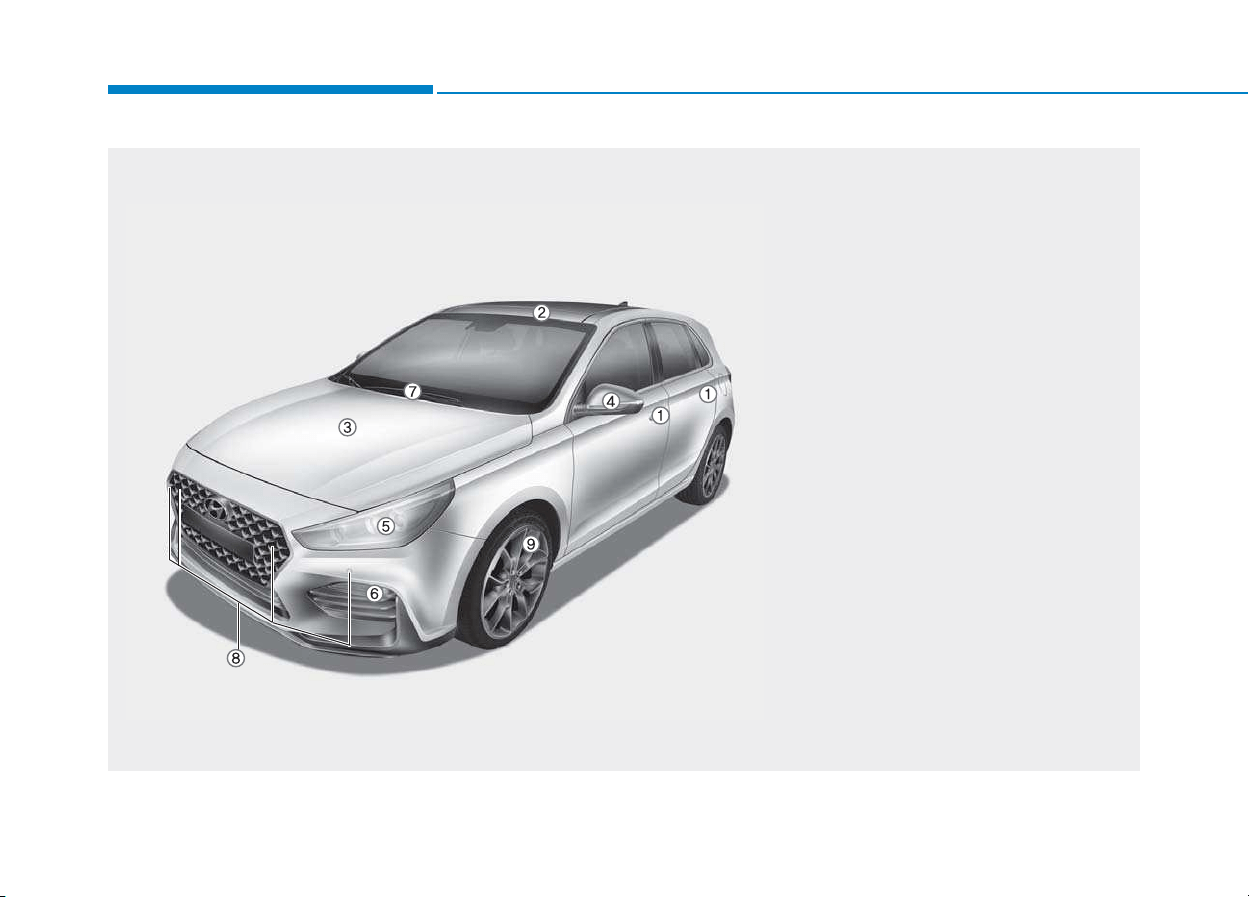
1. Door locks...............................................3-11
2. Panorama sunroof ..................................3-32
3. Hood .......................................................3-37
4. Outside rearview mirror ..........................3-23
5. Head lamp .....................................3-79, 7-62
6. DRL (Daytime Running Light) .......3-86, 7-62
7. Front windshield wiper blades.......3-91, 7-31
8. Parking assist system...........................3-100
9. Tires and wheels .............................7-37, 8-4
OPDEN017001
■ Front view
The actual shape may differ from the illustration.
1-3
Your vehicle at a glance
EEXXTTEERRIIOORR OOVVEERRVVIIEEWW ((IIII))
1
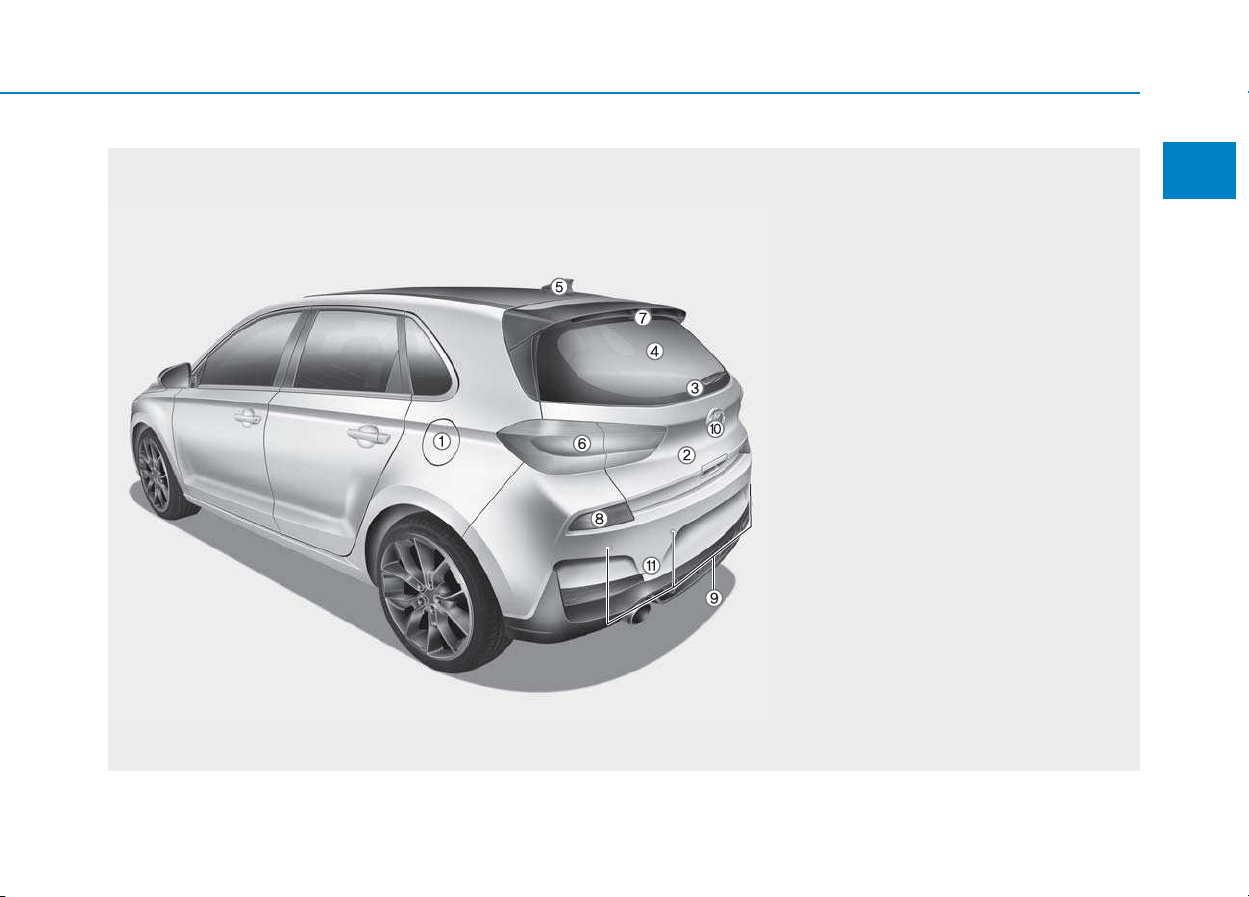
1. Fuel filler door.........................................3-40
2. Tailgate ...................................................3-38
3. Rear window wiper blade ..............3-91, 7-32
4. Defroster ...............................................3-116
5. Antenna ....................................................4-2
6. Rear combination lamp ..........................7-66
7. High mounted stop lamp ........................7-69
8. Rear fog lamp................................3-84, 7-68
9. Rear parking assist system ...................3-96
10. Rearview camera..................................3-95
11. Towing hook..........................................6-38
OPDEN017002
■ Rear view
The actual shape may differ from the illustration.
1-4
Your vehicle at a glance
I
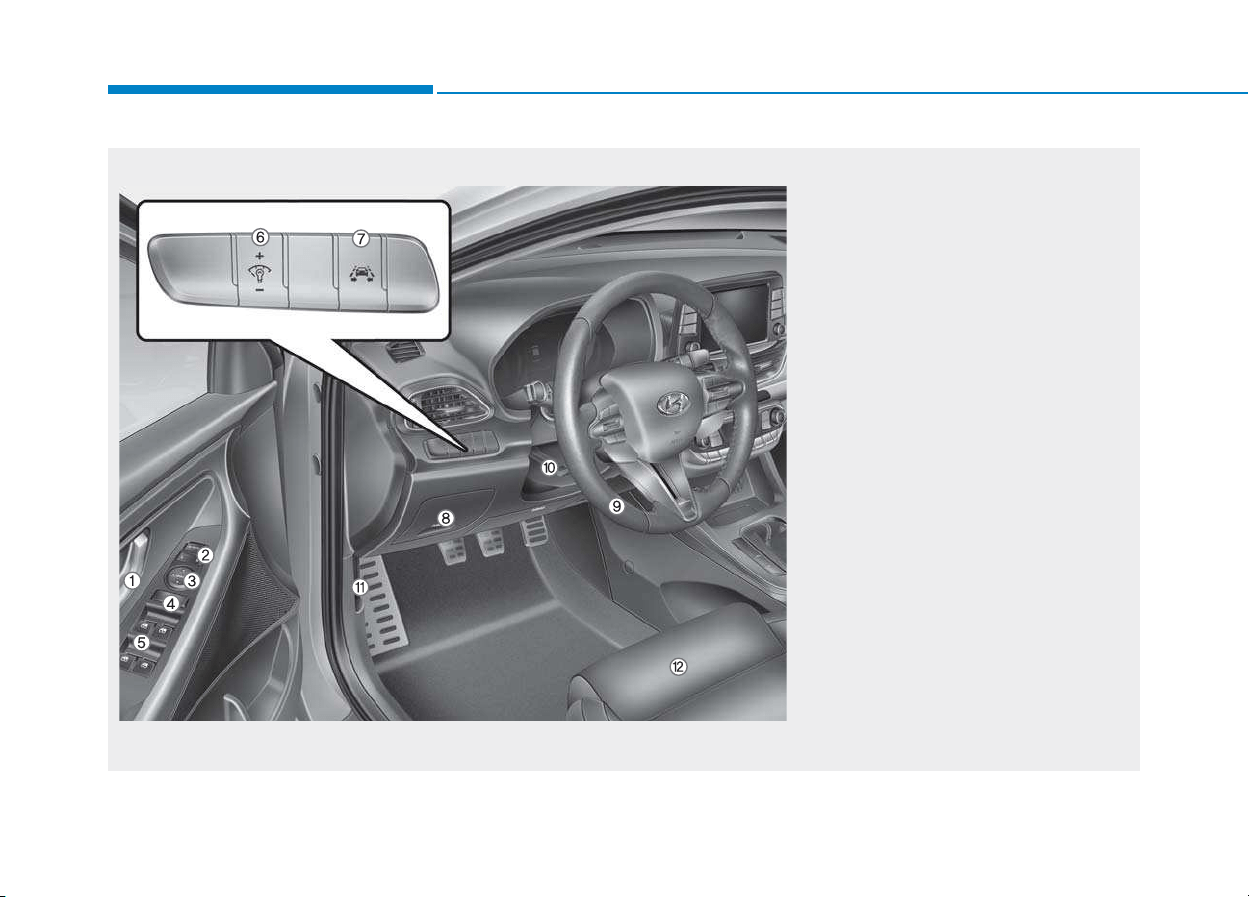
INNTTEERRIIOORR OOVVEERRVVIIEEWW
1. Inside door handle ............................3-12
2. Outside rearview mirror folding ........3-25
3. Outside rearview mirror control ........3-24
4. Power window lock switch ................3-30
5. Power window switches ....................3-27
6. Instrument panel illumination
control switch ....................................3-44
7. Lane keeping assist system
(LKAS)/ ................................................5-64
Lane departure warning system
(LDWS) ............................................5-73
8. Fuse box............................................7-48
9. Steering wheel ..................................3-19
10. Steering wheel tilt/telescopic lever ..3-20
11. Hood release lever ..........................3-37
12. Seat ..................................................2-4
OPDEN017003
The actual shape may differ from the illustration.
1-5
Your vehicle at a glance
1
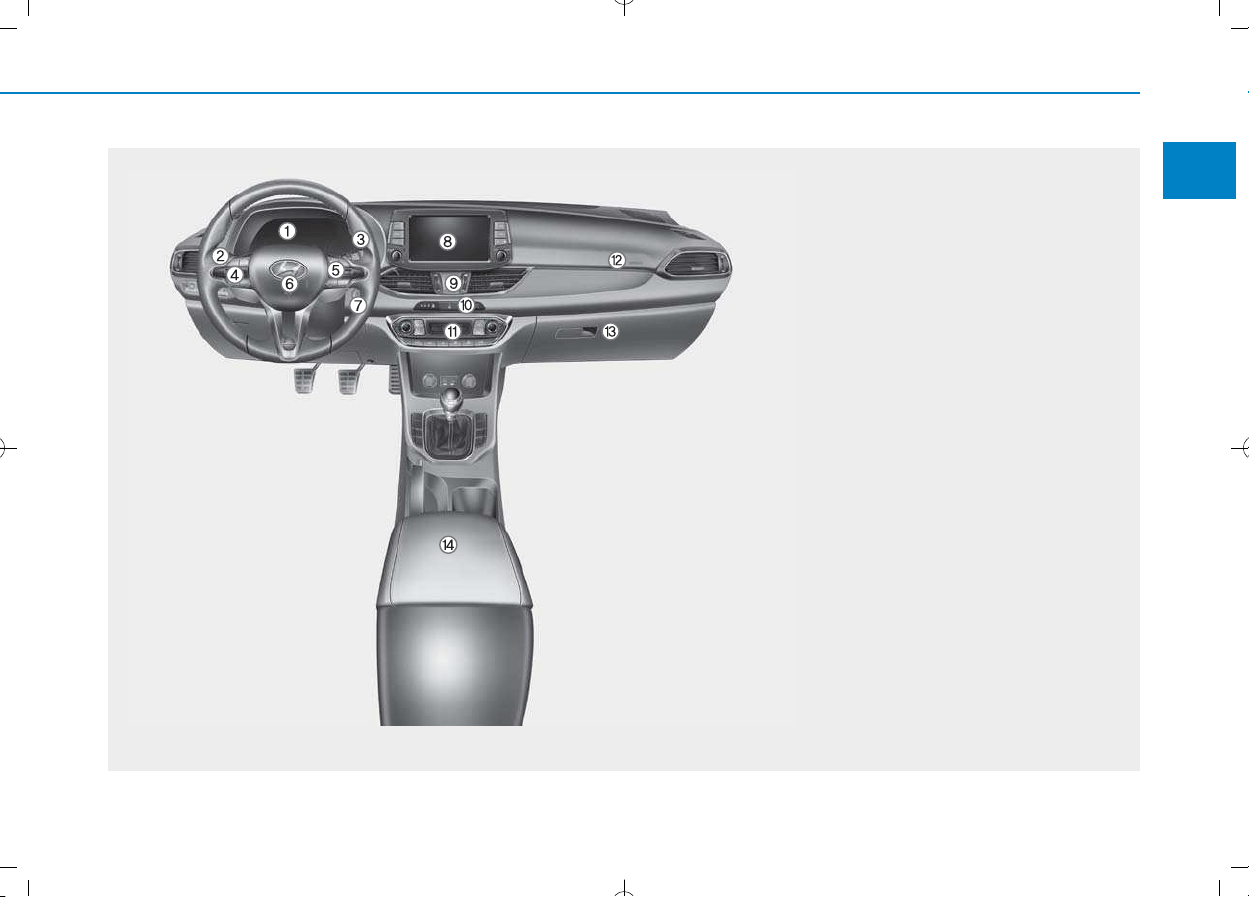
IINNSSTTRRUUMMEENNTT PPAANNEELL OOVVEERRVVIIEEWW ((II))
1. Instrument cluster ..........................3-43
2. Light control/Turn signals ................3-79
3. Wiper/Washer..................................3-91
4. Steering wheel audio controls/ ........4-3
Bluetooth
®
wireless technology
hands-free controls ..........................4-4
5. Cruise control..................................5-82
6. Driver’s front air bag........................2-47
7. Key ignition switch/ ..........................5-6
Engine Start/Stop button ..................5-9
8. Audio system/ ..................................4-8
Navigation system ..........................4-5
9. Hazard warning flasher switch..........6-2
10. Central door lock switch ..............3-13
11. Automatic climate control
system ........................................3-103
12. Passenger’s front air bag ..............2-47
13. Glove box ....................................3-119
14. Console box ................................3-119
The actual shape may differ from the illustration.
OPDEN017005
1-6
Your vehicle at a glance
I
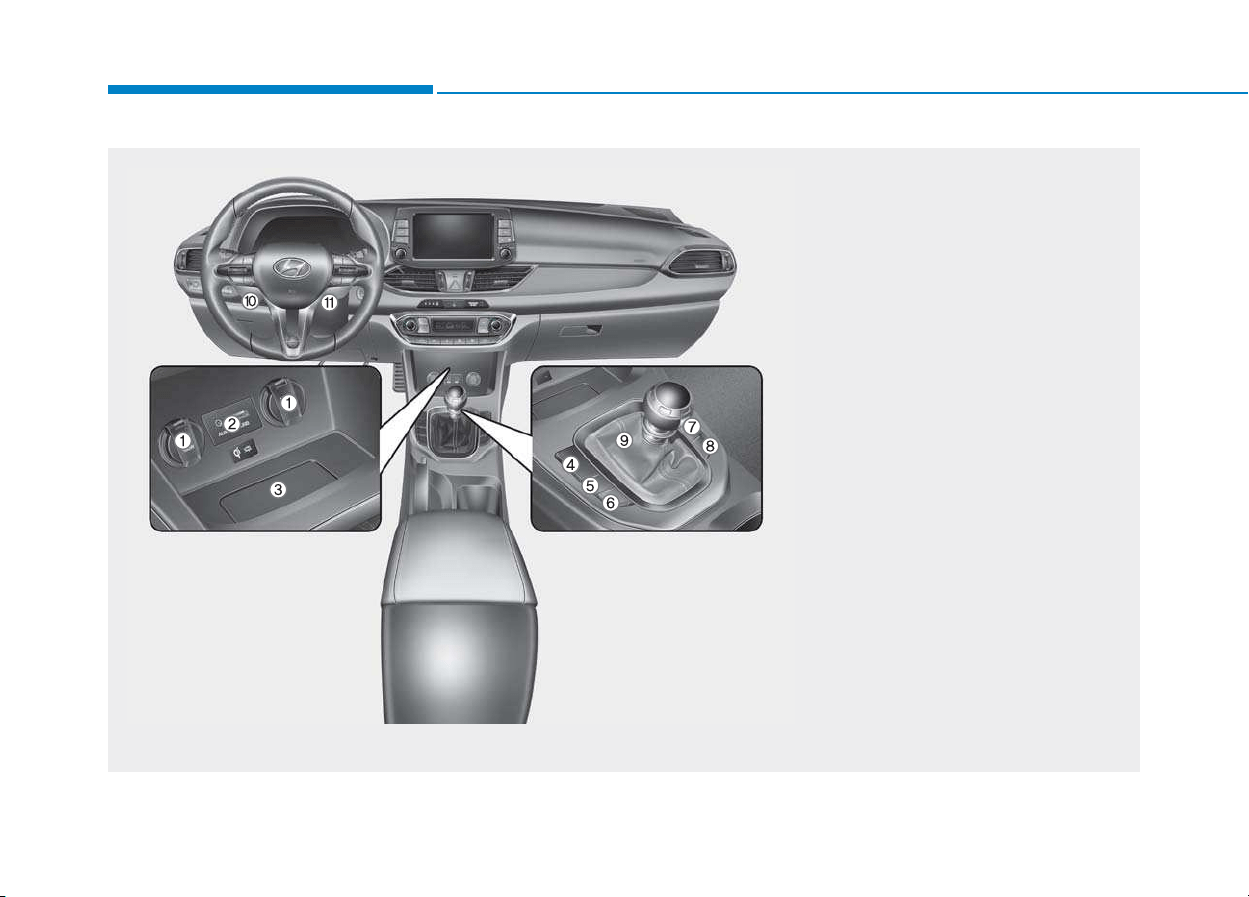
INNSSTTRRUUMMEENNTT PPAANNEELL OOVVEERRVVIIEEWW ((IIII))
1. Power outlet ..................................3-123
2. Aux, USB and iPod
®
........................4-2
3. Wireless cellular phone charging
system ..........................................3-125
4. Seat warmer ..................................2-20
5. Heated steering wheel ....................3-21
6. ESC OFF button ............................5-29
7. Parking assist system ON button/ ..3-100
Rear parking assist system
OFF button......................................3-98
8. Idle stop and go (ISG) OFF button ..5-44
9. Manual transmission shift lever ......5-14
10. DRIVE MODE button ....................5-40
11. N button ........................................5-41
The actual shape may differ from the illustration.
OPDEN017004
1-7
Your vehicle at a glance
1
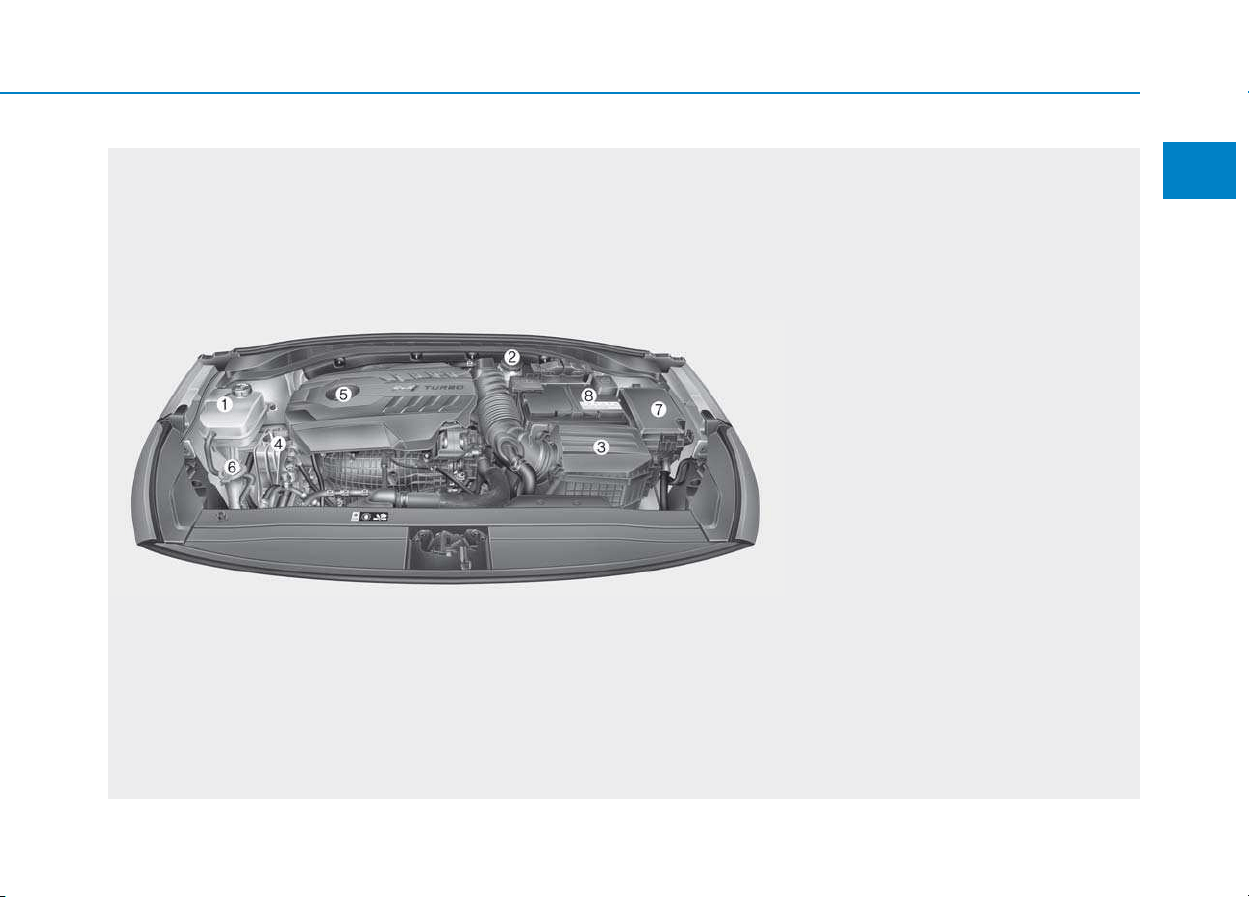
EENNGGIINNEE CCOOMMPPAARRTTMMEENNTT
1. Engine coolant reservoir/
Engine coolant cap ..............................7-22
2. Brake/clutch fluid reservoir ..................7-25
3. Air cleaner............................................7-27
4. Engine oil dipstick ................................7-20
5. Engine oil filler cap ..............................7-20
6. Windshield washer fluid reservoir........7-26
7. Fuse box ..............................................7-49
8. Battery..................................................7-33
OPDEN077088
The actual engine compartment in the vehicle may differ from the illustration.

Safety system of your vehicle
2
Important safety precautions .............................2-2
Always wear your seat belt ..........................................2-2
Restrain all children .........................................................2-2
Air bag hazards ................................................................2-2
Driver distraction .............................................................2-2
Control your speed ..........................................................2-3
Keep your vehicle in safe condition ............................2-3
Seats ........................................................................2-4
Safety precautions ..........................................................2-5
Front seats..........................................................................2-6
Rear seats .........................................................................2-12
Headrest ...........................................................................2-15
Seat warmers and air ventilation seats.....................2-19
Seat belts .............................................................2-22
Seat belt safety precautions ......................................2-22
Seat belt warning light .................................................2-23
Seat belt restraint system ...........................................2-25
Additional seat belt safety precautions ...................2-31
Care of seat belts ..........................................................2-33
Child restraint system (CRS) .............................2-34
Our recommendation:Children always in the rear 2-34
Selecting a Child Restraint System (CRS) ................2-35
Installing a Child Restraint System (CRS)..................2-37
Air bag - supplemental restraint system ........2-45
Where are the air bags? ..............................................2-47
How does the air bags system operate? .................2-52
What to expect after an air bag inflates ................2-56
Why didn't my air bag go off in a collision? ...........2-57
SRS care ...........................................................................2-62
Additional safety precautions .....................................2-63
Air bag warning labels ..................................................2-63
This chapter provides you with important information about how to protect yourself and your passengers.
It explains how to properly use your seats and seat belts, and how your air bags work.
Additionally, this chapter explains how to properly restrain infants and children in your vehicle.

2-2
You will find many safety precautions
and recommendations throughout
this section, and throughout this man-
ual.The safety precautions in this sec-
tion are among the most important.
Always wear your seat belt
A seat belt is your best protection in
all types of accidents. Air bags are
designed to supplement seat belts,
not replace them. So even though
your vehicle is equipped with air bags,
ALWAYS make sure you and your
passengers wear your seat belts, and
wear them properly.
Restrain all children
All children under age 13 should ride
in your vehicle properly restrained in
a rear seat, not the front seat. Infants
and small children should be
restrained in an appropriate Child
Restraint System. Larger children
should use a booster seat with the
lap/shoulder belt until they can use
the seat belt properly without a
booster seat.
Air bag hazards
While air bags can save lives, they
can also cause serious or fatal
injuries to occupants who sit too
close to them, or who are not prop-
erly restrained. Infants, young chil-
dren, and short adults are at the
greatest risk of being injured by an
inflating air bag. Follow all instruc-
tions and warnings in this manual.
Driver distraction
Driver distraction presents a serious
and potentially deadly danger, espe-
cially for inexperienced drivers. Safety
should be the first concern when
behind the wheel and drivers need to
be aware of the wide array of potential
distractions, such as drowsiness,
reaching for objects, eating, personal
grooming, other passengers, and
using cellular phones.
Drivers can become distracted when
they take their eyes and attention off
the road or their hands off the wheel
to focus on activities other than driv-
ing. To reduce your risk of distraction
and an accident:
• ALWAYS set up your mobile devices
(i.e., MP3 players, phones, naviga-
tion units, etc.) when your vehicle is
parked or safely stopped.
• ONLY use your mobile device when
allowed by laws and conditions per-
mit safe use. NEVER text or email
while driving. Most countries have
laws prohibiting drivers from texting.
Some countries and cities also pro-
hibit drivers from using handheld
phones.
IIMMPPOORRTTAANNTT SSAAFFEETTYY PPRREECCAAUUTTIIOONNSS
Safety system of your vehicle

2-3
Safety system of your vehicle
• NEVER let the use of a mobile device
distract you from driving. You have a
responsibility to your passengers and
others on the road to always drive
safely, with your hands on the wheel
as well as your eyes and attention on
the road.
Control your speed
Excessive speed is a major factor in
crash injuries and deaths. Generally,
the higher the speed, the greater the
risk, but serious injuries can also
occur at lower speeds. Never drive
faster than is safe for current condi-
tions, regardless of the maximum
speed posted.
Keep your vehicle in safe condi-
tion
Having a tire blowout or a mechanical
failure can be extremely hazardous. To
reduce the possibility of such prob-
lems, check your tire pressures and
condition frequently, and perform all
regularly scheduled maintenance.
2
2-4
SSEEAATTSS
Safety system of your vehicle
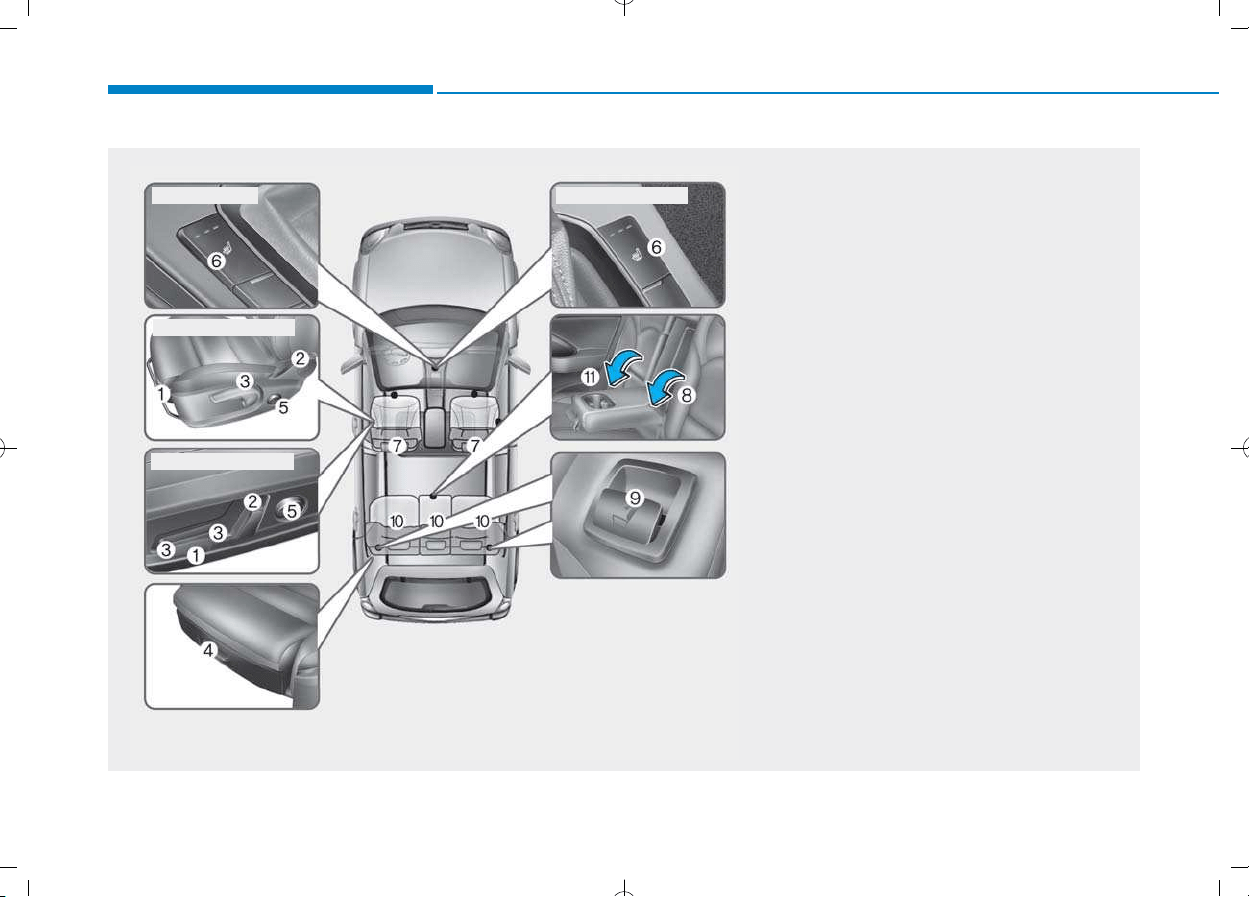
OPDEN037001
Front seat
(1) Forward and backward
(2) Seatback angle
(3) Seat cushion height*
(4) Seat cushion length*
(5) Lumbar support*
(6) Seat warmer*
(7) Headrest
Rear seat
(8) Armrest*
(9) Seatback folding
(10) Headrest
(11) Carrying long/narrow cargo*
* : if equipped
■ Driver’s side
■ Manual adjustment
■ Power adjustment
■ Passenger's side

To reduce the risk of serious
injury or death from an inflating
air bag, take the following pre-
cautions:
• Adjust the driver’s seat as far
to the rear as possible main-
taining the ability to control the
vehicle.
• Adjust the front passenger seat
as far to the rear as possible.
(Continued)
WARNING
(Continued)
• Hold the steering wheel by the
rim with hands at the 9 o’clock
and 3 o’clock positions to min-
imize the risk of injuries to
your hands and arms.
• NEVER place anything or any-
one between you and the air
bag.
• Do not allow the front passen-
ger to place feet or legs on the
dashboard to minimize the risk
of leg injuries.
2-5
Safety system of your vehicle
2
Safety precautions
Adjusting the seats so that you are sit-
ting in a safe, comfortable position
plays an important role in driver and
passenger safety together with the
seat belts and air bags in an accident.
Air bags
You can take steps to reduce the risk
of being injured by an inflating air
bag. Sitting too close to an air bag
greatly increases the risk of injury in
the event the air bag inflates. Move
your seat as far back as possible
from front air bags, while still main-
taining control of the vehicle.
Do not use a cushion that reduces
friction between the seat and the
passenger.The passenger's hips
may slide under the lap portion
of the seat belt during an acci-
dent or a sudden stop.
Serious or fatal internal injuries
could result because the seat
belt cannot operate properly.
WARNING

2-6
Safety system of your vehicle
Seat belts
Always fasten your seat belt before
starting any trip.
At all times, passengers should sit
upright and be properly restrained.
Infants and small children must be
restrained in appropriate Child Restraint
Systems. Children who have outgrown a
booster seat and adults must be
restrained using the seat belts.
Front seats
The front seat can be adjusted by
using the control lever (or knob) or
switches located on the outside of the
seat cushion. Before driving, adjust
the seat to the proper position so that
you can easily control the steering
wheel, foot pedals and controls on the
instrument panel.
Take the following precautions
when adjusting your seat belt:
• NEVER use one seat belt for
more than one occupant.
• Always position the seatback
upright with the lap portion of
the seat belt snug and low
across the hips.
• NEVER allow children or small
infants to ride on a passenger’s
lap.
(Continued)
(Continued)
• Do not route the seat belt
across your neck, across sharp
edges, or reroute the shoulder
strap away from your body.
• Do not allow the seat belt to
become caught or jammed.
WARNING
Take the following precautions
when adjusting your seat:
• NEVER attempt to adjust the
seat while the vehicle is mov-
ing. The seat could respond
with unexpected movement
and may cause loss of vehicle
control resulting in an acci-
dent.
• Do not place anything under
the front seats. Loose objects
in the driver’s foot area could
interfere with the operation of
the foot pedals, causing an
accident.
(Continued)
WARNING
2-7
Safety system of your vehicle
Manual adjustment
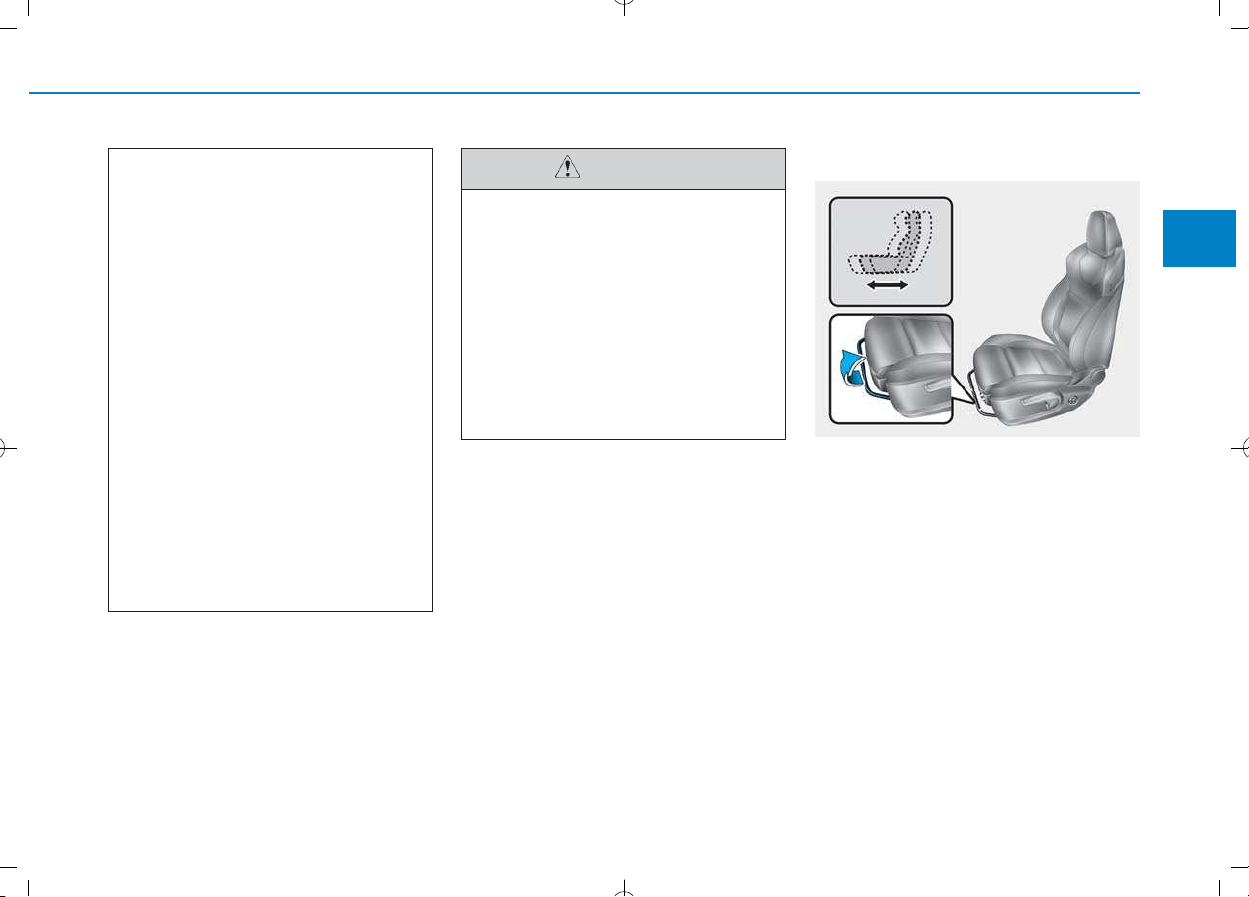
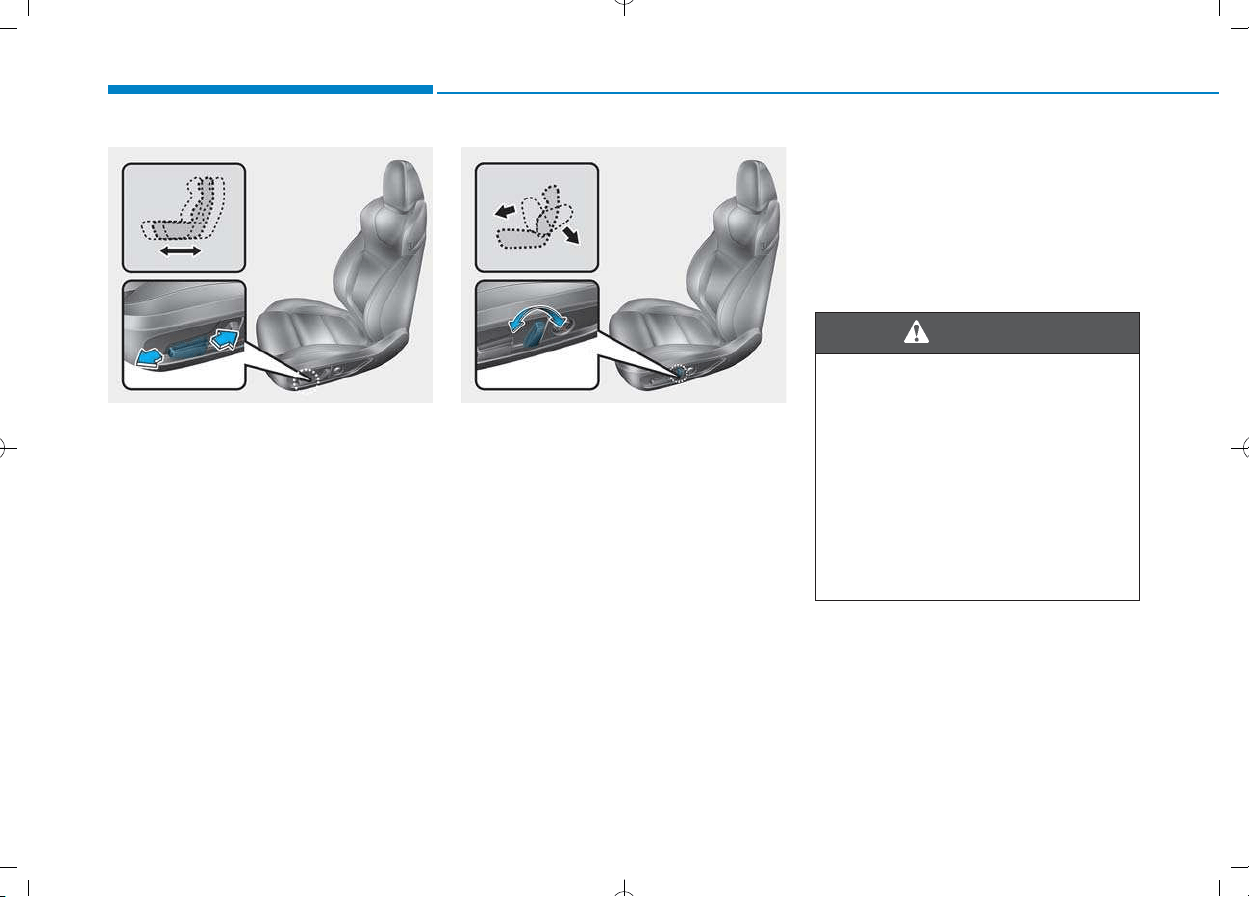
Forward and rearward adjustment
To move the seat forward or rearward:
1. Pull up the seat slide adjustment
lever and hold it.
2. Slide the seat to the position you
desire.
3. Release the lever and make sure
the seat is locked in place. Move
forward and rearward without using
the lever. If the seat moves, it is not
locked properly.
2
To prevent injury:
• Do not adjust your seat while
wearing your seat belt.
Moving the seat cushion for-
ward may cause strong pres-
sure on your abdomen.
• Do not allow your hands or
fingers to get caught in the
seat mechanisms while the
seat is moving.
CAUTION
(Continued)
• Do not allow anything to inter-
fere with the normal position
and proper locking of the seat-
back.
• Do not place a cigarette lighter
on the floor or seat. When you
operate the seat, gas may exit
out of the lighter causing a fire.
• Use extreme caution when
picking up small objects
trapped under the seats or
between the seat and the cen-
ter console. Your hands might
be cut or injured by the sharp
edges of the seat mechanism.
• If there are occupants in the
rear seats, be careful while
adjusting the front seat posi-
tion.
OPDEN037002
2-8
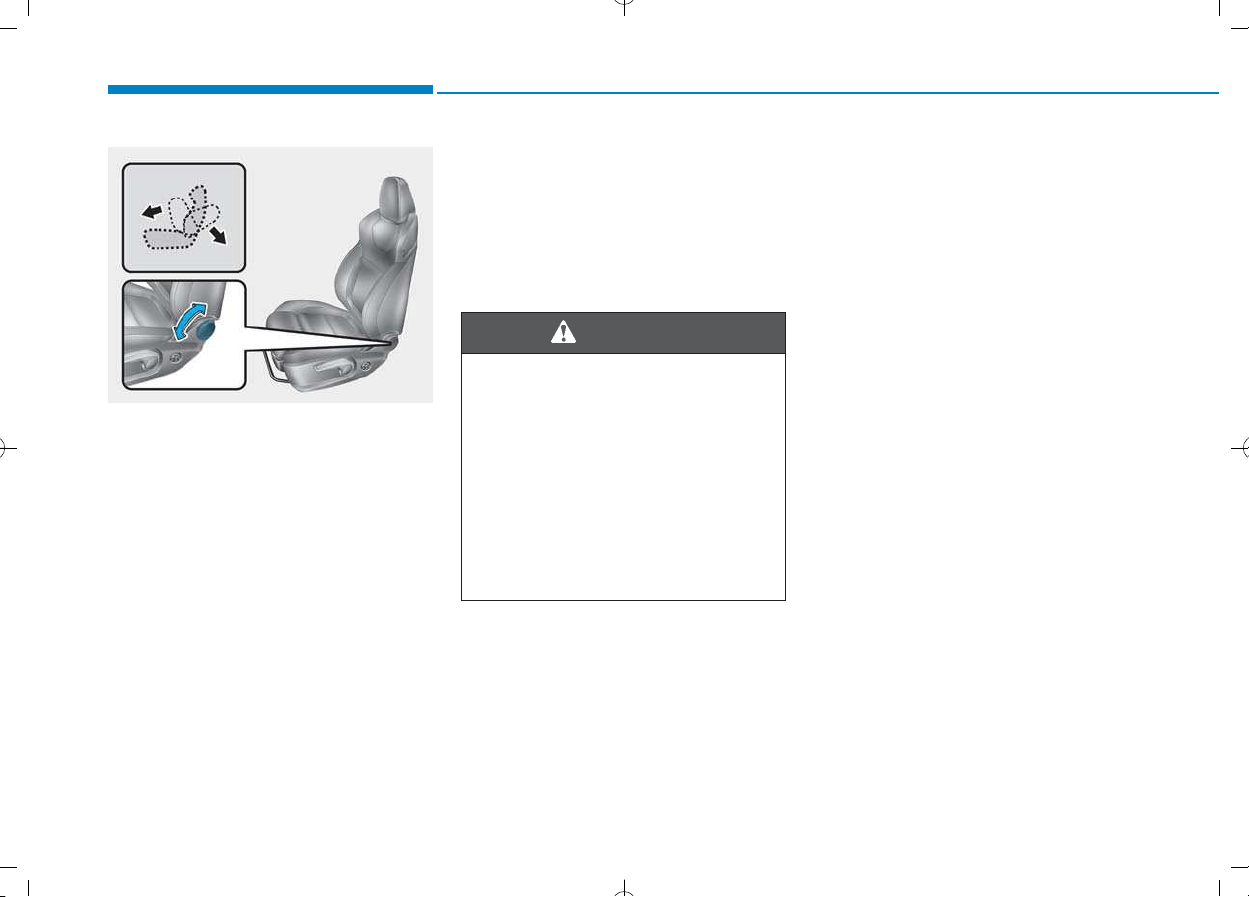
Seatback angle
To recline the seatback:
1.Roll the seatback knob rearward.
2.Adjust the seatback to the position
you desire.
Reclining seatback
Sitting in a reclined position when
the vehicle is in motion can be dan-
gerous. Even when buckled up, the
protections of your restraint system
(seat belts and/or air bags) is greatly
reduced by reclining your seatback.
Seat belts must be snug against your
hips and chest to work properly.
When the seatback is reclined, the
shoulder belt cannot do its job
because it will not be snug against
your chest. Instead, it will be in front
of you. During an accident, you could
be thrown into the seat belt, causing
neck or other injuries.
The more the seatback is reclined,
the greater chance the passenger’s
hips will slide under the lap belt or
the passenger’s neck will strike the
shoulder belt.
Safety system of your vehicle
OPDEN037003
NEVER ride with a reclined seat-
back when the vehicle is moving.
Riding with a reclined seatback
increases your chance of seri-
ous or fatal injuries in the event
of a collision or sudden stop.
Drivers and passengers should
ALWAYS sit well back in their
seats, properly belted, and with
the seatbacks upright.
WARNING
2-9
Safety system of your vehicle
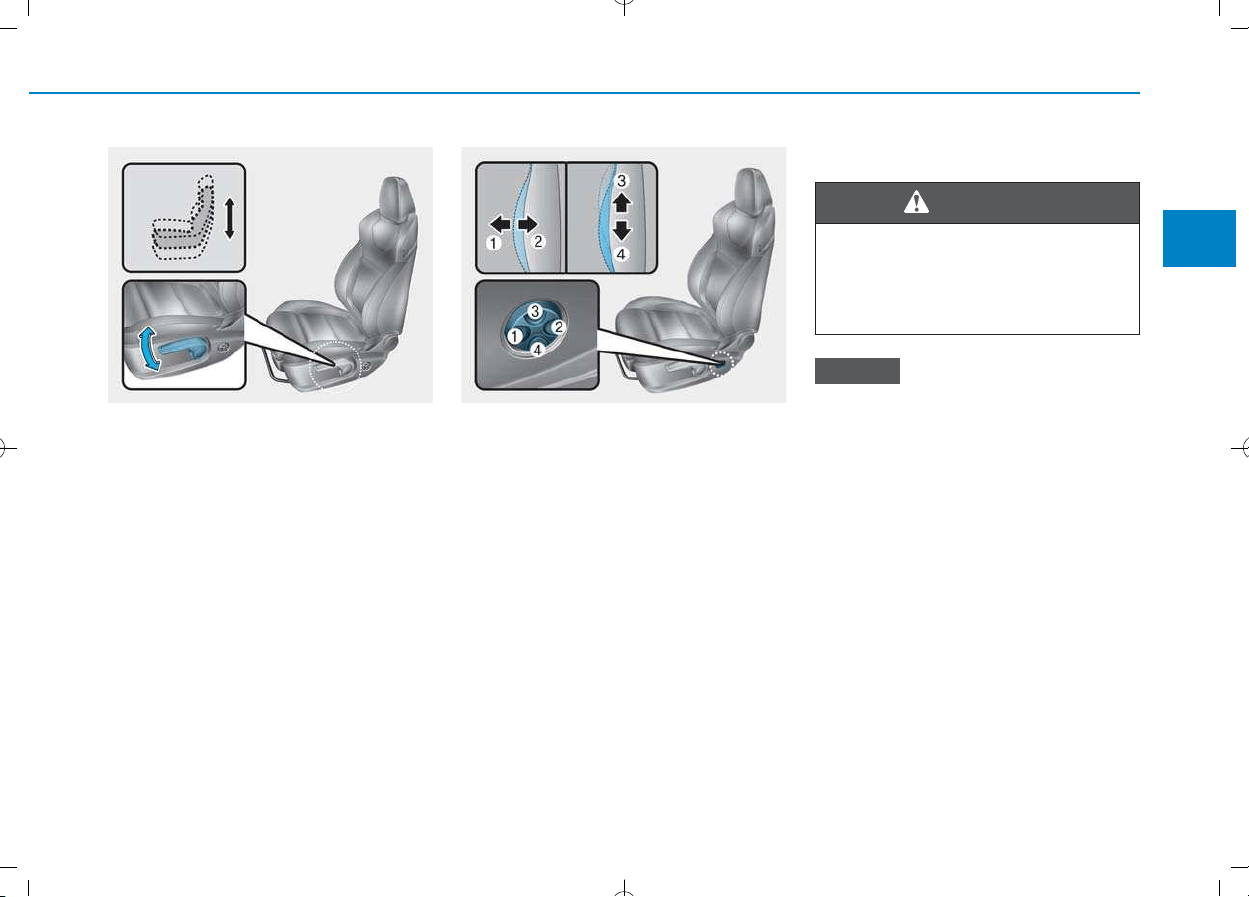
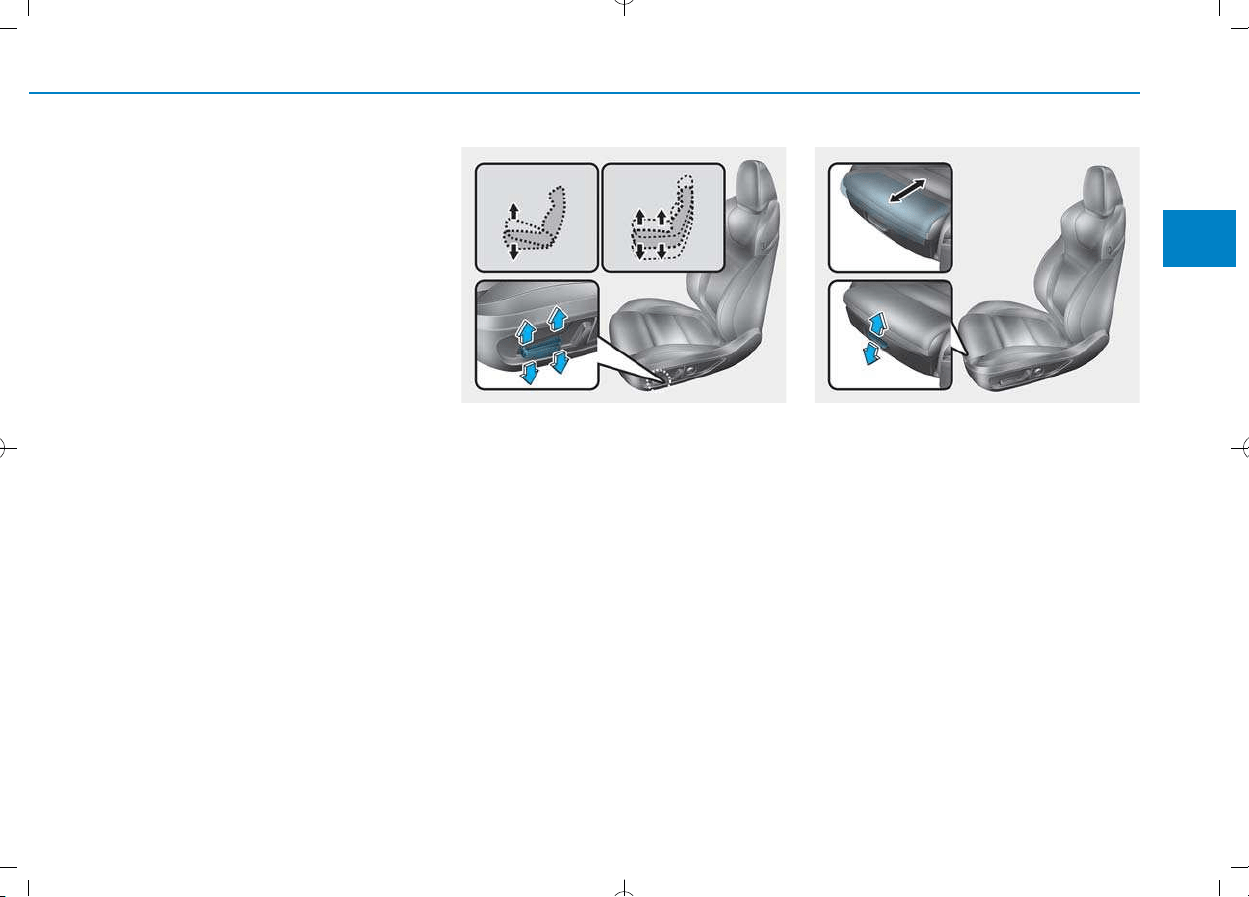
Seat cushion height (if equipped)
To change the height of the seat
cushion:
• Push down the lever several times,
to lower the seat cushion.
• Pull up the lever several times, to
raise the seat cushion.
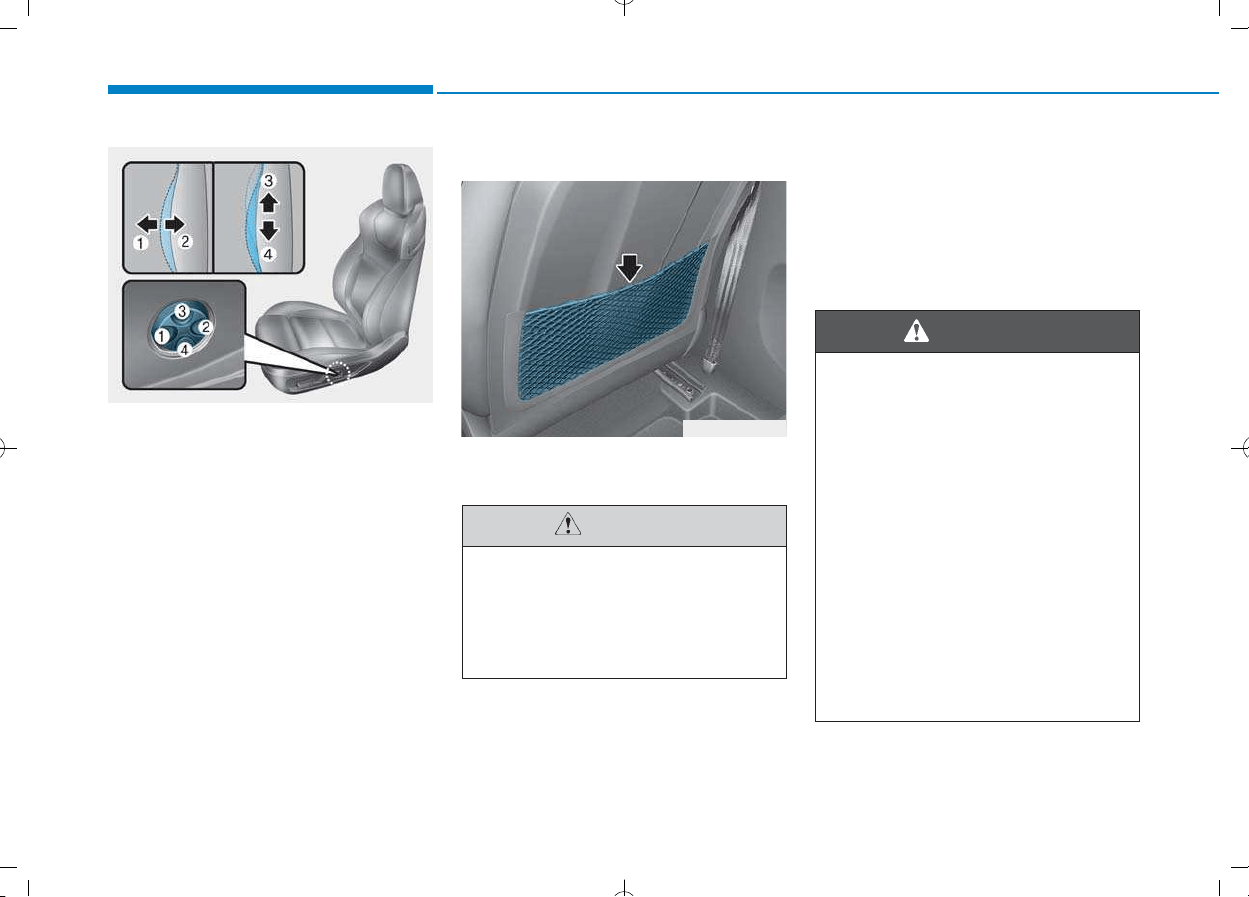
Lumbar support (if equipped)
The lumbar support can be adjusted
by pressing the lumbar support
switch.
• Press the front portion of the
switch (1) to increase support or
the rear portion of the switch (2) to
decrease support.
• To move the support position up or
down, press switch (3) or (4). The
lumbar support does not operate
up or down when the lumbar sup-
port is in the rearmost position. In
this case, to use the system, slight-
ly increase support by pushing the
front portion of the switch (1).
Power adjustment
To prevent damage to the seats:
• Always stop adjusting the seats
when the seat has been adjust-
ed as far forward or rearward as
possible.
• Do not adjust the seats longer
than necessary when the engine
is turned off. This may result in
unnecessary battery drain.
• Do not operate two or more seats
at the same time. This may result
in an electrical malfunction.
NOTICE
2
OPDEN037004 OPDEN037070
NEVER allow children in the
vehicle unattended. The power
seats are operable when the
engine is turned off.
WARNING
2-10
Forward and rearward adjustment
To move the seat forward or rearward:
1. Push the control switch forward or
rearward.
2. Release the switch once the seat
reaches the desired position.
Seatback angle
To recline the seatback:
1. Push the control switch forward or
rearward.
2. Release the switch once the seat-
back reaches the desired position.
Reclining seatback
Sitting in a reclined position when
the vehicle is in motion can be dan-
gerous. Even when buckled up, the
protections of your restraint system
(seat belts and air bags) is greatly
reduced by reclining your seatback.
Safety system of your vehicle
OPDEN037005
NEVER ride with a reclined seat-
back when the vehicle is moving.
Riding with a reclined seatback
increases your chance of serious
or fatal injuries in the event of a
collision or sudden stop.
Driver and passengers should
ALWAYS sit well back in their
seats, properly belted, and with
the seatbacks upright.
WARNING
OPDEN037006
2-11
Safety system of your vehicle
2
Seat belts must be snug against your
hips and chest to work properly.
When the seatback is reclined, the
shoulder belt cannot do its job
because it will not be snug against
your chest. Instead, it will be in front
of you. During an accident, you could
be thrown into the seat belt, causing
neck or other injuries.
The more the seatback is reclined,
the greater chance the passenger’s
hips will slide under the lap belt or
the passenger’s neck will strike the
shoulder belt.
Seat cushion height (if equipped)
To change the height of the seat cush-
ion:
1. • Push the front portion of the con-
trol switch up to raise or down to
lower the front part of the seat
cushion.
• Push the rear portion of the con-
trol switch up to raise or down to
lower the height of the seat cush-
ion.
2. Release the switch once the seat
reaches the desired position.
Seat cushion length (if equipped)
To change the length of the seat
cushion:
1. Pull up the lever to lengthen the
cushion length or pull down the
lever to shorten the cushion
length.
2. Release the switch once the cush-
ion reaches the desired position.
OPDEN037007 OPDEN037071
2-12
Safety system of your vehicle
Lumbar support (if equipped)
The lumbar support can be adjusted
by pressing the lumbar support
switch.
• Press the front portion of the switch
(1) to increase support or the rear
portion of the switch (2) to decrease
support.
• To move the support position up or
down, press switch (3) or (4). The
lumbar support does not operate up
or down when the lumbar support is
in the rearmost position. In this
case, to use the system, slightly
increase support by pushing the
front portion of the switch (1).
Seatback pocket (if equipped)
The seatback pocket is provided on
the back of the front seatbacks.
Rear seats
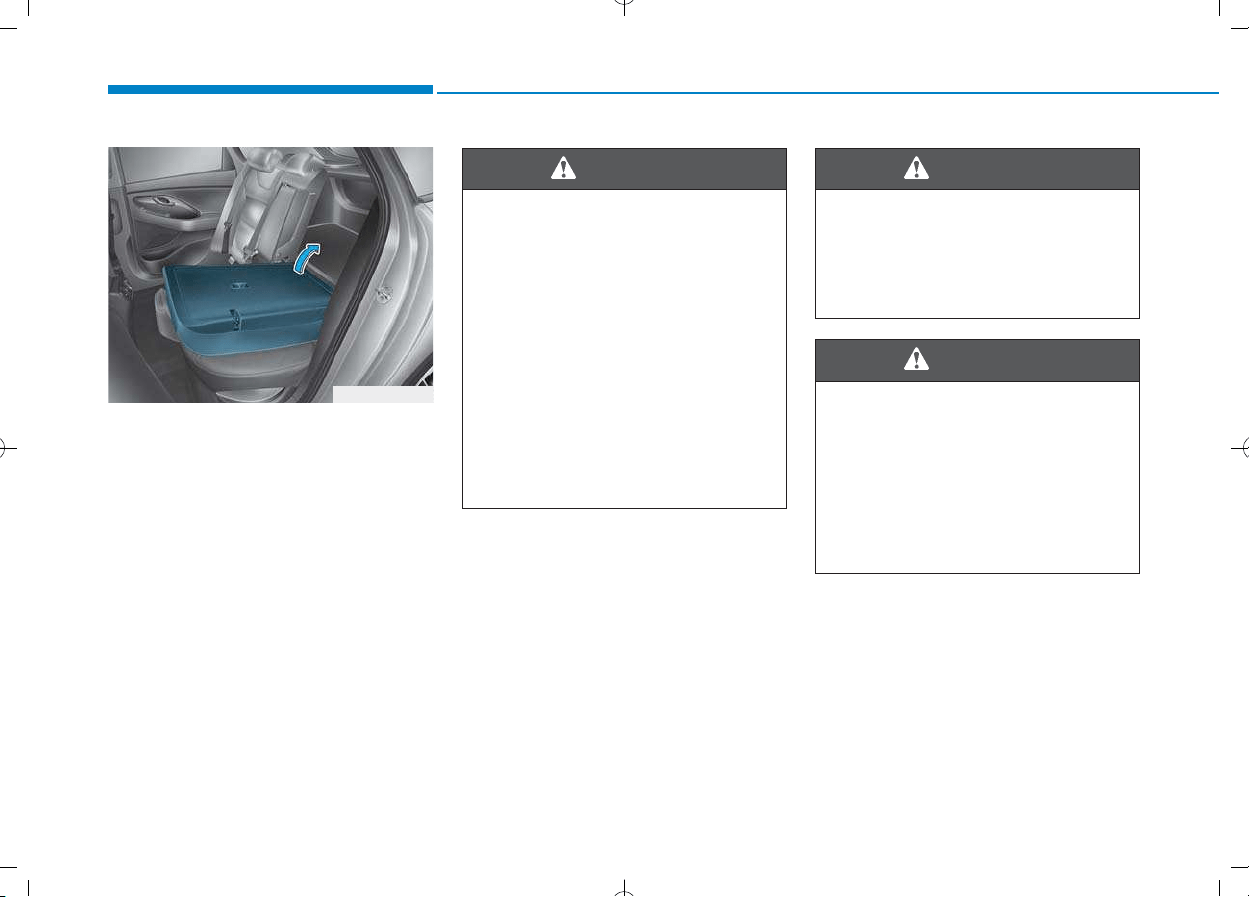
Folding the rear seat
The rear seatbacks can be folded to
facilitate carrying long items or to
increase the luggage capacity of the
vehicle.
OPDEN037008
OPDEN037074
Do not put heavy or sharp
objects in the seatback pockets.
In an accident they could come
loose from the pocket and
injure occupants.
CAUTION
• Never allow passengers to sit
on top of the folded down
seatback while the vehicle is
moving. This is not a proper
seating position and no seat
belts are available for use.
This could result in serious
injury or death in case of an
accident or sudden stop.
• Objects carried on the folded
down seatback should not
extend higher than the top of
the front seatbacks. This could
allow cargo to slide forward
and cause injury or damage
during sudden stops.
WARNING

2-13
Safety system of your vehicle
2
2-13
Safety system of your vehicle
To fold down the rear seatback:
1. Set the front seatback to the upright
position and if necessary, slide the
front seat forward.
2. Lower the rear headrests to the
lowest position.
3.Locate the seatbelt toward the out-
board position before folding down
the seatback to avoid the seatbelt
system interfering with the seat-
back.
4. Pull up the seatback folding lever
(1), then fold the seat toward the
front of the vehicle.
OPDEN037018 OPDEN037019
OPDEN037020
OPDEN037021
2-14
Safety system of your vehicle
2-14
5.To use the rear seat, lift and push
the seatback rearward.
Push the seatback firmly until it
clicks into place. Make sure the
seatback is locked in place.
OPDEN037062
When returning the rear seat-
back from a folded to an upright
position, hold the seatback and
return it slowly. Ensure that the
seatback is completely locked
into its upright position by
pushing on the top of the seat-
back. In an accident or sudden
stop, the unlocked seatback
could allow cargo to move for-
ward with great force and enter
the passenger compartment,
which could result in serious
injury or death.
WARNING
Do not place objects in the rear
seats, since they cannot be
properly secured and may hit
vehicle occupants in a collision
causing serious injury or death.
WARNING
Make sure the engine is off, the
shift lever is in P (Park), and the
parking brake is securely applied
whenever loading or unloading
cargo. Failure to take these steps
may allow the vehicle to move if
the shift lever is inadvertently
moved to another position.
WARNING
2-15
Safety system of your vehicle
2
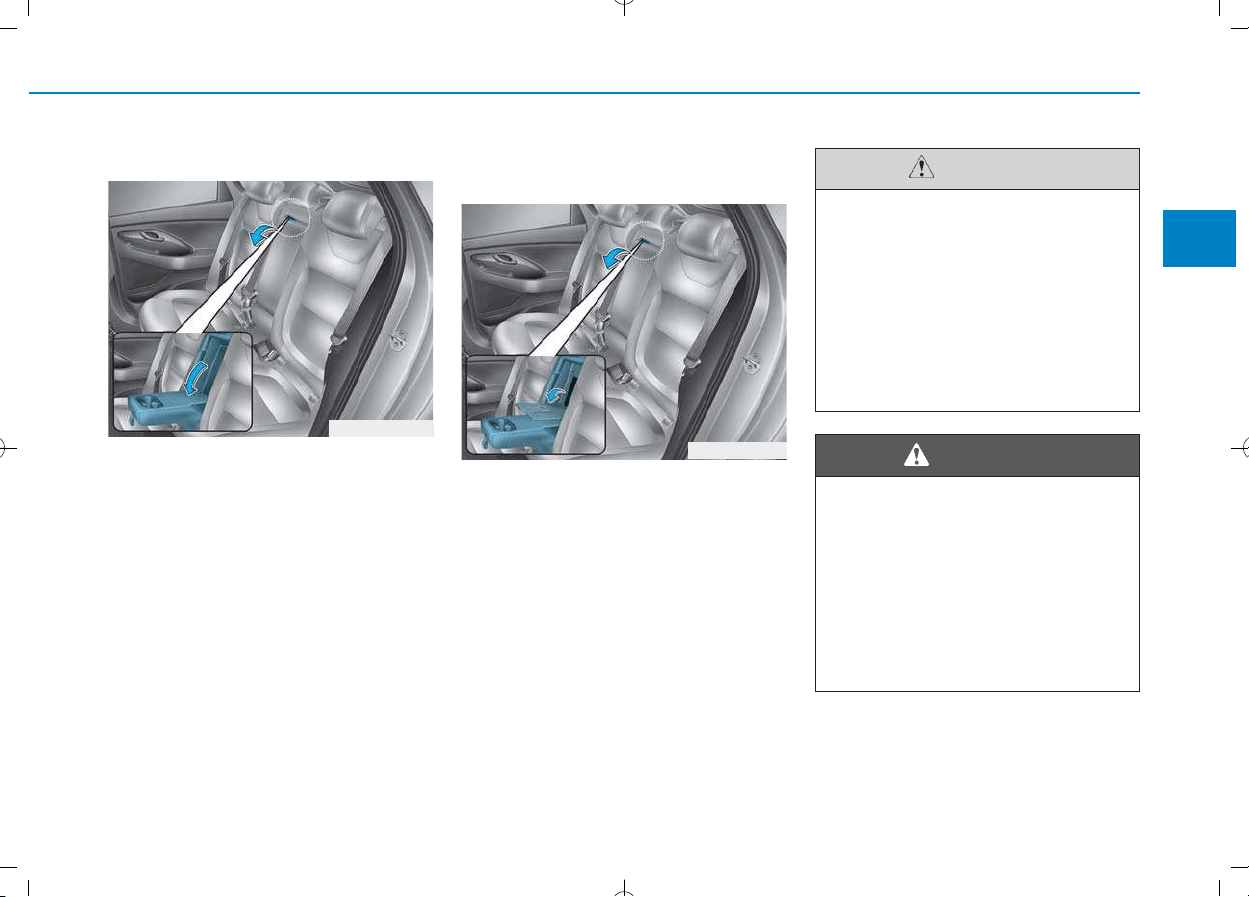
Armrest (if equipped)
The armrest is located in the center
of the rear seat. Pull the armrest
down from the seatback to use it.
Carrying long/narrow cargo
(if equipped)
Additional cargo space is provided to
accommodate long/narrow cargo
(skis, poles, etc.) not able to fit prop-
erly in the luggage compartment
when closed.
1.Pull the armrest down.
2.Pull the cover down while pushing
the release lever down.
OPDEN037022
OPDEN037072
Cargo should always be secured
to prevent it from being thrown
about the vehicle in a collision
and causing injury to the vehicle
occupants. Do not place objects
in the rear seats, since they can-
not be properly secured and may
hit the front seat occupants in a
collision.
WARNING
• Be careful when loading cargo
through the rear passenger
seats to prevent damage to
the vehicle interior.
• When cargo is loaded through
the rear passenger seats,
ensure the cargo is properly
secured to prevent it from
moving while driving.
CAUTION
2-16
Safety system of your vehicle
Headrest
The vehicle’s front and rear seats have
adjustable headrests. The headrests
provide comfort for passengers, but
more importantly they are designed to
help protect passengers from whiplash
and other neck and spinal injuries dur-
ing an accident, especially in a rear
impact collision.
To prevent damage, NEVER hit or
pull on the headrests.
NOTICE
To reduce the risk of serious
injury or death in an accident,
take the following precautions
when adjusting your headrests:
• Always properly adjust the
headrests for all passengers
BEFORE starting the vehicle.
• NEVER let anyone ride in a seat
with the headrest removed.
(Continued)
(Continued)
•
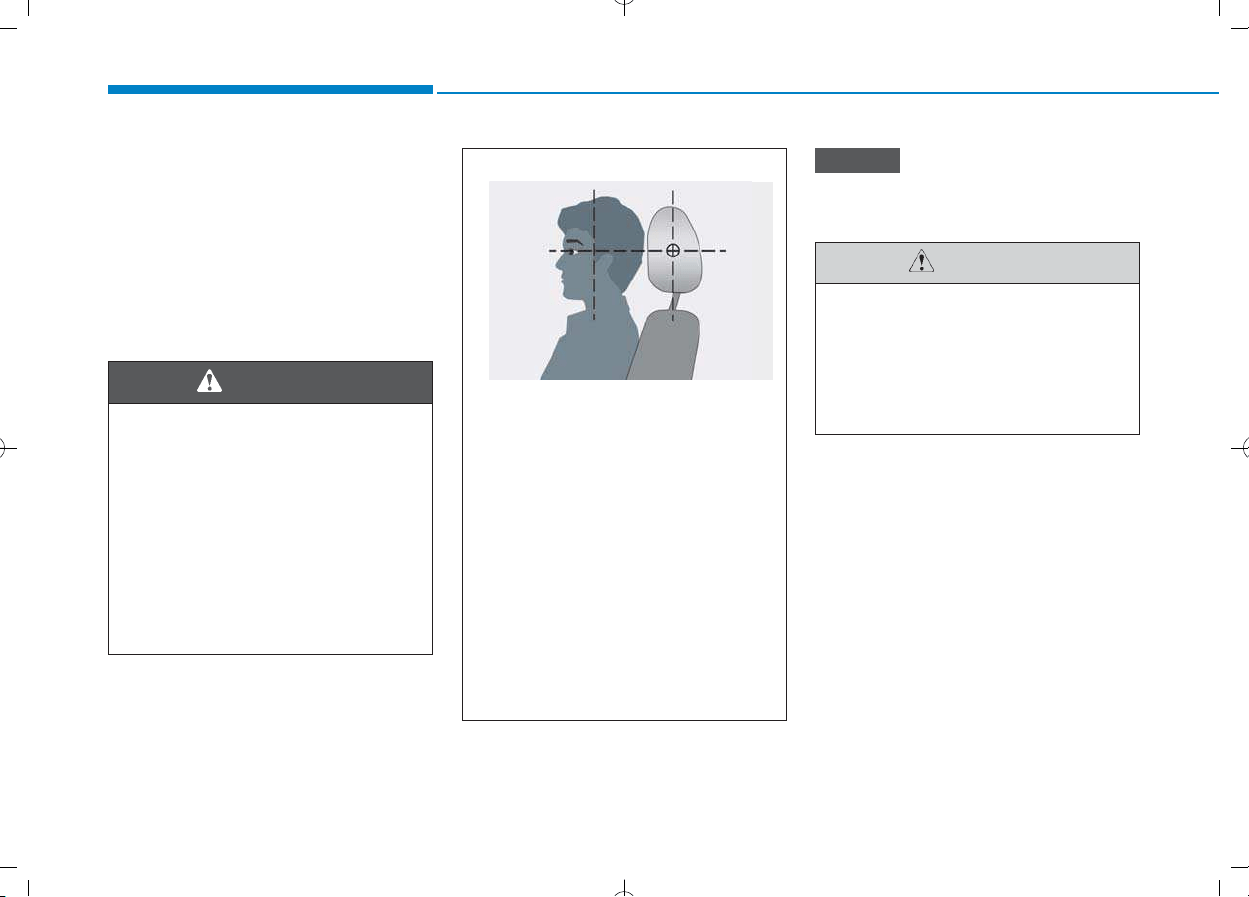
Adjust the headrests so the
middle of the headrest is at the
same height as the height of
the top of the eyes.
• NEVER adjust the headrest
position of the driver’s seat
when the vehicle is in motion.
• Adjust the headrest as close
to the passenger’s head as
possible. Do not use a seat
cushion that holds the body
away from the seatback.
• Make sure the headrest locks
into position after adjusting it.
WARNING
OLF034072N
When there is no occupant in
the rear seats, adjust the height
of the headrest to the lowest
position. The rear seat headrest
can reduce the visibility of the
rear area.
CAUTION
2-17
Safety system of your vehicle
2
Front seat headrests
The driver’s and front passenger’s
seats are equipped with adjustable
headrests for the passengers safety
and comfort.
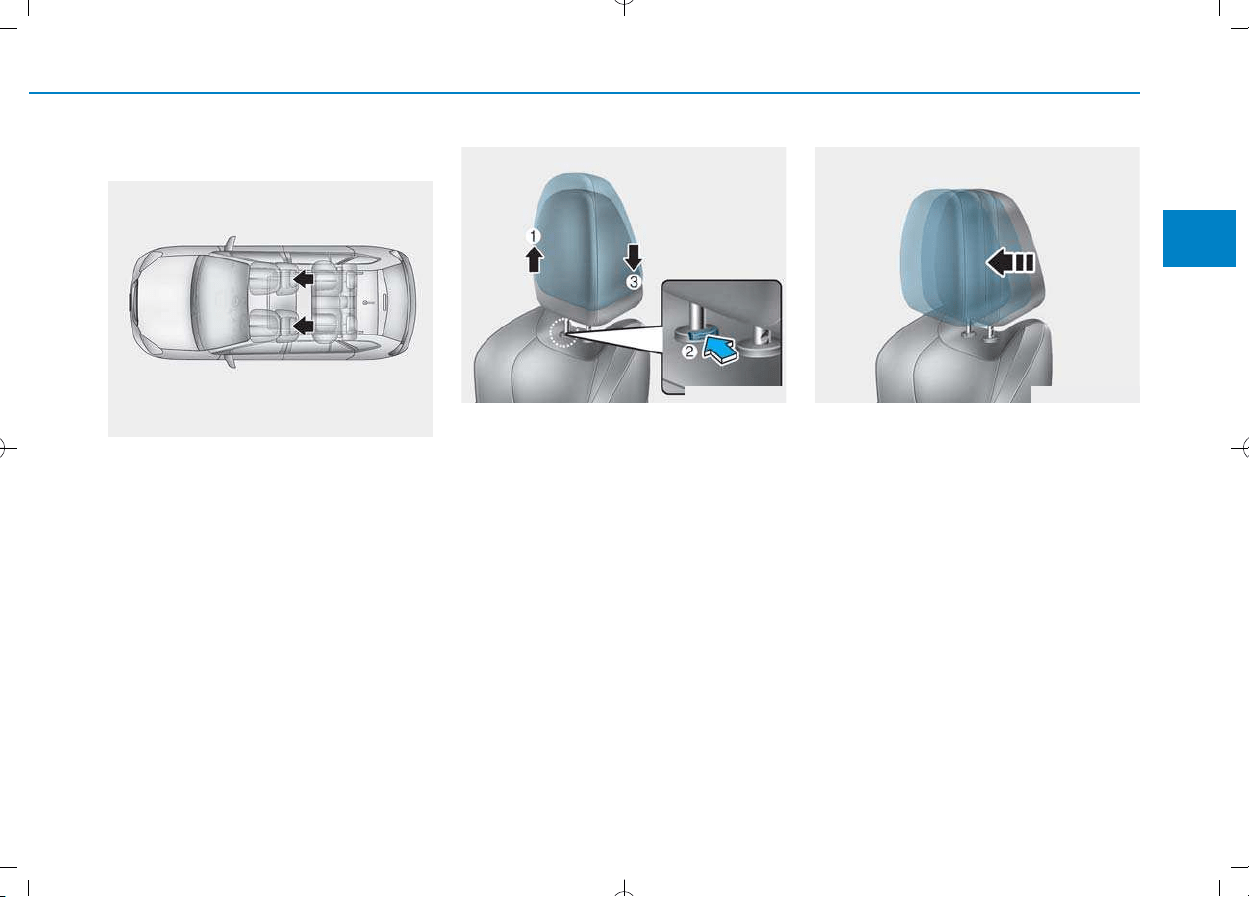
Adjusting the height up and down
To raise the headrest:
1. Pull it up to the desired position
(1).
To lower the headrest:
1. Push and hold the release button
(2) on the headrest support.
2. Lower the headrest to the desired
position (3).
Forward and rearward adjustment
The headrest may be adjusted for-
ward to 3 different positions by
pulling the headrest forward to the
desired detent. To adjust the head-
rest to it’s furthest rearwards posi-
tion, pull it fully forward to the farthest
position and release it.
OPDE036068
OPDEN037010 OPDEN037009
2-18
Safety system of your vehicle
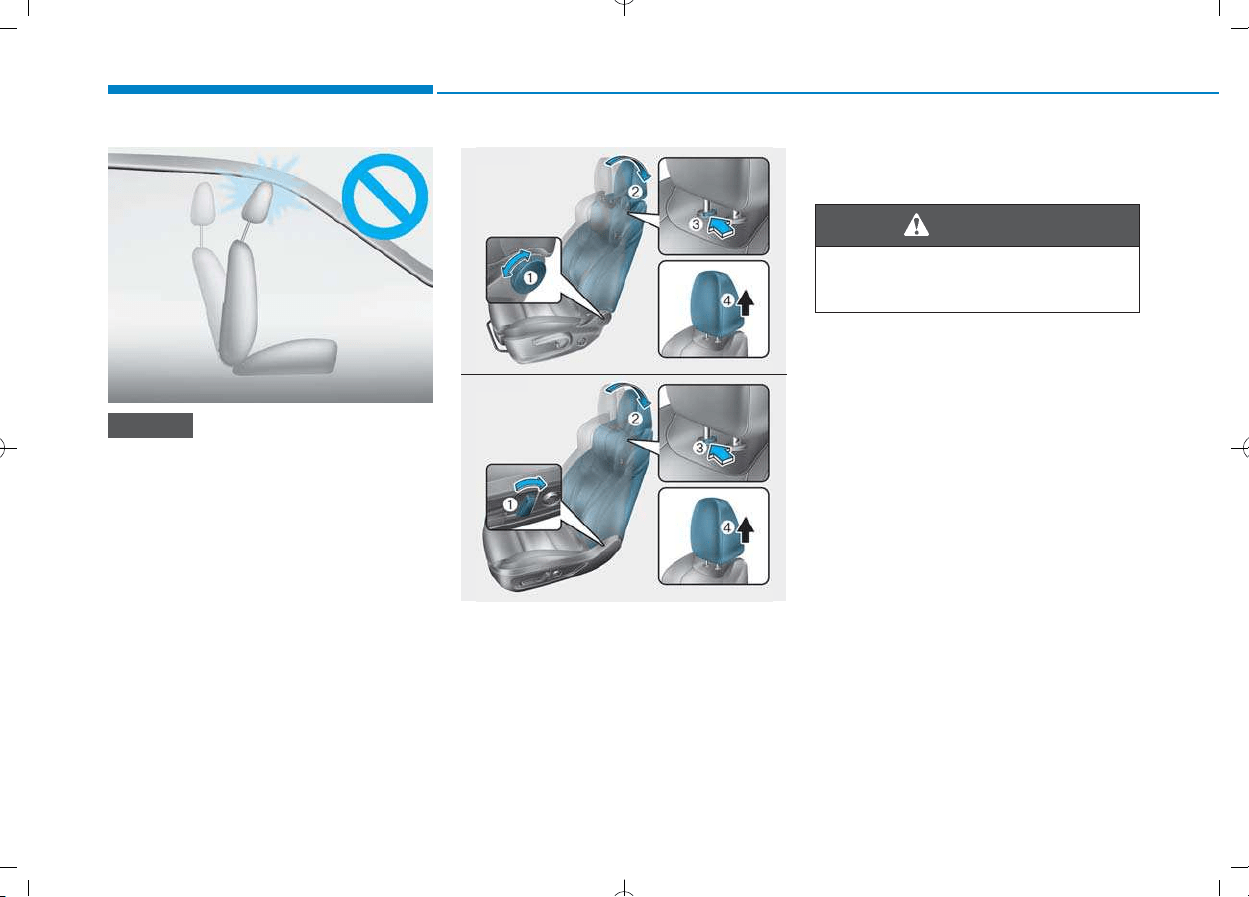
If you recline the seatback towards
the front with the headrest and
seat cushion raised, the headrest
may come in contact with the sun-
visor or other parts of the vehicle.
Removal/Reinstall
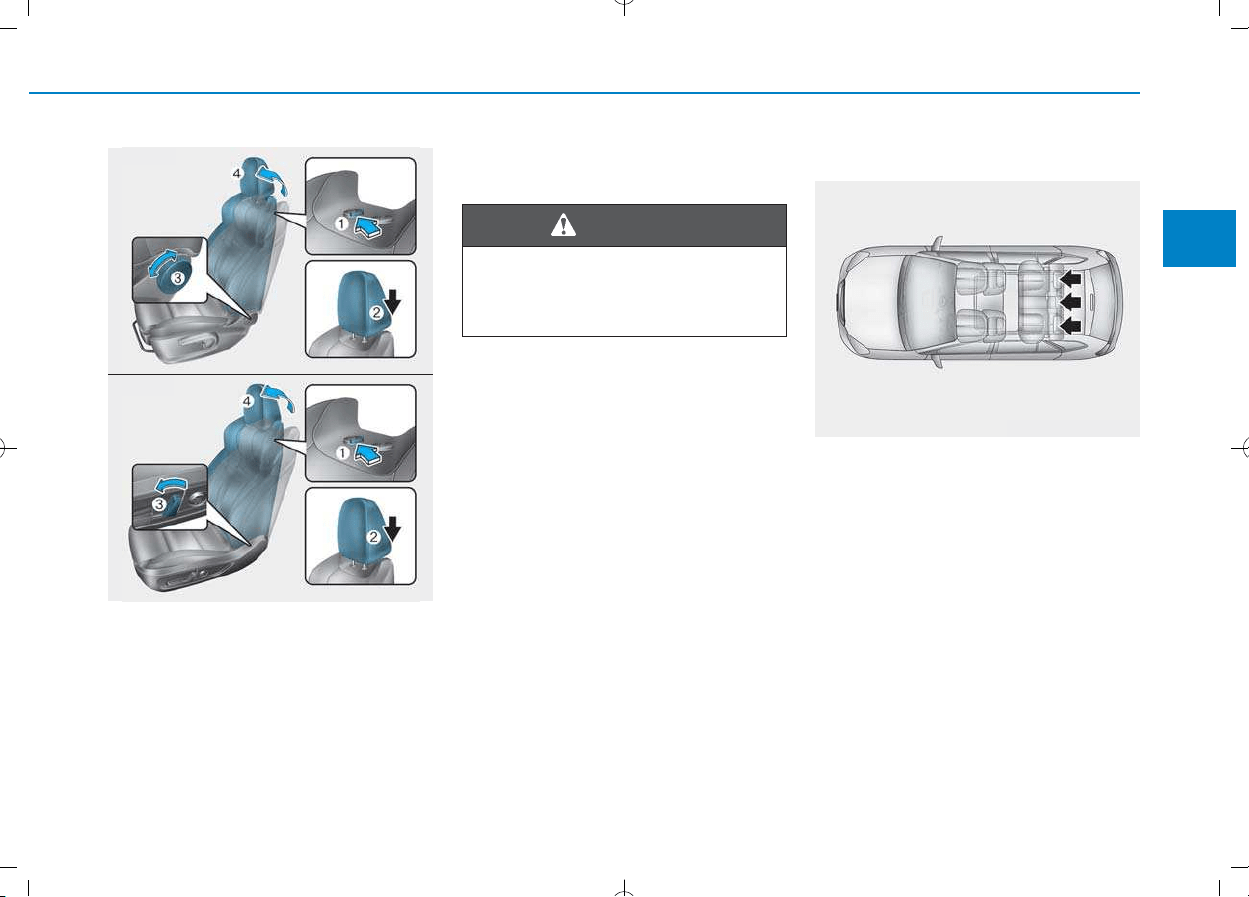
To remove the headrest:
1. Recline the seatback (2) using the
seatback angle knob or switch (1).
2. Raise the headrest as far as it can
go.
3. Press the headrest release button
(3) while pulling the headrest up (4).
NOTICE
OPDEN037011
OPDEN037013
■ Type A
■ Type B
OLF034015
NEVER allow anyone to travel in a
seat with the headrest removed.
WARNING
2-19
Safety system of your vehicle
2
To reinstall the headrest :
1. Recline the seatback.
2. Put the headrest poles (2) into the
holes while pressing the release
button (1).
3. Adjust the headrest to the appropri-
ate height.
4. Recline the seatback (4) using the
seatback angle knob or switch (3).
Rear seat headrests
The rear seats are equipped with
headrests in all the seating positions
for the passenger’s safety and com-
fort.
Always make sure the headrest
locks into position after rein-
stalling and adjusting it properly.
WARNING
OPDEN037012
OPDEN037014
■ Type A
■ Type B
OPDE036069

2-20
Safety system of your vehicle
Adjusting the height up and down
To raise the headrest:
1. Pull it up to the desired position (1).
To lower the headrest:
1. Push and hold the release button
(2) on the headrest support.
2. Lower the headrest to the desired
position (3).
Seat warmers
Front seat warmers (if equipped)
Seat warmers are provided to warm
the seats during cold weather.
To prevent damage to the seat
warmers and seats:
• Never use a solvent such as
paint thinner, benzene, alcohol
or gasoline to clean the seats.
• Do not place heavy or sharp
objects on seats equipped with
seat warmers.
• Do not change the seat cover. It
may damage the seat warmer.
NOTICE
The seat warmers can cause a
SERIOUS BURN, even at low
temperatures and especially if
used for long periods of time.
Passengers must be able to feel
if the seat is becoming too warm
so they can turn it off, if needed.
People who cannot detect tem-
perature change or pain to the
skin should use extreme cau-
tion, especially the following
types of passengers:
• Infants, children, elderly or
disabled persons, or hospital
outpatients.
• People with sensitive skin or
who burn easily.
• Fatigued individuals.
• Intoxicated individuals.
(Continued)
WARNING
OPDEN037017
(Continued)
• People taking medication that
can cause drowsiness or
sleepiness.
NEVER place anything on the
seat that insulates against heat
when the seat warmer is in oper-
ation, such as a blanket or seat
cushion. This may cause the
seat warmer to overheat, caus-
ing a burn or damage to the seat.
WARNING
2-21
Safety system of your vehicle
2
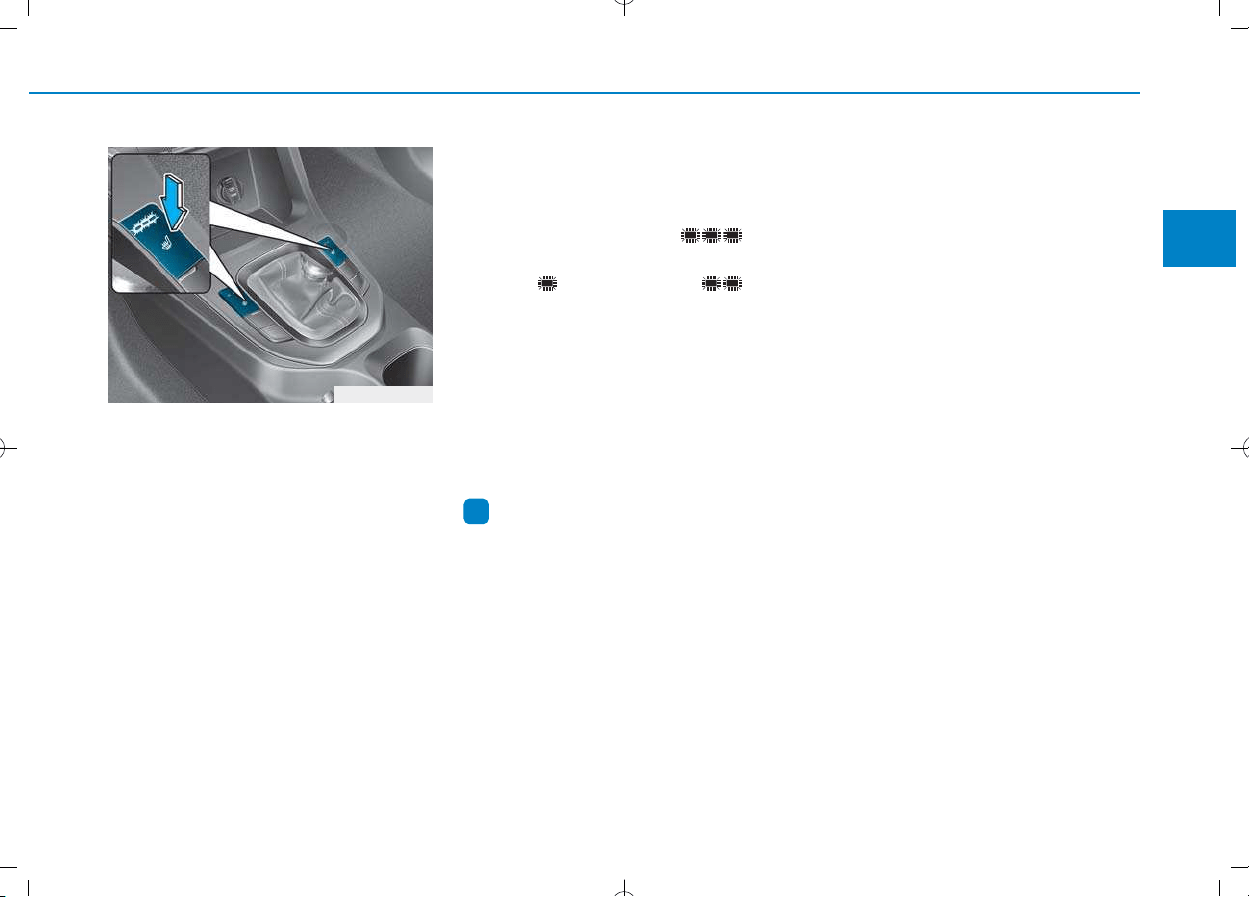
While the engine is running, push
either of the switches to warm the dri-
ver's seat or front passenger's seat.
During mild weather or under condi-
tions where the operation of the seat
warmer is not needed, keep the
switches in the OFF position.
• Each time you push the switch, the
temperature setting of the seat is
changed as follows :
• When pressing the switch for more
than 1.5 seconds with the seat
warmer operating, the seat warmer
will turn OFF.
• The seat warmer defaults to the
OFF position whenever the ignition
switch is placed to the ON position.
Information
With the seat warmer switch in the
ON position, the heating system in the
seat turns off or on automatically
depending on the seat temperature.
i
OPDEN037015
OFF HIGH ( )
LOW ( ) MIDDLE ( )
→
→
→
→
2-22
Safety system of your vehicle
This section describes how to use the
seat belts properly. It also describes
some of the things not to do when
using seat belts.
Seat belt safety precautions
Always fasten your seat belt and
make sure all passengers have fas-
tened their seat belts before starting
any trip. Air bags are designed to
supplement the seat belt as an addi-
tional safety device, but they are not a
substitute. Most countries require all
occupants of a vehicle to wear seat
belts.
SSEEAATT BBEELLTTSS
Seat belts must be used by ALL
passengers whenever the vehi-
cle is moving. Take the following
precautions when adjusting and
wearing seat belts:
• Children under the age of 13
should be properly restrained
in the rear seats.
• Never allow children to ride in
the front passenger seat, unless
the air bag is deactivated. If a
child is seated in the front pas-
senger seat, move the seat as
far back as possible and prop-
erly restrain them in the seat.
• NEVER allow an infant or child
to be carried on an occupant’s
lap.
• NEVER ride with the seatback
reclined when the vehicle is
moving.
• Do not allow children to share
a seat or seat belt.
(Continued)
WARNING
(Continued)
• Do not wear the shoulder belt
under your arm or behind your
back.
• Never wear a seat belt over
fragile objects. If there is a sud-
den stop or impact, the seat
belt can damage it.
• Do not use the seat belt if it is
twisted. A twisted seat belt
will not protect you properly
in an accident.
• Do not use a seat belt if the
webbing or hardware is dam-
aged.
• Do not latch the seat belt into
the buckles of other seats.
• NEVER unfasten the seat belt
while driving. This may cause
loss of vehicle control result-
ing in an accident.
• Make sure there is nothing in
the buckle interfering with the
seat belt latch mechanism.
This may prevent the seat belt
from fastening securely.
(Continued)
2-23
Safety system of your vehicle
2
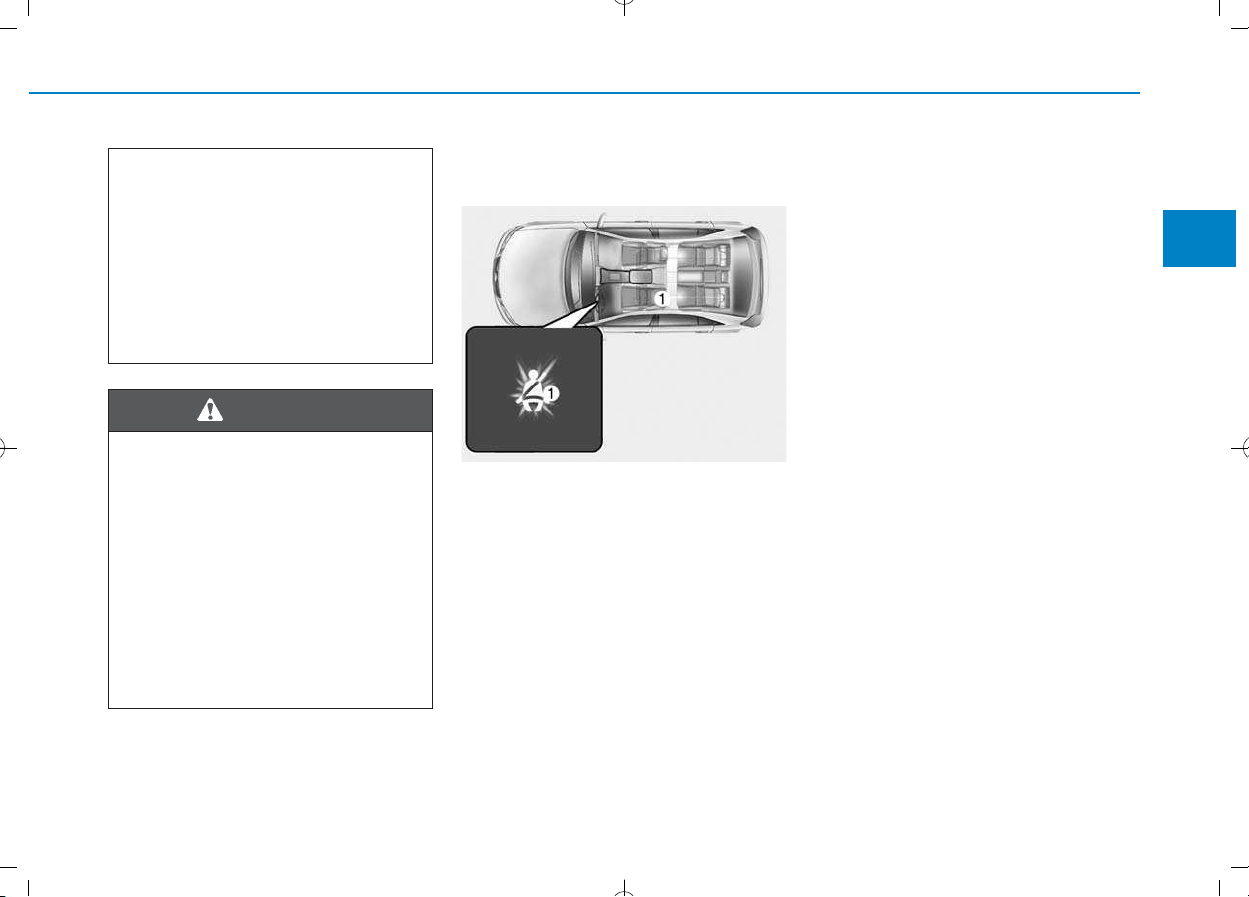
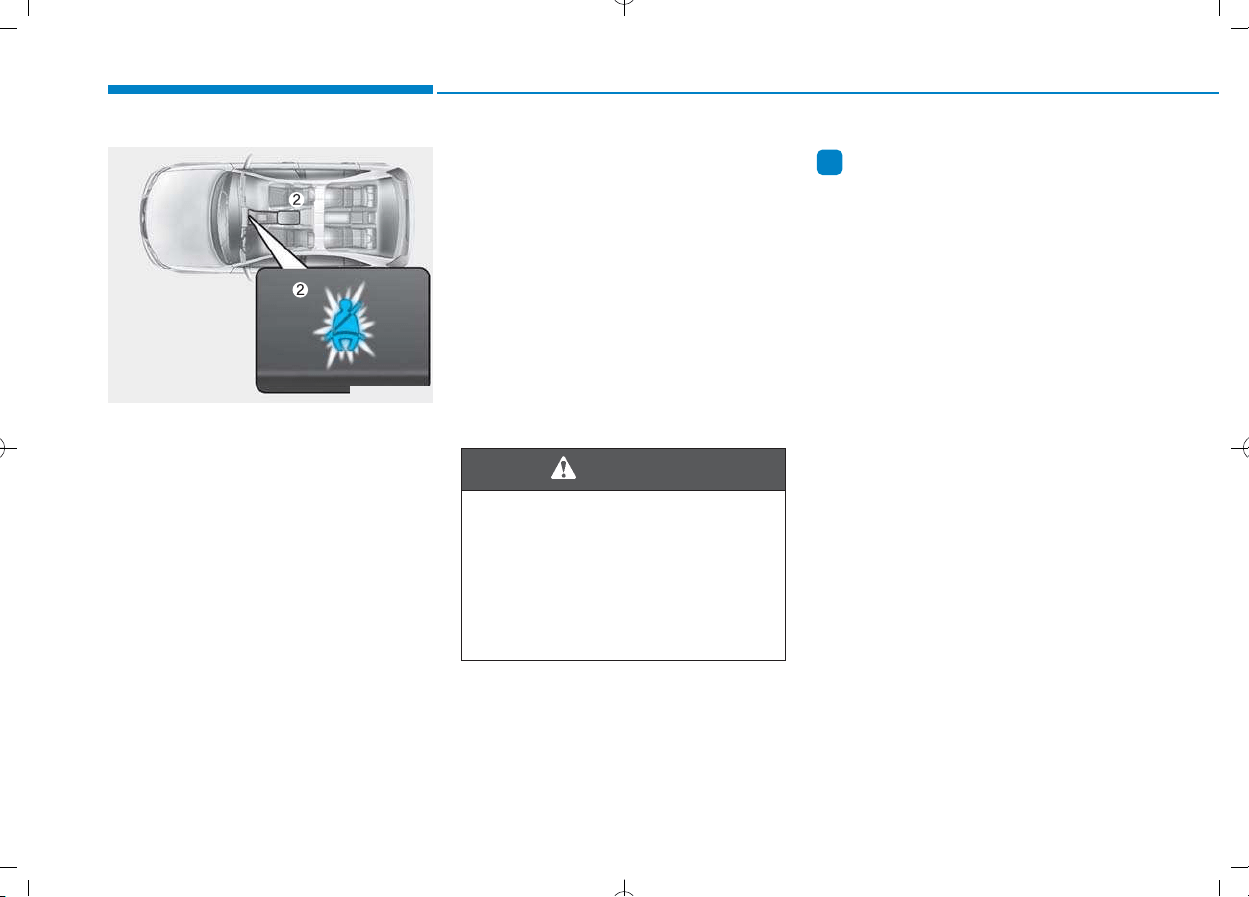
Seat belt warning light
Seat belt warning
Driver’s seat belt warning
As a reminder to the driver, the seat
belt warning light will illuminate for
approximately 6 seconds each time
you turn the ignition switch ON
regardless of belt fastening.
If the seat belt is not fastened when
the ignition switch is turned ON or if
it is disconnected after the ignition
switch is turned ON, the seat belt
warning light will illuminate until the
belt is fastened.
If you start to drive without the seat
belt fastened or you unfasten the
seat belt when you drive under
20km/h, the corresponding warning
light will continue to illuminate until
you fasten the seat belt.
If you continue to drive without the
seat belt fastened or you unfasten
the seat belt when you drive over
20km/h, the seat belt warning chime
will sound for approximately 100 sec-
onds and the corresponding warning
light will blink.
Damaged seat belts and seat
belt assemblies will not operate
properly. Always replace:
• Frayed, contaminated, or dam-
aged webbing.
• Damaged hardware.
• The entire seat belt assembly
after it has been worn in an
accident, even if damage to
webbing or assembly is not
apparent.
WARNING
(Continued)
• No modifications or additions
should be made by the user
which will either prevent the
seat belt adjusting devices
from operating to remove
slack, or prevent the seat belt
assembly from being adjusted
to remove slack.
OAM032161L
■ Instrument cluster
2-24
Safety system of your vehicle
Front passenger’s seat belt warning
As a reminder to the front passenger,
the front passenger’s seat belt warn-
ing lights will illuminate for approxi-
mately 6 seconds each time you turn
the ignition switch ON regardless of
belt fastening.
If the seat belt is not fastened when
the ignition switch is turned ON or if
it is disconnected after the ignition
switch is turned ON, the seat belt
warning light will illuminate until the
belt is fastened.
If you start to drive without the seat
belt fastened or you unfasten the
seat belt when you drive under
20km/h, the corresponding warning
light will continue to illuminate until
you fasten the seat belt.
If you continue to drive without the
seat belt fastened or you unfasten
the seat belt when you drive over
20km/h, the seat belt warning chime
will sound for approximately 100 sec-
onds and the corresponding warning
light will blink.
Information
• You can find the front passenger’s
seat belt warning light on the center
fascia panel.
• Although the front passenger seat is
not occupied, the seat belt warning
light will blink or illuminate for 6
seconds.
• The front passenger's seat belt
warning may operate when luggage
is placed on the front passenger seat.
i
Riding in an improper position
adversely affects the front pas-
senger's seat belt warning sys-
tem. It is important for the driver
to instruct the passenger to
properly be seated as instructed
in this manual.
WARNING
OTLE035082
2-25
Safety system of your vehicle
2
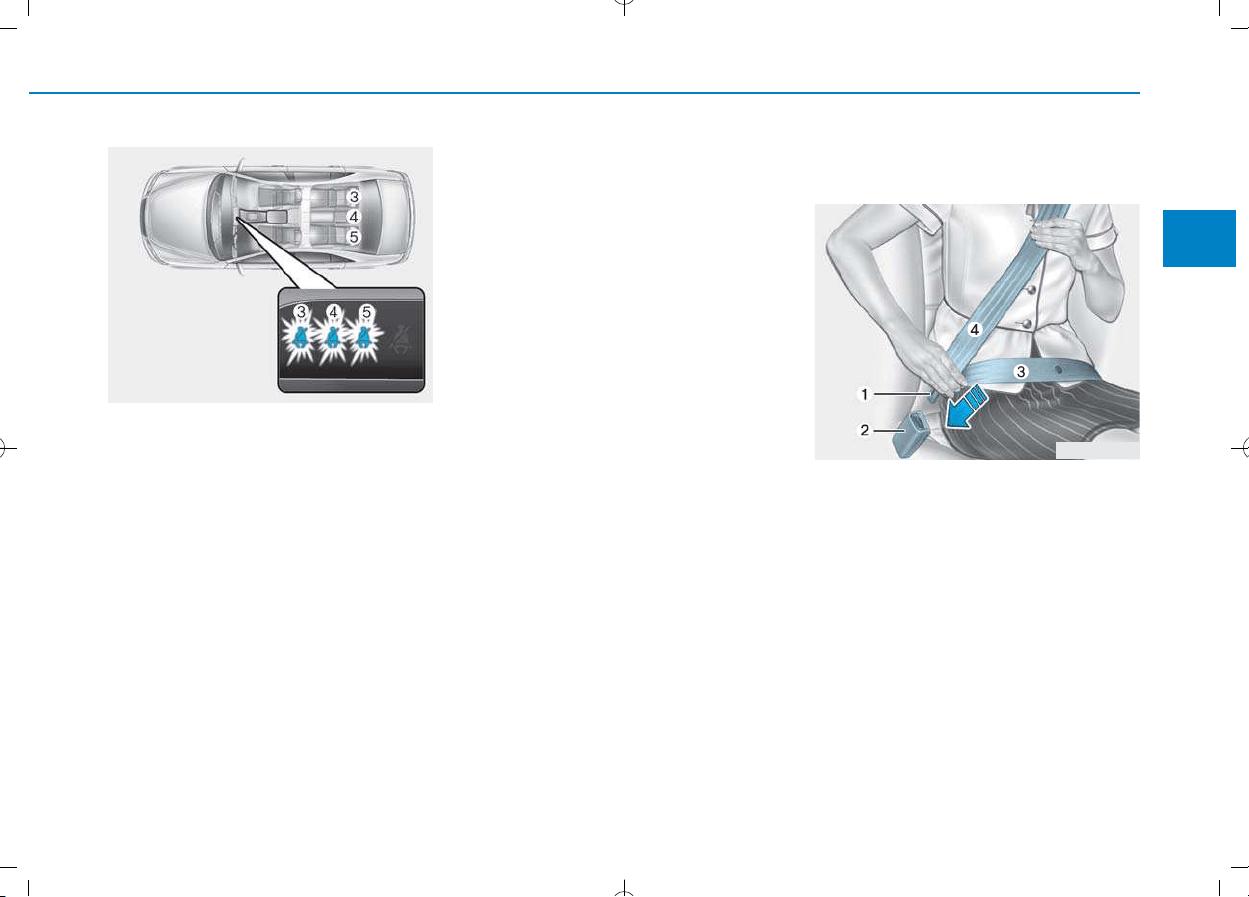
Rear passenger’s seat belt warning
As a reminder to the rear passen-
gers, the rear passenger’s seat belt
warning lights will illuminate for
approximately 6 seconds each time
you turn the ignition switch ON
regardless of belt fastening.
And then, the rear corresponding
seat belt warning light will illuminate
for approximately 35 seconds, if any
of the following occurs:
- You drive over 9km/h when the rear
seat belt is not fastened.
- The rear seat belt is disconnected
when driving under 20km/h.
If the rear seat belt is fastened, the
warning light will turn off immediately.
If the rear seat belt is disconnected
when you drive over the 20km/h, the
corresponding seat belt warning light
will blink and warning chime will
sound for 35 seconds.
But, if the rear passenger's lap/shoul-
der belt is/are connected and discon-
nected twice within 9 seconds after
the belt is fastened, the corresponding
seat belt warning light will not operate.
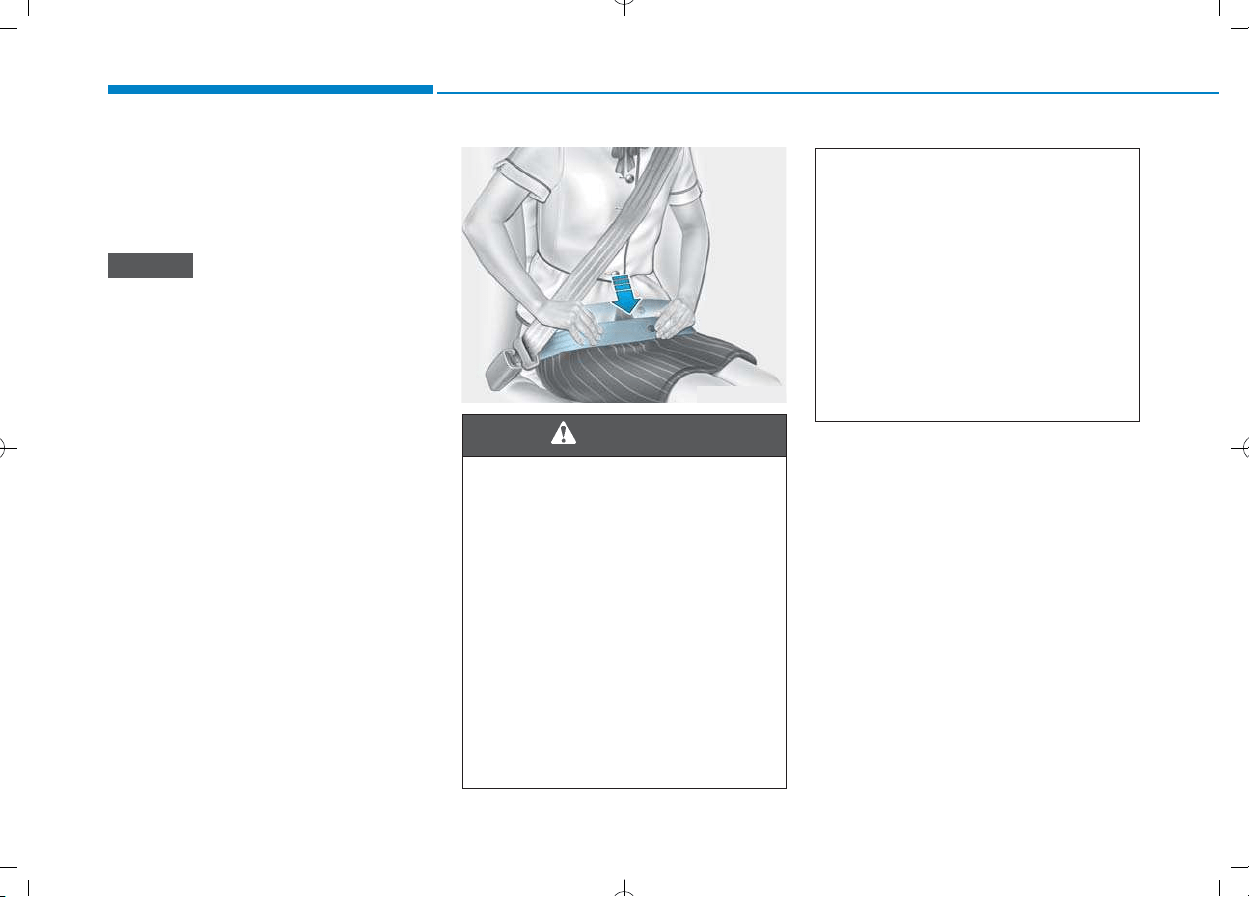
Seat belt restraint system
Lap/shoulder belt
To fasten your seat belt:
Pull it out of the retractor and insert
the metal tab (1) into the buckle (2).
There will be an audible "click" when
the tab locks into the buckle.
You should place the lap belt (3) por-
tion across your hips and the shoul-
der belt (4) portion across your chest.
The seat belt automatically adjusts to
the proper length after the lap belt
portion is adjusted manually so that it
fits snugly around your hips. If you
lean forward in a slow, easy motion,
the belt will extend and move with
you.
OPD036024
ODH033055
2-26
Safety system of your vehicle
If there is a sudden stop or impact,
the belt will lock into position. It will
also lock if you try to lean forward too
quickly.
If you are not able to smoothly pull
enough of the seat belt out from
the retractor, firmly pull the seat
belt out and release it. After
release, you will be able to pull the
belt out smoothly.
Height adjustment
You can adjust the height of the
shoulder belt anchor to one of the
four different positions for maximum
comfort and safety.
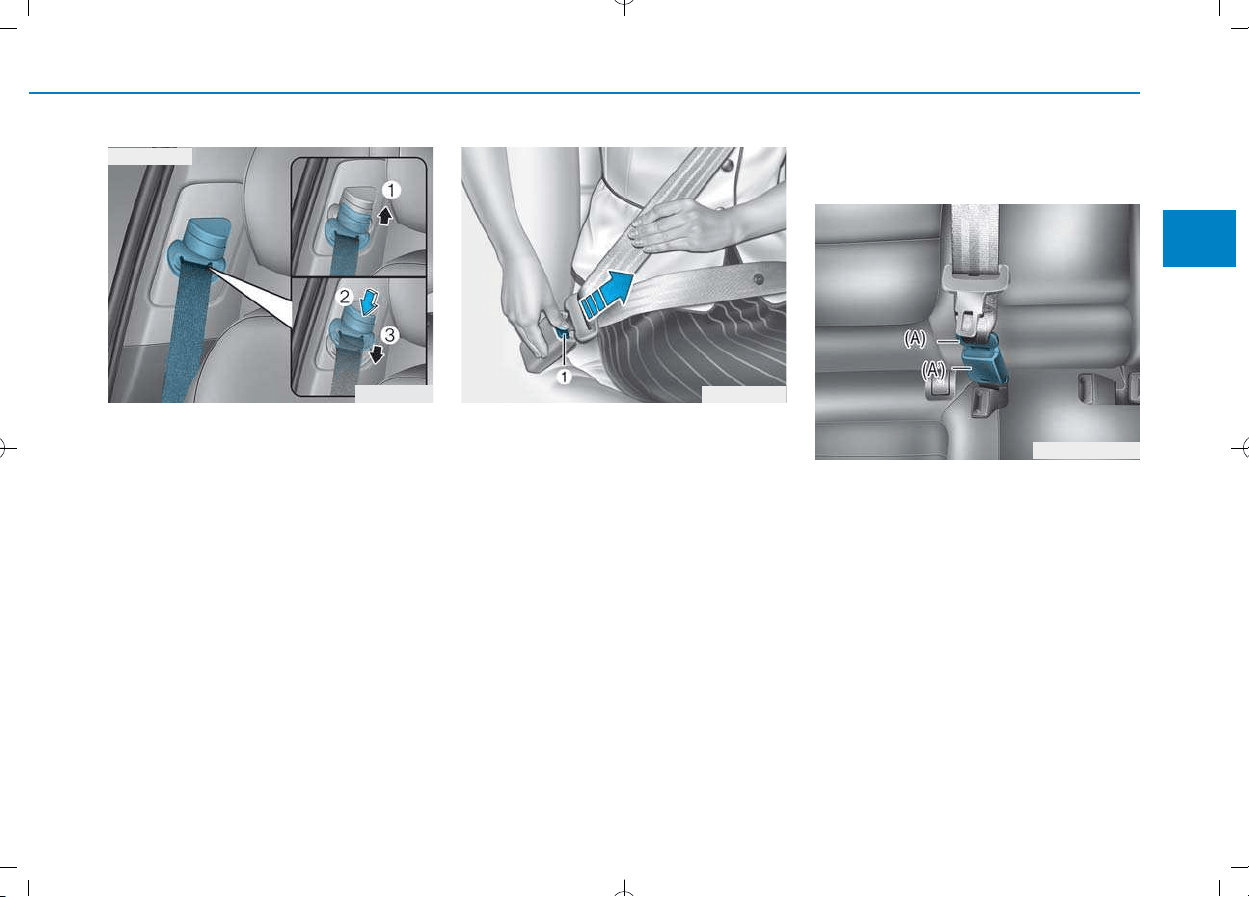
The shoulder portion should be
adjusted so it lies across your chest
and midway over your shoulder near-
est the door, not over your neck.
NOTICE
ODH033056
Improperly positioned seat belts
may increase the risk of serious
injury in an accident. Take the fol-
lowing precautions when adjust-
ing the seat belt:
• Position the lap portion of the
seat belt as low as possible
across your hips, not on your
waist, so that it fits snugly. This
allows your strong pelvic bones
to absorb the force of the crash,
reducing the chance of internal
injuries.
(Continued)
WARNING
(Continued)
• Position one arm under the
shoulder belt and the other over
the belt, as shown in the illus-
tration.
• Always position the shoulder
belt anchor into the locked
position at the appropriate
height.
• Never position the shoulder
belt across your neck or face.
2-27
Safety system of your vehicle
2
To adjust the height of the seat belt
anchor, lower or raise the height
adjuster into an appropriate position.
To raise the height adjuster, pull it up
(1). To lower it, push it down (3) while
pressing the height adjuster button (2).
Release the button to lock the anchor
into position. Try sliding the height
adjuster to make sure that it has
locked into position.
To release your seat belt:
Press the release button (1) in the
locking buckle.
When it is released, the belt should
automatically draw back into the
retractor. If this does not happen,
check the belt to be sure it is not twist-
ed, then try again.
Rear center seatbelt
(3-point rear center seat belt)
1.Insert the tongue plate (A) into the
buckle (A’) until an audible “click" is
heard, indicating the latch is
locked. Make sure the belt is not
twisted.
OPD036025
■ Front seat
ODH033057
OPDEN037073

2-28
Safety system of your vehicle
2. Pull the tongue plate (B) and
insert it into the buckle (B’) until an
audible “click” is heard, indicating
the latch is locked. Make sure the
belt is not twisted.
When using the rear center seat belt,
the buckle with the “CENTER” mark
must be used.
Information
If you are not able to pull out the safe-
ty belt from the retractor, firmly pull
the belt out and release it. After
release, you will be able to pull the belt
out smoothly.
Pre-tensioner seat belt
Your vehicle is equipped with driver's
and front passenger's and rear pas-
sengers (if equipped) Pre-tensioner
Seat Belts (Retractor Pretensioner).
The purpose of the pre-tensioner is to
make sure the seat belts fit tightly
against the occupant's body in cer-
tain frontal or side collision(s). The
pre-tensioner seat belts may be acti-
vated in crashes where the frontal or
side collision(s) is severe enough,
together with the air bags.
i
OLMB033039
OPDE036071
Always have the metal tab (A)
inserted into the buckle (A').
WARNING
2-29
Safety system of your vehicle
2
When the vehicle stops suddenly, or
if the occupant tries to lean forward
too quickly, the seat belt retractor will
lock into position. In certain frontal
collisions, the pre-tensioner will acti-
vate and pull the seat belt into tighter
contact against the occupant's body.
If the system senses excessive tension
on the driver or passenger's seat belt
when the pre-tensioner system acti-
vates, the load limiter inside the retrac-
tor pre-tensioner will release some of
the pressure on the affected seat belt.
Do not touch the pre-tensioner
seat belt assemblies for several
minutes after they have been
activated. When the pre-ten-
sioner seat belt mechanism
deploys during a collision, the
pre-tensioner can become hot
and can burn you.
WARNING
Body work on the front area of
the vehicle may damage the
pre-tensioner seat belt system.
Therefore, we recommend the
system to be serviced by an
authorized HYUNDAI dealer.
CAUTION
• Always wear your seat belt and
sit properly in your seat.
• Do not use the seat belt if it is
loose or twisted. A loose or
twisted seat belt will not pro-
tect you properly in an acci-
dent.
• Do not place anything near the
buckle. This may adversely
affect the buckle and cause it
to function improperly.
• Always replace your pre-ten-
sioners after activation or an
accident.
• NEVER inspect, service, repair
or replace the pre-tensioners
yourself. This must be done by
an authorized HYUNDAI dealer.
• Do not hit the seat belt assem-
blies.
WARNING
2-30
Safety system of your vehicle
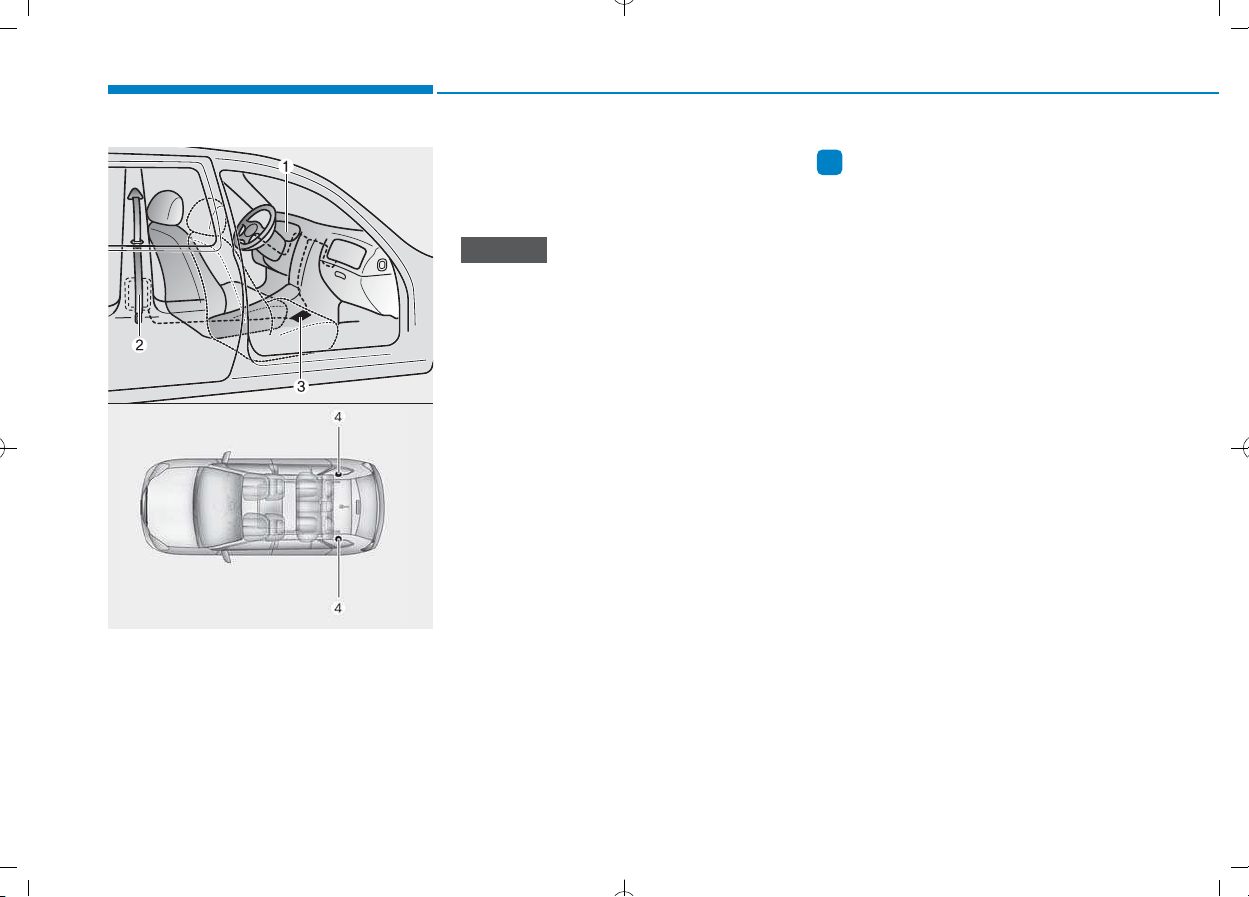
The Pre-Tensioner Seat Belt System
consists mainly of the following com-
ponents. Their locations are shown in
the illustration above:
(1) SRS air bag warning light
(2) Retractor pre-tensioner
(3) SRS control module
(4) Rear Retractor pre-tensioner
(if equipped)
The sensor that activates the SRS
control module is connected with
the pre–tensioner seat belts. The
SRS air bag warning light on the
instrument cluster will illuminate
for approximately 6 seconds after
the ignition switch is placed in the
ON position, and then it should
turn off.
If the pre-tensioner is not working
properly, the warning light will illu-
minate even if the SRS air bag is not
malfunctioning. If the warning light
does not illuminate, stays illuminat-
ed or illuminates when the vehicle
is being driven, we recommend the
pre-tensioner seat belts and/or SRS
control module be inspected by an
authorized HYUNDAI dealer as
soon as possible.
Information
• Both the driver's and front passen-
ger's pre-tensioner seat belts may be
activated in certain frontal or side
collisions.
• When the pre-tensioner seat belts
are activated, a loud noise may be
heard and fine dust, which may
appear to be smoke, may be visible
in the passenger compartment.
These are normal operating condi-
tions and are not hazardous.
• Although it is non-toxic, the fine dust
may cause skin irritation and should
not be inhaled for prolonged periods.
Wash all exposed skin areas thor-
oughly after an accident in which the
pre-tensioner seat belts were activat-
ed.
i
NOTICE
OLMB033040/Q
OPDE037069

2-31
Safety system of your vehicle
2
Additional seat belt safety pre-
cautions
Seat belt use during pregnancy
The seat belt should always be used
during pregnancy. The best way to
protect your unborn child is to protect
yourself by always wearing the seat
belt.
Pregnant women should always wear
a lap-shoulder seat belt. Place the
shoulder belt across your chest, rout-
ed between your breasts and away
from your neck. Place the lap belt
below your belly so that it fits SNUGLY
across your hips and pelvic bone,
under the rounded part of the belly.
Seat belt use and children
Infant and small children
Most countries have Child Restraint
System laws which require children to
travel in approved Child Restraint
System devices, including booster
seats. The age at which seat belts can
be used instead of Child Restraint
System differs among countries, so
you should be aware of the specific
requirements in your country, and
where you are travelling. Infant and
Child Restraint System must be prop-
erly placed and installed in a rear seat.
For more information refer to the “Child
Restraint Systems” in this chapter.
ALWAYS properly restrain
infants and small children in a
Child Restraint System appropri-
ate for the child’s height and
weight.
To reduce the risk of serious
injury or death to a child and
other passengers, NEVER hold a
child in your lap or arms when
the vehicle is moving. The violent
forces created during an acci-
dent will tear the child from your
arms and throw the child against
the interior of the vehicle.
WARNING
To reduce the risk of serious
injury or death to an unborn
child during an accident, preg-
nant women should NEVER
place the lap portion of the seat
belt above or over the area of
the abdomen where the unborn
child is located.
WARNING

2-32
Safety system of your vehicle
Small children are best protected
from injury in an accident when prop-
erly restrained in the rear seat by a
Child Restraint System that meets
the requirements of the Safety
Standards of your country. Before
buying any Child Restraint System,
make sure that it has a label certify-
ing that it meets Safety Standard of
your country. The Child Restraint
System must be appropriate for your
child's height and weight. Check the
label on the Child Restraint System
for this information. Refer to “Child
Restraint Systems” in this chapter.
Larger children
Children under age 13 and who are
too large for a booster seat should
always occupy the rear seat and use
the available lap/shoulder belts. A
seat belt should lie across the upper
thighs and be snug across the shoul-
der and chest to restrain the child
safely. Check belt fit periodically. A
child's squirming could put the belt
out of position. In the event of an acci-
dent, children are afforded the best
safety restrained by a proper Child
Restraint System in the rear seats.
If a larger child over age 13 must be
seated in the front seat, the child
must be securely restrained by the
available lap/shoulder belt and the
seat should be placed in the rear-
most position.
If the shoulder belt portion slightly
touches the child’s neck or face, try
placing the child closer to the center
of the vehicle. If the shoulder belt still
touches their face or neck, they need
to be returned to an appropriate
booster seat in the rear seat.
• Always make sure larger chil-
dren’s seat belts are worn and
properly adjusted.
• NEVER allow the shoulder
belt to contact the child’s
neck or face.
• Do not allow more than one
child to use a single seat belt.
WARNING

2-33
Safety system of your vehicle
2
Seat belt use and injured people
A seat belt should be used when an
injured person is being transported.
Consult a physician for specific rec-
ommendations.
One person per belt
Two people (including children) should
never attempt to use a single seat belt.
This could increase the severity of
injuries in case of an accident.
Do not lie down
Sitting in a reclined position when
the vehicle is in motion can be dan-
gerous. Even when buckled up, the
protections of your restraint system
(seat belts and/or air bags) is greatly
reduced by reclining your seatback.
Seat belts must be snug against your
hips and chest to work properly.
During an accident, you could be
thrown into the seat belt, causing
neck or other injuries.
The more the seat back is reclined,
the greater the chance for the pas-
senger's hips to slide under the lap
belt or the passenger's neck to strike
the shoulder belt.
Care of seat belts
Seat belt systems should never be
disassembled or modified. In addi-
tion, care should be taken to assure
that seat belts and belt hardware are
not damaged by seat hinges, doors
or other abuse.
Periodic inspection
All seat belts should be inspected
periodically for wear or damage of
any kind. Any damaged parts should
be replaced as soon as possible.
Keep belts clean and dry
Seat belts should be kept clean and
dry. If belts become dirty, they can be
cleaned by using a mild soap solution
and warm water. Bleach, dye, strong
detergents or abrasives should not be
used because they may damage and
weaken the fabric.
• NEVER ride with a reclined
seatback when the vehicle is
moving.
• Riding with a reclined seatback
increases your chance of seri-
ous or fatal injuries in the event
of a collision or sudden stop.
• Driver and passengers should
always sit well back in their
seats, properly belted, and with
the seatbacks upright.
WARNING
2-34
Safety system of your vehicle
When to replace seat belts
The entire seat belt assembly or
assemblies should be replaced if the
vehicle has been involved in an acci-
dent. This should be done even if no
damage is visible. We recommend that
you consult an authorized HYUNDAI
dealer.
Our recommendation:
Children always in the rear
Children under age 13 should always
ride in the rear seats and must
always be properly restrained to min-
imize the risk of injury in an accident,
sudden stop or sudden maneuver.
According to accident statistics, chil-
dren are safer when properly
restrained in the rear seats than in
the front seat. Children too large for a
Child Restraint System must use the
seat belts provided.
Most countries have regulations
which require children to travel in
approved Child Restraint Systems.
The laws governing the age or
height/weight restrictions at which
seat belts can be used instead of
Child Restraint System differs
among countries, so you should be
aware of the specific requirements in
your country, and where you are trav-
elling.
Child Restraint Systems must be
properly installed in the vehicle seat.
Always use a commercially available
Child Restraint System that meets
the requirements of your country.
CCHHIILLDD RREESSTTRRAAIINNTT SSYYSSTTEEMM
(
(CCRRSS))
Always properly restrain children
in the vehicle. Children of all ages
are safer when riding in the rear
seats. Never place a rearward-
facing Child Restraint System on
the front passenger seat, unless
the air bag is deactivated.
WARNING

2-35
Safety system of your vehicle
2
Child Restraint System (CRS)
Infants and younger children must be
restrained in an appropriate rear-
ward-facing or forward-facing CRS
that has first been properly secured
to the seat of the vehicle. Read and
comply with the instructions for
installation and use provided by the
manufacturer of the Child Restraint
System.
Selecting a Child Restraint
System (CRS)
When selecting a Child Restraint
System for your child, always:
• Make sure the Child Restraint
System has a label certifying that it
meets applicable Safety Standards
of your country.
A Child Restraint System may only
be installed if it was approved in
accordance with the requirements of
ECE-R44 or ECE-R129.
• Select a Child Restraint System
based on your child’s height and
weight. The required label or the
instructions for use typically pro-
vide this information.
• Select a Child Restraint System
that fits the vehicle seating position
where it will be used.
• Read and comply with the warn-
ings and instructions for installation
and use provided with the Child
Restraint System.
Child Restraint System types
There are three main types of Child
Restraint Systems: rearward-facing,
forward-facing and booster Child
Restraint Systems.
They are classified according to the
child’s age, height and weight.
•
Always follow the Child Restraint
System manufacturer’s instruc-
tions for installation and use.
• Always properly restrain your
child in the Child Restraint
System.
• Do not use an infant carrier or
a child safety seat that “hooks”
over a seatback, it may not pro-
vide adequate protection in an
accident.
• After an accident, we recom-
mend a HYUNDAI dealer to
check the Child Restraint
System, seat belts, ISOFIX
anchorages and top-tether
anchorages.
WARNING
2-36
Safety system of your vehicle
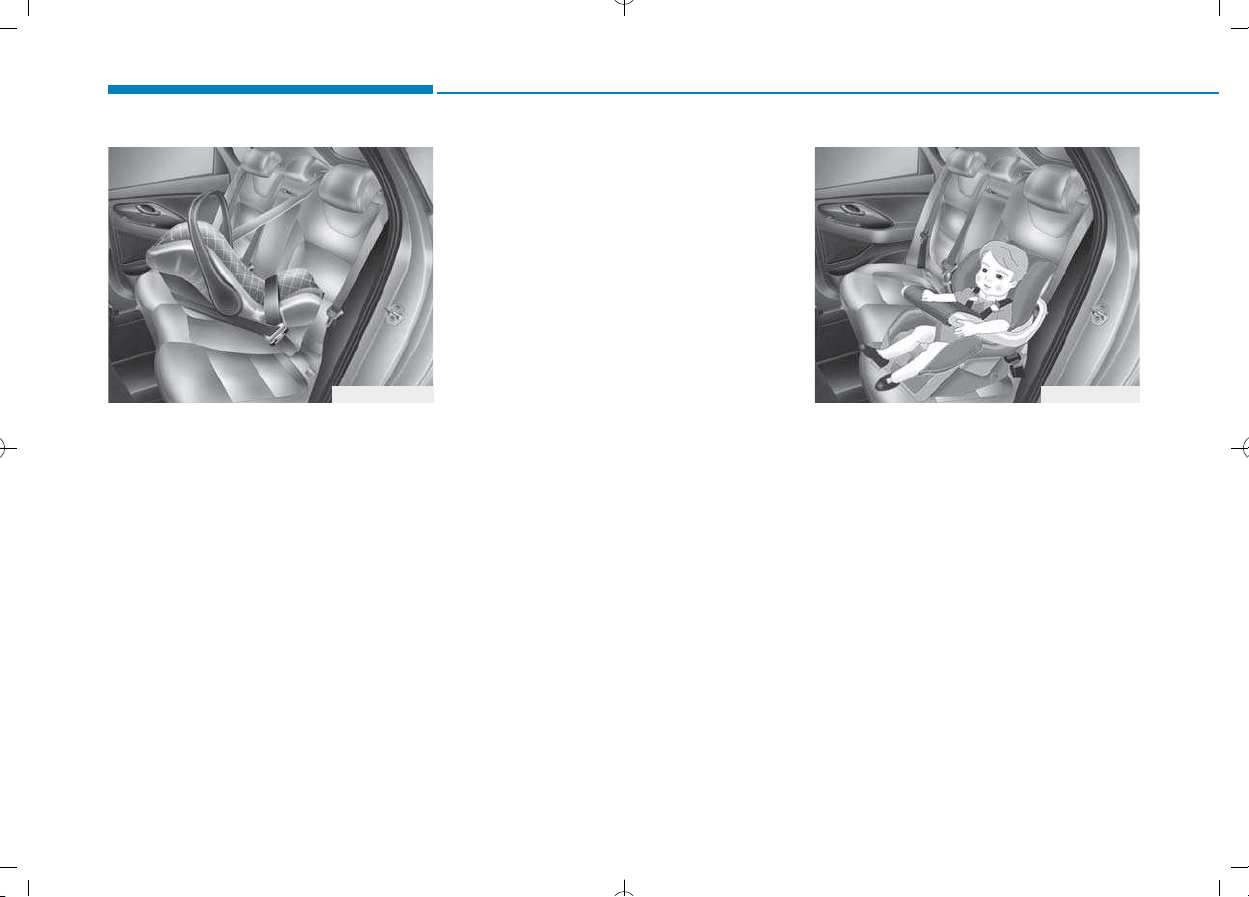
Rearward-facing Child Restraint
System
A rearward-facing Child Restraint
System provides restraint with the
seating surface against the back of
the child. The harness system holds
the child in place, and in an accident,
acts to keep the child positioned in
the Child Restraint Systems and
reduce the stress to the fragile neck
and spinal cord.
All children under the age of one year
must always ride in a rearward-facing
Child Restraint System. There are dif-
ferent types of rearward-facing Child
Restraint Systems: infant-only Child
Restraint Systems can only be used
rearward-facing. Convertible and 3-in-
1 Child Restraint Systems typically
have higher height and weight limits
for the rearward-facing position, allow-
ing you to keep your child rearward-
facing for a longer period of time.
Keep using Child Restraint Systems
in the rearward-facing position as long
as children fit within the height and
weight limits allowed by the Child
Restraint System's manufacturer.
Forward-facing Child Restraint
System
A forward-facing Child Restraint System
provides restraint for the child’s body
with a harness. Keep children in a for-
ward-facing Child Restraint System
with a harness until they reach the
top height or weight limit allowed by
your Child Restraint System’s manu-
facturer.
Once your child outgrows the forward-
facing Child Restraint System, your
child is ready for a booster seat.
OPDEN037028OPDEN037027
2-37
Safety system of your vehicle
2
Booster seats
A booster seat is a Child Restraint
System designed to improve the fit of
the vehicle’s seat belt system. A boost-
er seat positions the seat belt so that it
fits properly over the stronger parts of
your child’s body. Keep your children in
booster seats until they are big
enough to fit in a seat belt properly.
For a seat belt to fit properly, the lap
belt must lie comfortable across the
upper thighs, not the stomach. The
shoulder belt should lie comfortable
across the shoulder and chest and
not across the neck or face. Children
under age 13 must always be proper-
ly restrained to minimize the risk of
injury in an accident, sudden stop or
sudden maneuver.
Installing a Child Restraint
System (CRS)
After selecting a proper Child Restraint
System for your child and checking
that the Child Restraint System fits
properly on the seating position, there
are three general steps for a proper
installation:
• Properly secure the Child Restraint
System to the vehicle.
All Child
Restraint Systems must be secured
to the vehicle with the lap belt or lap
part of a lap/shoulder belt or with
the ISOFIX top-tether and/or ISOFIX
anchorage and/or with the support
leg.
• Make sure the Child Restraint
System is firmly secured. After
installing a Child Restraint System
to the vehicle, push and pull the
seat forward and from side-to-side
to verify that it is securely attached
to the seat. A Child Restraint
System secured with a seat belt
should be installed as firmly as
possible. However, some side-to-
side movement can be expected.
Before installing your Child
Restraint System always:
Read and follow the instructions
provided by the manufacturer of
the Child Restraint System.
Failure to follow all warnings
and instructions could increase
the risk of the SERIOUS INJURY
or DEATH if an accident occurs.
WARNING
If the vehicle headrest prevents
proper installation of a Child
Restraint System, the headrest
of the respective seating posi-
tion shall be readjusted or
entirely removed.
WARNING
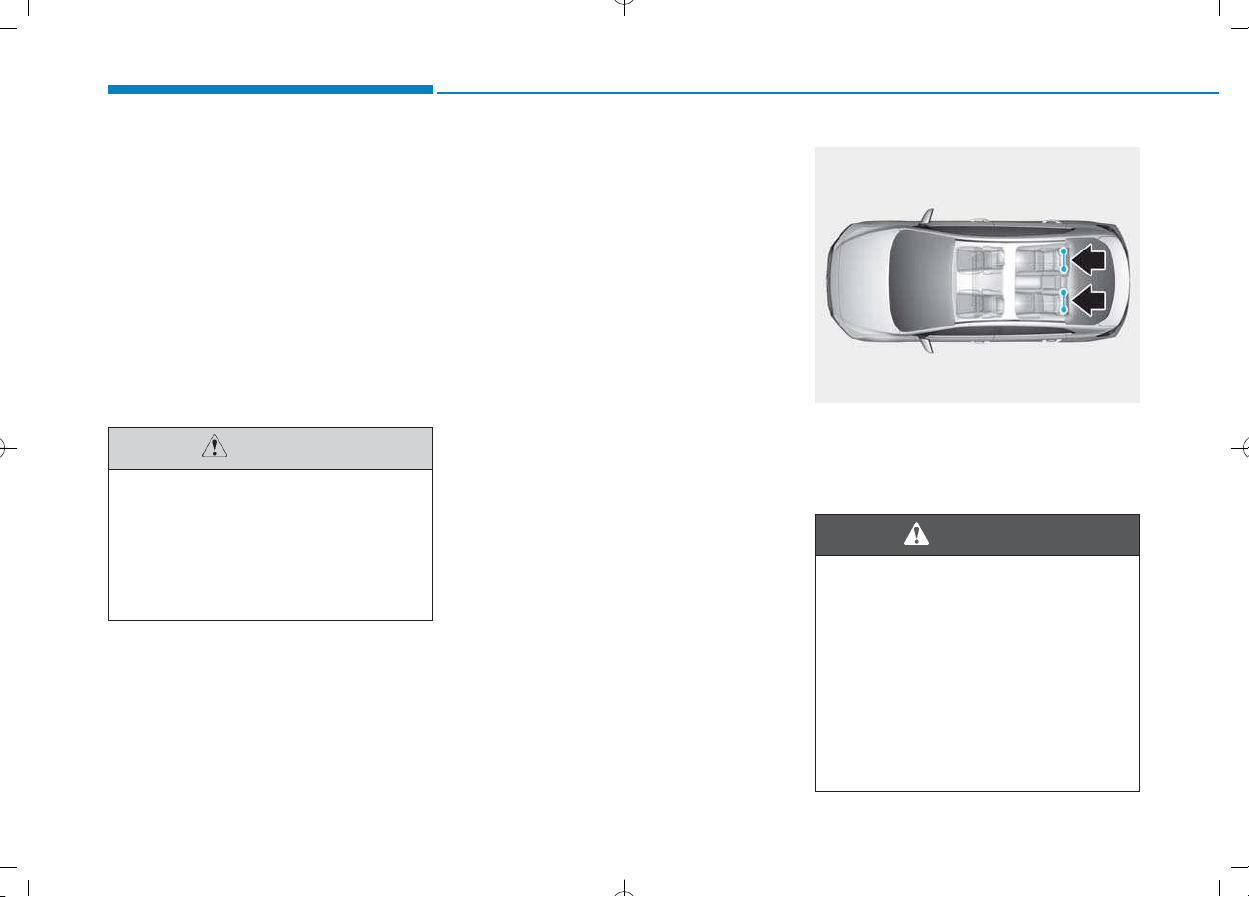
2-38
Safety system of your vehicle
When installing a Child Restraint
System, adjust the vehicle seat and
seatback (up and down, forward and
rearward) so that your child fits in
the Child Restraint System in a con-
fortable manner.
• Secure the child in the Child
Restraint System. Make sure the
child is properly strapped in the
Child Restraint System according
to the Child Restraint System man-
ufacturer’s instructions.
ISOFIX anchorage and top-teth-
er anchorage (ISOFIX anchorage
system) for children
The ISOFIX system holds a Child
Restraint System during driving and in
an accident.This system is designed to
make installation of the Child Restraint
System easier and reduce the possi-
bility of improperly installing your
Child Restraint System. The ISOFIX
system uses anchors in the vehicle
and attachments on the Child
Restraint System. The ISOFIX sys-
tem eliminates the need to use seat
belts to secure the Child Restraint
System to the rear seats.
ISOFIX anchorages are metal bars
built into the vehicle. There are two
lower anchors for each ISOFIX seat-
ing position that will accommodate a
Child Restraint System with lower
attachments.
To use the ISOFIX system in your vehi-
cle, you must have a Child Restraint
System with ISOFIX attachments.
The Child Restraint System manu-
facturer will provide you with instruc-
tions on how to use the Child
Restraint System with its attach-
ments for the ISOFIX anchorages.
ISOFIX anchorages have been pro-
vided in the left and right outboard
rear seating positions. Their locations
are shown in the illustration.
A Child Restraint System in a
closed vehicle can become very
hot. To prevent burns, check the
seating surface and buckles
before placing your child in the
Child Restraint System.
CAUTION
OAE036063
Do not attempt to install a Child
Restraint System using ISOFIX
anchorages in the rear center
seating position. There are no
ISOFIX anchorages provided for
this seat. Using the outboard seat
anchorages, for the CRS installa-
tion on the rear center seating
position, can damage the anchor-
ages.
WARNING
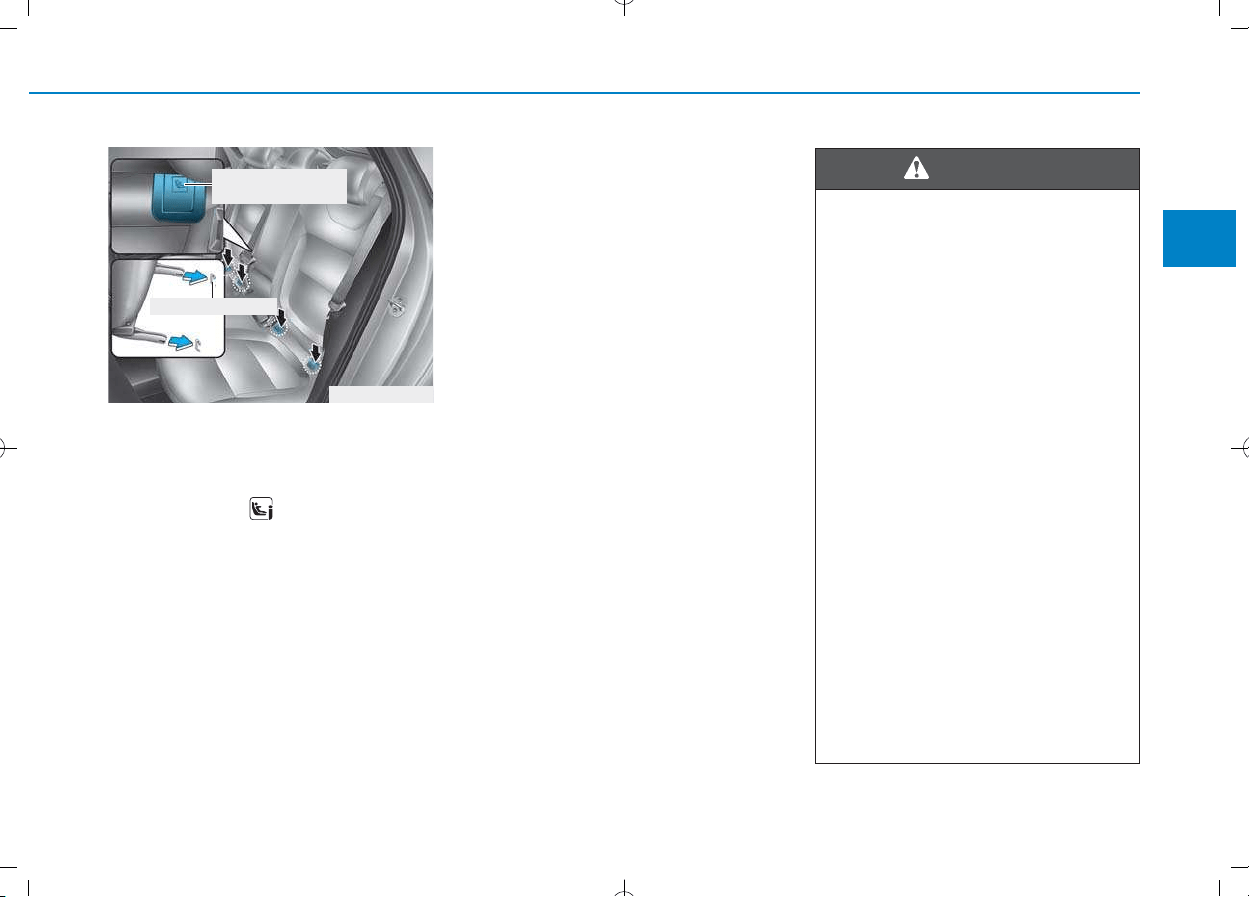
2-39
Safety system of your vehicle
2
ISOFIX anchorages are located
between the seatback and the seat
cushion of the rear seat left and right
outboard seating positions, indicated
by the symbols .
To use the ISOFIX anchorages, push
the upper portion of the ISOFIX
anchorage cover.
Securing a Child Restraint
System with the “ISOFIX
Anchorage System”
To install an i-Size or ISOFIX-compat-
ible Child Restraint System in either of
the rear outboard seating positions:
1. Move the seat belt buckle away
from the ISOFIX anchorages.
2. Move any other objects away from
the anchorages that could prevent
a secure connection between the
Child Restraint System and the
ISOFIX anchorages.
3. Place the Child Restraint System
on the vehicle seat, then attach the
seat to the ISOFIX anchorages
according to the instructions provid-
ed by the Child Restraint System
manufacturer.
4. Follow the instructions of the Child
Restraint System's manufacturer
for proper installation and connec-
tion of the ISOFIX attachments on
the Child Restraint System to the
ISOFIX anchorages.
OPDEN037031
ISOFIX Anchorage
Position Indicator
ISOFIX Anchorage
Take the following precautions
when using the ISOFIX system:
• Read and follow all installation
instructions provided with
your Child Restraint System.
• To prevent the child from reach-
ing and taking hold of unre-
tracted seat belts, buckle all
unused rear seat belts and
retract the seat belt webbing
behind the child. Children can
be strangled if a shoulder belt
becomes wrapped around their
neck and the seat belt tightens.
• NEVER attach more than one
Child Restraint System to a
single anchorage. This could
cause the anchor or attach-
ment to come loose or break.
• Always have the ISOFIX sys-
tem inspected by your dealer
after an accident. An accident
can damage the ISOFIX system
and may not properly secure
the Child Restraint System.
WARNING
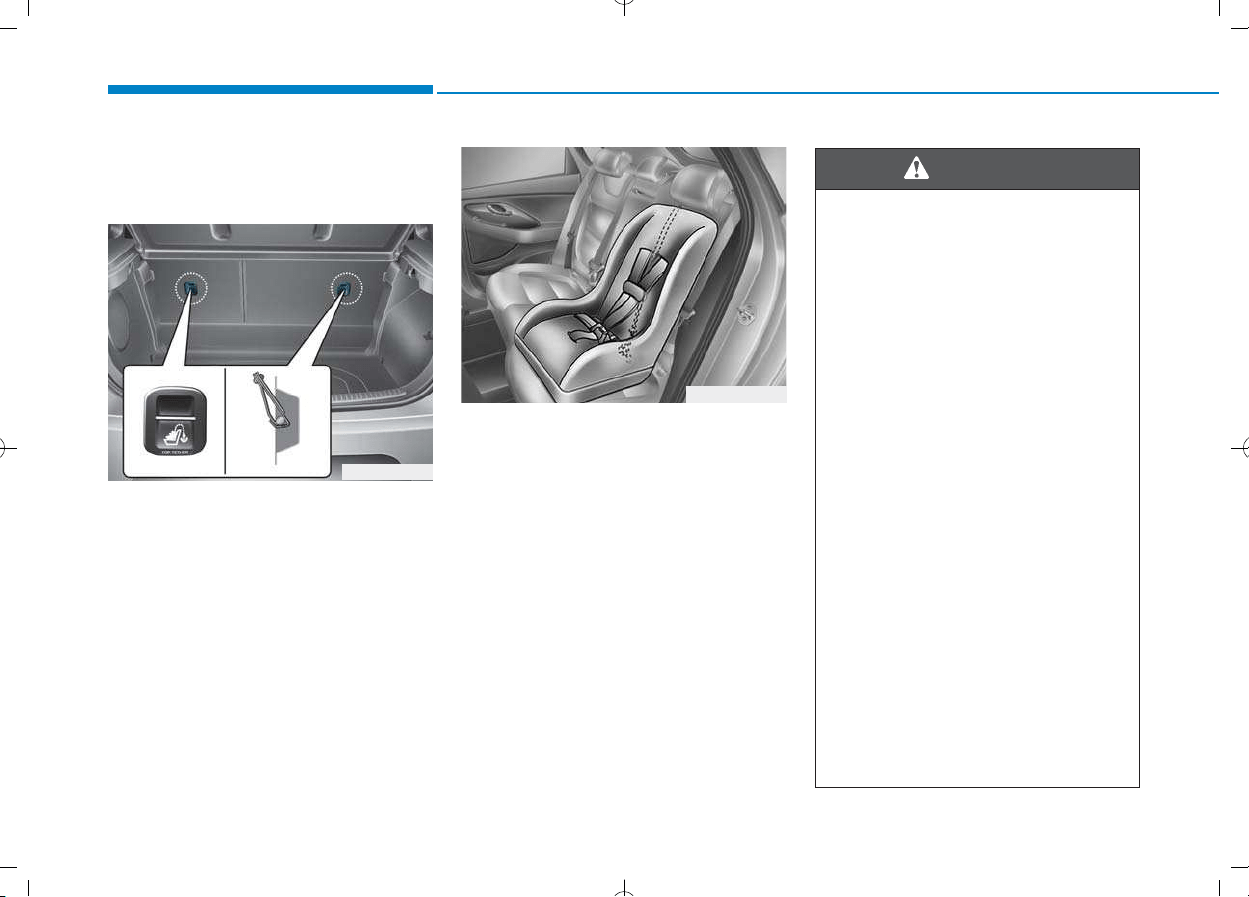
2-40
Safety system of your vehicle
Securing a Child Restraint
System seat with “Top-tether
Anchorage” system
Top-tether anchorages for Child
Restraint Systems are located on the
rear of the seatbacks.
1. Route the Child Restraint System
top-tether strap over the seatback.
Placing the top tether strap, please
follow the instructions of the Child
Restraint System manufacturer.
2. Connect the top-tether strap to the
top-tether anchorage, then tighten
the top-tether strap according to the
instructions of your Child Restraint
System's manufacturer to firmly
attach the Child Restraint System to
the seat.
OPDE036029
OPDEN037030
Take the following precautions
when installing the top-tether:
• Read and follow all installation
instructions provided with
your Child Restraint System.
• NEVER attach more than one
Child Restraint System to a
single ISOFIX top-tether
anchorage. This could cause
the anchorage or attachment
to come loose or break.
• Do not attach the top-tether to
anything other than the cor-
rect top-tether anchorage. It
may not work properly if
attached to something else.
• Child Restraint System anchor-
ages are designed to withstand
only those loads imposed by
correctly fitted Child Restraint
System.
Under no circumstances are
they to be used for adult seat
belts or harnesses or for attach-
ing other items or equipment to
the vehicle.
WARNING

2-41
Safety system of your vehicle
2
Suitability of each seating position for ISOFIX Child Restraint Systems according to ECE regulations
IUF = suitable for ISOFIX forward child restraints systems of universal
category approved for use in the mass group.
IL = suitable for particular ISOFIX child restraints systems (CRS) given
in the attached list. These ISOFIX CRS are those of the "spe-
cific vehicle", "restricted" or "semi-universal" categories.
X = ISOFIX position not suitable for ISOFIX child restraint system in
this mass group and/or this size class.
A - ISO/F3: Full-Height Forward-Facing toddler Child Restraint System
(height 720mm)
B - ISO/F2: Reduced-Height Forward-Facing toddler Child Restraint
System (height 650mm)
B1 - ISO/F2X: Reduced-Height Second Version Back Surface Shape
Forward-Facing toddler Child Restraint System (height 650mm)
C - ISO/R3: Full-Size Rearward-Facing toddler Child Restraint System
D - ISO/R2: Reduced-Size Rearward-Facing toddler Child Restraint System
E - ISO/R1: Infant-Size Rearward-Facing Child Restraint System
F - ISO/L1: Left Lateral Facing position Child Restraint System (carry-cot)
G - ISO/L2: Right Lateral Facing position Child Restraint System (carry-cot)
Mass Group
Size
Class
Fixture
Vehicle ISOFIX positions
Front Passenger
2nd row
Left Hand Center Right Hand
Carrycot
F ISO/L1 N/A X N/A X
G ISO/L2 N/A X N/A X
0- : UP TO 10KG E ISO/R1 N/A IL N/A IL
0+ : UP TO 13KG
E ISO/R1 N/A IL N/A IL
D ISO/R2 N/A IL N/A IL
C ISO/R3 N/A IL N/A IL
1 : 9 TO 18KG
D ISO/R2 N/A IL N/A IL
C ISO/R3 N/A IL N/A IL
B ISO/F2 N/A IUF,IL N/A IUF,IL
B1 ISO/F2X N/A IUF,IL N/A IUF,IL
A ISO/F3 N/A IUF,IL N/A IUF,IL
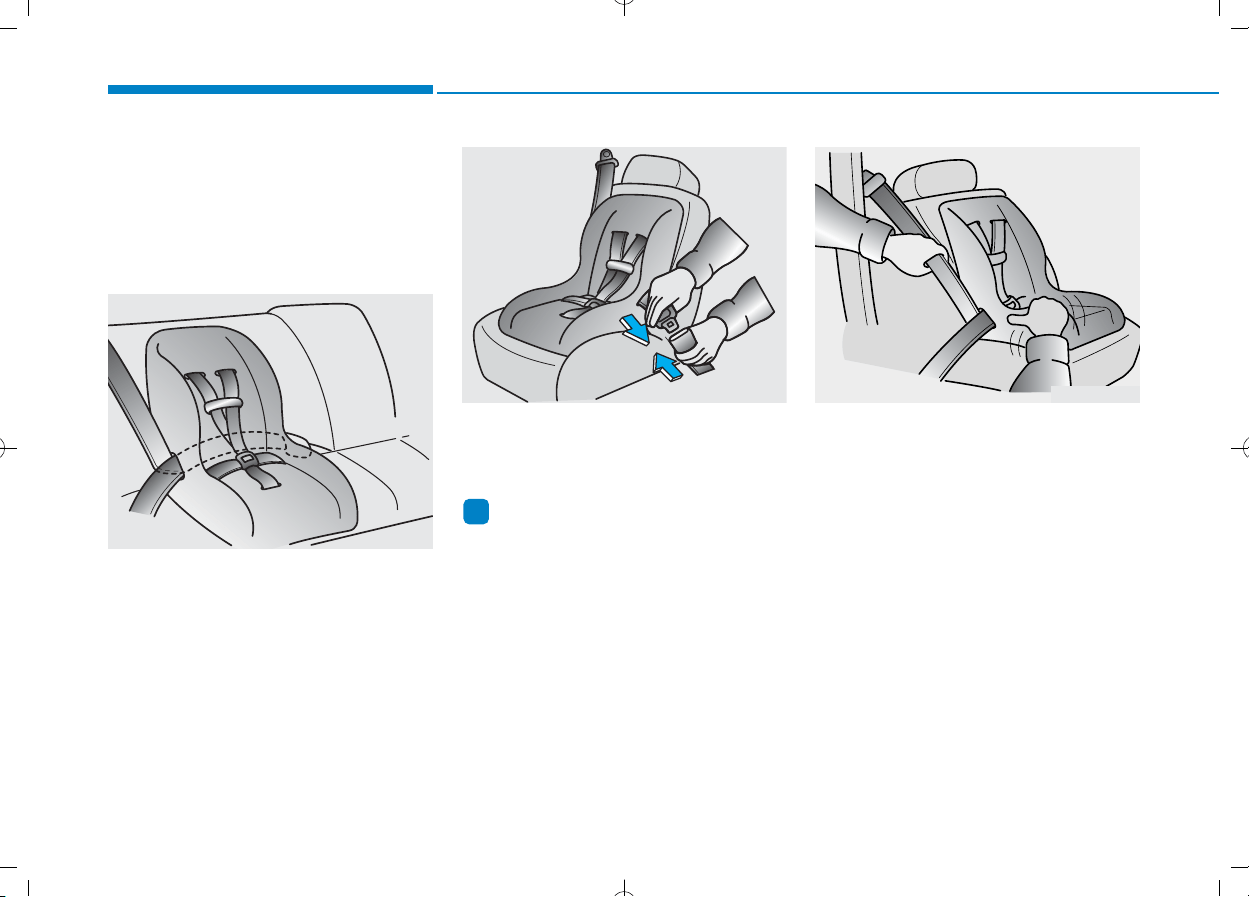
2-42
Safety system of your vehicle
Securing a Child Restraint
System with a lap/shoulder belt
When not using the ISOFIX system,
all Child Restraint Systems must be
secured to a rear seat with the lap
part of a lap/shoulder belt.
Installing a Child Restraint System
with a lap/shoulder belt
To install a Child Restraint System
on the rear seats, do the following:
1. Place the Child Restraint System
on a rear seat and route the lap/
shoulder belt around or through the
Child Restraint System, following
the Child Restraint System manu-
facturer’s instructions. Make sure
the seat belt webbing is not twisted.
2. Fasten the lap/shoulder belt latch
into the buckle. Listen for the dis-
tinct “click” sound.
Information
Position the release button so that it is
easy to access in case of an emergency.
3. Remove as much slack from the
belt as possible by pushing down
on the Child Restraint System while
feeding the shoulder belt back into
the retractor.
4. Push and pull on the Child Restraint
System to confirm that the seat belt
is holding it firmly in place.
If your Child Restraint System manu-
facturer recommends the use of a
top-tether with the lap/shoulder belt,
see page 2-40.
To remove the Child Restraint System,
press the release button on the buckle
and then pull the lap/shoulder belt out
of the Child Restraint System and
allow the seat belt to retract fully.
i
OLMB033044
ODH033063 OLMB033046
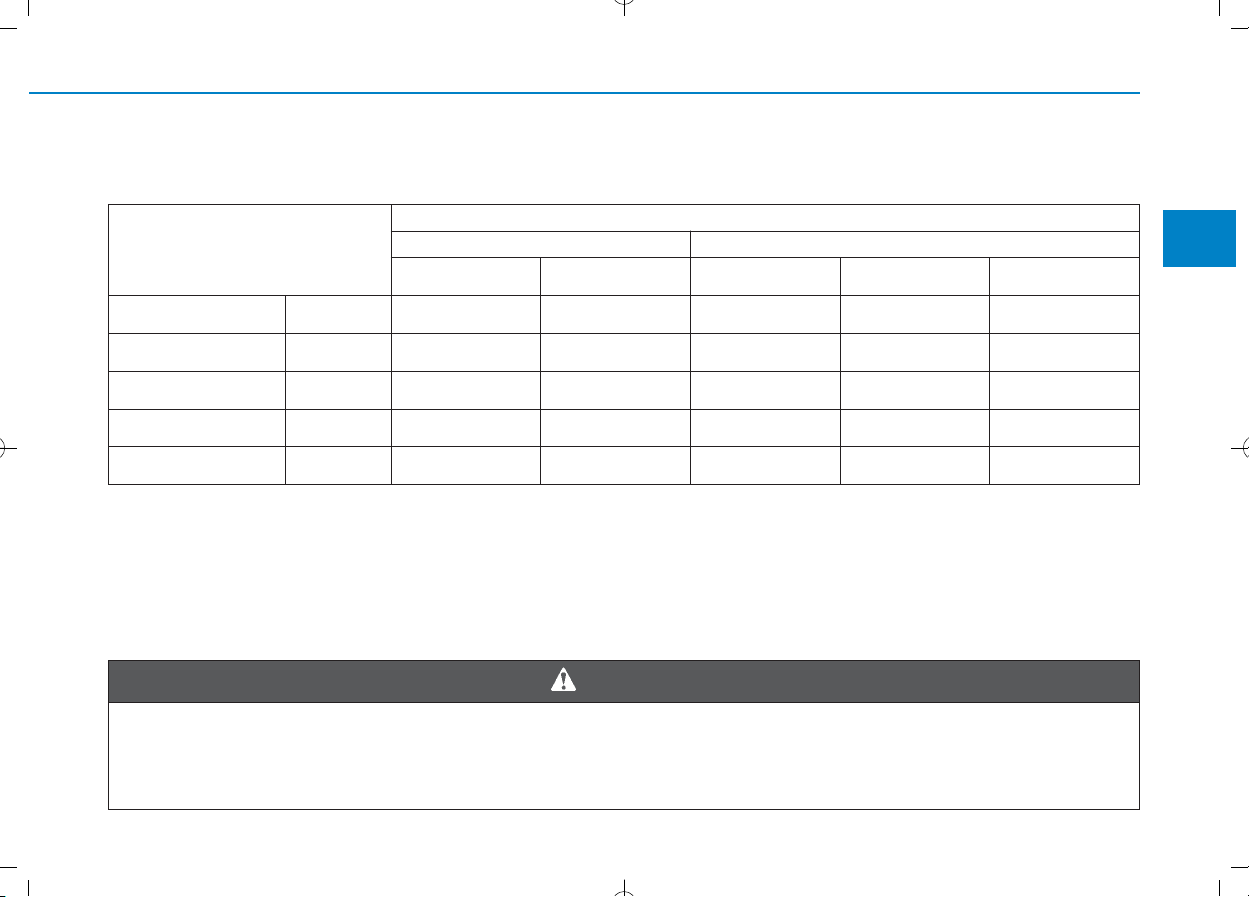
2-43
Safety system of your vehicle
2
Suitability of each seating position for "universal" category belted Child Restraint Systems according to
ECE regulations
U = Suitable for "universal" category Child Restraint Systems approved for use in this mass group.
U* = Suitable for "universal" category Child Restraint Systems approved for use in this mass group (When you install the child seat on Front
Passenger seat, you should move the seat position to upward and the seat back position to forward properly, to restrain child seat.)
❈ Height adjustable device of Front passenger seat is an optional feature.
U** = Seating position not suitable for fitment of Child Restraint Systems with support leg.
UF = Suitable for forward facing "universal" category restraints approved for use in this mass group.
X = Seat position not suitable for children in this mass group.
We recommend that a child restraint seat be installed in the rear seat, even if the front passenger's air bag
ON/OFF switch is set to the OFF position. To ensure the safety of your child, the front passenger's air bag
must be deactivated when it should be necessary to install a child restraint seat on the front passenger
seat in exceptional circumstances.
WARNING
Mass Group
Seating Position
Front Passenger Second Row
Airbag
activated
Airbag
deactivated
Outboard
Left
Center
(3 POINT BELT)
Outboard
Right
Group 0
(0-9months)
up to 10kg X U* U U** U
Group 0 +
(0-2years)
up to 13kg X U* U U** U
Group I
(9months-4years)
9 to 18kg X U* U U** U
Group II
(15 to 25kg)
15 to 25kg UF U* U U U
Group III
(22 to 36kg)
22 to 36kg UF U* U U U

2-44
Safety system of your vehicle
i-Size Child Restraint Systems according to ECE regulations
i-U : Suitable for i-Size "universal" Child Restraint Systems forward and rearward-facing
i-UF : Suitable for forward-facing i-Size "universal" Child Restraint Systems only
X : Seat position not suitable for i-size Child Restraint Systems
Mass Group
Seating Position
Passenger Front
Second Row
Outboard Left Center
Outboard
Right
i-size Child Restraint Systems X i-U X i-U
Recommended child restraint systems (for Europe)
CRS Manufacturer information
Maxi Cosi Cabriofix & Familyfix http://www.maxi-cosi.com
Britax Römer http://www.britax.com
Graco http//www.gracobaby.com
Mass Group Name Manufacturer Type of Fixation
ECE-R44
Approval No.
Group 0+ Cabriofix & Familyfix Maxi Cosi Rearward-facing with ISOFIX E4 04443907
Group I Duo Plus Britax Römer Forward-facing with ISOFIX and top-tether E1 04301133
Group II KidFix II XP
Britax Römer
Forward-facing with ISOFIX and vehicle Belt E1 04301323
Group III Junior III
Graco
Forward-facing with vehicle Belt
E11 03.44.164
E11 03.44.165
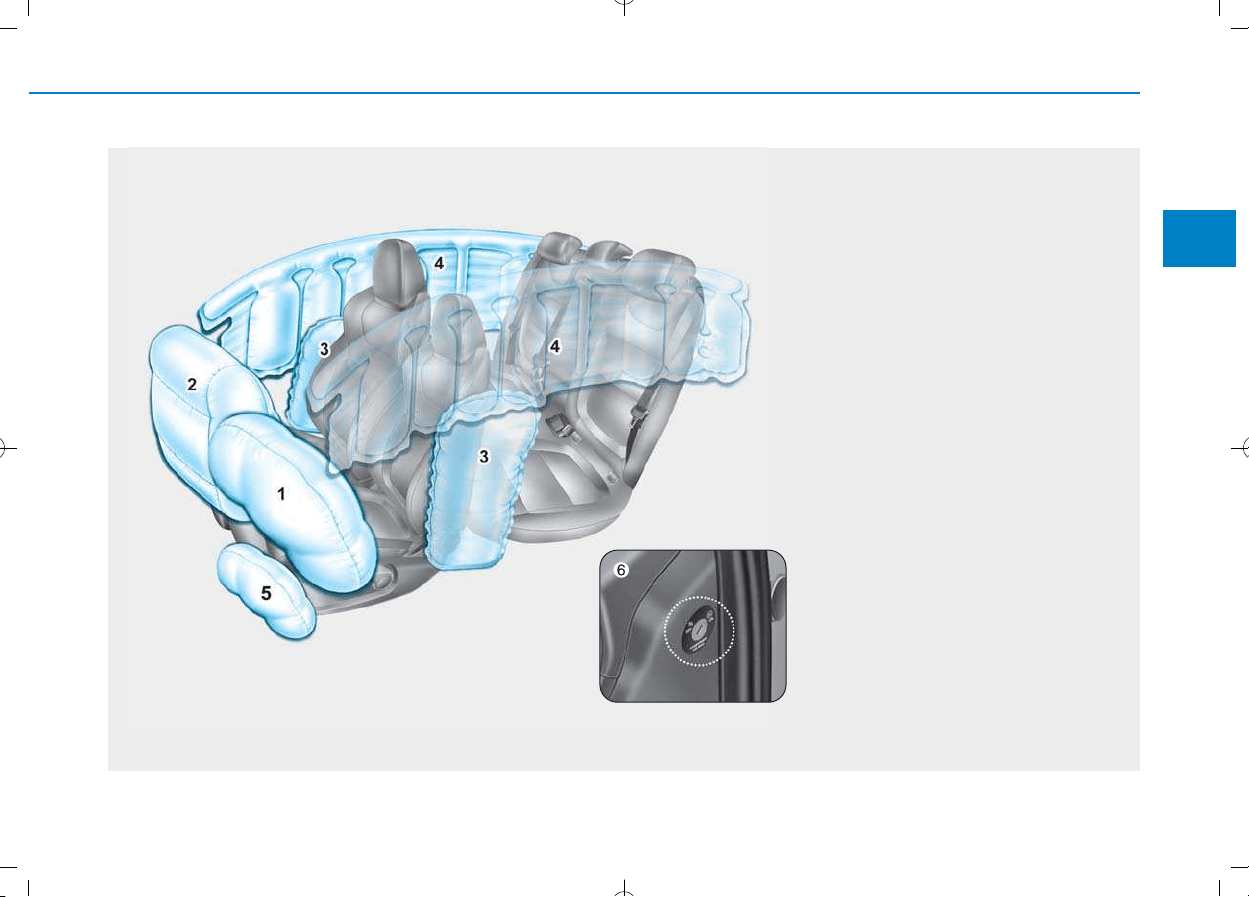
2-45
Safety system of your vehicle
2
AAIIRR BBAAGG -- SSUUPPPPLLEEMMEENNTTAALL RREESSTTRRAAIINNTT SSYYSSTTEEMM
OPDEN037032/OPDE036066
The actual air bags in the vehicle may differ from the illustration.
1. Driver’s front air bag
2. Passenger’s front air bag
3. Side air bag
4. Curtain air bag
5. Knee air bag*
6. Front passenger air bag ON/OFF switch
* : if equipped

2-46
Safety system of your vehicle
The vehicles are equipped with a
Supplemental Air Bag System for the
driver’s seat and front passenger’s
seats.
The front air bags are designed to
supplement the three-point seat
belts. For these air bags to provide
protection, the seat belts must be
worn at all times when driving.
You can be severely injured or killed
in an accident if you are not wearing
a seat belt. Air bags are designed to
supplement seat belts, but do not
replace them. Also, air bags are not
designed to deploy in every collision.
In some accidents, the seat belts are
the only restraint protecting you.
AIR BAG SAFETY PRECAUTIONS
ALWAYS use seat belts Child Restraint Systems - every trip, every
time, everyone! Even with air bags, you can be seriously injured or
killed in a collision if you are improperly belted or not wearing your
seat belt when the air bag inflates.
NEVER place a child in any Child Restraint System or booster seat in
the front passenger seat, unless the air bag is deactivated.
An inflating air bag could forcefully strike the infant or child causing
serious or fatal injuries.
ABC - Always Buckle Children under age 13 in the back seat. It is the
safest place for children of any age to ride. If a child age 13 or older
must be seated in the front seat, he or she must be properly belted
and the seat should be moved as far back as possible.
All occupants should sit upright with the seatback in an upright posi-
tion, centered on the seat cushion with their seat belt on, legs com-
fortably extended and their feet on the floor until the vehicle is parked
and the engine is turned off. If an occupant is out of position during
an accident, the rapidly deploying air bag may forcefully contact the
occupant causing serious or fatal injuries.
You and your passengers should never sit or lean unnecessarily
close to the air bags or lean against the door or center console.
Move your seat as far back as possible from front air bags, while still
maintaining control of the vehicle.
WARNING
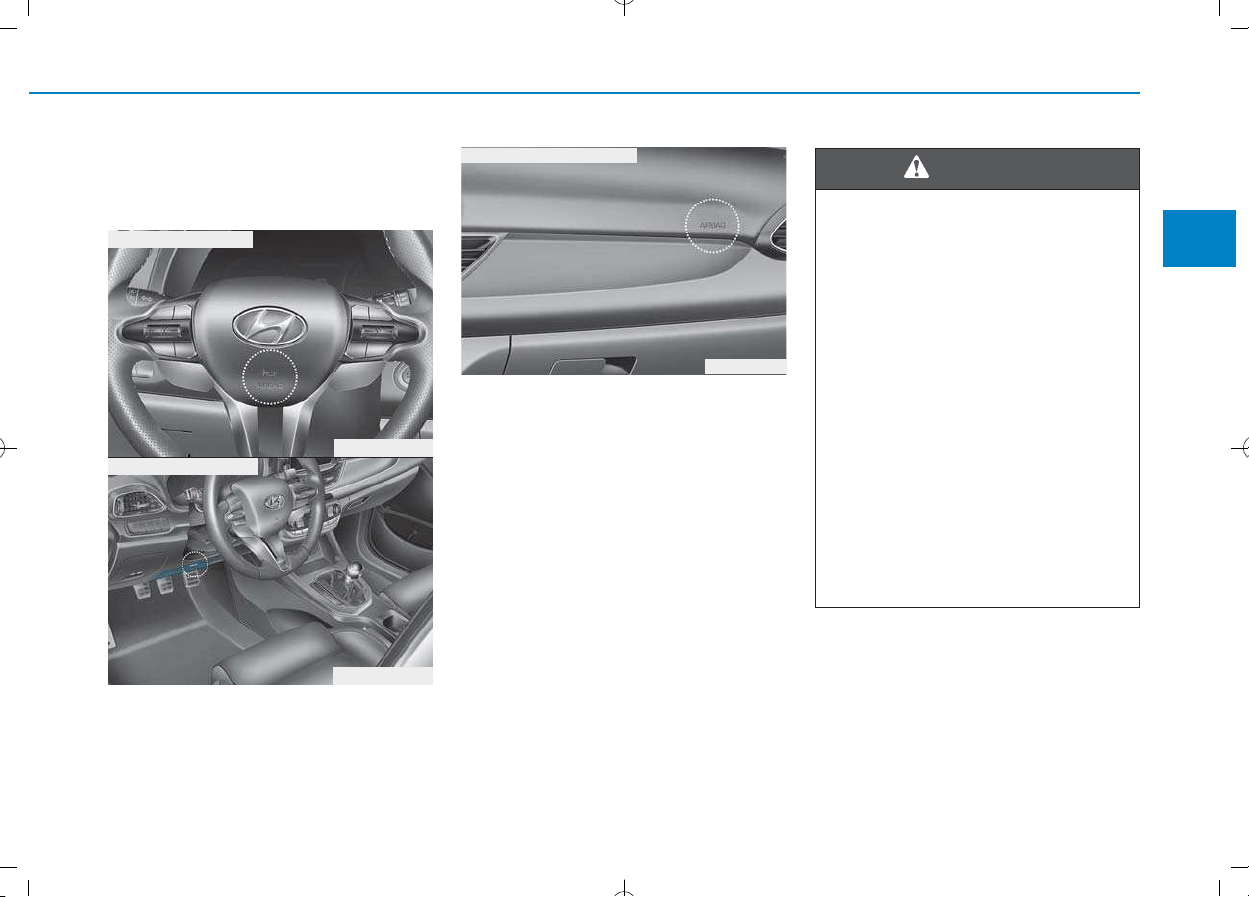
2-47
Safety system of your vehicle
2
Where are the air bags?
Driver’s and passenger’s front
air bags
Your vehicle is equipped with a
Supplemental Restraint System
(SRS) and lap/shoulder belts at both
the driver and passenger seating
positions.
The SRS consists of air bags which
are located in the center of the steer-
ing wheel, in the driver’s side lower
crash pad below the steering wheel,
and the passenger's side front panel
pad above the glove box.
The air bags are labeled with the let-
ters “AIR BAG” embossed on the pad
covers.
The purpose of the SRS is to provide
the vehicle's driver and front passen-
gers with additional protection than
that offered by the seat belt system
alone in case of a frontal impact of
sufficient severity.
To reduce the risk of serious
injury or death from inflating front
air bags, take the following pre-
cautions:
• Seat belts must be worn at all
times to help keep occupants
positioned properly.
• Move your seat as far back as
possible from front air bags,
while still maintaining control
of the vehicle.
• Never lean against the door or
center console.
• Do not allow the front passen-
ger to place their feet or legs on
the dashboard.
(Continued)
WARNING
OPDEN037033
OPDEN037034
■ Driver’s knee air bag
OPD036041
■ Passenger’s front air bag
■ Driver’s front air bag
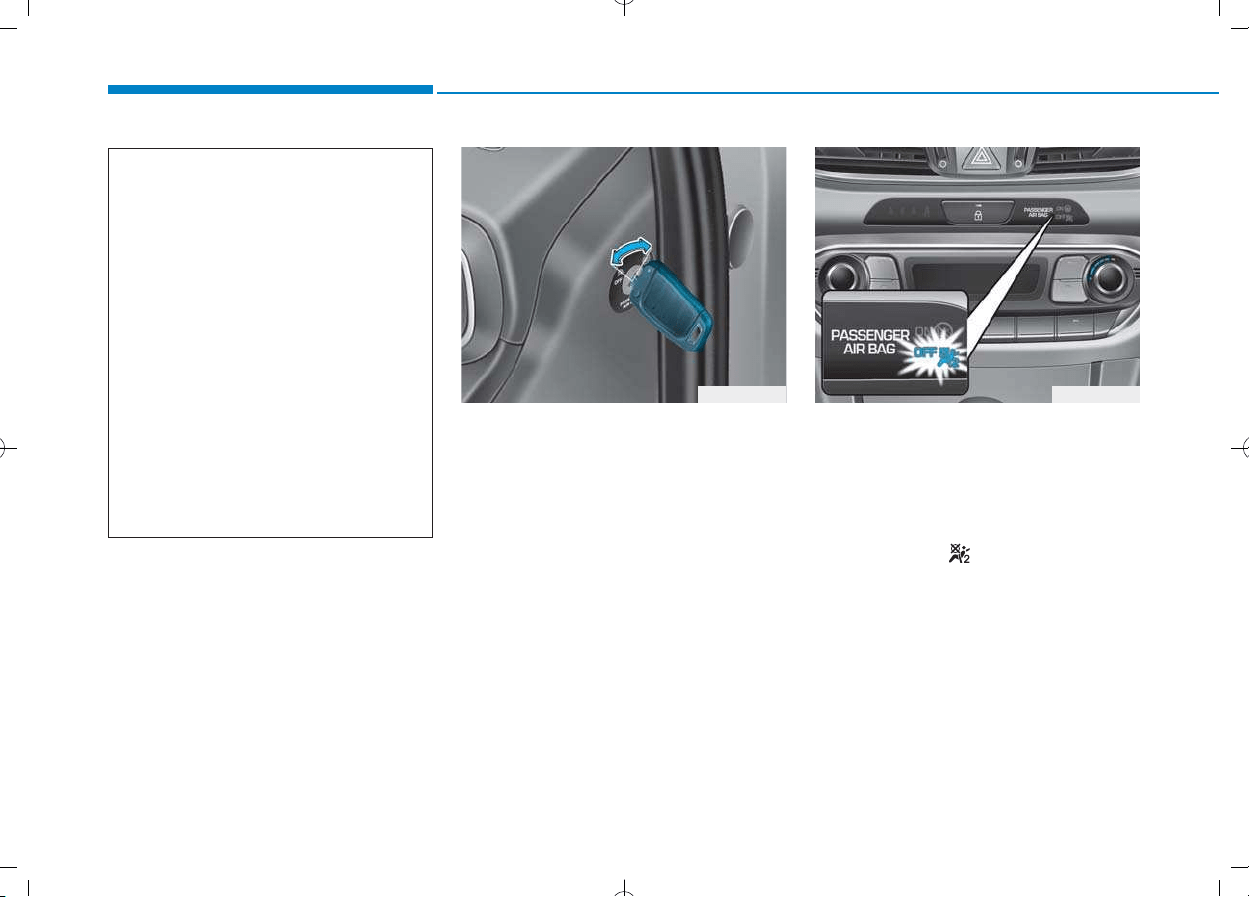
2-48
Safety system of your vehicle
Passenger’s front air bag ON/OFF
switch
The purpose of the switch is to dis-
able the passenger’s front air bag in
order to transport occupants who are
at increased risk for air bag-related
injury due to age, size, or medical
condition.
To deactivate the passenger’s front
air bag:
Insert the key or a similar rigid device
into the passenger’s front air bag
ON/OFF switch and turn it to the
OFF position. The passenger air bag
OFF indicator ( ) will illuminate and
stay on until the passenger’s front air
bag is reactivated.
OPDE036064 OPDE036036
(Continued)
• No objects (such as crash pad
cover, cellular phone holder,
cup holder, perfume or stickers)
should be placed over or near
the air bag modules on the
steering wheel, instrument
panel, windshield glass, and
the front passenger's panel
above the glove box. Such
objects could cause harm if the
vehicle is in a crash severe
enough to cause the air bags to
deploy.
• Do not attach any objects on
the front windshield and inside
mirror.
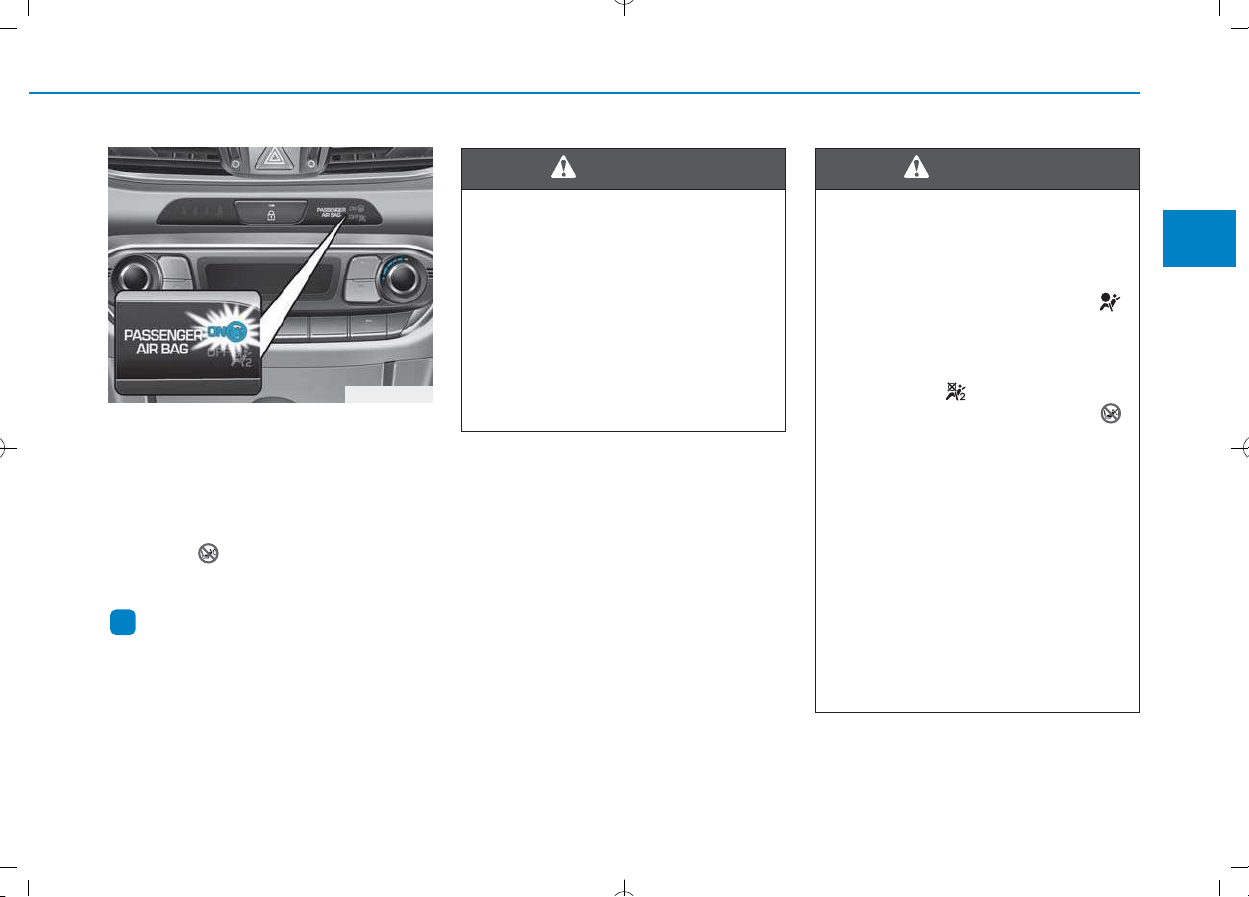
2-49
Safety system of your vehicle
2
To reactivate the passenger’s front
air bag:
Insert the key or a similar rigid device
into the passenger’s front air bag
ON/OFF switch and turn it to the ON
position. The passenger air bag ON
indicator ( ) will illuminate and stay
on for 60 seconds.
Information
The passenger’s front air bag ON/OFF
indicator illuminates for about 4 sec-
onds after the ignition switch is placed
in the ON position.
i
Never allow an adult passenger
to ride in the front passenger
seat when the passenger air
bag OFF indicator is illuminat-
ed. During a collision, the air
bag will not inflate if the indica-
tor is illuminated. Turn on the
passenger’s front air bag or
have your passenger move to
the rear seat.
WARNING
If the passenger’s front air bag
ON/OFF switch malfunctions,
the following conditions may
occur:
• The air bag warning light ( )
on the instrument cluster will
illuminate.
• The passenger air bag OFF
indicator ( ) will not illumi-
nate and the ON indicator ( )
will come on and go off after
approximately 60 seconds.
The passenger’s front air bag
will inflate in a frontal impact
even though the passenger’s
front air bag ON/OFF switch is
set to the OFF position.
• We recommend that an author-
ized HYUNDAI dealer inspect
the passenger’s front air bag
ON/OFF switch and the SRS air
bag system as soon as possi-
ble.
WARNING
OPDE036065
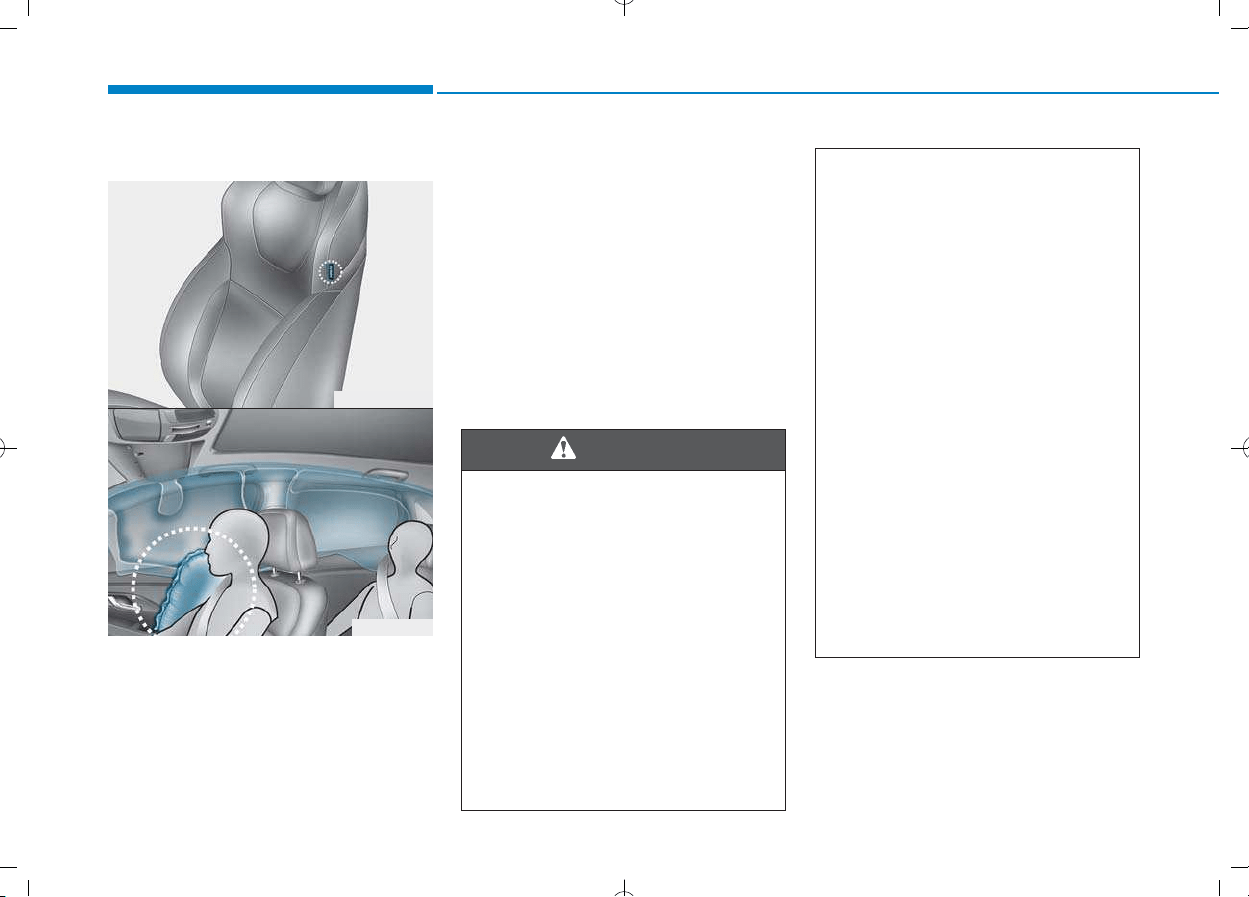
2-50
Safety system of your vehicle
Side air bags
Your vehicle is equipped with a side
air bag in each front seat. The pur-
pose of the air bag is to provide the
vehicle’s driver and the front passen-
ger with additional protection than
that offered by the seat belt alone.
The side air bags are designed to
deploy during certain side impact col-
lisions, depending on the crash sever-
ity, angle, speed and point of impact.
The side air bags on both sides of
the vehicle are designed to deploy
when a rollover is detected by a
rollover sensor. (if equipped with
rollover sensor)
The side air bags are not designed to
deploy in all side impact or rollover
situations.
(Continued)
• Hold the steering wheel at the 9
o’clock and 3 o’clock positions,
to minimize the risk of injuries
to your hands and arms.
• Do not use any accessory
seat covers.This could reduce
or prevent the effectiveness
of the system.
• Do not hang other objects
except clothes. In an accident
it may cause vehicle damage
or personal injury especially
when air bag is inflated.
• Do not place any objects over
the air bag or between the air
bag and yourself. Also, do not
attach any objects around the
area the air bag inflates such
as the door, side door glass,
front and rear pillar.
(Continued)
To reduce the risk of serious
injury or death from an inflating
side air bag, take the following
precautions:
• Seat belts must be worn at all
times to help keep occupants
positioned properly.
• Do not allow passengers to
lean their heads or bodies onto
doors, put their arms on the
doors, stretch their arms out of
the window, or place objects
between the doors and seats.
(Continued)
WARNING
OPDEN037042
OPD036043
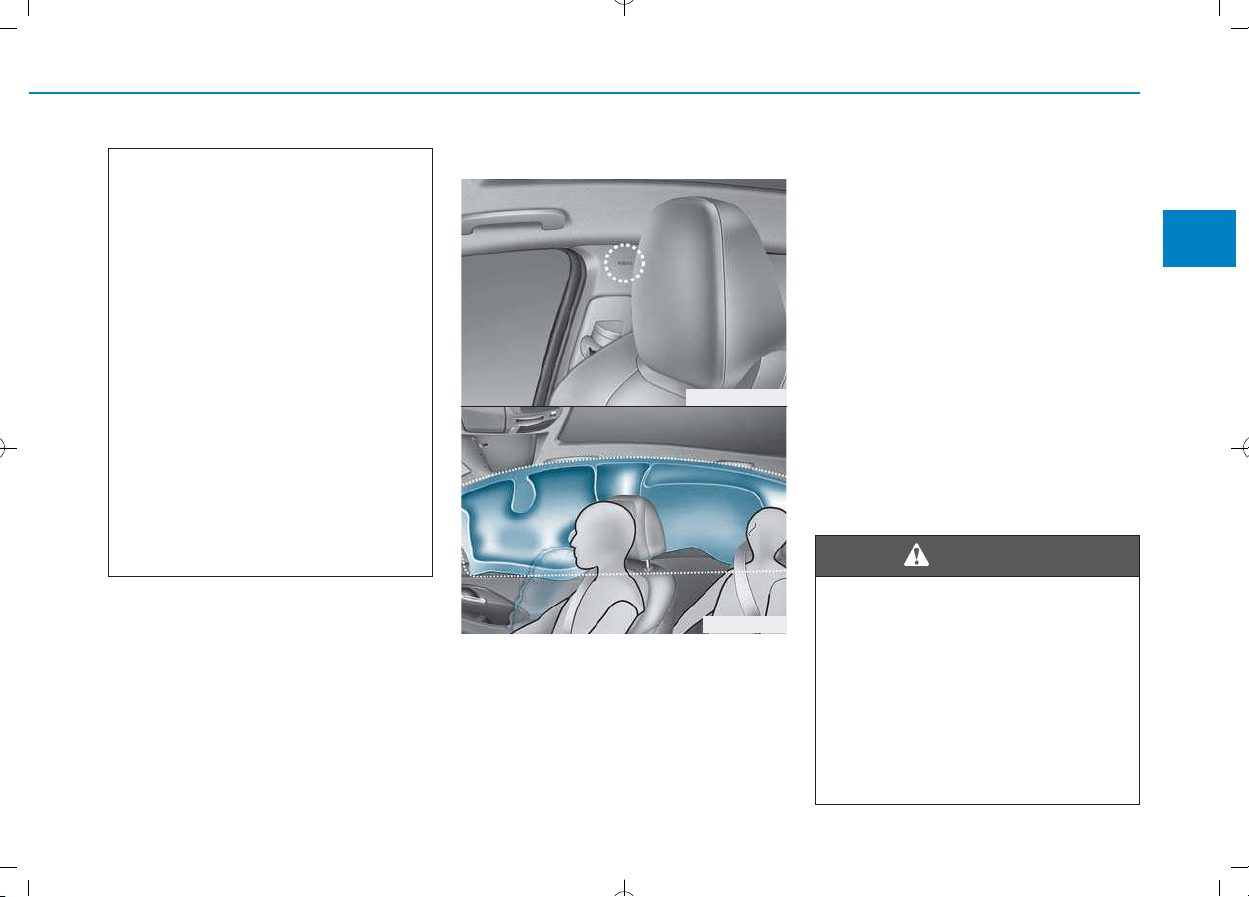
2-51
Safety system of your vehicle
2
Curtain air bags
Curtain air bags are located along
both sides of the roof rails above the
front and rear doors.
They are designed to help protect
the heads of the front seat occupants
and the rear outboard seat occu-
pants in certain side impact colli-
sions.
The curtain air bags are designed to
deploy during certain side impact
collisions, depending on the crash
severity, angle, speed and impact.
The curtain air bags on both sides of
the vehicle are designed to deploy
when a rollover is detected by a
rollover sensor. (if equipped with
rollover sensor)
The curtain air bags are not
designed to deploy in all side impact
or rollover situations.
OPDEN037044
OPD036045
(Continued)
• Do not place any objects
between the door and the
seat. They may become dan-
gerous projectiles if the side
air bag inflates.
• Do not install any accessories
on the side or near the side air
bags.
• Do not cause impact to the
doors when the ignition switch
is in the ON position as this
may cause the side air bags to
inflate.
• If the seat or seat cover is
damaged, we recommend that
the system be serviced by an
authorized HYUNDAI dealer.
To reduce the risk of serious
injury or death from an inflating
curtain air bag, take the follow-
ing precautions:
• All seat occupants must wear
seat belts at all times to help
keep occupants positioned
properly.
(Continued)
WARNING
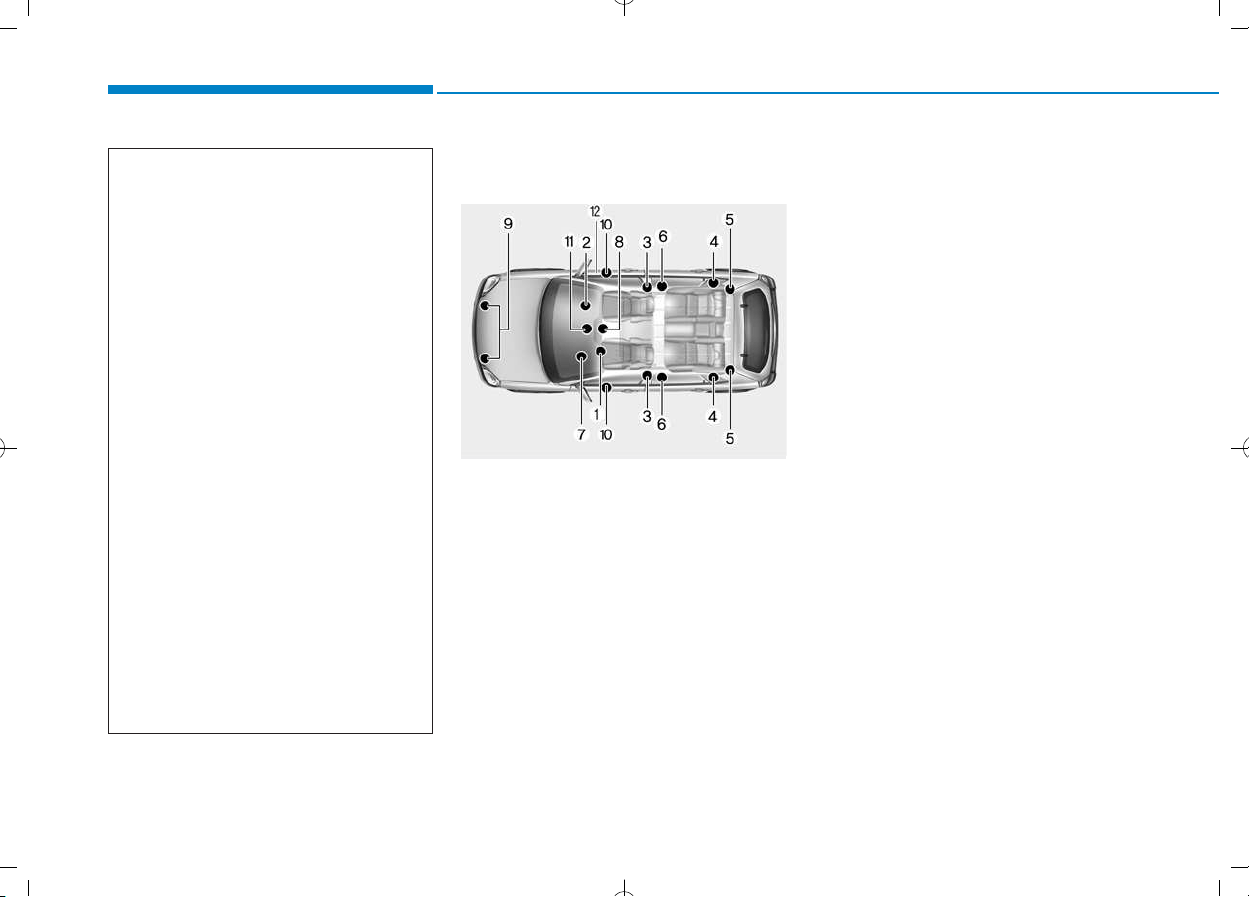
2-52
Safety system of your vehicle
How does the air bags system
operate?
The SRS consists of the following
components:
(1) Driver's front air bag module/
Driver’s knee air bag module
(2) Passenger's front air bag module
(3) Side air bag modules/
Side impact sensors
(4) Curtain air bag modules
(5) Rear Retractor pre-tensioner
(if equipped)
(6) Retractor pre-tensioner assemblies
(7) Air bag warning light
(8) SRS control module (SRSCM)/
Rollover sensor
(9) Front impact sensors
(10) Side pressure sensors
(11) Passenger’s front air bag
ON/OFF indicator
(front passenger's seat only)
(12) Passenger’s front air bag
ON/OFF switch
The SRSCM continually monitors all
SRS components while the ignition
switch is ON to determine if a crash
impact is severe enough to require
air bag deployment or pre-tensioner
seat belt deployment.
OPDE037063
(Continued)
• Properly secure Child Restraint
System as far away from the
door as possible.
• Do not place any objects over
the air bag. Also, do not attach
any objects around the area the
air bag inflates such as the
door, side door glass, front and
rear pillar, roof side rail.
• Do not hang other objects
except clothes, especially
hard or breakable objects.
In an accident, it may cause
vehicle damage or personal
injury.
• Do not allow passengers to
lean their heads or bodies
onto doors, put their arms on
the doors, stretch their arms
out of the window, or place
objects between the doors
and seats.
• Do not open or repair the side
curtain air bags.

2-53
Safety system of your vehicle
2
SRS warning light
The SRS (Supplement Restraint
System) air bag warning light on the
instrument panel displays the air bag
symbol depicted in the illustration.
The system checks the air bag elec-
trical system for malfunctions. The
light indicates that there is a potential
problem with your air bag system,
which could include your side and/or
curtain air bags used for rollover pro-
tection (if equipped with rollover sen-
sor).
During a moderate to severe frontal
collision, sensors will detect the vehi-
cle’s rapid deceleration. If the rate of
deceleration is high enough, the con-
trol unit will inflate the front air bags,
at the time and with the force needed.
The front air bags help protect the driv-
er and front passenger by responding
to frontal impacts in which seat belts
alone cannot provide adequate
restraint. When needed, the side air
bags help provide protection in the
event of a side impact or rollover by
supporting the side upper body area.
• Air bags are activated (able to inflate
if necessary) only when the ignition
switch is in the ON position.
• Air bags inflate in the event of certain
frontal or side collisions to help pro-
tect the occupants from serious
physical injury.
• There is no single speed at which the
air bags will inflate. Generally, air bags
are designed to inflate based upon
the severity of a collision and its direc-
tion. These two factors determine
whether the sensors produce an elec-
tronic deployment/inflation signal.
If your SRS malfunctions, the
air bag may not inflate properly
during an accident increasing
the risk of serious injury or
death.
If any of the following condi-
tions occur, your SRS is mal-
functioning:
• The light does not turn on for
approximately six seconds
when the ignition switch is in
the ON position.
• The light stays on after illumi-
nating for approximately six
seconds.
• The light comes on while the
vehicle is in motion.
• The light blinks when the
engine is running.
We recommend that an author-
ized HYUNDAI dealer inspect the
SRS as soon as possible if any
of these conditions occur.
WARNING

2-54
Safety system of your vehicle
• Air bag deployment depends on a
number of factors including vehicle
speed, angles of impact and the
density and stiffness of the vehicles
or objects which your vehicle
impacts during a collision. The
determining factors are not limited
to those mentioned above.
• The front air bags will completely
inflate and deflate in an instant. It is
virtually impossible for you to see
the air bags inflate during an acci-
dent. It is much more likely that you
will simply see the deflated air bags
hanging out of their storage com-
partments after the collision.
• In addition to inflating in serious
side collisions, vehicles equipped
with a rollover sensor, side and/or
curtain air bags will inflate if the
sensing system detects a rollover.
When a rollover is detected, curtain
air bags will remain inflated longer
to help provide protection from ejec-
tion, especially when used in con-
junction with the seat belts. (if
equipped with a rollover sensor)
• To help provide protection, the air
bags must inflate rapidly. The speed
of air bag inflation is a consequence
of extremely short time in which to
inflate the air bag between the
occupant and the vehicle structures
before the occupant impacts those
structures. This speed of inflation
reduces the risk of serious or life-
threatening injuries and is thus a
necessary part of air bag design.
However, the rapid air bag inflation
can also cause injuries which can
include facial abrasions, bruises
and broken bones because the
inflation speed also causes the air
bags to expand with a great deal of
force.
• There are even circumstances
under which contact with the air
bag can cause fatal injuries, espe-
cially if the occupant is positioned
excessively close to the air bag.
You can take steps to reduce the risk
of being injured by an inflating air
bag. The greatest risk is sitting too
close to the air bag. An air bag needs
space to inflate. It is recommended
that drivers sit as far as possible
between the center of the steering
wheel and the chest while still main-
taining control of the vehicle.
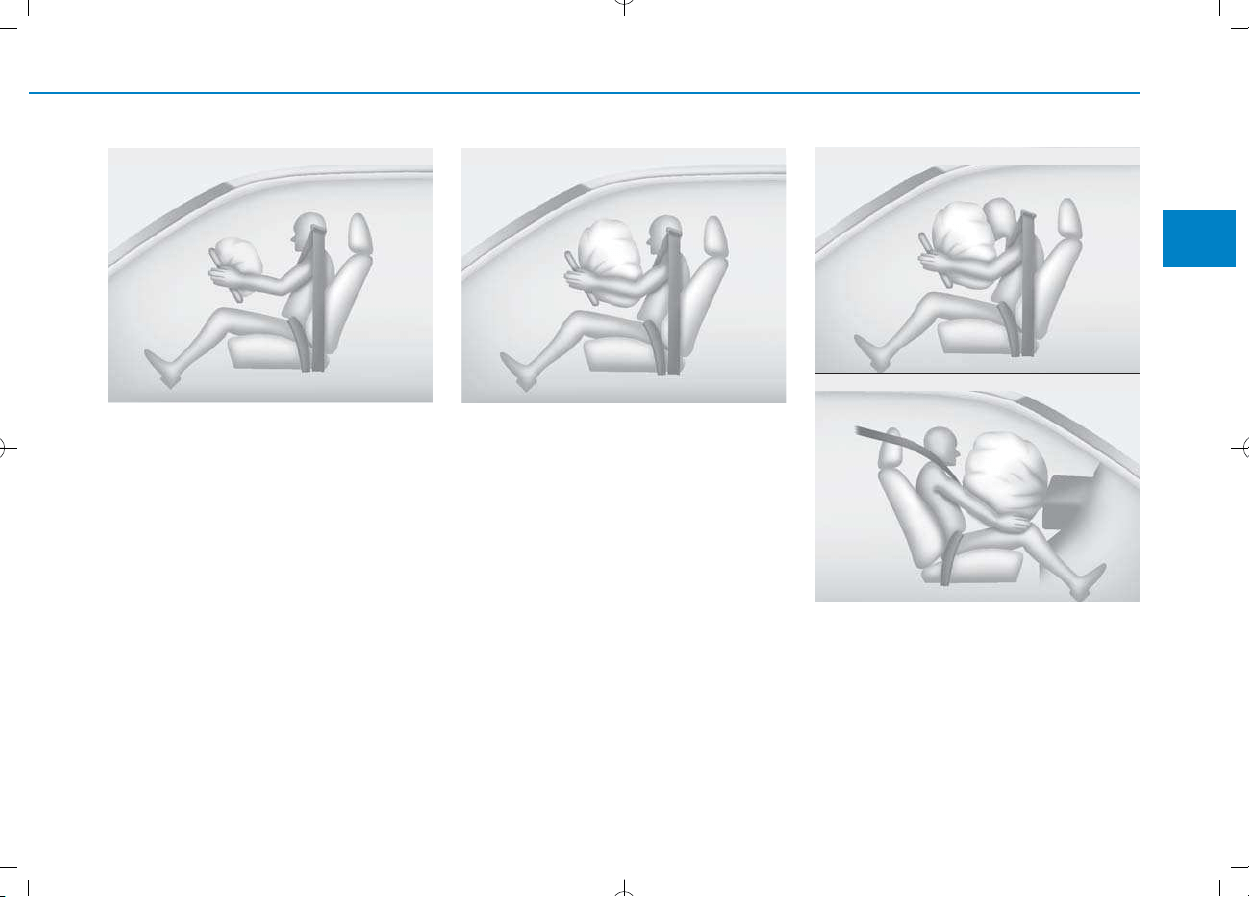
2-55
Safety system of your vehicle
2
When the SRSCM detects a suffi-
ciently severe impact to the front of
the vehicle, it will automatically
deploy the front air bags.
Upon deployment, tear seams mold-
ed directly into the pad covers will
separate under pressure from the
expansion of the air bags. Further
opening of the covers allows full
inflation of the air bags.
A fully inflated air bag, in combina-
tion with a properly worn seat belt,
slows the driver's or the front pas-
senger's forward motion, reducing
the risk of head and chest injury.
After complete inflation, the air bag
immediately starts deflating, enabling
the driver to maintain forward visibili-
ty and the ability to steer or operate
other controls.
OLMB033055
■ Driver’s front air bag (2)
OLMB033056
■ Driver’s front air bag (3)
OLMB033057
■ Passenger’s front air bag
OLMB033054
■ Driver’s front air bag (1)

2-56
Safety system of your vehicle
What to expect after an air bag
inflates
After a frontal or side air bag inflates,
it will deflate very quickly. Air bag
inflation will not prevent the driver
from seeing out of the windshield or
being able to steer. Curtain air bags
may remain partially inflated for
some time after they deploy.
Noise and smoke from inflating
air bag
When the air bags inflate, they make
a loud noise and may produce smoke
and powder in the air inside of the
vehicle. This is normal and is a result
of the ignition of the air bag inflator.
After the air bag inflates, you may feel
substantial discomfort in breathing
because of the contact of your chest
with both the seat belt and the air
bag, as well as from breathing the
smoke and powder. The powder may
aggravate asthma for some people. If
you experience breathing problems
after an air bag deployment, seek
medical attention immediately.
Though the smoke and powder are
nontoxic, they may cause irritation to
the skin, eyes, nose, throat, etc. If this
is the case, wash and rinse with cold
water immediately and seek medical
attention if the symptoms persist.
After an air bag inflates, take
the following precautions:
• Open your windows and doors
as soon as possible after
impact to reduce prolonged
exposure to the smoke and
powder released by the inflat-
ing air bag.
• Do not touch the air bag stor-
age area’s internal compo-
nents immediately after an air
bag has inflated. The parts
that come into contact with an
inflating air bag may be very
hot.
• Always wash exposed skin
areas thoroughly with cold
water and mild soap.
• We recommend that an author-
ized HYUNDAI dealer replace
the air bag immediately after
deployment. Air bags are
designed to be used only once.
WARNING
To prevent objects from becom-
ing dangerous projectiles when
the passenger's air bag inflates:
• Do not install or place any
objects (drink holder, CD hold-
er, stickers, etc.) on the front
passenger's panel above the
glove box where the passen-
ger's air bag is located.
• Do not install a container of
liquid air freshener near the
instrument cluster or on the
instrument panel surface.
WARNING
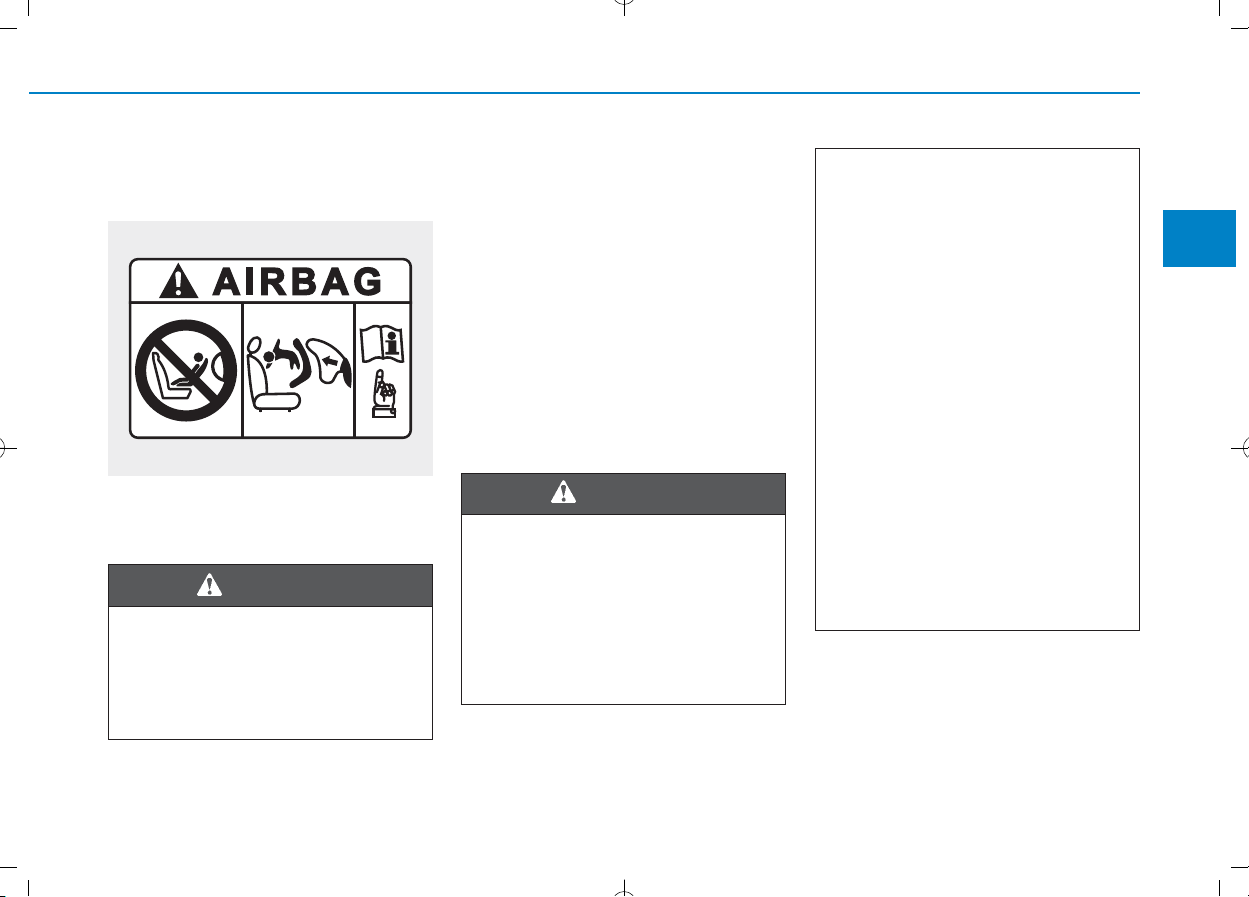
2-57
Safety system of your vehicle
2
Do not install a Child Restraint
System on the front passenger
seat
Never install a Child Restraint System
in the front passenger seat, unless the
air bag is deactivated
Why didn't my air bag go off in
a collision?
There are certain types of accidents
in which the air bag would not be
expected to provide additional protec-
tion. These include rear impacts, sec-
ond or third collisions in multiple
impact accidents, as well as low
speed impacts. Damage to the vehicle
indicates a collision energy absorp-
tion, and is not an indicator of whether
or not an air bag should have inflated.
Air bag collision sensors
OYDESA2042
NEVER use a rearward facing
Child Restraint on a seat pro-
tected by an ACTIVE AIRBAG in
front of it, DEATH or SERIOUS
INJURY to the CHILD can occur.
WARNING
To reduce the risk of an air bag
deploying unexpectedly and
causing serious injury or death:
•
Do not hit or allow any objects to
impact the locations where air
bags or sensors are installed.
(Continued)
WARNING
(Continued)
• Do not perform maintenance
on or around the air bag sen-
sors. If the location or angle of
the sensors is altered, the air
bags may deploy when they
should not or may not deploy
when they should.
• Do not install bumper guards or
replace the bumper with a non-
genuine part.This may adverse-
ly affect the collision and air
bag deployment performance.
• Place the ignition switch to
the LOCK/OFF or ACC posi-
tion, when the vehicle is being
towed to prevent inadvertent
air bag deployment.
• We recommend that all air bag
repairs are conducted by an
authorized HYUNDAI dealer.
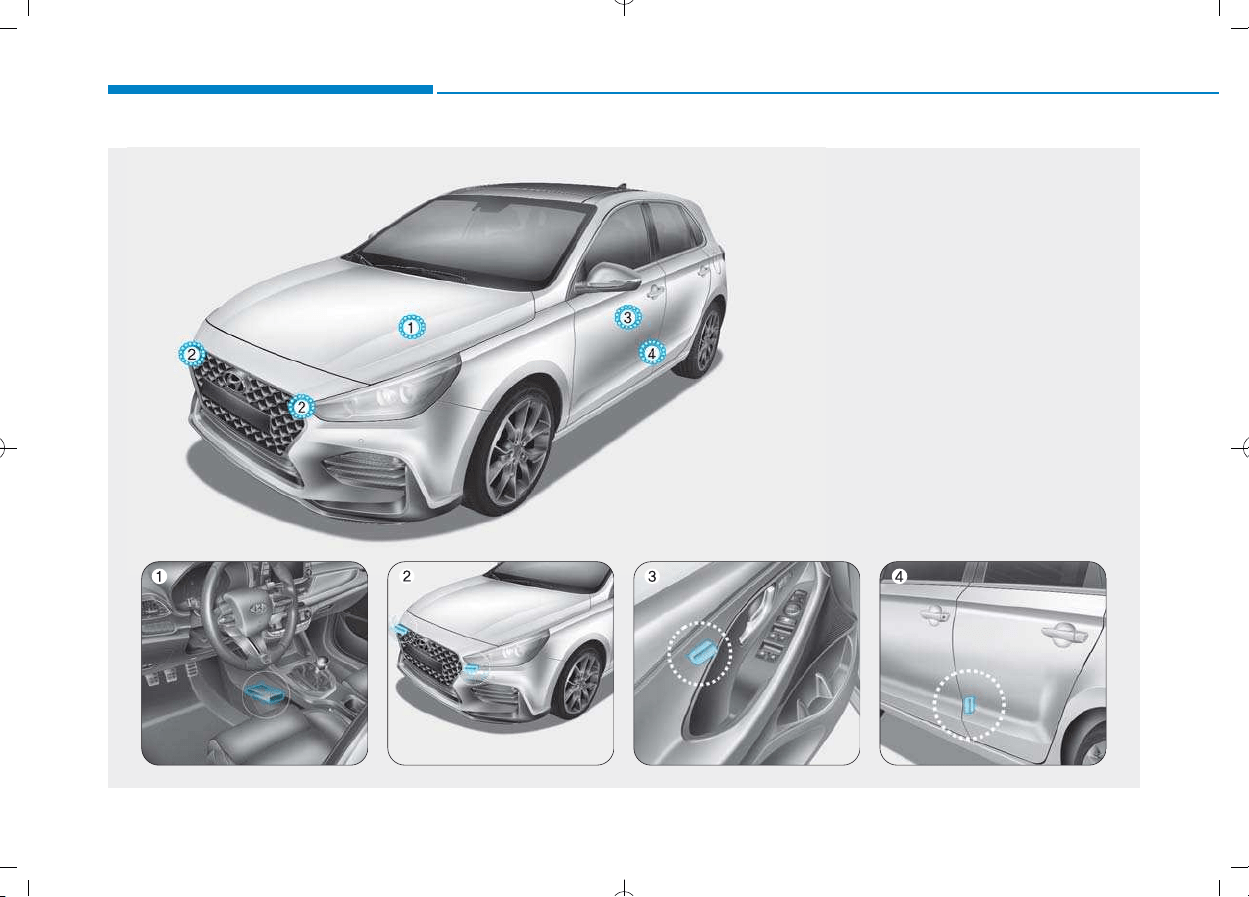
2-58
Safety system of your vehicle
1. SRS control module
2. Front impact sensor
3. Side pressure sensor (front)*
4. Side impact sensor (rear)*
* : if equipped
OPDEN037046/OPDEN037047/OPDEN037048/OPD036049/OPD036050
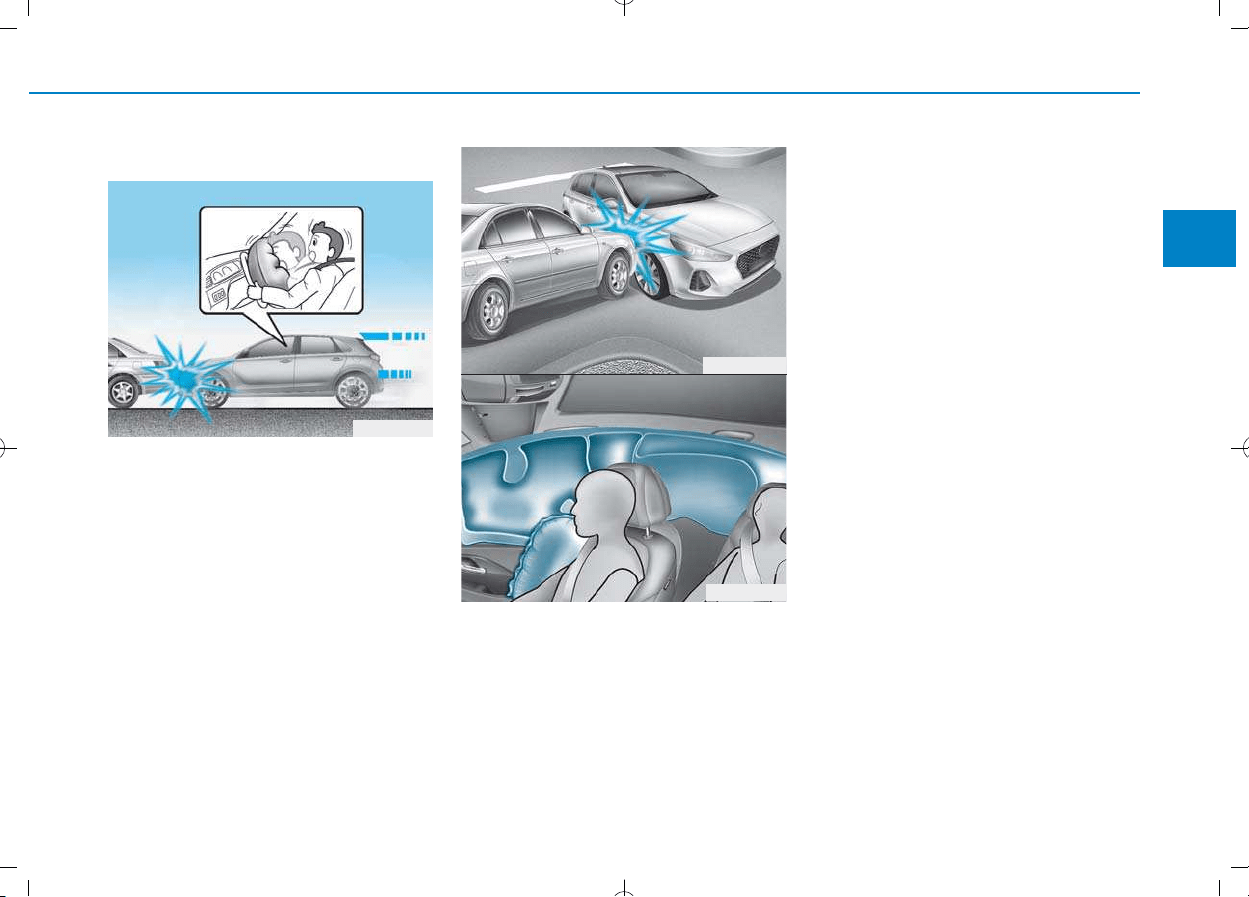
2-59
Safety system of your vehicle
2
Air bag inflation conditions
Front air bags
Front air bags are designed to inflate
in a frontal collision depending on
the severity, speed or angles of
impact of the front collision.
Side and curtain air bags
Side and curtain air bags are
designed to inflate when an impact is
detected by side collision sensors
depending on the severity, speed or
angles of impact resulting from a
side impact collision.
Although the driver’s and front pas-
senger’s air bags are designed to
inflate in frontal collisions, they also
may inflate in other types of colli-
sions if the front impact sensors
detect a sufficient impact. Side and
curtain air bags are designed to
inflate in side impact collisions, but
they may inflate in other collisions if
the side impact sensors detect a suf-
ficient impact.
Also, the side and curtain air bags are
designed to inflate when a rollover is
detected by a rollover sensor. (if
equipped with rollover sensor)
If the vehicle chassis is impacted by
bumps or objects on unimproved
roads, the air bags may deploy. Drive
carefully on unimproved roads or on
surfaces not designed for vehicle
traffic to prevent unintended air bag
deployment.
OPD036052
OPD036053
OPD036051
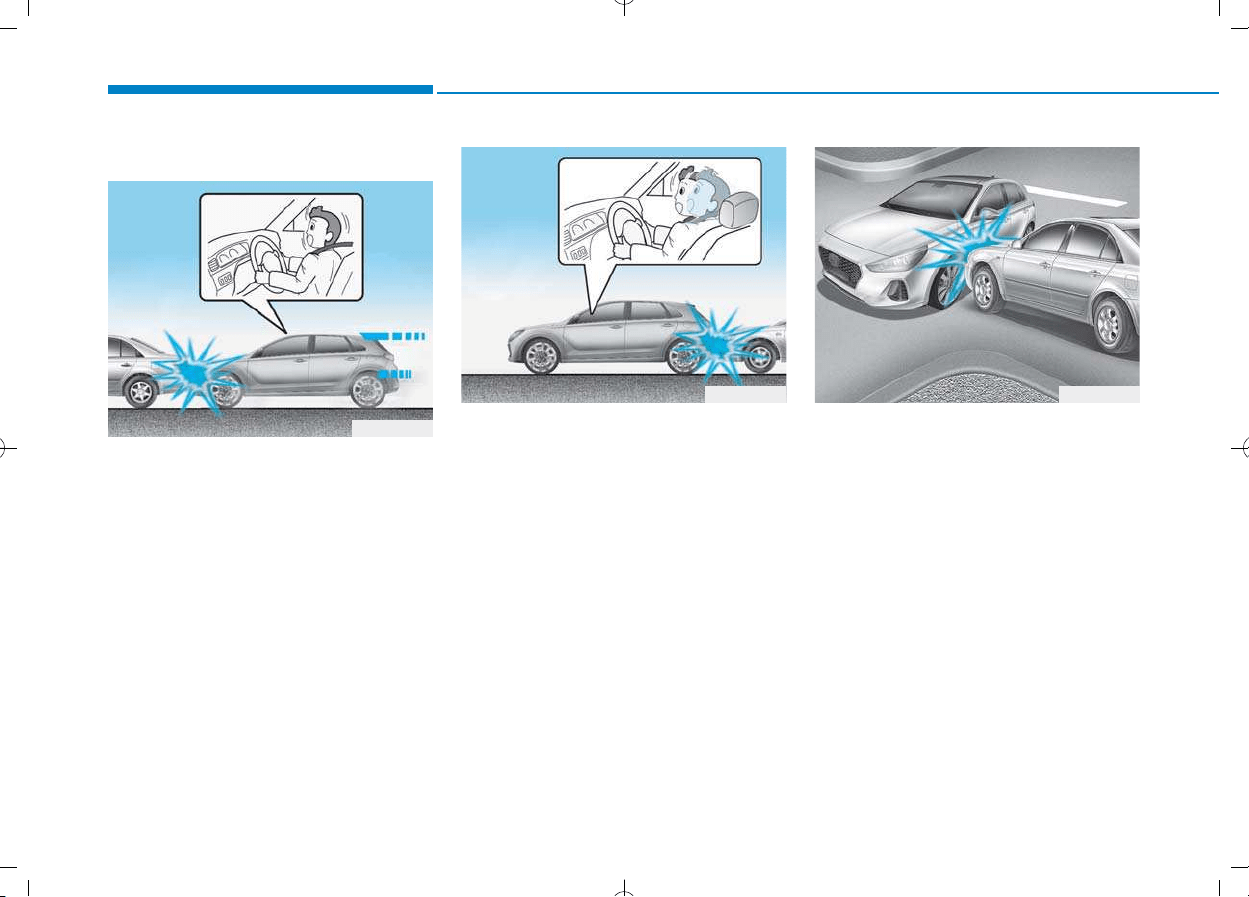
2-60
Safety system of your vehicle
Air bag non-inflation conditions
In certain low-speed collisions the air
bags may not deploy. The air bags
are designed not to deploy in such
cases because they may not provide
benefits beyond the protection of the
seat belts.
Front air bags are not designed to
inflate in rear collisions, because
occupants are moved backward by
the force of the impact. In this case,
inflated air bags would not provide
any additional benefit.
Front air bags may not inflate in side
impact collisions, because occupants
move in the direction of the collision,
and thus in side impacts, front air bag
deployment would not provide addi-
tional occupant protection.
However, side and curtain air bags
may inflate depending on the severity,
vehicle speed and angles of impact.
OPD036055
OPD036054
OPD036056
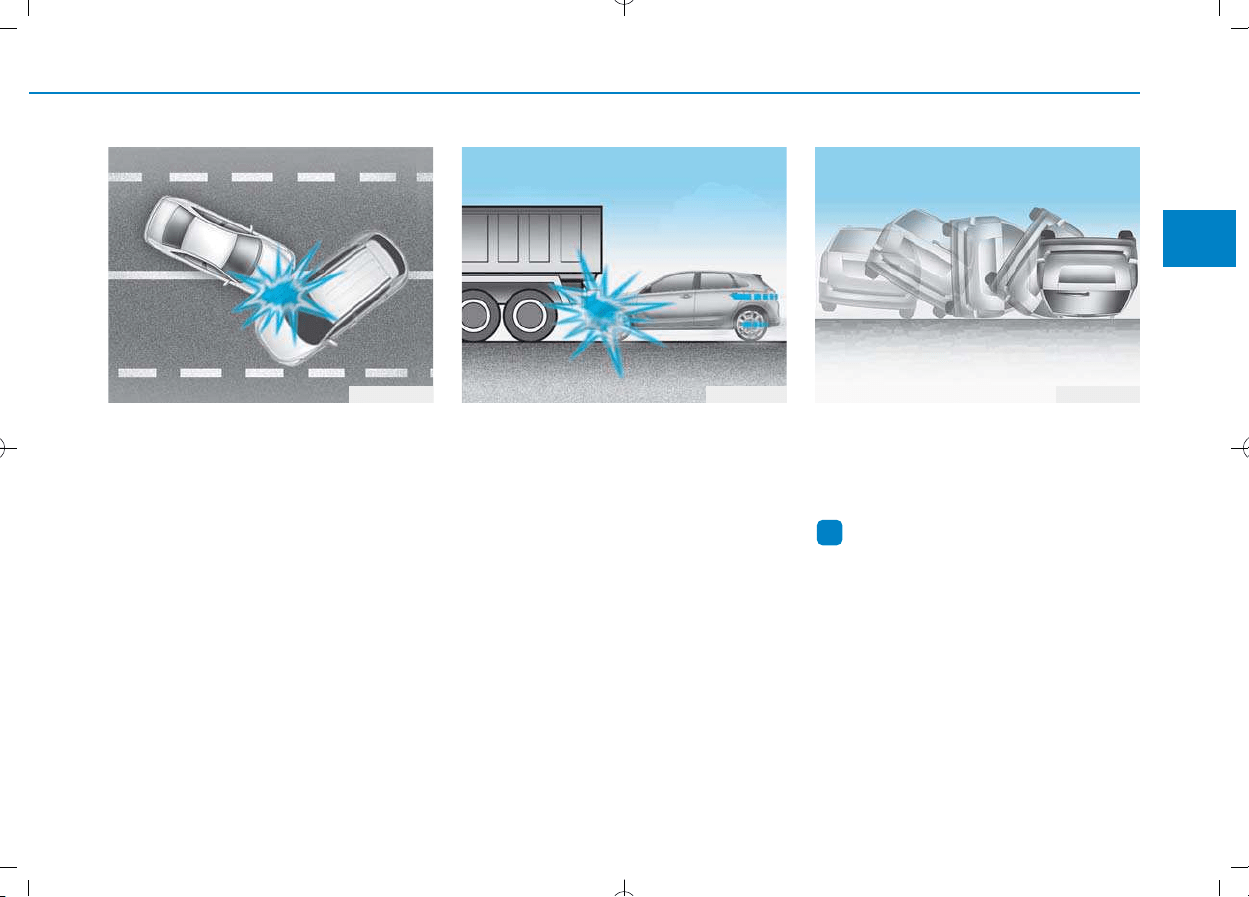
2-61
Safety system of your vehicle
2
In an angled collision, the force of
impact may direct the occupants in a
direction where the air bags would
not be able to provide any additional
benefit, and thus the sensors may
not deploy any air bags.
Just before impact, drivers often
brake heavily. Such heavy braking
lowers the front portion of the vehicle
causing it to “ride” under a vehicle
with a higher ground clearance. Air
bags may not inflate in this "under-
ride" situation because deceleration
forces that are detected by sensors
may be significantly reduced by such
“underride” collisions.
Front air bags may not inflate in
rollover accidents because front air
bag deployment would not provide
additional occupant protection.
Information
• Vehicles equipped with rollover sensor
The side and curtain air bags may
inflate in a rollover situation, when it is
detected by the rollover sensor.
• Vehicles not equipped with rollover
sensor
The side and/or curtain air bags may
inflate when the vehicle is rolled over
by a side impact collision, if the vehicle
is equipped with side and/or curtain
air bags.
i
OTL035069 OPD036057 OTL035068
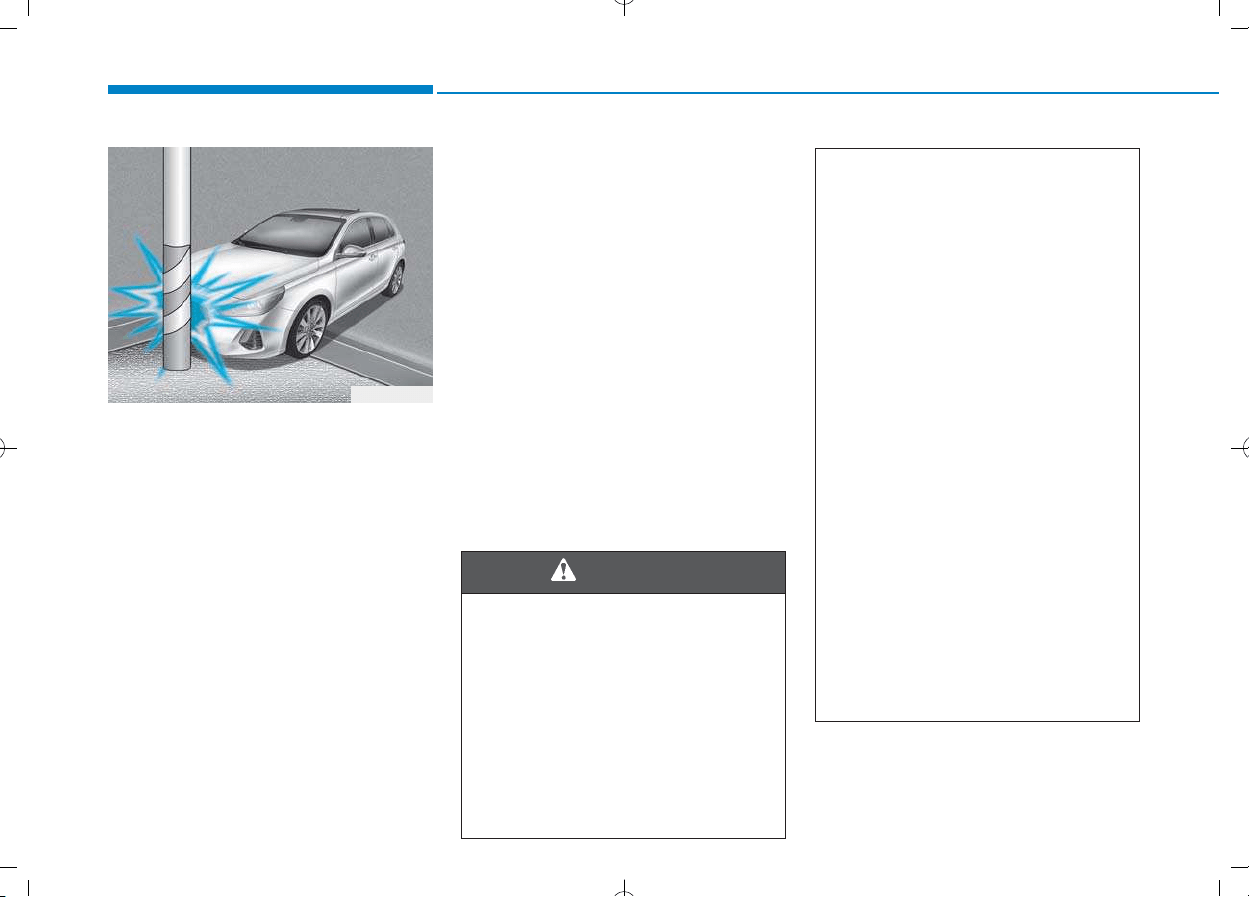
2-62
Safety system of your vehicle
Air bags may not inflate if the vehicle
collides with objects such as utility
poles or trees, where the point of
impact is concentrated and the colli-
sion energy is absorbed by the vehi-
cle structure.
SRS care
The SRS is virtually maintenance-
free and there are no parts you can
safely service by yourself. If the SRS
air bag warning light does not illumi-
nate when the ignition switch is in the
ON position, or continuously remains
on, we recommend that the system
be immediately inspected by an
authorized HYUNDAI dealer.
We recommend any work on the SRS
system, such as removing, installing,
repairing, or any work on the steering
wheel, the front passenger's panel,
front seats and roof rails be performed
by an authorized HYUNDAI dealer.
Improper handling of the SRS system
may result in serious personal injury.
OPD036058
To reduce the risk of serious
injury or death take the follow-
ing precautions:
• Do not attempt to modify or
disconnect the SRS compo-
nents or wiring, including the
addition of any kind of badges
to the pad covers or modifica-
tions to the body structure.
(Continued)
WARNING
(Continued)
• Do not place objects over or
near the air bag modules on the
steering wheel, instrument
panel, and the front passenger's
panel above the glove box.
• Clean the air bag pad covers
with a soft cloth moistened
with plain water. Solvents or
cleaners could adversely affect
the air bag covers and proper
deployment of the system.
• We recommend that inflated
air bags be replaced by an
authorized HYUNDAI dealer.
• If components of the air bag
system must be discarded, or if
the vehicle must be scrapped,
certain safety precautions must
be observed. Consult an author-
ized HYUNDAI dealer for the
necess
ary information. Failure
to follow these precautions
could increase the risk of per-
sonal injury.

2-63
Safety system of your vehicle
2
Additional safety precautions
Passengers should not move out of
or change seats while the vehicle is
moving. A passenger who is not
wearing a seat belt during a crash or
emergency stop can be thrown
against the inside of the vehicle,
against other occupants, or be ejected
from the vehicle.
Do not use any accessories on seat
belts. Devices claiming to improve
occupant comfort or reposition the
seat belt can reduce the protection
provided by the seat belt and increase
the chance of serious injury in a crash.
Do not modify the front seats.
Modification of the front seats could
interfere with the operation of the sup-
plemental restraint system sensing
components or side air bags.
Do not place items under the front
seats. Placing items under the front
seats could interfere with the opera-
tion of the supplemental restraint sys-
tem sensing components and wiring
harnesses.
Do not cause impact to the doors.
Impact to the doors when the ignition
switch is in the ON position may cause
the air bags to inflate.
Adding equipment to or modify-
ing your air bag equipped vehicle
If you modify your vehicle by changing
your vehicle's frame, bumper system,
front end or side sheet metal or ride
height, this may affect the operation of
your vehicle's air bag system.
Air bag warning labels
Air bag warning labels are attached
to alert the passengers of potential
risks of the air bag system.
Be sure to read all of the information
about the air bags that are installed on
your vehicle in this Owner’s Manual.
OAD035053

Convenient features of your vehicle
Accessing your vehicle .........................................3-3
Remote key .......................................................................3-3
Smart key ...........................................................................3-6
Immobilizer system ........................................................3-10
Door locks.............................................................3-11
Operating door locks from outside the vehicle ......3-11
Operating door locks from inside the vehicle .........3-12
Auto door lock/unlock features..................................3-14
Child-protector rear door locks..................................3-15
Theft-alarm system.............................................3-16
Driver position memory system.........................3-17
Storing memory positions.............................................3-17
Recalling memory positions..........................................3-17
Easy access function .....................................................3-18
Steering wheel......................................................3-19
Electric power steering (EPS)......................................3-19
Tilt steering / Telescopic steering..............................3-20
Heated steering wheel...................................................3-21
Horn....................................................................................3-21
Mirrors...................................................................3-22
Inside rearview mirror....................................................3-22
Outside rearview mirror ................................................3-23
Reverse parking aid function.......................................3-26
Windows ................................................................3-27
Power windows ..............................................................3-27
Remote window closing function................................3-31
Panorama sunroof ...............................................3-32
Sunshade...........................................................................3-33
Sliding the sunroof ........................................................3-33
Tilting the sunroof ........................................................3-34
Closing the sunroof ........................................................3-34
Resetting the sunroof....................................................3-35
Sunroof open warning...................................................3-36
Exterior features .................................................3-37
Hood ...................................................................................3-37
Tailgate...............................................................................3-38
Fuel filler door.................................................................3-40
Instrument cluster................................................3-43
Instrument cluster control ............................................3-44
Gauges and meters.........................................................3-44
Manual transmission shift indicator .........................3-48
Shift lights.........................................................................3-48
Warning and indicator lights ........................................3-49
LCD display messages ..................................................3-61
LCD Display...........................................................3-67
LCD display control.........................................................3-67
LCD display modes..........................................................3-68
Trip computer .......................................................3-76
Trip modes ........................................................................3-76
3

Lighting..................................................................3-79
Exterior lights ..................................................................3-79
Static bending light.........................................................3-86
Welcome system..............................................................3-87
Interior lights....................................................................3-88
Wipers and washers ............................................3-91
Windshield wipers ..........................................................3-91
Windshield washers .......................................................3-93
Rear window wiper and washer switch.....................3-94
Driver assist system ............................................3-95
Rear view camera ..........................................................3-95
Rear parking assist system ..........................................3-96
Parking assist system ..................................................3-100
Automatic climate control system...................3-103
Automatic heating and air conditioning..................3-104
Manual heating and air conditioning.......................3-105
System operation..........................................................3-110
System maintenance....................................................3-113
Windshield defrosting and defogging ............3-115
Automatic climate control system ............................3-115
Defroster.........................................................................3-116
Auto defogging system ...............................................3-117
Climate control additional features.................3-118
Cluster ionizer................................................................3-118
Automatic ventilation ...................................................3-118
Sunroof inside air recirculation.................................3-118
Storage compartment........................................3-119
Center console storage ...............................................3-119
Glove box ........................................................................3-119
Sunglass holder .............................................................3-120
Interior features.................................................3-121
Ashtray ............................................................................3-121
Cup holder.......................................................................3-121
Sunvisor...........................................................................3-122
Power outlet...................................................................3-123
Cigarette lighter ............................................................3-124
Wireless cellular phone charging system...............3-125
Clock.................................................................................3-126
Clothes hanger ..............................................................3-127
Floor mat anchor(s)......................................................3-127
Luggage net (holder) ...................................................3-128
Cargo area cover ..........................................................3-129
3
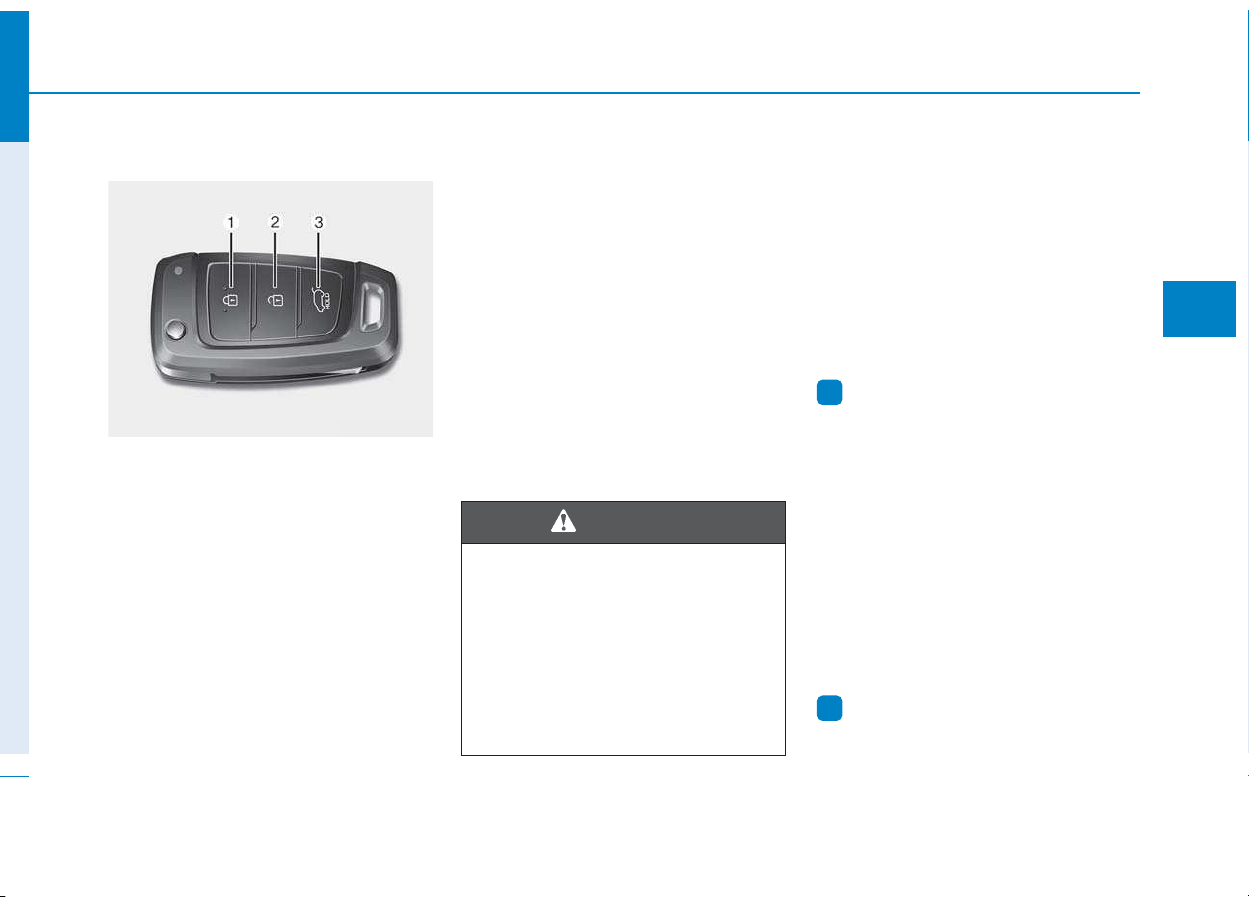
3-3
Convenient features of your vehicle
3
Remote key (if equipped)
Your HYUNDAI uses a remote key,
which you can use to lock or unlock
a door (and tailgate) and even start
the engine.
1. Door Lock
2. Door Unlock
3. Tailgate Unlock
Locking
To lock :
1. Close all doors, engine hood and
tailgate.
2. Press the Door Lock button (1) on
the remote key.
3. The doors will lock. The hazard
warning lights will blink. Also, the
outside rearview mirror will fold, if
the outside rearview mirror folding
switch is in the AUTO position (if
equipped).
4. When the doors are locked, the indi-
cator light on the central door
lock/unlock switch will be illuminated.
Unlocking
To unlock:
1. Press the Door Unlock button (2)
on the remote key.
2. The doors will unlock. The hazard
warning lights will blink two times.
Also, the outside rearview mirror
will unfold, if the outside rearview
mirror folding switch is in the
AUTO position (if equipped).
Information
After unlocking the doors, the doors
will lock automatically after 30 sec-
onds unless a door is opened.
Tailgate unlocking
To unlock:
1. Press the Tailgate Unlock button
(3) on the remote key for more
than one second.
2. The hazard warning lights will
blink two times and the tailgate will
be unlocked.
Information
The word "HOLD" is written on the
button to inform you that you must
press and hold the button for more
than one second.
i
i
AACCCCEESSSSIINNGG YYOOUURR VVEEHHIICCLLEE
Do not leave the keys in your
vehicle with unsupervised chil-
dren. Unattended children
could place the key in the igni-
tion switch and may operate
power windows or other con-
trols, or even make the vehicle
move, which could result in
serious injury or death.
WARNING
OPDE046001
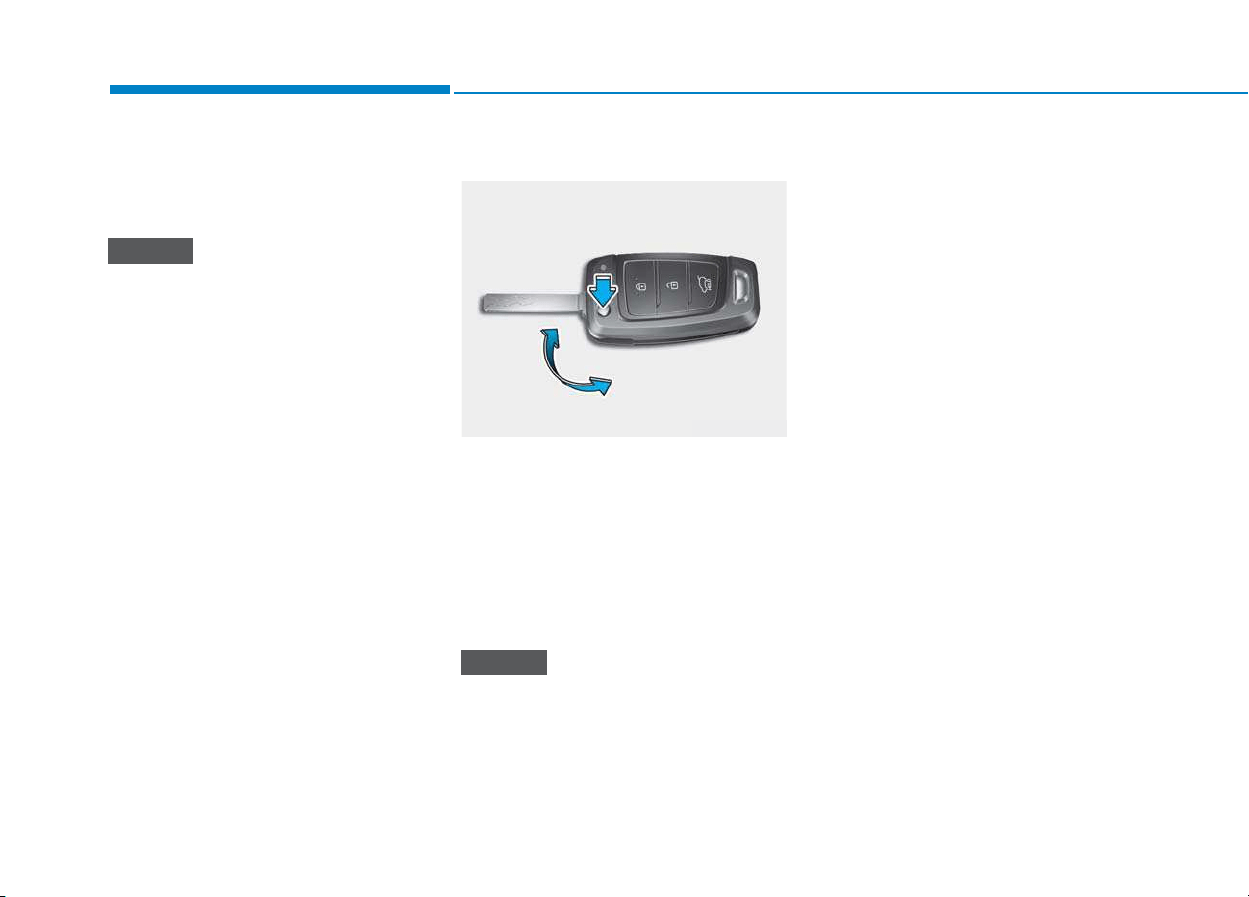
3-4
Convenient features of your vehicle
Start-up
For detailed information refer to “Key
Ignition Switch” in chapter 5.
To prevent damaging the remote
key:
• Keep the remote key away from
water or any liquid and fire. If the
inside of the smart key gets
damp (due to drinks or mois-
ture), or is heated, internal cir-
cuit may malfunction and may
void the vehicle warranty.
• Avoid dropping or throwing the
remote key.
• Protect the remote key from
extreme temperatures.
Mechanical key
If the remote key does not operate
normally, you can lock or unlock the
door by using the mechanical key.
To unfold the key, press the release
button then the key will unfold auto-
matically.
To fold the key, fold the key manually
while pressing the release button.
Do not fold the key without press-
ing the release button. This may
damage the key.
Remote key precautions
The remote key will not work if any of
the following occur:
• The key is in the ignition switch.
• You exceed the operating distance
limit (about 30 m [90 feet]).
• The remote key battery is weak.
• Other vehicles or objects may be
blocking the signal.
• The weather is extremely cold.
• The remote key is close to a radio
transmitter such as a radio station
or an airport which can interfere
with normal operation of the remote
key.
If the remote key does not work cor-
rectly, open and close the door with
the mechanical key. If you have a
problem with the remote key, it is rec-
ommended that you contact an
authorized HYUNDAI dealer.
If the remote key is in close proximity
to your mobile phone, the signal could
be blocked by your mobile phone’s
normal operational signals.
NOTICE
NOTICE
OPDE046003
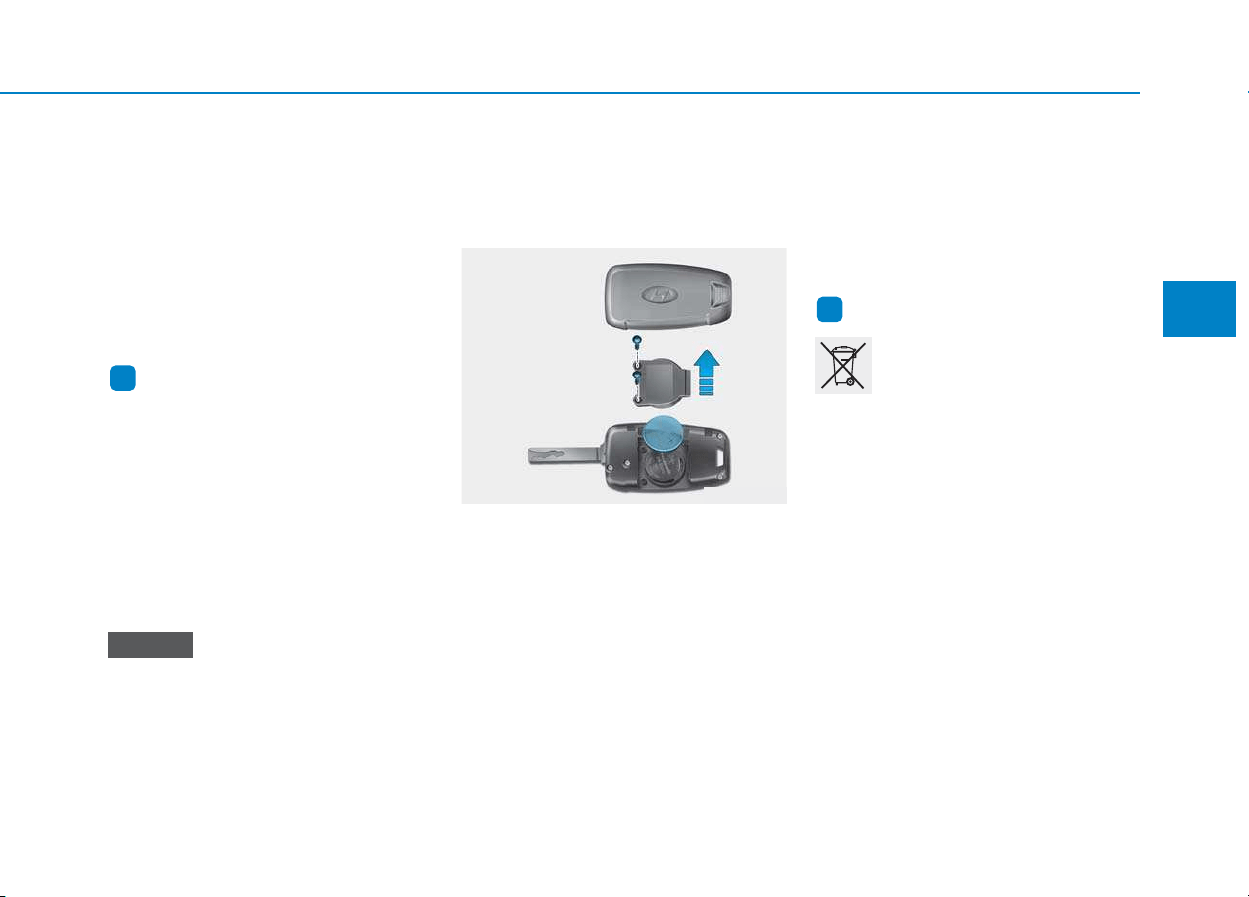
3-5
Convenient features of your vehicle
3
This is specifically relevant when the
phone is active such as making and
receiving calls, text messaging,
and/or sending/receiving emails.
Avoid placing the remote key and
your mobile phone in the same loca-
tion and always try to maintain an
adequate distance between the two
devices.
Information
Changes or modifications not express-
ly approved by the party responsible
for compliance could void the user’s
authority to operate the equipment. If
the keyless entry system is inoperative
due to changes or modifications not
expressly approved by the party
responsible for compliance, it will not
be covered by your manufacturer’s
vehicle warranty.
Keep the remote key away from
electromagnetic materials that
block electromagnetic waves to
the key surface.
Battery replacement
If the remote key is not working prop-
erly, try replacing the battery with a
new one.
Battery Type: CR2032
To replace the battery:
1. Insert a slim tool into the slot and
gently pry open the cover.
2. Using a screw driver, remove the
battery cover.
3. Remove the old battery and insert
a new battery. Make sure the bat-
tery position is correct.
4. Reinstall the battery cover and key
cover in the reverse order of
removal.
If you suspect your remote key might
have sustained some damage, or
you feel your remote key is not work-
ing correctly, it is recommended that
you contact an authorized HYUNDAI
dealer.
Information
An inappropriately disposed
battery can be harmful to the
environment and human
health. Dispose of the battery
according to your local law(s)
or regulations.
i
NOTICE
i
OPD046002
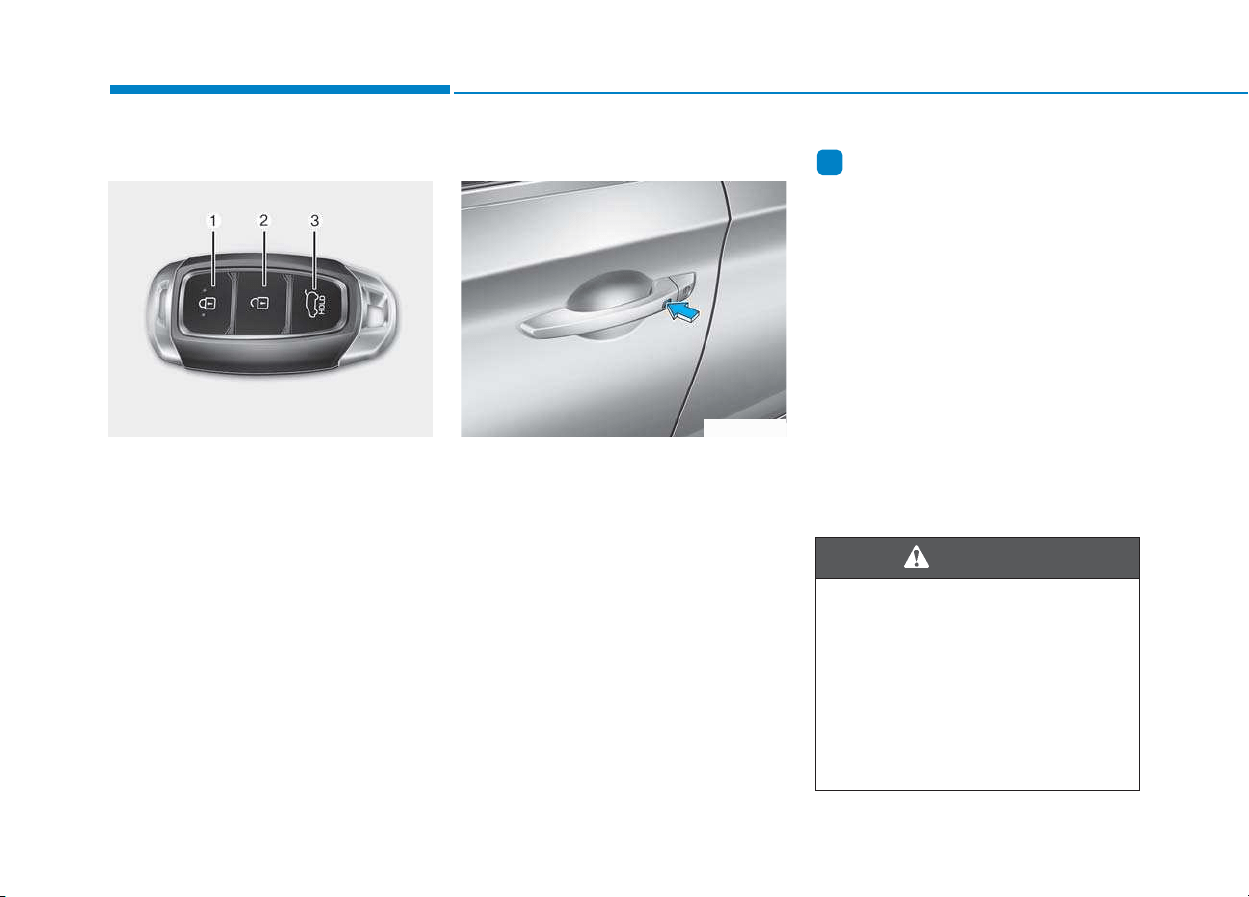
3-6
Convenient features of your vehicle
Smart key (if equipped)
Your HYUNDAI uses a Smart Key,
which you can use to lock or unlock
a door (and tailgate) and even start
the engine.
1. Door Lock
2. Door Unlock
3. Tailgate Unlock
Locking
To lock :
1. Close all doors, engine hood and
tailgate.
2. Either press the door handle but-
ton or press the Door Lock button
(1) on the smart key.
3. The hazard warning lights will
blink. Also, the outside rearview
mirror will fold, if the outside
rearview mirror folding switch is in
the AUTO position (if equipped).
4. When the doors are locked, the indi-
cator light on the central door
lock/unlock switch will be illuminated.
Information
The door handle button will only
operate when the smart key is within
0.7~1 m (28~40 in.) from the outside
door handle.
Even though you press the outside
door handle button, the doors will not
lock and the chime will sound for
three seconds if any of the following
occur:
• The Smart Key is in the vehicle.
• The Engine Start/Stop button is in
ACC or ON position.
• Any door except the tailgate is
open.
i
OPDE046044
OPD046005
Do not leave the Smart Key in
your vehicle with unsupervised
children. Unattended children
could press the Engine Start/
Stop button and may operate
power windows or other con-
trols, or even make the vehicle
move, which could result in
serious injury or death.
WARNING
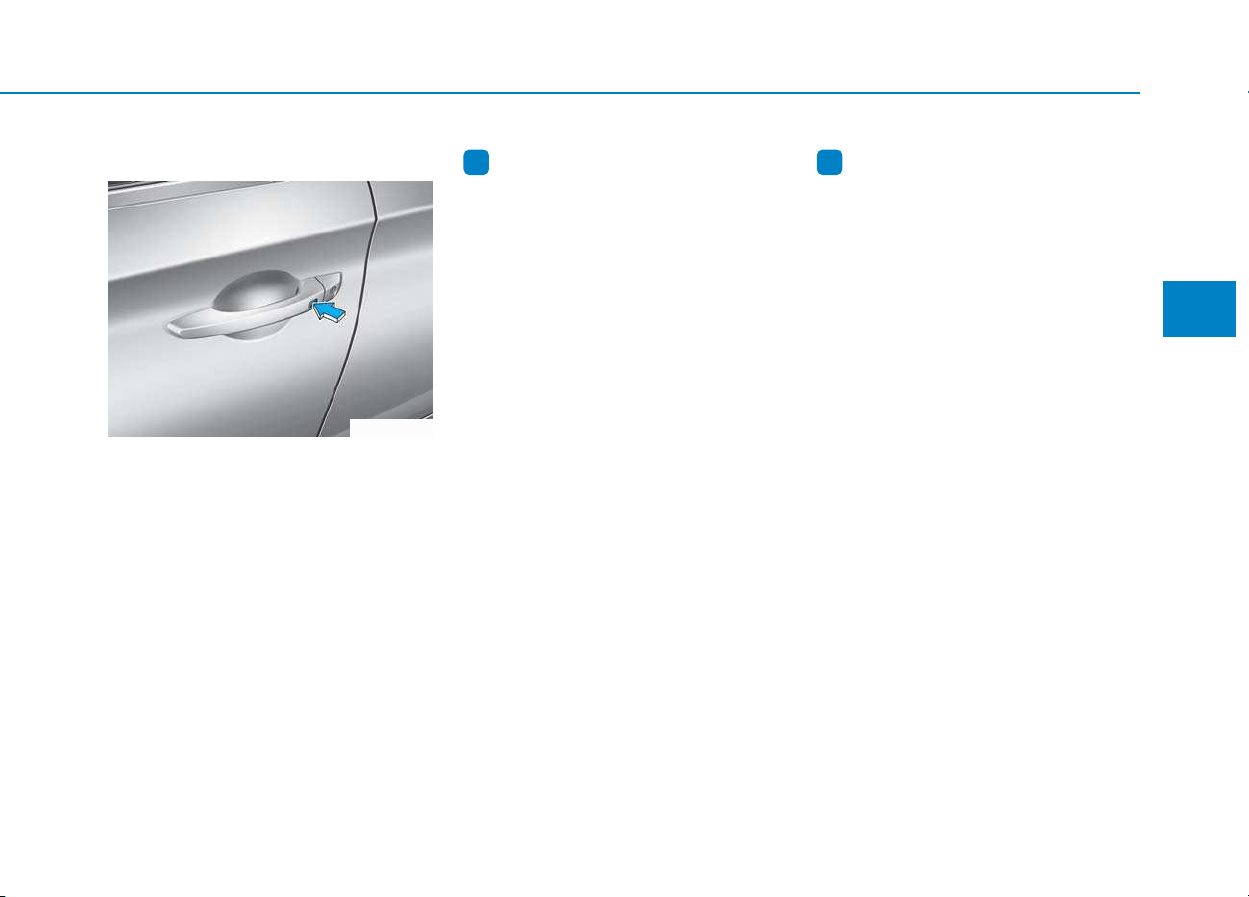
3-7
Convenient features of your vehicle
3
Unlocking
To unlock:
1. Carry the Smart Key.
2. Either press the door handle but-
ton or press the Door Unlock but-
ton (2) on the smart key.
3. The doors will unlock. The hazard
warning lights will blink two times.
Also, the outside rearview mirror
will unfold, if the outside rearview
mirror folding switch is in the AUTO
position. (if equipped)
Information
• The door handle button will only
operate when the smart key is with-
in 0.7~1 m (28~40 in.) from the out-
side door handle. Other people can
also open the doors without the
smart key in possession.
• After unlocking the doors, the doors
will lock automatically after 30 sec-
onds unless a door is opened.
Tailgate unlocking
To unlock:
1. Carry the smart key.
2. Either press the tailgate handle
button or press the Tailgate Unlock
button (3) on the smart key for
more than one second.
3. The hazard warning lights will
blink two times.
Information
• The Tailgate Unlock button (3) will
only unlock the tailgate. It will not
release the latch and open the tail-
gate automatically. If the Tailgate
Unlock button is used, someone
must still press the tailgate handle
button to open the tailgate.
• After unlocking the tailgate, the tail-
gate will lock automatically after 30
seconds unless the tailgate is
opened.
ii
OPD046005

3-8
Convenient features of your vehicle
Start-up
You can start the engine without
inserting the key. For detailed infor-
mation refer to the Engine
Start/Stop button in chapter 5.
To prevent damaging the smart
key:
• Keep the smart key away from
water or any liquid and fire. If the
inside of the smart key gets
damp (due to drinks or moisture),
or is heated, internal circuit may
malfunction and may void the
vehicle warranty.
• Avoid dropping or throwing the
smart key.
• Protect the smart key from
extreme temperatures.
Always have the smart key with
you when leaving the vehicle. If
the smart key is left near the vehi-
cle, the vehicle battery may be dis-
charged.
Mechanical key
If the Smart Key does not operate
normally, you can lock or unlock the
door by using the mechanical key.
Move the release lever in the direc-
tion of the arrow (1) and then remove
the mechanical key (2). Insert the
mechanical key into the key hole on
the door.
To reinstall the mechanical key, put
the key into the hole and push it until
a click sound is heard.
Loss of a smart key
A maximum of two smart keys can
be registered to a single vehicle. If
you happen to lose your smart key, it
is recommended that you should
immediately take the vehicle and
remaining key to your authorized
HYUNDAI dealer or tow the vehicle,
if necessary.
NOTICE
NOTICE
OPD046045
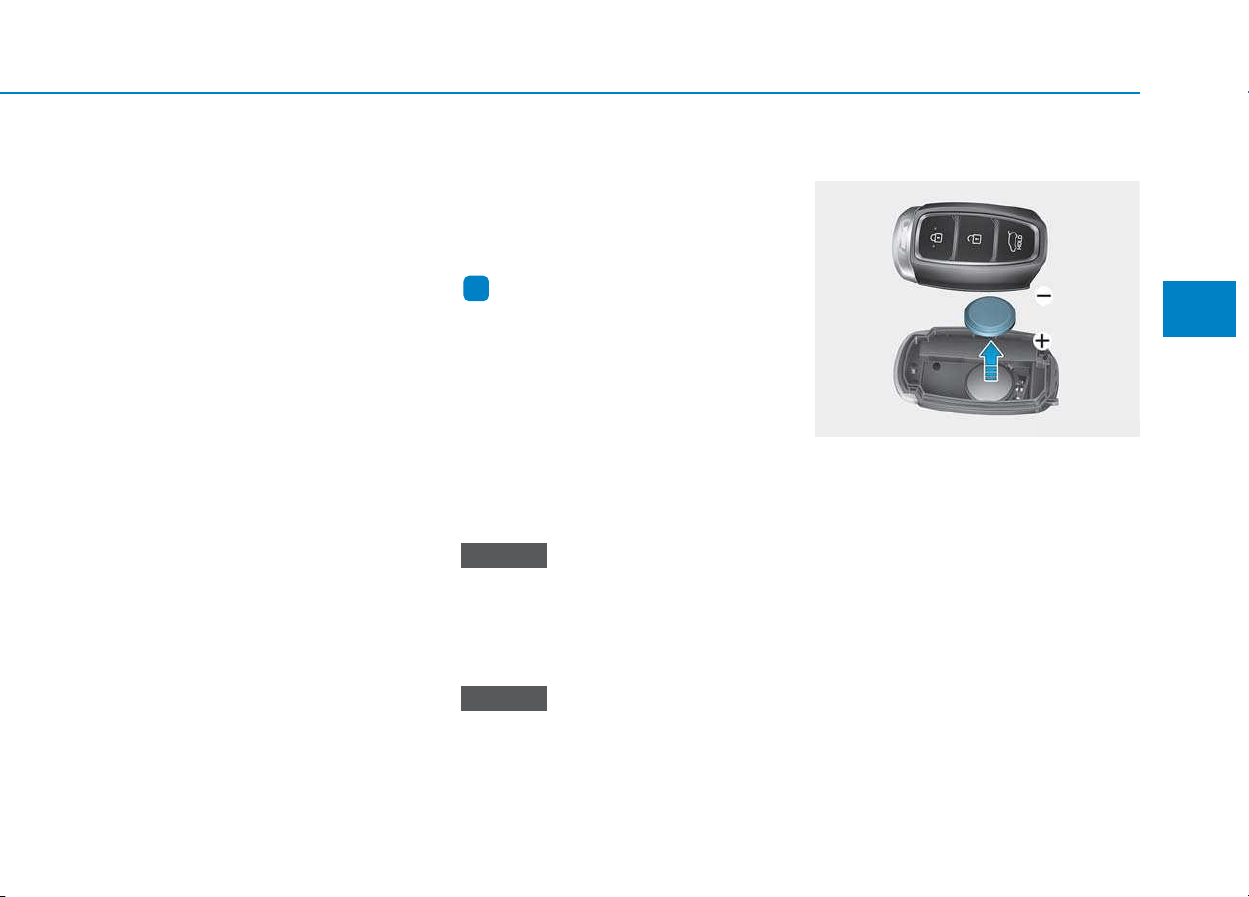
3-9
Convenient features of your vehicle
3
Smart key precautions
The smart key may not work if any of
the following occur:
• The smart key is close to a radio
transmitter such as a radio station
or an airport which can interfere
with normal operation of the trans-
mitter.
• The smart key is near a mobile two
way radio system or a cellular
phone.
• Another vehicle’s smart key is being
operated close to your vehicle.
If the smart key does not work cor-
rectly, open and close the door with
the mechanical key. If you have a
problem with the smart key, it is rec-
ommended that you contact an
authorized HYUNDAI dealer.
If the smart key is in close proximity to
your mobile phone, the signal could
be blocked by your mobile phone’s
normal operational signals. This is
specifically relevant when the phone
is active such as making and receiv-
ing calls, text messaging, and/or
sending/receiving emails.
Avoid placing the smart key and your
mobile phone in the same location
and always try to maintain an ade-
quate distance between the two
devices.
Information
Changes or modifications not express-
ly approved by the party responsible
for compliance could void the user’s
authority to operate the equipment. If
the keyless entry system is inoperative
due to changes or modifications not
expressly approved by the party
responsible for compliance, it will not
be covered by your manufacturer’s
vehicle warranty.
Keep the smart key away from
electromagnetic materials that
blocks electromagnetic waves to
the key surface.
Always have the smart key with
you when leaving the vehicle. If
the smart key is left near the vehi-
cle, the vehicle battery may be dis-
charged.
Battery replacement
If the Smart Key is not working prop-
erly, try replacing the battery with a
new one.
Battery Type: CR2032
To replace the battery:
1. Remove the mechanical key.
2. Use a slim tool to pry open the
rear cover of the smart key.
3. Remove the old battery and insert
the new battery. Make sure the
battery position is correct.
4. Reinstall the rear cover of the
smart key.
NOTICE
NOTICE
i
OPDE046046
3-10
Convenient features of your vehicle
If you suspect your smart key might
have sustained some damage, or
you feel your smart key is not work-
ing correctly, it is recommended that
you contact an authorized HYUNDAI
dealer.
Information
An inappropriately disposed
battery can be harmful to the
environment and human
health. Dispose of the battery
according to your local law(s)
or regulations.
Immobilizer system
(if equipped)
The immobilizer system protects your
vehicle from theft. If an improperly
coded key (or other device) is used,
the engine’s fuel system is disabled.
When the ignition switch is placed in
the ON position, the immobilizer sys-
tem indicator should come on briefly,
then go off. If the indicator starts to
blink, the system does not recognize
the coding of the key.
Place the ignition switch to the
LOCK/OFF position, then place the
ignition switch to the ON position
again.
The system may not recognize your
key’s coding if another immobilizer
key or other metal object (i.e., key
chain) is near the key. The engine
may not start because the metal may
interrupt the transponder signal from
transmitting normally.
If the system repeatedly does not
recognize the coding of the key, it is
recommended that you contact your
HYUNDAI dealer.
Do not attempt to alter this system or
add other devices to it. Electrical
problems could result that may make
your vehicle inoperable.
The transponder in your key is an
important part of the immobilizer
system. It is designed to give
years of trouble-free service, how-
ever you should avoid exposure to
moisture, static electricity and
rough handling. Immobilizer sys-
tem malfunction could occur.
NOTICE
i
In order to prevent theft of your
vehicle, do not leave spare keys
anywhere in your vehicle. Your
immobilizer password is a cus-
tomer unique password and
should be kept confidential.
WARNING
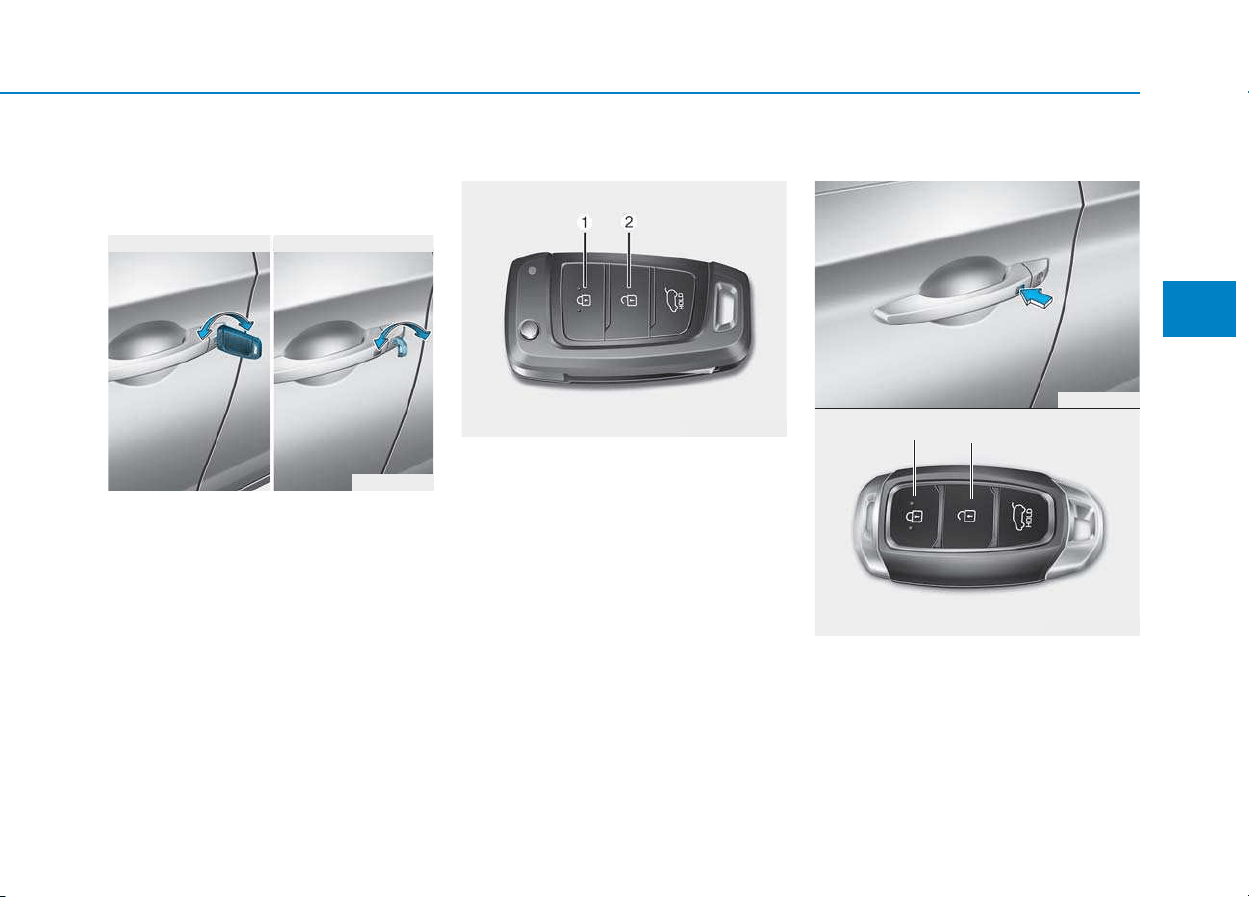
3-11
Convenient features of your vehicle
3
Operating door locks from
outside the vehicle
Mechanical key
Turn the key toward the rear of the
vehicle to unlock and toward the front
of the vehicle to lock.
If you lock/unlock the driver's door with
a key, a driver’s door will lock/unlock
automatically.
Once the doors are unlocked, they
may be opened by pulling the door
handle.
When closing the door, push the
door by hand. Make sure that doors
are closed securely.
Remote key
To lock the doors, press the Door
Lock button (1) on the remote key.
To unlock the doors, press the Door
Unlock button (2) on the remote key.
Once the doors are unlocked, they
may be opened by pulling the door
handle.
When closing the door, push the
door by hand. Make sure that doors
are closed securely.
Smart key
To lock the doors, press the button on
the outside door handle while carry-
ing the smart key with you or press
the door lock button on the smart key.
DDOOOORR LLOOCCKKSS
OPDE046413
OPD046006
LL
LL
oo
oo
cc
cc
kk
kk
LL
LL
oo
oo
cc
cc
kk
kk
UU
UU
nn
nn
ll
ll
oo
oo
cc
cc
kk
kk
UU
UU
nn
nn
ll
ll
oo
oo
cc
cc
kk
kk
■ Remote key ■ Smart key
OPD046005
OPDE046004
LL
LL
oo
oo
cc
cc
kk
kk
//
//
UU
UU
nn
nn
ll
ll
oo
oo
cc
cc
kk
kk
Door Lock Door Unlock
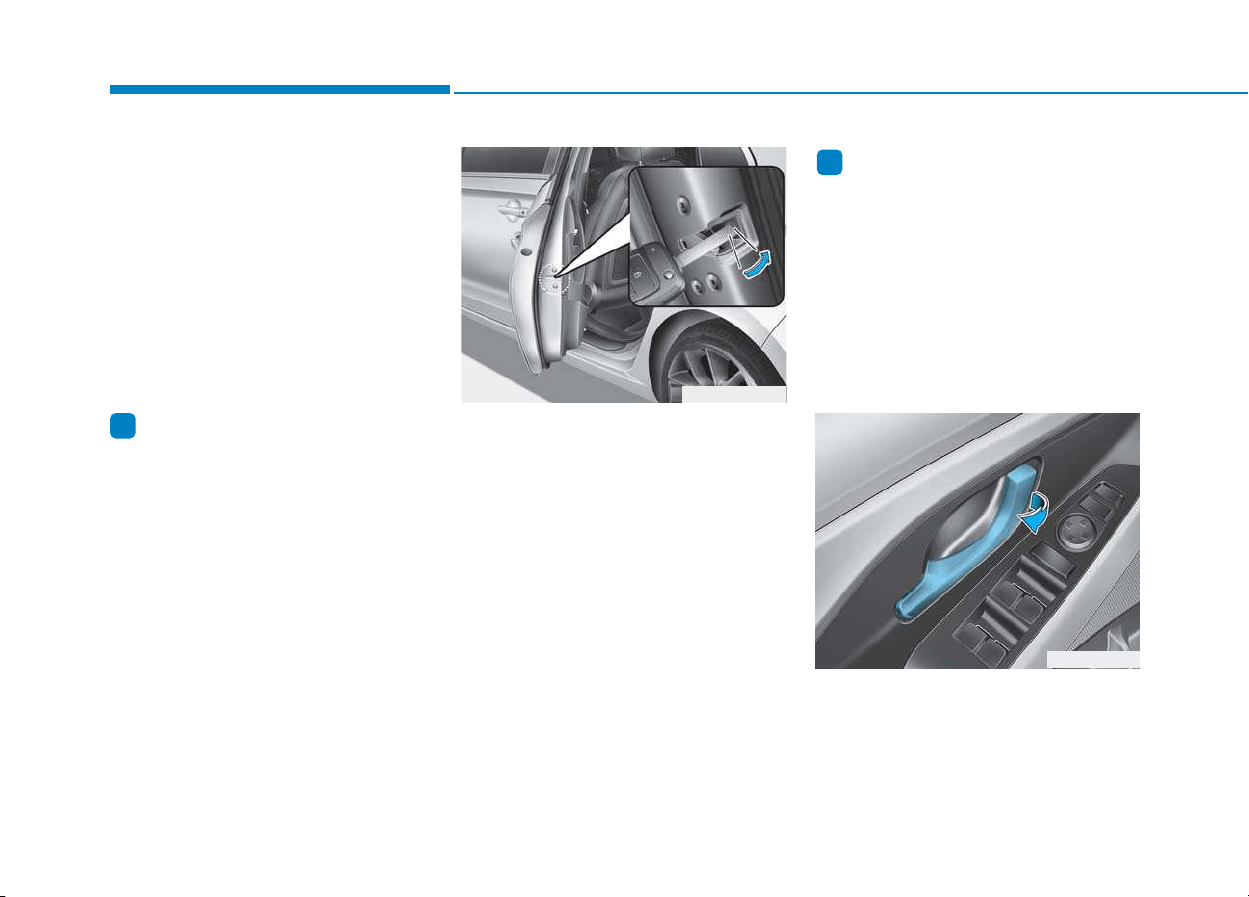
3-12
Convenient features of your vehicle
To unlock the doors, press the button
on the outside door handle while car-
rying the smart key with you or press
the door unlock button on the smart
key.
Once the doors are unlocked, they
may be opened by pulling the door
handle.
When closing the door, push the
door by hand. Make sure that doors
are closed securely.
Information
• In cold and wet climates, door lock
and door mechanisms may not work
properly due to freezing conditions.
• If the door is locked/unlocked multi-
ple times in rapid succession with
either the vehicle key or door lock
switch, the system may stop operat-
ing temporarily in order to protect
the circuit and prevent damage to
system components.
In case of an emergency
If the electrical power door lock
switch is not operating (ex. dead car
battery) the only way to lock the
door(s) is with the mechanical key
from the outside key hole.
Doors without an outside key hole
can be locked as follows:
1. Open the door.
2. Insert the key into the emergency
door lock hole and turn the key
horizontally to lock.
3. Close the door securely.
Information
If the electrical power to door lock
switch is not operating (ex. dead car
battery) and the tailgate is closed, you
will not be able to open the tailgate
until power is restored.
Operating door locks from
inside the vehicle
With the door handle
Front door
If the inner door handle is pulled
when the door is locked, the door will
unlock and open.
i
i
OPDE046007
OPDEN047414
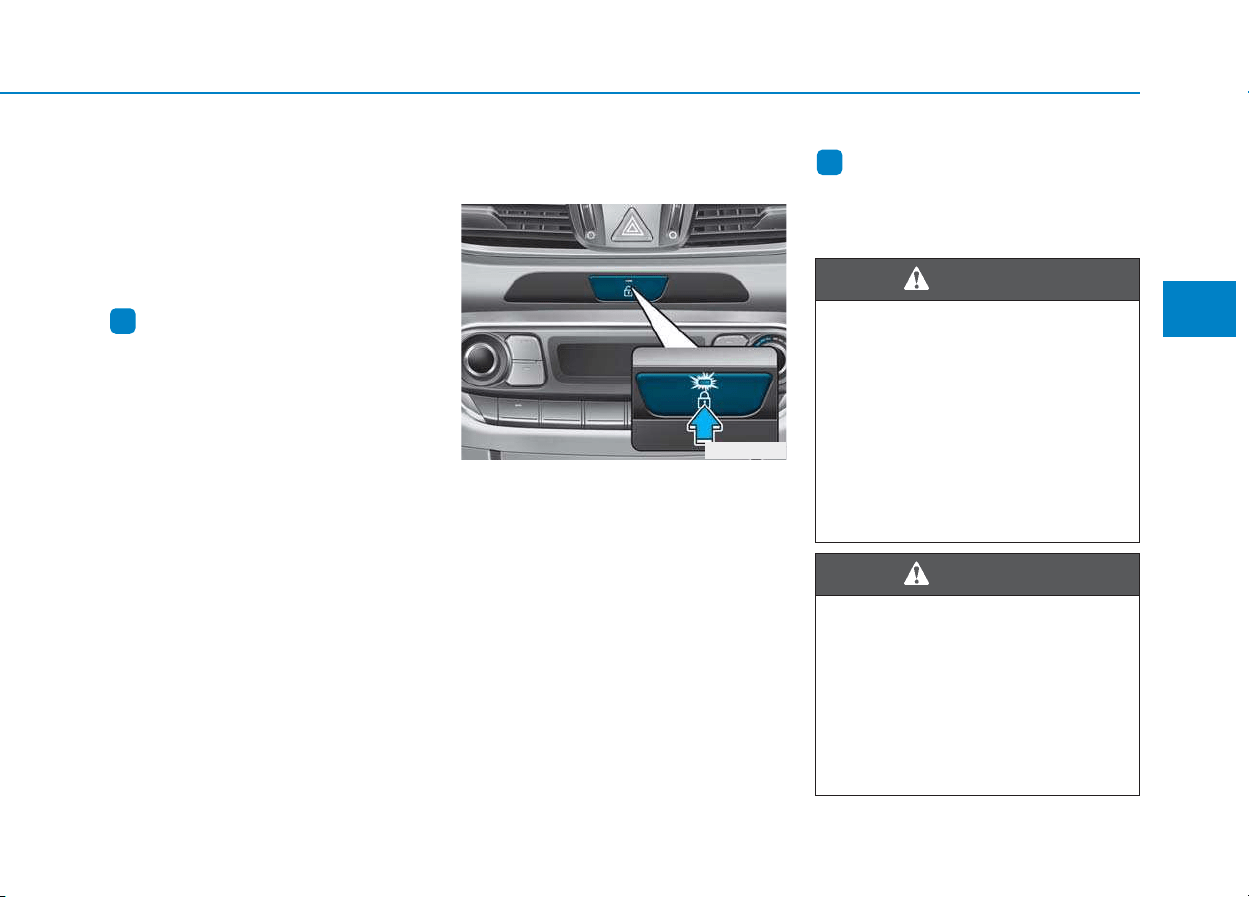
3-13
Convenient features of your vehicle
3
Rear door
If the inner door handle is pulled
once when the door is locked, the
door will unlock.
If the inner door handle is pulled
once more, the door will open.
Information
If a power door lock ever fails to func-
tion while you are in the vehicle try
one or more of the following tech-
niques to exit:
• Operate the door unlock feature
repeatedly (both electronic and
manual) while simultaneously
pulling on the door handle.
• Operate the other door locks and
handles, front and rear.
• Lower a front window and use the
mechanical key to unlock the door
from outside.
With the central door
lock/unlock switch
• With a door unlocked
- If you press the central door lock
switch, all vehicle doors will lock
and the indicator light on the switch
will illuminate.
- If any door is opened when the
switch is pressed, no doors will
lock.
• With all doors locked
- If you press the central door unlock
switch, all vehicle doors will unlock.
- If any door is unlocked, the indica-
tor on the central door lock switch
will go out.
Information
The indicator light on the switch blinks
for approximately one minute when a
door is unlocked or the tailgate is opened.
i
i
OPD046008
• The doors should always be
fully closed and locked while
the vehicle is in motion. If the
doors are unlocked, the risk of
being thrown from the vehicle
in a crash is increased.
• Do not pull the inner door
handle of driver’s(or passen-
ger’s) door while the vehicle is
moving.
WARNING
Do not leave children or animals
unattended in your vehicle. An
enclosed vehicle can become
extremely hot, causing death or
serious injury to unattended
children or animals who cannot
escape the vehicle.
(Continued)
WARNING
3-14
Convenient features of your vehicle
Auto door lock/unlock features
Impact sensing door unlock
system (if equipped)
All doors will be automatically
unlocked when an impact causes the
air bags to deploy.
Speed sensing door lock system
(if equipped)
All doors will be automatically locked
when vehicle speed exceeds 15
km/h (9 mph).
You can activate or deactivate the
Auto Door Lock/Unlock features from
the User Settings mode on the LCD
display. For more details, refer to
"LCD Display" in this chapter.
Leaving your vehicle unlocked
can allow theft or entry into the
vehicle.
To secure your vehicle, while
depressing the brake, move the
shift lever to 1st gear when the
vehicle is parked on a uphill and
to R (Reverse) on a downhill,
engage the parking brake, and
place the ignition switch in the
LOCK/OFF position, close all
windows, lock all doors, and
always take the key with you.
WARNING
Opening a door when something
is approaching may cause dam-
age or injury. Be careful when
opening doors and watch for
vehicles, motorcycles, bicycles
or pedestrians approaching the
vehicle in the path of the door.
WARNING
If you stay in the vehicle for a
long time while the weather is
very hot or cold, there are risks
of injuries or danger to life. Do
not lock the vehicle from the
outside when someone is in the
vehicle.
WARNING
(Continued)
Children might operate features
of the vehicle that could injure
them, or they could encounter
other harm, possibly from some-
one gaining entry to the vehicle.
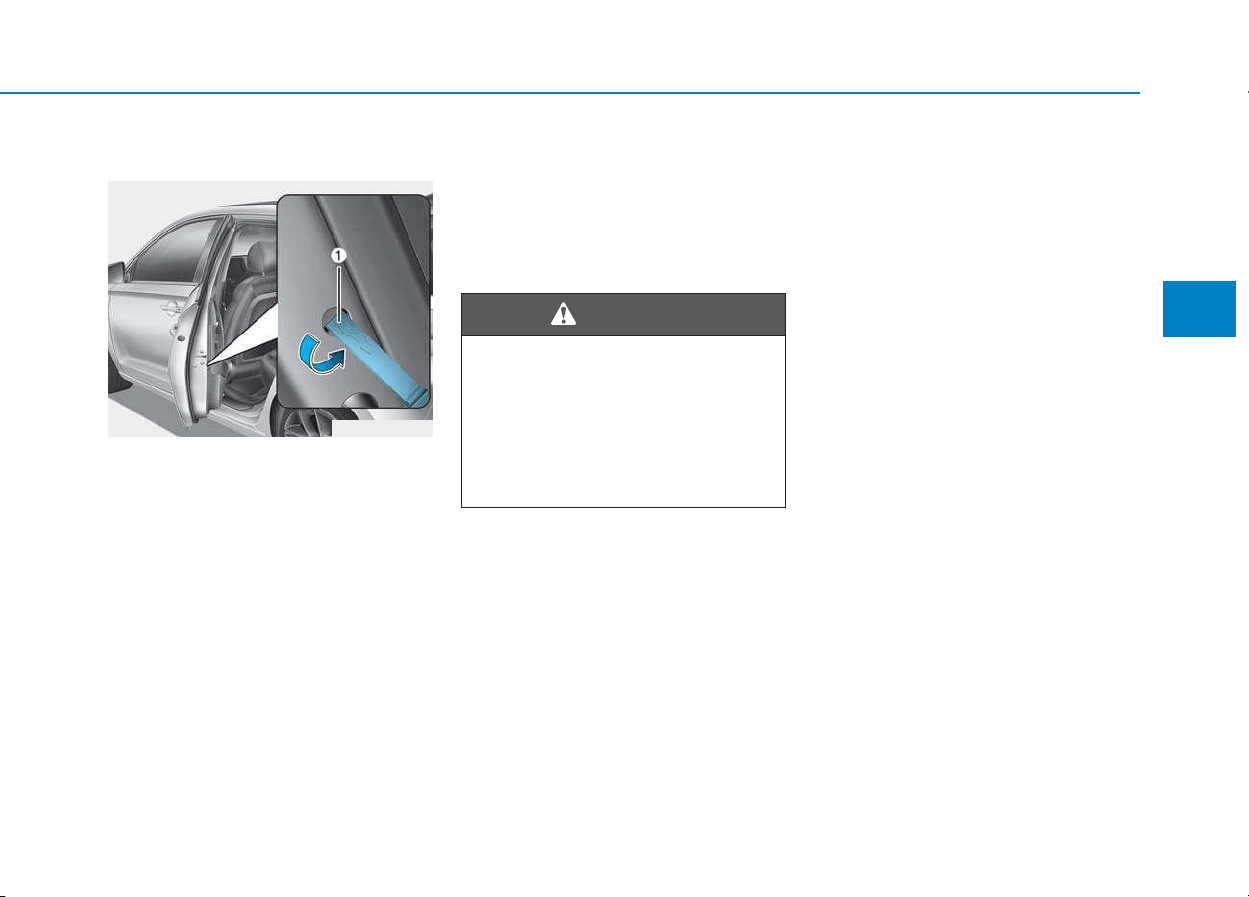
3-15
Convenient features of your vehicle
3
Child-protector rear door locks
The child safety lock is provided to
help prevent children seated in the
rear from accidentally opening the
rear doors.The rear door safety locks
should be used whenever children
are in the vehicle.
The child safety lock is located on
the edge of each rear door. When the
child safety lock is in the lock posi-
tion, the rear door will not open if the
inner door handle is pulled.
To lock the child safety lock, insert a
key (or screwdriver) (1) into the hole
and turn it to the lock position.
To allow a rear door to be opened
from inside the vehicle, unlock the
child safety lock.
OPDEN047009
If children accidently open the
rear doors while the vehicle is
in motion, they could fall out of
the vehicle. The rear door safety
locks should always be used
whenever children are in the
vehicle.
WARNING
3-16
Convenient features of your vehicle
This system helps to protect your
vehicle and valuables. The horn will
sound and the hazard warning lights
will blink continuously if any of the
following occur:
- A door is opened without using the
remote key or smart key.
- The tailgate is opened without
using the remote key or smart key.
- The engine hood is opened.
The alarm continues for 30 seconds,
then the system resets. To turn off
the alarm, unlock the doors with the
remote key or smart key.
The Theft Alarm System automati-
cally sets 30 seconds after you lock
the doors and the tailgate. For the
system to activate, you must lock the
doors and the tailgate from outside
the vehicle with the remote key or
smart key or by pressing the button
on the outside of the door handles
with the smart key in your posses-
sion.
The hazard warning lights will blink
once to indicate the system is
armed.
Once the security system is set, open-
ing any door, the tailgate, or the hood
without using the remote key or smart
key will cause the alarm to activate.
The Theft Alarm System will not set if
the hood, the tailgate, or any door is
not fully closed. If the system will not
set, check the hood, the tailgate, or
the doors are fully closed.
Do not attempt to alter this system or
add other devices to it.
Information
• Do not lock the doors until all pas-
sengers have left the vehicle. If the
remaining passenger leaves the
vehicle when the system is armed,
the alarm will be activated.
• If the vehicle is not disarmed with
the remote key or smart key, open
the doors by using the mechanical
key and place the ignition switch in
the ON position (for remote key) or
start the engine (for smart key) and
wait for 30 seconds.
• When the system is disarmed but a
door or tailgate is not opened within 30
seconds, the system will be rearmed.
Information
Vehicles equipped with a theft alarm
system will have a label attached to
the vehicle with the following words:
1. WARNING
2. SECURITY SYSTEM
i
i
TTHHEEFFTT--AALLAARRMM SSYYSSTTEEMM
OJC040170
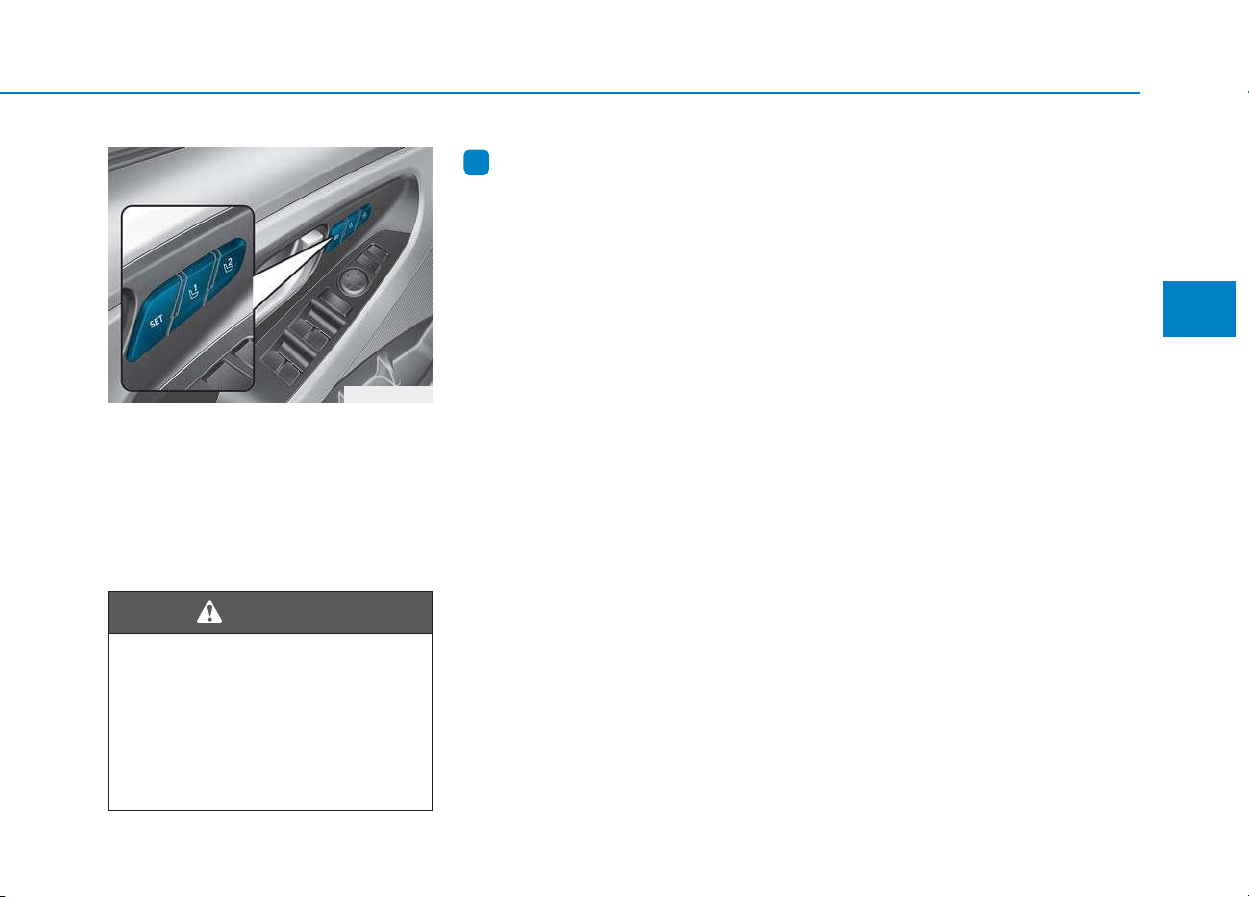
3-17
Convenient features of your vehicle
3
The Driver Position Memory System
is provided to store and recall the fol-
lowing memory settings with a sim-
ple button operation.
- Driver's seat position
- Outside rearview mirror position
- Instrument panel illumination intensity
Information
• If the battery is disconnected, the
memory settings will be erased.
• If the Driver Position Memory
System does not operate normally,
we recommend that you have the
system checked by an authorized
HYUNDAI dealer.
Storing memory positions
1. Place the ignition switch or the
Engine Start/Stop button in the
ON position.
2. Adjust the driver's seat position,
outside rearview mirror position
and instrument panel illumination
intensity to the desired position.
3. Press the SET button. The system
will beep once and notify you
"Press button to save settings"on
the LCD display.
4. Press one of the memory buttons
(1 or 2) within 4 seconds. The sys-
tem will beep twice when the mem-
ory has been successfully stored.
5. "Driver 1 (or 2) settings saved" will
appear on the LCD display.
Recalling memory positions
1. Place the ignition switch or the
Engine Start/Stop button in the
ON position.
2. Press the desired memory button
(1 or 2). The system will beep
once, then the driver’s seat posi-
tion, outside rearview mirror and
instrument panel illumination will
automatically adjust to the stored
position.
3. "Driver 1(or 2) settings is applied"
will appear on the LCD display.
i
DDRRIIVVEERR PPOOSSIITTIIOONN MMEEMMOORRYY SSYYSSTTEEMM ((IIFF EEQQUUIIPPPPEEDD))
OPDE046010
Never attempt to operate the driv-
er position memory system while
the vehicle is moving.
This could result in loss of con-
trol, and an accident causing
death, serious injury, or property
damage.
WARNING
3-18
Convenient features of your vehicle
Information
• While recalling the "1" memory
position, pressing the SET or 1 but-
ton temporarily stops the adjust-
ment of the recalled memory posi-
tion. Pressing the 2 button recalls
the "2" memory position.
• While recalling the "2" memory
position, pressing the SET or 2 but-
ton temporarily stops the adjust-
ment of the recalled memory posi-
tion. Pressing the 1 button recalls
the "1" memory position.
• While recalling the stored positions,
pressing one of the control buttons
for the driver's seat, outside
rearview mirror, or instrument
panel illumination will cause the
movement of that component to stop
and move in the direction that the
control button is pressed.
Easy access function
(if equipped)
The system will move the driver's
seat automatically as follows:
• Without smart key system
- It will move the driver’s seat rear-
ward when the ignition key is
removed and the driver’s door is
opened.
- It will move the driver’s seat forward
when the ignition key is inserted.
• With smart key system
- It will move the driver’s seat rear-
ward when the Engine Start/Stop
button is in the OFF position and
the driver’s door is opened.
- It will move the driver’s seat for-
ward when the vehicle is turned
ON or the driver’s door is closed
with the smart key with you.
You can activate or deactivate the
Easy Access Function from the User
Settings mode on the LCD display.
For more details, refer to "LCD
Display" in this chapter.
i
Driver should be cautious when
using this function to assure no
injury to passenger or child on
the back seat. In case of emer-
gency the driver has to stop
movement of front seat (when
easy access feature is activat-
ed) by pressing SET button or
any of the driver seat control
switches.
CAUTION

3-19
Convenient features of your vehicle
3
Electric power steering (EPS)
The system assists you with steering
the vehicle. If the engine is off or if
the power steering system becomes
inoperative, the vehicle may still be
steered, but it will require increased
steering effort.
Also, the steering effort becomes
heavier as the vehicle’s speed
increases and becomes lighter as
the vehicle’s speed decreases for
better control of the steering wheel.
Should you notice any change in the
effort required to steer during normal
vehicle operation, we recommend
that the system be checked by an
authorized HYUNDAI dealer.
• If the Electric Power Steering
System does not operate nor-
mally, the warning light ( ) will
illuminate or blink on the instru-
ment cluster. The steering wheel
may become difficult to control
or operate. Take your vehicle to
an authorized HYUNDAI dealer
and have the system checked as
soon as possible.
• When abnormality is detected in
the electric power steering sys-
tem, to prevent a deadly acci-
dent, the steering assist function
will stop. At this time, the warn-
ing light turns on or blinks on
the cluster. The steering wheel
may become difficult to control
or operate. Have your vehicle
checked immediately, after mov-
ing the vehicle to a safe zone.
Information
The following symptoms may occur
during normal vehicle operation:
• The steering effort may be high
immediately after placing the igni-
tion switch button in the ON posi-
tion.
This happens as the system per-
forms the EPS system diagnostics.
When the diagnostics are complet-
ed, the steering wheel will return to
its normal condition.
• A click noise may be heard from the
EPS relay after the ignition switch is
placed in the ON or LOCK/OFF
position.
• Motor noise may be heard when the
vehicle is at a stop or at a low driv-
ing speed.
• When you operate the steering
wheel in low temperatures, abnor-
mal noise may occur. If the temper-
ature rises, the noise will disappear.
This is a normal condition.
(Continued)
i
NOTICE
SSTTEEEERRIINNGG WWHHEEEELL
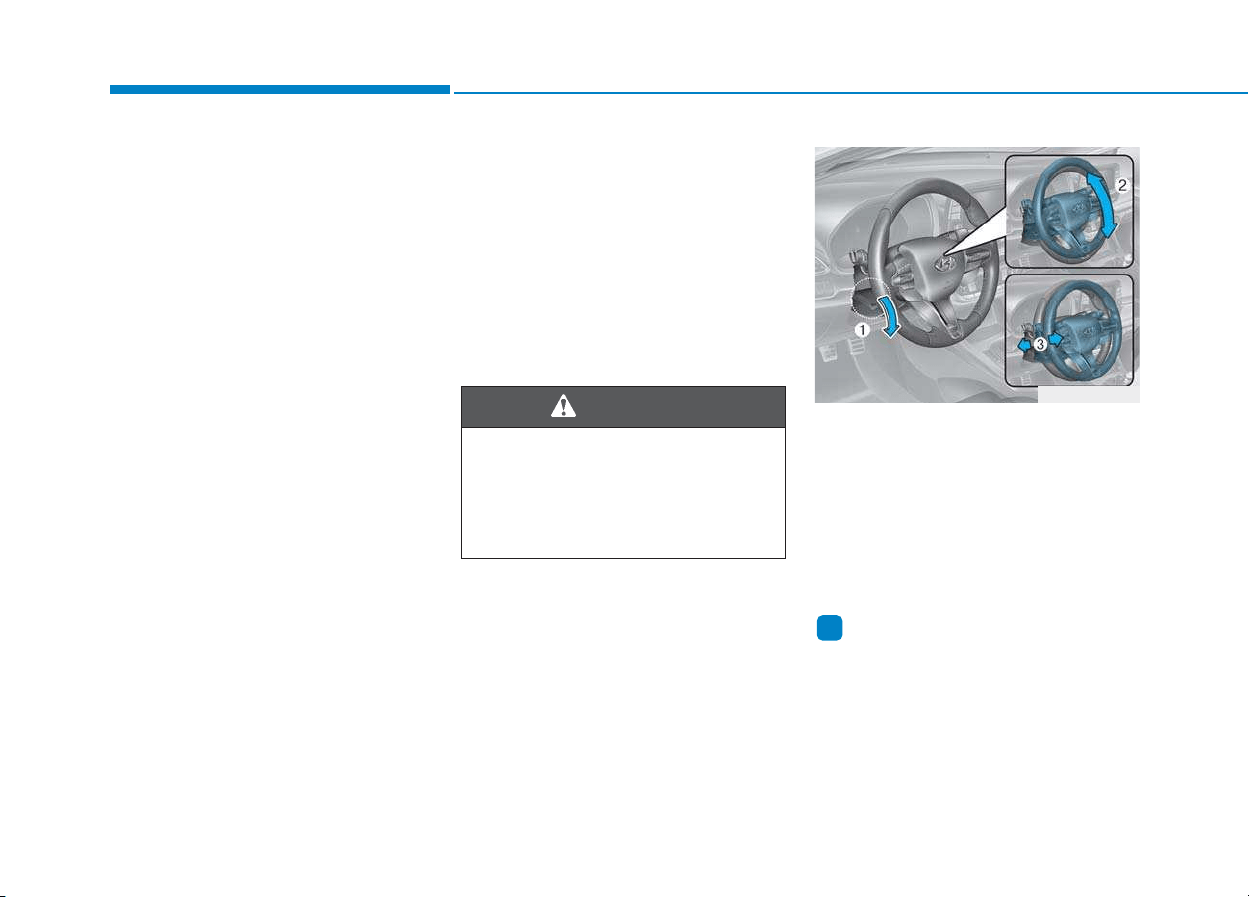
3-20
Convenient features of your vehicle
(Continued)
• When the vehicle is stationary, if
you turn the steering wheel all the
way to the left or right continuously,
the steering effort increases. This is
not a system malfunction. As time
passes, the steering wheel effort will
return to its normal condition.
Tilt steering / Telescopic steering
Adjust the steering wheel so it points
toward your chest, not toward your
face. Make sure you can see the
instrument cluster warning lights and
gauges. After adjusting, push the
steering wheel both up and down to
be certain it is locked in position.
Always adjust the position of the
steering wheel before driving.
To change the steering wheel angle
and height:
1. Pull down the lock-release lever (1).
2. Adjust the steering wheel to the
desired angle (2) and distance for-
ward/back (3).
3. Pull up the lock-release lever to
lock the steering wheel in place.
Information
After adjustment, sometimes the lock-
release lever may not lock the steering
wheel.
It is not a malfunction. This occurs when
two gears are not engaged correctly. In
this case, adjust the steering wheel again
and then lock the steering wheel.
i
Never adjust the steering wheel
while driving. You may lose
steering control and cause
severe personal injury, death or
accidents.
WARNING
OPDEN047012
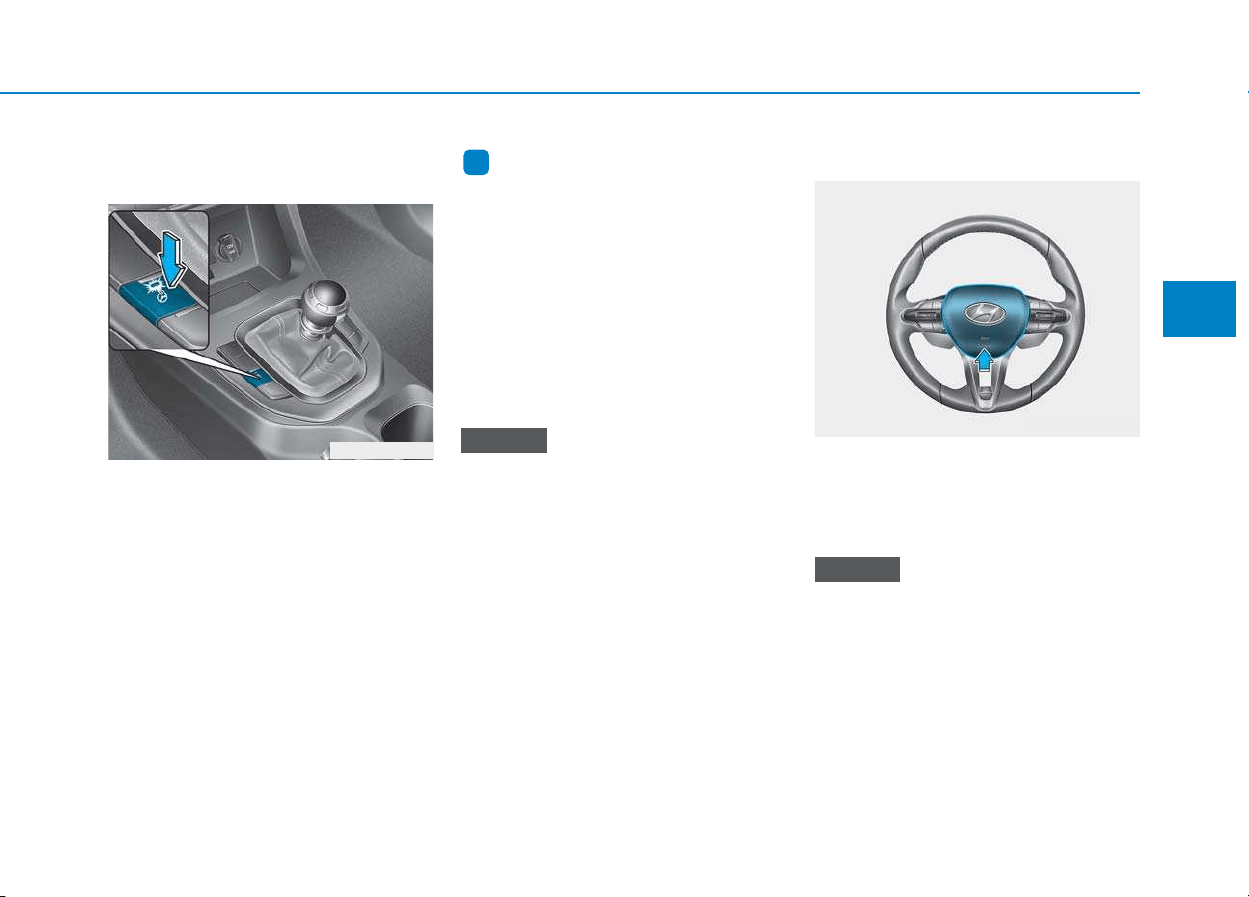
3-21
Convenient features of your vehicle
3
Heated steering wheel
(if equipped)
When the ignition switch is in the ON
position or when the engine is running,
press the heated steering wheel but-
ton to warm the steering wheel. The
indicator on the button will illuminate.
To turn the heated steering wheel off,
press the button again. The indicator
on the button will turn off.
Information
The heated steering wheel will turn off
automatically approximately 30 min-
utes after the heated steering wheel is
turned on.
When the engine is turned off during
the engine and the heated steering
wheel is on, the timer function of heat-
ed steering wheel will be reset.
To reuse heated steering wheel, press
button again.
Do not install any cover or acces-
sory on the steering wheel. This
cover or accessory could cause
damage to the heated steering
wheel system.
Horn
To sound the horn, press the area
indicated by the horn symbol on your
steering wheel. The horn will operate
only when this area is pressed.
Do not strike the horn severely to
operate it, or hit it with your fist.
Do not press on the horn with a
sharp-pointed object.
NOTICE
NOTICE
i
OPDEN047014
OPDEN047013
3-22
Convenient features of your vehicle
Inside rearview mirror
Before you start driving, adjust the
rearview mirror to the center on the
view through the rear window.
When cleaning the mirror, use a
paper towel or similar material
dampened with glass cleaner. Do
not spray glass cleaner directly on
the mirror as that may cause the
liquid cleaner to enter the mirror
housing.
Electric Chromic Mirror (ECM)
The electric rearview mirror automati-
cally controls the glare from the head-
lamp of the vehicle behind you in
nighttime or low light driving condi-
tions.
When the engine is running, the
glare is automatically controlled by
the sensor mounted in the rearview
mirror. The sensor detects the light
level around the vehicle, and auto-
matically adjusts to control the head-
lamp glare from vehicles behind you.
Whenever the shift lever is placed in
R (Reverse), the mirror will automat-
ically go to the brightest setting in
order to improve the driver’s view
behind the vehicle.
NOTICE
NEVER adjust the mirror while
driving. This may cause loss of
vehicle control resulting in an
accident.
WARNING
MMIIRRRROORRSS
Make sure your line of sight is
not obstructed. Do not place
objects in the rear seat, cargo
area, or behind the rear head-
rests which could interfere with
your vision through the rear
window.
WARNING
To prevent serious injury during
an accident or deployment of
the air bag, do not modify the
rearview mirror and do not
install a wide mirror.
WARNING
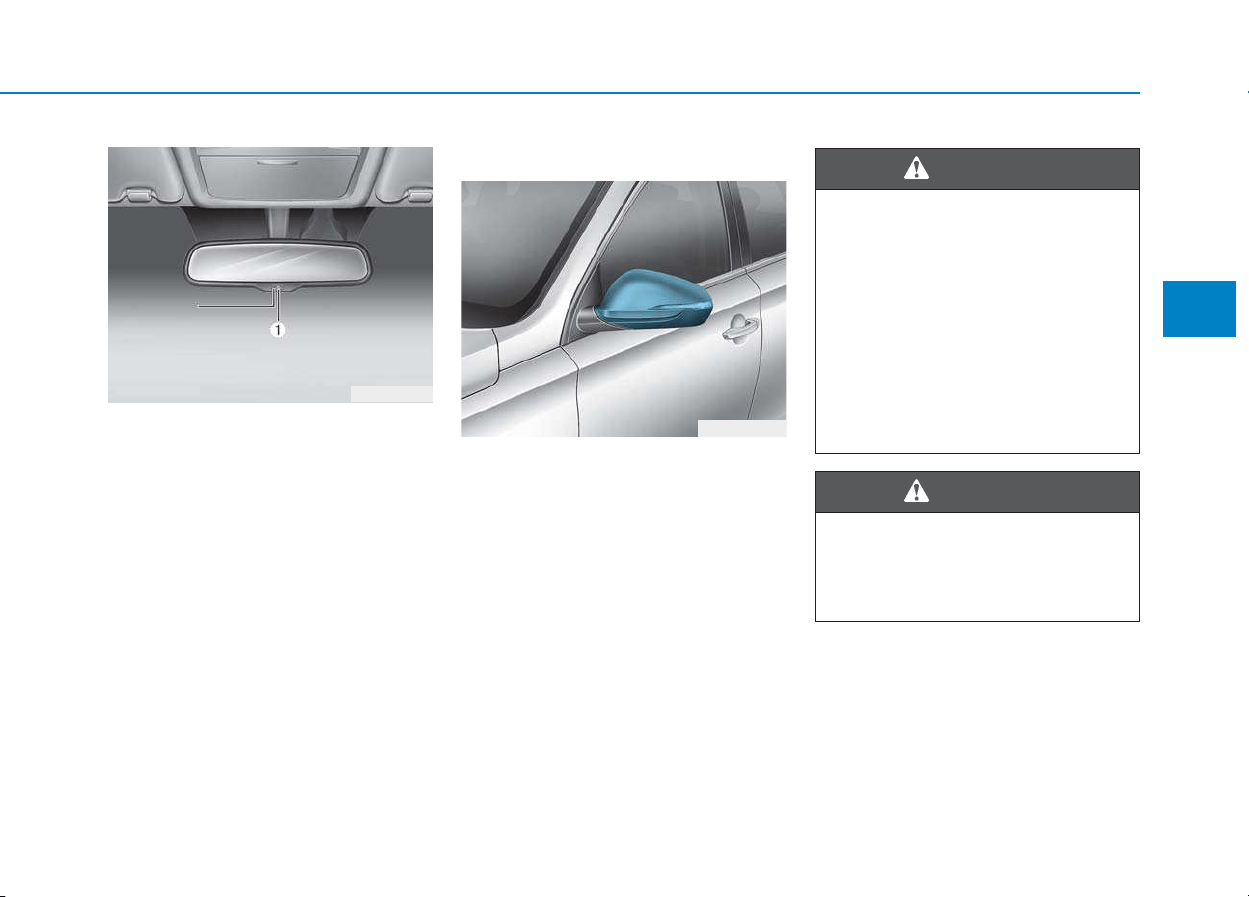
3-23
Convenient features of your vehicle
3
To operate the electric rearview
mirror:
• Press the ON/OFF button (1) to
turn the automatic dimming func-
tion off. The mirror indicator light
will turn off.
Press the ON/OFF button (1) to
turn the automatic dimming func-
tion on. The mirror indicator light
will illuminate.
• The mirror defaults to the ON posi-
tion whenever the ignition switch is
in the ON position.
Outside rearview mirror
Be sure to adjust mirror angles
before driving.
Your vehicle is equipped with both
left-hand and right-hand outside
rearview mirrors.
The mirror can be adjusted remotely
with the remote switch.
The mirror heads can be folded to
prevent damage during an automatic
car wash or when passing through a
narrow street.
OAD045010
OPD046016
II
II
nn
nn
dd
dd
ii
ii
cc
cc
aa
aa
tt
tt
oo
oo
rr
rr
• The right outside rearview mir-
ror is convex. In some coun-
tries, the left outside rearview
mirror is also convex. Objects
seen in the mirror are closer
than they appear.
• Use your interior rearview
mirror or turn your head and
look to determine the actual
distance of following vehicles
when changing lanes.
WARNING
Do not adjust or fold the outside
rearview mirrors while driving.
This may cause loss of vehicle
control resulting in an accident.
WARNING
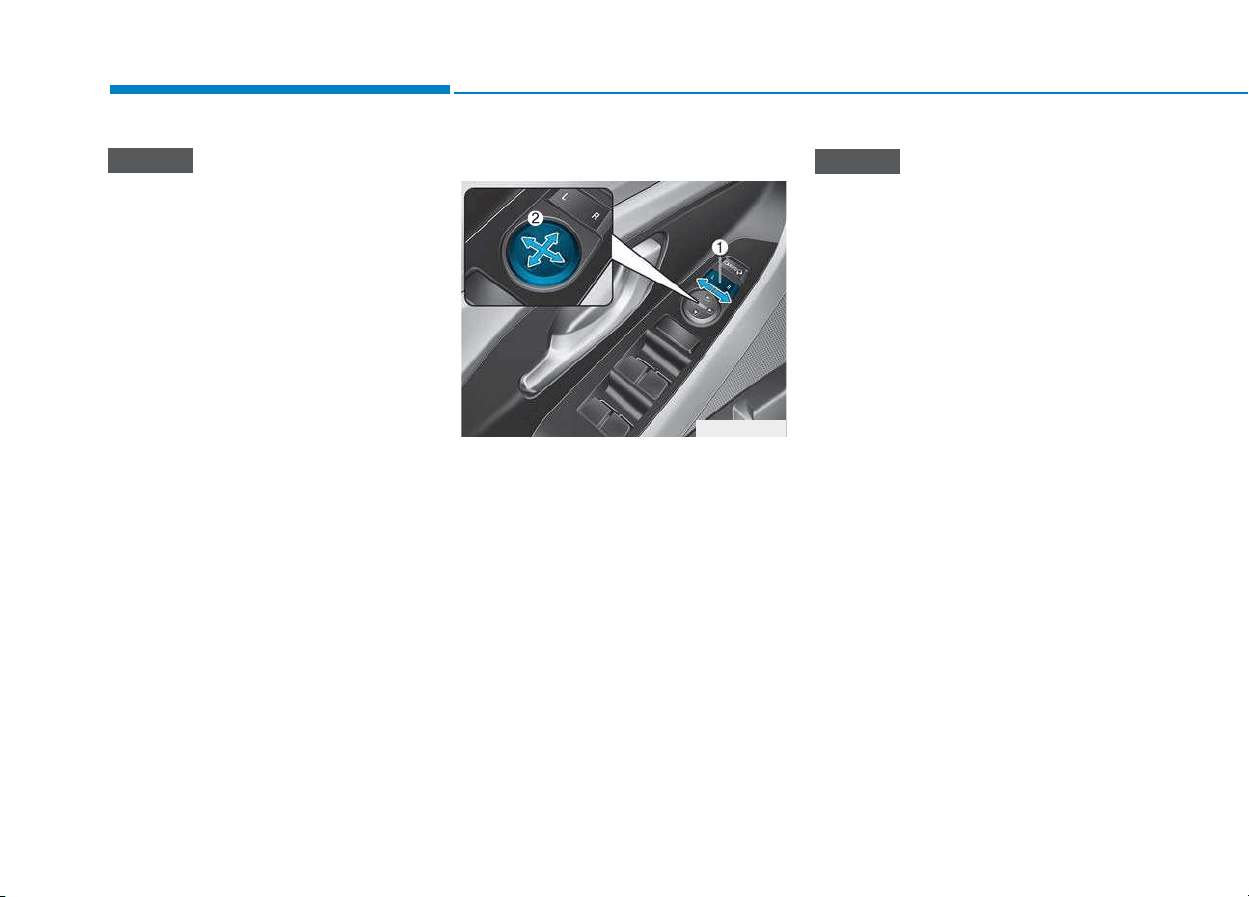
3-24
Convenient features of your vehicle
• Do not scrape ice off the mirror
face; this may damage the sur-
face of the glass.
• If the mirror is jammed with ice,
do not adjust the mirror by
force. Use an approved spray
de-icer (not radiator antifreeze)
spray, or a sponge or soft cloth
with very warm water, or move
the vehicle to a warm place and
allow the ice to melt.
Adjusting the rearview mirrors
1. Press either the L (left side) or R
(right side) button (1) to select the
rearview mirror you would like to
adjust.
2. Use the mirror adjustment control
(2) to position the selected mirror
up, down, left or right.
3. After adjustment, put the button
into neutral (center) position to
prevent inadvertent adjustment.
• The mirrors stop moving when
they reach the maximum adjust-
ing angles, but the motor contin-
ues to operate while the switch
is pressed. Do not press the
switch longer than necessary,
the motor may be damaged.
• Do not attempt to adjust the out-
side rearview mirror by hand
otherwise the motor may be
damaged.
NOTICE
NOTICE
OPDE046017
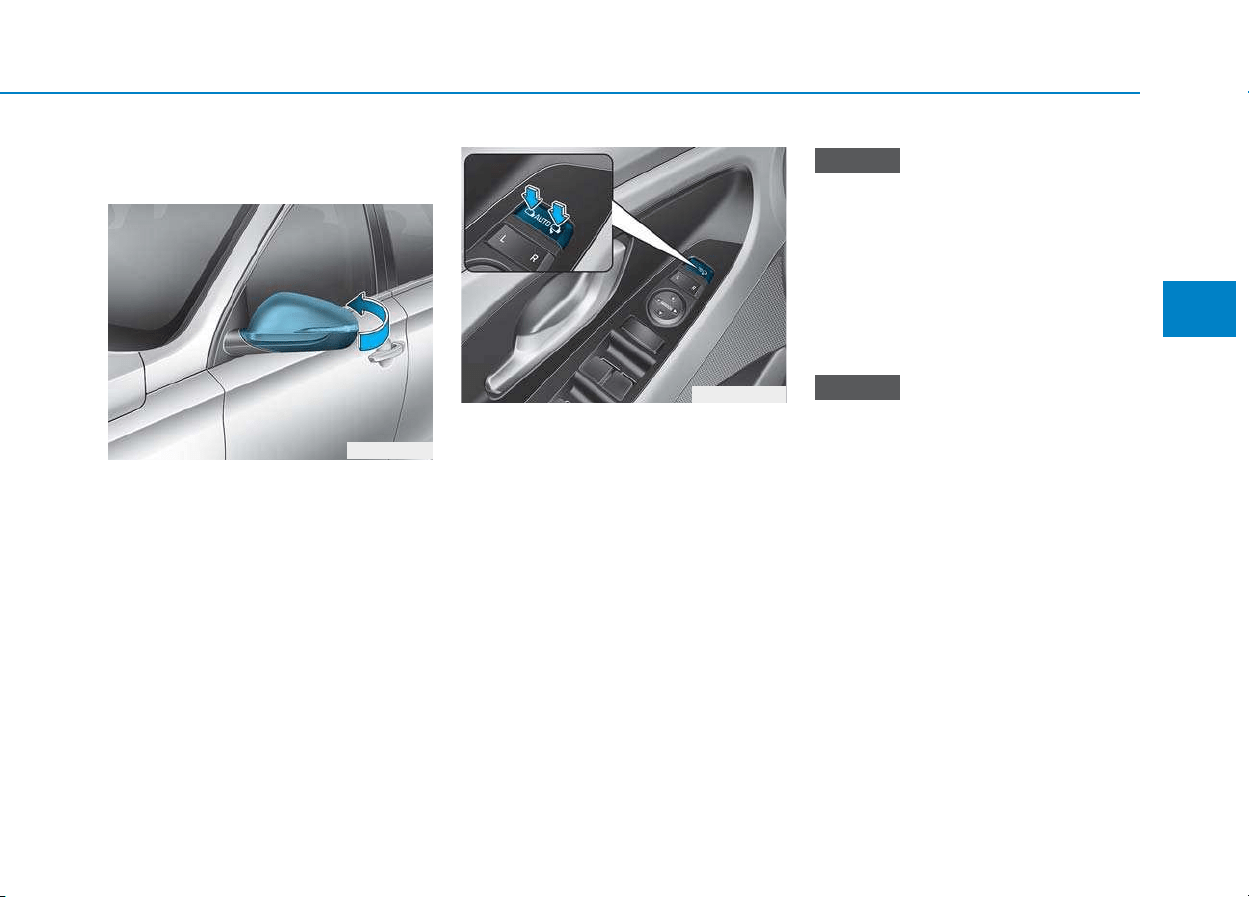
3-25
Convenient features of your vehicle
3
Folding the outside rearview
mirror
Manual type
To fold the outside rearview mirror,
grasp the housing of the mirror and
then fold it toward the rear of the
vehicle.
Electric type
Left : The mirror will unfold.
Right : The mirror will fold.
Center (AUTO) : The mirror will fold
or unfold automatically as follows:
• Without smart key system
- The mirror will fold or unfold when
the door is locked or unlocked by
the remote key.
• With smart key system
- The mirror will fold or unfold when
the door is locked or unlocked by
the smart key.
- The mirror will fold or unfold when
the door is locked or unlocked by
the button on the outside door
handle.
The electric type outside rearview
mirror operates even though the
ignition switch is in the OFF posi-
tion. However, to prevent unnec-
essary battery discharge, do not
adjust the mirrors longer than
necessary while the engine is not
running.
Do not fold the electric type out-
side rearview mirror by hand. It
could cause motor failure.
NOTICE
NOTICE
OPD046018
OPDE046019

3-26
Reverse parking aid function
(if equipped)
When you move the shift lever to the
R (Reverse) position, the outside
rearview mirror(s) will rotate down-
wards to aid with driving in reverse.
The position of the outside rearview
mirror switch (1) determines whether
or not the mirrors will move:
Left/Right : When either the L (Left) or
R (Right) switch is select-
ed, both outside rearview
mirrors will move.
Neutral : When neither switch is select-
ed, the outside rearview mir-
rors will not move.
The outside rearview mirrors will
automatically revert to their original
positions if any of the following occur:
• The ignition switch is placed to
either the LOCK/OFF position or
the ACC position.
• The shift lever is moved to any
position except R (Reverse).
• The outside rearview mirror switch
is not selected.
Convenient features of your vehicle
OPDEN047423
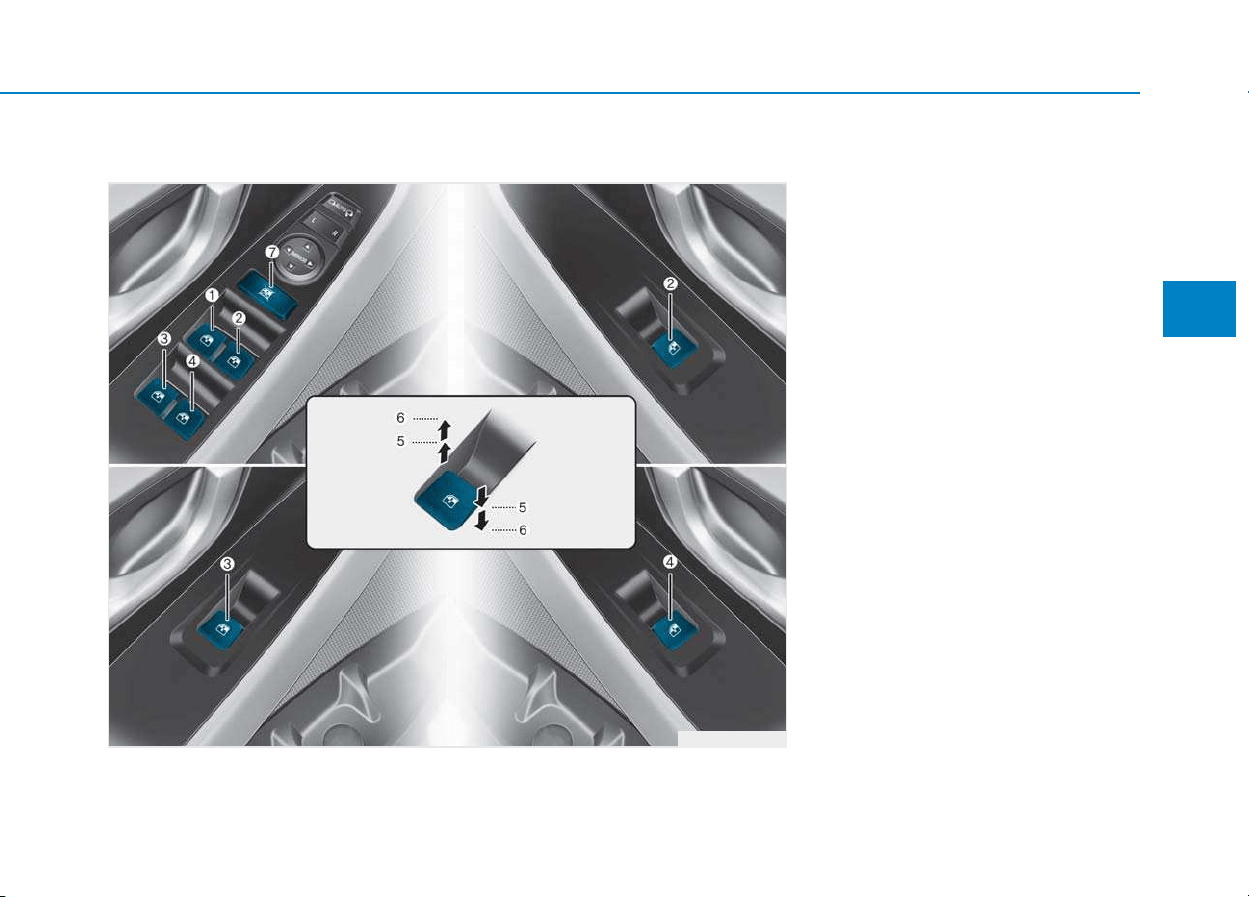
3-27
Convenient features of your vehicle
3
Power windows
(1) Driver’s door power window
switch
(2) Front passenger’s door power
window switch
(3) Rear door (left) power window
switch
(4) Rear door (right) power window
switch
(5) Window opening and closing
(6) Automatic power window
(7) Power window lock switch
WWIINNDDOOWWSS
OPDEN047021
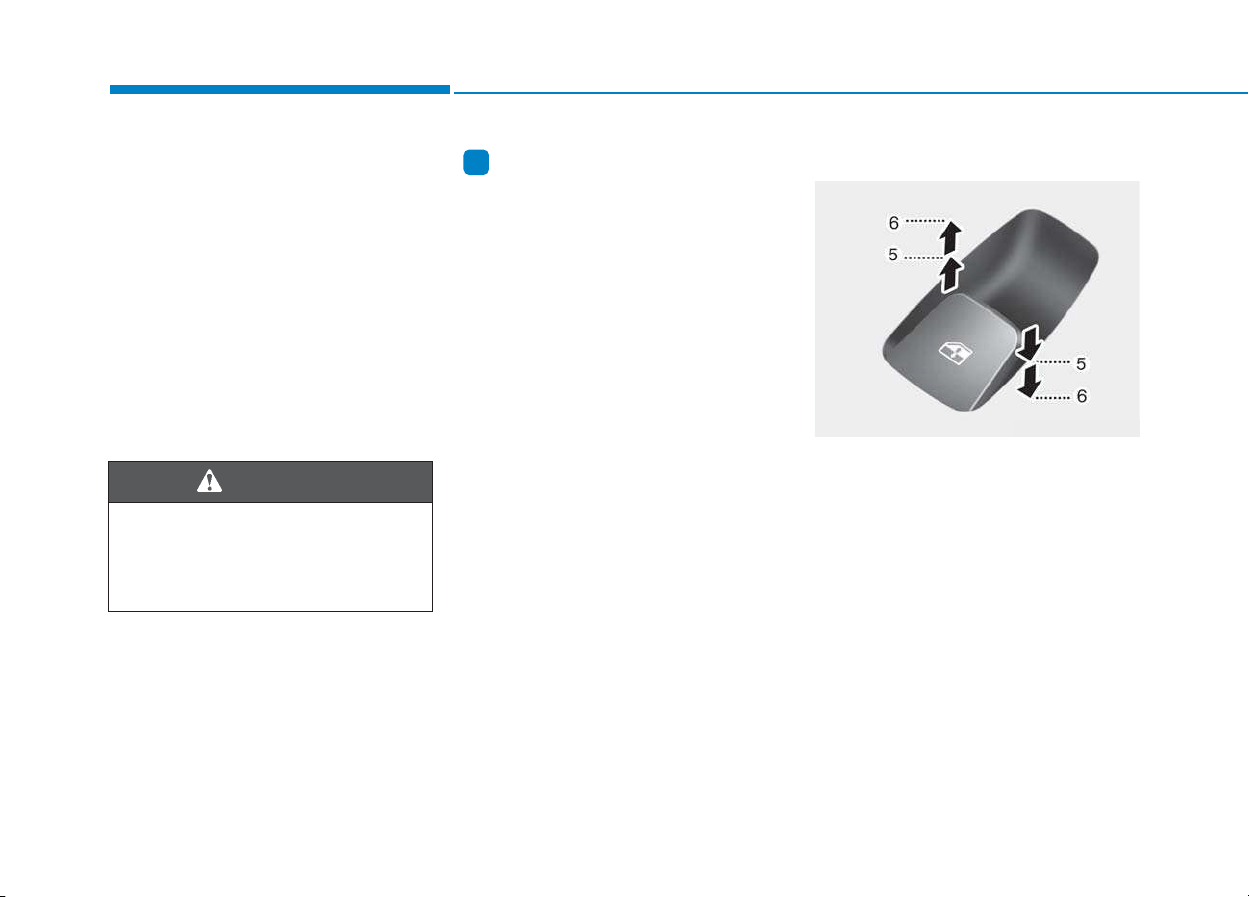
3-28
Convenient features of your vehicle
The ignition switch must be in the ON
position to be able to raise or lower
the windows. Each door has a Power
Window switch to control that door's
window. The driver has a Power
Window Lock switch which can block
the operation of passenger windows.
The power windows will operate for
approximately 30 seconds after the
ignition switch is placed in the ACC
or OFF position. However, if the front
doors are opened, the Power
Windows cannot be operated even
within the 30 second period.
Information
• In cold and wet climates, power win-
dows may not work properly due to
freezing conditions.
• While driving with the rear windows
down or with the sunroof (if
equipped) opened (or partially
opened), your vehicle may demon-
strate a wind buffeting or pulsation
noise. This noise is normal and can
be reduced or eliminated by taking
the following actions. If the noise
occurs with one or both of the rear
windows down, partially lower both
front windows approximately 2.5 cm.
If you experience the noise with the
sunroof open, slightly close the sun-
roof.
Window opening and closing
To open:
Press the window switch down to the
first detent position (5). Release the
switch when you want the window to
stop.
To close:
Pull the window switch up to the first
detent position (5). Release the win-
dow switch when you want the win-
dow to stop.
i
To avoid serious injury or death,
do not extend your head, arms
or body outside the windows
while driving.
WARNING
OPDEN047020
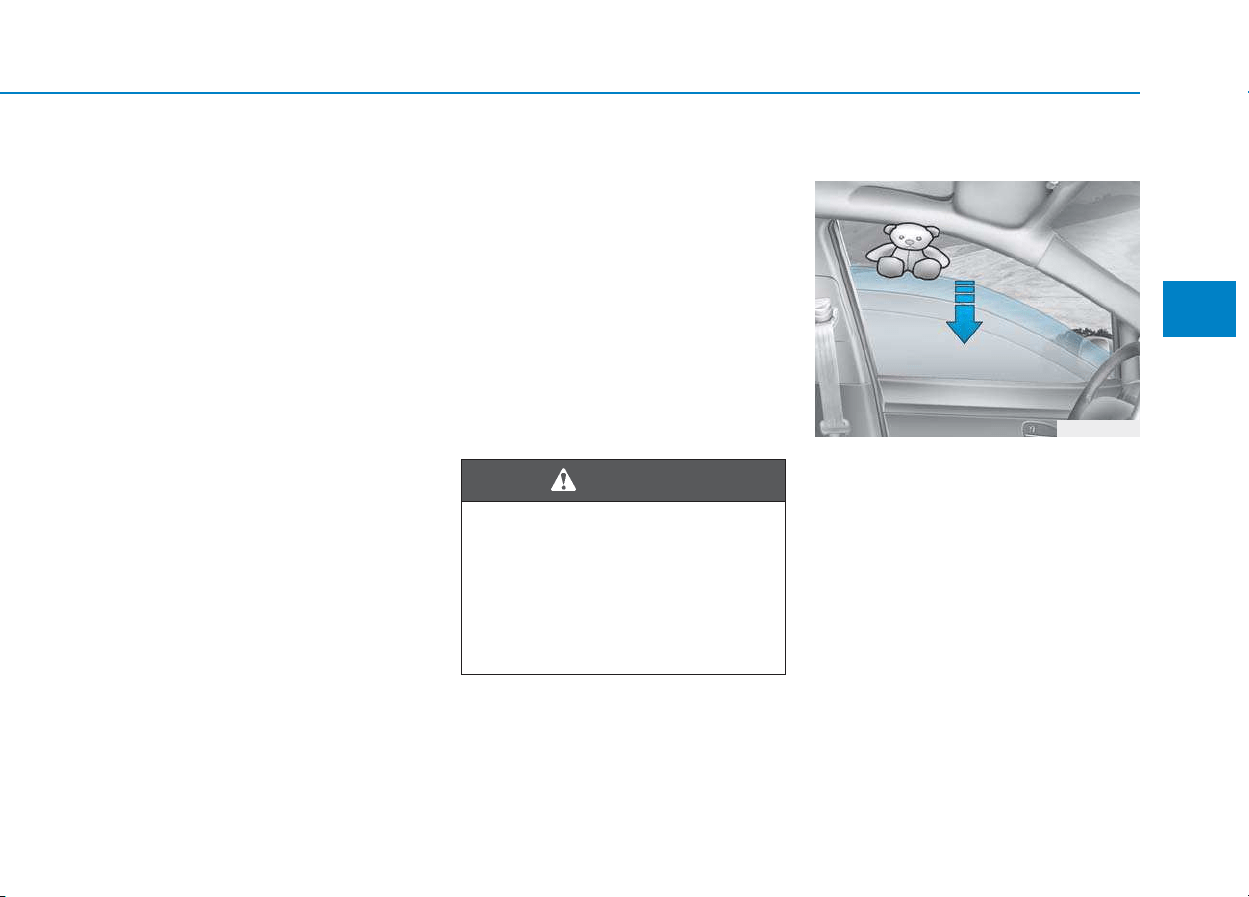
3-29
Convenient features of your vehicle
3
Auto up/down window
Pressing or pulling up the power win-
dow switch momentarily to the sec-
ond detent position (6) completely
lowers or lifts the window even when
the switch is released. To stop the
window at the desired position while
the window is in operation, pull up or
press down and release the switch.
To reset the power windows
If the power windows do not operate
normally, the automatic power win-
dow system must be reset as follows:
1. Place the ignition switch to the ON
position.
2. Close the window and continue
pulling up on the power window
switch for at least one second.
If the power windows do not operate
properly after resetting, it is recom-
mended that the system be checked
by an authorized HYUNDAI dealer.
Automatic reverse
If a window senses any obstacle
while it is closing automatically, it will
stop and lower approximately 30 cm
(12 inches) to allow the object to be
cleared.
If the window detects the resistance
while the power window switch is
pulled up continuously, the window
will stop upward movement then
lower approximately 2.5 cm (1 inch).
If the power window switch is pulled
up continuously again within 5 sec-
onds after the window is lowered by
the automatic window reverse fea-
ture, the automatic window reverse
will not operate.
OLF044032
The automatic reverse feature
doesn’t activate while resetting
the power window system. Make
sure body parts or other objects
are safely out of the way before
closing the windows to avoid
injuries or vehicle damage.
WARNING
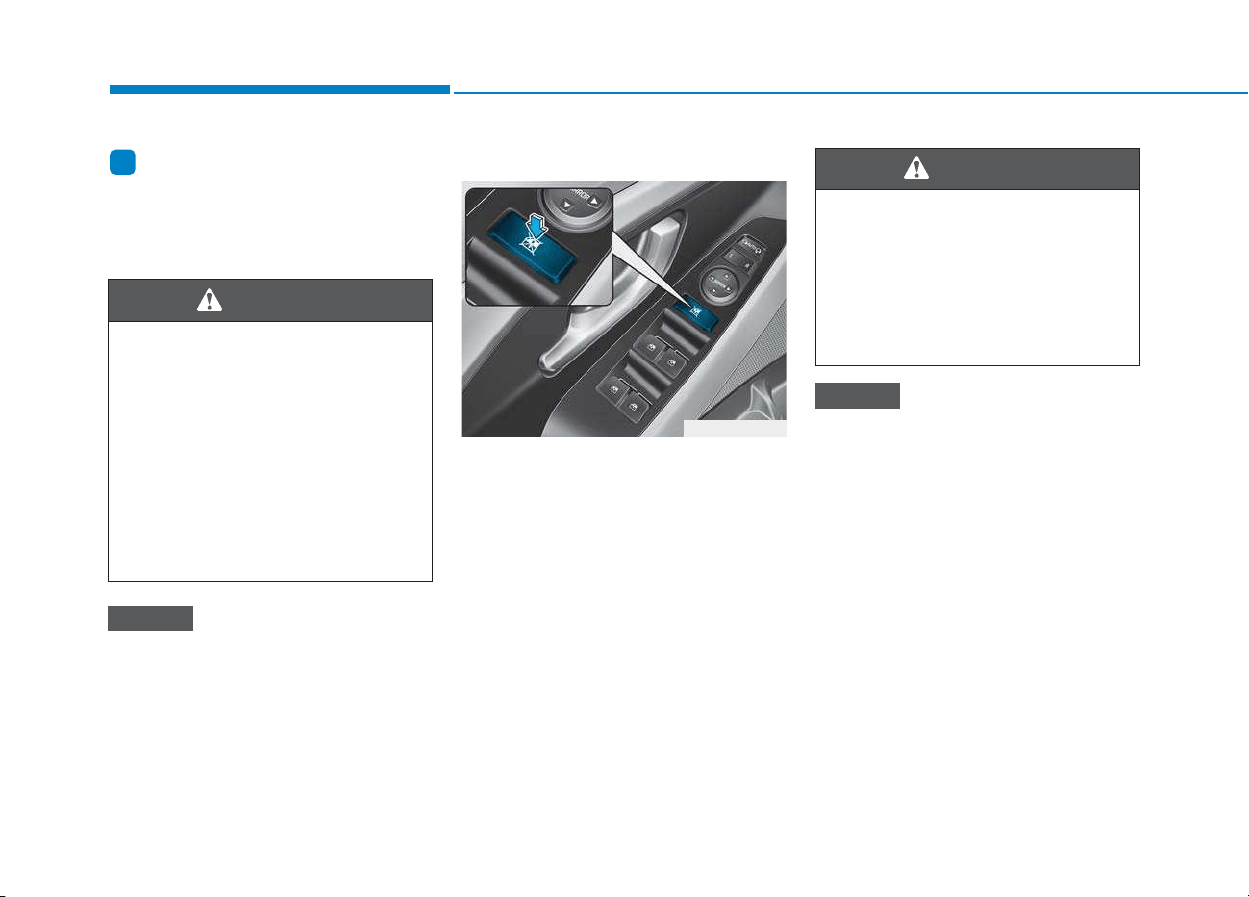
3-30
Convenient features of your vehicle
Information
The automatic reverse feature is only
active when the “Auto Up” feature is
used by fully pulling up the switch to
the second detent.
Do not install any accessories on
the windows. The automatic
reverse feature may not operate.
Power window lock switch
The driver can disable the power
window switches on the rear passen-
gers' doors by pressing the power
window lock switch.
When the power window lock switch
is pressed:
• The driver's master control can
operate all the power windows.
• The front passenger's control can
operate the front passenger's
power window.
• The rear passenger's control can-
not operate the rear passengers'
power window.
• To prevent possible damage to
the power window system, do
not open or close two windows
or more at the same time. This
will also ensure the longevity of
the fuse.
• Never try to operate the main
switch on the driver's door and
the individual door window
switch in opposite directions at
the same time. If this is done, the
window will stop and cannot be
opened or closed.
NOTICE
NOTICE
i
Make sure body parts or other
objects are safely out of the way
before closing the windows to
avoid injuries or vehicle damage.
Objects less than 4 mm (0.16
inch) in diameter caught between
the window glass and the upper
window channel may not be
detected by the automatic reverse
window and the window will not
stop and reverse direction.
WARNING
Do not allow children to play
with the power windows. Keep
the driver’s door power window
lock switch in the LOCK posi-
tion. Serious injury or death can
result from unintentional win-
dow operation by a child.
WARNING
OPDEN047023
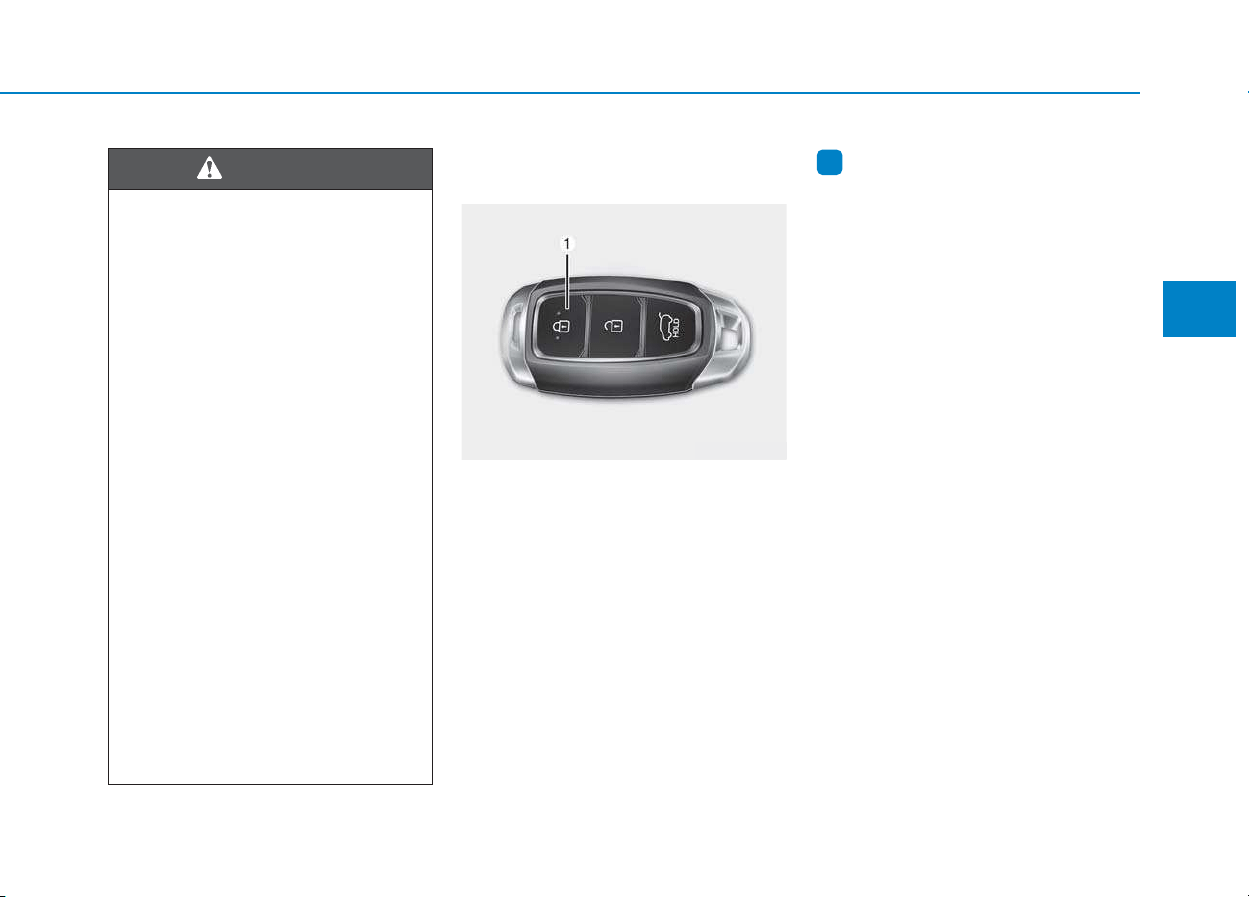
3-31
Convenient features of your vehicle
3
Remote window closing
function (if equipped)
You can still control the window
movement with the engine turned off
by pressing the door lock button (1)
for more than 3 seconds.The window
moves (up), as long as you press the
door lock button. The window move-
ment stops, when you release the
door lock button. The hazard warning
lights blink 3 times, when the window
is completely closed.
Information
• The remote window closing function
may abruptly stop, when you move
away from your vehicle during the
operation. Stay in close proximity of
your vehicle, while monitoring the
window movement.
• One of the windows may stop oper-
ating, when the window is interrupt-
ed by certain force. However, the
other windows will keep operating.
Thus, you should make sure that all
windows are closed, and that the
hazard warning lights blink 3 times.
i
• NEVER leave the keys in your
vehicle with unsupervised
children, when the engine is
running.
• NEVER leave any child unat-
tended in the vehicle. Even
very young children may inad-
vertently cause the vehicle to
move, entangle themselves in
the windows, or otherwise
injure themselves or others.
• Always double check to make
sure all arms, hands, head
and other obstructions are
safely out of the way before
closing a window.
• Do not allow children to play
with the power windows. Keep
the driver’s door power window
lock switch in the LOCK posi-
tion (pressed). Serious injury
can result from unintentional
window operation by the child.
• Do not extend your head,
arms or body outside the win-
dows while driving.
WARNING
OPD047044L
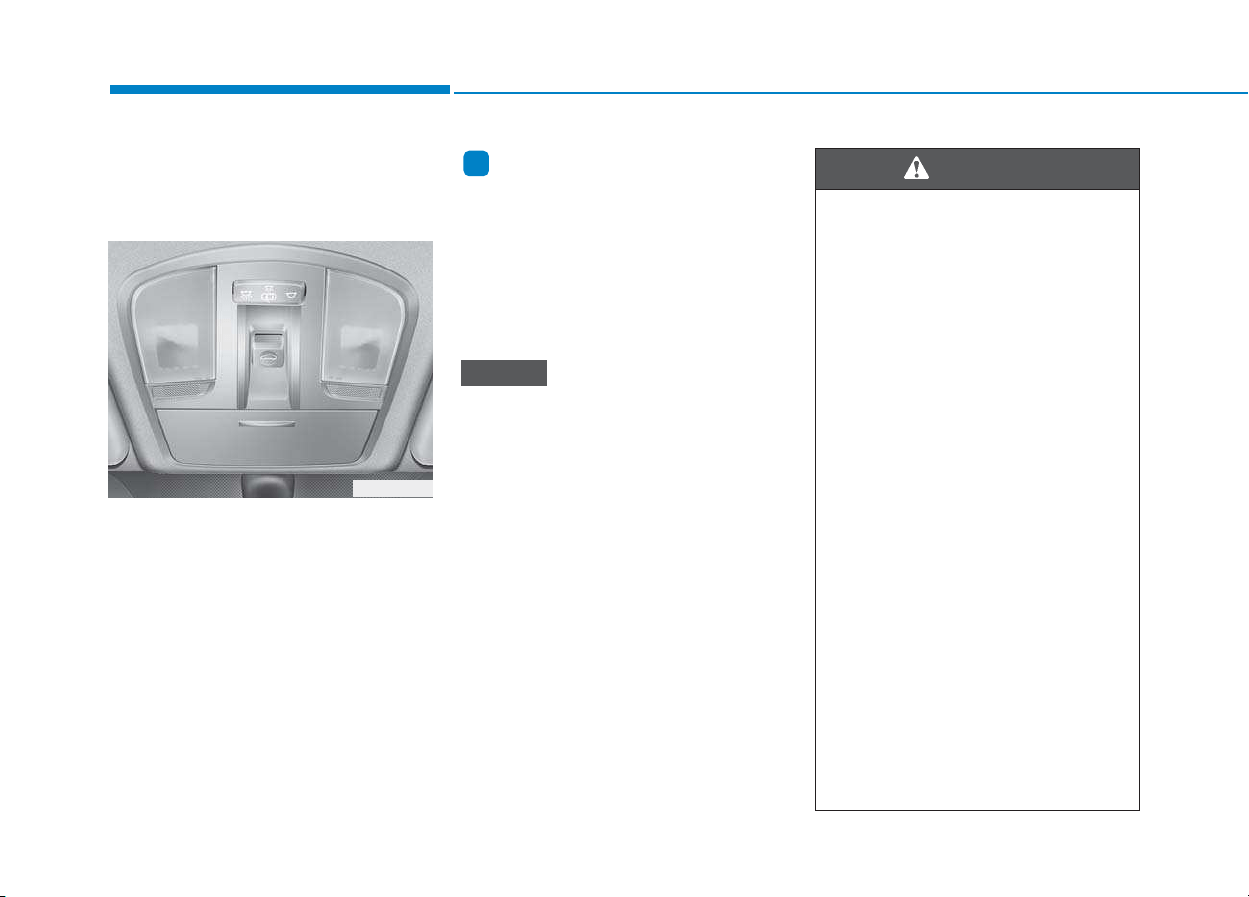
3-32
Convenient features of your vehicle
If your vehicle is equipped with a
sunroof, you can slide or tilt your
sunroof with the sunroof control lever
located on the overhead console.
The ignition switch must be in the ON
position before you can open or
close the sunroof.
The sunroof can be operated for
approximately 30 seconds after the
ignition key is removed or turned to
the ACC or LOCK(or OFF) position.
However, if the front door is opened,
the sunroof cannot be operated even
within 30 seconds.
Information
• In cold and wet climates, the sun-
roof may not work properly due to
freezing conditions.
• After the vehicle is washed or in a
rainstorm, be sure to wipe off any
water that is on the sunroof before
operating it.
• Do not continue to move the sun-
roof control lever after the sun-
roof is fully opened, closed, or
tilted. Damage to the motor or
system components could occur.
• Make sure the sunroof is closed
fully when leaving your vehicle.
If the sunroof is open, rain or
snow may leak through the sun-
roof and wet the interior as well
as allow theft.
NOTICE
i
PPAANNOORRAAMMAA SSUUNNRROOOOFF ((IIFF EEQQUUIIPPPPEEDD))
•
Never adjust the sunroof or
sunshade while driving. This
could result in loss of control
and an accident that may
cause death, serious injury, or
property damage.
• Make sure heads, other body
parts or objects are out of the
way before using the sunroof.
• Do not leave the engine run-
ning and the key in your vehi-
cle with unsupervised children.
Unattended children could
operate the sunroof, which
could result in serious injury.
• The panorama sunroof is
made of glass, subject to
break in case of accident.
Passengers without the appro-
priate protection(e.g. seat belt,
CRS, etc.) on may project out
through the broken glasses
and get seriously injured or
even result in death.
• Do not sit on the top of the
vehicle. It may cause injuries
or vehicle damage.
WARNING
OPD046024
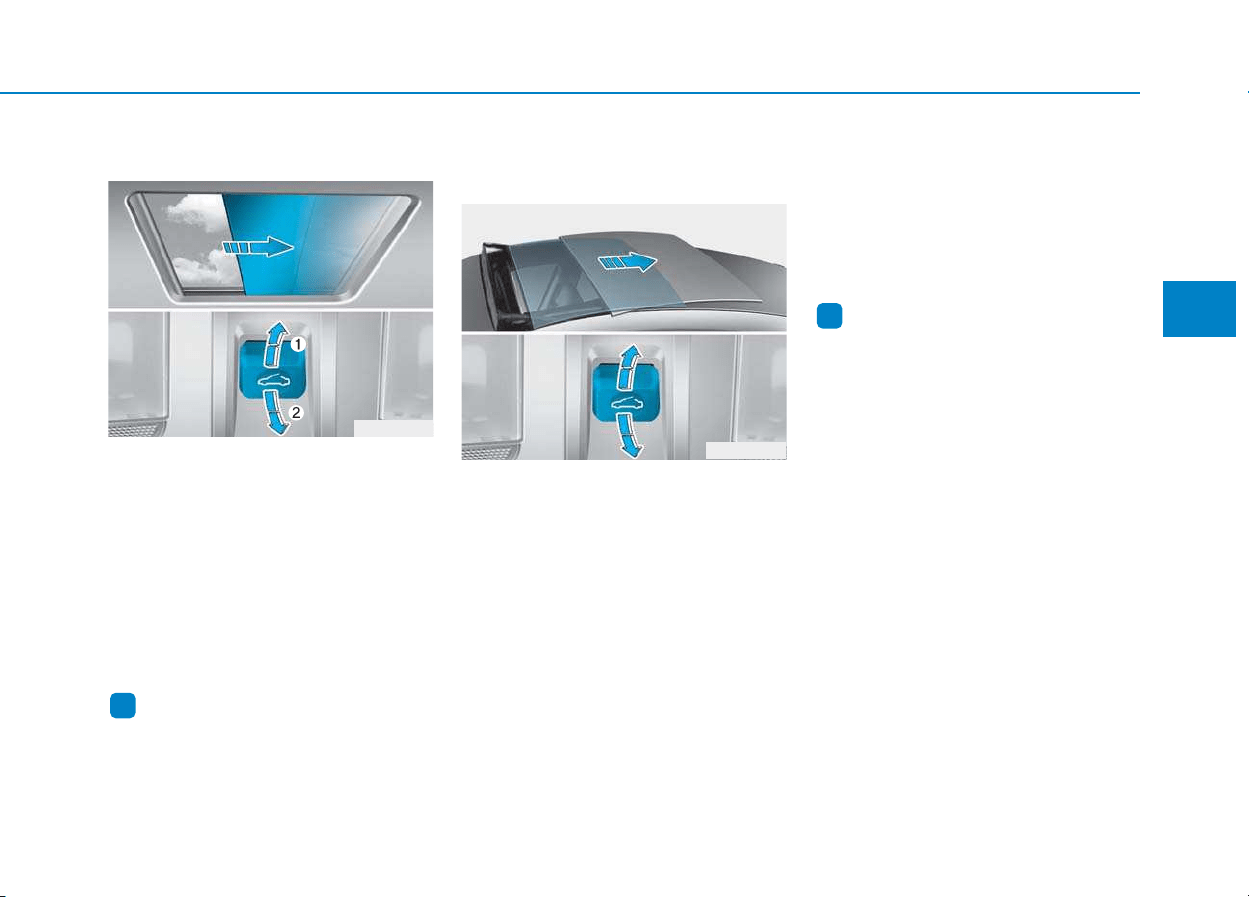
3-33
Convenient features of your vehicle
3
Sunshade
• To open the sunshade, pull the
sunroof control lever backward (1)
to the first detent position.
• To close the sunshade when the
sunroof glass is closed, push the
sunroof control lever forward (2).
To stop the sunroof movement at any
point, push the sunroof control lever
either forward or backward momen-
tarily.
Information
Activating the control lever to the first
detent requires only a very light touch.
Sliding the sunroof
When the sunshade is closed
If you push the sunroof control lever
backward past the first detent, the
sunshade will slide all the way open
and then the sunroof glass will slide
all the way open.
To stop the sunroof movement at any
point, push the sunroof control lever
either forward or backward momen-
tarily.
When the sunshade is opened
If you pull the sunroof control lever
backward, the sunroof glass will slide
all the way open. To stop the sunroof
movement at any point, pull or push
the sunroof control lever momentarily.
Information
Only the front glass of the panorama
sunroof opens and closes.
i
i
OPD046053
OPD046025
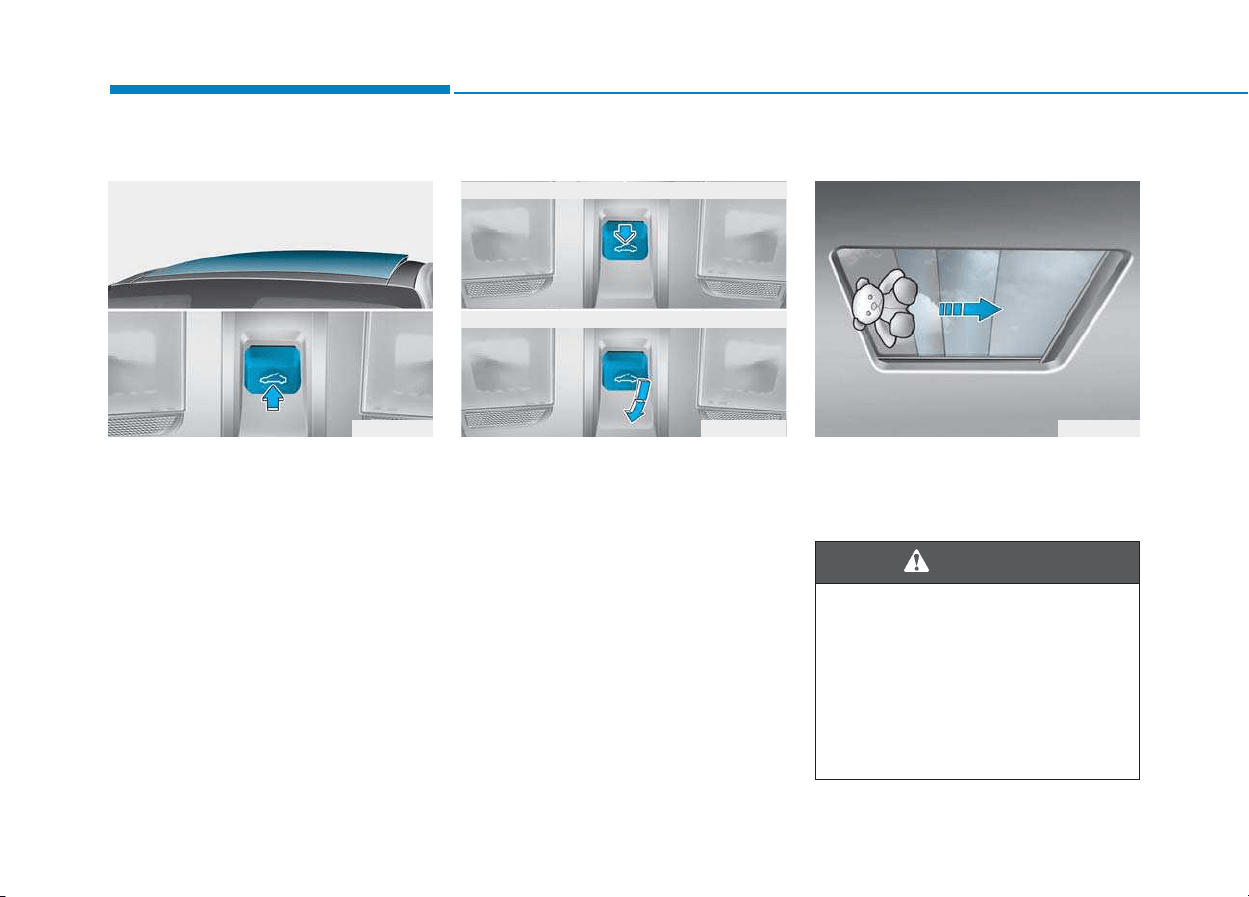
3-34
Convenient features of your vehicle
Tilting the sunroof
When the sunshade is closed
If you push the sunroof control lever
upward, the sunshade will slide open
then the sunroof glass will tilt open.
To stop the sunroof movement at any
point, push the sunroof control lever
either forward or backward momen-
tarily.
When the sunshade is opened
If you push the sunroof control lever
upward, the sunroof glass will tilt open.
To stop the sunroof movement at any
point, push the sunroof control lever
either forward or backward momen-
tarily.
Closing the sunroof
To close sunroof glass
Push the sunroof control lever for-
ward to the first detent position.
To close sunroof glass with
sunshade
Push the sunroof control lever for-
ward to the second detent position.
The sunroof glass will close then the
sunshade will close automatically.
To stop the sunroof movement at any
point, push the sunroof control lever
either forward or backward momen-
tarily.
Automatic reverse (if equipped)
If the sunroof senses any obstacle
while it is closing automatically, it will
reverse direction then stop to allow
the object to be cleared.
OPD046054 ODH043039OPD046055
■ Sunroof glass
■ Sunroof glass with sunshade
Small objects that can get
caught between the sunroof
glass and the front glass chan-
nel may not be detected by the
automatic reverse system. In
this case, the sunroof glass will
not detect the object and will not
reverse direction.
WARNING
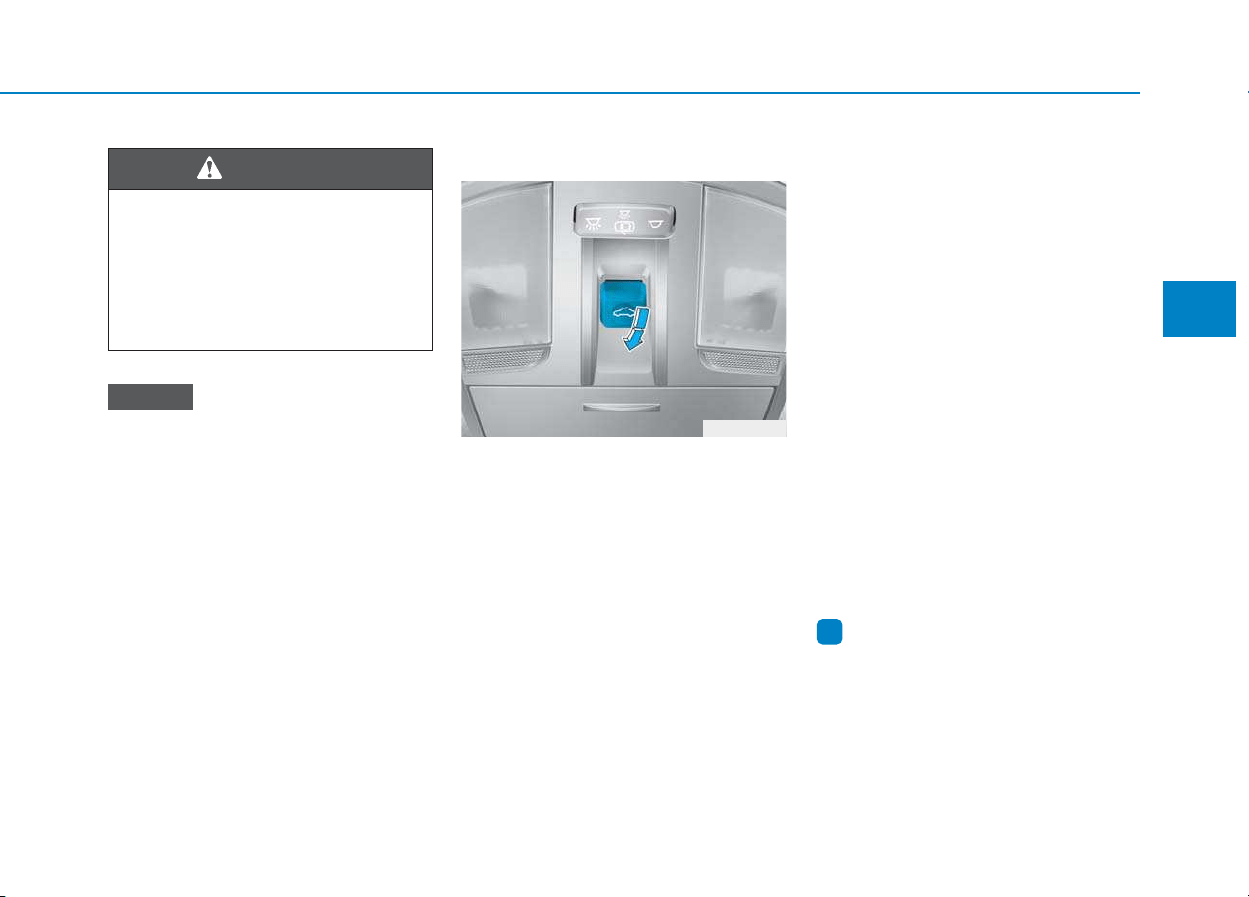
3-35
Convenient features of your vehicle
3
• Periodically remove any dirt that
may accumulate on the sunroof
guide rail or between the sun-
roof and roof panel, which can
make a noise.
• Do not try to open the sunroof
when the temperature is below
freezing or when the sunroof is
covered with snow or ice, other-
wise the motor could be dam-
aged. In cold and wet climates, the
sunroof may not work properly.
Resetting the sunroof
The sunroof may need to be reset if
the following conditions occur:
- The battery is discharged or dis-
connected or the sunroof fuse has
been replaced or disconnected
- The sunroof control lever is not
operating correctly
To reset the sunroof, perform the fol-
lowing steps:
1. Turn the engine on and close the
sunroof glass and sunshade com-
pletely.
2. Release the control lever.
3. Push and hold the sunroof control
lever forward (to close the sun-
shade) for about 10 seconds until
the sunroof moves slightly, then
release the control lever.
4. Push and hold the sunroof control
lever forward until the sunroof
operates as follows:
Sunshade Open → Glass Tilt Open
→ Glass Slide Open → Glass Slide
Close → Sunshade Close
Then, release the control lever.
When this is complete, the sunroof
system is reset.
For more details, contact an author-
ized HYUNDAI dealer.
Information
If you do not reset the sunroof, it may
not work properly.
i
NOTICE
• In order to prevent accidental
operation of the sunroof, espe-
cially by a child, do not let a
child operate the sunroof.
• Do not sit on the top of the vehi-
cle. It may cause vehicle damage.
WARNING
OPD046056
3-36
Convenient features of your vehicle
Sunroof open warning
(if equipped)
• If the driver turns off the engine when
the sunroof is not fully closed, the
warning chime will sound for approx-
imately 3 seconds and the sunroof
open warning will appear on the LCD
display.
• If the driver turns off the engine and
opens the door when the sunroof is
not fully closed, the open sunroof
warning will appear on the LCD dis-
play until the door is closed or the
sunroof is fully closed.
Close the sunroof securely when leav-
ing your vehicle.
OPD046116
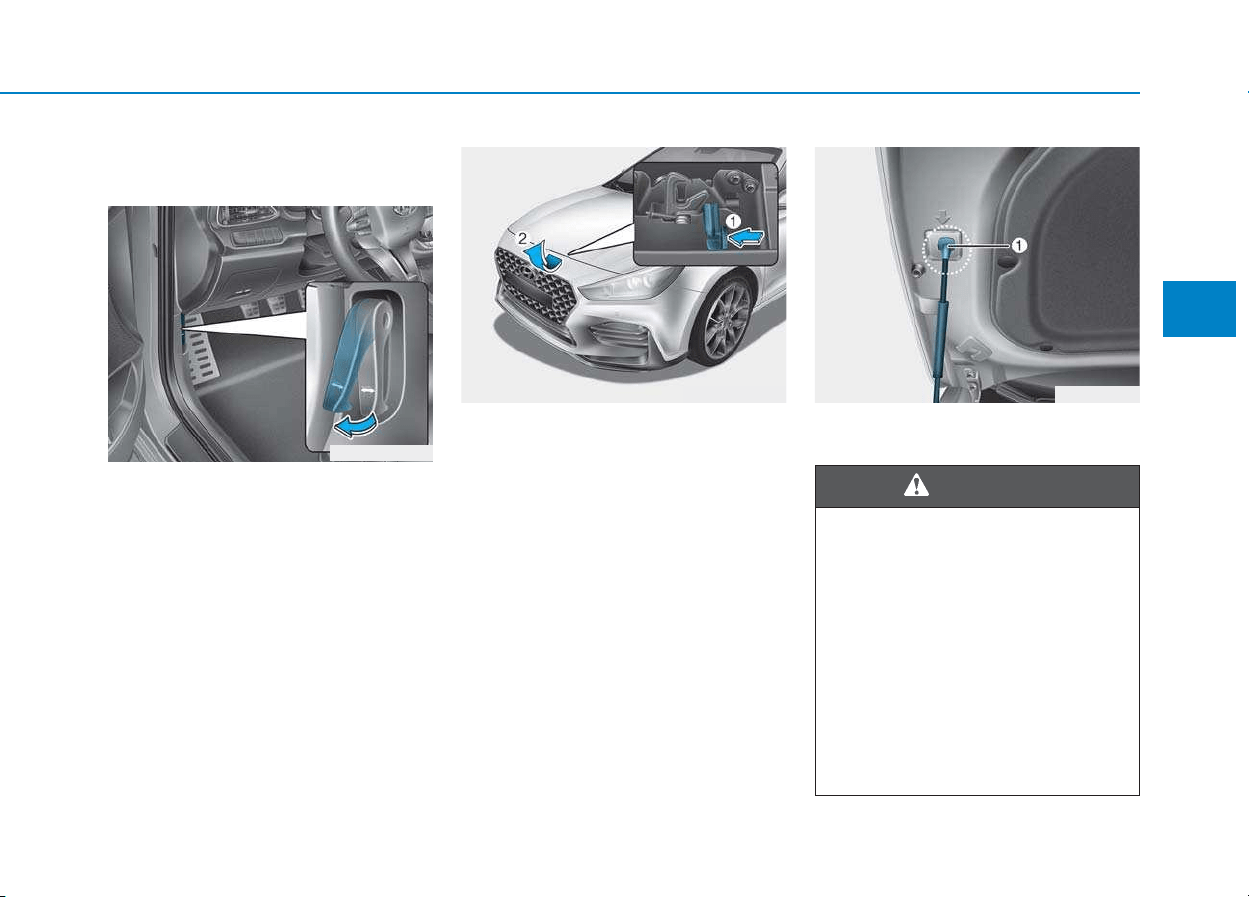
3-37
Convenient features of your vehicle
3
EEXXTTEERRIIOORR FFEEAATTUURREESS
Hood
Opening the hood
1. Park the vehicle and set the park-
ing brake.
2. Pull the release lever to unlatch
the hood. The hood should pop
open slightly.
3. Go to the front of the vehicle, raise
the hood slightly, push the second-
ary latch up (1) inside of the hood
center and lift the hood (2).
4. Pull out the support rod.
5. Hold the hood open with the sup-
port rod (1).
OPDEN047027
OPDEN047028
• Grasp the support rod in the
area wrapped in rubber. The
rubber will help prevent you
from being burned by hot
metal when the engine is hot.
• The support rod must be
inserted completely into the
hole provided whenever you
inspect the engine compart-
ment. This will prevent the
hood from falling and possi-
bly injuring you.
WARNING
OPD046030
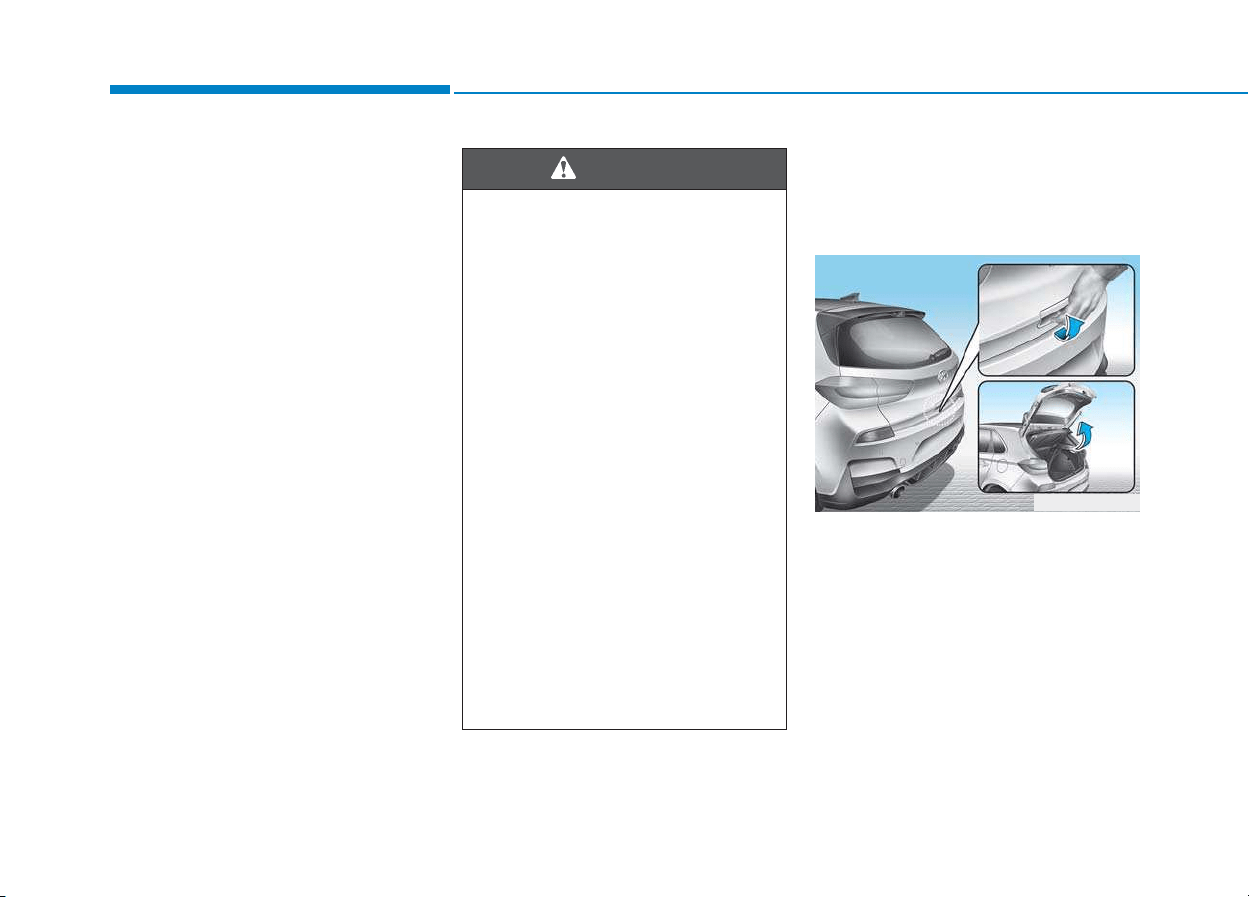
3-38
Convenient features of your vehicle
Closing the hood
1. Before closing the hood, check the
following:
• All filler caps in engine compart-
ment must be correctly installed.
• Gloves, rags or any other com-
bustible material must be removed
from the engine compartment.
2. Return the support rod to its clip to
prevent it from rattling.
3. Lower the hood halfway (lifted
approximately 30cm from the
closed position) and push down to
securely lock in place. Then double
check to be sure the hood is secure.
If the hood can be raised slightly, it is
not securely locked. Open it again
and close it with more force.
Tailgate
Opening the tailgate
Make sure the vehicle is in P (Park)
and set the parking brake.
Then do one of the following:
1. Unlock all doors with the Door
Unlock button on your remote key or
smart key. Press the tailgate handle
button and open the tailgate.
2. Press and hold the Tailgate Unlock
button on the remote key or smart
key. Press the tailgate handle but-
ton and open the tailgate.
3. With the Smart Key in your pos-
session, press the tailgate handle
button and open the tailgate.
• Before closing the hood,
ensure all obstructions are
removed from around the
hood opening.
• Always double check to be
sure that the hood is firmly
latched before driving away.
Check there is no hood open
warning light or message dis-
played on the instrument clus-
ter. If the hood is not latched
while the vehicle is moving, the
chime will sound to warn the
driver the hood is not fully
latched. Driving with the hood
opened may cause a total loss
of visibility, which might result
in an accident.
• Do not move the vehicle with
the hood in the raised posi-
tion, as vision is obstructed,
which might result in an acci-
dent, and the hood could fall
or be damaged.
WARNING
OPDEN047029
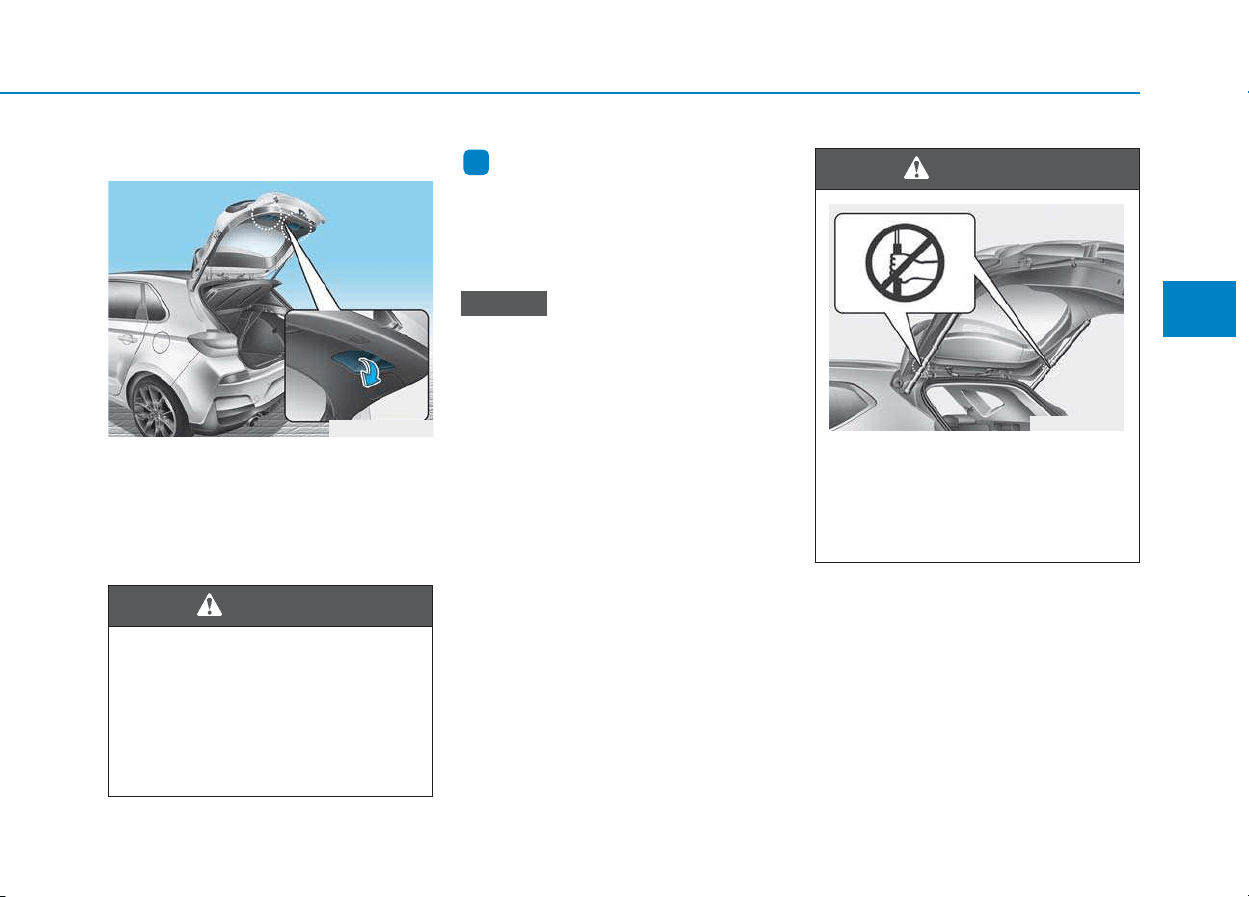
3-39
Convenient features of your vehicle
3
Closing the tailgate
Lower the tailgate lid and press down
until it locks. To be sure the tailgate
lid is securely fastened, always
check by trying to pull it up again
without pressing the tailgate handle
button.
Information
To prevent damage to the tailgate lift
cylinders and the attached hardware,
always close the tailgate before driv-
ing.
In cold and wet climates, tailgate
lock and tailgate mechanisms may
not work properly due to freezing
conditions.
NOTICE
i
Always keep the tailgate lid com-
pletely closed while the vehicle is
in motion. If it is left open or ajar,
poisonous exhaust gases con-
taining carbon monoxide (CO)
may enter the vehicle and seri-
ous illness or death may result.
WARNING
Do not hold the part (gas lifter)
that supports the tailgate. Be
aware that the deformation of the
part may cause vehicle damage
and a risk of safety accident.
WARNING
OPDEN047031
OHYK047009
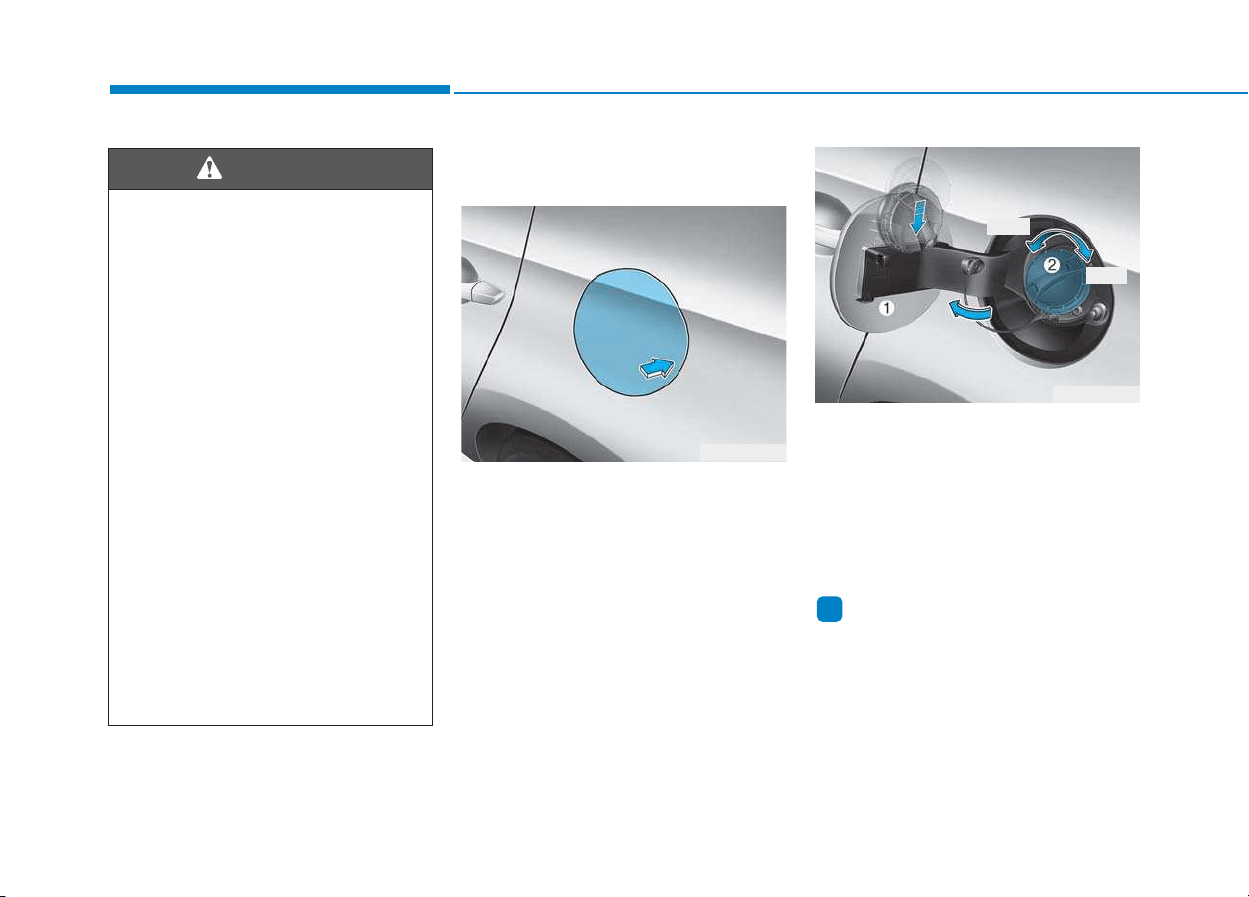
3-40
Convenient features of your vehicle
Fuel filler door
Opening the fuel filler door
1. Turn the engine off.
2. Ensure the driver's door is
unlocked.
3. Push the fuel filler door near the 3
o'clock position.
4. Pull the fuel filler door (1) out to
fully open.
5. To remove the fuel tank cap (2),
turn it counterclockwise. You may
hear a hissing noise as the pres-
sure inside the tank equalizes.
6. Place the cap on the fuel filler door.
Information
If the fuel filler door does not open
because ice has formed around it, tap
lightly or push on the door to break
the ice and release the door. Do not
pry on the door. If necessary, spray
around the door with an approved de-
icer fluid (do not use radiator anti-
freeze) or move the vehicle to a warm
place and allow the ice to melt.
i
OPD046034
OPD046033
Open
Close
• NEVER allow anyone to occu-
py the luggage compartment of
the vehicle at any time. If the
tailgate is partially or totally
latched and the person is
unable to get out, serious
injury or death could occur due
to lack of ventilation, exhaust
fumes and rapid heat build-up,
or because of exposure to cold
weather conditions. The lug-
gage compartment is also a
highly dangerous location in
the event of a crash because it
is not a protected occupant
space but is a part of the vehi-
cle’s crush zone.
• Your vehicle should be kept
locked and keys should be
kept out of the reach of chil-
dren. Parents should teach
their children about the dan-
gers of playing in luggage
compartments.
WARNING

3-41
Convenient features of your vehicle
3
Closing the fuel filler door
1. To install the fuel tank cap, turn it
clockwise until it “clicks” one time.
2. Close the fuel filler door until it is
latched securely.
Information
The fuel filler door will not close if the
driver's door is locked. If you lock the
driver's door while fueling, unlock it
before closing the fuel filler door.
i
(Continued)
Static electricity discharge can
ignite fuel vapors causing a
fire. If you must re-enter the
vehicle, you should once again
eliminate potentially danger-
ous static electricity discharge
by touching a metal part of the
vehicle, away from the fuel filler
neck, nozzle or other gasoline
source, with your bare hand.
•
When refueling, always move
the shift lever to 1st gear when
the vehicle is parked on a uphill
and to R (Reverse) on a down-
hill, set the parking brake, and
place the ignition switch to the
LOCK/OFF position. Sparks pro-
duced by electrical components
related to the engine can ignite
fuel vapors causing a fire.
(Continued)
(Continued)
• Before touching the fuel noz-
zle, you should eliminate the
potential build-up of static
electricity by touching a metal
part of the vehicle, a safe dis-
tance away from the fuel filler
neck, nozzle, or other gas
source, with your bare hand.
• Do not use cellular phones
while refueling. Electric cur-
rent and/or electronic interfer-
ence from cellular phones can
potentially ignite fuel vapors
and cause a fire.
• Do not get back into a vehicle
once you have begun refuel-
ing. You can generate a build-
up of static electricity by touch-
ing, rubbing or sliding against
any item or fabric capable of
producing static electricity.
(Continued)
Gasoline is highly flammable
and explosive. Failure to follow
these guidelines may result in
SERIOUS INJURY or DEATH:
• Read and follow all warnings
posted at the gas station.
• Before refueling, note the
location of the Emergency
Gasoline Shut-Off, if available,
at the gas station.
(Continued)
WARNING

3-42
Convenient features of your vehicle
Information
Make sure to refuel your vehicle
according to the "Fuel Requirements"
suggested in the Introduction chapter.
• Do not spill fuel on the exterior
surfaces of the vehicle. Any type
of fuel spilled on painted sur-
faces may damage the paint.
• If the fuel filler cap requires
replacement, use only a genuine
HYUNDAI cap or the equivalent
specified for your vehicle. An
incorrect fuel filler cap can
result in a serious malfunction
of the fuel system or emission
control system.
NOTICE
i
(Continued)
• If a fire breaks out during refu-
eling, leave the vicinity of the
vehicle, and immediately con-
tact the manager of the gas
station and then contact the
local fire department. Follow
any safety instructions they
provide.
• If pressurized fuel sprays out,
it can cover your clothes or
skin and thus subject you to
the risk of fire and burns.
Always remove the fuel cap
carefully and slowly. If the cap
is venting fuel or if you hear a
hissing sound, wait until the
condition stops before com-
pletely removing the cap.
• Always check that the fuel cap
is installed securely to prevent
fuel spillage in the event of an
accident.
(Continued)
• When using an approved
portable fuel container, be sure
to place the container on the
ground prior to refueling. Static
electricity discharge from the
container can ignite fuel vapors
causing a fire. Once refueling
has begun, contact between
your bare hand and the vehicle
should be maintained until the
filling is complete.
• Use only approved portable
plastic fuel containers designed
to carry and store gasoline.
• Do not use matches or a
lighter and do not smoke or
leave a lit cigarette in your
vehicle while at a gas station,
especially during refueling.
• Do not over-fill or top-off your
vehicle tank, which can cause
gasoline spillage.
(Continued)

3-43
Convenient features of your vehicle
3
1. Variable LED tachometer
2. Speedometer
3. Engine coolant temperature gauge
4. Fuel gauge
5. Warning and indicator lights
6. LCD display (including Trip computer)
OPDEN047101
IINNSSTTRRUUMMEENNTT CCLLUUSSTTEERR
The actual cluster in the vehicle may differ
from the illustration.
For more details, refer to the "Gauges and
Meters" in this chapter.
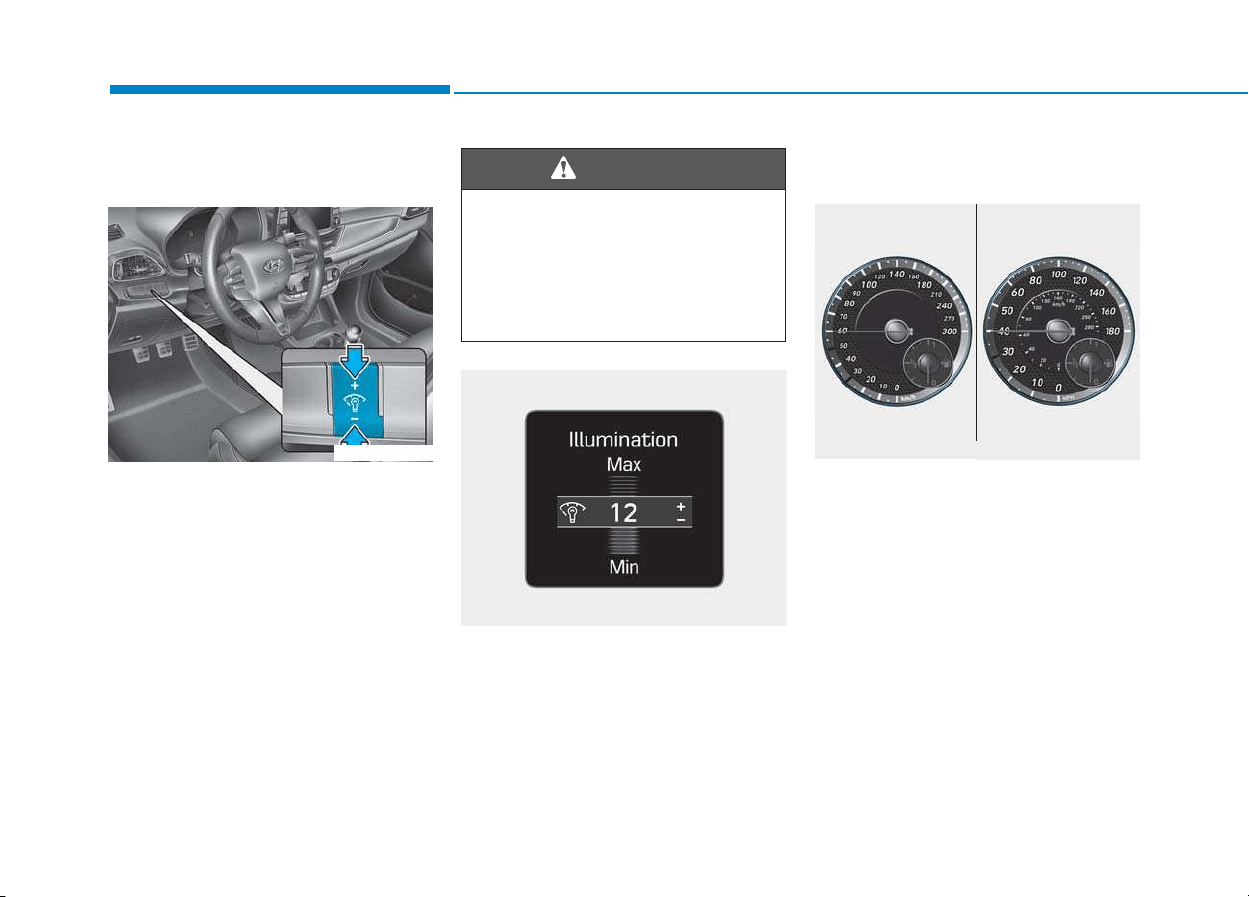
3-44
Convenient features of your vehicle
Instrument cluster control
Instrument panel illumination
When the vehicle's position lights or
headlamps are on, press the illumi-
nation control button to adjust the
brightness of the instrument panel
illumination.
When pressing the illumination con-
trol button, the interior switch illumi-
nation intensity is also adjusted.
• The brightness of the instrument
panel illumination is displayed.
• If the brightness reaches the maxi-
mum or minimum level, an alarm
will sound.
Gauges and meters
Speedometer
The speedometer indicates the
speed of the vehicle and is calibrated
in kilometers per hour (km/h) and/or
miles per hour (MPH).
Never adjust the instrument
cluster while driving. This could
result in loss of control and lead
to an accident that may cause
death, serious injury, or vehicle
damage.
WARNING
OPDEN047049
OPDE046110
OPDEN047102/OPDEN047109
■ MPH, km/h
■ km/h

3-45
Convenient features of your vehicle
3
Variable LED tachometer
The tachometer indicates the approx-
imate number of engine revolutions
per minute (rpm).
Use the tachometer to select the cor-
rect shift points and to prevent lug-
ging and/or over-revving the engine.
The yellow and red LEDs show the
range of recommended engine opera-
tion speed. As the engine oil temper-
ature warms up, the recommended
engine speed range also extends.
Avoid driving with engine speeds in
the yellow and red warning fields.
In particular, do not drive with the
engine speed in the red warning field.
Doing so may damage the engine.
Engine coolant temperature
gauge
This gauge indicates the tempera-
ture of the engine coolant when the
ignition switch is in the ON position.
If the gauge pointer moves
beyond the normal range area
toward the "130" position, it indi-
cates overheating that may dam-
age the engine.
Do not continue driving with an
overheated engine. If your vehicle
overheats, refer to "If the Engine
Overheats" in chapter 6.
NOTICE
OPDEN047104
OPDEN047106
OPDEN047154
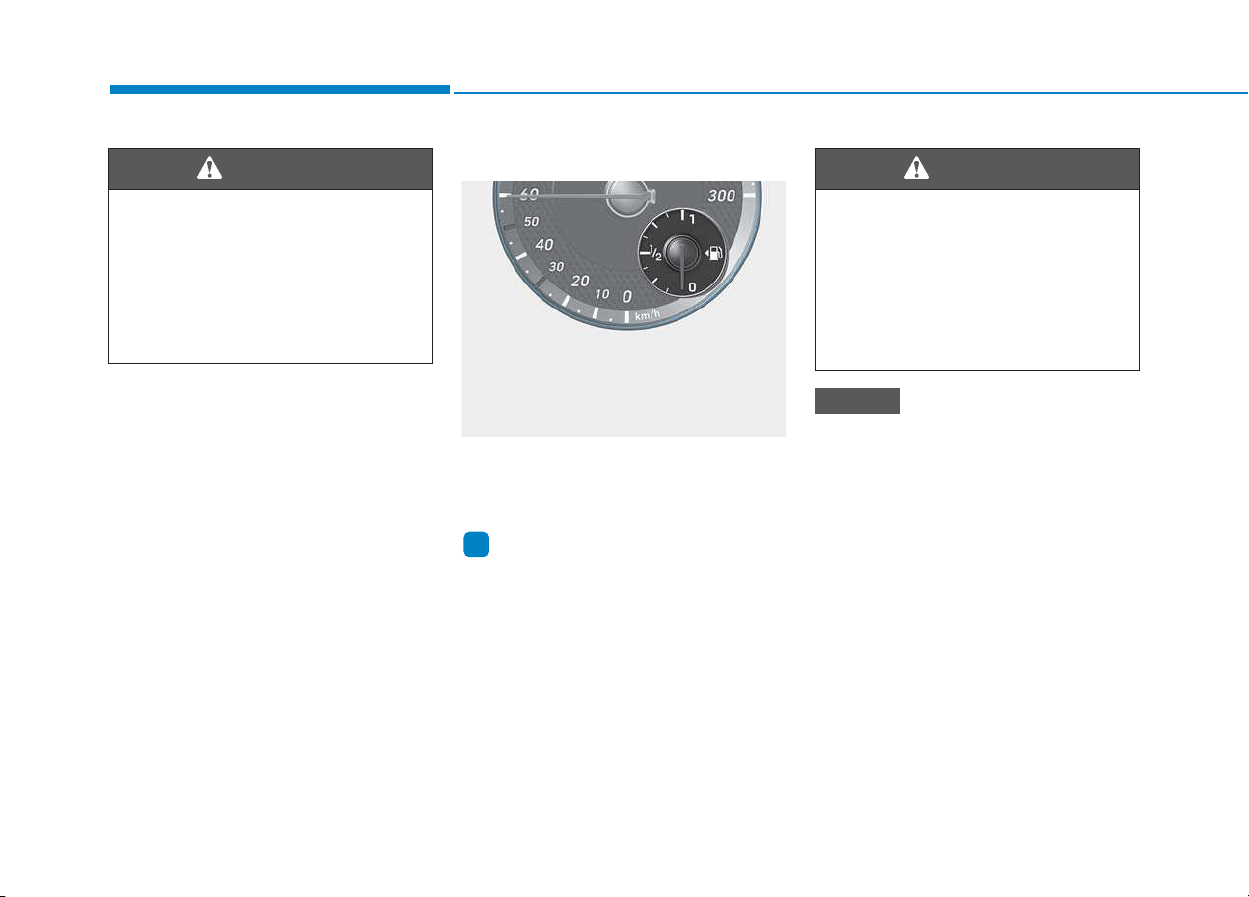
3-46
Convenient features of your vehicle
Fuel gauge
This gauge indicates the approxi-
mate amount of fuel remaining in the
fuel tank.
Information
• The fuel tank capacity is given in
chapter 8.
• The fuel gauge is supplemented by a
low fuel warning light, which will
illuminate when the fuel tank is
nearly empty.
• On inclines or curves, the fuel gauge
pointer may fluctuate or the low fuel
warning light may come on earlier
than usual due to the movement of
fuel in the tank.
Avoid driving with an extremely
low fuel level. Running out of fuel
could cause the engine to misfire
damaging the catalytic converter.
NOTICE
i
Running out of fuel can expose
vehicle occupants to danger.
You must stop and obtain addi-
tional fuel as soon as possible
after the warning light comes
on or when the gauge indicator
comes close to the "0" level.
WARNING
OPDEN047153
Never remove the coolant cap
when the engine is hot. The
engine coolant is under pressure
and could cause severe burns.
Wait until the engine is cool
before adding coolant to the
reservoir.
WARNING
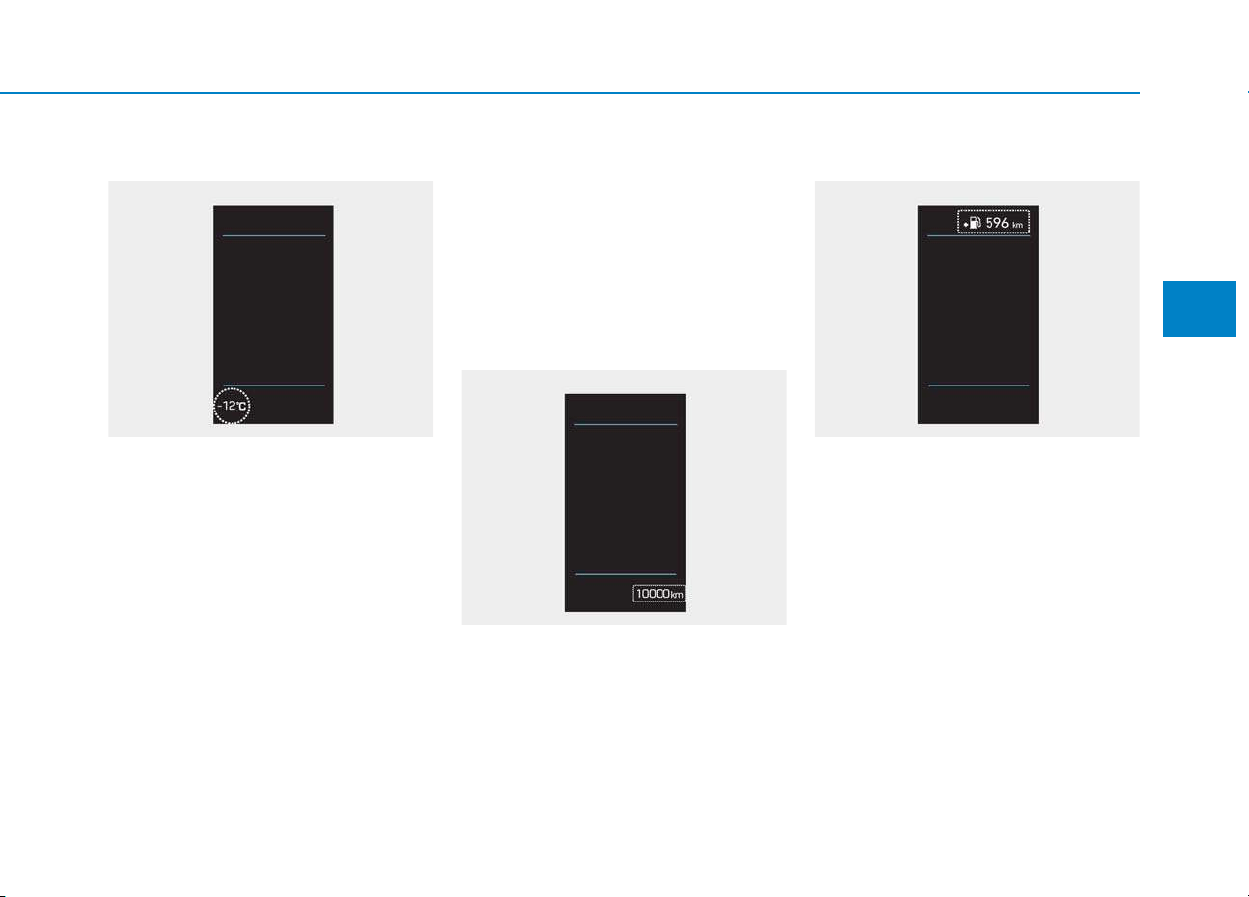
3-47
Convenient features of your vehicle
3
Outside temperature gauge
This gauge indicates the current out-
side air temperatures either in
Celsius (°C) or Fahrenheit.
- Temperature range : -40°C ~ 60°C
(-104°F ~ 140°F)
The outside temperature on the dis-
play may not immediately change
like a general thermometer not to
distract the driver.
The temperature unit (from °C to °F
or from °F to °C) can be changed by:
- User Settings mode in the Cluster :
You can change the temperature
unit in the “Other Features -
Temperature unit” .
- Automatic climate control system :
While pressing the OFF button,
press the AUTO button for 3 sec-
onds or more.
The temperature unit on both the clus-
ter LCD display and the climate con-
trol screen will change.
Odometer
The odometer indicates the total dis-
tance that the vehicle has been driv-
en and should be used to determine
when periodic maintenance should
be performed.
Distance to empty
• The distance to empty is the esti-
mated distance the vehicle can be
driven with the remaining fuel.
• If the estimated distance is below
1 km (1 mi.), the trip computer will
display “---” as distance to empty.
OPDEN047182L
OPDEN047183L OPDEN047181L
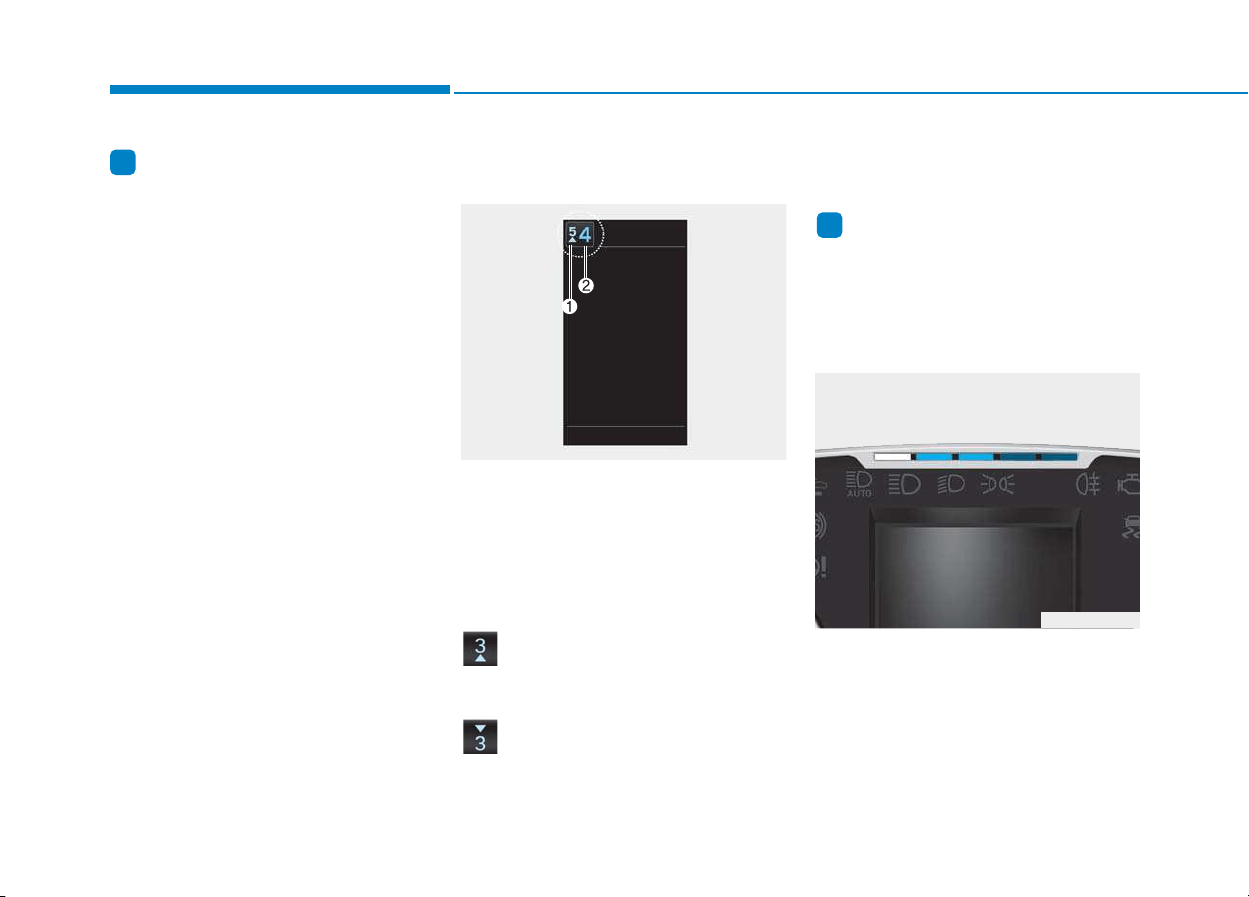
3-48
Convenient features of your vehicle
Information
• If the vehicle is not on level ground
or the battery power has been inter-
rupted, the distance to empty func-
tion may not operate correctly.
• The distance to empty may differ
from the actual driving distance as
it is an estimate of the available
driving distance.
• The trip computer may not register
additional fuel if less than 6 liters
(1.6 gallons) of fuel are added to the
vehicle.
• The distance to empty may vary sig-
nificantly based on driving condi-
tions, driving habits, and condition
of the vehicle.
Manual transmission shift
indicator
1. This indicator informs which gear
is recommended while driving, to
save fuel.
2. This indicator informs the current
gear engaged (available only while
driving).
For example
: Indicates that shifting up to the
3rd gear is recommended
(currently the shift lever is in
the 2nd or 1st gear).
: Indicates that shifting down to
the 3rd gear is recommended
(currently the shift lever is in
the 4th, 5th, or 6th gear).
When the system is not working prop-
erly, the indicator is not displayed.
Information
The recommended gear (1) may vary
according to which drive mode is
selected.
Shift lights
The number of LEDs illuminated indi-
cates the relevant engine speed.
Different colored LEDs will be illumi-
nated as engine speed nears the
maximum allowed speed. When all 5
LEDs start blinking, it indicates the
best time to initiate upshift operation.
Do not wait any further to shift.
i
i
OPDEN047149
OPDEN047180L
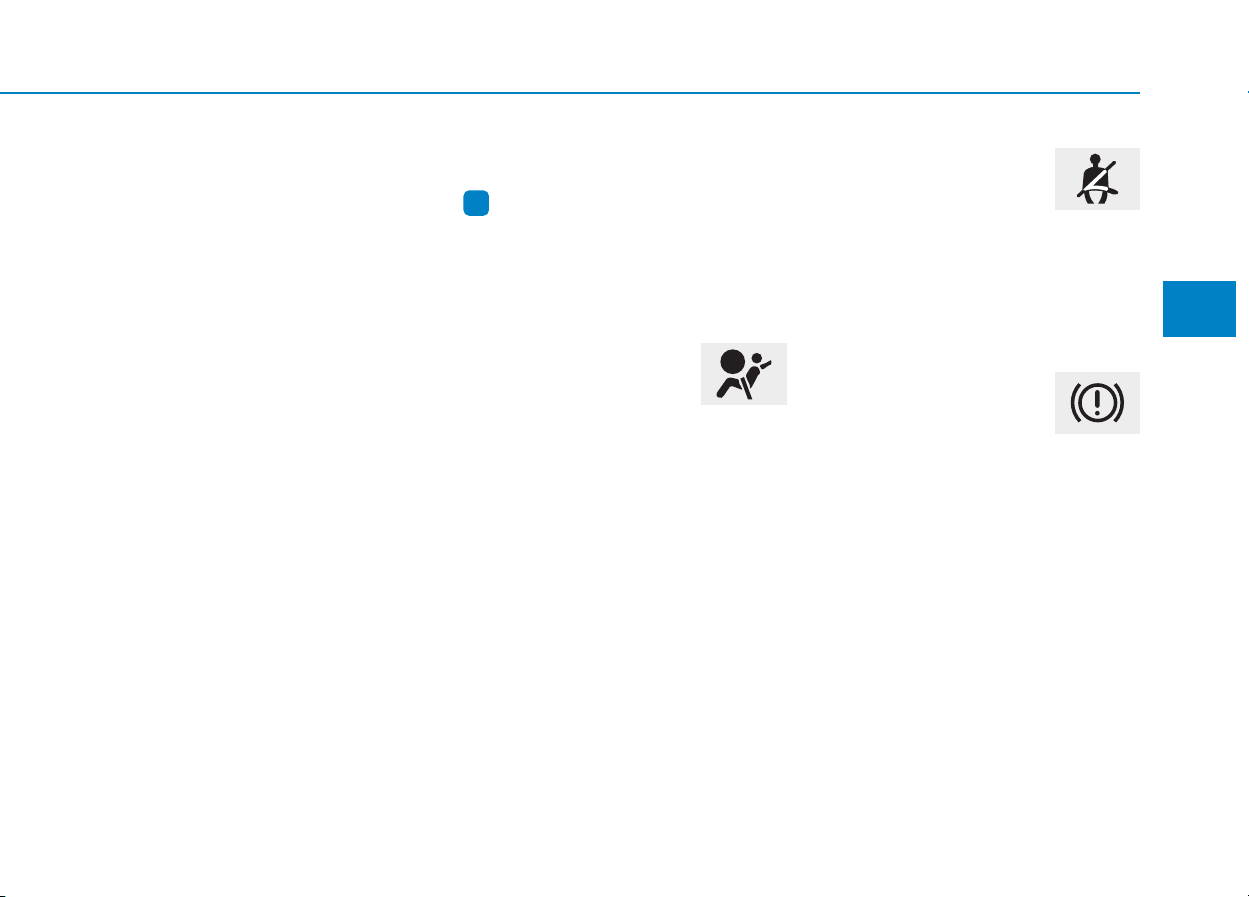
3-49
Convenient features of your vehicle
3
You may select in which mode to dis-
play the gear shift indicator in the
User Settings mode.
Go to ‘User Settings ➝ Convenience
➝ Shift recommendation light ➝
ECO/NORMAL/SPORT/N/CUSTOM’.
Each gear and drive mode has differ-
ent LED operation range. In SPORT
mode and N mode, LED operation is
broader than NORMAL mode and
ECO mode to further support the
driver under sporty and track driving
conditions.
Warning and indicator lights
Information
Make sure that all warning lights are
OFF after starting the engine. If any
light is still ON, this indicates a situa-
tion that needs attention.
Air Bag Warning Light
This warning light illuminates:
• When you turn the ignition switch
or the Engine Start/Stop button to
the ON position.
- It illuminates for approximately 6
seconds and then goes off.
• When there is a malfunction with
the SRS.
In this case, we recommend that
you have the vehicle inspected by
an authorized HYUNDAI dealer.
Seat Belt Warning Light
This warning light informs the driver
that the seat belt is not fastened.
For more details, refer to “Seat
Belts” in chapter 2.
Parking Brake & Brake
Fluid Warning Light
This warning light illuminates:
• When you set the ignition switch or
the Engine Start/Stop button to the
ON position.
- It illuminates for approximately 3
seconds
- It remains on if the parking brake
is applied.
• When the parking brake is applied.
• When the brake fluid level in the
reservoir is low.
- If the warning light illuminates
with the parking brake released, it
indicates the brake fluid level in
the reservoir is low.
i
3-50
Convenient features of your vehicle
If the brake fluid level in the reser-
voir is low:
1. Drive carefully to the nearest safe
location and stop your vehicle.
2. With the engine stopped, check the
brake fluid level immediately and
add fluid as required (For more
details, refer to “Brake Fluid” in
chapter 7). After adding brake
fluid, check all brake components
for fluid leaks. If a brake fluid leak is
found, or if the warning light
remains on, or if the brakes do not
operate properly, do not drive the
vehicle. We recommend that you
have the vehicle inspected by an
authorized HYUNDAI dealer.
Dual-diagonal braking system
Your vehicle is equipped with dual-
diagonal braking systems. This
means you still have braking on two
wheels even if one of the dual sys-
tems should fail.
With only one of the dual systems
working, more than normal pedal
travel and greater pedal pressure are
required to stop the vehicle.
Also, the vehicle will not stop in as
short a distance with only a portion
of the brake system working.
If the brakes fail while you are driv-
ing, shift to a lower gear for addition-
al engine braking and stop the vehi-
cle as soon as it is safe to do so.
Anti-lock Brake System
(ABS) Warning Light
This warning light illuminates:
• When you set the ignition switch or
the Engine Start/Stop button to the
ON position.
- It illuminates for approximately 3
seconds and then goes off.
• When there is a malfunction with
the ABS (The normal braking sys-
tem will still be operational without
the assistance of the anti-lock
brake system).
In this case, we recommend that
you have the vehicle inspected by
an authorized HYUNDAI dealer.
Parking Brake & Brake Fluid
Warning Light
Driving the vehicle with a warn-
ing light ON is dangerous. If the
Parking Brake & Brake Fluid
Warning Light illuminates with
the parking brake released, it
indicates that the brake fluid
level is low.
In this case, we recommend
that you have the vehicle
inspected by an authorized
HYUNDAI dealer.
WARNING
3-51
Convenient features of your vehicle
3
Electronic Brake Force
Distribution (EBD)
System Warning Light
These two warning lights illuminate
at the same time while driving:
• When the ABS and regular brake
system may not work normally.
In this case, we recommend that
you have the vehicle inspected by
an authorized HYUNDAI dealer.
Information
- Electronic
Brake Force Distribution
(EBD) System Warning Light
When the ABS Warning Light is on or
both ABS and Parking Brake & Brake
Fluid Warning Lights are on, the
speedometer, odometer, or tripmeter
may not work. Also, the EPS Warning
Light may illuminate and the steering
effort may increase or decrease.
In this case, we recommend you have
the vehicle inspected by an authorized
HYUNDAI dealer as soon as possible.
Electric Power
Steering (EPS)
Warning Light
This warning light illuminates:
• When you set the ignition switch or
the Engine Start/Stop button to the
ON position.
- It illuminates for approximately 3
seconds and then goes off.
• When there is a malfunction with
the EPS.
In this case, we recommend that
you have the vehicle inspected by
an authorized HYUNDAI dealer.
i
Electronic Brake Force
Distribution (EBD) System
Warning Light
When both ABS and Parking
Brake & Brake Fluid Warning
Lights are on, the brake system
will not work normally and you
may experience an unexpected
and dangerous situation during
sudden braking.
(Continued)
(Continued)
In this case, avoid high speed
driving and abrupt braking.
We recommend you have the
vehicle inspected by an author-
ized HYUNDAI dealer as soon
as possible.
WARNING
3-52
Convenient features of your vehicle
Malfunction Indicator
Lamp (MIL)
This warning light illuminates:
• When you set the ignition switch or
the Engine Start/Stop button to the
ON position.
- It illuminates for approximately 3
seconds and then goes off.
• When there is a malfunction with
the emission control system.
In this case, we recommend that
you have the vehicle inspected by
an authorized HYUNDAI dealer.
Driving with the Malfunction Indicator
Lamp (MIL) on may cause damage to
the emission control system which
could affect drivability and/or fuel
economy.
- Gasoline Engine
If the Malfunction Indicator Lamp
(MIL) illuminates, potential catalyt-
ic converter damage is possible
which could result in loss of
engine power.
In this case, we recommend that
you have the vehicle inspected by
an authorized HYUNDAI dealer as
soon as possible.
Charging System
Warning Light
This warning light illuminates:
• When there is a malfunction with
either the alternator or electrical
charging system.
If there is a malfunction with either
the alternator or electrical charging
system:
1. Drive carefully to the nearest safe
location and stop your vehicle.
2. Turn the engine off and check the
alternator drive belt for looseness
or breakage.
If the belt is adjusted properly,
there may be a problem in the
electrical charging system.
In this case, we recommend that
you have the vehicle inspected by
an authorized HYUNDAI dealer as
soon as possible.
NOTICE
NOTICE
3-53
Convenient features of your vehicle
3
Engine Oil Pressure
Warning Light
This warning light illuminates:
• When the engine oil pressure is low.
If the engine oil pressure is low:
1. Drive carefully to the nearest safe
location and stop your vehicle.
2. Turn the engine off and check the
engine oil level (For more details,
refer to “Engine Oil” in chapter 7).
If the level is low, add oil as required.
If the warning light remains on
after adding oil or if oil is not avail-
able, we recommend that you
have the vehicle inspected by an
authorized HYUNDAI dealer as
soon as possible.
• If the engine does not stop
immediately after the Engine Oil
Pressure Warning Light is illumi-
nated, severe damage could
result.
• If the warning light stays on
while the engine is running, it
indicates that there may be seri-
ous engine damage or malfunc-
tion. In this case:
1. Stop the vehicle as soon as it
is safe to do so.
2. Turn off the engine and check
the oil level. If the oil level is
low, fill the engine oil to the
proper level.
3. Start the engine again. If the
warning light stays on after the
engine is started, turn the
engine off immediately. In this
case, we recommend that you
have the vehicle inspected by
an authorized HYUNDAI dealer.
Low Fuel Level
Warning Light
This warning light illuminates:
• When the fuel tank is nearly empty.
Add fuel as soon as possible.
Driving with the Low Fuel Level
warning light on or with the fuel
level below “0” can cause the
engine to misfire and damage the
catalytic converter (if equipped).
NOTICE
NOTICE
3-54
Convenient features of your vehicle
Safe Stopping
• The TPMS cannot alert you to
severe and sudden tire damage
caused by external factors.
• If you notice any vehicle insta-
bility, immediately take your
foot off the accelerator pedal,
apply the brakes gradually with
light force, and slowly move to
a safe position off the road.
WARNING
Master Warning Light
This indicator light illuminates:
• When there is a malfunction in the
below systems.
- LED head lamp malfunction
- Smart high beam malfunction
(if equipped)
- Autonomous Emergency Braking
(AEB) malfunction (if equipped)
- Speed Limit Information Function
(SLIF) malfunction (if equipped)
To identify the details of the warn-
ing, look at the LCD display.
Low Tire Pressure
Warning Light
(if equipped)
This warning light illuminates:
• When you set the ignition switch or
Engine Start/Stop button to the ON
position.
- It illuminates for approximately 3
seconds and then goes off.
• When one or more of your tires are
significantly underinflated (The
location of the underinflated tires
are displayed on the LCD display).
For more details, refer to
“Tire Pressure Monitoring System
(TPMS)” in chapter 6.
This warning light remains on after
blinking for approximately 60 sec-
onds or repeatedly blinks on and
off at approximately 3 second inter-
vals:
• When there is a malfunction with
the TPMS.
In this case, we recommend that
you have the vehicle inspected by
an authorized HYUNDAI dealer as
soon as possible.
For more details, refer to
“Tire Pressure Monitoring System
(TPMS)” in chapter 6.
3-55
Convenient features of your vehicle
3
Electronic Stability
Control (ESC) Indicator
Light (if equipped)
This indicator light illuminates:
• When you set the ignition switch or
the Engine Start/Stop button to the
ON position.
- It illuminates for approximately 3
seconds and then goes off.
• When there is a malfunction with
the ESC system.
In this case, we recommend that
you have the vehicle inspected by
an authorized HYUNDAI dealer.
This indicator light blinks:
• While the ESC is operating.
For more details, refer to “Electronic
Stability Control (ESC)”in chapter 5.
Electronic Stability
Control (ESC) OFF
Indicator Light
(if equipped)
This indicator light illuminates:
• When you set the ignition switch or
the Engine Start/Stop button to the
ON position.
- It illuminates for approximately
3 seconds and then goes off.
• When you deactivate the ESC sys-
tem by pressing the ESC OFF but-
ton.
For more details, refer to “Electronic
Stability Control (ESC)”in chapter 5.
ECS SPORT Indicator
Light
This indicator light illuminates:
• When ESC SPORT is activated.
For more details, refer to “Electronic
Stability Control” in chapter 5.
AUTO STOP Indicator
Light (if equipped)
This indicator light illuminates:
• When the engine enters the Idle
Stop mode of the ISG (Idle Stop and
Go) system.
This indicator light blinks:
• When the automatic starting occurs,
the AUTO STOP indicator on the
cluster will blink for 5 seconds.
For more details, refer to the “ISG
(Idle Stop and Go) system” in chap-
ter 5.
Information
When the engine automatically starts
by the ISG system, some warning
lights(ABS, ESC, ESC OFF, EPS or
Parking brake warning light) may
turn on for a few seconds.
This happens because of low battery
voltage. It does not mean the system
has malfunctioned.
i
(6&
63257
3-56
Convenient features of your vehicle
Immobilizer Indicator
Light (without smart key)
(if equipped)
This indicator light illuminates:
• When the vehicle detects the
immobilizer in the key with the igni-
tion switch in the ON position.
- At this time, you can start the
engine.
- The indicator light goes off after
starting the engine.
This indicator light blinks:
• When there is a malfunction with
the immobilizer system.
In this case, we recommend that
you have the vehicle inspected by
an authorized HYUNDAI dealer.
Immobilizer Indicator
Light (with smart key)
(if equipped)
This indicator light illuminates for
up to 30 seconds:
• When the vehicle detects the
smart key in the vehicle with the
Engine Start/Stop button in the
ACC or ON position.
- At this time, you can start the
engine.
- The indicator light goes off after
starting the engine.
This indicator light blinks for a few
seconds:
• When the smart key is not in the
vehicle.
- At this time, you cannot start the
engine.
This indicator light illuminates for
2 seconds and goes off:
• If the smart key is in the vehicle
and the Engine Start/Stop button is
ON, but the vehicle cannot detect
the smart key.
In this case, we recommend that
you have the vehicle inspected by
an authorized HYUNDAI dealer.
This indicator light blinks:
• When the battery voltage of the
smart key is low.
- At this time, you cannot start the
engine. However, you can start
the engine if you press the
Engine Start/Stop button with the
smart key. (For more details,
refer to "Starting the Engine"
in chapter 5).
• When there is a malfunction with
the immobilizer system.
In this case, we recommend that
you have the vehicle inspected by
an authorized HYUNDAI dealer.
3-57
Convenient features of your vehicle
3
Turn Signal Indicator
Light
This indicator light blinks:
• When you operate the turn signals.
If any of the following occur, there may
be a malfunction with the turn signal
system.
- The turn signal indicator light illumi-
nates but does not blink
- The turn signal indicator light blinks
rapidly
- The turn signal indicator light does
not illuminate at all
If any of these conditions occur, we
recommend that you have your vehi-
cle inspected by an authorized
HYUNDAI dealer.
Low Beam Indicator
Light (if equipped)
This indicator light illuminates:
• When the headlights are on.
High Beam Indicator
Light
This indicator light illuminates:
• When the headlamps are on and in
the high beam position.
• When the turn signal lever is pulled
into the Flash-to-Pass position.
Smart High Beam
Indicator Light
(if equipped)
This warning light illuminates:
• When the high-beam is on with the
light switch in the AUTO light posi-
tion.
• If your vehicle detects oncoming or
preceding vehicles, the Smart High
Beam system will switch the high
beam to low beam automatically.
For more details, refer to "Smart
High Beam" in this chapter.
Light ON Indicator
Light
This indicator light illuminates:
• When the tail lights or headlamps
are on.
Rear Fog Indicator
Light
This indicator light illuminates:
• When the rear fog lights are on.
3-58
Convenient features of your vehicle
LED Headlamp Warning
Light
This warning light illuminates:
• When you turn the ignition switch
or the Engine Start/Stop button to
the ON position.
• When there is a malfunction with
the LED headlamp.
In this case, we recommend that you
have the vehicle inspected by an an
authorized HYUNDAI dealer.
This warning light blinks:
When there is a malfunction with a
LED headlamp related part.
In this case, we recommend that you
have the vehicle inspected by an an
authorized HYUNDAI dealer.
Continuous driving with the LED
Headlamp Warning Light on or
blinking can reduce LED head-
lamp life.
Cruise Indicator Light
(if equipped)
This indicator light illuminates:
• When the cruise control system is
enabled.
For more details, refer to "Cruise
Control System" in chapter 5.
Cruise SET Indicator
Light (if equipped)
This indicator light illuminates:
• When the cruise control speed is
set.
For more details, refer to "Cruise
Control System" in chapter 5.
SPORT Mode Indicator
Light
This indicator light illuminates:
• When you select "SPORT" mode
as drive mode.
For more details, refer to "Drive
Mode Integrated Control System"
in chapter 5.
NOTICE
3-59
Convenient features of your vehicle
3
ECO Mode Indicator
Light
This indicator light illuminates:
• When you select "ECO" mode as
drive mode.
For more details, refer to "Drive
Mode Integrated Control System"
in chapter 5.
N Mode Indicator Light
This indicator light illuminates:
• When you select "N" mode as drive
mode.
For more details, refer to "Drive
Mode Integrated Control System“
in chapter 5.
CUSTOM Mode
Indicator Light
This indicator light illuminates:
• When you select "CUMSTOM"
mode as drive mode.
For more details, refer to "Drive
Mode Integrated Control System“
in chapter 5.
REV (Rev Matching)
Indicator Light
This indicator light illuminates:
[White] When Rev Matching is turned
on in NORMAL mode.
[Yellow] When Rev Matching is
turned on in SPORT mode.
[Red] When Rev Matching is turned
on in N mode.
For more details, refer to “Rev
Matching“ in chapter 5.
&86720
5(
9
3-60
Convenient features of your vehicle
Autonomous
Emergency Braking
(AEB) Warning light
(if equipped)
This indicator light illuminates:
• When you set the ignition switch or
Engine Start/Stop button to the ON
position.
- It illuminates for approximately 3
seconds and then goes off.
• When there is a malfunction with
the AEB.
In this case, we recommend that you
have the vehicle inspected by an
authorized HYUNDAI dealer.
For more details, refer to
"Autonomous Emergency Braking
(AEB)" in chapter 5.
Lane Departure Warning
System (LDWS)
Indicator Light
(if equipped)
This indicator light illuminates:
• [Green] When you activate the lane
departure warning system.
• [White] When system operating
conditions are not satisfied.
• [Yellow] When there is a malfunc-
tion with the lane departure warn-
ing system.
In this case, we recommend that
you have the vehicle inspected by
an authorized HYUNDAI dealer.
For more details, refer to "Lane
Departure Warning System (LDWS)"
in chapter 5.
Lane Keeping Assist
System (LKAS)
Indicator Light
(if equipped)
This indicator light illuminates:
• [Green] When the system operat-
ing conditions are satisfied.
• [White] The system operating con-
ditions are not satisfied.
• [Yellow] When there is a malfunc-
tion with the lane keeping assist
system.
In this case, we recommend you to
have your vehicle inspected by an
authorized HYUNDAI dealer.
For more details, refer to "Lane
Keeping Assist System (LKAS)" in
chapter 5.

3-61
Convenient features of your vehicle
3
Icy Road Warning Light
(if equipped)
This warning light is to warn the driver
the road may be icy.
When the temperature on the out-
side temperature gauge is approxi-
mately below 4°C (40°F), the Icy
Road Warning Light and Outside
Temperature Gauge blinks and then
illuminates. Also, the warning chime
sounds 1 time.
Information
If the icy road warning light appears
while driving, you should drive more
attentively and safely refraining from
over-speeding, rapid acceleration, sud-
den braking or sharp turning, etc.
LCD display messages
Low Key Battery
(for smart key system)
This warning message is displayed if
the battery of the smart key is dis-
charged while changing the Engine
Start/Stop button to the OFF posi-
tion.
Press START while turning wheel
(for smart key system)
This warning message is displayed if
the steering wheel does not unlock
normally when the Engine Start/Stop
button is pressed.
You should press the Engine Start/Stop
button while turning the steering wheel
right and left.
Steering wheel unlocked
(for smart key system)
This warning message is displayed if
the steering wheel is not locked while
the Engine Start/Stop button changes
to the OFF position.
Check Steering Wheel Lock
System (for smart key system)
This warning message is displayed if
the steering wheel does not lock nor-
mally while the Engine Start/Stop but-
ton changes to the OFF position.
Press clutch pedal to start
engine (for smart key system)
This warning message is displayed if
the Engine Start/Stop button is in the
ACC position twice by pressing the
button repeatedly without depressing
the clutch pedal.
Depress the clutch pedal to start the
engine.
Key not in vehicle
(for smart key system)
This warning message is displayed if
the smart key is not in the vehicle
when you press the Engine Start/Stop
button.
When attempting to start the vehicle
always have the smart key with you.
i
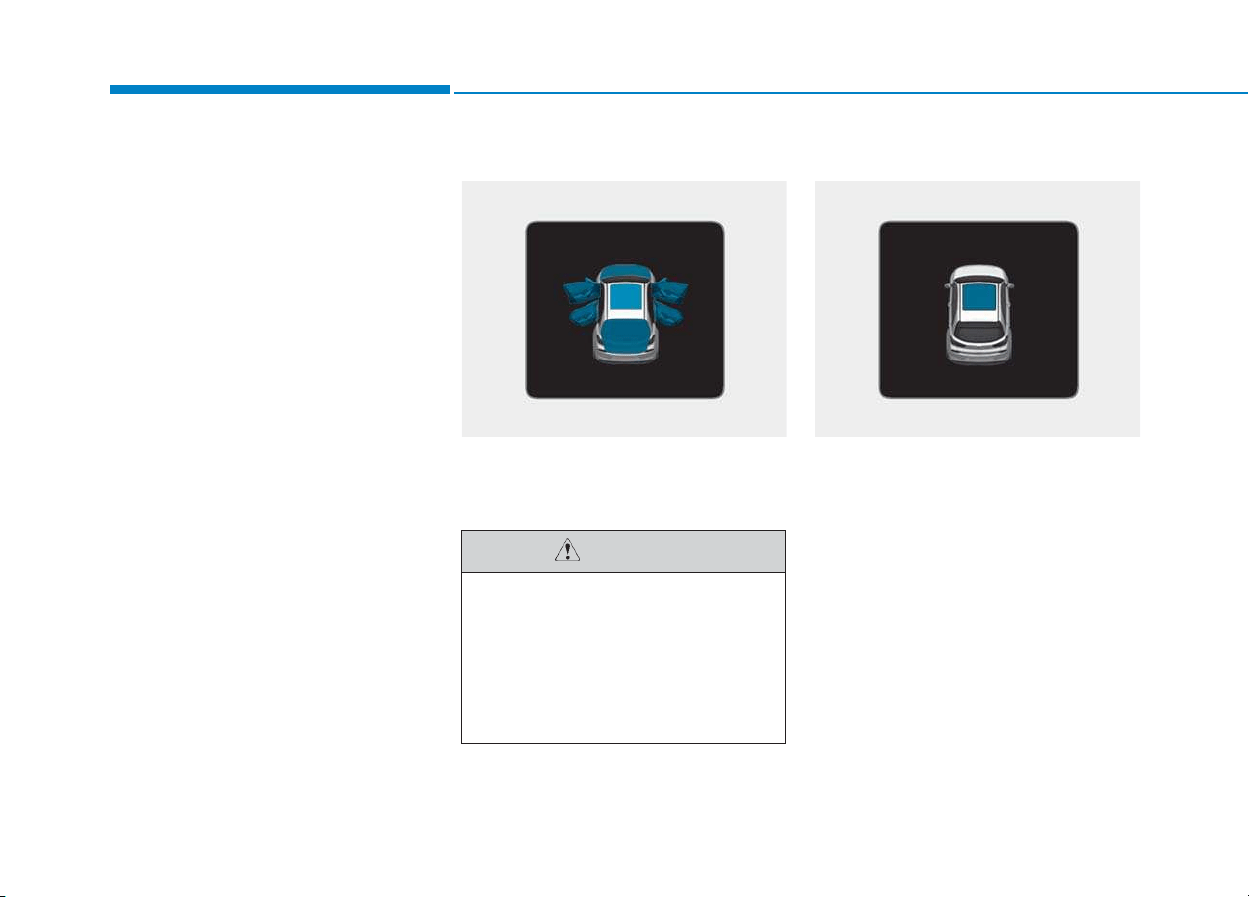
3-62
Convenient features of your vehicle
Key not detected
(for smart key system)
This warning message is displayed if
the smart key is not detected when you
press the Engine Start/Stop button.
Press START button with key
(for smart key system)
This warning message is displayed if
you press the Engine Start/Stop but-
ton while the warning message “Key
not detected” is displayed.
At this time, the immobilizer indicator
light blinks.
Press START button again
(for smart key system)
This message is displayed if you
were unable to start the vehicle when
the Engine Start/Stop button was
pressed.
If this occurs, attempt to start the
engine by pressing the Engine
Start/Stop button again.
If the warning message appears
each time you press the Engine
Start/Stop button, we recommend
that you have your vehicle inspected
by an authorized HYUNDAI dealer.
Door, Hood, Tailgate open
This warning is displayed indicating
which door, or hood, or tailgate is
open.
Sunroof open (if equipped)
This warning is displayed if you turn
off the engine when the sunroof is
open.
Close the sunroof securely when
leaving your vehicle.
Before driving the vehicle, you
should confirm that the door/
hood/tailgate is fully closed.
Also, check there is no door/
hood/tailgate open warning
light or message displayed on
the instrument cluster.
CAUTION
OPD046115 OPD046116

3-63
Convenient features of your vehicle
3
Lights mode
This indicator displays which exterior
light is selected using the lighting
control.
Wiper mode
This indicator displays which wiper
speed is selected using the wiper
control.
Low Pressure (if equipped)
This warning message is displayed if
the tire pressure is low. The corre-
sponding tire on the vehicle will be
illuminated.
For more details, refer to "Tire
Pressure Monitoring System (TPMS)"
in chapter 6.
OPDE046120 OPDEN047202OPDE046125/OPDE046126
■ Front ■ Rear
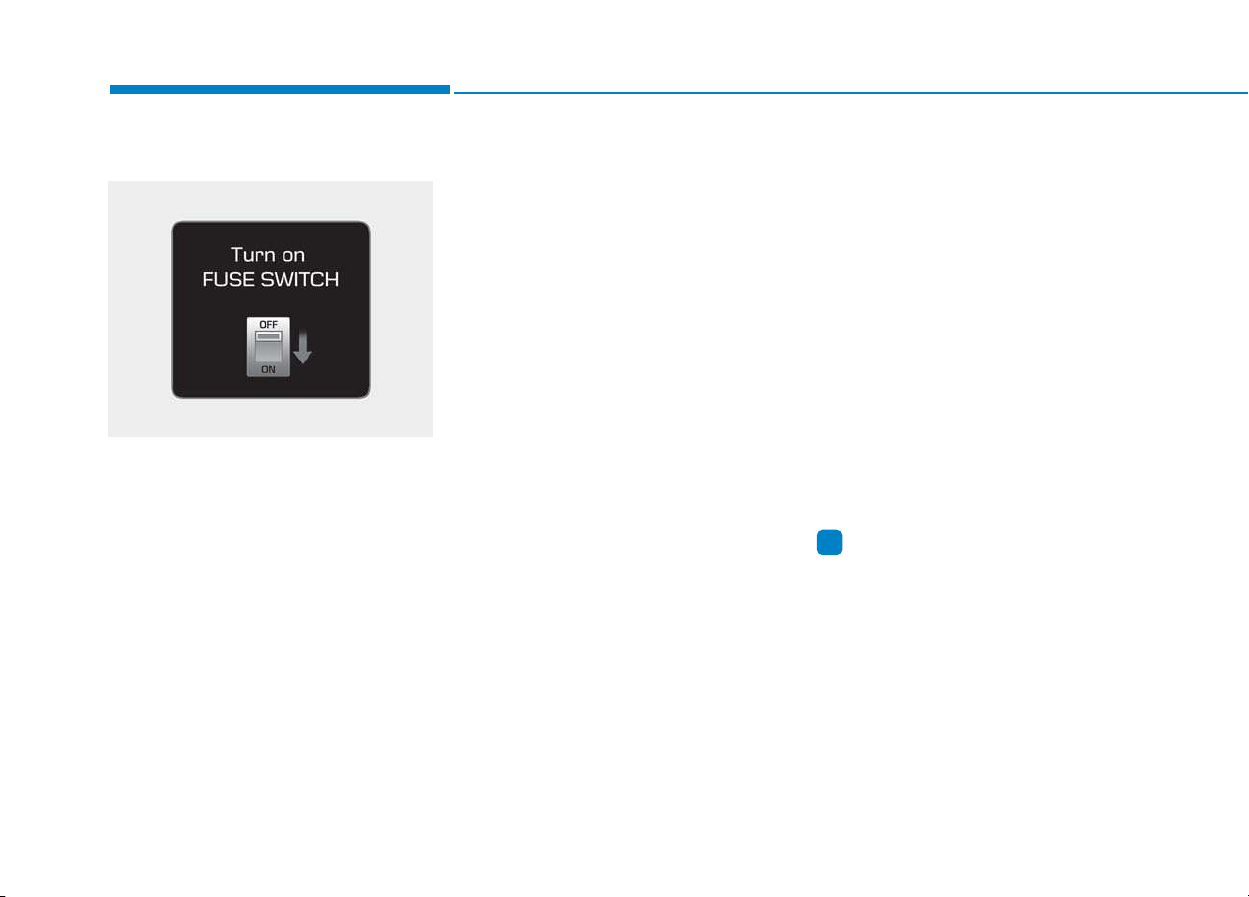
3-64
Convenient features of your vehicle
Turn on FUSE SWITCH
This warning message is displayed if
the fuse switch located on the fuse
box under the steering wheel is OFF.
You should turn the fuse switch on.
For more details, refer to “Fuses”
in chapter 7.
Heated Steering Wheel turned
off (if equipped)
This message is displayed if you turn
off the heated steering wheel.
For more details, refer to “Heated
Steering Wheel” in this chapter.
Low Washer Fluid (if equipped)
This warning message is displayed
if the washer fluid level in the reser-
voir is nearly empty.
Have the washer fluid reservoir
refilled.
Low Fuel
This warning message is displayed if
the fuel tank is almost out of fuel.
When this message is displayed, the
low fuel level warning light in the
cluster will come on.
It is recommended to look for the
nearest fueling station and refuel as
soon as possible.
Add fuel as soon as possible.
Engine has overheated
(if equipped)
This warning message is displayed
when the engine coolant tempera-
ture is above 120°C (248°F). This
means that the engine is overheated
and may be damaged.
If your vehicle is overheated, refer
to “Overheating” in chapter 6.
Check headlight (if equipped)
This warning message is displayed if
the headlamps are not operating
properly. A headlamp bulb may need
to be replaced.
Information
Make sure to replace the burned out
bulb with a new one of the same wattage
rating.
i
OPDE046119

3-65
Convenient features of your vehicle
3
Check headlamp LED
(if equipped)
This warning message is displayed if
there is a problem with the LED
headlamps. We recommend that you
have the vehicle inspected by an
authorized HYUNDAI dealer.
Check headlamp FAN
(if equipped)
This warning message is displayed if
there is a problem with the head-
lamps fan. We recommend that you
have the vehicle inspected by an
authorized HYUNDAI dealer.
Check Smart High Beam
System (if equipped)
This warning message is displayed if
there is a problem with the Smart
High Beam System. We recommend
that you have the vehicle inspected
by an authorized HYUNDAI dealer.
For more details, refer to “Smart
High Beam System” in chapter 3.
Check AEB system (if equipped)
This warning message is displayed if
there is a malfunction with the
Autonomous Emergency Braking
(AEB) system. We recommend that
you have the vehicle inspected by an
authorized HYUNDAI dealer.
For more details, refer to
"Autonomous Emergency Braking
(AEB) system" in chapter 5.
Check LDWS (if equipped)
This warning message is displayed if
there is a problem with the Lane
Departure Warning System (LDWS).
We recommend that you to have the
vehicle inspected by an authorized
HYUNDAI dealer.
For more details, refer to “Lane
Departure Warning System
(LDWS)” in chapter 5.
Check LKAS (if equipped)
This warning message is displayed if
there is a problem with the Lane
Keeping Assist System (LKAS). We
recommend that you have the vehicle
inspected by an authorized HYUNDAI
dealer.
For more details, refer to “Lane
Keeping Assist System (LKAS)” in
chapter 5.
Check Driver Attention Alert
(if equipped)
This warning message is displayed if
there is a problem with the Driver
Attention Alert System. We recom-
mend that you have the vehicle
inspected by an authorized HYUNDAI
dealer.
For more details, refer to “Driver
Attention Alert (DAA)” in chapter
5.

3-66
Tyre size mismatch.
Check tyre sizes
This warning message is displayed
when different tires (size, type, etc.)
are detected between front and rear.
To use the Electronic Limited Slip
Differential, equip the vehicle with
the same tires on front and rear.
For more details, refer to “Electronic
Limited Slip Differential” in chapter
5.
Check limited slip differential
This warning message is displayed if
there is a problem with the Limited
Slip Differential system.
We recommend that you have the
vehicle inspected by an authorized
HYUNDAI dealer.
For more details, refer to "Electronic
Limited Slip Differential" in chapter
5.
Check ECS
This warning message is displayed if
there is a problem with the Electronic
Control Suspension (ECS) system.
We recommend that you have the
vehicle inspected by an authorized
HYUNDAI dealer.
For more details, refer to
"Electronic Control Suspension
(ECS)" in chapter 5.
Beware of engine damage when
shifting while in high RPM
If transmission input rpm is too high
(over rev limit) due to shifting, a
warning message will appear and a
warning chime will sound.
For more details, refer to “Rev
Matching” in chapter 5.
Convenient features of your vehicle
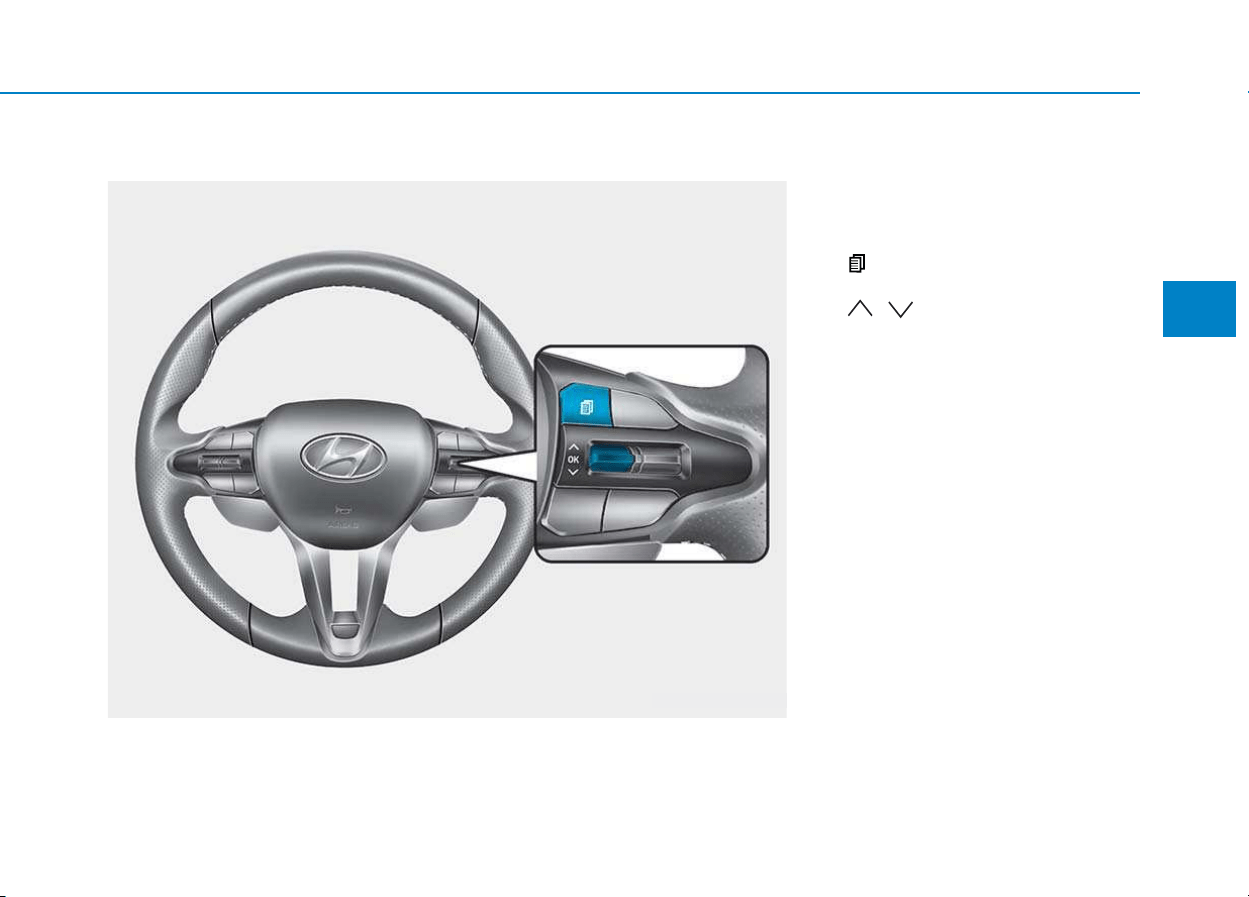
3-67
Convenient features of your vehicle
3
LCD display control
The LCD display modes can be
changed by using the control buttons.
(1) : MODE button for changing
modes
(2) , : MOVE switch for
changing items
(3) OK : SELECT/RESET button for
setting or resetting the
selected item
LLCCDD DDIISSPPLLAAYY
OPDEN047404
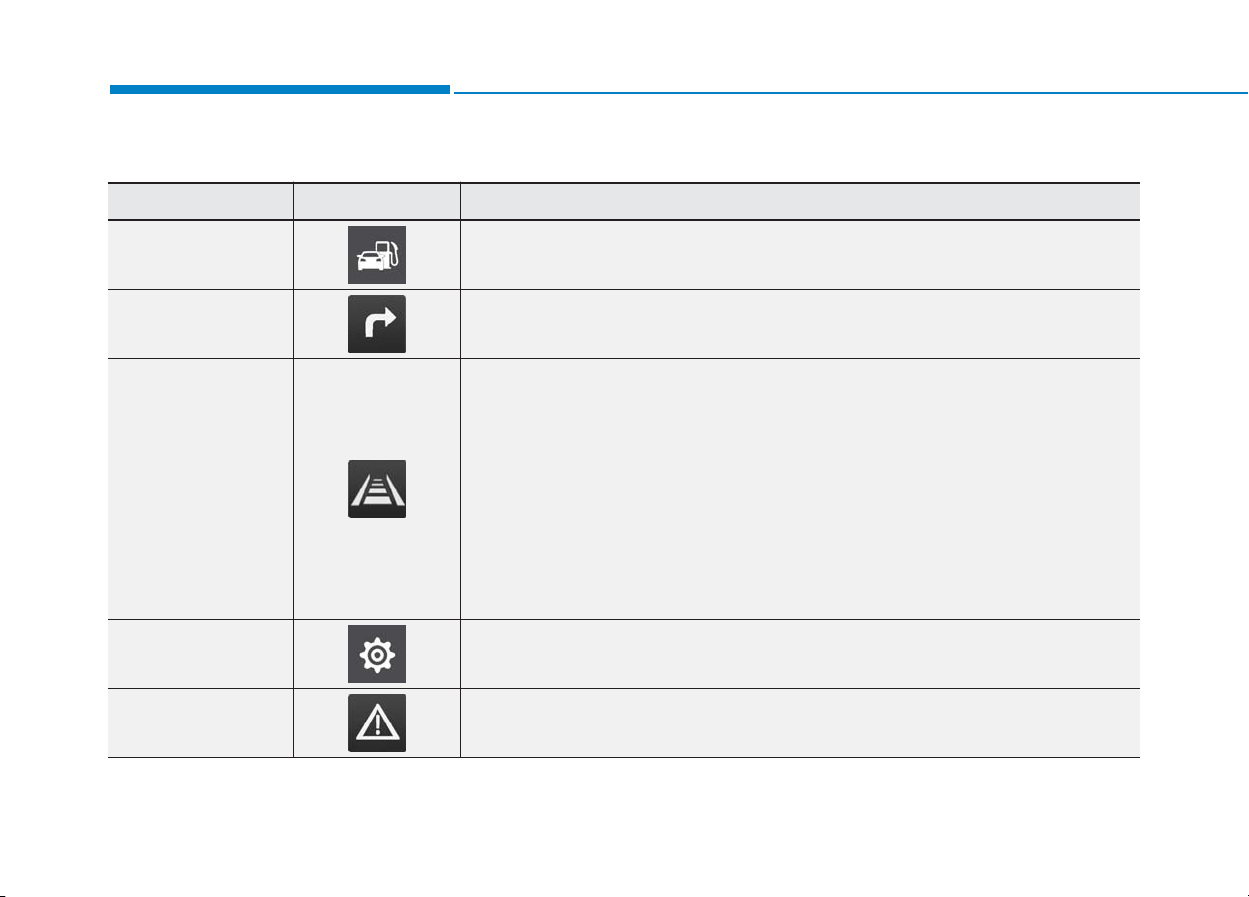
3-68
Convenient features of your vehicle
LCD display modes
Modes Symbol Explanation
Trip Computer
This mode displays driving information such as the tripmeter, fuel economy, etc.
For more details, refer to "Trip Computer" in this chapter.
Turn By Turn (TBT) This mode displays the state of the navigation.
Assist
This mode displays the state of :
- Oil Temperature, Torque, Turbo Boost
- Lap Timer
- G-Force
- Lane Keeping Assist System (LKAS)
- Lane Departure Warning System (LDWS)
- Driver Attention Alert (DAA)
- Tire Pressure
For more details, refer to "Lane Departure Warning System (LDWS)",
"Lane Keeping Assist System (LKAS)", "Driver Attention Alert (DAA)" in chap-
ter 5 and "Tire Pressure Monitoring System (TPMS)" in chapter 6.
User Settings In this mode, you can change settings of the doors, lamps, etc.
Warning
This mode displays warning messages related to the Autonomous Emergency
Braking system, etc.
The information provided may differ depending on which functions are applicable to your vehicle.
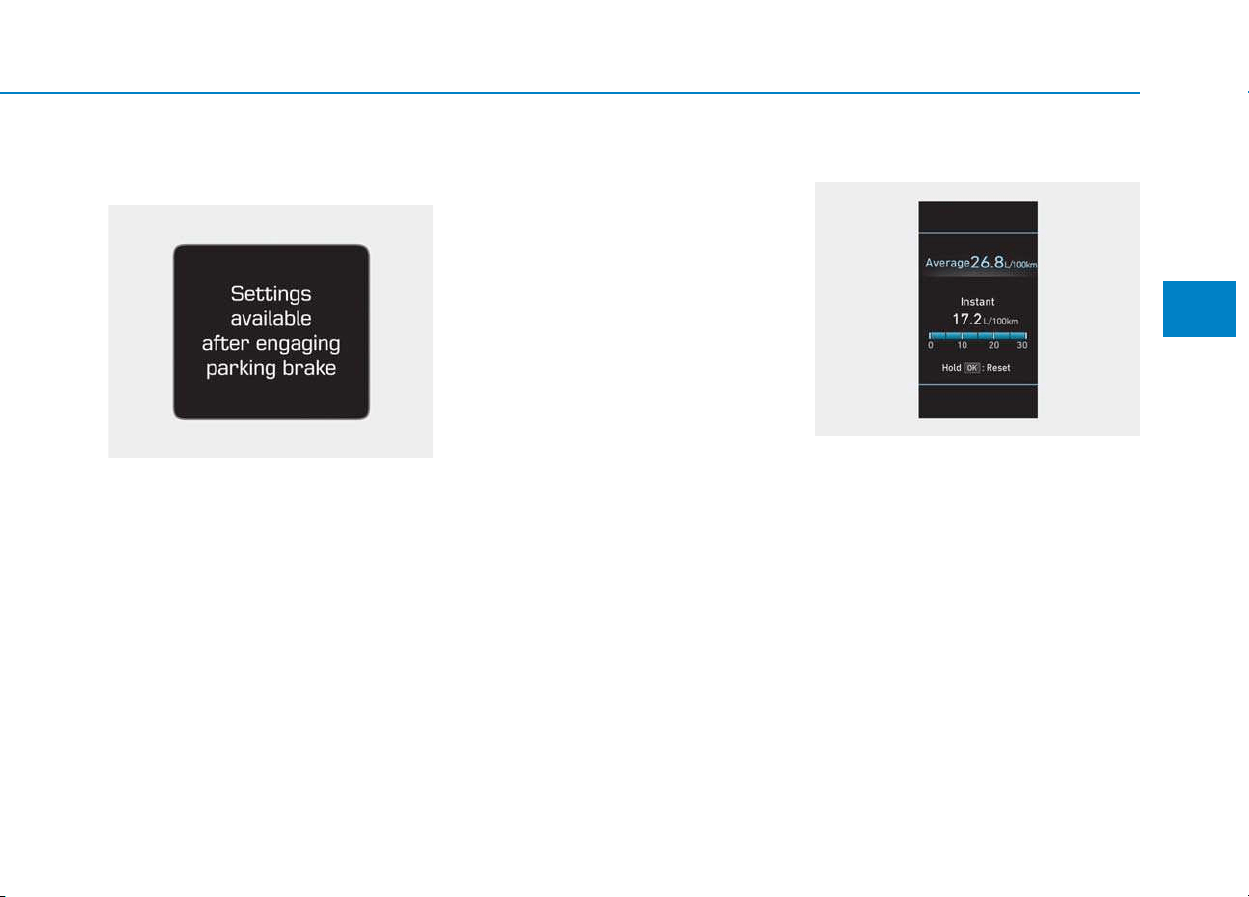
3-69
Convenient features of your vehicle
3
Settings available after engag-
ing parking brake
This warning message illuminates if
you try to select an item from the
User Settings mode while driving.
For your safety, change the User
Settings after engaging the parking
brake.
Quick guide (Help, if equipped)
This mode provides quick guides for
the systems in the User Settings
mode.
Select an item, press and hold the
OK button.
For more details about each sys-
tem, refer to this Owner’s Manual.
Trip computer mode
The trip computer mode displays
information related to vehicle driving
parameters including fuel economy,
tripmeter information and vehicle
speed.
For more details, refer to "Trip
Computer" in this chapter.
OPD047150L
OPDE046132
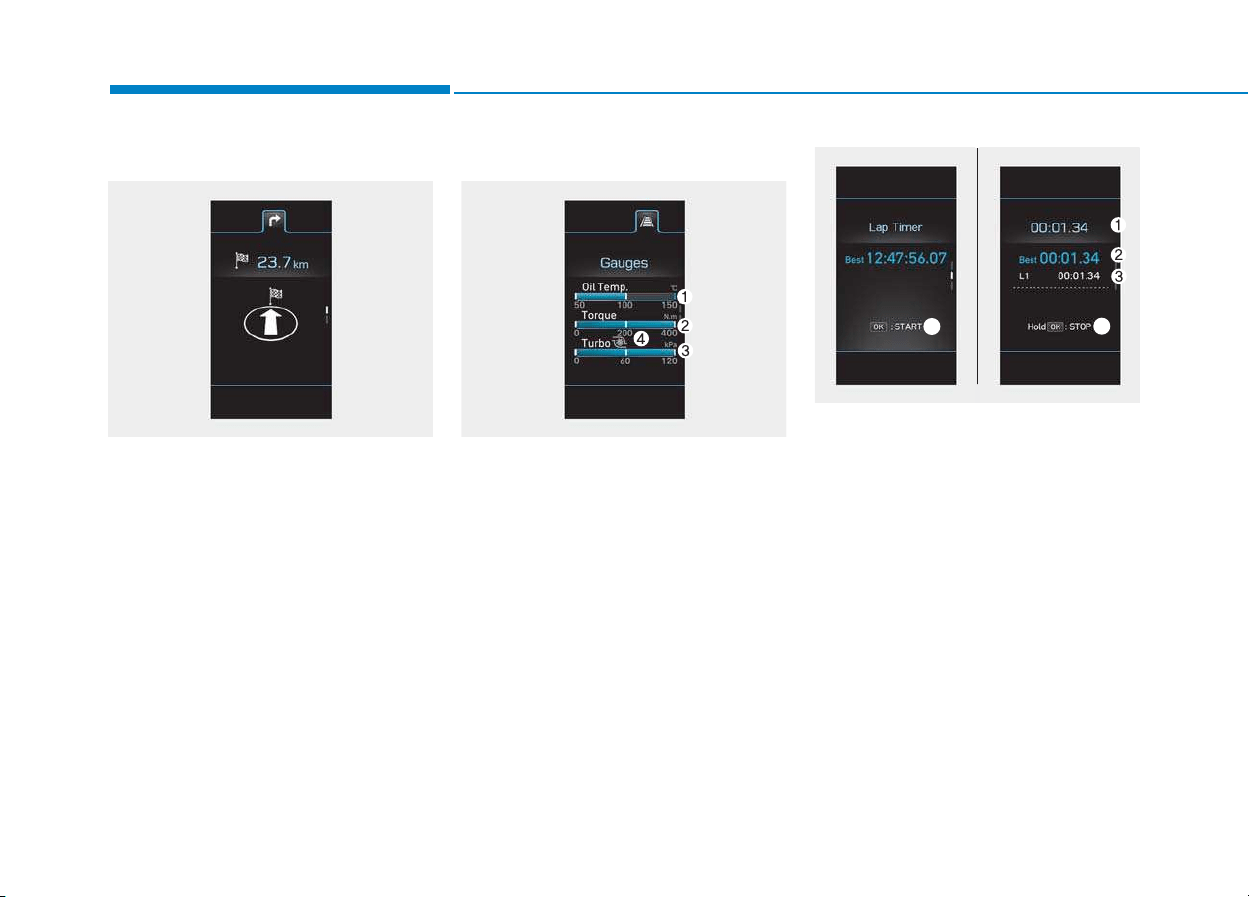
3-70
Convenient features of your vehicle
Turn By Turn (TBT) mode
This mode displays the state of the
navigation.
Assist mode
Gauges
This mode displays information relat-
ed to your engine such as engine oil
temperature (1), current torque (2)
and boost pressure (3) along with an
overboost indicator (4).
Lap timer
(1) Total time
(2) Best lap
(3) Current lap
To start (a):
Press the OK button shortly on the
steering wheel. The lap timer will
start counting the current lap (3).
To stop (b):
Press and hold the OK button for
more than 1 second on the steering
wheel while the lap timer is counting
the current lap (3).
OPDEN047192
OPDEN047195/OPDEN047196
OPDEN047173L
a
b

3-71
Convenient features of your vehicle
3
To reset (c):
Press and hold the OK button for
more than 1 second on the steering
wheel when the lap timer has
stopped counting the current lap (3).
If the OK button is pressed shortly,
the lap timer will continue counting
from the time it has been stopped.
To save laps:
Press the OK button shortly on the
steering wheel while the lap timer is
counting the current lap (3).
The timer can save L1~ L100 (4).
The best lap (2) will be displayed
automatically.
The saved laps can be reset when
the current lap is reset.
To start a new lap press the OKAY
button when the current lap is reset.
G-Force
This mode displays the force deliv-
ered to the vehicle laterally while the
vehicle is in motion.
LKAS/LDWS/DAA
This mode displays the state of the
Cruise Control, Lane Departure
Warning System (LDWS)/Lane
Keeping Assist System (LKAS) and
Driver Attention Alert (DAA).
For more details, refer to each
system information in chapter 5.
OPDEN047194
OPDEN047175L
OPDEN047174L
c
3-72
Convenient features of your vehicle
Tire Pressure
This mode displays information relat-
ed to Tire Pressure.
For more details, refer to "Tire
Pressure Monitoring System
(TPMS)“ in chapter 6.
Warning message mode
If one of followings occurs, warning
messages will be displayed on the
LCD display for several seconds.
- LED head lamp malfunction
- Smart high beam malfunction
(if equipped)
- Autonomous Emergency Braking
(AEB) malfunction (if equipped)
- Speed Limit Information Function
(SLIF) malfunction (if equipped)
User settings mode
In this mode, you can change the
settings of the instrument cluster,
doors, lamps, etc.
1. Driving Assist
2. Door
3. Lights
4. Sound
5. Convenience
6. Service Interval
7. Other Features
8. Reset
The information provided may dif-
fer depending on which functions
are applicable to your vehicle.
1. Driving Assist
• Lane Keeping Assist System
- Lane Departure Warning/Standard
LKA/Active LKA
To adjust the sensitivity of the Lane
Keeping Assist System.
For more details, refer to the
"Lane Keeping Assist System" in
chapter 5.
OPDEN047193
OPDEN047191

3-73
Convenient features of your vehicle
3
• Driver Attention Alert
- Off/Normal/Early
To adjust the sensitivity of the Driver
Attention Alert (DAA).
For more details, refer to the
"Driver Attention Alert (DAA)" in
chapter 5.
• Autonomous Emergency Braking
To activate or deactivate the
Autonomous Emergency Braking
(AEB).
For more details, refer to
"Autonomous Emergency Braking
(AEB)" in chapter 5.
• Forward Collision Warning
- Late/Normal/Early
To adjust the initial warning alert
time for Autonomous Emergency
Braking system.
For more details, refer to
"Autonomous Emergency Braking
(AEB)" in chapter 5.
• Speed Limit Information Function
To activate or deactivate the Speed
Limit Information Function.
For more details, refer to "Speed
Limit Information Function" in
chapter 5.
2. Door
• Automatic Lock
- Disable: The auto door lock opera-
tion will be canceled.
- Enable on Speed: All doors will be
automatically locked when the vehi-
cle speed exceeds 15km/h
(9.3mph).
• Automatic Unlock
- Disable: The auto door unlock oper-
ation will be canceled.
- Vehicle Off: All doors will be auto-
matically unlocked when the
Engine Star/Stop button is set to
the OFF position. (if equipped with
smart key)
- On Key Out: All doors will be auto-
matically unlocked when the igni-
tion key is removed from the igni-
tion switch. (if equipped with remote
key)
- Driver Door Unlock: All doors will be
automatically unlocked when the
driver’s door is opened.
• Horn Feedback
To activate or deactivate the horn
feedback.
If the horn feedback is activated,
after locking the door by pressing the
lock button on the remote key, and
pressing it again within 4 seconds,
the horn feedback sound will operate
once to indicate that all doors are
locked. (if equipped with remote key)

3-74
Convenient features of your vehicle
3. Lights
• One Touch Turn Signal
- Off: The one touch turn signal func-
tion will be deactivated.
- 3, 5, 7 Flashes: The turn signal indi-
cator will blink 3, 5, or 7 times when
the turn signal lever is moved slightly.
For more details, refer to "Lighting"
in this chapter.
• Head Lamp Delay
To activate or deactivate the head-
lamp delay function.
For more details, refer to "Lighting"
in this chapter
• Welcome Light
To activate or deactivate the wel-
come light function.
For more details, refer to "Lighting"
in this chapter.
4. Sound
• Park Assist System Volume
- Softer/Louder
To adjust the Park Assist System
volume.
• Welcome Sound
To activate or deactivate the wel-
come sound.
5. Convenience
• Seat Easy Access
- Off: The seat easy access function
is deactivated.
- Normal/Extended: When you turn
off the engine, the driver's seat will
automatically move rearward short
(Normal) or long (Extended) for you
to enter or exit the vehicle more
comfortably.
For more details, refer to "Driver
Position Memory System" in this
chapter.
• Wireless Charging System
To activate or deactivate the wireless
charging system in the front seat.
For more details, refer to "Wireless
Charging System" in this chapter.
• Wiper/Lights Display
To activate or deactivate the Wiper/
Light mode.
When activated, the LCD display
shows the selected Wiper/Light
mode whenever you changed the
mode.
• Auto Rear Wiper (reverse)
To activate or deactivate the rear
wiper while the vehicle is in reverse
with the front wiper ON.
• Shift recommendation light
- ECO/NORMAL/SPORT/N/
CUSTOM
To select in which mode the shift
lights are displayed.

3-75
Convenient features of your vehicle
3
6. Service Interval
• Service Interval
To activate or deactivate the service
interval function.
• Adjust Interval
If the service interval menu is acti-
vated, you may adjust the time and
distance.
Information
To use the service interval menu, con-
sult an authorized HYUNDAI dealer.
If the service interval is activated and
the time and distance is adjusted,
messages are displayed in the fol-
lowing situations each time the vehi-
cle is turned on.
- Service in
: Displayed to inform the driver the
remaining mileage and days to
service.
- Service required
: Displayed when the mileage and
days to service has been reached
or passed.
Information
If any of the following conditions
occur, the mileage and number of days
to service may be incorrect.
- The battery cable is disconnected.
- The fuse switch is turned off.
- The battery is discharged.
7. Other Features
• Fuel Economy Auto Reset
- Off: The average fuel economy will
not reset automatically whenever
refueling.
- After Ignition: When the engine has
been OFF for 4 hours or longer the
average fuel economy will reset
automatically.
- After Refueling: The average fuel
economy will reset automatically
after adding 6 liters (1.6 gallons) of
fuel or more and after driving speed
exceeds 1 km/h (1 mph).
For more details, refer to "Trip
Computer" in this chapter.
• Fuel economy unit
To select the fuel economy unit.
(km/L, L/100, MPG)
• Temperature unit
To select the temperature unit.
(°C,°F)
• Turbo boost pressure unit
To select the turbo boost pressure
unit. (psi/kPa/bar)
• Torque unit
To select the torques unit. (Nm/lb·ft)
• Tire pressure unit
To select the tire pressure unit.
(psi, kPa, bar)
8. Reset
You can reset the menus in the User
Settings Mode. All menus in the User
Settings Mode are reset to factory
settings, except language and serv-
ice interval.
i
i
3-76
Convenient features of your vehicle
The trip computer is a microcomput-
er-controlled driver information sys-
tem that displays information related
to driving.
Information
Some driving information stored in the
trip computer (for example Average
Vehicle Speed) resets if the battery is
disconnected.
Trip modes
To change the trip mode, toggle the
“ , ” switch on the steering wheel.
i
TTRRIIPP CCOOMMPPUUTTEERR
• Tripmeter
• Average Fuel Economy
• Elapsed Time
Drive Info
• Tripmeter
• Average Fuel Economy
• Elapsed Time
Accumulated Info
• Average Fuel Economy
• Instant Fuel Economy
Fuel Economy
Digital Speedometer
OPDEN047404
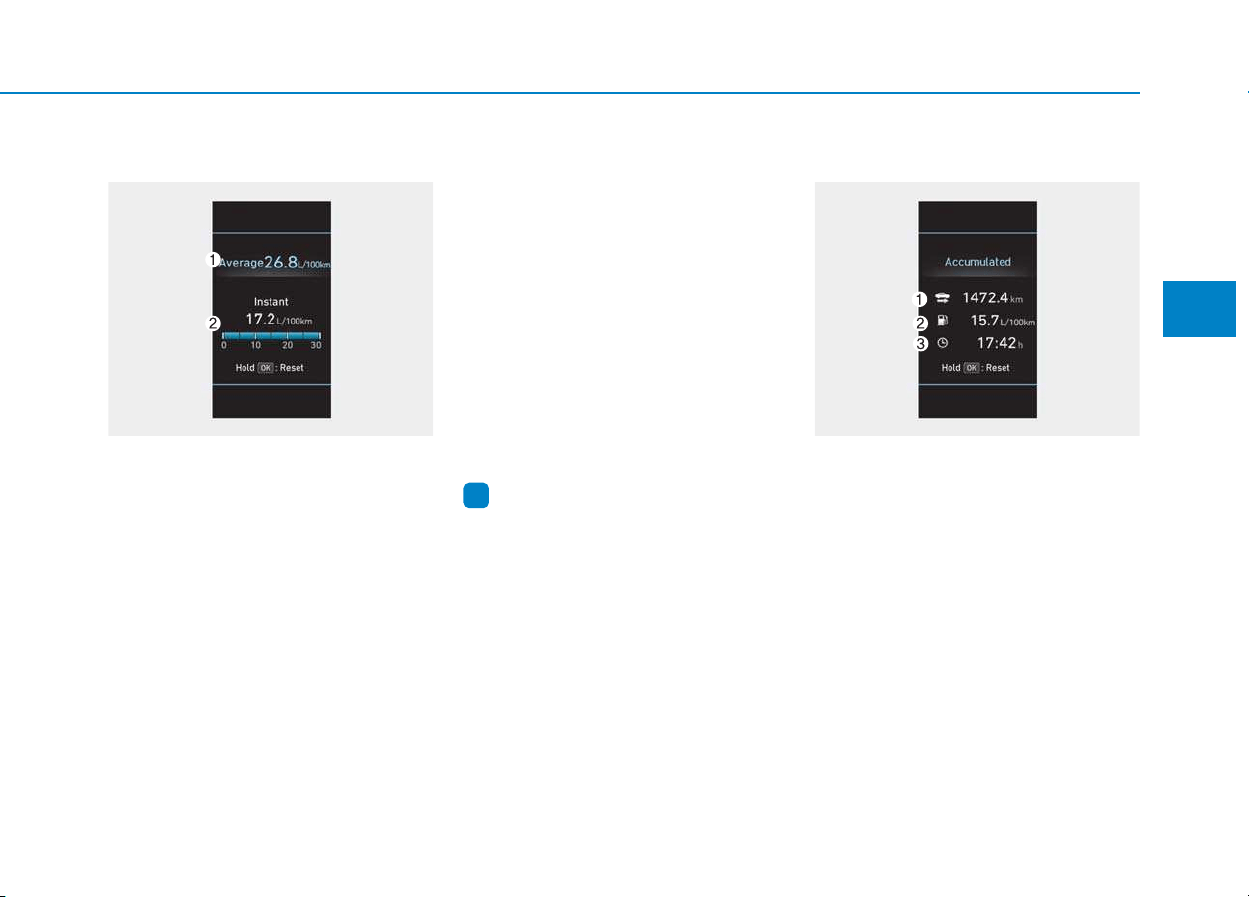
3-77
Convenient features of your vehicle
3
Fuel economy
Average Fuel Economy (1)
• The average fuel economy is calcu-
lated by the total driving distance
and fuel consumption since the last
average fuel economy reset.
• The average fuel economy can be
reset both manually and automati-
cally.
Manual reset
To clear the average fuel economy
manually, press the [OK] button on
the steering wheel for more than 1
second when the average fuel econo-
my is displayed.
Automatic reset
To automatically reset the average
fuel economy after refueling, select
the "Auto Reset" mode in the User
Settings menu on the LCD display.
- After Ignition: The average fuel
economy will reset automatically
whenever it has passed 4 hours
after turning OFF the engine.
- After Refueling: The average fuel
economy will reset automatically
when driving speed exceeds 1
km/h, after adding 6 liters (1.6 gal-
lons) of fuel or more.
Information
The average fuel economy may be
inaccurate, when the vehicle drives
shorter than 300 meters (0.19 miles)
after turning ON the Engine Start/Stop
button.
Instant Fuel Economy (2)
• This mode displays the instant fuel
economy during the last few sec-
onds when the vehicle speed is
more than 10 km/h (6.2 MPH).
Accumulated Info display
This display shows the accumulated
trip distance (1), the average fuel
economy (2), and the total driving
time (3).
The information is accumulated
starting from the last reset.
To manually reset the information,
press and hold the OK button when
viewing the Accumulated driving info.
The trip distance, the average fuel
economy, and total driving time will
reset simultaneously.
i
OPDE046132 OPDE046134
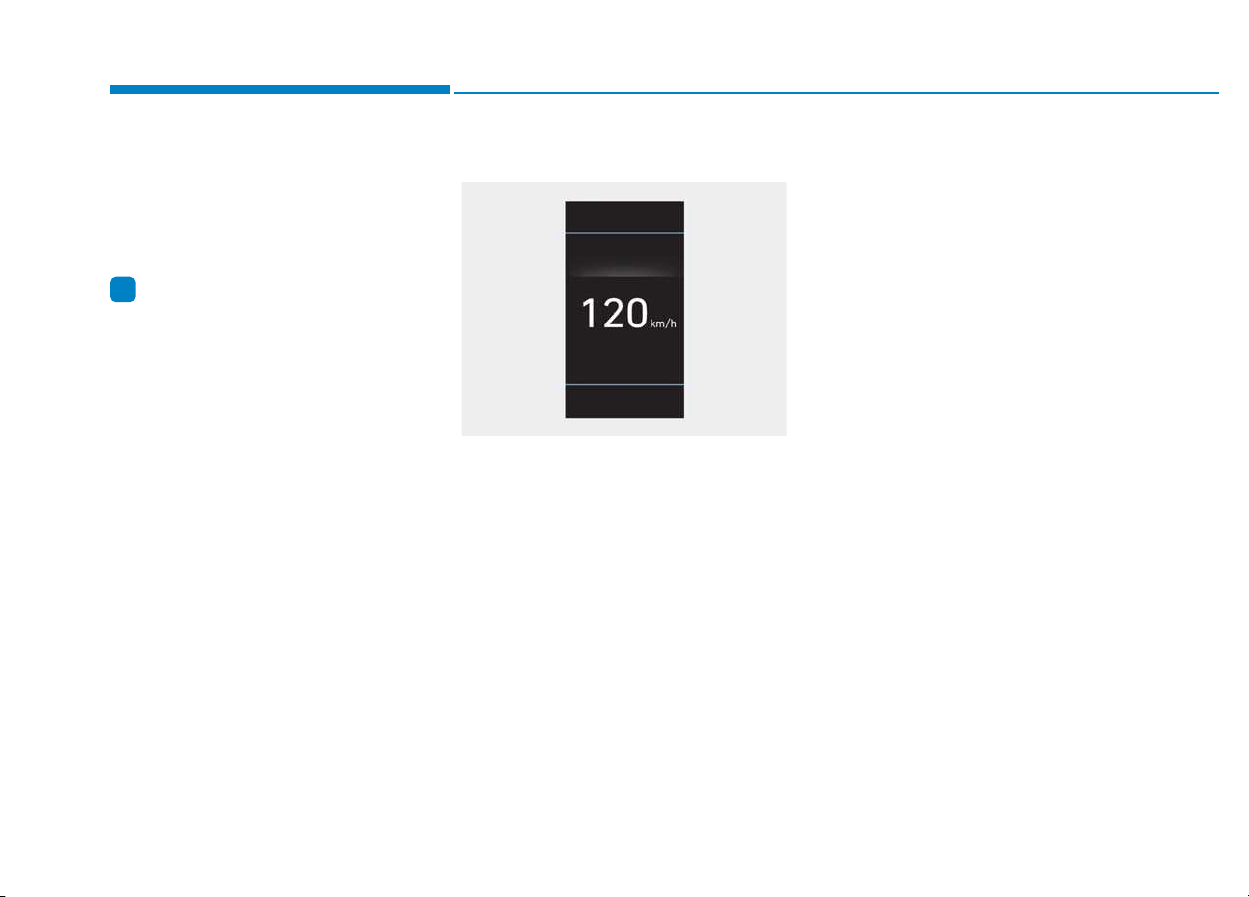
The accumulated driving information
will continue to be counted while the
engine is still running (for example,
when the vehicle is in traffic or
stopped at a stop light).
Information
The vehicle must be driven for a min-
imum of 300 meters (0.19 miles) since
the last ignition key cycle before the
average fuel economy will be recalcu-
lated.
Digital Speedometer
This message shows the speed of
the vehicle (km/h, MPH).
i
OPDE046146
Convenient features of your vehicle
3-78
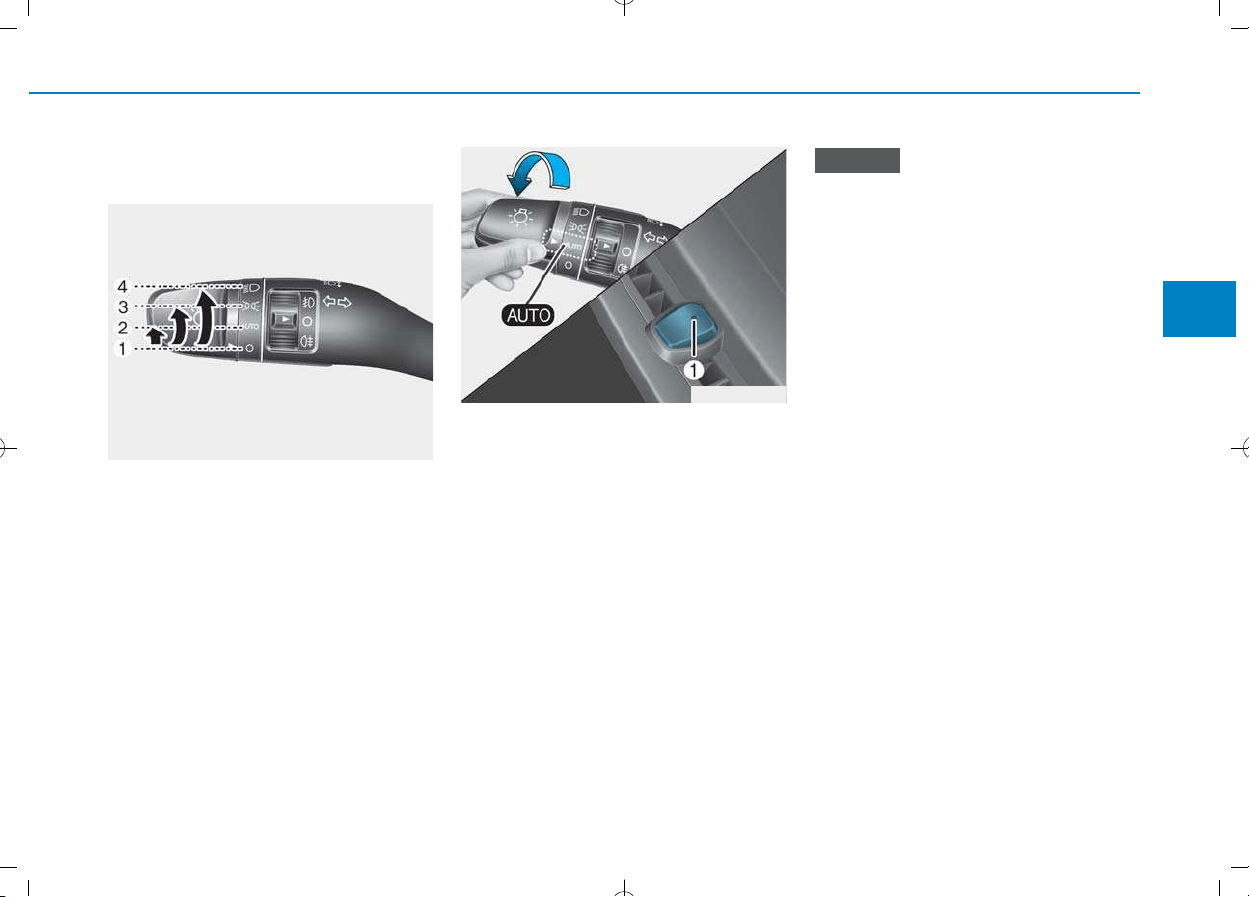
3-79
Convenient features of your vehicle
3
Exterior lights
Lighting control
To operate the lights, turn the knob at
the end of the control lever to one of
the following positions:
(1) O position
(2) AUTO light position (if equipped)
(3) Position lamp position
(4) Headlamp position
AUTO light position (if equipped)
When the light switch is in the AUTO
position, the position lamp and head-
lamp will be turned ON or OFF auto-
matically depending on the amount
of light outside the vehicle.
Even with the AUTO light feature in
operation, it is recommended to
manually turn ON the lamps when
driving at night or in a fog, or when
you enter dark areas, such as tun-
nels and parking facilities.
• Do not cover or spill anything on
the sensor (1) located on the
instrument panel.
• Do not clean the sensor using a
window cleaner, the cleanser
may leave a light film which
could interfere with sensor oper-
ation.
• If your vehicle has window tint
or other types of metallic coat-
ing on the front windshield, the
AUTO light system may not work
properly.
NOTICE
LLIIGGHHTTIINNGG
OPDE046036
OPDE046065
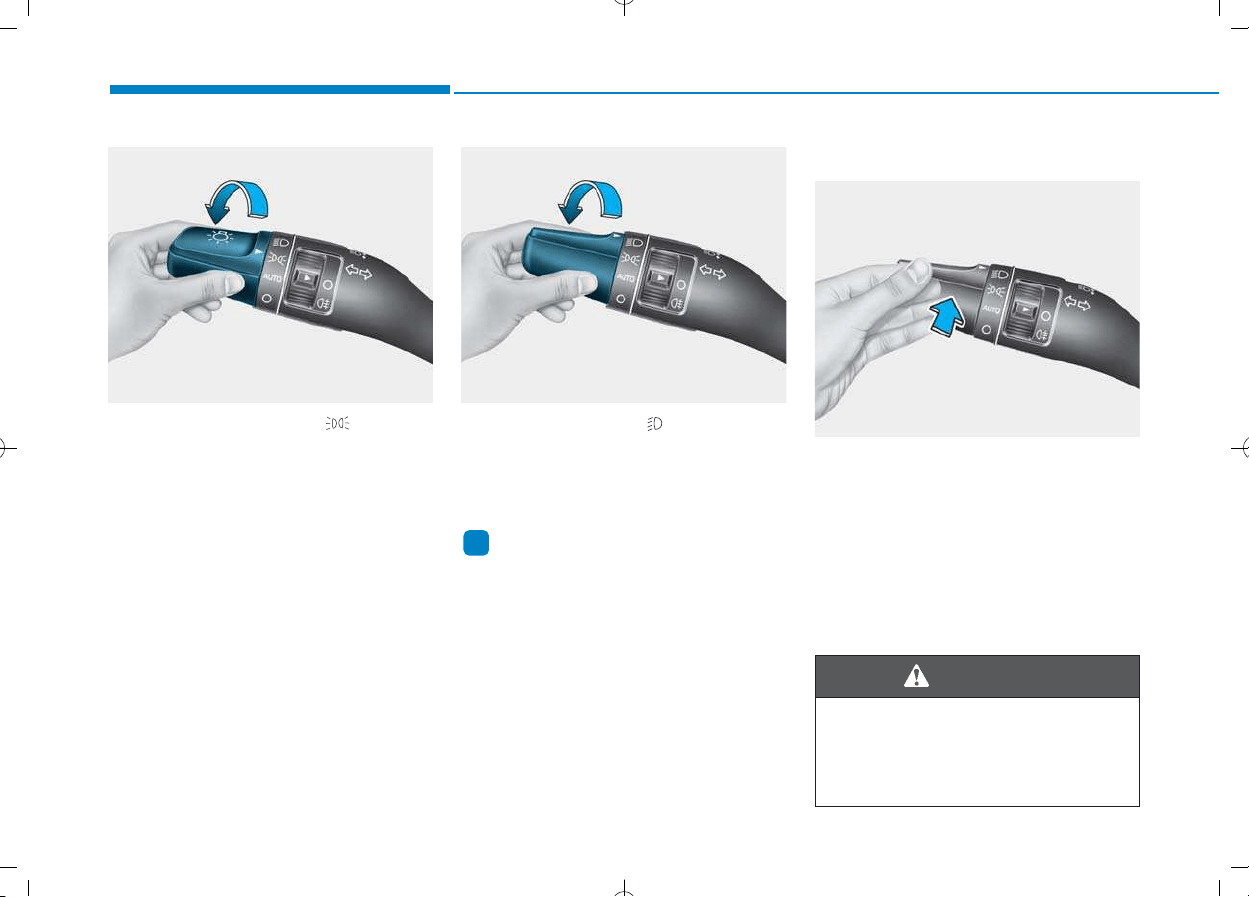
3-80
Convenient features of your vehicle
Position lamp position ( )
The position lamp, license plate lamp
and instrument panel lamp are turned
ON.
Headlamp position ( )
The headlamp, position lamp, license
plate lamp and instrument panel lamp
are turned ON.
Information
The ignition switch must be in the ON
position to turn on the headlamp.
High beam operation
To turn on the high beam headlamp,
push the lever away from you. The
lever will return to its original position.
The high beam indicator will light
when the headlamp high beams are
switched on.
To turn off the high beam headlamp,
pull the lever towards you. The low
beams will turn on.
i
OAE046469L OAE046467L
OAE046453L
Do not use high beam when there
are other vehicles approaching
you. Using high beam could
obstruct the other driver's vision.
WARNING
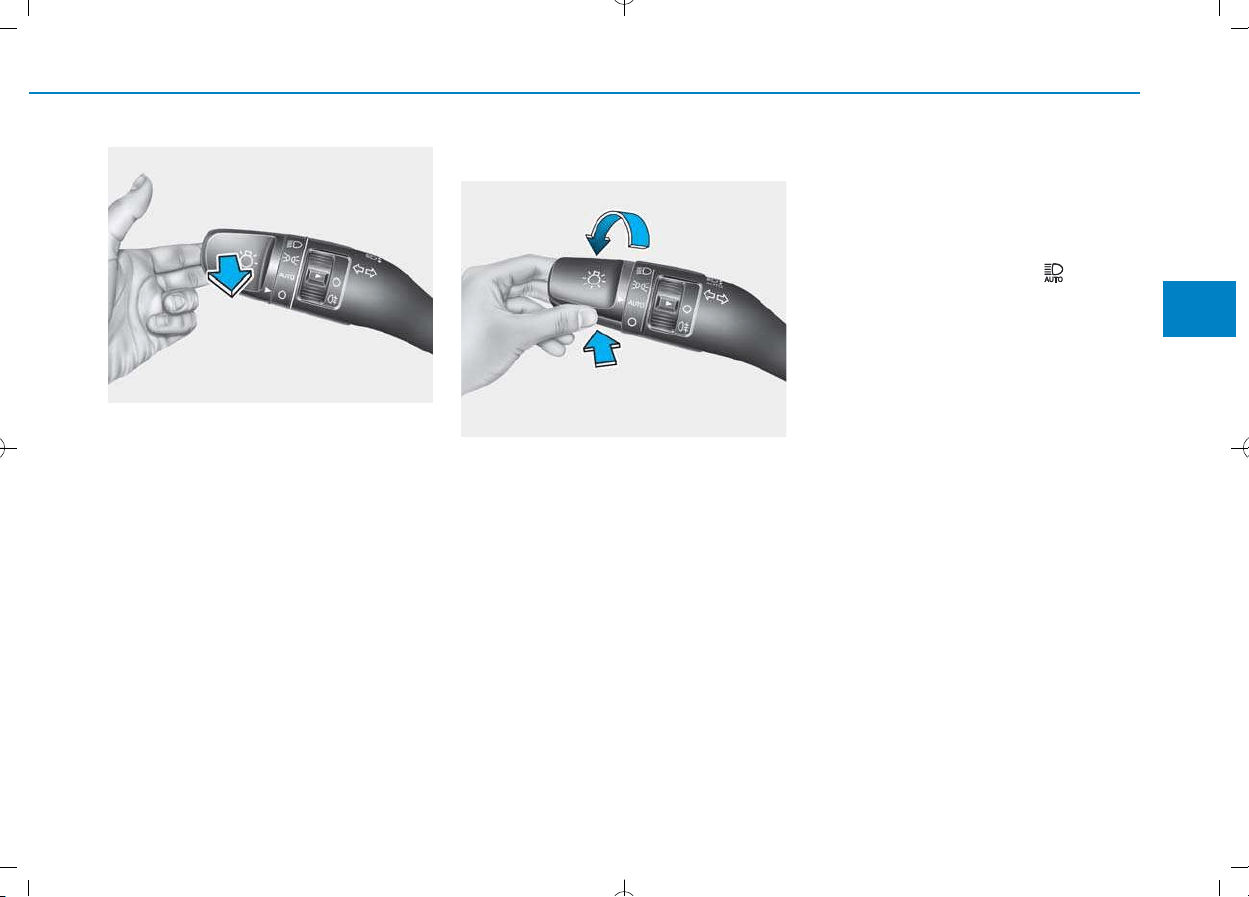
3-81
Convenient features of your vehicle
To flash the high beam headlamp,
pull the lever towards you, then
release the lever. The high beams
will remain ON as long as you hold
the lever towards you.
Smart high beam (if equipped)
The Smart High Beam is a system
that automatically adjusts the head-
lamp range (switches between high
beam and low beam) according to
the brightness of other vehicles and
road conditions.
Operating condition
1.Place the light switch in the AUTO
position.
2.Turn on the high beam by pushing
the lever away from you.
The smart high beam ( ) indica-
tor will illuminate.
3.The Smart High Beam will turn on
when vehicle speed is above
45km/h (25mph).
• If the light switch is pushed away
when the Smart High Beam is
operating, the Smart High Beam
will turn off and the high beam will
be on continuously.
• If the light switch is pulled towards
you when the high beam is off, the
high beam will turn on without the
Smart High Beam canceled.
When you let go of the light switch,
the lever will move to the middle
and the high beam will turn off.
• If the light switch is pulled towards
you when the high beam is on by
the Smart High Beam, the low
beam will be on and the Smart
High Beam will turn off.
• If the light switch is placed to the
headlamp position, the Smart
High Beam will turn off and the
low beam will be on continuously.
3
OAE046455L
OPDE046057
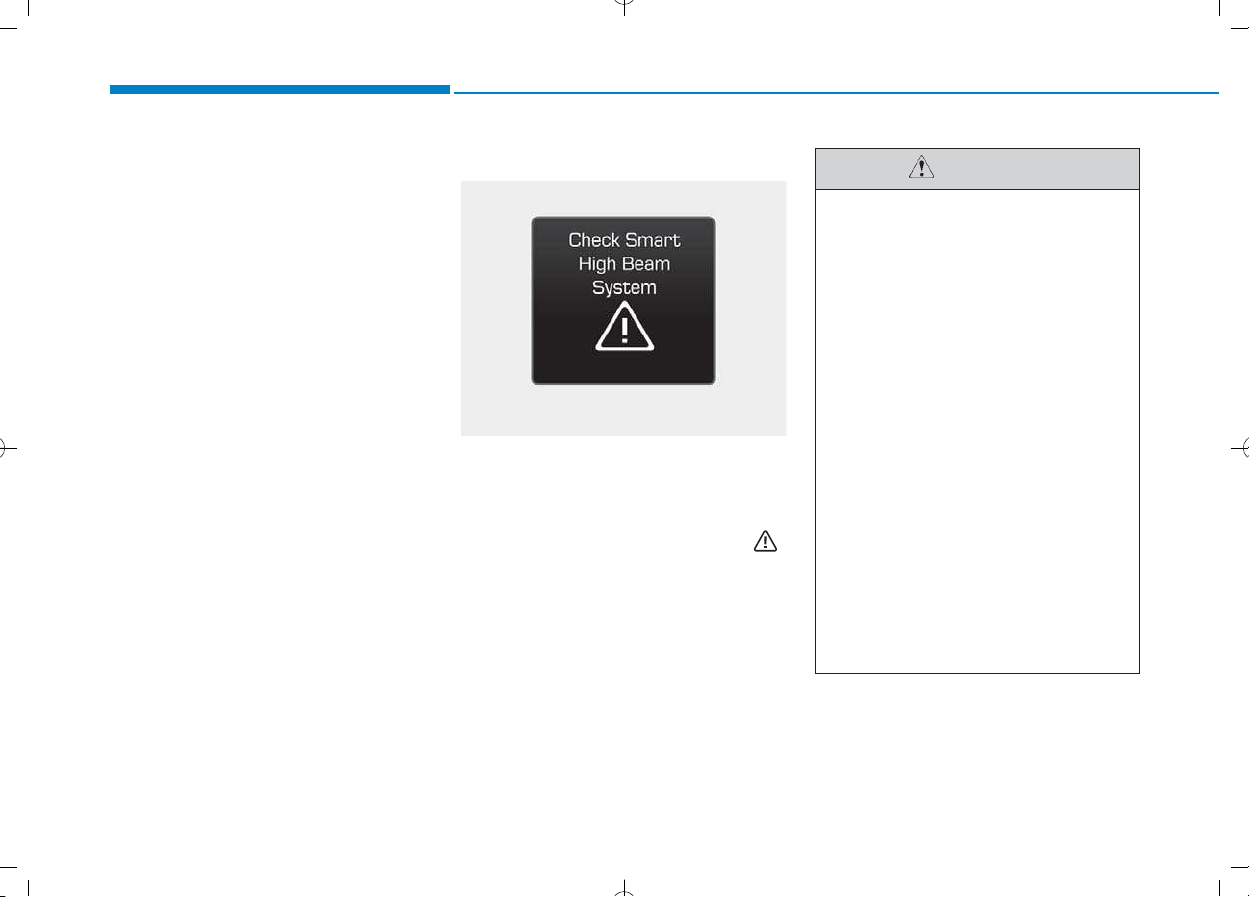
3-82
When the Smart High Beam is oper-
ating, the high beam switches to low
beam in the below conditions.
- When the headlamp of an on-com-
ing vehicle is detected.
- When the tail lamp of a vehicle in
front is detected.
- When headlamp/tail lamp of bicy-
cle/motorcycle is detected.
- When the surrounding is bright
enough high beams are not needed.
- When streetlights or other lights
are detected.
- When the light switch is not in the
AUTO position.
- When the Smart High Beam is off.
- When vehicle speed is below 24 km/h
(15 mph).
Warning light and message
When the Smart High Beam Assist
System is not working properly, the
warning message will come on for a
few second. After the message disap-
pears, the master warning light ( )
will illuminate.
We recommend that you take your
vehicle to an authorized HYUNDAI
dealer and have the system checked.
Convenient features of your vehicle
ODM046655L
The system may not operate
normally in the below condi-
tions.
• When the light from the on-
coming or front vehicle is not
detected because of lamp
damage, hidden from sight,
etc.
• When the lamp of the on-com-
ing or front vehicle is covered
with dust, snow or water.
• When the light from the on-
coming or front vehicle is not
detected because of exhaust
fumes, smoke, fog, snow, etc.
• When the front window is cov-
ered with foreign matter such
as ice, dust, fog, or is dam-
aged.
(Continued)
CAUTION

3-83
Convenient features of your vehicle
3
Information
When you replace or reinstall the
windshield glass or LDWS/LKAS
camera (if equipped), We recommend
that you take your vehicle to an
authorized HYUNDAI dealer and
have the system checked.
i
(Continued)
• When there is a similar
shaped lamp with the front
vehicle’s lamps.
• When it is hard to see
because of fog, heavy rain or
snow.
• When the headlamp is not
repaired or replaced at an
authorized dealer.
• When headlamp aiming is not
properly adjusted.
• When driving on a narrow
winding road or rough road.
• When driving downhill or
uphill.
• When only part of the vehicle
in front is visible on a cross-
road or on a corner.
• When there is a traffic light,
reflecting sign, flashing sign
or mirror.
• When the road conditions are
bad such as being wet or cov-
ered with snow.
(Continued)
(Continued)
• When the front vehicle’s head-
lamps are off but the fog
lamps on.
• When a vehicle suddenly
appears from a around a cor-
ner.
• When the vehicle is tilted from
a flat tyre or being towed.
•
When the LDWS (Lane Departure
Warning System) or LKAS (Lane
Keeping Assist System) warning
light illuminates. (if equipped)
• Do not place any accessories,
stickers or tint the windshield.
• Have the windshield glass
replaced by an authorised
dealer.
• Do not remove or impact relat-
ed parts of the Smart High
Beam system.
• Be careful that water doesn’t
get into the Smart High Beam
unit.
• Do not place objects on the
instrument panel that reflect
light such as mirrors, white
paper, etc. The system may
malfunction if sunlight is
reflected.
• At times, the Smart High
Beam system may not work
properly, always check the
road conditions for your safe-
ty. When the system does not
operate normally, manually
change between the high
beam and low beam.
WARNING
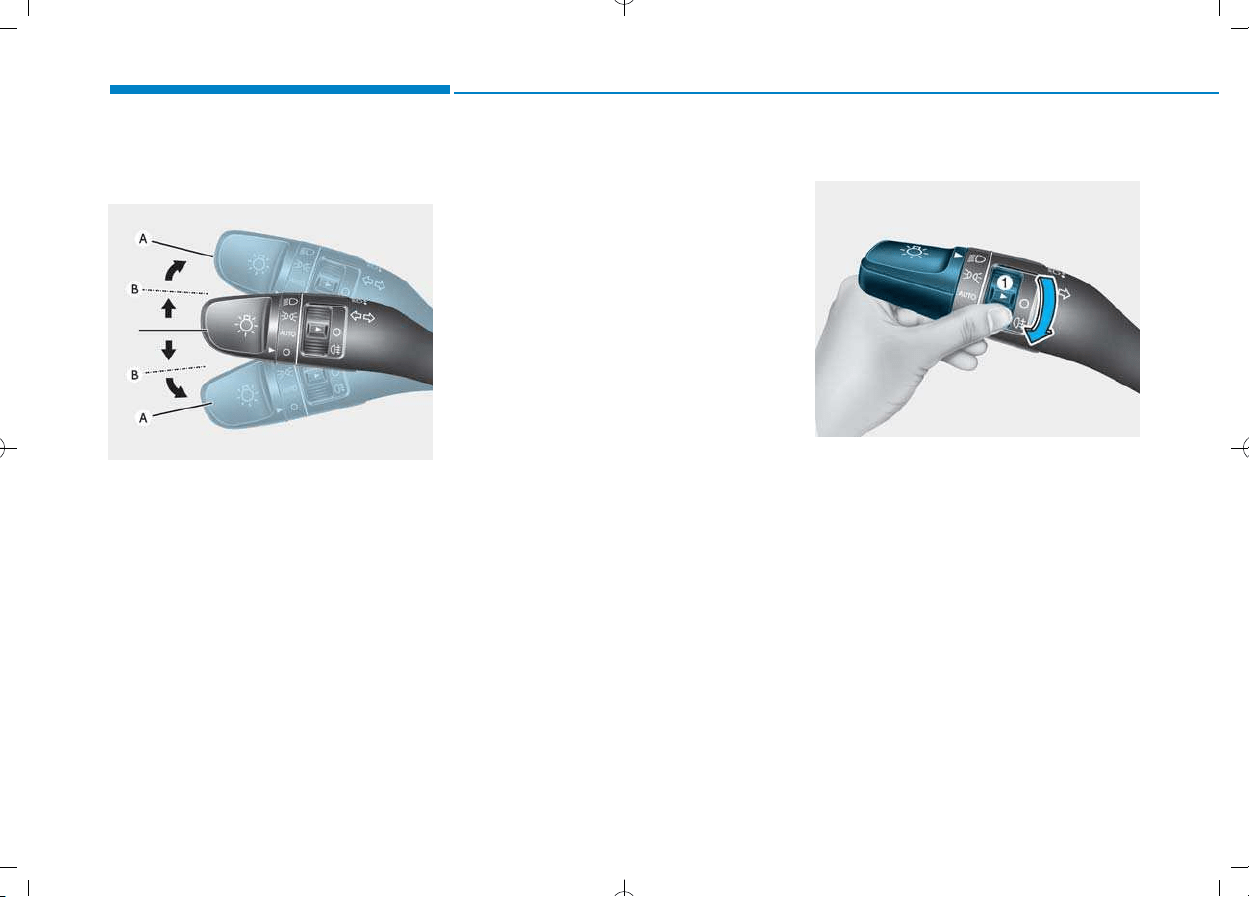
3-84
Convenient features of your vehicle
Turn signals and lane change
signals
To signal a turn, push down on the
lever for a left turn or up for a right
turn in position (A). To signal a lane
change, move the turn signal lever
slightly and hold it in position (B).The
lever will return to the OFF position
when released or when the turn is
completed.
If an indicator stays on and does not
flash or if it flashes abnormally, one of
the turn signal bulbs may be burned
out and will require replacement.
One-touch turn signal function
To activate a one-touch turn signal
function, move the turn signal lever
slightly and then release it. The lane
change signals will blink 3, 5 or 7
times.
You can activate/deactivate the One
Touch Turn Signal function or choose
the number of blinks (3, 5, or 7) from
the User Settings mode on the LCD
display. For more details, refer to
"LCD Display" in this chapter.
Rear fog lamp
To turn on the rear fog lamp:
Position the light switch in the head-
lamp position, and then turn the light
switch (1) to the rear fog lamp position.
To turn the rear fog lamps off, do one
of the following:
• Turn off the headlamp switch.
• Turn the light switch to the rear fog
lamp position again.
OTLE045284
OTLE045285

3-85
Convenient features of your vehicle
3
Battery saver function
The purpose of this feature is to pre-
vent the battery from being dis-
charged. The system automatically
turns off the position lamp when the
driver turns the engine off and opens
the driver-side door.
With this feature, the position lamps
will turn off automatically if the driver
parks on the side of road at night.
If necessary, to keep the lamps on
when the engine is turned off, perform
the following:
1) Open the driver-side door.
2) Turn the position lamps OFF and
ON again using the light switch on
the steering column.
Headlamp delay function
If you place the ignition switch to the
ACC or OFF position with the head-
lamps ON, the headlamps (and/or
position lamps) remain on for about 5
minutes. However, with the engine off if
the driver’s door is opened and closed,
the headlamps (and/or position lamps)
are turned off after 15 seconds.
The headlamps (and/or position
lamps) can be turned off by pressing
the lock button on the remote key or
smart key twice or turning the light
switch to the OFF or AUTO position.
However, if you turn the light switch
to the AUTO position when it is dark
outside, the headlamps will not be
turned off.
You can activate or deactivate the
Headlamp Delay function from the
User Settings mode on the LCD dis-
play. For more details, refer to
"LCD Display" in this chapter.
If the driver gets out of the vehicle
through other doors (except dri-
ver's door), the battery saver func-
tion does not operate and the
headlamp delay function does not
turn off automatically. Therefore, It
causes the battery to be dis-
charged. In this case, make sure to
turn off the lamp before getting out
of the vehicle.
NOTICE
3-86
Convenient features of your vehicle
Daytime running light (DRL)
(if equipped)
The Daytime Running Lights (DRL)
can make it easier for others to see
the front of your vehicle during the
day, especially after dawn and before
sunset.
The DRL system will turn the dedi-
cated lamp OFF when:
1. The headlamps or front fog lights
are in the ON position.
2. The position light switch is in the
ON position.
3. The engine is turned off.
Headlamp leveling device
It automatically adjusts the head-
lamp beam level according to the
number of passengers and loading
weight in the luggage area.
It also adjusts to the appropriate head-
lamp beam level for various situations.
Static bending light
(if equipped)
While driving a corner, for greater
visibility and safety, either the left or
right side static bending light will turn
on automatically. The static bending
light will turn on when one of the fol-
lowing conditions occur.
• Vehicle speed is less than 10 km/h
(6 mph) and steering wheel angle
is turned approximately 80 degrees
with the low beam on.
• Vehicle speed is between 10 km/h
(6 mph) to 90 km/h (56 mph) and
steering wheel angle is turned
approximately 35 degrees with the
low beam on.
• When the vehicle is in reverse with
one of the conditions above satis-
fied, the light opposite to the direc-
tion the steering wheel is steered
will turn on.
If the function does not work
properly, we recommend that
the system be inspected by an
authorized HYUNDAI dealer. Do
not attempt to inspect or
replace the wiring yourself.
WARNING
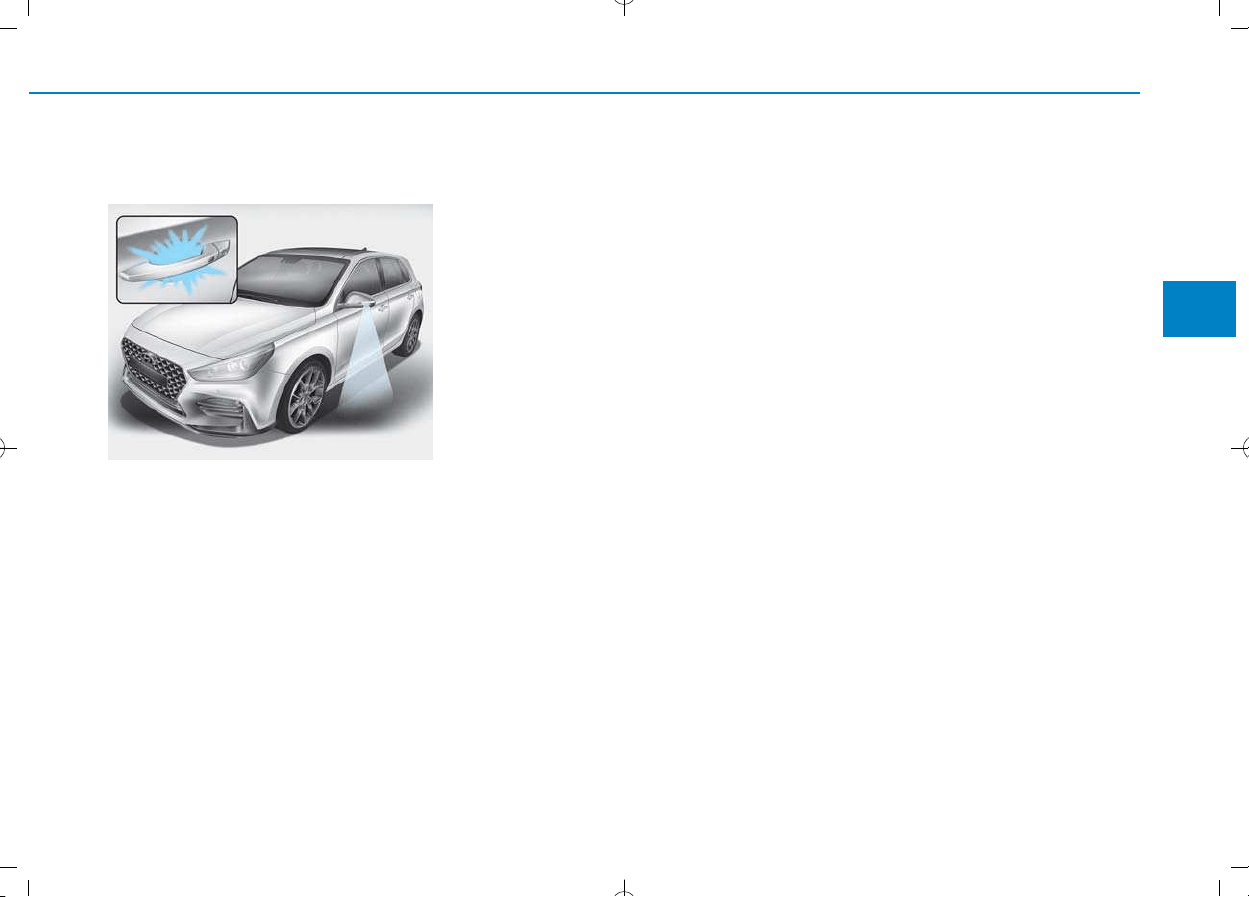
3-87
Convenient features of your vehicle
3
Welcome system (if equipped)
Welcome light (if equipped)
Puddle lamp (if equipped)
When all the doors (and tailgate) are
closed and locked, the puddle lamp
will come on for about 15 seconds if
any of the below is performed.
• When the door unlock button is
pressed on the remote key or
smart key.
• When the button of the outside
door handle is pressed with the
smart key in possession.
Door handle lamp (if equipped)
When all the doors (and tailgate) are
closed and locked, the door handle
lamp will come on for about 15 sec-
onds if any of the below is performed.
• When the door unlock button is
pressed on the remote key or
smart key.
• When the button of the outside
door handle is pressed with the
smart key in possession.
Headlamp and position lamp
When the headlamp (lamp switch in
the headlamp or AUTO position) is on
and all doors (and tailgate) are locked
and closed, the position lamp and
headlamp will come on for 15 seconds
when the door unlock button is
pressed on the remote key or smart
key.
At this time, if you press the door lock
or unlock button, the position lamp and
headlamp will turn off immediately.
You can activate or deactivate the
Welcome Light from the User
Settings mode on the LCD display.
For more details, refer to "LCD
Display" in this chapter.
Interior lamp
When the interior lamp switch is in
the DOOR position and all doors (and
tailgate) are closed and locked, the
room lamp will come on for 30 sec-
onds if any of the below is performed.
• When the door unlock button is
pressed on the remote key or
smart key.
• When the button of the outside
door handle is pressed with the
smart key in possession.
At this time, if you press the door lock
or unlock button, the room lamp will
turn off immediately.
OPDEN047051
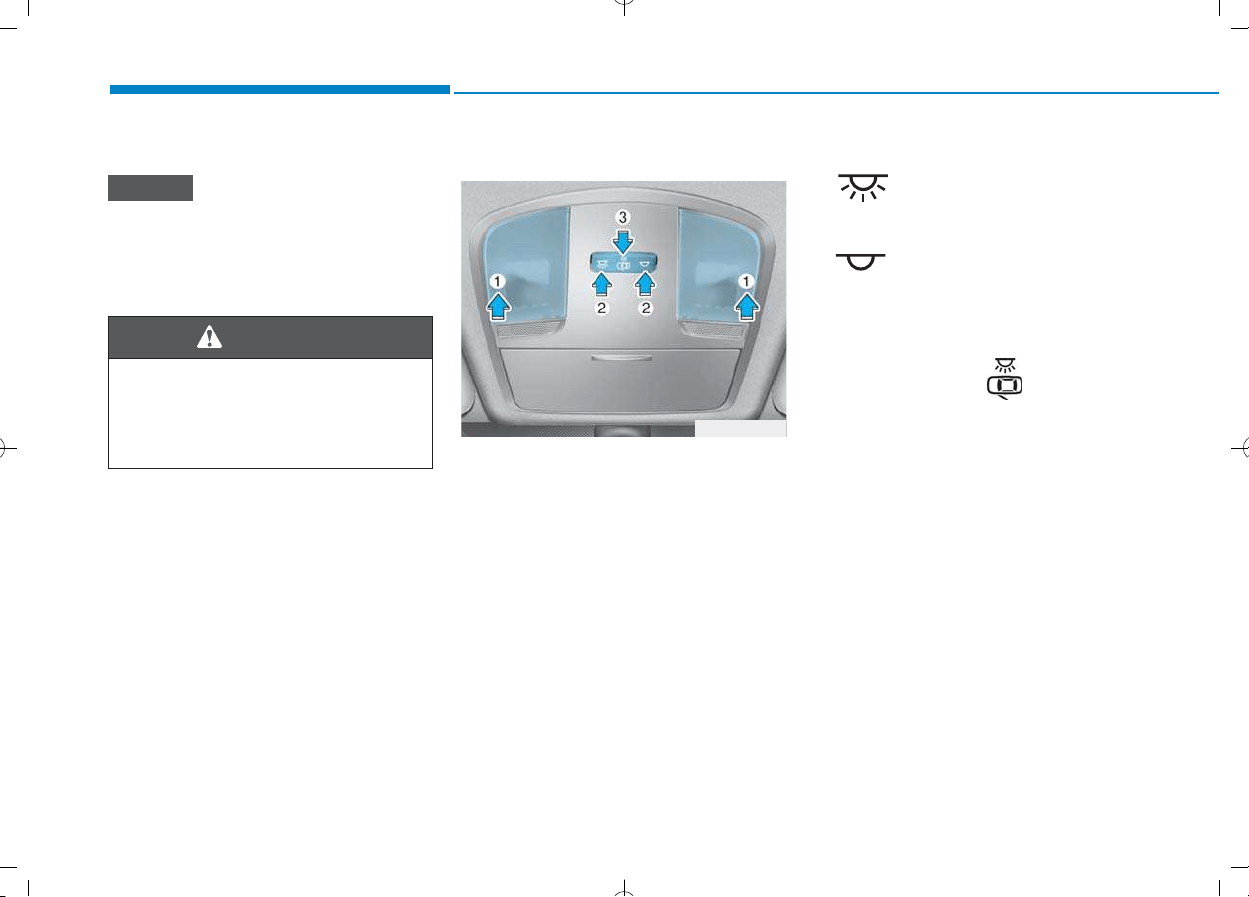
3-88
Interior lights
Do not use the interior lights for
extended periods when the engine
is turned off otherwise the battery
will discharge.
Interior lamp AUTO cut
The interior lamps will automatically
go off approximately 20 minutes after
the engine is turned off and the
doors are closed. If a door is opened,
the lamp will go off 40 minutes after
the engine is turned off. If the doors
are locked and the vehicle enters the
armed stage of the theft alarm sys-
tem, the lamps will go off five sec-
onds later.
Front lamps
(1) Front Map Lamp
(2) Front Room Lamp
(3) Front Door Lamp
Front map lamp
Press the map lamp lens (1) to turn
ON the map lamp. Re-press the map
lamp lens to turn OFF the map lamp.
Front room lamp
•:
Press the button to turn ON the
room lamp for the front/rear seats.
•:
Press the button to turn OFF the
room lamp for the front/rear seats.
Front door lamp ( )
The room lamp for the front/rear
seats is automatically turned ON for
approximately 30 seconds, when a
door is opened.
The room lamp for the front/rear
seats is automatically turned ON for
approximately 15 seconds, when the
remote key (smart key) unlocks the
doors. The room lamp fades out,
when the ignition switch is placed to
the ON position in 15 seconds. The
room lamp remains ON up to 20 min-
utes, when a door is opened with the
ignition switch in the either the ACC
or OFF position.
NOTICE
Convenient features of your vehicle
Do not use the interior lights
when driving in the dark.The inte-
rior lights may obscure your view
and cause an accident.
WARNING
OPDE046041

3-89
Convenient features of your vehicle
3
Rear lamps
Do not leave the lamp switches on
for an extended period of time
when the engine is turned off.
Luggage compartment lamp
The luggage compartment lamp
comes on when the tailgate is
opened.
The luggage compartment lamp
comes on as long as the tailgate is
open. To prevent unnecessary
charging system drain, close the
tailgate securely after using the
tailgate.
NOTICE
NOTICE
OPDEN047042
Rear room lamp switch :
Press this button to turn the room
lamp on and off.
OAD045407
OPD046406
■ Type A
■ Type B
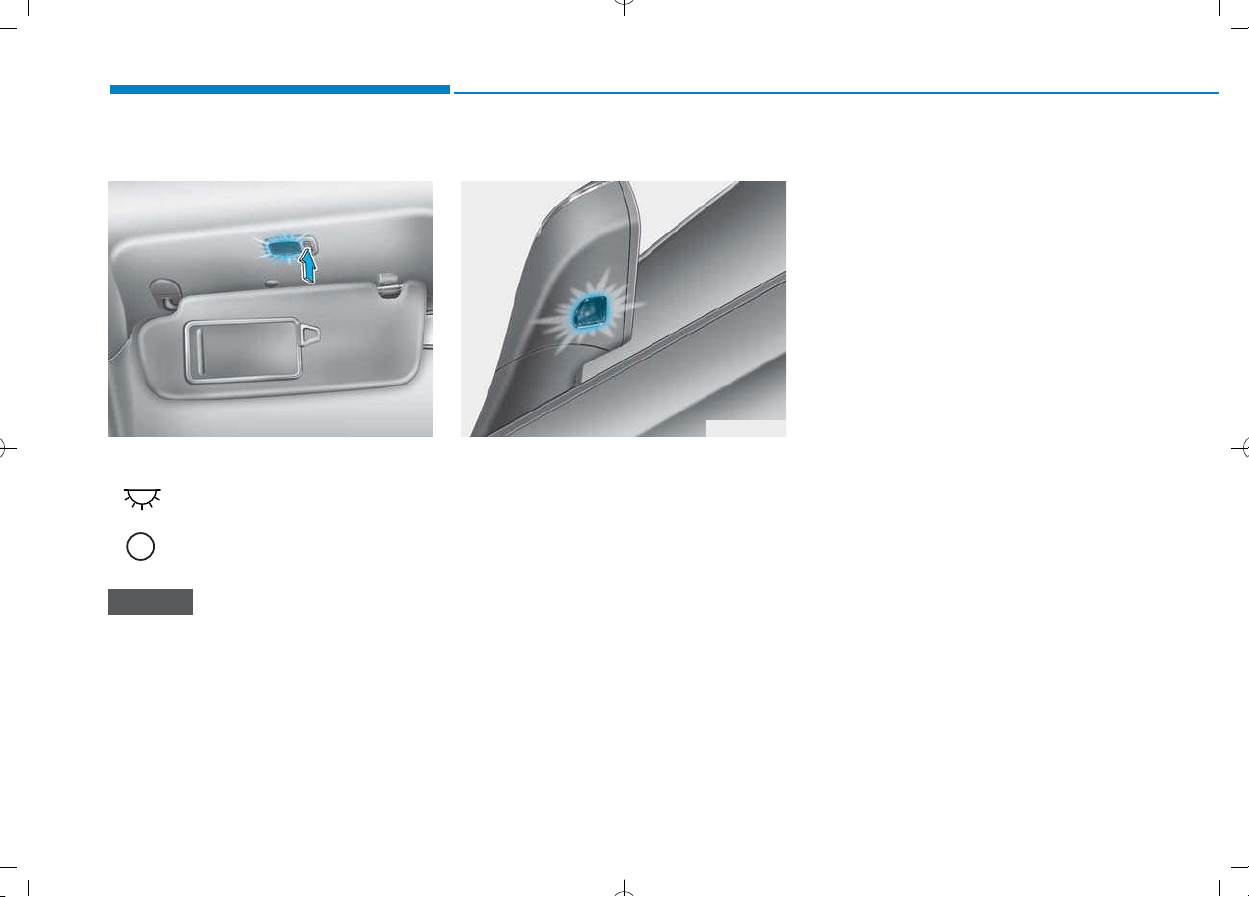
3-90
Convenient features of your vehicle
Vanity mirror lamp (if equipped)
Push the switch to turn the light on or
off.
• : The lamp will turn on if this
button is pressed.
• : The lamp will turn off if this
button is pressed.
Always have the switch in the off
position when the vanity mirror
lamp is not in use. If the sunvisor
is closed without the lamp off, it
may discharge the battery or dam-
age the sunvisor.
Puddle lamp (if equipped)
Welcome light
When all doors (and tailgate) are
closed and locked, the puddle lamp
will come on for 15 seconds if the
door is unlocked by the smart key or
outside door handle button.
For more details, refer to "Welcome
System" in this chapter.
Escort light
When the ignition switch is in the
OFF position and the driver's door is
opened, the puddle lamp will come
on for 30 seconds. If the driver's door
is closed within the 30 seconds, the
puddle lamp will turn off after 15 sec-
onds. If the driver's door is closed
and locked, the puddle lamp will turn
off immediately.
The Puddle Lamp Escort Light will
turn on only the first time the driver's
door is opened after the engine is
turned off.
NOTICE
OPD046043 OLF044259
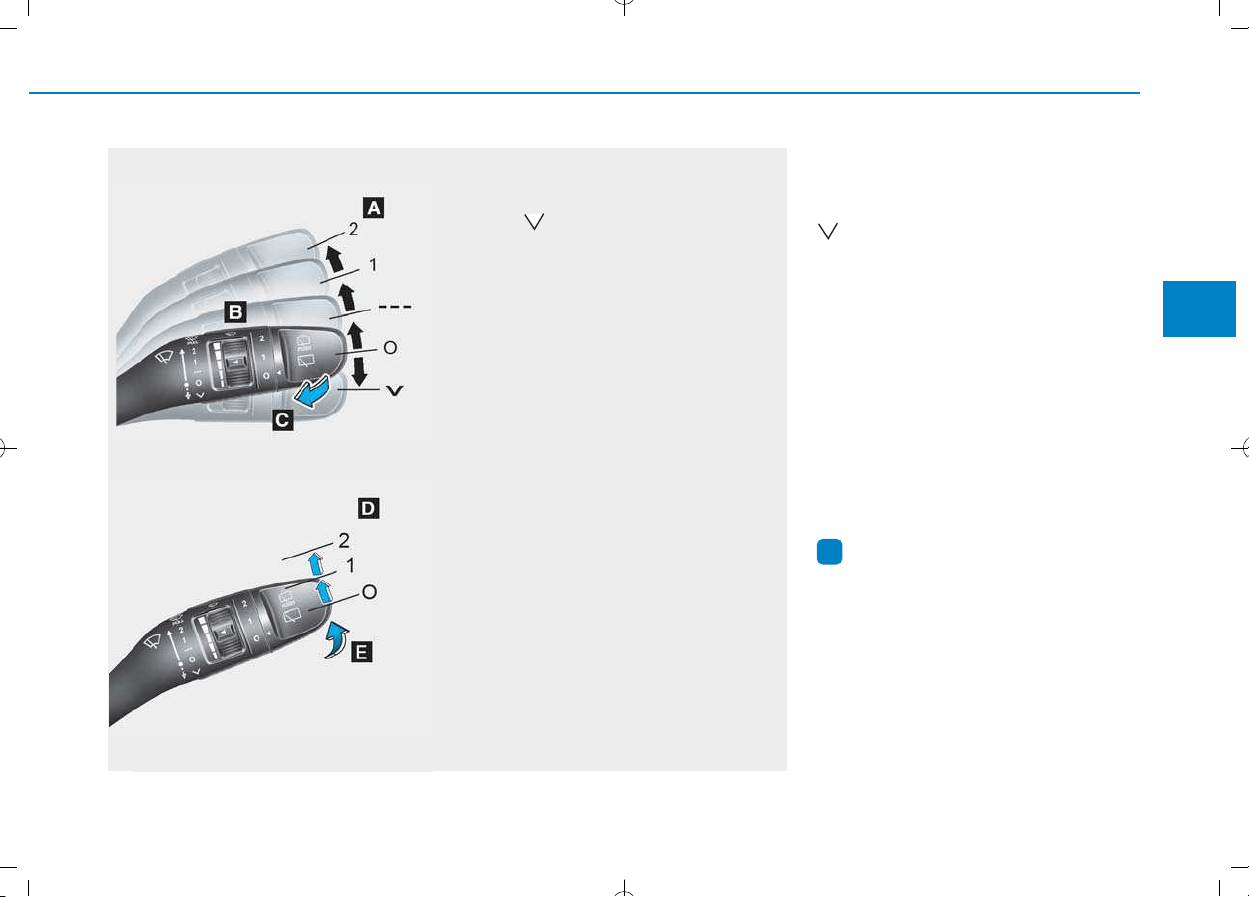
3-91
Convenient features of your vehicle
Windshield wipers
Operates as follows when the igni-
tion switch is turned ON.
: For a single wiping cycle, move
the lever down and release it.
The wipers will operate continu-
ously if the lever is held in this
position.
O : Wiper is not in operation
--- : Wiper operates intermittently at
the same wiping intervals. Use
this mode in light rain or mist. To
vary the speed setting, turn the
speed control knob.
1 : Normal wiper speed
2 : Fast wiper speed
Information
If there is heavy accumulation of snow
or ice on the windshield, defrost the
windshield for about 10 minutes, or until
the snow and/or ice is removed before
using the windshield wipers to ensure
proper operation.
If you do not remove the snow and/or ice
before using the wiper and washer, it may
damage the wiper and washer system.
i
WWIIPPEERRSS AANNDD WWAASSHHEERRSS
3
■ Front windshield wiper/washer
OPDE046058/OPDE046060
A : Wiper speed control (front)
· – Single wipe
· O – Off
· --- – Intermittent wipe
AUTO* – Auto control wipe
· 1 – Low wiper speed
· 2 – High wiper speed
B : Intermittent control wipe time
adjustment
C : Wash with brief wipes (front)
(pull lever towards you)
D : Rear wiper control*
· 2 – High wiper speed
· 1 – Low wiper speed
· O – Off
E : Wash with brief wipes (rear)
(push lever away from you)
* : if equipped
■ Rear windshield wiper/washer
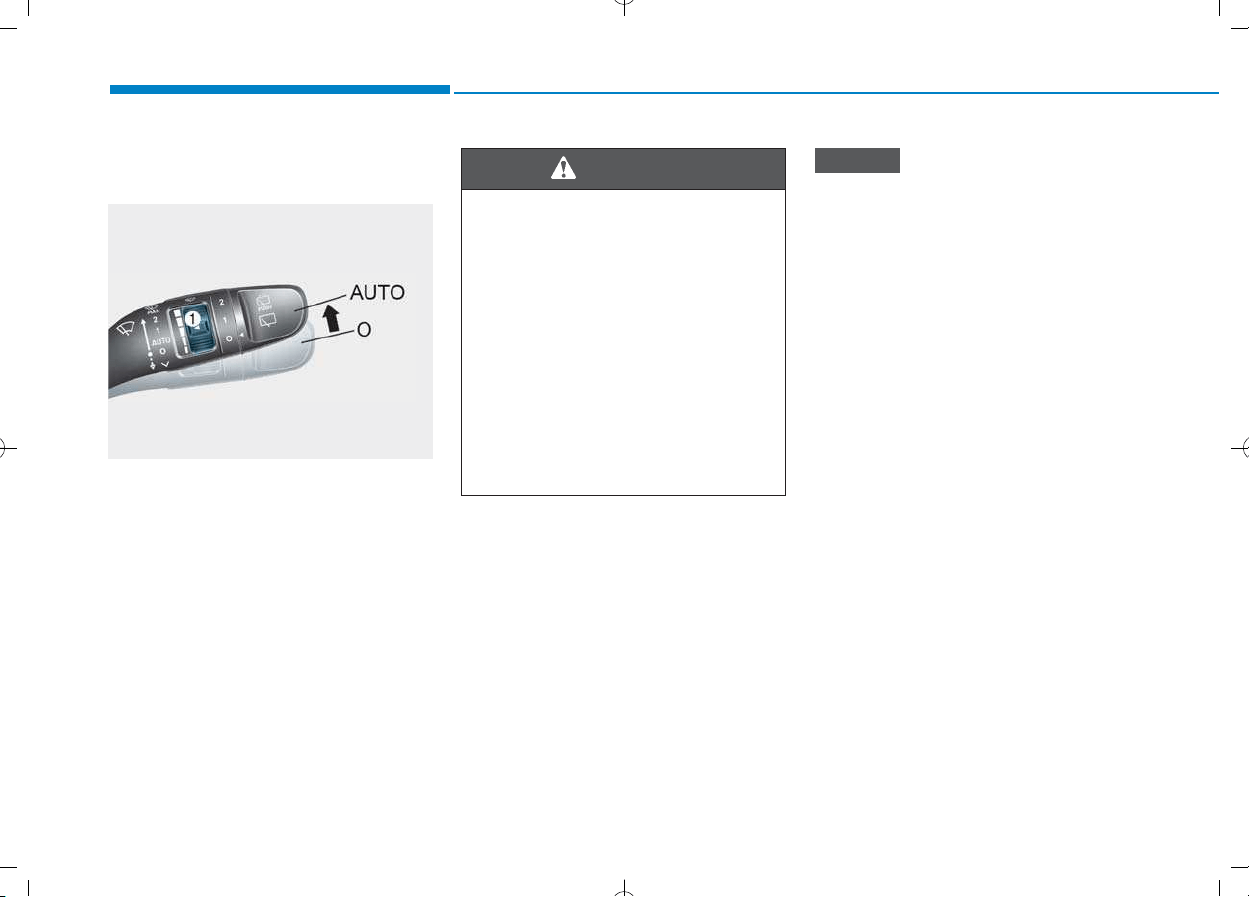
3-92
Convenient features of your vehicle
AUTO (Automatic) control
(if equipped)
The rain sensor located on the upper
end of the windshield glass senses
the amount of rainfall and controls the
wiping cycle for the proper interval.
The more it rains, the faster the wiper
operates.
When the rain stops, the wiper stops.
To vary the speed setting, turn the
speed control knob (1).
If the wiper switch is set in AUTO
mode when the ignition switch is in
the ON position, the wiper will oper-
ate once to perform a self-check of
the system. Set the wiper to OFF
position when the wiper is not in use.
• When washing the vehicle, set the
wiper switch in the O position to
stop the auto wiper operation. The
wiper may operate and be damaged
if the switch is set in the AUTO
mode while washing the vehicle.
• Do not remove the sensor cover
located on the upper end of the
passenger side windshield glass.
Damage to system parts could
occur and may not be covered by
your vehicle warranty.
NOTICE
OPDE046061
To avoid personal injury from the
windshield wipers, when the
engine is running and the wind-
shield wiper switch is placed in
the AUTO mode:
• Do not touch the upper end of
the windshield glass facing the
rain sensor.
• Do not wipe the upper end of
the windshield glass with a
damp or wet cloth.
• Do not put pressure on the
windshield glass.
WARNING
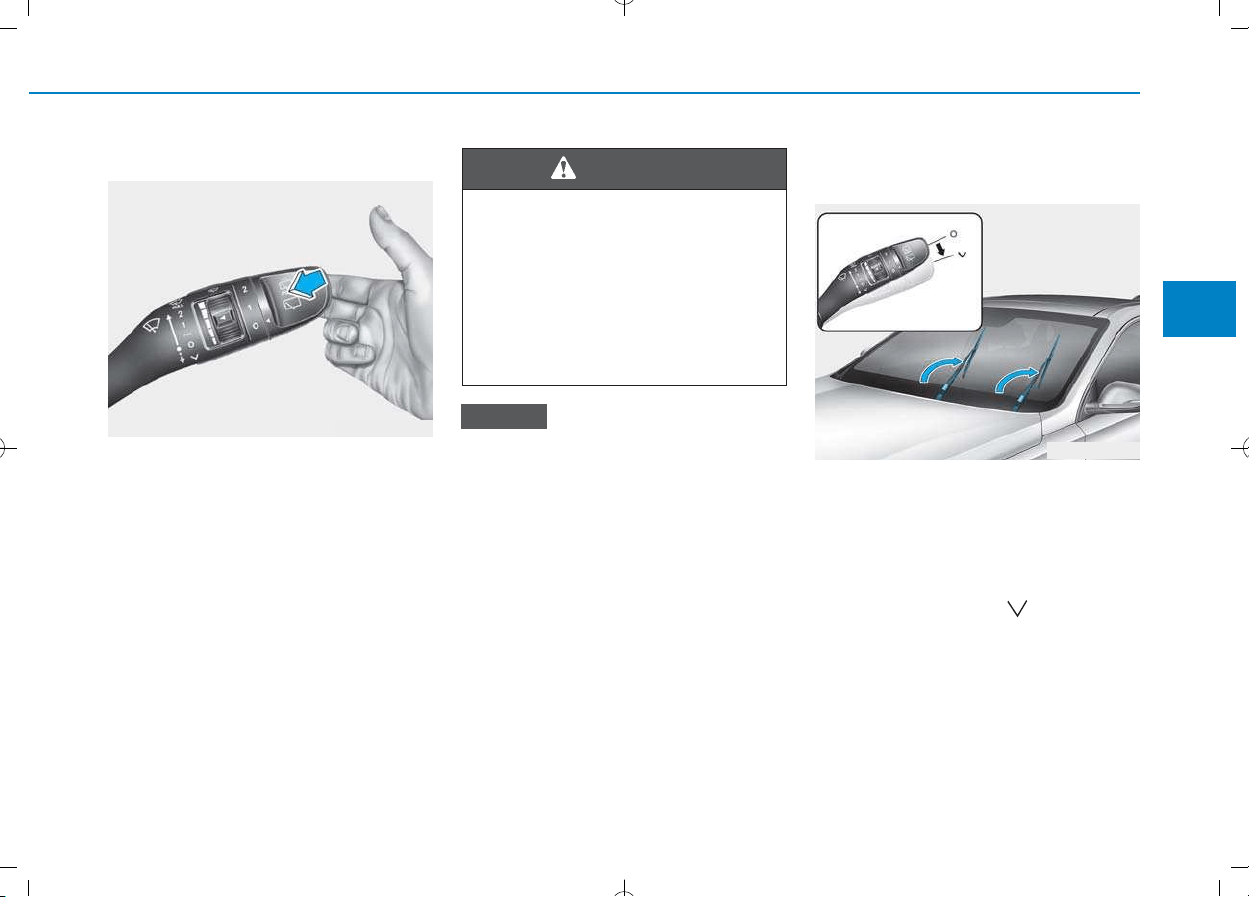
3-93
Convenient features of your vehicle
3
Windshield washers
In the O position, pull the lever gently
toward you to spray washer fluid on
the windshield and to run the wipers
1-3 cycles. The spray and wiper oper-
ation will continue until you release
the lever.
If the washer does not work, you may
need to add washer fluid to the washer
fluid reservoir.
• To prevent possible damage to
the washer pump, do not operate
the washer when the fluid reser-
voir is empty.
• To prevent possible damage to
the wipers or windshield, do not
operate the wipers when the wind-
shield is dry.
• To prevent damage to the wiper
arms and other components, do
not attempt to move the wipers
manually.
• To prevent possible damage to
the wipers and washer system,
use anti-freezing washer fluids in
the winter season or cold weather.
Front windshield wiper service
position
This vehicle has a "hidden" wiper
design which means that the wipers
cannot be lifted when they are in
their bottom resting position.
1. Within 20 seconds of turning off the
engine, move the wiper lever down
and hold it to the position for
about 2 seconds until the wipers
move to the top wipe position.
2. At this time you can lift the wipers
off the windshield.
3. Gently put the wipers back down
onto the windshield.
4. Turn the wipers to any ON position
to return the wipers to the bottom
resting position.
NOTICE
When the outside temperature is
below freezing, ALWAYS warm the
windshield using the defroster to
prevent the washer fluid from
freezing on the windshield and
obscuring your vision which
could result in an accident and
serious injury or death.
WARNING
OPDE046062
OPDE076027

3-94
Convenient features of your vehicle
Rear window wiper and washer
switch (if equipped)
The rear window wiper and washer
switch is located at the end of the
wiper and washer switch lever.
Turn the switch to the desired posi-
tion to operate the rear wiper and
washer.
2 – High wiper speed
1 – Low wiper speed
O – Off
Push the lever away from you to
spray rear washer fluid and to run the
rear wipers 1~3 cycles. The spray
and wiper operation will continue until
you release the lever. (if equipped)
Auto rear wiper (if equipped)
The rear wiper will operate while the
vehicle is in reverse with the front
wiper ON by selecting the function on
the LCD display.
Go to ‘User Settings
→
Convenience
→
Auto Rear Wiper (reverse)’.
OTLE045167
OTLE045168
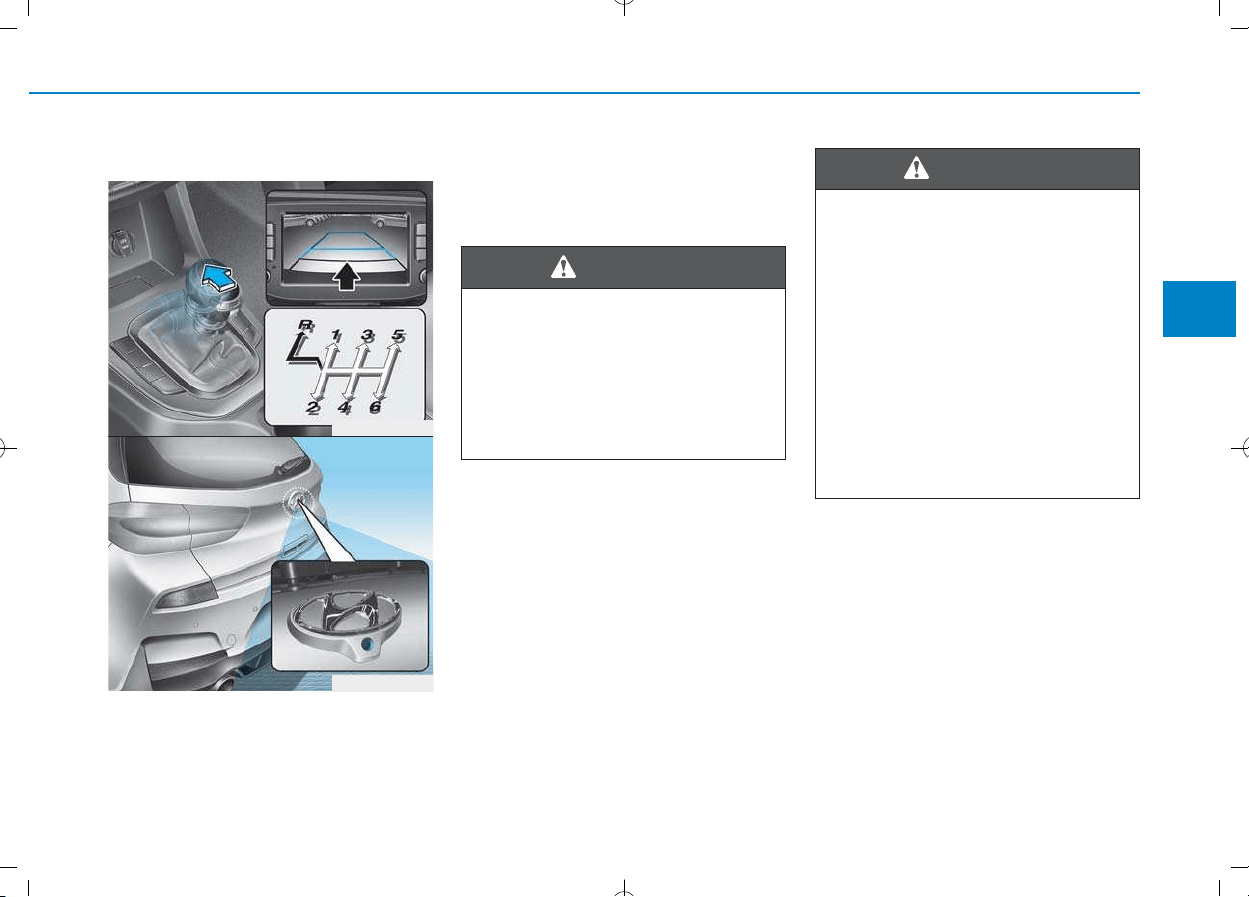
3-95
Convenient features of your vehicle
3
Rear view camera (if equipped)
The Rear View Camera will activate
when the engine is running and the
shift lever is in the R (Reverse) posi-
tion.
This is a supplemental system that
shows behind the vehicle through
the mirror or navigation display while
backing-up.
The rear camera display is not a
safety device. It only serves to
assist the driver in identifying
objects directly behind the mid-
dle of the vehicle. The camera
does NOT cover the complete
area behind the vehicle.
WARNING
DDRRIIVVEERR AASSSSIISSTT SSYYSSTTEEMM
OPDEN047424
• Never rely solely on the rear
camera display when backing-
up.
• ALWAYS look around your
vehicle to make sure there are
no objects or obstacles before
moving the vehicle in any
direction to prevent a collision.
• Always pay close attention
when the vehicle is driven
close to objects, particularly
pedestrians, and especially
children.
WARNING
OPDEN047402
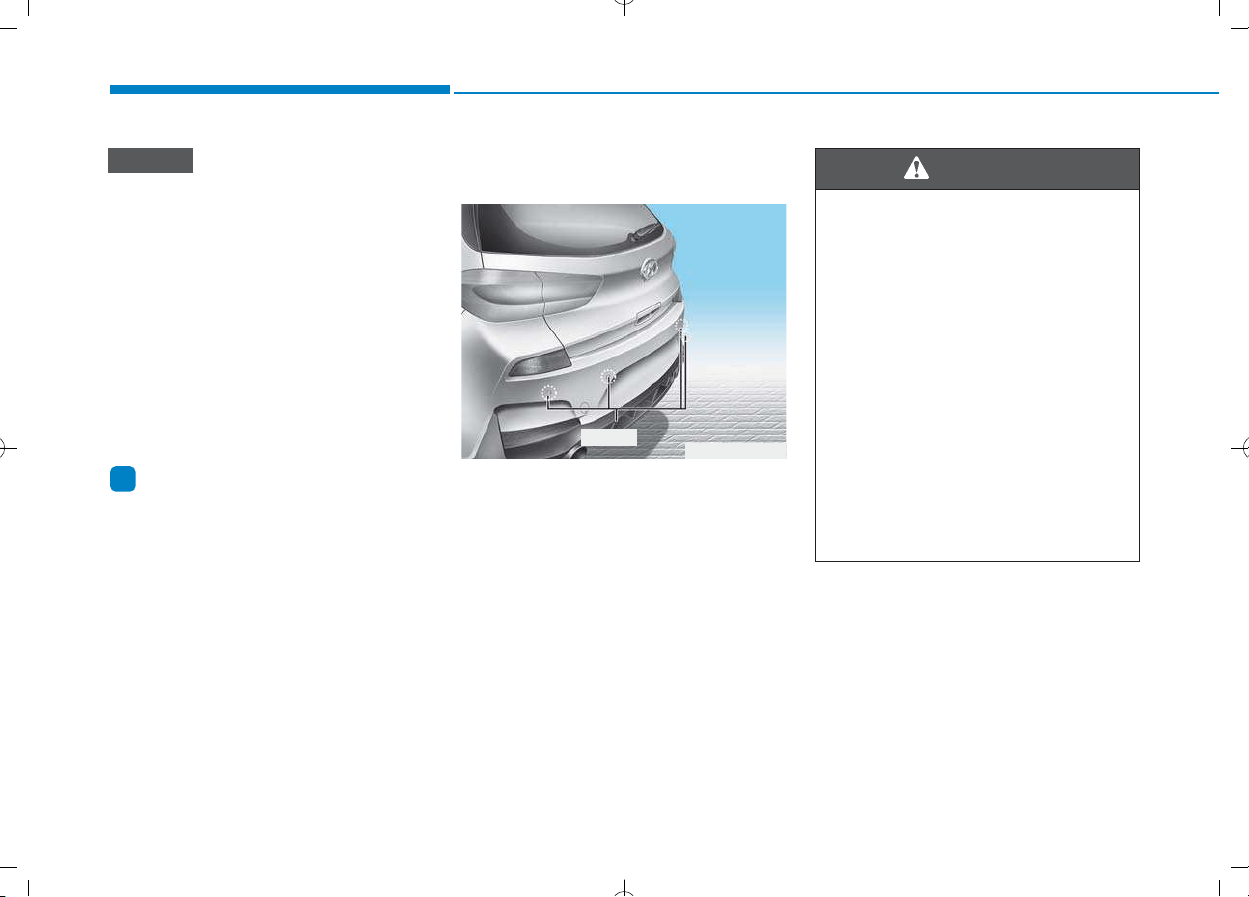
3-96
Convenient features of your vehicle
• Do not spray the camera or its
surrounding area directly with a
high pressure washer. Shock
applied from high pressure
water may cause the device to
not operate normally.
• Do not use any cleanser con-
taining acid or alkaline deter-
gents when cleaning the lens.
Use only a mild soap or neutral
detergent, and rinse thoroughly
with water.
Information
Always keep the camera lens clean. The
camera may not work normally if the
lens is covered with dirt, water or snow.
Rear parking assist system
(if equipped)
The Rear Parking Assist System
assists the driver during reverse
movement of the vehicle by chiming
if any object is sensed within the dis-
tance of 120 cm (50 inches) behind
the vehicle.
This system is a supplemental sys-
tem that senses objects within the
range and location of the sensors, it
cannot detect objects in other areas
where sensors are not installed.
i
NOTICE
• ALWAYS look around your vehi-
cle to make sure there are not
any objects or obstacles before
moving the vehicle in any direc-
tion to prevent a collision.
• Always pay close attention
when the vehicle is driven close
to objects, particularly pedestri-
ans, and especially children.
• Be aware that some objects
may not be visible on the
screen or be detected by the
sensors, due to the objects
distance, size or material, all of
which can limit the effective-
ness of the sensor.
WARNING
OPDEN047400
Sensors

3-97
Convenient features of your vehicle
3
Operation of the Rear Parking
Assist System
Operating condition
• This system will activate when
backing up with the ignition switch
in the ON position. However, if vehi-
cle speed exceeds 5 km/h (3 mph),
the system may not detect objects.
• If vehicle speed exceeds 10 km/h (6
mph), the system will not warn you
even though objects are detected.
• When more than two objects are
sensed at the same time, the clos-
est one will be recognized first.
Types of warning sound and indicator
Types of warning sound Indicator
When an object is 120 cm to 60 cm (47 in. to 24 in.) from the rear
bumper : Buzzer beeps intermittently.
When an object is 60 cm to 30 cm (24 in. to 12 in.) from the rear
bumper : Buzzer beeps more frequently.
When an object is within 30 cm (12 in.) of the rear bumper :
Buzzer beeps continuously.
• The indicator may differ from the illustration depending on objects or
sensors status. If the indicator blinks, we recommend that you have
your vehicle checked by an authorized HYUNDAI dealer.
• If the audible warning does not sound or if the buzzer sounds intermit-
tently when shifting into R (Reverse) position, this may indicate a mal-
function with the Parking Assist System. If this occurs, we recommend
that you have your vehicle checked by an authorized HYUNDAI dealer as
soon as possible.
NOTICE
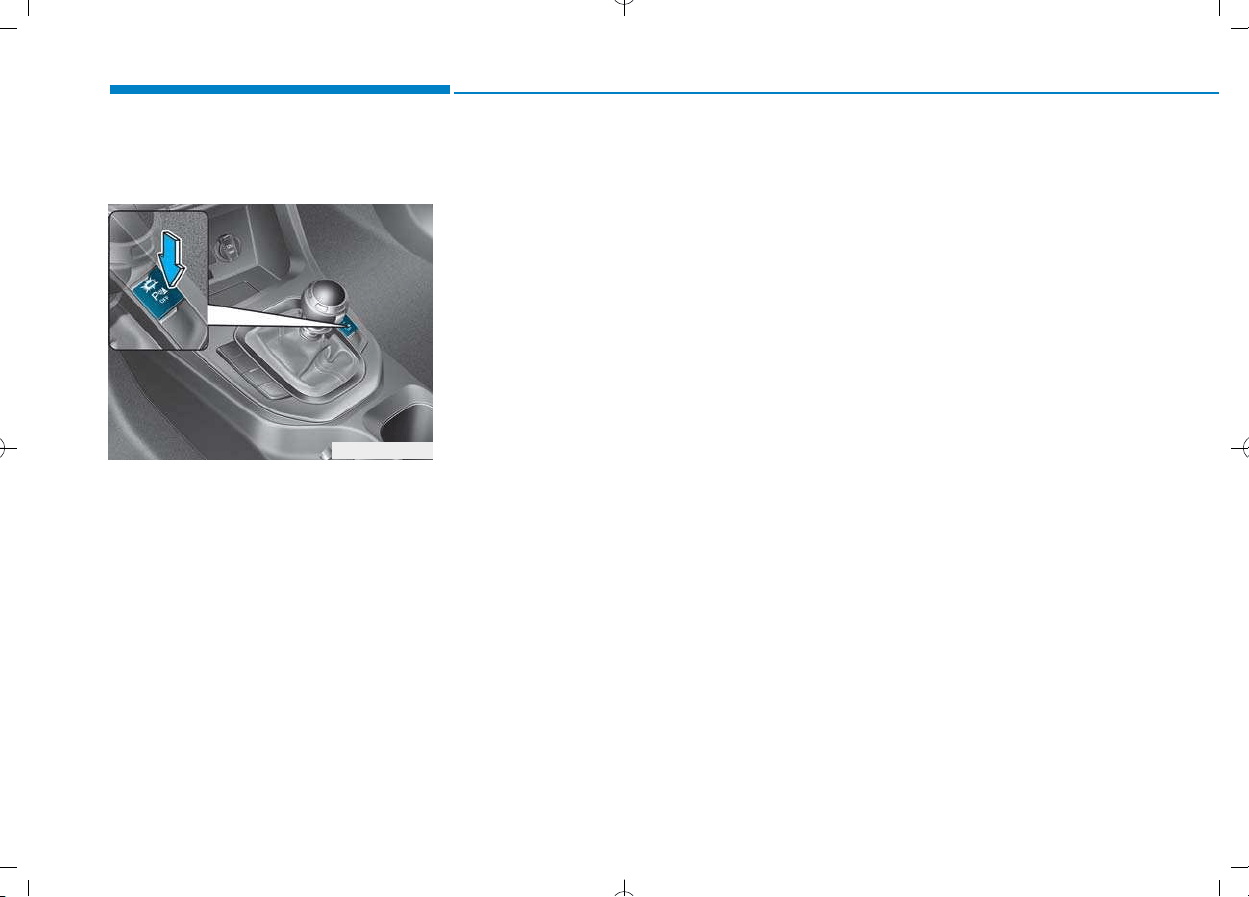
3-98
Convenient features of your vehicle
To turn off the Rear Parking
Assist System (if equipped)
Push the button to turn off the Rear
Parking Assist System. The indicator
light on the button will turn on.
Non-operational conditions of
Parking Assist System
The Rear Parking Assist System
may not operate normally when:
• Moisture is frozen to the sensor.
• Sensor is covered with foreign mat-
ter, such as snow or water, or the
sensor cover is blocked.
There is a possibility of the Rear
Parking Assist System malfunction
when:
• Driving on uneven road surfaces
such as unpaved roads, gravel,
bumps, or gradient.
• Objects generating excessive noise
such as vehicle horns, loud motor-
cycle engines, or truck air brakes
can interfere with the sensor.
• Heavy rain or water spray is present.
• Wireless transmitters or mobile
phones are present near the sensor.
• The sensor is covered with snow.
• Any non-factory equipment or acces-
sories have been installed, or if the
vehicle bumper height or sensor
installation has been modified.
Detecting range may decrease when:
• Outside air temperature is extreme-
ly hot or cold.
• Undetectable objects smaller than
1 m (40 inches) and narrower than
14 cm (6 inches) in diameter.
OPDEN047429

3-99
Convenient features of your vehicle
3
The following objects may not be
recognized by the sensor:
• Sharp or slim objects such as
ropes, chains or small poles.
• Objects, which tend to absorb sen-
sor frequency such as clothes,
spongy material or snow.
Rear parking assist system pre-
cautions
• The rear parking assist system may
not sound consistently depending on
the speed and shapes of the objects
detected.
• The rear parking assist system may
malfunction if the vehicle bumper
height or sensor installation has
been modified or damaged. Any
non-factory installed equipment or
accessories may also interfere with
the sensor performance.
• The sensor may not recognize
objects less than 30 cm (11 in.) from
the sensor, or it may sense an incor-
rect distance. Use caution.
• When the sensor is frozen or stained
with snow, dirt, or water, the sensor
may be inoperative until the stains
are removed using a soft cloth.
• Do not push, scratch or strike the
sensor with any hard objects that
could damage the surface of the
sensor. Sensor damage could occur.
• Do not spray the sensors or its sur-
rounding area directly with a high
pressure washer. Shock applied
from high pressure water may cause
the device to not operate normally.
Your new vehicle warranty does
not cover any accidents or dam-
age to the vehicle or injuries to
its occupants related to a Rear
Parking Assist System. Always
drive safely and cautiously.
WARNING
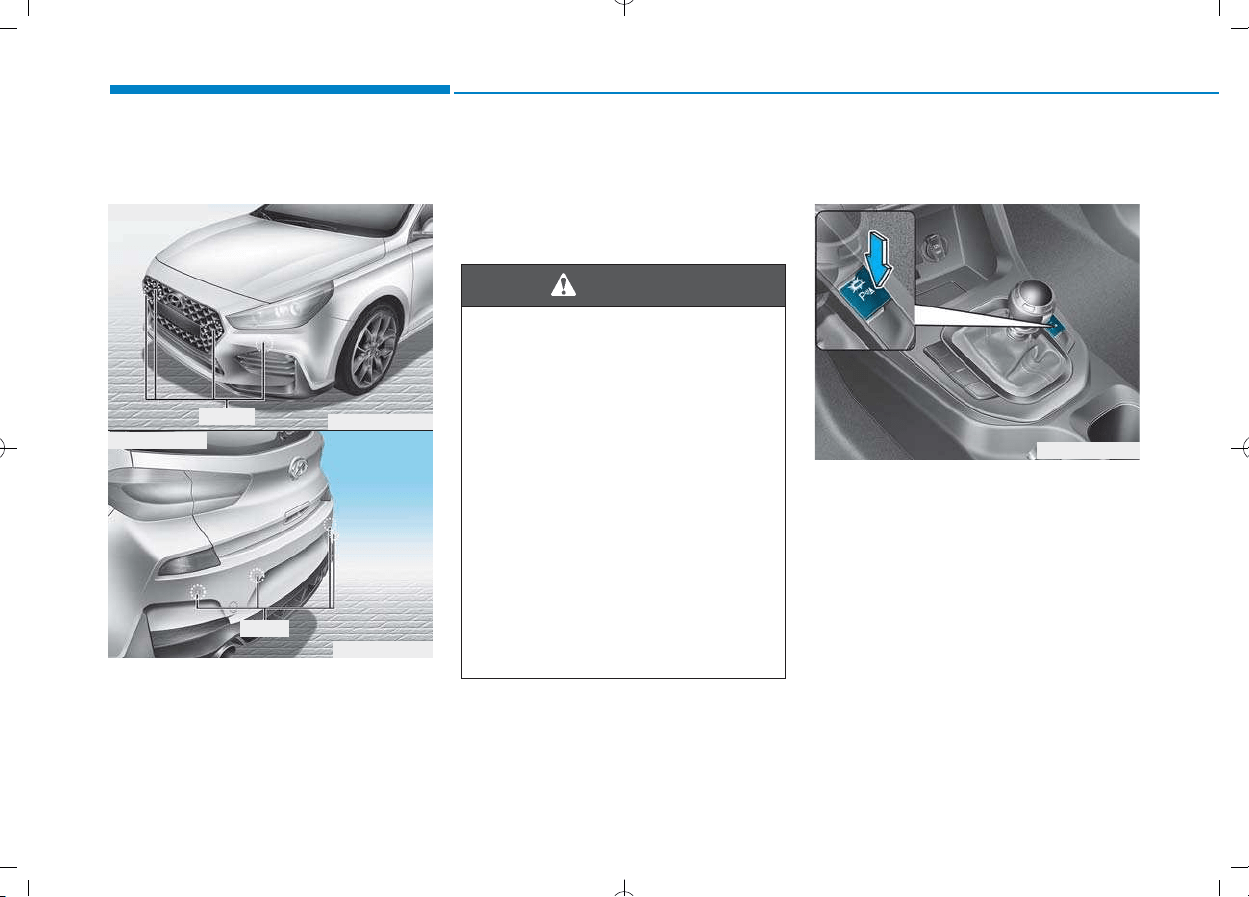
3-100
Convenient features of your vehicle
Parking assist system
(if equipped)
The Parking Assist System assists
the driver during movement of the
vehicle by chiming if any object is
sensed within the distance of 100 cm
(39 inches) in front and 120 cm (47
inches) behind the vehicle.
This system is a supplemental sys-
tem that senses objects within the
range and location of the sensors, it
cannot detect objects in other areas
where sensors are not installed.
Operation of the Parking Assist
System
Operating condition
• This system will activate when the
Parking Assist System button is
pressed with the engine running.
• ALWAYS look around your vehi-
cle to make sure there are no
objects or obstacles before
moving the vehicle in any direc-
tion to prevent a collision.
• Always pay close attention
when the vehicle is driven close
to objects, particularly pedestri-
ans, and especially children.
• Be aware that some objects
may not be visible on the
screen or be detected by the
sensors, due to the objects
distance, size or material, all of
which can limit the effective-
ness of the sensor.
WARNING
OPDEN047401
OPDEN047400
■ Front sensor
■ Rear sensor
Sensors
Sensor
OPDEN047403
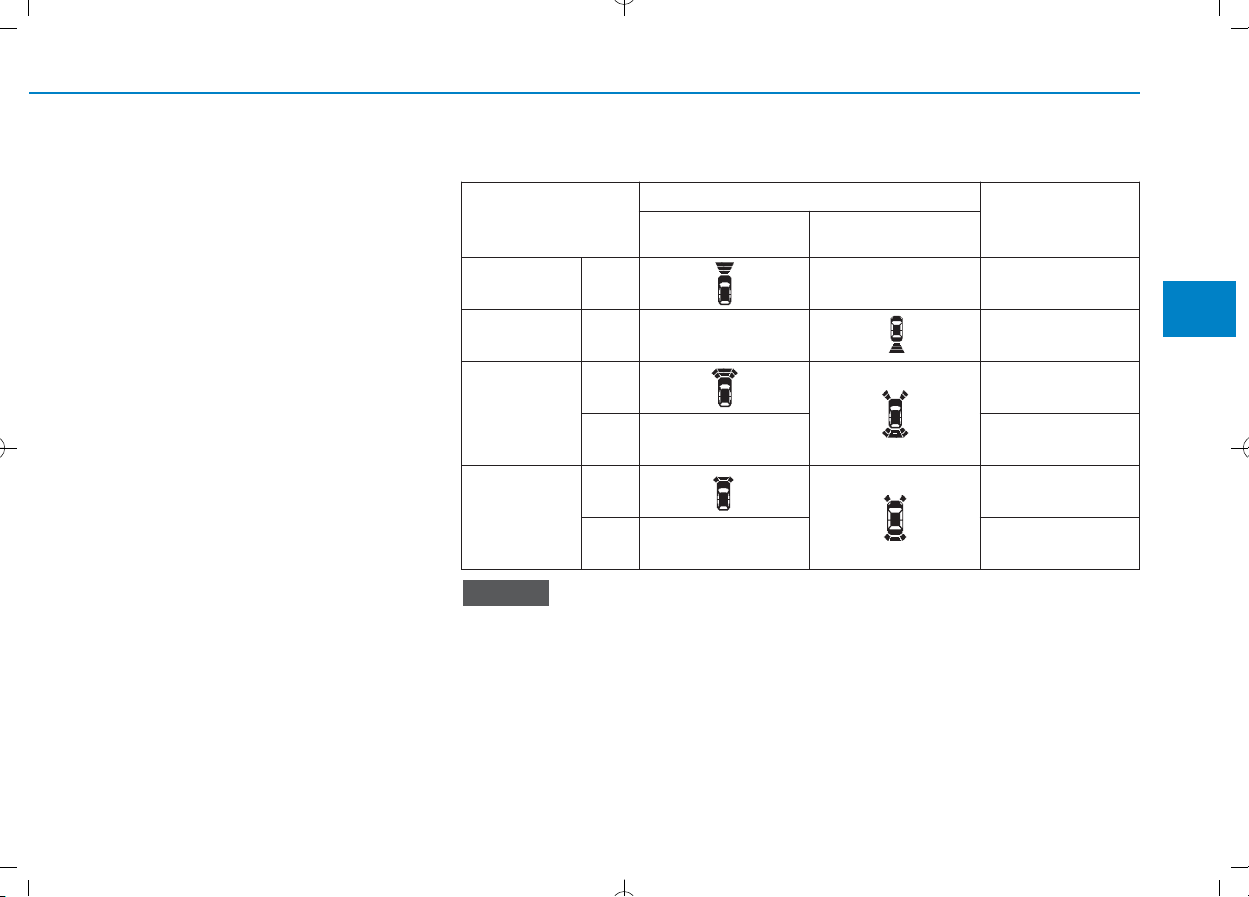
3-101
Convenient features of your vehicle
3
• The Parking Assist System button
turns on automatically and acti-
vates the Parking Assist System
when you move the shift lever to
the R (Reverse) position. However,
if vehicle speed exceeds 10 km/h
(6 mph), the system will not warn
you even though objects are
detected, and if vehicle speed
exceeds 20 km/h (12 mph), the
system will turn off automatically.
To turn on the system, press the
Parking Assist System button.
• When more than two objects are
sensed at the same time, the clos-
est one will be recognized first.
• The indicator may differ from the illustration depending on objects or
sensors status. If the indicator blinks, we recommend that the system
be checked by an authorized HYUNDAI dealer.
• If the audible warning does not sound or if the buzzer sounds inter-
mittently when shifting into R (Reverse) position, this may indicate a
malfunction with the Parking Assist System. If this occurs, we rec-
ommend that you have your vehicle checked by an authorized
HYUNDAI dealer as soon as possible.
NOTICE
Distance
from object
Warning indicator
Warning sound
When driving
forward
When driving
rearward
61 ~ 100
(24 ~39)
Front -
Buzzer beeps
intermittently
61 ~ 120
(24 ~47)
Rear -
Buzzer beeps
intermittently
31 ~ 60
(12 ~24)
Front
Buzzer beeps
frequently
Rear -
Buzzer beeps
frequently
30
(12)
Front
Buzzer sounds
continuously
Rear -
Buzzer sounds
continuously
Types of warning sound and indicator
cm (in)

3-102
Convenient features of your vehicle
Non-operational conditions of
Parking Assist System
Parking Assist System may not
operate normally when:
• Moisture is frozen to the sensor.
• Sensor is covered with foreign mat-
ter, such as snow or water, or the
sensor cover is blocked.
There is a possibility of Parking
Assist System malfunction when:
• Driving on uneven road surfaces
such as unpaved roads, gravel,
bumps, or gradient.
• Objects generating excessive noise
such as vehicle horns, loud motor-
cycle engines, or truck air brakes
can interfere with the sensor.
• Heavy rain or water spray is present.
• Wireless transmitters or mobile
phones are present near the sensor.
• The sensor is covered with snow.
• Any non-factory equipment or
accessories have been installed, or
if the vehicle bumper height or sen-
sor installation has been modified.
Detecting range may decrease when:
• Outside air temperature is
extremely hot or cold.
• Undetectable objects smaller than
1 m and narrower than 14 cm in
diameter.
The following objects may not be
recognized by the sensor:
• Sharp or slim objects such as
ropes, chains or small poles.
• Objects, which tend to absorb sen-
sor frequency such as clothes,
spongy material or snow.
Parking assist system precau-
tions
• The parking assist system may not
sound consistently depending on the
speed and shapes of the objects
detected.
• The parking assist system may mal-
function if the vehicle bumper height
or sensor installation has been mod-
ified or damaged. Any non-factory
installed equipment or accessories
may also interfere with the sensor
performance.
• The sensor may not recognize
objects less than 30 cm (11 in.) from
the sensor, or it may sense an incor-
rect distance. Use caution.
• When the sensor is frozen or stained
with snow, dirt, or water, the sensor
may be inoperative until the stains
are removed using a soft cloth.
• Do not push, scratch or strike the
sensor. Sensor damage could occur.
• Do not spray the sensors or its sur-
rounding area directly with a high
pressure washer. Shock applied
from high pressure water may cause
the device to not operate normally.
Your new vehicle warranty does
not cover any accidents or dam-
age to the vehicle or injuries to
its occupants related to a
Parking Assist System. Always
drive safely and cautiously.
WARNING
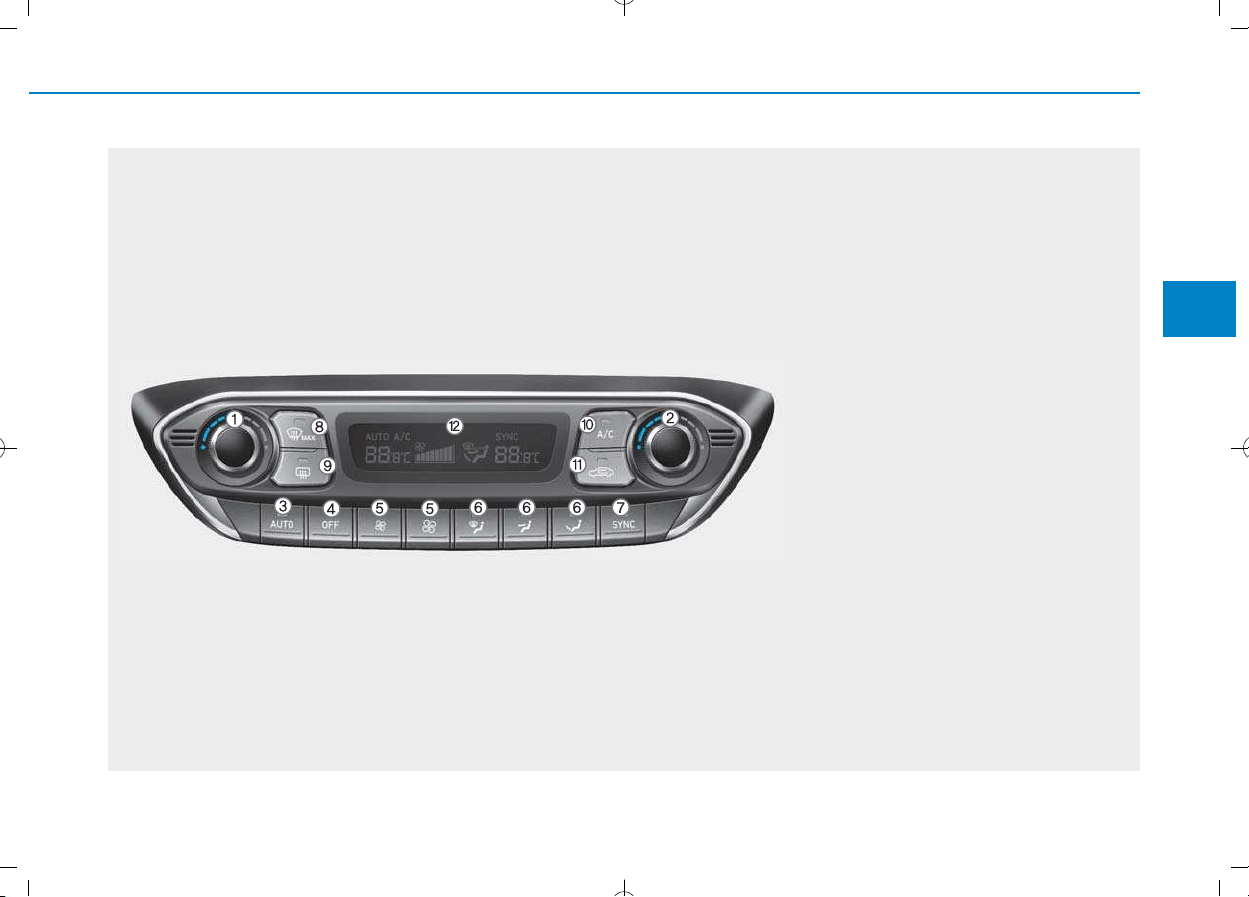
3-103
Convenient features of your vehicle
3
AAUUTTOOMMAATTIICC CCLLIIMMAATTEE CCOONNTTRROOLL SSYYSSTTEEMM ((IIFF EEQQUUIIPPPPEEDD))
OPDE046302
1. Driver’s temperature control knob
2. Passenger’s temperature control knob
3. AUTO (automatic control) button
4. OFF button
5. Fan speed control button
6. Mode selection button
7. SYNC button
8. Front windshield defroster button
9. Rear window defroster button
10. Air conditioning button
11. Air intake control button
12. Climate control information screen
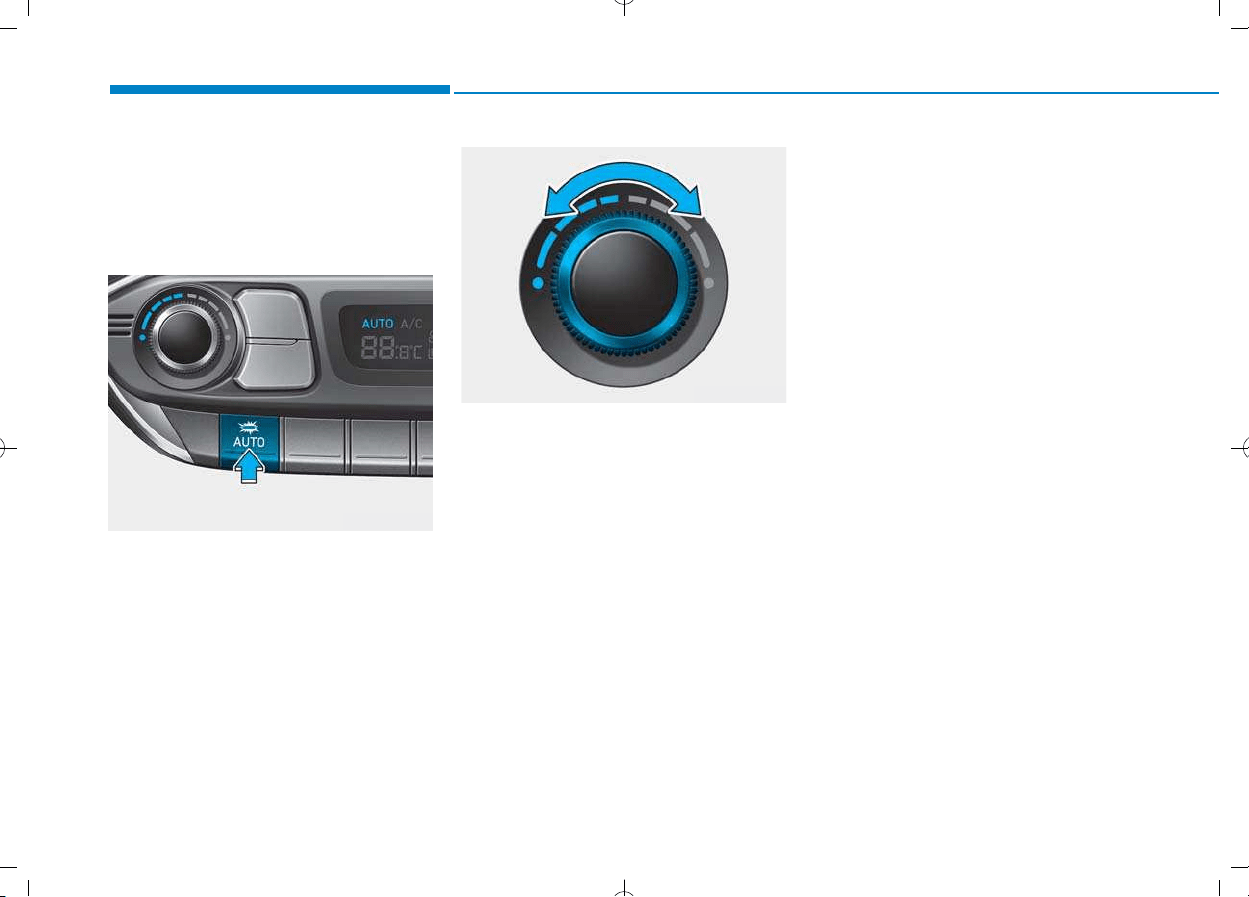
3-104
Convenient features of your vehicle
Automatic heating and air con-
ditioning
The Automatic Climate Control
System is controlled by setting the
desired temperature.
1. Press the AUTO button.
The modes, fan speeds, air intake
and air-conditioning will be controlled
automatically by the temperature set-
ting you select.
2. Turn the temperature control knob
to the desired temperature. If the
temperature is set to the lowest
setting (Lo), the air conditioning
system will operate continuously.
After the interior has cooled suffi-
ciently, adjust the knob to a higher
temperature set point whenever
possible.
To turn the automatic operation off,
select any button of the following:
- Mode selection button
- Front windshield defroster button
(Press the button one more time to
deselect the front windshield
defroster function. The 'AUTO' sign
will illuminate on the information
display once again.)
- Fan speed control button
The selected function will be con-
trolled manually while other func-
tions operate automatically.
For your convenience and to improve
the effectiveness of the climate con-
trol, use the AUTO button and set the
temperature to 23°C (73°F).
OPDE046350
OPD046315

3-105
Convenient features of your vehicle
3
Information
Never place anything near the sensor
to ensure better control of the heating
and cooling system.
Manual heating and air condi-
tioning
The heating and cooling system can be
controlled manually by pushing buttons
other than the AUTO button. In this
case, the system works sequentially
according to the order of buttons select-
ed. When pressing any button except
the AUTO button while using automatic
operation, the functions not selected
will be controlled automatically.
1.Start the engine.
2.Set the mode to the desired position.
For improving the effectiveness of
heating and cooling, select:
- Heating:
- Cooling:
3.Set the temperature control to the
desired position.
4.Set the air intake control to the out-
side (fresh) air position.
5.Set the fan speed control to the
desired speed.
6.If air conditioning is desired, turn
the air conditioning system on.
7.Press the AUTO button to convert
to full automatic control of the sys-
tem.
i
OPDEN047316
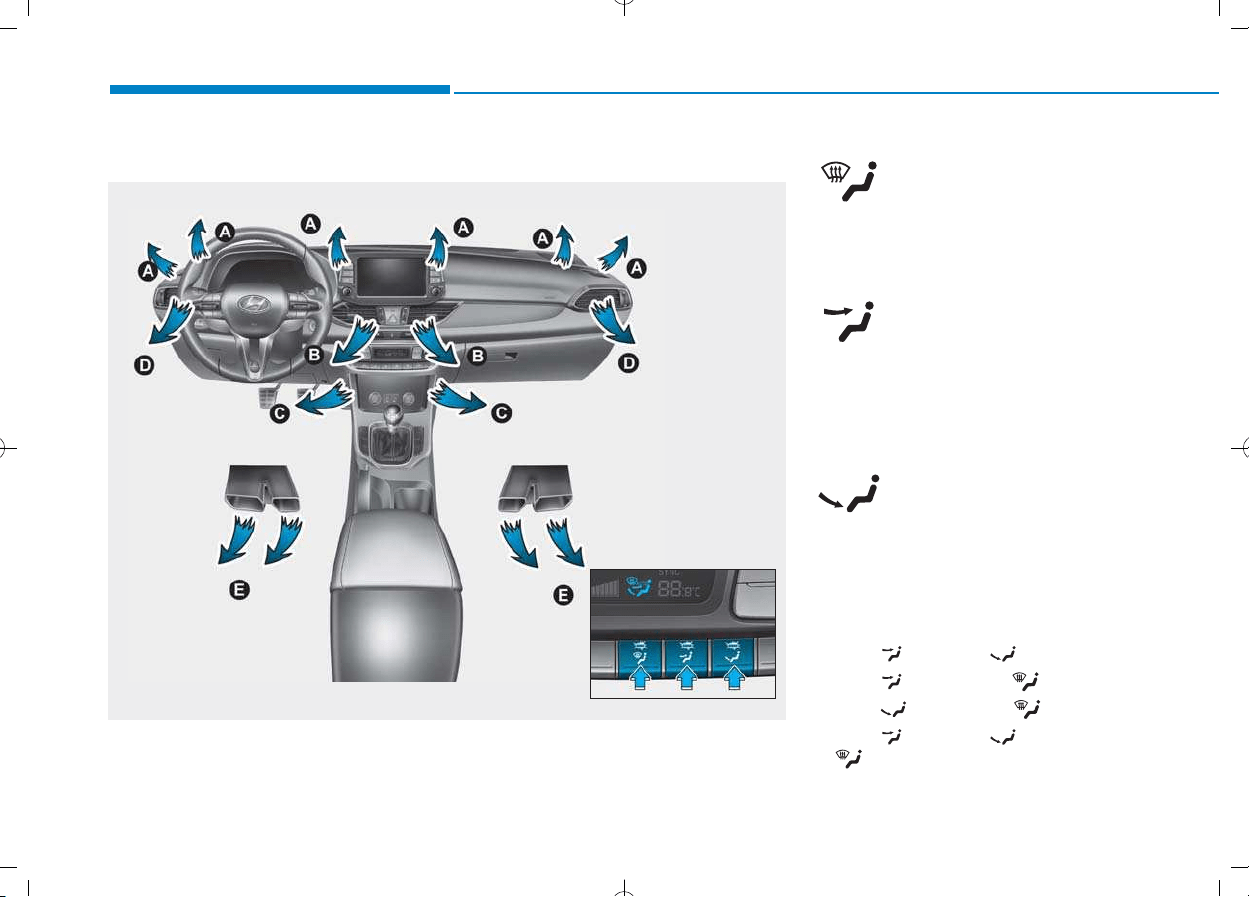
3-106
Convenient features of your vehicle
Mode selection
Defrost-Level (A, D)
Most of the air flow is directed to the
windshield.
Face-Level (B, D)
Air flow is directed toward the upper
body and face. Additionally, each
outlet can be controlled to direct the
air discharged from the outlet.
Floor-Level (A, C, D, E)
Most of the air flow is directed to the
floor.
Also you may select 2~3 modes at
the same time.
- face ( ) + floor ( ) mode
- face ( ) + defrost ( ) mode
- floor ( ) + defrost ( ) mode
- face ( ) + floor ( ) + defrost
( ) mode
OPDEN047307/OPDE046317
The mode selection button controls the direction of the air flow through the
ventilation system.
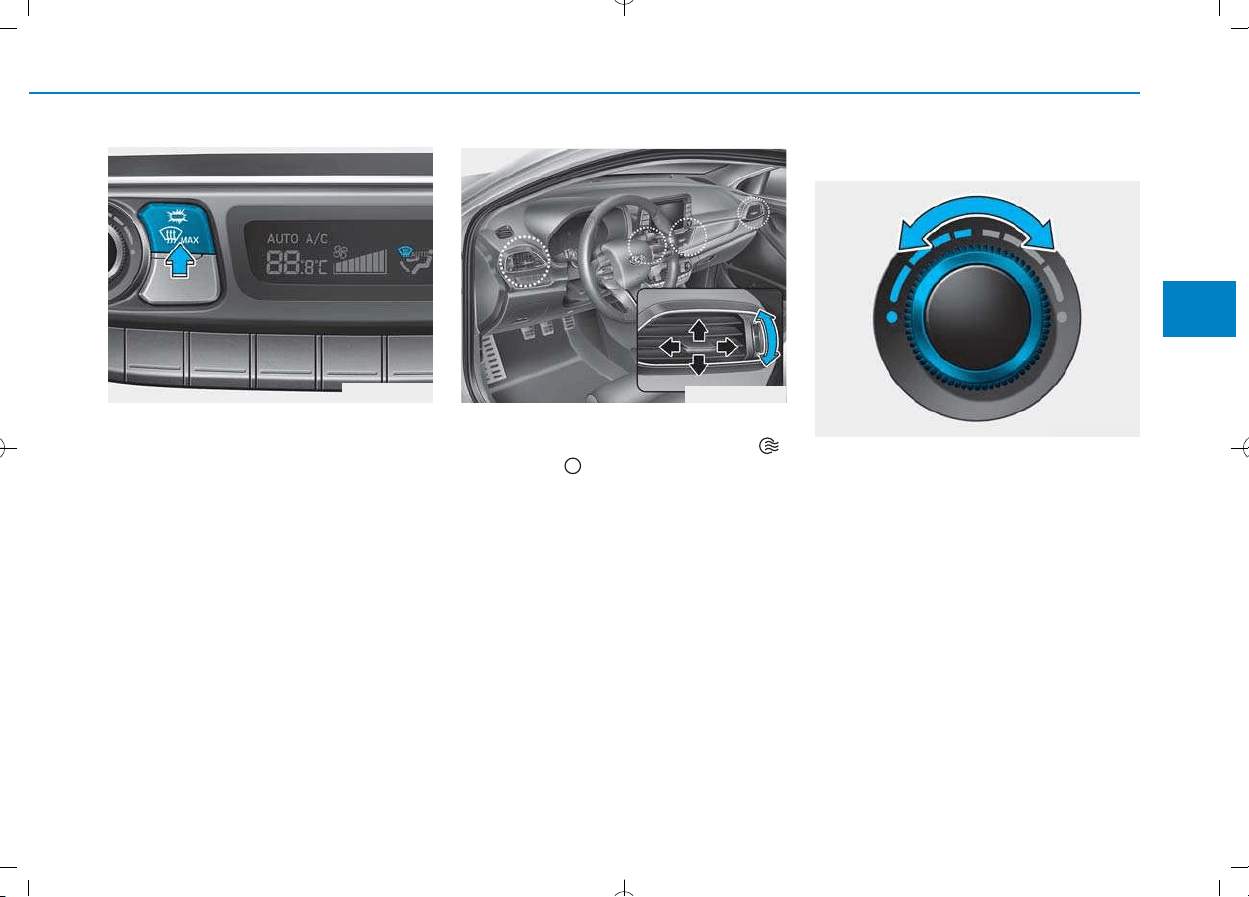
3-107
Convenient features of your vehicle
3
Defrost-Level (A)
Most of the air flow is directed to the
windshield with a small amount of air
directed to the side window defrosters.
Instrument panel vents
The outlet vents can be opened ( )
or closed ( ) separately using the
thumbwheel.
Also, you can adjust the direction of
air delivery from these vents using
the vent control lever as shown.
Temperature control
The temperature will increase by
turning the knob to the right. The
temperature will decrease by turning
the knob to the left.
OPDE046352
OPD046315
OPDEN047309
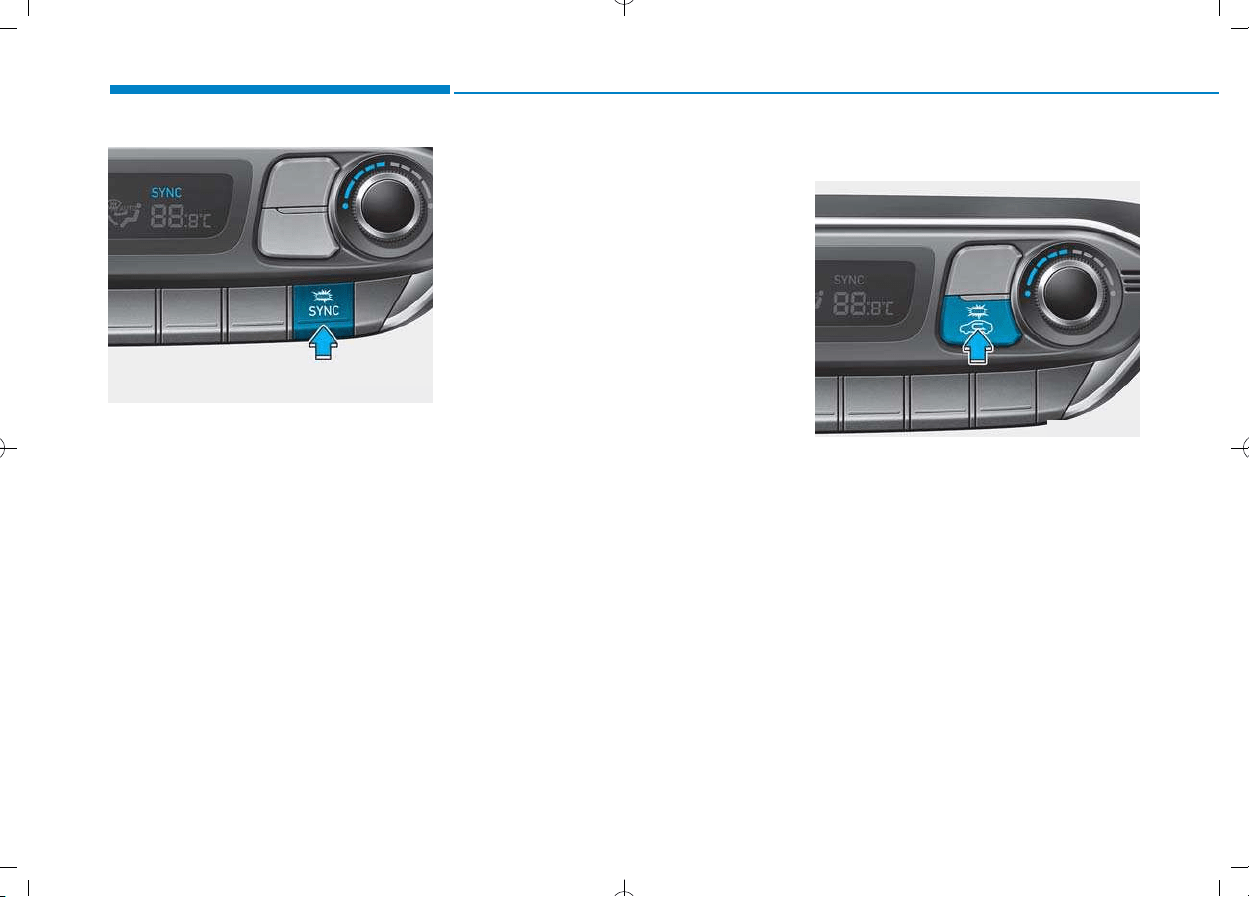
3-108
Convenient features of your vehicle
Adjusting the driver and passenger
side temperature equally
• Press the “SYNC” button to adjust
the driver and passenger side tem-
perature equally.
The passenger side temperature
will be set to the same temperature
as the driver side temperature.
• Turn the driver side temperature
control knob. The driver and pas-
senger side temperature will be
adjusted equally.
Adjusting the driver and passenger
side temperature individually
Press the “SYNC” button again to
adjust the driver and passenger side
temperature individually. The button
indicator will turn off.
Temperature conversion
If the battery has been discharged or
disconnected, the temperature mode
display will reset to Centigrade.
To change the temperature unit from
°C to °F or °F to °C :
- Automatic climate control system
Press the AUTO button for 3 sec-
onds while pressing the OFF button.
- Instrument cluster
Go to User Settings Mode → Other
Features → Temperature Unit.
The temperature unit on both the
cluster LCD display and the climate
control screen will change.
Air intake control
This is used to select the outside
(fresh) air position or recirculated air
position.
To change the air intake control posi-
tion, push the control button.
OPDE046320
OPDE046321
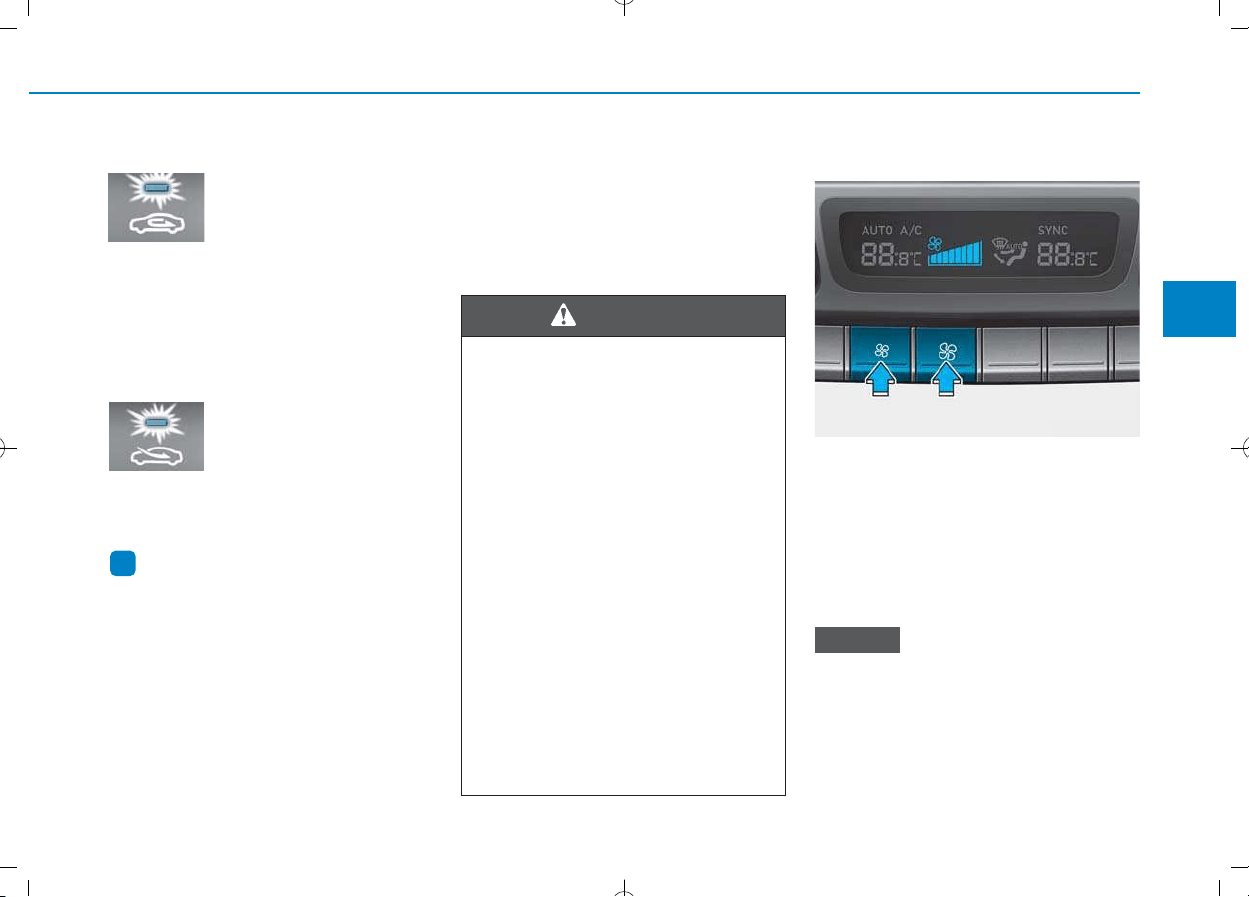
3-109
Convenient features of your vehicle
3
Recirculated air position
With the recirculated air
position selected, air
from the passenger com-
partment will be drawn
through the heating sys-
tem and heated or
cooled according to the
function selected.
Outside (fresh) air position
With the outside (fresh)
air position selected, air
enters the vehicle from
outside and is heated or
cooled according to the
function selected.
Information
Using the system in the fresh air posi-
tion is recommended.
Prolonged operation of the heater in
the recirculated air position (without
air conditioning selected) can cause
fogging of the windshield and side win-
dows and the air within the passenger
compartment will become stale.
(continued)
(continued)
In addition, prolonged use of the air
conditioning with the recirculated air
position selected will result in exces-
sively dry air in the passenger com-
partment.
Fan speed control
The fan speed can be set as desired
by pushing the fan speed control but-
ton.
More air is delivered with higher fan
speeds.
Pressing the OFF button turns off the
fan.
Operating the fan when the ignition
switch is in the ON position could
cause the battery to discharge.
Operate the fan when the engine is
running.
NOTICE
i
• Continued climate control
system operation in the recir-
culated air position may allow
humidity to increase inside
the vehicle which may fog the
glass and obscure visibility.
• Do not sleep in a vehicle with
the air conditioning or heating
system on. It may cause seri-
ous harm or death due to a
drop in the oxygen level
and/or body temperature.
• Continued climate control sys-
tem operation in the recirculat-
ed air position can cause
drowsiness or sleepiness, and
loss of vehicle control. Set the
air intake control to the outside
(fresh) air position as much as
possible while driving.
WARNING
OPDE046323
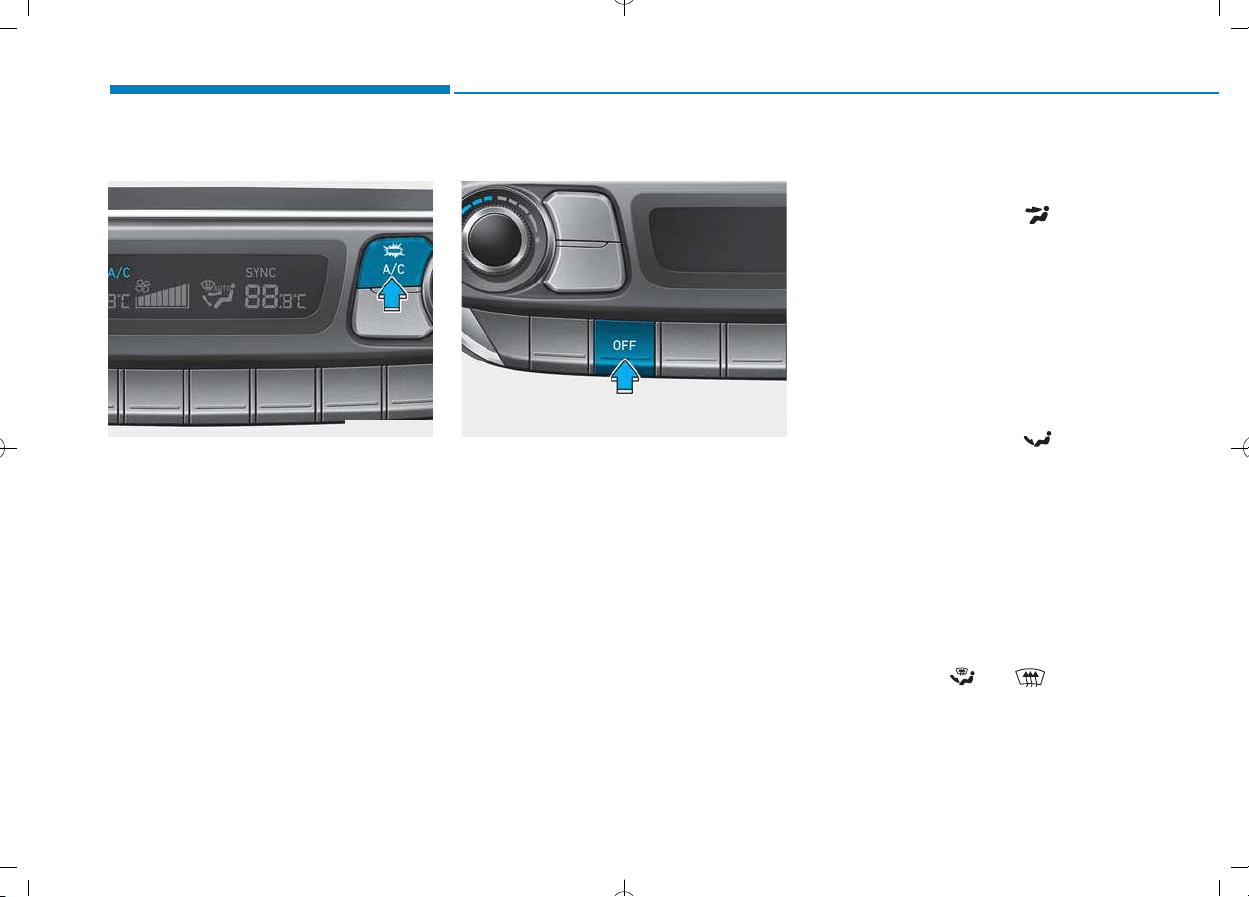
3-110
Convenient features of your vehicle
Air conditioning
Push the A/C button to turn the air
conditioning system on (indicator
light will illuminate).
Push the button again to turn the air
conditioning system off.
OFF mode
Push the OFF button to turn the cli-
mate control system off. However,
you can still operate the mode and air
intake buttons as long as the ignition
switch is in the ON position.
System operation
Ventilation
1. Set the mode to the position.
2. Set the air intake control to the
outside (fresh) air position.
3. Set the temperature control to the
desired position.
4. Set the fan speed control to the
desired speed.
Heating
1. Set the mode to the position.
2. Set the air intake control to the
outside (fresh) air position.
3. Set the temperature control to the
desired position.
4. Set the fan speed control to the
desired speed.
5. If dehumidified heating is desired,
turn the air conditioning system on.
• If the windshield fogs up, set the
mode to the or position.
OPDE046322 OPDE046324

3-111
Convenient features of your vehicle
3
Operation Tips
• To keep dust or unpleasant fumes
from entering the vehicle through
the ventilation system, temporarily
set the air intake control to the
recirculated air position. Be sure to
return the control to the fresh air
position when the irritation has
passed to keep fresh air in the
vehicle. This will help keep the driv-
er alert and comfortable.
• To prevent interior fog on the wind-
shield, set the air intake control to the
fresh air position and fan speed to
the desired position, turn on the air
conditioning system, and adjust the
temperature control to the desired
temperature.
Air conditioning
HYUNDAI Air Conditioning Systems
are filled with R-134a or R-1234yf
refrigerant.
1. Start the engine. Push the air con-
ditioning button.
2. Set the mode to the position.
3. Set the air intake control to the out-
side air or recirculated air position.
4. Adjust the fan speed control and
temperature control to maintain
maximum comfort.
Information
Your vehicle is filled with R-134a or
R-1234yf according to the regulation
in your country at the time of produc-
tion. You can find out which air condi-
tioning refrigerant is applied to your
vehicle on the label located inside of
the hood. Refer to chapter 8 for the
location of the air conditioning refrig-
erant label.
• The refrigerant system should
only be serviced by trained and
certified technicians to insure
proper and safe operation.
• The refrigerant system should
be serviced in a well-ventilated
place.
• The air conditioning evaporator
(cooling coil) shall never be
repaired or replaced with one
removed from a used or salvaged
vehicle and new replacement
MAC evaporators shall be certi-
fied (and labeled) as meeting SAE
Standard J2842.
NOTICE
i

3-112
Convenient features of your vehicle
• When using the air conditioning
system, monitor the temperature
gauge closely while driving up
hills or in heavy traffic when out-
side temperatures are high. Air
conditioning system operation
may cause engine overheating.
Continue to use the fan but turn
the air conditioning system off if
the temperature gauge indicates
engine overheating.
• When opening the windows in
humid weather air conditioning
may create water droplets inside
the vehicle. Since excessive
water droplets may cause dam-
age to electrical equipment, air
conditioning should only be
used with the windows closed.
Air conditioning system operation
tips
• If the vehicle has been parked in
direct sunlight during hot weather,
open the windows for a short time
to let the hot air inside the vehicle
escape.
• After sufficient cooling has been
achieved, switch back from the
recirculated air to the fresh outside
air position.
• To help reduce moisture inside of
the windows on rainy or humid
days, decrease the humidity inside
the vehicle by operating the air
conditioning system with the win-
dows and sunroof closed.
• Use the air conditioning system
every month for a few minutes to
ensure maximum system perform-
ance.
• If you operate the air conditioner
excessively, the difference between
the temperature of the outside air
and that of the windshield could
cause the outer surface of the
windshield to fog up, causing loss
of visibility. In this case, set the
mode selection button to the
position and set the fan speed con-
trol button to the lowest speed set-
ting.
NOTICE
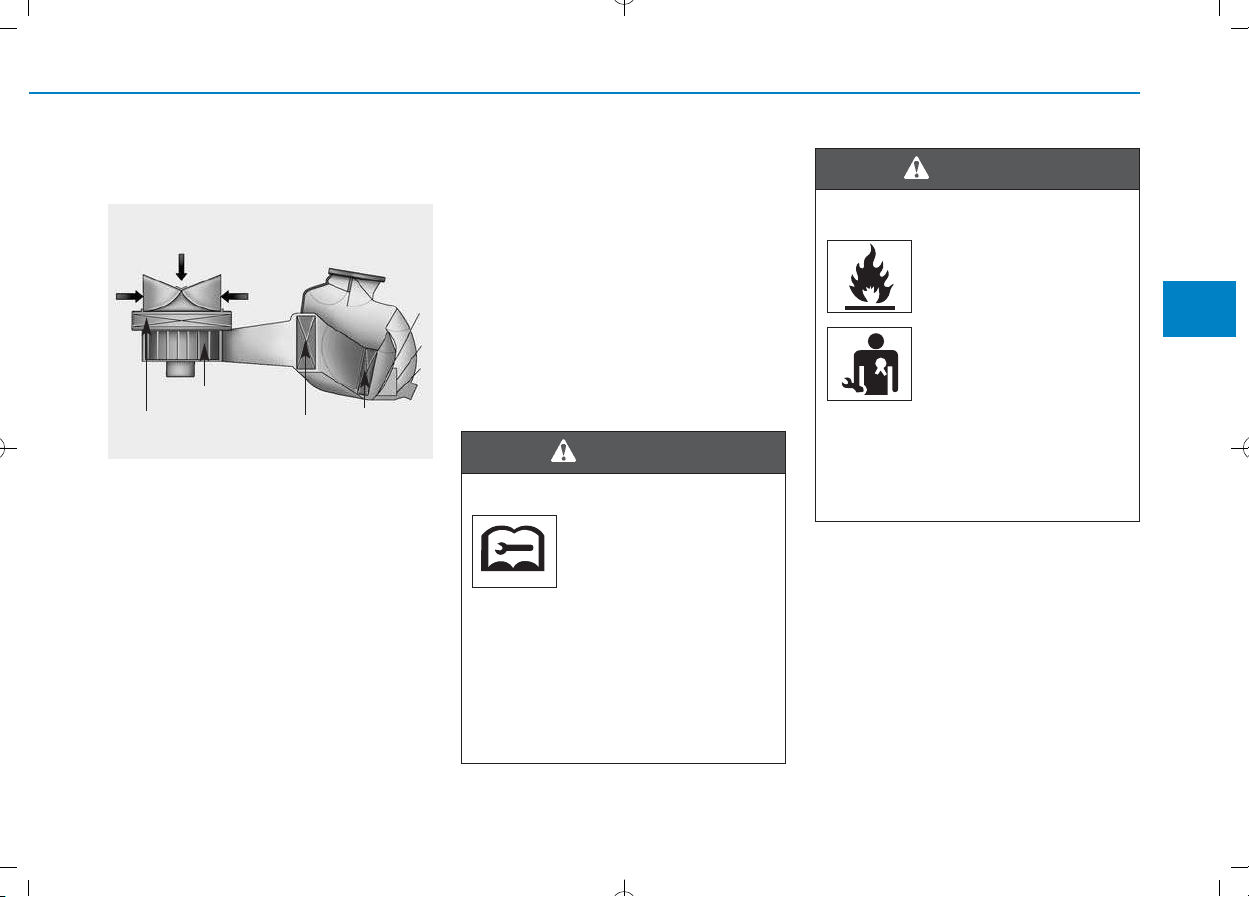
3-113
Convenient features of your vehicle
3
System maintenance
Climate control air filter
This filter is installed behind the
glove box. It filters the dust or other
pollutants that enter the vehicle
through the heating and air condi-
tioning system.
We recommend that the climate con-
trol air filter be replaced by an author-
ized HYUNDAI dealer according to the
maintenance schedule. If the vehicle is
being driven in severe conditions such
as dusty or rough roads, more fre-
quent climate control filter inspections
and changes are required.
If the air flow rate suddenly decreas-
es, we recommend the system be
checked at an authorized HYUNDAI
dealer.
Checking the amount of air con-
ditioner refrigerant and com-
pressor lubricant
When the amount of refrigerant is
low, the performance of the air con-
ditioning is reduced. Overfilling also
reduces the performance of the air
conditioning system.
Therefore, if abnormal operation is
found, we recommend that the sys-
tem be inspected by an authorized
HYUNDAI dealer.
We recommend the air conditioning
system be serviced by an authorized
HYUNDAI dealer.
1LDA5047
Outside air
Recirculated
air
Climate control
air filter
Blower
Evaporator
core
Heater core
Vehicles equipped with R-134a
Because the refriger-
ant is at very high
pressure, the air condi-
tioning system should
only be serviced by trained and
certified technicians. It is impor-
tant that the correct type and
amount of oil and refrigerant is
used. Otherwise, it may cause
damage to the vehicle and per-
sonal injury.
WARNING
Vehicles equipped with R-1234yf
Because the refriger-
ant is mildly inflamma-
ble at very high pres-
sure, the air condition-
ing system should
only be serviced by
trained and certified
technicians. It is
important that the cor-
rect type and amount of oil and
refrigerant is used. Otherwise, it
may cause damage to the vehi-
cle and personal injury.
WARNING
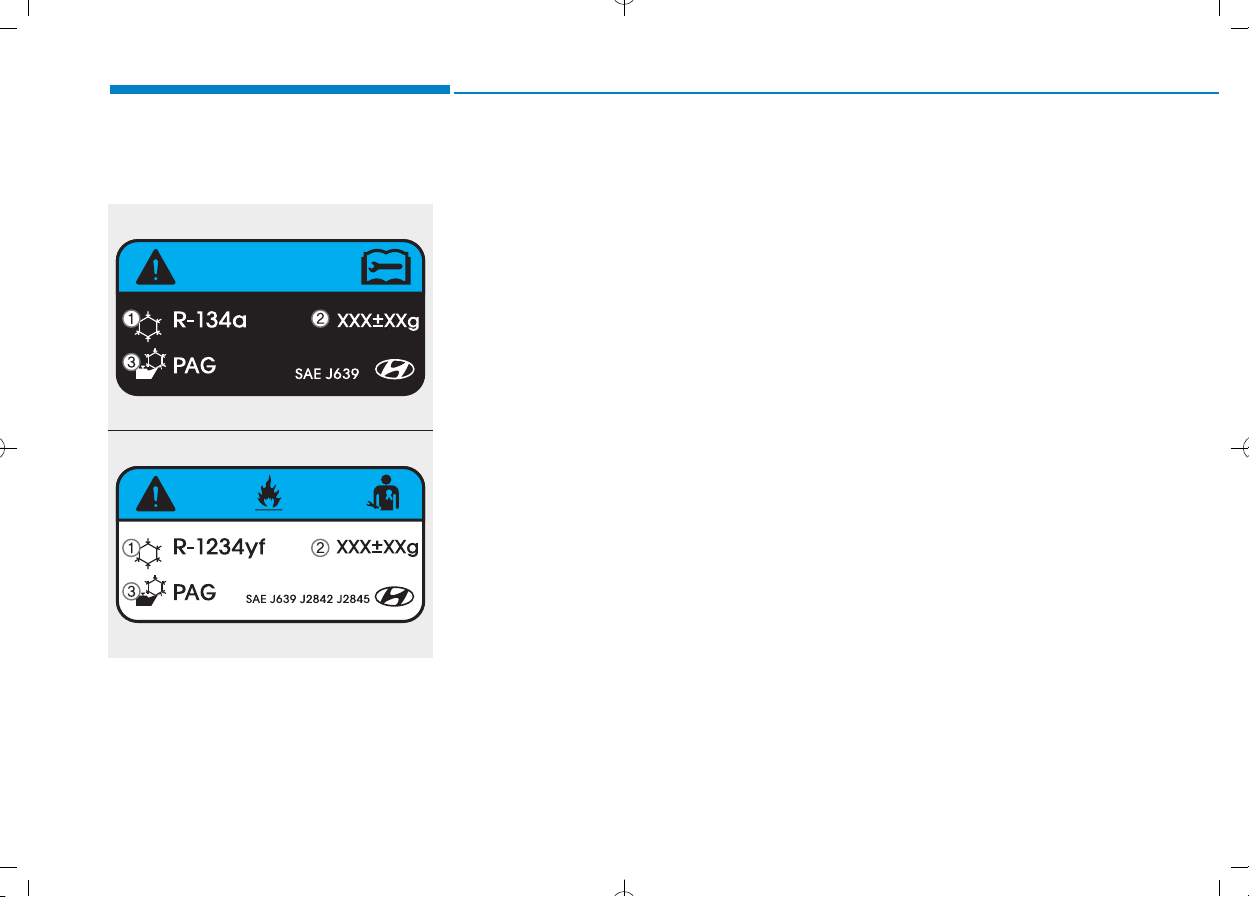
3-114
Convenient features of your vehicle
Air Conditioning refrigerant
label
The actual Air Conditioning refriger-
ant label in the vehicle may differ
from the illustration.
Each symbols and specification on
air conditioning refrigerant label
means as below:
1. Classification of refrigerant
2. Amount of refrigerant
3. Classification of Compressor lubri-
cant
You can find out which air conditioning
refrigerant is applied to your vehicle on
the label located inside of the hood.
Refer to chapter 8 for the location of
the air conditioning refrigerant label.
ODH044365R
ODH043366
■ Example
• Type B
• Type A
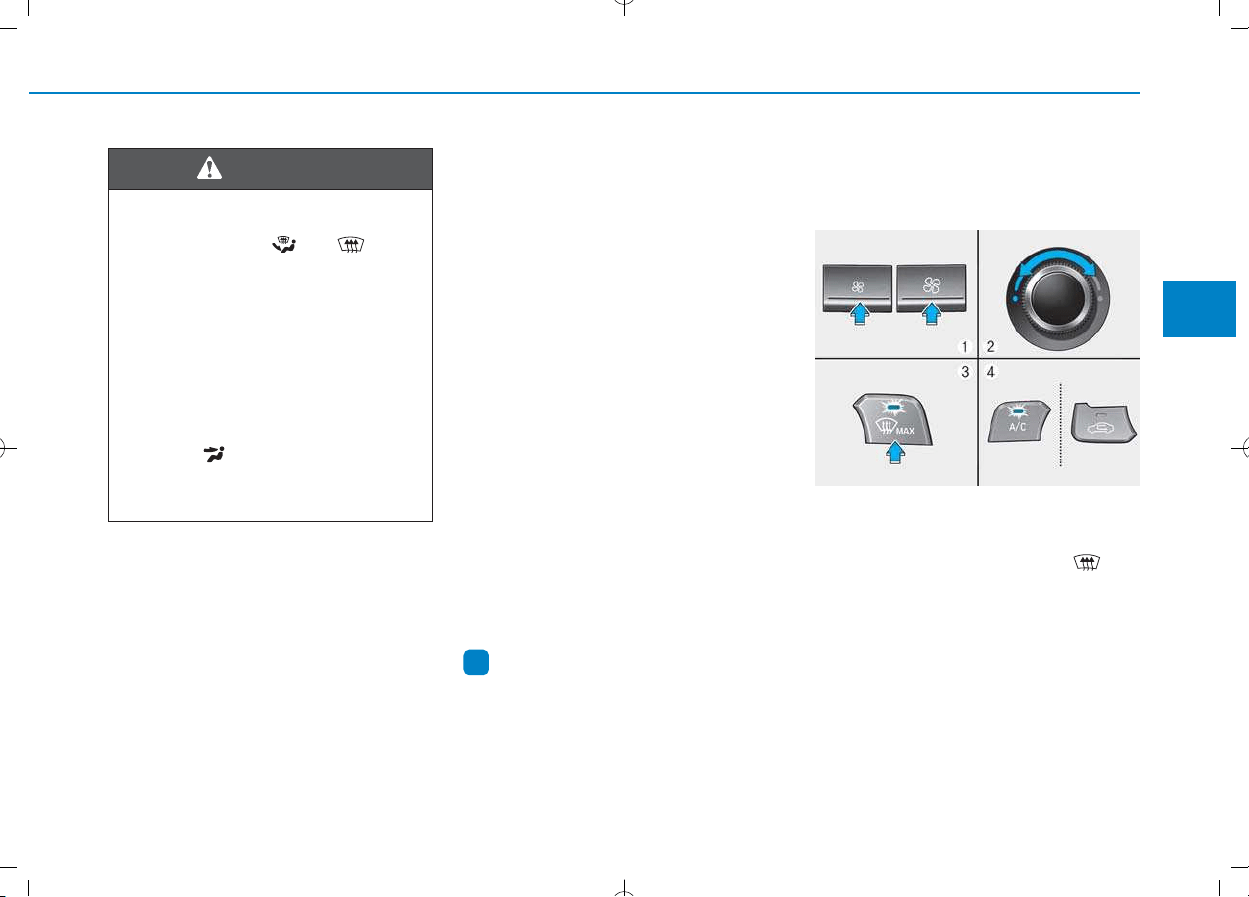
3-115
Convenient features of your vehicle
• For maximum windshield defrost-
ing, set the temperature control
knob to the highest temperature
setting and the fan control button to
the highest fan speed. Select the
front defrost button on the climate
control display. After the engine
warm-up period, warm air will be
directed to the front windshield.
• If warm air to the floor is desired
while defrosting or defogging, set the
mode to the floor-defrost position.
• Before driving, clear all snow and
ice from the windshield, rear win-
dow, outside rear view mirrors, and
all side windows.
• Clear all snow and ice from the
hood and air inlet in the cowl grill to
improve heater and defroster effi-
ciency and to reduce the probability
of fogging up inside of the wind-
shield.
Information
If the engine temperature is still cold
after starting, then a brief engine
warm up period may be required for
the vented air flow to become warm or
hot.
Automatic climate control
system
To defog inside windshield
1. Select the desired fan speed.
2. Select the desired temperature.
3. Press the defroster button ( ).
4. The air-conditioning will turn on
according to the detected ambient
temperature, outside (fresh) air
position and higher fan speed will
be selected automatically.
If the air-conditioning, outside (fresh) air
position and higher fan speed are not
selected automatically, adjust the corre-
sponding button or knob manually.
i
WWIINNDDSSHHIIEELLDD DDEEFFRROOSSTTIINNGG AANNDD DDEEFFOOGGGGIINNGG
3
Windshield heating
Do not use the or posi-
tion during cooling operation in
extremely humid weather. The
difference between the temper-
ature of the outside air and that
of the windshield could cause
the outer surface of the wind-
shield to fog up, causing loss of
visibility. In this case, set the
mode selection knob or button
to the position and fan
speed control button to lower
speed.
WARNING
OPDE046327

3-116
Convenient features of your vehicle
If the position is selected, lower
fan speed is controlled to higher fan
speed.
To defrost outside windshield
1. Set fan speed to the highest posi-
tion.
2. Set temperature to the extreme
hot (HI) position.
3. Press the defroster button ( ).
4. The air-conditioning will turn on
according to the detected ambient
temperature and outside (fresh)
air position will be selected auto-
matically.
If the position is selected, lower
fan speed is controlled to higher fan
speed.
Defroster
To prevent damage to the conduc-
tors bonded to the inside surface
of the rear window, never use
sharp instruments or window
cleaners containing abrasives to
clean the window.
Information
If you want to defrost and defog the
front windshield, refer to “Windshield
Defrosting and Defogging” in this
chapter.
i
NOTICE
OPDE046328
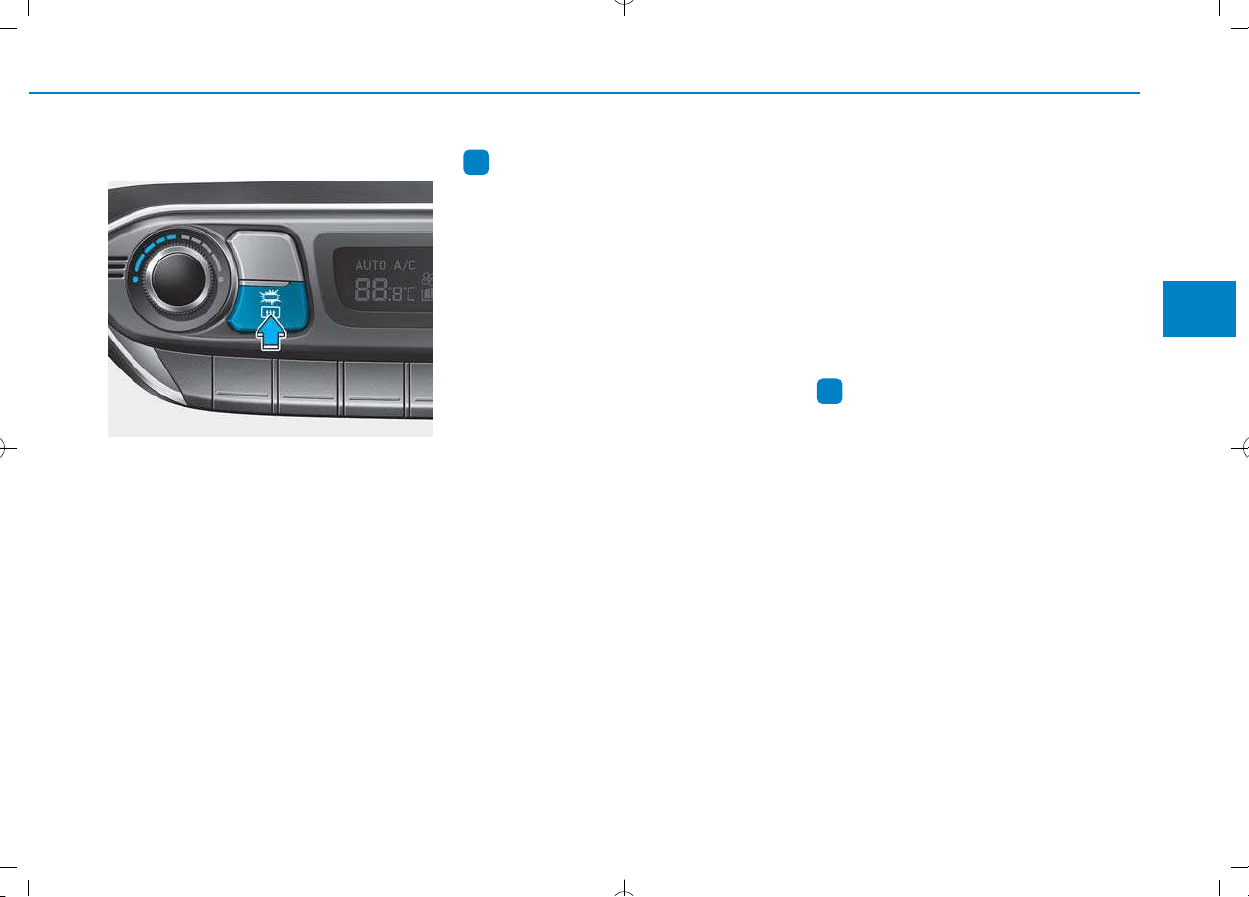
3-117
Convenient features of your vehicle
3
Rear window defroster
The defroster heats the window to
remove frost, fog and thin ice from
the interior and exterior of the rear
window, while the engine is running.
• To activate the rear window defroster,
press the rear window defroster but-
ton located in the center facia switch
panel. The indicator on the rear win-
dow defroster button illuminates
when the defroster is ON.
• To turn off the defroster, press the
rear window defroster button again.
Information
• If there is heavy accumulation of
snow on the rear window, brush it off
before operating the rear defroster.
• The rear window defroster automati-
cally turns off after approximately 20
minutes or when the ignition switch is
in the OFF position.
Outside mirror defroster
(if equipped)
If your vehicle is equipped with out-
side mirror defrosters, they will oper-
ate at the same time you turn on the
rear window defroster.
Front wiper deicer (if equipped)
If your vehicle is equipped with the
wiper deicer, it will operate at the
same time you turn on the rear win-
dow defroster.
Auto defogging system
(if equipped)
Auto defogging reduces the possibili-
ty of fogging up the inside of the wind-
shield by automatically sensing the
moisture on inside the windshield.
The auto defogging system operates
when the heater or air conditioning is
on.
Information
The auto defogging system may not
operate normally, when the outside
temperature is below -10 °C.
To cancel or set the Auto Defogging
System, keep the front defroster but-
ton pressed for 3 seconds. The “ADS
OFF” symbol will be shown in the cli-
mate display to inform you that the
system is deactivated. To re-activate
the auto defogging system, follow the
procedure mentioned above and the
“ADS OFF” symbol will disappear.
If the battery has been disconnected
or discharged, it resets to the auto
defogging status.
i
i
OPDE046319

3-118
CCLLIIMMAATTEE CCOONNTTRROOLL AADDDDIITTIIOONNAALL FFEEAATTUURREESS
Convenient features of your vehicle
Information
For efficiency, do not select recirculat-
ed air position while the Auto defog-
ging system is operating.
Do not remove the sensor cover
located on the upper end of the
windshield glass.
Damage to system parts could
occur and may not be covered by
your vehicle warranty.
Cluster ionizer (if equipped)
When the ignition switch is in the ON
position, the clean air function turns
on automatically.
Also, the clean air function turns off
automatically, when the ignition
switch is in the OFF position.
Automatic ventilation
(if equipped)
To increase cabin air quality and
reduce windscreen misting, air recir-
culation mode switches off automati-
cally after about 5 to 30 minutes,
depending on outside temperature,
and the air intake will change to out-
side (fresh) mode.
To cancel or set the automatic venti-
lation feature, select Face level mode
and press the air recirculation
mode button for 3 seconds.
When the automatic ventilation is
set, the air recirculation indicator will
blink 6 times. When canceled, the
indicator will blink 3 times.
Sunroof inside air recirculation
(if equipped)
When the heater or air conditioning
system is on with the sunroof opened,
the outside (fresh) air position will be
automatically selected. At this time, if
you press the recirculated air position
button, the recirculated air position
will be selected but will change back
to the outside (fresh) air position after
3 minutes.
When the sunroof is closed, the air
intake position will return to the orig-
inal position that was selected.
NOTICE
i
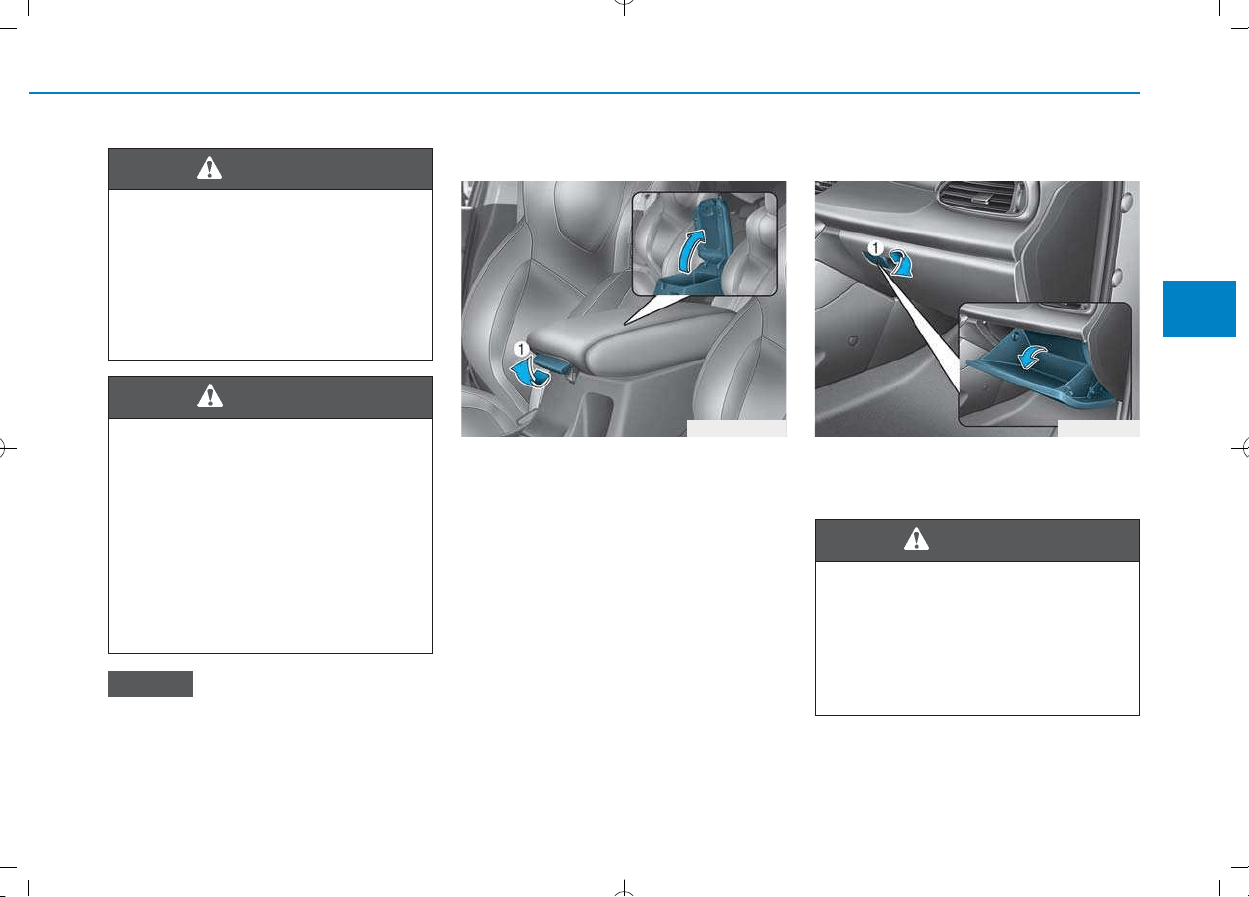
3-119
Convenient features of your vehicle
SSTTOORRAAGGEE CCOOMMPPAARRTTMMEENNTT
3
To avoid possible theft, do not
leave valuables in the storage
compartments.
Center console storage
To open :
Grab and hold the latch (1) on the
armrest then lift the lid.
Glove box
To open the glove box, pull the handle
(1) and the glove box will automatical-
ly open. Close the glove box after use.
NOTICE
Never store cigarette lighters,
propane cylinders, or other
flammable/explosive materials
in the vehicle. These items may
catch fire and/or explode if the
vehicle is exposed to hot tem-
peratures for extended periods.
WARNING
ALWAYS keep the storage com-
partment covers closed secure-
ly while driving. Items inside
your vehicle are moving as fast
as the vehicle. If you have to
stop or turn quickly, or if there
is a crash, the items may fly out
of the compartment and may
cause an injury if they strike the
driver or a passenger.
WARNING
OPDEN047331
ALWAYS close the glove box
door after use.
An open glove box door can
cause serious injury to the pas-
senger in an accident, even if the
passenger is wearing a seat belt.
WARNING
OPD046333
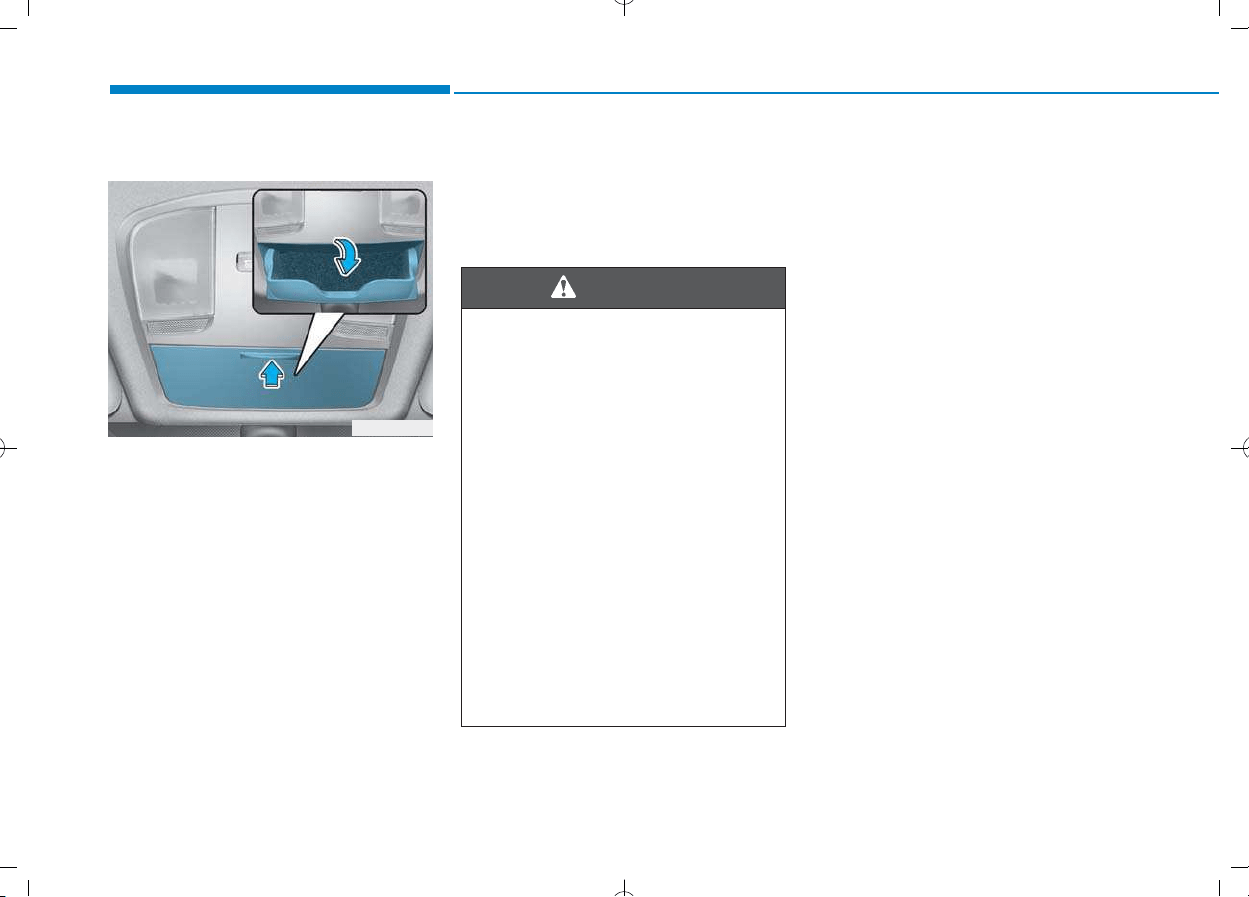
3-120
Convenient features of your vehicle
Sunglass holder
To open:
Press the cover and the holder will
slowly open. Place your sunglasses
in the compartment door with the
lenses facing out.
To close:
Push back into position.
Make sure the sunglass holder is
closed while driving.
• Do not keep objects except
sunglasses inside the sun-
glass holder. Such objects can
be thrown from the holder in
the event of a sudden stop or
an accident, possibly injuring
the passengers in the vehicle.
• Do not open the sunglass
holder while the vehicle is
moving. The rear view mirror
of the vehicle can be blocked
by an open sunglass holder.
• Do not attempt to force sun-
glasses into the sunglass
holder. If the sunglasses
become jammed and you try
to open it forcibly, personal
injury may occur.
WARNING
OPD046334
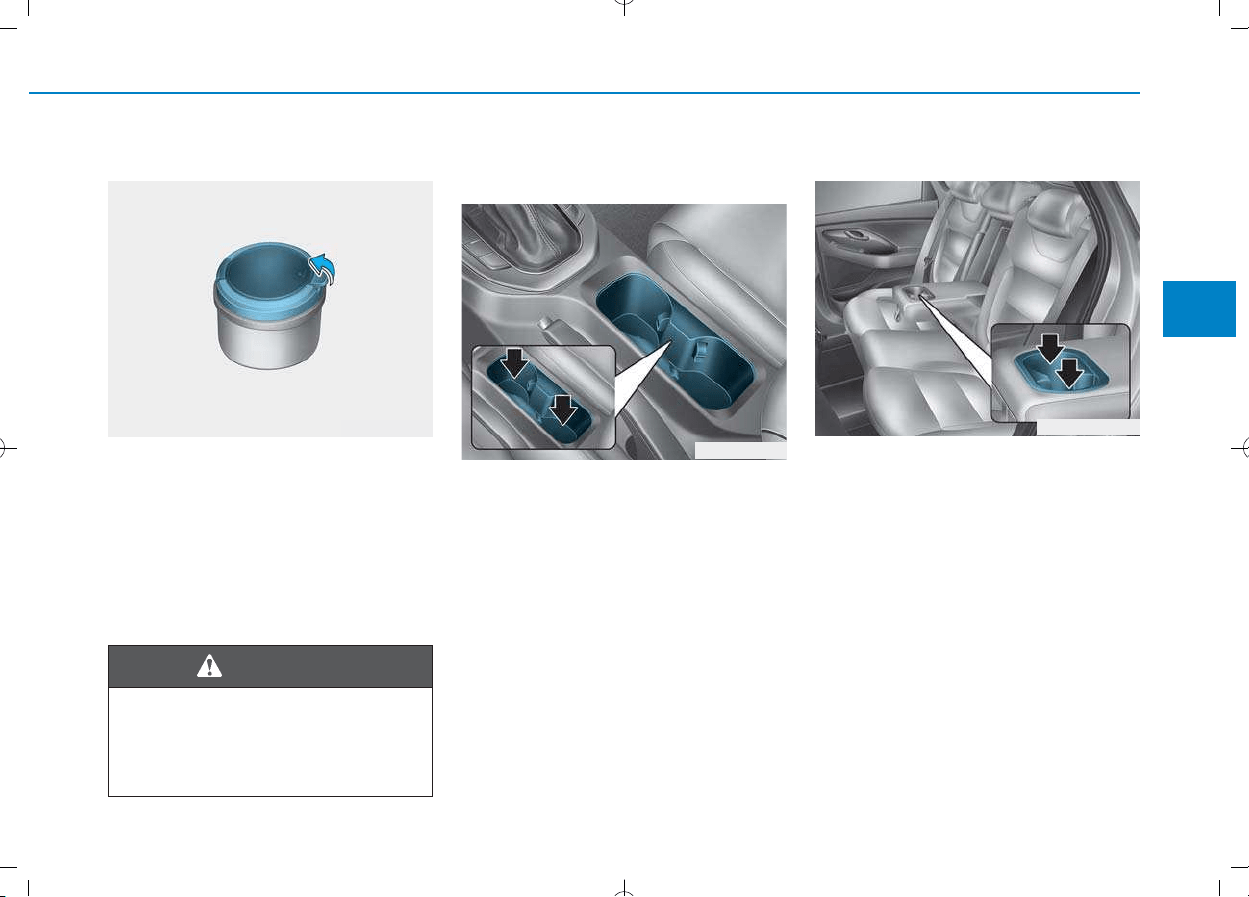
3-121
Convenient features of your vehicle
3
IINNTTEERRIIOORR FFEEAATTUURREESS
Ashtray (if equipped)
To use the ashtray, open the cover.
To clean the ashtray:
The plastic receptacle should be
removed by lifting the plastic ashtray
receptacle upward after turning the
cover counterclockwise and pulling it
out.
Cup holder
Front
Cups or small beverages cups may
be placed in the cup holders.
Rear (if equipped)
Pull the armrest down to use the cup
holders.
OPDE046419
OPDE046420
Putting lit cigarettes or matches
in an ashtray with other com-
bustible materials may cause a
fire.
WARNING
OPDEN047336
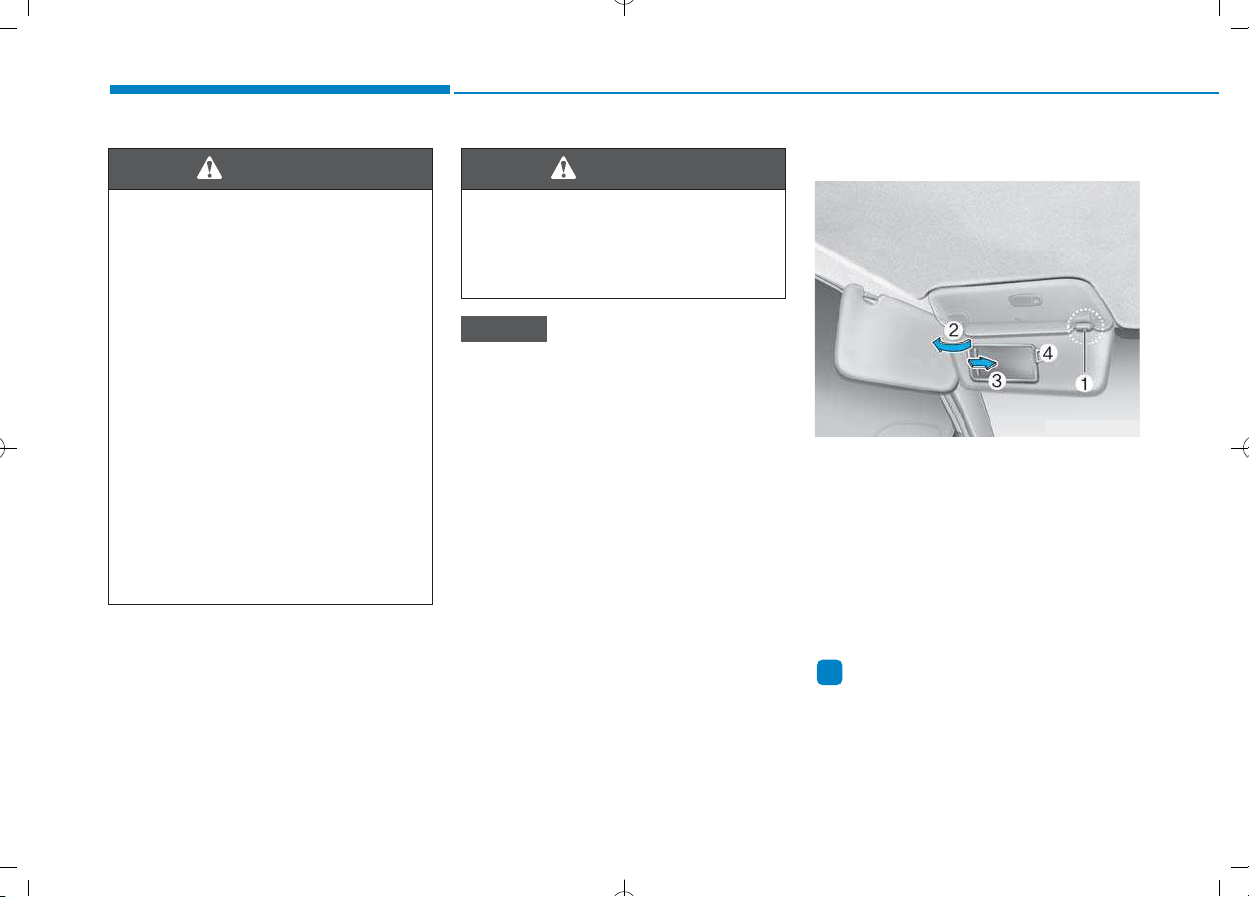
3-122
Convenient features of your vehicle
• Keep your drinks sealed while
driving to prevent spilling your
drink. If liquid spills, it may get
into the vehicle's electrical/elec-
tronic system and damage elec-
trical/electronic parts.
• When cleaning spilled liquids, do
not dry the cup holder at high
temperature. This may damage
the cup holder.
Sunvisor
To use a sunvisor, pull it downward.
To use a sunvisor for a side window,
pull it downward, unsnap it from the
bracket (1) and swing it to the side (2).
To use the vanity mirror, pull down the
sunvisor and slide the mirror cover (3).
Use the ticket holder (4) to hold tick-
ets.
Information
Close the vanity mirror cover securely
and return the sunvisor to its original
position after use.
i
NOTICE
• Avoid abrupt starting and
braking when the cup holder
is in use to prevent spilling
your drink. If hot liquid spills,
you could be burned. Such a
burn to the driver could cause
loss of vehicle control result-
ing in an accident.
• Do not place uncovered or
unsecured cups, bottles,
cans, etc., in the cup holder
containing hot liquid while the
vehicle is in motion. Injuries
may result in the event of a
sudden stop or collision.
• Only use soft cups in the cup
holders. Hard objects can
injure you in an accident.
WARNING
Keep cans or bottles out of
direct sun light and do not put
them in a hot vehicle. It may
explode.
WARNING
OPD046337
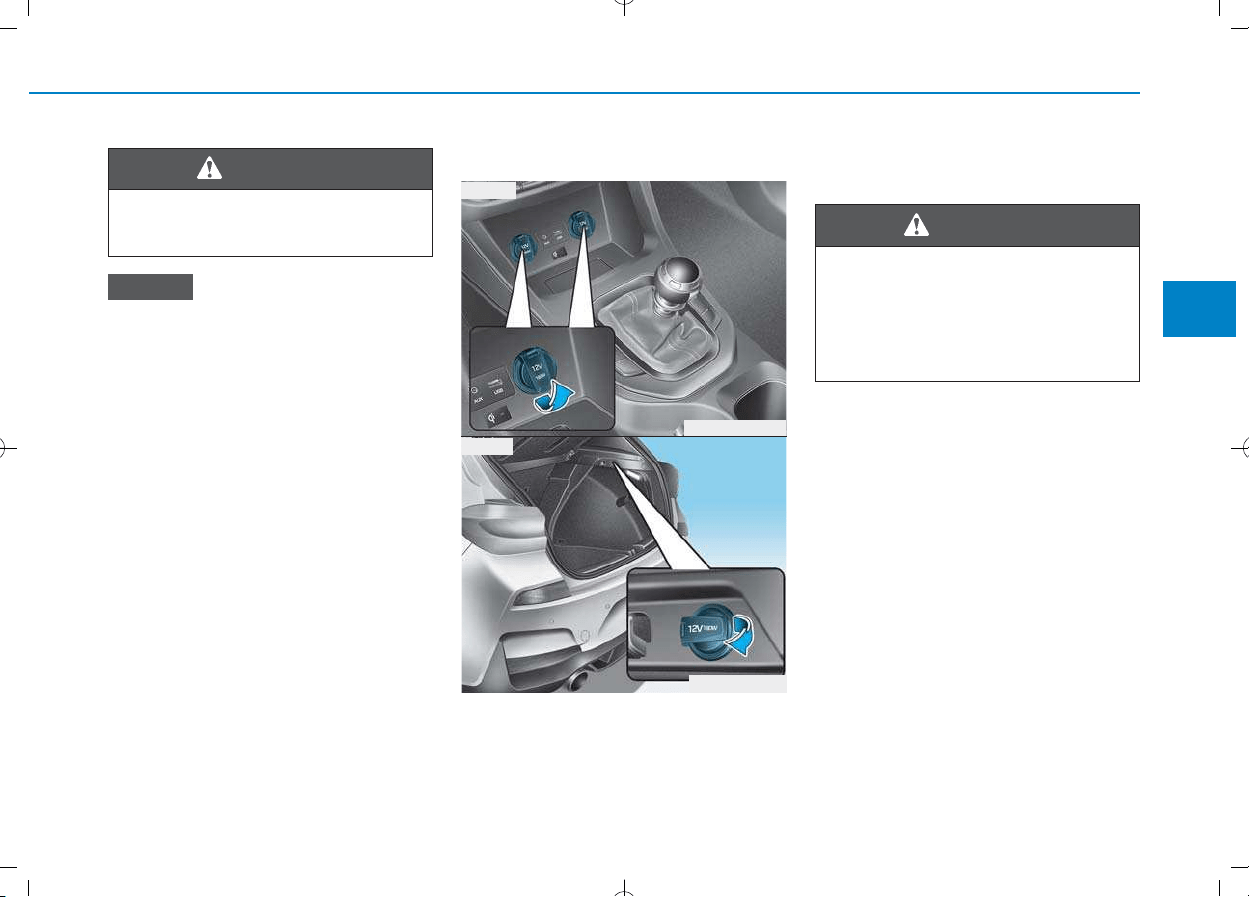
3-123
Convenient features of your vehicle
3
Do not put several tickets in the
ticket holder at one time. This
could cause damage to the ticket
holder.
Power outlet (if equipped)
The power outlet is designed to pro-
vide power for mobile telephones or
other devices designed to operate
with vehicle electrical systems.
The devices should draw less than
180 W(Watt) with the engine running.
NOTICE
For your safety, do not block your
view when using the sunvisor.
WARNING
OPDEN047430
■ Front
OPDEN047341
■ Rear
Avoid electrical shocks. Do not
place your fingers or foreign
objects (pin, etc.) into a power
outlet or touch the power outlet
with a wet hand.
WARNING
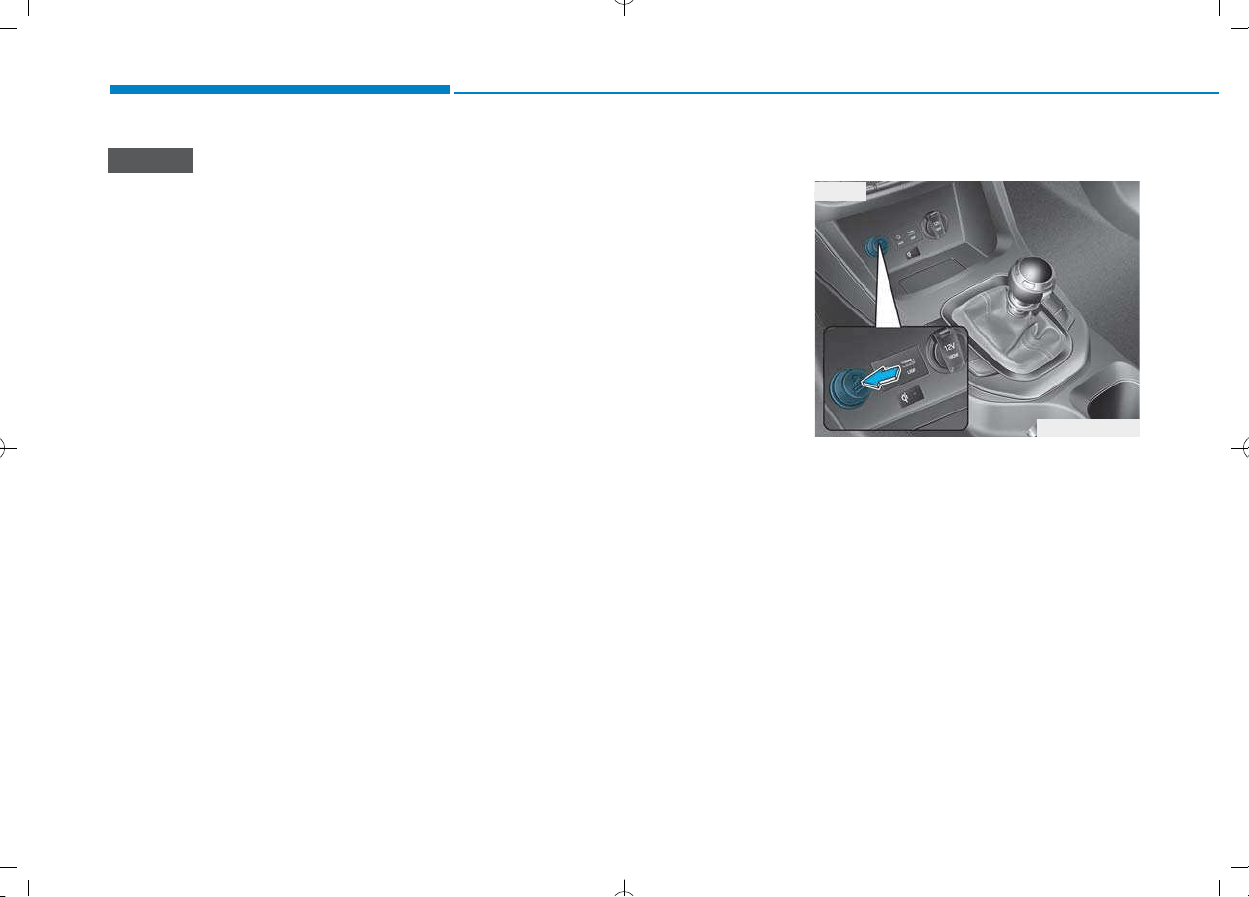
3-124
Convenient features of your vehicle
To prevent damage to the Power
Outlets :
• Use the power outlet only when
the engine is running and remove
the accessory plug after use.
Using the accessory plug for pro-
longed periods of time with the
engine off could cause the battery
to discharge.
• Only use 12V electric accessories
which are less than 180 W(Watt) in
electric capacity.
• Adjust the air-conditioner or
heater to the lowest operating
level when using the power outlet.
• Close the cover when not in use.
(Continued)
(Continued)
• Some electronic devices can
cause electronic interference
when plugged into a vehicle’s
power outlet.These devices may
cause excessive audio static
and malfunctions in other elec-
tronic systems or devices used
in your vehicle.
• Push the plug in as far as it will
go. If good contact is not made,
the plug may overheat and the
fuse may open.
• Plug in battery equipped electrical/
electronic devices with reverse
current protection. The current
from the battery may flow into the
vehicle's electrical/electronic sys-
tem and cause system malfunc-
tion.
Cigarette lighter (if equipped)
To use the cigarette lighter, the igni-
tion switch must be in the ACC or ON
position.
Push the cigarette lighter all the way
into its socket. When the element is
heated, the lighter will pop out to the
“ready” position.
We recommend that you use parts
for replacement from an authorized
HYUNDAI dealer.
NOTICE
OPDEN047431
■ Rear
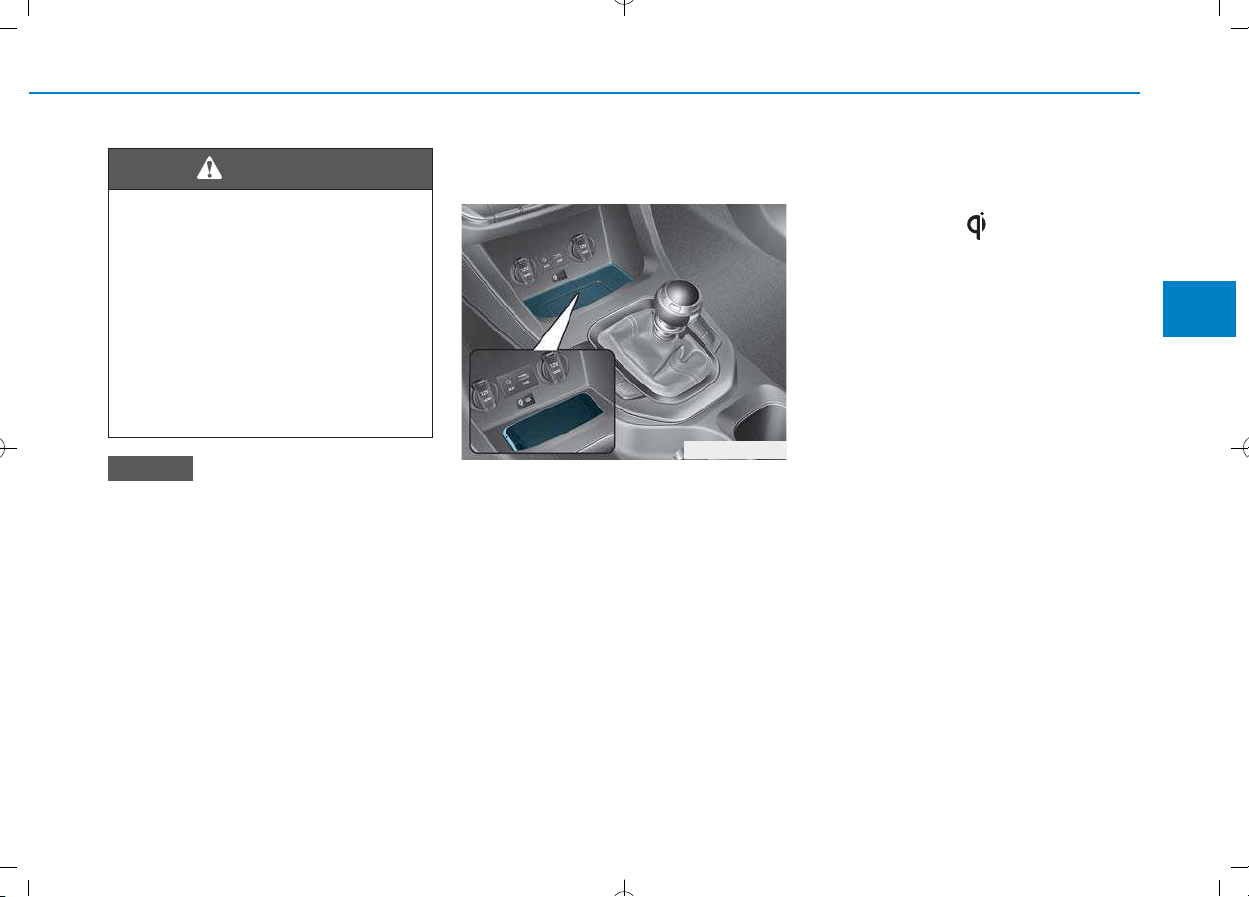
3-125
Convenient features of your vehicle
3
Only a genuine HYUNDAI lighter
should be used in the cigarette
lighter socket. The use of plug-in
accessories (shavers, hand-held
vacuums, and coffee pots, etc.)
may damage the socket or cause
electrical failure.
Wireless cellular phone charg-
ing system (if equipped)
There is a wireless cellular phone
charger inside the front console.
The system is available when all
doors are closed, and when the igni-
tion switch is in the ACC/ON position.
To charge a cellular phone
The wireless cellular phone charging
system charges only the Qi-enabled
cellular phones ( ). Read the label
on the cellular phone accessory
cover or visit your cellular phone
manufacturer’s website to check
whether your cellular phone supports
the Qi technology.
The wireless charging process starts
when you put a Qi-enabled cellular
phone on the wireless charging unit.
1. Remove other items, including the
smart key, from the wireless charg-
ing unit. If not, the wireless charg-
ing process may be interrupted.
2. The indicator light is orange when
the phone is charging. The indica-
tor light turns green when phone
charging is complete.
3. You can turn ON or OFF the wire-
less charging function in the User
Settings mode on the instrument
cluster. For further information, refer
to the “LCD Display Modes” in this
chapter.
NOTICE
• Do not hold the lighter in after
it is already heated because it
will overheat.
• If the lighter does not pop out
within 30 seconds, remove it
to prevent overheating.
• Do not insert foreign objects
into the socket of the cigarette
lighter. It may damage the cig-
arette lighter.
WARNING
OPDEN047432

3-126
Convenient features of your vehicle
If your phone is not charging:
- Slightly change the position of the
cellular phone on the charging pad.
- Make sure the indicator light is
orange.
Depending on the cellular phone
type, the indicator light may not turn
green even though the charging is
complete.
The indicator light will blink orange
for 10 seconds if there is a malfunc-
tion in the wireless charging system.
In this case, temporarily stop the
charging process, and re-attempt to
wirelessly charge your cellular phone
again.
The system warns you with a mes-
sage on the LCD display if the cellular
phone is still on the wireless charging
unit after the engine is turned OFF
and the front door is opened.
• The wireless cellular phone
charging system may not sup-
port certain cellular phones,
which are not verified for the Qi
specification ( ).
(Continued)
(Continued)
• Locate your cell phone well in the
middle of the wireless cellular
phone charging system. Even
when your cell phone locates
slightly to one side, the charging
speed may decrease.
• The wireless charging process
may temporarily stop, when a
smart key function operates (i.e.
starting the engine, opening the
doors, closing the doors).
• For certain cell phones, the indi-
cator color may not change to
green, even when the wireless
charging process is properly
completed.
• The wireless charging process may
temporarily stop, when tempera-
ture abnormally increases inside
the wireless cellular phone charg-
ing system. The wireless charging
process restarts, when tempera-
ture falls to a certain level.
• The wireless charging process
may temporarily stop when there
is any metallic item, such as a
coin, between the wireless cellu-
lar phone charging system and a
cellular phone.
Clock
Vehicles with Audio system
Select the [SETUP/CLOCK ] button on
the audio system ➟ Select [Date/Time].
• Set time: Set the time displayed on
the audio screen.
• Time format: Choose between 12-
hour and 24-hour time formats.
Vehicles with Navigation system
Select the Settings menu on the
Navigation system ➟ Select
[Date/Time].
• GPS time: Displays time according
to the received GNSS time.
• 24-hour: Switches to 12 hour or 24
hour.
For more details, please refer to
the separate manual that was sup-
plied with your vehicle.
NOTICE
Do not adjust the clock while
driving.You may lose your steer-
ing control and cause severe
personal injury or accidents.
WARNING
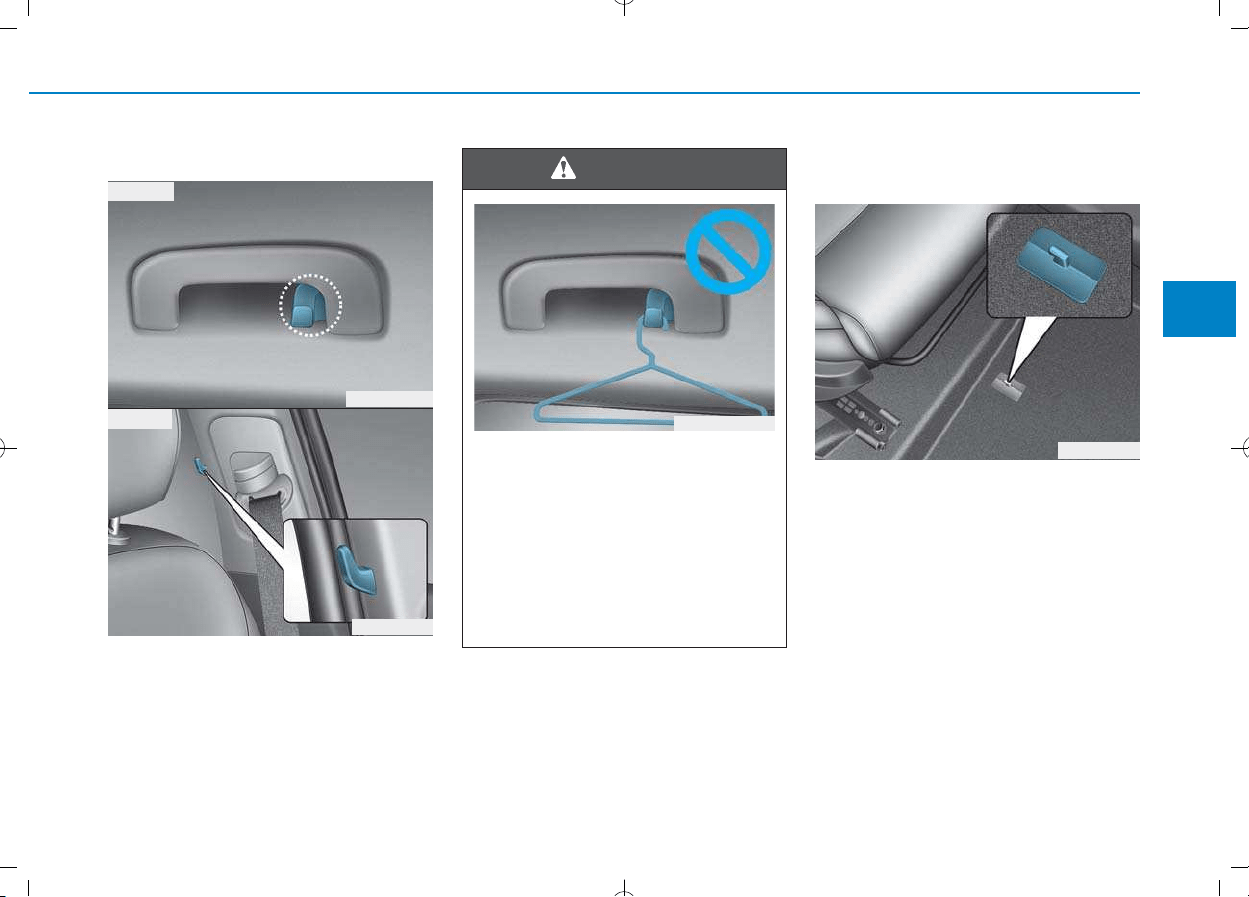
3-127
Convenient features of your vehicle
3
Clothes hanger (if equipped)
These hangers are not designed to
hold large or heavy items.
Floor mat anchor(s)
(if equipped)
ALWAYS use the Floor Mat Anchors
to attach the front floor mats to the
vehicle. The anchors on the front
floor carpet keep the floor mats from
sliding forward.
OPD046411
■ Type A
■ Type B
OPDE046050
Do not hang other objects such
as hangers or hard objects
except clothes. Also, do not put
heavy, sharp or breakable
objects in the clothes pockets.
In an accident or when the cur-
tain air bag is inflated, it may
cause vehicle damage or per-
sonal injury.
WARNING
OGSB047265L
OPD046343
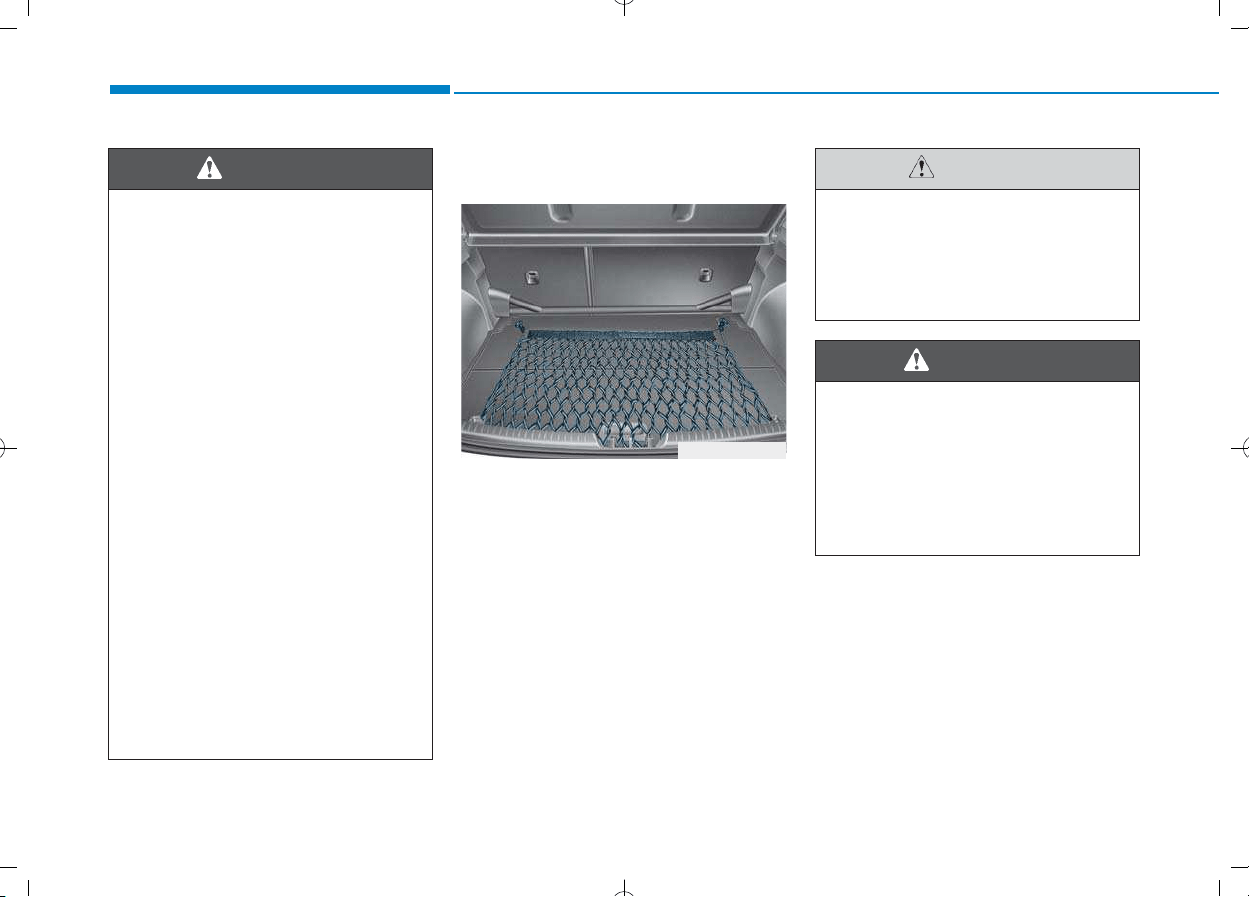
3-128
Convenient features of your vehicle
To avoid eye injury, DO NOT
overstretch the luggage net.
ALWAYS keep your face and
body out of the luggage net’s
recoil path. DO NOT use the lug-
gage net when the strap has vis-
ible signs of wear or damage.
WARNING
To prevent damage to the goods
or the vehicle, care should be
taken when carrying fragile or
bulky objects in the luggage
compartment.
CAUTION
Luggage net (holder)
(if equipped)
To keep items from shifting in the lug-
gage compartment, you can use the
four holders located in the luggage
compartment, to attach the luggage
net.
If necessary, we recommend that you
contact your authorized HYUNDAI
dealer to obtain a luggage
net.
The following must be observed
when installing ANY floor mat
to the vehicle.
• Ensure that the floor mats are
securely attached to the vehi-
cle's floor mat anchor(s) before
driving the vehicle.
• Do not use ANY floor mat that
cannot be firmly attached to
the vehicle's floor mat anchors.
• Do not stack floor mats on top
of one another (e.g. all-weath-
er rubber mat on top of a car-
peted floor mat). Only a single
floor mat should be installed
in each position.
IMPORTANT - Your vehicle was
manufactured with driver's side
floor mat anchors that are
designed to securely hold the
floor mat in place. To avoid any
interference with pedal operation,
HYUNDAI recommends that the
HYUNDAI floor mat designed for
use in your vehicle be installed.
WARNING
OPDEN047344
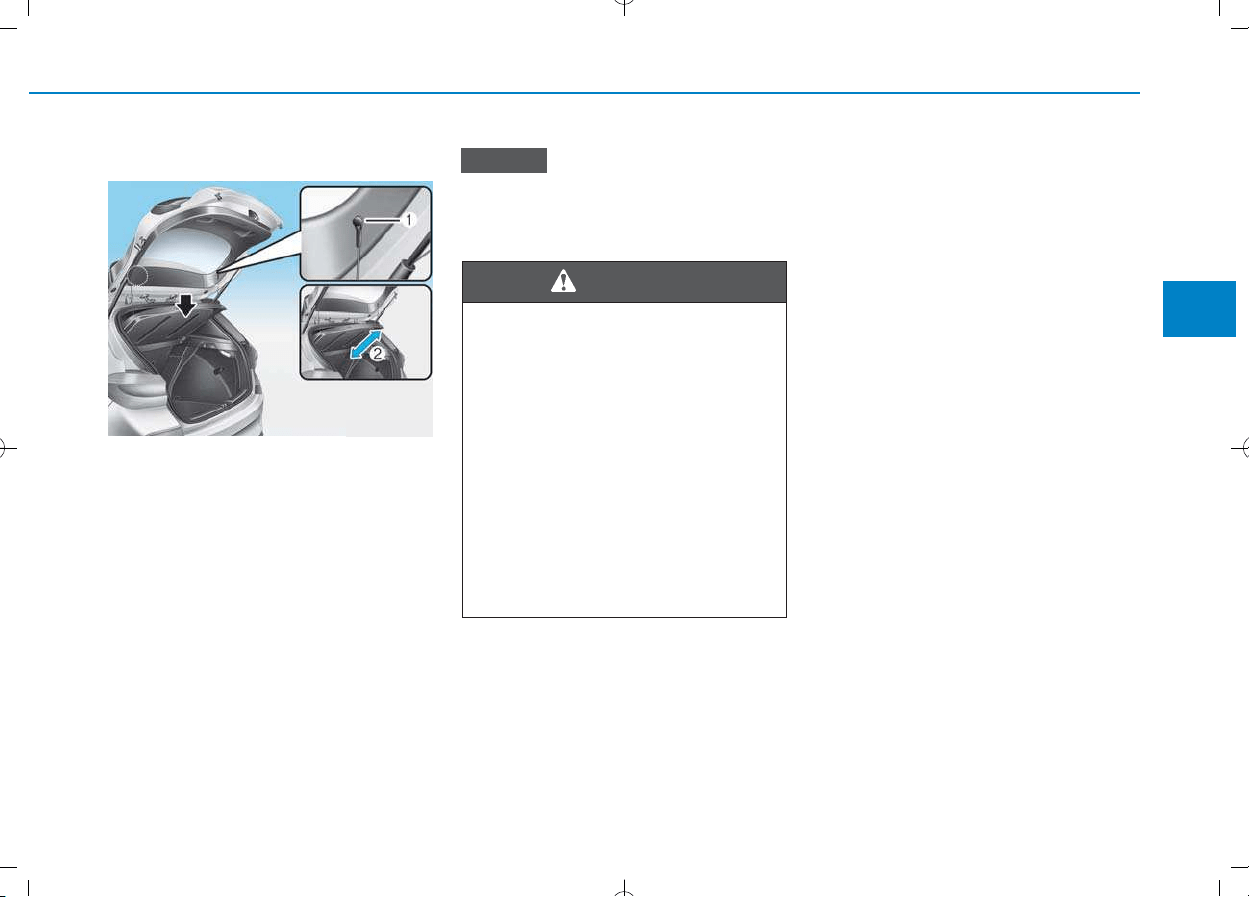
3-129
Convenient features of your vehicle
3
Cargo area cover (if equipped)
Use the cover to hide items stored in
the cargo area.
The cargo area cover will lift when
the tailgate is opened.
Disconnect the strap (1) from the
holder if you want to return the cover
to the original position. To remove the
cargo area cover completely, lift the
cover to a 50-degree angle and pull it
out (2).
Since the cargo area cover may be
damaged or deformed, do not put
luggage on it when it is being used.
NOTICE
OPD046346
• Do not place objects on the
cargo area cover while driv-
ing. Such objects may be
thrown about inside the vehi-
cle and possibly injure vehicle
occupants during an accident
or when braking.
• Never allow anyone to ride in
the luggage compartment. It
is designed for luggage only.
• Maintain balance of the vehi-
cle and locate the weight as
far forward as possible.
WARNING

Multimedia System
Multimedia system.................................................4-2
AUX, USB and iPod
®
port ..............................................4-2
Antenna ...............................................................................4-2
Steering wheel audio controls .......................................4-3
Bluetooth
®
Wireless Technology hands-free ..........4-4
Audio / Video / Navigation system (AVN) ..................4-4
How vehicle radio works.................................................4-4
Audio (With Touch Screen) ..................................4-8
Feature of Your Audio .....................................................4-9
Radio .................................................................................4-14
Media..................................................................................4-17
Phone .................................................................................4-28
Setup ..................................................................................4-36
Declaration of Conformity..................................4-38
CE for EU ..............................................................................4-38
4
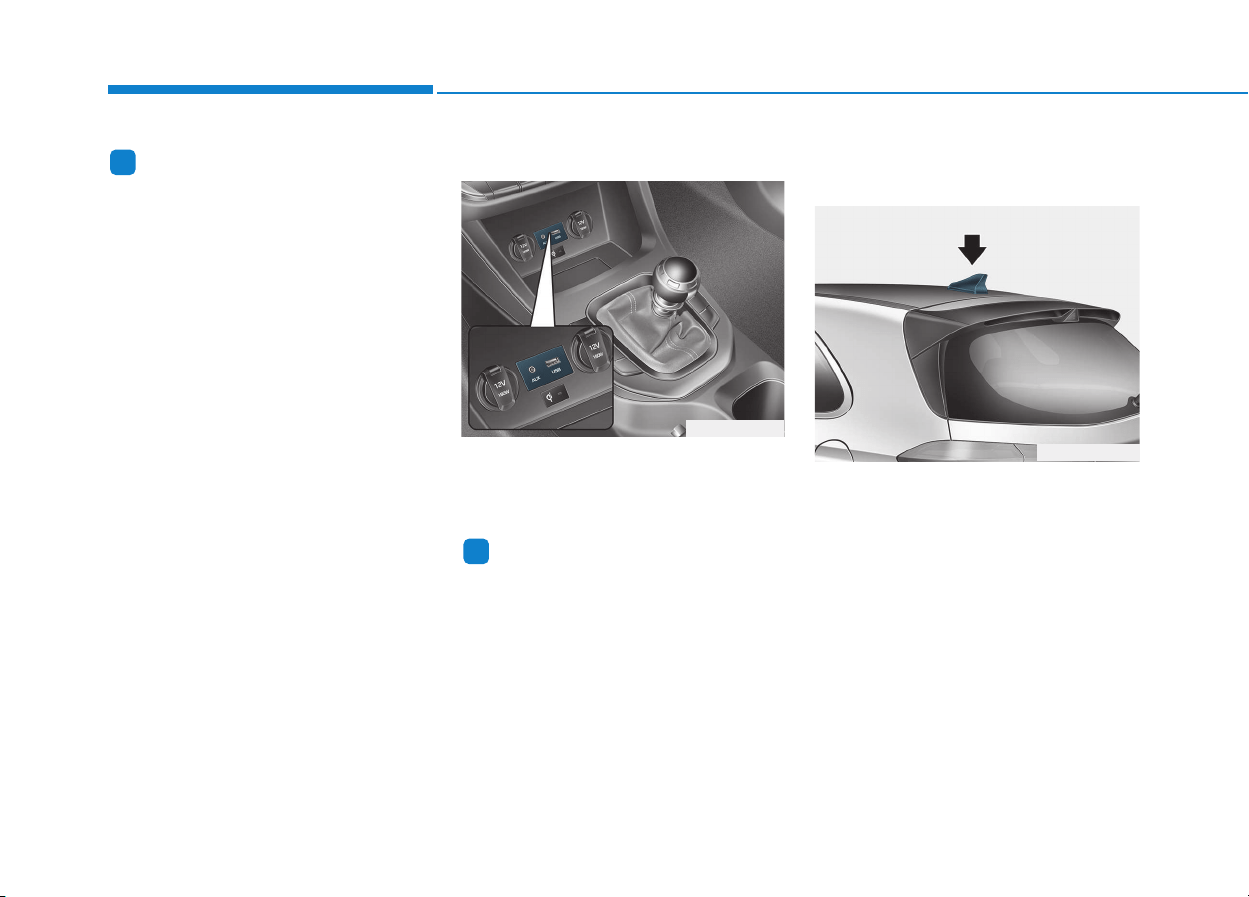
4-2
Multimedia System
Information
• If you install an aftermarket HID
headlamp, your vehicle’s audio and
electronic devices may malfunction.
• Prevent chemicals such as perfume,
cosmetic oil, sun cream, hand clean-
er, and air freshener from contacting
the interior parts because they may
cause damage or discoloration.
AUX, USB and iPod
®
port
You can use an AUX port to connect
audio devices and an USB port to plug
in an USB and an iPod
®
port.
Information
When using a portable audio device
connected to the power outlet, noise
may occur during playback. If this
happens, use the power source of the
portable audio device.
❈ iPod
®
is a trademark of Apple Inc.
Antenna
Shark fin antenna
The shark fin antenna receives
transmitted data. (for example:
AM/FM, DAB, GPS/ GNSS)
i
i
MMUULLTTIIMMEEDDIIAA SSYYSSTTEEMM
OPDEN047428
OPDEN047437
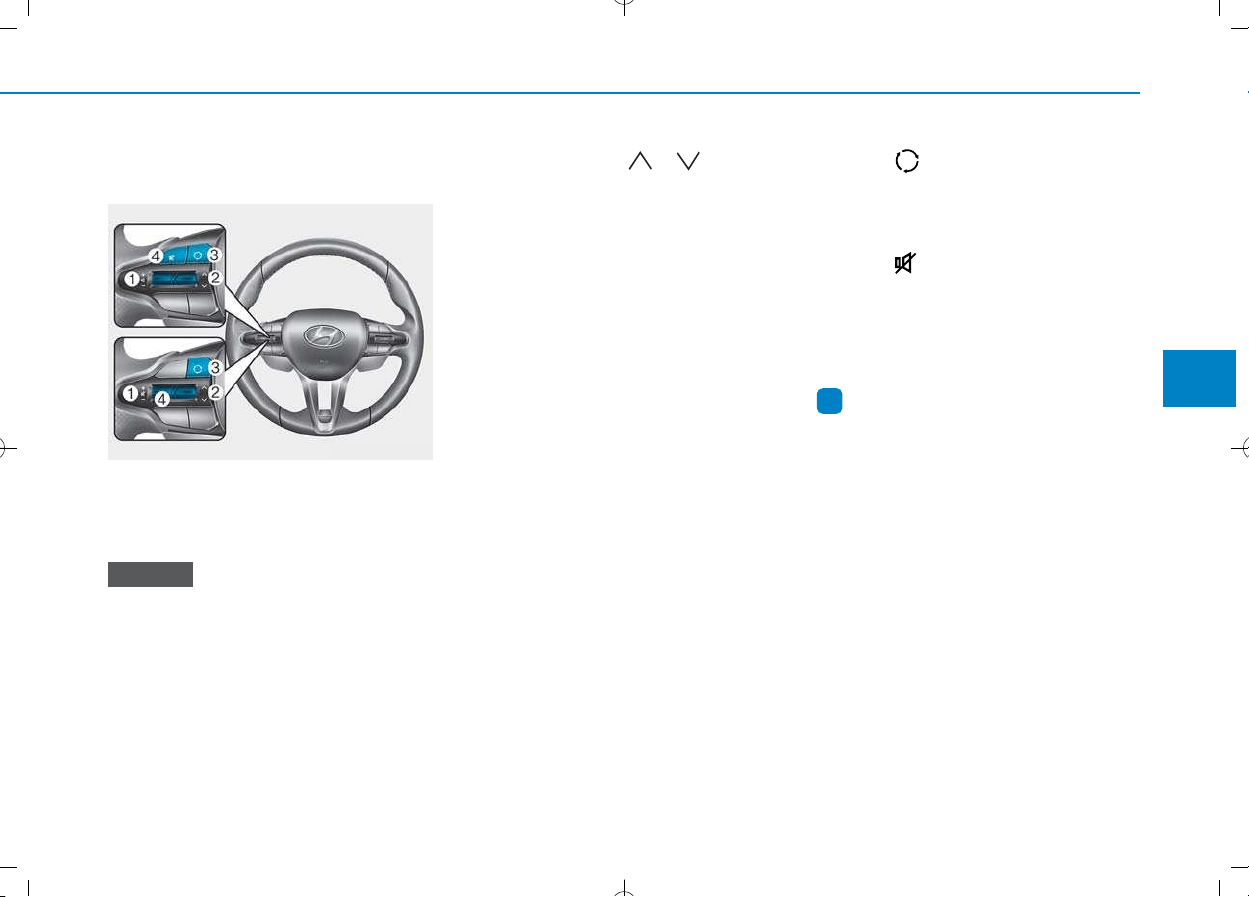
4-3
Multimedia System
4
Steering wheel audio controls
(if equipped)
The steering wheel audio control
switches are installed for your con-
venience.
Do not operate audio remote con-
trol buttons simultaneously.
VOLUME (VOL + / - ) (1)
• Move the VOLUME toggle switch
up to increase volume.
• Move the VOLUME toggle switch
down to decrease volume.
SEEK/PRESET ( / ) (2)
If the SEEK/PRESET toggle switch
is moved up or down and held for 0.8
seconds or more, it will function in
the following modes.
RADIO mode
It will function as the AUTO SEEK
select switch. It will SEEK until you
release the switch.
MEDIA mode
It will function as the FF/REW switch.
If the SEEK/PRESET toggle switch
is moved up or down, it will function
in the following modes.
RADIO mode
It will function as the PRESET STA-
TION UP/DOWN switch.
MEDIA mode
It will function as the TRACK UP/
DOWN switch.
MODE ( ) (3)
Press the MODE button to select
Radio, Disc, or AUX.
MUTE ( ) (4)
• Press the button to mute the
sound.
• Press the button again to activate
the sound.
Information
Detailed information for audio control
buttons are described in the following
pages in this chapter.
i
NOTICE
OPDEN047415
■ Type A
■ Type B
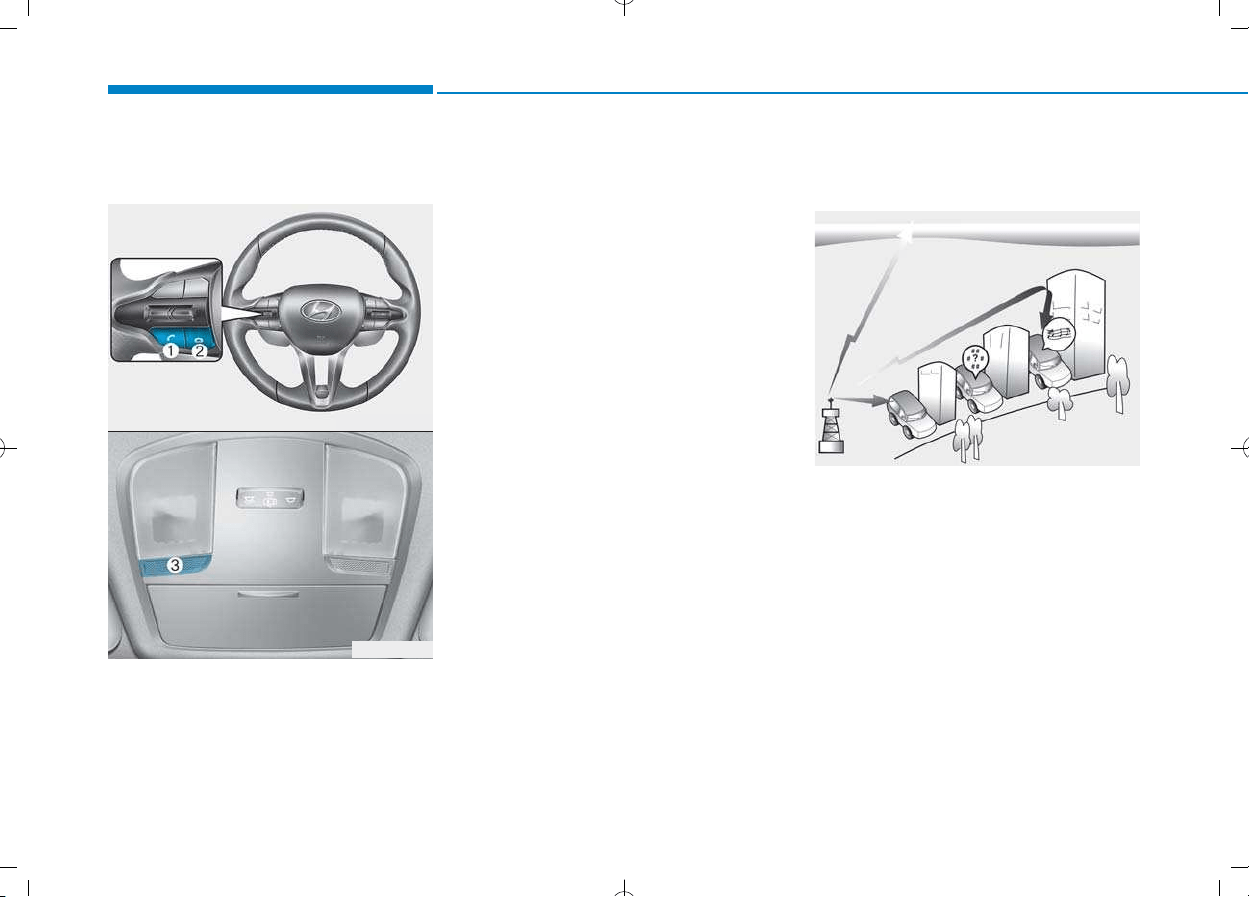
Bluetooth
®
Wireless Technology
hands-free
You can use the phone wirelessly by
using the
Bluetooth
®
Wireless
Technology.
(1) Call / Answer button
(2) Call end button
(3) Microphone
• Audio : For detailed information,
refer to “AUDIO” in this chapter.
• AVN : Detailed information for the
Bluetooth
®
Wireless Technology
hands-free is described in the man-
ual supplied separately.
Audio / Video / Navigation sys-
tem (AVN) (if equipped)
Detailed information for the AVN sys-
tem is described in a separately sup-
plied manual.
How vehicle radio works
FM reception
AM and FM radio signals are broad-
cast from transmitter towers located
around your city. They are intercept-
ed by the radio antenna on your vehi-
cle. This signal is then received by
the radio and sent to your vehicle
speakers.
When a strong radio signal has
reached your vehicle, the precise
engineering of your audio system
ensures the best possible quality
reproduction. However, in some
cases the signal coming to your vehi-
cle may not be strong and clear.
OJF045308L
OPDEN047422
OPD046348
4-4
Multimedia System
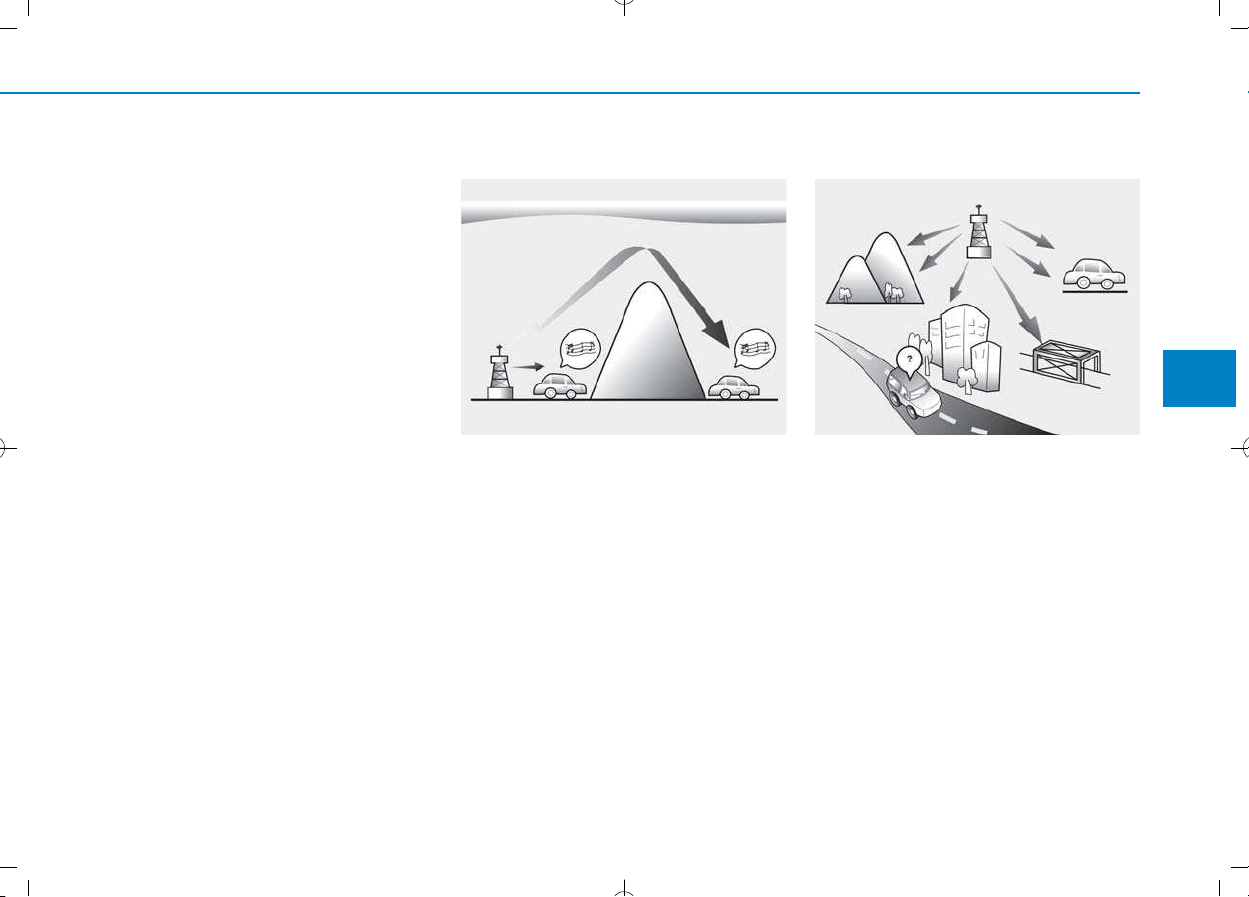
This can be due to factors, such as
the distance from the radio station,
closeness of other strong radio sta-
tions or the presence of buildings,
bridges or other large obstructions in
the area.
AM (MW, LW) reception
AM broadcasts can be received at
greater distances than FM broad-
casts. This is because AM radio
waves are transmitted at low fre-
quencies. These long, low frequency
radio waves can follow the curvature
of the earth rather than travelling
straight out into the atmosphere. In
addition, they curve around obstruc-
tions so that they can provide better
signal coverage.
FM radio station
FM broadcasts are transmitted at
high frequencies and do not bend to
follow the earth's surface. Because
of this, FM broadcasts generally
begin to fade at short distances from
the station. Also, FM signals are eas-
ily affected by buildings, mountains,
or other obstructions. These can
result in certain listening conditions
which might lead you to believe a
problem exists with your radio. The
following conditions are normal and
do not indicate radio trouble :
OJF045310LOJF045309L
4-5
Multimedia System
4
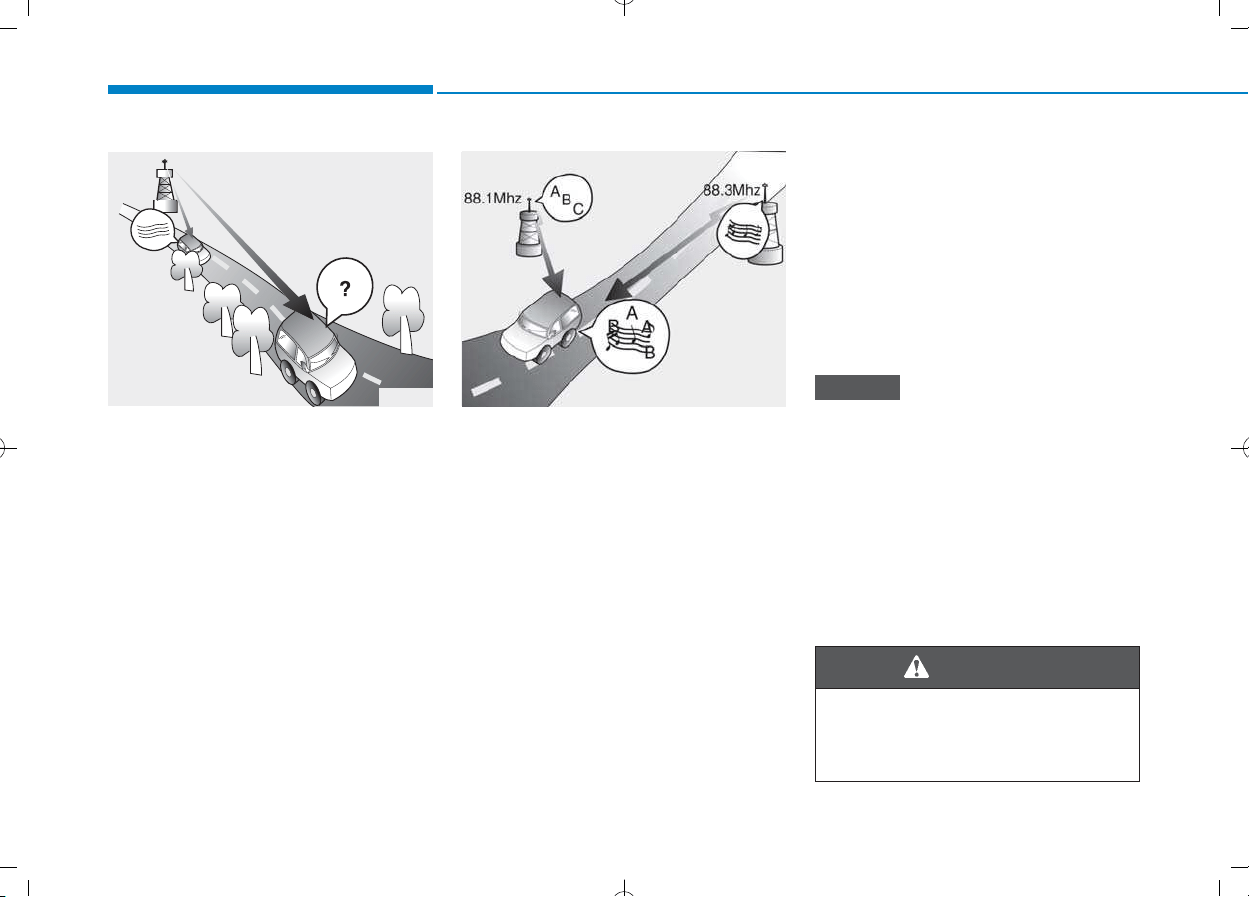
Do not use a cellular phone
while driving. Stop at a safe
location to use a cellular phone.
WARNING
4-6
Multimedia System
• Fading - As your vehicle moves
away from the radio station, the
signal will weaken and sound will
begin to fade. When this occurs,
we suggest that you select another
stronger station.
• Flutter/Static - Weak FM signals or
large obstructions between the
transmitter and your radio can dis-
turb the signal causing static or
fluttering noises to occur. Reducing
the treble level may lessen this
effect until the disturbance clears.
• Station Swapping - As a FM signal
weakens, another more powerful
signal near the same frequency
may begin to play. This is because
your radio is designed to lock onto
the clearest signal. If this occurs,
select another station with a
stronger signal.
• Multi-Path Cancellation - Radio
signals being received from sever-
al directions can cause distortion
or fluttering. This can be caused by
a direct and reflected signal from
the same station, or by signals
from two stations with close fre-
quencies. If this occurs, select
another station until the condition
has passed.
Using a cellular phone or a two-
way radio
When a cellular phone is used inside
the vehicle, noise may be produced
from the audio system. This does not
mean that something is wrong with the
audio equipment. In such a case, use
the cellular phone at a place as far as
possible from the audio equipment.
When using a communication
system such as a cellular phone
or a radio set inside the vehicle, a
separate external antenna must be
fitted. When a cellular phone or a
radio set is used with an internal
antenna alone, it may interfere
with the vehicle's electrical sys-
tem and adversely affect safe
operation of the vehicle.
NOTICE
OJF045311L
¢¢¢
JBM004
4-7
Multimedia System
4
iPod
®
iPod
®
is a registered trademark of
Apple Inc.
Bluetooth
®
Wireless
Technology
The Bluetooth
®
word mark and logos
are registered trademarks owned by
Bluetooth SIG, Inc. and any use of
such marks by HYUNDAI is under
license.
Other trademarks and trade names
are those of their respective owners.
A
Bluetooth
®
Wireless Technology
enabled cell phone is required to use
Bluetooth
®
Wireless Technology.
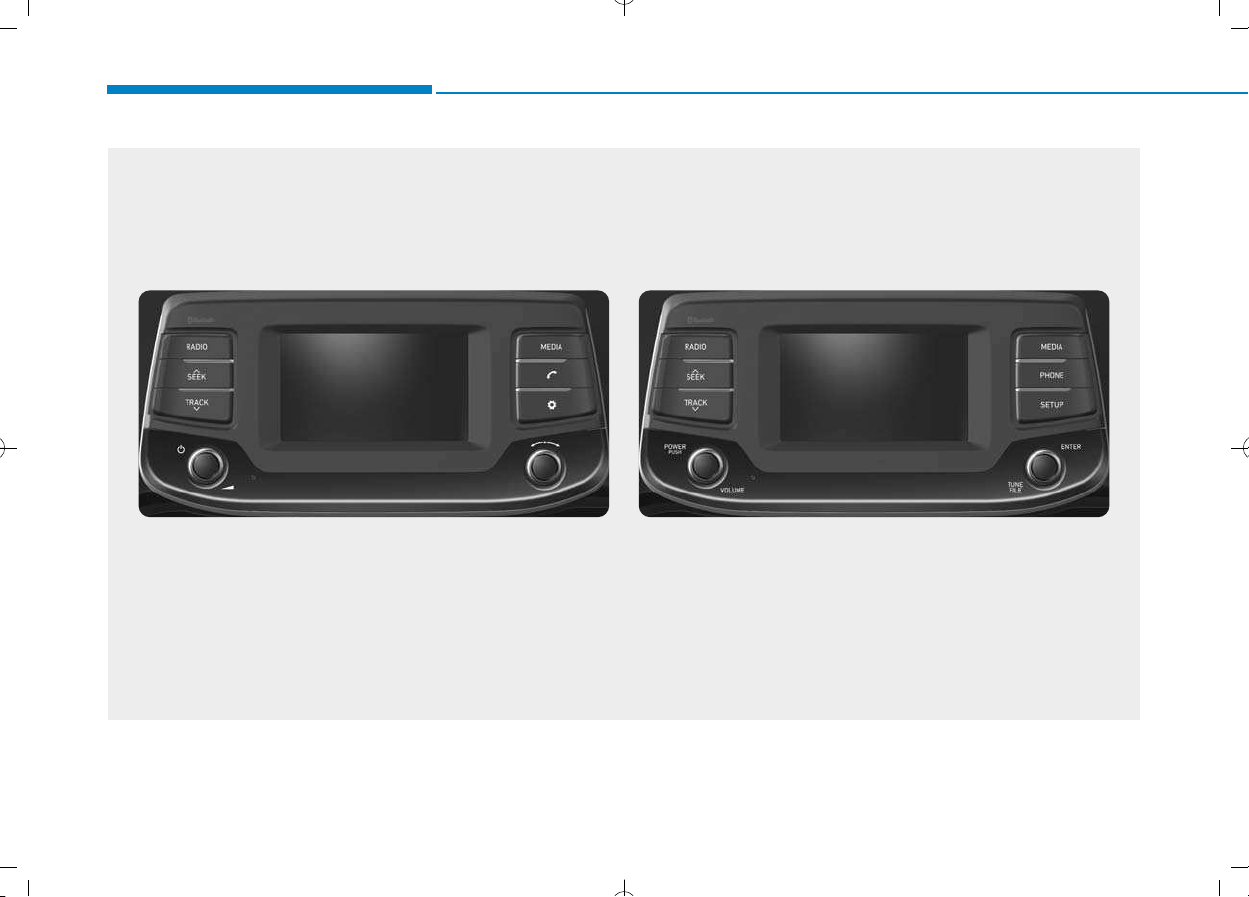
4-8
Multimedia System
AAUUDDIIOO ((WWiitthh TToouucchh SSccrreeeenn))
S0H4H0000EE/S0H4H0001EE
(With
Bluetooth
®
Wireless Technology)
■ Type A ■ Type B
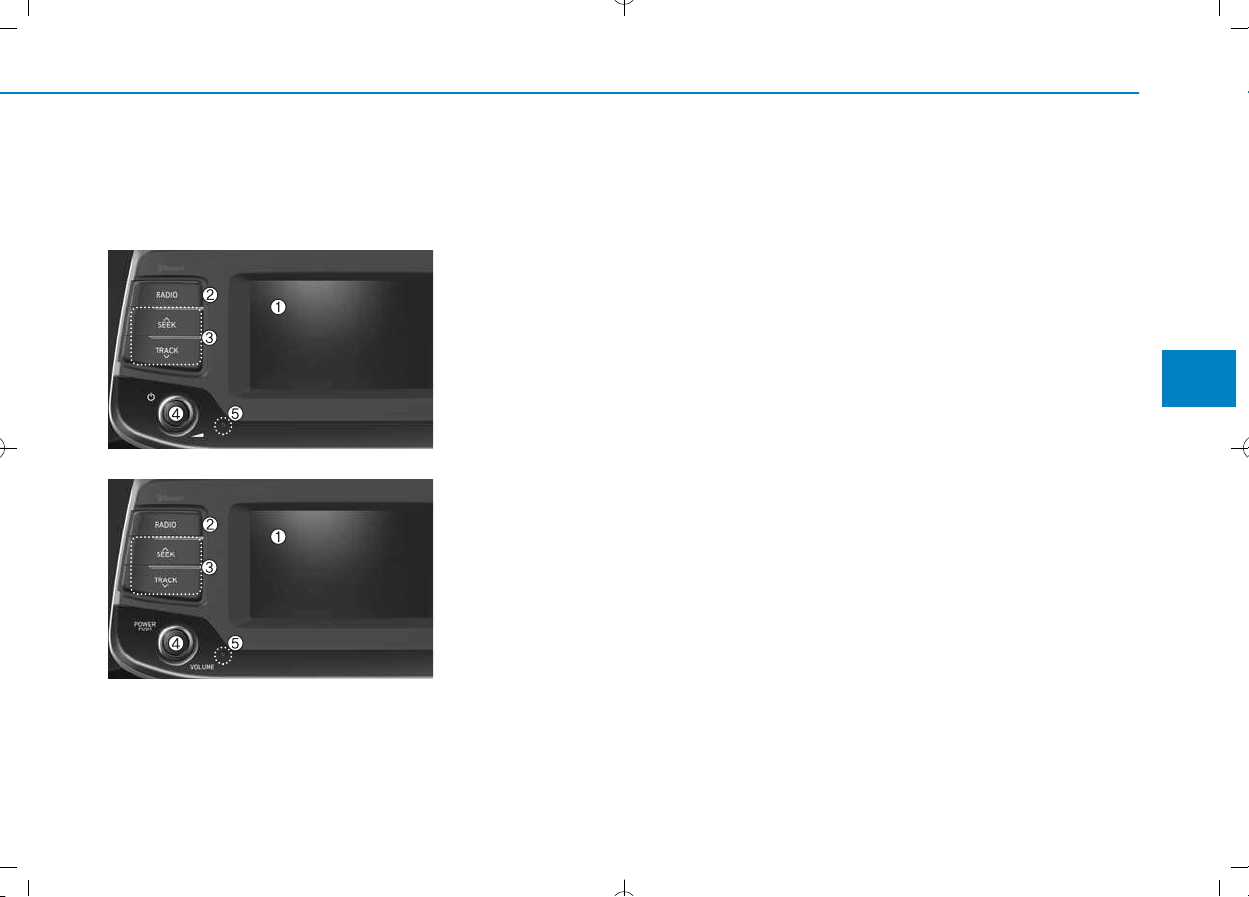
4-9
Multimedia System
4
Feature of Your Audio
Head unit
❈ The actual features in the vehicle
may differ from the illustration.
(1) LCD screen
• Tap the screen to select a button.
(2) RADIO
• Start DAB/FM* and AM radio.
* with DAB
(3) SEEK/TRACK
• Search for next station in DAB/FM*
and AM radio mode.
• Change the current song in media
mode.
* with DAB
(4) POWER/VOLUME knob
• Turn to adjust the volume.
• Press to turn the device on or off.
(5) RESET
• Shutdown and restart the system.
■ Type A
■ Type B
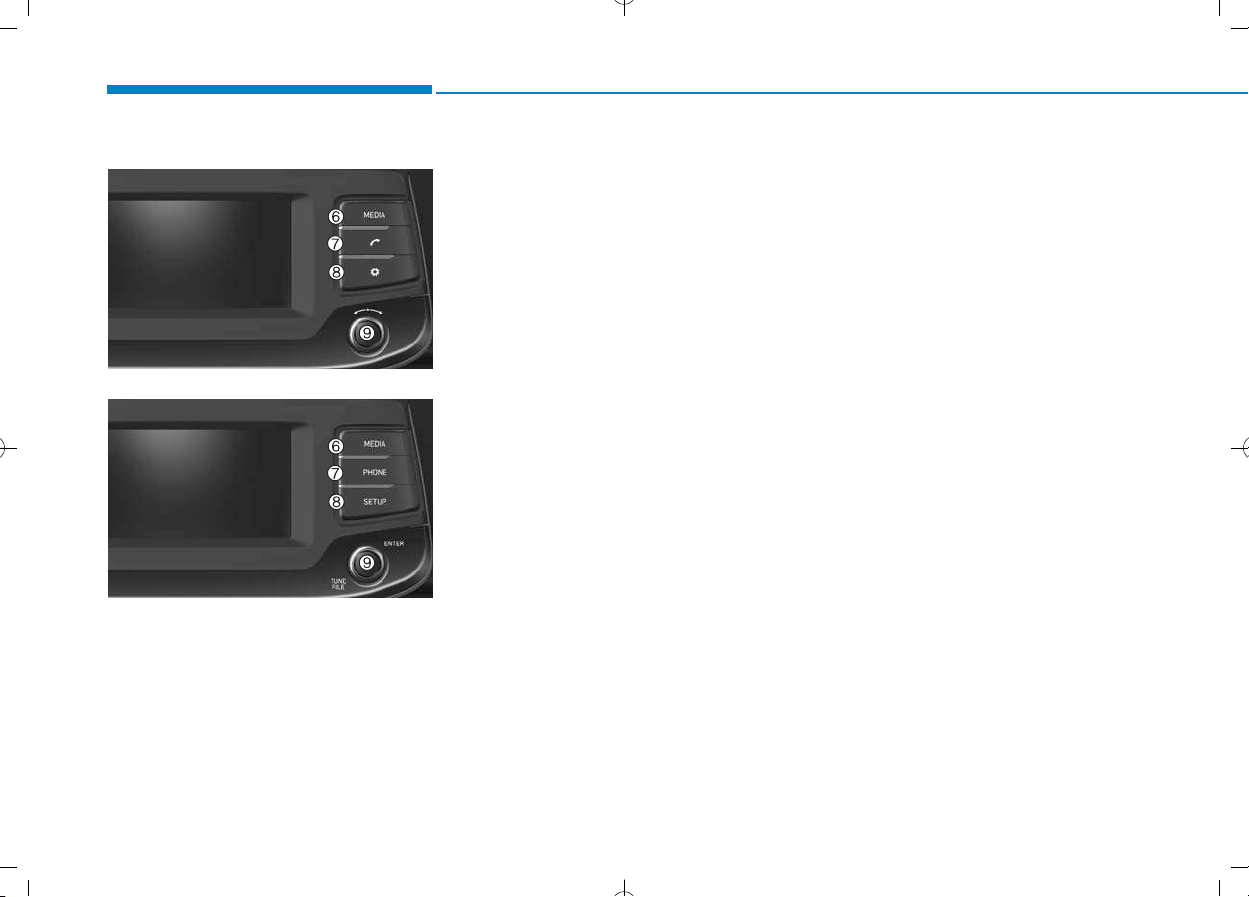
4-10
Multimedia System
(6) MEDIA
• Select USB(iPod
®
), Bluetooth
®
(BT)
Audio, AUX or My Music.
• Display the media menu when two
or more media are connected or
when the [MEDIA] button is
pressed in media mode.
(7) PHONE
• Start Bluetooth
®
Phone mode.
(8) SETUP
• Access Display, Sound, Date/Time,
Bluetooth, System, Screensaver
and Display Off settings.
(9) TUNE knob
• Turn to navigate through the sta-
tions/songs list.
• Press to select an item.
■ Type A
■ Type B
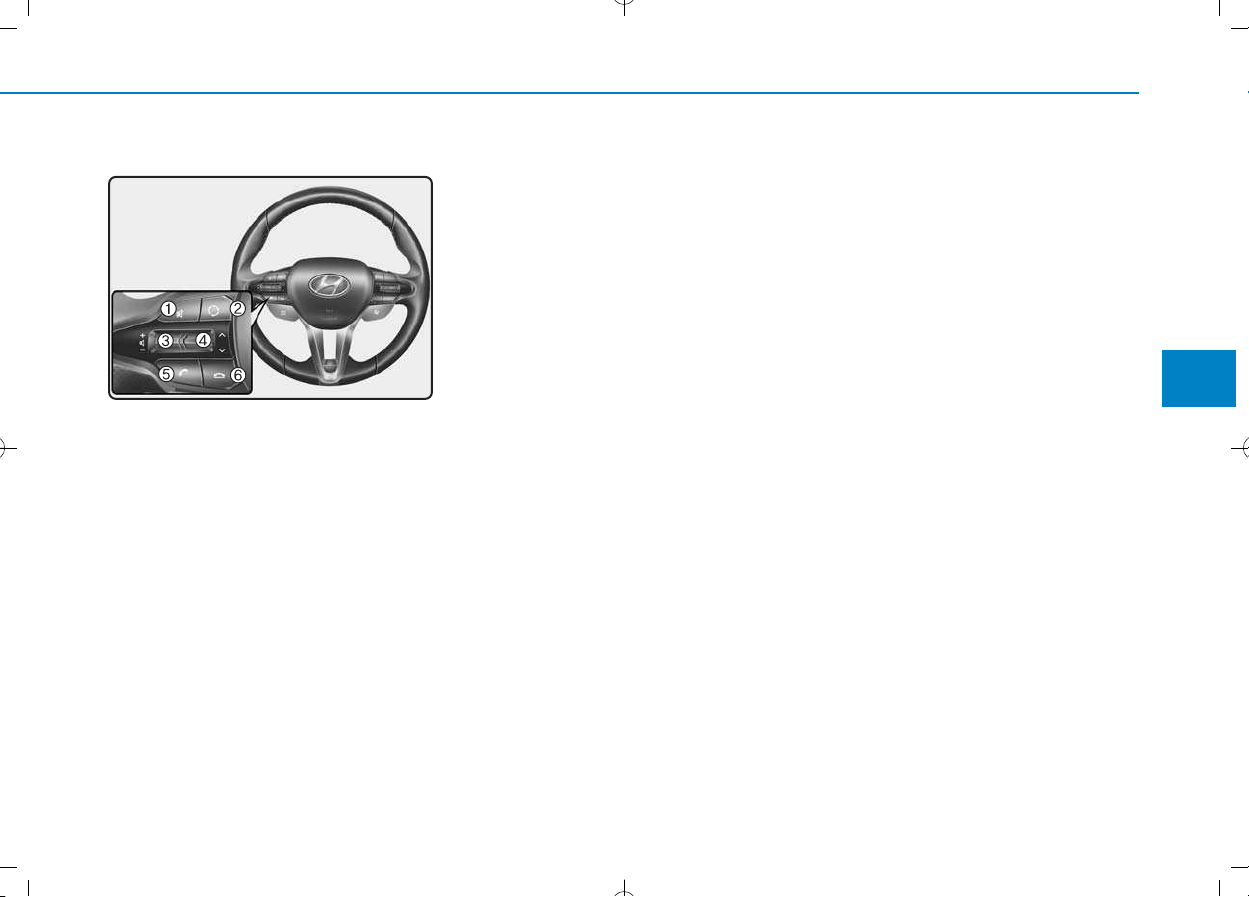
4-11
Multimedia System
4
Steering wheel remote control
❈ The actual features in the vehicle
may differ from the illustration.
(1) MUTE
• Mutes the audio.
• Mutes the microphone during a
call.
(2) MODE
• Press the button to change the
mode in the following order: Radio
Media.
(3) VOLUME
• Press to adjust the volume.
(4) UP/DOWN
• Press the button in radio mode to
search Presets.
• Press and hold the button in radio
mode to search frequencies.
• Press the button in media mode to
change the current song.(except
AUX)
• Press and hold the button in media
mode to quick search through
songs. (except Bluetooth
®
(BT)
Audio and AUX)
(5) CALL
• Pressing the button
- If not in Bluetooth
®
Handsfree
mode or receiving a phone call.
First press: Display Dial Number
screen.
Second press: Automatically dis-
play the most recently Dialled
Call number.
Third press: Dial the phone num-
ber entered.
- Press in the Incoming Call notifi-
cation screen to accept the
phone call.
- Press in Bluetooth
®
Handsfree
mode to switch to the waiting call.
• Pressing and holding the button
(more than 1.0 seconds)
- If not in Bluetooth
®
Handsfree
mode or receiving a phone call,
the most recently Dialled Call
number is dialled.
- Press in Bluetooth
®
Handsfree
mode to transfer the call to your
cell phone.
- Press in cell phone mode to
switch to Bluetooth
®
Handsfree
mode.
(6) END
• Press in Bluetooth
®
Handsfree
mode to end the phone call.
• Press in the incoming call screen
to reject the call.
4-12
Multimedia System
• Do not stare at the screen
while driving. Staring at the
screen for prolonged periods
of time could lead to traffic
accidents.
• Do not disassemble, assem-
ble, or modify the audio sys-
tem. Such acts could result in
accidents, fire, or electric
shock.
• Using the phone while driving
may lead to a lack of attention
of traffic conditions and
increase the likelihood of
accidents. Use the phone fea-
ture after parking the vehicle.
• Exercise caution not to spill
water or introduce foreign
objects into the device. Such
acts could lead to smoke, fire,
or product malfunction.
(Continued)
WARNING
(Continued)
• Please refrain from use if the
screen is blank or no sound
can be heard as these signs
may indicate product malfunc-
tion. Continued use in such
conditions could lead to acci-
dents (fires, electric shock) or
product malfunctions.
• Do not touch the antenna dur-
ing thunder or lightening as
such acts may lead to light-
ning induced electric shock.
• Do not stop or park in park-
ing-restricted areas to operate
the product. Such acts could
lead to traffic accidents.
• Use the system with the vehi-
cle engine turned on.
Prolonged use with the igni-
tion turned on only could
result in battery discharge.
Driving while distracted can
result in a loss of vehicle con-
trol that may lead to an acci-
dent, severe personal injury,
and death. The driver’s primary
responsibility is in the safe and
legal operation of a vehicle, and
use of any handheld devices,
other equipment, or vehicle sys-
tems which take the driver’s
eyes, attention and focus away
from the safe operation of a
vehicle or which are not permis-
sible by law should never be
used during operation of the
vehicle.
WARNING

4-13
Multimedia System
4
• Operating the device while driv-
ing could lead to accidents due
to a lack of attention to external
surroundings. First park the
vehicle before operating the
device.
• Adjust the volume to levels that
allow the driver to hear sounds
from outside of the vehicle.
Driving in a state where external
sounds cannot be heard may
lead to accidents.
• Pay attention to the volume set-
ting when turning the device on.
A sudden output of extreme vol-
ume upon turning the device on
could lead to hearing impair-
ment. (Adjust the volume to a
suitable levels before turning off
the device.)
(Continued)
(Continued)
• Turn on the car engine before
using this device. Do not oper-
ate the audio system for long
periods of time only with the
ignition turned on as such oper-
ations may lead to battery dis-
charge.
• Do not subject the device to
severe shock or impact. Direct
pressure onto the front side of
the monitor may cause damage
to the LCD.
• When cleaning the device, make
sure to turn off the device and
use a dry and smooth cloth.
Never use tough materials,
chemical cloths, or solvents
(alcohol, benzene, thinners,
etc.). As such materials may
damage the device panel or
cause color/quality deteriora-
tion.
(Continued)
(Continued)
• Do not place beverages close to
the audio system. Spilling bever-
ages may lead to system mal-
function.
• In case of product malfunction,
please contact your place of pur-
chase or After Service center.
• Placing the audio system within
an electromagnetic environment
may result in noise interference.
• Prevent caustic solutions such
as perfume and cosmetic oil
from contacting the dashboard
because they may cause dam-
age or discoloration.
NOTICE
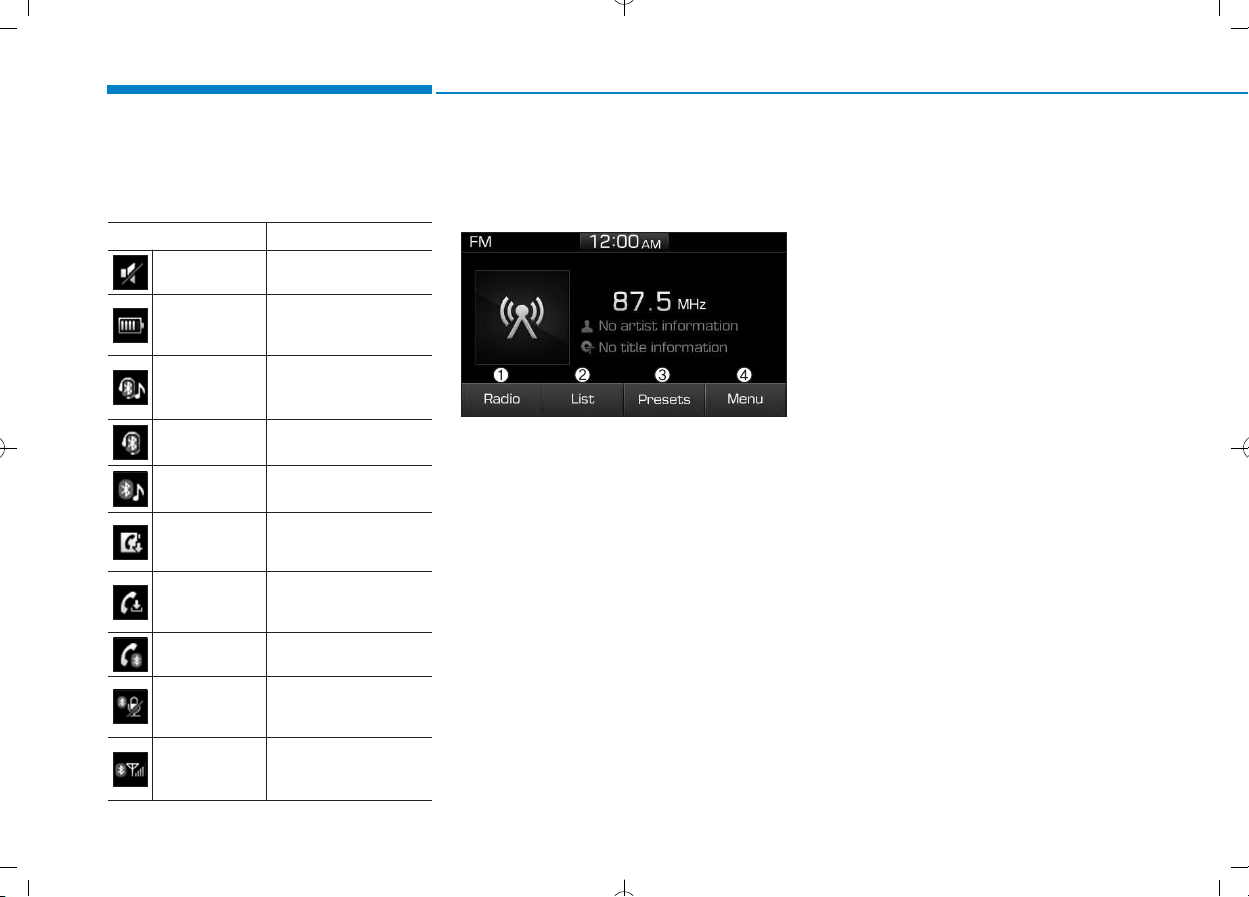
4-14
Multimedia System
Information on status icons
Icons showing audio status are shown
in the upper-right corner of the screen.
Radio
FM/AM (with RDS)
(1) Radio
Switch between FM and AM.
(2) List
View all available stations.
(3) Presets
View all presets.
(4) Menu
Navigate to the menu screen.
Switching between FM and AM
• Press the [RADIO] button on the
audio system to switch between
FM and AM.
• Select [Radio] on the screen to
switch between FM and AM.
Searching stations
Press the [SEEK/TRACK] button to
search stations.
List
A list of all available stations in the
vehicle’s current location is dis-
played. Select the desired station.
Favourite stations can be saved to
[Presets] by selecting [+].
Icon Description
Mute Mute engaged
Battery
Remaining battery life of
a connected Bluetooth
®
device
Handsfree +
Audio stream-
ing connection
Bluetooth
®
Handsfree
call and audio stream-
ing available
Handsfree
connection
Bluetooth
®
Handsfree
call available
Bluetooth
®
audio streaming
Bluetooth
®
audio
streaming available
Downloading
contacts
Downloading contacts
through Bluetooth
®
wire-
less communications
Downloading
call history
Downloading call history
through Bluetooth
®
wire-
less communications
Line busy Phone call in progress
Mute mic
Mic muted during a
call (caller cannot
hear your voice)
Phone signal
strength
Display the phone signal
strength for a cell phone
connected by Bluetooth
®
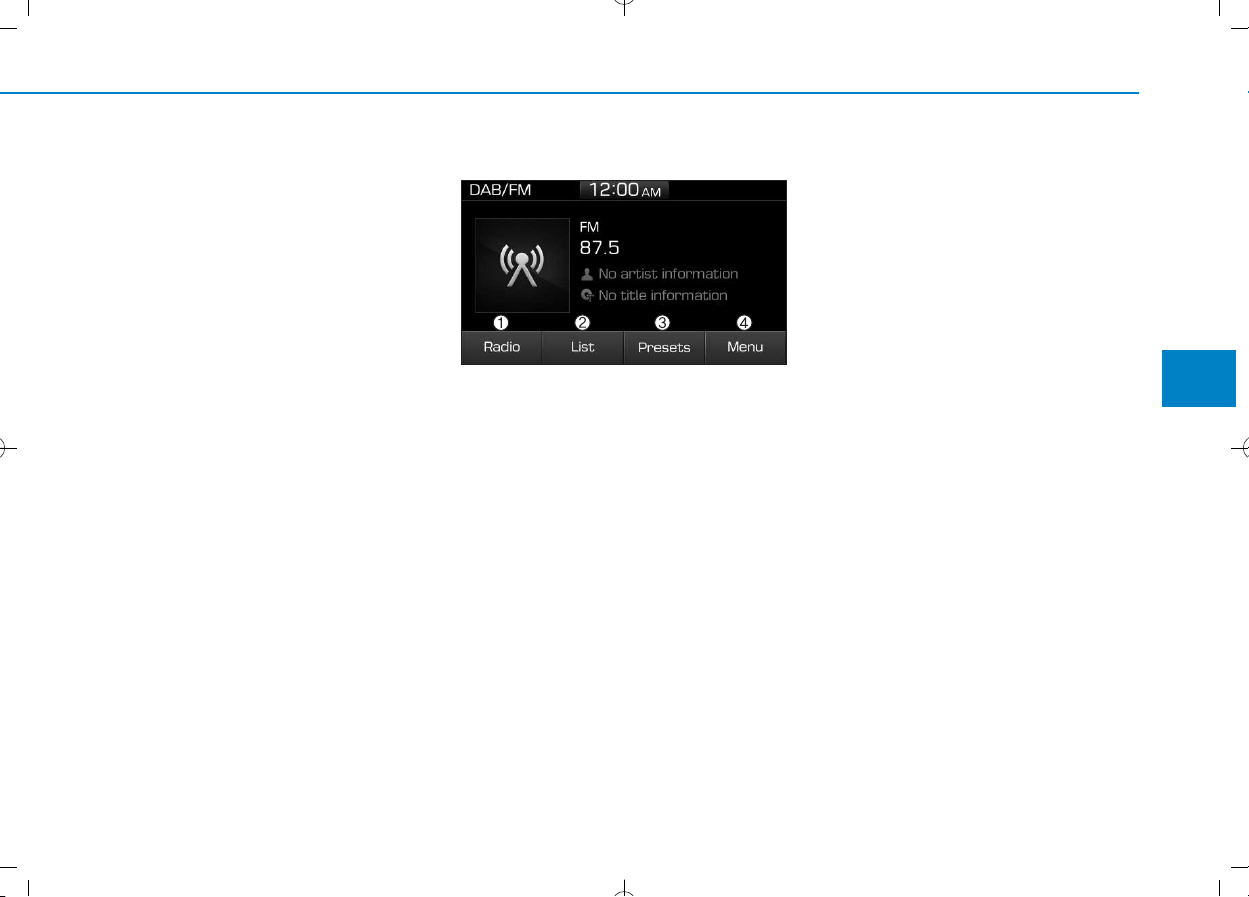
4-15
Multimedia System
4
Presets
Save up to 40 frequently used stations.
To listen to a preset, select the
desired station list.
Press and hold the desired slot from
1 through 40. This saves the current
station in the selected slot.
If the slot is empty, simply selecting
saves the station to the slot.
Menu
Select [Menu], and select the desired
function.
• Traffic Announcement (TA): Enable
or disable Traffic Announcements.
• Scan: All available stations are
played for five seconds each.
• Sound Settings: Audio sound set-
tings can be changed.
DAB/FM (with DAB)
(1) Radio
Switch between DAB/FM and AM.
(2) List
View all available stations.
(3) Presets
View all presets.
(4) Menu
Navigate to the menu screen.
Switching between DAB/FM and AM
• Press the [RADIO] button on the
audio system to switch between
DAB/FM and AM.
• Select [Radio] on the screen to
switch between DAB/FM and AM.
Searching stations
Press the [SEEK/TRACK] button to
search stations.
List
A list of all available stations in the
vehicle’s current location is dis-
played. Select the desired station.
Favourite stations can be saved to
[Presets] by selecting [+].
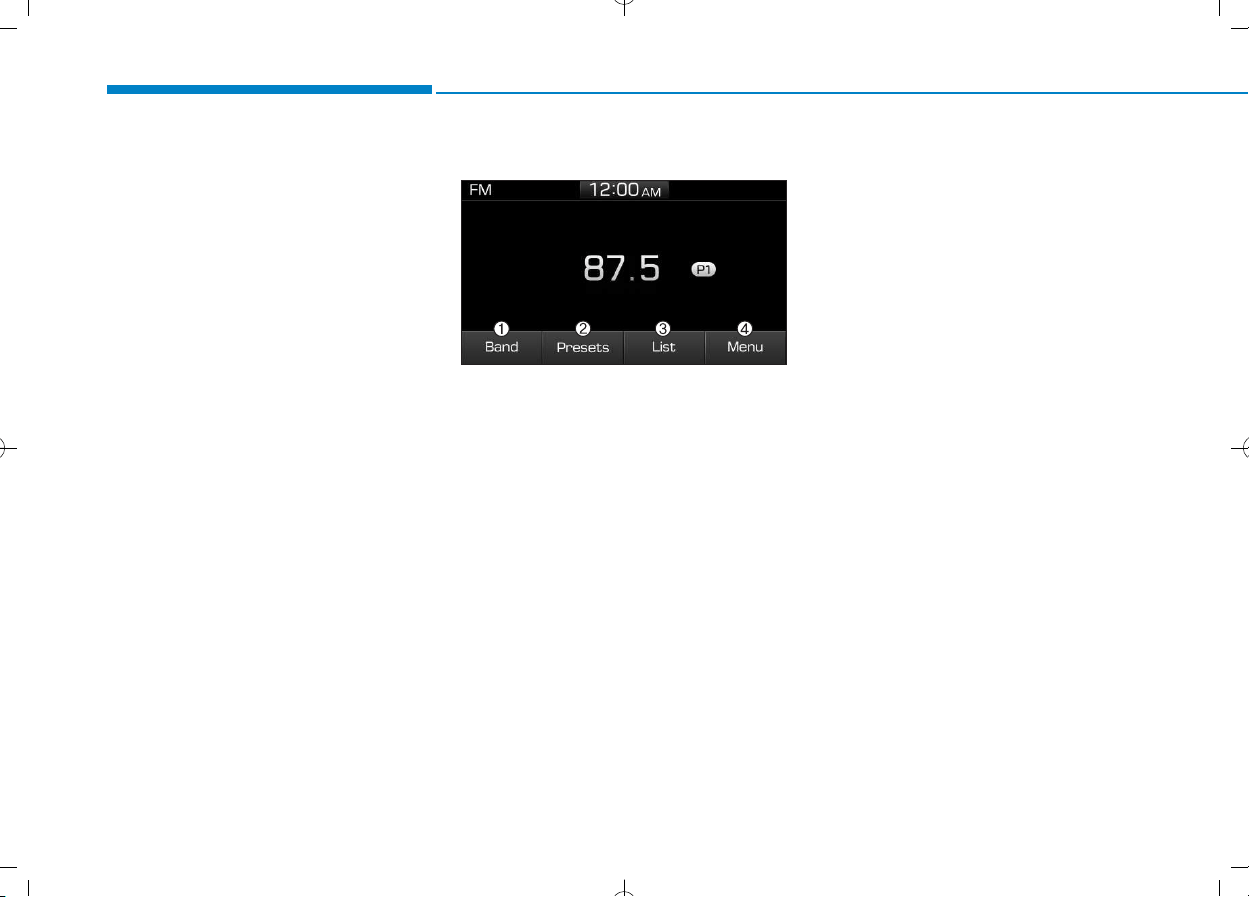
4-16
Multimedia System
Presets
Save up to 40 frequently used stations.
To listen to a preset, select the
desired station list.
Press and hold the desired slot from
1 through 40. This saves the current
station in the selected slot.
If the slot is empty, simply selecting
saves the station to the slot.
Menu
Select [Menu], and select the desired
function.
• Traffic Announcement (TA): Enable
or disable Traffic Announcements.
• Region : Enable or disable auto-
matic switching between regional
stations.
• Scan: All available stations are
played for five seconds each.
• Sound Settings: Audio sound set-
tings can be changed.
• Manual tune FM : Search for fre-
quencies manually.
FM/AM (without RDS)
(1) Band
Switch between FM and AM.
(2) Presets
View all presets.
(3) List
View all available stations.
(4) Menu
Navigate to the menu screen.
Switching between FM and AM
• Press the [RADIO] button on the
audio system to switch between
FM and AM.
• Select [Band] on the screen to
switch between FM and AM.
Searching stations
Press the [SEEK/TRACK] button to
search stations.
List
A list of all available stations in the
vehicle’s current location is dis-
played. Press the desired station.
Favourite stations can be saved to
[Presets] by selecting [save].
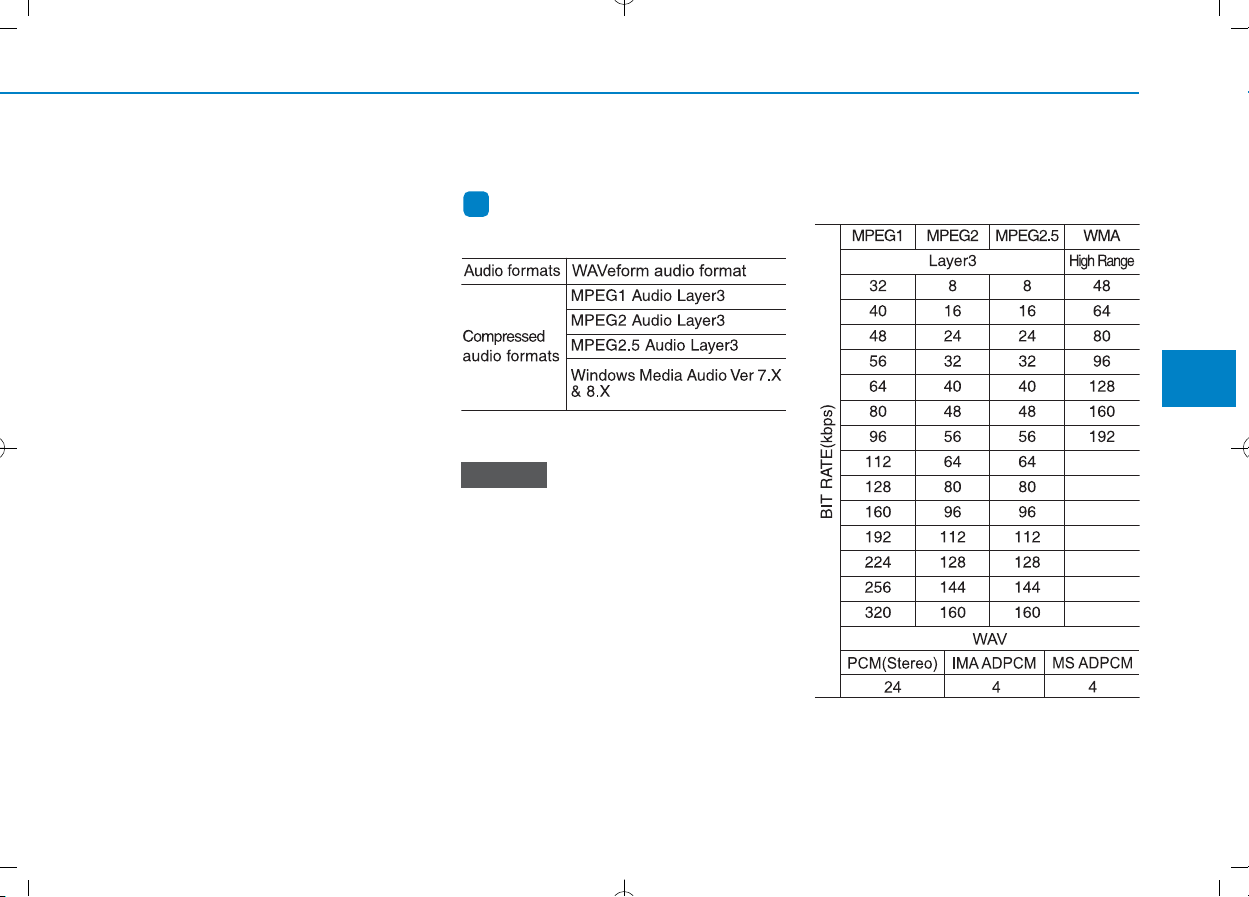
4-17
Multimedia System
4
Presets
Save up to 40 frequently used stations.
To listen to a preset, select the
desired station list.
Press and hold the desired slot from
1 through 40. This saves the current
station in the selected slot.
If the slot is empty, simply selecting
saves the station to the slot.
Menu
Select [Menu], and select the desired
function.
• Scan: All available stations are
played for five seconds each.
• Sound Settings: Audio sound set-
tings can be changed.
Media
Information
- Using MP3
Supported audio formats
File formats other than the formats
above may not be recognized or
playable. Information such as file-
name may not be displayed.
Range of supported compressed file
types
1. Bitrate range (Kbps)
NOTICE
i
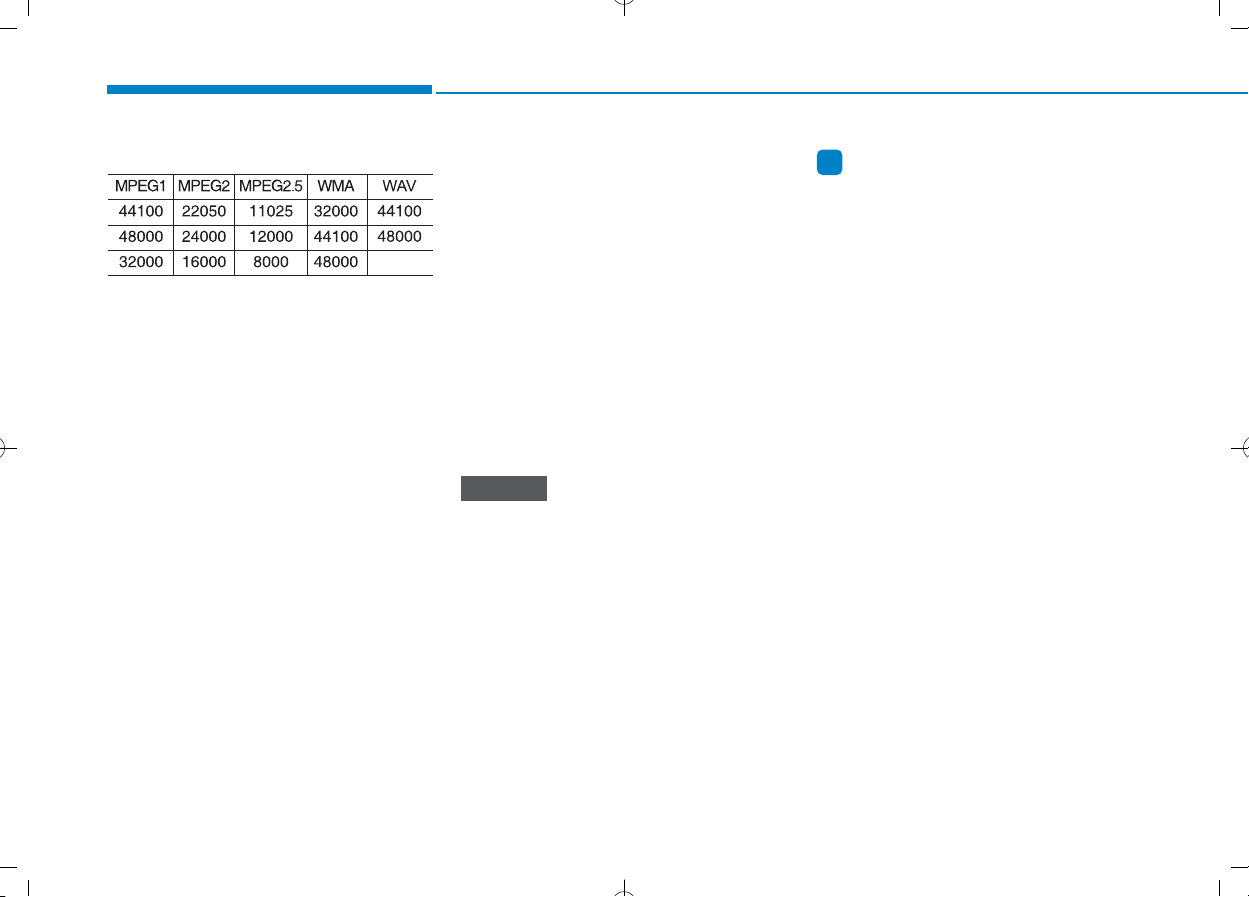
4-18
Multimedia System
2. Sampling frequency (Hz)
• The sound quality of MP3/WMA
compressed and WAV files may
vary depending on the bitrate. (A
higher bitrate can have better sound
quality.)
• The product only recognizes files
with the MP3, WMA or WAV exten-
sion. Files without one of these
extensions are not recognized.
3. Number of recognizable folders
and files
• Folders: 2,000 for USB
• Files: 6,000 for USB
• No recognition limit for folder hier-
archies.
4. Character display range (Unicode)
• Filenames: Up to 64 English char-
acters (64 Korean characters)
• Foldernames: Up to 32 English
characters (32 Korean characters)
Languages supported (Unicode sup-
port)
• Korean: 2,604 characters
• English: 94 characters
• Common Chinese characters:
4,888 characters
• Special symbols: 986 characters
Japanese/Simplified Chinese char-
acters are not supported.
Information
- Using the USB Devices
• Starting the vehicle while a USB
device is connected can damage the
device. Please disconnect USB
devices before starting the vehicle.
• Starting the vehicle or stopping the
engine while an external USB device
is connected can result in failure of
the external USB device to operate.
• Be cautious of static electricity when
connecting/disconnecting external
USB devices.
• An encrypted MP3 player is not rec-
ognized when connected as an exter-
nal device.
• External USB devices may not be
recognized, depending on the state
of the external USB device.
• Only products with byte/sectors for-
matted at 4 KB or lower are recog-
nized.
• Only USB devices in FAT12/16/32
format are recognized; NTFS and
ExFAT file systems are not recog-
nized.
(Continued)
i
NOTICE

4-19
Multimedia System
4
(Continued)
• Some USB devices are not recog-
nized due to compatibility issues.
• Do not touch the USB connections.
• Connecting and disconnecting USB
devices rapidly over a short period
of time can cause equipment failure.
• Abnormal sounds may be audible
when the USB device is disconnected.
• Turn the audio off before connecting
or disconnecting external USB
devices.
• Recognition may take longer
depending on the type, capacity or
file format of the external USB
device. This is not a product mal-
function.
• Use of USB devices for purposes
other than playing music files is pro-
hibited.
• Image display and video playback
are not supported.
(Continued)
(Continued)
• Use of USB accessories, including
charge and heat though the USB I/F,
can lead to reduced product per-
formance or malfunctions. Do not
use USB devices or accessories for
these purposes.
• Use of aftermarket USB hubs and
extension cables can result in the
vehicle’s audio system failing to rec-
ognize your USB device. Connect
the USB device directly to the multi-
media port of your vehicle.
• When using high-capacity USB
devices with logical drive divisions,
only files saved on the highest level
logical drive can be played.
If applications are loaded on a USB
drive, file playback may fail.
• Some MP3 players, cell phones, dig-
ital cameras, etc. (USB devices that
are not recognized as mobile stor-
age) may not operate normally
when connected.
• USB charging may not be supported
by some mobile devices.
(Continued)
(Continued)
• Operation is guaranteed only for
standard (Metal Cover Type) USB
Memory drives.
• Operation of HDD, CF, SD and mem-
ory stick devices is not guaranteed.
• DRM (Digital Rights Management)
files cannot be played.
• SD-type USB memory, CF-type
USB memory, and other USB mem-
ory devices that require adapters
for connection are not supported.
• Proper operation of USB HDDs or
USB drives with connectors that
loosen due to vehicle vibrations is
not guaranteed. (iStick, etc.)
• USB products that are
used as key chains or
cell phone accessories
may damage the USB
jack and affect proper
file playback. Please refrain from
use. Use only products with plug
connectors, as shown in the follow-
ing illustration.
• When MP3 devices or cell phones are
connected simultaneously through
AUX, BT Audio and USB modes, a
popping noise or malfunction may
occur.

4-20
Multimedia System
USB
(1) Repeat
Enable/disable repeat.
(2) Shuffle
Enable/disable shuffle play.
(3) List
View a list of all songs.
(4) Menu
Navigate to the menu screen.
(5) Album Image
View song info.
(6) Pause
Pause or play music.
(7) Playback progress
Select to skip to the desired location.
Playback
• Press the [MEDIA] button, and
select [USB].
• Connect a USB drive to the USB
port to automatically play files on
the USB drive.
Changing songs
• Press the [SEEK/TRACK] button
to play the previous or next song.
• Press and hold the [SEEK/TRACK]
button to rewind or fast forward the
currently playing song.
• Search songs by turning TUNE
knob, and press the knob to play.
Selecting songs from a list
Select [List] to see a list of songs
available for play.
Select and play the desired song.
Repeat play
Select [Repeat] to enable or disable
‘Repeat all’, ‘Repeat current song’,
‘Repeat folder’ or ‘Repeat category’
play.
• Repeat all: All songs in the
playlist are repeated.
• Repeat current song: The cur-
rently playing song is repeated.
• Repeat folder: All songs in the
current folder are repeated.
• Repeat category: Repeat all
songs in the current category.
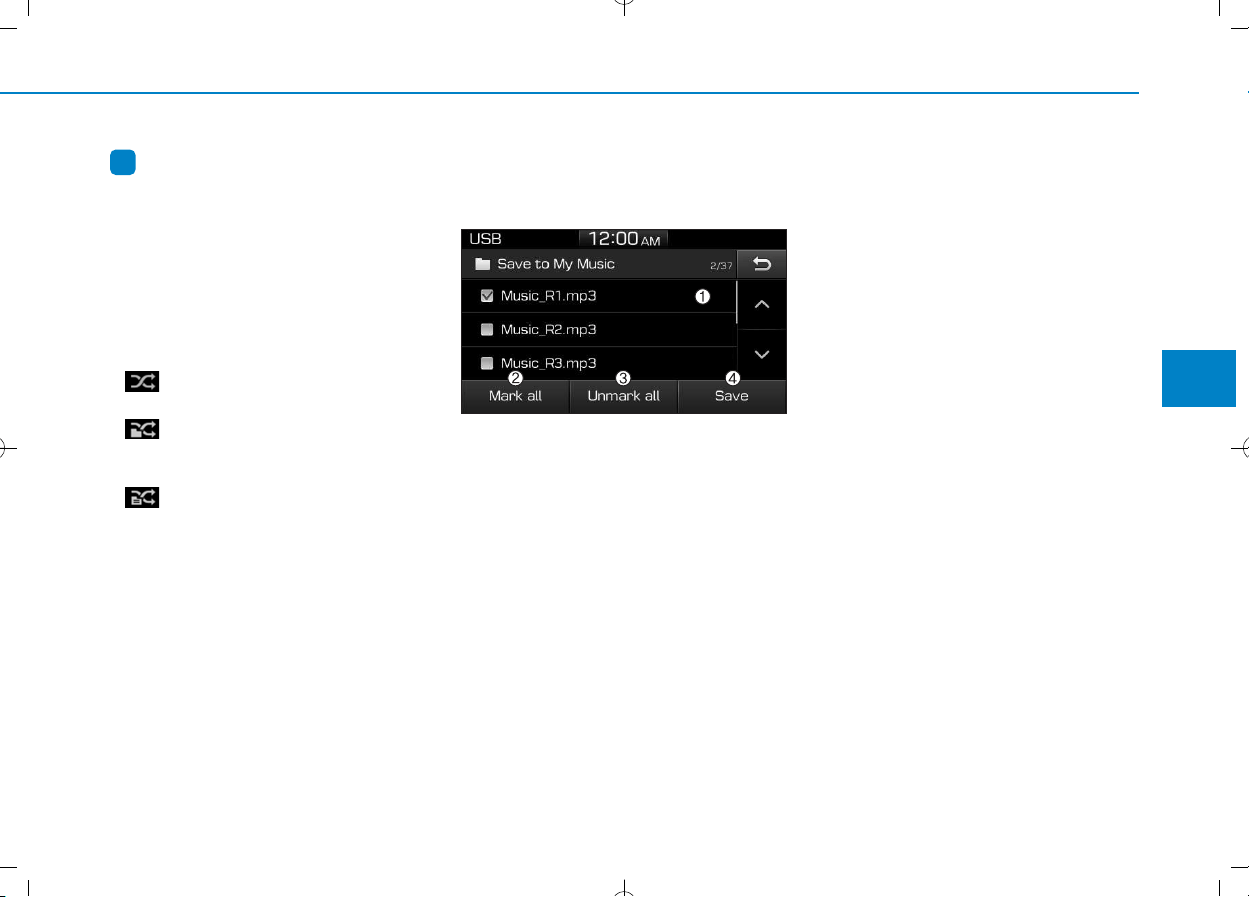
4-21
Multimedia System
4
Information
The repeat folder function is available
only when songs are playing from the
[File] category under [List].
Shuffle play
Select [Shuffle] to enable or disable
‘Shuffle’, ‘Shuffle folder’ or ‘Shuffle
category’ play.
• Shuffle: Songs are played in
random order.
• Shuffle folder: Songs within
the current folder are played in ran-
dom order
• Shuffle category: Songs within
the current category are played in
random order.
Menu
Select [Menu], and select the desired
function.
• Save to My Music: Songs on your
USB device can be saved to My
Music.
(1) File: Select a file to save.
(2) Mark all: Select all files.
(3) Unmark all: Deselect all files.
(4) Save: Save the selected file(s).
- Select the files you want to save,
and select [Save]. This saves the
selected files to My Music.
- Saving is canceled if phone calls
are received or made while saving.
- Up to 6,000 files can be saved.
- The currently playing file on the
USB device cannot be changed
while saving.
- My Music cannot be used while
saving.
- Up to 700 MB can be saved.
• Information: Detailed information
on the currently playing song is dis-
played.
• Sound Settings: Audio sound set-
tings can be changed.
i

4-22
Multimedia System
Information
- Using the iPod
®
Devices
• To use the audio system’s iPod
®
con-
trol function, use the dedicated
cable provided with your iPod
®
.
• Connecting the iPod
®
to the vehicle
during play may result in a loud
noise that lasts about one to two sec-
onds. Connect the iPod
®
to the vehi-
cle after stopping or pausing play.
• Connect the iPod
®
with the vehicle in
the ACC ON state to begin charging.
• When connecting the iPod
®
cable,
be sure to fully push the cable into
the port.
• When EQ effects are enabled simul-
taneously on external devices, such
as iPod
®
s and the audio system, the
EQ effects may overlap, causing
sound quality deterioration or dis-
tortion. Deactivate the EQ function
for all external devices, if possible.
• Noise may occur when your iPod
®
or the AUX port is connected.
Disconnect and store separately
when not in use.
(Continued)
(Continued)
• There may be noise if the audio sys-
tem is used with an iPod
®
or AUX
external device connected to the
power jack. In these cases, discon-
nect the iPod
®
or external device
from the power jack.
• Play may be interrupted, or device
malfunctions may occur depending
on the characteristics of your
iPod
®
/iPhone
®
.
• Play may fail if your iPhone
®
is con-
nected through both Bluetooth
®
and
USB. In this case, select Dock con-
nector or Bluetooth
®
on your
iPhone
®
to change the sound output
settings.
• If your software version does not
support the communication proto-
col or your iPod
®
is not recognized
due to device failure, anomalies or
defects, iPod
®
mode cannot be used.
• iPod
®
nano (5th generation) devices
may not be recognized if the battery
is low. Charge sufficiently before use.
(Continued)
(Continued)
• The search and song play order in
the iPod
®
device may be different
from the search order in the audio
system.
• If the iPod
®
has failed due to an
internal defect, please reset the
iPod
®
(consult your iPod
®
manual).
• Depending on the software version,
the iPod
®
may fail to sync with the
system. If the media is removed or
disconnected before recognition, the
previous mode may not be restored
(iPad
®
cannot be charged).
• Cables other than the 1-meter cable
provided with iPod
®
/iPhone
®
prod-
ucts may not be recognized.
• When other music apps are used on
your iPod
®
, the system sync func-
tion may fail due to malfunction of
the iPod
®
application.
i
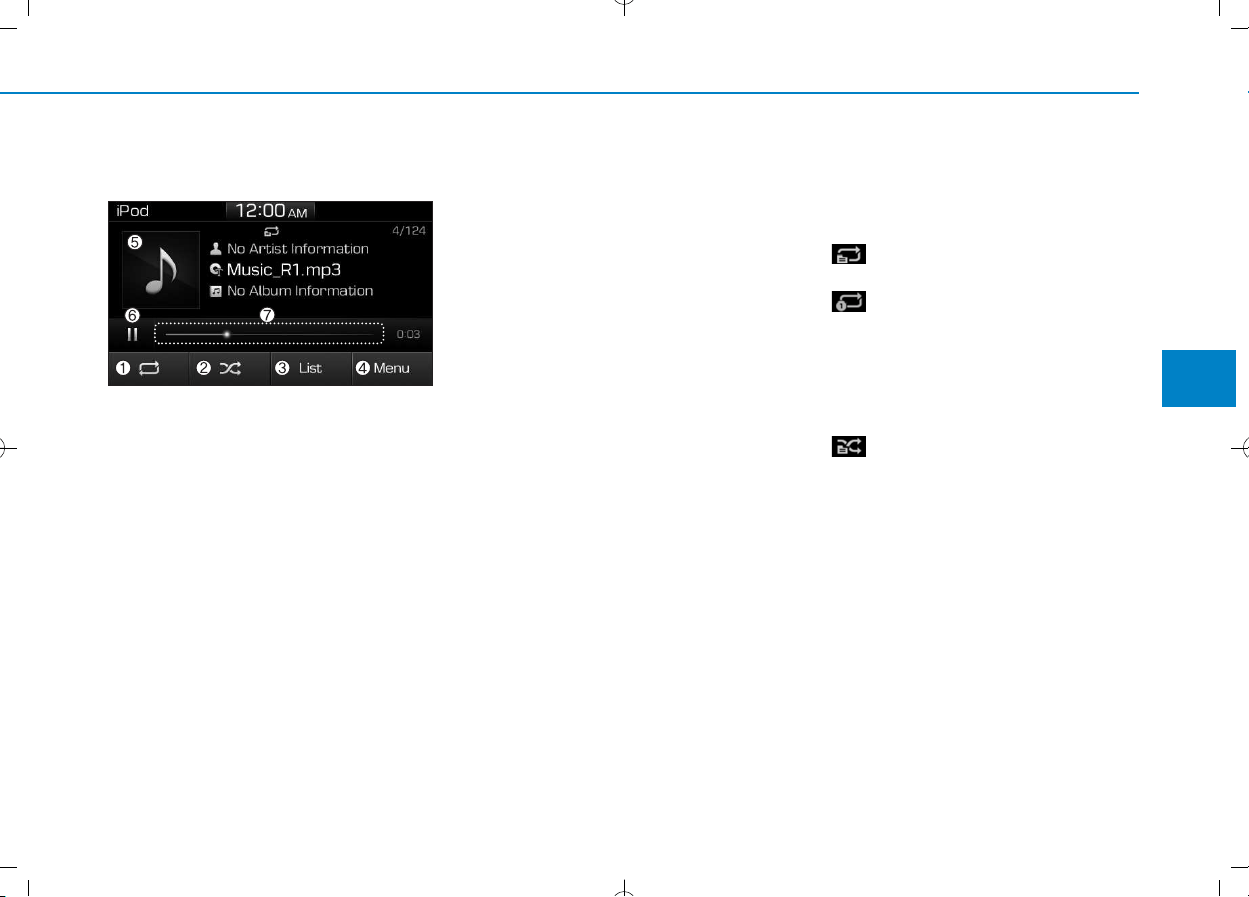
4-23
Multimedia System
4
iPod
®
(1) Repeat
Enable/disable repeat play.
(2) Shuffle
Enable/disable shuffle play.
(3) List
View a list of all songs.
(4) Menu
Navigate to the menu screen.
(5) Album Image
View song info.
(6) Pause
Pause or play music.
(7) Playback progress
Select to skip to the desired location.
Playback
• Connect your iPod
®
to the audio
USB port, press the [MEDIA] but-
ton, and select [iPod].
Changing songs
• Press the [SEEK/TRACK] button
to play the previous or next song.
• Press and hold the [SEEK/TRACK]
button to rewind or fast forward the
currently playing song.
• Search songs by turning the TUNE
knob, and press the knob to play.
Selecting songs from a list
Select [List] to see a list of songs
available for play.
Select and play the desired song.
Repeat play
Select [Repeat] to enable or disable
‘Repeat category’, ‘Repeat current
song’ play.
• Repeat category: Repeat all
songs in the current category.
• Repeat current song: The cur-
rently playing song is repeated.
Shuffle play
Select [Shuffle] to enable or disable
‘Shuffle category’ play.
• Shuffle category: Songs within
the current category are played in
random order.
Menu
Select [Menu], and select the desired
function.
• Information: Detailed info on the
currently playing song is displayed.
• Sound Settings: Audio sound set-
tings can be changed.
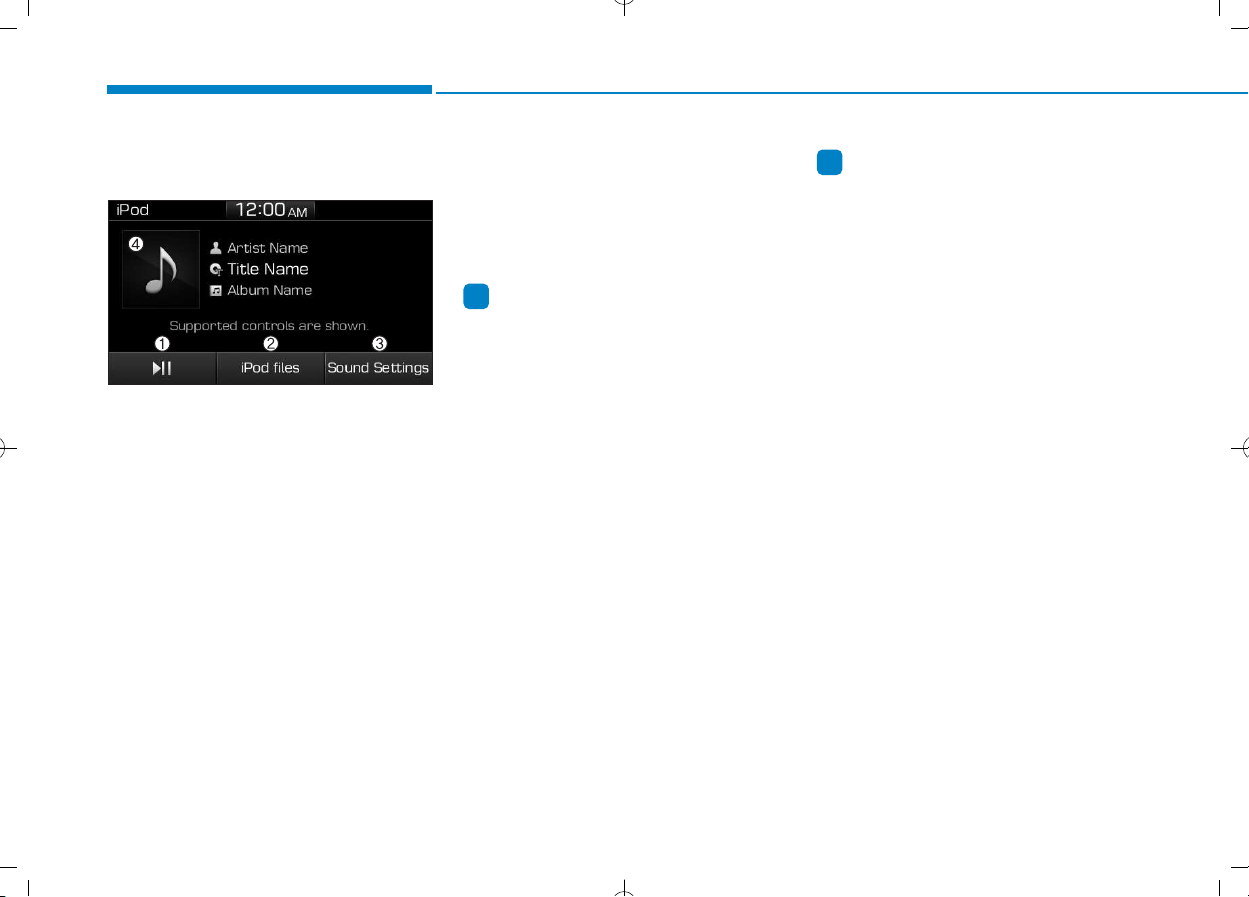
4-24
Multimedia System
When other music programs are
running
When songs saved on your iPod
®
are playing through a separate music
app, the above screen is displayed.
(1) Play/Pause: Pause or play music.
(2) iPod files: Play music saved on
your iPod
®
.
(3) Sound Settngs: Audio sound set-
tings can be changed.
(4) Album Image: View playback info
.
Playing iPod files
• Select [iPod files] to play songs
saved on your iPod
®
.
If there are no songs saved on your
iPod
®
, the [iPod files] is disabled.
Information
Operation cannot be carried out cor-
rectly due to iPod
®
application mal-
function.
Information
- Using Bluetooth
®
(BT) Audio
• Bluetooth
®
Audio mode can only be
used if a Bluetooth
®
-enabled phone
is connected. Only devices that sup-
port Bluetooth
®
audio can be used.
• If the Bluetooth
®
-enabled phone is
disconnected during play, the music
stops.
• When the TRACK UP/DOWN but-
tons are used during Bluetooth
®
audio streaming, a popping noise or
sound interruptions may occur,
depending on the cell phone device.
• Depending on the cell phone model,
the audio streaming function may
not be supported.
• If a phone call is made or received
when music is playing in Bluetooth
®
Audio mode, the call may mix with
the music.
• When returning to Bluetooth
®
Audio mode after ending a call, play
might not resume automatically for
some cell phone models.
i
i
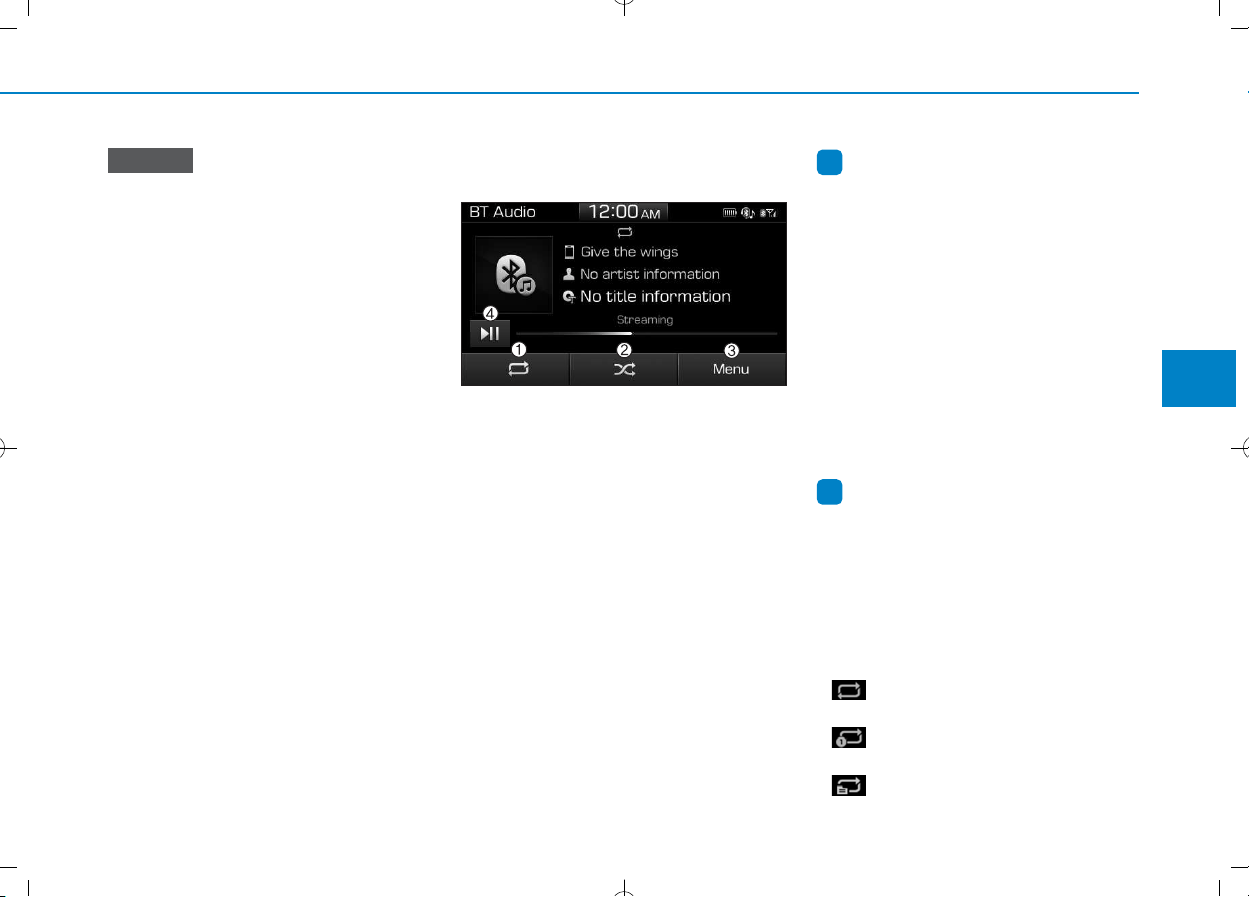
4-25
Multimedia System
4
• Bluetooth
®
Handsfree is a fea-
ture that enables drivers to prac-
tice safe driving. Connecting the
car audio system with a
Bluetooth
®
phone allows the
user to conveniently make calls,
receive calls, and manage the
phone book. Before using the
Bluetooth
®
Wireless Technology,
carefully read the contents of
this user’s manual.
• Excessive use or operations
while driving may lead to negli-
gent driving practices and be
the cause of accidents.
• Do not operate the device exces-
sively while driving.
• Viewing the screen for pro-
longed periods of time is dan-
gerous and may lead to acci-
dents.
• When driving, view the screen
only for short periods of time.
Bluetooth
®
(BT) Audio
(1) Repeat
Enable/disable repeat play.
(2) Shuffle
Enable/disable shuffle play.
(3) Menu
Navigate to the menu screen.
(4) Play/Pause
Pause or play music.
Information
• Some cell phone models may not
support particular functions.
• Bluetooth
®
audio volume is synced
with cell phone media volume.
Playback
• Press the [MEDIA] button, and
select [BT Audio].
Changing songs
• Press the [SEEK/TRACK] button
to play the previous or next song.
Information
Some cell phones may not support this
function.
Repeat play
Select [Repeat] to enable or disable
‘Repeat all’, ‘Repeat current song’ or
‘Repeat category’ play.
• Repeat all: All songs in the
playlist are repeated.
• Repeat current song: The cur-
rently playing song is repeated.
• Repeat category: Repeat all
songs in the current category.
i
i
NOTICE
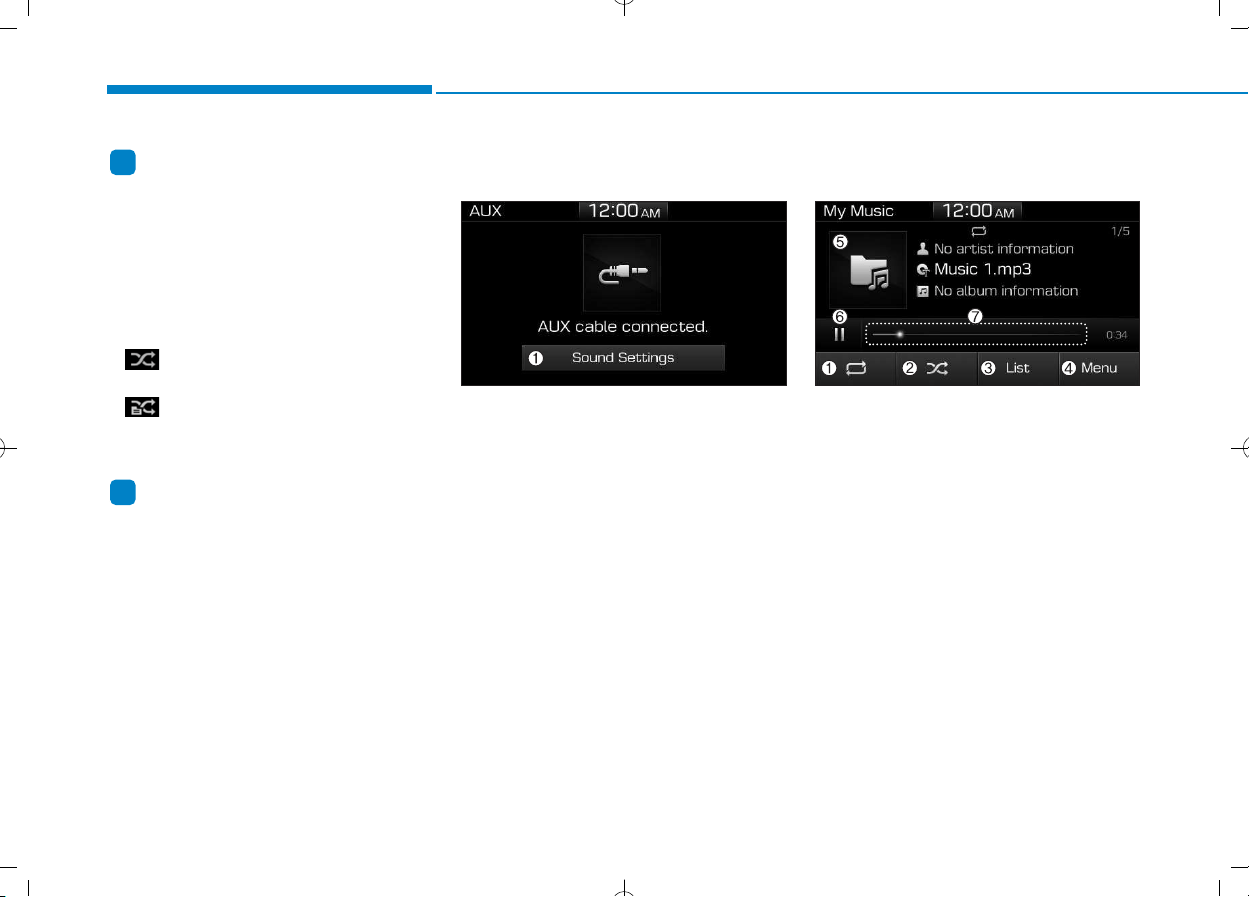
4-26
Multimedia System
Information
The repeat play function is engaged,
depending on the operation of the con-
nected Bluetooth
®
device.
Shuffle play
Select [Shuffle] to enable or disable
‘Shuffle’, ‘Shuffle category’ play.
• Shuffle: Songs are played in
random order.
• Shuffle category: Songs within
the current category are played in
random order.
Information
The shuffle function is engaged,
depending on the operation of the con-
nected Bluetooth
®
device.
Menu
Select [Menu], and select the desired
function.
• Connections: The currently connected
Bluetooth
®
device can be changed.
• Information: Detailed information on
the currently playing song is displayed.
• Sound Settings: Audio sound set-
tings can be changed.
AUX
Running AUX
• Press the [MEDIA] button, and
select [AUX].
• Connect the external device con-
nection jack to the AUX terminal to
run AUX.
(1) Sound Settings: Audio sound set-
tings can be changed.
My Music
(1) Repeat
Enable/disable repeat play.
(2) Shuffle
Enable/disable shuffle play.
(3) List
View a list of all songs.
(4) Menu
Navigate to the menu screen.
(5) Album Image
View song info.
i
i
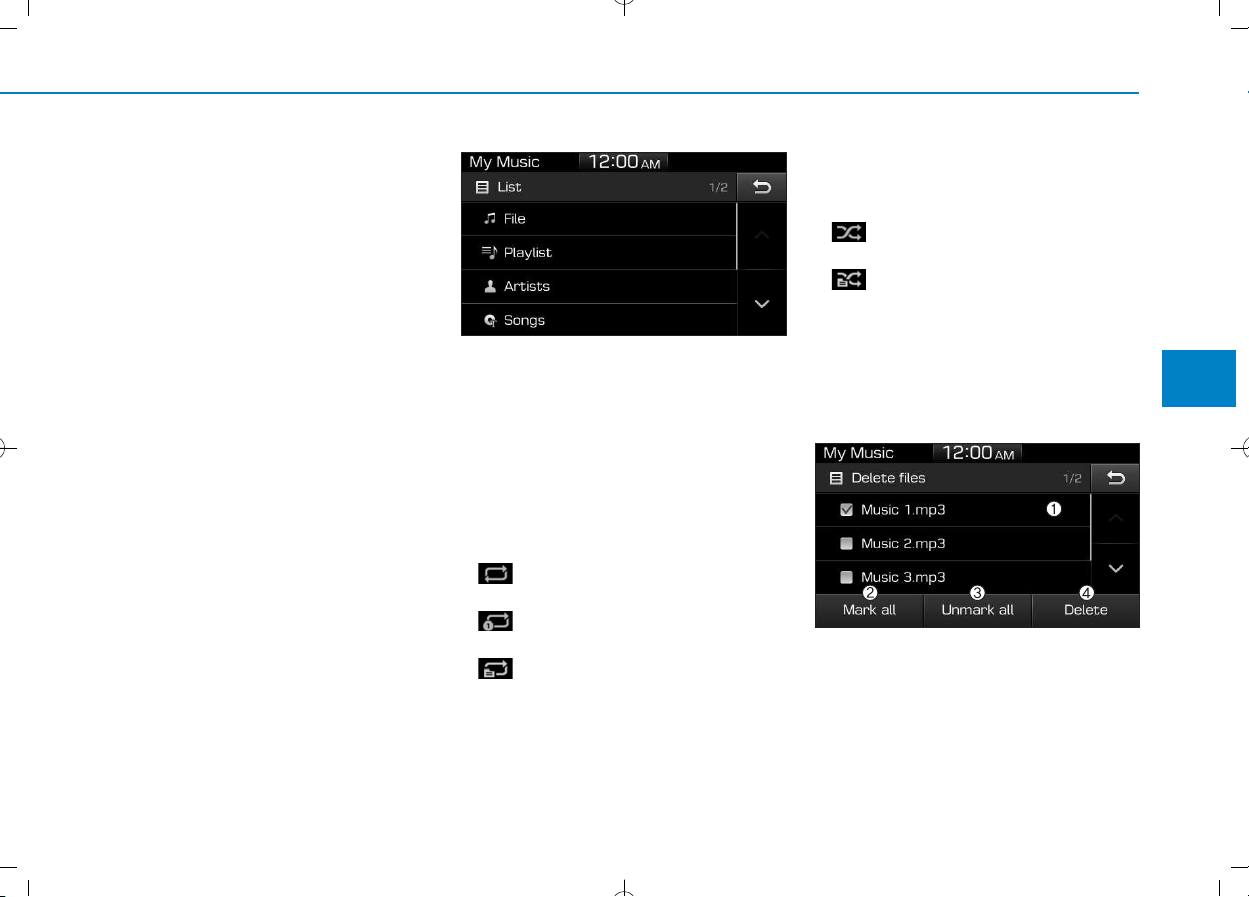
4-27
Multimedia System
4
(6) Pause
Pause or play music.
(7) Playback progress
Select to skip to the desired location.
Playback
Press the [MEDIA] button, and
select [My Music].
• My Music cannot be selected if it
does not contain music.
• Check the content of your USB
drive before saving music to My
Music.
Changing songs
Press the [SEEK/TRACK] button to
play the previous or next song.
• Press and hold the [SEEK/TRACK]
button to rewind or fast forward the
currently playing song.
• Search songs by turning the TUNE
knob and press the knob to play.
Selecting songs from a list
Select [List] to see a list of songs
available for play.
Select and play the desired song.
Repeat play
Select [Repeat] to enable or disable
‘Repeat all’, ‘Repeat current song’ or
‘Repeat category’ play.
• Repeat all: All songs in the
playlist are repeated.
• Repeat current song: The cur-
rently playing song is repeated.
• Repeat category: Repeat all
songs in the current category.
Shuffle play
Select [Shuffle] to enable or disable
‘Shuffle’, ‘Shuffle category’ play.
• Shuffle: Songs are played in
random order.
• Shuffle category: Songs within
the current category are played in
random order.
Menu
Select [Menu], and select the desired
function.
• Delete files: You can delete files
from My Music.
(1) File: Select saved file.
(2) Mark all: Select all files.
(3) Unmark all: Deselect all files.

4-28
Multimedia System
(4) Delete: Delete the selected file(s).
- Select the file to delete, then
select [Delete] to delete it.
- Delete is canceled if phone calls
are received or made during
delete.
• Add to playlist: Frequently played
songs can be paired in a [Playlist].
- Songs can be played from the
[Playlist].
• Information: Detailed info on the
currently playing song is displayed.
• Sound Settings: Audio sound set-
tings can be changed.
Delete from playlist
When a song in the playlist is play-
ing, select [Menu] and select [Delete
from playlist].
Select the song to delete, then select
[Delete].
Phone
Information
- Using Bluetooth
®
(BT) Phone
• Bluetooth
®
is a near-field wireless
networking technology that uses the
2.4 GHz frequency to connect vari-
ous devices within a certain distance
wirelessly.
• The technology is used in PCs,
peripherals, Bluetooth
®
phones,
tablet PCs, household appliances
and automobiles. Devices support-
ing Bluetooth
®
can exchange data at
high speeds without physical cable
connections.
• Bluetooth
®
Handsfree devices enable
convenient access to phone functions
through cell phones equipped with
Bluetooth
®
.
• Some Bluetooth
®
devices may not
be supported by the Bluetooth
®
Handsfree function.
(Continued)
(Continued)
• When Bluetooth
®
is connected and
calls are attempted through a con-
nected cell phone from outside the
vehicle, the call is connected
through the Bluetooth
®
Handsfree
function of the vehicle.
• Please be sure to disconnect the
Bluetooth
®
Handsfree function through
your Bluetooth
®
device or the audio
screen.
i

4-29
Multimedia System
4
Safety precautions
• The Bluetooth
®
Handsfree function
helps drivers to drive safely. By
connecting a Bluetooth
®
-enabled
phone to the vehicle’s audio sys-
tem, phone calls can be made and
received through the audio system
and contacts can be managed.
Consult the user manual before
use.
• Excessive manipulation of controls
while driving, making it difficult to
pay attention to the road ahead,
can lead to accidents. Do not oper-
ate the device excessively while
driving.
• Looking at the screen for a pro-
longed time increases the risk of
accidents. Keep time spent looking
at the screen to a minimum.
Precautions when connecting
Bluetooth
®
devices
• The vehicle supports the following
Bluetooth
®
functions. Some
Bluetooth
®
devices may not sup-
port some functions.
1) Bluetooth
®
Handsfree phone calls
2) Operations during a call
(Private, Switch, Mic Vol. con-
trols)
3) Download call history saved to
the Bluetooth
®
device
4) Download contacts saved to the
Bluetooth
®
device
5) Automatic contacts/call history
download when Bluetooth
®
is
connected
6) Automatic Bluetooth
®
device
connection when the vehicle is
started
7) Bluetooth
®
audio streaming play-
back
• Before connecting the audio sys-
tem to your device, make sure your
device supports Bluetooth
®
.
• Even if your device supports
Bluetooth
®
, a Bluetooth
®
connec-
tion cannot be established if the
device’s Bluetooth
®
function is
switched off. Search and connect
with the Bluetooth
®
function
enabled.
• Pair or connect Bluetooth
®
devices
to the audio system with the vehi-
cle at a standstill.
• If a Bluetooth
®
connection is lost
due to abnormal conditions while a
Bluetooth
®
device is connected
(communication range exceeded,
device power OFF, communication
errors, etc.), the disconnected
Bluetooth
®
device is searched for
and automatically reconnected.
• If you want to disable the
Bluetooth
®
device auto-connect
function, turn the Bluetooth
®
func-
tion OFF on your device. Consult
the user manuals for individual
devices to see whether Bluetooth
®
is supported.
• Handsfree call quality and volume
may vary depending on the type of
Bluetooth
®
device.
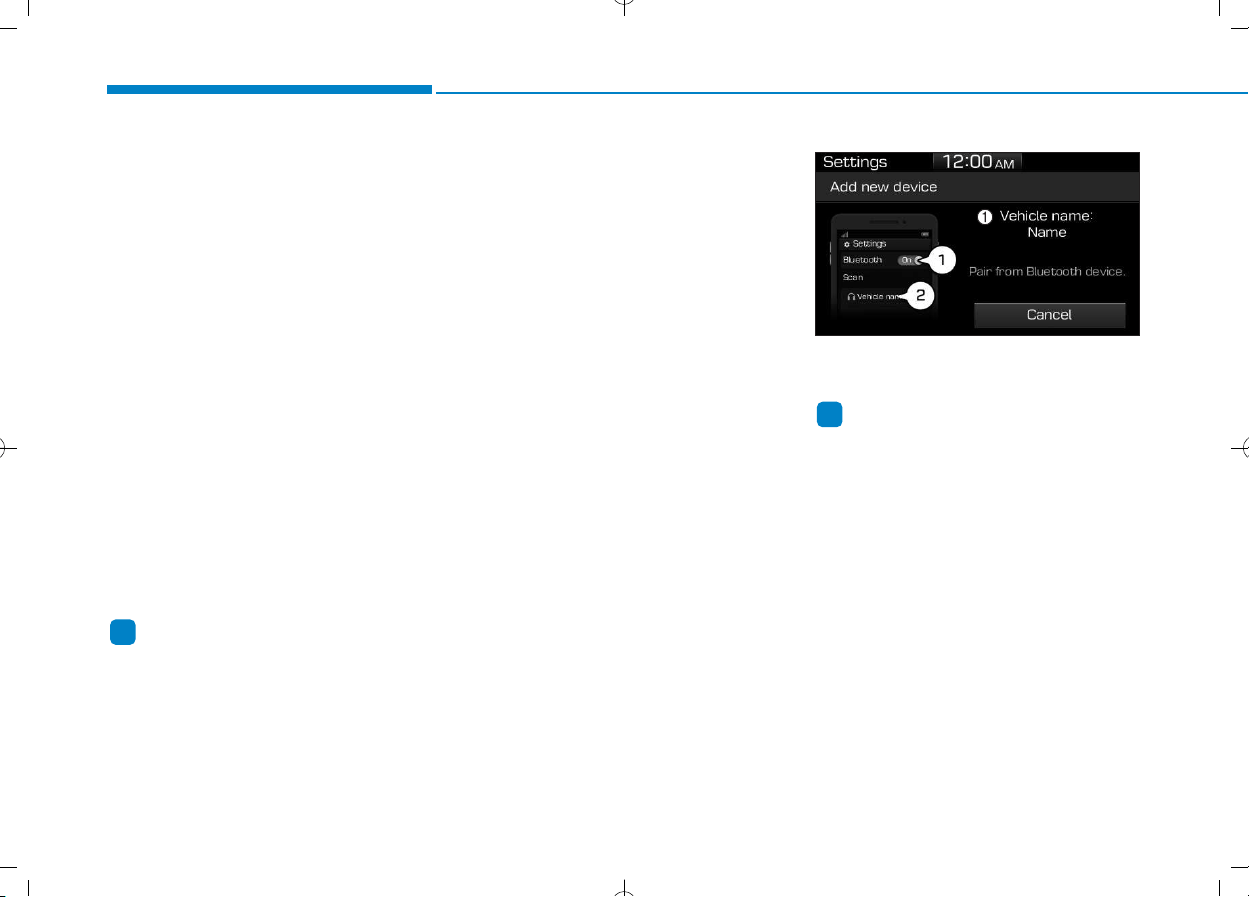
4-30
Multimedia System
• Some Bluetooth
®
devices are sub-
ject to intermittent Bluetooth
®
con-
nection failures. In this case, use
the following method.
1) Turn the Bluetooth
®
function off
on your Bluetooth
®
device
Turn it on and try again.
2) Delete the paired device from
both the audio system and
Bluetooth
®
device, then pair
again.
3) Power down your Bluetooth
®
device Turn it on and try
again.
4) Completely remove the battery
from your Bluetooth
®
device;
reinsert it, reboot, and attempt
connection.
5) Restart the vehicle and reat-
tempt connection.
Information
Maximum power output of Bluetooth
is 3mW.
Pairing a Bluetooth
®
device
Information on pairing Bluetooth
®
devices
• Pairing refers to the process of
pairing Bluetooth
®
cell phones or
devices with the system prior to
connection. This is a necessary
procedure for Bluetooth
®
connec-
tion and usage.
• Up to five devices can be paired.
• Pairing Bluetooth
®
device is not
allowed while vehicle is moving.
Pairing the first Bluetooth
®
device
Press the [PHONE] button on the
audio system or the [CALL] button
on the steering wheel remote control
Search for the vehicle from the
Bluetooth
®
device, and pair Enter
the passkey on the Bluetooth
®
device or approve passkey
Bluetooth
®
pairing completed.
1. When the [PHONE] button on the
audio or the [CALL] button on the
steering wheel remote control is
pressed, the following screen is
displayed. Devices can now be
paired.
(1) Vehicle name: Searched name in
Bluetooth
®
device.
Information
The vehicle name in the image above
is an example. Refer to your device for
the actual name of your device.
2. Search for available Bluetooth
®
devices in the Bluetooth
®
menu of
your Bluetooth
®
device (cell
phone, etc.).
3. Confirm that the vehicle name in
your Bluetooth
®
device matches
the vehicle name shown on the
audio screen, then select it.
i
i
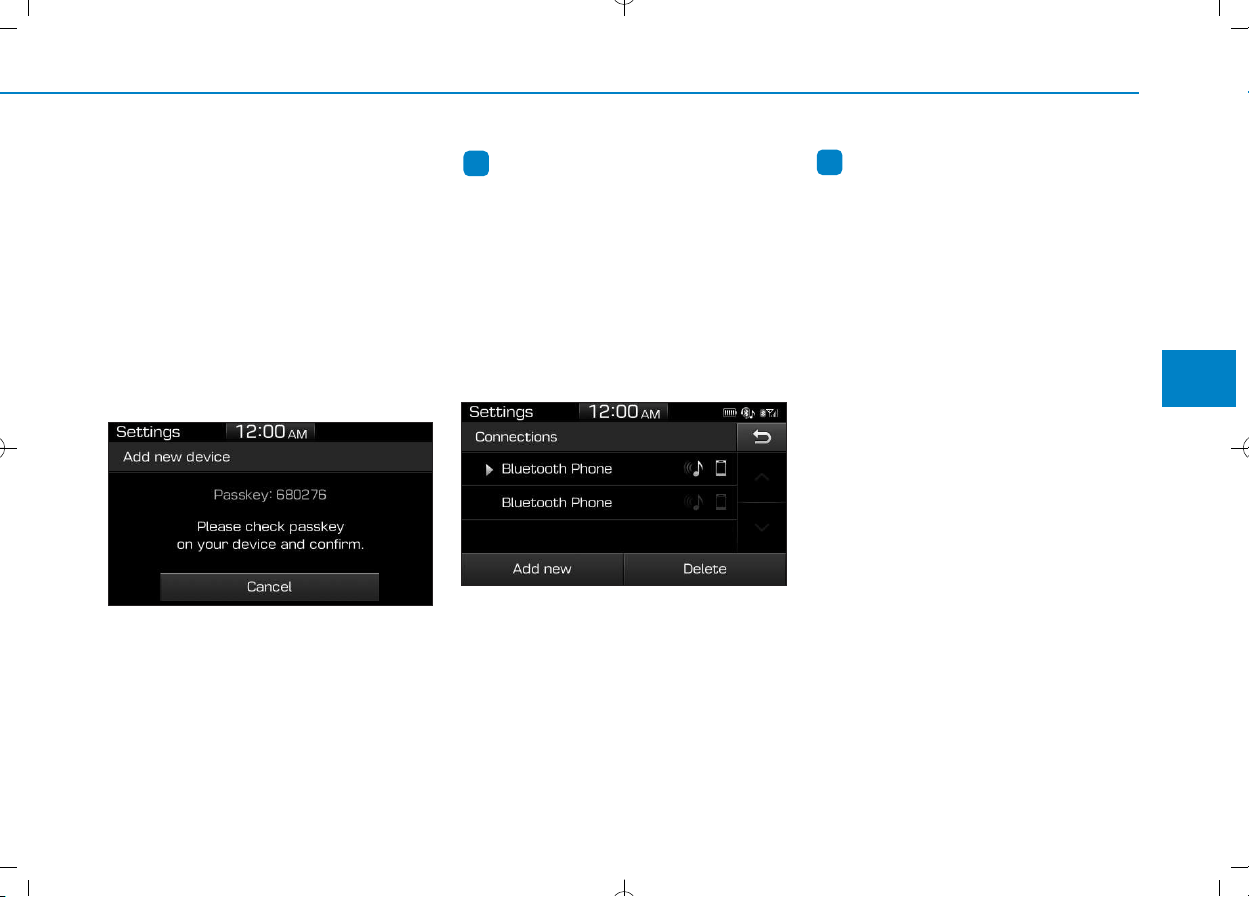
4-31
Multimedia System
4
4-1. For devices that require passkey
entry, a passkey entry screen is
shown on your Bluetooth
®
device.
- Enter the passkey ‘0000’, in your
Bluetooth
®
device.
4-2. For devices that require passkey
confirmation, the following
screen is shown on the audio
system. A 6-digit passkey input
screen is shown in the
Bluetooth
®
device.
- After confirming that the 6-digit
passkey on the audio screen
and the Bluetooth
®
device are
identical, select [OK] in your
Bluetooth
®
device.
Information
The 6-digit passkey in the image
above is an example. Refer to your
vehicle for the actual passkey.
Pairing a second Bluetooth
®
device
Press the [SETUP] button on the
audio system Select [Bluetooth]
Select [Connections] Select [Add
new].
- The pairing procedure from this
point is identical to [Pairing the first
Bluetooth device].
Information
• Bluetooth
®
standby mode lasts for
three minutes. If a device is not
paired within three minutes, pairing
is canceled. Start over from the
beginning.
• For most Bluetooth
®
devices, a con-
nection is established automatically
after pairing. Some devices, howev-
er, require separate confirmation
when connecting after pairing. Be
sure to check your Bluetooth
®
device after pairing to confirm that
it has connected.
i
i
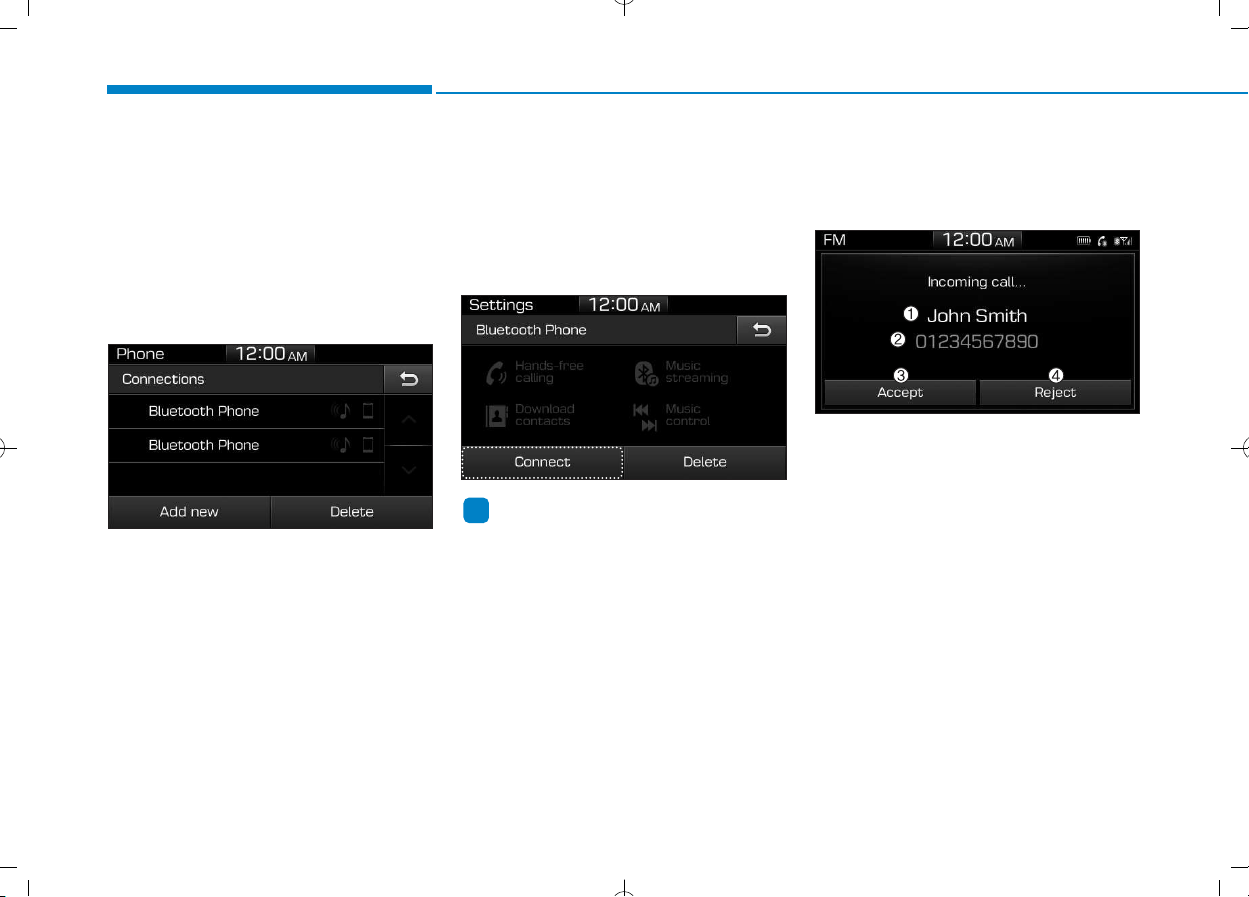
4-32
Multimedia System
Connecting Bluetooth
®
devices
If there are no connected devices
Press the [PHONE] button on the
audio system or the [CALL] button in
the steering wheel remote control
List of paired Bluetooth
®
devices
Select the desired Bluetooth
®
device
from the list Connect Bluetooth
®
.
If there are connected devices
Press the [PHONE] button on the
audio system Select [Settings]
Select [Connections] Select
Bluetooth
®
device to connect Select
[Connect] Connect Bluetooth
®
.
Information
• Only one Bluetooth
®
device can be
connected at a time.
• When a Bluetooth
®
device is con-
nected, other devices cannot be
paired.
Accepting/rejecting phone calls
Receiving phone calls with Bluetooth
®
connected.
(1) Caller name: If the caller number
is in your contacts, the correspon-
ding name is displayed.
(2) Incoming phone number: Incoming
phone number is displayed.
(3) Accept: Accept call.
(4) Reject: Reject call.
i
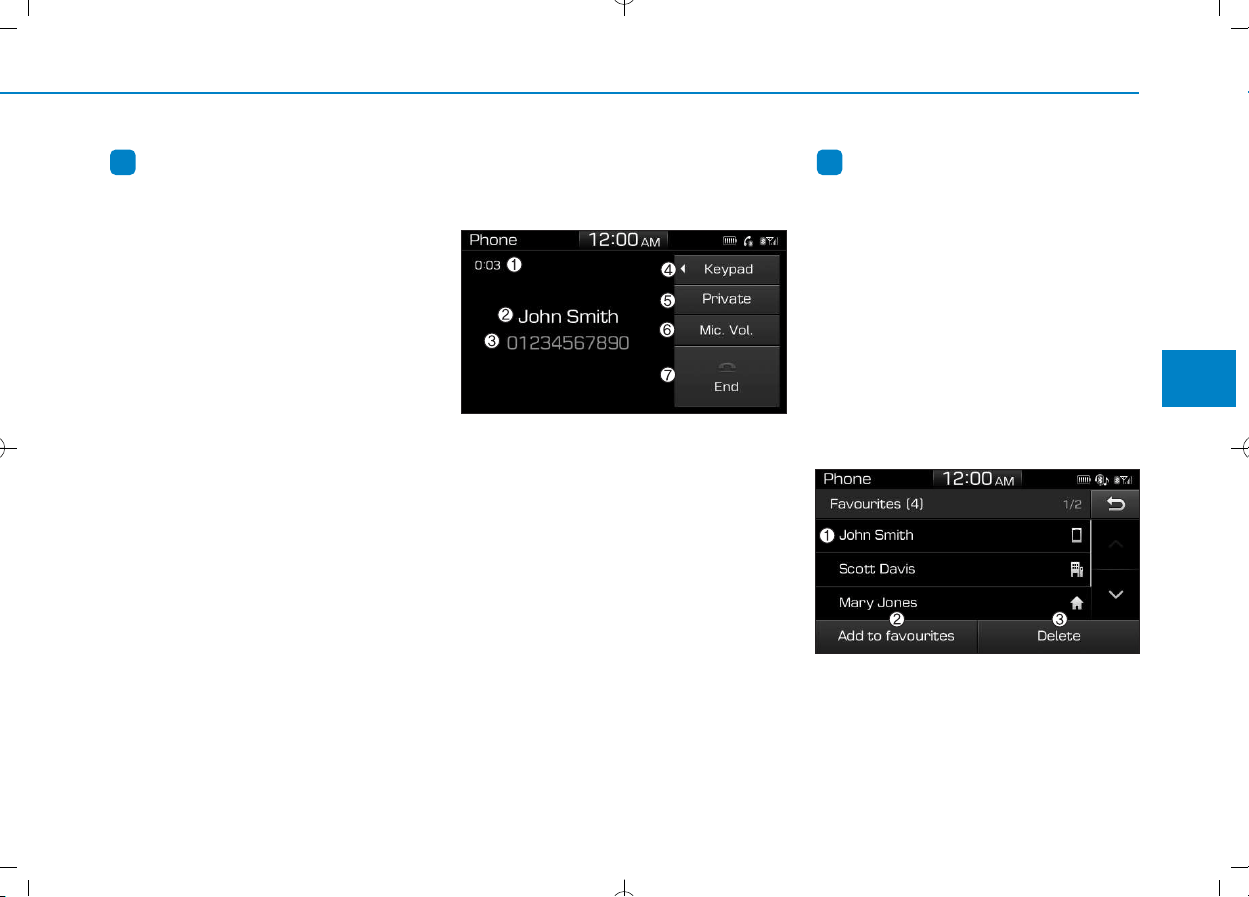
4-33
Multimedia System
4
Information
• When the incoming call screen is
displayed, audio mode and the set-
tings screen cannot be shown. Only
call volume control is supported.
• Some Bluetooth
®
devices may not
support the call reject function.
• Some Bluetooth
®
devices may not
support the phone number display
function.
Operation during calls
Incoming call with Bluetooth
®
con-
nected Select [Accept].
(1) Call duration: Call duration display.
(2) Caller name: If the caller number is
in your contacts, the corresponding
name is displayed.
(3) Incoming phone number: Incoming
phone number is displayed.
(4) Keypad: Number keypad for
Automatic Response Service input
is displayed.
(5) Private: Call is transferred to a cell
phone.
(6) Microphone Volume: Adjust out-
going voice volume.
(7) End: End call.
Information
• Some Bluetooth
®
devices may not
support the Private function.
• The outgoing voice volume may vary
depending on the type of Bluetooth
®
device. If the outgoing voice volume is
too high or low, adjust the
Microphone Volume.
Favourites
Press the [PHONE] button on the
audio system Select [Favourites]
Favourites list displayed.
(1) Favourites list: A list of paired
favourites is displayed.
Connect a call when selected.
ii
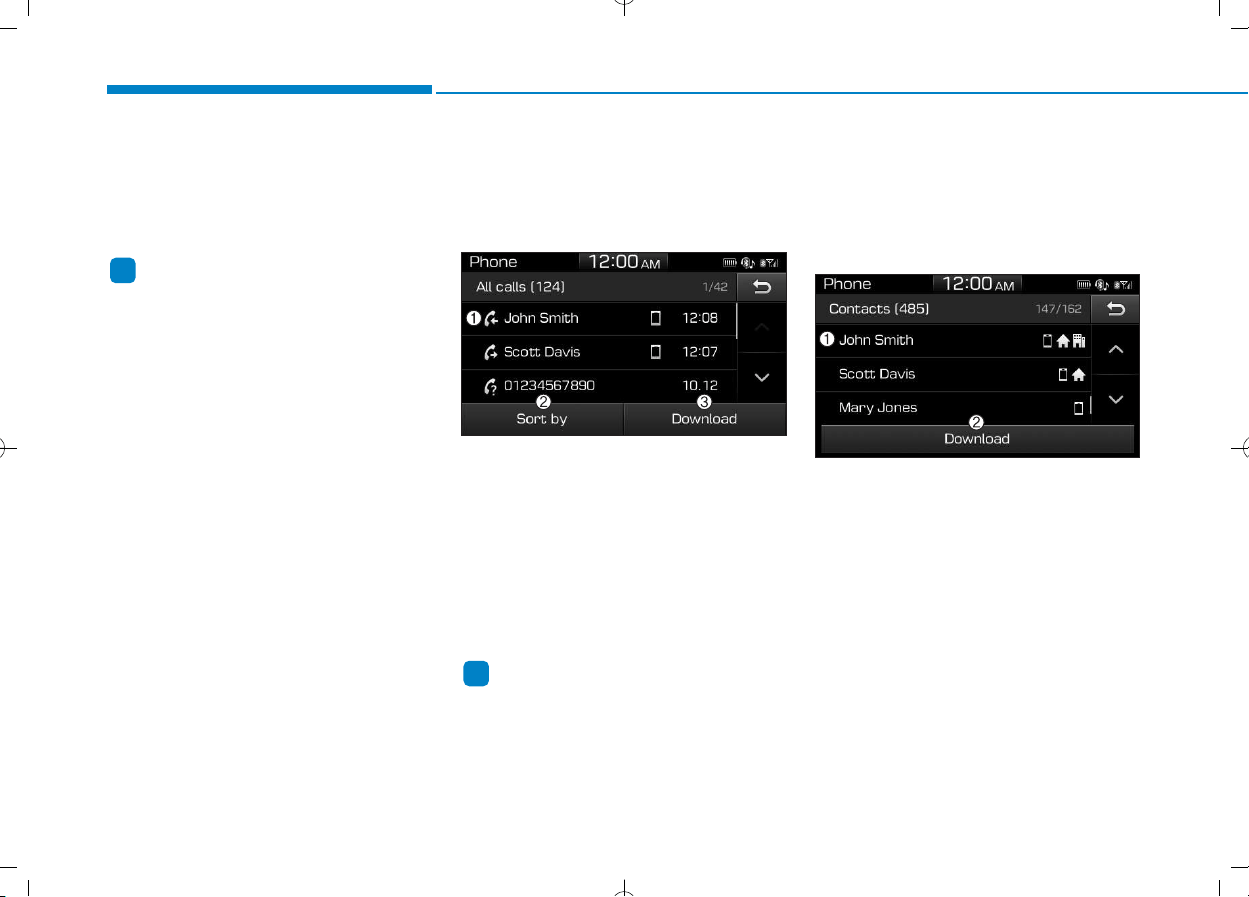
4-34
Multimedia System
(2) Add to favourites: Add a down-
loaded phone number to
favourites.
(3) Delete: Delete a saved favourites.
Information
• Up to 20 favourites can be saved for
each connected Bluetooth
®
device.
• Favourites can be accessed when the
Bluetooth
®
device they were paired
from is connected.
• The audio system does not down-
load favourites from Bluetooth
®
devices. Favourites must be newly
saved before use.
• To add to favourites, contacts must
be downloaded first.
• Saved favourites are not updated
even if the contacts of the connected
Bluetooth
®
device are changed. In
this case, favourites need to be delet-
ed and added again.
Call history
Press the [PHONE] button on the
audio system Select [Call history]
Call history is displayed.
(1) Call history: Display the down-
loaded call history list.
Connect a call when selected.
(2) Sort by: Sort by all calls, dialled
calls, received calls or missed
calls.
(3) Download: Download call history
from connected Bluetooth
®
devices.
Information
• Up to 50 dialled, received and
missed calls are saved.
• When the latest call history is
received, the existing call history is
deleted.
Contacts
Press the [PHONE] button on the
audio system Select [Contacts]
Select letter (ABC) Contacts dis-
played.
(1) Contacts: Display downloaded
contacts.
Connect a call when selected.
(2) Download: Download contacts from
connected Bluetooth
®
devices.
i
i
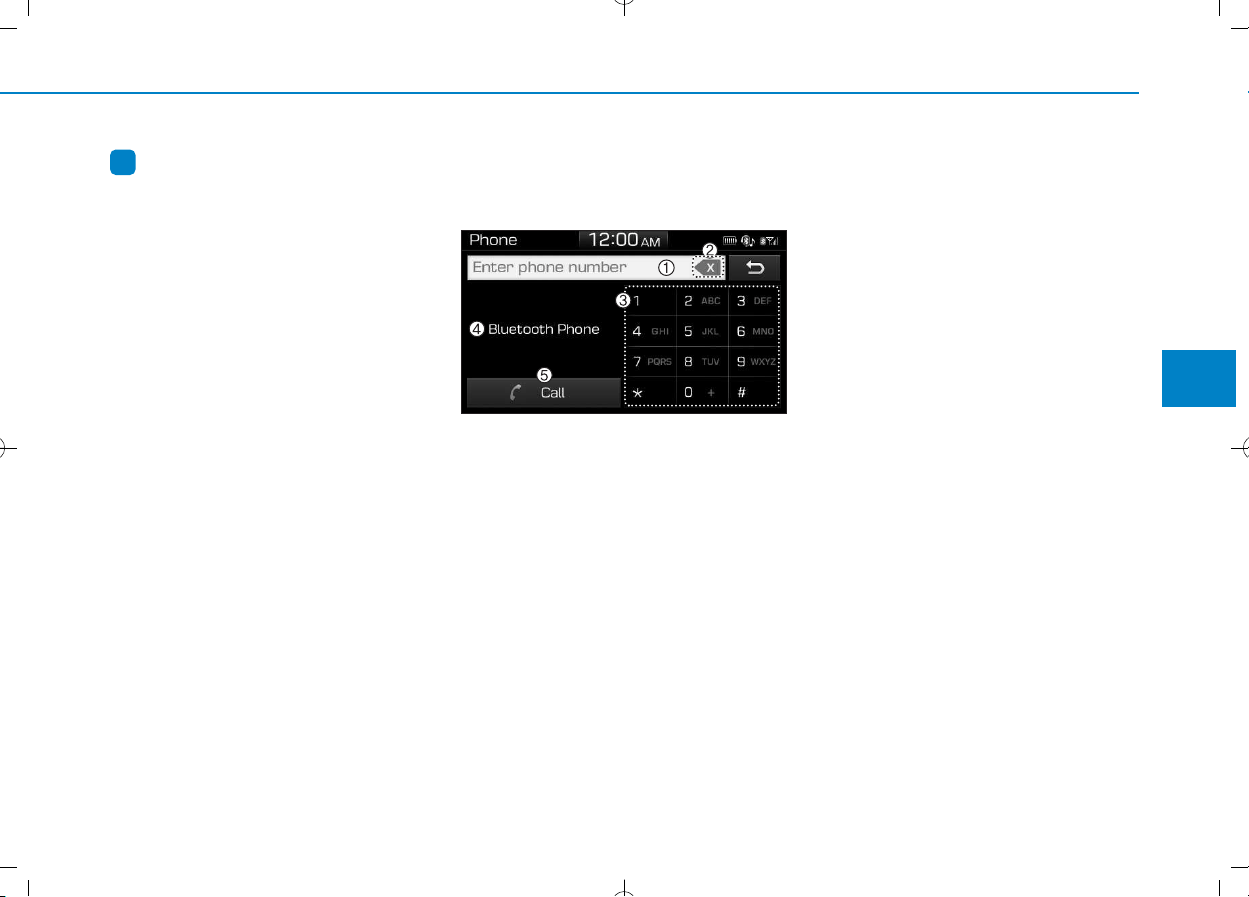
4-35
Multimedia System
4
Information
• Only supported contacts format can
be downloaded and displayed from
the Bluetooth device, contacts from
some applications will not be included.
• Up to 2,000 contacts can be saved.
• In some cases, additional confirmation
from your Bluetooth
®
device is neces-
sary when downloading contacts. If
downloading of contacts unsuccessful,
consult your Bluetooth
®
device’s set-
tings or the audio screen to approve
the download.
• Contacts without phone numbers
are not displayed.
Dial
Press the [PHONE] button on the
audio system Select [Dial].
(1) Phone number entry window: The
phone number entered using the
keypad is displayed.
(2) Clear
- Select to delete individual digits.
- Press and hold to delete the
entire phone number.
(3) Keypad: Enter phone number.
(4) Bluetooth
®
Phone name
- The name of the connected
Bluetooth
®
device is displayed.
- Contacts matching the keypad
number/letter input are displayed.
(5) Call
- Enter and select a phone num-
ber to call.
- Select without entering a phone
number to see the most recent
dialled call.
Settings
Press the [PHONE] button on the
audio system Select [Settings].
- For more details, refer to Setup
Bluetooth page.
i
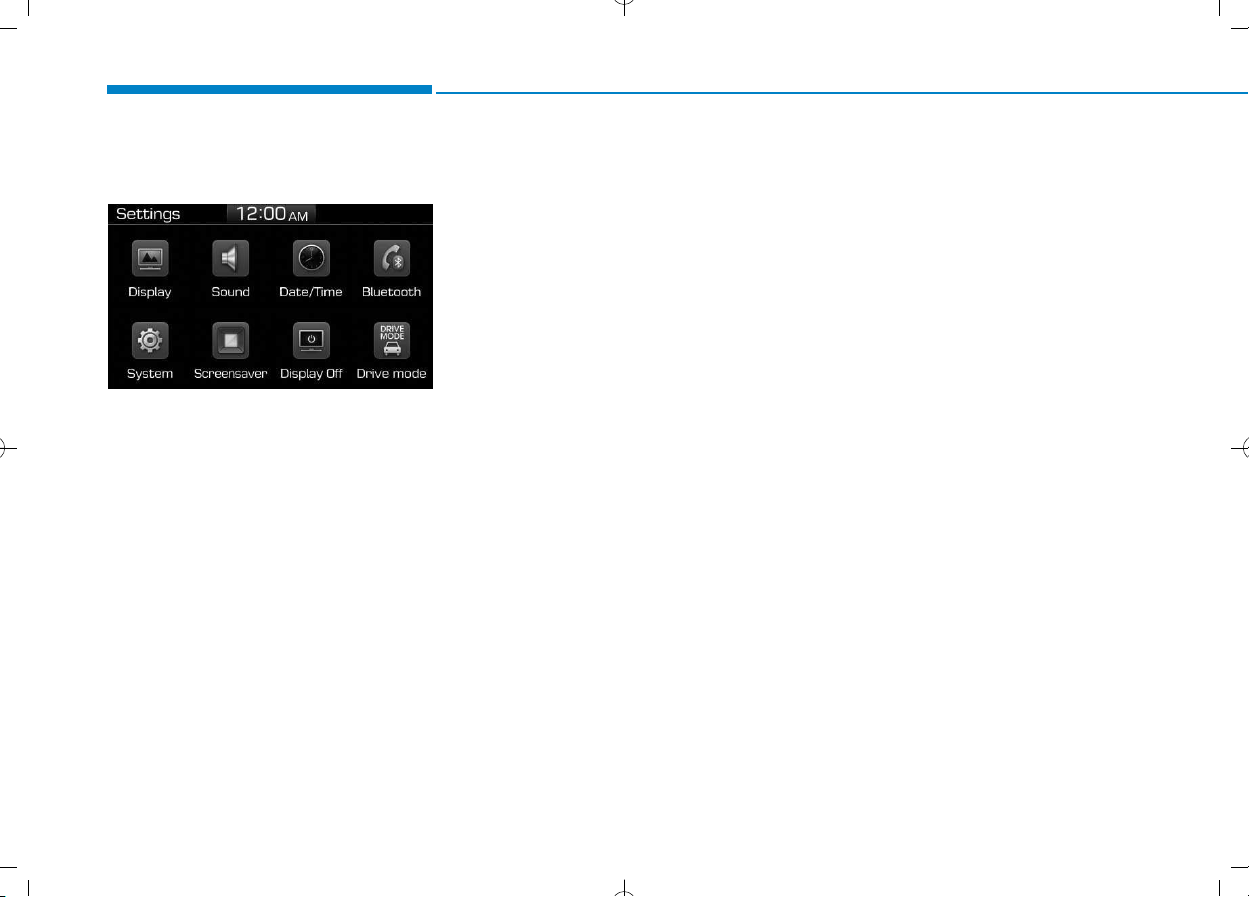
4-36
Multimedia System
Setup
Access Display, Sound, Date/Time,
Bluetooth, System, Screensaver,
Display Off and Drive mode settings.
Press the [SETUP] button on the
audio system.
Display
Press the [SETUP] button on the
audio system Select [Display].
• Dimming mode: Adjusts the bright-
ness automatically according to sur-
rounding brightness.
• Brightness: The brightness of the
audio screen can be changed.
Sound
Press the [SETUP] button on the
audio system Select [Sound].
• Position: Sound balance and fader
can be adjusted.
• Equaliser: Sound tone color can be
adjusted.
• Rear parking sensors prioritised:
Automatically lower audio volume
while reversing.
• Speed dependent volume control:
Automatically adjust volume based
on vehicle speed.
• Beep: Select whether to play a beep
sound when the screen is touched.
Date/Time
Press the [SETUP] button on the
audio system Select [Date/Time].
• Set time: Set the time displayed on
the audio screen.
• Time format: Choose between 12-
hour and 24-hour time formats.
• Set date: Set the date displayed on
the audio screen.
Bluetooth
Press the [SETUP] button on the
audio system Select [Bluetooth].
• Connections: Control pairing, dele-
tion, connection and disconnection
of Bluetooth
®
devices.
• Auto connection priority: Set the
connection priority of Bluetooth
®
devices when the vehicle is started.
• Update contacts: Contacts can be
downloaded from connected
Bluetooth
®
devices.
• Bluetooth voice guidance: Play or
mute voice prompts for Bluetooth
®
device pairing, connection and
errors.

4-37
Multimedia System
4
Information
• When paired devices are deleted,
the call history and contacts of the
device saved to the audio system are
deleted.
• For Bluetooth
®
connections with
low connection priority, some time
may be required for the connection
to be established.
• Contacts can be downloaded only
from the currently connected
Bluetooth
®
device.
• If no Bluetooth
®
device is connected,
the Download Contacts button is
disabled.
• If the language setting is Slovakian
or Hungarian, Bluetooth voice guid-
ance is not supported.
System
Press the [SETUP] button on the
audio system Select [System].
• Memory information: View My
Music memory usage.
• Language: Change the user lan-
guage.
• Default: Reset the audio system.
Information
The system resets to the default val-
ues, and all saved data and settings
are lost.
Screensaver
Set the information displayed when
the audio system is switched off or
the screen is turned off.
Press the [SETUP] button on the
audio system Select [Screensaver].
• Analogue: An analog clock is dis-
played.
• Digital: A digital clock is displayed.
• None: No information is displayed.
Display Off
To prevent glare, the screen can be
turned off with the audio system in
operation.
Press the [SETUP] button on the
audio system Select [Display Off].
Information
Use ‘Screensaver’ to set the informa-
tion to be displayed when the screen is
turned off.
Drive Mode
Sets Drive Mode detailed settings for
each vehicle control unit and notifica-
tion settings for Mode changes.
Press the [SETUP] button on the
audio system Select [Drive mode].
Information
The options provided in the Vehicle
Settings may vary by the vehicle
model.
i
i
i
i
4-38
Multimedia System
D
Deeccllaarraattiioonn ooff CCoonnffoorrmmiittyy
CE for EU

Driving your vehicle
Before driving.........................................................5-4
Before entering the vehicle ...........................................5-4
Before starting...................................................................5-4
Ignition switch ........................................................5-6
Key ignition switch............................................................5-6
Engine Start/Stop button................................................5-9
Manual transmission............................................5-14
Manual transmission operation ...................................5-14
Rev matching....................................................................5-17
Launch control .....................................................5-21
Prerequisite for activation............................................5-21
Launch control activation .............................................5-21
Braking system.....................................................5-23
Power brakes ...................................................................5-23
Disc brakes wear indicator...........................................5-24
High performance brake ...............................................5-24
Parking brake...................................................................5-25
Anti-lock Brake System (ABS) ....................................5-26
Electronic Stability Control (ESC)................................5-28
Vehicle Stability Management......................................5-33
Hill-Start Assist Control (HAC) ....................................5-35
Emergency Stop Signal (ESS) ......................................5-35
Good braking practices..................................................5-36
Electronic control suspension (ECS).................5-37
Electronic limited slip differential .....................5-38
Warning messages ..........................................................5-39
Drive Mode integrated control system.............5-40
DRIVE MODE button.......................................................5-40
N button.............................................................................5-41
Vehicle characteristic.....................................................5-43
ISG (Idle Stop and Go) system...........................5-44
To activate the ISG system...........................................5-44
To deactivate the ISG system ......................................5-47
ISG system malfunction.................................................5-47
The battery sensor deactivation.................................5-48
Autonomous Emergency Braking (AEB)
- Camera Type......................................................5-49
System setting and activation......................................5-49
AEB warning message and system control..............5-51
AEB sensor .......................................................................5-53
Warning message and warning light..........................5-54
Limitations of the system .............................................5-56
Speed Limit Information Function (SLIF) .........5-60
System setting and activation......................................5-61
Display................................................................................5-61
Warning message............................................................5-62
Limitations of the system .............................................5-63
5

5
Lane Keeping Assist System (LKAS).................5-64
LKAS operation................................................................5-66
Warning light and message ..........................................5-69
Limitations of the system .............................................5-71
LKAS function change ...................................................5-72
Lane Departure Warning System (LDWS)........5-73
LDWS operation...............................................................5-74
Warning light and message ..........................................5-75
Limitations of the system .............................................5-76
Driver Attention Alert system (DAA)................5-78
System setting and activation......................................5-78
Resetting the system .....................................................5-79
System standby ...............................................................5-80
System malfunction........................................................5-80
Cruise control .......................................................5-82
Cruise Control operation ...............................................5-82
Special driving conditions...................................5-88
Hazardous driving conditions.......................................5-88
Rocking the vehicle ........................................................5-88
Smooth cornering ...........................................................5-89
Driving at night................................................................5-89
Driving in the rain ...........................................................5-89
Driving in flooded areas................................................5-90
Highway driving...............................................................5-90
Winter driving.......................................................5-91
Snow or icy conditions ..................................................5-91
Winter Precautions.........................................................5-94
Trailer towing (for europe) ................................5-96
If you decide to pull a trailer?.....................................5-97
Trailer towing equipment ..............................................5-99
Driving with a trailer ....................................................5-100
Maintenance when towing a trailer.........................5-103
Vehicle weight ....................................................5-105
Overloading ....................................................................5-105

5-3
Driving your vehicle
5
Carbon monoxide (CO) gas is toxic. Breathing CO can cause unconsciousness and death.
Engine exhaust contains carbon monoxide which cannot be seen or smelled.
Do not inhale engine exhaust.
If at any time you smell engine exhaust inside the vehicle, open the windows immediately. Exposure to CO can cause
unconsciousness and death by asphyxiation.
Be sure the exhaust system does not leak.
The exhaust system should be checked whenever the vehicle is raised to change the oil or for any other purpose. If
you hear a change in the sound of the exhaust or if you drive over something that strikes the underneath side of the
vehicle, we recommend that the exhaust system be checked as soon as possible by an authorized HYUNDAI dealer.
Do not run the engine in an enclosed area.
Letting the engine idle in your garage, even with the garage door open, is a hazardous practice. Run the engine only
long enough to start the engine and to move the vehicle out of the garage.
Avoid idling the engine for prolonged periods with people inside the vehicle.
If it is necessary to idle the engine for a prolonged period with people inside the vehicle, be sure to do so only in an
open area with the air intake set at "Fresh" and fan control set to high so fresh air is drawn into the interior.
Keep the air intakes clear.
To assure proper operation of the ventilation system, keep the ventilation air intakes located in front of the windshield
clear of snow, ice, leaves, or other obstructions.
If you must drive with the tailgate open:
Close all windows.
Open instrument panel air vents.
Set the air intake control at "Fresh", the air flow control at "Floor" or "Face", and the fan control set to high.
WARNING

5-4
Before entering the vehicle
• Be sure all windows, outside mir-
ror(s), and outside lights are clean
and unobstructed.
• Remove frost, snow, or ice.
• Visually check the tires for uneven
wear and damage.
• Check under the vehicle for any
sign of leaks.
• Be sure there are no obstacles
behind you if you intend to back up.
Before starting
• Make sure the hood, the tailgate,
and the doors are securely closed
and locked.
• Adjust the position of the seat and
steering wheel.
• Adjust the inside and outside
rearview mirrors.
• Verify all the lights work.
• Fasten your seat belt. Check that
all passengers have fastened their
seat belt.
• Check the gauges and indicators in
the instrument panel and the mes-
sages on the instrument display
when the ignition switch is in the
ON position.
• Check that any items you are car-
rying are stored properly or fas-
tened down securely.
BBEEFFOORREE DDRRIIVVIINNGG
Driving your vehicle
To reduce the risk of SERIOUS
INJURY or DEATH, take the fol-
lowing precautions:
• ALWAYS wear your seat belt.
All passengers must be prop-
erly belted whenever the vehi-
cle is moving. For more
details, refer to "Seat Belts" in
chapter 2.
• Always drive defensively.
Assume other drivers or pedes-
trians may be careless and
make mistakes.
• Stay focused on the task of
driving. Driver distraction can
cause accidents.
• Leave plenty of space between
you and the vehicle in front of
you.
WARNING

5-5
Driving your vehicle
5
NEVER drink or take drugs and
drive.
Drinking or taking drugs and
driving is dangerous and may
result in an accident and SERI-
OUS INJURY or DEATH.
Drunk driving is the number
one contributor to the highway
death toll each year. Even a
small amount of alcohol will
affect your reflexes, percep-
tions and judgment. Just one
drink can reduce your ability to
respond to changing conditions
and emergencies and your reac-
tion time gets worse with each
additional drink.
Driving while under the influ-
ence of drugs is as dangerous
or more dangerous than driving
under the influence of alcohol.
(Continued)
WARNING
(Continued)
You are much more likely to have
a serious accident if you drink or
take drugs and drive. If you are
drinking or taking drugs, don't
drive. Do not ride with a driver
who has been drinking or taking
drugs. Choose a designated driv-
er or call a taxi.
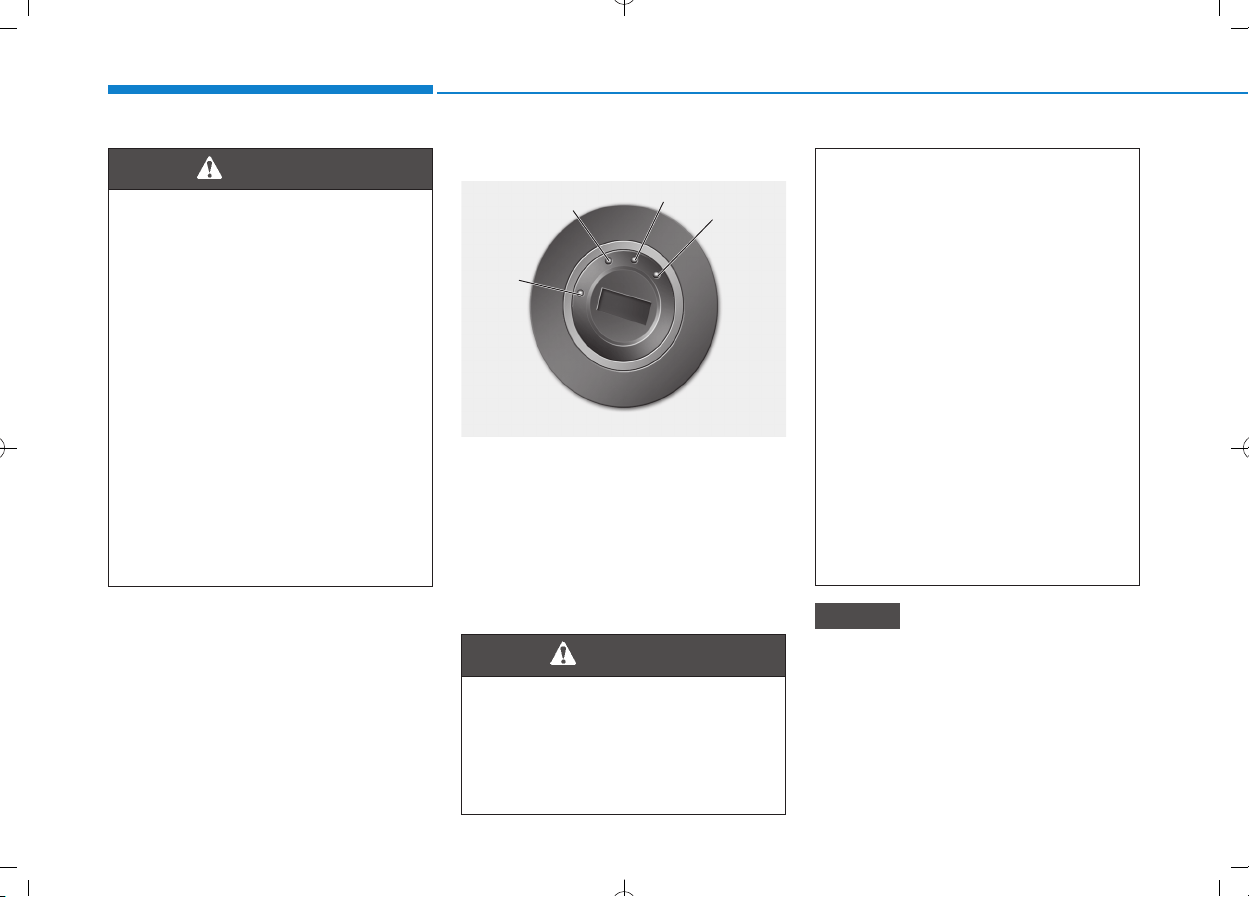
5-6
Key ignition switch (if equipped)
Whenever the front door is opened,
the ignition switch will illuminate, pro-
vided the ignition switch is not in the
ON position. The light will go off
immediately when the ignition switch
is turned on or go off after about 30
seconds when the door is closed.
(if equipped)
Never use aftermarket keyhole cov-
ers. This may generate start-up fail-
ure due to communication failure.
NOTICE
IIGGNNIITTIIOONN SSWWIITTCCHH
Driving your vehicle
•
NEVER turn the ignition switch
to the LOCK or ACC position
while the vehicle is in motion
except in an emergency.
(Continued)
(Continued)
This will result in the engine
turning off and loss of power
assist for the steering and
brake systems. This may lead
to loss of directional control
and braking function, which
could cause an accident.
• Before leaving the driver's
seat, always make sure the
shift lever is in 1st gear when
the vehicle is parked on a
uphill and in R (Reverse) on a
downhill, apply the parking
brake, and turn the ignition
switch to the LOCK position.
Unexpected vehicle movement
may occur if these precautions
are not followed.
WARNING
To reduce the risk of SERIOUS
INJURY or DEATH, take the fol-
lowing precautions:
• NEVER allow children or any
person who is unfamiliar with
the vehicle to touch the igni-
tion switch or related parts.
Unexpected and sudden vehi-
cle movement can occur.
• NEVER reach through the
steering wheel for the ignition
switch, or any other control,
while the vehicle is in motion.
The presence of your hand or
arm in this area may cause a
loss of vehicle control result-
ing in an accident.
WARNING
OAE056172L
LOCK
ACC
ON
START

5-7
Driving your vehicle
5
Key ignition switch positions
Switch
Position
Action Notes
LOCK
To turn the ignition switch to the LOCK position, push the key in
at the ACC position and turn the key towards the LOCK position.
The ignition key can be removed in the LOCK position.
The steering wheel locks to protect the vehicle from theft.
(if equipped)
ACC
Some electrical accessories are usable.
The steering wheel unlocks.
If difficulty is experienced turning the ignition
switch to the ACC position, turn the key while
turning the steering wheel right and left to
release.
ON
This is the normal key position when the engine has started.
All features and accessories are usable.
The warning lights can be checked when you turn the ignition
switch from ACC to ON.
Do not leave the ignition switch in the ON
position when the engine is not running to
prevent the battery from discharging.
START
To start the engine, turn the ignition switch to the START position.
The switch returns to the ON position when you let go of the key.
The engine will crank until you release the
key.

5-8
Starting the engine
1. Make sure the parking brake is
applied.
2. Make sure the shift lever is in neu-
tral.
3. Depress the clutch and brake ped-
als.
4. Turn the ignition switch to the
START position. Hold the key
(maximum of 10 seconds) until the
engine starts and release it.
Information
• Do not wait for the engine to warm
up while the vehicle remains station-
ary.
Start driving at moderate engine
speeds. (Steep accelerating and
decelerating should be avoided.)
• Always start the vehicle with your
foot on the brake pedal. Do not
depress the accelerator while start-
ing the vehicle. Do not race the
engine while warming it up.
To prevent damage to the vehicle:
• Do not hold the ignition key in
the START position for more
than 10 seconds. Wait 5 to 10
seconds before trying again.
• Do not turn the ignition switch to
the START position with the
engine running. It may damage
the starter.
• If traffic and road conditions
permit, you may put the shift
lever in the N (Neutral) position
while the vehicle is still moving
and turn the ignition switch to
the START position in an
attempt to restart the engine.
• Do not push or tow your vehicle
to start the engine.
Turning off the engine
1. Stop the vehicle and depress the
clutch and brake pedals at the
same time.
2. With the clutch and brake pedals
depressed, put the shift lever in
neutral.
3. Turn off the engine and apply the
parking brake.
NOTICE
i
Driving your vehicle
•
Always wear appropriate
shoes when operating your
vehicle. Unsuitable shoes,
such as high heels, ski boots,
sandals, flip-flops, etc., may
interfere with your ability to
use the brake, accelerator and
clutch pedals.
• Do not start the vehicle with the
accelerator pedal depressed.
The vehicle can move which
can lead to an accident.
• Wait until the engine rpm is
normal. The vehicle may sud-
denly move if the brake pedal
is released when the rpm is
high.
WARNING
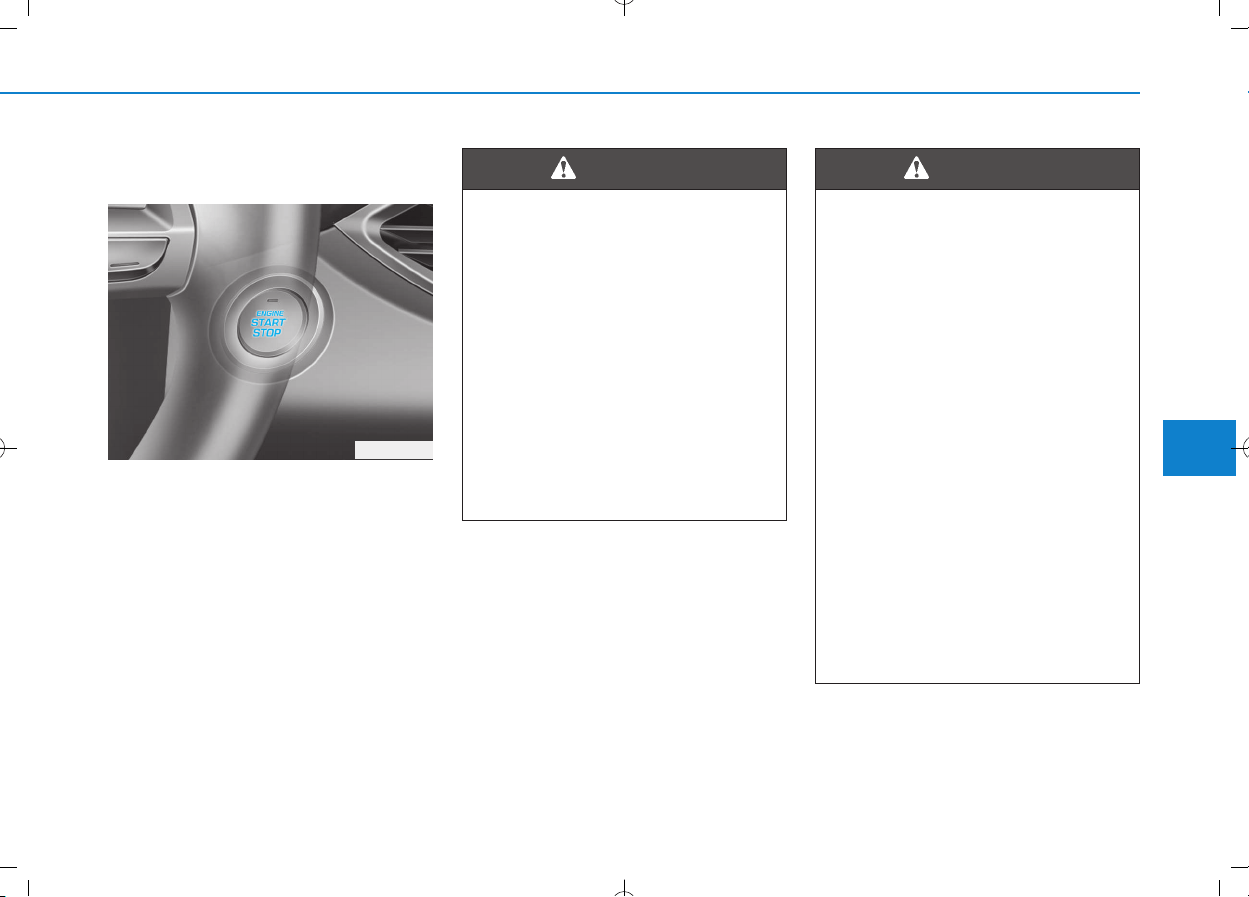
5-9
Driving your vehicle
Engine Start/Stop button
(if equipped)
Whenever the front door is opened,
the Engine Start/Stop button will illu-
minate and will go off 30 seconds
after the door is closed.
5
OPD056001
To turn the engine off in an
emergency:
Press and hold the Engine
Start/Stop button for more than
two seconds OR Rapidly press
and release the Engine Start/
Stop button three times (within
three seconds).
If the vehicle is still moving, you
can restart the engine without
depressing the brake pedal by
pressing the Engine Start/Stop
button with the shift lever in the
N (Neutral) position.
WARNING
• NEVER press the Engine Start/
Stop button while the vehicle is
in motion except in an emer-
gency. This will result in the
engine turning off and loss of
power assist for the steering
and brake systems. This may
lead to loss of directional con-
trol and braking function,
which could cause an accident.
• Before leaving the driver’s
seat, always make sure the
shift lever is in 1st gear when
the vehicle is parked on a
uphill and in R (Reverse) on a
downhill, set the parking
brake, press the Engine Start/
Stop button to the OFF posi-
tion, and take the Smart Key
with you. Unexpected vehicle
movement may occur if these
precautions are not followed.
WARNING

5-10
Driving your vehicle
Engine Stop/Start button positions
Button Position Action Notes
OFF
To turn off the engine, stop the vehicle and
then press the Engine Start/Stop button.
The steering wheel locks to protect the vehi-
cle from theft. (if equipped)
If the steering wheel is not locked properly
when you open the driver's door, the warning
chime will sound.
ACC
Press the Engine Start/Stop button when
the button is in the OFF position without
depressing the clutch pedal.
Some electrical accessories are usable.
The steering wheel unlocks.
If you leave the Engine Start/Stop button in
the ACC position for more than one hour, the
battery power will turn off automatically to
prevent the battery from discharging.
If the steering wheel doesn't unlock properly,
the Engine Start/Stop button will not work.
Press the Engine Start/Stop button while
turning the steering wheel right and left to
release.

5-11
Driving your vehicle
5
Button Position Action Notes
ON
Press the Engine Start/Stop button while it
is in the ACC position without depressing
the clutch pedal.
The warning lights can be checked before
the engine is started.
Do not leave the Engine Start/Stop button in
the ON position when the engine is not run-
ning to prevent the battery from discharging.
START
To start the engine, depress the clutch and
brake pedals and press the Engine Start/
Stop button with the shift lever in neutral.
If you press the Engine Start/Stop button
without depressing the clutch pedal, the
engine does not start and the Engine
Start/Stop button changes as follows:
OFF
→
→
ACC
→→
ON
→→
OFF or ACC

5-12
Starting the engine
Information
• The engine will start by pressing the
Engine Start/Stop button, only when
the smart key is in the vehicle.
• Even if the smart key is in the vehi-
cle, if it is far away from the driver,
the engine may not start.
• When the Engine Start/Stop button
is in the ACC or ON position, if any
door is open, the system checks for
the smart key. If the smart key is not
in the vehicle, the " " indicator
will blink and the warning "Key not
in vehicle" will come on, and if all
doors are closed, the chime will also
sound for about 5 seconds. Keep the
smart key in the vehicle when using
the ACC position or if the vehicle
engine is ON.
1. Always carry the smart key with
you.
2. Make sure the parking brake is
applied.
3. Make sure the shift lever is in neutral.
4. Depress the clutch and brake ped-
als.
5. Press the Engine Start/Stop button.
Information
• Do not wait for the engine to warm
up while the vehicle remains station-
ary.
Start driving at moderate engine
speeds. Steep accelerating and decel-
erating should be avoided.
• Always start the vehicle with your
foot on the brake pedal. Do not
depress the accelerator while start-
ing the vehicle. Do not race the
engine while warming it up.
To prevent damage to the vehicle:
• If traffic and road conditions
permit, you may put the shift
lever in the N (Neutral) position
while the vehicle is still moving
and press the Engine Start/Stop
button in an attempt to restart
the engine.
• Do not push or tow your vehicle
to start the engine.
NOTICE
ii
Driving your vehicle
•
Always wear appropriate
shoes when operating your
vehicle. Unsuitable shoes,
such as high heels, ski boots,
sandals, flip-flops, etc., may
interfere with your ability to
use the brake, accelerator and
clutch pedals.
• Do not start the vehicle with the
accelerator pedal depressed.
The vehicle can move which
can lead to an accident.
• Wait until the engine rpm is
normal. The vehicle may sud-
denly move if the brake pedal
is released when the rpm is
high.
WARNING
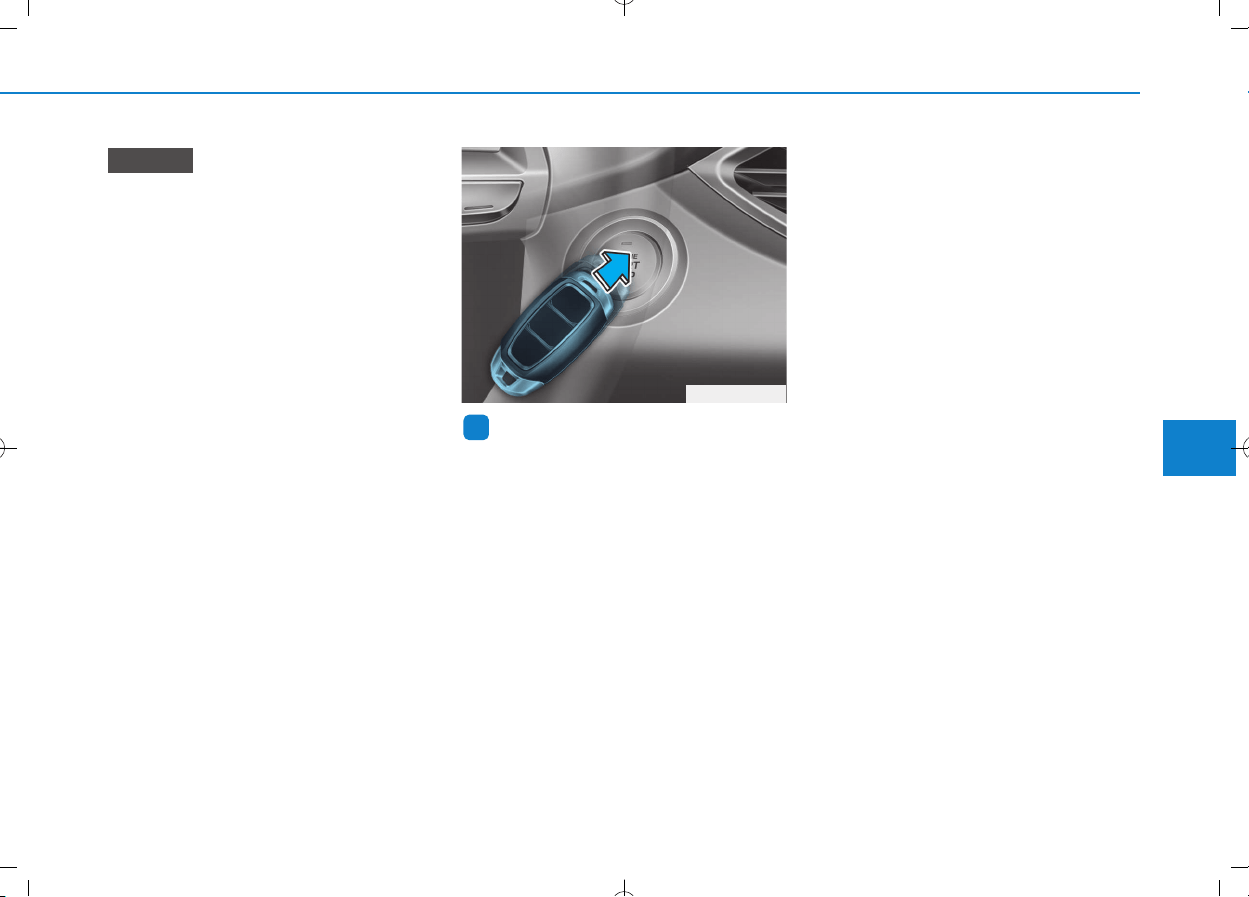
5-13
Driving your vehicle
To prevent damage to the vehicle:
Do not press the Engine Start/
Stop button for more than 10 sec-
onds except when the stop lamp
fuse is blown.
When the stop lamp fuse is blown,
you can't start the engine normal-
ly. Replace the fuse with a new
one. If you are not able to replace
the fuse, you can start the engine
by pressing and holding the
Engine Start/Stop button for 10
seconds with the Engine Start/
Stop button in the ACC position.
For your safety always depress
the brake and/or clutch pedal
before starting the engine.
Information
If the smart key battery is weak or the
smart key does not work correctly,
you can start the engine by pressing
the Engine Start/Stop button with the
smart key in the direction of the pic-
ture above.
Turning off the engine
1. Stop the vehicle and depress the
clutch and brake pedals at the
same time.
2. With the clutch and brake pedals
depressed, put the shift lever in
neutral.
3. Press the Engine Start/Stop but-
ton to the off position and apply
the parking brake.
i
NOTICE
5
OPDEN057005
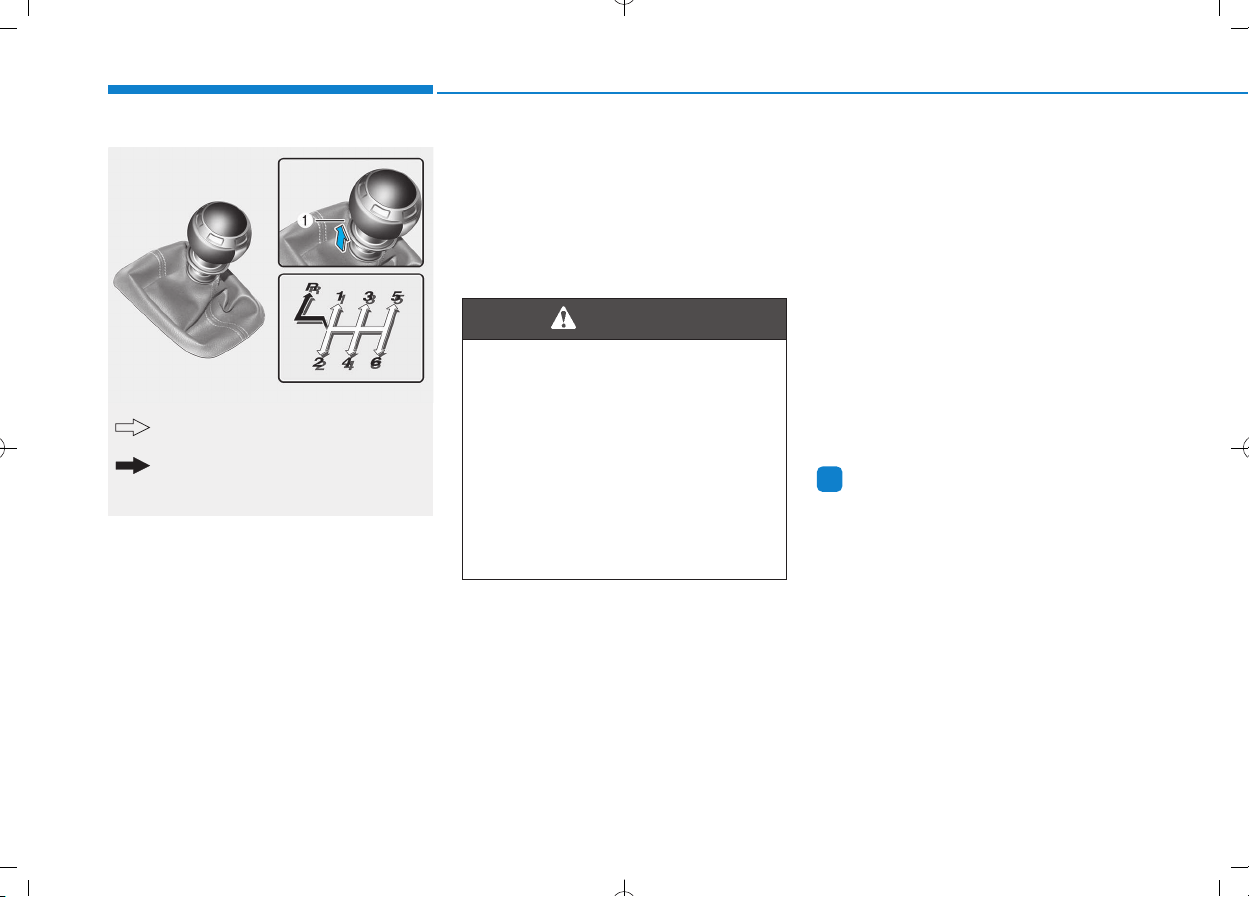
5-14
Manual transmission operation
The manual transmission has 6 for-
ward gears. The transmission is fully
synchronized in all forward gears so
shifting to either a higher or a lower
gear is easily accomplished.
To shift to R (Reverse), make sure
the vehicle has completely stopped,
and then move the shift lever to neu-
tral before moving into R (Reverse).
When you've come to a complete
stop and it's hard to shift into 1st gear
or R (Reverse):
1. Put the shift lever in neutral and
release the clutch pedal.
2. Depress the clutch pedal, and
then shift into first or R (Reverse)
gear.
Information
During cold weather, shifting may be
difficult until the transmission lubri-
cant has warmed up.
i
MMAANNUUAALL TTRRAANNSSMMIISSSSIIOONN
Driving your vehicle
OPDEN057107
The shift lever can be moved without
pressing the button (1).
The ring (1) must be pulled up while
moving the shift lever.
Before leaving the driver's seat,
always make sure the shift lever
is in 1st gear when the vehicle
is parked on a uphill and in R
(Reverse) on a downhill, set the
parking brake, and place the
ignition switch in the LOCK/OFF
position. Unexpected vehicle
movement may occur if these
precautions are not followed.
WARNING

5-15
Driving your vehicle
Using the clutch
The clutch pedal should be
depressed all the way to the floor
before:
- Starting the engine
The engine will not start without
depressing the clutch pedal.
- Shifting into gear, up shifting to the
next higher gear, or down shifting
to the next lower gear.
When releasing the clutch pedal,
release it slowly. The clutch pedal
should always be released while
driving.
To prevent unnecessary wear or
damage to the clutch:
• Do not rest your foot on the
clutch pedal while driving.
• Do not hold the vehicle with the
clutch on an incline, while wait-
ing for the traffic light, etc.
• Always depress the clutch pedal
down fully to prevent noise or
damage.
• Do not repeatedly depress the
clutch pedal before the clutch
pedal returns back to its original
place when released.
• Do not start with the 2nd (sec-
ond) gear engaged except when
you start on a slippery road.
• Do not drive with cargo loaded
more than required loading
capacity.
Downshifting
Downshift when you must slow down
in heavy traffic or drive up a steep
hill, to prevent engine load.
Also, downshifting reduces the
chance of stalling and helps to accel-
erate when you need to increase
your speed again.
When the vehicle is going downhill,
downshifting helps maintain safe
speed by providing brake power from
the engine and results in less wear
on the brakes.
NOTICE
5
To start or reverse the vehicle,
release the clutch pedal slowly
after shifting the gear. Sudden
release of the clutch pedal may
result in an abrupt accident.
CAUTION

5-16
To prevent damage to the engine,
clutch and transmission:
• When downshifting from 5th
gear to 4th gear, be careful not to
inadvertently push the shift lever
sideways engaging the 2nd gear.
A drastic downshift may cause
the engine speed to increase to
the point the tachometer will
enter the red-zone.
• Do not downshift more than two
gears at a time or downshift the
gear when the engine is running
at high speed (5,000 RPM or
higher). Such a downshifting
may damage the engine, clutch
and the transmission.
Good driving practices
• Never take the vehicle out of gear
and coast down a hill. This is
extremely dangerous.
• Don't "ride" the brakes. This can
cause the brakes and related parts
to overheat and malfunction.
When you are driving down a long
hill, slow down and shift to a lower
gear. Engine braking will help slow
down the vehicle.
• Slow down before shifting to a
lower gear. This will help avoid
over-revving the engine, which can
cause damage.
• Slow down when you encounter
cross winds. This gives you much
better control of your vehicle.
• Be sure the vehicle is completely
stopped before you shift into R
(Reverse) to prevent damage to
the transmission.
• Exercise extreme caution when
driving on a slippery surface. Be
especially careful when braking,
accelerating or shifting gears. On a
slippery surface, an abrupt change
in vehicle speed can cause the
drive wheels to lose traction and
may cause loss of vehicle control
resulting in an accident.
NOTICE
Driving your vehicle
Do not use aggressive engine
braking (shifting from a higher
gear to a lower gear) on slip-
pery roads. This could cause
the tires to slip and may result
in an accident.
WARNING

5-17
Driving your vehicle
Rev matching
The Rev Matching system automati-
cally helps synchronize engine rpm
with the optimal speed of the gear
about to be engaged which reduces
the impact of clutch connection and
improves gear shift response.
Information
• Fully depress the clutch pedal.
Without the clutch pedal fully
depressed, the system may not
response correctly.
• The system does not operate when
backing up.
• Rev Matching controls the engine
speed up to the rev limit, but the
function cannot prevent over-
revving caused by shifting mistake.
i
5
To reduce the risk of SERIOUS
INJURY or DEATH:
• ALWAYS wear your seat belt.
In a collision, an unbelted
occupant is significantly more
likely to be seriously injured
or killed than a properly belt-
ed occupant.
• Avoid high speeds when cor-
nering or turning.
• Do not make quick steering
wheel movements, such as
sharp lane changes or fast,
sharp turns.
• The risk of rollover is greatly
increased if you lose control
of your vehicle at highway
speeds.
• Loss of control often occurs if
two or more wheels drop off
the roadway and the driver
over steers to reenter the
roadway.
(Continued)
WARNING
(Continued)
• In the event your vehicle
leaves the roadway, do not
steer sharply. Instead, slow
down before pulling back into
the travel lanes.
• HYUNDAI recommends you
follow all posted speed limits.
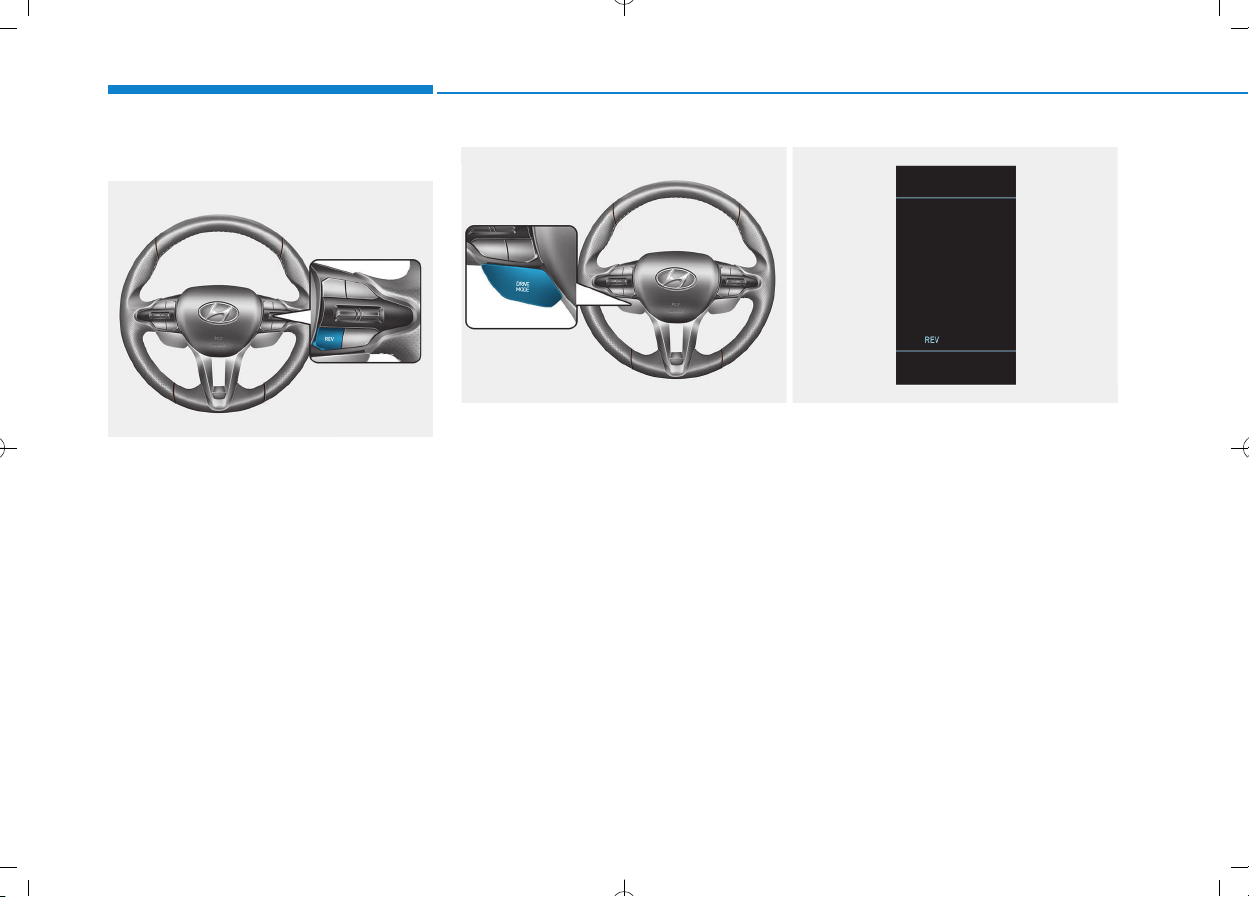
5-18
Rev Matching activation
1. Press REV button (ON/OFF)
• Press the REV button to turn on
the system. A message appears
"Rev Matching On" with a REV
indicator on the cluster LCD dis-
play.
• Press the REV button again to turn
off the system. A message
appears "Rev Matching Off" and
the REV indicator disappears.
Driving your vehicle
OPDEN047435
OPDEN057494 OPDEN047447
■ DRIVE MODE button ■ REV indicator
2. Select Drive Mode.
DRIVE MODE button
Use Rev Matching in normal driving conditions in below modes.
• When ECO mode is selected:
- Rev Matching cannot be activated even if the driver presses the REV
button.
- REV indicator is off.
• When NORMAL mode is selected:
- Rev Matching activates if Rev Matching is turned on by the REV button.
- White REV indicator illuminates.
- Engine rpm response during gear shift is smooth.
• When SPORT mode is selected:
- Rev Matching activates if Rev Matching is turned on by the REV button.
- Yellow REV indicator illuminates.
- Engine rpm response is faster than NORMAL mode.
The system must be turned on by pressing the REV button whenever the
engine is turned on.
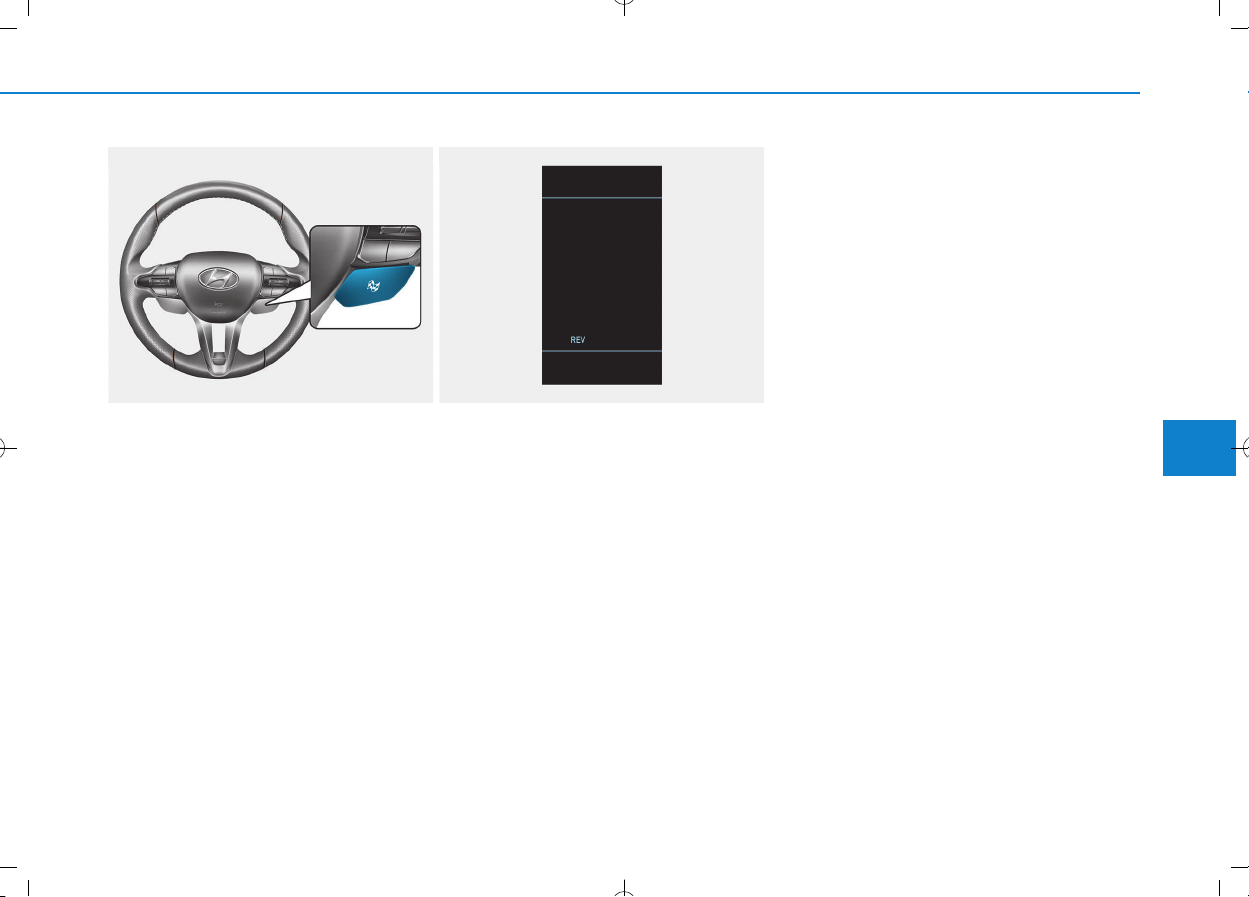
5-19
Driving your vehicle
Rev Matching operation
Engine speed is automatically syn-
chronized with the next selected
gear. The accelerator pedal does not
have to be depressed to speed up
the engine rpm.
• Clutch depressed with the gear
engaged
At once, engine speed automatically
decreases right after the clutch is
disengaged, but the selected gear is
fixed and then the engine rpm
reverts to the selected gear's target
speed. This operation method gives
more comfortable feeling in public
road driving.
• Upshifting
Engine speed will automatically
decrease and stay at the target
engine speed before the clutch is
engaged.
• Downshifting
Engine speed will automatically
increase and stay at the target
engine speed.
5
N button
Use Rev Matching when driving on race tracks, etc. in N mode.
• When N mode (SPORT+) is selected:
- REV Matching is turned on automatically. To turn off Rev Matching,
press the REV button.
- Red REV indicator illuminates.
- Engine speed is automatically adjusted to the shifted gear without the
accelerator pedal depressed.
- Engine rpm response is faster than SPORT mode when downshifting
with heavy braking such as when driving on a race track.
• When CUSTOM mode is selected:
- You may select the drive mode you prefer from the Audio or AVN screen
Custom setting page. (OFF/NORMAL/SPORT/SPORT+).
For more details on "Custom Mode" refer to the Audio manual in
chapter 4 or the separately supplied Multimedia manual.
OPDEN057495 OPDEN047447
■ N button ■ REV indicator
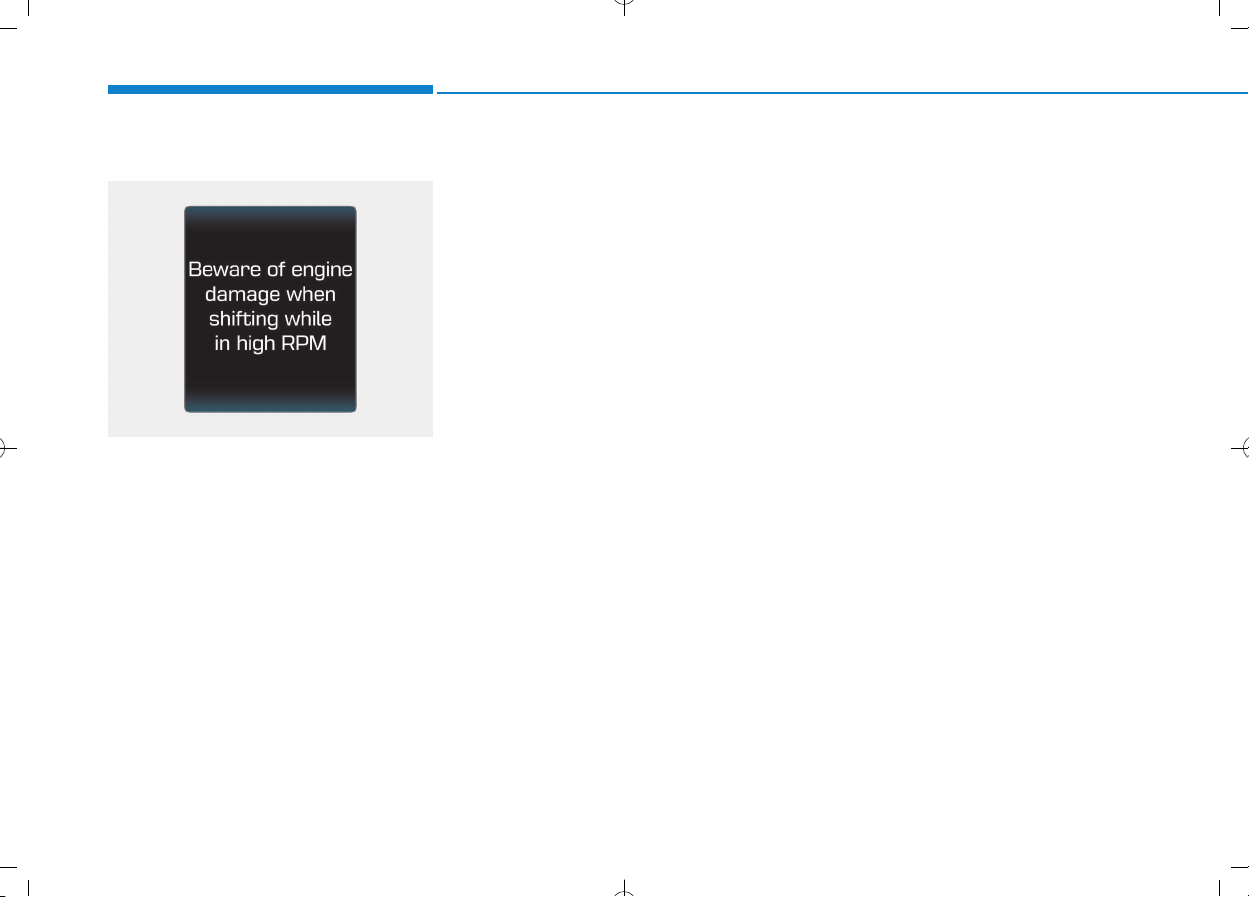
5-20
Warning message
Beware of engine damage when
shifting while in high RPM
If transmission input rpm is too high
(over rev limit) due to shifting, a
warning message will appear and a
warning chime will sound.
Driving your vehicle
OPDEN047443
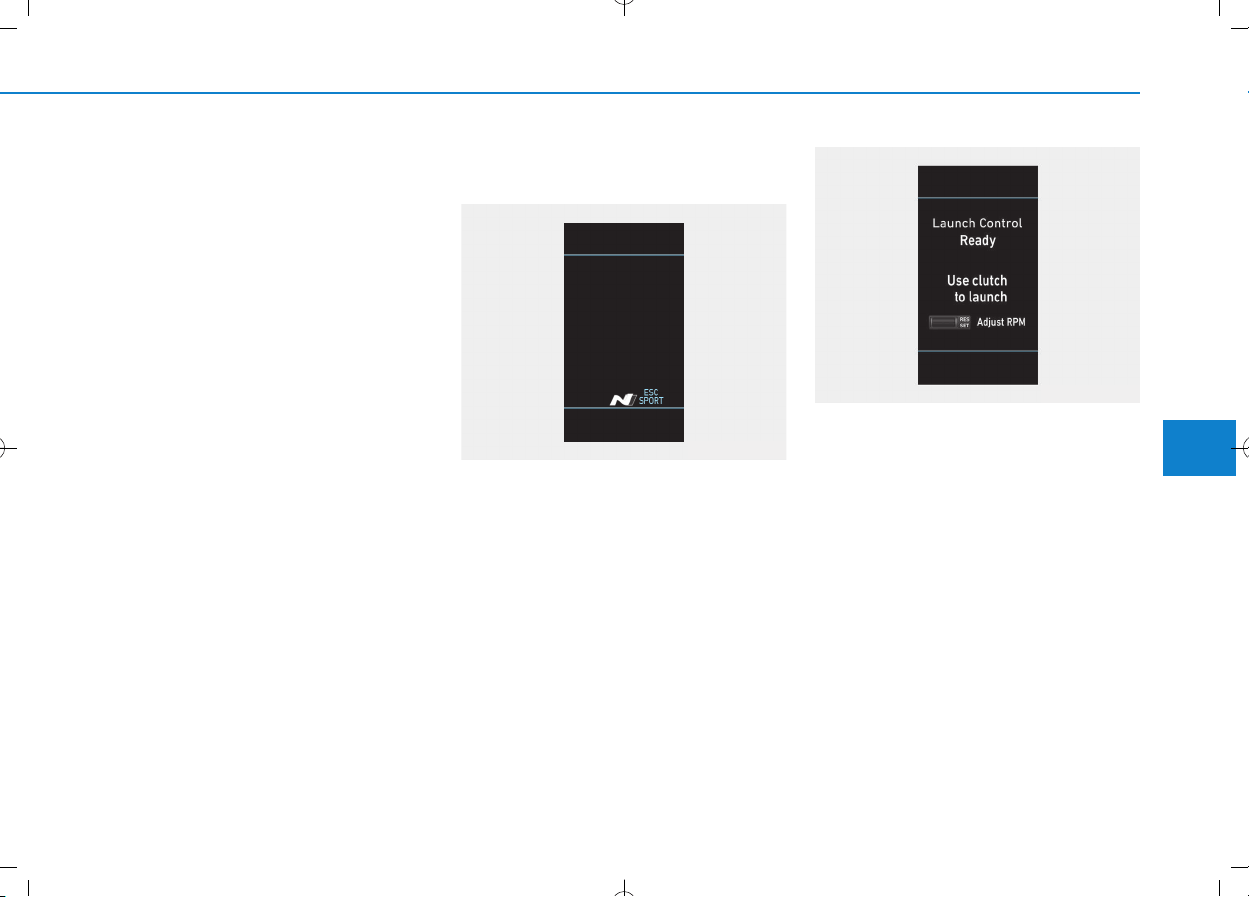
5-21
Driving your vehicle
5
The Launch Control system controls
the vehicle to reduce wheel spin or
slip on a hard acceleration from a
standing start.
Prerequisite for activation
The Launch Control gets ready to be
activated, when the following prereq-
uisites are satisfied.
• The engine is warmed up.
• The driver's seatbelt is fastened.
• All doors, hood and tailgate is
closed.
• The vehicle is at a complete stop.
• Malfunction warning lights related
to the engine and ESC (Electronic
Stability Control) is off.
Launch control activation
To activate Launch Control:
1. Select N mode.
2. Check if ESC SPORT mode is
turned on. If not, set ESC mode to
ESC SPORT mode.
3. Depress the clutch pedal.
4. Shift the transmission to 1st gear.
5. Align the steering wheel straight.
6. Fully depress the accelerator
pedal. The Launch Control system
will initially limit engine speed as
the driver fully applies the acceler-
ator pedal. Allow the engine rpm
to stabilize.
The message "Launch Control
Ready. Use clutch to launch" and
"Adjust RPM" will appear on the
cluster LCD display. If necessary,
adjust engine rpm with the cruise
control switch (+/-).
LLAAUUNNCCHH CCOONNTTRROOLL
OPDEN047434
OPDEN047207
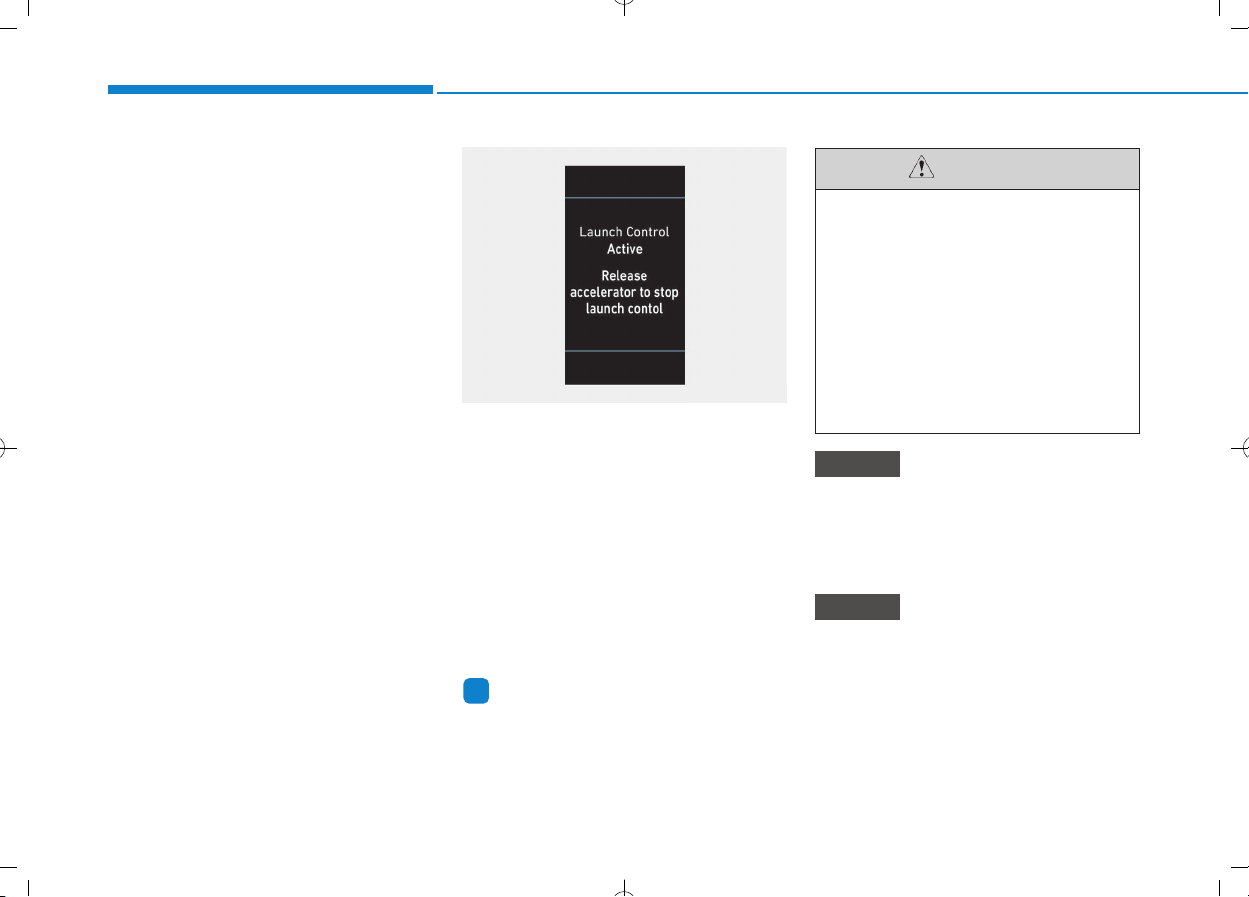
5-22
Driving your vehicle
7. A smooth, quick release of the
clutch, while maintaining full
depression of the accelerator
pedal will initiate launching of the
vehicle. Do not rapidly drop the
clutch pedal as it may damage
clutch related parts and will not
result in optimal launching per-
formance.
8. During vehicle launching, continue
to depress the accelerator pedal
to keep the Launch Control sys-
tem active until desired duration.
The message "Launch Control
Active" and "Release accelerator
to stop launch control" will appear
on the cluster LCD display.
To deactivate (end) Launch
Control, release the accelerator
pedal or depress clutch pedal.
Information
Launch Control is available again
after cooling down by driving the
vehicle for at least 3 minutes.
Constant use of Launch Control
can put enormous stress on the
vehicle resulting in premature
wear of related components.
In a manual transmission vehicle,
the Launch Control system’s per-
formance heavily depends on
clutch contact maneuver, tire grip
level and road surface conditions.
The system does not always guar-
antee best launching performance
of the vehicle.
NOTICE
NOTICE
i
• The Launch Control system is
intended for use at a closed
race track and not intended
for use on public roads. It will
not compensate for driver's
who are inexperienced or lack
familiarity with the race track.
• Do not use Launch Control
during break-in period of the
vehicle.
CAUTION
OPDEN047440

5-23
Driving your vehicle
5
Power brakes
Your vehicle has power-assisted
brakes that adjust automatically
through normal usage.
If the engine is not running or is
turned off while driving, the power
assist for the brakes will not work.
You can still stop your vehicle by
applying greater force to the brake
pedal than typical. The stopping dis-
tance, however, will be longer than
with power brakes.
When the engine is not running, the
reserve brake power is partially
depleted each time the brake pedal
is applied. Do not pump the brake
pedal when the power assist has
been interrupted.
Pump the brake pedal only when
necessary to maintain steering con-
trol on slippery surfaces.
BBRRAAKKIINNGG SSYYSSTTEEMM
Take the following precautions:
• Do not drive with your foot
resting on the brake pedal.
This will create abnormal high
brake temperatures, exces-
sive brake lining and pad
wear, and increased stopping
distances.
• When descending a long or
steep hill, shift to a lower gear
and avoid continuous applica-
tion of the brakes. Applying
the brakes continuously will
cause the brakes to overheat
and could result in a tempo-
rary loss of braking perform-
ance.
(Continued)
(Continued)
• Wet brakes may impair the
vehicle's ability to safely slow
down; the vehicle may also
pull to one side when the
brakes are applied. Applying
the brakes lightly will indicate
whether they have been
affected in this way. Always
test your brakes in this fash-
ion after driving through deep
water. To dry the brakes, light-
ly tap the brake pedal to heat
up the brakes while maintain-
ing a safe forward speed until
brake performance returns to
normal. Avoid driving at high
speeds until the brakes func-
tion correctly.
WARNING

5-24
Driving your vehicle
Disc brakes wear indicator
When your brake pads are worn and
new pads are required, you will hear
a high pitched warning sound from
your front or rear brakes. You may
hear this sound come and go or it
may occur whenever you depress
the brake pedal.
Note that some driving conditions or
climates may cause a brake squeal
when you first apply (or lightly apply)
the brakes. This is normal and does
not indicate a problem with your
brakes.
To avoid costly brake repairs, do
not continue to drive with worn
brake pads.
Information
Always replace brake pads as com-
plete front or rear axle sets.
High performance brake
For vehicles equipped with the High
Performance Brake (applied with
material having high coefficient of
friction), noise such as a squeal,
squeak or groan is generated while
braking. This is normal and the fric-
tion may create circle patterns on the
disc surface.This is also a normal sit-
uation which does not affect braking
performance.
• Occasional brake noise is nor-
mal. If a continuous grinding or
continuous squeal sound is
present, the brake lining may be
worn-out. We recommend that
the vehicle be checked by an
authorized HYUNDAI dealer.
• If the vehicle has continuous
vibration or shudder in the
steering wheel while braking, we
recommend that the vehicle be
checked by an authorized
HYUNDAI dealer.
NOTICE
i
NOTICE
Frequent speeding and braking
may deform components and
worn the disc brake causing
vibration when braking. Prevent
brake damage by avoiding
excessive braking.
Brake wear, noise, vibration
from excessive braking or
deformation of the brakes
caused by repeatedly braking in
high speed, racing on tracks,
etc. can be excluded from war-
ranty coverage.
WARNING
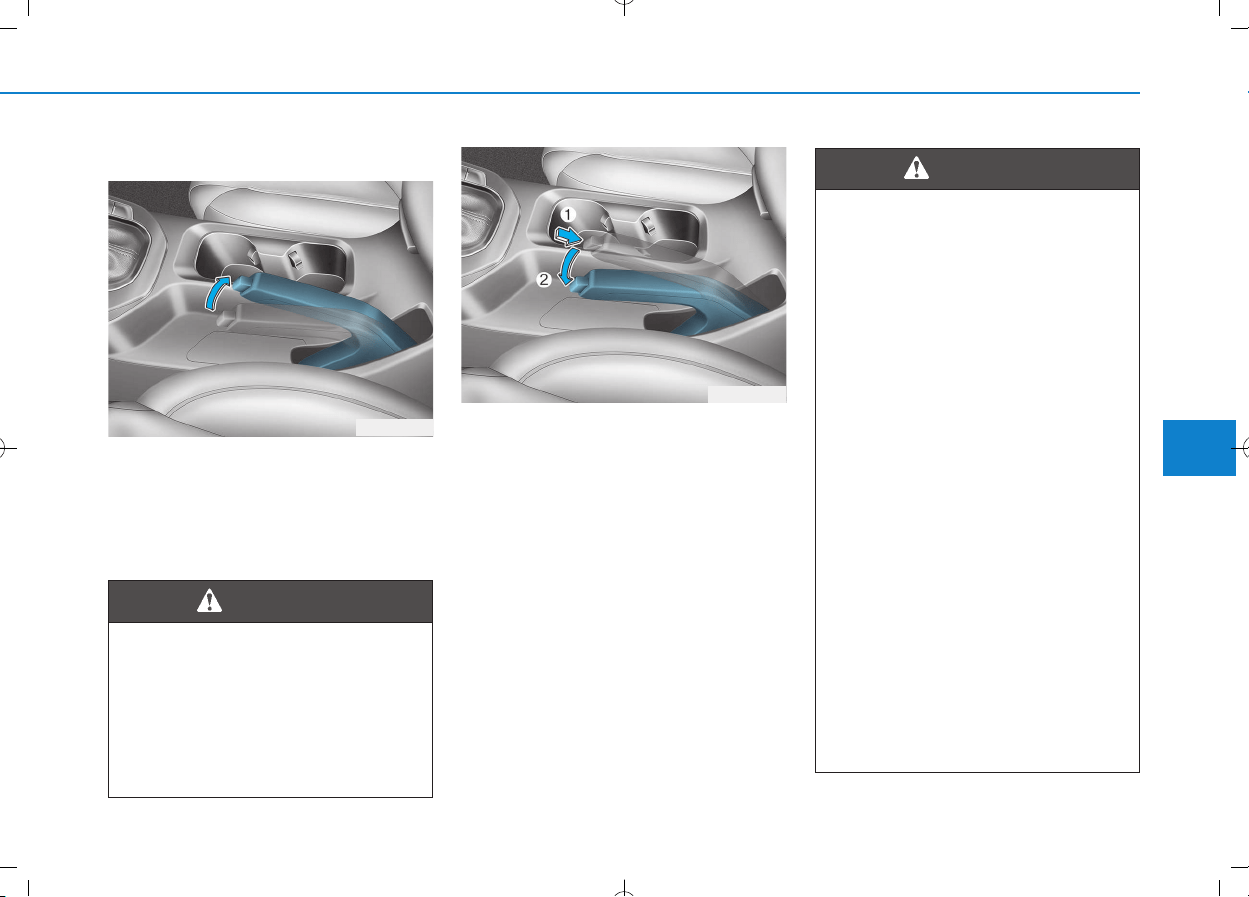
5-25
Driving your vehicle
5
Parking brake
Always set the parking brake before
leaving the vehicle, to apply:
Firmly depress the brake pedal.
Pull up the parking brake lever as far
as possible.
To release:
Firmly depress the brake pedal.
Slightly pull up the parking brake
lever.
While pressing the release button
(1), lower the parking brake (2).
If the parking brake does not release
or does not release all the way, we
recommend that the system be
checked by an authorized HYUNDAI
dealer.
• Whenever leaving the vehicle
or parking, always come to a
complete stop and continue
to depress the brake pedal.
Move the shift lever into 1st
gear when the vehicle is
parked on a uphill and in R
(Reverse) on a downhill, then
apply the parking brake, and
place the ignition switch in
the LOCK/OFF position.
Vehicles with the parking
brake not fully engaged are at
risk for moving inadvertently
and causing injury to yourself
or others.
• When parking on an incline,
block the wheels to prevent
the vehicle from rolling down.
• NEVER allow anyone who is
unfamiliar with the vehicle to
touch the parking brake. If the
parking brake is released
unintentionally, serious injury
may occur.
(Continued)
WARNING
OPD056017
To reduce the risk of SERIOUS
INJURY or DEATH, do not oper-
ate the parking brake while the
vehicle is moving except in an
emergency situation. It could
damage the brake system and
lead to an accident.
WARNING
OPD056016
5-26
Driving your vehicle
• Do not apply the accelerator
pedal while the parking brake is
engaged. If you depress the
accelerator pedal with the park-
ing brake engaged, a warning
will sound. Damage to the park-
ing brake may occur.
• Driving with the parking brake on
can overheat the braking system
and cause premature wear or
damage to brake parts. Make sure
the parking brake is released and
the Brake Warning Light is off
before driving.
Check the Parking
Brake Warning Light
by placing the ignition
switch to the ON posi-
tion (do not start the
engine).
This light will be illuminated when the
parking brake is applied with the igni-
tion switch in the START or ON posi-
tion.
Before driving, be sure the parking
brake is released and the Brake
Warning Light is OFF.
If the Parking Brake Warning Light
remains on after the parking brake is
released while the engine is running,
there may be a malfunction in the
brake system. Immediate attention is
necessary.
If at all possible, cease driving the
vehicle immediately. If that is not pos-
sible, use extreme caution while
operating the vehicle and only con-
tinue to drive the vehicle until you
can reach a safe location.
Anti-lock Brake System (ABS)
NOTICE
An Anti-Lock Braking System
(ABS) or an Electronic Stability
Control (ESC) system will not
prevent accidents due to
improper or dangerous driving
maneuvers. Even though vehi-
cle control is improved during
emergency braking, always
maintain a safe distance
between you and objects ahead
of you. Vehicle speeds should
always be reduced during
extreme road conditions. The
braking distance for vehicles
equipped with ABS or ESC may
be longer than for those without
these systems in the following
road conditions.
Drive your vehicle at reduced
speeds during the following
conditions:
• Rough, gravel or snow-cov-
ered roads.
(Continued)
WARNING
(Continued)
• Only release the parking brake
when you are seated inside the
vehicle with your foot firmly on
the brake pedal.

5-27
Driving your vehicle
5
ABS is an electronic braking system
that helps prevent a braking skid.
ABS allows the driver to steer and
brake at the same time.
Using ABS
To obtain the maximum benefit from
your ABS in an emergency situation,
do not attempt to modulate your
brake pressure and do not try to
pump your brakes. Depress your
brake pedal as hard as possible.
When you apply your brakes under
conditions which may lock the
wheels, you may hear sounds from
the brakes, or feel a corresponding
sensation in the brake pedal. This is
normal and it means your ABS is
active.
ABS does not reduce the time or dis-
tance it takes to stop the vehicle.
Always maintain a safe distance from
the vehicle in front of you.
ABS will not prevent a skid that
results from sudden changes in
direction, such as trying to take a
corner too fast or making a sudden
lane change. Always drive at a safe
speed for the road and weather con-
ditions.
ABS cannot prevent a loss of stabili-
ty. Always steer moderately when
braking hard. Severe or sharp steer-
ing wheel movement can still cause
your vehicle to veer into oncoming
traffic or off the road.
On loose or uneven road surfaces,
operation of the anti-lock brake sys-
tem may result in a longer stopping
distance than for vehicles equipped
with a conventional brake system.
The ABS warning light ( ) will stay
on for several seconds after the
Ignition switch is placed in the ON
position. During that time, the ABS
will go through self-diagnosis and the
light will go off if everything is nor-
mal. If the light stays on, you may
have a problem with your ABS. We
recommend that you contact an
authorized HYUNDAI dealer as soon
as possible.
(Continued)
• On roads where the road sur-
face is pitted or has different
surface height.
• Tire chains are installed on
your vehicle.
The safety features of an ABS
or ESC equipped vehicle should
not be tested by high speed
driving or cornering. This could
endanger the safety of yourself
or others.
5-28
Driving your vehicle
When you drive on a road having
poor traction, such as an icy road,
and apply your brakes continu-
ously, the ABS will be active con-
tinuously and the ABS warning
light ( ) may illuminate. Pull
your vehicle over to a safe place
and turn the engine off.
Restart the engine. If the ABS
warning light is off, then your ABS
system is normal.
Otherwise, you may have a prob-
lem with your ABS system. We
recommend that you contact an
authorized HYUNDAI dealer as
soon as possible.
Information
When you jump start your vehicle
because of a drained battery, the ABS
warning light ( ) may turn on at the
same time. This happens because of
the low battery voltage. It does not
mean your ABS is malfunctioning.
Have the battery recharged before
driving the vehicle.
Electronic Stability Control
(ESC)
The Electronic Stability Control
(ESC) system helps to stabilize the
vehicle during cornering maneuvers.
ESC checks where you are steering
and where the vehicle is actually
going. ESC applies braking pressure
to any one of the vehicle's brakes
and intervenes in the engine man-
agement system to assist the driver
with keeping the vehicle on the
intended path. It is not a substitute
for safe driving practices. Always
adjust your speed and driving to the
road conditions.
i
NOTICE
Never drive too fast for the road
conditions or too quickly when
cornering. The ESC system will
not prevent accidents.
Excessive speed in turns, abrupt
maneuvers, and hydroplaning
on wet surfaces can result in
severe accidents.
WARNING
If the ABS warning light ( ) is
on and stays on, you may have
a problem with the ABS. Your
power brakes will work normal-
ly. To reduce the risk of serious
injury or death, we recommend
that you contact your HYUNDAI
dealer as soon as possible.
WARNING
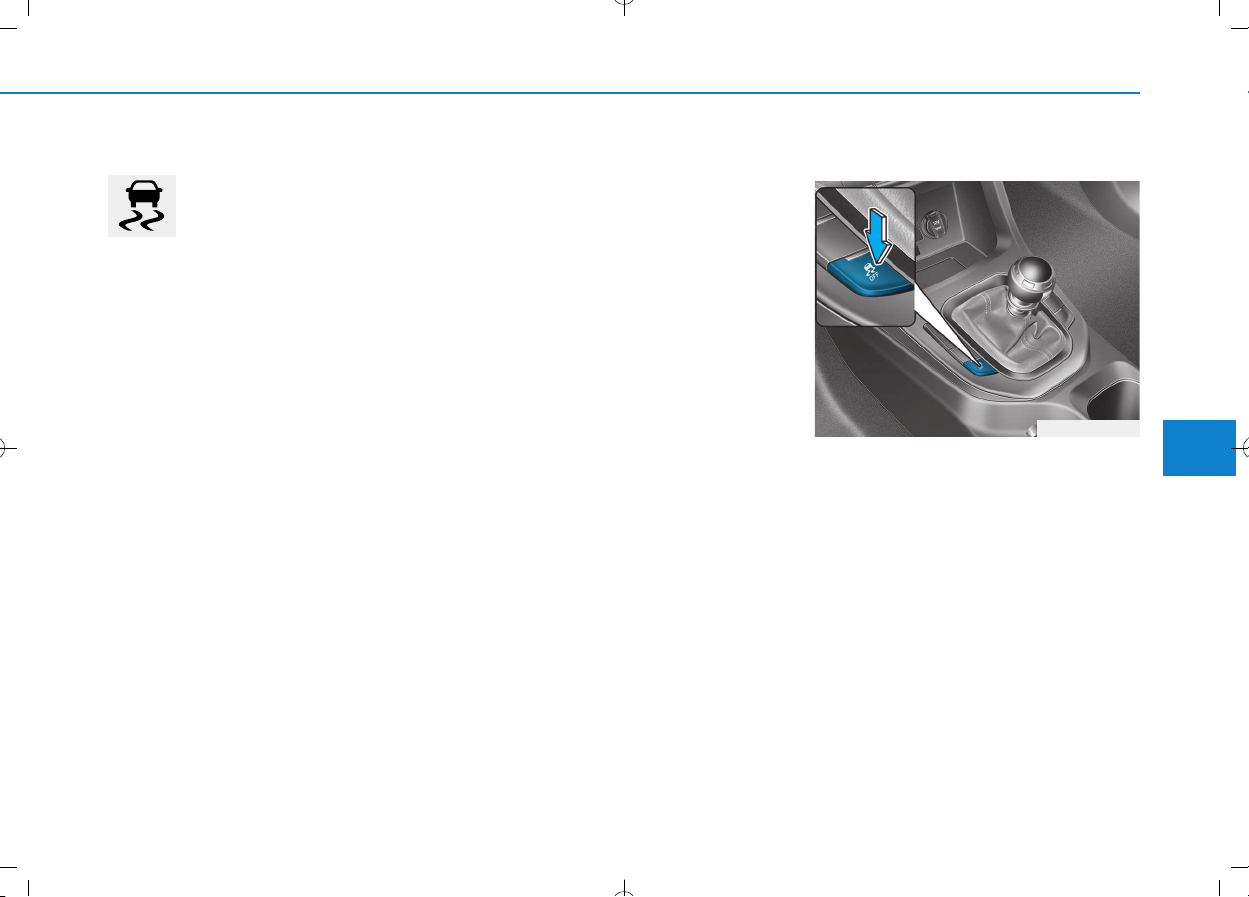
5-29
Driving your vehicle
5
ESC operation
ESC ON condition
When the ignition switch is
in the ON position, the ESC
and the ESC OFF indicator lights illu-
minate for approximately three sec-
onds and goes off, then the ESC is
turned on. (After a new iginition
cycle, the ESC ON mode is always
activated (default setting).)
You may select between the follow-
ing state of ESC:
• ESC NORMAL activated (ESC
ON)
• ESC SPORT activated (ESC
SPORT indicator illuminates)
• ESC deactivated (ESC OFF indi-
cator illuminates)
When operating
When the ESC is in operation, the
ESC indicator light blinks:
• When you apply your brakes under
conditions which may lock the
wheels, you may hear sounds from
the brakes, or feel a corresponding
sensation in the brake pedal. This is
normal and it means your ESC is
active.
• When the ESC operates, the
engine may not respond to the
accelerator as it does under routine
conditions.
• If the Cruise Control was in use
when the ESC activates, the Cruise
Control automatically disengages.
The Cruise Control can be reen-
gaged when the road conditions
allow. See "Cruise Control System"
later in this chapter. (if equipped)
• When moving out of the mud or
driving on a slippery road, the
engine rpm (revolutions per minute)
may not increase even if you press
the accelerator pedal deeply. This is
to maintain the stability and traction
of the vehicle and does not indicate
a problem.
Deactivating / Activating ESC
You may select between the follow-
ing state of ESC:
• ESC NORMAL activated
• ESC SPORT activated (ESC
SPORT indicator illuminates)
• ESC deactivated (ESC OFF indi-
cator illuminates)
OPDEN047208
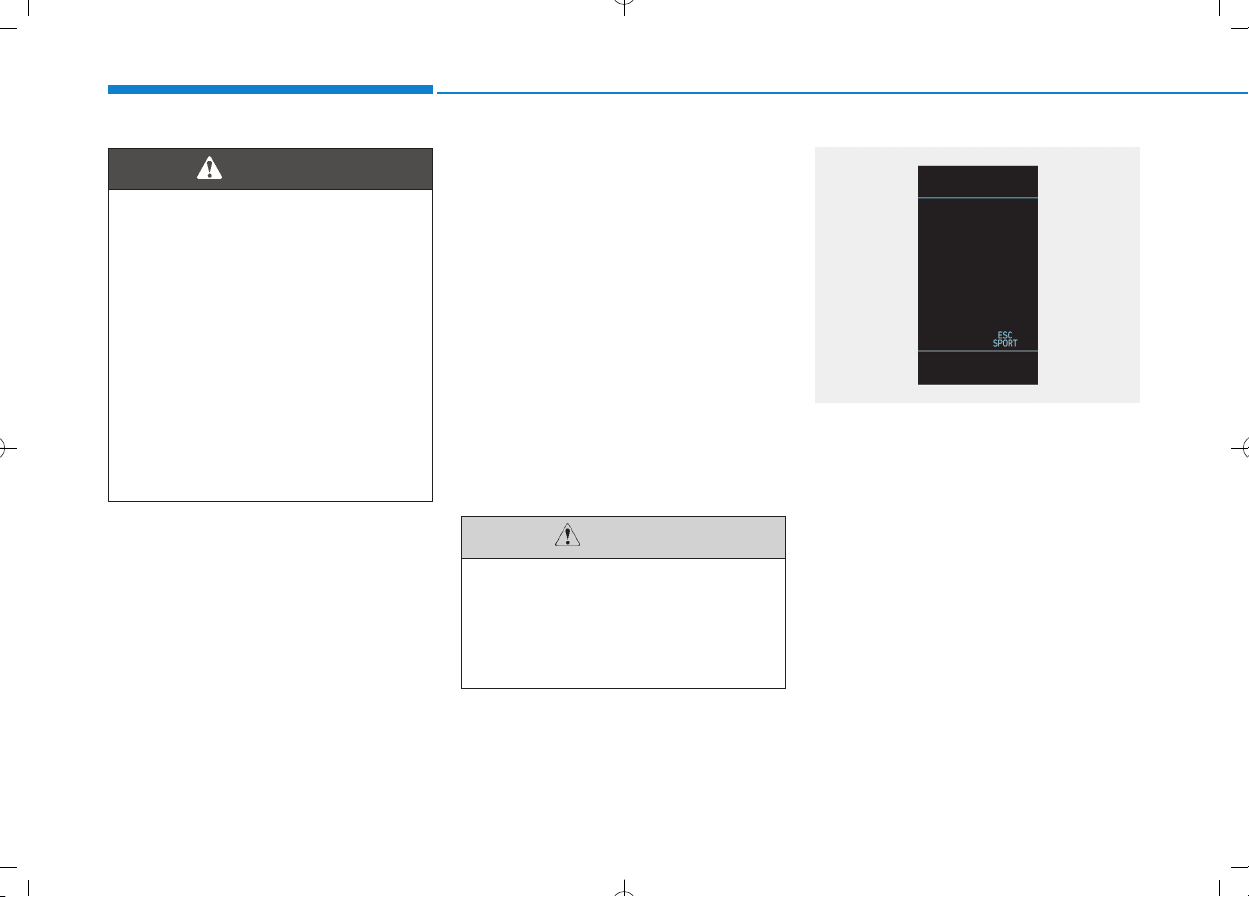
5-30
Driving your vehicle
In the following situations, it may be
better to activate ESC SPORT or
deactivate ESC (ESC OFF):
• When using snow chains
• Driving in deep snow
• Driving in sand or gravel
• Driving on specially designed
roads where oversteering and
understeering characteristics are
desired
We recommend only qualified and
experienced drivers to drive the vehi-
cle with the ESC deactivated or ESC
SPORT activated.
ESC SPORT
• To activate ESC SPORT mode
Press the ESC OFF button briefly.
The ESC SPORT indicator light illu-
minates on the cluster LCD display.
In this state, ESC only stabilizes the
vehicle to a limited degree.
When ESC SPORT mode is activated:
- ESC only improves driving stabil-
ity to a limited degree.
- Traction control is still activated,
but with less wheel control (more
slip).
- Engine torque can partially be
limited for the vehicle's stability
and the driving wheel spin may
be restricted for better traction.
After the above situations are
over, activate ESC immediately.
If not, the vehicle can be unsta-
ble due to vehicle slip or wheel
spin.
CAUTION
OPDEN047448
• If you deactivate ESC, ESC no
longer stabilizes the vehicle.
There is an increased risk of
skidding and an accident.
• When ESC SPORT mode is
activated, the stability support
from ESC will be less than in
"ESC ON mode", there is a
greater risk of skidding and
an accident.
Only deactivate ESC or activate
ESC SPORT in the situations
described in the following.
WARNING
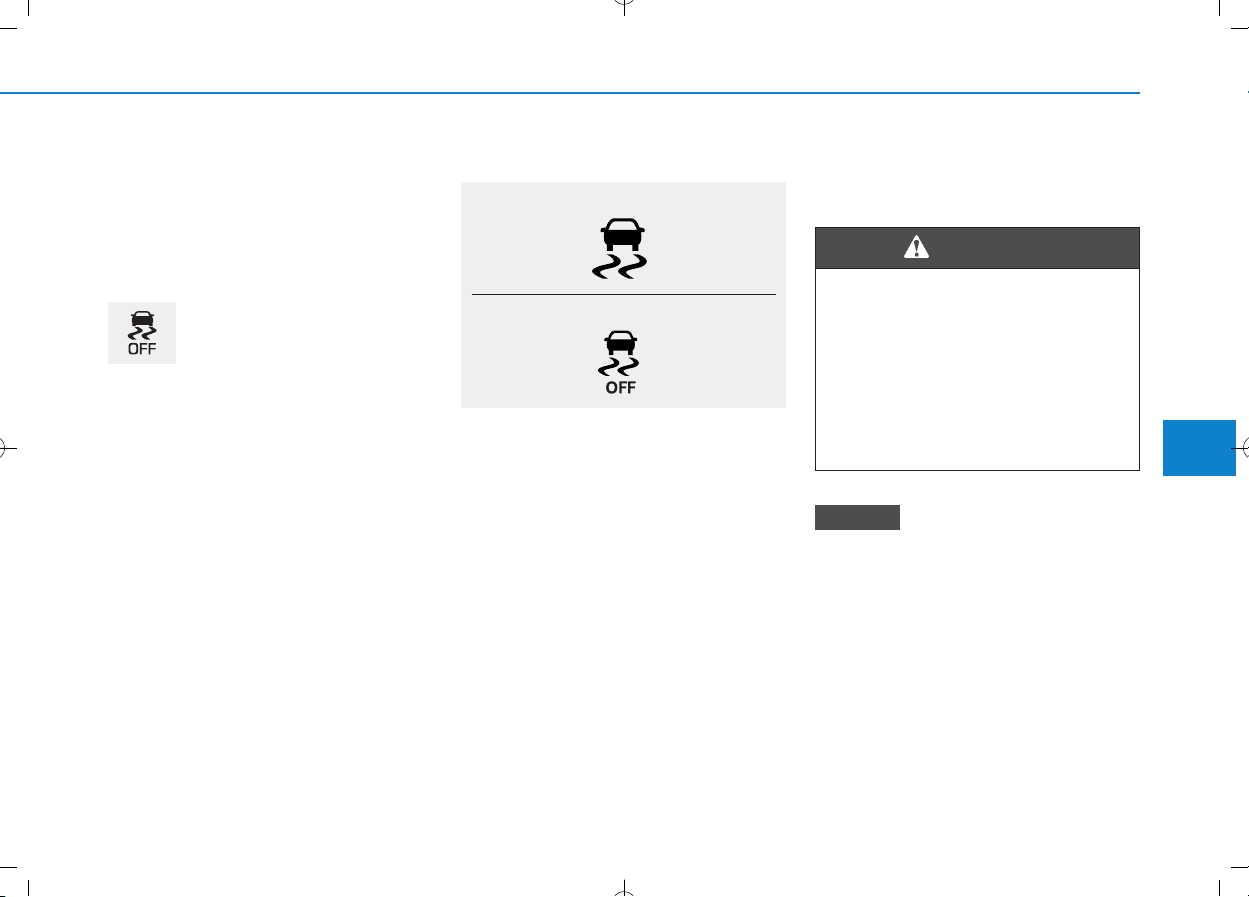
5-31
Driving your vehicle
• To deactivate ESC SPORT mode
Press the ESC OFF button briefly.
The ESC SPORT indicator light will
go off on the cluster LCD display.
To deactivate ESC (ESC OFF)
Press and hold the ESC
OFF button continuously for
more than 3 seconds. The
ESC OFF indicator light and
message "Traction & Stability Control
disabled" illuminates and a warning
chime sounds. In this state, both the
traction control function of ESC
(engine management) and the brake
control function of ESC (braking
management) are disabled.
To activate the ESC again, briefly
press the ESC OFF button. The ESC
OFF indicator light will go off.
Indicator lights
When the ignition switch is in the ON
position, the ESC indicator light illu-
minates, then goes off if the ESC
system is operating normally.
The ESC indicator light blinks when-
ever the ESC is operating.
If the ESC indicator light stays on,
your vehicle may have a malfunction
with the ESC system. When this
warning light illuminates we recom-
mend that the vehicle be checked by
an authorized HYUNDAI dealer as
soon as possible.
The ESC OFF indicator light comes
on when the ESC is turned off with
the button.
Driving with wheels and tires with
different sizes may cause the ESC
system to malfunction. Before
replacing tires, make sure all four
tires and wheels are the same
size. Never drive the vehicle with
different sized wheels and tires
installed.
NOTICE
5
■ ESC indicator light (blinks)
■ ESC OFF indicator light (comes on)
When the ESC is blinking, this
indicates the ESC is active:
Drive slowly and NEVER attempt
to accelerate. NEVER turn the
ESC off while the ESC indicator
light is blinking or you may lose
control of the vehicle resulting in
an accident.
WARNING
5-32
Driving your vehicle
ESC OFF usage
When Driving
The ESC OFF mode should only be
used briefly to help free the vehicle if
stuck in snow or mud, by temporarily
stopping operation of the ESC, to
maintain wheel torque.
To turn ESC off while driving, press
the ESC OFF button while driving on
a flat road surface.
To prevent damage to the trans-
mission:
• Do not allow wheel(s) of one
axle to spin excessively while
the ESC, ABS, and parking brake
warning lights are displayed.
The repairs would not be cov-
ered by the vehicle warranty.
Reduce engine power and do
not spin the wheel(s) excessive-
ly while these lights are dis-
played.
• When operating the vehicle on a
dynamometer, make sure the
ESC is turned off (ESC OFF light
illuminated).
Information
Turning the ESC off does not affect
ABS or standard brake system opera-
tion.
Drive mode selection
When the ESC is on, the character-
istic of ESC varies according to
which drive mode is selected by
pressing the DRIVE MODE or N but-
ton on the steering wheel.
For more details, refer to "Drive
Mode Integrated Control System"
in this chapter.
i
NOTICE
Mode button
Selected
mode
Characteristic
of ESC
DRIVE MODE
button
ECO mode NORMAL
NORMAL
mode
NORMAL
SPORT mode NORMAL
N button
N mode SPORT
N CUSTOM
mode
NORMAL/
SPORT/OFF
Don't use ESC SPORT mode or
ESC OFF while using a minis-
pare tire or a tire repair kit is in
use!
WARNING
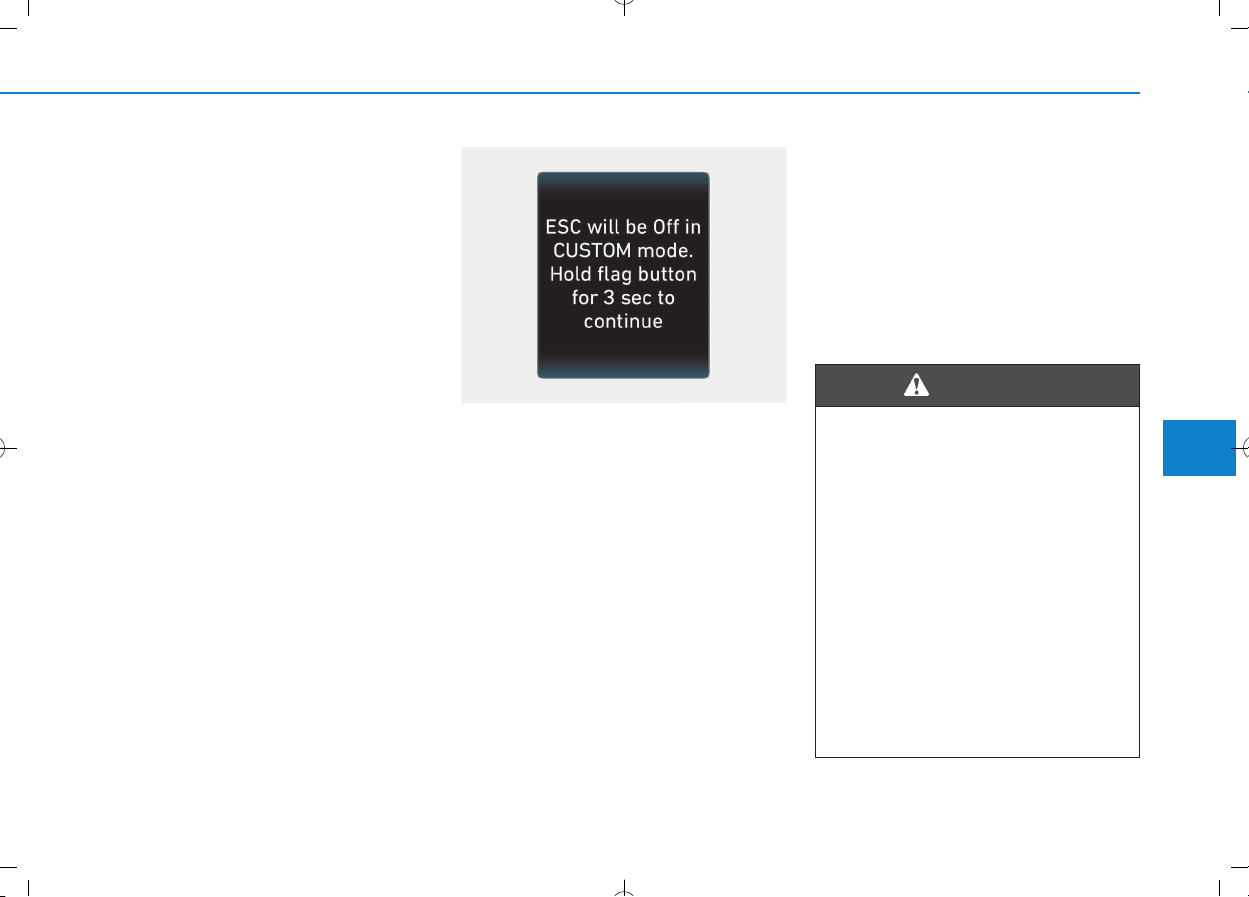
5-33
Driving your vehicle
5
CUSTOM mode
You may select the drive mode you
prefer from the Audio or AVN screen.
• Select CUSTOM mode by pressing
the N button on the steering wheel.
The audio or AVN screen will dis-
play the CUSTOM mode menu.
From the CUSTOM mode menu,
select 'ESC → NORMAL / SPORT
/ OFF'.
• You may directly go to the CUS-
TOM mode menu by touching the
audio or AVN screen. For more
details, refer to the Audio manu-
al in chapter 4 or the separately
supplied Multimedia manual.
When ESC is turned off or on from
the CUSTOM mode, you may not
turn OFF/ON the system with the
ESC OFF button. If the ESC OFF
button is pressed, a message "ESC
will be Off in CUSTOM mode. Hold
flag button for 3 sec to continue" will
appear on the cluster LCD display.
You may change the state of ESC
(NORMAL, SPORT, OFF) from the
CUSTOM mode.
Vehicle Stability Management
The Vehicle Stability Management
(VSM) is a function of the Electronic
Stability Control (ESC) system. It
helps ensure the vehicle stays stable
when accelerating or braking sud-
denly on wet, slippery and rough
roads where traction over the four
tires can suddenly become uneven.
OPDEN057497
Take the following precautions
when using the Vehicle Stability
Management (VSM):
• ALWAYS check the speed and
the distance to the vehicle
ahead. The VSM is not a sub-
stitute for safe driving prac-
tices.
• Never drive too fast for the
road conditions.The VSM sys-
tem will not prevent acci-
dents. Excessive speed in bad
weather, slippery and uneven
roads can result in severe
accidents.
WARNING
5-34
Driving your vehicle
VSM operation
VSM ON condition
The VSM operates when:
• The Electronic Stability Control
(ESC) is on.
• Vehicle speed is approximately
above 15 km/h (9 mph) on curve
roads.
• Vehicle speed is approximately
above 20 km/h (12 mph) when the
vehicle is braking on rough roads.
When operating
When you apply your brakes under
conditions which may activate the
ESC, you may hear sounds from the
brakes, or feel a corresponding sen-
sation in the brake pedal. This is nor-
mal and it means your VSM is active.
Information
The VSM does not operate when:
• Driving on a banked road such as
gradient or incline.
• Driving in reverse.
• The ESC OFF indicator light is on.
• The EPS (Electric power steering)
warning light ( ) is on or blinks.
Driving with wheels and tires with
different sizes may cause the ESC
system to malfunction. Before
replacing tires, make sure all four
tires and wheels are the same
size. Never drive the vehicle with
different sized tires and wheels
installed.
NOTICE
i
If the ESC indicator light ( ) or
EPS warning light ( ) stays
or blinks, your vehicle may have
a malfunction with the VSM sys-
tem. When the warning light illu-
minates we recommend that the
vehicle be checked by an
authorized HYUNDAI dealer as
soon as possible.
WARNING

5-35
Driving your vehicle
5
Hill-Start Assist Control (HAC)
The Hill-Start Assist Control (HAC)
helps prevent the vehicle from rolling
backwards when starting a vehicle
from a stop on a hill. The system
operates the brakes automatically for
approximately 2 seconds and releas-
es the brake after 2 seconds or when
the accelerator pedal is depressed.
Information
• The HAC does not operate when the
shift lever is in P (Park) or N
(Neutral).
• The HAC activates even when the
ESC (Electronic Stability Control) is
off. However, it does not activate,
when the ESC does not operate nor-
mally.
Emergency Stop Signal (ESS)
(if equipped)
The Emergency Stop Signal system
alerts the driver behind by blinking
the stop lights, while sharply and
severely braking.
The system is activated when:
• The vehicle suddenly stops. (The
deceleration power exceeds 7 m/s
2
,
and the driving speed exceeds 55
km/h (34 mph).)
• The ABS is activated and the driv-
ing speed exceeds 55 km/h (34
mph).
The hazard warning flasher automat-
ically turns ON after blinking the stop
lights:
• When the driving speed is under
40 km/h (25 mph),
• When the ABS is deactivated, and
• When the sudden braking situation
is over.
The hazard warning flasher turns
OFF:
• When the vehicle drives at a low
speed for a certain period of time.
The driver can manually turn OFF the
hazard warning flasher by pressing
the button.
Information
The Emergency Stop Signal (ESS) sys-
tem will not activate, when the hazard
warning flashers are already on.
i
i
Always be ready to depress the
accelerator pedal when starting
off on a incline. The HAC acti-
vates only for approximately 2
seconds.
WARNING

5-36
Driving your vehicle
Good braking practices
Wet brakes can be dangerous! The
brakes may get wet if the vehicle is
driven through standing water or if it
is washed. Your vehicle will not stop
as quickly if the brakes are wet. Wet
brakes may cause the vehicle to pull
to one side.
To dry the brakes, apply the brakes
lightly until the braking action returns
to normal, taking care to keep the
vehicle under control at all times. If
the braking action does not return to
normal, stop as soon as it is safe to
do so and we recommend that you
call an authorized HYUNDAI dealer
for assistance.
DO NOT drive with your foot resting
on the brake pedal. Even light, but
constant pedal pressure can result in
the brakes overheating, brake wear,
and possibly even brake failure.
If a tire goes flat while you are driv-
ing, apply the brakes gently and
keep the vehicle pointed straight
ahead while you slow down. When
you are moving slowly enough for it
to be safe to do so, pull off the road
and stop in a safe location.
Keep your foot firmly on the brake
pedal when the vehicle is stopped to
prevent the vehicle from rolling for-
ward.
Whenever leaving the vehicle or
parking, always come to a com-
plete stop and continue to
depress the brake pedal. Move
the shift lever into 1st gear
when the vehicle is parked on a
uphill and in R (Reverse) on a
downhill, then apply the parking
brake, and place the ignition
switch in the LOCK/OFF posi-
tion.
Vehicles parked with the park-
ing brake not applied or not
fully engaged may roll inadver-
tently and may cause injury to
the driver and others. ALWAYS
apply the parking brake before
exiting the vehicle.
WARNING
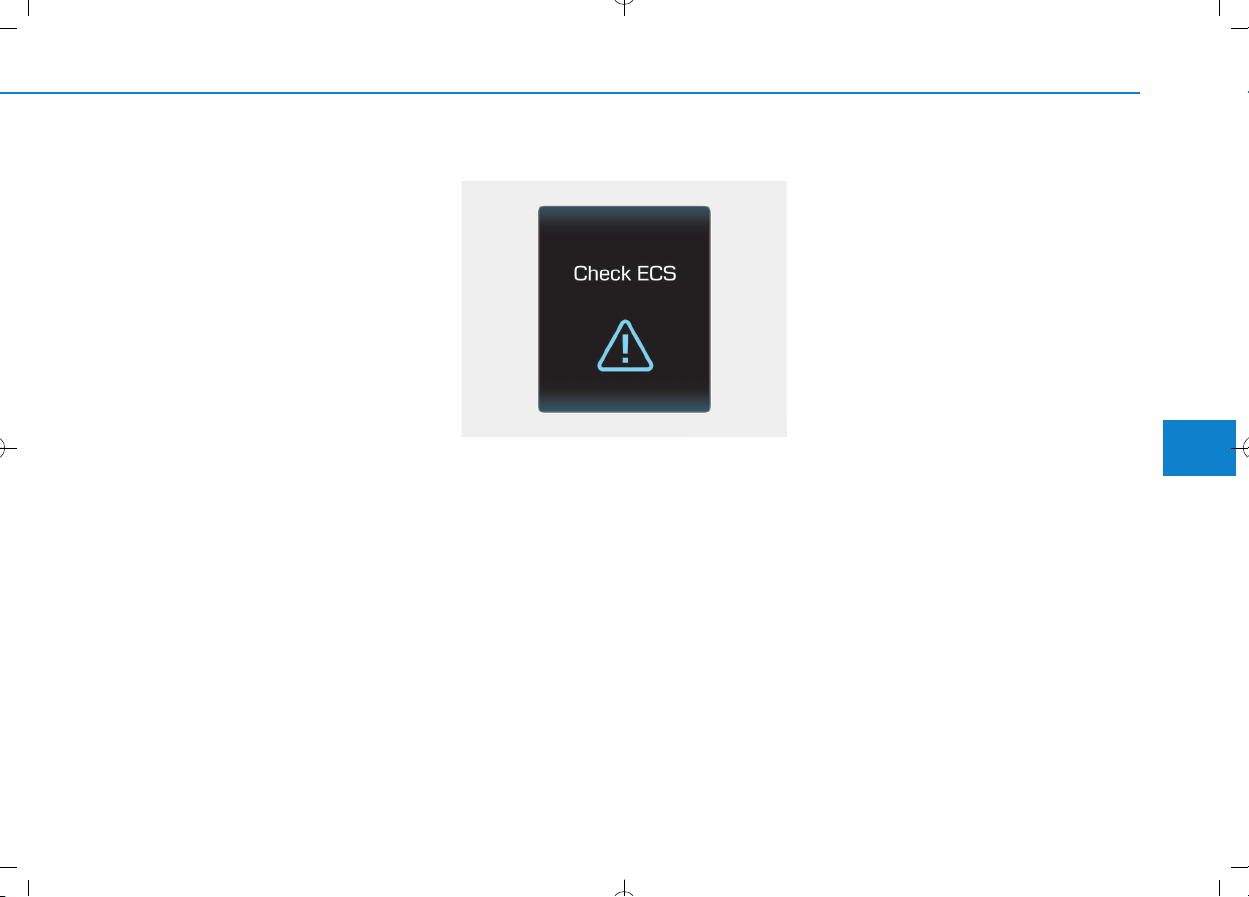
5-37
Driving your vehicle
5
The Electronic Control Suspension
(ECS) controls the vehicle suspen-
sion automatically to maximize driv-
ing comfort by taking into account
the driving conditions such as speed,
surface of the road, cornering, stop-
ping requirements and acceleration.
System malfunction
Check ECS
If the ECS warning message comes
on, you may have a problem with the
ECS system. We recommend that
you have the system checked by an
authorized HYUNDAI dealer.
EELLEECCTTRROONNIICC CCOONNTTRROOLL SSUUSSPPEENNSSIIOONN ((EECCSS))
OPDEN047433

5-38
Driving your vehicle
Electronic Limited Slip Differential
refers to a feature equipped with a
mechanism that controls the differen-
tial functions of the wheels.
The Electronic Limited Slip
Differential helps:
- Improve handling performance
when circling at high speed.
- Improve launching performance.
- Prevent slipping on rainy or snowy
roads due to dissimilar friction of
the left and right wheels.
Drive mode selection
The characteristic of e-LSD varies
according to which drive mode is
selected by pressing the DRIVE
MODE or N button on the steering
wheel.
For more details, refer to "Drive
Mode Integrated Control System"
in this chapter.
CUSTOM mode
You may select the drive mode you
prefer from the Audio or AVN screen.
• Select CUSTOM mode by pressing
the N button on the steering wheel.
The audio or AVN screen will display
the CUSTOM mode menu. From the
CUSTOM mode menu, select 'e-
LSD → NORMAL/SPORT'.
• You may directly go to the CUS-
TOM mode menu by touching the
audio or AVN screen. For more
details, refer to the Audio manu-
al in chapter 4 or the separately
supplied Multimedia manual.
EELLEECCTTRROONNIICC LLIIMMIITTEEDD SSLLIIPP DDIIFFFFEERREENNTTIIAALL ((IIFF EEQQUUIIPPPPEEDD))
Never run wheels with one of
them lifted by the jack. It is
extremely dangerous for a vehi-
cle equipped with Electronic
Limited Slip Differential.
WARNING
Mode button
Selected
mode
Characteristic
of e-LSD
DRIVE MODE
button
ECO mode NORMAL
NORMAL
mode
NORMAL
SPORT mode SPORT
N button
N mode SPORT
N CUSTOM
mode
NORMAL/
SPORT
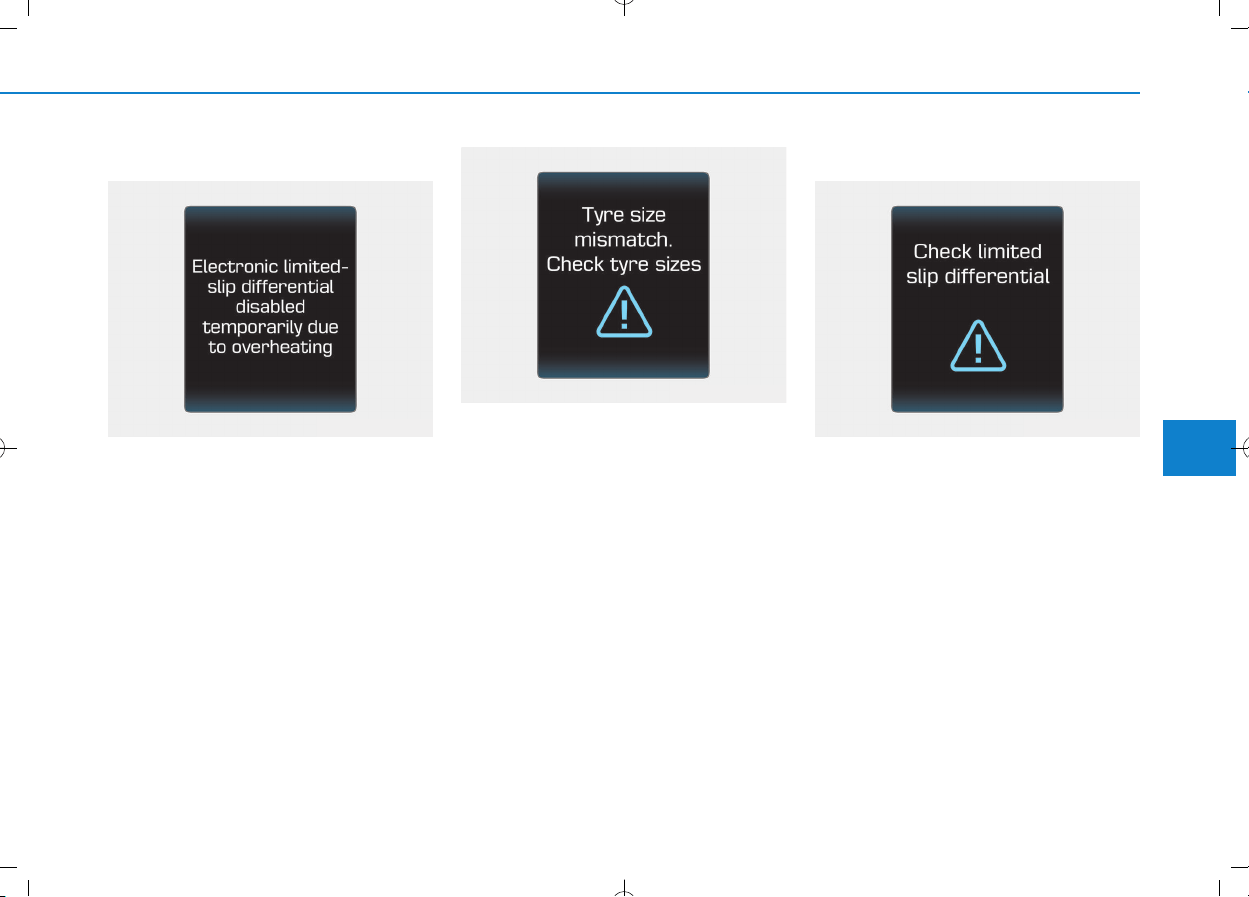
5-39
Driving your vehicle
5
Warning messages
Electronic Limited Slip Differential
disabled temporarily due to over-
heating
Overheating of related parts will tem-
porarily disable e-LSD. Wait until the
vehicle cools down.
Tyre size mismatch. Check tyre
sizes
If your vehicle is equipped with differ-
ent tires (size, type, etc.) on the front,
the message will appear. To use the
Electronic Limited Slip Differential,
equip the vehicle with the same tires
on the front.
System malfunction
Check limited slip differential
If the Electronic Limited Slip
Differential warning message comes
on, you may have a problem with the
Electronic Limited Slip Differential
system. We recommend that you
have the system checked by an
authorized HYUNDAI dealer
OPDEN047445
OPDEN047442
OPDEN047177L
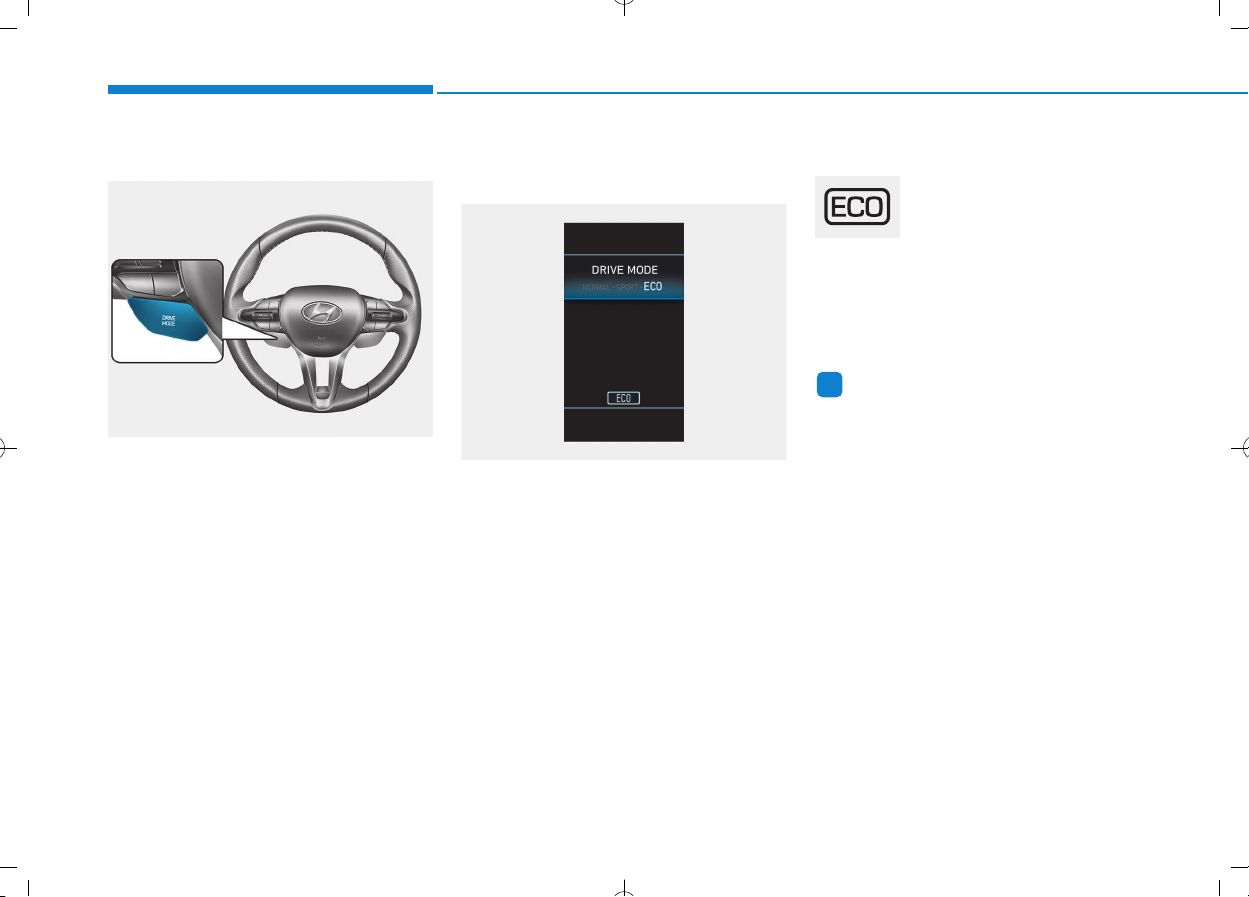
5-40
Driving your vehicle
DRIVE MODE button
The drive mode may be selected
according to the driver's preference
or road condition.
The system resets to be in the NOR-
MAL mode, when the engine is
restarted.
The mode changes, whenever the
DRIVE MODE button is pressed.
ECO mode
When the Drive Mode is
set to ECO mode, the
engine and transmission
control logic are changed
to maximize fuel efficiency.
• When the ECO mode is selected by
pressing the DRIVE MODE button,
the ECO indicator will illuminate.
Information
Fuel efficiency depends on the driver's
driving habit and road condition.
When ECO mode is activated:
• The acceleration response may be
slightly reduced as the accelerator
pedal is depressed moderately.
• The air conditioner performance
may be limited.
• The shift pattern of the automatic
transmission may change.
• The engine noise may get louder.
The above situations are normal
conditions when ECO mode is acti-
vated, to improve fuel efficiency.
i
DDRRIIVVEE MMOODDEE IINNTTEEGGRRAATTEEDD CCOONNTTRROOLL SSYYSSTTEEMM
OPDEN057494
OPDEN047185L
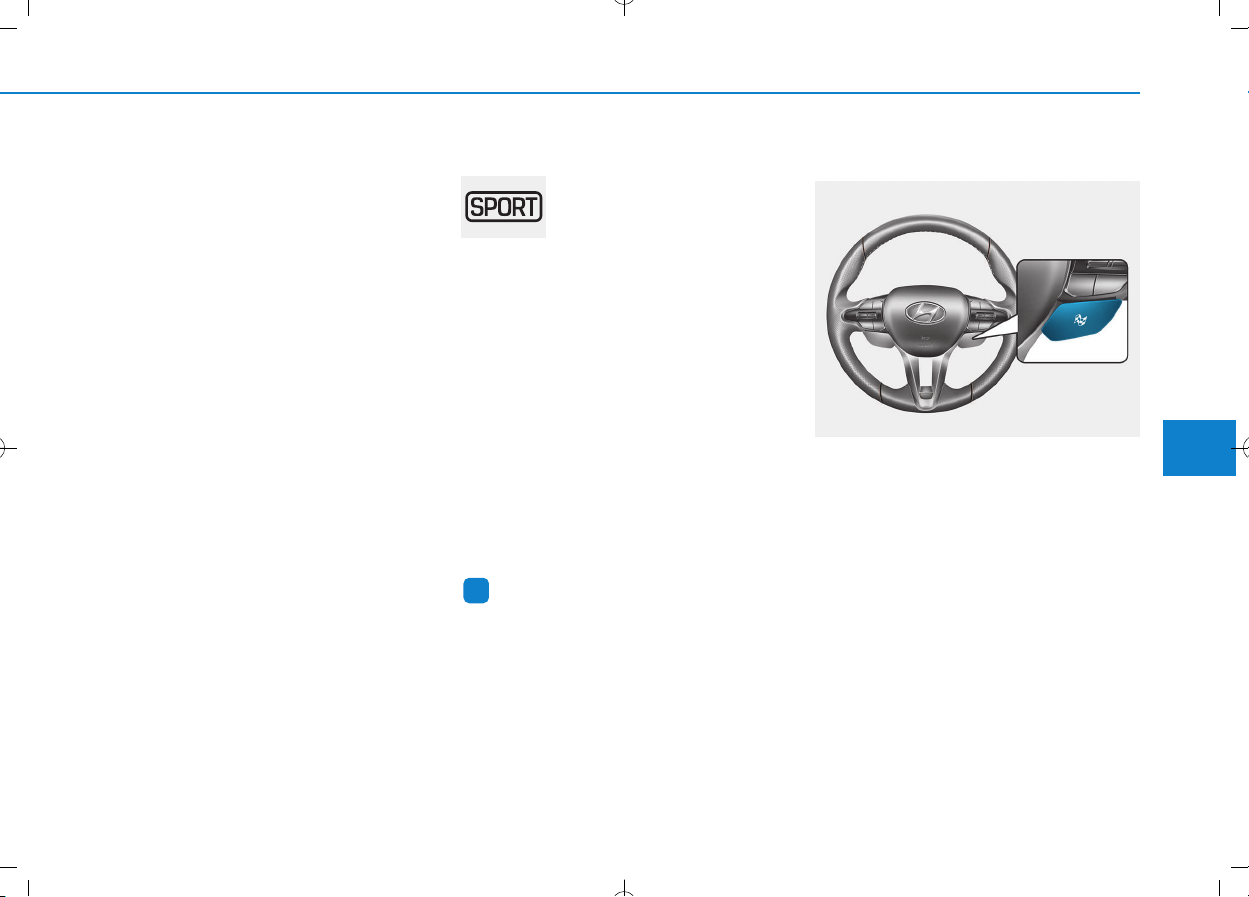
5-41
Driving your vehicle
5
Limitation of ECO mode opera-
tion:
If the following conditions occur while
ECO mode is operating, the system
operation is limited even though
there is no change in ECO indicator.
• When the coolant temperature is
low:
The system will be limited until
engine performance becomes nor-
mal.
• When driving up a hill:
The system will be limited to gain
power when driving uphill because
engine torque is restricted.
The system will be limited due to
the shift location.
• When the accelerator pedal is
deeply depressed for a few sec-
onds:
The system will be limited, judging
that the driver wants to speed up.
SPORT mode
SPORT mode manages
the driving dynamics by
automatically adjusting the
steering effort, the engine
and transmission control
logic for enhanced driving
performance.
• When SPORT mode is selected by
pressing the DRIVE MODE button,
the SPORT indicator will illuminate.
• When SPORT mode is activated:
- The engine rpm will tend to
remain raised over a certain
length of time even after releas-
ing the accelerator
- Upshifts are delayed when accel-
erating
Information
In SPORT mode, the fuel efficiency
may decrease.
N button
N mode or CUSTOM mode may be
selected by pressing the N button.
The system resets to be in the NOR-
MAL mode, when the engine is
restarted.
i
OPDEN057495
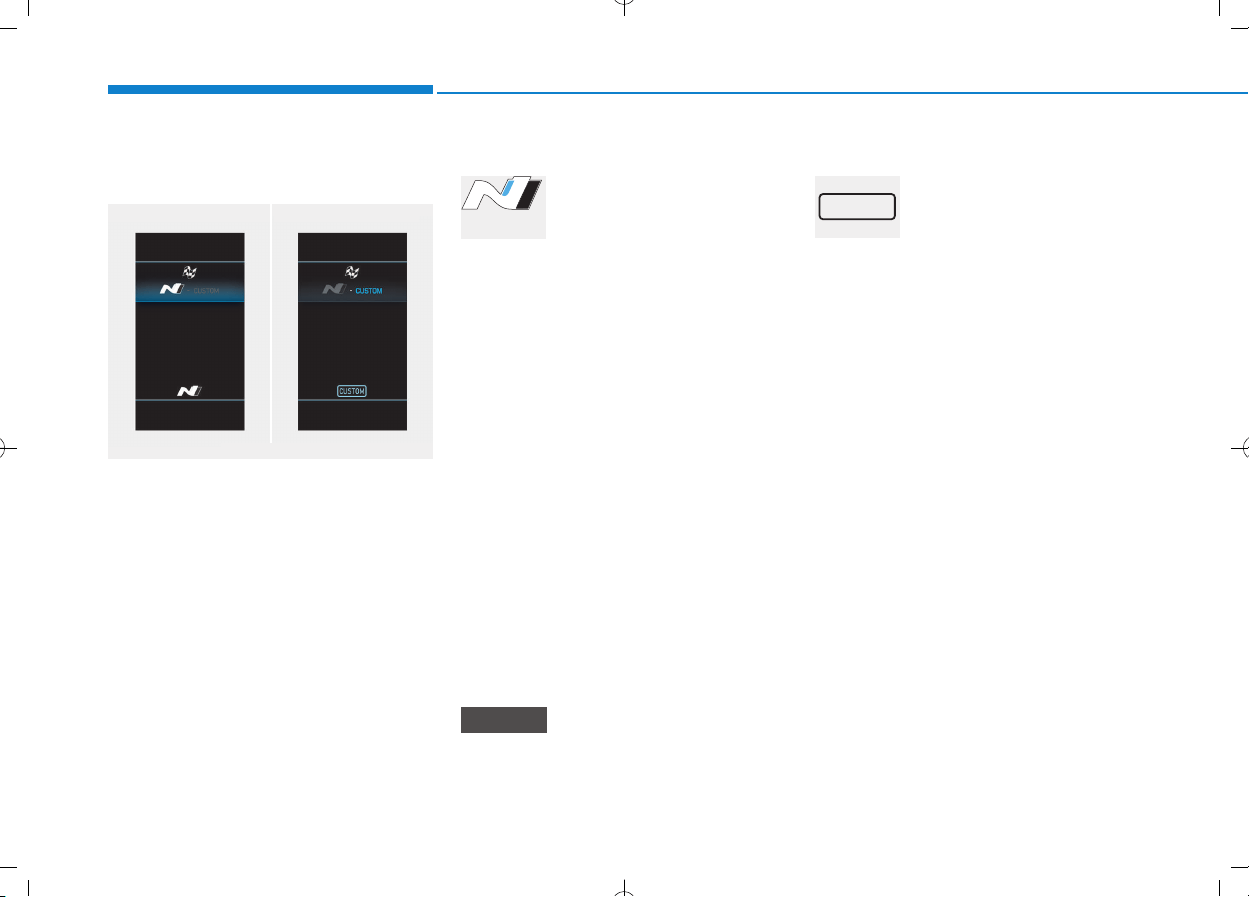
5-42
Driving your vehicle
The mode changes, whenever the N
button is pressed.
N mode
N mode selects the proper
driving mode among
SPORT and SPORT+ for
each components that will
effect the performance of a high-per-
formance vehicle.
• When N mode is selected by
pressing the N button, the N indi-
cator will illuminate.
• N mode (SPORT/SPORT+) man-
ages the driving dynamics by auto-
matically adjusting the steering
effort, and the engine and trans-
mission control logic for enhanced
driver performance.
• When N mode (SPORT/SPORT+)
is activated:
- The engine rpm will tend to
remain raised over a certain
length of time even after releas-
ing the accelerator
- Upshifts are delayed when accel-
erating
In SPORT/SPORT+ mode, the fuel
efficiency may decrease.
CUSTOM mode
In CUSTOM mode, the
driver can select the drive
mode for each component
they prefer on the audio or
AVN screen.
- Engine : NORMAL/SPORT/
SPORT+
- Rev matching : OFF/NORMAL/
SPORT/SPORT+
- E-LSD (Electronic Limited Slip
Differential) : NORMAL/SPORT
- Suspension : NORMAL/SPORT/
SPORT+
- Steering : NORMAL/SPORT/
SPORT+
- ESC (Electronic Stability Control) :
NORMAL/SPORT/OFF
- Exhaust sound : NORMAL/
SPORT/SPORT+
For more details, refer to the
Audio manual in chapter 4 or the
separately supplied Multimedia
manual.
NOTICE
&86720
■ N mode
■ N Custom mode
OPDEN047197/OPDEN047198

5-43
Driving your vehicle
5
Component
DRIVE MODE Button N Button
ECO mode NORMAL mode SPORT mode N mode CUSTOM mode
Engine & Driving
Engine ECO NORMAL SPORT SPORT+
NORMAL / SPORT /
SPORT+
Rev matching OFF NORMAL SPORT SPORT+
OFF / NORMAL /
SPORT / SPORT+
e-LSD *
1
NORMAL NORMAL SPORT SPORT NORMAL / SPORT
Chassis
Suspension NORMAL NORMAL SPORT SPORT+
NORMAL / SPORT /
SPORT+
Steering NORMAL NORMAL SPORT SPORT+
NORMAL / SPORT /
SPORT+
ESC *
2
NORMAL NORMAL NORMAL SPORT
NORMAL / SPORT /
OFF
Sound Exhaust sound *
3
ECO NORMAL SPORT SPORT+
NORMAL / SPORT /
SPORT+
Vehicle characteristic
The characteristic of each components varies according to which drive mode is selected by pressing the DRIVE
MODE or N button on the steering wheel.
The information provided may differ depending on which features are applicable to your vehicle.
*
1
: Electronic Limited Slip Differential
*
2
: Electronic Stability Control
*
3
: a) The volume of the exhaust sound made by the exhaust gas flap (if equipped) changes according to the mode selected.
[Quietest] ECO/NORMAL mode < SPORT mode < N mode [Loudest]
b) An exhaust crackle sound, to deliver emotional effect, is produced while driving when the accelerator pedal is released right after being depressed.
This exhaust sound effect will be heard when SPORT+ is selected for the Sound component. To turn it off, select NORMAL or SPORT for the Engine compo-
nent in CUSTOM mode.
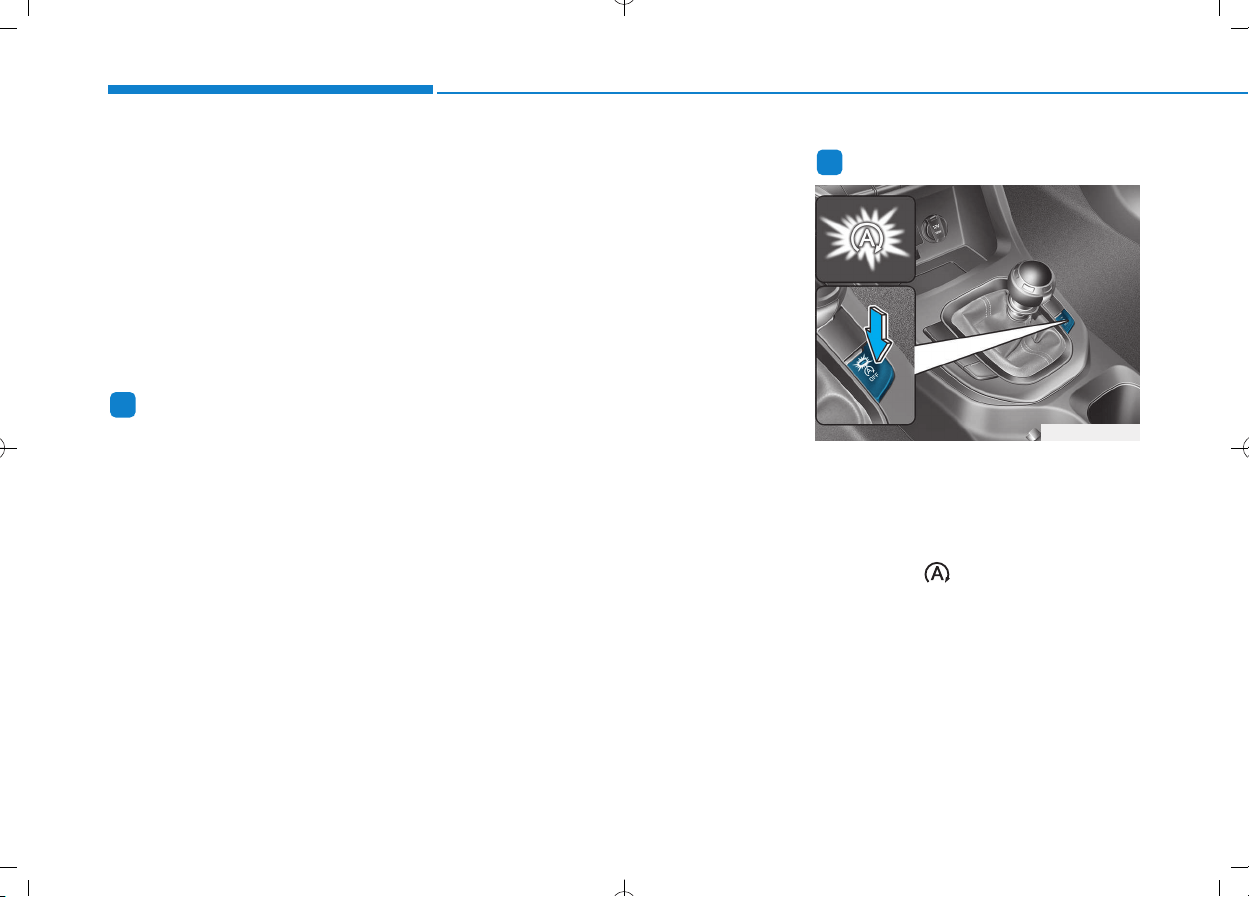
5-44
Driving your vehicle
The ISG system is to reduce the fuel
consumption by automatically shut-
ting down the engine, when the vehi-
cle is at a standstill (i.e. red stop light,
stop sign, and traffic jam).
The engine is automatically started
upon satisfying the starting condi-
tions.
The ISG system is always active,
when the engine is running.
Information
When the engine is automatically
started by the ISG system, some warn-
ing lights (i.e. ABS, ESC, ESC OFF,
EPS, and parking brake warning
light) may illuminate for a few sec-
onds due to the low battery voltage.
However, it does not indicate a mal-
function with the ISG system.
To activate the ISG system
Prerequisite for activation
The ISG system operates in the fol-
lowing situations.
- The driver's seatbelt is fastened.
- The driver's door and the hood are
closed.
- The brake vacuum pressure is
adequate.
- The battery is sufficiently charged.
- The outside temperature is between
-10 °C and 35 °C (14 °F and 95 °F).
- The engine coolant temperature is
not too low.
- The system is not in the diagnostic
mode.
Information
• The ISG system is not activated,
when the prerequisites to activate
the ISG system are unsatisfied. In
this case, the ISG OFF button indi-
cator illuminates, and the auto stop
indicator ( ) illuminates in yellow
on the instrument cluster.
• When the above indicator remains
illuminated on the instrument clus-
ter, we recommend that you have
the ISG system checked by an
authorized HYUNDAI dealer.
i
i
IISSGG ((IIDDLLEE SSTTOOPP AANNDD GGOO)) SSYYSSTTEEMM ((IIFF EEQQUUIIPPPPEEDD))
OPDEN057129
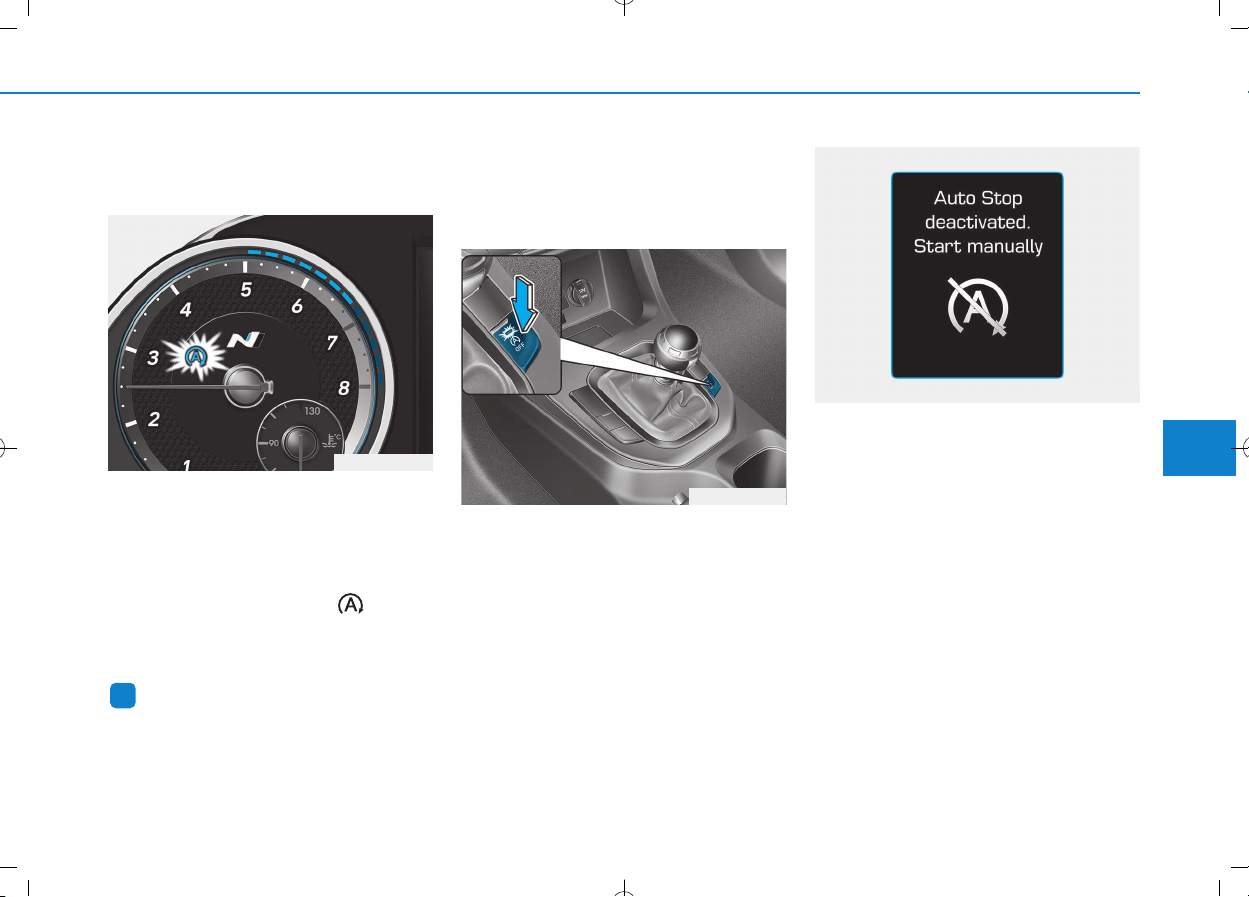
5-45
Driving your vehicle
5
Auto stop
To stop the engine in idle stop mode
1. Decrease the vehicle speed to 5
km/h (3 mph).
2. Set the gear in N (Neutral).
3. Release the clutch pedal.
The auto stop indicator ( ) illumi-
nates in green on the instrument
cluster, when the engine stops.
Information
The driving speed must reach at least
10 km/h (6 mph) after an idle stop to
stop the engine in idle stop mode
again.
In auto stop mode, when the driver
opens the hood, the ISG system will
be deactivated.
When the system is deactivated:
The ISG OFF button indicator illumi-
nates.
The message, "Auto Stop deactivat-
ed. Start manually", appears on the
LCD display with a beep sound.
At this time, restart the vehicle man-
ually by:
Depressing the clutch and brake
pedal with the gear in neutral.
i
OPDEN057031
OPDEN057109
OTLE055036
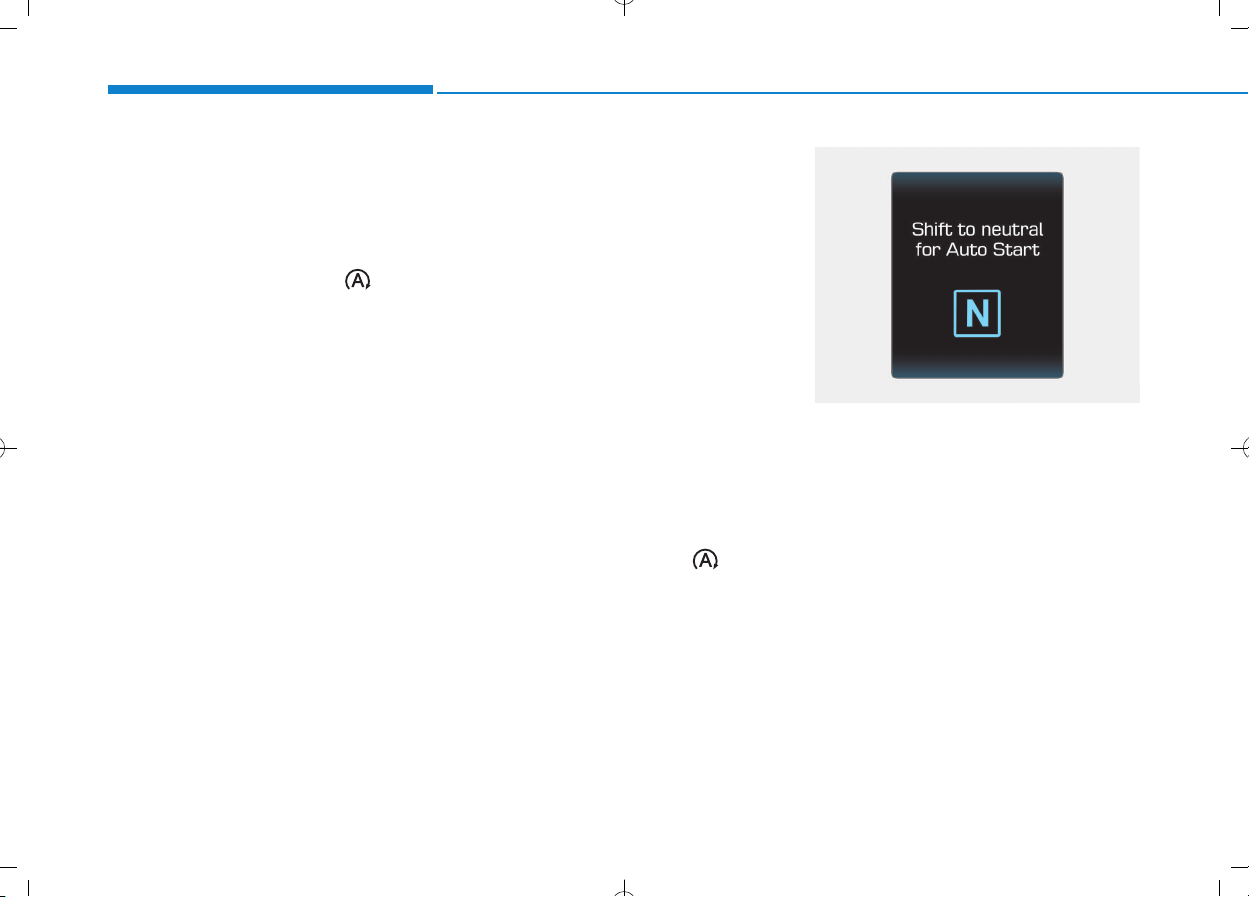
5-46
Driving your vehicle
Auto start
To restart the engine in the auto
stop mode
• Depress the clutch pedal with the
gear in N (Neutral).
The auto stop indicator ( ) goes
OFF on the instrument cluster, when
the engine is restarted.
The engine is automatically restart-
ed in the following situations.
- The fan speed of the manual cli-
mate control system is set above
the 3rd position, with the air condi-
tion ON.
- The fan speed of the automatic cli-
mate control system is set above
the 6th position, with the air condi-
tion ON.
- A certain period of time has
elapsed with the air condition ON.
- The defroster is activated.
- The brake vacuum pressure is low.
- The battery is weak.
- The driving speed exceeds 5 km/h
(3 mph).
The auto stop indicator ( ) blinks
in green for 5 seconds on the instru-
ment cluster and a message "Auto
Start" will appear on the LCD display.
The auto start is temporarily deac-
tivated in the following situations.
When the clutch pedal is depressed
without shifting the gear to neutral, a
message "Shift to neutral for Auto
Start" will appear on the cluster LCD
display. To activate auto start, shift to
neutral and depress the clutch pedal.
OPDEN047446
5-47
Driving your vehicle
5
To deactivate the ISG system
• Press the ISG OFF button to deac-
tivate the ISG system. Then, the
ISG OFF button indicator illumi-
nates, and the message "Auto
Stop System Off" appears on the
LCD display.
• Press the ISG OFF button again to
reactivate the ISG system. Then,
the ISG OFF button indicator turns
OFF.
ISG system malfunction
The ISG system may not operate:
When there is a malfunction with the
ISG sensors or the ISG system.
The followings occur, when there is
a malfunction with the ISG system:
• The auto stop indicator ( ) will
blink in yellow on the instrument
cluster.
• The light on the ISG OFF button
will illuminate.
Information
• When you cannot turn OFF the ISG
OFF button indicator by pressing the
ISG OFF button, or when the mal-
function with the ISG system per-
sists, we recommend that you contact
an authorized HYUNDAI dealer.
• You can turn off the ISG OFF but-
ton indicator by driving over 80
km/h (50 mph) for up to 2 hours
with the fan speed below the 2nd
position. If the ISG OFF button
indicator remains ON, we recom-
mend that you contact an author-
ized HYUNDAI dealer.
i
When the engine is in auto stop
mode, the engine may restart.
Before leaving the vehicle or
checking the engine compart-
ment, stop the engine by plac-
ing the ignition switch to the
LOCK/OFF position or remov-
ing the ignition key.
WARNING
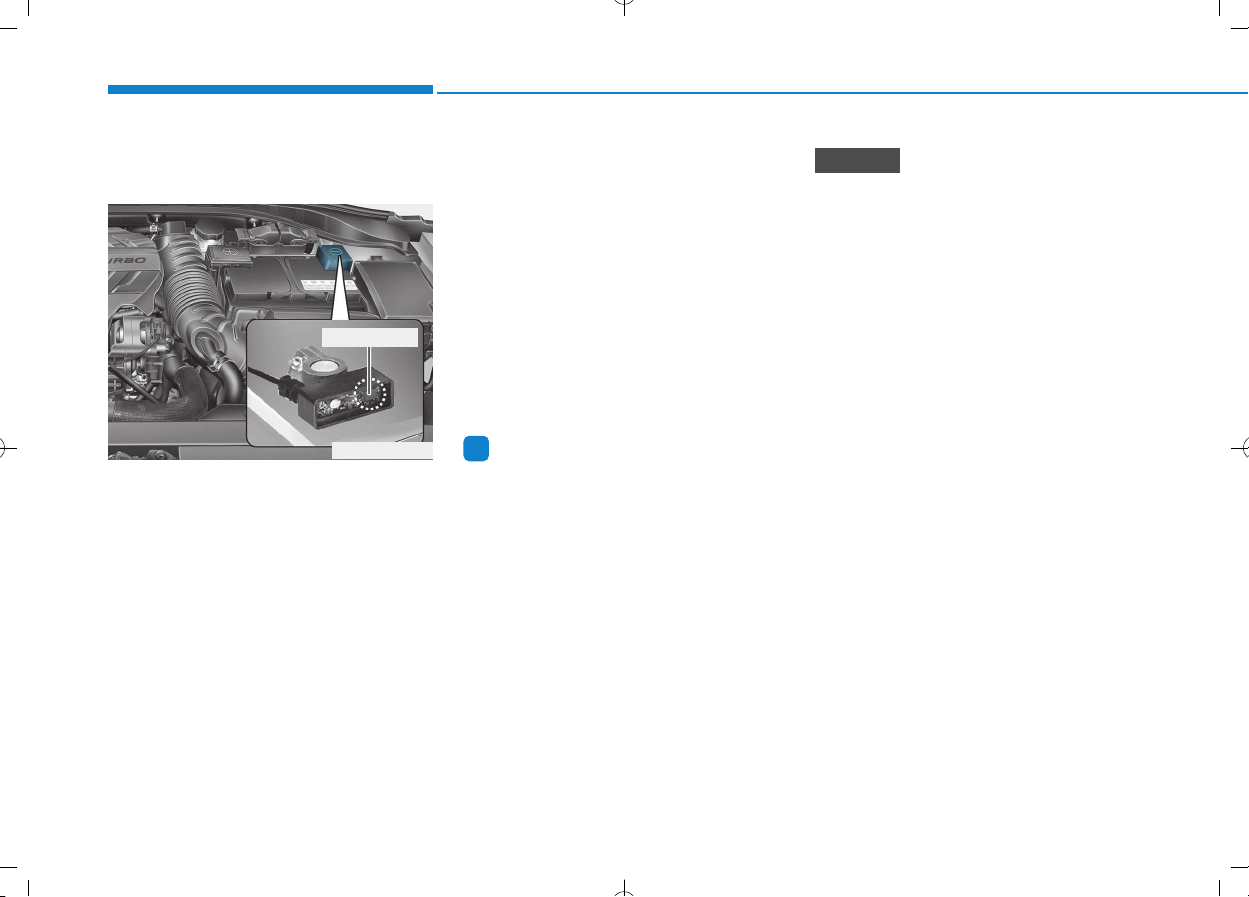
5-48
Driving your vehicle
The battery sensor deactiva-
tion
The battery sensor is deactivated,
when the battery is disconnected
from the negative pole for mainte-
nance purpose.
In this case, the ISG system is limit-
edly operated due to the battery sen-
sor deactivation. Thus, the driver
needs to take the following proce-
dures to reactivate the battery sen-
sor after disconnecting the battery.
Prerequisites to reactivate the
battery sensor
Keep the engine in the OFF status
for 4 hours, and attempt to restart the
engine 3 to 4 times for the battery-
sensor reactivation.
Pay extreme caution not to connect
any accessories (i.e. navigation and
black box) to the vehicle with the
engine in the OFF status. If not, the
battery sensor may not be reactivat-
ed.
Information
The ISG system may not operate in
the following situations.
- There is a malfunction with the ISG
system.
- The battery is weak.
- The brake vacuum pressure is low.
In those cases, we recommend that
you have the ISG system checked by
an authorized HYUNDAI dealer.
• Use only the genuine HYUNDAI
ISG battery for replacement. If
not, the ISG system may not nor-
mally operate.
• Do not recharge the ISG battery
with a general battery charger. If
not, it may damage or explode
the ISG battery.
• Do not remove the battery cap. If
not, the battery electrolyte,
which is harmful to the human
body, may leak out.
NOTICE
i
OPDEN057032
Battery sensor
5-49
Driving your vehicle
5
The Autonomous Emergency Braking
(AEB) system is designed to help
detect and monitor the vehicle ahead
in the roadway through camera recog-
nition to warn the driver that a colli-
sion is imminent, and if necessary,
apply emergency braking.
The camera type AEB system does
not detect pedestrians.
System setting and activation
System setting
• The driver can activate the AEB by
placing the ignition switch to the
ON position and by selecting:
'User Settings → Driving Assist →
Autonomous Emergency Braking'
The AEB deactivates, when the driv-
er cancels the system setting.
The warning light illumi-
nates on the LCD display,
when you cancel the AEB
system. The driver can
monitor the AEB ON/OFF status on
the LCD display. Also, the warning
light illuminates when the ESC
(Electronic Stability Control) is
turned off. If the warning light
remains ON when the AEB is acti-
vated, we recommend that you have
the system checked by an authorized
HYUNDAI dealer.
AAUUTTOONNOOMMOOUUSS EEMMEERRGGEENNCCYY BBRRAAKKIINNGG ((AAEEBB)) -- CCAAMMEERRAA TTYYPPEE ((IIFF EEQQUUIIPPPPEEDD))
Take the following precautions
when using the Autonomous
Emergency Braking (AEB):
• This system is only a supple-
mental system and it is not
intended to, nor does it
replace the need for extreme
care and attention of the driv-
er. The sensing range and
objects detectable by the sen-
sors are limited. Pay attention
to the road conditions at all
times.
• NEVER drive too fast in accor-
dance with the road condi-
tions or while cornering.
• Always drive cautiously to
prevent unexpected and sud-
den situations from occur-
ring. AEB does not stop the
vehicle completely and is not
a collision avoidance system.
WARNING

5-50
Driving your vehicle
• The driver can select the initial warn-
ing activation time on the LCD dis-
play.
Go to the 'User Settings → Driving
Assist → Forward Collision Warning
→ Late/Normal/Early'.
The options for the initial Forward
Collision Warning includes the fol-
lowing:
- Early:
When this condition is selected,
the initial Forward Collision
Warning is activated earlier than
normal. This setting maximizes the
amount of distance between the
vehicle ahead before the initial
warning occurs.
Even though, 'Early' is selected if
the front vehicle suddenly stops
the initial warning activation time
may not seem fast.
- Normal:
When this condition is selected,
the initial Forward Collision
Warning is activated normally. This
setting allows for a nominal
amount of distance between the
vehicle ahead before the initial
warning occurs.
- Late:
When this condition is selected,
the initial Forward Collision
Warning is activated later than nor-
mal. This setting reduces the
amount of distance between the
vehicle ahead before the initial
warning occurs.
Select 'Late' when traffic is light
and when driving speed is slow.
Prerequisite for activation
The AEB gets ready to be activated,
when the AEB is selected on the
LCD display, and when the following
prerequisites are satisfied.
- The ESC (Electronic Stability
Control) is on.
- Vehicle speed is over 10 km/h (6
mph). (The AEB is only activated
within a certain speed range.)
- The system detects vehicle in
front, which may collide with your
vehicle. (The AEB may not be acti-
vated or may sound a warning
alarm in accordance with the driv-
ing situation or vehicle condition.)
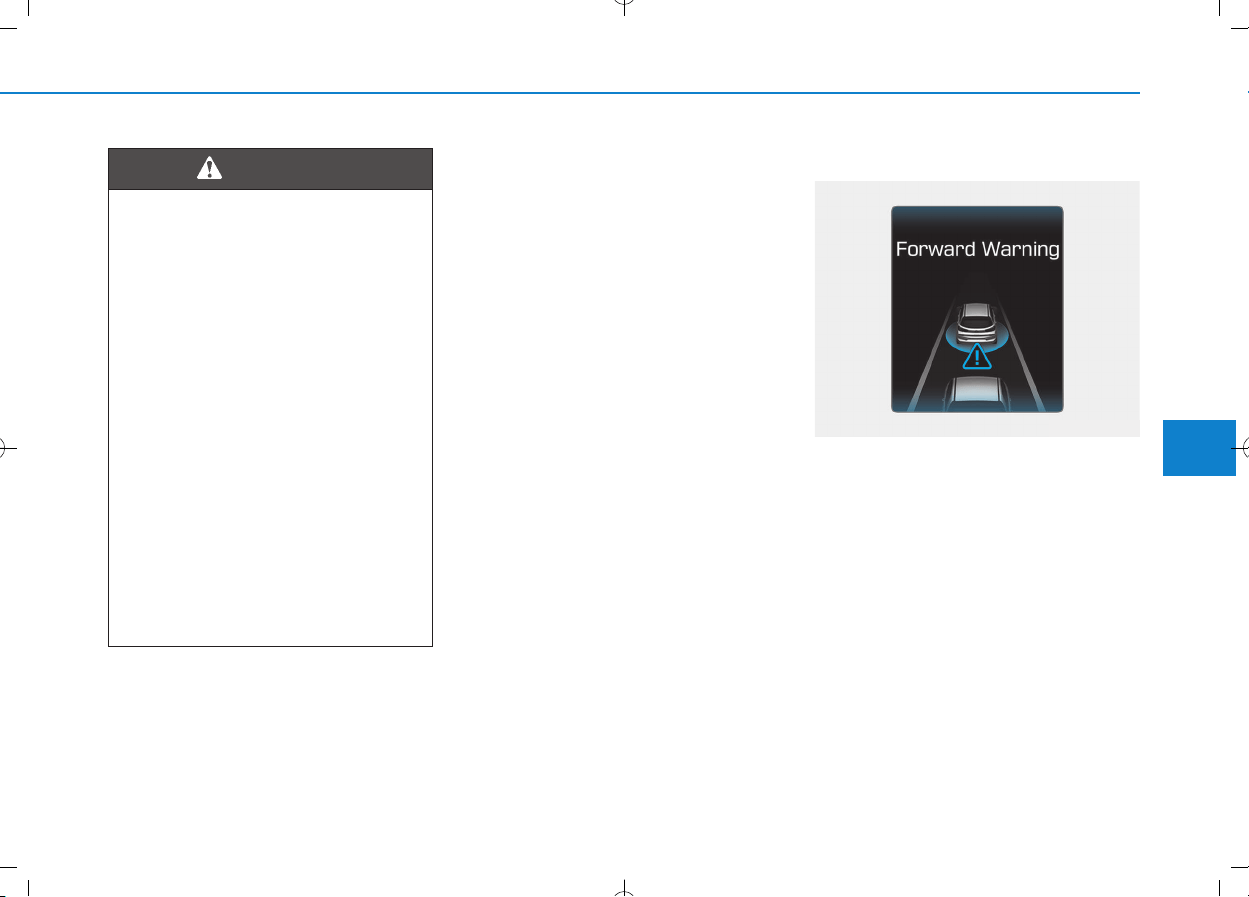
5-51
Driving your vehicle
5
AEB warning message and
system control
The AEB produces warning mes-
sages and warning alarms in accor-
dance with the collision risk levels,
such as abrupt stopping of the vehi-
cle in front, insufficient braking dis-
tance, or detection. Also, it controls
the brakes in accordance with the
collision risk levels.
The driver can select the initial warn-
ing activation time in the User
Settings in the LCD display. The
options for the initial Forward
Collision Warning include Early,
Normal or Late initial warning time.
Forward Warning (1
st
warning)
This initial warning message appears
on the LCD display with a warning
chime.
• Completely stop the vehicle
on a safe location before
operating the switch on the
steering wheel to activate/
deactivate the AEB system.
• The AEB automatically acti-
vates upon placing the Engine
Start/Stop button to the ON
position. The driver can deac-
tivate the AEB by canceling
the system setting on the LCD
display.
• The AEB automatically deacti-
vates upon canceling the ESC
(Electronic Stability Control).
When the ESC is canceled,
the AEB cannot be activated
on the LCD display. The AEB
warning light will illuminate
which is normal.
WARNING
OPDE056036
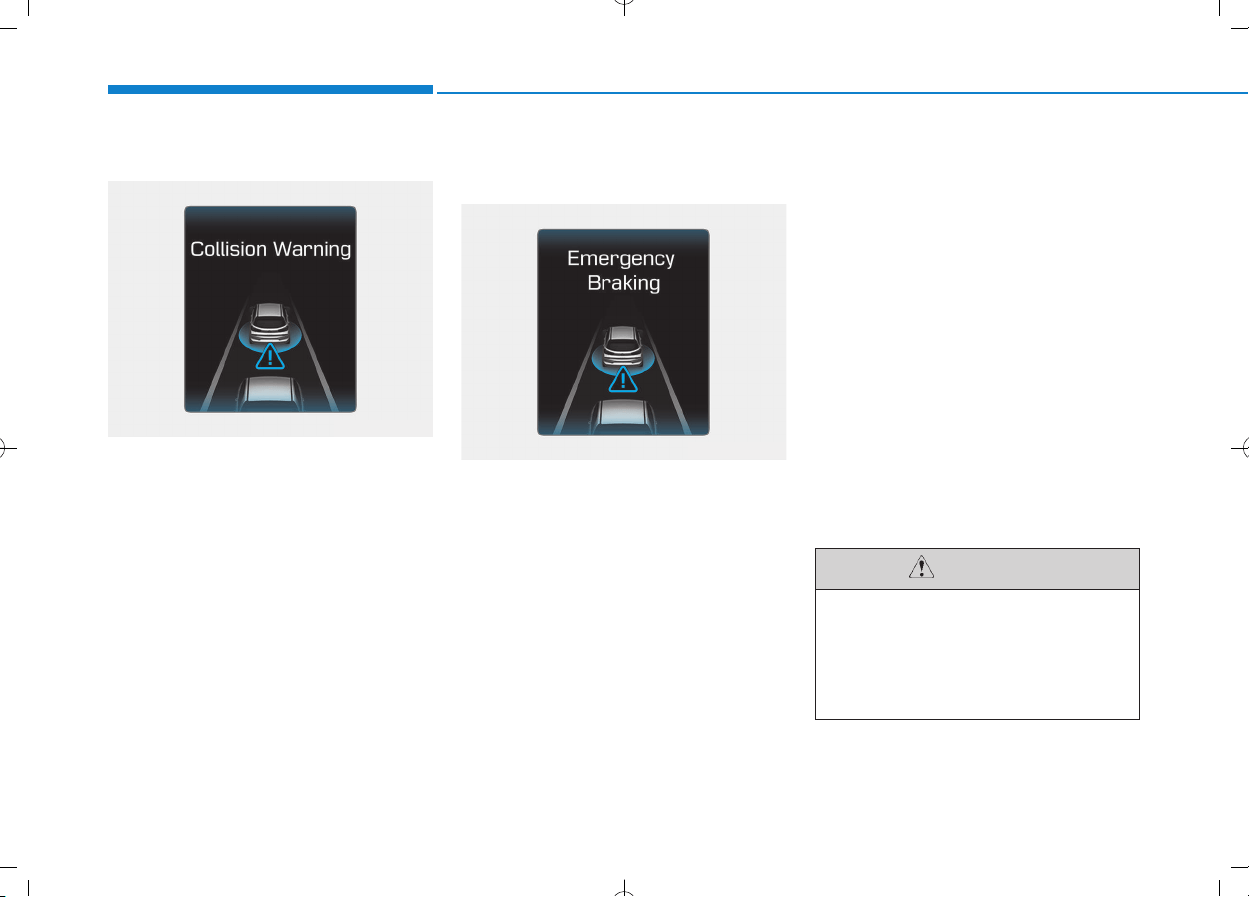
5-52
Driving your vehicle
Collision Warning (2
nd
warning)
This warning message appears on
the LCD display with a warning
chime. Additionally, some vehicle
system intervention occurs by the
engine management system to help
decelerate the vehicle.
- Your vehicle speed may deceler-
ate moderately.
- The AEB system limitedly con-
trols the brakes to preemptively
mitigate impact in a collision.
Emergency braking
(3
rd
warning)
This warning message appears on
the LCD display with a warning
chime.
Additionally, some vehicle system
intervention occurs by the engine
management system to help decel-
erate the vehicle.
- The AEB system limitedly con-
trols the brakes to preemptively
mitigate impact in a collision. The
brake control is maximized just
before a collision.
Brake operation
• In an urgent situation, the braking
system enters into the ready status
for prompt reaction against the dri-
ver's depressing the brake pedal.
• The AEB provides additional brak-
ing power for optimum braking per-
formance, when the driver
depresses the brake pedal.
• The braking control is automatical-
ly deactivated, when the driver
sharply depresses the accelerator
pedal, or when the driver abruptly
operates the steering wheel.
• The AEB brake control is automat-
ically canceled, when risk factors
disappear.
OPDE056038
OPDE056037
The driver should always use
extreme caution while operating
the vehicle, whether or not there
is a warning message or alarm
from the AEB system.
CAUTION
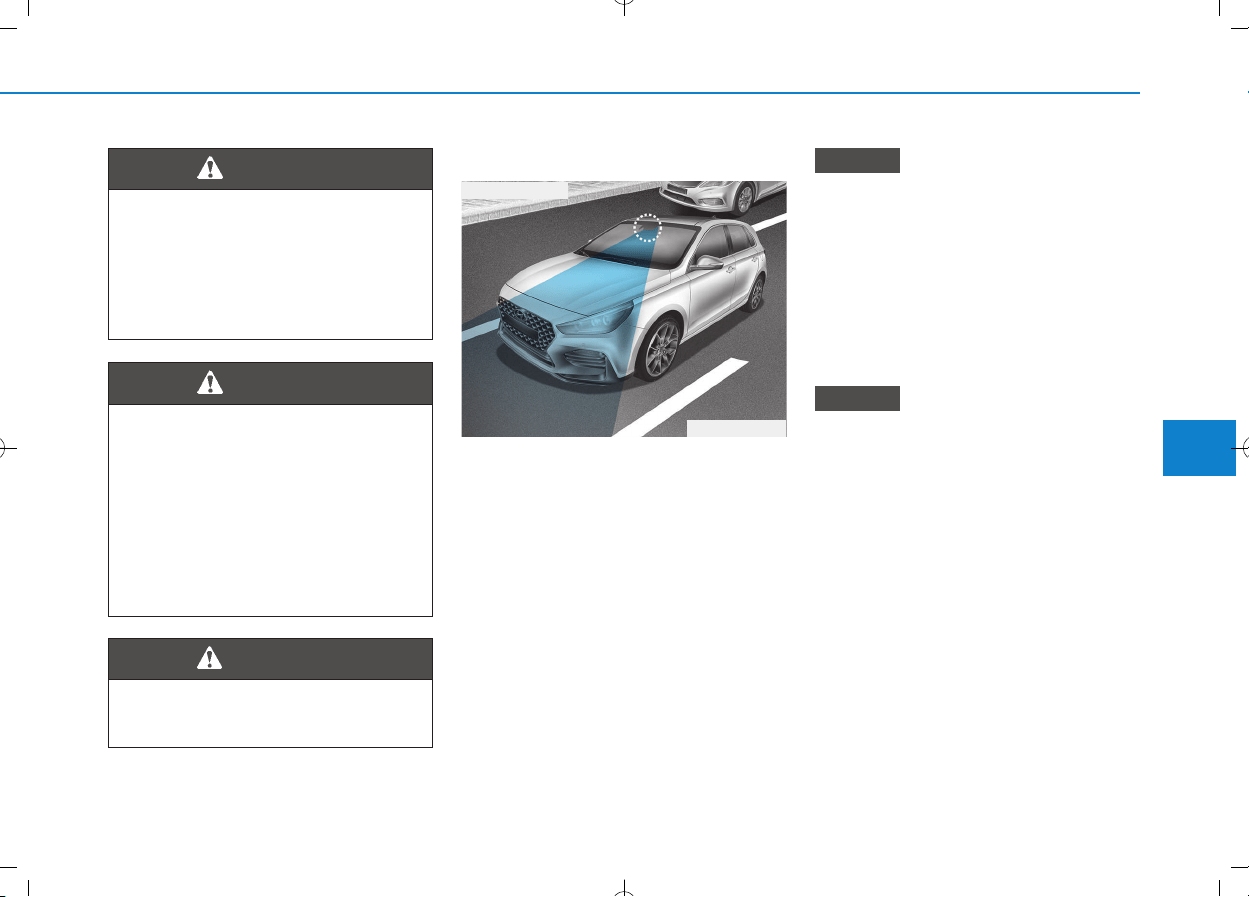
5-53
Driving your vehicle
5
AEB sensor
In order for the AEB system to oper-
ate properly, always make sure the
camera is clean and free of dirt,
snow, and debris. Dirt, snow, or for-
eign substances on the lens may
adversely affect the sensing perform-
ance of the camera.
The sensing performance of the
sensor may be affected if the fol-
lowing instructions are not fol-
lowed.
• Always keep the camera sensor
clean and free of dirt and debris.
• Use only genuine parts to repair
or replace a damaged sensor.
Be careful not to apply unneces-
sary force on the camera sensor. If
the sensor is forcibly moved out
of proper alignment, the AEB sys-
tem may not operate correctly. In
this case, a warning message may
not be displayed. Have the vehicle
inspected by an authorized
HYUNDAI dealer.
NOTICE
NOTICE
The braking control cannot
completely stop the vehicle nor
avoid all collisions. The driver
should hold the responsibility
to safely drive and control the
vehicle.
WARNING
Never deliberately drive danger-
ously to activate the system.
WARNING
The AEB system logic operates
within certain parameters, such
as the distance from the vehicle
ahead, the speed of the vehicle
ahead, and the driver's vehicle
speed. Certain conditions such
as inclement weather and road
conditions may affect the oper-
ation of the AEB system.
WARNING
OPDEN057048
■ Front camera
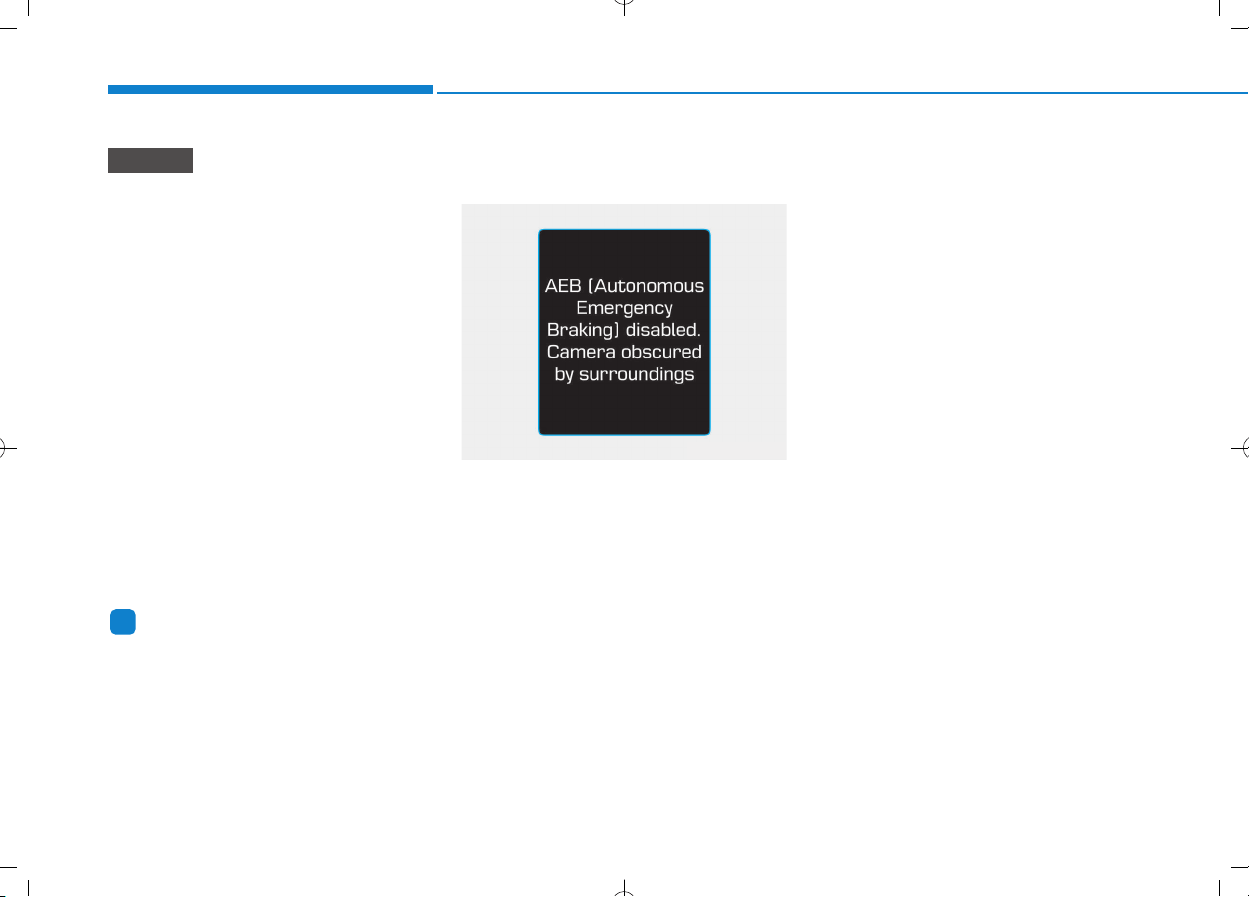
5-54
Driving your vehicle
• NEVER install any accessories
or stickers on the front wind-
shield, nor tint the front wind-
shield.
• NEVER locate any reflective
objects (i.e. white paper, mirror)
over the dashboard. Any light
reflection may cause a malfunc-
tion of the system.
• Pay extreme caution to keep the
camera out of water.
• NEVER arbitrarily disassemble
the camera assembly, nor apply
any impact on the camera
assembly.
• Playing the vehicle audio sys-
tem at high volume may offset
the system warning sounds.
Information
We recommend that you have the sys-
tem checked by an authorized
HYUNDAI dealer when:
• The windshield glass is replaced.
• The camera or related parts are
repaired or removed.
Warning message and warning
light
AEB (Autonomous Emergency
Braking) disabled. Camera obscured
by surroundings
When the camera sensor is blocked
with dirt, snow, or debris, the AEB
system operation may stop tem-
porarily. If this occurs, a warning
message will appear on the LCD dis-
play.
Remove any dirt, snow, or debris and
clean the camera sensor cover
before operating the AEB system.
The system will operate normally
when such dirt, snow or debris is
removed.
The AEB may not properly operate in
an area (e.g. open terrain), where
any substances are not detected
after turning ON the engine.
i
NOTICE
OPDEN057137

5-55
Driving your vehicle
5
System malfunction
Check AEB system
• When the AEB is not working prop-
erly, the AEB warning light ( )
will illuminate and the warning
message will appear for a few sec-
onds. After the message disap-
pears, the master warning light
( ) will illuminate. In this case, we
recommend that you have the vehi-
cle inspected by an authorized
HYUNDAI dealer.
• The AEB warning message may
appear along with the illumination
of the ESC (Electronic Stability
Control) warning light.
OAE056038L
• The AEB is only a supplemen-
tal system for the driver's con-
venience. The driver should
hold the responsibility to con-
trol the vehicle operation. Do
not solely depend on the AEB
system. Rather, maintain a
safe braking distance, and, if
necessary, depress the brake
pedal to reduce the driving
speed.
• In certain instances and
under certain driving condi-
tions, the AEB system may
activate unintentionally. This
initial warning message
appears on the LCD display
with a warning chime.
Also, in certain instances the
front camera recognition sys-
tem may not detect the vehi-
cle ahead. The AEB system
may not activate and the
warning message will not be
displayed.
(Continued)
(Continued)
• Even if there is any problem
with the brake control func-
tion of the AEB system, the
vehicle's basic braking per-
formance will operate normal-
ly. However, brake control
function for avoiding collision
will not activate.
• If the vehicle in front stops
suddenly, you may have less
control of the brake system.
Therefore, always keep a safe
distance between your vehicle
and the vehicle in front of you.
• The AEB system may activate
during braking and the vehi-
cle may stop suddenly shift-
ing loose objects toward the
passengers. Always keep
loose objects secured.
• The AEB system may not acti-
vate if the driver applies the
brake pedal to avoid a colli-
sion.
WARNING

5-56
Driving your vehicle
Limitations of the system
The Autonomous Emergency Braking
(AEB) system is designed to monitor
the vehicle ahead on the roadway
through camera recognition to warn
the driver that a collision is imminent,
and if necessary, apply emergency
braking.
In certain situations, the camera may
not be able to detect the vehicle
ahead. In these cases, the AEB sys-
tem may not operate normally. The
driver must pay careful attention in
the following situations where the
AEB operation may be limited.
Detecting vehicles
The sensor may be limited when:
• The camera is blocked with a for-
eign object or debris
• The camera lens is contaminated
due to tinted, filmed or coated
windshield, damaged glass, or
stuck of foreign matter (sticker,
bug, etc.) on the glass
• Inclement weather such as heavy
rain or snow obscures the field of
view of the camera
• There is interference by electro-
magnetic waves
• The camera sensor recognition is
limited
• The vehicle in front is too small to
be detected (for example a motor-
cycle or a bicycle, etc.)
• The vehicle in front is an oversize
vehicle or trailer that is too big to
be detected by the camera recog-
nition system (for example a tractor
trailer, etc.)
• The driver's field of view is not well
illuminated (either too dark or too
much reflection or too much back-
light that obscures the field of view)
• The vehicle in front does not have
their rear lights properly turned ON
• The outside brightness changes
suddenly, for example when enter-
ing or exiting a tunnel
• When light coming from a street
light or an oncoming vehicle is
reflected on a wet road surface
such as a puddle in the road
• The field of view in front is
obstructed by sun glare
• The AEB system operates only
to detect vehicles in front of the
vehicle.
• The AEB system does not
operate when the vehicle is in
reverse.
• The AEB system is not
designed to detect other
objects on the road such as
animals.
• The AEB system does not
detect vehicles in the opposite
lane.
• The AEB system does not
detect cross traffic vehicles
that are approaching.
• The AEB system cannot detect
the driver approaching the side
view of a parked vehicle (for
example on a dead end street.)
In these cases, you must main-
tain a safe braking distance, and
if necessary, depress the brake
pedal to reduce the driving
speed in order to maintain a safe
distance.
WARNING
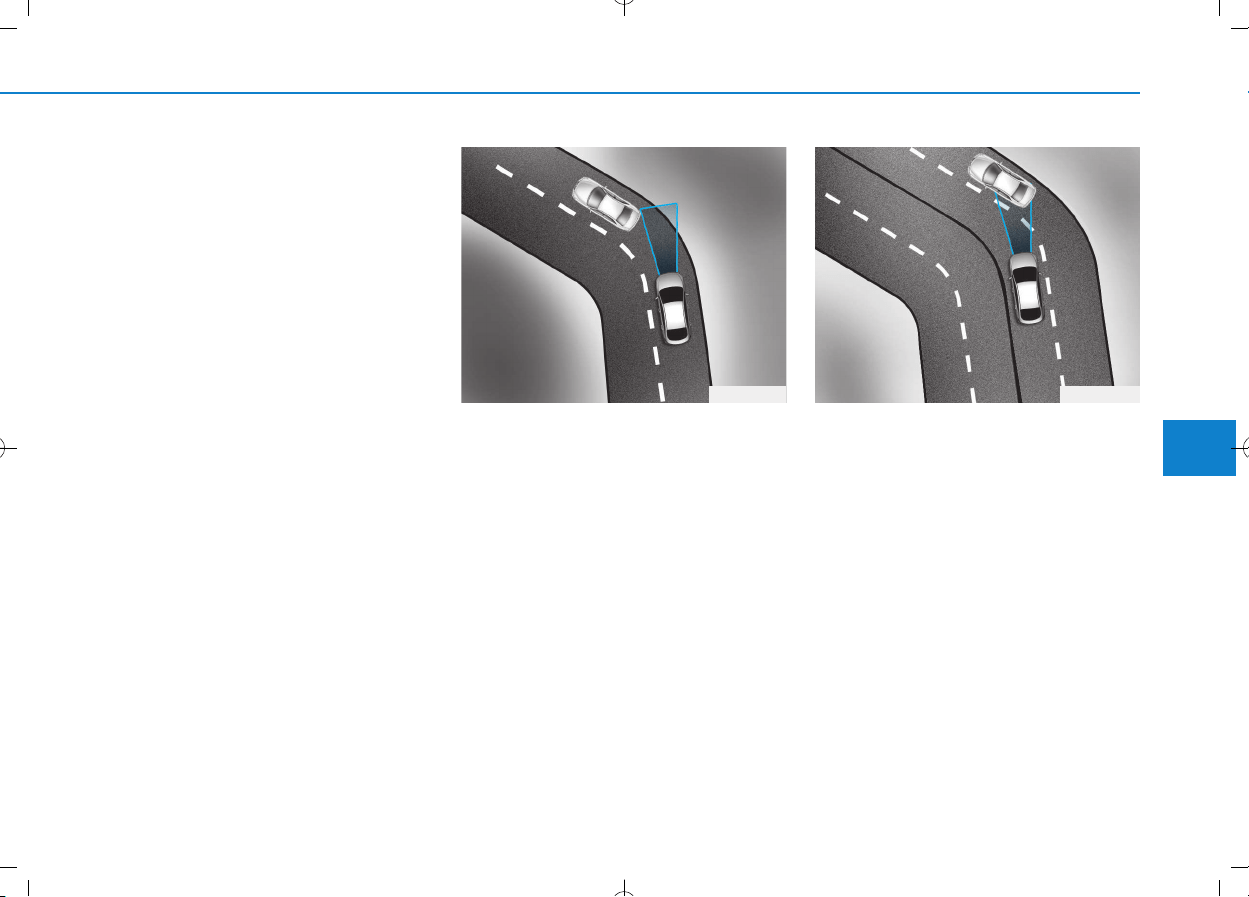
5-57
Driving your vehicle
5
• The windshield glass is fogged up;
a clear view of the road is obstruct-
ed
• The vehicle in front is driving errat-
ically
• The vehicle is on unpaved or
uneven rough surfaces, or road
with sudden gradient changes.
• The vehicle is driven near areas
containing metal substances as a
construction zone, railroad, etc.
• The vehicle drives inside a build-
ing, such as a basement parking
lot
• The adverse road conditions cause
excessive vehicle vibrations while
driving
• The sensor recognition changes
suddenly when passing over a
speed bump
• The vehicle in front is moving verti-
cally to the driving direction
• The vehicle in front is stopped ver-
tically
• The vehicle in front is driving
towards your vehicle or reversing
• You are on roundabouts and the
vehicle in front circles
- Driving on a curve
The performance of the AEB system
may be limited when driving on a
curved road.
On curved roads, the other vehicle
on the same lane is not recognized
and the AEB system's performance
may be degraded. This may result in
unnecessary alarm or braking or no
alarm or braking when necessary.
Also, in certain instances the front
camera recognition system may not
detect the vehicle traveling on a
curved road.
In these cases, the driver must main-
tain a safe braking distance, and if
necessary, depress the brake pedal
to reduce your driving speed in order
to maintain a safe distance.
The AEB system may recognize a
vehicle in the next lane when driving
on a curved road.
In this case, the system may unnec-
essarily alarm the driver and apply
the brake.
Always pay attention to road and
driving conditions, while driving. If
necessary, depress the brake pedal
to reduce your driving speed in order
to maintain a safe distance.
Also, when necessary depress the
accelerator pedal to prevent the sys-
tem from unnecessarily decelerating
your vehicle.
Check to be sure that the road con-
ditions permit safe operation of AEB.
OAE056100 OAE056101
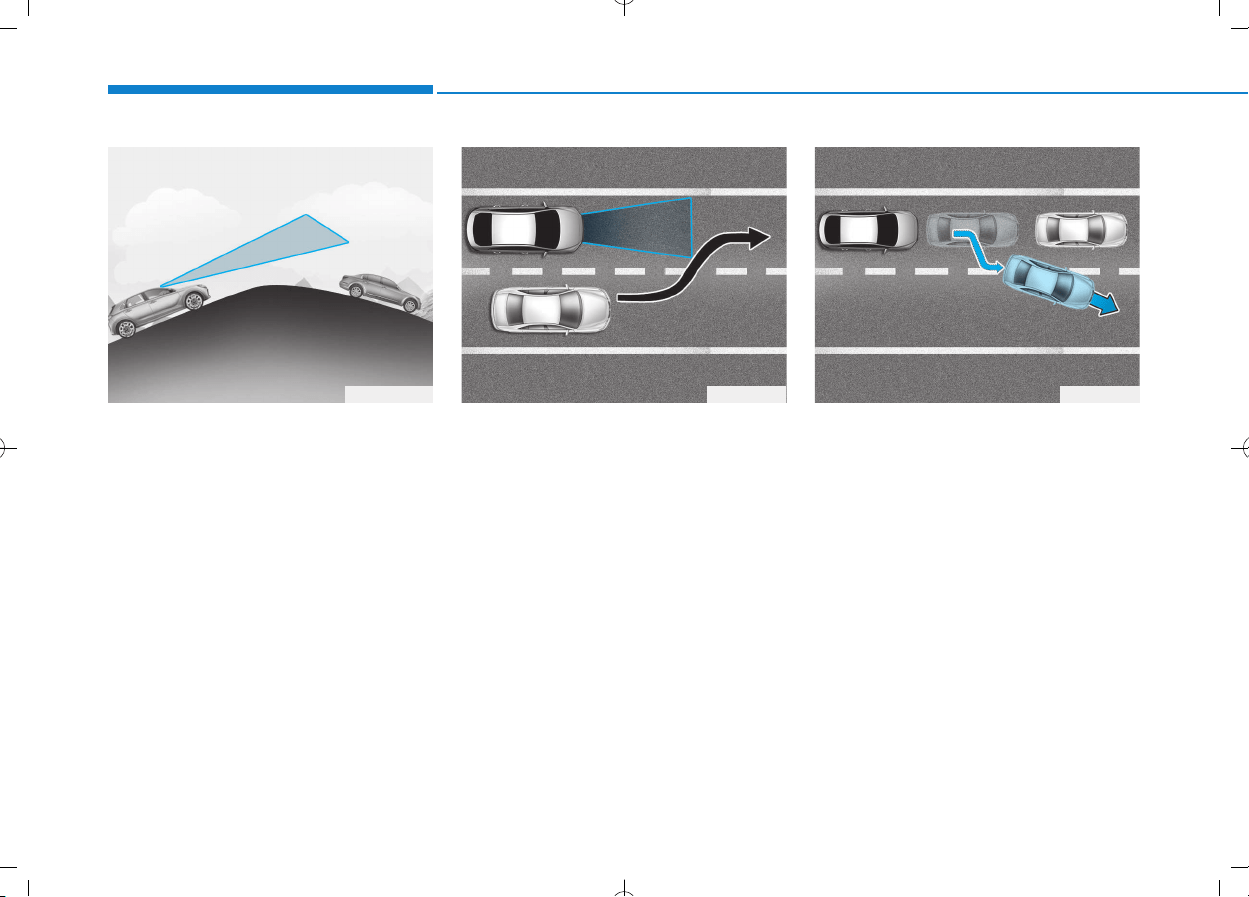
5-58
Driving your vehicle
- Driving on a slope
The performance of the AEB decreas-
es while driving upward or downward
on a slope, not recognizing the vehi-
cle in front in the same lane. It may
unnecessarily produce the warning
message and the warning alarm, or it
may not produce the warning mes-
sage and the warning alarm at all.
When the AEB suddenly recognizes
the vehicle in front while passing
over a slope, you may experience
sharp deceleration.
Always keep your eyes forward while
driving upward or downward on a
slope, and, if necessary, depress the
brake pedal to reduce your driving
speed in order to maintain distance.
- Changing lanes
When a vehicle changes lanes in
front of you, the AEB system may not
immediately detect the vehicle, espe-
cially if the vehicle changes lanes
abruptly. In this case, you must main-
tain a safe braking distance, and if
necessary, depress the brake pedal
to reduce your driving speed in order
to maintain a safe distance.
When driving in stop-and-go traffic,
and a stopped vehicle in front of you
merges out of the lane, the AEB sys-
tem may not immediately detect the
new vehicle that is now in front of
you. In this case, you must maintain
a safe braking distance, and if nec-
essary, depress the brake pedal to
reduce your driving speed in order to
maintain a safe distance.
OPDE056102 OAE056103 OAE056109
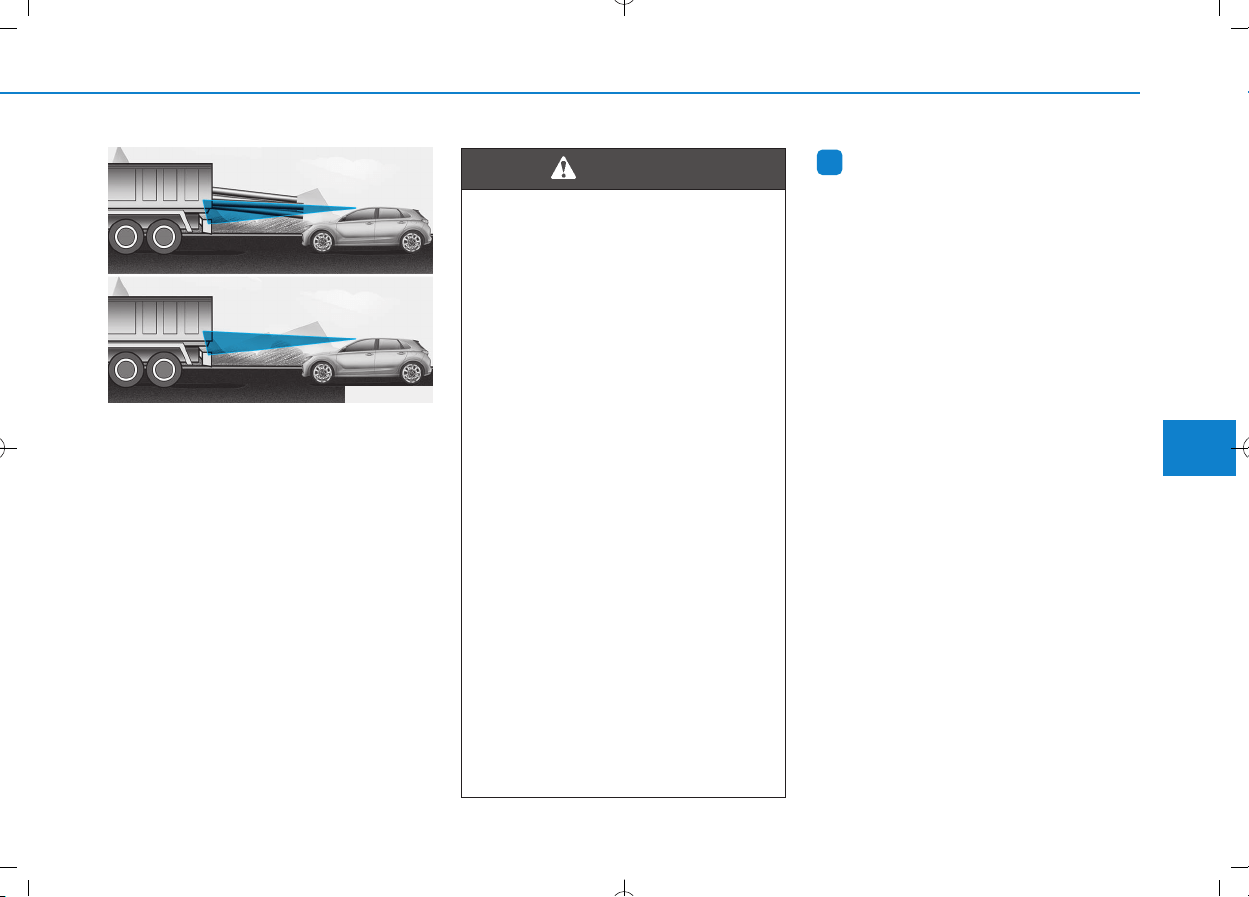
5-59
Driving your vehicle
5
- Detecting the vehicle in front of you
If the vehicle in front of you has cargo
that extends rearward from the cab,
or when the vehicle in front of you
has higher ground clearance, addi-
tional special attention is required.
The AEB system may not be able to
detect the cargo extending from the
vehicle. In these instances, you must
maintain a safe braking distance
from the rearmost object, and if nec-
essary, depress the brake pedal to
reduce your driving speed in order to
maintain distance.
Information
In some instances, the AEB system
may be cancelled when subjected to
electromagnetic interference.
i
OPDE056040
• Do not use the Autonomous
Emergency Braking system
when towing a vehicle.
Application of the AEB sys-
tem while towing may
adversely affect the safety of
your vehicle or the towing
vehicle.
• Use extreme caution when the
vehicle in front of you has
cargo that extends rearward
from the cab, or when the
vehicle in front of you has
higher ground clearance.
• The AEB system is designed
to detect and monitor the
vehicle ahead in the roadway
through camera recognition. It
is not designed to detect bicy-
cles, motorcycles, or smaller
wheeled objects such as lug-
gage bags, shopping carts, or
strollers.
• Never try to test the operation
of the AEB system. Doing so
may cause severe injury or
death.
WARNING

5-60
Driving your vehicle
The SLIF displays the speed limit
information and overtaking restric-
tion through the instrument cluster
and the navigation. The SLIF detects
the traffic signs through the camera,
which is attached on the upper part
of the inner front windshield.
The SLIF also utilizes the navigation
information to display the speed limit
information.
Information
We recommend that you have the sys-
tem checked by an authorized
HYUNDAI dealer when:
• The windshield glass is replaced.
• The camera or related parts are
repaired or removed.
i
SSPPEEEEDD LLIIMMIITT IINNFFOORRMMAATTIIOONN FFUUNNCCTTIIOONN ((SSLLIIFF)) ((IIFF EEQQUUIIPPPPEEDD))
(Continued)
• Do not arbitrarily disassemble
the camera assembly, nor
apply any impact on the cam-
era assembly.
• Do not locate any reflective
objects (i.e. white paper, mir-
ror) over the dashboard. Any
light reflection may cause a
malfunction system.
• The system is not available in
all countries.
OPDEN057048
• Speed Limit Information
Function (SLIF) is only a sup-
plemental system and is not
always able to correctly dis-
play speed limits and overtak-
ing restrictions.
• The driver still holds the
responsibility not to exceed
the maximum speed limit.
• Do not install any accessories
and stickers. Do not tint the
front windshield, especially
near the rearview mirror.
• The SLIF detects the traffic
signs through the camera to
display the speed limit infor-
mation.
Therefore, the SLIF may not
properly operate, when it is
hard to detect the traffic signs.
For further details, please
refer to the "Limitations of the
system".
• Pay extreme caution to keep
the camera sensor out of
water.
(Continued)
WARNING

5-61
Driving your vehicle
5
System setting and activation
System setting
• The driver can activate the SLIF by
selecting 'User Settings → Driving
Assist → Speed Limit Information
Function'.
• When the SLIF is activated, the
symbols appear on the instrument
cluster to display the speed limit
information and overtaking restric-
tion.
• When the SLIF is activated in the
navigation setting, the above infor-
mation and the restriction are also
displayed on the navigation.
System activation
• The SLIF displays the speed limit
information and displays the over-
taking restriction, when your vehi-
cle passes by the relevant traffic
signs.
• The SLIF restores the previous
speed limit information, right after
the ignition switch is placed to the
ON position.
• You may find different speed limit
information for the same road. The
information is displayed depending
on the driving situations. Because,
traffic signs with additional sign
(e.g. rainy, arrow, etc.) are also
detected and compared with vehi-
cle internal data (e.g. wiper opera-
tion, turn signal, etc.).
Information
The speed limit information on the
instrument cluster may differ from
the one on the navigation. In this case,
check the speed unit setting on the
navigation.
Display
• The symbol is displayed on the
instrument cluster and the naviga-
tion, when the SLIF does not have
any reliable speed limit informa-
tion.
i
WTL-220
■ No reliable speed limit information
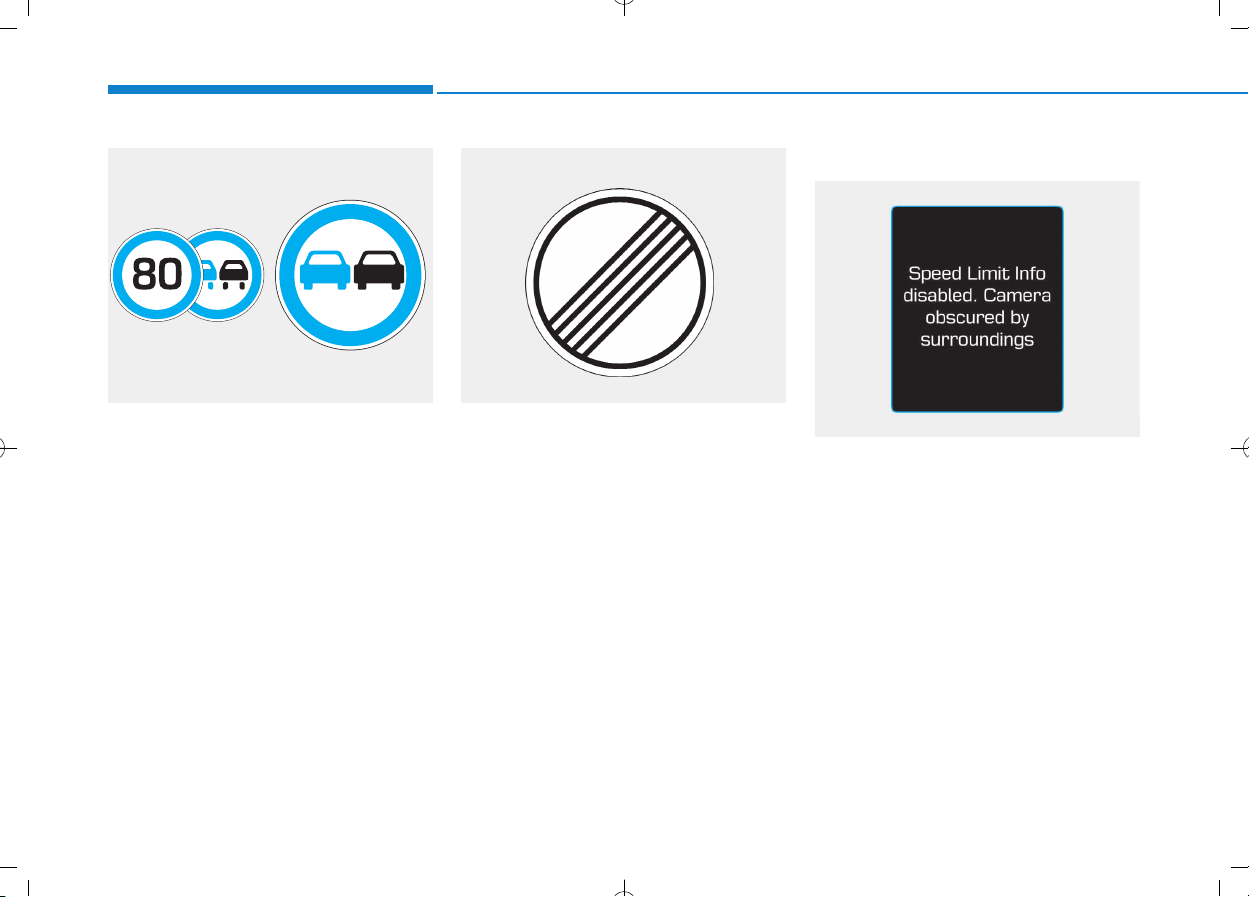
5-62
Driving your vehicle
• The symbol is displayed on the
instrument cluster and the naviga-
tion, when the SLIF detects a no-
overtaking sign.
• The symbol, 'end of limitation', is
displayed on the instrument cluster
for the roads in Germany, which
have no speed limit applicable. It is
displayed, until the vehicle passes
by another speed limit sign.
Warning message
Speed Limit Info disabled. Camera
obscured by surroundings
The warning message appears,
when the camera lens is blocked by
some objects. The SLIF does not
operate, until the objects are
removed. Check the windshield glass
around the camera area. If the prob-
lem persists after removing the
objects, we recommend that you
have the system checked by an
authorized HYUNDAI dealer.
WTL-222/WTL-221
■ No passing information
WUM-205
■ Unlimited speed (only in Germany)
OPDEN057498

5-63
Driving your vehicle
5
Check SLIF
The warning message appears for a
few seconds, when the SLIF does
not properly operate. Then, the mas-
ter warning light ( ) will illuminate.
We recommend that you have the
system checked by an authorized
HYUNDAI dealer.
Limitations of the system
The SLIF may not operate or may
not provide correct information in the
following situations.
When the traffic sign condition is
poor
• The traffic sign is located on a
sharp curve.
• The traffic sign is improperly posi-
tioned (i.e. turned over, blocked by
an object, and damaged).
• Another vehicle blocks the traffic
sign.
• The LED light of the traffic sign is
broken.
• There is bright light around the traf-
fic sign.
• The road signs do not correspond
to the standard, etc.
When external condition is inter-
vened
• Your vehicle drives right after
another vehicle.
• The bus or truck, on which the
speed sticker is attached, passes
by your vehicle.
• Your vehicle drives in an area,
which is uncovered by the naviga-
tion system.
• There is a malfunction with the
navigation
• Your navigation has not been
updated.
• Your navigation is being updated.
• There is something wrong with the
GPS.
• The top speed limitations stored in
the navigation system are incor-
rect.
• As a result of incorrect detection by
the camera.
• The camera is calibrated right after
the vehicle is delivered, etc.
When front visibility is poor
• The weather is bad, such as rain-
ing, snowing, and fogging.
• There is dirt, ice or frost on the
front windshield, where the camera
is installed.
• The camera lens is blocked by an
object, such as sticker, paper, or
fallen leaf, etc.
OTLE055080
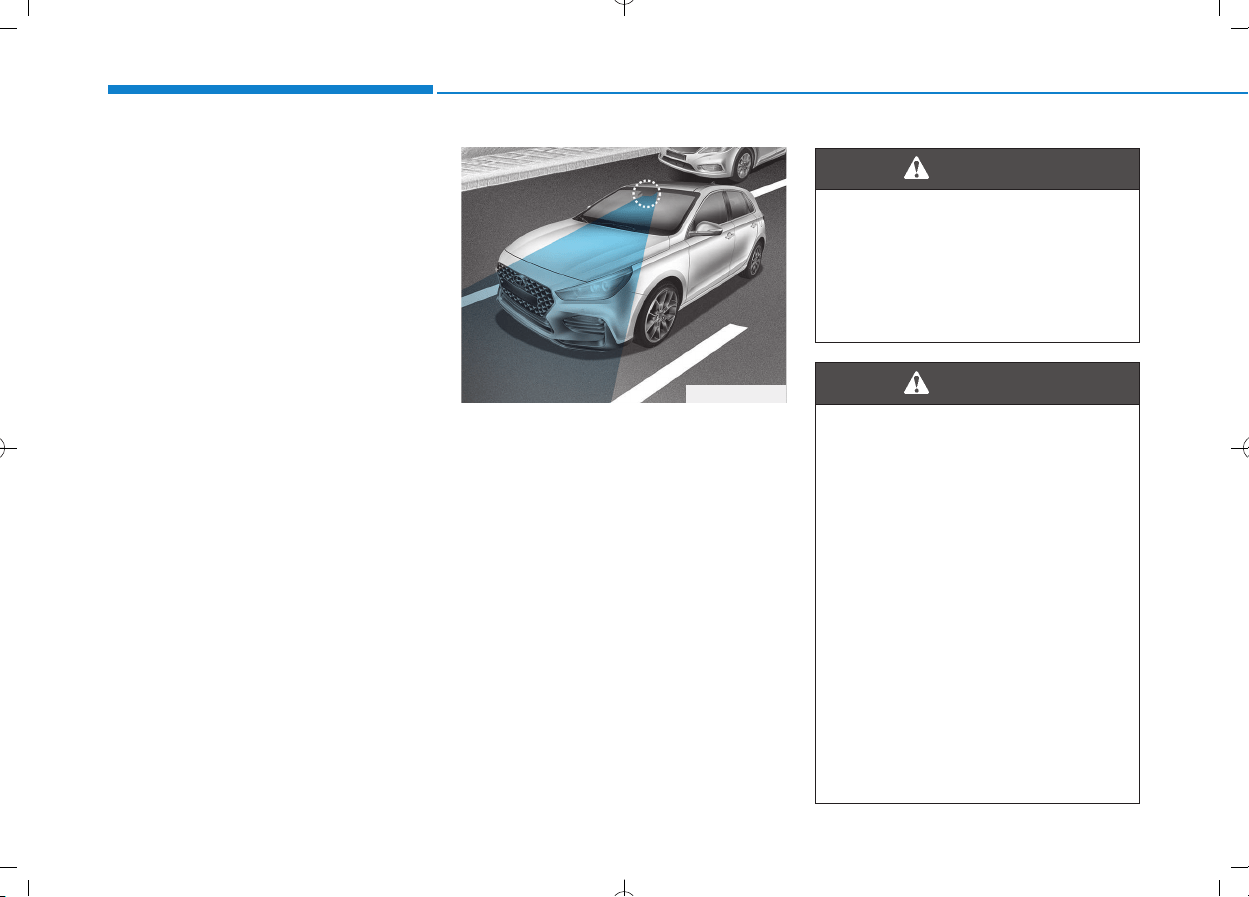
5-64
Driving your vehicle
The driver must be cautious in the fol-
lowing situations. The SLIF may not
assist the driver and may not properly
operate.
• Do not disassemble the camera
temporarily to tint the window or
attach any types of coatings or
accessories. If you disassemble the
camera and assemble it again, we
recommend that you take your
vehicle to an authorized HYUNDAI
dealer and have the system
checked for calibration.
• Do not locate any reflective objects
(i.e. white paper, mirror) over the
dashboard. Any light reflection may
cause a mal-function of the SLIF.
Pay extreme caution to keep the
camera sensor out of water.
• Do not arbitrarily disassemble the
camera assembly, nor apply any
impact on the camera assembly.
The Lane Keeping Assist System
with a camera at the front windshield,
helps detect lane markers on the
road, and assists the driver's steer-
ing to help keep the vehicle between
lanes.
When the system detects the vehicle
straying from its lane, it alerts the
driver with a visual and audible warn-
ing, while applying a slight counter-
steering torque, trying to prevent the
vehicle from moving out of its lane.
OPDEN057048
The Lane Keeping Assist System
is not a substitute for safe driving
practices, but a convenience func-
tion. It is the responsibility of the
driver to always be aware of the
surrounding and steer the vehicle.
WARNING
Take the following precautions
when using the Lane Keeping
Assist System (LKAS):
• Do not steer the steering
wheel suddenly when the
steering wheel is being assist-
ed by the system.
• LKAS helps to prevent the
driver from moving out of the
lane unintentionally by assist-
ing the driver's steering.
However, the driver should
not solely rely on the system
but always pay attention on
the steering wheel to stay in
the lane.
(Continued)
WARNING
LLAANNEE KKEEEEPPIINNGG AASSSSIISSTT SSYYSSTTEEMM ((LLKKAASS)) ((IIFF EEQQUUIIPPPPEEDD))

5-65
Driving your vehicle
5
(Continued)
• The operation of the LKAS
can be canceled or not work
properly according to road
condition and surroundings.
Always be cautious when
driving.
• Do not disassemble the LKAS
camera temporarily to tint the
window or attach any types of
coatings and accessories. If
you disassemble the camera
and assemble it again, we rec-
ommend that you take your
vehicle to an authorized
HYUNDAI dealer and have the
system checked for calibra-
tion.
• When you replace the wind-
shield glass, LKAS camera or
related parts of the steering
wheel, we recommend that
you take your vehicle to an
authorized HYUNDAI dealer
and have the system checked
for calibration.
(Continued)
(Continued)
• The system detects lane
markers and controls the
steering wheel by a camera,
therefore, if the lane markers
are hard to detect, the system
may not work properly.
Please refer to "Limitations of
the system".
• Do not remove or damage the
related parts of LKAS.
• You may not hear a warning
sound of LKAS because of
excessive audio sound.
• Do not place objects on the
dashboard that reflects light
such as mirrors, white paper,
etc. The system may malfunc-
tion if the sunlight is reflected.
• Always have your hands on
the steering wheel while the
LKAS system is activated. If
you continue to drive with
your hands off the steering
wheel after the "Keep hands
on steering wheel" warning
message appears, the system
will turn off automatically.
(Continued)
(Continued)
After then, if you drive with
your hands on the steering
wheel, the control will be acti-
vated again.
• The steering wheel is not con-
tinuously controlled so if the
vehicle speed is at a higher
rate when leaving a lane the
vehicle may not be controlled
by the system. The driver
must always follow the speed
limit when using the system.
• If you attach objects to the
steering wheel, the system
may not assist steering or the
hands off alarm may not work
properly.
• When you tow a trailer, make
sure that you turn off the
LKAS system.
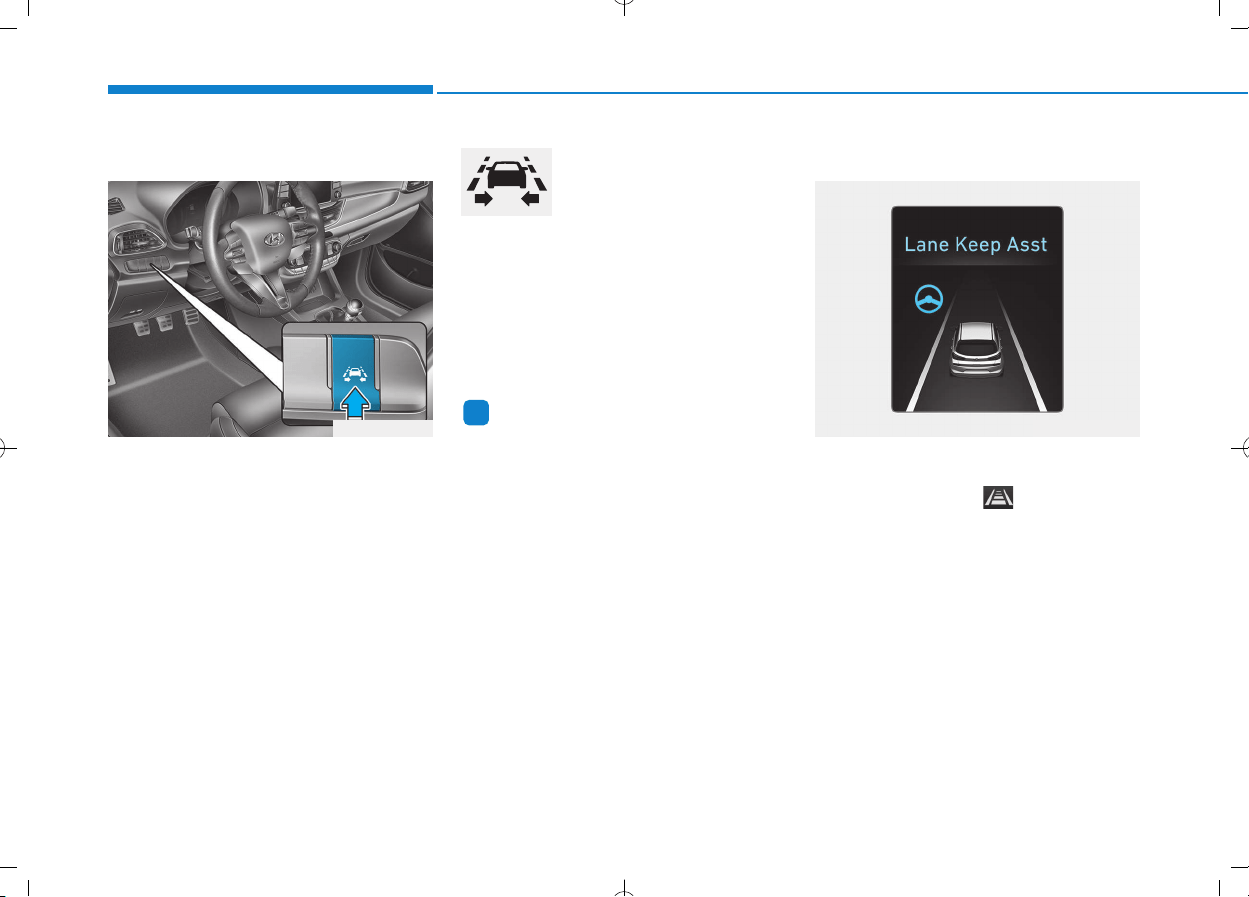
5-66
Driving your vehicle
LKAS operation
To activate/deactivate the LKAS:
With the ignition switch in the ON
position, press the LKAS button
located on the instrument panel on
the left hand side of the steering
wheel. (Right hand side of the steer-
ing wheel for RHD vehicles.)
The indicator in the cluster display
will initially illuminate white. This indi-
cates the LKAS is in the READY but
NOT ENABLED state.
Note that the vehicle speed must be
at least approximately 60 km/h (40
mph) to ENABLE the LKAS.The indi-
cator in the cluster display will illumi-
nate green.
The color of indicator will
change depending on the
condition of LKAS.
- White : Sensor does not detect
lane markers or vehicle
speed is under 60 km/h
(40mph).
- Green : Sensor detects lane mark-
ers and the system is able
to control vehicle steering.
Information
If the indicator (white) is activated
from the previous ignition cycle, the
system will turn ON without any addi-
tional control. If you press the LKAS
button again, the indicator on the
cluster goes off.
LKAS activation
• To see the LKAS screen on the
LCD display in the cluster, select
Assist mode ( ). For more
details, refer to "LCD Display
Modes" in chapter 3.
• When both lane markers are
detected and all the conditions to
activate the LKAS are satisfied, a
green steering wheel indicator will
illuminate and the LKAS indicator
light will change from white to
green. This indicates that the LKAS
system is in the ENABLED state
and the steering wheel will be able
to be controlled.
i
OPDEN057049
OPDEN057055
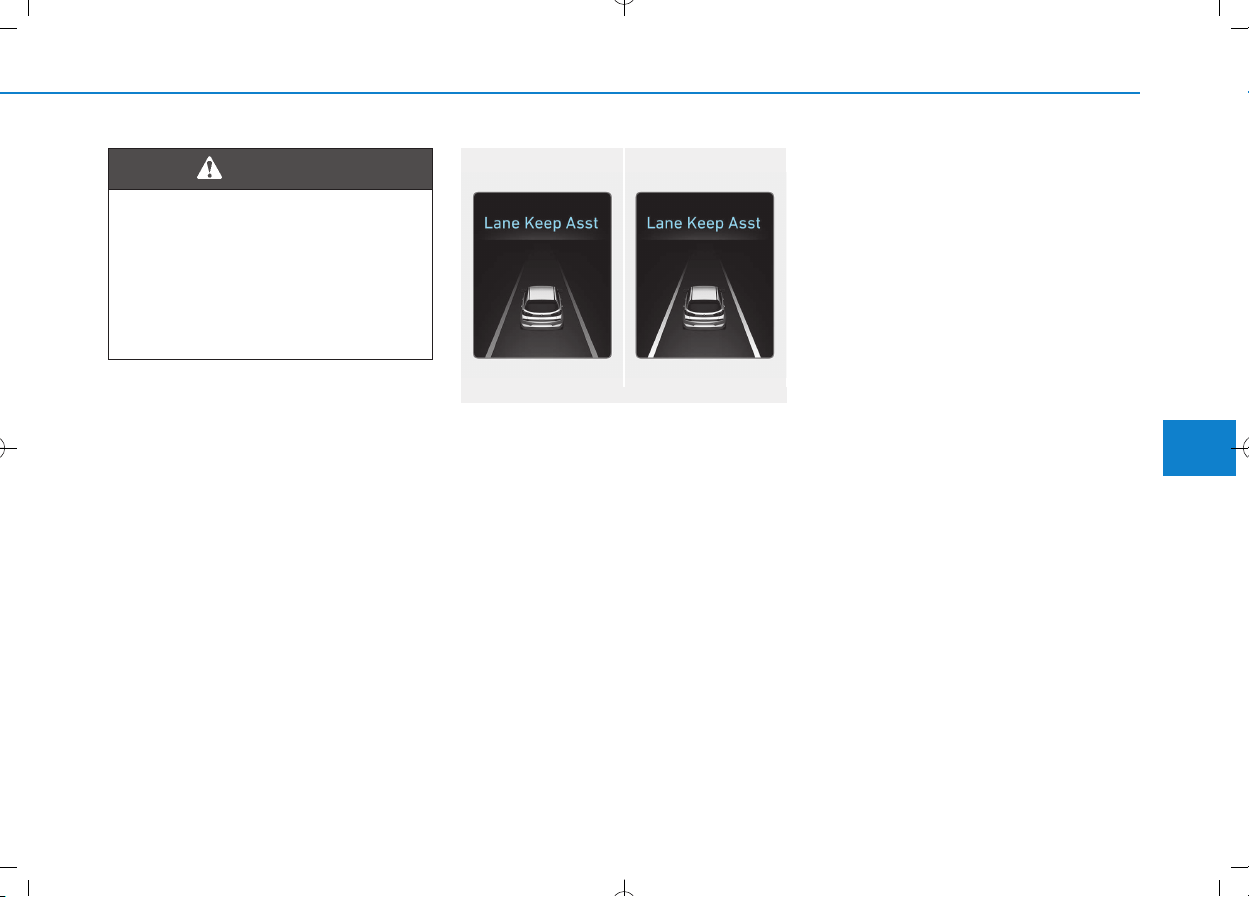
5-67
Driving your vehicle
5
• If vehicle speed is over 60 km/h (40
mph) and the system detects lane
markers, the color changes from
gray to white.
• If the system detects the left lane
marker, the left lane marker color
will change from gray to white.
• If the system detects the right lane
marker, the right lane marker color
will change from gray to white.
• Both lane markers must be detect-
ed for the system to fully activate.
• If your vehicle speed exceeds 60
km/h (40 mph) and the LKAS but-
ton is ON, the system is enabled. If
your vehicle departs from the pro-
jected lane in front of you, the
LKAS operates as follows:
The Lane Keeping Assist
System is a system to prevent
the driver from leaving the lane.
However, the driver should not
solely rely on the system but
always check the road condi-
tions when driving.
WARNING
■ Lane line undetected
■ Lane line detected
OPDEN057051/OPDEN057052
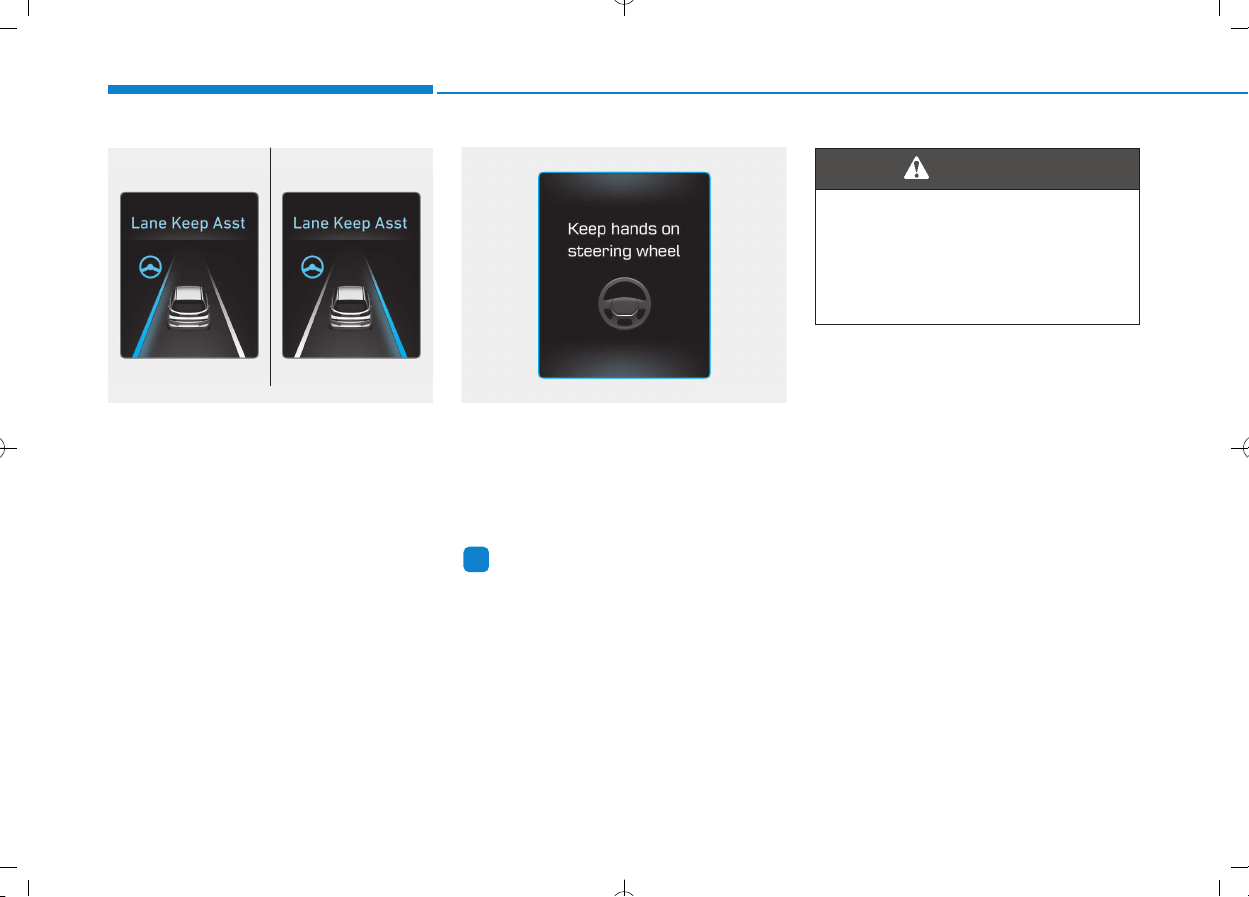
5-68
Driving your vehicle
A visual warning appears on the
cluster LCD display. Either the left
lane marker or the right lane marker
in the cluster LCD display will blink
depending on which direction the
vehicle is veering.
If the steering wheel appears, the
system will control the vehicle’s
steering to prevent the vehicle from
crossing the lane marker.
Keep hands on steering wheel
If the driver takes their hands off the
steering wheel for several seconds
while the LKAS is activated, the sys-
tem will warn the driver.
Information
If the steering wheel is held very light-
ly the message may still appear
because the LKAS system may not
recognize that the driver has their
hands on the wheel.
i
OAEE056129L
■ Left lane marker ■ Right lane marker
OPDEN057056/OPDEN057057
The warning message may
appear late according to road
conditions. Therefore, always
have your hands on the steering
wheel while driving.
WARNING
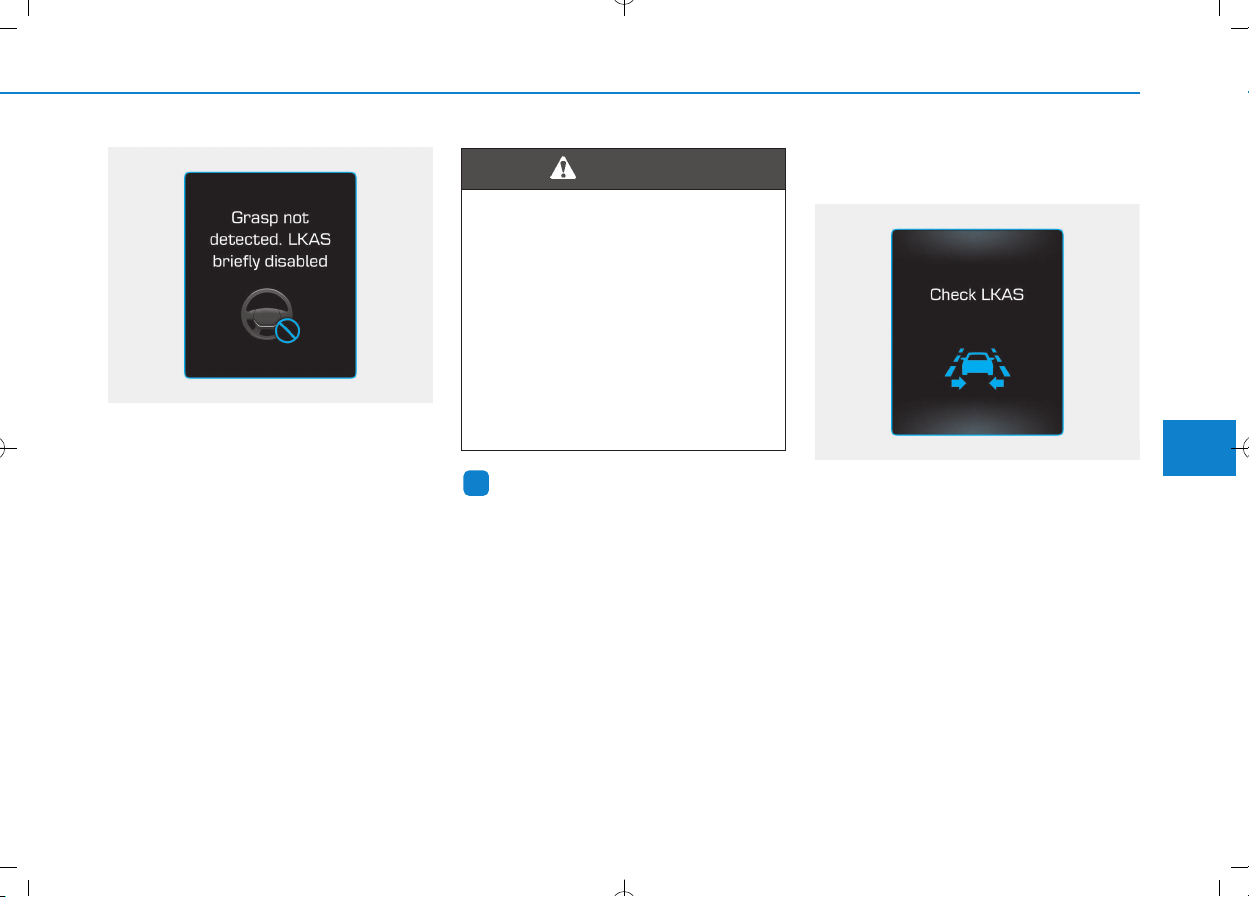
5-69
Driving your vehicle
5
Grasp not detected. LKAS briefly
disabled
If the driver still does not have their
hands on the steering wheel after the
message "Keep hands on steering
wheel", the system will not control
the steering wheel and warn the driv-
er only when the driver crosses the
lane markers.
However, if the driver has their hands
on the steering wheel again, the sys-
tem will start controlling the steering
wheel.
Information
• Even though the steering is assisted
by the system, the driver may con-
trol the steering wheel.
• The steering wheel may feel heavier
when the steering wheel is assisted
by the system than when it is not.
Warning light and message
Check LKAS
If there is a problem with the system
a message will appear for a few sec-
onds. If the problem continues the
LKAS failure indicator will illuminate.
i
• The driver is responsible for
accurate steering.
• Turn off the system and drive
the vehicle in below situa-
tions.
- In bad weather
- In bad road condition
- When the steering wheel
needs to be controlled by the
driver frequently.
WARNING
OPDEN057130
OAEE056131L

5-70
Driving your vehicle
LKAS failure indicator
The LKAS failure indica-
tor (yellow) will illuminate
if the LKAS is not working
properly. We recommend
that the system be
checked by an authorized
HYUNDAI dealer.
When there is a problem with the
system do one of the following:
• Turn the system on after turning
the engine off and on again.
• Check if the ignition switch is in the
ON position.
• Check if the system is affected by
the weather. (ex: fog, heavy rain,
etc.)
• Check if there is foreign matter on
the camera lens.
If the problem is not solved, we rec-
ommend that the system be checked
by an authorized HYUNDAI dealer.
The LKAS system will not be in the
ENABLED state and the steering
wheel will not be assisted when:
• The turn signal is turned on before
changing a lane. If you change
lanes without the turn signal on,
the steering wheel might be con-
trolled.
• The vehicle is not driven in the mid-
dle of the lane when the system is
turned on or right after changing a
lane.
• The vehicle drives too close to the
lane marker continuously before
steering is assisted.
• ESC (Electronic Stability Control) or
VSM (Vehicle Stability Management)
is activated.
• The vehicle is driven on a sharp
curve.
• Vehicle speed is below 60 km/h (37
mph) and over 200 km/h (125
mph).
• The vehicle makes sharp lane
changes.
• The vehicle brakes suddenly.
• Only one lane marker is detected.
• The lane is very wide or narrow.
• There are more than two lane
markers on the road. (e.g. construc-
tion area)
• The vehicle is driven on a steep
incline.
• The steering wheel is turned sud-
denly.

5-71
Driving your vehicle
5
Limitations of the system
The LKAS may operate prematurely
even if the vehicle does not depart
from the intended lane, OR, the
LKAS may not assist your steering or
warn you if the vehicle leaves the
intended lane under the following cir-
cumstances:
When the lane and road condi-
tions are poor
• It is difficult to distinguish the lane
marking from the road surface or
the lane marking is faded or not
clearly marked.
• It is difficult to distinguish the color
of the lane marker from the road.
• There are markings on the road
surface that look like a lane marker
that is inadvertently being detected
by the camera.
• The lane marker is merged or
divided. (e.g. tollgate)
• The lane number increases or
decreases or the lane marker are
crossing complicatedly.
• There are more than two lane
markers on the road in front of you.
• The lane marker is very thick or
thin.
• The lanes ahead are not visible
due to rain, snow, water on the
road, damaged or stained road
surface, or other factors.
• The shadow is on the lane marker
by a median strip, trees, etc.
• The lanes are incomplete or the
area is in a construction zone.
• There are crosswalk signs or other
symbols on the road.
• The lane marker in a tunnel is
stained with oil, etc.
• The lane suddenly disappears
such as at the intersection.
When external condition is inter-
vened
• The brightness outside changes
suddenly such as when entering or
exiting a tunnel, or when passing
under a bridge.
• The brightness outside is too low
such as when the headlamps are
not on at night or the vehicle is
going through a tunnel.
• There is a boundary structure in
the roadway such as a concrete
barrier, guardrail and reflector post
that is inadvertently being detected
by the camera.
• When light coming from a street
light or an oncoming vehicle is
reflected on a wet road surface
such as a puddle in the road.
• The field of view in front is
obstructed by sun glare.
• There is not enough distance
between you and the vehicle in
front to be able to detect the lane
marker or the vehicle ahead is driv-
ing on the lane marker.
• Driving on a steep grade, over a
hill, or when driving on a curved
road.

5-72
Driving your vehicle
• The adverse road conditions cause
excessive vehicle vibrations while
driving.
• The surrounding of the inside rear
view mirror temperature is high
due to direct sunlight, etc.
When front visibility is poor
• The windshield or the LKAS cam-
era lens is blocked with dirt or
debris.
• The windshield glass is fogged up;
a clear view of the road is obstruct-
ed.
• Placing objects on the dashboard,
etc.
• The sensor cannot detect the lane
because of fog, heavy rain or snow.
LKAS function change
The driver can change LKAS to Lane
Departure Warning System (LDWS)
or change the LKAS mode between
Standard LKA and Active LKA from
the LCD display. Go to the 'User
Settings → Driving Assist → Lane
Keeping Assist System → Lane
Departure Warning/Standard LKA/
Active LKA'.
The system is automatically set to
Standard LKA if a function is not
selected.
Lane Departure Warning
LDWS alerts the driver with a visual
warning and a warning alarm when
the system detects the vehicle
departing the lane. The steering
wheel will not be controlled.
Standard LKA
The Standard LKA mode guides the
driver to help keep the vehicle within
the lanes. It rarely controls the steer-
ing wheel, when the vehicle drives
well inside the lanes. However, it
starts to control the steering wheel,
when the vehicle is about to deviate
out of the lanes.
Active LKA
The Active LKA mode provides more
frequent steering wheel control in
comparison with the Standard LKA
mode. Active LKA can reduce the dri-
ver’s fatigue to assist the steering for
maintaining the vehicle in the middle
of the lane.
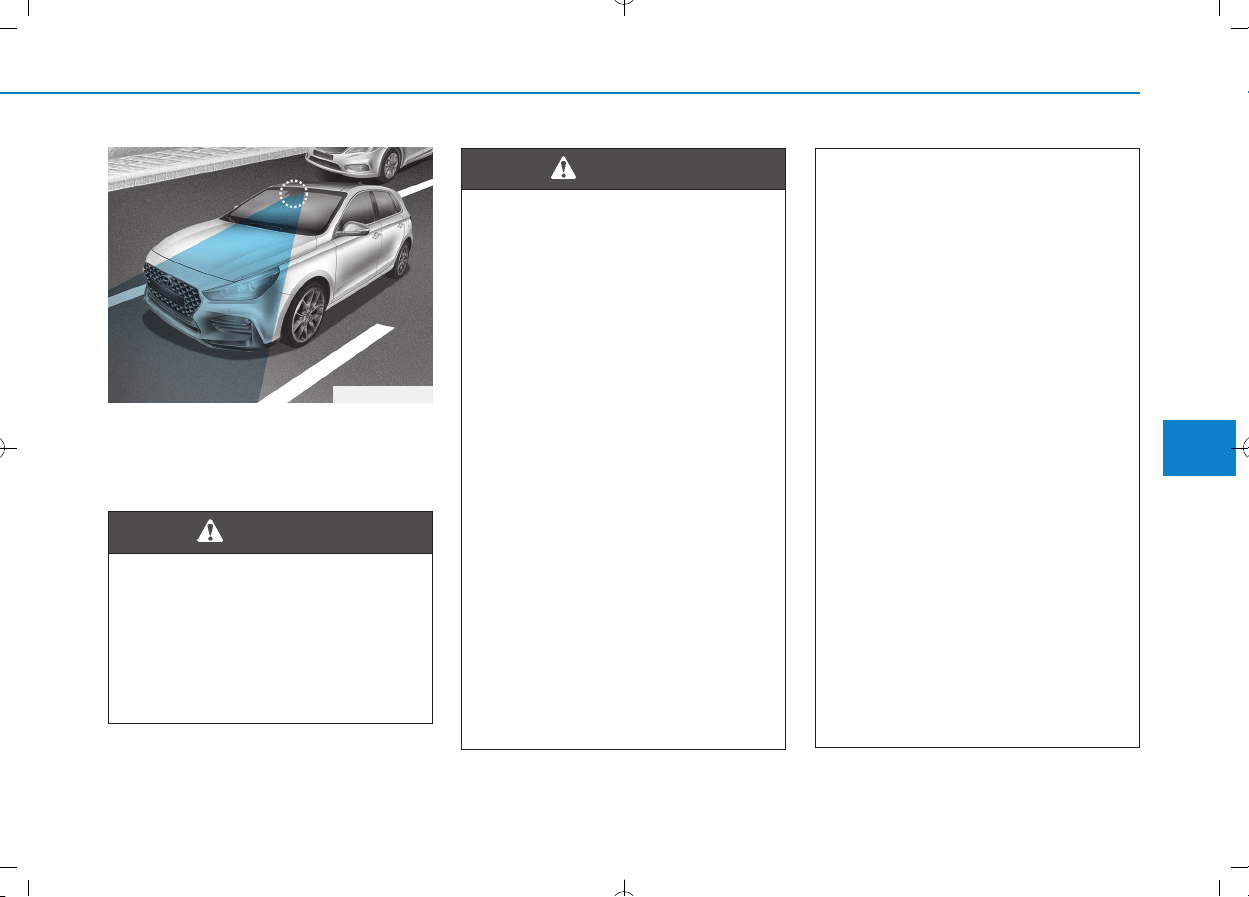
5-73
Driving your vehicle
5
This Lane Departure Warning System
detects the lane with the sensor at the
front windshield and warns you when
your vehicle leaves the lane.
LLAANNEE DDEEPPAARRTTUURREE WWAARRNNIINNGG SSYYSSTTEEMM ((LLDDWWSS)) ((IIFF EEQQUUIIPPPPEEDD))
OPDEN057048
The Lane Departure Warning
System is not a substitute for
safe driving practices, but a
convenience function. It is the
responsibility of the driver to
always be aware of the sur-
rounding and steer the vehicle.
WARNING
Take the following precautions
when using the Lane Departure
Warning System (LDWS):
• ALWAYS check your sur-
roundings and the road condi-
tions before changing lanes.
The LDWS does not control
the vehicle to change lanes or
to stay in the current lane.
• Do not make abrupt maneu-
vers or turn the steering
wheel suddenly if the LDWS
alerts you that the vehicle is
departing from the lane.
• If the camera recognition sys-
tem does not properly detect
the lane, the LDWS may not
notify you if the vehicle
departs from the lane.
• The LDWS does not operate
until the vehicle speed reach-
es approximately 60 km/h (37
mph).
(Continued)
(Continued)
• Do not disassemble the LDWS
camera temporarily to tint the
window or attach any types of
coatings and accessories. If
you disassemble the camera
and assemble it again, we rec-
ommend that you take your
vehicle to an authorized
HYUNDAI dealer and have the
system checked for calibra-
tion.
•
When you replace the wind-
shield glass or LDWS camera,
we recommend that you take
your vehicle to an authorized
HYUNDAI dealer and have the
system checked for calibration.
• Do not spray water or any
type of liquid near the camera.
The system may become
damaged.
• Do not attempt to repair the
LDWS camera and do not
remove any parts.
(Continued)
WARNING
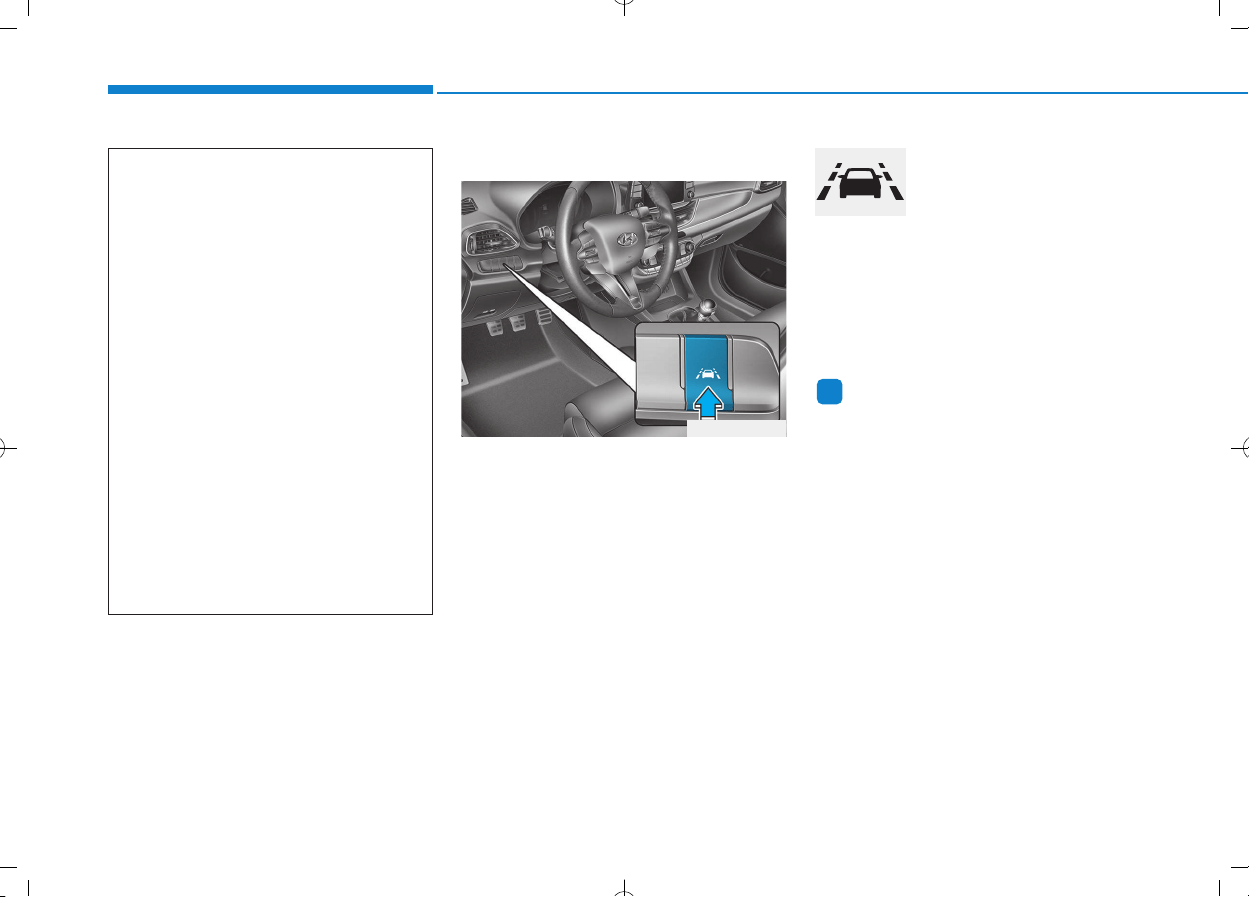
5-74
Driving your vehicle
LDWS operation
To activate/deactivate the LDWS:
With the ignition switch in the ON
position, press the LDWS button
located on the instrument panel on
the lower left hand side of the driver.
The indicator in the cluster display
will initially illuminate white. This indi-
cates the LDWS is in the READY but
NOT ENABLED state.
The color of indicator will
change depending on the
condition of LDWS.
- White : Sensor does not detect
lane markers or vehicle
speed is under 60 km/h
(40mph).
- Green : Sensor detects lane mark-
ers.
Information
If the indicator (white) is activated
from the previous ignition cycle, the
system will turn ON without any addi-
tional control. If you press the LDWS
button again, the indicator on the
cluster goes off.
i
(Continued)
• Do not place objects that
reflect light on the dashboard
while driving.
• Do not place any accessories
near the inside rearview mirror.
• You may not hear a warning
sound of LDWS because of
the excessive audio sound.
• The operation of the LDWS
may be affected by several
factors including environmen-
tal conditions that affect the
ability of the camera to detect
the lanes in front of you. It is
the responsibility of the driver
to pay careful attention to the
roadway and to maintain the
vehicle in its intended lane at
all times.
OPDEN057133
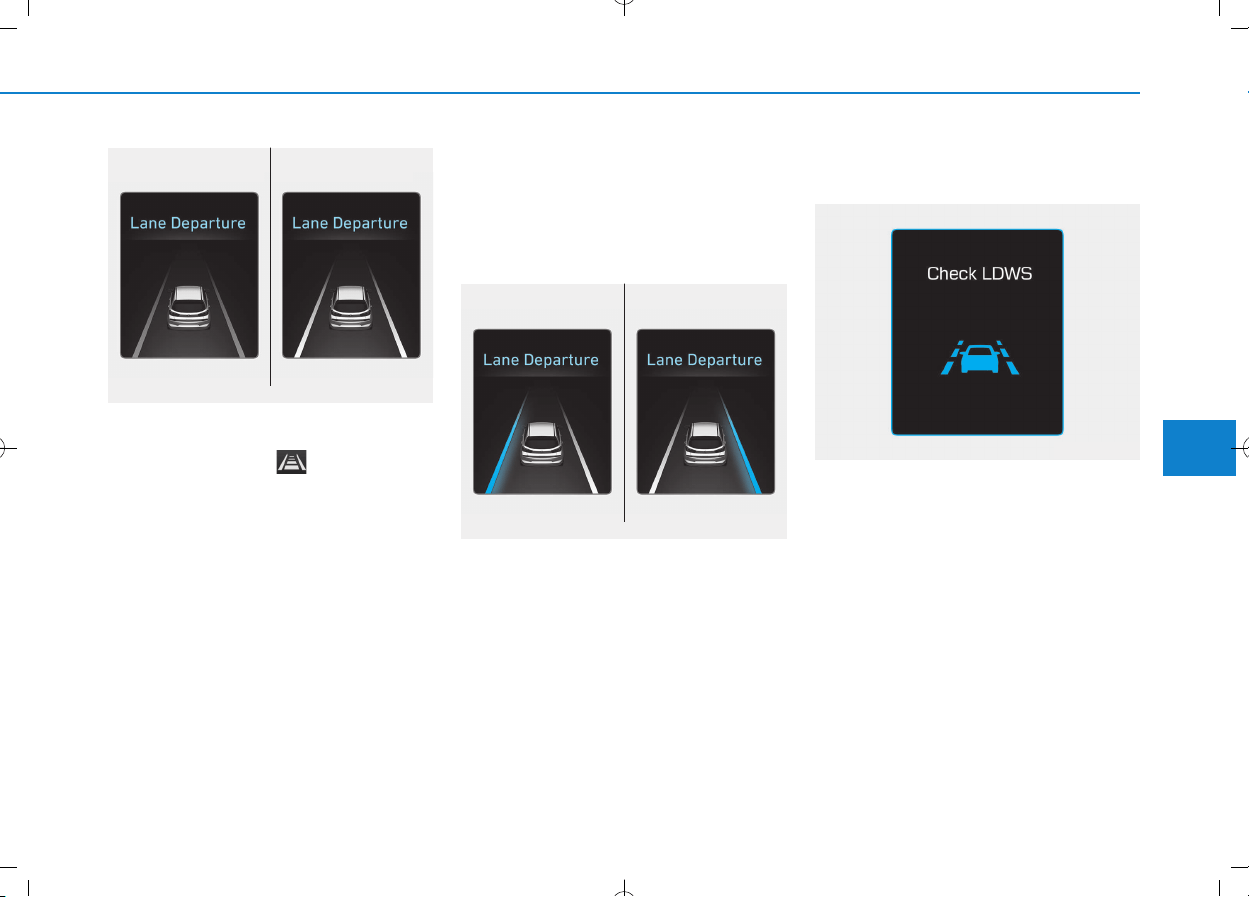
5-75
Driving your vehicle
5
• To see the LDWS screen on the
LCD display in the cluster, select
Assist mode ( ). For more
details, refer to "LCD Display
Modes" in chapter 3.
• If the system detects a lane mark-
er, the color changes from gray to
white.
• If the system detects the left lane
marker, the left lane marker color
will change from gray to white.
• If the system detects the right lane
marker, the right lane marker color
will change from gray to white.
• If your vehicle speed exceeds 60
km/h (40 mph) and the LDWS but-
ton is ON, the system is enabled. If
your vehicle departs from the pro-
jected lane in front of you, the
LDWS operates as follows:
A visual warning appears on the
cluster LCD display. Either the left
lane marker or the right lane mark-
er in the cluster LCD display will
blink depending on which direction
the vehicle is veering.
Warning light and message
Check LDWS
If there is a problem with the system
a message will appear for a few sec-
onds.
If the problem continues the LDWS
failure indicator will illuminate.
■ Lane marker
detected
■ Lane marker
undetected
OPDE056110/OPDE056111
OAE056164L
■ Left ■ Right
OPDE056112/OPDE056113

5-76
Driving your vehicle
LDWS failure indicator
The LDWS failure indica-
tor (yellow) will illuminate
if the LDWS is not work-
ing properly. We recom-
mend that you have your vehicle
checked by an authorized HYUNDAI
dealer.
When there is a problem with the
system, do one of the following:
• Turn the system on after turning
the vehicle off and on again.
• Check if the ignition switch is in the
ON position.
• Check if the system is affected by the
weather. (e.g. fog, heavy rain, etc.)
• Check if there is foreign matter on
the camera lens.
If the problem is not solved, we rec-
ommend that you the system
checked by an authorized HYUNDAI
dealer.
Limitations of the system
The LDWS may operate prematurely
even if the vehicle does not depart
from the intended lane, OR, the
LDWS may not warn you if the vehi-
cle leaves the intended lane under
the following circumstances:
When the lane and road condi-
tions are poor
• It is difficult to distinguish the lane
marking from the road surface or
the lane marking is faded or not
clearly marked.
• It is difficult to distinguish the color
of the lane marker from the road.
• There are markings on the road
surface that look like a lane marker
that is inadvertently being detected
by the camera.
• The lane marker is merged or
divided. (e.g. tollgate)
• The lane number increases or
decreases or the lane marker are
crossing complicatedly.
• There are more than two lane
markers on the road in front of you.
• The lane marker is very thick or
thin.
• The lanes ahead are not visible
due to rain, snow, water on the
road, damaged or stained road
surface, or other factors.
• The shadow is on the lane marker
by a median strip, trees, etc.
• The lanes are incomplete or the
area is in a construction zone.
• There are crosswalk signs or other
symbols on the road.
• The lane marker in a tunnel is
stained with oil, etc.
• The lane suddenly disappears
such as at the intersection.
When external condition is inter-
vened
• The brightness outside changes
suddenly such as when entering or
exiting a tunnel, or when passing
under a bridge.
• The brightness outside is too low
such as when the headlamps are
not on at night or the vehicle is
going through a tunnel.

5-77
Driving your vehicle
5
• There is a boundary structure in
the roadway such as a concrete
barrier, guardrail and reflector post
that is inadvertently being detected
by the camera.
• When light coming from a street
light or an oncoming vehicle is
reflected on a wet road surface
such as a puddle in the road.
• The field of view in front is
obstructed by sun glare.
• There is not enough distance
between you and the vehicle in
front to be able to detect the lane
marker or the vehicle ahead is driv-
ing on the lane marker.
• Driving on a steep grade, over a
hill, or when driving on a curved
road.
• The adverse road conditions cause
excessive vehicle vibrations while
driving.
• The surrounding of the inside rear
view mirror temperature is high
due to direct sunlight, etc.
When front visibility is poor
• The windshield or the LDWS cam-
era lens is blocked with dirt or
debris.
• The windshield glass is fogged up;
a clear view of the road is obstruct-
ed.
• Placing objects on the dashboard,
etc.
• The sensor cannot detect the lane
because of fog, heavy rain or snow.
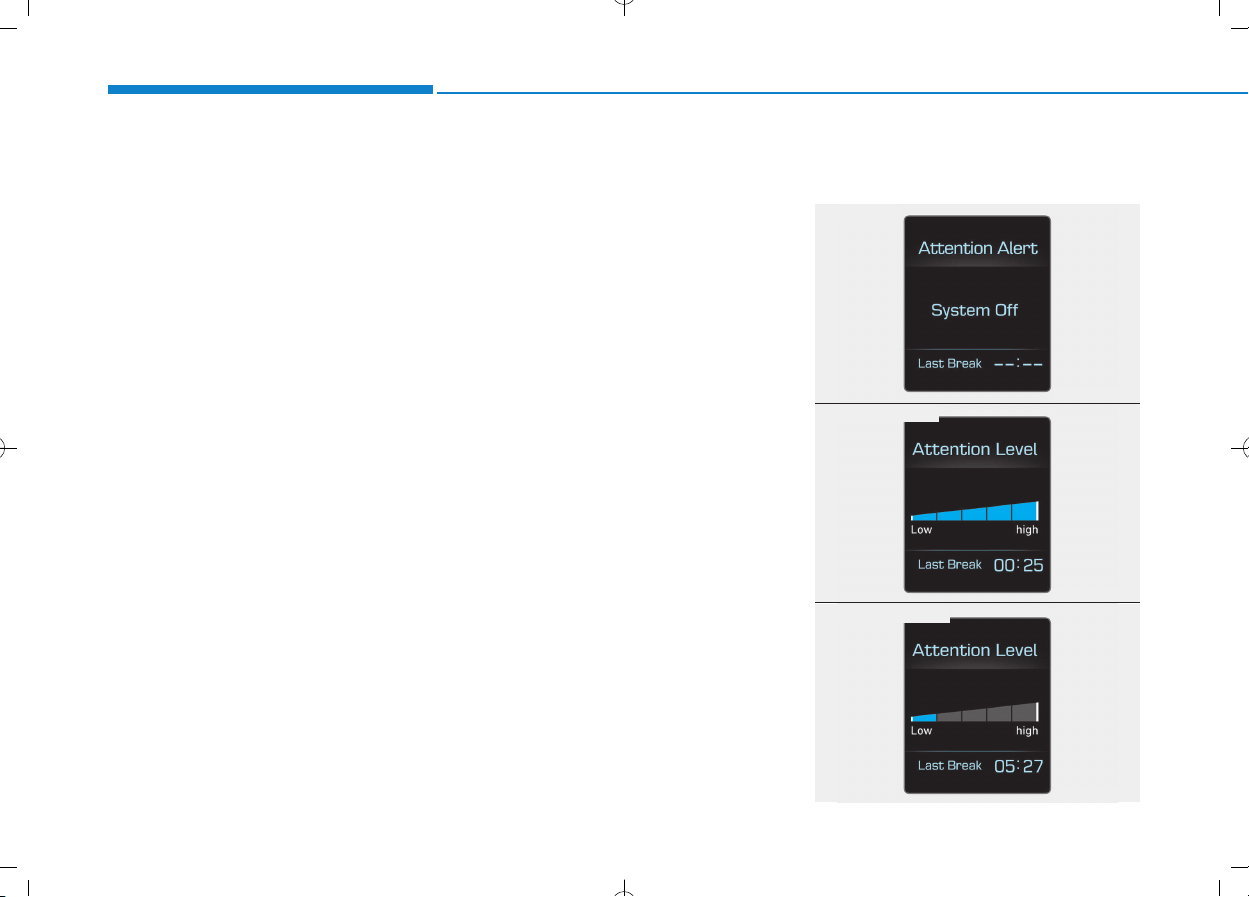
5-78
Driving your vehicle
The Driver Attention Alert (DAA) sys-
tem displays the condition of the dri-
ver's fatigue level and inattentive
driving practices.
System setting and activation
System setting
• The Driver Attention Alert system
is set to be in the OFF position,
when your vehicle is first delivered
to you from the factory.
• To turn ON the Driver Attention
Alert system, turn on the engine,
and then select 'User Settings →
Driving Assist → Driver Attention
Alert → Normal/Early' on the LCD
display.
• The driver can select the Driver
Attention Alert system mode.
- Off : The Driver Attention Alert
system is deactivated.
- Normal : The Driver Attention
Alert system alerts the driver of
his/her fatigue level or inattentive
driving practices.
- Early : The Driver Attention Alert
system alerts the driver of his/her
fatigue level or inattentive driving
practices faster than Normal
mode.
• The set-up of the Driver Attention
Alert system will be maintained, as
selected, when the engine is re-
started.
Display of the driver's attention
level
DDRRIIVVEERR AATTTTEENNTTIIOONN AALLEERRTT SSYYSSTTEEMM ((DDAAAA)) ((IIFF EEQQUUIIPPPPEEDD))
OPDE056125
■ System off
OPDE056061
■ Attentive driving
OPDE056062
■ Inattentive driving
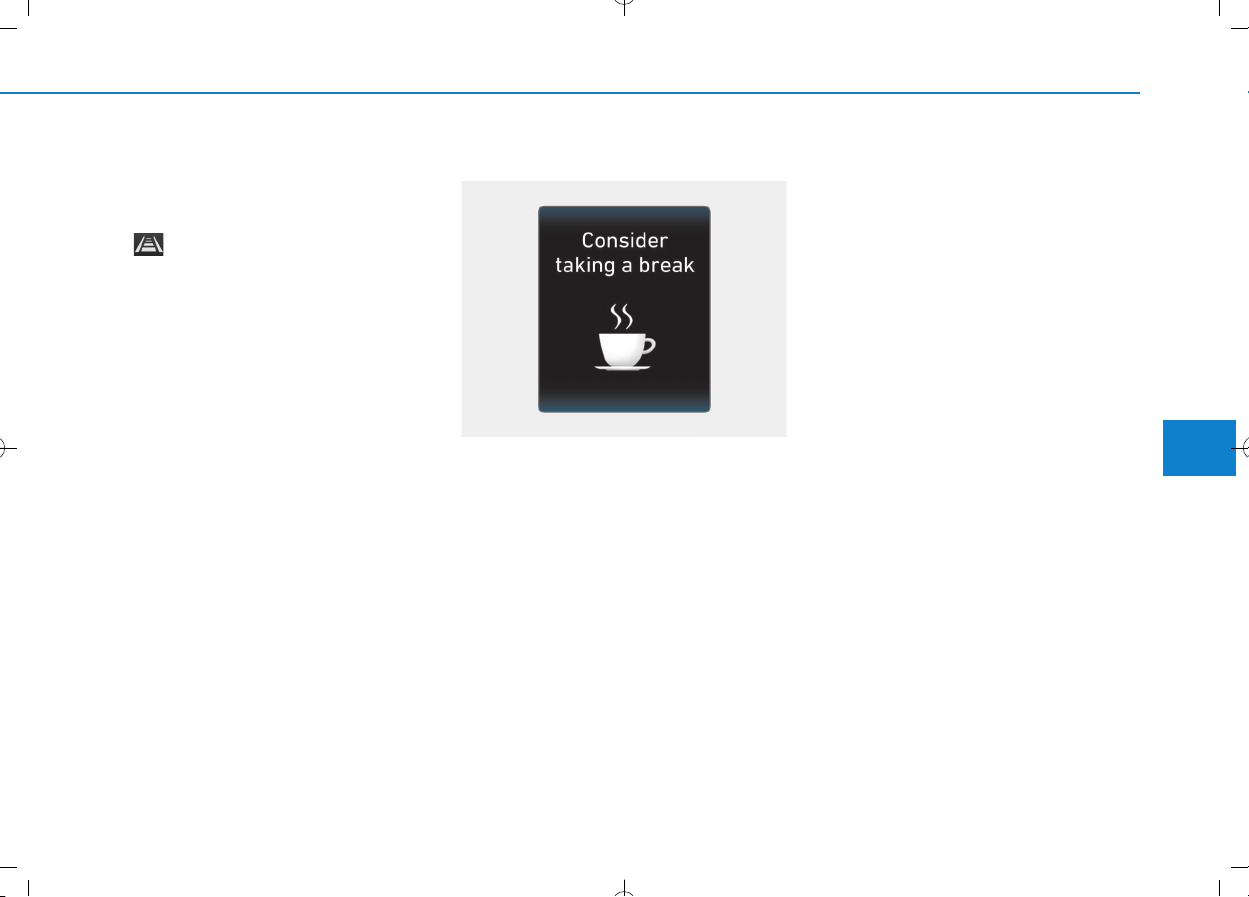
5-79
Driving your vehicle
5
• The driver can monitor their driving
conditions on the LCD display.
The DAA screen will appear when
you select the Assist mode tab
( ) on the LCD display if the sys-
tem is activated. (For more
details, refer to "LCD Display
Modes" in chapter 3.)
• The driver's attention level is dis-
played on the scale of 1 to 5. The
lower the number is, the more inat-
tentive the driver is.
• The number decreases when the
driver does not take a break for a
certain period of time.
• The number increases when the
driver attentively drives for a cer-
tain period of time.
• When the driver turns on the sys-
tem while driving, it displays ‘Last
Break time’ and level.
Take a break
• The "Consider taking a break"
message appears on the LCD dis-
play and a warning sounds in order
to suggest the driver to take a
break, when the driver’s attention
level is below 1.
• The Driver Attention Alert system
does not suggest the driver to take
a break, when the total driving time
is shorter than 10 minutes.
Resetting the system
• The last break time is set to 00:00
and the driver's attention level is
set to 5 (very attentive) when the
driver resets the Driver Attention
Alert system.
• The Driver Attention Alert system
resets the last break time to 00:00
and the driver's attention level to 5
in the following situations.
- The engine is turned OFF.
- The driver unfastens the seat belt
and then opens the driver's door.
- The vehicle is stopped for more
than 10 minutes.
• The Driver Attention Alert system
operates again, when the driver
restarts driving.
OPDE056063
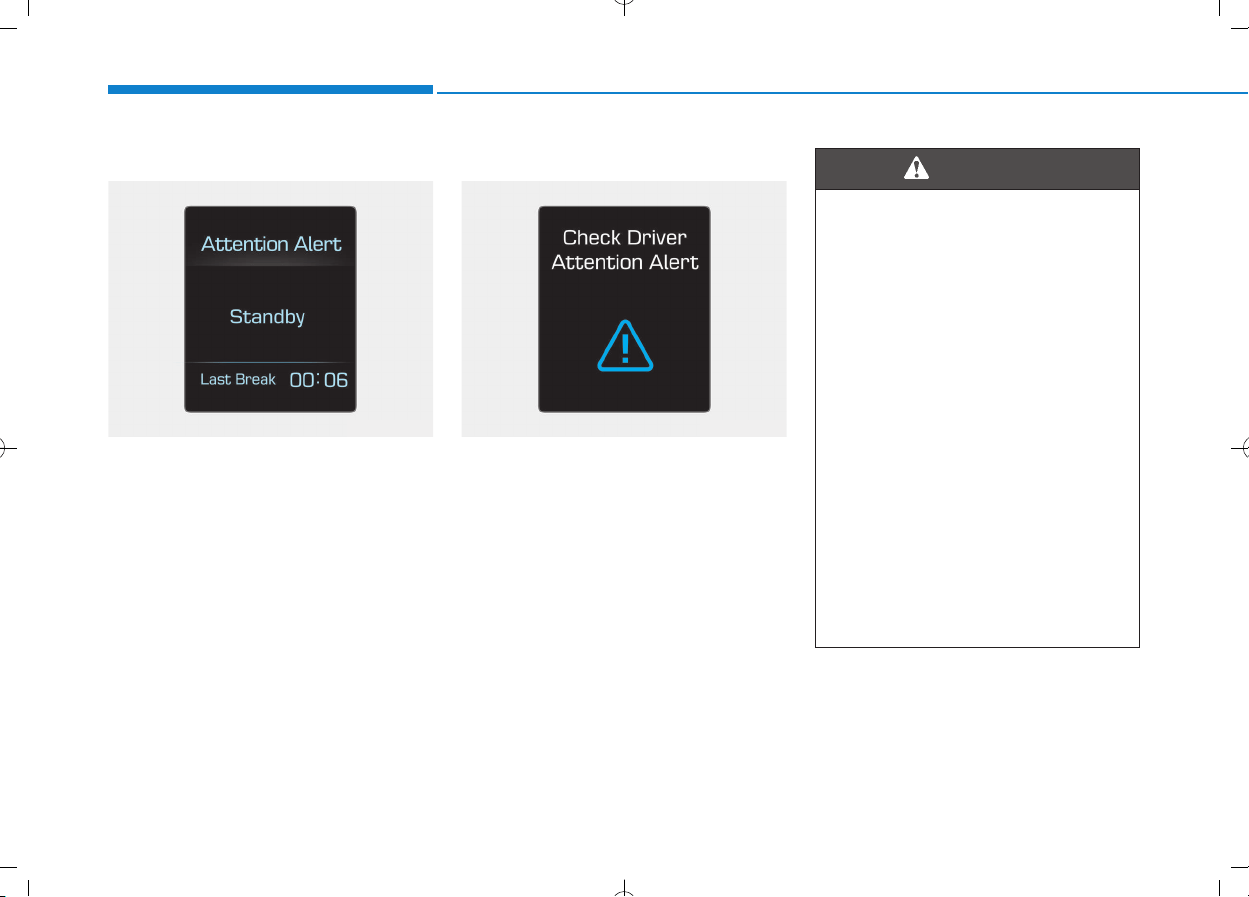
5-80
Driving your vehicle
System standby
The Driver Attention Alert system
enters the ready status and displays
the 'Standby' screen in the following
situations.
- The camera does not detect the
lanes.
- Driving speed remains under 60
km/h (40 mph) or over 200 km/h
(125 mph).
System malfunction
Check Driver Attention Alert
When the "Check Driver Attention
Alert" warning message appears, the
system is not working properly. In this
case, we recommend that you have
the vehicle inspected by an author-
ized HYUNDAI dealer.
OPDE056126 OPDE056065
• The Driver Attention Alert
system is not a substitute for
safe driving practices, but a
convenience function only. It
is the responsibility of the
driver to always drive cau-
tiously to prevent unexpected
and sudden situations from
occurring. Pay attention to the
road conditions at all times.
• The system may suggest a
break according to the dri-
ver’s driving pattern or habits
even if the driver doesn’t feel
fatigue.
• The driver, who feels fatigued,
should take a break, even
though there is no break sug-
gestion by the Driver Attention
Alert system.
WARNING

5-81
Driving your vehicle
5
The Driver Attention Alert system
utilizes the camera sensor on the
front windshield for its operation.
To keep the camera sensor in the
best condition, you should
observe the followings:
• NEVER install any accessories
or stickers on the front wind-
shield, nor tint the front wind-
shield.
• NEVER locate any reflective
objects (i.e. white paper, mirror)
over the dashboard. Any light
reflection may cause a malfunc-
tion of the Driver Attention Alert
(DAA) system.
• Pay extreme caution to keep the
camera sensor out of water.
• NEVER arbitrarily disassemble
the camera assembly, nor apply
any impact on the camera
assembly. If you disassemble
the camera and assemble it
again, we recommend that you
take your vehicle to an author-
ized HYUNDAI dealer and have
the system checked for calibra-
tion.
NOTICE
The Driver Attention Alert sys-
tem may not properly operate
with limited alerting in the fol-
lowing situations:
• The lane detection perform-
ance is limited. (For more
details, refer to "Lane Keeping
Assist System (LKAS)" or
"Lane Departure Warning
System (LDWS)" in this chap-
ter.)
• The vehicle is violently driven
or is abruptly turned for
obstacle avoidance (e.g. con-
struction area, other vehicles,
fallen objects, bumpy road).
• Forward drivability of the
vehicle is severely under-
mined (possibly due to wide
variation in tire pressures,
uneven tire wear-out, toe-in/
toe-out alignment).
• The vehicle drives on a curvy
road.
• The vehicle drives on a
bumpy road.
(Continued)
CAUTION
(Continued)
• The vehicle drives through a
windy area.
• The vehicle is controlled by
the following driving assist
systems:
- Lane Keeping Assist System
(LKAS)
- Autonomous Emergency
Braking (AEB) System
Playing the vehicle audio sys-
tem at high volume may offset
the Driver Attention Alert sys-
tem warning sounds.
CAUTION
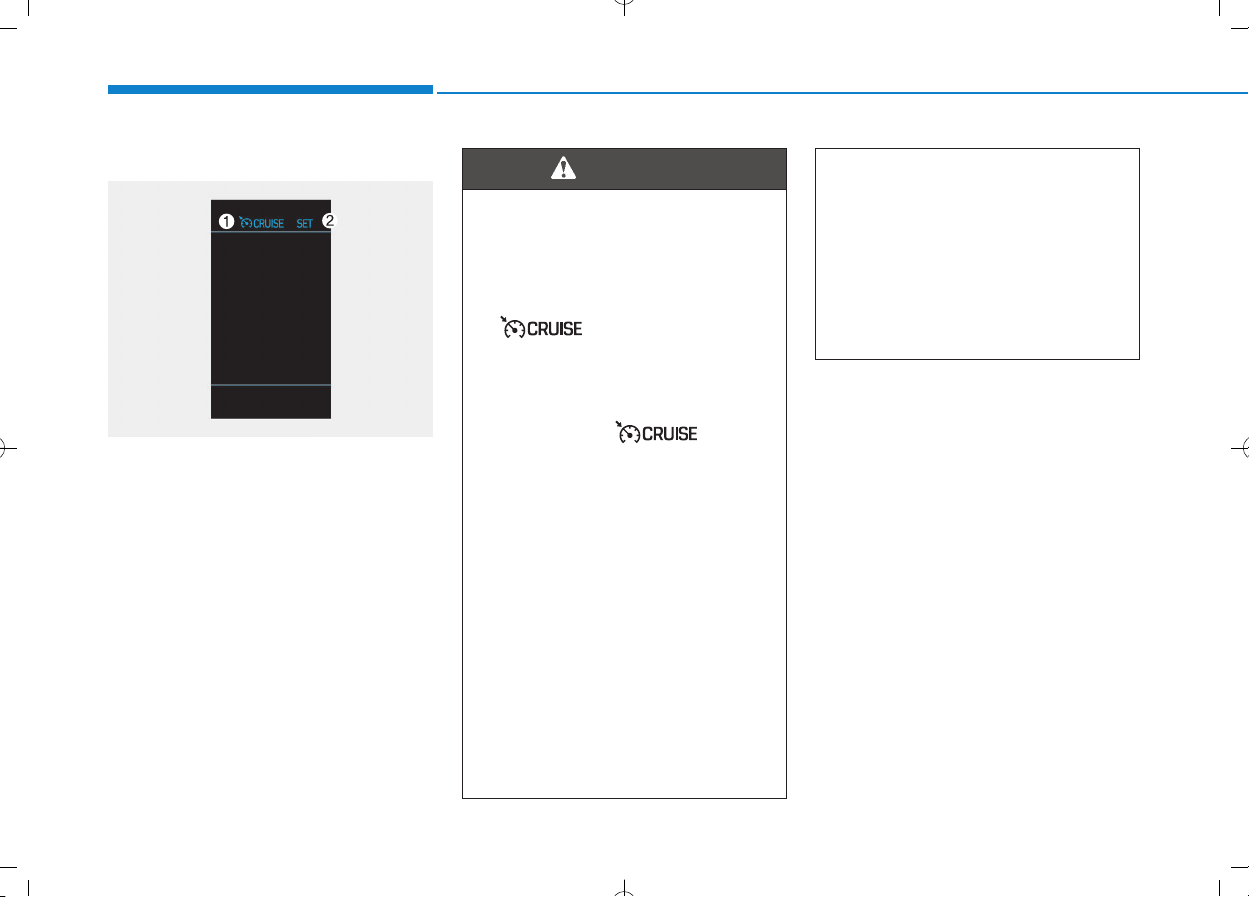
5-82
Driving your vehicle
Cruise Control operation
1. Cruise indicator
2. Set indicator
The Cruise Control system allows you
to drive at speeds above 30 km/h
(20 mph) without depressing the
accelerator pedal.
CCRRUUIISSEE CCOONNTTRROOLL ((IIFF EEQQUUIIPPPPEEDD))
(Continued)
- When driving on rainy, icy, or
snow-covered roads
- When driving on hilly or
windy roads
- When driving in windy areas
• Do not use cruise control
when towing a trailer.
Take the following precautions:
• Always set the vehicle speed
under the speed limit in your
country.
• If the Cruise Control is left on,
( indicator light in
the instrument cluster is illu-
minated) the Cruise Control
can be activated unintention-
ally. Keep the Cruise Control
system off ( indica-
tor light OFF) when the Cruise
Control is not in use, to avoid
inadvertently setting a speed.
• Use the Cruise Control system
only when traveling on open
highways in good weather.
• Do not use the Cruise Control
when it may be unsafe to keep
the vehicle at a constant
speed:
- When driving in heavy traffic
or when traffic conditions
make it difficult to drive at a
constant speed
(Continued)
WARNING
OPDEN047199
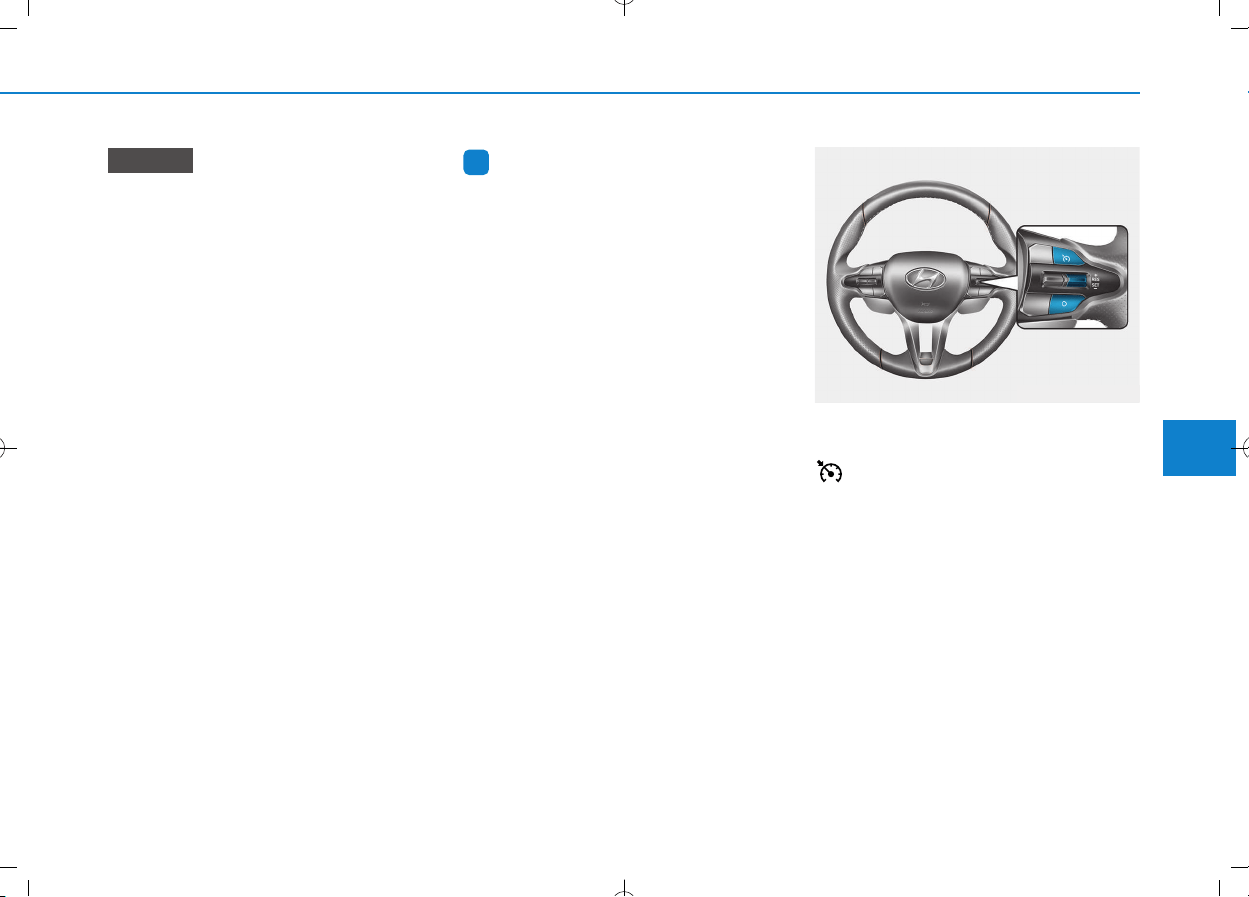
5-83
Driving your vehicle
5
During cruise-speed driving of a
manual transmission vehicle, do
not shift into neutral without
depressing the clutch pedal, since
the engine will be overrevved. If
this happens, depress the clutch
pedal or press the cruise control
ON / OFF button.
Information
• During normal cruise control opera-
tion, when the SET switch is activat-
ed or reactivated after applying the
brakes, the cruise control will acti-
vate after approximately 3 seconds.
This delay is normal.
• Before activating the cruise control
function, the system will check to
verify that the brake switch is oper-
ating normally. Depress the brake
pedal at least once after turning ON
the ignition or starting the vehicle.
Cruise control switch
O : Cancels cruise control operation.
: Turns cruise control system on
or off.
RES+: Resumes or increases cruise
control speed.
SET-: Sets or decreases cruise con-
trol speed.
i
NOTICE
OPDEN057117
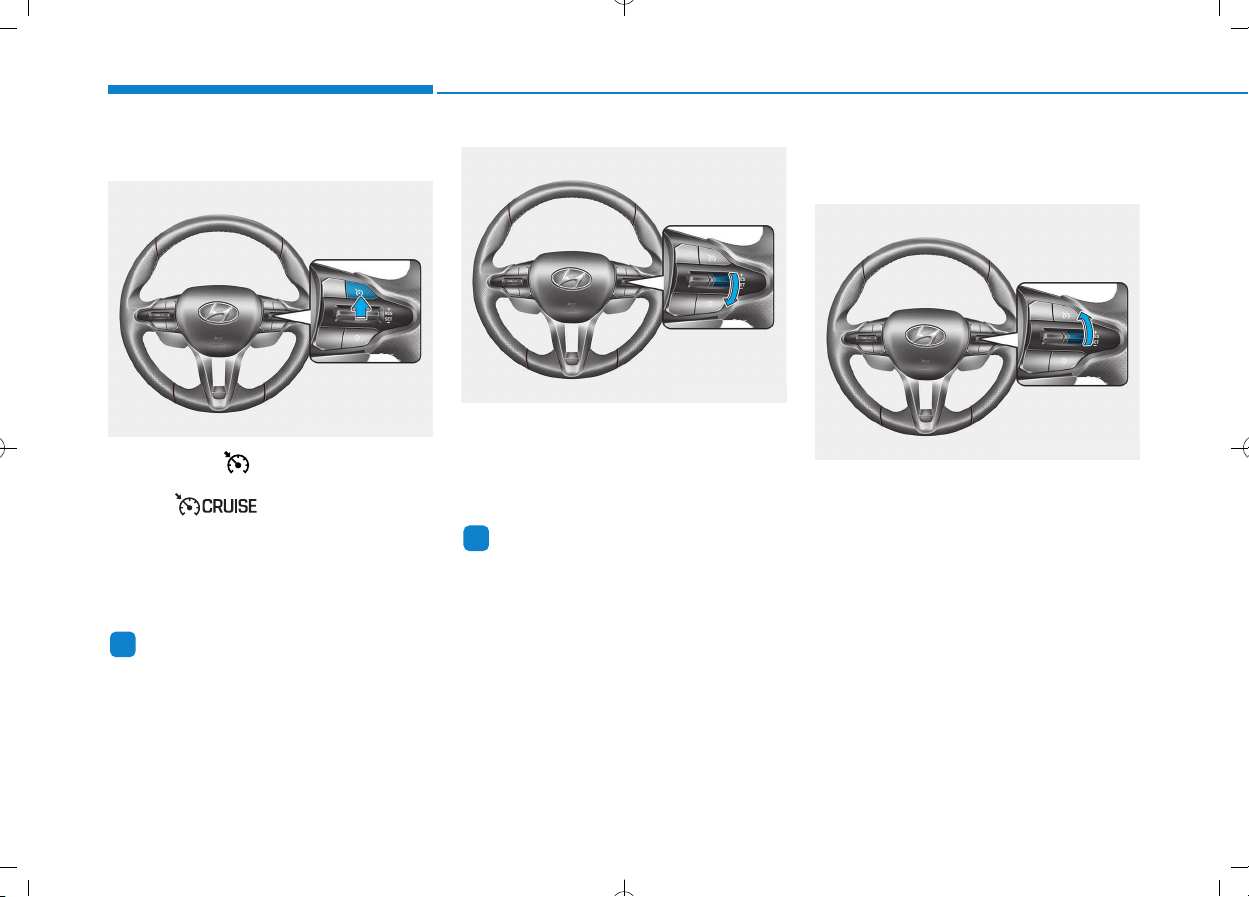
5-84
Driving your vehicle
To set Cruise Control speed
1. Press the button on the steer-
ing wheel to turn the system on.
The indicator will illumi-
nate.
2. Accelerate to the desired speed,
which must be more than 30 km/h
(20 mph).
Information
For manual transmission vehicles, you
should depress the brake pedal at
least once to set the cruise control
after starting the engine.
3. Push the toggle switch down
(SET-), and release it. The SET
indicator light will illuminate.
4. Release the accelerator pedal.
Information
On a steep slope, the vehicle may
slightly slow down or speed up, while
driving uphill or downhill.
To increase Cruise Control
speed
• Push the toggle switch up (RES+)
and hold it, while monitoring the
SET speed on the instrument clus-
ter.
Release the toggle switch when the
desired speed is shown and the
vehicle will accelerate to that speed.
i
i
OPDEN057118
OPDEN057119
OPDEN057120
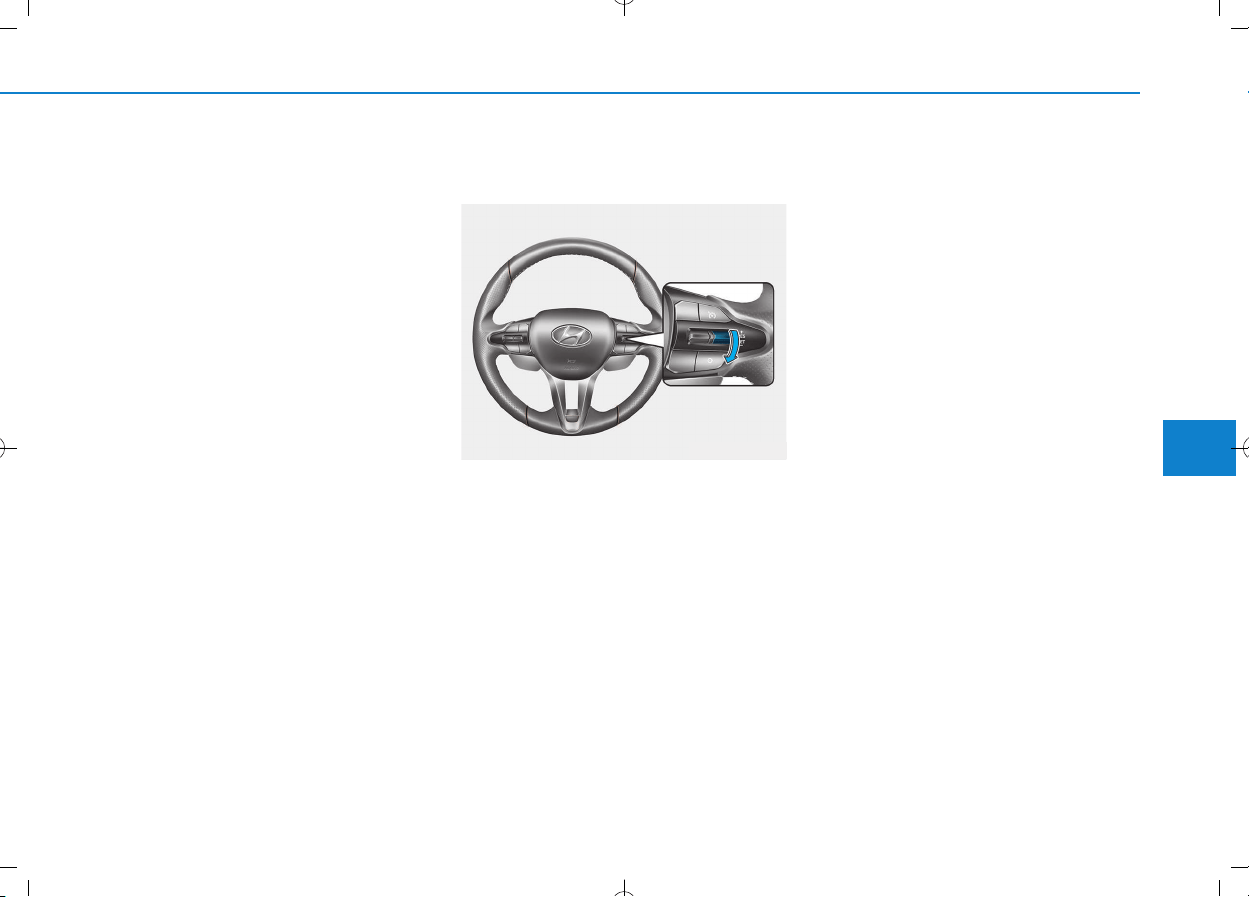
5-85
Driving your vehicle
5
• Push the toggle switch up (RES+)
and release it immediately. The
cruising speed will increase 2.0
km/h (1.2 mph) each time the tog-
gle switch is operated in this man-
ner.
• Depress the accelerator pedal.
When the vehicle attains the
desired speed, push the toggle
switch down (SET-).
To decrease Cruise Control
speed
• Push the toggle switch down (SET-)
and hold it.Your vehicle will gradual-
ly slow down. Release the toggle
switch at the speed you want to
maintain.
• Push the toggle switch down (SET-)
and release it immediately. The
cruising speed will decrease 2.0
km/h (1.2 mph) each time the toggle
switch is operated in this manner.
• Lightly tap the brake pedal. When
the vehicle attains the desired
speed, push the toggle switch
down (SET-).
To temporarily accelerate with
the Cruise Control ON
Depress the accelerator pedal. When
you take your foot off the accelerator,
the vehicle will return to the previ-
ously set speed.
If you push the toggle switch down
(SET-) at the increased speed, the
Cruise Control will maintain the
increased speed.
OPDEN057119
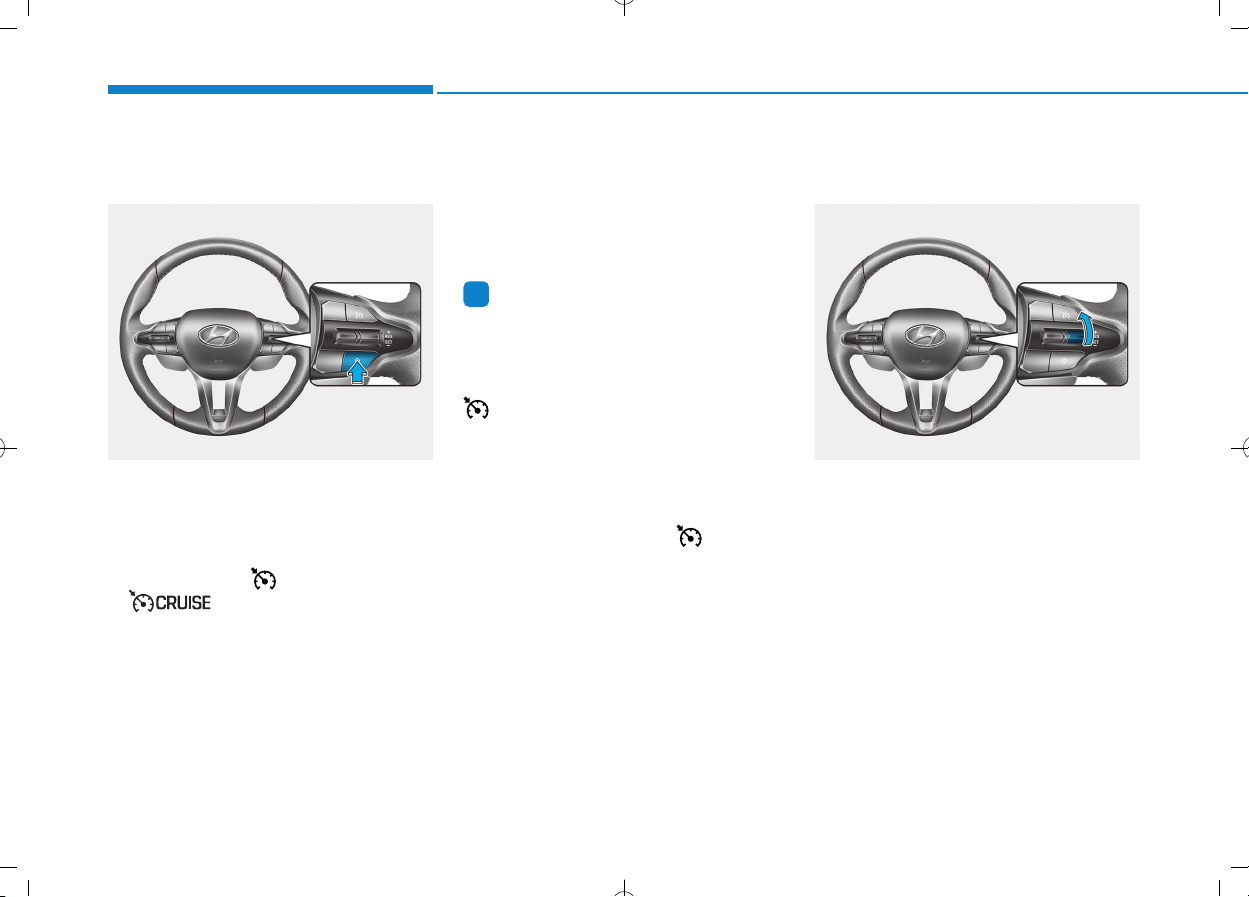
5-86
Driving your vehicle
Cruise Control will be canceled
when:
• Depressing the brake pedal.
• Depressing the clutch pedal.
• Pressing the O button located on
the steering wheel.
• Pressing the button. Both the
indicator and the SET
indicator will turn OFF.
• Decreasing the vehicle speed to
less than approximately 30 km/h
(20 mph).
• The ESC (Electronic Stability
Control) is operating.
Information
Each of the above actions will cancel
Cruise Control operation (the SET
indicator light in the instrument clus-
ter will go off), but only pressing the
button will turn the system off. If
you wish to resume Cruise Control
operation, push the toggle switch up
(RES+) located on your steering
wheel. You will return to your previ-
ously preset speed, unless the system
was turned off using the button.
To resume preset Cruising
speed
Push the toggle switch up (RES+). If
the vehicle speed is over 30 km/h (20
mph), the vehicle will resume the
preset speed.
i
OPDEN057120OPDEN057121
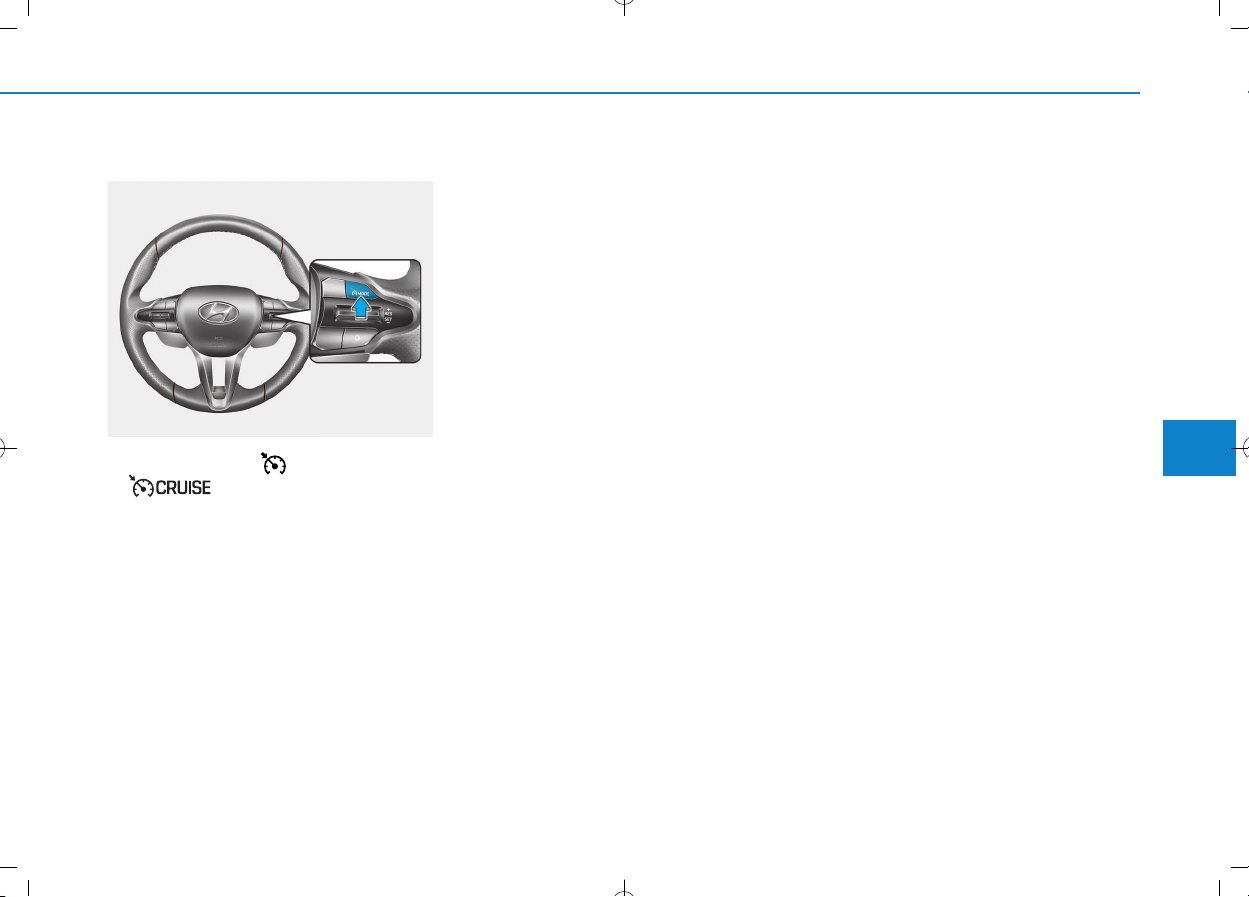
5-87
Driving your vehicle
5
To turn Cruise Control off
• Press the button (the
indicator light will go
off).
OPDEN057115

5-88
Driving your vehicle
Hazardous driving conditions
When hazardous driving elements
are encountered such as water,
snow, ice, mud and sand, take the
following precautions:
• Drive cautiously and maintain a
longer braking distance.
• Avoid abrupt braking or steering.
• When your vehicle is stuck in snow,
mud, or sand, use the second
gear. Accelerate slowly to avoid
unnecessary wheel spinning.
• Put sand, rock salt, tire chains or
other non-slip materials under the
wheels to provide additional trac-
tion while being stuck in ice, snow,
or mud.
Rocking the vehicle
If it is necessary to rock the vehicle
to free it from snow, sand, or mud,
first turn the steering wheel right and
left to clear the area around your
front wheels. Then, shift back and
forth between R (Reverse) and a for-
ward gear.
Try to avoid spinning the wheels, and
do not race the engine.
To prevent transmission wear, wait
until the wheels stop spinning before
shifting gears. Release the accelera-
tor pedal while shifting, and press
lightly on the accelerator pedal while
the transmission is in gear. Slowly
spinning the wheels in forward and
reverse directions causes a rocking
motion that may free the vehicle.
SSPPEECCIIAALL DDRRIIVVIINNGG CCOONNDDIITTIIOONNSS
If the vehicle is stuck and
excessive wheel spin occurs,
the temperature in the tires can
increase very quickly. If the tires
become damaged, a tire blow
out or tire explosion can occur.
This condition is dangerous -
you and others may be injured.
Do not attempt this procedure if
people or objects are anywhere
near the vehicle.
If you attempt to free the vehi-
cle, the vehicle can overheat
quickly, possibly causing an
engine compartment fire or
other damage. Try to avoid spin-
ning the wheels as much as
possible to prevent overheating
of either the tires or the engine.
DO NOT allow the vehicle to
spin the wheels above 56 km/h
(35 mph).
WARNING

5-89
Driving your vehicle
5
Information
The ESC system (if equipped) must be
turned OFF before rocking the vehi-
cle.
If you are still stuck after rocking
the vehicle a few times, have the
vehicle pulled out by a tow vehicle
to avoid engine overheating, pos-
sible damage to the transmission,
and tire damage. See "Towing" in
chapter 6.
Smooth cornering
Avoid braking or gear changing in
corners, especially when roads are
wet. Ideally, corners should always
be taken under gentle acceleration.
Driving at night
Night driving presents more hazards
than driving in the daylight. Here are
some important tips to remember:
• Slow down and keep more dis-
tance between you and other vehi-
cles, as it may be more difficult to
see at night, especially in areas
where there may not be any street
lights.
• Adjust your mirrors to reduce the
glare from other drivers' head-
lamps.
• Keep your headlamps clean and
properly aimed. Dirty or improperly
aimed headlamps will make it
much more difficult to see at night.
• Avoid staring directly at the head-
lamps of oncoming vehicles. You
could be temporarily blinded, and it
will take several seconds for your
eyes to readjust to the darkness.
Driving in the rain
Rain and wet roads can make driving
dangerous. Here are a few things to
consider when driving in the rain or
on slick pavement:
• Slow down and allow extra follow-
ing distance. A heavy rainfall
makes it harder to see and increas-
es the distance needed to stop
your vehicle.
• Turn OFF your Cruise Control. (if
equipped)
• Replace your windshield wiper
blades when they show signs of
streaking or missing areas on the
windshield.
• Be sure your tires have enough
tread. If your tires do not have
enough tread, making a quick stop
on wet pavement can cause a skid
and possibly lead to an accident.
See "Tire Tread" in chapter 7.
• Turn on your headlamps to make it
easier for others to see you.
• Driving too fast through large pud-
dles can affect your brakes. If you
must go through puddles, try to
drive through them slowly.
NOTICE
i

5-90
Driving your vehicle
• If you believe your brakes may be
wet, apply them lightly while driv-
ing until normal braking operation
returns.
Hydroplaning
If the road is wet enough and you are
going fast enough, your vehicle may
have little or no contact with the road
surface and actually ride on the
water. The best advice is SLOW
DOWN when the road is wet.
The risk of hydroplaning increas-
es as the depth of tire tread
decreases, refer to "Tire Tread" in
chapter 7.
Driving in flooded areas
Avoid driving through flooded areas
unless you are sure the water is no
higher than the bottom of the wheel
hub. Drive through any water slowly.
Allow adequate stopping distance
because brake performance may be
reduced.
After driving through water, dry the
brakes by gently applying them sev-
eral times while the vehicle is moving
slowly.
Highway driving
Tires
Adjust the tire inflation, as specified.
Under-inflation may overheat or
damage the tires.
Do not install worn-out or damaged
tires, which may reduce traction or
fail the braking operation.
Information
Never over-inflate your tires above the
maximum inflation pressure, as speci-
fied on your tires.
Fuel, engine coolant and engine
oil
Driving at higher speeds on the high-
way consumes more fuel and is less
efficient than driving at a slower,
more moderate speed. Maintain a
moderate speed in order to conserve
fuel when driving on the highway.
Be sure to check both the engine
coolant level and the engine oil
before driving.
Drive belt
A loose or damaged drive belt may
overheat the engine.
i
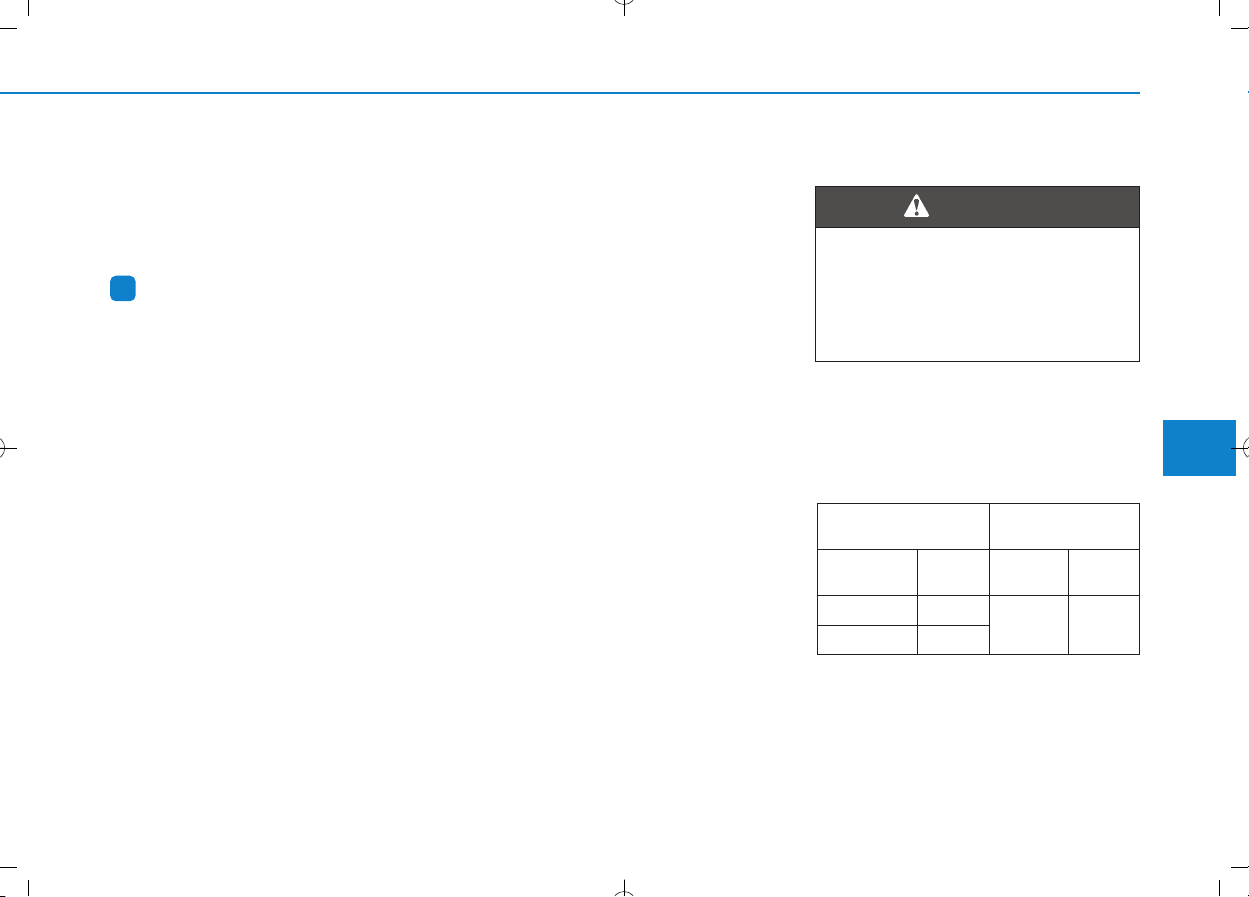
5-91
Driving your vehicle
5
The severe weather conditions of
winter quickly wear out tires and
cause other problems. To minimize
winter driving problems, you should
take the following suggestions:
Information
Information for Snow Tires and Tire
Chains in the national language
(Bulgarian, Hungarian, Icelandic,
Polish) is provided in the Appendix.
Snow or icy conditions
You need to keep sufficient distance
between your vehicle and the vehicle
in front of you.
Apply the brakes gently. Speeding,
rapid acceleration, sudden brake
applications, and sharp turns are
potentially very hazardous practices.
During deceleration, use engine
braking to the fullest extent. Sudden
brake applications on snowy or icy
roads may cause skids to occur.
To drive your vehicle in deep snow, it
may be necessary to use snow tires
or to install tire chains on your tires.
Always carry emergency equipment.
Some of the items you may want to
carry include tire chains, tow straps
or chains, a flashlight, emergency
flares, sand, a shovel, jumper cables,
a window scraper, gloves, ground
cloth, coveralls, a blanket, etc.
Snow tires
We recommend you use snow tires
when road temperature is below 7°C
(45°F). Refer to the below chart, and
mount the recommended snow tire
for your vehicle.
i
WWIINNTTEERR DDRRIIVVIINNGG
Snow tires should be equivalent
in size and type to the vehicle's
standard tires. Otherwise, the
safety and handling of your vehi-
cle may be adversely affected.
WARNING
Standard tire
Recommended
snow tire
Tire
size
Wheel
size
Tire
size
Wheel
size
225/40ZR18 7.5Jx18
225/40R18 7.5Jx18
235/35R19 8.0Jx19

5-92
Driving your vehicle
If you mount snow tires on your vehi-
cle, make sure to use the same infla-
tion pressure as the original tires.
Mount snow tires on all four wheels
to balance your vehicle’s handling in
all weather conditions. The traction
provided by snow tires on dry roads
may not be as high as your vehicle's
original equipment tires. Check with
the tire dealer for maximum speed
recommendations.
Information
Do not install studded tires without first
checking local and municipal regula-
tions for possible restrictions against
their use.
Tire chains
Since the sidewalls of radial tires are
thinner than other types of tires, they
may be damaged by mounting some
types of tire chains on them.
Therefore, the use of snow tires is
recommended instead of tire chains.
Do not mount tire chains on vehicles
equipped with aluminum wheels; if
unavoidable use a wire type chain. If
tire chains must be used, use gen-
uine HYUNDAI parts and install the
tire chain after reviewing the instruc-
tions provided with the tire chains.
Damage to your vehicle caused by
improper tire chain use is not cov-
ered by your vehicle manufacturer’s
warranty.
If your vehicle has 235/35R19 size
tires, do not use tire chain; they
can damage your vehicle (wheel,
suspension and body).
NOTICE
i
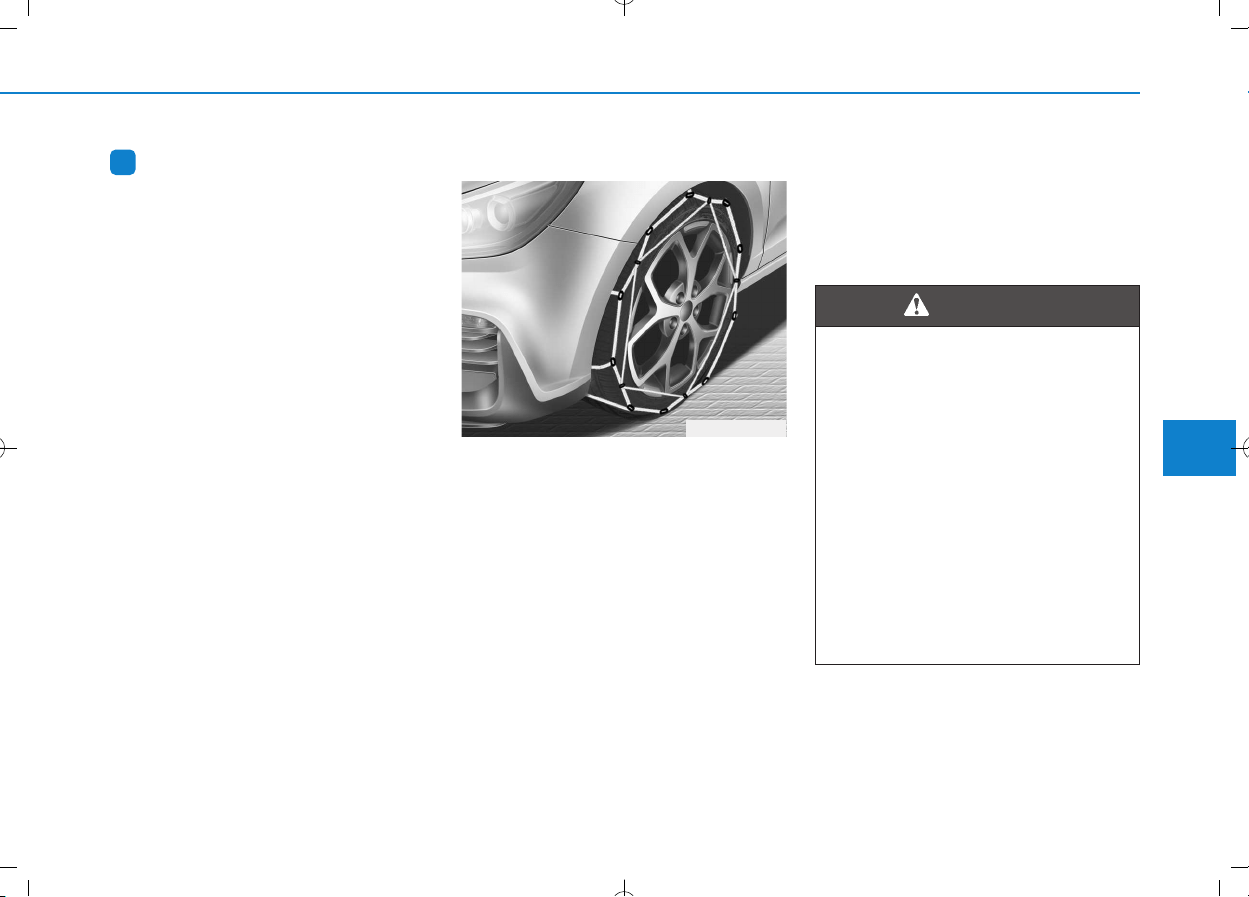
5-93
Driving your vehicle
5
Information
• Install tire chains on the front tires.
It should be noted that installing tire
chains on the tires will provide a
greater driving force, but will not
prevent side skids.
• Do not install studded tires without
first checking local and municipal
regulations for possible restrictions
against their use.
Chain Installation
When installing tire chains, follow the
manufacturer's instructions and
mount them as tightly possible. Drive
slowly (less than 30 km/h (20 mph))
with chains installed. If you hear the
chains contacting the body or chas-
sis, stop and tighten them. If they still
make contact, slow down until the
noise stops. Remove the tire chains
as soon as you begin driving on
cleared roads.
When mounting snow chains, park
the vehicle on level ground away
from traffic. Turn on the vehicle
Hazard Warning Flasher and place a
triangular emergency warning device
behind the vehicle (if available).
Always place the vehicle in P (Park),
apply the parking brake and turn off
the engine before installing snow
chains.
i
OPDEN057140
The use of tire chains may
adversely affect vehicle han-
dling:
• Drive less than 30 km/h (20
mph) or the chain manufactur-
er's recommended speed
limit, whichever is lower.
• Drive carefully and avoid
bumps, holes, sharp turns,
and other road hazards, which
may cause the vehicle to
bounce.
• Avoid sharp turns or locked
wheel braking.
WARNING

5-94
Driving your vehicle
When using tire chains:
• Wrong size chains or improperly
installed chains can damage
your vehicle's brake lines, sus-
pension, body and wheels.
• Use SAE "S" class or wire
chains.
• If you hear noise caused by
chains contacting the body,
retighten the chain to prevent
contact with the vehicle body.
• To prevent body damage, retight-
en the chains after driving 0.5~1.0
km (0.3~0.6 miles).
• Do not use tire chains on vehi-
cles equipped with aluminum
wheels. If unavoidable, use a
wire type chain.
• Use wire chains less than 12 mm
(0.47 in) wide to prevent damage
to the chain’s connection.
Winter Precautions
Use high quality ethylene glycol
coolant
Your vehicle is delivered with high
quality ethylene glycol coolant in the
cooling system. It is the only type of
coolant that should be used because
it helps prevent corrosion in the cool-
ing system, lubricates the water
pump and prevents freezing. Be sure
to replace or replenish your coolant
in accordance with the maintenance
schedule in chapter 7. Before winter,
have your coolant tested to assure
that its freezing point is sufficient for
the temperatures anticipated during
the winter.
Check battery and cables
Winter temperatures affect battery
performance. Inspect the battery
and cables, as specified in the
chapter 7. The battery charging level
can be checked by an authorized
HYUNDAI dealer or in a service sta-
tion.
Change to "winter weight" oil if
necessary
In some regions during winter, it is
recommended to use the "winter
weight" oil with lower viscosity. For
further information, refer to the chap-
ter 8. When you are not sure about a
type of winter weight oil, consult an
authorized HYUNDAI dealer.
NOTICE

5-95
Driving your vehicle
5
Check spark plugs and ignition
system
Inspect the spark plugs, as speci-
fied in the chapter 7. If necessary,
replace them. Also check all ignition
wirings and components for any
cracks, wear-out, and damage.
To prevent locks from freezing
To prevent the locks from being
frozen, spray approved de-icing fluid
or glycerin into key holes. When a
lock opening is already covered with
ice, spray approved de-icing fluid
over the ice to remove it. When an
internal part of a lock freezes, try to
thaw it with a heated key. Carefully
use the heated key to avoid an injury.
Use approved window washer
anti-freeze solution in system
To prevent the window washer from
being frozen, add authorized window
washer anti-freeze solution, as spec-
ified on the window washer contain-
er. Window washer anti-freeze solu-
tion is available from an authorized
HYUNDAI dealer, and most vehicle
accessory outlets. Do not use engine
coolant or other types of anti-freeze
solution, to prevent any damage to
the vehicle paint.
Do not let your parking brake
freeze
Under some conditions your parking
brake can freeze in the engaged
position. This is most likely to hap-
pen when there is an accumulation
of snow or ice around or near the
rear brakes or if the brakes are wet.
When there is the risk that your park-
ing brake may freeze, temporarily
apply it with the shift lever in 1st gear
when the vehicle is parked on a
uphill and in R (Reverse) on a down-
hill. Also, block the rear wheels in
advance, so the vehicle may not roll.
Then, release the parking brake.
Do not let ice and snow accumu-
late underneath
Under some conditions, snow and
ice can build up under the fenders
and interfere with the steering. When
driving in such conditions during the
severe winter, you should check
underneath the vehicle on a regular
basis, to ensure that the front wheels
and the steering components is
unblocked.

5-96
Driving your vehicle
If you are considering to tow with
your vehicle, you should first your
country's legal requirements. As laws
vary the requirements for towing trail-
ers, cars, or other types of vehicles
or apparatus may differ. Ask an
authorized HYUNDAI dealer for fur-
ther details before towing.
Remember that trailering is different
than just driving your vehicle by itself.
Trailering means changes in han-
dling, durability, and fuel economy.
Successful, safe trailering requires
correct equipment, and it has to be
used properly. Damage to your vehi-
cle caused by improper trailer towing
is not covered by your vehicle manu-
facturer’s warranty.
This section contains many time-
tested, important trailering tips and
safety rules. Many of these are
important for your safety and that of
your passengers. Please read this
section carefully before you pull a
trailer.
Information
- For Europe
• The technically permissible maxi-
mum load on the rear axle(s) may be
exceeded by not more than 15 %
and the technically permissible
maximum laden mass of the vehicle
may be exceeded by not more than
10% or 100 kg (220.4 lbs), whichev-
er value is lower. In this case, do not
exceed 100 km/h (62.1 mph) for
vehicle of category M1 or 80 km/h
(49.7 mph) for vehicle of category
N1.
• When a vehicle of category M1 is
towing a trailer, the additional load
imposed at the trailer coupling
device may cause the tire maximum
load ratings to be exceeded, but not
by more than 15%. In this case, do
not exceed 100 km/h (62.1 mph) and
increase the tire inflation pressure
by at least 0.2 bar.
i
TTRRAAIILLEERR TTOOWWIINNGG ((FFOORR EEUURROOPPEE))
Take the following precautions:
• If you don't use the correct
equipment and/or drive improp-
erly, you can lose control of the
vehicle when you are pulling a
trailer. For example, if the trailer
is too heavy, the braking per-
formance may be reduced. You
and your passengers could be
seriously or fatally injured. Pull
a trailer only if you have fol-
lowed all the steps in this sec-
tion.
• Before towing, make sure the
total trailer weight, GCW
(Gross Combination Weight),
GVW (Gross Vehicle Weight),
GAW (Gross Axle Weight) and
trailer tongue load are all with-
in the limits.
• When you tow a trailer, make
sure to turn off the ISG sys-
tem.
WARNING
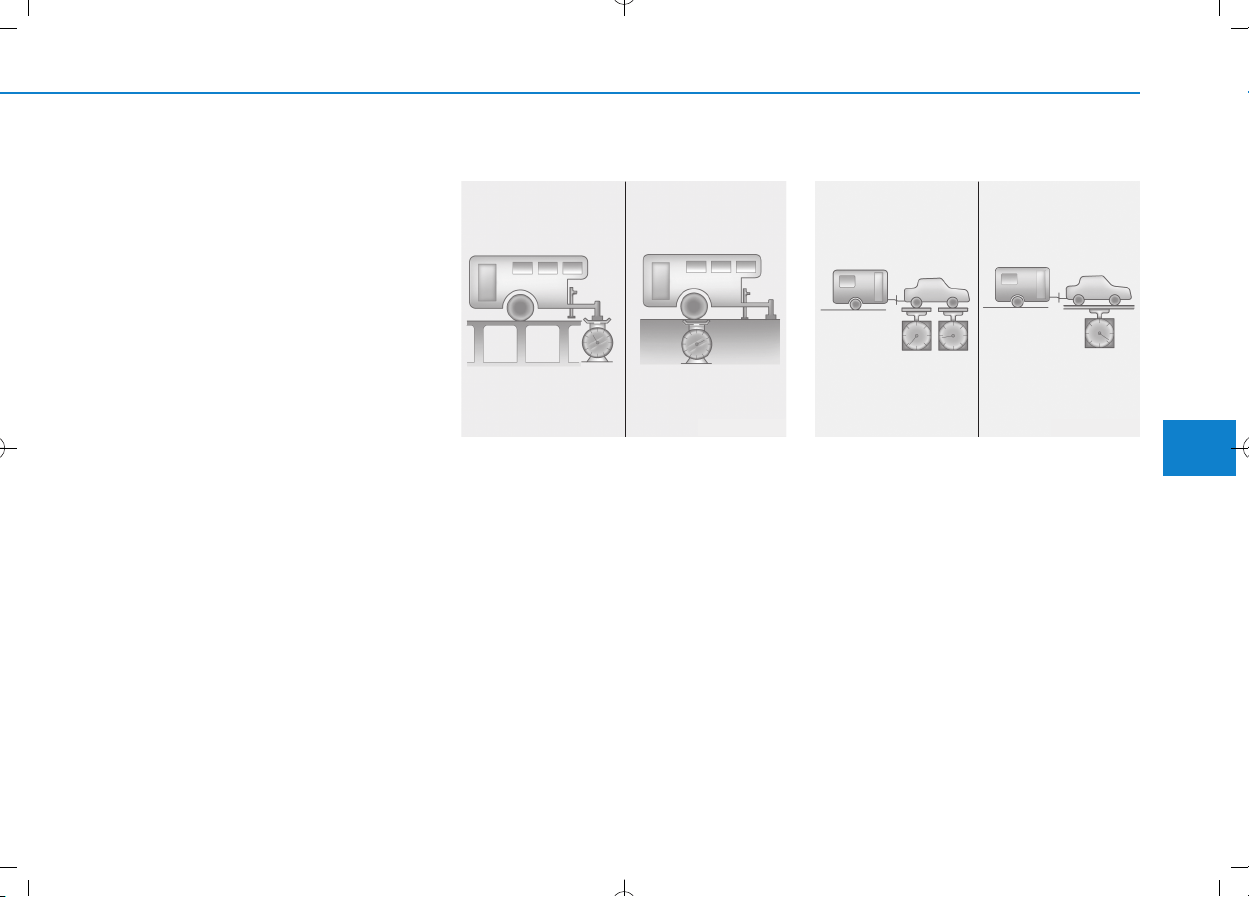
5-97
Driving your vehicle
5
If you decide to pull a trailer?
Here are some important points if
you decide to pull a trailer:
• Consider using a sway control. You
can ask a trailer hitch dealer about
sway control.
• Do not do any towing with your
vehicle during its first 2,000 km
(1,200 miles) in order to allow the
engine to properly break in. Failure
to heed this caution may result in
serious engine or transmission
damage.
• When towing a trailer, be sure to
consult an authorized HYUNDAI
dealer for further information on
additional requirements such as a
towing kit, etc.
• Always drive your vehicle at a mod-
erate speed (less than 100 km/h
(60 mph)) or posted towing speed
limit.
• On a long uphill grade, do not
exceed 70 km/h (45 mph) or the
posted towing speed limit,
whichever is lower.
• Carefully observe the weight and
load limits provided in the following
pages.
Trailer weight
What is the maximum safe weight of
a trailer? It should never weigh more
than the maximum trailer weight with
trailer brakes. But even that can be
too heavy. It depends on how you
plan to use your trailer. For example,
speed, altitude, road grades, outside
temperature and how often your
vehicle is used to pull a trailer are all
important. The ideal trailer weight
can also depend on any special
equipment that you have on your
vehicle.
Tongue load
The tongue load is an important
weight to measure because it affects
the total Gross Vehicle Weight
(GVW) of your vehicle. The trailer
tongue should weigh a maximum of
10% of the total loaded trailer weight,
within the limits of the maximum trail-
er tongue load permissible.
After you've loaded your trailer,
weigh the trailer and then the tongue,
separately, to see if the weights are
proper. If they aren't, you may be
able to correct them simply by mov-
ing some items around in the trailer.
OLMB053048
Gross Axle Weight
Gross Vehicle Weight
OLMB053047
Tongue Load
Total Trailer Weight
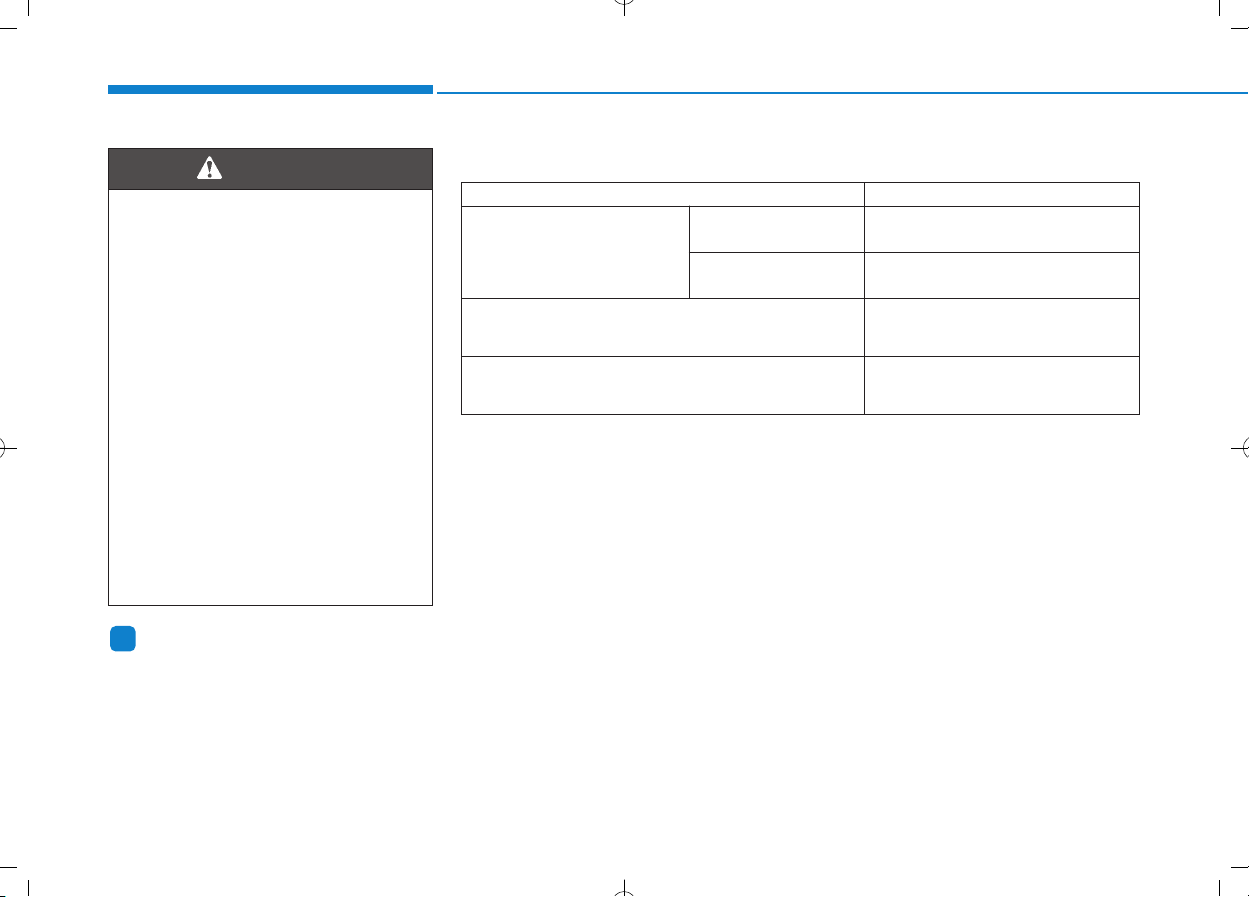
5-98
Driving your vehicle
Information
With increasing altitude the engine
performance decreases. From 1,000 m
above sea level and for every 1,000 m
thereafter 10% of vehicle/trailer
weight (trailer weighter + gross vehi-
cle weight) must be deducted.
i
Take the following precautions:
• Never load a trailer with more
weight in the rear than in the
front. The front should be
loaded with approximately
60% of the total trailer load;
the rear should be loaded with
approximately 40% of the total
trailer load.
• Never exceed the maximum
weight limits of the trailer or
trailer towing equipment.
Improper loading can result in
damage to your vehicle and/or
personal injury. Check weights
and loading at a commercial
scale or highway patrol office
equipped with scales.
WARNING
Reference weight and distance when towing a trailer (for Europe)
Item Theta 2.0 T-GDI
Maximum trailer weight
kg (Ibs.)
With brake system
1600 (3527)
Without brake system
700 (1543)
Maximum permissible static vertical
load on the coupling device kg (Ibs.)
75 (165)
Recommended distance from rear
wheel center to coupling point mm (inch)
880 (34.6)

5-99
Driving your vehicle
5
Trailer towing equipment
Hitches
Information
The mounting hole for hitches are
located on both sides of the underbody
behind the rear tires.
It's important to have the correct
hitch equipment. Crosswinds, large
trucks going by, and rough roads are
a few reasons why you'll need the
right hitch. Here are some rules to
follow:
• Do you have to make any holes in
the body of your vehicle when you
install a trailer hitch? If you do, then
be sure to seal the holes later
when you remove the hitch. If you
don't seal them, carbon monoxide
(CO) from your exhaust can get
into your vehicle, as well as dirt
and water.
• The bumpers on your vehicle are
not intended for hitches. Do not
attach rental hitches or other
bumper-type hitches to them. Use
only a frame-mounted hitch that
does not attach to the bumper.
• A HYUNDAI trailer hitch accessory is
available at an authorized HYUNDAI
dealer.
Safety chains
You should always attach chains
between your vehicle and your trailer.
Instructions about safety chains may
be provided by the hitch manufactur-
er or trailer manufacturer. Follow the
manufacturer's recommendation for
attaching safety chains. Always leave
just enough slack so you can turn
with your trailer. And, never allow
safety chains to drag on the ground.
i
OPDEN067036

5-100
Driving your vehicle
Trailer brakes
If your trailer is equipped with a brak-
ing system, make sure it conforms to
your country’s regulations and that it
is properly installed and operating
correctly.
If your trailer weighs more than the
maximum trailer weight without trail-
er brakes loaded, then it needs its
own brakes and they must be ade-
quate. Be sure to read and follow the
instructions for the trailer brakes so
you’ll be able to install, adjust and
maintain them properly. Be sure not
to modify your vehicle's brake sys-
tem.
Driving with a trailer
Towing a trailer requires a certain
amount of experience. Before setting
out for the open road, you must get
to know your trailer. Acquaint your-
self with the feel of handling and
braking with the added weight of the
trailer. And always keep in mind that
the vehicle you are driving is now
longer and not nearly as responsive
as your vehicle is by itself.
Before you start, check the trailer
hitch and platform, safety chains,
electrical connector(s), lights, tires
and brakes.
During your trip, occasionally check
to be sure that the load is secure,
and that the lights and trailer brakes
are still working.
Distance
Stay at least twice as far behind the
vehicle ahead as you would when
driving your vehicle without a trailer.
This can help you avoid situations
that require heavy braking and sud-
den turns.
Passing
You will need more passing distance
up ahead when you’re towing a trail-
er. And, because of the increased
vehicle length, you’ll need to go
much farther beyond the passed
vehicle before you can return to your
lane.
Do not use a trailer with its own
brakes unless you are absolute-
ly certain that you have proper-
ly set up the brake system. This
is not a task for amateurs. Use
an experienced, competent trail-
er shop for this work.
WARNING

5-101
Driving your vehicle
5
Backing up
Hold the bottom of the steering
wheel with one hand. Then, to move
the trailer to the left, move your hand
to the left. To move the trailer to the
right, move your hand to the right.
Always back up slowly and, if possi-
ble, have someone guide you.
Making turns
When you’re turning with a trailer,
make wider turns than normal. Do this
so your trailer won't strike soft shoul-
ders, curbs, road signs, trees, or other
objects. Avoid jerky or sudden
maneuvers. Signal well in advance.
Turn signals
When you tow a trailer, your vehicle
has to have a different turn signal
flasher and extra wiring. The green
arrows on your instrument panel will
flash whenever you signal a turn or
lane change. Properly connected,
the trailer lights will also flash to alert
other drivers you're about to turn,
change lanes, or stop.
When towing a trailer, the green
arrows on your instrument panel will
flash for turns even if the bulbs on
the trailer are burned out. Thus, you
may think drivers behind you are
seeing your signals when, in fact,
they are not. It's important to check
occasionally to be sure the trailer
bulbs are still working. You must also
check the lights every time you dis-
connect and then reconnect the
wires.
Driving on hills
Reduce speed and shift to a lower
gear before you start down a long or
steep downgrade. If you don't shift
down, you might have to use your
brakes so much that they would get
overheated and may not operate effi-
ciently.
On a long uphill grade, shift down
and reduce your speed to around 70
km/h (45 mph) to reduce the possi-
bility of engine and transmission
overheating.
Do not connect a trailer lighting
system directly to your vehicle's
lighting system. Use an
approved trailer wiring harness.
Failure to do so could result in
damage to the vehicle electrical
system and/or personal injury.
Consult an authorized HYUNDAI
dealer for assistance.
WARNING

5-102
Driving your vehicle
To prevent engine and/or trans-
mission overheating:
• When towing a trailer on steep
grades (in excess of 6%) pay
close attention to the engine
coolant temperature gauge to
ensure the engine does not
overheat. If the needle of the
coolant temperature gauge
moves towards "130", pull over
and stop as soon as it is safe to
do so, and allow the engine to
idle until it cools down. You may
proceed once the engine has
cooled sufficiently.
• If you tow a trailer with the max-
imum gross vehicle weight and
maximum trailer weight, it can
cause the engine or transmis-
sion to overheat. When driving
in such conditions, allow the
engine to idle until it cools
down.You may proceed once the
engine or transmission has
cooled sufficiently.
(Continued)
(Continued)
• When towing a trailer, your vehi-
cle speed may be much slower
than the general flow of traffic,
especially when climbing an
uphill grade. Use the right hand
lane when towing a trailer on an
uphill grade. Choose your vehi-
cle speed according to the max-
imum posted speed limit for
vehicles with trailers, the steep-
ness of the grade, and your trail-
er weight.
Parking on hills
Generally, if you have a trailer
attached to your vehicle, you should
not park your vehicle on a hill.
However, if you ever have to park your
trailer on a hill, here's how to do it:
1. Pull the vehicle into the parking
space.
Turn the steering wheel in the
direction of the curb (right if head-
ed down hill, left if headed up hill).
2. Shift the vehicle to neutral.
3. Set the parking brake and shut off
the vehicle.
4. Place wheel chocks under the
trailer wheels on the down hill side
of the wheels.
5. Start the vehicle, hold the brakes,
shift to neutral, release the park-
ing brake and slowly release the
brakes until the trailer chocks
absorb the load.
6. Reapply the brakes and parking
brakes.
NOTICE

5-103
Driving your vehicle
5
7. Move the shift lever to 1st gear
when the vehicle is parked on a
uphill grade and in R (Reverse) on
a downhill.
8. Shut off the vehicle and release
the vehicle brakes but leave the
parking brake set.
Ready to leave after parking on
a hill
1. With the shift lever in neutral,
apply your brakes and hold the
brake pedal down while you:
• Start your engine;
• Shift into gear; and
• Release the parking brake.
2. Slowly remove your foot from the
brake pedal.
3. Drive slowly until the trailer is clear
of the chocks.
4. Stop and have someone pick up
and store the chocks.
Maintenance when towing a
trailer
Your vehicle will need service more
often when you regularly pull a trail-
er. Important items to pay particular
attention to include engine oil, auto-
matic transmission fluid, axle lubri-
cant and cooling system fluid. Brake
condition is another important item to
frequently check. If you’re trailering,
it’s a good idea to review these items
before you start your trip. Don’t forget
to also maintain your trailer and
hitch. Follow the maintenance sched-
ule that accompanied your trailer and
check it periodically. Preferably, con-
duct the check at the start of each
day’s driving. Most importantly, all
hitch nuts and bolts should be tight.
To prevent serious or fatal
injury:
• Do not get out of the vehicle
without the parking brake
firmly set. If you have left the
engine running, the vehicle
can move suddenly. You and
others could be seriously or
fatally injured.
• Do not apply the accelerator
pedal to hold the vehicle on
an uphill.
WARNING

5-104
Driving your vehicle
To prevent vehicle damage:
• Due to higher load during trailer
usage, overheating might occur
on hot days or during uphill driv-
ing. If the coolant gauge indi-
cates over-heating, switch off
the air conditioner and stop the
vehicle in a safe area to cool
down the engine.
• Do not switch off the engine
while the coolant gauge indi-
cates over-heating.
(Keep the engine idle to cool
down the engine)
• If your vehicle is not equipped
with an air conditioner, you
should install a condenser fan
to improve engine performance
when towing a trailer.
NOTICE

5-105
Driving your vehicle
5
Two labels on your driver’s door sill
show how much weight your vehicle
was designed to carry: the Tire and
Loading Information Label and the
Certification Label.
Before loading your vehicle, familiar-
ize yourself with the following terms
for determining your vehicle's weight
ratings, from the vehicle's specifica-
tions and the Certification Label:
Base Curb Weight
This is the weight of the vehicle includ-
ing a full tank of fuel and all standard
equipment. It does not include pas-
sengers, cargo, or optional equipment.
Vehicle Curb Weight
This is the weight of your new vehicle
when you picked it up from your deal-
er plus any aftermarket equipment.
Cargo Weight
This figure includes all weight added
to the Base Curb Weight, including
cargo and optional equipment.
GAW (Gross Axle Weight)
This is the total weight placed on
each axle (front and rear) - including
vehicle curb weight and all payload.
GAWR (Gross Axle Weight Rating)
This is the maximum allowable
weight that can be carried by a single
axle (front or rear). These numbers
are shown on the Certification Label.
The total load on each axle must
never exceed its GAWR.
GVW (Gross Vehicle Weight)
This is the Base Curb Weight plus
actual Cargo Weight plus passen-
gers.
GVWR (Gross Vehicle Weight
Rating)
This is the maximum allowable
weight of the fully loaded vehicle
(including all options, equipment,
passengers and cargo). The GVWR
is shown on the Certification Label
located on the driver’s door sill.
Overloading
VVEEHHIICCLLEE WWEEIIGGHHTT
The Gross Axle Weight Rating
(GAWR) and the Gross Vehicle
Weight Rating (GVWR) for your
vehicle are on the Certification
Label attached to the driver's
(or front passenger’s) door.
Exceeding these ratings can
cause an accident or vehicle
damage. You can calculate the
weight of your load by weighing
the items (and people) before
putting them in the vehicle. Be
careful not to overload your
vehicle.
WARNING

What to do in an emergency
Hazard warning flasher ........................................6-2
In case of an emergency while driving ..............6-2
If the engine stalls while driving...................................6-2
If the engine stalls at a crossroad or crossing .........6-2
If you have a flat tire while driving..............................6-3
If the engine will not start ...................................6-3
If the engine doesn't turn over or
turns over slowly...............................................................6-3
If the engine turns over normally but
doesn't start .......................................................................6-4
Jump starting ..........................................................6-4
If the engine overheats ........................................6-7
Tire Pressure Monitoring System (TPMS).........6-8
Check tire pressure...........................................................6-8
Tire pressure monitoring system ..................................6-9
Low tire pressure telltale..............................................6-10
Low tire pressure position telltale and
tire pressure telltale .......................................................6-10
TPMS (Tire Pressure Monitoring System)
malfunction indicator .....................................................6-12
Changing a tire with TPMS...........................................6-12
If you have a flat tire (with spare tire)............6-15
Jack and tools ..................................................................6-15
Changing tires ..................................................................6-16
Jack label...........................................................................6-21
EC Declaration of conformity for Jack......................6-22
If you have a flat tire (with tire mobility kit)
- Type A ................................................................6-23
Introduction ......................................................................6-23
Notes on the safe use of the Tire Mobility Kit.......6-24
Components of the Tire Mobility Kit .........................6-25
Using the Tire Mobility Kit............................................6-26
Checking the tire inflation pressure ..........................6-28
If you have a flat tire (with tire mobility kit)
- Type B ................................................................6-30
Introduction ......................................................................6-30
Notes on the safe use of the Tire Mobility Kit.......6-31
Components of the Tire Mobility Kit .........................6-32
Using the Tire Mobility Kit............................................6-33
Checking the tire inflation pressure ..........................6-35
Towing ...................................................................6-37
Towing service .................................................................6-37
Removable towing hook ................................................6-38
Emergency towing ..........................................................6-39
Emergency commodity........................................6-41
Fire extinguisher .............................................................6-41
First aid kit........................................................................6-41
Triangle reflector ............................................................6-41
Tire pressure gauge .......................................................6-41
6
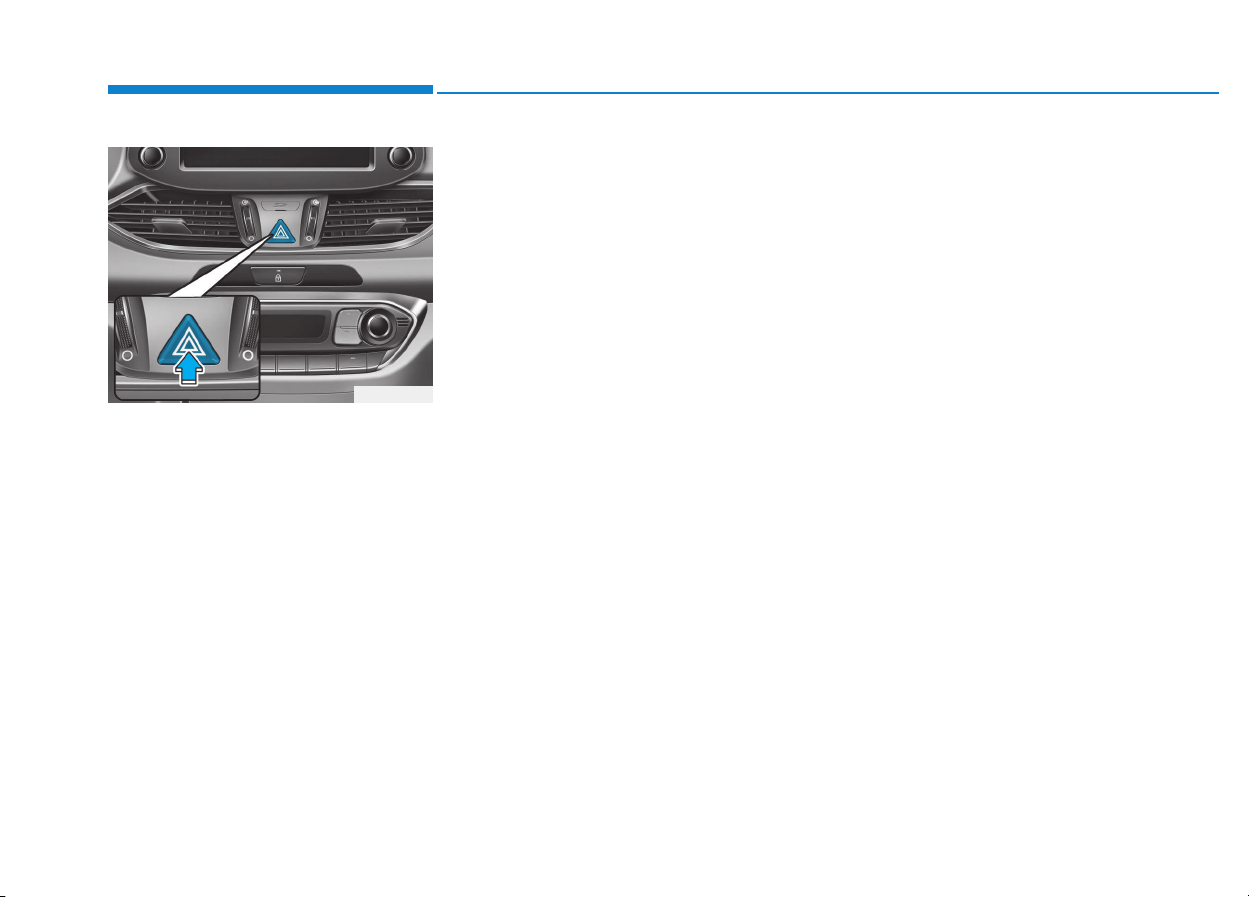
6-2
The hazard warning flasher serves
as a warning to other drivers to exer-
cise extreme caution when approach-
ing, overtaking, or passing your vehi-
cle.
It should be used whenever emer-
gency repairs are being made or
when the vehicle is stopped near the
edge of a roadway.
To turn the hazard warning flasher
on or off, press the hazard warning
flasher button with the ignition switch
in any position. The button is located
in the center fascia panel. All turn
signal lights will flash simultaneously.
• The hazard warning flasher oper-
ates whether your vehicle is run-
ning or not.
• The turn signals do not work when
the hazard flasher is on.
If the engine stalls while driving
• Reduce your speed gradually,
keeping a straight line. Move cau-
tiously off the road to a safe place.
• Turn on your hazard warning flash-
er.
• Try to start the engine again. If your
vehicle will not start, we recom-
mend that you contact an author-
ized HYUNDAI dealer.
If the engine stalls at a cross-
road or crossing
If the engine stalls at a crossroads or
crossing, if safe to do so, move the
shift lever to the N (Neutral) position
and then push the vehicle to a safe
location.
HHAAZZAARRDD WWAARRNNIINNGG FFLLAASSHHEERR
What to do in an emergency
I
INN CCAASSEE OOFF AANN EEMMEERRGGEENNCCYY
W
WHHIILLEE DDRRIIVVIINNGG
OPD066001
6-3
What to do in an emergency
If you have a flat tire while
driving
If a tire goes flat while you are driving:
• Take your foot off the accelerator
pedal and let the vehicle slow
down while driving straight ahead.
Do not apply the brakes immedi-
ately or attempt to pull off the road
as this may cause loss of vehicle
control resulting in an accident.
When the vehicle has slowed to
such a speed that it is safe to do
so, brake carefully and pull off the
road. Drive off the road as far as
possible and park on firm, level
ground. If you are on a divided
highway, do not park in the median
area between the two traffic lanes.
• When the vehicle is stopped, press
the hazard warning flasher button,
move the shift lever into neutral,
apply the parking brake, and place
the ignition switch in the LOCK/
OFF position.
• Have all passengers get out of the
vehicle. Be sure they all get out on
the side of the vehicle that is away
from traffic.
• When changing a flat tire, follow
the instructions provided later in
this chapter.
If the engine doesn't turn over
or turns over slowly
• Be sure that you have fully
depressed the clutch pedal.
• Check the battery connections to
be sure they are clean and tight.
• Turn on the interior light. If the light
dims or goes out when you operate
the starter, the battery is drained.
Do not push or pull the vehicle to
start it. This could cause damage to
your vehicle. See instructions for
"Jump Starting" provided in this
chapter.
6
IIFF TTHHEE EENNGGIINNEE WWIILLLL NNOOTT
S
STTAARRTT
Push or pull starting the vehicle
may cause the catalytic con-
verter to overload which can
lead to damage to the emission
control system.
CAUTION
6-4
What to do in an emergency
If the engine turns over nor-
mally but doesn't start
• Check the fuel level and add fuel if
necessary.
If the engine still does not start, we
recommend that you call an author-
ized HYUNDAI dealer for assistance.
Jump starting can be dangerous if
done incorrectly. Follow the jump
starting procedure in this section to
avoid serious injury or damage to
your vehicle. If in doubt about how to
properly jump start your vehicle, we
strongly recommend that you have a
service technician or towing service
do it for you.
JJUUMMPP SSTTAARRTTIINNGG
To prevent SERIOUS INJURY or
DEATH to you or bystanders,
always follow these precautions
when working near or handling
the battery:
Always read and follow
instructions carefully
when handling a battery.
Wear eye protection
designed to protect the
eyes from acid splashes.
Keep all flames, sparks,
or smoking materials
away from the battery.
(Continued)
WARNING
(Continued)
Hydrogen is always
present in battery cells,
is highly combustible,
and may explode if ignit-
ed.
Keep batteries out of
reach of children.
Batteries contain sulfu-
ric acid which is highly
corrosive. Do not allow
acid to contact your
eyes, skin or clothing.
If acid gets into your eyes, flush
your eyes with clean water for at
least 15 minutes and get imme-
diate medical attention. If acid
gets on your skin, thoroughly
wash the area. If you feel pain or
a burning sensation, get med-
ical attention immediately.
(Continued)
6-5
What to do in an emergency
To prevent damage to your vehi-
cle:
• Only use a 12-volt power supply
(battery or jumper system) to
jump start your vehicle.
• Do not attempt to jump start
your vehicle by push-starting.
Information
An inappropriately disposed
battery can be harmful to the
environment and human
health. Dispose the battery
according to your local law(s)
or regulations.
Jump starting procedure
1. Position the vehicles close enough
that the jumper cables will reach,
but do not allow the vehicles to
touch.
2. Avoid fans or any moving parts in
the engine compartment at all
times, even when the vehicles are
turned off.
3. Turn off all electrical devices such
as radios, lights, air conditioning,
etc. Put the vehicles in neutral,
and set the parking brakes. Turn
both vehicles OFF.
i
NOTICE
6
(Continued)
• When lifting a plastic-cased
battery, excessive pressure
on the case may cause battery
acid to leak. Lift with a battery
carrier or with your hands on
opposite corners.
• Do not attempt to jump start
your vehicle if your battery is
frozen.
• NEVER attempt to recharge
the battery when the vehicle’s
battery cables are connected
to the battery.
• The electrical ignition system
works with high voltage.
NEVER touch these compo-
nents with the engine running
or when the ignition switch is
in the ON position.
• Do not allow the (+) and (-)
jumper cables to touch. It may
cause sparks.
• The battery may rupture or
explode when you jump start
with a low or frozen battery.
Pb
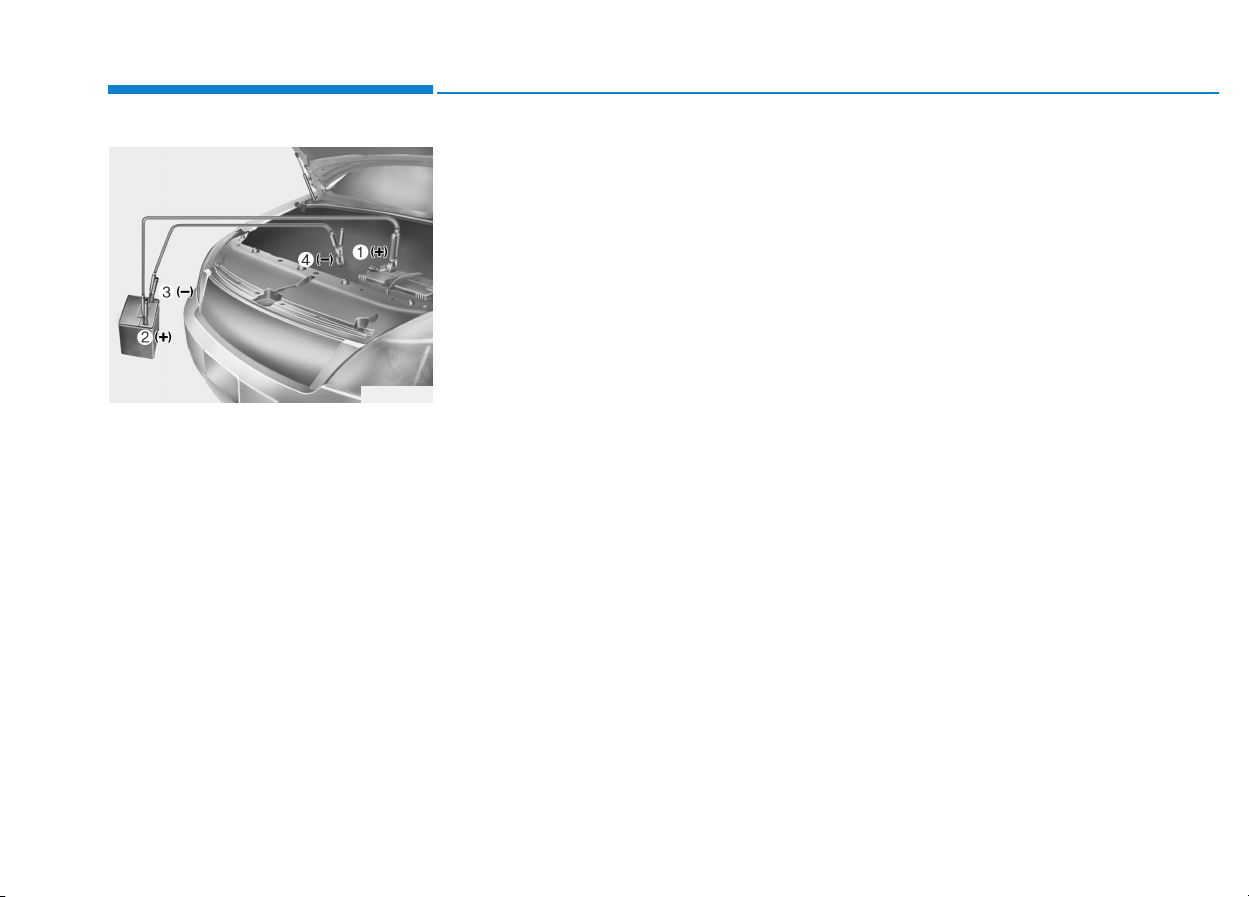
6-6
What to do in an emergency
4. Connect the jumper cables in the
exact sequence shown in the illus-
tration. First connect one jumper
cable to the red, positive (+)
jumper terminal of your vehicle
(1).
5. Connect the other end of the
jumper cable to the red, positive
(+) battery/jumper terminal of the
assisting vehicle (2).
6. Connect the second jumper cable
to the black, negative (-) battery/
chassis ground of the assisting
vehicle (3).
7. Connect the other end of the sec-
ond jumper cable to the black,
negative (-) chassis ground of
your vehicle (4).
Do not allow the jumper cables to
contact anything except the cor-
rect battery or jumper terminals or
the correct ground. Do not lean
over the battery when making
connections.
8. Start the engine of the assisting
vehicle and let it run at approxi-
mately 2,000 rpm for a few min-
utes. Then start your vehicle.
If your vehicle will not start after a
few attempts, it probably requires
servicing. In this event please seek
qualified assistance. If the cause of
your battery discharging is not
apparent, have your vehicle checked
by an authorized HYUNDAI dealer.
Disconnect the jumper cables in the
exact reverse order you connected
them:
1. Disconnect the jumper cable from
the black, negative (-) chassis
ground of your vehicle (4).
2. Disconnect the other end of the
jumper cable from the black, neg-
ative (-) battery/chassis ground of
the assisting vehicle (3).
3. Disconnect the second jumper
cable from the red, positive (+)
battery/jumper terminal of the
assisting vehicle (2).
4. Disconnect the other end of the
jumper cable from the red, positive
(+) jumper terminal of your vehicle
(1).
1VQA4001
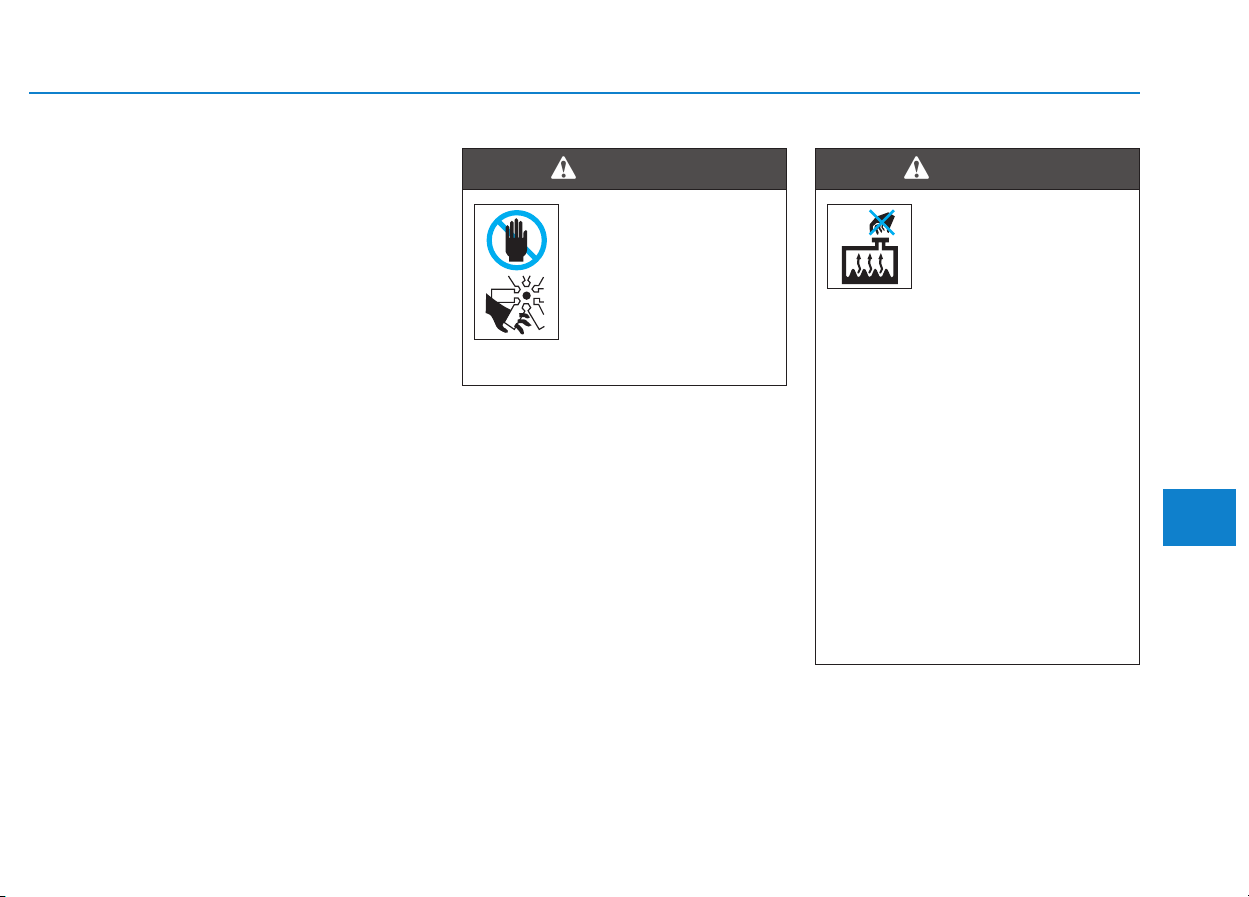
6-7
What to do in an emergency
6
If your temperature gauge indicates
overheating, you experience a loss
of power, or hear loud pinging or
knocking, the engine may be over-
heating. If this happens, you should:
1. Pull off the road and stop as soon
as it is safe to do so.
2. Place the shift lever in neutral and
set the parking brake. If the air
conditioning is ON, turn it OFF.
3. If engine coolant is running out
under the vehicle or steam is com-
ing out from the hood, stop the
engine. Do not open the hood until
the coolant has stopped running
or the steaming has stopped. If
there is no visible loss of engine
coolant and no steam, leave the
engine running and check to be
sure the engine cooling fan is
operating. If the fan is not running,
turn the engine off.
4. Check for coolant leaking from the
radiator, hoses or under the vehi-
cle. (If the air conditioning had
been in use, it is normal for cold
water to be draining from it when
you stop.)
5. If engine coolant is leaking out,
stop the engine immediately and
we recommend that you call an
authorized HYUNDAI dealer for
assistance.
IIFF TTHHEE EENNGGIINNEE OOVVEERRHHEEAATTSS
While the engine is
running, keep hands,
clothing and tools
away from the mov-
ing parts such as the
cooling fan and drive
belt to prevent seri-
ous injury.
WARNING
NEVER remove the
radiator cap or the
drain plug while the
engine and radiator
are hot. Hot coolant
and steam may blow out under
pressure, causing serious injury.
Turn the engine off and wait
until the engine cools down.
Use extreme care when remov-
ing the radiator cap. Wrap a
thick towel around it, and turn it
counterclockwise slowly to the
first stop. Step back while the
pressure is released from the
cooling system. When you are
sure all the pressure has been
released, press down on the
cap, using a thick towel, and
continue turning counterclock-
wise to remove it.
WARNING
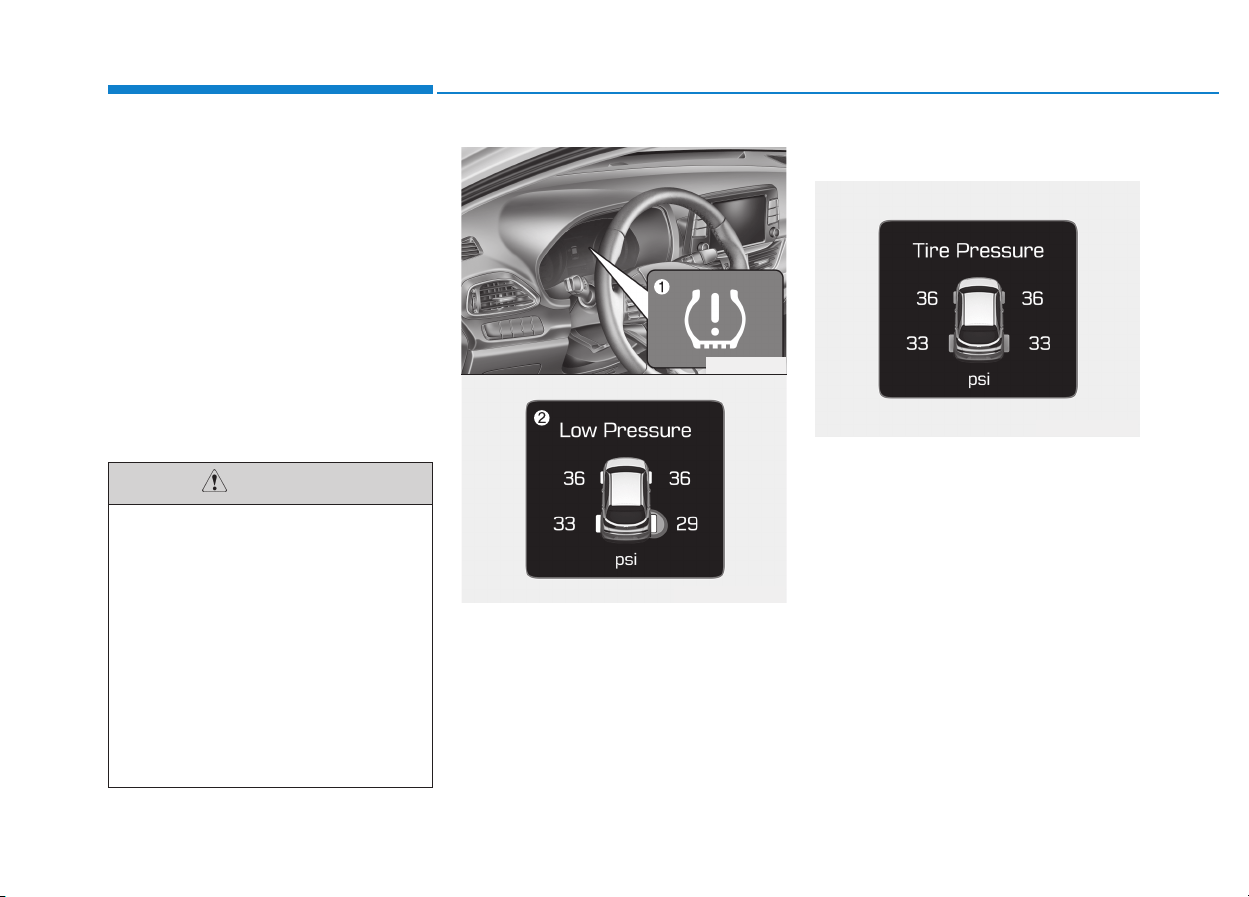
6-8
What to do in an emergency
6. If you cannot find the cause of the
overheating, wait until the engine
temperature has returned to nor-
mal. Then, if coolant has been
lost, carefully add coolant to the
reservoir to bring the fluid level in
the reservoir up to the halfway
mark.
7. Proceed with caution, keeping
alert for further signs of overheat-
ing. If overheating happens again,
we recommend that you call an
authorized HYUNDAI dealer for
assistance.
(1) Low Tire Pressure Telltale/
TPMS Malfunction Indicator
(2) Low tire pressure position telltale
and tire pressure telltale
(Shown on the LCD display)
Check tire pressure
• You can check the tire pressure in
the Assist mode on the cluster.
Refer to the "LCD Display
Modes" in chapter 3.
• Tire pressure is displayed after a
few minutes of driving after initial
engine start up.
• If tire pressure is not displayed
when the vehicle is stopped, "Drive
to display" message will appear.
After driving, check the tire pres-
sure.
• Serious loss of coolant indi-
cates a leak in the cooling
system and we recommend
the system be checked by an
authorized HYUNDAI dealer.
• When the engine overheats
from low engine coolant, sud-
denly adding engine coolant
may cause cracks in the
engine. To prevent damage,
add engine coolant slowly in
small quantities.
CAUTION
TTIIRREE PPRREESSSSUURREE MMOONNIITTOORRIINNGG SSYYSSTTEEMM ((TTPPMMSS)) ((IIFF EEQQUUIIPPPPEEDD))
OPD066009
OPDEN047202
OPDEN047205
6-9
What to do in an emergency
6
• The displayed tire pressure values
may differ from those measured
with a tire pressure gauge.
• You can change the tire pressure
unit in the User Settings mode on
the instrument cluster.
- psi, kpa, bar (Refer to "LCD
Modes" in chapter 3).
Tire pressure monitoring sys-
tem
Each tire, including the spare (if pro-
vided), should be checked monthly
when cold and inflated to the inflation
pressure recommended by the vehi-
cle manufacturer on the vehicle plac-
ard or tire inflation pressure label. (If
your vehicle has tires of a different
size than the size indicated on the
vehicle placard or tire inflation pres-
sure label, you should determine the
proper tire inflation pressure for
those tires.)
As an added safety feature, your
vehicle has been equipped with a tire
pressure monitoring system (TPMS)
that illuminates a low tire pressure
telltale when one or more of your
tires is significantly under-inflated.
Accordingly, when the low tire pres-
sure telltale illuminates, you should
stop and check your tires as soon as
possible, and inflate them to the
proper pressure. Driving on a signifi-
cantly under-inflated tire causes the
tire to overheat and can lead to tire
failure. Under-inflation also reduces
fuel efficiency and tire tread life, and
may affect the vehicle’s handling and
stopping ability.
Please note that the TPMS is not a
substitute for proper tire mainte-
nance, and it is the driver's responsi-
bility to maintain correct tire pres-
sure, even if under-inflation has not
reached the level to trigger illumina-
tion of the TPMS low tire pressure
telltale.
Over-inflation or under-inflation
can reduce tire life, adversely
affect vehicle handling, and
lead to sudden tire failure that
may cause loss of vehicle con-
trol resulting in an accident.
WARNING
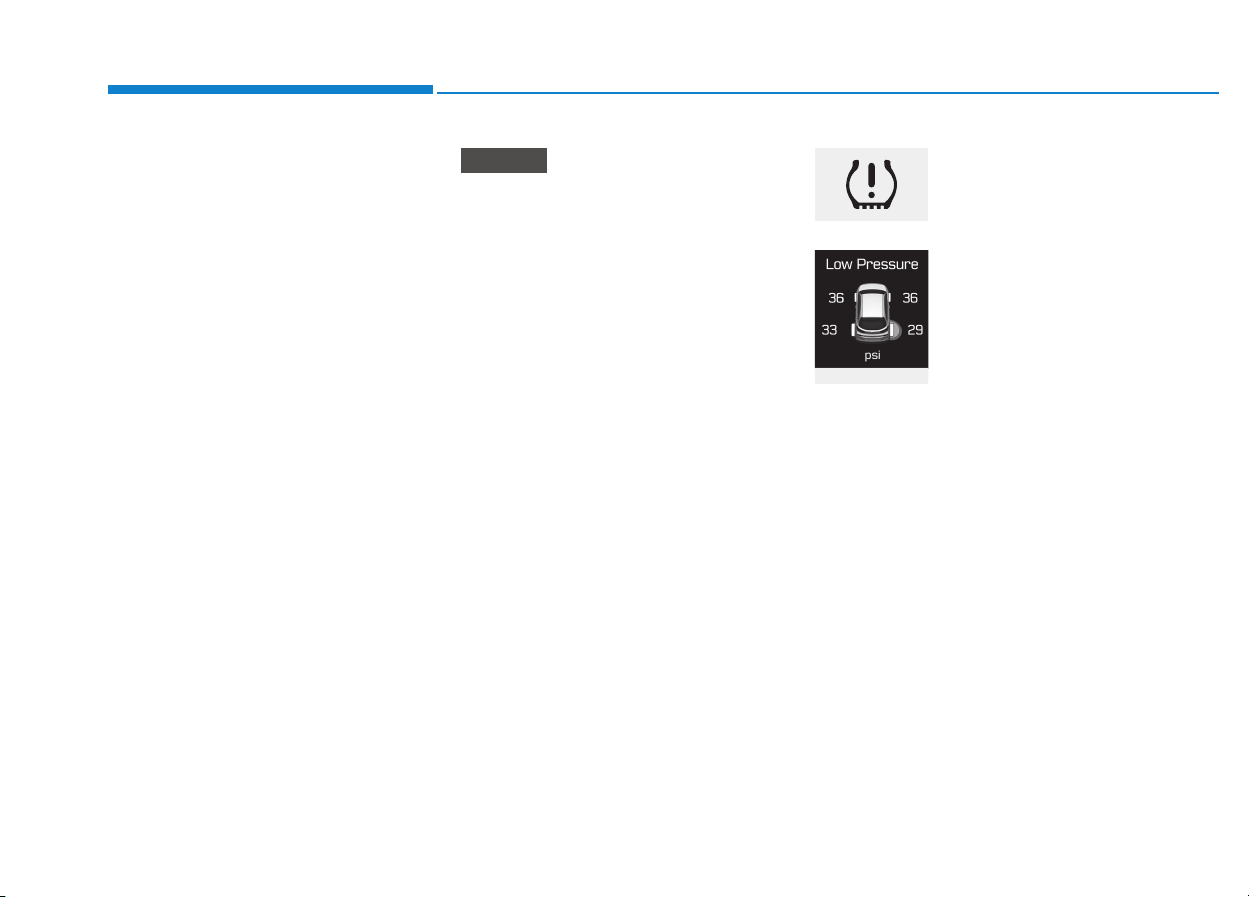
6-10
What to do in an emergency
Your vehicle has also been equipped
with a TPMS malfunction indicator to
indicate when the system is not
operating properly. The TPMS mal-
function indicator is combined with
the low tire pressure telltale. When
the system detects a malfunction,
the telltale will flash for approximate-
ly one minute and then remain con-
tinuously illuminated. This sequence
will continue upon subsequent vehi-
cle start-ups as long as the malfunc-
tion exists. When the malfunction
indicator is illuminated, the system
may not be able to detect or signal
low tire pressure as intended.
TPMS malfunctions may occur for a
variety of reasons, including the
installation of replacement or alter-
nate tires or wheels on the vehicle
that prevent the TPMS from function-
ing properly. Always check the TPMS
malfunction telltale after replacing
one or more tires or wheels on your
vehicle to ensure that the replace-
ment or alternate tires and wheels
allow the TPMS to continue to func-
tion properly.
If any of the below happens, we
recommend that the system be
checked by an authorized HYUNDAI
dealer.
1. The low tire pressure telltale/
TPMS malfunction indicator
does not illuminate for 3 sec-
onds when the ignition switch
is turned to the ON position or
the engine is running.
2. The TPMS malfunction indicator
remains illuminated after blink-
ing for approximately 1 minute.
3. The Low tire pressure position
telltale remains illuminated.
Low tire pressure
telltale
Low tire pressure
position telltale
and tire pressure
telltale
When the tire pressure monitoring
system warning indicators are illumi-
nated and a warning message dis-
played on the cluster LCD display,
one or more of your tires is signifi-
cantly under-inflated. The low tire
pressure position telltale light will
indicate which tire is significantly
under-inflated by illuminating the cor-
responding position light.
NOTICE
OPDEN047202
6-11
What to do in an emergency
6
If either telltale illuminates, immedi-
ately reduce your speed, avoid hard
cornering and anticipate increased
stopping distances. You should stop
and check your tires as soon as pos-
sible. Inflate the tires to the proper
pressure as indicated on the vehi-
cle’s placard or tire inflation pressure
label located on the driver’s side cen-
ter pillar outer panel. If you cannot
reach a service station or if the tire
cannot hold the newly added air,
replace the low pressure tire with a
spare tire.
If you drive the vehicle for about 10
minutes at speeds above 25 km/h
after replacing the low pressure tire
with the spare tire, the below will
happen:
• The TPMS malfunction indicator
may blink for approximately 1 minute
and then remain continuously illumi-
nated because the TPMS sensor is
not mounted on the spare wheel.
The spare tire is not equipped with
a tire pressure sensor.
NOTICE
In winter or cold weather, the low
tire pressure telltale may illumi-
nate if the tire pressure was
adjusted to the recommended
tire inflation pressure in warm
weather. It does not mean your
TPMS is malfunctioning because
the decreased temperature leads
to a lowering of tire pressure.
When you drive your vehicle
from a warm area to a cold area
or from a cold area to a warm
area, or the outside temperature
is higher or lower, you should
check the tire inflation pressure
and adjust the tires to the recom-
mended tire inflation pressure.
CAUTION
Low pressure damage
Significantly low tire pressure
makes the vehicle unstable and
can contribute to loss of vehicle
control and increased braking
distances.
Continued driving on low pres-
sure tires can cause the tires to
overheat and fail.
WARNING
6-12
What to do in an emergency
TPMS (Tire Pressure
Monitoring System)
malfunction indicator
The TPMS malfunction indicator will
illuminate after it blinks for approxi-
mately one minute when there is a
problem with the Tire Pressure
Monitoring System.
We recommend that the system be
checked by an authorized HYUNDAI
dealer.
If there is a malfunction with the
TPMS, the low tire pressure posi-
tion telltale will not be displayed
even though the vehicle has an
under-inflated tire.
Changing a tire with TPMS
If you have a flat tire, the low Tire
Pressure and Position telltales will
come on. We recommend that the
system be checked by an authorized
HYUNDAI dealer.
Each wheel is equipped with a tire
pressure sensor mounted inside the
tire behind the valve stem. You must
use TPMS specific wheels. It is rec-
ommended that you have your tires
serviced by an authorized HYUNDAI
dealer.
NOTICE
• The TPMS malfunction indicator
may blink for approximately 1
minute and then remain contin-
uously illuminated if the vehicle
is moving around electric power
supply cables or radios trans-
mitter such as at police sta-
tions, government and public
offices, broadcasting stations,
military installations, airports,
or transmitting towers, etc. This
can interfere with normal opera-
tion of the Tire Pressure
Monitoring System (TPMS).
•
The TPMS malfunction indica-
tor may blink for approximately
1 minute and then remain con-
tinuously illuminated if snow
chains are used or some sepa-
rate electronic devices such as
notebook computer, mobile
charger, remote starter or nav-
igation etc., are used in the
vehicle.
This can interfere with normal
operation of the Tire Pressure
Monitoring System (TPMS).
CAUTION
NEVER use a puncture-repair-
ing agent to repair and/or inflate
a low pressure tire. The tire
sealant can damage the tire
pressure sensor. If used, you
will have to replace the tire
pressure sensor.
CAUTION

6-13
What to do in an emergency
6
If you drive the vehicle for about 10
minutes at speeds above 25 km/h
after replacing the low pressure tire
with the spare tire, the below will
happen:
• The TPMS malfunction indicator
may blink for approximately 1 minute
and then remain continuously illumi-
nated because the TPMS sensor is
not mounted on the spare wheel.
You may not be able identify a tire
with low pressure by simply looking
at it. Always use a good quality tire
pressure gauge to measure the tire's
inflation pressure. Please note that a
tire that is hot (from being driven) will
have a higher pressure measure-
ment than a tire that is cold (from sit-
ting stationary for at least 3 hour and
driven less than 1.6 km (1 mile) dur-
ing that 3 hour period).
Allow the tire to cool before measur-
ing the inflation pressure. Always be
sure the tire is cold before inflating to
the recommended pressure.
A cold tire means the vehicle has
been sitting for 3 hours and driven for
less than 1.6 km (1 mile) in that 3
hour period.
• The TPMS cannot alert you to
severe and sudden tire dam-
age caused by external factors
such as nails or road debris.
• If you feel any vehicle instabil-
ity, immediately take your foot
off the accelerator, apply the
brakes gradually and with
light force, and slowly move to
a safe position off the road.
WARNING

6-14
What to do in an emergency
Tampering with, modifying, or
disabling the Tire Pressure
Monitoring System (TPMS) com-
ponents may interfere with the
system's ability to warn the driv-
er of low tire pressure condi-
tions and/or TPMS malfunctions.
Tampering with, modifying, or
disabling the Tire Pressure
Monitoring System (TPMS) com-
ponents may void the warranty
for that portion of the vehicle.
WARNING
For EUROPE
• Do not modify the vehicle; it
may interfere with the TPMS
function.
• The wheels on the market do
not have a TPMS sensor.
For your safety, we recom-
mend that you use parts for
replacement from an author-
ized HYUNDAI dealer.
• If you use the wheels on the
market, use a TPMS sensor
approved by a HYUNDAI deal-
er. If your vehicle is not
equipped with a TPMS sensor
or TPMS does not work prop-
erly, you may fail the periodic
vehicle inspection conducted
in your country.
(Continued)
(Continued)
❈
❈
All vehicles sold in the
EUROPE market during below
period must be equipped with
TPMS.
- New model vehicle :
Nov. 1, 2012 ~
- Current model vehicle :
Nov. 1, 2014~ (Based on
vehicle registrations)
WARNING
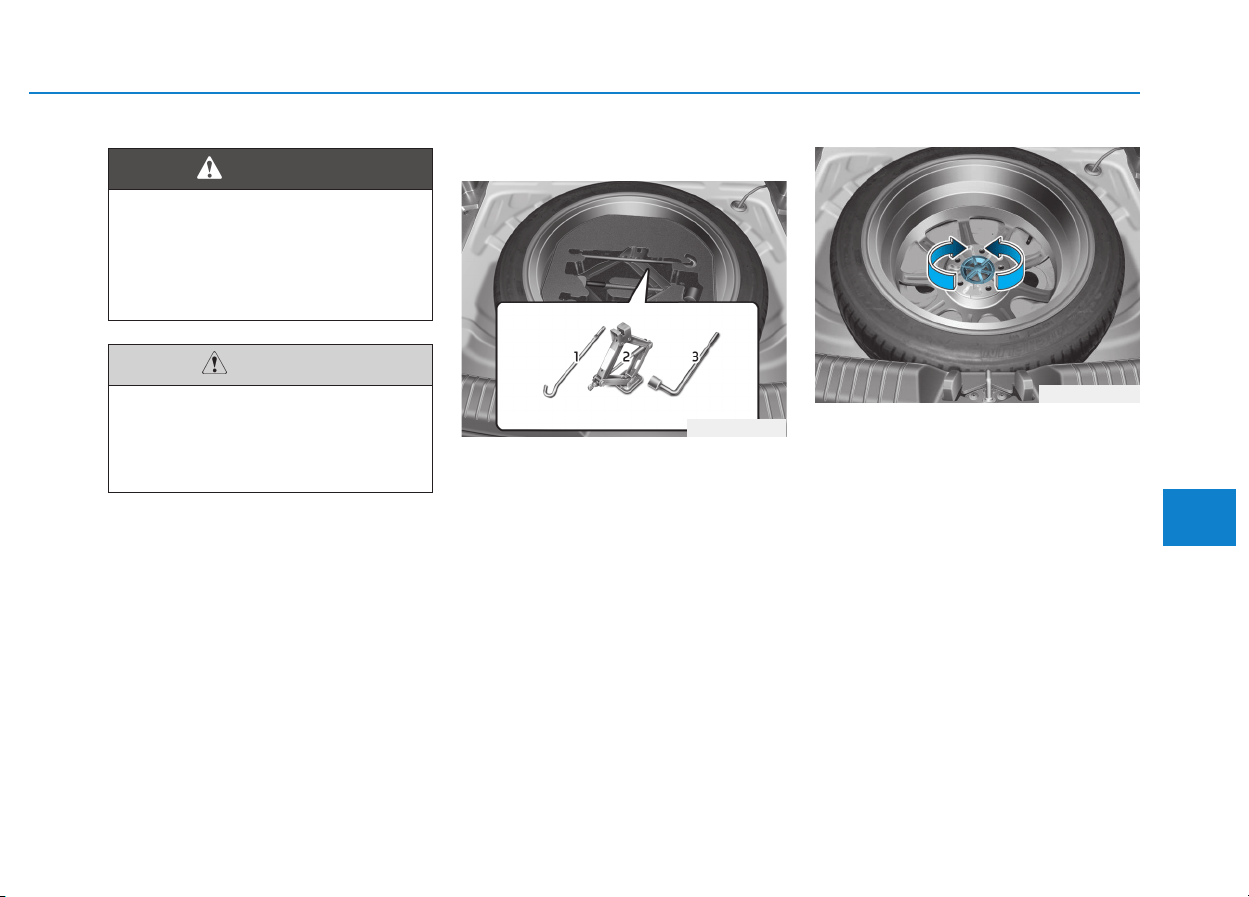
6-15
What to do in an emergency
6
Jack and tools
(1) Jack handle
(2) Jack
(3) Wheel nut wrench
The jack, jack handle, and wheel nut
wrench are stored in the luggage
compartment under the luggage box
cover.
The jack is provided for emergency
tire changing only.
Turn the winged hold down bolt
counterclockwise to remove the
spare tire.
Store the spare tire in the same com-
partment by turning the winged hold
down bolt clockwise.
To prevent the spare tire and tools
from "rattling", store them in their
proper location.
IIFF YYOOUU HHAAVVEE AA FFLLAATT TTIIRREE ((WWIITTHH SSPPAARREE TTIIRREE,, IIFF EEQQUUIIPPPPEEDD))
OPDEN067027
OPDEN067037
Changing a tire can be danger-
ous. Follow the instructions in
this section when changing a
tire to reduce the risk of serious
injury or death.
WARNING
Be careful as you use the jack
handle to stay clear of the flat
end. The flat end has sharp
edges that could cause cuts.
CAUTION
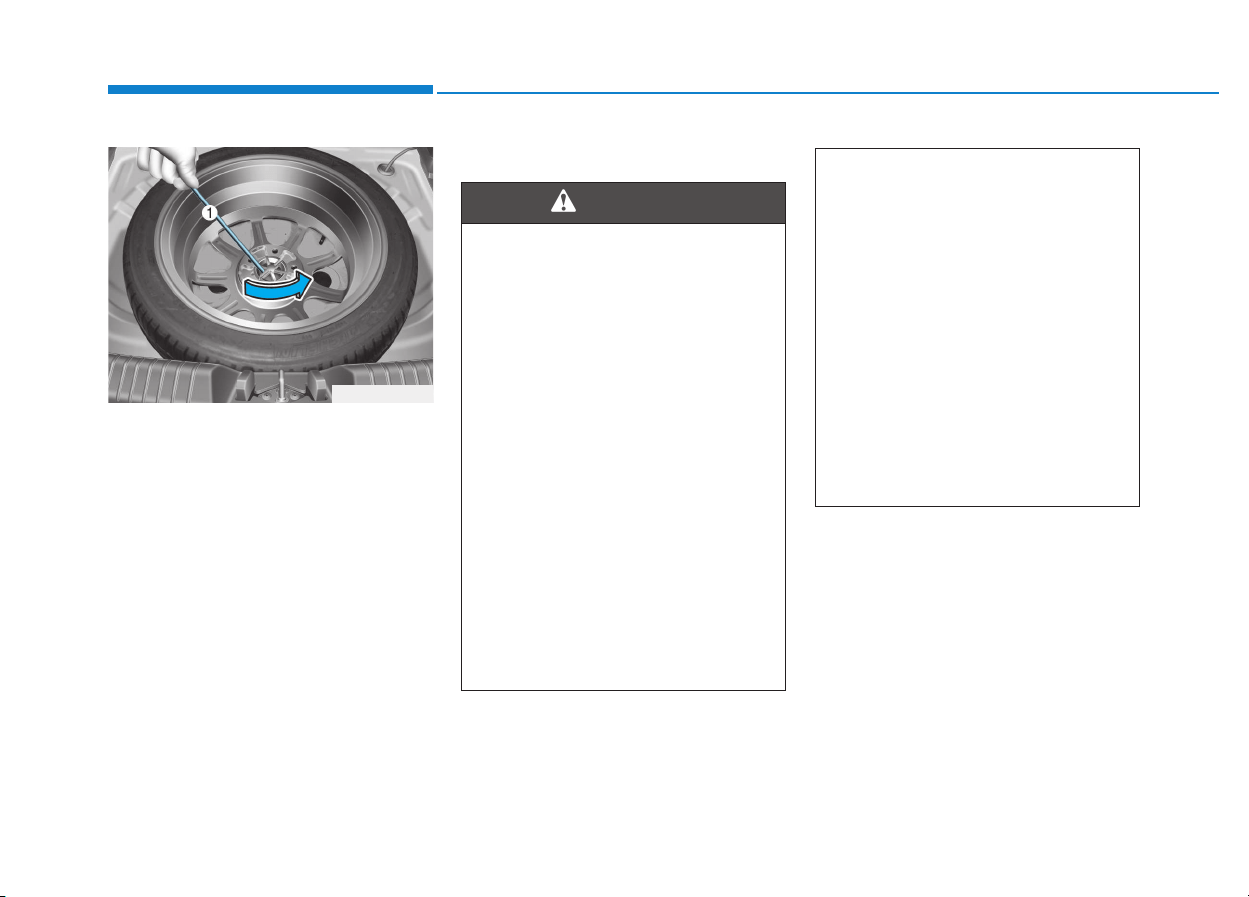
6-16
What to do in an emergency
If it is hard to loosen the tire hold-
down wing bolt by hand, you can
loosen it easily using the jack handle.
1. Put the jack handle (1) inside of
the tire hold-down wing bolt.
2. Turn the tire hold-down wing bolt
counterclockwise with the jack
handle.
Changing tires
A vehicle can slip or roll off of a
jack causing serious injury or
death to you or those nearby.
Take the following safety pre-
cautions:
• Do not get under a vehicle
that is supported by a jack.
• NEVER attempt to change a
tire in the lane of traffic.
ALWAYS move the vehicle
completely off the road on
level, firm ground away from
traffic before trying to change
a tire. If you cannot find a
level, firm place off the road,
call a towing service for assis-
tance.
• Be sure to use the jack pro-
vided with the vehicle.
(Continued)
WARNING
(Continued)
• ALWAYS place the jack on the
designated jacking positions
on the vehicle and NEVER on
the bumpers or any other part
of the vehicle for jacking sup-
port.
• Do not start or run the engine
while the vehicle is on the
jack.
• Do not allow anyone to remain
in the vehicle while it is on the
jack.
• Keep children away from the
road and the vehicle.
OPDEN067038
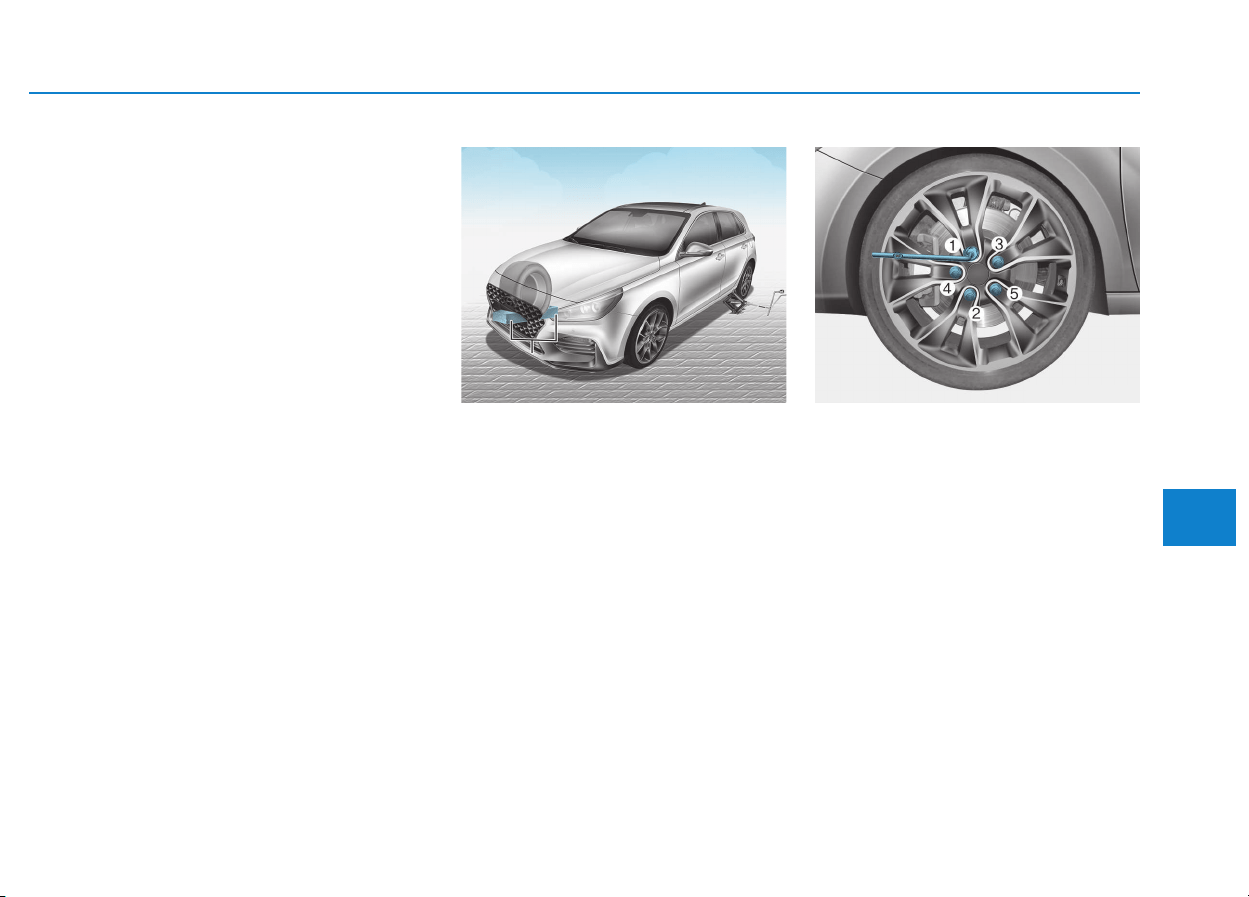
6-17
What to do in an emergency
6
Follow these steps to change your
vehicle's tire:
1. Park on a level, firm surface.
2. Move the shift lever into neutral,
apply the parking brake, and place
the ignition switch in the LOCK/
OFF position.
3. Press the hazard warning flasher
button.
4. Remove the wheel lug nut wrench,
jack, jack handle, and spare tire
from the vehicle.
5. Block both the front and rear of the
tire diagonally opposite of the tire
you are changing.
6. Loosen the wheel lug nuts coun-
terclockwise one turn each in the
order shown above, but do not
remove any lug nuts until the tire
has been raised off of the ground.
OPDEN067030
BB
BB
ll
ll
oo
oo
cc
cc
kk
kk
OPDEN067031
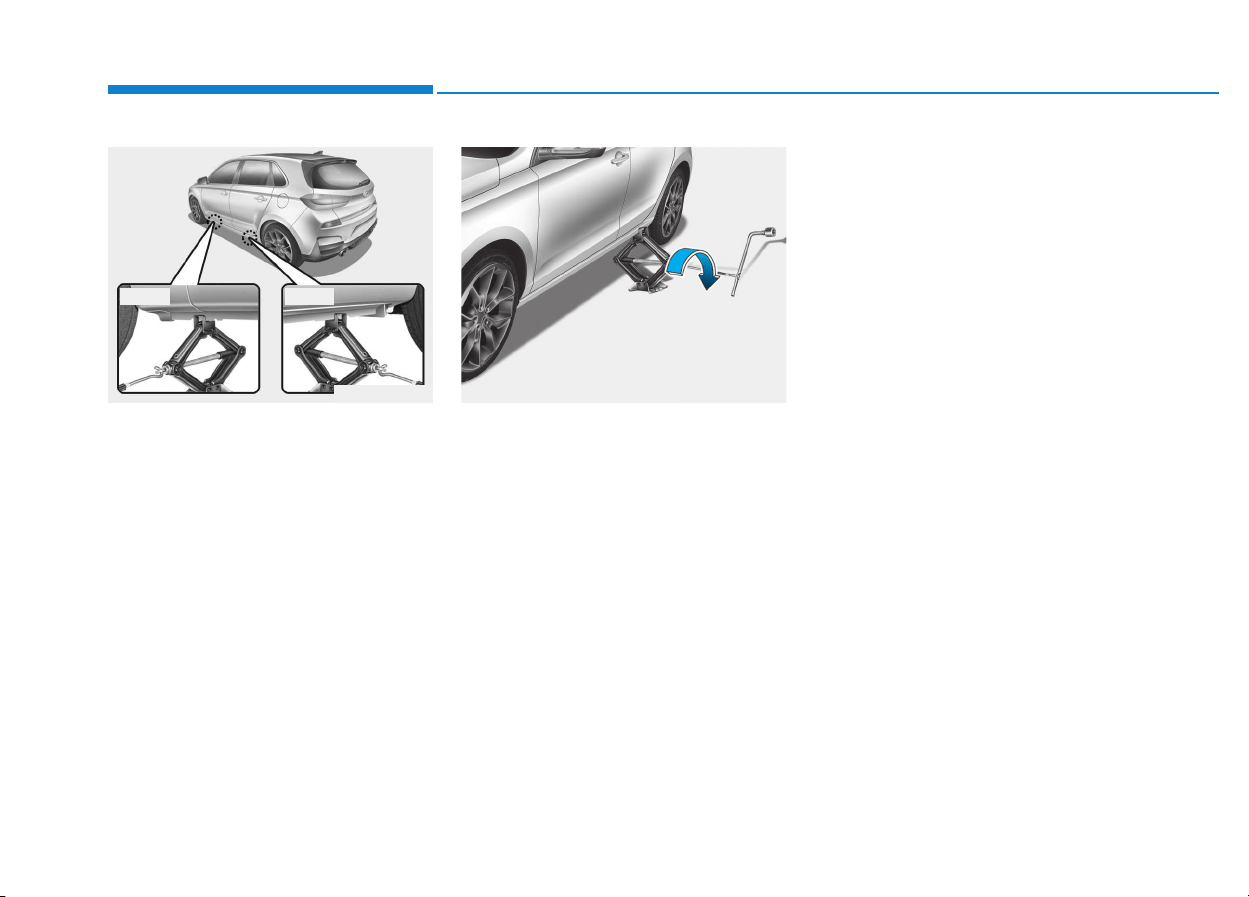
6-18
What to do in an emergency
7. Place the jack at the designated
jacking position under the frame
closest to the tire you are chang-
ing. The jacking positions are
plates welded to the frame with
two notches. Never jack at any
other position or part of the vehi-
cle. It may damage the side seal
molding.
8. Insert the jack handle into the jack
and turn it clockwise, raising the
vehicle until the tire clears the
ground. Make sure the vehicle is
stable on the jack.
9. Loosen the lug nuts with the wheel
lug nut wrench and remove them
with your fingers. Remove the
wheel from the studs and lay it flat
on the ground out of the way.
Remove any dirt or debris from
the studs, mounting surfaces, and
wheel.
10. Install the spare tire onto the
studs of the hub.
11. Tighten the lug nuts with your fin-
gers onto the studs with the
smaller end of the lug nuts clos-
est to the wheel.
12. Lower the vehicle to the ground
by turning the jack handle coun-
terclockwise.
OPDEN067033OPDEN067032
■ Front ■ Rear
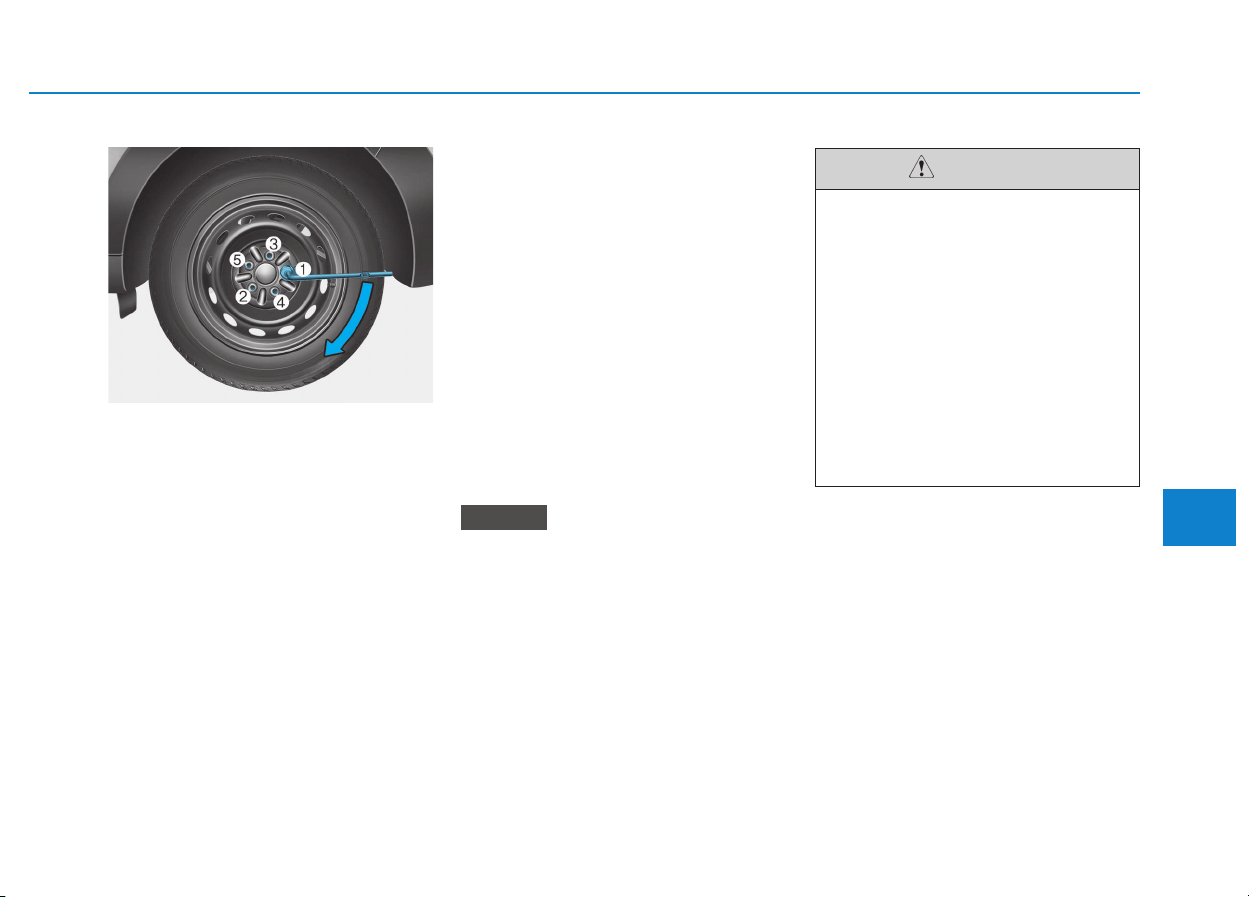
6-19
What to do in an emergency
6
13. Use the wheel lug nut wrench to
tighten the lug nuts in the order
shown. Double-check each lug
nut until they are tight. After
changing tires, we recommend
that an authorized HYUNDAI
dealer tighten the lug nuts to their
proper torque as soon as possi-
ble. The wheel lug nut should
be tightened to 11~13 kgf·m
(79~94 lbf·ft).
If you have a tire gauge, check the
tire pressure (see "Tires and
Wheels" in chapter 8 for tire pressure
instructions.). If the pressure is lower
or higher than recommended, drive
slowly to the nearest service station
and adjust it to the recommended
pressure. Always reinstall the valve
cap after checking or adjusting tire
pressure. If the cap is not replaced,
air may leak from the tire. If you lose
a valve cap, buy another and install it
as soon as possible. After changing
tires, secure the flat tire and return
the jack and tools to their proper stor-
age locations.
• Check the tire pressure as soon
as possible after installing a
spare tire. Adjust it to the rec-
ommended pressure.
• Check and tighten the wheel lug
nuts after driving over 50 km if
tires are replaced. Re-check the
tire wheel lug nuts after driving
over 1,000 km.
If any of the equipment such as the
jack, lug nuts, studs, or other equip-
ment is damaged or in poor condi-
tion, do not attempt to change the
tire and call for assistance.
NOTICE
OTL065007
Your vehicle has metric threads
on the studs and lug nuts. Make
certain during tire changing
that the same nuts that were
removed are reinstalled. If you
have to replace your lug nuts
make sure they have metric
threads to avoid damaging the
studs and ensure the wheel is
properly secured to the hub. We
recommend that you consult an
authorized HYUNDAI dealer for
assistance.
CAUTION

6-20
What to do in an emergency
Use of compact spare tires
(if equipped)
Compact spare tires are designed for
emergency use only. Drive carefully
on the compact spare tire and
always follow the safety precautions.
When driving with the compact spare
tire mounted to your vehicle:
• Check the tire pressure after
installing the compact spare tire.
The compact spare tire should be
inflated to 420 kPa (60 psi).
• Do not take this vehicle through an
automatic car wash while the com-
pact spare tire is installed.
• Do not use the compact spare tire
on any other vehicle because this
tire has been designed especially
for your vehicle.
• The compact spare tire's tread life
is shorter than a regular tire.
Inspect your compact spare tire
regularly and replace worn com-
pact spare tires with the same size
and design, mounted on the same
wheel.
• Do not use more than one compact
spare tire at a time.
• Do not tow a trailer while the com-
pact spare tire is installed.
When the original tire and wheel
are repaired and reinstalled on the
vehicle, the lug nut torque must be
set correctly. The correct lug nut
tightening torque is 11~13 kgf·m
(79~94 lbf·ft).
NOTICE
To prevent compact spare tire
failure and loss of control pos-
sibly resulting in an accident:
• Use the compact spare tire
only in an emergency.
• NEVER operate your vehicle
over 80 km/h (50 mph).
• Do not exceed the vehicle's
maximum load rating or the
load carrying capacity shown
on the sidewall of the com-
pact spare tire.
• Do not use the compact spare
tire continuously. Repair or
replace the original tire as
soon as possible to avoid fail-
ure of the compact spare tire.
WARNING
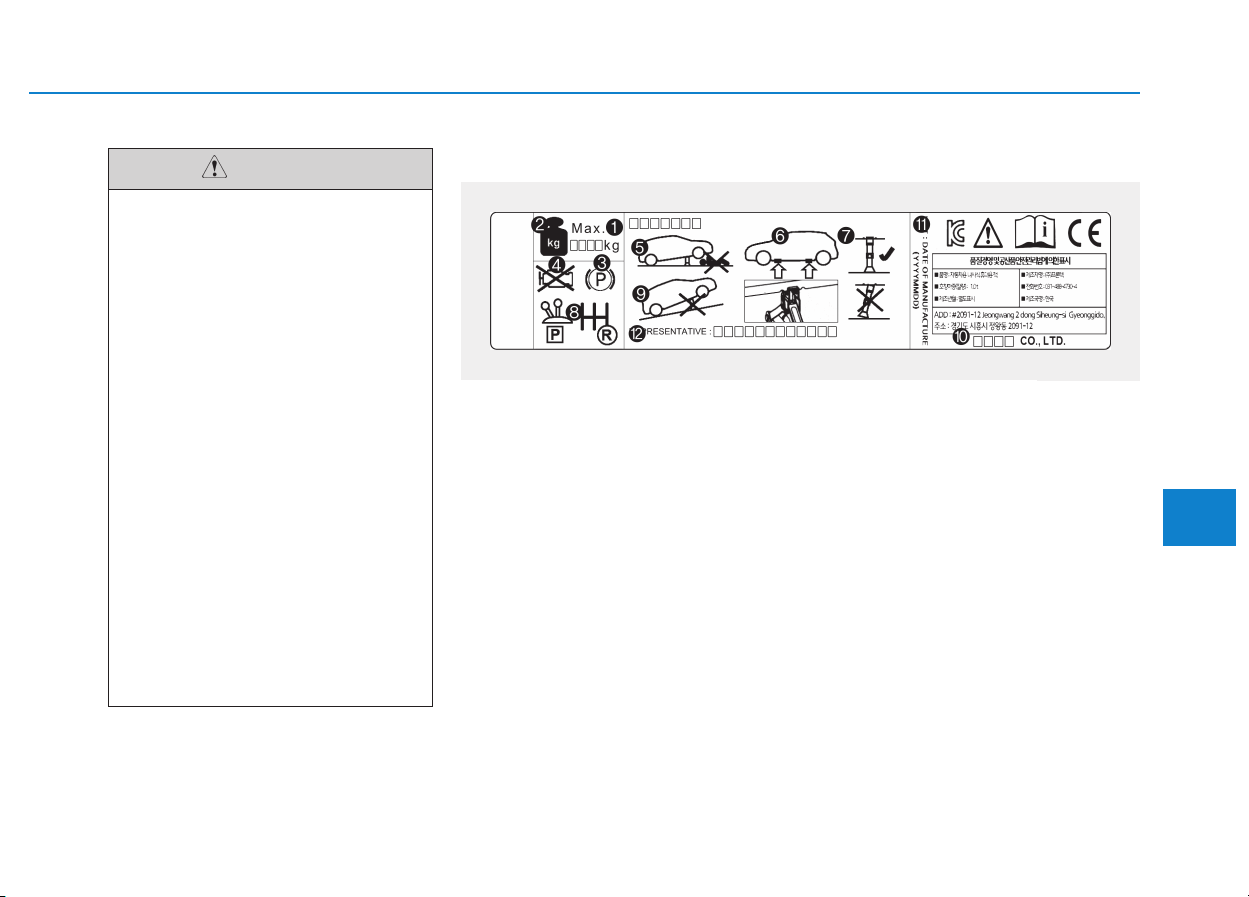
6-21
What to do in an emergency
6
Jack label
To prevent damaging the com-
pact spare tire and your vehicle:
• Drive slowly enough for the
road conditions to avoid all
hazards, such as a potholes
or debris.
• Avoid driving over obstacles.
The compact spare tire diame-
ter is smaller than the diame-
ter of a conventional tire and
reduces the ground clearance
approximately 25 mm (1 inch).
• Do not use tire chains on the
compact spare tire. Because
of the smaller size, a tire chain
will not fit properly.
• Do not use the compact spare
tire on any other wheels, nor
should standard tires, snow
tires, wheel covers or trim
rings be used with the com-
pact spare wheel.
CAUTION
■ Example
OHYK065011
1. Model Name
2. Maximum allowable load
3. When using the jack, set your
parking brake.
4. When using the jack, stop the
engine.
5. Do not get under a vehicle that is
supported by a jack.
6. The designated locations under
the frame
7. When supporting the vehicle, the
base plate of jack must be vertical
under the lifting point.
8. Shift into Reverse gear on vehicles
with manual transmission or move
the shift lever to the P position on
vehicles with automatic transmis-
sion/ dual clutch transmission.
9. The jack should be used on firm
level ground.
10. Jack manufacture
11. Production date
12. Representative company and
address
The actual Jack label in the vehicle may differ from the illustration.
For more detailed specifications, refer to the label attached to the jack.
6-22
What to do in an emergency
JACKDOC14F
EC Declaration of conformity for Jack
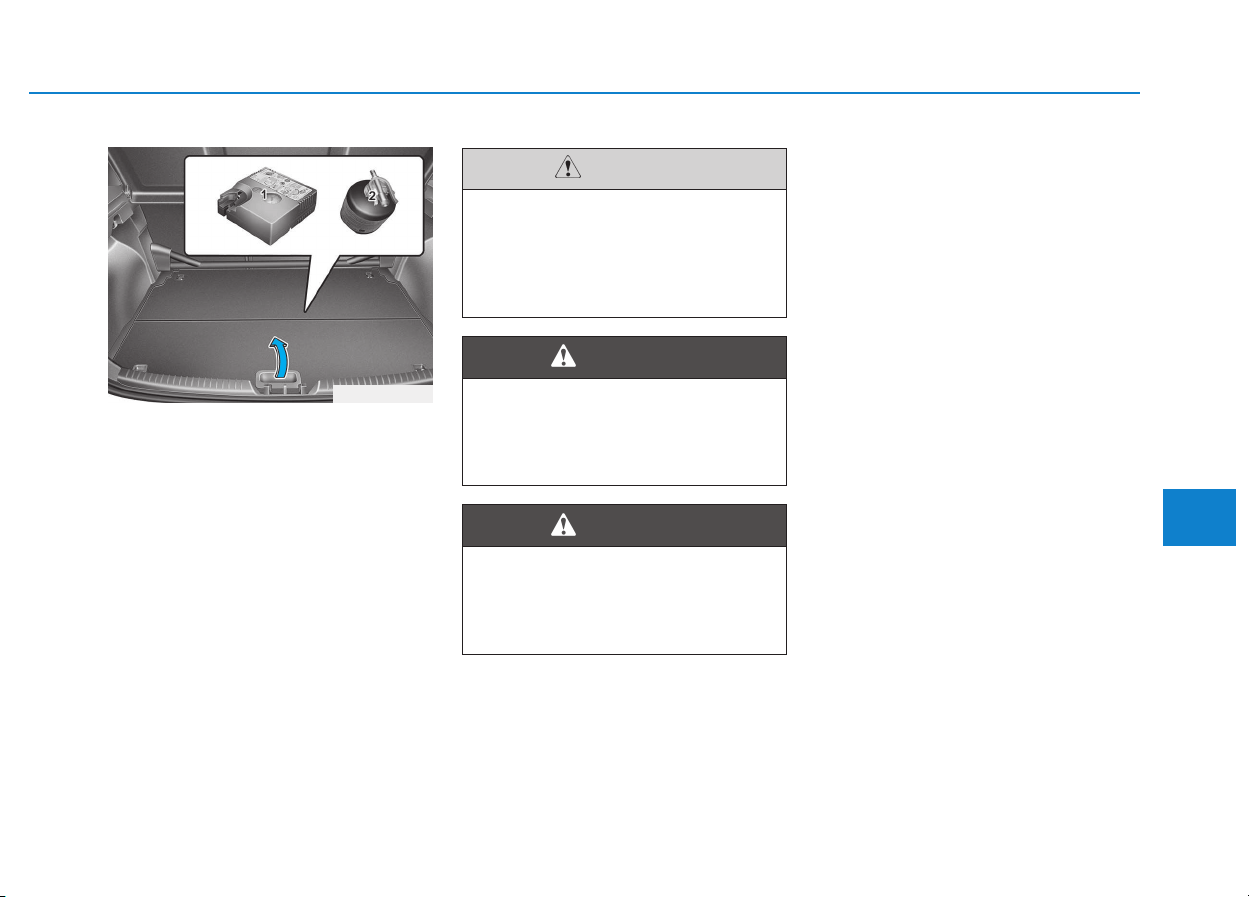
6-23
What to do in an emergency
IIFF YYOOUU HHAAVVEE AA FFLLAATT TTIIRREE ((WWIITTHH TTIIRREE MMOOBBIILLIITTYY KKIITT,, IIFF EEQQUUIIPPPPEEDD)) -- TTYYPPEE AA
6
For safe operation, carefully read
and follow the instructions in this
manual before use.
(1) Compressor
(2) Sealant bottle
The Tire Mobility Kit is a temporary
fix to the tire and we recommend that
the system be inspected by an
authorized HYUNDAI dealer.
Introduction
With the Tire Mobility Kit you stay
mobile even after experiencing a tire
puncture.
The system of compressor and seal-
ing compound effectively and com-
fortably seals most punctures in a
passenger car tire caused by nails
or similar objects and reinflates the
tire.
After you ensured that the tire is
properly sealed you can drive cau-
tiously on the tire (distance up to 200
km (120 miles)) at a max. speed of
80 km/h (50 mph) in order to reach a
service station or tire dealer to have
the tire replaced.
It is possible that some tires, espe-
cially with larger punctures or dam-
age to the sidewall, cannot be sealed
completely.
Air pressure loss in the tire may
adversely affect tire performance.
For this reason, you should avoid
abrupt steering or other driving
maneuvers, especially if the vehicle
is heavily loaded or if a trailer is in
use.
Do not use the Tire Mobility Kit
to repair punctures in the tire
walls. This can result in an acci-
dent due to tire failure.
WARNING
Have your tire repaired as soon
as possible. The tire may loose
air pressure at any time after
inflating with the Tire Mobility Kit.
WARNING
When two or more tires are flat,
do not use the tire mobility kit
because the supported one
sealant of Tire Mobility Kit is
only used for one flat tire.
CAUTION
OPDEN067010
6-24
The Tire Mobility Kit is not designed
or intended as a permanent tire
repair method and is to be used for
one tire only. This instruction shows
you step by step how to temporarily
seal the puncture simply and reliably.
Read the section "Notes on the safe
use of the Tire Mobility Kit".
Notes on the safe use of the
Tire Mobility Kit
• Park your car at the side of the
road so that you can work with the
Tire Mobility Kit away from moving
traffic.
• To be sure your vehicle will not
move, even when you're on fairly
level ground, always set your park-
ing brake.
• Only use the Tire Mobility Kit for
sealing/inflation passenger car tires.
Only punctured areas located with-
in the tread region of the tire can be
sealed using the tire mobility kit.
• Do not use on motorcycles, bicy-
cles or any other type of tires.
• When the tire and wheel are dam-
aged, do not use Tire Mobility Kit
for your safety.
• Use of the Tire Mobility Kit may not
be effective for tire damage larger
than approximately 6 mm (0.24 in).
If the tire cannot be made roadwor-
thy with the Tire Mobility Kit, we
recommend that you contact an
authorized HYUNDAI dealer.
• Do not use the Tire Mobility Kit if a
tire is severely damaged by driving
run flat or with insufficient air pres-
sure.
• Do not remove any foreign objects
such as nails or screws that have
penetrated the tire.
• Provided the car is outdoors, leave
the engine running. Otherwise
operating the compressor may
eventually drain the car battery.
• Never leave the Tire Mobility Kit
unattended while it is being used.
• Do not leave the compressor run-
ning for more than 10 min. at a time
or it may overheat.
• Do not use the Tire Mobility Kit if
the ambient temperature is below
-30°C (-22°F).
• In case of skin contact with the
sealant, wash the area thoroughly
with plenty of water. If the irritation
persists, seek medical attention.
• In case of eye contact with the
sealant, flush your eyes for at least
15 minutes. If the irritation persists,
seek medical attention.
• In case of swallowing the sealant,
rinse the mouth and drink plenty of
water. However, never give anything
to an unconscious person and seek
medical attention immediately.
• Long time exposure to the sealant
may cause damage to bodily tissue
such as kidney, etc.
What to do in an emergency
Do not use the TMK if a tire is
severely damaged by driving
run flat or with insufficient air
pressure.
Only punctured areas located
within the tread region of the tire
can be sealed using the TMK.
WARNING
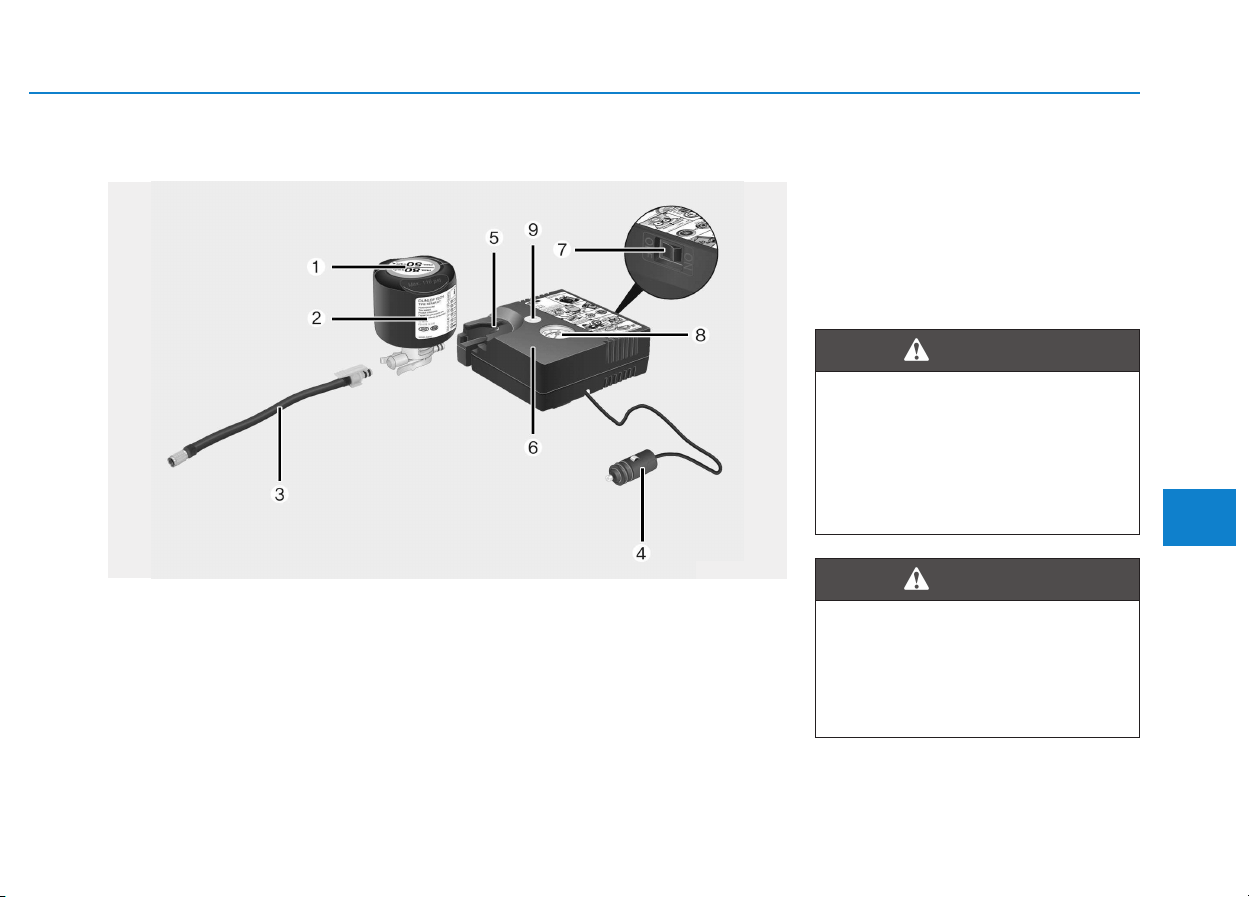
6-25
What to do in an emergency
1. Speed-restriction label
2. Sealant bottle and label with
speed restriction
3. Filling hose from sealant bottle to
wheel
4. Connectors and cable for the
power outlet direct connection
5. Holder for the sealant bottle
6. Compressor
7. ON/OFF switch
8. Pressure gauge for displaying the
tire inflation pressure
9. Button for reducing the tire infla-
tion pressure
Connectors, cable and connection
hose are stored in the compressor
housing.
Strictly follow the specified
sequence, otherwise the sealant
may escape under high pressure.
6
Components of the Tire Mobility Kit
OAE067039ODE067044
Expired sealant
Do not use the Tire sealant after
the sealant has expired (i.e.
pasted the expiration date on
the sealant container). This can
increase the risk of tire failure.
WARNING
Sealant
• Keep out of reach of children.
• Avoid contact with eyes.
• Do not swallow.
WARNING
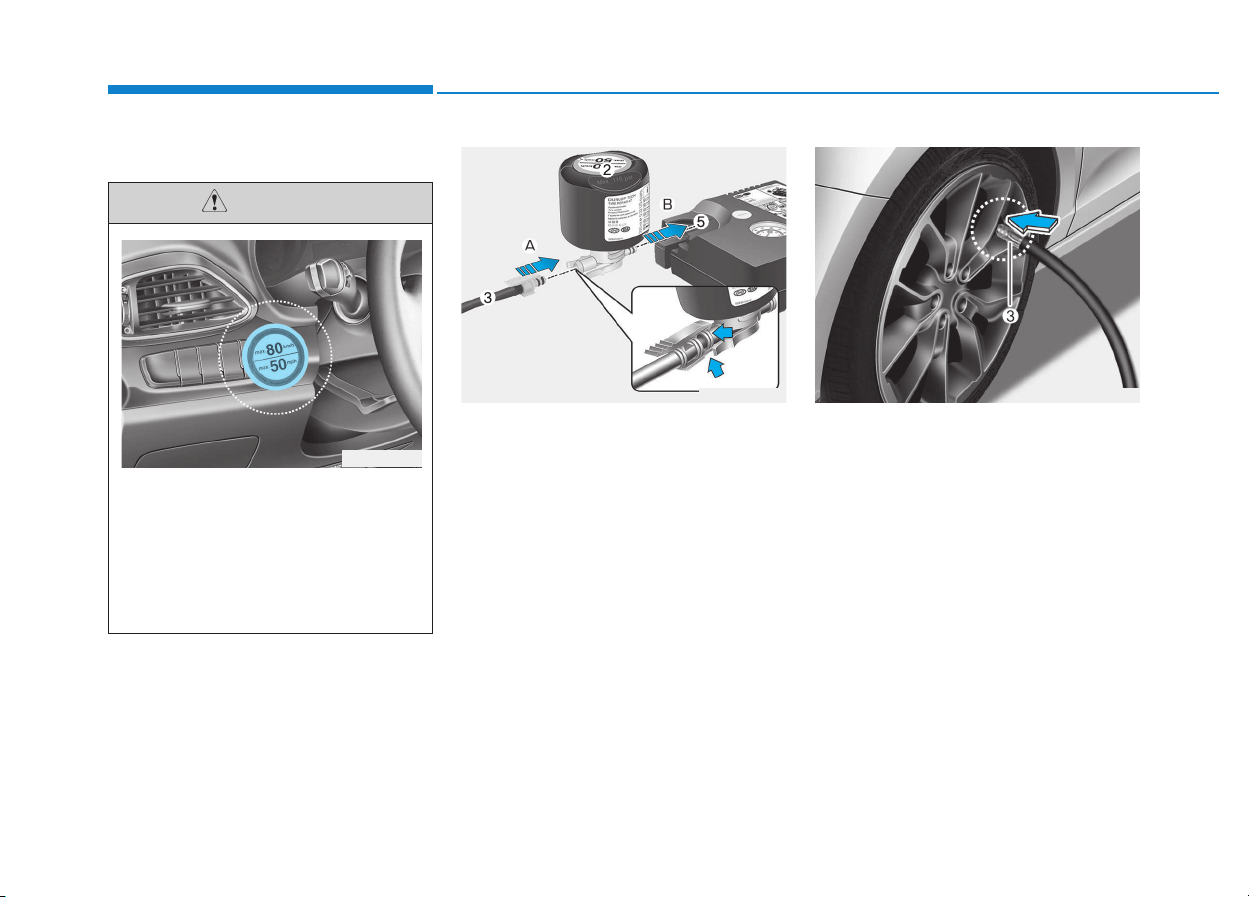
6-26
What to do in an emergency
Using the Tire Mobility Kit
1. Shake the sealant bottle (1).
2. Connect the filling hose (3) to the
sealant bottle (2) in the direction of
(A) and connect the sealant bottle
to the compressor (5) in the direc-
tion of (B).
3. Ensure that the compressor is
switched OFF.
4. Unscrew the valve cap from the
valve of the defective wheel and
screw the filling hose (3) of the
sealant bottle onto the valve.
Detach the speed restriction
label (1) from the sealant bottle
(2), and place it in a highly visi-
ble place inside the vehicle
such as on the steering wheel
to remind the driver not to drive
too fast.
CAUTION
OPD066013
OIGH067042 OPDEN067015
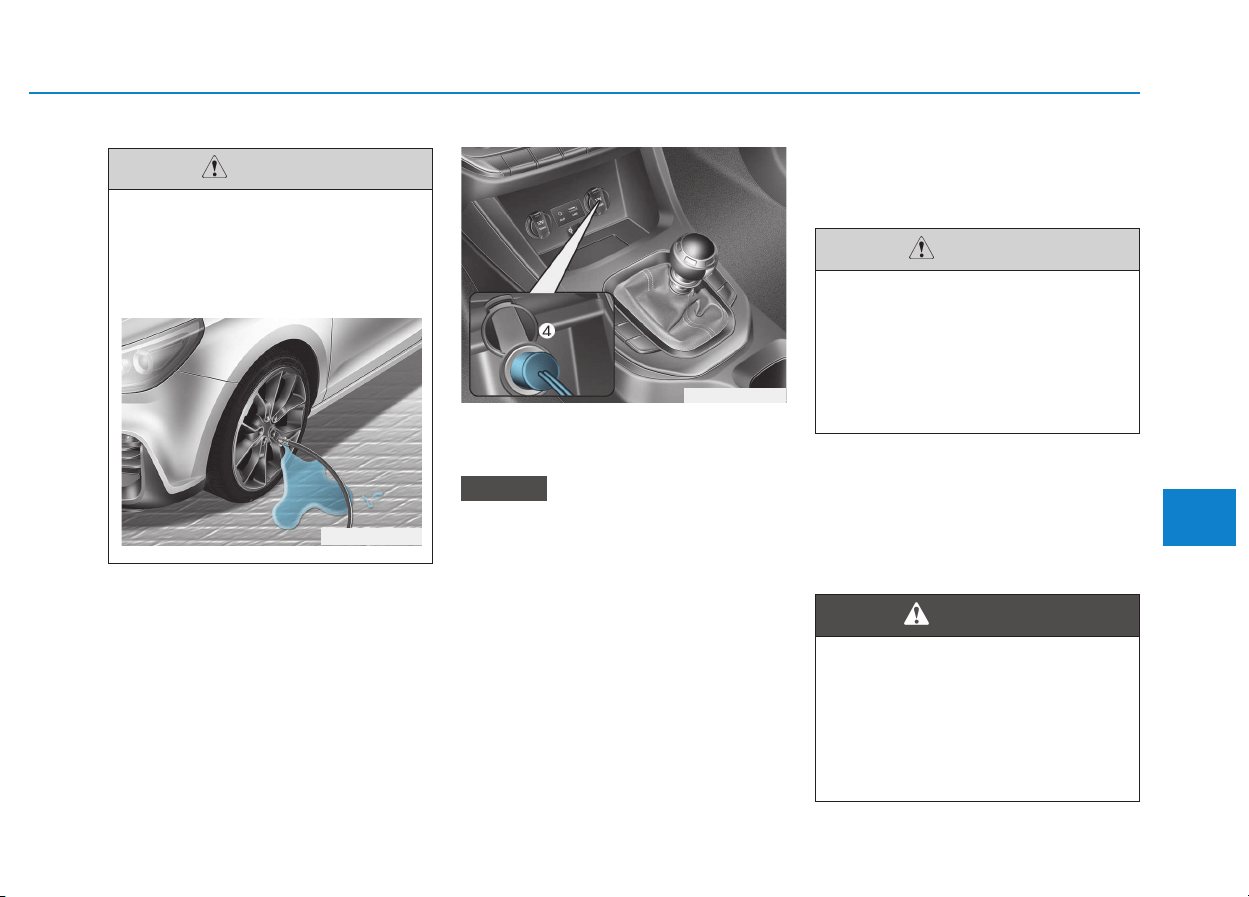
6-27
What to do in an emergency
5. Plug the compressor power cord
(4) into the vehicle power outlet.
Only use the front passenger side
power outlet when connecting the
power cord.
6. With the ignition switch in the ON
position, switch on the compres-
sor and let it run for approximately
5~7 minutes to fill the sealant up
to proper pressure. (refer to the
Tire and Wheels, chapter 8). The
inflation pressure of the tire after
filling is unimportant and will be
checked/corrected later.
Be careful not to overinflate the
tire and stay away from the tire
when filling it.
7. Switch off the compressor.
8. Detach the hoses from the sealant
bottle connector and from the tire
valve.
Return the Tire Mobility Kit to its stor-
age location in the vehicle.
NOTICE
6
OPDEN067017
Securely install the sealant fill-
ing hose to the valve. If not,
sealant may flow backward,
possibly clogging the filling
hose.
CAUTION
OPDEN067016
Tire pressure
Do not attempt to drive your
vehicle if the tire pressure is
below 200 kPa (29 psi). This
could result in an accident due
to sudden tire failure.
CAUTION
Carbon monoxide
Do not leave your vehicle run-
ning in a poorly ventilated area
for extended periods of time.
Carbon monoxide poisoning
and suffocation can occur.
WARNING
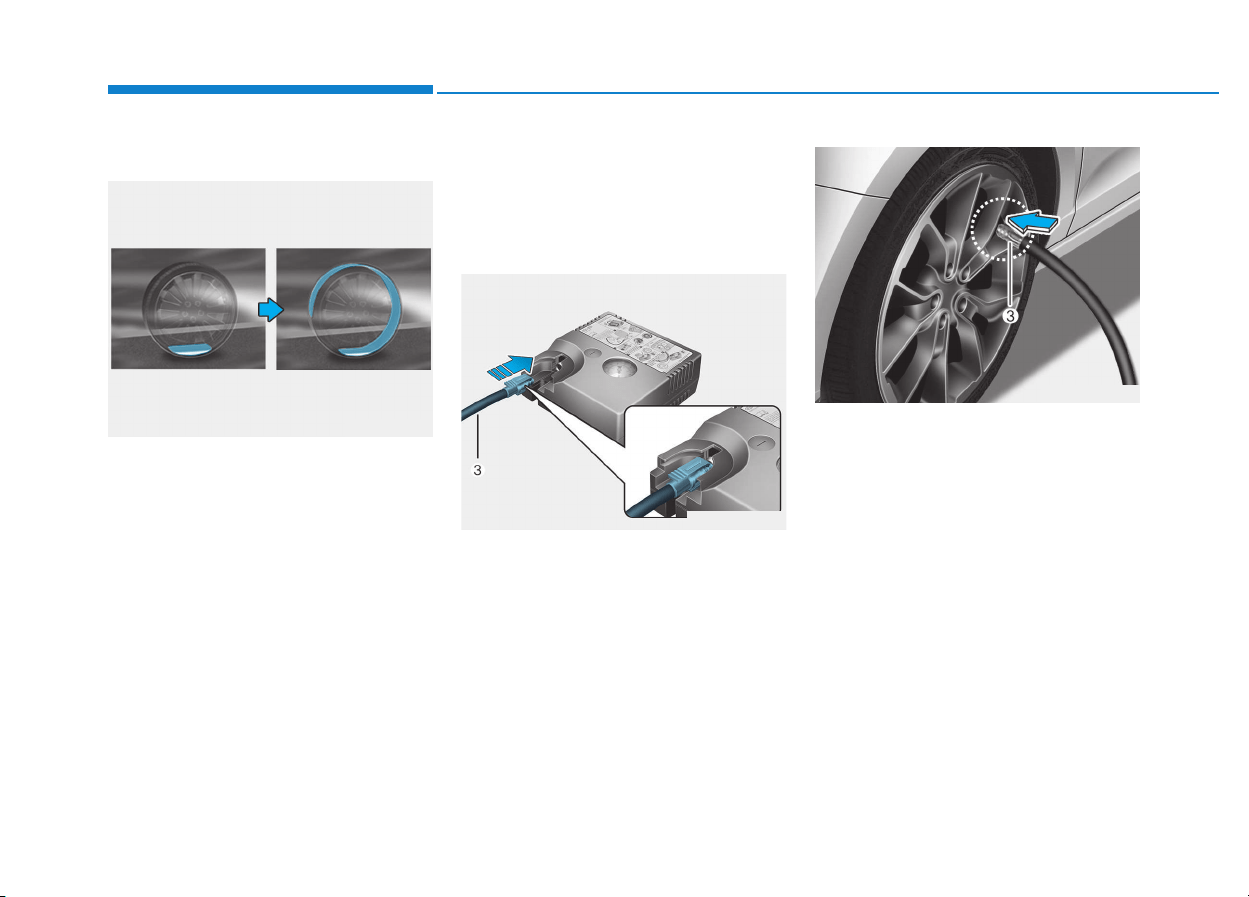
6-28
Distributing the sealant
9. Immediately drive approximately
7~10 km (4~6 miles or, about
10min) to evenly distribute the
sealant in the tire.
Do not exceed a speed of 80 km/h
(50 mph). If possible, do not fall
below a speed of 20 km/h (12 mph).
While driving, if you experience any
unusual vibration, ride disturbance or
noise, reduce your speed and drive
with caution until you can safely pull
off of the side of the road.
Call for road side service or towing.
Checking the tire inflation
pressure
1. After driving approximately 7~10
km (4~6 miles or about 10 min),
stop at a safety location.
2. Connect the filling hose (3) direct-
ly into the compressor.
3. Connect the other end of the filling
hose (3) directly into the tire valve.
4. Plug the compressor power cord
(4) into the vehicle power outlet.
5. Adjust the tire inflation pressure to
the recomended tire inflation.
With the ignition swithched on,
proceed as follows.
- To increase the inflation pres-
sure : Switch on the compressor.
To check the current inflation
pressure setting, briefly switch off
the compressor.
- To reduce the inflation pres-
sure: Press the button (9) on the
compressor.
What to do in an emergency
OLMF064106
OAEPH067042
OPDEN067015
6-29
What to do in an emergency
Do not let the compressor run for
more than 10 minutes, otherwise
the device will overheat and may
be damaged.
Information
The pressure gauge may show higher
than actual reading when the com-
pressor is running. To get an accurate
tire reading, the compressor needs to
be turned off.
Information
When reinstalling the repaired or
replaced tire and wheel on the vehicle,
tighten the wheel lug nut to 11~13
kgf·m (79~94 lbf·ft).
i
i
NOTICE
6
The tire inflation pressure must
be at least 220 kPa (32 psi). If it
is not, do not continue driving.
Call for road side service or
towing.
WARNING
If the inflation pressure is not
maintained, drive the vehicle a
second time, refer to
Distributing the sealant. Then
repeat steps 1 to 4.
Use of the TMK may be ineffec-
tual for tire damage larger than
approximately 4 mm (0.16 in).
We recommend that you contact
an authorized HYUNDAI dealer if
the tire cannot be made road-
worthy with the Tire Mobility Kit.
CAUTION
Tire pressure sensor
(if equipped with TPMS)
The sealant on the tire pressure
sensor and wheel should be
removed when you replace the
tire with a new one and inspect
the tire pressure sensors at an
authorized dealer.
CAUTION
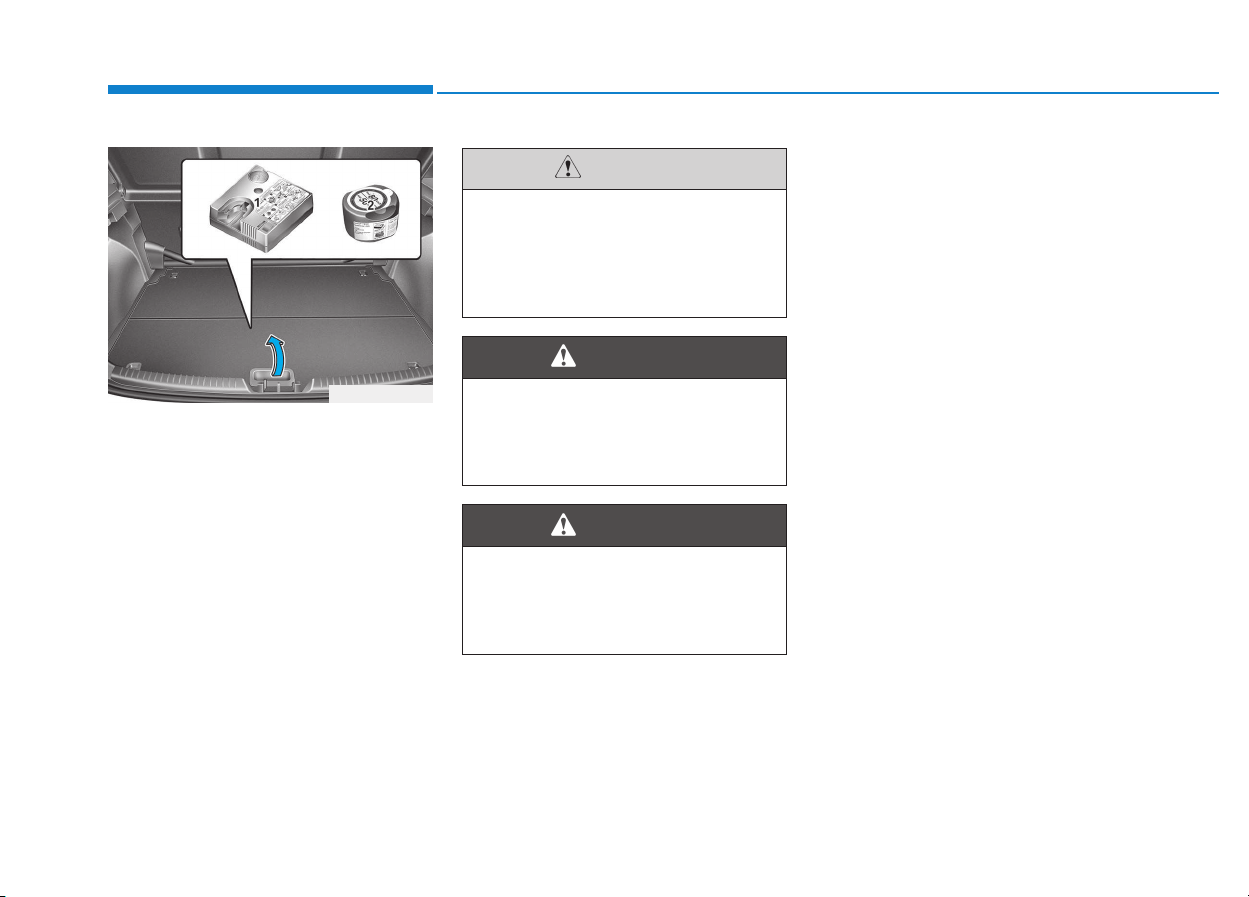
6-30
For safe operation, carefully read
and follow the instructions in this
manual before use.
(1) Compressor
(2) Sealant bottle
The Tire Mobility Kit is a temporary
fix to the tire and we recommend that
the system be inspected by an
authorized HYUNDAI dealer.
Introduction
With the Tire Mobility Kit you stay
mobile even after experiencing a tire
puncture.
The system of compressor and seal-
ing compound effectively and com-
fortably seals most punctures in a
passenger car tire caused by nails
or similar objects and reinflates the
tire.
After you ensured that the tire is
properly sealed you can drive cau-
tiously on the tire (distance up to 200
km (120 miles)) at a max. speed of
80 km/h (50 mph) in order to reach a
service station or tire dealer to have
the tire replaced.
It is possible that some tires, espe-
cially with larger punctures or dam-
age to the sidewall, cannot be sealed
completely.
Air pressure loss in the tire may
adversely affect tire performance.
For this reason, you should avoid
abrupt steering or other driving
maneuvers, especially if the vehicle
is heavily loaded or if a trailer is in
use.
IIFF YYOOUU HHAAVVEE AA FFLLAATT TTIIRREE ((WWIITTHH TTIIRREE MMOOBBIILLIITTYY KKIITT,, IIFF EEQQUUIIPPPPEEDD)) -- TTYYPPEE BB
What to do in an emergency
Do not use the Tire Mobility Kit
to repair punctures in the tire
walls. This can result in an acci-
dent due to tire failure.
WARNING
Have your tire repaired as soon
as possible. The tire may loose
air pressure at any time after
inflating with the Tire Mobility Kit.
WARNING
When two or more tires are flat,
do not use the tire mobility kit
because the supported one
sealant of Tire Mobility Kit is
only used for one flat tire.
CAUTION
OPDEN067011
6-31
What to do in an emergency
The Tire Mobility Kit is not designed
or intended as a permanent tire
repair method and is to be used for
one tire only. This instruction shows
you step by step how to temporarily
seal the puncture simply and reliably.
Read the section "Notes on the safe
use of the Tire Mobility Kit".
Notes on the safe use of the
Tire Mobility Kit
• Park your car at the side of the road
so that you can work with the Tire
Mobility Kit away from moving traffic.
• To be sure your vehicle will not
move, even when you're on fairly
level ground, always set your park-
ing brake.
• Only use the Tire Mobility Kit for
sealing/inflation passenger car tires.
Only punctured areas located with-
in the tread region of the tire can be
sealed using the tire mobility kit.
• Do not use on motorcycles, bicy-
cles or any other type of tires.
• When the tire and wheel are dam-
aged, do not use Tire Mobility Kit
for your safety.
• Use of the Tire Mobility Kit may not
be effective for tire damage larger
than approximately 6 mm (0.24 in).
If the tire cannot be made roadwor-
thy with the Tire Mobility Kit, we
recommend that you contact an
authorized HYUNDAI dealer.
• Do not use the Tire Mobility Kit if a
tire is severely damaged by driving
run flat or with insufficient air pres-
sure.
• Do not remove any foreign objects
such as nails or screws that have
penetrated the tire.
• Provided the car is outdoors, leave
the engine running. Otherwise
operating the compressor may
eventually drain the car battery.
• Never leave the Tire Mobility Kit
unattended while it is being used.
• Do not leave the compressor run-
ning for more than 10 min. at a time
or it may overheat.
• Do not use the Tire Mobility Kit if
the ambient temperature is below
-30°C (-22°F).
• In case of skin contact with the
sealant, wash the area thoroughly
with plenty of water. If the irritation
persists, seek medical attention.
• In case of eye contact with the
sealant, flush your eyes for at least
15 minutes. If the irritation persists,
seek medical attention.
• In case of swallowing the sealant,
rinse the mouth and drink plenty of
water. However, never give anything
to an unconscious person and seek
medical attention immediately.
• Long time exposure to the sealant
may cause damage to bodily tissue
such as kidney, etc.
6
Do not use the TMK if a tire is
severely damaged by driving
run flat or with insufficient air
pressure.
Only punctured areas located
within the tread region of the tire
can be sealed using the TMK.
WARNING
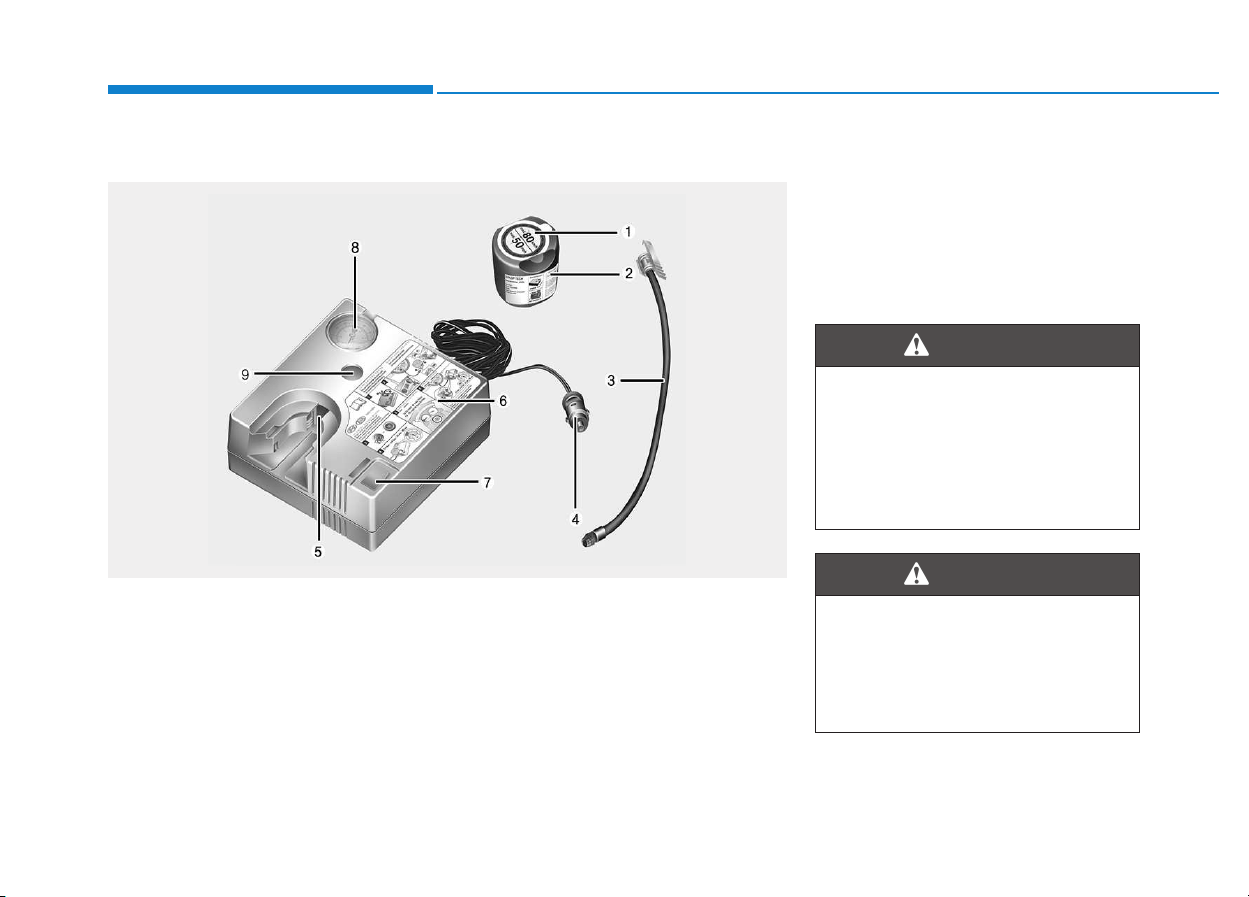
6-32
1. Speed-restriction label
2. Sealant bottle and label with
speed restriction
3. Filling hose from sealant bottle to
wheel
4. Connectors and cable for the
power outlet direct connection
5. Holder for the sealant bottle
6. Compressor
7. ON/OFF switch
8. Pressure gauge for displaying the
tire inflation pressure
9. Button for reducing the tire infla-
tion pressure
Connectors, cable and connection
hose are stored in the compressor
housing.
Strictly follow the specified
sequence, otherwise the sealant
may escape under high pressure.
What to do in an emergency
OAE067039
Components of the Tire Mobility Kit
Expired sealant
Do not use the Tire sealant after
the sealant has expired (i.e.
pasted the expiration date on
the sealant container). This can
increase the risk of tire failure.
WARNING
Sealant
• Keep out of reach of children.
• Avoid contact with eyes.
• Do not swallow.
WARNING
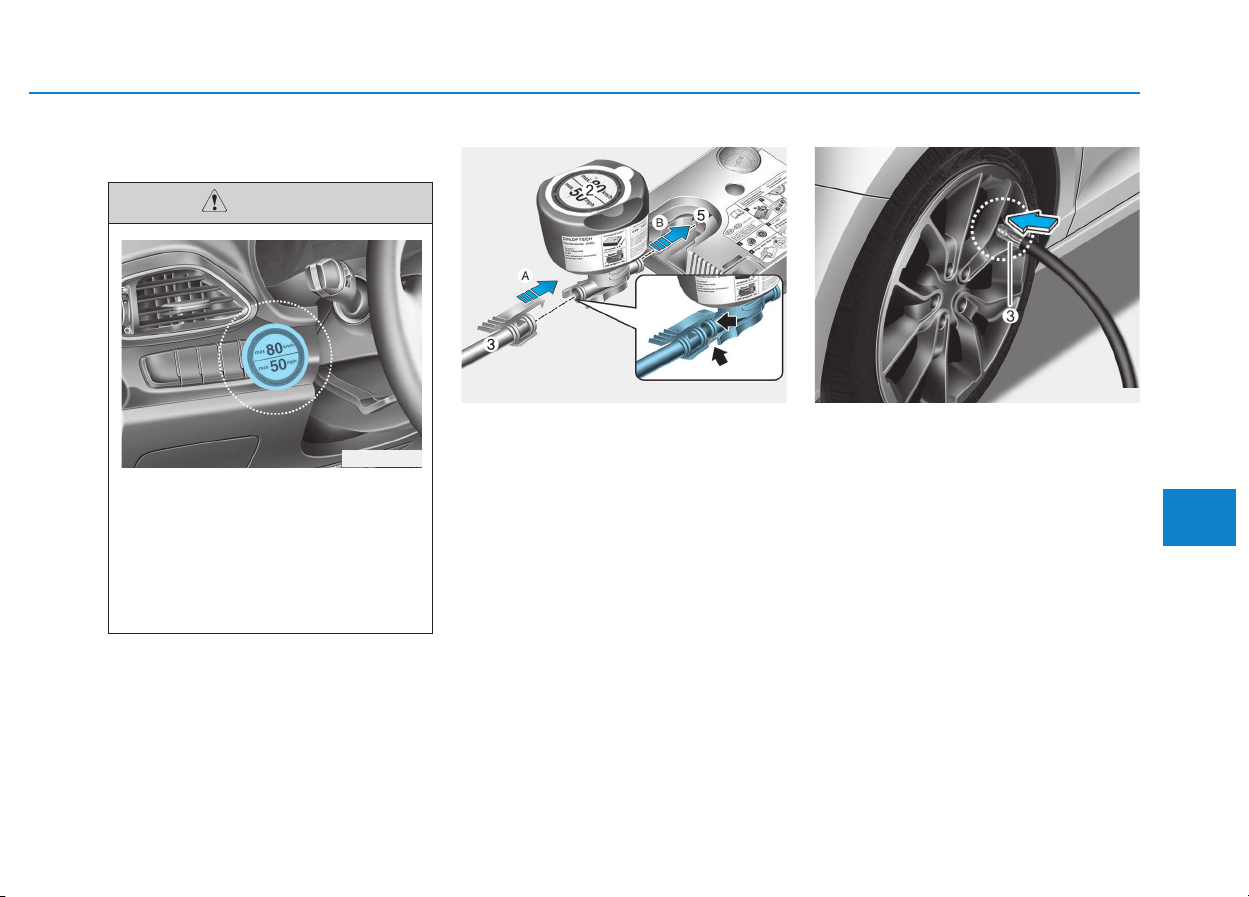
6-33
What to do in an emergency
Using the Tire Mobility Kit
1. Shake the sealant bottle (1).
2. Connect the filling hose (3) to the
sealant bottle (2) in the direction of
(A) and connect the sealant bottle
to the compressor (5) in the direc-
tion of (B).
3. Ensure that the compressor is
switched OFF.
4. Unscrew the valve cap from the
valve of the defective wheel and
screw the filling hose (3) of the
sealant bottle onto the valve.
6
Detach the speed restriction
label (1) from the sealant bottle
(2), and place it in a highly visi-
ble place inside the vehicle
such as on the steering wheel
to remind the driver not to drive
too fast.
CAUTION
OPD066013
OPDEN067015OPD067014
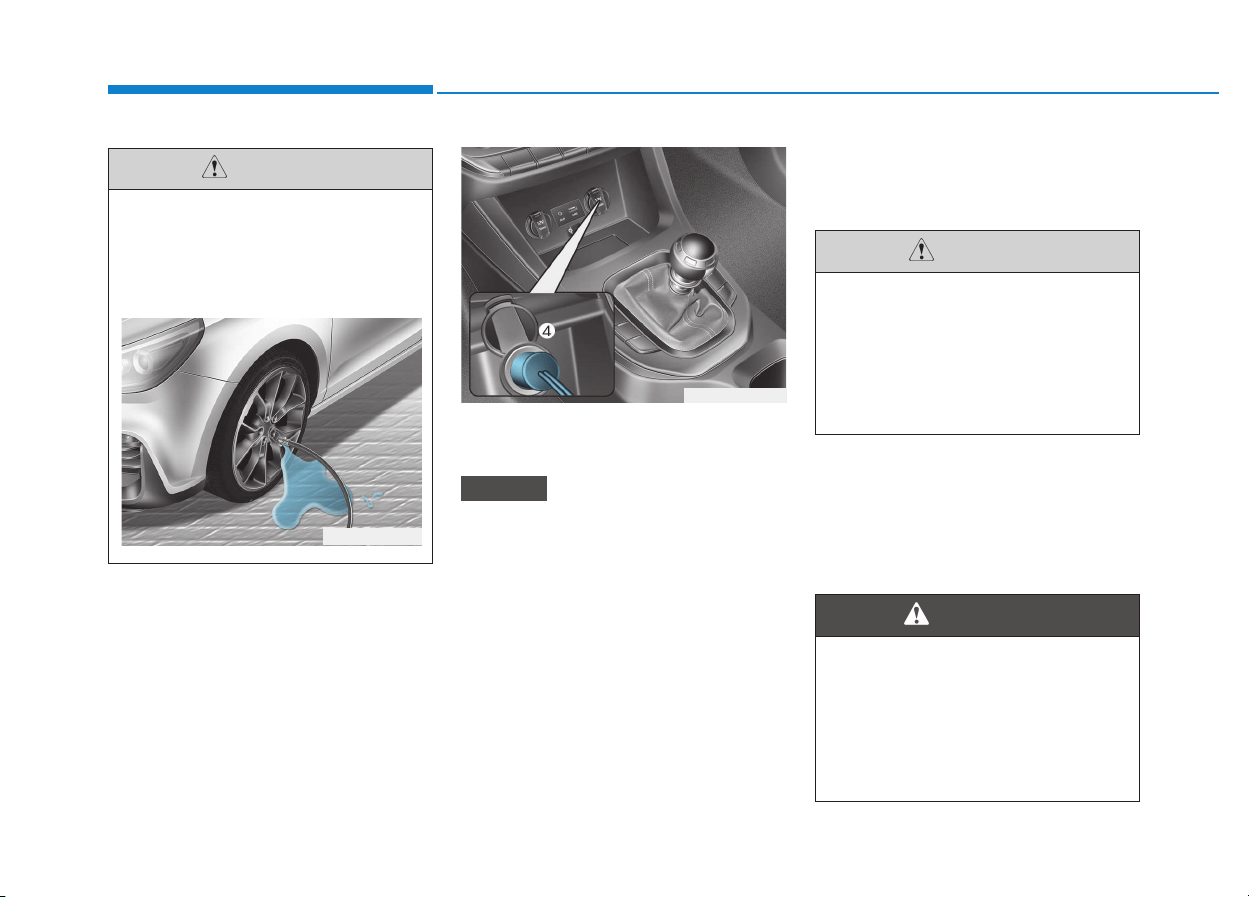
6-34
5. Plug the compressor power cord
(4) into the vehicle power outlet.
Only use the front passenger side
power outlet when connecting the
power cord.
6. With the ignition switch in the ON
position, switch on the compres-
sor and let it run for approximately
5~7 minutes to fill the sealant up
to proper pressure. (refer to the
Tire and Wheels, chapter 8). The
inflation pressure of the tire after
filling is unimportant and will be
checked/corrected later.
Be careful not to overinflate the
tire and stay away from the tire
when filling it.
7. Switch off the compressor.
8. Detach the hoses from the sealant
bottle connector and from the tire
valve.
Return the Tire Mobility Kit to its stor-
age location in the vehicle.
NOTICE
What to do in an emergency
OPDEN067017
Securely install the sealant fill-
ing hose to the valve. If not,
sealant may flow backward,
possibly clogging the filling
hose.
CAUTION
OPDEN067016
Tire pressure
Do not attempt to drive your
vehicle if the tire pressure is
below 200 kPa (29 psi). This
could result in an accident due
to sudden tire failure.
CAUTION
Carbon monoxide
Do not leave your vehicle run-
ning in a poorly ventilated area
for extended periods of time.
Carbon monoxide poisoning
and suffocation can occur.
WARNING

6-35
What to do in an emergency
Distributing the sealant
9. Immediately drive approximately
7~10 km (4~6 miles or, about
10min) to evenly distribute the
sealant in the tire.
Do not exceed a speed of 80 km/h
(50 mph). If possible, do not fall
below a speed of 20 km/h (12 mph).
While driving, if you experience any
unusual vibration, ride disturbance or
noise, reduce your speed and drive
with caution until you can safely pull
off of the side of the road.
Call for road side service or towing.
Checking the tire inflation
pressure
1. After driving approximately 7~10
km (4~6 miles or about 10 min),
stop at a safety location.
2. Connect the filling hose (3) direct-
ly into the compressor.
3. Connect the other end of the filling
hose (3) directly into the tire valve.
4. Plug the compressor power cord
(4) into the vehicle power outlet.
5. Adjust the tire inflation pressure to
the recomended tire inflation.
With the ignition swithched on,
proceed as follows.
- To increase the inflation pres-
sure : Switch on the compressor.
To check the current inflation
pressure setting, briefly switch off
the compressor.
- To reduce the inflation pres-
sure: Press the button (9) on the
compressor.
6
OLMF064106
OAEPH067041
OPDEN067015
6-36
Do not let the compressor run for
more than 10 minutes, otherwise
the device will overheat and may
be damaged.
Information
The pressure gauge may show higher
than actual reading when the com-
pressor is running. To get an accurate
tire reading, the compressor needs to
be turned off.
Information
When reinstalling the repaired or
replaced tire and wheel on the vehicle,
tighten the wheel lug nut to 11~13
kgf·m (79~94 lbf·ft).
i
i
NOTICE
What to do in an emergency
The tire inflation pressure must
be at least 220 kPa (32 psi). If it
is not, do not continue driving.
Call for road side service or tow-
ing.
WARNING
If the inflation pressure is not
maintained, drive the vehicle a
second time, refer to Distributing
the sealant. Then repeat steps 1
to 4.
Use of the TMK may be ineffec-
tual for tire damage larger than
approximately 4 mm (0.16 in).
We recommend that you contact
an authorized HYUNDAI dealer if
the tire cannot be made road-
worthy with the Tire Mobility Kit.
CAUTION
Tire pressure sensor
(if equipped with TPMS)
The sealant on the tire pressure
sensor and wheel should be
removed when you replace the
tire with a new one and inspect
the tire pressure sensors at an
authorized dealer.
CAUTION
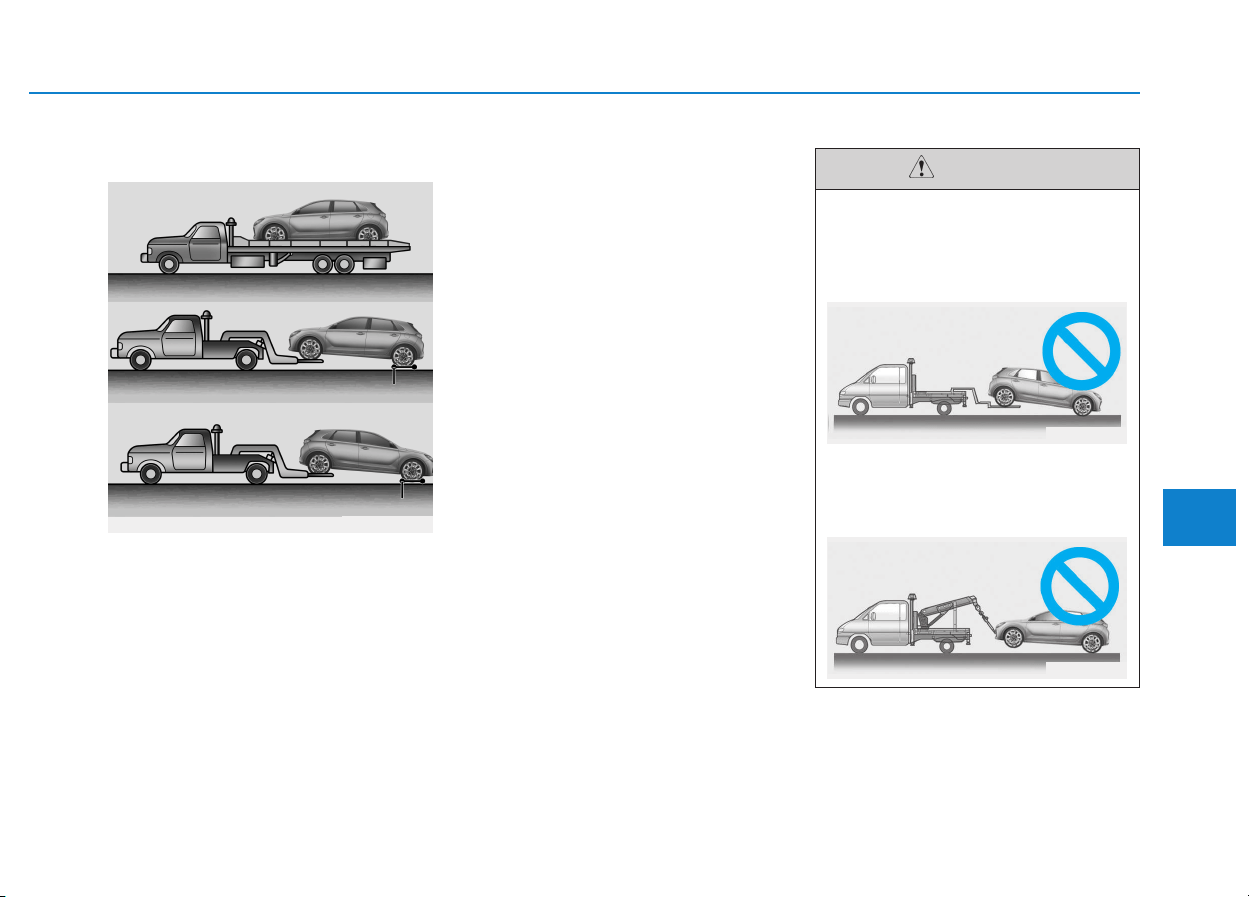
6-37
What to do in an emergency
6
Towing service
If emergency towing is necessary,
we recommend having it done by an
authorized HYUNDAI dealer or a
commercial tow-truck service.
Proper lifting and towing procedures
are necessary to prevent damage to
the vehicle. The use of wheel dollies
or flatbed is recommended.
It is acceptable to tow the vehicle
with the rear wheels on the ground
(without dollies) and the front wheels
off the ground.
If any of the loaded wheels or sus-
pension components are damaged
or the vehicle is being towed with the
front wheels on the ground, use a
towing dolly under the front wheels.
When being towed by a commercial
tow truck and wheel dollies are not
used, the front of the vehicle should
always be lifted, not the rear.
TTOOWWIINNGG
OPD066018
Dollies
Dollies
• Do not tow the vehicle with the
front wheels on the ground as
this may cause damage to the
vehicle.
• Do not tow with sling-type
equipment. Use wheel lift or
flatbed equipment.
CAUTION
OPD066019
OPD066020
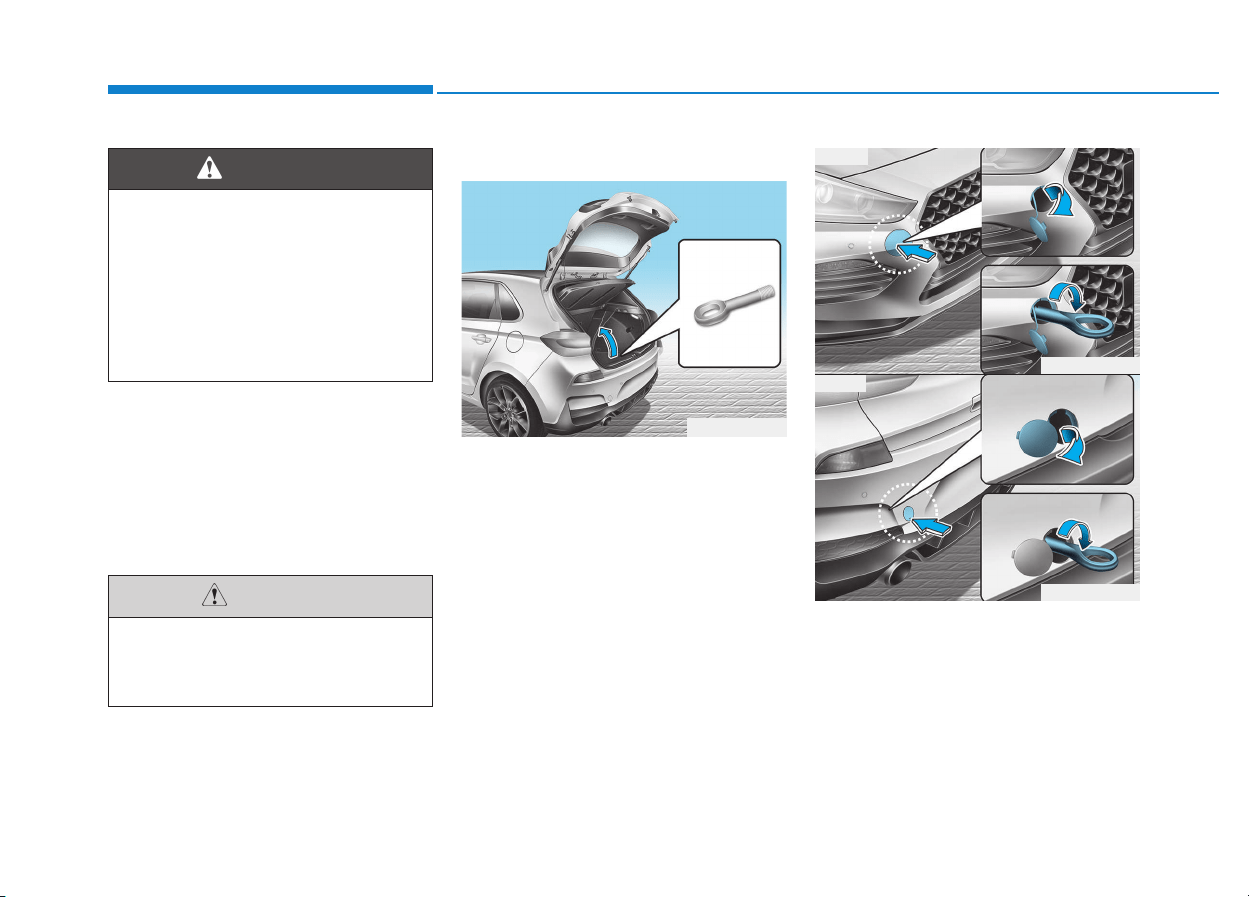
6-38
What to do in an emergency
When towing your vehicle in an
emergency without wheel dollies:
1. Place the ignition switch in the
ACC position.
2. Place the shift lever in neutral.
3. Release the parking brake.
Removable towing hook
1. Open the tailgate, and remove the
towing hook from the tool case.
2. Remove the hole cover pressing
the lower part of the cover on the
bumper.
3. Install the towing hook by turning it
clockwise into the hole until it is
fully secured.
4. Remove the towing hook and
install the cover after use.
Failure to place the shift lever in
neutral may cause internal dam-
age to the transmission.
CAUTION
OPDEN067035
OPDEN067021
OPDEN067023
■ Front
■ Rear
If your vehicle is equipped with
a rollover sensor, place the igni-
tion switch in the LOCK/OFF or
ACC position when the vehicle
is being towed. The side impact
and curtain air bag may deploy
if the sensor detects the situa-
tion as a rollover.
WARNING
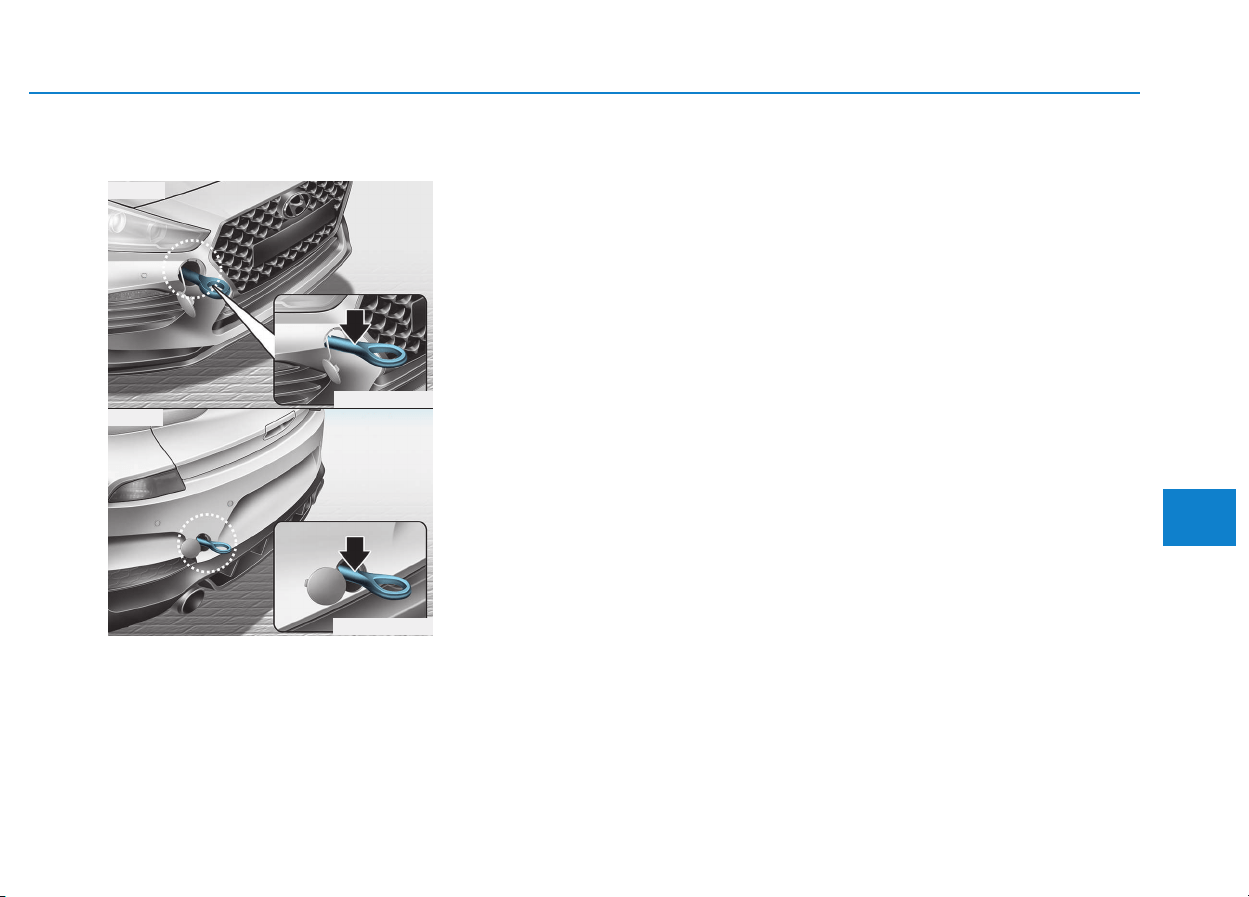
6-39
What to do in an emergency
6
Emergency towing
If towing is necessary, we recommend
you have it done by an authorized
HYUNDAI dealer or a commercial tow
truck service.
If a towing service is not available in
an emergency, your vehicle may be
temporarily towed using a cable or
chain secured to the emergency tow-
ing hook at the front (or rear) of the
vehicle.
Use extreme caution when towing
the vehicle with a cable or chain. A
driver must be in the vehicle to steer
it and operate the brakes.
Towing in this manner may be done
only on hard-surfaced roads for a
short distance and at low speeds.
Also, the wheels, axles, power train,
steering and brakes must all be in
good condition.
Always follow these emergency tow-
ing precautions:
• Place the ignition switch in the ACC
position so the steering wheel is not
locked.
• Place the shift lever in neutral.
• Release the parking brake.
• Depress the brake pedal with more
force than normal as you will have
reduced braking performance.
• More steering effort will be required
because the power steering system
will be disabled.
• Use a vehicle heavier than your
own to tow your vehicle.
• The drivers of both vehicles should
communicate with each other fre-
quently.
• Before emergency towing, check
that the hook is not broken or dam-
aged.
• Fasten the towing cable or chain
securely to the hook.
• Do not jerk the hook. Apply steady
and even force.
OPDEN067022
OPDEN067026
■ Front
■ Rear
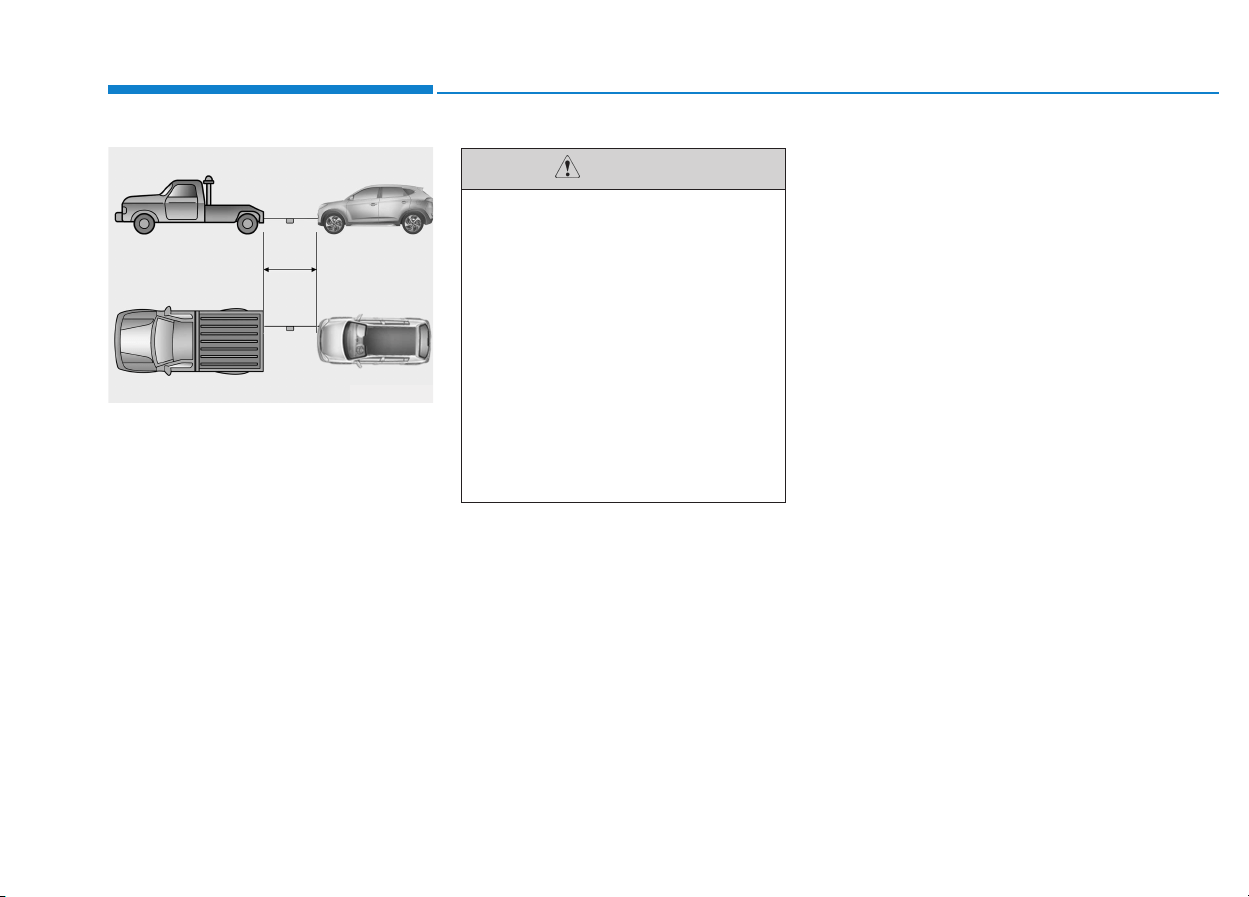
6-40
What to do in an emergency
• Use a towing cable or chain less
than 5 m (16 feet) long. Attach a
white or red cloth (about 30 cm (12
inches) wide) in the middle of the
cable or chain for easy visibility.
• Drive carefully so the towing cable
or chain remains tight during tow-
ing.
To avoid damage to your vehicle
and vehicle components when
towing:
• Always pull straight ahead
when using the towing hooks.
Do not pull from the side or at
a vertical angle.
• Do not use the towing hooks
to pull a vehicle out of mud,
sand or other conditions from
which the vehicle cannot be
driven out under its own
power.
CAUTION
OTL065029

6-41
What to do in an emergency
6
Your vehicle is equipped with emer-
gency commodities to help you
respond to emergency situation.
Fire extinguisher
If there is small fire and you know
how to use the fire extinguisher, fol-
low these steps carefully.
1. Pull out the safety pin at the top of
the extinguisher that keeps the
handle from being accidentally
pressed.
2. Aim the nozzle towards the base
of the fire.
3. Stand approximately 2.5 m (8 ft)
away from the fire and squeeze
the handle to discharge the extin-
guisher. If you release the handle,
the discharge will stop.
4. Sweep the nozzle back and forth
at the base of the fire. After the fire
appears to be out, watch carefully
since it may re-ignite.
First aid kit
Supplies for use in giving first aid
such as scissors, bandage and
adhesive tape, etc. are provided.
Triangle reflector
Place the triangle reflector on the
road to warn oncoming vehicles dur-
ing emergencies, such as when the
vehicle is parked by the roadside due
to problems.
Tire pressure gauge
(if equipped)
Tires normally lose some air in day-
to-day use, and you may have to add
a air periodically and usually it is not
a sign of a leaking tire, but of normal
wear. Always check tire pressure
when the tires are cold because tire
pressure increases with tempera-
ture.
To check the tire pressure, take the
following steps:
1. Unscrew the inflation valve cap
that is located on the rim of the
tire.
2. Press and hold the gauge against
the tire valve. Some air will leak as
you begin and more will leak if you
don't press the gauge in firmly.
3. A firm non-leaking push will acti-
vate the gauge.
4. Read the tire pressure on the
gauge to see whether the tire
pressure is low or high.
5. Adjust the tire pressure to the
specified pressure. Refer to "Tires
and Wheels" in chapter 8.
6. Reinstall the inflation valve cap.
EEMMEERRGGEENNCCYY CCOOMMMMOODDIITTYY ((IIFF EEQQUUIIPPPPEEDD))

7
Maintenance
7
Maintenance
Engine compartment .............................................7-3
Maintenance services ...........................................7-4
Owner's responsibility......................................................7-4
Owner maintenance precautions ..................................7-4
Owner maintenance...............................................7-5
Owner maintenance schedule........................................7-5
Scheduled maintenance services.........................7-7
Normal Maintenance Schedule (for Europe) .............7-8
Maintenance Under Severe Usage and
Low Mileage Conditions (for Europe)........................7-11
Normal Maintenance Schedule (except Europe) ....7-13
Maintenance Under Severe Usage and
Low Mileage Conditions (except Europe) .................7-16
Explanation of scheduled maintenance items.7-18
Engine oil ..............................................................7-20
Checking the engine oil level.......................................7-20
Checking the engine oil and filter ..............................7-21
Engine coolant......................................................7-22
Checking the engine coolant level..............................7-22
Changing the engine coolant .......................................7-24
Brake/clutch fluid................................................7-25
Checking the brake/clutch fluid level........................7-25
Washer fluid .........................................................7-26
Checking the washer fluid level ..................................7-26
Parking brake .......................................................7-26
Checking the parking brake .........................................7-26
Air cleaner ............................................................7-27
Filter replacement...........................................................7-27
Climate control air filter .....................................7-29
Filter inspection...............................................................7-29
Filter replacement...........................................................7-29
Wiper blades.........................................................7-30
Blade inspection ..............................................................7-30
Blade replacement ..........................................................7-31
Battery...................................................................7-33
For best battery service................................................7-34
Battery capacity label....................................................7-34
Battery recharging .........................................................7-35
Reset items .......................................................................7-36
7

7
Tires and wheels..................................................7-37
Tire care............................................................................7-38
Recommended cold tire inflation pressures.............7-38
Check tire inflation pressure........................................7-39
Tire rotation .....................................................................7-39
Wheel alignment and tire balance ..............................7-40
Tire replacement .............................................................7-41
Wheel replacement.........................................................7-42
Tire traction......................................................................7-42
Tire maintenance ............................................................7-42
Tire sidewall labeling......................................................7-42
Low aspect ratio tires....................................................7-46
Fuses......................................................................7-47
Instrument panel fuse replacement ...........................7-48
Engine compartment panel fuse replacement.........7-49
Fuse/Relay panel description ......................................7-51
Light bulbs.............................................................7-61
Headlamp, static bending lamp, position lamp,
turn signal lamp and daytime running light bulb
replacement......................................................................7-62
Headlamp aiming (for Europe).....................................7-62
Side repeater lamp replacement ................................7-66
Rear combination lamp bulb replacement ................7-66
Rear fog lamp replacement..........................................7-68
High mounted stop lamp replacement.......................7-69
License plate light bulb replacement .........................7-69
Interior light bulb replacement ....................................7-69
Appearance care..................................................7-71
Exterior care ....................................................................7-71
Interior care......................................................................7-75
Emission control system .....................................7-78
Crankcase emission control system...........................7-78
Evaporative emission control system.........................7-78
Exhaust emission control system ...............................7-79
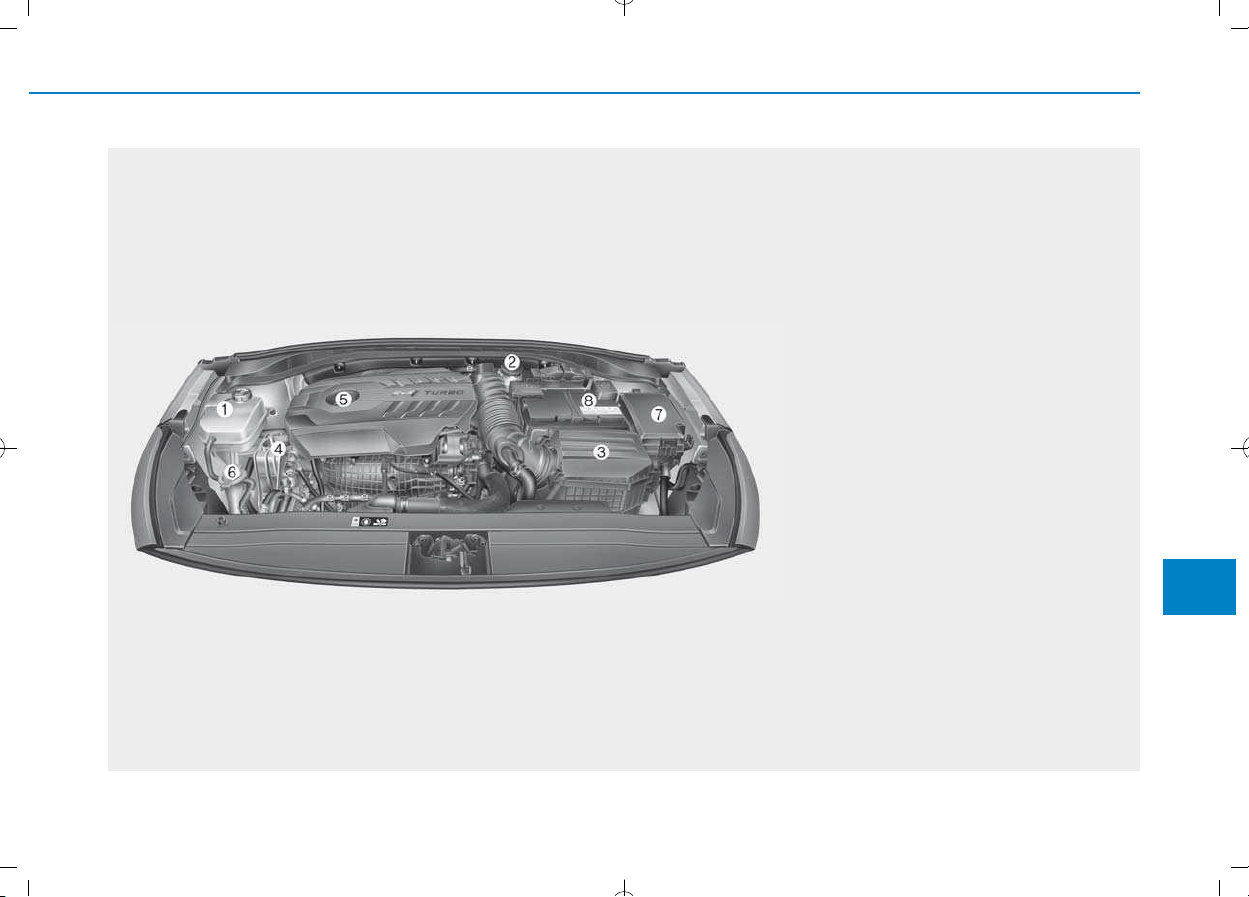
7-3
7
Maintenance
EENNGGIINNEE CCOOMMPPAARRTTMMEENNTT
1. Engine coolant reservoir/
Engine coolant cap
2. Brake/clutch fluid reservoir
3. Air cleaner
4. Engine oil dipstick
5. Engine oil filler cap
6. Windshield washer fluid reservoir
7. Fuse box
8. Battery
The actual engine compartment in the
vehicle may differ from the illustration.
OPDEN077088

7-4
Maintenance
M
MAAIINNTTEENNAANNCCEE SSEERRVVIICCEESS
You should exercise the utmost care
to prevent damage to your vehicle
and injury to yourself whenever per-
forming any maintenance or inspec-
tion procedures.
We recommend you have your vehi-
cle maintained and repaired by an
authorized HYUNDAI dealer. An
authorized HYUNDAI dealer meets
HYUNDAI’s high service quality stan-
dards and receives technical support
from HYUNDAI in order to provide
you with a high level of service satis-
faction.
Owner’s responsibility
Maintenance service and record reten-
tion are the owner’s responsibility.
You should retain documents that show
proper maintenance has been per-
formed on your vehicle in accordance
with the scheduled maintenance serv-
ice charts shown on the following
pages. You need this information to
establish your compliance with the
servicing and maintenance require-
ments of your vehicle warranties.
Detailed warranty information is pro-
vided in your Service Passport.
Repairs and adjustments required as
a result of improper maintenance or
a lack of required maintenance are
not covered.
Owner maintenance precautions
Inadequate, incomplete or insufficient
servicing may result in operational
problems with your vehicle that could
lead to vehicle damage, an accident,
or personal injury. This chapter pro-
vides instructions only for the mainte-
nance items that are easy to perform.
Several procedures can be done only
by an authorized HYUNDAI dealer
with special tools.
Your vehicle should not be modified in
any way. Such modifications may
adversely affect the performance,
safety or durability of your vehicle and
may, in addition, violate conditions of
the limited warranties covering the
vehicle.
Improper owner maintenance dur-
ing the warranty period may affect
warranty coverage. For details, read
the separate Service Passport pro-
vided with the vehicle. If you're
unsure about any servicing or main-
tenance procedure, we recommend
that the system be serviced by an
authorized HYUNDAI dealer.
NOTICE

7-5
7
Maintenance
OOWWNNEERR MMAAIINNTTEENNAANNCCEE
The following lists are vehicle checks
and inspections that should be per-
formed by the owner or an authorized
HYUNDAI dealer at the frequencies
indicated to help ensure safe, depend-
able operation of your vehicle.
Any adverse conditions should be
brought to the attention of your dealer
as soon as possible.
These Owner Maintenance vehicle
checks are generally not covered by
warranties and you may be charged
for labor, parts and lubricants used.
Owner maintenance schedule
When you stop for fuel:
• Check the engine oil level.
• Check the coolant level in the
engine coolant reservoir.
• Check the windshield washer fluid
level.
• Check for low or under-inflated tires.
Performing maintenance work
on a vehicle can be dangerous.
If you lack sufficient knowledge
and experience or the proper
tools and equipment to do the
work, we recommend that the
system be serviced by an author-
ized HYUNDAI dealer. ALWAYS
follow these precautions for
performing maintenance work:
• Park your vehicle on level
ground, move the shift lever
into neutral, apply the parking
brake, and place the ignition
switch in the LOCK/ OFF posi-
tion.
• Block the tires (front and back)
to prevent the vehicle from
moving.
Remove loose clothing or jew-
elry that can become entan-
gled in moving parts.
(Continued)
WARNING
Be careful when checking your
engine coolant level when the
engine is hot. This may result in
coolant being blown out of the
opening and cause serious
burns and other injuries.
WARNING
(Continued)
• If you must run the engine
during maintenance, do so
out doors or in an area with
plenty of ventilation.
• Keep flames, sparks, or smok-
ing materials away from the
battery and fuel-related parts.

7-6
Maintenance
While operating your vehicle:
• Note any changes in the sound of
the exhaust or any smell of exhaust
fumes in the vehicle.
• Check for vibrations in the steering
wheel. Notice if there is any
increased steering effort or loose-
ness in the steering wheel, or
change in its straight-ahead position.
• Notice if your vehicle constantly turns
slightly or “pulls” to one side when
traveling on smooth, level road.
• When stopping, listen and check for
unusual sounds, pulling to one side,
increased brake pedal travel or
“hard-to-push” brake pedal.
• Check the parking brake.
• Check for fluid leaks under your
vehicle (water dripping from the air
conditioning system during or after
use is normal).
At least monthly:
• Check coolant level in the engine
coolant reservoir.
• Check the operation of all exterior
lights, including the stoplights, turn
signals and hazard warning flashers.
• Check the inflation pressures of all
tires including the spare for tires
that are worn, show uneven wear,
or are damaged.
• Check for loose wheel lug nuts.
At least twice a year:
(i.e., every Spring and Autumn)
• Check radiator, heater and air condi-
tioning hoses for leaks or damage.
• Check windshield washer spray
and wiper operation. Clean wiper
blades with a clean cloth damp-
ened with washer fluid.
• Check headlamp alignment.
• Check muffler, exhaust pipes,
shields and clamps.
• Check the seat belts for wear and
function.
At least once a year:
• Clean body and door drain holes.
• Lubricate door hinges and hood
hinges.
• Lubricate door and hood locks and
latches.
• Lubricate door rubber weather
strips.
• Check the air conditioning system.
• Clean the battery and terminals.
• Check the brake fluid level.

7-7
7
Maintenance
SSCCHHEEDDUULLEEDD MMAAIINNTTEENNAANNCCEE SSEERRVVIICCEESS
Follow Normal Maintenance Schedule if the vehicle is usually operated where none of the following conditions apply.
If any of the following conditions apply, you must follow the Maintenance Under Severe Usage Conditions.
• Repeated driving short distance of less than 8 km (5 miles) in normal temperature or less than 16 km (10 miles) in
freezing temperature
• Extensive engine idling or low speed driving for long distances
• Driving on rough, dusty, muddy, unpaved, graveled or salt-spread roads
• Driving in areas using salt or other corrosive materials or in very cold weather
• Driving in heavy traffic area
• Driving on uphill, downhill, or mountain road repeatedly
• Towing a trailer or using a camper, or roof rack
• Driving as a patrol car, taxi, other commercial use of vehicle towing
• Driving over 170 km/h (106 mile/h)
• Frequently driving in stop-and-go condition
If your vehicle is operated under the above conditions, you should inspect, replace or refill more frequently than the
following Normal Maintenance Schedule. After the periods or distance shown in the chart, continue to follow the pre-
scribed maintenance intervals.

Maintenance
7-8
I : Inspect and if necessary, adjust, correct, clean or replace.
R : Replace or change.
** : The engine oil level should be checked regularly and maintained properly. Operating with an insufficient amount of oil can dam-
age the engine, and such damage is not covered by warranty.
*
1
: Inspect drive belt tensioner, idler and alternator pulley and if necessary correct or replace.
*
2
: Check the engine oil level and leak every 500 km (350 miles) or before starting a long trip.
*
3
: If good quality gasolines meet Europe Fuel standards (EN228) or equivalents including fuel additives is not available, one bot-
tle of additive is recommended. Additives are available from your authorized HYUNDAI dealer along with information on how to
use them. Do not mix other additives.
*
4
: For your convenience, it can be replaced prior to it's interval when you do maintenance of other items.
Normal Maintenance Schedule (for Europe)
Months 24 48 72 96 120 144 168 192
Miles x 1,000 20 40 60 80 100 120 140 160
Km x 1,000 30 60 90 120 150 180 210 240
Drive belts *
1
At first, inspect at 90,000 km (60,000 miles) or 72 months,
after that, every 30,000 km (20,000 miles) or 24 months
Engine oil and engine oil filter ** *
2
Replace every 10,000 km (6,000 miles) or 12 months
Fuel additives *
3
Add every 10,000 km (6,000 miles) or 12 months
Intercooler, in/out hose, air intake hose Inspect every 10,000 km (6,000 miles)
Air cleaner filter I R I R I R I R
Spark plugs Replace every 75,000 km (50,000 miles) *
4
or 60 months
Vapor hose and fuel filler cap I I I I
Fuel tank air filter I I I I
MAINTENANCE
INTERVALS
MAINTENANCE
ITEM

7-9
7
Maintenance
Normal Maintenance Schedule (for Europe) (Cont.)
Months 24 48 72 96 120 144 168 192
Miles x 1,000 20 40 60 80 100 120 140 160
Km x 1,000 30 60 90 120 150 180 210 240
Fuel filter *
5
I I I I I I I I
Fuel lines, hoses and connections I I I I
Cooling system
Inspect “Coolant level adjustment and leak” every day.
At first, inspect 60,000 km (40,000 miles) or 48 months
after that, inspect every 30,000 km (20,000 miles) or 24 months
Engine coolant *
6
At first, replace at 210,000 km (120,000 miles) or 10 years :
after that, replace every 30,000 km (20,000 miles) or 24 months *
4
Valve clearance *
7
I I
Battery condition I I I I I I I I
Brake lines, hoses and connections I I I I I I I I
Parking brake I I I I I I I I
MAINTENANCE
INTERVALS
MAINTENANCE
ITEM
I : Inspect and if necessary, adjust, correct, clean or replace.
R : Replace or change.
*
4
: For your convenience, it can be replaced prior to it's interval when you do maintenance of other items.
*
5
: The fuel filter is considered to be maintenance free but periodic inspection is recommended for this maintenance schedule
depends on fuel quality. If there are some important matters like fuel flow restriction, surging, loss of power, hard starting prob-
lem etc, replace the fuel filter immediately regardless of maintenance schedule and consult an authorized HYUNDAI dealer for
details.
*
6
: When adding coolant, use only deionized water or soft water for your vehicle and never mix hard water in the coolant filled at
the factory. An improper coolant mixture can result in serious malfunction or engine damage.
*
7
: Inspect for excessive valve noise and/or engine vibration and adjust if necessary. We recommend that the system be checked
by an authorized HYUNDAI dealer.

Maintenance
7-10
Normal Maintenance Schedule (for Europe) (Cont.)
I : Inspect and if necessary, adjust, correct, clean or replace.
R : Replace or change.
*
8
: Manual transmission fluid should be changed anytime they have been submerged in water.
Months 24 48 72 96 120 144 168 192
Miles x 1,000 20 40 60 80 100 120 140 160
Km x 1,000 30 60 90 120 150 180 210 240
Brake/clutch fluid R R R R R R R R
Disc brakes and pads I I I I I I I I
Steering gear rack, linkage and boots I I I I I I I I
Driveshaft and boots I I I I I I I I
Tire (pressure & tread wear) I I I I I I I I
Front suspension ball joints I I I I I I I I
Air conditioner refrigerant I I I I I I I I
Air conditioner compressor I I I I I I I I
Climate control air filter R R R R R R R R
Manual transmission fluid *
8
I I I I
Exhaust system I I I I I I I I
MAINTENANCE
INTERVALS
MAINTENANCE
ITEM

7-11
7
Maintenance
Maintenance Under Severe Usage and Low Mileage Conditions (for Europe)
The following items must be serviced more frequently on cars mainly used under severe and low mileage driving con-
ditions. Refer to the chart below for the appropriate maintenance intervals.
R : Replace I : Inspect and if necessary, adjust, correct, clean or replace
Maintenance item
Maintenance
operation
Maintenance intervals Driving condition
Engine oil and engine oil filter R
Replace every 5,000 km (3,000 miles)
or 6 months
A, B, C, D, E,
F, G, H, I, J, K
Air cleaner filter R
Replace more frequently
depending on the condition
C, E
Spark plugs R
Replace more frequently
depending on the condition
A, B, G, F, H, I, K
Steering gear rack, linkage and boots I
Inspect more frequently
depending on the condition
C, D, E, F, G
Front suspension ball joints I
Inspect more frequently
depending on the condition
C, D, E, F, G
Disc brakes and pads, calipers and rotors I
Inspect more frequently
depending on the condition
C, D, E, G, H
Parking brake I
Inspect more frequently
depending on the condition
C, D, G, H
Driveshaft and boots I
Inspect more frequently
depending on the condition
C, D, E, F, G, H, I

Maintenance
7-12
Severe driving conditions
A : Repeatedly driving short distance of less than 8 km (5 miles)
in normal temperature or less than 16 km (10 miles) in freez-
ing temperature
B : Extensive engine idling or low speed driving for long dis-
tances
C : Driving on rough, dusty, muddy, unpaved, graveled or salt
spread roads
D : Driving in areas using salt or other corrosive materials or in
very cold weather
E : Driving in the heavy dust condition
F : More than 50% driving in heavy city traffic during hot weath-
er above 32°C (90°F)
G : Driving on uphill, downhill, or mountain roads repeatedly
H : Towing a trailer, or using a camper or roof rack
I : Driving as patrol car, taxi, commercial car or vehicle towing
J : Driving over 170 km/h (106 mile/h)
K : Frequently driving in stop-and-go conditions and under
15,000 km per year.
Maintenance item
Maintenance
operation
Maintenance intervals Driving condition
Climate control air filter R
Replace more frequently
depending on the condition
C, E, G
Manual transmission fluid R Every 120,000 km (80,000 miles) C, D, F, G, H, I, J

7-13
7
Maintenance
Normal Maintenance Schedule (except Europe)
Months 12 24 36 48 60 72 84 96
Miles x 1,000 10 20 30 40 50 60 70 80
Km x 1,000 15 30 45 60 75 90 105 120
Drive belts *
1
I I I I
Engine oil and engine oil filter ** *
2
Replace every 10,000 km (6,000 miles) or 12 months
Fuel additives *
3
Add every 10,000 km (6,000 miles) or 12 months
Intercooler, in/out hose, air intake hose Inspect every 10,000 km (6,000 miles)
Air cleaner filter
Except Middle East *
4
I I R I I R I I
For Middle East *
4
R R R R R R R R
Spark plugs Replace every 75,000 km (50,000 miles) *
5
or 60 months
Vapor hose and fuel filler cap I I
Fuel tank air filter I R I R
I : Inspect and if necessary, adjust, correct, clean or replace.
R : Replace or change.
** : The engine oil level should be checked regularly and maintained properly. Operating with an insufficient amount of oil can damage
the engine, and such damage is not covered by warranty.
*
1
: Inspect drive belt tensioner, idler and alternator pulley and if necessary correct or replace.
*
2
: Check the engine oil level and leak every 500 km (350 miles) or before starting a long trip.
*
3
: If good quality gasolines meet Europe Fuel standards (EN228) or equivalents including fuel additives is not available, one bot-
tle of additive is recommended. Additives are available from your authorized HYUNDAI dealer along with information on how
to use them. Do not mix other additives.
*
4
: Middle East includes India, Iran, Libya, Algeria, Sudan, Morocco, Tunisia and Egypt.
*
5
: For your convenience, it can be replaced prior to it's interval when you do maintenance of other items.
MAINTENANCE
INTERVALS
MAINTENANCE
ITEM

Maintenance
7-14
Months 12 24 36 48 60 72 84 96
Miles x 1,000 10 20 30 40 50 60 70 80
Km x 1,000 15 30 45 60 75 90 105 120
Fuel filter *
6
I R I R
Fuel lines, hoses and connections I I
Cooling system
Inspect “Coolant level adjustment and leak” every day.
At first, inspect 60,000 km (40,000 miles) or 48 months
after that, inspect every 30,000 km (20,000 miles) or 24 months
Engine coolant *
7
At first, replace at 200,000 km (120,000 miles) or 120 months :
after that, replace every 40,000 km (25,000 miles) or 24 months *
5
Valve clearance *
8
I
Battery condition I I I I I I I I
Brake lines, hoses and connections I I I I I I I I
Parking brake I I I I I I I I
Normal Maintenance Schedule (except Europe) (Cont.)
MAINTENANCE
INTERVALS
MAINTENANCE
ITEM
I : Inspect and if necessary, adjust, correct, clean or replace.
R : Replace or change.
*
5
: For your convenience, it can be replaced prior to it's interval when you do maintenance of other items.
*
6
: The fuel filter is considered to be maintenance free but periodic inspection is recommended for this maintenance schedule
depends on fuel quality. If there are some important matters like fuel flow restriction, surging, loss of power, hard starting prob-
lem etc, replace the fuel filter immediately regardless of maintenance schedule. We recommend that you consult an authorized
HYUNDAI dealer for details.
*
7
: When adding coolant, use only deionized water or soft water for your vehicle and never mix hard water in the coolant filled at
the factory. An improper coolant mixture can result in serious malfunction or engine damage. For your convenience, it can be
replaced prior to it's interval when you do maintenance of other items.
*
8
: Inspect for excessive valve noise and/or engine vibration and adjust if necessary. We recommend that the system be checked
by an authorized HYUNDAI dealer.

7-15
7
Maintenance
Normal Maintenance Schedule (except Europe) (Cont.)
Months 12 24 36 48 60 72 84 96
Miles x 1,000 10 20 30 40 50 60 70 80
Km x 1,000 15 30 45 60 75 90 105 120
Brake/clutch fluid I I I I I I I I
Disc brakes and pads I I I I I I I I
Steering gear rack, linkage and boots I I I I I I I I
Driveshaft and boots I I I I
Tire (pressure & tread wear) I I I I I I I I
Front suspension ball joints I I I I I I I I
Air conditioner refrigerant I I I I I I I I
Air conditioner compressor I I I I I I I I
Climate control air filter R R R R R R R R
Manual transmission fluid *
9
I I
Exhaust system I I I I
MAINTENANCE
INTERVALS
MAINTENANCE
ITEM
I : Inspect and if necessary, adjust, correct, clean or replace.
R : Replace or change.
*
9
: Manual transmission fluid should be changed anytime they have been submerged in water.

Maintenance
7-16
Maintenance Under Severe Usage and Low Mileage Conditions (except Europe)
The following items must be serviced more frequently on cars mainly used under severe driving conditions.
Refer to the chart below for the appropriate maintenance intervals.
R : Replace I : Inspect and if necessary, adjust, correct, clean or replace
Maintenance item
Maintenance
operation
Maintenance intervals
Driving
condition
Engine oil and engine oil filter R 5,000 km (3,000 miles) or 6 months
A, B, C, D, E, F, G,
H, I, J, K
Air cleaner filter R
Replace more frequently
depending on the condition
C, E
Spark plugs R
Replace more frequently
depending on the condition
A, B, G, F, H, I, K
Steering gear rack, linkage and boots I
Inspect more frequently
depending on the condition
C, D, E, F, G
Front suspension ball joints I
Inspect more frequently
depending on the condition
C, D, E, F, G
Disc brakes and pads, calipers and rotors I
Inspect more frequently
depending on the condition
C, D, E, G, H
Parking brake I
Inspect more frequently
depending on the condition
C, D, G, H

7-17
7
Maintenance
Maintenance item
Maintenance
operation
Maintenance intervals
Driving
condition
Driveshaft and boots I
Inspect more frequently
depending on the condition
C, D, E, F, G, H, I, J
Climate control air filter R
Replace more frequently
depending on the condition
C, E, G
Manual transmission fluid R Every 120,000 km (80,000 miles)
C, D, E, F, G,
H, I, J
Severe driving conditions
A : Repeatedly driving short distance of less than 8 km (5 miles)
in normal temperature or less than 16 km (10 miles) in freez-
ing temperature
B : Extensive engine idling or low speed driving for long distances
C : Driving on rough, dusty, muddy, unpaved, graveled or salt
spread roads
D : Driving in areas using salt or other corrosive materials or in
very cold weather
E : Driving in the heavy dust condition
F : More than 50% driving in heavy city traffic during hot weather
above 32°C (90°F)
G : Driving on uphill, downhill, or mountain roads repeatedly
H : Towing a trailer, or using a camper or roof rack
I : Driving as patrol car, taxi, commercial car or vehicle towing
J : Driving over 170 km/h (106 mile/h)
K : Frequently driving in stop-and-go conditions
7-18
Maintenance
E
EXXPPLLAANNAATTIIOONN OOFF SSCCHHEEDDUULLEEDD MMAAIINNTTEENNAANNCCEE IITTEEMMSS
Engine oil and filter
The engine oil and filter should be
changed at the intervals specified in
the maintenance schedule. If the
vehicle is being driven in severe con-
ditions, more frequent oil and filter
changes are required.
Drive belts
Inspect all drive belts for evidence of
cuts, cracks, excessive wear or oil
saturation and replace if necessary.
Drive belts should be checked peri-
odically for proper tension and
adjusted as necessary.
Fuel filter
A clogged-up fuel filter may limit the
vehicle driving speed, damage the
emission system, and cause the
hard starting. When a considerable
amount of foreign substances are
accumulated in the fuel tank, the fuel
filter should be replaced.
Upon installing a new fuel filter, oper-
ate the diesel engine for several min-
utes, and check the connections for
any leakages. We recommend you to
have the fuel filter replaced by an
authorized HYUNDAI dealer.
Fuel lines, fuel hoses and con-
nections
Check the fuel lines, fuel hoses and
connections for leakage and dam-
age. We recommend that the fuel
lines, fuel hoses and connections be
replaced by an authorized HYUNDAI
dealer.
Vapor hose and fuel filler cap
The vapor hose and fuel filler cap
should be inspected at those inter-
vals specified in the maintenance
schedule. Make sure that a new
vapor hose or fuel filler cap is cor-
rectly replaced.
Air cleaner filter
We recommend that the air cleaner
filter be replaced by an authorized
HYUNDAI dealer.
Spark plugs
Make sure to install new spark plugs
of the correct heat range.
Cooling system
Check the cooling system parts,
such as radiator, coolant reservoir,
hoses and connections for leakage
and damage. Replace any damaged
parts.
When you are inspecting the belt,
place the ignition switch to the
LOCK/OFF or ACC position.
CAUTION
Do not disconnect and inspect
spark plugs when the engine is
hot. You may burn yourself.
WARNING

7-19
7
Maintenance
Engine coolant
The coolant should be changed at
the intervals specified in the mainte-
nance schedule.
Valve clearance
Inspect excessive valve noise and/or
engine vibration and adjust if neces-
sary. We recommend that the system
be serviced by an authorized
HYUNDAI dealer.
Manual transmission fluid
Inspect the manual transmission
fluid according to the maintenance
schedule.
Brake hoses and lines
Visually check for proper installation,
chafing, cracks, deterioration and
any leakage. Replace any deteriorat-
ed or damaged parts immediately.
Brake/Clutch fluid
Check the brake/clutch fluid level in
the brake fluid reservoir. The level
should be between “MIN” and “MAX”
marks on the side of the reservoir.
Use only hydraulic brake fluid con-
forming to DOT 3 or DOT 4 specifi-
cation.
Parking brake
Inspect the parking brake system
including the parking brake lever and
cables.
Brake pads, calipers and
rotors
Check the pads for excessive wear,
discs for run out and wear, and
calipers for fluid leakage.
For more information on checking
the pads or lining wear limit, refer to
the HYUNDAI web site.
(http://ser
vice.hyundai-motor.com)
Suspension mounting bolts
Check the suspension connections
for looseness or damage. Retighten
to the specified torque.
Steering gear box, linkage &
boots/lower arm ball joint
With the vehicle stopped and engine
off, check for excessive free-play in
the steering wheel.
Check the linkage for bends or dam-
age. Check the dust boots and ball
joints for deterioration, cracks, or
damage. Replace any damaged
parts.
Drive shafts and boots
Check the drive shafts, boots and
clamps for cracks, deterioration, or
damage. Replace any damaged
parts and, if necessary, repack the
grease.
Air conditioning refrigerant/
compressor
Check the air conditioning lines and
connections for leakage and dam-
age.
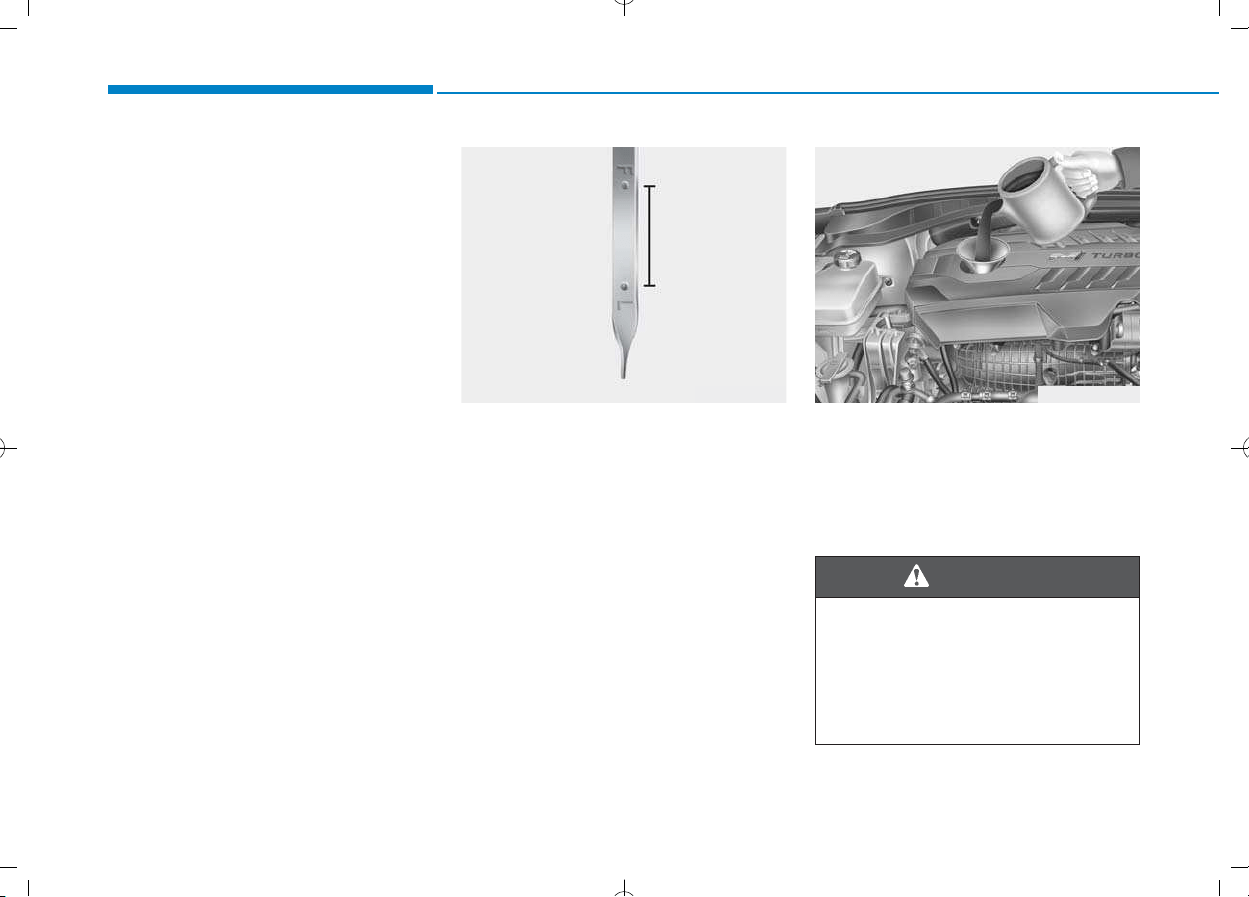
7-20
Maintenance
E
ENNGGIINNEE OOIILL
Checking the engine oil level
1. Follow all of the oil manufacturer’s
precautions.
2. Be sure the vehicle is on level
ground.
3. Start the engine and allow it to reach
normal operating temperature.
4. Turn the engine off and wait for a
few minutes (about 5 minutes) for
the oil to return to the oil pan.
5. Pull the dipstick out, wipe it clean,
and re-insert it fully.
6. Pull the dipstick out again and
check the level. The level should
be between F (Full) and L (Low).
7. If it is near or at L, add enough oil
to bring the level to F.
Use only the specified engine oil.
(Refer to “Recommended lubricants
and capacities” in chapter 8.)
OPDE076067 OPDEN077007
Radiator hose
Be very careful not to touch the
radiator hose when checking or
adding engine oil as it may be
hot enough to burn you.
WARNING
7-21
7
Maintenance
To prevent damage to your engine:
• Do not overfill with engine oil.
Add oil in small quantities and
recheck level to ensure engine
is not overfilled.
• Do not spill engine oil when
adding or changing engine oil.
Use a funnel to help prevent oil
from being spilled on engine
components. Wipe off spilled oil
immediately.
Checking the engine oil and filter
We recommend that the engine oil
and filter be replaced by an author-
ized HYUNDAI dealer.
NOTICE
Used engine oil may cause irri-
tation or cancer of the skin if
left in contact with the skin for
prolonged periods of time. Used
engine oil contains chemicals
that have caused cancer in lab-
oratory animals. Always protect
your skin by washing your
hands thoroughly with soap
and warm water as soon as pos-
sible after handling used oil.
WARNING
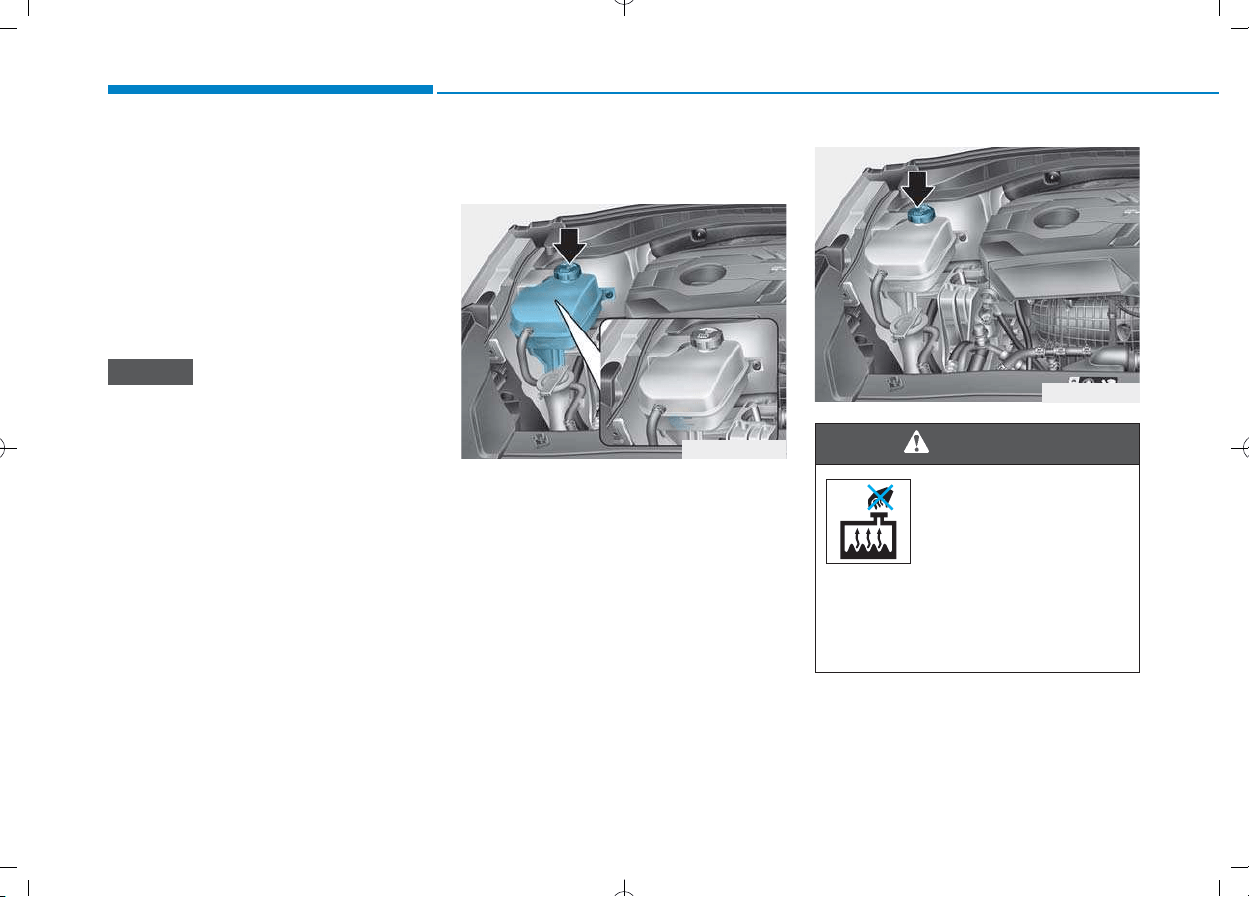
7-22
Maintenance
E
ENNGGIINNEE CCOOOOLLAANNTT
The high-pressure cooling system
has a reservoir filled with year-round
antifreeze coolant. The reservoir is
filled at the factory.
Check the antifreeze protection and
coolant concentration level at least
once a year, at the beginning of the
winter season, and before traveling
to a colder climate.
• When the engine overheats from
low engine coolant, suddenly
adding engine coolant may cause
cracks in the engine. To prevent
damage, add engine coolant
slowly in small quantities.
• Do not drive with no engine
coolant. It may cause water pump
failure and engine seizure, etc.
Checking the engine coolant
level
Check the condition and connections
of all cooling system hoses and
heater hoses. Replace any swollen
or deteriorated hoses.
The coolant level should be filled
between MAX and MIN (or F (Full)
and L (Low)) marks on the side of the
coolant reservoir when the engine is
cool.
If the coolant level is low, add enough
distilled (deionized) water. Bring the
level to MAX (or F (Full)) but do not
overfill.
If frequent additions are required, we
recommend that the system be inspect-
ed by an authorized HYUNDAI dealer.
NOTICE
OPDEN077068
OPDEN077013
Never remove the
coolant cap or the
drain plug while the
engine and radiator
are hot. Hot coolant
and steam may blow out under
pressure, causing serious injury.
(Continued)
WARNING
7-23
7
Maintenance
The electric motor for the cooling fan
is controlled by engine coolant tem-
perature, refrigerant pressure and
vehicle speed. As the engine coolant
temperature decreases, the electric
motor will automatically shut off. This
is a normal condition. If your vehicle
is equipped with GDI, the electric
motor for the cooling fan may begin
to operate at any time and continue
to operate until you disconnect the
negative battery cable.
Recommended engine coolant
• When adding coolant, use only dis-
tilled (deionized) water for your
vehicle and never mix hard water in
the coolant filled at the factory. An
incorrect coolant mixture can result
in serious malfunction or engine
damage.
• The engine in your vehicle has alu-
minum engine parts and must be
protected by an ethylene-glycol
with phosphate based coolant to
prevent corrosion and freezing.
• DO NOT USE alcohol or methanol
coolant or mix them with the spec-
ified coolant.
• Do not use a solution that contains
more than 60% antifreeze or less
than 35% antifreeze, which would
reduce the effectiveness of the solu-
tion.
For mixture percentage, refer to the
following table.
Information
If in doubt about the mix ratio, a 50%
water and 50% antifreeze mix is the
easiest to mix together as it will be the
same quantity of each. It is suitable to
use for most temperature ranges of
-35°C (-31°F) and higher.
i
The electric motor for
the cooling fan may
continue to operate
or start up when the
engine is not running
and can cause serious injury.
Keep hands, clothing and tools
away from the rotating fan blades
of the cooling fan.
WARNING
(Continued)
Turn the engine off and wait until
the engine cools down. Use
extreme care when removing the
coolant cap. Wrap a thick towel
around it, and turn it counter-
clockwise slowly to the first
stop. Step back while the pres-
sure is released from the cooling
system. When you are sure all
the pressure has been released,
press down on the cap, using a
thick towel, and continue turning
counterclockwise to remove it.
Ambient
Temperature
Mixture Percentage
(volume)
Antifreeze Water
-15°C (5°F) 35 65
-25°C (-13°F) 40 60
-35°C (-31°F) 50 50
-45°C (-49°F) 60 40
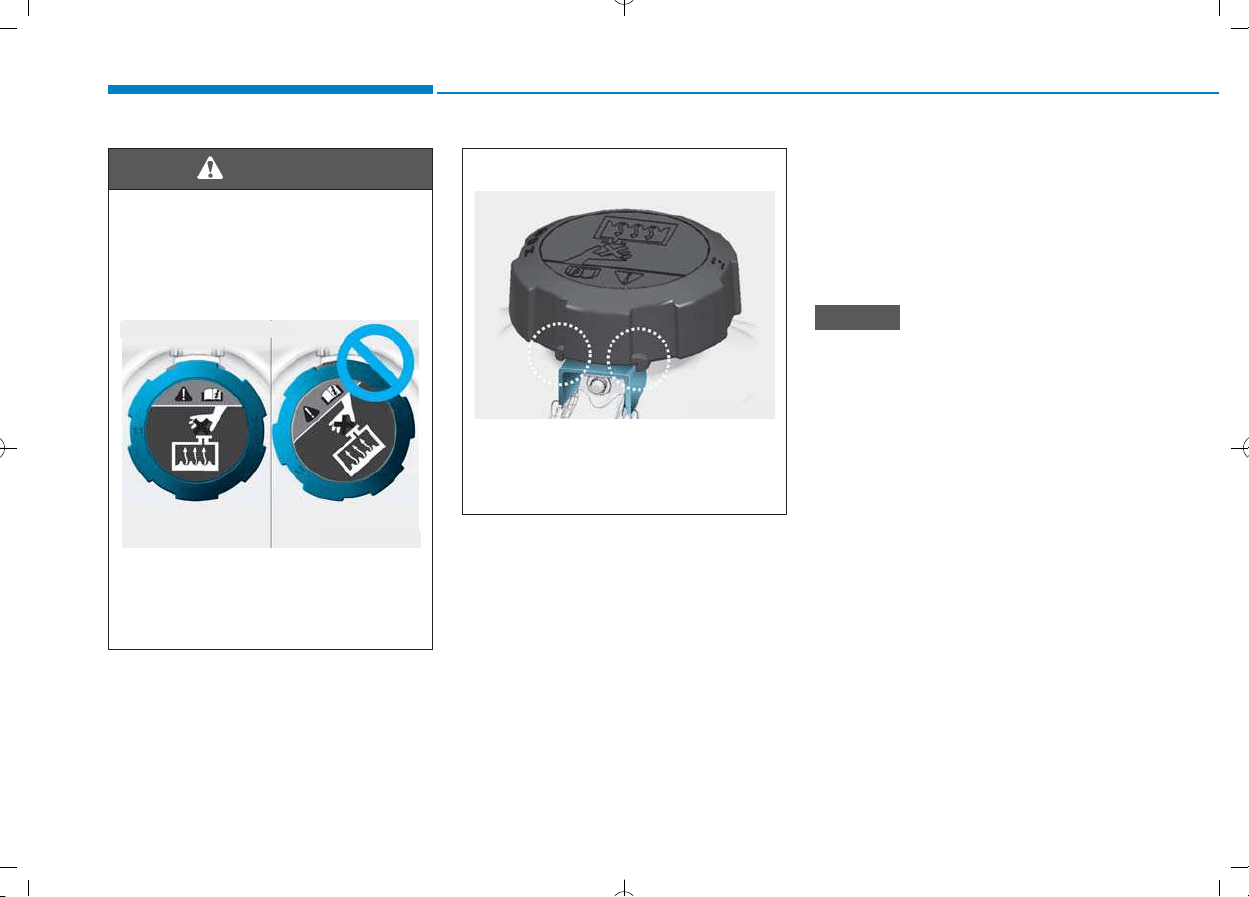
7-24
Maintenance
Changing the engine coolant
We recommend that coolant be
changed by an authorized HYUNDAI
dealer according to the Maintenance
Schedule at the beginning of this
chapter.
To prevent damage to engine parts,
put a thick towel around the engine
coolant cap before refilling the
coolant to prevent the coolant from
overflowing into engine parts, such
as the alternator.
NOTICE
Make sure the coolant cap is
properly closed after refilling
coolant. Otherwise the engine
could be overheated while driv-
ing.
1. Check if the coolant cap label
is straight In front.
(Continued)
WARNING
OTL075062
■ Engine room front view
(Continued)
2. Make sure that the tiny pro-
trusions inside the coolant
cap is securely interlocked.
OPDE076071
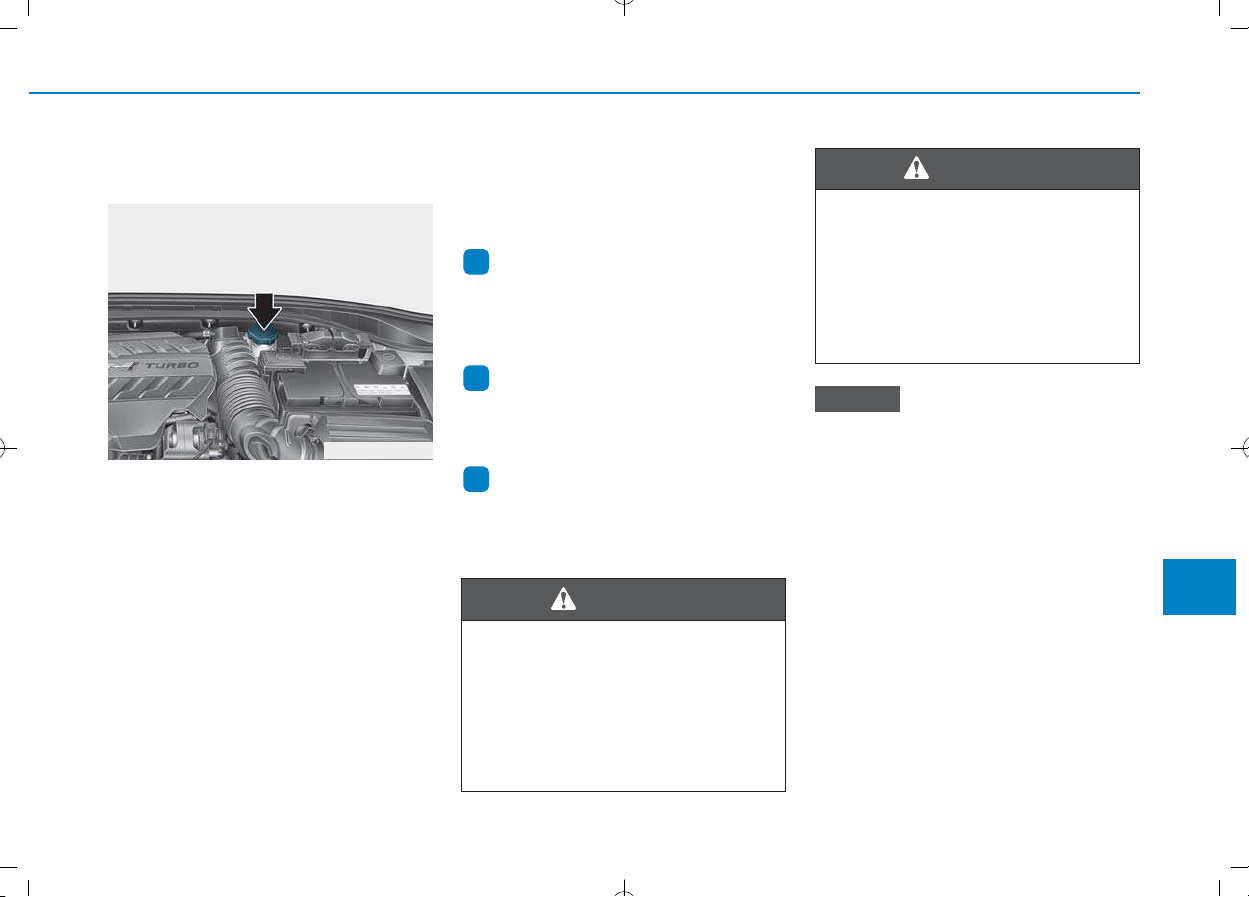
7-25
7
Maintenance
BBRRAAKKEE//CCLLUUTTCCHH FFLLUUIIDD
Checking the brake/clutch
fluid level
Check the fluid level in the reservoir
periodically. The fluid level should be
between MAX and MIN marks on the
side of the reservoir.
Before removing the reservoir cap
and adding brake/clutch fluid, clean
the area around the reservoir cap
thoroughly to prevent brake/clutch
fluid contamination.
If the level is low, add fluid to the MAX
level. The level will fall with accumulat-
ed mileage. This is a normal condition
associated with the wear of the brake
linings.
If the fluid level is excessively low,
we recommend that the system be
checked by an authorized HYUNDAI
dealer.
Information
Use only the specified brake/clutch
fluid. Refer to “Recommended lubri-
cants and capacities” in chapter 8.
Information
Before removing the brake/clutch filler
cap, read the warning on the cap.
Information
Clean the filler cap before removing.
Use only DOT3 or DOT4 brake/clutch
fluid from a sealed container.
• Do not allow brake/clutch fluid
to contact the vehicle's body
paint, as paint damage will
result.
• Brake/clutch fluid, which has
been exposed to open air for an
extended time should never be
used as its quality cannot be
guaranteed. It should be dis-
posed of properly.
• Don't put in the wrong kind of
fluid. A few drops of mineral-
based oil, such as engine oil, in
your brake/clutch system can
damage system parts.
NOTICE
i
i
i
OPDEN077016
If the brake/clutch system
requires frequent additions of
fluid this could indicate a leak in
the brake/clutch system. We
recommend that the vehicle be
inspected by an authorized
HYUNDAI dealer.
WARNING
Do not allow brake/clutch fluid
to come in contact with your
eyes. If brake/clutch fluid comes
in contact with your eyes, flush
your eyes with clean water for at
least 15 minutes and get imme-
diate medical attention.
WARNING
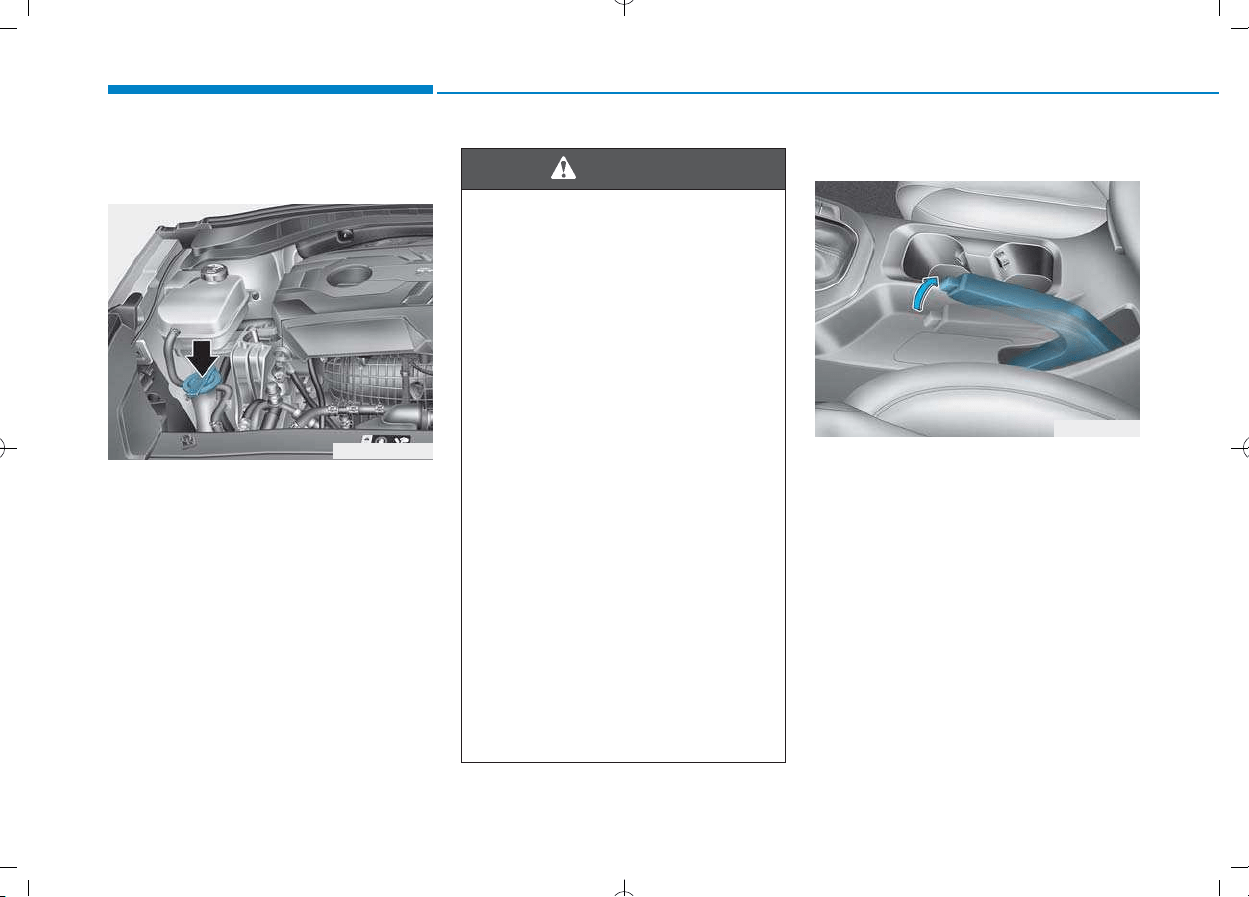
7-26
Maintenance
W
WAASSHHEERR FFLLUUIIDD
Checking the washer fluid
level
Check the fluid level in the washer
fluid reservoir and add fluid if neces-
sary. Plain water may be used if
washer fluid is not available.
However, use washer solvent with
antifreeze characteristics in cold cli-
mates to prevent freezing.
Checking the parking brake
Check the stroke of the parking
brake by counting the number of
“clicks’’ heard while fully applying it
from the released position. Also, the
parking brake alone should securely
hold the vehicle on a fairly steep
grade. If the stroke is more or less
than specified, we recommend that
the system be serviced by an author-
ized HYUNDAI dealer.
Stroke : 5~6 “clicks’’ at a force of
20 kg (44 lbs, 196 N).
OPDEN077017
PPAARRKKIINNGG BBRRAAKKEE
OPD056016
To prevent serious injury or
death, take the following safety
precautions when using washer
fluid:
• Do not use engine coolant or
antifreeze in the washer fluid
reservoir. Engine coolant can
severely obscure visibility
when sprayed on the wind-
shield and may cause loss of
vehicle control resulting in an
accident or damage to paint
and body trim.
• Do not allow sparks or flames
to contact the washer fluid or
the washer fluid reservoir.
Washer fluid may contain
alcohol and can be flamma-
ble.
• Do not drink washer fluid and
avoid contact with skin.
Washer fluid is poisonous to
humans and animals.
• Keep washer fluid away from
children and animals.
WARNING
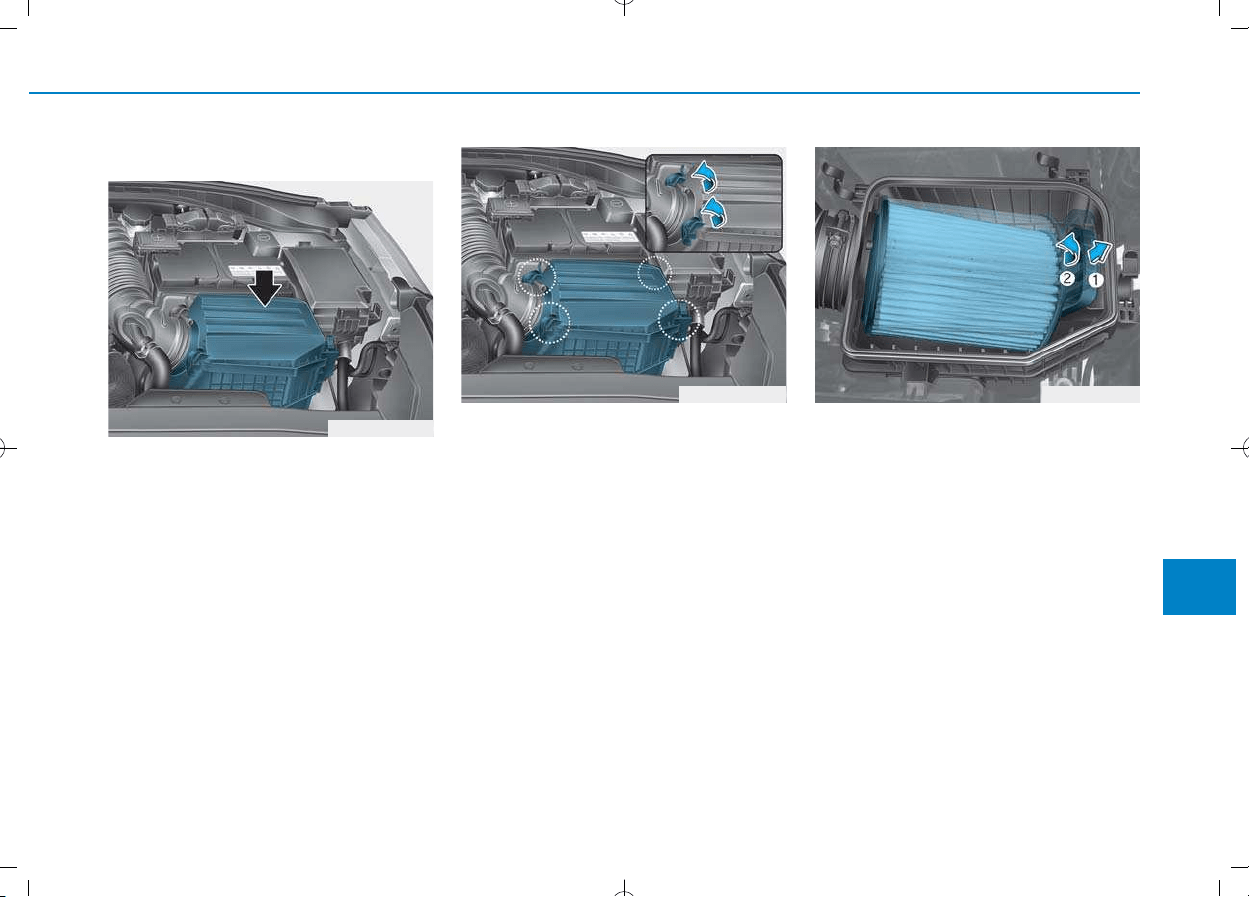
7-27
7
Maintenance
AAIIRR CCLLEEAANNEERR
Filter replacement
The air cleaner filter can be cleaned
for inspection using compressed air.
Do not attempt to wash or to rinse it,
as water will damage the filter.
If soiled, the air cleaner filter must be
replaced.
1. Loosen the air cleaner cover
attaching clips and open the cover.
2. Pull out the part written PULL (1).
3. Pull out the air cleaner filter (2).
4. When installing, place the part
written PULL (1) first, and then
place the new air filter (2) in the
original position.
5. Lock the cover with the cover
attaching clips.
6. Check that the cover is firmly
installed.
OPDEN077018
OPDEN077021 OPDEN077022
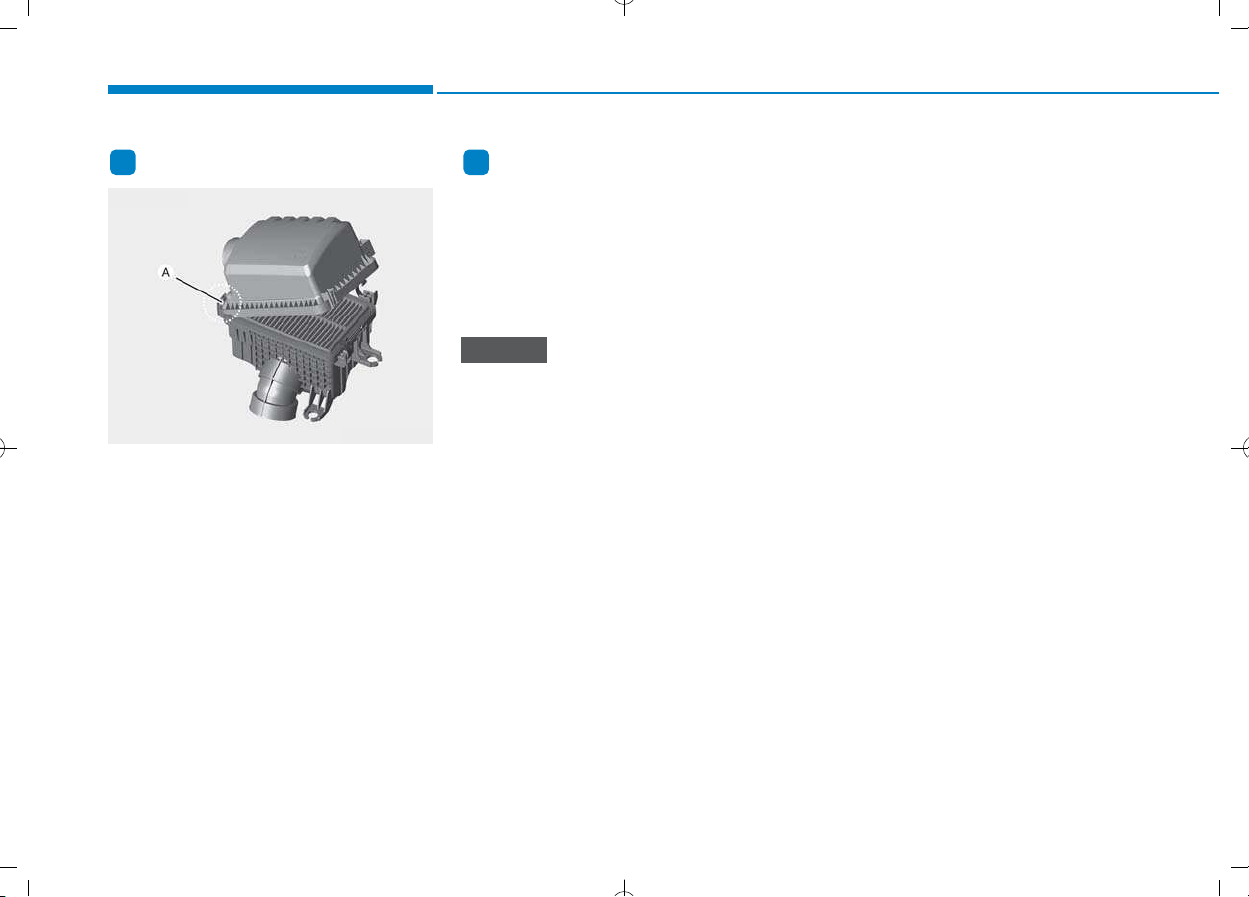
7-28
Maintenance
Information
Be sure to insert the hinge (A) before
locking the cover with the cover
attaching clips.
Information
If the vehicle is operated in extremely
dusty or sandy areas, replace the element
more often than the usual recommended
intervals (refer to “Maintenance Under
Severe Usage Conditions” in this chap-
ter).
• Do not drive with the air cleaner
filter removed. This will result in
excessive engine wear.
• When removing the air cleaner
filter, be careful that dust or dirt
does not enter the air intake, or
damage may result.
• Use HYUNDAI genuine parts.
Use of non-genuine parts could
damage the air flow sensor.
NOTICE
ii
OPD077104L
■ Example
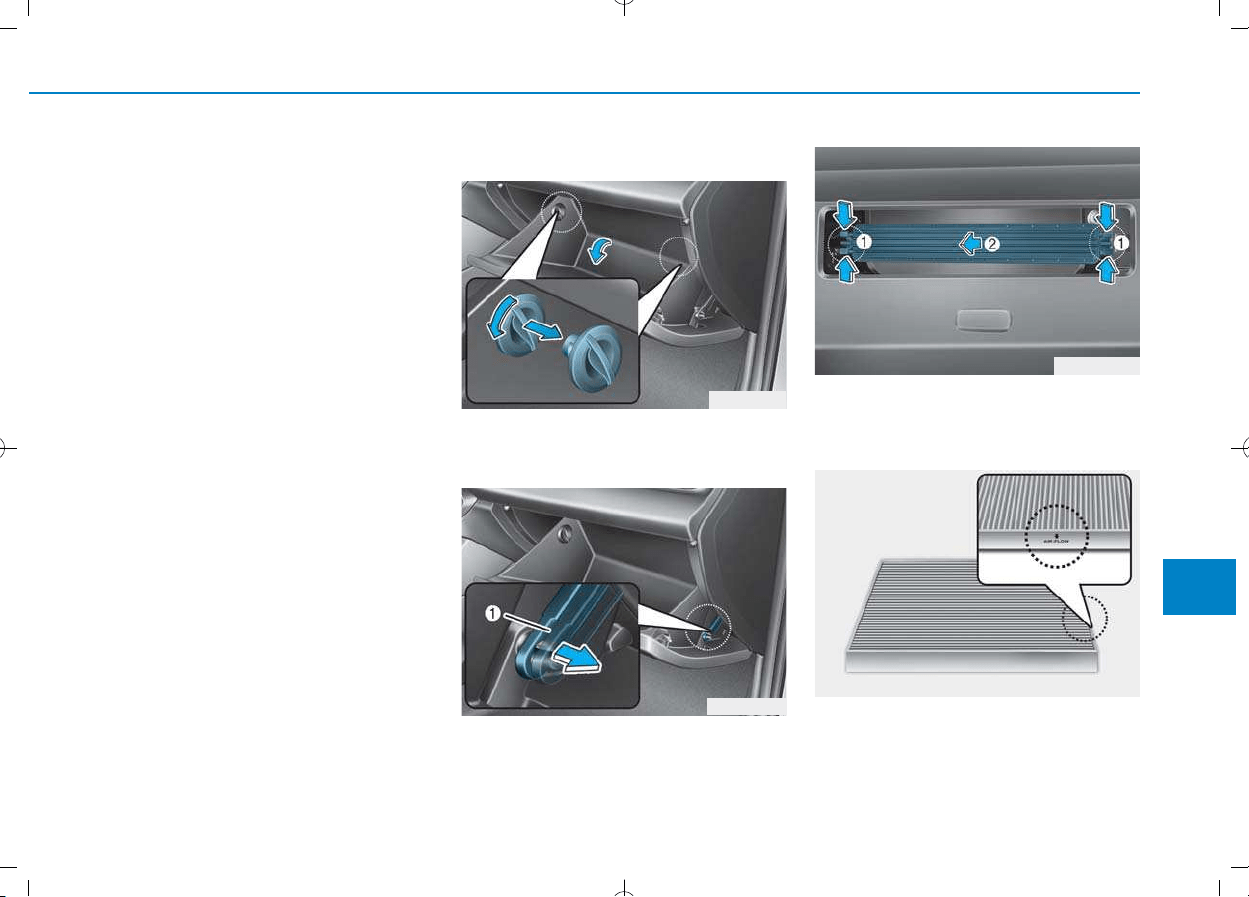
7-29
7
Maintenance
CCLLIIMMAATTEE CCOONNTTRROOLL AAIIRR FFIILLTTEERR
Filter inspection
If the vehicle is operated in the
severely air-polluted cities or on
dusty rough roads for a long period,
it should be inspected more fre-
quently and replaced earlier. When
you, the owner, replace the climate
control air filter, replace it performing
the following procedure, and be care-
ful to avoid damaging other compo-
nents.
Replace the filter according to the
Maintenance Schedule.
Filter replacement
1. With the glove box open, remove
the stoppers on both sides.
2. Remove the support strap (1).
3. Press and hold the lock (1) on both
sides of the cover.
4. Pull out the cover (2).
5. Replace the climate control air filter.
6. Reassemble in the reverse order
of disassembly.
OPD076024
OPD076023
OPD076025
OPD076026

7-30
Maintenance
Install a new climate control air filter
in the correct direction with the
arrow symbol(
↓
↓
) facing downwards,
otherwise, it may be noisy and the
effectiveness of the filter may be
reduced.
Blade inspection
Contamination of either the wind-
shield or the wiper blades with for-
eign matter can reduce the effective-
ness of the windshield wipers.
Common sources of contamination
are insects, tree sap, and hot wax
treatments used by some commer-
cial car washes. If the blades are not
wiping properly, clean both the win-
dow and the blades with a good
cleaner or mild detergent, and rinse
thoroughly with clean water.
To prevent damage to the wiper
blades, arms or other compo-
nents, do not:
• Use gasoline, kerosene, paint
thinner, or other solvents on or
near them.
• Attempt to move the wipers
manually.
• Use non-specified wiper blades.
Information
Commercial hot waxes applied by
automatic car washes have been
known to make the windshield diffi-
cult to clean.
Information
Wiper blades are consumable item and
normal wear of the wipers may not be
covered by your vehicle warranty.
i
i
NOTICENOTICE
WWIIPPEERR BBLLAADDEESS
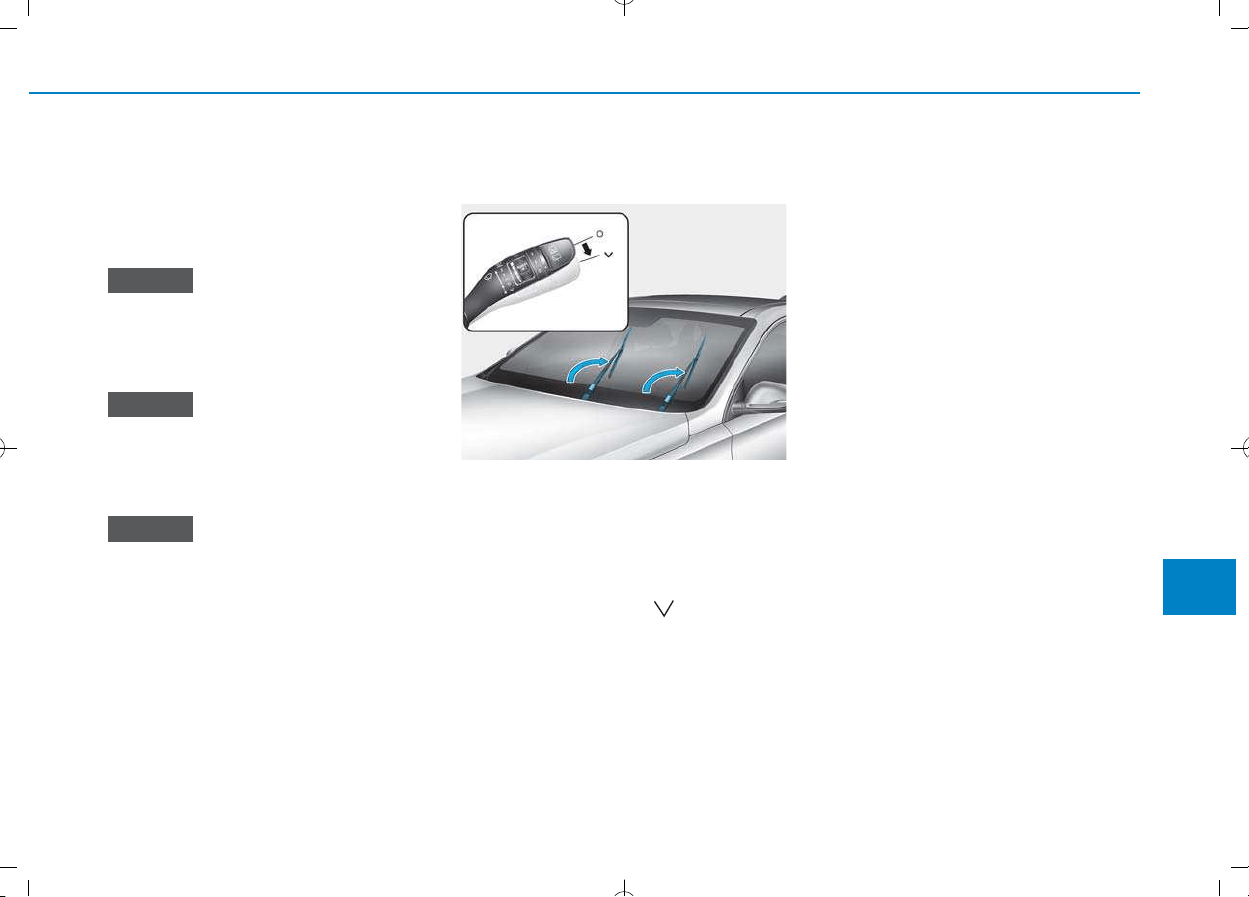
7-31
7
Maintenance
Blade replacement
When the wipers no longer clean
adequately, the blades may be worn
or cracked, and require replacement.
To prevent damage to the wiper arms
or other components, do not attempt
to move the wipers manually.
The use of a non-specified wiper
blade could result in wiper mal-
function and failure.
• In order to prevent damage to
the hood and the wiper arms, the
wiper arms should only be lifted
when in the top wiping position.
• Always return the wiper arms to
the windshield before driving.
Front windshield wiper service
positions
This vehicle has a "hidden" wiper
design which means that the wipers
cannot be lifted when they are in
their bottom resting position.
1. Within 20 seconds of turning off the
engine, move the wiper lever down
and hold it to the position for
about 2 seconds until the wipers
move to the top wipe position.
2. At this time you can lift the wipers
off the windshield.
3. Gently put the wipers back down
onto the windshield.
4. Turn the wipers to any ON position
to return the wipers to the bottom
resting position.
NOTICE
NOTICE
NOTICE
OPDE076027
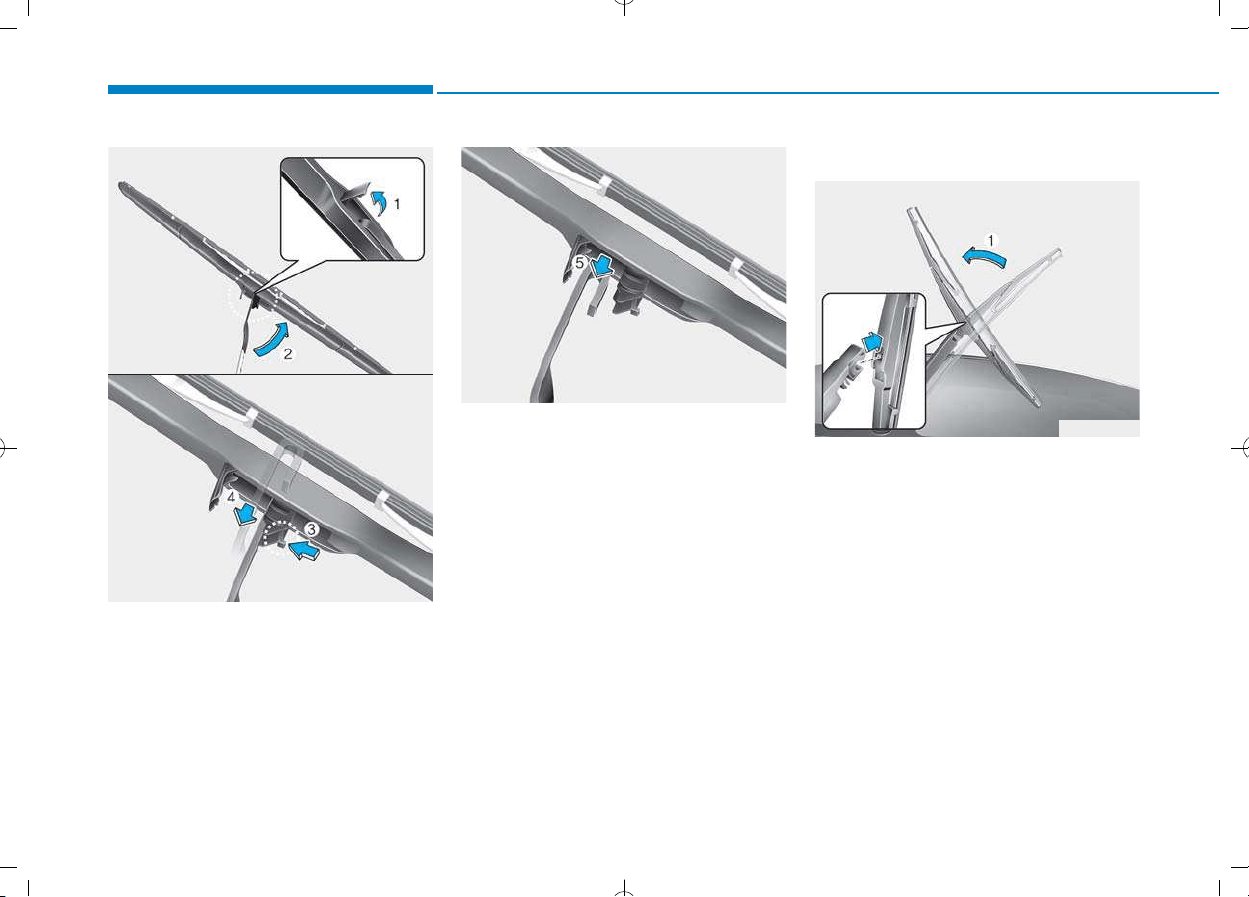
7-32
Maintenance
1. Lift up the wiper blade clip (1).
Then lift up the wiper blade (2).
2. While pushing the lock (3), pull
down the wiper blade (4).
3. Remove the wiper blade from the
wiper arm (5).
4. Install a new wiper blade assem-
bly in the reverse order of removal.
5. Return the wiper arm on the wind-
shield.
Rear window wiper blade
1. Raise the wiper arm and pull out
the wiper blade assembly.
OAD075074L
OAD075075L
OAD075076L
OTL075050
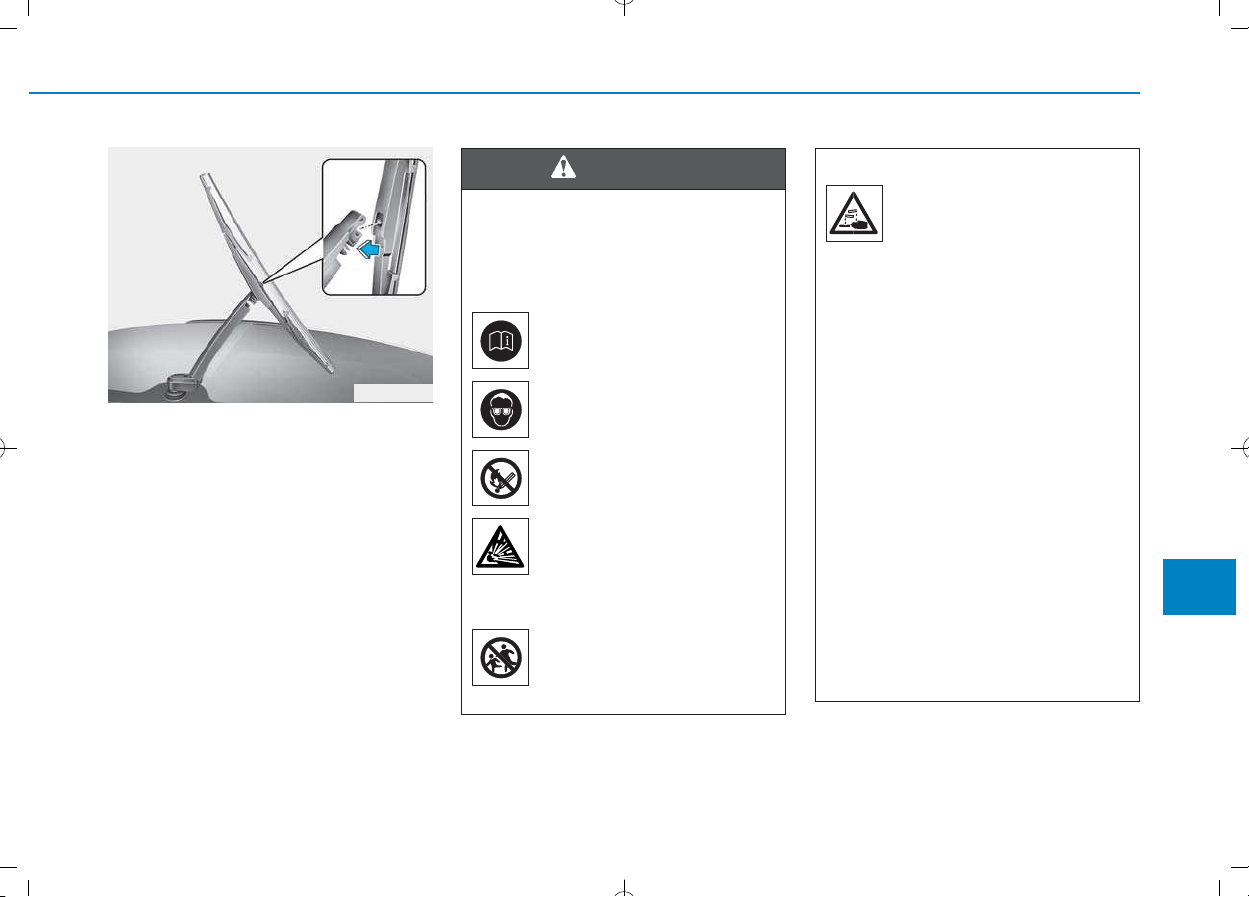
7-33
7
Maintenance
BBAATTTTEERRYY
2. Install the new blade assembly by
inserting the center part into the
slot in the wiper arm until it clicks
into place.
3. Make sure the blade assembly is
installed firmly by trying to pull it
slightly.
To prevent damage to the wiper arms
or other components, we recommend
that the wiper blades be replaced by
an authorized HYUNDAI dealer.
OTL075051
To prevent SERIOUS INJURY or
DEATH to you or bystanders,
always follow these precautions
when working near or handling
the battery:
Always read and follow
instructions carefully
when handling a battery.
Wear eye protection
designed to protect the
eyes from acid splashes.
Keep all flames, sparks,
or smoking materials
away from the battery.
Hydrogen is always
present in battery cells,
is highly combustible,
and may explode if ignit-
ed.
Keep batteries out of
reach of children.
(Continued)
WARNING
(Continued)
Batteries contain sulfu-
ric acid which is highly
corrosive. Do not allow
acid to contact your
eyes, skin or clothing.
If acid gets into your eyes, flush
your eyes with clean water for at
least 15 minutes and get imme-
diate medical attention. If acid
gets on your skin, thoroughly
wash the area. If you feel pain or
a burning sensation, get med-
ical attention immediately.
• When lifting a plastic-cased
battery, excessive pressure
on the case may cause battery
acid to leak. Lift with a battery
carrier or with your hands on
opposite corners.
• Do not attempt to jump start
your vehicle if your battery is
frozen.
(Continued)
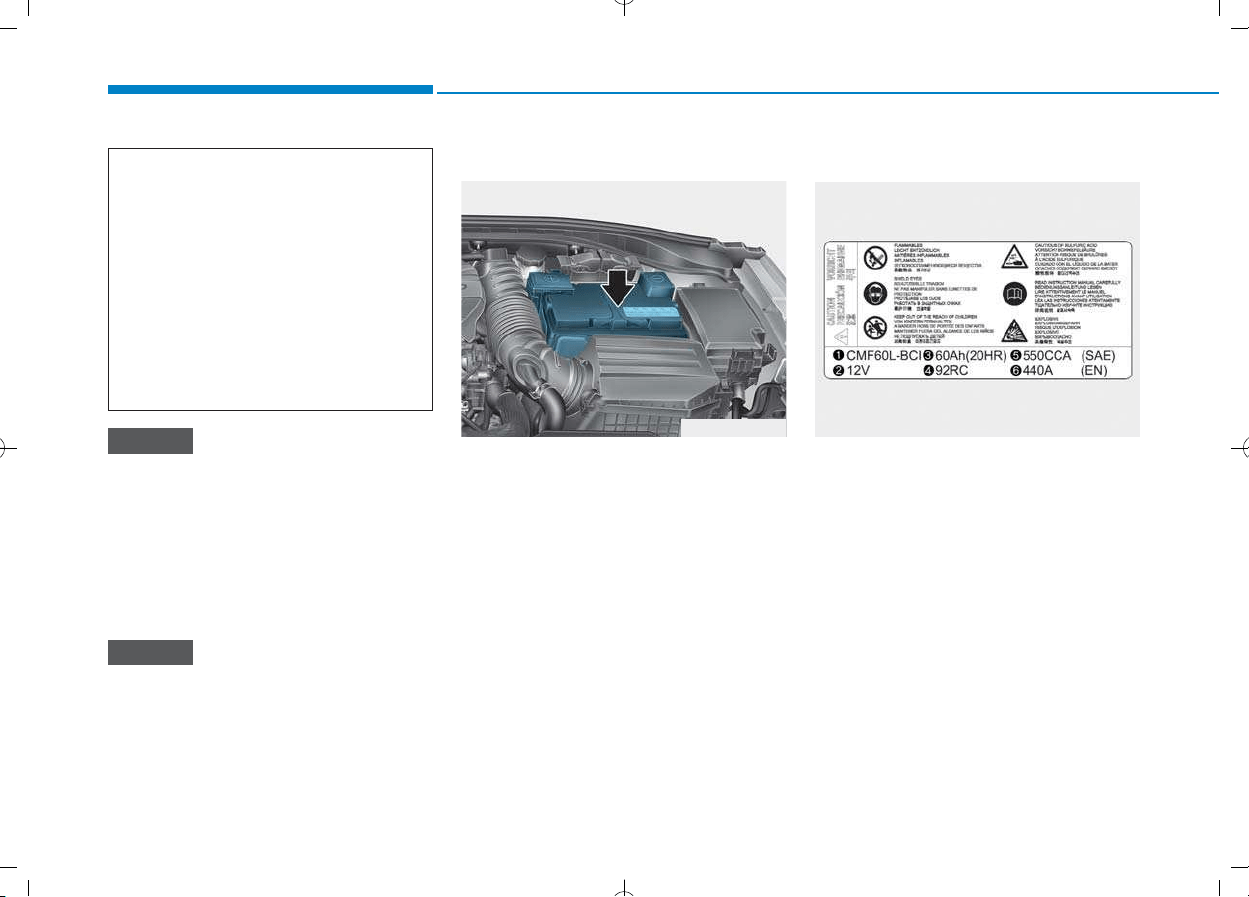
7-34
Maintenance
• When you do not use the vehicle
for a long time in a low tempera-
ture area, disconnect the battery
and keep it indoors.
• Always charge the battery fully
to prevent battery case damage
in low temperature areas.
If you connect unauthorized elec-
tronic devices to the battery, the
battery may be discharged. Never
use unauthorized devices.
For best battery service
• Keep the battery securely mounted.
• Keep the battery top clean and dry.
• Keep the terminals and connec-
tions clean, tight, and coated with
petroleum jelly or terminal grease.
• Rinse any spilled electrolyte from
the battery immediately with a
solution of water and baking soda.
• If the vehicle is not going to be
used for an extended time, discon-
nect the battery cables.
Battery capacity label
The actual battery label in the vehicle
may differ from the illustration.
1. CMF60L-BCI : The HYUNDAI
model name of battery
2. 12V : The nominal voltage
3. 60Ah(20HR) : The nominal capacity
(in Ampere hours)
4. 92RC : The nominal reserve capac-
ity (in min.)
5. 550CCA : The cold-test current in
amperes by SAE
6. 440A : The cold-test current in
amperes by EN
NOTICE
NOTICE
OPDEN077028
(Continued)
• NEVER attempt to recharge
the battery when the vehicle’s
battery cables are connected
to the battery.
• The electrical ignition system
works with high voltage.
NEVER touch these compo-
nents with the engine running
or when the ignition switch is
in the ON position.
OLMB073072
■ Example
7-35
7
Maintenance
Battery recharging
By battery charger
Your vehicle has a maintenance-free,
calcium-based battery.
• If the battery becomes discharged
in a short time (because, for exam-
ple, the headlights or interior lights
were left on while the vehicle was
not in use), recharge it by slow
charging (trickle) for 10 hours.
• If the battery gradually discharges
because of high electric load while
the vehicle is being used, recharge
it at 20-30A for two hours.
Always follow these instructions
when recharging your vehicle’s
battery to avoid the risk of SERI-
OUS INJURY or DEATH from
explosions or acid burns:
• Before performing mainte-
nance or recharging the bat-
tery, turn off all accessories
and place the Engine Start/
Stop button to the OFF posi-
tion.
• Keep all flames, sparks, or
smoking materials away from
the battery.
• Always work outdoors or in an
area with plenty of ventilation.
• Wear eye protection when
checking the battery during
charging.
• The battery must be removed
from the vehicle and placed in
a well ventilated area.
(Continued)
WARNING
(Continued)
• Watch the battery during
charging, and stop or reduce
the charging rate if the battery
cells begin boiling violently.
• The negative battery cable
must be removed first and
installed last when the battery
is disconnected. Disconnect
the battery charger in the fol-
lowing order:
(1) Turn off the battery charger
main switch.
(2) Unhook the negative
clamp from the negative
battery terminal.
(3) Unhook the positive clamp
from the positive battery
terminal.
•
Always use a genuine HYUNDAI
approved battery when you
replace the battery.
7-36
Maintenance
By jump starting
After a jump start from a good bat-
tery, drive the vehicle for 20-30 min-
utes before it is shutoff. The vehicle
may not restart if you shut it off
before the battery had a chance to
adequately recharge. See “Jump
Starting” in chapter 6 for more infor-
mation on jump starting procedures.
Information
An inappropriately disposed
battery can be harmful to
the environment and human
health.
Dispose of the battery according to
your local law(s) or regulations.
Reset items
The following items may need to be
reset after the battery has been dis-
charged or the battery has been dis-
connected.
• Auto up/down window
• Sunroof
• Trip computer
• Climate control system
• Driver position memory system
• Clock
• Audio system
i
AGM battery (if equipped)
• Absorbent Glass Matt (AGM)
batteries are maintenance-
free and we recommend that
the AGM battery be serviced
by an authorized HYUNDAI
dealer. For charging your
AGM battery, use only fully
automatic battery chargers
that are specially developed
for AGM batteries.
• When replacing the AGM bat-
tery, we recommend that you
use parts for replacement
from an authorized HYUNDAI
dealer.
• Do not open or remove the
cap on top of the battery. This
may cause leaks of internal
electrolyte that could result in
severe injury.
CAUTION

7-37
7
Maintenance
TTIIRREESS AANNDD WWHHEEEELLSS
Information - Power Hop
When fully accelerating the vehicle
from standstill, a front tire oscillation
called “Power Hop“ of i30 N may occur
due to the high torque of engine and
the characteristics of high performance
tire. This is affected by road condition
and temperatures. Additionally it is a
normal phenomenon in powerful front-
wheel drive vehicles. i30 N will act on
this phenomenon with the traction con-
trol in all ESC modes with the main
focus on high performance character.
Information - Wheel nut
When the wheel is detached and
reassembled frequently, replace all
used wheel nuts with new wheel nuts
or accessory wheel nut.
i
i
(Continued)
• Replace tires that are worn,
show uneven wear, or are dam-
aged. Worn tires can cause
loss of braking effectiveness,
steering control, or traction.
• ALWAYS replace tires with the
same size as each tire that
was originally supplied with
this vehicle. Using tires and
wheels other than the recom-
mended sizes could cause
unusual handling characteris-
tics, poor vehicle control, or
negatively affect your vehi-
cle’s Anti-Lock Brake System
(ABS) resulting in a serious
accident.
Tire failure may cause loss of
vehicle control resulting in an
accident. To reduce risk of
SERIOUS INJURY or DEATH,
take the following precautions:
• Inspect your tires monthly for
proper inflation as well as
wear and damage.
• The recommended cold tire
pressure for your vehicle can
be found in this manual and on
the tire label located on the dri-
ver’s side center pillar. Always
use a tire pressure gauge to
measure tire pressure. Tires
with too much or too little
pressure wear unevenly caus-
ing poor handling.
• Check the pressure of the
spare every time you check
the pressure of the other tires
on your vehicle.
(Continued)
WARNING
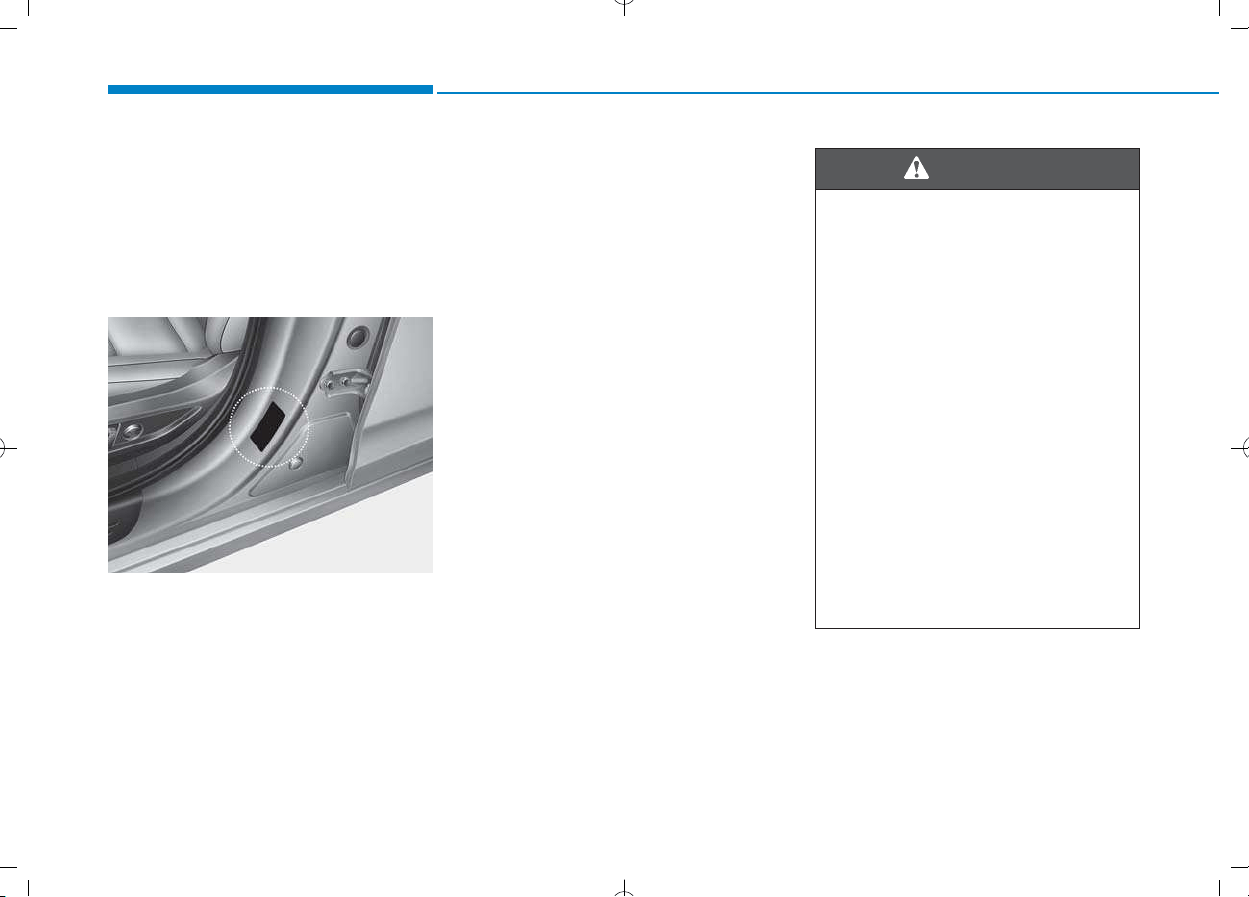
7-38
Maintenance
Tire care
For proper maintenance, safety, and
maximum fuel economy, you must
always maintain recommended tire
inflation pressures and stay within the
load limits and weight distribution rec-
ommended for your vehicle.
All specifications (sizes and pressures)
can be found on a label attached to the
driver’s side center pillar.
Recommended cold tire infla-
tion pressures
All tire pressures (including the
spare) should be checked when the
tires are cold. “Cold tires” means the
vehicle has not been driven for at
least three hours or has been driven
for less than 1.6 km (1 mile).
Warm tires normally exceed recom-
mended cold tire pressures by 28 to
41 kPa (4 to 6 psi). Do not release air
from warm tires to adjust the pres-
sure or the tires will be under-inflat-
ed. For recommended inflation pres-
sure, refer to “Tire and Wheels” in
chapter 8.
Recommended pressures must
be maintained for the best ride,
vehicle handling, and minimum
tire wear.
Over-inflation or under-inflation
can reduce tire life, adversely
affect vehicle handling, and
lead to sudden tire failure that
could result in loss of vehicle
control resulting in an accident.
Severe under-inflation can lead
to severe heat build-up, causing
blowouts, tread separation and
other tire failures that can result
in the loss of vehicle control
resulting in an accident. This
risk is much higher on hot days
and when driving for long peri-
ods at high speeds.
WARNING
OPD086007

7-39
7
Maintenance
Check tire inflation pressure
Check your tires, including the spare
tire, once a month or more.
How to check
Use a good quality tire pressure
gauge to check tire pressure. You
can not tell if your tires are properly
inflated simply by looking at them.
Radial tires may look properly inflat-
ed when they are under-inflated.
Remove the valve cap from the tire
valve stem. Press the tire gauge firm-
ly onto the valve to get a pressure
measurement. If the cold tire inflation
pressure matches the recommended
pressure on the tire and loading
information label, no further adjust-
ment is necessary. If the pressure is
low, add air until you reach the rec-
ommended pressure. Make sure to
put the valve caps back on the valve
stems. Without the valve cap, dirt or
moisture could get into the valve
core and cause air leakage. If a valve
cap is missing, install a new one as
soon as possible.
If you overfill the tire, release air by
pushing on the metal stem in the
center of the tire valve.
Recheck the tire pressure with the
tire gauge. Be sure to put the valve
caps back on the valve stems.
Without the valve cap, dirt or mois-
ture could get into the valve core and
cause air leakage. If a valve cap is
missing, install a new one as soon as
possible.
Tire rotation
To equalize tread wear, HYUNDAI
recommends that the tires be rotated
every 12,000 km (7,500 miles) or
sooner if irregular wear develops.
During rotation, check the tires for
correct balance.
When rotating tires, check for uneven
wear and damage. Abnormal wear is
usually caused by incorrect tire pres-
sure, improper wheel alignment, out-
of-balance wheels, severe braking or
severe cornering. Look for bumps or
bulges in the tread or side of the tire.
Replace the tire if you find any of
these conditions. Replace the tire if
fabric or cord is visible. After rotation,
be sure to bring the front and rear tire
pressures to specification and check
lug nut tightness (proper torque is
11~13 kgf·m [79~94 lbf·ft]).
• Under-inflation results in
excessive wear, poor handling
and reduced fuel economy.
Wheel deformation is also
possible. Keep your tire pres-
sures at the proper levels. If a
tire frequently needs refilling,
we recommend it be checked
by an authorized HYUNDAI
dealer.
• Over-inflation produces a
harsh ride, excessive wear at
the center of the tire tread,
and a greater possibility of
damage from road hazards.
CAUTION
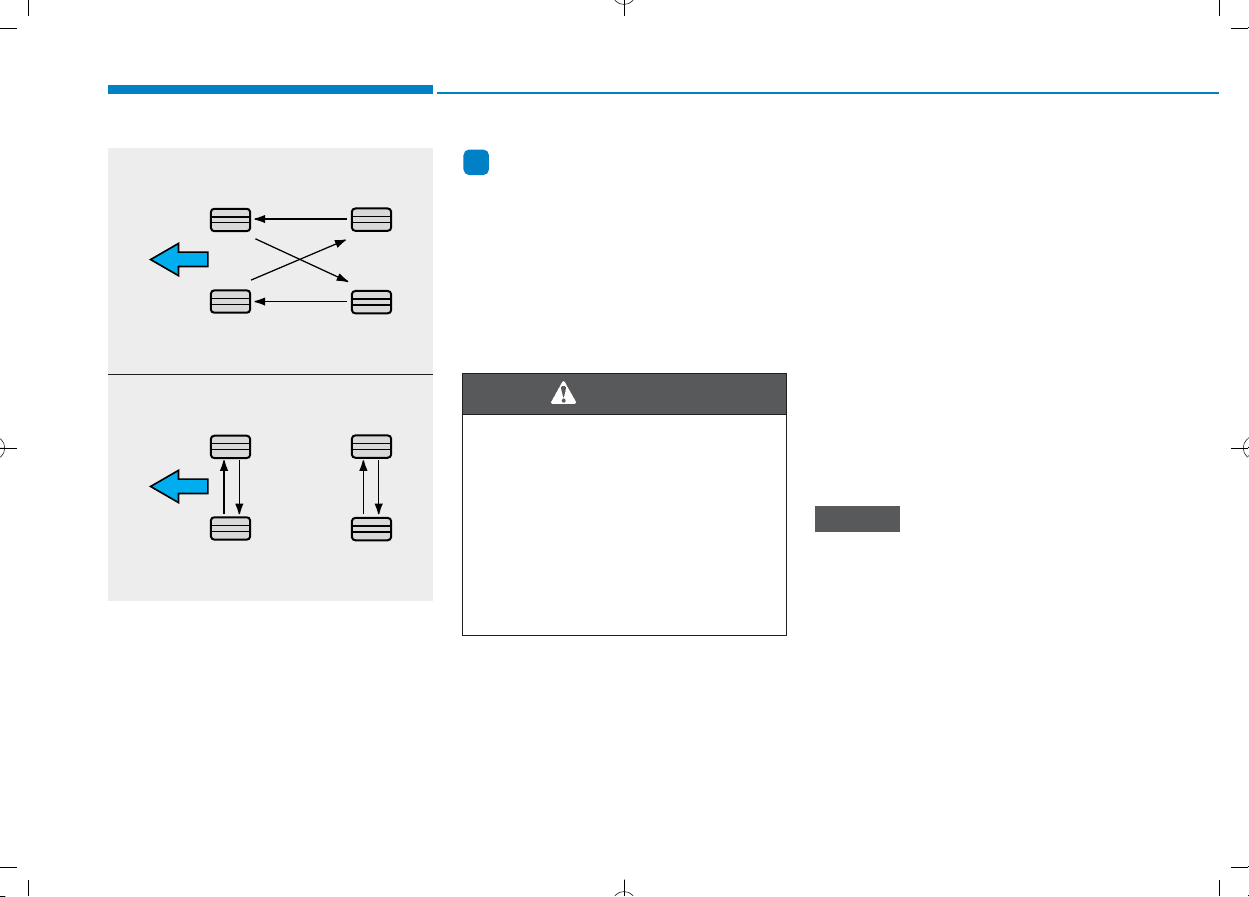
7-40
Maintenance
Disc brake pads should be inspected
for wear whenever tires are rotated.
Information
The outside and inside of the unsym-
metrical tire is distinguishable. When
installing an unsymmetrical tire, be
sure to install the side marked "out-
side" face the outside. If the side
marked "inside" is installed on the
outside, it will have a negative effect
on vehicle performance.
Wheel alignment and tire bal-
ance
The wheels on your vehicle were
aligned and balanced carefully at the
factory to give you the longest tire life
and best overall performance.
In most cases, you will not need to
have your wheels aligned again.
However, if you notice unusual tire
wear or your vehicle pulling one way
or the other, the alignment may need
to be reset.
If you notice your vehicle vibrating
when driving on a smooth road, your
wheels may need to be rebalanced.
Incorrect wheel weights can dam-
age your vehicle’s aluminum
wheels. Use only approved wheel
weights.
NOTICE
i
ODH073802
ODH073803
■ 18 inch tire
■ 19 inch tire
• Do not use the compact spare
tire for tire rotation.
• Do not mix bias ply and radial
ply tires under any circum-
stances. This may cause
unusual handling characteris-
tics that may cause loss of
vehicle control resulting in an
accident.
WARNING
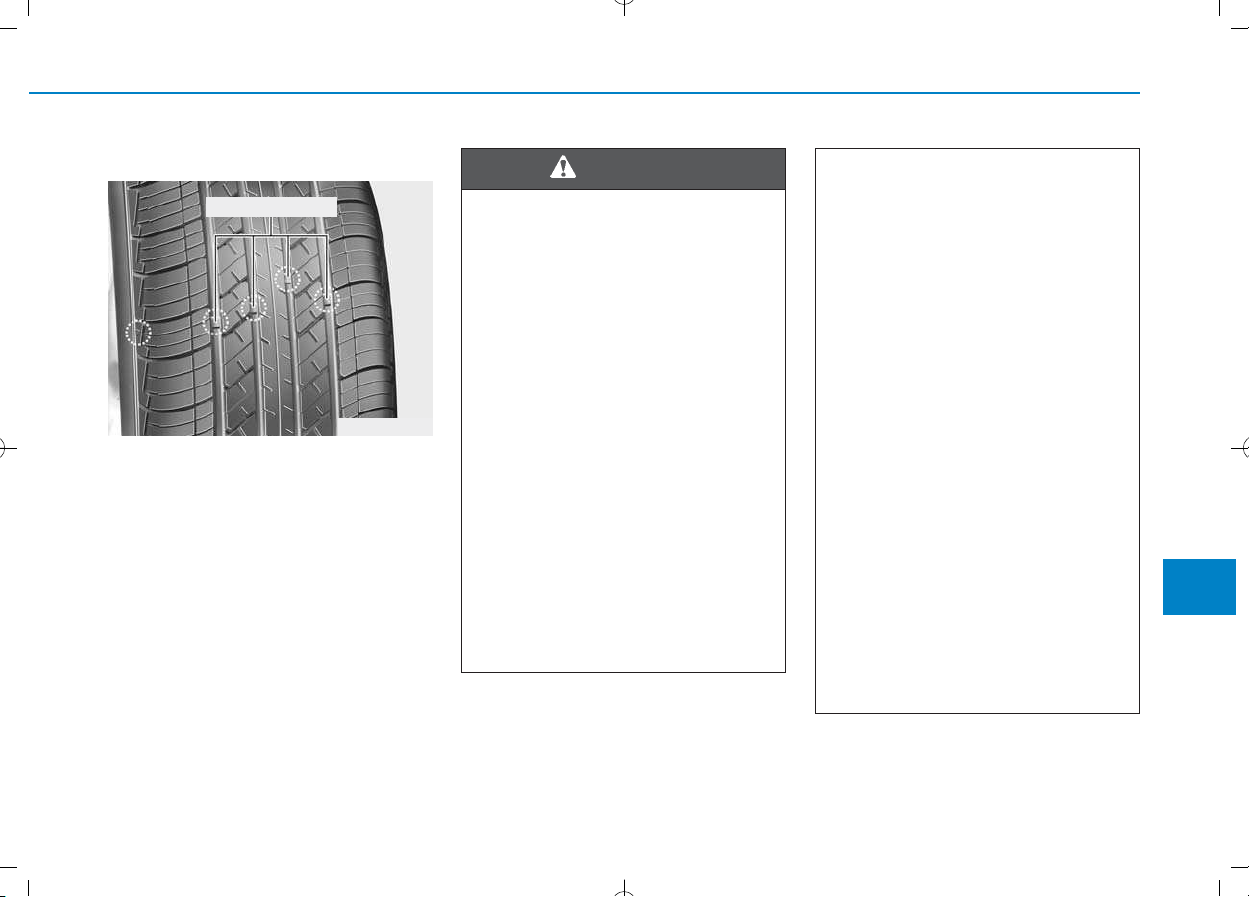
7-41
7
Maintenance
Tire replacement
If the tire is worn evenly, a tread wear
indicator will appear as a solid band
across the tread. This shows there is
less than 1.6 mm (1/16 in.) of tread
left on the tire. Replace the tire when
this happens.
Do not wait for the band to appear
across the entire tread before replac-
ing the tire.
OLMB073027
Tread wear indicator
To reduce the risk of DEATH or
SERIOUS INJURY:
• Replace tires that are worn,
show uneven wear, or are
damaged. Worn tires can
cause loss of braking effec-
tiveness, steering control, and
traction.
• Always replace tires with the
same size as each tire that
was originally supplied with
this vehicle. Using tires and
wheels other than the recom-
mended sizes could cause
unusual handling characteris-
tics, poor vehicle control, or
negatively affect your vehi-
cle’s Anti-Lock Brake System
(ABS) resulting in a serious
accident.
(Continued)
WARNING
(Continued)
• When replacing tires (or
wheels), it is recommended to
replace the two front or two
rear tires (or wheels) as a pair.
Replacing just one tire can
seriously affect your vehicle’s
handling. If only replacing one
pair of tires, it is recommend-
ed to install the pair of new
tires on the rear axle.
• Tires degrade over time, even
when they are not being used.
Regardless of the remaining
tread, HYUNDAI recommends
that tires be replaced after six
(6) years of normal service.
• Heat caused by hot climates or
frequent high loading condi-
tions can accelerate the aging
process. Failure to follow this
warning may cause sudden
tire failure, which could lead to
a loss of vehicle control result-
ing in an accident.

7-42
Maintenance
Compact spare tire replacement
(if equipped)
A compact spare tire has a shorter
tread life than a regular size tire.
Replace it when you can see the
tread wear indicator bars on the tire.
The replacement compact spare tire
should be the same size and design
tire as the one provided with your
new vehicle and should be mounted
on the same compact spare tire
wheel. The compact spare tire is not
designed to be mounted on a regular
size wheel, and the compact spare
tire wheel is not designed for mount-
ing a regular size tire.
Wheel replacement
When replacing the metal wheels for
any reason, make sure the new
wheels are equivalent to the original
factory units in diameter, rim width
and offset.
Tire traction
Tire traction can be reduced if you
drive on worn tires, tires that are
improperly inflated or on slippery
road surfaces. Tires should be
replaced when tread wear indicators
appear. To reduce the possibility of
losing control, slow down whenever
there is rain, snow or ice on the road.
Tire maintenance
In addition to proper inflation, correct
wheel alignment helps to decrease
tire wear. If you find a tire is worn
unevenly, have your dealer check the
wheel alignment.
When you have new tires installed,
make sure they are balanced. This
will increase vehicle ride comfort and
tire life. Additionally, a tire should
always be rebalanced if it is removed
from the wheel.
Tire sidewall labeling
This information identifies and
describes the fundamental charac-
teristics of the tire and also provides
the tire identification number (TIN)
for safety standard certification. The
TIN can be used to identify the tire in
case of a recall.
The original tire should be
repaired or replaced as soon as
possible to avoid failure of the
spare and loss of vehicle control
resulting in an accident.The com-
pact spare tire is for emergency
use only. Do not operate your
vehicle over 80 km/h (50 mph)
when using the compact spare
tire.
WARNING
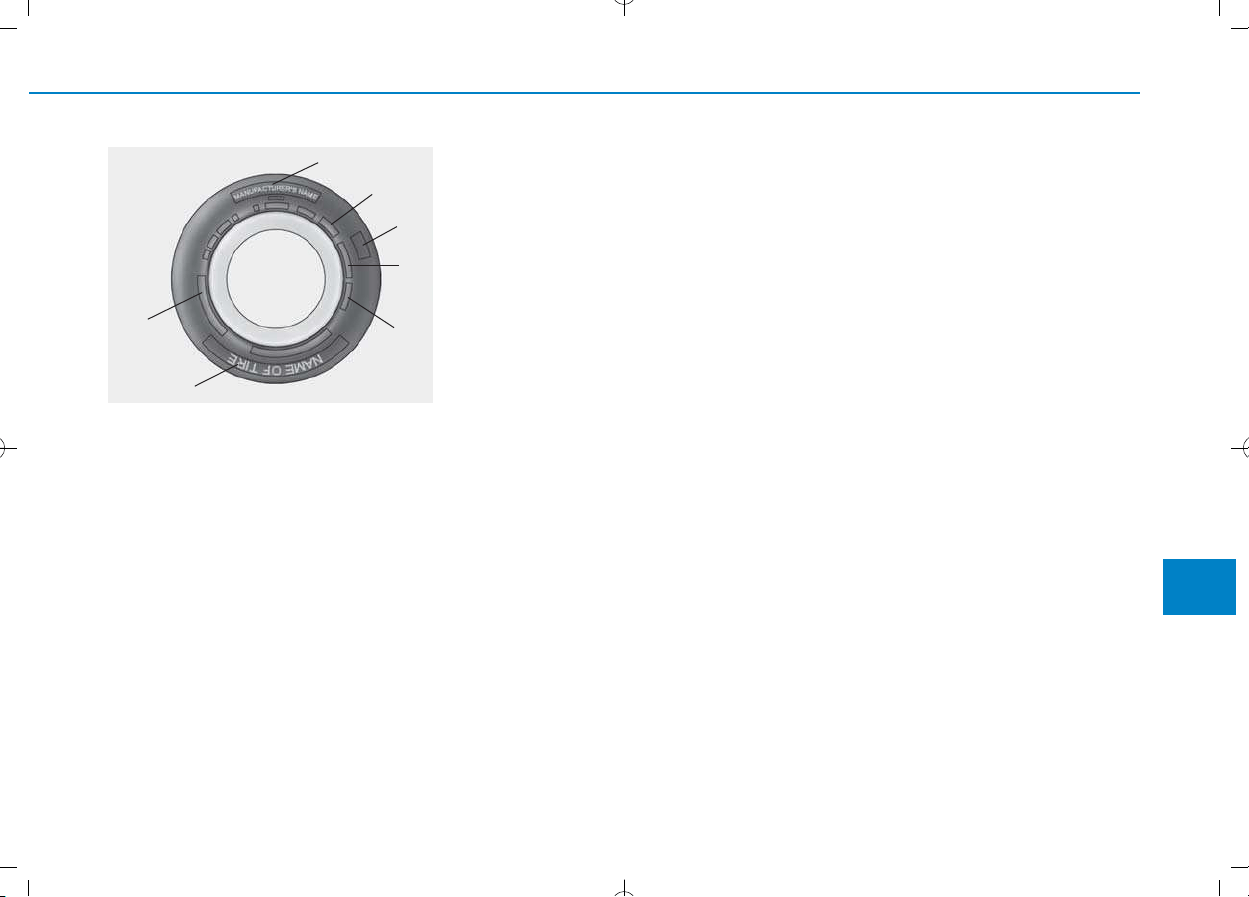
7-43
7
Maintenance
1. Manufacturer or brand name
Manufacturer or brand name is
shown.
2. Tire size designation
A tire’s sidewall is marked with a tire
size designation. You will need this
information when selecting replace-
ment tires for your car. The following
explains what the letters and num-
bers in the tire size designation
mean.
Example tire size designation:
(These numbers are provided as an
example only; your tire size designa-
tor could vary depending on your
vehicle.)
235/35R19 91Y
235 - Tire width in millimeters.
35 - Aspect ratio. The tire’s section
height as a percentage of its
width.
R - Tire construction code (Radial).
19 - Rim diameter in inches.
91 - Load Index, a numerical code
associated with the maximum
load the tire can carry.
Y - Speed Rating Symbol. See the
speed rating chart in this section
for additional information.
Wheel size designation
Wheels are also marked with impor-
tant information that you need if you
ever have to replace one. The follow-
ing explains what the letters and
numbers in the wheel size designa-
tion mean.
Example wheel size designation:
8.0JX19
8.0 - Rim width in inches.
J - Rim contour designation.
19 - Rim diameter in inches.
OLMB073028
1
1
2
3
4
5,6
7

7-44
Maintenance
Tire speed ratings
The chart below lists many of the dif-
ferent speed ratings currently being
used for passenger vehicle tires. The
speed rating is part of the tire size
designation on the sidewall of the
tire. This symbol corresponds to that
tire’s designed maximum safe oper-
ating speed.
3. Checking tire life (TIN : Tire
Identification Number)
Any tires that are over six years old,
based on the manufacturing date,
(including the spare tire) should be
replaced by new ones. You can find
the manufacturing date on the tire
sidewall (possibly on the inside of the
wheel), displaying the DOT Code.
The DOT Code is a series of num-
bers on a tire consisting of numbers
and English letters. The manufactur-
ing date is designated by the last four
digits (characters) of the DOT code.
DOT : XXXX XXXX OOOO
The front part of the DOT shows a
plant code number, tire size and
tread pattern and the last four num-
bers indicate week and year manu-
factured.
For example:
DOT XXXX XXXX 1517 represents
that the tire was produced in the 15th
week of 2017.
4. Tire ply composition and
material
The number of layers or plies of rub-
ber-coated fabric in the tire. Tire
manufacturers also must indicate the
materials in the tire, which include
steel, nylon, polyester, and others.
The letter "R" means radial ply con-
struction; the letter "D“ means diago-
nal or bias ply construction; and the
letter "B" means belted-bias ply con-
struction.
5. Maximum permissible infla-
tion pressure
This number is the greatest amount
of air pressure that should be put in
the tire. Do not exceed the maximum
permissible inflation pressure. Refer
to the Tire and Loading Information
label for recommended inflation
pressure.
Speed
Rating
Symbol
Maximum Speed
S 180 km/h (112 mph)
T 190 km/h (118 mph)
H 210 km/h (130 mph)
V 240 km/h (149 mph)
W 270km/h (168mph)
Y 300km/h (186mph)

7-45
7
Maintenance
6. Maximum load rating
This number indicates the maximum
load in kilograms and pounds that
can be carried by the tire. When
replacing the tires on the vehicle,
always use a tire that has the same
load rating as the factory installed
tire.
7. Uniform tire quality grading
Quality grades can be found where
applicable on the tire sidewall
between tread shoulder and maxi-
mum section width.
For example:
TREAD WEAR 200
TRACTION AA
TEMPERATURE A
Tread wear
The tread wear grade is a compara-
tive rating based on the wear rate of
the tire when tested under controlled
conditions on a specified govern-
ment test course. For example, a tire
graded 150 would wear one-and-a-
half times (1½) as well on the gov-
ernment course as a tire graded 100.
The relative performance of tires
depends upon the actual conditions
of their use, however, and may
depart significantly from the norm
due to variations in driving habits,
service practices and differences in
road characteristics and climate.
These grades are molded on the
sidewalls of passenger vehicle tires.
The tires available as standard or
optional equipment on your vehicle
may vary with respect to grade.
Traction - AA, A, B & C
The traction grades, from highest to
lowest, are AA, A, B and C. Those
grades represent the tire’s ability to
stop on wet pavement as measured
under controlled conditions on spec-
ified government test surfaces of
asphalt and concrete. A tire marked
C may have poor traction perform-
ance.
The traction grade assigned to
this tire is based on straight-
ahead braking traction tests,
and does not include accelera-
tion, cornering, hydroplaning,
or peak traction characteristics.
WARNING
7-46
Maintenance
Temperature - A, B & C
The temperature grades are A (the
highest), B and C representing the
tire’s resistance to the generation of
heat and its ability to dissipate heat
when tested under controlled condi-
tions on a specified indoor laboratory
test wheel.
Sustained high temperature can
cause the material of the tire to
degenerate and reduce tire life, and
excessive temperature can lead to
sudden tire failure. Grades B and A
represent higher levels of perform-
ance on the laboratory test wheel
than the minimum required by law.
Low aspect ratio tires
A low aspect ratio tire, of which the
aspect ratio is lower than 50, is
designed for a sporty-look vehicle.
The low aspect ratio is to optimize
handling and braking. Thus, it may
be uncomfortable to ride and it may
generate noises, in comparison with
a normal tire.
The temperature grade for this
tire is established for a tire that
is properly inflated and not
overloaded. Excessive speed,
under-inflation, over-inflation,
or excessive loading, either
separately or in combination,
can cause heat build-up and
possible sudden tire failure.
This may cause loss of vehicle
control resulting in an accident.
WARNING
The side wall of a low aspect
ratio tire is shorter than the nor-
mal one. Thus, the low-aspect
wheel and tire are easily dam-
aged. Follow the below instruc-
tions.
• When driving on a rough road
or driving off a road, be care-
ful not to damage the tires
and wheels. After driving,
inspect the tires and wheels.
• When passing over a pothole,
speed bump, manhole, or
curb stone, slowly drive the
vehicle not to damage the
tires and wheels.
(Continued)
CAUTION
(Continued)
• When there is an impact on a
tire, inspect the tire condition.
Or, contact an authorized
HYUNDAI dealer.
• Inspect the tire condition and
pressure every 3,000 km
(1,800 miles) to prevent a tire
damage.
• It is difficult to recognize a tire
damage only with your eyes.
When there is a slight hint of a
tire damage, check and replace
the tire to prevent the damage
caused by air leakage.
• When a tire is damaged while
driving on a rough road, off a
road, or over obstacles, such
as a pothole, manhole, or curb
stone, your warranty does not
cover the damage.
• The tire information is speci-
fied on the tire side wall.
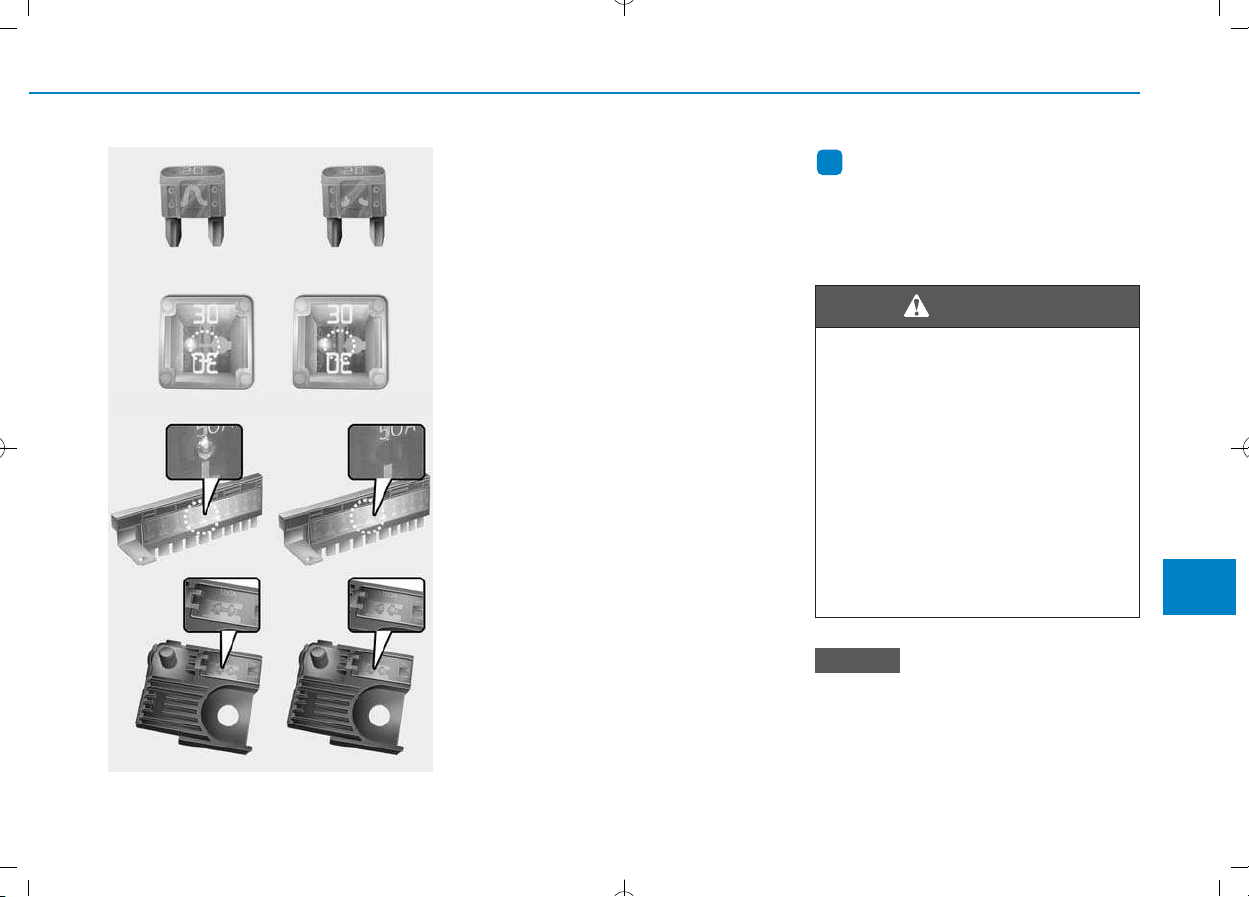
7-47
7
Maintenance
FFUUSSEESS
A vehicle’s electrical system is pro-
tected from electrical overload dam-
age by fuses.
This vehicle has 2 (or 3) fuse panels,
one located in the driver’s side panel
bolster, the other in the engine com-
partment.
If any of your vehicle’s lights, acces-
sories, or controls do not work, check
the appropriate circuit fuse. If a fuse
has blown, the element inside the
fuse will be melted or broken.
If the electrical system does not
work, first check the driver’s side
fuse panel. Before replacing a blown
fuse, turn the engine and all switches
off, and then disconnect the negative
battery cable. Always replace a
blown fuse with one of the same rat-
ing.
If the replacement fuse blows, this indi-
cates an electrical problem. Avoid
using the system involved and immedi-
ately consult an authorized HYUNDAI
dealer.
Information
Three kinds of fuses are used: blade
type for lower amperage rating, car-
tridge type, and multi fuse for higher
amperage ratings.
Do not use a screwdriver or any
other metal object to remove
fuses because it may cause a
short circuit and damage the sys-
tem.
NOTICE
i
Normal
■ Blade type
■ Cartridge type
Blown
Normal
Blown
Normal
Blown
OLF074075
NEVER replace a fuse with any-
thing but another fuse of the
same rating.
• A higher capacity fuse could
cause damage and possibly
cause a fire.
• Do not install a wire or alu-
minum foil instead of the
proper fuse - even as a tem-
porary repair. It may cause
extensive wiring damage and
possibly a fire.
WARNING
Normal
Blown
■ Multi fuse
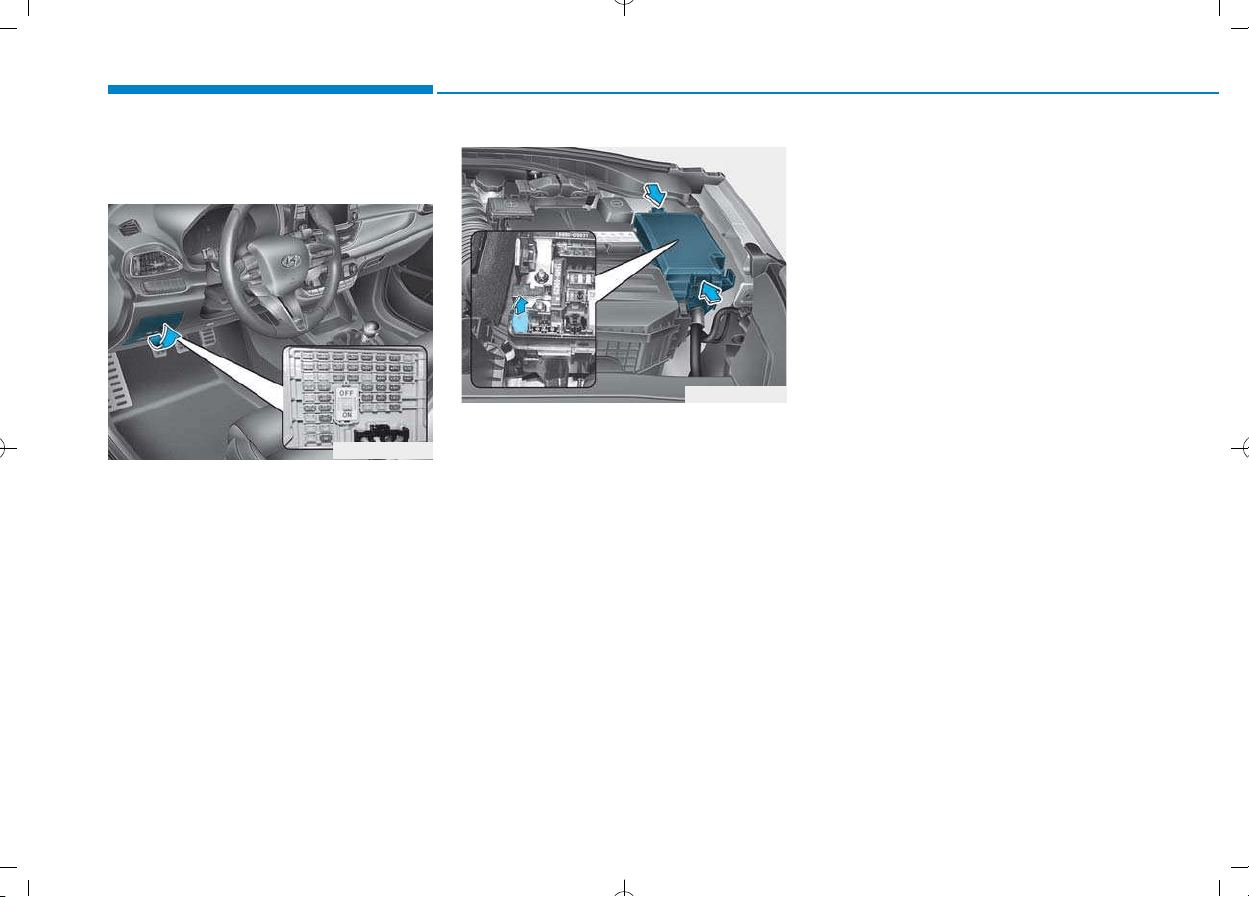
7-48
Maintenance
Instrument panel fuse replace-
ment
1. Turn the vehicle off.
2. Turn all other switches OFF.
3. Open the fuse panel cover.
4. Refer to the label on the inside of
the fuse panel cover to locate the
suspected fuse location.
5. Pull the suspected fuse straight
out. Use the removal tool provided
in the engine compartment fuses
panel.
6. Check the removed fuse; replace it
if it is blown. Spare fuses are pro-
vided in the instrument panel fuse
panels (or in the engine compart-
ment fuse panel).
7. Push in a new fuse of the same
rating, and make sure it fits tightly
in the clips. If it fits loosely, consult
an authorized HYUNDAI dealer.
In an emergency, if you do not have
a spare fuse, use a fuse of the same
rating from a circuit you may not
need for operating the vehicle, such
as the cigarette lighter fuse.
If the headlamps or other electrical
components do not work and the
fuses are undamaged, check the
fuse panel in the engine compart-
ment. If a fuse is blown, it must be
replaced with the same rating.
OPDEN077034
OPDEN077035
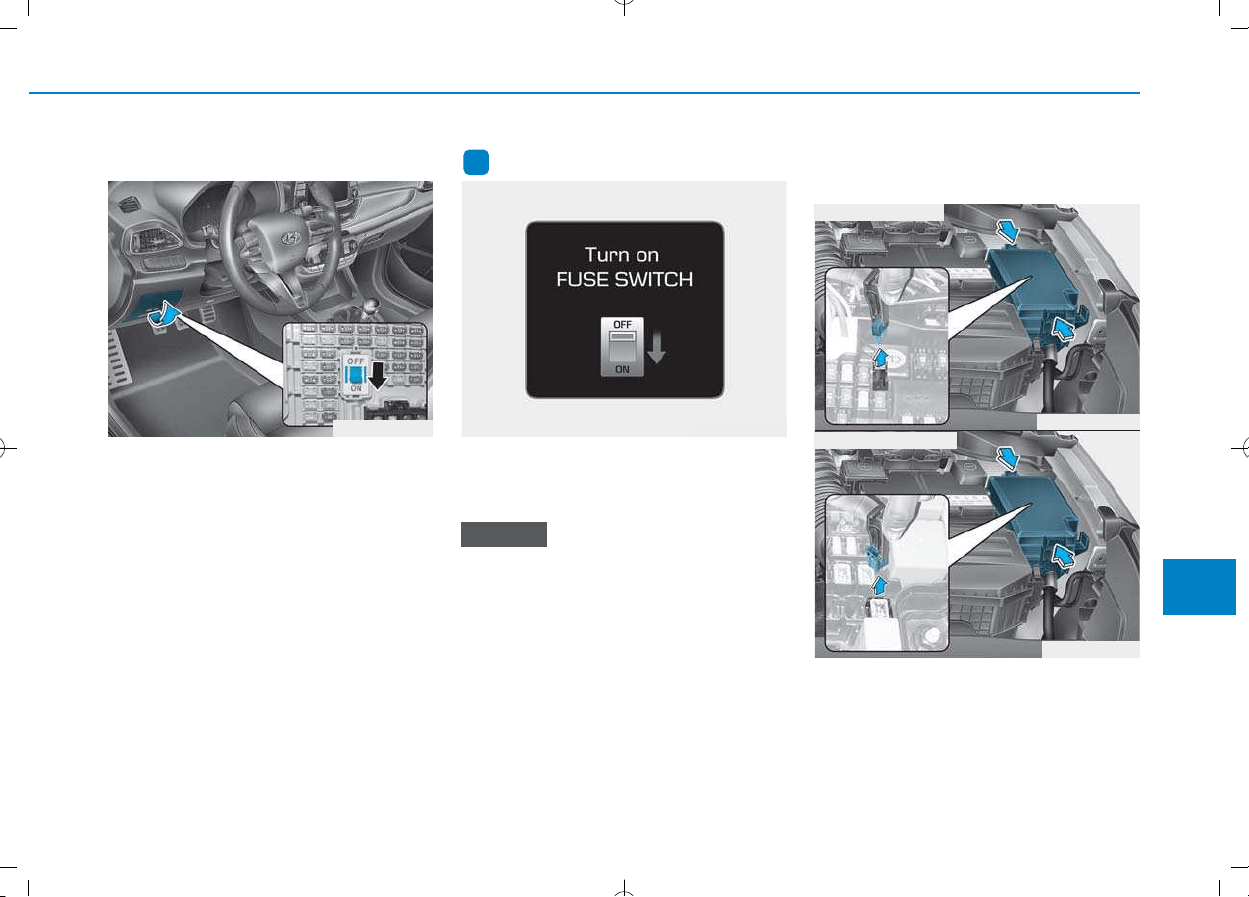
7-49
7
Maintenance
Fuse switch
Always, place the fuse switch to the
ON position.
If you move the switch to the OFF
position, some items such as the
audio system and digital clock must
be reset and the smart key may not
work properly.
Information
If the fuse switch is OFF, “Turn on
FUSE SWITCH” message will appear.
• Always place the fuse switch in
the ON position while driving the
vehicle.
• Do not move the transportation
fuse switch repeatedly. The fuse
switch may be damaged.
Engine compartment panel
fuse replacement
1. Turn the vehicle off.
2. Turn all other switches OFF.
3. Remove the fuse panel cover by
pressing the tab and pulling up.
NOTICE
i
OPDEN077036 OPDE046119
OPDEN077032
OPDEN077033
■ Blade type fuse
■ Cartridge type fuse
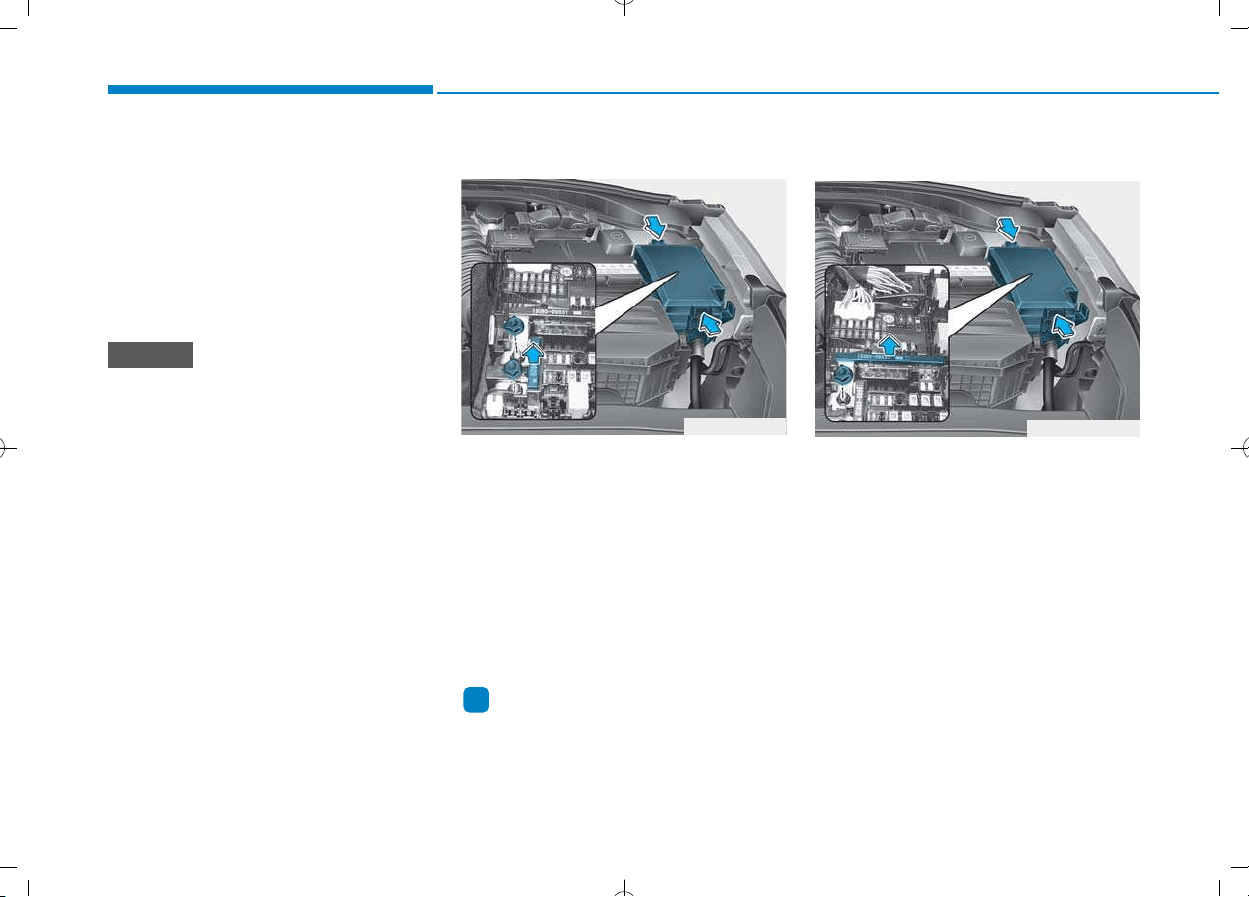
7-50
Maintenance
4. Check the removed fuse; replace it
if it is blown. To remove or insert
the fuse, use the fuse puller in the
engine compartment fuse panel.
5. Push in a new fuse of the same
rating, and make sure it fits tightly
in the clips. If it fits loosely, consult
an authorized HYUNDAI dealer.
After checking the fuse panel in
the engine compartment, securely
install the fuse panel cover. You
may hear a clicking sound if the
cover is securely latched. If it is
not securely latched, electrical
failure may occur from water con-
tact.
Main fuse
1. Turn the engine off.
2. Turn all other switches off.
3. Remove the fuse panel cover by
pressing the tab and pulling it up.
4. Remove the nuts shown in the pic-
ture above.
5. Replace the fuse with a new one
of the same rating.
6. Reinstall in the reverse order of
removal.
Information
If the main fuse is blown, we recom-
mend that you consult an authorized
HYUNDAI dealer.
Multi fuse
1. Turn the vehicle off.
2. Disconnect the negative battery
cable.
3. Remove the fuse panel cover by
pressing the tab and pulling it up.
4. Remove the nuts shown in the pic-
ture above.
5. Replace the fuse with a new one
of the same rating.
6. Reinstall in the reverse order of
removal.
If the multi fuse is blown, we recom-
mend that you consult an authorized
HYUNDAI dealer.
i
NOTICE
OPDEN077030
OPDEN0770031
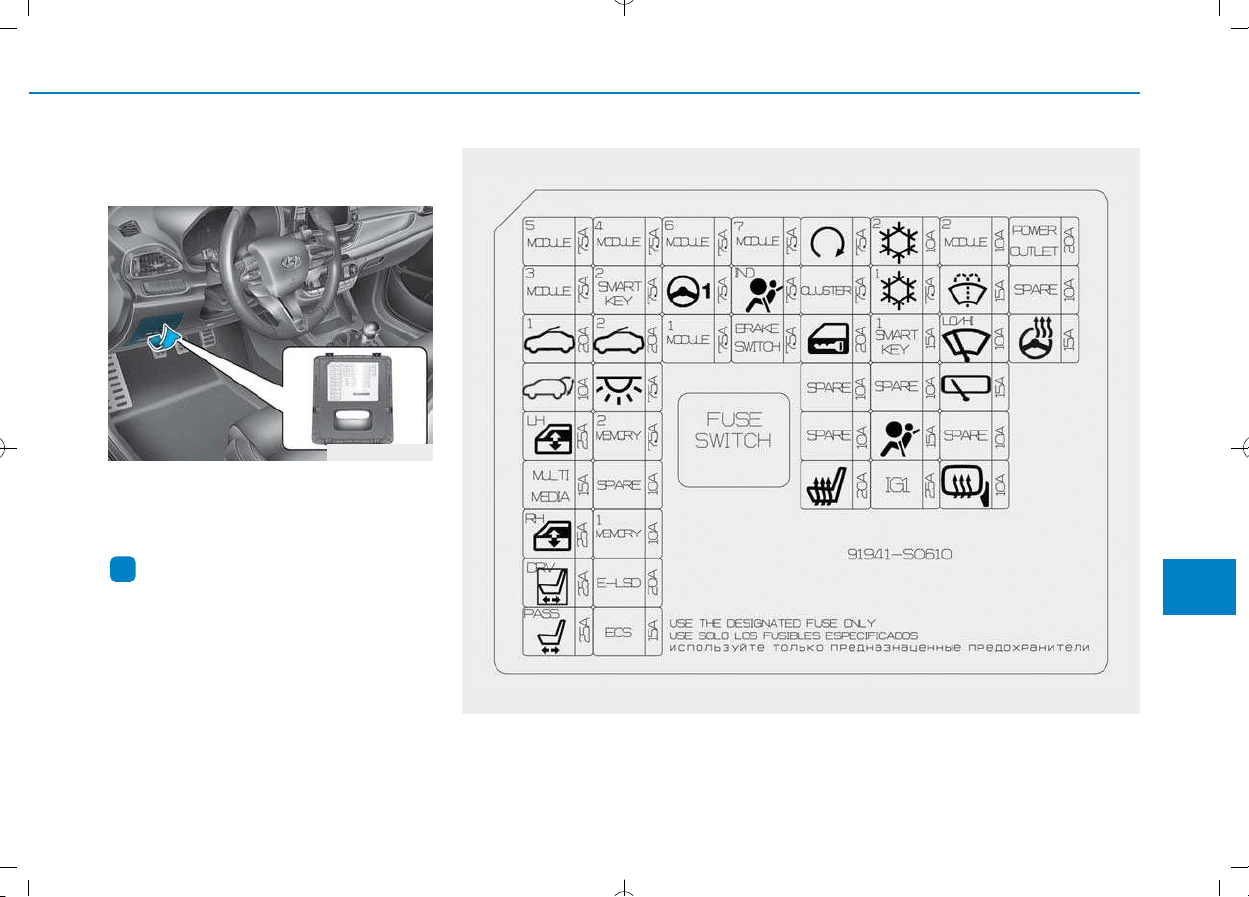
7-51
7
Maintenance
Fuse/Relay panel description
Driver’s side fuse panel
Inside the fuse/relay box covers, you
can find the fuse/relay label describ-
ing fuse/relay names and ratings.
Information
Not all fuse panel descriptions in this
manual may be applicable to your
vehicle. It is accurate at the time of
printing. When you inspect the fuse
box on your vehicle, refer to the fuse
box label.
i
OPDEN077039
OPDEN077040
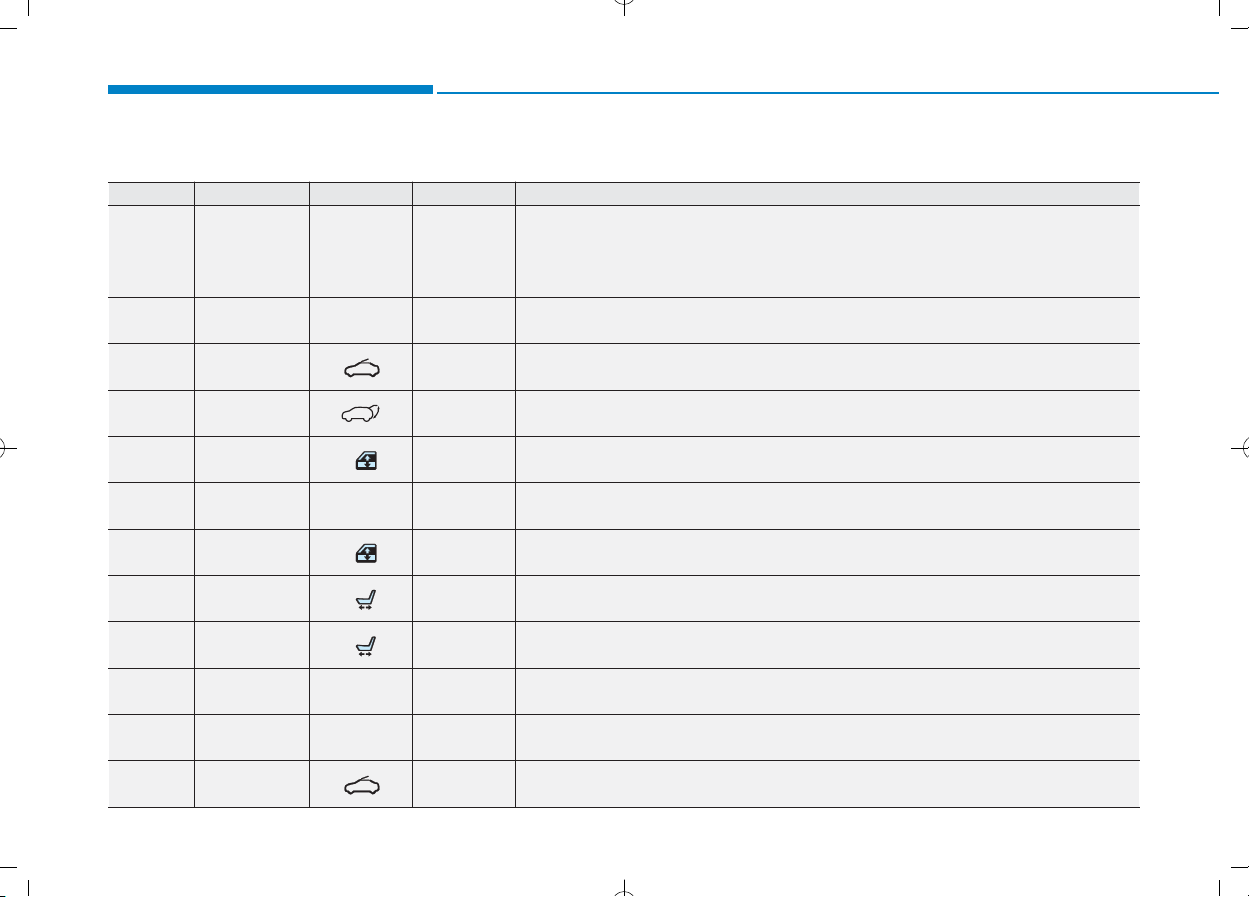
7-52
Maintenance
Driver's side fuse Panel
Fuse No. Fuse Name Symbol Fuse Rating Circuit Protected
F1 MODULE 5
MODULE
5
7.5A
Electro Chromic Mirror, MTS E-Call Module, Audio, A/V & Navigation Head Unit,
A/C Control Module, A/T Shift Lever Indicator, Console Switch RH, DC-DC Converter,
Head Lamp LH/RH, Auto Head Lamp Leveling Device Module,
Front Seat Warmer Control Module, Driver IMS Module
F2 MODULE 3
MODULE
3
7.5A Driver/Passenger Door Module, BCM
F3 SUNROOF 1
1
20A Panorama Sunroof
F4 TAILGATE 10A Tail Gate Relay
F5
POWER
WINDOW LH
LH
25A
Power Window LH Relay, Driver/Passenger Safety Window Module,
Rear Safety Window Module LH
F6 MULTIMEDIA
MULTI
MEDIA
15A Audio, A/V & Navigation Head Unit, DC-DC Converter
F7
POWER
WINDOW RH
RH
25A
Power Window RH Relay, Driver/Passenger Safety Window Module,
Rear Safety Window Module RH
F8
POWER
SEAT DRIVER
DRV
25A Driver Seat Manual Switch, Driver IMS Module
F9
POWER SEAT
PASSENGER
PASS
25A Passenger Seat Manual Switch
F10 MODULE 4
MODULE
4
7.5A Lane Keeping Assist Module, Stop Lamp Switch, BCM, LSD ECU, ECS Unit
F11 SMART KEY 2
SMART
KEY
2
7.5A Smart Key Control Module, Immobilizer Module
F12 SUNROOF 2
2
20A Panorama Sunroof
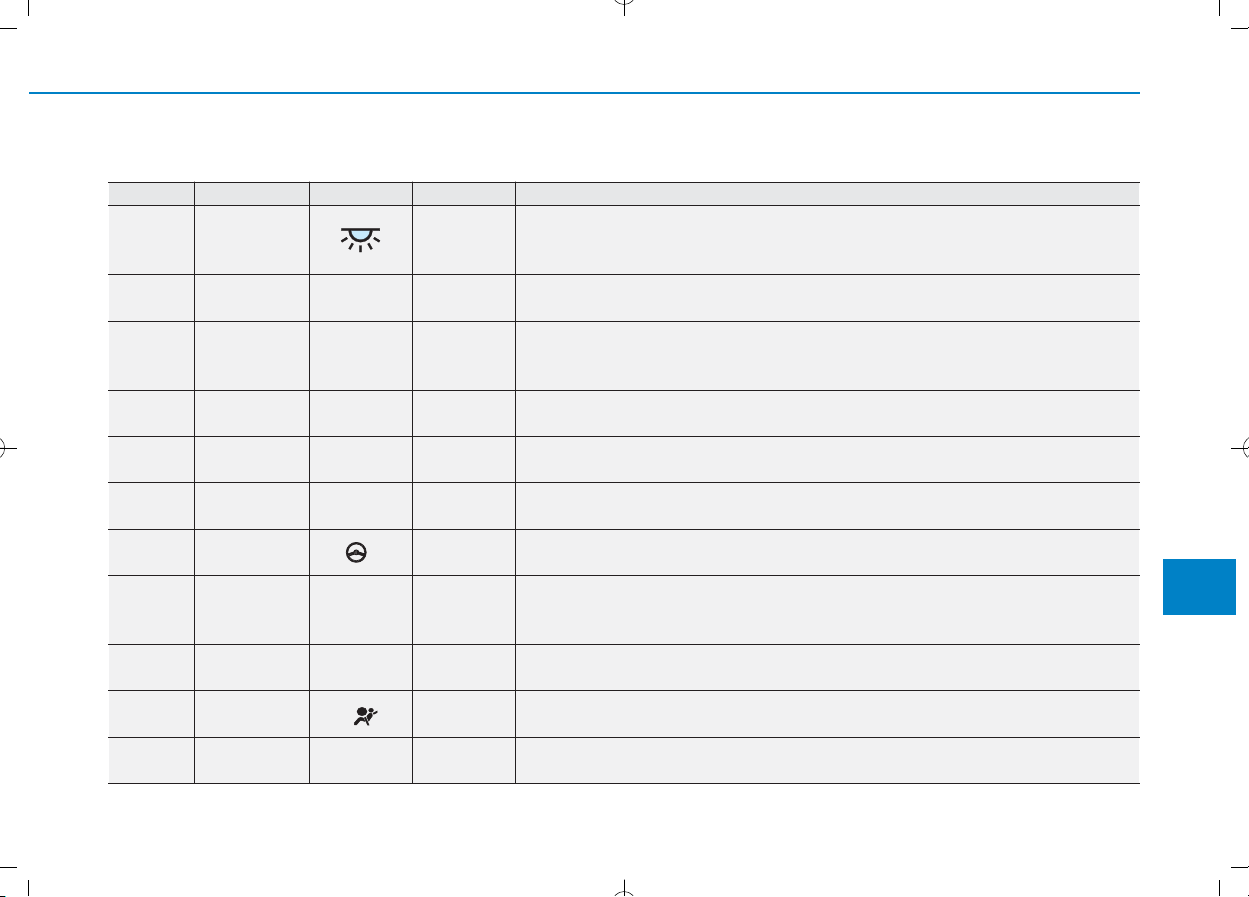
7-53
7
Maintenance
Driver's side fuse Panel
Fuse No. Fuse Name Symbol Fuse Rating Circuit Protected
F13
INTERIOR
LAMP
7.5A
Wireless Charger, Vanity Lamp LH/RH, Room Lamp, Overhead Console Lamp,
Personal Lamp LH/RH, Rain Sensor, Ignition Key Ill. & Door Warning Switch,
Glove Box Lamp, Luggage Lamp, Rain Sensor
F14 MEMORY 2
MEMORY
2
7.5A MTS E-Call Module
F16 MEMORY 1
MEMORY
1
10A
Driver/Passenger Door Module, Driver IMS Module, BCM, A/C Control Module,
Instrument Cluster, Auto Light & Photo Sensor,
ICM Relay Box (Outside Mirror Folding/Unfolding Relay)
F17 E-LSD
E-LSD
20A LSD ECU
F18 ECS
ECS
15A ECS Unit
F19 MODULE 6
MODULE
6
7.5A Smart Key Control Module, BCM
F20 MDPS
1
7.5A MDPS Unit, Steering Angle Sensor
F21 MODULE 1
MODULE
1
7.5A
Hazard Switch, Center Door Lock Switch,
Driver/Passenger Door Module, Driver/Passenger Power Outside Mirror,
Driver/Passenger Smart Key Outside Handle, Data Link Connector
F22 MODULE 7
MODULE
7
7.5A Front Seat Warmer Control Module, ESG Unit, Cooling Fan Motor, Nozzle
F23
AIRBAG
INDICATOR
IND
7.5A Instrument Cluster, Center Door Lock Switch
F24
BRAKE
SWITCH
BRAKE
SWITCH
7.5A Smart Key Control Module, Stop Lamp Switch
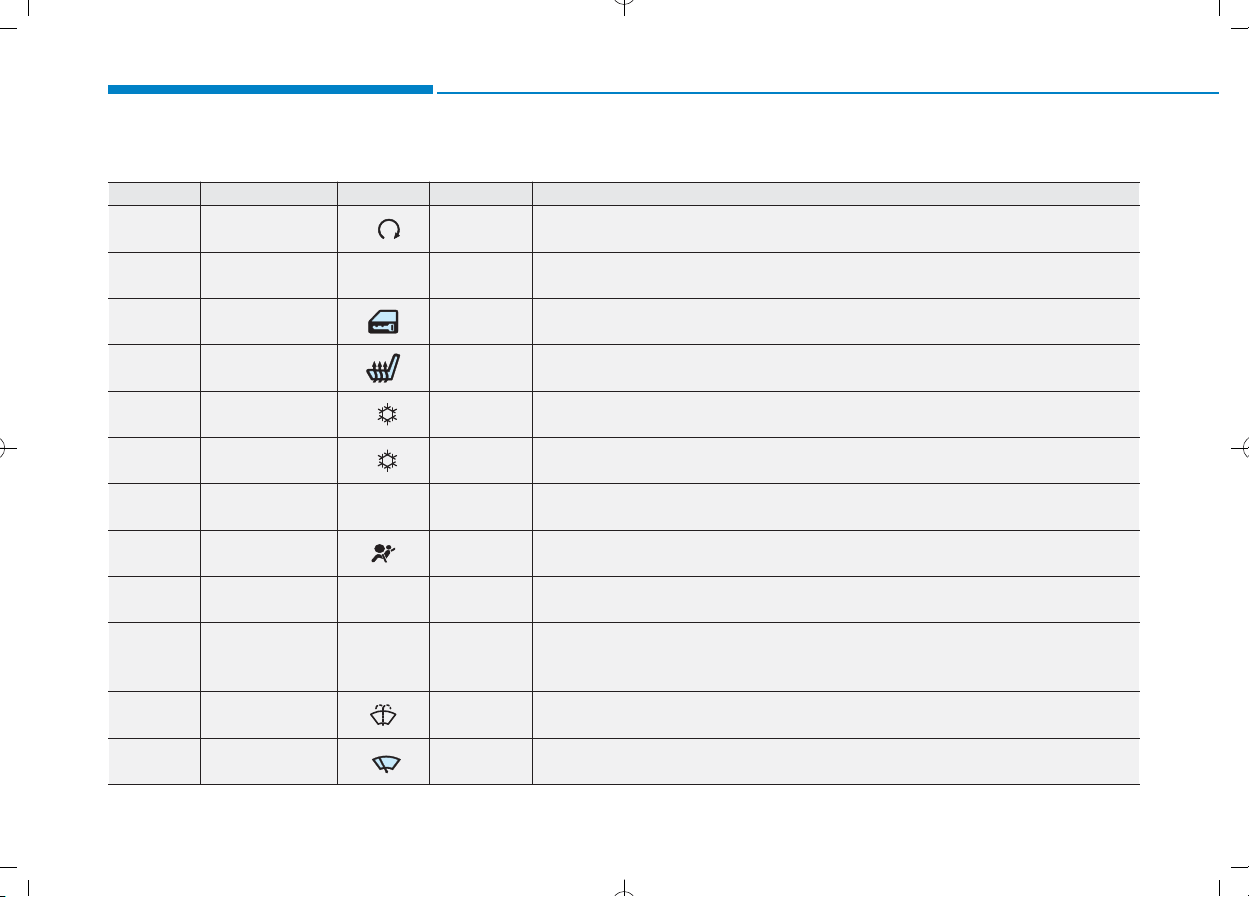
7-54
Maintenance
Driver's side fuse Panel
Fuse No. Fuse Name Symbol Fuse Rating Circuit Protected
F25 START 7.5A Smart Key Control Module, Engine Room Junction Block (RLY.4)
F26 CLUSTER
CLUSTER
7.5A Instrument Cluster
F27 DOOR LOCK 20A Door Lock/Unlock Relay, ICM Relay Box (Dead Lock Relay)
F30
SEAT HEATER
FRONT
20A Front Seat Warmer Control Module
F31
AIR
CONDITIONER 2
2
10A A/C Control Module, ECM, Blower Motor, Engine Room Junction Block (RLY.10)
F32
AIR
CONDITIONER 1
1
7.5A A/C Control Module, Engine Room Junction Block (RLY.10/11)
F33 SMART KEY 1
SMART
KEY
1
15A Smart Key Control Module, Immobilizer Module
F35 AIRBAG 15A SRS Control Module
F36 IGNITION 1
IG1
25A PCB Block (F45/F46/F47)
F37 MODULE 2
MODULE
2
10A
Wireless Charger, MTS E-Call Module, Smart Key Control Module, BCM, Audio,
A/V & Navigation Head Unit, DC-DC Converter, Power Outside Mirror Switch,
Engine Room Junction Block (RLY.14)
F38 WASHER 15A Multifunction Switch
F39 WIPER
LO/HI
10A ECM, BCM
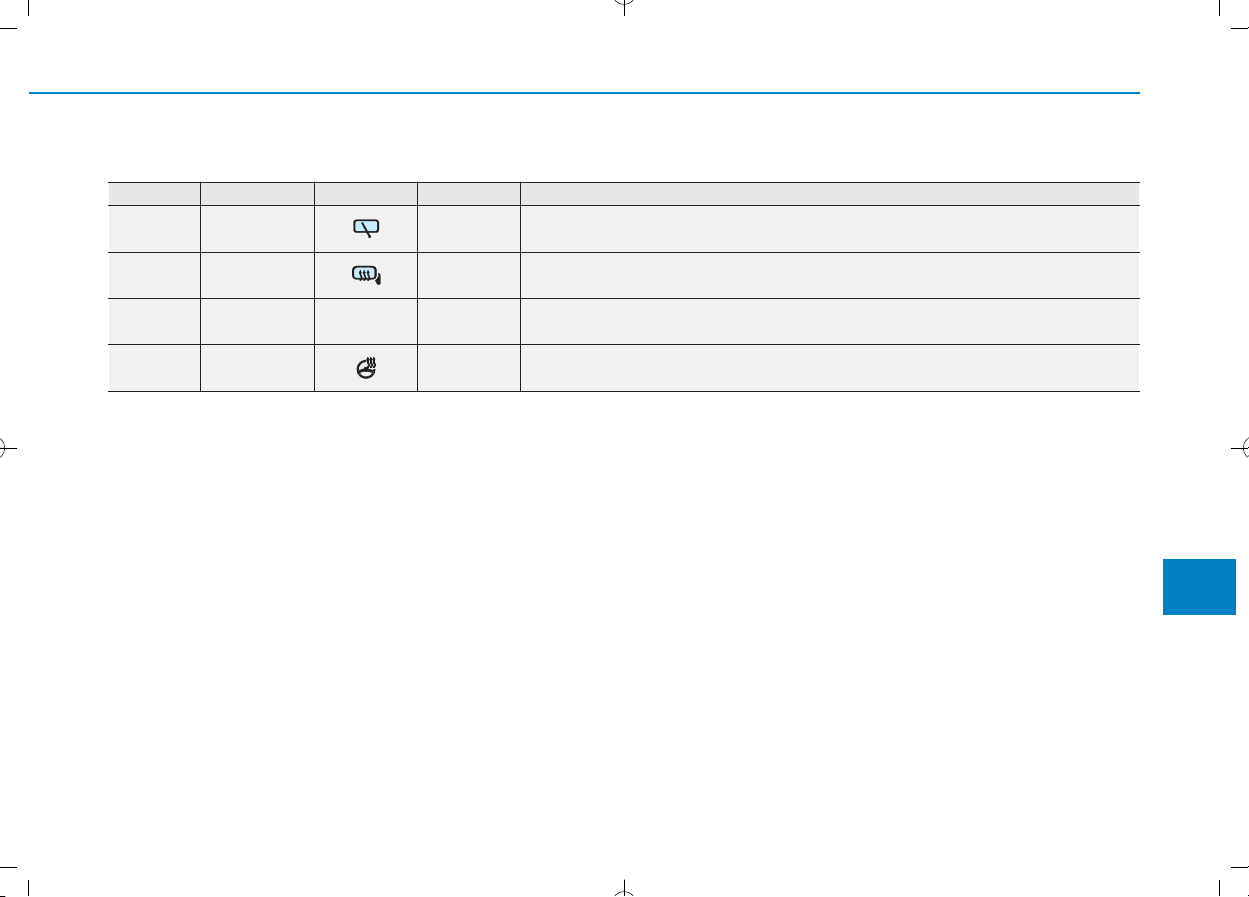
7-55
Maintenance
Driver's side fuse Panel
Fuse No. Fuse Name Symbol Fuse Rating Circuit Protected
F40 REAR WIPER 15A Rear Wiper Relay
F42
MIRROR
HEATED
10A Driver/Passenger Power Outside Mirror, A/C Control Module
F43
POWER
OUTLET
POWER
OUTLET
20A Rear Power Outlet #2
F45
HEATED
STEERING
15A BCM
7
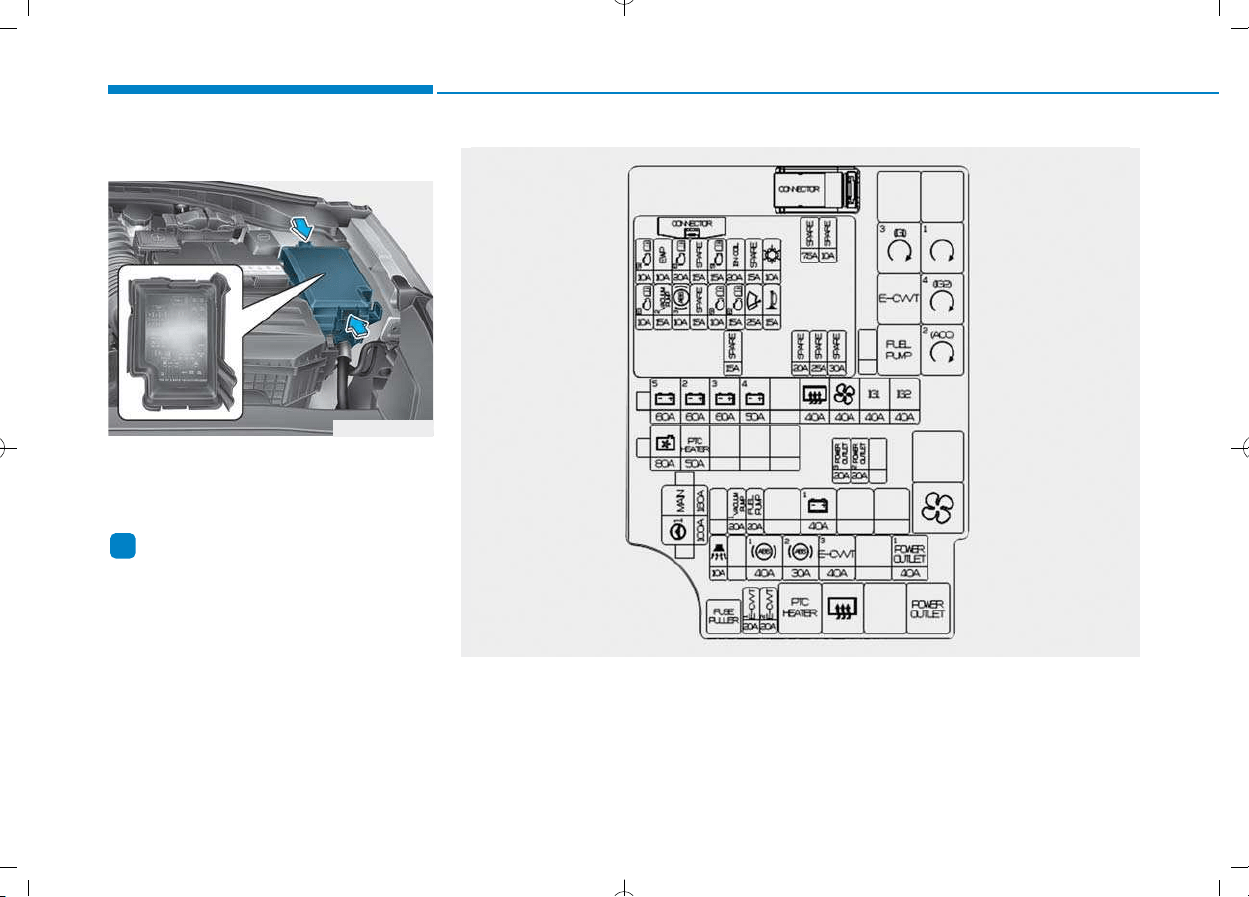
7-56
Maintenance
Engine compartment fuse panel
Inside the fuse/relay box covers, you
can find the fuse/relay label describ-
ing fuse/relay names and ratings.
Information
Not all fuse panel descriptions in this
manual may be applicable to your
vehicle. It is accurate at the time of
printing. When you inspect the fuse
box on your vehicle, refer to the fuse
box label.
i
OPDEN077037
OPDEN077038
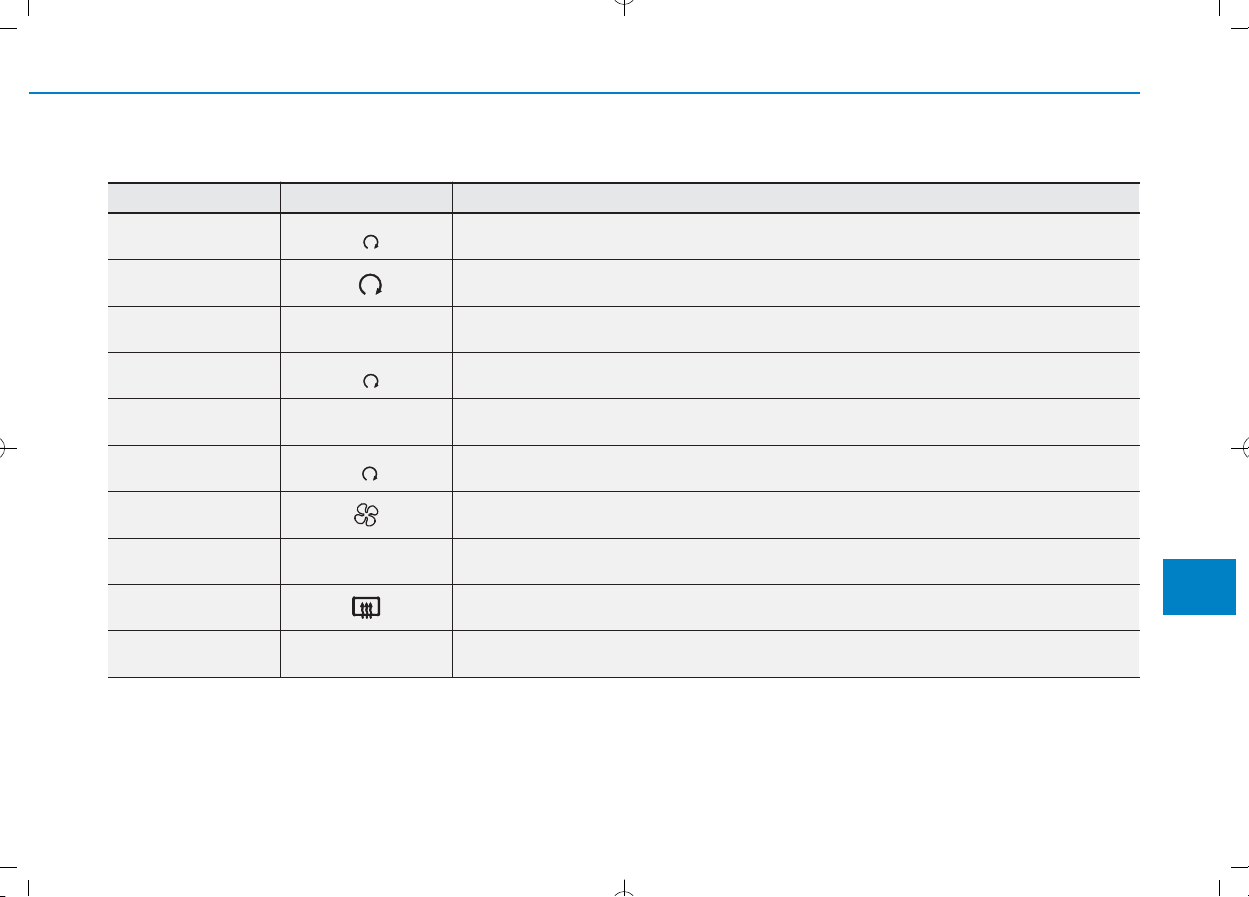
7-57
7
Maintenance
Engine compartment fuse panel
Relay No. Symbol Relay Name
R LY. 3
(IG1)
3
PDM #3 (IG1) Relay
R LY. 4
1
START Relay
R LY. 5
E-CVVT
E-CVVT Relay
R LY. 6
(IG2)
4
PDM #4 (IG2) Relay
R LY. 7
FUEL
PUMP
FUEL PUMP Relay
R LY. 8
(ACC)
2
PDM #2 (ACC) Relay
R LY. 1 0 BLOWER Relay
R LY. 1 1
PTC
HEATER
PTC HEATER #1 Relay
R LY. 1 2 REAR DEFOGGER Relay
R LY. 1 4
POWER
OUTLET
POWER OUTLET Relay
7-58
Maintenance
Engine compartment fuse panel
Fuse No. Fuse Name Symbol Fuse Rating Circuit Protected
F1 MAIN
MAIN
180A Fuse : F27, F29, F30, F33
F2 MDPS 1
1
100A MDPS Unit
F3 B+5
5
60A PCB Block (Fuse : F44, F50, F51, F52, Engine Control Relay)
F4 B+2
2
60A IGPM (Fuse : F30, IPS0, IPS1, IPS2)
F5 B+3
3
60A IGPM (IPS3, IPS4, IPS5, IPS6, IPS7, IPS8)
F6 B+4
4
60A IGPM (Fuse : F3, F4, F5, F7, F8, F9, F12, F17, F18)
F8
REAR
HEATED
40A RLY.12
F9 BLOWER 40A RLY.10
F10 IGNITION 1
IG1
40A Ignition Switch, Engine Room Junction Block (RLY.3, RLY8)
F11 IGNITION 2
IG2
40A Ignition Switch, Engine Room Junction Block (RLY.4, RLY.6)
F12
COOLING
FAN
80A Cooling Fan Motor
F13
PTC
HEATER 1
PTC
HEATER
1
50A RLY.11
7-59
7
Maintenance
Engine compartment fuse panel
Fuse No. Fuse Name Symbol Fuse Rating Circuit Protected
F17
POWER
OUTLET 3
POWER
OUTLET
3
20A Rear Power Outlet
F18
POWER
OUTLET 2
POWER
OUTLET
2
20A Front Power Outlet
F21
VACUUM
PUMP 1
1
VACUUM
PUMP
20A Vacuum Pump
F22 FUEL PUMP
FUEL
PUMP
20A R LY. 7
F24 B+1
1
40A IGPM (Leak Current Autocut Device, Fuse : F21, F24, F27, F33)
F27
BURGLAR
ALARM HORN
10A ICM Relay Box (Burglar Alarm Horn Relay)
F29 ABS 1
1
40A ESP Control Module
F30 ABS 2
2
30A ESP Control Module
F31 E-CVVT 3
3
E-CVVT
40A R LY. 5
F33
POWER OUT-
LET 1
POWER
OUTLET
1
40A RLY.14
F34 E-CVVT1
1
E-CVVT
10A ECM
F35 E-CVVT 2
2
E-CVVT
20A ECM
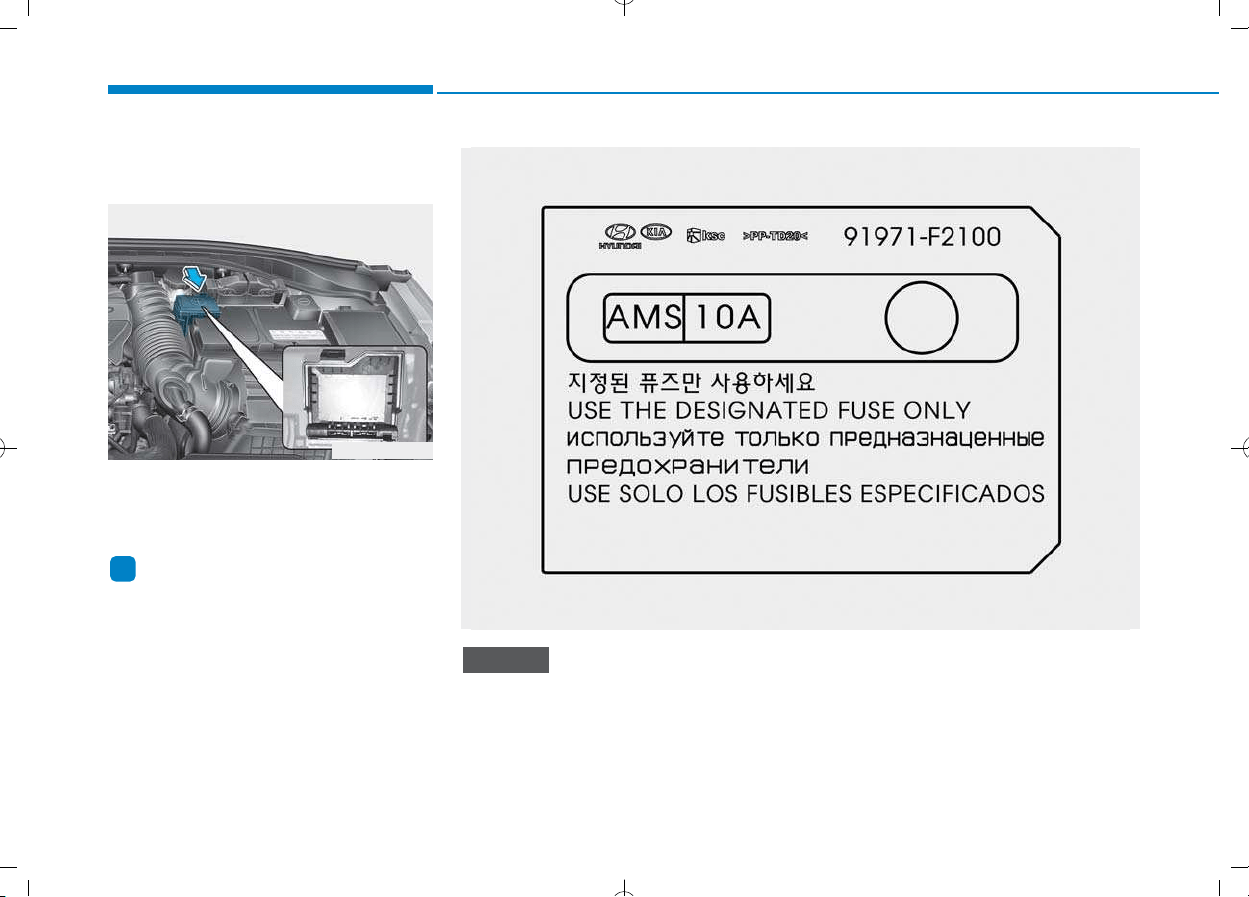
7-60
Maintenance
Engine compartment fuse panel
(Battery terminal cover)
Inside the fuse/relay box cover, you
can find the fuse/relay label describ-
ing fuse/relay names and ratings.
Information
Not all fuse panel descriptions in this
manual may be applicable to your
vehicle; the information is accurate at
the time of printing. When you inspect
the fuse panel in your vehicle, refer to
the fuse panel label.
i
OPDEN077066
OPD076065
After checking the fuse panel in the engine compartment, securely
install the cover. If it is not securely latched, electrical failure may occur
from water contact.
NOTICE

7-61
7
Maintenance
LLIIGGHHTT BBUULLBBSS
Consult an authorized HYUNDAI
dealer to replace most vehicle light
bulbs. It is difficult to replace vehicle
light bulbs because other parts of the
vehicle must be removed before you
can get to the bulb. This is especially
true for removing the headlamp
assembly to get to the bulb(s).
Removing/installing the headlamp
assembly can result in damage to
the vehicle.
Be sure to replace the burned-out
bulb with one of the same wattage
rating. Otherwise, it may cause
damage to the fuse or electrical
wiring system.
Information
After heavy driving rain or washing,
headlamp and tail lamp lenses could
appear frosty. This condition is caused
by the temperature difference between
the lamp inside and outside. This is
similar to the condensation on your
windows inside your vehicle when
raining and doesn’t indicate a problem
with your vehicle. If the water leaks
into the lamp bulb circuitry, we rec-
ommend that the system be checked
by an authorized HYUNDAI dealer.
Information
The headlamp aiming should be adjust-
ed after an accident or after the head-
lamp assembly is reinstalled at an
authorized HYUNDAI dealer.
Information
- Traffic Change
(for Europe)
The low beam light distribution is
asymmetric. If you go abroad to a coun-
try with opposite traffic direction, this
asymmetric part will dazzle oncoming
car driver. To prevent dazzle, ECE reg-
ulation demand several technical solu-
tions (ex. automatic change system,
adhesive sheet, down aiming). These
headlamps are designed not to dazzle
opposite drivers. So, you need not
change your headlamps in a country
with opposite traffic direction.
i
i
i
NOTICE
Prior to working on a light, firmly
apply the parking brake, ensure
that the ignition switch is in the
LOCK/OFF position and turn off
the lights to avoid sudden move-
ment of the vehicle and burning
your fingers or receiving an elec-
tric shock.
WARNING
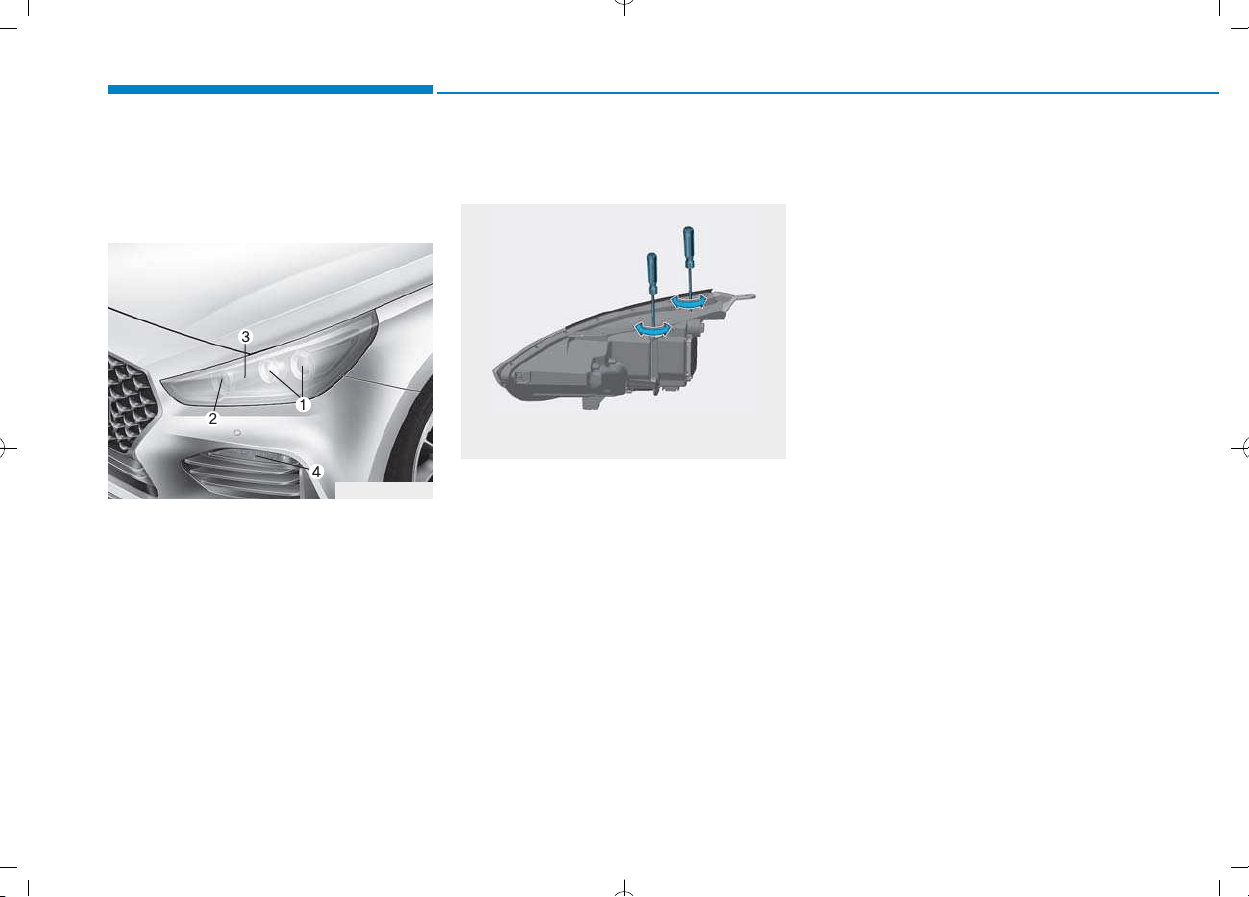
7-62
Maintenance
Headlamp, static bending lamp,
position lamp, turn signal lamp
and daytime running light bulb
replacement
(1) Headlamp (Low)
(2) Headlamp (High)
(3) Static bending light
(4) Position lamp & Turn signal lamp
& Daytime running light
Headlamp, static bending light,
position lamp, turn signal lamp and
daytime running light
If the light bulb does not operate, we
recommend that you have the vehicle
checked by an authorized HYUNDAI
dealer.
Headlamp aiming (for Europe)
Headlamp aiming
1. Inflate the tires to the specified
pressure and remove any loads
from the vehicle except the driver,
spare tire, and tools.
2. The vehicle should be placed on a
flat floor.
3. Draw vertical lines (Vertical lines
passing through respective head
lamp centers) and a horizontal line
(Horizontal line passing through
center of head lamps) on the
screen.
4. With the headlamp and battery in
normal condition, aim the head-
lamps so the brightest portion falls
on the horizontal and vertical
lines.
5. To aim the low beam left or right,
turn the driver clockwise or coun-
terclockwise. To aim the low beam
up or down, turn the driver clock-
wise or counterclockwise.
To aim the high beam up or down,
turn the driver clockwise or coun-
terclockwise.
OPDE077086
OPDEN077041
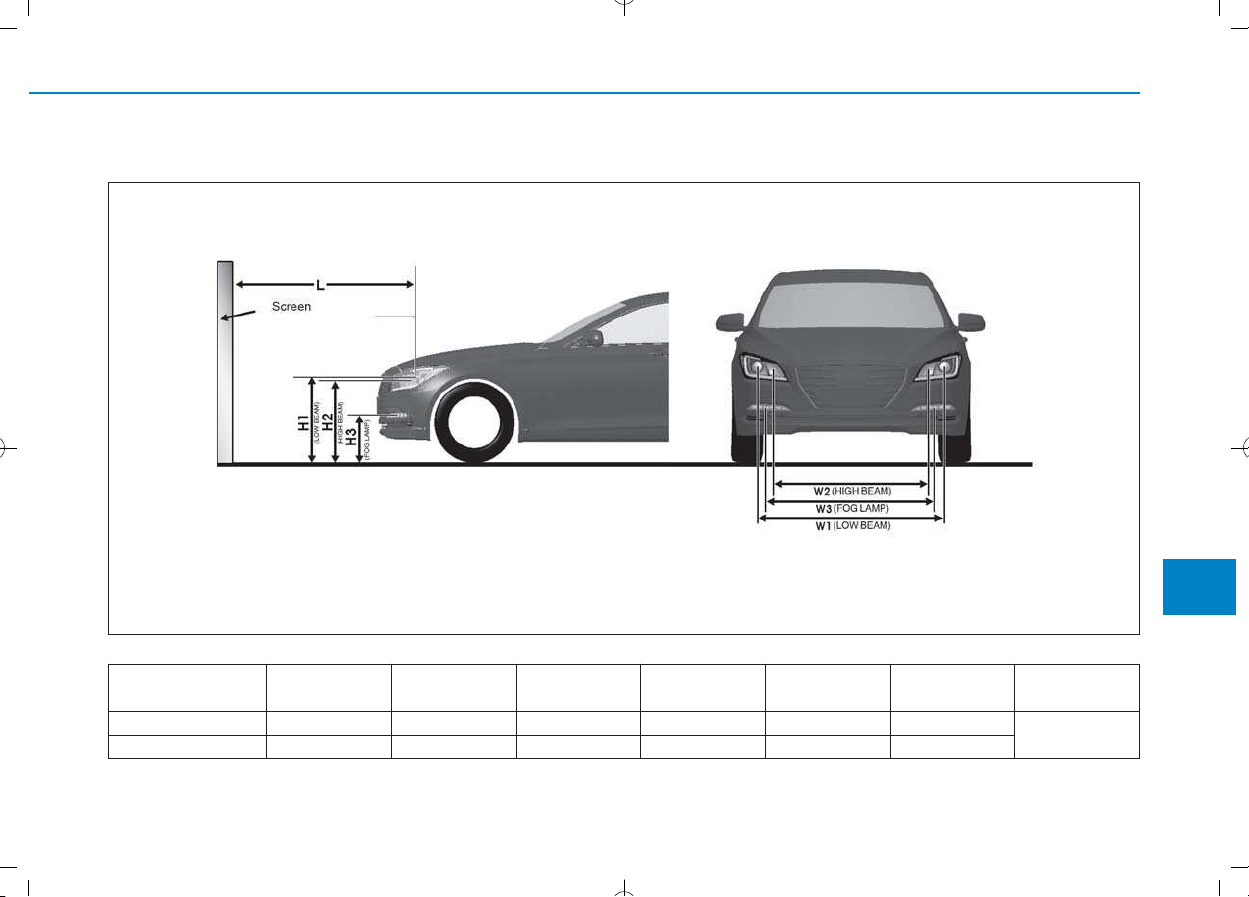
7-63
7
Maintenance
Unit: mm (in)
Aiming point
H1 : Height between the head lamp bulb center and ground (Low beam)
H2 : Height between the head lamp bulb center and ground (High beam)
H3 : Height between the fog lamp bulb center and ground
W1 : Distance between the two head lamp bulbs centers (Low beam)
W2 : Distance between the two head lamp bulbs centers (High beam)
W3 : Distance between the two fog lamp bulbs centers
OPDE076081
Vehicle
condition
Lamp type H1 H2 H3 W1 W2 W3
Without driver LED 677 (26.65) 631 (24.84) 344 (13.54) 1,385 (54.52) 1,114 (43.85)
1,484 (58.42)
With driver LED 672 (26.45) 626 (24.64) 339 (13.34) 1,385 (54.52) 1,114 (43.85)
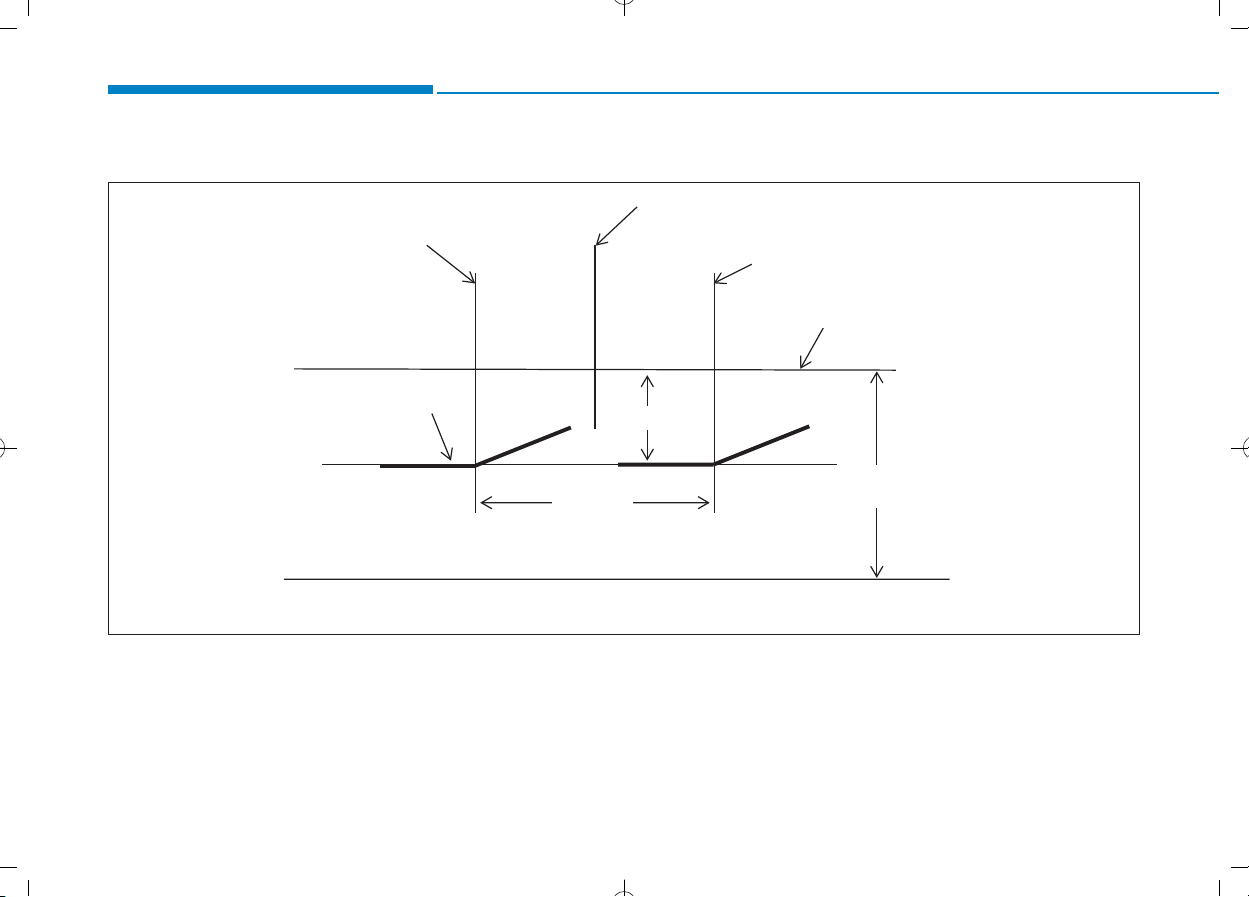
7-64
Maintenance
:
&DUD[LV
9HUWLFDOOLQHRIOHIW
KHDGODPSEXOEFHQWHU
&XWRIIOLQH
9HUWLFDOOLQHRIULJKW
KHDGODPSEXOEFHQWHU
+RUL]RQWDOOLQHRI
KHDGODPSEXOEFHQWHU
*5281'
+
/RZEHDP
/RZEHDP
OPDE076082
■ Based on 10m screen
Headlamp low beam (LHD side)
1. Turn the low beam on without driver aboard.
2. The cut-off line should be projected in the cut-off line shown in the picture.
3. When aiming the low beam, vertical aiming should be adjusted after adjusting the horizontal aiming.
4. If headlamp leveling device is equipped, adjust the head lamp leveling device switch with 0 positions.
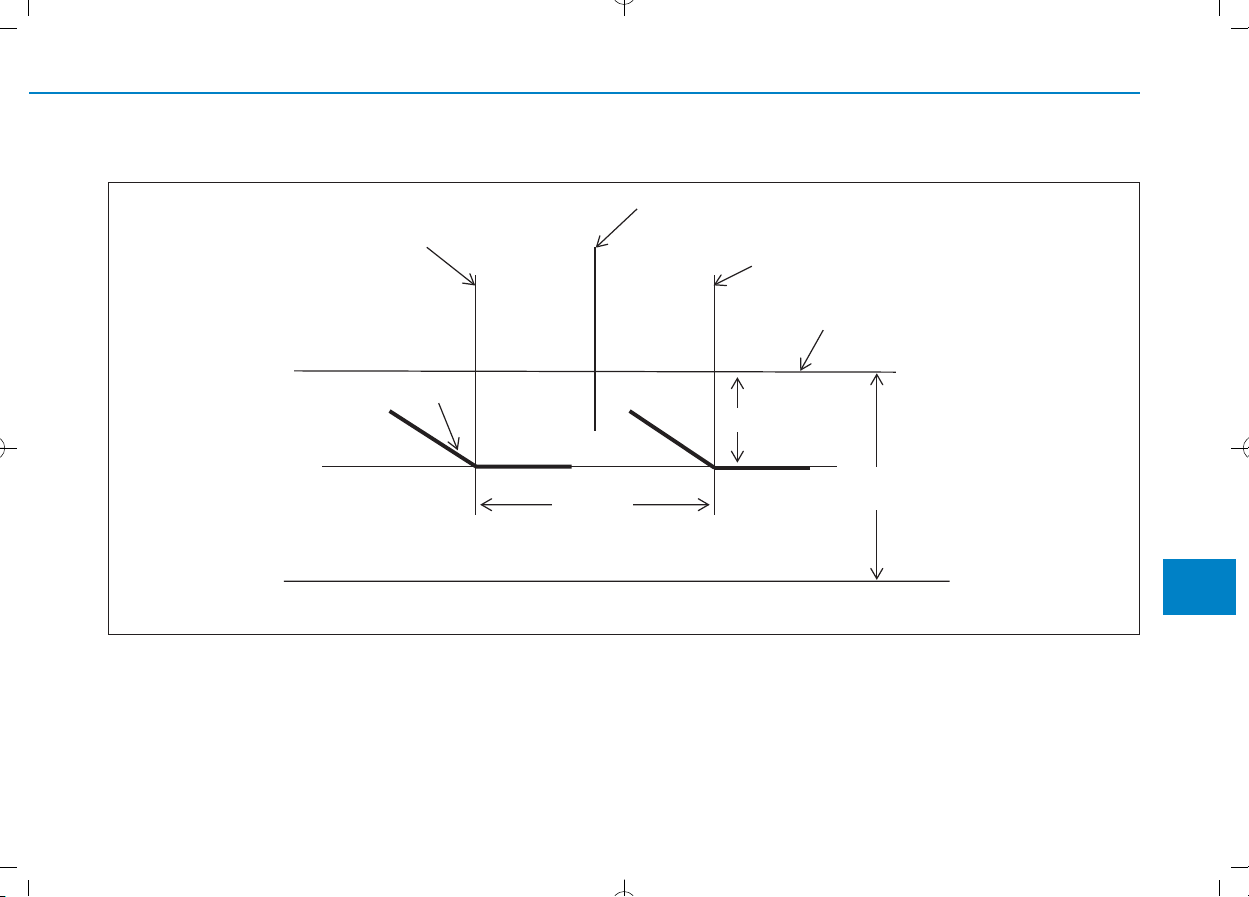
7-65
7
Maintenance
:
&DUD[LV
9HUWLFDOOLQHRIOHIW
KHDGODPSEXOEFHQWHU
&XWRIIOLQH
9HUWLFDOOLQHRIULJKW
KHDGODPSEXOEFHQWHU
+RUL]RQWDOOLQHRI
KHDGODPSEXOEFHQWHU
*5281'
+
/RZEHDP
/RZEHDP
OPDE076083
■ Based on 10m screen
Headlamp low beam (RHD side)
1. Turn the low beam on without driver aboard.
2. The cut-off line should be projected in the cut-off line shown in the picture.
3. When aiming the low beam, vertical aiming should be adjusted after adjusting the horizontal aiming.
4. If headlamp leveling device is equipped, adjust the head lamp leveling device switch with 0 positions.
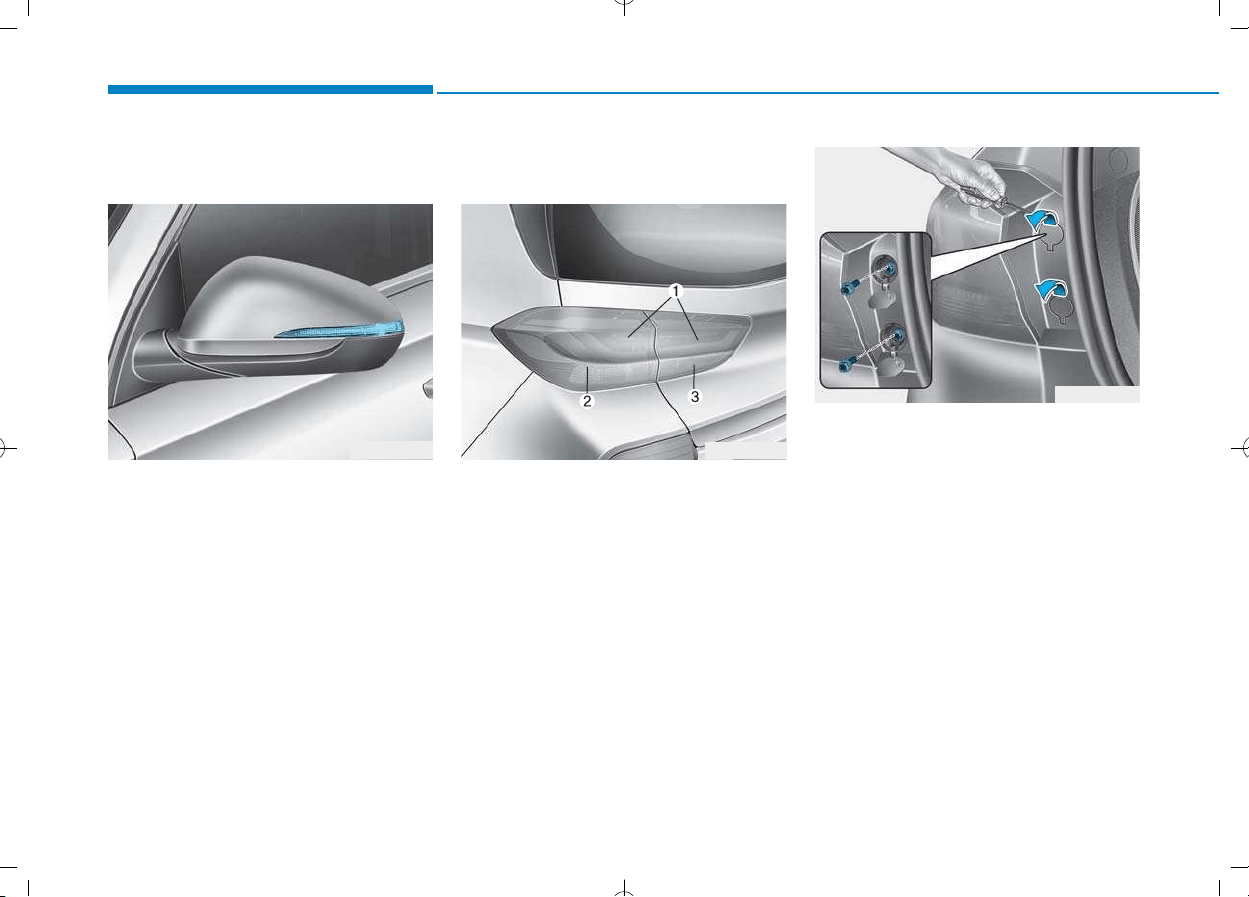
7-66
Maintenance
Side repeater lamp replace-
ment
If the light bulb does not operate, we
recommend that you have the vehicle
checked by an authorized HYUNDAI
dealer.
Rear combination lamp bulb
replacement
(1) Stop/Tail lamp
(2) Turn signal lamp
(3) Backup lamp
Stop/Tail lamp
If the LED lamp does not operate, we
recommend that you have the vehicle
checked by an authorized HYUNDAI
dealer.
Turn signal lamp
1. Turn off the engine.
2. Open the tailgate.
3. Open the lamp assembly retaining
screw covers.
4. Loosen the lamp assembly retain-
ing screws with a cross-tip screw-
driver.
OPD076044
OPD076046
OPD076047

7-67
7
Maintenance
5. Remove the rear combination
lamp assembly from the body of
the vehicle.
6. Remove the socket from the assem-
bly by turning the socket counter-
clockwise until the tabs on the socket
align with the slots on the assembly.
7. Remove the bulb from the socket by
pressing it in and rotating it counter-
clockwise until the tabs on the bulb
align with the slots in the socket. Pull
the bulb out of the socket.
8. Insert a new bulb by inserting it into
the socket and rotating it until it locks
into place.
9. Install the socket in the assembly by
aligning the tabs on the socket with
the slots in the assembly. Push the
socket into the assembly and turn the
socket clockwise.
10. Reinstall the lamp assembly to the
body of the vehicle
Backup lamp
1. Turn off the engine.
2. Open the tailgate.
3. Remove the service cover using a
flat-blade screwdriver.
OPD076048 OPD076064
Turn signal lamp
OPDEN077072
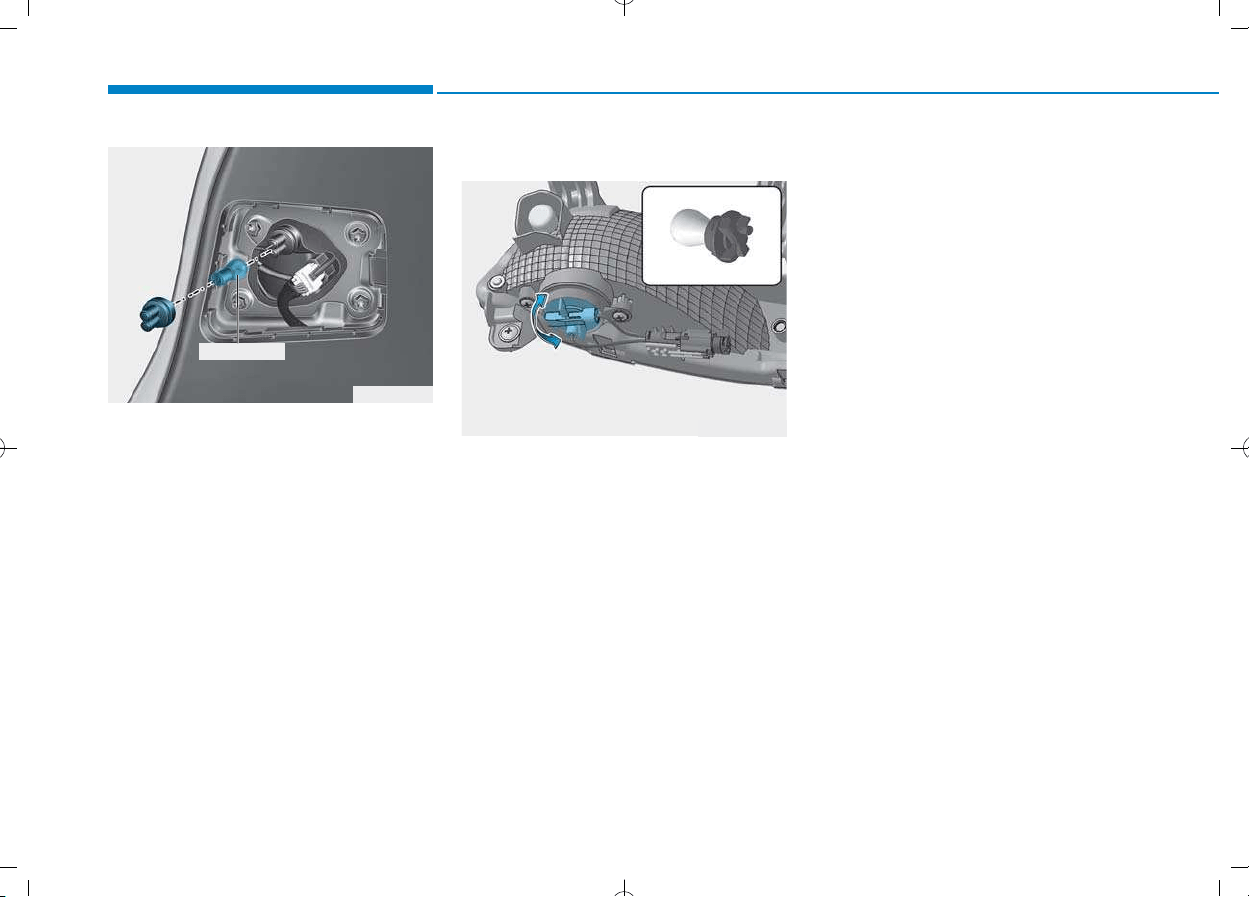
7-68
Maintenance
4. Remove the bulb by pulling it
straight out.
5. Insert a new bulb by inserting it
into the socket and rotating it until
it locks into place.
6. Install the socket into the assembly
by aligning the tabs on the socket
with the slots in the assembly.
Push the socket into the assembly
and turn the socket clockwise.
7. Reinstall the service cover.
Rear fog lamp replacement
1. Loosen the pin-type retainers and
screws of the rear wheel guard and
then detach it from the rear bumper.
2. Reach your hand into the back of
the rear bumper.
3. Remove the socket from the hous-
ing by turning the socket counter-
clockwise until the tabs on the sock-
et align with the slots of the housing.
4. Remove the bulb from the socket by
pressing it in and rotating it counter-
clockwise until the tabs on the bulb
align with the slots in the socket.
Pull the bulb out of the socket.
5. Insert a new bulb by inserting it into
the socket and rotating it until it
locks into place.
6. Install the socket into the housing by
aligning the tabs on the socket with
the slots in the housing. Push the
socket into the housing and turn the
socket clockwise.
OPD076053
Backup lamp
OPDE076095
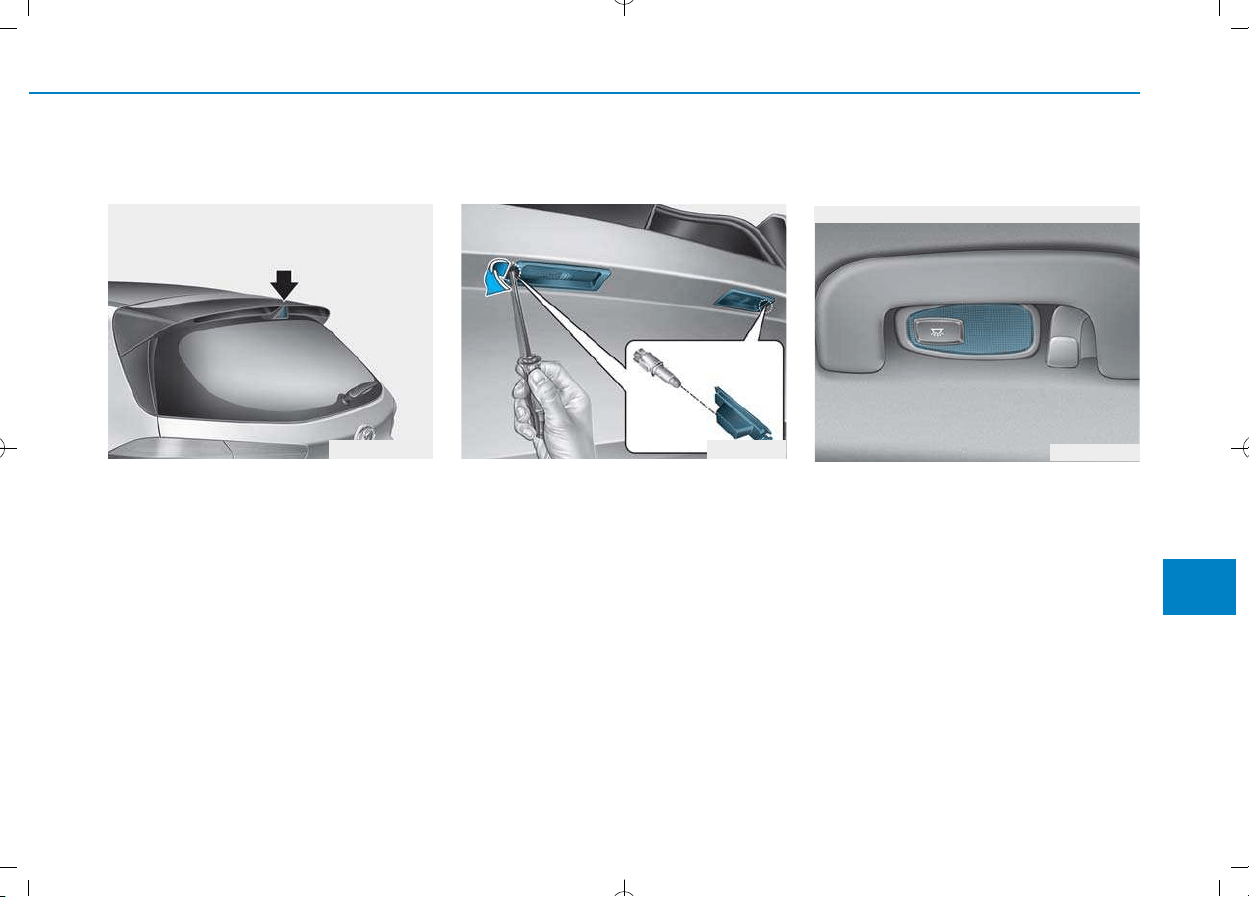
High mounted stop lamp
replacement
If the high mounted stop lamp does
not operate, we recommend that you
contact an authorized HYUNDAI
dealer.
License plate light bulb
replacement
1. Using a flat-blade screwdriver,
gently pry the lens cover from the
lamp housing.
2. Remove the bulb by pulling it
straight out.
3. Install a new bulb.
4. Reinstall in the reverse order.
Interior light bulb replacement
Room lamp
If the LED lamp does not operate, we
recommend that you have the vehicle
checked by an authorized HYUNDAI
dealer.
7-69
7
Maintenance
OPDE076057
■ Room lamp - with sunroof
OPDEN047345 OPD076055

7-70
Maintenance
1. Using a flat-head screwdriver,
gently pry the lens from the interi-
or light housing.
2. Remove the bulb by pulling it
straight out.
3. Install a new bulb into the socket.
4. Align the lens tabs with the interior
light housing notches and snap
the lens into place.
Be careful not to damage the
cover, tab, and plastic housing.
NOTICE
■ Map lamp
OPD076056
OAD075045
■ Vanity mirror lamp
■ Luggage compartment lamp
OPD076063
OPD076059
■ Room lamp - without sunroof
Map lamp, room lamp, vanity mirror lamp and luggage compartment
lamp

7-71
7
Maintenance
AAPPPPEEAARRAANNCCEE CCAARREE
Exterior care
Exterior general caution
It is very important to follow the label
directions when using any chemical
cleaner or polish. Read all warning
and caution statements that appear
on the label.
Finish maintenance
Washing
To help protect your vehicle’s finish
from rust and deterioration, wash it
thoroughly and frequently at least
once a month with lukewarm or cold
water.
If you use your vehicle for off-road
driving, you should wash it after each
off-road trip. Pay special attention to
the removal of any accumulation of
salt, dirt, mud, and other foreign
materials. Make sure the drain holes
in the lower edges of the doors and
rocker panels are kept clear and
clean.
Insects, tar, tree sap, bird droppings,
industrial pollution and similar deposits
can damage your vehicle’s finish if not
removed immediately.
Even prompt washing with plain water
may not completely remove all these
deposits.
A mild soap, safe for use on painted
surfaces, may be used.
After washing, rinse the vehicle thor-
oughly with lukewarm or cold water.
Do not allow soap to dry on the finish.
• Do not use strong soap, chemi-
cal detergents or hot water, and
do not wash the vehicle in direct
sunlight or when the body of the
vehicle is warm.
• Be careful when washing the
side windows of your vehicle.
Especially, with high-pressure
water, water may leak through
the windows and wet the interior.
• To prevent damage to the plastic
parts and lamps, do not clean
with chemical solvents or strong
detergents.
High-pressure washing
• When using high-pressure washers,
make sure to maintain sufficient dis-
tance from the vehicle.
Insufficient clearance or excessive
pressure can lead to component
damage or water penetration.
• Do not spray the camera, sensors or
its surrounding area directly with a
high pressure washer. Shock
applied from high pressure water
may cause the device to not operate
normally.
• Do not bring the nozzle tip close to
boots (rubber or plastic covers) or
connectors as they may be dam-
aged if they come into contact with
high pressure water.
NOTICE
Wet brakes
After washing the vehicle, test
the brakes while driving slowly
to see if they have been affected
by water. If braking performance
is impaired, dry the brakes by
applying them lightly while main-
taining a slow forward speed.
WARNING
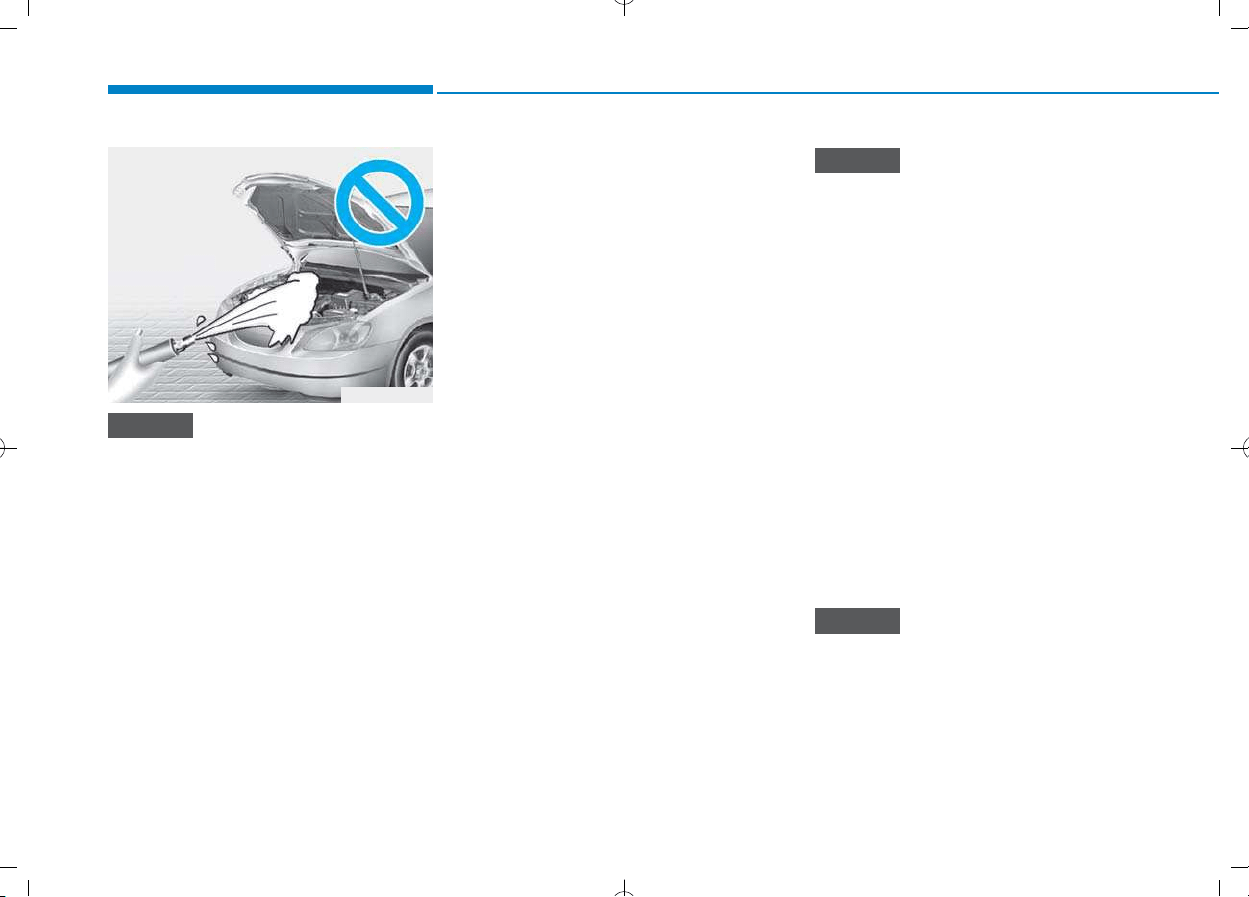
7-72
Maintenance
• Water washing in the engine com-
partment including high pressure
water washing may cause the fail-
ure of electrical circuits located in
the engine compartment.
• Never allow water or other liquids
to come in contact with electri-
cal/electronic components inside
the vehicle as this may damage
them.
Waxing
A good coat of wax is a barrier
between your paint and contaminate.
Keeping a good coat of wax on your
vehicle will help protect it.
Wax the vehicle when water will no
longer bead on the paint.
Always wash and dry the vehicle
before waxing. Use a good quality
liquid or paste wax, and follow the
manufacturer’s instructions. Wax all
metal trim to protect it and to main-
tain its luster.
Removing oil, tar, and similar materi-
als with a spot remover will usually
strip the wax from the finish. Be sure
to re-wax these areas even if the rest
of the vehicle does not yet need wax-
ing.
• Wiping dust or dirt off the body
with a dry cloth will scratch the
finish.
• Do not use steel wool, abrasive
cleaners, or strong detergents
containing highly alkaline or
caustic agents on chrome-plated
or anodized aluminum parts. This
may result in damage to the pro-
tective coating and cause discol-
oration or paint deterioration.
Finish damage repair
Deep scratches or stone chips in the
painted surface must be repaired
promptly. Exposed metal will quickly
rust and may develop into a major
repair expense.
If your vehicle is damaged and
requires any metal repair or
replacement, be sure the body
shop applies anti-corrosion materi-
als to the parts repaired or replaced.
NOTICE
NOTICE
NOTICE
OLMB073082

7-73
7
Maintenance
Bright-metal maintenance
• To remove road tar and insects,
use a tar remover, not a scraper or
other sharp object.
• To protect the surfaces of bright-
metal parts from corrosion, apply a
coating of wax or chrome preser-
vative and rub to a high luster.
• During winter weather or in coastal
areas, cover the bright metal parts
with a heavier coating of wax or
preservative. If necessary, coat the
parts with non-corrosive petroleum
jelly or other protective compound.
Underbody maintenance
Corrosive materials used for ice and
snow removal and dust control may
collect on the underbody. If these
materials are not removed, acceler-
ated rusting can occur on underbody
parts such as the fuel lines, frame,
floor pan and exhaust system, even
though they have been treated with
rust protection.
Thoroughly flush the vehicle under-
body and wheel openings with luke-
warm or cold water once a month,
after off-road driving and at the end of
each winter. Pay special attention to
these areas because it is difficult to
see all the mud and dirt. It will do
more harm than good to wet down the
road grime without removing it. The
lower edges of doors, rocker panels,
and frame members have drain holes
that should not be allowed to clog with
dirt; trapped water in these areas can
cause rusting.
Aluminum wheel maintenance
The aluminum wheels are coated with
a clear protective finish.
• Do not use any abrasive cleaner,
polishing compound, solvent,
or wire brushes on aluminum
wheels.
• Clean the wheel when it has
cooled.
• Use only a mild soap or neutral
detergent, and rinse thoroughly
with water. Also, be sure to clean
the wheels after driving on salted
roads.
• Do not wash the wheels with high-
speed car wash brushes.
• Do not use any cleanser contain-
ing acid or alkaline detergents.
NOTICE
After washing the vehicle, test
the brakes while driving slowly
to see if they have been affected
by water. If braking performance
is impaired, dry the brakes by
applying them lightly while main-
taining a slow forward speed.
WARNING

7-74
Maintenance
Corrosion protection
Protecting your vehicle from corro-
sion
By using the most advanced design
and construction practices to combat
corrosion, we produces vehicles of
the highest quality. However, this is
only part of the job. To achieve the
long-term corrosion resistance your
vehicle can deliver, the owner's
cooperation and assistance is also
required.
Common causes of corrosion
The most common causes of corro-
sion on your vehicle are:
• Road salt, dirt and moisture that is
allowed to accumulate underneath
the vehicle.
• Removal of paint or protective coat-
ings; by stones, gravel, abrasion or
minor scrapes and dents which
leave unprotected metal exposed to
corrosion.
High-corrosion areas
If you live in an area where your vehi-
cle is regularly exposed to corrosive
materials, corrosion protection is
particularly important. Some of the
common causes of accelerated cor-
rosion are road salts, dust control
chemicals, ocean air and industrial
pollution.
Moisture breeds corrosion
Moisture creates the conditions in
which corrosion is most likely to occur.
For example, corrosion is accelerated
by high humidity, particularly when
temperatures are just above freezing.
In such conditions, the corrosive
material is kept in contact with the
vehicle surfaces by moisture that is
slow to evaporate.
Mud is particularly corrosive because it
is slow to dry and holds moisture in
contact with the vehicle. Although the
mud appears to be dry, it can still retain
moisture and promote corrosion.
High temperatures can also acceler-
ate corrosion of parts that are not
properly ventilated so the moisture
can be dispersed.
For all these reasons, it is particularly
important to keep your vehicle clean
and free of mud or accumulations of
other materials. This applies not only
to the visible surfaces but particularly
to the underside of the vehicle.
To help prevent corrosion
You can help prevent corrosion from
getting started by observing the fol-
lowing:
Keep your vehicle clean
The best way to prevent corrosion is
to keep your vehicle clean and free
of corrosive materials. Attention to
the underside of the vehicle is partic-
ularly important.
• If you live in a high-corrosion area
— where road salts are used, near
the ocean, areas with industrial
pollution, acid rain, etc.—, you
should take extra care to prevent
corrosion. In winter, hose off the
underside of your car at least once
a month and be sure to clean the
underside thoroughly when winter
is over.

7-75
7
Maintenance
• When cleaning underneath the
vehicle, give particular attention to
the components under the fenders
and other areas that are hidden
from view. Do a thorough job; just
dampening the accumulated mud
rather than washing it away will
accelerate corrosion rather than
prevent it. Water under high pres-
sure and steam are particularly
effective in removing accumulated
mud and corrosive materials.
• When cleaning lower door panels,
rocker panels and frame members,
be sure that drain holes are kept
open so that moisture can escape
and not be trapped inside to accel-
erate corrosion.
Keep your garage dry
Don't park your vehicle in a damp,
poorly ventilated garage. This cre-
ates a favorable environment for cor-
rosion. This is particularly true if you
wash your vehicle in the garage or
drive it into the garage when it is still
wet or covered with snow, ice or
mud. Even a heated garage can con-
tribute to corrosion unless it is well
ventilated so moisture is dispersed.
Keep paint and trim in good condition
Scratches or chips in the finish
should be covered with "touch-up"
paint as soon as possible to reduce
the possibility of corrosion. If bare
metal is showing through, the atten-
tion of a qualified body and paint
shop is recommended.
Bird droppings : Bird droppings are
highly corrosive and may damage
painted surfaces in just a few hours.
Always remove bird droppings as
soon as possible.
Don't neglect the interior
Moisture can collect under the floor
mats and vehicle peting to cause
corrosion. Check under the mats
periodically to be sure the carpeting
is dry. Use particular care if you carry
fertilizers, cleaning materials or
chemicals in the vehicle.
These should be carried only in
proper containers and any spills or
leaks should be cleaned up, flushed
with clean water and thoroughly
dried.
Interior care
Interior general precautions
Prevent chemicals such as perfume,
cosmetic oil, sun cream, hand cleaner
and air freshener from contacting the
interior parts because they may
cause damage or discoloration. If they
do contact the interior parts, wipe them
off immediately.
See the instructions that follow for
the proper way to clean vinyl.
Never allow water or other liquids to
come in contact with electrical/elec-
tronic components inside the vehi-
cle as this may damage them.
When cleaning leather products
(steering wheel, seats etc.), use
neutral detergents or low alcohol
content solutions. If you use high
alcohol content solutions or acid/
alkaline detergents, the color of
the leather may fade or the sur-
face may get stripped off.
NOTICE
NOTICE

7-76
Maintenance
Cleaning the upholstery and
interior trim
Vinyl (if equipped)
Remove dust and loose dirt from
vinyl with a whisk broom or vacuum
cleaner. Clean vinyl surfaces with a
vinyl cleaner.
Fabric (if equipped)
Remove dust and loose dirt from fabric
with a whisk broom or vacuum cleaner.
Clean with a mild soap solution recom-
mended for upholstery or carpets.
Remove fresh spots immediately with
a fabric spot cleaner. If fresh spots do
not receive immediate attention, the
fabric can be stained and its color can
be affected. Also, its fire-resistant prop-
erties can be reduced if the material is
not properly maintained.
Using anything but recommended
cleaners and procedures may affect
the fabric’s appearance and fire-
resistant properties.
Leather (if equipped)
• Features of seat leather
- Leather is made from the outer
skin of an animal, which goes
through a special process to be
available for use. Since it is a nat-
ural product, each part differs in
thickness or density.
Wrinkles may appear as a natural
result of stretching and shrinking
depending on the temperature
and humidity.
- The seat is made of stretchable
fabric to improve comfort.
- The parts contacting the body are
curved and the side supporting
area is high which provides driv-
ing comfort and stability.
- Wrinkles may appear naturally
from usage. It is not a fault of the
products.
NOTICE
• Wrinkles or abrasions which
appear naturally from usage
are not covered by warranty.
• Belts with metallic acces-
sories, zippers or keys inside
the back pocket may damage
the seat fabric.
• Make sure not to wet the seat.
It may change the nature of
natural leather.
• Jeans or clothes which could
bleach may contaminate the
surface of the seat covering
fabric.
CAUTION

7-77
7
Maintenance
• Caring for the leather seats
- Vacuum the seat periodically to
remove dust and sand on the seat.
It will prevent abrasion or damage
of the leather and maintain its qual-
ity.
- Wipe the natural leather seat cover
often with dry or soft cloth.
- Use of proper leather protector
may prevent abrasion of the cover
and helps maintain the color. Be
sure to read the instructions and
consult a specialist when using
leather coating or protective agent.
- Light colored (beige, cream beige)
leather is easily contaminated and
the stain is noticeable. Clean the
seats frequently.
- Avoid wiping with wet cloth. It may
cause the surface to crack.
• Cleaning the leather seats
- Remove all contaminations instant-
ly. Refer to instructions below for
removal of each contaminant.
- Cosmetic products (sunscreen,
foundation, etc.)
Apply cleansing cream on a cloth
and wipe the contaminated spot.
Wipe off the cream with a wet cloth
and remove water with a dry cloth.
- Beverages (coffee, soft drink, etc.)
Apply a small amount of neutral
detergent and wipe until contami-
nations do not smear.
- Oil
Remove oil instantly with
absorbable cloth and wipe with
stain remover used only for natu-
ral leather.
- Chewing gum
Harden the gum with ice and
remove gradually.
Cleaning the lap/shoulder belt
webbing
Clean the belt webbing with any mild
soap solution recommended for clean-
ing upholstery or carpet. Follow the
instructions provided with the soap. Do
not bleach or re-dye the webbing
because this may weaken it.
Cleaning the interior window
glass
If the interior glass surfaces of the
vehicle become fogged (that is, cov-
ered with an oily, greasy or waxy film),
they should be cleaned with glass
cleaner. Follow the directions on the
glass cleaner container.
Do not scrape or scratch the inside
of the rear window. This may result
in damage to the rear window
defroster grid.
NOTICE

7-78
Maintenance
E
EMMIISSSSIIOONN CCOONNTTRROOLL SSYYSSTTEEMM
The emission control system of your
vehicle is covered by a written limited
warranty. Please see the warranty
information contained in the Service
Passport in your vehicle.
Your vehicle is equipped with an
emission control system to meet all
emission regulations.
There are three emission control
systems which are as follows.
(1) Crankcase emission control sys-
tem
(2) Evaporative emission control sys-
tem
(3) Exhaust emission control system
In order to ensure the proper function
of the emission control systems, it is
recommended that you have your car
inspected and maintained by an
authorized HYUNDAI dealer in accor-
dance with the maintenance schedule
in this manual.
1. Crankcase emission control
system
The positive crankcase ventilation
system is employed to prevent air
pollution caused by blow-by gases
being emitted from the crankcase.
This system supplies fresh filtered air
to the crankcase through the air
intake hose. Inside the crankcase,
the fresh air mixes with blow-by
gases, which then pass through the
PCV valve into the induction system.
2. Evaporative emission con-
trol system
The Evaporative Emission Control
System is designed to prevent fuel
vapors from escaping into the atmos-
phere.
Canister
Fuel vapors generated inside the fuel
tank are absorbed and stored in the
onboard canister. When the engine is
running, the fuel vapors absorbed in
the canister are drawn into the surge
tank through the purge control sole-
noid valve.
Purge Control Solenoid Valve
(PCSV)
The purge control solenoid valve is
controlled by the Engine Control
Module (ECM); when the engine
coolant temperature is low during
idling, the PCSV closes so that evap-
orated fuel is not taken into the
engine. After the engine warms-up
during ordinary driving, the PCSV
opens to introduce evaporated fuel to
the engine.
For the Inspection and Maintenance
Test (with Electronic Stability Control
(ESC) system)
• To prevent the vehicle from
misfiring during dynamome-
ter testing, turn the Electronic
Stability Control (ESC) sys-
tem off by pressing the ESC
switch.
• After dynamometer testing is
completed, turn the ESC sys-
tem back on by pressing the
ESC switch again.
CAUTION
7-79
7
Maintenance
3. Exhaust emission control
system
The Exhaust Emission Control System
is a highly effective system which con-
trols exhaust emissions while main-
taining good vehicle performance.
Vehicle modifications
This vehicle should not be modified.
Modification of your vehicle could
affect its performance, safety or
durability and may even violate gov-
ernmental safety and emissions reg-
ulations.
In addition, damage or performance
problems resulting from any modifi-
cation may not be covered under
warranty.
• If you use unauthorized electronic
devices, it may cause the vehicle to
operate abnormally, wire damage,
battery discharge and fire. For your
safety, do not use unauthorized
electronic devices.
Engine exhaust gas precautions
(carbon monoxide)
• Carbon monoxide can be present
with other exhaust fumes.Therefore,
if you smell exhaust fumes of any
kind inside your vehicle, have it
inspected and repaired immediately.
If you ever suspect exhaust fumes
are coming into your vehicle, drive it
only with all the windows fully open.
Have your vehicle checked and
repaired immediately.
• Do not operate the engine in con-
fined or closed areas (such as
garages) any more than what is
necessary to move the vehicle in or
out of the area.
• When the vehicle is stopped in an
open area for more than a short
time with the engine running,
adjust the ventilation system (as
needed) to draw outside air into the
vehicle.
• Never sit in a parked or stopped
vehicle for any extended time with
the engine running.
• When the engine stalls or fails to
start, excessive attempts to restart
the engine may cause damage to
the emission control system.
Engine exhaust gases contain
carbon monoxide (CO). Though
colorless and odorless, it is dan-
gerous and could be lethal if
inhaled. Follow the instructions
following to avoid CO poisoning.
WARNING

7-80
Maintenance
Operating precautions for cat-
alytic converters (if equipped)
Your vehicle is equipped with a cat-
alytic converter emission control
device.
Therefore, the following precautions
must be observed:
• Use only UNLEADED FUEL for
gasoline engines.
• Do not operate the vehicle when
there are signs of engine malfunc-
tion, such as misfire or a noticeable
loss of performance.
• Do not misuse or abuse the
engine. Examples of misuse are
coasting with the engine off and
descending steep grades in gear
with the engine off.
• Do not operate the engine at high
idle speed for extended periods (5
minutes or more).
• Do not modify or tamper with any
part of the engine or emission con-
trol system. All inspections and
adjustments must be made by an
authorized HYUNDAI dealer.
• Avoid driving with a very low fuel
level. If you run out of gasoline, it
could cause the engine to misfire
and result in excessive loading of
the catalytic converter.
Failure to observe these precautions
could result in damage to the catalytic
converter and to your vehicle.
Additionally, such actions could void
your warranties.
• A hot exhaust system can
ignite flammable items under
your vehicle. Do not park, idle,
or drive the vehicle over or
near flammable objects, such
as dry grass, paper, leaves, etc.
• The exhaust system and cat-
alytic system are very hot
while the engine is running or
immediately after the engine
is turned off. Keep away from
the exhaust system and cat-
alytic converter as you may
get burned.
Also, do not remove the heat
sink around the exhaust sys-
tem, do not seal the bottom of
the vehicle and do not coat the
vehicle for corrosion control. It
may present a fire risk under
certain conditions.
WARNING

8
Specifications & Consumer information
8
Specifications & Consumer information
8
Dimensions..............................................................8-2
Engine......................................................................8-2
Bulb wattage...........................................................8-3
Tires and wheels....................................................8-4
Tire load and speed capacity...............................8-5
Air conditioning system ........................................8-5
Vehicle weight and luggage volume....................8-5
Recommended lubricants and capacities ...........8-6
Recommended SAE viscosity number..........................8-7
Vehicle identification number (VIN)....................8-8
Vehicle certification label.....................................8-8
Tire specification and pressure label .................8-9
Engine number .......................................................8-9
Air conditioner compressor label ........................8-9
Refrigerant label..................................................8-10
Declaration of conformity ..................................8-10
8-2
Specifications & Consumer information
D
DIIMMEENNSSIIOONNSS
E
ENNGGIINNEE
Items mm (in)
Overall length 4335 (170.67)
Overall width
without outside mirrors 1795 (70.66)
with outside mirrors 2039 (80.27)
Overall height 1451 (57.13)*
1
/ 1447 (56.97)*
2
Front wheel tread
225/40 ZR18 1557 (61.30)
235/35R19 1556 (61.26)
Rear wheel tread
225/40 ZR18 1566 (61.65)
235/35R19 1564 (61.57)
Wheelbase 2650 (104.33)
*
1
: 18 inch tire
*
2
: 19 inch tire
Displacement Bore x Stroke Firing Order No. of Cylinders
1998 cc
(121.9 cu. in)
86.0 X 86.0 mm
(3.39 x 3.39 in.)
1-3-4-2 4. In-line

8
Specifications & Consumer information
BBUULLBB WWAATTTTAAGGEE
Light Bulb Bulb Type Wattage
Front
Headlamp
Low LED LED
High LED LED
Position lamp LED LED
Turn signal lamp LED LED
Static bending light (SBL) LED LED
Daytime running light LED LED
Side repeater lamp LED LED
Rear
Stop/Tail lamp LED LED
Turn signal lamp PY21W 21
Backup lamp W16W 16
Rear fog lamp PY21W 21
High mounted stop light LED LED
License plate lamp FESTOON 5
Interior
Map lamp W10W 10
Room lamp
Type A FESTOON 8
Type B LED LED
Vanity mirror lamp FESTOON 5
Glove box lamp FESTOON 5
Luggage compartment lamp FESTOON 10
8-3
8-4
Specifications & Consumer information
Item Tire Size Wheel Size
Inflation Pressure kPa (bar, psi)
Wheel Lug Nut
Torque
kgf·m (lbf·ft, N·m)
Normal Load Maximum Load
Front Rear Front Rear
Full size tire
225/40 ZR18 7.5J X 18
250
(2.5, 36)
230
(2.3, 33)
250
(2.5, 36)
230
(2.3, 33)
11~13
(79~94, 107~127)
235/35 R19 8.0J X 19
260
(2.6, 38)
240
(2.4, 35)
290
(2.9, 42)
270
(2.7, 39)
Compact spare tire T125/70 R18 4.0T X 18 420 (4.2, 60)
TTIIRREESS AANNDD WWHHEEEELLSS
When replacing tires, use the same size originally supplied with the vehicle.
Using tires of a different size can damage the related parts or make it work irregularly.
CAUTION
• It is permissible to add 20 kPa (3 psi) to the standard tire pressure specification if colder temperatures are
expected soon. Tires typically lose 7 kPa (1 psi) for every 7°C (12°F) temperature drop. If extreme tempera-
ture variations are expected, recheck your tire pressure as necessary to keep them properly inflated.
• An air pressure generally decreases, as you drive up to a high-altitude area above sea level.Thus, if you plan
to drive a high-altitude area, check the tire pressures in advance. If necessary, inflate them to a proper level
(Air inflation per altitude: +10 kPa/1 km (+2.4 psi/1 mile)).
NOTICE
If your vehicle is not equipped with a compact spare tire, your vehicle will be equipped with a Tire Mobility Kit.

8-5
8
Specifications & Consumer information
*
1
LI : LOAD INDEX
*
2
SS : SPEED SYMBOL
Item Tire Size Wheel Size
Load Capacity Speed Capacity
LI *
1
kg SS *
2
km/h
Full size tire
225/40 ZR18 7.5J X 18 92 630 Y 300
235/35 R19 8.0J X 19 91 615 Y 300
TTIIRREE LLOOAADD AANNDD SSPPEEEEDD CCAAPPAACCIITTYY ((FFOORR EEUURROOPPEE))
A
AIIRR CCOONNDDIITTIIOONNIINNGG SSYYSSTTEEMM
Items Weight of Volume Classification
Refrigerant g (oz.) 475 ~525 (16.76 ~ 18.52)
R-1234yf (For Europe)
R-134a (Except Europe)
Compressor lubricant g (oz.) 100 ~ 120 (3.52 ~ 4.23) PAG
Contact an authorized HYUNDAI dealer for more details.
VVEEHHIICCLLEE WWEEIIGGHHTT AANNDD LLUUGGGGAAGGEE VVOOLLUUMMEE
Gross Vehicle Weight kg (lbs.)
Luggage Volume l (cu ft.)
Min. Max.
1950 (4299) 395 (13.95) / 381 (13.45)*
1
1301 (45.94) / 1287 (45.45)*
1
*
1
: vehicles with rear stiffness-bar
Min : Behind rear seat to upper edge of the seat back.
Max : Behind front seat to roof.
8-6
Specifications & Consumer information
R
REECCOOMMMMEENNDDEEDD LLUUBBRRIICCAANNTTSS AANNDD CCAAPPAACCIITTIIEESS
To help achieve proper engine and powertrain performance and durability, use only lubricants of the proper quality.
The correct lubricants also help promote engine efficiency that results in improved fuel economy.
These lubricants and fluids are recommended for use in your vehicle.
Lubricant Volume Classification
Engine oil *
1
*
2
(drain and refill)
Recommends
4.8 l (5.07 US qt.)
ACEA C2 or above / 0W-30
Manual transmission fluid
1.8 ~ 1.9 l
(1.9 ~ 2.0 US qt.)
HK SYN MTF 70W (SK)
SPIRAX S6 GHME 70W MTF (H.K.SHELL)
GS MTF HD 70W (GS CALTEX)
(API GL-4, SAE 70W)
Coolant
8.5 l (9.0 US qt.)
Mixture of antifreeze and distilled water
(Ethylene-glycol with phosphate based coolant for
aluminum radiator)
Brake/clutch fluid
0.7 ~ 0.8 l
(0.7 ~ 0.8 US qt.)
FMVSS116 DOT-3 or DOT-4
Fuel
50 l (13.21 US gal.)
Refer to “Fuel Requirements” in the Introduction chapter.
*
1
: Refer to the recommended SAE viscosity numbers on page 7.
*
2
: Engine oils labeled Energy Conserving Oil are now available. Along with other additional benefits, they contribute to fuel economy by reducing
the amount of fuel necessary to overcome engine friction. Often, these improvements are difficult to measure in everyday driving, but in a year’s
time, they can offer significant cost and energy savings.
8-7
8
Specifications & Consumer information
Recommended SAE viscosity
number
Always be sure to clean the area
around any filler plug, drain
plug, or dipstick before check-
ing or draining any lubricant.
This is especially important in
dusty or sandy areas and when
the vehicle is used on unpaved
roads. Cleaning the plug and
dipstick areas will prevent dirt
and grit from entering the
engine and other mechanisms
that could be damaged.
CAUTION
Temperature Range for SAE Viscosity Numbers
Temperature
For all countries *
1
°C
(°F)
-30 -20 -10 0 10 20 30 40 50
-10 0 20 40 60 80 100 120
20W-50
10W-30
15W-40
0/5W-30, 5W-40
Engine oil viscosity (thickness) has an effect on fuel economy and cold
weather operating (engine start and engine oil flowability). Lower viscosity
engine oils can provide better fuel economy and cold weather performance,
however, higher viscosity engine oils are required for satisfactory lubrication
in hot weather. Using oils of any viscosity other than those recommended
could result in engine damage.
When choosing an oil, consider the range of temperature your vehicle will be
operated in before the next oil change.
Proceed to select the recommended oil viscosity from the chart.
*
1
: For better fuel economy, it is recommended to use the engine oil of a viscosity
grade SAE 0W-30. However, if the engine oil is not available in your country, select
the proper engine oil using the engine oil viscosity chart.
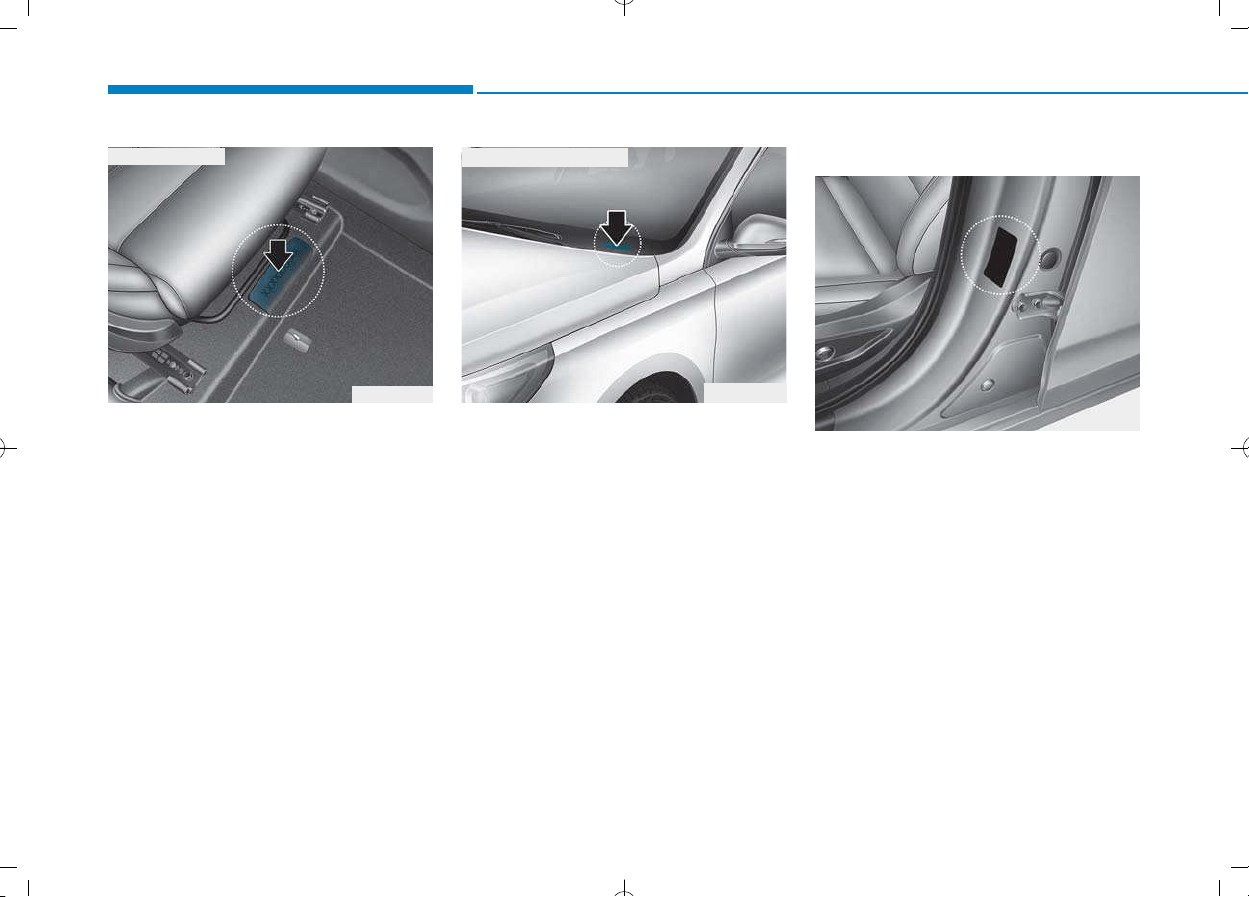
8-8
Specifications & Consumer information
The vehicle identification number
(VIN) is the number used in register-
ing your vehicle and in all legal mat-
ters pertaining to its ownership, etc.
The number is punched on the floor
under the passenger seat. To check
the number, open the cover.
The VIN is also on a plate attached
to the top of the dashboard. The
number on the plate can easily be
seen through the windshield from
outside.
The vehicle certification label attached
on the driver’s (or front passenger’s)
side center pillar gives the vehicle
identification number (VIN).
VVEEHHIICCLLEE IIDDEENNTTIIFFIICCAATTIIOONN NNUUMMBBEERR ((VVIINN)) VVEEHHIICCLLEE CCEERRTTIIFFIICCAATTIIOONN
L
LAABBEELL
OPD086002
■ VIN label (if equipped)
OPDE086007
OPD086001
■ Frame number
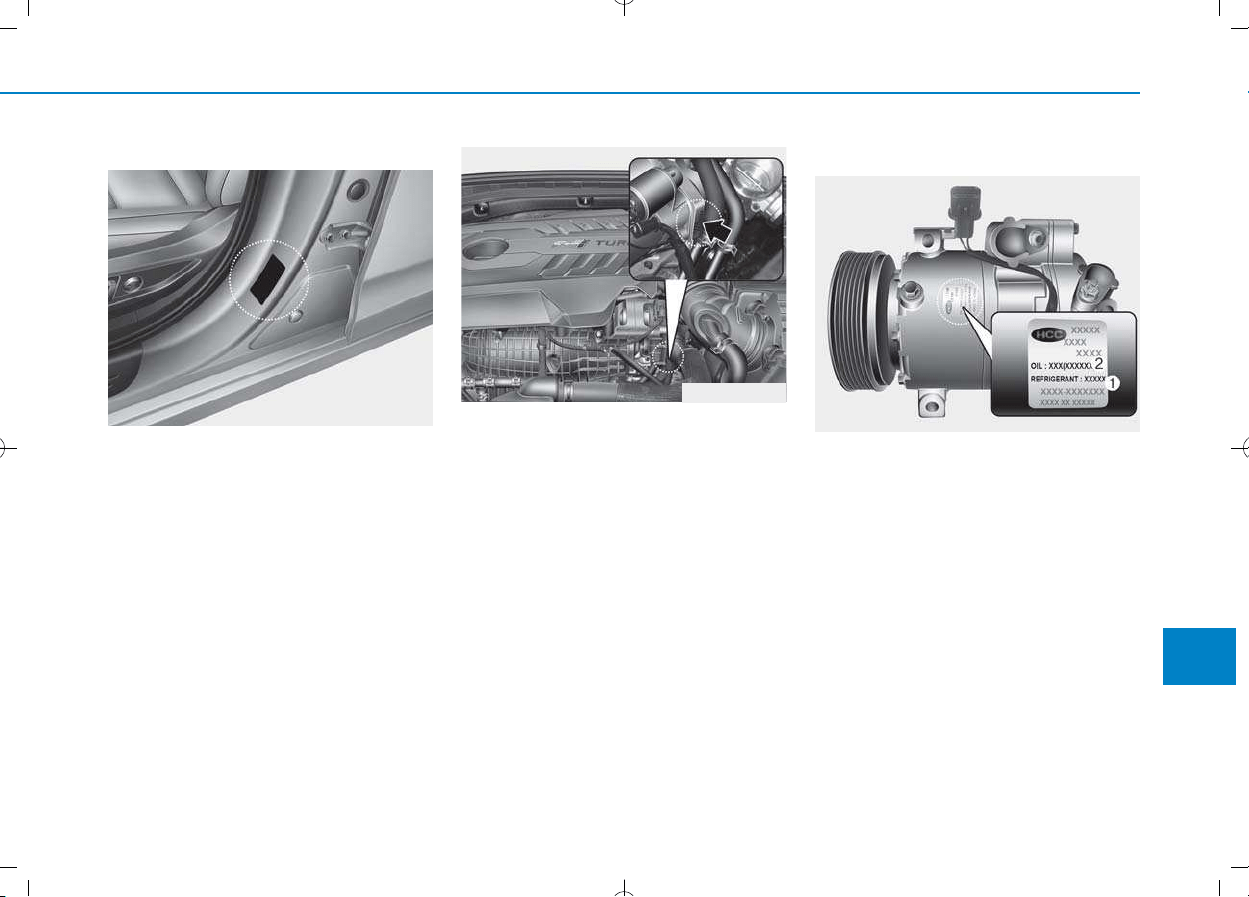
8-9
8
Specifications & Consumer information
The tires supplied on your new vehi-
cle are chosen to provide the best
performance for normal driving.
The tire label located on the driver's
side center pillar gives the tire pres-
sures recommended for your vehicle.
The engine number is stamped on the
engine block as shown in the drawing.
A compressor label informs you the
type of compressor your vehicle is
equipped with such as model, suppli-
er part number, production number,
refrigerant (1) and refrigerant oil (2).
TTIIRREE SSPPEECCIIFFIICCAATTIIOONN AANNDD
P
PRREESSSSUURREE LLAABBEELL
E
ENNGGIINNEE NNUUMMBBEERR
OPD086007
OPDEN087012
AAIIRR CCOONNDDIITTIIOONNEERR
C
COOMMPPRREESSSSOORR LLAABBEELL
OHC081001

8-10
Specifications & Consumer information
The refrigerant label provides infor-
mation such as refrigerant type and
amount.
The label is located on the underside
of the hood.
The radio frequency components of
the vehicle comply with requirements
and other relevant provisions of
Directive 1995/5/EC.
Further information including the
manufacturer's declaration of con-
formity is available on HYUNDAI
web site as follows;
http://service.hyundai-motor.com
RREEFFRRIIGGEERRAANNTT LLAABBEELL
OPDE086008
CE0678
■ Example
DDEECCLLAARRAATTIIOONN OOFF
C
COONNFFOORRMMIITTYY ((IIFF EEQQUUIIPPPPEEDD))

I
Index
I

I-2
Air bag warning labels .................................................2-63
Air bags.........................................................................2-45
Additional safety precautions ....................................2-63
Air bag collision sensors ...........................................2-57
Air bag inflation conditions.......................................2-59
Air bag non-inflation conditions ...............................2-60
Air bag warning labels...............................................2-63
Curtain air bags..........................................................2-51
Do not install a child restraint on
the front passenger seat ...........................................2-57
Driver's air bag...........................................................2-47
Driver's knee air bag..................................................2-47
How does the air bags system operate?.....................2-52
Passenger's front air bag ON/OFF switch .................2-48
Passenger's front air bag ............................................2-47
Side air bags...............................................................2-50
SRS Care....................................................................2-62
SRS components and functions .................................2-52
SRS warning light......................................................2-53
What to expect after an air bag inflates.....................2-56
Why didn't my air bag go off in a collision ..............2-57
Air conditioner compressor label ...................................8-9
Air conditioning refrigerant label...............................3-114
Air conditioning system specification............................8-5
Air filter ........................................................................7-27
Alarm system................................................................3-16
Antenna...........................................................................4-2
Anti-lock brake system (ABS) .....................................5-26
Appearance care ...........................................................7-71
Exterior care...............................................................7-71
Interior care................................................................7-75
Armrest .........................................................................2-15
Ashtray........................................................................3-121
Audio / Video / Navigation system ................................4-4
Auto defogging system...............................................3-117
Auto light position........................................................3-79
Automatic climate control system..............................3-103
Air conditioning.......................................................3-110
Air conditioning refrigerant label ............................3-114
Air intake control.....................................................3-108
Automatic heating and air conditioning ..................3-104
Fan speed control.....................................................3-109
Manual heating and air conditioning.......................3-105
Mode selection.........................................................3-106
OFF mode ................................................................3-110
SYNC button ...........................................................3-108
System maintenance.................................................3-113
Temperature control.................................................3-107
Automatic ventilation .................................................3-118
Autonomous Emergency Braking (AEB) system
Camera type ...............................................................5-49
Aux, USB and iPod ........................................................4-2
Index
A

I-3
Battery...........................................................................7-33
Battery recharging......................................................7-35
Battery saver function...................................................3-85
Before driving.................................................................5-4
Blade type fuse .............................................................7-49
Bluetooth
®
Wireless Technology hands-free..................4-4
Bottle holder ...............................................................3-121
Brake system.................................................................5-23
Anti-lock brake system (ABS) ..................................5-26
Disc brakes wear indicator ........................................5-24
Electronic Stability Control (ESC)............................5-28
Emergency Stop Signal (ESS)...................................5-35
Good braking practices..............................................5-36
High performance brake ............................................5-24
Hill-start Assist Control (HAC).................................5-35
Parking brake .............................................................5-25
Power brakes..............................................................5-23
Vehicle Stability Management (VSM) ......................5-33
Brake/clutch fluid .........................................................7-25
Bulb replacement..........................................................7-61
Daytime running light (DRL)....................................7-62
Front position lamp....................................................7-62
Front turn signal lamp ...............................................7-62
Headlamp ...................................................................7-62
Headlamp aiming.......................................................7-62
High mounted stop lamp ...........................................7-69
Interior light bulb.......................................................7-69
License plate light bulb .............................................7-69
Rear combination light bulb ......................................7-66
Rear fog lamp ............................................................7-68
Side repeater lamp ....................................................7-66
Static bending lamp ...................................................7-62
Bulb wattage ...................................................................8-3
Button start/stop, see engine start/stop button................5-9
Camera (Rear view)......................................................3-95
Capacities (Lubricants)...................................................3-6
Care
Exterior care...............................................................7-71
Interior care................................................................7-75
Tire care .....................................................................7-38
Cargo area cover.........................................................3-129
Cartridge type fuse .......................................................7-49
Cellular phone holder .................................................3-125
Center console storage................................................3-119
Central door lock switch...............................................3-13
Certification label ...........................................................8-8
Chains
Tire chains..................................................................5-95
Check tire inflation pressure.........................................7-39
Child restraint system (CRS)........................................2-34
Booster seats ..............................................................2-37
Forward-facing child restraint system .......................2-36
I
Index
B
C

I-4
Installing a child restraint system (CRS)...................2-37
ISOFIX anchorage and top-tether anchorage
for children ..............................................................2-38
Rearward-facing child restraint system .....................2-36
Securing a child restraint system seat with
"Top-tether Anchorage" system...............................3-40
Securing a child restraint system with
a lap/shoulder belt....................................................3-42
Securing a child restraint system with
the "ISOFIX Anchorage System"............................2-39
Selecting a child restraint system (CRS)...................2-35
Child-protector rear door lock......................................3-15
Cigarette lighter ..........................................................3-124
Climate control air filter ...............................................7-29
Climate control system
Automatic climate control system ...........................3-103
Clock...........................................................................3-126
Clothes hanger ............................................................3-127
Cluster ionizer.............................................................3-118
Combined instrument, see instrument cluster ..............3-43
Compact spare tire replacement ...................................7-42
Coolant..........................................................................7-22
Cooling fluid, see engine coolant.................................7-22
Crankcase emission control system..............................7-78
Cruise control system ...................................................5-85
Cup holder ..................................................................3-121
Curtain air bags.............................................................2-51
CUSTOM mode............................................................5-42
Dashboard illumination, see instrument panel illumination.3-44
Dashboard, see instrument cluster................................3-43
Day/night rearview mirror............................................3-22
Daytime running light (DRL).......................................3-86
Declaration of conformity ............................................8-10
Defogging (Windshield) .............................................3-115
Defroster .....................................................................3-116
Rear window defroster.............................................3-117
Defrosting (Windshield) .............................................3-115
Dimensions .....................................................................8-2
Display illumination, see instrument panel illumination..3-44
Displays, see instrument cluster ...................................3-43
Distance to empty ........................................................3-47
Door locks.....................................................................3-11
Auto door lock/unlock features .................................3-14
Central door lock switch............................................3-13
Child-protector rear door lock ...................................3-15
Drinks holders, see cup holders..................................3-121
DRIVE MODE button..................................................5-40
Drive mode integrated control system ........................5-40
CUSTOM mode.........................................................5-42
DRIVE MODE button ...............................................5-40
ECO mode .................................................................5-40
N button .....................................................................5-41
N mode.......................................................................5-42
SPORT mode .............................................................5-41
Vehicle characteristic .................................................5-43
Index
D

I-5
Driver Attention Alert (DAA) system ..........................5-78
Driver position memory system ...................................3-17
Easy access function..................................................3-18
Recalling memory positions ......................................3-17
Storing memory positions..........................................3-17
Driver's air bag .............................................................2-47
Driver's knee air bag.....................................................2-47
Driving at night.............................................................5-92
Driving in flooded areas ...............................................5-93
Driving in the rain ........................................................5-92
Easy access function.....................................................3-18
ECO mode ....................................................................5-40
Electric chromic mirror (ECM)....................................3-23
Electric power steering (EPS) ......................................3-19
Electronic Control Suspension (ECS) ..........................5-37
Electronic limited slip differential................................5-38
Drive mode selection .................................................5-38
Electronic stability control (ESC) ................................5-28
ESC SPORT...............................................................5-30
Drive mode selection .................................................5-32
Emergency Stop Signal (ESS)......................................5-35
Emergency towing........................................................6-39
Emission control system...............................................7-78
Crankcase emission control system...........................7-78
Evaporative emission control System .......................7-78
Exhaust emission control system...............................7-79
Engine compartment.......................................................1-7
Engine compartment.......................................................7-3
Engine compartment panel fuse replacement...............7-49
Engine coolant ..............................................................7-22
Engine coolant temperature gauge ...............................3-45
Engine number................................................................8-9
Engine oil......................................................................7-20
Engine specification .......................................................8-2
Engine start/stop button..................................................5-9
Evaporative emission control System ..........................7-78
Exhaust emission control system .................................7-79
Explanation of scheduled maintenance items ..............7-18
Exterior care .................................................................7-71
Exterior overview
Front view....................................................................1-2
Rear view .....................................................................1-3
Flat tire
Changing tires............................................................6-15
Tire Mobility Kit (TMK)...........................................6-23
Floor mat anchor(s) ....................................................3-127
Fluid
Brake/clutch fluid ......................................................7-25
Washer fluid...............................................................7-26
Front seat adjustment......................................................2-6
Manual adjustment.......................................................2-7
Power adjustment.........................................................2-9
Seatback pocket .........................................................2-12
I
Index
E
F

I-6
Front seat headrests
Adjusting the height up and down.............................2-17
Forward and rearward adjustment .............................2-17
Removal/Reinstall......................................................2-18
Fuel filler door..............................................................3-40
Fuel gauge.....................................................................3-46
Fuel requirements ...........................................................F-6
Do not use methanol....................................................F-8
Fuel Additives..............................................................F-8
Gasoline containing alcohol and methanol .................F-7
Leaded .........................................................................F-7
Operation in foreign countries.....................................F-8
Other fuels ...................................................................F-7
Unleaded......................................................................F-6
Use of MTBE ..............................................................F-8
Fuses .............................................................................7-47
Blade type fuse ..........................................................7-49
Cartridge type fuse.....................................................7-49
Engine compartment panel fuse replacement............7-49
Fuse switch ................................................................7-49
Fuse/relay panel description ......................................7-51
Instrument panel fuse replacement............................7-48
Main fuse ...................................................................7-50
Multi fuse...................................................................7-50
Gauges and meters........................................................3-44
Glove box....................................................................3-119
Hazard warning flasher...................................................6-2
Hazardous driving conditions.......................................5-91
Headlamp delay function..............................................3-85
Headlamp leveling device ............................................3-86
Headlamp position........................................................3-80
Headlight bulb replacement..........................................7-61
Headrest ........................................................................2-16
Front seat headrests ...................................................2-17
Rear seat headrests.....................................................2-19
Heated steering wheel...................................................3-21
Height adjustment.........................................................2-27
High beam operation ....................................................3-80
High performance brake ...............................................5-24
Highway driving ...........................................................5-93
Hill-start Assist Control (HAC)....................................5-35
Hood .............................................................................3-37
Horn ..............................................................................3-21
How to use this manual..................................................F-5
If the engine doesn't turn over or turns over slowly ......6-3
If the engine overheats ...................................................6-7
If the engine stalls at a crossroad or crossing ................6-2
If the engine stalls while driving....................................6-2
If the engine turns over normally but doesn't start.........6-4
If the engine will not start ..............................................6-3
Index
H
G
I

I-7
If you have a flat tire while driving ...............................6-3
Ignition switch ................................................................5-6
Engine Start/Stop button..............................................5-9
Key ignition switch......................................................5-6
Immobilizer system ......................................................3-10
Impact sensing door unlock..........................................3-14
Important safety precautions ..........................................2-2
Air bag hazards............................................................2-2
Always wear your seat belt..........................................2-2
Control your speed.......................................................2-3
Driver distraction .........................................................2-2
Keep your vehicle in safe condition ............................2-3
Restrain all children.....................................................2-2
In case of emergency while driving ...............................6-2
Indicator light ...............................................................3-49
Inside rearview mirror ..................................................3-22
Instrument cluster .........................................................3-43
Assist mode................................................................3-70
Gauges and meters.....................................................3-44
Instrument panel illumination....................................3-44
LCD display control ..................................................3-67
LCD display messages...............................................3-61
LCD display modes ...................................................3-68
Manual transmission shift indicator ..........................3-48
Shift lights..................................................................3-48
Trip computer mode...................................................3-69
User settings mode.....................................................3-72
Warning and indicator lights......................................3-49
Instrument panel fuse replacement...............................7-48
Instrument panel overview .............................................1-5
Interior care...................................................................7-75
Interior features
Ashtray.....................................................................3-121
Bottle holder ............................................................3-121
Cargo area cover......................................................3-129
Cellular phone holder ..............................................3-125
Cigarette lighter .......................................................3-124
Clock........................................................................3-126
Clothes hanger .........................................................3-127
Cup holder ...............................................................3-121
Floor mat anchor(s) .................................................3-127
Luggage net (holder) ...............................................3-128
Power outlet .............................................................3-123
Sunvisor ...................................................................3-122
Wireless cellular phone charging system ................3-125
Interior lamp AUTO cut ...............................................3-88
Interior lights ................................................................3-88
Front lamps ................................................................3-88
Interior lamp AUTO cut ............................................3-88
Luggage compartment lamp ......................................3-89
Puddle lamp ...............................................................3-90
Rear lamps .................................................................3-89
Vanity mirror lamp.....................................................3-90
Interior overview ............................................................1-4
ISG (Idle Stop and Go) system ....................................5-44
I
Index

I-8
Jump starting...................................................................6-4
Label
Air conditioner compressor label ................................8-9
Refrigerant label ........................................................8-10
Tire sidewall labeling.................................................7-42
Tire specification and pressure label ...........................8-9
Vehicle certification label ............................................8-8
Lane change signals......................................................3-84
Lane Departure Warning System (LDWS)...................5-73
Lane Keeping Aassist System (LKAS) ........................5-64
Lap/shoulder belt ..........................................................2-25
Launch control..............................................................5-21
LCD display
LCD display control ..................................................3-67
LCD display modes ...................................................3-68
LCD display messages
Beware of engine damage when shifting while in
high RPM.................................................................3-66
Check AEB system ....................................................3-65
Check driver attention alert .......................................3-65
Check ECS.................................................................3-66
Check headlamp FAN................................................3-65
Check headlamp LED................................................3-65
Check headlight .........................................................3-64
Check LDWS.............................................................3-65
Check limited slip differential ...................................3-66
Check LKAS..............................................................3-65
Check smart high beam system .................................3-65
Check steering wheel lock system.............................3-61
Door, Hood, Tailgate open.........................................3-62
Engine has overheated ...............................................3-64
Heated Steering Wheel turned off .............................3-64
Key not detected ........................................................3-62
Key not in vehicle......................................................3-61
Lights mode ...............................................................3-63
Low fuel.....................................................................3-64
Low Key Battery .......................................................3-61
Low pressure..............................................................3-63
Low washer fluid .......................................................3-64
Press clutch pedal to start engine ..............................3-61
Press START button again.........................................3-62
Press START button while turning wheel .................3-61
Press START button with key ...................................3-62
Steering wheel unlocked............................................3-61
Sunroof open..............................................................3-62
Turn on FUSE SWITCH ...........................................3-64
Tyre size mismatch.Check tyre sizes.........................3-66
Wiper mode................................................................3-63
LCD display modes ......................................................3-68
Assist mode................................................................3-70
Gauges (Engine) ........................................................3-70
G-Force ......................................................................3-71
Lap timer....................................................................3-70
Index
J
L

I-9
Quick guide help........................................................3-69
Trip computer mode...................................................3-69
Turn By Turn (TBT) mode ........................................3-70
User settings mode.....................................................3-72
Warning message mode .............................................3-72
Light bulbs....................................................................7-61
Lighting.........................................................................3-79
Auto light position .....................................................3-79
Battery saver function................................................3-85
Daytime running light (DRL)....................................3-86
Headlamp delay function...........................................3-85
Headlamp leveling device .........................................3-86
Headlamp position .....................................................3-80
High beam operation .................................................3-80
Lane change signals...................................................3-84
Position lamp position ...............................................3-80
Rear fog lamp ............................................................3-84
Smart high beam........................................................3-81
Static bending light....................................................3-86
Turn signals................................................................3-84
Lubricants and capacities ...............................................8-6
Luggage compartment lamp .........................................3-89
Luggage net (holder) ..................................................3-128
Main fuse ......................................................................7-50
Maintenance
Explanation of scheduled maintenance items............7-18
Maintenance services...................................................7-4
Maintenance under severe usage conditions ........7-11,16
Normal maintenance schedule ..............................7-8, 13
Owner maintenance .....................................................7-5
Scheduled maintenance services .................................7-7
Tire maintenance........................................................7-42
Maintenance services......................................................7-4
Maintenance under severe usage conditions
Except Europe............................................................7-16
For Europe .................................................................7-11
Manual transmission.....................................................5-14
Downshifting .............................................................5-15
Good driving practices...............................................5-16
Rev matching .............................................................5-17
Using the clutch .........................................................5-15
Manual transmission shift indicator .............................3-48
Mirrors ..........................................................................3-22
Adjusting the outside rearview mirrors .....................3-24
Day/night rearview mirror .........................................3-22
Electric chromic mirror (ECM) .................................3-23
Folding/Unfolding the outside rearview mirror ........3-25
Inside rearview mirror ...............................................3-22
Outside rearview mirror.............................................3-23
Reverse parking aid function.....................................3-26
Moonroof, see sunroof..................................................3-32
Multi fuse......................................................................7-50
Multimedia system .........................................................4-2
Antenna........................................................................4-2
Audio / Video / Navigation system .............................4-4
I
Index
M
I-10
Aux, USB and iPod .....................................................4-2
Bluetooth
®
Wireless Technology hands-free ...............4-4
Steering wheel audio control .......................................4-3
N button ........................................................................5-41
N mode .........................................................................5-42
Normal maintenance schedule
Except Europe............................................................7-13
For Europe ...................................................................7-8
Odometer ......................................................................3-47
Oil (Engine) ..................................................................7-20
Outside rearview mirror ...............................................3-23
Outside temperature gauge ...........................................3-47
Owner maintenance ........................................................7-5
Panorama sunroof, see sunroof ....................................3-32
Parking assist system..................................................3-100
Parking brake................................................................5-25
Passenger's front air bag ON/OFF switch ....................2-48
Passenger's front air bag...............................................2-47
Position lamp position ..................................................3-80
Power brakes.................................................................5-23
Power outlet................................................................3-123
Power steering ..............................................................3-19
Power window lock switch...........................................3-30
Pre-tensioner seat belt...................................................2-28
Puddle lamp ..................................................................3-90
Rear center seat belt .....................................................2-27
Rear fog lamp ...............................................................3-84
Rear parking assist system ...........................................3-96
Rear seat adjustment.....................................................2-12
Armrest ......................................................................2-15
Carrying long/narrow cargo.......................................2-15
Folding the rear seat ..................................................2-12
Rear seat headrests .......................................................2-19
Adjusting the height up and down.............................2-20
Rear view camera .........................................................3-95
Rear window wiper and washer switch........................3-94
Recommended cold tire inflation pressures .................7-38
Recommended lubricants and capacities........................8-6
Refrigerant label ...........................................................8-10
Remote key .....................................................................3-3
Battery replacement .....................................................3-5
Locking ........................................................................3-3
Mechanical key............................................................3-4
Tailgate unlocking........................................................3-3
Unlocking.....................................................................3-3
Removable towing hook...............................................6-38
Replacement light bulb.................................................7-61
Index
N
P
R
O

I-11
Returning used vehicles ................................................F-9
Rev matching................................................................5-17
Reverse parking aid function........................................3-26
Rocking the vehicle ......................................................5-91
Rotation (Tire) ..............................................................7-39
Safety messages..............................................................F-5
Scheduled maintenance services ....................................7-7
Seat belt warning light
Driver's seat ...............................................................2-23
Front passenger's seat ...............................................2-24
Rear passenger's seat .................................................2-25
Seat belts.......................................................................2-22
Additional seat belt safety precautions......................2-31
Care of seat belts .......................................................2-33
Do not lie down .........................................................2-33
Height adjustment......................................................2-27
Keep belts clean and dry............................................2-33
Lap/shoulder belt .......................................................2-25
One person per belt....................................................2-33
Periodic inspection.....................................................2-33
Pre-tensioner seat belt................................................2-28
Rear center seat belt...................................................2-27
Seat belt restraint system ...........................................2-25
Seat belt safety precautions .......................................2-22
Seat belt use and children..........................................2-31
Seat belt use and injured people ................................2-33
Seat belt use during pregnancy..................................2-31
Seat belt warning light...............................................2-23
When to replace seat belts .........................................2-34
Seat warmers ...............................................................2-20
Seats................................................................................2-4
Front seat adjustment...................................................2-6
Front seat warmers.....................................................2-20
Headrest .....................................................................2-16
Rear seat adjustment..................................................2-12
Safety precautions........................................................2-5
Shift lights.....................................................................3-48
Side air bags .................................................................2-50
Smart high beam...........................................................3-81
Smart key........................................................................3-6
Battery replacement .....................................................3-9
Locking ........................................................................3-6
Mechanical key............................................................3-8
Tailgate unlocking........................................................3-7
Unlocking.....................................................................3-7
Smooth cornering .........................................................5-92
Snow tires .....................................................................5-94
Spare tire
Compact spare tire replacement ................................7-42
Special driving conditions
Driving at night..........................................................5-92
Driving in flooded areas ............................................5-93
Driving in the rain .....................................................5-92
Hazardous driving conditions....................................5-91
Highway driving ........................................................5-93
I
Index
S

I-12
Rocking the vehicle ...................................................5-91
Smooth cornering.......................................................5-92
Speed limit control system ...........................................5-82
Speed Limit Information Function (SLIF) ...................5-60
Speed sensing door lock ...............................................3-14
Speedometer .................................................................3-44
SPORT mode ................................................................5-41
Starting difficulties, see engine will not start.................6-3
Static bending light.......................................................3-86
Steering wheel
Electric Power Steering (EPS)...................................3-19
Heated steering wheel................................................3-21
Horn ...........................................................................3-21
Power steering ...........................................................3-19
Tilt steering / Telescope steering ...............................3-20
Steering wheel audio control..........................................4-3
Storage compartment ..................................................3-119
Center console storage .............................................3-119
Glove box.................................................................3-119
Sunglass holder........................................................3-120
Sunglass holder...........................................................3-120
Sunroof .........................................................................3-32
Automatic reverse......................................................3-34
Closing the sunroof....................................................3-34
Resetting the sunroof .................................................3-35
Sliding the sunroof.....................................................3-33
Sunroof open warning ...............................................3-36
Sunshade ....................................................................3-33
Tilting the sunroof .....................................................3-34
Sunroof inside air recirculation ..................................3-118
Sunvisor ......................................................................3-122
Tachometer
Variable LED tachometer ..........................................3-45
Tailgate .........................................................................3-38
Theft-alarm system .......................................................3-16
Tilt steering / Telescope steering ..................................3-20
Tire chains ....................................................................5-95
Tire load and speed capacity ..........................................8-5
Tire Mobility Kit (TMK)..............................................6-23
Tire pressure monitoring system (TPMS) ......................6-8
Tire rotation ..................................................................7-39
Tire specification and pressure label ..............................8-9
Tires and wheels ...........................................................7-37
Check tire inflation pressure......................................7-39
Compact spare tire replacement ................................7-42
Low aspect ratio tires.................................................7-46
Recommended cold tire inflation pressures ..............7-38
Tire care .....................................................................7-38
Tire maintenance........................................................7-42
Tire replacement ........................................................7-41
Tire rotation ...............................................................7-39
Tire sidewall labeling.................................................7-42
Tire traction................................................................7-42
Wheel alignment and tire balance .............................7-40
Wheel replacement ....................................................7-42
Index
T

I-13
Tires and wheels specification........................................8-4
Towing ..........................................................................6-37
Trailer towing ...............................................................5-99
Trip computer ...............................................................3-76
Accumulated Info display..........................................3-77
Average fuel economy ...............................................3-77
Digital speedometer ...................................................3-78
Instant fuel economy .................................................3-77
Turn signals ..................................................................3-84
User settings mode .......................................................3-72
Vanity mirror lamp .......................................................3-90
Vehicle break-in process.................................................F-9
Vehicle certification label ...............................................8-8
Vehicle identification number (VIN)..............................8-8
Vehicle modification.......................................................F-9
Vehicle Stability Management (VSM) .........................5-33
Vehicle weight ............................................................5-108
Overloading .............................................................5-108
Vehicle weight and luggage volume...............................8-5
Warning and indicator lights ........................................3-49
Air bag warning light.................................................3-49
Anti-lock Brake System (ABS) warning light ..........3-50
AUTO STOP indicator light ......................................3-55
Autonomous Emergency Braking (AEB)
warning light ............................................................
3-60
Charging system warning light .................................3-52
Cruise indicator light .................................................3-58
Cruise SET indicator light .........................................3-58
CUSTOM mode indicator light .................................3-59
ECO mode indicator light..........................................3-59
ECS SPORT indicator light .......................................3-55
Electric Power Steering (EPS) warning light ............3-51
Electronic brake force warning light .........................3-51
Electronic Stability Control (ESC) indicator light ....3-55
Electronic Stability Control (ESC) OFF
indicator light...........................................................3-55
Engine oil pressure warning light .............................3-53
High beam indicator light..........................................3-57
Icy road warning light ...............................................3-61
Immobilizer indicator light........................................3-56
Lane Departure Warning System (LDWS)
warning light ...........................................................3-60
Lane Keeping Assist System (LKAS) warning light...3-60
LED headlamp warning light ...................................3-58
Light ON indicator light ............................................3-57
Low beam indicator light...........................................3-57
Low fuel level warning light ....................................3-53
Low tire pressure warning light.................................3-54
Malfunction indicator lamp (MIL) ............................3-52
Master warning light..................................................3-54
I
Index
U
V
W

I-14
N mode indicator light...............................................3-58
Parking brake & brake fluid warning light................3-49
Rear fog indicator light..............................................3-57
REV (Rev Matching) indicator light .........................3-59
Seat belt warning light...............................................3-49
Smart high beam indicator light ................................3-57
Speed limiter indicator light ......................................3-58
SPORT mode indicator light......................................3-58
Turn signal indicator light .........................................3-57
Warning light ................................................................3-49
Washer fluid..................................................................7-26
Welcome system ...........................................................3-87
Headlamp and position lamp .....................................3-87
Interior lamp ..............................................................3-87
Door handle lamp ......................................................3-87
Puddle lamp ..............................................................3-87
Wheel alignment and tire balance ................................7-40
Wheel replacement .......................................................7-42
Windows .......................................................................3-27
Auto up/down window ..............................................3-29
Automatic reversal.....................................................3-29
Power window lock switch........................................3-30
Power windows..........................................................3-27
Resetting the windows...............................................3-29
Windshield defrosting and defogging.........................3-115
Windshield washers .....................................................3-93
Front windshield wiper service position ...................3-93
Windshield wipers .......................................................3-91
Winter driving...............................................................5-94
Snow tires ..................................................................5-94
Tire chains..................................................................5-95
Winter Precautions........................................................5-97
Wiper blades replacement ............................................7-30
Front...........................................................................7-31
Rear............................................................................7-32
Wipers and washers ......................................................3-91
Auto rear wiper..........................................................3-94
Rear window wiper and washer switch.....................3-94
Windshield washers ..................................................3-93
Windshield wipers ....................................................3-91
Wireless cellular phone charging system ...................3-125
Index