W11049661C
ELECTRIC OR GAS DRYER USE AND CARE GUIDE
GUIDE D’UTILISATION ET D’ENTRETIEN
SÈCHELINGE ÉLECTRIQUE OU À GAZ
SECADORA A GAS O ELÉCTRICA
MANUAL DE USO Y CUIDADO
GUIDA ALL’USO E ALLA MANUTENZIONE
DELL’ASCIUGATRICE ELETTRICA O A GAS
ELEKTRO ODER GASTROCKNER BEDIENUNGS UND PFLEGEANLEITUNG
Table of Contents (Original Instructions)
Table des matières (Instructions d’origine)
DRYER SAFETY ....................................................................................... 2
SPECIFICATIONS ..................................................................................... 4
CHECK YOUR VENT SYSTEM FOR GOOD AIRFLOW .......................... 4
USE AUTOMATIC DRY CYCLES FOR
BETTER FABRIC CARE AND ENERGY SAVINGS.................................. 4
CONTROL PANEL & FEATURES ............................................................. 5
SÉCURITÉ DU SÈCHE-LINGE ............................................................... 14
CARACTERISTIQUES ............................................................................. 16
VÉRIFICATION D’UNE CIRCULATION D’AIR
ADÉQUATE POUR LE SYSTÈME D’ÉVACUATION .............................. 17
UTILISATION DES PROGRAMMES AUTOMATIQUES
POUR UN MEILLEUR SOIN DU TISSU ET DAVANTAGE
D’ÉCONOMIES D’ÉNERGIE ................................................................... 17
Índice (Instrucciones originales)
SEGURIDAD DE LA SECADORA ........................................................... 26
ESPECIFICACIONES .............................................................................. 28
REVISE QUE EL SISTEMA DE VENTILACIÓN
TENGA UN BUEN FLUJO DE AIRE ....................................................... 29
USE LOS CICLOS SECADO AUTOMÁTICO PARA
UN MEJOR CUIDADO DE LAS TELAS Y AHORRO
DE ENERGÍA.................... ........................................................................ 29
4KMEDC215
4KMEDC315
4KMEDC415
4KMEDC425
3LMEDC315
3LMEDC415
CYCLE GUIDE .......................................................................................... 6
USING YOUR DRYER .............................................................................. 7
DRYER CARE ........................................................................................... 9
TROUBLESHOOTING ............................................................................ 11
DECLARATION OF CONFORMITY ....................................................... 13
TABLEAU DE COMMANDE ET CARACTÉRISTIQUES ......................... 18
GUIDE DE PROGRAMMES .................................................................... 19
UTILISATION DU SÈCHE-LINGE ........................................................... 20
ENTRETIEN DU SÈCHE-LINGE ............................................................. 22
DÉPANNAGE. .......................................................................................... 24
PANEL DE CONTROL Y CARACTERÍSTICAS ...................................... 30
GUÍA DE CICLOS .................................................................................... 31
USO DE SU SECADORA ........................................................................ 32
CUIDADO DE LA SECADORA ................................................................ 34
SOLUCIÓN DE PROBLEMAS. ................................................................ 36
Sommario (Istruzioni originali)
SICUREZZA DELL’ASCIUGATRICE ...................................................... 38
SPECIFICHE ........................................................................................... 40
CONTROLLO DEL SISTEMA DI SFIATO
PER IL CORRETTO FLUSSO DELL’ARIA ............................................. 40
USO DEI CICLI DI ASCIUGATURA AUTOMATICA PER UNA
MIGLIORE CURA DEI TESSUTI E PER RISPARMIARE ENERGIA ..... 40
PANNELLO COMANDI E FUNZIONI ..................................................... 41
GUIDA AI CICLI ...................................................................................... 42
USO DELL’ASCIUGATRICE ................................................................... 43
MANUTENZIONE DELL’ASCIUGATRICE ............................................. 45
RISOLUZIONE DEI PROBLEMI ............................................................. 47
Inhaltsverzeichnis (Originalanweisungen)
SICHERHEITSHINWEISE ...................................................................... 49
TECHNISCHE DATEN ............................................................................ 51
ÜBERPRÜFEN DES ABLUFTSYSTEMS AUF GUTE
LUFTZIRKULATION ............................................................................... 52
AUTOMATISCHE TROCKENPROGRAMME FÜR
TEXTILSCHONENDES TROCKNEN UND ENERGIESPAREN
................ 52
BEDIENFELD UND FUNKTIONEN ........................................................ 53
PROGRAMMLEITFADEN ....................................................................... 54
VERWENDEN DES TROCKNERS ......................................................... 55
PFLEGE DES TROCKNERS .................................................................. 57
STÖRUNGSBEHEBUNG ........................................................................ 59
2
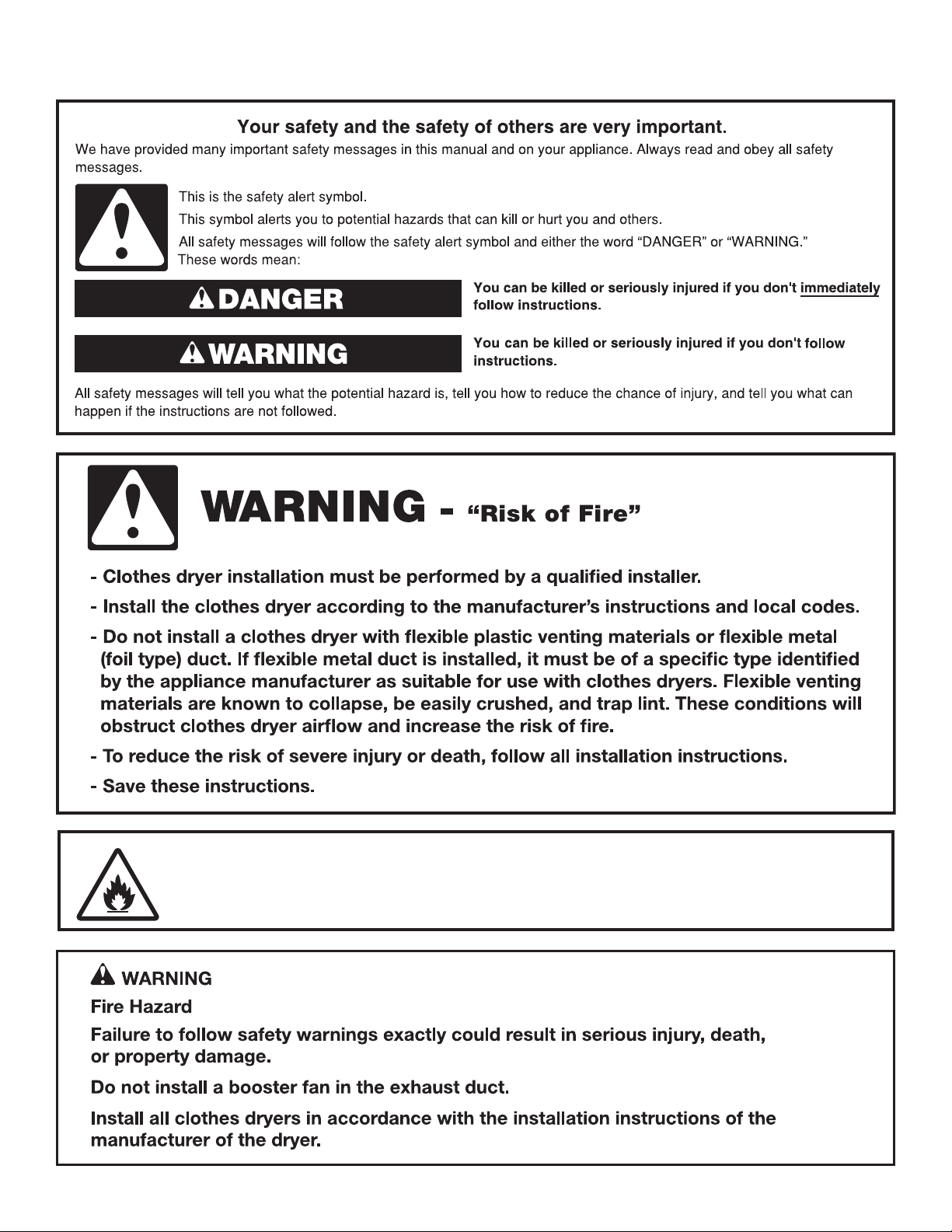
DRYER SAFETY
CAUTION – RISK OF FIRE/FLAMMABLE MATERIALS
This is an additional safety alert symbol that alerts you to the risk of re.

3
FOR YOUR SAFETY
1. DO NOT USE OR STORE PETROL OR OTHER FLAMMABLE MATERIALS IN THIS APPLIANCE OR
NEAR THIS APPLIANCE.
2. DO NOT SPRAY AEROSOLS IN THE VICINITY OF THIS APPLIANCE WHILE IT IS IN OPERATION.
3. DO NOT MODIFY THIS APPLIANCE.
n
Remove all objects from pockets, such as lighters and
matches, before placing items in the dryer.
n
Before the dryer is removed from service or discarded,
remove the doors to the drying compartment.
n
Do not reach into the dryer if the drum is moving.
A door switch is tted for your safety.
n
Do not install or store the dryer where it will be exposed
to the weather.
n
Do not tamper with controls.
n
Do not continue to use this appliance if it appears
to be faulty.
n
Do not repair or replace any part of the dryer or attempt
any maintenance unless specically recommended in this
Use and Care Guide. Repairs and servicing should only
be carried out by competent service personnel.
n
Do not use fabric softeners or products to eliminate static
unless recommended by the manufacturer of the fabric
softener or product. Follow their instructions.
n
Clean dryer lint screen before or after each load.
Do not operate dryer without lint screen in place.
n
Keep area around the exhaust and inlet openings and
adjacent surrounding areas free from the accumulation
of lint, dust, and dirt.
n
The interior of the dryer and exhaust vent should be
cleaned periodically by qualied service personnel.
n
See Installation Instructions for earthing instructions.
n
Do not dry unwashed items in this dryer.
n
The nal part of a tumble dryer cycle occurs without heat
(cool down cycle) to ensure that the items are left at a
temperature that ensures the items will not be damaged.
n
Items such as foam rubber (latex foam), shower caps,
waterproof textiles, rubber backed articles, and clothes
or pillows tted with foam rubber pads must only be dried
on a clothesline.
n
If the supply cord is damaged, it must be replaced by the
manufacturer or its service agent or a similarly qualied
person in order to avoid a hazard.
WARNING:
Never stop a tumble dryer cycle before the
end of the drying cycle unless all items are quickly removed
and spread out so that the heat is dissipated.
IMPORTANT SAFETY INSTRUCTIONS
WARNING:
To reduce the risk of re, electric shock, or injury to persons when using the dryer, follow basic
precautions, including the following:
SAVE THESE INSTRUCTIONS
n
Read all instructions before using the dryer.
n
Keep a minimum clearance of 100 mm (4 in.)
between the rear of the dryer and any wall.
n
The operation of this appliance may affect the operation
of other types of appliances which take their air supply
for safe combustion from the same room. There has to
be adequate ventilation to replace exhausted air and
thus avoid the back-ow of gases into the room from
appliances burning other fuels, including open res,
when operating the tumble dryer. If in doubt, consult
the appliance manufacturers.
n
Do not obstruct the air supply to the dryer (see
Installation Instructions for minimum clearances).
n
Do not place items exposed to cooking oils in your dryer.
Oil-affected items can ignite spontaneously, especially
when exposed to heat sources such as in a tumble dryer.
The items become warm causing an oxidation reaction in
the oil. Oxidation creates heat. If the heat cannot escape,
the items can become hot enough to catch re. Piling,
stacking, or storing oil-affected items can prevent heat
from escaping and so create a re hazard.
n
If it is unavoidable to dry in the dryer items that have
been soiled with substances such as cooking oil,
acetone, alcohol, petrol, kerosene, spot removers,
turpentine, waxes and wax removers, or that have been
contaminated by hair care products, they should be
washed in hot water with an extra amount of detergent
before being dried in the dryer. These items may give off
vapours that could ignite or explode. Such washing will
reduce, but not eliminate, the hazard.
n
This appliance is not intended for use by persons
(including children under 8 years of age) with reduced
physical, sensory, or mental capabilities, or lack of
experience and knowledge, unless they have been
given supervision or instructions concerning use of
the appliance by persons responsible for their safety.
n
Cleaning and user maintenance by children must
be supervised.
n
Children should be supervised to ensure that they
do not play with the appliance.
n
Children less than 3 years of age should be kept away
from the appliance unless continuously supervised.
n
The dryer should not be used if industrial chemicals have
been used for cleaning.
4
IMPORTANT SAFETY INSTRUCTIONS
precautions, including the following:
WARNING:
Read all instructions before using the dryer.
Keep a minimum clearance of 100 mm (4 in.) between the
rear of the dryer and any wall.
The operation of this appliance may affect the operation of
other types of appliances which take their air supply for safe
combustion from the same room. There has to be adequate
ventilation to replace exhausted air and thus avoid the
back-ow of gases into the room from appliances burning
other fuels, including open res, when operating the tumble
dryer. If in doubt, consult the appliance manufacturers.
Do not obstruct the air supply to the dryer (see Installation
Instructions for minimum clearances).
Do not place items exposed to cooking oils in your dryer.
Oil-affected items can ignite spontaneously, especially when
exposed to heat sources such as in a tumble dryer. The
items become warm causing an oxidation reaction in the oil.
Oxidation creates heat. If the heat cannot escape, the items
can become hot enough to catch re. Piling, stacking or
storing oil-affected items can prevent heat from escaping
and so create a re hazard.
If it is unavoidable to dry in the dryer items that have been
soiled with substances such as cooking oil, acetone, alcohol,
petrol, kerosene, spot removers, turpentine, waxes and wax
removers, or that have been contaminated by hair care
products, should be washed in hot water with an extra
amount of detergent before being dried in the dryer. These
items may give off vapours that could ignite or explode. Such
washing will reduce, but not eliminate, the hazard.
This appliance is not intended for use by persons (including
children) with reduced physical, sensory or mental
capabilities, or lack of experience and knowledge, unless
they have been given supervision or instructions concerning
use of the appliance by persons responsible for their safety.
Children should be supervised to ensure that they do not
play with the appliance.
The dryer should not be used if industrial chemicals have
been used for cleaning.
Before the dryer is removed from service or discarded,
remove the doors to the drying compartment.
Do not reach into the dryer if the drum is moving. A door
switch is tted for your safety.
Do not install or store the dryer where it will be exposed
to the weather.
Do not tamper with controls.
Do not continue to use this appliance if it appears to be
faulty.
Do not repair or replace any part of the dryer or attempt
any maintenance unless specically recommended in this
Use and Care Guide. Repairs and servicing should only
be carried out by competent service personnel.
Do not use fabric softeners or products to eliminate static
unless recommended by the manufacturer of the fabric
softener or product. Follow their instructions.
Clean dryer lint screen before or after each load. Do not
operate dryer without lint screen in place.
Keep area around the exhaust and inlet openings and
adjacent surrounding areas free from the accumulation of
lint, dust, and dirt.
The interior of the dryer and exhaust vent should be
cleaned periodically by qualied service personnel.
See Installation Instructions for earthing instructions.
Do not dry unwashed items in this dryer.
Items such as foam rubber (latex foam), shower caps,
waterproof textiles, rubber backed articles and clothes or
pillows tted with foam rubber pads must only be dried
on a clothesline.
SAVE THESE INSTRUCTIONS
WARNING: Never stop a tumble dryer cycle before the
end of the drying cycle unless all items are quickly removed
and spread out so that the heat is dissipated.
To reduce the risk of re, electric shock, or injury to persons when using the dryer, follow basic
The nal part of a tumble dryer cycle occurs without heat
(cool down cycle) to ensure that the items are left at a
temperature that ensures the items will not be damaged.
If the supply cord is damaged, it must be replaced by the
manufacturer or its service agent or a similarly qualied
person in order to avoid a hazard.
4
CHECK YOUR VENT SYSTEM FOR GOOD AIRFLOW
Good airow
Along with heat, dryers require good airow to efciently
dry laundry. Proper venting will reduce your drying times
and improve your energy savings. See Installation
Instructions.
The venting system attached to the dryer plays a big role
in good airow.
Service calls caused by improper venting are not covered
by the warranty and will be paid by the customer, regardless
of who installed the dryer.
To maintain good airow:
Good Better
USE AUTOMATIC DRY CYCLES FOR BETTER FABRIC CARE AND ENERGY SAVINGS
Use the Automatic Dry cycles to provide the most energy savings and enhanced fabric care from the dryer. During Automatic Dry
cycles, drying air temperature or moisture level are sensed in the load. This sensing occurs throughout the drying cycle and the
dryer shuts off when the load reaches the selected dryness. The Energy Preferred cycle will provide optimal energy savings.
With Timed Dry, the dryer runs the amount of time set and sometimes results in shrinkage, wrinkling, and static due to over-drying.
Use Timed Dry for the occasional damp load that needs a little more drying time or when using the drying rack.
n
Clean your lint screen before each load.
n
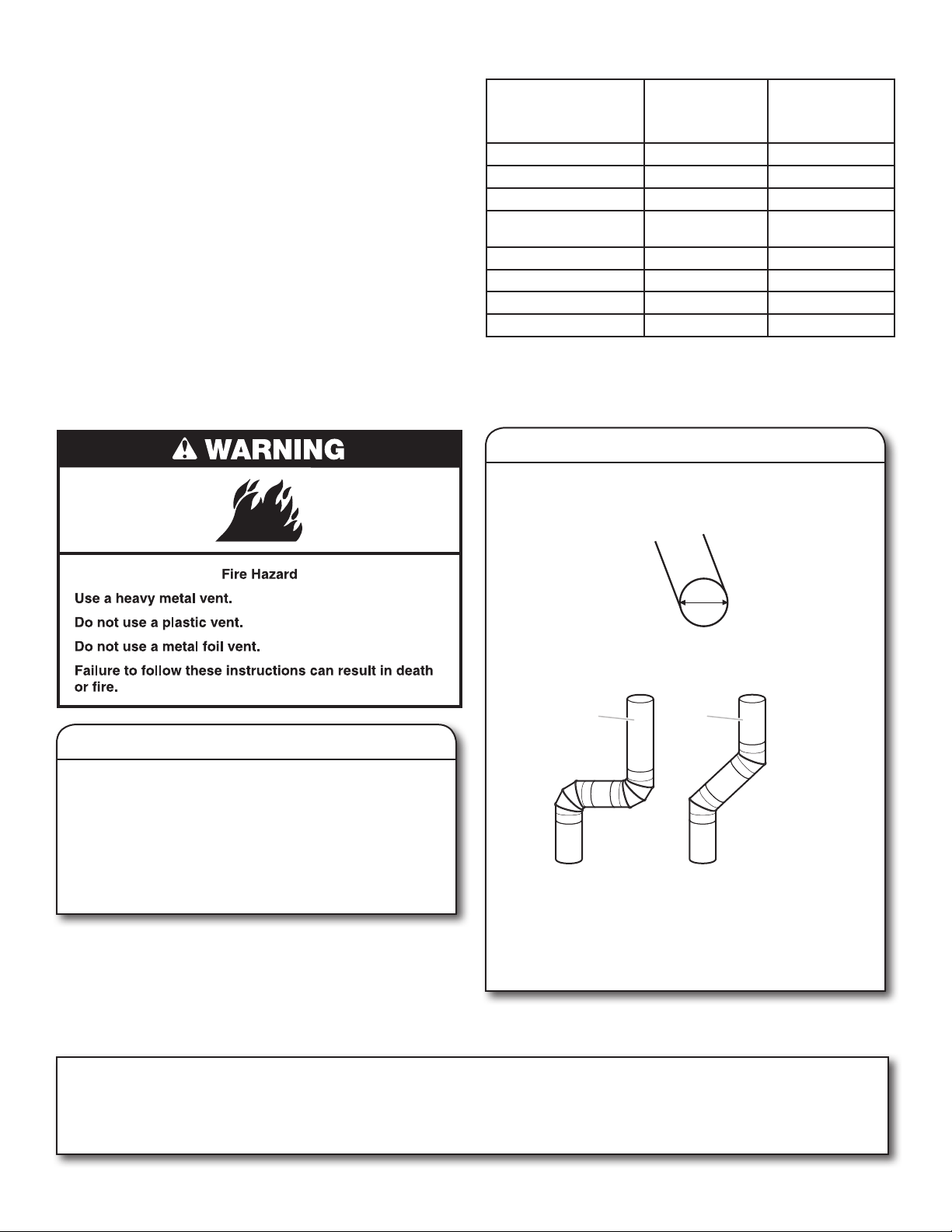
Replace plastic or foil vent material with 102 mm (4")
diameter heavy, rigid vent material.
n
4"
102 mm
Use the shortest length of vent possible.
n
Use no more than four 90° elbows in a vent system;
each bend and curve reduces airow.
n
Remove lint and debris from the exhaust hood.
n
Remove lint from the entire length of the vent system
at least every two years. When cleaning is complete,
be sure to follow the Installation Instructions supplied
with your dryer for nal product check.
n
Clear away items from the front of the dryer.
SPECIFICATIONS
These units are sold in multiple regions with different
requirements for measuring capacity. Below are a few
of the valid forms of measure posted on this product:
Dry Linen Capacity: A weight measure in load size
that reects the volumetric size of the dryer drum.
IEC Capacity: The capacity measure that represents
the maximum capacity of dry linens and textiles which
the manufacturer declares can be treated in a specic cycle.
IMPORTANT: This appliance is intended to be used in
household and similar applications such as:
n staff kitchen areas in shops, ofces, and other working
environments;
n farm houses;
n by clients in hotels, motels, and other residential-type
environments;
n bed and breakfast-type environments;
n areas for communal use in blocks of ats or in launderettes.
Models
3LMEDC315FW
3LMEDC415FW
4KMEDC215FW
4KMEDC315FW
4KMEDC415FW
4KMEDC425FW
Rated Voltage 220–240 V 2N~ 220–240 V 2N~
Rated Frequency 50 Hz 60 Hz
Rated Current 20 Amps 20 Amps
Dry Linen Capacity
(Maximum)
15 kg (33 lb) 15 kg (33 lb)
IEC Capacity 7 kg (15 lb) 7 kg (15 lb)
Height 1067 mm (42") 1067 mm (42")
Width 737 mm (29") 737 mm (29")
Depth 706 mm (27
13
⁄16") 706 mm (27
13
⁄16")
NOTE: The noise level of the dryer is below 70 dB(A).
5
CONTROL PANEL AND FEATURES
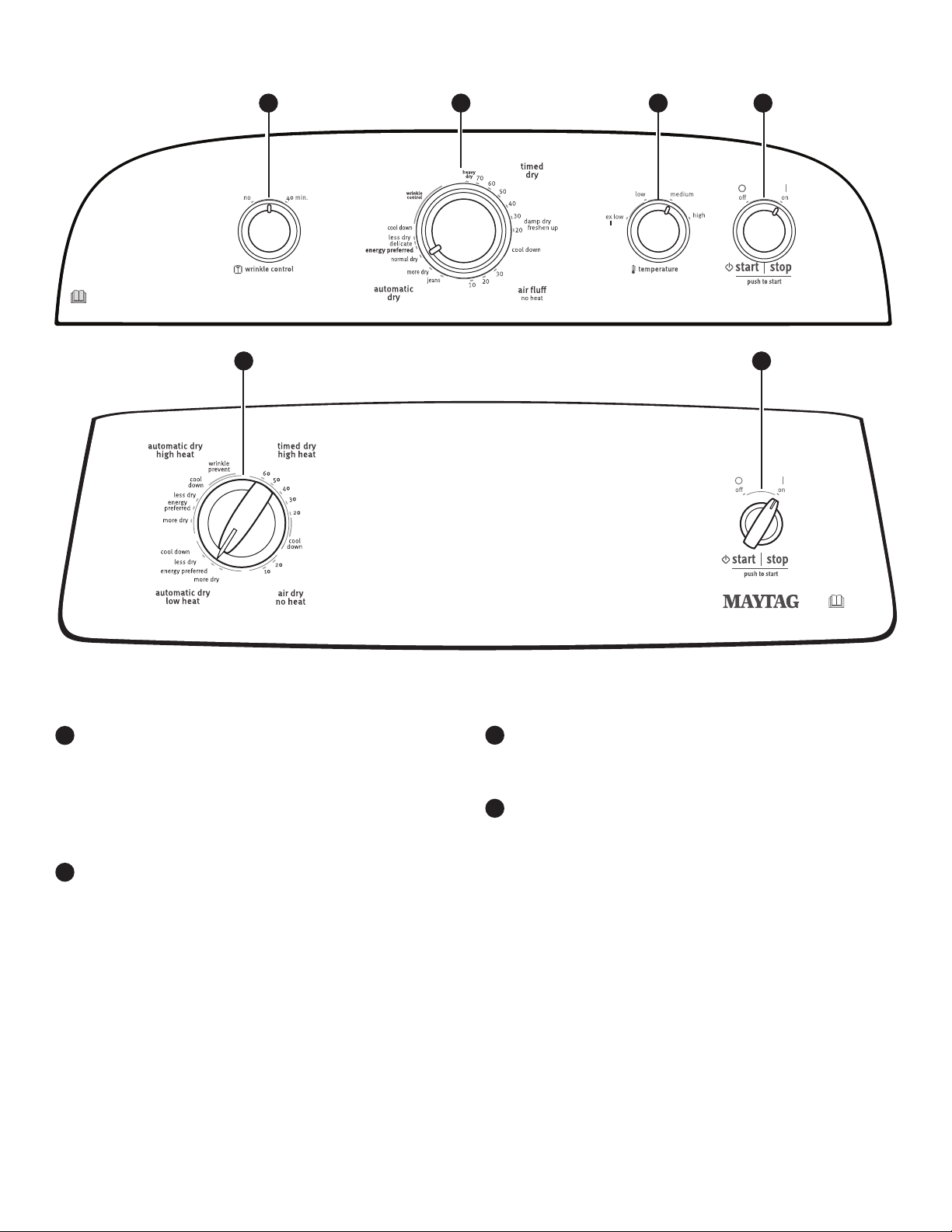
WRINKLE CONTROL FEATURE (on some models)
When you are unable to remove a load of clothes from the
dryer as soon as it stops, wrinkles can form. The Wrinkle
Control feature periodically tumbles, rearranges, and uffs
the load to help keep wrinkles from forming.
n
Get 40minutes of heat-free, periodic tumbling at the end
of a cycle. Turn the Wrinkle Control knob to on or off at
any time before the cycle has ended.
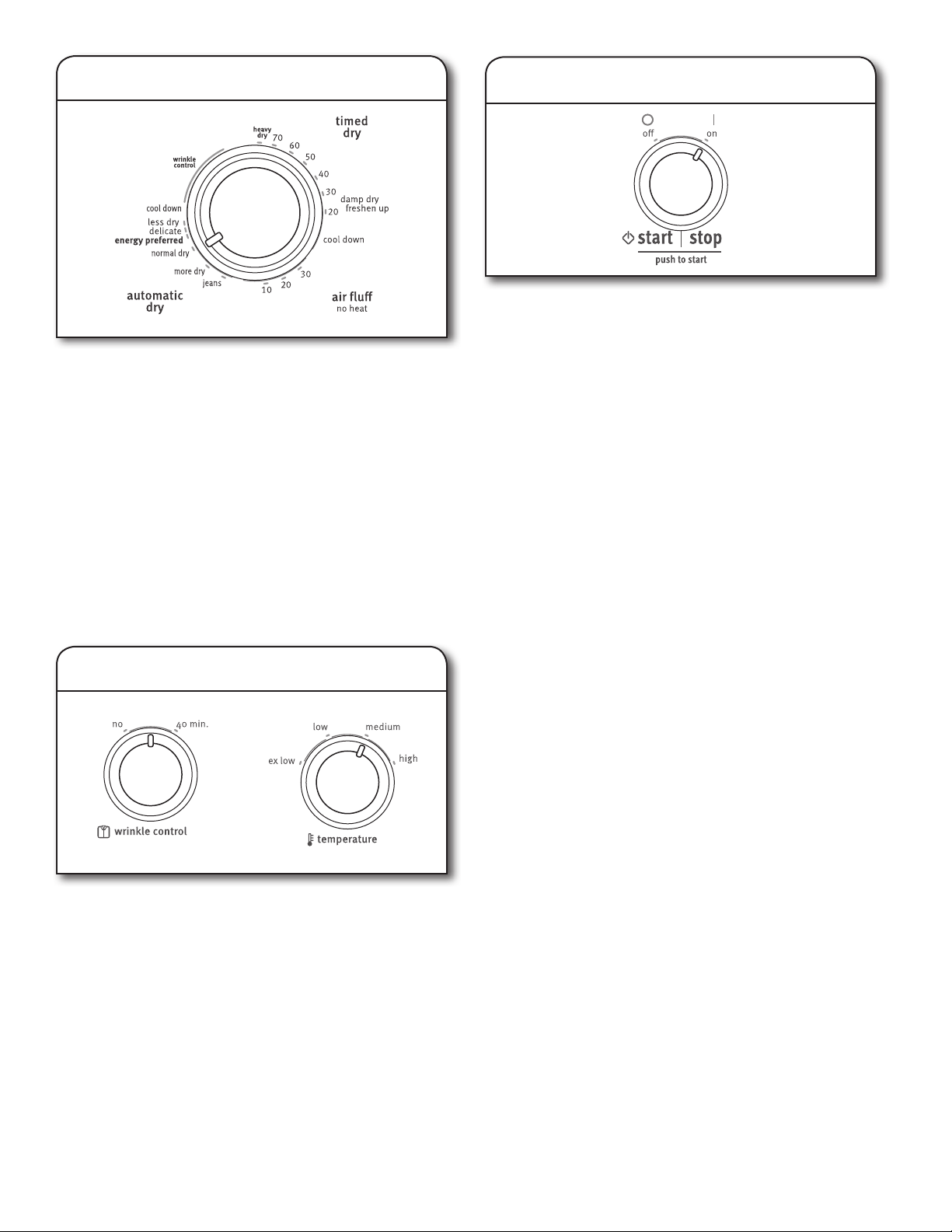
DRYER CYCLE KNOB
Use your Dryer Cycle Knob to select available cycles on
your dryer. Turn the knob to select a cycle for your laundry
load. See “Cycle Guide” for detailed descriptions of cycles.
TIMED DRY
Will run the dryer for the approximate time on the control.
On models with a selectable temperature knob, you may
choose a setting based on the fabrics in your load. Drying
time and temperature will depend on your dryer model.
AUTOMATIC DRY
Senses moisture in the load or air temperature and shuts
off when the load reaches the selected dryness level.
Gives the best drying in the shortest time. Drying time will
vary based on fabric type, load size, and dryness setting.
1
2
TEMPERATURE
Select a drying temperature based on the fabrics in your
load. If you are unsure of the temperature to select for a
load, select the lower setting rather than the higher setting.
START/STOP
The Cycle Signal produces an audible sound when the
drying cycle is nished. Promptly removing clothes at the
end of the cycle reduces wrinkling.
Turn the START/STOP knob to select the desired setting
(On or Off). Press the START/STOP knob to start the dryer.
NOTE: When the Wrinkle Control setting is selected,
the tone will sound every 5 minutes until the clothes
are removed or the Wrinkle Control setting ends.
3
4
2 31 4
Not all features and options are available on all models.
Appearance may vary.
2 4
6
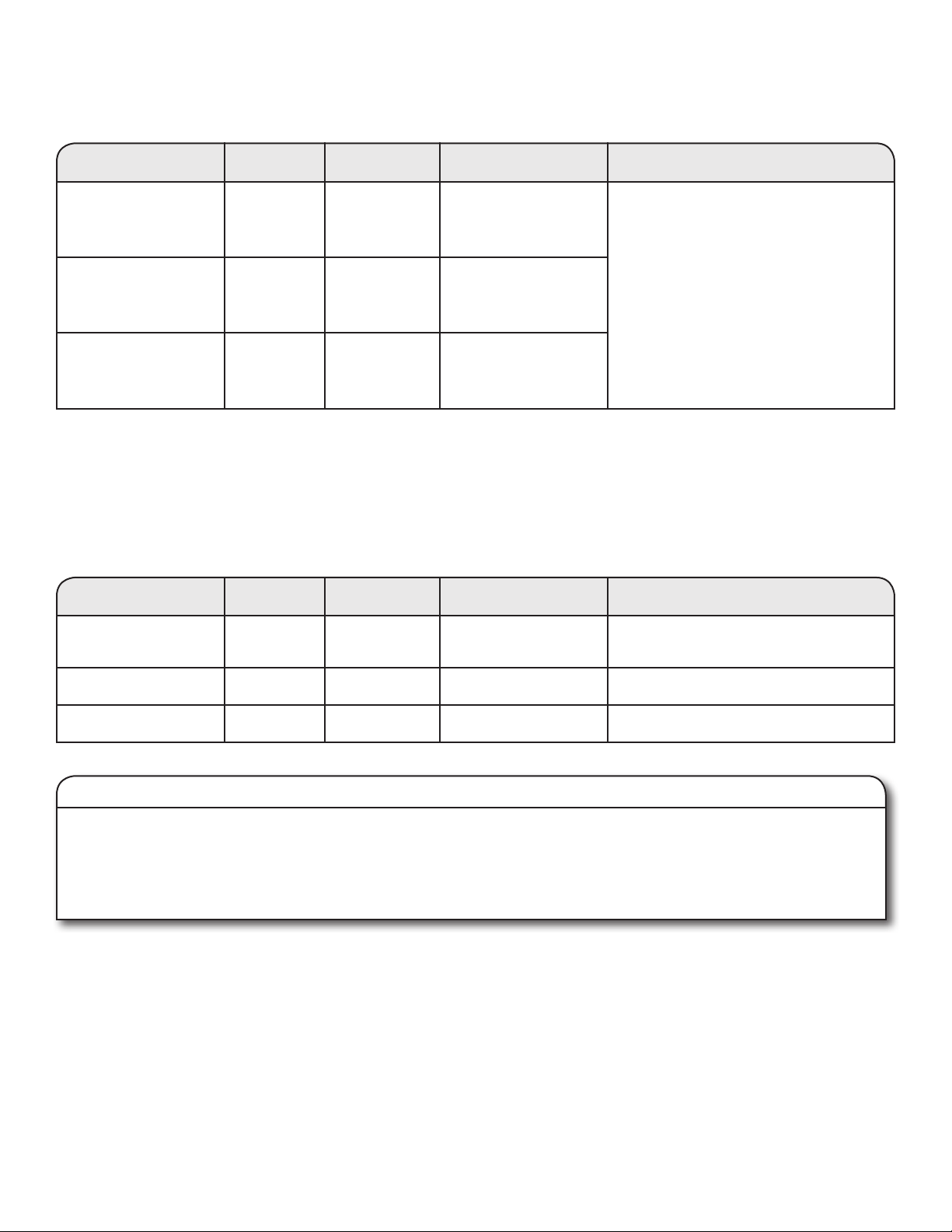
Not all cycles and settings are available on all models.
Choose Energy Preferred cycle for optimal energy savings.
CYCLE GUIDE AUTOMATIC DRY CYCLES
CYCLE GUIDE TIMED DRY CYCLES
Not all cycles and settings are available on all models.
TIMED DRY – Will run the dryer for the approximate time on the control.
NOTE: If loads do not seem as dry as you would like, select More Dry next time you dry a similar load. If loads seem drier than you
like, select Less Dry next time you dry a similar load.
Setting the Drying Temperature
If your dryer has multiple heat settings:
A High temperature setting may be used for drying
heavyweight items such as towels and work clothes.
A Low to Medium temperature setting may be used for drying
medium-weight items such as sheets, blouses, dresses,
underwear, permanent press fabrics, and some knits.
Use the No Heat setting for foam, rubber, plastic,
or heat-sensitive fabrics.
Line-dry bonded or laminated fabrics.
NOTE: If you have questions about drying temperatures
for various loads, refer to the care label directions.
Items to Dry: Cycle: Temperature:
Available
Options: Cycle Details:
Jeans, heavy work
clothes, towels
More Dry High Wrinkle Control/
Wrinkle Prevent
Temperature
Cycle Signal
Automatic cycles give the best drying in the
shortest time. Drying time varies based on
fabric type, load size, and dryness setting.
Select a drying temperature based on the
fabrics in your load. If you are unsure of the
temperature to select for a load, select the
lower setting rather than the higher setting.
Work clothes,
medium-weight
fabrics, sheets
Energy
Preferred
Medium Wrinkle Control/
Wrinkle Prevent
Temperature
Cycle Signal
Casual, shirts, pants,
lightweight items,
synthetics, delicates,
athletic wear
Delicate or
Less Dry
Low Wrinkle Control/
Wrinkle Prevent
Temperature
Cycle Signal
Items to Dry: Cycle: Temperature:
Available
Options: Cycle Details:
Large or heavy items
such as thick towels
or robes
Heavy Dry Any Temperature Choose High to dry large or heavy loads.
Any load Damp Dry/
Freshen Up
Any Temperature Dries items to a damp level or for items that
do not require an entire drying cycle.
Rubber, plastic,
heat-sensitive fabrics
Air Fluff/
Air Dry
No Heat Temperature No-heat drying.
7
USING YOUR DRYER
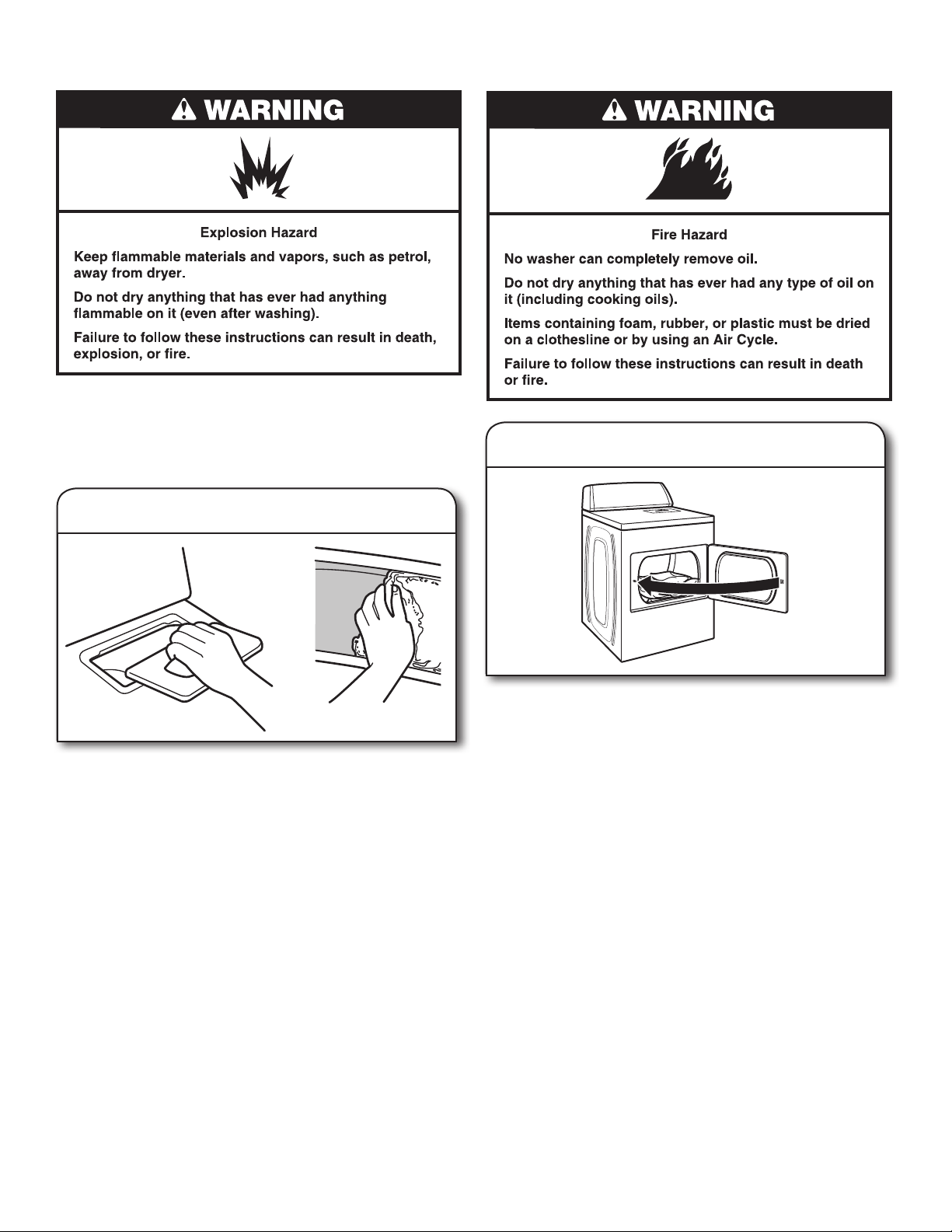
1. Clean the lint screen
Clean the lint screen before each load. Pull the lint screen out
of its holder. Roll lint off the screen with your ngers. Do not rinse
or wash screen to remove lint. Push the lint screen rmly back
into place.
For additional cleaning information, see “Dryer Care.”
2. Load the dryer
Place laundry in the dryer. Close the door.
NOTE: Your model may have a different door than the one
shown. Some models have drop-down doors.
Do not tightly pack the dryer; clothes should be able to tumble
freely.
WARNING: To reduce the risk of fire, electric shock, or injury to
persons, read the Important Safety Instructions before operating
this dryer.
Before using your dryer, wipe the dryer drum with a damp cloth
to remove dust from storing and shipping.
8
5. Press START/STOP to begin cycle
Press and hold the START/STOP knob to begin the cycle.
To end the cycle early, turn the START/STOP knob to Off.
Promptly remove garments after cycle has completed to reduce
wrinkling. Use the Wrinkle Control feature to avoid wrinkling
when you are unable to remove a load from the dryer as soon
as it stops.
4. Set cycle settings and options
Select cycle settings and options by turning the knob to the
desired position.
NOTE: Not all options and settings are available with all cycles.
Temperature
Turn the Temperature knob to change the drying temperature
setting. See “Setting the Drying Temperature.”
Wrinkle Control feature (on some models)
Get 40 minutes of heat-free, periodic tumbling at the end
of a cycle. Turn the Wrinkle Control knob to select NO
to turn off at any time before the cycle has ended.
3. Select the desired cycle
Select the desired cycle for your load. See the “Cycle Guide”
for more information about each cycle.
AUTOMATIC DRY Cycles
You can select a different dryness level, depending on your
load, by turning the knob to dryness level.
Selecting More Dry, Energy Preferred, or Less Dry
automatically adjusts the dryness level at which the dryer will
shut off. Once a dry level is set, it cannot be changed without
stopping the cycle.
Automatic Dry cycles give the best drying in the shortest time.
Drying time varies based on fabric type, load size, and dryness
setting.
NOTE: More Dry removes more load moisture. Choose Energy
Preferred for optimal energy savings. Less Dry removes less
moisture and is used for loads you may want to put on a
hanger to complete drying.
9
DRYER CARE
Keep dryer area clear and free from items that would
block the airow for proper dryer operation. This includes
clearing piles of laundry in front of the dryer.
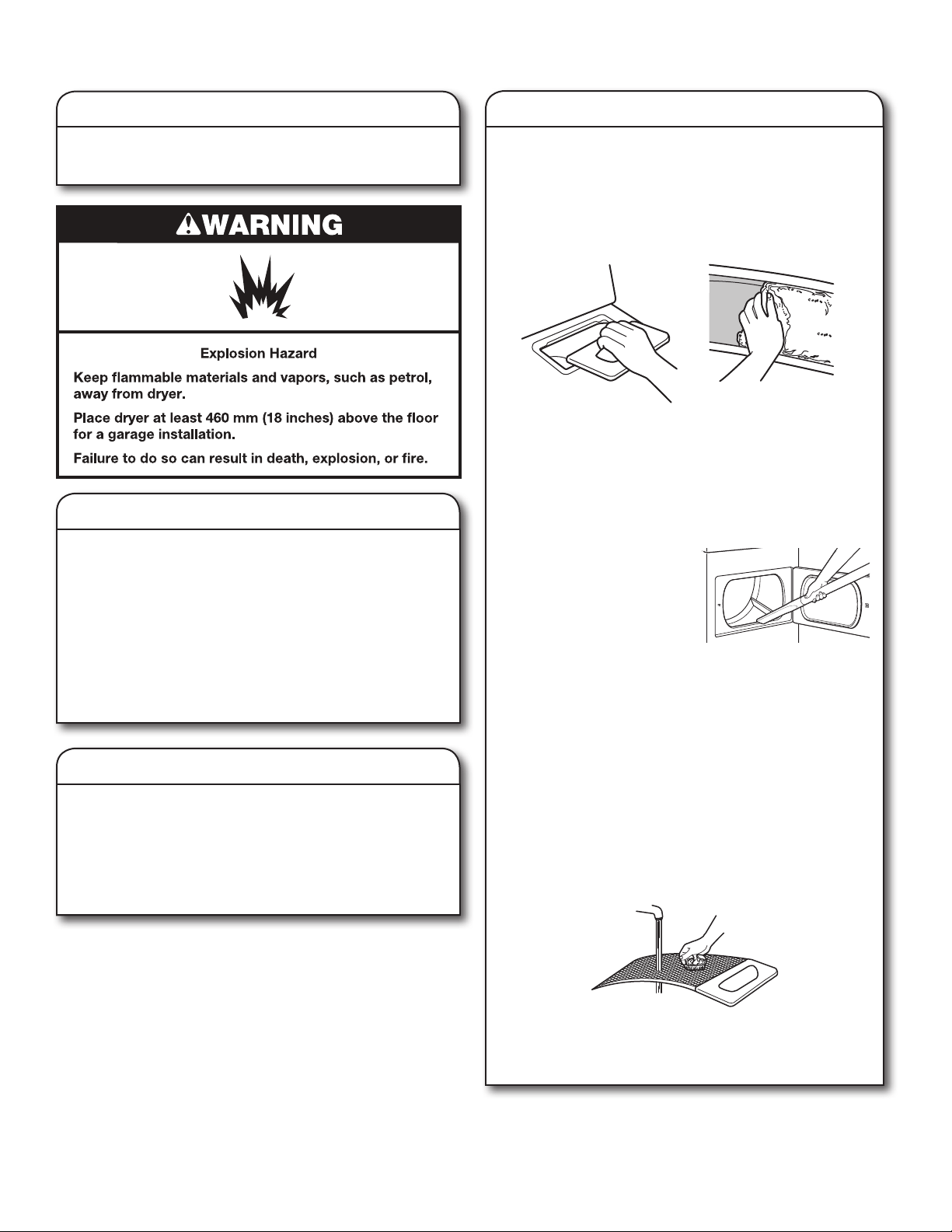
Cleaning the lint screen
Every load cleaning
The lint screen is located in the dryer. A screen blocked by
lint can increase drying time.
To clean:
1. Pull the lint screen out of its holder. Roll lint off the
screen with your ngers. Do not rinse or wash screen
to remove lint. Wet lint is hard to remove.
2. Push the lint screen rmly back into place.
IMPORTANT:
n
Do not run the dryer with the lint screen loose,
damaged, blocked, or missing. Doing so can cause
overheating and damage to both the dryer and fabrics.
n
If lint falls off the screen into the dryer during removal,
check the exhaust hood and remove the lint. See
“Venting Requirements” in the Installation Instructions.
n
Clean space where lint
screen is located, as needed.
Using a vacuum, gently
remove any lint that has
accumulated outside of
the lint screen.
As-needed cleaning
Laundry detergent and fabric softener residue can build
up on the lint screen. This buildup can cause longer drying
times for your clothes or cause the dryer to stop before
your load is completely dry. The screen is probably
clogged if lint falls off while the screen is in the dryer.
Clean the lint screen with a nylon brush every six months,
or more frequently, if it becomes clogged due to a residue
buildup.
To wash:
1. Roll lint off the screen with your ngers.
2. Wet both sides of lint screen with hot water.
3. Wet a nylon brush with hot water and liquid detergent.
Scrub lint screen with the brush to remove residue
buildup.
4. Rinse screen with hot water.
5. Thoroughly dry lint screen with a clean towel.
Reinstall screen in dryer.
Cleaning the dryer interior
To clean dryer drum:
1. Apply a liquid, nonammable household cleaner to the
stained area of the drum and rub with a soft cloth until
stain is removed.
2. Wipe drum thoroughly with a damp cloth.
3. Tumble a load of clean cloths or towels to dry the drum.
NOTE: Garments that contain loose dyes, such as denim
blue jeans or brightly colored cotton items, may discolor the
dryer interior. These stains are not harmful to your dryer and
will not stain future loads of clothes. Dry these items inside
out to avoid drum staining.
Removing accumulated lint
From inside the dryer cabinet
Lint should be removed every two years, or more often,
depending on dryer usage. Cleaning should be done
by a qualied servicer.
From the exhaust vent
Lint should be removed every two years, or more often,
depending on dryer usage.
Cleaning the dryer location
10
Vacation, storage, and moving care
Non-Use or Storage Care
Operate your dryer only when you are at home. If you will
be on vacation or not using your dryer for an extended
period of time, you should:
1. Unplug dryer or disconnect power.
2. (For gas dryers only): Close shut-off valve to gas
supply line.
3. Clean lint screen. See “Cleaning the lint screen.”
Moving Care
For power supply cord-connected dryers:
1. Unplug the power supply cord.
2. Make sure leveling legs are secure in dryer base.
3. Use tape to secure dryer door.
For direct-wired dryers:
1. Turn off power at fuse or breaker box.
2. Disconnect wiring.
3. Make sure leveling legs are secure in dryer base.
4. Use tape to secure dryer door.
For gas dryers:
1. Unplug or disconnect power to dryer.
2. Close shut-off valve in gas supply line.
3. Disconnect gas supply line pipe and remove ttings
attached to dryer pipe.
4. Cap the open fuel supply line.
5. Make sure leveling legs are secure in dryer base.
6. Use tape to secure dryer door.
Reinstalling the Dryer
Follow the Installation Instructions to locate, level,
and connect the dryer.
Changing the drum light
(on some models)
1. Unplug dryer or disconnect power.
2. Open the dryer door. Locate the light bulb cover
on the back wall of the dryer. Using a Phillips-head
screwdriver, remove the screw located in the lower
right-hand corner of the cover. Remove the cover.
3. Turn bulb counterclockwise. Replace the bulb with
a 10 watt appliance bulb only. Replace the cover and
secure with the screw.
4. Plug into an earthed outlet or reconnect power.
11
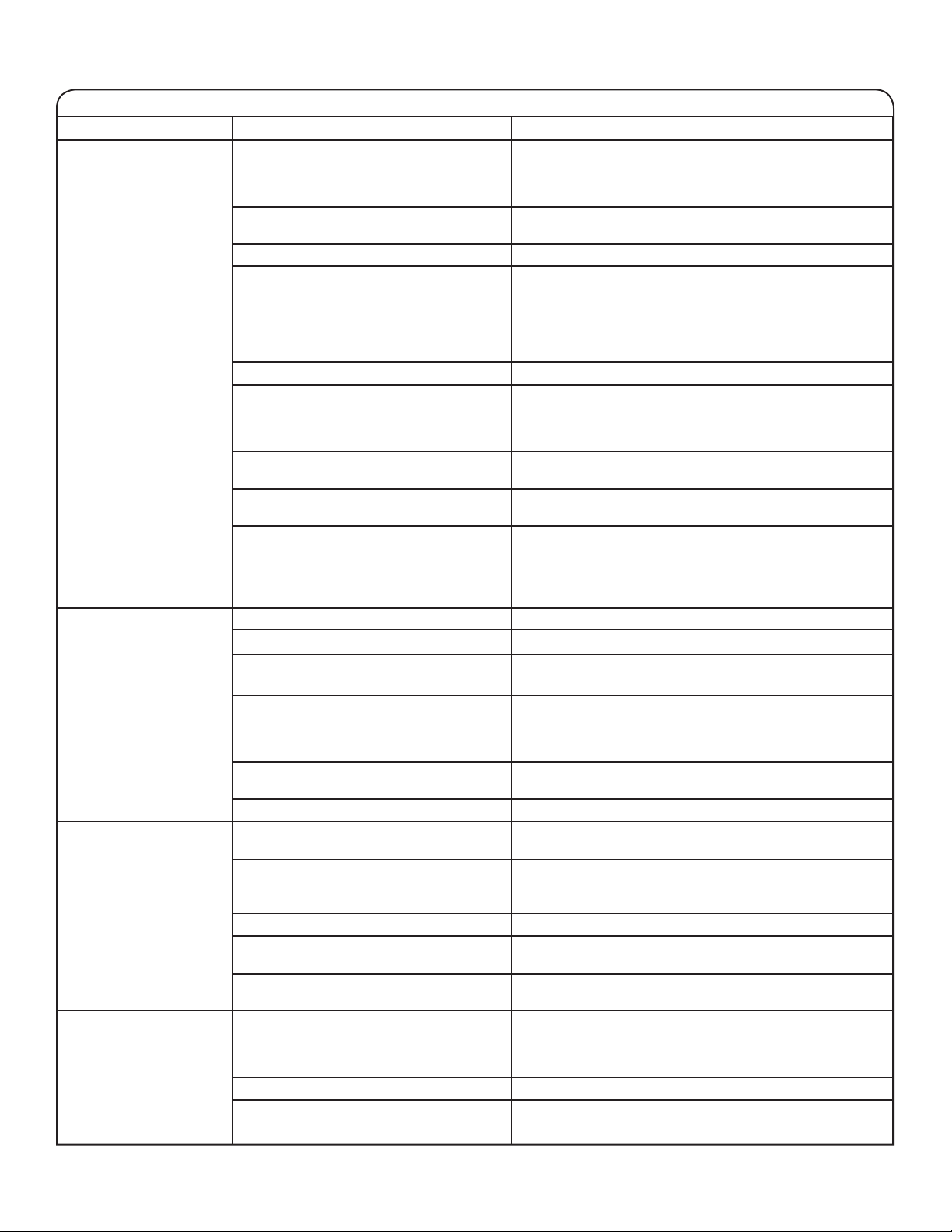
First try the solutions suggested here to possibly avoid the cost of a service call.
If you experience Possible Causes Solution
Clothes are not drying
satisfactorily; drying times
are too long
Lint screen or lint screen housing is
clogged with lint.
Clean lint screen before each load. Clean space where
lint screen is located, as needed. Using a vacuum, gently
remove any lint that has accumulated outside of the lint
screen.
The Air Fluff/Air Dry cycle or No Heat
temperature setting has been selected.
Select the right cycle for the types of garments being
dried. See “Cycle Guide.”
Load too large and heavy to dry quickly. Separate the load to tumble freely.
Exhaust vent or outside exhaust hood
clogged with lint, restricting air movement.
Run the dryer for 5–10 minutes. Hold your hand under
the outside exhaust hood to check air movement. If you
do not feel air movement, clean exhaust system of lint
or replace exhaust vent with heavy metal or exible
metal vent. Make sure vent is not crushed or kinked.
See Installation Instructions.
Fabric softener sheets blocking the grille. Use only one fabric softener sheet and use it only once.
Exhaust vent not the correct length. Check that the exhaust vent is not too long or has
too many turns. Long venting will increase drying times.
Make sure vent is not crushed or kinked. See Installation
Instructions.
Exhaust vent diameter not the
correct size.
Use 102mm (4") diameter vent material.
Dryer located in a room with
temperature below 7ºC (45ºF).
Proper operation of dryer cycles requires temperatures
above 7ºC (45ºF).
Dryer located in a closet without adequate
opening.
Closet doors must have ventilation openings at the top
and bottom of the door. The front of the dryer requires
a minimum of 25mm (1") of airspace and, for most
installations, the rear of the dryer requires 127mm (5").
See Installation Instructions.
Dryer will not run Door not closed completely. Make sure the dryer door is closed completely.
Start/Stop knob not turned to On setting. Turn START/STOP knob to On setting.
Start/Stop knob not pressed rmly
or held long enough.
Press and hold the START/STOP knob until you hear the
dryer drum moving.
Household fuse is blown or circuit breaker
has tripped.
Electric dryers use two household fuses or circuit breakers.
The drum may be turning, but you may not have heat.
Replace both fuses or reset the circuit breaker. If the
problem continues, call an electrician.
Incorrect power supply. Electric dryers require 240 volt power supply. Check with
a qualied electrician.
Wrong type of fuse. Use a time-delay fuse.
Unusual sounds Dryer had a period of non-use. If the dryer hasn’t been used for awhile, there may be a
thumping sound during the rst few minutes of operation.
A coin, button, or paper clip is caught
between the drum and front or rear of
the dryer.
Check the front and rear edges of the drum for small
objects. Clean out pockets before laundering.
It is a gas dryer. The gas valve clicking is a normal operating sound.
The four legs are not installed, or the dryer
is not level front to back and side to side.
The dryer may vibrate if not properly installed.
See Installation Instructions.
Clothing knotted or balled up. When balled up, the load will bounce, causing the dryer
to vibrate. Separate the load items and restart the dryer.
No heat Household fuse is blown or circuit breaker
has tripped.
The drum may be turning, but you may not have heat.
Electric dryers use two household fuses or circuit breakers.
Replace both fuses or reset the circuit breaker. If the
problem continues, call an electrician.
Supply line valve not open. For gas dryers, make sure the supply line valve is open.
Incorrect power supply. Electric dryers require 240 volt power supply.
Check with a qualied electrician.
TROUBLESHOOTING
12
TROUBLESHOOTING
First try the solutions suggested here to possibly avoid the cost of a service call.
If you experience Possible Causes Solution
Cycle time too short Automatic cycle ending early. The load may not be contacting the sensor strips.
Level the dryer.
Use Timed Dry for very small loads. Change the Dry Level
setting on Automatic Dry cycles.
Increasing or decreasing the Dry Level setting will change
the amount of drying time in a cycle.
Lint on load Lint screen clogged. Lint screen should be cleaned before each load.
Stains on load or drum Dryer fabric softener not properly used. Add dryer fabric softener sheets at the beginning of the
cycle. Fabric softener sheets added to a partially dried
load can stain your garments.
Drum stains are caused by dyes in clothing (usually blue
jeans). These will not transfer to other clothing.
Loads are wrinkled Load not removed from dryer at the end
of the cycle.
Select Wrinkle Control feature to tumble the load without
heat to avoid wrinkling.
Dryer tightly packed. Dry smaller loads that can tumble freely to reduce the
chance of wrinkles forming.
Odors You have recently been painting, staining,
or varnishing in the area where your dryer
is located.
If so, ventilate the area. When the odors or fumes are gone
from the area, rewash and dry the clothing.
The electric dryer is being used for the
rst time.
The new electric heating element may have an odor.
The odor will be gone after the rst cycle.
Load is too hot Laundry items removed from the dryer
before the end of the cycle.
Allow Cool Down cycle to nish before removing
laundry from dryer. All cycles are cooled slowly to reduce
wrinkling and make it easier to handle. Items removed
before Cool Down may feel very warm.
A high temperature cycle was used,
or a separate temperature control was
set on High.
Select a lower temperature and use an automatic drying
cycle. These cycles sense the temperature or the moisture
level in the load and shut off when the load reaches the
selected dryness. This reduces overdrying.
LATIN AMERICA SERVICE
For other countries in Latin America, see our Warranty Card Latin America and visit our Whirlpool Latinoamerica website
www.whirlpool-latam.com.
EU representative: Whirlpool EMEA S.p.A., Via Carlo Pisacane n. 1, 20016 Pero (MI), Italy
Manufacturer: Whirlpool Corporation, 2000 N M 63, Benton Harbor, MI 49022 USA
For more information, visit us at www.whirlpool.com/accessories or contact the dealer from whom you purchased your dryer or an
authorised service company.
13
EU – DECLARATION OF CONFORMITY
Mr. Stefano Demattè, Global Platform Leader HA, representative of
WHIRLPOOL EMEA S.p.A. Socio Unico, Via Carlo Pisacane n. 1, 20016 Pero (Mi), Italy
declares that the products
Product name Tumble Dryer
Trade name Whirlpool
Model 3LWED4705FW0, 3LWED4830FW0, 3LWED4815FW0, 3LWED4730FW0
Trade name Maytag
Model 3LMEDC315FW0, 3LMEDC415FW0
have been designed, manufactured, and placed on the market in conformity with
EU Directives and Commission Regulations
Machinery Directive 2006/42/EC
EMC Directive 2014/30/EU
RoHS Directive 2011/65/EU
and the following standards have been applied
Safety EN 60335-1:2012 + A11:2014
Safety EN 50570:2013
Safety EN ISO 12100:2010
EMC EN 61000-3-2:2014
EMC EN 61000-3-3:2013
EMC EN 61000-3-11:2000
EMC EN 61000-3-12:2011
EMC EN 55014-1:2006 + A1:2009 + A2:2011
EMC EN 55014-2:1997 + A1:2001 + A2:2008
EMF EN 62233:2008
RoHS EN 50581:2012
Name Stefano Demattè
Global Platform Leader HA
Date of issue 31/1/2017
Signature
Whirlpool EMEA S.p.A.
Via Carlo Pisacane n. 1, 20016 Pero (Mi), Italia
Cap Soc. €102.759.269,40 i.v.
Registro Imprese/Cod. Fiscale/Partita IVA: 00693740425 - R.E.A.: 1106112
Sole shareholder company subject to direction and coordination of Whirlpool Corporation.
www.whirlpoolcorp.com
D-TD-2017-001
W11045889A
02/17
14
SÉCURITÉ DU SECHELINGE
MISE EN GARDE –
RISQUE D’INCENDIE/
DE MATÉRIAUX INFLAMMABLES
C’est un symbole supplémentaire d’alerte de sécurité qui des alertes vous au risque d’incendie.
15
POUR VOTRE SECURITE
1. NE PAS UTILISER OU REMISER D’ESSENCE OU AUTRES MATÉRIAUX INFLAMMABLES DANS CET
APPAREIL MÉNAGER O U À PROXIMITÉ DE CELUI-CI.
2. NE PAS VAPORISER D’AÉROSOLS À PROXIMITÉ DE CET APPAREIL MÉNAGER LORSQU’IL EST EN
FONCTIONNEMENT.
3. NE PAS MODIFIER CET APPAREIL MÉNAGER.
IMPORTANTES INSTRUCTIONS DE SECURITE
AVERTISSEMENT :
An de réduire le risque d’incendie, de choc électeiue ou de blessures corporellles lors de l’utilisation
du sèche-linge, il convient d’observer certaines précautions fondamentales, notamment :
CONSERVER CES INSTRUCTIONS
n
Lire toutes les instructions avant d’utiliser le sèche-linge.
n
Laisser un dégagement minimal de 100 mm (4") entre l’arrière
du sèche-linge et les éventuelles parois environnantes.
n
Le fonctionnement de cet appareil peut affecter celui d’autres
appareils dont la source d’approvisionnement en air se fait
dans la même pièce pour une combustion sans danger.
Lorsqu’on utilise le sèche-linge, une aération adéquate est
nécessaire pour renouveler l’air rejeté et ainsi éviter le retour
dans la pièce de gaz en provenance d’appareils ménagers
utilisant d’autres carburants comme combustible, y compris
les feux ouverts. En case de doute, consulter le fabricant
de l’appareil.
n
Ne pas obstruer l’alimentation en air du sèche-linge (voir les
instructions d’installation pour les dégagements minimaux).
n
Ne pas placer d’articles tâchés d’huile de cuisson dans
le sèche-linge. Des articles ayant été au contact d’huile
peuvent d’enammer spontanément, surtout s’ils sont
exposés à des sources de chaleur, telles un sèche-linge.
Les articles peuvent chaufer, entraînant une réaction
d’oxydation de l’huile. Le phénomène d’oxydation crée
de la chaleur. Si la chaleur ne peut pas s’échapper, les
articles peuvent devenir sufsamment chauds pour prendre
feu. Le fait d’empiler, d’entasser ou d’entreposer des articles
ayant été au contact d’huile peut empêcher la chaleur
de s’échapper et créer un risque d’incendie.
4
IMPORTANT SAFETY INSTRUCTIONS
precautions, including the following:
WARNING:
Read all instructions before using the dryer.
Keep a minimum clearance of 100 mm (4 in.) between the
rear of the dryer and any wall.
The operation of this appliance may affect the operation of
other types of appliances which take their air supply for safe
combustion from the same room. There has to be adequate
ventilation to replace exhausted air and thus avoid the
back-ow of gases into the room from appliances burning
other fuels, including open res, when operating the tumble
dryer. If in doubt, consult the appliance manufacturers.
Do not obstruct the air supply to the dryer (see Installation
Instructions for minimum clearances).
Do not place items exposed to cooking oils in your dryer.
Oil-affected items can ignite spontaneously, especially when
exposed to heat sources such as in a tumble dryer. The
items become warm causing an oxidation reaction in the oil.
Oxidation creates heat. If the heat cannot escape, the items
can become hot enough to catch re. Piling, stacking or
storing oil-affected items can prevent heat from escaping
and so create a re hazard.
If it is unavoidable to dry in the dryer items that have been
soiled with substances such as cooking oil, acetone, alcohol,
petrol, kerosene, spot removers, turpentine, waxes and wax
removers, or that have been contaminated by hair care
products, should be washed in hot water with an extra
amount of detergent before being dried in the dryer. These
items may give off vapours that could ignite or explode. Such
washing will reduce, but not eliminate, the hazard.
This appliance is not intended for use by persons (including
children) with reduced physical, sensory or mental
capabilities, or lack of experience and knowledge, unless
they have been given supervision or instructions concerning
use of the appliance by persons responsible for their safety.
Children should be supervised to ensure that they do not
play with the appliance.
The dryer should not be used if industrial chemicals have
been used for cleaning.
Before the dryer is removed from service or discarded,
remove the doors to the drying compartment.
Do not reach into the dryer if the drum is moving. A door
switch is tted for your safety.
Do not install or store the dryer where it will be exposed
to the weather.
Do not tamper with controls.
Do not continue to use this appliance if it appears to be
faulty.
Do not repair or replace any part of the dryer or attempt
any maintenance unless specically recommended in this
Use and Care Guide. Repairs and servicing should only
be carried out by competent service personnel.
Do not use fabric softeners or products to eliminate static
unless recommended by the manufacturer of the fabric
softener or product. Follow their instructions.
Clean dryer lint screen before or after each load. Do not
operate dryer without lint screen in place.
Keep area around the exhaust and inlet openings and
adjacent surrounding areas free from the accumulation of
lint, dust, and dirt.
The interior of the dryer and exhaust vent should be
cleaned periodically by qualied service personnel.
See Installation Instructions for earthing instructions.
Do not dry unwashed items in this dryer.
Items such as foam rubber (latex foam), shower caps,
waterproof textiles, rubber backed articles and clothes or
pillows tted with foam rubber pads must only be dried
on a clothesline.
SAVE THESE INSTRUCTIONS
WARNING: Never stop a tumble dryer cycle before the
end of the drying cycle unless all items are quickly removed
and spread out so that the heat is dissipated.
To reduce the risk of re, electric shock, or injury to persons when using the dryer, follow basic
The nal part of a tumble dryer cycle occurs without heat
(cool down cycle) to ensure that the items are left at a
temperature that ensures the items will not be damaged.
If the supply cord is damaged, it must be replaced by the
manufacturer or its service agent or a similarly qualied
person in order to avoid a hazard.
n
Si l’on doit faire sécher dans le sèche-linge des articles
ayant été souillés par des substances telles que de l’huile
de cuisson, acétone, alcool, pétrole, kérosène, produit
détachant, térébenthine, cire, décapant pour cire ou produits
de coiffure, ils doivent être lavés à l’eau chaude avec un
supplément de détergent avant d’être séchés dans le sèche-
linge. Ces articles sont susceptibles de dégager des vapeurs
qui pouraient s’enammer ou exploser. Les laver ainsi
au préalable permet de réduire mais non de supprimer
ce risque.
n
Cet appareil ne convient pas à une utilisation par des
personnes (y compris des enfants de moins de 8ans)
à capacités physiques, sensorielles ou mentales réduites,
ou dépourvues d’expérience et de connaissances, à moins
qu’elles ne soient placées sous supervision ou qu’elles aient
reçu des instructions concernant l’utilisation de l’appareil
par une personne responsable de leur sécurité.
n
Les enfants qui effectuent le nettoyage et l'entretien doivent
être supervisés.
n
Il convient de surveiller les enfants pour qu’ils ne jouent pas
avec l’appareil.
n
Les enfants de moins de 3ans ne doivent pas se trouver
à proximité de l’appareil à moins d’être constamment
surveillés.
n
Ne pas utiliser le sèche-linge si l’on a utilisé des produits
chimiques industriels pour le nettoyage.
16
CARACTERISTIQUES
Ces appareils sont vendus dans diverses régions aux critères
de capacité de mesure différents. Vous trouverez ci-dessous
quelques unes des formes de mesures valables indiquées
sur ce produit :
Capacité linge sec : Une mesure de poids de la charge
qui reète la taille volumétrique du tambour du sèche-linge.
Capacité IEC : Mesure de capacité représentant la capacité
maximale de linge sec et de textiles pour lesquels le fabricant
conseille un programme spécique de traitement.
IMPORTANT: Cet appareil est conçu pour un usage
domestique et des utilisations similaires telles que les
suivantes:
n espace cuisine du personnel dans les magasins, bureaux
et autres environnements de travail;
n fermes;
n par les clients dans les hôtels, les motels et les autres
environnements de type résidentiel;
n environnements de type chambres d’hôtes;
n zones communes dans les immeubles d’appartements
ou dans des laveries.
Modèles
3LMEDC315FW
3LMEDC415FW
4KMEDC215FW
4KMEDC315FW
4KMEDC415FW
4KMEDC425FW
Tension nominale 220–240 V 2N~ 220–240 V 2N~
Fréquence nominale 50 Hz 60 Hz
Courant nominal 20 Amps 20 Amps
Capacité linge sec
(maximum)
15 kg (33 lb) 15 kg (33 lb)
Capacité IEC 7 kg (15 lb) 7 kg (15 lb)
Hauteur 1067 mm (42") 1067 mm (42")
Largeur 737 mm (29") 737 mm (29")
Profondeur 706 mm (27
13
⁄16") 706 mm (27
13
⁄16")
n
La zone située autour des ouvertures de prise ou
d’évacuation d’air et les zones adjacentes doivent être
exemptes de peluches et poussières.
n
L’intérieur du sèche-linge et le conduit d’évacuation doivent
être nettoyés régulièrement par un personnel d’entretien
qualié.
n
Voir les instructions d’installation pour les instructions
de mise à la terre.
n
Ne pas faire sécher d’articles non lavés dans ce sèche-linge.
n
La partie nale du programme de séchage par culbutage a
lieu sans chaleur (programme de refroidissement) pour que
les articles soient laissés à une température qui ne risque pas
de les endommager.
n
Les articles tels que le caoutchouc mousse
(mousse de latex), les bonnets de douche, les textiles
imperméabilisés, les articles avec endos de caoutchouc
et les vêtements ou oreillers rembourrés avec matelassage
en mousse doivent être séchés uniquement sur une corde
à linge.
n
Si le cordon d’alimentation est endommagé, il doit être
remplacé par le fabricant, son agent de service ou toute
autre personne qualiée an d’éviter tout danger.
AVERTISSEMENT :
Ne jamais arrêter un sèche-linge
en phase de culbutage avant la n du programme de séchage
à moins de retirer les articles rapidement et de les étendre an
de dissiper la chaleur.
CONSERVER CES INSTRUCTIONS
n
Enlever tous les objets des poches tels que briquets,
allumettes, avant de placer les vêtements dans le
sèche-linge.
n
Retirer les portes du compartiment de séchage avant
de retirer le sèche-linge pour un entretien ou de le mettre
au rebut.
n
Ne pas accéder à l’intérieur du sèche-linge pendant le
fonctionnement du tambour. Pour votre sécurité, l’appareil
est pourvu d’un contacteur de porte.
n
Ne pas installer au entreposer le sèche-linge dans
un endroit où il serait exposé aux intempéries.
n
Ne pas effectuer d’intervention non autorisée sur
les commandes.
n
Ne pas utiliser ce sèches-linge s’il semble défectueux.
n
Ne pas procéder à l’entretien, à la réparation ou au
remplacement de n’importe quelle pièce du sèche-linge,
à moins que ceci ne soit spéciquement recommandé
dans le Guide d’utilisation et d’entretien. Seul un dépanneur
compétent est habilité à effectuer une intervention de
réparation ou d’entretien sur cet appareil.
n
Ne pas utiliser d’assouplissants pour tissu ou de produits
pour éliminer l’électricité statique à moins que cela ne soit
recommandé par le fabricant d’assouplissants pour tissu
ou du produit. Suivre leurs instructions.
n
Nettoyer le ltre à peluches du sèche-linge avant
ou après chaque charge. Ne pas utiliser le sèche-linge
si le ltre à peluches n’est pas installé.
REMARQUE : Le niveau sonore du sèche-linge est inférieur
à 70 dB (A).
17
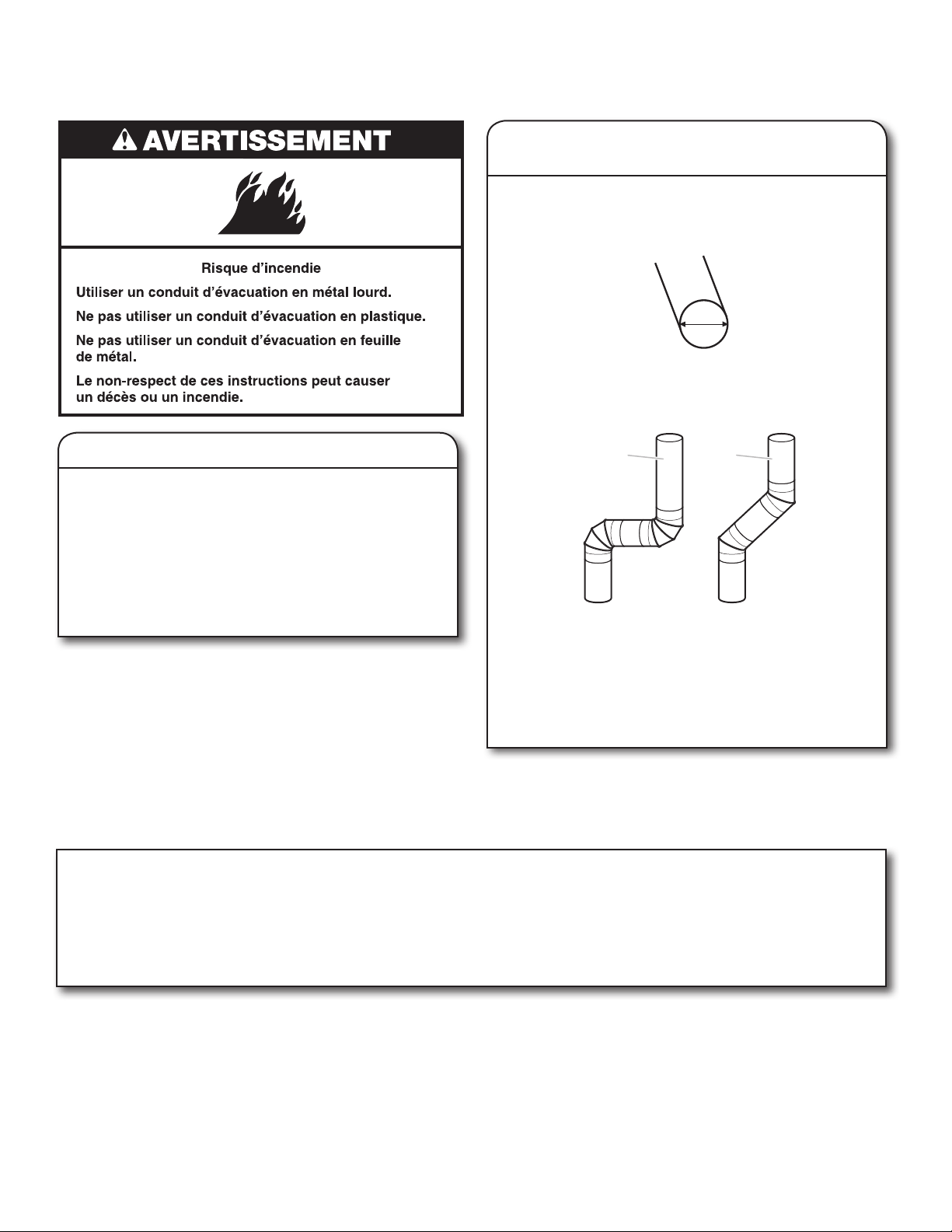
VÉRIFICATION D’UNE CIRCULATION D’AIR ADÉQUATE POUR LE SYSTÈME
D’ÉVACUATION
Maintenir une bonne circulation d’air
en effectuant les opérations suivantes :
n
Nettoyer le ltre à charpie avant chaque charge.
n
Remplacer le matériau de conduits d’évacuation en
plastique ou en aluminium par des conduits d’évacuation
lourds et rigides de 102 mm (4") de diamètre.
n
4"
102 mm
Toujours employer les conduits d’évacuation les plus
courts possible.
n
Ne pas utiliser plus de quatre coudes à 90° dans un
circuit d’évacuation car chaque inclinaison et courbe
réduit le ux d’air.
n
Retirer la charpie et les résidus du clapet d’évacuation.
n
Retirer la charpie sur toute la longueur du circuit
d’évacuation au moins tous les deux ans. Après le
nettoyage, veuillez suivre les instructions d’installation
fournies avec le sèche-linge pour une vérication nale
de l’appareil.
n
Dégager tout article qui se trouverait devant
le sèche-linge.
Circulation d’air adéquate
Un sèche-linge a besoin de chaleur et d’une circulation
d’air adéquate pour sécher efcacement le linge. Une
ventilation adéquate réduit les durées de séchage et accroît
les économies d’énergie. Voir les Instructions d’installation.
Le système d’évacuation xé au sèche-linge joue un rôle
important dans la circulation de l’air.
Les interventions de dépannage causées par une ventilation
incorrecte ne sont pas couvertes par la garantie et seront
à la charge du client, quel que soit l’installateur du
sèche-linge.
UTILISATION DES PROGRAMMES AUTOMATIQUES POUR UN MEILLEUR
SOIN DU TISSU ET DAVANTAGE D’ÉCONOMIES D’ÉNERGIE
Utiliser les programmes de séchage automatique pour que le sèche-linge puisse réaliser davantage d’économies d’énergie
et apporter un soin supérieur aux tissus. Durant les programmes de séchage automatique, la température de séchage de l’air
et le niveau d’humidité sont détectés dans la charge. Cette détection se produit tout au long du programme de séchage
et le sèche-linge s’éteint lorsque la charge atteint le degré de séchage sélectionné. Le programme Energy Preferred entraînera
des économies d’énergie optimales.
Avec l’option de séchage minuté, le sèche-linge fonctionne pendant la durée réglée, ce qui peut parfois entraîner le
rétrécissement ou le froissement du linge, et l’accumulation d’électricité statique due au séchage excessif. Utiliser le séchage
minuté pour une charge encore humide nécessitant un peu de temps supplémentaire ou lorsqu’on utilise la grille de séchage.
Bon
Mieux
18
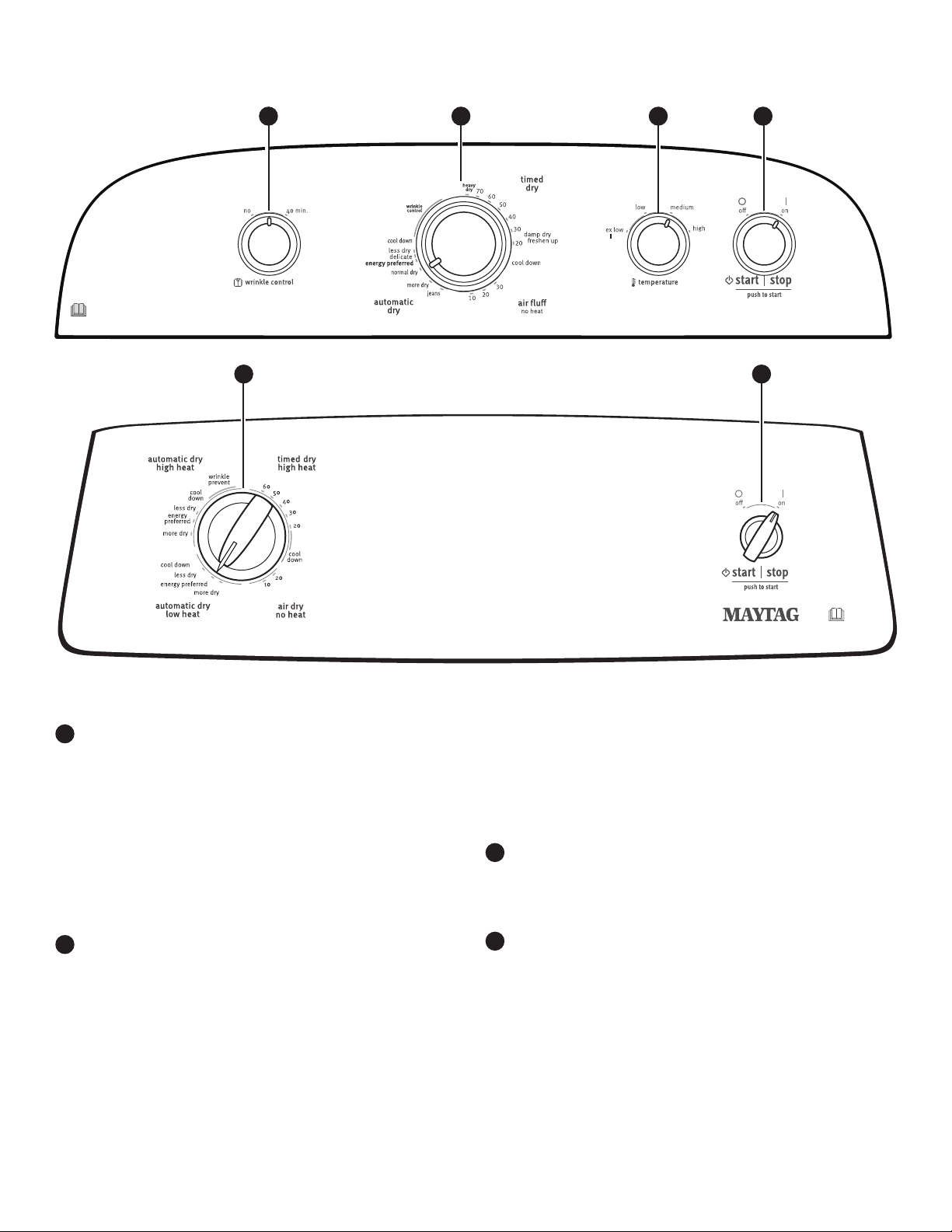
TABLEAU DE COMMANDE ET CARACTÉRISTIQUES
CARACTÉRISTIQUE WRINKLE CONTROL
(antifroissement) (sur certains modèles)
Lorsqu’on ne peut pas enlever une charge du sèche-linge
dès qu’elle s’arrête, des faux plis peuvent se former.
La caractéristique Wrinkle Control (antifroissement)
effectue un culbutage de la charge, la réagence et l’aère
à intervalles réguliers pour aider à éviter la formation de
faux plis.
n
Obtenez 40 minutes de culbutage périodique sans
chaleur à la n d’un programme. Appuyer sur le bouton
Wrinkle Control (antifroissement) pour activer ou
désactiver cette fonction à tout moment avant la n
d’un programme.
BOUTON DE PROGRAMME DU SÈCHE-LINGE
Utiliser le bouton de programme de séchage pour
sélectionner les programmes disponibles sur le sèche-
linge. Tourner le bouton de programme pour sélectionner
un programme correspondant à la charge de linge.
Voir “Guide de programmes” pour des descriptions
de programmes détaillées.
Timed Dry (séchage minuté)
Ceci fait fonctionner le sèche-linge pour la durée
approximative sur le module de commande. Pour
les modèles dotés d’un bouton de sélection de
température, vous pouvez choisir un réglage en
fonction des tissus de votre charge. Le temps de
séchage et la température dépendront du modèle
de votre sèche-linge.
1
2
Automatic Dry (programmes automatiques)
Détecte l’humidité de la charge et la température de l’air
et s’éteint lorsque la charge a atteint le degré de séchage
sélectionné. Permet d’obtenir le meilleur rendement de
séchage en un minimum de temps. Le temps de séchage
variera en fonction du type de tissu, du volume de la
charge et du réglage de séchage.
TEMPERATURE (température)
Choisir une température de séchage en fonction des
tissus de votre charge. Si vous hésitez sur la température à
sélectionner pour une charge donnée, choisir le réglage plus
bas plutôt que le réglage plus élevé.
START/STOP (mettre en marche/arrêt)
Le signal de n de programme émet un signal sonore qui
indique la n du programme de séchage. Le fait de sortir
rapidement les vêtements à la n du programme permet
de réduire le froissement.
Tourner le bouton START/STOP (mettre en marche/arrêt)
pour activer ou désactiver le réglage désiré. Appuyer
sur le bouton START/STOP (mettre en marche/arrêt)
pour mettre le sèche-linge en marche.
REMARQUE : Lorsque le réglage Wrinkle Control
(antifroissement) est sélectionné, un signal sonore retentit
toutes les 5 minutes jusqu’à soient retirés ou que le réglage
Wrinkle Control (antifroissement) se termine.
3
4
Certains programmes et options ne sont pas disponibles sur certains modèles.
L’apparence des appareils peut varier.
2 31 4
2 4
19
Certains programmes ne sont pas disponibles sur certains modèles.
Sélectionner Energy Preferred (éconergique) pour des économies d’énergie optimales.
GUIDE DE PROGRAMMES PROGRAMMES AUTOMATIQUES
GUIDE DE PROGRAMMES SECHELINGE MINUTÉ
Certains programmes ne sont pas disponibles sur certains modèles.
TIMED DRY (séchage minuté) – Fait fonctionner le sèche-linge pour la durée approximative sur le module de commande.
REMARQUE : Si les charges ne semblent pas aussi sèches que désiré, sélectionner More Dry (plus sec) la prochaine fois que l’on
sèche une charge semblable. Si les charges semblent plus sèches que désiré, sélectionner Less Dry (moins sec) la prochaine fois que
l’on sèche une charge semblable.
Réglage de la température de séchage
Si le sèche-linge comporte plusieurs réglages de chaleur :
On peut utiliser un réglage de chaleur High (élevée) pour
sécher les articles lourds tels que les serviettes et les
vêtements de travail.
Un réglage de chaleur Low (bas) à Medium (moyen) peut être
utilisé pour sécher les articles moyennement lourds tels que
draps, chemisiers, robes, sous-vêtements, tissus à pressage
permanent et certains tricots.
Utiliser le réglage No Heat (sans chaleur) pour la mousse, le
caoutchouc, le plastique ou les tissus sensibles à la chaleur.
Sécher sur une corde à linge les tissus doublés ou
multicouches.
REMARQUE : Pour toute question concernant les
températures de séchage pour diverses charges, consulter
les instructions sur l’étiquette de soin.
Programme :
Heavy Dry (séchage intense)
Damp Dry/Freshen Up (séchage humide/rafraîchissement)
Air Fluff/Air Dry (duvetage à l’air/séchage à l’air)
Articles à sécher :
Programme :
Température
tissu :
Options
disponibles : Détails du programme :
Jeans, vêtements de
travail lourds, serviettes
More Dry
(plus sec)
High
(élevé)
Wrinkle Control/
Wrinkle Prevent
(antifroissement)
Temperature
(température)
Cycle Signal
(signal de programme)
Permet d’obtenir le meilleur rendement
de séchage en un minimum de temps.
Le temps de séchage variera en fonction
du type de tissu, du volume de la charge
et du réglage de séchage.
Choisir une température de séchage en
fonction des tissus de votre charge. Si vous
hésitez sur la température à sélectionner
pour une charge donnée, choisir le réglage
le plus bas plutôt que le réglage le plus
élevé.
Vêtements de travail,
articles moyennement
lourds, draps
Energy
Preferred
(éconergique)
Medium
(moyen)
Wrinkle Control/
Wrinkle Prevent
(antifroissement)
Temperature
(température)
Cycle Signal
(signal de programme)
Tout-aller, chemisiers,
pantalons, articles
légers, synthétiques,
tissus délicats,
vêtements de sport
Delicate
(articles
délicats) ou
Less Dry
(moins sec)
Low
(bas)
Wrinkle Control/
Wrinkle Prevent
(antifroissement)
Temperature
(température)
Cycle Signal
(signal de programme)
Articles à sécher :
Programme :
Température
de séchage :
Options
disponibles : Détails du programme :
Articles lourds ou
volumineux tels que
serviettes épaisses
ou peignoirs
Heavy Dry N’importe
laquelle
Temperature
(température)
Sélectionner High (Élevé) pour sécher
des charges importantes ou lourdes.
N’importe quelle charge Damp Dry/
Freshen Up
N’importe
laquelle
Temperature
(température)
Sèche les articles à un degré d’humidité
ou les articles qui ne nécessitent pas
un programme de séchage complet.
Caoutchouc, plastique,
tissus sensibles à la
chaleur
Air Fluff/
Air Dry
No Heat
(sans chaleur)
Temperature
(température)
Séchage sans chaleur.
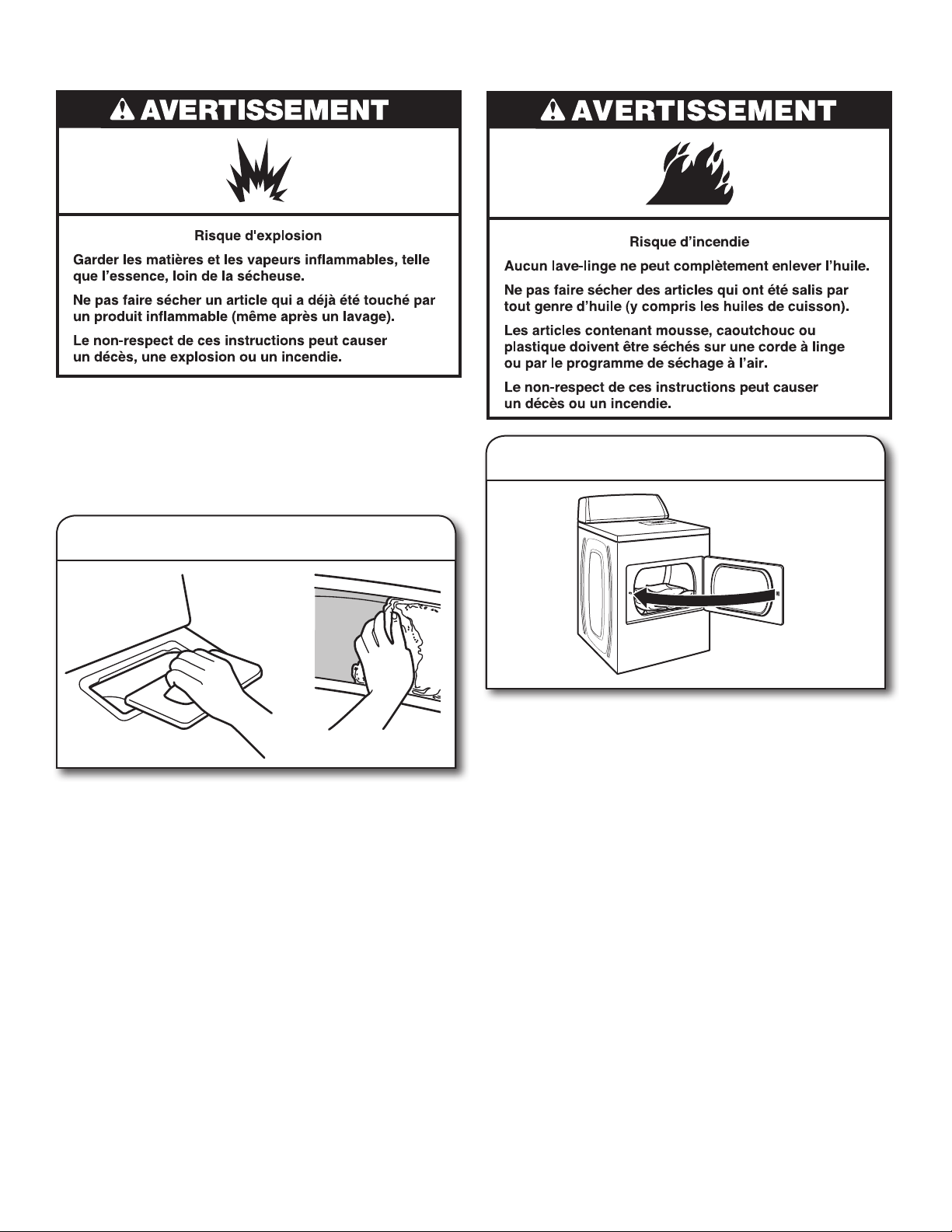
20
UTILISATION DU SECHELINGE
1. Nettoyer le ltre à charpie
Nettoyer le ltre à charpie avant chaque charge. Enlever le ltre
à charpie en le tirant tout droit vers le haut. Enlever la charpie
du ltre en la roulant avec les doigts. Ne pas rincer ni laver le ltre
pour enlever la charpie. Remettre le ltre à charpie fermement en
place.
Pour plus d’informations sur le nettoyage, voir “Entretien du
sèche-linge”.
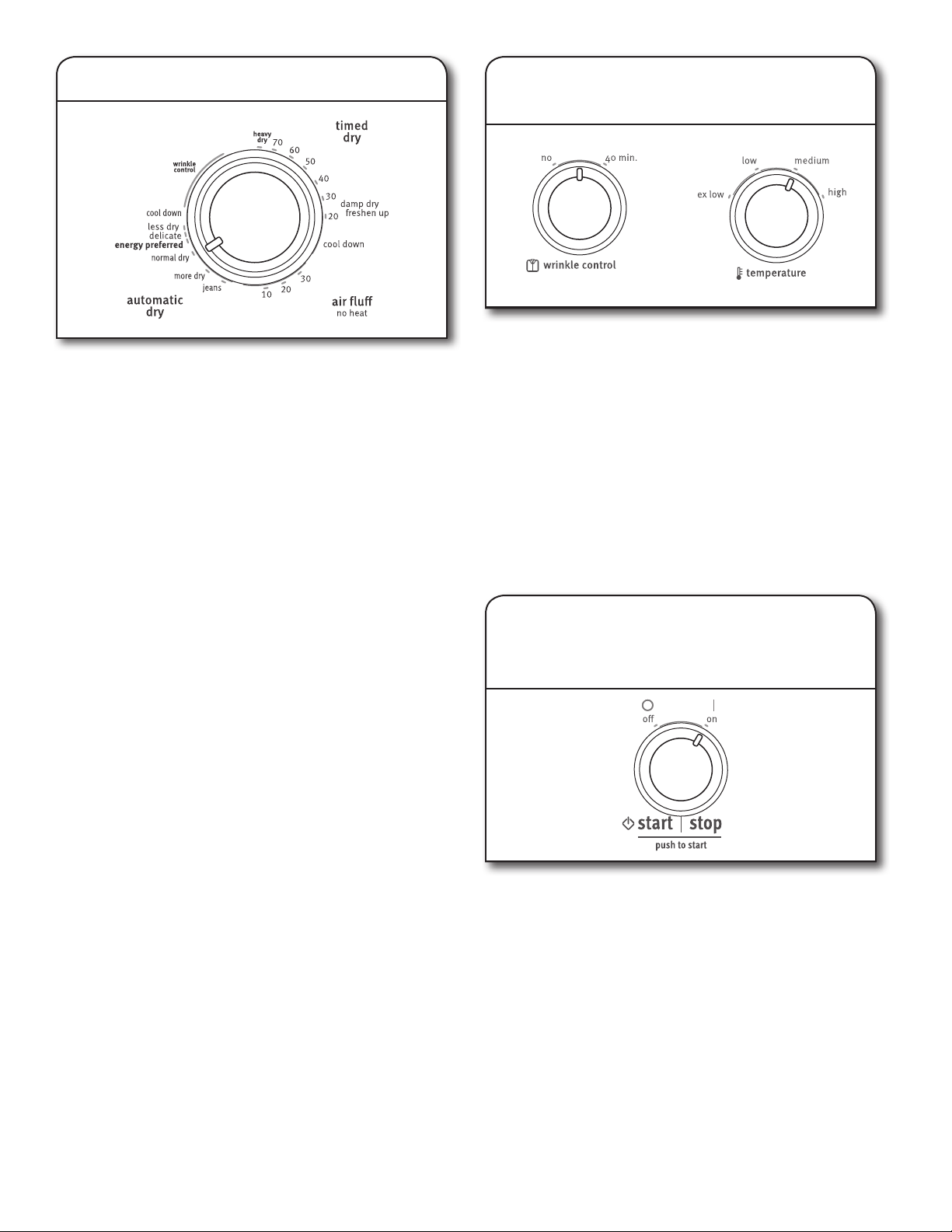
2. Charger le sèche-linge
Placer le linge dans le sèche-linge. Fermer la porte.
REMARQUE : La porte de votre modèle peut différer de celle
gurant sur l’illustration. Certains modèles peuvent comporter
des portes à ouverture vers le bas.
Ne pas surcharger le sèche-linge; les vêtements doivent pouvoir
culbuter librement.
AVERTISSEMENT : Pour réduire le risque d’incendie, de
choc électrique ou de blessures à autrui, lire les Importantes
instructions de sécurité avant de faire fonctionner ce sèche-linge.
Avant d’utiliser le sèche-linge, essuyer le tambour du sèche-linge
avec un linge humide pour enlever la poussière accumulée au
cours de l’entreposage et de l’expédition.
21
4. Sélectionner les réglages et options
du programme
Sélectionner les réglages et options du programme en tournant
le bouton sur la position souhaitée.
REMARQUE : Tous les réglages et options ne sont pas
disponibles avec tous les programmes.
Temperature (température)
Tourner le bouton Temperature (température) pour modier
le réglage de la température de séchage. Voir “Réglage de la
température de séchage ”.
Caractéristique Wrinkle Control (antifroissement)
(sur certains modèles)
Obtener 40 minutes de culbutage périodique sans chaleur
à la n d’un programme. Tourner le bouton Wrinkle Control
(antifroissement) pour désactiver cette fonction à tout moment
avant la n d’un programme.
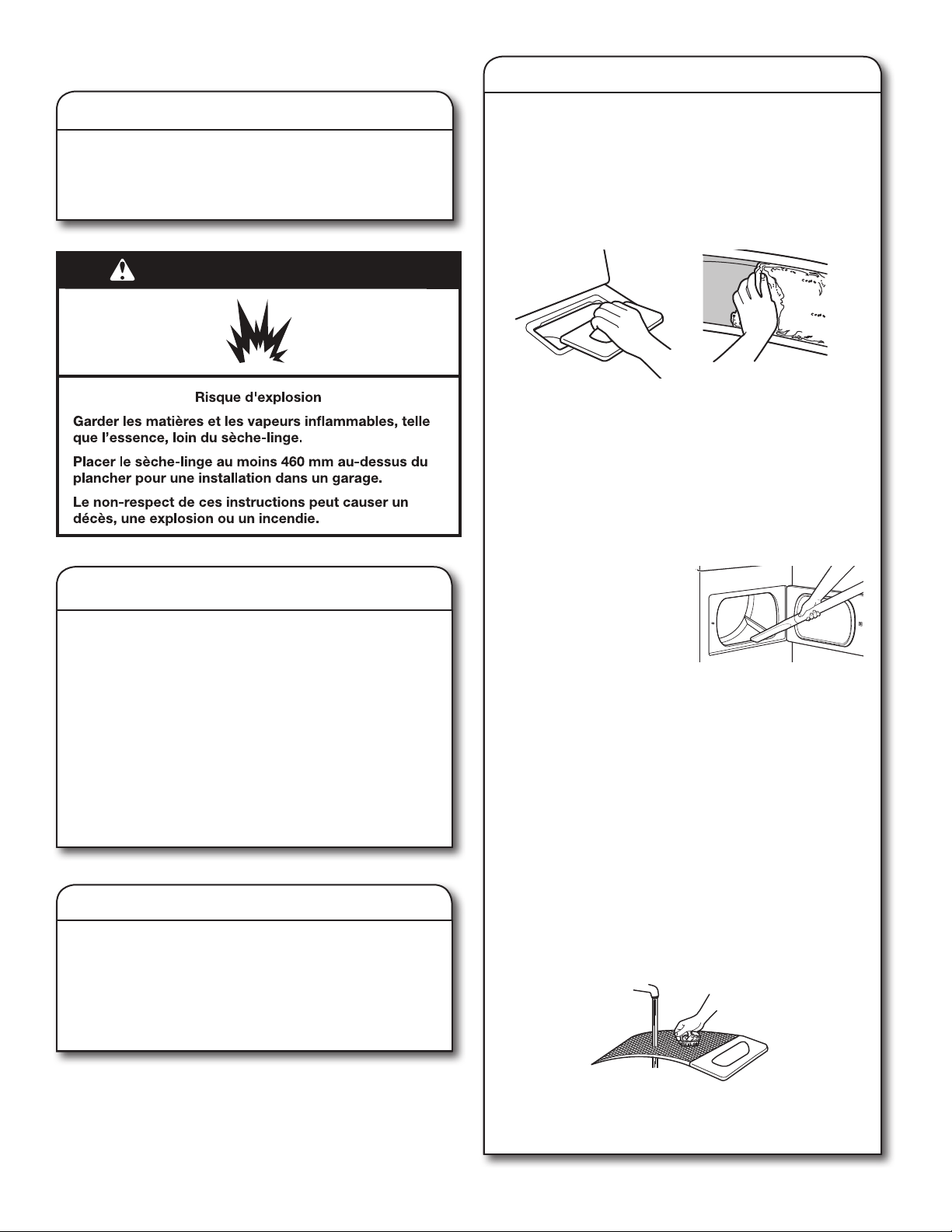
3. Sélectionner le programme désiré
Sélectionner le programme souhaité pour la charge.Voir le
Guide de programmes pour plus d’informations sur chaque
programme.
AUTOMATIC DRY (PROGRAMMES DE SÉCHAGE
AUTOMATIQUE)
Selon votre charge, vous pouvez sélectionner un degré de
séchage différent en tournant le bouton sur le degré de
séchage.
Lorsqu’on sélectionne More Dry (plus sec), Energy Preferred
(éconergique), ou Less Dry (moins sec), le degré de séchage
qui commandera l’arrêt du sèche-linge est automatiquement
ajusté. Après avoir sélectionné un certain degré de séchage,
il est impossible de le modier sans arrêter le programme.
Les programmes de séchage automatique offrent un séchage
idéal en un minimum de temps. La durée de séchage varie en
fonction du type de tissu, de la taille de la charge et du réglage
de niveau de séchage.
REMARQUE : Le séchage More Dry (plus sec) élimine
davantage d’humidité dans la charge. Sélectionner Energy
Preferred (éconergique) pour réaliser des économies d’énergie
optimales. Le séchage Less Dry (moins sec) élimine moins
d’humidité et est utilisé pour les charges que l’on souhaite
placer sur un cintre pour qu’elles nissent de sécher.
5. Appuyer sur le bouton START/
STOP (mettre en marche/arrêt)
pour démarrer un programme
Appuyer sans relâcher sur le bouton START/STOP (mettre en
marche/arrêt) pour démarrer le programme.
Pour nir le cycle plus tôt, mettre le bouton START/STOP
(mettre en marche/arrêt) sur Off (désactiver).
Retirer rapidement les vêtements une fois le programme terminé
pour réduire le froissement. Utiliser la caractéristique Wrinkle
Control (antifroissement) pour éviter le froissement lorsqu’on
ne peut pas retirer une charge du sèche-linge dès que celle-ci
s’arrête.
22
ENTRETIEN DU SECHELINGE
Éviter de laisser autour du sèche-linge des éléments qui
pourraient obstruer la circulation de l’air et empêcher le
bon fonctionnement du sèche-linge. Ceci implique de
dégager également les éventuelles piles de linge placées
devant le sèche-linge.
Nettoyage de l’intérieur du seche-linge
Nettoyage du tambour du sèche-linge :
1. Appliquer un nettoyant domestique liquide et
ininammable sur la surface tachée du tambour
et frotter avec un linge doux jusqu’à ce que la tache
soit supprimée.
2. Essuyer complètement le tambour avec un linge humide.
3. Faire culbuter une charge de linge ou de serviettes
propres pour sécher le tambour.
REMARQUE : Les vêtements contenant des teintures
instables, tels que jeans en denim ou articles en coton de
couleur vive, peuvent décolorer l’intérieur du sèche-linge.
Ces taches ne sont pas nocives pour votre sèche-linge et
ne tacheront pas les vêtements des charges futures. Sécher
ces articles sur l’envers pour éviter de tacher le tambour.
Retirer la charpie accumulée
De l’intérieur de la caisse du sèche-linge
Retirer la charpie tous les deux ans, ou plus souvent, selon
l’utilisation du sèche-linge. Le nettoyage doit être effectué
par un personnel d’entretien qualié.
Dans le conduit d’évacuation
Retirer la charpie tous les deux ans, ou plus souvent, selon
l’utilisation du sèche-linge.
Nettoyer l’emplacement du sèche-linge
AVERTISSEMENT
Nettoyer le ltre à charpie
Nettoyage avant chaque charge
Le ltre à charpie se trouve dans l’ouverture de la porte
du sèche-linge. Un ltre obstrué de charpie peut
augmenter la durée de séchage.
Nettoyage :
1. Enlever le ltre à charpie en le tirant tout droit vers
le haut. Enlever la charpie du ltre en la roulant avec
les doigts. Ne pas rincer ni laver le ltre pour enlever
la charpie. La charpie mouillée s’enlève difcilement.
2. Remettre le ltre à charpie fermement en place.
IMPORTANT :
n
Ne pas faire fonctionner le sèche-linge avec un ltre
à charpie déplacé, endommagé, bloqué ou manquant.
Ceci peut entraîner une surchauffe et endommager
le sèche-linge et les tissus.
n
Si de la charpie tombe dans le sèche-linge
au moment du retrait du ltre, vérier le conduit
d’évacuation et retirer la charpie. Voir “Exigences
concernant l’évacuation” dans les Instructions
d’installation.
n
Nettoyer l’espace où se
trouve le ltre à charpie,
selon les besoins. A l’aide
d’un aspirateur, enlever
doucement toute la charpie
qui s’est accumulée à
l’extérieur du ltre à charpie.
Nettoyage au besoin
Des résidus de détergent ou d’assouplisseur de tissu
peuvent s’accumuler sur le ltre à charpie. Cette
accumulation peut entraîner des temps de séchage
plus longs, ou entraîner l’arrêt du sèche-linge avant
que la charge ne soit complètement sèche. Si de la
charpie tombe du ltre alors qu’il est dans le sèche-linge,
il est probablement obstrué.
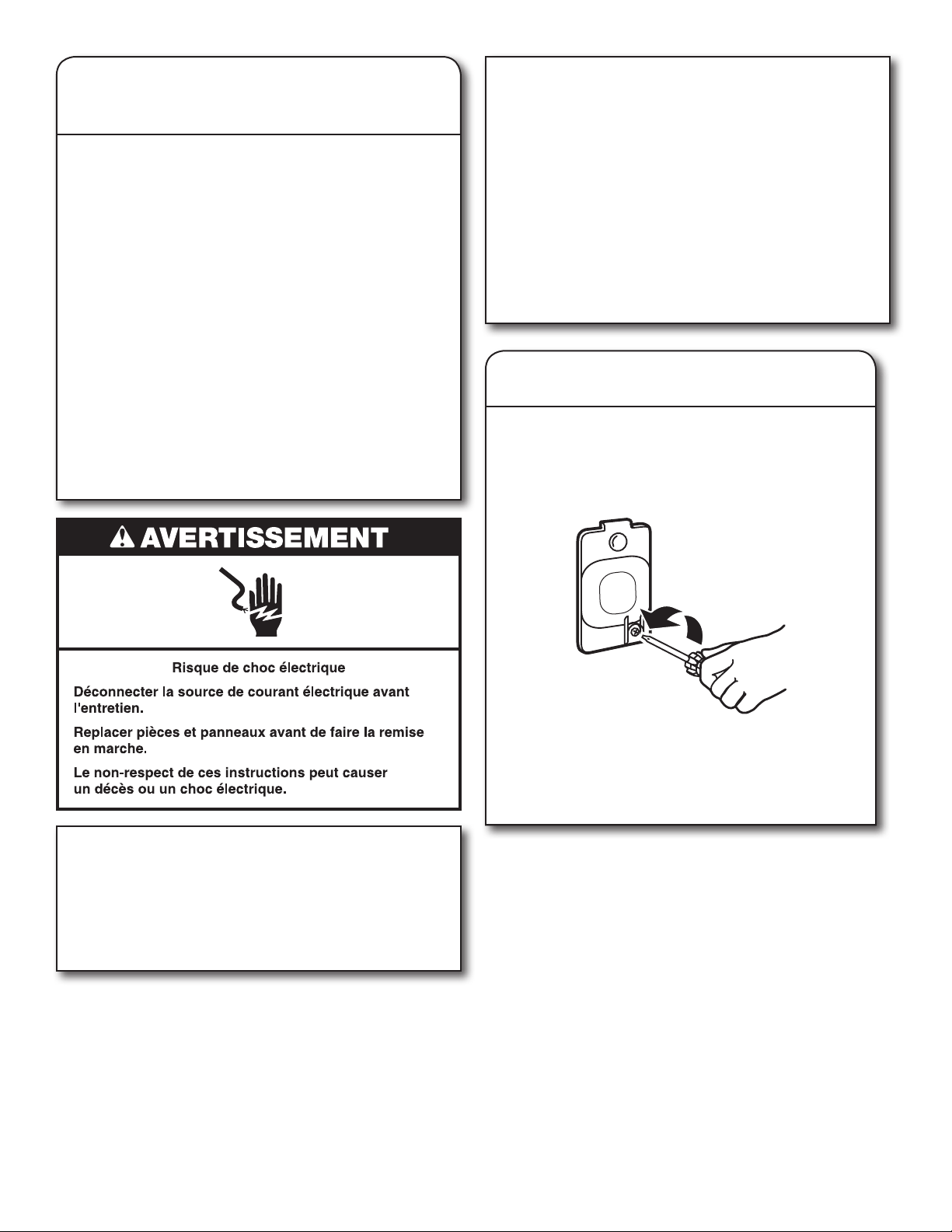
Nettoyer le ltre à charpie avec une brosse de nylon tous
les six mois ou plus fréquemment s’il se bouche en raison
d’une accumulation de résidus.
Nettoyage :
1. Enlever la charpie du ltre en la roulant avec les doigts.
2. Mouiller les deux côtés du ltre à charpie avec de l’eau
chaude.
3. Mouiller une brosse en nylon avec de l’eau chaude et
du détergent liquide. Frotter le ltre avec la brosse pour
enlever l’accumulation de résidus.
4. Rincer le ltre à l’eau chaude.
5. Bien sécher le ltre à charpie avec une serviette propre.
Réinstaller le ltre dans le sèche-linge.
23
Précautions à prendre avant les
vacances, un entreposage ou un
déménagement
Entretien en cas de non-utilisation ou
d’entreposage
On ne doit faire fonctionner le sèche-linge que lorsqu’on
est présent. Si l’utilisateur doit partir en vacances ou
n’utilise pas le sèche-linge pendant une période prolongée,
il convient d’exécuter les opérations suivantes :
1. Débrancher le sèche-linge ou déconnecter l’alimentation
électrique.
2. (Pour les sèche-linges à gaz uniquement) : Fermer le
robinet d’arrêt de la canalisation d’alimentation en gaz.
3. Nettoyer le ltre à charpie. Voir “Nettoyage du ltre à
charpie”.
Précautions à prendre avant un
déménagement
Sèche-linges alimentées par cordon d’alimentation :
1. Débrancher le cordon d’alimentation électrique.
2. S’assurer que les pieds de nivellement sont solidement
xés à la base du sèche-linge.
3. Utiliser du ruban adhésif pour xer la porte
du sèche-linge.
Pour les sèche-linges avec raccordement direct :
1. Déconnecter la source de courant électrique alimentant
le boîtier de distribution (fusibles ou disjoncteur).
2. Déconnecter le câblage.
3. S’assurer que les pieds de nivellement sont solidement
xés à la base du sèche-linge.
4. Utiliser du ruban adhésif pour xer la porte du sèche-linge.
Pour les sèche-linges à gaz :
1. Débrancher le sèche-linge ou déconnecter la source
de courant électrique.
2. Fermer le robinet d’arrêt de la canalisation de gaz.
3. Débrancher le tuyau de la canalisation de gaz et retirer
les raccords xés sur le tuyau du sèche-linge.
4. Recouvrir la canalisation de gaz ouverte.
5. S’assurer que les pieds de nivellement sont solidement
xés à la base du sèche-linge.
6. Utiliser du ruban adhésif pour xer la porte du sèche-linge.
Réinstallation du sèche-linge
Suivre les Instructions d’installation pour choisir
l’emplacement, régler l’aplomb du sèche-linge et la raccorder.
Changement de la lampe du tambour
(sur certain modèles)
1. Débrancher le sèche-linge ou déconnecter la source
de courant électrique.
2. Ouvrir la porte du sèche-linge. Trouver le couvercle de
l’ampoule d’éclairage sur la paroi arrière du sèche-linge.
À l’aide d’un tournevis Phillips, retirer la vis située à
l’angle inférieur droit du couvercle. Enlever le couvercle.
3. Tourner l’ampoule dans le sens antihoraire. Remplacer
l’ampoule uniquement par une ampoule de 10 watts
pour appareil électroménager. Réinstaller le couvercle
et le xer avec la vis.
4. Brancher le sèche-linge ou reconnecter la source de
courant électrique.
24
DÉPANNAGE
Essayer d’abord les solutions suggérées ici pour éviter le coût d’une intervention de dépannage.
Si les phénomènes
suivants
se produisent
Causes possibles Solution
Le séchage des
vêtements n’est
pas satisfaisant, les
durées de séchage
sont trop longues
ou la charge est trop
chaude
Le ltre à charpie ou le logement du ltre
à charpie est obstrué par de la charpie.
Le ltre à charpie doit être nettoyé avant chaque charge.
Nettoyer l’espace où se trouve le ltre à charpie, selon les
besoins. A l’aide d’un aspirateur, enlever doucement toute
la charpie qui s’est accumulée à l’extérieur du ltre à charpie.
Le programme Air Fluff/Air Dry
(duvetage à l’air/séchage à l’air)
ou la température No Heat
(sans chaleur) a été selectionné.
Choisir le bon programme pour le type de vêtements à sécher.
Voir “Séchage à l’air”.
La charge est trop grosse et trop lourde
pour sécher rapidement.
Séparer la charge pour qu’elle culbute librement.
Le conduit d’évacuation ou le clapet
d’évacuation à l’extérieur est obstrué
de charpie, restreignant le mouvement
de l’air.
Faire fonctionner le sèche-linge pendant 5 à 10 minutes.
Tenir la main sous le clapet d’évacuation à l’extérieur pour
vérier le mouvement de l’air. Si aucun mouvement d’air
n’est perceptible, ôter la charpie présente dans le système
d’évacuation ou remplacer le conduit d’évacuation par un
conduit en métal lourd ou exible en métal. Voir les Instructions
d’installation.
Des feuilles d’assouplissant de tissu
obstruent la grille.
Utiliser seulement une feuille d’assouplissant par charge
et l’utiliser une seule fois.
Le conduit d’évacuation n’est pas
de la bonne longueur.
Vérier que le conduit d’évacuation n’est pas trop long
ou ne comporte pas trop de changements de direction.
Un long conduit augmentera les durées de séchage. S’assurer
que le conduit d’évacuation n’est pas écrasé ou déformé.
Voir les Instructions d’installation.
Diamètre du conduit d’évacuation
de taille incorrect.
Utiliser un composant de 102 mm (4") de diamètre.
Le sèche-linge se trouve-t-elle dans
une pièce où la température ambi ante
est inférieure à 7 °C (45 °F).
Le bon fonctionnement des programmes du sèche-linge
nécessite une température ambiante supérieure à 7 °C (45 °F).
Sèche-linge placé dans un placard. Les portes du placard doivent comporter des ouvertures
d’aération au sommet et en bas de la porte. Un espace
minimum de 25 mm (1") est nécessaire à l’avant du sèche-linge
et, pour la plupart des installations, un espace de 127 mm (5")
est nécessaire à l’arrière du sèche-linge. Voir les Instructions
d’installation.
Le sèche-linge
ne fonctionne pas
La porte n’est pas bien fermée. S’assurer que la porte du sèche-linge est complètement fermée.
Bouton Start/Stop (mettre en marche/
arrêt) pas mis sur On.
Mettre le bouton START/STOP (mettre en marche/arrêt) sur On.
L’utilisateur n’a pas appuyé fermement
sur le bouton Start/Stop (mise en marche/
arrêt) ou ne l’a pas maintenu appuyé
pendant sufsamment longtemps.
Appuyer sans relâcher sur le bouton START/STOP (mise en
marche/arrêt) jusqu’à ce que le bruit du tambour du sèche-linge
en mouvement se fasse entendre.
Un fusible du domicile est grillé ou
le disjoncteur est ouvert.
Les sèche-linges électriques utilisent deux fusibles ou disjoncteurs.
Le tambour peut tourner, mais sans chaleur. Remplacer le fusible
ou réarmer le disjoncteur. Si le problème persiste, appeler un
électricien.
Alimentation électrique incorrecte. Les sèche-linges électriques nécessitent une alimentation
électrique de 240 V. Vérier avec un électricien qualié.
Type de fusible incorrect. Utiliser un fusible temporisé.
Sons inhabituels Un sèche-linge comporte une
période de non-fonctionnement.
Si le sèche-linge n’a pas été utilisé depuis quelque temps,
il est possible qu’elle émette des bruits saccadés au cours
des premières minutes de fonctionnement.
Une pièce de monnaie, un bouton ou
un trombone est coincé entre le tambour
et l’avant ou l’arrière du sèche-linge.
Vérier les bords avant et arrière du tambour pour voir
si de petits objets y sont coincés. Vider les poches avant
de faire la lessive.
Il s’agit-d’un sèche-linge à gaz. Le déclic du robinet de gaz est un bruit de fonctionnement
normal.
Les quatre pieds ne sont pas installés
et le sèche-linge n’est pas d’aplomb de
l’avant vers l’arrière et transversalement.
Le sèche-linge peut vibrer si elle n’est pas correctement installé.
Voir les Instructions d’installation.
25
Essayer d’abord les solutions suggérées ici pour éviter le coût d’une intervention de dépannage.
Si les phénomènes
suivants
se produisent
Causes possibles Solution
Sons inhabituels (suite) Vêtements emmêlés ou en boule. Une charge en boule rebondit, ce qui fait vibrer
le sèche-linge. Séparer les articles dans la charge
et remettre le sèche-linge en marche.
Absence de chaleur Un fusible du domicile est grillé ou
le disjoncteur est ouvert.
Le tambour peut tourner, mais sans chaleur.
Les sèche-linges électriques utilisent deux fusibles
ou disjoncteurs. Remplacer les deux fusibles
ou réarmer le disjoncteur. Si le problème persiste,
appeler un électricien.
Robinet de la canalisation de gaz non
ouvert.
Pour les sèche-linges à gaz, vérier que le robinet
de la canalisation est ouvert.
Alimentation électrique incorrecte. Les sèche-linges électriques nécessitent une alimentation
électrique de 240 V. Vérier avec un électricien qualié.
Temps de programme
trop court
Un programme automatique se termine
prématurément.
La charge n’est peut-être pas en contact avec les bandes
de détection. Régler l’aplomb du sèche-linge.
Utiliser le séchage minuté pour des charges de très
petite taille. Modier le réglage de degré de séchage
pour les programmes automatiques.
L’augmentation ou la diminution du degré de séchage
modiera la durée de séchage d’un programme. Si le
séchage des charges se termine systématiquement trop
tôt, voir aussi Changement des réglages par défaut de
programmes automatiques.
Charpie sur la charge Filtre à charpie obstrué. Le ltre à charpie doit être nettoyé avant chaque charge.
Taches sur la charge
ou sur le tambour
Assouplissant de tissu pour sèche-linge
utilisé de manière incorrecte.
Ajouter les feuilles d’assouplissant de tissu au début
du programme. Les feuilles d’assouplissant de tissu
ajoutées à une charge partiellement sèche peuvent
tacher les vêtements.
Les taches sur le tambour sont dues aux teintures
contenues dans les vêtements (les jeans en général).
Elles ne se transmettront pas aux autres vêtements.
Charges froissées Charge non retirée du sèche-linge
à la n du programme.
Sélectionner la caractéristique Wrinkle Control'
(anti-froissement) pour faire culbuter la charge
sans chaleur an d’éviter le froissement.
Sèche-linge surchargé. Faire sécher de plus petites charges qui peuvent culbuter
librement permet de réduire la formation de faux-plis.
Odeurs Vous avez récemment employé de la
peinture, de la teinture ou du vernis dans
la pièce où votre sèche-linge est installée.
Si c’est le cas, aérer la pièce. Une fois les odeurs
ou émana tions disparues, laver et sécher à nouveau
les vêtements.
Le sèche-linge électrique est utilisé
pour la première fois.
Le nouvel élément d’émission de chaleur peut
émettre une odeur. L’odeur disparaîtra après le premier
programme.
La charge est trop
chaude
Vous avez retiré des vêtements
du sèche-linge avant la n du
programme.
Laisser le programme de refroidissement s’achever avant
de retirer le linge du sèche-linge. Toutes les charges sont
refroidies lentement pour réduire le froissement et faciliter
leur manipulation. Des articles retirés avant la période de
refroidissement peuvent sembler très chauds.
Vous avez utilisé un programme
à température élevée ou réglé
une commande de température
indépendante sur High (Élevée).
Sélectionner une température plus basse et utiliser
un programme de séchage automatique. Ces programmes
détectent la température ou le degré d’humidité de
la charge, et l’appareil s’arrête lorsque la charge atteint
le degré de séchage sélectionné. Ceci réduit le risque
de séchage excessif.
DÉPANNAGE
Représentant UE : Whirlpool EMEA S.p.A., Via Carlo Pisacane n. 1, 20016 Pero (MI), Italy
Fabricant : Whirlpool Corporation, 2000 N M 63, Benton Harbor, MI 49022 USA
Pour en savoir plus, consulter www.whirlpool.com/accessories ou contacter le vendeur qui vous a vendu le sèche-linge
ou une entreprise de service agréée.
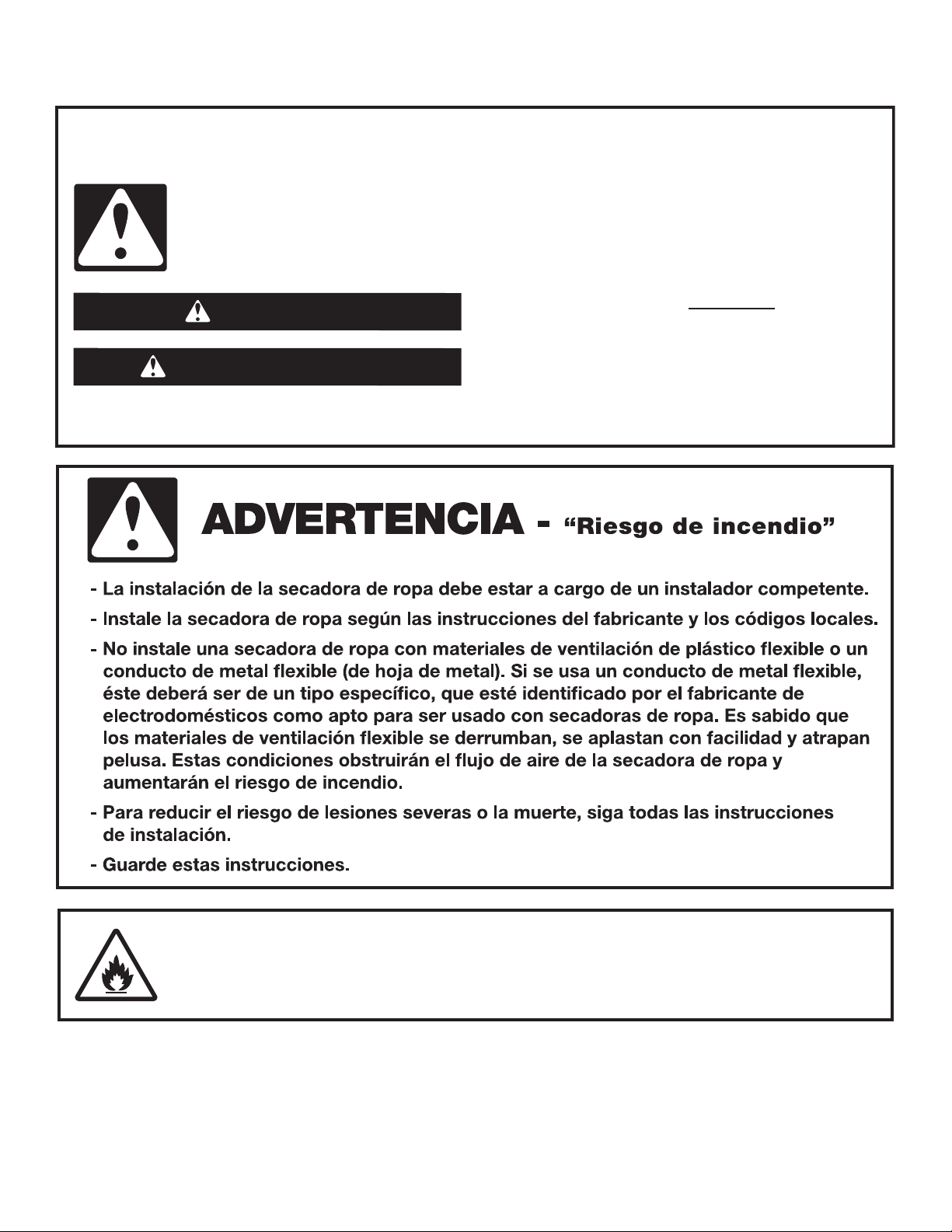
26
Si no sigue las instrucciones de inmediato, usted puede
morir o sufrir una lesión grave.
Si no sigue las instrucciones, usted puede morir o sufrir
una lesión grave.
Todos los mensajes de seguridad le dirán el peligro potencial, le dirán cómo reducir las posibilidades de sufrir una lesión y lo que
puede suceder si no se siguen las instrucciones.
Su seguridad y la seguridad de los demás es muy importante.
Hemos incluido muchos mensajes importantes de seguridad en este manual y en su electrodoméstico. Lea y obedezca siempre
todos los mensajes de seguridad.
ADVERTENCIA
PELIGRO
Este es el símbolo de alerta de seguridad.
Este símbolo le llama la atención sobre peligros potenciales que pueden ocasionar la muerte o una lesión a
usted y a los demás.
Todos los mensajes de seguridad irán a continuación del símbolo de advertencia de seguridad y de la palabra
“PELIGRO” o “ADVERTENCIA”. Estas palabras significan:
SEGURIDAD DE LA SECADORA
PRECAUCIÓN –
RIESGO DE INCENDIO/
DE MATERIALES INFLAMABLES
Éste es un símbolo adicional de la alarma de la seguridad que las alarmas usted al riesgo de incendio.
27
PARA SU SEGURIDAD
1. NO USE NI GUARDE GASOLINA NI OTROS MATERIALES INFLAMABLES DENTRO DE ESTE
APARATO NI CERCA DEL MISMO.
2. NO ROCÍE CON AEROSOLES EN LA PROXIMIDAD DE ESTE APARATO MIENTRAS ESTÉ EN
FUNCIONAMIENTO.
3. NO MODIFIQUE ESTE APARATO.
INSTRUCCIONES IMPORTANTES DE SEGURIDAD
ADVERTENCIA:
A n de reducir el riesgo de incendio, choque eléctrico o de daño a las personas que usen la secadora,
deben seguirese las precauciones básicas, incluidas las siguientes:
GUARDE ESTAS INSTRUCCIONES
n Lea todas las instrucciones antes de usar
la secadora.
n Mantenga un espacio mínimo de por lo menos
100 mm (4 pulg) entre la parte posterior de la
secadora y cualquier pared.
n El funcionamiento de este aparato pude
afectar el funcionamiento de otros tipos de
aparatos que obtienen el suministro de aire
para la combustión segura desde la misma
habitación. Debe haber una ventilación
adecuada para reemplazar el aire de salida y
de esta manera evitar el contraujo de gases
en la habitación proveniente de aparatos que
quemen otros combustibles, incluyendo fuegos
abiertos, cuando haga funcionar la secadora
con rotación. Si tiene duda, consulte a los
fabricantes de electrodomésticos.
n No obtruya el suministro de aire a la secadora
(vea las Instrucciones de instalación para los
espacios mínimos).
n No coloque los objetos expuestos a aceite
para cocinar en su secadora. Los artículos
impregnados con aceite pueden incendiarse
espontáneamente, especialmente cuando
se los expone a fuentes de calor, como una
secadora que gira. Los artículos pueden
calentarse, lo que causa una reacción de
oxidación en el aceite. La oxidación produce
calor. Si el calor no puede escapar, los artículos
pueden ponerse lo sucientemente calientes
como para prenderse fuego. Si se hacen
pilas, se amontonan o se guardan artículos
manchados con aceite, eto impedirá que el calor
se escape y ocasionará un peligro de incendio.
4
IMPORTANT SAFETY INSTRUCTIONS
precautions, including the following:
WARNING:
Read all instructions before using the dryer.
Keep a minimum clearance of 100 mm (4 in.) between the
rear of the dryer and any wall.
The operation of this appliance may affect the operation of
other types of appliances which take their air supply for safe
combustion from the same room. There has to be adequate
ventilation to replace exhausted air and thus avoid the
back-ow of gases into the room from appliances burning
other fuels, including open res, when operating the tumble
dryer. If in doubt, consult the appliance manufacturers.
Do not obstruct the air supply to the dryer (see Installation
Instructions for minimum clearances).
Do not place items exposed to cooking oils in your dryer.
Oil-affected items can ignite spontaneously, especially when
exposed to heat sources such as in a tumble dryer. The
items become warm causing an oxidation reaction in the oil.
Oxidation creates heat. If the heat cannot escape, the items
can become hot enough to catch re. Piling, stacking or
storing oil-affected items can prevent heat from escaping
and so create a re hazard.
If it is unavoidable to dry in the dryer items that have been
soiled with substances such as cooking oil, acetone, alcohol,
petrol, kerosene, spot removers, turpentine, waxes and wax
removers, or that have been contaminated by hair care
products, should be washed in hot water with an extra
amount of detergent before being dried in the dryer. These
items may give off vapours that could ignite or explode. Such
washing will reduce, but not eliminate, the hazard.
This appliance is not intended for use by persons (including
children) with reduced physical, sensory or mental
capabilities, or lack of experience and knowledge, unless
they have been given supervision or instructions concerning
use of the appliance by persons responsible for their safety.
Children should be supervised to ensure that they do not
play with the appliance.
The dryer should not be used if industrial chemicals have
been used for cleaning.
Before the dryer is removed from service or discarded,
remove the doors to the drying compartment.
Do not reach into the dryer if the drum is moving. A door
switch is tted for your safety.
Do not install or store the dryer where it will be exposed
to the weather.
Do not tamper with controls.
Do not continue to use this appliance if it appears to be
faulty.
Do not repair or replace any part of the dryer or attempt
any maintenance unless specically recommended in this
Use and Care Guide. Repairs and servicing should only
be carried out by competent service personnel.
Do not use fabric softeners or products to eliminate static
unless recommended by the manufacturer of the fabric
softener or product. Follow their instructions.
Clean dryer lint screen before or after each load. Do not
operate dryer without lint screen in place.
Keep area around the exhaust and inlet openings and
adjacent surrounding areas free from the accumulation of
lint, dust, and dirt.
The interior of the dryer and exhaust vent should be
cleaned periodically by qualied service personnel.
See Installation Instructions for earthing instructions.
Do not dry unwashed items in this dryer.
Items such as foam rubber (latex foam), shower caps,
waterproof textiles, rubber backed articles and clothes or
pillows tted with foam rubber pads must only be dried
on a clothesline.
SAVE THESE INSTRUCTIONS
WARNING: Never stop a tumble dryer cycle before the
end of the drying cycle unless all items are quickly removed
and spread out so that the heat is dissipated.
To reduce the risk of re, electric shock, or injury to persons when using the dryer, follow basic
The nal part of a tumble dryer cycle occurs without heat
(cool down cycle) to ensure that the items are left at a
temperature that ensures the items will not be damaged.
If the supply cord is damaged, it must be replaced by the
manufacturer or its service agent or a similarly qualied
person in order to avoid a hazard.
n Si no puede evitarse el secar artículos que se
hayan ensuciado con substancias tales como
aceite de cocina, acetona, alchohol, gasolina,
queroseno, quitamanchas, aguarrás, ceras y
quitaceras, o que hayan sido contaminados
por productos para el cuidado del cabello,
éstos deberán lavarse en agua caliente con
una cantidad adicional de detergente antes de
secarse en la secadora. Estos artículos pueden
despedir vapores que pueden encenderse o
causar una explosión. Este lavado reducirá pero
no eliminará el riesgo.
n Este aparato no ha sido diseñado para ser
usado por personas (incluidos niños menores de
8 años) con capacidad física, sensorial o mental
reducida, o falta de experiencia y conocimiento,
a menos que lo hagan bajo supervisión o
siguiendo las instrucciones relativas al uso
del aparato, a cargo de personas responsables
por su seguridad.
n Los niños sólo pueden realizar la limpieza y
el mantenimiento del usuario bajo supervisión.
n Los miños pequeños debarán estar bajo
supervisión para asegurarse de que no jueguen
caon el electrodoméstico.
n Los niños menores de 3 años deben
permanecer lejos del electrodoméstico,
a menos que estén bajo continua supervisión.
n No deberá usarse la secadora si se han usado
productos químicos industriales par la limpieza.
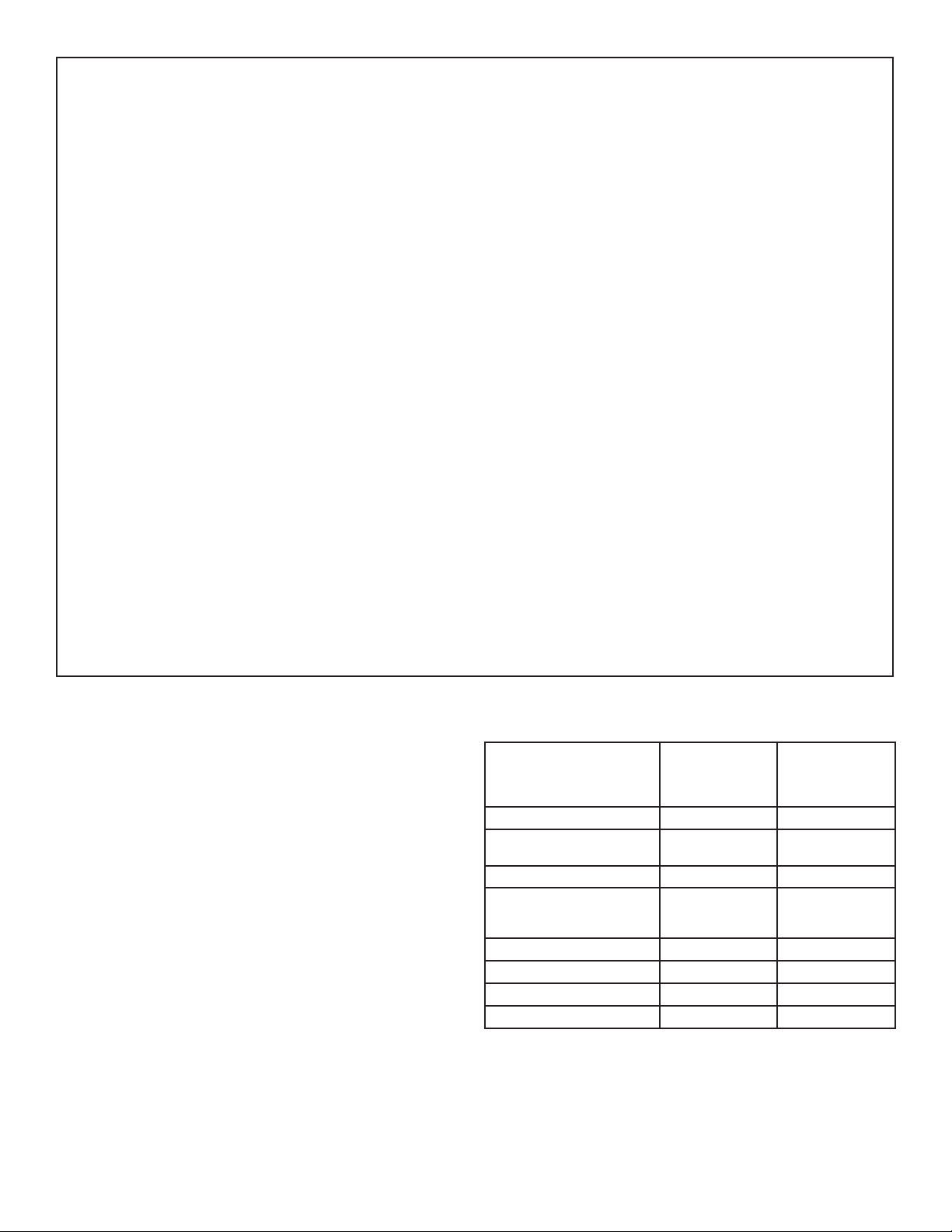
28
ESPECIFICACIONES
Estas unidades se venden en varias regiones con requisitos
diferentes para medir la capacidad. A continuación se enumeran
algunas de las formas válidas de medición indicadas en este
producto:
Capacidad de carga con artículos secos: Una medida de peso
en el tamaño de la carga que reeja el tamaño volumétrico del
tambor de la secadora.
Capacidad IEC (Comisión electrotécnica internacional):
La medida de capacidad que representa la capacidad máxima
de artículos y telas secas que el fabricante declara que pueden
tratarse en un ciclo especíco.
IMPORTANTE: Este aparato ha sido diseñado para
aplicaciones domésticas y similares como, por ejemplo:
n áreas de cocina para el personal de tiendas, ocinas y otros
entornos de trabajo;
n casas rurales;
n por clientes en hoteles, moteles y otros entornos de tipo
residencial;
n entornos de tipo bed and breakfast;
n áreas de uso colectivo en bloques de pisos o en lavanderías.
Modelos
3LMEDC315FW
3LMEDC415FW
4KMEDC215FW
4KMEDC315FW
4KMEDC415FW
4KMEDC425FW
Tensión de Alimentación 220–240 V 2N~ 220–240 V 2N~
Frecuencia de
Operación
50 Hz 60 Hz
Consumo de Corriente 20 Amps 20 Amps
Capacidad de carga
con artículos secos
(máximo)
15 kg (33 lb) 15 kg (33 lb)
Capacidad IEC 7 kg (15 lb) 7 kg (15 lb)
Altura 1067 mm (42") 1067 mm (42")
Ancho 737 mm (29") 737 mm (29")
Profundidad 706 mm (27
13
⁄16") 706 mm (27
13
⁄16")
n La parte interior de la secadora y el ducto
de escape se deben limpiar periódicamente.
Esta limpieza la debe llevar a cabo un personal
de servicio calicado.
n Vea las instrucciones de instalación para
las instrucciones de conexión a tierra.
n No seque en esta secadora artículos que
no hayan sido lavados.
n La parte nal de un ciclo de rotación en la
secadora ocurre sin calor (ciclo de enfriamiento)
para asegurarse de que los artículos se dejen
a una temperatura que asegure que no se
dañarán.
n Los artículos tales como goma espuma (espuma
de látex), gorras de baño, telas a prueba de
agua, artículos con reverso de goma y prendas
o almohadas rellenas de goma espuma, deberán
secarse solamente en el tendedero.
n Si se ha dañado el cable de suministro de
energía, deberá ser reemplazado por el
fabricante, el agente de servicio o una persona
similarmente calicada con el n de evitar
riesgos.
ADVERTENCIA: Nunca detenga una secadora que
esté girando antes de que se termine el ciclo de
secado, a menos que todos los artículos se hayan
sacado y separado rápidamente, para que se disipe
el calor.
GUARDE ESTAS INSTRUCCIONES
n
Retire todos los objetos que haya en los
bolsillos, como mecheros y cerillas, antes de
introducir la prenda en la secadora.
n Quite la puerta de la secadora al compartimiento
de secado antes de ponerla fuera de
funcionamiento o de descartarla.
n No introduzca las manos en la secadora cuando
el tambor está en movimiento. Para su seguridad
se ha incluido un interruptor de puerta.
n No instale o almacene esta secadora donde
estará expuesta a la intemperie.
n No trate de forzar los controles.
n No continúe usando este aparato si parece estar
defectuoso.
n No repare o reemplace ninguna pieza de la
secadora ni trate de repararla a menos que
esto se recomiende especícamente en este
Manual uso y cuisado. La reparación y el servicio
deben ser hechos solamente por un personal de
servicio competente.
n No utilice suavizantes de telas o productos para
eliminar la estática de prendas a menos que lo
recomiende el fabricante del suavizante de telas
o del producto en uso. Siga sus instrucciones.
n Limpie el ltro de pelusa antes o después de
cada carga. No ponga a funcionar la secadora
sin el ltro de pelusa en su lugar.
n Mantenga el área alrededor de la abertura
de ventilación y entrada y las áreas adyacentes
a esta abertura sin pelusa, polvo o tierra.
NOTA: El nivel de ruido de la secadora es inferior a 70 dB(A).
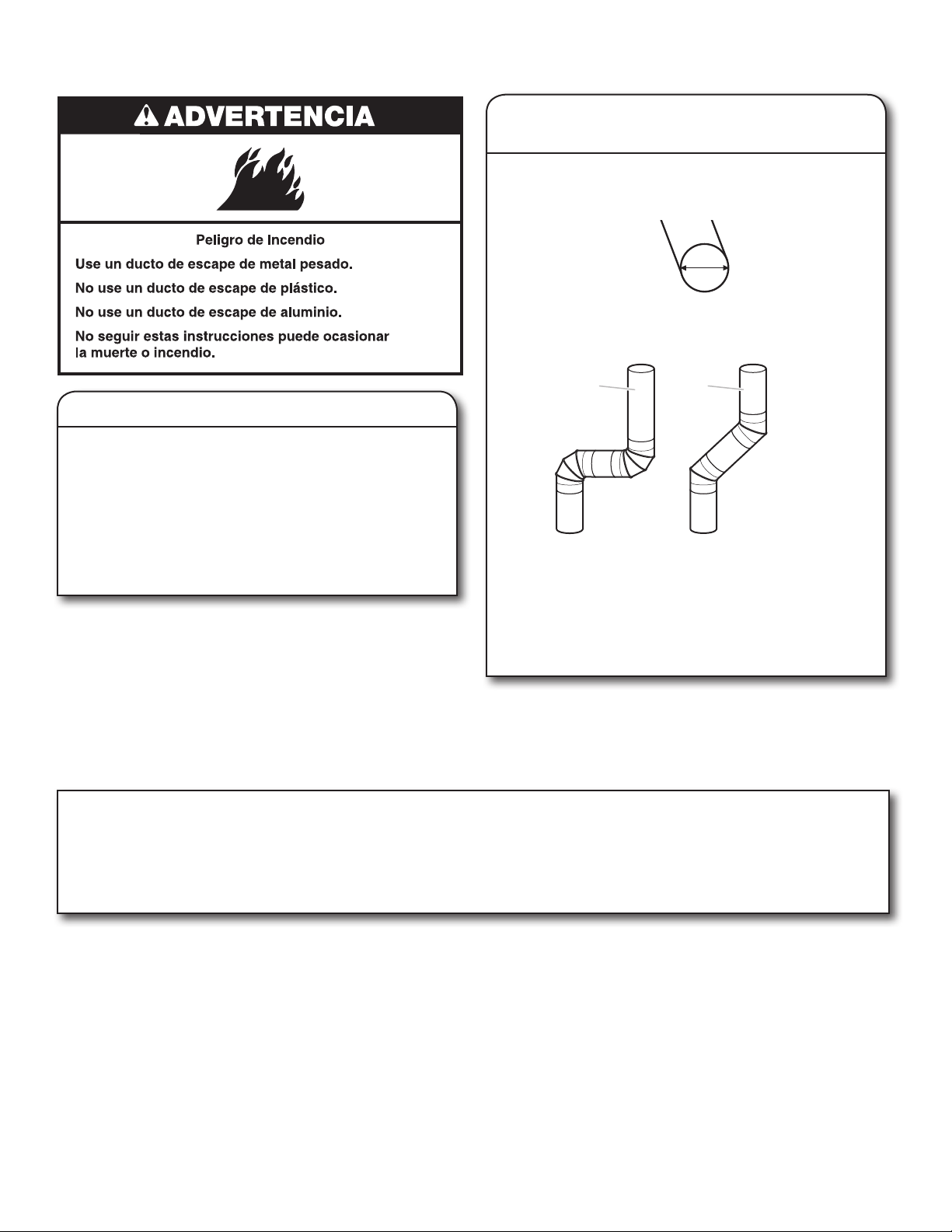
29
REVISE QUE EL SISTEMA DE VENTILACIÓN TENGA UN BUEN FLUJO DE AIRE
Buen ujo de aire
Además del calor, las secadoras también necesitan
un buen ujo de aire para secar las prendas ecazmente.
La ventilación adecuada reducirá la duración del secado y
mejorará su ahorro de energía. Consulte las Instrucciones
de instalación.
El sistema de ventilación sujeto a la secadora juega
un papel muy importante para el ujo de aire adecuado.
Las visitas de servicio debidas a la ventilación inadecuada
no están cubiertas por la garantía y correrán por cuenta
del cliente, sin importar quién haya instalado la secadora.
Mantenga un buen ujo de aire
haciendo lo siguiente:
Bien
Mejor
USE LOS CICLOS AUTOMATIC DRY SECADO AUTOMÁTICO
PARA UN MEJOR CUIDADO DE LAS TELAS Y AHORRO DE ENERGÍA
Utilice los ciclos Automatic Dry (Secado automático) para obtener el mayor ahorro de energía y un mejor cuidado de las telas con
la secadora. Durante los ciclos Automatic Dry (Secado automático), se detectan la temperatura del aire de secado o el nivel de
humedad en la carga. Esta detección se realiza durante todo el ciclo de secado y la secadora se apaga cuando la carga alcanza
el nivel de sequedad seleccionado. El ciclo de Energy Preferred (Ahorro de energía) le proveerá el mejor ahorro de energía.
Con el Timed Dry (Secado programado), la secadora funciona durante el tiempo seleccionado y algunas veces puede dar lugar
a encogimiento, arrugas y estática a causa del exceso de secado. Utilice el Timed Dry (Secado programado) ocasionalmente,
para las cargas húmedas que necesiten un poco más de tiempo de secado o cuando utilice el estante de secado.
n
Limpiar el ltro de pelusa antes de cada carga.
n
Reemplazar el material del ducto de plástico u hoja
de metal con uno de metal pesado rígido de 102 mm (4")
de diámetro.
n
4"
102 mm
Use un ducto con la longitud más corta posible.
n
No utilice más de cuatro codos de 90° en un sistema
de ventilación; cada ángulo y curva reduce el ujo
de aire.
n
Quite la pelusa y los desechos de la capota
de ventilación.
n
Quite la pelusa de toda la longitud del sistema
de ventilación al menos cada dos años. Cuando haya
terminado la limpieza, revise por última vez el producto
asegurándose de seguir las Instrucciones de instalación
que acompañan a su secadora.
n
Retire los artículos que estén frente a la secadora.
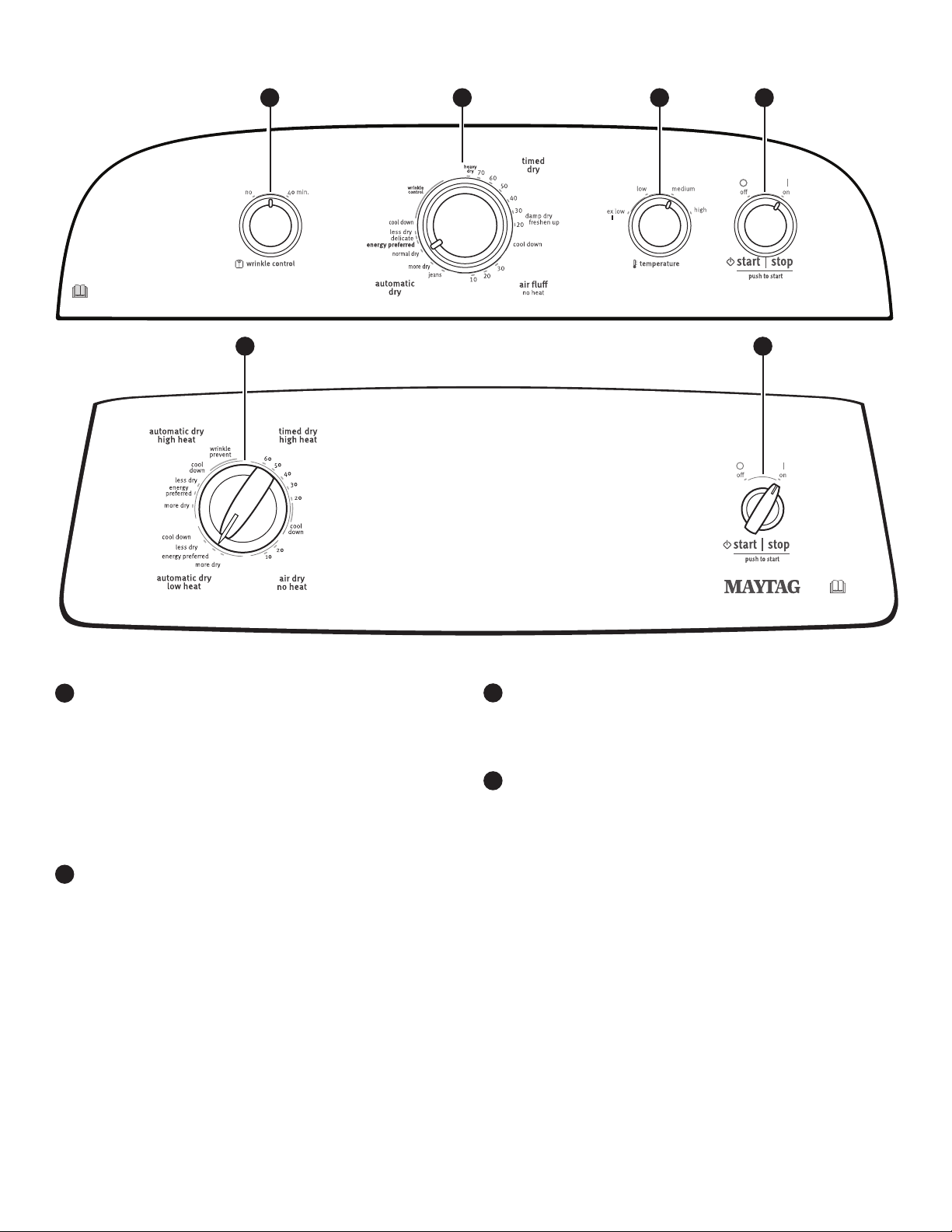
30
PANEL DE CONTROL Y CARACTERÍSTICAS
CARACTERÍSTICA WRINKLE CONTROL
(Protección contra arrugas) (en algunos modelos)
Si no es posible retirar la carga de la secadora tan
pronto como ésta se detenga, se pueden formar arrugas.
La característica de Protección contra arrugas Wrinkle
Control periódicamente da vueltas, acomoda y esponja
la ropa para ayudar a evitar que se formen arrugas.
n
Obtenga 40 minutos de rotación periódica sin calor
al nal del ciclo. Gire la perilla de Wrinkle Control hacia
Encendido o Apagado en cualquier momento antes de
que termine el ciclo.
PERILLA DE CICLOS DE LA SECADORA
Utilice la perilla de ciclos de la secadora para seleccionar
entre los ciclos disponibles en su secadora. Gire la perilla
de ciclos de lavado para seleccionar un ciclo para su carga.
Consulte “Guía de ciclos” para ver descripciones detalladas
de los ciclos.
TIMED DRY (Secado programado)
Hará funcionar la secadora durante el tiempo aproximado
en el control. En modelos con una perilla para seleccionar
la temperatura, puede elegir un ajuste basado en las
telas de su carga. El tiempo y la temperatura de secado
dependerán del modelo de su secadora.
AUTOMATIC DRY (Secado automático)
Detecta la humedad en la carga o la temperatura
del aire y se apaga cuando la carga alcanza el nivel de
sequedad seleccionado. Le proporciona el mejor secado
en el tiempo más corto. El tiempo del secado variará
según el tipo de tela, el tamaño de la carga y el ajuste
de sequedad.
1
2
TEMPERATURE (Temperatura)
Seleccione una temperatura de secado según las telas de
su carga. Si tiene duda respecto a la temperatura que debe
seleccionar para una carga de ropa, elija el ajuste más bajo
en vez del ajuste más alto.
START/STOP (Inicio/Detenga)
La señal de ciclo emite un sonido audible una vez que el
ciclo de secado ha terminado. El quitar la ropa con prontitud
al nal del ciclo reduce la formación de arrugas.
Gire la perilla de START/STOP (Inicio/Detenga) para
seleccionar el ajuste deseado (Encendido – On o Apagado –
Off). Presione la perilla de START/STOP (Inicio/Detenga) para
poner en marcha la secadora.
NOTA: Cuando se selecciona el ajuste de Wrinkle Control
(Protección contra arrugas), se escuchará un tono cada
5 minutos hasta que se saque la ropa o hasta que se haya
terminado el ajuste Wrinkle Control (Protección contra
arrugas).
3
4
No todas las características y opciones están disponibles en todos los modelos.
La apariencia puede variar.
2 31 4
2 4
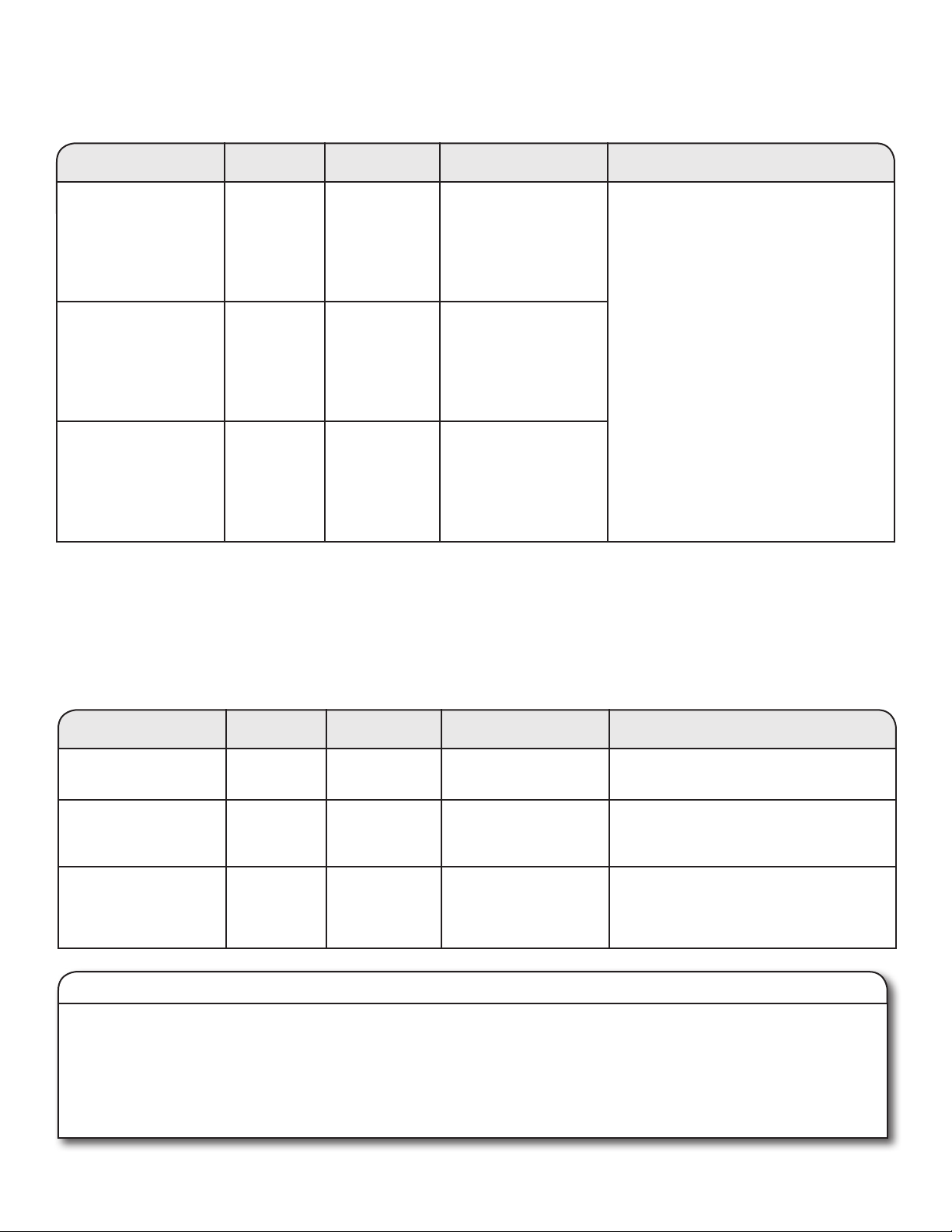
31
No todos los ciclos y ajustes están disponibles en todos los modelos.
Elija el ciclo de Energy Preferred (Ahorro de energía) para un óptimo ahorro de energía.
GUÍA DE CICLOS AUTOMATIC DRY CICLOS DE SECADO AUTOMÁTICO
GUÍA DE CICLOS TIMED DRY CYCLES CICLOS DE SECADO PROGRAMADO
No todos los ciclos y ajustes están disponibles en todos los modelos.
TIMED DRY (Secado programado) – Hará funcionar la secadora durante el tiempo aproximado en el control.
NOTA: Si las cargas no parecen estar tan secas como le gustaría, seleccione More Dry (Más seco) la próxima vez que seque una
carga similar. Si le parece que las prendas están más secas de lo que las desea, seleccione Less Dry (Menos seco) la próxima vez que
seque una carga similar.
Cómo jar la temperatura de secado
Si su secadora tiene múltiples ajustes de calor:
Se puede usar un ajuste de temperatura High (Alta) para
secar artículos pesados tales como toallas y ropa de trabajo.
Se puede usar un ajuste de temperatura Low (Baja) a
Medium (Media) para secar artículos de peso mediano
tales como sábanas, blusas, vestidos, ropa interior, telas
de planchado permanente y algunos tejidos de punto.
Use el ajuste de No Heat (Sin calor) para artículos de espuma,
goma, plástico o telas sensibles al calor.
Seque en el tendedero las telas laminadas o tratadas.
NOTA: Si tiene dudas respecto a la temperatura que
debe seleccionar para distintas cargas de ropa, consulte
las instrucciones de cuidado de las etiquetas.
Artículos
para secar: Ciclo: Temperatura:
Opciones
disponibles: Detalles de los ciclos:
Pantalones de mezclilla,
ropa de trabajo pesada,
toallas
More Dry
(Más seco)
High (Alta) Wrinkle Control/
Wrinkle Prevent
(Prevención de arrugas)
Temperature
(Temperatura)
Cycle Signal
(Señal de ciclo)
Los ciclos automáticos le proporcionan
e l mejor secado en el tiempo más corto.
El tiempo de secado varía según el tipo
de tela, el tamaño de la carga y el ajuste
de sequedad.
Seleccione una temperatura de secado
según las telas de su carga. Si tiene
duda respecto a la temperatura que
debe seleccionar para una carga de
ropa, elija el ajuste más bajo en vez
del ajuste más alto.
Ropa de trabajo, telas
de peso mediano,
sábanas
Energy
Preferred
(Ahorro de
energía)
Medium (Media) Wrinkle Control/
Wrinkle Prevent
(Prevención de arrugas)
Temperature
(Temperatura)
Cycle Signal
(Señal de ciclo)
Ropa informal, camisas,
pantalones, artículos
livianos, prendas
sintéticas, ropa
delicada, ropa deportiva
Delicate or
Less Dry
(Menos seco)
Low (Baja) Wrinkle Control/
Wrinkle Prevent
(Prevención de arrugas)
Temperature
(Temperatura)
Cycle Signal
(Señal de ciclo)
Artículos
para secar: Ciclo: Temperatura:
Opciones
disponibles: Detalles de los ciclos:
Artículos grandes o
pesados tales como
toallas gruesas o batas
Heavy Dry
(Super seco)
Cualquiera Temperature
(Temperatura)
Elija una temperatura Alta para secar
cargas grandes o pesadas.
Cualquier carga Damp Dry/
Freshen Up
(Semiseco/
Revitalizar)
Cualquiera Temperature
(Temperatura)
Seca los artículos hasta dejarlos húmedos
o para artículos que no necesitan un ciclo
completo de secado.
Goma, plástico, telas
sensibles al calor
Air Fluff/
Air Dry
(Esponjar/
Secado
al aire)
No Heat
(Sin calor)
Temperature
(Temperatura)
Secado sin calor.
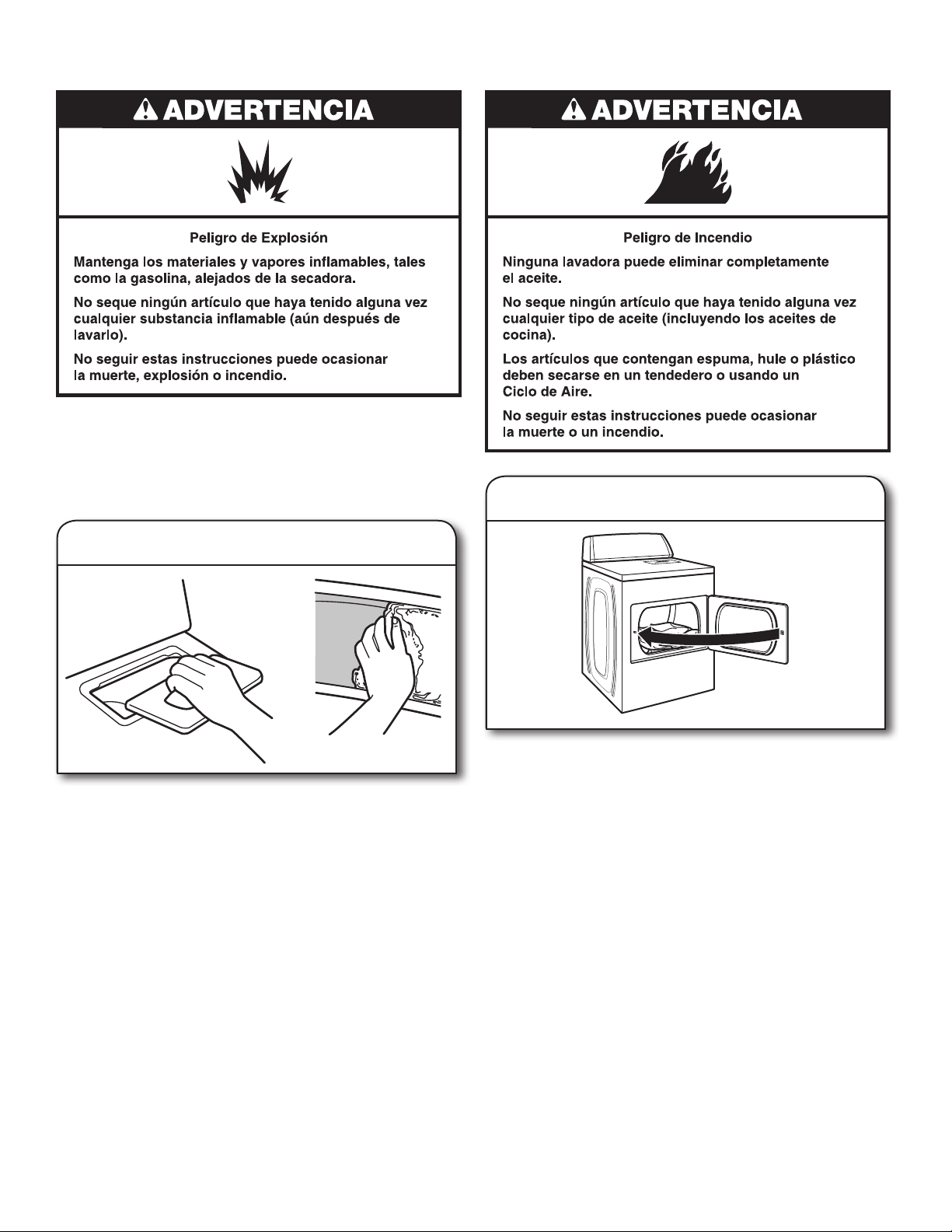
32
USO DE SU SECADORA
1. Limpie el ltro de pelusa
Limpie el ltro de pelusa antes de cada carga. Jale el ltro
de pelusa fuera del receptáculo. Quite la pelusa enrollándola
con los dedos. No enjuague ni lave el ltro para quitar la pelusa.
Empuje el ltro de pelusa rmemente hasta que quede en
su lugar.
Para obtener más información sobre la limpieza, vea “Cuidado
de la secadora”.
2. Cargue la secadora
Ponga la ropa en la secadora. Cierre la puerta.
NOTA: Su modelo puede tener una puerta diferente
de la que se muestra. Algunos modelos tienen puertas
de abertura vertical.
No cargue la secadora de manera apretada; las prendas deben
poder girar libremente.
ADVERTENCIA: A fin de reducir el riesgo de incendio,
choque eléctrico o daños personales, lea las Instrucciones
importantes de seguridad antes de operar esta secadora.
Antes de usar la secadora, limpie el tambor de la misma con
un paño húmedo para quitar el polvo que se acumuló durante
el almacenaje y envío.
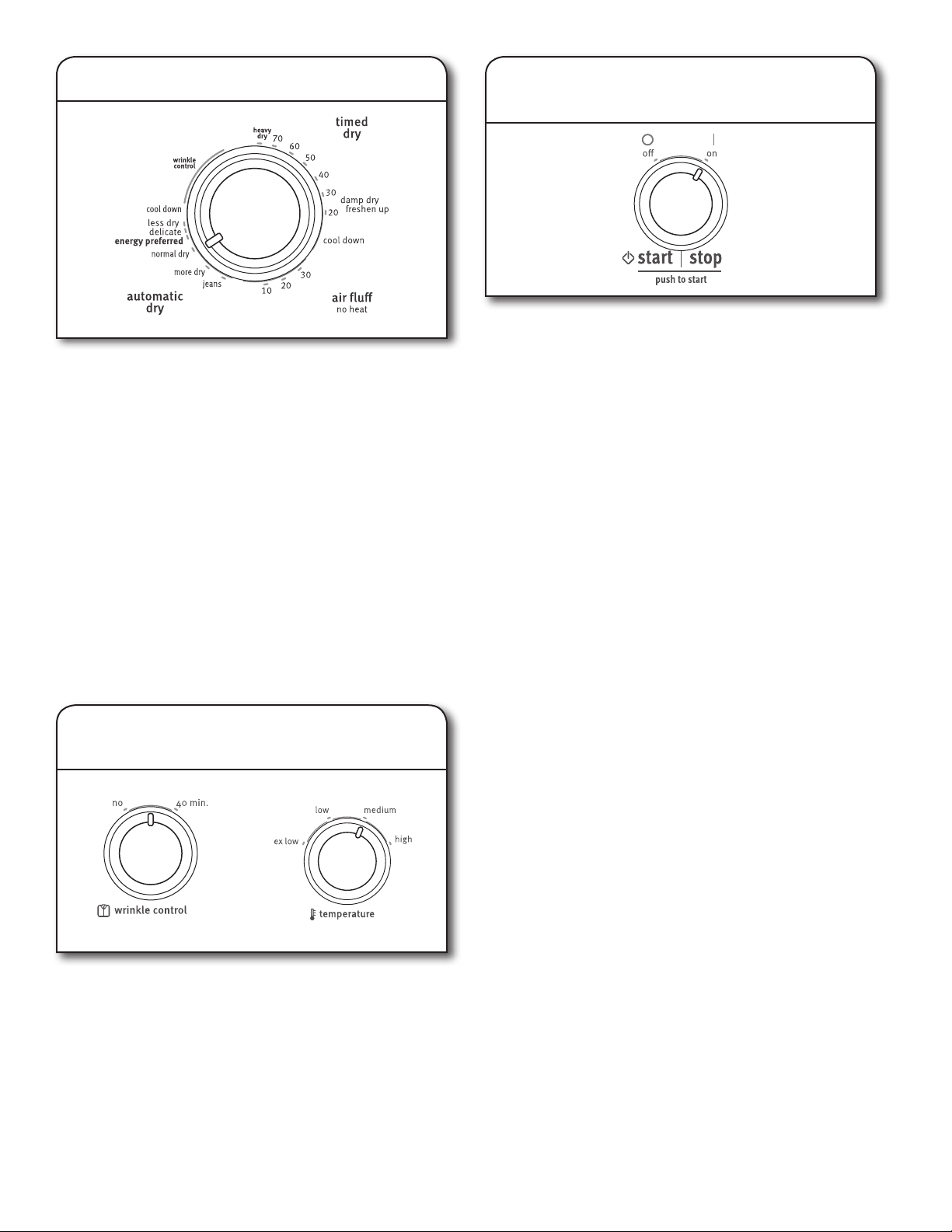
33
5. Presione START/STOP (Inicio/
Detenga) para comenzar el ciclo
Empuje y sostenga la perilla de START/STOP (Inicio/Detenga)
para comenzar el ciclo.
Para nalizar antes el ciclo, coloque la perilla de START/STOP
(Inicio/Detenga) en la posición Off (Apagado).
Saque las prendas en cuanto se haya completado el ciclo
para reducir las arrugas. Use la característica de Wrinkle
Control (Protección contra arrugas) para evitar que se formen
arrugas cuando no puede sacar la carga de la secadora en
cuanto se detiene.
4. Fije los ajustes y las opciones
del ciclo
Seleccione los ajustes y las opciones del ciclo girando
la perilla hacia la posición deseada.
NOTA: No todas las opciones y ajustes están disponibles
con todos los ciclos.
Temperature (Temperatura)
Gire la perilla de Temperature (Temperatura) para cambiar
el ajuste de temperatura de secado. Vea “Cómo jar la
temperatura de secado”.
Característica Wrinkle Control (en algunos modelos)
Obtenga 40 minutos de rotación periódica sin calor al nal
de un ciclo. Gire la perilla de Wrinkle Control para seleccionar
NO (Non) en cualquier momento antes de que termine el ciclo.
3. Seleccione el ciclo deseado
Seleccione el ciclo deseado para su carga. Consulte la Guía
de ciclos o la pantalla para obtener más información de cada
ciclo.
Ciclos AUTOMATIC DRY (Secado automático)
Puede seleccionar un nivel de sequedad diferente, según
la carga, girando la perilla hacia el nivel de sequedad.
Al seleccionar More Dry (Más seco), Energy Preferred
(Ahorro de energía) o Less Dry (Menos seco), se ajusta
automáticamente el nivel de sequedad, en el cual se apagará
la secadora. Una vez que se haya jado el nivel de secado,
no podrá cambiarse si no se detiene el ciclo.
Los ciclos Automatic Dry (Secado automático) le proporcionan
el mejor secado en el tiempo más corto. El tiempo de secado
varía según el tipo de tela, el tamaño de la carga y el ajuste
de sequedad.
NOTA: More Dry (Más seco) quita más humedad de la carga.
Elija Energy Preferred (Ahorro de energía) para un óptimo
ahorro de energía. Less Dry (Menos seco) quita menos
humedad y se usa para las cargas que desee terminar
de secar en una percha.
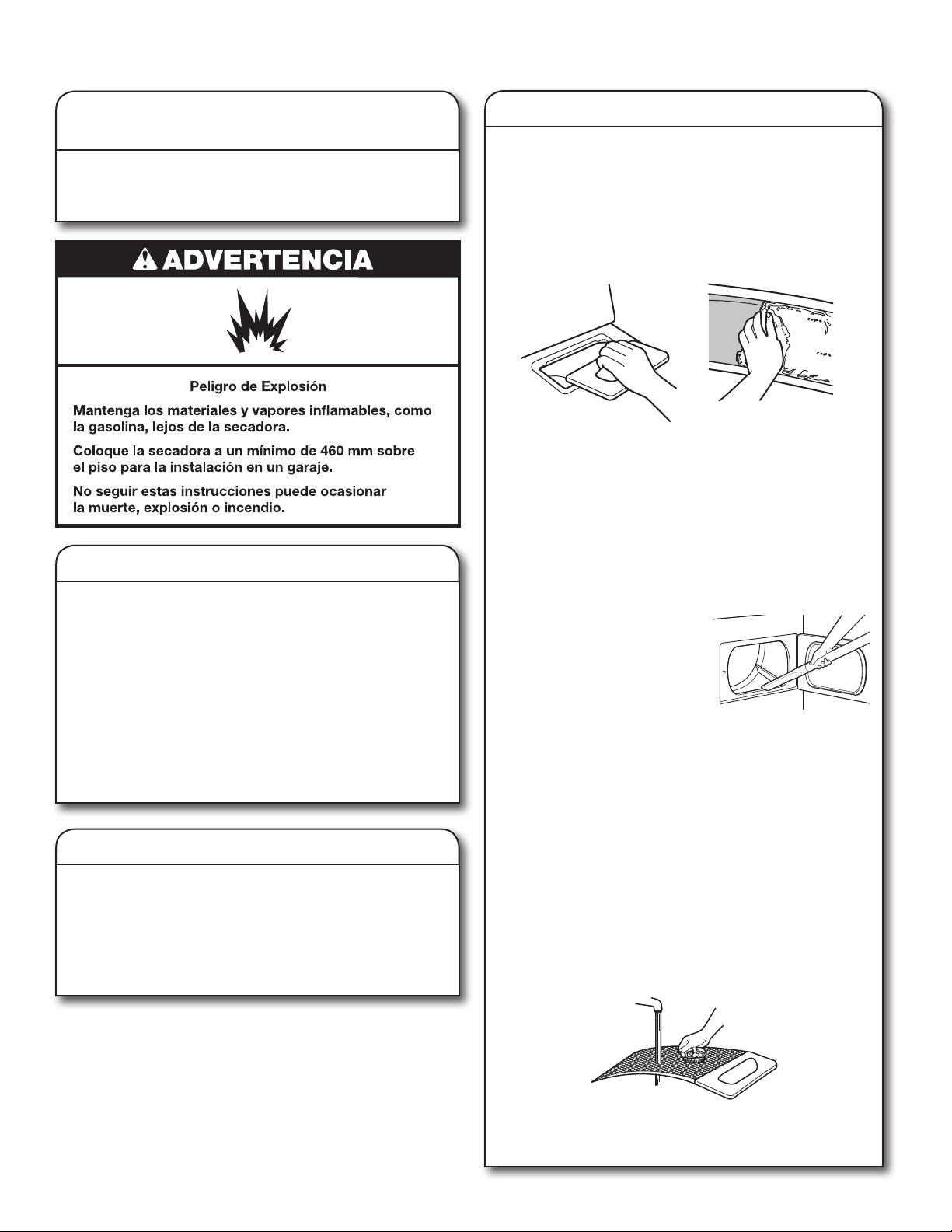
34
CUIDADO DE LA SECADORA
Mantenga el área donde está la secadora despejada y
libre de artículos que pudieran obstruir el ujo de aire para
el funcionamiento adecuado de la secadora. Esto incluye
despejar las pilas de ropa que estén frente a la secadora.
Limpieza del ltro de pelusa
Limpieza de cada carga
El ltro de pelusa está ubicado dentro de la secadora.
Un ltro obstruido con pelusa puede aumentar el tiempo
de secado.
Para limpiar:
1. Jale el ltro de pelusa fuera del receptáculo.
Quite la pelusa del ltro enrollándola con sus dedos.
No enjuague ni lave el ltro para quitar la pelusa.
La pelusa mojada es difícil de quitar.
2. Empuje el ltro de pelusa rmemente de vuelta
en su lugar.
IMPORTANTE:
n
No ponga a funcionar la secadora con un ltro de
pelusa ojo, dañado, obstruido o sin él. El hacerlo
puede causar un sobrecalentamiento y dañar tanto
la secadora como la ropa.
n
Si al quitar la pelusa del ltro, ésta cae en la secadora,
revise la capota de ventilación y quite la pelusa. Vea
“Requisitos de ventilación” en las Instrucciones de
instalación.
n
Limpie el espacio donde se
encuentra el ltro de pelusa
según sea necesario. Elimine
con cuidado todas las pelusas
que se hayan acumulado fuera
del ltro con un aspirador.
Limpieza según la necesidad
Los residuos de detergente de lavandería y suavizante
de telas pueden acumularse en el ltro de pelusa. Esta
acumulación puede ocasionar tiempos de secado más
prolongados para su ropa, o hacer que la secadora se
detenga antes de que su carga esté completamente seca.
El ltro está probablemente obstruido si la pelusa se cae
del mismo mientras está dentro de la secadora.
Limpie el ltro de pelusa con un cepillo de nailon cada
6 meses o con más frecuencia si éste se obstruye debido
a la acumulación de residuos.
Para lavarlo:
1. Quite la pelusa del ltro enrollándola con sus dedos.
2. Moje ambos lados del ltro de pelusa con agua caliente.
3. Moje un cepillo de nylón con agua caliente y detergente
líquido. Talle el ltro de pelusa con el cepillo para quitar
la acumulación de residuos.
4. Enjuague el ltro con agua caliente.
5. Seque meticulosamente el ltro de pelusa con una toalla
limpia. Vuelva a colocar el ltro en la secadora.
Limpieza del interior de la secadora
Para limpiar el tambor de la secadora:
1. Aplique un limpiador líquido doméstico no inamable
al área manchada del tambor y frote con un paño suave
hasta que desaparezca la mancha.
2. Limpie el tambor minuciosamente con un paño húmedo.
3. Ponga a funcionar la secadora con una carga de ropa
limpia o toallas para secar el tambor.
NOTA: Las prendas de colores que destiñen tales como
mezclillas o artículos de algodón de colores vivos, pueden
teñir el interior de la secadora. Estas manchas no dañan
su secadora ni mancharán las cargas futuras de ropa.
Seque estos artículos al revés para evitar que se manche
el tambor.
Eliminación de pelusa acumulada
En el interior de la carcasa de la secadora
Según el uso de la secadora, se debe quitar la pelusa
cada dos años, o con más frecuencia. La limpieza deberá
efectuarlaun representante de servicio calicado.
En el ducto de escape
La pelusa debe ser quitada cada dos años, o con más
frecuencia, de acuerdo con el uso de la secadora.
Limpieza del lugar donde está
la secadora
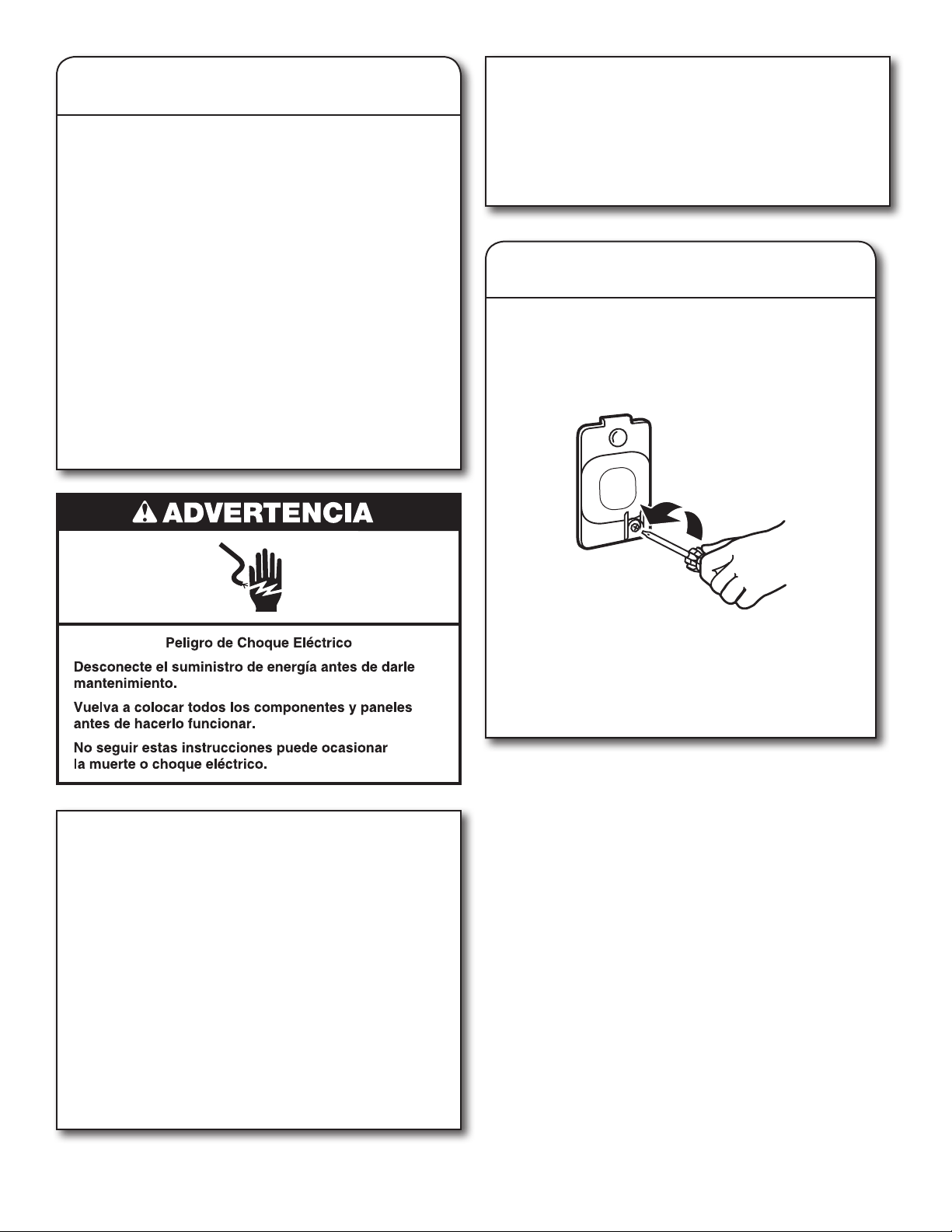
35
Cuidado para las vacaciones,
el almacenaje o en caso de mudanza
Cuidado durante la falta de uso
o el almacenamiento
Ponga la secadora a funcionar sólo cuando esté en casa.
Si va a salir de vacaciones o no va a usar su secadora
por un tiempo prolongado, usted deberá:
1. Desenchufar la secadora o desconectar el suministro
de energía.
2. (Solamente para las secadoras a gas): Cierre la válvula
de cierre a la línea de suministro de gas.
3. Limpiar el ltro de pelusa. Vea “Limpieza del ltro
de pelusa”.
Cuidado para la mudanza
Para secadoras conectadas con cable de suministro
eléctrico:
1. Desenchufe el cable de suministro de energía.
2. Asegúrese de que las patas niveladoras estén jas
en la base de la secadora.
3. Use cinta adhesiva protectora para asegurar la puerta
de la secadora.
Para secadoras con cableado directo:
1. Apague la electricidad en la caja de fusibles
o cortacircuitos.
2. Desconecte el cableado.
3. Asegúrese de que las patas niveladoras estén jas
en la base de la secadora.
4. Use cinta adhesiva protectora para asegurar la puerta
de la secadora.
Para las secadoras a gas:
1. Desenchufe la secadora o desconecte el suministro
de energía.
2. Cierre la válvula de cierre en la línea de suministro
de gas.
3. Desconecte el tubo de la línea de suministro de gas
y quite los accesorios sujetos al tubo de la secadora.
4. Ponga una tapa en la línea abierta del suministro de
combustible.
Cambio de la luz del tambor
(en algunos modelos)
1. Desenchufe la secadora o desconecte el suministro
de energía.
2. Abra la puerta de la secadora. Localice la cubierta del
foco de luz en la pared posterior de la secadora. Quite
el tornillo ubicado en la esquina inferior derecha de la
cubierta con un destornillador Phillips. Quite la cubierta.
3. Gire el foco en sentido contrario a las manecillas
del reloj. Reemplácelo únicamente con un foco para
electrodomésticos de 10 vatios. Vuelva a colocar
la cubierta en su lugar y asegúrela con el tornillo.
4. Enchufe en un contacto de conexión a tierra o reconecte
el suministro de energía.
5. Asegúrese de que las patas niveladoras estén jas
en la base de la secadora.
6. Use cinta adhesiva para asegurar la puerta
de la secadora.
Cómo volver a instalar la secadora
Siga las Instrucciones de instalación para ubicar, nivelar
y conectar la secadora.
36
Pruebe primero las soluciones sugeridas aquí para posiblemente evitar una visita de servicio.
Si usted experimenta
lo siguiente
Causas posibles Solución
Las prendas no se secan
satisfactoriamente, los
tiempos de secado son
demasiado largos
Filtro de pelusa o su carcasa
obstruidos con pelusa.
El ltro de pelusa debe ser limpiado antes de cada carga. Limpie
el espacio donde se encuentra el ltro de pelusa según sea
necesario. Elimine con cuidado todas las pelusas que se hayan
acumulado fuera del ltro con un aspirador.
Se seleccionó el ajuste de
temperatura No Heat (Sin calor)
o el ciclo Air Fluff/Air Dry (Esponjar/
Secado al aire).
Seleccione el ciclo correcto para el tipo de prendas que se van
a secar. Vea “Guía de ciclos”.
La carga es demasiado voluminosa
y pesada para secarse con rapidez.
Separe la carga de modo que pueda rotar libremente.
Está obstruido con pelusa el ducto
de escape o la capota de ventilación
exterior, restringiendo el ujo del
aire.
Ponga a funcionar la secadora unos 5 a 10 minutos. Ponga
su mano debajo de la capota de ventilación exterior para
vericar el movimiento del aire. Si no lo siente, limpie la pelusa
del sistema de ventilación o reemplace el ducto de escape con
uno de metal pesado o de metal exible. Asegúrese de que el
ducto de escape no esté aplastado ni retorcido. Consulte las
Instrucciones de instalación.
Las hojas del suavizante de telas
están bloqueando la rejilla.
Use únicamente una hoja de suavizante de telas y úsela
una sola vez.
El ducto de escape no tiene el largo
correcto.
Controle el ducto de escape para vericar que no sea
demasiado largo ni dé demasiadas vueltas. Una ventilación
con un ducto largo aumentará el tiempo de secado. Asegúrese
de que el ducto de escape no esté aplastado ni retorcido.
Consulte las Instrucciones de instalación.
El ducto de escape no tiene
el diámetro correcto.
Use un material de ventilación de 102 mm (4") e diámetro.
Secadora ubicada en una habitación
cuya temperatura está por debajo
de los 7ºC (45ºF).
El funcionamiento apropiado de los ciclos de la secadora
requiere temperaturas superiores a 7ºC (45ºF).
La secadora se encuentra en un
clóset sin la abertura apropiada.
Las puertas del armario deben tener aberturas de ventilación
en la parte superior e inferior de la puerta. La parte anterior
de la secadora necesita un mínimo de 25 mm (1") de espacio y,
para la mayoría de las instalaciones, la parte posterior necesita
127 mm (5"). Vea Instrucciones de instalación.
La secadora no funciona
La puerta no está cerrada por completo.
Cerciórese de que la puerta de la secadora esté bien cerrada.
La perilla de Start/Stop (Inicio/
Detenga) no se ha colocado
en la posición On (Encendido).
Gire la perilla de START/STOP (Inicio/Detenga) a la posición
On (Encendido).
No se presionó con rmeza o por
suciente tiempo el botón de Start/
Stop (Inicio/Detenga).
Presione la perilla de START/STOP (Inicio/Detenga) hasta que
escuche el tambor de la secadora moviéndose.
Hay un fusible de la casa fundido
o se disparó el cortacircuitos.
Las secadoras eléctricas utilizan dos fusibles o cortacircuitos
domésticos. El tambor quizás rote pero sin calor. Reemplace
ambos fusibles o reposicione el cortacircuitos. Si el problema
continúa, llame a un electricista.
Fuente de suministro eléctrico. Las secadoras eléctricas requieren un suministro eléctrico
de 240 voltios. Verique con un electricista calicado.
Tipo de fusible equivocado. Use un fusible retardador.
Sonidos raros La secadora no se utilizó por cierto
tiempo.
Si la secadora ha estado en desuso por una temporada, podrá oírse
un ruido de golpeteo durante los primeros minutos de funcionamiento.
Una moneda, un botón o un
sujetapapeles está atrapado entre
el tambor y la parte frontal o trasera
de la secadora.
Revise los bordes frontales y posteriores del tambor para
vericar si hay objetos pequeños. Limpie los bolsillos antes
del lavado.
Es una secadora a gas. El chasquido de la válvula de gas es un sonido de
funcionamiento normal.
No están instaladas las cuatro patas
ni la secadora está nivelada de
frente hacia atrás ni de lado a lado.
La secadora puede vibrar si no está instalada adecuadamente.
Vea “Instrucciones de instalación”.
La ropa está enredada o hecha
un ovillo.
Si la carga está hecha un ovillo, ésta rebotará haciendo vibrar a
la secadora. Separe los artículos de la carga y reinicie la secadora.
SOLUCIÓN DE PROBLEMAS
37
Pruebe primero las soluciones sugeridas aquí para posiblemente evitar una visita de servicio.
Si usted experimenta
lo siguiente
Causas posibles Solución
Sin calor Hay un fusible de la casa fundido
o se disparó el cortacircuitos.
El tambor quizás rote pero sin calor. Las secadoras
eléctricas utilizan dos fusibles o cortacircuitos domésticos.
Reemplace el fusible o reposicione el cortacircuitos.
Si el problema continúa, llame a un electricista.
Válvula de la línea de suministro cerrada. Para secadoras a gas, asegúrese de que la válvula
de la línea de suministro esté abierta.
Fuente de suministro eléctrico incorrecto. Las secadoras eléctricas requieren un suministro eléctrico
de 240 voltios. Verique con un electricista calicado.
El tiempo del ciclo
es demasiado corto
El ciclo automático termina muy rápido. Quizás la carga no esté haciendo contacto con las bandas
del sensor. Nivele la secadora.
Use el Timed Dry (Secado programado) para cargas muy
pequeñas. Cambie el ajuste de nivel de sequedad en los
ciclos Automatic Dry (Secado automático).
Aumentar o disminuir el ajuste de nivel de secado
cambiará la cantidad de tiempo de secado en un ciclo.
Pelusa en la carga El ltro de pelusa está obstruido. El ltro de pelusa debe ser limpiado antes de cada carga.
Manchas en la carga
o en el tambor
No se usó de modo apropiado
el suavizante de telas para secadoras.
Agregue las hojas del suavizante de telas para secadora
al comienzo del ciclo. Las hojas del suavizante de telas
que se agregan a una carga parcialmente seca pueden
manchar las prendas.
Las manchas en el tambor son causadas por los tintes
en las prendas (habitualmente los pantalones de mezclilla).
Éstas no se transferirán a otras prendas.
Las cargas están
arrugadas
Se ha cargado la secadora de manera
apretada.
Seleccione la característica de Wrinkle Control para hacer
girar la carga sin calor, para evitar las arrugas.
La secadora está apretada. Seque cargas más pequeñas que puedan girar libremente
y reducir la formación de arrugas.
Olores Ha estado pintando, tiñendo o barnizando
recientemente en el área donde se
encuentra la secadora.
Si es así, ventile el área. Cuando los olores y el humo se
hayan ido del área, vuelva a lavar la ropa y luego séquela.
La secadora eléctrica se está usando
por primera vez.
El nuevo elemento calentador eléctrico puede emitir
un olor. El olor desaparecerá después del primer ciclo.
La carga está demasiado
caliente
Se han quitado los artículos de lavado
de la secadora antes del nal del ciclo.
Deje que termine el ciclo de Cool Down (Enfriamiento)
antes de quitar las prendas de la secadora. La carga
se enfría lentamente en todos los ciclos para reducir las
arrugas y hacer que la carga sea más fácil de manipular.
Es posible que los artículos que se han quitado antes del
Cool Down (Enfriamiento) queden muy calientes al tacto.
Se usó un ciclo con temperatura alta
o se jó un control separado de
temperatura en High (Alta).
Seleccione una temperatura más baja y use un ciclo
de Automatic Dry (Secado automático). Estos ciclos
detectan el nivel de humedad en la carga y se apagan
cuando la carga alcanza el grado de sequedad
seleccionado. Esto reduce el exceso de secado.
SOLUCIÓN DE PROBLEMAS
SERVICIO AMERICA LATINA
Para otros países de Latinoamerica, consulte nuestro Certicado de Garantia Latinoamerica y visite nuestra página web
de Whirlpool Latinoamerica www.whirlpool-latam.com seleccione su país y luego Menú Atención al Cliente.
Representante en la Unión Europea: Whirlpool EMEA S.p.A., Via Carlo Pisacane n. 1, 20016 Pero (MI), Italia
Fabricante: Whirlpool Corporation, 2000 N M 63, Benton Harbor, MI 49022 USA
Para más información, visítenos en www.whirlpool.com/accessories o póngase en contacto con el distribuidor de quien adquirió
la secadora o una empresa de servicio autorizada.
38
SICUREZZA DELL’ASCIUGATRICE
Pericolo di incendio
La mancata osservanza degli avvisi di sicurezza può causare lesioni gravi, morte o
danno alla proprietà.
Non installare una ventola di rinforzo nel condotto di scarico.
Installare tutte le asciuga biancheria attenendosi alle istruzioni di installazione del
produttore dell'asciugatrice.
AVVERTENZA
AVVERTENZA – RISCHIO
D
’
INCENDIO
/
MATERIALI INFIAMMABILI
Ciò è un simbolo supplementare di allarme di sicurezza che allarmi voi al rischio d’incendio.
39
PER LA VOSTRA SICUREZZA
1. NON USARE O RIPORRE BENZINA O MATERIALI INFIAMMABILI NELL’APPARECCHIO O NELLE SUE
VICINANZE.
2. NON USARE PRODOTTI SPRAY IN PROSSIMITÀ DELL’APPARECCHIO MENTRE È UN FUNZIONE.
3. NON MODIFICARE L’APPARECCHIO.
n
Non utilizzare l’asciugatrice se sono state usate sostanze
chimiche industriali per la pulizia.
n
Rimuovere tutti gli oggetti dalle tasche, come accendini
e ammiferi, prima di inserire i capi nell’asciugatrice.
n
Prima di dismettere o smaltire l’asciugatrice, rimuovere
le porte del vano di asciugatura.
n
Non inserire la mano nell’asciugatrice se il tamburo è in
movimento. È predisposto un interruttore di sicurezza per
la porta.
n
Non installare o riporre l’asciugatrice in luoghi esposti agli
agenti atmosferici.
n
Non manomettere i comandi.
n
Non continuare a usare l’apparecchio se sembra difettoso.
n
Non riparare o sostituire parti dell’asciugatrice o tentare
alcuna manutenzione a meno che non sia chiaramente
indicato nella Guida all’uso e alla manutenzione. Le riparazioni
e la manutenzione devono essere eseguite esclusivamente
da personale di assistenza competente.
n
Non utilizzare ammorbidenti per tessuti per eliminare
l’elettricità statica a meno che non siano consigliati dal
fabbricante dell’ammorbidente o del prodotto. Seguire
le istruzioni del fabbricante.
n
Pulire il ltro pelucchi prima o dopo ogni carico. Non
mettere in funzione l’asciugatrice senza il ltro pelucchi.
n
Mantenere pulita l’area intorno allo sato e alla presa
dell'aria, nonché le aree circostanti, eliminando pelucchi,
polvere e sporcizia.
n
L’interno dell’asciugatrice e il tubo di sato devono esser
puliti periodicamente da personale di assistenza qualicato.
n
Vedere le istruzioni per la messa a terra.
n
Non asciugare in asciugatrice capi che non siano stati lavati.
n
La parte nale di un ciclo di asciugatura non utilizza calore
(ciclo di raffreddamento), per assicurare che i capi siano
lasciati a una temperatura che non li danneggi.
n
Capi in gommapiuma (schiuma di lattice) cufe per doccia,
tessuti impermeabili, articoli con fodera gommata e indumenti
o cuscini con imbottitura di gommapiuma devono essere
asciugati appesi.
n
Se il cavo di alimentazione è danneggiato, deve essere
sostituito dal produttore, da personale di assistenza o
da una persona con qualica analoga per evitare rischi.
AVVERTENZA:
non arrestare mai l’asciugatrice prima
del termine del ciclo di asciugatura, salvo se si estraggono
velocemente tutti i capi e li si stende per disperdere il calore.
ISTRUZIONI IMPORTANTI PER LA SICUREZZA
AVVERTENZA:
per ridurre il rischio di incendio, scossa elettrica o lesioni alle persone durante l’uso dell’asciugatrice,
prendere le dovute precauzioni di base, tra cui:
CONSERVARE QUESTE ISTRUZIONI
n
Leggere tutte le istruzioni prima di usare l’asciugatrice.
n
Mantenere una distanza minima di 100 mm (4 poll.) tra il lato
posteriore dell’asciugatrice e la parete.
n
La messa in funzione dell’apparecchio può inuenzare la
messa in funzione di altri tipi di apparecchio che attingono
l’aria per la combustione sicura dallo stesso locale. Deve
essere presente un’aerazione adeguata che permetta la
sostituzione dell’aria consumata ed eviti che i gas derivanti
da altri apparecchi che bruciano altri carburanti, incluse
amme libere, riuiscano nell’ambiente durante l’utilizzo
dell’asciugatrice a tamburo. In caso di dubbio consultare i
produttori degli apparecchi.
n
Non ostruire la presa d’aria dell’asciugatrice (vedere
le Istruzioni di installazione per gli spazi liberi minimi).
n
Non inserire nell’asciugatrice capi sporchi di olio da cucina.
I capi sporchi di olio possono prendere fuoco in modo
spontaneo, specialmente se esposti a sorgenti di calore, come
nell’asciugatrice. Questi capi si riscaldano a causa di una
reazione di ossidazione nell’olio. L’ossidazione genera calore.
Se il calore non riesce a disperdersi i capi possono riscaldarsi
al punto di incendiarsi. Quando i capi contaminati con olio
sono ammucchiati, impilati o riposti possono impedire la
dispersione del calore e creare un rischio di incendio.
n
Se è inevitabile asciugare in asciugatrice capi sporcati con
sostanze come olio da cucina, acetone, alcol, benzina,
kerosene, smacchiatori, acquaragia, cere e deceranti o che
sono stati contaminati con prodotti per capelli, è necessario
lavarli in acqua molto calda con una quantità di detergente
aggiuntiva prima di essere asciugati in asciugatrice. Questi
capi possono sprigionare vapori che potrebbero incendiarsi
o esplodere. Il lavaggio sopra descritto riduce ma non
elimina il rischio.
n
Questo apparecchio non è destinato all’uso da parte di
persone, inclusi bambini di età inferiore a 8 anni, con ridotte
capacità siche, sensoriali o mentali o con esperienza e
conoscenze inadeguate, a meno che non siano sorvegliati o
abbiano ricevuto istruzioni relative all’uso dell’apparecchio da
parte delle persone responsabili della loro sicurezza.
n
La pulizia e la manutenzione ordinaria non devono essere
effettuate da bambini senza la supervisione di un adulto.
n
Sorvegliare i bambini afnché non giochino con
l’apparecchio.
n
Tenere i bambini di età inferiore a 3 anni lontano
dall’apparecchio a meno che non siano direttamente
sorvegliati.
4
IMPORTANT SAFETY INSTRUCTIONS
precautions, including the following:
WARNING:
Read all instructions before using the dryer.
Keep a minimum clearance of 100 mm (4 in.) between the
rear of the dryer and any wall.
The operation of this appliance may affect the operation of
other types of appliances which take their air supply for safe
combustion from the same room. There has to be adequate
ventilation to replace exhausted air and thus avoid the
back-ow of gases into the room from appliances burning
other fuels, including open res, when operating the tumble
dryer. If in doubt, consult the appliance manufacturers.
Do not obstruct the air supply to the dryer (see Installation
Instructions for minimum clearances).
Do not place items exposed to cooking oils in your dryer.
Oil-affected items can ignite spontaneously, especially when
exposed to heat sources such as in a tumble dryer. The
items become warm causing an oxidation reaction in the oil.
Oxidation creates heat. If the heat cannot escape, the items
can become hot enough to catch re. Piling, stacking or
storing oil-affected items can prevent heat from escaping
and so create a re hazard.
If it is unavoidable to dry in the dryer items that have been
soiled with substances such as cooking oil, acetone, alcohol,
petrol, kerosene, spot removers, turpentine, waxes and wax
removers, or that have been contaminated by hair care
products, should be washed in hot water with an extra
amount of detergent before being dried in the dryer. These
items may give off vapours that could ignite or explode. Such
washing will reduce, but not eliminate, the hazard.
This appliance is not intended for use by persons (including
children) with reduced physical, sensory or mental
capabilities, or lack of experience and knowledge, unless
they have been given supervision or instructions concerning
use of the appliance by persons responsible for their safety.
Children should be supervised to ensure that they do not
play with the appliance.
The dryer should not be used if industrial chemicals have
been used for cleaning.
Before the dryer is removed from service or discarded,
remove the doors to the drying compartment.
Do not reach into the dryer if the drum is moving. A door
switch is tted for your safety.
Do not install or store the dryer where it will be exposed
to the weather.
Do not tamper with controls.
Do not continue to use this appliance if it appears to be
faulty.
Do not repair or replace any part of the dryer or attempt
any maintenance unless specically recommended in this
Use and Care Guide. Repairs and servicing should only
be carried out by competent service personnel.
Do not use fabric softeners or products to eliminate static
unless recommended by the manufacturer of the fabric
softener or product. Follow their instructions.
Clean dryer lint screen before or after each load. Do not
operate dryer without lint screen in place.
Keep area around the exhaust and inlet openings and
adjacent surrounding areas free from the accumulation of
lint, dust, and dirt.
The interior of the dryer and exhaust vent should be
cleaned periodically by qualied service personnel.
See Installation Instructions for earthing instructions.
Do not dry unwashed items in this dryer.
Items such as foam rubber (latex foam), shower caps,
waterproof textiles, rubber backed articles and clothes or
pillows tted with foam rubber pads must only be dried
on a clothesline.
SAVE THESE INSTRUCTIONS
WARNING: Never stop a tumble dryer cycle before the
end of the drying cycle unless all items are quickly removed
and spread out so that the heat is dissipated.
To reduce the risk of re, electric shock, or injury to persons when using the dryer, follow basic
The nal part of a tumble dryer cycle occurs without heat
(cool down cycle) to ensure that the items are left at a
temperature that ensures the items will not be damaged.
If the supply cord is damaged, it must be replaced by the
manufacturer or its service agent or a similarly qualied
person in order to avoid a hazard.
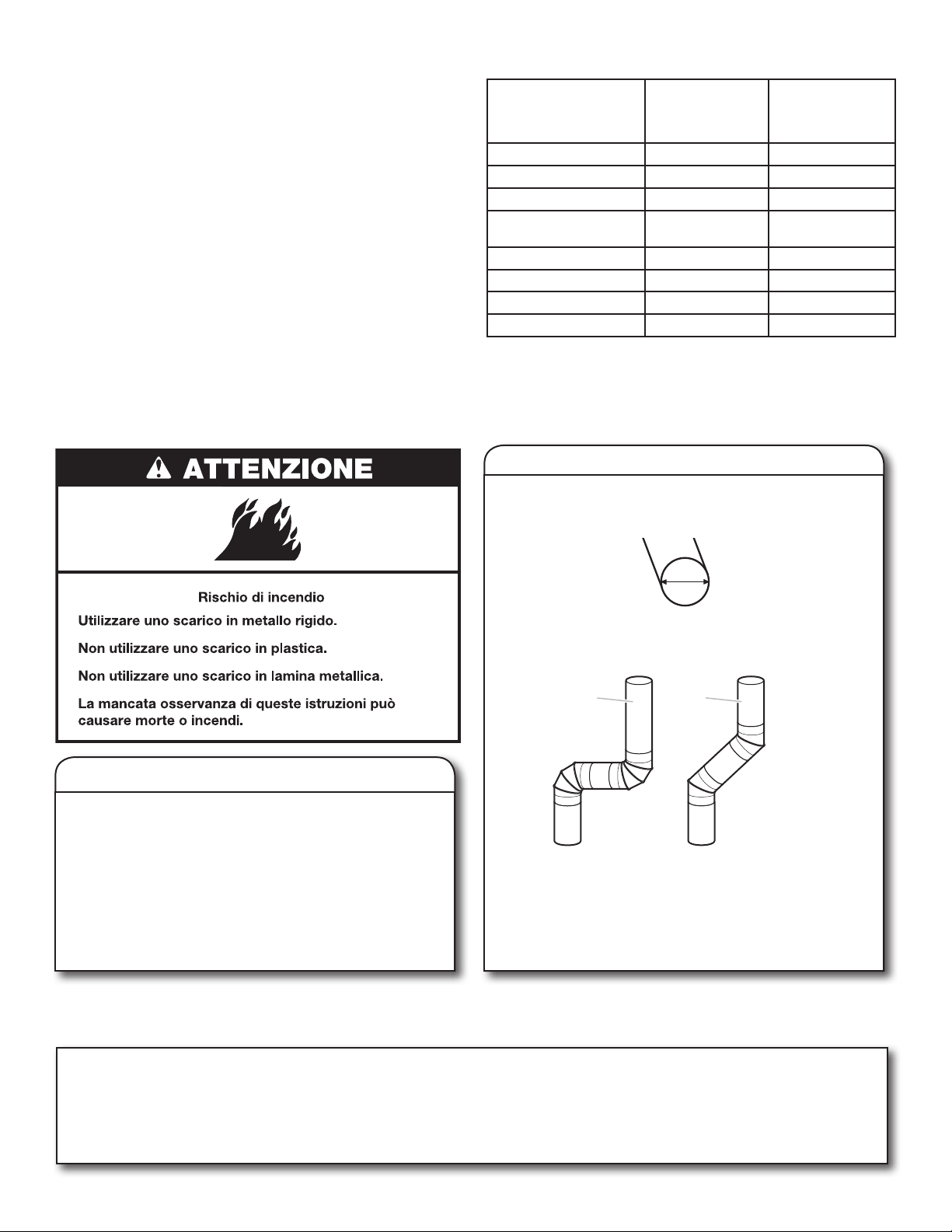
40
CONTROLLO DEL SISTEMA DI SFIATO PER IL CORRETTO FLUSSO DELL’ARIA
USO DEI CICLI DI ASCIUGATURA AUTOMATICA PER UNA MIGLIORE CURA DEI
TESSUTI E PER RISPARMIARE ENERGIA
Modelli
3LMEDC315FW
3LMEDC415FW
4KMEDC215FW
4KMEDC315FW
4KMEDC415FW
4KMEDC425FW
Tensione nominale 220–240 V 2N~ 220–240 V 2N~
Frequenza nominale 50 Hz 60 Hz
Corrente nominale 20 Amps 20 Amps
Capacità lenzuola
asciutte (massima)
15 kg (33 lb) 15 kg (33 lb)
Capacità IEC 7 kg (15 lb) 7 kg (15 lb)
Altezza 1067 mm (42") 1067 mm (42")
Larghezza 737 mm (29") 737 mm (29")
Profondità 706 mm (27
13
⁄16") 706 mm (27
13
⁄16")
SPECIFICHE
Gli apparecchi sono commercializzati in varie regioni con
indicazioni diverse per misurare la capacità. Di seguito sono
riportati alcuni formati di misurazione validi pubblicati sul
prodotto:
Capacità lenzuola asciutte: misura di peso espressa in
dimensioni del carico che rispecchia la capacità volumetrica
del tamburo dell’asciugatrice.
Capacità IEC: misura di capacità che corrisponde alla quantità
massima di lenzuola e tessili asciutti, dichiarata dal produttore,
che può essere trattata in uno specico ciclo.
IMPORTANTE: questo apparecchio è destinato all’uso
domestico e applicazioni analoghe, quali:
n aree cucina del personale in negozi, ufci e altri ambienti
di lavoro;
n agriturismi;
n clienti di alberghi, pensioni e altri ambienti di tipo residenziale;
n ambienti di tipo bed and breakfast;
n aree per uso comune in condomini o appartamenti o in locali
lavanderia.
Flusso dell’aria corretto
Oltre al calore, le asciugatrici hanno bisogno di un
corretto usso dell’aria per asciugare efcientemente
il bucato. Un’areazione appropriata riduce i tempi di
asciugatura e migliora il risparmio di energia. Vedere
le istruzioni di installazione.
Il tubo di sato applicato all’asciugatrice svolge un ruolo
essenziale per il corretto usso dell’aria.
Le chiamate all’assistenza riconducibili a un sistema di
aerazione inappropriato non sono coperte dalla garanzia
e saranno a carico del cliente, indipendentemente da chi
ha installato l’asciugatrice.
Per mantenere un corretto usso dell’aria:
Corretto
Ottimale
n
Pulire il ltro pelucchi prima di ogni carico.
n
Sostituire gli elementi di sato in plastica o lamina sottile
con tubi in materiale rigido e pesante di 102 mm (4 poll.)
di diametro.
n
Utilizzare tubi di sato della minor lunghezza possibile.
n
Non utilizzare più di quattro gomiti a 90° nel tubo di
sato, ogni piega e curva riducono il usso dell’aria.
n
Rimuovere pelucchi e sporcizia dalla cappa dello sato.
n
Rimuovere i pelucchi da tutta la lunghezza del tubo
di sato almeno ogni due anni. Dopo aver completato
la pulizia, seguire scrupolosamente le istruzioni di
installazione in dotazione con l’asciugatrice per il
controllo nale del prodotto.
n
Tenere sgombra l’area davanti all’asciugatrice.
I cicli asciugatura automatica dell’asciugatrice consentono il massimo risparmio energetico e una migliore cura dei tessuti.
Durante i cicli di asciugatura automatica vengono rilevati la temperatura dell’aria di asciugatura o il livello di umidità nel carico.
La rilevazione viene effettuata durante tutto il ciclo di asciugatura e l’asciugatrice si spegne quando il carico raggiunge il livello
di asciugatura selezionato. Il ciclo Energy Preferred (Eco) offre risparmi energetici ottimali.
Con i cicli di asciugatura a tempo, l’asciugatrice funziona per il periodo di tempo impostato e, se viene selezionato un tempo di
asciugatura eccessivo, si possono a volte vericare restringimento, spiegazzamento ed elettricità statica. Utilizzare l’asciugatura
a tempo per carichi occasionali che necessitano di un tempo di asciugatura più lungo o quando si utilizza la griglia di asciugatura.
NOTA: il livello di rumorosità dell'asciugatrice è inferiore
a 70 dB(A).
4"
102 mm
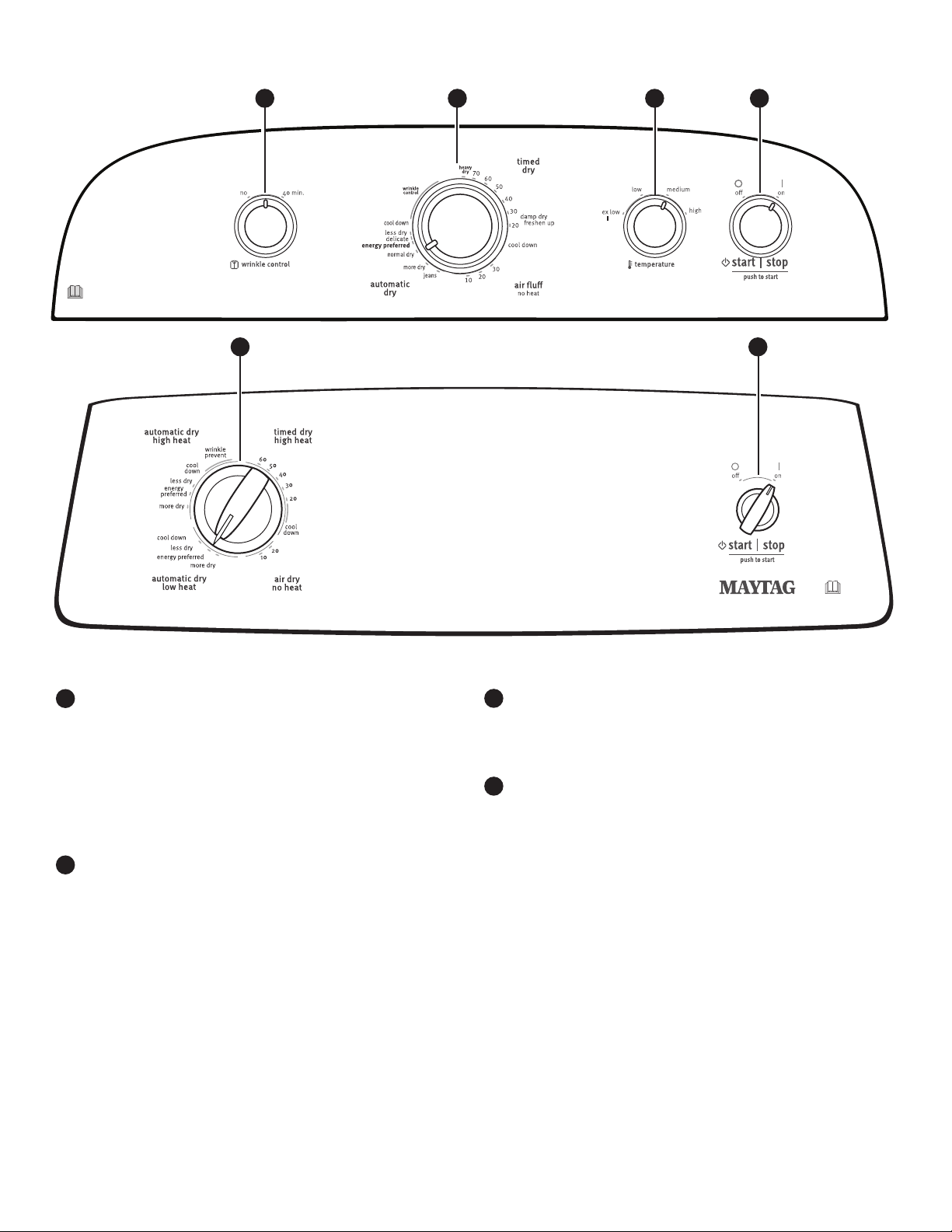
41
PANNELLO COMANDI E FUNZIONI
2 31 4
2 4
FUNZIONE WRINKLE CONTROL (su alcuni modelli)
Se non è possibile togliere un carico di indumenti
dall’asciugatrice appena si arresta, i capi possono risultare
spiegazzati. La funzione Wrinkle Control fa ruotare di tanto
in tanto il carico per smuoverlo, in modo da ridurre la
formazione di pieghe.
n
Rotazione periodica del bucato senza aria calda nei 40
minuti successivi alla ne del ciclo. Ruotare la manopola
Wrinkle Control su On o Off in qualsiasi momento prima
della ne del ciclo.
MANOPOLA CICLI ASCIUGATRICE
Usare la manopola dei cicli per selezionare il ciclo
dell’asciugatrice. Ruotare la manopola per selezionare
un ciclo in base al carico. Consultare la “Guida ai cicli”
per la descrizione dettagliata dei cicli.
TIMED DRY (Asciugatura a tempo)
L’asciugatrice entra in funzione per il tempo
approssimativo sul comando. Sui modelli dotati di
manopola per la selezione della temperatura, è possibile
scegliere un’impostazione in base ai tessuti da asciugare.
Il tempo e la temperatura di asciugatura variano a
seconda del modello di asciugatrice.
AUTOMATIC DRY (Asciugatura automatica)
Rileva l’umidità del carico o la temperatura dell’aria
e arresta il ciclo quando il carico raggiunge il livello
di asciugatura selezionato. Offre la miglior asciugatura
nel tempo più breve. Il tempo di asciugatura varia
in base al tipo di tessuto, alle dimensioni del carico
e all’impostazione del livello di asciugatura.
1
2
TEMPERATURE (Temperatura)
Selezionare una temperatura di asciugatura in base ai
tessuti del carico. In caso di dubbi su quale temperatura
scegliere per il carico, selezionare l’impostazione più bassa
invece che la più alta.
START/STOP (Avvio/Arresto)
La funzione Cycle Signal (Segnale ne ciclo) emette
un cicalino al termine del ciclo di asciugatura.
Rimuovere subito i capi al termine del ciclo
per ridurre lo spiegazzamento.
Ruotare la manopola START/STOP per selezionare
l’impostazione desiderata (On o Off). Premere
la manopola START/STOP per avviare l’asciugatrice.
NOTA: quando è selezionata la funzione Wrinkle Control
e il segnale ne ciclo è attivo, il cicalino suona ogni 5 minuti
no a quando i capi vengono estratti o no alla ne del ciclo
Wrinkle Control.
3
4
Le funzioni e le opzioni disponibili variano in base al modello.
L’aspetto esteriore può essere diverso.
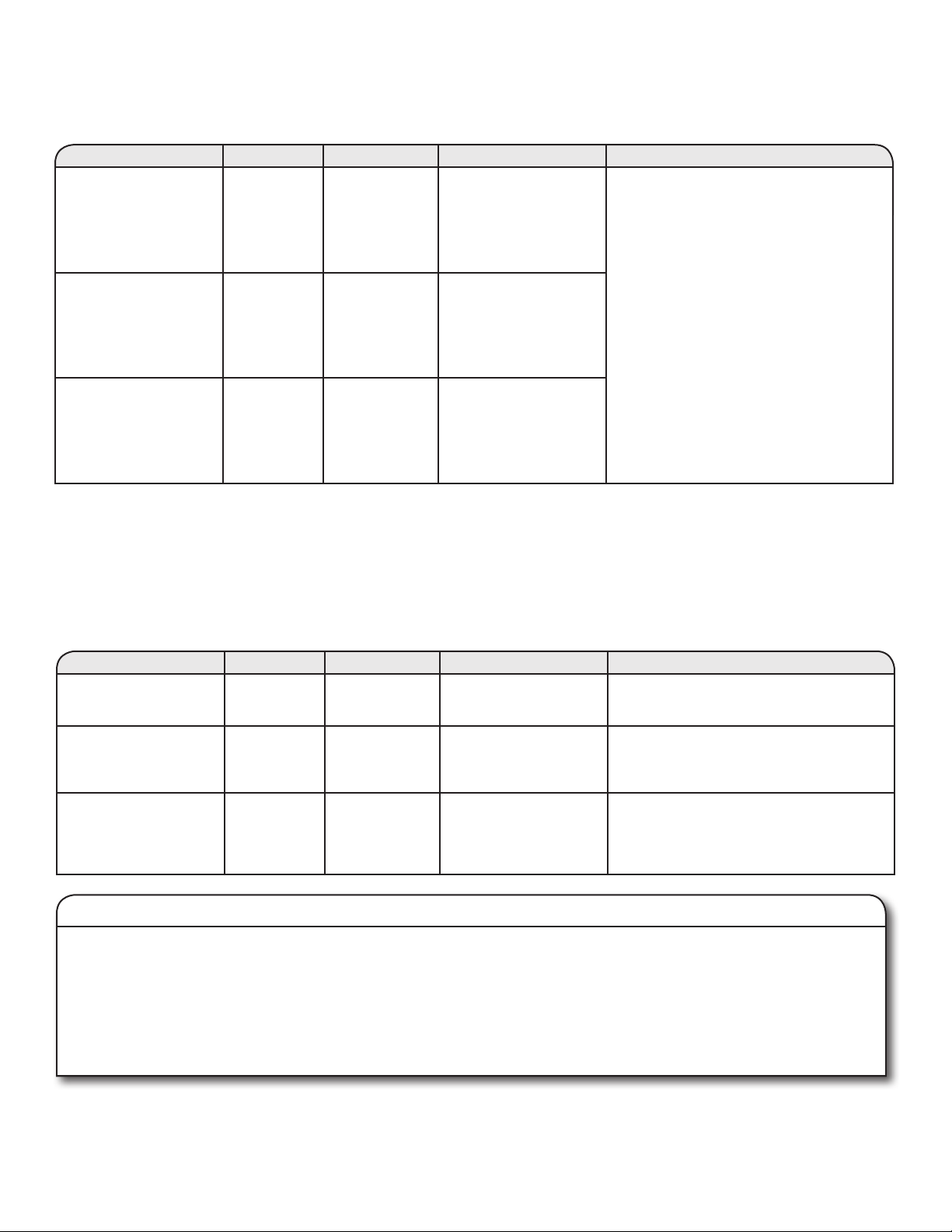
42
GUIDA AI CICLI CICLI AUTOMATIC DRY
GUIDA AI CICLI CICLI TIMED DRY
I cicli e le impostazioni variano in base al modello.
Scegliere il ciclo Energy Preferred (Eco) per ottimizzare il risparmio energetico.
NOTA: se i carichi non sembrano asciutti come previsto, la volta successiva che si asciuga un carico simile selezionare More Dry
(Più asciutto) o Very Dry (Molto asciutto). Se i carichi sembrano più asciutti del previsto, la volta successiva che si asciuga un carico
simile selezionare Less Dry (Meno asciutto).
Capi da asciugare Ciclo Temperatura Opzioni disponibili Dettagli ciclo
Jeans, abiti da lavoro
robusti, asciugamani
More Dry
(Più asciutto)
High (Alta) Wrinkle Control/
Wrinkle Prevent
Temperature
(Temperatura)
Cycle Signal
(Segnale fine ciclo)
I cicli di asciugatura automatica offrono la
miglior asciugatura nel tempo più breve. Il
tempo di asciugatura varia in base al tipo
di tessuto, alle dimensioni del carico e
all’impostazione del livello di asciugatura.
Selezionare una temperatura di asciugatura
in base ai tessuti del carico. In caso di dubbi
su quale temperatura scegliere per il carico,
selezionare l’impostazione più bassa invece
che la più alta.
Abiti da lavoro, tessuti
di peso medio, lenzuola
Energy
Preferred
(Eco)
Medium (Media) Wrinkle Control/
Wrinkle Prevent
Temperature
(Temperatura)
Cycle Signal
(Segnale fine ciclo)
Capi informali, camicie,
pantaloni, capi leggeri,
sintetici, delicati,
indumenti per lo sport
Delicate
(Delicato)
o Less
Dry (Meno
asciutto)
Low (Bassa) Wrinkle Control/
Wrinkle Prevent
Temperature
(Temperatura)
Cycle Signal
(Segnale fine ciclo)
I cicli e le impostazioni variano in base al modello.
TIMED DRY – L’asciugatrice entra in funzione per il tempo approssimativo sul comando.
Impostazione della temperatura di asciugatura
Se l’asciugatrice dispone di più impostazioni per
la temperatura:
L’impostazione di temperatura alta è indicata per asciugare
capi pesanti come asciugamani e abiti da lavoro.
L’impostazione di temperatura da bassa a media è indicata
per asciugare capi di peso medio o leggeri, come lenzuola,
camicette, vestiti, biancheria intima, tessuti non stiro e alcuni
tipi di maglie.
Usare l’impostazione aria fredda per asciugare gommapiuma,
gomma, plastica o tessuti sensibili al calore.
Asciugare appesi i tessuti accoppiati o laminati.
NOTA: in caso di dubbi sulle temperature di asciugatura
per i vari carichi, fare riferimento alle indicazioni sull’etichetta
di lavaggio.
Capi da asciugare Ciclo Temperatura Opzioni disponibili Dettagli ciclo
Capi grandi o pesanti
come asciugamani
spessi o accappatoi
Heavy Dry
(Asciugatura
forte)
Qualsiasi Temperature
(Temperatura)
Scegliere High (Alta) per asciugare carichi
grandi o pesanti.
Tutti i carichi Damp Dry
(Umido)/
Freshen Up
(Rinfresca)
Qualsiasi Temperature
(Temperatura)
Asciuga i capi lasciandoli leggermente
umidi, è indicato per capi che non richiedono
un ciclo di asciugatura completa.
Gomma, plastica, tessuti
sensibili al calore
Air Fluff
(Arieggiatura)/
Air Dry
(Asciugare
all'aria)
No Heat
(Aria fredda)
Temperature
(Temperatura)
Asciugatura ad aria fredda.
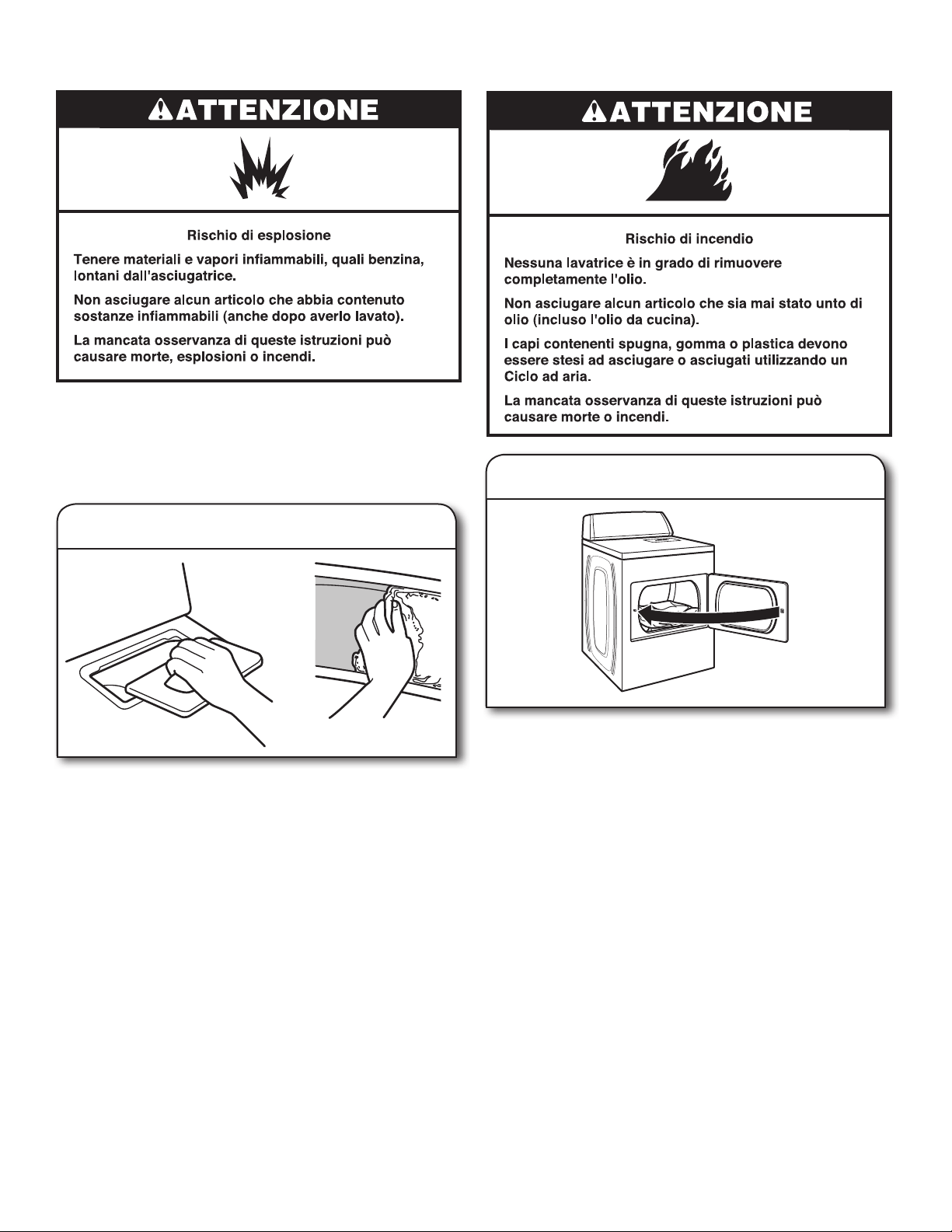
43
USO DELL’ASCIUGATRICE
1. Pulire il ltro pelucchi
Pulire il ltro pelucchi prima di ogni carico. Estrarre il ltro
pelucchi dal supporto. Passare le dita sul ltro per arrotolare
il velo di pelucchi e rimuoverlo. Non sciacquare o lavare il ltro
per rimuovere i pelucchi. Spingere il ltro pelucchi saldamente
in sede.
Per ulteriori informazioni sulla pulizia, vedere “Manutenzione
dell’asciugatrice”.
2. Caricare l’asciugatrice
Inserire il bucato nell’asciugatrice. Chiudere lo sportello.
NOTA: lo sportello del modello in dotazione potrebbe essere
diverso da quello mostrato in gura. Alcuni modelli hanno
sportelli che si aprono verticalmente.
Non riempire troppo l’asciugatrice, i capi devono poter girare
liberamente.
AVVERTENZA: per ridurre il rischio di incendio, scossa elettrica
o lesioni alle persone leggere la sezione Istruzioni importanti per
la sicurezza prima di mettere in funzione l’asciugatrice.
Prima di usare l’asciugatrice, passare un panno umido all’interno
del tamburo per rimuovere la polvere che può essersi accumulata
durante lo stoccaggio e la spedizione.
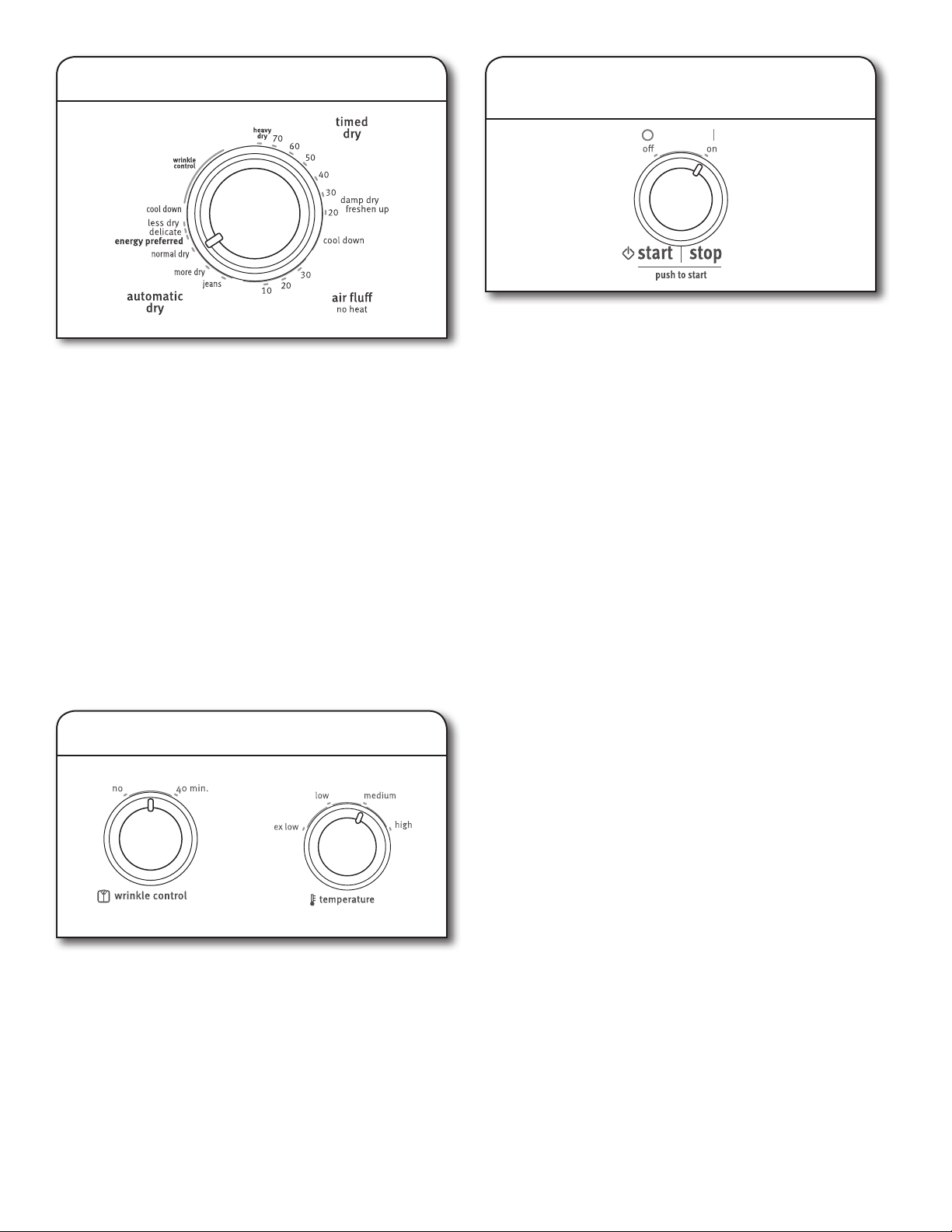
44
5. Premere START/STOP per iniziare
il ciclo
Tenere premuta la manopola START/STOP per avviare il ciclo.
Per interrompere il ciclo prima della ne, portare la manopola
di START/STOP su Off.
Rimuovere i capi subito dopo il completamento del ciclo per
ridurre lo spiegazzamento. Usare la funzione Wrinkle Control
per evitare la formazione di pieghe se non si ha la possibilità
di estrarre subito il bucato dall’asciugatrice al termine del ciclo.
4. Impostare il ciclo e le opzioni
Ruotare la manopola nella posizione desiderata per selezionare
le impostazioni e le opzioni per il ciclo.
NOTA: le opzioni e le impostazioni dei cicli variano in base
al modello.
Temperature (Temperatura)
Ruotare la manopola della temperatura per cambiare
l’impostazione della temperatura. Vedere “Impostazione della
temperatura di asciugatura”.
Funzione Wrinkle Control (su alcuni modelli)
Rotazione periodica del bucato senza aria calda nei 40 minuti
successivi alla ne del ciclo. Portare la manopola Wrinkle
Control su No per disattivare la funzione in qualsiasi momento
prima della ne del ciclo.
3. Selezionare il ciclo desiderato
Selezionare il ciclo desiderato in base al carico. Vedere
la “Guida ai cicli” per ulteriori informazioni sui singoli cicli.
Cicli AUTOMATIC DRY (Asciugatura automatica)
È possibile selezionare un diverso grado di asciugatura in
base al carico ruotando la manopola sul livello di asciugatura
desiderato.
Selezionare More Dry (Più asciutto), Energy Preferred (Eco)
o Less Dry (Meno asciutto) per regolare automaticamente il
livello di asciugatura a cui si spegnerà l’asciugatrice. Una
volta impostato, il livello di asciugatura non si può modicare,
a meno che non si arresti il ciclo.
I cicli di asciugatura automatica offrono la miglior asciugatura
nel tempo più breve. Il tempo di asciugatura varia in base al
tipo di tessuto, alle dimensioni del carico e all’impostazione
del livello di asciugatura.
NOTA: i cicli More Dry (Più asciutto) o Very Dry (Molto asciutto)
rimuovono più umidità dal carico. Scegliere Energy Preferred
(Eco) per ottimizzare il risparmio energetico. Il ciclo Less
Dry (Meno asciutto) lascia il carico leggermente umido ed è
l’ideale per i capi per cui si desidera completare l’asciugatura
appendendoli.
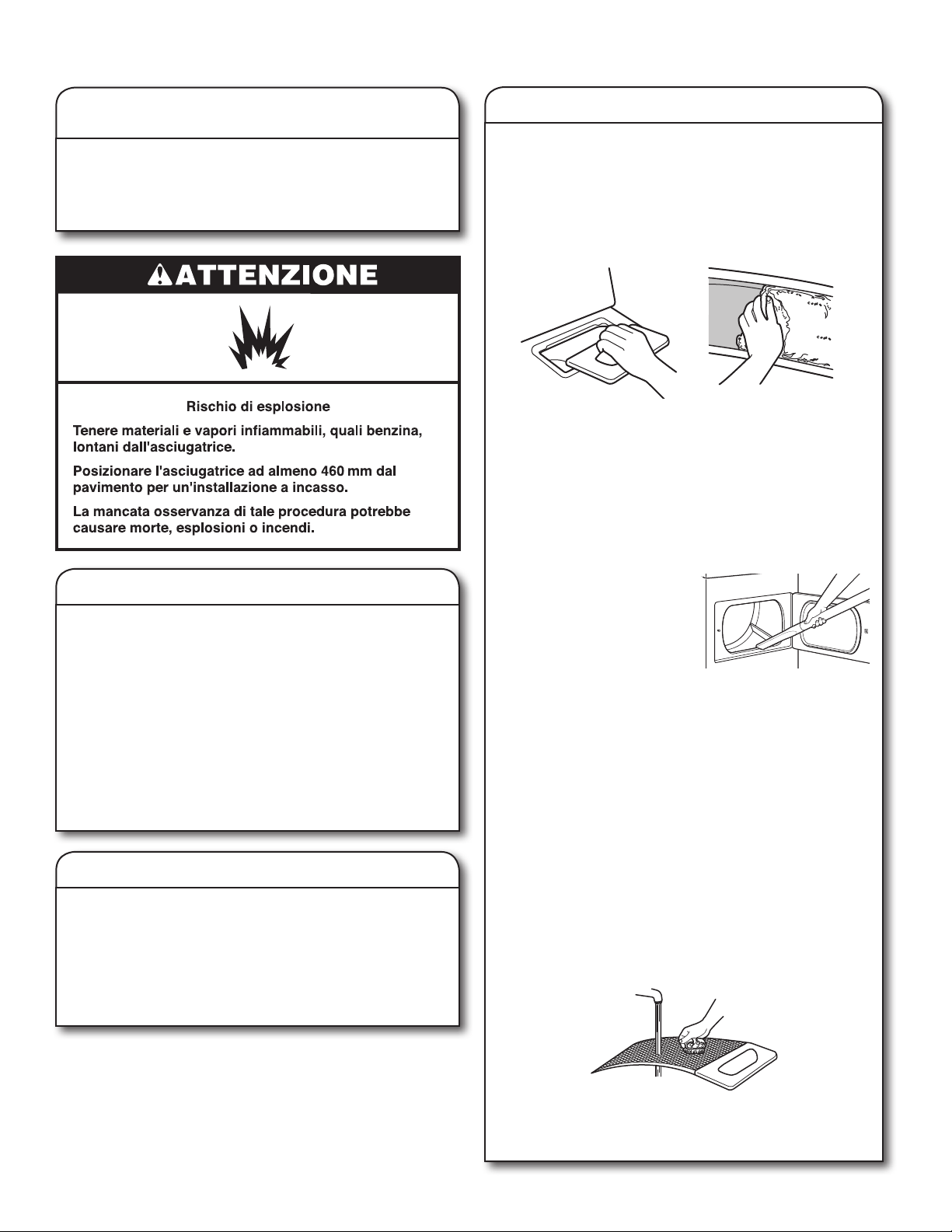
45
MANUTENZIONE DELL’ASCIUGATRICE
L’area in cui è riposta l’asciugatrice deve essere mantenuta
pulita e sgombra da oggetti che bloccano il usso dell’aria,
per consentire il corretto funzionamento dell’apparecchio.
Questo include anche non lasciare pile di bucato davanti
all’asciugatrice.
Pulizia del ltro pelucchi
Pulizia ad ogni carico
Il ltro pelucchi si trova nell’asciugatrice. Se il ltro è ostruito
dai pelucchi, il tempo di asciugatura può aumentare.
Per pulire il filtro:
1. Estrarre il ltro pelucchi dal supporto. Passare le dita
sul ltro per arrotolare il velo di pelucchi e rimuoverlo.
Non sciacquare o lavare il ltro per rimuovere i pelucchi.
Una volta bagnati, sarebbe difcile rimuoverli.
2. Spingere il ltro pelucchi saldamente in sede.
IMPORTANTE:
n
Non mettere in funzione l’asciugatrice se il ltro pelucchi
è ssato male, danneggiato, ostruito o mancante. In caso
contrario si può causare surriscaldamento e danneggiare
sia l’asciugatrice che i tessuti.
n
Se i pelucchi cadono nell’asciugatrice durante la
rimozione, controllare la cappa dello sato e rimuovere
i pelucchi. Vedere “Requisiti di aerazione” nelle istruzioni
di installazione.
n
Pulire l’area in cui è
alloggiato il ltro pelucchi,
secondo necessità. Usare un
aspirapolvere per rimuovere
delicatamente i pelucchi
accumulati all’esterno del
ltro pelucchi.
Pulizia secondo necessità
Residui di detersivo e ammorbidente per bucato possono
accumularsi sul ltro pelucchi. L’accumulo può causare
tempi di asciugatura più lunghi o l’arresto dell’asciugatrice
prima che il carico sia completamente asciutto. Se i pelucchi
ricadono dal ltro mentre il ltro è montato nell'asciugatrice,
signica che probabilmente è intasato.
Pulire il ltro pelucchi con uno spazzolino di nylon ogni sei
mesi o con maggiore frequenza se si intasa per l’accumulo
di residui di lavaggio.
Per lavarlo:
1. Passare le dita sul ltro per arrotolare il velo di pelucchi
e rimuoverlo.
2. Bagnare entrambi i lati del ltro pelucchi con acqua
calda.
3. Bagnare una spazzola in nylon con acqua calda e
detergente liquido. Stronare la spazzola sul ltro per
rimuovere gli accumuli di residui di lavaggio.
4. Sciacquare il ltro con acqua calda.
5. Asciugare accuratamente il ltro pelucchi con uno
stronaccio pulito. Rimontare il ltro nell’asciugatrice.
Pulizia dell’interno dell’asciugatrice
Per pulire il tamburo dell’asciugatrice:
1. Applicare un detergente domestico liquido non
inammabile all’area macchiata del tamburo e stronare
con un panno morbido no a rimuovere la macchia.
2. Pulire accuratamente il tamburo con un panno morbido.
3. Far girare un carico di panni o asciugamani puliti per
asciugare il tamburo.
NOTA: i capi che scoloriscono, come il denim dei jeans o
capi dai colori forti possono rilasciare colore nell’asciugatrice.
Questa macchie non causano danni all’asciugatrice e non
si trasferiscono sui futuri carichi da asciugare. Girare i capi
al rovescio prima di asciugarli per evitare che macchino il
tamburo.
Rimozione dei pelucchi accumulati
Dal vano interno dell’asciugatrice
I pelucchi devono essere rimossi ogni due anni o più
spesso a seconda dell’utilizzo dell’asciugatrice. La pulizia
deve essere effettuata da personale di assistenza qualicato.
Dal tubo di sato
I pelucchi devono essere rimossi ogni due anni o più spesso
a seconda dell’utilizzo dell’asciugatrice.
Pulizia dell’area in cui è collocata
l’asciugatrice
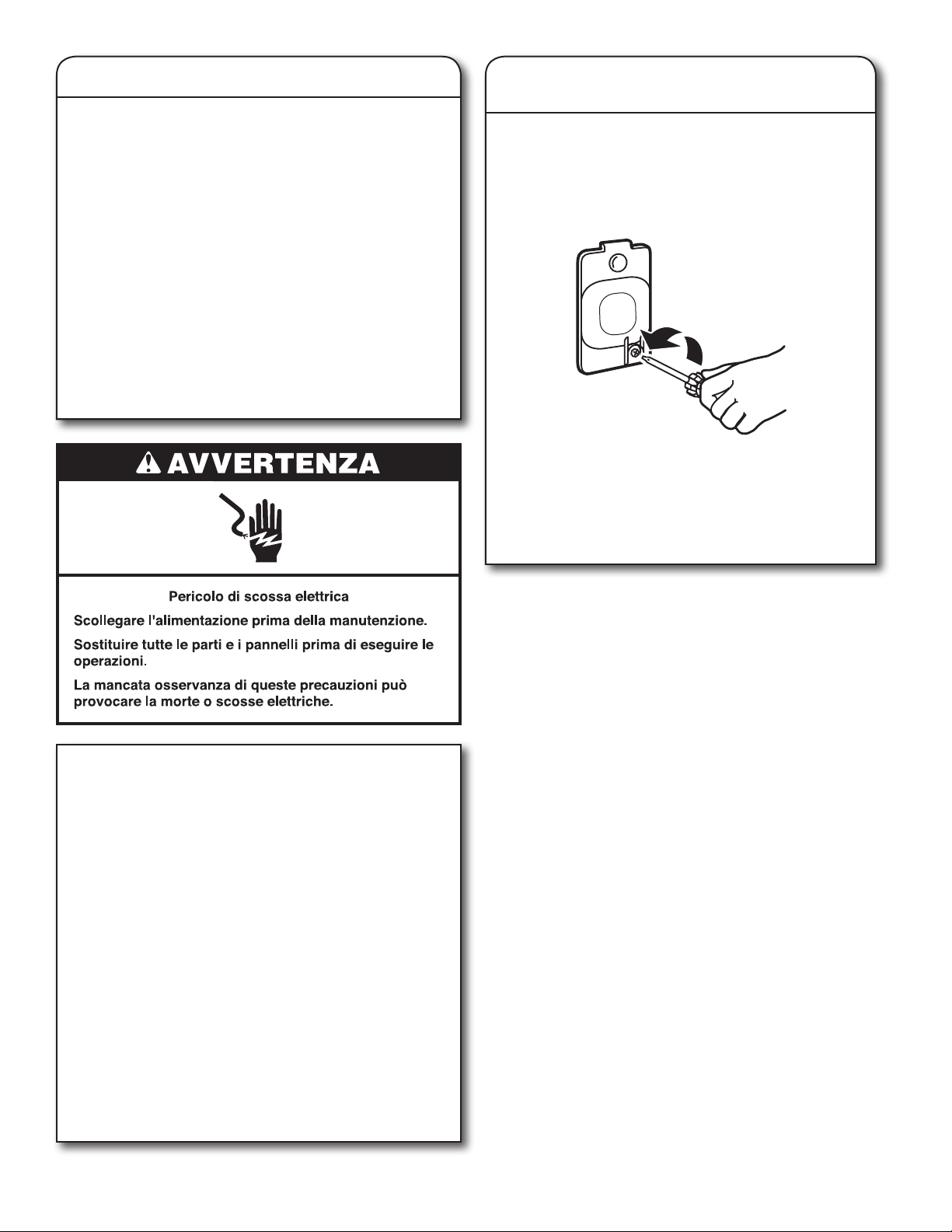
46
Inutilizzo, stoccaggio e trasporto
Inutilizzo o stoccaggio
Mettere in funzione l’asciugatrice solo quando si è in casa.
In caso di assenza prolungata per vacanze o altri motivi
o se non si utilizza l’asciugatrice per un lungo periodo
di tempo, eseguire queste operazioni:
1. Staccare la spina dell’asciugatrice o scollegare
l’alimentazione di rete.
2. (Solo per asciugatrici a gas): chiudere la valvola della
conduttura di alimentazione del gas.
3. Pulire il ltro pelucchi. Vedere “Pulizia del ltro pelucchi”.
Trasporto
Per le asciugatrici con cavo di alimentazione elettrica:
1. Scollegare il cavo di alimentazione elettrica.
2. Assicurarsi che i piedini di messa in piano siano ssati
nella base dell’asciugatrice.
3. Usare nastro adesivo per ssare lo sportello
dell’asciugatrice.
Per le asciugatrici a cablaggio diretto:
1. Disattivare l’alimentazione nella scatola fusibili o sul
quadro interruttori.
2. Scollegare i cablaggi.
3. Assicurarsi che i piedini di messa in piano siano ssati
nella base dell’asciugatrice.
4.
Usare nastro adesivo per ssare lo sportello dell’asciugatrice.
Per asciugatrici a gas:
1.
Togliere la spina o scollegare l’alimentazione all’asciugatrice.
2. Chiudere la valvola della conduttura di alimentazione
del gas.
3. Scollegare il tubo di alimentazione del gas e rimuovere
i raccordi del tubo sull'asciugatrice.
4. Tappare il tubo di alimentazione.
5. Assicurarsi che i piedini di messa in piano siano ssati
nella base dell’asciugatrice.
6.
Usare nastro adesivo per ssare lo sportello dell’asciugatrice.
Reinstallazione dell’asciugatrice
Seguire le istruzioni di installazione per posizionare, mettere
in piano ed eseguire i collegamenti dell’asciugatrice.
Sostituzione della lampadina
nel tamburo (su alcuni modelli)
1. Staccare la spina dell’asciugatrice o scollegare
l’alimentazione di rete.
2. Aprire lo sportello dell’asciugatrice. Individuare
il coperchio della lampadina sulla parete posteriore
dell’asciugatrice. Con un cacciavite a croce rimuovere
la vite sull’angolo in basso a destra del coperchio.
Rimuovere il coperchio.
3. Ruotare la lampadina in senso antiorario. Per la
sostituzione usare esclusivamente una lampadina per
elettrodomestici da 10 watt. Riposizionare il coperchio
e rimontare la vite.
4. Collegare a una presa con messa a terra o ricollegare
la corrente.
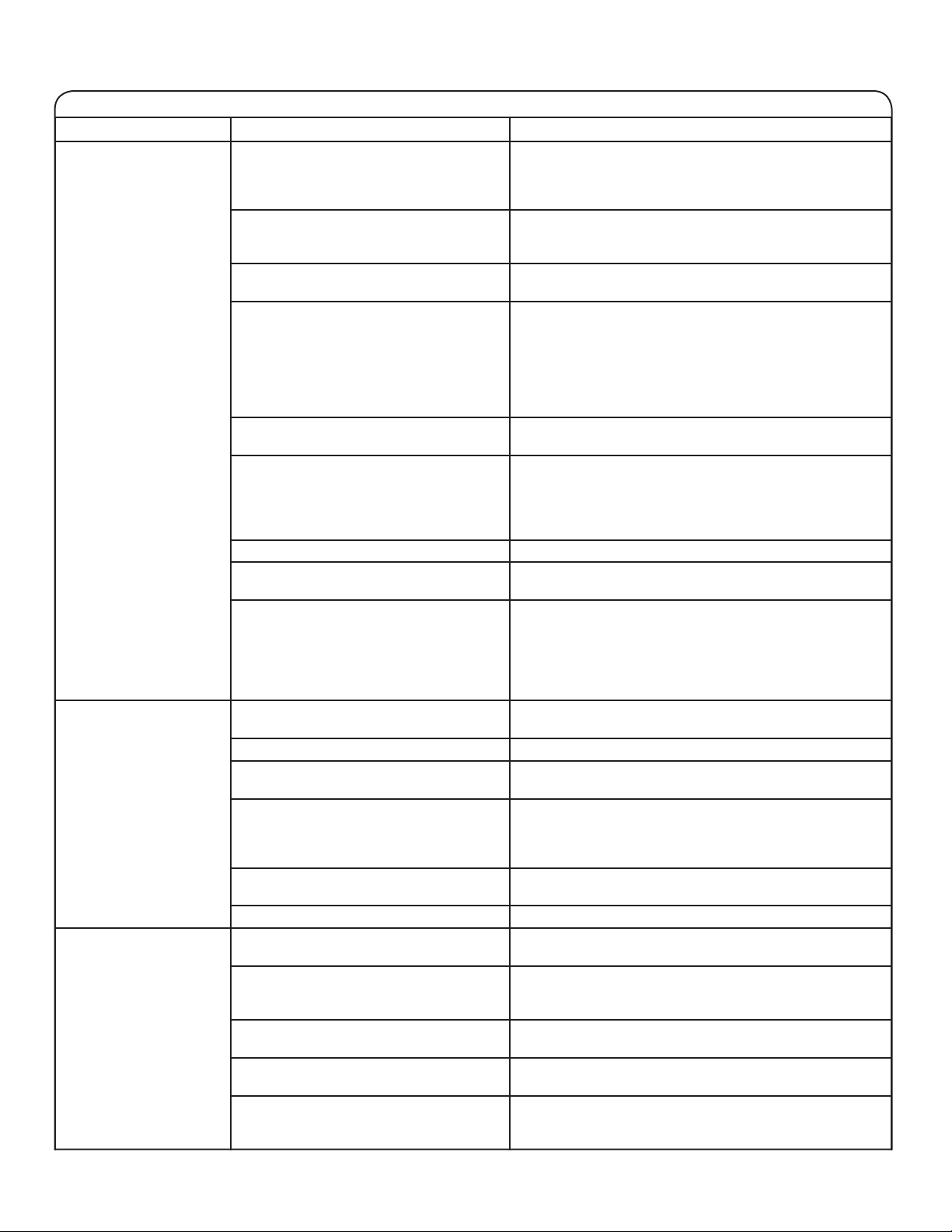
47
RISOLUZIONE DEI PROBLEMI
Provare le soluzioni indicate di seguito prima di contattare l’assistenza.
Problema Cause possibili Soluzione
I capi non sono
abbastanza asciutti,
i tempi di asciugatura
sono troppo lunghi
Il ltro pelucchi o l’alloggiamento del ltro
pelucchi sono ostruiti dai pelucchi.
Pulire il ltro pelucchi prima di ogni carico. Pulire l’area in
cui è alloggiato il ltro pelucchi, secondo necessità. Usare
un aspirapolvere per rimuovere delicatamente i pelucchi
accumulati all’esterno del ltro pelucchi.
È stato selezionato il ciclo Air Fluff
(Arieggiatura)/Air Dry (Asciugare all’aria)
o la temperatura No Heat (Aria fredda).
Selezionare il ciclo appropriato per il tipo di capi
da asciugare. Vedere “Guida ai cicli”.
Carico troppo voluminoso o pesante per
essere asciugato rapidamente.
Separare il carico per lasciarlo girare liberamente.
Tubo di scarico o cappa del tubo
di sato esterno intasato di pelucchi
che impediscono la circolazione dell’aria.
Far funzionare l’asciugatrice per 5–10 minuti. Tenere
una mano sotto la cappa del tubo di scarico esterna per
controllare se l’aria circola. Se non vi è circolazione dell’
aria, pulire il tubo di sato dai pelucchi o sostituirlo con
un tubo di metallo pesante o metallo essibile. Controllare
che il tubo di sato non sia schiacciato o piegato. Vedere
le istruzioni di installazione.
Fogli di ammorbidente per tessuti che
bloccano la griglia.
Usare solo un foglio di ammorbidente e usarlo una
sola volta.
Lunghezza errata del tubo di sato. Controllare che il tubo di sato non sia troppo lungo
e che non compia troppe curve. Se il tubo di sato è lungo
i tempi di asciugatura aumentano. Controllare che il tubo
di sato non sia schiacciato o piegato. Vedere le istruzioni
di installazione.
Dimensione errata del tubo di sato. Usare elementi di sato del diametro di 102 mm (4 poll.).
L’asciugatrice si trova in un locale con
temperatura al di sotto dei 7ºC (45ºF).
Per il corretto funzionamento dei cicli dell’asciugatrice
sono necessarie temperature superiori a 7ºC (45ºF).
L’asciugatrice si trova in uno sgabuzzino
senza aperture appropriate.
Le porte dello sgabuzzino devono avere aperture per
l’aerazione nella parte superiore e inferiore. Deve essere
lasciato uno spazio minimo di 25 mm (1 poll.) davanti
alla asciugatrice e, nella maggior parte delle installazioni,
uno spazio di 127 mm (5 poll.) sul lato posteriore. Vedere
le istruzioni di installazione.
L’asciugatrice non parte Lo sportello non è completamente chiuso. Assicurarsi che lo sportello dell’asciugatrice sia chiuso
completamente.
La manopola Start/Stop non è su On. Portare la manopola START/STOP su On.
La manopola Start/Stop non è stata
premuta a fondo o abbastanza a lungo.
Tenere premuta la manopola START/STOP no a quando si
sente il rumore del tamburo dell’asciugatrice che si muove.
È bruciato il fusibile o è scattato
l’interruttore di circuito.
L’asciugatrice elettrica è dotata di due fusibili o interruttori
di circuito. Il tamburo gira ma non arriva aria calda. Sostituire
entrambi i fusibili o resettare l’interruttore di circuito. Se il
problema persiste, rivolgersi a un elettricista.
Alimentazione elettrica errata. Le asciugatrici elettriche funzionano a un’alimentazione
di 240 V. Vericare rivolgendosi a un elettricista qualicato.
Tipo di fusibile errato. Usare un fusibile ritardato.
Rumori anomali L’asciugatrice è rimasta inutilizzata
a lungo.
Se l’asciugatrice è rimasta inutilizzata a lungo, si potrebbe
sentire un rumore battente per i primi minuti di funzionamento.
Potrebbe essere rimasta una moneta, un
bottone o un fermaglio tra il tamburo e la
parte anteriore o posteriore dell’asciugatrice.
Controllare se vi sono piccoli oggetti sui bordi anteriore
e posteriore del tamburo. Vuotare tutte le tasche prima
del bucato.
È un asciugatrice a gas. Il ticchettare della valvola del gas è un normale rumore
di funzionamento.
Non sono stati installati i quattro piedini
oppure l’asciugatrice non è messa in piano.
Se non è installata correttamente, l’asciugatrice può
vibrare. Vedere le istruzioni di installazione.
I capi sono annodati o appallottolati. Se il carico è appallottolato, rimbalza facendo vibrare
l’asciugatrice. Separare i capi del carico e riavviare
l’asciugatrice.
48
RISOLUZIONE DEI PROBLEMI
Provare le soluzioni indicate di seguito prima di contattare l’assistenza.
Problema Cause possibili Soluzione
Aria fredda È bruciato il fusibile o è scattato
l’interruttore di circuito.
Il tamburo gira ma non arriva aria calda. L’asciugatrice
elettrica è dotata di due fusibili o interruttori di circuito.
Sostituire entrambi i fusibili o resettare l’interruttore di
circuito. Se il problema persiste, rivolgersi a un elettricista.
La valvola della conduttura di alimentazione
non è aperta.
Per le asciugatrici a gas, controllare che sia aperta
la valvola della conduttura di alimentazione del gas.
Alimentazione elettrica errata. Le asciugatrici elettriche funzionano a un’alimentazione
di 240 V. Vericare rivolgendosi a un elettricista qualicato.
Tempo di ciclo troppo
breve
Il ciclo automatico è nito presto. È possibile che il carico non tocchi le strisce dei sensori.
Mettere l’asciugatrice in piano.
Usare l’asciugatura a tempo per i carichi molto piccoli.
Cambiare l’impostazione del livello di asciugatura sui cicli
di asciugatura automatica.
Se si aumenta o si diminuisce l’impostazione del livello
di asciugatura, il tempo del ciclo di asciugatura varia.
Pelucchi nel carico Il ltro pelucchi è ostruito. Il ltro pelucchi deve essere pulito prima di ogni carico.
Macchie sul carico o sul
tamburo
Utilizzo errato dell’ammorbidente per
tessuti nell’asciugatrice.
Aggiungere i fogli di ammorbidente per tessuto
nell’asciugatrice all’inizio del ciclo. Se si aggiungono i fogli
di ammorbidente per tessuto a un carico parzialmente
asciutto, i capi si possono macchiare.
Le macchie sul tamburo sono causate dalle tinture degli
indumenti (di solito dei jeans). Non macchiano gli altri
indumenti.
Il carico è spiegazzato Il carico non è stato rimosso
dall’asciugatrice alla ne del ciclo.
Selezionare la funzione Wrinkle Control per far ruotare
il carico senza calore ed evitare lo spiegazzamento.
Asciugatrice troppo piena. Asciugare carichi più piccoli che possono girare
liberamente per ridurre la formazione di pieghe.
Odori Sono stati eseguiti di recente lavori di
tinteggiatura, coloritura o verniciatura
nell’area in cui si trova l’asciugatrice.
In tal caso areare il locale. Quando gli odori o i fumi sono
spariti dall’area, lavare di nuovo e asciugare il bucato.
L’asciugatrice è stata usata per la prima
volta.
La resistenza elettrica nuova emana un odore caratteristico,
che sparisce dopo il primo ciclo di asciugatura.
Il carico è troppo caldo Capi rimossi dall’asciugatrice prima della
ne del ciclo.
Attendere il completamento del ciclo di raffreddamento
prima di rimuovere la biancheria di asciugatura. Tutti i cicli
vengono raffreddati lentamente afnché i capi risultino
meno spiegazzati e sia più facile maneggiarli. I capi rimossi
prima del raffreddamento sono molto caldi.
È stato utilizzato un ciclo ad alta
temperatura o un comando di temperatura
separato è stato impostato su un valore
Hight (Alto).
Selezionare una temperatura più bassa e usare un ciclo di
asciugatura automatico. Questi cicli rilevano la temperatura
o il livello di umidità del carico e si arrestano quando il carico
ha raggiunto il livello di asciugatura selezionato. In questo
modo si riduce l’asciugatura eccessiva.
Rappresentante EU: Whirlpool EMEA S.p.A., Via Carlo Pisacane n. 1, 20016 Pero (MI), Italy
Produttore: Whirlpool Corporation, 2000 N M 63, Benton Harbor, MI 49022 USA
Per ulteriori informazioni, visitare il sito www.whirlpool.com/accessories oppure contattare il rivenditore presso cui è stato acquista-
to l’apparecchio o un servizio di assistenza autorizzato.
49
SICHERHEITSHINWEISE
- Die Installation des Wäschetrockners muss von einem qualifizierten Installateur
ausgeführt werden.
- Installieren Sie den Wäschetrockner gemäß den Anweisungen des Herstellers und den
lokalen Vorschriften.
- Installieren Sie für einen Wäschetrockner keine Abluftleitungen aus flexiblem Kunststoff
oder flexibler Metallfolie. Wird ein flexibler Metallkanal installiert, muss es sich um einen
speziellen Kanaltyp handeln, der vom Hersteller des Geräts als für die Verwendung mit
Wäschetrocknern geeignet ausgewiesen wird. Flexible Abluftkanäle sind bekannt dafür,
dass sie zusammenfallen, leicht zerdrückt werden und sich Flusen darin ansammeln.
Dadurch kann die Abluft des Wäschetrockners nicht ungehindert abgeführt werden, so
dass sich die Brandgefahr erhöht.
- Um die Gefahr schwerer oder tödlicher Verletzungen zu verringern, befolgen Sie alle
Installationsanweisungen.
- Bewahren Sie diese Anleitung auf.
ACHTUNG -
Brandgefahr
ACHTUNG -
BRANDGEFAHR/BRENNBARE MATERIALIEN
Dieses zusätzliche Warnsymbol weist auf Brandgefahr hin.
50
SICHERHEITSHINWEISE
1. VERWENDEN UND LAGERN SIE KEIN BENZIN ODER ANDERE ENTZÜNDLICHEN MATERIALIEN IM
GERÄT BZW. IN DESSEN NÄHE.
2. VERWENDEN SIE WÄHREND DES BETRIEBS KEINE SPRAYDOSEN IN DER NÄHE DES GERÄTS.
3. MODIFIZIEREN SIE DIESES GERÄT NICHT.
Brandgefahr
Bitte halten Sie die Warnhinweise unbedingt ein. Andernfalls besteht die Gefahr
schwerer oder tödlicher Verletzungen oder von Sachschäden.
Installieren Sie kein Zusatzgebläse für den Abluftkanal.
Installieren Sie Wäschetrockner immer gemäß den Installationsanweisungen des
Trocknerherstellers.
ACHTUNG
n
Wenn es sich nicht vermeiden lässt, mit Substanzen
wie Speiseöl, Azeton, Alkohol, Benzin, Kerosin,
Fleckentfernern, Terpentin, Wachsen, Wachsentfernern
oder Haarpegeprodukten verschmutzte Wäschestücke
im Trockner zu trocknen, waschen Sie sie zuvor mit einer
erhöhten Menge an Waschmittel in heißem Wasser aus.
Solche Wäschestücke geben Dämpfe ab, die sich entzünden
oder explodieren können. Durch das Auswaschen lässt sich
die Gefahr verringern, aber nicht ausschließen.
n
Das Gerät darf von Personen (einschließlich Kindern unter
8 Jahren) mit herabgesetzten physischen, sensorischen
oder geistigen Fähigkeiten und Mangel an Erfahrung und
Kenntnissen nur unter Aufsicht oder nach ausreichender
Einweisung durch für ihre Sicherheit verantwortliche
Personen benutzt werden.
n
Kinder dürfen dieses Gerät nur unter Aufsicht reinigen
oder pegen.
n
Kinder sollten sorgsam beaufsichtigt werden, so dass
sie nicht mit dem Gerät spielen können.
n
Kinder unter 3 Jahren dürfen sich nur unter ständiger
Aufsicht in der Nähe des Geräts aufhalten.
n
Der Trockner darf nicht verwendet werden, wenn
Industriechemikalien für die Reinigung verwendet wurden.
n
Nehmen Sie alle Gegenstände wie Feuerzeuge und
Streichhölzer aus den Taschen, bevor Sie Wäschestücke
in den Trockner legen.
WICHTIGE SICHERHEITSHINWEISE
ACHTUNG:
Um beim Betrieb des Trockners die Brand-, Stromschlag- oder Verletzungsgefahr zu verringern, befolgen
Sie die grundlegenden Sicherheitshinweise wie z. B.:
n
Lesen Sie vor Inbetriebnahme des Trockners alle
Anweisungen durch.
n
Halten Sie einen Mindestabstand von 100 mm zwischen
der Trocknerrückseite und der Wand ein.
n
Der Betrieb dieses Geräts kann den Betrieb anderer Geräte
mit Brennelementen beeinträchtigen, die Luft aus demselben
Raum beziehen. Beim Betrieb des Wäschetrockners
muss eine ausreichende Belüftung gegeben sein, um
verbrauchte Luft auszutauschen und den Rückuss von
Verbrennungsgasen anderer Geräte oder offener Feuer
zu verhindern. Wenden Sie sich im Zweifelsfall an die
Gerätehersteller.
n
Blockieren Sie die Luftzufuhr zum Trockner nicht
(siehe die Installationsanleitung für den Mindestabstand).
n
Geben Sie keine Wäschestücke, auf die Speiseöl gelangt
ist, in den Trockner. Wäsche mit Ölrückständen kann sich
spontan entzünden, vor allem, wenn sie wie in einem
Wäschetrockner großer Hitze ausgesetzt wird. Durch die
Hitze kommt es beim Öl zu einer Oxidationsreaktion. Die
Oxidation erzeugt wiederum große Wärme. Wenn diese
nicht entweichen kann, besteht Feuergefahr. Wenn Sie mit
Öl verschmutzte Wäsche zusammenlegen, stapeln oder in
geschlossenen Schränken aufbewahren, kann die Wärme
nicht mehr entweichen und es besteht Feuergefahr.
4
IMPORTANT SAFETY INSTRUCTIONS
precautions, including the following:
WARNING:
Read all instructions before using the dryer.
Keep a minimum clearance of 100 mm (4 in.) between the
rear of the dryer and any wall.
The operation of this appliance may affect the operation of
other types of appliances which take their air supply for safe
combustion from the same room. There has to be adequate
ventilation to replace exhausted air and thus avoid the
back-ow of gases into the room from appliances burning
other fuels, including open res, when operating the tumble
dryer. If in doubt, consult the appliance manufacturers.
Do not obstruct the air supply to the dryer (see Installation
Instructions for minimum clearances).
Do not place items exposed to cooking oils in your dryer.
Oil-affected items can ignite spontaneously, especially when
exposed to heat sources such as in a tumble dryer. The
items become warm causing an oxidation reaction in the oil.
Oxidation creates heat. If the heat cannot escape, the items
can become hot enough to catch re. Piling, stacking or
storing oil-affected items can prevent heat from escaping
and so create a re hazard.
If it is unavoidable to dry in the dryer items that have been
soiled with substances such as cooking oil, acetone, alcohol,
petrol, kerosene, spot removers, turpentine, waxes and wax
removers, or that have been contaminated by hair care
products, should be washed in hot water with an extra
amount of detergent before being dried in the dryer. These
items may give off vapours that could ignite or explode. Such
washing will reduce, but not eliminate, the hazard.
This appliance is not intended for use by persons (including
children) with reduced physical, sensory or mental
capabilities, or lack of experience and knowledge, unless
they have been given supervision or instructions concerning
use of the appliance by persons responsible for their safety.
Children should be supervised to ensure that they do not
play with the appliance.
The dryer should not be used if industrial chemicals have
been used for cleaning.
Before the dryer is removed from service or discarded,
remove the doors to the drying compartment.
Do not reach into the dryer if the drum is moving. A door
switch is tted for your safety.
Do not install or store the dryer where it will be exposed
to the weather.
Do not tamper with controls.
Do not continue to use this appliance if it appears to be
faulty.
Do not repair or replace any part of the dryer or attempt
any maintenance unless specically recommended in this
Use and Care Guide. Repairs and servicing should only
be carried out by competent service personnel.
Do not use fabric softeners or products to eliminate static
unless recommended by the manufacturer of the fabric
softener or product. Follow their instructions.
Clean dryer lint screen before or after each load. Do not
operate dryer without lint screen in place.
Keep area around the exhaust and inlet openings and
adjacent surrounding areas free from the accumulation of
lint, dust, and dirt.
The interior of the dryer and exhaust vent should be
cleaned periodically by qualied service personnel.
See Installation Instructions for earthing instructions.
Do not dry unwashed items in this dryer.
Items such as foam rubber (latex foam), shower caps,
waterproof textiles, rubber backed articles and clothes or
pillows tted with foam rubber pads must only be dried
on a clothesline.
SAVE THESE INSTRUCTIONS
WARNING: Never stop a tumble dryer cycle before the
end of the drying cycle unless all items are quickly removed
and spread out so that the heat is dissipated.
To reduce the risk of re, electric shock, or injury to persons when using the dryer, follow basic
The nal part of a tumble dryer cycle occurs without heat
(cool down cycle) to ensure that the items are left at a
temperature that ensures the items will not be damaged.
If the supply cord is damaged, it must be replaced by the
manufacturer or its service agent or a similarly qualied
person in order to avoid a hazard.
DIESE ANLEITUNG AUFBEWAHREN!
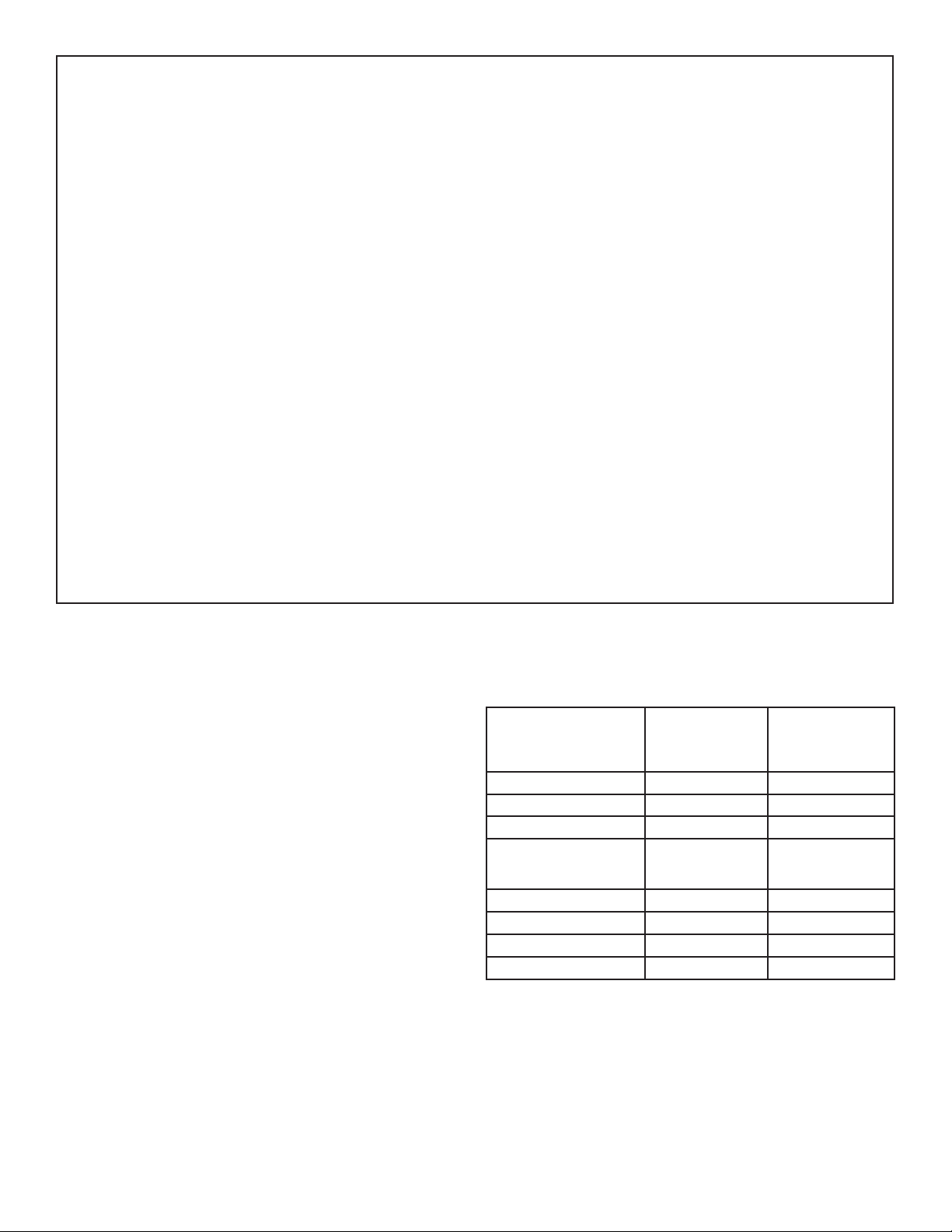
51
Diese Modelle werden in verschiedenen Regionen mit
unterschiedlichen Anforderungen an die Kapazitätsbemessung
verkauft. Im Folgenden sind gültige Bemessungsarten, die auf
diesem Produkt angegeben sind, aufgeführt.
Fassungsvermögen an Trockenwäsche: Ein Maß für
das Gewicht einer Beladung, das die Volumengröße der
Trocknertrommel wiedergibt.
IEC-Kapazität: Die Kapazitätsangabe für die maximale Menge an
Trockenwäsche und Textilien, die laut Herstellerangabe mit einem
bestimmten Programm getrocknet werden kann.
WICHTIG: Dieses Gerät ist für die Verwendung in einem
Haushalt und ähnlichen Anwendungen bestimmt wie:
n Küchen für Mitarbeiter in Läden, Büros und anderen
Arbeitsumgebungen;
n Landwirtschaftlichen Betrieben;
n durch Kunden in Hotels, Motels und anderen
Wohnmöglichheiten;
n Pensionen oder Ferienwohnungen;
n Bereichen für eine gemeinsame Nutzung in Wohnblöcken
oder Etagen oder in Waschsalons.
TECHNISCHE DATEN
Modelle
3LMEDC315FW
3LMEDC415FW
4KMEDC215FW
4KMEDC315FW
4KMEDC415FW
4KMEDC425FW
Nennspannung 220–240 V 2N~ 220–240 V 2N~
Nennfrequenz 50 Hz 60 Hz
Nennstromstärke 20 Amps 20 Amps
Fassungsvermögen
an Trockenwäsche
(max.)
15 kg (33 lb) 15 kg (33 lb)
IEC-Kapazität 7 kg (15 lb) 7 kg (15 lb)
Höhe 1067 mm (42") 1067 mm (42")
Breite 737 mm (29") 737 mm (29")
Tiefe 706 mm (27
13
⁄16") 706 mm (27
13
⁄16")
n
Das Innere des Trockners und der Abluftkanal müssen
regelmäßig von einem qualizierten Servicetechniker
gereinigt werden.
n
Anweisungen zur Erdung nden Sie
in der Installationsanleitung.
n
Trocknen Sie in diesem Trockner keine ungewaschene
Wäsche.
n
Beim letzten Schritt eines Trockengangs im Wäschetrockner
wird keine Wärme mehr zugeführt (Abkühlphase). Damit wird
sichergestellt, dass die Wäsche nicht durch langes Liegen bei
hoher Temperatur geschädigt wird.
n
Teile wie Schaumstoffgummi (Latex-Schaumstoff),
Duschhauben, wasserfeste Textilien, Wäschestücke
mit Gummi und Kleidungsstücke oder Kissen mit
Schaumstoffpolstern müssen auf einer Wäscheleine
getrocknet werden.
n
Wenn das Netzkabel beschädigt ist, muss es aus
Sicherheitsgründen vom Hersteller, von Ihrem Händler, einem
autorisierten Kundendienst oder einer qualizierten Fachkraft
ersetzt werden.
ACHTUNG:
Brechen Sie einen Trockengang auf keinen
Fall vor dem Ende ab, es sei denn, alle Wäscheteile werden
rasch herausgenommen und ausgebreitet, so dass die Wärme
entweichen kann.
DIESE ANLEITUNG AUFBEWAHREN!
n
Bevor Sie den Trockner außer Betrieb nehmen oder
entsorgen, entfernen Sie die Trocknertür.
n
Greifen Sie nicht in den Trockner, solange sich die Trommel
bewegt. Zu Ihrer Sicherheit ist das Gerät mit einem
Türschalter ausgestattet.
n
Stellen Sie den Trockner nicht an einem Ort auf, an dem er
der Witterung ausgesetzt ist, und lagern Sie ihn auch nicht an
einem solchen Ort.
n
Nehmen Sie keine Änderungen an den Bedienelementen vor.
n
Verwenden Sie das Gerät bei einem Defekt nicht weiter.
n
Sofern dies in der vorliegenden Anleitung nicht ausdrücklich
empfohlen wird, nehmen Sie keinerlei Reparatur- oder Ein-/
Ausbauarbeiten am Trockner oder einem der Trocknerteile
vor. Reparaturen und Wartungsmaßnahmen dürfen nur von
einem qualizierten Servicetechniker ausgeführt werden.
n
Verwenden Sie Weichspüler oder Antistatikprodukte nur,
falls vom Hersteller solcher Produkte empfohlen. Befolgen
Sie die Herstelleranweisungen.
n
Reinigen Sie das Flusensieb vor oder nach jedem
Trockengang. Starten Sie den Trockner ausschließlich
mit Flusensieb.
n
Halten Sie den Bereich um die Zu- und Abluftöffnungen
und die benachbarten Bereiche frei von Flusen, Staub
und Schmutz.
HINWEIS: Der Geräuschpegel des Trockners liegt unter 70 dB(A).
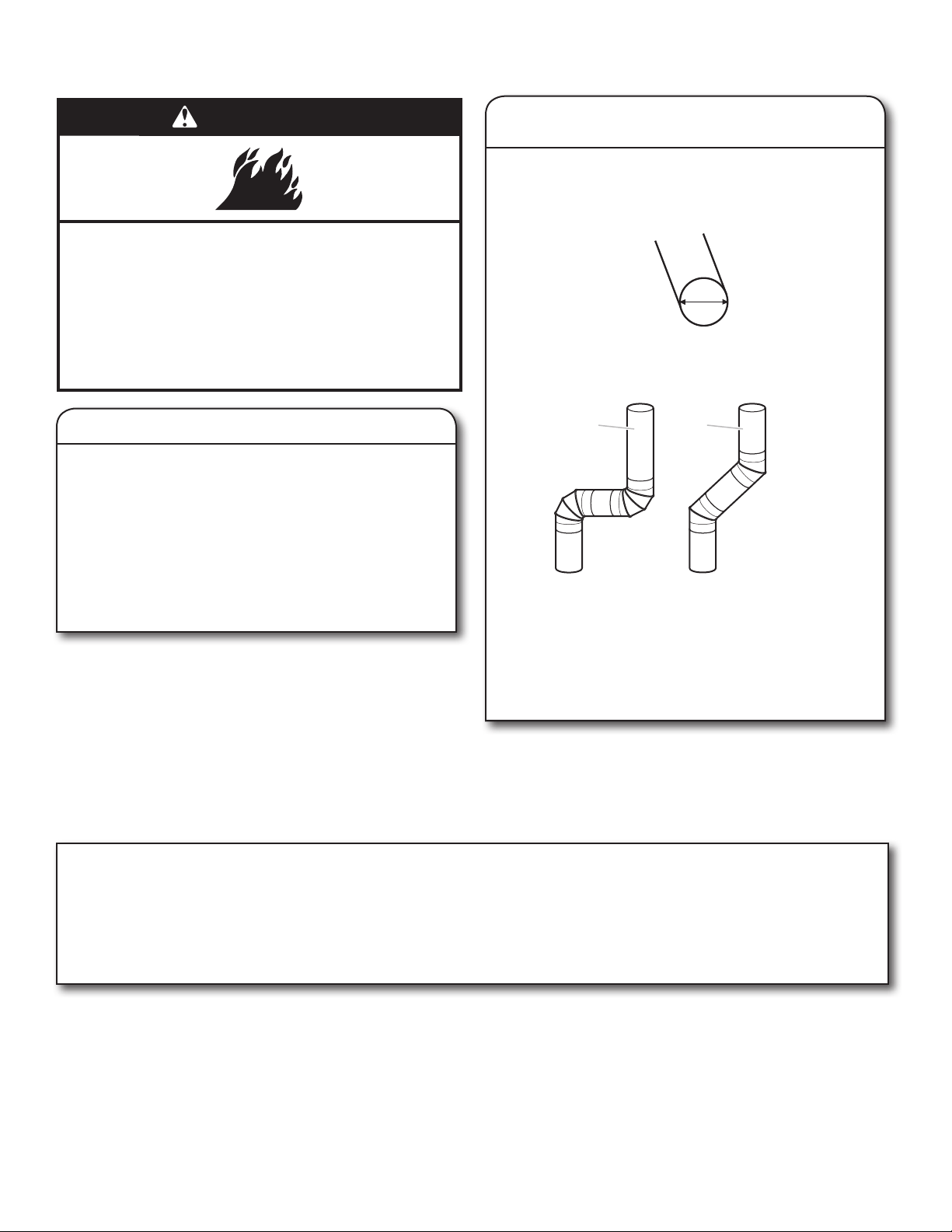
52
ÜBERPRÜFEN DES ABLUFTSYSTEMS AUF GUTE LUFTZIRKULATION
Ausreichender Luftstrom
Für efzientes Wäschetrocknen benötigen Trockner nicht
nur Wärme, sondern auch einen ausreichend starken
Luftstrom. Durch einwandfreie Belüftung können Sie die
Trockendauer verringern und Energie sparen. Siehe die
Installationsanleitung.
Das mit dem Trockner verbundene Abluftsystem spielt
dabei eine wichtige Rolle.
Wenn Sie aufgrund unsachgemäßer Belüftung den
Kundendienst in Anspruch nehmen müssen, fallen die
Kosten nicht unter die Garantie und sind unabhängig
vom Installateur des Trockners vom Kunden zu tragen.
Brandgefahr
Verwenden Sie einen Abluftkanal aus stabilem Metall.
Verwenden Sie keinen Abluftkanal aus Kunststoff.
Verwenden Sie keinen Abluftkanal aus Metallfolie.
Befolgen Sie unbedingt diese Anweisungen.
Andernfalls besteht die Gefahr tödlicher Verletzungen
oder Brandgefahr.
ACHTUNG
So stellen Sie einen ausreichenden
Luftstrom sicher:
Gut Besser
AUTOMATISCHE TROCKENPROGRAMME FÜR TEXTILSCHONENDES
TROCKNEN UND ENERGIESPAREN
Mit den Automatic Dry-Programmen können Sie am meisten Energie sparen und die Textilien besonders schonend trocknen.
Bei Automatic Dry-Programmen werden Lufttemperatur und Feuchtigkeitsgrad der Wäsche erkannt. Die Ermittlung dieser
Werte erfolgt während des Trockenprogramms immer wieder. Der Trockner schaltet sich aus, sobald die Wäsche die gewünschte
Trockenheit erreicht hat. Mit Energy Preferred werden optimale Energieeinsparungen erzielt.
Mit Timed Dry läuft der Trockner die eingestellte Zeit lang. Aufgrund einer zu starken Trocknung der Wäsche kann es
manchmal zum Einlaufen von Kleidungsstücken, zu Knitterbildung und statischer Auadung kommen. Verwenden Sie
Timed Dry für feuchte Wäsche, die noch etwas länger getrocknet werden soll, oder zum Vortrocknen von Wäsche, die
Sie auf dem Wäscheständer trocknen wollen.
n
Reinigen Sie das Flusensieb vor jedem Trockengang.
n
Ersetzen Sie einen Abluftkanal aus Kunststoff- oder
Folienmaterial durch einen Abluftkanal aus stabilem,
starren Material mit 102 mm Durchmesser.
n
4"
102 mm
Verwenden Sie einen möglichst kurzen Abluftkanal.
n
Das Abluftsystem darf nicht mehr als vier Biegungen
mit maximal 90° aufweisen. Jede Biegung verringert
den Luftstrom.
n
Entfernen Sie Flusen und Verschmutzungen von der
Abluftabdeckung.
n
Entfernen Sie mindestens alle zwei Jahre die Flusen
entlang des gesamten Abluftsystems. Prüfen Sie
nach der Reinigung das Gerät. Gehen Sie dazu wie
in der Installationsanleitung zum Trockner erläutert vor.
n
Lassen Sie den Platz vor dem Trockner frei.
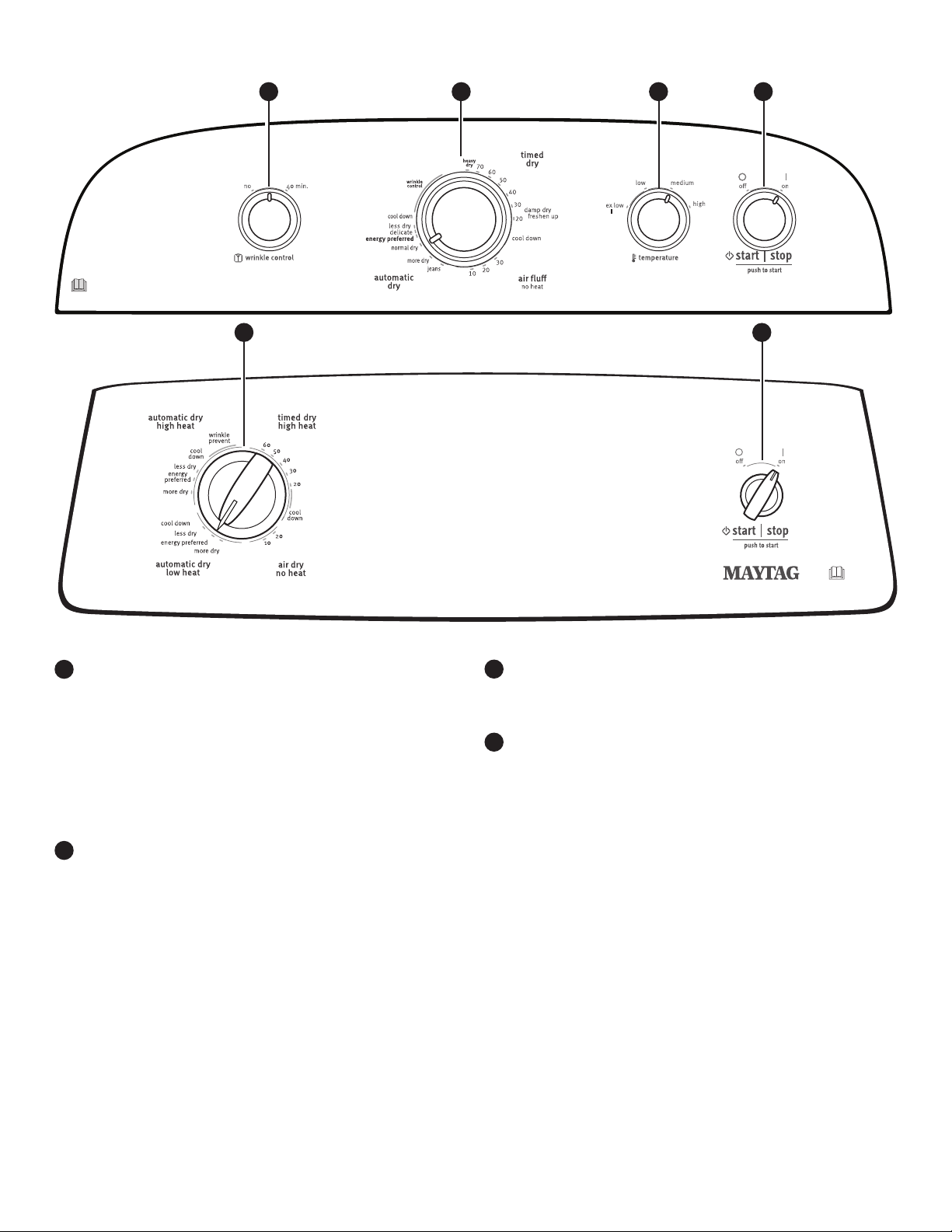
53
BEDIENFELD UND FUNKTIONEN
2 31 4
2 4
WRINKLE CONTROL-FUNKTION (bei manchen
Modellen)
Wenn Sie die Wäsche nicht unmittelbar nach dem
Trocknen aus dem Trockner nehmen können, kann es zu
Knitterbildung kommen. Mit der Wrinkle Control-Funktion
wird die Wäsche regelmäßig umgewälzt und aufgelockert,
so dass Knitterbildung vermieden wird.
n
40Minuten regelmäßiges Umwälzen der Wäsche ohne
Wärme am Ende eines Programms. Sie können die
Funktion mit dem Knopf Wrinkle Control jederzeit vor
dem Programmende ein- oder ausschalten.
TROCKENPROGRAMMKNOPF
Mit dem Trockenprogrammknopf wählen Sie an Ihrem
Trockner das gewünschte Trockenprogramm aus. Drehen Sie
den Knopf und wählen Sie ein Programm für Ihre Wäsche
aus. Eine detaillierte Beschreibung der Trockenprogramme
nden Sie unter „Programmleitfaden“.
TIMED DRY
Lässt den Trockner für die ungefähr angezeigte Zeit
laufen. Bei Modellen, bei denen sich die Temperatur
einstellen lässt, können Sie eine für die Textilien im
Trockner geeignete Einstellung auswählen. Trockendauer
und Temperatur variieren je nach Trocknermodell.
AUTOMATIC DRY
Die Feuchtigkeit der Wäsche und die Lufttemperatur
werden erkannt und der Trockner schaltet sich aus,
sobald die Wäsche den ausgewählten Trockenheitsgrad
erreicht hat. Damit erfolgt die optimale Trocknung
in der kürzestmöglichen Zeit. Die Trockendauer
hängt vom Textiltyp, der Wäschemenge und der
Trockenheitseinstellung ab.
1
2
TEMPERATURE
Wählen Sie eine für die Wäschestücke geeignete
Trockentemperatur aus. Wählen Sie im Zweifelsfall immer
die niedrigere statt der höheren Einstellung.
START/STOP
Wenn das Trockenprogramm zu Ende ist, ist ein akustisches
Signal zu hören. Wenn Sie die Kleidungsstücke daraufhin
umgehend herausnehmen, können Sie Knitterbildung
vermeiden.
Wählen Sie durch Drehen des Knopfs START/STOP die
gewünschte Einstellung aus (On (Ein) oder Off (Aus)).
Drücken Sie auf den Knopf START/STOP, um den Trockner
zu starten.
HINWEIS: Wenn die Wrinkle Control-Funktion ausgewählt
und das akustische Signal aktiviert wurde, ertönt das Signal
alle 5Minuten, bis die Wäsche herausgenommen wird oder
die Wrinkle Control-Funktion endet.
3
4
Nicht alle Modelle verfügen über alle Funktionen und Optionen.
Die Modelle können sich im Aussehen unterscheiden.
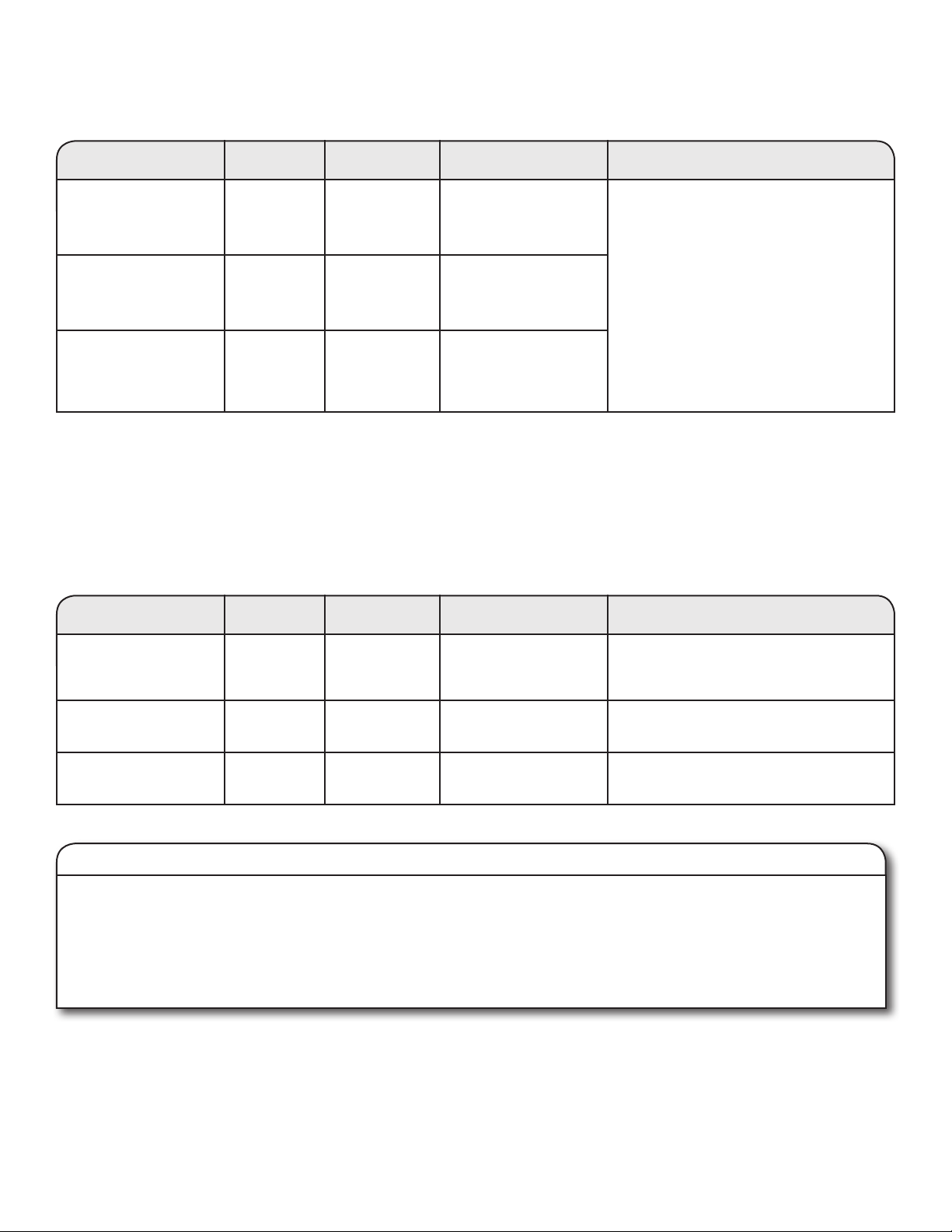
54
PROGRAMMLEITFADEN AUTOMATIC DRYPROGRAMME
PROGRAMMLEITFADEN TIMED DRYPROGRAMME
Nicht alle Modelle verfügen über alle Programme und Einstellungen.
Wählen Sie Energy Preferred für minimalen Energieverbrauch.
HINWEIS: Wenn Ihnen die Wäsche nicht trocken genug erscheint, wählen Sie das nächste Mal bei ähnlicher Wäsche More Dry oder
Very Dry. Wenn Ihnen die Wäsche zu trocken erscheint, wählen Sie das nächste Mal bei ähnlicher Wäsche Less Dry.
Zu trocknende
Wäsche: Programm: Temperatur:
Verfügbare
Optionen: Programmdetails:
Jeans, robuste
Arbeitskleidung,
Handtücher
More Dry High Wrinkle Control/
Wrinkle Prevent
Temperatur
Akustisches Signal
Mit der Programmautomatik erzielen Sie
in der kürzestmöglichen Zeit eine optimale
Trocknung. Die Trockendauer hängt vom
Textiltyp, der Wäschemenge und der
Trockenheitseinstellung ab.
Wählen Sie eine für die Wäschestücke
geeignete Trockentemperatur aus. Wählen
Sie im Zweifelsfall immer die niedrigere
statt der höheren Einstellung.
Arbeitskleidung,
mittelschwere Textilien,
Laken
Energy
Preferred
Medium Wrinkle Control/
Wrinkle Prevent
Temperatur
Akustisches Signal
Legere Kleidung,
Hemden, Hosen, leichte
Kleidungsstücke,
Synthetik, Feinwäsche,
Sportkleidung
Delicate oder
Less Dry
Low Wrinkle Control/
Wrinkle Prevent
Temperatur
Akustisches Signal
Nicht alle Modelle verfügen über alle Programme und Einstellungen.
TIMED DRY – Lässt den Trockner für die ungefähr angezeigte Zeit laufen.
Einstellen der Temperatur beim Trocknen
Wenn der Trockner über mehrere Temperatureinstellungen
verfügt:
Die Einstellung High können Sie für schwere Wäschestücke
wie Handtücher und Arbeitskleidung verwenden.
Low bis Medium eignen sich für das Trocknen mittelschwerer
Textilien wie Laken, Blusen, Kleider, Unterwäsche, bügelfreier
Textilien und mancher Trikotagen.
Verwenden Sie No Heat für Schaumstoff, Gummi, Kunststoff
oder hitzeempndliche Textilien.
Vliesstoffe, Verbundtextilien, gebondete, beschichtete oder
laminierte Textilien sollten Sie auf der Wäscheleine trocknen.
HINWEIS: Wenn Sie hinsichtlich der Trockentemperaturen
verschiedener Kleidungsstücke nicht sicher sind, lesen Sie
die Anweisungen auf den Pegeetiketten.
Zu trocknende
Wäsche: Programm: Temperatur:
Verfügbare
Optionen: Programmdetails:
Große oder schwere
Wäschestücke wie
dicke Handtücher oder
Bademäntel
Heavy Dry Beliebig Temperatur Wählen Sie High bei großen oder schweren
Wäschestücken.
Beliebige Textilien Damp Dry/
Freshen Up
Beliebig Temperatur Für Wäschestücke, die feucht
bleiben sollen oder kein vollständiges
Trockenprogramm erfordern.
Gummi, Kunststoff,
hitzeempfindliche
Textilien
Air Fluff/
Air Dry
No Heat Temperatur Trocknen ohne Wärme.
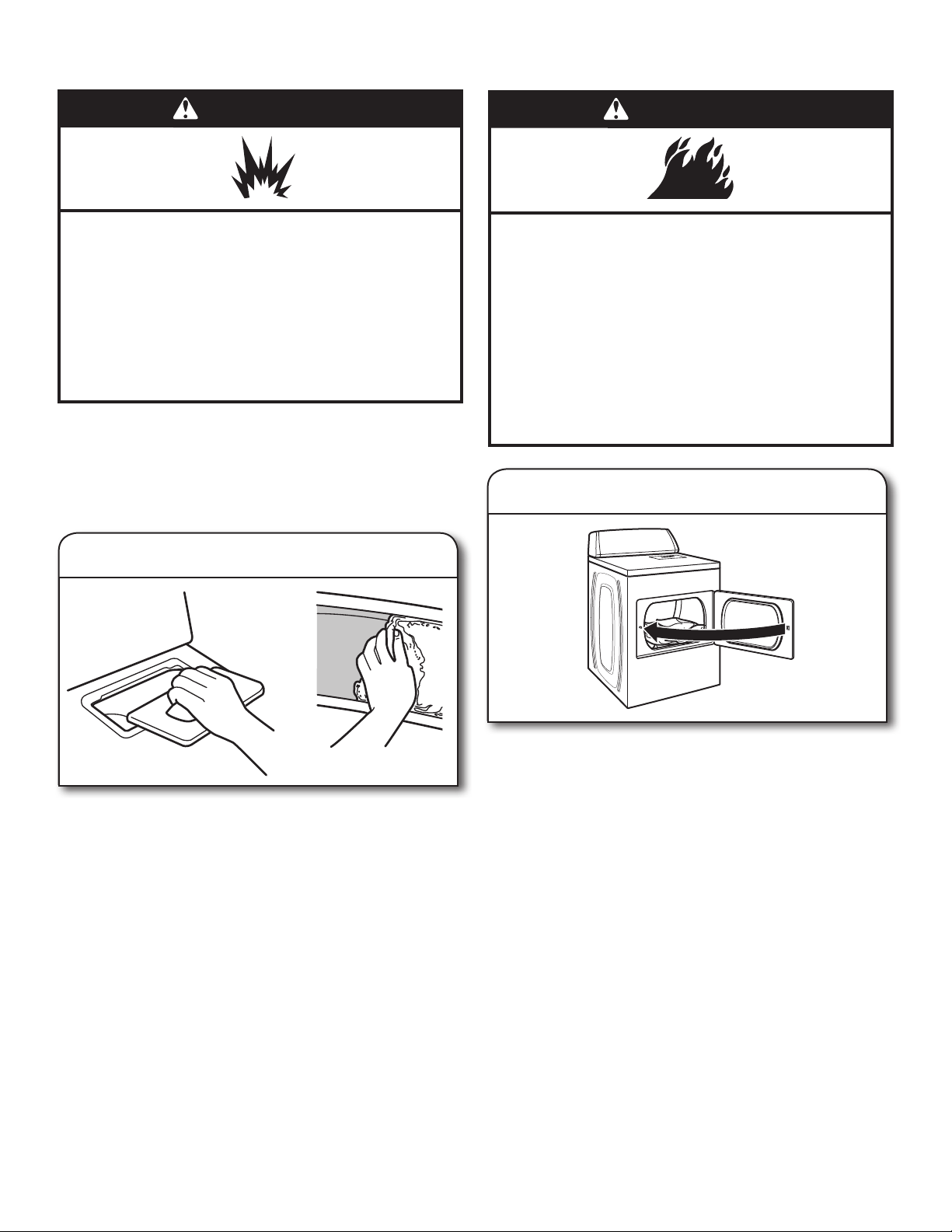
55
VERWENDEN DES TROCKNERS
1. Reinigen Sie das Flusensieb
Reinigen Sie das Flusensieb vor jedem Trockengang. Ziehen Sie
das Flusensieb aus der Halterung. Entfernen Sie die Flusen mit
den Fingern vom Sieb. Spülen oder waschen Sie das Sieb zum
Entfernen der Flusen nicht. Drücken Sie das Flusensieb wieder
fest an seine Position.
Weitere Reinigungsinformationen nden Sie unter „Pege des
Trockners“.
2. Füllen Sie den Trockner
Legen Sie Wäsche in den Trockner. Schließen Sie die Tür.
HINWEIS: Ihr Modell ist möglicherweise mit einer anderen Tür
als in der Abbildung zu sehen ausgestattet. Manche Modelle
sind Toplader und werden von oben befüllt.
Legen Sie nicht zu viele Wäschestücke in den Trockner. Die
Teile sollten sich locker umherwälzen lassen.
ACHTUNG
Explosionsgefahr
Halten Sie brennbare Materialien und Dämpfe wie
Benzin vom Trockner fern.
Geben Sie kein Wäschestück in den Trockner, das
jemals mit irgendetwas Entzündlichem verschmutzt
wurde (auch nicht nach dem Waschen).
Befolgen Sie unbedingt diese Anweisungen. Andernfalls
besteht die Gefahr tödlicher Verletzungen, Explosions-
oder Brandgefahr.
ACHTUNG
Brandgefahr
Keine Waschmaschine kann Ölrückstände komplett
entfernen.
Geben Sie kein Wäschestück in den Trockner, das jemals
mit Speiseöl oder sonstigem Öl verschmutzt wurde.
Wäschestücke mit Schaumstoff-, Gummi- oder
Kunststoffelementen müssen auf der Wäscheleine, in
einem Trockenschrank oder auf andere Weise
getrocknet werden.
Befolgen Sie unbedingt diese Anweisungen. Andernfalls
besteht die Gefahr tödlicher Verletzungen oder Brandgefahr.
ACHTUNG: Um die Brand-, Stromschlag- oder Verletzungsgefahr
zu verringern, lesen Sie vor Inbetriebnahme des Trockners bitte
die Wichtigen Sicherheitshinweise.
Wischen Sie vor der Inbetriebnahme des Trockners die Trommel
mit einem feuchten Tuch aus, um Staub vom Lagern und
Ausliefern des Geräts zu entfernen.
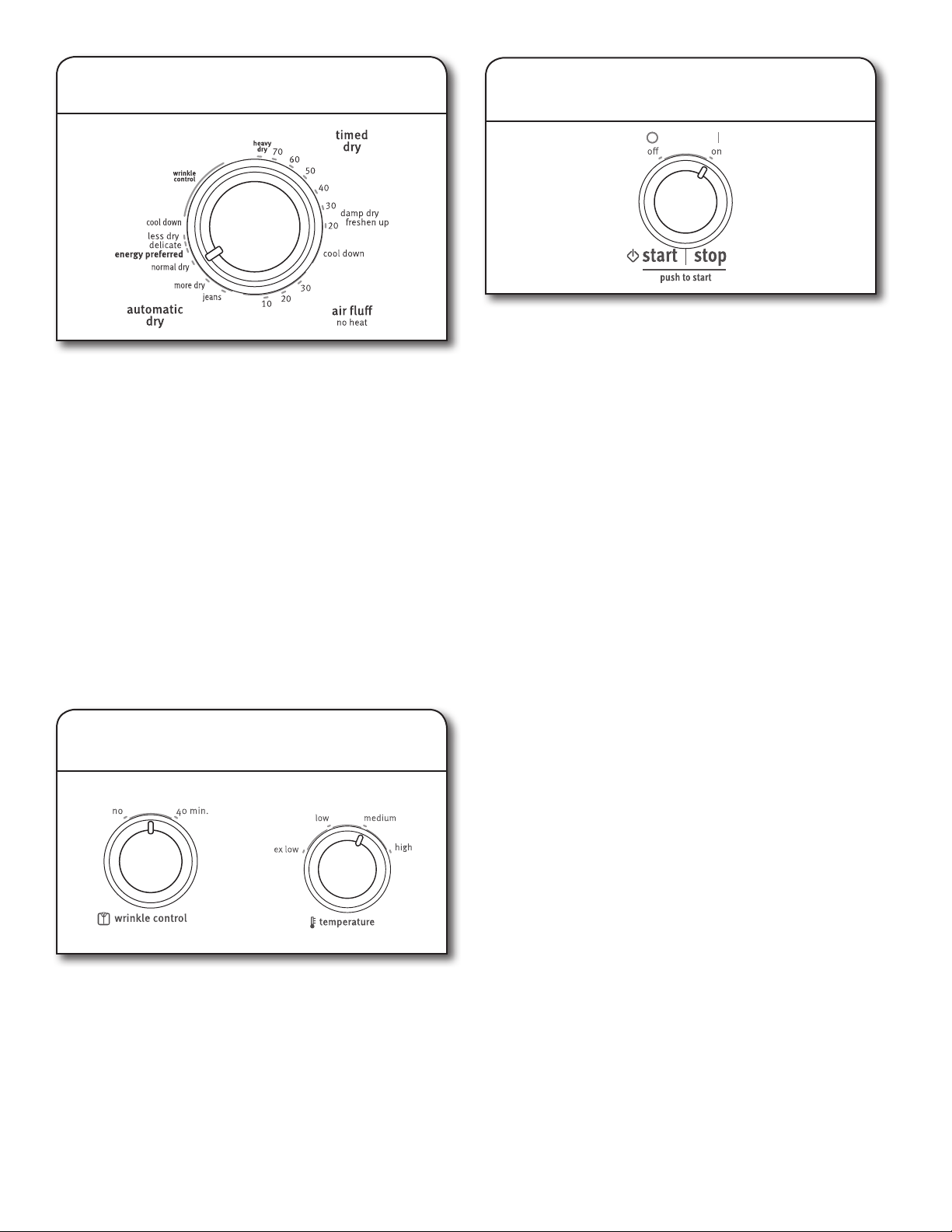
56
5. Drücken Sie START/STOP,
um den Trockengang zu starten
Halten Sie den Knopf START/STOP gedrückt, um den
Trockengang zu starten.
Wenn Sie das Programm vorzeitig beenden wollen, drehen
Sie den Knopf START/STOP auf OFF.
Wenn Sie die Kleidungsstücke nach dem Trockengang
umgehend herausnehmen, knittern sie nicht. Wenn Sie die
Wäsche nicht unmittelbar nach Programmende aus dem
Trockner nehmen können, stellen Sie die Wrinkle Control-
Funktion ein, damit sie nicht knittert.
4. Stellen Sie das Trockenprogramm
und die gewünschten Optionen ein
Wählen Sie Einstellungen und Optionen für das Programm,
indem Sie den Knopf auf die gewünschte Position drehen.
HINWEIS: Nicht alle Optionen und Einstellungen sind für alle
Programme verfügbar.
Temperatur
Drehen Sie den Temperaturknopf auf die gewünschte
Trockentemperatur. Siehe „Einstellen der Temperatur beim
Trocknen“.
Wrinkle Control-Funktion (bei manchen Modellen)
40 Minuten regelmäßiges Umwälzen der Wäsche ohne Wärme
am Ende eines Programms. Sie können den Knopf Wrinkle
Control jederzeit vor dem Programmende auf NO drehen
und damit ausschalten.
3. Wählen Sie das gewünschte
Programm aus
Wählen Sie das für Ihre Wäsche gewünschte
Trockenprogramm. Weitere Informationen zu den einzelnen
Programmen nden Sie unter „Programmleitfaden“.
AUTOMATIC DRY-Programme
Sie können je nach Wäsche einen anderen Trockenheitsgrad
auswählen, indem Sie den Knopf auf den gewünschten
Trockenheitsgrad drehen.
Mit More Dry, Energy Preferred oder Less Dry wird ein
bestimmter Trockenheitsgrad eingestellt, bei dem der Trockner
sich automatisch ausschaltet. Wenn ein Trockenheitsgrad
einmal eingestellt wurde, kann er ohne Stoppen des
Trockengangs nicht mehr geändert werden.
Mit den Automatic Dry-Programmen erzielen Sie in der
kürzestmöglichen Zeit eine optimale Trocknung. Die
Trockendauer hängt vom Textiltyp, der Wäschemenge
und der Trockenheitseinstellung ab.
HINWEIS: Mit More Dry oder Very Dry wird der Wäsche
mehr Feuchtigkeit entzogen. Wählen Sie Energy Preferred
für minimalen Energieverbrauch. Mit Less Dry wird weniger
Feuchtigkeit entzogen. Dieses Programm ist zum Vortrocknen
von Wäsche gedacht, die Sie zum vollständigen Trocknen noch
auf die Leine oder einen Kleiderbügel hängen wollen.
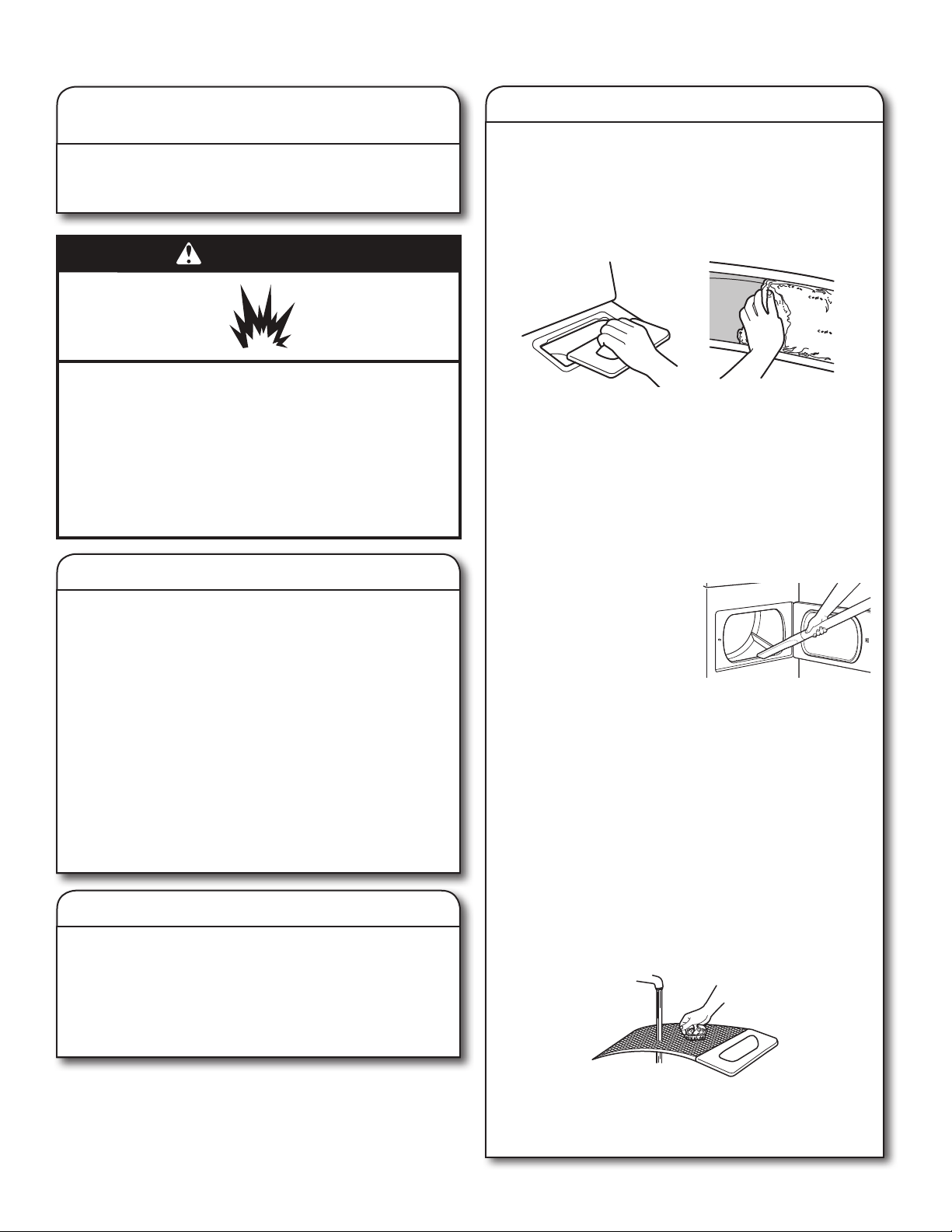
57
PFLEGE DES TROCKNERS
Halten Sie den Bereich um den Trockner sauber
und frei, damit der Luftstrom für den einwandfreien
Trocknerbetrieb nicht blockiert wird. Lassen Sie also
auch keine Wäscheberge vor dem Trockner liegen.
Reinigen des Flusensiebs
Reinigen vor jedem Trockengang
Das Flusensieb bendet sich im Trockner. Wenn das Sieb
voller Flusen ist, kann sich die Trockendauer verlängern.
Reinigung:
1. Ziehen Sie das Flusensieb aus der Halterung. Entfernen
Sie die Flusen mit den Fingern vom Sieb. Spülen oder
waschen Sie das Sieb zum Entfernen der Flusen nicht.
Nasse Flusen lassen sich nur schwer entfernen.
2. Drücken Sie das Flusensieb wieder fest an seine
Position.
WICHTIG:
n
Nehmen Sie den Trockner nicht in Betrieb, wenn
das Sieb lose, beschädigt oder verstopft ist oder fehlt.
Andernfalls besteht Überhitzungsgefahr und Trockner
und Textilien können beschädigt werden.
n
Wenn Flusen beim Entfernen vom Sieb
in den Trockner fallen, überprüfen Sie die
Abluftabdeckung und entfernen Sie die Flusen.
Siehe „Belüftungsanforderungen“
in der Installationsanleitung.
n
Reinigen Sie gegebenenfalls
den Bereich, an dem sich
das Flusensieb bendet.
Entfernen Sie mit einem
Staubsauger behutsam
alle Flusen, die sich
außerhalb des Flusensiebs
angesammelt haben.
Reinigung nach Bedarf
Waschmittel- und Weichspülerrückstände können sich
auf dem Flusensieb absetzen. Dadurch kann es zu längerer
Trockendauer kommen oder der Trockner stoppt, bevor die
Wäsche vollständig trocken ist. Wenn sich das Flusensieb
im Trockner bendet und Flusen herunterfallen, ist das Sieb
wahrscheinlich verstopft.
Reinigen Sie das Flusensieb alle sechs Monate bzw. öfter,
wenn es bereits vorher durch Flusen verstopft ist, mit
einer Nylonbürste.
Waschen:
1. Entfernen Sie die Flusen mit den Fingern vom Sieb.
2. Spülen Sie beide Seiten des Flusensiebs mit heißem
Wasser ab.
3. Tauchen Sie eine Nylonbürste in heißes Wasser mit
Reinigungsmittel. Schrubben Sie das Flusensieb mit
der Bürste, um Ablagerungen zu entfernen.
4. Spülen Sie das Flusensieb mit heißem Wasser ab.
5. Trocknen Sie das Flusensieb sorgfältig mit einem
sauberen Tuch. Bringen Sie das Flusensieb wieder
im Trockner an.
Reinigung im Trocknerinneren
So reinigen Sie die Trocknertrommel:
1. Geben Sie einen üssigen, nicht entzündlichen
Haushaltsreiniger auf ein weiches Tuch und reiben
Sie verschmutzte Trommelbereiche damit ab, bis
die Trommel wieder sauber ist.
2. Wischen Sie die Trommel sorgfältig mit einem feuchten
Tuch aus.
3. Lassen Sie den Trockner mit sauberer Wäsche oder
Handtüchern laufen, um die Trommel zu trocknen.
HINWEIS: Durch abfärbende Kleidungsstücke wie
Bluejeans oder knallbunte Baumwollteile kann sich
das Innere des Trockners verfärben. Diese Flecken
schaden dem Trockner nicht und hinterlassen auch
auf nachfolgenden Kleidungsstücken im Trockner keine
Flecken. Drehen Sie abfärbende Kleidungsstücke vor
dem Trocknen auf links, um das Verfärben der Trommel
zu vermeiden.
Entfernen von Flusenansammlungen
Aus dem Trocknergehäuse
Flusen müssen je nach Trocknergebrauch mindestens alle
zwei Jahre entfernt werden. Lassen Sie die Reinigung von
einem qualizierten Servicetechniker ausführen.
Aus dem Abluftkanal
Flusen müssen je nach Trocknergebrauch mindestens alle
zwei Jahre entfernt werden.
Ordnung und Sauberkeit am Standort
des Trockners
ACHTUNG
Explosionsgefahr
Halten Sie brennbare Materialien und Dämpfe wie
Benzin vom Trockner fern.
Stellen Sie den Trockner bei der Installation in Neben-
oder Kellerräumen mindestens 460mm über dem
Boden auf.
Andernfalls besteht die Gefahr tödlicher Verletzungen,
Explosions- oder Brandgefahr.
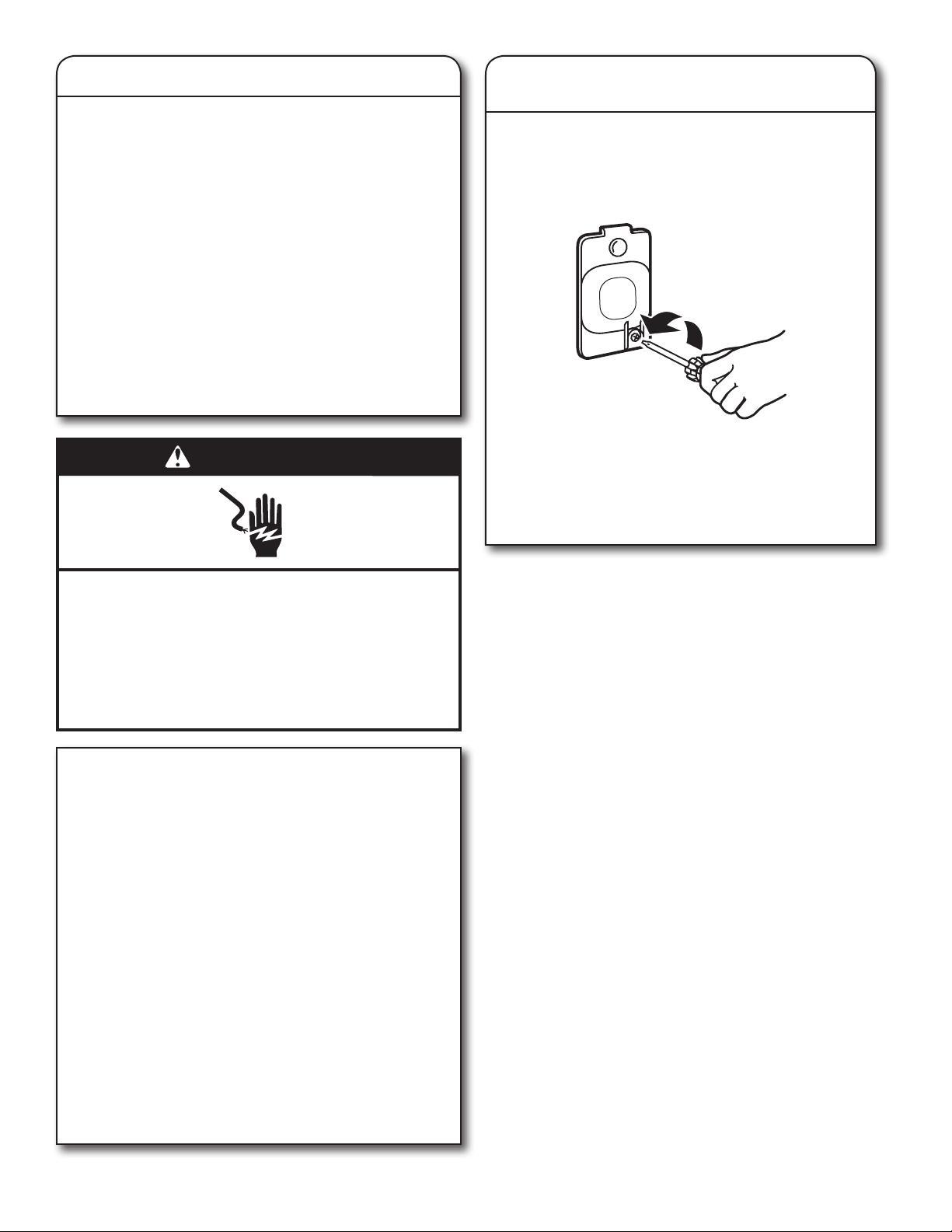
58
Urlaub, Lagerung und Transport
Vorgehen bei Nichtgebrauch oder
Lagerung
Lassen Sie den Trockner nur laufen, wenn Sie zuhause sind.
Gehen Sie folgendermaßen vor, wenn Sie in Urlaub fahren
oder den Trockner längere Zeit nicht verwenden wollen:
1. Trennen Sie den Trockner von der Stromversorgung.
2. Nur bei Gastrocknern: Schließen Sie das Absperrventil
der Gaszuleitung.
3. Reinigen Sie das Flusensieb. Siehe „Reinigen des
Flusensiebs“.
Transportvorbereitungen
Bei Trockner, die über ein Netzkabel angeschlossen
werden:
1. Ziehen Sie das Netzkabel aus der Steckdose.
2. Stellen Sie sicher, dass sich die Nivellierfüße im
Trocknersockel benden.
3. Sichern Sie die Trocknertür mit Klebeband.
Trockner mit Direktanschluss:
1. Schalten Sie die Stromversorgung über die Sicherung
oder oder Trennschalter aus.
2. Trennen Sie die Verkabelung.
3. Stellen Sie sicher, dass sich die Nivellierfüße im
Trocknersockel benden.
4. Sichern Sie die Trocknertür mit Klebeband.
Gastrockner:
1. Trennen Sie die Stromversorgung zum Trockner.
2. Schließen Sie das Absperrventil der Gaszuleitung.
3. Trennen Sie das Gaszuleitungsrohr und entfernen Sie die
Anschlussteile am Trocknerrohr.
4. Verschließen Sie die offene Gasleitung mit einer Kappe.
5. Stellen Sie sicher, dass sich die Nivellierfüße im
Trocknersockel benden.
6. Sichern Sie die Trocknertür mit Klebeband.
Neuinstallation des Trockners
Befolgen Sie zum Aufstellen, Ausrichten und
Anschließen des Trockners die Anweisungen
in der Installationsanleitung.
ACHTUNG
Stromschlaggefahr
Trennen Sie das Gerät vor Wartungsarbeiten von der
Stromversorgung.
Bringen Sie vor der Inbetriebnahme alle Teile und
Abdeckungen wieder an.
Andernfalls besteht die Gefahr von tödlichen
Verletzungen oder eines Stromschlags.
Auswechseln der Trommelbeleuchtung
(bei manchen Modellen)
1. Trennen Sie den Trockner von der Stromversorgung.
2. Öffnen Sie die Trocknertür. Die Birnenabdeckung
bendet sich an der hinteren Wand des Trockners.
Entfernen Sie mit einem Kreuzschlitzschraubendreher
die Schraube rechts unten an der Abdeckung. Nehmen
Sie die Abdeckung ab.
3. Drehen Sie die Birne gegen den Uhrzeigersinn. Tauschen
Sie die Birne ausschließlich gegen eine 10-Watt-Birne
aus. Bringen Sie die Abdeckung wieder an und sichern
Sie sie mit der Schraube.
4. Verbinden Sie das Gerät mit einer geerdeten Steckdose
bzw. mit der Stromversorgung.
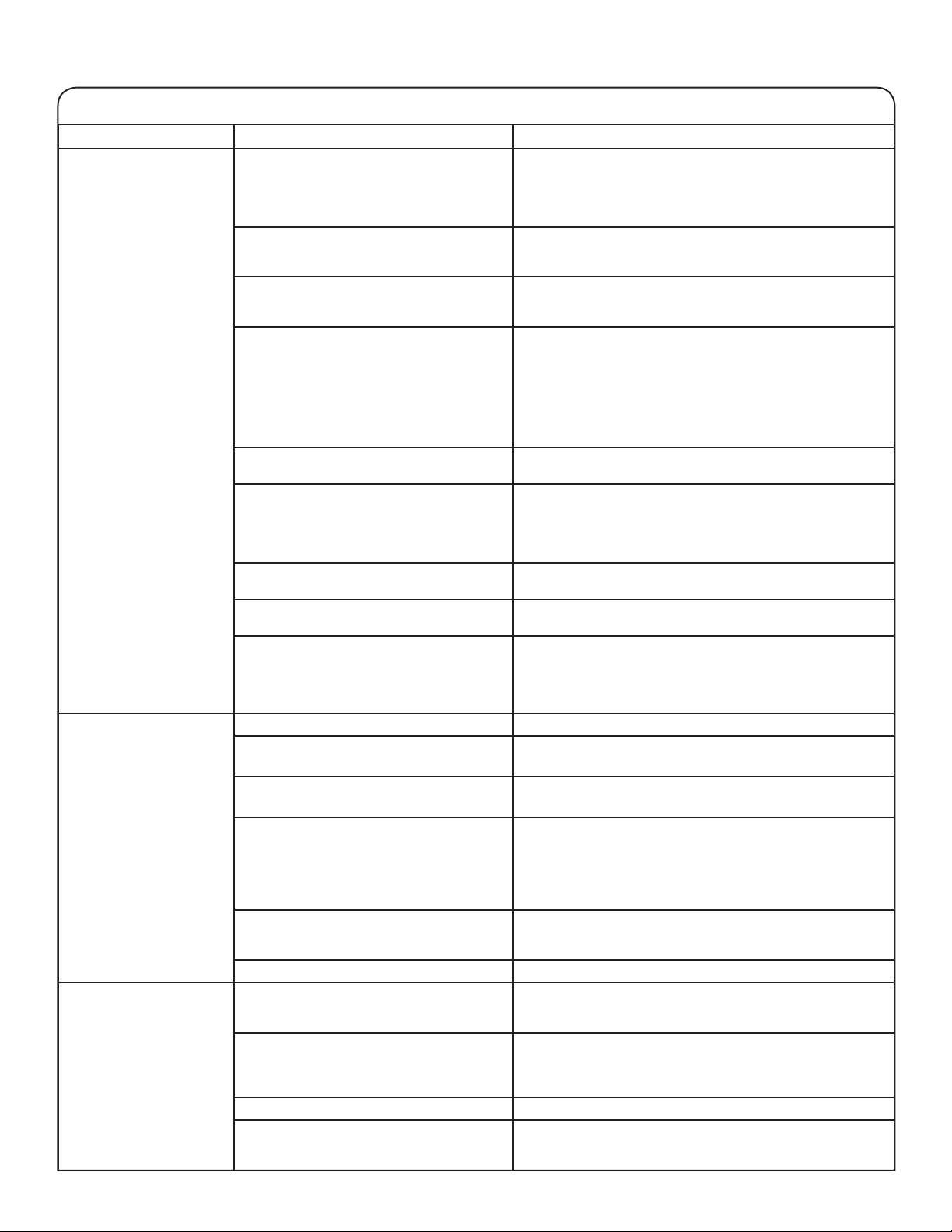
59
STÖRUNGSBEHEBUNG
Versuchen Sie zunächst, das Problem mit den hier angegebenen Abhilfemaßnahmen zu beheben,
um die Kosten für den Kundendienst zu sparen.
Symptom Mögliche Ursachen Lösung
Kleidungsstücke
trocknen nicht
ausreichend,
Trockendauer
zu lang
Das Flusensieb oder der Bereich um das
Flusensieb ist mit Flusen verstopft.
Reinigen Sie das Flusensieb vor jedem Trockengang.
Reinigen Sie gegebenenfalls den Bereich um das
Flusensieb. Entfernen Sie mit einem Staubsauger
behutsam alle Flusen, die sich außerhalb des Flusensiebs
angesammelt haben.
Das Programm Air Fluff/Air Dry oder die
Temperatureinstellung No Heat wurde
ausgewählt.
Wählen Sie das geeignete Programm für die zu trocknenden
Kleidungsstücke aus. Siehe „Programmleitfaden“.
Für eine schnelle Trocknung benden sich
zu viele und zu schwere Wäschestücke im
Trockner.
Nehmen Sie einige Stücke heraus, so dass sich die
Wäsche locker umherwälzen lässt.
Der Abluftkanal oder die äußere
Abluftabdeckung ist mit Flusen verstopft,
was den Luftstrom behindert.
Lassen Sie den Trockner 5–10 Minuten laufen. Halten
Sie die Hand unter die äußere Abluftabdeckung und
prüfen Sie, ob Luft austritt. Wenn Sie keinen Luftstrom
spüren, reinigen Sie das Abluftsystem von Flusen oder
ersetzen Sie den Abluftkanal durch einen Abluftkanal
aus stabilem oder exiblem Metall. Stellen Sie sicher,
dass der Kanal nicht gequetscht oder geknickt ist.
Siehe die Installationsanleitung.
Trocknertücher blockieren das Gitter. Verwenden Sie immer nur ein Trocknertuch und verwenden
Sie es nur einmal.
Abluftkanal zu lang, gequetscht oder
geknickt.
Stellen Sie sicher, dass der Abluftkanal nicht zu lang
ist oder zu viele Biegungen aufweist. Bei einem langen
Abluftkanal verlängert sich die Trockendauer. Stellen Sie
sicher, dass der Kanal nicht gequetscht oder geknickt ist.
Siehe die Installationsanleitung.
Abluftkanal mit ungeeignetem
Durchmesser.
Achten Sie auf einen Durchmesser von 102mm.
Der Trockner bendet sich in einem Raum
mit Temperaturen unter 7ºC.
Für den einwandfreien Betrieb der Trockenprogramme sind
Temperaturen über 7ºC erforderlich.
Der Trockner bendet sich in einem
Schrank oder einer Kammer ohne
angemessene Lüftungsöffnungen.
Die Schrank- oder Kammertür muss oben und unten
Lüftungsöffnungen haben. Vor dem Trockner müssen
mindestens 25mm Platz frei sein und in der Regel sind
an der Rückseite des Trockners 127mm erforderlich.
Siehe die Installationsanleitung.
Trockner funktioniert nicht Die Tür ist nicht vollständig geschlossen. Stellen Sie sicher, dass die Tür vollständig geschlossen ist.
Der Knopf START/STOP wurde nicht auf
ON gestellt.
Stellen Sie den Knopf START/STOP auf On.
Der Knopf START/STOP wurde nicht fest
oder lange genug gedrückt.
Halten Sie den Knopf START/STOP gedrückt, bis die
Bewegung der Trocknertrommel zu hören ist.
Eine Haushaltssicherung ist
durchgebrannt oder ein Trennschalter
wurde ausgelöst.
Elektrotrockner sind mit zwei Haushaltssicherungen oder
Trennschaltern abgesichert. Möglicherweise dreht sich
die Trommel, aber der Trockner erzeugt keine Wärme.
Tauschen Sie beide Sicherungen aus oder schalten
Sie den Trennschalter wieder ein. Bleibt das Problem
bestehen, wenden Sie sich bitte an einen Elektriker.
Falsche Stromversorgung. Für Elektrotrockner ist eine Stromversorgung mit 240Volt
erforderlich. Wenden Sie sich an einen qualizierten
Elektriker.
Falscher Sicherungstyp. Verwenden Sie eine träge Sicherung.
Ungewöhnliche
Geräusche
Der Trockner wurde längere Zeit nicht
benutzt.
Wenn der Trockner längere Zeit nicht benutzt wurde,
kann in den ersten Minuten des Betriebs ein Klopfen
zu hören sein.
Eine Münze, ein Knopf oder eine
Büroklammer ist zwischen die Trommel
und die Vorder- oder Rückseite des
Trockners gelangt.
Prüfen Sie den vorderen und hinteren Trommelrand
auf Kleinteile. Leeren Sie vor dem Waschen die Taschen
sämtlicher Kleidungsstücke.
Sie verwenden einen Gastrockner.
Das Klicken des Gasventils ist ein normales Betriebsgeräusch.
Die vier Füße sind nicht montiert oder
der Trockner steht nicht waagrecht
(Vorderseite - Rückseite, links - rechts).
Wenn der Trockner nicht ordnungsgemäß aufgestellt ist,
kann er vibrieren. Siehe die Installationsanleitung.
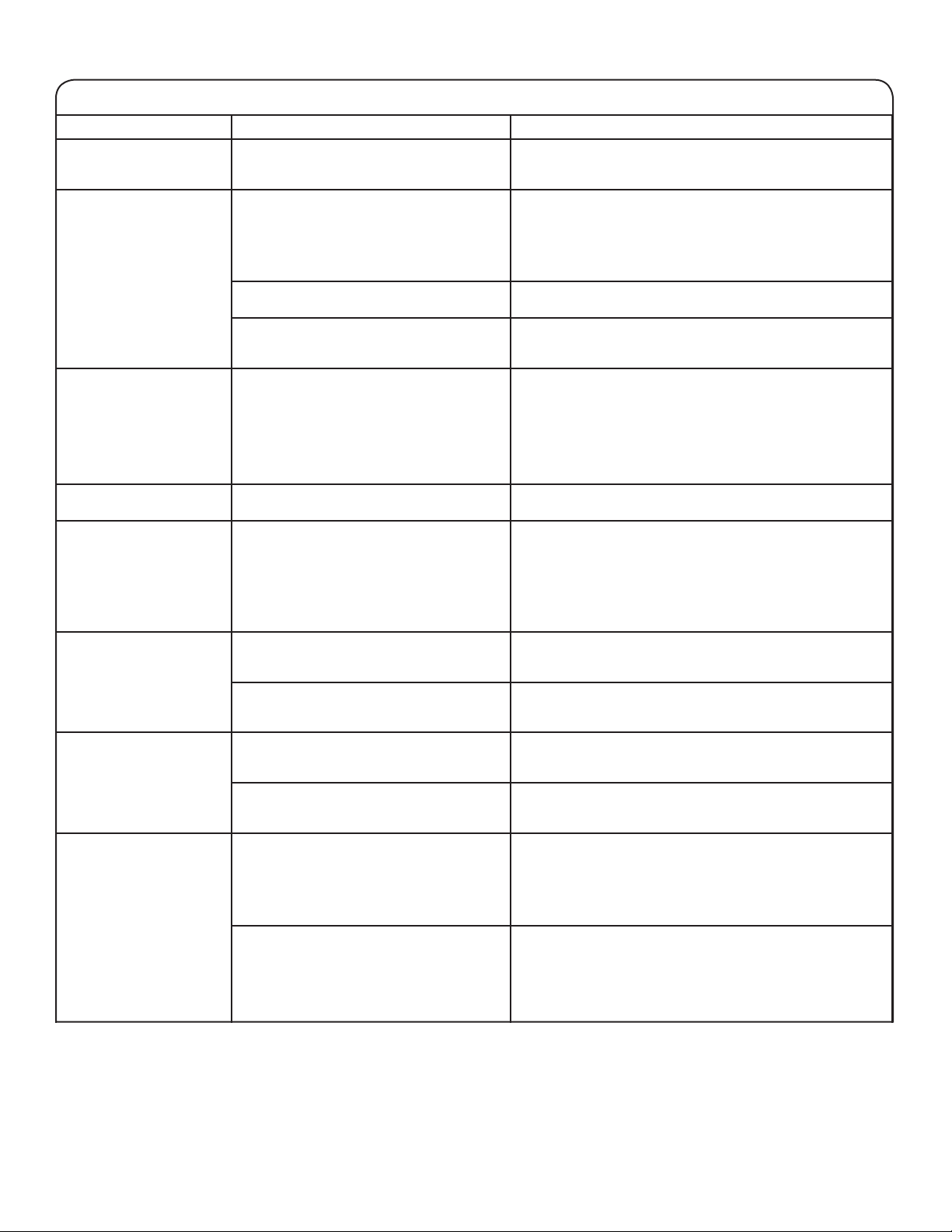
60
STÖRUNGSBEHEBUNG
Versuchen Sie zunächst, das Problem mit den hier angegebenen Abhilfemaßnahmen zu beheben,
um die Kosten für den Kundendienst zu sparen.
Symptom Mögliche Ursachen Lösung
Ungewöhnliche
Geräusche (Forts.)
Die Kleidungsstücke sind verknotet oder
zusammengeknüllt.
Bei einem Wäscheknäuel hüpft der Trocknerinhalt in
der Trommel und der Trockner vibriert. Trennen Sie die
Wäschestücke und starten Sie den Trockner erneut.
Keine Wärme Eine Haushaltssicherung ist
durchgebrannt oder ein Trennschalter
wurde ausgelöst.
Möglicherweise dreht sich die Trommel, aber der Trockner
erzeugt keine Wärme. Elektrotrockner sind mit zwei
Haushaltssicherungen oder Trennschaltern abgesichert.
Tauschen Sie beide Sicherungen aus oder schalten
Sie den Trennschalter wieder ein. Bleibt das Problem
bestehen, wenden Sie sich bitte an einen Elektriker.
Das Ventil der Gaszuleitung wurde nicht
geöffnet.
Achten Sie bei Gastrocknern darauf, dass das Ventil der
Gaszuleitung geöffnet ist.
Falsche Stromversorgung. Für Elektrotrockner ist eine Stromversorgung mit 240
Volt erforderlich. Wenden Sie sich an einen qualizierten
Elektriker.
Programmdauer zu kurz Das automatische Programm endet
vorzeitig.
Die Wäsche im Trockner berührt die Sensorstreifen nicht.
Richten Sie den Trockner waagrecht aus.
Verwenden Sie bei geringer Befüllung des Trockners eine
Timed Dry-Einstellung. Ändern Sie die Einstellung für den
Trockenheitsgrad bei den Automatic Dry-Programmen.
Wenn Sie die Einstellung für den Trockenheitsgrad ändern,
ändert sich die Trockendauer der Programme.
Flusen auf Wäsche Das Flusensieb ist verstopft. Das Flusensieb muss vor jedem Trockengang gereinigt
werden.
Flecken auf Wäsche oder
Trommel
Trocknertücher wurden nicht
ordnungsgemäß verwendet.
Geben Sie zu Beginn eines Trockengangs ein
Trocknertuch zur Wäsche. Wenn Sie Trocknertücher
zu teilweise getrockneten Wäschestücken geben, können
sie Flecken hinterlassen.
Flecken in der Trommel sind auf Farbstoffe aus der
Kleidung (in der Regel Bluejeans) zurückzuführen. Diese
werden nicht auf andere Kleidungsstücke übertragen.
Knitterbildung Die Wäsche wurde nicht unmittelbar nach
dem Programmende aus dem Trockner
genommen.
Wählen Sie die Wrinkle Control-Funktion, um die Wäsche
ohne Wärmezufuhr umherzuwälzen, damit sie nicht knittert.
Zu viel Wäsche im Trockner. Wenn Sie weniger Wäschestücke in den Trockner legen,
werden diese lockerer umhergewälzt, sodass sie nicht
knittern.
Gerüche Sie haben kürzlich in der Nähe des
Trockners frisch gestrichen, gebeizt
oder lackiert.
Lüften Sie in diesem Fall gründlich. Wenn der Bereich
wieder frei von Gerüchen ist, waschen und trocknen Sie
die Kleidungsstücke erneut.
Der Elektrotrockner wird zum ersten Mal
in Betrieb genommen.
Die Gerüche können vom neuen elektrischen Heizelement
stammen. Nach dem ersten Trockengang verschwinden
die Gerüche.
Wäsche ist zu heiß Die Wäsche wurde vor dem
Programmende aus dem Trockner
genommen.
Warten Sie, bis die Abkühlphase beendet ist, bevor Sie die
Wäsche aus dem Trockner nehmen. Bei allen Programmen
erfolgt eine langsame Abkühlung, damit die Wäschestücke
nicht knittern und sich angenehmer anfassen lassen.
Vor der Abkühlung herausgenommene Wäsche ist
möglicherweise unangenehm warm.
Ein Programm mit hoher Temperatur wird
verwendet oder die Temperatur wurde
separat zu hoch eingestellt.
Wählen Sie eine niedrigere Temperatur und ein
automatisches Trockenprogramm. Bei diesen Programmen
wird die Temperatur bzw. der Feuchtigkeitsgrad der
Wäsche gemessen und der Trockner schaltet sich aus,
wenn der gewünschte Trockenheitsgrad erreicht ist.
Dadurch wird eine zu starke Trocknung vermieden.
W11049661C
01/18
©2018 Maytag. All rights reserved.
©2018 Maytag. Tous droits réservés.
©2018 Maytag. Todos los derechos reservados.
©2018 Maytag. Tutti i diritti riservati.
©2018 Maytag. Alle Rechte vorbehalten.
EU-Vertretung: Whirlpool EMEA S.p.A., Via Carlo Pisacane n. 1, 20016 Pero (MI), Italien
Hersteller: Whirlpool Corporation, 2000 N M 63, Benton Harbor, MI 49022 USA
Für nähere Informationen besuchen Sie uns unter www.whirlpool.com/accessories oder kontaktieren Sie den Händler, von dem Sie
Ihre Trockner gekauft haben, oder ein autorisiertes Service-Unternehmen.
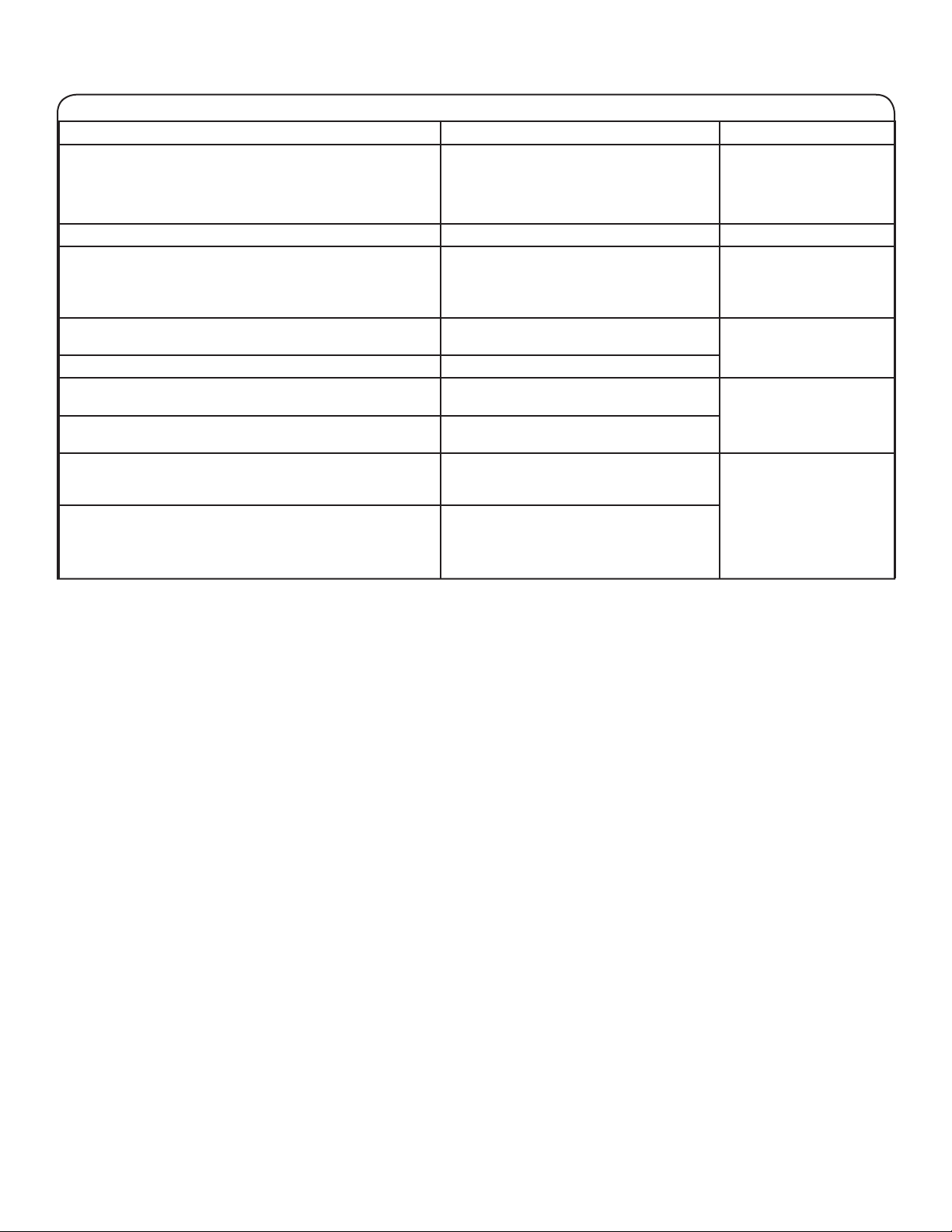
W11049661C
01/18
2018©
Whirlpool Corporation, 2000 N M 63, Benton Harbor, MI 49022 US
www.whirlpool.com/accessories
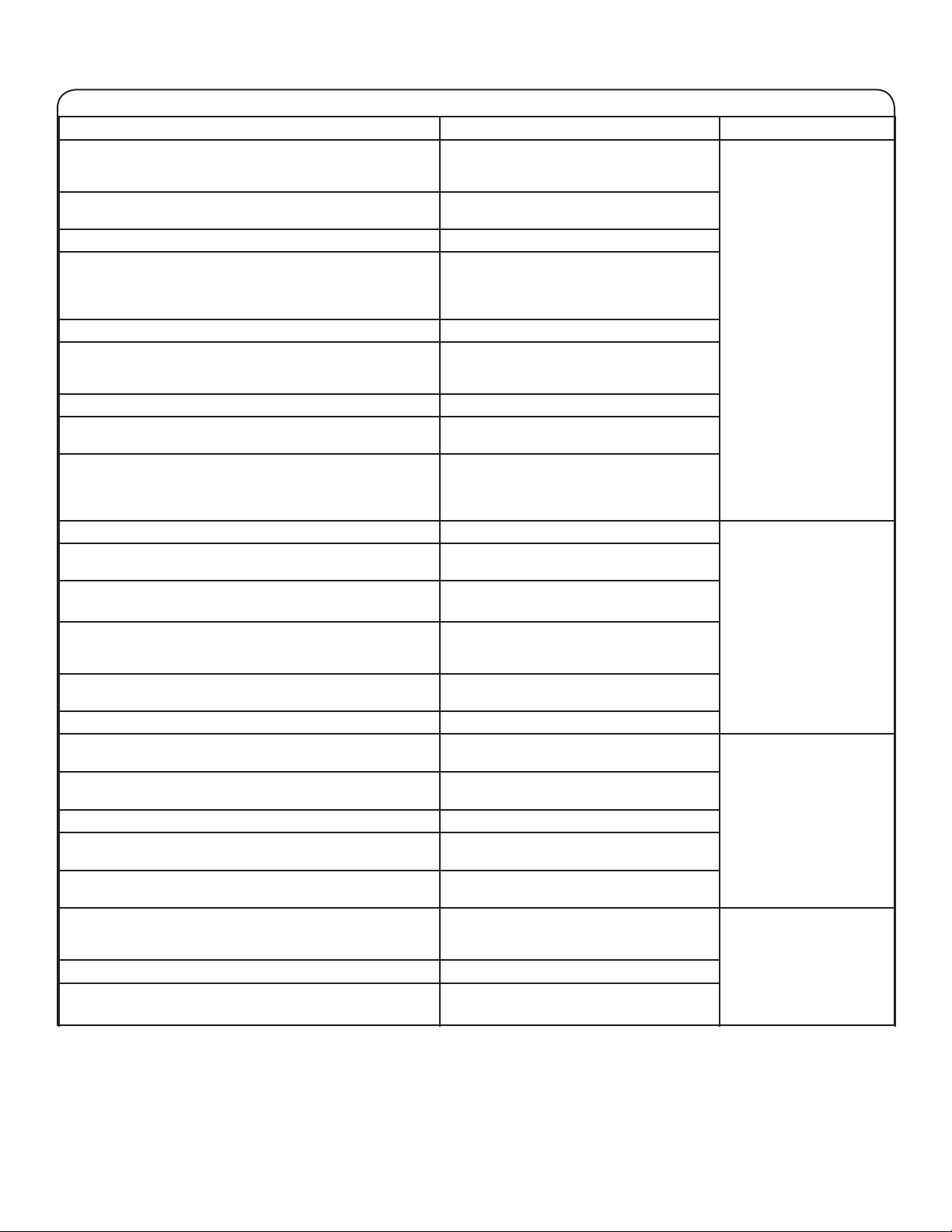
11
."
-
."ON"
."ON
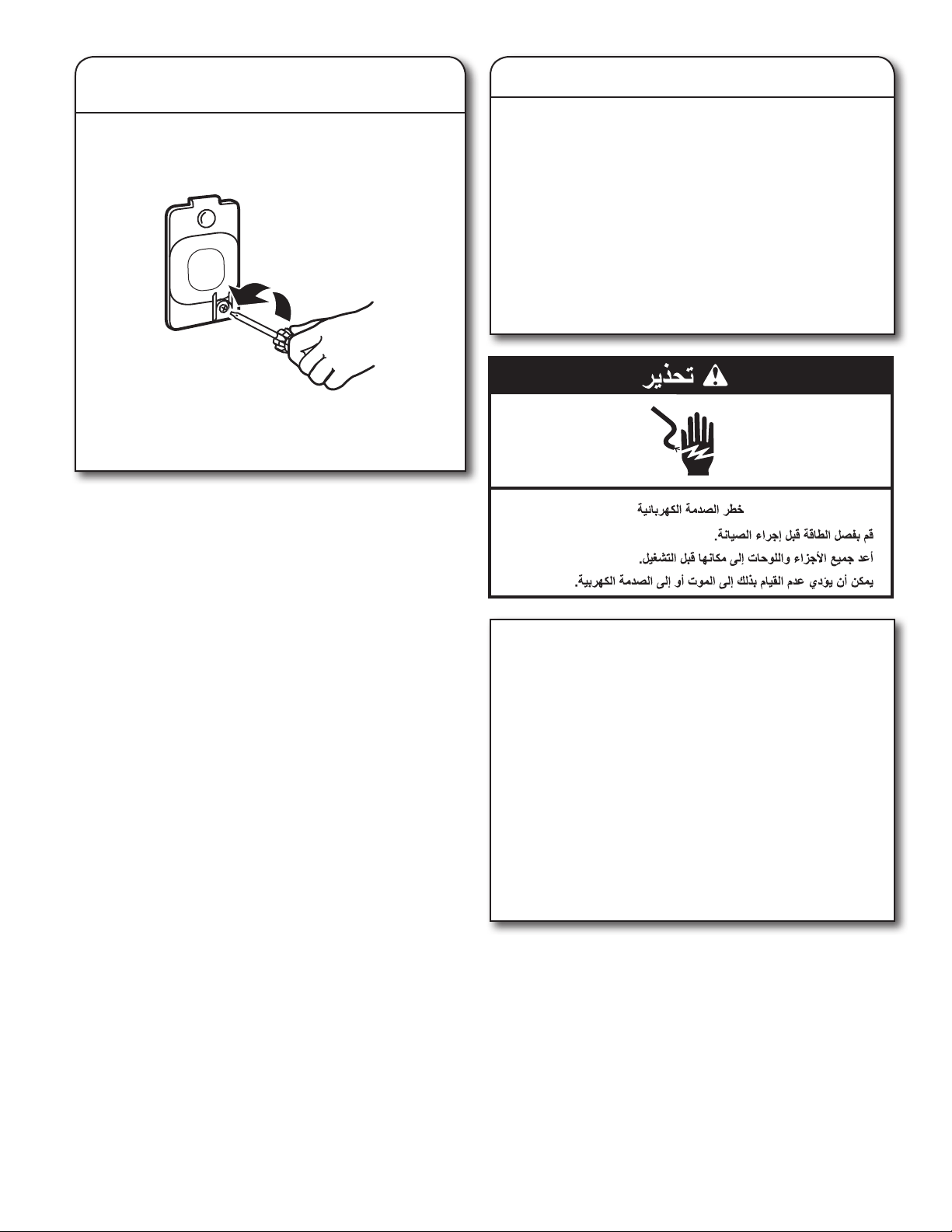
10
.1
.2
.3
.1
.2
.3
.1
.2
.3
.4
.1
.2
.3
.4
.5
.6
.1
.2
.3
10
.4
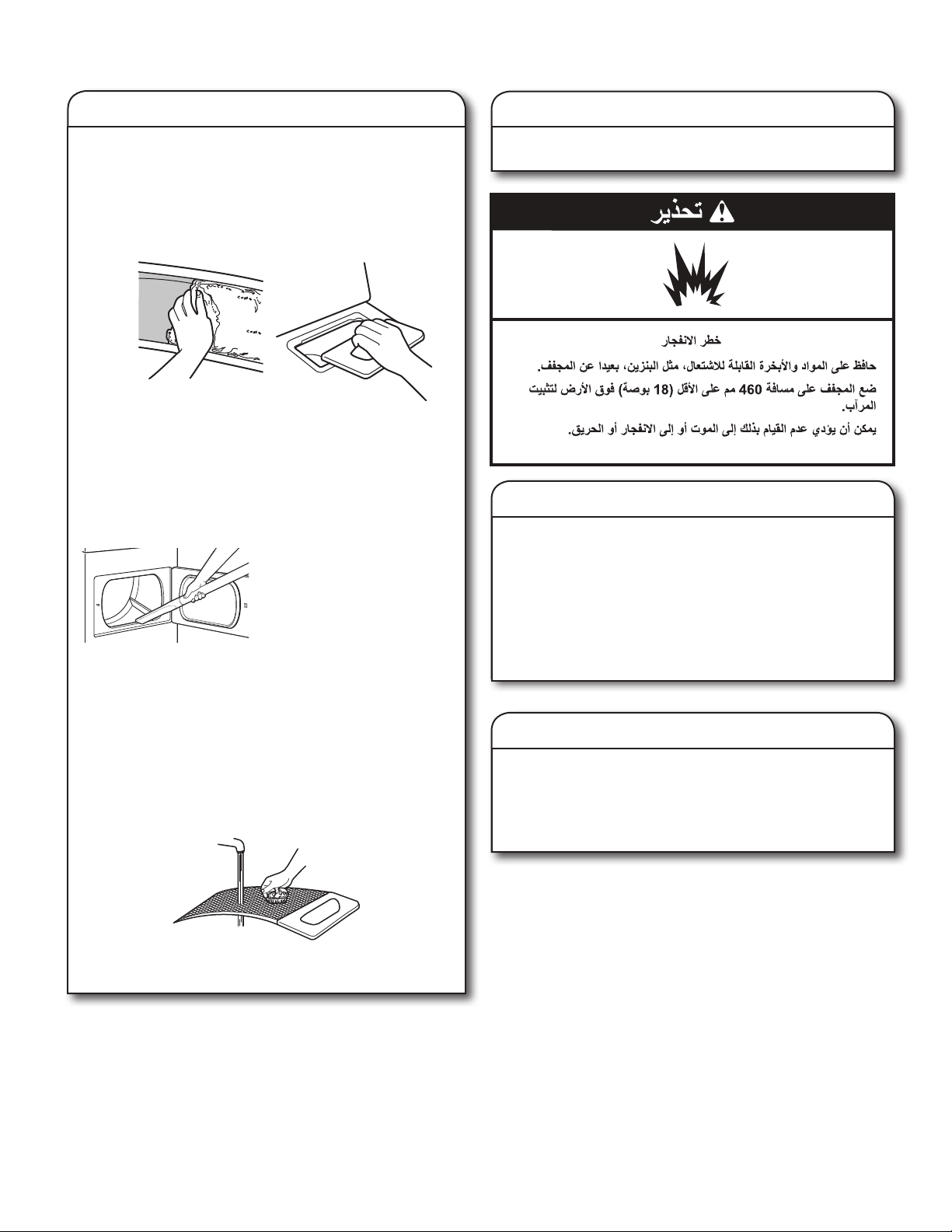
9
.1
.2
6
.1
.2
3
4
5
.1
.2
.3
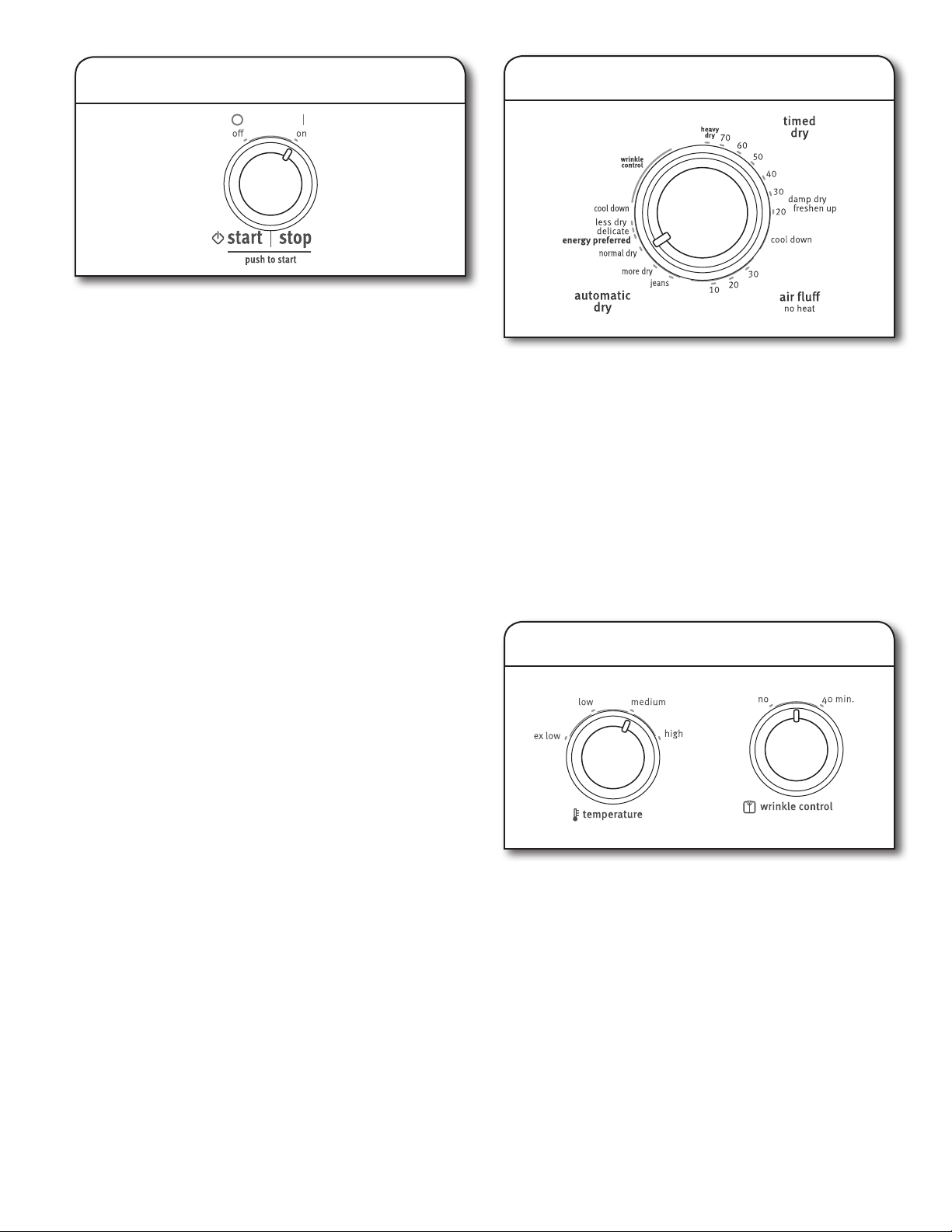
8
.5
OFF
.4
NO
.3
"
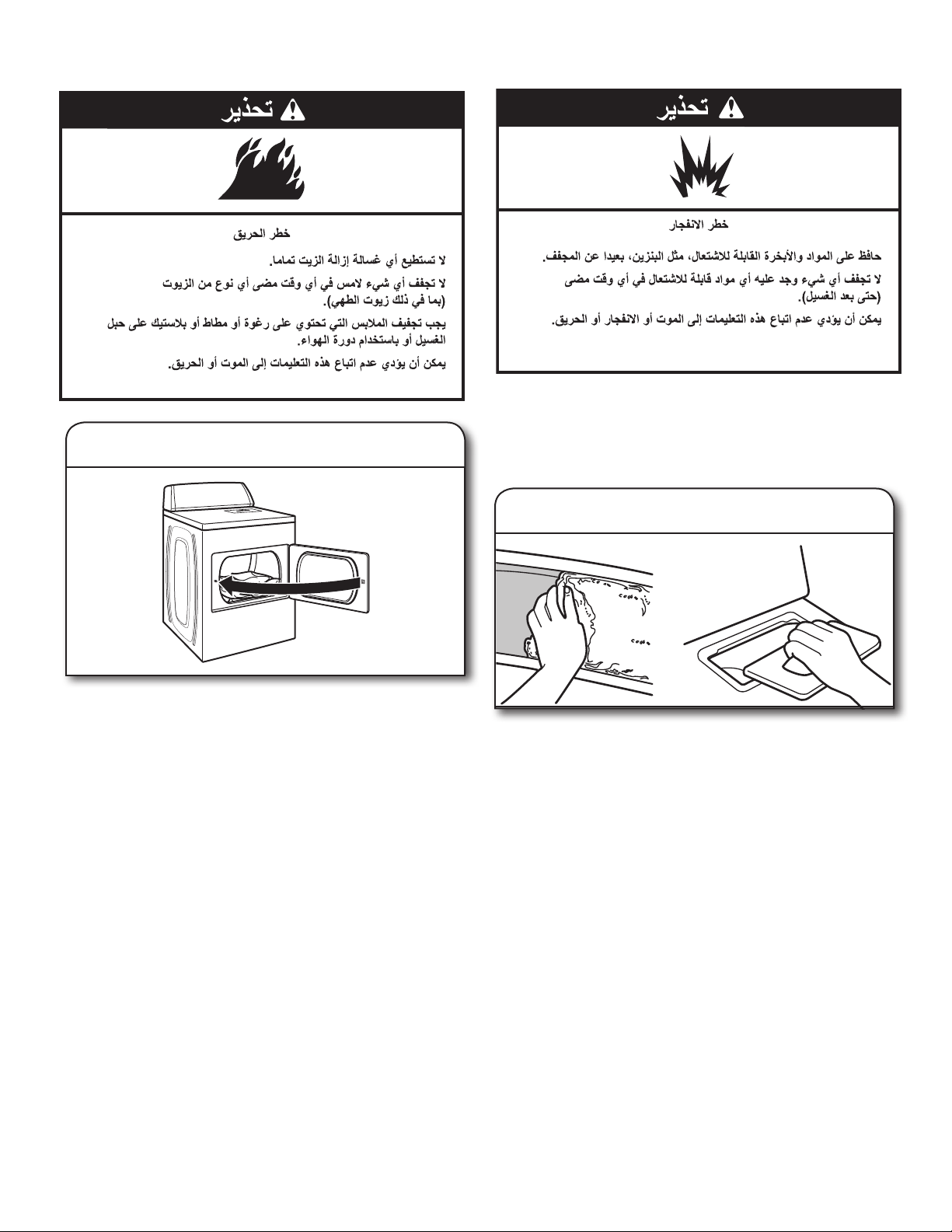
7
.1
.2
6
ENERGY PREFERRED
More Dry
Less Dry
No Heat
More Dry
Wrinkle Control/Wrinkle
Prevent
Energy
Preferred
Medium Wrinkle Control/Wrinkle
Prevent
Delicate
Less
Dry
Low Wrinkle Control/Wrinkle
Prevent
Heavy Dry
High
Damp Dry/
Freshen Up
Air Fluff/
Air Dry
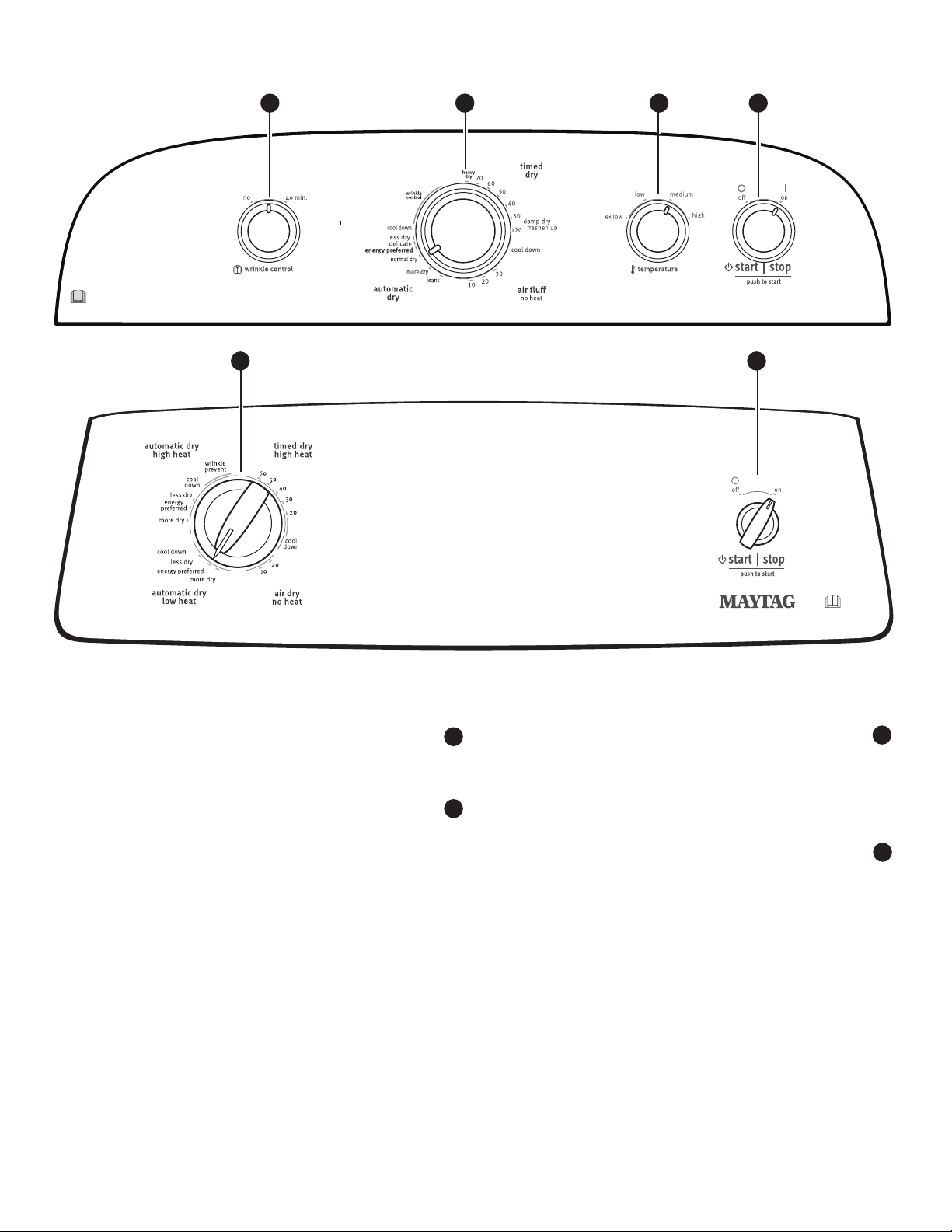
5
Wrinkle Control
Wrinkle Control
"
"
1
2
3
On
Off
Wrinkle Control
Wrinkle Control
4
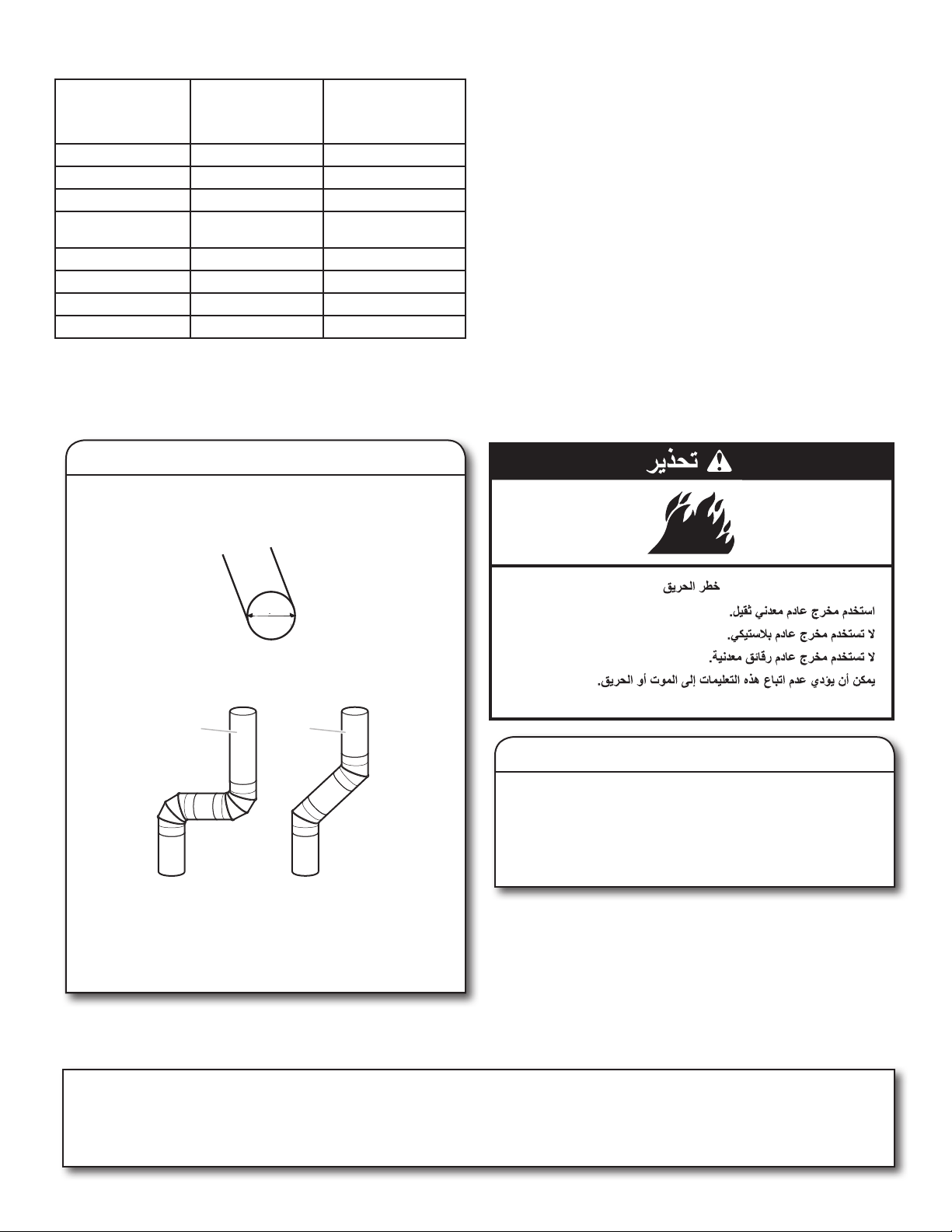
4
.)A70
Automatic Dry
Energy Preferred
Timed Dry
4102
:IEC
n
n
n
n
n
3LMEDC315FW
3LMEDC415FW
4KMEDC215FW
4KMEDC315FW
4KMEDC415FW
4KMEDC425FW
~2N240–220~2N240–220
5060
2020
33153315
IEC157157
421067421067
2973729737
16
13
27(70616
13
27(706
3
كتمس لجأ نم
1
2
3
4
IMPORTANT SAFETY INSTRUCTIONS
precautions, including the following:
WARNING:
Read all instructions before using the dryer.
Keep a minimum clearance of 100 mm (4 in.) between the
rear of the dryer and any wall.
The operation of this appliance may affect the operation of
other types of appliances which take their air supply for safe
combustion from the same room. There has to be adequate
ventilation to replace exhausted air and thus avoid the
back-ow of gases into the room from appliances burning
other fuels, including open res, when operating the tumble
dryer. If in doubt, consult the appliance manufacturers.
Do not obstruct the air supply to the dryer (see Installation
Instructions for minimum clearances).
Do not place items exposed to cooking oils in your dryer.
Oil-affected items can ignite spontaneously, especially when
exposed to heat sources such as in a tumble dryer. The
items become warm causing an oxidation reaction in the oil.
Oxidation creates heat. If the heat cannot escape, the items
can become hot enough to catch re. Piling, stacking or
storing oil-affected items can prevent heat from escaping
and so create a re hazard.
If it is unavoidable to dry in the dryer items that have been
soiled with substances such as cooking oil, acetone, alcohol,
petrol, kerosene, spot removers, turpentine, waxes and wax
removers, or that have been contaminated by hair care
products, should be washed in hot water with an extra
amount of detergent before being dried in the dryer. These
items may give off vapours that could ignite or explode. Such
washing will reduce, but not eliminate, the hazard.
This appliance is not intended for use by persons (including
children) with reduced physical, sensory or mental
capabilities, or lack of experience and knowledge, unless
they have been given supervision or instructions concerning
use of the appliance by persons responsible for their safety.
Children should be supervised to ensure that they do not
play with the appliance.
The dryer should not be used if industrial chemicals have
been used for cleaning.
Before the dryer is removed from service or discarded,
remove the doors to the drying compartment.
Do not reach into the dryer if the drum is moving. A door
switch is tted for your safety.
Do not install or store the dryer where it will be exposed
to the weather.
Do not tamper with controls.
Do not continue to use this appliance if it appears to be
faulty.
Do not repair or replace any part of the dryer or attempt
any maintenance unless specically recommended in this
Use and Care Guide. Repairs and servicing should only
be carried out by competent service personnel.
Do not use fabric softeners or products to eliminate static
unless recommended by the manufacturer of the fabric
softener or product. Follow their instructions.
Clean dryer lint screen before or after each load. Do not
operate dryer without lint screen in place.
Keep area around the exhaust and inlet openings and
adjacent surrounding areas free from the accumulation of
lint, dust, and dirt.
The interior of the dryer and exhaust vent should be
cleaned periodically by qualied service personnel.
See Installation Instructions for earthing instructions.
Do not dry unwashed items in this dryer.
Items such as foam rubber (latex foam), shower caps,
waterproof textiles, rubber backed articles and clothes or
pillows tted with foam rubber pads must only be dried
on a clothesline.
SAVE THESE INSTRUCTIONS
WARNING: Never stop a tumble dryer cycle before the
end of the drying cycle unless all items are quickly removed
and spread out so that the heat is dissipated.
To reduce the risk of re, electric shock, or injury to persons when using the dryer, follow basic
The nal part of a tumble dryer cycle occurs without heat
(cool down cycle) to ensure that the items are left at a
temperature that ensures the items will not be damaged.
If the supply cord is damaged, it must be replaced by the
manufacturer or its service agent or a similarly qualied
person in order to avoid a hazard.
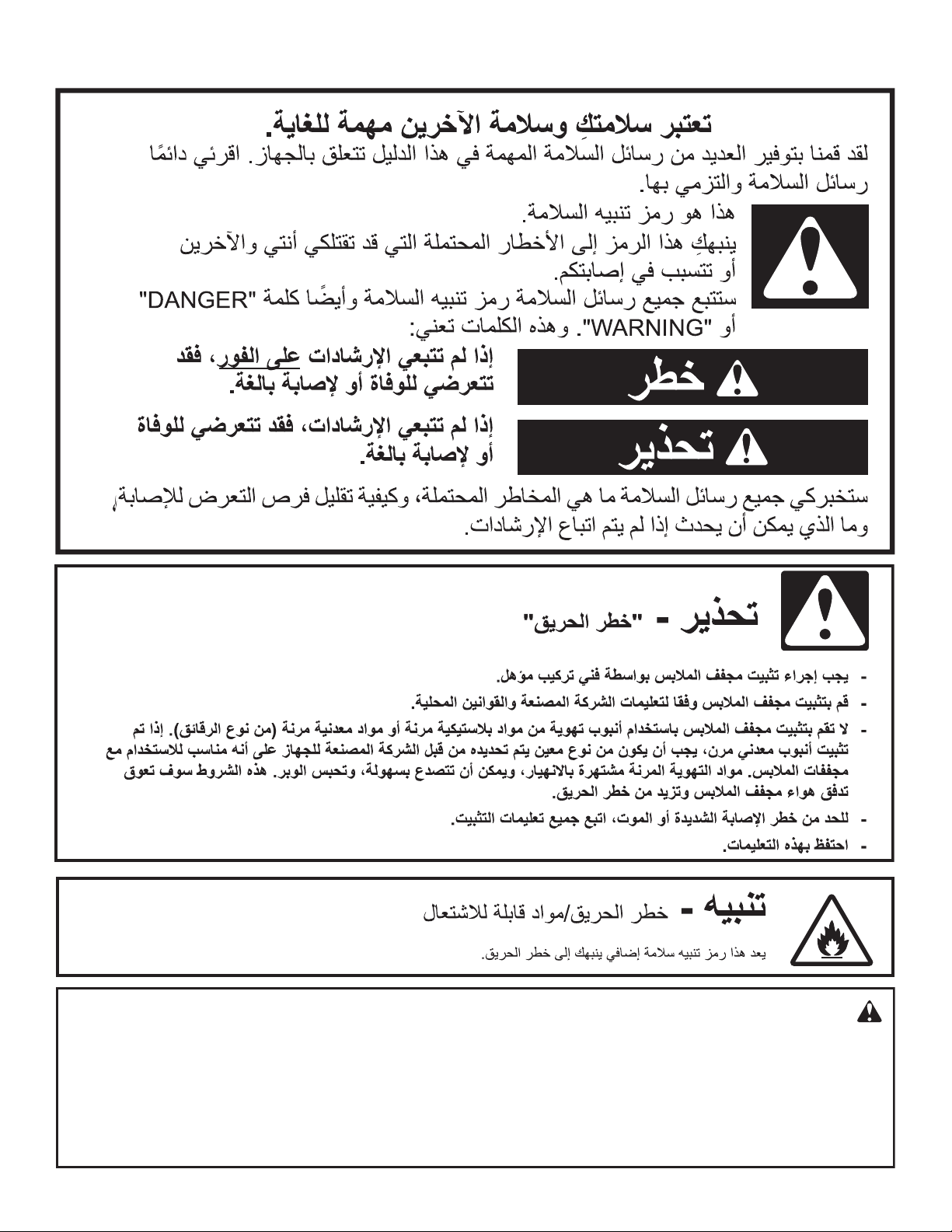
2
W11049661C
2
4
4
4
5
4KMEDC215
4KMEDC315
4KMEDC415
4KMEDC425
3LMEDC315
3LMEDC415
6
7
9
11