User Manual
USING THE REFRIGERATOR
Temperature Control
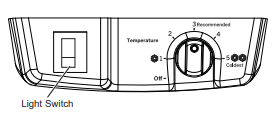
The temperature control adjusts the refrigerator from its warmest to coldest settings.
Your refrigerator will come with the recommended factory setting on "3". For colder temperature, turn the knob clockwise to either setting "4" or "5". For warmer temperature, turn the dial counter-clockwise to either setting "1" or "2". To turn off the cooling in both compartments, turn the knob counter-clockwise to setting "Off". Note that this does not shut off power to the refrigerator.
Garage Operation
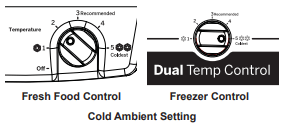
Models with dual temperature control have an adjustable freezer control and can be operated in locations with ambient temperatures between 38-110°F (3.3-43.3°C). For cold ambient conditions 38-54°F (3.3-12.2°C) the fresh food should be set to setting 2 to prevent food from freezing in the fresh food compartment, and the freezer setting should be adjusted to position 5 to prevent food from thawing in the freezer compartment.
Sabbath Mode
This product is capable of entering a Sabbath Mode. Sabbath mode requires that the control knob and light switch are operated at the same time. The light switch is located just to the left of the control knob. To enter
Sabbath Mode, turn the control knob to position 5, then hold down the light switch. While the light switch is held down, turn the control knob to position 3. Once the control knob is in position 3, release the light switch. When you release the light switch, the light will turn off and the product is in Sabbath mode. To exit
Sabbath mode, enter the same control knob/ light switch sequence used to enter Sabbath mode. If Sabbath mode is not exited manually, it will end automatically after 96 hours. If power is disconnected from the product while it is in Sabbath mode, it will remain in Sabbath mode after power is reconnected. Sabbath mode does not deactivate the icemaker, if present. The icemaker must be turned off manually by moving the icemaker switch to the off position. The icemaker switch is located on the icemaker in the freezer compartment.
Fresh Food Compartment Shelves
Shelf supports at various levels allow you to custom-space your shelves. Not all features are on all models.
Full-Width Shelves
Some models have a stationary tempered glass shelf or two steel wire stationary shelves. These shelves can be moved to another place in the fresh food compartment.
When placed correctly on the shelf supports, the shelf will stop before coming completely out of the refrigerator and will not tilt when you place food on it or remove food from it.
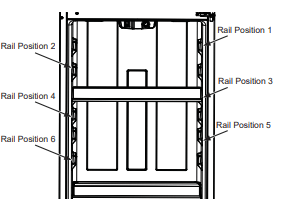
Pull glass shelves forward so the glass rests evenly on side rails. For units with glass shelves, rail positions 2 and 4/5 are recommended.
CAUTION
Do not clean glass shelves or covers with warm water when they are cold. Glass shelves and covers may break if exposed to sudden temperature changes or impact such as bumping or dropping. Tempered glass is designed to shatter into many small pieces if it breaks.
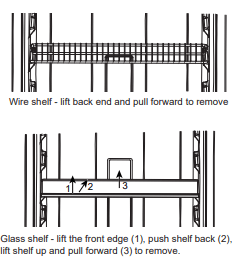
Freezer Compartment Shelves
When placed correctly on the shelf supports, the steel wire stationary shelves will stop before coming completely out of the freezer and will not tilt when you place food on it or remove food from it.
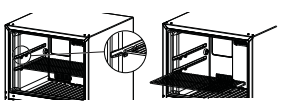
Some models have glass shelves.
CAUTION
Do not clean glass shelves or covers with warm water when they are cold. Glass shelves and covers may break if exposed to sudden temperature changes or impact such as bumping or dropping. Tempered glass is designed to shatter into many small pieces if it breaks.
Storage Drawers
Not all features are on all models.
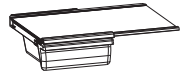
Snack Drawer
The snack drawer can be moved to the most useful location for your family's needs.
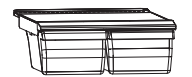
Fruit and Vegetable Drawers
Excess water that may accumulate in the bottom of the drawers should be emptied and the drawers wiped dry.
Drawer and Cover
Drawer Removal
Drawers can be removed easily by grasping the sides and lifting up slightly while pulling drawers past the stop location.
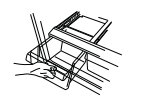
Cover Removal
- Remove the drawers.
- Reach in, push the back of glass cover up, and at the same time, pull it backward as far as it will come. Tilt it and take it out. Avoid cleaning the cold glass cover with hot water because the extreme temperature difference may cause it to break.
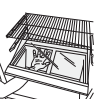
- Remove the drawer frame. (Always remove the glass cover before you take out the drawer frame.) Lift the frame off the supports at each side and back, pull it forward, tilt it and take it out.
To replace:
- Lower the frame until it rests on the supports at each side and back.
- Replace the glass cover, pushing its front edge firmly into the front frame channel and gently. lowering the back into place.
- Replace the drawers.
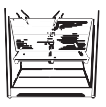
Automatic Icemaker (on some models)
Not all features are on all models.
WARNING Connect to potable water supply only.
A cold water supply is required for automatic icemaker operation. The water pressure must be between 40 and 120 psi (275-827 kilopascals).
CAUTION
Avoid contact with the moving parts of the ejector mechanism, or with the heating element (located on the bottom of the ice maker) that releases the cubes. Do not place fingers or hands on the automatic ice making mechanism while the refrigerator is available at extra cost. plugged in.
A newly-installed refrigerator may take 12-24 hours to begin making ice.
The ice maker will produce approximately 70-100 cubes in a 24-hour period, depending on the freezer compartment temperature, room temperature, number of door openings and other use conditions.
If the refrigerator is operated before the water connection is made to the ice maker, set the switch OFF.
When the refrigerator has been connected to the water supply, set the switch ON position.
The ice maker will fill with water when it cools to 15°F (-9°C). A newly-installed refrigerator may take 12 to 24 hours to begin making ice cubes.
Once the ice maker starts to make ice, it may take up to 48 hours to fill the bin, depending on the temperature settings and number of door openings.
You will hear a buzzing sound each time the ice maker fills with water.
NOTICE: Throw away the first few batches of ice to allow the water line to clear.
When the bin fills to the level of the feeler arm, the ice maker will stop producing ice.
It is normal for several cubes to be joined together.
If ice is not used frequently, old ice cubes will become cloudy, taste stale, shrink or fuse together.
Ice maker accessory kit:
Be sure nothing interferes with the sweep of the feeler arm.
If your refrigerator did not already come equipped with an automatic ice maker, an ice maker accessory kit is
This refrigerator will accept accessory icemaker kit IM-4D or IM-6D. Use instructions X supplied in the kit for assembly.
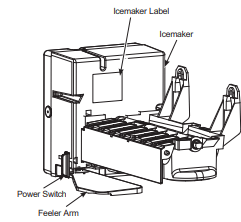
IMPORTANT: This refrigerator requires a red label icemaker. See above for the location of the label on the icemaker. If the icemaker that came with your kit does not have a red label, it will not function. In this case, please call 800.GE.CARES (in Canada 800.561.3344) for the correct icemaker.
Care And Cleaning
Cleaning the Outside
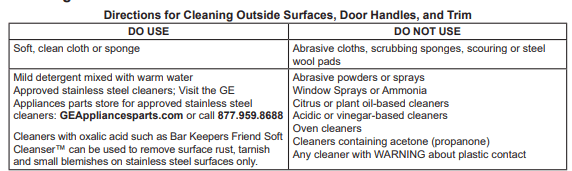
Cleaning the Inside
To help prevent odors, leave an open box of baking soda in the fresh food and freezer compartments.
Unplug the refrigerator before cleaning. If this is not practical, wring excess moisture out of sponge or cloth when cleaning around switches, lights or controls.
Use warm water and baking soda solution-about a tablespoon (15 ml) of baking soda to a quart (1 liter) of water. This both cleans and neutralizes odors. Rinse and wipe dry.
After cleaning the door gaskets, apply a thin layer of petroleum jelly to the door gaskets at the hinge side.
This helps keep the gaskets from sticking and bending out of shape.
CAUTION
Do not clean glass shelves or covers with warm water when they are cold. Glass shelves and covers may break if exposed to sudden temperature changes or impact such as bumping or dropping.
Tempered glass is designed to shatter into many small pieces if it breaks. Do not wash any plastic refrigerator parts in the dishwasher.
Moving the Refrigerator
Be careful when moving the refrigerator away from the wall. All types of floor coverings can be damaged, particularly cushioned coverings and those with embossed surfaces.
Turn the leveling legs at each front corner of the refrigerator counterclockwise until the rollers support the refrigerator. Pull the refrigerator straight out and return it to position by pushing it straight in. Moving the refrigerator in a side direction may result in damage to the floor covering or refrigerator.
When pushing the refrigerator back, make sure you don't roll over the power cord or ice maker supply line (on some models).
After rolling the refrigerator back into place, turn the legs clockwise until the legs again bear the weight of the refrigerator.
Replacing the Lights
LED lighting is located at the top center of the fresh food compartment.
An authorized technician will need to replace the LED light.
If this assembly needs to be replaced, call GE Appliances Service at 1.800.432.2737 in the United States or 1.800.561.3344 Canada.
Preparing for Vacation
For long vacations or absences, remove food and unplug the refrigerator. Move the temperature control dial to the OFF position, and clean the interior with a baking soda solution of one tablespoon (15 ml) of baking soda to one quart (1 liter) of water. Leave the doors open.
Move the switch to the OFF position on the power switch model, and shut off the water supply to the refrigerator.
If the temperature can drop below freezing, have a qualified servicer drain the water supply system (on some models) to prevent serious property damage due to flooding.
Preparing to Move
Secure all loose items such as grille, shelves and drawers by taping them securely in place to prevent damage. To prevent the doors from opening while moving, secure them to the case with tape. Be sure the refrigerator stays in an upright position during moving.
Installation Instructions
INSTALLING THE WATER LINE (icemaker & dispenser models)
WHAT YOU WILL NEED
- Copper or SmartConnectTM Refrigerator Tubing kit, 1/4" outer diameter to connect the refrigerator to the water supply. If using copper, be sure both ends of the tubing are cut square.
To determine how much tubing you need: measure the distance from the water valve on the back of the refrigerator to the water supply pipe. Then add 6’ (1.8 m). Be sure there is sufficient extra tubing (about 6' [1.8m] coiled into 2 turns about 10" [25 cm] diameter) to allow the refrigerator to move out from the wall after installation.
SmartConnectTM Refrigerator Tubing Kits are available in the following lengths:
8' (2.8mm) - WX08X10006
15' (4.6 m) - WX08X10015
25' (7.6 m)- - WX08X10025
Be sure that the kit you select allows at least 6’ (1.8 m) as described above.
NOTE: The only GE Appliances approved plastic tubing is that supplied in SmartConnect™
Refrigerator Tubing kits. Do not use any other plastic water supply line because the line is under pressure at all times. Certain types of plastic will crack or rupture with age and cause water damage to your home.
- A GE Appliances water supply kit (containing tubing, shutoff valve and fittings listed below) is available at extra cost from your dealer or from
- Parts and Accessories, 877.959.8688 (in Canada 1.800.661.1616).
- A cold water supply. The water pressure must be between 20 and 120 p.s.i. (138-827 kPa).

- Power drill.
- 1/2" or adjustable wrench.
- Straight and Phillips blade screwdriver.

- Two 1/4" outer diameter compression nuts and 2 ferrules (sleeves) to connect the copper tubing to the shutoff valve and the refrigerator water valve.
- If you are using a SmartConnect™ Refrigerator Tubing kit, the necessary fittings are preassembled to the tubing.
- If your existing copper water line has a flared fitting at the end, you will need an adapter (available at plumbing supply stores) to connect the water line to the refrigerator OR you can cut off the flared fitting with a tube cutter and then use a compression fitting. Do not cut formed end from SmartConnect™ Refrigerator tubing

- Shutoff valve to connect to the cold water line. The shutoff valve should have a water inlet with a minimum inside diameter of 5/32" at the point of connection to the COLD WATER LINE. Saddle-type shutoff valves are included in many water supply kits. Before purchasing, make sure a saddle-type valve complies with your local plumbing codes.
1 SHUT OFF THE MAIN WATER SUPPLY AND UNPLUG REFRIGERATOR
Turn on the nearest faucet (counterclockwise) long enough to clear the line of water.
2 CHOOSE THE VALVE LOCATION
Choose a location for the valve that is easily accessible. It is best to connect into the side of a vertical water pipe. When it is necessary to connect into a horizontal water pipe, make the connection to the top or side, rather than at the bottom, to avoid drawing off any sediment from the water pipe.

3 DRILL THE HOLE FOR THE VALVE
Drill a 1/4" hole in the water pipe (even if using a self-piercing valve), using a sharp bit. Remove any burrs resulting from drilling the hole in the pipe. Take care not to allow water to drain into the drill. Failure to drill a 1/4" hole may result in reduced ice production or smaller cubes.

4 FASTEN THE SHUTOFF VALVE


Fasten the shutoff valve to the cold water pipe with the pipe clamp.
Tighten the clamp screws until the sealing washer begins to swell.
NOTE: Commonwealth of Massachusetts Plumbing Codes 248CMR shall be adhered to. Saddle valves are illegal and use is not permitted in Massachusetts. Consult with your licensed plumber.
5 ROUTE THE TUBING
Route the tubing between the cold water line and the refrigerator.
Route the tubing through a hole drilled in the wall or floor (behind the refrigerator or adjacent base cabinet) as close to the wall as possible.
6 CONNECT THE TUBING TO THE VALVE
Place the compression nut and ferrule (sleeve) for copper tubing onto the end of the tubing and connect it to the shutoff valve.
Make sure the tubing is fully inserted into the valve. Tighten the compression nut securely.
For plastic tubing from a SmartConnect™Refrigerator Tubing kit, insert the molded end of the tubing into the shutoff valve and tighten compression nut until it is hand tight, then tighten one additional turn with a wrench. Over tightening may cause leaks.

NOTE: Commonwealth of Massachusetts Plumbing Codes 248CMR shall be adhered to. Saddle valves are illegal and use is not permitted in Massachusetts. Consult with your licensed plumber.
7 FLUSH OUT THE TUBING
Turn the main water supply on and flush out the tubing until the water is clear.
Shut the water off at the water valve after about one quart (1 liter), or 2 minutes, of water has been flushed through the tubing.

8 CONNECT THE TUBING TO THE REFRIGERATOR
NOTES:
- Before making the connection to the refrigerator, be sure the refrigerator power cord is not plugged into the wall outlet.
- We recommend installing a water filter (GXRLQ, available on gewaterfilters.com or 877.959.8688) if your water supply has sand or particles that could clog the screen of the refrigerator's water valve. Install it in the water line near the refrigerator. If using SmartConnect™ Refrigerator Tubing kit, you will need an additional tube (WX08X10002) to connect the filter. Do not cut plastic tube to install filter.
WARNING To reduce the risk of death or electric shock, you must follow these instructions:
- Unplug the refrigerator before removing any panels.
- Do not damage any wiring while the panel is removed.
- Replace all parts and panels before plugging the refrigerator back in.
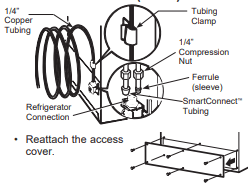
- Place the compression nut and ferrule (sleeve) onto the end of the tubing as shown. On SmartConnect™ Refrigerator Tubing kit, the nuts are already assembled to the tubing.
- Insert the end of the tubing into the water valve connection as far as possible. While holding the tubing, tighten the fitting.
- Remove the access cover.
-114985.png)
- Remove the plastic flexible or screw cap from the water valve (refrigerator connection) and discard.
- For plastic tubing from a SmartConnect™ Refrigerator Tubing kit, insert the molded end of the tubing into the shutoff valve and tighten compression nut until it is hand tight, then tighten one additional turn with a wrench. Overtightening may cause leaks.
- Fasten the tubing into the clamp provided to hold it in a vertical position. You may need to pry open the clamp.
9 TURN THE WATER ON AT THE SHUTOFF VALVE
Tighten any connections that leak.

10 INSTALLING THE REFRIGERATOR
Plug in the refrigerator.
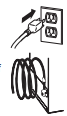
Arrange the coil of tubing so that it does not vibrate against the back of the refrigerator or against the wall. Push the refrigerator back to the wall.
11 START THE ICE MAKER
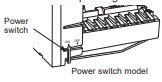
Set the ice maker power switch to the ON position. The ice maker will not begin to operate until it reaches its operating temperature of 15°F (-9°C) or below. It will then begin operation automatically.
INSTALLING THE DOOR HANDLE
1A PLASTIC HANDLE
Install the handle fastener into the hole on the freezer and fresh food doors. The fasteners correspond with the handle side (the side opposite the hinge).
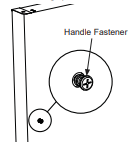
1B STAINLESS STEEL HANDLE
Attach plastic bushing to the door with the screw on both freezer and fresh food doors. The fasteners correspond with the handle side (the side opposite the hinge).
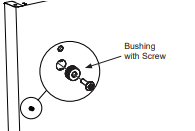
2 HANDLE INSTALLATION
- Attach handle to freezer door by sliding handle up onto plastic bushing or fastener with the screws at the bottom of the handle.
- Attach handle to fresh food door by sliding handle down onto plastic bushing or fastener with the screws at top of handle.
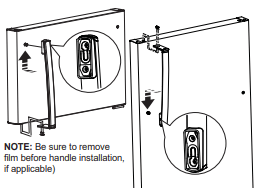
NOTE: Be sure to remove film before handle installation, if applicable)
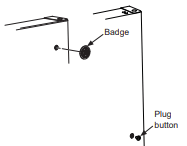
3 BADGE AND PLUG BUTTON INSTALLATION
- Place a plug button on the opposite side of the fresh food door across from the handle.
- Remove the backing on the GE Appliances badge and carefully place it in the hole opposite the handle on the freezer door. Be sure the badge is oriented the correct way before applying it to the door.
REVERSING THE DOOR SWING
WARNING Follow all steps when reversing the door swing. Failure to follow these instructions, leaving off parts, or overtightening screws, can lead to the door falling off and result in injury and property damage.
IMPORTANT NOTES:
- When reversing the door swing:
- Read the instructions all the way through before starting.
- Handle parts carefully to avoid scratching paint.
- Set screws down by their related parts to avoid losing them.
- Provide a non-scratching work surface for the doors.
IMPORTANT: Once you begin, do not move the cabinet until door-swing reversal is completed.
These instructions are for changing the hinges from the right side to the left side-if you ever want to change the hinges back to the right side, follow these same instructions and reverse all references to left and right.
CAUTION
Lifting Hazard
The fresh food and freezer doors are heavy. Use both hands to secure the doors before lifting.
1 BEFORE YOU START
- Unplug the refrigerator from its electrical outlet.
- Empty all door shelves, including the dairy compartment.
CAUTION
Do not let either door drop to the floor. To do so could damage the door stop.
2 REMOVE THE FREEZER DOOR
- Tape the door shut with masking tape.
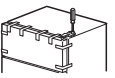
- Remove the screws that hold the top hinge to the cabinet.
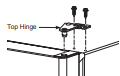
- Lift the hinge straight up to free the hinge pin from the socket in the top of the door and set it aside, along with its screws.
- Remove the tape. Lift it off the center hinge pin.

- Set the door on a non-scratching surface with the outside up.
- Transfer the 2 screws from the opposite side of the cabinet to the screw holes vacated by the top hinge removal.
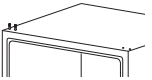
WARNING Follow all steps when reversing he door swing. Failure to follow these instructions, eaving off parts, or overtightening screws, can lead o the door falling off and result in injury and property amage.
3 REMOVE THE FRESH FOOD DOOR
- Tape the door shut with masking tape.

- Unscrew the center hinge pin and remove it from its socket. Be careful not to lose the center hinge and washer.
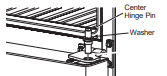
- Remove the tape and tilt the door away from the cabinet. Lift the door from the pin in the bottom hinge. (If the plastic washer sticks to the door bottom, put it back on the hinge.)
- Set the door outside-up on a non-scratching surface.
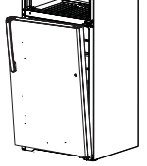
4 REVERSING THE HARDWARE
1. Interchange the hinge and screws at top right with screws at top left of cabinet. Do not tighten screws on hinge side.
NOTE: Some hinges have 4 holes. Which holes you use for installing depends on which side you install the hinge.
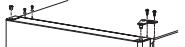
The outer edge of the hinge should be parallel to the edge of the case for correct installation.
2. Remove the three screws holding the center hinge to the cabinet.
3. Transfer the three screws from the opposite side of the cabinet to the screw holes vacated by the center hinge removal.
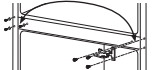
4. Reattach the center hinge with all three screws on the left side of the cabinet.
NOTE: The center hinge must be turned over as shown when mounted on the left side.
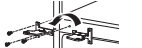
5. Remove the screws holding the bottom hinge to the cabinet. Move the bottom hinge from the right to left side of the cabinet. Switch the hinge pin to the opposite side of the hinge and reinsert the screws.
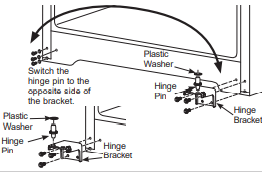
5 REVERSING THE DOOR HANDLES
- Remove handle screws from the top of fresh food door. Remove handle screws from the bottom of freezer door.
- Remove door handle on fresh food door by sliding the handle up off of the fastener (Plastic Handle) or plastic bushing (Stainless Steel Handle). Remove door handle on freezer door by sliding the handle down off of the fastener (Plastic Handle) or plastic bushing (Stainless Steel Handle).
- Change places between the handle fastener or plastic bushing and plug button on door front.
- Move the plug buttons on top and front of the door to fill the now vacant holes.
- Transfer the door stop on the bottom of the door.
- Attach handle to fresh food door by sliding handle down onto fastener (Plastic Handle) or plastic bushing (Stainless Steel handle) and with screws at top of handle.
- Attach handle to freezer door by sliding handle up onto fastener (Plastic Handle) or plastic bushing (Stainless Steel handle) and with screws at bottom of handle.
- Attach badge on freezer door opposite the handle.
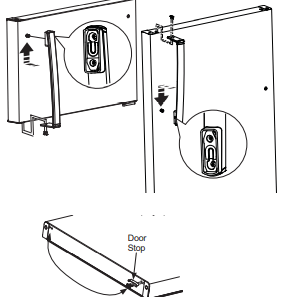
6 RE-HANGING THE DOORS
1. Re-hang the fresh food door
1.1 Lower the fresh food door onto the bottom hinge pin. Be sure the washer is in place on the pin.
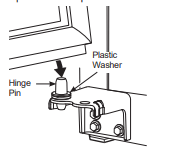
1.2 Tilt the door towards the cabinet. As the door is brought into position, align the socket in the door with the hole in the center hinge. Place the center hinge pin into the hole in the center hinge and tighten. Make sure the washer is on the top of the hinge pin.
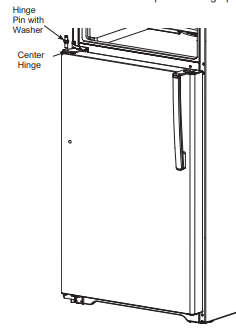
2. Re-hang the freezer door
2.1 Lower the freezer door onto the center hinge pin. Be sure the washer is in place on the pin.
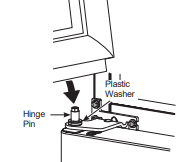
2.2 Tilt the door towards the cabinet, lifting the top hinge so the pin fits into the socket on the top of the door.
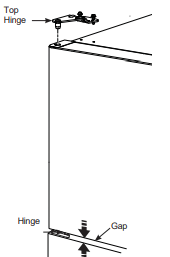
2.3 Make sure the door is slightly above the top of the cabinet and the gap between the doors is even across the front. Tighten the top hinge screws. Do not over-tighten these screws. Tighten them until they are just snug, and then turn them another one-half turn.
TROUBLESHOOTING TIPS
Normal Operating Conditions.
Newer refrigerators sound different from older refrigerators
Modern refrigerators have more features and use newer technology
Do you hear what I hear? These conditions are normal.

- The new high efficiency compressor may run faster and longer than your old refrigerator and you may hear a high-pitched hum or pulsating sound while it is operating.
- You may hear a whooshing sound when the doors close. This is due to pressure equalizing within the refrigerator.
CLICKS, POPS, CRACKS and CHIRPS
- You may hear cracking or popping sounds when the refrigerator is first plugged in. This happens as the refrigerator cools to the correct temperature.
- Expansion and contraction of cooling coils during and after defrost can cause a cracking or popping sound.
- The compressor may cause a clicking or chirping sound when attempting to restart (this could take up to 5 minutes)
- On models with an ice maker, after an ice making cycle, you may hear the ice cubes dropping into the ice bucket.

- You may hear the fans spinning at high speeds.This happens when the refrigerator is first plugged in, when the doors are opened frequently or when a large amount of food is added to the refrigerator or freezer compartments. The fans are helping to maintain the correct temperatures.
WATER SOUNDS

- The flow of refrigerant through the cooling coils may make a gurgling noise like boiling water.
- Water dropping on the defrost heater can cause a sizzling, popping or buzzing sound during the defrost cycle.
- A water dripping noise may occur during the defrost cycle as ice melts from the evaporator and flows into the drain pan.
- Closing the door may cause a gurgling sound due to pressure equalization.
The automatic ice maker in my refrigerator will produce ice when the refrigerator is plugged in to a power receptacle. MYTH
The refrigerator must be connected to water, and the ice maker must be turned on. Make sure the ice maker is turned on, only after the water line is connected and water is turned on. The ice maker can be turned off by switching it to the OFF position.
The freezer must be 15 degrees or colder before the icemaker will produce ice. Please allow at least 24 hours for the refrigerator to pull down and the unit's temperature to stabilize.
I will never see frost inside the freezer compartment. MYTH
Frost inside the freezer typically indicates that the door is not properly sealed, or has been left open. If frost is found, clear the frost using a plastic spatula and towel, then check to ensure that no food packages or containers are preventing the freezer door from closing. To help reduce to the potential for frost please make sure there is proper clearance to the air supply and vents in the freezer to improve circulation. Always cover food before loading into the refrigerator, moisture from open containers can add to the frost load.
Refrigerator door handles can be easily tightened.TRUE
If door handles are loose or have a gap, the handle can be adjusted with set screws located on the ends of the handles.
After starting the ice maker throw away 24 hours of ice production. TRUE
To avoid issues with odor and taste the first batch of ice should be discarded
Door removal is always required for installation. MYTH
Doors should only be removed when necessary to prevent damage from passage way or access to final location. If doors are removed please review Reversing the Door Swing section for re-hang procedure.
There is an adjustment to rear wheels.MYTH
Front leveling legs are adjustable and should be used to balance the refrigerator.
Leveling legs are used to make initial fresh food door adjustment. There should be approximately a % fall from the front to back to ensure that the doors always close.
Any All-Purpose cleaner can be used to clean my refrigerator. MYTH
All-purpose cleaners are not recommended for use on the refrigerator.
Do not use wax, polish, ammonia, bleach, or other products containing chlorine on for any surfaces. Clean with a cloth dampened with soapy water. Dry with a soft cloth.
The stainless steel doors can be cleaned with a commercially available stainless steel cleaner. Cleaners with oxalic acid such as Bar Keepers Friend Soft Cleanser™ will remove surface rust, tarnish and small blemishes. Use only a liquid cleanser free of grit and rub in the direction of the brush lines with a damp soft sponge. Do not use appliance wax or polish on the stainless steel.
Gaskets will last longer with regular cleaning and maintenance. TRUE
Clean gaskets with warm soapy water. Make sure all folds are clean and dry after cleaning. Make sure flanges are clear of any grit or grime. After cleaning the door gaskets, apply paraffin wax or petroleum jelly to the door gaskets and hinges at the hinge side. This helps keep the gaskets from sticking and bending out of shape.
Doors may be shipped with protective film that has to be removed before use.TRUE
Smooth finished doors (Stainless, Slate, Gloss Black and Gloss White, or Silver Metallic) will have a clear plastic film on the door that must be removed after install.