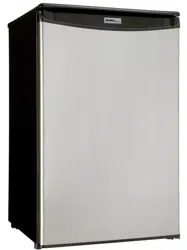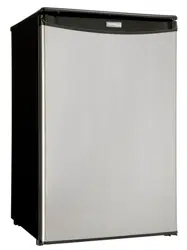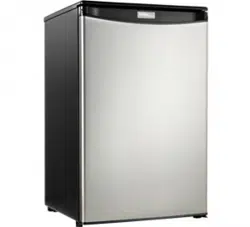
MODEL • MODELO
DAR044A4BSLDDU
ALL REFRIGERATOR
TODA REFRIGERADORA
OWNER’S USE AND CARE GUIDE
GUÍA DE UTILIZACIÓN Y CUIDADO PARA EL PROPIETARIO
•
•
14.02.14
TODA REFRIGERADORA
Guía de utilización y cuidado para el propietario ..............
• Instrucciones de seguridad importantes
• Instrucciones de instalación
• Características
• Operación
• Cuidado y mantenimiento
• Diagnósticos de problemas
• Garantia
CONTENTS
CAUTION
Read and follow all safety rules and
operating instructions before first use of this
product.
9-16
Lea y observe todas las reglas de seguridad
y las instrucciones de operación antes
de usar este producto por primera vez.
PRECAUCIÓN
ALL REFRIGERATOR
Owner’s Use and Care Guide ..............................................
• Safety Instructions
• Installation Instructions
• Operation Instructions
• Care and Maintenance
• Troubleshooting
• Warranty
1-8
ÍNDICE
READ ALL SAFETY INFORMATION BEFORE USING
IMPORTANT SAFETY INFORMATION
GROUNDING INSTRUCTIONS
This appliance must be grounded. In the event of an electri-
cal short circuit, grounding reduces the risk of electrical
shock by providing an escape wire for the electrical
current.
This appliance is equipped with a cord having a grounding
wire with a grounding plug. The plug must be plugged into an
outlet that is properly installed and grounded.
DO NOT USE AN EXTENSION CORD
Use an exclusive wall outlet. Do not connect your refrigera-
tor to extension cords or together with any other appliance in
the same wall outlet. Do not splice the cord.
Before connecting the appliance to an electrical power
supply, let it stand for about 2 hours, which will reduce the
possibility of malfunctions in the cooling system due to trans-
port handling.
Clean the appliance thoroughly, especially in the interior (See
“Care and Maintenance” section).
READ INSTRUCTIONS BEFORE USE
These instructions for use are intended for the user. They
describe the appliance and the correct operating procedures
for safe use.
BEFORE FIRST USE
WARNING:
Improper use of the grounding plug can result in a risk
of electric shock. Consult a qualified electrician or
serviceman if the grounding instructions are not com-
pletely understood or if doubt exists as to whether the
appliance is properly grounded.
1
SAVE THESE INSTRUCTIONS!
Risk of fire or explosion due to puncturing of refrigerant tubing. Do not use sharp objects to aid in defrost.
Please handle with care. Keep flammable materials and vapors such as gasoline away from the refrigera-
tor. Use nonflammable cleaner.
Disposal of this unit should be in accordance with federal and local regulations.
WARNING! EXPLOSION HAZARD!
An empty refrigerator is a very dangerous attraction to children. Remove the gasket, latches, lids or doors
from unused appliances, or take some other action that will guarantee the appliance harmless.
DANGER: Risk of child entrapment. Before you throw away your old refrigerator:
• Take off the doors.
• Leave the shelves in place so that children may not easily climb in.
DON’T WAIT! DO IT NOW!
IMPORTANT WARNING!
READ ALL SAFETY INFORMATION BEFORE USING
IMPORTANT SAFETY INFORMATION
SAVE THESE INSTRUCTIONS!
When throwing away an old fridge equipped with a door lock
that cannot be opened from the inside, make sure that the
lock is removed, disabled or destroyed before discarding.
This will make it impossible for children to accidentally lock
themselves inside the appliance and suffocate.
The appliance must be properly connected to an electrical
power supply (See: “Connection to Power Supply”.)
If the food has a strange smell or color throw it away
because it is very likely that it is spoiled and therefore is
dangerous to consume.
Always disconnect the appliance from the power supply
before cleaning the appliance and replacing the light bulb.
WARNING: Repairs should be performed by
qualified service personnel only.
Do not defrost the appliance with other electric appliance (for
example a hair dryer) and never attempt to scrape/remove
ice/frost with sharp objects. Use only enclosed tools or tools
recommended by the manufacturer.
The rating plate containing Model No/Serial No and other
technical data specific to this unit, is located either inside the
appliance or outside on the rear wall.
DISPOSING WORN OUT
APPLIANCES
The refrigerator system of the appliance is filled with refrig-
erant and insulating substances which should be separately
treated and processed. Call your nearest authorized service
agent or specialized servicing center. If you are unable to
locate one, contact your local authorities or your distributor.
Be careful not to damage the tubes on the rear wall of the
appliance (danger of pollution.)
SAFETY PRECAUTIONS
2
Try not to open the door too often, especially when the
weather is hot and humid. Once you open the door, close it
as soon as possible.
Every now and then check if the appliance is sufficiently ven-
tilated (adequate air circulation behind the appliance.)
Set the thermostat from cooler to warmer settings whenever
possible (depending on how loaded the appliance is, ambient
temperatures etc.)
Before loading the appliance with packages of hot
foods, make sure that they are cooled to ambient
temperature. (soups)
Ice and frost layers increase energy consumption, so clean
the appliance as soon as the frost layer is 3-5mm thick.
If the gasket is damaged or the door seal is poor, energy
consumption is substantially higher. To restore efficiency,
replace the gasket.
Always consider instructions stated in sections ”Choosing the
right location” and “Energy Saving Tips”, otherwise the
energy consumption is substantially higher.
ENERGY SAVING TIPS
INSTALLATION INSTRUCTIONS
Remove exterior and interior packagings, wipe the outside thoroughly with a soft dry cloth and the inside with a wet, lukewarm
cloth. Avoid placing the unit in a narrow recess or near any heat source, direct sunlight, or moisture. Let air circulate freely
around the unit. Keep the rear of the refrigerator 5 inches away from the wall.
1) Select a place with a strong, level floor.
2) Allow 5 inches of space between the back of the refrigera-
tor and any adjacent wall. Allow 2 inches (minimum) all
around the appliance.
3) Avoid direct sunlight and heat. Direct sunlight may affect
the acrylic coating. Heat sources nearby will cause higher
electricity consumption.
4) Avoid very moist places. Too much moisture in the air will
cause frost to form very quickly on the evaporator, and
your refrigerator will have to be defrosted more frequently.
CHOOSING THE RIGHT LOCATION
INSTALLATION
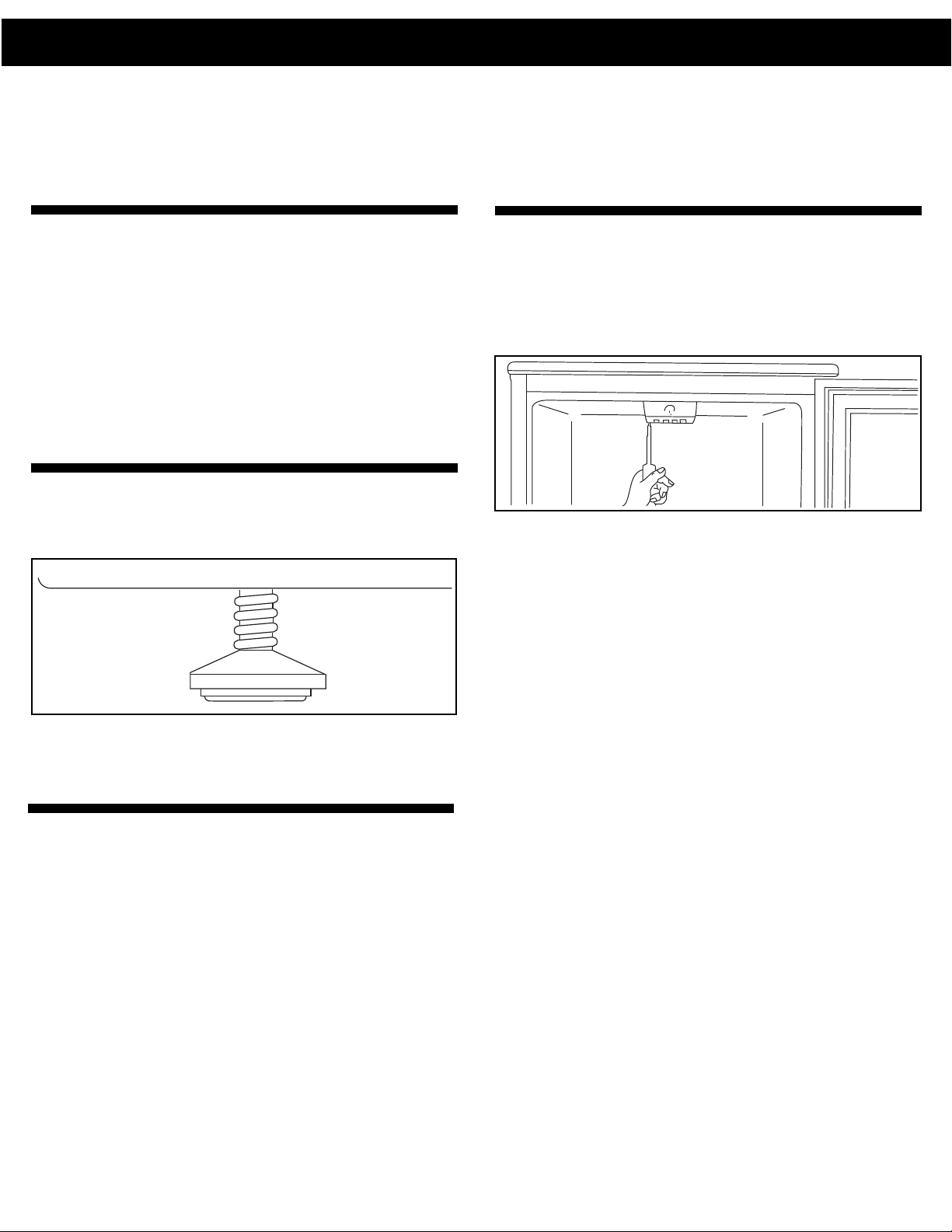
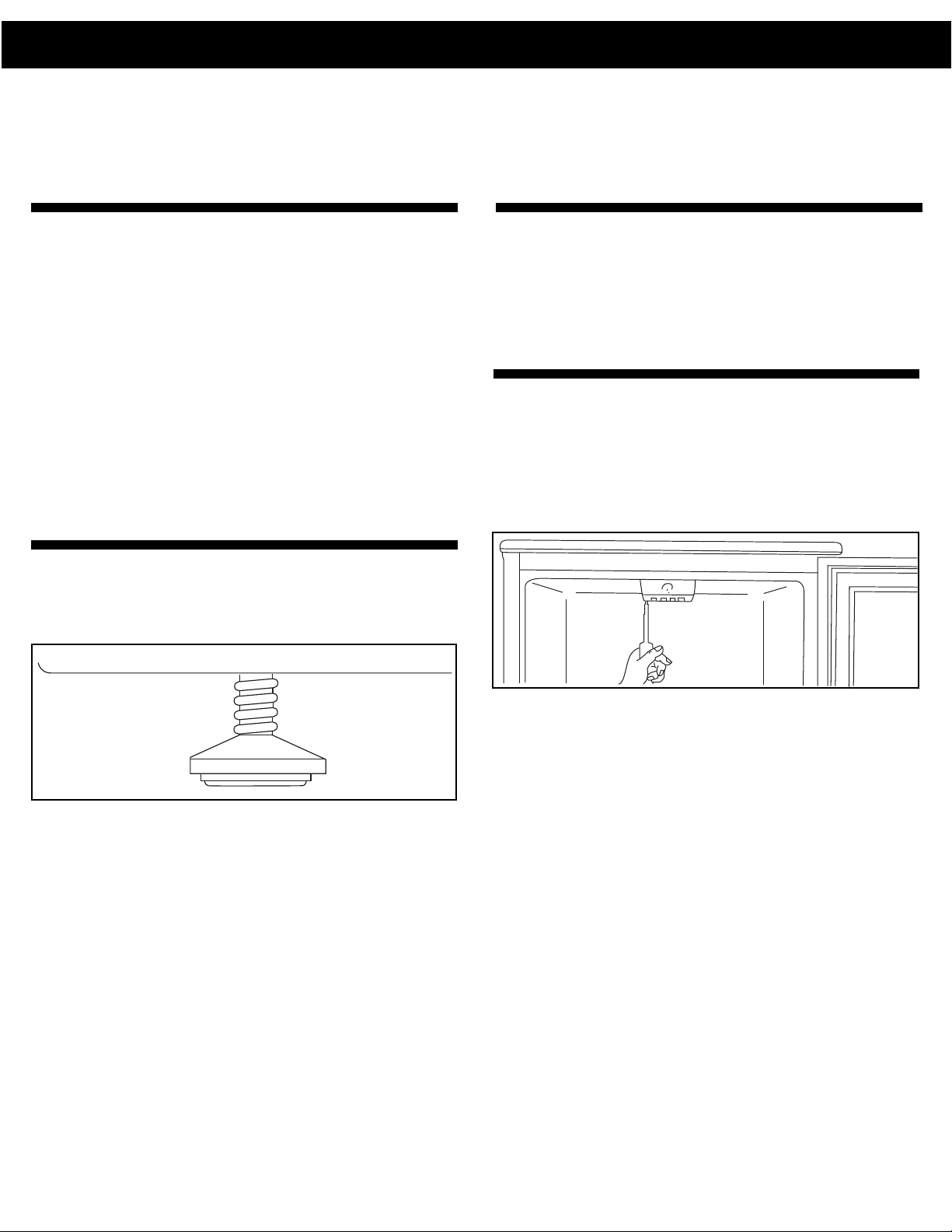
Place the appliance firmly on a solid base. Some appliances
have adjustable feet on the front side; use them to level the
appliance.
CONNECTION TO POWER
SUPPLY
Connect the appliance power cord to a properly grounded
wall outlet. The required nominal voltage and frequency are
indicated on the rating plate (inside the unit or on the exterior
rear wall of the unit.)
BULB REPLACEMENT
Before replacing the light bulb disconnect the appliance from
the power supply. Using a phillips screwdriver, remove the
screw located on the center side of the light cover. Pull the
light cover straight down. Replacement light bulb must be the
same wattage as the original bulb (15 watts only.) Replace
cover in opposite order of removal.
3
INSTALLATION INSTRUCTIONS
FEATURES
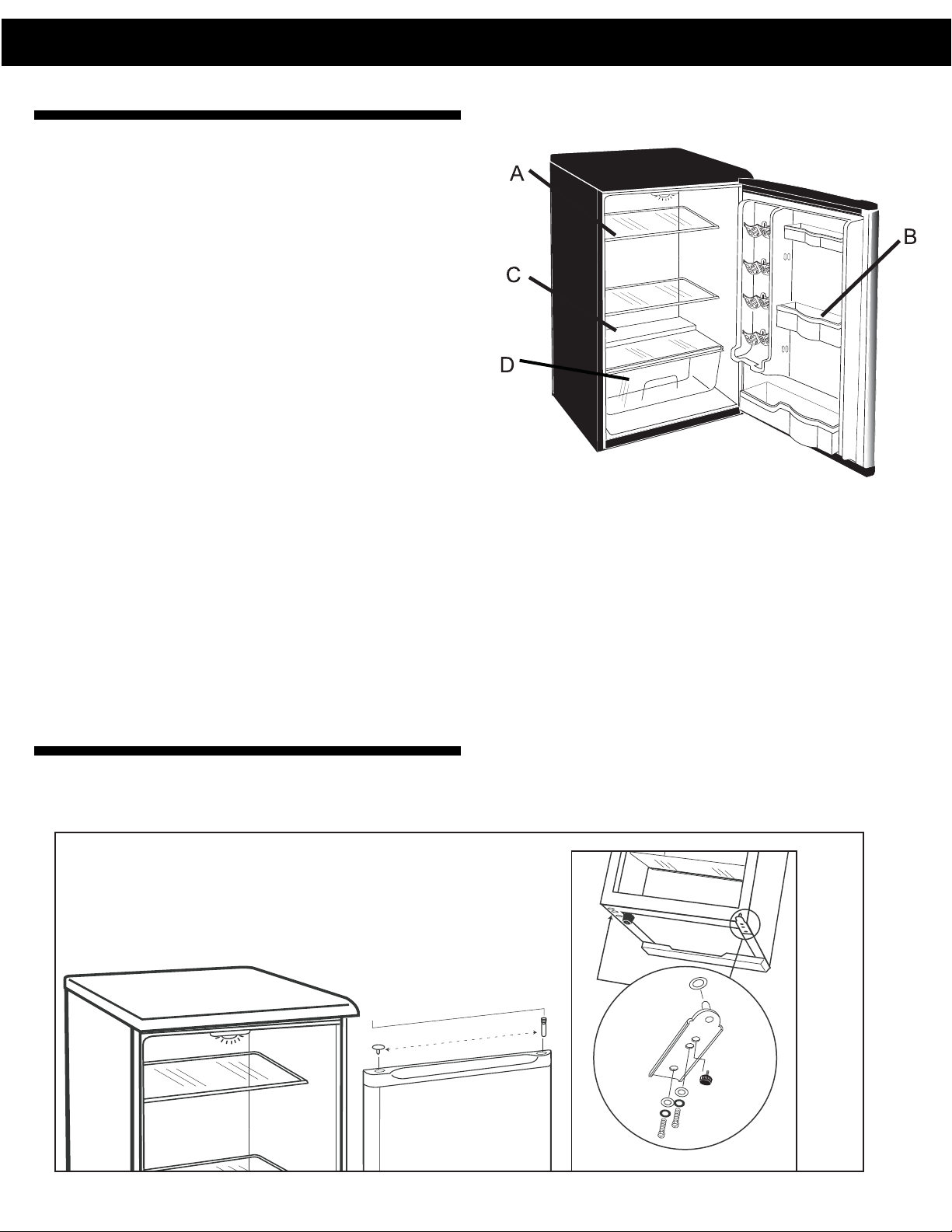
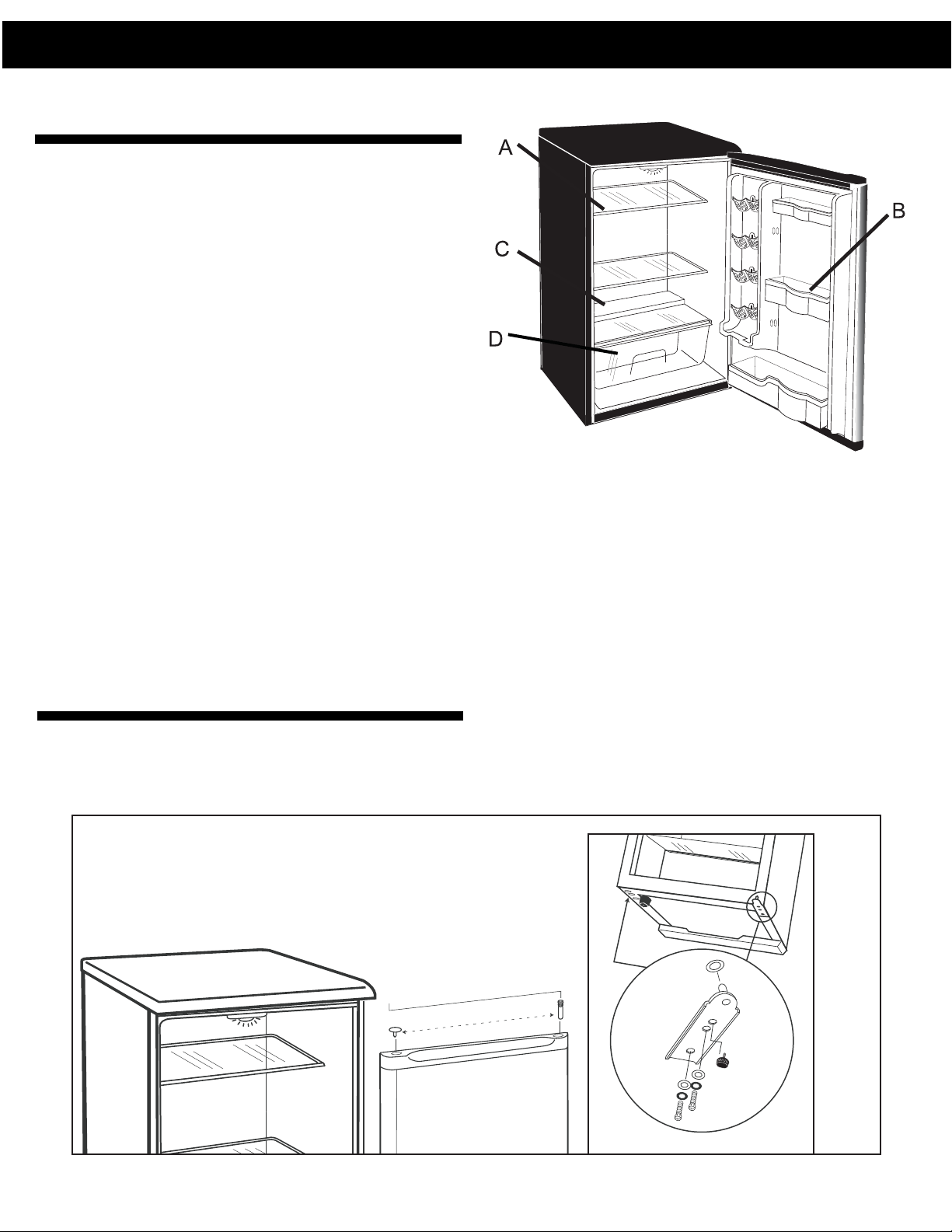
A) Slide Out Glass Shelves
(Number and type of shelves depends on the model.) Shelf
can be arranged on any of the rails inside the appliance. It is
protected against being pulled out accidentally. If you want to
remove a shelf, slightly lift up the front part and pull it out.
Perishable foods should be stored towards the back/rear of
the shelves.
B) Door Liner
The door liner consists of various shelves or holders used for
storing eggs, cheese, butter and yogurt as well as other
smaller packages, tubes, cans etc. The lower shelf is used
for storing large bottles.
C) Defrost Water Outlet
The interior of the refrigerator is cooled with a cooling plate
mounted in the rear wall. Under the plate there is a channel
and an outlet for defrost water. Regularly check the defrost
water outlet and the drain channel for blockage. They should
always be kept free and clear of food particles. If the drain
outlet does become clogged, use plastic straw to clear it.
D) Fruit and Vegetable crisper
The crisper drawer is on the bottom of the appliance under
the glass shelf. It provides adequate humidity which is
beneficial to fruits and vegetables (less dehydration.)
CHANGING THE DIRECTION OF
THE DOOR SWING
4
If you find the direction of opening the door on your appliance inconvenient, you can change it. Holes on the opposite side
have already been prepared in the factory. See figure below for a guide to the components that must be removed and
switched to the other side.
OPERATING INSTRUCTIONS
STORING FRESH FOODS
Proper use of the appliance, adequately packed food, correct
temperature and making hygienic precautions will substantial-
ly influence the quality of the food stored.
Foods to be stored in the refrigerator should be properly
packed so as to prevent mixing various moisture degrees
and odors (in polyethylene bags or sheets, aluminum foil,
wax paper, or stored in covered containers or bottles.)
Before storing food in the refrigerator, remove excessive
packaging (like yogurt in multi-package.)
Pack systematically and make sure that foodstuffs do not
touch each other (various odors may mix.) Assure adequate
air circulation around packages.
Never store flammable, volatile or explosive
substances.
Beverages with high alcohol percentage should be stored in
tightly sealed bottles in a vertical position.
Food should not touch the rear wall of the refrigerator.
Foods should be allowed to reach room temperature before
storing.
Crispy and delicate foods should be stored in the coldest
parts of the refrigerator.
Try not to open the door too often.
To test temperature set the thermostat gradually so as to
avoid freezing of foods. Use a thermometer and measure the
temperature in the individual compartments. Place the ther-
mostat in a glass vessel filled with water. Temperature read-
ings are most realiable a few hours after a steady state condi-
tion is reached.
Some organic solutions like volatile oils in lemon and orange
peel, acid in butter etc. can cause damage when they contact
plastic surfaces or gaskets for long periods of time.
Unpleasant odors inside the refrigerator are a sign that some-
thing is wrong with the food or that your refrigerator needs
cleaning. Unpleasant odors can be eliminated or reduced by
washing the interior of the refrigerator with mild solution of
water and vinegar. We also recommend using activated car-
bon filters to clean the air or to neutralize odors.
If you are planning a long vacation, make sure to remove
perishable articles of food from the appliance before you
leave.
TEMPERATURE SELECTION
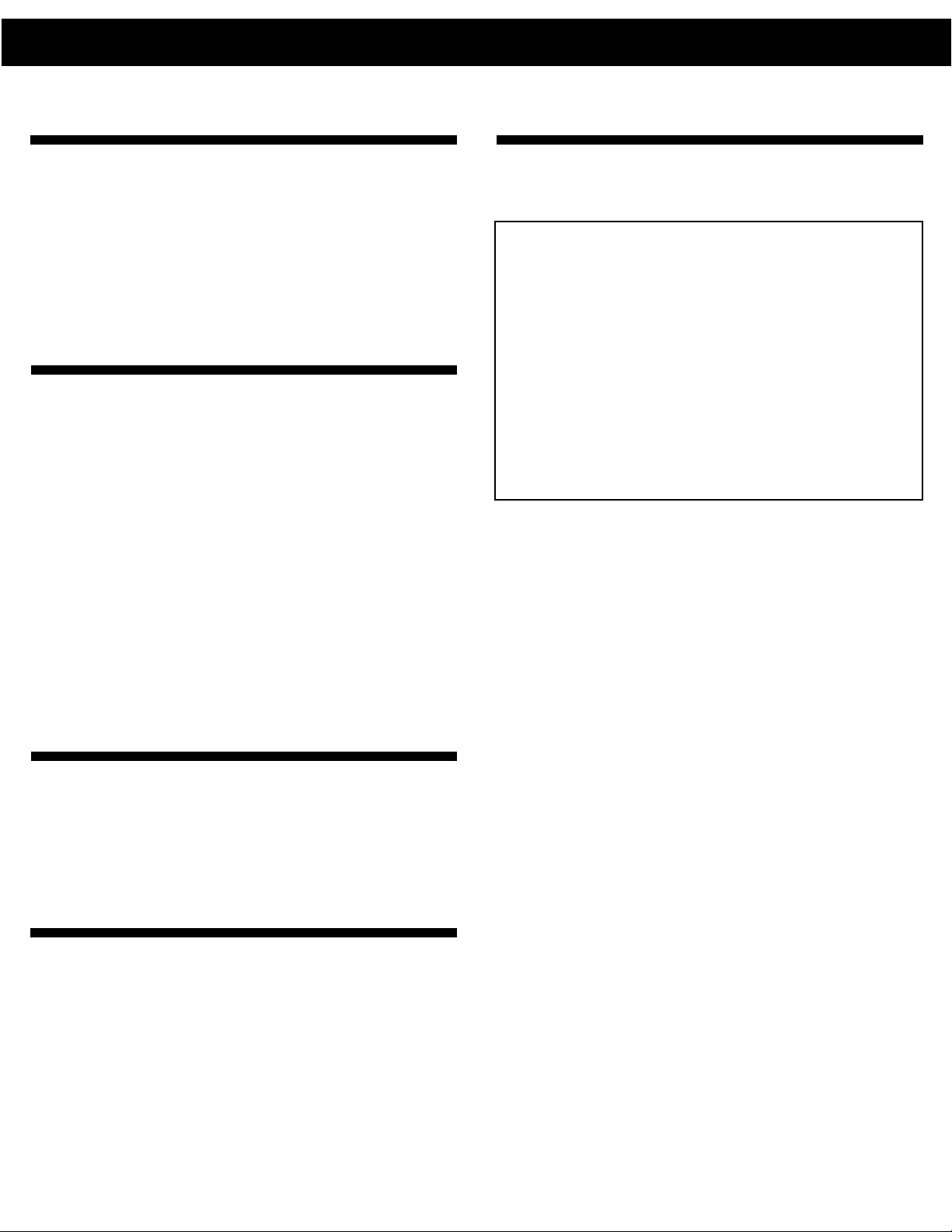
The temperature of the refrigerator is controlled by setting the
thermostat knob (on the ceiling of the cabinet) to a desired
setting.
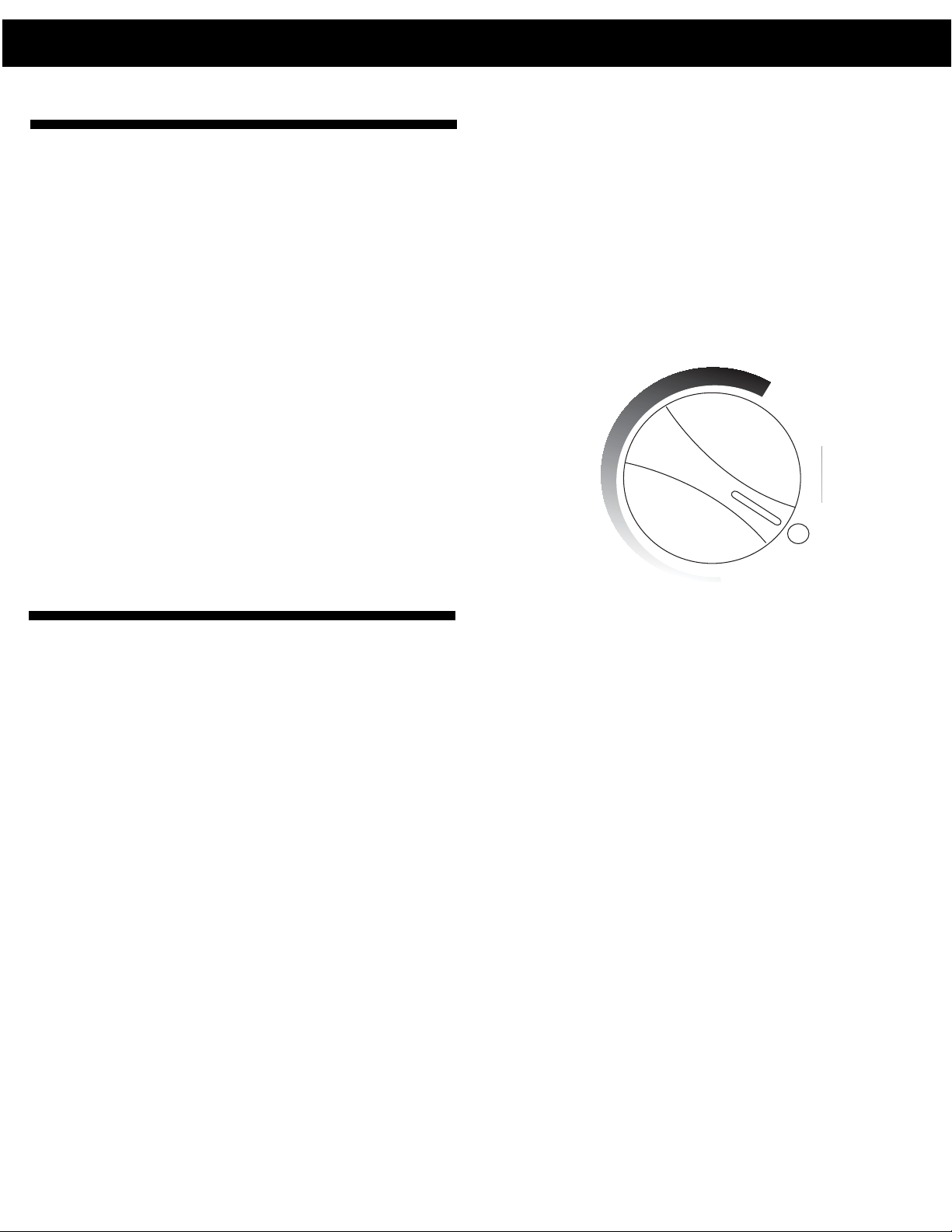
To start the refrigerator, turn the temperature control knob to
the position corresponding to the desired cooling setting
(on the graduated blue dial, Fig.A.)
The refrigerator temperature will vary depending on the quan-
tity of food stored and on the frequency with which the door is
opened.
To turn the control to the “OFF” position, rotate the control
knob to the “0” position. If the refrigerator has been left
unused for some time, set the control to maximum for 2-3
hours before turning to the desired position. If the refrigerator
is not going to be used for long time periods, disconnect the
plug and leave the door partially open. This will help to
prevent mold/mildew from accumulating inside the refrigerator
cabinet.
Changes in ambient room temperature will affect internal
refrigerator temperatures, adjust accordingly setting of the
thermostat knob.
In the OFF (0) position, the appliance does not operate
(cooling system is switched off,) yet the power supply is not
interrupted (the light is on when you open the refrigerator
door.)
Temperature in the refrigerator also depends on how often the
door is opened.
Fig A
5
CARE AND MAINTENANCE
AUTOMATIC DEFROSTING
There is no need to defrost the refrigerator, because ice
deposits on the inner back wall are defrosted automatically.
Ice build-up on the inner back wall during the compressor
operation will defrost automatically (when the compressor
has cycled off.) Defrost water collects inside the drain pass-
ing through the drain outlet in the inner back wall into a drain
pan situated above the compressor from where it evaporates.
CLEANING THE APPLIANCE
Disconnect the power before cleaning the appliance.
Do not use coarse or abrasive cleaning agents as you can
damage the surface of the unit.
Clean the exterior with water and detergent.
Remove the detachable accessories in the interior of the
appliance and clean with water and liquid detergent. Plastic
parts cannot be washed in dishwashers.
Wash the interior of the appliance with lukewarm water, with
one or two spoonfuls of vinegar. After cleaning, connect the
appliance to the power supply and reload it when the tem-
perature is cold enough.
SWITCH OFF APPLIANCE
WHEN NOT IN USE
If you do not intend to use the appliance for a long period of
time set the thermostat knob to OFF (0) position, disconnect
the power supply, take out the foods, defrost and clean the
appliance. Leave the door slightly open.
POWER FAILURE
Most power failures are corrected within an hour or two and
will not affect your refrigerator temperatures. However, you
should minimize the number of door openings while the
power is off. During power failures of longer duration, take
steps to protect your food by placing dry ice on top of
packages.
IF YOU MOVE
Remove or securely fasten all loose items inside the unit. To
avoid damaging the leveling legs, turn them all the way into
the base.
Some Important Rules for the Correct Use of the
Refrigerator
• Never place hot foods in the refrigerator.
• Never place spoiled foods in the refrigerator.
• Don’t overload the refrigerator.
• Don’t open the door unless necessary.
• Should the refrigerator be stored without use for long
periods, we suggest cleaning it carefully and the door
ajar to allow the air to circulate inside the unit in order to
avoid possible formations of condensation, mold
or odors.
6
TROUBLESHOOTING
Occasionally, a problem is minor and a service call may not be necessary- use this troubleshooting guide for a possible
solution. If the unit continues to operate improperly, call an authorized service depot or Danby’s Toll Free Number
1-800-263-2629 for assistance.
7
1) Unit does not work.
• No power to unit.
• Power cord unplugged.
• Wrong voltage being used.
• Check connection of power cord to power
source.
• Plug in unit.
• Use proper voltage.
2) Unit runs continuously.
• Temperature set too cold.
• Door is not closed.
• Hot food has been inserted.
• Door open too long/too often.
• Close proximity to heat source or direct
sunlight.
• Raise temperature settings.
• Close door securely.
• Ensure food is room temperature before
inserting.
• Reduce frequency and duration of door
openings.
• Do not place unit close to heat sources
or direct sunlight.
3) Internal temperature
not cold enough.
• No power to unit.
• Power cord unplugged.
• Temperature control too warm.
• Door open too long/too often.
• Hot food inserted.
• Air flow obstruction.
• Wrong voltage being used.
• Close proximity to heat source or direct
sunlight.
• Check connection of power cord.
• Plug in unit.
• Check settings, adjust if necessary.
• Reduce frequency and duration of door
openings.
• Ensure food is room temperature before
inserting.
• Allow room for air to circulate around the
unit.
• Use proper voltage.
• Do not place unit close to heat sources or
direct sunlight.
4) Ice Formation on the
inner rear wall
• The door does not seal well.
• The door is frequently opened or left
too long.
• The food stored in the refrigerator
was warm;
• The food or dish is touching the inner
back wall.
• Set the thermostat knob to OFF (0) position
and leave the door open. Never use electric
devices for defrosting and do not scrape the
ice or frost layer with sharp objects. After
defrosting is complete, turn the knob to
desired position and close the refrigerator
door.
• Clean the gasket if it is contaminated, or
replace it if it is damaged.
5) Water is leaking from the
refrigerator.
• Water pipe is clogged and
defrost water drips over the channel.
• Clean the clogged pipe with a plastic straw,
for example.
• Manually defrost the increased ice layer. See
“Ice Formation on the Inner Wall”
6) Noise
• Appliance not level.
• Appliance not installed on a firm solid
base/floor.
• Appliance is touching a wall or kitchen
units standing next to it.
• Accessories inside the appliance are
placed incorrectly. Bottles tins and other
vessels may be touching each other
causing rattling and/or vibrations.
• Always make sure that the appliance is
leveled and installed on a firm solid
base/floor.
• The Appliance must not touch any wall or
other kitchen units.
• Make sure the accessories inside the
appliance are correctly placed so they do not
touch each other and cause rattling and/or
vibrations.
PROBLEM
POSSIBLE CAUSE
SOLUTION
LIMITED IN-HOME APPLIANCE WARRANTY
This quality product is warranted to be free from manufacturer’s defects in material and workmanship, provided that the unit is used under the normal operating
conditions intended by the manufacturer.
This warranty is available only to the person to whom the unit was originally sold by Danby Products Limited (Canada) or Danby Products Inc. (U.S.A.) (hereafter
“Danby”) or by an authorized distributor of Danby, and is non-transferable.
TERMS OF WARRANTY
Plastic parts, are warranted for thirty (30) days only from purchase date, with no extensions provided.
First Year
During the rst twelve (12) months, any functional parts of this product found to be defective, will be repaired or replaced, at warrantor’s
option, at no charge to the ORIGINAL purchaser.
To obtain
Danby reserves the right to limit the boundaries of “In Home Service” to the proximity of an Authorized Service Depot. Any app liance
Service
requiring service outside the limited boundaries of “In Home Service” , it will be the consumer’s responsibility to transport the appliance (at
their own expense) to the original retailer (point of purchase) or a service depot for repair. See “Boundaries of In Home Serv ice” below.
Contact your dealer from whom your unit was purchased, or contact your nearest authorized Danby service depot, where service
must be performed by a qualied service technician.
If service is performed on the units by anyone other than an authorized service depot, or the unit is used for commercial appli cation, all
obligations of Danby under this warranty shall be void.
Boundaries of
If the appliance is installed in a location that is 100 kilometers (62 miles) or more from the nearest service center your unit must be
In Home Service
delivered to the nearest authorized Danby Service Depot, as service must only be performed by a technician qualied and certif ied for
warranty service by Danby. Transportation charges to and from the service location are not protected by this warranty and are t he
responsibility of the purchaser.
Nothing within this warranty shall imply that Danby will be responsible or liable for any spoilage or damage to food or other c ontents of this appliance, whether due
to any defect of the appliance, or its use, whether proper or improper.
EXCLUSIONS
Save as herein provided, Danby, there are no other warranties, conditions, representations or guarantees, express or implied, m ade or intended by Danby or its
authorized distributors and all other warranties, conditions, representations or guarantees, including any warranties, conditio ns, representations or guarantees
under any Sale of Goods Act or like legislation or statue is hereby expressly excluded. Save as herein provided, Danby shall no t be responsible for any damages
to persons or property, including the unit itself, howsoever caused or any consequential damages arising from the malfunction o f the unit and by the purchase of
the unit, the purchaser does hereby agree to indemnify and hold harmless Danby from any claim for damages to persons or propert y caused by the unit.
GENERAL PROVISIONS
No warranty or insurance herein contained or set out shall apply when damage or repair is caused by any of the following:
1) Power failure.
2) Damage in transit or when moving the appliance.
3) Improper power supply such as low voltage, defective house wiring or inadequate fuses.
4) Accident, alteration, abuse or misuse of the appliance such as inadequate air circulation in the room or abnormal operating con ditions
(extremely high or low room temperature).
5) Use for commercial or industrial purposes (ie. If the appliance is not installed in a domestic residence).
6) Fire, water damage, theft, war, riot, hostility, acts of God such as hurricanes, oods etc.
7) Service calls resulting in customer education.
8) Improper Installation (ie. Building-in of a free standing appliance or using an appliance outdoors that is not approved for out door application).
Proof of purchase date will be required for warranty claims; so, please retain bills of sale. In the event warranty service is required, present this document to our
AUTHORIZED SERVICE DEPOT.
Danby Products Limited
PO Box 1778, Guelph, Ontario, Canada N1H 6Z9
Telephone: (519) 837-0920 FAX: (519) 837-0449
Danby Products Inc.
PO Box 669, Findlay, Ohio, U.S.A. 45840
Telephone: (419) 425-8627 FAX: (419) 425-8629
04/09
1-800-263-2629
Warranty Service
In-home
If the appliance is installed in a location that is 100 kilometers (62 miles) or more from the nearest
service center your unit must be delivered to the nearest authorized Danby Service Depot, as service
must only be performed by a technician qualified and certified for warranty service by Danby. Transpor-
tation charges to and from the service location are not protected by this warranty and are the responsi-
bility of the purchaser.
During the first eighteen (18) months, any functional parts of this product found to be defective, will be
repaired or replaced, at warrantor’s option, at no charge to the ORIGINAL purchaser.
Danby reserves the right to limit the boundaries of “In Home Service” to the proximity of an Authorized
Service Depot. Any appliance requiring service outside the limited boundaries of “In Home Service”, it
will be the consumer’s responsibility to transport the appliance (at their own expense) to the original
retailer (point of purchase) or a service depot for repair. See “Boundaries of In Home Service” below.
Contact your dealer from whom your unit was purchased, or contact your nearest authorized Danby
service depot, where service must be performed by a qualified service technician. If service is performed
on the unit by anyone other than an authorized service depot, or the unit is used for commercial
application, all obligations of Danby under this warranty shall be void.
First 18 months
To obtain
service
Boundaries of
In Home Service
LIMITED IN-HOME APPLIANCE WARRANTY
This quality product is warranted to be free from manufacturer’s defects in material and workmanship, provided that the unit is
used under the normal operating conditions intended by the manufacturer.
This warranty is available only to the person to whom the unit was originally sold by Danby Products Limited (Canada) or
Danby Products Inc. (U.S.A.) (hereafter “Danby”) or by an authorized distributor of Danby, and is non-transferable.
TERMS OF WARRANTY
Plastic parts, are warranted for thirty (30) days only from purchase date, with no extensions provided.
Nothing within this warranty shall imply that Danby will be responsible or liable for any spoilage or damage to food or other
contents of this appliance, whether due to any defect of the appliance, or its use, whether proper or improper.
EXCLUSIONS
Save as herein provided, by Danby, there are no other warranties, conditions, representations or guarantees, express or
implied, made or intended by Danby or its authorized distributors and all other warranties, conditions, representations or
guarantees, including any warranties, conditions, representations or guarantees under any Sale of Goods Act or like legislation
or statute is hereby expressly excluded. Save as herein provided, Danby shall not be responsible for any damages to persons
or property, including the unit itself, howsoever caused or any consequential damages arising from the malfunction of the unit
and by the purchase of the unit, the purchaser does hereby agree to indemnify and hold harmless Danby from any claim for
damages to persons or property caused by the unit.
GENERAL PROVISIONS
No warranty or insurance herein contained or set out shall apply when damage or repair is caused by any of the following:
1) Power failure.
2) Damage in transit or when moving the appliance.
3) Improper power supply such as low voltage, defective house wiring or inadequate fuses.
4) Accident, alteration, abuse or misuse of the appliance such as inadequate air circulation in the room or abnormal operating
conditions (extremely high or low room temperature).
5) Use for commercial or industrial purposes (ie. If the appliance is not installed in a domestic residence).
6) Fire, water damage, theft, war, riot, hostility, acts of God such as hurricanes, floods etc.
7) Service calls resulting in customer education.
8) Improper Installation (ie. Building-in of a free standing appliance or using an appliance outdoors that is not approved for
outdoor application).
Proof of purchase date will be required for warranty claims; so, please retain bills of sale. In the event warranty service is
required, present this document to our AUTHORIZED SERVICE DEPOT.
Warranty Service
In-home
Danby Products Limited
PO Box 1778, Guelph, Ontario, Canada N1H 6Z9
Telephone: (519) 837-0920 FAX: (519) 837-0449
Danby Products Inc.
PO Box 669, Findlay, Ohio, U.S.A. 45840
Telephone: (419) 425-8627 FAX: (419) 425-8629
1-800-263-2629
07/13
LEA TODA LA INFORMACIÓN SOBRE SEGURIDAD ANTES DE UTILIZAR EL EQUIPO
INSTRUCCIONES DE SEGURIDAD IMPORTANTES
LA CONEXIÓN A TIERRA
Este artefacto debe ser conectado a tierra. En caso de un corto
circuito eléctrico, la conexión a tierra reduce el riesgo de una
descarga eléctrica proporcionando uncable de retorno para la
corriente eléctrica.
Este artefacto viene con un cable de alimentación que tiene
unconductor y pata del enchufe de tierra. Este cable debe
enchufarse en un tomacorriente debidamente instalado y con
conexión a tierra.
NO USE CABLES DE EXTENSIÓN: Use una toma de corri-
ente exclusiva. No conecte su refrigerador a cables de exten-
sión o junto a otro aparato en la misma toma de corriente. No
empalme el cable.
Antes de conectar el aparato a la fuente de energía eléctrica,
déjelo desconectado en posición vertical aproximadamente 2
horas; esto reducirá la posibilidad de desperfectos en el sis-
tema de enfriamiento debido a la manipulación durante el
transporte.
Limpie el aparato por completo, especialmente en el interior
(Ver sección de "Cuidado y mantenimiento").
Si los accesorios no están colocados correctamente en el
interior, organícelos nuevamente como se describe en el
capítulo "Descripción de la unidad".
INSTRUCCIONES DE USO
Estas instrucciones de uso están destinadas al usuario. En
ellas se describen las características del aparato y los pro-
cedimientos correctos para hacerlo funcionar de manera
segura.
ANTES DE UTILIZAR EL EQUIPO
POR PRIMERA VEZ
ADVERTENCIA:
El uso inadecuado del enchufe de conexión a tierra
puede resultar en un riesgo de choque eléctrico.
Consulte con un electricista o persona de reparaciones
competente si no comprende bien las instrucciones de
conexión a tierra o si existe alguna duda sobre si el
aparato está conectado a tierra correctamente.
9
¡GUARDE ESTAS INSTRUCCIONES!
Hay riesgo de incendio o explosión si el tubo de refrigerante es perforado. No use objetos cortantes para
ayudar en descongelamiento. Tratar con cuidado. Mantenga lejos del refrigerador los vapores y materiales
inflamables, como la gasolina. Use un limpiador no inflamable.
Siga las normas federales y locales para desechar la unidad.
¡ADVERTENCIA! ¡PELIGRO DE EXPLOSIÓN!
Los refrigeradores vacíos son una atracción muy peligrosa para los niños. Retire la junta, los pestillos, las
tapas o las puertas de los aparatos no utilizados, o tome alguna otra medida que garantize que el aparato es
inofensivo.
PELIGRO: riesgo de atrapar a los niños. Antes de desechar su refrigerador o congelador viejo :
• retire las puertas
• deje los estantes o anaqueles en su lugar de manera que los niños no puedan treparse con facilidad.
¡NO ESPERE, HAGALO AHORA MISMO!
¡ADVERTENCIA IMPORTANTE!
LEA TODA LA INFORMACIÓN SOBRE SEGURIDAD ANTES DE UTILIZAR EL EQUIPO
INSTRUCCIONES DE SEGURIDAD IMPORTANTES
Si compró este aparato para sustituir uno más antiguo que
tenía un mecanismo de bloqueo de puerta que no pueda
abrirse desde el interior, asegúrese de retirar dicho mecanis-
mo, deshabilitarlo o destruirlo antes de desechar el producto.
Esto impedirá que los niños se encierren accidentalmente en
el equipo y se asfixien.
El aparato debe estar correctamente conectado a una fuente
de energía eléctrica. (Ver la sección "Conexión a fuente de
energía eléctrica").
Si el alimento tiene olor o color extraño, descártelo, ya que
es muy probable que se haya echado a perder y, por con-
siguiente, sea peligroso para el consumo.
Siempre desconecte el aparato de la fuente de energía antes
de limpiarlo, de sustituir las bombillas eléctricas o de
repararlo.
ADVERTENCIA: Las reparaciones sólo debe realizarlas per-
sonal de servicio técnico calificado.
No descongele el aparato empleando otro artefacto eléctrico
(por ejemplo, un secador de cabello) y nunca intente raspar
o retirar el hielo o la escarcha con objetos filosos. Utilice úni-
camente las herramientas incluidas o las herramientas
recomendadas por el fabricante.
El sistema de refrigeración del aparato contiene refrigerante
y aceite, por lo que cuando el aparato esté dañado, manéjelo
con cuidado y deséchelo de acuerdo con las normas de pro-
tección ambiental. (Ver la sección "Protección del medioam-
biente").
La placa de datos de servicio que contiene el número de
serie y el número de modelo y otra información técnica
específica de esta unidad se viene ubicada dentro del apara-
to, o en su exterior, en el panel trasero.
CÓMO DESECHAR LOS
APARATOS USADOS
El sistema de refrigeración del aparato contiene líquido
refrigerante y sustancias aislantes que deben tratarse y
procesarse por separado. Llame al representante de servi-
cio técnico o al centro de servicio especializado autorizado
más cercano. Si no puede encontrar uno, comuníquese con
las autoridades locales o con el distribuidor. Tenga cuidado
de no dañar los tubos ubicados en la pared trasera del
aparato (peligro de contaminación).
PRECAUCIONES
DE SEGURIDAD
10
Trate de no abrir la puerta con mucha frecuencia, especial-
mente en días cálidos y húmedos. Una vez que haya abierto
la puerta, ciérrela lo más rápido posible. Esto tiene especial
importancia si tiene un modelo vertical.
Cada cierto tiempo, verifique que el aparato tenga la venti-
lación suficiente (una circulación de aire adecuada detrás del
aparato).
Ajuste el termostato de la graduación más alta a la más baja
en cuanto sea posible (dependiendo de cuánta carga tenga
el aparato, la temperatura ambiente, etc.).
Antes de cargar el aparato con paquetes de alimentos fres-
cos, asegúrese de que éstos estén a temperatura ambiente
(excepto las sopas).
El hielo y las capas de escarcha aumentan el consumo de
energía; por consiguiente, limpie el aparato en cuanto la
capa de escarcha tenga un espesor de entre 3 mm y 5 mm.
Si la junta está dañada o la puerta no cierra herméticamente,
el consumo de energía aumentará significativamente. Para
restablecer la eficiencia energética, cambie la junta.
Siempre tenga en cuenta las instrucciones señaladas en las
secciones "Elección de la mejor ubicación" y "Consejos para
ahorrar energía"; de lo contrario, el consumo de energía
aumentará considerablemente.
CONSEJOS PARA AHORRAR
ENERGÍA
¡GUARDE ESTAS INSTRUCCIONES!
INSTRUCCIONES DE INSTALACIÓN
Seleccione un lugar con un piso firme y nivelado.1
Deje 5 pulgadas de espacio entre la parte posterior del2
refrigerador y la pared adyacente. Deje 2 pulgadas (como
mínimo) de espacio alrededor del aparato.
Evite luz directa del sol o calor. La luz directa del sol puede3
afectar la capa de acrílico. Las fuentes de calor en
su proximidad causarán un consumo mayor de electricidad.
Evite lugares muy húmedos. Demasiada humedad en el4
aire hará que se acumule escarcha rápidamente en el
evaporador y deberá descongelar su refrigerador con
mucha frecuencia.
ELECCIÓN DE LA
MEJOR UBICACIÓN
INSTALACIÓN
Coloque el aparato firmemente sobre una base sólida.
Algunos aparatos tienen patas ajustables en la parte frontal;
úselas para nivelarlos.
CONEXIÓN A UNA FUENTE
DE ENERGÍA ELÉCTRICA
Enchufe el cordón eléctrico del aparato en un tomacorriente
con conexión a tierra. El voltaje nominal y la frecuencia se
indican en la placa de datos de servicio (dentro de la unidad
o en el panel trasero externo de la unidad).
CAMBIO DE LA
BOMBILLA
Antes de reemplazar las bombillas de luz, desconecte el
aparato del suministro eléctrico. Con un destornillador
Phillips, retire el tornillo ubicado en el centro de la tapa de la
luz. Tire de la tapa de la luz hacia abajo. La bombilla de
repuesto debe ser del mismo vataje que la bombilla origi-
nal.(sólo 15 vatios)
11
Saque los embalajes exteriores e interiores, limpie el exterior bien con un paño suave seco y el interior con un paño húmedo y tibio.
Evite colocar la caja en un hueco estrecho o cerca de una fuente de calor, luz de sol directa, o lugar húmedo. Deje que el aire cir-
cule libremente alrededor de la caja. Mantenga la parte posterior del
refrigerador
a 5 pulgadas de la pared.
INSTRUCCIONES DE INSTALACIÓN
CARACTERÍSTICAS
A) Deslice hacia fuera los estantes de vidrio
(El número y el tipo de estantes depende del modelo) El
estante se puede colocar, de forma opcional, en las guías
que se encuentran dentro del aparato. Está protegido para
que no se tire de él por accidente. Si desea retirar un
estante, levántelo un poco por la parte frontal y tire hacia
afuera. Los alimentos perecederos deben almacenarse en la
parte trasera de los estantes.
B) Panel interior de la puerta El panel interior de la puerta
consta de distintos estantes o contenedores que se utilizan
para almacenar huevos, queso, mantequilla y yogur, así
como otros paquetes más pequeños, tubos, latas, etc. El
estante inferior se usa para almacenar botellas grandes.
C) Salida de agua de descongelación El interior del refrig-
erador se enfría mediante una placa de enfriamiento monta-
da en la pared trasera. Debajo de la placa, hay un canal y la
salida para el agua de descongelación.
Inspeccione regularmente la salida de agua de descon-
gelación y el canal de drenaje, para detectar obstrucciones.
Siempre deben estar limpios y libres de partículas de alimen-
tos. Si la salida de drenaje está obstruida, límpiela con una
pajilla de plástico.
Si el sentido en que se abre la puerta del aparato no le resul-
ta cómodo, puede cambiarlo. El lado opuesto ya viene con
orificios perforados de fábrica.
CAMBIO DEL SENTIDO DEL
MOVIMIENTO DE LA PUERTA
12
D) Cajón para frutas y verduras está en la parte inferior del
artefacto eléctrico, debajo del anaquel de vidrio. Este cajón
brinda la humedad adecuada que es más favorable para las
frutas y verduras. (Menos deshidratación)
OPERACIÓN
ALMACENAMIENTO DE
ALIMENTOS FRESCOS
El uso adecuado del aparato, el empaquetado apropiado de
los alimentos, la temperatura correcta y la observación de
medidas preventivas de higiene influirán considerablemente
en la calidad de los alimentos almacenados.
Los alimentos que van a guardarse en el refrigerador deben
estar correctamente empaquetados, de modo que se evite la
mezcla de distintos grados de humedad y olores (en bolsas
o láminas de polietileno, papel de aluminio, papel encerado o
en recipientes o botellas con tapa).
Antes de almacenar alimentos en el refrigerador, retire el
material de embalaje innecesario (como los yogures que
vienen en paquetes de varias unidades).
Empaquete en forma sistemática y asegúrese de que los ali-
mentos no entren en contacto entre sí (pueden mezclarse
distintos olores). Asegúrese de que haya una circulación
adecuada de aire entre los paquetes.
Nunca almacene sustancias inflamables, volátiles o
explosivas.
Las bebidas con alto contenido de alcohol deben almace-
narse en botellas bien selladas, en posición vertical.
Los alimentos no deben tocar la pared trasera del
refrigerador.
Los alimentos deben enfriarse antes de guardarlos.
Los alimentos crujientes y delicados deben almacenarse en
las partes más frías del refrigerador.
Trate de no abrir la puerta con mucha frecuencia.
Establezca el termostato en un valor en el que se alcance la
temperatura más baja. Ajuste el termostato gradualmente
para evitar que se congelen los alimentos. Con un ter-
mómetro, mida la temperatura en los compartimientos individ-
uales. Coloque el termostato en un recipiente de vidrio lleno
de agua. Las mediciones de temperatura son más confiables
unas horas después de llegar a una condición estable.
Algunas soluciones orgánicas, como los aceites volátiles de
la cáscara de limones y naranjas, el ácido presente en la
mantequilla, etc., pueden causar daños al estar en contacto
con superficies plásticas o juntas durante largos períodos.
Los olores desagradables dentro del refrigerador son señal
de deterioro de los alimentos o de que el refrigerador necesi-
ta una limpieza. Para reducir o eliminar los olores desagrad-
ables, lave el interior del refrigerador con una solución suave
de agua y vinagre. También recomendamos usar filtros de
carbón activado para limpiar el aire o neutralizar los olores.
Si está planificando un viaje largo, asegúrese de retirar del
aparato los alimentos perecederos antes de partir.
SELECCIÓN DE TEMPERATURA
La temperatura del refrigerador se controla mediante el
ajuste de la perilla del termostato (en el techo del gabinete) a
un valor deseado.
Para encender el refrigerador, gire la perilla de control de
temperatura hasta la posición correspondiente al nivel de
refrigeración deseado (en el selector graduado de color
azul). Fig. A.
La temperatura del refrigerador variará según la cantidad de
alimento almacenado y la frecuencia con que se abra la
puerta.
Para llevar el control a la posición de "APAGADO", gire la
perilla de control a la posición "0". Si el refrigerador no se ha
usado durante algún tiempo, establezca el control al máximo
durante 2 ó 3 horas antes de llevarlo a la posición deseada.
Si el refrigerador no se usa durante largos períodos, des-
enchúfelo y deje la puerta parcialmente abierta. Esto ayudará
a reducir la acumulación del moho dentro del gabinete del
refrigerador.
Los cambios en la temperatura ambiente afectarán la temper-
atura interna del refrigerador (seleccione el valor correcto de la
perilla del termostato).
En la posición de parada STOP (0), la unidad no funciona (el
sistema de enfriamiento está apagado); sin embargo, no se
interrumpe el suministro de energía (la luz se enciende cuan-
do se abre la puerta del refrigerador).
La temperatura del refrigerador también depende de la fre-
cuencia con que se abre la puerta.
Fig A
13
CUIDADO Y MANTENIMIENTO
DESCONGELACIÓN AUTOMÁTICA
No es necesario descongelar el refrigerador, porque el hielo
que se deposita en la pared interior trasera se descongela
automáticamente.
La acumulación de hielo en la pared interior trasera durante
el funcionamiento del compresor se descongelará automáti-
camente (cuando el compresor haya finalizado su ciclo). El
agua producto de la descongelación se acumula dentro del
drenaje a través de la salida de drenaje situada en la pared
interior trasera y pasa a un recipiente de drenaje ubicado por
encima del compresor, desde donde se evapora.
LIMPIEZA DEL ARTEFACTO
ELÉCTRICO
Desconecte la electricidad antes de proceder a la limpieza
del artefacto.
No use agentes limpiadores grruesos ni abrasivos ya que
podria danar la superficie.
Limpie el exterior con agua y detergente.
Retire los accesorios desmontables del interior de la refriger-
adora y limpe con agua y detergente liquido. Las piezas plas-
ticas no se pueden lavar en lavaplatos.
Lave el interior del artefacto con agua tibia con una o dos
cucharadas de vinagre.
Después de la limpieza conecte el artefacto a la fuente de
energia eléctrica y vuelva a cargarlo.
CORTE DE CORRIENTE
La mayoría de los cortes de corriente se corrigen en una o
dos horas y no afectarán las temperaturas de su refrigerador.
Sin embargo, Ud.deberá reducir la cantidad deveces que
abre la puerta cuando la corriente esté apagada. Durante los
cortes de corriente de larga duración, tome medidas para
proteger sus alimentos colocando un bloque de hielo seco
sobre los paquetes.
SI UD SE MUDA
Saque o asegure todos los artículos dentro (ej.parril-las) del
refrigerador. Para evitar que los tornillos de nivel se averíen,
gírelos completamente hacia la base.
ALGUNAS REGLAS IMPORTANTES PARA EL USO
CORRECTO DEL REFRIGERADOR:
• Nunca coloque alimentos calientes en el refrigerador.
• No sobrecargue el gabinete.
• No abra la puerta a menos que sea necesario.
• Si el refrigerador guarda sin uso por períodos largos de
tiempo, se sugiere que, luego de una limpieza
cuidadosa, se deje la puerta entreabierta para permitir
que el aire circule dentro de el gabinete y evitar una
posible formación de condensación, moho u olores.
DESCONEXION DEL ARTEFACTO
ELECTRICO CUANDO NO LO USA
Si no utilizarà el artefacto durante periodos prolongados
(vacaciones), coloque la perilla del termostato en la posicion
“Stop” (o) (Apagado), desconecte la electricidad, saque todos
los alimentos y descongele y limpie la refrigeradora. Deje la
puerta entreabierta.
14
DIAGNÓSTICOS DE PROBLEMAS
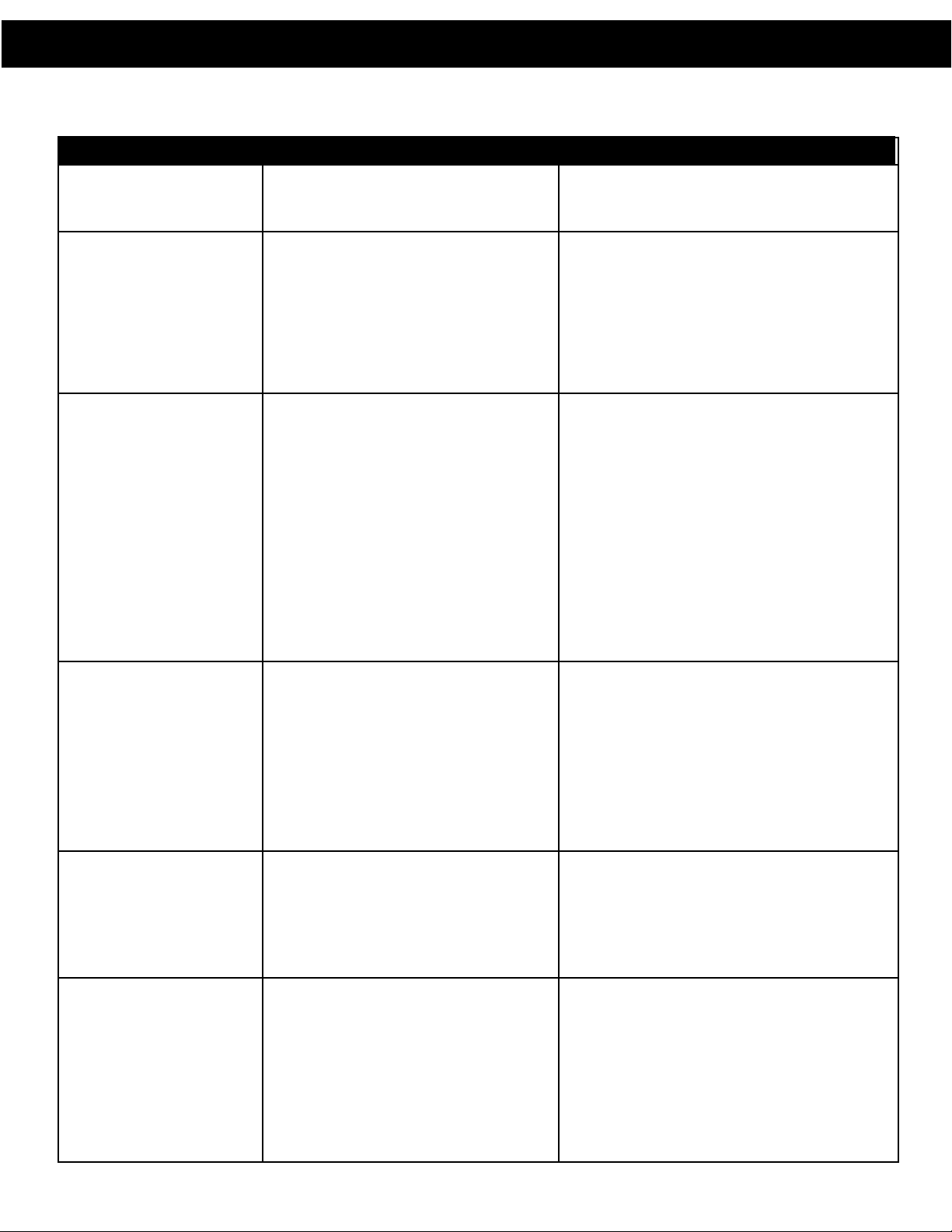
A menudo, los problemas son sencillos y no es necesario hacer una llamada de reparación, use esta guía de
resolución de problemas para encontrar una posible solución. Si la unidad sigue funcionando mal, llame a los números
gratuitos de un centro Danby de servicio autorizado. 1-800-263-2629
1) La unidad no funciona.
• No llega alimentación a la unidad.
• Cable de alimentación desenchufado.
• Voltaje incorrecto.
• Revise la conexión del cable de
alimentación al enchufe.
• Enchufe la unidad.
• Use el voltaje correcto.
2) La unidad funciona
continuamente.
• La temperatura está graduada en frío.
• Temperatura demasiado alta.
• La puerta no está cerrada.
• Se colocó comida caliente.
• Se abrió la puerta demasiadas veces
o durante mucho tiempo.
• Muy cerca de una fuente de calor o bajo la
luz directa del sol.
• Aumente la temperatura.
• Baje el control de temperatura.
• Cierre bien la puerta.
• Verifique que los alimentos estén a
temperatura ambiente antes de guardarlos.
• Abra menos veces la puerta.
• No coloque la unidad cerca de fuentes de
calor o bajo la luz directa del sol.
3) La temperatura interna
no es muy fría.
• Control de temperatura graduado en
cálido.
• No llega alimentación a la unidad.
• Cable de alimentación desenchufado.
• Control de temperatura muy bajo.
• La puerta no está cerrada.
• Alimentos calientes.
• Se abrió la puerta demasiadas veces o
durante mucho tiempo.
• Obstrucción del flujo de aire.
• Voltaje incorrecto.
• Muy cerca de una fuente de calor o bajo la
luz directa del sol.
• Verifique el ajuste de los valores, de ser
necesario.
• Reduzca la frecuencia y el tiempo en que la
se encuentra abierta.
• Revise la conexión del cable de
alimentación al enchufe.
• Enchufe la unidad.
• Cierre bien la puerta.
• Verifique que los alimentos estén a
temperatura ambiente.
• Abra menos veces la puerta.
• Deje lugar para que circule aire alrededor
de la unidad.
• Use el voltaje correcto.
• No coloque la unidad cerca de fuentes de
calor o bajo la luz directa del sol.
4) Formación de hielo en
la pared interior trasera.
• La puerta no cierra herméticamente.
• La puerta se abre con frecuencia o se
deja abierta demasiado tiempo.
• Los alimentos dentro del refrigerador no
estaban fríos.
• Los alimentos o platos tocan la
pared interior trasera.
• Establezca la perilla del termostato en la
posición de parada STOP (0) y deje la puerta
abierta. Nunca use dispositivos eléctricos para
descongelar y no raspe el hielo o la capa de
escarcha con objetos filosos después de
descongelar, gire la perilla a la posición
deseada y cierre la puerta del refrigerador.
• Limpie la junta si está contaminada o
sustitúyala si está dañada.
5) El refrigerador pierde
agua.
• La salida de agua está obstruida, el
agua de descongelación gotea por el
canal.
• Limpie la salida obstruida, por ejemplo, con
una pajilla de plástico.
• Descongele en forma manual la capa
de hielo acumulada. "Formación de hielo en la
pared interior".
6) Ruido
PROBLEMA
POSIBLE CAUSA
SOLUCION SUGERIDA
• El aparato no está nivelado.
• El aparato no está instalado sobre una
superficie sólida y firme.
• El aparato toca una pared o un estante
de cocina adyacentes.
• Los accesorios que se encuentran
dentro del aparato están colocados de
forma incorrecta. Las botellas, latas y
otros recipientes pueden tocarse entre
sí, lo que puede producir ruidos o
vibraciones.
• Siempre asegúrese de que el aparato esté
nivelado e instalado sobre una superficie
sólida y firme.
• El aparato no debe tocar ninguna pared ni
estante de cocina.
• Asegúrese de que los accesorios que
se encuentran dentro del aparato estén
correctamente colocados, para que no se
toquen entre sí y no produzcan ruidos o
vibraciones.
15
LIMITED IN-HOME APPLIANCE WARRANTY
This quality product is warranted to be free from manufacturer’s defects in material and workmanship, provided that the unit is used under the normal operating
conditions intended by the manufacturer.
This warranty is available only to the person to whom the unit was originally sold by Danby Products Limited (Canada) or Danby Products Inc. (U.S.A.) (hereafter
“Danby”) or by an authorized distributor of Danby, and is non-transferable.
TERMS OF WARRANTY
Plastic parts, are warranted for thirty (30) days only from purchase date, with no extensions provided.
First Year
During the rst twelve (12) months, any functional parts of this product found to be defective, will be repaired or replaced, at warrantor’s
option, at no charge to the ORIGINAL purchaser.
To obtain
Danby reserves the right to limit the boundaries of “In Home Service” to the proximity of an Authorized Service Depot. Any app liance
Service
requiring service outside the limited boundaries of “In Home Service” , it will be the consumer’s responsibility to transport the appliance (at
their own expense) to the original retailer (point of purchase) or a service depot for repair. See “Boundaries of In Home Serv ice” below.
Contact your dealer from whom your unit was purchased, or contact your nearest authorized Danby service depot, where service
must be performed by a qualied service technician.
If service is performed on the units by anyone other than an authorized service depot, or the unit is used for commercial appli cation, all
obligations of Danby under this warranty shall be void.
Boundaries of
If the appliance is installed in a location that is 100 kilometers (62 miles) or more from the nearest service center your unit must be
In Home Service
delivered to the nearest authorized Danby Service Depot, as service must only be performed by a technician qualied and certif ied for
warranty service by Danby. Transportation charges to and from the service location are not protected by this warranty and are t he
responsibility of the purchaser.
Nothing within this warranty shall imply that Danby will be responsible or liable for any spoilage or damage to food or other c ontents of this appliance, whether due
to any defect of the appliance, or its use, whether proper or improper.
EXCLUSIONS
Save as herein provided, Danby, there are no other warranties, conditions, representations or guarantees, express or implied, m ade or intended by Danby or its
authorized distributors and all other warranties, conditions, representations or guarantees, including any warranties, conditio ns, representations or guarantees
under any Sale of Goods Act or like legislation or statue is hereby expressly excluded. Save as herein provided, Danby shall no t be responsible for any damages
to persons or property, including the unit itself, howsoever caused or any consequential damages arising from the malfunction o f the unit and by the purchase of
the unit, the purchaser does hereby agree to indemnify and hold harmless Danby from any claim for damages to persons or propert y caused by the unit.
GENERAL PROVISIONS
No warranty or insurance herein contained or set out shall apply when damage or repair is caused by any of the following:
1) Power failure.
2) Damage in transit or when moving the appliance.
3) Improper power supply such as low voltage, defective house wiring or inadequate fuses.
4) Accident, alteration, abuse or misuse of the appliance such as inadequate air circulation in the room or abnormal operating con ditions
(extremely high or low room temperature).
5) Use for commercial or industrial purposes (ie. If the appliance is not installed in a domestic residence).
6) Fire, water damage, theft, war, riot, hostility, acts of God such as hurricanes, oods etc.
7) Service calls resulting in customer education.
8) Improper Installation (ie. Building-in of a free standing appliance or using an appliance outdoors that is not approved for out door application).
Proof of purchase date will be required for warranty claims; so, please retain bills of sale. In the event warranty service is required, present this document to our
AUTHORIZED SERVICE DEPOT.
Danby Products Limited
PO Box 1778, Guelph, Ontario, Canada N1H 6Z9
Telephone: (519) 837-0920 FAX: (519) 837-0449
Danby Products Inc.
PO Box 669, Findlay, Ohio, U.S.A. 45840
Telephone: (419) 425-8627 FAX: (419) 425-8629
04/09
1-800-263-2629
Warranty Service
In-home
Si el electrodoméstico está instalado en un lugar que se encuentra a 100 kilómetros (62 millas) o más
del centro de servicios más cercano, se debe llevar la unidad al Centro de servicios Danby autorizado
más cercano, ya que dicho servicio sólo puede realizarlo un técnico calificado y certificado por Danby
para prestar servicios de garantía. Los cargos por transporte desde y hacia el lugar en que se
efectúe el servicio técnico no están cubiertos por esta garantía y son de responsabilidad del comprador.
Durante los primeros 18 meses, cualquier parte en buen estado de este producto que resulte defec-
tuosa, incluyendo cualquier sistema sellado, será reparado o reemplazado, a opción del fabricante, sin
cargo para el comprador ORIGINAL.
Danby se reserva el derecho de limitar la cobertura de "Servicio en Domicilio" sujeto a la proximidad de
un Taller de Servicio Autorizado. Para todo artefacto que requiera servicio fuera del área limitada de
"Servicio en Domicilio", el cliente será responsable por transportar dicho artefacto hasta el Taller de
Servicio Autorizado mas cercano. Consulte "Límites del servicio técnico a domicilio", a continuación.
Comuníquese con el distribuidor donde haya comprado la unidad, o llame al Taller de Servicio Autor-
izado más cercano, donde debe ser reparada por un técni co calificado. Si esta unidad es reparada en
otro lugar que no sea un Taller de Servicio Autorizado, o si la unidad se utiliza para aplicaciones
comerciales, Danby no se hará responsable de ninguna forma y la garantía será anulada.
Primeros 18 meses
Para obtener
servicio
Límites del servicio
técnico a domicilio
GARANTÍA LIMITADA PARA
ELECTRODOMÉSTICO
Este producto de calidad está garantizado contra defectos de fabricación, incluyendo partes y mano de obra, siempre y cuando
la unidad se utilice bajo las condiciones normales de funcionamiento para las que fue diseñado.
Esta garantía está solamente disponible para la persona que haya comprado originalmente esta unidad directamente de
Danby Products Limited (Canada) o Danby Products Inc. (U.S.A.) (en adelante “Danby”) o uno de sus distribuidores autoriza-
dos, y no es transferible.
CONDITIONS
Las piezas plásticas, se autorizan por treinta (30) días solamente a partir de la fecha de la compra, sin las extensiones
proporcionadas.
Nada dentro de esta garantía implica que Danby será responsable por cualquier daño que hayan sufrido los alimentos u otros
contenidos de este aparato, ya sea debido a un defecto del aparato, o su uso, adecuado o inadecuado.
EXCLUSIONES
Salvo lo aquí indicado por Danby, no existen otras garantías, condiciones o representaciones, explícitas o implícitas, concre-
tas o intencionales por parte de Danby o sus distribuidores autorizados y todas las demás garantías, condiciones o represen-
taciones, incluyendo cualquier garantía, condiciones o representaciones bajo cualquier Acta de Venta de Productos o
legislación o estatuto similar, quedan de esta forma expresamente excluidas. Salvo lo aquí indicado, Danby no serán respon-
sables por ningún daño a personas o bienes, incluyendo la propia unidad, sin importar su causa, o de ningún daño indirecto
causado por el desperfecto de la unidad, y al comprar esta unidad, el comprador acepta por la presente, indemnizar y
proteger a Danby contra cualquier reclamo por daños a personas o bienes causados por la unidad.
CONDICIONES GENERALES
No se considerará ninguna de estas garantías o seguros cuando el daño o la necesidad de reparación sea el producto de los
siguientes casos:
1) Falla del suministro eléctrico.
2) Daños en tránsito o durante el transporte de la unidad.
3) Alimentación incorrecta, como bajo voltaje, instalación eléctrica defectuosa o fusibles inadecuados.
4) Accidente, modificación, abuso o uso incorrecto del artefacto, tal como insuficiente ventilación del ambiente o condiciones
de operación anormales (temperatura ambiente extremadamente alta o baja).
5) Utilización comercial o industrial (v.g., si el electrodoméstico no está instalado en una vivienda particular).
6) Incendio, daños por agua, robo, guerra, disturbios, hostilidades, actos de fuerza mayor como huracanes, inundaciones, etc.
7) Pedidos de servicio debido a desinformación del usuario.
8) Instalación inadecuada (v.g., instalación empotrada de un electrodoméstico diseñado como unidad independiente o uso de
un electrodoméstico al aire libre que no esté aprobado para dicho fin).
Para acceder a la garantía se solicitará un comprobante de compra; por lo tanto, guarde su recibo. En caso de necesitar
servicio de garantía, presente ese documento al TALLER DE SERVICIO AUTORIZADO.
Servicio de Garantía
Servicio en Domicilio
Danby Products Limited
PO Box 1778, Guelph, Ontario, Canada N1H 6Z9
Telephone: (519) 837-0920 FAX: (519) 837-0449
Danby Products Inc.
PO Box 669, Findlay, Ohio, U.S.A. 45840
Telephone: (419) 425-8627 FAX: (419) 425-8629
1-800-263-2629
07/13
Tel: 1-800-26-
(1-800-263-2629)
DANBY PRODUCTS LIMITED, ONTARIO, CANADA N1H 6Z9
DANBY PRODUCTS INC., FINDLAY, OHIO, USA 45840
All repair parts are available for purchase or special
order when you visit your nearest service depot.To
request service and/or the location of the service
depot nearest you, call the TOLL FREE number.
When requesting service or ordering parts, always
provide the following information:
• Product Type
• Model Number
• Part Number
• Part Description
Todas las piezas de reparación disponibles para la
compra o la orden especial cuando usted visita su
depósito más cercano del servicio. Para pedir
servicio y/o la localización del depósito del servicio
lo más cerca posible a usted, llama Danby gratis.
Al pedir servicio o pidiendo piezas, proporcione
siempre la información siguiente:
• Tipo de producto
• Número de modelo
• Número de pieza
• Descripción de la parte
Printed in China
Impreso en China
ALL REFRIGERATOR
TODA REFRIGERADORA
MODEL • MODELO
DAR044A4BSLDDU
ALL REFRIGERATOR
TODA REFRIGERADORA