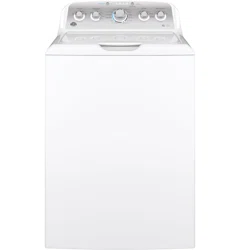
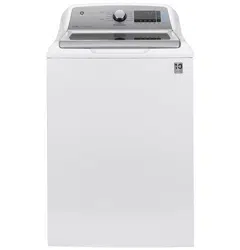
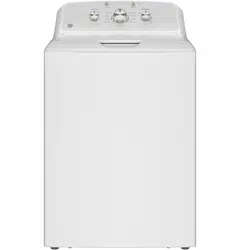
User manual Washer
USING THE WASHER
Getting Started
Throughout this manual, features and appearance may vary from your model.
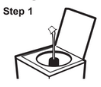
- Add fabric softener to the fabric softener dispenser (on some models); see page 14.
- If using detergent packets, add to the bottom of the wash basket before adding clothes.
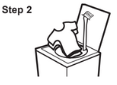
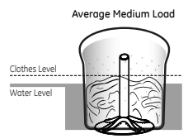
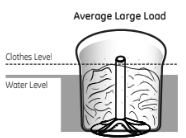
- Loosely add items around agitator or Infusor. Overloading may negatively impact wash performance. See page 15 for suggested loading examples.
- Add the manufacturer’s recommended amount of detergent to the top of the load after adding clothes. We recommend the use of High Efficiency detergents such as
 . in your energy efficient washer.
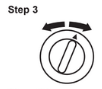
NOTE: Unit will not start with lid open if Precise Fill is selected except on Bulky Items cycle.
- Select wash cycle.
- Select wash options, including Deep Rinse option (on some models) when using fabric softener.
- Select options.
- Select load size (on some models).

Controls
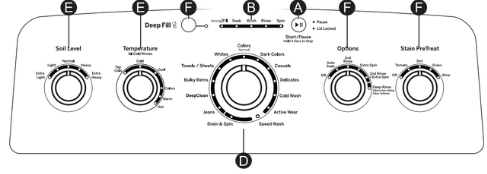
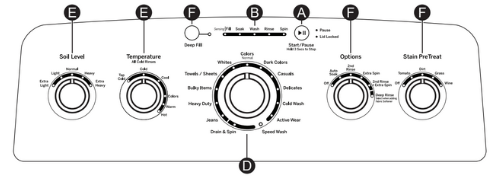
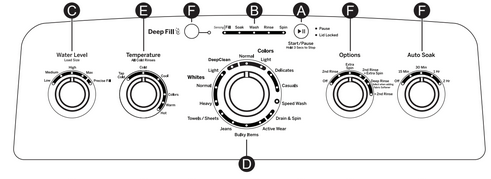
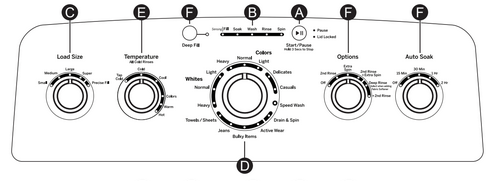
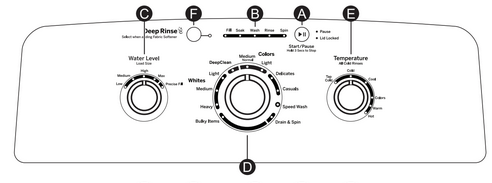
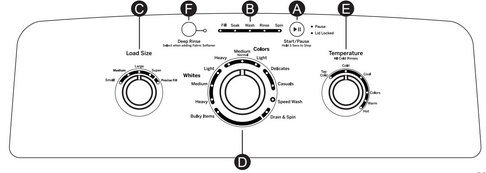
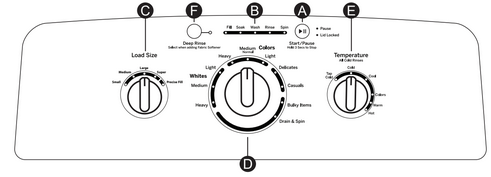
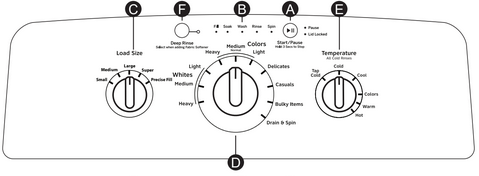
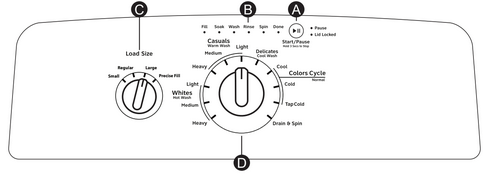
Getting started
 Start/Pause
- Press Start to begin the cycle. NOTE: If the lid is closed, the lid will lock only during the load sensing portion of the cycle (when the Precise Fill selection is made or models which do not have a load size selection) and during spin portions of the cycle. Lid will unlock after load sensing and spin.
- Pressing Pause will unlock the lid (if locked at that time), pause the cycle and the Pause indicator light will blink.
- To continue the cycle, press Start again. If water remains in the machine, select the Drain & Spin cycle to drain basket and spin water out of the washer basket. NOTE: Machine will automatically cancel and drain when water is present and the lid is left open for 15 minutes or the unit is left in a paused state for 24 hours with the lid closed. Select cycle and press Start to begin new cycle.
 Cycle Status Lights
- Shows whether the washer is in the Fill, Soak, Wash, Rinse or Spin portion of the cycle.
- If an out-of-balance condition is detected by the washer, the Spin light will blink during the remaining portion of the cycle and will stay illuminated for a short time after cycle completion. When this occurs, the washer is taking actions to correct the out-of-balance condition and complete the cycle normally. In some cases, the washer may not be able to balance the load and spin up to full speed. If you notice the load is more wet than normal at the end of the cycle, redistribute the load evenly in the wash basket and run a Drain & Spin cycle.
 Load Size (on some models)
Add detergent to the bottom of the basket and fabric softener to the dispenser (on some models) prior to loading clothes.
Loosely load items in the washer basket. Overloading may negatively impact wash performance. Adjust the load size accordingly.
Make the load selection:
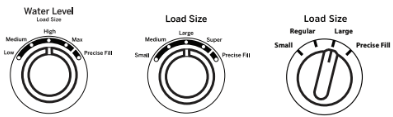
(features and appearance will vary by model)
Precise Fill (on some models)
- For convenience, best performance and optimal efficiency, select Precise Fill for models so equipped. This selection automatically provides the correct amount of water suited to the size and type of load placed in the unit. Lid will be locked for the duration of the load sensing process, which includes a brief spin period and a portion of the water fill.
- If you prefer to manually select the water level, select Low/Small through Max/Super (or Large on some models). While Precise Fill is best for most loads and general washing, you may want to manually select the load size for specialty items such as bulky, lightweight comforters or pillows, where you want to ensure a larger water level is applied. Manual load size selections should be made for wet items placed in the washer, such as soaked towels or garments.
- The washer will not fill with water when Precise Fill is selected if the lid is opened. When the lid is closed the machine is able to begin filling with water in order to sense the load size.
- NOTE: This is a high-efficiency washing machine. This system requires less water while providing effective cleaning action. You may notice that the water level is lower than on your previous washer. This is normal.
 Settings
- Select settings for agitation (Soil) and water temperature (Temp).
- NOTE: Longer Spin times typically reduce dryer time/energy usage (i.e. reduces total energy when using both a washer and a dryer).
 Cycle Options (on some models)
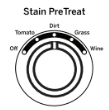
Stain PreTreat
The Stain PreTreat feature allows you to indicate what stains are on the garments in your load. An initial water fill is performed at a temperature tailored to the stain type selected and to an amount which enables a concentrated cleaning step. A stain scrubbing period, followed by an active soak, is conducted to effectively treat the stain. Then additional water is added to the selected temperature and the wash phase is conducted for the cycle selected. For washing normally soiled cotton clothing the Stain PreTreat option should be in the Off position.
This feature can be applied to most wash cycles as described in the cycle guide.
To use Stain PreTreat:
- Select the desired wash cycle.
- Select the stain to be treated under the Stain PreTreat options.
Automatic Load Sensing
- This determines the correct agitate profile, agitate duration and amount of water suited to the size and type of load placed in the washer. The washer will not start the wash cycle or fill with water if the lid is open. When the lid is closed the machine is able to begin filling with water in order to sense the load size.
- NOTE: Automatic Load Sensing initiates a spin at the beginning of the cycle and will take as much as 3 minutes to complete (significantly shorter for smaller loads); this is normal operation.
- NOTE: This is a high efficiency washing machine. This system requires less water while providing effective cleaning action. You may notice that the water level is lower than on your previous washer. This is normal.
Liquid Fabric Softener Dispenser (on some models)
The agitator cap fits into the top of the agitator. If it accidentally comes off, simply put it back on.
The fabric softener dispenser automatically releases liquid fabric softener at the proper time during the cycle.
Do not stop the washer or raise the lid during the first spin. This will cause the dispenser to empty too soon.
To use, follow these steps:
1. Make sure dispenser is securely attached to agitator.
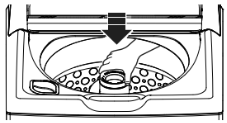
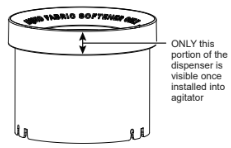
2. Use only liquid diluted fabric softener. Pour into dispenser, using amount recommended on package.
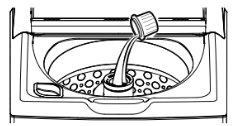
Never pour fabric softener directly on clothes. It may stain them.
3. Add water to dispenser until it reaches the maximum fill line.
Do not pour anything into the agitator if the agitator cap or dispenser is removed.

4. Select Deep Rinse option.
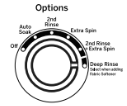
NOTE: Fabric softener may not dispense properly if the Deep Rinse option is not selected.
Liquid Bleach
- Liquid chlorine bleach should be added through the bleach dispenser in the front left corner. Follow bleach manufacturer’s recommendations for the correct amount of liquid chlorine bleach based on load size, taking care to not apply or spill it directly on clothing.
- NOTE: Do not use liquid chlorine bleach and laundry pretreatments such as an Oxi product in the same wash load.
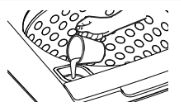
Pretreatment
- Place laundry pretreatments, such as an Oxi product, directly in the bottom of the wash basket before loading clothes.
- NOTE: Do not use liquid chlorine bleach and laundry pretreatments such as an Oxi product in the same wash load.
Loading
Always follow fabric manufacturer’s care label when laundering.
Proper Use of Detergent
- Using too little or too much detergent is a common cause of laundry problems.
- Use less detergent if you have soft water, a smaller load or a lightly soiled load.
- For spots, apply pre-treatment to items as recommended on the product label. Application should be made in the basket to prevent overspray which may cause the coloring on the lid or graphics to fade.
- Place detergent packets in the bottom of the wash basket before adding clothes.
- GE Appliances recommends the use of High Efficiency detergents such as in your energy efficient washer. HE detergents are formulated to work with low water wash and rinse systems. HE detergents reduce the oversudsing problems commonly associated with regular detergents.
- When using high efficiency or concentrated detergents, consult the product label to determine amount required for optimum performance. Excessive detergent will negatively impact wash performance.
Sorting Wash Loads
Sort by color (whites, lights, colors), soil level, fabric type (sturdy cottons, easy care, delicates) and whether the fabric produces lint (terry cloth, chenille) or collects lint (velveteen, corduroy). Wash lint producers such as cotton towels and socks separate from lint collectors including synthetic garments and dress pants.
Loading the Washer
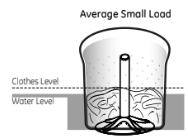
Load dry items loosely in the washer basket. For best results, load items evenly and loosely around the outside of the basket, filling in towards the center on larger loads. To add items after washer has started, press Start/Pause if the lid is locked; wait until the Lid Lock indicator on the display is no longer illuminated before attempting to open the lid. Lift the lid and submerge additional items around the outside of the basket. Close the lid and press Start to resume. Adjust load size selection and/or use Deep Fill option if necessary.
- On Infusor models, do not place large items such as sheets, blankets and towels across the Infusor. Load them around the outside of the basket.
- Do not put lawn or sofa cushions into the washer as they are too big to move. Remove outer covers and ONLY wash them.
Care and cleaning
Exterior of the Washer
- Immediately wipe off any spills with a damp cloth.
Interior of the Washer
- Leave the lid open after washing to allow moisture to evaporate. If you want to clean the basket, use a clean soft cloth dampened with liquid detergent; then rinse. (Do not use harsh or gritty cleaners.)
Cleaning the Fabric Softener Dispenser (on some models)
1 Remove the dispenser from the top of the agitator.
2 Separate the dispenser cup from the cover by grasping the top and pushing down on the inside of the cup with your fingers. Dispenser cup will pop free from the cover.
3 To clean the dispenser, soak both the dispenser cup and the dispenser cover in the following solution:
1 US gallon (3.8 liters) warm water
1/4 cup (60 ml) heavy-duty liquid detergent
1 cup (240 ml) bleach
4 If necessary, loosen buildup with a clean, soft cloth after soaking. Do not use a stiff brush; you may roughen the surface of the dispenser.
5 Rinse and reassemble dispenser. Place dispenser back on the agitator.
Water Supply Hoses
- Hoses connecting washer to faucet should be replaced every 5 years.
Moving and Storage
- Ask the service technician to remove water from drain pump and hoses. Do not store the washer where it will be exposed to the weather.
Long Vacations
- Be sure water supply is shut off at faucets. Drain all water from hoses and water filter pump area if weather will be below freezing.
Installation Instructions
1. UNPACKING THE WASHER
After the machine is in the home, remove outside packing material/carton from washer.
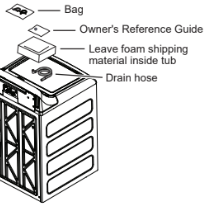
Remove bag (containing clamp, cable tie and drain hose clip), drain hose and Owner's Reference Guide from tub.
NOTE: Leave foam shipping material inside tub opening to hold tub in place during the rest of installation.
2. REMOVE THE BASE
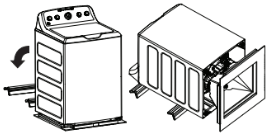
Remove base from unit by placing foot on side of base and tipping unit back on corner post. Remove base and bring the washer back upright.
3. CONNECT DRAIN HOSE TO WASHER
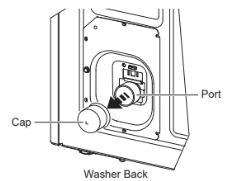
Remove the cap from the drain port, if present, before installing the drain hose.
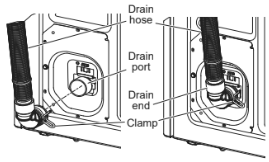
Connect drain hose to drain port on back of washer. Open clamp with pliers and slide onto hose end. Holding clamp open, push hose end onto drain port until fully seated. Release clamp between locating ribs on hose end. Outlet of hose end should be oriented vertically.
4. CONNECT WATER HOSES TO WASHER
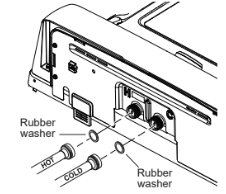
- Unplug electrical cord before installing water hoses. If not installed, install rubber washer in one end of hot water hose. Thread hot water hose onto connection labeled H at top rear of washer. Hand tighten and use pliers to tighten hoses between 1/8 and 1/4 turn beyond hand-tight.
- If not installed, install rubber washer in one end of cold water hose C. Thread cold water hose onto connection labeled C at top rear of washer. Hand tighten and use pliers to tighten hoses between 1/8 and 1/4 turn beyond hand-tight.
- Move washer as close to final location as possible. leaving room for you to make water. drain. and electrical connections to your home.
5. CONNECT WATER HOSES TO OUTLET VALVES
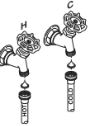
- Determine which is HOT water line before attaching water hoses to faucets. Traditionally, HOT faucet is on left.
- (If screen washers are not installed) With protruding part of screen toward you, install strainer screen/rubber washer into each of the free ends of two water hoses.
- Connect hot water hose to hot water outlet valve of your home. Hand tighten and use pliers to tighten hoses between 1/4 and 1/2 turn beyond hand-tight. Open hot water valve.
- Connect cold water hose to cold water outlet valve of your home. Hand tighten and use pliers to tighten hoses between 1/4 and 1/2 turn beyond hand-tight. Open cold water valve.
- Check for leaks and drips at the hose couplings. Tighten as necessary.
6. CONNECT TO DRAIN
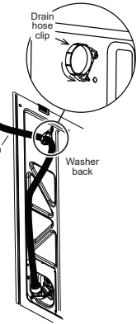
- Install drain hose clip on rear panel of washer. Route drain hose through clip and insert free end into drain opening of your home.
- NOTE: If longer drain hose is required, order drain hose extension kit, GE Appliances part number WH49X301. Connect additional drain hose (contained in kit) to original hose with hose clamp (contained in kit).
If water valves and drain are built into wall, fasten drain hose to one of the water hoses with cable tie provided.
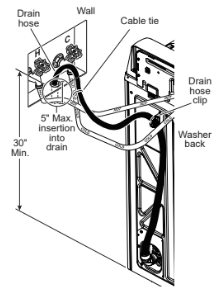
NOTE: Placing the drain hose too far down the drain pipe can cause a siphoning action. No more than 5" of hose should be in the drain pipe. There must be an air gap around the drain hose. A snug fit can also cause a siphoning action.
If your drain is a standpipe, fasten drain hose to standpipe with cable tie provided.
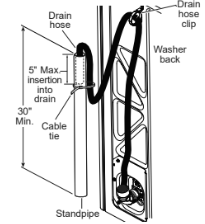
NOTE: Placing the drain hose too far down the drain pipe can cause a siphoning action. No more than 5" of hose should be in the drain pipe. There must be an air gap around the drain hose. A snug fit can also cause a siphoning action.
If drain discharge height does not meet 30" minimum height requirement, end of drain hose must be secured in drain opening of home by installer and have an air gap around hose to prevent siphoning.
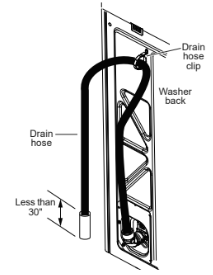
NOTE: Placing the drain hose too far down the drain pipe can cause a siphoning action. No more than 5" of hose should be in the drain pipe. There must be an air gap around the drain hose. A snug fit can also cause a siphoning action.
7. CONNECT POWER AND INSTALL
Make sure large dial control (on some models) on washer is pushed in to the OFF position.
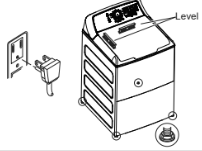
Insert plug of electrical cord into a 115V, 15- or 20-amp wall receptacle. Move washer into final position. Place level on flat top side edges of washer. Adjust all four leveling legs until washer is level left-to-right and front-to-back. Remove level.
Open tub lid. Remove and discard tub shipping material (see Step 1).
Remove plastic protector sheet from control panel face.
Troubleshooting Tips
Short spray and delay after pushing the Start button
- Lid was opened and closed between cycle selection and start
This is normal. See START-UP SEQUENCE in the Safety Instructions section.
Water level seems low
Water may not cover the top level of the clothes. This is normal for this high efficiency washer.
Low water flow
- Water valve screens are stopped up
Turn off the water source and remove the water connection hoses from the upper back of the washer and the water faucets. Clean both the hose screens (if so equipped) and the screens in the machine using a brush or a toothpick. Reconnect the hoses and turn the water back on. Check to ensure there are no leaks at the connections.
Water siphoning out of washer
- Drain standpipe is too low or hose too far into standpipe
The drain hose must exceed 30” height at some point between the washer back and the drain pipe. Use anti-siphon clip. See the Installation Instructions.
Too many suds
Try less detergent.
Measure your detergent carefully. Use less soap if you have soft water, a smaller load or a lightly soiled load.
Switch to High Efficiency detergent such as
Water leaks
Switch to High Efficiency detergent such as
- Using too much detergent in washer
Use less detergent. Use less soap if you have soft water, a smaller load or a lightly soiled load.
- Fill hoses or drain hose is improperly connected
Make sure hose connections are tight at faucets and rubber washers are installed. Make sure end of drain hose is correctly inserted in and secured to drain facility.
Check household plumbing. You may need to call a plumber.
Make sure drain hose does not make contact with the wall. May cause excessive wear on the hose.
- Constant water pressure to fill hoses at water source
Tighten hoses at the faucets.
Check condition of the fill hoses; they should be replaced every 5 years.
Water temperature seems incorrect
- Cooler water temperatures provide improved energy efficiency
New laundry detergents have been formulated to work with cooler water temperatures without affecting wash performance.
- Water supply is turned off or improperly connected
Turn both hot and cold faucets fully on and make sure hoses are connected to correct faucets. NOTE: Water valves are marked “H” and “C”.
- Water valve screens are stopped up
Turn off the water source and remove the water connection hoses from the upper back of the washer and the water faucets. Clean both the hose screens (if so equipped) and the screens in the machine using a brush or a toothpick. Reconnect the hoses and turn the water back on. Check to ensure there are no leaks at the connections.
- Cool/Cold Water when selecting Hot
This is normal. The washer senses water temperature (on some models)and optimizes for best results. Cold water is added periodically when hot is selected.
- House water heater is not set properly
Make sure house water heater is delivering water at 120°F–140°F (48°C–60°C).
Water pumped out before cycle is complete
- Water was left in unit for 24 hours with lid closed or 15 minutes with lid open
Previous cycle has been cancelled. Close lid, select new cycle, and start machine.
Water won’t drain
- Drain hose is kinked or improperly connected
Straighten drain hose and make sure washer is not sitting on it. Top of drain outlet should be less than 8 ft (2.44 m) above floor.
Washer spins and pauses at the beginning of cycles
The washer is sensing the load.
Washer pauses during wash cycle
- The Soak Option was chosen
This is normal Many cycles incorporate as series of soaks within the agitation period to get your clothes clean with less wear.
Many cycles incorporate as series of soaks within the agitation period to get your clothes clean with less wear.
Detergent packets not dissolving
- Laundry detergent packet placed in dispenser
Laundry detergent packets should not be used in the dispensers. They should only be added directly to the wash basket following the manufacturer’s directions.
Unexplained time and/or settings changes
- Changing options (on some models)
This is normal. Several options will change other options to maximize washer performance.
Basket seems loose
- Basket moves or rotates freely
Washer basket does not have a traditional brake. Washer basket will move freely. This is normal.
Agitator seems loose (on some models)
- Agitator top moves/has side-to-side movement
Agitator top is designed to be flexible to allow for care of large bulky items such as comforters; this is normal.
Colored spots
- Incorrect use of fabric softener
Check fabric softener package for instructions and follow directions for using dispenser.
Make sure you have selected the Deep Rinse option. (on some models)
Pretreat stain and rewash using Speed Wash cycle before drying. (on some models)
Sort whites or lightly colored items from dark colors.
Grayed or yellowed clothes
Be sure to follow detergent manufacturer’s directions.
Use a water conditioner or install a water softener.
Make sure water heater is delivering water at 120°F–140°F (48°C–60°C).
Loosely load clothes no higher than the top row of holes in the washer basket. For best results, load items around the outside of the basket.
Sort clothes by color. If fabric label states wash separately, unstable dyes may be indicated.
Lint or residue on clothes
- Clothes are air or line dried
If you do not dry your clothes with a clothes dryer, your clothes may retain more lint.
Separate lint producers from lint collectors.
Wash small loads for a shorter time using Light Soil setting.
Rewash; next time:
Try a liquid detergent
Use warmer water temperature.
Loosely load clothes in the washer basket. For best results, load items around the outside of the basket.
- Incorrect use of fabric softener
Check fabric softener package for instructions and follow directions for using dispenser.
Make sure you have selected the Deep Rinse option. (on some models)
Clothes too wet
Make sure the cycle selected matches the load you are washing. Some fabrics will feel wetter when rinsed with cold water.
Redistribute load in washer and run through Drain & Spin cycle.
Blinking Spin light or Spin light on at end of cycle
- Out of balance condition has been detected
Allow cycle to continue and finish.
If load is wet at the end of the cycle, even out load and run a Drain & Spin cycle.
Pilling
- Result of normal wear on poly-cotton blends and fuzzy fabrics
While this is not caused by the washer, you can slow the pilling process by washing garments inside out.
Snags, holes, tears, rips or excessive wear
- Pins, snaps, hooks, sharp buttons, belt buckles, zippers and sharp objects left in pockets
Fasten snaps, hooks, buttons and zippers.
Remove loose items like pins, objects in pockets and sharp buttons.
Turn knits (which snag easily) inside out.
- Undiluted chlorine bleach
Check bleach package instructions for proper amount.
Never add undiluted bleach to wash or allow clothes to come in contact with undiluted bleach.
- Chemicals like hair bleach or dye, permanent wave solution
Rinse items that may have chemicals on them before washing. Use Speed Wash cycle with Extra Rinse option. (on some models)
Wrinkling
- Incorrect wash and dry cycles
Match Cycle selection to the type of fabric you are washing (especially for easy care loads).
Avoid mixing heavy items (like jeans) with light items (like blouses). Try a fabric softener.
Loosely load clothes in the washer basket.
- Repeated washing in water that is too hot
Wash in warm or cold water.
“Clicking”
- Shifter mechanism is engaging or disengaging
The drive system will engage at the start of agitate and disengage when agitate is complete. This occurs multiple times during the wash.
Back and forth “swoosh”
- Electric motor reversing direction
This sound is the motor rotating back and forth to clean your laundry.
“Clicking” behind Control during fill
- Automatic Temperature Control Valve
Two valves mix cold and hot water. The “clicking” is when either valve turns on or off to Water flow changes during fillraise or lower the fill water temperature.
Water flow changes during fill
- Automatic Temperature Control Valve
Two valves mix cold and hot water. The “clicking” is when either valve turns on or off to raise or lower the fill water temperature.
Motor sounds during spin
- Motor ramping up/down during spin cycle
The motor will speed up incrementally during the spin cycle.
When spin is complete, it will coast until it stops.
“Humming”
The drain pump will make a humming sound when pumping out water after agitation stops and continue until spin is complete.
The drive motor will make a “humming” sound during the wash and spin phases of the cycle.
“Gurgling”
When the pump starts drawing in air, It starts to gurgle. The washer should then begin spinning and the sound will continue until it is done spinning.
Water “swishing"
Water swishing while the unit is agitating is normal, especially with smaller loads.
Washer rocking/ moving
- Washer leveling legs uneven
To level the washer, adjust the leveling legs by rotating the individual leg in the proper direction for up or down.
“Squeaking” sound
- Washer not level and rubbing on cabinet
To level the washer, adjust the leveling legs by rotating the individual leg in the proper direction for up or down.