
IMPORTANT: Read and save these instructions.
NOTICE:
Installer: Leave this guide with the homeowner
Homeowner: Keep this guide for future reference
Gas Cooktop
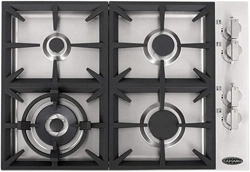
COS-DIC304
COS-DIC366
30 in. / 36 in. Gas Cooktop
Installation & User Manual
THANK YOU FOR YOUR PURCHASE
Thank you for your purchase. We know that you have many brands and
products to choose from and we are honored to know that you have decided
to take one of our products into your home and hope that you enjoy it.
COSMO Appliances are designed according to the strictest safety and
performance standard for the North American market. We follow the
most advanced manufacturing philosophy. Each appliance leaves the
factory after thorough quality inspection and testing. Our distributors and
our service partners are ready to answer any questions you may have
regarding how to install, use and care for your products. We hope that this
manual will help you learn to use the product in the safest and most effective
manner.
Before using this product, please read through this manual carefully. Keep this
installation manual in a safe place for future reference. Please ensure that
other persons using this product are familiar with these instructions as well.
If you have any questions or concerns, please contact the dealer from whom you
purchased it, or contact our Customer Support at:
1-888-784-3108.
2
TABLE OF CONTENTS
SAFETY & WARNINGS ........................................................4-10
General Safety .........................................................................5
Fire Safety .................................................................................6
Gas Safety ................................................................................6
Electrical & Grounding Safety ..................................................7
Installation Safety .....................................................................8
Location Safety ........................................................................9
Cooktop Safety ...................................................................9-10
COOKTOP DIAGRAMS .....................................................11-16
Dimensions ............................................................................11
Clearance ................................................................................12
Burner BTU .............................................................................13
Side / Back Panel ...................................................................14
Circuit Diagram: DIC304 ........................................................15
Circuit Diagram: DIC3366 ......................................................16
Cooktop Parts ........................................................................17
ELECTRICAL REQUIREMENTS .............................................18
OPERATING INSTRUCTIONS ...........................................19-22
Using the Cooktop Burners ..............................................19-20
Cooktop Requirements / Size Limitations .............................21
Grates .....................................................................................21
CARE & MAINTENANCE ...................................................23-26
Cleaning the Cooktop surface ...............................................23
Cleaning the Stainless steel surfaces ....................................23
Cleaning the Control Knobs ...................................................24
Cleaning the Burner grates and components ........................24
Cleaning the Burner caps and heads .....................................25
Cleaning the Burner bases .....................................................25
Electrodes ..............................................................................25
Cleaning the Grate .....................................................................25
Burner head and Cap Replacement ....................................26
LIQUEFIED PETROLEUM GAS CONVERSION ................27-31
TROUBLESHOOTING ..............................................................32
WARRANTY & SERVICE ....................................................33-34
3
SAFETY & WARNINGS
4
Read all instructions before using this appliance.
All electrical and gas equipment with moving parts can be dangerous.
WARNING: If the information in this manual is not followed exactly, a fire or explosion may
result causing property damage, personal injury, or death.
• DO NOT store or use gasoline or other flammable vapors and liquids in the vicinity of this
or any other appliance.
• WHAT TO DO IF YOU SMELL GAS:
◦ DO NOT try to light any appliance.
◦ DO NOT touch any electrical switch.
◦ DO NOT use any phone in your building.
◦ Immediately call your gas supplier from a neighbor's phone. Follow the gas
supplier's instructions.
◦ If you cannot reach your gas supplier, call the fire department.
• Installation and service must be performed by a qualified installer, service agency, or the
gas supplier.
SYMBOLS USED IN THIS MANUAL
These warning icons and symbols are here to prevent injury to you and others. Please
follow them explicitly. After reading this section, keep it in a safe place for
future reference.
State of California Proposition 65 Warning (US Only)
This product contains chemicals known to the State of California to cause cancer and
birth defects or other reproductive harm. Gas appliances can cause low-level exposure to
Proposition 65 listed substances, including but not limited to: Benzene, carbon monoxide,
formaldehyde, soot and substances resulting from the incomplete combustion of natural gas
or LP fuels. For more information go to www.P65 warnings.ca.gov.
Commonwealth of Massachusetts
This product must be installed by a licensed plumber or gas fitter qualified or licensed by the
State of Massachusetts. When using ball-type gas shut-off valves, you must use the T-
handle type. Multiple flexible gas lines must not be connected in series.
WARNING
CAUTION
NOTE
!
!
Hazards or unsafe practices that may result in
severe personal injury or death.
Hazards or unsafe practices that may result in
electric shock, personal injury, or property damage.
Useful tips and instructions.
SAFETY & WARNINGS
5
GENERAL SAFETY
WARNING
To reduce the risk of fire, electric shock, personal injuries, and/or death, observe the
following precautions.
• Do not touch any part of the cooktop, including but not limited to cooktop burners during or
immediately after cooking.
• Know the location of the gas shut-off valve and how to shut it off.
• Make sure the hold down brackets are properly installed on the cooktop. See the
installation instructions for more information.
• Do not let children near or onto the cooktop.
• Do not let children play with the cooktop or any part(s) of the cooktop. Children climbing on
the cooktop to reach items could be killed or seriously injured.
• Do not leave children unattended in an area where the cooktop is in use.
• Remove all packaging materials from the cooktop before operating to prevent ignition of
these materials. Keep all packaging materials out of children's reach. Properly store or
dispose the packaging materials after the cooktop is unpacked.
• Do not store any object of interest to children on the cooktop or back-guard of the cooktop.
• Do not operate the cooktop if the cooktop or any part of the cooktop is damaged,
malfunctioning, or missing parts.
• Do not use the cooktop as a space heater.
• Use the cooktop for cooking only.
• Use only dry pot holders.
• Do not use the cooktop to heat unopened food containers.
• Unplug or disconnect the power cord before servicing.
• Never store combustible materials (dishtowels, paper products, etc.) or packaged or
canned food under the cooktop in a way that would let them come in contact with the
underside of the cooktop. The combustible material could catch fire and the packaged or
canned food could explode.
• Make sure the gas line is not compressed or bent by heavy objects. Otherwise, gas leaks
or incomplete combustion may occur.
!

6
SAFETY & WARNINGS
FIRE SAFETY
WARNING
To reduce the risk of fire, electric shock, personal injuries, and/or death, observe the
following precautions.
• Do not store, place, or use flammable or combustible materials such as paper, plastic, pot
holders, linens curtains, gasoline or other flammable vapors or liquids near the cooktop.
• Do not wear loose fitting or hanging garments while using the cooktop.
• To avoid grease buildup, regularly clean the vents.
• Do not let pot holders or other flammable materials touch a heating element. Do not use a
towel or other bulky items made out of cloth in place of a pot holder.
• Do not use water on a grease fire. To put out a grease fire, turn off the heat source and
smother the fire with a tight-fitting lid or use a multipurpose dry chemical or foam-type fire
extinguisher.
• Do not heat unopened food containers. The buildup of pressure may cause the container to
burst and result in injury.
• Always check if the burners are combusting normally.
• Overheating may cause a fire, and incomplete combustion may cause carbon-monoxide
poisoning.
GAS SAFETY
WARNING
To reduce the risk of fire, electric shock, personal injuries, and/or death, observe the
following precautions.
Checking for gas leaks
Leak testing of the appliance must be conducted according to the manufacturer's
instructions. Do not use a flame to check for gas leaks. Use a brush to spread a soapy water
mixture around the area you are checking. If there is a gas leak, you will see small bubbles
in the soapy water mixture at the leak point.
If you smell gas:
• Close the valve and do not use the cooktop.
• Do not light a match, candle, or cigarette.
• Do not turn on any gas or electric appliances.
• Do not touch any electrical switches or plug a power cord into an outlet.
• Do not use any phone in your building.
• Evacuate the room, building, or area of all occupants.
• Immediately call your gas supplier from a neighbor's phone. Follow the gas supplier's
instructions.
• If you cannot reach your gas supplier, call the fire department.
!
!
7
SAFETY & WARNINGS
ELECTRICAL & GROUNDING SAFETY
WARNING
To reduce the risk of fire, electric shock, personal injuries, and/or death, observe the
following precautions.
• Plug the power cord into a grounded 3-prong outlet.
• Do not remove the grounding prong.
• Do not use an adapter or an extension cord.
• Do not use a damaged power plug, power cord, or loose power outlet.
• Do not modify the power plug, power cord, or power outlet in any way.
• Do not put a fuse in a neutral or ground circuit.
• Use a dedicated 120-volt, 60-Hz, 20-amp, AC, fused electrical circuit for this cooktop. A
time-delay fuse or circuit breaker is recommended.
• Do not plug more than one appliance into this circuit.
• Do not connect the ground wire to plastic plumbing lines, gas lines, or hot water pipes.
• This cooktop must be Earth grounded. In the event of a malfunction or breakdown,
grounding will reduce the risk of electrical shock by providing a path for the electric current.
This cooktop is equipped with a cord having a grounding plug. The plug must be firmly
plugged into an outlet that is properly installed and grounded in accordance with the local
codes and ordinances. If you are unsure whether your electrical outlet is properly grounded,
have it checked by a licensed electrician.
• The cooktop is supplied with a 3-pronged grounded plug. This cord must be plugged into a
matching, grounded 3-prong outlet that meets all local codes and ordinances. If codes permit
the use of a separate ground wire, we recommend that a qualified electrician determine the
proper path for this ground wire.
• Electrical service to the cooktop must conform to local codes. Barring local codes, it should
meet the latest ANSI/NFPA No. 70 – Latest Revision (for the U.S.), or the Canadian
Electrical Code CSA C22.1 – Latest Revisions.
• It is the personal responsibility of the cooktop owner to provide the correct electrical
service for this cooktop.
!
8
SAFETY & WARNINGS
INSTALLATION SAFETY
WARNING
To reduce the risk of fire, electric shock, personal injuries, and/or death, observe the
following precautions.
• Have your cooktop installed and properly grounded by a qualified installer, in accordance
with the installation instructions. Any adjustment and service should be performed only by
qualified gas cooktop installers or service technicians.
• Do not attempt to service, modify, or replace your cooktop or any part of your cooktop
unless it is specifically recommended in this manual.
• All other service should be referred to a qualified technician.
• Always use new flexible connectors when installing a gas appliance. Do not use old flexible
connectors.
• Make sure the hold down brackets are properly installed on the cooktop. See the
installation instructions for more information.
• Remove all tape and packaging materials.
• Remove all accessories from the cooktop; grates and griddles are heavy. Use caution
when handling them.
• Make sure no parts came loose during shipping.
• Make sure your cooktop is correctly installed and adjusted by a qualified service technician
or installer for the type of gas (natural or LP) you will use. For your cooktop to utilize LP gas,
the installer must replace the 4 or 6 surface burner orifices with the provided LP orifice set,
and reverse the GPR adapter. Furthermore, the bypass in burner valve will need to be
adjusted. These adjustments must be made by a qualified service technician in accordance
with the manufacturer's instructions and all codes and requirements of the authority having
jurisdiction.
• The qualified agency performing this work assumes the gas conversion responsibility.
• Installation of this cooktop must conform with local codes or, in the absence of local codes,
with the National Fuel Gas Code, ANSI Z223.1/NFPA.54, latest edition. In Canada,
installation must conform with the current Natural Gas Installation Code, CAN/CGA-B149.1,
or the current Propane Installation Code, CAN/CGA-B149.2, and with local codes where
applicable. This cooktop has been design-certified by ETL according to ANSI Z21.1, latest
edition, and Canadian Gas Association according to CAN/CGA-1.1, latest edition.
• Make sure the middle valve has adequate capacity and is not clogged.
• This cooktop must be installed by a qualified technician. Otherwise, gas leaks, fire,
or defective ignition may occur.
!
9
SAFETY & WARNINGS
LOCATION SAFETY
WARNING
To reduce
the risk of fire, electric shock, personal injuries, and/or death, observe the
following precautions.
• This cooktop is for indoor, household use only.
•
Do not install the cooktop in areas exposed to the weather and/or water.
• Do not install the cooktop in a place which is exposed to a strong draft.
• Select a location where a grounded, 3- prong outlet is easily accessible.
• If
the cooktop is located near a window, do not hang long curtains or paper blinds on that
window.
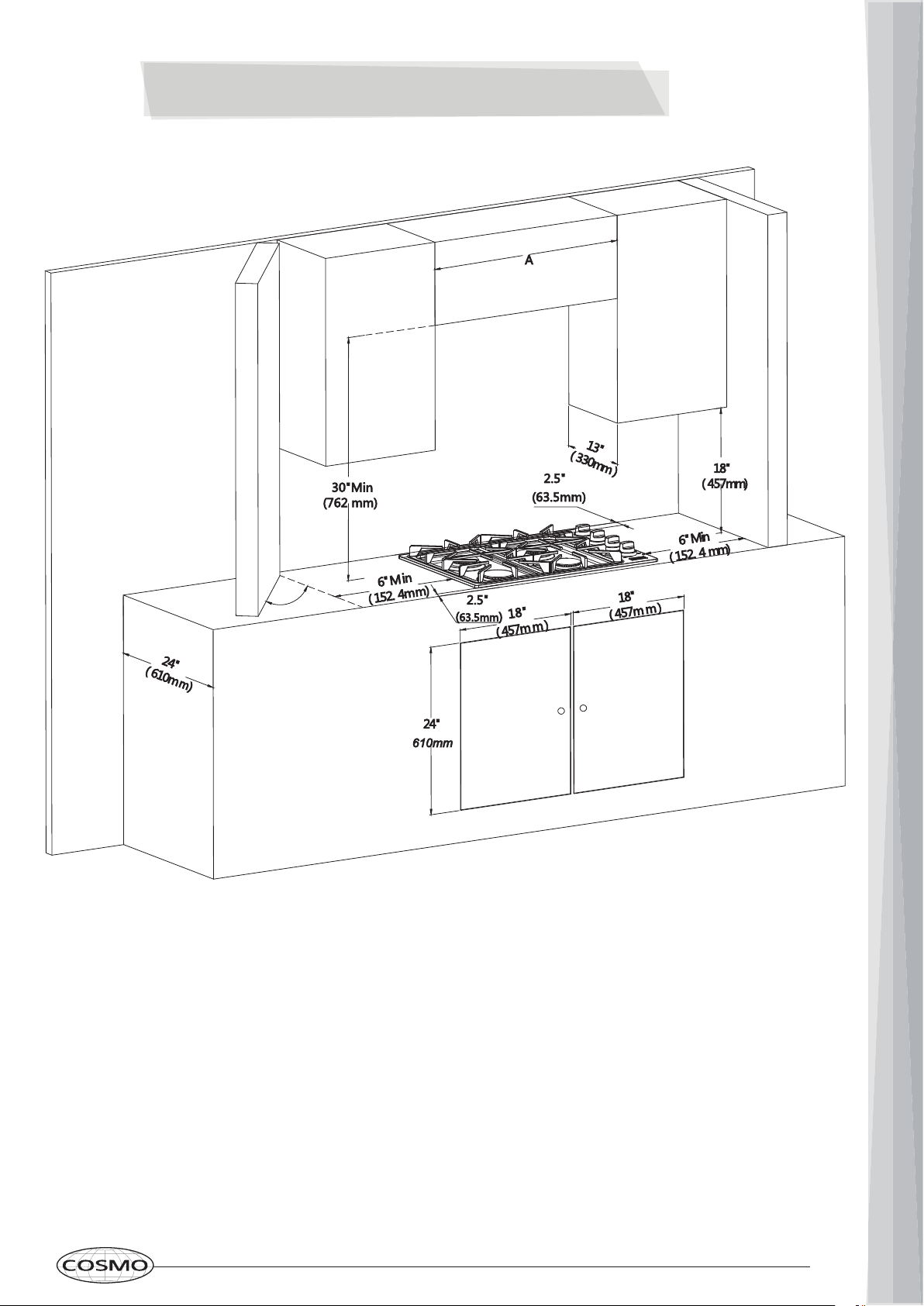
• For the cooktop to ventilate properly, there must be enough clearance at the top, back and
sides of the cooktop, and underneath the cooktop. The vents allow the necessary exhaust
for the cooktop to operate properly with correct combustion.
• Make sure the wall coverings around the cooktop can withstand heat up to 194 °F (90 °C).
•
Cabinet storage above the surface of the cooktop should be avoided.
• If
cabinet storage above the cooktop is necessary: allow a minimum clearance of 30 inches
(76.2 cm) between the cooking surface and the bottom of the cabinets.
COOKTOP SAFETY
WARNING
To reduce the risk of fire, electric shock, personal injuries, and/or death, observe the
following precautions.
• Select cookware that is designed for range top cooking. Use cookware that is large enough
to cover the burner grates. Adjust the burner flames so that the flames do not extend beyond
the bottom of the cookware.
• Make sure all burners are off when not in use.
• Do not use aluminum foil to line the grates or any part of the cooktop.
• Do not leave burners unattended on medium or high heat settings.
• Before igniting, make sure all burner caps are properly in place and all burners are level.
• Always use the LITE position when igniting the burners and make sure the burners have
ignited. If ignition fails, turn the knob to OFF and wait until the gas has dissipated.
• When you set a burner to simmer, do not turn the knob quickly.
• Make sure the flame stays on.
• Do not place any objects other than cookware on the cooktop.
!
!
10
SAFETY & WARNINGS
COOKTOP SAFETY (CONTINUED)
WARNING
To reduce the risk of fire, electric shock, personal injuries, and/or death, observe the
following precautions.
• If foods are flamed, they should only be flamed under a ventilation hood that is on.
• Before removing or changing cookware, turn off the burners.
• Remove food and cookware immediately after cooking.
• Before removing any parts of the burner for cleaning, make sure the cooktop is off and
completely cool.
• After cleaning the burner spreader, make sure it is completely dry before re-assembling.
• To avoid carbon monoxide poisoning, do not pour water into the cooktop well while
cleaning.
• To avoid cookware discoloration, deformity, and/or carbon monoxide poisoning, do not use
cookware that is substantially larger than the grate.
• Make sure cookware handles are turned to the side or rear of the cooktop and not over
other surface burners.
• Stand away from the cooktop while frying.
• Always heat frying oils slowly, and watch as they heat. If you are frying foods at high heat,
carefully watch during the cooking process. If a combination of fats or oils is to be used
during frying, mix them together before heating.
• Use a deep-fryer thermometer whenever possible. This prevents overheating the fryer
beyond the smoking point.
• Use a minimum amount of oil when shallow pan-frying or deep-frying. Avoid cooking un-
thawed food or food with excessive amounts of ice.
• Before moving cookware full of fats or oils, make sure it has completely cooled.
• To prevent delayed eruptive boiling, always allow heated liquids to stand at least 20
seconds after you have turned off the burner so that the temperature in the liquid can
stabilize.
• In the event of scalding, follow these first aid instructions:
1.) Immerse the scalded area in cool or lukewarm water for at least 10 minutes.
2.) Do not apply any creams, oils, or lotions.
3.) Cover with a clean, dry cloth.
• If a power failure occurs or the electric ignition fails to operate, do not use matches or
lighters to ignite the burners. This may cause a fire or physical burns.
• Do not place and use electric-powered cooking devices such as IH rice cookers or desktop
cooking heaters on top of your cooktop. Electromagnetic forces from these appliances may
cause the cooktop to malfunction.
!
11
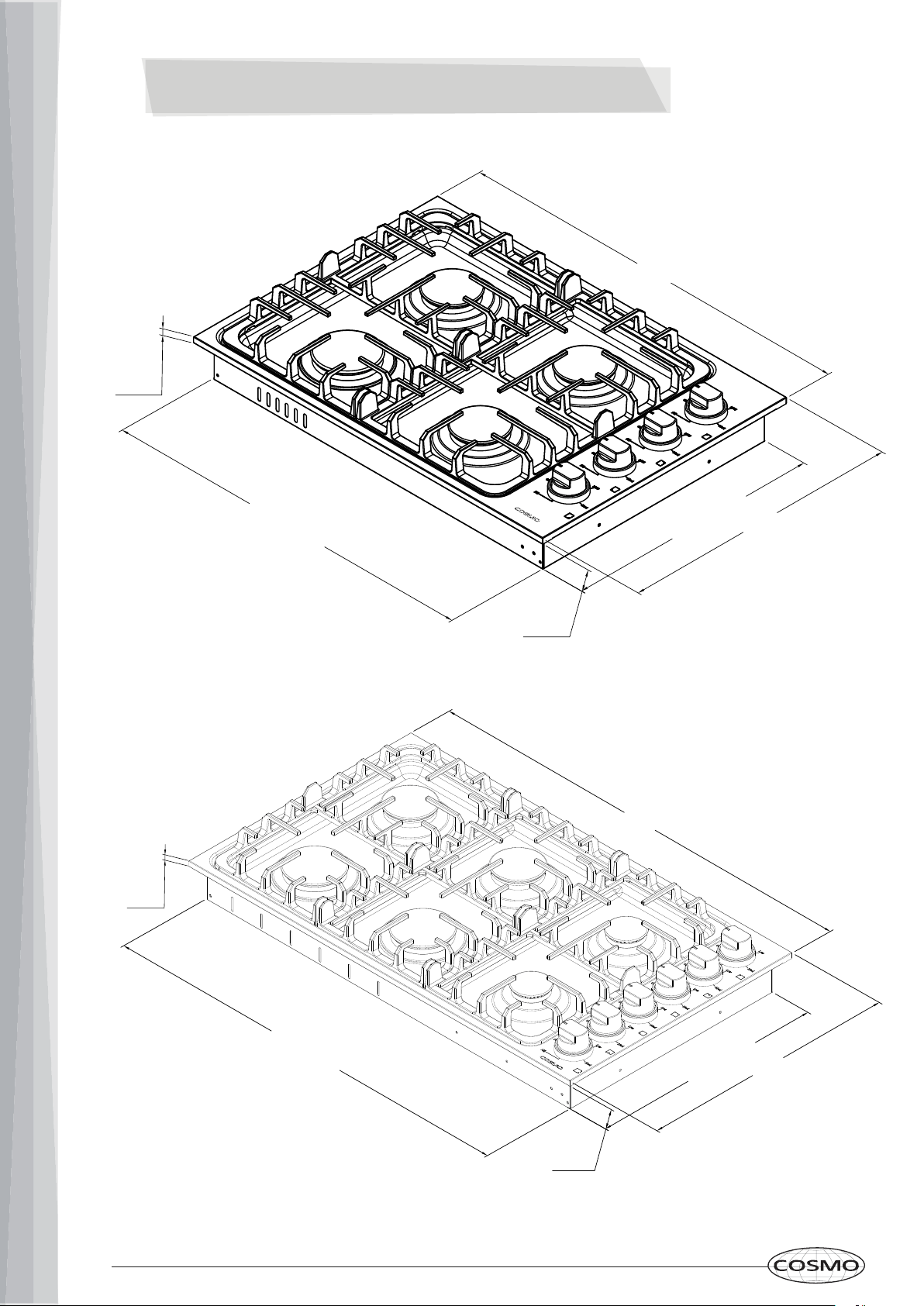
COOKTOP DIAGRAMS - DIMENSIONS
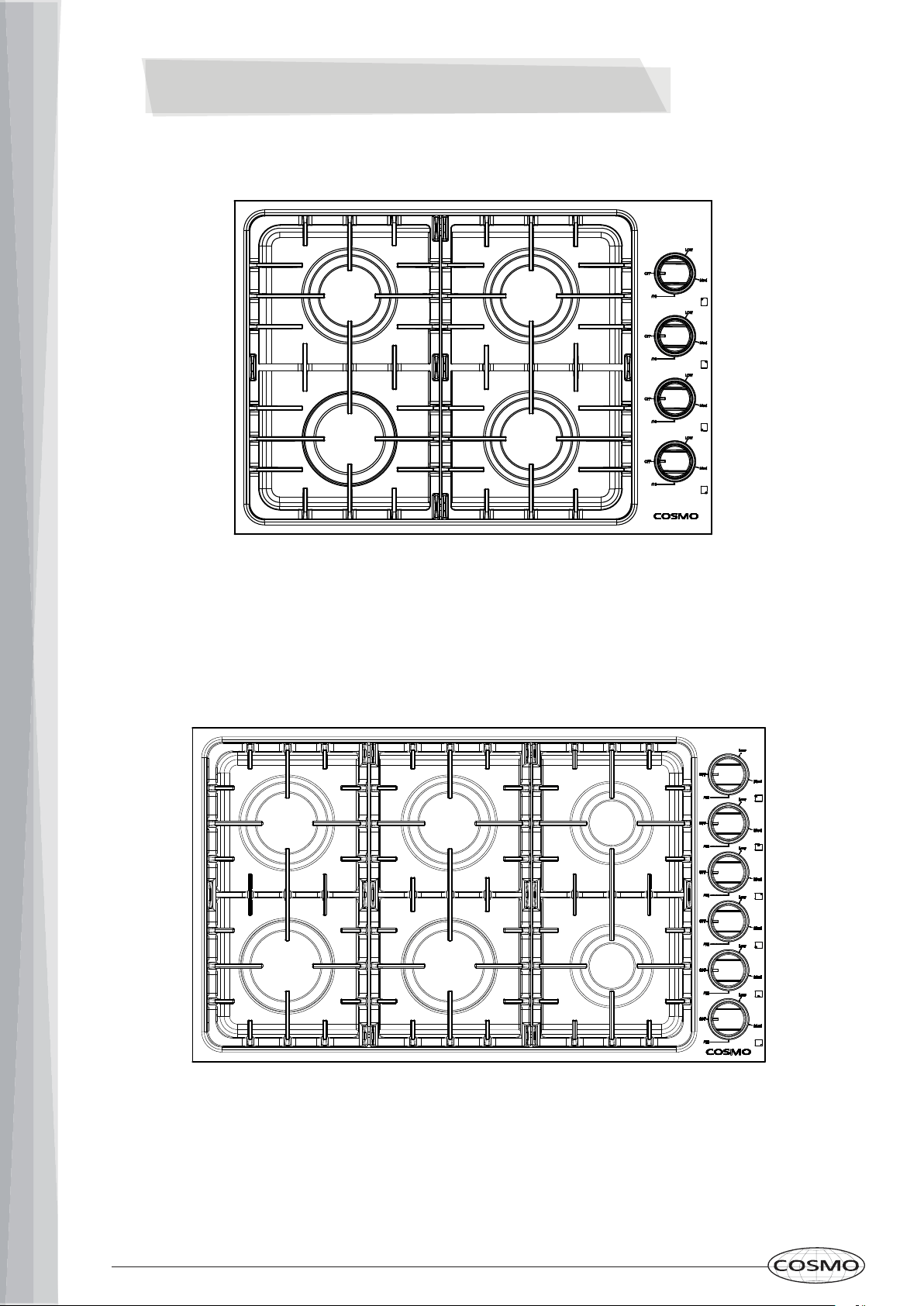
30"
21"
28 5/8"
2/5"
2.8"
19 1/2"
36"
21"
19 1/2"
2.8"
34 5/8"
COS-DIC304
COS-DIC366
2/5"
12
COOKTOP DIAGRAMS - CLEARANCE
13
COOKTOP DIAGRAMS - BURNER BTU
COS-DIC304
COS-DIC366
BURNERS
Left Front: 18000 BTU
Left Rear: 12000 BTU
Right Front: 9000 BTU
Right Rear: 9000 BTU
BURNERS
Left Front: 18000 BTU
Left Rear: 12000 BTU
Center Front: 18000 BTU
Center Rear: 12000 BTU
Right Front: 6000 BTU
Right Rear: 6000 BTU
14
Each burner has a corresponding knob that lets you to set the flame level from LO to HI. In
addition, each burner knob has a Lite setting. Turning a knob to Lite ignites the corresponding
burner.
The burner indicators are located above each knob and show which burner the knob
controls. Each burner is designed for specific cooking purposes.
A statement of the maximum gas (NG10in w.c/LP 14in w.c) supply pressure in accordance
with the inlet pressure rating of the gas appliance pressure regulator supplied.
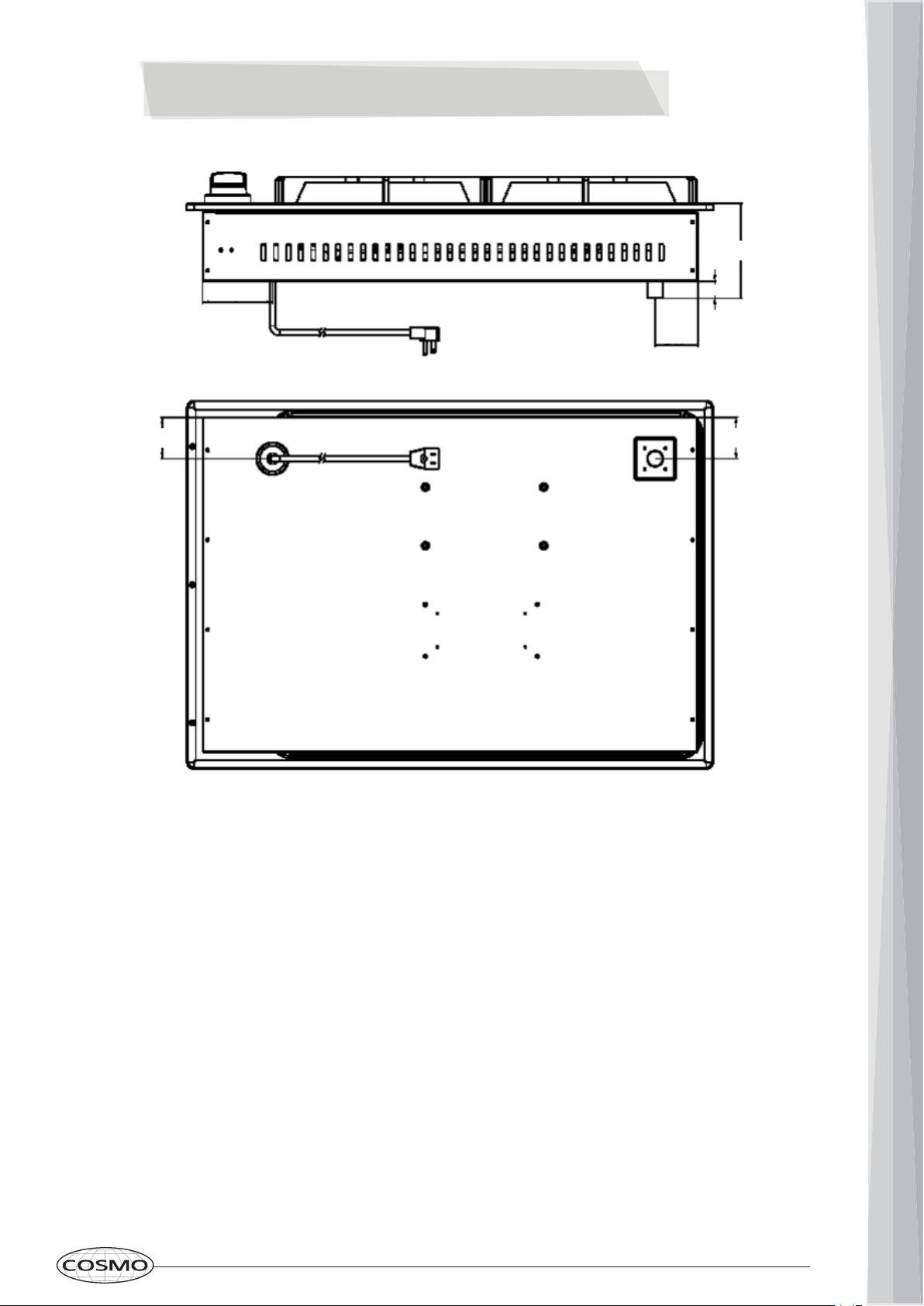
5.4"
1"
2.36"
4"
2.36"
2.36"
COOKTOP DIAGRAMS - SIDE/BACK PANEL
15
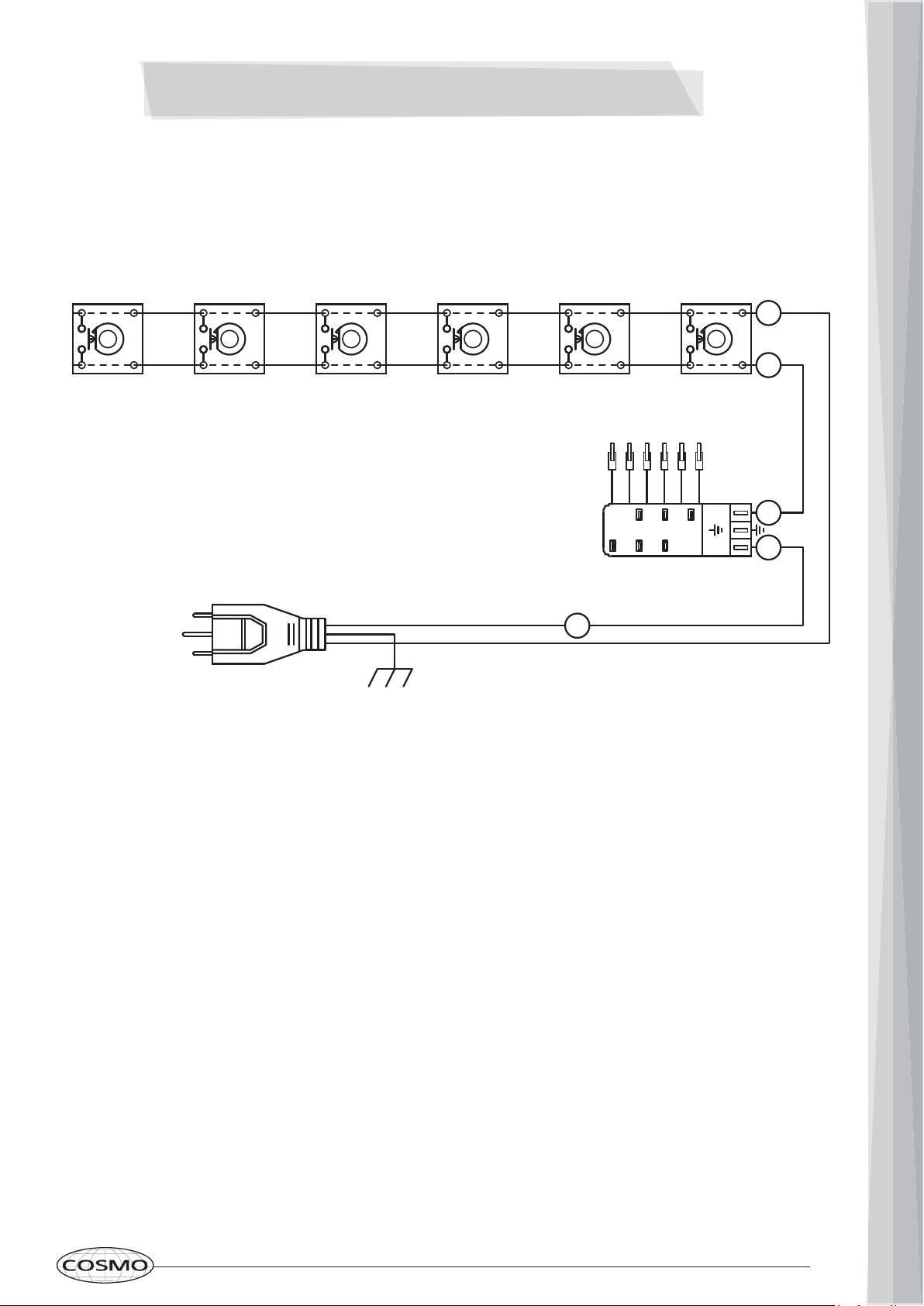
CIRCUIT DIAGRAMS - COS-DIC304
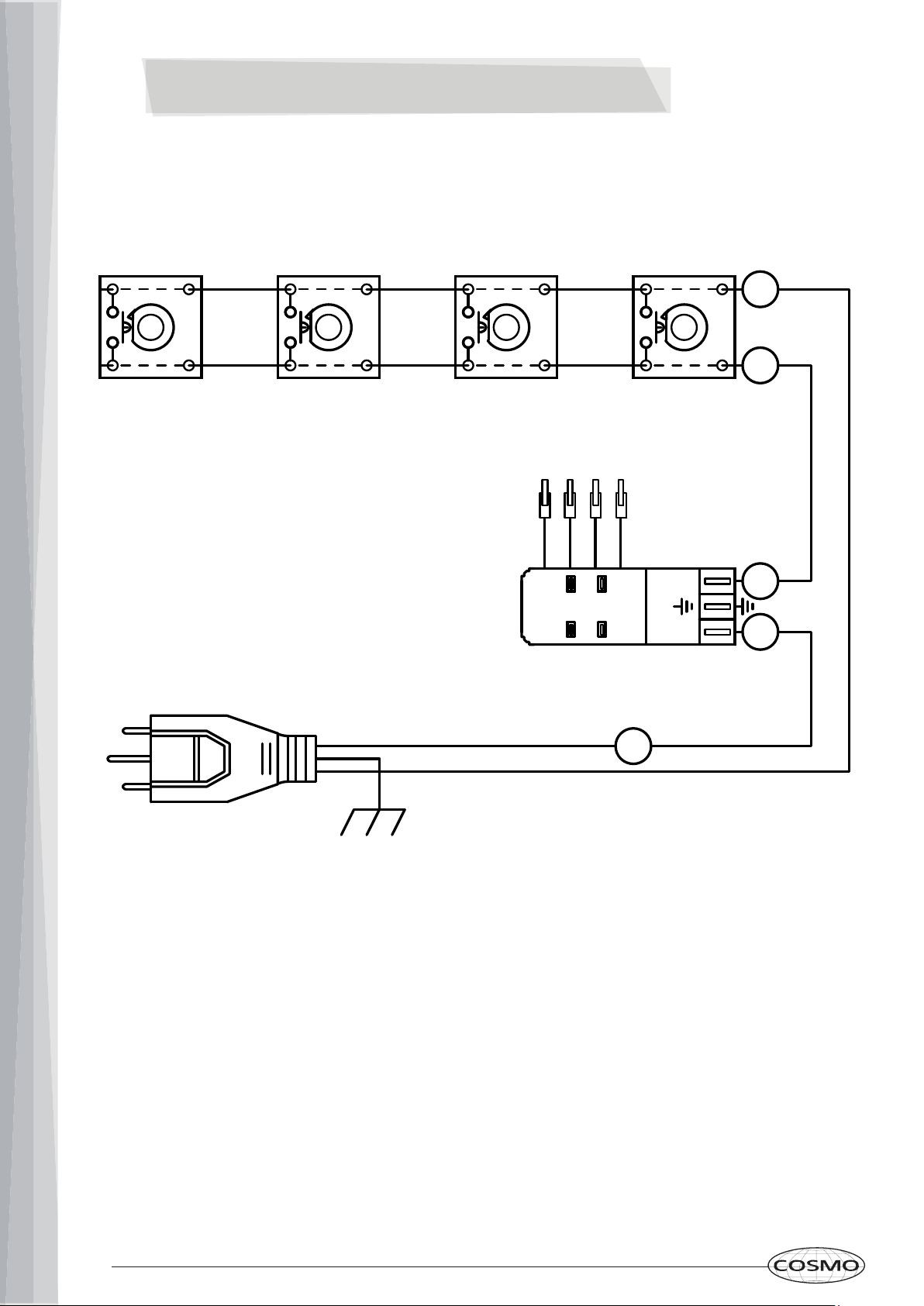
SW1
COS-DIC304Circuit Diag
ram
SW2 SW3
SW4
burner valve
L
PL
PL
N
Right Front Right Rear
Left Front Left Rear
Ignition pin
L
N
INPUT: 120V/AC 60Hz
Power Plug
L (Black wire)
N (White wire)
PE(Green wire)
Pulse ignitor
HV-4pin
N
16
CIRCUITS DIAGRAM - COS-DIC366
SW1 SW2
COS-DIC366 Circuit Diagram
SW3 SW4
burner valve
L
PL
PL
N
Right Front Right Rear
Left Front Left Rear
Ignition pin
L
N
Pulse ignitor
HV-6pin
SW5 SW6
Middle Front Middle Rear
N
L (Black wire)
N (White wire)
PE(Green wire)
INPUT: 120V/AC 60Hz
Power Plug
17
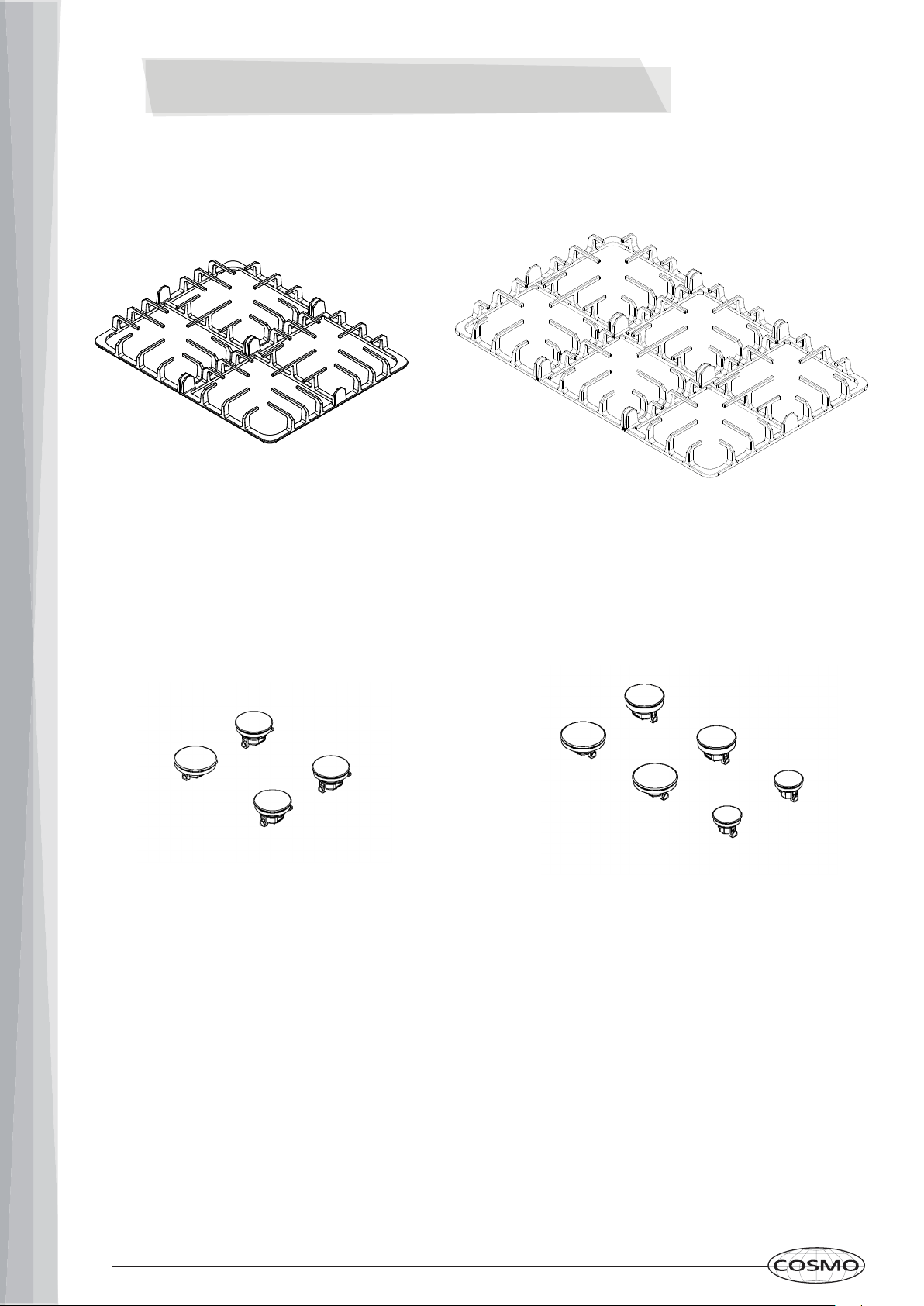
COOKTOP PARTS
COS-DIC304 Surface Burner Grates x2 COS-DIC366 Surface Burner Grates x3
COS-DIC304 Surface Burners & Caps (4) COS-DIC366 Surface Burners & Caps (6)
18
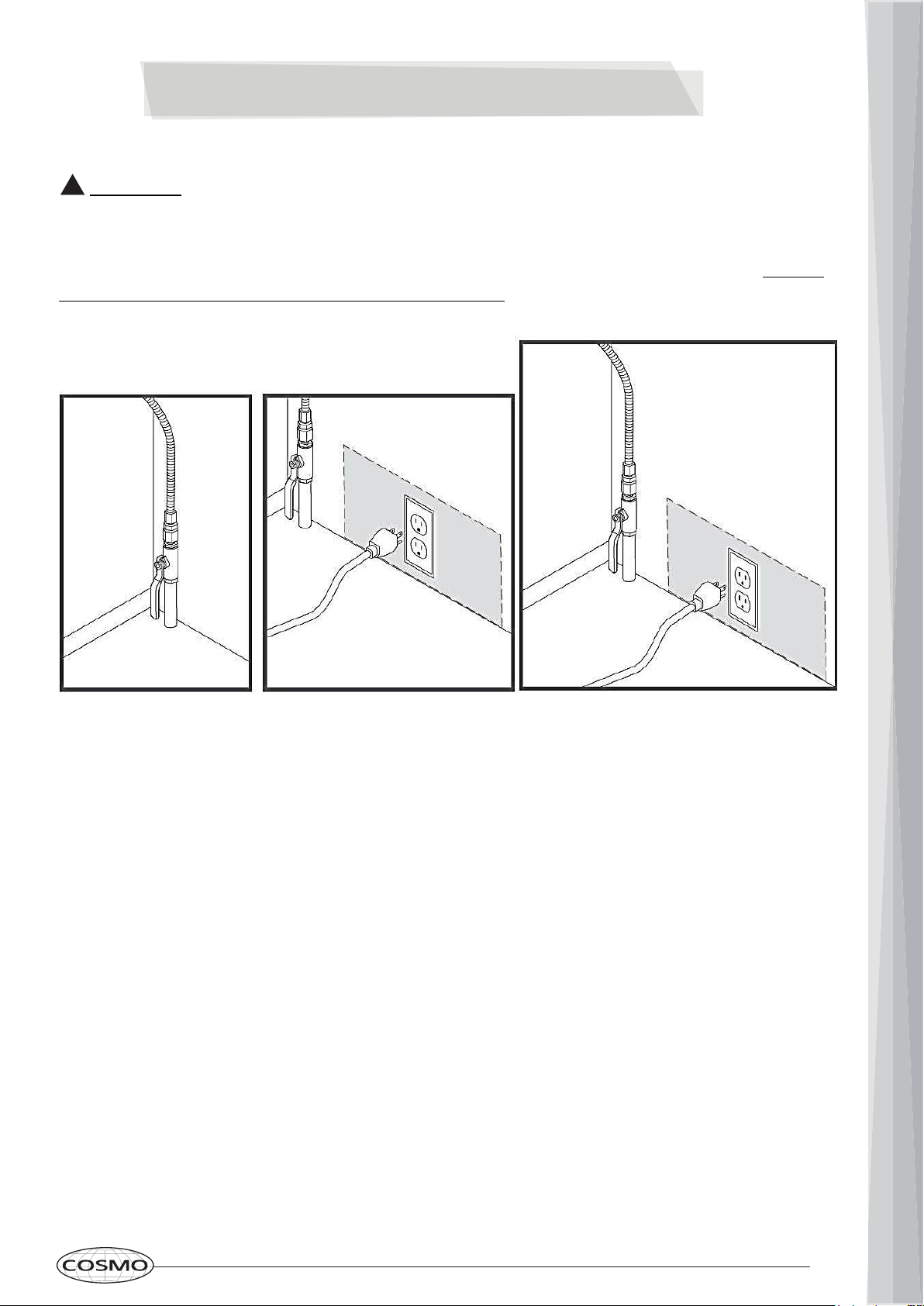
ELECTRICAL REQUIREMENTS
Cooktop requires 110 volts, 50/60 Hz electrical supply to operate the ignition system.
WARNING
Electrical Grounding Instructions
This appliance is equipped with a 3-prong grounding plug for your protection against
shock hazard and should be plugged directly into a properly grounded receptacle. Do not
cut or remove the grounding prong from this plug.
!
19
OPERATING INSTRUCTIONS
USING THE COOKTOP BURNERS
Ignition
CAUTION
Make sure all cooktop burners are properly installed and burner caps are properly seated.
Check for an actual flame before leaving the cooktop after lighting.
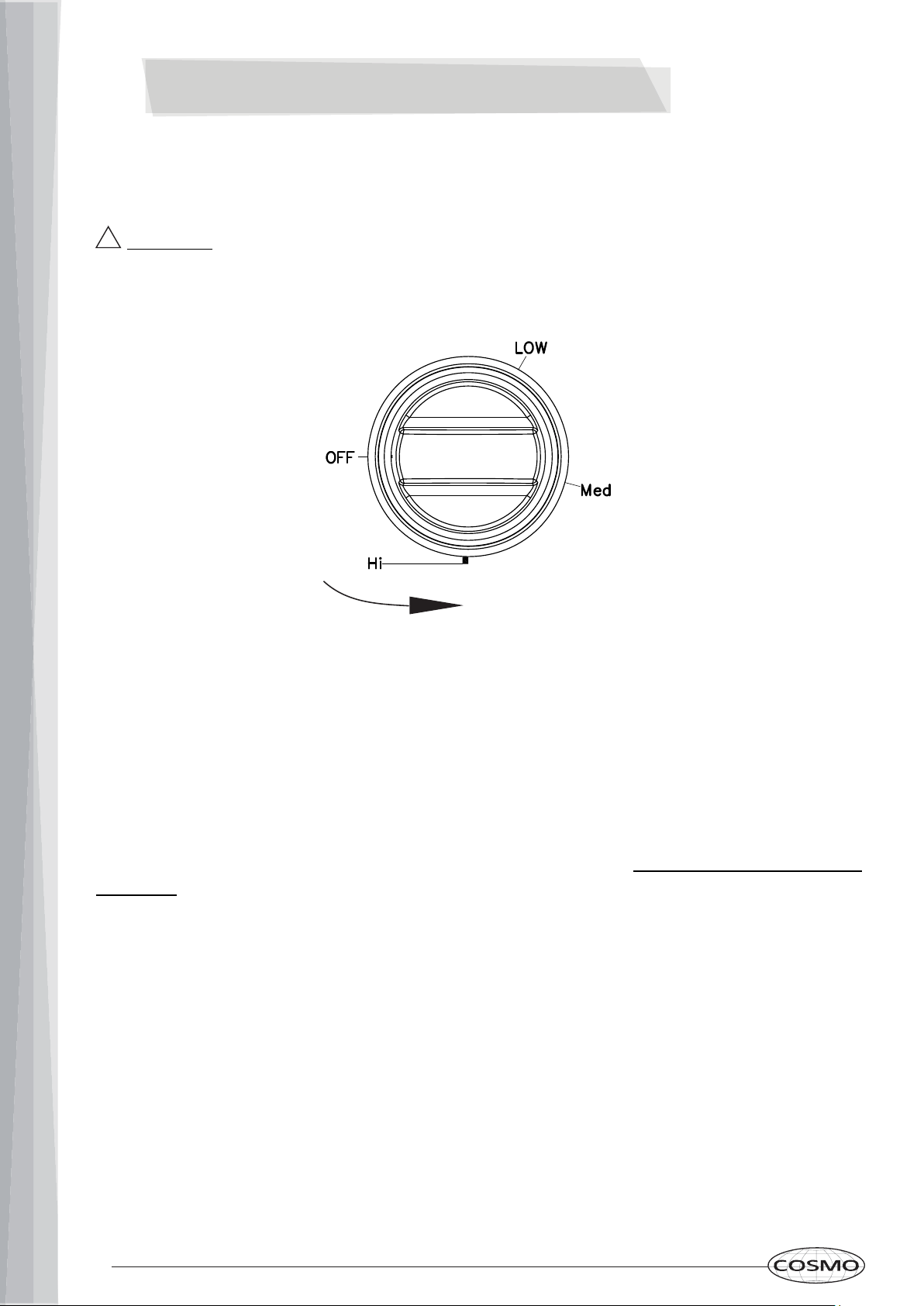
To light a burner
1.)Turn counter-clockwise tothe ignite position, push in the control knob, and you will hear
a “clicking” soundindicating the electronic ignition system is working properly.
2.) After the cooktop burner lights, turn the control knob to shift it out of the Lite
positionand turn off the electronic ignition system.
3.) Turn the control knob to adjust the flame to the desired level.
Manual ignition
If there is a power failure, you can ignite the burner manually. Use extreme caution when
doing this.
1.) Hold a long gas grill lighter to the cooktop burner you want to light.
2.) Push in the control knob for that burner, and then turn it to the Lite position. Turn on
the grill lighter to ignite the burner.
3.) After the burner is lit, turn the control knob to adjust the flame level.
Flame level
The flames on the burners should always stay under the cookware, and should not extend
beyond the cookware bottom at any time.
!
20
USING THE COOKTOP BURNERS (CONTINUED)
WARNING
• Flames larger than the cookware bottom may result in a fire or physical injury.
• After turning on a surface burner, make sure that the burner has ignite. Adjust the level of
the flame by turning the burner knob.
• Always turn off the surface burner controls before removing cookware.
• All surface burner controls should be turned OFF when you are not cooking.
• Always turn the burners off before you go to sleep or go out.
• If you smell gas, turn off the gas to the cooktop and call a qualified service technician.
• NEVER use an open flame to locate a leak.
• Do not operate the burner for an extended period of time without cookware on the grate.
The finish on the grate may chip without cookware to absorb the heat.
• Be sure the burners and grates are cool before you place your hand, a pot holder, cleaning
cloths or other materials on them.se appliances may cause the cooktop to malfunction.
WARNING: NEVER use this appliance as a space heater to heat or warm the room.
Doing so may result in carbon monoxide poisoning and overheating of the oven.
·When use a wok ,make sure you hold the handle of a wok or a small one-handled pot while
cooking.
!
!
OPERATING INSTRUCTIONS
21
OPERATING INSTRUCTIONS
COOKWARE REQUIREMENTS
• Flat bottom and straight sides
• Tight-fitting lid
• Well-balanced with the handle weighing less than the main portion of the pot or pan
CAUTION
• Do not place a pan or pot with a bottom diameter of about 10 inches or more on the Left
Front or Right Front burner.
• Always make sure cookware handles are turned to the side or rear of the cooktop and not
over other surface burners. This will minimize the chance of burns,spillovers, and the ignition
of flammable materials that can occur if pots or pans are bumped accidentally.
• If using glass cookware, make sure it is designed for cooktop cooking.
• Never leave plastic items on the cooktop. They can melt or ignite. Heating a sealed plastic
container can cause a building up of dangerous pressure which can cause the container to
explode.
!
Size Limitations
22
OPERATING INSTRUCTIONS
INSTALL THE GRATES
Install the grates as instructed below for longest life:
• When installed properly, the openings in the grates are centered over the burners
•
The three cooktop grates are designed to fit in specific positions on the cooktop.
For maximum stability, these grates should only be used in their proper positions.
•
The back of the right grate is notched to help you orient the grates correctly.
To replace the grates correctly:
1.) Locate the notch on the back of the right grate.
2.) Orient the right grate so that it is on the right side of the cooktop with the notch in the
back.
3.) Gently lower the legs of the right grate into the corresponding dimples on the cooktop.
4.)
Gently lower the legs of the remaining two grates into the corresponding dimples on
the cooktop.
23
CARE & MAINTENANCE
WARNING
Be sure electrical power is off and all surfaces are cool before cleaning any part of the
cooktop.
Cleaning the Cooktop surface
We recommend that you remove food spills immediately after they take place.
1.) Turn off all surface burners.
2.) Wait until all burner grates cool down, and then remove them.
3.) Clean the cooktop surface using a soft cloth. If food spills run into gaps of the burner
components, remove the burner cap and the head,and wipe up the spills.
4.) When you are done cleaning, reinsert the burner components, and then put the
burner grates back into position.
Cleaning the Stainless steel surfaces
1.) Do not remove any spills, spots, and grease stains using a soft, wet cloth until surface
is cool.
2.) Apply an approved stainless steel cleanser to a cloth or paper towel.
3.) Clean one small area at a time, rubbing with the grain of the stainless steel if
applicable.
4.) When done, dry the surface using a soft, dry cloth.
5.) Repeat steps 2 through 4 as many times as necessary.
CAUTION
• Do not use a steel-wool pad or abrasive cleaner, which can scratch or damage the surface.
• Do not remove the cooktop surface to clean it. The gas lines leading to the burner
manifolds can be damaged, resulting in a fire or system failure.
• Do not pour water into the cooktop well while cleaning the cooktop. This could leak down
into the cooktop gas and electrical systems creating a risk of electrical shock or high levels of
Carbon Monoxide due to corrosion of the gas valves or ports.
• Do not spray any type of cleanser into the manifold holes. The ignition system is located in
those holes and must be kept free of moisture.
!
!
24
Cleaning the Control knobs
Make sure all surface burner knobs are in OFF position.
1.) Grasp each knob and pull straight up to remove.
2.) Clean the knobs with soft cloth and warm, soapy water. Then rinse and dry them
thoroughly.
3.) Clean the stainless steel surfaces using stainless steel cleaner.
4.) Re-attach the knobs in the OFF position to the control valve stems.
5.) Do not remove spill protector.
CAUTION
• Do not clean the control knobs in a dishwasher.
• Do not spray cleansers directly onto the control panel. Moisture entering the electric circuits
may cause electric shock or product damage.
Cleaning Burner grates and components
Turn OFF all surface burners and make sure they have all cooled down.
1.) Remove the burner grates.
2.) Remove the burner caps from the burner heads.
3.) Remove the burner heads from the valve manifolds to reveal the starter electrodes.
4.) Clean all removable grates and burner components in warm, soapy water. Do not use
steel-wool pads or abrasive cleaners.
5.) Rinse and dry grates and burner components thoroughly.
6.) Return the burner heads to their positions on top of the manifold valves. Make sure a
starter electrode is inserted through the hole in each burner head burner component re-
assembly instructions.
7.) Return the burner caps to their positions on top of the burner heads. To ensure proper
and safe operation, make sure the burner caps lie flat on top of the burner heads.
8.) Re-install the burner grates in their respective positions.
9.) Turn on each burner and check if it operates properly. After verifying that a burner
operates normally, turn it off.
CARE & MAINTENANCE
!
25
CARE & MAINTENANCE
Cleaning the Burner caps and heads
NOTE
Before
removing the burner caps and heads, remember their size and location. Replace them
in the same location after cleaning. Wash burner caps and burner heads in hot, soapy water
and rinse with clean running water. You may scour with a plastic scouring pad to remove
burned-on food particles.
Use a sewing needle or twist tie to unclog the small holes in the burner head, if required.
CAUTION
• Do not wash any burner parts in a dishwasher.
• Do not use steel wool or scouring powders to clean the burners
Cleaning the Burner bases
CAUTION: The burner bases cannot be removed for cleaning. Make sure that no water
gets into the burner bases and the brass gas orifices. Wipe clean with a damp cloth. Be
careful not to scratch, deform, or damage the bases. Allow them to dry fully before using.
Electrodes
NOTE: Do not attempt to remove the electrode from the cooktop or burner bases.
• Be careful not to push in any cooktop controls while cleaning the cooktop; a slight electrical
shock might result which could cause you to knock over hot cookware.
• Make sure that the white ceramic electrodes in the cooktop are clear of dirt and are dry.
• Clean the metal part of the electrode with a soft cloth.
• Do not use water to clean the igniters.
• Before reassembling the surface burners, push down gently on each of the white ceramic
electrodes to make sure they are pressed against the burners bases.
Cleaning the Grate
• Do not clean the grate in a dishwasher; they will be damaged.
• Lift grates out when they have cooled.
• Grate should be washed regularly and after spillovers.
• Wash them in hot, soapy water and rinse with clean water.
• When replacing the grates, be sure they are positioned securely over the burners.
!
!
26
Burner head and Cap Replacement
Round Burner Head
CARE & MAINTENANCE
!
A
B
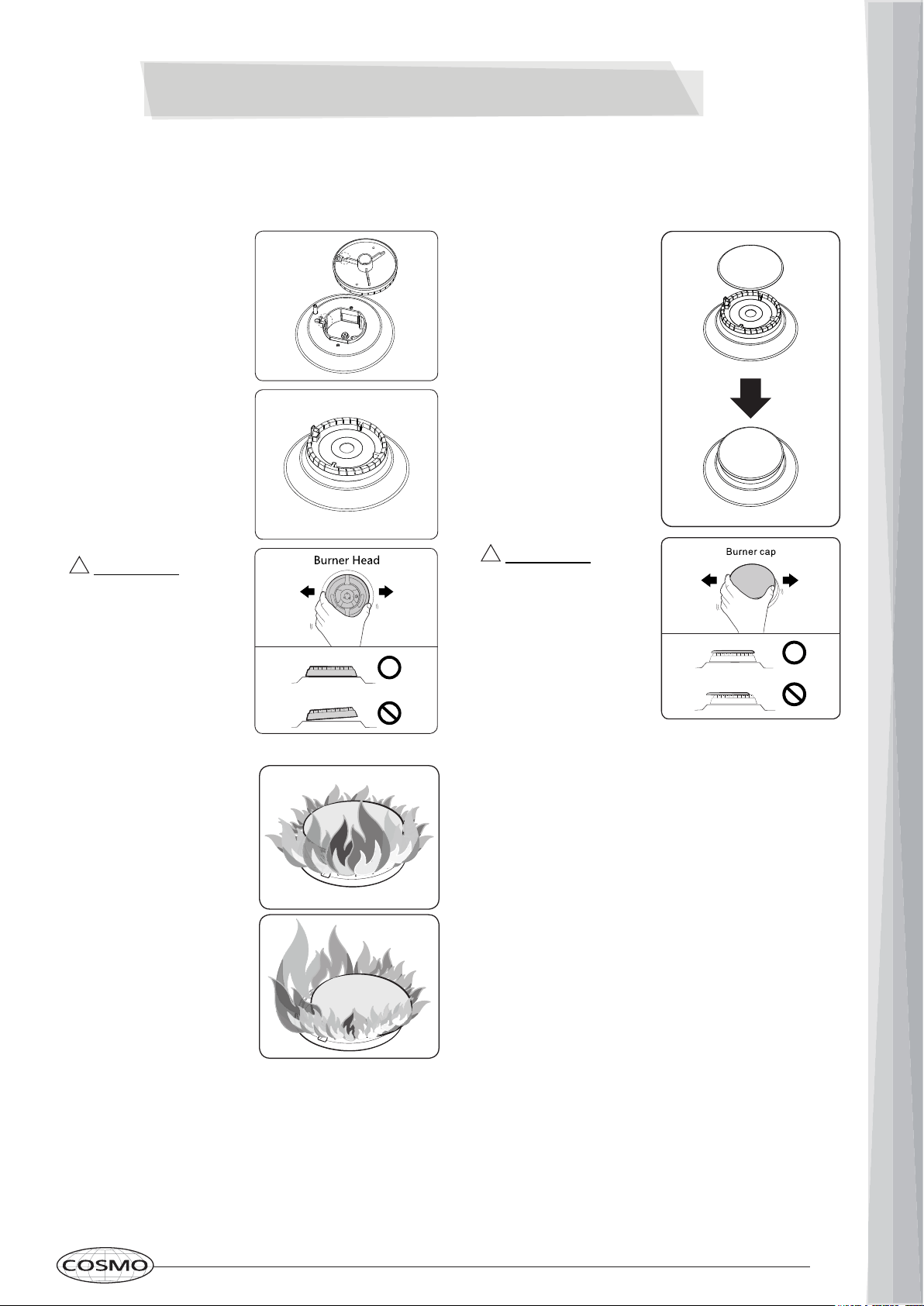
1.) Align the burner
(Point A, Fig. 1)
with the notch in
the bottom cup
(Point B, Fig. 1).
2.) Turn the burner
over and cover the
burner cap (Fig. 2).
CAUTION
Make sure all
burner components
(Head and caps)
are re-installed
properly. They will
be stable and rest
flat when installed
correctly (Fig. 3).
Fig. 1
Fig. 2
Burner Cap
1.) Match the
burner caps to the
burners by size
and then re-install
the caps on the
burner heads (Fig.
4).
CAUTION
Make sure each
cap is re-installed
on the correct
burner head, is
centered on the
burner, and lies flat
(Fig. 5).
After installation of surface
burners, check the ignition.
Incorrect placement of a
burner head or cap will
result in poor ignition or
uneven flame (see Fig. 6
and Fig. 7).
Fig. 3
Fig. 4
Fig. 5
Fig. 6
Fig. 7
!
27
The cooktop is set for use with Natural Gas (NG). The factory setting is indicated on the serial
plate.
When set for Natural Gas (NG) operation, the pressure regulator will regulate the gas to 4"
inches water column pressure.
When set for Liquefied Propane Gas (LPG) operation, the pressure regulator will regulate the
pressure to 11" inches water column pressure.
NG TO LPG CONVERSION
Convertible Pressure Regulator
The cooktops are shipped to operate on Natural Gas (NG). Save the NG orifices removed
from the appliance for future use; make sure you note which orifices are for which burner if
you plan on converting back to NG.
INSTRUCTIONS FOR CONVERTING COOKTOP TO OPERATE ON LIQUEFIED
PETROLEUM GAS
Installation and services must be performed by a qualified installer. Save this
instruction manual for the local inspector's use. Save these instructions for future
reference.
WARNING
This conversion kit must be installed by a qualified service technician in accordance with the
manufacturer's instructions and all applicable codes and requirements of the authority having
jurisdiction. Failure to follow instructions may result in fire, explosion or production of
carbon monoxide causing property damage, personal injury or loss of life. The qualified
service agency is responsible for the proper installation of this kit. The installation is not proper
and complete until the operation of the converted appliance is checked as specified in the
manufacturer's instructions supplied with this kit.
WARNING
Before proceeding with the conversion, shut off the gas supply before disconnecting electrical
power to the cooktop. Be sure power supplies are off before installing the conversion kit.
Failure to do so could cause serious bodily injury.
Determine the combination of top burners that are featured on your cooktop. Identify the parts
you need from this kit to complete the LPG conversion. When burners are converted from
natural to LPG, the BTU ratings are as follows:
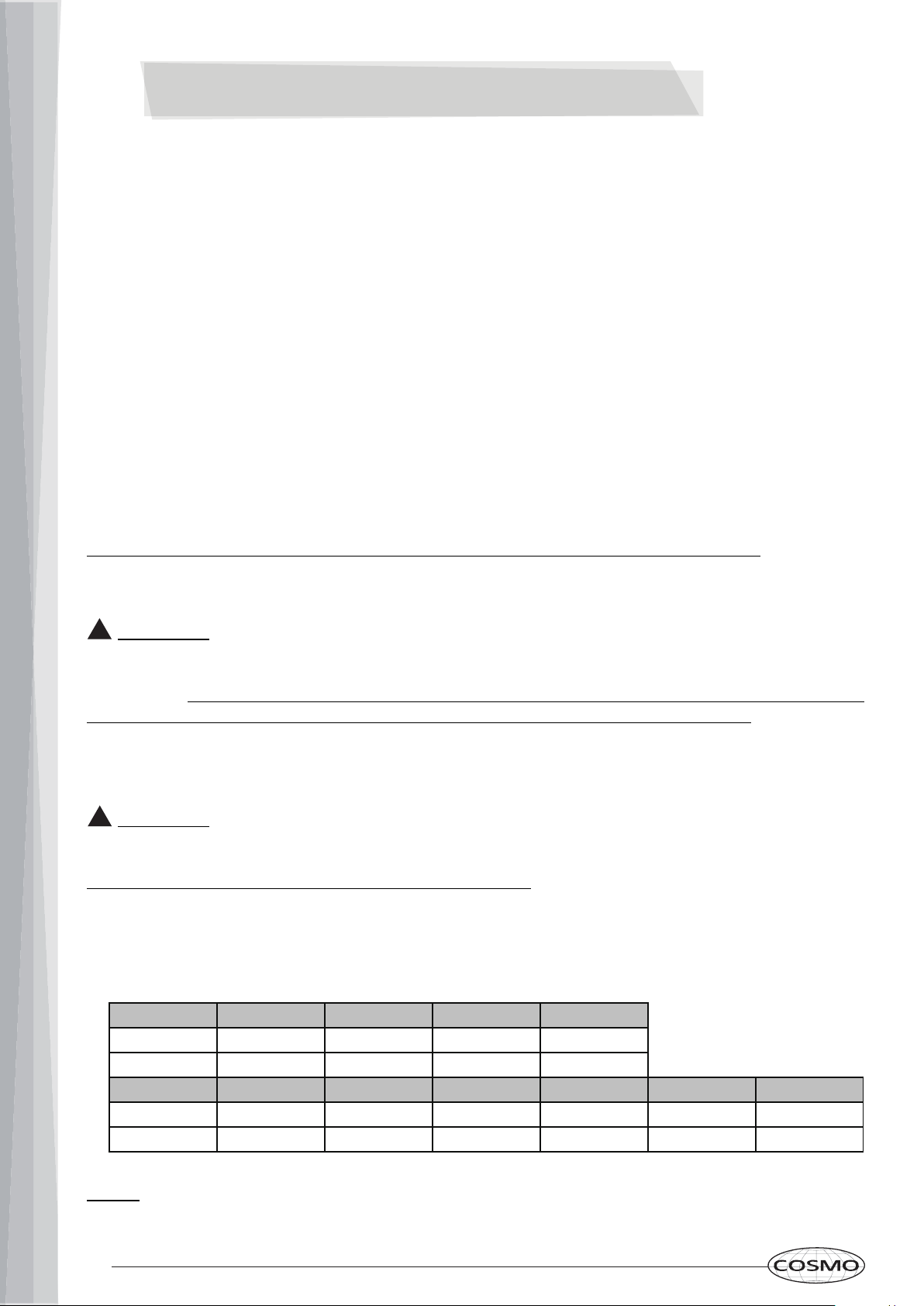
NG 1.88mm 1.50mm 1.30mm
1.30mm
LPG 1.24mm 1.00 mm 0.90 mm
0.90mm
NG 1.88 mm 1.50 mm 1.06 mm 1.06 mm 1.88 mm
1.50 mm
LPG 1.24 mm 1.00 mm 0.70 mm 0.70mm 1.24 mm
1.00 mm
Left Front Left Rear Right Front Right Rear Center Front Center Rear
NOTE: For cooktop operation at elevations above 2000 ft., appliance rating shall be reduced
at the rate of 4% for each 1000 ft. above sea level.
!
!
DIC366
DIC304
Left Front Left Rear Right Front Right Rear
LIQUEFIED PETROLEUM GAS CONVERSION
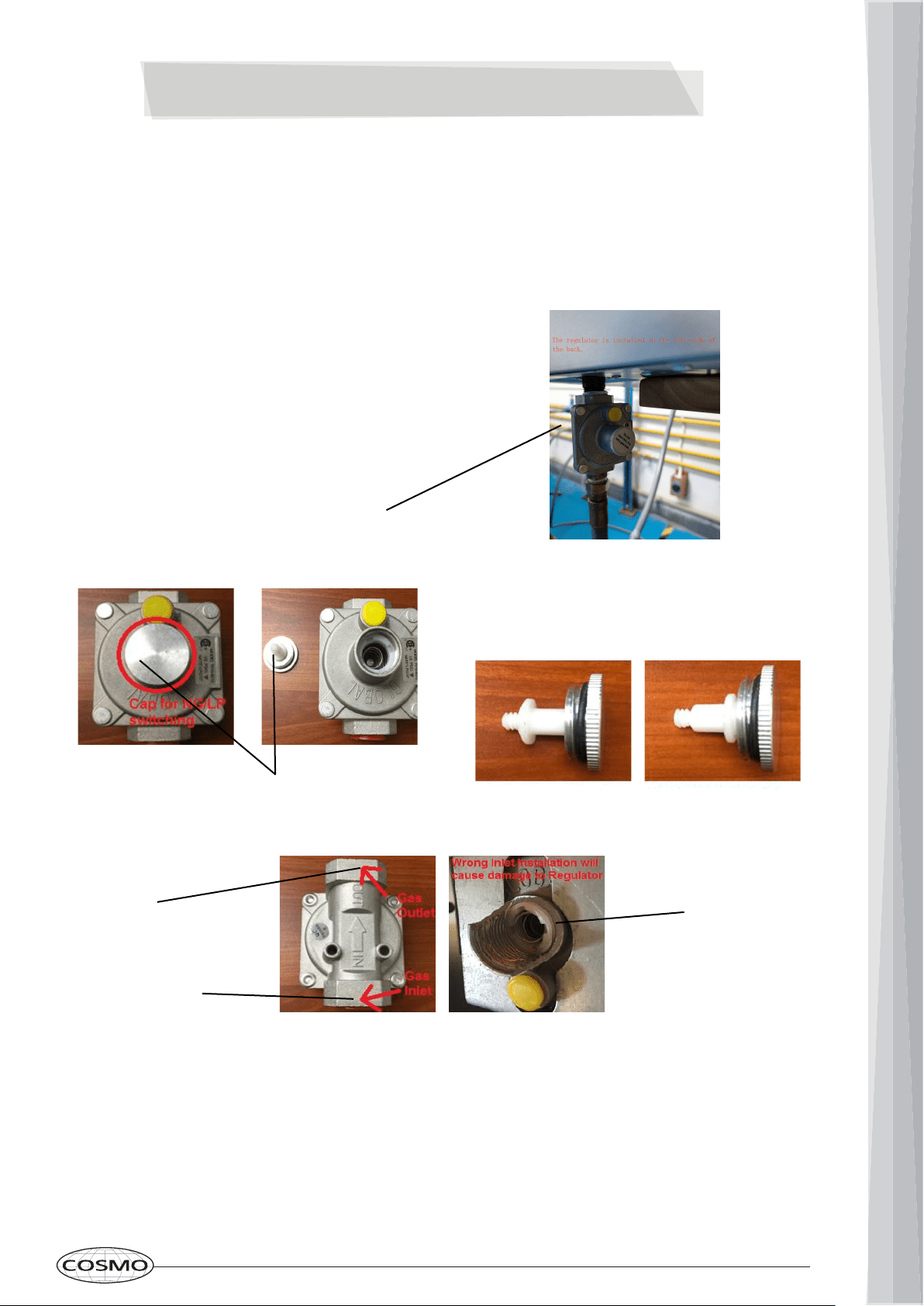
LP Position: Plastic
Ringis AWAY from
the Cap
NG Position: Plastic
Ring is NEXT to the
Cap
28
Tools for LPG Conversion
• 7mm Nut Driver: For Top Burner Orifice Replacement
• Flat Screwdriver ¢2.0*130 (Not included with Conversion Kit): Bypass Adjustment
• Adjustable Wrench (Not included with Conversion Kit): Orifice Adjustment
LPG Conversion
The regulator is installed on the
left side, at the back of the unit.
Cap for
NG / LP Switching
Wrong inlet
installation
willdamage
theregulator
Gas Outlet
Gas inlet
1.) Convert the Pressure Regulator. You can find
your cooktop's regulator in the package box and it
must be installed in the left side of the back (See
right). The cooktops are initially designed to the "NG"
position--change it to "LP" position when converting
to LPG.
LIQUEFIED PETROLEUM GAS CONVERSION
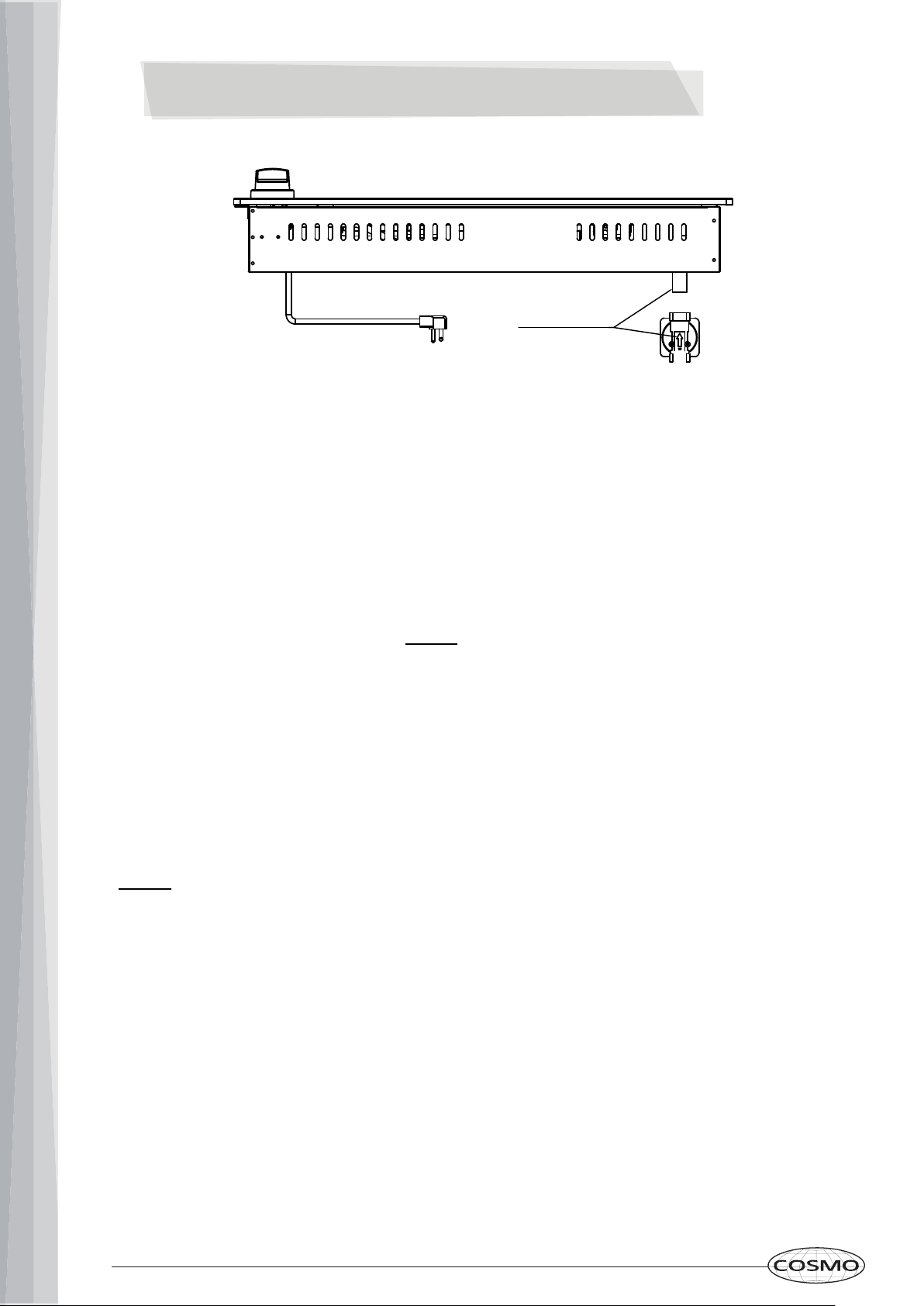
29
LIQUEFIED PETROLEUM GAS CONVERSION
Manifold applied sealant or
wrapped with PTFE tape
The rear pressure
regulating valve tightens
in the direction of the
arrow
LPG Conversion (Continued)
2.) Convert burners for LPG / Propane gas. Take extra care when handling orifice parts,
making sure the orifice is not damaged.
a. Remove top grates, burner caps and inner burner rings.
b. Lift off outer burner heads and burner bases.
c. Remove the factory-installed natural gas orifices from the center of the orifice
holders using a 7mm nut driver. NOTE: Do not over tighten the orifices, and keep the
orifices clean.
c.1: Replace the 18000 BTU burner orifice in each with orifice size 1.24 mm
c.2: Replace the 12000 BTU burner orifice in each with orifice size 1.00 mm
c.3: Replace the 9000 BTU burner orifice in each with orifice size 0.90 mm
c.4: Replace the 6000 BTU burner orifice in each with orifice size 0.70 mm
d. Put the burner flame ring back to the main burner bases.
e. Put back the inner burner rings, burner caps and grates.
NOTE: Use this process when converting unit back to NG; keep the original NG orifices
for future conversions back to NG.
30
LPG Conversion (Continued)
3.) Convert Burner Valves for LP/Propane Gas. One 5/64” flat screw driver is needed for
the Bypass Adjustment on Burner Valve.
a. Please take off the burner knobs to get access to the burner valve part. There's a hole
located at bottom right of the burner valve, providing access to the adjustment of burner
valve bypass orifice. Take out the bezel if needed. The hole is part of the micro-switch
(the black part) sticking to the burner valve. Use the screw driver to go across the micro-
switch and reach the bypass orifice on the burner valve. Bypass orifice could help to
control the flame.
b. Put the knob back, adjust the flame by rotating the knob. The original location of
bypass is for NG. If converted to LP, adjust the vertical direction of the adjustment shaft
groove is LP.If converted from LP to NG, adjust the horizontal direction of the shaft
groove is NG.
Originally, the Bypass is located at NG Position and it's not screwed to the bottom
(tightest)
For LP conversion of bypass, not bypass orifice needs to be changed. Screw the Bypass
Orifice to bottom (clockwise).
c. Save the main bypass jets, in the plastic bag labeled main jets . When you are using
your top burners, if the flame needs to be adjusted accordingly to fit your need, please
adjust the bypass orifices on the burner valve. Put back the knob on and adjust the flame
by rotating the bypass via a small flat screw driver. Check the flame's condition to get the
best performance.
4.) Reconnect Gas and Electrical Supply to Cooktop. Leak testing of the appliance shall
be conducted according to the installation instructions provided with the cooktop.
Checking for Manifold Gas Pressure
If it is necessary to check the manifold gas pressure, remove the burner cap, inner ring, outer
burner head and burner base of the right front top burner and connect a manometer (water
gauge) or another pressure test device to the burner orifice.
a. Use a rubber hose with inside diameter of approximately ¼” and hold the end of the
tube tight over the orifice.
b. Turn the gas valve on.
c. For a more accurate pressure check, have at least two other top burners burning. Be
sure that the gas supply (inlet) pressure is at least one inch above the specified manifold
pressure. The gas supply pressure should never be over 14” water column.
d. When properly adjusted, the manifold water column pressure is 10” for LP/Propane gas
or 5” for Natural Gas.
LIQUEFIED PETROLEUM GAS CONVERSION
31
LIQUEFIED PETROLEUM GAS CONVERSION
LPG Conversion (Continued)
5.) Installation of New LP / Propane Rating / Serial Plate
Record the model and serial number on the LP / Propane Rating serial plate provided in this
kit. The information can be obtained from the existing Rating / Serial plate. Place the new
plate as close as possible to the existing Rating / Serial plate on the range.
CAUTION: Do not use a flame to check for gas leaks.
a. Disconnect the range and its individual shut-off valve from the gas supply piping
system during any pressure of that system at test pressures greater than 14" of
water column pressure (approximately ½" psig).
b. The appliance must be isolated from the gas supply piping system by closing its
individual manual hut-off valve during any pressure testing of the supply system at test
pressure equal to or less than 14" water column pressure(approximately ½" psig).
!

32
If you encounter a problem with the cooktop, check the tables starting below, and then
try the suggested actions.
TROUBLESHOOTING
The surface burner knob is not in the
OFF position and the burner is not lit.
Turn the burner knob to OFF.
There is a gas leak.
Clear the room, building, or area of all occupants.Immediately call your gas
supplier from a neighbor ’s phone. Do not call from your phone. It is
electrical and could cause a spark that could ignite the gas. Follow the gas
supplier’s instructions.If you cannot reach your gas supplier, call the fire
department.
Problem Possible cause Action
The control knob is not set properly. Push in the control knob and turn it to the Lite position.
The burner caps are not in place.
The burner base is misaligned.
Clean the electrodes. Put the burner cap on the burner head.Align the
burner base.
The control knob has been left in the
Lite position.
After the burner lights, turn the control knob to a desired setting.If the
burner still clicks, contact a service technician.
The wrong burner orifice is installed. Check the burner orifice size. Contact your installer if you have the wrong
orifice (LP gas instead of natural gas or natural gas instead of LP gas).
You smell gas.
A surface burner
clicks during
operation.
Very large
or yellow surface
burner flames.
Surface
burners do
not light.
33
WARRANTY AND SERVICE
For full warranty details on this product please visit:
http://www.cosmoappliances.com/warranty
TO RECEIVE WARRANTY SERVICE, YOUR
PRODUCT MUST BE REGISTERED. TO REGISTER, VISIT:
WWW.COSMOAPPLIANCES.COM/WARRANTY
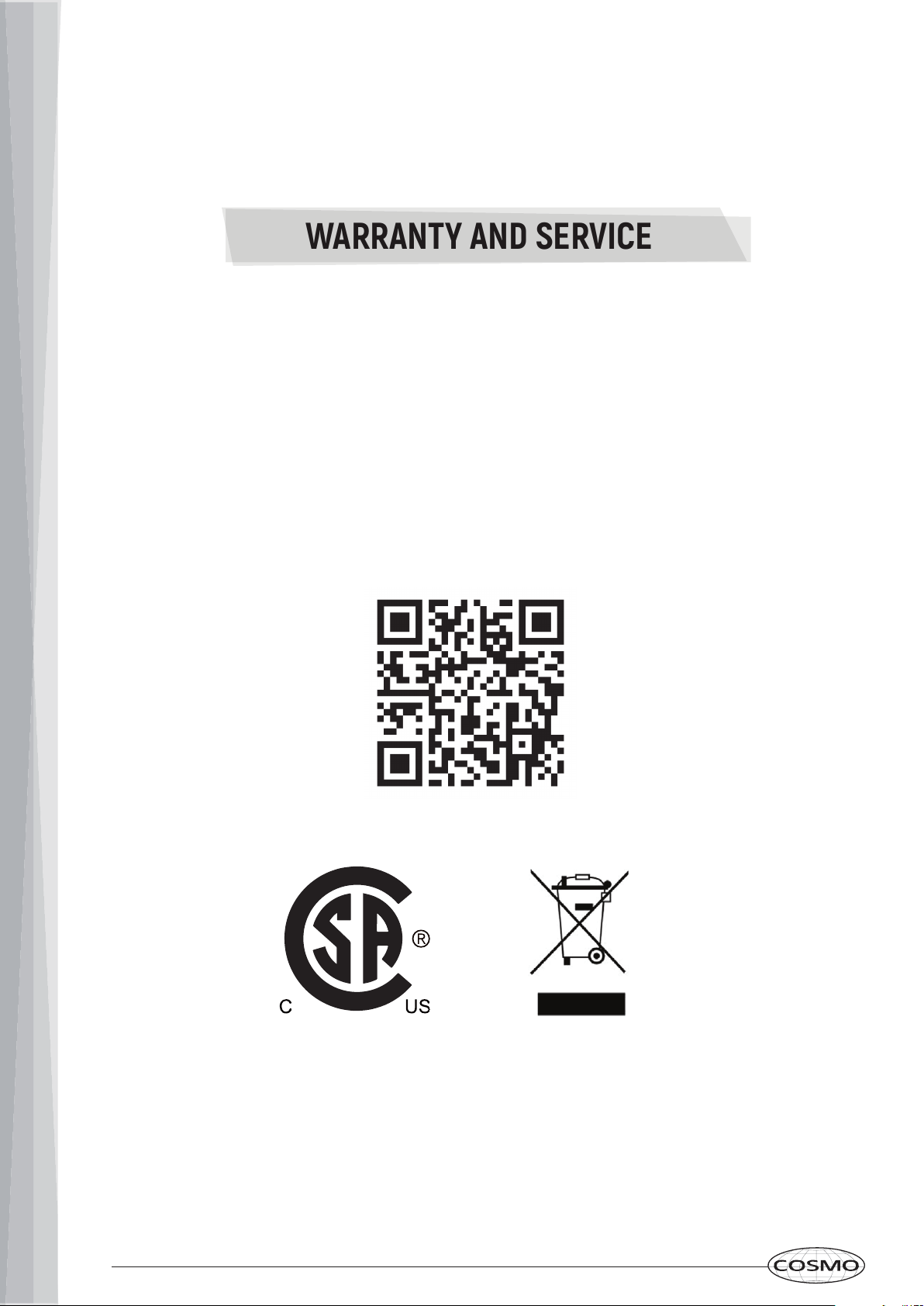
SCAN TO REGISTER
34
Correct Disposal of this product:
This marking indicates that this appliance should not
be disposed with other household wastes. To prevent
possible harm to the environment or human health
from uncontrolled waste disposal, recycle it responsibly to
promote the sustainable reuse of material resources.
IMPORTANT
Do Not Return This Product To The Store If
you have a problem with this product, please contact
Cosmo Customer Support at
+1(888)784-3108
DATED PROOF OF PURCHASE, MODEL #, AND SERIAL #
REQUIRED FOR WARRANTY SERVICE
IMPORTANT
Ne pas Réexpédier ce Produit au Magasin
Pour tout problème concernant ce produit, veuillez contacter
le service des consommateurs Cosmo Customer Support au
+1(888) 784-3108
UNE PREUVE D’ACHAT DATEE EST REQUISE POUR BENEFICIER DE
LA GARANTIE.
IMPORTANTE
No regrese este producto a la tienda
Si tiene algún problema con este producto, por favor contacte el
AYUDA AL CLIENTE COSMO al
+1(888)784-3108
(Válido solo en E.U.A).
NECESITA UNA PRUEBA DE DE COMPRA FECHADA, NÚMERO DE
MODELO Y DE SERIE PARA EL SERVICIO DE LA GARANTÍA

NOTE:

Electronic version of this manual is available at:
www.cosmoappliances.com
Cosmo is constantly making efforts to improve the quality and
performance of our products, so we may make changes to our
appliances without updating this manual.