W11314850A
Designed to use only
HE (High Efficiency) detergents.
專為使用HE高效能洗劑而設計 。
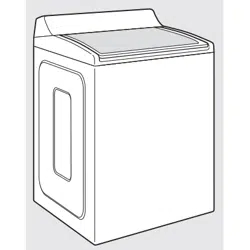
TOP-LOADING
HIGH EFFICIENCY
WASHER
USE AND CARE GUIDE
Table of Contents
WASHER SAFETY ................................................................... 2
WHAT’S UNDER THE LID ...................................................... 3
CONTROL PANEL AND FEATURES .................................... 4
CYCLE GUIDE ........................................................................... 6
USING YOUR WASHER ......................................................... 8
WASHER MAINTENANCE ................................................... 11
TROUBLESHOOTING ...........................................................13
若有任何問題或疑問,請造訪網站 www.maytag.com.tw 查詢。
上開式高效能洗衣
機使用保養指南
目錄
洗衣機安全說明........................................................................18
洗衣機注意事項........................................................................19
控制面板和功能........................................................................20
行程指南....................................................................................21
使用洗衣機................................................................................23
洗衣機維護................................................................................26
故障排除 ..................................................................................28
MODEL NUMBER: 8TMVWC585JW*
2
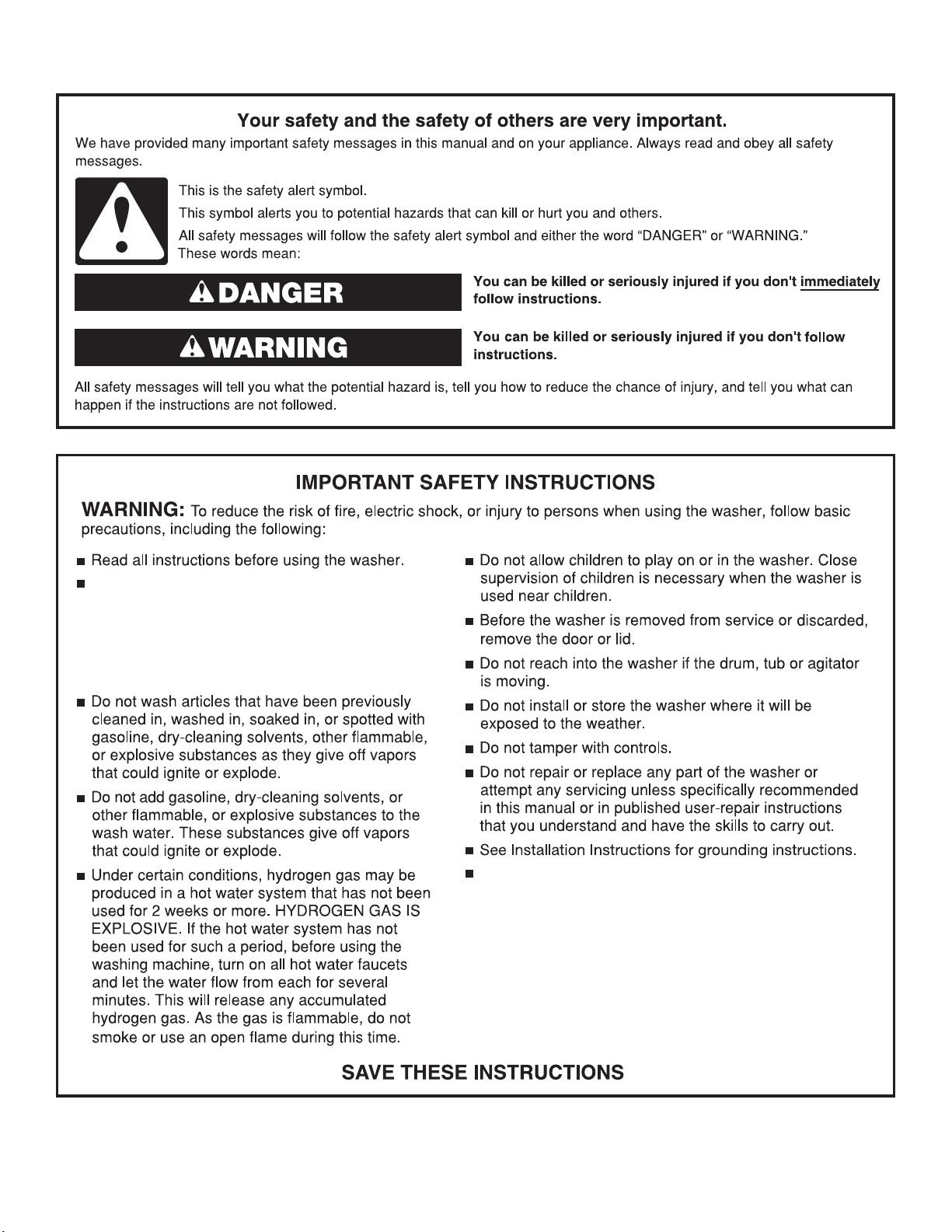
WASHER SAFETY
This appliance is not intended for use by persons
(including children) with reduced physical, sensory
or mental capabilities, or lack of experience and
knowledge, unless they have been given
supervision or instruction concerning use of the
appliance by a person responsible for their safety.
If the power supply cord damaged, it must be replaced by
manufacturer or its service agent or similarly qualied
person in order to avoid a hazard.
3
WHAT’S UNDER THE LID
Use only High Efficiency (HE) detergent.
IMPORTANT:
■ The lid must be closed before the washer basket fills with water and for the wash cycle to start. If the lid is opened, the cycle pauses
and all filling/agitation motion halts. Once the lid is closed, the cycle automatically resumes. However, if the Start/Pause/Cancel button is
pressed prior to opening the lid, the lid must be closed and the Start/Pause/Cancel button pressed again to resume the cycle.
■ Rinse Option must be set to either 1 Rinse with Fabric Softener or 2 Rinses with Fabric Softener when using fabric softener in the
fabric softener dispenser. This ensures that fabric softener is added at the correct time in the rinse phase and is evenly distributed.
Lid Lock
To allow for higher spin speeds, the lid will lock and the Lid
Locked light will turn on. When this light is lit, the lid is locked and
cannot be opened without pausing the cycle. When this light is
blinking, the washer is paused. When this light is off, the lid can
be opened. After the cycle has started, the washer will fill to the
appropriate water level. On select cycles, agitation will occur while
the basket is filling with water. This is normal. When the washer is
done filling, it will begin the wash phase. If you need to open the
lid to add a garment after this point, the lid will remain unlocked
during the entire agitation portion of the wash phase. The cycle
will automatically pause when the lid is opened, and the cycle
will resume once the lid is closed. The lid will lock before the spin
phase begins. If you need to pause or stop after this point, you
must press the START/PAUSE/CANCEL button and wait for the
lid to unlock. The lid will only unlock after washer movement has
stopped. Depending on when in the cycle you try to pause, it may
take from several seconds to several minutes for the lid to unlock.
Press START/PAUSE/CANCEL to resume the cycle.
Sensing
This washer automatically senses the load size for most cycles,
and chooses an appropriate water level according to the load size
detected. This washer also performs a series of spins to check
for load balance. During this time, a series of clicks and a whirring
noise signal that sensing technology is determining if there is an
off-balance load.
Water Level Options
Set the Water Level knob to the Auto Sensing setting and
the washer automatically adjusts the water level to the load size.
Set the Water Level knob to the Deep Water Wash setting and
the washer automatically adds more water to any cycle at any time
during the wash process.
Normal Sounds You Can Expect
At different stages of the wash cycle, you may hear sounds
and noises that are different from those of your previous washer.
For example, you may hear a clicking and hum at the beginning
of the spin phase, as the lid lock goes through a self-test. There
will be different kinds of humming sounds as the HE agitator tests
for load balance or moves the load. And sometimes, you may hear
nothing at all, as the washer determines the correct water level
for your load or allows time for clothes to soak.
Spray Rinse
Select cycles default to a spray rinse. During these cycles, you
will hear water enter the washer as the tub spins, allowing the rinse
water to penetrate clothes. Check the “Cycle Guide” for details.
Choosing the Right Detergent
Use only High Efficiency detergents. The package will be marked
“HE” or “High Efficiency.” Using non-HE detergent will likely result
in longer cycle times and reduced rinsing performance. It may also
result in component malfunction and, over time, buildup of mold or
mildew. HE detergents should be low-sudsing and quick-dispersing
to produce the right amount of suds for the best performance. They
should hold soil in suspension so it is not redeposited onto clean
clothes. Not all detergents labeled as High Efficiency are identical
in formulation and their ability to reduce suds. For example, natural,
organic, or homemade HE detergents may generate a high level
of suds. Always follow the detergent manufacturer’s instructions
to determine the amount of detergent to use.
4
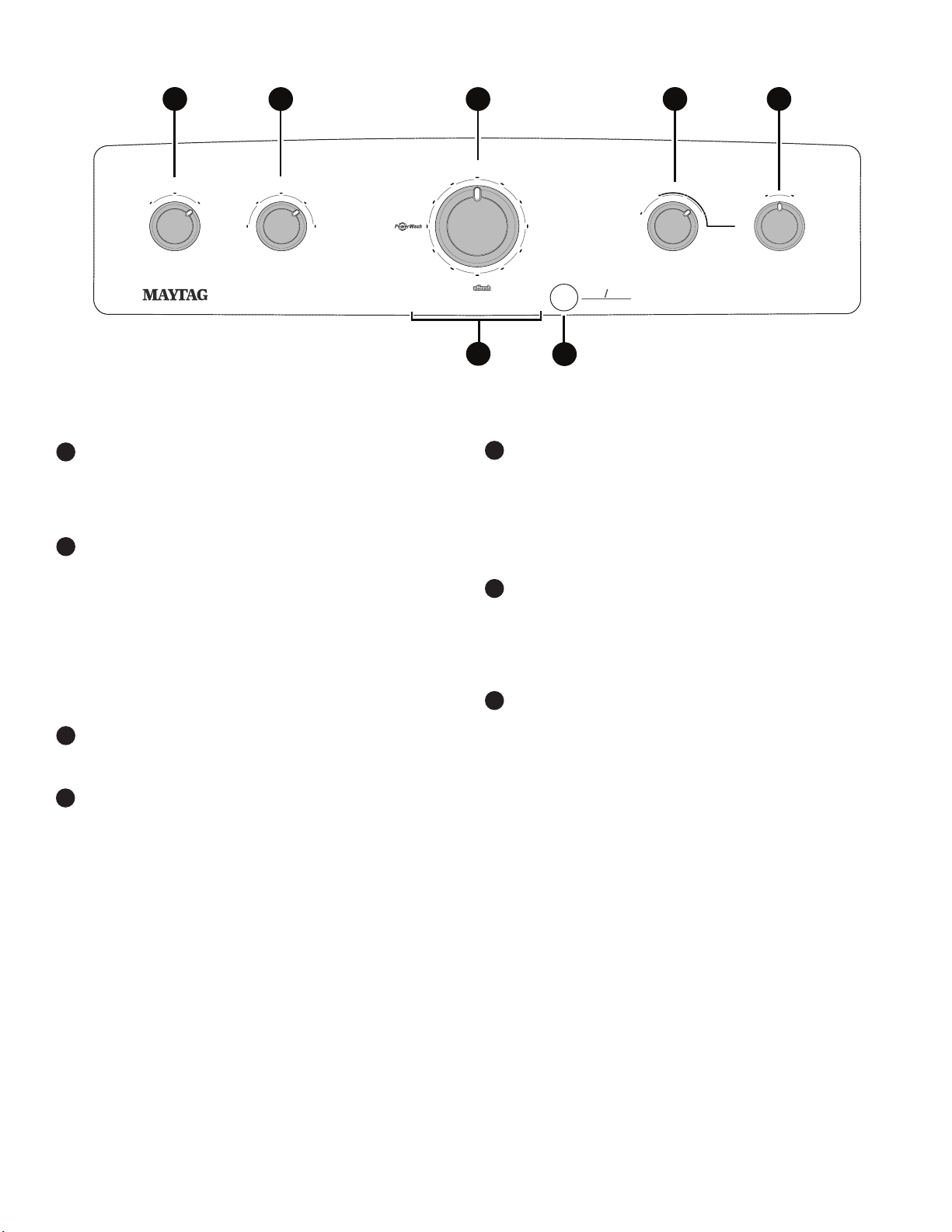
CONTROL PANEL AND FEATURES
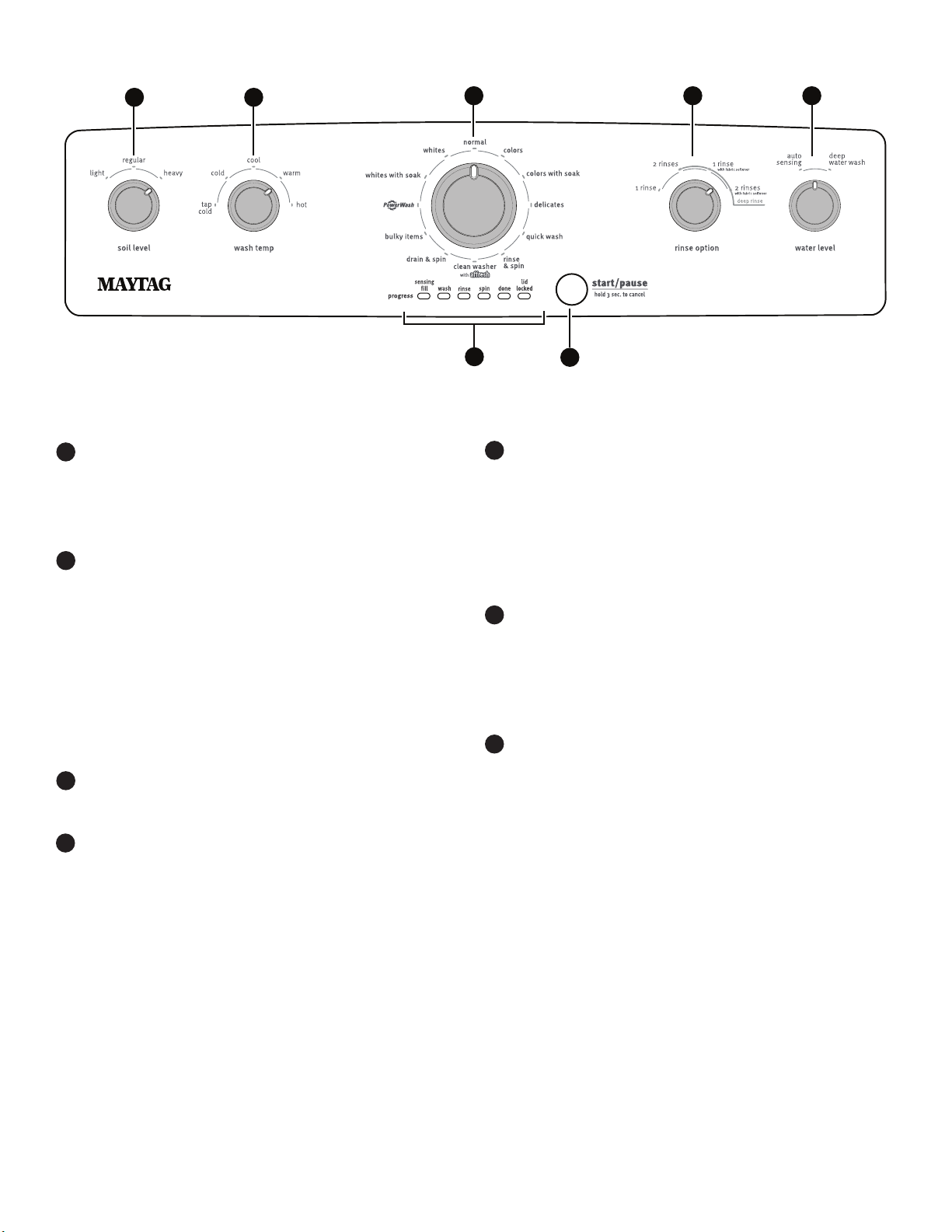
WATER LEVEL
Set the Water Level knob to the Auto Sensing setting and the
washer will automatically sense the appropriate water level for
the load size and type.
Set the Water Level knob to the Deep Water Wash setting and
the washer will automatically add more water to any cycle at any
time during the wash process.
NOTE: Expect longer cycle times due to extended fill times
when using the Deep Water Wash option.
START/PAUSE/CANCEL BUTTON
Press to start the selected cycle. Press again to pause the
cycle and unlock the lid. Close the lid and press to restart
the cycle. Press and hold to cancel a cycle and pump out
the washer.
NOTE: If the washer is spinning, it may take several minutes
to unlock the lid.
PROGRESS LIGHTS
The Progress Lights show the progress of a cycle. At each
stage of the process, you may notice sounds or pauses that
are different from your previous washer.
SENSING/FILL
When the Start/Pause/Cancel button is pressed and the
Water Level knob is set to Auto Sensing, the washer will
fill and begin sensing to determine load size and balance.
A short but noticeable pause in the cycle action occurs
during sensing. This is normal.
Once sensing is complete, the washer will fill to the
appropriate level for the detected load size and, on select
cycles, agitation will occur during filling. This, too, is normal.
When the washer is done filling, it will begin the wash phase
of the cycle. To ensure that the most accurate load size is
detected, avoid opening the lid during the “Sensing” phase.
NOTE: Sensing and wash phases will be paused by opening
the unlocked lid. Close the lid to resume the cycle. If the lid is
left open for more than 10 minutes, the washer will cancel the
cycle and pump out the water.
6
SOIL LEVEL
Select the setting most suitable for your load. For heavily soiled
and sturdy fabrics, select Heavy soil level for more wash time.
For lightly soiled and delicate fabrics, select Light soil level
for less wash time. A lighter soil level setting will help reduce
tangling and wrinkling.
WASH TEMP
Wash Temp senses and maintains uniform water temperatures
by regulating incoming hot and cold water.
Select a wash temperature based on the type of fabric and
soils being washed. For best results, use the warmest wash
water safe for your fabric, as specified by the garment label
instructions.
■ On some models and cycles, warm and hot water may be
cooler than your previous washer.
■ Even in a cold- and cool-water wash, some warm water may
be added to the washer to maintain a minimum temperature.
All rinses are cold.
WASH CYCLE KNOB
Use the Wash Cycle knob to select cycles on your washer.
See “Cycle Guide” for detailed descriptions of cycles.
RINSE OPTION
The following options may be added to most cycles.
See “Cycle Guide” for additional details.
1 RINSE
This option is used to limit a cycle to one rinse.
2 RINSES
This option can be used to automatically add a second
rinse to all wash cycles.
1 RINSE WITH FABRIC SOFTENER
This option must be selected if using fabric softener during
a cycle. It ensures that fabric softener is added at the correct
time in the rinse for even distribution.
2 RINSES WITH FABRIC SOFTENER
This option turns on both the Fabric Softener and the
2 Rinses option.
1
2
3
4
Not all features and options are available on all models.
Appearance may vary.
5
7
3
6
2
1
4 5
7

5
WASH
The washer will fill to the correct water level based on the
load size and the Water Level selection. Certain cycles may
agitate during the fill process to boost cleaning. When the
wash cycle begins, you will hear the HE agitator increase
speed. The motor sounds may change at different stages
in the wash cycle while the washer performs different
wash actions.
NOTE: The lid will automatically lock after the wash phase
completes and before the initial spinout occurs, and will
remain locked for the rest of the cycle.
RINSE
Certain cycles use a spray rinse, which adds water to the
tub while the basket spins. You may hear the motor turning
on briefly (short hum) to move the basket while filling. In
some cases, you may also hear sounds similar to the wash
cycle as the washer fills, rinses, and moves the load.
SPIN
The washer spins the load at increasing speeds for proper
water removal based on the selected cycle and spin speed.
DONE
Once the cycle is complete, the lid will unlock and this light
will come on. For best results, promptly remove the load.
LID LOCKED
The Lock feature allows for higher spin
speeds. When lit, the lid is locked and
cannot be opened without pausing the
cycle. When the light is off, the lid can
be opened.
To open the lid after it has been locked, press
START/PAUSE/CANCEL. The lid will unlock once the
washer movement has stopped. This may take several
minutes if the load was spinning at high speed. Press
START/PAUSE/CANCEL while the lid is closed to
resume the cycle.
6
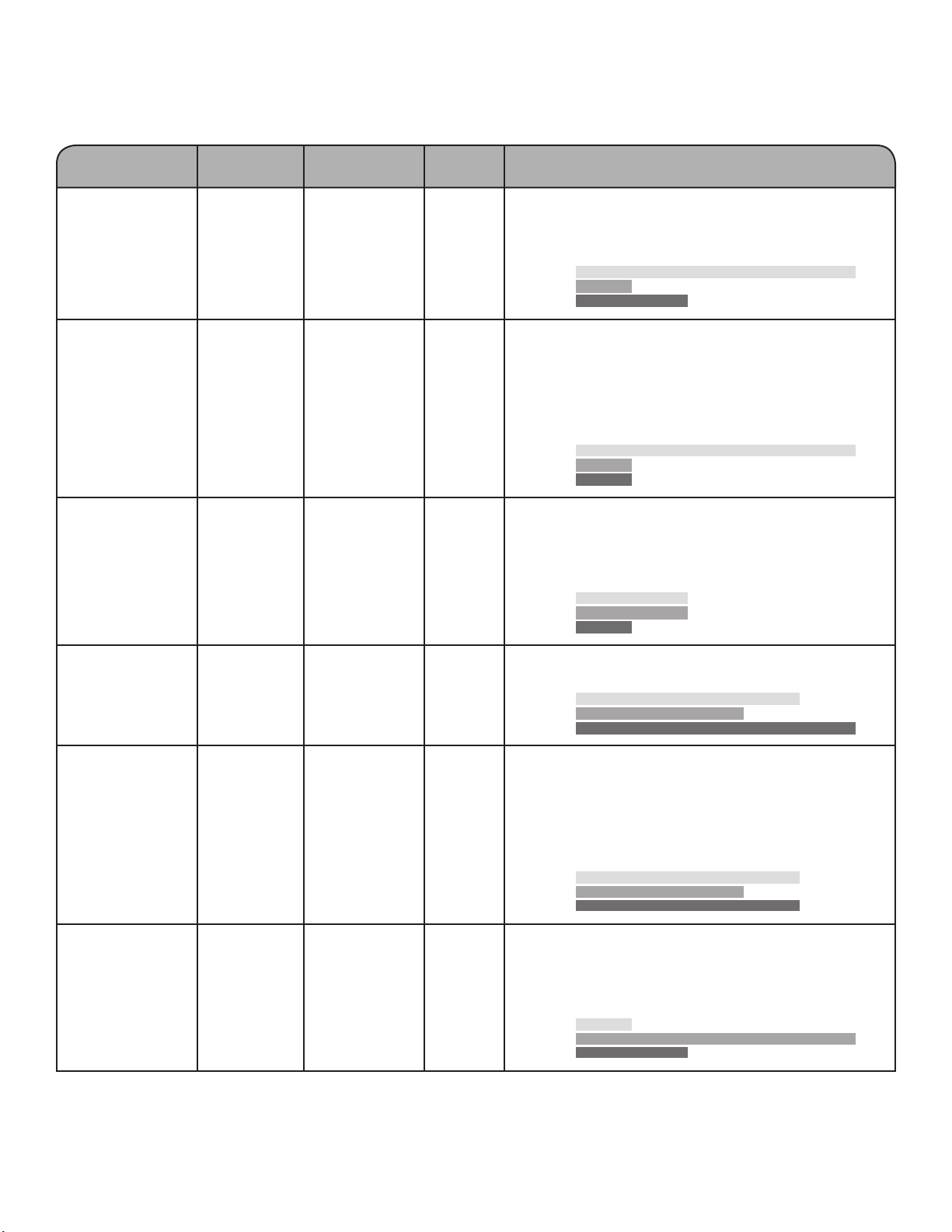
Sturdy fabrics,
colorfast items,
towels, jeans
PowerWash Hot
Warm
Cool
Cold
Tap Cold
High Use this cycle for heavily soiled or sturdy items. Water-level
sensing process may take longer for some items than for others
because they will absorb more water than other fabric types.
Heavily soiled
white fabrics
Whites
Whites
with Soak
‡
Hot
Warm
Cool
Cold
Tap Cold
High This cycle, when used with chlorine bleach, improves whitening
of soiled white fabrics.
‡
To enhance cleaning, select Whites with Soak, which
automatically adds about 10 minutes of soak time after the
fill phase, and then automatically runs the Whites cycle.
Large items such
as sheets, sleeping
bags, small
comforters, jackets,
small, washable rugs
Bulky Items Hot
Warm
Cool
Cold
Tap Cold
Low Use this cycle to wash large items such as jackets and small
comforters. The washer will fill with enough water to wet down
the load before the wash portion of the cycle begins and uses
a higher water level than other cycles.
Cottons, linens, and
mixed loads
Normal Hot
Warm
Cool
Cold
Tap Cold
High Use this cycle for normally soiled cottons and mixed loads.
Bright and darkly
colored cottons
and mixed loads
Colors
Colors
with Soak
§
Hot
Warm
Cool
Cold
Tap Cold
High Use this cycle to wash darks and colors, including mixed loads
and activewear.
§
To enhance cleaning, select Colors with Soak, which
automatically adds about 10 minutes of soak time after the
fill phase, and then automatically runs the Colors cycle.
Machine-wash silks,
handwash fabrics
Delicates Hot
Warm
Cool
Cold
Tap Cold
Low Use this cycle to wash lightly soiled items indicating “Machine
Washable Silks” or “Gentle” cycle on the care label. Place small
items in mesh garment bags before washing. This cycle uses a
higher, preset water level.
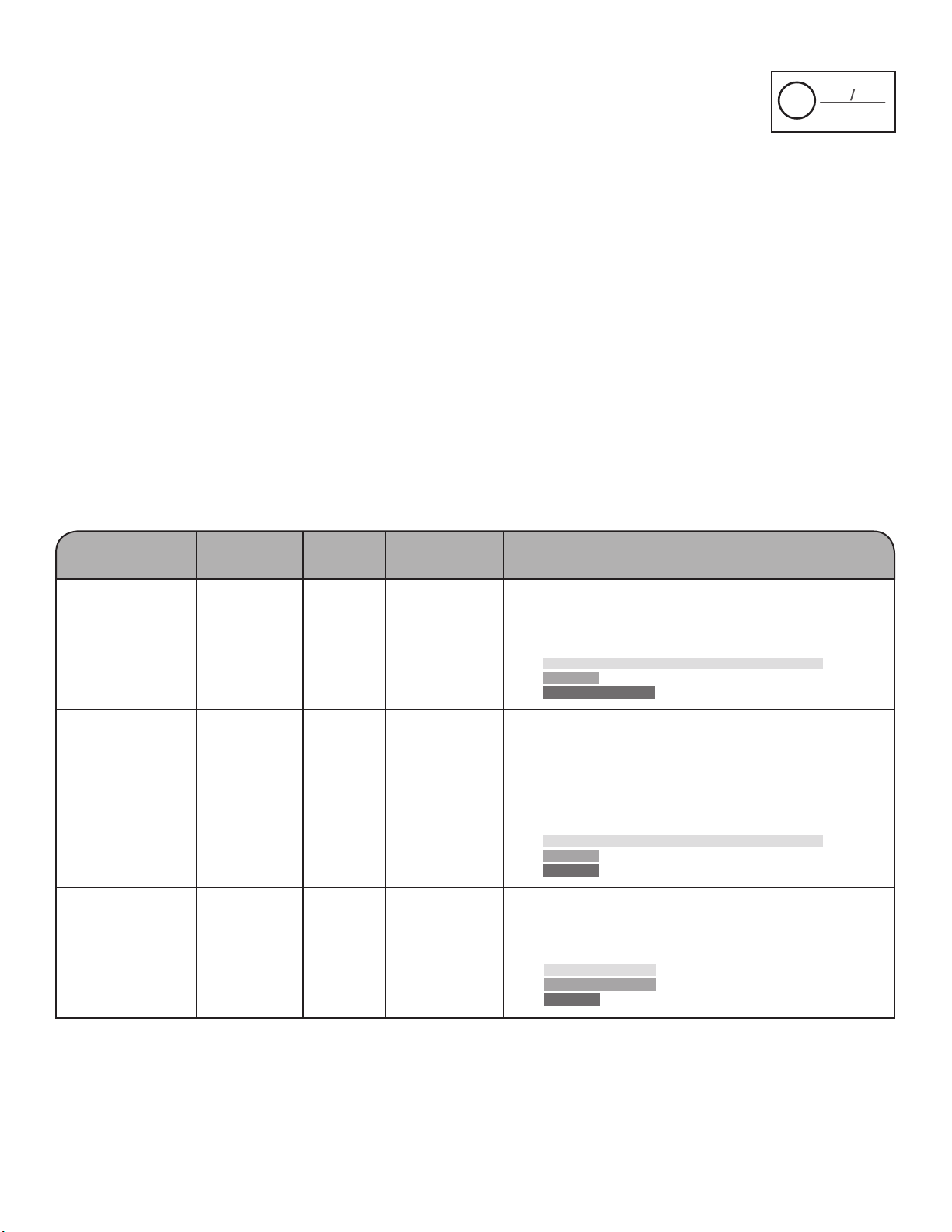
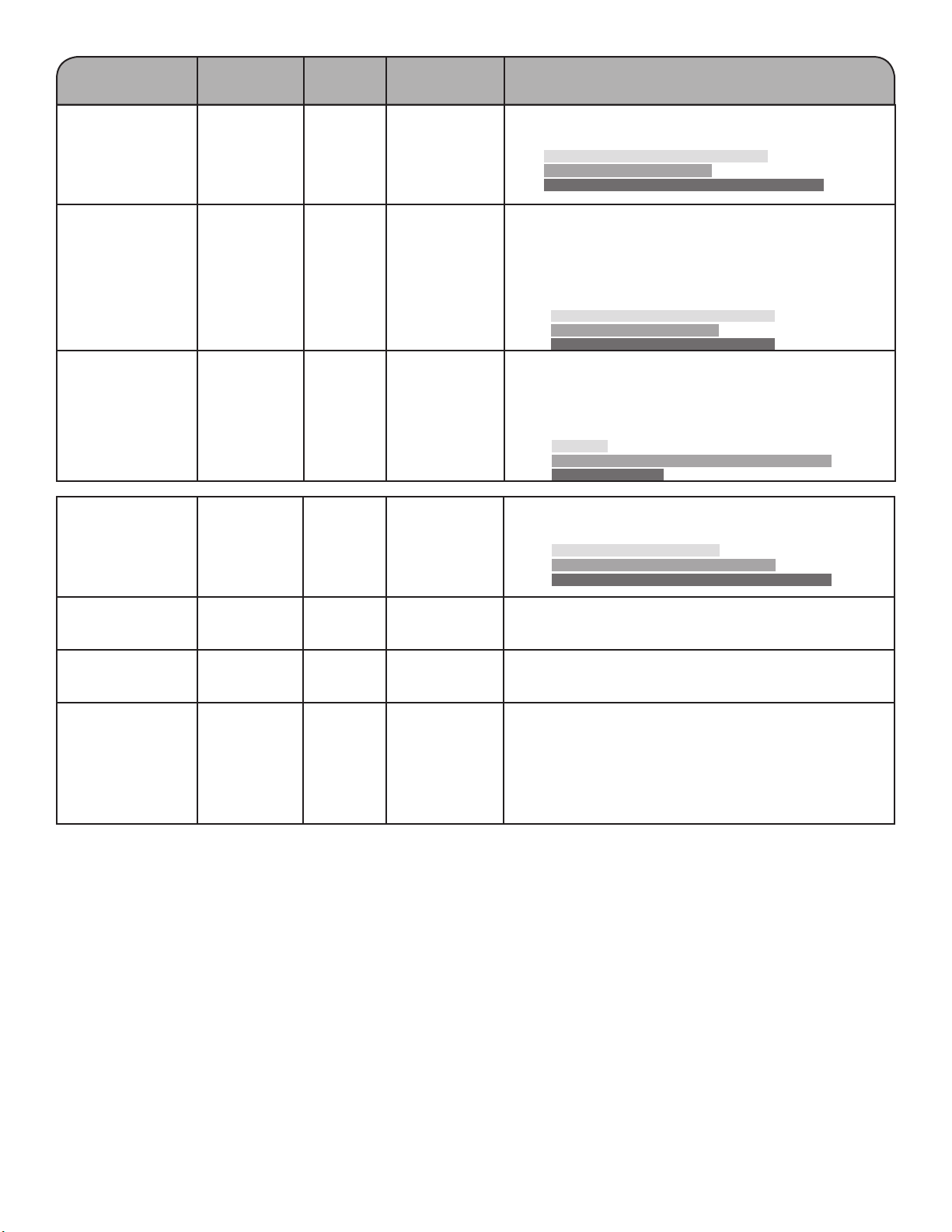
CYCLE GUIDE
For best fabric care, choose the cycle that best fits the load being washed.
Recommended settings for best performance are shown in Bold.
Not all cycles and options are available on all models. Not all settings and options are available on each cycle.
NOTE: If you are using fabric softener, be sure to select either 1 Rinse with Fabric Softener or 2 Rinses with Fabric Softener.
**All rinses are cold.
**Spin speed is integrated into the cycle and cannot be selected or modified.
*
†
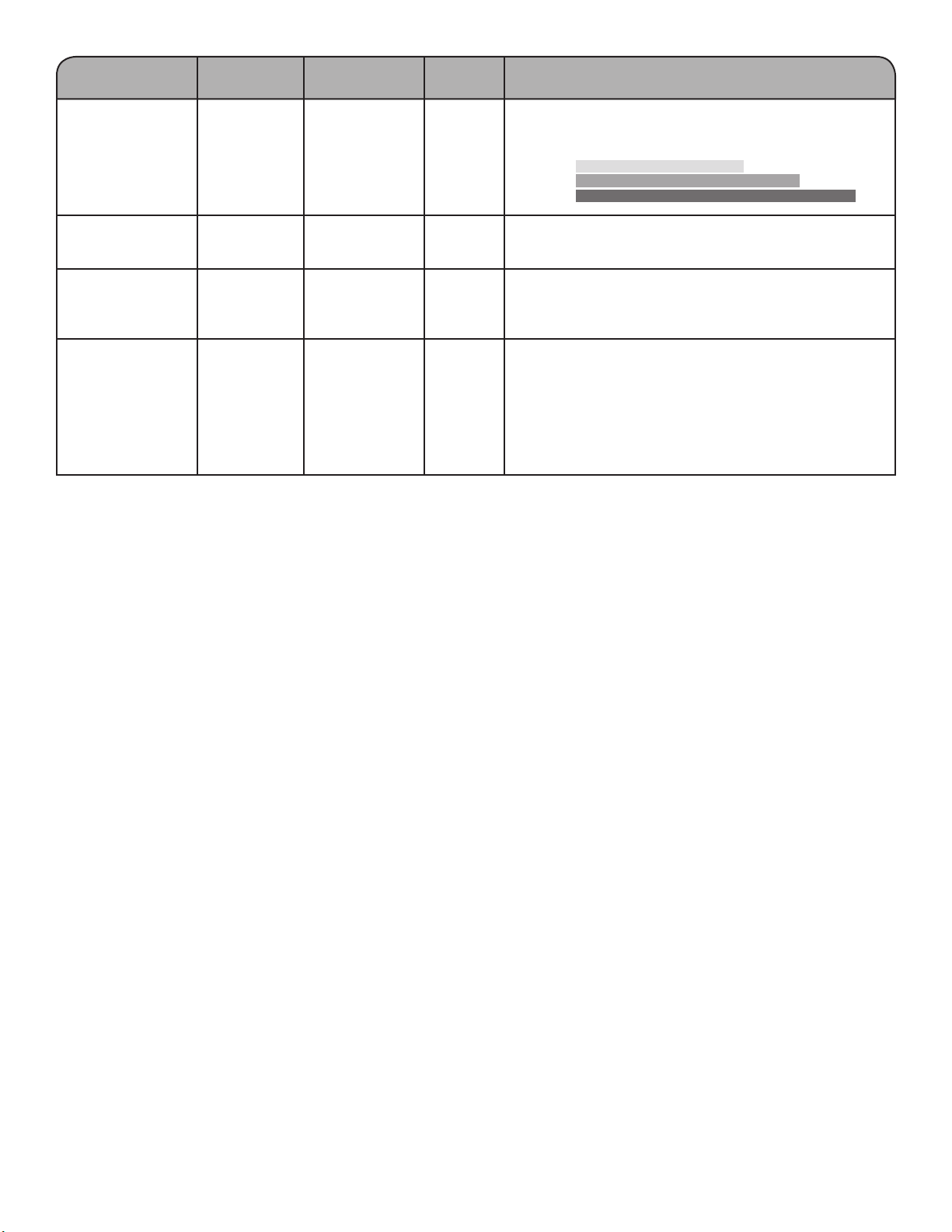
Efficient use of resources, such as energy and water.
Items to wash: Cycle: Wash Temp:* Spin
Speed:**
Cycle Details:
Cleaning
Gentleness
Efciency
†
Good
Best
Cleaning
Gentleness
Efciency
†
Good
Best
Cleaning
Gentleness
Efciency
†
Good
Best
Cleaning
Gentleness
Efciency
†
Good
Best
Cleaning
Gentleness
Efciency
†
Good
Best
Cleaning
Gentleness
Efciency
†
Good
Best
7
Small loads, cottons,
polyester, permanent
press
Quick Wash Hot
Warm
Cool
Cold
Tap Cold
High Use this cycle to wash small, lightly soiled loads of two or three
items that are needed in a hurry.
Swimsuits and items
requiring rinsing
without detergent
Rinse &
Spin
Cold rinse only High Combines a rinse and high-speed spin for loads requiring an
additional rinse cycle. Use this cycle to complete a load after
power interruption or for loads that require rinsing only.
Hand-washed items
or dripping-wet items
Drain &
Spin
N/A High This cycle uses a spin to shorten drying times for heavy fabrics
or special-care items washed by hand. Use this cycle to drain
washer after canceling a cycle or completing a cycle after a
power failure.
No clothes in washer Clean Washer
with affresh
Hot
Low Use this cycle every 30 washes to keep the inside of your
washer fresh and clean. This cycle uses a higher water level.
Use with affresh Washer Cleaner tablet or liquid chlorine bleach
to thoroughly clean the inside of your washer. This cycle should
not be interrupted. See “Washer Care.”
IMPORTANT: Do not place garments or other items in the
washer during the Clean Washer with affresh cycle. Use this
cycle with an empty wash tub.
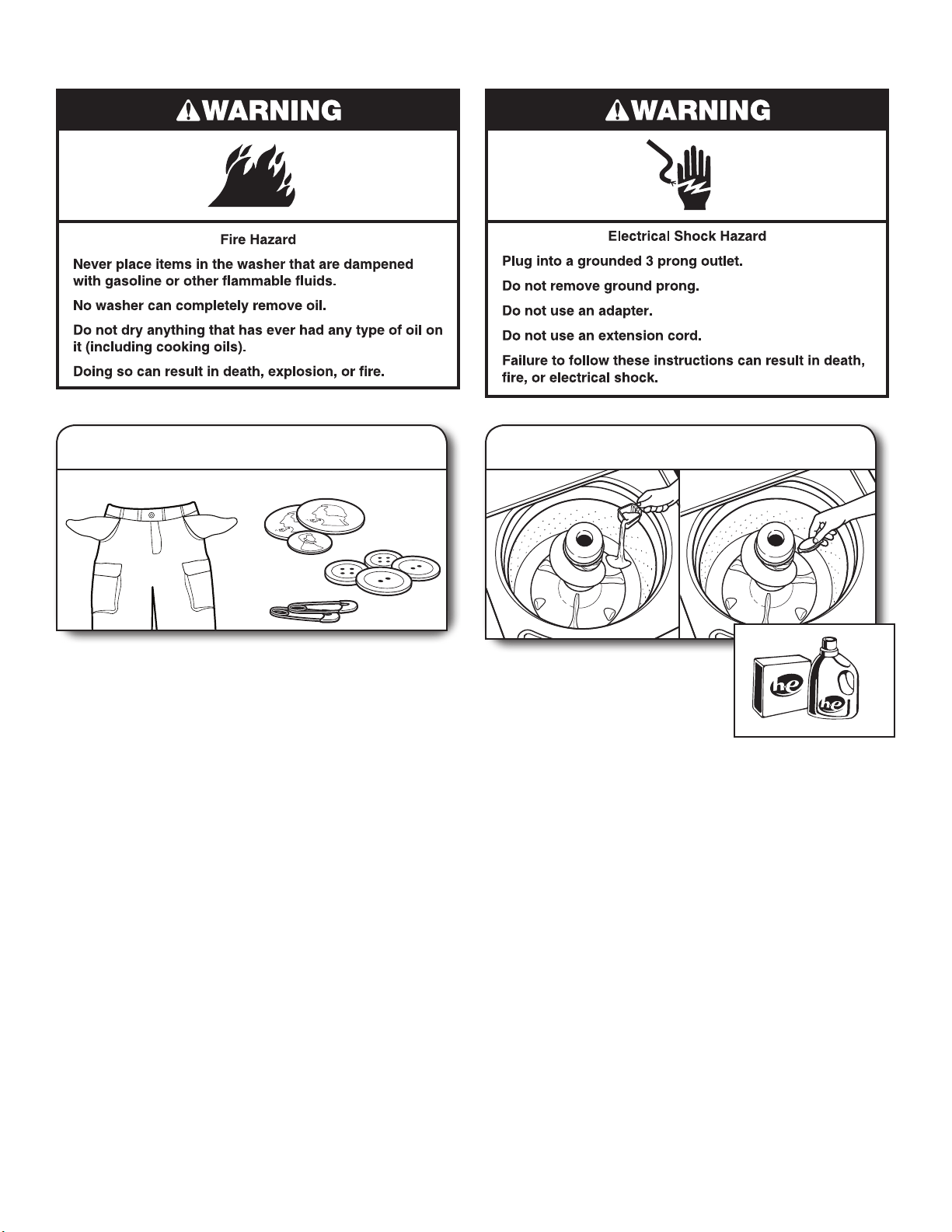
Items to wash: Cycle: Wash Temp:* Spin
Speed:**
Cycle Details:
Cleaning
Gentleness
Efciency
†
Good
Best
NOTE: If you are using fabric softener, be sure to select either 1 Rinse with Fabric Softener or 2 Rinses with Fabric Softener.
**All rinses are cold.
**Spin speed is integrated into the cycle and cannot be selected or modified.
*
†
Efficient use of resources, such as energy and water.
8
USING YOUR WASHER
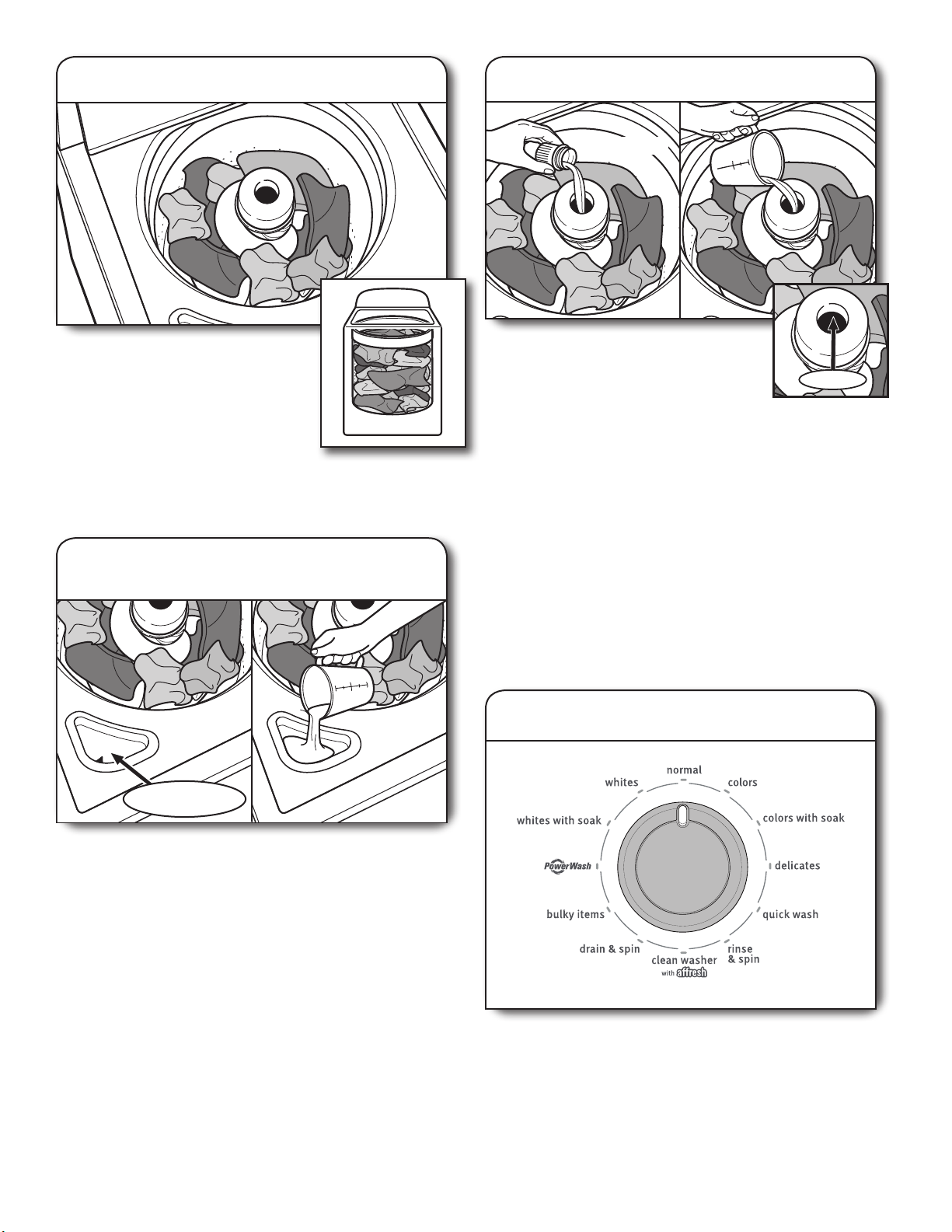
■ Empty pockets. Loose change, buttons, or any small object
can pass under the HE agitator and become trapped, causing
unexpected sounds.
■ Sort items by recommended cycle, water temperature,
and colorfastness.
■ Separate heavily soiled items from lightly soiled.
■ Separate delicate items from sturdy fabrics.
■ Do not dry items if stains remain after washing, because
heat can set stains into fabric.
■ Treat stains promptly.
■ Close zippers, fasten hooks, tie strings and sashes, and
remove non-washable trim and ornaments.
■ Mend rips and tears to avoid further damage to items during
washing.
Helpful Tips:
■ When washing water-proof or water-resistant items,
load evenly.
■ Use mesh garment bags to help avoid tangling when washing
delicate or small items.
■ Turn knits inside out to avoid pilling. Separate lint-takers from
lint-givers. Synthetics, knits, and corduroy fabrics will pick up
lint from towels, rugs, and chenille fabrics.
NOTE: Always read and follow fabric care label instructions
to avoid damage to your items.
1. Sort and prepare your laundry
Add a measured amount of HE
detergent or single-dose laundry packet
into the basket.
If using Oxi-type boosters, color-safe
bleach, or fabric-softener crystals, add
to the bottom of the washer basket before adding clothes.
IMPORTANT: Use only High Efficiency detergents. The
package will be marked “HE” or “High Efficiency.” Using regular
detergent will likely result in longer cycle times and reduced
rinsing performance. It may also result in component failures and
noticeable mold or mildew. HE detergents are made to produce
the right amount of suds for the best performance.
NOTE: Follow the manufacturer’s instructions to determine the
amount of laundry products to use.
2. Add laundry products
9
5. Add fabric softener
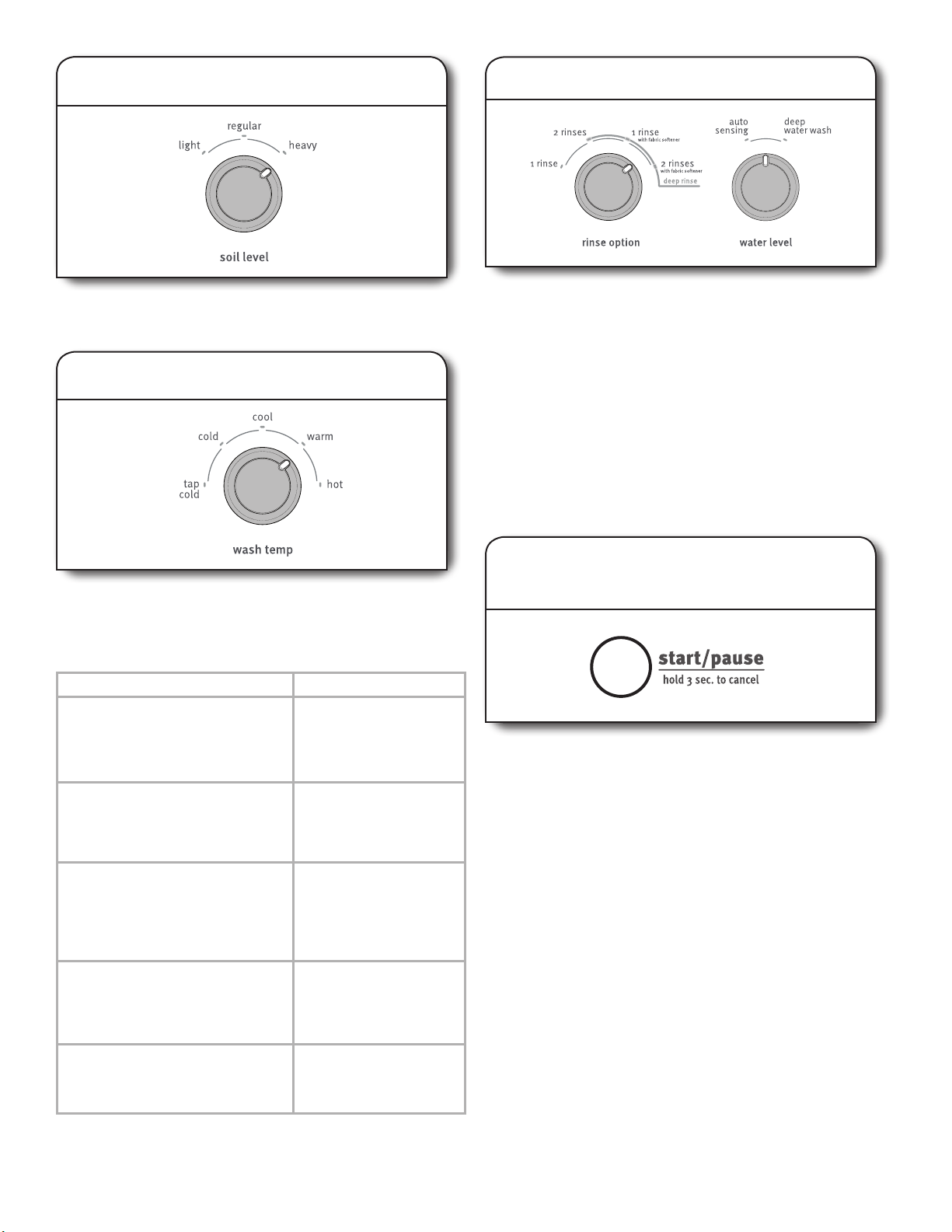
Pour a measured amount of liquid fabric
softener into dispenser; always follow
manufacturer’s directions for correct amount
of fabric softener based on your load size.
Dilute liquid fabric softener by filling the
dispenser with warm water until liquid reaches the underside
of the rim. See max fill line arrows.
IMPORTANT: The Rinse Option knob must be set to either
1 Rinse with Fabric Softener or 2 Rinses with Fabric Softener
when using fabric softener in the fabric softener dispenser. This
ensures that fabric softener is added at the correct time in the
rinse phase and is evenly distributed.
Adding Liquid Fabric Softener Manually to Wash Load
During the final rinse, wait until the washer has completed filling
and press the START/PAUSE/CANCEL button to pause the
washer. Lift the lid and add the measured, recommended amount
of liquid fabric softener. Do not use more than the recommended
amount. Close the lid and press the START/PAUSE/CANCEL
button again to start the washer.
4. Add liquid chlorine bleach
to dispenser
Liquid
Chlorine Bleach
Do not overfill, dilute, or use more than 1 cup (236 mL). Do not
use color-safe bleach or Oxi products in the same cycle with
liquid chlorine bleach.
Turn cycle knob to choose your wash cycle. For more
information, see “Cycle Guide.”
6. Select cycle
3. Load laundry into washer
Load garments in loose heaps evenly around
basket wall. For best results, do not pack
the load tightly. Do not wrap large items
such as sheets around the HE agitator;
load them in loose piles around the sides
of the basket. Try mixing different-sized
items to reduce tangling.
IMPORTANT: Do not tightly pack or force items into washer.
Items need to move freely for best cleaning and to reduce
wrinkling and tangling.
MAX FILL
Fabric softener
Water
10
9. Select rinse option and water level
Select the number of rinses by turning the Rinse Option knob to
the desired setting.
IMPORTANT: The Rinse Option knob must be set to an option
“with Fabric Softener” when using the fabric softener dispenser.
This ensures that fabric softener is added at the correct time in
the rinse for even distribution.
Set the Water Level knob to the Auto Sensing setting and the
washer will automatically sense the appropriate water level for
the load size and type.
Set the Water Level knob to the Deep Water Wash setting and
the washer will automatically add more water to any cycle at any
time during the wash cycle.
NOTE: The cycle will be longer due to extended fill times when
using the Deep Water Wash setting.
10. Press START/PAUSE/CANCEL
to begin wash cycle
Press START/PAUSE/CANCEL to start the wash cycle. When
the cycle has finished, the Done progress light will light. Promptly
remove garments after cycle has completed to avoid odor, reduce
wrinkling, and avoid rusting of metal hooks, zippers, and snaps.
Unlocking the lid to add garments
If you need to add one or two missed garments after the wash
has started, simply open the lid and this will pause the cycle.
After adding the garments, simply close the lid and the cycle will
resume. The washer may add some additional water to offset the
added garments.
If, instead, you press START/PAUSE/CANCEL to pause the
cycle and then open the lid to add garments, you will need to
press START/PAUSE/CANCEL after closing the lid to resume
the cycle.
NOTE: Washer will not fill with the lid open.
IMPORTANT: If lid is left open for more than 10 minutes, the
water will pump out automatically.
Manual soak
If you would like to manually soak your garments at any time
during the wash portion of the cycle, press
START/PAUSE/CANCEL and leave the lid closed. Once your
desired soak time has elapsed, press START/PAUSE/CANCEL
again to continue the cycle. As long as the lid remains closed,
your soak time can be longer than 10 minutes. However, if the lid
is opened during the soak and remains open for more than
10 minutes, the water will pump out automatically.
8. Select wash temperature
Wash Temp Suggested Fabrics
Once you select a cycle, select the wash temperature
by turning the Wash Temp knob to the desired setting.
Always read and follow fabric care label instructions to avoid
damage to your items.
Cool
Warm water is added to assist in
soil removal and to help dissolve
detergents.
Cool is slightly warmer than Cold.
Dark colors that
bleed or fade
Light soils
Hot
Some cold water is added to save
energy. This may be cooler than your
hot water heater setting.
Warm
Some cold water will be added, so
this may be cooler than what your
previous washer provided.
Cold
Warm water may be added to assist
in soil removal and to help dissolve
detergents.
Whites and pastels
Durable items
Heavy soils
Bright colors
Moderate to light soils
Colors that bleed
or fade
Light soils
Dark colors that
bleed or fade
Light soils
Tap Cold
This is the temperature
from your faucet.
7. Select soil level
Once you select a cycle, select the soil level by turning the Soil
Level knob to the desired setting.
11
WASHER MAINTENANCE
Replace inlet hoses after 5 years of use to reduce the risk
of hose failure. Periodically inspect and replace inlet hoses
if bulges, kinks, cuts, wear, or leaks are found.
When replacing your inlet hoses, mark the date of replacement
on the label with a permanent marker.
WATER INLET HOSES
WASHER CARE
Recommendations to Help Keep Your Washer
Clean and Performing at its Best
1. Always use High Efficiency (HE) detergents and follow the
detergent manufacturer’s instructions regarding the amount
of detergent to use. Never use more than the recommended
amount because that may increase the rate at which
detergent and soil residue accumulate inside your washer,
which in turn may result in undesirable odor.
2. Use warm and hot wash water settings sometimes (not
exclusively cold-water washes) because they do a better
job of controlling the rate at which soils and detergent
accumulate.
3. Always leave the washer lid open between uses to help dry
out the washer and prevent the buildup of odor-causing
residue.
Cleaning Your Top Loading Washer
Read these instructions completely before beginning the
routine cleaning processes recommended below. This washer
maintenance procedure should be performed, at a minimum,
once per month or every 30 wash cycles, whichever occurs
sooner, to control the rate at which soils and detergent may
otherwise accumulate in your washer.
Cleaning the Inside of the Washer
To keep your washer odor-free, follow the usage instructions
provided above and use this recommended monthly cleaning
procedure:
Clean Washer Cycle
This washer has a special cycle that uses higher water volumes
in combination with affresh Washer Cleaner or liquid chlorine
bleach to clean the inside of the washer.
Begin procedure
1. Affresh Washer Cleaner Cycle Procedure
(Recommended for Best Performance):
a. Open the washer lid and remove any clothing or items.
b. Place an affresh Washer Cleaner tablet in the bottom
of the washer basket.
c. Do not place an affresh Washer Cleaner tablet in the
detergent dispenser.
d. Do not add any detergent or other chemical to the washer
when following this procedure.
e. Close the washer lid.
f. Select the cycle recommended for cleaning the inside
of the washer.
g. Press the START/PAUSE/CANCEL button to start
the cycle.
NOTE: For best results, do not interrupt cycle. If cycle must
be interrupted, press START/PAUSE/CANCEL once. After
the cycle has stopped, run a Rinse & Spin cycle to rinse
cleaner from washer.
WASHER CARE (cont.)
2. Chlorine Bleach Procedure (Alternative):
a. Open the washer lid and remove any clothing or items.
b. Add 1 cup (236 mL) of liquid chlorine bleach to the bleach
compartment.
NOTE: Use of more liquid chlorine bleach than is
recommended above could cause washer damage
over time.
c. Close the washer lid.
d. Do not add any detergent or other chemical
to the washer when following this procedure.
e. Select the cycle recommended for cleaning the inside
of the washer.
f. Press the START/PAUSE/CANCEL button to start
the cycle.
NOTE: For best results, do not interrupt cycle. If cycle must
be interrupted, press START/PAUSE/CANCEL once. After
the cycle has stopped, run a Rinse & Spin cycle to rinse
bleach from washer.
Description of Clean Washer Cycle Operation:
1. This cycle will fill to a water level higher than in normal wash
cycles to provide rinsing at a level above the water line for
normal wash cycle.
2. During this cycle, there will be some agitation and spinning
to increase the removal of soils.
After this cycle is complete, leave the lid open to allow for better
ventilation and drying of the washer interior.
Cleaning the Dispensers
After a period of using your washer, you may find some residue
buildup in the washer’s dispensers. To remove residue from the
dispensers, wipe them with an affresh Machine Cleaning Wipe
or a damp cloth and towel dry either before or after you run the
Clean Washer cycle. Do not attempt to remove the dispensers
or trim for cleaning. The dispensers and trim are not removable.
If your model has a dispenser drawer, however, remove the
drawer and clean it before or after you run the Clean Washer
cycle. Use an all-purpose surface cleaner, if needed.
Cleaning the Outside of the Washer
Use an affresh Machine Cleaning Wipe, a soft, damp cloth,
or a sponge to wipe away any spills. Use an affresh Machine
Cleaning Wipe or only mild soaps or cleaners when cleaning
external washer surfaces.
IMPORTANT: To avoid damaging the washer’s finish,
do not use abrasive products.
12
Operate your washer only when you are home. If moving, or
not using your washer for a period of time, follow these steps:
1. Unplug or disconnect power to washer.
2. Turn off water supply to washer, to avoid flooding due
to water-pressure surge.
WINTER STORAGE CARE
IMPORTANT: To avoid damage, install and store washer
where it will not freeze. Some water may stay in hoses, and
freezing can damage washer. If storing or moving during
freezing weather, winterize your washer.
To winterize washer:
1. Shut off both water faucets; disconnect and drain
water inlet hoses.
2. Put 1 qt. (1 L) of R.V.-type antifreeze in basket and run
washer on Rinse & Spin cycle for about 30 seconds to mix
antifreeze and remaining water.
3. Unplug washer or disconnect power.
NON-USE AND VACATION CARE
TRANSPORTING YOUR WASHER
1. Shut off both water faucets. Disconnect and drain
water inlet hoses.
2. If washer will be moved during freezing weather, follow
“Winter Storage Care” directions before moving.
3. Disconnect drain hose from drain system and drain any
remaining water into a pan or bucket. Disconnect drain
hose from back of washer.
4. Unplug power cord.
5. Place inlet hoses and drain hose inside washer basket.
6. Drape power cord over edge and into washer basket.
7. Place packing tray from original shipping materials back
inside washer. If you do not have packing tray, place heavy
blankets or towels into basket opening. Close lid and place
tape over lid and down front of washer. Keep lid taped
until washer is placed in new location. Transport washer
in upright position.
REINSTALLING/USING WASHER AGAIN
To reinstall washer after non-use, vacation, winter storage,
or moving:
1. Refer to Installation Instructions to locate, level, and
connect washer.
2. Before using again, run washer through the following
recommended procedure:
To use washer again:
1. Flush water pipes and hoses. Reconnect water inlet hoses.
Turn on both water faucets.
2. Plug in washer or reconnect power.
3. Run washer through Bulky Items cycle to clean washer
and remove any antifreeze. Use half the manufacturer’s
recommended amount of detergent for a medium-size load.
13
TROUBLESHOOTING
If you experience Possible Causes Solution
Vibration or Off-Balance
Check the following for
proper installation or
see “Using Your Washer”
section.
Feet may not be in contact
with the floor.
Front and rear feet must be in firm contact with floor, and
washer must be level to operate properly.
Washer may not be level. Check floor for flexing or sagging. If flooring is uneven, a
3/4" (19 mm) piece of plywood under your washer will reduce
sound.
See “Level the Washer” in Installation Instructions.
Load could be unbalanced. Load dry items in loose heaps evenly around basket wall.
Adding wet items to washer or adding more water to basket
could unbalance washer.
Wash smaller loads to reduce imbalance.
Do not tightly pack. Avoid washing single items.
Use Bulky Items cycle for oversized, non-absorbent items such as
comforters or poly-filled jackets.
See “Cycle Guide” and “Using Your Washer” in this
Use and Care Guide.
Noises
Clicking or metallic noises Objects caught in washer drain system. Empty pockets before washing. Loose items such as coins could fall
between basket and tub or may block pump. It may be necessary to
call for service to remove items.
It is normal to hear metal items on clothing such as metal snaps,
buckles, or zippers touch against the basket.
Gurgling or humming Washer may be draining water. It is normal to hear the pump making a continuous humming sound
with periodic gurgling or surging as final amounts of water are
removed during the Drain/Spin cycles.
Humming Load sensing may be occurring. You may hear the hum of the sensing spins after you have started
the washer. This is normal.
Whirring Basket deceleration may be occurring. You may hear the whirring sound of the basket decelerating. This is
normal.
Water Leaks
Check the following
for proper installation:
Washer not level. Water may splash off basket if washer is not level.
Fill hoses not attached tightly. Tighten fill hose connection.
Fill hose washers. Make sure all four fill hose flat washers are properly seated.
Drain hose connection. Pull drain hose from washer cabinet and properly secure it to drain
pipe or laundry tub.
Check household plumbing for leaks
or clogged sink or drain.
Water can back up out of a clogged sink or drain pipe. Check all
household plumbing for leaks (laundry tubs, drain pipe, water pipes,
and faucets).
Washer not loaded as recommended. Unbalanced loading can cause basket to be out of alignment
and cause water to splash off tub. See “Using Your Washer”
for loading instructions.
Washer Not Performing As Expected
Not enough water
in washer
Load not completely covered in water. This is normal operation for a high efficiency washer. If the Water
Level knob is set to Auto setting, the load will not be completely
under water. The washer senses load sizes and adds correct
amount of water for optimal cleaning.
Use Bulky Items cycle for higher water fill, or set Water Level knob
to Deep Water Wash setting. See “What’s Under the Lid” and
“Cycle Guide” to match your load with the best cycle.
Run Clean Washer with affresh cycle to optimize the water level and
wash performance due to soil buildup in washer basket.
First try the solutions suggested here or visit our website at www.maytag.com.tw.
14
First try the solutions suggested here or visit our website at www.maytag.com.tw.
TROUBLESHOOTING
Washer won’t run or fill,
washer stops working,
or wash light remains
on (indicating that the
washer was unable to fill
appropriately) (cont.)
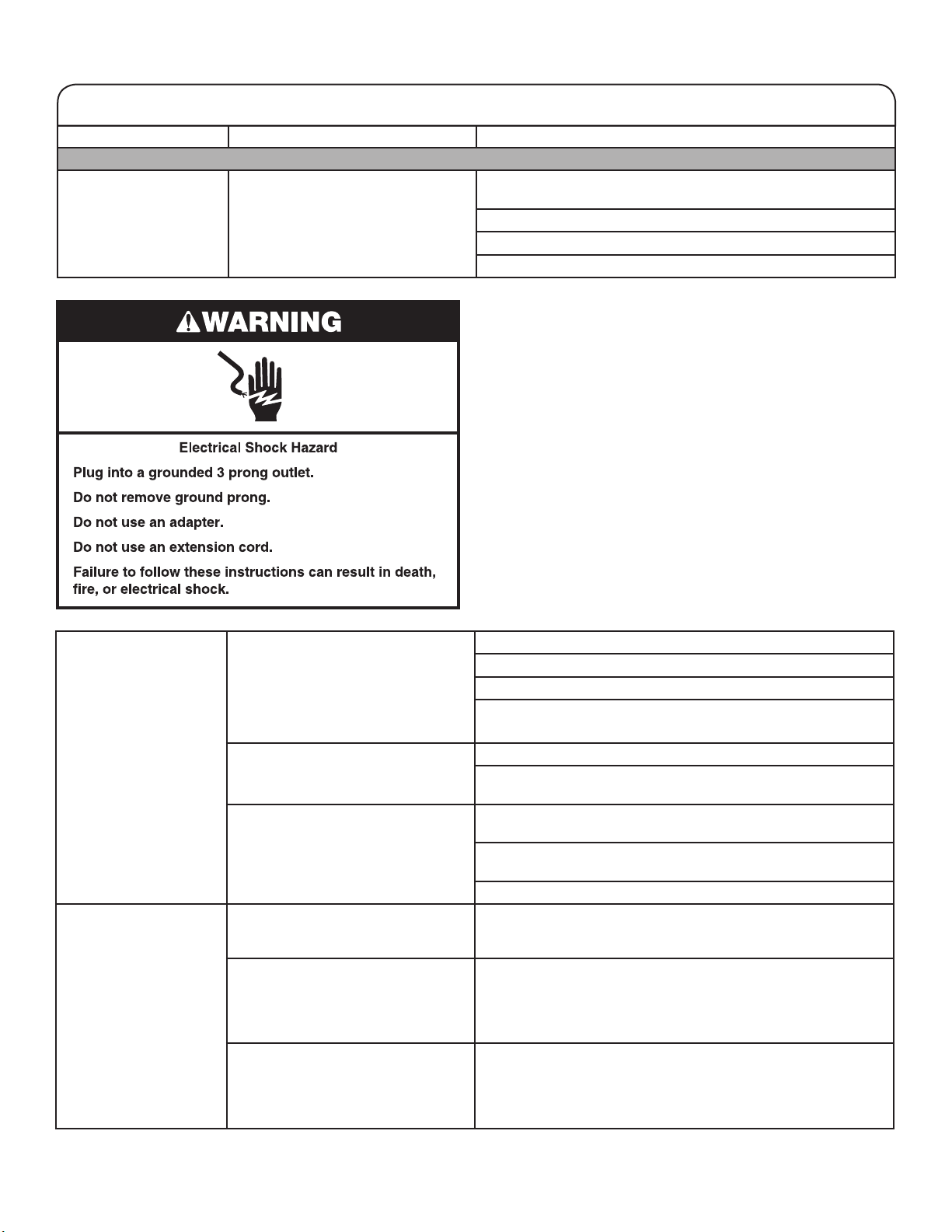
Check proper electrical supply. Plug power cord into a grounded 3 prong outlet.
Do not use an extension cord.
Ensure there is power to outlet.
Reset a tripped circuit breaker. Replace any blown fuses.
NOTE: If problems continue, contact an electrician.
Normal washer operation. Lid must be closed for washer to run.
Washer will pause during certain phases of cycle. Do not
interrupt cycle.
Washer may be tightly packed. Remove several items, rearrange load evenly in basket. Close lid
and press START/PAUSE/CANCEL.
Do not add more than one or two additional items after cycle
has started to avoid tightly packing or unbalancing.
Do not add more water to the washer.
Washer not draining/
spinning, loads are
still wet, or spin light
remains on (indicating that
the washer was
unable to pump out water
within 10 minutes)
Small items may have been caught
in pump or between basket and tub,
which can slow draining.
Empty pockets and use garment bags for small items.
Use a cycle with a low spin speed. Cycles with lower spin speeds remove less water than cycles
with high spin speeds. Use the recommended cycle/spin speed
for your garment. To remove extra water in the load, select
Drain & Spin. Load may need to be rearranged to allow even
distribution of the load in the basket.
The washer may be tightly packed
or unbalanced.
Tightly packed or unbalanced loads may not allow the washer
to spin correctly, leaving the load wetter than normal. Evenly
arrange the wet load for balanced spinning. Select the Drain &
Spin cycle to remove excess water. See “Using Your Washer”
for loading recommendations.
If you experience Possible Causes Solution
Washer Not Performing As Expected (cont.)
Washer won’t run or fill,
washer stops working,
or wash light remains
on (indicating that the
washer was unable to fill
appropriately)
Check for proper water supply. Both hoses must be attached and have water flowing to
inlet valve.
Both hot and cold water faucets must be turned on.
Check that inlet valve screens have not become clogged.
Check for any kinks in inlet hoses, which can restrict water flow.
15
TROUBLESHOOTING
If you experience Possible causes Solution
Washer Not Performing As Expected (cont.)
Washer not draining/
spinning, loads are
still wet, or spin light
remains on (indicating
that the washer was
unable to pump out water
within 10 minutes) (cont.)
Check plumbing for correct drain hose
installation. Drain hose extends into
standpipe further than 4.5" (114 mm).
Check drain hose for proper installation. Use drain hose form
and securely attach to drain pipe or tub. Do not tape over drain
opening. Lower drain hose if the end is higher than 96" (2.4 m)
above the floor. Remove any clogs from drain hose.
Too much detergent causing suds to
slow or stop draining and spinning.
Always measure and follow detergent directions for your load.
To remove extra suds, select Rinse & Spin. Do not add detergent.
Dry spots on load
after cycle
High speed spins extract more
moisture than your previous washer.
The high spin speeds combined with air flow during the final spin
can cause items near the top of the load to develop dry spots
during the final spin. This is normal.
Washer may be tightly packed. Use Bulky Items cycle for higher water fill, or set Water Level knob
to Deep Water Wash setting. See “Cycle Guide” to match your load
with the best cycle.
Added extra garments to the load
after the sensing/fill phase.
Add only one or two additional garments after washer has started.
Incorrect or wrong
wash or rinse
temperatures
Check for proper water supply. Make sure hot and cold inlet hoses are not reversed.
Both hoses must be attached to both washer and faucet,
and have both hot and cold water flowing to inlet valve.
Check that inlet valve screens are not clogged.
Remove any kinks in hoses.
Energy saving controlled
wash temperatures.
This washer uses cooler wash and rinse water temperatures
than traditional top-load washers. This includes cooler hot and
warm washes.
Load not rinsed Check for proper water supply. Make sure hot and cold inlet hoses are not reversed.
Both hoses must be attached and have water flowing to the
inlet valve.
Both hot and cold water faucets must be on.
Inlet valve screens on washer may be clogged.
Remove any kinks in the inlet hose.
Not using HE detergent or using
too much HE detergent.
The suds from too much detergent can keep washer from
operating correctly. Always measure detergent and follow
detergent directions based on load size and soil level.
Washer not loaded as recommended. The washer is less efficient at rinsing when load is tightly packed.
Load garments in loose heaps evenly around the basket wall.
Load with dry items only.
Use cycle designed for the fabrics being washed.
Add only one or two additional garments after washer has started.
Use Bulky Items cycle for higher water fill, or set Water Level knob
to Deep Water Wash setting. See “Cycle Guide” to match your load
with the best cycle.
Sand, pet hair, lint,
etc. on load after
washing
Heavy sand, pet hair, lint, and
detergent or bleach residues may
require additional rinsing.
Add 2 Rinses to the selected cycle and/or use PowerWash cycle or
Deep Water Wash option.
Load is tangling Washer not loaded as recommended. See “Using Your Washer” section.
Select a cycle with a slower wash action and spin speed;
however, items will be wetter than those using a higher speed spin.
Use Bulky Items cycle for higher water fill, or set Water Level knob
to Deep Water Wash setting. See the “Cycle Guide” to match your
load with the best cycle.
Load garments in loose heaps evenly around the basket wall.
Reduce tangling by mixing types of load items. Use the
recommended cycle for the type of garments being washed.
First try the solutions suggested here or visit our website at www.maytag.com.tw.
16
TROUBLESHOOTING
If you experience Possible Causes Solution
Washer Not Performing As Expected (cont.)
Not cleaning or
removing stains
Added more water to washer. Washer senses load size and adds correct amount of water.
This is normal and necessary for clothes to move. It is normal
for the wash load to be not completely covered in water.
Added water results in less effective cleaning.
Washer not loaded as recommended. Washer is less efficient at cleaning when load is tightly packed.
Load garments in loose heaps evenly around the basket wall.
Load with dry items only.
Add only one or two additional garments after washer has started.
Adding detergent on top of load. Add detergent, oxi products, and color-safe bleach to the
bottom of the basket before adding the load items.
Not using HE detergent or using too
much HE detergent.
The suds from regular detergent can keep washer from operating
correctly.
Use only HE detergent. Be sure to measure correctly.
Always measure detergent and follow manufacturer’s directions
based on load size and soil level.
Not using correct cycle for fabric type. Use a higher soil level cycle option and warmer wash temp
to improve cleaning.
Use PowerWash cycle for tough cleaning. See the “Cycle Guide”
to match your load with the best cycle.
Not using dispensers. Use dispensers to avoid chlorine bleach and fabric softener staining.
Load dispensers before starting a cycle.
Avoid overfilling.
Do not add products directly onto load.
Not washing like colors together. Wash like colors together and remove promptly after the cycle
is complete to avoid dye transfer.
Incorrect dispenser
operation
Clogged dispenser. Load dispensers before starting a cycle.
Use only liquid chlorine bleach in the bleach dispenser. Use only
fabric softener in the fabric softener dispenser.
Rinse Option knob not set for fabric
softener option.
Set Rinse Option knob to 1 Rinse with Fabric Softener or 2 Rinses
with Fabric Softener when using fabric softener dispenser.
Fabric damage Sharp items were in pockets during
wash cycle.
Empty pockets, zip zippers, and snap or hook fasteners before
washing to avoid snags and tears.
Strings and straps could have tangled. Tie all strings and straps before starting wash load.
Items may have been damaged
before washing.
Mend rips and broken threads in seams before washing.
Fabric damage can occur if load is
tightly packed.
Load garments in loose heaps evenly around the basket wall.
Load with dry items only.
Use cycle designed for the fabrics being washed.
Use Bulky Items cycle for higher water fill, or set Water Level knob
to Deep Water Wash setting. See “What’s Under the Lid” and
“Cycle Guide” to match your load with the best cycle.
Add only one or two additional garments after washer has started.
Liquid chlorine bleach may have been
added incorrectly.
Do not pour liquid chlorine bleach directly onto load. Wipe up
bleach spills.
Undiluted bleach will damage fabrics. Do not use more than
recommended by manufacturer.
Do not place load items on top of bleach dispenser when loading
and unloading washer.
Garment care instructions may not
have been followed.
Always read and follow garment manufacturer’s care label
instructions. See the “Cycle Guide” to match your load with the
best cycle.
First try the solutions suggested here or visit our website at www.maytag.com.tw.
17
If you experience Possible Causes Solution
Washer Not Performing As Expected (cont.)
Odors Monthly maintenance not done
as recommended.
See “Washer Care” in Washer Maintenance.
Unload washer as soon as cycle is complete.
Using too much detergent. Be sure to measure correctly. Always follow the
manufacturer’s directions.
See “Washer Care” section.
Lid Locked light
is flashing
The lid is not closed. Close the lid. The washer will not start or fill with the lid open.
A cycle was stopped or paused using
the Start/Pause/Cancel button.
The washer may still be spinning. The lid will not unlock until the
basket has stopped spinning. This may take several minutes if
washing large loads or heavy fabrics.
Single-dose laundry packet
not dissolving
Adding laundry packet incorrectly. Be sure laundry packet is added to washer basket before adding
clothes. Do not add packet to dispenser. Follow the manufacturer’s
instructions to avoid damage to your garments.
Washer pumps out water
before finishing cycle
Lid is left open for more than
10 minutes.
Make sure lid is closed before starting a cycle and/or during
prewash (soak).
“如需查詢RoHS資訊,請瀏覽官方網站:www.whirlpool.com.tw”.
First try the solutions suggested here or visit our website at www.maytag.com.tw.
TROUBLESHOOTING
18
洗衣機安全說明
㛔℔⎠⛐忁ấㇳℲ冯暣☐ᶲ㍸ὃ姙⣂慵天䘬⬱ℐ㍸䣢妲〗炻婳⊁⽭ᶨᶨ教嬨思⬰ˤ
忁㗗⬱ℐ嬎⏲䫎嘇ˤ
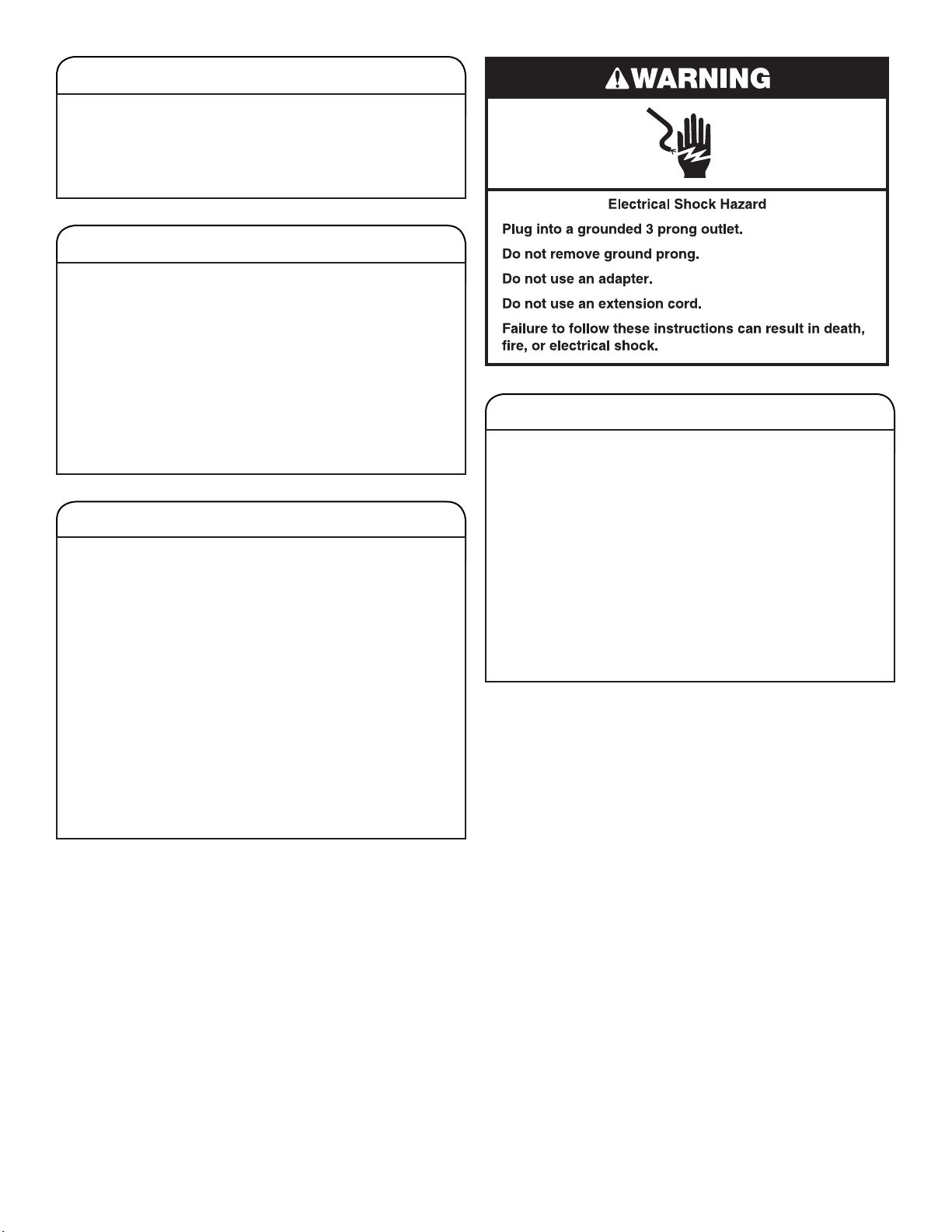
㬌䫎嘇堐䣢⬀⛐⎗傥⮶农ぐㆾṾṢ ṉ䘬㼃⛐⌙晒ˤ
㚱⬱ℐ㍸䣢妲〗⇵悥㚱⬱ℐ㍸䣢䫎嘇ẍ⍲ˬ⌙晒˭ㆾˬ嬎⏲˭⫿㧋ˤ↮⇍ẋ堐烉
危險
警告
㚱⬱ℐ㍸䣢妲〗悥㚫⏲姜ぐ㚱⒒ṃ㼃⛐⌙晒ˣ⤪ỽ旵Ỷ⍿ 㨇䌯炻ẍ⍲ᶵ思⬰㊯䣢㚫㚱⒒ṃ⼴㝄ˤ
朆ⷠ慵天
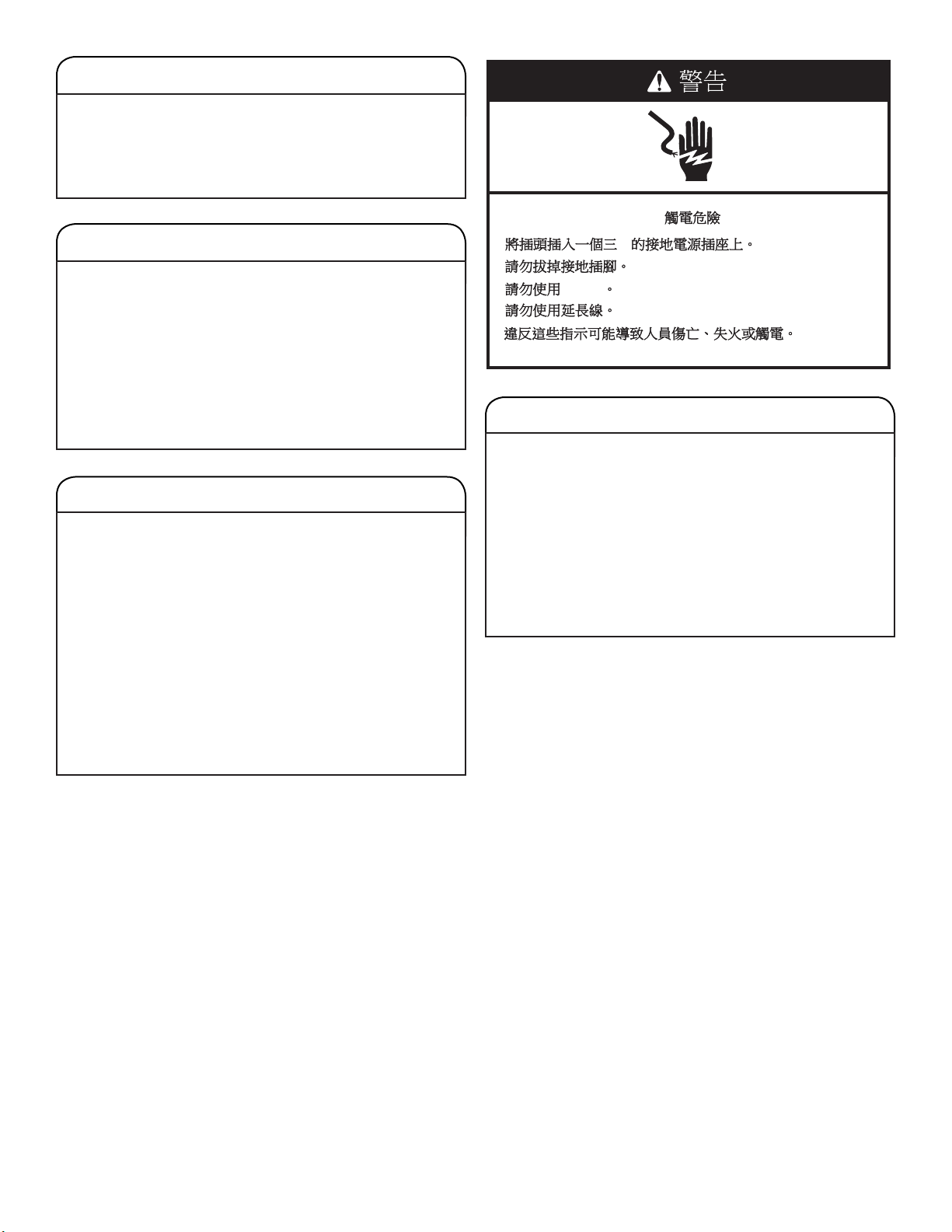
⮯⮶农ぐ㬣ṉㆾ慵 ˤ
⮯⮶农ぐ㬣ṉㆾ慵 ˤ
䁢Ḯ㷃⮹ἧ䓐㲿堋㨇㗪䘤䓇䀓䀥ˣ妠暣ㆾṢ幓 ⭛䘬⌙晒炻婳思⬰ẍᶳ➢㛔枸旚㍒㕥炻⊭⏓ᶳ↿⎬枭烉
ἧ䓐㲿堋㨇⇵炻婳娛嬨㚱䘬婒㖶ˤ ᶵ天嬻⮷⬑⛐㲿堋㨇ᶲㆾ㲿堋㨇ℏ䍑侵ˤ䔞㲿堋㨇⛐⮷⬑
旬役ἧ䓐㗪炻婳Ṽ䳘䄏栏⮷⬑ˤ
⛐ 㬊ἧ䓐ㆾ㡬伖㲿堋㨇⇵炻婳⮯㲿堋㨇攨ㆾᶲ味㉮昌ˤ
䔞㲿堋㦥ˣ僓㯜㦥ㆾ㲿堋㡺⛐廱≽㗪炻婳ᶵ天⮯ㇳỠℍ㲿
堋㨇ℏˤ
婳ᶵ天⮯㲿堋㨇⬱墅ㆾ⬀㓦⛐⭌⢾㖍㚔暐㵳⛘㕡ˤ
婳⊧㑭冒㚜㓡㍏⇞☐ˤ
⍫教Ⱦ暣㸸天㯪ȿ䪈䭨㍍⛘婒㖶ἄ⤥㍍⛘ˤ
劍暣㸸䶂㎵⢆㗪炻⽭枰䓙墥忈⓮㚵⊁Ṣ⒉ㆾ℟㚱⎴䫱⮰
㤕屯㟤䘬Ṣ⒉忚埴㚜㎃炻ẍ性⌙晒ˤ
婳ᶵ天㑭冒ᾖ䎮ㆾ侭㚜㎃ảỽ㲿堋㨇暞ẞ炻昌朆ぐ℟㚱ᾖ
䎮㈨傥⍲㖶䡢䎮妋㛔ἧ䓐ㆾ䵕嬟㊯⋿ㆾ℞Ṿ䓐㇞䵕ᾖ婒㖶
㚠㊯⭂䘬ᾖ䎮㕡㱽炻⏎⇯婳⇍㑭冒ᾖ䎮ˤ
㛔暣☐ᶵ枸㛇ὃ䓇䎮ˣデ䞍ˣ⽫㘢傥≃ˣ䴻槿ㆾ䞍嬀ᶵ
嵛ἧ䓐侭)⊭⏓⬑䪍*ἧ䓐炻昌朆⛐⮵℞屈㚱⬱ℐ屔ả
䘬Ṣ⒉䚋䜋ㆾ㊯⮶ᶳ⬱ℐἧ䓐ˤ
ᶵ天⍣㲿㹴恋ṃ㚦䴻塓㰥㱡ˣḦ㲿㹞∹ˣ㖻䅫ㆾ⭡㖻䆮
䁠䘬䈑岒㶭㲿忶ˣ㲿㹴忶ˣ㴠㲉忶䘬堋䈑炻⚈䁢⬫Ᾱ
㚫慳㓦↢⎗傥䅫䅺ㆾ侭䆮䁠䘬㯋橼ˤ
ᶵ天≈ℍ㰥㱡ˣḦ㲿㹞∹ㆾ℞Ṿ㖻䅫ㆾ䆮䁠䈑岒⇘㲿
堋㯜塷朊炻⬫Ᾱ㚫慳㓦↢⎗傥䅫䅺ㆾ侭䆮䁠䘬㯋橼ˤ
⛐㝸ṃね㱩ᶳ炻⤪㝄ℑᾳ㗇㛇ㆾ㚜攟㰺㚱ἧ䓐䘬䅙㯜䲣
䴙⎗傥㚫䓊䓇㯓㯋ˤ㯓㯋㗗㖻䆮䁠㯋橼ˤ⤪㝄䅙㯜䲣䴙
㚱⼰攟ᶨ㭝㗪攻㛒ἧ䓐炻⛐ἧ䓐㲿堋㨇⇵炻ㇻ攳㯜漵
柕炻嬻㯜⛐㭷ᾳ㯜漵柕悥㳩↢⸦↮揀ˤ忁㧋⎗ẍ慳㓦㌱
ảỽ倂普䘬㯓㯋ˤ䓙㕤娚㯋橼㗗㖻䅫⿏䘬炻⛐㬌㗪婳ᶵ
天⏠䄁ㆾ侭ἧ䓐䀓剿ˤ
重要安全指示
請保留這些指示
警告:
19
洗衣機注意事項
僅可使用高效 (HE) 洗衣劑。
重要事項:
■ 洗衣機上蓋必須先關閉,洗衣機的洗衣槽才能注水,並啟動洗衣行程。若打開了洗衣機上蓋,行程就會暫停,所有注水/攪拌動作都會
停止。關上洗衣機上蓋後,行程就會自動繼續。不過,若在打開洗衣機上蓋之前,按下了 啟動/暫停按鈕,則必須關上洗衣機上蓋,並
再次按下 啟動/暫停按鈕,以便繼續行程。
■ 在衣物柔軟精洗劑盒中使用衣物柔軟精時, 洗清選擇 必須設定為 一次洗清(添加柔軟精) 或 二次洗清(添加柔軟精)。這可確保在洗清階段
中,於正確時間加入衣物柔軟精,並均勻散佈。
洗衣機上蓋安全鎖
為了獲得更高轉速,洗衣機上蓋將會鎖住,而 門上鎖燈將會亮
起。此燈亮起時,洗衣機上蓋會鎖住,若沒有暫停行程,就無法
打開。若此燈閃爍,代表洗衣機暫停。此燈熄滅時,即可打開洗
衣機上蓋。在行程開始後,洗衣機將會注入適當的水位。進行所
選行程時,會在洗衣槽注水時發生攪拌情形。這是正常現象。洗
衣機完成注水後,就會開始洗衣階段。若您在此時間點後,需要
打開洗衣機上蓋添加衣物,洗衣機上蓋將會在洗衣階段的整個攪
拌期間保持解鎖狀態。打開洗衣機上蓋時,行程將會自動暫停,
並在關上洗衣機上蓋後繼續行程。洗衣機上蓋將會在脫水階段開
始前鎖住。
若您在此時間點後,需要暫停或停止,必須按下 啟動/暫停按鈕,
並等待洗衣機上蓋解鎖。只有在洗衣機停止動作後,洗衣機上蓋
才會解鎖。根據您嘗試暫停的行程時間點,可能會需要幾秒鐘到
幾分鐘才能解鎖洗衣機上蓋。按下 啟動/暫停可繼續行程。
偵測
此洗衣機會為大部分的行程自動偵測衣物量,並根據偵測到的衣
物量選擇適當的水位。此洗衣機也會執行一連串的轉動,以確認
衣物平衡。在此期間,一連串的喀喀聲和嗡嗡聲代表偵測技術正
在判定衣物放置是否有不平衡的情況。
水位選項
將水位選擇旋鈕設定為自動偵測設定,洗衣機就會根據衣物量自
動調整水位。 若將水位選擇旋鈕設定為高水位設定,洗衣機就會
為任何行程,在洗衣過程中的任何時間,自動注入更多的水。
可能會出現的正常聲響
在不同的洗衣行程階段,會聽見與舊款洗衣機不同的聲響和雜
音。例如,您可能會在開始運轉時聽見喀喀聲和嗡嗡聲,因為洗
衣機上蓋安全鎖正在進行自我測試。在高效能洗衣棒測試衣物平
衡或移動衣物時,會產生各種不同的嗡嗡聲。有時候,您可能不
會聽見任何聲響,因為洗衣機正在測定適合衣物量的正確水位或
正在浸泡衣物。
噴灑洗清
選擇預設噴灑洗清的行程。在這些行程期間,將會聽見水在內槽
轉動時進入洗衣機,讓洗清的水滲入衣物當中。詳情請參閱「行
程指南」。
選擇適用的洗劑
僅可使用HE高效能洗劑。包裝將標示「HE」或「高效能」。使用
非 HE 高效能洗劑也可能導致較長的行程時間、降低洗清效能。
此舉也可能導致零件故障,而且長期可能導致積聚黴菌或發
霉。HE高效能洗劑具有低泡沫與快速擴散的特點,因此能產生適
當的泡沫量。
此等洗劑能讓污垢分離,使之不會再度沉澱在乾淨的衣物上。
並非所有標示為HE高效能的洗劑都內含相同配方,而減少泡沫的
能力也有所不同。例如:天然、有機或自製HE高效能洗劑可能會
產生大量泡沫。請遵循洗劑製造商的說明,決定洗劑的用量。
20
控制面板和功能
水位選擇
將 水位選擇 旋鈕設定為 自動偵測 設定,洗衣機將會根據衣物量
和衣物類型自動偵測適當的水位。
將水位選擇旋鈕設定為高水位設定,洗衣機將會為任何行程,
在洗衣過程中的任何時間,自動注入更多的水。
注意:由於使用高水位設定時,會延長注水時間,因此行程時
間將會較長。
啟動/暫停按鈕
按下可啟動所選行程。再次按下可暫停行程並解鎖洗衣機上
蓋。關上洗衣機上蓋並按下此按鈕,可重新啟動行程。按住3
秒可取消行程,並排出洗衣機的水。
注意:若洗衣機正在脫水,則需要幾分鐘的時間才能解鎖洗衣
機上蓋。
進度指示燈
進度指示燈顯示行程進度。在行程的每個階段,您可能注意到
相異於舊款洗衣機的響聲和暫停。
進水
若按下啟動/暫停按鈕且將水位選擇旋鈕設定為自動偵測
時,洗衣機將會注水並開始偵測,以判定衣物量和平衡情
況。
在偵測期間,會在行程中發生短暫而明顯的暫停。
這是正常現象。
偵測完成後,洗衣機就會根據偵測到的衣物量注入適當水
位,進行選擇的行程時,將會在注水期間出現攪拌情形。
這也是正常現象。洗衣機完成注水後,就會開始行程的洗衣
階段。為了確保偵測到最精確的衣物量,請避免在「進水」
階段期間打開洗衣機上蓋。
注意:打開解鎖的洗衣機上蓋將會暫停偵測和洗衣階段。關
上洗衣機上蓋則可繼續行程。若洗衣機上蓋打開超過 10 分
鐘,洗衣機將會取消行程,並將水排出。
6
衣物髒度
選擇最適合待洗衣物的設定。對於重度髒汙和耐洗的布料,請
在衣物髒度選擇「重」,以延長洗衣時間。對於輕度髒汙和精
緻的布料,請在衣物髒度選擇「輕」,以減少洗衣時間。較低
衣物髒度設定可減少纏繞和衣物皺痕。
洗衣水溫
洗衣水溫可調節注入的熱水和冷水,以偵測並維持一致的水
溫。
根據布料和污垢類型來選擇洗衣水溫。為取得最佳成果,根據
衣物標籤說明,使用最適當的洗衣水溫。
■ 在某些型號和行程,溫水和熱水可能會比舊款洗衣機溫度
低。
■ 即使是冷水或涼水洗衣,仍會在洗衣機中加入一些溫水,
以維持最低溫度。
所有洗清過程皆使用冷水。
洗衣行程旋鈕
使用洗衣行程旋鈕以選擇洗衣機的行程。
請參閱「行程指南」中各洗衣行程之詳細說明。
洗清選擇
下列選項可加入大部分的行程中。
請參閱「行程指南」瞭解其他詳情。
一次洗清
此選項設定行程僅洗清一次。
二次洗清
此選項可用來在所有洗清行程中增加第二次洗清。
一次洗清 (添加柔軟精)
若要在行程期間使用衣物柔軟精,則必須選擇此選項。這
可確保在洗清過程中,於正確時間加入衣物柔軟精,以便
均勻散佈。
二次洗清 (添加柔軟精)
此選項同時啟用加入衣物柔軟精和二次洗清功能。
1
2
3
4
並非所有機型都適用所有功能和選項。
外觀可能有所不同。
5
M
O
D
E
L
:
8
T
M
V
W
C
5
8
5
J
W
啟動 暫停
輕
普通
衣物髒度 洗衣水溫 洗清選擇 水位選擇
(
需接熱水管
)
重
涼水
溫水
花色
柔洗
快洗
洗清&脫水
槽洗淨
標準
白色
白色+浸洗
二次洗清
自來水 熱水
冷水
(
建議使用
) (
添加柔軟精
)
(
添加柔軟精
)
一次洗清
二次洗清
一次洗清
自動偵測 高水位
加強洗清
行程狀態
進水 洗衣 洗清 脫水 完成 門上鎖
強力潔淨
單獨脫水
花色+浸洗
衣量多
/
大物件
搭配 錠
(
按壓3秒取消行程
)
P
A
R
T
N
O
:
W
1
1
3
1
3
0
9
6
A
7
6
54
32
1
7
21
洗衣
洗衣機將會根據衣物量和水位選擇選項,注入正確水位。某
些行程可能會在注水程序期間進行攪拌,以提升清潔度。洗
衣行程開始時,將會聽見 HE 洗衣棒增加轉速。在不同的洗
衣行程階段,可能會隨著洗衣機執行不同的洗衣動作,而改
變馬達聲響。
注意:洗衣機上蓋將會在洗衣階段完成後以及進行初次脫水
之前自動鎖住,並在行程的其餘階段保持鎖定狀態。
洗清
某些行程使用噴灑洗清,在洗衣槽轉動時於內槽中加水。您
會聽見馬達短暫開啟(簡短的嗡嗡聲),以在注水時轉動洗
衣槽。在某些情況下,可能也會在洗衣機注水、洗清和移動
衣物時,聽見類似洗衣行程的聲響。
脫水
洗衣機會根據所選行程和轉速,以逐漸增加的速度為衣物脫
除適量水分。
完成
行程完成後,洗衣機上蓋就會解鎖,此燈將會亮起。為獲得
最佳結果,請立即取出衣物。
門上鎖
鎖定功能可提供更高的轉速。亮起
時,洗衣機上蓋會鎖住,若沒有暫停
行程,就無法打開。燈熄滅時,即可
打開洗衣機上蓋。
若要在洗衣機上蓋鎖住後打開洗衣機
上蓋,請按下 啟動/暫停。
一旦洗衣機停止運行,洗衣機上蓋將解鎖。若衣物正以高
速轉動,則需要幾分鐘才能解鎖。在關上洗衣機上蓋後,
按下 啟動/暫停以繼續行程。
啟動 暫停
(
按壓3秒取消行程
)
行程指南
為達成最佳呵護衣料效果,請選擇最適用於待洗衣物之行程。
可達最佳效能的建議設定以粗體顯示。
並非所有機型都擁有所有行程和選項。並非每個行程都提供所有設定和選項。
注意:若您使用衣物柔軟精,務必選擇 一次洗清 (添加柔軟精) 或 二次洗清 (添加柔軟精)。
**所有洗清過程皆使用冷水。
**脫水轉速整合進行程當中,無法選擇或修改。
*
†
請節約使用資源,例如能源和水。
†
㶭㻼
㹓
㓰䌯
⤥
㚨Ἓ
耐洗的布料、不褪
色的衣物、毛巾、
牛仔褲
強力潔淨
熱水
溫水
涼水
冷水
自來水
高 對重度髒汙或耐洗的衣物使用此行程。對於某些衣物,水位偵
測程序可能會花費較長時間,因為比起其他衣物類型,這些布
料會吸收更多水分。
極髒污的白色衣物 白色
白色+浸洗
熱水
溫水
涼水
冷水
自來水
高 搭配含氯漂白劑使用此行程時,可為髒污的白色布料改善漂
白效果。
若要提升清潔度,請選擇 白色+浸洗,這會在進水階段之後,自
動增加大約 10 分鐘的浸泡時間,然後自動執行白色衣物行程。
大型物品,例如:
床單、睡袋、小棉
被、夾克、可清洗的
小型地毯
衣量多 / 大
物件
熱水
溫水
涼水
冷水
自來水
低 用此行程清洗大物件,例如:夾克和小棉被。洗衣機將會注入
足夠的水,讓衣物濕透,再開始行程的洗衣階段,並使用比其
他行程更高的水位。
†
㶭㻼
㹓
㓰䌯
⤥
㚨Ἓ
†
㶭㻼
㹓
㓰䌯
⤥
㚨Ἓ
待洗衣物: 行程: 洗衣水
溫:*
脫水轉速:** 行程說明:
22
小型衣物、棉質、聚
酯、免燙衣物
快洗 熱水
溫水
涼水
冷水
自來水
高 使用此行程清洗輕度髒汙、急需使用的兩三件小型衣物。
泳衣和不必使用洗劑
洗清的衣物
洗清&脫水
僅用冷水
洗清
高 結合洗清和高速脫水,適用於需要額外洗清行程的衣物。使用
此行程在電力中斷後完成衣物清洗程序,或用於僅需要洗清
的衣物。
手洗衣物或濕透的
衣物
單獨脫水
不適用 高 此行程使用脫水,以縮短厚重布料或需特殊保養手洗衣物的烘
乾時間。在取消行程後、或在停電後,使用此行程排出洗衣機
內的水。
洗衣機內沒有衣物
槽洗淨
搭配 affresh 錠
熱水 低
每 30 次洗衣後用此行程一次,以保持洗衣機內部清新和清
潔。此行程使用較高水位。搭配使用 affresh 槽洗錠或液態含
氯漂白劑,徹底清潔洗衣機的內部。此行程不可中斷,請參閱
「洗衣機保養」。
重要事項:槽洗淨搭配 affresh 錠行程期間,不得把衣物或其
他物品放在洗衣機內。
使用此行程時請淨空洗衣槽。
清潔
溫和
效率
†
好
最佳
注意:若您使用衣物柔軟精,務必選擇 一次洗清 (添加柔軟精) 或 二次洗清 (添加柔軟精)。
**所有洗清過程皆使用冷水。
**脫水整合進行程當中,無法選擇或修改。
*
†
請節約使用資源,例如能源和水。
待洗衣物: 行程: 洗衣水
溫:*
脫水轉速:** 行程說明:
棉質、亞麻和混合
衣物
標準
熱水
溫水
涼水
冷水
自來水
高 使用此行程清洗一般髒度的棉質和混合衣物。
亮色和深色棉質和混
合衣物
花色
花色+浸洗
熱水
溫水
涼水
冷水
自來水
高 使用此行程清洗深色和花色衣物,包括混合衣物和運動服。
若要提升清潔度,請選擇 花色+浸洗,這會在進水階段之後,
自動增加大約 10 分鐘的浸泡時間,然後自動執行花色行程。
可機洗絲質布料、
手洗布料
柔洗 熱水
溫水
涼水
冷水
自來水
低 使用此行程清洗輕度髒汙且標有「可機洗絲質」或「柔洗」行
程保養標籤的衣物。將小型衣物放入網狀洗衣袋中,再進行清
洗。此行程使用較高的預設水位。
†
㶭㻼
㹓
㓰䌯
⤥
㚨Ἓ
†
㶭㻼
㹓
㓰䌯
⤥
㚨Ἓ
†
㶭㻼
㹓
㓰䌯
⤥
㚨Ἓ
23
使用洗衣機
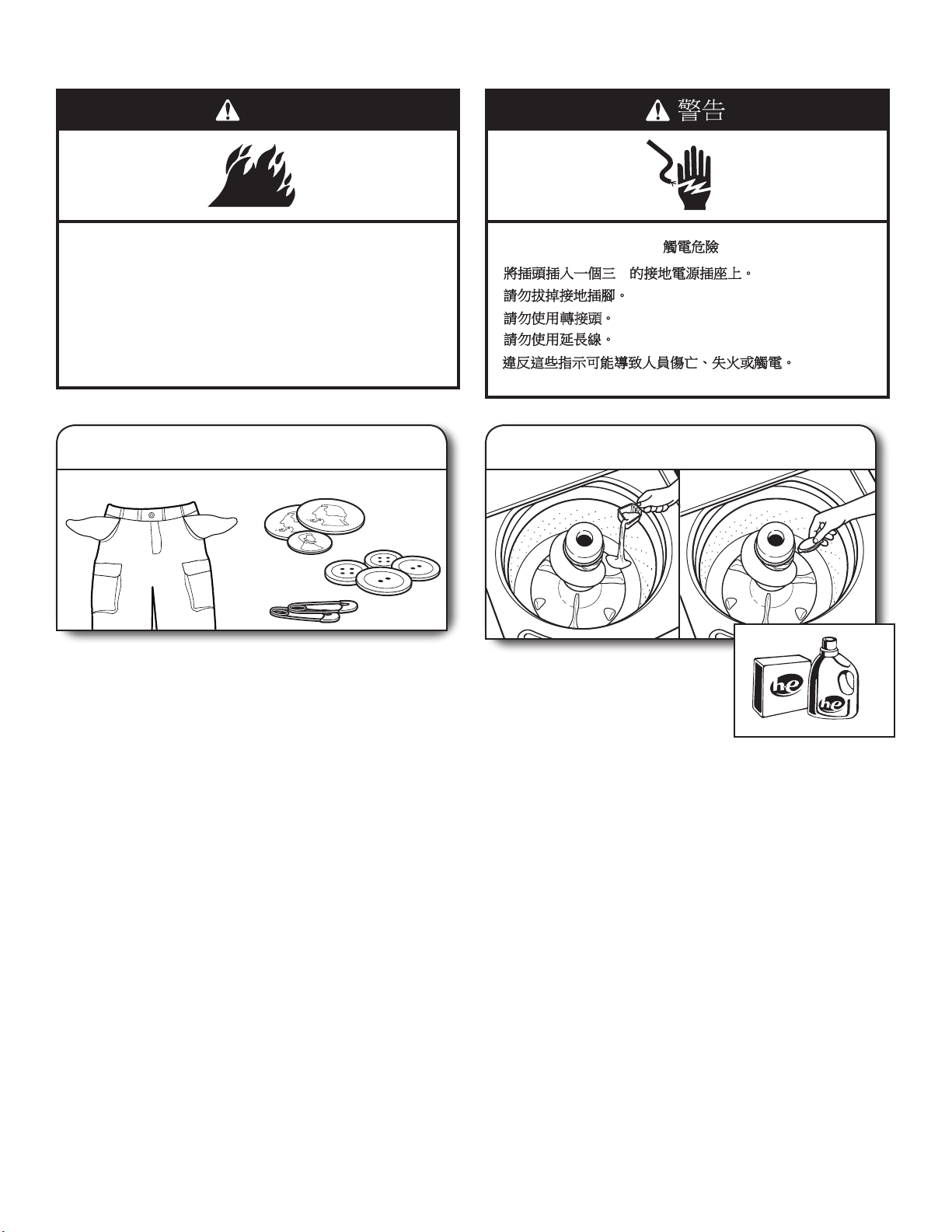
火災危險
請勿將沾過汽油或其他可燃液體的衣物放進洗衣機。
任何洗衣機都無法完全清潔油污。
不得烘乾曾沾有任何油品的物品(包括烹調用油)。
否則可能導致死亡、爆炸或失火。
警告
孔
轉接頭
■ 清空衣服的口袋。取出零錢、鈕扣或任何會掉入HE 洗衣棒下
方並卡住造成不正常聲響的小物件。
■ 按建議行程、洗衣水溫和褪色程度分類衣物。
■ 分開髒污和微髒衣物。
■ 分開精緻衣物和耐洗布料。
■ 洗衣物後若仍殘留污漬,不得烘乾衣物,因為熱力可將污漬
永久留在衣料上。
■ 請盡速處理汙漬。
■ 拉上衣服拉鍊、扣好鉤子、繫上繩子和腰帶,然後取下無法
清洗的鑲邊和飾品。
■ 縫補裂痕,避免洗衣時進一步損壞衣物。
實用秘訣:
■ 清洗防水衣物時,請均勻放置衣物。
■ 使用網狀洗衣袋,以免在清洗精緻或小型衣物時發生纏繞情
形。
■ 反面清洗針織品,以免起毛球。將易沾棉絮者與易產生棉絮
者分開。合成纖維、針織品和燈芯絨會沾附來自毛巾、地毯
和雪尼爾布料的棉絨。
注意:務必閱讀並遵守衣物保養標籤說明,以免損壞衣物。
1. 分類並準備好您需要清洗的衣物
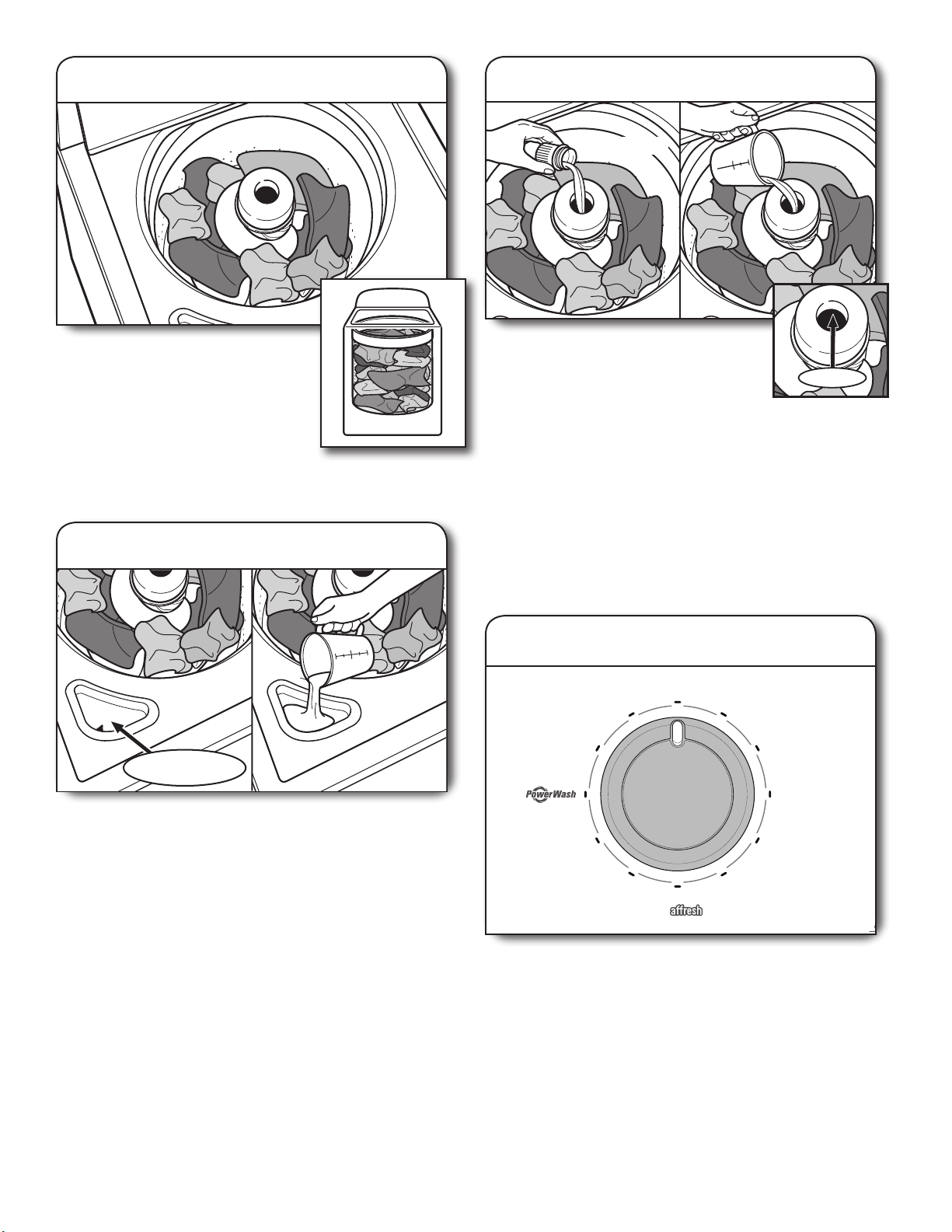
在洗衣槽中加入定量的HE高效能洗劑或
單一劑量的洗衣膠囊。
若使用氧系漂白劑、護色漂白劑或衣物
柔軟精,請先在洗衣機的洗衣槽底部加
入,再放入衣物。
重要事項:僅可使用HE高效能洗劑。包裝將標示「HE」或「
高效能」。使用一般洗劑可能導致較長的行程時間、降低洗清
效能。此舉也可能導致零件故障,而且導致有明顯的黴菌或發
霉。HE高效能洗劑能產生適當的泡沫量,帶來最佳效能。
注意:請遵循製造商的說明,決定洗衣用品的用量。
2. 加入洗衣用品
24
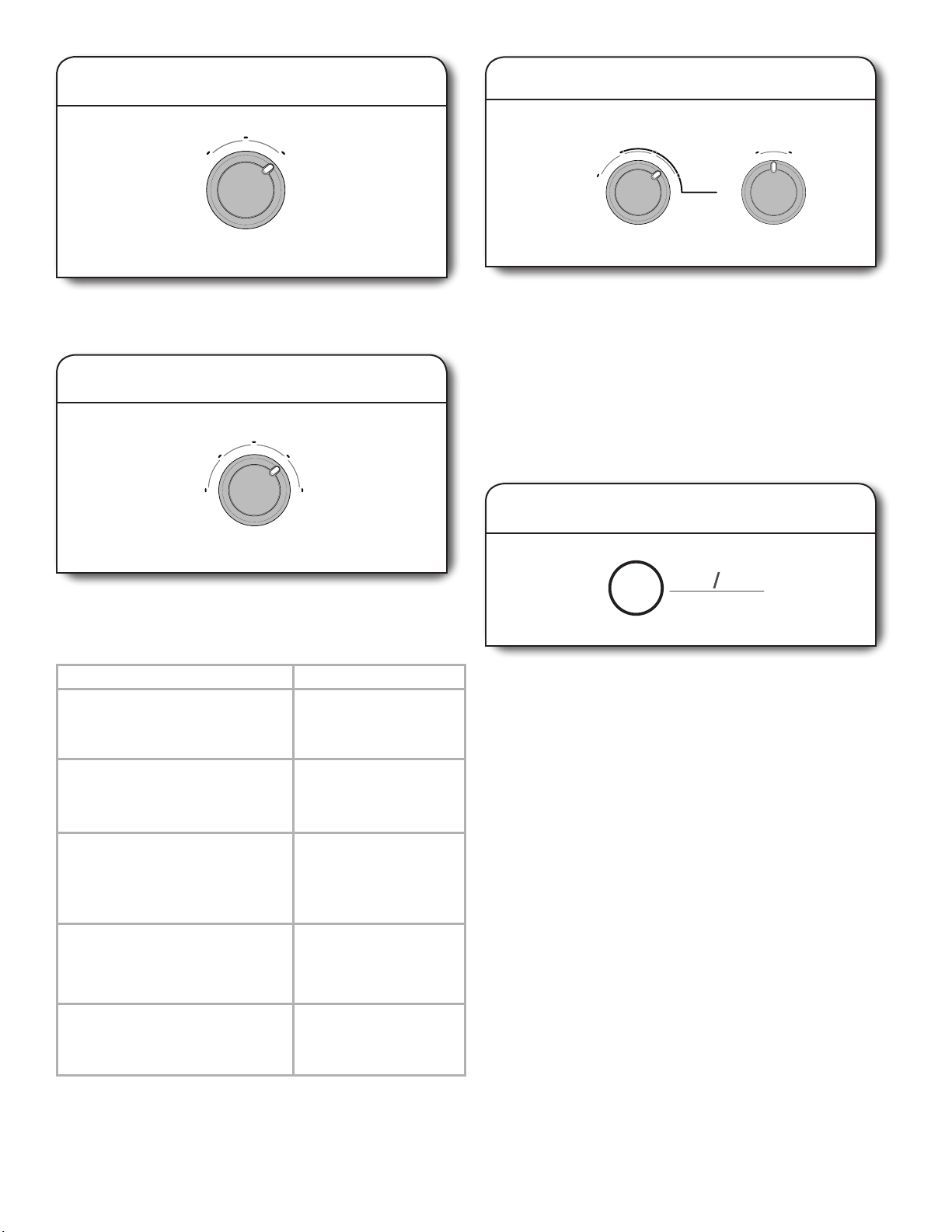
5. 加入衣物柔軟精
將定量的液態衣物柔軟精倒入洗劑盒中;務必
遵守製造商的指示,以便根據衣物量使用正確
的衣物柔軟精量。
以溫水注入洗劑盒,直到液體達到邊緣下方為
止,以稀釋液態衣物柔軟精。請查看注滿上限線條箭頭。
重要事項:在衣物柔軟精洗劑盒中使用衣物柔軟精時,洗清選擇
旋鈕必須設定為 一次洗清 (添加柔軟精) 或 二次洗清 (添加柔軟
精)。這可確保在洗清階段中,於正確時間加入衣物柔軟精,並
均勻散佈。
手動加入液態衣物柔軟精,以清洗衣物
在最終洗清期間,等待洗衣機完成注水,並按下啟動/暫停按
鈕,即可暫停洗衣機。掀起洗衣機上蓋,並以建議的測定量加入
液態衣物柔軟精。不得使用超過建議的用量。關上洗衣機上蓋並
再次按下 啟動/暫停按鈕,即可啟動洗衣機。
4. 將液態含氯漂白劑放進洗劑盒內
液氯漂白劑
不得過量添加、稀釋或使用超過 1 杯的量(236 毫升)。使用
液態含氯漂白劑的行程內,不得使用護色漂白劑或氧系產品。
旋轉行程旋鈕,選擇洗衣行程。如需更多資訊,請參閱「行程指南」。
M
O
D
E
L
:
8
T
M
V
W
C
5
8
5
J
W
啟動 暫停
輕
普通
衣物髒度 洗衣水溫 洗清選擇 水位選擇
(
需接熱水管
)
重
涼水
溫水
花色
柔洗
快洗
洗清&脫水
槽洗淨
標準
白色
白色+浸洗
二次洗清
自來水 熱水
冷水
(
建議使用
) (
添加柔軟精
)
(
添加柔軟精
)
一次洗清
二次洗清
一次洗清
自動偵測 高水位
加強洗清
行程狀態
強力潔淨
單獨脫水
花色+浸洗
衣量多
/ 大物件
搭配 錠
(
按壓3秒取消行程
)
P
A
R
T
N
O
:
W
1
1
3
1
3
0
9
6
A
6. 選擇行程
3. 將衣物放進洗衣機內。
將衣物以鬆散的狀態,沿著洗衣槽壁成堆
均勻放入。為獲得最佳結果,請勿塞滿衣
物。請勿在 HE 洗衣棒周圍包覆床單等大
型衣物;請將這類衣物以鬆散的方式沿著
洗衣槽側壁堆疊。試著混合不同大小的衣
物,以減少纏繞情形。
重要事項:請勿塞滿衣物或將衣物用力壓
入洗衣機。衣物須能有移動空間,才能取得最佳清潔效果,
並減少衣物皺痕和纏繞。
注滿上限
衣物柔軟精
水
25
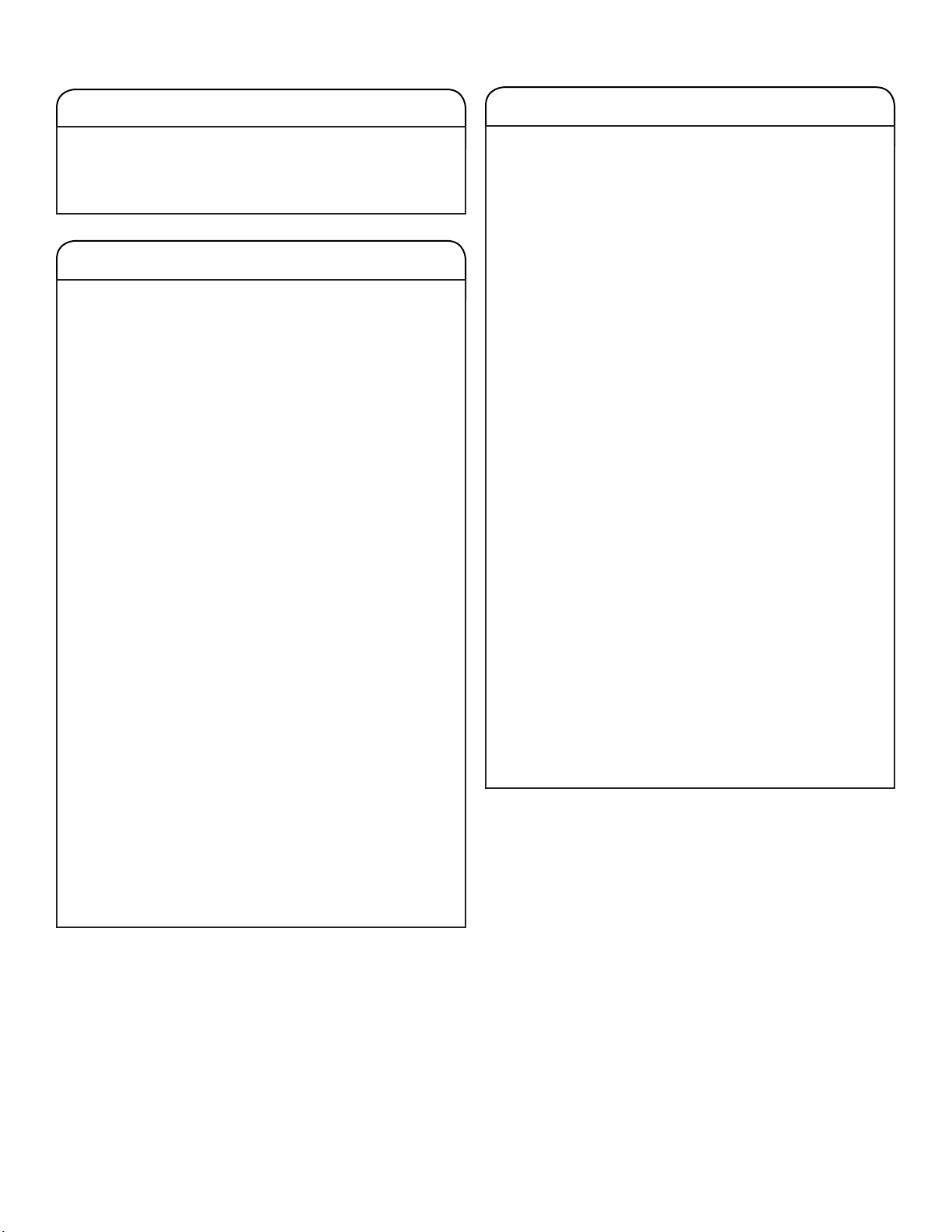
9. 選擇洗清選項和水位
將洗清選擇旋鈕轉動至所需設定,以選擇洗清次數。
重要事項:使用衣物柔軟精洗劑盒時,洗清選擇旋鈕必須設定為
選項「添加柔軟精」。這可確保在洗清過程中,於正確時間加入
衣物柔軟精,以便均勻散佈。
將水位選擇旋鈕設定為自動偵測設定,洗衣機將會根據衣物量和
衣物類型自動偵測適當的水位。
將水位選擇旋鈕設定為高水位設定,洗衣機將會為任何行程,在
洗衣行程中的任何時間,自動注入更多的水。
注意:由於使用高水位設定時,會延長注水時間,因此行程時間
將會較長。
洗衣水溫
(
需接熱水管
)
重
涼水
溫水
自來水 熱水
冷水
8. 選擇洗衣水溫
選擇行程後,請將洗衣水溫旋鈕旋轉至所需設定,以選擇洗衣水
溫。
務必閱讀並遵守布料保養標籤說明,以免損壞衣物。
洗衣水溫 建議布料
涼水
會加入溫水,以協助去除髒汙和溶
解洗劑。
涼水比冷水稍微溫熱一些。
顏色混合或褪色的深
色衣物
輕度髒汙
熱水
會加入一些冷水,以節省能源。這
可能會比熱水加熱器設定溫度低。
溫水
將會加入一些冷水,因此這可能會
比舊款洗衣機提供的水溫度低。
冷水
可能會加入溫水,以協助去除髒汙
和溶解洗劑。
白色衣物和淺色衣物
耐洗衣物
重度髒汙
亮色衣物
中度至輕度髒汙
顏色混合或褪色的花色
衣物
輕度髒汙
顏色混合或褪色的深
色衣物
輕度髒汙
自來水
這是自來水水溫。
輕
普通
衣物髒度
重
7. 選擇衣物髒度
選擇行程後,請將衣物髒度旋鈕旋轉至所需設定,以選擇衣物
髒度。
洗清選擇 水位選擇
二次洗清
(
建議使用
) (
添加柔軟精
)
(
添加柔軟精
)
一次洗清
二次洗清
一次洗清
自動偵測 高水位
加強洗清
10. 按下(啟動/暫停)可開始洗衣行程
按下啟動/暫停可啟動洗衣行程。行程完成後,完成進度指示燈
會亮起。行程完成後請盡速取出衣物,避免產生異味、減少衣
物皺痕,並避免金屬鈎、拉鏈和子母扣的鏽蝕殘留在衣物上。
解鎖洗衣機上蓋以增加衣物
若您在洗衣開始後,需要加入一件或兩件忘記放入的衣物,只
要打開洗衣機上蓋即可,而這會暫停行程。在加入衣物後,只
要關上洗衣機上蓋,行程就會繼續。洗衣機可能會添加一些
水,以配合增加的衣物量。
不過,若您按下啟動/暫停來暫停行程,然後打開洗衣機上蓋以
增加衣物,則在關上洗衣機上蓋後,需要按下啟動/暫停才能繼
續行程。
注意:洗衣機不會在打開洗衣機上蓋時注水。
重要事項:若洗衣機上蓋打開超過 10 分鐘,將會自動將水排
出。
手動浸泡
若您在行程洗衣階段中的任何時間點,想要手動浸泡衣物,請
按下 啟動/暫停並讓洗衣機上蓋繼續關著。過了所需浸泡時間
後,請再次按下 啟動/暫停以繼續行程。只要洗衣機上蓋保持關
閉,浸泡時間就能超過 10 分鐘。不過,若在浸泡期間打開洗衣
機上蓋,並維持開啟狀態超過 10 分鐘,就會自動將水排出。
啟動 暫停
(
按壓3秒取消行程
)
26
洗衣機維護
更換已使用 年的進水管,以降低水管故障的風險。若發現
突起物、纏繞、割痕、磨損或漏水,定期檢查和更換進水
管。
更換進水管時,請用麥克筆在標籤上標示更換日期。
進水管
洗衣機保養
維持洗衣機清潔和最佳效能的建議
1. 經常使用洗劑並遵循洗劑製造商對洗劑用量的說明。不得使
用超過建議用量,因為此舉可能增加洗劑和髒污殘留積聚在
洗衣機的速率,進而產生異味。
2. 偶爾要用溫水和熱水洗衣設定(不僅是只用冷水洗衣),因
為溫水或熱水更能控制髒污和洗劑積聚的速率。
3. 洗衣機用後請打開洗衣機上蓋,有助風乾洗衣機、避免能發
出異味的殘留物積聚。
清潔上開式洗衣機
展開下方建議的例行清潔流程前,請閱讀完整的說明。於每個月
或每 30 次洗衣行程(視何者先發生而定),至少須執行一次洗衣
機保養程序。此舉能控髒污和洗劑積聚在洗衣機的速率。
清潔洗衣機內部
為了避免讓洗衣機產生異味,請按照以上提供的使用說明並使
用以下建議的每月清潔程序:
槽洗淨
本洗衣機配備特殊行程,能結合「affresh 槽洗錠」或液態含氯
漂白劑,清潔洗衣機的內部。
開始程序
1. 槽洗淨行程步驟 (可達到最佳洗淨力的建議作法):
a. 打開洗衣機上蓋並取出所有衣物。
b. 將 affresh 槽洗錠置於洗衣槽的底部。
c. 請勿將 affresh 槽洗錠置於洗劑盒中。
d. 遵行本程序時,不得加入任何洗劑或其他化學物至洗衣
機內。
e. 關閉洗衣機上蓋。
f. 選擇建議用來清潔洗衣機內部的行程。
g. 按下 啟動/暫停按鈕以開始行程。
注意:為取得最佳成果,請勿中斷行程。若行程必須中斷,
請按下 啟動/暫停一次。在行程停止後,執行洗清&脫水以洗
清洗衣機內的清潔劑。
洗衣機保養(續)
2. 含氯漂白劑程序(替代方法):
a. 打開洗衣機上蓋並取出所有衣物。
b.
將 1 杯量(236 毫升)的液態含氯漂白劑加入漂白劑投放格
中。
注意:使用比建議量更多的液態含氯漂白劑長期下來將損壞洗衣
機。
c. 關閉洗衣機上蓋。
d. 遵行本程序時,不得加入任何洗劑或其他化學物至洗衣
機內。
e. 選擇建議用來清潔洗衣機內部的行程。
f. 按下 啟動/暫停按鈕以開始行程。
注意:為取得最佳成果,請勿中斷行程。若行程必須中斷,
請按下 啟動/暫停一次。在行程停止後,執行洗清
&
脫水以洗
清洗衣機內的漂白劑。
槽洗淨 行程操作說明:
1. 本行程的注水水位將會高於一般洗衣行程,以便在高於一般
洗衣行程的水位線進行洗清。
2. 在此行程中,將會有攪拌和轉動動作,以增加去汙力。
本行程完成後,請打開洗衣機上蓋,讓空氣流通,以風乾洗衣
機內部。
清潔洗劑盒
使用洗衣機一段時間後,您可能會發現洗劑盒積聚殘留物。
欲清除洗劑盒的殘留物,請使用「affresh 機器清潔拭紙」或濕
布擦拭殘留物,並於運行槽洗淨行程之前或之後,用毛巾擦乾
盒子。請勿嘗試取出洗劑盒或邊框進行清潔。洗劑盒和邊框無
法取出。 不過,若您的型號具有洗劑盒抽屜,請在執行槽洗淨
行程之前或之後,取出抽屜進行清潔。若有需要,使用全效表
面清潔劑。
清潔洗衣機外部
使用「affresh 機器清潔拭紙」、柔軟的濕布或海綿,擦拭任何
溢出物。清潔洗衣機外部表面時,請使用「affresh 機器清潔拭
紙」或僅使用溫和的肥皂和清潔劑。
重要事項:為避免損壞洗衣機的烤漆,不得使用磨蝕性產品。
27
只可在您在家時運行洗衣機。若搬家,或將有一段時間不使
用洗衣機,遵循下列步驟:
1. 拔下洗衣機電源,或切斷電源。
2. 關閉洗衣機水源,避免因水壓升高導致淹水。
冬季儲存保養
重要事項:為避免毀損,請將洗衣機安裝並存放於不會結凍
的地方。管內可能殘存水份,水結冰後可能會損壞洗衣機。
若在寒冷天氣下存放或搬運洗衣機,請做好防寒措施。
洗衣機的防寒措施:
1. 關閉冷熱水龍頭;中斷和排乾進水管。
2. 放 1 qt (1 公升) 的 R.V. 防凍劑至洗衣槽內,以洗清&脫水
行程運行洗衣機約 30 秒鐘,混合防凍劑和殘留水份。
3. 拔下洗衣機的插頭,或切斷電源。
不再使用和度假保養
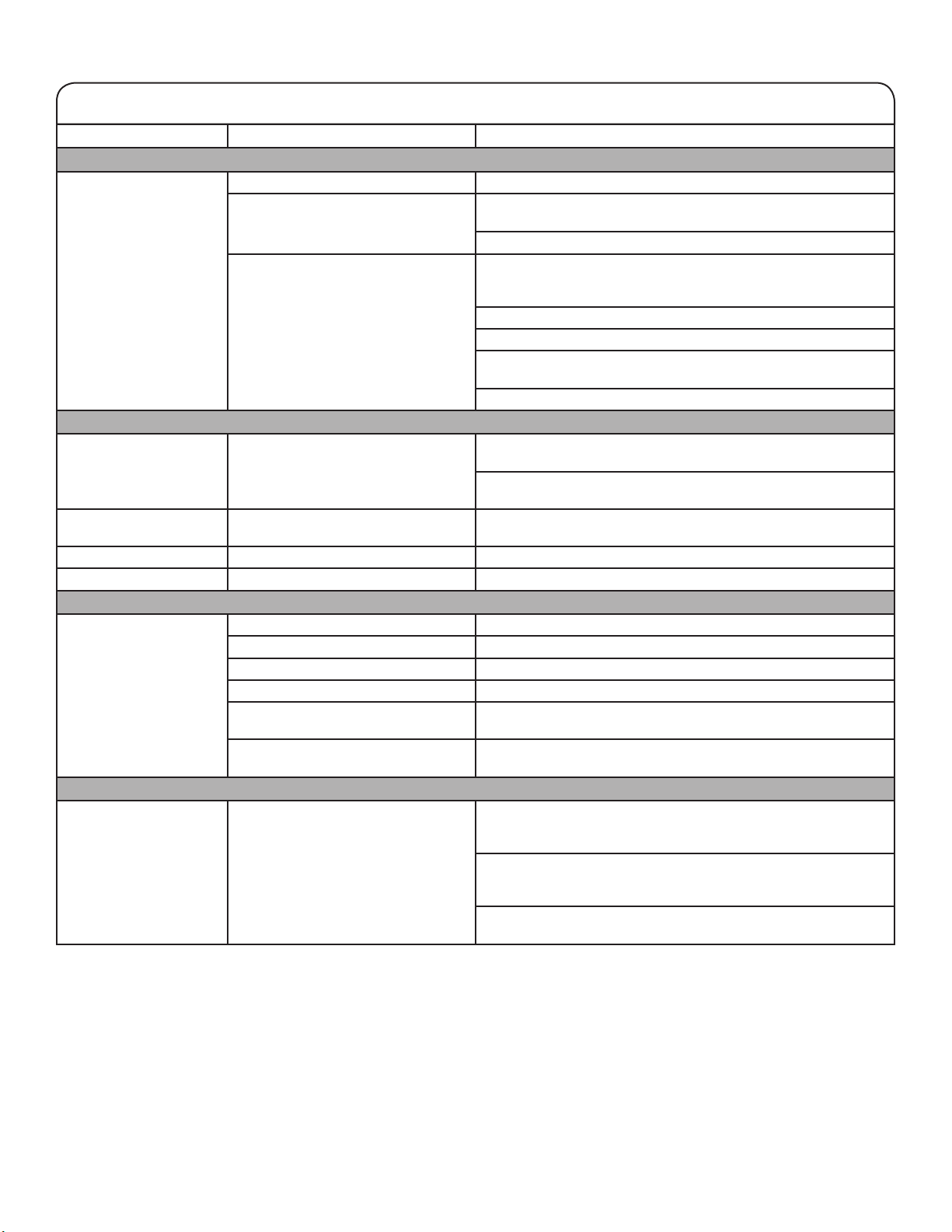
孔
轉接頭
運送洗衣機
1. 關閉兩個水龍頭。中斷和排乾進水管。
2. 若需在寒冷的天氣下搬運洗衣機,執行作業前遵循「冬季
儲存保養」說明。
3. 從排放系統斷開排水管的連接,並將任何剩餘水分排入器
皿或水桶中。從洗衣機後側斷開排水管。
4. 拔下電線。
5. 把進水管和排水管放在洗衣機洗衣槽內。
6. 沿著邊緣垂掛電源線,然後放入洗衣槽中。
7. 將原始運送材料中的包裝托架放回洗衣機中。若您沒有包
裝托架,請將厚重的毛毯或毛巾放入打開的洗衣槽中關上
洗衣機上蓋,並在洗衣機上蓋上方和洗衣機的前下方貼上
膠帶。用膠帶封住洗衣機上蓋,直到抵達新的放置地點為
止。以直立方式運送洗衣機。
重新安裝/再使用洗衣機
在長期未用、度假、冬季儲存或搬遷後重新安裝洗衣機:
1. 參閱「安裝說明」,擺放、調整水平以及連接洗衣機。
2. 再次使用洗衣機前,遵行建議程序,運行洗衣機:
再次使用洗衣機:
1. 沖洗水管和喉管。重新連接進水管。開啟冷熱水水龍頭。
2. 插上洗衣機插頭,或重新連接電源。
3. 用 衣量多 / 大物件 行程運行洗衣機,以清潔洗衣機和清
除任何防凍劑。使用製造商建議中量衣物所用劑量的一
半。
28
故障排除
如果您經歷了 可能原因 解決方案
震動或不平衡
檢查下列事項以確保正確
安裝,或參閱「使用洗衣
機」章節。
支腳可能未著地。 洗衣機之前後腳都必須確實著地,且必須調整水平以正常地運轉。
洗衣機也許未平放。
檢查地板是否彎曲或下沉。若地板不平,放一塊 3/4" (19 公釐) 夾
板在洗衣機底部,可減少噪音。
參閱「安裝說明」的「調整水平」。
衣物未均勻地放置。 將乾的衣物以鬆散的狀態,沿著洗衣槽壁成堆均勻放入。
將濕的衣物放入洗衣機中,或在洗衣槽添加更多水,可能會讓洗衣
機不平衡。
清洗較少的衣物量,以減少不平衡的情形。
不可塞滿衣物。避免清洗單一衣物。
不吸水的大型衣物,例如棉被或聚酯纖維夾克請使用衣量多/大物
件行程。
請參閱本使用保養指南的「行程指南」和「使用洗衣機」。
噪音
喀嗒或金屬噪音 洗衣機排水系統內有物件。 洗衣前清空口袋。零錢之類的零散物品可能掉落至洗衣槽和水槽之
間,進而堵住幫浦。也許需要致電維修部清除物品。
聽到衣物金屬物品,例如:金屬扣、帶扣或拉鍊與洗衣槽接觸時所
發出的聲音是正常現象。
淙淙聲或嗡嗡聲 洗衣機也許正在排水。 幫浦發出嗡嗡聲是正常現象,並偶爾發出淙淙聲或在單獨脫水行程
最後排水時發出沖水聲。
嗡嗡聲 可能正在偵測衣物量。 啟動洗衣機後,可能會聽見偵測轉動的嗡嗡聲。這是正常現象。
隆隆聲 洗衣槽可能正在減速。 您可能會聽見洗衣槽減速的隆隆聲。這是正常現象。
漏水
檢查下列事項確保排水管
正確安裝
洗衣機未水平放置。 若洗衣機不是水平狀態,水可能會濺出洗衣槽。
進水管未鎖緊。 將進水管之連接頭鎖緊。
正確安裝注水管墊片。 請確認全部四個注水管墊片都密合。
排水管連接。 從洗衣機機體拉出排水管,然後確切固定在排水管或洗衣機內槽。
檢查家用管線是否有洩漏、堵塞或漏
水。
水流可能會因為水槽或漏盆堵塞而回流。檢查所有家用管線是否有
洩漏(水槽、漏盆和水龍頭)。
未按建議將衣物放入洗衣機內。 不平衡的衣物會造成洗衣槽無法校準,導致水濺出內槽。請參閱
「使用洗衣機」瞭解衣物放置說明。
洗衣機未妥善運作
洗衣機中水量不足 衣物未全部浸泡於水中。 這是高效能洗衣機的正常運作現象。若水位選擇旋鈕設定為自動
設定,衣物將不會完全浸泡於水中。洗衣機感應到衣物量,並注入
正確的水量,以達成最佳清潔效果。
使用衣量多 / 大物件行程,獲得較高的注水量,或將水位選擇旋鈕
設定為高水位設定。請參閱「洗衣機注意事項」和「行程指南」,
根據衣物量使用最佳行程。
為因應洗衣槽中的髒汙堆積,請使用槽洗淨搭配 affresh錠行程以
獲得最佳水位和清洗效能。
首先,請嘗試此處的建議辦法,或造訪我們的網站:www.maytag.com.tw.
29
首先,請嘗試此處的建議辦法,或造訪我們的網站:www.maytag.com.tw.
故障排除
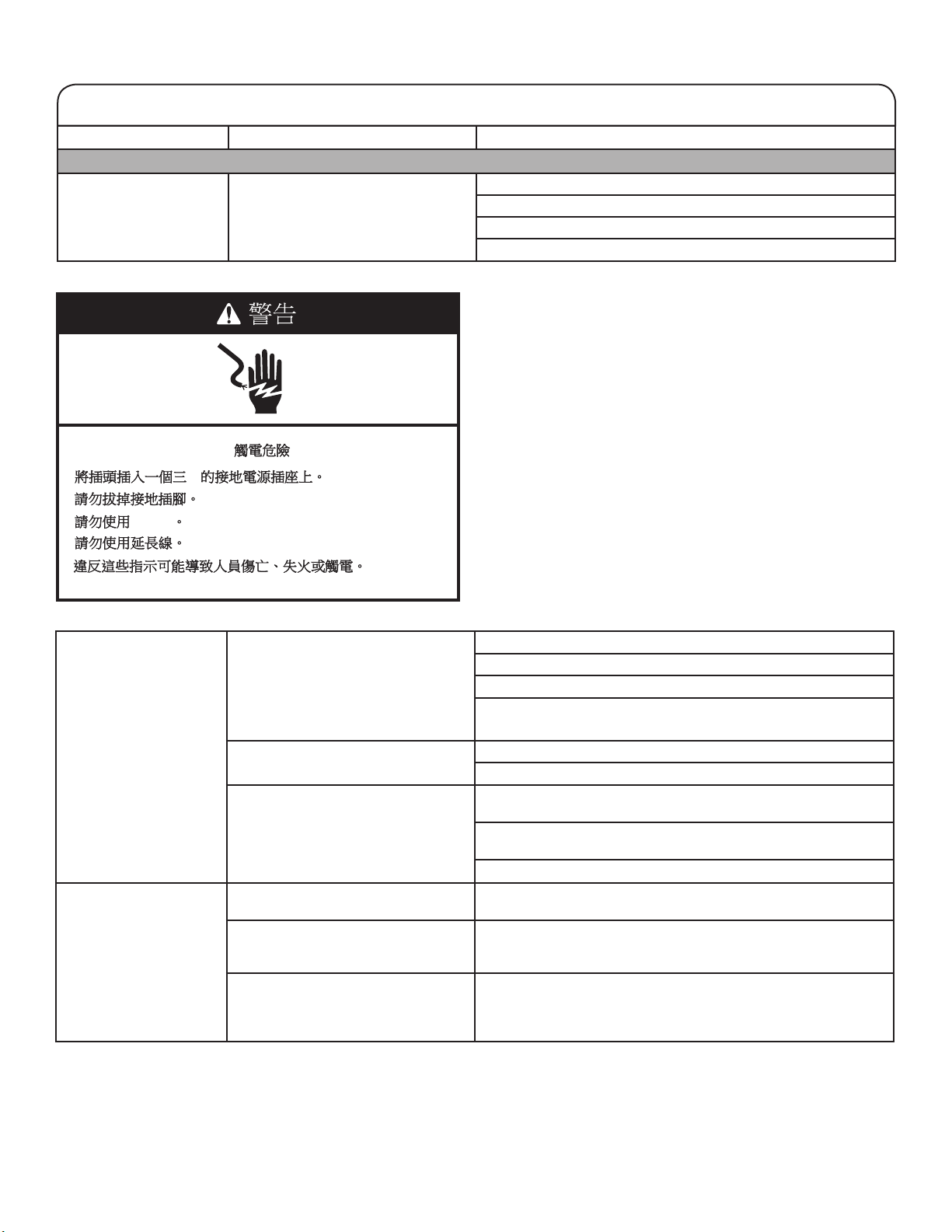
孔
轉接頭
洗衣機不會運轉或注水、
洗衣機停止運作,或洗衣
指示燈一直亮著(代表洗
衣機無法正常注水)
(續上頁)
檢查電源供應是否正常。
將電源線插入一個 3 孔的接地電源插座上。
不得使用延長線。
確保插座有電源。
重設跳閘的斷路器。更換任何燒壞的保險絲。
注意:若問題持續,聯絡電子技工。
正常的洗衣機運作。 洗衣機上蓋必須關閉,洗衣機才能運行。
洗衣機在行程特定階段將暫停。不要中斷行程。
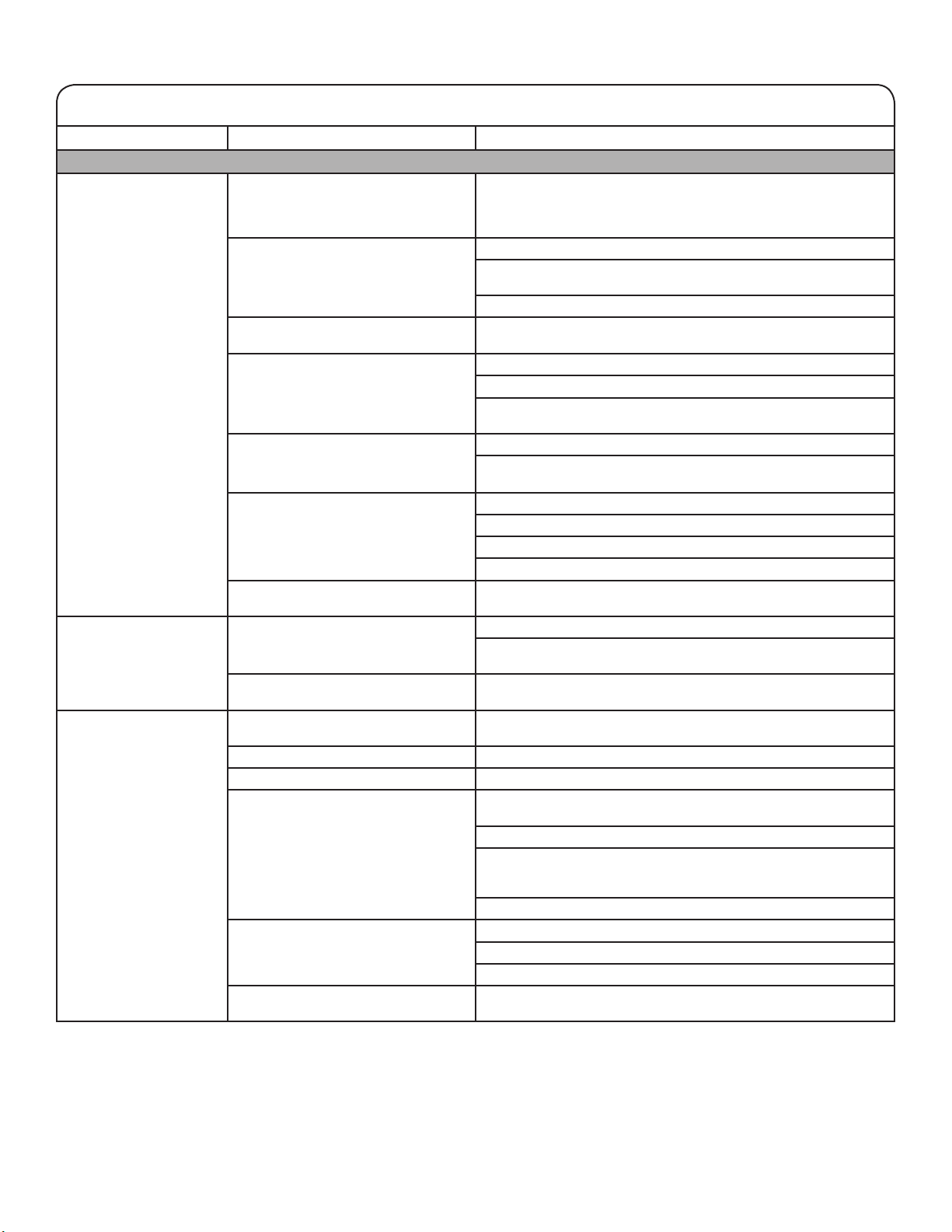
洗衣機可能塞太滿。 取出數件衣物,在洗衣槽內平均放置衣物。關上洗衣機上蓋,並按
下 啟動/暫停。
行程開始後不要放入超過一或兩件衣物,避免把洗衣機塞滿或衣物
放置不平均。
不要加水至洗衣機。
洗衣機沒有排水/脫水、衣
物仍是濕的,或脫水燈一
直亮著(代表洗衣機無法
在 10 分鐘內排水)
小型衣物可能卡在幫浦中或卡在洗衣
槽和內槽之間,造成排水緩慢。
清空衣服口袋,並使用洗衣袋裝入小型衣物。
使用低轉速行程。
轉速較低行程比轉速較高行程的去水力低。針對您的衣物選擇建議
的行程/轉速。若要去除衣物中多餘的水分,請選擇 單獨脫水。可能
需要重新放置衣物,讓衣物平均分佈在洗衣槽中。
洗衣機可能塞太滿或不平衡。 塞太滿或未平均放置的衣物也許無法讓洗衣機正確轉動,因此衣物
比正常狀況殘留更多水分。均勻放置濕的衣物,才能平衡轉動。選
擇 單獨脫水 行程,以去除過多的水分。請參閱「使用洗衣機」瞭
解衣物放置建議。
如果您經歷了 可能原因 解決方案
洗衣機未妥善運作(續上頁)
洗衣機不會運轉或注水、
洗衣機停止運作,或洗衣
指示燈一直亮著(代表洗
衣機無法正常注水)
檢查水源供應是否正常。 兩個進水管都必須接上,且水應流進進水閥。
冷熱水水龍頭都必須開啟。
檢查進水閥網罩沒有堵塞。
檢查進水管任何扭曲處,此現象可能限制水流。
30
故障排除
如果您經歷了 可能原因 解決方案
洗衣機未妥善運作(續上頁)
洗衣機沒有排水/脫水、衣
物仍是濕的,或脫水燈一
直亮著(代表洗衣機無法
在 10 分鐘內排水)
(續上頁)
檢查管線,確定已正確安裝排水管。
排水管應延伸至立管的 4.5" (114 公
釐) 處。
檢查已正確安裝排水管。使用排水管固定架,並穩妥連接至漏盆或
水槽。不要用膠帶黏住排水管的開口。若排水管末端離地面有
96" (2.4 m),降低排水管的高度。取出管內任何堵塞物。
太多洗劑會產生泡沫,減緩或停止排
水和脫水。
請務必量測洗劑用量,並根據衣物量,遵循洗劑的用量說明。
若要去除過多的泡沫,請選擇洗清&脫水。
請勿加入更多洗劑。
行程結束後,衣物上有乾
燥的斑點
相較於舊款洗衣機,高速轉動可除去
更多濕氣。
高速脫水在最終脫水期間結合氣流,造成靠近頂端的衣物在最後脫
水時產生乾燥斑點。這是正常現象。
洗衣機可能塞太滿。 使用 衣量多 / 大物件 行程,獲得較高的注水量,或將 水位選擇 旋
鈕設定為 高水位 設定。請參閱「行程指南」,根據衣物量使用最
佳行程。
在進水階段後,添加更多衣物。 洗衣機啟動後只能再加入一件或兩件衣物。
洗衣或洗清溫度不正確
或錯誤
檢查水源供應是否正常。 確保沒有錯誤連接冷熱水進水管。
兩條管子都必須連接至洗衣機和水龍頭,且都有冷熱水流進進水閥。
檢查進水閥網罩沒有堵塞。
清除管子內任何扭曲處。
為了節能而控制洗衣水溫。 相較於傳統上開式洗衣機,此洗衣機使用較低的洗衣和洗清水溫。
包含熱水和溫水洗衣的水溫也會較低。
未洗清衣物 檢查水源供應是否正常。 確保沒有錯誤連接冷熱水進水管。
必須連接兩個管子,且水應流進進水閥。
冷熱水水龍頭都必須打開。
也許洗衣機的進水閥網罩堵塞。
清除進水管任何扭曲處。
未使用HE高效能洗劑,或使用太多HE
高效能洗劑。
因太多洗劑產生的泡沫,會讓洗衣機無法正常運作。請務必量測洗
劑用量並根據衣物量和衣物髒度,遵循洗劑的用量說明。
未按建議將衣物放入洗衣機內。 若衣物塞太滿,洗衣機會降低洗清效率。
將衣物以鬆散的狀態,沿著洗衣槽壁成堆均勻放入。
僅放入乾燥衣物。
使用待洗衣料專用的行程。
洗衣機啟動後只能再加入一件或兩件衣物。
使用 衣量多 / 大物件 行程,獲得較高的注水量,或將 水位選擇 旋
鈕設定為 高水位 設定。請參閱「行程指南」,根據衣物量使用最
佳行程。
清洗後,衣物上有沙礫、
寵物毛髮、棉絨等
大量的沙礫、寵物毛髮、棉絨和洗劑或
漂白水殘留物可能需要額外洗清。
在所選行程中加上 二次洗清 和/或使用 PowerWash(強力洗淨)
行程或 高水位 選項。
衣物打結 未按建議將衣物放入洗衣機內。 請參閱「使用洗衣機」章節。
選擇洗衣動作和脫水轉速較慢的行程;不過,比起較高脫水轉速,
衣物可能會較濕。使用 衣量多 / 大物件 行程,獲得較高的注水量,
或將 水位選擇 旋鈕設定為 高水位 設定。請參閱「行程指南」,根
據衣物量使用最佳行程。
將衣物以鬆散的狀態,沿著洗衣槽壁成堆均勻放入。
混合不同類型的衣物,減少纏繞。選擇適合洗衣類型的建議行程。
首先,請嘗試此處的建議辦法,或造訪我們的網站:www.maytag.com.tw.
31
故障排除
如果您經歷了 可能原因 解決方案
洗衣機未妥善運作(續上頁)
未清潔或去除污漬 在洗衣機中加入更多的水。 洗衣機感應到衣物量,並注入正確的水量。
這是正常現象,必須如此衣物才能自由移動。清洗衣物時,衣物沒
有完全浸泡於水中是正常現象。
加水會降低清潔效率。
未按建議將衣物放入洗衣機內。 若衣物塞太滿,洗衣機會降低清潔效率。
將衣物以鬆散的狀態,沿著洗衣槽壁成堆均勻放入。
僅放入乾燥衣物。
洗衣機啟動後只能再加入一件或兩件衣物。
在衣物上方添加洗劑。 在放入衣物前,請先在洗衣槽底部加入洗劑、氧系產品和護色漂
白劑。
未使用HE高效能洗劑,或使用太多HE
高效能洗劑。
普通洗劑所產生的泡沫,會讓洗衣機無法正常運作。
僅使用HE高效能洗劑。請務必要要正確測量使用量。
請務必測量洗劑用量並根據衣物量和衣物髒度,遵循製造商的用量說
明。
沒有按衣物類型使用正確的行程。 使用較高衣物髒度行程選項和暖水洗衣,增進清潔效能。
使用 PowerWash(強力洗淨)行程,以徹底清潔。請參閱「行程
指南」,根據衣物量使用最佳行程。
未使用洗劑盒。 使用洗劑盒,避免漂白劑和衣物柔軟精產生的污漬。
開始行程前注入洗劑至洗劑盒。
避免注入太多洗劑至洗劑盒。
請勿在衣物上直接加入清洗用品。
未合併清洗類似顏色的衣物。 合併清洗類似顏色的衣物,並在完成行程後立即取出衣物,能避免
衣物染色。
洗劑盒操作不正確。 洗劑盒阻塞。 開始行程前注入洗劑至洗劑盒。
只能將液態含氯漂白劑注入於漂白劑洗劑盒。只能將衣物柔軟精放
入衣物柔軟精洗劑盒。
洗清選擇 旋鈕未設定為衣物柔軟精選
項。
使用衣物柔軟精洗劑盒時,請將洗清選擇旋鈕設定為一次洗清
(添加柔軟精) 或二次洗清(添加柔軟精)。
布料損壞 洗衣行程期間口袋裡有尖銳物品。 洗衣前清空口袋、拉上拉鍊、扣上按扣或鉤子固件,避免鉤破和撕
裂衣物。
繩子和帶子可能會纏繞。 開始清洗衣物前,繫上所有繩子和帶子。
洗衣前衣物可能就已毀損。 洗衣前修補接縫處的撕裂口和斷線。
若衣物塞太滿,將可能會損壞布料。 將衣物以鬆散的狀態,沿著洗衣槽壁成堆均勻放入。
僅放入乾燥衣物。
使用待洗衣料專用的行程。
使用 衣量多 / 大物件 行程,獲得較高的注水量,或將 水位選擇 旋
鈕設定為 高水位 設定。請參閱「洗衣機注意事項」和「行程指
南」,根據衣物量使用最佳行程。
洗衣機啟動後只能再加入一件或兩件衣物。
也許未正確添加液態含氯漂白劑。 不得將液態含氯漂白劑直接倒進衣物裡。擦拭溢出的漂白劑。
未稀釋的漂白劑可能會損壞布料。不得使用超過製造商建議的用量。
加入和取出洗衣機中的衣物時,請勿將衣物置於漂白水洗劑盒上。
可能未遵守衣物保養說明。 務必閱讀並遵守衣物製造商的保養標籤說明。請參閱「行程指南」
,根據衣物量使用最佳行程。
首先,請嘗試此處的建議辦法,或造訪我們的網站:www.maytag.com.tw.
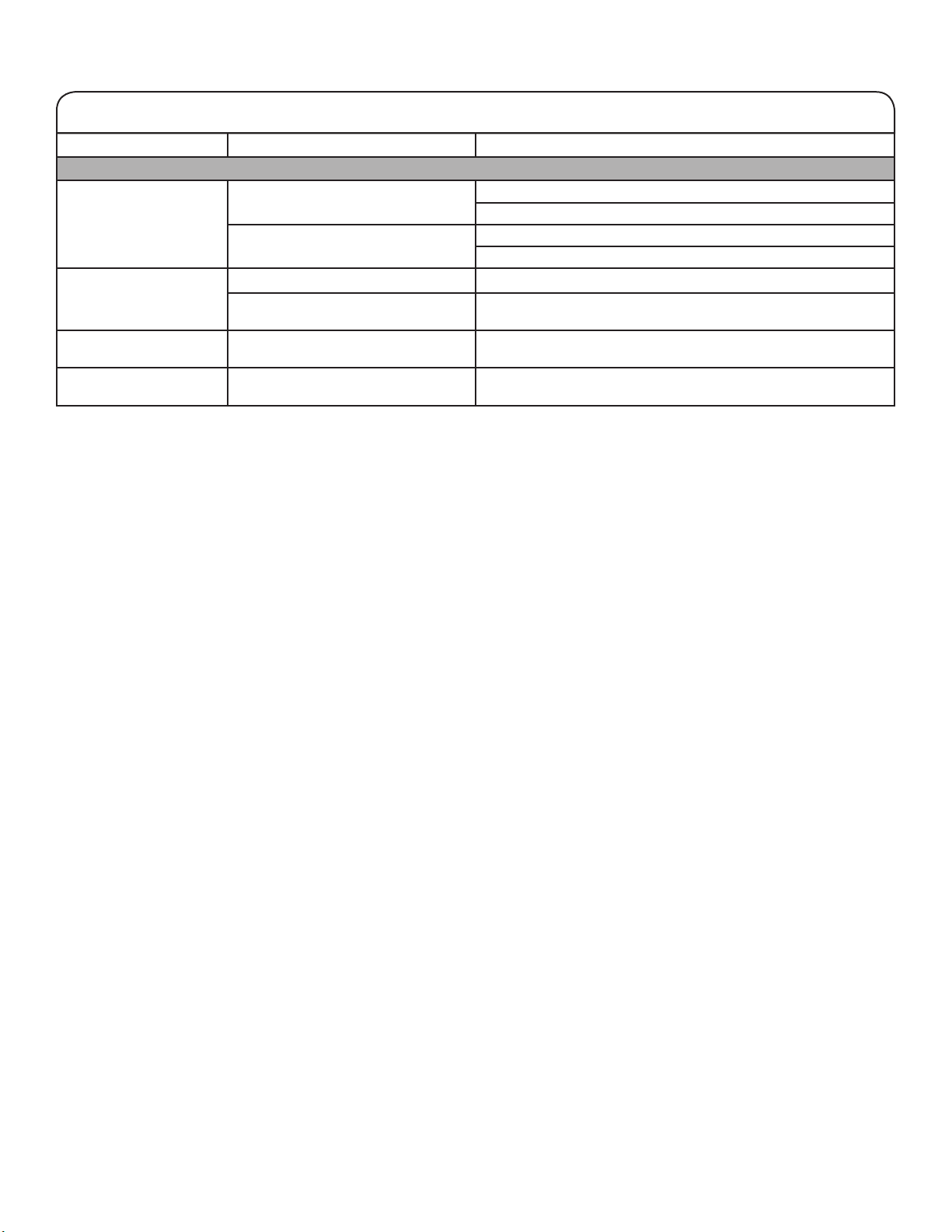
如果您經歷了 可能原因 解決方案
洗衣機未如預期的妥善運行(續上頁)
異味 未按建議進行每月維護。 請參閱「洗衣機維護」內的「洗衣機保養」。
行程完成後請盡速取出洗衣機的衣物。
使用太多洗劑。 確定要正確測量。請務必遵循製造商的說明。
請參閱「洗衣機保養」章節。
門上鎖 指示燈閃爍。
洗衣機上蓋未關上。 請關上洗衣機上蓋。洗衣機不會在打開洗衣機上蓋時啟動或注水。
使用 啟動/暫停按鈕停止或暫停行程。 洗衣機可能仍在轉動。在洗衣槽停止轉動之前,洗衣機上蓋都不會
解鎖。若清洗大量衣物或厚重布料,則需要幾分鐘的時間。
洗衣膠囊沒有溶解 加入膠囊的程序不正確。 確定是在加入衣物前將膠囊加入洗衣機的洗衣槽中。不要將膠囊加
至洗劑盒。遵循製造商說明,避免損壞衣物。
洗衣機在完成行程前將
水排出
洗衣機上蓋打開超過 10 分鐘。
在啟動行程之前和/或預洗(浸泡)期間,請確認洗衣機上蓋已關
上。
首先,請嘗試此處的建議辦法,或造訪我們的網站:www.maytag.com.tw.
故障排除
W11314850A
©2019 All rights reserved.
版權所有。
05/19