Do not block any ventilation openings. Install in accordance with the manufacturer’s instructions.
Do not install near any heat sources, such as radiators, heat registers, stoves, or other apparatus (including amplifiers) that produce heat.
Do not defeat the safety purpose of the polarized or grounding-type plug. A polarized plug has two blades with one wider than the other. A grounding type plug has two blades and a third grounding prong. The wide blade or the third prong is provided for your safety. If the provided plug does not fit into your outlet, consult an electrician for replacement of the obsolete outlet.
Protect the power cord from being walked on or pinched, particularly at plugs, convenience receptacles, and the point where it exits from your refrigerator.
Do not attempt to modify or extend the power cord of your refrigerator.
Unplug your refrigerator during lightning storms or when it will not be used for long periods of time.
Make sure that the available AC power matches the voltage requirements of your refrigerator.
Do not handle the plug with wet hands. This could result in an electric shock.
Unplug the power cord by holding the plug, never by pulling the cord.
Turn off your refrigerator before unplugging it.
Refer all servicing to qualified service personnel. Servicing is required when your refrigerator has been damaged in any way, such as the power-supply cord or plug is damaged, liquid has been spilled or objects have fallen into your refrigerator, your refrigerator has been exposed to rain or moisture, does not operate normally, or has been dropped.
To reduce the risk of fire or electric shock, do not expose your refrigerator to rain, moisture, dripping, or splashing, and no objects filled with liquids should be placed on top of it.
Do not use extension cords or ungrounded (two prong) adapters. If the power cord is too short, have a qualified electrician install an outlet near your refrigerator. Use of an extension cord can negatively affect your refrigerator’s performance.
Your refrigerator is not intended for use by persons (including children) with reduced physical, sensory, or mental capabilities, or lack of experience and knowledge, unless they have been given supervision or instruction concerning use of your refrigerator by a person responsible for their safety.
Children should be supervised to ensure that they do not play with your refrigerator.
If the power cord is damaged, it must be replaced by the manufacturer, its service agent, or similarly qualified person, inorder to avoid a hazard.
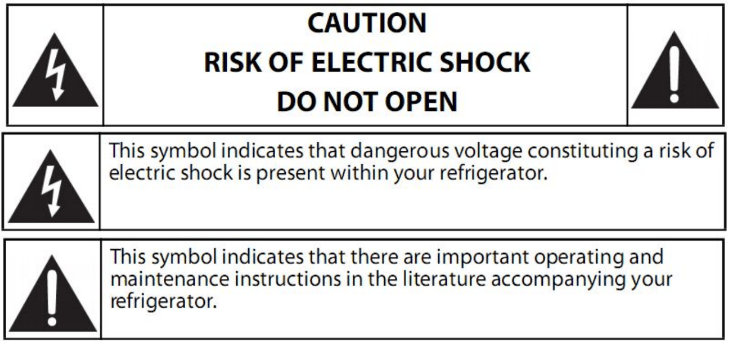
Electric Shock Hazard
Failure to follow these instructions can result in electric shock, fire, or death.
1. WARNING–Keep ventilation openings, in both your refrigerator and the built-in structure, clear of obstruction. 2. WARNING–Do not touch the interior of your refrigerator with wet hands. This could result in frostbite. 3. WARNING–Do not use mechanical devices or other means to accelerate the defrosting process, other than those recommended by the manufacturer. 4. WARNING–Do not damage the refrigerant circuit. 5. WARNING–Do not damage the refrigerant tubing when handling, moving, or using your refrigerator. 6. WARNING–DANGER—Never allow children to play with, operate, or crawl inside your refrigerator.
Risk of child entrapment. Before you throw away your old refrigerator:
Take off the door.
Leave the shelves in place so that children may not easily climb inside.
7. WARNING—Do not use electrical appliances inside the food storage compartments of the appliance unless they are of the type recommended by the manufacturer. 8.Unplug your refrigerator before carrying out user maintenance on it. 9. If power cord is damaged, it must be replaced by the manufacturer, its service agent, or similar qualified persons in order to avoid a hazard. 10. Follow local regulations regarding disposal of your refrigerator due to flammable refrigerant and gas. All refrigeration products contain refrigerants, which under the guidelines of federal law must be removed before disposal. It is the consumer's responsibility to comply with federal and local regulations when disposing of this product. 11. Do not store explosive substances such as aerosol cans with a flammable propellant in this appliance. 12. The appliance is not intended for use by persons (including children) with reduced physical, sensory, or mental capabilities, or lack of experience and knowledge, unless they have been given supervision or instruction concerning use of your refrigerator by a person responsible for their safety. Children should be supervised to ensure that they do not play with your refrigerator. 13 .This appliance is intended to be used in household and similar applications such as
staff kitchen areas in shops, offices and other working environments.
farm houses and by clients in hotels, motels and other residential type environments.
bed and breakfast type environments.
catering and similar non-retail applications.
Grounding requirement
Your refrigerator must be grounded. Your refrigerator is equipped with a cord having a grounding wire with a grounding plug. The plug must be inserted into an outlet that is correctly installed and grounded. Incorrect use of the grounding plug can result in a risk of electric shock. Consult a qualified electrician or service person if the grounding instructions are not completely understood, or if doubt exists as to whether your refrigerator is correctlygrounded.
Locks
If your Fridge is fitted with a lock, to prevent children being entrapped keep the key out of reach and not in the vicinity of the appliance. If disposing of an old Fridge break off any old locks or latches as a safeguard
INSTALLATION
Location
When selecting a position for your Fridge/Freezer you should make sure the floor is flat and firm, and the room is well ventilated. Avoid locating your Fridge/Freezer near a heat source, eg, cooker, boiler or radiator. Also avoid direct sunlight in out-buildings or sun lounges. If you are placing your Fridge/Freezer in an out-building such as a garage or annex ensure that the Fridge/Freezer is placed above the damp course, otherwise condensation will occur on the Fridge/Freezer cabinet. When working, the refrigerator gives off heat to surroundings. Therefore, at least 300mm of free space should be spared at the top side, more 100mm on both sides, and above 50mm at the backside of the refrigerator.
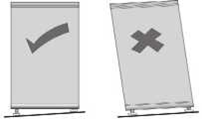
Leveling the Frithandge
If the Fridge is not level, the door and magnetic seal alignment will be affected and may cause you Fridge to work incorrectly. Once the Fridge is placed in its final location, adjust the leveling feet at the front by turning them.
Cleaning before use
Wipe the inside of the Fridge with a weak solution of bicarbonate of soda. Then rinse with warm water using a damp sponge or cloth. Wash the baskets and shelves in warm soapy water and dry completely before replacing in the Fridge. The external parts of the Fridge can be cleaned with wax polish.
Before plugging in YOU MUST
Check that you have a socket which is compatible with the plug supplied with the Fridge.
Before switching on!
DO NOT SWITCH ON UNTIL FOUR HOURS AFTER MOVING THE FRIDGE.
The coolant fluid needs time to settle. If the appliance is switched off at anytime, wait 30 minutes before switching back on to allow the coolant fluid to settle.
Before filling your Fridge
Before storing foods in your Fridge, turn the Fridge on and wait for 24 hours, to make sure it is working properly and to allow the Fridge to fail to the correct temperature.
START
Testing
Clean the parts of the refrigerator with lukewarm water containing a little neutral detergent and with clear water, and wipe them dry.
Notes: Electric parts of the refrigerator can only be wiped by dry cloth.
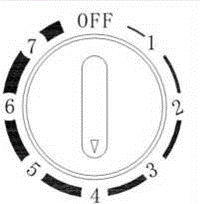
Remark: turn the thermostat knob to the "4" position, turn on electricity. The compressor begin to work..
Open the door 30 minutes later, if the temperature in the refrigerator decreased obviously, it shows that the refrigerator system works well. When the refrigerator operates for a period of time, the temperature controller will automatically set the temperature within limits it opens.
Temperature Control Dial
Temperature Control
1 .The temperature in the refrigerator compartment is controlled by the temperature controller installed on the back wall of the refrigerator compartment.
2. Turn the thermostat knob to right or left, you can regulate the temperature inside the refrigerator.
3. The marks on the knob are the temperature grades, not the exact number of the degrees of temperature.”OFF” shows a forced STOP and “7” shows the lowest temperature. Turn the knob from "1"position to "7"position, the temperature decreases continuously. You may set the temperature control selector to any position according to what you need.
4. Please set the selector to "4" position in normal use.
STORAGE OF FOOD
1. How to Use the Refrigerator Compartment
*The cook dishes can be put into refrigerator to keep fresh after their temperature decreases to room temperature.
*Egg pockets and bottle pockets for eggs, butter, milk and bottle drinks,etc..
2. Placement of Food
*Proper place should be left instead of too crowded during food storage.
*Food to be stored should be wrapped with clean plastic film or fresh keeping paper, then distributed to several frames even to avoid contamination and the loss of water and smell mixture.
*Cool hot food down to the room temperature before storing or consumption of electricity will increase and would lead to frost forming inside.
IN USE
1. The appliance might not operate consistently (possibility of defrosting of contents or temperature becoming too warm in the frozen food compartment) when sited for an extended period of time below the cold end of the range of temperatures for which the refrigerating appliance is designed
2. The fact that the internal temperatures could be affected by such factors as the location of the refrigerating appliance, ambient temperature and the frequency of door opening, and, if appropriate, a warning that the setting of any temperature control device might have to be varied to allow for these factors
3. The fact that effervescent drinks should not be stored in food freezer compartments or cabinets or in low-temperature compartments or cabinets, and that some products such as water ices should not be consumed too cold
4.The need to not exceed the storage time(s) recommended by the food manufacturers for any kind of food
5. The fact that a rise in temperature of the frozen food during manual defrosting, maintenance or cleaning could shorten the storage life
6. It is better wrapping the frozen food in several layers of the glass shelves.
7. the care required with regard to frozen food in storage in the event of an extended non-running of the refrigerating appliance (interruption of power supply or failure of the refrigerating system)
Tips for keeping food perfect in the Fridge Take extra care with meat and fish
Cooked meats should always be stored on a shelf above raw meats to avoid bacterial transfer. Keep raw meats on a plate which is large enough to collect juices and cover it with cling film or foil.
Leave space around food
This allows cold air to circulate around the Fridge, ensuring all parts of the Fridge are kept cool.
Wrap up food!
To prevent transfer of flavors and drying out, food should be separately packed or covered. Fruit and vegetables need not be wrapped.
Pre-cooked food should be cooled properly
Allow pre-cooked food to cool down before placing in the Fridge. This will help to stop the internal temperature of theFridge from rising.
Shut the door!
To prevent cold air escaping, try to limit the number of times you open the door. When returning from shopping, sort foods to be kept in your Fridge before opening the door. Only open the door to put food in or take it out.
Where to store your foods in the fridge
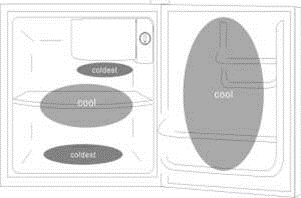
Cool area
This is where to store foods which will keep longer if they are kept cool. Milk, eggs, yogurt, fruit juices, hard cheeses eg. Cheddar. Opened jars and bottles of salad dressings, sauces and jams. Fats, eg. Butter, margarine, low-fat spreads, cooking fats and lard.
Coldest area
This is where foods which must be cold to keep them safe should be kept:
Prepared salads(including pre-packed mixed green salads, rice, potato salad etc).
Desserts, eg. Fromage frais, home-prepared food and leftovers or cream cakes.
NOTE:Always wrap and store raw meat, poultry and fish on the lowest shelf at the bottom of the fridge. If so, can not put too long. This will stop them dripping onto, or touching other foods. Do not store inflammable gasses or liquids in the fridge.
Recommended storage periods
For recommended food storage time, refer to the information given on your food packaging.
Cleaning inside the Fridge
After defrosting you should clean the Fridge internally with a weak solution of bicarbonate of soda. Then rinse with warm water using a damp sponge or cloth and wipe dry. Wash the baskets in warm soapy water and ensure they are completely dry before replacing in the Fridge.
Cleaning outside the Fridge
Use standard non-abrasive detergent diluted in warm water to clean the Fridge exterior.
The grille of the condenser at the back of the Fridge and the adjacent components can be vacuumed using a soft brush attachment.
Do not use harsh cleaners, scouring pads or solvents to clean any part of the Fridge
TROUBLE SHOOTING AND MAINTENANCE
Trouble Shooting
Power cut
Do not open the Fridge door more than necessary.
The Fridge is exceptionally cold
You may have accidentally adjusted the thermostat control dial to a higher position.
The Fridge is exceptionally warm
The compressor may not be working. Turn the thermostat control dial to the maximum setting and wait a few minutes. If there is no humming noise, it is not working. Contact the local store where your purchase was made.
The Fridge is not working
Check it is plugged in and switched on. Check that the fuse in the plug has not blown. Leave the Fridge for 30 minutes.
Condensation appears on the outside of the Fridge
This may be due to a change in the room temperature. Wipe off any residue of moisture. If the problem continues contact the local store where your purchase was made.
GURGLING, WHOOSHING
These noises are caused by the circulation of the refrigerant liquid in the cooling system. It has become more pronounced since the introduction of CFC free gases. This is not a fault and will not affect the performance of your Fridge.
HUMMING, PURRING OR PULSATING
This is the compressor motor working, as it pumps the refrigerant around the system
Moving the Fridge/Freezer
Location
Do not place your Fridge/Freezer near a heat source, eg. Cooker, boiler or radiator. Also avoid direct sunlight in out-buildings or sun lounges.
Leveling the Fridge/Freezer
Make sure the Fridge/Freezer is level. Use the rotating leveling feet at the front. If the Fridge/Freezer is not level, the doors and magnetic seal alignments will be affected and may cause your Fridge/Freezer to work incorrectly.
Do not turn on the Fridge/Freezer for 4 hours
After the Fridge/Freezer is in place it needs to be left for 4 hours. This allows time for the coolant to settle.
Installation
Don ’ t cover or block the vents or grilles of your appliance.
Vacation Time
Turn off the refrigerator first and then unplug the unit from the wall outlet.
Remove all the food.
Clean the refrigerator.
Leave the lid open slightly to avoid possible formation of condensation, mold, or odors.
Use extreme caution in the case of children. The unit should not be accessible to child's play.
Short vacations: Leave the refrigerator operating during vacations of less than three weeks.
Long vacations: If the appliance will not be used for several months, remove all food and unplug the power cord. Clean and dry the interior thoroughly. To prevent odor and mold growth, leave the door open slightly: blocking it open if necessary or have the door removed.
How to save energy
01. Install the refrigerator in the coolest part of the room, out of direct sunlight and away from heating ducts or registers. Do not place the refrigerator next to heat-producing appliances such as a range, oven or dishwasher.
02. The refrigerator door should remain open only as long as necessary; do not place hot food inside the refrigerator.
03. Organize the refrigerator to reduce door openings .Remove as many items as needed at one time and close the door as soon as possible.
04. The refrigerator door should be properly closed to avoid increased energy consumption, and the formation of excess ice and / or condensation inside.
05. Constantly circulating cold air keeps the temperature homogenous inside the refrigerator. For this reason, it is important to properly distribute the food, to facilitate the flow of air.
06. Cover foods and wipe containers dry before placing them in the refrigerator. This cuts down on moisture build-up inside the unit.
07. Do not overcrowd the refrigerator or block cold airvents. Doing so causes the refrigerator to run longer and use more energy. Shelves should not be lined with aluminum foil, wax paper or paper toweling. Liners interfere with cold air circulation, making the refrigerator less efficient, which could cause food spoilage.
08. During prolonged absences (example: vacations), it is advisable to disconnect the refrigerator, remove all the food, and clean it . The door should be left slightly open to avoid mold and unpleasant odors. This will not affect the refrigerator when it is reconnected.
09. During short absences (example: holidays), the refrigerator can remain on. However, remember that prolonged power outages may occur while you are gone.
Servicing
This product should be serviced by an authorized engineer and only genuine spare parts should be used.
Under no circumstances should you attempt to repair the appliance yourself.
Repairs carried out by inexperienced persons may cause injury or serious malfunctioning. Contact the local store where your purchase was made.
When the appliance is not in use for long periods, disconnect from the electricity supply, empty all foods and clean the appliance, leaving the door ajar to prevent unpleasant smells.
If you need change the knob, please set to "OFF" position, the knob can be disassembled easily.
ELECTRICAL INFORMATION
THIS APPLIANCE MUST BE EARTHED.
This appliance is fitted with a plug which will be suitable for use in all houses fitted with sockets to current specifications.
If the fitted plug is not suitable for your socket outlets, it should be cut off and carefully disposed of. To avoid a possible shock hazard, do not insert the discarded plug into a socket.
#1 Can I use it to make some ice cubes? And which level I should adjust to make ice cubes?
Yes. This mini fridge comes with a small freezer compartment and the lowest temperature can reach 24.8°F, cold enough for making ice cubes. Please adjust the thermostat to 6, the fridge will go down to its lowest temperature then you will be able to make ice cubes.
#2 Has anyone had this frig for over 1 year with working ice maker?
Yes, I own this frig almost a year. Everything is working in good conditions.